Colours III: Function, Purpose, & Effect of Colour
*This is part III in my ongoing series about colour. Read also part I,* Colours I : The Nature of Colour 1 *, and part II,* *Colours II : The Nature of Colour 2**.* https://read.cash/@Mictorrani/colours-i-the-nature-of-colour-1-0e75a695 https://read.cash/@Mictorrani/colours-ii-the-nature-of-colour-2-b4e4b528
Sight is the dominant human sense. Of the perceptional [from our five ordinary senses of perception] information our brain receives, 80-90% is related to sight, and of that more than 80% is related to colour. So colour is important to us; in terms of perception it totally dominates our brain. Not mainly as an aesthetic quality, obviously that is secondary, but it must have a purpose for our survival.
The most obvious presence of colour in our lives is related to food. Visually it creates contrasts in nature, so we can find our food easier if we clearly perceive the difference between, for instance, red and green; and it makes it easier for us to distinguish one foodstuff from another. Since many of the plants growing in nature are poisonous, such recognition can be a matter of life and death.
The colour pigments of plants are almost always biochemically very active compounds, essential for the function of nature. Green chlorophyll or carotenoids are very good examples. When those compounds has a meaning in human life, they are either beneficial for health, or they are toxic. In both cases they have medical significance.
But why would plants, without any visual sense themselves, produce these strong visual effects? From the beginning, one might suspect that colour is just a side-effect of chemical structure, but along with the parallel development of animals, a complex interaction between them and plants evolved. In order to get help with reproduction, to spread their seeds, some plants wanted to make certain animals eat them; others wanted to scare animals away by looking toxic or being similar to a toxic plant. Colours then evolved as a communication system between plants and animals, and such colours are sometimes specifically adapted to the sight of a certain class. Flowers and insects are a good example of this sort of adaption and communication.
I might add that the aroma of many species of flowers and fruit, another way of communication in nature, is a result of breakdown of carotenoids, that is, from pigments.
The colours of animals serve different purposes, such as camouflage, communication, or chemical adaptation to the environment. The latter is a means to utilise the biochemical advantage of a certain pigment, most notably melanin.
Colours of minerals, at least appear as a mere side-effect of their structure and composition, but with no direct visual function of their own. After all, it is hard to imagine that iron oxide is reddish or an emerald is green for a visual purpose.
In human culture, colours have evolved as a major system of communication. Their symbolic meanings are mainly dependent on culture, but they sometimes transcend cultural differences in a way that seems to have to do with human nature itself.
Colours affect our minds and trigger certain emotions. They can make us happy or sad, bored or interested, attracted or repelled, excited or calm, active or passive, even strong or weak; they can even activate or suppress appetite and hunger. To some extent they can be used for purely medical purposes; and they can be used for other forms of manipulation. Green hospital walls are there to make us calm; a specific shade of pink makes us weak, measurable in reduced muscle strength; black and red can be used to instil fear and a sense of threat; mould green or rotting-meat purple can cause nausea, especially in combination with food; red makes you active, hungry, perhaps aggressive. A skilled use of colours can generate the emotions and reactions the manipulator desires. This is no exact science, however. Even if, on the average, all people react similarly to similar colours, there are differences between cultures and individuals. The personal experience of an individual can alter his reactions to colours completely. If he has been close to dying while lying in bed starring at a sky-blue wall; sky-blue can very well be a colour triggering fear and pain forever, for that specific individual. So, reactions to colour are intimately intertwined with our individual memory and depend on how strong and traumatic experiences have been associated with certain colours in our own past.
Names of colours are sometimes confusing, because it might not always be obvious what they refer to, especially if the perspective is historical. Purple is a good example. It has been used to describe different shades, varying from blue and violet to red-brown-greyish. What they did really mean with “purple” during a certain age, we will never really know. Cinnabar and vermilion have been used for different shades of red to red-orange, and azure can be almost any blue. But the most peculiar is green. In East Asia many languages cannot, or until recently could not, make a distinction between blue and green; and in old Persian green, black, and dark are confused. Women are sometimes poetically described as green which then means dark [example: sabz-malih, a green beauty]!
Copyright © 2010, 2021 Meleonymica/Mictorrani. All Rights Reserved.
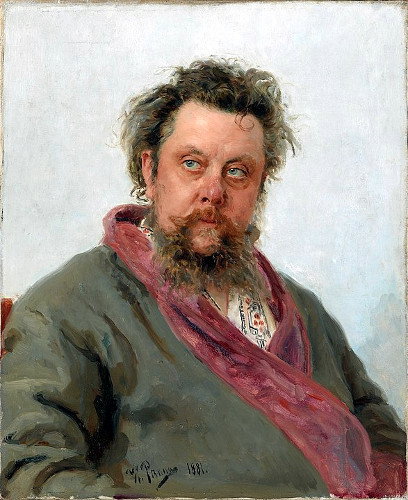
*(Lead image by* Antonio López*/Pixabay, CC0/Public Domain. The image has been cropped and digitally altered.)*
Here you can find:
My articles about Colour. https://read.cash/@Mictorrani/index-over-my-articles-at-read-cash-5f7c1e34#colour
All my writings on Read.Cash, sorted by topic. https://read.cash/@Mictorrani/index-over-my-articles-at-read-cash-5f7c1e34
My 5 most recent articles:
Colours II : The Nature of Colour 2 https://read.cash/@Mictorrani/colours-ii-the-nature-of-colour-2-b4e4b528
Colours I : The Nature of Colour 1 https://read.cash/@Mictorrani/colours-i-the-nature-of-colour-1-0e75a695
Vitamin E - A Powerful Vitamin https://read.cash/@Mictorrani/vitamin-e-a-powerful-vitamin-32979116
Suggested Reading 3 https://read.cash/@Mictorrani/suggested-reading-3-e9dafa78
Assorted Spices or Spice-like Foodstuffs: Meleguetta, Asafoetida, Celery, Garlic, Horse Radish https://read.cash/@Mictorrani/assorted-spices-or-spice-like-foodstuffs-meleguetta-asafoetida-celery-garlic-horse-radish-ceaab088
Colours II : The Nature of Colour 2
*Spectral Colours, Pigments, Tyndall Effect & Interference. This is part II of my ongoing series about colour. Read also part I,* Colours I : The Nature of Colour 1. https://read.cash/@Mictorrani/colours-i-the-nature-of-colour-1-0e75a695
All Visible Colours are not Pure Spectral Colours
It is wrong to believe that all chromatic colours we can perceive are pure spectral colours; there are also mixed spectral colours. That include colours not appearing on the colour wheel, such as brown and various brownish colours, which can only be obtained by mixing spectral colours. It also includes colours that - in a perspective of a colour wheel – are found between violet and red, while optically they do not exist. This is best described by quoting my explanation of the difference between violet and scientific purple in “Purple Light? It Doesn't Exist! And what is Visual Purple?” https://read.cash/@Mictorrani/purple-light-it-doesnt-exist-and-what-is-visual-purple-1f1004b0
“*Scientifically there is a difference between violet and purple, and the order from red to blue is red - purple - violet – blue. Violet is colder than purple, and if the intensity of light increases, violet becomes more and more blue, which is not the case with purple. This definition does not always coincide with cultural definitions.*
*When we talk about light, there is no “in between red and blue”. Red and blue are the opposite sides of the spectrum. The pure spectral colours are red, orange, yellow, green, blue, and violet. If we continue outside the visible spectrum, we get infra-red on the red side, and ultraviolet on the violet side. It's not as if red and blue would meet there somewhere, as they would in a colour wheel.*
*We can mix red light and blue light and get purple, but that's a mixed colour, not a spectral colour. Optically it would remain mixed red light and blue light, not purple light. Physically, or optically, there is no such thing as purple light. It does not exist.*
*In the visible spectrum, there is a (pure spectral) colour with shorter waves than blue, but before we reach the end of visibility. When the wavelength is one step shorter than the visible spectrum, we have ultraviolet. The colour in the spectral interval between blue and ultraviolet is called “violet”. This is in accordance with common practice. Violet light is an optical reality, it has its own wavelength."*
Pigments
Most colours are a result of pigments. A pigment is a chemical compound which selectively absorbs and reflects certain parts of the spectrum.
A red pigment, for instance, reflects red light and absorbs all the others. So what we see is red.
Pigments and other colouring matters can be mixed, with well-known results, like blue+yellow=green, red+yellow=orange, etc.
Although many pigments are now made synthetically, nature is full of them, some with very important biochemical functions for plants and animals.
Structure
Colours can sometimes be a result of structure, like the Tyndall effect, and interference.
Structural (non-metallic) colours are caused by reflected light scattered by small particles. If the particles are very small, they scatter more of the short waves of light (blue, violet) than by the long waves (red). The result is a reflection of blue light.
When the short waves of sunlight are reflected by the earth, and then scattered by molecules of oxygen and nitrogen in the atmosphere, you get a phenomenon you can see every day (unless you have very bad weather): a blue sky!
Blue eyes of humans and other animals are based on the same principle. Very small proteins in the iris scatter the short waves of light and the reflected blue light is seen against a black layer of melanin further back in the iris.
Albinos get reddish eyes because they are lacking the layer of melanin, so the blue colour stays concealed by the blood of the capillaries of the iris.
In brown eyes, the blue colour is concealed by occurrence of melanin among the scattering particles.
This structural blue is called Tyndall blue, and the phenomenon causing it is called the Tyndall effect. (Physicists might call it Rayleigh scattering.)
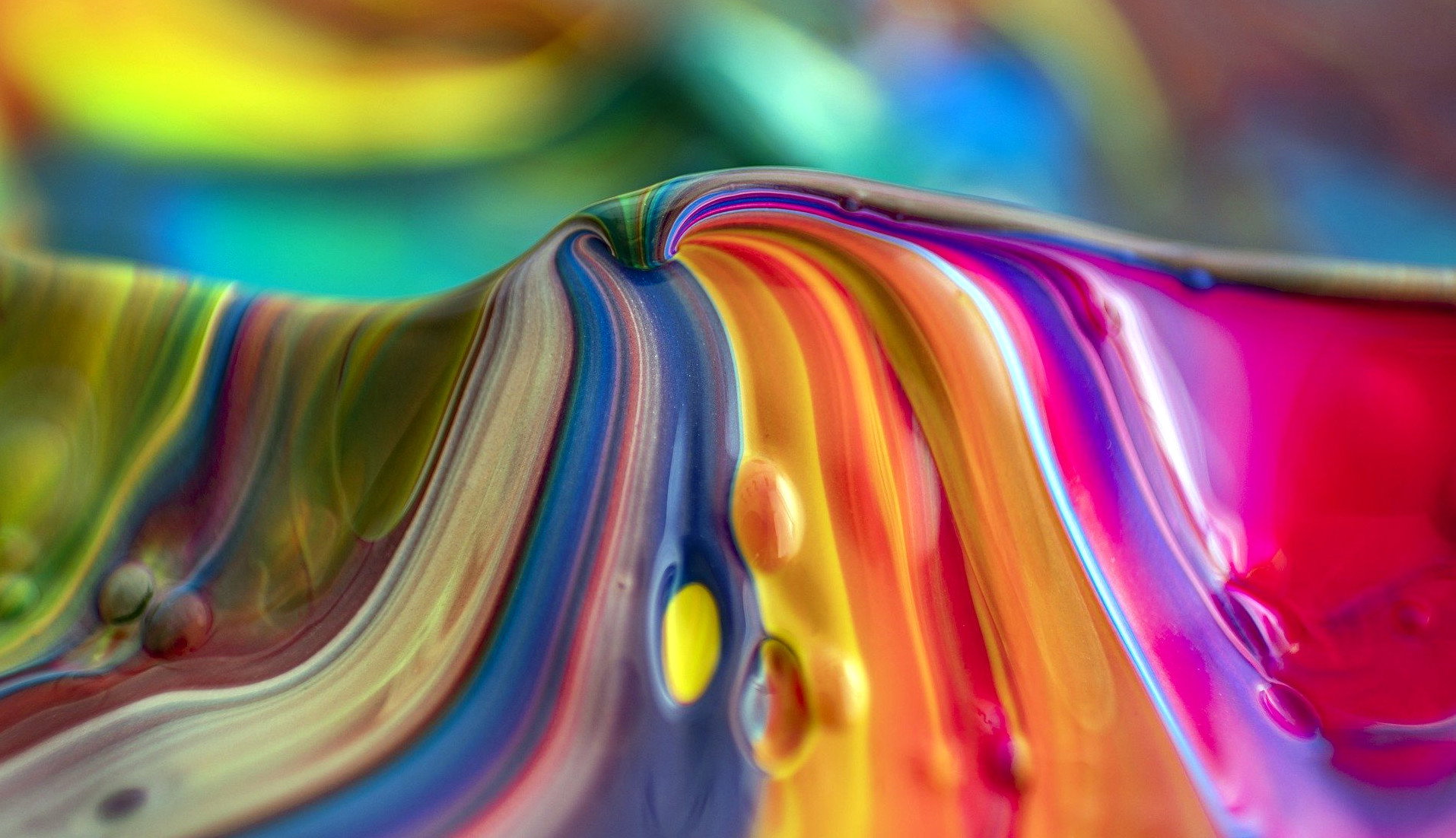
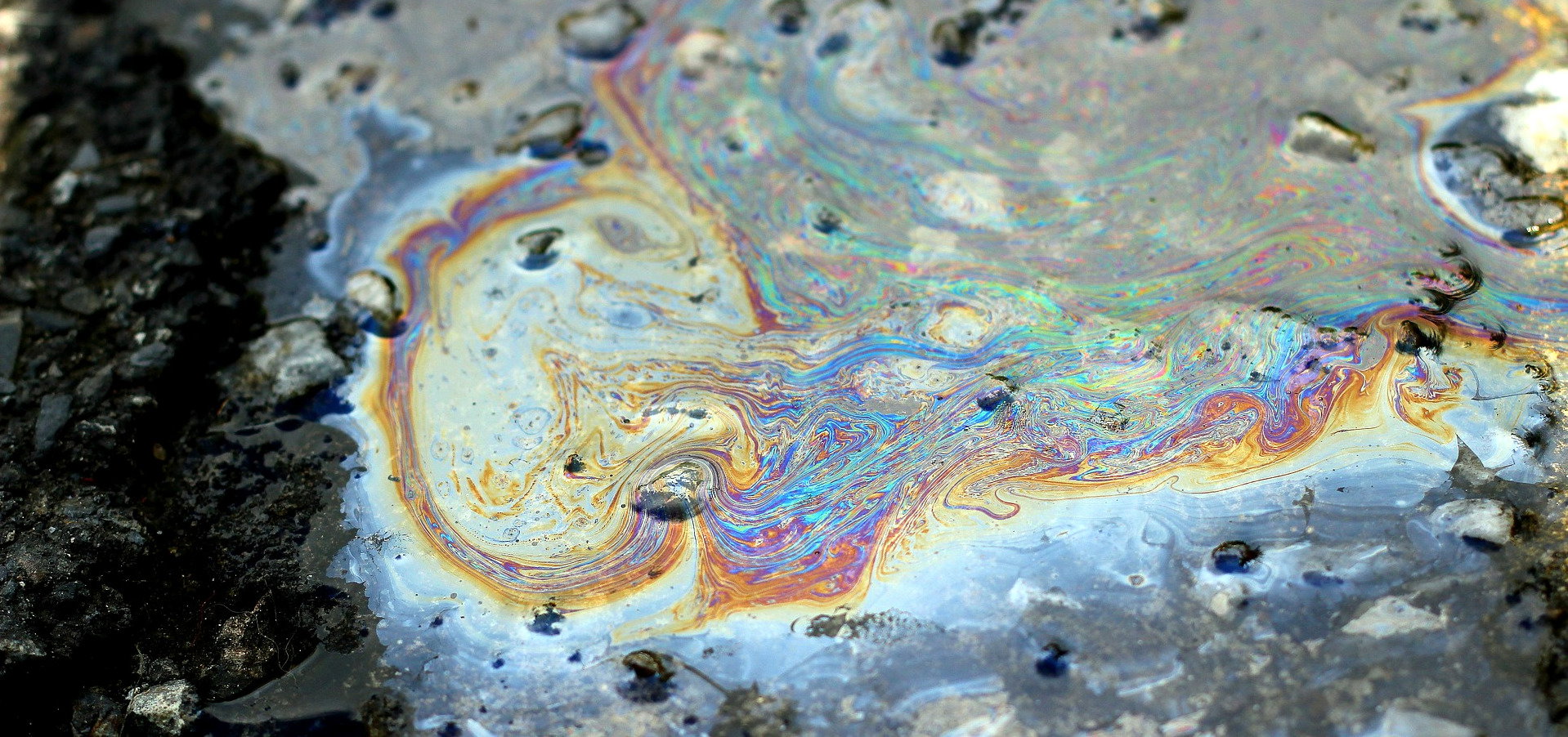
Structural colours with a metallic shimmer are mostly a result of interference. This is best understood if you watch a thin layer of oil on a water surface. The light is reflected by the surfaces of the oil and the water, and the waves of these are not in phase. The result can be that the waves either enforce one another, or reduce, or even neutralise one another, so that only the opposite wavelengths remain - and they are seen as a colour. In fact you get a rainbow-like effect, since the distance from the surface of the water and through the oil differs, depending on the angle from which you are observing it.
To be continued...
(This article in an excerpt from the introduction of my forthcoming e-book, "Chromaticon", a book exploring colour in culture and nature. Parts of it are based on material previously published in Meriondho Leo.)
Copyright © 2010, 2021 Meleonymica/Mictorrani. All Rights Reserved.
*(The lead image shows colours caused by interference. Photo by mumi chen/Pixabay, CC0/Public Domain. The image has been cropped.)*
Here you can find:
My articles about Colour. https://read.cash/@Mictorrani/index-over-my-articles-at-read-cash-5f7c1e34#colour
All my writings on Read.Cash, sorted by topic. https://read.cash/@Mictorrani/index-over-my-articles-at-read-cash-5f7c1e34
My 5 most recent articles:
Colours I : The Nature of Colour 1 https://read.cash/@Mictorrani/colours-i-the-nature-of-colour-1-0e75a695
Vitamin E - A Powerful Vitamin https://read.cash/@Mictorrani/vitamin-e-a-powerful-vitamin-32979116
Suggested Reading 3 https://read.cash/@Mictorrani/suggested-reading-3-e9dafa78
Assorted Spices or Spice-like Foodstuffs: Meleguetta, Asafoetida, Celery, Garlic, Horse Radish https://read.cash/@Mictorrani/assorted-spices-or-spice-like-foodstuffs-meleguetta-asafoetida-celery-garlic-horse-radish-ceaab088
Nicotinic Acid, the Real Super Vitamin! https://read.cash/@Mictorrani/nicotinic-acid-the-real-super-vitamin-9e90bc33
Colours I : The Nature of Colour 1
*I have always been interested in various aspects of colour. What is it? What's its purpose in nature? How are we affected by it? And so forth. The topic includes everything from science to art. My readers here may already have seen examples of this interest;* *my series about purple* *comes to mind, but there are numerous examples of other texts, other topics, where aspects of colour often turn up: eyes, vision, art, gems, symbols, even medicine.* https://read.cash/@Mictorrani/index-over-my-articles-at-read-cash-5f7c1e34#purple
*This is the first article in a short series, where colour plays the main role.*
The Nature of Colour
Colour is not a quality of the object as such. The sensation of colour is due to certain processes in the cortex of the brain, and a result of light reaching our retina (in the eye), from where a nervous impulse passes through the optic nerve to the cortex. Which colour we "see" depends on the wavelength of the light reaching our retina. So, the experience of colour is something happening in our brain, a representation of a certain nervous stimulation.
Look at a rainbow. It clearly shows how "white" light can be divided into red, orange, yellow, green, blue, indigo and violet. They are all part of a spectrum, and each one consists of light in certain wavelengths. When an object is exposed to light, some of the wavelengths (colours) are absorbed while the rest are reflected. The reflected ones are those our retina is catching, and they determine the colour we "see".
When light of all wavelengths is absorbed, we see black. When light of all wavelengths is reflected, we see white. Black, white and grey are called "achromatic" colours. All others are "chromatic".
Wavelengths are often expressed in a unit called Ångström (symbol Å). One Å is one hundred-millionth of a centimetre. It is named after Swedish physicist Anders Jonas Ångström (1814-1874).
Then we approximately get this:
Red 8000-6000 Å
Yellow 6000-5800 Å
Green 5800-5000 Å
Blue 5000-4300 Å
Violet 4300-3900 Å
The spectrum contains waves longer than 8000 Å and shorter than 3900 Å as well, but they give us no sensation of colour, although they do affect our cells.
The ones over 8000 Å, infra-red, are perceived as warmth. The ones shorter than 3900 Å, ultraviolet, affect our cells chemically.
A small number of totally blind people have demonstrated an ability to feel colours with their fingertips. They describe it as a sensation of shift in temperature. Given that we all feel noticeable and very real warmth from infra-red light, it is not very far-fetched to think that their claimed ability is perfectly real and possible... with practice!
An interesting detail to note is that colours are often experienced and described as warm or cold. Red (long waves) is the warmest; violet-blue (short waves) is the coldest. The intuitive connection between colour and temperature goes very deep.
Warm colours are: red, orange, yellow, and some greens. Cold are: violet, blue, turquoise, and some greens. The achromatic colours black, white, and grey are considered as neutral, which is not entirely correct. Let's say theoretically they are, but never in practice. If you have ever worked with colour artistically, you know that black always has a touch of either blue or brown - one cold, the other warm; and white has a touch of either blue or yellow - also a cold and a warm alternative. If you paint with just black, white and greytones, a general rule is that they should all be either warm or cold, not some of this and some of that in the same painting.
The Colour Wheel
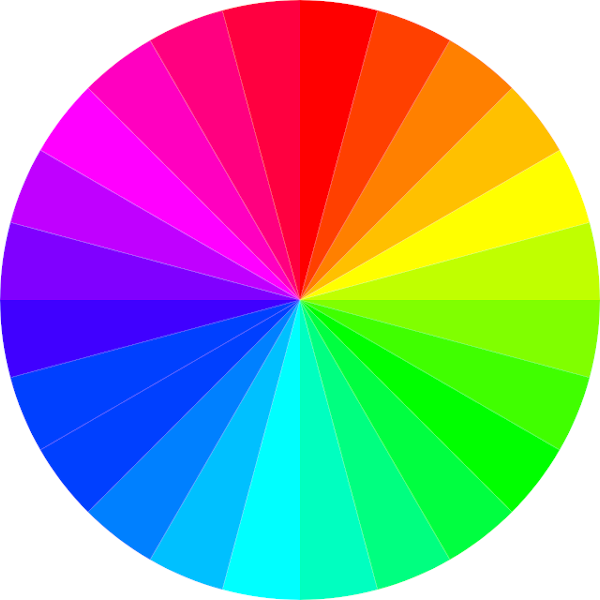
Artists, Alchemists, Philosophers and Scientists have always attempted to systematise colours – to create a model expressing how colours are inter-related. The most successful and useful model is probably the colour wheel, which basically shows how colours gradually change into other colours. They are placed in a circle, with complementary colours opposite to one another. Historically, a lot of colour wheels have been created, but there is no reason right now to look at them all in detail. Below we can see a modern colour wheel.
Brownish and Grey-brownish colours do not appear in this wheel. They are generally obtained by mixing not adjoining (main) colours with each other. For instance, if you mix red and yellow, you get orange, a colour you find between red and yellow; but if you mix red and green, you get brown.
To be continued...
(This article in an excerpt from the introduction of my forthcoming e-book, "Chromaticon", a book exploring colour in culture and nature. Parts of it are based on material previously published in Meriondho Leo.)
Copyright © 2010, 2021 Meleonymica/Mictorrani. All Rights Reserved.
Here you can find:
My articles about Colour. https://read.cash/@Mictorrani/index-over-my-articles-at-read-cash-5f7c1e34#colour
All my writings on Read.Cash, sorted by topic. https://read.cash/@Mictorrani/index-over-my-articles-at-read-cash-5f7c1e34
My 5 most recent articles:
Vitamin E - A Powerful Vitamin https://read.cash/@Mictorrani/vitamin-e-a-powerful-vitamin-32979116
Suggested Reading 3 https://read.cash/@Mictorrani/suggested-reading-3-e9dafa78
Assorted Spices or Spice-like Foodstuffs: Meleguetta, Asafoetida, Celery, Garlic, Horse Radish https://read.cash/@Mictorrani/assorted-spices-or-spice-like-foodstuffs-meleguetta-asafoetida-celery-garlic-horse-radish-ceaab088
Nicotinic Acid, the Real Super Vitamin! https://read.cash/@Mictorrani/nicotinic-acid-the-real-super-vitamin-9e90bc33
More Green Spices: Sage, Dill, Parsley, Oregano, Marjoram & Basil https://read.cash/@Mictorrani/more-green-spices-sage-dill-parsley-oregano-marjoram-basil-f5e74fcb

Vitamin E - A Powerful Vitamin
Vitamin E is a group of fat-soluble compounds called tocopherols, and a related group, tocotrienols. As for the latter, research is still in its infancy. Most supplements contain only d-alfa-tocopherol, but the whole complex is essential; d-alfa-, d-beta-, d-gamma-, and d-delta-tocopherol.
Good natural sources are: wheat germ, seeds, vegetable oils, green leaves, and egg yolk.
Functions
Vitamin E is a strong antioxidant. It strengthens the blood vessels, improves elasticity of all tissues, stimulates healing, increases the concentration of oxygen in blood and cells, and protects cells in case of low access of oxygen. It also protects the lipids of the cell membranes against oxidation, a function essential for the prevention of cancer. (According to the cancer model I described in my e-book ***From Fungi to Cancer*** [2012], cancer develops because the cell membranes degenerate and proper cellular respiration is destroyed. According to the present level of knowledge, the two most important substances for the protection of the cell membranes against oxidation are ***vitamin E*** and ***curcumin***, the latter being the yellow compound of turmeric.)
As an antioxidant it plays a strong role in the prevention of cardiovascular disease. For its well-known ability to protect against stroke and heart attack, the dose must be high. 400 I.U. per day for a long time is the minimum. It takes several years of full supplementation until full effect is reached.
This vitamin protects prostaglandins (and the oils from which they are produced) from oxidation. (Prostaglandins are involved in all processes of our biology.)
Further it stimulates resorption of unsaturated fat, the immune system, detoxification, hormonal activity, and sexual functions. It is a pro-sexual nutrient, increasing fertility, sexual ability and interest.
Finally it protects other antioxidants from oxidation and increases the effects of vitamin A and several other nutrients.
Dosage
RDA is 30 I.U., but E-vitamin is safe up to 2000 I.U. per day. Higher doses are insufficiently studied, but negative side-effects have been recorded.
A reasonable dose for a healthy individual is 1000 I.U.
Initially, vitamin E supplementation can raise blood pressure; if you have hypertension or heart disease, start low and build up the dose gradually. The effect is temporary and of no concern to healthy individuals.
Supplementation should always be in the form of a ***tocopherol complex***, containing all the four known tocopherols (d-alfa-, d-beta-, d-gamma-, and d-delta-tocopherol). Supplemental intake of only d-alfa-tocopherol, which is quite common, has proved to give very limited benefits and sometimes harmful side-effects.
Certain medicines do conflict with vitamin E, and so do some conventional cancer treatments. Radiation, for instance, kills the tumour cells by generating strong oxidation. Vitamin E and other antioxidants will block the effect of the radiation by stopping the oxidation and thereby protecting the tumour from destruction.
The Importance of the Presence of Fat
E-vitamin (along with vitamins A, D, and K) belongs to the fat-soluble vitamins. It means that you cannot absorb the vitamin unless there is a presence of fat. Natural sources of vitamin E normally contain the required amount, but it is not always the case. Green leaves, for instance, are rich in vitamin E but extremely poor in fat. They must be eaten together with something containing fat, in order for you to be able to absorb the vitamin properly. A spoon of olive oil is sufficient; or take a few nuts to the green leaves.
I have previously explained about The Importance of Dietary Solvents. ***It is important for proper nutrition to understand the role solvents are playing***, otherwise you can end up eating nutritious foodstuffs or supplements while remaining unable to absorb and utilize them.) https://read.cash/@Mictorrani/the-importance-of-dietary-solvents-42f2e000
E-vitamin supplements should be in the form of capsules with oil, so the vitamin is already dissolved in fat. Never take “dry” vitamin-E supplements.
Other articles related to vitamins/nutrients:
Why Dietary Supplements are Needed https://read.cash/@Mictorrani/why-dietary-supplements-are-needed-d70e789c
Supplements, Getting Them Right: Some Points to Consider https://read.cash/@Mictorrani/supplements-getting-them-right-some-points-to-consider-b4d57960
The Importance of Dietary Solvents https://read.cash/@Mictorrani/the-importance-of-dietary-solvents-42f2e000
Iron & Cancer https://read.cash/@Mictorrani/iron-cancer-3ab080b8
Co-Enzyme Q10 & Carnitine https://read.cash/@Mictorrani/co-enzyme-q10-carnitine-42291565
Lutein & Zeaxanthin: Nutrients that Protect Your Eyes from Ageing https://read.cash/@Mictorrani/lutein-zeaxanthin-nutrients-that-protect-your-eyes-from-ageing-9a87f2a3
Not Only Beta-Carotene: Carotenoids (Carotenes & Xanthophylls) https://read.cash/@Mictorrani/not-only-beta-carotene-carotenoids-carotenes-xanthophylls-d3ae6750
Salicylic Acid: Is Aspirin a Vitamin? https://read.cash/@Mictorrani/salicylic-acid-is-aspirin-a-vitamin-61990a03
Vitamin A - Function & Need https://read.cash/@Mictorrani/vitamin-a-function-need-c8e8169e
Vitamin D – Underrated Vitamin? https://read.cash/@Mictorrani/vitamin-d-underrated-vitamin-5ca83053
Nicotinic Acid, the Real Super Vitamin! https://read.cash/@Mictorrani/nicotinic-acid-the-real-super-vitamin-9e90bc33
Copyright © 2014, 2019, 2021 Meleonymica/Mictorrani. All Rights Reserved.
(The lead image shows vitamin E capsules. Photo by Beverly Buckley/Pixabay, CC0/Public Domain.)
*Here you find my articles related to* *nutrients & supplements (vitamins, minerals, etc.)* *and here to* *health & medicine**.* https://read.cash/@Mictorrani/index-over-my-articles-at-read-cash-5f7c1e34#vitaminsmineralsnutrients https://read.cash/@Mictorrani/index-over-my-articles-at-read-cash-5f7c1e34#health-amp-medicine-for-covid-19-see-covid-19
Interested in health & medicine, join my community "The Mechanisms of Health (d52e)" https://read.cash/c/the-mechanisms-of-health-d52e
You find all my writings on Read.Cash, sorted by topic, here. https://read.cash/@Mictorrani/index-over-my-articles-at-read-cash-5f7c1e34
My 5 most recent articles:
Suggested Reading 3 https://read.cash/@Mictorrani/suggested-reading-3-e9dafa78
Assorted Spices or Spice-like Foodstuffs: Meleguetta, Asafoetida, Celery, Garlic, Horse Radish https://read.cash/@Mictorrani/assorted-spices-or-spice-like-foodstuffs-meleguetta-asafoetida-celery-garlic-horse-radish-ceaab088
Nicotinic Acid, the Real Super Vitamin! https://read.cash/@Mictorrani/nicotinic-acid-the-real-super-vitamin-9e90bc33
More Green Spices: Sage, Dill, Parsley, Oregano, Marjoram & Basil https://read.cash/@Mictorrani/more-green-spices-sage-dill-parsley-oregano-marjoram-basil-f5e74fcb
Retrospection 8 https://read.cash/@Mictorrani/retrospection-8-dbaf62ec

Suggested Reading 3
*In* *this series**, I assume the role of a reader instead of a writer, discussing articles by other writers... things I recommend.* https://read.cash/@Mictorrani/index-over-my-articles-at-read-cash-5f7c1e34#suggested-reading
It has happened things around BCH and noise.cash lately, things arising many questions about what is really going on. @Pantera wrote about that a few days ago in Breaking News: Massive Ongoing Hack-Attack On Noise.Cash! and in Is This An Organized Attack Against Bitcoin Cash? - Stay Strong Marc! https://read.cash/@Pantera https://read.cash/@Pantera/breaking-news-massive-ongoing-hack-attack-on-noisecash-ad88d1bc https://read.cash/@Pantera/is-this-an-organized-attack-against-bitcoin-cash-stay-strong-marc-0e718d7d
Are you into conspiracy theories and still don't know what Bilderberg meetings are? @onlymythoughts provides the answer in The Deep State. https://read.cash/@onlymythoughts https://read.cash/@onlymythoughts/the-deep-state-874206c7
Let's continue on the same theme. People need to wake up to see the true nature of the state. Read Government Is a Moral Abomination — an Observation of Reality by @VoluntaryJapan. If these thoughts appeal to you, read also Dismantling the Childish Belief That "Government Is Necessary" by the same author. https://read.cash/@VoluntaryJapan/government-is-a-moral-abomination-an-observation-of-reality-0ad2b3d9 https://read.cash/@VoluntaryJapan/dismantling-the-childish-belief-that-government-is-necessary-350fb9a9
In Lady justice: blind or not?, @hamedbkh discusses as well the history of the symbol, as how justice is applied - how practice does not correspond to the lofty ideals of impartiality, etc. A good read. https://read.cash/@hamedbkh/lady-justice-blind-or-not-de6160b7
Incidentally, before we change the subject, my own thoughts about politics and the state can be found in articles discussed in my Retrospection 5. https://read.cash/@Mictorrani/retrospection-5-aaa611cc
Some scientific speculations by @amro: Carbon-based life, silicon-based life, intelligent AI life; how many possible life forms are there? And another old article by the same author: Is the future of the world a synthetic diet made of bacteria and hydrogen? https://read.cash/@amro https://read.cash/@amro/carbon-based-life-silicon-based-life-intelligent-ai-life-how-many-possible-life-forms-are-there-f9ec5de5 https://read.cash/@amro/is-the-future-of-the-world-a-synthetic-diet-made-of-bacteria-and-hydrogen-daff31b0
@Argent asks Is it normal to talk to ourselves? and discusses the phenomenon of talking to oneself. https://read.cash/@Argent https://read.cash/@Argent/is-it-normal-to-talk-to-ourselves-c8c68104
Of course it is normal, everyone does it. In fact, we have a constant conversation with ourselves in our mind. Most of the time that conversation is covert, silent - but now and then, especially when we are alone, or think we are alone, it can be overt, spoken out loud or whispered. This conversation, whether covert or overt, helps us clear the thoughts. As long as this is on a level not disturbing our sense of the borderline between reality and imagination, it is a normal activity in a healthy mind.
Did you know that the smell of rain has a relaxing effect? @Luna1999 describes that in The aroma of rain can make people calm and relaxed. https://read.cash/@Luna1999 https://read.cash/@Luna1999/the-aroma-of-rain-can-make-people-calm-and-relaxed-743c5630
@Gemstone recently published Freewrite (From a Personal Experience): Repel Auric Vampires. Well worth reading. https://read.cash/@Gemstone https://read.cash/@Gemstone/freewrite-from-a-personal-experience-repel-auric-vampires-632528e0
In Vampires : Do they Exist?, @Ling01 refers to a more traditional form of vampire, the folkloristic one. As a matter of fact, I once contributed to this subject myself. https://read.cash/@Ling01/vampires-do-they-exist-576fcc9a https://read.cash/@Mictorrani/the-ultimate-vampire-aed59cec
Many people come to read.cash with high and unrealistic expectations of earning BCH easily, and many newcomers are quickly disappointed that tips are very low, if any, in the beginning. Perhaps they should read An open letter from" A not professional writer of read.cash" by @GarrethGrey07. https://read.cash/@GarrethGrey07/an-open-letter-from-a-not-professional-writer-of-readcash-eb463a3c
It is important to have a balanced view on “success”. Evaluation of Personal Success by relatively new member @cherrynwine might provide some food for thought. https://read.cash/@cherrynwine/evaluation-of-personal-success-3ce9a54f
In Retrospection 8, I brought up my own relation to cats and articles I have published here about cats. However, a lot of people like cats and there are many posts in read.cash related to this animal. Most of them are not remarkable, just small everyday stories - but if you like cats, you might enjoy some of them. Here are some examples: https://read.cash/@Mictorrani/retrospection-8-dbaf62ec https://read.cash/@Mictorrani/index-over-my-articles-at-read-cash-5f7c1e34#cats
Living with a cat by @Yelenab https://read.cash/@Yelenab/living-with-a-cat-0b19f294
Cora, our guest by @CoquiCoin https://read.cash/@CoquiCoin/cora-our-guest-ee894b1c
and 2 articles by @gertu13 https://read.cash/@gertu13
The wild life of my Copito. https://read.cash/@gertu13/the-wild-life-of-my-copito-a4d0ac25
"The cat lady." https://read.cash/@gertu13/the-cat-lady-fdcbbad9
The last cat article in my list is 15 amazing facts you didn't know about cats, by @Dimke . https://read.cash/@Dimke/15-amazing-facts-you-didnt-know-about-cats-898d6c7d
Let's stay in the animal kingdom. I wrote about my own articles about snakes, in Retrospection 4. Here @itafari writes a good article about cobras: Come,Let's meet the cobra! https://read.cash/@Mictorrani/index-over-my-articles-at-read-cash-5f7c1e34#serpents-amp-snakes https://read.cash/@Mictorrani/retrospection-4-0c1add0e https://read.cash/@itafari https://read.cash/@itafari/comelets-meet-the-cobra-f5f4cfad
@itafari is a relatively new member in whom I see potential. I also see potential in @Ling01 (mentioned above). These are new members who definitely can evolve to good authors, given some practice and good advice. https://read.cash/@itafari https://read.cash/@Ling01
Shall we end “Suggested Reading 3” with some fiction?
About a week ago, @nomadghada published Alien Contagion: (Sci-fi fiction), a quite good science fiction story. https://read.cash/@nomadghada https://read.cash/@nomadghada/alien-contagion-sci-fi-fiction-89579fea
Read the whole series, ”Suggested Reading” and my series “Retrospection”. https://read.cash/@Mictorrani/index-over-my-articles-at-read-cash-5f7c1e34#suggested-reading https://read.cash/@Mictorrani/index-over-my-articles-at-read-cash-5f7c1e34#retrospection
Copyright © 2021 Meleonymica/Mictorrani. All Rights Reserved.
You find all my writings on Read.Cash, sorted by topic, here. https://read.cash/@Mictorrani/index-over-my-articles-at-read-cash-5f7c1e34
*My 5 most recent articles:*
*Assorted Spices or Spice-like Foodstuffs: Meleguetta, Asafoetida, Celery, Garlic, Horse Radish* https://read.cash/@Mictorrani/assorted-spices-or-spice-like-foodstuffs-meleguetta-asafoetida-celery-garlic-horse-radish-ceaab088
Nicotinic Acid, the Real Super Vitamin! https://read.cash/@Mictorrani/nicotinic-acid-the-real-super-vitamin-9e90bc33
More Green Spices: Sage, Dill, Parsley, Oregano, Marjoram & Basil https://read.cash/@Mictorrani/more-green-spices-sage-dill-parsley-oregano-marjoram-basil-f5e74fcb
Suggested Reading 2 https://read.cash/@Mictorrani/suggested-reading-2-803f37a7
Telomeres, Rate of Living, Hormesis & Ageing https://read.cash/@Mictorrani/telomeres-rate-of-living-hormesis-ageing-c90921fb
Assorted Spices or Spice-like Foodstuffs: Meleguetta, Asafoetida, Celery, Garlic, Horse Radish
*This is the last article in the series on spices, at least for this time. I have included spices that didn't suit into the previous articles, and some things not normally considered spices at all, even if their use can be spice-like.*
Meleguetta
Meleguetta, ***Aframomum meleguetta***, is another relative to ginger and turmeric. It belongs to ***Zingiberaceae***, and is known under many names, such as Guinea pepper (because it was originally growing along the West African “grain coast”), Alligator pepper, or the suggestive Grains of Paradise. It was traded along the caravan routes from West Africa to North Africa, from where it found its way into Europe during Roman Antiquity. There it was subsequently forgotten and didn't return to Italy until the Middle Ages, and further to Northern France and Elizabethan England. Its use in Europe has declined since then. https://read.cash/@Mictorrani/the-king-queen-of-spices-turmeric-ginger-d697e39f
Meleguetta seeds are the consumable parts, usually ground, and unlike many other spices, the specific taste is not a result of its essential oils, but of aromatic ketones.
This spice has interesting medical properties. In it has been found a compound that is the strongest anti-inflammatory substance known so far. It is also likely that it protects wild lowland Gorillas from fibrosing cardiomyopathy, a heart ailment they are very susceptible to and often develop in captivity, where their diet is no longer their natural one. In their natural habitat, meleguetta is a major part of their diet.
Traditionally, the seeds have been used against many ailments, such as fevers and dysentery, and as an aphrodisiac. It is a natural antibiotic, which also has effects on fungi, such as ***Candida albicans***.
Further, it has been (perhaps still is) used for divination and voodoo practice.
Scientifically, research on the medical properties of meleguetta is insufficient. No doubt, it is healthy to eat, to an extent. It kills bad microbes and has positive effects on cardivascular health. But it is also an irritant, a strong substance that could possibly harm stomach, liver and kidneys if used excessively. There are no studies of this and a safe daily intake is impossible to state. Don't be afraid to eat it, but use common sense.
Asafoetida
***Ferula asafoetida***, devil's dung, food of the gods (!), giant fennel, hing, a Ferula species originally coming from Afghanistan and Persia. It must be heated to become useful for eating, raw its odour is terrible. The dried sap of the plant is used, often in form of powder.
Asafoetida is antiviral, in Taiwan they managed to kill swine flu virus with it, and anti-inflammatory. It also stimulates the growth of "good" intestinal microbes, helps digestion, and combats constipation. It has some effect as a contraceptive. In Indian medicine it is used for several ailments; e.g. respiratory problems, flatulence, stomach disorders, impotence, menstruation problems, leucorrhoea, high blood pressure, nervous disturbance, mycotic infections, parasites, and as an antidote to opium.
In several places asafoetida is used to keep away demons and spirits, but for some reason it attracts wolves!
As a spice it is used cooked, and then it resembles onion. A fact useful for those not eating onions, as followers of certain branches of Hinduism.
Celery
Celery *(****Apium graveolens*** and ***Apium dulce****)* is commonly used as a vegetable (the leaf stalk) and is very nutritious. Leaves and seeds can be used as spices.
The word ***celery*** is derived from a Greek word, ***selinon,*** which means parsley. It was used already in Old Egypt and by the Mycenaean Greeks.
Celery contains more than a dozen identified antioxidants, and it is anti-inflammatory, lowers blood pressure, makes the body more alkaline, reduces bad cholesterol, inhibits tumour growth, and stimulates the level of sexual arousal.
A warning, celery seeds can increase photo-sensitivity, making sunlight more harmful. Celery is also extremely prone to cause allergic reactions, so some precaution is justified.
Garlic
Garlic is a natural antibiotic, also antifungal; it cleanses the blood, normalises blood fats and blood pressure, and much more. It's a versatile medicine, and regularly used it helps to prevent a large number of ailments, including cardiovascular disease and cancer.
Do not use odourless garlic capsules, their effect is small compared to the real thing. The odour is caused by ***allicin***, a compound which is also responsible for many of the health benefits of garlic. The more it smells, the better for your health.
For full benefit, don't use capsules at all, the real thing is much better. But remember that garlic, as almost everything else, becomes less effective if it has been heated. Dried, however, is fine, when fresh is not available, and powder of dried garlic is adequate.
Unfortunately, garlic smells strongly, and you smell strongly after eating garlic. The smell from the mouth disappears relatively quickly, but the body might smell a whole day after ingestion.
Various claims circulate about other foodstuffs that would eliminate the smell, but they are totally unsubstantiated. I have tried many of them, but nothing helps at all.
One claim I once saw was that you smell only as long as you need garlic, that the odour disappears when your interior is so clean that you don't need it anymore. There is no reason to believe in that. Allicin would stink, no matter what. Garlic smells, period!
If you eat garlic yourself, you won't perceive the smell from others. So, if that can offer consolation: ***the only ones suffering from the smell are those stupid enough not to eat garlic themselves****.* But eat ***raw*** garlic, fresh or dried.
Horse Radish
Broccoli has become famous for its anti-cancerous properties. This is due to glucosinolates, which increase the liver's ability to protect the body against cancer. Horse radish, however, contains 10 times as much glucosinolates as broccoli.
Horse radish also has a number of other health benefits, such as being anti-inflammatory and acting as a natural antibiotic, while also supporting a healthy microflora, and dissolving kidney stones. It might also help in protecting the body from environmental toxins, although that has not yet been scientifically proved.
Both root and leaves can be eaten, and shredded root serves as a good spice.
(This article is based on material previously published in TMA/Meriondho Leo and in my e-book “Spices & Herbs”, 2018.)
Related articles:
The King & Queen of Spices: Turmeric & Ginger https://read.cash/@Mictorrani/the-king-queen-of-spices-turmeric-ginger-d697e39f
Spices & Health: Cumin, Anise, Star Anise, and Fennel https://read.cash/@Mictorrani/spices-health-cumin-anise-star-anise-and-fennel-00c1196d
Fenugreek, Lactation & Male Libido https://read.cash/@Mictorrani/fenugreek-lactation-male-libido-eb592497
The Three Most Expensive Spices https://read.cash/@Mictorrani/the-three-most-expensive-spices-24717e1d
More Spices: Cinnamon, Nutmeg, Clove & Pepper https://read.cash/@Mictorrani/more-spices-cinnamon-nutmeg-clove-pepper-1f18e180
Another Three Spices: Aphrodite's Birth, Smoke & King Minos' Daughter https://read.cash/@Mictorrani/another-three-spices-aphrodites-birth-smoke-king-minos-daughter-8d15a193
More Green Spices: Sage, Dill, Parsley, Oregano, Marjoram & Basil https://read.cash/@Mictorrani/more-green-spices-sage-dill-parsley-oregano-marjoram-basil-f5e74fcb
Copyright © 2005-2008, 2018, 2021 Meleonymica/Mictorrani. All Rights Reserved.
(The lead image shows celery. Photo by Beverly Buckley/Pixabay, CC0/Public Domain.)
Here you find my articles related to spices & herbs, and to health & medicine. https://read.cash/@Mictorrani/index-over-my-articles-at-read-cash-5f7c1e34#spices-amp-herbs https://read.cash/@Mictorrani/index-over-my-articles-at-read-cash-5f7c1e34#health-amp-medicine-for-covid-19-see-covid-19
Interested in health & medicine, join my community "The Mechanisms of Health (d52e)" https://read.cash/c/the-mechanisms-of-health-d52e
You find all my writings on Read.Cash, sorted by topic, here. https://read.cash/@Mictorrani/index-over-my-articles-at-read-cash-5f7c1e34
My 5 most recent articles:
Nicotinic Acid, the Real Super Vitamin! https://read.cash/@Mictorrani/nicotinic-acid-the-real-super-vitamin-9e90bc33
More Green Spices: Sage, Dill, Parsley, Oregano, Marjoram & Basil https://read.cash/@Mictorrani/more-green-spices-sage-dill-parsley-oregano-marjoram-basil-f5e74fcb
Suggested Reading 2 https://read.cash/@Mictorrani/suggested-reading-2-803f37a7
Telomeres, Rate of Living, Hormesis & Ageing https://read.cash/@Mictorrani/telomeres-rate-of-living-hormesis-ageing-c90921fb
Ageing & Death, Inevitable or Not? https://read.cash/@Mictorrani/ageing-death-inevitable-or-not-9ec15bdc

Nicotinic Acid, the Real Super Vitamin!
*General effects, Cardiovascular disease, Cleansing, Flush & Sex, Tolerance & Flush, Dosage & Warnings, Contradictions, and Special Comments for the first flush.*
I. INTRODUCTION
Vitamin B3 exists in two forms, as nicotinic acid (niacin) and as nicotinamide. Generally the effects are similar, but they can be different, and even opposite in a few ways. The most striking example of the latter is that high dose niacinamide can cause depression, while high dose niacin can cure it.
We probably need both, but niacin is the the more powerful one of the two, and the one which is suitable for high dose supplementation - sometimes with dramatic health effects. It is also the only vitamin that can give an effect which can be clearly perceived after just one intake. This is called a niacin flush. It is harmless, although it scares some people. We will discuss that further below.
In this text, "B3" always refer to the form "niacin".
II. GENERAL EFFECTS
B3 is essential for the metabolism of proteins, fats, and carbohydrates, with an especially strong effect on the glucose metabolism. (In laboratory studies, it has been impossible to generate diabetes with rats getting high dose niacin.)
It normalises blood pressure and blood cholesterol. (For more on this see section III below.)
The nervous system is strongly affected. Niacin has been shown to improve reaction time and memory.
When you expose your skin to sunlight, niacin will make you develop protective pigment faster - your skin tans more easily. By that the risk of getting malignant melanoma is reduced. But don't expose your skin to direct sunlight while you have a niacin flush.
High dose B3 stimulates the production or release of many hormones, especially sex hormones, cortisone, thyroxine, insulin, and GH (growth hormone). The levels of these hormones mostly decrease with age. By stimulating their production and release, ageing is retarded and the whole organism is rejuvenated.
This is much safer than taking hormones as they are. You will produce your own, in the correct ratio to avoid imbalances. If you take a hormone preparation, you can expect to cause imbalance - with serious side-effects, sometimes lethal, as a consequence.
Here is a little tip if you train to build muscles: GH (growth hormone) contributes to the building of muscular tissue and the breaking down of fat. A high level of GH in the blood during training makes it more effective. Many athletes and body builders take GH preparations for this purpose. This is risky, since it causes imbalance in the body, and there are side-effects.
Instead, take 250-500mg niacin on an empty stomach ca 2 hours before training. You get the same positive effect without the side-effects. The niacin causes a release of GH (of your own production). The level of GH in the blood reaches its peak 2-3 hours after niacin intake on an empty stomach. If you have eaten prior to the intake, it will take longer.
III. CARDIOVASCULAR DISEASE
Cardiovascular disease is the number one human killer – the world's dominating cause of death. Two factors of this problem are high (and wrong) blood fats, respective high blood pressure. These are symptoms often treated as if they were a cause, and there are a lot of medical drugs in use to affect them in the right direction. It is no exaggeration to say that none of these drugs comes without very serious side-effects, even if they are not often discussed.
Studies have been done using niacin instead. The results are overwhelming. Niacin is more effective than any known medicine, both for adjusting the blood fats and for lowering high blood pressure. And it comes without any negative side-effects, because niacin is a vitamin; it is no drug, but very concentrated food.
Moreover, niacin normalises blood pressure and blood fats. Unlike medical drugs, it will never go too far. It doesn't lower a blood pressure that's not too high, and so on. It makes you cleaner and takes you closer to your optimal status.
It has also shown to reverse artery disease.
IV. CLEANSING
The metabolism of every cell leaves a residue, toxic waste. Under ideal conditions, this waste is continuously cleansed out - from the cell into the blood, then further to the excreting systems and out of the body.
Modern life, a polluted environment, and a diet poor in essential nutrients over-strain the cleansing mechanism; waste is gradually accumulated in the cell until it blocks its proper function. A serious condition that leads to disease, accelerated ageing, and ultimately death.
Here B3 plays an important role. It appears to push toxic waste out of the cells. The mechanism behind this is still not understood, but it is not necessary to understand it to benefit from it.
V. FLUSH & SEX
The first time you take high dose niacin you will probably be shocked by the flush. Your skin becomes red and warm, a condition which lasts 20-30 minutes. This is not in the least harmful. The cause is a release of histamine, which dilates the blood vessels. Some people feel uncomfortable by this, while others like it. Whichever is the case with you - do not let it scare you from taking niacin further. (It has been questioned if the flush is really caused by histamine and there are some studies indicating that so is not the case, but so far the question is not conclusively answered.)
This dilation of the vessels improves blood circulation. It is especially marked in the skin and the brain.
During sexual stimulation, histamine is released in a similar way, and it causes a "sex-flush". Basically this is the same as a niacin flush, although the latter can be stronger. The histamine release of a niacin flush also causes other biochemical changes, which are otherwise related to sexual stimulation. These changes are healing and rejuvenating.
The question which follows naturally is whether niacin affects sexual functions, and the answer is yes, indeed it does. Especially if taken prior to sex, it increases sensation and the ability for orgasm(s). It is a very pro-sexual nutrient.
After some days of taking high dose niacin, you probably develop tolerance - which means that your regular dose will no longer generate a flush. If you want one, for sexual or other reasons, just take an occasional higher dose, or avoid taking niacin for some days (the tolerance will be lost), and start anew. Taking the niacin on an empty stomach will increase the chance to get a flush.
VI. MORE ON TOLERANCE AND FLUSH
Tolerance does not mean that other effects of high dose niacin intake would be lost. If you dislike the flush, you need not worry about it for more than a few days, since the tolerance will reduce it. Yet you will notice that the reaction might vary from day to day, both in strength and duration. It's not always obvious why. It must be due to various internal and external factors, some of which we are not always aware of. Generally, the noticeable reaction diminishes and eventually disappears completely with tolerance, but occasionally there can still be stronger reactions.
One thing that does affect this is the amount of liquid flowing through your body. That is, if you consume and release more liquid, you will also lessen the amount of active B3 in the blood - you also lose B3 by sweating (but don't see that as bad, when you sweat B3 will wash out toxins from the cells' interior).
The less B3 in the body, the less tolerance. Thus you can expect a stronger reaction the day after much sweating and drinking.
This is just one factor I know influences the strength of the reaction, but there are many others and I don't pretend to know them all. I'm sometimes surprised by an occasional strong reaction myself, without having any rational explanation for it. I have used high dose B3 regularly since about 1990 and I'm still unable to predict my reaction from day to day.
For women in fertile age, I have observed that it might change a little with the menstruation cycle, peaking around ovulation, which suggests that more B3 is used by the body then (so the B3 concentration in the body becomes less and the reaction stronger). I have no further explanation tto that, but we know that B3 is highly involved in all sexual functions and that it increases fertility in both sexes.
VII. DOSAGE & WARNINGS
The official RDA (recommended daily allowance) is ca 12-20mg for adults, depending on which listing one chooses. This is only what you need to avoid getting acute symptoms of pellagra. For optimal health, the required dose is much higher.
Healthy individuals can safely take 250-1000mg per day. Divide the intake over the day. Never take more than 500mg at the same time. In general, up to 2000mg per day is considered as safe, but I would suggest you to take no more than 1000mg without professional guidance. Niacin is a powerful substance.
5000mg per day has successfully been used in cases of schizophrenia, or for short intensive cleansing programs. Doses of this size can be harmful, especially for the pancreas, the liver, or the gall-bladder, and should never be taken unless you are under the supervision of a competent professional.
If you have any problem related to heart, liver or kidneys, or any serious disease - ask your doctor before using B3 in any amount over 250mg per day.
If you have gastric ulcer, you should take B3 only in connection with food. Nicotinic acid (niacin) is very acidic and can irritate the ulcer. Alternatively, you can combine it with an antacid, but avoid those containing sodium or aluminium.
If you take medicine for some hormone related ailment - including diabetes - you should be careful with high dose B3. It can reduce your need for medicine to such an extent that your regular medication becomes a strong overdose. If you belong to this category, consult a professional before experimenting.
High dose niacin should not be taken by pregnant women.
B3 dissolves fats. This is very good for cardiovascular health, and it makes it easier to burn fat deposits, but it might cause the skin to become drier. If you already have a dry skin, that might become a problem with very high doses.
On the other hand, when your organism is gradually rejuvenated, the skin naturally ought to become more oily. Dry skin is a marker of ageing - degenerative disease. B3, adjusting the hormonal balance, might also work it in that direction.
VIII. CONTRADICTIONS
For those of you who are using psyllium, be aware that it conflicts with B3 and they may neutralise each other's effects. The solution is not to take B3 the first 8 hours after taking psyllium, and not psyllium the first 30 minutes after having taken B3.
B3 is assimilated early in the intestinal channel, after 30 minutes it's gone and has reached the blood. Psyllium stays longer, but has passed by the area where B3 is absorbed with a good margin after 8 hours.
Salicylic acid is another substance that conflicts with niacin. Do not take salicylic acid before niacin without letting at least 3 hours pass in between.
IX. SPECIAL COMMENTS FOR THE FIRST FLUSH
The flush brings blood to the outer and inner surfaces of the body. The skin becomes red. It begins in face, neck and arms, but if the reaction is strong, it spreads over the whole body within a few minutes. If it is really strong, you can get a blue-red hue, but it is still not dangerous. You are not dying, as many users have seriously believed the first time they experience a niacin flush.
You become warm. It's like heat spreads in the body; someone has described it as if a fire was spreading inside.
In the next step you feel cold, because all the blood in the skin gets cooled by being on the surface. You are still red, and warm inside, but cold on the outside. You can feel as if freezing, and you can also feel various sensations of the skin. It can itch, or sting, and if you touch it, you feel that your sense of feeling is enhanced.
Then everything subsides in half an hour or so.
How strong a reaction you get and how fast it comes depends on a number of factors.
If you have recently eaten when taking the B3 => less reaction. The food in the stomach absorbs the vitamin which in reality becomes a slow-release vitamin reaching the blood slowly and gradually as the food is digested, instead of all of it at the same time. The whole flush can be absent!
If you have been taking it for some time and are developing tolerance => less reaction.
***If you take it on an otherwise empty stomach, and take it with a glass of ascorbic acid, apple cider vinegar, or Molkosan => stronger reaction. But this is very acidic for the stomach, so do this only if your stomach tolerates it.***
===============================================================
**Stay away from products marketed as non-flushing niacin! This is not the real thing and does not provide all the benefits of normal niacin.**
===============================================================
Other articles related to vitamins/nutrients:
Why Dietary Supplements are Needed https://read.cash/@Mictorrani/why-dietary-supplements-are-needed-d70e789c
Supplements, Getting Them Right: Some Points to Consider https://read.cash/@Mictorrani/supplements-getting-them-right-some-points-to-consider-b4d57960
Iron & Cancer https://read.cash/@Mictorrani/iron-cancer-3ab080b8
Co-Enzyme Q10 & Carnitine https://read.cash/@Mictorrani/co-enzyme-q10-carnitine-42291565
Lutein & Zeaxanthin: Nutrients that Protect Your Eyes from Ageing https://read.cash/@Mictorrani/lutein-zeaxanthin-nutrients-that-protect-your-eyes-from-ageing-9a87f2a3
Not Only Beta-Carotene: Carotenoids (Carotenes & Xanthophylls) https://read.cash/@Mictorrani/not-only-beta-carotene-carotenoids-carotenes-xanthophylls-d3ae6750
Salicylic Acid: Is Aspirin a Vitamin? https://read.cash/@Mictorrani/salicylic-acid-is-aspirin-a-vitamin-61990a03
Vitamin A - Function & Need https://read.cash/@Mictorrani/vitamin-a-function-need-c8e8169e
Vitamin D – Underrated Vitamin? https://read.cash/@Mictorrani/vitamin-d-underrated-vitamin-5ca83053
*Copyright © 2013, 2019, 2021 Meleonymica/Mictorrani. All Rights Reserved.*
*Here you find my articles related to* *nutrients & supplements (vitamins, minerals, etc.)* *and here to* *health & medicine**.* https://read.cash/@Mictorrani/index-over-my-articles-at-read-cash-5f7c1e34#vitaminsmineralsnutrients https://read.cash/@Mictorrani/index-over-my-articles-at-read-cash-5f7c1e34#health-amp-medicine-for-covid-19-see-covid-19
(The lead image shows "Vitamins". Photo by Fruzsina Sz/Pixabay, CC0/Public Domain.)
*Interested in health & medicine, join my community "**The Mechanisms of Health (d52e)**"* https://read.cash/c/the-mechanisms-of-health-d52e
*You find all my writings on Read.Cash, sorted by topic,* *here**.*
https://read.cash/@Mictorrani/index-over-my-articles-at-read-cash-5f7c1e34

More Green Spices: Sage, Dill, Parsley, Oregano, Marjoram & Basil
*My recent (very appreciated) series about spices and herbs was never really finished. Perhaps it is impossible conclusively to finish such a topic, judging by the multitude of herbs and spices in existence, and by how the borderline to the definition of “spice” can be stretched to include much more than what it conventionally does. However, I will not write about this perpetually, but there are a few further spices and other substances I want to include. Let's briefly look at some green ones:*
Sage
Old French, ***sauge***; Latin, ***salvia***; from ***salvus***, safe, sound.
Sage is a perennial plant, S***alvia officinalis***, of the mint family. Its green-grey leaves are mainly used for flavouring and as a medical drug. It has its origin in the Mediterranean area it was held in high regard during Antiquity. It is known from the myths about Orpheus as well as from Ancient Egypt, and Hippocrates recommended it especially against lung disease.
It can be used in washings, to make hair darker, especially for originally dark people whose hair is beginning to turn grey.
Sage indeed has many good properties. Externally it is antiseptic and a very good fungicide. As a tea it stimulates secretion of gall, and it lowers the blood sugar level.
Unfortunately it also reduces or blocks sweating, which is very negative for your health. If you are sweating, you are doing so for a reason. Either you are warm, and need to cool down; or your body is trying to detoxify and get rid of poisons. If you block sweating then, you lock in the toxins and they immediately start to cause harm.
Sage also reduces the activity of certain other glandular systems, which, in general, is not a beneficial effect. The result can be accelerated ageing.
Among other substances, sage contains tannic acid, camphor and thujon. The latter is poisonous, and a VERY large intake can give toxic effects on the liver and the nervous system.
I would advise some caution to be exercised in the use of sage. It is not harmful to use it for flavouring now and then, but habitual use is definitely not to be recommended.
Dill
***Anethum graveolens***, or dill, is an annual plant of the parsley family, which is native to the Eastern part of the Mediterranean region. Its seeds have been used to flavour food and as a medicine for thousands of years. It is frequently mentioned in the literature from the Antiquities, and it has been recorded that dill was taxed by the Jews in Palestine 1800-2000 years ago; and oil derived from the seeds was massaged into the skin of Roman gladiators before their fights.
All parts of the plant can be used for flavouring, or for their medical properties, although the concentration of active substances is the highest in the seeds.
Dill is a diuretic [increases the flow of urine], it is anti-inflammatory, and it stimulates and balances digestion. Moreover, it has an interesting and little known effect only recently discovered: dill reduces the level of bad cholesterol in the blood!
There is good reason to believe that dill affects the blood in other beneficial ways as well, but so far that has not been subject to serious research.
Parsley
Parsley, (***Petroselinum hortensia, P. crispum***, and other cultivated varieties), from Latin ***petroselinum***, Greek ***petroselinon***, French ***persil***.
The word Petroselinum is a combination of ***petros,*** rock, and ***selinum***, celery. This may be because there was no real distinction made between celery and wild parsley in Ancient Greece.
The origin of parsley is probably the eastern Mediterranean region, and it spread over Europe during the Middle Ages. It is mainly used in seasoning.
Both the leaves and the root contain compounds which are toxic, although in very small amounts. Otherwise the leaves contain a lot of Iron, Calcium, Phosphorus, beta carotene, and vitamins C and B12. They can be eaten as they are or taken as a macerate, which is excellent against Iron deficiency as well as prevention.
The root is a powerful diuretic, and the fruit even more so - so much that they should be avoided if you suffer from weakness of the kidney.
Oregano & Marjoram
These two spices are very closely related, so we look at them together. Both belong to the mint family, ***Lamiaceae***, as do many other well-known spices.
OREGANO (***Origanum vulgare L.***) is a very strong antioxidant; it is antiseptic and anti-inflammatory; diuretic; stimulates expectoration and sweating, and is sometimes used against cramps.
During the Middle Ages, it was held to protect against witches and the evil eye. Today it is used mainly in seasoning.
MARJORAM (***Origanum majorana L.***) was used for wreaths of honour by the Greeks and Romans during the Antiquity. In Egypt it was used in the oils that were intended for embalming, and it was sacred to Osiris. Marjoram came to Europe during the Middle Ages, probably with returning crusaders.
Now mostly used for seasoning, it was once a much used medicine.
It is antiseptic, anaesthetic, and it lowers blood pressure.
Basil
Basil denotes various species of plants of the genus Ocimum. ***Ocimum basilicum*** and ***Ocimum minimum*** are commonly used in seasoning. ***Ocimum sanctum*** (Tulsi) is sacred to Vishnu in India, claimed to symbolise his wife Lakshmi. Several other varieties exist.
The word "basil" derives from Greek ***basilikos***, royal; ***basileos***, king.
Cultivation of basil began in India.
Contents vary a little between the species, but generally they contain eugenol (also in clove) and estragol (also in tarragon). African species often contain camphor.
Tea from the dried leaves can be used against cramps, as a sedative, or to stimulate digestion. Used in seasoning, it is a fairly strong antioxidant.
(This article is based on material previously published in TMA/Meriondho Leo and in my e-book “Spices & Herbs”, 2018.)
Related articles:
The King & Queen of Spices: Turmeric & Ginger https://read.cash/@Mictorrani/the-king-queen-of-spices-turmeric-ginger-d697e39f
Spices & Health: Cumin, Anise, Star Anise, and Fennel https://read.cash/@Mictorrani/spices-health-cumin-anise-star-anise-and-fennel-00c1196d
Fenugreek, Lactation & Male Libido https://read.cash/@Mictorrani/fenugreek-lactation-male-libido-eb592497
The Three Most Expensive Spices https://read.cash/@Mictorrani/the-three-most-expensive-spices-24717e1d
More Spices: Cinnamon, Nutmeg, Clove & Pepper https://read.cash/@Mictorrani/more-spices-cinnamon-nutmeg-clove-pepper-1f18e180
Another Three Spices: Aphrodite's Birth, Smoke & King Minos' Daughter https://read.cash/@Mictorrani/another-three-spices-aphrodites-birth-smoke-king-minos-daughter-8d15a193
Dictionary of Selected Spices + A Little Story https://read.cash/@Mictorrani/dictionary-of-selected-spices-a-little-story-fb1254df
Copyright © 2005-2008, 2018, 2021 Meleonymica/Mictorrani. All Rights Reserved.
(The lead image shows oregano. Photo by Hans Hans Linde/Pixabay, CC0/Public Domain.)
Here you find my articles related to spices & herbs, and to health & medicine. https://read.cash/@Mictorrani/index-over-my-articles-at-read-cash-5f7c1e34#spices-amp-herbs https://read.cash/@Mictorrani/index-over-my-articles-at-read-cash-5f7c1e34#health-amp-medicine-for-covid-19-see-covid-19
Interested in health & medicine, join my community "The Mechanisms of Health (d52e)" https://read.cash/c/the-mechanisms-of-health-d52e
You find all my writings on Read.Cash, sorted by topic, here. https://read.cash/@Mictorrani/index-over-my-articles-at-read-cash-5f7c1e34
My 5 most recent articles:
Retrospection 8 (Cats, Dogs, Covid-19, The Knights Templar.) https://read.cash/@Mictorrani/retrospection-8-dbaf62ec
Calcium & Magnesium https://read.cash/@Mictorrani/calcium-magnesium-ff22a45c
Suggested Reading 2 https://read.cash/@Mictorrani/suggested-reading-2-803f37a7
Telomeres, Rate of Living, Hormesis & Ageing https://read.cash/@Mictorrani/telomeres-rate-of-living-hormesis-ageing-c90921fb
Ageing & Death, Inevitable or Not? https://read.cash/@Mictorrani/ageing-death-inevitable-or-not-9ec15bdc

Retrospection 8
*In this Retrospection, we will look at some small and disparate topics: cats, dogs, Covid-19 and the mysterious Knights Templar.*
We start with cats, and I must admit that cats have a special place in my heart and I know there are many other cat lovers at read.cash.
I grew up with a cat as a sister, because that was in truth the nature of our relationship. We played and fought together and shared everything to the extent that my mother said that the cat was half human and I was half cat. Of course that was partly a joke, but, as with all good jokes, there was a kernel of truth in it. I learned things from her, I would have never learned from humans.
This cat was given to me when I was 4 years old and she was a Persian kitten of 3 weeks. She died when I was 20, so she was a part of my childhood and my teens. It was not always easy, she wanted to be with me everywhere, which was not always possible - and she was temperamental and so furiously jealous that she scared away my earliest girlfriends.
I have not more than four articles here about cats: https://read.cash/@Mictorrani/index-over-my-articles-at-read-cash-5f7c1e34#cats
Small & Big Cats in Japan is a part of my series about Japanese art & culture; and as part of my topic Egyptology, we have Felines of Egypt, an article about as well cat deities in old Egypt as real cats today. https://read.cash/@Mictorrani/small-big-cats-in-japan-d124d2dd https://read.cash/@Mictorrani/index-over-my-articles-at-read-cash-5f7c1e34#japanologyhttps://read.cash/@Mictorrani/index-over-my-articles-at-read-cash-5f7c1e34%23japanology https://read.cash/@Mictorrani/index-over-my-articles-at-read-cash-5f7c1e34#egyptology https://read.cash/@Mictorrani/felines-of-egypt-9dd09265
In The Relationship Between Cats & Humans – Where did it Begin, and Why?, I discuss how, when and why the cat became domesticated – if it is domesticated, which is a matter of doubt. https://read.cash/@Mictorrani/the-relationship-between-cats-humans-where-did-it-begin-and-why-1101d0c1
Black Cats, Heralds of Evil? is mainly about folklore, but also about the inherent strength of black cats. https://read.cash/@Mictorrani/black-cats-heralds-of-evil-87816f43
When we come to dogs, I have six articles, four of them are related to Egyptology.
The Dog Star & The Dog Days https://read.cash/@Mictorrani/the-dog-star-the-dog-days-sirius-the-egyptian-calendar-3792593b
Anubis https://read.cash/@Mictorrani/anubis-5f61c583
Other Dog-like Deities of Egypt https://read.cash/@Mictorrani/other-dog-like-deities-of-egypt-wepwawet-khentymentiu-sothis-a9d85827
Real Dogs in Egypt – in History and Now https://read.cash/@Mictorrani/real-dogs-in-egypt-in-history-and-now-448e7185
Then we have The Origin of Dogs; and finally something that is mainly about cancer, but yet related to dogs: 11000 Years Old Contagious Cancer Still Alive. https://read.cash/@Mictorrani/the-origin-of-dogs-b6c6371f https://read.cash/@Mictorrani/11000-years-old-contagious-cancer-still-alive-e560660f
As for my articles about Covid-19, they are few (three) and they rather indirectly deal with this pandemic. I have deliberately avoided the purely medical side of this virus. The topic is so widely chewed in media, again and again, so it is hard not to become weary of it – and read.cash is so full of personal stories about how to deal with the related isolation and so on, that we, as readers, suffer from over-saturation. https://read.cash/@Mictorrani/index-over-my-articles-at-read-cash-5f7c1e34#covid-19
My three articles about covid-19 are:
Why the Covid-19 Mortality Rate so far is Lower than Official Statistics Claim https://read.cash/@Mictorrani/why-the-covid-19-mortality-rate-so-far-is-lower-than-official-statistics-claim-97d4dd06
The Covid-19 Pandemic Proves Political Impotence https://read.cash/@Mictorrani/the-covid-19-pandemic-proves-political-impotence-becc9cca
Covid-19 and a lagging step of the Digital Revolution https://read.cash/@Mictorrani/covid-19-and-a-lagging-step-of-the-digital-revolution-ee546d53
Our last topic this time is The Order The Knights Templar. They were mysterious and secretive and wielded huge power during they heydays; they were the first warrior-monks, and the first order of knighthood, as it came to be understood in Christian Europe – all other orders of knighthood were modelled after them. They were also an essential part in the development of modern banking. But this was not enough. Peculiarities in their history, and their dramatic dissolution, also gave birth to many legends and myths about them; the mysteries of The Knights Templar is still very much alive in literature and film.
In my Index, the topic “The Knights Templar” presently lists six titles: https://read.cash/@Mictorrani/index-over-my-articles-at-read-cash-5f7c1e34 https://read.cash/@Mictorrani/index-over-my-articles-at-read-cash-5f7c1e34#the-knights-templar
1. The Order of the Temple - The Knights Templar https://read.cash/@Mictorrani/the-order-of-the-temple-the-knights-templar-3c312d7f
2. The Mysteries of the Knights Templar https://read.cash/@Mictorrani/the-mysteries-of-the-knights-templar-f5c8bf07
3. Symbols of the Knights Templar & Templars in Fiction: Literature and Film https://read.cash/@Mictorrani/symbols-of-the-knights-templar-templars-in-fiction-literature-and-film-f8a544f5
4. The Knights Templar & The Circular Number Nine https://read.cash/@Mictorrani/the-knights-templar-the-circular-number-nine-5739ad8c
5. The Knights Templar & Papal Infallibility https://read.cash/@Mictorrani/the-knights-templar-papal-infallibility-23c22641
6. The Knights of Malta: Legitimate or Not? https://read.cash/@Mictorrani/the-knights-of-malta-legitimate-or-not-ef338e51
Strictly, the last one does not belong to the topic, it is about another order of knighthood, but I included it here because it is likely to interest the same readers as those being interested in the Templars.
My series “Retrospection” is primarily created for new readers of mine, as a manual into my production at this platform so far - but it can be read by anyone who wants to explore my articles topic by topic, rather than doing so in chronological order. In addition to that, my retrospections contain new comments and from time to time short personal stories connected to the relevant topic or topics. https://read.cash/@Mictorrani/index-over-my-articles-at-read-cash-5f7c1e34#retrospection
Previously published “Retrospections” are:
Retrospection 1 (About Japanese Art & Cultural History.) https://read.cash/@Mictorrani/retrospection-1-a78bc572
Retrospection 2 (About Egyptology & about Coffee.) https://read.cash/@Mictorrani/retrospection-2-a54911f7
Retrospection 3 (About Quotes, Sayings and Proverbs; and about creating new words.) https://read.cash/@Mictorrani/retrospection-3-d8bc8727
Retrospection 4 (About dinosaurs, reptiles, dragons and to some extent birds.) https://read.cash/@Mictorrani/retrospection-4-0c1add0e
Retrospection 5 (About Privacy, Freedom and Politics.) https://read.cash/@Mictorrani/retrospection-5-aaa611cc
Retrospection 6 (Suggested reading. About ***other*** read.cash authors and their articles.) https://read.cash/@Mictorrani/retrospection-6-f632199c
Retrospection 7 (Purple, Eyes, Vision, Light and Blindness.) https://read.cash/@Mictorrani/retrospection-7-ec5d208c
Copyright © 2021 Meleonymica/Mictorrani. All Rights Reserved.
You find all my writings on Read.Cash, sorted by topic, here. https://read.cash/@Mictorrani/index-over-my-articles-at-read-cash-5f7c1e34
My 5 most recent articles:
Calcium & Magnesium https://read.cash/@Mictorrani/calcium-magnesium-ff22a45c
Suggested Reading 2 https://read.cash/@Mictorrani/suggested-reading-2-803f37a7
Telomeres, Rate of Living, Hormesis & Ageing https://read.cash/@Mictorrani/telomeres-rate-of-living-hormesis-ageing-c90921fb
Ageing & Death, Inevitable or Not? https://read.cash/@Mictorrani/ageing-death-inevitable-or-not-9ec15bdc
Retrospection 7 (Purple, Eyes, Vision, Light and Blindness.) https://read.cash/@Mictorrani/retrospection-7-ec5d208c
Calcium & Magnesium
*Calcium & Magnesium. Functions. Balancing Opposites. How to Avoid Osteoporosis. Dosage & Need. Make Your Own Supplement.*
I. INTRODUCTION
Calcium (Ca) and Magnesium (Mg) are two important minerals. It is not only a matter of getting a sufficient amount of them, but to get them in the right balance. Calcium can become destructive, even dangerous, if it is not accompanied by a corresponding amount of Magnesium. Ideally, the ratio Calcium/Magnesium should be 1000/500 - 1000/400, which means that with every 1000mg Calcium you take, you need 400-500mg Magnesium. A little too much Magnesium, however, is harmless, so it is better to lean into that direction. But do not overdo it, very high intake of Magnesium can give Magnesium coma, a serious condition.
Normally there is a little more than 1kg Calcium and (surprisingly little) 35g Magnesium in a human body of 70kg. Most of the Calcium is bound in bones and teeth, but it cannot bind there without a pituitary gland in good order. This endocrine gland, which is attached to the base of the brain, is totally dependent on Magnesium. Actually, Magnesium deficiency gives the same symptoms as a removal of the pituitary gland.
One symptom of low pituitary gland activity is overproduction of adrenaline (the suprarenal glands become too active), which leads to aggressiveness, irritability, and agony; often to depression and mental problems - even to suicidal inclination. Magnesium plays a role in the treatment of such conditions.
Synthetic vitamin D (often added to industrial milk) tends to bind Magnesium. Thus it can cause a Magnesium deficiency, or symptoms of pituitary gland dysfunction.
The most common cause of Magnesium deficiency, however, has to do with agriculture. Artificial fertilisation has left the soil poor in Magnesium in relation to Calcium. Few foodstuffs keep a proper Ca/Mg balance, and fewer still keep a surplus of Mg. When food is then refined (like sugar or white flour), Magnesium and Calcium are removed even further.
The result is an almost universal Magnesium deficiency in the populations of a large part of the world.
Both Calcium and Magnesium activate various enzymes. They affect metabolism and digestion, immunity and hormones. Calcium is important for the blood to coagulate, while Magnesium prevents thrombosis (blood clotting). Further, Calcium can help to prevent lead poisoning.Calcium (Ca) and Magnesium (Mg) are two important minerals. It is not only a matter of getting a sufficient amount of them, but to get them in the right balance. Calcium can become destructive, even dangerous, if it is not accompanied by a corresponding amount of Magnesium. Ideally, the ratio Calcium/Magnesium should be 1000/500 - 1000/400, which means that with every 1000mg Calcium you take, you need 400-500mg Magnesium. A little too much Magnesium, however, is harmless, so it is better to lean into that direction. But do not overdo it, very high intake of Magnesium can give Magnesium coma, a serious condition.
Normally there is a little more than 1kg Calcium and (surprisingly little) 35g Magnesium in a human body of 70kg. Most of the Calcium is bound in bones and teeth, but it cannot bind there without a pituitary gland in good order. This endocrine gland, which is attached to the base of the brain, is totally dependent on Magnesium. Actually, Magnesium deficiency gives the same symptoms as a removal of the pituitary gland.
One symptom of low pituitary gland activity is overproduction of adrenaline (the supra-renal glands become too active), which leads to aggressiveness, irritability, and agony; often to depression and mental problems - even to suicidal inclination. Magnesium plays a role in the treatment of such conditions.
Synthetic vitamin D (often added to industrial milk) tends to bind Magnesium. Thus it can cause a Magnesium deficiency, or symptoms of pituitary gland dysfunction.
The most common cause of Magnesium deficiency, however, has to do with agriculture. Artificial fertilisation has left the soil poor in Magnesium in relation to Calcium. Few foodstuffs keep a proper Ca/Mg balance, and fewer still keep a surplus of Mg. When food is then refined (like sugar or white flour), Magnesium and Calcium are removed even further.
The result is an almost universal Magnesium deficiency in the populations of a large part of the world.
Both Calcium and Magnesium activate various enzymes. They affect metabolism and digestion, immunity and hormones. Calcium is important for the blood to coagulate, while Magnesium prevents thrombosis (blood clotting). Further, Calcium can help to prevent lead poisoning.
II. BALANCING OPPOSITES
As we saw with blood coagulation, Ca and Mg often work as balancing opposites.
Every heartbeat consists of a contraction and a relaxation. The power of the contraction is determined by Calcium, the efficiency of the relaxation by Magnesium. The same goes for other muscles than the heart, the vessels, and other tissues. There must be a sufficient amount of these two minerals all the time, and they must be present in a proper ratio. Too much Ca in relation to Mg makes everything tense, blood pressure increases, and the heart will not get proper rest. With too little Ca in relation to Mg, muscles and tissues will get weak and lose elasticity.
There is a similar effect on the nervous system, whose impulses are dependent on the Ca/Mg balance as well.
As we can see, there is a general principle at work here. Calcium strengthens, activates, and increases elasticity; Magnesium is calming, relaxing and resting: they determine the balance of activity and rest.
III. OSTEOPOROSIS
Osteoporosis, loss of Calcium from bone, is a common condition, often associated with increasing age. This is not a natural process, however, but a consequence of lifestyle errors.
An deficiency of Calcium can be a contributory cause, but more often it is due to a deficiency of Magnesium – or on Ca/Mg imbalance. So proper nutrition is essential.
Gradual build-up of lead and aluminium in bones can be in the way of Calcium, thus preventing natural mineralisation. It is important to minimise the build-up of these toxic metals.
Another factor, too much protein in the diet, causes acidity. The body compensates that by releasing Calcium to neutralise the pH, and in the end it leads to loss of Calcium through the urine. This is a very common cause of Calcium deficiency in populations with a diet rich in protein. If you belong to such a group and do not want to eat less protein - then you need extra Ca/Mg supplementation.
Physical exercise is extremely important for the mineralisation of bones, and lack of it is a major contributory cause of osteoporosis. Exercise need not be hard. Walking half an hour every day can be enough to prevent loss of Calcium.
There is a remarkable example of how even very little exercise can help. In a group of very old people who were just sitting and not moving at all, daily lifting the foot and stretching the leg, twenty times for each leg, actually reduced their loss of Calcium. So, if for any reason you cannot move much, do it a little, just as much as you can. It is not meaningless!
By proper nutrition and physical exercise, it is mostly possible to reverse loss of Calcium and re-mineralise the bones. The exercise, however, would need to be harder for re-mineralisation than when it is just for keeping an actual level.
IV. DOSAGE & NEED
A healthy adult needs 800-1500mg Calcium per day. Pregnant and lactating women can go up to 2000mg, as can those over the age of 70. Magnesium should follow in the amount determined by the ratio (see above).
Calcium absorption requires presence of vitamins C and D; further it is improved by vitamin A, Manganese, Magnesium, Lysine (an amino acid) and lactobacilli.
Magnesium absorption improves by Calcium and vitamins C, D, and B6.
Oxalic acid and phytin can block Calcium absorption, and a high intake of them increases your need for dietary Calcium.
A very high level of phytin is found in wheat bran and barley.
Oxalic acid tend to form salts, oxalates, with certain substances, most notably Calcium. In the body these salts can crystallise and contribute to the formation of stones in bladder or kidneys, possibly in other places of the body as well. Such oxalates can be dissolved by Magnesium or lactic acid (or by fermented whey).
Oxalic acid is found in several vegetables and plants. Especially rich sources are tomatoes, spinach and rhubarb.
For healthy people oxalates are not normally a problem, but it can be wise to avoid too extreme intake.
Some natural sources of Calcium: dried figs, raisins, cabbage, broccoli, rose-hip, nettles (and many green leaves), seeds from sunflower and sesame, nuts, etc. Milk and cheese, but with reservations for milk in the diet. https://read.cash/@Mictorrani/milk-life-or-death-e0d7d23a
And some sources of Magnesium: brewer's yeast, wheat germ, green leaves, nuts, peanuts, honey, buckwheat, beet roots, carrots, and pumpkin seeds. Among animal sources, shellfish and eggs are the best.
V. MAKE YOUR OWN SUPPLEMENT
A common Calcium/Magnesium supplement is dolomite. It is a mix of Calcium carbonate and Magnesium carbonate. Carbonates are inorganic and absorption is bad. Actually, carbonates can block the absorption of these minerals from other sources too.
As it happens, dolomite is a cheap source of Ca and Mg, and it is easy to make it possible to absorb its minerals by altering it chemically, get rid of the carbonates and get certain organic salts instead.
You need dolomite powder, and an organic acid like citric acid or ascorbic acid. Both can be bought as white crystalline powder. (Sometimes available in food stores as preservatives.)
Put 2cm water in a glass. Add 2g of the crystalline powder (citric or ascorbic acid), and stir until it dissolves.
Then add 5g dolomite powder and stir until the chemical reaction ceases (you will notice that). A teaspoon contains approx 5g. (It is not important to keep to 2g and 5g exactly, look at it as approximative guidelines.)
Fill the glass with water, stir until it looks clear, and drink.
What you have in your glass is Calcium and Magnesium citrate (if you used citric acid) or ascorbate (if you used ascorbic acid). Organic salts that are easy to absorb.
If you used ascorbic acid, you also have pH-neutral vitamin C. A cheap and practical way to get that.
Other articles related to vitamins/nutrients:
Why Dietary Supplements are Needed https://read.cash/@Mictorrani/why-dietary-supplements-are-needed-d70e789c
Supplements, Getting Them Right: Some Points to Consider https://read.cash/@Mictorrani/supplements-getting-them-right-some-points-to-consider-b4d57960
Iron & Cancer https://read.cash/@Mictorrani/iron-cancer-3ab080b8
Co-Enzyme Q10 & Carnitine https://read.cash/@Mictorrani/co-enzyme-q10-carnitine-42291565
Lutein & Zeaxanthin: Nutrients that Protect Your Eyes from Ageing https://read.cash/@Mictorrani/lutein-zeaxanthin-nutrients-that-protect-your-eyes-from-ageing-9a87f2a3
Not Only Beta-Carotene: Carotenoids (Carotenes & Xanthophylls) https://read.cash/@Mictorrani/not-only-beta-carotene-carotenoids-carotenes-xanthophylls-d3ae6750
Salicylic Acid: Is Aspirin a Vitamin? https://read.cash/@Mictorrani/salicylic-acid-is-aspirin-a-vitamin-61990a03
Vitamin A - Function & Need https://read.cash/@Mictorrani/vitamin-a-function-need-c8e8169e
Vitamin D – Underrated Vitamin? https://read.cash/@Mictorrani/vitamin-d-underrated-vitamin-5ca83053
*Copyright © 2013, 2017, 2019, 2021 Meleonymica/Mictorrani. All Rights Reserved.*
*(Lead image Juanita Mulder/Pixabay. CC0/PublicDomain.)*
*Here you find my articles related to* *nutrients & supplements (vitamins, minerals, etc.)* *and here to* *health & medicine**.* https://read.cash/@Mictorrani/index-over-my-articles-at-read-cash-5f7c1e34#vitaminsmineralsnutrients https://read.cash/@Mictorrani/index-over-my-articles-at-read-cash-5f7c1e34#health-amp-medicine-for-covid-19-see-covid-19
*Interested in health & medicine, join my community "**The Mechanisms of Health (d52e)**"* https://read.cash/c/the-mechanisms-of-health-d52e
*You find all my writings on Read.Cash, sorted by topic,* *here**.* https://read.cash/@Mictorrani/index-over-my-articles-at-read-cash-5f7c1e34
My 5 most recent articles:
Suggested Reading 2 https://read.cash/@Mictorrani/suggested-reading-2-803f37a7
Telomeres, Rate of Living, Hormesis & Ageing https://read.cash/@Mictorrani/telomeres-rate-of-living-hormesis-ageing-c90921fb
Ageing & Death, Inevitable or Not? https://read.cash/@Mictorrani/ageing-death-inevitable-or-not-9ec15bdc
Retrospection 7 (Purple, Eyes, Vision, Light and Blindness.) https://read.cash/@Mictorrani/retrospection-7-ec5d208c
Vitamin D – Underrated Vitamin? https://read.cash/@Mictorrani/vitamin-d-underrated-vitamin-5ca83053
Suggested Reading 2
*In* *this series**, I assume the role of a reader instead of a writer, discussing articles by other writers... things I recommend.* https://read.cash/@Mictorrani/index-over-my-articles-at-read-cash-5f7c1e34#suggested-reading
In this “Suggested Reading”, I will start with @Alexandra001, a relatively new member, who first turned up here with texts in Russian. It was good articles about Russian culture, but I was one of very few readers, if not the only one. After a comment about the language, the articles suddenly turned up in English. @Alexandra001 is still not getting much attention, but if you are interested in Russian culture, take a look at her profile, or at: https://read.cash/@Alexandra001
Russian mythological creatures. https://read.cash/@Alexandra001/russian-mythological-creatures-df3982ee
Russian mythological creatures. Part 2. https://read.cash/@Alexandra001/russian-mythological-creatures-part-2-9a6b249e
Or these about an author Mikhail Afanasyevich Bulgakov :
A brilliant Russian writer. https://read.cash/@Alexandra001/a-brilliant-russian-writer-a672a727
"The Master and Margarita" Bulgakov M. A. https://read.cash/@Alexandra001/the-master-and-margarita-bulgakov-m-a-e07d131f
Another relatively new author is @Goroda - since about a month he posts about his travelling in Central Asia. It is nothing deep, but entertaining if you have never been in this part of the world. What I miss here is a more profound description of the history of places such as Samarkand, Bukhara and Khiva – because this area has a very rich history. Yet I think @Goroda is worth the minutes it takes to read his articles. https://read.cash/@Goroda
A third author I recently discovered, although he has obviously been on read.cash for quite long, is @ceky321. His articles are sometimes a little short, but he writes in an interesting way about history, often, but far from always, with emphasis on the south eastern corner of Europe. Among his articles, you can find posts like these (for a complete list, see his profile): https://read.cash/@ceky321
Medieval chariots - the forerunner of tanks https://read.cash/@ceky321/medieval-chariots-the-forerunner-of-tanks-19be0e2d
The biggest pirate robbery in history (1695) https://read.cash/@ceky321/the-biggest-pirate-robbery-in-history-1695-8ea2a94c
Knight's tournament in medieval Buda in 1412 https://read.cash/@ceky321/knights-tournament-in-medieval-buda-in-1412-7dba2d7d
Pirates on the Danube in the 18th century. https://read.cash/@ceky321/pirates-on-the-danube-in-the-18th-century-c758ac86
@Pantera recently posted September 11th, 2001 - Controversies and Censorship. This can serve as an eye-opener for those of you who still think internet offers freedom of expression, and for those who trust official news media. It is a long article, but it is worth the while to read it. https://read.cash/@Pantera https://read.cash/@Pantera/september-11th-2001-controversies-and-censorship-6cd8f344
@dave_gutteridge is a new acquaintance for me, but obviously he has been around for quite a long time. What caught my attention was his recent post, If Not a Conspiracy, Why Is Blockstream Crippling Bitcoin? A good read. https://read.cash/@dave_gutteridge https://read.cash/@dave_gutteridge/if-not-a-conspiracy-why-is-blockstream-crippling-bitcoin-4917da1c
A several months old article, now and then turning up boosted, is The rarely discussed danger of KYC and what you can do about it. I, myself carefully guarding my privacy, avoid every form of KYC, and it always surprises me how little most people seem to care about it. I would certainly never send copies of ID documents to anyone over internet. Apart from the general matter of privacy, identity theft is always a risk. The article by @anarkio is a must-read. Strangely, it is the only article this user have posted here. https://read.cash/@anarkio/the-rarely-discussed-danger-of-kyc-and-what-you-can-do-about-it-f30ba037
When does life begin? How long is abortion an option without being murder? There are various answers to this, all being based more on belief than facts. @Gemstone discusses this from the perspective of science: Life Begins At Fertilization (Scientific Evidence). https://read.cash/@Gemstone https://read.cash/@Gemstone/life-begins-at-fertilization-scientific-evidence-b4d7ed7e
Speaking about @Gemstone, read also: Beets - Boost Your Testosterone, Detox Your Liver & Dissolve Gallstones. I regularly eat (raw) red beets myself and I can attest to the benefits; this is one of the real superfoods. https://read.cash/@Gemstone https://read.cash/@Gemstone/beets-boost-your-testosterone-detox-your-liver-dissolve-gallstones-5f48dff4
An old article by @aniruddhasen: The relation between sound, idol worship and Indian temple architecture. I have always been fascinated and interested in the role of sound in creation myths and religious and spiritual practices. This article is one of @aniruddhasen's best. https://read.cash/@aniruddhasen https://read.cash/@aniruddhasen/the-relation-between-sound-idol-worship-and-indian-temple-architecture-89be078c
In my recent Retrospection 7, I expressed my interest in eyes, and I have also studied the belief in “the evil eye” historically. Interestingly, that is a very old tradition, which can be traced back to old Babylonia. But why not look at this from a contemporary everyday perspective? Read Do you believe in Evil Eyes?? by @Theblackdoll. https://read.cash/@Mictorrani/retrospection-7-ec5d208c https://read.cash/@Theblackdoll/do-you-believe-in-evil-eyes-cf347587
Another article related to eyes is Health Condition So Rare Experts Debate If It Exists: Four Eyes? [Research] by @CryptoMax. https://read.cash/@CryptoMax/health-condition-so-rare-experts-debate-if-it-exists-four-eyes-research-4a19b154
A time ago I wrote about how I discovered science fiction through Frank Herbert's Dune series. @Librarian recently published an article about Dune as well, Blue Eyes and Sand Dragons. He is analysing this series in a completely different way, quite profoundly. Definitely an interesting read. https://read.cash/@Mictorrani/how-i-discovered-science-fiction-a-green-brain-dune-29a4c492 https://read.cash/@Librarian https://read.cash/@Librarian/blue-eyes-and-sand-dragons-32b1e8fa
How about a language learning guide by @Shounenbat ? https://read.cash/@Shounenbat
Language Learning Part 1 https://read.cash/@Shounenbat/language-learning-part-1-c3868e92
Language Learning Guide Part 2 – Immersive Content https://read.cash/@Shounenbat/language-learning-guide-part-2-immersive-content-1e024298
Finally, @Bloghound brings up an important but in certain circles controversial subject in Playing With Fire. https://read.cash/@Bloghound https://read.cash/@Bloghound/playing-with-fire-61ca1701
Related articles: Retrospection 6 and Suggested Reading 1. https://read.cash/@Mictorrani/retrospection-6-f632199c https://read.cash/@Mictorrani/suggested-reading-1-31c37c3b
Copyright © 2021 Meleonymica/Mictorrani. All Rights Reserved.
You find all my writings on Read.Cash, sorted by topic, here. https://read.cash/@Mictorrani/index-over-my-articles-at-read-cash-5f7c1e34
*My 5 most recent articles:*
*Telomeres, Rate of Living, Hormesis & Ageing* https://read.cash/@Mictorrani/telomeres-rate-of-living-hormesis-ageing-c90921fb
Ageing & Death, Inevitable or Not? https://read.cash/@Mictorrani/ageing-death-inevitable-or-not-9ec15bdc
Retrospection 7 (Purple, Eyes, Vision, Light and Blindness.) https://read.cash/@Mictorrani/retrospection-7-ec5d208c
Vitamin D – Underrated Vitamin? https://read.cash/@Mictorrani/vitamin-d-underrated-vitamin-5ca83053
Vitamin A - Function & Need https://read.cash/@Mictorrani/vitamin-a-function-need-c8e8169e
Telomeres, Rate of Living, Hormesis & Ageing
*The Telomere Hypothesis of Ageing, The Rate-of-Living Hypothesis, Hormesis... this is the second article in my series of 2 about the ageing process. The first was* *Ageing & Death, Inevitable or Not?**.* https://read.cash/@Mictorrani/ageing-death-inevitable-or-not-9ec15bdc
The Telomere Hypothesis of Ageing
Telomeres are structures in the end of chromosomes. They protect the genes from being damaged during each chromosome replication. The telomeres, which are long at birth, become gradually shorter during life, since a piece is lost every time the cell is divided. If there would not be any telomeres, the chromosome itself would be truncated, with severe genetic damage as a consequence. Some researchers consider this telomere shortening, loss, and following damage as ***the only cause***, ***one cause***, or a ***contributing cause*** to degenerative disease, ageing and death. Indeed, telomere length might determine cellular lifespan.
Considering the telomere loss as ***the single cause*** of ageing and death is called the ***Telomere Hypothesis of Ageing***. There are problems with that hypothesis, but we leave them at that, at least for the moment.
Telomeres can grow out again. An enzyme, telomerase, lengthens telomeres. And so do certain nutrients, meditation and exercise. The nutrients known to lengthen telomeres are ***vitamin D*** (in an optimal dose, both too much and too little have no effect on telomere length); ***folic acid***, and ***omega 3*** fatty acids.
Things known to accelerate telomere loss include ***alcohol, smoking, chronic stress, oxidative stress,*** and ***obesity***.
At the present level of knowledge, telomere growth has proved possible only for some forms of cells. But there is no evidence that it would not be possible with all cells, if we can only figure out how. There is a lot of research going on about finding ways to reverse telomere shortening.
In theory, indefinite telomere preservation could possibly make the cell immortal, at least if we adhere to the *Telomere Hypothesis of Ageing*.
While studies have shown that short telomeres are connected to cellular ageing, declining immune system, and some other degenerative symptoms, the picture is not as clear about cancer.
When cancer develops, the cell starts to divide more often and by that the telomeres become shorter. The cancer cell compensates this by producing telomerase, the enzyme that stops telomere shortening and makes the telomeres grow longer. This is a survival mechanism of the cancer. If it did not happen, the telomere loss would kill the cancer cell. It could not divide more.
So, would suppressing telomerase be a way to kill cancer cells?
In a way yes, but the consequence on non-cancerous cells would be devastating. The whole organism would most probably die. For this to be a viable cancer treatment, the telomerase would have to be blocked selectively, *only in the cancer cells,* and there is no known way to achieve this. Not yet anyway. But in laboratory tests, one has used this method to kill isolated cancer cells.
No doubt, future research will bring more knowledge about telomeres, their role in ageing, and how to reverse the gradual telomere loss.
The Rate-of-Living Hypothesis & Hormesis
The *rate-of-living hypothesis* roughly states that the harder you live, the sooner you die. It means that the body wears out and you die, and the more you strain it, the faster you wear it out. This is as if the body was a dead thing.
If you have a hammer, it will wear out sooner the more frequently and forcefully you use it. Its material has a certain strength from the beginning, when it is used up, the hammer is worn out. For a living organism, such a hypothesis is absurd. But, although it has been scientifically refuted, it still has many proponents.
The second law of thermodynamics states that *entropy must increase in any closed system.* That is why an axe or a car must wear out by use. But a living organism is not a closed system. It has an input of energy and an output of waste entropy. It can – in various senses – grow, not only break down. This explains why the rate-of-living hypothesis is wrong.
Note that, according to the laws of physics, no ageing or death is necessary. However, living beings are not governed by physics alone.
A living organism is adaptive and responds to moderate strain and stress by growing stronger. If the rate-of-living hypothesis were true, all physical exercise would make us die sooner, and so would intellectual and mental strain. We would somehow consume our strength, and when it would be exhausted we would die. That is not the case. On the contrary, strain makes us stronger, strain keeps us young longer, and strains make us live longer. That is, reasonable and gradually increasing strain. But beware! There is always a borderline which not to cross, lest it becomes a matter of ”wearing out” instead. ***More is not always better!***
This is analogous to the response curve of many chemicals and medical drugs. The benefit is not linear. (A linear response would be where more is indeed better, however high the dose is.) Instead they follow an inverted U (or biphasic) response. That means that the benefit is greater with increasing dose up to a certain point, then, when the dose continues to increase beyond that point, the benefit falls again, finally to entirely disappear. If the dose is then increased even more, the substance becomes harmful and sometimes lethal. Quite many substances follow that pattern. Even a environmental toxin as dioxine, which is classed as strongly carcinogenic [causing cancer], protects against cancer in very small doses.
Already in the 16th century, Paracelsus wrote *“All things are poison and nothing is without poison, only the dose permits something not to be poisonous”.* (This statement makes more sense than most people realise. Also ordinary things as water and oxygen, so necessary for our survival, are toxic if the dose is high enough. It might come as a surprise, but every year a few people die by something as prosaic as water intoxication.)
What if all toxins in small doses would trigger a “grow stronger” effect, although being harmful or lethal in high doses? Then the problem would be just to determine what is a suitable dose.
There is a word for this effect: ***hormesis***. It is when there is low dose stimulation and high dose toxicity. Or, more general, ***when an organism or a cell shows an adaptive response to moderate stress***. In this general form it includes (but is not limited to) the effects of exercise (physical as well as mental), limited energy intake (partial starving, fast, or low calorie diet), exposure to low doses of radiation and chemicals, ischemic preconditioning, and moderate exposure to temperature extremes. All these factors do indeed increase life-span. And I have previously described how the immune system needs exercise - that overcome illness, especially infections (untreated with antibiotics), make you stronger, provided they are not serious enough to kill you. (See: If You're Never Ill, You are Ill Indeed.) https://read.cash/@Mictorrani/if-youre-never-illyoure-ill-indeed-10a5fc20
Studies with heat and cold (although not on humans) have shown that extremes of either extend the live-span of “cold-blooded” animals and to some extent of mammals. It is easy to be mislead into thinking that, in the case of cold, it is a form of freezing effect, that the metabolism slows down. It does for “cold-blooded” animals, but for mammals (which includes humans) that would be to fall into the trap of thinking in terms of the “rate-of-living paradigm”. Indeed, metabolism *increases* to compensate for loss of temperature. What happens is that certain genes are activated by the cold and those genes increase the life-span. Reportedly, eating watabi, Japanese horseradish, triggers the same longevity gene that is triggered by cold. I have not seen any study confirming this though. But research is still in its infancy and most studies have been made on worms and rats. I'm sure we will see more results in the near future. This genetic mechanism, however, where a longevity gene is triggered by cold temperature, exists in humans as well.
For every compound (or form of stress or strain) there is the important threshold dose (or otherwise defined threshold level of stress) between the beneficial and detrimental range. It is easy to fall into the trap of considering it to be fixed. At least in some instances, it is not. Physical exercise is one example where the threshold is gradually forced upwards. Allergen immunotherapy is another. Perhaps we should consider the ***dynamic*** threshold a rule rather than an exception.
The Taoistic physicians of old China held the view that everything can be trained. Even the function of individual organs. They didn't have the same insights in chemistry and microbiology that we have today, but they might very well have understood the principle of hormesis without really labelling it as a principle at all.
*What is the evolutionary function of hormesis?*
Primarily, it serves the survival of, and regulates the size of a population. In a time of food scarcity, extreme climatic challenge, an epidemic, or any other straining condition, the weak members of the group die. There will be an increased number of deaths and the population will be reduced. This will be compensated, as the survivors will live longer. In their case starving, harsh weather, or overcome infection would have made them stronger, once they have come through it.
In the human body, this is most clearly illustrated by the effects fasting has on the cells. The lack of food makes the body literally eating itself. It takes waste and weak and sick cells. The harder the competition becomes, the more cells are consumed as energy for the rest. The strong and healthy survive - sick, aged and weak cells disappear. After the fast, only the strong parts of the body remain. The body as a whole is stronger.
Cell death, when the weak cells succumb, also triggers the growth of new cells – another compensation mechanism. Seen on the cellular level, the body is younger after the fast than it was before.
(This article is based on material previously published in Meriondho Leo 2016-2017, and in my e-book “Paradigms of Health”, 2019.)
Copyright © 2016-2017, 2019, 2021 Meleonymica/Mictorrani. All Rights Reserved.
(The lead image shows human chromosomes with telomere caps. Photo: U.S. Department of Energy Human Genome Program. Public Domain.)
*Related articles:*
*If You're Never Ill, You are Ill Indeed* https://read.cash/@Mictorrani/if-youre-never-illyoure-ill-indeed-10a5fc20
*Ageing & Death, Inevitable or Not?* https://read.cash/@Mictorrani/ageing-death-inevitable-or-not-9ec15bdc
Here you find my articles related to health & medicine. https://read.cash/@Mictorrani/index-over-my-articles-at-read-cash-5f7c1e34#health-amp-medicine-for-covid-19-see-covid-19
Interested in health & medicine, join my community "The Mechanisms of Health (d52e)" https://read.cash/c/the-mechanisms-of-health-d52e
You find all my writings on Read.Cash, sorted by topic, here. https://read.cash/@Mictorrani/index-over-my-articles-at-read-cash-5f7c1e34
My 5 most recent articles:
Ageing & Death, Inevitable or Not? https://read.cash/@Mictorrani/ageing-death-inevitable-or-not-9ec15bdc
Retrospection 7 https://read.cash/@Mictorrani/retrospection-7-ec5d208c
Vitamin D – Underrated Vitamin? https://read.cash/@Mictorrani/vitamin-d-underrated-vitamin-5ca83053
Vitamin A - Function & Need https://read.cash/@Mictorrani/vitamin-a-function-need-c8e8169e
Suggested Reading 1 https://read.cash/@Mictorrani/suggested-reading-1-31c37c3b
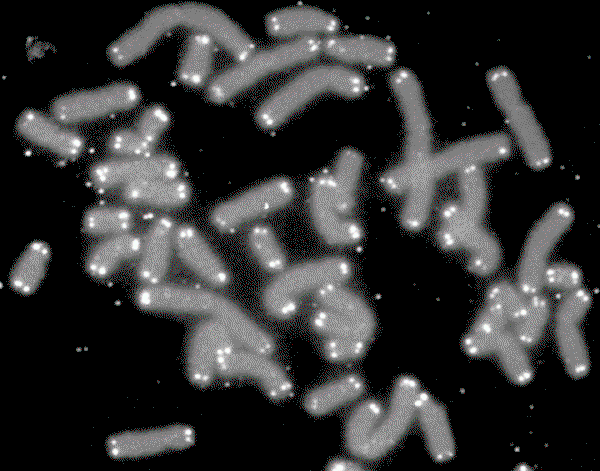
Ageing & Death, Inevitable or Not?
*Ageing and the cause of death. Monamine oxidase, a death system? Natural death, does it exist? Are death systems reasonable? We will discuss these and related questions in 2 articles, of which this is part 1.*
**I. Ageing and the Cause of Death**
Ageing is a very inexact concept. When used in everyday speech, it is hardly ever a question of genuine ageing, but of disease or deteriorating health; often of self-afflicted damages, gradually accumulating through several decades and eventually reaching a critical point where noticeable symptoms occur. Few individuals, if any, are dying of old age; or are even starting "natural" ageing before they decline and die by slowly advancing degenerative disease. Those diseases are not necessarily age-related, but it takes so long for them to develop that they are commonly (and often incorrectly) defined as such.
There are several theories about genuine ageing, what it is, what causes it, etc. Most scientists believe that there is only one explanation and if it were just possible to find it, the mystery of ageing and death itself would finally be solved. Personally, I disagree. Ageing, the body's final breakdown and death - whether it is due to genuine ageing or to disease - is certainly a complex and complicated process, involving many factors.
One theory is the one about oxidation and free radicals. Many, many studies have shown that it is firmly anchored in reality, although it has proved to be more complicated than first believed to be. But it deals with the origin of disease and death by disease, not with genuine (natural) death.
A second theory claims that the cells are all the time amassing waste and that they cannot get rid of all of it. Gradually the amount will grow to a level where the cell can no longer function properly. It declines, gets dysfunctional and finally dies.
This procedure certainly takes place, waste amasses when the natural cleansing system is over-loaded or reduced in capacity. But this is not inevitable. There are methods to cleanse the cells. This is a theory of the origin of disease, but again, not one of the causes of natural death.
A third theory claims that the immune system is declining with increasing age, finally getting so weak that diseases claim and kill you. But is this a theory at all? It is an observation of two coinciding phenomena, high age and weak immune system, but why would there be a causal relation between them? Probably there is not. A declining immune system is, in my opinion, a symptom of disease, not of calendric age.
Theory number four assumes that the enzymes in the cells' interior are ageing, getting worn out after having functioned for a certain length of time. After that they gradually become less efficient and finally stop working entirely. Then the biochemical processes of the body stop and you die. Here, too, we might question the causal relation, but we can save ourselves that trouble. This theory has been disproved by several studies. They have shown that the enzyme activity and the protein synthesis as such stay at the same level irrespective of the individual's calendric age. A long time in a bad chemical environment can be bad for the enzymes and inactivate or kill them, but not age as such.
**II. Monamine Oxidase, a Death System?**
Do we have pre-programmed, built-in death systems which prevent us from living too long? That is the idea behind some theories (as theory three and four above). There is no proof of anything like that. On the other hand, there is no proof against it either. As soon as observations are indicating a death system, there is always the problem of causality and coincidence. Many processes which have first been considered a result of ageing have later been shown to be stoppable or even reversible.
One process I would like to mention is the seemingly age-related decline of dopamine.
Dopamine is a neurotransmitter, one of the many chemicals that carry signals between nervous cells. Without going into too much scientific detail here and now, suffice it to say that it is essential to vitality - that is to say such fundamental functions as fine motor control, immune function and sex-drive. Indeed it seems to be related to ageing itself.
The rate at which dopamine declines varies from individual to individual, but on an average the level is relatively constant up to 40-45 years of age, then it declines by about 13% per decade. When it reaches 30%, you get Parkinson's symptoms. When it reaches 10% you die.
MAO (Monamine oxidase) is an enzyme regulating the breakdown of neurotransmitters (mainly used ones). Levels of MAO increase with age and thus levels of neurotransmitters (like dopamine, serotonin and noradrenaline) decline with age. [In the United States "noradrenaline" is called "norepinephrine".]
Substances acting as MAO inhibitors can correct this and reduce the (age-related?) fall of neurotransmitters. Too much inhibition, however, can be dangerous, building up too high levels of neurotransmitters and causing hyper stimulation, a state that is related to the effect of amphetamine, including a serious and dangerous condition called the "cheese reaction".
The trick would be to use an inhibitor of only one form of MAO, called MAO-B. (The other form is called MAO-A.) Used in the correct dose it would achieve the desired effect without causing any of the undesirable side-effects. While usually MAO inhibitors are inhibiting both MAO-A and MAO-B, there is one known substance that is "selective", that is to say it inhibits only MAO-B. In medical literature it is usually referred to as "deprenyl" or "selegiline".
Deprenyl was long considered as very safe, one of the safest medical chemicals around. It had been used since the 1950s, so it was well tested. Its main use is against Parkinson's disease, but it is widely used for anti-ageing purposes as well. On laboratory rats it has been shown to extend the maximum lifespan by 40%! However, negative side-effects have been discovered and today its use has dropped. A new generation of MAO-B inhibitors, safer than Deprenyl, might be on is way, but nothing so far is suitable for self-medication.
It is not known why MAO increases with age. Is it a result of some sort of degenerative disease that can be stopped and even reversed? Or does it depend only on ageing itself? If age is indeed the only reason (which I doubt), we would have a genuine death system here whose purpose would be to limit the length of our lives.
III. Natural Death, Does It Exist?
By natural death I mean a death caused by age only, or by disease that is caused by age only - which neither optimal conditions nor extensive knowledge could have prevented. We will never reach such conditions and knowledge, so the question is purely theoretical. But does such a natural death exist? The most reasonable answer is that I don't know. We don't know. Science doesn't know. And we probably never will.
So, how long is it theoretically possible to live?
There is no proof of any specific limit and there is no proof that any specific limit exists, or would ever be possible to establish. The only thing one can say is that with the combination of old and new knowledge, it is possible to live a very long life, an active life in good health.
Some optimists believe that total immortality would be possible - never to die. In my opinion that is wishful thinking. Total immortality is impossible. Even if there would be no other objection (which is very unlikely), the matter of adaptation to changing outer conditions would sooner or later require more than an individual of any species would be able to handle.
Between generations there can be leaps of adaptation, due to mutation or due to natural selection slowly and gradually changing a species to make it better suited to manage in a new environment. But for a separate individual of any species, including humans, adaptability is limited. We can extend it by the use of tools, of technology, but somewhere there is a limit.
This is why species with a very rapid regeneration, like bacteria, or even mice, can so quickly adapt themselves to a very much and fast changing environment.
IV. Are Death Systems Reasonable?
Would there really be any evolutionary purpose in an inherent system that prevents us from living too long?
That would depend on what we think is the purpose of life. From a purely biological perspective, it would appear to be regeneration, to produce offspring and thus preserve the species. Then the survival of one individual beyond what is needed to produce (and, when applicable, raise) offspring, would be undue strain on the environment and on available resources. From that perspective, a system of automatic biological suicide could make sense.
But can a long individual life never be an evolutionary advantage? It has previously been mentioned that a species with a rapid regeneration is better at adapting to changes of the surrounding environment. So for biological adaptation, a rapid regeneration is an advantage.
Rapid regeneration combined with long individual life-spans would not be advantageous. It would quickly lead to overpopulation of that species. Required resources (like food) would get exhausted and the environment would be poisoned by trash. The species would not survive.
Consequently, successful species with rapid regeneration also have relatively short life-spans; while long-living individuals reproduce relatively slowly.
But if biological adaptation was the only precondition for success, then all species would evolve to faster and faster regeneration, and consequently shorter and shorter individual lives. This is not the case, so obviously there are other factors involved.
Such a factor is, I think, knowledge. Not inherited instincts, but achieved knowledge. Learned from experience or from other individuals. Such knowledge increases the ability to survive. This is intelligence, creativity and the ability to build a mental or intellectual culture (this should not be understood only in a limited human sense) - and to hand it over to the next generation. It requires time, individual life-time. Teaching and learning take time.
From this perspective, a long life is evolutionarily advantageous. With more time, you can gather more useful knowledge, and the transfer of knowledge gives a useful task for individuals beyond reproductional age.
Too long individual lives would still be disadvantageous, because they would require too slow reproduction to maintain the population balance. So the evolutionary optimum is probably somewhere in between. Medium life-spans, medium speed of reproduction.
(Read also part 2 of this discussion: Telomeres, Rate of Living, Hormesis & Ageing.) https://read.cash/@Mictorrani/telomeres-rate-of-living-hormesis-ageing-c90921fb
(This article is based on material previously published in TMA & Meriondho Leo 2005-2016, and in my e-book “Paradigms of Health”, 2019.)
Copyright © 2005, 2016, 2019, 2021 Meleonymica/Mictorrani. All Rights Reserved.
*(Lead image by Lothar Dieterich/Pixabay, CC0/Public Domain. The colours of the original have been digitally changed.)*
Here you find my articles related to health & medicine. https://read.cash/@Mictorrani/index-over-my-articles-at-read-cash-5f7c1e34#health-amp-medicine-for-covid-19-see-covid-19
Interested in health & medicine, join my community "The Mechanisms of Health (d52e)" https://read.cash/c/the-mechanisms-of-health-d52e
You find all my writings on Read.Cash, sorted by topic, here. https://read.cash/@Mictorrani/index-over-my-articles-at-read-cash-5f7c1e34
My 5 most recent articles:
Retrospection 7 https://read.cash/@Mictorrani/retrospection-7-ec5d208c
Vitamin D – Underrated Vitamin? https://read.cash/@Mictorrani/vitamin-d-underrated-vitamin-5ca83053
Vitamin A - Function & Need https://read.cash/@Mictorrani/vitamin-a-function-need-c8e8169e
Suggested Reading 1 https://read.cash/@Mictorrani/suggested-reading-1-31c37c3b
Amber, Organic Gem with a Long History & Many Properties, Part II
https://read.cash/@Mictorrani/amber-organic-gem-with-a-long-history-many-properties-part-ii-fa6314f8
Retrospection 7
*In this retrospection, I discuss different aspects of colour, especially purple, and eyes, light, vision and blindness. We'll see how these subjects connect to health, science, history, symbols and philosophy.*
People who visit my Index, are sometimes confused when they discover that some articles can be found listed in more than one place.
I assure you that it is no mistake. It is because some articles belong to more than one topic. Let's say I would write about cats in Egypt; should it be labelled “Egyptology” or “Cats”? In such cases, I enter the article under both labels.
There is also the case with extensive and very general topics, such as “Health” and “History”, that they contain so many quite diverse articles that (for the convenience of my readers) I have also listed some of them under more specific labels. For instance, an article about the history of coffee appears as well under general “History” as under more specific label “Coffee”; and article about eye health as well under “Health” as under “Eyes”. But note then that labels as “Coffee” or “Eyes” also contain articles discussing other aspects of coffee than history and other aspects of eyes than health.
Sometimes I have completely removed a subtopic from the main topic. Japanology and Egyptology cover subjects that are indeed history, but I don't include them under the general label ”History” at all.
New labels are created continuously as the Index grows, so everything is not entirely consistent. I apologise for that. The index is ever-changing and evolves as my published production at this platform grows, so it tends to become slightly erratic. Yet I hope it to some extent serves its purpose to help my readers to navigate in my production.
Today we will look at some less extensive topics. First “Purple”, then “Eyes, Light, Vision, Blindness”. At first sight, this might seem a set of entirely different subjects, but they are related. https://read.cash/@Mictorrani/index-over-my-articles-at-read-cash-5f7c1e34#purple https://read.cash/@Mictorrani/index-over-my-articles-at-read-cash-5f7c1e34#eyes-light-vision-blindness
From the beginning a neurologist & brain surgeon (I later slipped into other specialities as well), I have always been interested the senses of perception, and especially vision. Quite frankly, vision and eyes still hold mysteries we have not yet been able to penetrate completely. This subject also leads to the nature of light, and colour. My interest in colour grew far beyond the medical discipline, as I think can be seen from writings, even if I have not published much about colour here – not yet anyway.
The subject of colour brings us to our first series today: “Purple”. It contains four articles: https://read.cash/@Mictorrani/index-over-my-articles-at-read-cash-5f7c1e34#purple
Pontifex Maximus & The Imperial Purple of Rome, in which I discuss how the Roman legacy still lives in the purple and the office of the Roman Catholic Pope, a direct continuation of the old Roman office “Pontifex Maximus”. https://read.cash/@Mictorrani/pontifex-maximus-the-imperial-purple-of-rome-1bd0c336
Purple Earth; has the “green planet” been the “purple planet”? https://read.cash/@Mictorrani/purple-earth-5ec47aaf
When Something is so Red, it is Purple: Purple in Chinese & Japanese Symbology. Here I combine my interest in colour with another interest of mine: symbols (which we will discuss in a future Retrospection). https://read.cash/@Mictorrani/when-something-is-so-red-it-is-purple-purple-in-chinese-japanese-symbology-70e051af
Purple Light? It Doesn't Exist! And what is Visual Purple? Physics and vision. https://read.cash/@Mictorrani/purple-light-it-doesnt-exist-and-what-is-visual-purple-1f1004b0
The second topic today is “Eyes, Light, Vision, Blindness”, which at present includes 15 articles, apart from one of the purple texts: https://read.cash/@Mictorrani/index-over-my-articles-at-read-cash-5f7c1e34#eyes-light-vision-blindness
COLOUR & NEGATIVE REALITY: Do we sometimes see what is not?. This is philosophy; some thoughts based on how we perceive colour and how the brain represent colours. https://read.cash/@Mictorrani/colour-negative-reality-do-we-sometimes-see-what-is-not-521c2868
Blue Light, Blindness, Sleep Disorder & Cancer. In my opinion, one of my more important articles. About how so-called blue light harms us. https://read.cash/@Mictorrani/blue-light-blindness-sleep-disorder-cancer-c2c94afb
The Cult of the Green Fairy; La Fée Verte - Appendix: The colour of Absinthe. This link leads to a subsection of the article. It is about why absinthe is green, how colour affects taste and about blindness. https://read.cash/@Mictorrani/the-cult-of-the-green-fairy-la-fee-verte-641c4182#appendixdiscussion-the-colour-of-absinthe
Being Blind and Suddenly See: Bliss or Curse?. It can be either. https://read.cash/@Mictorrani/being-blind-and-suddenly-see-bliss-or-curse-5fcff9e1
Which land-living animal has or had The Most Powerful Eyes ever? A monster familiar to most of you: Tyrannosaurus Rex! https://read.cash/@Mictorrani/the-most-powerful-eyes-9dc49a42
The Importance of Contrast. Philosophy again, but most obviously relevant for vision. https://read.cash/@Mictorrani/the-importance-of-contrast-37e75f60
The Apple of Your Eyes & Too Much Shame Makes the Eyes Drop Out. This is about eyes and language. https://read.cash/@Mictorrani/the-apple-of-your-eyes-too-much-shame-makes-the-eyes-drop-out-ef44a499
The Eye As A Metaphysical Symbol. The title is self-explaining. https://read.cash/@Mictorrani/the-eye-as-a-metaphysical-symbol-cbe19c0a
What is an Eye? For What Purpose Do We Have Eyes? Questions to which we do not have as conclusive answers as most people believe. https://read.cash/@Mictorrani/what-is-an-eye-for-what-purpose-do-we-have-eyes-25f8ec80
Colour Vision & Why is Human Colour Blindness so Relatively Common? About colour blindness and genetics. https://read.cash/@Mictorrani/colour-vision-why-is-human-colour-blindness-so-relatively-common-b8d9f4c4
Lutein & Zeaxanthin: Nutrients that Protect Your Eyes from Ageing. Nutrition and eye health in combination. https://read.cash/@Mictorrani/lutein-zeaxanthin-nutrients-that-protect-your-eyes-from-ageing-9a87f2a3
The Pineal Gland - The Third Eye. In the brain we have an endocrine gland which is also an eye, the legendary third eye. https://read.cash/@Mictorrani/the-pineal-gland-the-third-eye-fb223c5c
Eye Health + Eye Exercise Program. This is something all people would need to read, especially today, when a continuously increasing number of people spend most of their time in front of a computer or mobile phone screen. Some simple exercises would lessen the risk for eye damage – although no exercises will remove the harm caused by the blue light of the screens. https://read.cash/@Mictorrani/eye-health-eye-exercise-program-62736d7d
The two last articles are related to seeing and art:
Art as Visual Music & The Importance of Form https://read.cash/@Mictorrani/art-as-visual-music-the-importance-of-form-a040976f
Practising Art: The Art of Seeing & Beyond Mere Seeing https://read.cash/@Mictorrani/practising-art-the-art-of-seeing-beyond-mere-seeing-a062694a
Copyright © 2021 Meleonymica/Mictorrani. All Rights Reserved.
You find all my writings on Read.Cash, sorted by topic, here. https://read.cash/@Mictorrani/index-over-my-articles-at-read-cash-5f7c1e34
My series “Retrospection” is primarily created for new readers of mine, as a manual into my production at this platform so far - but it can be read by anyone who wants to explore my articles topic by topic, rather than doing so in chronological order. In addition to that, my retrospections contain new comments and from time to time short personal stories connected to the relevant topic or topics. https://read.cash/@Mictorrani/index-over-my-articles-at-read-cash-5f7c1e34#retrospection
Previously published “Retrospections” are:
Retrospection 1 (About Japanese Art & Cultural History.) https://read.cash/@Mictorrani/retrospection-1-a78bc572
Retrospection 2 (About Egyptology & about Coffee.) https://read.cash/@Mictorrani/retrospection-2-a54911f7
Retrospection 3 (About Quotes, Sayings and Proverbs; and about creating new words.) https://read.cash/@Mictorrani/retrospection-3-d8bc8727
Retrospection 4 (About dinosaurs, reptiles, dragons and to some extent birds.) https://read.cash/@Mictorrani/retrospection-4-0c1add0e
Retrospection 5 (About Privacy, Freedom and Politics.) https://read.cash/@Mictorrani/retrospection-5-aaa611cc
Retrospection 6 (Suggested reading. About ***other*** read.cash authors and their articles.) https://read.cash/@Mictorrani/retrospection-6-f632199c
*My 5 most recent articles:*
*Vitamin D – Underrated Vitamin?* https://read.cash/@Mictorrani/vitamin-d-underrated-vitamin-5ca83053
*Vitamin A - Function & Need* https://read.cash/@Mictorrani/vitamin-a-function-need-c8e8169e
*Suggested Reading 1* https://read.cash/@Mictorrani/suggested-reading-1-31c37c3b
*Amber, Organic Gem with a Long History & Many Properties, Part II* https://read.cash/@Mictorrani/amber-organic-gem-with-a-long-history-many-properties-part-ii-fa6314f8
*Amber, Organic Gem with a Long History & Many Properties, Part I* https://read.cash/@Mictorrani/amber-organic-gem-with-a-long-history-many-properties-part-i-9ea705bb
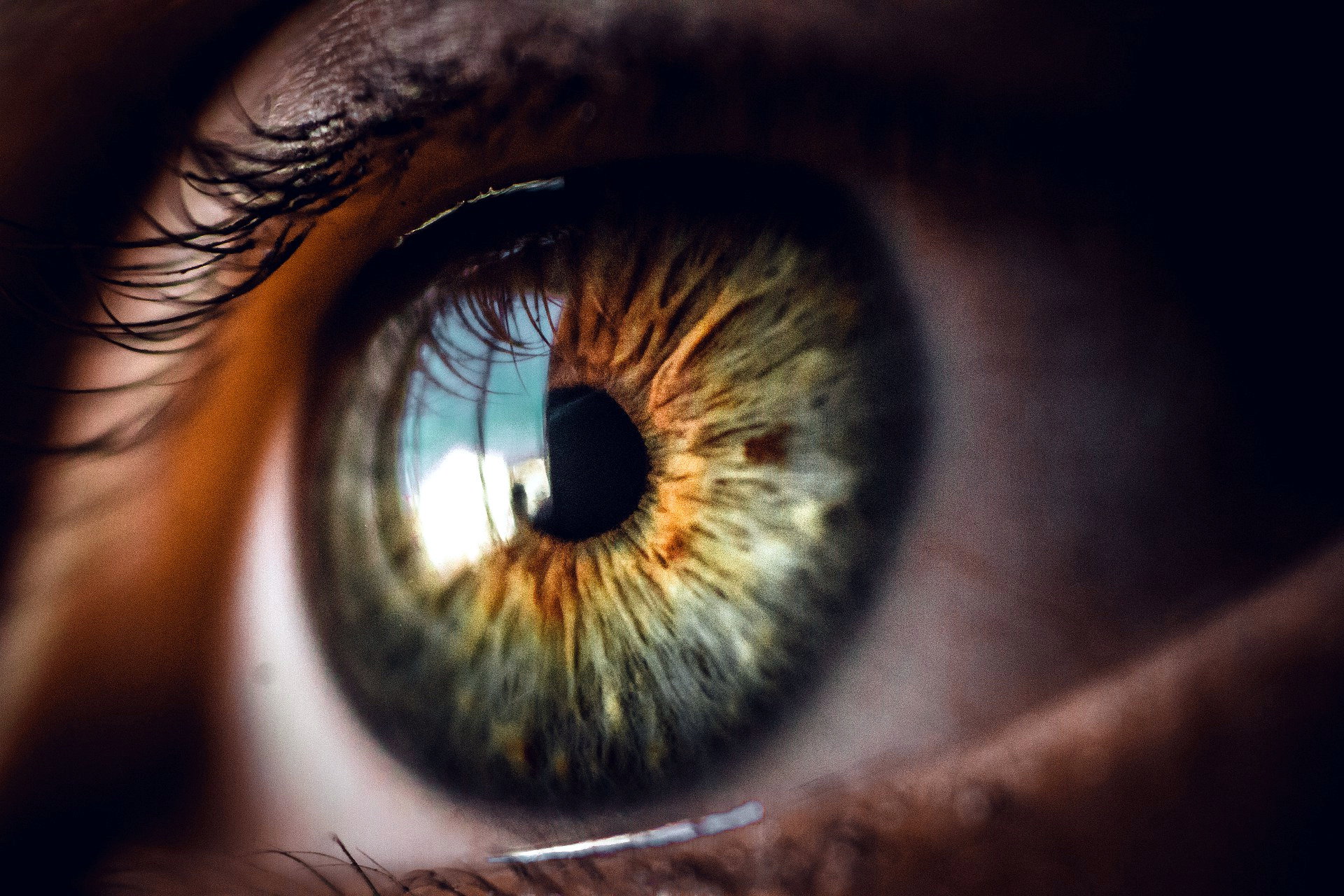
Vitamin D – Underrated Vitamin?
INTRODUCTION
Vitamin D is a group of fat-soluble substances of which more than 10 different ones are known. Of these, D2 (***ergocalciferol***) and D3 (***cholecalciferol***) are the most important to humans. They are generally considered as interchangeable – but they are not. D3 has a much stronger effect than D2. As for supplemental vitamin D, one should ***always take vitamin D3***.
Except for in some mushrooms, such as shiitake, this vitamin exists only in animal products like fish, egg yolk, and dairy products. Just as with vitamin A, the richest source of vitamin D is fish liver, which, unfortunately, today is so full of environmental toxins that it should be avoided at all cost. It is very difficult, perhaps impossible, to cover one's need of vitamin D through the diet.
Under certain conditions D3 can be produced by exposing the skin – and its fat – to sunlight. But note that it must be the genuine fat. If you use sun oil, you destroy the preconditions for D3 production. Interestingly, it is cholesterol that is synthesised to vitamin D. (Cholesterol is not always harmful but has its essential functions. Too little cholesterol might be as serious a problem as too much.) Sunscreens and windows also block vitamin D production, and so do heavy air pollution, as in big cities. Also, if you live far from the equator, the sun is too weak to provide vitamin D a large part of the year.
The sun must be strong in order to produce vitamin D. As a rule, you must expose the skin some time between 10am and 2 or 3pm during a time of the year with strong sunlight (any time around the Equator - in the summer in the Northern Hemisphere). It is not enough that the sun is shining.
The time required depends on many factors. But 30 minutes per day ought be enough, if a relatively large part of the body is exposed – and if you have relatively fair skin, no sunscreen or chemicals on the skin, and if the air is not too polluted. Perhaps even 20 minutes is enough. The only way to find that out is to take the serum test, then expose the skin to sunlight 20 minutes every day for some weeks or months, and then take a new serum test. Then you can see how much vitamin D you did get from that specific time of exposure. Perhaps it is enough, or perhaps you need to spend much more time in the sun. Or, given the dangers lurking in the radiation from the sun, you might prefer to take supplements.
Sunlight cannot cause vitamin D overdosing. UVB rays cause the production of vitamin D in your skin, while UVA tends to destroy surplus vitamin D. It keeps itself in balance.
The liver converts the vitamin to calcidiol, after that it is converted further to calcitriol, mainly in the kidneys, but also in the immune system. This is a very biologically active hormone-like substance which is responsible for most of the effects of vitamin D. (Vitamin D, or calcitriol, is sometimes classed not only as hormone-like, but as a hormone. There is some justification for this.)
Certain species of phytoplankton in the ocean synthesise vitamin D from sunlight and have done so for more than 500 million years.
Most vertebrates (and some mushrooms!) also produce vitamin D from sunlight, although for those with fur and feathers being in the way, making it impossible for sunlight to reach the skin, it is produced in the oils of the fur and feathers, then they are ingesting it through grooming. Cats and dogs, along with a few other mammals, have insufficient ability for this, and must have dietary vitamin D to satisfy their need.
FUNCTIONS
Vitamin D is best known for promoting calcium absorption and to maintain a balance between calcium and phosphorus in the blood - and consequently for building up bone tissue and teeth. It is also essential for the immune system. Some studies suggest other important functions, such as protection against skin cancer. So far this is insufficiently studied, but it makes perfect sense. Why would exposure to sunlight cause production of the vitamin on the skin? The logical answer would be, to protect from sun-related damage!
In *From Fungi To Cancer* (e-book, 2012), I wrote:
*Vitamin D deficiency has been shown to be involved in the development of a large number of diseases, for instance: Alzheimer's disease, schizophrenia, asthma, cystic fibrosis, hypertension, migraines, type 1 diabetes, rheumatoid arthritis, multiple sclerosis, even tuberculosis, and possibly autism - and, of course, cancer. It is strongly indicated in all cases of malignant melanoma. This vitamin regulates thousands of different genes. [...]*
Some studies suggest that it has an ability to protect against certain other forms of cancer as well, but the results are not conclusive. The types of cancer which have been indicated are in the bladder, prostate, ovaries, rectum, and breasts.
Autism might be caused by prenatal deficiency of vitamin D, although this is not undisputed. “Prenatal” means before birth, so what we really talk about here is pregnant women and what they do or do not give their unborn child.
Male production of testosterone is dependent on vitamin D. I'm sure that many cases of decreasing testosterone levels are a result of chronic D-vitamin deficiency. https://read.cash/@Mictorrani/testosterone-how-to-keep-up-the-level-27f3e52e#sun-amp-vitamin-d
Vitamin D is involved in the ageing process. Too little as well as too much of it accelerates ageing and then it affects both physical and mental functions. The problem then is to determine the optimal dose.
Overdose of vitamin D can be dangerous and lead to an excessive calcium absorption, with deposits in tissues and organs as a consequence. This risk, however, is strongly reduced if D-vitamin is combined with vitamin K2. It is also dependent on the ratio between present calcium and magnesium. If the amount of magnesium is less than 40% of the amount of calcium, calcium becomes a potential danger. Ideally, the amount of magnesium should be 50% of the amount of calcium. So, for every 100mg calcium you take, you must also take 40-50mg magnesium. This is an often overlooked fact.
The risks with vitamin D has been exaggerated. For a long time, 400 I.U. was the recommended daily dose, and it was considered safe only up to 800 I.U. per day, at least for self-administration. Studies from the last years reveal another picture, where both need and safe dose are much higher. Indeed, the optimal dose might be as high as 10000 I.U. per day. This is not true for every individual though, so we must find a way to determine the individual's optimal dose.
Obese people need more vitamin D than others. That is because body fat binds some D-vitamin which is not released to the blood. To reach the same level in the blood, an obese individual might sometimes need twice as much vitamin D as a non-obese. But the amount is proportional to how much body fat there is.
This goes for all fat soluble vitamins. It is also to note that weight reduction can cause a release to the blood of a lot of fat soluble compounds that have been stored in the fat, including vitamins. This can dramatically increase the levels, for instance during a fast.
The danger with vitamin D is that it can lead to undesirable calcium deposits in various tissues, which can cause, for instance, cardiovascular disease. This risk is eliminated for reasonable doses by taking vitamin K2 at the same time as vitamin D. Yet everything is not known about vitamin D, one should check the level in the blood and keep it within the recommended range.
THE SYNERGY OF VITAMIN D & VITAMIN K2
Today, official recommendations of vitamin D are around 2000 I.U. per day, and anyone can safely take that as a supplement. However, if you take more than 1000 I.U. per day, you should also take 100mcg vitamin K2. If your take more than 2500 I.U. vitamin D3, you should take 200mcg vitamin K2. That is because vitamin K2 controls how calcium is distributed in the body. It makes the calcium come in the right place (for instance bones) and prevents it from being stored in places where it can harm you (for instance arteries). Supplemental vitamin K2 is important if you take vitamin D regularly.
***Warning: People who take anticoagulant medication must consult their doctor before taking extra vitamin K2!*** This is because *some* anticoagulant medicines work by vitamin K inhibition.
Vitamin D deficiency is common everywhere in the world. However, it is over the average among children, young women, people of old age, and those with dark skin. The latter is because the ability to produce vitamin D from sunlight is better, the lighter the skin is.
HOW TO FIND YOUR OWN OPTIMAL DOSE
The best approach is to start by measuring the level of vitamin D in the blood serum. This can be done by a relatively simple blood test; a 25-hydroxivitamin D or 25(OH)D test. The result is expressed in terms of ng/ml. Less than 20ng/ml is commonly defined as *deficiency*. Less than 30ng/ml is sometimes called *insufficiency.* However, there is no absolute scientific consensus about what is an optimal level. Different sources give different values, anywhere between 30ng/ml to 80ng/ml.
I would say that less than 34ng/ml is deficiency, and that the optimal level is about 60ng/ml. That is according to the current level of knowledge.
There are two different tests. The one you want is ***25(OH)D***, also called ***25-hydroxivitamin D***. The other one is called 1,25(OH)D and it is not relevant in this context. Make sure you get the right one.
If you are serious about vitamin D, you must start by taking this test. When you know your level - which depends on numerous factors, such as your normal exposure to sun, your pigmentation, if you are obese, your diet, medicines and drugs you take, and so on - you also know if you want to increase it, which you probably want. Then comes the difficult question about how much vitamin D to take. There is no clear answer to that, because people react differently to supplemental vitamin D3. You must figure that out by trial and error. If you have anywhere less than 30ng/ml, you can start with 2000 I.U. per day. After two months of intake, make a new 25(OH)D test and compare the numbers. Then you'll see how much your serum level has increased and if you need to adjust your supplemental intake further.
Even if higher doses are required in many cases, be careful if you are going over 4000 I.U. per day – and do not under any circumstances take more than 4000 I.U. per day without taking serum tests. These tests are the only way to find out if you get sufficient vitamin D. Or by all means, if you get too much. If your test shows that you have more than 80ng/ml, you need to consider how to bring the level down.
VITAMIN D AND SLEEP
A good vitamin D status is important for sound and healthy sleep. Indeed, a vitamin D deficiency might cause sleep disorders. That is so common that if you have any problem with your sleep, your vitamin D status is one of the first things to look at.
If you have too much vitamin D in the blood, that also causes sleep disorders. So here we have the typical pattern for vitamin D, that there is a rather narrow optimal level where both too much and too little weaken or eliminate the positive effects.
Vitamin D inversely relates to *melatonin*, the hormone that makes us sleep. In some cases, taking vitamin D temporarily disturbs sleep just after the intake – so it makes sense to take vitamin D supplements in the morning, not in the night or late in the day. An extra dose of vitamin D can also help you keep awake if you for some reason must not sleep.
(This article is based on material previously published in Meriondho Leo, and in my e-book “Nutrients & Dietary Supplements”, 2019.)
Related article: Testosterone: How to Keep Up the Level https://read.cash/@Mictorrani/testosterone-how-to-keep-up-the-level-27f3e52e
Other articles related to vitamins/nutrients:
Why Dietary Supplements are Needed https://read.cash/@Mictorrani/why-dietary-supplements-are-needed-d70e789c
Supplements, Getting Them Right: Some Points to Consider https://read.cash/@Mictorrani/supplements-getting-them-right-some-points-to-consider-b4d57960
Iron & Cancer https://read.cash/@Mictorrani/iron-cancer-3ab080b8
Co-Enzyme Q10 & Carnitine https://read.cash/@Mictorrani/co-enzyme-q10-carnitine-42291565
Lutein & Zeaxanthin: Nutrients that Protect Your Eyes from Ageing https://read.cash/@Mictorrani/lutein-zeaxanthin-nutrients-that-protect-your-eyes-from-ageing-9a87f2a3
Not Only Beta-Carotene: Carotenoids (Carotenes & Xanthophylls) https://read.cash/@Mictorrani/not-only-beta-carotene-carotenoids-carotenes-xanthophylls-d3ae6750
Salicylic Acid: Is Aspirin a Vitamin? https://read.cash/@Mictorrani/salicylic-acid-is-aspirin-a-vitamin-61990a03
Vitamin A - Function & Need https://read.cash/@Mictorrani/vitamin-a-function-need-c8e8169e
Copyright © 2013, 2017, 2021 Meleonymica/Mictorrani. All Rights Reserved.
*Here you find my articles related to* *nutrients & supplements (vitamins, minerals, etc.)* *and here to* *health & medicine**.* https://read.cash/@Mictorrani/index-over-my-articles-at-read-cash-5f7c1e34#vitaminsmineralsnutrients https://read.cash/@Mictorrani/index-over-my-articles-at-read-cash-5f7c1e34#health-amp-medicine-for-covid-19-see-covid-19
Interested in health & medicine, join my community "The Mechanisms of Health (d52e)" https://read.cash/c/the-mechanisms-of-health-d52e
You find all my writings on Read.Cash, sorted by topic, here. https://read.cash/@Mictorrani/index-over-my-articles-at-read-cash-5f7c1e34

Vitamin A - Function & Need
INTRODUCTION
Vitamin A is a collective name of ***retinoids***, a number of related compounds with effects that are partly different. Presently, four retinoids are known: ***retinol***, ***retinal***, ***retinoic acid***, and ***retinyl esters***. Animal food is their only source. Under ideal conditions, however, it is possible for the body to convert certain ***carotenoids*** – whose source is vegetarian – to retinoids. This means that it is not necessary to eat animal food in order to get vitamin A. These carotenoids are sometimes called ***pro-vitamin A.*** Far from all carotenoids have pro-vitamin A capacity though, only four of them have shown to possess that quality: ***alfa- beta-*** and ***gamma-carotene***, plus the xantophyll ***beta-cryptoxanthin***.
For this conversion to take place, you must possess an almost perfect intestinal microflora, plus have an enzyme called 15-15'-dioxygenase. (Many mammals have this enzyme, but a few don't. Cats, for instance, are lacking it and cannot convert carotenoids to vitamin A. This is perfectly logical, cats are made for eating only animal food, they cannot digest anything else and should never eat anything else. They have no use for an ability to extract nutrients from the plant kingdom.) Some presence of a little dietary fat is also necessary, since both carotenoids and vitamin A are fat-soluble. Without some fat (as a solvent) in the intestines, neither conversion nor absorption will take place. https://read.cash/@Mictorrani/the-bodys-inner-outer-surface-and-its-inhabitants-109dfc8b https://read.cash/@Mictorrani/the-importance-of-dietary-solvents-42f2e000
The use of drugs and certain medicines, the presence of toxins, a bad diet, as well as everything else that corrupts the intestinal microflora, might seriously disturb, or even block conversion.
Vitamin A in animal foodstuffs comes as a retinyl ester, mainly retinyl palmitate, which is converted to retinol in the intestinal area. Retinol functions as the basic form of vitamin A, and it is the form in which it is stored in the body. That's why vitamin A is sometimes described as retinol. Chemically, it is a fat-soluble aliphatic alcohol.
Retinal, the retinoid which is the result of conversion of carotenoids, is intraconvertible with retinol. This means that retinol can be converted to retinal, and retinal can be converted to retinol. Retinoic acid, however, is created from retinal in an oxidation process that is irreversible.
Based on the fact that retinol and retinal are intraconvertible, we are able to conclude that vitamin A from animal and vegetarian sources are of equal value for human needs, and that we don't need both. We can get all the vitamin A we need from either one.
If you rely on carotenoids as your source of vitamin A, it might be useful to know that beta-carotene per weight unit results in twice as much retinol equivalents as alfa-carotene, gamma-carotene, or beta-cryptoxanthin. (Retinol equivalents, or retinol activity equivalents, are units of measurement of the degree to which carotenoid-based pro-vitamin A can be converted to retinoid vitamin A.)
There is a widespread fear of vitamin A overdose. Indeed it can be dangerous, but the risk is small, the dose required for that is very large. Deficiency is a much more realistic risk.
Risk of overdose is eliminated by the use of carotenoids, since no more vitamin A than you need is produced. Carotenoid-based pro-vitamin A is not converted to retinal unless it is needed. But this source is unreliable, unless your intestinal environment is perfect. Some intake of genuine retinol is certainly desirable anyway.
Carotenoids are fat-soluble red-orange-yellow pigments from plants. They are important nutrients in their own right and have many qualities. Here I mention them only for their pro-vitamin A quality. Otherwise they are treated in "Not Only Beta-Carotene: Carotenoids (Carotenes & Xanthophylls) ". https://read.cash/@Mictorrani/not-only-beta-carotene-carotenoids-carotenes-xanthophylls-d3ae6750
Note that contrary to how they are sometimes described, carotenoids are not vegetable forms of vitamin A. Carotenoids are not to be classified as vitamin A at all! Four out of more than 500 known carotenoids have the capacity of being converted to retinoid vitamin A under certain circumstances, but that is just a little of what this family of substances offers in beneficial qualities.
THYMUS
It is a well-known fact that vitamin A activates thymus, thus improving immunity and detoxification.
Thymus is a gland in the chest, just above the heart. Until quite recently its function was unknown, or misunderstood. Today it is seen as a central part of the immune system, and the levels of thymosin (a hormone produced in thymus) is related to the speed of ageing.
This gland grows to its full size (about 30 g) during puberty, after that it tends to atrophy (shrink) rapidly.
Medical literature often describes the early atrophy as "normal", and in a statistical sense of the word it is; it happens to most people. But we know that certain nutrients can cause an increase of the gland's weight. There is absolutely no reason to believe that an early atrophy is "natural" or unavoidable. It can as well be some form of deficiency and degenerative disease.
Results of unpublished studies available to me indicate that very high dose vitamin A can possibly retard, stop, or even reverse thymus atrophy. This would be of importance for anti-ageing purposes, but more research is needed before anything can be said for certain.
OTHER FUNCTIONS
Vitamin A strengthens the cells that cover the body's inner and outer surface. It is important for skin health; and for healthy mucous membranes, for whose continuous re-generation it is crucial. A deficiency leaves the membranes thin and weak.
The eyes need vitamin A, not at least for their ability to see in bad light. All sorts of activities which strain the eyes increase the need for vitamin A. That includes watching television or a computer screen.
As retinal, vitamin A is at the heart of vision, and it is not a coincidence that the retinoids share their word-stem with the retina of the eye. In Purple Light? It Doesn't Exist! And what is Visual Purple? I briefly outlined its role in connection with rhodopsin, visual purple. https://read.cash/@Mictorrani/purple-light-it-doesnt-exist-and-what-is-visual-purple-1f1004b0
As retinoic acid, vitamin A is important for gene transcription and bone metabolism.
Most of the effects of vitamin A are caused by retinoic acid, which is an oxidation product of retinal. There are exceptions, however; for instance eyes and vision, which need pure retinal; and fertility and reproduction, which need retinol, locally present in the body, converted to retinoic acid.
Finally, vitamin A is an anti-oxidant, albeit a relatively weak one. The carotenoids, however, are strong antioxidants. But that has nothing to do with their pro-vitamin A property.
DOSAGE
The RDA is 4500-5000 I.U., double for pregnant or breast-feeding women.
As usual, this is the dose required to avoid symptoms of acute avitaminosis, but optimal health requires more. 10000 I.U. is a better level, and 20000-30000 I.U. is normally without danger - but do not double that in pregnancy or breast-feeding. If you are not sure, stay at 10000 I.U. That is for retinol, which can be toxic if the dose is too high (although normally that requires in excess of 100000 I.U. per day for a long time). If you use beta carotene, this risk is eliminated.
Early symptoms of overdose can be nausea, vomiting, headache, loss of appetite, hair loss, or nosebleed. If you stop taking vitamin A, the symptoms disappear.
A possible danger with high dose beta-carotene, in itself a strong anti-oxidant, has been indicated for heavy smokers and drinkers. The reasons are still insufficiently studied, but if you happen to be among those who abuse alcohol or tobacco, some caution is wise.
AVITAMINOSIS
***Avitaminosis*** is any illness or symptom caused by a deficiency of a vitamin. While chronic deficiency of vitamin A might give symptoms from a large number of systems and organs and contribute to the development of various diseases, the typical result of vitamin A deficiency is related to the eyes. There are two symptoms to be aware of:
One is ***nyctalopia***, or night blindness, which means the ability to see in low light is reduced or lost.
The other is ***Xerophthalmia***, which, if untreated, might progress to ***keratomalacia.***
Xerophtalmia is when no tears are produced and the eye becomes very dry. This can lead to keratomalacia, which is a dry cornea. This condition eventually destroys the cornea and causes blindness.
Xerophtalmia is common in certain parts of the world, especially amongst children; it is a common cause of blindness.
As a prophylaxis, children should always have a vitamin A supplement. Breastfed children can start after 6 months, but those who are not breastfed need it sooner.
For retinol, the official daily maximum for children of 0-12 months of age is 600 micrograms per day, and it might be wise not to exceed that. Carrot juice, however, can be introduced in the diet early and become a risk-free vitamin A supplement, since the provitamin A of carrots will not convert to retinal unless the child needs and can use more vitamin A. But don't sweeten the juice, refined sugar would corrupt the intestinal microflora and harm the conversion.
DIETARY SOURCES
Retinoid vitamin A occurs only in animal food.
Fish, especially the liver, is a particularly rich source. Sadly, fish liver is often so full of environmental toxins that it is dangerous to eat nowadays. Otherwise the liver of animals that live on fish is also very rich in vitamin A. I refer mainly to seals, and the richest source of all, polar bear liver, which is actually the only natural source that has ever caused a deadly overdose of vitamin A.
The liver of these animals is not within reach for most consumers, and they, too, are as full of environmental toxins as fish liver.
Fish, excluding the liver, still remains a major dietary source of vitamin A.
Another good source within reach in most parts of the world is egg yolk. How much vitamin A it consists depends on the diet of the birds producing the eggs.
Dairy products are a fairly good source, and in some parts of the world, synthetic vitamin A is added to milk. Some studies suggest that this synthetic vitamin A added to milk might actually cause a vitamin deficiency, but this is not sufficiently studied to make any results conclusive. Synthetic vitamin A otherwise seems to mimic natural vitamin A fairly well. I think, however, that it is wise to avoid the synthetic one unless you use therapeutic (very high) doses or live under conditions where natural sources cannot possibly cover your need.
Plenty of vegetarian pro-vitamin A occurs in, for instance, sweet potato (a very rich source of beta carotene), carrot, spinach, tomato, papaya, passion fruit, bell pepper, cayenne pepper, cantaloupe, apricot, celery, oranges, mango, plum, watermelon, Brussels sprouts, green peas and beans, squash, asparagus, leeks, lettuce, turnip greens, Swiss chard, broccoli, parsley, peppermint, and basil.
Generally, pro-vitamin A is present in most dark green fruits and vegetables, and in most yellow-orange and some red fruits.
Remember that in order to get an intestinal conversion of pro-vitamin A to retinal, and also to facilitate absorption, the presence of some amount of dietary fat is required.
(The article is based on material previously published in Meriondho Leo, and in my e-book “Nutrients & Dietary Supplements”, 2019.)
Related articles:
The Importance of Dietary Solvents https://read.cash/@Mictorrani/the-importance-of-dietary-solvents-42f2e000
Not Only Beta-Carotene: Carotenoids (Carotenes & Xanthophylls) https://read.cash/@Mictorrani/not-only-beta-carotene-carotenoids-carotenes-xanthophylls-d3ae6750
The Body's Inner & Outer Surface (and its inhabitants) https://read.cash/@Mictorrani/the-bodys-inner-outer-surface-and-its-inhabitants-109dfc8b
Purple Light? It Doesn't Exist! And what is Visual Purple? https://read.cash/@Mictorrani/purple-light-it-doesnt-exist-and-what-is-visual-purple-1f1004b0
*Copyright © 2013, 2019, 2021 Meleonymica/Mictorrani. All Rights Reserved.*
*Here you find my articles related to* *nutrients & supplements (vitamins, minerals, etc.)* *and here about* *health & medicine**.* https://read.cash/@Mictorrani/index-over-my-articles-at-read-cash-5f7c1e34#vitaminsmineralsnutrients https://read.cash/@Mictorrani/index-over-my-articles-at-read-cash-5f7c1e34#health-amp-medicine-for-covid-19-see-covid-19
*Interested in health & medicine, join my community "**The Mechanisms of Health (d52e)**"* https://read.cash/c/the-mechanisms-of-health-d52e
*You find all my writings on Read.Cash, sorted by topic,* *here**.* https://read.cash/@Mictorrani/index-over-my-articles-at-read-cash-5f7c1e34
*My 5 most recent articles:*
*Suggested Reading 1* https://read.cash/@Mictorrani/suggested-reading-1-31c37c3b
*Amber, Organic Gem with a Long History & Many Properties, Part II* https://read.cash/@Mictorrani/amber-organic-gem-with-a-long-history-many-properties-part-ii-fa6314f8
*Amber, Organic Gem with a Long History & Many Properties, Part I* https://read.cash/@Mictorrani/amber-organic-gem-with-a-long-history-many-properties-part-i-9ea705bb
*Genuine Ultramarine, Once One of the Most Costly Pigments in the World* https://read.cash/@Mictorrani/genuine-ultramarine-once-one-of-the-most-costly-pigments-in-the-world-8ac3c605
*The Human Predisposition to Schism - and What it Means to Bitcoin* https://read.cash/@Mictorrani/the-human-predisposition-to-schism-and-what-it-means-to-bitcoin-897235b2
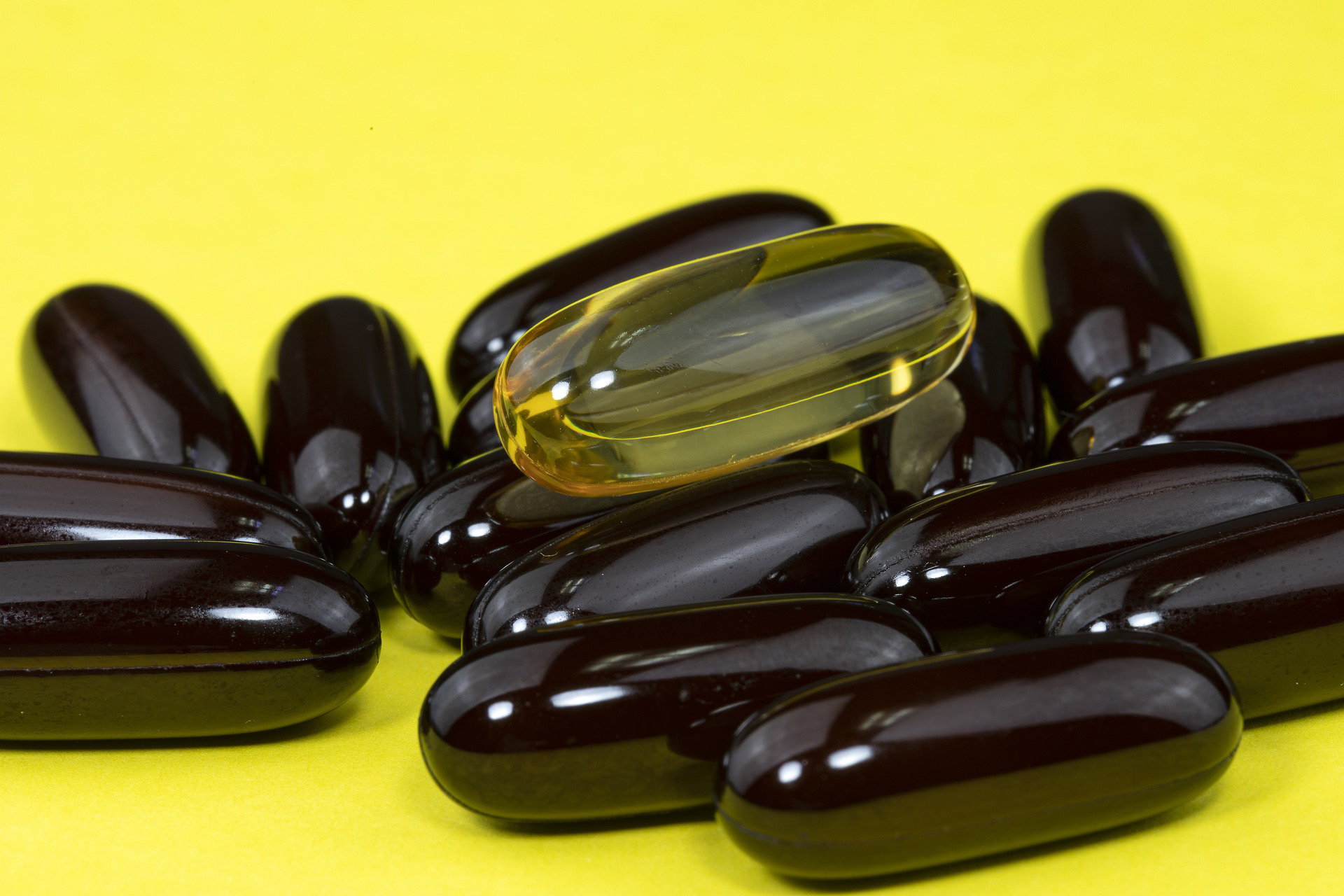
Suggested Reading 1
*In this series, I assume the role of a reader instead of a writer, discussing articles by other writers... things I recommend.*
In my article, Retrospection 6, I brought up some, in my opinion, good authors on this platform. It was received very well; obviously there was a need for some means to help people find good material to read in the wild-grown jungle we have got here now. Since the topic doesn't really belong in my Retrospections, I decided to create a new separate series, “Suggested Reading”, in which I will now and then publish a list of recommended articles, sometimes with short comments. It will mainly cover recent posts, but also bring up some older material, and I hope it will be of help for members seeking good reading. https://read.cash/@Mictorrani/retrospection-6-f632199c https://read.cash/@Mictorrani/index-over-my-articles-at-read-cash-5f7c1e34#retrospection
It is unavoidable that my selection is subjective, based on my taste and on what I happened to find here, so never forget that there surely is other good material as well.
Let's start with Why the use of custodial wallets contradicts the idea of Bitcoin, by @Telesfor . This is important reading for those who have forgotten (or do not care) that one of the pillars of Bitcoin from the very beginning has been “trustlessness”, that the user should never have to trust any third party: not a bank, not a transfer provider, not a government, not anything or anyone. This is what makes your bitcoin yours, what puts you in control. As soon as you rely on a third party, the control is theirs, not yours. https://read.cash/@Telesfor/why-the-use-of-custodial-wallets-contradicts-the-idea-of-bitcoin-8c6b825d
In Hybrid artificial intelligence on the Blockchain?, @Jnavedan speculates about the future. Some food for thought. https://read.cash/@Jnavedan/hybrid-artificial-intelligence-on-the-blockchain-619f6e30
Another thought-provoking post is You Are Living in the Golden Age of Stupidity, where @Nicay05 discusses the mystery of stupidity. I think this topic could have been developed more and perhaps I would have chosen other examples, but in essence I agree to the message it conveys. https://read.cash/@Nicay05/you-are-living-in-the-golden-age-of-stupidity-a9dedfe1
@aniruddhasen said: Why I don't like the concept of country. I don't like it either, although my objections may be different, but the article is important because it questions something that needs to be questioned - while most people just take it for granted, thinking it is unavoidable. https://read.cash/@aniruddhasen/why-i-dont-like-the-concept-of-country-3039a303
@Kraine wrote What exactly is it about perfectionism that makes it so flawed?. I found this being of psychological interest. Perfection is indeed flawed, and I have somewhere claimed that *“****personality is imperfection****”,* by which I mean that, for instance, a perfect work of art lacks in personality and is not at all as interesting as the imperfect one. The same with people, when we love someone, we love them for their personality, for their imperfections. The perfect one (or what appears to be the perfect one) can be admired, but never loved. @Kraine's approach to the subject is different than mine, but well worth reading. https://read.cash/@Kraine/what-exactly-is-it-about-perfectionism-that-makes-it-so-flawed-8176bb22
The most recent article by @justanny is Literature and Poetry: How they Collide in Harmony. This author writes a lot about writing. It is good and useful reading for those of you who aspire to become authors but still lack in experience and knowledge of the technique of writing and building up a good text. https://read.cash/@justanny/literature-and-poetry-how-they-collide-in-harmony-49656dc4
Smartphones Have No Mind, a recent article, where @janatyler sows some seeds of reflection about our use of cellphones, a use that surely is an abuse in many cases. https://read.cash/@janatyler/smartphones-have-no-mind-e240968a
How about a fairy tale where the moral of the story is *"Being different is not a bad thing"?* @gertu13 published *Being different is bad?* just a couple of hours before I write this. It's fiction, but fiction with a message. https://read.cash/@gertu13/being-different-is-bad-57f679af
@Akagaminoneloy00 is a new member who might become interesting. I did read "To Write is to Crystallize Thoughts", and decided to subscribe to see what he/she would deliver more. @Akagaminoneloy00 is right, to write can be a way to organise and clarify one's own thoughts. https://read.cash/@Akagaminoneloy00/to-write-is-to-crystallize-thoughts-56ec306d
Low acid coffee for me, is a personal and informative article, where @Hanzell explains about coffee and acid reflux. Myself a coffee lover - and I, too, have published articles about coffee - I usually read articles I find about coffee, which are not so few. This is definitely one of the better ones. @Hanzell has the knowledge of chemistry and related sciences required to really explain something more than that she likes it this way or that. https://read.cash/@Hanzell/low-acid-coffee-for-me-7745fc9d https://read.cash/@Mictorrani/index-over-my-articles-at-read-cash-5f7c1e34#coffee-health-amp-history
A recent article by @hamedbkh is Secrets on canvas (Part I). He elaborates on female baroque artist Artemisia Gentileschi, and how she used her art for he purpose of revenge. As usual with @hamedbkh, the article is well written and well researched. https://read.cash/@hamedbkh/secrets-on-canvas-part-i-e365a997
Let's finish his survey with creatures from myths and legends, namely dragons. I have touched that topic myself, but I think Dragons and Monsters by @onlymythoughts is worth the while to read as well. https://read.cash/@Mictorrani/index-over-my-articles-at-read-cash-5f7c1e34#dragons https://read.cash/@onlymythoughts/dragons-and-monsters-523f7d8c
If you are into legendary monsters, I suggest you also read The Legend of The Loch Ness Monster by the same author. https://read.cash/@onlymythoughts/the-legend-of-the-loch-ness-monster-11007fbe
Related article: Retrospection 6 https://read.cash/@Mictorrani/retrospection-6-f632199c
Copyright © 2021 Meleonymica/Mictorrani. All Rights Reserved.
You find all my writings on Read.Cash, sorted by topic, here. https://read.cash/@Mictorrani/index-over-my-articles-at-read-cash-5f7c1e34
*My 5 most recent articles:*
*Amber, Organic Gem with a Long History & Many Properties, Part II* https://read.cash/@Mictorrani/amber-organic-gem-with-a-long-history-many-properties-part-ii-fa6314f8
*Amber, Organic Gem with a Long History & Many Properties, Part I* https://read.cash/@Mictorrani/amber-organic-gem-with-a-long-history-many-properties-part-i-9ea705bb
*Genuine Ultramarine, Once One of the Most Costly Pigments in the World* https://read.cash/@Mictorrani/genuine-ultramarine-once-one-of-the-most-costly-pigments-in-the-world-8ac3c605
*The Human Predisposition to Schism - and What it Means to Bitcoin* https://read.cash/@Mictorrani/the-human-predisposition-to-schism-and-what-it-means-to-bitcoin-897235b2
*Retrospection 6* https://read.cash/@Mictorrani/retrospection-6-f632199c
Amber, Organic Gem with a Long History & Many Properties, Part II
*This is the second part of an article in two parts about amber, a remarkable substance with many qualities. Part one can be found* *here**.* https://read.cash/@Mictorrani/amber-organic-gem-with-a-long-history-many-properties-part-i-9ea705bb
**AMBER IN MEDICINE**
In medicine, a mixture of honey and amber was used to treat a number of diseases in throat, ears and eyes. Roman ladies wore amber beads for thyroid. Ibn Sina used amber for many ailments and diseases, and so did Hippocrates. In China, a tranquiliser was made by mixing opium and amber extract. Beads of amber have been used to facilitate teething, especially in Germany. It has been widely used in Europe and the Middle East, against rheumatic and stomach ailments. In the Middle Ages it was used against jaundice, a disease associated with yellow (amber) colour, caused by accumulation of pigment from bile in the blood.
It has been used as a general bio-stimulant, to strengthen and balance the health, to purify body and spirit, and to convert negative energy to positive.
Chinese medicine makes a distinction between different colours of amber, and assigns to each of them specific medical effects - upon external use. For internal use, amber has been used for a large number of diseases; too many to bring up here.
Might amber have genuine medical properties, or is it purely superstition?
Internally: Yes of course it might have medical properties, and it certainly has effects on the biochemistry of the organism. Mainly by force of the major constituent (at least of Baltic amber), succinic acid, which is a potent substance.
Biochemically, succinic acid [1,2-ethane dicarboxylic acid, butanedioic acid, succinate, or German Bernsteinsäure] is part of the citric acid cycle [the Krebs cycle], an important part of our intermediate metabolism; and it is naturally occurring in wine and beer, a result of sugar fermentation. The bitter-acidic taste of such beverages is succinate.
Externally: This is harder to say. Amber is electrostatically active, and the surface contains the highest level of succinic acid - it might affect the local area which it is touching.
Pure chemical succinic acid is an irritant - inhaled, ingested, on skin, in eyes - but as many irritants, it is stimulating if not too concentrated.
**AMBERGRIS**
Ambergris (grey amber) is a substance produced by the sperm whale. For long, it was unknown what it was. Washed up on the beaches or floating on the water, it was confused with real amber. This substance was used by the old Egyptians, burned as incense - and by the old Chinese, who associated it with dragon's spittle. It has also been used as flavour in perfume, and for many medical purposes. It has a reputation of having an aphrodisiacal effect.
Actually, in historical records of the use of amber, it is not always possible to determine if they refer to genuine amber or ambergris. Widely, these two have been confused with each other. In French a clear distinction is made: ambre gris (grey amber) and ambre jaune (yellow amber). In English the term "ambergris" was adopted in the late 15th century.
Why does the whale produce this unique substance? Long unknown, the supposed explanation is that it serves as a counter-irritant, produced when hard-to-digest things, as bones from squids, irritate the stomach of the whale. Some of it is excreted via the faeces, but large pieces come as vomit.
Needless to say, genuine ambergris is expensive, not at least because the sperm whale is becoming rare. Synthetic replacements are used in the perfume industry.
**AMBER - COLOUR**
Amber, a yellow-orange hue, which got it name from the most common colour of Baltic amber, symbolises energy; and also Zoroastrianism, where it represents the spiritual energy of Ahura Mazda, manifested in fire.
The colour of amber also occurs in some translations of the Bible. In English, King James Bible mentions it three times in Ezekiel.
1:4/ *"And I looked, and, behold, a whirlwind came out of the north, a great cloud, and a fire infolding itself, and a brightness was about it, and out of the midst thereof as the colour of amber, out of the midst of the fire."*
1:27/ *"And I saw as the colour of amber, as the appearance of fire round about within it, from the appearance of his loins even upward, and from the appearance of his loins even downward, I saw as it were the appearance of fire, and it had brightness round about."*
8:2/ *"Then I beheld, and lo a likeness as the appearance of fire: from the appearance of his loins even downward, fire; and from his loins even upward, as the appearance of brightness, as the colour of amber."*
Other translations use "electrum", "glowing metal", "glowing brass", "colour of copper", etc.
The word in original is *"chashmal"*, whose meaning here is not at all clear. In modern Hebrew it means *electricity*, so perhaps *chashmal* is amber after all [compare how the word "electricity" is derived from Greek electron or electrum, meaning amber.] Yet this old *"chashmal"* of Ezekiel is much speculated upon. Both Talmudists and Cabbalists have much to say about it. We leave it at that.
*Copyright © 2010, 2021 Meleonymica/Mictorrani. All Rights Reserved.*
All my articles about history can be found here, and about natural science here. https://read.cash/@Mictorrani/index-over-my-articles-at-read-cash-5f7c1e34#history https://read.cash/@Mictorrani/index-over-my-articles-at-read-cash-5f7c1e34#natural-science
*You find all my writings on Read.Cash, sorted by topic,* *here**.* https://read.cash/@Mictorrani/index-over-my-articles-at-read-cash-5f7c1e34
*My 5 most recent articles:*
*Amber, Organic Gem with a Long History & Many Properties, Part I* https://read.cash/@Mictorrani/amber-organic-gem-with-a-long-history-many-properties-part-i-9ea705bb
*Genuine Ultramarine, Once One of the Most Costly Pigments in the World* https://read.cash/@Mictorrani/genuine-ultramarine-once-one-of-the-most-costly-pigments-in-the-world-8ac3c605
*The Human Predisposition to Schism - and What it Means to Bitcoin* https://read.cash/@Mictorrani/the-human-predisposition-to-schism-and-what-it-means-to-bitcoin-897235b2
*Retrospection 6* https://read.cash/@Mictorrani/retrospection-6-f632199c
*Sepia, Grisaille & Verdaille: Monochrome Art... and how about Japan?* https://read.cash/@Mictorrani/sepia-grisaille-verdaille-monochrome-art-and-how-about-japan-da2aed40
**LITERATURE**
The literature about amber is comprehensive. Much of it is very scientific. I only mention material here which I think an interested layman can understand, even if it might sometimes require a little more than average interest.
Anderson, K. B. and J. C. Crelling, eds; Amber, Resinite, and Fossil Resins (American Chemical Society, 1995).
Andrée, Karl; Der Bernstein. Der Bernsteinland und sein Leben (Stuttgart, 1951).
Cano, Raul J. and Monica K. Borucki; Revival and Identification of Bacterial Spores in 25- to 40-Million-Year-Old Dominican Amber, p 1060-1064 v 268, Science, 19 May 1995.
Grimaldi, D.; Amber: Window to the Past (Abrams, 1996).
Krzeminska, Ewa; W bursztynowej pulapce (Krakow, 1993).
Poinar, George and Roberta; The Amber Forest: A Reconstruction of a Vanished World. (Princeton University Press, 1999).
Poinar, George and Roberta; The Quest For Life In Amber (Helix Books, 1994)
Poinar, George, and Raif Milki; The Oldest Insect Ecosystem in Fossilized Resin (Oregon State University Press, 2001).
William Smith, D.C.L., LL.D.; A Dictionary of Greek and Roman Antiquities (John Murray, London, 1875), page 450 on "Electrum", as amber or metal in Greek and Latin texts.
William F. Perrin, Bernd Würsig, J. G. M. Thewissen; Encyclopedia of Marine Mammals.
Rice, Patty C.; Amber: Golden Gem of the Ages. 4th Ed. (AuthorHouse, 1996)
Weitschat, Wolfgang, Wichard, Wilfried; Atlas der Pflanzen und Tiere im Baltischen Bernstein (Pfeil, 1998)
Amber, Organic Gem with a Long History & Many Properties, Part I
*This is the first part of an article in two parts about amber, a remarkable substance with many qualities. Part two can be found* *here**.* https://read.cash/@Mictorrani/amber-organic-gem-with-a-long-history-many-properties-part-ii-fa6314f8
**I. GENERAL**
Amber is fossilised resin of certain trees. Its chemical composition varies, since there are different sources of the resin. The colour varies too, mostly between yellow and orange-brown, but almost every colour is possible, although all except yellow to brown are rare. Amber is transparent or translucent, sometimes opaque, and might have inclusions of fossilised insects or other organisms, trapped there long ago. Much of what can be found on the market of that, however, is counterfeited; but the real thing does help palaeontologists and others to understand prehistoric flora and fauna better A relatively large number of extinct species (animals and plants) are known only through fossils in amber.
There is also the possibility of extracting fossil DNA. Jurassic Park, the famous movie, builds on that scenario. DNA from dinosaur blood in the stomach of fossilised mosquitoes in amber was used to recreate the original dinosaur species. DNA from fossils can sometimes be extracted and compared to similar modern organisms, but recreation of extinct organisms so far belongs to science-fiction. Attempts are made though, but so far on much simpler organisms than dinosaurs.
Raul Cano and Monica Borucki have isolated and grown spores found in amber. This is the first reasonable attempt to revive ancient life. Even if they succeed, however, it is always a matter of whether it is really ancient spores growing, or if the sample has been contaminated by contemporary spores.
Another scientific use of amber was suggested by Inga Lasenko at The Riga Center for biomaterial innovations and development. She discovered documents stating that donor blood in ancient Egypt was stored in amber vessels. That prevented it from coagulating. She also discovered ancient Egyptian records of using amber for implants. This is something she is now working on further, trying to produce amber filaments for implants.
Amber has no crystalline structure, it is amorphous; and it is very light, it floats in saltwater. It is fluorescent in ultraviolet light, doesn't crumble easily and burns in fire. From the latter stems the German word for amber, "Bernstein", burn-stone. The word "amber" is thought to stem from Arabic "anber". This is really something else, however, ambergris, a substance secreted by the sperm whale, often confused with amber. [I'll describe this substance in a subsequent article]. In old literary sources, it is not always clear which one they refer to.
Thales (about 600 BC) discovered that if you rub amber with a cloth (he used silk), it attracts dust. The Greeks called this substance "electron", and this property of amber is what gave electricity its name. For over 2000 years, it was believed that static electricity was a property unique to amber. William Gilbert (1544-1603) was the first to show that other materials had this quality as well.
Here is another source of confusion, apart from the amber-ambergris, namely about the character of electron, or electrum. This was indeed the Greek name of amber, but it also meant an alloy of silver and gold, a meaning it probably got later. What classical writers referred to when they used the word is debatable in many cases. So the interpretation of Greek legends about amber should be taken with a reservation that it might sometimes refer to a metallic alloy instead.
As I understand it, Latin writers tended to see the Greek word as referring to the metal, while they themselves had another word for amber, "succinum". This does not mean that Roman interpreters always, or even often, would have been right.
The age of amber counts in millions of years. Younger resin, not yet fully fossilised - perhaps only some thousand years old, is called copal.
Amber is most known for being used as a gemstone, and fine specimens, especially those with inclusions, are expensive. But less pure, it is used industrially too - to make, for instance, mouthpieces to pipes, bowls, works of art, or varnish.
Amber in perfumery is a misnomer. It is close to impossible to extract scented oil from the real thing. The label is just used to describe a certain quality certain attributes – to give certain associations. What they use is purely synthetic - even when they really mean ambergris [see AMBERGRIS below], which was previously much used in perfume production.
Although it exists everywhere, the beaches of the Baltic Sea are the classical source of amber. The Kaliningrad area alone contains about 90% of the world's known assets. Very high-quality amber is increasingly mined in Burma, it is Cretaceous and is called Burmite. Another form of amber is the Dominican.
**II. AMBER LEGENDS & HISTORY**
Folklore attributed to amber the ability to give power, love, and strength. It was believed to promote health and to increase the strength of magicians. It was also believed to protect against evil; and at sea, if burned, against sea monsters. A Shah of Persia once had a cube of amber, which allegedly made him invulnerable. In some places it was and is associated with wedding, an important symbol of eternal bonds. Further, it is said to ward off the evil eye; and in astrology it is associated with constellations Leo and Aquarius.
Amber was known to the ancient Greeks and Romans. In the Odyssey, Homer mentions it (Translation by William Cullen Bryant, 1794-1878).
*"Eurymachus*
*Received a golden necklace, richly wrought,*
*And set with amber beads, that glowed as if*
*With sunshine. To Eurydamas there came*
*A pair of ear-rings, each a triple gem,*
*Daintily fashioned and of exquisite grace.*
*Two servants bore them."*
A Greek legend states that amber was tears shed by Apollo for Asclepius absence in the north, or the tears of Apollo's daughters. Other Greeks associate it with other tears. Sophocles said its the petrified tears of Meleagres's sisters, Theophrastes refer it to lynx' tears or urine; not clear if he is talking about the animal or if lynx is something else. Some saw it as solidified sunshine.
Ovid wrote of when Helios's daughters were transformed to poplars on the bank of the river Eridanus:
*"Where sorrowing they weep into the stream forever.*
*And each tear as it falls shines in the water, a glistening drop of amber."*
But it was used long before that. Findings from excavations indicate that it was used already during the Stone Age. Egyptians, Assyrians, and Phoenicians also knew this material. It is likely that they got it from the Baltic area or from the North Sea via trading. Some sources state a place of origin, Basileia, which would be in Atlantis, wherever that would be.
The amber of Egyptian tombs was probably used for its preservative qualities. Much later, Roman ladies thought that just handling and touch amber would preserve a youthful appearance.
Lithuanian legend also associate amber with tears, and tear-shaped specimens are considered especially precious. Jurate, a mermaid and daughter of the Thunder God, Perkunas, lived in an amber palace in the Baltic. She fell in love with a mortal, whom Perkunas killed. Jurate's palace was destroyed and she was chained there forever. Tear-shaped amber pieces are her tears, and other pieces are parts of her palace washed up on the shore.
There is also another Lithuanian legend, about Amberella, who is kidnapped by the Prince of the Seas and taken to his undersea amber palace. The amber that is washed up on the beach are pieces thrown up by Amberella in an expression of sorrow for missing her parents.
Norse mythology tells the story of Freya and the Brisingamen, the Brising necklace [made of amber], made by four dwarfs. She was literally crazy about it and ready to pay whatever they asked to lay her hands on it. They answered that she must buy it from each of them, and that if she were wed to each of them for a day and a night, Brisingamen would be given to her. She accepted, although she was already married, and an Aesir queen at that. The transaction took place, and Freya withdrew in shame with Brisingamen. Loki turned up, and told Freya's husband, Odur, what had happened. In order to show it to Odur as evidence of Freya's betrayal, Loki stole the necklace. The next morning Odur was gone, and Freya went to her father, Odin, and confessed. She met him in the palace of Glaesisvellir, in the amber valley. Odin forgave her, but prescribed a penance. Forever Freya was doomed to wear Brisingamen and wander around the world, searching for Odur, her husband. While she does, she weeps. Her tears on land become gold, while those in the sea become amber.
Baltic amber is believed to have many metaphysical qualities, as attracting spiritual forces, enhancing instincts and intuition, and facilitating healing energy.
The Chinese view is or was that amber is the petrified soul [hupo] of a dead tiger, which they claimed gave strength and courage. They also associated it with dragon's blood. Burning amber was a display of wealth.
In Turkey amber is considered hygienic. A pipe with a mouthpiece of amber could be shared between people without risk for infection. The word for amber, kehruba, however, is derived from Persian, and from that stems also the Arabic word for electricity [kahraba].
Indian lore teaches that amber opens the Crown Chakra and the Navel Chakra.
***Read also part two of his article:*** ***Amber, Organic Gem with a Long History & Many Properties, Part II******.*** https://read.cash/@Mictorrani/amber-organic-gem-with-a-long-history-many-properties-part-ii-fa6314f8
*Copyright © 2010, 2021 Meleonymica/Mictorrani. All Rights Reserved.*
All my articles about history can be found here, and about natural science here. https://read.cash/@Mictorrani/index-over-my-articles-at-read-cash-5f7c1e34#history https://read.cash/@Mictorrani/index-over-my-articles-at-read-cash-5f7c1e34#natural-science
*You find all my writings on Read.Cash, sorted by topic,* *here**.* https://read.cash/@Mictorrani/index-over-my-articles-at-read-cash-5f7c1e34
*My 5 most recent articles:*
*Genuine Ultramarine, Once One of the Most Costly Pigments in the World* https://read.cash/@Mictorrani/genuine-ultramarine-once-one-of-the-most-costly-pigments-in-the-world-8ac3c605
*The Human Predisposition to Schism - and What it Means to Bitcoin* https://read.cash/@Mictorrani/the-human-predisposition-to-schism-and-what-it-means-to-bitcoin-897235b2
*Retrospection 6* https://read.cash/@Mictorrani/retrospection-6-f632199c
*Sepia, Grisaille & Verdaille: Monochrome Art... and how about Japan?* https://read.cash/@Mictorrani/sepia-grisaille-verdaille-monochrome-art-and-how-about-japan-da2aed40
*Pictures at an Exhibition* https://read.cash/@Mictorrani/pictures-at-an-exhibition-48b5889b
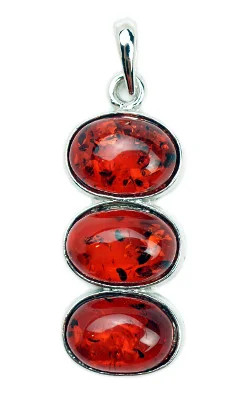
Genuine Ultramarine, Once One of the Most Costly Pigments in the World
***Ultramarine*** was once the most expensive mineralic pigment in the world. Genuine ultramarine was originally made from ground ***lapis lazuli (lazurite)***.
The earliest known source of this mineral is the valley of the river Kokcha in Afghanistan, where it is still mined after 6000 years - or at least it was until the Soviet invasion in 1978. From the Kokcha valley, lapis lazuli was exported already to old Egypt, where it was used both for gems and as a pigment. They called the pigment "khesbedj". It has been found in paintings in tombs – and the blue hair of many Egyptian gods were said to consist of lapis lazuli. It was also a favoured material for scarabs.
As a material, a stone, lapis lazuli was not only used in old Egypt, but also in old India and old Mesopotamia. It is mentioned in the Epic of Gilgamesh, one of the oldest literary works.
Lapis lazuli has been found in many other places during the years, mainly Asia, Africa, and the Americas, and it has been used in all major cultures.
When the expensive pigment came to Europe, it was called ***ultramarine***, because it came from ***beyond the sea*** (from Latin *ultra*, beyond; and *marinus*, of the sea). It was imported by Venetian merchants and the painters of the Renaissance used it, although very selectively, due to it being so expensive. In Renaissance Italy, it was often reserved for the robes of Mary and Christ.
In 1828, professor Christian Gmelin developed a method to produce ultramarine synthetically. After that the pigment ceased to be expensive and has been used much more by painters and other artists. Synthetic ultramarine has not the same brilliancy as the genuine thing, however, but that is true about almost all synthetic pigments in comparison with their genuine counterparts.
Indeed, it became so cheap that today it is commonly used for bluing of paper and linen, in order to remove the yellowish tone and make it look cleanly white. It's also used in eye cosmetics, as eye shadow or mascara. (Incidentally, already Cleopatra used lapis lazuli as an eye shadow.)
Let's look at the etymology of lapis lazuli.
*Lapis* is Latin, meaning “stone”.
*Lazuli* is more special. It has the same origin as azure, and it is from Arabic (*al-*) *lazuward* or *lazaward* [لازورد], which is derived from Persian*, Lajward* or *Lazhward.* The latter is a place in Central Asia, where, according to Marco Polo, the stone was mined. It is also a Persian word, meaning *sky* or *heaven*.
That this also generated the word *azure*, or Old French *azur* (from which English azure originates), depends on a false separation of lazaward, as if l- was the French article l'.
If you you want to see an ancient work of lapis lazuli and happen to be in Europe, go to the Louvre in Paris and look at the statue of Ebih-Il, from the 25th century BC. He was once a superintendent of the city-state Mari, in present day Syria. Pay special attention to his eyes.
King Ludwig II of Bavaria was fond of lapis lazuli, both as a material and as a colour. In the Hall of Mirrors in his Linderhof Palace, you can see examples of the mineral. In the Palace park you'll also encounter his "Venus Grotto". It is inspired by Wagner's Tannhäuser, and also by Capri's blue grotto and he tried to achieve both blue and changing of colours by electrical light - which was very modern at the time. Yet, to his frustration, the perfect lapis lazuli blue eluded him.
“*All chemical analysts in the kingdom had been driven to despair because they were unable to create the correct blue with their projectors. With Wotan and Parcifal they tried their best: methylene blue, cyanin blue, diphenylamin blue, [...] nothing was exactly to Ludwig's liking."* (Erich Adami, in an essay on Ludwig II.)
Appendix/Notes
1. The Blue Grotto of Capri, Grotta Azzurra, has nothing to do with lapis lazuli. It is a fascinating blue world in itself though. There, the blue colour is a result of light that enters through an underwater opening and the water filters out the red tones by absorbing them. Only the blue and bluish light remains. For the best experience, Grotta Azzurra should be visited in the middle of the day on a day with a clear sky and sunshine.
The Grotto was known already during Roman times; Emperor Tiberius, who partly resided on Capri, used it as a nymphaeum, a sanctuary consecrated to water nymphs. The locals believed it to be the home of Nereids, Sirens and monsters, and dared not enter.
Forgotten since, it was rediscovered in 1826 and has become Capri's major tourist attraction.
2. A peculiarity in the quoted text is the spelling “Parcifal”. Chrétien de Troyes spelt it "Perceval", Wolfram von Eschenbach wrote "Parzival", Wagner himself wrote first "Parzival", later, by a misunderstanding of the etymology, he changed it to "Parsifal". In my opinion Wagner's own spelling ought to be normative and the name of his opera should always be written as “Parsifal”.
*Copyright © 2013, 2021 Meleonymica/Mictorrani. All Rights Reserved.*
Here you find my articles related to history. https://read.cash/@Mictorrani/index-over-my-articles-at-read-cash-5f7c1e34#history
Interested in history, legends and myths? Join my community History, Myths, Legends & Mysteries (be45). https://read.cash/c/history-myths-legends-mysteries-be45
You find all my writings on Read.Cash, sorted by topic, here. https://read.cash/@Mictorrani/index-over-my-articles-at-read-cash-5f7c1e34
*My 5 most recent articles:*
*The Human Predisposition to Schism - and What it Means to Bitcoin* https://read.cash/@Mictorrani/the-human-predisposition-to-schism-and-what-it-means-to-bitcoin-897235b2
*Retrospection 6* https://read.cash/@Mictorrani/retrospection-6-f632199c
*Sepia, Grisaille & Verdaille: Monochrome Art... and how about Japan?* https://read.cash/@Mictorrani/sepia-grisaille-verdaille-monochrome-art-and-how-about-japan-da2aed40
*Pictures at an Exhibition* https://read.cash/@Mictorrani/pictures-at-an-exhibition-48b5889b
*On the Genealogy of Script III - VIII* https://read.cash/@Mictorrani/on-the-genealogy-of-script-iii-viii-8372cf36
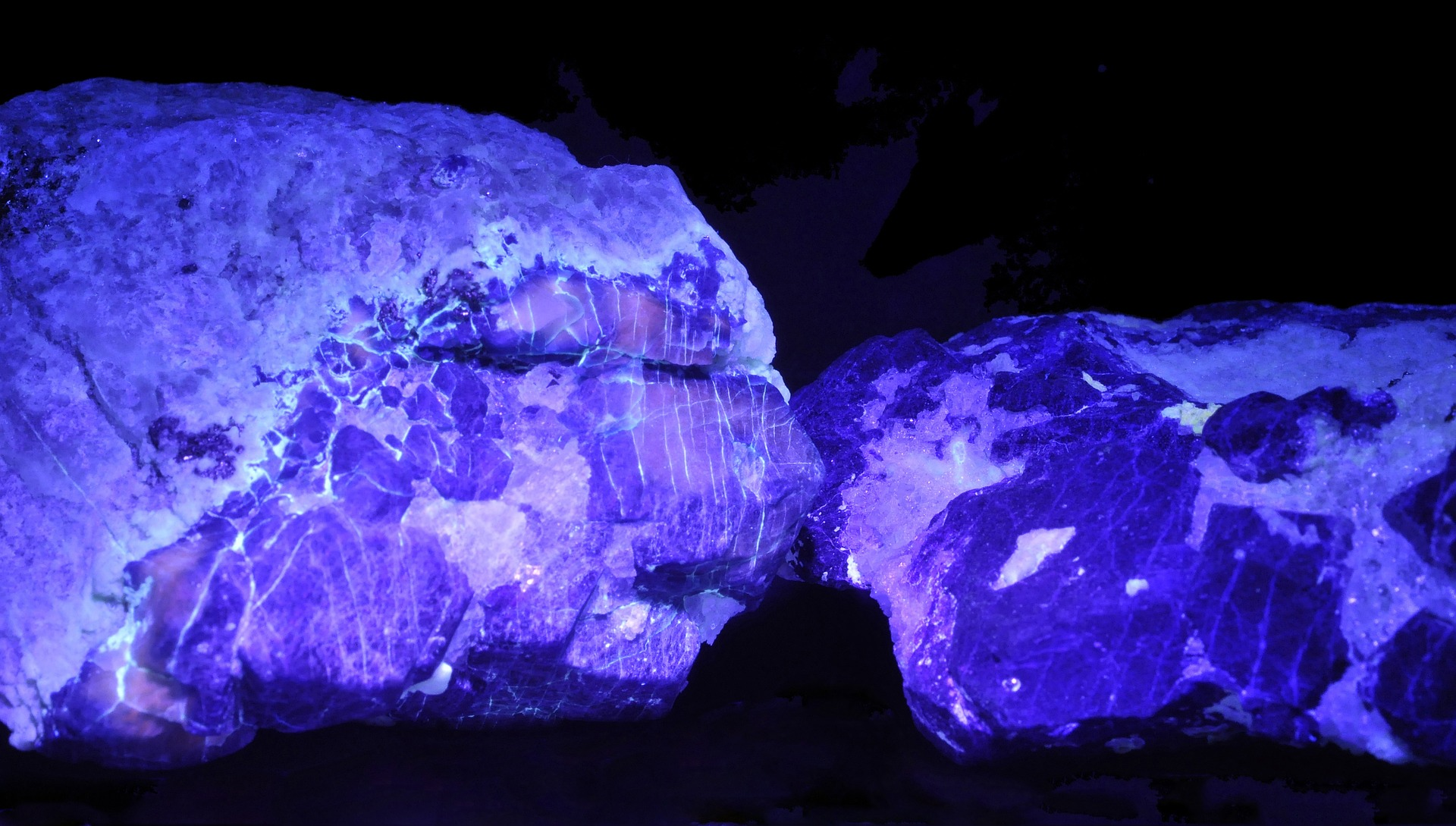
The Human Predisposition to Schism - and What it Means to Bitcoin
*In this article I will discuss how schism has formed the human world and how it is a fundamental part of Bitcoin evolution.*
The State Today
In today's world, the states, nations or countries are slowly suffocating all valuable human activity. Whether they are Fascist or Communist, or exercise the Tyranny of Benevolence under the name of Welfare Socialism, it doesn't matter. People are brainwashed and programmed by state-controlled education (called a benefit), to become obedient slaves to a system exercising almost total control of the individual's life. By enforced "welfare", the individual is made dependent on the state, and cannot get away.
But there are ways to break loose. One is to stay outside of any particular system, and live more or less in between them, or going between them at will without getting too stuck in any one particularly. This is known as fiscal nomadism, (or since the 1980s popularly called PT), and it requires an international life set up to avoid dependence on public service of any kind.
Another approach is what's called Vonu, out of sight, out of mind. That's mainly to jump off the system but stay unregistered inside one and the same country, sometimes living in some wild unpopulated area or in a car or a boat. Vonu life is especially practised in North America, where the preconditions for this are the most favourable. However, a Vonu life would be very limited.
If you have something more special on your mind, you might be better off using an offshore structure, a tax haven company - or, better yet, a foundation. With this you can be active in a way that holds very few limits - as long as it concerns property or activity that can be placed in such a structure. You can stay untaxed and more or less uncontrolled. Even if offshore structures were more useful before the OECD's fight against tax havens around this past turn of the century, and before the so-called "war on terror", there are still many possibilities, and there are many jurisdictions that can be favourably used for various purposes. The key is that you should not restrict your thoughts to the idea of having to "place" all aspects of your life in one and the same state. You can live in one country, have your business in another, bank in a third, etc. Use each place for something it is good for.
A ship under a flag of convenience in international waters offers other possibilities.
Another thought, far-fetched as it might seem to most people, yet still quite common, is the idea of creating a new state. Not to change an existing one, but to leave and create a completely new one, based on new principles. To most people this would appear to be pure escapism, and you would probably be told that it is better for you to direct your efforts to improving contemporary society, instead of engaging in unrealistic fantasies. In today's world this might seem obvious, but the advice reveals total ignorance of human history. Schism (the separation of a group into two groups) is the principal way to deal with friction within a group or groups of people, and has been so for so long that it is probably a part of human genetics.
(While there is a real theoretical difference between a country, a state and a nation, it is hardly ever observed in modern usage. For more on this, see Nation & State, Art & Culture; How confusion serves a purpose.) https://read.cash/@Mictorrani/nation-state-art-culture-how-confusion-serves-a-purpose-70550e21
Prehistory
Our first humanoid ancestors were probably a small group of primates, a few dozen, gathering edible plants and eggs. They were co-operating, thus being successful in gathering food, so they increased in numbers. Soon the food in their immediate environment got scarce, they simply had become too many, so they had to go farther and farther to find their eggs and their plants. This was not working out well. Hunger and even starvation was threatening. If they continued like this, they would become extinct, and maybe some groups did. But somewhere, someone suddenly had an idea. Let's split the group! Let some members leave and form a separate group and move it to a new environment! This was the first break-off and creation of a new "country".
During the ages (hundreds of thousands of years) this was repeated again and again, and it became the principal means for the human species to spread over the whole planet earth.
To be successful, the splitting of a group must be well-timed. It must not be too late, when food supply in the original place had already become too scarce, or the individuals so weakened by starvation that they lost their ability to survive. It must not be too early, so groups became too small to defend themselves against predators or malevolent humans.
Diversity and dispersion served as an insurance against extinction by epidemics, natural disasters, starvation and self-generated pollution. Even if many groups were dying off, some would survive and carry on the line. This predisposition to split a group at the right moment, again and again, was evolutionary successful and it was (and is) one of the major preconditions for making humanity, as a species, successful. Natural selection favoured this predisposition to a level where it became a part of the human genetics, a part of what it is to be human.
History
To see this principle applied in recorded history is not hard. Just read any standard work on history. How the people of Asia Minor colonised the coastal lands around the Mediterranean during the early Antiquity, is a good example. In the city-states of the time, it was common to solve the problem of overpopulation by sending away young men to find their fortune somewhere else. A boat or two were sent away, with the explicit purpose to form a new society somewhere.
Overpopulation has not always been the major reason for breaking away and it is not the most important one. Ideological or, more often, religious disagreement can be found as far back as there is recorded history. In more recent times (recent from a historical perspective), a part of the early United States was formed by colonies of people deviating religiously from the norm of their native countries, and who emigrated for that reason.
The world today is so full of people that it is hard to find a new place for a new society. The trend of the times (which is a different expression of the same predisposition to schism) is rather going in the direction of dividing existing countries into several, being distinctly different in some way. The most apparent examples are the Soviet Union and Yugoslavia. No doubt that trend will continue.
But it is not evolutionary beneficial, since the geographical separation of the groups is not sufficient to make the process "risk reducing" for the species. [Not beneficial in terms of biological evolution, that is. It could be beneficial in terms of societal evolution, provided the separate groups become sufficiently different (which is rarely the case).]
The same applies to attempts to schism inside a society. There is no room for breaking loose and since it is a natural human instinct to do so, a lot of violence is the result. This can be seen on all levels of society. An example on the most vulgar level is the forming of groups of supporters to specific football teams, who will launch veritable warfare against supporters of other teams.
The ruling "bigbrotherism" is striving to make populations conform, calling it integration. That will fail, because conformity is unnatural in a group above a certain size. Obsession with various forms of "equality" (egalitarianism) and attempts to force people into the shape of a common standard will just cause unrest, violence and mental disorder, and ultimately it will be a threat to continued human life as a whole.
The Principle Of Schism
What we are discussing is the principle of schism. The word “schism” means splitting into “two”, and the principle is that when there is an important disagreement or difference, the disagreeing or differing parties split into two and both continue their own respective ways. Nobody tries to force his or her ways on the other, no majority trying to impose its will on a minority. The minority simply breaks off and both respect, or at least accept, the difference – or keep so far away from each other that they cannot harm or otherwise interfere in each others' business. This is the only reasonable way to deal with serious disagreement or friction, and repeated schisms in this sense, is the only development that can ever lead to genuine progress. That is, unless we are talking about a progressing decay!
Schism provides diversity, which, in turn, by competing alternatives, brings evolution ahead. On the long run, only the fit results of schisms will survive. However, if there is conformity, no schisms and no alternatives - there will be no competition and no evolution, only stagnation, and in the next step atrophy and decay.
However, it doesn't mean that more schism is always better, it can become too much if the resulting parts become too weak – as in the example above: if the groups of people become to small. The one provoking the schism, the one who forks something out from something existing, must have a sufficiently strong alternative to make it worthwhile. Otherwise the new alternative will soon die.
Create a New Country
For the time being, creating a new country, especially if you are going for traditional sovereignty, would be an almost insurmountable task. Maybe not impossible, but very hard. And it can definitely be questioned whether it is the most desirable goal. Sovereignty of traditional countries tend to erode these days, and maybe tomorrow's world will have no nation-states at all. After all there are other ways to organise people. The state is not inevitable.
Moreover, with a traditional state you would have to deal with many tedious and expensive things, like military defence, foreign policy and diplomacy. You need settlers and a complete administration. If you are aiming at freedom, this is hardly the path to follow. You would soon end up as enslaved by your new state as you were by the one you left.
Limited sovereignty, autonomy, is more attractive, since it would free you from much of the tedious task of relating your country to the surrounding world. This sort of countries are mostly protectorates to larger countries (which manage the foreign policy and defence), and the internal freedom is mostly far beyond what any major country offers. Example of public countries of this sort are the various Channel Islands, some other areas related to Britain, some islands related to the United States, and quite a lot of other areas around the world. In international law these areas are mostly counted as a part of the larger country that "protects" them, although they are self-governing in all or most internal matters. [Some countries normally considered as fully sovereign, are for all practical purposes belonging to this category. Notably Andorra and San Marino, which hardly own any genuine sovereignty.]
Forming new countries of this sort would not be easy either, but not quite as hard as a fully sovereign state. Yet, would it really suit your needs and be worth the trouble?
Cybercountries
Cyberspace is seen by many as the new frontier, and it might be in a way. Given that cyberspace is in some sense considered as a "territory", the term "country" could be justified.
The idea of forming cyber countries has resulted in a plethora of phenomena, of which most are games and belong to the entertainment industry, or have their real value in artistic or educational aspects. For this discussion we will not consider them.
Forming communities for various purposes can be a way to deal with "schism", since it allows people to get together with others sharing the same ideas or interests, without concern for the majority society's stance.
Real serious cyber countries for the purpose of expanding freedom are a very real dream and some serious attempts have been made, even if "freedom" must be understood in the limited meaning of everything related to cyberspace. The most serious and in some meaning successful attempt so far was LFC, Laissiez Faire City, which started as an attempt to create a real state, but changed its focus to cyberspace. It is treated in Laissez Faire City. https://read.cash/@Mictorrani/laissez-faire-city-7da9602c
But everything that has to do with cyberspace is still much in its infancy. The future will certainly present many new attempts, some successful and some not. It is probable, however, that individual freedom can benefit strongly from the development here, even if a more decentralised approach than "countries" seems more viable.
Cryptocurrency & Schism
The general principle of schism is in a sophisticated way integrated in bitcoin, the first cryptocurrency. Indeed, it is one of its major strengths. There is no silly majority imposing its will on minorities. If someone wants a different bitcoin, introduce changes in the protocol and cause a fork. This is slightly simplified, but it is the underlying principle. But of course, one can also create a completely new cryptocurrency from scratch.
Either way, we get two different cryptocurrencies and everyone is pleased!
This can be repeated any number of times. Not said that every new cryptocurrency will survive though. Schism never guarantees any party's survival, only the fittest ones survive.
(This article is partly based on material previously published in TMA & Meriondho Leo.)
Related articles:
Nation & State, Art & Culture; How confusion serves a purpose https://read.cash/@Mictorrani/nation-state-art-culture-how-confusion-serves-a-purpose-70550e21
Laissez Faire City https://read.cash/@Mictorrani/laissez-faire-city-7da9602c
Retrospection 5 https://read.cash/@Mictorrani/retrospection-5-aaa611cc
Copyright © 2005, 2013, 2019, 2021 Meleonymica. All Rights Reserved.
Here you find all my writings about privacy & antibigbrotherism. They are also presented in Retrospection 5. https://read.cash/@Mictorrani/index-over-my-articles-at-read-cash-5f7c1e34#privacy-amp-antibigbrotherism https://read.cash/@Mictorrani/retrospection-5-aaa611cc
You find all my writings on Read.Cash, sorted by topic, here. https://read.cash/@Mictorrani/index-over-my-articles-at-read-cash-5f7c1e34

Retrospection 6
This time I will not discuss my own production, but rather assume the role of reader and bring some attention to other read.cash authors, or specific articles by other authors. I was inspired to this article by 10 Best read.cash Articles I've Read So Far... by @LucyStephanie. https://read.cash/@LucyStephanie/10-best-readcash-articles-ive-read-so-far-2b0e72e5
It is not easy to find the gems in the huge production that is published at read.cash every day. I am sure I have not found more than a fraction of them, but I would like to push a little for those I like. So, I will give some exposure to a few authors/articles here I feel I can really recommend. For most of them, the attention they get here is insufficient relative to the quality of their articles.
We start with well-known read.cash profile @Telesfor, who has a large following and whose quality is indisputable. He might be the exception that really got much attention all by himself. Most of you have probably read him, so I don't feel he needs any closer presentation. But he is one of the very few who explains cryptocurrency matters in a clear and simple way. That means that he is a good writer. ***Bad writers make simple things look difficult; good writers make difficult things look simple.*** If you don't understand cryptocurrency, @Telesfor is the first you should read. https://read.cash/@Telesfor
His most read article is probably How to split BCHA from BCH using Electron Cash?, and I certainly recommend everyone to read it. It is a little late by now to make this split, but if you just save your earned coins, you might still have some non-split BCH/BCHA in your wallet. https://read.cash/@Telesfor/how-to-split-bcha-from-bch-using-electron-cash-add499c6
Next, I would like to recommend @aniruddhasen without emphasising any particular article. He writes about many topics, of which some might interest you more than others - but he is a knowledgeable individual, a clear thinker and a clear writer as well. Unfortunately, he has not posted anything new for some time. https://read.cash/@aniruddhasen
Third is @Shounenbat, especially if you are intellectual and interested in history. I would mention: https://read.cash/@Shounenbat
Worst Jobs in Ancient Rome: Actress https://read.cash/@Shounenbat/worst-jobs-in-ancient-rome-actress-f22a7e10
Unsolved Mystery: The Death of Edgar Allan Poe (1809-1849) https://read.cash/@Shounenbat/unsolved-mystery-the-death-of-edgar-allan-poe-1809-1849-d64532f4
I want to push two articles about Binaural nutrition. The first is by @Gwenie, Binaural Beats and Their Healing Ability. Unfortunately Gwenie did not continue her writing here. I had the pleasure to function as her mentor and she had promising talent. https://read.cash/@Gwenie https://read.cash/@Gwenie/binaural-beats-and-their-healing-ability-21c6f106
The second article about Binaural nutrition is written by @Gemstone: Freewrite: Testing Out The Subliminal Messages & Binaural Nutrition https://read.cash/@Gemstone https://read.cash/@Gemstone/freewrite-testing-out-the-subliminal-messages-binaural-nutrition-c6deb594
Then we have @Luna1999, who writes mainly about psychology, but in a very mature and professional way. https://read.cash/@Luna1999
Another interesting author is @sanctuary.the-one-law. Not so much for his writing as for his ideas, which he consistently conveys in a clear way. https://read.cash/@sanctuary.the-one-law
Finally, two of my favourites here.
**@hamedbkh** is an old acquaintance at read.cash; he was here already in 2020, but was then absent for a long time and returned some weeks ago. He has more than one topic on his repertoire - but of his production since he returned, I want to recommend his articles about history, where he sometimes binds together seemingly disparate details. A much more advanced way of writing than what is usually seen at read.cash: https://read.cash/@hamedbkh
The night of the long knives https://read.cash/@hamedbkh/the-night-of-the-long-knives-2cad965b
Los amantes de Teruel: the Spanish "Romeo and Juliet" https://read.cash/@hamedbkh/los-amantes-de-teruel-the-spanish-romeo-and-juliet-674b71ca
Princess of Lamballe: when noble values become a death sentence. https://read.cash/@hamedbkh/princess-of-lamballe-when-noble-values-become-a-death-sentence-c1a234e3
… and especially this, which is one of the best articles I have ever found at read.cash: Hitler's wild hunt: Odin's awakening and the religion of a psycho https://read.cash/@hamedbkh/hitlers-wild-hunt-odins-awakening-and-the-religion-of-a-psycho-41b99909
**@Hanzell** is a special case; a matter of fact, she is one of the most interesting authors at this platform. Just as I am myself, she seems to be interested in almost everything. Well-read and knowledgeable, she writes fiction and non-fiction alike. She is also my most loyal reader here, one of the very, very few who did read me before my long absence (August-December 2020) and who still reads me today. https://read.cash/@Hanzell
I don't want to highlight anything special in her production. It is very diverse and the quality is overall high. However, what you like the best depends on your own interests; but take a look at her profile.
My series “Retrospection” is primarily created for new readers of mine, as a manual into my production at this platform so far - but it can be read by anyone who wants to explore my articles topic by topic, rather than doing so in chronological order. In addition to that, my retrospections contain new comments and from time to time short personal stories connected to the relevant topic or topics. https://read.cash/@Mictorrani/index-over-my-articles-at-read-cash-5f7c1e34#retrospection
In occasional issues of “Retrospection” I assume the role of a reader instead of a writer, discussing other writers, or articles by other writers... things I recommend.
Previously published “Retrospections” are:
Retrospection 1 (About Japanese Art & Cultural History.) https://read.cash/@Mictorrani/retrospection-1-a78bc572
Retrospection 2 (About Egyptology & about Coffee.) https://read.cash/@Mictorrani/retrospection-2-a54911f7
Retrospection 3 (About Quotes, Sayings and Proverbs; and about creating new words.) https://read.cash/@Mictorrani/retrospection-3-d8bc8727
Retrospection 4 (About dinosaurs, reptiles, dragons and to some extent birds.) https://read.cash/@Mictorrani/retrospection-4-0c1add0e
Retrospection 5 (About Privacy, Freedom and Politics.) https://read.cash/@Mictorrani/retrospection-5-aaa611cc
Copyright © 2021 Meleonymica/Mictorrani. All Rights Reserved.
You find all my writings on Read.Cash, sorted by topic, here. https://read.cash/@Mictorrani/index-over-my-articles-at-read-cash-5f7c1e34
*My 5 most recent articles:*
*Sepia, Grisaille & Verdaille: Monochrome Art... and how about Japan?* https://read.cash/@Mictorrani/sepia-grisaille-verdaille-monochrome-art-and-how-about-japan-da2aed40
*Pictures at an Exhibition* https://read.cash/@Mictorrani/pictures-at-an-exhibition-48b5889b
*On the Genealogy of Script III - VIII* https://read.cash/@Mictorrani/on-the-genealogy-of-script-iii-viii-8372cf36
*On the Genealogy of Script I & II* https://read.cash/@Mictorrani/on-the-genealogy-of-script-i-ii-92b3e103
*Anagrams, Palindromes, Cryptarithms And Alphametics* https://read.cash/@Mictorrani/anagrams-palindromes-cryptarithms-and-alphametics-65dd6622

Sepia, Grisaille & Verdaille: Monochrome Art... and how about Japan?
*What colour pigment was originally made from a substance secreted by cuttlefish? Now made synthetically, the colour is still called the same.*
The answer is *sepia*. It is a secretion of the common cuttlefish, Sepia officinalis, a pigment containing melanin. (Melanin is the same pigment that colours human skin and hair.)
A German painter and professor, Jacob Seydelmann (1750-1829), developed a method to get sepia more concentrated, which was essential for its use in art. Before that it was used mainly for writing. It is, however, a very sensitive pigment that will rapidly break down by exposure to light and oxygen. In a painting it will fade in just a few years.
For the artist, an impression of sepia can be reached by mixing carbon black and red oxide, or (with a slightly different tone) by mixing ultramarine and raw umber with carbon black. With these pigments, the colour will last longer.
In medicine, sepia is found mainly within homeopathy, where it is one of the polychrests. That is, substances with a very wide range of effects on the whole organism, one that can be used for many ailments. It is especially useful in the treatment of typically female problems related to the reproductive organs. But its use is not limited to that.
Although known from Roman Antiquities, then used for writing, sepia did not have its great breakthrough in art until the Renaissance, and it is still used for the special atmosphere it conveys. Occasionally a photo or a film is artificially toned in sepia in order to create an impression of dreamlike timelessness.
The image below shows a drawing in sepia by one of the greatest in European art history, Rembrandt van Rijn (1606-1669). The picture shows a man who is reading.
Grisaille, a word stemming from French “gris”, grey, became popular from the 14th century. Strictly a painting made “en grisaille”, is made only with different shades of grey, but more freely used, it came to include colours sepia and dark green. However, strictly, painting in shades of dark green is called “verdaille”.
This is a painting made purely “en verdaille”: “A chinoiserie procession of figures riding on elephants with temples” by Jean-Baptiste Pillement (1728-1808).
Monochrome art (monochrome means that it is made in different shades of only one colour) – or even art made in shades of only two or three colours - can be very expressive.
We can see other examples in Japanese art. I have previously written about Aka-e (red pictures) in Aka-e – Japanese Colour Magic, and Aizuri-e (blue pictures) in Prussian Blue & Aizuri-e - Blue Pictures. But they had several special genres based on the limits in use of colour. Let's look at the Japanese art of woodblock prints in the style commonly called **ukiyo-e**. https://read.cash/@Mictorrani/aka-e-japanese-colour-magic-f89cf7e4 https://read.cash/@Mictorrani/prussian-blue-aizuri-e-blue-pictures-dc563ddd https://read.cash/@Mictorrani/emperor-shogun-the-edo-period-and-ukiyo-e-69239b66
The first Japanese woodcut prints were black and white. Colour, where it occurred, was added manually afterwards. In the beginning of the 17th century, one used mainly orange, and sometimes green or yellow. Those prints were called ***tan-e****.*
In the 1720s, pink came into fashion, and the pinkish style that followed was called ***beni-e****.* Subsequently followed a style called ***urushi-e****;* a mixture of ink and animal glue resulted in a blank, lacquer-like surface.
***Benizuri-e****,* which peaked in the 1740s, were printed directly with colours, pink and green. Sometimes some other colour was added by hand. (Example here.) https://ukiyo-e-of-the-week.blogspot.com/search/label/Bijinga?updated-max=2016-09-10T10:00:00%2B01:00&max-results=20&start=20&by-date=false
In the 1760s, at last, came the ***nishiki-e****,* the full colour print. The technique was developed by the great master **Haronubu**. He sometimes used a dozen woodblocks for a single print, one woodblock for each colour. https://read.cash/@Mictorrani/three-masters-of-bijinga-b707e205#harunobu
***Beni-girai-e*** literally translates to “picture hating red”. It was a style practised mainly in 1780s, where the artist avoids all use of red or reddish tones. It gives a very special colour effect.
The style is often associated with Katsukawa Shunchō (active about 1783-1795). However, in my opinion Kubo Shunman (about 1757-1820) is a greater benigirai-e master. Yet, one of the very best benigirai-e was created by **Utamaro**. The image below shows his print *Three Lucky New Year Dreams: Fuji, Falcon, Eggplant* – from about 1800. https://read.cash/@Mictorrani/three-masters-of-bijinga-b707e205#utamaro
Tags: @whitecatascend @Theblackdoll @ThisisGrace21
Related articles:
The Kreutzer Sonata: How Art Inspires to Art, which Inspires to Art... https://read.cash/@Mictorrani/the-kreutzer-sonata-how-art-inspires-to-art-which-inspires-to-art-3dced6f6
Pictures at an Exhibition https://read.cash/@Mictorrani/pictures-at-an-exhibition-48b5889b
Aka-e – Japanese Colour Magic https://read.cash/@Mictorrani/aka-e-japanese-colour-magic-f89cf7e4
Prussian Blue & Aizuri-e - Blue Pictures https://read.cash/@Mictorrani/prussian-blue-aizuri-e-blue-pictures-dc563ddd
Copyright © 2021 Meleonymica/Mictorrani. All Rights Reserved.
(The images of this article are all in the Public Domain.)
Here you can find my articles about History, and about Art, and here about Japanese art. https://read.cash/@Mictorrani/index-over-my-articles-at-read-cash-5f7c1e34#history https://read.cash/@Mictorrani/index-over-my-articles-at-read-cash-5f7c1e34#art https://read.cash/@Mictorrani/index-over-my-articles-at-read-cash-5f7c1e34#japanology
Interested in history, legends and myths, join my community History, Myths, Legends & Mysteries (be45); or in Japanese art, join Japanese Art & Cultural History. https://read.cash/c/history-myths-legends-mysteries-be45 https://read.cash/c/japanese-art-cultural-history-7c1f
You find all my writings on Read.Cash, sorted by topic, here. https://read.cash/@Mictorrani/index-over-my-articles-at-read-cash-5f7c1e34
*My 5 most recent articles:*
*Pictures at an Exhibition* https://read.cash/@Mictorrani/pictures-at-an-exhibition-48b5889b
*On the Genealogy of Script III - VIII* https://read.cash/@Mictorrani/on-the-genealogy-of-script-iii-viii-8372cf36
*On the Genealogy of Script I & II* https://read.cash/@Mictorrani/on-the-genealogy-of-script-i-ii-92b3e103
*Anagrams, Palindromes, Cryptarithms And Alphametics* https://read.cash/@Mictorrani/anagrams-palindromes-cryptarithms-and-alphametics-65dd6622
*Rhyme & Reason: Verse, Structure, & Memory* https://read.cash/@Mictorrani/rhyme-reason-verse-structure-memory-f6ba9e9c
Pictures at an Exhibition
A Slavic witch, a monumental entrance in the Ukrainian capital, and a French abode of the dead are three stations of ten, in a picturesque walk in sound. Who is the creator?
This was a quiz I once created for a magazine, and the answer is Modest Mussorgsky; the walk in sound refers to his musical composition "Pictures at an Exhibition" [Картинки с выставки]. "Walk" is a special clue since a returning theme is called "Promenade", "picturesque" naturally refers to the pictures of the title, which are also the basis of the composition; Baba Yaga is a Slavonic witch whose hut has given name to one of the "pictures"; "a monumental entrance in the Ukrainian capital" is a clue to another one, "The Great Gate of Kiev"; and " a French abode of the dead" refers to "The Catacombs".
The last one can be confusing, because the subtitle is sometimes given as "Sepulchrum Romanum", and then it is close at hand to interpret it as the Catacombs of Rome, but the term just defines it as catacombs, as opposed to other sepulchres. According to Stasov, the picture on which this is based, a painting by Viktor Hartmann, clearly identifies the location to Paris.
The picture hangs at State Russian museum in St. Petersburg. One of the men allegedly is Viktor Hartmann himself.
Viktor Alexandrovich Hartmann (1834-1873) was a Russian architect and painter. In 1870, Vladimir Stasov, another painter, introduced him to a circle of composers, called “The Five”, which included Modest Mussorgsky; Hartmann and Mussorgsky became close friends.
The year after Hartmann's death, a large number of his works were shown at an exhibition in Saint Petersburg; of the more than 400 paintings, most of them are now lost. Mussorgsky (1839-1881), however, saw them and chose ten of them as basis for his composition, “Pictures at an Exhibition”, 1874. It is a suite for piano and was something radically new at the time. Apart from “Promenade”, a theme binding together the pieces, the suite consists of:
“The Gnome”.
“The Old Castle”.
“Tuileries”.
“Cattle”.
“Ballet of the Unhatched Chicks”.
“Samuel Goldenberg & Schmuyle”.
“The Market at Limoges”.
“The Catacombs”.
“The Hut on Fowl’s Legs” (The Hut of Baba Yaga).
“The Great Gate of Kiev”.
Mussorgsky was, as several of the best known Russian composers of the time, a musical amateur, and his style was unpolished. Nikolay Rimsky-Korsakov polished “Pictures at an Exhibition” before the score was published, but Mussogsky's original score has later been made available as well.
Many arrangements and interpretations have been made. Maurice Ravel's version for orchestra is the best known; indeed, it is so well known that it rivals the piano original in fame.
Other noteworthy versions are a live album from 1974 by progressive rock group Emerson, Lake & Palmer, and a synthesizer version from 1975 by Isao Tomita.
Russian artist Wassily Kandinsky, made a series of paintings inspired by Mussorgsky's music. They have nothing to do with Hartmann's original pictures. So paintings inspired to music, which inspired to new paintings. https://www.wassilykandinsky.net/pictures.php
The image below is a portrait of Modest Mussorgsky, painted by Ilya Repin in 1881, just a few days before his (Mussorgsky's) death. It is one of the finest portraits in Russian art.
Almost a month ago, I published “The Kreutzer Sonata: How Art Inspires to Art, which Inspires to Art...“, in which I discussed how art can inspire to new art, also over the borderline between disciplines. In a comment, @whitecatascend asked for more in the same style. That inspired me to this article, with one of my favourite composers in centrum. https://read.cash/@Mictorrani/the-kreutzer-sonata-how-art-inspires-to-art-which-inspires-to-art-3dced6f6
*Pictures at an Exhibition -* a very rich suite, containing a large number of styles and musical expressions - remains Mussorgsky's most famous work. For me personally, it has been with me since my childhood. For years I heard it, and I practised it in endless piano lessons, and I always wondered about those pictures. Where were they? How did they look? When, finally, I learned about Hartmann, I was disappointed that only a few pictures were preserved. To be honest, I was also disappointed over those that were preserved, because they were quite uninteresting and mediocre pieces of art. I am still at a loss to understand how they could inspire Mussorgsky to such a remarkable music.
Related article:
The Kreutzer Sonata: How Art Inspires to Art, which Inspires to Art... https://read.cash/@Mictorrani/the-kreutzer-sonata-how-art-inspires-to-art-which-inspires-to-art-3dced6f6
Pictures at an Exhibition - Resources:
Piano version: https://youtu.be/rH_Rsl7fjok
Ravel's version for orchestra: https://youtu.be/FsvpFU7KY7E
Emerson, Lake & Palmer: https://youtu.be/4igIQ2TOASg
Isao Tomita: https://youtu.be/IVvQQMrEUzQ
Boris Ivanov: https://www.borisivanovmusic.com/concert
Jorge Caballero (classical guitar version): https://youtu.be/5tcw4WhTPHk
Wassily Kandinsky's pictures, based on Mussorgsky's music: https://www.wassilykandinsky.net/pictures.php
Copyright © 2021 Meleonymica/Mictorrani. All Rights Reserved.
Here you can find my articles about History, Art and about Music. https://read.cash/@Mictorrani/index-over-my-articles-at-read-cash-5f7c1e34#history https://read.cash/@Mictorrani/index-over-my-articles-at-read-cash-5f7c1e34#art https://read.cash/@Mictorrani/index-over-my-articles-at-read-cash-5f7c1e34#music-amp-history-of-music
Interested in history, legends and myths, join my community History, Myths, Legends & Mysteries (be45). https://read.cash/c/history-myths-legends-mysteries-be45
You find all my writings on Read.Cash, sorted by topic, here. https://read.cash/@Mictorrani/index-over-my-articles-at-read-cash-5f7c1e34
*My 5 most recent articles:*
*On the Genealogy of Script III - VIII* https://read.cash/@Mictorrani/on-the-genealogy-of-script-iii-viii-8372cf36
*On the Genealogy of Script I & II* https://read.cash/@Mictorrani/on-the-genealogy-of-script-i-ii-92b3e103
*Anagrams, Palindromes, Cryptarithms And Alphametics* https://read.cash/@Mictorrani/anagrams-palindromes-cryptarithms-and-alphametics-65dd6622
*Rhyme & Reason: Verse, Structure, & Memory* https://read.cash/@Mictorrani/rhyme-reason-verse-structure-memory-f6ba9e9c
*Retrospection 5* *(About Privacy, Freedom and Politics.)* https://read.cash/@Mictorrani/retrospection-5-aaa611cc
On the Genealogy of Script III - VIII
*The lead image shows Egyptian god Thoth - according to Egyptian mythology, the inventor of hieroglyphs and of script in general. Here, as often, depicted with the head of an ibis.*
*Here follows sections III-VIII of the article "On the Genealogy of Script". For sections I & II, read "**On the Genealogy of Script I & II**".* https://read.cash/@Mictorrani/on-the-genealogy-of-script-i-ii-92b3e103
I. Introduction (In "On the Genealogy of Script I & II") https://read.cash/@Mictorrani/on-the-genealogy-of-script-i-ii-92b3e103
II. Alphabets (In "On the Genealogy of Script I & II") https://read.cash/@Mictorrani/on-the-genealogy-of-script-i-ii-92b3e103
III. Cuneiform Script & Hieroglyphs
IV. The Sumerian Heritage
V. The Pharaonic Heritage
VI. Korean
VII. Alphabets Created by Identifiable Individuals
VIII. Artificial Alphabets
III. Cuneiform Script & Hieroglyphs
The oldest cuneiform script is Sumerian. Some scholars claim that it is the oldest script of all, but that can be questioned (see below). From the Sumerians it spread through the Middle East and further; and, just as alphabets later, it came to change and develop during the way. It began as a linear ideographic script, and developed to become partly syllabic.
The Sumerian script (from ca 3000 BC) was adopted by the Akkadians during the 20th century BC, and bifurcated into two systems: the Assyrian and the Babylonian. The latter one was alive for very long, possibly until about 100 BC, and it spread and developed in many directions.
For Old Persian, there was a cuneiform script which is a mystery. It seems to have been purely phonetic, and its relation to other systems of writing is unknown.
In Ras Shamra, in Syria, one has found a cuneiform script which is used as letters, like later Semitic alphabets. It supports the theory that the first Semitic alphabet was developed from cuneiform script.
Rivalling the Sumerian script in age, and in being the source of the Semitic alphabet, is Egyptian script: Hieroglyphs. It began as pictography/ideography, but gradually syllabism and consonants were developed and added. The result was a mixed script.
In Serabit-al-Khadim, in Sinai, script from ca 1700 BC has been found. Clearly influenced by Egyptian script, it is consonantal, and therefore genuinely alphabetic. This script is called Proto-Sinaitic, and it can possibly be the first real alphabet, leading further to those of today.
There are many questions regarding the Sumerian and Egyptian scripts. For instance: Which is the oldest? Is there any connection between them? Which one was the basis for the "first" alphabet?
Even if some people claim to have answers to these and similar questions, there exist no answers with any degree of certainty. We know too little about both Sumerians and Egyptians (so far), and established chronology rests on very shaky grounds indeed.
IV. The Sumerian Heritage
Chinese is unique in the world today. It is the only modern language based on ideography - even if there is often a phonetic indicator, a radical, as part of a character.
Most sources claim that script developed independently in China. Even if that is possible, it is not likely. Indeed, there is another explanation, and the evidence for it is - if not conclusive - at least convincing: That Chinese script is derived from Sumerian.
The pictographs of old Chinese looked like Sumerian ones, were even pronounced similarly. And words with more than one meaning in Sumerian, had the same set of meanings in Chinese. An interesting comparison between the two languages is made in: "Chinese and Sumerian" by C. Bell (Oxford University 1913).
While I have been studying these and other comparisons, as well as relevant historical details, I feel convinced that this explanation is correct - or at least the best one so far. Yet one must be careful with conclusions based on pronunciation. After all we cannot know how people spoke thousands of years ago.
Japanese uses mixed script. In addition to Chinese ideograms (Kanji), it uses two syllabic alphabets: Hiragana and Katakana. The syllabic characters are derived from Chinese ideograms, which have been simplified.
V. The Pharaonic Heritage
The Minoan culture of Crete (ca 300-1100 BC) was deeply influenced by Old Egypt, to whose cultural sphere it belonged. There they created a pictographic-ideographic script based on the Egyptian. It developed into two systems of syllabic writing, which was the first time one wrote in horizontal lines. They are called Linear A and Linear B.
The Mycenaean culture of Asia Minor and Greece (about 1500-1100 BC) adopted the Minoan script.
Another script, which - at least partly - was derived from Old Egyptian writing (via the Proto-Sinaitic script), was used by the Phoenicians of Byblos (today Jbeil in Lebanon). This can possibly have become a path, through which Old Egyptian script led to the alphabets of today. It is often claimed that the Greek alphabet is derived from the Phoenician one.
In Meso America, the highest civilisation ever on the western hemisphere peaked about 300-900 AD, after which it vanished. It was the Maya. Their sophisticated culture, which rivals the high cultures of the old world (Egypt, Sumer, India, China), is something of a mystery.
Their script, a form of hieroglyphs, is still not completely deciphered. Worse; after the Spanish invasion of the area during the 16th century, Bishop Diego de Landa committed an act of utter destruction: he had all Maya books destroyed! An act of religious zeal. Only three known books remain today: the Madrid Codex, the Dresden Codex, and the Paris Codex; plus Chilam Balam and Popul Vuh, Latin script notations of oral traditions, or possibly of lost Mayan originals.
The Mayan calendar offers a special mystery. It begins in 3113 BC; yet the emergence of the Maya has been dated to some time between 2000 and 1500 BC. Why would they have a calendar with a starting-point more than one thousand years before their existence as a people? Or are they older than we think?
Based on the striking similarities between the Maya and Old Egypt, Alan F. Alford made an interesting observation. He calculated a chronology for Egypt, which is quite exact in certain details. One of them is that it establishes the beginning of the Pharaonic era to the year 3113 BC. [I think he is right, but it would bring us too far to discuss the calculation in detail here and now.] That is the same year as the starting-point of the Mayan calendar, and it is a thought-provoking indication of a connection between the two civilisations.
If there was such a connection, what would it tell us about the Maya script? I would suggest the theory that it is derived from Egyptian Hieroglyphs.
The Aztecs too had a script of hieroglyphic type. Their culture was later than the Maya, and their script most probably was derived from the Mayan one. It has been suggested that it stems from Egyptian hieroglyphs, but academic historians neglect that indication.
VI. Korean
The Korean alphabet is unique. It is called Hangeul, and was invented in 1443 or 1444, and is said to be partly based on the shape of the mouth when different sounds are pronounced.
From Old times until quite recently, literature was written in Chinese, and the script is to a varying degree mixed - where Chinese characters (called Hanja) are combined with Hangeul.
Hangeul is a very interesting alphabet, as such it is almost ideal.
VII. Appendix 1
Alphabets Created by Identifiable Individuals
A few alphabets are created by, or attributed to identifiable individuals. Some of these are mentioned above, some are not. None of those mentioned below created a script out of thin air, but built heavily on already existing alphabets. Here are some examples occurring to me now, I am sure the list is not in any way exhaustive.
The Glagolitic alphabet was created by Cyril and his brother Methodius. The Cyrillic alphabet, however, which is named after St. Cyril, was created later. Some sources claim that the inventor was St. Kliment of Ohrid, but that is uncertain.
Armenian script is attributed to Mesrop Mashtots (4th-5th century AD). Some scholars attribute the Georgian Asomtavruli too to Meshrop Mashtots, while others claim that it was invented by the Georgian king, Farnavaz.
The alphabet of the Sikhs (India), Gurmukhi, was created by Guru Nanak (1469-1539), the first Guru of Sikhism.
The Manichaean alphabet was devised (or adopted) by Mani (3rd century AD), the Persian creator of Manichaeanism, a once widely spread belief. The language he used was Parthian, a form of Persian language, and the script he chose to use was based on an Aramaic cursive he found in Babylonia. The alphabet was used for Manichaean writings in certain other languages too.
Wulfila (ca 310-383 AD), the apostle of the Visigoths (Western Goths) translated the Bible to the Gothic language. For this purpose he created the Gothic alphabet, which is based mainly on Greek, and to some extent on Runes.
Manchu script was created by Erdeni Bagshi and Gagai Jarguchi, on the basis of Mongolian letters. All was done on order of the Manchu emperor Nurhaci (1559-1626).
VIII. Appendix 2
Artificial Alphabets
The Morse code, the telegraphic alphabet, was created by Samuel F. B. Morse. It uses dots and dashes. The international code is a little bit different from Morse's original one, but ultimately it is based on the same principle.
Louis Braille (1809-1852) created a system of script for the blind. The system, commonly called Braille, uses raised dots which can be felt by the fingertips.
Finally we have stenography, or shorthand writing, which has a history and genealogy of its own.
The modern phonetic stenography began with John Willis (1602). Since then a large number of systems have been developed. They can be classified in various ways. But we will not concern ourselves with that here. Some of the best known systems are, for English: Taylor (1786), Pitman (1837), Gregg (1888); for French: Prevoust-Delaunay (1878), Aime Paris (1822), Duploye (1860; for German: Gabelsberger (1834), Stolze (1840), Arends (1840), Schrey (1887), Stolze-Schrey (1897).
In Rome, Marcus Tullius Tiro invented a system of abbreviations, not'ae Tironia'nae, or the Tironian notes. This system, used for the first time in the Roman senate in 68 BC, was further developed and used for more than 1000 years.
No doubt Greek stenography existed before Roman times - and there is no reason to believe the Greeks to be first either, but then we enter an area of pure speculation.
(This article is based on material previously published in TMA/Meriondho Leo.)
Related articles:
Transcription & Transliteration: Some Thoughts on Written Language & Foreign Names https://read.cash/@Mictorrani/transcription-transliteration-some-thoughts-on-written-language-foreign-names-6ccc434f
Phonetic Script & How Books of Religion Shape Languages https://read.cash/@Mictorrani/phonetic-script-how-books-of-religion-shape-languages-b74b91e6
Why “Donald Duck” is Bad: Assimilation, Alliteration & How to Create a Name https://read.cash/@Mictorrani/why-donald-duck-is-bad-assimilation-alliteration-how-to-create-a-name-52d507e0
Rhyme & Reason: Verse, Structure, & Memory https://read.cash/@Mictorrani/rhyme-reason-verse-structure-memory-f6ba9e9c
Anagrams, Palindromes, Cryptarithms and Alphametics https://read.cash/@Mictorrani/anagrams-palindromes-cryptarithms-and-alphametics-65dd6622
On the Genealogy of Script I & II https://read.cash/@Mictorrani/on-the-genealogy-of-script-i-ii-92b3e103
Copyright © 2008, 2021 Meleonymica/Mictorrani. All Rights Reserved.
(The lead image is "Thoth Deux fois Grand, le Second Hermés", by Jean-François Champollion. Original at Brooklyn Museum. No known copyright restrictions.)
Here you find my articles related to words & language. https://read.cash/@Mictorrani/index-over-my-articles-at-read-cash-5f7c1e34#words-amp-language
For more on words & language, join The Power of Words (4be2), and for more history, join History, Myths, Legends & Mysteries (be45). https://read.cash/c/the-power-of-words-4be2 https://read.cash/c/history-myths-legends-mysteries-be45
You find all my writings on Read.Cash, sorted by topic, here. https://read.cash/@Mictorrani/index-over-my-articles-at-read-cash-5f7c1e34
*My 5 most recent articles:*
*On the Genealogy of Script I & II* https://read.cash/@Mictorrani/on-the-genealogy-of-script-i-ii-92b3e103
*Anagrams, Palindromes, Cryptarithms And Alphametics* https://read.cash/@Mictorrani/anagrams-palindromes-cryptarithms-and-alphametics-65dd6622
*Rhyme & Reason: Verse, Structure, & Memory* https://read.cash/@Mictorrani/rhyme-reason-verse-structure-memory-f6ba9e9c
*Retrospection 5* *(About Privacy, Freedom and Politics.)* https://read.cash/@Mictorrani/retrospection-5-aaa611cc
*Dictionary Of Selected Spices + A Little Story* https://read.cash/@Mictorrani/dictionary-of-selected-spices-a-little-story-fb1254df

On the Genealogy of Script I & II
*This is a brief exploration of the origin of written language and how different writing systems and alphabets are related – or, in some cases, how they can possibly be related. As with everything else, when we get very far back in time, we enter an area of theory and speculation rather than certain facts. That's unavoidable. I want to make clear that such theories and speculations are subjective, they are a matter of plausibility rather than certainty.*
*Some sources might disagree with what I say here, especially about Chinese script and the script of the Maya – but the theories I present are supported by much more historical details than I bring up here. After all, this is an article about the genealogy of script, and we should not let the article become too long by allowing ourselves to lose the focus from that.*
*Due to the length of this article, I felt compelled to divide it into two parts. Part 1 (with sections I and II) below. Part 2 (with sections III - VIII),"* On the Genealogy of Script III - VIII*)".* https://read.cash/@Mictorrani/on-the-genealogy-of-script-iii-viii-8372cf36
I. Introduction
II. Alphabets
III. Cuneiform Script & Hieroglyphs (In "On the Genealogy of Script III - VIII") https://read.cash/@Mictorrani/on-the-genealogy-of-script-iii-viii-8372cf36
IV. The Sumerian Heritage (In "On the Genealogy of Script III - VIII") https://read.cash/@Mictorrani/on-the-genealogy-of-script-iii-viii-8372cf36
V. The Pharaonic Heritage (In "On the Genealogy of Script III - VIII") https://read.cash/@Mictorrani/on-the-genealogy-of-script-iii-viii-8372cf36
VI. Korean (In "On the Genealogy of Script III - VIII") https://read.cash/@Mictorrani/on-the-genealogy-of-script-iii-viii-8372cf36
VII. Alphabets Created by Identifiable Individuals (In "On the Genealogy of Script III - VIII") https://read.cash/@Mictorrani/on-the-genealogy-of-script-iii-viii-8372cf36
VIII. Artificial Alphabets (In "On the Genealogy of Script III - VIII") https://read.cash/@Mictorrani/on-the-genealogy-of-script-iii-viii-8372cf36
I. Introduction
Script can be alphabetic or non-alphabetic.
An alphabet is a set of signs or characters being the elements of (supposedly) phonetically written language: letters or syllables. So they come in three forms:
Those consisting of both vowels and consonants - like the Latin alphabet.
Those consisting of only consonants, or consonants and vowels indicated by diacritical marks - like Hebrew.
Syllabic ones, consisting of syllables. Like the Japanese Hiragana and Katakana, or the Indian alphabets.
Except for Japanese and Korean, all major alphabets (but not scripts) used today can be traced back to one and the same North Semitic alphabet from ca 1600 BC. (See reservations below.) In Section II we show a very brief overview of the main lines.
There was writing before 1600 BC too. In Section III we look at that, and further back to where writing might have begun.
In Sections VI and V, we will take a look at two branches of script that did not belong to Section II.
Note that any use of the term "language" or any mentioning of the name of a language, as "Tibetan" or "Chinese" here denotes script; an alphabet or other system of writing. The genealogy of speech differs from the genealogy of script. We do not concern ourselves with speech in this essay.
Very roughly history shows a progression from pictograms/ideograms to syllabic writing, further to consonantal alphabets, and finally to full vowel and consonant ones. There is not always a fixed borderline between them, mixed forms have existed and exist now, and occasional steps in the other direction might occur. All languages have not developed the whole way through this sequence; there is no reason to believe they would.
It can be interesting to see how the change between the forms might have occurred:
Pictograms/ideograms became syllabism by letting a pictogram represent the first syllable of the word (pronounced) denoting what this pictogram first depicted. Let us illustrate this by a simple and compeletely theoretical example. Say that you have a pictogram meaning "tiger". You pronounce it "tiger", and let the same pictogram represent the syllable "ti". This pictogram then undergoes some simplification, and a syllabic "letter" is born.
Syllabic writing can have changed to consonantal, simply by omitting the vowels of the syllables. Consonants are the significant part of words, so a syllable can be reduced to a written consonant - while speech continued to pronounce a syllable. That would mean that "ti", "ta", "te", etc., were reduced to just one letter, one denoting "t". Thus the number of letters could be drastically reduced.
If you question that consonants are more significant than vowels: Don't you "ndrstnd ths rthr wll wtht vwls?" But try the same phrase with only vowels: "uea i ae e iou oe".
When consonantal alphabets were inherited by other peoples, they found no vowels for their words, so sometimes they added separate ones to the script. (That was what the Greeks did when they adopted a Canaanitic consonantal script.) They could go in the other direction, restoring syllabism.
The North Semitic alphabet, with which we will begin this overview, consisted of consonants only. There was a South Semitic one too (leading to Ethiopian script), and there is no reason to exclude the possibility of other alphabetic experiments in Syria or elsewhere at the time as well. But no other grew surviving branches or sprouted.
The North Semitic alphabet possibly bifurcated into two branches, the Aramaic and the Canaanitic. There can be reason to question if these two are really sharing "parental" alphabet. The Canaanitic alphabet is sometimes called Phoenician, while the Phoenician alphabet is claimed to be an "ancestor" of the Aramaic. So, there is a relation between them, but take its exact nature with a grain of salt.
If the Phoenician (Canaanitic) alphabet is indeed the first, to which so many others can be traced, then the bifurcation in Section II is misleading. The Aramaic would then be derived from the Canaanitic, but the Aramaic branch would remain as stated anyway.
II. Alphabets
The Aramaic Branch
The Aramaic alphabet is the origin of today's Hebrew and Arabic alphabets. Sometimes slightly modified, the latter is used for a large number of languages; e.g. Urdu and modern Persian (Farsi).
The oldest Hebrew was written with a Canaanitic alphabet. The earliest documented use of "modern" Hebrew (written with an Aramaic-style script) is from 183 BC. 150 years later it had totally replaced the old Canaanitic one.
Iranic systems stem from Aramaic, and include (but are not limited to) the alphabets of Pahlavi (Middle Persian), Avestan, Manichaean, and the important Sogdian.
The Sogdian script is the basis for the alphabets of Old Turkish, Mongolian, Manchu, and Uyghur.
Armenian script, basically Iranic in origin, but with Greek influences, was created by Mesrop Mashtots in the 4th-5th century AD.
The Georgian script is similar, probably based on Armenian. Today it has developed to the Mkhedruli alphabet.
Kharosthi, an Indian alphabet, is derived from a Persian branch of Aramaic. All other Indian systems developed from the Brahmi alphabet, itself stemming from Aramaic.
Brahmi developed into three branches: a northern, a southern, and Sinhalese script.
The origin of Tamil script is not very clear. A common view is that it has developed from the Brahmi script, via the oldest Sinhalese alphabet; but some scholars think it stems from the script of the Indus valley, the oldest known Indian script. The Indus valley script has not yet been deciphered.
The southern, Dravidi alphabets led to the scripts of Malayalam, Grantha, Telugu, and others...
The northern branch, which is by far the most influential, first developed to the Gupta script. From that stems Nagari (Devanagari), the alphabet of Sanskrit. In various forms it is used for several languages, and it dominates India today. Further, from Nagari we got the alphabets of Bengali and Nepali.
Another branch stemming from the Gupta alphabet led out from India proper, to the alphabets of Tibetan, Mon, Khmer, Burmese, and Thai.
Note that Iranic and Indian (or Indic) denote alphabets created within respective tradition, not necessarily all alphabets used there. Urdu, for instance, the language of the Indian Muslims (and Pakistan), is written with an Arabic alphabet; and so is Modern Persian.
Moreover, an alphabet of a certain tradition can be used outside the area proper of that culture. Indian-type alphabets are used in Tibet and parts of South East Asia. In the same way Latin script is the basis for the present alphabets of e.g. Vietnamese or Bahasa Indonesia (Indonesian).
Nothing stated in Section II includes non-alphabetic script. Old Persian was written with cuneiform script, and the oldest known Indian script was pictographic. The latter was used in the Indus Valley Culture and is still undeciphered.
Iranic is not the same as Persian, and neither should be seen as limited to today's Iran. I refrain from defining the term exactly here and trust your intuitive understanding of that and similar expressions. Interested readers can easily look up the terms.
The Canaanitic Branch
The Greeks adopted the Canaanitic alphabet, added vowels and further adapted it to their needs. From the Greek alphabets stems four important branches: The Italic, the Slavic, the Coptic, and Germanic runes.
The best known Italic alphabet is that of Latin. With modifications and adaptions (extra letters and diacritical marks) it is used for a large number of languages today. It developed from earlier Italic alphabets: the Oscan, the Umbrian, and especially the Etruscan one.
The Coptic alphabet is derived from the Greek, with some additions taken from Demotic Egyptian (Old Egyptian script). Today it is used only for the liturgy of the Coptic Church, a branch of Orthodox (Eastern) Christianity.
Various Rune alphabets were in use by pre-Christian Germanic peoples. Their origin is a matter of dispute. Some say Greek, some say Latin, some say Etruscan, some say a mix of more than one of them.
So called Turkish Runes are not really Runes at all, they belong to the Aramaic branch, and were used for Old Turkish.
The Slavic alphabets have a special history. Cyril, later St. Cyril (Kyrillos), 827-869 AD, was librarian and secretary of the Patriarch of Constantinople, Photius. Together with his brother, Methodius, he decided to become a missionary in 864. Invited by the local prince, they went to Moravia (Mähren). There Cyril translated religious texts, and for that purpose he had to invent an alphabet which was suitable for a Slavic language. Cyril and Methodius created the Glagolitic alphabet, which was based on Greek. Today it is used only as religious language in a few small Eastern Churches.
The Cyrillic alphabet, which is named after Cyril, was created later, probably during the 10th century AD. With adaptions it is used today for many languages: most notably Russian, but also e.g. Ukrainian, Serbian, and Bulgarian.
The article continues with "On the Genealogy of Script III - VIII". https://read.cash/@Mictorrani/on-the-genealogy-of-script-iii-viii-8372cf36
(This article is based on material previously published in TMA/Meriondho Leo.)
Related articles:
On the Genealogy of Script III - VIII https://read.cash/@Mictorrani/on-the-genealogy-of-script-iii-viii-8372cf36
Transcription & Transliteration: Some Thoughts on Written Language & Foreign Names https://read.cash/@Mictorrani/transcription-transliteration-some-thoughts-on-written-language-foreign-names-6ccc434f
Phonetic Script & How Books of Religion Shape Languages https://read.cash/@Mictorrani/phonetic-script-how-books-of-religion-shape-languages-b74b91e6
Why “Donald Duck” is Bad: Assimilation, Alliteration & How to Create a Name https://read.cash/@Mictorrani/why-donald-duck-is-bad-assimilation-alliteration-how-to-create-a-name-52d507e0
Rhyme & Reason: Verse, Structure, & Memory https://read.cash/@Mictorrani/rhyme-reason-verse-structure-memory-f6ba9e9c
Anagrams, Palindromes, Cryptarithms and Alphametics https://read.cash/@Mictorrani/anagrams-palindromes-cryptarithms-and-alphametics-65dd6622
Copyright © 2008, 2021 Meleonymica/Mictorrani. All Rights Reserved.
(The lead image shows Cyrillic script from "Ceasoslov" (Часословь), a horologion published in Blaj. Original in the Central University Library of Cluj-Napoca. Public Domain.)
Here you find my articles related to words & language. https://read.cash/@Mictorrani/index-over-my-articles-at-read-cash-5f7c1e34#words-amp-language
For more on words & language, join The Power of Words (4be2), and for more history, join History, Myths, Legends & Mysteries (be45). https://read.cash/c/the-power-of-words-4be2 https://read.cash/c/history-myths-legends-mysteries-be45
You find all my writings on Read.Cash, sorted by topic, here. https://read.cash/@Mictorrani/index-over-my-articles-at-read-cash-5f7c1e34
*My 5 most recent articles:*
*Anagrams, Palindromes, Cryptarithms And Alphametics* https://read.cash/@Mictorrani/anagrams-palindromes-cryptarithms-and-alphametics-65dd6622
*Rhyme & Reason: Verse, Structure, & Memory* https://read.cash/@Mictorrani/rhyme-reason-verse-structure-memory-f6ba9e9c
*Retrospection 5* *(About Privacy, Freedom and Politics.)* https://read.cash/@Mictorrani/retrospection-5-aaa611cc
*Dictionary Of Selected Spices + A Little Story* https://read.cash/@Mictorrani/dictionary-of-selected-spices-a-little-story-fb1254df
Medicine, Modern Superstition & Flawed Paradigms https://read.cash/@Mictorrani/medicine-modern-superstition-flawed-paradigms-7fba6b65

Anagrams, Palindromes, Cryptarithms and Alphametics
In *"La Dame de Montsoreau"*, Alexandre Dumas père lets Chicot, the court jester of Henri III, make an anagram of Henri's name. He got *"Vilain Herodes"* by *"Henri de Valois"*. Only a court jester could show such a lack of respect to a king in those days! As we can see, the one is obtained from the other by rearranging the letters. That is to say, one is an ***anagram*** of the other.
In Cabbalism, letters are seen as magical, somehow related to the very essence of reality. Words and phrases that can be formed by the same set of letters are related, on a profound metaphysical level they share something... By that follows that an anagram of someone's name would reveal something about that person's character or destiny.
Anagrams can be used for fun too, and have been so since Antiquity. Some sources give ***Lycophron*** (Greek poet, 285-247 BC) the honour of having invented the concept, but I seriously doubt that. The Greeks rarely invented anything themselves, but gathered their knowledge from older high(er) cultures like Egypt, Babylonia, and India. It would be strange if anagrams were not known in old India, although - of course - applied with syllabic script.
Various anagrams on Shakespeare's texts are famous, since they are used to "prove" that someone else wrote his plays. In "Love's Labour's Lost" there is a long word *"honorificabilitudinitatibus"* (I hope I got all these letters right!). An anagram of that is the Latin sentence: *"Hi ludi F. Baconis nati tuiti orbi"*, which means *"These plays, F.Bacon's offspring, are preserved for the world."* It is possible to make other anagrams from Shakespeare's texts, or use other cryptographic systems, "proving" that they were written by many others too. [See William F. & Elizabeth S. Friedman, "The Shakespearian Ciphers Examined," Cambridge 1957.]
Sometimes anagrams are used to form pseudonyms too, but their main use is as a play with words. A man named Mike Keith is said to have made an anagram of the entire text of the novel Moby Dick. I can see little reason to spend time and energy on such constructs. It is too long even to be fun.
A ***palindrome*** is a word or sentence that reads the same from left to right and from right to left; that is, if the order of the letters is reversed, the original appears again. Like in*"Anna"* or the oldest recorded palindrome in English: *"Lewd I did live, & evil did I dwel."*
The Old Greeks had palindromes like this: *Nipson anomemata me monan opsin,* [in Greek "ps" is one letter] = wash the sin as well as the face.
Sotades, a Greek poet, used them frequently. They even came to be called *"****sotadics****".*
Always imitating the Greeks, the Romans used them; as in this riddle:
*In girum imus nocte et consumimur igni* = we enter the circle after dark and are consumed by fire. It can be about the cycle of the months, or about an insect.
The earliest known two-dimensional palindrome was found in the Roman city Herculaneum. There is no reason, however, to believe that it was the first one ever.
S A T O R
A R E P O
T E N E T
O P E R A
R O T A S
SATOR AREPO TENET OPERA ROTAS = the sower Arepo leads the plough (or the wheel). Other interpretations might be possible.
There is a whole literature about the sator square and its meaning. Magic qualities have been attributed to it, and it has been thought to protect against the devil.
Palindromes are well known in India, and examples can be found in both Tamil and Sanskrit, although the syllabic writing makes the technique a bit different.
In Chinese, a palindrome is a sequence of signs that can be reversed.
So far this article has been dealing with concepts having to do with words. Cryptarithms and alphametics are number puzzles, not genuine word games, but I include them here because they are related to the material, and because an alphametic at least looks like a word game.
In a ***cryptarithm***, the digits of an arithmetical calculation are replaced with letters (or other symbols). To solve it one has to identify a digit for each letter. If the letters form genuine words, the cryptarithm is called an ***alphametic***.
Solving an alphametic require no special mathematical knowledge, just addition, subtraction, multiplication and division - and some logic. Two letters can never stand for the same digit, and no alphametic can begin with zero.
To illustrate this, let us together solve this one:
(BE)(BE) = MOB
1. If B=4, we would get a four-digit result. But MOB contains just three digits, so B<4 (< means "less than"). Since it cannot be zero, it has to be 1, 2, or 3.
2. Now we look at E. (E)(E) [E times E] must end in B. If we try all possible values of E, we find that only two gives a result [(E)(E)] that ends in 1, 2, or 3; namely E=1 and E=9. But E=1 would give B=1 too, and two letters could not stand for the same digit, so E=9; and consequently B=1.
3. Then we have (BE)(BE)=(19)(19)=361=MOB. So we get B=1, E=9, M=3, O=6.
Some alphametics are doubly true. Can you solve this?
ONE
TWO
+ FIVE
======
EIGHT
Or try these:
(BE)(BE)=ARE
(BE)(BE)=ABE
(BE)(BE)=SAD (this one has four solutions)
If you are amused by this sort of puzzles, why not try to solve them before looking further? But here are the answers:
ONE
TWO
+FIVE
======
EIGHT
621
846
+ 9071
======
10538
(BE)(BE)=ARE There are two solutions. BE=16 and BE=31
(BE)(BE)=ABE One solution. BE=25
(BE)(BE)=SAD Four solutions. BE=17, 18, 24, 29.
(This article is based on material previously published in TMA/Meriondho Leo.)
Related articles:
Tongue Twisters https://read.cash/@Mictorrani/tongue-twisters-d947c518
Transcription & Transliteration: Some Thoughts on Written Language & Foreign Names https://read.cash/@Mictorrani/transcription-transliteration-some-thoughts-on-written-language-foreign-names-6ccc434f
Why “Donald Duck” is Bad: Assimilation, Alliteration & How to Create a Name https://read.cash/@Mictorrani/why-donald-duck-is-bad-assimilation-alliteration-how-to-create-a-name-52d507e0
Rhyme & Reason: Verse, Structure, & Memory https://read.cash/@Mictorrani/rhyme-reason-verse-structure-memory-f6ba9e9c
Copyright © 2008, 2014, 2021 Meleonymica/Mictorrani. All Rights Reserved.
Here you find my articles related to words & language, and here about numbers. https://read.cash/@Mictorrani/index-over-my-articles-at-read-cash-5f7c1e34#words-amp-language https://read.cash/@Mictorrani/index-over-my-articles-at-read-cash-5f7c1e34#numbers
For more on words & language, join The Power of Words (4be2). https://read.cash/c/the-power-of-words-4be2
You find all my writings on Read.Cash, sorted by topic, here. https://read.cash/@Mictorrani/index-over-my-articles-at-read-cash-5f7c1e34
*My 3 most recent articles:*
*Rhyme & Reason: Verse, Structure, & Memory* https://read.cash/@Mictorrani/rhyme-reason-verse-structure-memory-f6ba9e9c
*Retrospection 5* *(About Privacy, Freedom and Politics.)* https://read.cash/@Mictorrani/retrospection-5-aaa611cc
*Dictionary of Selected Spices + A Little Story* https://read.cash/@Mictorrani/dictionary-of-selected-spices-a-little-story-fb1254df

Rhyme & Reason: Verse, Structure, & Memory
There is no doubt that initially poetry, or verse, in the classical western sense, was a mnemo-technical tool; a method to make it easier to remember large quantities of information. Before the invention of script, the history of a family or a tribe, its laws and customs, its myths and rites, etc. had to be preserved by memory and oral tradition.
Some individuals had the special task to preserve the knowledge and to forward it to a successor, generation after generation. Such a person had to be a "library" in himself, able to memorise a huge amount of information, and to recall it on an instant when that was required.
Memory can be trained, although that is sadly neglected these days. Perhaps its "raw capacity" can be increased by regular and systematic effort; but most important is to structure in the mind the material one wants to remember. An ordered mass of information is easier to memorise; and the more structured it is, the easier it is. On an advanced level one can work with associations and analogies, but let us stay at a more fundamental level for now.
Rhythm is a structure, and words arranged in a rhythmical manner are easier to remember. Thus we get the meter of poetry, or verse.
*"Some rhyme a neighbours name to lash;*
*some rhyme (vain thought) for needful cash;*
*some rhyme to court the country clash*
*and rise a din.*
*For me, an aim I never fash:*
*I rhyme for fun!"*
(Robert Burns, Scottish poet)
A song contains a lot of order. Music is structured sound and lyrics with a melody are easier to recall than words alone. Music and lyrics support each other, so by combining them, both are more firmly anchored in memory.
Words, whether rhythmically recited or sung, get even more structure by the use of rhymes, alliterations, or assonances; of which rhymes are the most discernible for most people.
Words are rhyming if there is a correspondence of terminal sounds. In English, whose orthography (spelling) is very complicated, words like "word-sword" are rhyming with each other in script, but not in sound; while "lewd-gratitude" and "sky-high-I" provide genuine rhyming, as do "dough-toe-grow" and "all-crawl".
One-syllable rhymes are said to be masculine, while two-syllable ones are called feminine. The reason is French, whose feminine suffix (-e) is counted as a separate syllable in poetry. (Today mute in speech, it was pronounced in the past.)
An assonance is an incomplete rhyme, with different consonants but the same sounds of stressed vowels. Ex: "late-make".
Alliteration, which was dominating in old Norse and Germanic poetry, is based on the initial sound of words being the same consonant. (Or different vowels, which is not at all as effectual. The examples here show consonant-alliteration.):
William Shakespeare:
*"What, fifty of my followers in one clap."*
(fifty-followers)
John Milton:
*"Beside him hung his bow."*
(beside-bow; him-hung-his)
Ben Jonson:
*"To drink such balderdash and bonnyclabber."*
(balderdash-bonnyclabber)
Alexander Pope:
*"That counterworks each folly and caprice."*
(counterworks-caprice)
And then two of the finest lines of poetry in the English language:
John Dryden:
*When sparkling lamps their sputtering lights advance."*
(sparkling-sputtering; lamps-lights)
Edgar Allan Poe:
*"What a tale of terror now their turbulency tells."*
(tale-terror-turbulency-tells)
Alliteration is used in most languages. Generally it is more common than rhyming.
Examples:
(Rainer Maria Rilke):
*"Ich finde dich in allen diesen Dingen,*
*denen ich gut und wie ein Bruder bin."*
(Vergil):
*"Sola mihi talis casus, Cassandra canebat."*
Names are sometimes based on alliteration, which I wrote about in Why “Donald Duck” is Bad: Assimilation, Alliteration & How to Create a Name. https://read.cash/@Mictorrani/why-donald-duck-is-bad-assimilation-alliteration-how-to-create-a-name-52d507e0
Read also about how alliteration can become exaggerated in Tongue Twisters. https://read.cash/@Mictorrani/tongue-twisters-d947c518
Today seen merely as aesthetic elements of verse, the practical origin of these tools is almost forgotten. Yet they are still used as support for memory - not at least by children, who have a natural tendency to order their knowledge and an inborn instinct for rhythm and rhyming.
Sometimes that instinct goes so far that the order, or the structure itself becomes more important than the content of a verse. This is most clearly manifested in so-called nursery rhymes and nonsense verses, the latter an English speciality. These two categories are different, although they can sometimes overlap each other. Nursery rhymes sometimes have a serious background.
The most famous source of nursery rhymes is Mother Goose, originally a French invention, created by Charles Perrault. Later others have added to the tradition.
“Old Mother Goose,
When she wanted to wander,
Would ride through the air
On a very fine gander.
Jack's mother came in,
And caught the goose soon,
And mounting its back,
Flew up to the moon.”
The following one is a riddle, the answer is an egg.
“*Humpty Dumpty*
*Sat on a wall,*
*Humpty Dumpty*
*Had a great fall.*
*All the King's horses,*
*And all the King's men*
*Couldn't put Humpty*
*Together again.”*
Agatha Christie was inspired by nursery rhymes, which play an important role in several of her books, like this from ***A Pocket Full of Rye***:
*"Sing a song of six pence, a pocketful of Rye,*
*Four and twenty blackbirds baked in a pie*
*When the pie was opened the birds began to sing.*
*Wasn't that a dainty dish to set before the king?*
*The king was in his counting house, counting out his money,*
*The Queen was in the parlour eating bread and honey*
*The maid was in the garden hanging out the clothes*
*When there came a little dickey bird and nipped of her nose."*
The nonsense literature got its name from Edward Lear's ***Book of Nonsense*** (1846). He made the limerick popular. It is a nonsense poem, nowadays set with five lines, rhyming aabba. Metrically the lines are anapestic (a of three feet, b of two). The form is Irish in origin.
The first limericks had the same word at the end of lines one and five, or two and five, as in:
"There was a young lady in Riga,
who went on a ride with a tiger;
they returned from the ride
with the lady inside
and a smile on the face of the tiger."
A genuine limerick must have the name of a place at the end of line one, but sometimes that is ignored:
"In beauty I am not a star.
There are handsomer fellows by far.
Myself I don't mind it
for I am behind it,
It's the people in front get the jar."
Sometimes the language is used in a free way, to say the least - as in this example by an unknown author:
*"A wonderful bird is the pelican.*
*His beak can hold more than his belican.*
*he can take in his beak*
*food enough for a week,*
*but I'm damned if I see how the helican."*
Another form of nonsense verse, the "Cherihew", was created by Cherihew Bentley (1875-1956). It consists of four lines and is based on a personal name.
*"John Stuart Mill*
*by a mighty effort of will*
*overcame his natural bonhomie*
*and wrote Principles of Political Economy."*
Obsolete in modern poetry, rhythm, rhyme and alliteration thrive in "popular culture". Being musical in nature, it is not surprising to find them in lyrics reaching millions of people, while the free verse of modern poetry remains a matter for a selected few.
The poetic quality of pop-culture lyrics is not always the best; most of the material is quite awful. Not all, however; there are many gems, and they can be very effective in their own special context.
These lines from Queen's ***We Will Rock You*** are an example of effectively used rhyming, which works well together with the rhythm.
*"You got mud on your face*
*You big disgrace*
*Someone better put you back into your place"*
The following lines were written by Brian Eno (from ***Spider and I*** - Before and After Science, 1977). Brian uses both rhyming (I-sky-fly), alliterations (spider-sit-sky sound), (watching-world-without; web-world-without), and an effective repetition (of the "world without sound") in the end of lines 2 and 4.
*"Spider and I sit watching the sky*
*On a world without sound*
*We knit a web to catch one tiny fly*
*For our world without sound"*
Strictly, sp- does not alliterate with s-, but only with another sp-; the same goes for sk-; but that can sometimes be ignored.
Is it possible to write two lines where each essential word of the first line is rhyming with the corresponding word in the second line? I think it can be done, but the lines would be artificial and strained. The closest I can recall to have encountered is from *Only When I Lose Myself* with Depeche Mode, in which we find:
“*Did I need to sell my soul, for a pleasure like this*
*Did I have to lose control, to treasure your kiss”*
We have soul-control (not a perfect rhyme), pleasure-treasure and this-kiss.
Rappers often use this technique, even try to take it further than this. It can be very creative, but their multiple rhymes are rarely strict.
Another bizarre rhyming can be found in *Chameleon* with Cockney Rebel, which ends:
*“[...]and she will surmise the guise*
*of chateau eyes*
*and rise . . .”*
Here we have four rhyming words, in an 11-word piece of a text: surmise-guise-eyes-rise.
If we consider pairs of rhyming words, what is the maximum number of syllables for which one can find a pair? We then refer to true rhymes. The longest I know of in English is three. As in generate-venerate.
Anyone knowing an example of more than three syllables in English, please comment below. Only perfect rhymes please.
(This article is based on material previously published in TMA/Meriondho Leo.)
Related articles:
Tongue Twisters https://read.cash/@Mictorrani/tongue-twisters-d947c518
Transcription & Transliteration: Some Thoughts on Written Language & Foreign Names https://read.cash/@Mictorrani/transcription-transliteration-some-thoughts-on-written-language-foreign-names-6ccc434f
Phonetic Script & How Books of Religion Shape Languages https://read.cash/@Mictorrani/phonetic-script-how-books-of-religion-shape-languages-b74b91e6
Why “Donald Duck” is Bad: Assimilation, Alliteration & How to Create a Name https://read.cash/@Mictorrani/why-donald-duck-is-bad-assimilation-alliteration-how-to-create-a-name-52d507e0
Copyright © 2008, 2014, 2021 Meleonymica/Mictorrani. All Rights Reserved.
Here you find my articles related to words & language. https://read.cash/@Mictorrani/index-over-my-articles-at-read-cash-5f7c1e34#words-amp-language
For more on words & language, join The Power of Words (4be2). https://read.cash/c/the-power-of-words-4be2
You find all my writings on Read.Cash, sorted by topic, here. https://read.cash/@Mictorrani/index-over-my-articles-at-read-cash-5f7c1e34
*My 3 most recent articles:*
*Retrospection 5* *(About Privacy, Freedom and Politics.)* https://read.cash/@Mictorrani/retrospection-5-aaa611cc
*Dictionary of Selected Spices + A Little Story* https://read.cash/@Mictorrani/dictionary-of-selected-spices-a-little-story-fb1254df
*Medicine, Modern Superstition & Flawed Paradigms* https://read.cash/@Mictorrani/medicine-modern-superstition-flawed-paradigms-7fba6b65
Retrospection 5
With my very first article here, I introduced a topic, whose importance cannot be overrated: ***privacy****,* soon followed by its sibling ***freedom***. It was Why Should You Always Write under a Pseudonym?, published on this platform on 16 March 2020. I am not writing about it all the time because there is just so much to say about it and I don't want to repeat myself too much. However, I consider my personal privacy as a part of life's necessities and I am going quite far to protect it. I have also been researching it and writing about it since my late teens, when I first realised its importance. https://read.cash/@Mictorrani/why-should-you-always-write-under-a-pseudonym-07e4fe80
As actor Marlon Brando once said, *"Privacy is not something that I'm merely entitled to, it's an absolute prerequisite."* Thanks to a gradually more intrusive attitude from governments and the general public alike, its importance is growing all the time. In a not too distant future, privacy will be a prerequisite not only for a good life, not only for freedom, but perhaps for survival.
I have published only three articles here being purely about privacy:
Why Should You Always Write under a Pseudonym? https://read.cash/@Mictorrani/why-should-you-always-write-under-a-pseudonym-07e4fe80
Understand How Connectivity Negatively Affects Your Privacy https://read.cash/@Mictorrani/understand-how-connectivity-negatively-affects-your-privacy-e9837af1
Privacy: What is it? Do we need it? Why are People Afraid of it? https://read.cash/@Mictorrani/privacy-what-is-it-do-we-need-it-why-are-people-afraid-of-it-d69afb46
They focus on principles, because privacy, as everything else, starts in your own mind, with how you think. So far, I have deliberately avoided writing about practical methods and tools to achieve it. However, don't trust everything you read on the internet about that. The business is full of people who don't know the subject more than superficially, or who try to mislead you deliberately. It is also an axiom that, in the privacy business, an over-published tool quickly becomes useless. Those who try to violate your privacy also learn about it, and eventually figure out how to break it or stop it. There are countless examples of that this has happened, and that to an extent that made solvers of privacy problems cause more loss of privacy than anyone or anything else.
*“Politics is the art of looking for trouble, finding it everywhere, diagnosing it incorrectly, and applying the wrong remedies.”*
(Groucho Marx)
Privacy is closely related to other topics, such as freedom and criticism of politics and society – and I have published some articles about this as well. My thoughts about politics and politicians can be found in The Mind of a Politician, which is a short and very focussed analysis of the political mind, and in Envy & Fear: Why do People Desire Power?. https://read.cash/@Mictorrani/the-mind-of-a-politician-d50c29ff https://read.cash/@Mictorrani/envy-fear-why-do-people-desire-power-fc8dc68c
And more generally about politics and society in:
Private & Public – Is it Justified With a Free Press When Privacy is Outlawed? https://read.cash/@Mictorrani/private-public-is-it-justified-with-a-free-press-when-privacy-is-outlawed-89a06337
Discrimination & The Legal Fiction of Private Ownership https://read.cash/@Mictorrani/discrimination-the-legal-fiction-of-private-ownership-239218b4
Justice, Law & The State As a Self-Contradiction https://read.cash/@Mictorrani/justice-law-the-state-as-a-self-contradiction-1751b8bf
Identity Theft: Its Cause & How to Root it Out https://read.cash/@Mictorrani/identity-theft-its-cause-how-to-root-it-out-d4354ce6
Nation & State, Art & Culture; How confusion serves a purpose https://read.cash/@Mictorrani/nation-state-art-culture-how-confusion-serves-a-purpose-70550e21
The Meddler Civilisation https://read.cash/@Mictorrani/the-meddler-civilisation-7cfc70ca
Assorted Absurdities of Democracy https://read.cash/@Mictorrani/assorted-absurdities-of-democracy-ce00a359
Antiterrorism: Fight a Monster and Become a Worse Monster https://read.cash/@Mictorrani/antiterrorism-fight-a-monster-and-become-a-worse-monster-0ddb2f4d
With special aim at the Nanny State and people's unwillingness to take responsibility for themselves, I wrote Either Health Freedom or Slavery - A Little of Each is not Possible. I argue that if you want freedom, you must take full responsibility for yourself. If you want to be taken care of, forget about freedom, you are no longer morally entitled to it. ***Freedom*** and ***responsibility for self*** are, and must be, inseparable. https://read.cash/@Mictorrani/either-health-freedom-or-slavery-a-little-of-each-is-not-possible-ed726fc2
When we mention freedom, I would like to stress the “freedom from the spirit of the times” as well. I discuss that in Old-Fashioned or Modern? Don't Care about Zeitgeist, Care about Quality. This is very important. If you just follow the stream, you are not free. https://read.cash/@Mictorrani/old-fashioned-or-modern-dont-care-about-zeitgeist-care-about-quality-a3d429bc
Or the freedom from belonging... to country or generation! The Strength of Being an Outsider (by choice). https://read.cash/@Mictorrani/the-strength-of-being-an-outsider-by-choice-0afbebe4
All these articles can be found in my Index, under Privacy & Antibigbrotherism. Other articles found there are: https://read.cash/@Mictorrani/index-over-my-articles-at-read-cash-5f7c1e34#privacy-amp-antibigbrotherism
Why Do I Not Write about Cryptocurrencies? https://read.cash/@Mictorrani/why-do-i-not-write-about-cryptocurrencies-73da0c39
Laissez Faire City https://read.cash/@Mictorrani/laissez-faire-city-7da9602c
Crypto Quotes + Comments (Discussed in Retrospection 3) https://read.cash/@Mictorrani/crypto-quotes-comments-0acda416 https://read.cash/@Mictorrani/retrospection-3-d8bc8727
Antibigbrotherism Quotes – and about Creating a New Word (Discussed in Retrospection 3) https://read.cash/@Mictorrani/antibigbrotherism-quotes-and-about-creating-a-new-word-f023a8f7 https://read.cash/@Mictorrani/retrospection-3-d8bc8727
We Are All Mortal, Anyone can Die at Any Moment: Who will get Your Bitcoins when You Die? https://read.cash/@Mictorrani/we-are-all-mortal-anyone-can-die-at-any-moment-who-will-get-your-bitcoins-when-you-die-c65fbaf2
Are You Always Connected? https://read.cash/@Mictorrani/are-you-always-connected-120d9d53
These last ones are only indirectly connected to the topic, but they belong here anyway.
*“This is the CENTRAL SCRUTINIZER... it is my responsibility to enforce all the laws that haven't been passed yet. It is also my responsibility to alert each and every one of you to the potential consequences of various ordinary everyday activities you might be performing which would eventually lead to The Death Penalty (or affect your parent's credit rating). Our criminal institutions are full of little creeps like you who do wrong things...”*
(Frank Zappa - Joe's Garage Act 1)
My series “Retrospection” is primarily created for new readers of mine, as a manual into my production at this platform so far - but it can be read by anyone who wants to explore my articles topic by topic, rather than doing so in chronological order. In addition to that, my retrospections contain new comments and from time to time short personal stories connected to the relevant topic or topics. https://read.cash/@Mictorrani/index-over-my-articles-at-read-cash-5f7c1e34#retrospection
Previously published issues are:
Retrospection 1 (About Japanese Art & Cultural History.) https://read.cash/@Mictorrani/retrospection-1-a78bc572
Retrospection 2 (About Egyptology & about Coffee.) https://read.cash/@Mictorrani/retrospection-2-a54911f7
Retrospection 3 (About Quotes, Sayings and Proverbs; and about creating new words.) https://read.cash/@Mictorrani/retrospection-3-d8bc8727
Retrospection 4 (About Dinosaurs, Reptiles, Dragons and to some extent Birds.) https://read.cash/@Mictorrani/retrospection-4-0c1add0e
Copyright © 2021 Meleonymica/Mictorrani. All Rights Reserved.
You find all my writings on Read.Cash, sorted by topic, here. https://read.cash/@Mictorrani/index-over-my-articles-at-read-cash-5f7c1e34
*My 3 most recent articles:*
*Dictionary of Selected Spices + A Little Story* https://read.cash/@Mictorrani/dictionary-of-selected-spices-a-little-story-fb1254df
*Medicine, Modern Superstition & Flawed Paradigms* https://read.cash/@Mictorrani/medicine-modern-superstition-flawed-paradigms-7fba6b65
*Another Three Spices: Aphrodite's Birth, Smoke & King Minos' Daughter* https://read.cash/@Mictorrani/another-three-spices-aphrodites-birth-smoke-king-minos-daughter-8d15a193

Dictionary of Selected Spices + A Little Story
*14 spices in 10 languages & a little story about Turmeric, teaching us that a foreign language is not always easy.*
Since many readers do not have English as their first language, and I have recently written about spices, it is justified to add a supplement with a list of names of selected spices in some major languages. There is no doubt that it could be very useful, as this little story illustrates.
The first time I thought of this problem was some years ago when someone in Egypt who had read what I had written about turmeric in my magazine, wrote back to me and asked where to find it: "It is not available in Egypt."
"How strange", I replied, "I have spent much time in Egypt and it has always been easy to find. Where in Egypt do you live?"
It was Cairo, and I explained exactly where to find it. The dried powder as well as fresh.
A time later came another email, "I cannot find it." Then it occurred to me that this email exchange took place in English and perhaps this person did not know what turmeric was, so I wrote: "Do you know what turmeric is? In Arabic it is called *korkom* [كركم]."
That solved everything! "Ah, is it *korkom!* We have it in the kitchen, we always have that at home."
List of 14 Spices in 10 Languages
**English: turmeric**
Arabic: كركم
Chinese (simplified): 姜黄
Chinese (traditional): 薑黃
French: Safran des Indes
German: Kurkuma
Hindi: हल्दी
Japanese: ターメリック
Korean: 심황
Russian: куркума
Spanish: cúrcuma
**English: ginger**
Arabic: زنجبيل
Chinese (simplified): 生姜
Chinese (traditional): 生薑
French: gingembre
German: Ingwer
Hindi: अदरक
Japanese: ショウガ
Korean: 생강
Russian: имбирь
Spanish: jengibre
**English: cumin**
Arabic: كمون
Chinese (simplified): 小茴香
Chinese (traditional): 小茴香
French: cumin
German: Kreuzkümmel
Hindi: जीरा
Japanese: クミン
Korean: 커민
Russian: тмин
Spanish: comino
**English: fennel**
Arabic: الشمرة
Chinese (simplified): 茴香
Chinese (traditional): 茴香
French: fenouil
German: Fenchel
Hindi: सौंफ
Japanese: フェンネル
Korean: 회향
Russian: укроп
Spanish: hinojo
**English: saffron**
Arabic: زعفران
Chinese (simplified): 藏红花a
Chinese (traditional): 藏紅花
French: Safran
German: Safran
Hindi: केसर
Japanese: サフラン
Korean: 사프란
Russian: шафран
Spanish: azafrán
**English: vanilla**
Arabic: فانيلا
Chinese (simplified): 香草
Chinese (traditional): 香草
French: vanille
German: Vanille
Hindi: वनीला
Japanese: バニラ
Korean: 바닐라
Russian: ваниль
Spanish: vainilla
**English: cardamom**
Arabic: حب الهال
Chinese (simplified): 豆蔻果实
Chinese (traditional): 荳蔻果實
French: cardamome
German: Kardamom
Hindi: इलायची
Japanese: カルダモン
Korean: 카다몬
Russian: кардамон
Spanish: cardamomo
**English: cinnamon**
Arabic: قرفة
Chinese (simplified): 肉桂
Chinese (traditional): 肉桂
French: cannelle
German: Zimt
Hindi: दालचीनी
Japanese: シナモン
Korean: 시나몬
Russian: корица
Spanish: canela
**English: nutmeg**
Arabic: جوزة الطيب
Chinese (simplified): 肉豆蔻
Chinese (traditional): 肉荳蔻
French: Noix de muscade
German: Muskatnuss
Hindi: जायफल
Japanese: ナツメグ
Korean: 육두구
Russian: мускатный орех
Spanish: nuez moscada
**English: clove**
Arabic: القرنفل
Chinese (simplified): 丁香
Chinese (traditional): 丁香
French: Clou de girofle
German: Nelke
Hindi: लौंग
Japanese: クローブ
Korean: 정향
Russian: гвоздика
Spanish: clavo
**English: pepper**
Arabic: فلفل
Chinese (simplified): 胡椒
Chinese (traditional): 胡椒
French: poivre
German: Pfeffer
Hindi: मिर्च
Japanese: コショウ
Korean: 후추
Russian: перец
Spanish: pimienta
**English: rosemary**
Arabic: إكليل الجبل
Chinese (simplified): 迷迭香
Chinese (traditional): 迷迭香
French: Romarin
German: Rosmarin
Hindi: रोजमैरी
Japanese: ローズマリー
Korean: 로즈마리
Russian: Розмари
Spanish: Romero
**English: thyme**
Arabic: زعتر
Chinese (simplified): 百里香
Chinese (traditional): 百里香
French: thym
German: Thymian
Hindi: अजवायन के फूल
Japanese: タイム
Korean: 백리향
Russian: тимьян
Spanish: tomillo
**English: coriander**
Arabic: كزبرة
Chinese (simplified): 香菜
Chinese (traditional): 香菜
French: coriandre
German: Koriander
Hindi: धनिया
Japanese: コリアンダー
Korean: 고수풀
Russian: кориандр
Spanish: cilantro
This dictionary might be revised, updated, changed or extended at any time.
Articles about spices:
The King & Queen of Spices: Turmeric & Ginger https://read.cash/@Mictorrani/the-king-queen-of-spices-turmeric-ginger-d697e39f
Spices & Health: Cumin, Anise, Star Anise, and Fennel https://read.cash/@Mictorrani/spices-health-cumin-anise-star-anise-and-fennel-00c1196d
Fenugreek, Lactation & Male Libido https://read.cash/@Mictorrani/fenugreek-lactation-male-libido-eb592497
The Three Most Expensive Spices https://read.cash/@Mictorrani/the-three-most-expensive-spices-24717e1d
More Spices: Cinnamon, Nutmeg, Clove & Pepper https://read.cash/@Mictorrani/more-spices-cinnamon-nutmeg-clove-pepper-1f18e180
Copyright © 2021 Meleonymica/Mictorrani. All Rights Reserved.
Here you find my articles related to spices & herbs, and to health & medicine. https://read.cash/@Mictorrani/index-over-my-articles-at-read-cash-5f7c1e34#spices-amp-herbs https://read.cash/@Mictorrani/index-over-my-articles-at-read-cash-5f7c1e34#health-amp-medicine-for-covid-19-see-covid-19
Interested in health & medicine, join my community "The Mechanisms of Health (d52e)" https://read.cash/c/the-mechanisms-of-health-d52e
You find all my writings on Read.Cash, sorted by topic, here. https://read.cash/@Mictorrani/index-over-my-articles-at-read-cash-5f7c1e34
*My 3 most recent articles:*
*Medicine, Modern Superstition & Flawed Paradigms* https://read.cash/@Mictorrani/medicine-modern-superstition-flawed-paradigms-7fba6b65
*Another Three Spices: Aphrodite's Birth, Smoke & King Minos' Daughter* https://read.cash/@Mictorrani/another-three-spices-aphrodites-birth-smoke-king-minos-daughter-8d15a193
*More Spices: Cinnamon, Nutmeg, Clove & Pepper* https://read.cash/@Mictorrani/more-spices-cinnamon-nutmeg-clove-pepper-1f18e180

 @Mictorrani