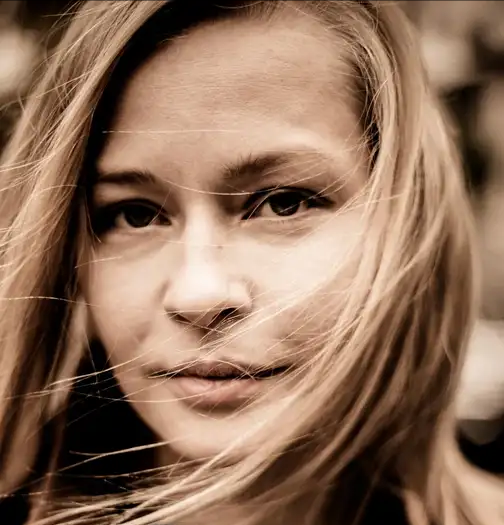
Julia Peresild. The first actress in space.
Yulia, who was born in a simple working-class family, dreamed of a career in cinema since childhood: her self-belief and strong character helped her achieve incredible success.
On October 5, actress Yulia Peresild and film director Klim Shipenko fearlessly went to the ISS to shoot the first ever film in space called "The Challenge". Fragile at first glance, the woman was able to get the role of a dream and turned out to be more fearless than many. But what made her like this?
Today I will tell you about the biography of Yulia Peresild: about a difficult childhood, a guest marriage and a resounding success in the cinema.
**Childhood and youth of Julia Peresild.**
Yulia Peresild was born in Pskov in a simple working-class family. The girl has always been a creative person: she sang, performed on stage, participated in KVN. From the earliest years, Julia believed that one day she would become an actress.
At the age of 11, Yulia went to Moscow to star in the program "Morning Star". After that, the girl caught fire with the idea of moving to the capital, but a terrible grief happened.
The Peresild family was left without a single breadwinner - the father was brutally murdered. Later in her interviews, Yulia recalled that her father was a talented man who could not realize his potential. He got involved with bandits, which eventually ruined him.
To feed her family, Julia gets a job at the age of 14. After graduation, she decided to fulfill her dream and tried to enter the Moscow Art Theater studio school, but failed miserably. The actress did not give up and later passed the competition in GITIS.
**Creative path.**
While still a student, Peresild began acting in films. She first appeared on television screens in 2003 in the TV series "The Plot". Two years later, Yulia appeared in the TV series "Yesenin— - there she played the sister of the legendary poet. Peresild worked a lot and became quite a sought-after actress.
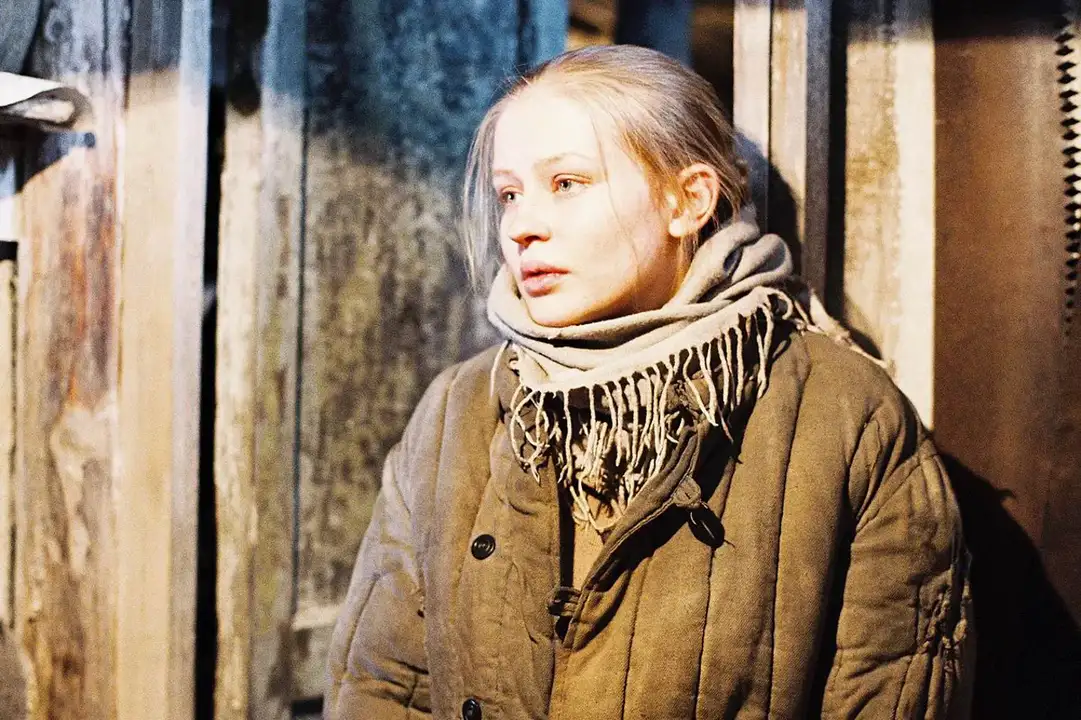
The debut on the big screen took place thanks to the film "The Bride". Director Alexey Uchitel noticed the talent of Overpowering - he invited Yulia to star in the drama "Prisoner". The role brought Peresild the "White Elephant" and "Golden Eagle" awards.
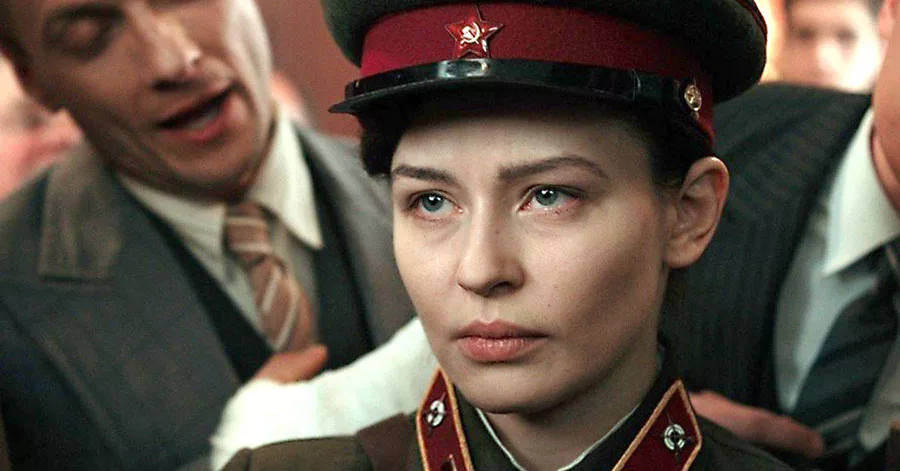
The actress likes to experiment, so she tries herself in different genres. Many people fell in love with Yulia after her appearance in the "Battle for Sevastopol— - there she played Lyudmila Pavlichenko. But the image of Anfisa in the new version of "Surly River" was severely criticized.
Peresild manages not only to act in films, but also to perform on stage. She is the owner of the prestigious Crystal Turandot award.
**Julia Peresild's personal life: rich lovers and a guest marriage With whom only the novels of the actress Julia Peresild were not attributed.**
As soon as she starred in a bed scene with actor Vladimir Mashkov in the film "Edge", the press immediately dubbed him the new lover of the star. Journalists also assumed that Peresild was meeting with oligarch Roman Abramovich – everyone came to such conclusions after they were noticed at a charity event.
"*If you list all the people I respect, with whom I am credited with novels, then you can even be proud. I am ironic about this. And Roman Arkadyevich and I are bound by friendship",-* Peresild commented, continuing to hide who her heart was occupied with.
But the journalists were right about something. Many guessed that Peresild was not indifferent to the director Alexey Uchitel. They often appeared together at social events, but the director assured that Peresild was nothing more than a muse for him. The words were believed reluctantly, but the Teacher was married and had children.
In 2009, Julia became a mother – a daughter, Anya, was born, and three years later, she gave birth to Masha. The actress remained silent and did not tell who is the father of her children. So it was until 2017 – Overpowered questions about her personal life, and she finally confessed.
"*The father of my children is Alexey Uchitel. Alexey is a good dad who takes care of his daughters, "* Yulia shared, writes StarHit.
The actress assured that the relationship with the Teacher completely suits her. She did not want to get married, because the ring on her finger does not guarantee anything. Recently, something has changed: the network is actively discussing the version according to which Peresild broke up with the Teacher. The reason was the interview of the star: the star complained that she was not called to marry, and in general seemed unhappy in the relationship. In this regard, fans again began to wonder who could become the new chosen one of the Overpowers?
Users are sure that there is still something between the actress and the oligarch Roman Abramovich. It's not for nothing that his bodyguards accompany Julia at social events, gossips believe.
**Shooting in space.**
Even if something goes wrong in Peresild's personal life, then everyone can envy her career. On October 5, Yulia Peresild, together with director Klim Shipenko, went to the International Space Station. They plan to shoot the film "Challenge" there for 12 days — no one has done this yet.
"*Of course, we have just met with everyone who has been living on the ISS for a long time. Now we will get acquainted. I still feel like I'm dreaming, "* the artist admitted during the broadcast on the ROSCOSMOS YouTube channel.
It is known that about 3 thousand actresses applied for the main role, but in the end Julia Peresild flew into space. He and Shipenko had to intensively prepare for unusual filming: the director admitted that he had lost 15 kilograms.
The film is expected to be released in 2022.
According to the description of the plot, in the "Call" they will tell about a cardiac surgeon to his Wife, who will go to rescue cosmonaut Ivanov, who lost consciousness on the ship.
Was Russia in slavery? Or what is the Mongol-Tatar yoke.
Hello. I will tell you now about how Russia was dependent on the Golden Horde. Why the Battle of Kulikovo is so famous. And who really attacked Russia, the Mongols or the Tatars?
I'll start with what a "yoke"is. "Yoke" comes from the Latin word iugum. It meant a harness for cattle, and then became synonymous with slavery.
Who were these Mongol-Tatars? The Mongol conquerors were called Tatars, as evidenced by Russian and European chronicles. The thing is that this was the name of all the nomads from the north of the Great Wall of China. This is similar to how the ancient Romans called all strangers barbarians. Gradually, the Turkic peoples who were enslaved by the Mongols began to be called "Tatars".
The term "Mongol-Tatars" appeared in the 19th century to eliminate the discrepancy between the real conquerors " Mongols "and their name in the Russian chronicles"Tatars". Now historians have agreed to call this period "Horde rule" to avoid confusion, but "the term Mongol-Tatar yoke" is still used.
**The beginning of the horde invasion.**
The resistance between the Golden Horde and Russia began in the early 18th century. Then the horde was led by the grandson of the famous Genghis Khan, Khan Batu, or as the Russians called him Batu. Batu was determined, he wanted to enslave the whole world, defeating and destroying everything. The Russian princes believed that an attack on them was inevitable, and decided to attack first.
In 1223, a battle between the Russian troops of the horde took place on the Kalka River in the Azov region. The battle turned out not to be in favor of Russia, even taking into account the fact that it was only a reconnaissance on the part of Batu. In the next 14 years, Batu's army advanced closer and closer to the Russian lands.
The full-fledged offensive of the horde against Russia took place in 1237. Such cities as Kolomna, Ryazan and Moscow collapsed under the "feet" of the horde. Even the Russian winter did not stop the Mongols, in 1328 Vladimir, Tver and Torzhok were destroyed. Several principalities united to resist the khan, but were defeated. In the same year, on the Sit River, the Russian army held back Batu for seven weeks, but it could not stand it. The city of Kozelsk fell, it was completely destroyed, the inhabitants were killed.
In 1240, the city of Kiev, the capital of the Russian lands, and the most fortified city, was founded. The surviving princes bowed their heads to the horde and pledged to pay tribute. The dependence of Russia on the Golden Horde lasted for more than two centuries.
The reason for such a long dependence on the horde, and defeats on the part of Russia, are the constant conflicts between the Russian princes. Fighting among themselves, they were never able to unite in front of a common enemy. However, having united, the forces were still not equal. The number of warriors of the Golden Horde ranged from 80,000 to 150,000 people, and the warriors of Russia numbered only about 50,000 people.
During the years of the Tatar-Mongol yoke, the strife only intensified — the princes continued to feud and periodically resorted to the Mongols ' military assistance to fight against each other for the khan's label — a document confirming the prince's right to power.
After any incidents, the prince had to come to the capital of the Horde — Sarai - with a report on his actions or inaction. At the same time, the khan often demanded that the prince take with him one of the younger relatives who remained in the Horde as hostages. Not everyone returned alive. The Horde officials of the
Baskaks were engaged in collecting tribute from the inhabitants of Russia, until in the 1330s the Moscow prince Ivan Danilovich obtained from the Uzbek khan the right to collect tribute independently, for which he received the nickname Kalita ("purse"). Thanks to this, Moscow became the economic and political center of Russia. Since then, the Horde has stopped regularly raiding Russian lands.
After the death of Khan Janibek in 1359, a struggle for power began in the Horde, which the chroniclers called "The Great Zamyatnya". It weakened the Horde, while Moscow became stronger and stronger, uniting more and more Russian lands under its banners. In 1374, the Moscow prince Dmitry Ivanovich, the grandson of Ivan Kalita, refused to pay tribute to the actual ruler of the Horde — beklarbek (adviser) Mamai.
In 1378, Mamai sent a fifty-thousand-strong army to Russia, but it was defeated by Dmitry Ivanovich's squad on the Vozha River. This was the first Russian victory over the Horde, followed by the legendary Battle of Kulikovo.
On September 8, 1380, the united Russian army met in battle with Mamai's army on the Kulikovo Field, near the confluence of the Don and Nepryadva rivers.
Despite the large number of testimonies in chronicles and works of art, little is known about this battle reliably. But one thing is absolutely certain: the soldiers of Dmitry Ivanovich inflicted a crushing defeat on the Horde and put Mamai's army to flight.
This battle did not become the final confrontation between Russia and the Horde. Two years later, the new ruler of the Horde, Khan Tokhtamysh, ruined Moscow and again forced the Russians to pay tribute. However, the influence of the Kulikovo battle on the course of history can hardly be overestimated. First, the victory united Russia: the princes were convinced that together the Horde can be defeated.
Secondly, the raids were reduced, the princes no longer needed to receive the khan's label, and the tribute was now paid irregularly. Finally, it was this famous battle that inspired Dmitry Donskoy's great-grandson, Ivan III, to oppose the Horde and rid the country of the rule of the Khans.
**Overthrow of the Mongol-Tatar yoke.**
100 years after the Battle of Kulikovo, in 1480, the Horde yoke came to an end. The Golden Horde broke up into several khanates, and the Grand Duke of Moscow Ivan III refused to pay tribute. The khan of the Great Horde Akhmat equipped a campaign against Russia, but the Russian army stopped him on the Ugra River. This episode went down in history as "the great standing on the Eel". For several months, the two armies stood on opposite banks of the river, not daring to go on the offensive. With the arrival of cold weather, Akhmat decided to retreat. More Horde troops on Russian lands did not appear.
**Consequences of the Mongol-Tatar yoke.**
The two-century Mongol rule slowed down the development of the economy, culture and science, which is why Russia lagged far behind Western European countries.
The invasion of Batu led to huge losses of the population — hundreds of people were killed or driven into slavery, many books, monuments of painting and architecture were lost in fires. Two-thirds of Russian cities were ruined, and most of them could not be restored. The population paid extortionate taxes. Many crafts were forgotten for decades and even centuries — during the Horde rule, not a single stone temple was built.
At the same time, the confrontation with the Mongols hardened the Russian army and strengthened the centralized power. If before the invasion, Russia was a dozen scattered lands, then after the end of the Mongol-Tatar yoke, the whole country was united under the rule of the Moscow prince.
Thanks to this, the Russian state subsequently won many important victories and eventually conquered all the territories of the former Golden Horde.
A superhero. Who is a bogatyr, and what are epics.
Russian epics are real historical events that people have retold in their own way from generation to generation. Аs a result, the stories were overgrown with a lot of myths and people's speculation. Usually, bogatyrs and villains are real-life personalities. Their life and occupation were taken as the basis of the character. The bogatyrs were considered real "superheroes" who defended our land from enemies and evil spirits.
Bogatyrs of epics.
Russian bogatyrs are conditionally divided into younger and older. The elders are ancient bogatyrs who existed in pre-Christian times. Sometimes they were represented as magical creatures endowed with supernatural abilities, for example, werewolves. The legends were transmitted orally, and the majority of historians consider them myths.
The younger heroes are a human form. The heroes were characterized by the presence of great strength. Almost all of them lived during the reign of Vladimir (from 980 to 1015). In the old chronicles, there is at of information that indicates that the events that have acquired the status of ancient legends really happened in reality.
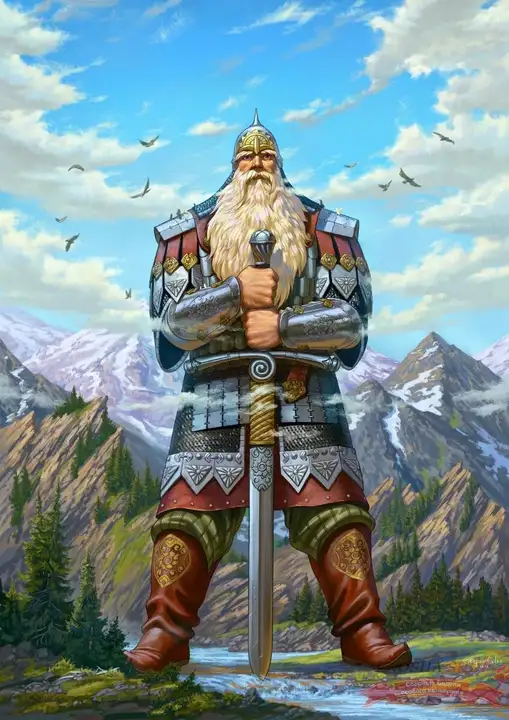
**Svyatogor. Bogatyr-Mountain.**
The bogatyr of the epics was famous for his huge growth. The elder bogatyr is as tall as a mountain, which even Mother Earth cannot hold. Therefore, he is forced to be in constant inactivity. The epics tell about his meeting with the earth and his death in a magical grave.
Svyatogor reflects the features of the biblical hero Samson. It is almost impossible to determine the origin of the bogatyr. In ancient legends, an ancient warrior transmits his power to Ilya Muromets.
**Mikula Selyaninovich. Bogatyr-Plow.**
Mention of him is found in two narratives, about Svyatogor and Volga Svyatoslavich. Mikula was famous throughout Russia not for strength, but for endurance. He is the first bogatyr of the peasants, representing the folk profession of a plowman.
His mighty strength is just right to compare with the power of Svyatogor. Such a comparison indicates that the image of Mikula was formed under the influence of myths about magical creatures that personify the earth. However, the peasant himself was not associated with the elements. It represented the idea of a settled life of a farmer, in which he puts a lot of effort.
**Ilya Muromets. Holy bogatyr.**
The first bogatyr canonized by the Orthodox Church. The main patron and defender of Russia. It has the features of a real historical person. However, his exploits and campaigns are still attributed to mythical legends.
Ilyusha has been sitting on the stove for thirty years, but then he receives the heroic power from Svyatogor and performs the first work. After that, Muromets goes to Kiev, picks up a Robber Nightingale on the way and frees Chernihiv from the hordes of Tatars.
Not all of Ilya's adventures are equally reflected in the literature. A huge amount of research has been devoted to some campaigns, while others are still shrouded in mystery. Moreover, the bogatyr was famous not only for his heroic, but also for his moral strength. He was distinguished by calmness, simplicity, modesty, complacency.
Over time, the description of the bogatyr showed a tilt in the religious direction. As a result, he becomes a saint. After a brilliant career as a warrior and receiving a serious injury, Muromets decides to spend the rest of his life in a monastery and takes vows.
**Dobrynya Nikitich. Bogatyr-Lion Heart**
He is compared with the chronicle Dobrynya, who was the uncle of Prince Vladimir. The name in translation means "heroic soft-heartedness". He had great strength, but at the same time he did not offend anyone and was always on the side of the weak. Nikitich was considered an artist, he sang well and played the harp well.
Dobrynya belongs to high society, a kind of prince-vigilante. The bogatyr is well-off, has received a good education, is an excellent shot and fights. It is characterized by refined manners and competent speech.
**Alyosha Popovich. Junior**
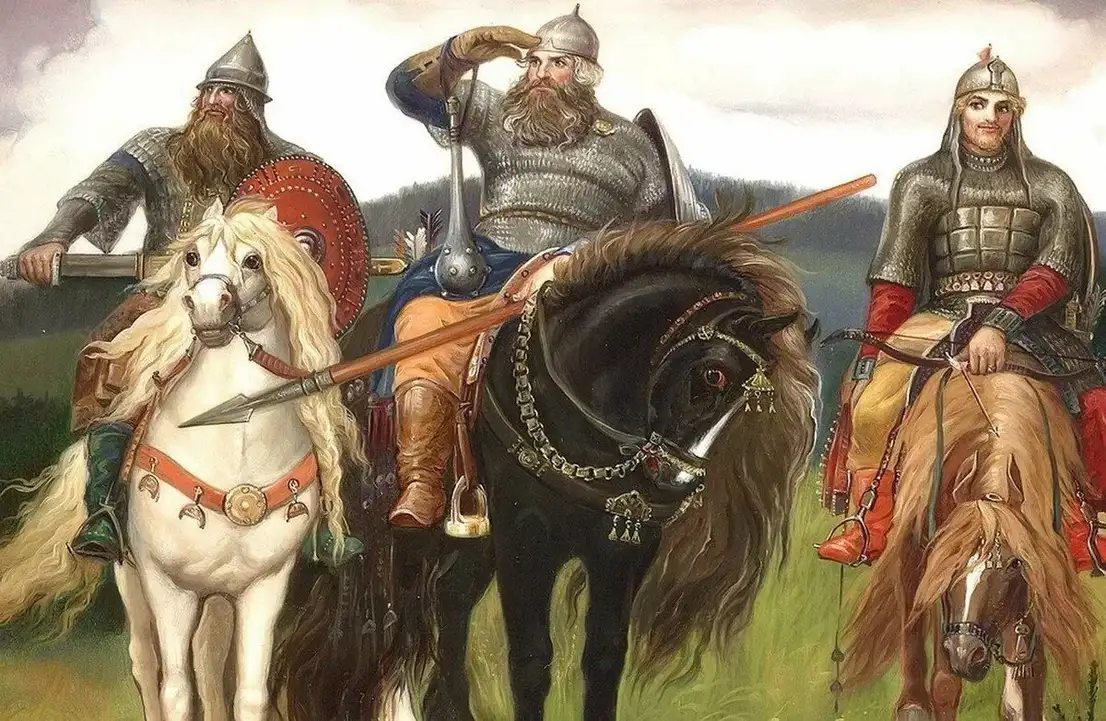
Do you remember who are the most popular epic bogatyrs of Ancient Russia? That's right, Dobrynya Nikitich, Ilya Muromets and Alyosha. The youngest of the brave warriors is far from the image of "superman". He was characterized by such qualities as selfishness, cunning and greed.
In other words, on the one hand, he is a brave warrior, but on the other – a proud and arrogant young man. In battles, he is bold and cunning. However, by the further development of the epic, Alyosha turns into a female mockingbird and an unsuccessful philanderer.
It is difficult to understand how the bogatyr has undergone such changes in the eyes of the people. Most likely, this is due to excessive boastfulness and arrogance.
**Mikhail Potyk. A loyal husband**
He leads a relentless struggle with the evil serpent, which according to biblical legends is the original enemy of humanity. It was he who assumed the guise of the tempter and started a feud between husband and wife, seducing the latter and thereby leading people into temptation.
According to one of the legends, Mikhail and his wife Avdotya made a vow that whichever of them died first, the second one would be buried alive next to him. When the wife dies, the Potyk is covered with earth.
At the same time, he remains on horseback and in full military uniform. He is waiting for a tough fight with the dragon. Having won, the hero revives Avdotya with the help of his blood. When Mikhail died, his wife was buried nearby.
**Churila Plenkovich. A visiting bogatyr.**
In addition to the old and young bogatyrs of epics, there are so-called visiting daredevils. In the nicknames of the warriors there is a clear indication of what area they come from. In the old days, the Crimea was called Surozh or Sugdaya, so the heroes who came from there were called Surovets or Suzdal.
The bogatyr symbolized youth, wealth and audacity. Fame was far ahead of him. Churilo played his acquaintance with Prince Vladimir as follows. He brought fear to the nobility, interested the ruler with his arrogance, for which he received an invitation to the estate. As a result, Plenkovich agreed to serve the prince.
However, the young bogatyr became a victim of his audacity. He fell passionately in love with the wife of the old boyar. When the man returned home and found a piquant picture, he simply cut off the guy's head. The girl threw herself on the pitchfork with her chest.
**Sadko. Novgorod bogatyr.**
One of the most popular bogatyrs of Russian epics. It is believed that he had a real prototype – a generous merchant from Nizhny Novgorod Sotko Sytinich. The rich man did a lot for his native city. For example, the temple of Boris and Gleb was built at his expense. However, this is only one of the many versions of the" origin " of the bogatyr.
Unlike his brothers, Sadko did not perform great feats, did not protect Russia from enemies. He gained fame as a man of trade. Similarly, epics for the first time praised merchants.
The character of the bogatyr deserves special attention: he was generous, easily parted with property, was distinguished by honesty and amazing musical abilities. However, he also had negative traits: gambling and bragging.
**Volga Svyatoslavich. Bogatyr the Magician.**
Researchers are sure that the prototype of the bogatyr is Prince Vsevolod Polotsky. Some draw parallels between the Prophetic Oleg and Volga. His famous trip to India is compared to Oleg's journey to Tsargrad.
Volga was considered a difficult warrior, he was a werewolf and understood the language of birds and animals well.
**Nikita Kozhemyaka. Zmeeborets.**
In Russian fairy tales, before entering into a fight with a snake, the bogatyr tears twelve skins with his hands, proving his indestructible power. Kozhemyak not only manages to defeat the Snake, he harnesses it to a plow and plows the whole earth from Kiev to the Black Sea.
Because of Nikita's exploits, the defensive redoubts near Kiev were called Zmievy.
**Danube Ivanovich. The Tragic bogatyr.**
According to ancient legends, it is from the blood of the glorious bogatyr that the great Danube River begins. A man loses to his wife Nastasya in an archery competition. In an attempt to recoup the bogatyr gets an arrow in his wife.
Then he accidentally finds out that Nastasya was expecting a child and stumbles upon a saber.
**Vasily Buslaev. A zealous bogatyr.**
The most daring character of the epics. He had an unbridled temper, so he often became the instigator of fights with Novgorod peasants. He was tirelessly brawling, betting that he was able to defeat all the guys in Novgorod. And he still almost managed to fulfill the threat. Fortunately, my mother stopped me in time.
In another legend, he is represented as a mature bogatyr who goes to Jerusalem to atone for numerous sins. But it is impossible to correct the violent Buslaev. He takes up the old things again and stupidly dies, proving his strength.
**Bova Korolevich. Lubochny bogatyr.**
For a long time, he remained one of the most popular bogatyrs. From the eighteenth to the twentieth century, hundreds of popular fairy tales about the brave man were published. The famous story of A. S. Pushkin "About Tsar Saltan" is partly based on the plots of stories about Bova Korolevich. The prototype of the bogatyr was a knight from France, Beauvau de Anton.
Antiheroes of epics.
In Russian legends, in addition to positive characters, there were also villains. And where to go without them! Who would the glorious wars have fought with then? All the Russian bogatyrs had in their "piggy bank" the main negative hero, with whom it is pleasant to once again come together in a fight and win the upper hand.
**The Robber Nightingale (anti-hero)**
The main opponent of Ilya Muromets. Unlike his fellow villains in the villainous camp, he had a small stature and could not eat a huge amount of bread in one sitting. His strength lay in a killing and loud whistle that knocks down a simple person and is able to cope even with a brave bogatyr.
There are different descriptions of the Robber Nightingale. In some sources, he is represented as a snake sitting in a nest on twelve oaks. Others claim that he was a simple man with a strength comparable to the power of the Murom man himself.
The data on the famous whistle also differ. A number of researchers suggest that this is a wind that knocks you down. The rest are sure that since the Nightingale is a Tatar, it means that his "trill" is comparable to the whistle of the invading troops.
The main purpose of the antihero is to demonstrate the power of the Russian people in the person of a bogatyr. After all, in the end, Muromets defeated him and took him to the tsar.
**Serpent Gorynych (dragon snake)**
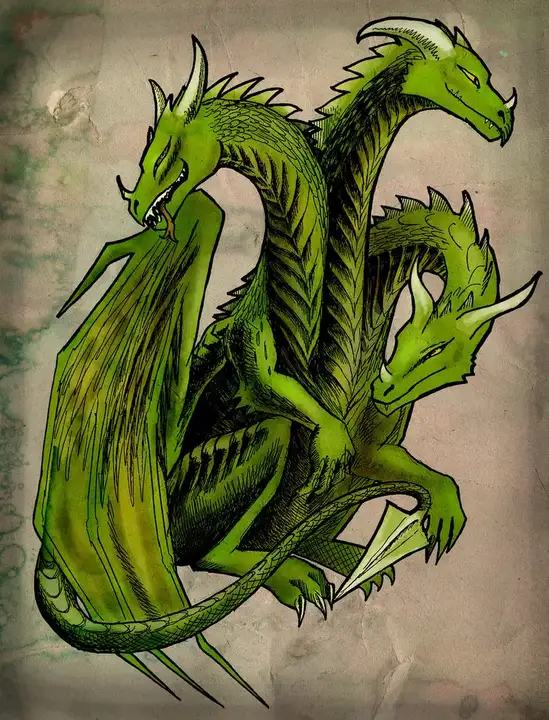
It breathes fire and has three heads. According to legend, he lives near the kingdom of the dead, guarding its entrance. In some legends, the Snake changes its location and moves to a dense thicket or mountains. It has a peculiar appearance. It is able to move through the air and the ground. It has a long body covered with scales, clawed paws and a powerful tail.
A unique feature of the Snake is the regeneration of severed heads. In the bloodiest battle, he is able to prevail over the enemy, because a new one appears in place of the demolished "skull".
Another" talent " of Gorynych is the ability to imitate the sounds of different animals and the ability to reproduce human voices.
You can cope with the villain only if you destroy three heads at the same time. At the same time, they should not separate from the trunk. If a limb is completely cut off, it will grow back.
The Snake also has vulnerabilities. These are his defenseless cubs and a painful point located behind his head. Here the scales are soft and easy to break through.
**Filthy Idol (villain)**
In Russian epics, there are many insidious characters (Baba Yaga, Koschei, Gorynych) who try to put bogatyrs and good fellows. They are the prototypes of evil, but they do not cause negative emotions. Some even help positive characters. In other words, it is evil spirits that can be given a second chance.
Another thing is an idol. The behavior and actions of the villain cannot be justified, even if he defects to the side of good.
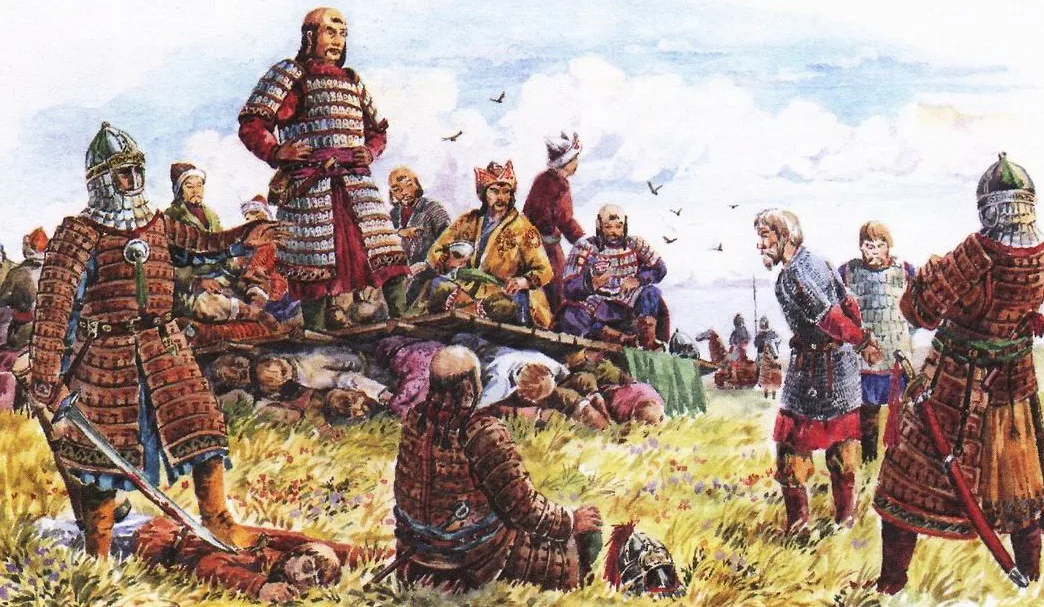
It is a well-known fact that for four centuries there was a Tatar-Mongol yoke in Russia. A terrible horde, sweeping away everything on its way. The invaders destroyed innocent people, plundered villages, tried to teach the Slavs to live by new rules. This is not just an enemy, but a real monster.
According to the descriptions, the Idol is dragged by twenty horses, at a time it eats a loaf the size of an oven. In other words, huge and terrible, like the yoke. According to the level of fear that he inspired on people, the Idol is compared to the Tugarin Serpent. But the second is a mythical creature, and the first is a real character. Ilya Muromets was able to defeat the monster.
The Russian bogatyr is a valiant warrior who is ready to give his life for the Motherland. Some of them are popular and well-known, others are known only to historians. No matter if it is a fictional character or a real person, brave heroes have become part of Russian culture and our heritage.
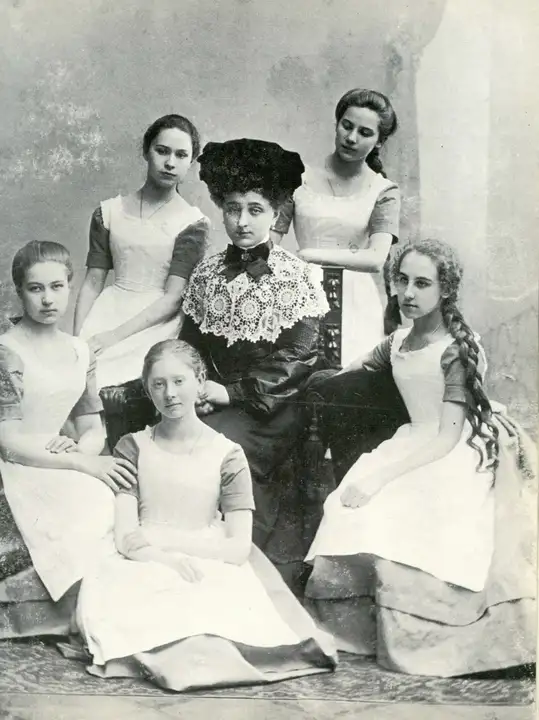
Institute of Noble Maidens. Whether the graduates were really worthy.
**A little history of the Smolny Institute.**
Empress Catherine the Great was a fan of the progressive ideas of Montaigne, Locke and Fenelon, so she wanted to create an educational institution in Russia, like the Saint-Cyr Institute near Paris.
According to the charter,girls had to enter the institute from the age of six, and study for twelve years. At the same time, the girls ' parents were notified that they would not be able to take their daughters from the educational institution under any pretext.
Ekaterina believed that girls should be taken away from a disadvantaged environment as soon as possible, and return an already developed, ennobled girl to society. Catherine hoped to soften the mores of the people in this way, to create a "new breed of people".
Thus, on May 5, 1764, the first women's educational institution in Russia was established, which marked the beginning of women's education in the country.
**Training of young pupils.**
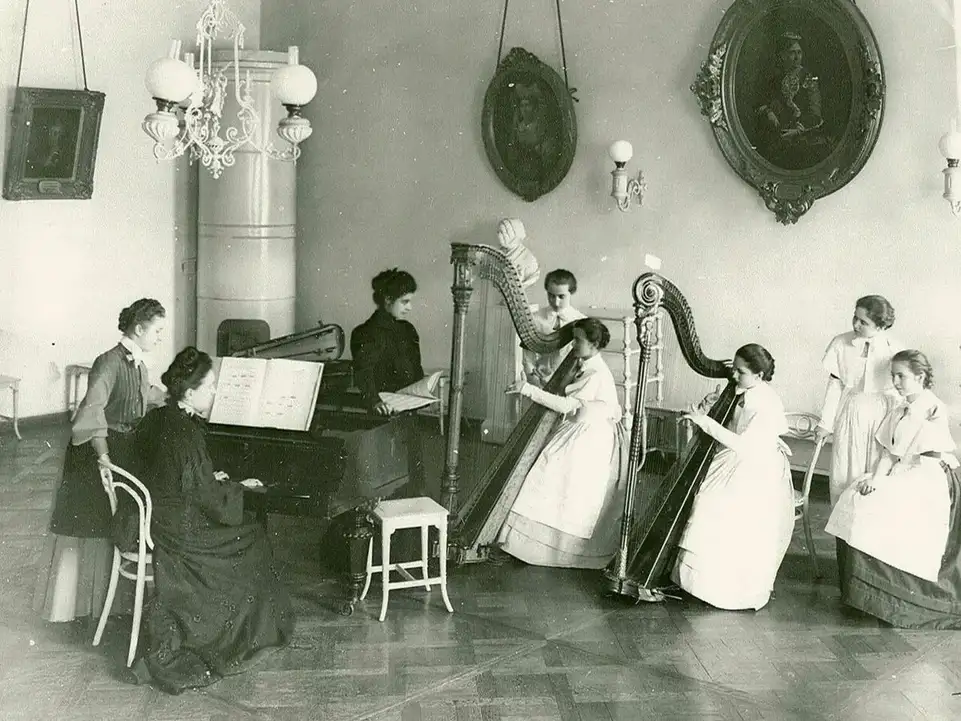
The Smolny Institute was similar in many respects to the modern schools we are familiar with. The first few years, the training was really at the highest level. The institute taught such sciences as arithmetic, geography, architecture, physics, history, foreign languages. But then, the training was reduced in a big way to the" decorative " of the girls. More time was devoted to dancing, drawing, literature and singing. The main subjects were taught poorly, and sometimes it was completely nullified. Apparently, society was not ready, at that time, to accept intelligent women who could outshine the great male minds.
The students spent more time observing the rules of decency than grades. The girls were not allowed to defend their own opinion, to enter into discussions with teachers, to ask questions. The libraries had a very meager supply of books. But nevertheless, graduation certificates were issued to everyone, this was done for the reason of avoiding conflicts with parents, because education was not cheap.
Another interesting feature is that there were no physical punishments for disobedience and misconduct, but constant humiliation and insults were present. For example, for a stray lock of hair, girls pinned a torn stocking on their clothes, and they had to walk like this for several days. Or, because the student dared to argue with the teacher, she was forbidden to talk to anyone at all. And for a poorly made bed, they could deprive her of food, but they did not deprive her openly, they simply did not allow her to eat sitting down, the girl had to stand. But everyone present knew that only fallen women can eat standing up, so the girls stood hungry, without even touching the food.
Also, in practice, it was customary to divide students into bad and good. The" bad "girls got into for disobedience and rebellion, they were called moveshki (from the French word mauvaise - "bad"). "Good", those who were always polite and submissive, they were called parfaites (parfaite - "sovershenny").
**The quality of life of students.**
The girls were not allowed to go home, all meetings with relatives were only within the walls of the institution. Correspondence was also not particularly welcome, but it was allowed, while letters were checked by employees of the institute. Even missing home and relatives was forbidden, the new ones were ridiculed by older students and teachers.
Outside the walls of the institute, students were sometimes discussed in society, they were considered sissies. But in fact, this was not the case at all. The temperature in the classrooms and bedrooms was in the range of 12-16 degrees, it was impossible for the girls to warm up under a thin blanket. An early rise, washing with ice water, prayer and a modest cold breakfast, so every morning of the students began.
The pupils were allowed to walk only on the territory of the institute, and only at the strictly allotted time.
**"Adoration" as the meaning of life.**
Only unmarried ladies were accepted to work as pre-employers, and men, on the other hand, had to be married, and preferably elderly, and even better with any defects. This was done in order not to tempt young girls.
But the girls, locked away from the outside world, did not experience bright emotions,and there was a need for them, so the girls constantly "adored"someone. The subject could be an older student, a teacher, even a priest. The adored one had to be a little older in the school hierarchy. They prayed for his health, gave him gifts, did small services.
But what kind of teenagers without suffering - "suffering for their love" girls could eat soap, scratch the initials of the object on their hand. And the love was high, platonic - if the teacher announced, for example, his marriage, then his bride was "adored" too, in absentia.
And when high-ranking officials or the emperor himself came to the institute, the hysteria reached the limit. Pieces from the tsar's table were preserved, and if it was possible to get his handkerchief, then it was cut into small pieces for everyone and carefully stored on his chest.
**Unfit for further life.**
They were in a real panic. Many of them did not shine with health - there was little physical exercise, and the diet was extremely limited.
Over the years of training, the connection with relatives was thinning, everyone around seemed to be enemies, and after all, it was necessary to do the most banal things - go to the store, navigate the city, pay the servants.
It remained only to make infantileness its highlight, innocently clap your eyes and speak in a touching childish voice. Fans of saving the "innocent child"were".
"Finish writing before you die"
Hello dear reader.
I have already told you about the wonderful writer M. A. Bulgakov. His novel "The Master and Margarita" left me a lot of impressions. I can say with confidence that this is my favorite work. Therefore, I want to supplement my previous articles with some facts. To those who have not read them, I will leave the links at the end.
1. So, one of the interesting facts. Bulgakov mirrors the events and images of the characters of the residents of Moscow and Yershalaim.
The actions take place on the same days of the week, sunny and bright weather is replaced by heavy, thunderous rain.
Considering the characters, you can find the following correspondences and parallels:
Woland in Moscow, Afraniy in Yershalaim. Both characters are the personification of mystery. Gray cardinals, ruling their retinue. When Woland says that he was present incognito at the Ha-Nozri trial, was he not in the guise of the head of the secret guard…
The poet Ivan Ponyrev is in Moscow, Yeshua is in Yershalaim. During the interrogation, Yeshua says that he goes from city to city, so he does not have a house, and the pseudonym of Ivan Ponyrev is Homeless. The author describes Ivan and Yeshua in the same way, in torn clothes, with bruises and abrasions. Both of them were recognized as crazy in the novel.
Baron Maygel is in Moscow, Judas is in Yershalaim. Both are spies and traitors, both have paid for it.
2. The scene with the cutting off of the head on the Patriarchs is probably inspired by Bulgakov's "Fantastic Symphony" by Hector Berlioz. The theory is confirmed by one of the working titles of the manuscript "Fantastic Novel". Bulgakov borrowed the composer's last name for Mikhail Alexandrovich Berlioz.
In general, the musical work has a lot in common with the novel. And a severed head bouncing off a lifeless body, and a ball with dishonor. All this is present in both works.
3. Mikhail Bulgakov worked on the novel for 10 years. All this time he was editing and correcting the manuscript. On the cover of the last notebook, the author made an inscription: "Finish before you die."
"So it means that it's the writers who are following the coffin?" With this phrase, the author stopped making edits to his novel. Four weeks later, Bulgakov died.
4. When Mikhail Afanasyevich died, the novel was not published, the edits were not finished yet, this duty was assumed by Bulgakov's wife – Elena Sergeevna.
Bulgakov's wife tried to publish the novel, but her attempts were in vain.
5. Roman did not see the light for 26 years, until a phone call rang in the widow's apartment. It was Abram Vulis, he enthusiastically read Bulgakov's work "Fatal Eggs", and was looking for new ones. And I found it.
The widow did not immediately decide to show the manuscript to Abram. But he turned out to be persistent, he set a goal to achieve the publication of his favorite author.
6. Thanks to the efforts of Abram Vulis, which took a lot in the conditions of the previous political situation in the country, the novel " The Master and Margarita "was published in the magazine"Moscow".
Now the book belongs to the number of classical works in Russia and has received recognition all over the world.
https://read.cash/@Alexandra001/a-brilliant-russian-writer-bc1b7a86
https://read.cash/@Alexandra001/the-master-and-margarita-bulgakov-m-a-838f8698
"The Master and Margarita" Bulgakov M. A.
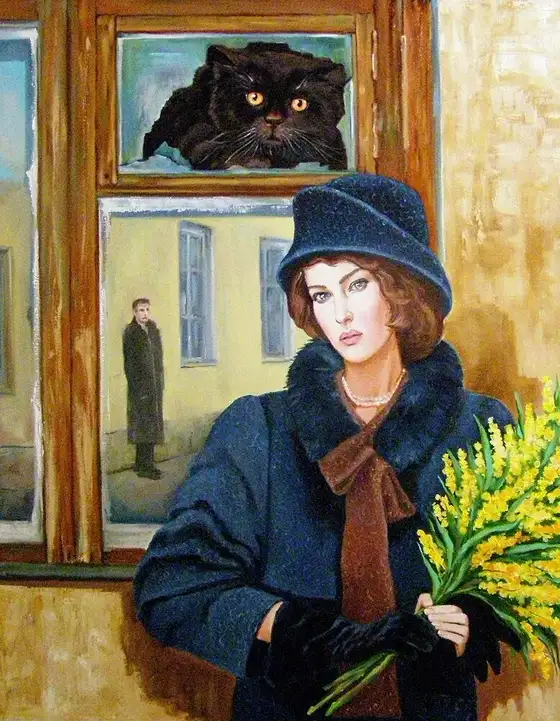
The novel "The Master and Margarita" became not only the most famous work of Mikhail Afanasyevich Bulgakov, but also one of the most mysterious books of the XX century. Readers have pulled it apart for quotes, the characters have become truly iconic, and the researchers of the novel have been struggling with its interpretation for several decades.
In the initial version, the work was called "The Engineer's Hoof", and there was no Master or Margarita among the heroes. The well-known name appeared only in 1937. Initially, Bulgakov planned to write something like a Russian Faustian, and therefore the central character was Woland.
Margarita and her lover, who was initially called the Poet and Faust, appeared in the second version of the novel. By the way, before that, the word "master "was not found in Bulgakov's works and had rather a negative connotation, since it was synonymous with the word" craftsman " (uncreative person). Bulgakov gave it a new meaning and equated it with the word "artist".
The book was incredibly important for the writer, as evidenced by the author's remark found on one of the sheets: "God help me to write a novel."
Heroes and prototypes.
Master. There are a large number of interpretations of this image. Someone believes that Maxim Gorky or Mandelstam served as the prototype (the letter M was embroidered on the Master's cap). There is also a version that the Master is a Russian Faust, a creator who is obsessed with understanding the world. By the way, in the novel, many characters have doubles. So, the Master's double is Yeshua Ha-Nozri. He is also a defenseless thinker, a man who wants to do his own thing — to wander around the world and preach.
Woland. When Bulgakov read the first two chapters of the novel to his friends, he asked who, in their opinion, Woland was. It is noteworthy that not everyone considered him a devil. Perhaps it is true: he is not an absolute evil. Woland is one of the variants of this evil, who is in charge of earthly problems: he establishes some kind of justice, punishes bribe takers and fools, gives a few decent people "peace" and flies away. Voland's double in the novel is Pontius Pilate, because he is also the Law that decides the fate of people.
The playwright Edward Radzinsky saw in Woland the features of Stalin: "Under the scorching summer sun of 1937, when another devil was destroying the diabolical party, when Bulgakov's literary enemies were dying one by one, the Master wrote his novel... So it is not difficult to understand who was behind the image of Woland."
At the same time, Bulgakov himself denied that this image has any prototype. He said: "I don't want to give reasons to amateurs to look for prototypes. Woland doesn't have any prototypes."
Margaret. In Margarita, you can guess the features of both literary characters and real women. While working on the novel, Bulgakov turned to the heroine of "Faust" Margarita (Gretchen), as well as to the image of a real woman — Margarita of Navarre, "Queen Margot". According to the researchers, they are brought together by "audacity in love and determination in actions".
In addition, Margarita Nikolaevna resembles the writer's third wife, Elena Sergeevna, because she also left her husband for Bulgakov at one time. There is even a similarity in the description of the appearance: Elena Sergeevna has a "squinting eye cut" and Margarita has a" witch slightly squinting on one eye".
Yeshua. Someone believes that Yeshua is Jesus. However, Bulgakologists argue that it is impossible to put an equal sign between these images. In the novel, the character is about 27 years old, while Jesus was 33 years old when he was crucified. Yeshua does not remember his parents and "seems to be a Syrian" by blood, which also does not quite correspond to the biography of Christ. In addition, the Bulgakov hero has only one student-Levi Matvey, and not 12.
Alexander Mirer in his book "The Gospel of Mikhail Bulgakov" writes that Yeshua is not the Christ, but the God-man. A savior who didn't save anyone, unlike Jesus. And the image of Christ is manifested in two characters: Yeshua embodies his mercy, and Pontius Pilate-a punishing essence (it is he who deals with the traitor Judas with the hands of Afranius).
Pontius Pilate. Pilate in the novel differs both from the historical character and from the evangelical image. The writer made his procurator deliberately "unheroic", subject to doubts and cursing himself for a moment of cowardice. According to the theater critic Vitaly Vilenkin, Bulgakov once asked him about the main human vice, and then he answered himself: "Cowardice is the main vice, because all the others come from it."
Bassoon (Koroviev). The name of the knight, the Bassoon, is probably a reference to the name of a musical instrument: its shape with a long tube vaguely resembles the skinny figure of Koroviev. As for the surname-Koroviev — there is a version that in Hebrew the word "karov" means "close", and Fagot is the eldest of Woland's subordinates. According to another version, the surname is a reference to the character of the story of Alexey Tolstoy "The Ghoul" to the state councilor Telyaev, who turned out to be a knight and a vampire.
Azazello. Bulgakov took the image of the desert demon Azazel from the Old Testament. This fallen angel taught men to create weapons, and women to decorate their bodies and paint their faces. It is no coincidence that it is Azazello who kills Baron Meigel and presents Margarita with a magic cream.
The Hippo cat. If you believe the "Bulgakov Encyclopedia", then the prototype of this bright character was a sea monster from the book "Apocryphal tales about Old Testament persons and events". Also, according to the demonological tradition, the Hippopotamus is a demon of gluttony.
At the same time, Bulgakov's second wife Lyubov Belozerskaya claimed that their huge pet cat Flyushka served as the prototype of the Hippo. The character and habits of the Flyushka are reflected in the Behemoth's phrase: "I'm not naughty, I don't touch anyone, I fix the primus."
Mikhail Alexandrovich Berlioz. Most likely, this is a collective image of Soviet ideologists. Among the possible prototypes of this hero is the founder of the Russian Association of Proletarian Writers, Leopold Averbakh. By the way, many people are wondering why Berlioz's head was cut off. Someone believes that he was punished for not believing in God and preaching atheism to the poet Homeless. However, there is a version that Mikhail Alexandrovich was hit by a tram simply because Woland needed his apartment. In other words, the author says that often a deep philosophical reason is not needed for terror and evil.
Ivan Homeless. Most likely, the prototypes of this hero could be the poets Alexander Bezymensky and Demyan Bedny, who published anti-religious poems in the newspaper Pravda.
The critic Brusovsky. The prototype of the character who defeated the Master's novel was a real person-Osaf Litovsky, a Soviet playwright who spoke with sharp criticism of Bulgakov. Contemporaries of the writer said that Elena Sergeevna in anger even promised to poison Litovsky for a devastating article "Against Bulgakovism".
Annushka. The heroine with this name does not appear for the first time in the works of Bulgakov and always marks the beginning of emergency incidents. For example, in one of the early stories, the character Annushka Pylyaeva melts the stove and sets a fire. Also, according to the testimony of the writer's contemporaries, the name of Bulgakov's neighbor was Annushka.
The novel gave rise to many of the most incredible interpretations and theories.
Some researchers, such as the writer and literary critic Dmitry Bykov, believe that two layers are guessed in the novel. The first is an appeal to Stalin, to whom the author wanted to convey the idea: yes, we understand that you are evil and have come as a judgment that we deserve. You can do whatever you want with ordinary people, but please don't touch the artist.
And in this sense, the image of the Master is drawn in such a way that it is clear to Stalin. A master is a creator who is driven to despair and is waiting for leniency, and he must certainly be saved, because he is called to heal humanity.
Some believe that this message worked. In 1947, Bulgakov's widow allegedly managed to transfer the manuscript of the novel to Stalin's secretary, and perhaps that is why in the late 40s Stalin's repressions were less concerned with creative people.
The second layer of the work with its mystical and satirical component is addressed to all readers. The whole novel is imbued with duality. Apparently, the 30s were conducive to this — Soviet citizens lived a double life. During the day, everything was decent: people worked, built communism and drank water with syrup, and at night they arranged secret meetings with champagne and receptions with ambassadors.
One of the key thoughts of the novel: the most terrible human vice is cowardice. Bulgakov also tried to understand whether it is possible to create good out of evil, and came to the conclusion that no, it is impossible. There is no such evil that could turn into good.
However, the author made the evil in his work so charming that as a result, the mass reader was fascinated by Woland and created a cult out of this character. For a long time in Moscow, there were even celebrations of Walpurgis Night on the Sparrow Hills — where the Prince of Darkness said goodbye to Moscow at the end of the novel.
A brilliant Russian writer.
Hello, my reader.
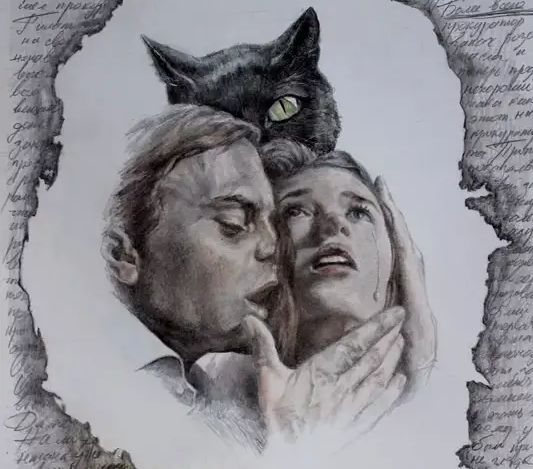
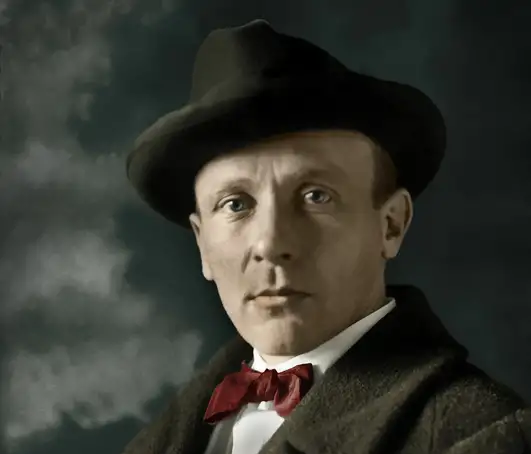
In this article I will tell you about one of my favorite writers, playwright, director, one of the best authors of the first half of the twentieth century. His plays have enjoyed great success since the mid-1920s, but the novels were appreciated only after his death, his name is Mikhail Afanasyevich Bulgakov.
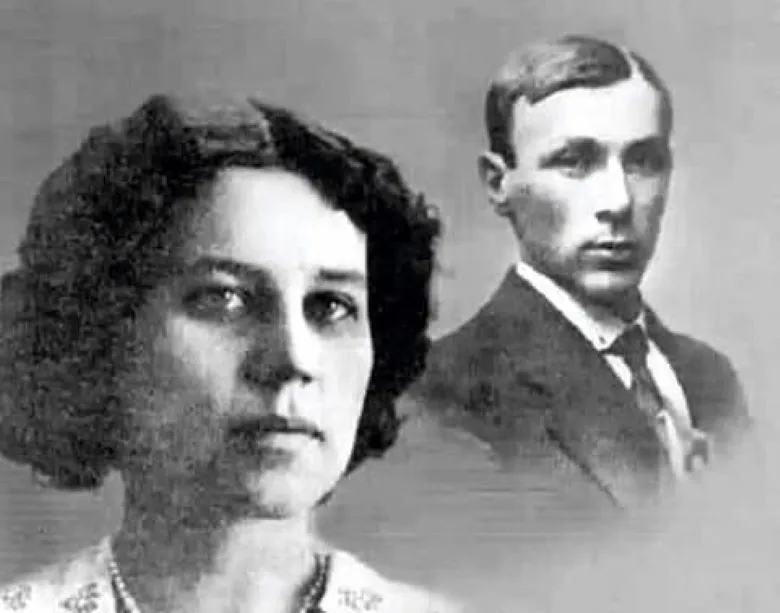
Mikhail Bulgakov was born on May 3 (15), 1891 in Kiev. Since 1901, the future writer received primary education at the First Kiev Gymnasium. In 1909, he entered the Kiev University at the Faculty of Medicine. In the second year, in 1913, Mikhail Afanasyevich married Tatyana Lappa.
After graduating from the university in 1916, Bulgakov got a job in one of the Kiev hospitals. In the summer of 1916, he was sent to the village of Nikolskoye in the Smolensk province. In a brief biography of Bulgakov, it is impossible not to mention that during this period the writer became addicted to morphine, but thanks to the efforts of his wife, he was able to overcome addiction.
During the civil war in 1919, Bulgakov was mobilized as a military doctor in the army of the Ukrainian People's Republic, and then in the army of Southern Russia. In 1920, Mikhail Afanasyevich fell ill with typhus, so he could not leave the country with the Volunteer Army.
In 1921, Bulgakov moved to Moscow. He is actively engaged in literary activities, begins to cooperate with many periodicals in Moscow: "Gudok", "Worker", etc., takes part in meetings of literary circles. In 1923, Mikhail Afanasievich joined the All-Russian Union of Writers, which also included A. Volynsky, F. Sologub, Nikolai Gumilev, Korney Chukovsky, Alexander Blok.
In 1924, Bulgakov divorced his first wife and a year later, in 1925, he married Lyubov Belozerskaya.
In 1924-1928, Bulgakov creates the most famous of his works: "Diaboliad", "heart of a Dog", "Blizzard", "the Fatal eggs", the novel "the White guard" (1925), "Zoyka's apartment", the play days of the Turbins (1926), "the Crimson island" (1927), Run (1928).
In 1926, in the Moscow art Theater was the premiere of the play days of the Turbins – piece set on the personal orders of Stalin.
In 1929, Bulgakov visited Leningrad, where he met E. Zamyatin and Anna Akhmatova. Because of the sharp criticism of the revolution in his works (in particular, in the drama "The Days of the Turbins"), Mikhail Afanasyevich was summoned several times for interrogations in the OGPU. Bulgakov is no longer published, his plays are forbidden to be staged in theaters.
In 1930, Mikhail Afanasyevich personally wrote a letter to I. Stalin with a request to grant him the right to leave the USSR or allow him to earn a living. After that, the writer was able to get a job as an assistant director at the Moscow Art Theater. In 1934, Bulgakov was admitted to the Soviet Union of Writers, whose chairmen at various times were Maxim Gorky, Alexey Tolstoy, A. Fadeev.
In 1931, Bulgakov broke up with L. Belozerskaya and in 1932 married Elena Shilovskaya, with whom he had been acquainted for several years.
Mikhail Bulgakov, whose biography was full of different events, has been very ill in recent years. The writer was diagnosed with hypertensive nephrosclerosis (kidney disease). On March 10, 1940, Mikhail Afanasyevich died. Bulgakov was buried at the Novodevichy Cemetery in Moscow.
"The Master and Margarita" is the most important work of Mikhail Bulgakov, which he dedicated to his last wife Elena Sergeevna Bulgakova. The writer worked on the novel for more than ten years until his death. The novel is the most discussed and important work in the biography and work of the writer. During the writer's lifetime, "The Master and Margarita" was not published because of the censorship ban. The novel was first published in 1967.
Russian borscht
I greet you, my dear friend! Probably, there is no such person who would not have heard about a Russian dish called borsch.
This is the first dish that can become the main one on your table. This dish has a lot of ingredients, so it is nutritious, the taste is balanced.
Russian Russian family has a different recipe for cooking borscht, but there are nuances that all Russian housewives obey. Now I will tell you about them.
The first thing to observe is to properly prepare the broth. The meat for the broth must be on the bone. Whether it's beef or pork, always with a bone. All the most delicious things are contained in the bones. The broth should be cooked for a very long time, and on the smallest fire.
Our women are sure that if you want delicious meat, but you do not need broth, then it should be cooked over medium heat. In borscht, the taste of the broth is important, so it needs to be prepared so that the water practically does not gurgle, then the broth will turn out good.
The second step is to properly prepare vegetables for borscht. It is important to soak the grated beetroot in cold salted water for 15 minutes. Thus, the bitterness and unattractive taste of the earth will come out of it.
Separately, we prepare vegetables for borscht.
Fry the onion in vegetable oil, then add grated carrots and chopped bell pepper. When the vegetables are fried, add the tomatoes to the pan.
There is another nuance that all housewives obey, this is not to use tomato paste. Our women prepare canned food in the form of tomatoes every year, especially for borscht. It is prepared very simply, tomatoes are peeled and crushed, and then boiled with salt and sugar, then rolled into cans.
When preparing borscht, if there is no such tomato, you can use fresh tomatoes. They should be cleaned, crushed, add salt and sugar to taste and send to fried vegetables.
The next very important point is to add a little oil. Put all this aside until ready. Then we take the prepared beetroot out of the water and fry it in vegetable oil, adding crushed garlic there.
Our borscht is almost ready. Remove the meat and bone from the prepared broth to cool down. Add salt to the broth and add the chopped potatoes to it.
When the potatoes are almost cooked, add all the fried vegetables and finely chopped fresh cabbage.
While all this is cooking, we cook the meat, separate it from the bone and cut it into cubes. We put the meat back in the pan and bring our borscht to readiness.
The next important step is not to digest the cabbage, it should crunch a little.
That's all, add finely chopped greens to the finished borscht and serve it to the table with sour cream.
Below I will present all the ingredients and how many of them will be required.
So:
- Meat on the bone 1.5 kg
- Onion 3 pieces
- Carrots 1 pc.
- Bulgarian pepper 2 pcs.
- Tomatoes 4-5 pcs.
- Beetroot 1 pc.
- Garlic 3 cloves
- Potatoes 3-4 pcs.
- Cabbage, if desired, when cooking, you will see whether you need to add more or less.
- Salt and sugar to taste.
All these ingredients are designed for 3.5-4 liters.
Don't worry if you get a lot of ready-made borscht, and you won't eat it right away. Borscht is an amazing dish, if you put it in the refrigerator and warm it up the next day, it will be even tastier.
Well, if you want even more Russian dishes, write in the comments, I will be happy to write about them.

Russian mythological creatures. Part 2.
Hello, my dear reader. I continue to talk about mythical creatures.
Gorynych
Another well-known fairy-tale character. Serpent-Gorynych is a common name for dragon-like creatures. Although he does not belong to dragons, and according to the classification belongs to snakes, there are many dragon features in the appearance of Gorynych. Outwardly, the Gorynych Snake looks like a dragon, but it has a multi-headedness. Different sources indicate a different number of heads, but most often there are three heads.
The body of the Gorynych is covered with red or black scales, the snake has large copper-colored claws with a metallic sheen on its paws, it has a large size and an impressive wingspan. The Gorynych snake is able to fly and spew fire. Gorynych's scales cannot be penetrated by any weapon. His blood is capable of burning, and the blood spilled on the ground burns it so that nothing grows in that place for a long time. The Gorynych snake is able to grow back lost limbs, it is able to grow even a lost head. He also has a mind and is able to imitate the voices of various animals, including being able to reproduce human speech, which distinguishes him from snakes and makes him closer to dragons.
Brownie
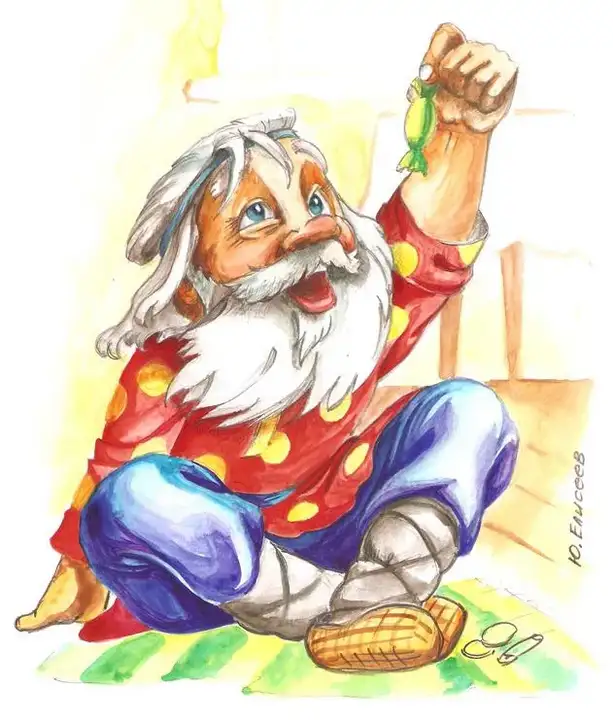
A brownie is a kind spirit, the guardian of the house and everything that is in it. The brownie looks like a small old man (20-30 centimeters tall) with a big beard. It is believed that the older the brownie, the younger it looks, since they are born old, and die as babies.
The brownie lives in almost every house, choosing secluded places for living, behind the stove, under the threshold, in the attic, behind the chest, in the corner, or even in the chimney.
The brownie takes every possible care of his house and the family that lives in it, protects them from evil spirits and misfortunes. If the family keeps animals, then the brownie will look after them, especially the good spirit loves horses.
The brownie loves cleanliness and order in the house very much, and does not like it when the inhabitants of the house are lazy. But the spirit does not like it much more when the residents of the house begin to quarrel with each other or disrespect him. An angry brownie begins to let you know that a person is wrong, knocks on doors, windows, prevents you from sleeping at night, making terrible sounds or screams, sometimes even wakes up a person, and in extreme cases, the spirit is able to throw dishes, write bad inscriptions on the walls and arrange small fires. However, a brownie will not cause serious harm to a person, and sometimes the spirit that lives in the house plays pranks for no particular reason.
The Firebird
The firebird is a bird the size of a peacock, and in appearance it most resembles a peacock, only it has a bright golden plumage with an overflow into red. It is impossible to take a firebird with your bare hands, since its plumage burns, while the firebird is not surrounded by fire. These birds spend most of their lives locked up, both in Iria and in private hands, they are kept mainly in golden cages, where they sing songs all day long, and at night these amazing birds are released for feeding. The firebirds ' favorite food is fruits, they are very fond of apples, especially golden ones.
Leshiy
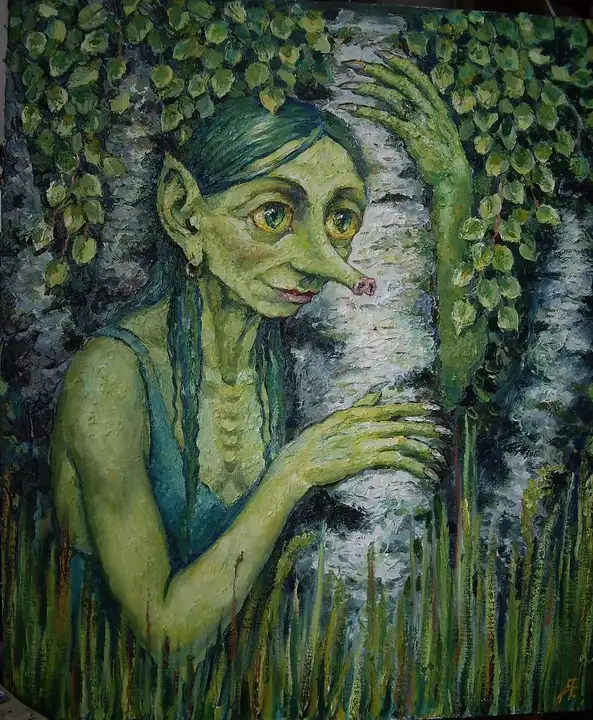
Leshii is the guardian spirit of the forest. The goblin is able to change his appearance at will, so it is difficult to say what his true appearance is, but most often he is credited with the image of an old man with a long beard. He has gray-green hair, always tangled, in which leaves and branches stick out. Goblins live in almost every forest, while they prefer solitude, and therefore it is almost impossible to meet a forest where two foresters live at once. They prefer to choose hard-to-reach forest thickets for their habitat, but the goblins like to bypass their possessions, so you can meet them in almost any part of the forest.
Most of the time they walk through the forest and see if everything is in order, help animals, uproot sick trees and drive away other spirits from the forest that harm it. The goblin loves to have fun, scare animals, birds and people. He can start shouting at different voices, starts laughing loudly and clapping his hands. But if you make a goblin angry, he can also kill a person, lead him into a swamp, or send animals on him, or even kill him with his own hands, going out to a person in the guise of a huge bear.
Of course, these are not all the creatures that surrounded the pagan Slavs in their lives. And the change of religion has not completely erased the belief that a person is surrounded by a lot of incomprehensible and unknown, even in the modern world.
Russian mythological creatures.
It is known that our ancestors were pagans before the advent of Christianity. In addition to the gods, there were a lot of creatures inhabiting almost everything that surrounded a person. Some Slavs considered good, because they peacefully coexisted with people, helped them and protected them. Others were considered evil, because they harmed people and were capable of murder. There was also a third group of creatures that could not be attributed to either good or evil.
It is impossible to describe all the creatures from fairy tales and myths, but we are familiar with some of them from childhood, from fairy tales and stories. Here are some of these creatures.
Babay
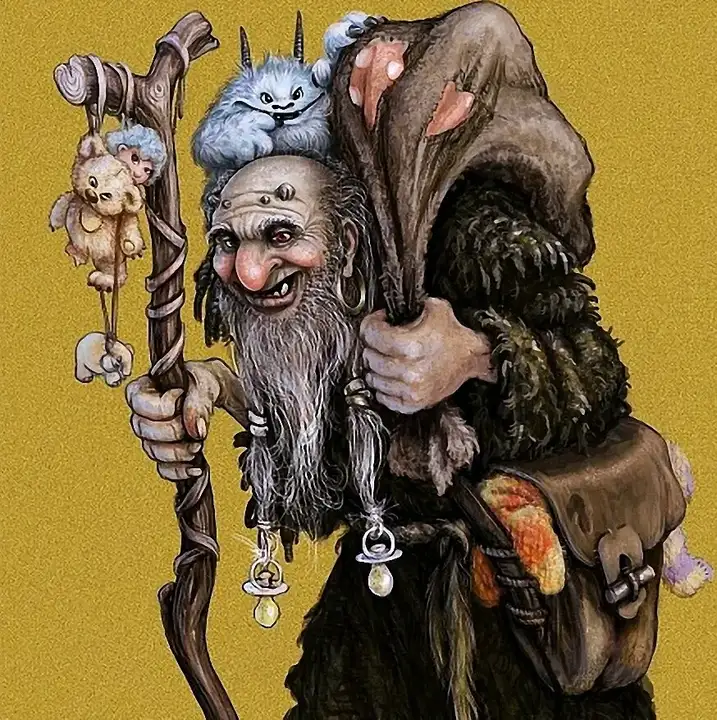
The name "babai", apparently, came from the Turkic "baba", babai - an old man, grandfather.This word (perhaps also as a reminder of the Tatar-Mongol yoke) denotes something mysterious, not quite defined, undesirable and dangerous. In the beliefs of the northern regions of Russia, babai is a terrible lopsided old man. He wanders the streets with a stick. Meeting him is dangerous, especially for children. Babaika is a fairly universal children's horror story, which is popular today. Even modern mothers and grandmothers can sometimes tell a naughty child that if he does not eat well, then a babaika will take him away. After all, he walks under the windows, as in the old days.
Baba Yaga
A fairy-tale Russian character who lives in a dense forest, a witch. The image of Baba yaga is considered to be a transformation of the image of an archaic deity who once dominated the rites of initiation, initiation (originally, perhaps, such a deity had the appearance of a female animal)
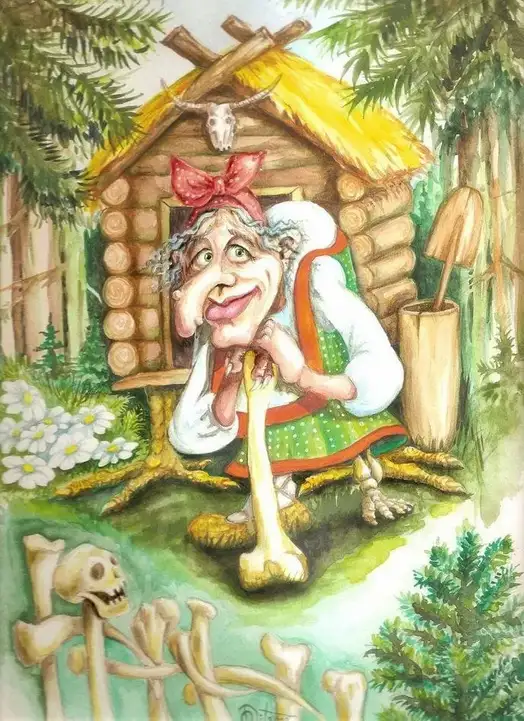
Baba Yaga is an old evil witch who lives in a remote forest in a hut on chicken legs, flies in a mortar, driving it with a pestle and covering the trail with a broom. He likes to eat human flesh - small children and kind fellows. However, in some fairy tales, Baba Yaga is not evil at all, she helps a good fellow by giving him something magical or showing the way to him.
According to one version, Baba Yaga is a guide to the other world-the world of ancestors. The famous hut on chicken legs is a gateway to this world, so you can't enter it until it turns its back to the forest. Baba Yaga herself is a living dead man. Perhaps the hut on chicken legs indicates the custom of the ancients - to bury the dead in domoviny-special houses placed on high stumps. In such stumps, the roots come out and are somewhat similar to chicken legs.
Bannik
A bannik is a spirit that lives in a bathhouse. Bannik looks like a small skinny old man with a long beard. He has no clothes on, but his whole body is covered with leaves from a broom. Despite its size, the old man's spirit is very strong, it can easily knock a person down and drag him around the bath. Bannik is a rather cruel spirit, he likes to scare those who came to the bathhouse with terrible screams, he can also throw hot stones from the stove or scald with boiling water. If the bannik is angered, the spirit can even kill a person by strangling his enemy in the bath or skinning him alive. An angry bannik can also kidnap or substitute a child.
Most of all, the spirit likes to scare women, because they can not go to the bath alone. But most of all, the bannik is angry when a pregnant woman comes into the bath, such expectant mothers should never be left in the bath without the supervision of men.
The bannik is able to become invisible and instantly move in space within his bath.
In addition, the banner is able to open people to their future.
If you follow the basic rules, the bannik will never attack a person. But if the bannik is angry, then he can be appeased by leaving a piece of rye bread liberally sprinkled with coarse salt to the spirit, in some cases it is necessary to sacrifice a black chicken, burying it under the threshold of the bath.
Beregini
Beregini - in Slavic mythology, good water spirits, in the form of women. They live on the banks of rivers, predict the future, and also save young children left unattended and fallen into the water.
It is difficult to judge what the Beregini were like from rather fragmentary evidence. Some researchers see them as "predecessors" of mermaids or identify them with mermaids. Indeed, beregini are definitely connected with water, they seem to be subject to some essential aspects of people's lives. Therefore, the assumption about the connection of beregin and mermaids is not unfounded.
Water
A water person can not be called either evil or good — it is a self-willed spirit guarding its reservoir, which, however, does not mind making fun of those who came there. The merman looks like an old man with a big beard and a fish tail instead of legs, the old man's hair has a green hue, and his eyes look like fish. During the day, the water prefers to stay at the bottom of the reservoir, and with the rising of the moon rises to the surface. The spirit prefers to move around the pond on horseback, mainly swimming on a catfish.
The spirit lives in large freshwater reservoirs: rivers, lakes, swamps. However, sometimes he goes on land and appears in the nearest villages. On reservoirs for the dwelling, the water prefers to choose the deepest places or places with a strong circular current (whirlpools, places near watermills).
Water people live in families, usually a water person has many mermaid wives. People dragged down by the spirit to the bottom remain at the water's service, entertaining the owner of the reservoir in every possible way and performing various tasks, however, you can buy him off, but the price will be commensurate — you will have to give your firstborn.
It is almost impossible to fight with a water animal in its native element, but it can be scared away from itself with iron or copper, which will only make it angrier in the end. Therefore, in ancient times they preferred not to anger the water man, and if he got angry, they tried to appease the spirit by throwing bread into the water, or sacrificing a black animal.
To be continued...
Why is it difficult for a mother to get a job in Russia?
Do you know what is the main nightmare for a working mother in Russia?
This means waking up one day and finding that your child is coughing and has a fever.
Why is this a Nightmare? It's simple, no kindergarten in Russia will accept a child even with a temperature of 37 degrees.
And it's not about Covid 19, it's always been like this.
Even with a normal runny nose, the child will simply be sent home for treatment at the entrance, and this is for a whole week.
Now imagine what kind of employer will tolerate endless sick days? A female mother is forced to apologize to the boss, but she will still leave, even at the risk of losing her job.
More and more employers are not hiring women with young children. This is unfair, not legal, outrageous.
This is a cry of the soul. I was refused a job by three employers, and my maternity leave is ending. Very, very sad!
Why do women in Russia no longer want to get married?
Women have become afraid and avoid marriage. They prefer to live with their children without a man, and many of them are comfortable and comfortable.
There are women with one or two children, and they would like a relationship and marriage, but it does not work out, there is no applicant, there is no time, and in general they believe that it is better not to remarry with children.
Ex-husbands did not participate in the upbringing of their children, all the household and daily worries about children were on women, and now why should she get married to add even more problems to herself?
There are a lot of single mothers everywhere, both at school meetings and in kindergartens, almost all women, this will not surprise anyone, and they cope with providing for themselves and their children.
Statistics say that 25% of Russian children live only with their mother, but the real figures are higher, many couples are officially married, but do not live together, children live with their mothers.
In fact, women began to get married later, and they do not strive for this, nothing attracts them there anymore, even they leave with children and live alone.
More and more women are lonely, they do not want to live with just anyone and also do not want to suffer because of something.
Previously, there was a lot of social pressure, a woman must get married and have children, otherwise she is a loser, now, if there is no suitable man who meets the requirements, they prefer to live alone.
Although men expect that Russian women will give all their strength to their children, develop them in every possible way, train them in circles and sections, this is a heavy maternal burden that turns life into a nightmare and it is better to be alone, many women think so.
Many women want a strong man who will earn money, give gifts, she will take care of the house, family and children. But now it is a man who demands equality of the sexes, and everyone is equal. They are outraged why we should support a family and why men should give something.
Their wives spend all their energy and time on cleaning, work and children, and the man feels superfluous and used.
Something has changed in the relations of the sexes, and very much, traditional marriage has come into crisis and does not suit either women or men. Women were the first to feel this for themselves, and it is not known how marriage relations will be built further, probably people will live as they feel comfortable.

Reflections on the unknown Russian soul.
It is pointless to argue about the mysterious Russian soul. Someone believes in this myth, someone does not. I don't think such a description of the inner essence of a Russian person is romantic. Any nation would have earned a serious psychotrauma, having passed such permanent shocks and cataclysms. This psychotrauma seems to foreigners to be the very mystery. But there is no mystery here. Anxiety, uncertainty about the future and the future of our children are soldered into all of us like a firmware. This injury was transmitted to the offspring with the mother's milk from generation to generation.
Russians seem to foreigners to be distrustful, gloomy and tense. Let's say that the entire humanity of the planet has to work and, in a certain sense, strain. Life is arranged like this. But, for Russians, the tension is expressed in another way. This is a constant internal expectation of collapse, the expectation of internal or external shocks. If we recall the history of the Russian state, and these lands in principle, then all this is not without reason.
Also, the harsh climate imposes its imprint on the character and inner attitude of a person. In the Russian climate zone, bananas and coconuts do not grow all year round, which you can always feed on. And the warm season is short for farming and harvesting food for 6-8 months of cold and darkness. Our ancestors knew that the family did not have time to work hard in the spring and summer period, so it may not survive the long winter. Nature does not make allowances. The aspiration of Russians to communality is possible from here. It is difficult to survive in a harsh climate without mutual assistance .
My great-grandparents were repressed and exiled to Siberia. There were many such families then . People were transported in cold wagons for the transportation of grain. They were landed with small belongings and children, in late autumn, almost in the taiga. It is difficult to say why this happened. The times were troubled ( the 20s of the twentieth century). Urban residents who were not adapted to the Siberian conditions would have died quickly enough if not for the Old Believers. The village of these hardworking and harsh people turned out to be not far from the landing place of the unfortunate migrants. The Old Believers helped people in trouble to survive the winter. They let families into their homes, shared poor provisions. Later, they helped to build huts for immigrants. The townspeople were taught how to survive in the harsh taiga conditions. My grandmother was born already in Siberia. She said that her parents, until the last day, spoke with great gratitude about the people who saved their lives.
There are different people living in the Russian expanses. And not everyone, perhaps, would have acted as nobly as the taiga Old Believers. Perhaps my ancestors were lucky. They, in serious life situations, came across good, kind people on the way.
The inner core of the Russian person manifests itself in extreme situations. Well, extreme periods in our history happen all the time. Wars, revolutions, troubled times, famines, all sorts of political troubles. Almost every generation has experienced something of the above. Therefore, every next generation, on a subconscious level, is waiting for something bad. And, as a rule, the expectation does not fail. Sometimes, I think about the vicissitudes of life of my relatives. How could my great-grandmother have imagined that her quite comfortable life as a well-off citizen would end with the beginning of the revolution. And then she and her family, almost without the necessary things, will find themselves in the Siberian taiga. Or a grandmother who was already born and raised in harsh conditions, could she have known in advance that a terrible war would begin. All her brothers will die in it. And her life itself will be thrown into Central Asia by the end of the war. And she will still have to travel a lot around the country. My parents, too, could not even think in a terrible dream that the mighty Soviet Union would fall apart like a house of cards. Perestroika will begin, the plundering of our country, the complete scrapping of the social foundations of the state. And, what can my generation expect? What are the next shocks?
Any ethnic group is formed by its history and the living conditions in which people live. Russian Russian character, Russian soul...There is nothing mysterious about them. This is just a cruel deep psychotrauma of an entire nation, passed down from generation to generation. What was passed on to me will probably be passed on to posterity.
Such are the sad arguments about the not mysterious Russian soul...
 @Alexandra001