Что необычное можно купить на базарах Ташкента
Путешествие по Узбекистану продолжается. Я побывал уже в замечательной Бухаре, знаменитом Самарканде, древней Хиве. Всё это вы видели в предыдущих сериях.
Продолжим прогулку по Ташкенту. Побываем в центре.
Когда-то здесь было невероятно многолюдно. Молодёжь, музыканты, тусовка. Но потом какого-то представителя власти расстроил запах еды. Тут было много кафешек под открытым небом. Их все закрыли. Ну и вообще — гулять тут не рекомендовали. В итоге Бродвей обезлюдел. Сейчас потихоньку возвращается к жизни.
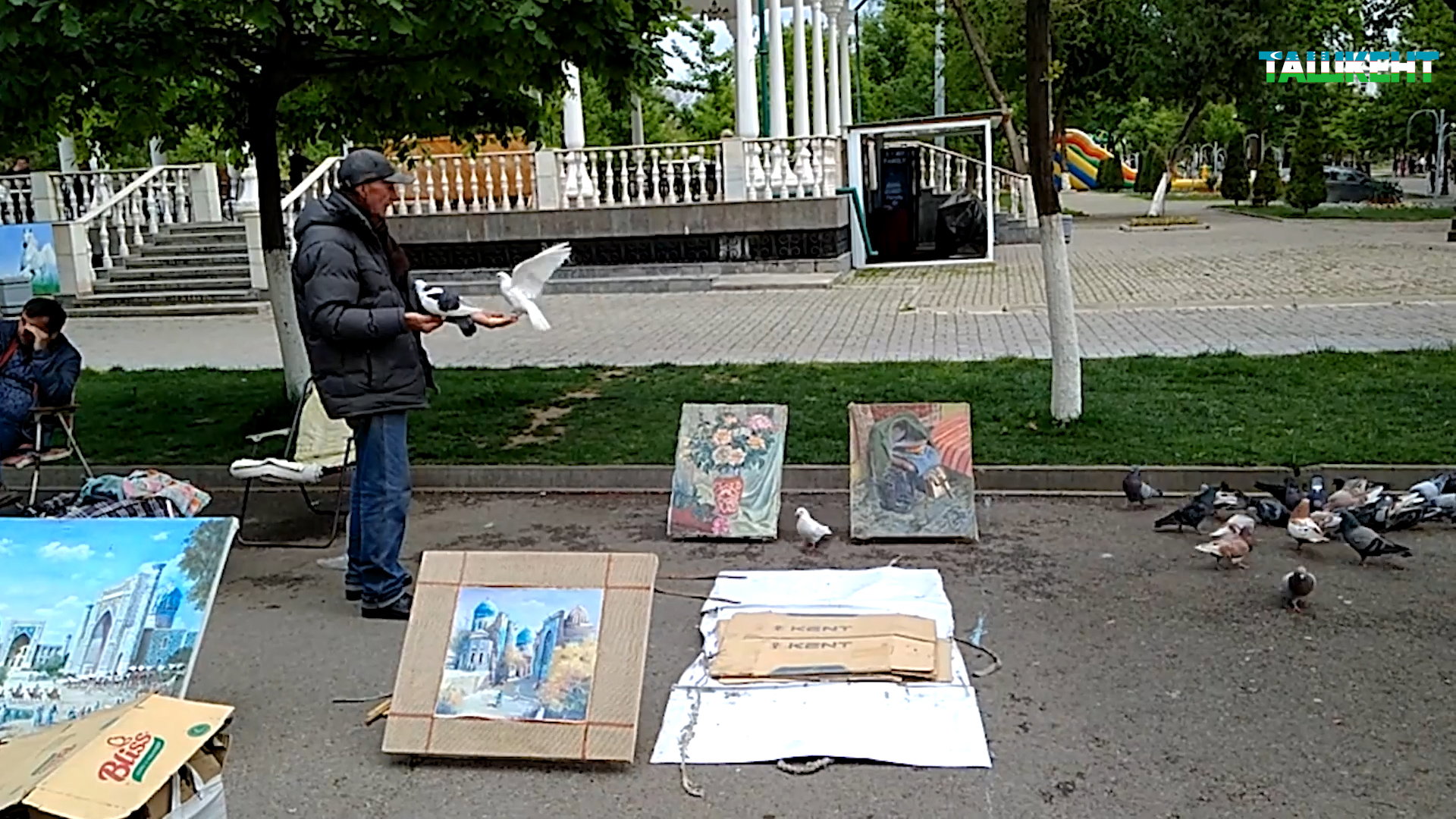
А вот кто здесь находится постоянно — торговцы раритетами и художники. Традиционно цены у продавцов старины на ташкентском Бродвее в разы, если не в десятки раз выше адекватных.
Филателист, например, будет расстроен — одну марку ему не продадут, обязательно нужно купить целый альбом. С, мягко говоря, некондиционными экземплярами. А ценник, конечно же — в долларах. Это как на московском Арбате сувениры покупать.
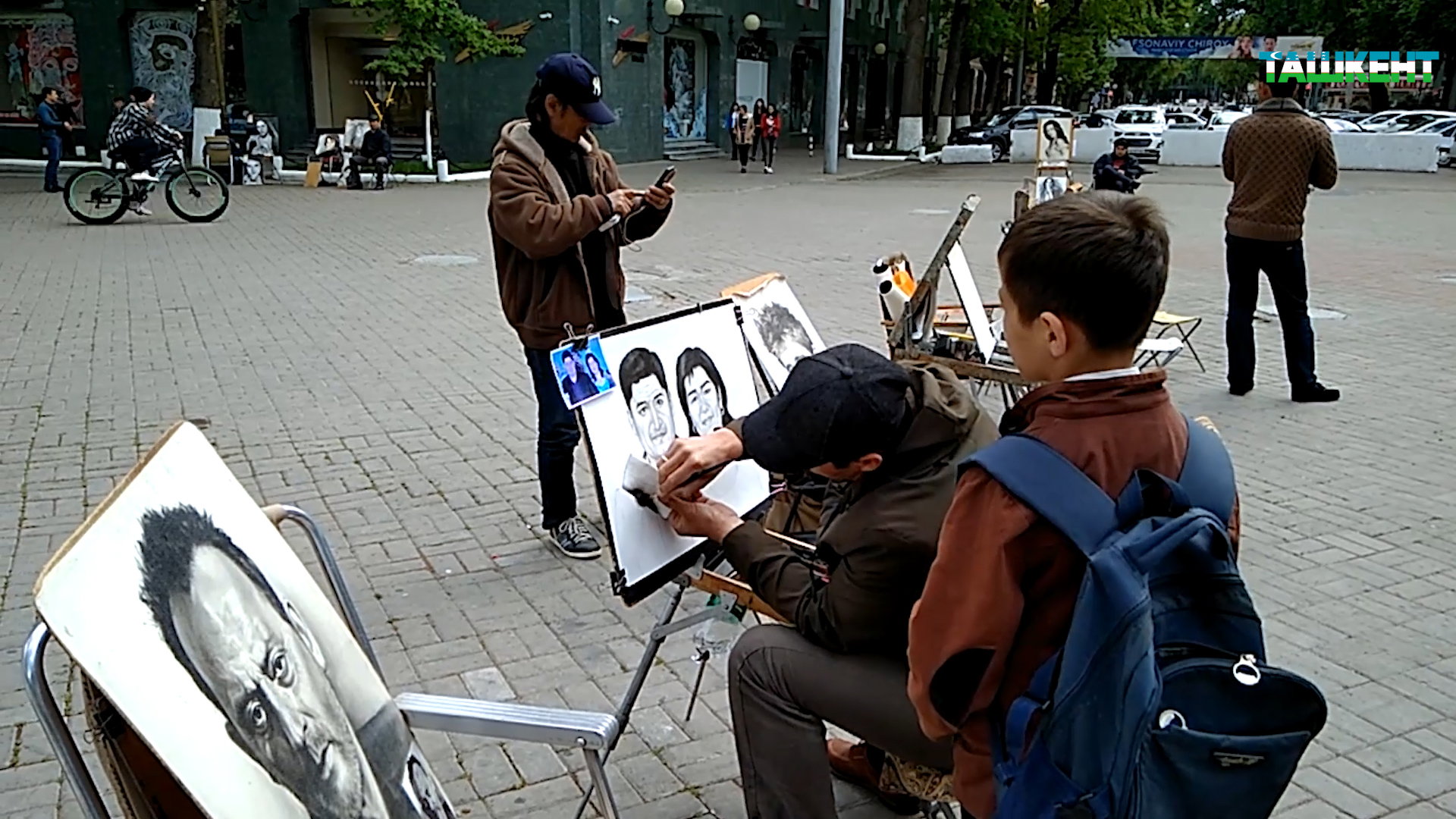
И, как на Арбате, здесь есть художники. Стоимость их услуг - адекватнее)
В самом центре города установлен памятник Амиру Тимуру. Раньше в этом сквере росли потрясающие многовековые чинары. Но их срубили. Говорят, для того, чтобы было видно вот это здание, которое построили за миллиард долларов.
Неужели действительно была необходимость уничтожать древние деревья?
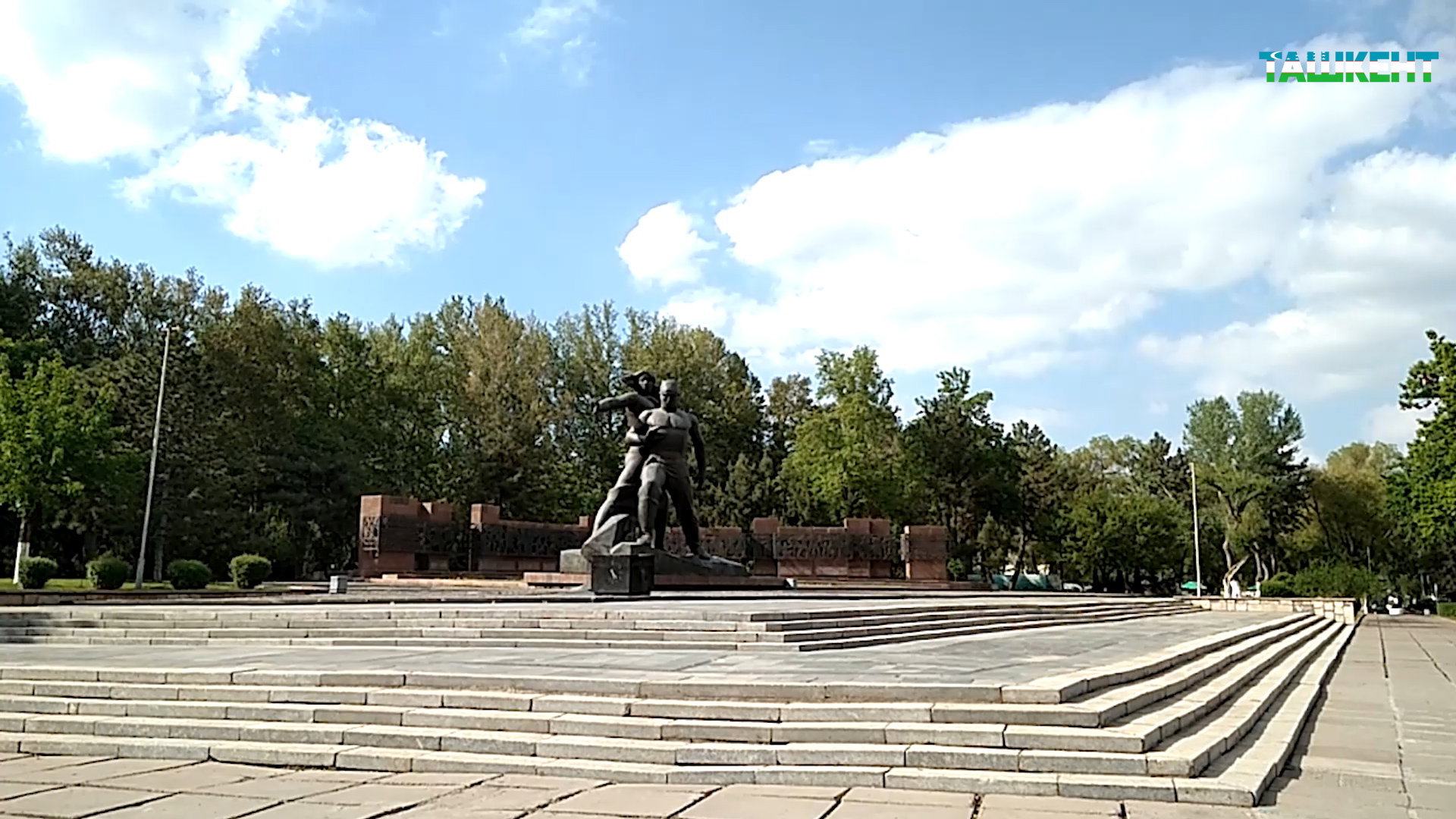
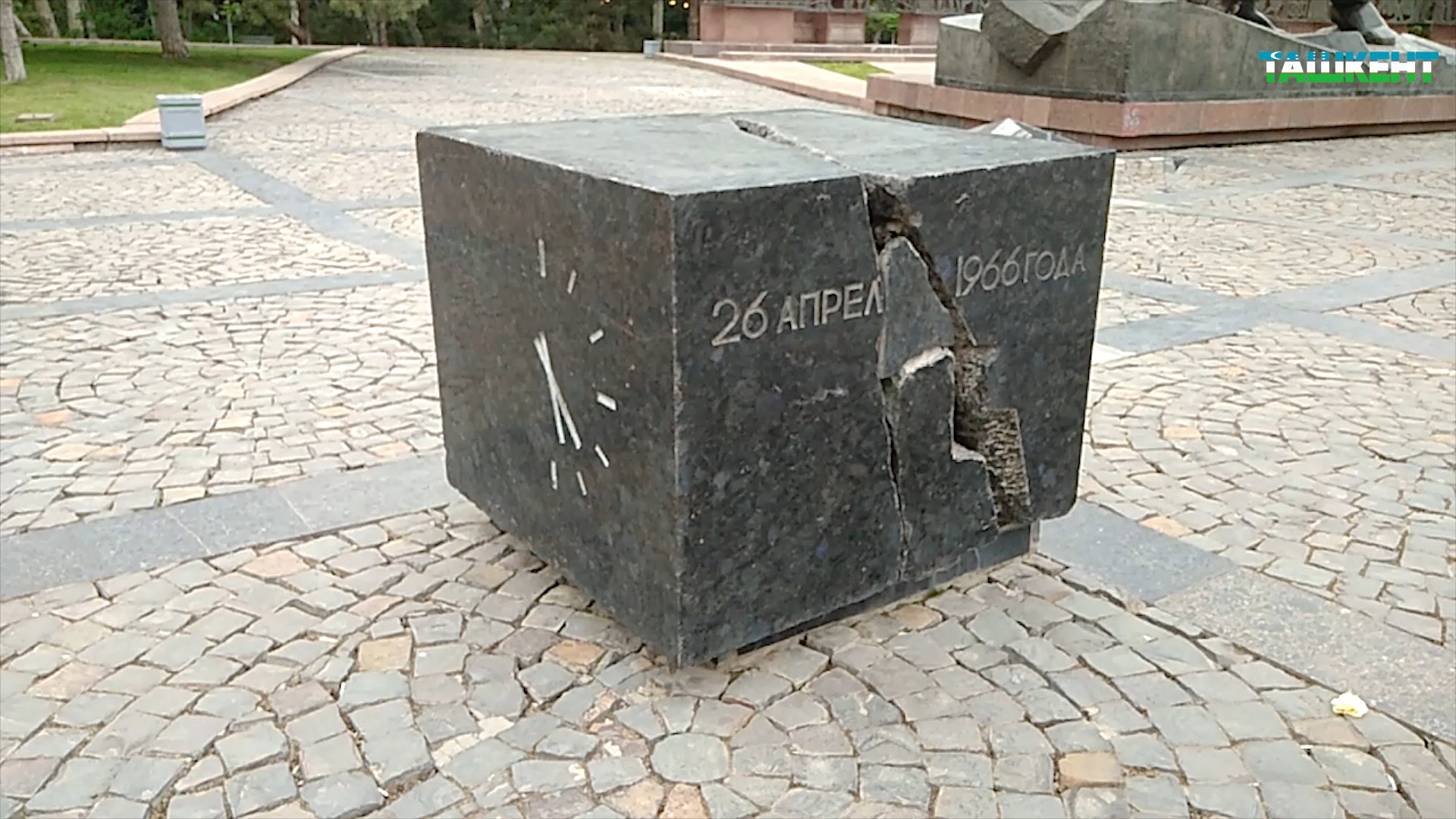
Не могу не показать вот этот впечатляющий мемориал. Установлен в память жертвам землетрясения 1966 года, когда в Ташкенте было разрушено огромное количество зданий.
Гранитный куб расколот, часы остановились в ту минуту, когда стихия нанесла удар.
Восстанавливали столицу Узбекистана всем Союзом. Абсолютно все братские республики прислали своих строителей, и за короткое время Ташкент обрёл новое лицо.
Мемориал, который называется «Мужество», расположен у древней речки Анхор. Там же есть наиизвестнейшее и популярнейшее кафе. Сюда любят приезжать иностранцы. Вкусно, сравнительно недорого, колоритно – и – на берегу реки. Красота.
Некоторые кафе в Узбекистане, может даже большинство, имеют узкую специализацию. В каком-то готовят плов, в другом – шашлык. Я приехал в заведение, где делают джизакскую самсу.
Она отличается от классической тандырной тем, что значительно больше. У входа в кафе – рекламный баннер с тематическим стихотворением.
Хозяйка заведения мне сообщила, что ежедневно в её кафе готовятся и съедаются до двухсот этих малюток.
Цифра меня поразила, я поделился ею с водителем такси, что вёз меня обратно. На что он снисходительно сообщил, что 200 – это вообще не результат. Есть в Ташкенте такие места! Где в день по несколько тысяч продают… Самс? Самсов? Самсы, наверное. Несколько тысяч в день? Ну, не знаю…
А знаете, где оказалась самая вкусная самса? На мой взгляд, конечно. Смешно. Объездил если не бОльшую, то точно значительную часть Узбекистана в поисках идеальной самсы. А она была там, где я даже и не думал снимать. Хорошо, фотки есть — для себя делали.
Были по делам на окраине города, заезжали к хорошей ташкентской знакомой. И она отвела нас в обычную кафешку возле дома. Находится во дворе, каких сотни. Ну никак нельзя было предположить, что именно об этом месте я буду вспоминать с ностальгией, проголодавшись. И самса недорогая. Три с половиной тысячи сумов стоила. 22 рубля. Мясо – баранина, немного курдючного сала, тесто – слоёное.
Еще немного про еду! … Про нарын.
Есть такое место в Ташкенте — Катартал. Туда приезжают специально поесть это блюдо.
Домашняя лапша, вяленая конина и бульон.
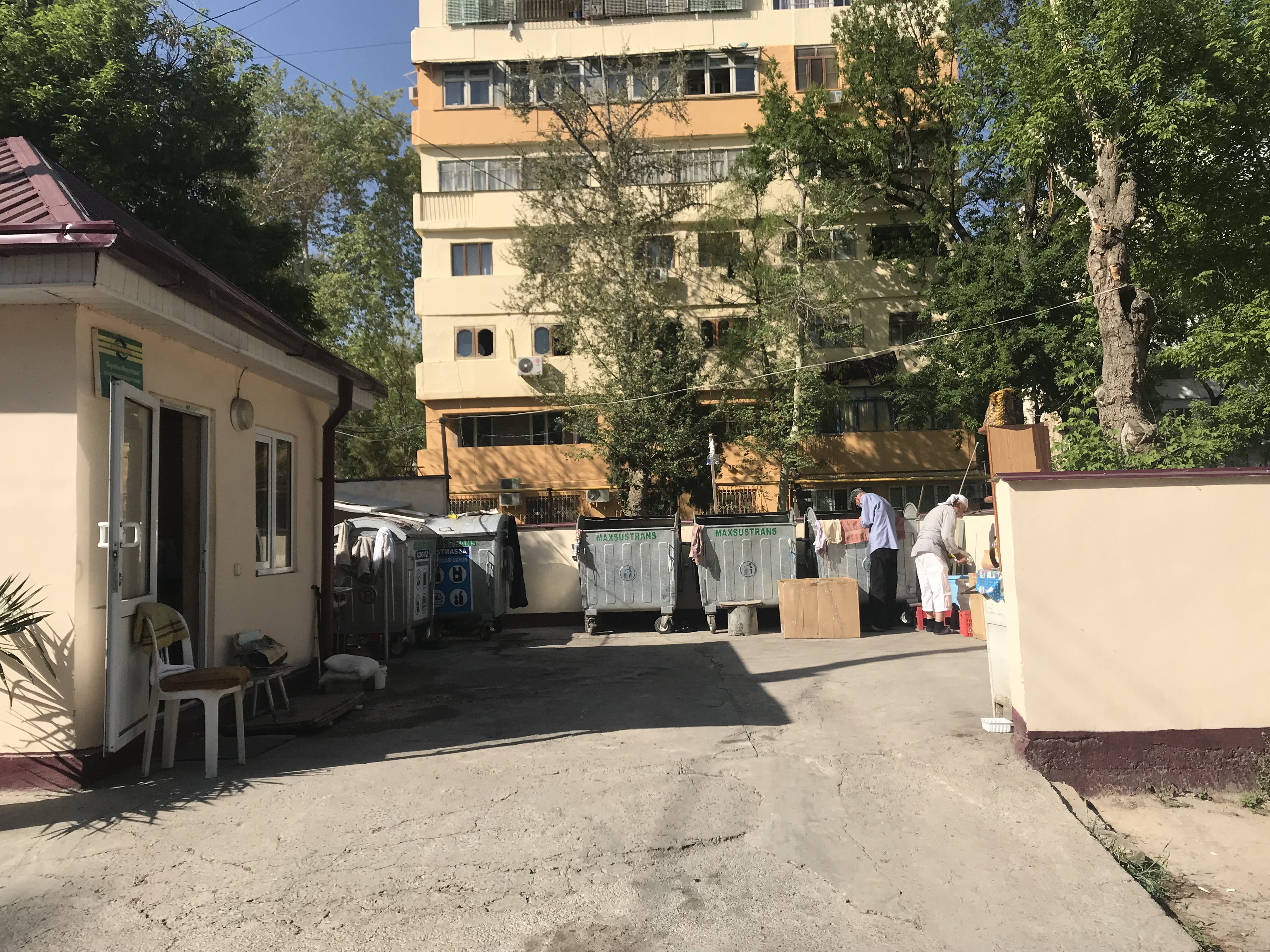
А это знаете что?
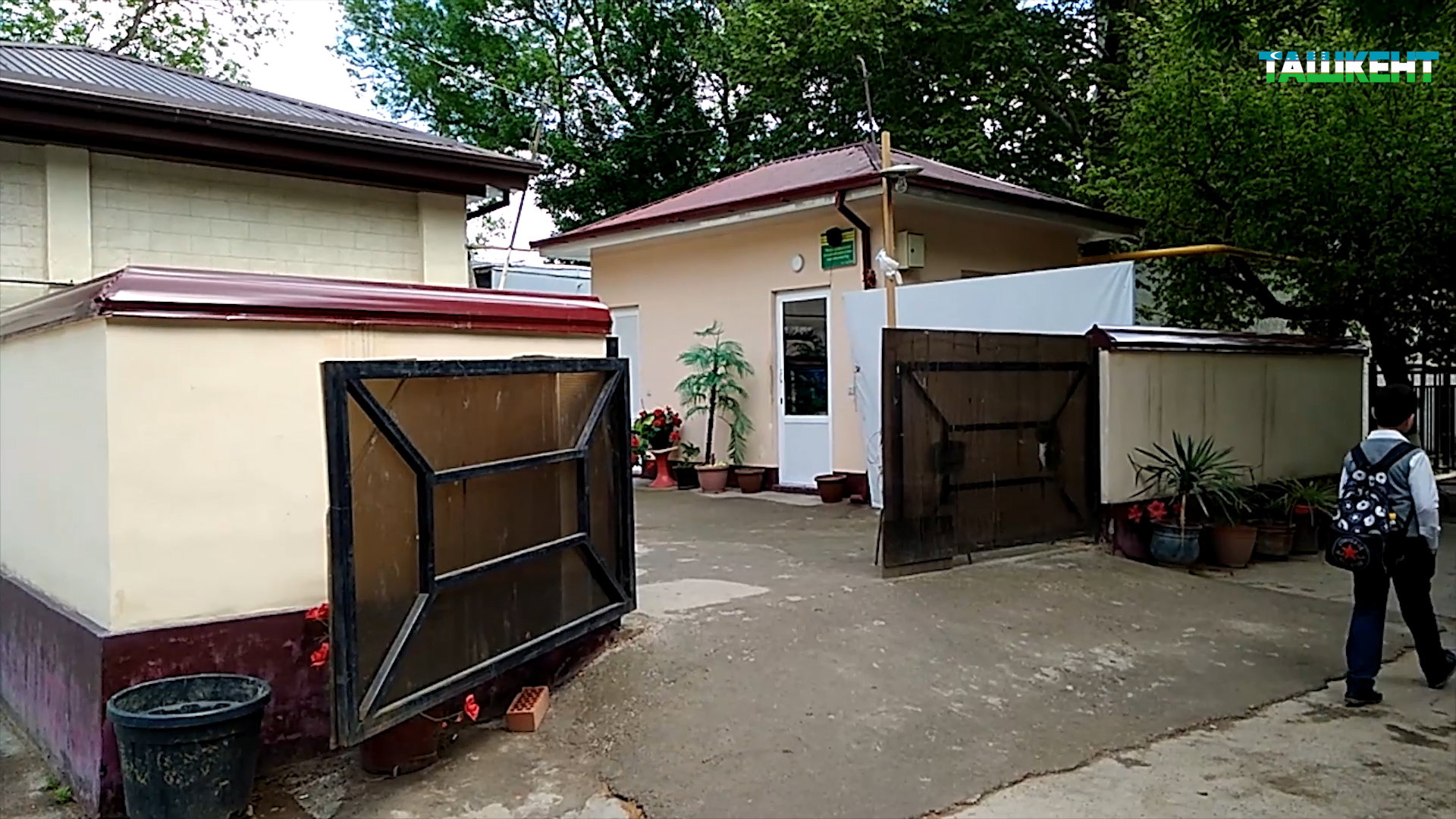
Удивитесь. Помойка! В Ташкенте таких — Большая часть. В домике живут люди. Иногда семьями. Обслуживающий персонал. Зачастую это приезжие из дальних областей. Они содержат это место в чистоте и сортируют мусор. Наверное, поэтому у ташкентских помоек нет типичного для таких мест запаха. Нестандартное решение, я с таким больше нигде не сталкивался. Но – почему нет?
А теперь давайте прокатимся по базарам!
Многие интересуются – имеет ли смысл брать в Узбекистане машину напрокат? Расскажу. Такси по Ташкенту стоит в среднем 10 тысяч сумов. Это около 70 рублей. Из Бухары в Самарканд я доехал за 100 долларов. Это со всеми остановками, с ночёвкой на границе с Казахстаном в юрте.
А теперь посмотрите, сколько стоит аренда автомобиля. Решайте сами.
А такси тут – любая остановившаяся машина. В большинстве случаев - белая! Узбекистан – страна солнца, и белый цвет, естественно, самый популярный у автовладельцев.
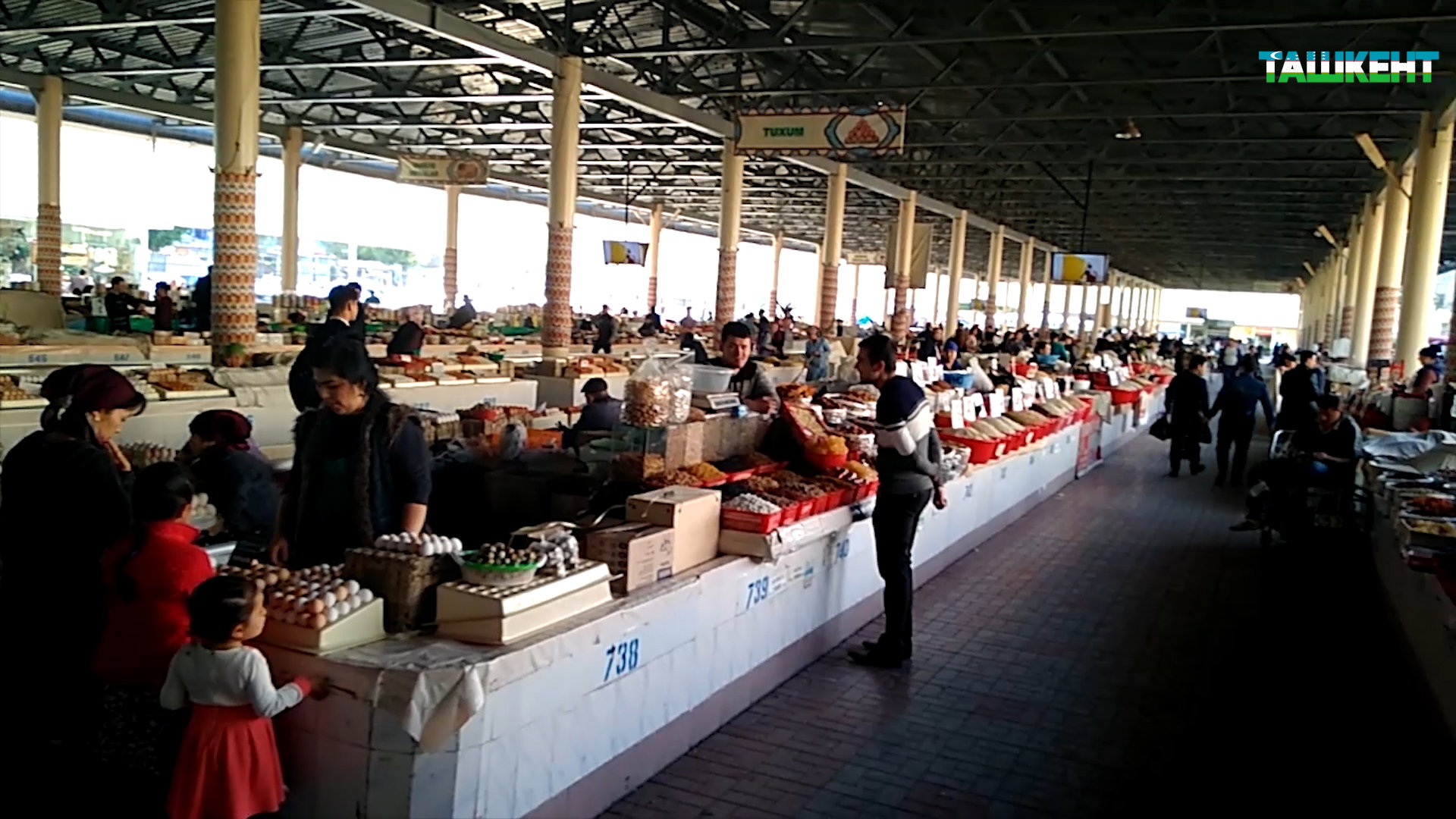
Базаров в городе несколько. Алайский – в самом центре. Знающие люди категорически отговаривали на нём что-либо покупать. После реконструкции он стал, конечно, красивым, но жутко дорогим. И – ну ни капли нет в нём восточного шарма. Осталось только худшее, что есть в торговле – маниакальное желание продавцов втюхать товар как можно дороже. Ну а уж если вы – турист…
Если в разговоре с ташкентцем промелькнёт слово «ипподром», знайте – совсем необязательно вы имеете дело с любителем лошадей. Скорее всего, он рассказывает о шопинге. Дело в том, что уже много лет крупнейший вещевой рынок в Ташкенте располагается на окраине города, в непосредственной близости от ипподрома. Так его народ и прозвал.
Купить здесь можно практически всё. Продавцы не любят, когда их снимают, поэтому кадров оттуда – немного.
Это вот – платья свадебные.
И даже целые наборы для невесты. На ипподроме удалось попробовать необычное блюдо. Пигоди. Это корейский пирожок. Из парного теста, внутри которого – капуста и мясо. Обязательно поливается соусом. Необычный вкус. Но блюдо – вполне достойное. И сытное.
Корейцев в Узбекистане очень много. В Ташкенте есть районы, где преимущественно живут именно они. И блюда корейской кухни для Ташкента – стали родными.
Мы зашли в ресторанчик в центре города, где их можно отведать. Я взял себе кукси – это холодный суп с лапшой и мясом. Невероятно вкусно, особенно в жару.
А это – суп горячий. Кипит)
В придачу – куча салатиков, вроде закуски. На то, чтобы съесть и их, сил уже не было. Забрали с собой, позже попробовали – тоже очень вкусно!
Но пора вернуться к нашим базарам!
Любителям блошиных рынков обязательно нужно побывать на Янгиабадском базаре. Он работает в выходные. Это похоже на выставку товаров времён СССР под открытым небом. Чего тут только нет! Можно купить деньги.
Советские, царские, узбекские. Флаги, вымпелы.
Говорят, именно здесь автовладельцы покупают запчасти для своих раритетных жигулей, москвичей и волг.
Отдельная фишка – птичий рынок.
На нём, кроме домашней птицы и питомцев – котят, щенят и кроликов, можно купить ежей.
Эту толкучку постоянно пытаются закрыть. Пожалуйста, не делайте этого! Блошиные рынки есть во многих городах разных стран и власти не считают их чем-то плохим. Наоборот! Я, например, очень люблю побродить по таким базарчикам. И купить нечто необычное. Может, разве что, как-то внешне облагородить?
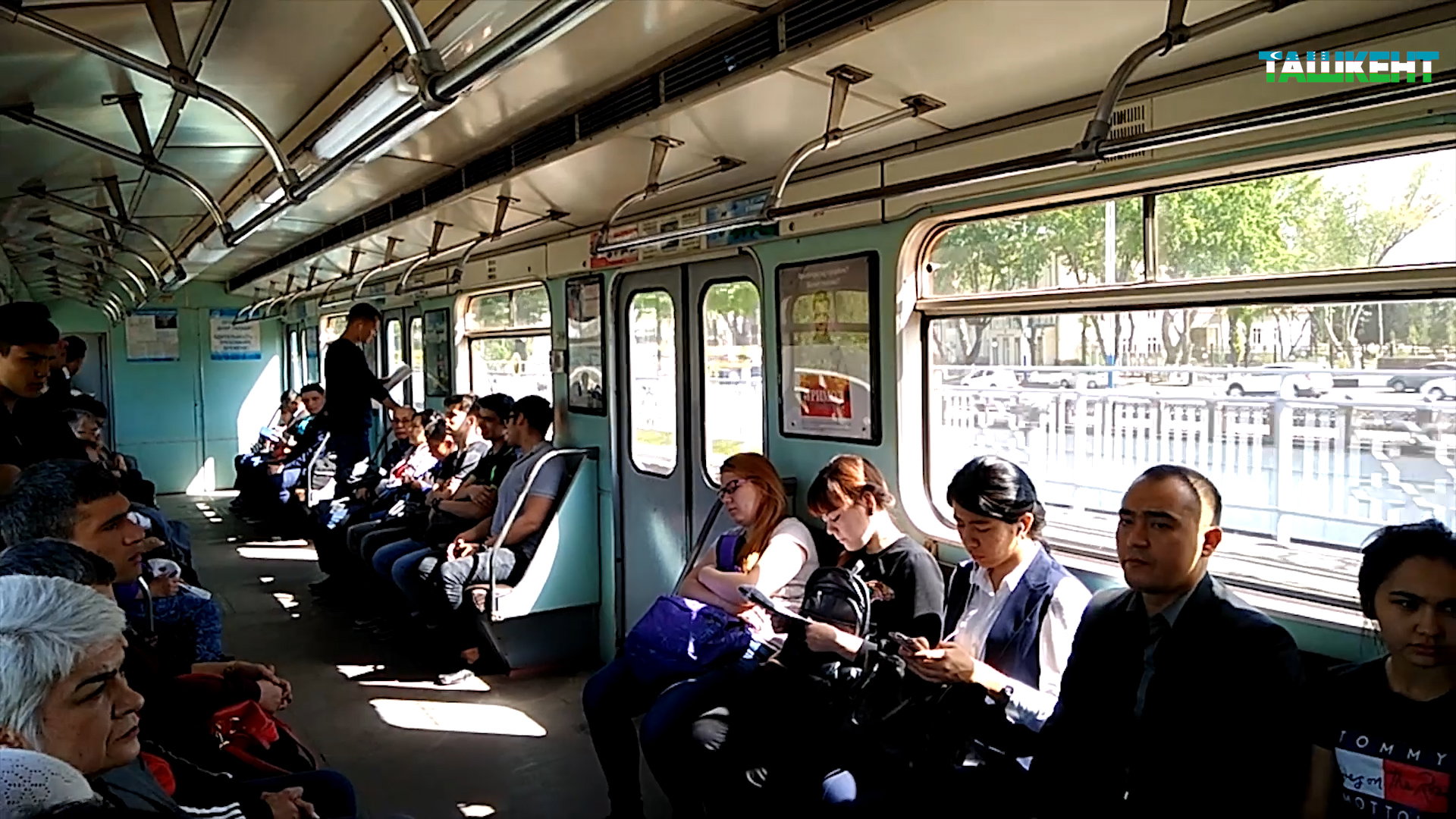
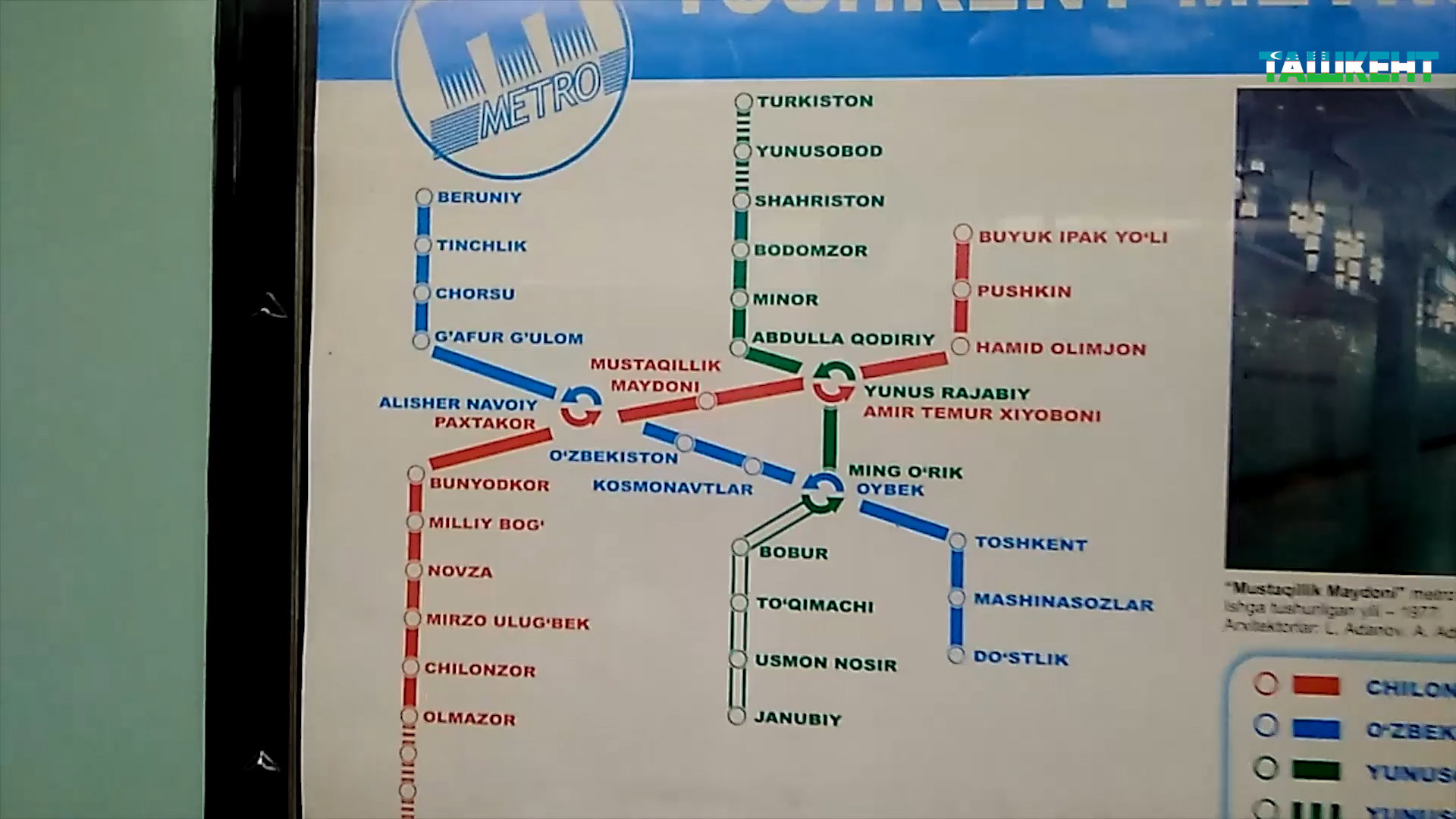
Фархадский базар, но он не в центре совсем. Доехать можно на метро.
Вот на Фархадском ещё можно встретить нечто восточно-колоритное.
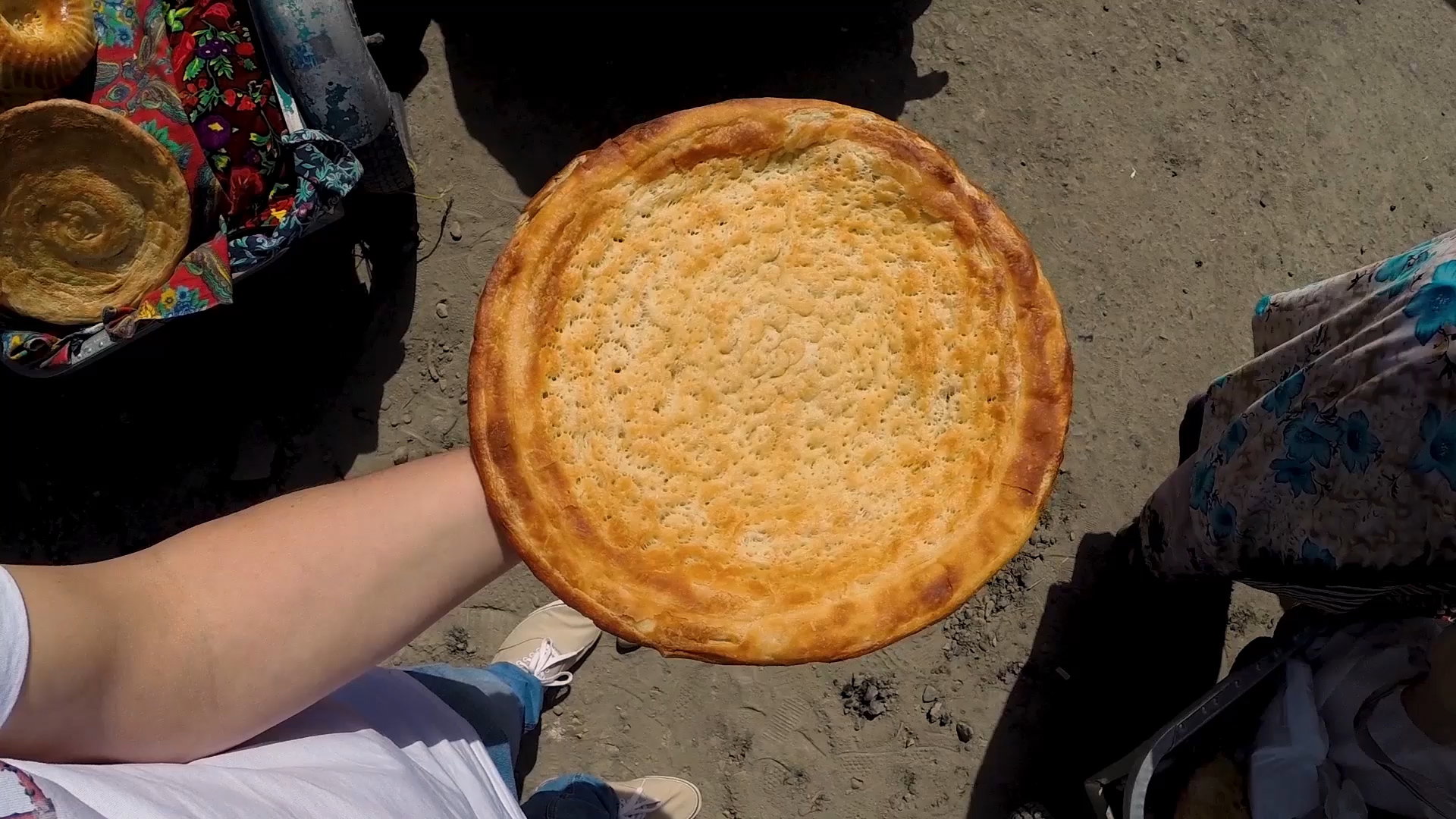
Лепёшки накрыты материей, чтобы подольше сохранять тепло. Очень вкусные! Если покупаете домой, обязательно возьмите на одну больше - не сможете удержаться, обязательно её съедите.
Это тоже едят. Если кальция не хватает. Беременные, например.
А это - сувенирные наборы. Их можно везти в Москву. Друзьям, родственникам, коллегам. Но купим не здесь.
А на самом колоритном базаре Ташкента - Чорсу. Его не перепутать с другими. Узнаваем по куполам.
Торговые ряды не только под куполом, но и рядом с ним.
Это – помогаторы. Приезжаете на базар, и ну вот не хотите сами таскать купленное. Без проблем! Помогатор ходит всё время за вами, складывает всё в свою тележку, может советовать, может молчать. Это как скажете.
На каждой такой тележке – номер.
Чтобы не путались. Цена – как договоритесь. Думаю, тысяч 10 сумов. Это 70 рублей.
Тарелка-лепёшка. Поел из неё мяса, мыть не нужно – просто съел и её тоже.
Если вы попали на Чорсу, без вариантов, друзья, не пройти вам мимо обжорных рядов. Обязательно захочется поесть того, что предлагают. А вариантов – море.
Естественно, шашлык.
Самса, курочка в разных вариациях, рыба есть для любителей.
Колбасы какие-то кипят…
Это – нарын, я про него уже рассказывал. Почему на бутылках лежит – не знаю. Спросить постеснялся – все наверняка в курсе…
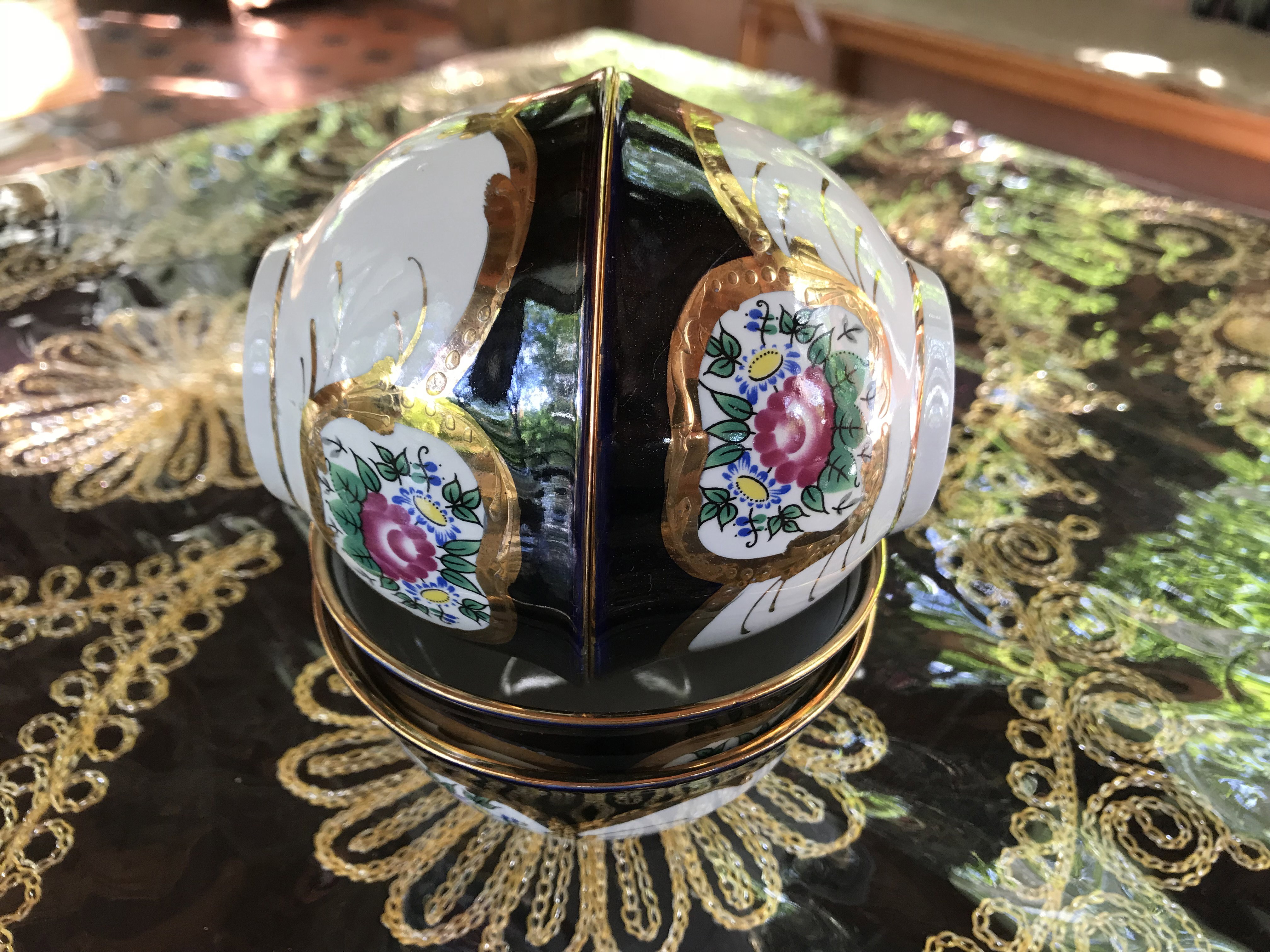
Ну и сувениры. Сувениры, сувениры, сувениры. Сумки, ковры, тарелки…
Магнитики на холодильник в виде лепёшки, на которой шашлыки.
Ставшие уже родными весёлые дедульки.
Ну что же, сувениры куплены. Пора на самолёт.
Всё, путешествие по Узбекистану закончилось. Оно было… замечательным!
Видеоверсия путешествия. Очень интересная!
https://youtu.be/4gjV6KfJfdw
Где можно увидеть бассейны плова
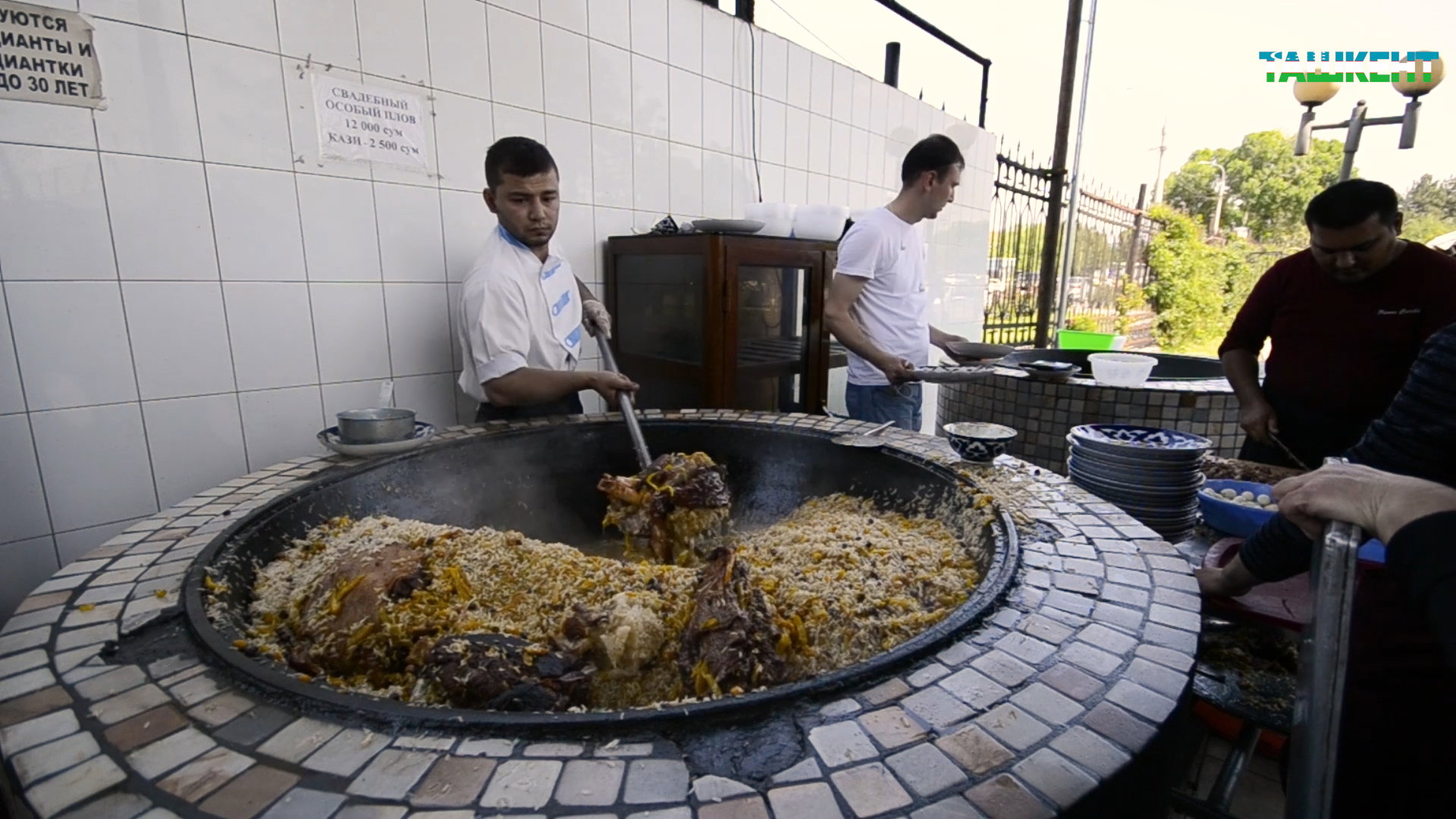
Это - рай пловоманов. Для ташкентцев место настолько известное, что уже даже, можно сказать, попсовое. Но на популярности это никак не сказывается.
Ежедневно сюда приезжают поесть тысячи человек. Готовят его, кстати, постоянно сменяясь, лучшие специалисты республики.
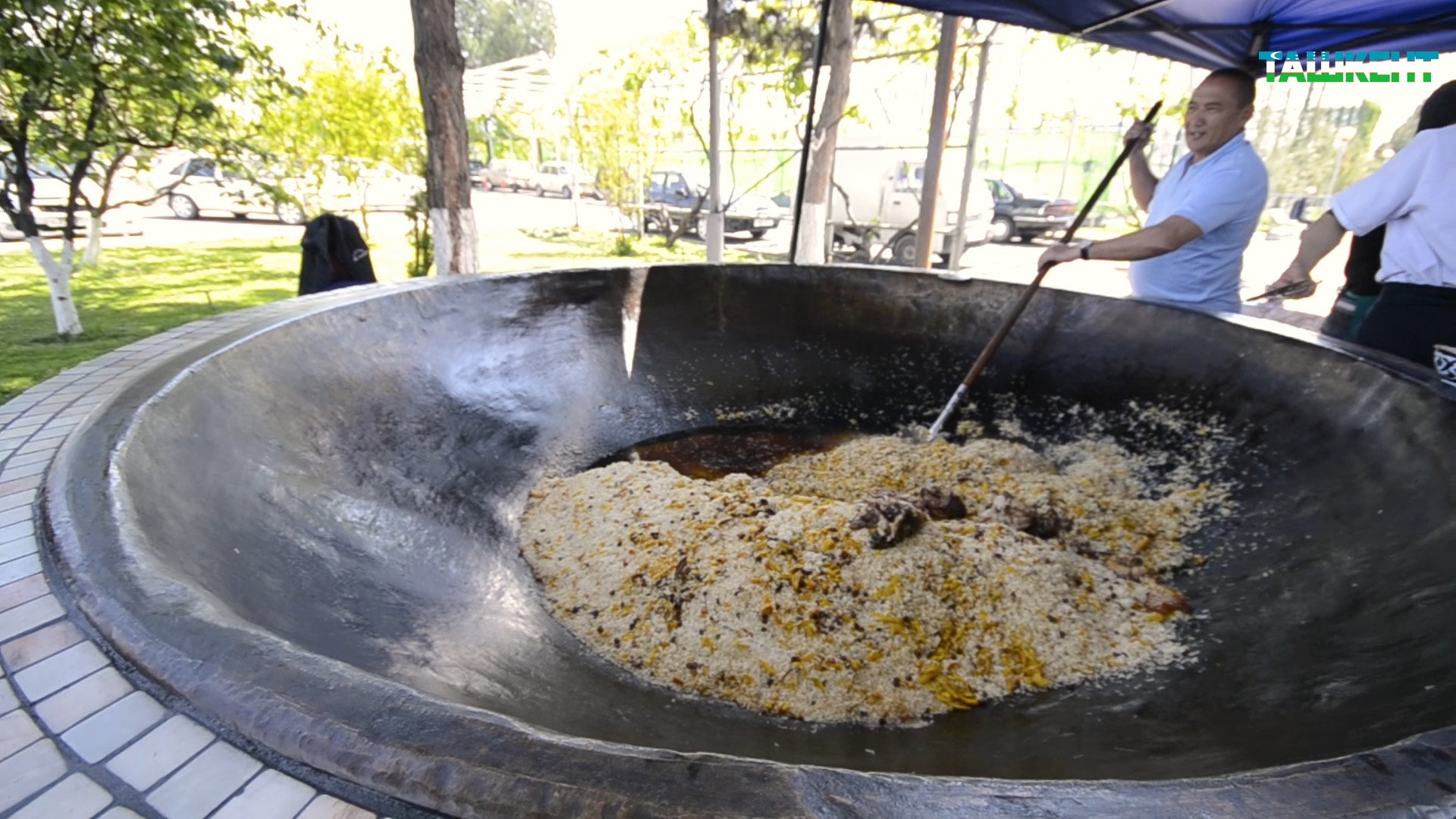
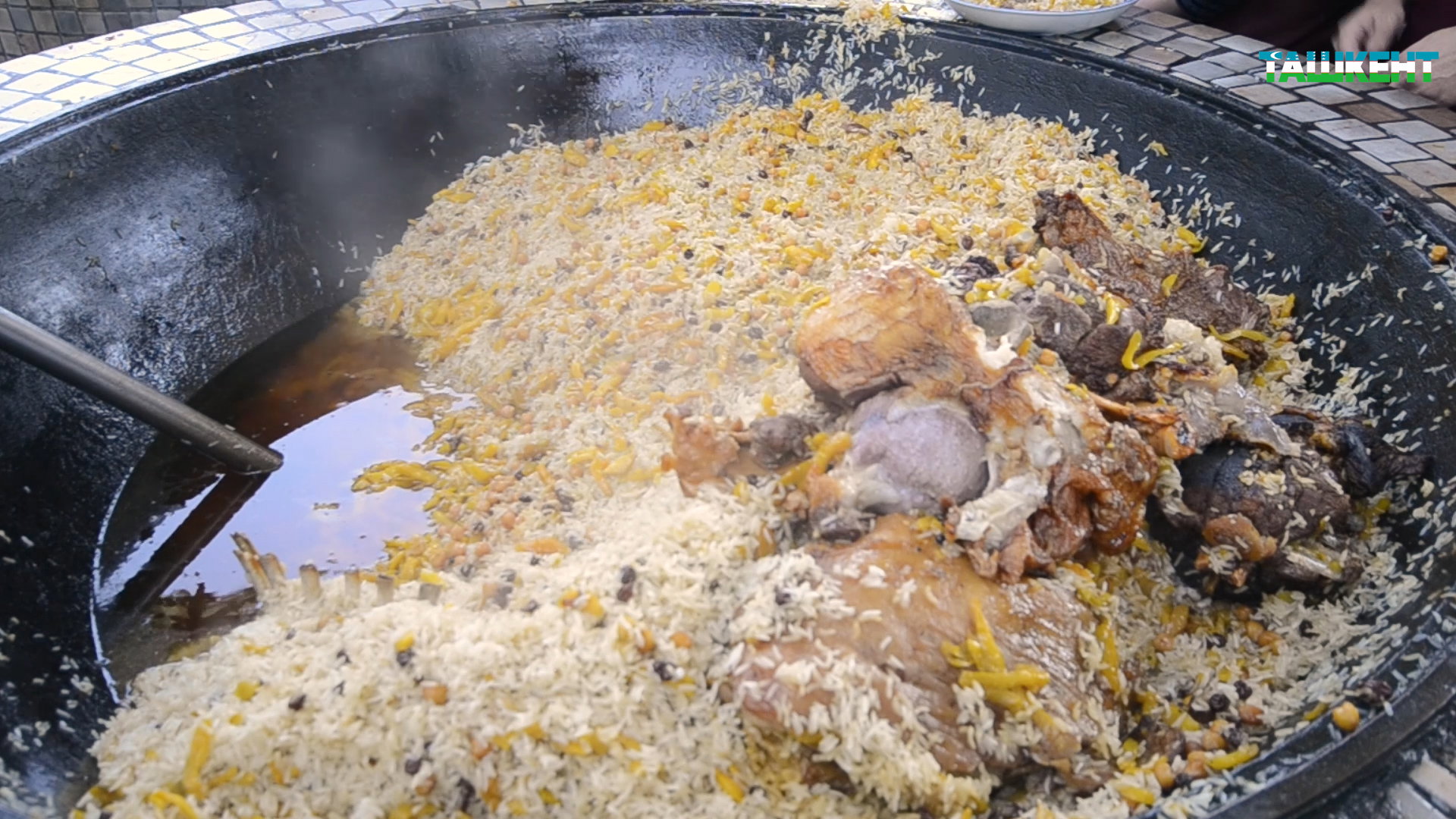
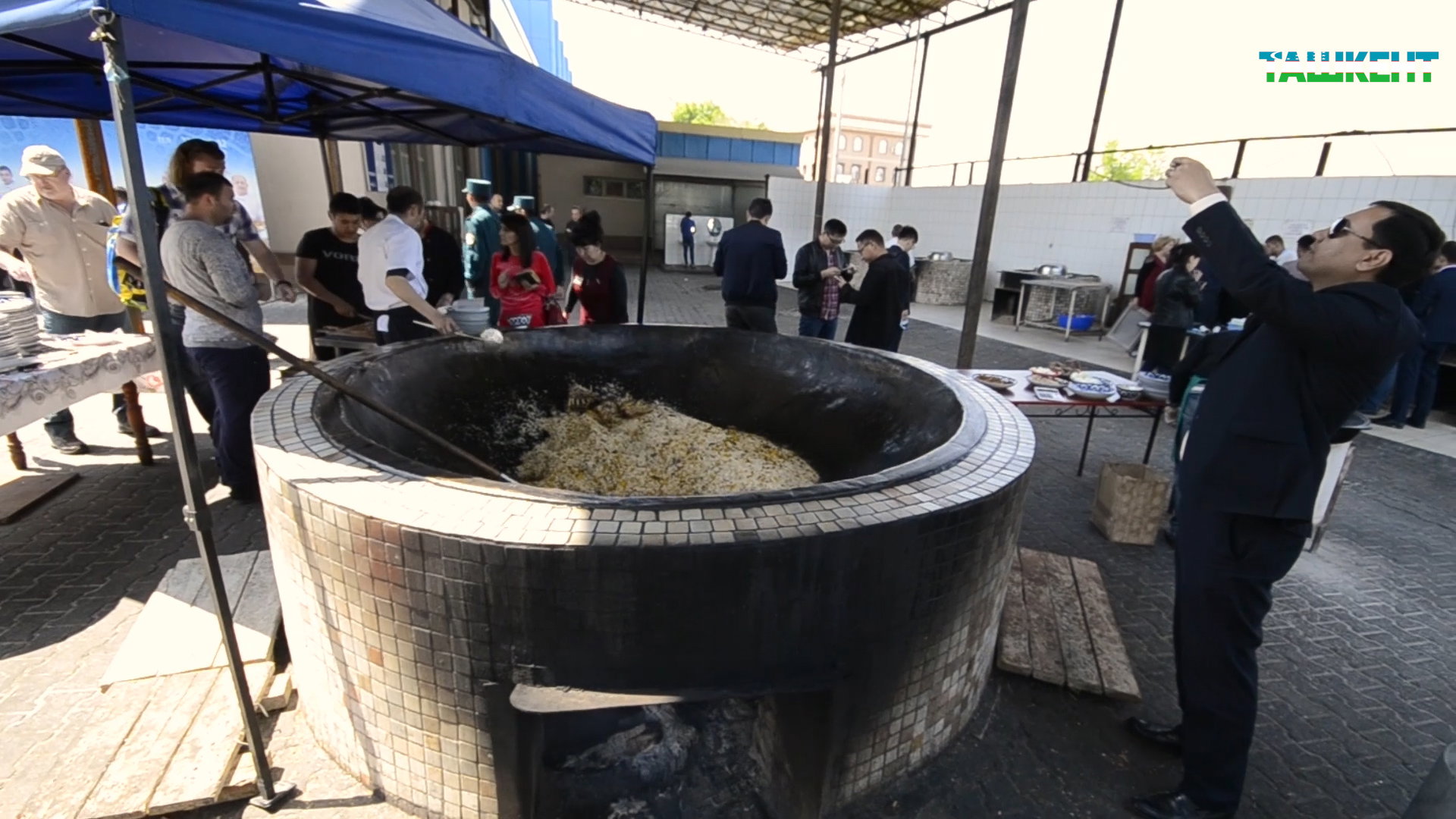
Плов здесь двух видов. Едоков много – и казан должен быть огромным.
Даже сложно предположить, сколько порций плова он в себя вмещает. Но – уже часам к двум – всё съедено! И тогда в бой вступают резервы – казаны поменьше. Но даже из такого можно свадьбу из пары сотен человек накормить.
Сюда нон-стоп привозят туристов, которые перед тем, как поесть, обязательно сфотографируются на фоне казана-гиганта. Можно сделать вид, что сам готовишь. Черпак положен специально для позирования.
А это всё добавляют в основное блюдо.
Только дополнительными ингредиентами можно наесться) Выглядит всё впечатляюще.
Слюнки уже текут, хочется эту красоту поесть. Заходим внутрь.
И тут уже теряешься. Чего делать, кого спрашивать?
Официантов много, но они все неуловимы. Поймали всё-таки одного. Потребовали плова. Убежал. Принёс порцию, но без всякой красоты. Просто рис и мясо. Отправили обратно. Со второй попытки получили желаемое.
Задумка хорошая. И плов неплохой. Но вот эта потоковость мешает им насладиться. Второй раз я бы сюда не приехал. Нашёл бы тихое местечко, где можно удобно расположиться на топчане, где официант не носится сломя голову, а внимательно и терпеливо выслушивает твоё стандартное «ой, даже не знаю, что поесть, может, посоветуете»? И с улыбкой рекомендует плов.
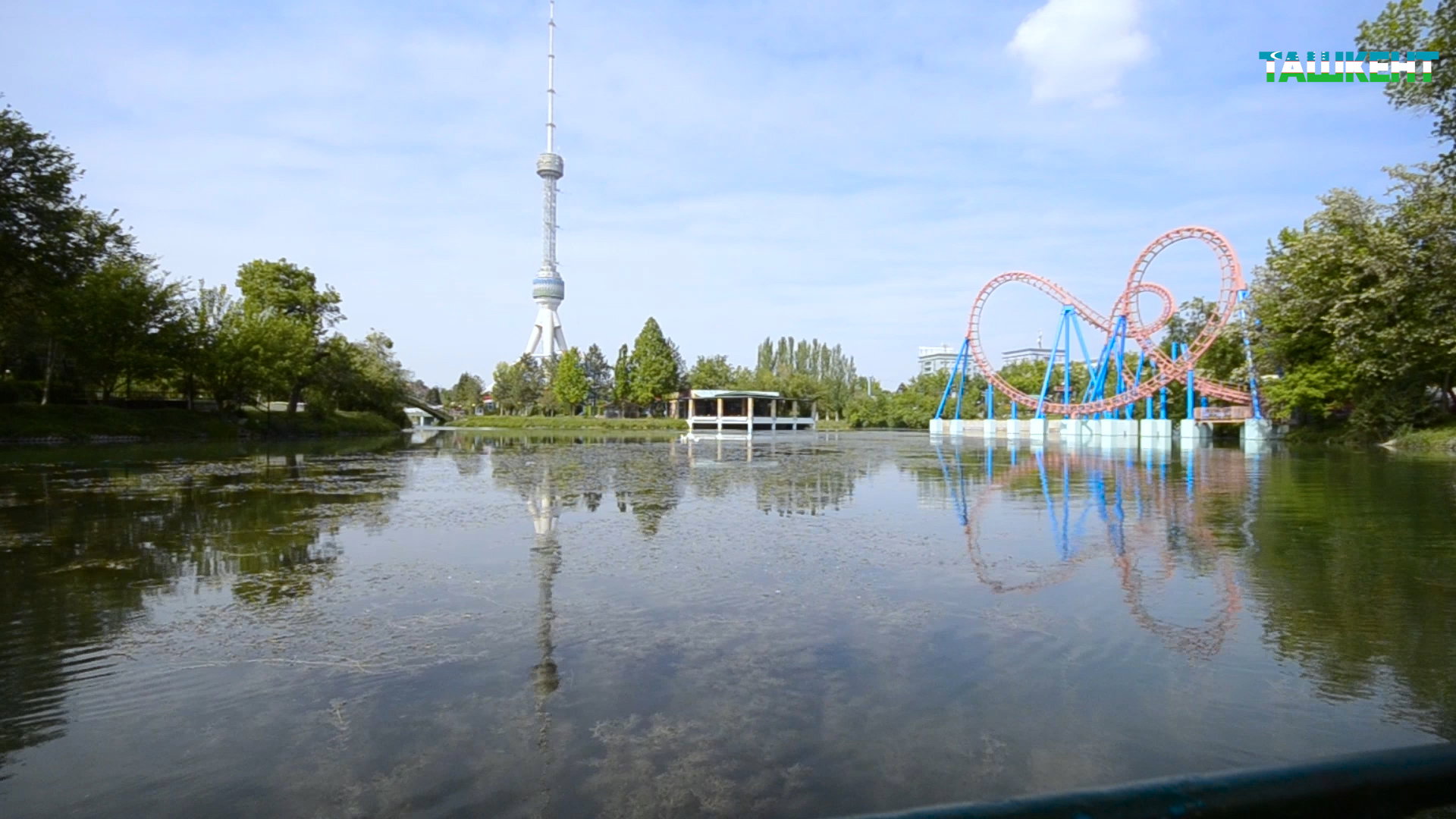
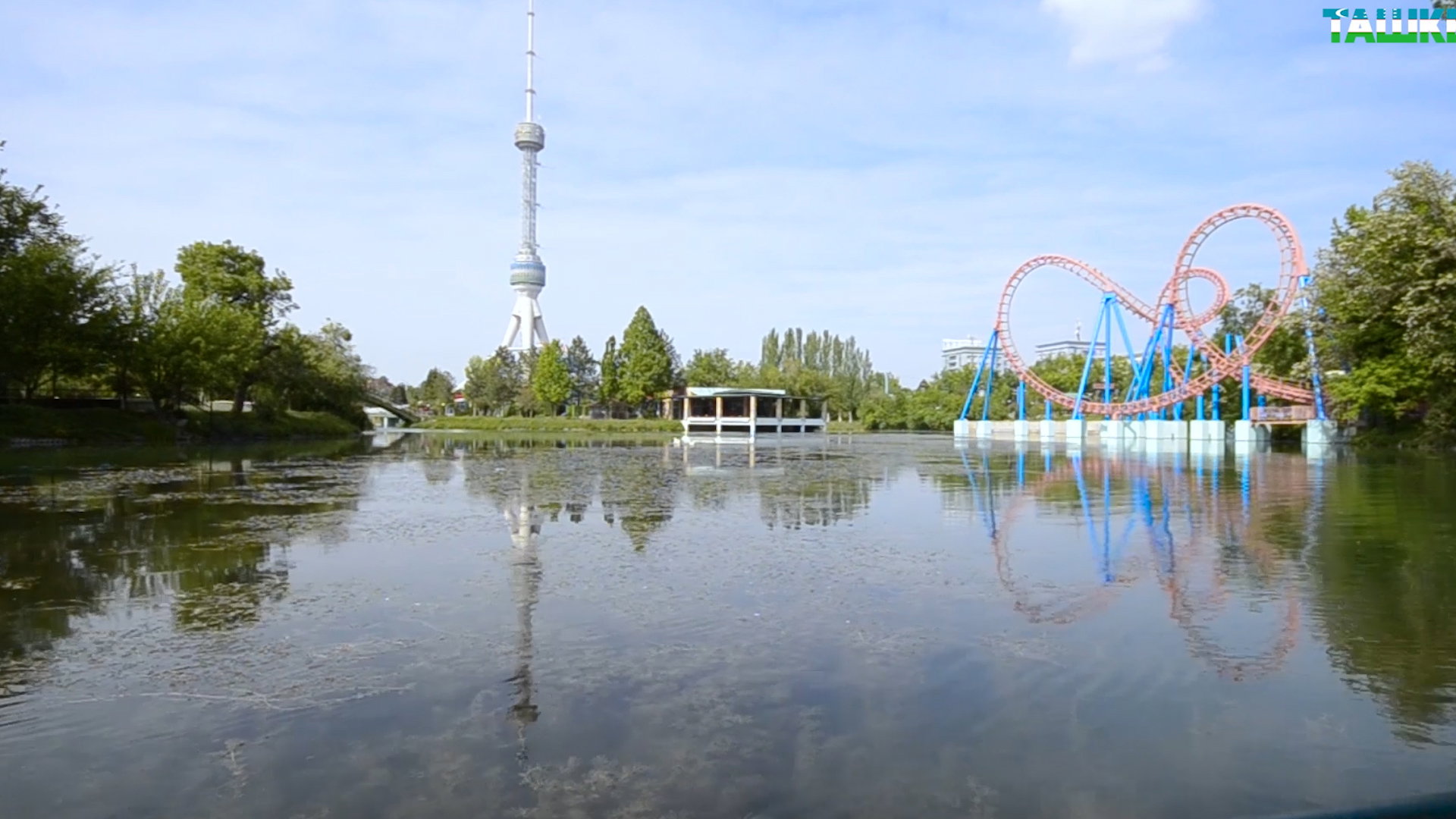
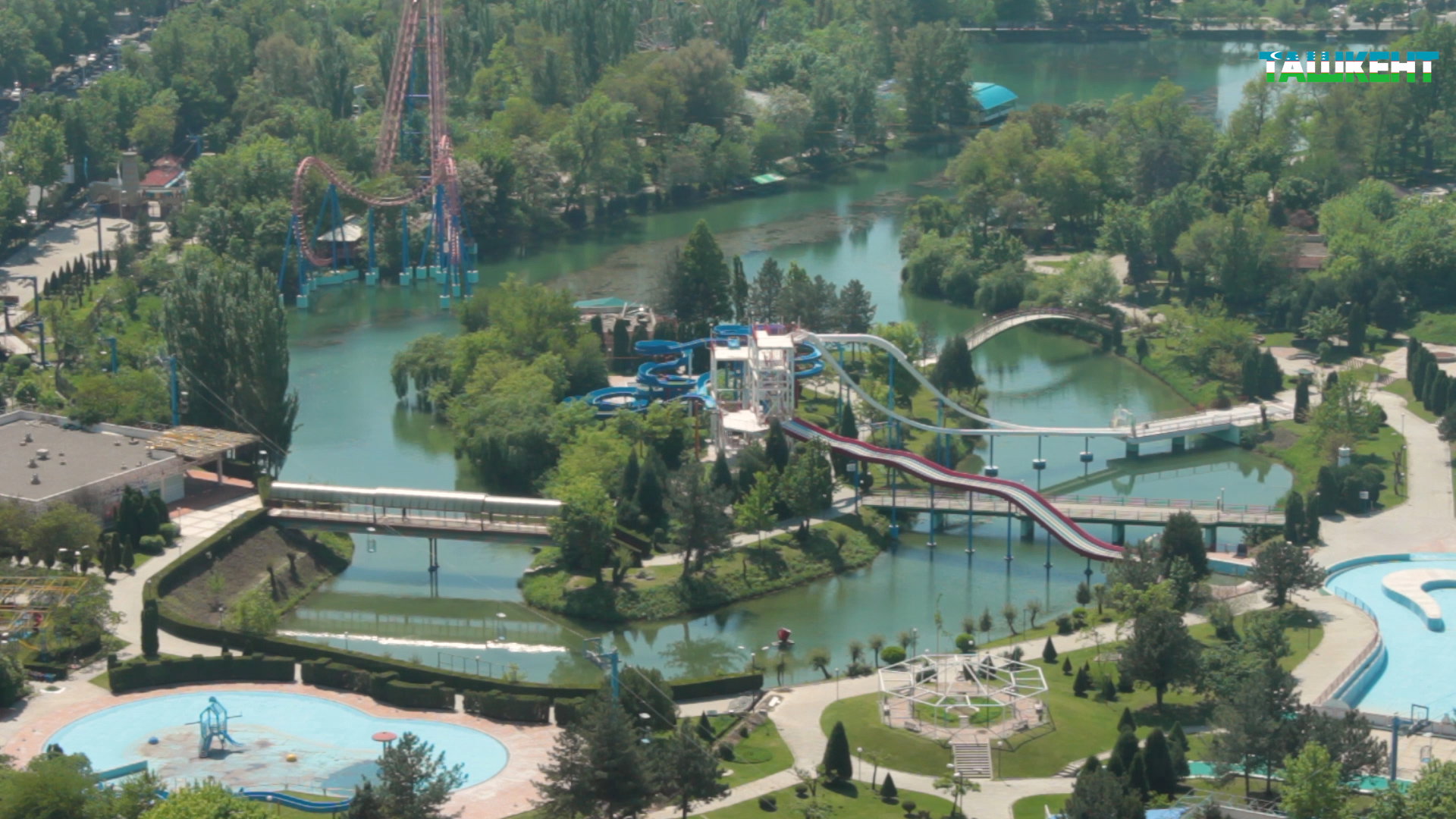
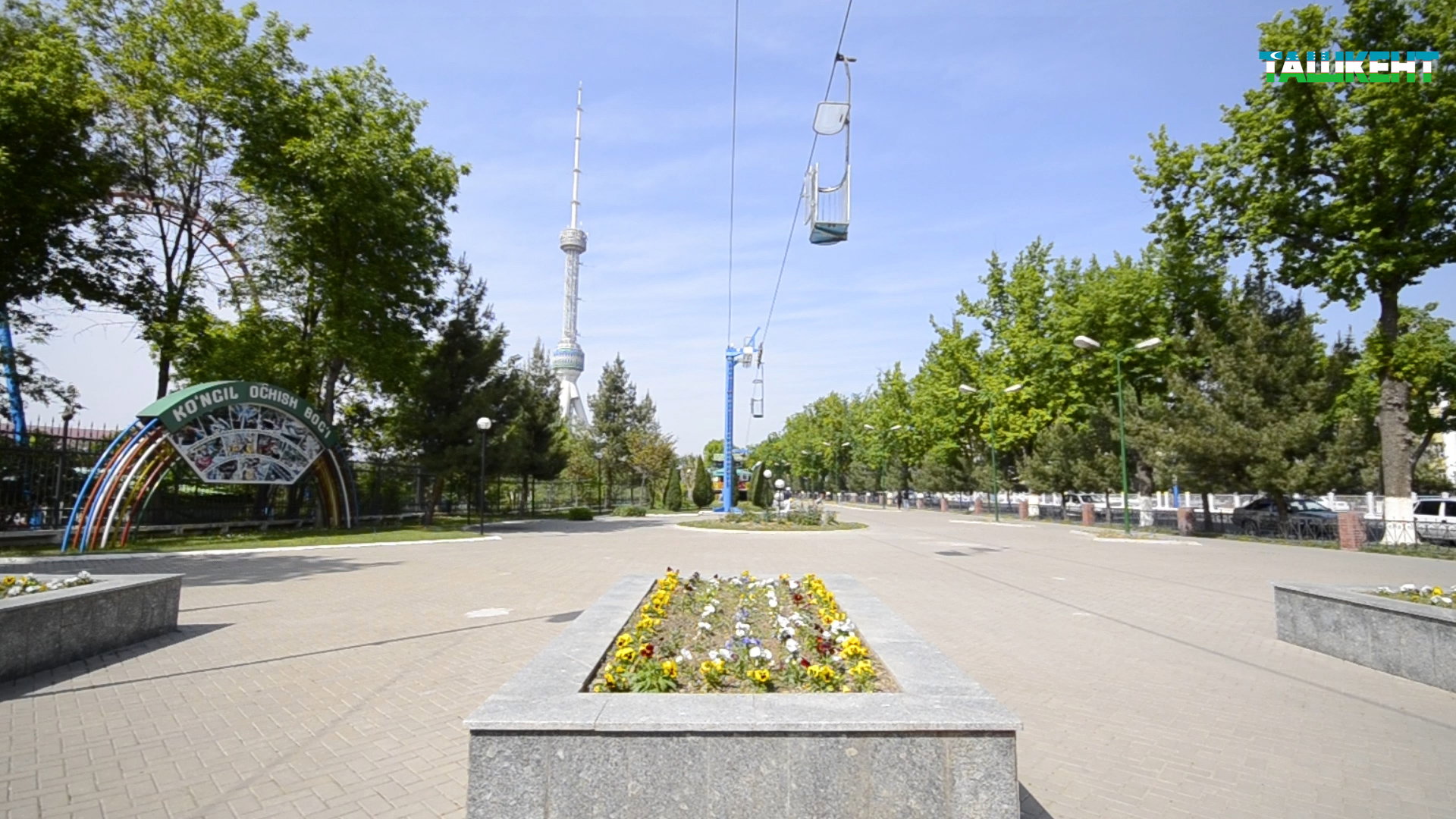
Опять же недалеко от Телевышки расположен Ташкентлэнд.
Развлекательный комплекс с аттракционами и аквапарком.
Аквапарк, понятное дело, в апреле не работал, а вот на аттракционах покататься можно было. Осмотреть территорию, понять, на чём больше хочется покататься – можно на этой канатке.
Определились – покупаете билет. Платите – только на входе.
И катаетесь сколько душе угодно. Не доплачивая.
Замок ужасов. Думаю, у большинства посетителей вызывает всё-таки не страх, а улыбку.
Кинг Конг что-то говорит по-узбекски.
Чудесная картина, правда? Её можно наблюдать, катаясь на баркасе. Но есть нюансы. Тарахтит сильно. Не садитесь возле капитана.
А в следующей части вы узнаете, имеет ли смысл брать машину напрокат, что продают на ташкентском блошином рынке, и почему ипподром – это не про лошадей. Будет интересно!
Видеоверсия, кстати, впечатляет больше)
https://youtu.be/eVM6fe3OXoM
Как побывать в крутящемся ресторане на высоте
До поездки в Узбекистан мне казалось, что про столицу – Ташкент – рассказывать будет нечего. Ну город и город. Современный. Однако, пересматривая отснятое видео, пришёл к выводу, что материала настолько много, что в одну серию не уместится. В первой части расскажу про три знаковых места Ташкента, которые находятся недалеко друг от друга.
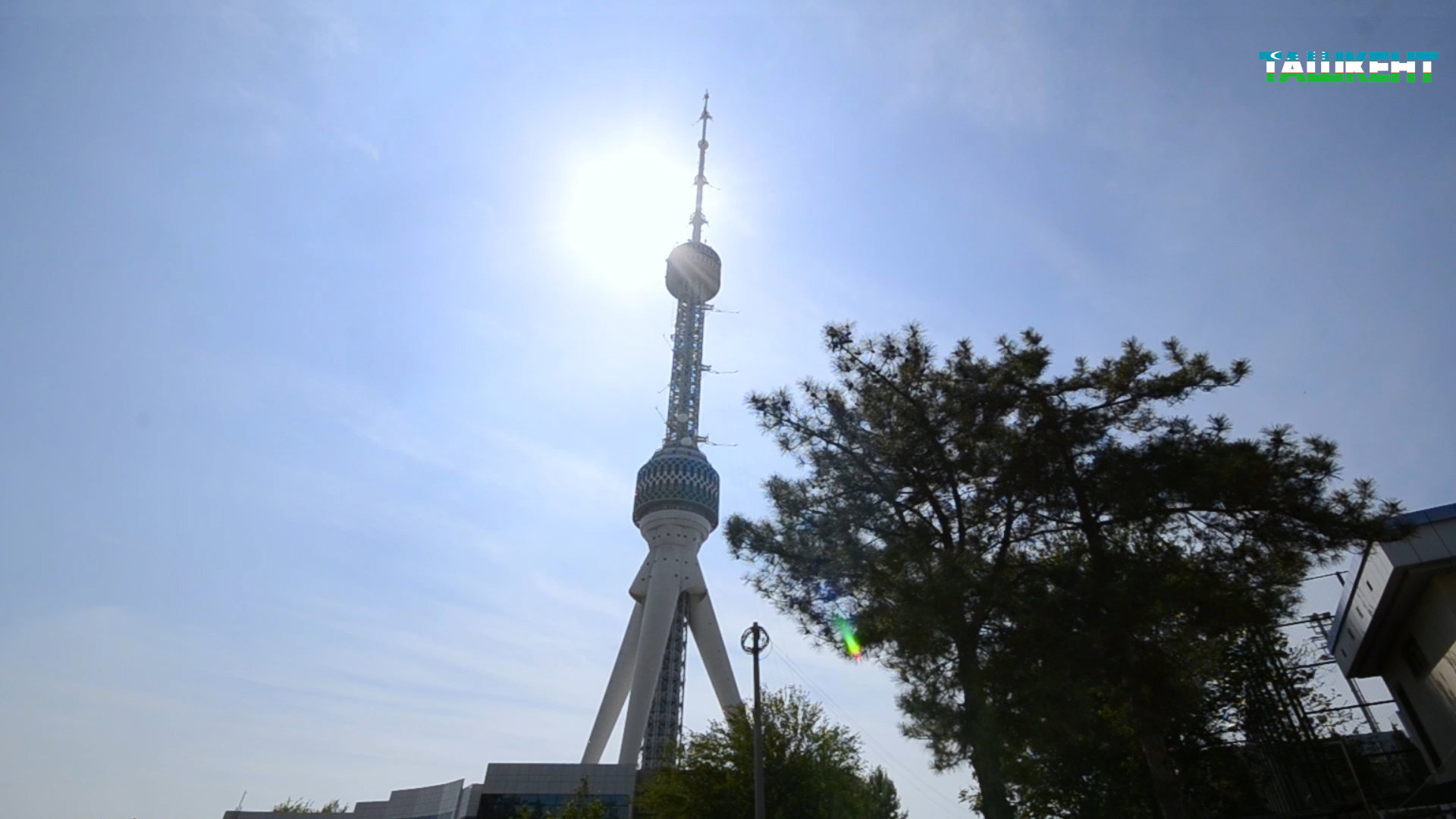
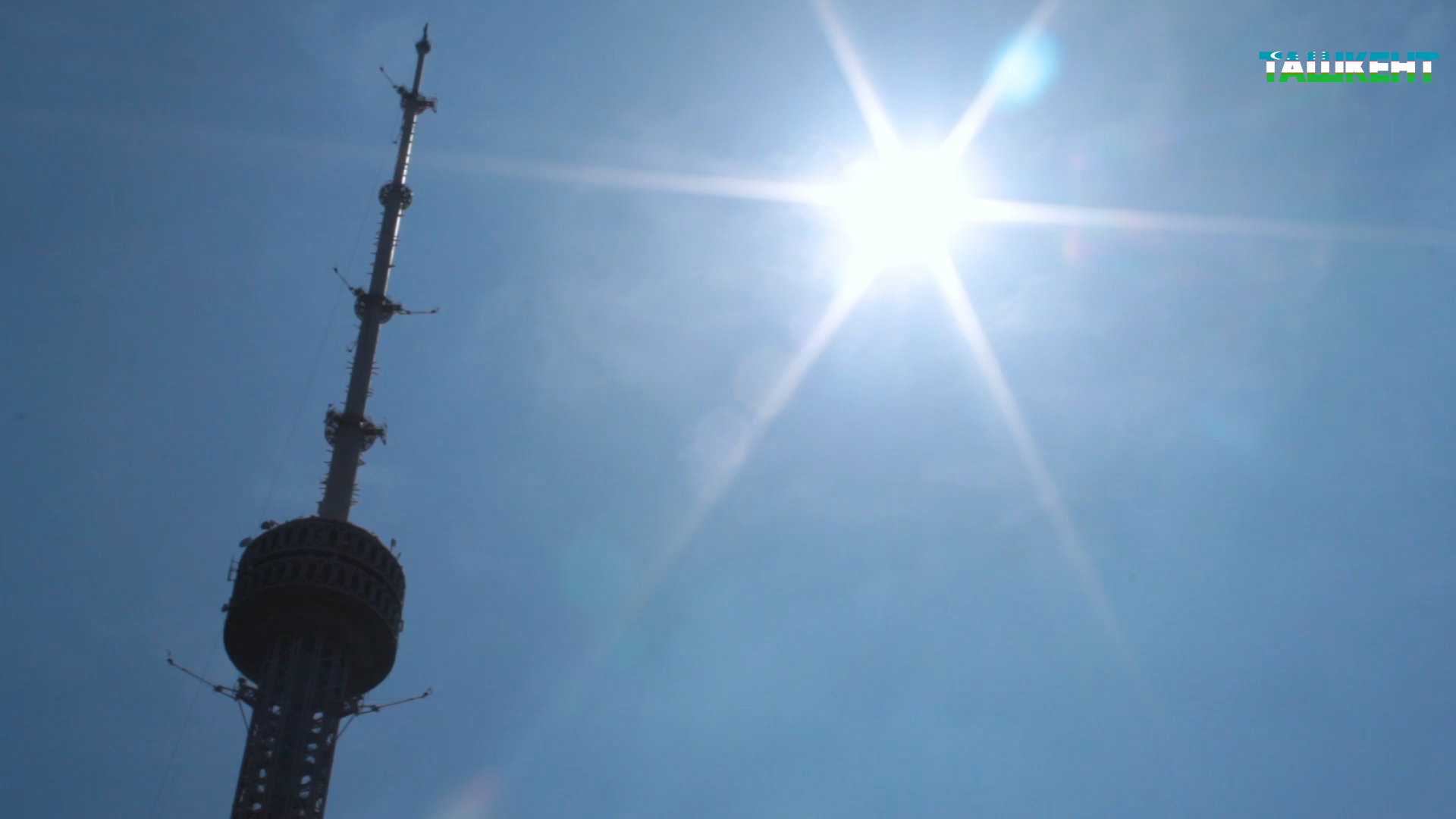
Телевышка, Центр плова и Ташкентдэнд. Подготавливаясь к поездке, прочёл в интернете, что туристам на ташкентской телевышке снимать запрещают, вплоть до того, что изымают на входе мобильные телефоны.
Расстроился, конечно. Ведь кадры с такой высоты – дорогого стоят! Даже подумывал отказаться от посещения башни. Но всё же рискнул. И не зря!
Но сначала оплатим вход. Обязательно нужен паспорт. Нерезидентам посетить башню стоит дороже, чем гражданам Узбекистана. 40 тысяч сумов с человека. Это 285 рублей.
Подняться туристу можно только на два этажа. Шестой и седьмой. Едешь на скоростном лифте и наблюдаешь, как это выглядит из шахты.
Шестой этаж – прогулочный, с круговой панорамой.
Посетители подходят к стёклам, ахают, восхищаются, ищут свой дом, фотографируются.
Ташкент, кстати, город древний. Просто хорошо выглядит. Заложен где-то во втором веке ДО нашей эры. В 11-ом обрёл современное название, которое означает «Каменный город». От набегов Ташкент охраняла стена, в которой было 12 ворот. Назывались они либо по районам, где располагались, либо по направлению. Те, что выходили на Самаркандский тракт, самаркандскими и именовались.
В 1865 году символические ключи от этих ворот представители Ташкентской знати преподнесли командующему русскими войсками генералу Михаилу Черняеву. Как знак безусловной сдачи города. Тогда Ташкент находился во власти Кокандского хана, и ташкентцев это категорически не устраивало. Ключи изготовлены из чистого золота, общим весом более полутора килограммов, на каждом – гравировка – от каких они ворот. Сейчас хранятся в национальном банке Узбекистана.
Этажом выше – ресторан. Казалось бы, ну и что такого? Ресторан на телевышке… Но есть нюанс. Он – кружится! Ощущения необычные) Конечно, движется он не так быстро, чтобы укачало слегка перебравшего посетителя. Скорость комфортная.
Заказывать тут ничего не стал – трапезничать собираюсь в Центре плова, что располагается в двухстах метрах от вышки.
https://youtu.be/eVM6fe3OXoM
Почему только две недели в год можно попробовать зеленую самсу?
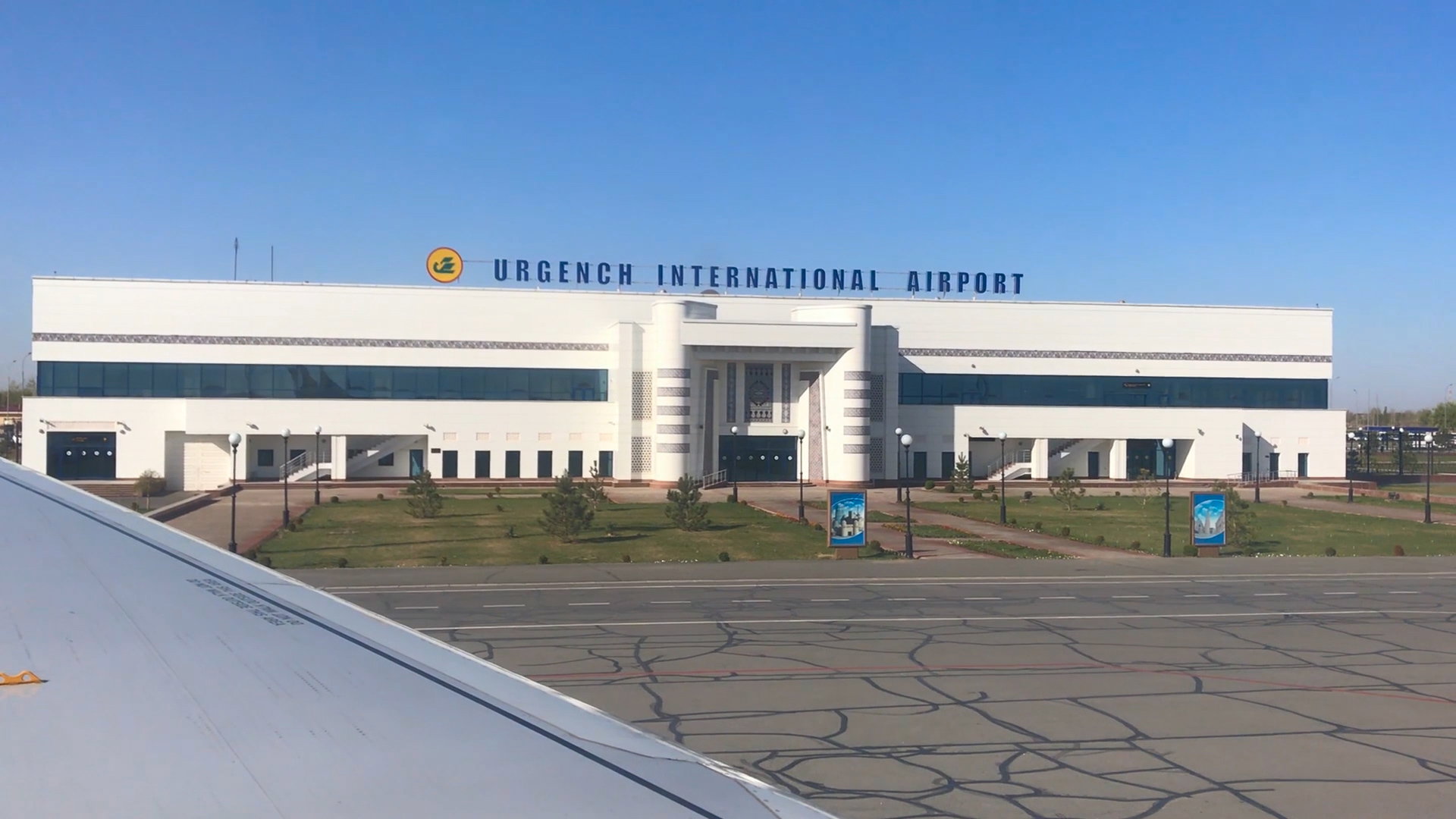
Поездка по Узбекистану продолжается. Из Хивы (Ургенча) я перелетел в столицу.
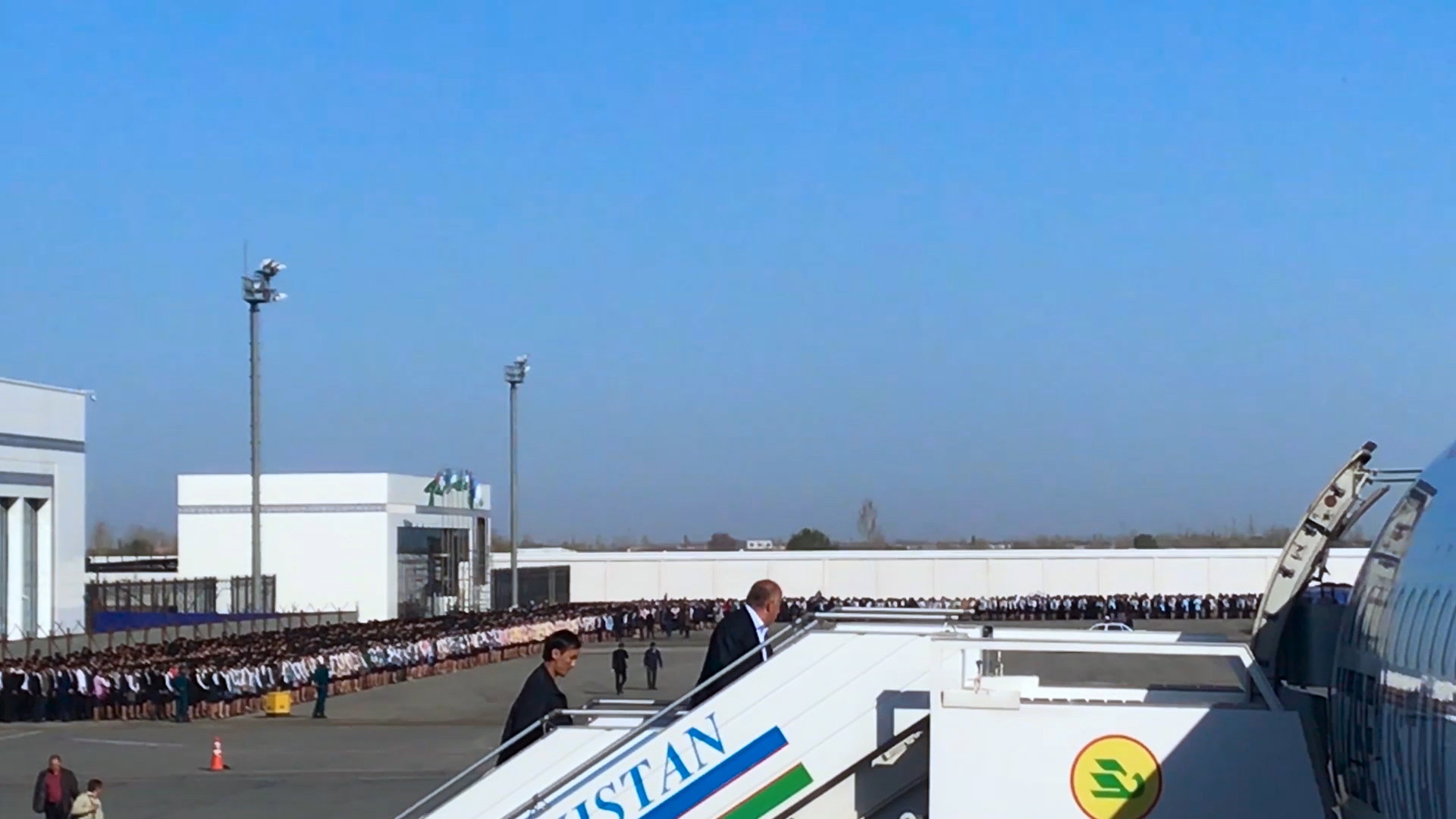
Вылетая из Ургенча в Ташкент, оказался свидетелем вот такой картины. Отряды молодежи репетировали встречу президента. Который должен был прибыть на днях в город.
https://youtu.be/PVzF1PpfovE
Полёт прошел замечательно. Прилёт попытались омрачить таксисты. Совершенно бесстыдно задирая цены, меня чуть ли не насильно усаживали в машину. К сожалению, я это не снимал.
От аэропорт до центра города, где я арендовал квартиру, такси стоит 10-15 тысяч сумов. Меня же пытались уверить, что меньше, чем за 50 тысяч добраться не получится.
Совет: либо на выходе из самолета вызывайте такси через приложение в телефоне, либо просто пройдите чуть дальше от аэропорта - сможете поймать машину за нормальные деньги.
Я нашел муниципальное такси. По адекватной цене. Водителю агрессивные коллеги, что предлагали мне доехать за сумму в разы больше, пообещали проколоть колёса. Надеюсь, этого не случилось.
Мне казалось, что в Ташкенте занять себя особо нечем (на самом деле это не совсем так), и я решил на пару дней съездить в горы.
Благо, они находятся в часе езды от столицы Узбекистана.
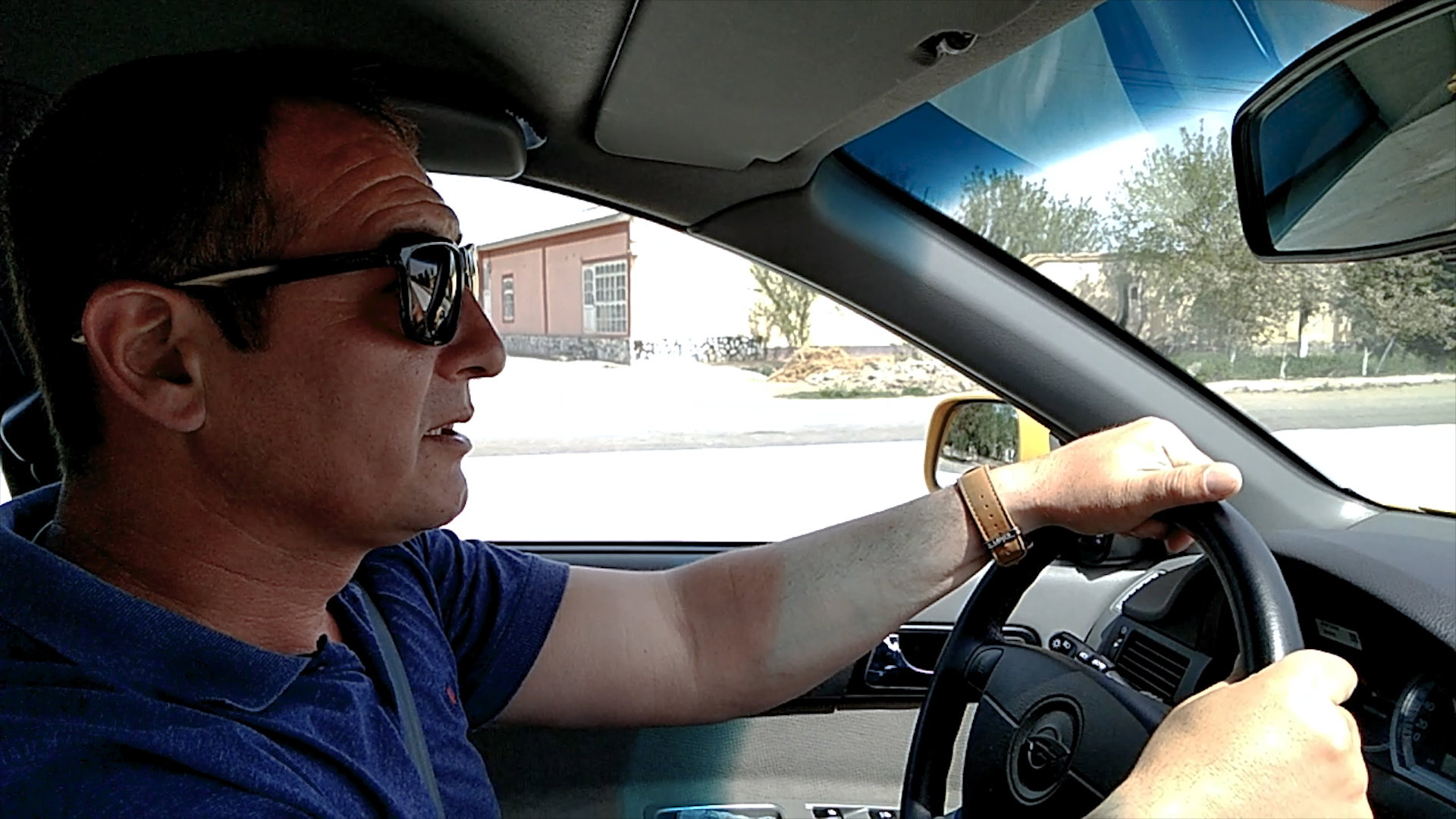
Подбросить меня туда вызвался мой хороший ташкентский друг — Александр. У нас общая страсть — путешествия.
По дороге останавливаемся у торговых лотков. Купить что-нибудь в качестве перекуса. Тут продается курт (сушеный творог), орешки всяких видов, ну и напитки.
Но мы предпочли набрать живую воду из родника. Говорят, очень полезная.
Повторюсь, от Ташкента до Чимгана — не больше часа. Поэтому столичные жители выбираются сюда в выходные на пикники. В Москве — на дачу, тут — в горы.
А почему бы и нет? Воздух замечательный, вид — шикарный.
На выезде из города по рекомендации Саши пробую абсолютно новое для меня блюдо.
Зелёную самсу. Почему так называется? Ведь выглядит обычно.
Из-за начинки. Внутри самсы - редкая трава. Ее можно найти только в апреле на в предгорьях Чимгана. И растет она не дольше месяца.
По вкусу напоминает шпинат.
Unusual food at bazaars in Tashkent, Uzbekistan
Continuation of the walk through the oriental bazaars. https://read.cash/@Goroda/what-unusual-can-be-bought-at-bazaars-in-tashkent-3e60578e
Farhad Bazaar is not in the center.
You can reach it by metro - the ride costs 1.200 so'm ($0.15).
If you-a tourist and have bought too many tokens, you can take them back to the cashier and you will return the money for them.
Here in Farkhad can meet something of the Eastern-colourfulness.
- I love this kind of flatbread.
- How much is it?
You can also eat this.
- When there is lack of Calcium, you should it this.
- Pregnant women do eat this.
- Pregnant women?
Assorted Kurt - salted dried cottage cheese.
Nuts, sweets - this is what I take to Moscow, but I won't buy it here, I'll buy it on the most picturesque Bazaar of Tashkent - "Chorsu"
It is not to be confused with others, can be recognized by the domes.
- Inside the dom.
- This is pelmeni - farinaceous food.
- What is it?
- It's for laghman.
- Ok. So, you do not have to cook anything, it is cooked?
- Yes. Just put everything in a hot water.
- Alright, thank you.
- Here you can buy a poultry.
- Fresh flatbread is being sold.
- Here are Korean salads, pickles, cottage cheese.
On "Chorsu" you need to buy everything that will be taken to Moscow - to your friends, relatives and colleagues.
Traditionally in the list of such goods nuts are walnuts, almonds, hazelnuts.
Trading rows are located not only under the dome, but also next to it.
Here the workers wash their hands, vegetables and cool something packed.
Do you like these huge bundles of radishes?
Impressive goods - impressive seller.
Every day such bundles have to be brought here and then taken away.
There are helpers here.
If you do not want to carry what you bought on the market - no problem.
The helper goes all the time behind you, puts everything in his cart, can advise, be silent - it's like you say.
Each such cart has its own number, to avoid confusion, the price is as agreed.
I think ten thousand soums ($1.25) is OK.
A flatbread-plate - after having a meal (meat) it's not necessary to wash - just eat it too.
If you are on the "Chorsu" there is no way, my friends, to pass you by "guzzle rows".
For sure you would want to eat what is offered.
And there is plenty of options.
Of course, the pilaf, but we have eaten it in Tashkent in the previous episode.
Of course, shashlik, samsa, chicken in different variations, fish for lovers, some sausages...
This is naryn, I've already told you about it.
Why is it on bottles? Have no idea.
Was ashamed to ask. Everyone must have noticed it for sure.
And what's that?
What do you think?
- How much?
- 2500
The dish is called khanum.
There are potatoes in the dough - and all this in tomato sauce.
The dish is unusual, but has its admirers.
Well, Souvenirs, Souvenirs, Souvenirs...
Funny grandpas, which have already become familiar, magnets on the fridge in the form of flatbread, which has shashlik on it, bags, carpets, plates...
The day ends, also ends the vacation and the trip to Uzbekistan.
We're going to the airport.
We carry a lot of gifts and are not afraid of excess.
"Uzbek airlines" allow one passenger to carry 30 kilograms of cargo.
But the tickets are still expensive.
By the way, in previous years if I was shooting a video at the airport, I would definitely be approached by a policeman and would strongly recommend to stop filming at least.
Now, you can film - if you want.
Well, the journey to Uzbekistan is over.
It was wonderful!
https://youtu.be/4gjV6KfJfdw
Легенда о "Коротком минарете" в Хиве
Очень интересно во всех поездках наблюдать за настоящей, не показной жизнью горожан. Но продолжу свой рассказ. В предыдущей части мы с вами расстались на крепостной стене.
Это странно, но пока не видно толп туристов. Возможно, их повезли обедать.
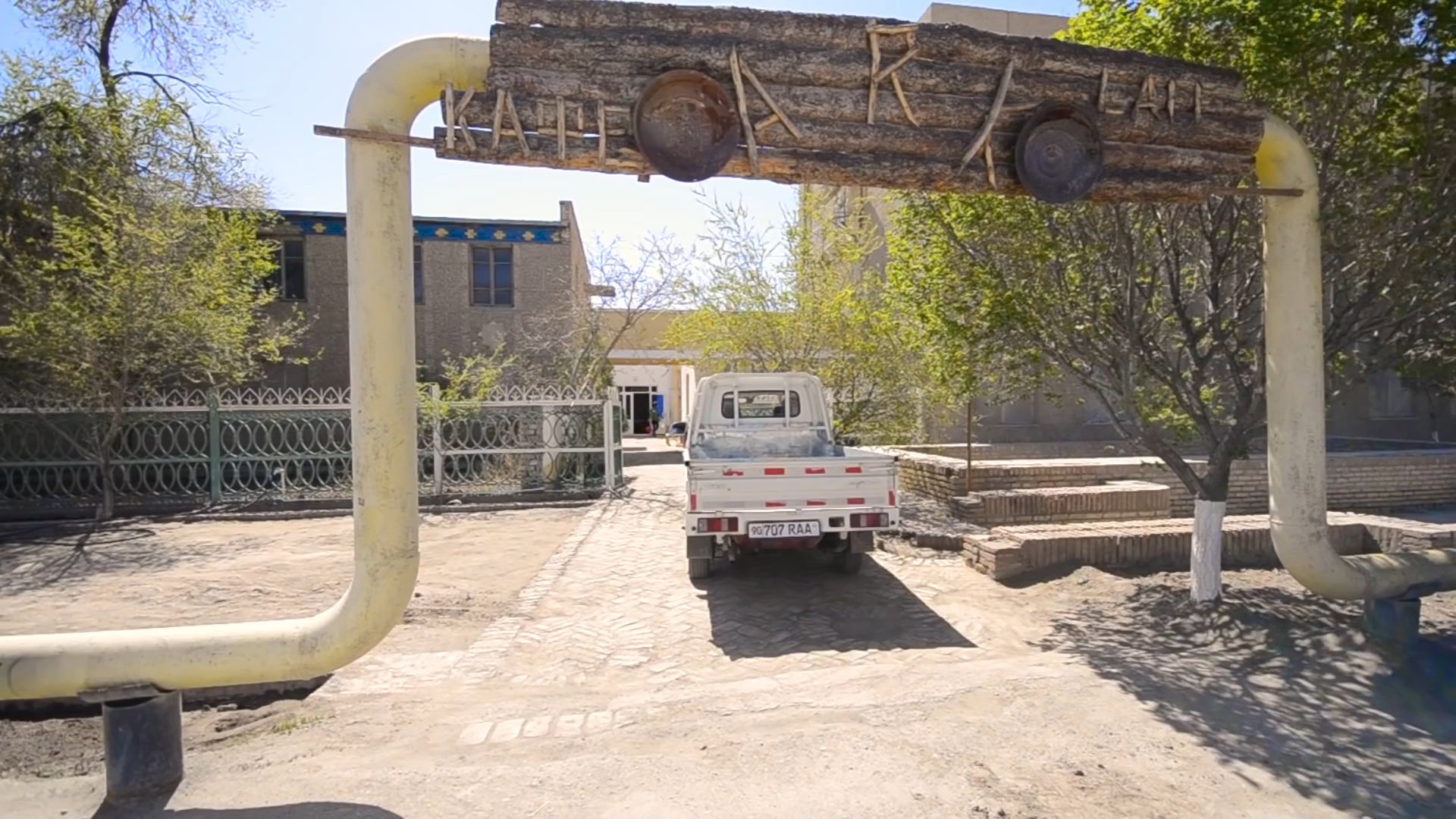
Съездим и мы. Для того, чтобы поесть настоящий хивинский плов, нам рекомендовали покинуть Ичан-Калу и проехаться до бывшего керамического завода.
Здесь располагается кафе, в котором вроде как делается самый что ни на есть хивинский плов.
Плов отличается по многим параметрам. Главное отличие — хивинский плов делается с говядиной.
Наверное, дело в том, что я очень люблю баранину. И поэтому хивинский плов меня не впечатлил. К сожалению, совсем не волшебный. Отдельная история — местные лепёшки. Вот так они выглядят в кафе.
Как рассказал владелец кафе, в городе на улицах они не продаются.
Во всяком случае внутри Ичан-Калы купить их невозможно — нет этих точек с женщинами, которые торгуют на улице. Но вполне можно встретить вот такую картину — хозяйки пекут лепёшки для обеденного стола.
По-моему — очень здорово — ешь только что приготовленное, с пылу с жару. Нас угостили, очень вкусно, спасибо огромное. Денег взять категорически отказались.
Хива — потрясающе интересный для прогулок город. Такое ощущение, что попал в восточную сказку.
Сувениры тут купить можно, конечно же, на каждом шагу. В принципе, всё то же, что и в других городах Узбекистана. Шапки вот только разве.
Как-то неожиданно в жаркой Хиве увидеть в продаже меховые головные уборы.
Но иностранцы с удовольствием покупают. А вот - знакомые уже нам зороастрийские символы в виде керамических плиток.
Услышали стук — не поленитесь, подойдите, посмотрите.
Это местный мастер создаёт очередной шедевр.
И - привлекает туристов к магазинчику, в котором шедевры можно приобрести.
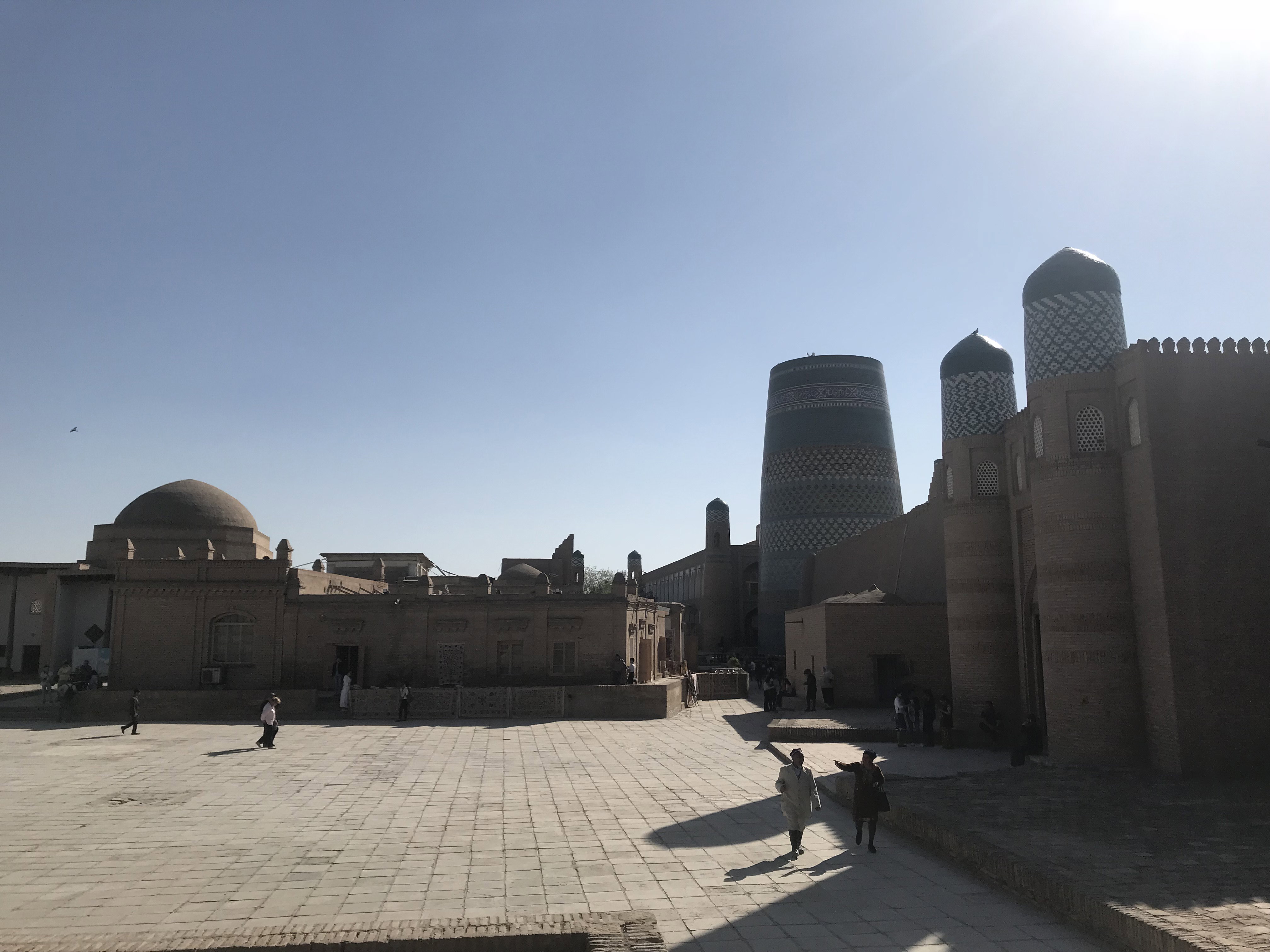
А это — знаменитый недостроенный минарет.
Его строитель (мастер) сбежал, узнав, что хан собирается его казнить, чтобы мастер не построил нечто подобное где-нибудь в другом месте.
Но это легенда. На самом же деле хан, что задумал построить самый высокий на тот момент минарет на Востоке, когда работы были выполнены на треть, погиб в очередном сражении. Дело его, к сожалению, никто не продолжил. Теперь минарет, который должен был стать самым высоким, зовётся коротким. Кальта-Минар.
Но всё равно он выгодно отличается от всех своих собратьев. Где вы ещё такой видели?
Рядом отдыхает верблюд. Конечно, за определенную плату с ним можно сфотографироваться. Но если честно, выглядел он очень несчастным. Вечером мы его обнаружили за запертыми дверями какого-то сарая.
Наступает вечер. Ужинать решаю не в ичанкалинских кафе — ориентированных исключительно на иностранного туриста, а потому дорогих. Да и любимой мною баранины тут не найти. Как объяснила владелица одного из центральных ресторанчиков — европейцы не любят не то что вкус — запах блюд из баранины. Ну и местный общепит перестроился под тех, кто приносит городу деньги. Потому и самсы с бараниной тут нет.
Поужинаю в заведении, которое любят и посещают местные. Как такое отыскать? Очень просто. Выходите из крепости, ловите такси и просите водителя отвезти в кафе, где ест он сам и его друзья.
Здесь мы попробовали такие блюда, как Джыз — такое мясо,
Хива ижжони — сырой фарш. Вроде как рецепт попал сюда из Венгрии. Тухум барак — это вареники с начинкой из яиц, тыквы, сыра либо чего-то ещё.
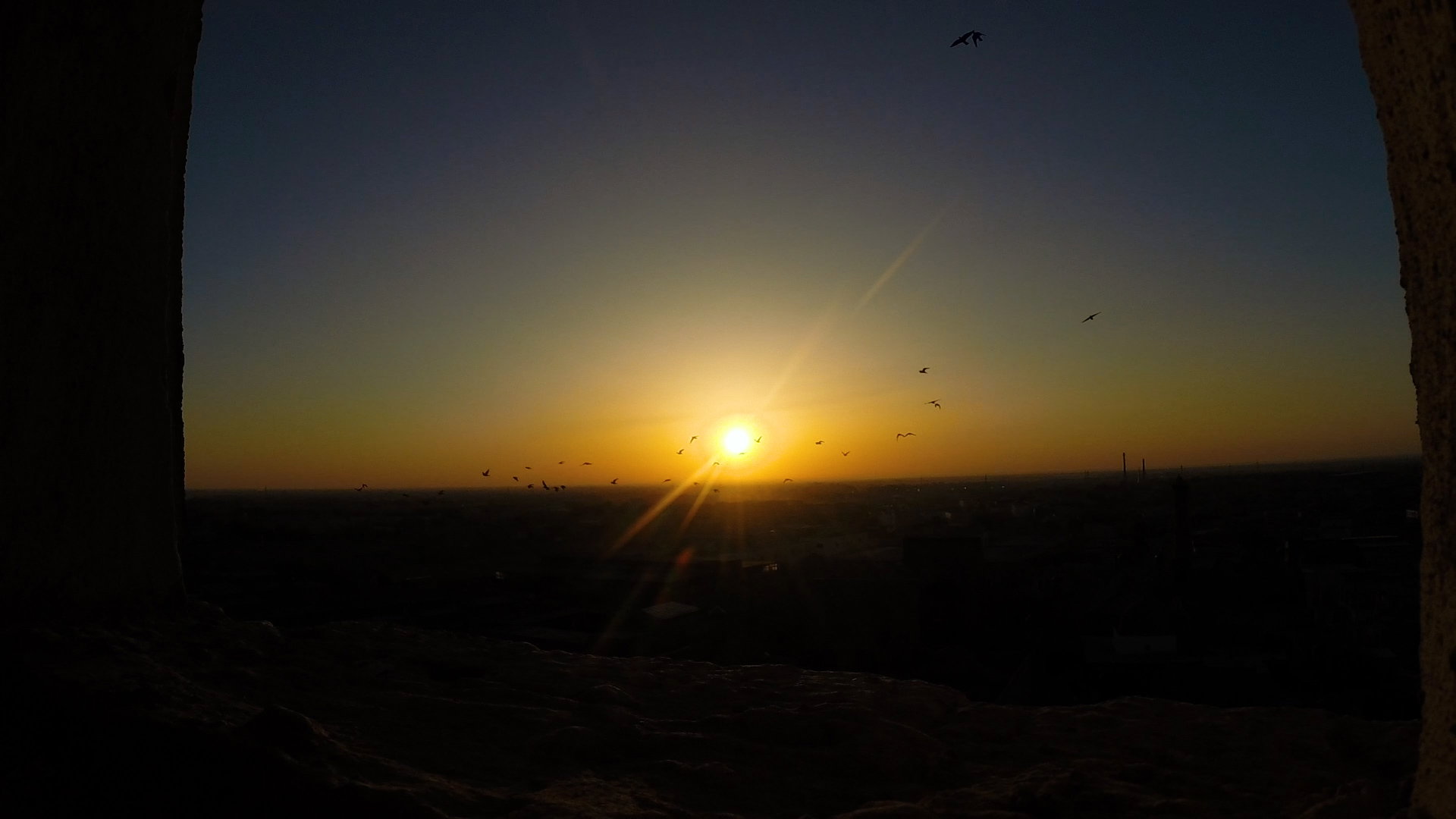
Сытые и довольные возвращаемся на крепостную стену понаблюдать за закатом.
Завтра мы простимся с Хивой. Которая полюбилась, впечатлила и запомнилась навсегда.
А дальше у меня по планам — чимганские горы. Там попробуем зелёную самсу, поднимемся на Чимган, побродим по дну Чарвакского водохранилища. Будет очень интересно!
Видеоверсия путешествия
https://youtu.be/v_E5AHM3EBE
Великолепная Хива. Взгляд с высоты минарета
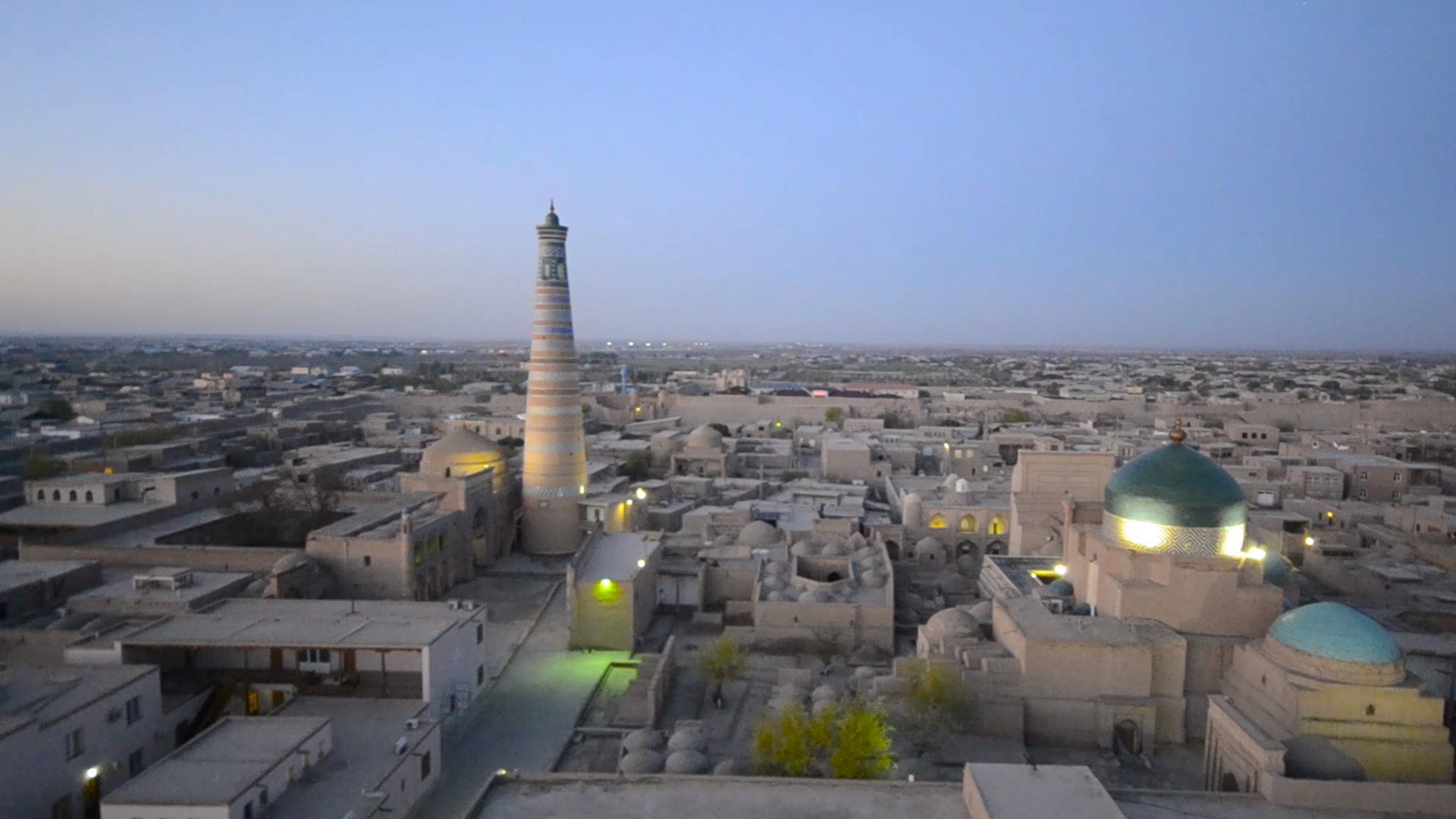
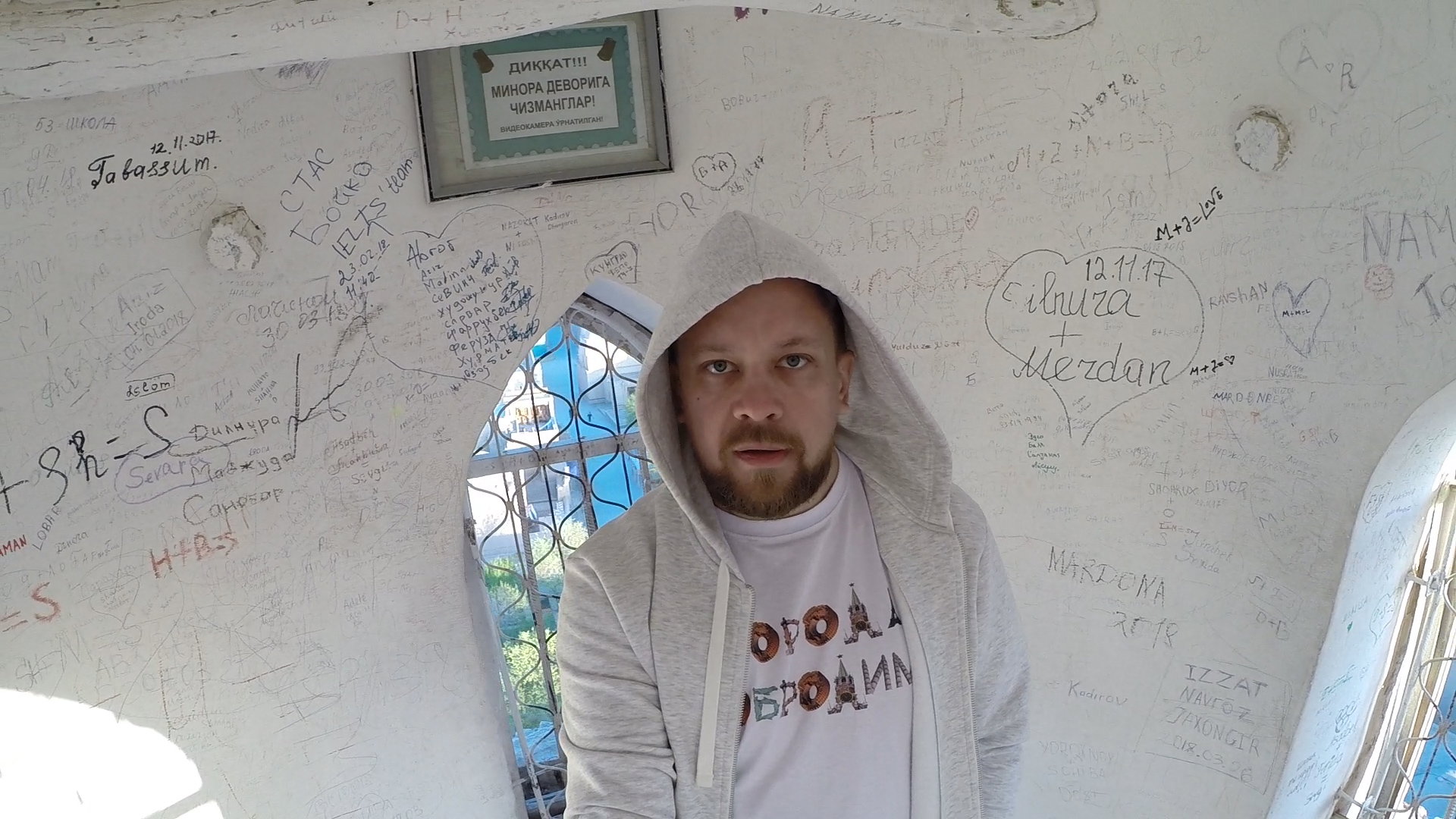
Так просыпается Хива. Для того, чтобы сделать эти фантастические кадры, я взобрался на минарет Джума-мечети.
Днём здесь не протолкнуться. Площадка наверху крошечная, а взобраться на неё — отдельное испытание.
Внизу же расположена сама Джума-мечеть. Это помещение для пятничной молитвы. Мечеть — уникальна. По сути — площадь под навесом. Который удерживают вот такие деревянные колонны.
По одним сведениям 212, по другим — 213. Я со счёту сбился… Потрясающие ощущения — ты прикасаешься к настоящей древности. Представьте, эти деревянные резные столбы видели более десяти поколений местных жителей.
Для того, чтобы попасть в Джума-мечеть, да и в другие достопримечательности Ичан-Калы, туристу необходимо приобрести общий билет.
Он действителен 2 дня. Видимо потому что за один - посетить все эти 15 объектов сложновато. Стоит прилично — 100 тысяч сумов.
Ну и вообще в Хиве цены для туриста выше, чем в других городах.
Видимо, всё по той же причине — основной контингент приезжих — представители западной Европы.
Прогуляемся по стене.
Вид открывается потрясающий.
Высота, как известно, снизу и сверху ощущается по-разному. Вроде всего-то метров десять. Но заберёшься на стену, и понимаешь — до земли целых 10 метров!
При сильном ветре как-то не рискуешь приближаться к краю. Никаких страхующих ограждений здесь нет. Возможно потому, что вся Ичан-Кала — под защитой Юнеско, что накладывает определённые обязательства — например, нельзя изменять внешний облик архитектурного памятника.
Вечером со стены можно полюбоваться красивым закатом. Но это в следующей части. В ней также узнаем, насколько сильно отличается хивинская кухня. Плов, лепешки на улице, вареники с начинкой из яиц, сырой фарш. А ещё увидим короткий минарет, грустного верблюда и… много всего другого.
Видеоверсия путешествия
https://youtu.be/iDQmmelWGlY
What unusual can be bought at bazaars in Tashkent
Do you know what that is?
You will be surprised. It's a dump!
Most of them are in Tashkent. In the house there live people, sometimes families - they are service personnel.
Often it is visitors from distant areas. They keep this place clean and sort the trash.
Probably, that is why Tashkent dumps do not have a typical for such places smell.
Non-standard solution, I have never encountered it.
But, why not?
Many people are interested - does it make sense to rent a car in Uzbekistan?
So I'll tell you.
A taxi in Tashkent costs an average of 10 thousand so'm, a little more than $1.
From Bukhara to Samarkand I drove for $100.
This is with all the stops, with an overnight stay on the border with Kazakhstan in a Yurt.
Now look how much it costs to rent a car ($50-100 per day).
In my opinion, the conclusion is obvious.
Moreover, a taxi here is any car that has stopped.
In most cases - white!
Uzbekistan-the country of the sun, and white, of course, is the most popular colour among car owners.
There are several bazaars in the city.
Alai - in the center.
Knowledgeable people are not advice do anything on it to buy.
After the reconstruction, it became, of course, beautiful, but terribly expensive.
If the word "hippodrome" flashes in a conversation with locals, you know, you do not necessarily have to deal with a horse lover.
He's probably talking about shopping.
The fact that for many years the largest clothing market in Tashkent is located on the outskirts of the city in close proximity to the racetrack - so the people and nicknamed it after that.
You can buy almost anything here.
Sellers do not like when they are filmed, so there are not many footage.
Here are - wedding dresses.
At the Hippodrome managed to try an unusual dish - pigodi.
It's a Korean steamed pastry with cabbage and meat inside.
Be sure to pour the sauce - an unusual taste.
The dish is quite decent and hearty.
- It can be opened? Do you put something inside?
- Yes, we do.
- Inside we put soy, it's bitter.
There are a lot of Koreans in Uzbekistan.
In Tashkent are some areas where they mainly live.
And Korean cuisine for Tashkent have become familiar.
We went to a restaurant in the city center, where you can taste them.
I got myself a kuksi - a cold soup with noodles and meat.
Incredibly tasty, especially in the heat.
And this is hot boiling soup.
In addition, they gave a bunch of salads.
To eat them strength was gone.
We took with us and tried later - also very tasty.
The bill in the Korean cafe made 72 thousand soums ($9).
But back to the bazaars.
Fans of flea markets should definitely visit "The Yangiabad Bazaar".
He works the weekends.
This seems to show products of Soviet times under on open air.
Here you can find anything, for example, you can buy money: Soviet, Royal, Uzbek.
Flags, pennants, some strange mechanisms, billiard balls.
They say that here the car owners buy spare parts for their rare "Lada", "Muscovites" and "Volga".
Another thing is the bird market, in addition to poultry and pets-kittens, puppies and rabbits, you can buy hedgehogs or turtles.
By the way, the turtles can not be exported from the country.
This" hustle " is constantly wanted to be closed.
Please don't do this!
The flea markets exist in many cities around the world, and the authorities don't consider them bad.
For example, I love to wander through such markets and buy something unusual.
It may, perhaps, someone should revitalize this area?
https://youtu.be/4gjV6KfJfdw
Хива. Как в путешествии стать миллионером
Билет на поезд Самарканд — Ургенч стоил 132 тысячи сумов. Это примерно 950 рублей.
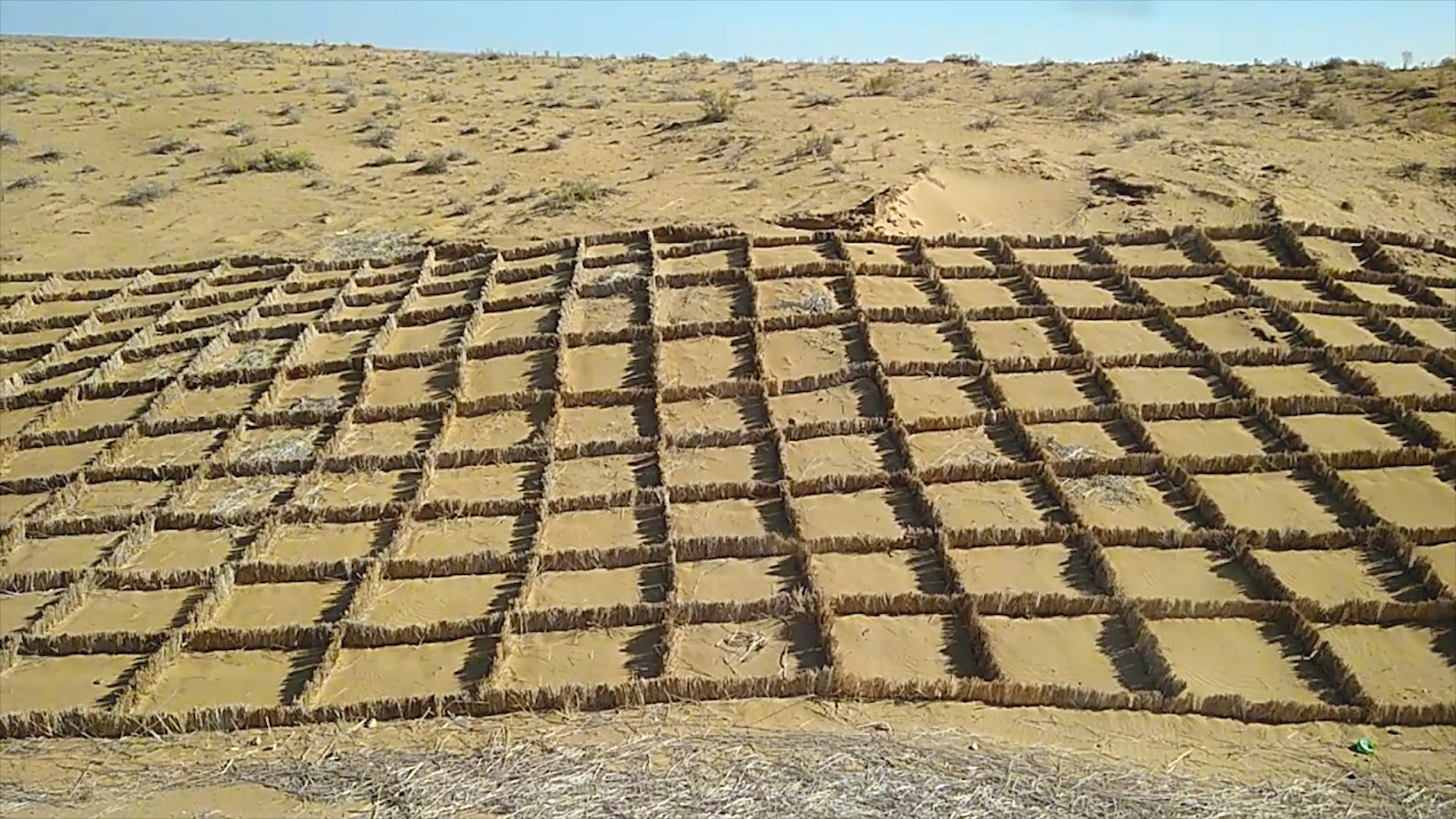
Утром, перед прибытием, можно насладиться видами настоящей пустыни. Заинтересовали вот такие… конструкции.
Солома, воткнутая в песок. Как оказалось — это спасает от наползания песка на железнодорожные пути.
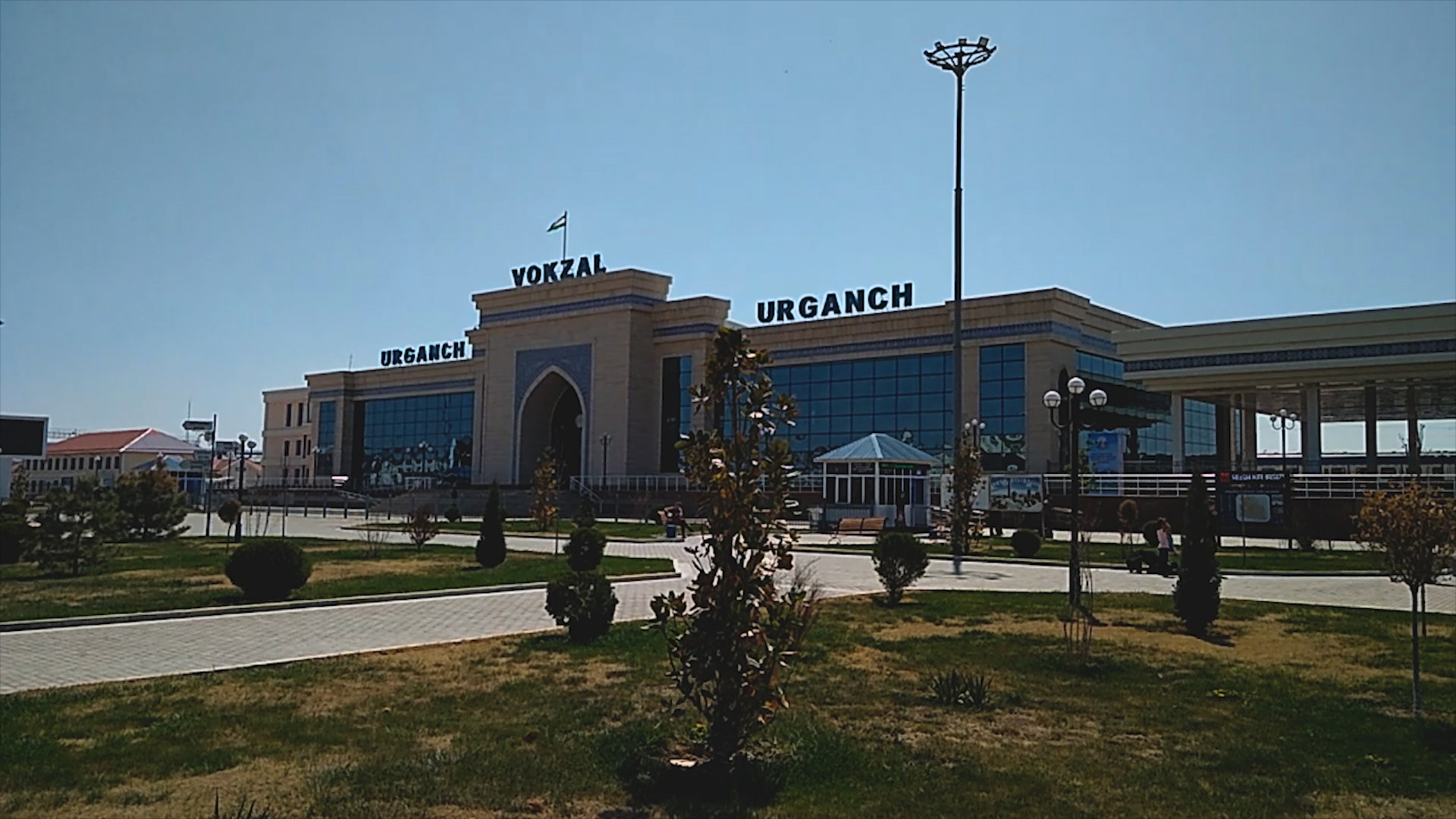
Ургенч - небольшой приятный городок, явно сильно обновлён не так давно. От Ургенча до Хивы доберемся на такси, конечно же. Поездка — 40 тысяч сумов. Включая изменения маршрута, в том числе и непредвиденные. Куплю-ка билет на самолёт заранее. До Ташкента. Заодно в аэропорту поменяю доллары на сумы. Становишься миллионером) 200 долларов - это миллион 616 тысяч.
Авиабилеты куплены, можно расслабиться и поболтать с таксистом.
Он утверждает, что в Хиве живут самые красивые девушки Узбекистана. А ещё, оказывается, до сих пор существует такой обряд, как выплата калыма. Дружелюбный водитель рассказывает, где в Ургенче можно перекусить. Из-за близости Амударьи в местных кафешках довольно много рыбных блюд.
Узнав, что меня больше интересует самса, таксист привёз в место, где она, по его утверждению, самая вкусная в Ургенче.
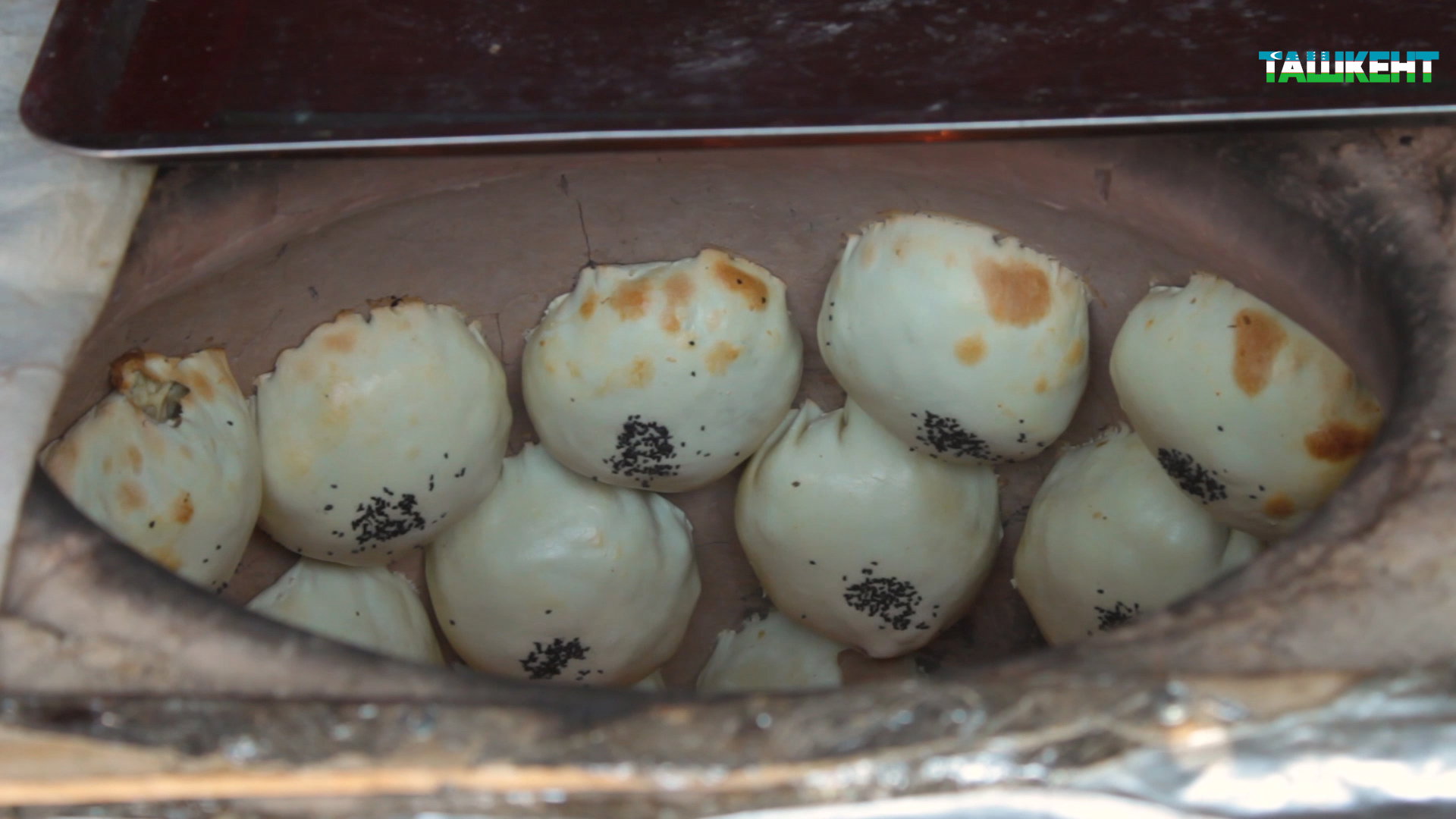
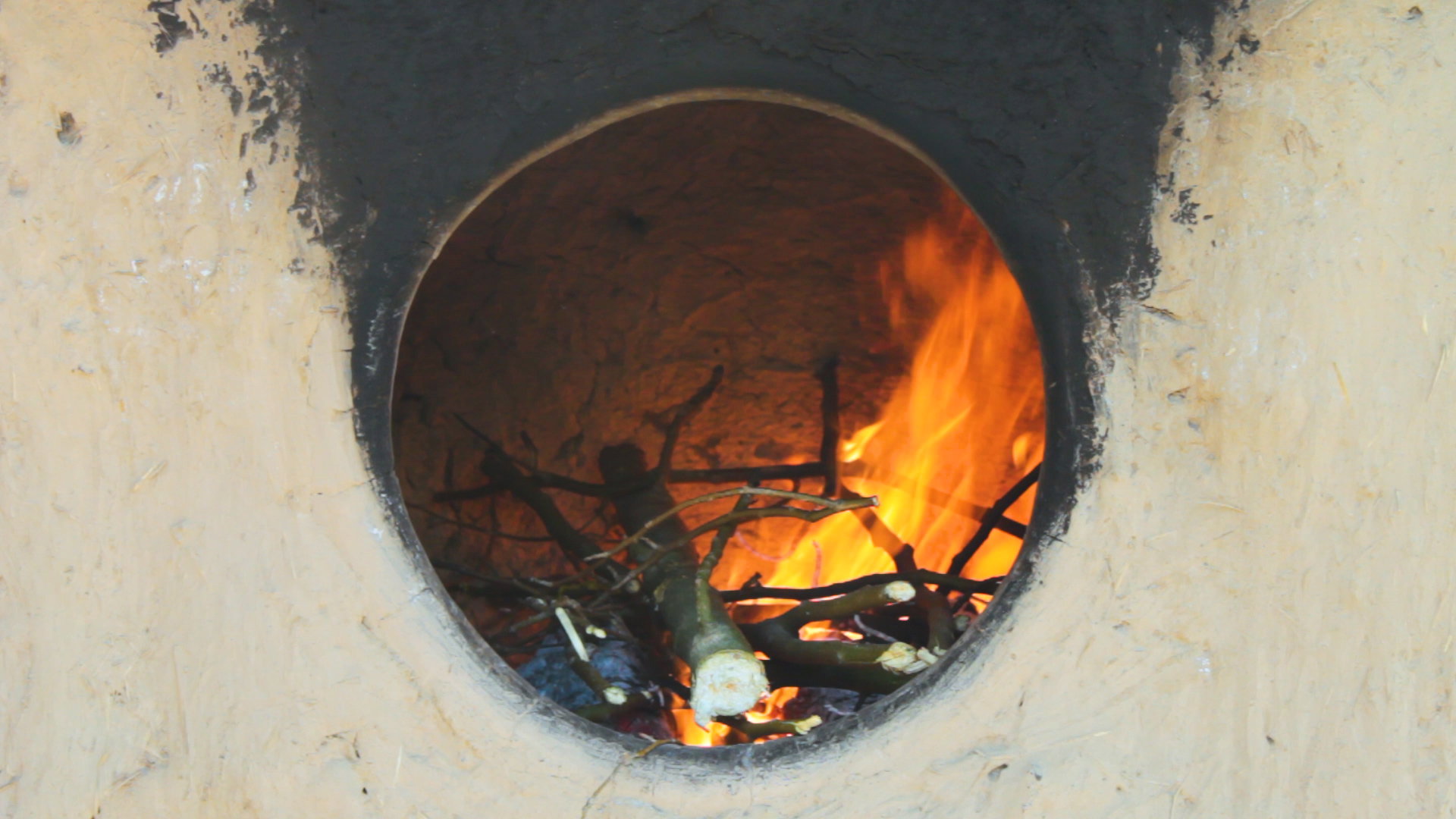
На улице стоят два тандыра, можно понаблюдать за процессом готовки.
Сверху тандыр накрывают тряпкой — сохранять внутри тепло.
Чтобы она не загорелась — поливают водой. Самса тут — классическая.
И правда, вкусная. К слову, в самой Хиве самсу с бараниной найти сложно. Почему? Расскажу позже.
Единственное условие, по которому я выбирал гостиницу в Хиве — чтобы она находилась непременно в крепости «Ичан-Кала».
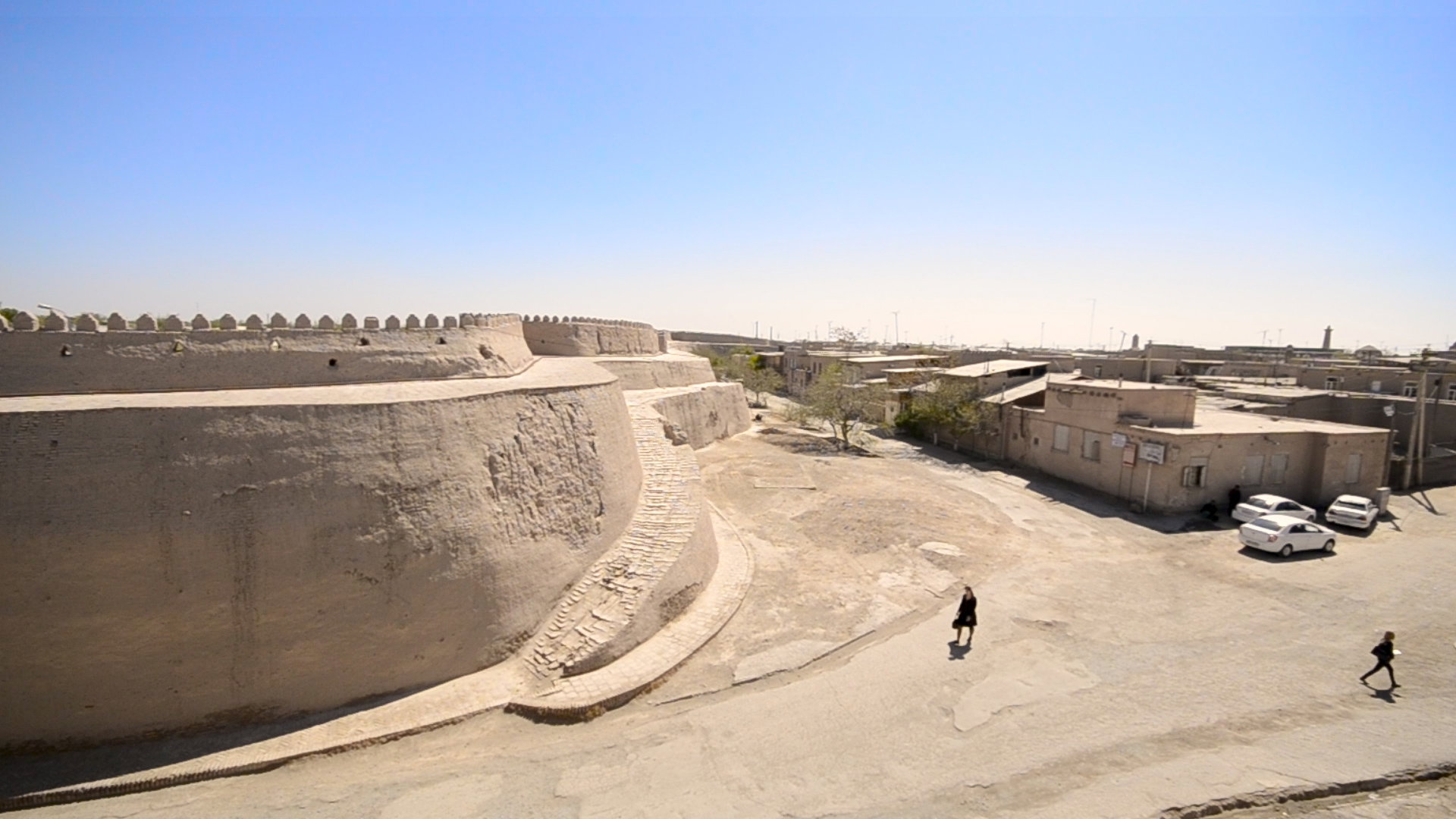
Это как бы город внутри города. Архитектурный памятник и заповедник. По большей части возведенный из глины. Вернее — из самана — в глину добавляют солому.
Какую красоту из этого материала можно слепить — видно из окна моего номера. Это — стена Ичан-Калы.
Гостиниц в Ичан-Кале множество. Если вы собираетесь сюда не в сезон, то можно даже не бронировать заранее, а просто приехать, побродить по крепости, выбрать лучший вид из окон — и заезжать. Но вообще туристов в Хиве — невероятное количество.
Казалось, что местных жителей в разы меньше. Причём — что называется, из дальнего зарубежья. Немцы, французы, итальянцы… Русскоязычных туристов очень мало. И поэтому хивинцы незнакомому человеку скорее скажут «Хэллоу», а не «привет».
У владельца гостиницы интересуюсь местными заведениями общепита. Не только он, а вообще все, в один голос рекомендуют посетить кафе «Терраса». Да, я там побывал, поел. И могу сказать - приятно и взгляду, и желудку.
А в следующей части мы увидим, как выглядит Хива в 6 утра с минарета, побродим по великой ичанкалинской стене, попробуем только что приготовленную лепешку, и узнаем, почему хивинский плов сильно отличается от других.
https://youtu.be/EUExrEksokU
You will taste this kind of food only in Uzbekistan
I have to show you this impressive memorial, which was erected in memory of the victims of an earthquake in 1966, when in Tashkent was destroyed a huge number of buildings.
The granite cube split was shattered, the clock stopped at the moment when the earthquake began.
The whole Union helped to rebuild the capital of Uzbekistan.
Absolutely all fraternal Republics sent their builders, and in a short time Tashkent was reconstructed.
The memorial, which is called "The Courage", is located at the river Ankhor.
There is also the most famous and most popular cafe.
Foreigners like to come here.
The food is tasty, it is relatively inexpensive, colorful and is located on the river bank - amazing!
Some cafes in Uzbekistan, maybe even the majority of them, have a narrow specialization.
In one cafe you can eat pilaf, in another - meat.
I came to the place where they make Jizzakh samsa.
The difference from the classic (tandoor) one is the size. This salsa is much bigger.
At the entrance to the cafe there is an advertising banner with a thematic poem.
"Finally the flame is gone, and the Creator doing more.
Hanging like nests of a swallow
Samsas in the tandoor, right in a row.
A little time will pass,
A tantalizing spirit from them will go,
Samsa, riddled with fever,
Sparkles with a bronze tan."
Bravo to an unknown poet! Bravo also to you, creator of samsa.
The only thing the owner told me that every day in her cafe come and eat to two hundred of these scones.
The number amazed me, I shared it with the taxi driver who drove me back.
He said that 200 - is nothing special at all.
There are places in Tashkent some places, where a day are sold several thousand of Sams? Samson? Samsa, I guess.
A few thousand a day? Well, I don't know ...
And do you know where the most delicious samosa was?
From my point of view, of course.
It's funny.
Traveled, if not to the most, then certainly to a significant part of Uzbekistan looking for perfect samsa.
And I found it in a place, where I didn't even think to shoot videos.
Well, good that we have photos.
Had some things to do on the outskirts of the city, went to a good friend in Tashkent.
And she took us to the usual cafe near the house.
It was the yard, which are hundreds of them.
Well, I couldn't even imagine, that I will nostalgically remember these place being hungry.
And samosa is not expensive - 3,500 so'm ($0,4).
Meat-lamb, a little fat tail, dough-puff.
Some more about the food! About "Naryn".
There is a place in Tashkent - "Katartal".
People come specially to eat this dish there.
- Meat of a horse is boiled
- Then this meat should dry out to be something like jerky and dough
- Homemade dough?
- Yes, homemade.
- As if the dough is made for noodles
- And why the broth?
-Some people do eat with broth.
- With the noodles?
- Yeah, with the noodles, like a soup.
An interesting feature of Tashkent - the large number of pharmacies.
In Uzbek it's means "dorihana".
If in the area is at least one of "dorihana", then soon there will be another pharmacy, than another one and so on.
Even it can be, that on one street in a row are a dozen pharmacies in a row .
- The whole street almost consists of pharmacies.
- It begins there.
- Here again, a pharmacy.
- Another "dorihana", a pharmacy.
Then there is also "dorihana", "dorihana","dorihana"...
Near the hospital we found 17 pharmacies.
https://youtu.be/4gjV6KfJfdw
Here King Kong speaks Uzbek
Near the TV tower is located a Tashkentland (Uzbekistan)- an entertainment complex with some attractions and a water park.
You could explore the area and understand what more you want to ride on this cable car (price: 2$).
If you made a choice - then buy a ticket, payment is only at the entrance.
After that, you ride as much as you want, without paying extra.
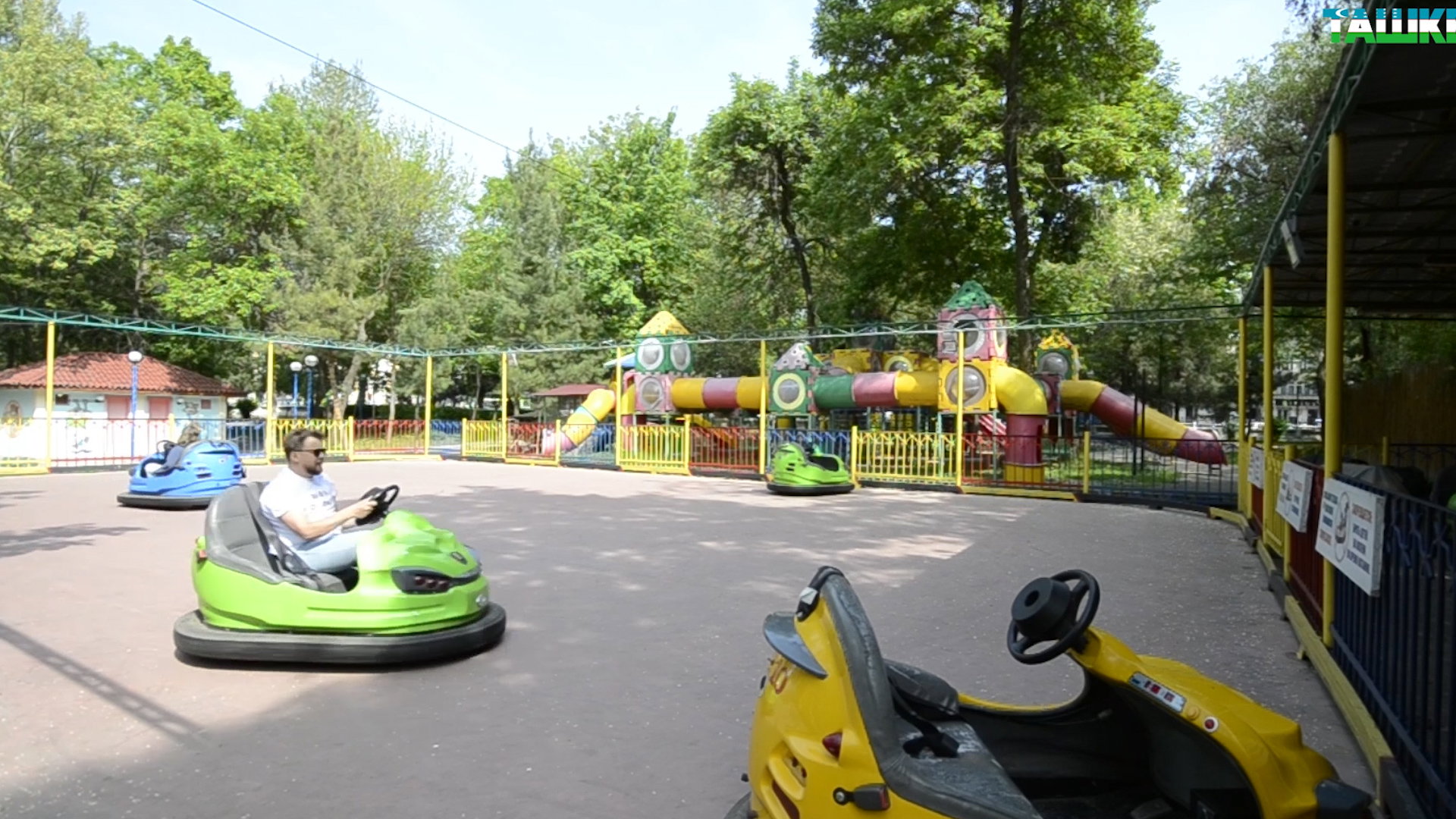
Favorite entertainment for kids - cars.
There's a haunted castle, but I think it doesn't make scream most of the visitors - it makes them smile.
And King Kong he says something in Uzbek.
Here you can take a boat ride.
A wonderful picture, isn't it?
But there is one thing.
If you take a ride, do not go the back seats, choose to the front ones.
And in conclusion, you can once again climb to the height - take a ride in a Ferris wheel.
In the next part you will learn whether to rent a car, what are these houses, what exactly is sold at the Tashkent flea market, and why the "hippodrome" - is not about horses.
The journey through Uzbekistan continues.
I have already been to wonderful Bukhara, famous Samarkand and ancient Khiva.
All that you have seen in previous episodes.
By the way, it's great that the audience of YouTube liked "Goroda pobrodimy".
https://youtu.be/4gjV6KfJfdw
Thank you for "likes", friends. I filmed not for this purpose.
Just wanted to show, that Uzbekistan is beautiful, sunny, hospitable and delicious.
But I won't deny, "likes" are very pleasant.
But now we will continue to walk around Tashkent-and will visit the center.
This is actually the center of Tashkent.
It used to be the main walking area of Tashkent called "Broadway".
There were a lot of cafes here, but now everything is gone.
Once it was incredibly crowded here.
Young people, musicians, parties.
But then some representative of the authorities was upset by the smell of the food.
There were many cafes in the open.
All of them were closed.
And walking there is not recommended at all.
In the end, Broadway became empty.
Now, it's slowly coming back to life.
Constantly here are rarity traders and artists.
Traditionally prices from sellers of antiquities on the Tashkent Broadway several times, even 10 times, higher, than the average.
Philatelist, for example, will be upset - he won't get one stamp.
He'll have to buy the whole album with some substandard copies.
And the price is - in dollars.
It's like buying souvenirs on the Arbat in Moscow.
And, like on the Arbat, there are artists here.
The costs of their services are more adequate.
- How much is your drawing?
- 50,000
- 50,000?
- Yeah, it's cheap.
In the center of the city there is a monument of Amir Timur.
In the past in this square grew a stunning centuries-old plane trees
But they were all chopped down Apparently, it has been done in order to be able to see this building which was built for a billion dollars.
Was it really a the need to destroy the ancient trees?
Nearby is another impressive building - the library.
- This is the State Library.
- It is cool in Tashkent today.
- But the sky is amazing!
Самарканд. Песчаная площадь, плов от чемпиона и самса-гигант
Древний Самарканд, Узбекистан. Если идти по улице имени первого президента Каримова, то через некоторое время дойдёте до живописного места, где похоронен святой Даниил.
Святого почитают представители трёх религий: мусульмане, христиане и иудеи.
По берегам речки Сиаб разбит приятный зеленый сквер.
Над сквером возвышаются холмы.
На одном из них — восемнадцатиметровая могила.
Почему такая большая? Существует поверье, что она постепенно увеличивается.
Как это возможно? Неизвестно. Но служитель комплекса уверяет — никакой мистики тут нет. Большая могила — потому что очень человека уважали.
Выросла она, было такое, да. Но - незначительно. И произошло это при реконструкции.
И тут же смотритель сообщает о чуде, которое, якобы точно имело место. Во дворике у мавзолея растет фисташковое дерево, оно долгие годы считалось засохшим. Но после визита патриарха Московского и всея Руси Алексия Второго, когда он окропил дерево святой водой, оно ожило и зацвело.
Источник со святой водой находится здесь же, у подножия холма.
Недалеко от могилы святого Даниила — следующая достопримечательность Самарканда.
Обсерватория Улугбека. Кто это такой? Скоро узнаем.
Тем временем самаркандские лепёшки, которые я попросил изготовить семью местных хлебопёков, уже почти готовы.
Осталось лишь поставить в печь.
К сожалению, всё реже сейчас готовят в тандырах. В газовой печке и быстрее и удобнее. Пока загружаем лепешки, хозяин дома рассказывает о своём увлечении — петушиных боях. На кухне в клетке содержится вот это чудо. Боевой петух. Чемпион.
Недавно за него предлагали 400 долларов. Но это не предел. Цены доходят до десятков тысяч долларов.
Вынимаем лепешки. Красота! Теперь у меня есть лепёшка с названием моего канала. Goroda pobrodimy.
И всего-то час работы. Но, как говорится, быстро — умеючи.
Всё, обед! Хочу плова, хочу сравнить с бухарским, который, прямо скажем, был на высоте. И перебить эту планку будет сложновато.
Но у нас достойный претендент - чемпион Узбекистана 2013 года по приготовлению самаркандского плова.
Ну что могу сказать? У меня появился новый фаворит! Да, бухарский плов был хорош, но самаркандский — ничуть не хуже! Волшебный!
Счастье, когда у одного человека есть талант, желание его применить и возможности это сделать. Так удачно сложились звёзды у Улугбека.
Внук Тамерлана, правитель-просветитель, астроном, историк и поэт.
Одна из достопримечательностей Самарканда — обсерватория Улугбека. Вернее, то, что от неё осталось.
Всё ближе визитная карточка Самарканда — Регистан.
Но по пути мы заглянем в кафе, о котором мало кто из туристов знает, и перекусим самсой. Ну как — перекусим... Обыкновенную тандырную самсу в Узбекистане найти и поесть проблем не составит. В разных городах, селениях, районах, она стоит от двух до пяти тысяч сумов. А вот в Самарканде, в кафе с нестандартным для Востока названием, продаётся самса-гигант.
Цена — 15 тысяч сумов. Но ею одной можно накормить взрослого мужчину, двух детей или десяток худеющих девушек. То, что самса огромная — не единственное отличие. Пробующего её впервые - ожидает сюрприз. Курочка, помимо баранины.
Чтобы клиент точно наелся. Ну и кусочек помидора.
Вечерело. Наконец-то мы добрались до Регистана. И оказалось, что на площадь просто так не попасть — она огорожена.
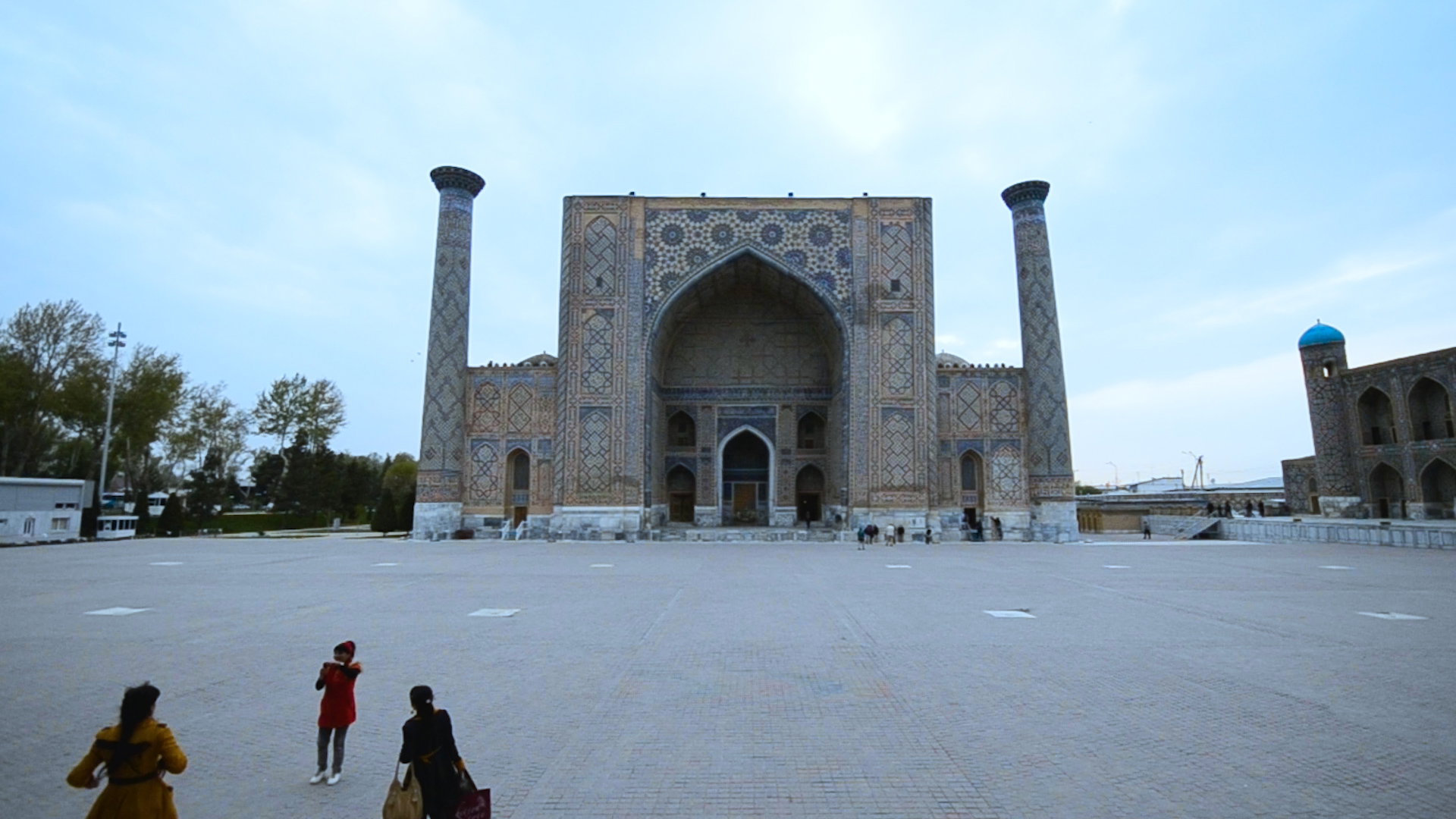
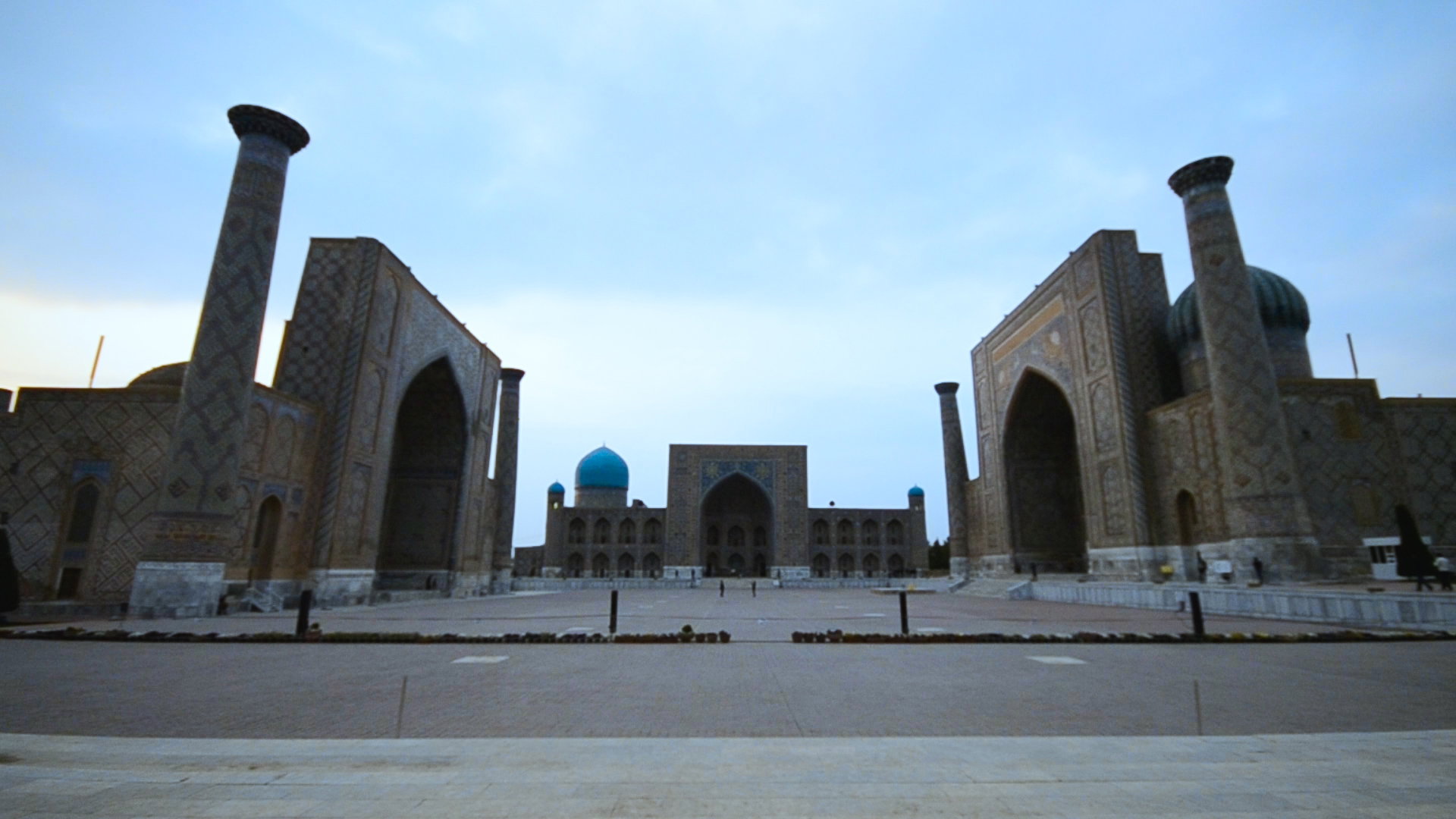
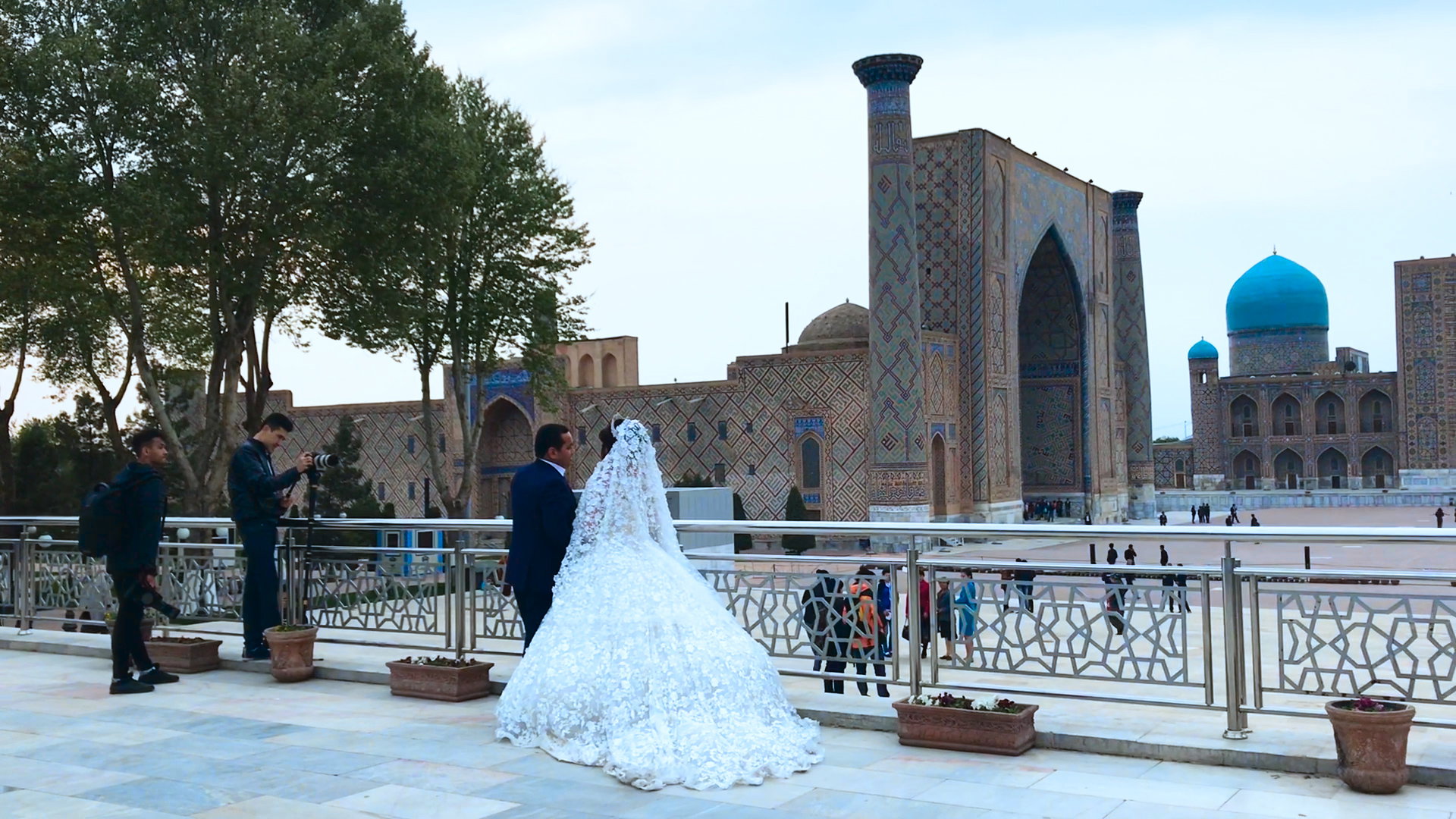
Всё из-за того, что теперь за проход взимают плату. 30 тысяч сумов с человека. Регистан переводится как «песчаное место», «песчаная площадь». Понятное дело — Восток, пустыня, песок. Но есть версия, что здесь вплоть до двадцатого века проводили казни, иногда массовые. Кровь засыпали песком. Сейчас об этом ничего не напоминает. Наоборот — стоя в центре площади, или прогуливаясь по ней, испытываешь только положительные эмоции. И, конечно же, это обязательное место для свадебных фотосессий. На площади — три медресе.
Древнейшее построил известный нам уже Улугбек, и названо оно в честь него.
Два других — Шердор и Тилля-Кари — впечатляют не меньше.
Шердор — обитель львов — венчает их изображение.
А самое яркое — Тилля-Кари. Переводится как «отделанное золотом».
Вот уж действительно, дорого-богато… Обязательно зайдите внутрь, побродите по дворикам и залам. Невероятно красиво. И еще рекомендую полюбоваться Регистаном в вечернее время, когда включается подсветка и здания выглядят точно как иллюстрация сказки «Тысяча и одна ночь»... Самаркандский вояж завершается. Мы посмотрели лишь небольшую часть красот этого замечательного города. Надеюсь, когда-нибудь сюда вернемся. Но... Пора двигаться дальше! Нас ждёт потрясающая Хива! До которой, как оказалось, поездами и самолётами не добраться. Но мы всё же проникнем в бывшую столицу Хорезмского ханства, побродим по сохранившейся стене крепости Ичан-Кала, заберемся на минарет, попробуем необычные вареники и, конечно же, хивинский плов.
Видеоверсия путешествия -
https://www.youtube.com/watch?v=vg3lYzEfB1A
A restaurant that is spinning. Pilaf pool. And 12 golden keys
Before my trip to Uzbekistan, I thought that there is nothing to tell about its capital - Tashkent.
Well, usual city, quite modern, However, revising the footage I came to an unexpected conclusion, that is so much material, that one episode won't be enough.
In the first part I will tell you about three iconic places of Tashkent, which are close to each other: the TV tower, the center of pilaf and the "Tashkentland".
Preparing for the trip, I read on the Internet that it is forbidden for the tourists to make on the Tashkent TV tower is to shoot videos.
Even the mobile phones could be taken away at the entrance. I was upset of course.
After all, the footage from that height means a lot! At some point, even thought not to go to the tower.
But still I took the risk - and it was worth it! First we had to pay for the entrance, it is necessary to have a passport.
For a non-residents ticket to the tower is more expensive than for a citizen of Uzbekistan.
It cost 40 thousand so'm pro person (approximately $5).
- It is the Tashkent TV tower.
- It is said that for some time it was prohibited to shoot any footage here, even the mobile phones were taken away.
Now if you don't have any professional cameras or equipment you're allowed to shoot videos.
A tourist on the TV tower can visit only two floors - the 6th and 7th floor.
You're taking the high-speed elevator and watching, what how it looks in the shaft.
The 6th is a walking floor, with a circular panorama.
Visitors come to the windows, gasp, admire, look for their houses and take photos.
Tashkent is an ancient city, just good looking. It was founded somewhere in the 2nd century BC.
In the 11th century it has received its present name, which means "The Stone city".
Tashkent was guarded by a wall in case of raids, the wall had 12 gates.
They were named either after areas where they were located or after directions.
For example, those that went to the Samarkand tract, were called - Samarkand.
In 1865, representatives of the Tashkent nobility presented the symbolic keys to the 12 gates to the commander of the Russian troops General Mikhail Chernyaev as a sign of unconditional surrender of the city.
Those days Tashkent was under the rule of Kokand Khan.
And the people of Tashkent didn't want it.
The keys to the city were made of pure gold, their total weight was more than 1,5 kilograms.
On each key there was an engraving - which gate did they belong to.
Now the keys to the city are stored in the national Bank of Uzbekistan.
On the floor above is a restaurant.
You would say - nothing special, a typical restaurant on a TV tower, but there is one thing...
It spins.
Feels unusual...
Of course it does not move so fast to get you sick, even if the visitor had a little too much to drink.
The speed is quite comfortable.
I didn't order anything in the restaurant, I'm going to eat in the center of pilaf, which is just 200 meters away from the tower.
It's a paradise for those, who lose pilaf.
For Tashkent residents this place is so famous and popular that it's even, as we could say, pop (has lost its exclusivity).
But it's still very popular.
Every day thousands of people come here to eat.
It is cooked by the best specialists in the country, who are constantly switching between each other.
There are a lot of people here, so the cauldron must be huge.
Even it is difficult to assume how many portions of pilaf it contains.
But by two o'clock, everything it is already empty!
Then the smaller cauldrons, "reserves", take the battle.
- What's the difference between this and that pilaf?
- Andijan pilaf - it is a different type of rice, is called "Devzira".
- And here we have usual Tashkent wedding pilaf
- The main difference is the rice.
- And what's on the right?
- This is also a wedding pilaf.
- It is the same as the one in a big cauldron.
- The only difference is the size of cauldron.
Tourists are brought here non-stop.
Before they start eating, everyone takes a picture of a giant cauldron.
You can even pretend that you're the one, who has cooked - a scoop was put here extra for tourist photo sessions.
And this are ingredients for the main dish. Only with some additives you will be full. Looks impressive.
My mouth's watering! I want to eat this beauty. We're coming inside.
And you are already lost.
What to do? Whom to ask?
There are many waiters, but they are all elusive.
We still managed to get one and demanded to bring a pilaf. He ran away.
Then brought us a portion, but without any beauty, just rice and meat.
- Of course with such a flow of guests the level of service falls.
- For example, they brought us a pilaf, which was not complete (no quail and chicken eggs and other things).
- So we asked to bring us everything complete.
- Here are the sausages, quail and chicken eggs.
The pilaf was pretty good, but it is too much going on, you can't enjoy it.
I wouldn't come here a second time.
Would find a quiet place where you can comfortably sit on the couch, and where the waiter is not in a hurry, and carefully and patiently listens the same words:
"Oh, I don't know what to eat, maybe you can recommend me something."
And with a smile he recommends the pilaf.
The cost of rest in the mountains
I always liked cafes on the slopes in the mountain, you can enjoy the scenery and delicious food which was cooked in front of you.
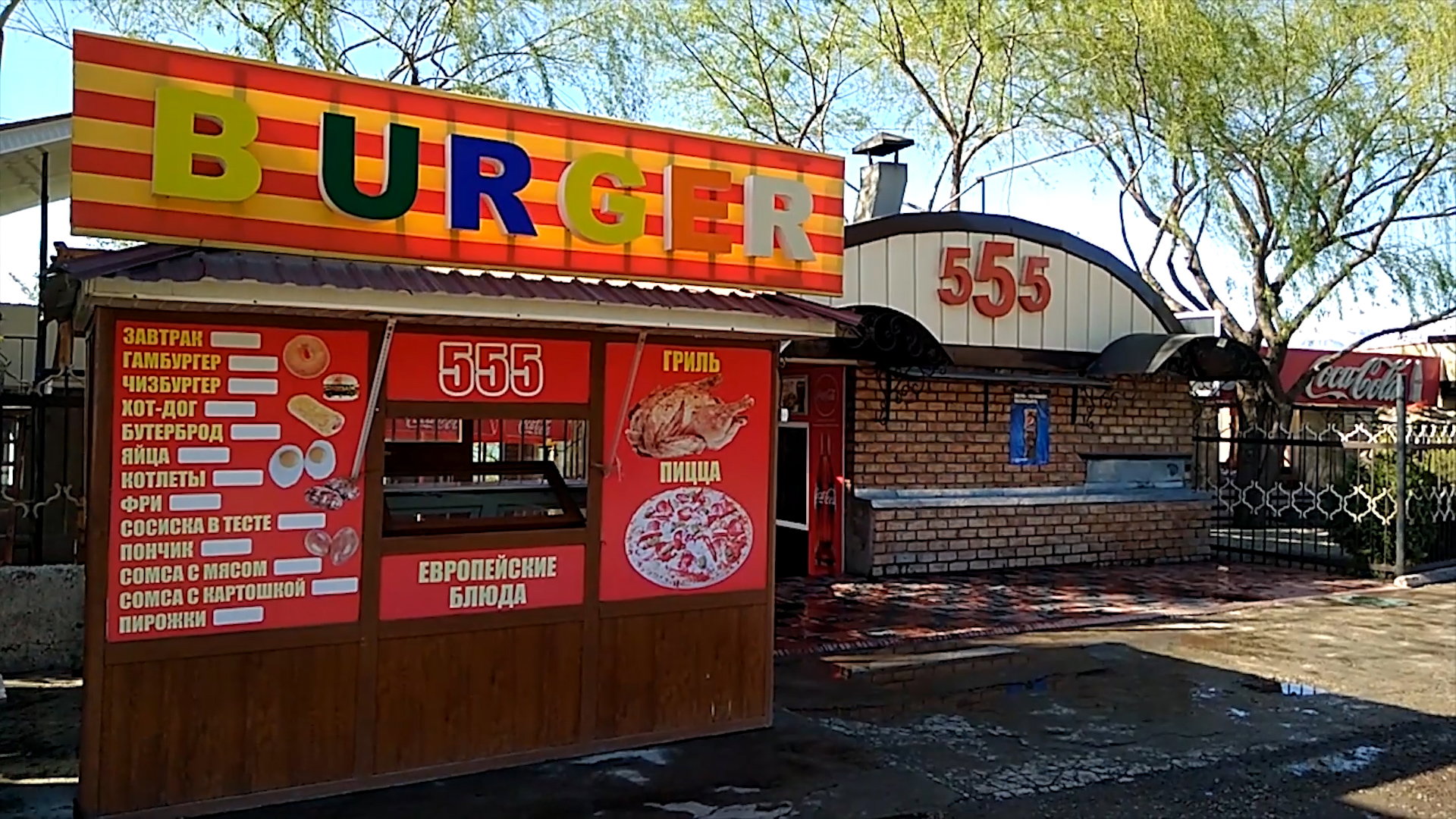
Not far from the" Avenue Park "is a roadside cafe, which is called" 555" and offers a view.
- This is how it looks like
- You can sit on these tables.
- And there is a road.
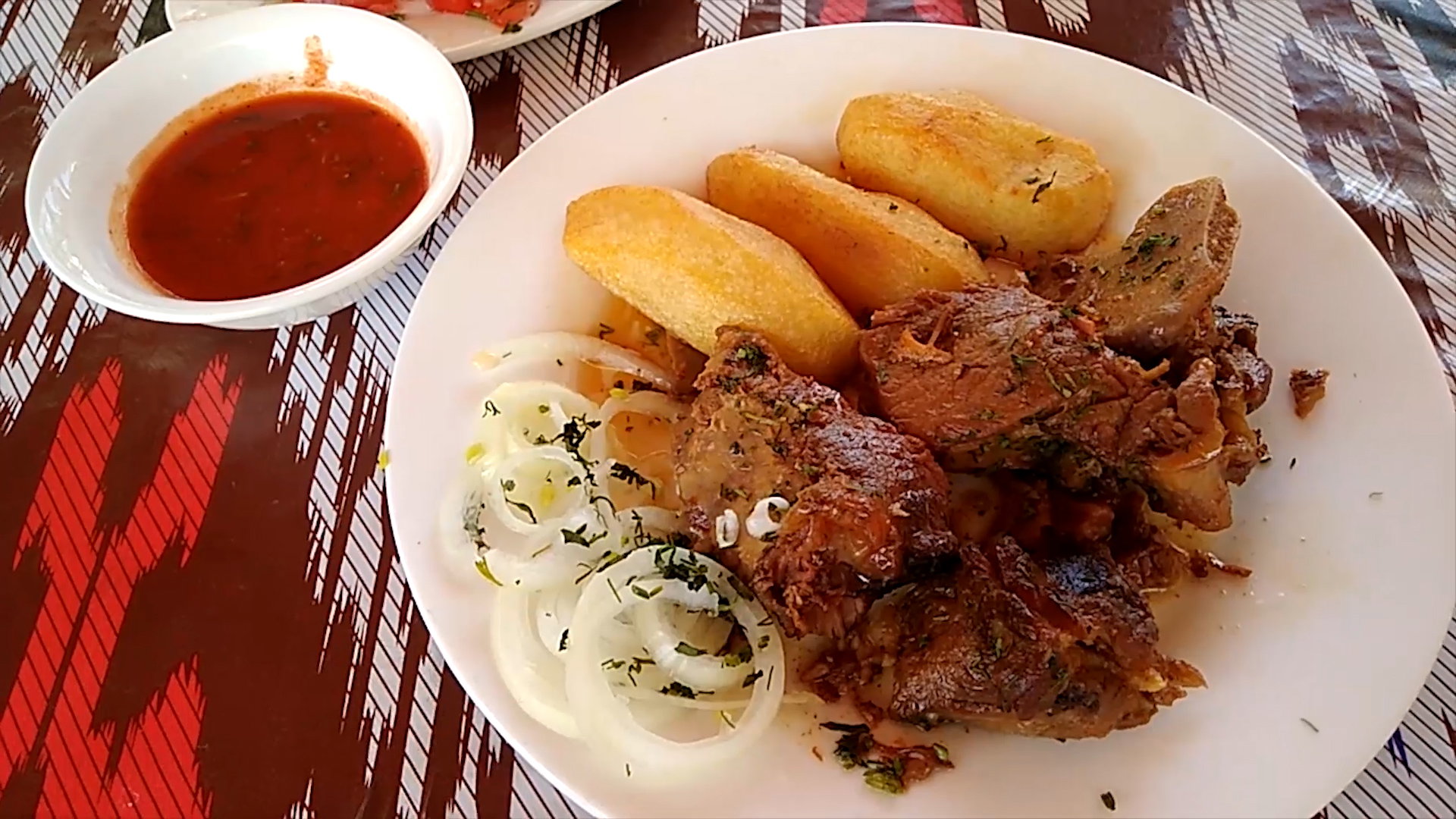
- This dish is called "Kazan-kabob".
It is a lamb meat cooked in a cauldron.
- In this cafe you can order not only shashlik with fish, but also burgers or hot dogs.
- This is an unusual dish of meat, which haven't seen yet during my trip.
- It's a lamb and mushrooms on skewers.
This is how much did it cost (check in the cafe: 14 $).
Girls at the reception in the hotel said that it is possible to take a walk the on the bottom of the Lake Charvak.
- Maybe you remember this song: "Brichmulla, Brichmulla, Brichmulli, Brichmulle, Brichmullou."
- So, on the other shore is a village which is called "Brichmulla".
- Here you can pick up these beautiful shells.. The sun is sets - it's time for me to go.
I will definitely come back tomorrow.
I going to sleep early, because I want to see the sunrise.
- I'm standing on the bottom of Charvak Reservoir.
- It became shallow.
Charvak is an artificial reservoir, created for irrigation in dry summer.
Unfortunately, not only earth showed up. It is easier for these guys, they have a car.
And, to be honest, for me walking was exhausting.
Thought - the distance is long, maybe should I run?
- I'm running along the bottom of Charvak Reservoir.
- It's great!
- Unbelievable feeling!
- It's an incredible beauty!
When there is a lot of water - it comes up here.
Samosa, flat bread and rice - it's very good, but if you don't walk to the mountains.
I should run more often in the morning.
No one will remain indifferent to the mountains.
We are happy too, got the impressions for the year ahead. Now we're going to Tashkent.
On the way there we stop in another remarkable place called "Botschka".
People come here to eat from Tashkent, 70-80 kilometers away.
Because the food is tasty and it feels like you on a picnic here Where does the name come from?
It is said that the barrels were here the only benchmarks.
Then they disappeared, but the name stuck.
One of the oldest, most famous and expensive places is "Chinaras".
If you ever been to Uzbek restaurants in Moscow, then the prices won't surprise you.
But by the local standards, the bill was impressively high - 363 thousand soums ($43).
I was not ready for it, I did not have enough so'm (local currency), so I had to send someone to change dollars.
Where he did it in the middle of the mountains is a mystery.
Speaking about the food, it was pretty good.
It was not perfect, not the top of the Eastern culinary art, but it was nothing to complain about, except huge prices.
Well, we got "Tarhun" and a slice of the orange was with the mold.
But it doesn't matter.
The main advantage of this place is its location.
And the name, of course, was chosen for a reason.
It is said this cafe has grown to a huge chain.
So, it's time for Tashkent.
In the capital of Uzbekistan we will wander through the center of pilaf, get on the TV tower, walk through bazaars, parks and central streets of the city.
It will be interesting!
Древний Самарканд. Легенда о жене Тамерлана
Пятисоткилометровое путешествие из Бухары в Самарканд на такси близко к завершению. Дорога оказалась интересной — чего только стоит черепашье нашествие.
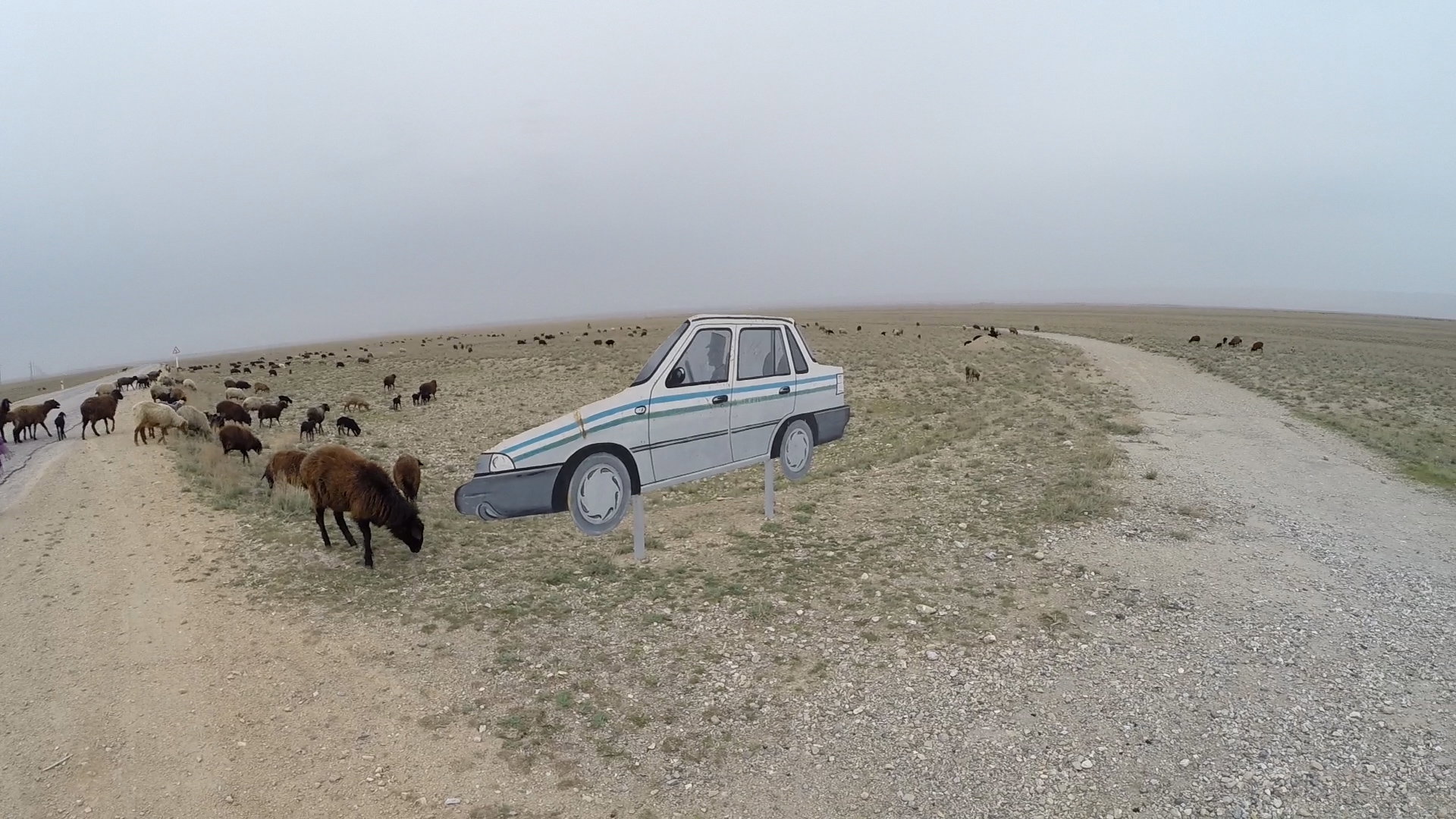
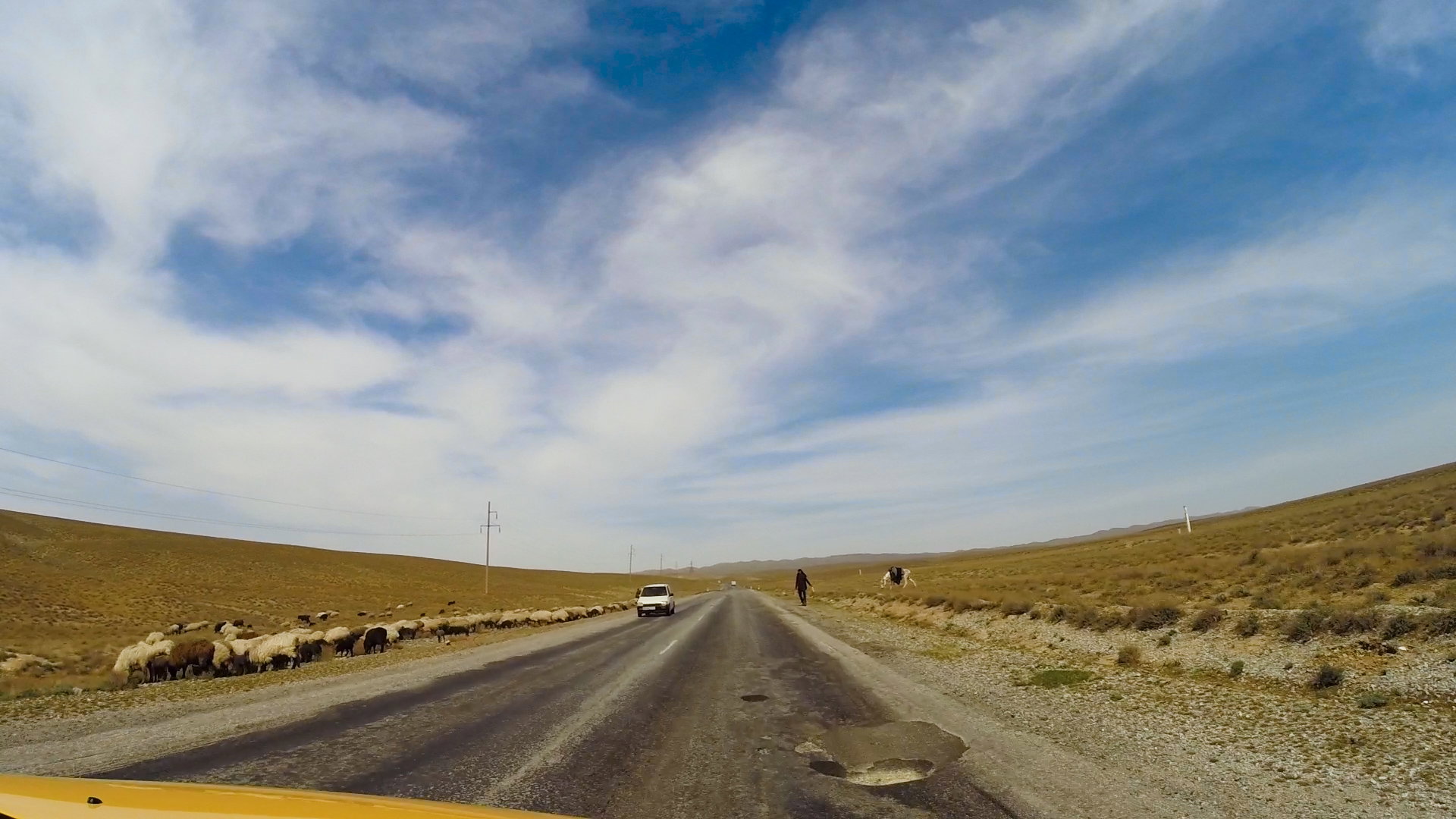
Довольно часто приходилось останавливаться из-за барашков, которые неспешно переходили через дорогу. На обочинах периодически попадались вот такие побудители снижения скорости.
Узбекистан — единственная среднеазиатская страна, которая в значительных объёмах производит автомобили.
Ввозить в страну импортные машины дорого — придется заплатить стопроцентную пошлину. И все ездят на местных.
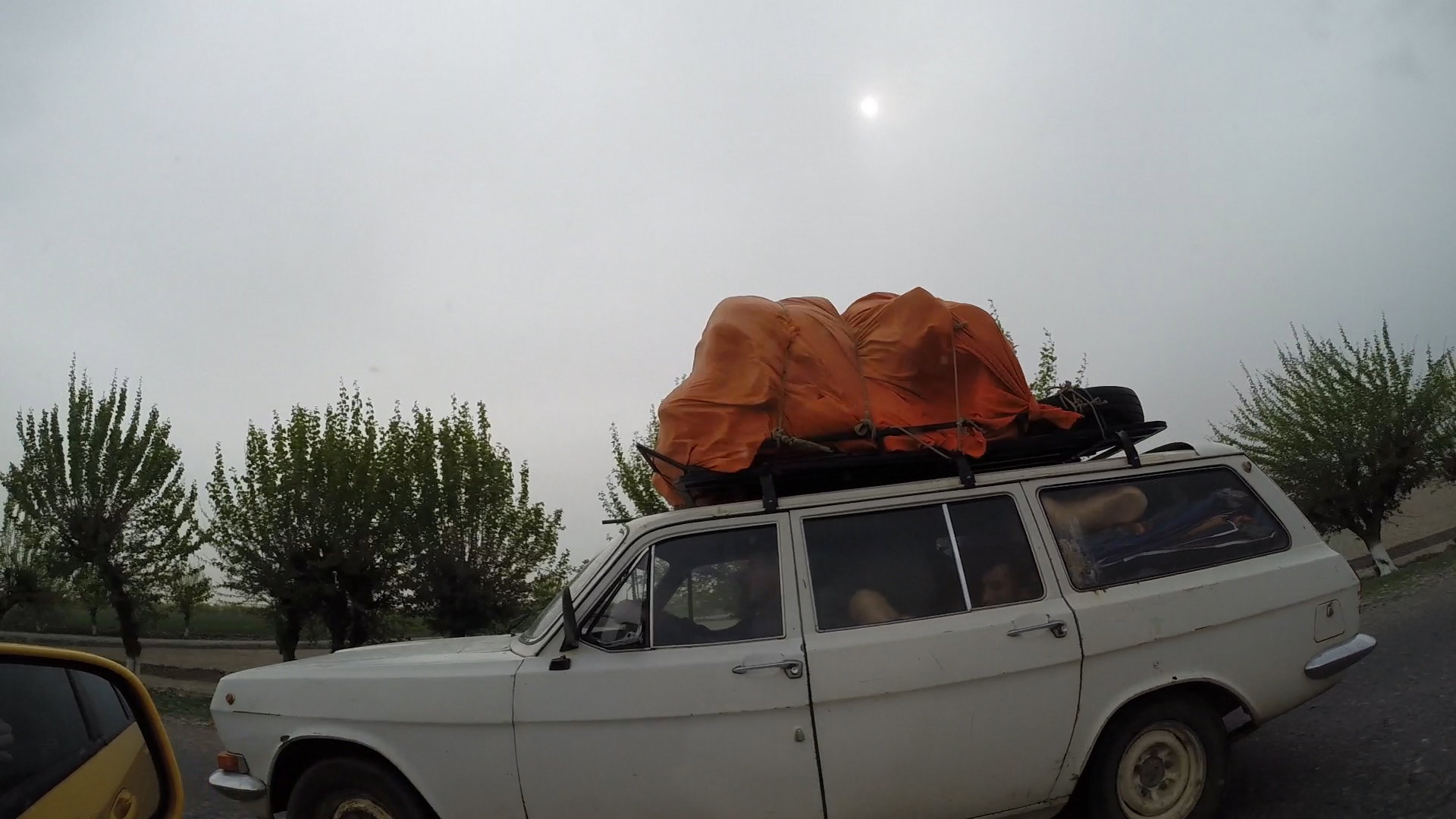
Однако частенько попадаются старички советского производства.
В основном их используют для перевозки грузов.
Самарканд встречает хмурой погодой.
Одна из центральных улиц Самарканда носит имя первого Президента — Ислама Каримова. В этом городе он родился, здесь же его и похоронили.
По улице курсируют небольшие электробусы. Прокатиться можно всего за 1000 сумов. Это около семи рублей.
Но пешком интереснее. Вот тут продают мороженое.
Кстати, в Узбекистане оно довольно вкусное. Стоимость — тысяча — две сумов.
А этот парень везёт лепешки на Сиабский базар — он тут неподалёку. Кстати, про лепешки.
Давно хотел приобрести знаменитые самаркандские лепешки, которые можно хранить годами. Договорился с местными хлебопеками. Они пригласили меня к себе - продемонстрировать процесс изготовления. Вообще дело это женское, но муж помогает — работа на благо семьи.
Вернемся пока к прогулке. Конечная остановка электробусов — у того самого знаменитого сиабского базара.
Но нас интересует Старшая принцесса — Биби Ханым.
Это мечеть. Приказал ее построить Амир Темур после успешного похода в Индию. А назвал так в честь то ли матери, то ли любимой жены.
О жене существует романтическая легенда.
Здание приказал построить Темур, да. Но — отправился в очередной раз завоёвывать новые земли. Присматривала за возведением мечети Биби Ханым — старшая принцесса, или старшая жена, или любимая жена — по разным версиям. В неё влюбился архитектор сего творения. И намеренно затягивал стройку — чтобы подольше находиться возле объекта обожания. Амир Темур уже всех победил и намеревался возвращаться в родные пенаты, а подарок — не готов. И Биби Ханым потребовала завершить мечеть в сжатые сроки. На что бесстыдник архитектор ответил шантажом. Продолжу и закончу, но только после поцелуя. Биби Ханым долго сопротивлялась, отговаривала нахала, но тот был непреклонен. Пришлось согласиться. Жаркий поцелуй оставил след на коже красавицы. Мечеть достроили, Тамерлан возвращается, восхищается результатом, но узнаёт про цену, которую пришлось заплатить жене. Отдаёт приказ схватить архитектора, однако тот умудряется скрыться на самодельных крыльях.
Туристам история очень нравится, но скучные учёные говорят, что всё это — не более, чем вымысел.
Вернемся к тому, без чего не обходится ни одна трапеза не только в Узбекистане, но и практически по всей Средней Азии — к лепёшкам! Легенды гласят, что самаркандские - хранятся десятилетиями. Потом нужно просто размочить в воде — и можно есть.
Вообще отношение к этому продукту на Востоке — трепетное. Здесь лепёшку предпочтут хлебу в буханках или батонах. Ножом их не режут, только руками разламывают. Класть вниз верхней частью нельзя — проявление неуважения…
Я попросил приготовить мне именные лепешки — на память, есть их не буду. Семейство Хамитовых занимается этим бизнесом уже не один десяток лет.
Насколько красивые лепешки получаются у Наргиз — узнаем уже очень скоро.
Мы тем временем пойдём дальше.
К мечети, названной в честь покровителя путешественников. Пророка Хазрет Хызр. Когда-то очень давно здесь был зороастрийский храм, на его месте возвели мечеть, в 13-м веке её разрушили до основания монголы. Заново отстроили в 1919-м. Сейчас на её территории находится мавзолей первого Президента Узбекистана.
Вообще-то тут снимать нельзя, но для нас сделали исключение, узнав, что мы приехали в Самарканд из России.
Было приятно.
Продолжаем идти по улице Ислама Каримова. Она приведёт нас к уникальному месту. Могиле святого Даниила, длинной в 18 метров. Но произойдёт это во второй части наших прогулок по Самарканду. И там же вы узнаете про правителя-учёного, увидите Регистан, нам приготовят самаркандский плов и гигантскую самсу.
https://www.youtube.com/watch?v=wQeedrWH1f8
Атака черепах в пустыне
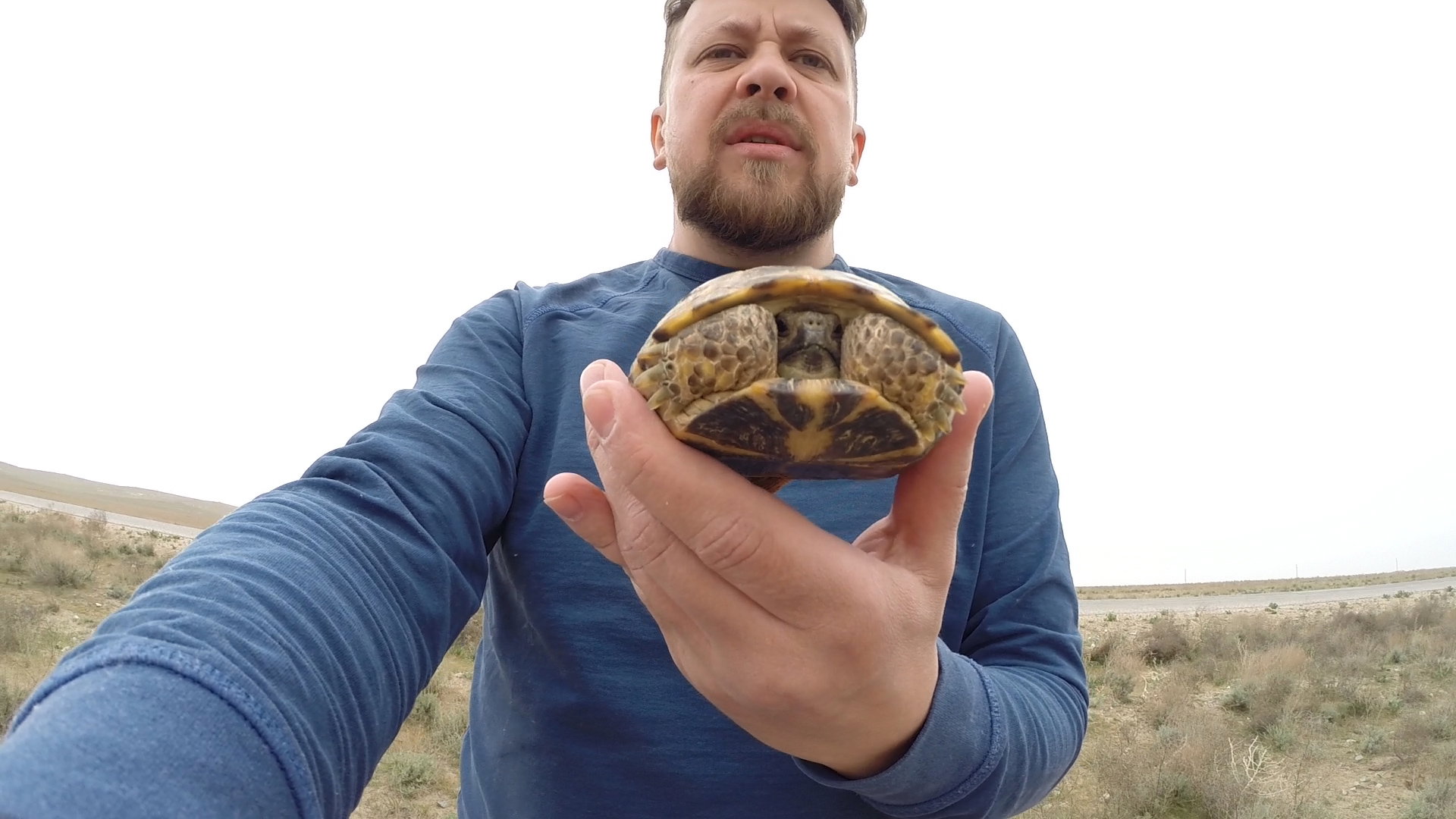
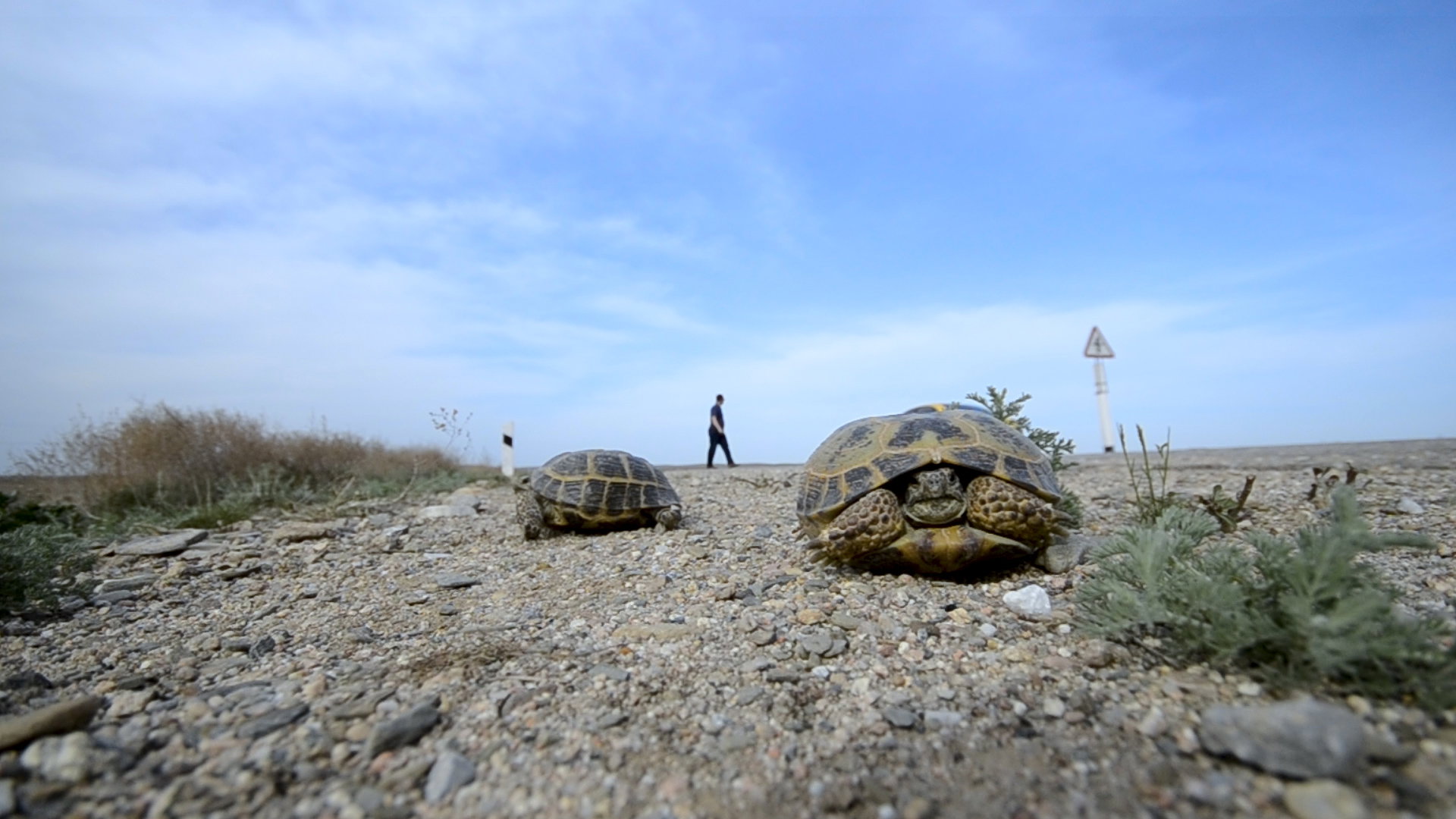
Пустыня, по которой мы едем дальше, называется Кызылкум. Красный песок в переводе. Неожиданно на дороге стали попадаться черепахи. Одна, две, десяток…
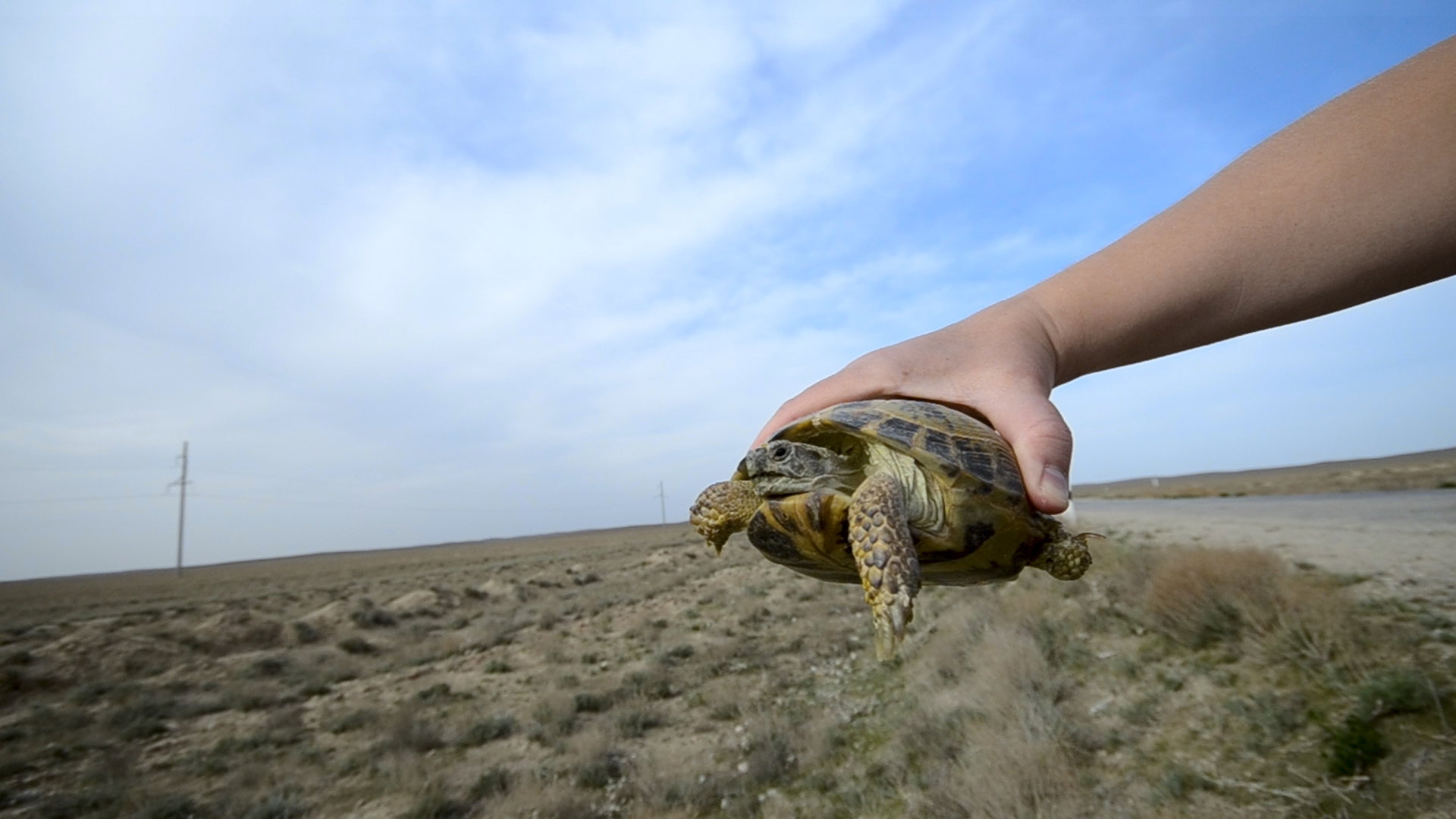
На скорости 60 километров в час казалось, - дивизия этих занесенных в Красную книгу пресмыкающихся решила штурмовать шоссе. Мы остановились, чтобы убрать парочку с дороги.
Правда, нет уверенности, что они потом туда не вернулись.
Кстати, имейте ввиду – вывозить из Узбекистана этих тихоходов – запрещено.
Озеро Айдаркуль – оазис среди пустыни.
Прозрачнейшая вода, летом – спасение от изнуряющего зноя.
В апреле купаться ещё прохладно, а рыбачить пока здесь запрещено.
Юртовых лагерей по берегам Айдаркуля несколько. Самый известный называется «У Вахида».
Мы приехали сначала туда, но уж больно много было У Вахида народу.
Следующий – недалеко, называется «У Люды». Тут постояльцев поменьше.
Это - юрта изнутри.
Непохоже, что она как-то адаптирована для туристов. Выглядит и пахнет так, как будто стоит тут уже давно.
И постоянно используется по назначению. В юртах не то, чтобы нет электричества.
Есть. Но — лампочка — одна. И розетка тоже одна.
Я попросил принести многоразеточный удлинитель — одновременно нужно было заряжать несколько гаджетов, а ещё хотелось включить обогреватель. Мне всё принесли, спасибо большое. Только вот вилка обогревателя не подходила к розеткам. Хорошо, что у меня был переходник.
Да и от самого обогревателя холодной ночью толку было меньше, чем чуть.
Сразу скажу – развлечений в лагере практически нет.
На мой взгляд, больше чем на одну ночь задерживаться здесь просто не за чем. Сюда приезжают уединиться с природой.
Помолчать, подумать, побродить по барханам, наблюдая за пролетающими орлами. Есть здесь верблюды.
На них можно прокатиться. Услуга заявлена как бесплатная, но погонщику принято давать немного денег в качестве чаевых.
Ужин в лагере, скажем так, скудный. На мясе экономят. Никаких зажаренных в честь приезда барашков, к сожалению. Видимо, чтобы это компенсировать, к ужину прилагается бутылка сами понимаете чего. Бесплатно.
После трапезы туристы могут посидеть у костра и послушать песни акына. На казахском и узбекском языках. И – спать. Утром – завтрак для непритязательных, получение регистраций – накануне у всех собрали паспорта для оформления – и – в путь!
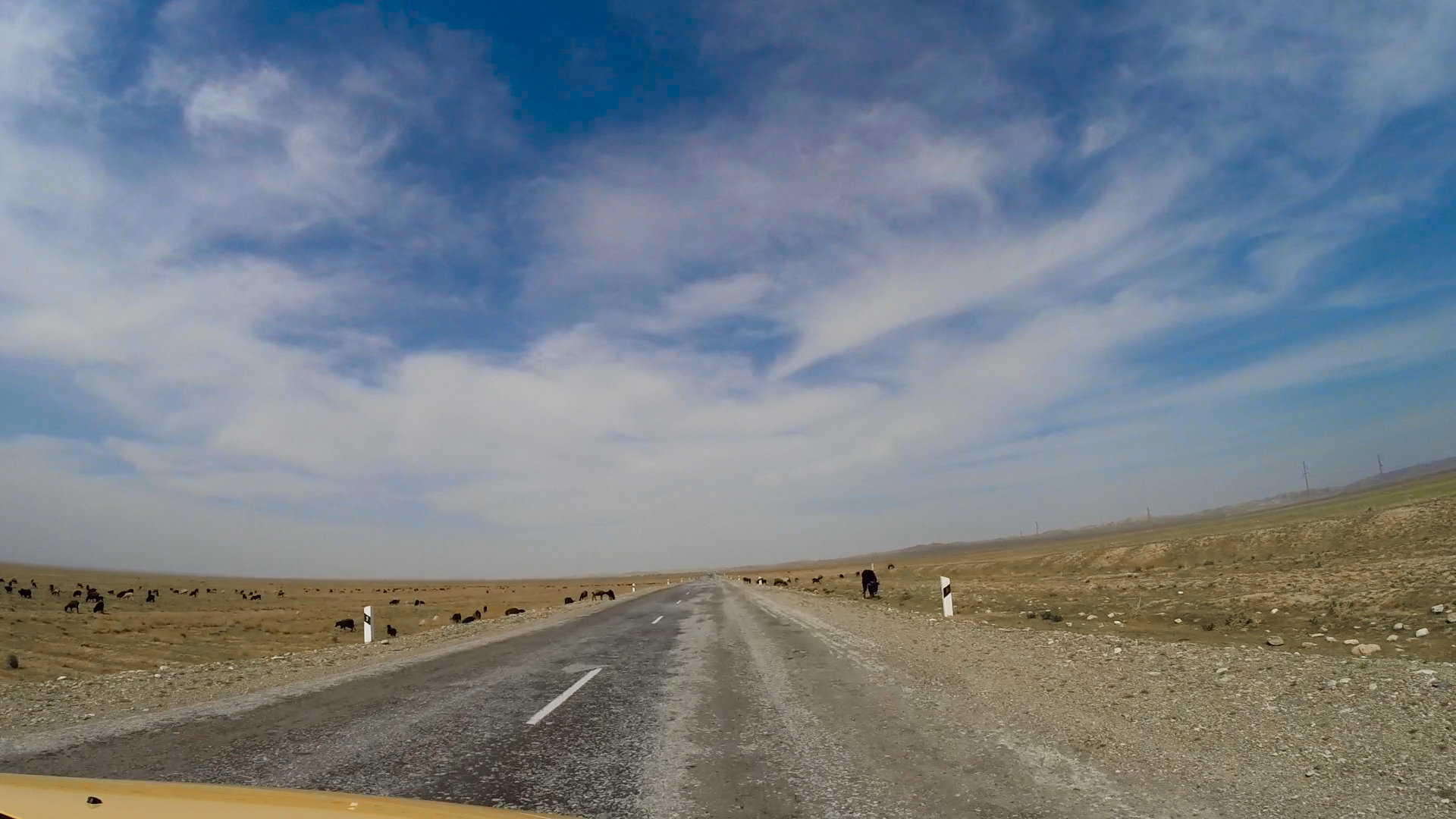
По дороге в Самарканд частенько приходилось останавливаться – ждать, пока дорогу освободят отары овец.
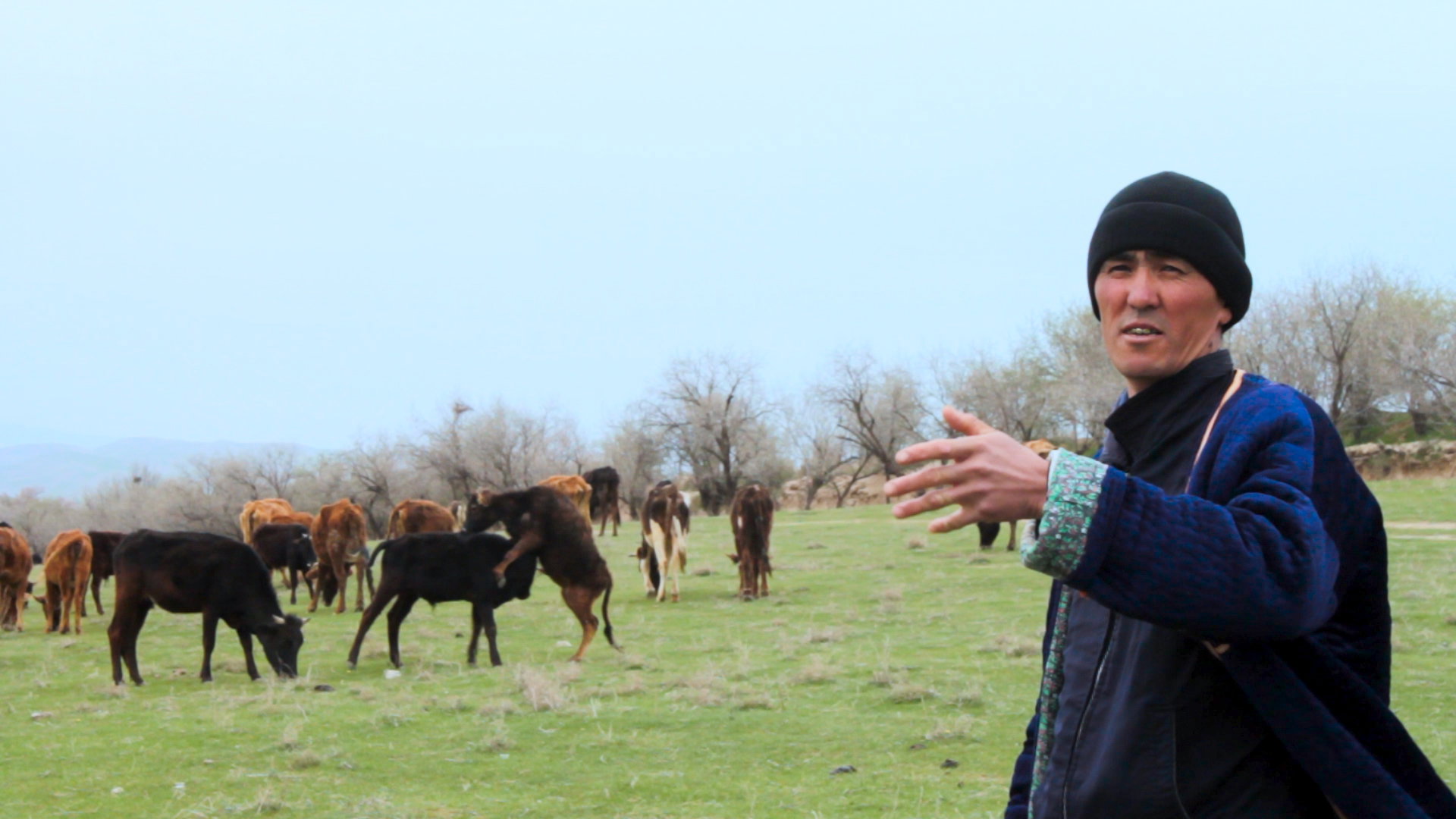
Крупнорогатых тут тоже выращивают. Выпасают – чабаны.
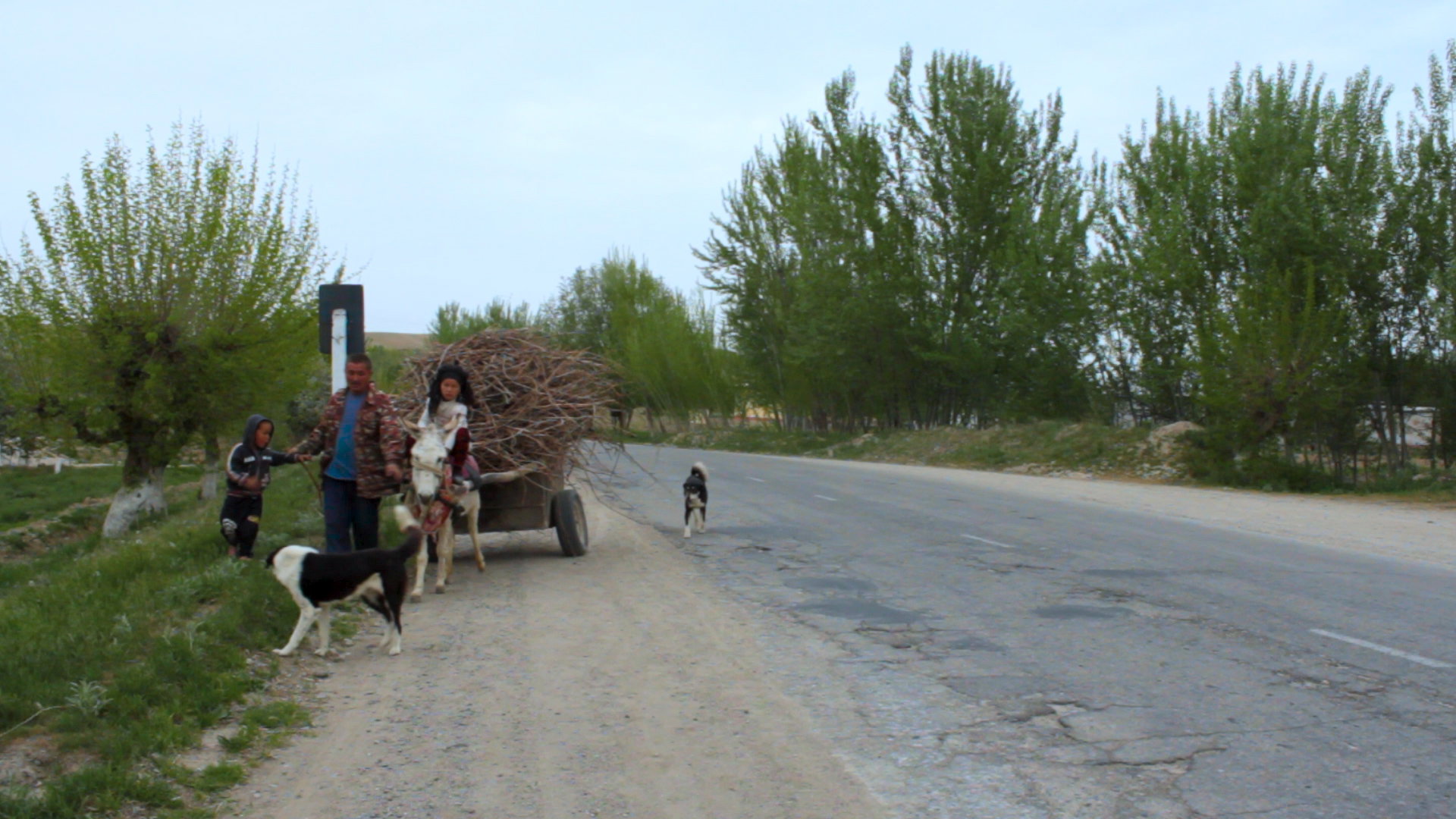
Очень популярен в сельской местности гужевой транспорт. Бензин не нужен, как и техобслуживание.
Спросил, как зовут ослика.Оказалось — животным имена давать нельзя...
Нас ждёт Самарканд. Город, который является ровесником Рима, его сравнивают с Санкт-Петербургом. Самарканд тоже обожают туристы со всего мира за достопримечательности, которые стали визитной карточкой Узбекистана. Площадь Регистан, мечеть Биби Ханым, восемнадцатиметровая могила святого, которого почитают мусульмане, христиане и иудеи, Сиабский базар, гигантская самса, знаменитые самаркандские лепешки, которые могут храниться десятилетия. А самаркандский плов нам приготовит чемпион Узбекистана. Будет интересно!
https://youtu.be/P_R_AVHWXqw
In search of a cozy hotel in the mountains of Uzbekistan
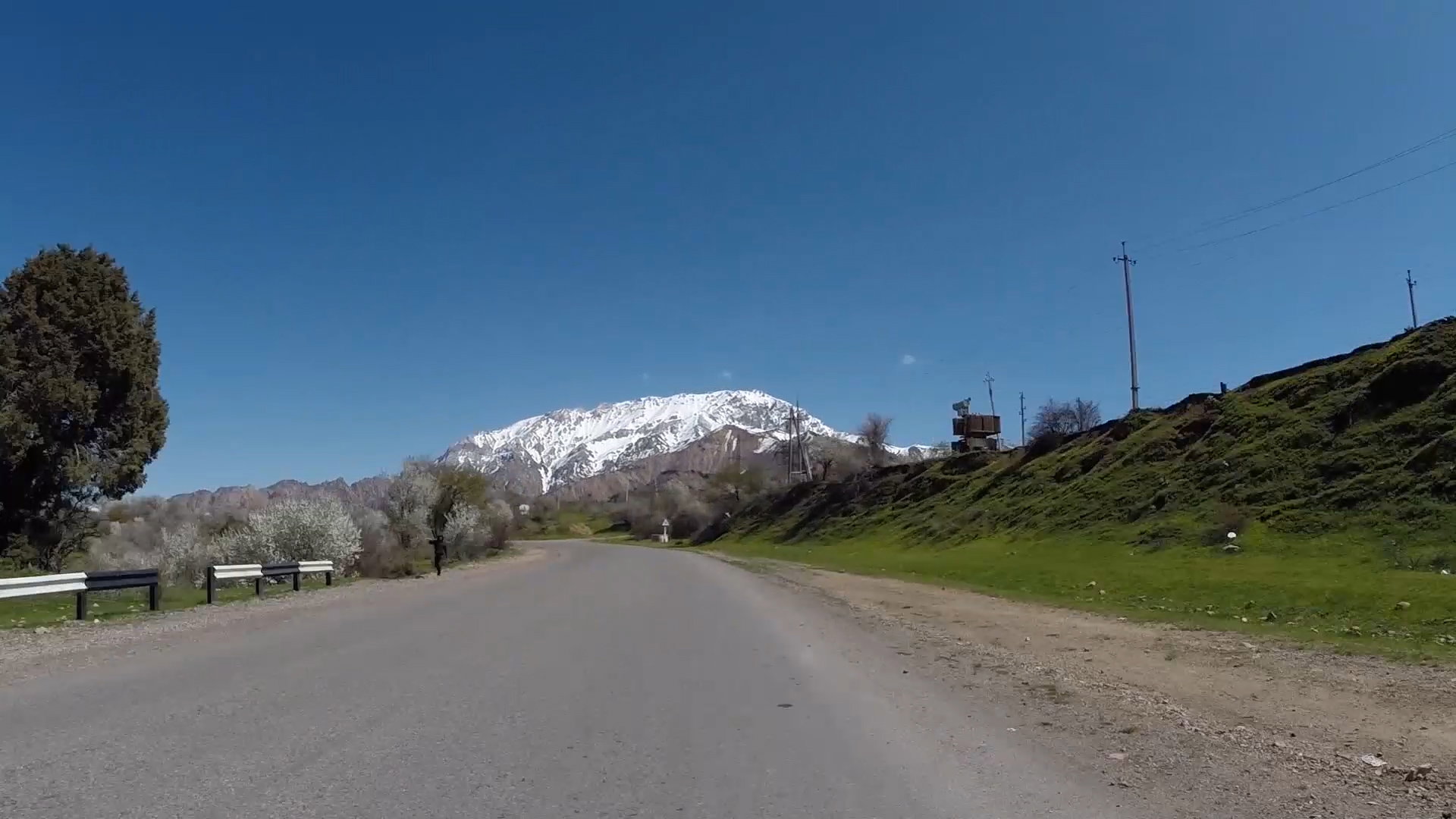
Along the road often come across some places, where people sale of honey.
You can always stop and buy.
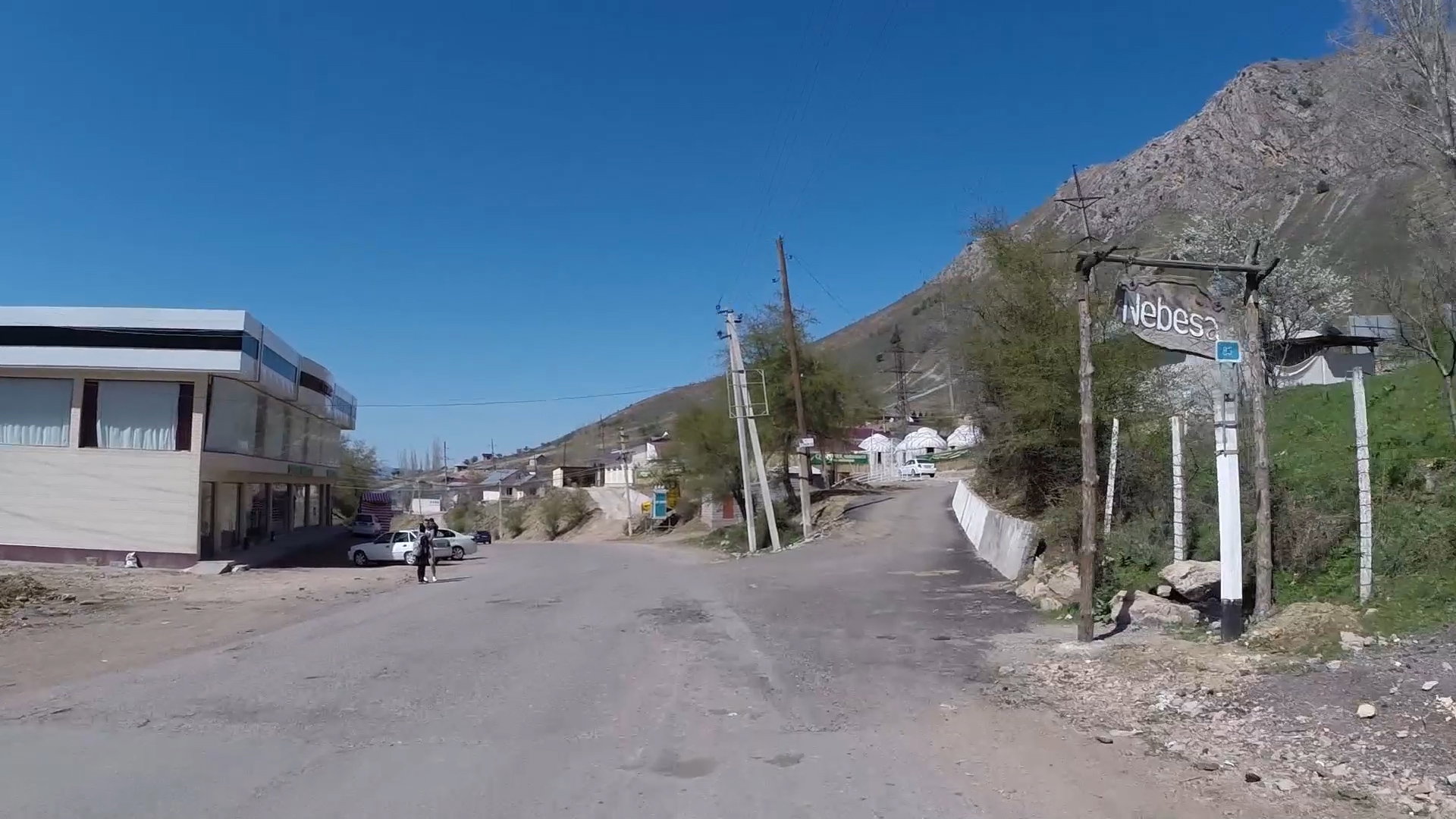
First, we will take a look at the complex called "Nebesa".
Nice houses are located on the slope.
April is not a the high-season, the complex is empty.
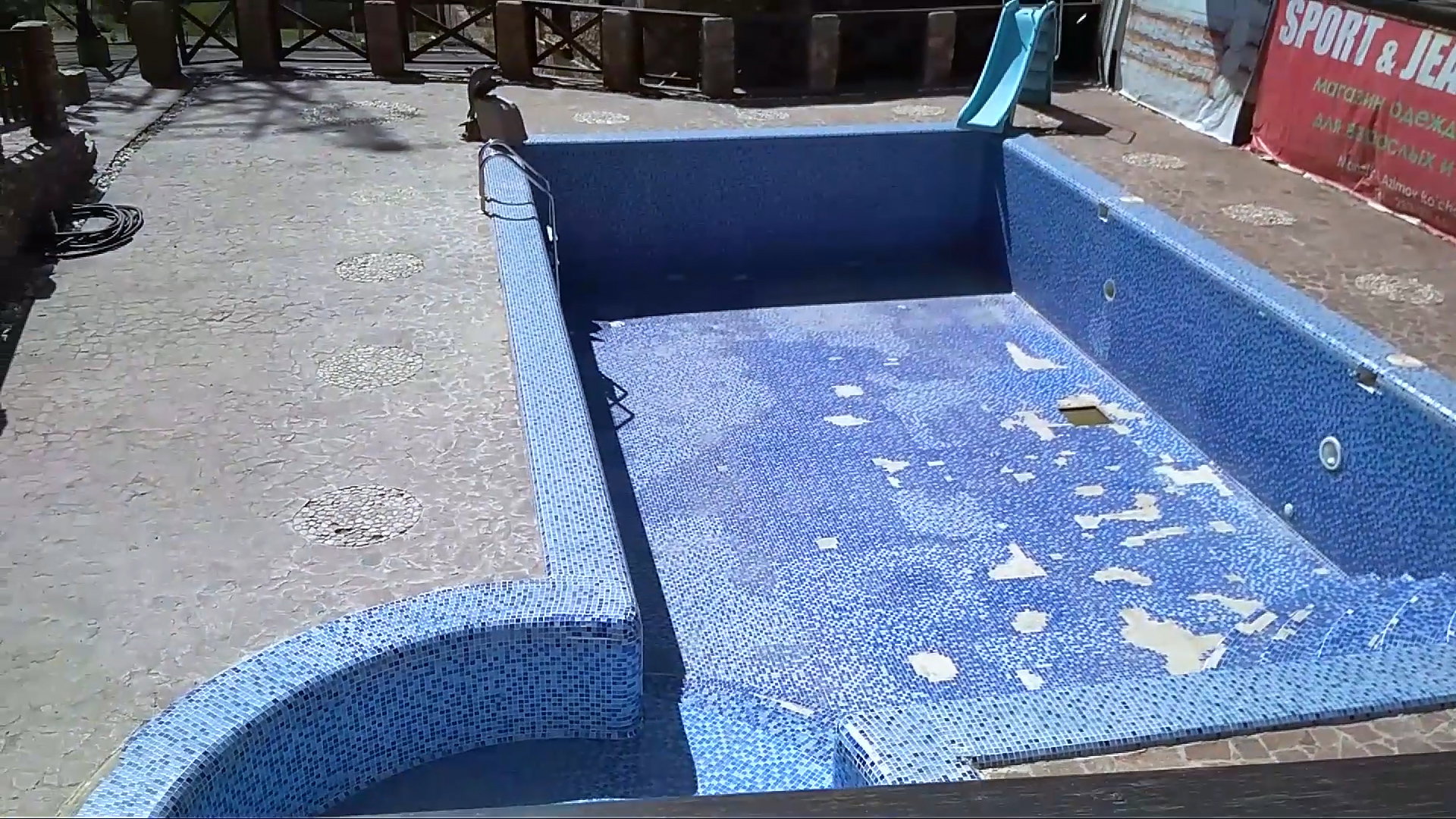
In pool is no water - It's cold for swimming.
The climate in Uzbekistan is sharply continental.
During the day at this time the temperature in the mountains can reach +30C and at night fall below 0 C.
The mountain tops are covered with snow.
And we'll be there soon, by the way.
Unfortunately, the "Nebesa" has no advantages, except the appearance of the houses. Microscopic area, small rooms. I'm not impressed. The caretaker came to us.
The junior suite costs 300.000 so'm for one person. And it's not important, if it's an adult or a child.
The suite 50.000 more expensive. Despite the fact that the complex was empty any discounts were flatly refused. But whatever happens, it's for the best.
It's good, that didn't stay there. We had a really great place ahead of us.
On our way there we also have visited this place. Here it is not even clear, what the owners offer to their customers except wandering among the trees.
And this holiday home hasn't opened yet, but I am sure, it will be popular.
This is a wonderful location.
- We haven't opened yet!
They haven't opened yet...
- Thank you for the information.
Well, we've arrived. The hotel is called "Avenue Park".
Here you can admire the mountains, as well as the Charvak Reservoir.
It was at that time a little shallow, but still looked very nice.
Two days in the suite, breakfast was included.
And they gave us a 20% discount.
Even though the rooms were almost all occupied.
Just because we asked - it's not the high-season right now.
That is called a customer care.
And the location!
Look at this stunning view!
When you come to the mountains - you always want to climb to the top.
In Chimgan you can do it by using the cable way. (the cost of the service: $2).
It's length is 800 meters.
The top point is almost 2 kilometers high.
- Be sure to use the cable way.
- It is a nice feeling and the views are wonderful.
- The mountain air is amazing.
- Some take their children with them.
- Have a nice day!
- Thank's, you too!
- Up here is a strong wind and it's cool.
- And here we have a well-spring.
- Even in summer it is recommended to bring warm clothes if you, when you planing to reach the top.
- And now, in April, it is really necessary.
- And here are travelling bags.
- Nice green grass is beneath us.
- It has a very saturated color.
- At this time the juiciest grass is just appearing.
- It's a joy for anyone who eats grass.
- And once again - the traveling bags.
- They got into the cabin by their own, so will be able to get off.
- Open the bar get ready to disembark.
- Opening it...
- Opening it forwards and downwards
- And now we just get out of the cabin.
- So, here is disembarking point.
- It is high and very beautiful up here - great!
- We've just reached the snow peaks.
- It snowed just recently, two days ago or yesterday.
- The tourist season hasn't begun yet.
- That's why here are quite a few people.
- But still tourists keep coming.
- But in peak season here, they say, are crowds and crowds of tourists.
- And the air is wonderful.
- Though it is cool now.
- It is easy to breathe here!
- By the way, there is a new tradition here to make a wish and tie ribbons on the bushes.
Some vacationers, for some reason I do not understand, climbing up, do not descend from the lift, and immediately go down.
It is some kind of "Merry-go-round ".
And many people do it this way.
I had to miss a dozen busy chairs before I could sit and go down.
- On the way back it is, for some reason, much more windy,
- It's very, very cool...
- Some passengers even took a blanket with them.
- Hi!
Barbed wire...
This is probably to ensure that no one would jumped off and no one could climb up the cabin.
- The exit.
- This is a rockslide, by the way.
Down here you can ride horses or quad bikes.
- How much does the ride cost?
- 15,000
- 15,000 for what?
- For one lap.
- Back and forth?
- Yes.
- And 60,000 per hour
60,000 per hour is about 7,5 dollars.
https://youtu.be/4gjV6KfJfdw
Ночь в пустыне. Крепость, основанная Александром Македонским
Из Бухары можно напрямик отправиться в Самарканд, но тогда вы упустите возможность переночевать в пустыне. Разнообразить путешествие я решил поездкой на такси по пустыне Кызылкум к озеру Айдаркуль, которое называют «морем в песках».
Провести ночь в юртовом лагере на границе с Казахстаном. Ну и потом – в Самарканд.
Таксист Баходыр, между прочим, знает пять языков, согласился проделать с нами этот путь длинною больше чем в пятьсот километров за 100 долларов.
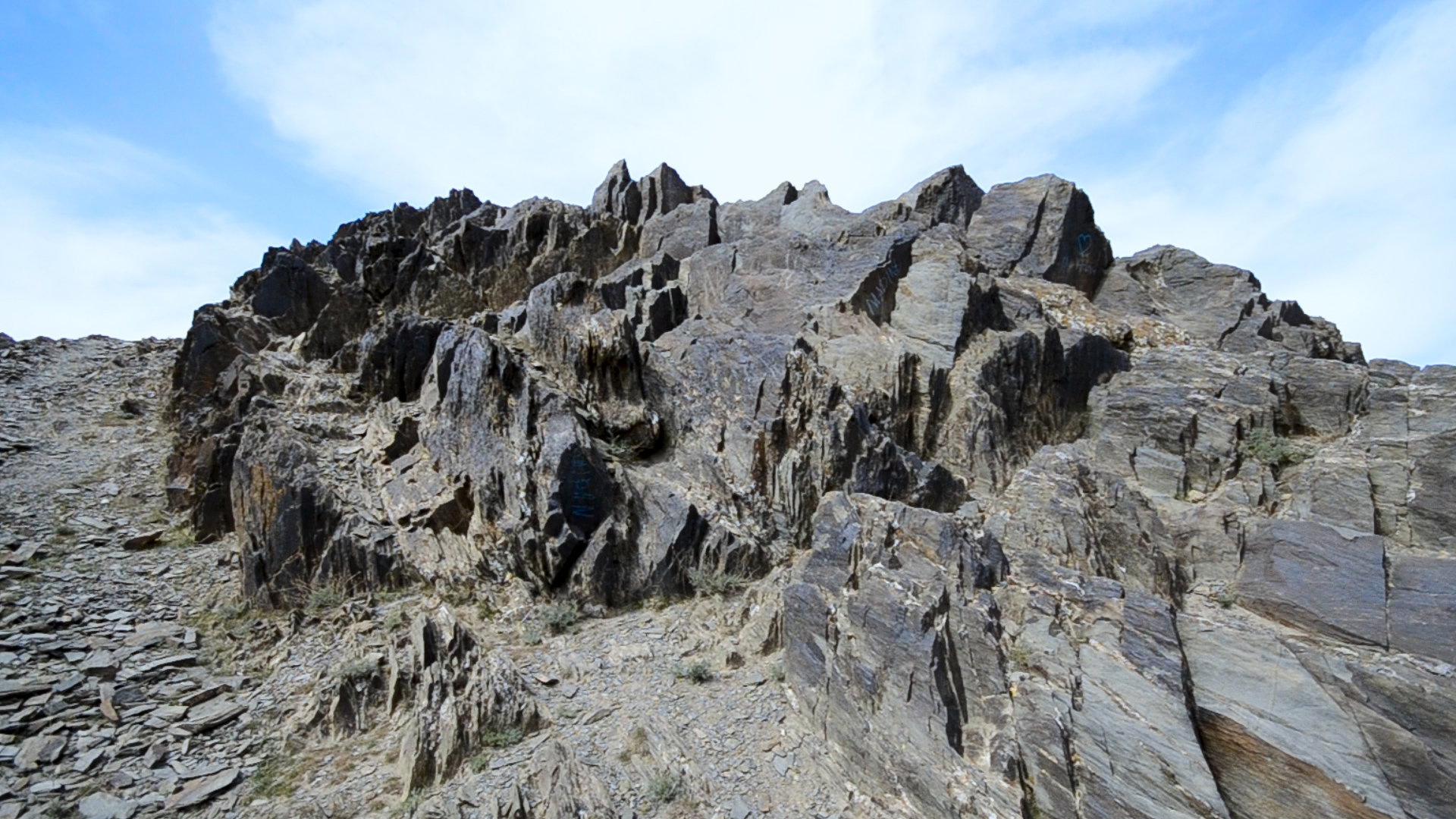
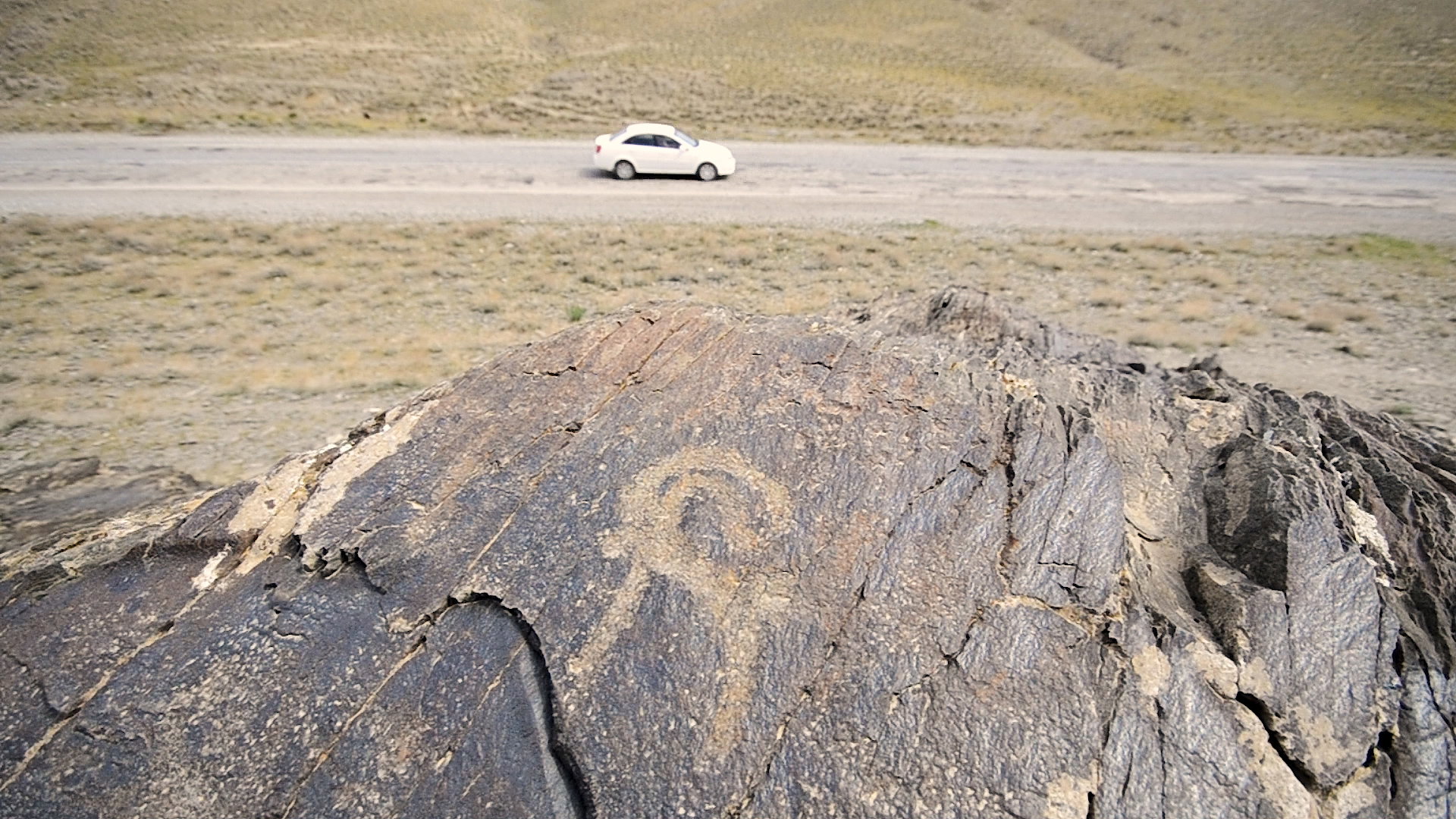
Примерно спустя час после выезда из Бухары мы увидели скалу.
Известна она тем, что на ней – петроглифы.
Древние изображения, нанесенные на камень.
Не отказал себе в удовольствии взобраться на скалу и полюбоваться открывающимися просторами.
Въезжаем в Нурату.
Городок известный прежде всего тем, что, якобы, его основанию поспособствовал Александр Македонский.
На возвышении остались развалины крепости, возведенной по его приказу.
Поднимаясь на вершину, вы обязательно пройдете мимо местных продавцов сувениров,
которые предлагают, в том числе, и шкуры волков.
Местных волков.
Сверху открывается замечательный вид – без преувеличения, виден весь город.
Одной из причин выбора этого места Македонским для основания базы наверняка был водный источник.
По одной из версий он образовался после падения метеорита пару десятков тысяч лет назад.
И назвали это селение в честь того события. Нур – переводится как свет. Имеется ввиду свет, что видели при падении метеорита. Источник – Чашма, что в переводится как родник. Говорят, что иногда по ночам вода тут светится… Местными она считается целебной. Вода постоянно одной температуры – 19,5 градусов. И насыщена разнообразными микроэлементами. В том числе золотом и серебром.
И Маринками.
Это рыбки. Священные, есть строжайше запрещено.
https://youtu.be/P_R_AVHWXqw
Trouble with taxi drivers and an unusual dish on the way to the mountains
Before the flight from Urgench to Tashkent (Uzbekistan), we witnessed this picture.
Groups of youth rehearsed a meeting of the President, who supposed to arrive in the city the other day.
The flight was great. The arrival almost have ruined the taxi drivers.
Absolutely shamelessly raising the price they almost violently tried to push in the car.
Unfortunately, I didn't shoot it on video.
From the airport to the city center, where I rented an apartment, a taxi costs 10,000 - 15,000 so'm.
They tried to convince me that less than 50,000 will not work.
My advice - either to call a taxi using some web-service after leaving the plane or just go a little further, where you will be able to catch the cab for normal money.
It's best to call a city-taxi, which I did.
However, those who tried to trick me promised the driver to pierce the tires of his car.
It's disgusting!
I hope that this video will watch the representatives of authorities who are responsible for this sphere.
And there will be no more louts and grabbers during the journey.
It seemed to me that there was nothing to do in Tashkent.
In fact, this is not entirely true.
I decided to go to the mountains for a couple of days.
It is good, that they are just an hour's away from the capital of Uzbekistan.
My good friend from Tashkent, Alexander, helped me to get there.
We share the same passion - traveling.
He suggested to examine several rest houses, choose the best and check in.
They key factor is a good view.
On the way, we stop at the mini-market to buy something to eat.
- Almonds are expensive, but nutlets with apricots are not less tasty.
- I want the ones with apricots.
Nuts, Kurt, sweets. Here, by the way, you can also get water.
- This is a wellspring,
- I met a man here once.
- He comes here every time from Chirchiq.
- He is a geologist and says that this water is very valuable for its mineral properties.
Once again: from Tashkent to Chimgan is no more than an hour driving.
That"s why the capital's residents choose to come here on weekends for picnics.
In Moscow everyone goes to the country, here - to the mountains.
And why not? The air here is wonderful, the view is gorgeous, you can even fly a kite.
On the way out of the city, on the recommendation of my friend Sasha, I try an absolutely new dish for me - the green samsa.
So, why is it green? It looks pretty normal -yellow and ruddy.
It's because of the stuffing.
Inside the samsa is a rare grass.
- You can taste this grass only in April.
- It wasn't here for 2 weeks ago and won't be in 2 weeks.
- Instead of this grass the samsa was stuffed with some another greenery.
- For example, with spinach and some other the greenhouse plants.
- Also with sorrel?
- Not with sorrel, but with spinach.
- But this grass is special.
- It grows, when the mountains are green.
- After some time it won't grow anymore, so we should enjoy it now.
- What does it taste like?
- It's delicious, it's impossible to explain.
- Wait, I need to taste it again.
- The taste is very similar to spinach.
- Yes, it is very similar to spinach.
- And the dough here is without extra oil and is not puff.
- Just water and flour - that's all.
- It is a mountain herb? It grows only..?
- Yes, it is a mountain herb. It is growing in these hills right now.
- So, it's good that we're here.
Here in this cafe is this green samsa made.
Outside - right next to the road.
Apparently, this is a popular place.
The legend of the murdered minaret builder, unusual food and hospitable people of the East
It is very interesting in all trips to watch the real, not ostentatious life of citizens.
But I will continue my story.
In the previous part we parted on the fortress wall.
- It's strange, but now I don't see any crowds of tourists.
Maybe they were all taken away for dinner.
We'll go for a much too.
In order to eat real Khiva pilaf, we were advised to leave Itchan Kala and go to the former ceramic factory.
Here is a cafe, where the real Khiva pilaf is made.
-In Khiva pilaf, in this version, is no chickpea,
it's a big, yellow pea.
- And...
- The man, who was cooking pilaf, said that in Khiva-pilaf usually large pieces of meat, they do not cut it.
- And it is not so oily, here is less oil, more crisp rice and carrots were sliced differently.
- It is not shredded, as in Tashkent, in Bukhara and so on.
- And most importantly, this pilaf is made with beef, not with lamb
like any others I bought in Uzbekistan.
Probably because I love lamb so much, the Khiva-pilaf did not impress me.
Unfortunately, it's not magical at all.
Another story is the local flatbread.
That's how they look like in a cafe (price: $0,3).
Unlike in any other cities we've been to here people don't sell flatbreads on the street.
- So, if you want to buy a flatbread, then you have to go to the store and buy a it there.
- Why is this happening?
- Because here flatbread, as the owner of the cafe says, is backed at home.
In any case, it is impossible to buy them inside the Itchan-Kala, there are no such trade-points with women who sell it on the street.
But it is quite possible to see here such picture.
Housewives bake flatbread for the dinner table.
- In other cities the flatbread is usually sold on the street, and in Khiva is not like that?
- Yes, it is...
- Is it?
- And where is it sold then?
- In a store.
- No, I mean not in the store - on the street?
- You know, in Bukhara, in Samarkand, in Tashkent they bring flatbread and sell it on the street.
- No, everything is in the store.
- Here you can buy it only in a store.
- There is no such thing here?
- No.
- We will buy such flatbread in the store.
- Do you eat loaf?
- Well, yeah, in Moscow we eat loaf.
- Anybody can eat, whatever he wants.
- And we are making bread ourselves.
I think it's great.
You eat flatbread piping hot We were treated. It's very tasty. Thank you very much.
And they refused to take any money.
Khiva is a great city for walking.
As if you were in some Eastern fairy tale.
You can buy souvenirs everywhere here.
Actually, they are the same as in other cities of Uzbekistan.
Only hats are here different!
Surprisingly to see in Khiva the sale of fur hats.
But foreigners are happy to buy.
If you hear a knock - don't be lazy, come and look, what's there.
It is the local master creates another masterpiece.
And attracts tourists to the shop where masterpieces can be purchased.
- There is a famous unfinished minaret.
- It's builder (master) had to flee after he found out that the Khan was going to execute him, so that the master would not build something like this anywhere else.
But it's a legend.
In fact, the Khan, who planned to build the highest minaret in the East at that time, died in the battle when the work was done by a third.
Unfortunately, no one continued his work.
Now the minaret, which was supposed to be the tallest, is called "The short one" - "Kalta-Minar".
But at the same it favourably differs from all the colleagues.
Where else have you seen anything like it?
And here is resting a camel.
Of course, for money you can take a picture with him.
But to be honest, he looked unhappy.
In the evening we found him behind the locked doors of a barn.
I decide to have dinner not in cafes of Itchan Kala that are focused solely on foreign tourists and therefore expensive.
And there is no lamb meat that I love so much.
As the owner of one of the central restaurants explained: europeans do not like not only the taste, but also even smell of dishes with lamb.
Well, local restaurants and cafes had to adapt to those who bring money in the city.
That's why there is no samsa with lamb.
I will have dinner in a cafe that is loved and visited by the locals.
How to find it? Very simply.
You get out of the fortress, catch a taxi and ask the driver to take to a cafe where he eats and his friends eat.
Here we tried dishes such as "Jiz" this is meat,
"Khiva ijoni" - mince.
Supposedly the recipe got here from Hungary.
"Tukhum Barak" these are "vareniki" stuffed with eggs, pumpkin, cheese or something else.
Well-fed and satisfied, we return to the fortress wall to watch the sunset.
Tomorrow we will say goodbye to Khiva, which has impressed and will be loved and remembered forever.
And then my plan is to go to Chimgan Mountains.
We will taste "green samsa" there, we will climb Chimgan and wander on the bottom of Charvak Reservoir.
It will be very interesting!
Ancient fortress. Where to see the sunrise in Khiva
The only condition under which I chose a hotel in Khiva, was the location - it must have been situated in the fortress - Itchan Kala.
It's like a city inside another city.
Architectural monument and preserve, was built mostly of clay, or rather of "saman" - it is a mixture of straw and clay.
What beauty was made of this material can be seen from the window of my hotel room.
This is the wall of Itchan Kala.
There are many hotels in Itchan Kala.
If you are going here not in the high season, you don't have to book in advance.
Just come, wander around the fortress, choose the best view and book-in.
In general, there is a large number of tourists in Khiva.
It seemed that there were half so many local residents.
Tourists were from Europe - Germany, France and Italy.
The owner of the hotel is telling about some places to eat.
He and a lot of other people recommend to visit the cafe "Terrasa".
- You can go up to the third floor.
- That sounds interesting!
- There is a panorama of the inner city.
- If you want higher, there is an arch.
- Inside it is the Khan's Palace.
- There is also a balcony upstairs - you can see the whole city.
- You can also get up there to see the beauties of the city.
- This is actually a view from the terrace of the cafe called "Terrasa".
And here is how many people are now in cafe, it is a very popular place.
Lunch for three persons - $30.
Yes, it is nice... Nice food, nice view.
And in the next part we will see what Khiva looks like at 6 am from the top of the minaret, take a walk on the great wall of Itchan Kala, taste the fresh backed flatbread and find out the why is the Khiva pilaf very different from the others.
- Khiva, the first light of dawn.
It is about 7 am now.
So Khiva wakes up.
In order to make these fantastic shots, I got on the top of the minaret "Juma Mosque".
- Here is the minaret from the inside.
- At at the top.
- The views are stunning here.
- People come up here and leave their autographs.
- I don't know, was it the "L'one" or somebody else.
It's too crowded in the afternoon.
The platform at the top is tiny, and it's really hard to get on it, as well as get down.
- It is quite difficult to go up and down.
It can fit maximum two people.
High, steep steps.
The Juma Mosque is located below.
This is a room for Friday prayers.
The mosque is unique - in fact it is an area under the canopy, which is held by these wooden columns.
According to some reports, there are 212 of them, according to the others - 213.
- Almost all of them were restored, that means they are new.
- But some of them are ancient, which are several centuries old.
- Although, to be honest, most of the columns are ancient, not new and restored.
It's an amazing feeling, You touch the real antiquity.
Imagine, these wooden carved pillars have seen more than 10 generations of locals.
- And this, what is put up for sale by the local workers.
Here are the little booties.
To visit the Juma Mosque and any other sights of Itchan Kala, tourists need to buy a ticket.
It is valid for two days, probably because it is difficult to visit all these 15 objects in one.
The price is decent - 100.000 so'm.
But in generally the prices for tourists in Khiva are higher than in other cities of Uzbekistan.
Probably for this reason the main contingent of visitors are the representatives of the Western Europe.
- The first thing you see when you approach the city is the wall of the fortress Itchan Kala.
- It's a very beautiful construction.
- Many are not allowed to get up here, but we are wandering through the wall of Itchan Kala.
The view is stunning!
Height, as you know, on the top and on the bottom is perceived differently.
You think - it's just 10 meters.
But after climbing the wall you realize - there 10 full meters to the ground!
With a strong wind somehow you do not risk approaching the edge.
There are no insurance fences here.
Perhaps because the whole Itchan-Kala is under the protection of UNESCO, which imposes certain obligations.
For example, you can not change the appearance of an architectural monument.
- There is some kind a hole here.
- Well, it is clear,
here were met the enemies.
Loopholes, through which the defenders fired at the attackers.
In the evening from the wall you can admire the beautiful sunset, but it will be in the next part.
We will also learn how different is the Khiva cuisine from everything we have seen before.
Local pilaf, flatbreads on the street, vareniki stuffed with eggs, raw mince.
And we will see a short minaret, a sad camel and many other things.
Город Мёртвых и посох, исполняющий желания
Следующий пункт путешествия – город мёртвых. Официальное название некрополя — Чор Бакр. Четыре бакра. Приставку «бакр» к своему имени брали теологи.
Некрополь появился в 10-ом веке, когда тут захоронили четырёх священнослужителей. Потом это стало традицией. Место священное, сюда часто приезжают паломники. Довольно долго живые сосуществовали с мёртвыми – здесь был кишлак Сумитан.Расселили его после многочисленных случаев, когда детишки раскапывали могилы и играли костями.
Если у вас есть заветное желание, и вы оказались в Бухаре – обязательно приезжайте к могиле шейха Бахауддина Нахжбанди.
Святое место, семикратное посещение приравнивается к хаджу в Мекку.
По легенде, Нахжбанди, вернувшись из хаджа в Мекку, воткнул свой посох в землю, и он зацвёл. Дерево стало священным. По поверью, чтобы исполнилось желание, нужно обойти вокруг посоха трижды против часовой стрелки.
А вот это дерево за оградой по легенде — посох того самого Нахжбанди.
Там, где до него можно дотянуться, поверхность отполирована. Не одна тысяча человек прикоснулась к этому посоху.
Ещё когда только приехал в Бухару, спросил у таксиста – что здесь есть вкусного поесть. Он рекомендовал кафе Чор Бакр и тандырное мясо, приготовленное в нём.
Вот оно – это кафе. Вот оно – это мясо. Действительно, очень вкусно!
И снова в путь!
https://youtu.be/r_LnEL11g60
How much do you need to pay for a bride in Uzbekistan?
It was getting dark. Finally, we got to Registan.
And it turned out there is no entrance to the square - it was fenced.
All because now you have to pay for the entrance.
Price - $4 pro person.
"Registan" translates as "sandy place", "sandy area".
Sure thing - the East, deserts, sand, but there is a theory, that until the 20th century here were carried out executions, sometimes even mass executions.
Blood was covered with sand. Nothing reminds about it now.
On the contrary, standing in the center of the square or walking through it, you experience only positive emotions.
And of course it is a favorite place for wedding photo shoots.
There are 3 madrasas on the square.
The oldest one was constructed by already known to us Ulugh Beg.
Ans it was named after him.
The other two, Sher-Dor and Tilya-Kori, are not less impressive.
Sher-Dor, the abode of lions, is crowned with the image of them, and the brightest of all three - the Tilya-Kori translates as "decorated with gold".
That's really luxurious!
Be sure to go inside, wander through the courtyards and halls.
It is incredibly beautiful there!
I also recommend to see the Registan in the evening, when the lights turn on and the building looks exactly like an illustration of a tale "One Thousand and one nights".
The samarkand voyage is coming to the end, we have seen only a small part of the beauty of this wonderful city.
I hope, someday we will come back here, but it's time to move on.
Amazing Khiva is waiting for us.
It turned out you can't reach the city by train or by plane.
But we'll still visit the former capital of the Kharezm Khanate, wander through the well-preserved wall of the fortress "Itchan Kala", get on top of a minaret, taste the unusual "vareniki" and of course the Khiva pilaf.
To get to Khiva isn't easy at all. There is no airport in the city. Everyone who wants to visit it must first arrive in Urgench.
The train ticket from Samarkand to Urgench cost 132 thousand so'm, it is about $16.
In the morning before arrival you can enjoy the view of this desert.
My attention was drawn to these constructions - straw, that was stuck in the sand.
As it turned out, it saves the railroad from the sand.
Urgench is a small nice city. Obviously it was renovated not long ago.
From Urgench to Khiva we will get a taxi of course. The trip costed $5, including route changes, even the unexpected ones.
I think, i should buy a plane ticket to Tashkent in advance, and at the airport I also can change dollars for so'm.
- That's how you become a millionaire when you travel.
- I gave $200.
- Now I will be given a million six hundred sixteen thousand so'm.
(Price for the air ticket Urgench-Tashkent: $60)
Tickets are bought, now it's time to relax and chat with the taxi driver.
He claims that the most beautiful girls of Uzbekistan live in Khiva, and that there still exists such rite as the payment of "kalym".
- 3 million so'm
- A cow - "kalym", a lamb.
- One lamb?
- Yeah, one lamb.
- A bag of rice?
- Yes, a bag of rice, a bag of flour, carrots, potatoes.
A friendly driver tells where in Urgench you can grab a snack.б Because of the proximity of the Amu Darya River in the local cafes are quite a lot of fish dishes.
After he heard that I was more interested in samsa, the taxi driver brought me to the place, where it was the best in Urgench, according to him.
There are two tandoor on the street, you can watch the cooking process.
The tandoor is covered with a cloth on the top to keep warm inside.
Cloth is watered in order not to catch a fire.
The salsa is here very classic and really tasty (the price: $0,6).
By the way, it is difficult to find samsa in Khiva.
Why is that?
I'll tell you later.
A grave that grows in size
Now on its territory is the mausoleum of the first President of Uzbekistan.
- Hello!
- Hello!
- We have to check your bags.
- Okay.
- In general, you're not allowed not film here, but are. An exception was made for us, when we said, that we came to Samarkand from Russia. It was nice.
We continue to walk down the street of Islam Karimov.
It will lead us to a unique place - the tomb of St. Daniel, which length is 18 meters.
But it will happen in the second part of our walks in Samarkand.
And there you will learn about the ruler-scientist, see the Registan.
And for us will be prepared Samarkand pilaf and giant samosa.
If you continue walking along Karimov street, after a while you will reach the picturesque place where Daniel is buried.
The Saint is revered by representatives of three religions: muslims and christians and jews.
On the banks of the river Siab is a nice green square.
Above the park there are hills, on one of them there is an 18-meter grave.
Why is it so large?
There is a belief that it gradually increases.
How? It is unknown.
But the servant of the complex says - there is no mystery here.
The grave is so big, because it was a very respected person.
It also slightly increased during the reconstruction.
And then the curator tells about a miracle, which is supposedly accurate take place.
In the courtyard of the mausoleum grows pistachio tree.
Long time it was considered to be dead, but after the visit of Patriarch of Moscow and all Rus' Alexy II, when he sprinkled the tree with Holy water, it came to life and bloomed.
The source of Holy water is also situated here, at the foot of the hill.
Not far away from the grave of St. Daniel, the next attraction of Samarkand is the Ulugh Beg Observatory.
Who was this? Soon you will find out.
Lunch! I want to taste the pilaf and to compare it with Bukhar pilaf, which, frankly, was on top and to and to reach this level will be difficult.
But we have a worthy contender!
- This pilaf was made by the Champion of the Republic of Uzbekistan in 2013. His name is Abdumanon.
- This is a real Samarkand pilaf.
Well, what can I say - I have a new favourite! (Price: 3$).
Bukhara pilaf was good, but Samarkand is no worse - it is magical.
Happiness is when one person has a talent, the desire to use it and the opportunity to do it.
It just all happens to Ulugh Beg, Tamerlan's grandson, ruler, educator, astronomer, historian and poet.
One of the sightseeings in Samarkand is the Ulugh Beg Observatory.
Or rather what is left of it.
- On both sides was a corridor for Ulugh Beg's assistants, he and his Professors walked along the central path.
- They watched the stars, but this is certainly not the end.
- There had been a continuation of the Observatory.
- Before its destruction the Observatory -went 33 meters up.
- Only 31 meters left at the bottom.
- The total height was 64 meters.
The symbol of Samarkand, the Registan, is getting closer, but on the way we will visit the cafe, which only few tourists know about and will have a samsa for lunch.
Well, it won't be a problem to find in Uzbekistan ordinary tandoor samsa.
In different cities, villages areas it will costs 2.000 - 5.000 so'm.
But in Samarkand in a cafe with a non-standard name for the East you can buy a giant samsa.
It costs 15,000 s'om ($2).
But it can feed an adult man, two children or a dozen losing weight girls.
And the fact that samsa is huge is not the only difference.
Those, who taste it for the first time will be surprised.
In addition to lamb meat there is a piece of chicken.
To make sure, that the client is full.
And a tomato after all.
It was getting dark. Finally, we got to Registan.
How to make bread that can be stored for many years
Back to the thing, without which is no feast, not only in Uzbekistan, but also in practically the whole Central Asia, - to the flatbread.
The legend says - those, that are from Samarkand can be stored for decades.
Then simply they just must be soak in water and you can eat.
- Flour is the same everywhere, water is the same everywhere...
- Why does it last so long?
- Do you know?
- Maybe because of the weather.
- Because of the climate?
- Yes.
- Or maybe you just put some ingredients in there?
- No, nothing chemical, we use the yeast, salt and water.
- Everything as usual? Like everywhere?
- Yes.
In General, the attitude to this product in the East is tremulous.
Here the flatbread will be preferred to any other bread.
They don't use knife and break it only with hands.
You can't put it upside down - his is a manifestation of disrespect.
I asked to make me a flatbread with personal inscription.
Not for food - as a souvenir.
The Khamitov family has been engaged in this business for more than a decade.
- And how many years have you already been doing this?
- 30 years.
My grandmother used to make these flatbread.
Then - my mother.
Then - my bride.
The flatbread is already made, it's time to put it in the oven.
- Is it just an egg in here?
- Yes, just an egg.
- A homemade egg.
Unfortunately, a tandoor is used less and less.
In the gas stove it is faster and more convenient.
While we put flatbread in the oven, the host talks about his passion - the cockfights.
In the kitchen in a cage is a fighting champion.
Someone wanted to buy him for 400$ and it's not the limit.
Prices reach tens of thousands of dollars.
- True warrior.
Take out the flatbread - beautiful.
Now I have a flatbread with the name of my Youtube channel - "Goroda pobrodimy".
This is such a wonderful flatbread.
Just an hour of work.
The price of this flatbread is 15,000 s'om ($2), but for the cake with personal inscription, of course, you have to pay extra.
How much? It depends on your ability to negotiate.
Full instructions are here. Turn on subtitles in English!
https://youtu.be/4gjV6KfJfdw
Волшебная Бухара. Сокровище последнего эмира и древняя крепость
Арк — одно из древнейших сооружений Бухары. Существует легенда, что построил крепость — Сиявуш, герой народного эпоса.
Он влюбился в дочь хана. Афросиаб, так звали хана, не хотел выдавать своё чадо за Сиявуша – придворные астрологи были против. Афросиаб выдвигает требование – построить дворец на земле размером с бычью шкуру. Сиявуш не растерялся, шкуру нарезал на тонкие полоски, связал, растянул… И – получилась верёвка, которой он опоясал площадь крепости. Сейчас это почти 4 гектара. Ничего себе шкурка...
Арк – аналог Кремля. Сооружение создавалось для защиты от набегов.
Высокие и толстые стены спасали эмиров, министров, придворных, обслуживающий персонал… До трёх тысяч человек. Крепость не смогла защитить бухарцев лишь дважды — при нашествии Чингисхана и при наступлении большевиков.
Тогда красный командир Фрунзе приказал бомбить Арк с аэропланов.
Последний бухарский эмир был вынужден бежать. Возможно, часть разрушений – его рук дело, по одной из версий, он приказал взорвать Арк.
Говорят, эмир прихватил с собой все ценности. Но до Афганистана караван с золотом-серебром и алмазами-бриллиантами не добрался — охранники перебили друг дружку. Остался один, который спрятал это богатство в одной из пещер Гиссарских гор. Да, кстати, сокровища последнего Бухарского эмира до сих пор не найдены! А там, поговаривают, как минимум 10 тонн одного только золота! Учитывая вечную любовь восточных правителей к драгоценным камням, можно предположить, что и их там немало.
Теперь — Пой Калян! Нет, это я не читателя по имени Николай прошу исполнить песню. Так называется центральный архитектурный комплекс Бухары.
Состоит из минарета, мечети и медресе. Если вы бывали в Самарканде, то знаете, что его визитной карточкой является Регистан. Но такие площади есть и в других городах.
В том числе в Бухаре. На ней стоит высоченный минарет Калян.
Применение – разнообразное. С него и призывали к молитве, и сталкивали преступников, и использовали как маяк.
Караваны в ночи могли ориентироваться на его свет. Кстати, еще про последнего эмира. В Бухаре у него была летняя резиденция.
В которой при входе вас встретят павлины – потомки тех, что радовали глаз бухарского хана.
Проектировал дворец российский архитектор Алексей Бенуа. Эмир приятельствовал с императором Николаем вторым. В числе подарков которого – этот холодильник.
Сверху накладывали лёд, холодная вода стекала по медным трубкам и охлаждала всё, что внутри.
Только лично для меня осталось загадкой – где в то время в Бухаре можно было раздобыть лёд…
Захотите перекусить - попробуйте местную необычную самсу. Алатскую. Названа в честь области, в которой её готовят.
https://youtu.be/r_LnEL11g60
Romantic legend about hot kiss
One of the Central streets of Samarkand (Uzbekistan) is named after the first President, Islam Karimov.
He was born in this city and here he was buried.
On the street you can see some small electric buses.
You can ride for only 1000 so'm, that's about $0,12.
But walking is much more interesting.
And here you can buy an ice-cream. By the way, in Uzbekistan it is quite tasty and costs almost 1000 so'm.
And here is a bike rental. They are many of them across the country.
And of course shops with Souvenirs.
Joyful "granddaddies", plates, various jewelry, and T-shirts.
And this guy over here is taking some flatbread to the Siyob Bazaar, which is located nearby.
By the way, about the flatbread - I've long wanted to buy the famous Samarkand cakes, that can be stored for years.
I made a deal with the local bakers. They invited me to their place to demonstrate the manufacturing process. What does the finished cake look like and how much does it cost? I'll tell you a bit later.
Let's go back to the walk, the end stop of electric buses is the famous Siyob Bazaar.
But we are interested in the elder Princess, Bibi-Khanym - it's a mosque.
Amir Timur ordered to build it after a successful campaign in India.
He named her after either her mother or his beloved wife.
There is a romantic legend about his wife.
Timur ordered the construction of the building, but soon he went once again to conquer new lands.
Bibi-Khanym looked after the construction of mosque.
According to different versions - she was the eldest Princess or the eldest wife or beloved wife.
The architect of this creation fell in love with her and deliberately delayed the construction to stay longer near his beloved.
Amir Timur has already won all his enemies and intended to return home, but the gift was not ready and Bibi Khanym demanded to complete the mosque in a short time, to which the shameless architect responded with blackmail:
"I'll continue and finish the building, but only after a kiss."
Bibi Khanym resisted for a long time, dissuaded the impudent, but he was adamant.
So she had to agree.
A hot kiss left a mark on the skin of the beauty.
The mosque was completed.
Tamerlan returns, admires the result, but finds out, what price had his wife to pay.
Gives the order to seize the architect.
However, he manages to flee with the help of self-made wings.
Tourists love the story, but it is boring scientists say, that this all is just a fiction.
Is it fiction or not, that the 18-meter tomb of the Saint, to which we are heading now, lengthens?
- We find out soon.
What can be seen on the way to ancient Samarkand
On the way to Samarkand (Uzbekistan) we often had to stop, wait until sheep will be removed from the road.
The cattle is also bred here and grazed by the shepherds.
I tried to communicate with one of them.
- At what time do you start to graze? And at what time do you finish everyday.
- From 7: 00 am until 12: 00 am, is this true?
- An hour for a lunch?
- An hour for a lunch and then you'll graze until the evening, won't you?
- Do you like to work as a shepherd?
- Do you like the work?
- Well, yeah...
- Do you like it?
- Yes.
Very popular in the countryside is an animal-drawn transport.
Gasoline is not needed, as well as the maintenance.
- I asked, what is name of the donkey?
- We're not allowed to name a donkey.
- And why?
- I don't know, it's a custom.
- So all the donkeys are without names?
- Yes, all of them. Animals are without names.
Samarkand is waiting for us.
A city that is the same age as Rome and is compared with St. Petersburg.
Samarkand is also adored by many tourists from all over the world for the sightseeings that have become symbols of Uzbekistan.
Registan square, Bibi-Khanym Mosque, 18-meter tomb of the Saint, revered by muslims and christians and jews, Siyob Bazaar, giant samsa, the famous Samarkand flatbread, which can be stored for decades, and the champion of Uzbekistan will prepare for us Samarkand pilaf.
It will be interesting.
So, 500 km journey from Bukhara to Samarkand by taxi is almost completed.
The trip was interesting - just remember the turtle invasion.
- Saving a turtle - setting it free.
Quite often we had to stop because of the sheep that leisurely crossed the road.
On the roadside periodically we came across these speed reductors.
Uzbekistan is the only Central Asian country that produces cars in significant volumes.
It is expensive to import cars from abroad, a 100% import duty must be paid.
So, everyone drives local cars.
They, by the way, look nice from outside and inside.
However, often you come across the cars of soviet manufacture.
Basically they are used for transportation of goods.
Samarkand greets us with a gloomy weather.
It's time to say goodbye to the taxi driver Bahadir.
A very interesting person, he told us a lot of useful things.
Here he's already helping foreigners to find the way.
Гуляем по Бухаре. Покупаем ножницы, которые нельзя трогать женщинам
Бухара - это как бы три города. Новый, старый и древний.
Новый туристу, приехавшему за восточной экзотикой, будет малоинтересен: современные дома, дороги, магазины — всё как везде. Поэтому гостиницу я выбрал в старой Бухаре. С аутентичным двориком.
Очень важная деталь. Турист в Узбекистане обязан зарегистрироваться по месту пребывания. В отделении милиции. После прилёта у вас есть на это три рабочих дня. Если вы снимаете номер в гостинице — получаете регистрацию автоматически, и ходить никуда не нужно. А вот если останавливаетесь у друзей, знакомых, снимаете жильё через эйрбиэнби — обязательно обговорите вопрос с регистрацией. Иначе при выезде из страны у вас возникнут серьёзные проблемы. Хозяев гостиницы я попросил найти мне гида.
Лариса — экскурсовод высшей категории. В принципе, она ездит с группами по всему Узбекистану, но мне нужна была информация только про Бухару и окрестности. За один день обойти все достопримечательности невозможно, и мы договорились на два. По 30 долларов каждый.
Для передвижения на те же два дня арендовали такси. 150 тысяч сумов за всё время.
В минуте ходьбы от гостиницы – сердце старой Бухары.
Ляби Хауз. Это и площадь (когда-то торговая), и ансамбль (архитектурный), и водоём.
Вокруг водоёма – старинные медресе. Это религиозные учебные заведения.
А этот памятник появился не так давно, но с ним также очень любят фотографироваться и местные жители и туристы.
Особенно, конечно, дети. Это – Ходжа Насреддин со своим любимым ишаком. Сказочный бухарский герой, своеобразный символ города.
Как и купола. Торговые ряды на востоке прячутся в помещениях — жариться на солнце не хотят ни продавцы, ни покупатели.
Вернёмся к ним чуть позже. Сделаем остановку по пути к рядам.
Взглянем на древнейшую мечеть Маггоки Аттари — её в буквальном смысле откапывали. Построена она была веке этак в 12-ом, изначально являясь зороастрийским храмом. И постепенно уходила под землю, обрастая культурными слоями. От зороастризма остались символы на стенах. Два треугольника — это добро и зло. А между ними — человек.
В центре города - раскопки. Это - древние бани.
Эта баня действует до сих пор. С 16-го века.
Возвращаемся к торговым куполам.
Первым на пути предстаёт купол менял. И этим занимались приезжие. Бухара всегда была городом многонациональным. Перекрёсток торговых путей, как никак. Персы, турки, арабы… Даже евреи. Да, существуют бухарские евреи.
Сейчас в городе их осталось около семи десятков. Уехать совсем они не могут — нельзя оставить священную книгу — Тору. Ввезена она сюда была в незапамятные времена, а сейчас по узбекским законам вывозить из страны предметы старше 50-ти лет - запрещено.
Прогулка по торговым рядам — отдельное приключение. Яркие краски, экзотические для нас товары, колоритные продавцы. У второго купола есть лавка — кузнец в шестом поколении. Делает вот такие ножи.
Ножи продаются с разнообразными гравировками, можно сделать и именной. Девушкам же понравятся ножницы. В форме аиста.
Хотя почему только девушкам? Изначально золотыми нитями одежду расшивали мужчины. И пользовались такими ножницами. Сейчас в домах бухарцев ножницы двух видов — аист с хохолком — это мужской вариант, аист без хохолка — женский.
Конечно же, множество тюбетеек.
Есть и простые, и необычные. Эта вообще — бейсболка.
У третьего купола прямо при туристах ткачихи создают свои произведения искусства из хлопка и шёлка. Можно ходить рядом, снимать, задавать вопросы.
Здесь же ателье. Выбираете ткань (например с романтическим названием рисунка «отражение в воде облаков»), с вас снимают мерки и уже завтра вы сможете забрать готовое платье.
Огромное количество разнообразных сувениров.
Конечно же, купола в Бухаре венчают не только торговые ряды.
Ещё один символ города — знаменитая мечеть Чор Минор. Четыре минарета.
Во дворе сохранился Хауз.
А на крыше мы застали свадебную фотосессию.
В десяти метрах, прямо у Чор Минор расположился мини-рынок старых и старинных предметов.
Тысячи значков, медалей и орденов. Стоимость от тысячи сумов до сотни долларов. Конечно же ценников нет, сумма созревает в голове продавца в момент, когда он оценивает покупателя, размер его кошелька. Смело торгуйтесь.
Пожалуй, хватит услаждать взор, пора и организм насытить. Наконец-то я попробую настоящий бухарский плов! Для пиршества было выбрано кафе Чинара.
Сразу оговорюсь — место туристическое. Однако нетуристических мест в Бухаре просто нет) и — по поводу оценки плова. Сколько людей, столько мнений. Каждый мастер по изготовлению этого замечательного блюда, пловмэйкер, имеет как своих почитателей, так и критиков. Идеального плова не бывает — обязательно найдётся кто-то, кто скажет, что в соседней чайхане готовят вкуснее.
Мы поели в ЭТОМ кафе, и с абсолютной ответственностью заявляю — плов здесь - волшебный!
В следующей части будет ещё интереснее!
https://youtu.be/hY50zFtSDBY
How much is a night in the desert?
I decided to diversify the trip by taxi ride through the Kyzylkum Desert to the Aidarkul Lake, which is called the sea in the Sands, and by spending the night in a Yurt camp on the border with Kazakhstan.
And then we will go to Samarkand.
The taxi driver - Bahadir, who by the way knows 5 languages, agreed to drive us this way, which is longer than 500 kilometres, for $100.
About an hour after leaving Bukhara, we saw a rock.
It is known for the petroglyphs - ancient images carved in the stone.
I did not deny myself the pleasure of climbing the rock and admiring the open spaces.
Entering Nurota.
The town is known primarily for the fact that Alexander the Great allegedly contributed to its foundation.
On the hill remained the ruins of the fortress, built on his order.
Climbing to the top for sure you will pass by the local souvenir sellers, who also offer the skins of wolves
of local wolves.
The top of the mountain allows a spectacular view, you can see the whole city.
One of the reasons for choosing this place as a base was probably a water source.
According to one version, it was formed after the fall of the meteorite a couple of tens of thousands of years ago.
And this village was called in honour of the event.
"Nur" is means "light".
This refers to the light that was seen when the meteorite fell.
Source "Chashma" is translated as a well-spring.
They say that sometimes at night the water is glowing.
Locals believe that the water can heal.
Water is constantly at the same temperature - 19.5 �C and is saturated with a variety of microelements including gold and silver.
- Kalium, calcium, chlorine, nitrate, sulfate, magnesium, silicon, bromine, manganese...
And with "Marinkas". It is a sacred fish. Eating them is strictly forbidden.
We drive further through the desert called Kyzylkum - "the Red Sand".
Suddenly on the road began we started to see turtles - one, two, a dozen.
At a speed of 60 km/h it seemed that the whole division of these listed in the Red Book reptiles decided to storm the highway.
We stopped to get a couple out of the way. However, perhaps they returned back on the highway. By the way, keep in mind - it is prohibited to export these animals from Uzbekistan.
The Aydarkul Lake is an oasis in the desert.
The clearest water is in summer a salvation from the exhausting heat.
And fishing is prohibited here. There are several Yurt camps on the banks of Aydarkul.
The most famous is called "U Vahida". We came there first, but there were too many people.
The next one is called "U Ludy". It is less crowded.
- Yurt camp.
- It is actually quite far from the city
inside the desert.
- In general there are 5 of them.
As they say, during the high-season, all the camps are overcrowded.
Now, I have the feeling that this camp is at least half-empty.
The yurt inside looks and smells as if it has been standing here for a long time and is constantly being used for its intended purpose.
There is electricity in yurts. One light bulb and one outlet.
I asked to bring a multi-outlet extension cord.
It was necessary to charge several gadgets at the same time.
And also I wanted to turn on the heater I got everything. Thank you very much!
But the plug of the heater did not fit to the outlet. Good that I had an adapter.
And there was not much use for the heater on a cold night. Night in a Yurt for 1 person - 35$.
I should say, there is almost no entertainment in the camp.
In my opinion, you shouldn't stay here more than one night.
People come here to be closer to the nature, to be silent, to think, to wander through the dunes, to watch the flying eagles.
There are camels here, you can ride them.
The service is stated as free, but it is common to tip the cameleer.
The dinner in the camp is, let's just say, frugal.
Not enough meat. No grilled lamb for the arrival, unfortunately.
Apparently, as a compensation for dinner is offered a bottle of you know what, for free.
After a meal, tourists can sit by the fire and listen to the songs of Akyn in Kazakh and Uzbek languages.
Time to sleep!
Modest breakfast in the morning, then we receive our registrations - all the passports were collected the day before.
And it's time to go!
https://youtu.be/4gjV6KfJfdw
 @Goroda