Let's Try Again
Okay, I'm trying this experiment again, this time on a new computer with a new wallet. Oh joy!
If this works, it means that there's something odd about my laptop and I'll have to figure it out. There are no viruses - I've checked with multiple scans - but I did transfer everything over to a new laptop... twice. The first new laptop I got was horrible, so I got another one.
Well, here we go. I'm going to hit 'publish' and see what happens!
I tried contancting hello@read.cash about this problem again. I tried making a new account using a different browser, reaching out on Reddit, and emailing support, but I still cannot post full articles.
However, that shall not deter me. Now it's a matter of principle. Has this site been abandoned by its creators? That's what it seems to be. There's zero response to my multiple attempts to reach out, and that's a shame. I really enjoy this site, and it's easier to write about a vast number of topics without confusing readers, unlike with Medium. I have a hard time just shooting the breeze there.
Well, if anyone has any other ideas, let me know. Otherwise, I'll probably just periodically hop on here to check, get frustrated, and post a little update. My email address is associated with my account, so it should be easy for support to reach me if they ever see this post and decide to do something about it.
Take care, everyone. Get more BTC and make the economy stronger!
My account still hasn't been fixed and I have the same problem when I make a new one. Just going to keep updating and hope support manages to fix it since I can't reach them otherwise. Thanks to everyone who is being supportive while I wait.
Having major problems now. I tried to get ahold of support because the site won't let me publish full articles. It continues to say that my account isn't allowed to post links, which makes no sense because I'm not including any links in the article. Even then, it makes no sense why my account wouldn't be allowed to post them.
Anyway, I reached out with the email address some of you provided in my previous postings about this and never received a response. I even went over to the Reddit page to see if I could get help but that was also unsuccessful.
Finally, I decided to make a new account. Guess what? I get the same message and cannot post full articles. What gives? Can anybody help me out? I've tried absolutely everything and can't get anyone to respond. Who runs this site? Do they have an account, and can I leave a comment begging for help?
How do I contact support? I still can't post full articles because it says my account isn't allowed to post links. Someone in my last short post commented that they reported it but it hasn't been fixed yet. I've tried more articles since and they all say the same thing even though there are no links in the article. On that note, why wouldn't I be able to post links even if I had some?
I can't post articles because it says my account can't post links. There are no links in my article. What's going on? I've reached out to hello@read.cash and through their Reddit account but haven't received any help.
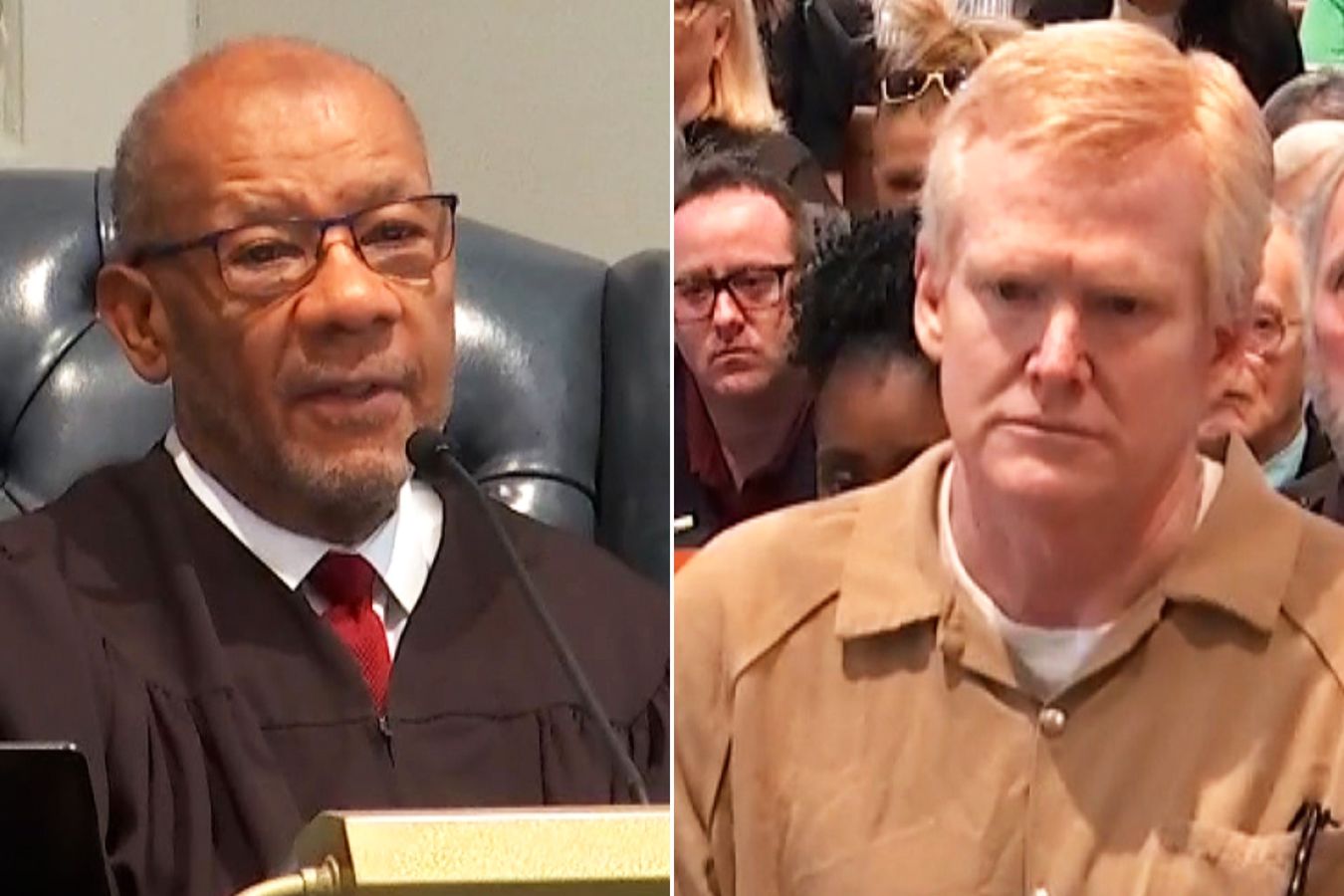
Alex Murdaugh: My Thoughts on a Messy Trial
I totally get that many American readers here have strong feelings about this one, but the murder trial centered around Alex Murdaugh has dominated the news cycle for weeks, and I have a few thoughts on it. This trial has shown a spotlight on the way our everyday devices flay away our privacy, has laid bare the deep-seeded prejudices many of us hold against the powerful, and has proved more and more that our mutual addiction to true crime shows has made it difficult to remain impartial.
With all of this being said, I have a confession to make: I don’t think I could’ve voted ‘guilty’ if I were a juror on that trial. I wouldn’t have been able to vote ‘not guilty’, either. I don’t know if Alex Murdaugh is innocent or not, so I would’ve voted ‘undecided’. Why? Because this case was a mess.
Part of this article will focus on the trial at hand, but the first part is going to focus on the attack on our privacy that we’ve come to expect and why that’s bad for us as a society. I think it’s also important to know that data isn’t always conclusive, so the problem with this particular stripping away at our privacy comes with the cost that others could read things into the data that aren’t there.
**Part 1: The Need for Privacy**
**Living in a Brave New World**
My mom was interested it this case long before I was. Usually, I resign myself to watching the documentaries after the fact rather than watching the trials in action, but Mom was so interested in this that I couldn’t help it. She couldn’t believe how much evidence they could gather from the defendant’s phone and car. It was incredible… and it was frightening.
We all know that our stuff tracks us. I wear a Fitbit Sense with a built-in GPS to let me know how far my hikes, bike rides, and other travels take me. My phone, too, has a GPS that, among other things, hatches Pokemon eggs for me in *Pokemon Go*. My truck finally gave up the ghost, but I can safely say that it was old enough that it didn’t record things like how fast I’m driving on any trips.
We give away our DNA to private companies while complaining that the government should never be able to hold onto that information. We willingly accept that cameras watch us whenever we’re wandering around in a big city. We don’t care when Edward Snowden warns us that our webcams are watching us, our government has computers that listen for certain words in a phone conversation, etc.
This should frighten us. We should be shaken to the core at these revelations. But I know I’ve bought a kit from Ancestry.com and I wear the Fitbit. I do have tape over my webcam, though. I suppose I’m not too far gone.
When reading through some comments on this case, I was amazed at how many people insisted that if you have nothing to hide, you shouldn’t care if you’re being spied on.
Wait a minute. What?
A lot of people take that attitude, and it’s problematic for a number of reasons. The Fourth Amendment of the Constitution of the United States of America exists to protect our privacy. The Founders never insisted that it exists to protect criminals, it’s to protect us. Refusing to allow police into your law-abiding home, for example, cannot be used in court to insinuate that you were hiding something. That’s because most normal people don’t want just anyone, badge or no badge, to come into their homes or rifle through their vehicles.
Our lack of reluctance to stand up for ourselves is evident when people make these kinds of comments, especially in light of the way police abuses have manifested in the past. Police are fully capable of planting evidence, of confirmation bias, of finding things in your home or car that are illegal even if you thought you were well within the law, and far more.
Don’t ever think, “I’m a good guy, so if I cooperate with the police, they’ll agree.”
That’s not how policing works in this country, probably throughout the world.
Moreover, if you wouldn’t allow, say, me to come into your home, then why would you allow a cop or anyone else? None of us keep an open house or leave our car doors wide open so everyone can come in and make themselves at home, so we shouldn’t relinquish that sense of privacy for anyone else.
There’s a reason why the characters in *Brave New World* have no sense of privacy and think anyone who does is strange. It’s easier to control a population that doesn’t understand that some things are best kept private. None of us wants to live in a world where our lives are 100% public and we drown out the stress this kind of existence manifests with a cocktail of psychiatric drugs, yet that seems to be where we sit at this point in history.
**Don’t Underestimate the Human Imagination**
Another part of the reason why we don’t allow people to know every facet of our lives is because it’s too easy to people to reach the wrong conclusions about what they see and hear. Rumors have managed to destroy lives and reputations for eons, and they often take root with just a small seed of fact that sprouts into wild speculation.
Now, I’m just as addicted to rumors and conspiracy theories (I do believe many of them are true, or at least partially true) as anyone else. That being said, these things are a testament to how crazy the human imagination is. With just fractured bits of a picture, we can concoct a painting that suits whatever mood or narrative we want.
In the musical *Jesus Christ Superstar*, there’s a paraphrase of Pilate’s Biblical question regarding truth: “What is truth? Is truth unchanging law? We both have truths! Are mine the same as yours?”
That’s how we operate. We see the data, the evidence, and then we form our own gospels in our heads. Are the ancient pyramids power plants? Nikola Tesla thought so and there’s some convincing evidence. Then again, there’s also convincing evidence that this isn’t the case. What’s the truth? Until we recreate the pyramids as they were and find out for ourselves, we probably won’t know, and that’s an expensive undertaking.
Between our confirmation biases that allow us to piece together a narrative that may not be true and find novel ways to dismiss evidence that points to the contrary and good old bad logic, we’re a species that’s terrible at discerning fact from fiction at the best of times. Imagine the narrative you can paint with just a handful of data from a phone and GPS combined with one person’s rather shady business. All of us have at least one skeleton in our closet, so think about how all our daily habits and actions, combined with that dusty old skeleton, can be used to weave a story about us that isn’t true.
**Part 2: The Actual Trial**
**The Data**
Let’s start with the most troubling part of the trial: the data from the iPhone and car. This is the bit I had the most trouble with because, if you start with the presumption of innocence, as you’re supposed to, this is where things get really muddled.
The problem with the data that can be pulled from our invasive devices is that is very seldom brings clarity to problem. If anything, it muddies the waters and makes you unsure of your logical footing.
As Xena, the Warrior Princess, once said (in the worst series finale to ever be aired on television, including *GOT*), “Don’t listen to the sounds. Listen to what’s *behind* the sounds.”
The prosecution looks at the data and tries to paint a dismal picture of what’s behind it. The defense tries to counter their narrative by ascribing perfectly innocent explanations to the data.
And, to my mind, they’re both valid.
Mr. Murdaugh was speeding away from the crime scene.
Mr. Murdaugh sped both to his mother’s and back, so maybe he’s just a fast driver in general.
Mr. Murdaugh’s wife’s and son’s phones were last unlocked at 8:49 PM, establishing a time of death.
Mr. Murdaugh’s wife’s and son’s phones may simply have been unused for a time; after all the coroner said it may have been as late as 10:00 when they actually died.
Mr. Murdaugh’s iPhone stops recording steps between 8:09 and 9:02, so surely he stashed his phone to commit the murders since he’s smart enough to remember that (but not smart enough to know better than to distract from legal troubles by winding up the prime suspect (the spouse is always the prime suspect) in even greater legal troubles) his phone could give him away.
Mr. Murdaugh’s iPhone stopped recording his steps because he wasn’t active at that time.
See how easy it is to assume the worst or the best whenever you look at impartial data? The problem is that the prosecution was looking at data and establishing a timeline, but there are other, more innocent explanations to account for the data.
And there’s a lot of data.
Videos, texts, and much more from three different phones
Phone call records from a myriad of family and friends
GPS and speed data from the defendant’s SUV
Logs from his office security system
Images from the license plate readers on public roads
Social network data
The 911 call
Financial records
The question becomes how much one can actually read into that data. If there was a murder in my own little town, how much could a prosecutor read into my data (or lack thereof) from just this morning?
I charged my Fitbit and my phone before running to the grocery store to grab some cottage cheese. Was I just trying to avoid having my devices track me as I drove to the store? I may have also not stopped at a stop sign because it was obvious there were no vehicles, pedestrians, or animals on the road. Was I trying to leave a crime scene?
I was scared and didn’t want to admit that, on top of all this circumstantial evidence, that I was actually at the store minutes before the cashier was murdered, so I lied and said I was at home, counting on my phone data to back up my story. Unfortunately, the cameras pointed at the door show that I was in the store around the time the murder was supposed to have taken place.
It’s easy to read a more insidious narrative into the data you have.
**The Defendant’s Shady Past and Chronic Lying**
It’s possible the prosecution knew it couldn’t rely wholly on the data, especially in the absence of evidence they’d need to conclusively point to Alex Murdaugh.
He had on clean clothes
There were no guns found
Alex’s DNA was found, but given that this was his property and his own family, it would be strange not to find it
The prosecution could only say that, although the coroner said the deaths occurred between 8:00-10:00 PM, the phones going silent at 8:49 meant that was the real time of death, and Alex was in the area just a few minutes before. Is it enough to say he was the killer? I’m not sure. It’s damning, but is it conclusive?
A comment I read in an article discussing the upcoming appeal shocked me. It said that it was better to convict and let an appeal sort out the problems than risk letting a killer walk free by holding the evidence to such a high standard.
I believe most of us would rather risk a criminal, even a murderer, walking free than risk sending an innocent to prison or condemning him or her to a half-life burdened by a criminal record. You cannot rely on the system to sort out the jury’s mess later.
For one, appeals are messy, at least in criminal cases. Appeals are filed all the time in civil matters, but in criminal cases, appeals can only happen if certain criteria are met. Even if you’re totally innocent there’s no guarantee that you’ll meet those criteria. Many innocent people have languished in the system for years, even decades, before something was found that made an appeal viable.
Of course, the prosecution decided to largely rely on Alex Murdaugh’s character, or lack thereof. He’s a classic villain, the kind you might find in an old Hollywood flick (think the miserly old man in *It’s a Wonderful Life*) or even in a more modern film, such as Cal in James Cameron’s *Titanic*. He’s barely human in our eyes, a man you can really hate. He’s not the misunderstood underdog type we like to root for in these cases.
He’s not the abused woman who decided to get back at her abuser. He’s not a man who found out his child was molested and went out and assaulted the accused. He didn’t rob from the rich to give to the poor. He didn’t blow a whistle that exposed the government.
Alex Murdaugh was an opioid addict (probably buying pills for others, too, by the look of his finances) who stole from literally everyone, including the disabled, to feed his habit. He’d lived a double life for so long that he’d become a chronic and habitual liar.
...And that’s what the prosecution wanted you to see. Inflame the jury, make him (deservedly) untrustworthy, and create a motive.
The man is so shady and his family so powerful (shady poor people aren’t nearly as entertaining) that people are jumping to paint the entire family as a criminal enterprise with a body count going back generations. It’s the stuff of fiction! The problem is that truth yo-yos between being stranger than fiction and far more boring than it.
The problem is that, besides the motive they offered not making any sense (and then spending their rebuttal to the defense’s closing argument saying that it doesn’t matter if their motive makes sense or not because they don’t have to demonstrate motive), the fact that Alex is a chronic liar doesn’t prove his guilt.
Yes, he lied to the police about his whereabouts and only admitted it when he could no longer hide it. He claimed he was afraid – an excuse the prosecution argued made no sense. If Alex Murdaugh lied about not being there minutes before the murder, then surely it meant he committed the crime.
The problem is that his history of lying, to my eyes, just means that Mr. Murdaugh did what came naturally to him. I’m going to put on my psychologist hat (took the classes, but never went into the occupation because I loved languages, writing, and programming more) and say that, as a habitual liar, Murdaugh is likely to lie about anything.
There are two kinds of liars: compulsive and pathological.
Compulsive liars can tell lies that even tarnish their images and will not admit the truth even when confronted with it. Pathological liars usually don’t have a motive, although many will lie to gain sympathy, admiration, or just attention.
It’s unclear where Alex Murdaugh lies on this spectrum, but it’s very possible that he needs to motive to lie. He’s the type to lie about where he graduated from, his favorite food, his paycheck, the kind of car he drives, what he ate for breakfast, and everything else.
Liars are usually born from trauma, the lies initially being coping mechanisms. Murdaugh might’ve had trauma or his double life may simply have become so dependent upon lies to sustain that they spilled into every facet of his life. Either way, Alex lying to the police about where he was is not unexpected. He may have had a motive to lie or he may not have. Alex Murdaugh doesn’t need a motive to lie, and that’s why it’s hard to trust the prosecution’s assertion that the only reason Alex Murdaugh had for lying to the police was that he killed his wife and son.
I call bull on that. People like Alex Murdaugh need no motive to lie, it’s just what they do. It’s up to them to seek help and try changing, but until that happens, Murdaugh will continue to lie about everything.
**Part 3**
**Why Was He Convicted?**
I think Alex Murdaugh was convicted largely because of his character. The video placing him at the kennels minutes before the prosecution asserts the murders took place is damning, but is it enough to push someone who believes he’s innocent (as you’re supposed to) over the edge of doubt?
For many jurors, it may have been the video compounded with the lie and Murdaugh’s criminal history. Why lie about where he was and what he was doing? Because he can’t help it, he’s a compulsive or pathological liar.
Alex Murdaugh is the villain we love to hate. One comment on the trial read (paraphrased), “I’m sick of these rich, white men getting away with crimes.”
Perhaps our prejudices against the rich, against white people, and against men consciously or subconsciously influence us in ways we can’t predict. No one is exempt from harboring prejudices or making snap judgments about people we don’t know based on any number of factors, and it’s possible that those prejudices, combined with Murdaugh’s unlikable character, brought about an unwarranted conviction.
**Will the Appeal Prevail?**
I’m not a lawyer or judge. I don’t know the ins and outs of all the legal jargon that goes into an appeal, but from my own perspective, I’d say that the appeal will go through.
Alex Murdaugh’s lawyers intend to appeal on the grounds that his financial crimes shouldn’t have been admitted into evidence. They were, apparently, introduced to lend credence to the prosecution’s motive theory, and then they told the jury, after the defense poked holes in it, that they should just forget about assigning a motive to the murders.
The question that will decide if it goes through is this: if not for the history of his financial crimes, double life, and his chronic lies, would the jury have still convicted him based on the remaining evidence?
What do you think?
So I Decided to Try Writing with AI…
I’m not averse to technology, so long as it doesn’t infringe on my privacy or trample my rights. Technology can grow meat from cells, skyrocket us toward extreme longevity, and maybe even help us colonize space. As such, when my friend said, “Hey, Shounenbat, you should check out with AI-driven article writer! You’ll be able to massively cut back on the time you spend writing!” I was eager to try it out.
The software I used was called Article Forge. It has a brief free trial that limits some of the features, so I won’t be able to comment on their bulk article generator. However, it certainly was an interesting experience.
According to their website, Article Forge can write basic articles at the same level a human can. Their examples are fairly impressive, especially compared to some other software I’ve played with. Instead of rewriting existing content, Article Forge apparently writes from scratch. The freelance writer in me was grinning, but the only way to know for certain is to try it.
You start by inserting your keyword, and by ‘keyword’ they actually mean the headline for your article. I had a few weird things pop out before I figured that out.
Anyway, my first article was about how businesses can use Google Analytics, and that article came out very well. It was about on par with the demo articles on the site, in fact. I tried another article about camping in Minnesota and the software spun out another winner.
My only real gripe with it was that it never gives a concluding paragraph, needs fact-checked, and sometimes gets screwed up on grammar and punctuation. However, it wasn't really terrible. Yes, the articles were basic and lacked much personality, but if you just want a basic article that ranks on Google and gives readers enough good information that they don't run away from your webpage, it's fine.
However, it's very dependent upon which topic you want it to write about. The last article I tested was about food in Ancient Greece. The ancient world fascinates me, and I wondered what it would do. I expected a listicle, like I got when I asked it to give me an article about places to camp in Minnesota, but instead, I got this:
Holy repetition, Batman!
Now, I understand that the greater the word count you specify, the more likely it is that the software will start repeating itself, but this article started repeating itself at the second subheading.
I suppose you have to stick to common topics, or the types of things freelancers most often write about to get a decent article.
In Conclusion, I'm Impressed but not Sold
Ultimately, if you have a blog and want some easy content, Article Forge is fine. However, I strongly argue against using it for all your content. It's dry and, depending on the topic, is prone to repetition or going off-topic entirely. It's best to stick to short or medium-length articles, too.
Will I ever use it? Maybe. It looks like it would be great for stopping writer's block and getting me back at my keyboard, and some of its articles aren't too bad. However, I can't imagine it'll be replacing real writers anytime soon.


Frustrations - What Would You Do?
Where to start? It's been nearly a year since the house fire, and I finally got the inventory sorted out and accounted for. Unfortunately, our frustrations continue to pile up, and I'd like to take a moment to vent about them. I'd love to be able to come back here and post more often, but life is crushing us right now.
Our Adjuster Forgot Over Half Our Inventory
Let me clarify, first of all, this isn't a matter of feeling that our property wasn't damaged badly enough. This is a matter of forgetting all of our furniture! We got the check for the inventory and a bunch of my collectible stuff was on there, but there was no furniture or appliances whatsoever.
Ugh. Good thing I still have records of all this stuff (I refuse to delete any photos or throw anything away until all of this is squared away), but it's frustrating that I'm still not done with this part of the house fire. I'd like to replace my stuff and move on, and the rest of the family would like to as well.
Our Contractor Bailed on Us
We had a contractor hired before the house fire because we were planning to install new windows. The upstairs caught fire before that happened, so we just asked him if he'd take over as the general contractor.
He charged us $85/hour and had us pay for every phone call he made to line up plumbers, HVAC, etc. He left one day saying that once insulation gets in, the rest of the restoration will go very quickly, and then he never came back.
He sent a bill, which we paid (and have proof), but stopped returning phone calls or text messages. Finally, six months and two formal letters later, we asked Menards to track him down for us, since they recommended him to us. He told the manager that he wasn't being paid (it's an insurance job; of course he's being paid) and that he'd actually just spoken to us about it.
I don't want to have to go to court, but I'm thinking that's what should happen. In the meantime, we've got a ragtag group that's going to pitch in to help get things done.
What Would You Do?
Would you take him to court? Obviously small claims, but would you sue him? We wound up paying over $1,500 in heating bills last year because he left us with no insulation and no windows upstairs. It barely stayed above 40 degrees Farenheit.
To be fair, however, the insurance company did reimburse us our extreme heating and electric bills.

Anybody Have Any Ideas?
The Conundrum
I haven’t been on as much as I’d like lately due to multiple reasons. First of all, I’m still dealing with the aftermath of the house fire and haven’t managed to get the house restored. My contractor seems to have ghosted us without warning (no communication in almost four months now), so that’s the first obstacle. I’ve already spoken to an attorney on that front, so hopefully, I’ll be able to get it taken care of.
The other reason I haven’t been on as much lately is that I was working on an app to help businesses get more reviews. Basically, it allows businesses to send emails or texts to clients asking for a review, and the app allows people to leave reviews right from it that automatically go to Google, Yelp, or most other places where someone has claimed their business.
This is great for building trust, as customers always look at reviews before they make any decisions (and the more the merrier), and for SEO purposes, as Google’s algorithms favor websites with reviews.
It also has an optional feature that allows businesses to intercept poor reviews and try to make things right with that client before the review gets posted.
My only problem is this: what are the best ways to approach businesses?
I’m not sure how to price it yet. The guy who’s working on some funnels and websites (although, to be honest, I’ll probably just make my own), but he seems to think $199 per month is reasonable with options for bi-annual and annual plans that offer discounts.
I need to know if this is a good price for the service, as that will affect which businesses I can effectively sell this to. And then I need to know how to approach them. I have some experience in sales and marketing, but I honestly like coding and stuff much better. The guy building the funnel and websites actually doesn’t really have much in the way of experience; he’s trying to get some.
Any ideas? We’re open to suggestions. I’ve been thinking of email, but would it be better to direct them first to the site or ask for a call? Maybe I should try some direct mailers, too.
**Let me know what you guys think!**

Who Was Gudrid Thorbjarnardóttir?
There’s hardly an Icelander who doesn’t know her name: Gudrid Thorbjarnardóttir, the Viking woman who allegedly sailed with her husband to Viland, or Canada as it’s known now. According to the stories, she explored Newfoundland and the surrounding lands for three years, gave birth to a son, and returned to her home in Iceland. She apparently made eight crossings of the North Atlantic, outpacing all other Vikings in terms of distance traveled. She appears throughout popular culture worldwide, even making an appearance in the manga *Vinland Saga*.
But did she truly exist?
The problem endemic to the Icelandic sagas, the texts that originally told her tale, is that the lines between myth and history are blurred. Where are the kernels of truth, and what ‘facts’ should be served with hefty helpings of salt? If Gudrid actually existed, then it means she lived in the Americas 500 years before Columbus ‘discovered’ them.
Before you get further into this article, let me spoil the end of it: we don’t know conclusively whether Gurdrid Thorbjarnardóttir actually lived or not. Aside from the sagas, the only evidence we have is archaeological, and it’s inconclusive. Still, the probability exists, and it’s always fun to ponder, isn’t it?
**Gudrid According to Legend**
Gudrid features in two Viking sagas: *The Saga of the Greenlanders* and *The Saga of Eirik the Red.* These are called the Viland sagas, though her story varies between the two different accounts. This is because the sagas were oral traditions before they were written down, which means that some details will change. The point of oral history or story is to preserve the meaning, not necessarily all the nitty-gritty details. Also, the stories may be old, but they weren’t recorded until after most Nordic countries had been Christianized. This means that, intentionally or not, this new worldview colored the traditional stories. This is no different than, say, watching a historical film about Alexander the Great that attempts to twist his megalomania into something more noble and palatable for a modern audience.
However, there are some details that both sagas agree on:
Gudrid was born in Iceland
Her birth was sometime in the late 10th century
She marries Leif Erikson’s younger brother, Thorstein after meeting him in Greenland
Other details tend to get lost and conflict, but these remain the same.
Anyway, Gudrid and Thorstein decide they want to go to Vinland, following in the footsteps of Leif Erikson, which is a great plan, but they fail. Luckily, the hapless couple manages to make it back to Greenland before winter comes. Despite this seeming stroke of good fortune, the winter manages to be severe and illness strikes the group. Everyone starts dying, and Thorstein himself passes away.
However, as often happens in the sagas and should probably be served with salt, Thorstein’s spirit manages to visit his 17-year-old widow and tells her that ”her destiny will be a great one.” Sounds like a good deal, so she decides to head to the main Greenland settlement.
Gidrid was widowed young, so she could've picked anywhere to live. She could also choose a new husband, and all accounts say that she married the merchant Thorfiin Karlsefni. They decide that they can make it to Vinland as well and set sail. Lucky for them, they *do* arrive! They have a son named Snorri there and decide to go home three years later. Gudrid ultimately winds up on a farm called Glaumbaer.
However, her story continues on in the *Greenlanders* saga. When she hits middle age, she makes a pilgrimage to Rome on foot and returns to live the rest of her life as a recluse and a nun. No, hardly anyone knows anything about Viking nuns, so don’t ask me to tell you what this means.
It seems, however, that the author of the *Greenlanders* saga is bent on pushing a more Christian image. One story that exists only in this saga has Gudrid visited by a sorceress while staying in her father’s house. She refuses to partake in the sorcery, declaring herself a good Christian. Regardless, Gudrid is always presented as being dignified and intelligent.
**What Does Archaeology Say?**
While many elements presented in the sagas are fantastical, that doesn’t mean no truth exists. Archaeologists use them to find new settlements, and the sagas are often trustworthy in this regard. The trouble with historical accounts is that it can be difficult to discern truth from fiction.
Think of George Washington, for example. How many of you readers have heard the story of how he chopped down a cherry tree he wasn’t supposed to and, upon being confronted by his father, he exclaimed, “I cannot tell a lie. I chopped down the cherry tree.”?
This story is false. It was made up to bolster Washington’s reputation as an honest man. This wasn’t even ancient history, yet the legends took hold, interweaving themselves with historical facts. However, this story doesn’t mean that George Washington was a myth any more than the legends of Davy Crockett mean that he was a fictional character.
As far as Gudrid is concerned, archaeologists have uncovered what the sagas describe as being Gudrid’s final home in Iceland. It resembles a structure built in a Viking settlement in North America but not an Icelandic one, lending credence to her historical existence and travels. The settlement in North America where this other, similar structure lies is in the one that Gudrid and her husband allegedly built atop a Newfoundland peninsula. This settlement is called L’Anse aux Meadows. It’s been carbon-dated to around 1,000 AD, right at the time the story takes place.
Further evidence lies in the finding of a Viking spindle whorl, the kind used by Viking women. It seems that at least one woman lived in this settlement. Of course, a man could’ve learned to spin as well, bucking gender norms as easily as many Viking women were said to have done. However, most archaeologists believed that husbands brought their wives along, intending to settle there.
**What do You Think?**
Did Gudrid exist?

The Enduring Mystery of the Circleville Letter Writer
Starting in 1976, Circleville, Ohio, with a population of only around 13,000, began to be plagued by the unsolved mystery of the Circleville Letter Writer. Sound like a dumb name? Well, it was certainly a serious matter to all who lived there. You see, a series of anonymous letters were sent to many residents, accusing them of everything under the sun, and sometimes right on the money. The letters threatened to expose them, though they never demanded hush money. The entire affair sent shock waves throughout the town, even continuing after a murder and an apparent framing.
**How it All Began**
This whole, crazy thing started in December 1976 when a letter arrived at the Westfall High School. It was addressed to then-superintendent Gordon Massie, accusing him of having an affair with the married school bus driver Mary Gillispie. Written in block letter style, it was the first sign of bad things to come.
The next day, another letter came, this time addressed to the Westfall School Board, telling them of the alleged affair. The strange thing is, the letters, and all of those to come, were postmarked Columbus, Ohio, 25ish miles north of Circleville!
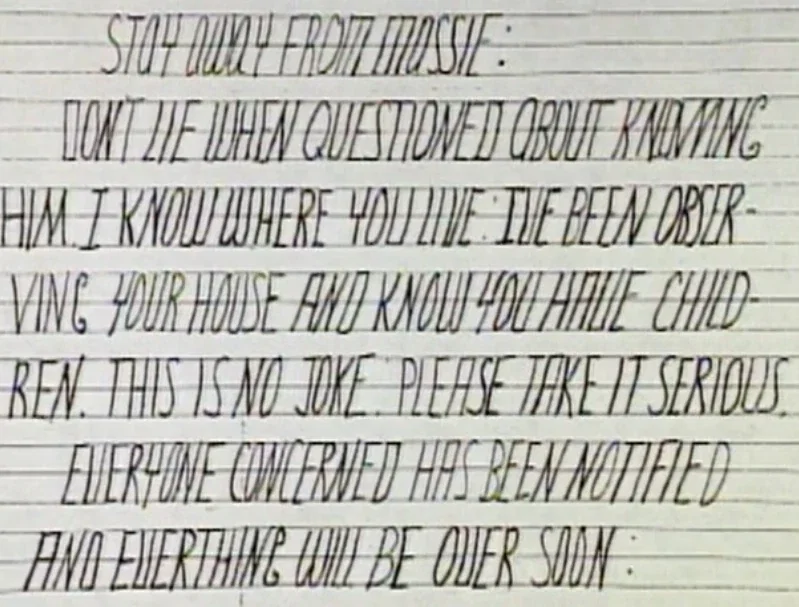
Despite the initial letters being sent to the superintendent and the school board, the main target of the anonymous writer’s harassment campaign would be none other than Mary Gillispie herself. Mary found a handwritten letter in her mailbox not long after the initial letter with the same accusation the superintendent had received. The writer claimed to have been observing her and her children. The writer insisted that this was a serious matter and also stated that “everyone concerned had been notified and everything will be over soon.” Perhaps this was in reference to the previous two letters sent to Gordon Massie and the Westfall School Board.
Anyway, Mary shared the letter with her husband, Ron Gillispie, but denied having an affair with the superintendent. However, in March of 1977, Ron got a letter of his own telling him that he needed to admit that his wife was cheating on him. Instructions in the letter told him to inform the Westfall School Board of the affair.
Ominously, the letter also warned that he’d be killed if he didn’t.
Both Ron and Mary decided to keep the letter quiet, however, another letter was sent two weeks later. Again, this letter was addressed to Ron, saying, “You have had 2 weeks and done nothing. Make [Mary] admit the truth and inform the school board.”
By now, both husband and wife had received letters threatening them and their children, but now there were also phone calls coming in.
Mary believed the letters to be coming from a fellow bus driver named David Longberry. Longberry had flirted with her before, but she’d rejected him. Was this revenge?
Mary and Ron reached out to Ron’s sister, Karen Freshour, and her husband, Paul, for help. Paul’s sister was also told about the letters, but no one else knew about the harassment campaign against them. Paul was a former prison guard, and when Mary told him that she suspected David, Paul decided to write a letter to him explaining that the Gillispies believed he was writing letters to harass and threaten them and ordered him to stop.
...And, for a time, the letters *did* stop. But then came the signs. Posted along Mary’s bus route, the signs alleged that Mary’s 12-year-old daughter was in a relationship with Gordon Massie. Ron would reportedly drive around early in the morning to collect the signs before his daughter could see them.
Then, on August 19, 1977, Ron received a phone call in which the caller said he was watching the house and knew what kind of car Ron drove. Ron thought he recognized the caller’s voice, grabbed his gun, and rushed outside to confront him. Getting into his truck, he drove off.
A shot was heard, but Ron didn’t return. His truck was found at 10:35 PM, smashed into a tree. Ron was dead from major internal injuries.
Many Circleville residents believed that Ron had been murdered, that the anonymous writer/caller had made good on his dangerous threats. His brother-in-law, Paul Freshour, also believed he’d been murdered. After all, his gun was found under his body. Moreover, it appeared that one round had been fired off, explaining the shot some people claimed to have heard.
Initially, Sheriff Dwight Radcliff suspected foul play, but the coroner, Dr. Ray Caroll, found a high blood-alcohol level of .16, or twice the local limit. As such, the sheriff changed his mind and claimed that Ron had driven drunk and crashed. The problem was that no one knew Ron to be a heavy drinker. Then again, a harassment campaign like that could have driven him to the bottle.
However, Sheriff Radcliff also had reason to cover up Ron’s possible murder. He was running for President of the National Sheriff’s Association, and it would look bad if this letter-writer hadn’t been caught before turning to actual murder.
Funnily enough, the letter-writer was also frustrated by the complete lack of investigation into Gillispie’s death and soon letters were circulating to other residents of Circleville as well. They alleged that Radcliff had covered up the murder and that Mary Gillispie and Gordon Massie had conspired to kill poor Ron. The letters also accused Dr. Caroll, the coroner who’d examined Ron, of sexually abusing young children. Strangely, he would eventually be charged with doing just that in 1993. Twelve counts to be exact.
The letters continued to be sent to residents throughout Circleville, including local businesses, the newspaper, and even schools. Terror gripped the town as residents were taken aback by the fact that the unhinged letter-writer seemed to know details of their lives that no stranger should’ve known.
Meanwhile, Paul Freshour took Ron’s death into his own hands, filing a report requesting that the FBI get involved in the investigation.
A messy divorce between Paul and Karen ensued during this time, and Karen moved into a trailer on Mary’s property. Mary told her that after Ron died, she and Massie *did* start to have a fling, and that’s when things get even crazier.
**The Even Crazier Stuff**
We rejoin Mary Gillispie on February 7, 1983. She’s been targeted for years by now and her husband gone for six years. Without him to take down the nasty signs targeting her daughter, she’s left to do it on her own as she encounters them on her route.
Driving near Five Points Pike, she saw one of the offending signs. Pulling over to remove the obscene sign, she saw that it was attached to a box with some twine. Unable to pull the sign down, she decided to take the entire rig home with home, but when she opened the box, she found a gun inside.
Bringing the gun to the sheriff’s office, it was determined that the sign was meant to be a booby trap. When the sign was pulled down, as the perpetrator clearly knew Mary would try and do, the gun would fire, killing her. However, for some reason, the trap didn’t go off when Mary first tried to pull down the sign.
For the police, this was the first break in the case, but it gets complicated at this point. The gun belonged to Paul Freshour, Ron’s brother-in-law who’d been trying for years to get someone to investigate Ron’s death. According to Paul, the gun had gone missing weeks before and he denied setting a trap for Mary. He didn’t report the gun missing, though.
The police asked Paul to copy one of the many Circleville letters and to try and emulate its handwriting. This practice is definitely not proper procedure for obvious reasons, but it helped build the case against Paul Freshour. Aside from this, however, there was still more evidence coming.
Mr. Freshour failed a polygraph test, and then his embittered ex-wife told the police that he was behind the letters. She even claimed that she had access to letters Paul hadn’t yet mailed, but then said that she couldn’t produce said letters because she’d already disposed of them.
Paul also took time off of work on the 7th so he could stay home, for there was work being done on his house. However, he fully cooperated with law enforcement, and it’s not like other witnesses weren’t coming forward, they were just ignored by police.
For example, some people claimed to have seen a large man with sandy hair in a yellow El Camino standing at the site of the booby trap designed to kill Mary. This description doesn’t fit Paul at all, but it does fit the man Karen was dating at the time.
Over 1,000 letters had been sent to residents by this point in time, complaining of corruption and some even containing arsenic. However, Paul was charged only with setting the trap designed to kill Mary Gillispie, though the letters were entered into evidence against him at his trial.
After just two-and-a-half hours, the Jury returned a guilty verdict. He was sentenced to 7-25 years in prison for the attempted murder of Mary Gillispie.
**Whew, Glad That’s Over, Right? ...Right?!?**
Are you kidding? I probably wouldn’t be writing this article if it didn’t get even weirder!
The thing is, the letters continued being sent after Paul Freshour was thrown in prison. Paul himself even received a letter saying, “Now when are you going to believe you aren’t going to get out of there? I told you two years ago. When we set ‘em up, they stay set up. Don’t you listen at all?”
The prison had taken numerous measures to make sure that Paul wasn’t writing these letters while imprisoned. He was kept in solitary confinement with no access to pen, paper, or any mail. He was strip-searched regularly and his cell searched. Yet the letters kept coming, all still postmarked from Columbus 25 miles north. The warden himself eventually wrote a letter to his ex-wife telling her that there was no way Paul was writing letters from his cell.
The letters finally ceased in 1994.
**48 Hours Tackles the Case**
In August of 2021 (how do you think I heard about this case?), *48 Hours* decided to take the case, airing an episode that they claimed would identify the writer. Yeah, that didn’t happen, but there was some interesting stuff revealed.
Document examiner, Beverley East, compared the Circleville Letters to Paul Freshour’s handwriting and found links between them. In particular, she focused on the way he wrote his numbers, so even though there were numerous differences in writing, there were also what she called ‘quirks’ of Paul’s handwriting that matched.
However, former FBI profiler Mary Ellen O’Toole doesn’t believe that Paul Freshour was the letter-writer. Not only did the letters continue while he was imprisoned, she believes the letters were written by a female, and not a well-educated one at that. Paul Freshour, however, was a man with three college degrees.
**The Theories**
I’m interested in reading what all of you think of this case, but here are some theories.
1. It wasn’t Paul, it was Karen. He and Karen went through a tumultuous divorce that ended when she moved onto Mary Gillipsie’s property and he gained custody of their three children. Between the FBI profiler believing the writer was a woman and Karen having access to Paul’s gun, the pieces just click. She was bitter and angry at their failing marriage and subsequent divorce that robbed her of her children, so she set him up.
2. There were a lot of letter-writers. This would be a realm for handwriting experts, but one theory is that David Longberry did write the initial string of letters, but others picked up where he left off. Everyone with grievances decided to air everyone’s dirty laundry. The Circleville Letters was a social phenomenon, not the result of one or two terrorists.
What do you all think?
The Origins of Mother’s Day
Was it a feminist cause? A pagan rite? A Christian celebration turned secular? Mother’s Day has a long and varied history, as many cultures have celebrated mothers, even if their particular festivals weren’t the ones that would ultimately morph into our current holiday.
Still, it’s a fascinating concept, and since I missed my normal Easter post, I figured I’d better not miss the opportunity to write about Mother’s Day.
**Ancient Greeks and Romans**
Anyone who follows me should know by now that any opportunity I have to insert the classic world into an article will be seized. Mother’s Day gives me just such an opportunity, as these cultured celebrated mothers as well.
However, they didn’t necessarily celebrate by treating their own mothers with any special regard as we do today. This was more about divine motherhood, specifically celebrating the goddesses Rhea and Cybele. Rhea was the wife of Cronos in Greek mythology, famous for feeding her husband a rock instead of allowing him to devour their most recent son, Zeus. Cybele is roughly her Roman equivalent, although she’s more associated with wild nature and her priests were all made eunuchs.
This ‘Mother’s Day’ was called Hilaria and was celebrated over the course of three days. It involved playing games and having parades, similar to the festivals surrounding other gods.
**Mothering Day**
Now that the ancient world is out of my system, time to indulge in another favored era of mine, the middle ages. Specifically, looking around the time of the Renaissance this time, which is a little misleading, as the Renaissance supposedly began much earlier – it just didn’t really spread until the 1600s.
Anyway, a new holiday cropped up called Mothering Sunday, which was a religious holiday for the Catholics. It was celebrated on the fourth Sunday of Lent and is more of a precursor to our modern holiday than the ancient traditions.
This holiday was viewed as a time when the faithful would return to the ‘mother’ church, or the main church within the vicinity of their home, for a special service. A special cake called a simnel cake was served and gifts were given.
Mothering Sunday began to secularize before falling out of popularity, becoming a day when children would give flowers to their mothers.
**The Modern Mother’s Day Celebration**
This modern holiday has its roots in the 19th century, before the Civil War, in fact. Anna Jarvis, in 1907, held a ceremony in Virginia to honor her mother, Ann Reeves Jarvis. Confusing? Yeah, the daughter was clearly named after the mother.
Moving on, Ann Jarvis helped start ‘Mother’s Day Work Clubs’ to teach women how to care for their children. After the Civil War, she organized ‘Mothers’ Friendship Day’ to help the mothers within the politically divided USA heal from the trauma of war.
Anna was successful in getting President Wilson to declare the second Sunday of May to be known as Mother’s Day. She did this through a letter-writing campaign, believing most holidays were biased toward men’s achievements.
For her, the holiday held religious significance, though she herself never had children. She eventually grew embittered at the secular way the holiday was being treated, even being arrested when she showed up to protest a Mother’s Day celebration.
But no history of Mother’s Day article is complete without the mention of another woman: Julia Ward Howe. This abolitionist suffragette wrote the ‘Mother’s Day Proclamation’, encouraging mothers to unite in promoting world peace. She campaigned for a second holiday in June called ‘Mothers’ Peace Day’, but was unsuccessful.
**What are You Doing for Mother’s Day?**
I miss my grandmother very deeply, but I’ll be celebrating by making my mother one of her favorite pies (recipe here for anyone who wants to try it). I have gifts ordered, but they seem to have been delayed. https://spicysouthernkitchen.com/no-bake-peanut-butter-cup-pie/

Mushrooms Could Have Language
Picture courtesy of the New York Times.
I’m constantly fascinated by the world around us, whether it be wonders built by the hands of human beings, the animals that roam the earth, the plants that make life possible, or the Earth itself. I also am a firm believer that the creatures we share this planet with are far more capable than we give them credit for, and at least I’m not the only one!
However, when it comes to plants and fungus, things get tricky. We know that plants have some form of communication, but we can’t say for certain that this is conscious on their part. The signals that plants send out could very well be akin to the signals our brains send to the rest of our bodies, many of which we aren’t even aware of.
I mean, I don’t know for certain if I have a virus unless it’s producing symptoms, but my white blood cells certainly do! I can’t make my immune system attack anymore than someone with an autoimmune disease can make their body stop attacking.
But some new findings have come to light indicating that fungus may have a language consisting of around 50 words. That’s pretty amazing, but par for the course regarding the enigmatic mycelium. Fungus exists within a weird category of its own, neither fully plant nor fully animal.
**How Can We Tell They Have Language?**
Mushroom synth is a thing that you can find on YouTube easily. Mushrooms emit electric signals, which is their primary form of “speech”, if we can come to classify it as such. Andrew Adamatzky, a computer scientist, compared the electrical signals in mushrooms to human language, finding enough similarities between the two to claim that mushrooms have language and vocabulary.
Basically, eight pairs of electrodes were stuck into each fungus to measure and log electrical signals. Mr. Adamatzky tracked their frequency, amplitude, and the time between the spikes. It was algorithms, however, that compared the fungi’s electrical impulses to human language.
Strangely enough, each of the mushrooms (four different species were used) displayed a unique electrical pattern, which Adamatzky and the AI interpreted as being different languages. Their complexity was varied, averaging around 15-20 “words” with a maximum of 50.
As of right now, we can’t translate this language, if that’s what it is. Future research should also include more species of fungus and present it with different stimuli to create some context.
In the meantime, enjoy some mushroom music created with these electric signals!
https://www.youtube.com/watch?v=p02GnipzfNE

Our Collective Amnesia and the Problem of the Five Minute Expert
A great number of factors came into play in regards to this article. It began when I read that, in America at least, reading has declined yet again. Reading has declined by 7% and American children are falling behind in reading compared to the rest of the world.
The same day, someone commented to me that they wouldn’t define the human race as ignorant, just forgetful, some cultures more than others. This intrigued me and it was about a month before Russian forces moved into Ukraine, but I remembered it almost as soon as the news broke and the propaganda cycle began.
Why is it so easy for the media to shape the narrative in America, and is it connected to the lack of reading?
I’m going to boldly, and perhaps incorrectly, declare that, yes, they’re related. There are other factors, too, such as racial tension being high and political lines being drawn so deeply in the sand that there’s a canyon between political parties so wide that as people gaze across it, they believe they are only seeing monsters standing on the other side, despite the fact that the two reigning parties in the USA have more in common than they do in differences.
But, to get back on track, reading does play a role in it. Our addiction to instant gratification and desire to be finished with everything in a matter of minutes so we can move on to something else and give our brains the next “high” has led to a world where people don’t like getting buried in a book, and therefore they lack all the information and context they need to form thought-out opinions.
**The News Cycle and Amnesia**
Trends come and go at rapid-fire speed lately. Unless the subject is Ukraine or COVID-19, it seems that most things cycle out of the news feeds fairly quickly. As politically charged as we’ve become, this overabundance of information is gone so fast that it leaves the memory in short order.
Do you remember how, after the Bush years, it was the Democrats who were the anti-war party?
Obama ran on a platform that promised an end to the invasions in the Middle East (he expanded them in the end) and was considered a normal Democrat, yet when Ron Paul, a Libertarian-leaning Republican, was in the debates, he was accused of being out of step with the Republican party for his strong anti-war leanings, despite his insistence that the Republican party had been the anti-war party in the past.
After Obama was elected and proceeded to expand the invasions (I call them invasions, as wars have to be declared by Congress and that never happened) and implement an even deadlier drone strike program, the Democrats, much like the Republicans before them, became far more hawkish in order to support the new POTUS. During the 2021 election, Democrat Tulsi Gabbard was marginalized for her firm stance against regime-change wars.
In a similar vein, years of news articles and documentaries reporting on the rampant corruption in Ukraine and its alarming tolerance of Neo-Nazis have seemingly been memory-holed in the minds of many people now that anti-Russian propaganda, which actually began when Hillary Clinton falsely accused Russia of election interference (and it’s since become mainstream to point the finger at elusive ‘Russian bots’ for everything from bad movie reviews to all things unfavorable to Democrats), and now has an outlet. This isn’t to say that I support Russia’s invasion, but it certainly wasn’t unprovoked and Ukraine is not the bastion of freedom and democracy people are making it out to be.
Why does this happen?
Well, in the Ukraine affair, I believe much of the previous reporting on the corruption running rampant there was simply overlooked because it never had much of an impact on everyday Americans. For most of us, then-senator Obama’s coup to overthrow the democratically elected Ukrainian President to install a more anti-Russian, pro-American puppet is news we never heard or didn’t think much of. Why would we care, except perhaps out of principle?
However, for most issues, it simply comes from the fact that we read multiple news articles per day, so how are we expected to remember them long-term? Especially when the news topics are constantly changing, it becomes more difficult to really remember an event with clarity and even harder to have such a firm grasp on a topic that your opinion on it comes from a place of true understanding.
This is in contrast to books, which are a deep dive into a subject and, owing to the time invested in completing a book, is more committed to memory, even if many of the nitty-gritty details become fuzzy.
**Speaking of Books…**
It’s unfortunate that there’s been such a steep decline in reading. As a published fiction author (I don’t come from the place of authority to write most nonfiction topics), I must admit to partially being sad simply because it means less revenue for me. But on a more serious note, this decline in reading can be linked to ignorance.
Now, before everyone jumps down my throat, hear me out. You *can* make the technical argument that we’re reading (and writing) more than ever, just in the form of articles, forum posts, texts, and bulletins. I’ll give you that, and my intention isn’t to knock these things. I myself both read and write articles (you’re here, aren’t you?) and am far more prone to letting professors Google and YouTube help me solve a conundrum than I am likely to head to a bookstore and search out an answer.
My goal here is to say that these things have their place, but some topics are far to big to be covered in a five-minute article or lengthy forum post with a handy tl;dr tacked onto the end of it. Complex issues require far more than a blurb if you want to fully understand them, and so many people with the strongest of opinions are the ones I like to call the five-minute experts, as the only information they have comes from a few short news articles, often with a strong narrative bias.
If you read three or more articles each day, how likely are you to remember them a month later? Probably not too terribly high. This is why, here on read.cash, we like to take advantage of the ability to save articles we really liked.
But if you read a book about a topic and spent even just half an hour every day reading until you finished it, how likely are you to remember it a month later? Very high! In fact, you might remember the general details and broad strokes quite well years later. This is because you were invested in the topic and committed time to do a deep dive.
Both articles and books can be opinionated, but a series of short articles all from one news source or journalist can sometimes start to feel less like news and more like a mantra being repeated over and over. Such publications thrive on our current culture of instant gratification, where people want to spend just a few minutes reading (both fiction and nonfiction) instead of getting absorbed in a topic or story.
**So, What are Articles Good For?**
Lots of things! Articles are great at solving problems, getting someone’s hot take on a subject, being introduced to a subject, or getting a general overview of a topic or a piece of a topic. They’re also excellent for learning fun trivia. I love many of the articles I read, have saved a good deal of them, and I take some pride in feeling as though I give my readers here a good overview of different topics as well as some fun trivia they can enjoy.
However, an article on the American Civil War, for example, isn’t going to make you an expert on the subject. An article might introduce you to some facts you didn’t know, present a different perspective on the topic, or may introduce you to it if, say, you’re not American yourself and know little of its history. There’s nothing wrong with that, but it’s folly to assume an article or forum post has given you all the information you need to know about a complex subject.
**What Do You Think?**
Have I missed the mark completely on this one? Have anything to add? I didn't even touch on the phenomenon of branding anything that goes against the narrative as 'misinformation' even if it later comes out as having been true. Discuss below!

Update on the House
I sat around thinking to myself, “What should I write today?” I’ve been placing articles for sale on Constant Content and dealing with the house being torn apart, so taking a break to write for read.cash sounded great… until the writer’s block kicked in.
Do I want to do a deep dive into the history of relations between Ukraine, Russia, and America and why you should reject all the propaganda coming from all three of these nations? Do I want to tackle the question of whether Billy the Kid was really killed or not? Should I review more language stuff?
In the end, I figured I’d just do an update on the house. Fast, simple, and for anyone who really cares to know. As I wrote before, we had a house fire about seven months ago. For the animals’ sake, we decided to actually attempt to live in what remains of it while the damaged bits are rebuilt.
This means that we’ve been living in a home with massive heat loss problems. No insulation left, because it was apparently laced with trace amounts of asbestos, in the middle of a northern Minnesota winter. Yay.
We’ve gone through five tanks of propane, about five hundred gallons each time. That’s a lot of money down the drain, and on top it we’ve been running space heaters, so that’s about $600 in electricity every month, although it’s starting to go down now with the warmer weather.
It’s been about seven months and the upstairs is still sitting as a gutted mess. After gutting it, our contractor had a hard time getting people to come out and work on it, so it sat for a couple of months. He finally got going on it, but couldn’t figure out what was holding the roof up. It managed to stump him, an architect, and an entire engineering firm for several weeks, somehow.
The house is more than 100 years old and no power tools went into its construction. It’s been interesting to see all the crude posts and poles, many of which were cut from local trees and still have the bark on them.
In a way, I’m a bit thankful for the delays, though, just because I have more time to get the inventory sorted. I hate making inventory lists, especially since I have so few pictures of anyone or anything inside the house! I’ll have to start photographing more from now on.

A Review of Glossika: Spaced Repetition System
There’s a method of learning languages that grew in popularity thanks to the blog All Japanese All the Time (AJATT) that places learning grammar and vocabulary through sentences and context rather than through the puzzle-like sequences found in most language textbooks.
Here’s how it works:
1. Learn the writing. Kana, Kanji, Cyrillic, Greek, hieroglyphs, etc.
2. Start with basic sentences and work your way up.
3. At around 10,000 unique sentences, you should be “fluent” in a language.
This really isn’t a bad way to learn languages. It falls into the input method, which emphasizes language acquisition through reading and listening instead of intensive grammar study and vocab memorization. I’m not going to knock it, as I have a real fondness for it.
How does this tie into Glossika? Glossika is a website that purports to teach a language (minus the script) entirely through sentences. They purport that if you simply listen, you’ll pick up the language.
It used to come as mp3s and have a book to go along with it, but now it’s entirely online and the sentences are presented in a slightly different order than they used to be. I’m going to be reviewing the new version, of course.
**What’s Great About It?**
Having sentences that increase in vocabulary and complexity of grammar is amazing! Instead of struggling through books or grabbing sentences from TV shows and movies to clumsily shove into a spaced repetition system (SRS) like Anki, all the sentences you need to be proficient in conversation are right in one place. That cuts down on a lot of time!
It also helps to be able to hear a native speaker say the sentences so the student can learn to mimic things like stresses, pitch accents, or tones, depending on the language. These things trip up a lot of students and make their speech sound clumsy even if they’re using correct grammar and obviously have a fairly expansive vocabulary.
I also like the large variety of languages, although some of the languages are currently only for certain dialects. Finnish, for example, is only taught in a southwestern dialect and the Norwegian dialect of Nynorsk is the only one taught. That’s a bit of a shame, but that’s not to say that other dialects and languages won’t be introduced in the future. Indeed, the site appears to be growing and encouraging people to work on adding their own languages and dialects.
Oh, and you can learn Gaelic for free, which is great.
I suppose that should bring me to pricing. For either the monthly fee of $30 or the annual fee of $299.88, you get access to all languages. For someone like me, a polyglot, that’s an amazing deal. However, for someone who just wants to learn one language for travel, immigration, or just because, it might feel a bit pricey. However, many other courses charge way more than that for just one language.
**What Stops Me From Recommending it for Beginners?**
I believe Glossika can be fixed with just a simple change: some grammar and vocab explanations.
The big downside is that it throws you into sentences with no explanation at all. That’s not all bad if you’re learning a language similar to your own, but if a language uses grammar that’s quite a bit different from your own and/or vocabulary that’s used regularly in their language but has no real translation in yours, you’ll run into a headache. A headache, mind you, that could be eliminated with the simple change of dong what apps like Duolingo or programs like Assimil do and providing basic explanations of new grammar or tricky vocabulary.
In Japanese, for example, two sentences were presented almost back-to-back, both of which used the verb “to visit” in them. However, the word used was different in each sentence, so the beginner learner would be unsure (provided they even knew which word meant ‘visit’) of what the difference was.
As it is, it’s a great resource for building vocab, but I suggest you have at least an intermediate grasp of grammar before embarking. Either that or make sure you have a good grammar book handy that you can reference and a dictionary to look up the new vocabulary. Do that and Glossika is far more comprehensible.

Ares, Sparta, and the Relationship that Never Was
In the late 90s, Disney released their animated “classic” *Hercules* to less than thunderous applause. I’m not going to go into what went wrong with this movie (someone on YouTube already did a thorough job of that), but I *am* going to say that the follow-up TV series Disney made for the movie was actually a lot of fun. The various gods play a much more prominent role, Cassandra exists, and the show manages to present a number of fun Greek myths and historical figures in a way that executes them much better than the film did. https://www.youtube.com/watch?v=KznZcK7ksf4
However, that doesn’t mean the show was perfect. There are a few problems I had with the show:
1. Apollo, as the sun god, should’ve had yellow glowing skin, not that purple color scheme they were going for.
2. Poseidon isn’t nearly as chill as the show makes him out to be. If anything, he should be more of an antagonist like he was in *Hercules: The Legendary Journeys* and *Xena: Warrior Princess*.
3. Hades shouldn’t be evil, but this is hard to skirt around in modern pop culture in general. That’s for another article.
4. Ares isn’t the patron god of Sparta.
Today I’m talking about that last one because it extends far beyond Disney’s cheap show, similar to how Hades is almost always portrayed as a kind of demon in modern pop culture.
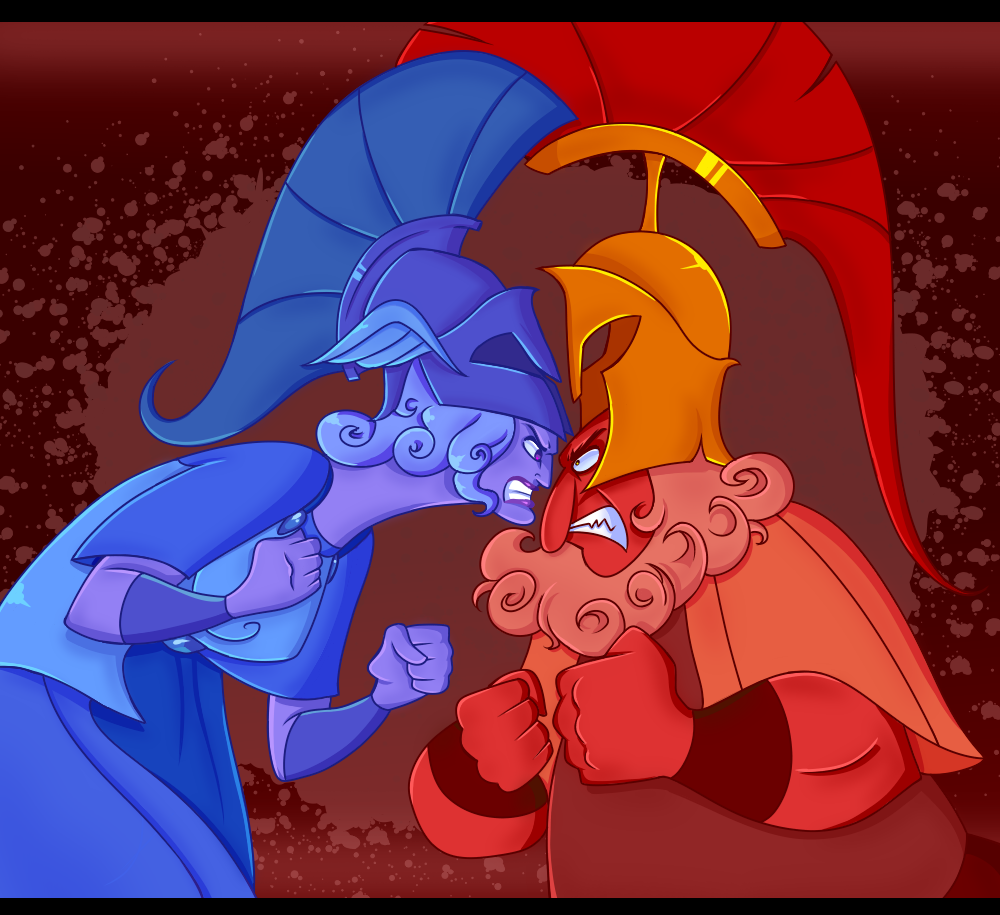
Disney’s *Hercules* presents Ares and Athena as rivals (kind of true), with Athena being a war goddess who presides over the capital city Athens and Ares being a war god who has the worship of Sparta. We even get a neat little song about these two polar opposite deities! The song even comes at the start of an episode where Athena sends Hercules on a mission to retrieve a secret weapon from Ares to prevent him from destroying Athens, only to realize at the end of it that Athena had planned all along to use the same weapon to destroy Sparta.
But did the Spartans actually worship Ares? Was he their patron god?
**Let’s Do Some History**
Ancient Greece was kind of like a collection of city-states instead of a single nation. When we think of it, usually Athens pops into our heads, but there were many cities other than Athens, all of them with their own patron gods, cultures, and even linguistic differences. This lack of unity is partially responsible for the Peloponnesian War, as each city had previously been part of an alliance, Athens having abused their trust. Why were they aligned and paying tributes to Athens? Because if a foreign power invaded, like Persia tried to, each city was so separated from the other that they had their own military. They needed to combine their forces to present an effective front against invaders.
They all considered themselves Greek, but they were certainly different flavors of Greek, and most of them had their own patron god or goddess.
Athens is named after its patron goddess, Athena, the goddess of war, wisdom, crafts, city defense, etc. Is it any wonder that the Athenians produced so many thinkers and philosophers?
The Ephesians had Artemis, Apollo’s twin sister and goddess of the moon, hunting, disease, and childbirth. They built in her honor a wondrous temple that was unfortunately destroyed by an individual who wanted to make his mark on history and have his name remembered forever, but we don’t know what it was because it was outlawed in response to his crime.
On the flip side, there’s an apocryphal story that the Temple of Artemis was actually destroyed by one of Jesus’ apostles and that it was the destruction of her temple through divine means that the people of Ephesus converted to Christianity.
Corinth had as their patron Aphrodite, the goddess of love, beauty, and sexuality. Her priestesses doubled as expensive prostitutes, and combined with Corinthian economic power, the city-state was a sort of ancient Los Vegas. What happened in Corinth, stayed in Corinth. Well, except for the STDs you picked up along the way.
But what about Sparta? The idea that Ares is the patron of Sparta makes perfect sense. Sparta, like the brazen god of war himself, was all brawn and no brain. Obsessed with physical perfection, the Spartans raised their boys to be the ultimate warrior, shunning modern warfare and its advancements completely (which actually rendered them rather useless in actual battle most of the time, and in the end they became little more than tourist attractions). To do the work in the city, more power than average was allocated to Spartan women, but the bulk of the workforce came from their vast slave class.
You didn’t want to be a Spartan slave. The Helots, as they were called, were largely foreign-born, and they were treated terribly. Unhappy with their lot, they would often try to escape, but the Spartans used escaping Helots as sport to desensitize young boys, who set out to murder them.
All of these things, one would think, would point to Ares as being their patron.
**Ares in Ancient Greece**
Unlike the Romans and their general respect for the god Mars, the Greeks didn’t like Ares very much. Unlike the defensive, logical tactician Athena, Ares’ brand of war was violent, indiscriminate, full of bloodlust, and left a trail of carnage in its wake. His warfare was dishonorable, and Greeks universally despised it. Heck, even the Greek gods didn’t seem to like Ares very much, with the exception of Aphrodite who had an affair with him, cheating on her own husband, Hephaestus.
Ares exists as a god to remind the people of what you *don’t* want to be doing in war. Whenever Ares is references, it’s almost always in a negative light. The only character associated with Ares in a positive way at all is Menelaus, the king of Sparta and husband of Helen. Yes, *the* Helen of Troy.
**Doesn’t that Prove It?**
Oh, you think that Menelaus being associated with Ares means that Spartans in general felt a kinship with him? I hate to burst your bubble, but Menelaus doesn’t speak for all Spartans. There are no major temples to Ares in Sparta, for example. Most cities had a minor shrine to him, but he never had a major temple that could compete with those of Zeus, Artemis, or Athena.
You see, the Greeks had a relationship of bargaining with the gods. You offered up prayers and sacrifices in hopes of winning the gods’ favor. With Ares, however, you mostly just bargained with him to keep him at bay. You really didn’t want to get caught up in his wars.
So much for the Ares of *Hercules: The Legendary Journeys* and *Xena: Warrior Princess*, in which he’s portrayed as being popular with warlords and an on-again, off-again lover to Xena. At least the shows preserve the other gods’ general disdain for him.
**The Only Historical Evidence for Spartan Worship of Ares**
Writing in the late second century BCE, the philosopher Porphyrios of Tyre summarized an earlier history written by Apollodoros of Athens, claiming that the Spartans made human sacrifices to Ares. This is the one reference to such a thing, but its credibility is easily called into question.
First of all, Apollodoros was an Athenian. Even if Disney got it wrong that Ares was the patron god of Sparta, they *did* get it right that the Athenians and the Spartans were no friends. The two cities couldn’t have been more opposite of one another, and it would fit only too well into Athenian propaganda to claim that the Spartans had “sacrificed a man” to Ares.
However, the greatest refutation of Apollodoros’ writing is the simple fact that human sacrifice came to be great taboo in Ancient Greece. According to their version of the flood myth, Zeus would flood the world a second time if humans were sacrificed to the gods. As such, any incident of human sacrifice was usually recorded, not mentioned centuries after the fact.
I say after the fact because at the time of his writing, Sparta was no longer the independent polis that once was. It was kind of a has-been on the Greek stage, and stories about it were running rampant.
**So, Who Did the Spartans Worship?**
Spartans actually seemed to hold Apollo and Artemis in special regard., and the most prominent temple was dedicated to a goddess whose epithet was Orthia, an aspect of Apollo and Artemis, much like Nike is an aspect of Athena.
They held a grand festival for Orthia, in which boys would show off how manly they are by allowing themselves to be whipped, sometimes to the death, without groaning or crying.
And, while she's not nearly as prominent as in Athens, Athena also seemed to have a proper temple in Sparta.
Whoopie Goldberg, Race, and Genocide
I’m sure everyone who reads my articles is aware of my disdain for cancel culture. I see no purpose in it, and I wish to make clear that the point of this article isn’t to hate on Goldberg or point out the hypocrisy of firing Roseanne Barr and Gina Carano while “merely” suspending Goldberg for a couple of weeks. The point of this article is to discuss race, how she made the mistake she did, and question whether or not it diminishes the acts of the Nazis if it *wasn’t* race-based.
I’ve tackled the subject of race through a historical lens before in this article, so if you haven’t, you may check it out. However, I’m going to reiterate a few points here. https://read.cash/@Shounenbat/race-it-didnt-matter-to-the-ancients-and-it-shouldnt-matter-now-17a9be14
**Historical Definitions of Race:**
Historically, race is largely tied in with national identity. This is why, were I time traveler to Ancient Egypt (Old or New Kingdom doesn’t matter) and I pointed to a black or white man and accused him of not really being Egyptian because they’re mostly brown, they and everyone else around them would be appalled. They were born in Egypt, practice Egyptian religion, speak the Egyptian language, and are culturally Egyptian, therefor they’re Egyptian.
However, if I pointed at a Greek and Roman and declared them the same race, they, too, would disagree. They may both have similar skin tones, but they consider themselves different in all other ways, making them racially different people.
The modern definitions only came about through race-based slavery. Both blacks and whites have been targeted to become potential slaves at different points in history, but in the west, we typically see the emergence of the modern definition of race coming through slavery and anti-Native American policies.
For example, the Cherokee went to great lengths to become culturally American, yet that didn’t stop Andrew Jackson from sending them down the Trail of Tears.
As an aside, I’d like to point out that the old definition of race still holds true in some areas of the world. For example, while we may classify the Chinese, Japanese, and Koreans all as the same race, they would each beg to differ.
**Modern Definitions of Race:**
Nowadays, we rely on ethnic features to determine race, such as skin tone, eye shape, nose shape, etc. This only came about after the end of serfdom in the west (not Russia, which didn’t free the serfs until 1861) and something needed to fill the void of free and cheap labor. There were the Turkish abductions, in which West Africans raided and kidnapped Icelanders to use as slaves; the Barbary slave trade which saw Muslim slave traders targeting whites, and, of course, the African slave trade, in which European slave traders targeted black Africans. This only came about in the last few hundred years, and yet some races still fall through the cracks.
**Goldberg's ‘Blunder’**
Whoopie Goldberg is drawing on the modern definition of race. To her, modern Jews look white, therefore they are white people. However, Jews are one of those races which slip through the cracks of the modern definition. Their persecution is an old one that began under the old definition and, likely because it’s tied up in religion, never really went away.
Genetically, the Jews are Semites, the same as Arabs. Yet we aren’t referring to Arabs when we accuse someone of antisemitism. This is because the only Semites Europeans really encountered in their normal lives were Jews for a very long time and the definition never updated. This is partially because religious Jews have always viewed themselves as set apart from the rest of humanity, making them, as far as their ancient definition goes, racially different.
In other words, Goldberg simply failed to take this isn’t account when she said the holocaust wasn’t racially motivated.
**So Why the Outrage?**
Now comes the big question: would the holocaust not have been considered as bad as it was if it weren’t for the racism woven into it? Some would say it wouldn’t have been that bad and others would consider it to be just as bad.
Let’s argue some semantics first.
Whoopie isn’t 100% wrong. According to her, the holocaust is about “man’s inhumanity toward man”, and I agree with this statement. All forms of racism and prejudice I consider to be examples of man’s inhumanity toward man. You do not need to share common genetic ancestry for this statement to ring true.
No, where people get hung up is when she denies that the persecution and murder of Jews was for racial reasons. My question is, even if she were right about that (and that’s where she is, indeed, incorrect), would that soften the horrors of it all?
We first have to understand that the Nazis enacted a eugenics campaign, which meant that all people who didn’t meet the standard they set and were considered genetically defective or inferior had to be rounded up, and to that end, they cast a rather wide net.
We obviously know that they created their own conception of the Master Race and anyone who was particularly deviant from this definition (Jews) had to be cleansed from the gene pool.
However, they were only one group, perhaps the largest, of the many people the Nazis set out to exterminate: the physically and mentally disabled, sexual ‘deviants’, artists, certain professions, and people who held political ideologies that were opposed to those upheld by the Third Reich.
In that sense, Hitler’s reign of terror wasn’t too terribly different from those of Stalin, Mao, and the modern Kim dynasty. This also begs the question of whether the terrors perpetrated by these regimes are considered to be not as bad because the racial aspects of their campaigns aren’t as prominent.
According to Norman Naimark, the historian who wrote *Stalin’s Genocide*, the definition of “genocide” should be reworked to include the extermination of people due to, say, economic class. Other historians have likewise challenged the definition.
So, if mass murder is a staple of tyrannical regimes, is the murder of one man for reasons of race more of a tragedy than the murder of another man because he plays loud music at night when the perpetrator is trying to sleep?
That’s up to you, dear readers. Time for me to head off.

The Muppet Christmas Carol is the Best Adaptation of Dickens’ Novel
Each year, my family tries to squeeze at least two adaptations of Charles Dickens’ classic novel *A Christmas Carol* into our holiday watching spree. Aside from the Rankin Bass Christmas universe (and they are all part of the same universe), no work captures what Christmas is supposed to be about quite like *A Christmas Carol*. Sometimes we’ll watch more than that (last year we tried to hit every major adaptation into our watch schedule), but most of the time we’ll stick to either the Alastair Sim or George C. Scott versions for one of them, but we never pass by the Muppet adaptation.
In fact, I will go so far as to say that this is the best adaptation of the beloved novel, not just because it’s entertaining or holds tremendous nostalgic value, but because it may be the most faithful adaptation, period. The critics may have turned their nose up at it, as they often do with anything having to do with Muppets (although *Dark Crystal: Age of Resistance* managed to snag an Emmy right before Netflix prematurely canceled it) and isn’t of the caliber they look for. Oh, and Katzenberg decided to pull the same crap he tried to pull with *The Little Mermaid* and remove an important musical number, this time succeeding.
As an aside, if you didn’t know, Katzenberg was overseeing *Mermaid* when he saw a kid fidgeting with his shoes during “Part of Your World” and demanded the song be cut. Alan Menkin and Howard Ashman fought hard for the song to remain and won, but Katzenberg got his way in *Muppet* and “When Love is Gone” was cut from the theatrical release. Disney recently restored the footage, but it was missing from the widescreen format for ages!
That being said, without further ado, this is is why you need to watch this adaptation, even if every other Muppet thing Disney touched sucked.
**The Costumes are Fantastic**
Don’t believe me? Check out this historical fashion expert. Really, though, these Muppets are dressed their best. The costumes are incredibly accurate for the time, even if there really were no rubber chicken factories in the 18th century.
https://www.youtube.com/watch?v=9O_mL1X4UMI
**It Preserves More of Dickens’ Prose Than Any Other Adaptation**
For many, adding Charles Dickens as a character (even if he serves primarily as narrator) and casting The Great Gonzo to play him is going to make or break this movie, especially since Rizzo the Rat tags along as a sidekick to give him a character to banter with. However, it is precisely this inclusion that allows the film to preserve the original prose of the novel. Instead of beginning with Dickens’ remarks about Jacob Marley being dead, to begin with, and ending by reassuring the audience that Scrooge really did learn to be a wonderful man, the Muppet adaptation can do away with these bookends and weave the book’s words into the fabric of the film.
A hallmark of the 19th-century novel was the omniscient author, who, in each scene of every chapter, allows the reader to be privy to the thoughts and deeds of everyone present. In other words, there’s a lot of telling, not as much showing.
Dickens manages to make his prose stand out by positioning himself as a narrator character, a bit like the narrator of *The Rocky and Bullwinkle Show*, but instead of conversing with the characters, he’s conversing with the readers. Dickens, for example, starts by telling us that Jacob Marley is as “dead as a door-nail.” The expression strikes him as odd, prompting him to go on a bit of a diatribe regarding this strange simile, and then he blames the reader for getting him distracted.
He also informs us that he is, metaphorically, standing by our side, watching the events unfold before us, much as his holiday specters will be doing with Scrooge as the novel progresses. Throughout the book, this sort of narrator-as-character style will continue, and *The Muppet Christmas Carol* is the only adaptation so far to even attempt to preserve this interesting style choice.
**The Spirits Are Accomplished Superbly**
People complain that puppets come to us straight from the uncanny valley. This is why, for so many, puppets are extremely off-putting. Their eyes widened with excitement, but there’s no humanity behind them. Their mouths open and close, but they don’t make shapes. For all the little ways master puppeteers have of manipulating their various moving parts, they can never fully escape the initial expression carved into their faces.
This isn’t so true with Muppets, as they aren’t meant to resemble humans. When Kermit the Frog flails his arms in frustration, it doesn’t evoke the uncanny valley response because he’s a frog, and one that isn’t trying to look like a real frog or hide the fact that his body is largely some kind of clothy material.
When creating the Christmas ghosts, however, the filmmakers decided to fully embrace the uncanny valley effect. It’s intentional, and it’s masterful. The spirits aren’t weird, animal-looking creations, but they are never fully human, either.
Let’s look, firstly, at the Ghost of Christmas Past. This spirit is a hard one to pin down by the book’s descriptions, and this is why the Ghost of Christmas Past changes wildly from one adaptation to the next. Sometimes, he’s a young man; other times, she’s a middle-aged woman. In *Scrooged* the spirit takes the form of a cab driver, and in the Jim Carrey animated film, they made the choice to represent the spirit as a literal candle, which is a bit closer to what Dickens was going for, but still doesn’t capture the strangeness of this spirit.
Indeed, the only ghost that feels “human” to readers is the Ghost of Christmas Present. The Ghost of Christmas Past is described as having a flickering, shifting form, going in and out of focus. Some believe that Dickens meant to evoke the idea of a candle flame without actually saying the spirit was a candle, which is clearly what the Jim Carrey adaptation was going with, but the actual way the ghost is described is as such:
**The figure itself fluctuated in its distinctness: being now a thing with one arm, now with one leg, now with twenty legs, now a pair of legs without a head, now a head without a body.**
With the spirit’s form being so fluid, there isn’t much humanity there. The Muppets went with a childlike form, but instead of having her represented by an actual little girl or even a normal puppet, they created something that manages to be both inviting and unnerving at the same time. They submerged their puppet in a vat of water (I think they tried oil first, but it just didn’t create the effect they wanted) to make her appear to float and shimmer.
Because of this, despite her childlike face, her body, if she even has one, is decidedly inhuman. She’s like a floating, shifting piece of what some psychic mediums call ectoplasm with a face attached, and the face, being all puppet, is both beautiful like a China doll and off-putting . The expression never changes, evoking the uncanny valley and doing it intentionally.
Thankfully, the spirits don’t really feel like Muppets, and they don’t feel like humans either.
The Ghost of Christmas Present is probably as close to Muppet-like you’ll get from the three spirits. His amazing song makes up for the fact that, otherwise, he would probably be my least favorite of the spirits. His edge from the books is completely missing, emphasizing his kind nature and the fact that he reacts to Christmas much in the way a little kid does. He’s fun and charming, but there’s no depraved children, the archetypes of Ignorance and Want, clinging to him beneath his robes.
Even so, they did well to avoid casting an actual Muppet as the spirit, and he’s still a lot of fun. Even Scrooge is nearly completely won over by him, and it’s easy to see why.
However, the Ghost of Christmas Yet to Come is done better than any adaptation I’ve ever seen. In the book, the spirit is described as being like a shroud, on a human hand sticking out of it. What form lies beneath the black shroud, however, is a mystery.
This prompts most adaptations to just go with a traditional Grim Reaper look. This gets the job done, as most people who have studied *A Christmas Carol* see the ghost as representing death. It is within his realm that Ebeneezer is faced with the deaths of Tiny Tim and himself, showing him the full consequences of his choices.
However, Dickens specifically says that the ghost’s form is obscured. The people at Henson Studios decided to give us a spirit with a rather inhuman shape. Large, human hands poke out of a gray shroud that looks to cover something decidedly monstrous in form. He’s not portioned correctly, and is, therefore, revolting in more ways than just his silence and the dismal world he escorts Scrooge through.
**The Casting is Perfect**
I’ll get to Michael Cain as Ebeneezer Scrooge in a second. For now, I want to focus on the Muppets themselves. With Disney’s Mickey Mouse adaptation of the tale, it’s easy to see how preexisting characters don’t necessarily fit into the mold of other tales. We can’t actually buy the message of the story because the Mickey Mouse ensemble doesn’t fit the *Christmas Carol* story.
Setting aside Scrooge McDuck, does anybody actually believe that Goofy could be Jacob Marley? No, and for two reasons: 1. Goofy is too dumb for business, and 2. there isn’t a hardened bone in his body. Seeing Goofy’s burdened spirit explain that he was too greedy and awful in life for Heaven is jarring, because we already associate Goofy with being kind, carefree, and probably unable to hold down a job.
I have a problem with Pete as the Ghost of Christmas Yet to Come. By casting the only thing close to a villain within Mickey’s world as this spirit, it makes the ghost come across as villainous and antagonizing. For as frightening and mysterious as the Ghost of Christmas Yet to Come is, it’s important to remember that he’s there to redeem Scrooge. If what he shows him is undesirable, it’s because, like with Christmas Past, this is the world of Scrooge’s own making. Christmas Past makes it a point to say that she’s (I’m going with the Muppet incarnation here) not intentionally torturing Scrooge. “I told you, these are the shadows of things that have been. If they are what they are, do not blame me.”
In that way, this spirit is also not attacking Scrooge. He bears him no ill will and is on the same mission as the previous two spirits. The Mickey Mouse adaptation forgets these things and the special falls apart, in my opinion.
However, the Muppets are cast in a way that each puppet *does* embody the Dickens character they’re meant to represent. Gonzo’s brand of humor compliments the author’s well, Kermit is the perfect embodiment of Bob Kratchit, and everyone is just done very, very well. Even Miss Piggy as Mrs. Kratchit works perfectly, as it’s Bob’s wife who initially refuses to toast Ebeneezer and then does so only reluctantly. Because the personalities we already associate with them fit so perfectly with the Dickens archetypes, we buy them as these characters perfectly.
Oh, and don’t forget Robin as Tiny Tim. This childlike Muppet is perfect as the innocent little Tim, and because of this, we feel an attachment to Tiny Tim that we don’t in most adaptations. There’s something decidedly strange about the boy in most adaptations, perhaps because seeing him played a young boy who’s trying way too hard to be the embodiment of total innocence feels weird to us. He has no flaws (because he’s an archetype) and doesn’t tug at our heartstrings the way Dickens intended.
Robin, however, does. We really feel awful when he dies around some Christmas in the future.
However, it’s really Michael Cain who sells this movie. He’s definitely my favorite Ebeneezer Scrooge, and it’s because, being surrounded by Muppets, Scrooge’s outbursts and exaggerated hatred for people and one holiday in particular doesn’t come across as outlandish.
When Michael Cain was asked to play Scrooge, he said he would do it on the condition that he be allowed to play the character as though the Muppets didn’t exist. He said he would act as though he were performing with a proper theater company, not with a bunch of puppets known for their silly antics and inability to even hold together a small variety show.
Between Cain’s performance and the brilliant cinematography, he comes across as truly intimidating and brings a humanity to the performance I’ve never seen before.
**The Kratchit Family Gets Their Due**
Perhaps it’s because of the musical nature, but in most adaptations the Kratchit family feels like theirs is just one of many that the Ghost of Christmas Present shows Scrooge. This ghost shows Scrooge many different scenes, of which his employee’s family is only one. While everything the spirit shows is valuable, Dickens intended to place Bob’s family on a pedestal.
Before I go further, allow me to point out that this is the only adaptation I’ve seen that actually shows Robin as being ill, not just lame. I once read that Dickens may have had rickets and tuberculosis in the back of his mind when he wrote Tim’s illness, but this is the only adaptation to show the tuberculosis bit.
Charles Dickens would sometimes perform, or read, the book for paying audiences. The demand for it was quite high, and to fit the whole thing into his run-time, he would often omit or shorten portions of the book. However, he never diminished the Kratchit family and always went fully into their bit of Christmas Present’s tour.
This adaptation draws you fully into their world and their outlook. They are meant to represent what Scrooge can become, and what all people should strive to be. As such, while his nephew Fred is great, the Kratchits should be our goal.
**The Music is Fantastic!**
Yes, this is a musical featuring the songs of Paul Williams, who also wrote “Rainbow Connections” for *The Muppet Movie* and was an early guest star on *The Muppet Show*. Guess what? He doesn’t disappoint here at all!
The are catching, uplifting, sad, and heartwarming. They’ll take you through the gamut of emotions and then you’ll be singing them all year round.
There *is* another musical adaptation of this. I finally watched the film adaptation of the West End musical, expecting to be blown away. I wasn’t. Every single time a song cropped up, with the exception of “Thank You Very Much” (which actually is a good, fun song, although wildly inappropriate in tone for the Christmas Future bit), I was thinking, “The Muppets’ song did this so much better!”
Don’t believe me? Which do you think captures Scrooge’s character better? Oh, and only one manages to keep Dickens prose running through it.
https://www.youtube.com/watch?v=hU6WXCvNGms
https://www.youtube.com/watch?v=ULaNvmjZWxg
**Conclusion**
Still with me? Cool! That’s all I have, though. If you’ve seen it, let me know what you think below. Merry Christmas and Happy New Year!
Just a Quick Update
I'm still on writing for this site like I'd like. As some of you know, I suffered a house fire a few months ago, and it's taking up most of my time. I've finally got all the asbestos out so my contractor can start arranging for the electrician and the insulation guys to come out. The restoration people who were supposed to remove damaged walls and stuff pretty much checked out, though. I'm not sure if the insurance will cover everything or just assume that because the restoration company decided they wanted to move on to more lucrative projects (a church recently burned down, and they seemed eager to start on that) that the damage wasn't extensive enough to fix everything.
Living in a house with no insulation or ceilings isn't that great when you live in Northern Minnesota! I've already gone through a tank of propane and it's way expensive this year. The insurance said they'll pay the difference between what I normally spend and how much is being spent this year, but that still means I have to find the money to pay for it up front.
However, we're all hunkered in and doing well!
Race: It Didn’t Matter to the Ancients and it Shouldn’t Matter Now
Were Ancient Egyptians black? That seems to be on the minds of everyone today, for we are a people obsessed with ethnicity. When combined with our obsession for the past, we form a dangerous cycle. We view ourselves as oppressors or the oppressed due to our view of the past; specifically, the past we would like to remember.
This is why we have such a black and white (no pun intended) view of the past. We remember the horrors of black slavery in America, which was meant to be the land of the free from its inception, and we forever view blacks as disadvantaged and as oppressed peoples even today, long after both slavery and segregation have been abolished, but we don’t remember the Vikings taking Saxons as slaves and selling them to Muslim masters. The idea that someone can be both privileged and underprivileged, victim and victimizer tends to fall on deaf ears. That's not to say the nuance is lost on everyone, but a lot of people prefer a very simplistic and hierarchical view of privilege.
And just as we look to the past to inform us of how disadvantaged we are (or how horrible we are), so do we look for our triumphs. As such, we spend too much time doing things like trying to prove that Europe was always diverse and multicultural, usually by catching sight of a dark Ethiopian man in a medieval painting. The fact that we never see black women or children, however, signals that these were likely traders, only there temporarily on business or as visitors. That doesn’t stop us from trying our hardest to change history, however, rather than take it, for better or for worse, as it happened.
We also spend time worrying about whether Egypt was black or not. After all, it’s an African country! It also doesn’t help that in many classic Hollywood films, Egyptians were almost unanimously portrayed by white actors, giving audiences the impression that Egyptians were mostly white.
The question is whether or not the evidence supports either of these notions and whether or not we should be basing our self-worth on the past.
**A Disclaimer About Race**
The first problem we run into is that our definition of race is very different than an ancient person’s. Race being defined by skin tones (white, black, brown, bronze, etc.) is actually very new. So new, in fact, that if you were to leap just 500 years into the past, people wouldn’t understand what you mean by saying Irish, Norwegian, Germans, English, French, and Russians are all one race, one people: white.
Ancient people weren’t color blind, but they didn’t see skin color as race. Race was actually conflated with nationality. A kingdom that was unabashedly black was the Kingdom of Kush, but they didn’t call themselves “black”, they called themselves “Kushites”, which were different than other African peoples.
Modern definitions of race came about two ways: one was the justification of the enslavement of black people (by ‘othering’ them) and the other was the inability for enslaved people to identify themselves as anything other than black, seeing as how they became unable to properly trace their ancestry back to a particular tribe or nation.
As such, we must bear in mind that when we look to the past and apply our own definition of race, we are, in a way, depriving them of the ability to define themselves. We are forcing our own worldview onto history, trying to force it to comply with our modern ideals, and it doesn’t necessarily cooperate with us. Not only is our current definition of race unscientific, but applying it to ancient people is heavily anachronistic!
**Let’s Do a Deep Dive!**
Bear in mind, before we get started here, that we should establish that black people certainly *did* exist in Egypt. We’ll talk about that in a jiffy, naturally. What we’re examining in this lengthy article is whether or not Egypt was a predominately “black” nation. With that out of the way, let’s jump right in.
**Were There ‘Black’ People in Egypt?**
Let’s start with this basic question. The obvious answer is that there were what we would call blacks in Egypt.
One piece of early evidence is the mummy of Lady Rai (approximately 1560-1530 BC). She was a lady-in-waiting to Queen Ahmose-Nefertari during her reign and was buried in Thebes. Hers is one of the best-preserved mummies ever found, even her exquisite braids still intact, and she is definitely what we would define as ‘black’ today.
Another bit of early evidence we have comes from the reign of Thutmose IV, who ruled from 401-1391 BC in the form of a man named Maiherpri, a nobleman. Upon his death, he was buried in the Valley of the Kings along with his own copy of the Book of the Dead. What’s interesting here is that this copy features an illustration of Maiherpri, and he has much darker skin than the normal brown and copper tones that often depict Egyptians. Furthermore, his mummy also shows that he had dark skin and has a wig of black, curly hair, clearly representing the form and texture of his hair in life. This man is definitely what we would call ‘black’ in our society today.
I'll show you their mummies later, but I wanted to clarify that black people did, indeed, live in Egypt and were considered just as Egyptian as everybody else.
The key here, however, is that Maiherpri is depicted in a way that isn’t usual for Egyptians. Most of them don’t feature such dark skin and are more tanned in color. So, why do Afrocentrists insist that Egyptians were a ‘black’ nation?
**The Linguistics of the Egyptian Word “Kemet”**
Most of the arguments for a ‘black’ Egyptian people come from the Ancient Egyptian word “kemet”, or “black”. According to them, Ancient Egyptians called their country “Kemet”, or “Land of the Black People.” Some, though not all, take it further and insist that they called the entire continent of Africa “kemet”, implying that either all Egyptians were black or that all blacks are somehow Egyptian, ignoring the ancient categories of race.
In fact, there is no evidence that Egyptians even had a name for the continent of Africa. They *did* refer to the land around the Nile as “kemet”, spelled “kmt” as in these hieroglyphics, but it almost certainly refers to the fertile *land* around the famous river, not to the skin color of the people living in the area.
As I’ve already stated, ancient peoples didn’t view themselves as monolithic people based on skin color. Even after race-based slavery came to replace class-based slavery (whites enslaved Native Americans and Africans based on race and Arabs enslaved whites based on race), ‘white’ people still didn’t view themselves as being one race. The ‘whites’ were the English, Spanish, and French, but the Scandinavians, Germans, Russians, Italians, Irish, etc. were still ‘other’. This is because they still viewed themselves as being too different in terms of culture, politics, language, etc. to lump themselves together as a single people.
This distinction is telling, as it shows that they refused to see Africans as anything other than a collection of dark-skinned potential slaves. They were just ‘black’, not people of different tribes, kingdoms, languages, cultures, politics, or thought. Meanwhile, ‘whites’ still saw each other as distinct: French, Italian, Russian, Norwegian, Finnish, German, etc.
Perhaps, in my opinion, we should extinguish these simplified categories of black, brown, white, and Asian and embrace our nationality as our diversity, instead becoming American, British, Kenyan, Chinese, Korean, Japanese, Danish, Swedish, Spanish, etc. Diversity of thought, to this writer’s mind, is far more valuable and indicative than the diversity of skin color. It would also combat the racism that still gives us trouble today.
Anyway, back to the topic at hand, the point is that “kemet” didn’t refer to skin. To add an extra bit of proof, the Egyptians referred to the desert as “dsrt”, which just means “red”.
**Skin Color in Egyptian Art**
One of the best ways to peer into the mind of an Ancient Egyptian and give them leeway to define themselves on their own terms is to simply look at how they depicted themselves in art. Lucky for us, they made *a lot* of art, and they used a wide variety of colors to portray themselves and how they viewed the world around them.
A fascinating aspect of ancient peoples in the Mediterranean is that skin color, at least in art, doesn’t define ethnicity, but rather gender. Men are typically depicted tanned or copper skin and women with pale or light brown skin. This is true in Minoan art as well as Egyptian art.
The reason for this is because, to reveal a hint of the rampant sexism and misogyny of the time, women were expected to remain inside and not be seen in public. Men were outside, working and enjoying public life. It was a similar convention to pale skin representing the upper class in later eras, as the nobility were able to remain indoors while the poor were out tending fields; hence pale skin becoming synonymous with beauty in an egregious example of classism.
Skin color didn’t just depict gender in Ancient Egyptian art, however. The use of color in art, especially around Hellenistic times, depicted all kinds of societal ideas. Because of this, there’s a certain folly in looking exclusively at art to get an idea of what anyone looked like, as lifelike portraits weren’t desirable to the Ancient Egyptians.
Still, it’s telling that, where the original colors are preserved, Egyptians typically portray themselves as having brown skin and Nubians as having dark skin. What many Egyptologists take away from such bits of art is that, while a wide range of skin tones certainly existed in Egypt, they most saw themselves as being a nation of brown-skinned people. Even their women are depicted, usually, with light brown skin as opposed to white skin.
Other surviving frescoes portray the stereotypical look of multiple nationalities, with Egyptians still portraying themselves with brown skin.
Another piece of evidence worth mentioning is the bust of Nefertiti. Again, her skin in this bust may be paler than she actually had, highlighting her sex as per the trend of the era, but it’s likely to be a fairly realistic portrayal of her actual appearance. This isn’t a fresco or symbolic statue, it’s a bust that appears to at least attempt to mirror her actual appearance.
**Mummies and Outsider Observations**
As children, we most often associate Egypt with mummies, and Halloween by extension, despite the holiday not existing yet. However, mummies provide us with more than creepy images of bodies wrapped in cloth – they provide us with actual evidence for how people looked and lived.
From mummies, we can see that dental problems were abundant in a land where so much sand was mixed with bread, get a fantastic idea of the Egyptian burial rituals and afterlife beliefs, and get a general idea of how people looked, even if we don’t get much real detail. Still, it’s better than the highly conventionalized artistic view we see.
The problem is that the embalming process often distorts or destroys certain aspects of an individual’s visage, especially in the face. Many mummies are also wearing wigs instead of natural hair, and their natural hair, when present, is often dyed. It’s unknown if this was intentional or if it was just part of the process of mummification, much in the way that the chemicals often distorted skin color. Either way, you could wind up walking into the afterlife looking very, very different than you anticipated!
Perhaps due to so many people, perhaps erroneously, associating the Pharaoh of the Exodus with Ramses II, his mummy is one of the most famous. Arguably, it’s also one of the most telling.
If you look at the mummy itself, it appears to have brownish skin and strawberry hair. However, in an example of not being able to take even mummies at face value, a forensic examination in 1987 concluded that the famous pharaoh’s skin had been chemically darkened during the embalming process and that his skin in life would have been lighter.
On that note, Ramses II’s hair was also dyed, likely to showcase the hair color he sported when younger, much like the wig that was made for Maiherpri. In reality, his hair was white when he passed. The man was in his 90s, and if he still retained his natural hair color throughout all his follicles, then he’d happened upon a magnificent discovery many of us would love to know about.
Now, I wouldn’t use the fact that Ramses II was maybe white to say that most Egyptians were white any more than having a black POTUS like Obama means most Americans are black. However, it *does* prove that there were white people in Egypt, too, pointing towards its diverse population.
Beyond mummies, we can also point to the observations of outsiders, specifically the Greeks.
When Egypt was thrust into the Hellenistic period, we get a glimpse of more lifelike depictions of Egyptians. Specifically, the people who lived in Lower Egypt are brought to life via the Fayum Mummy Portraits, or the funerary encaustic panel portraits that were brought by the Hellenistic and Roman periods. These portraits were highly detailed, capturing the look of people in the region more accurately than previous traditions.
Instead of describing them, I’ll just let you meet them face-to-face:
**Conclusions**
Egypt has a diverse, rich population. Trying to portray them as a racial monolith is a bad idea because ethnicity was national and cultural. It was derived from your values, not your skin. Whether this is good or bad is up to you.
Ebony: The Million Dollar Tree!
Ebony keys on a grand piano, neatly complemented the ivory keys that share their space; black, silky sculptures from exotic locales – all of these come from a tree. Valued for its rich, smooth texture and visual appeal, the ebony tree is one of the most valuable in the world. It also carries a natural oil that responds well to staining and finishing, giving it a natural shine that was valued by the wealthy in their furniture. In particular, the African species of ebony, which features a black heartwood and creamy, dense consistency. If you’ve encountered ebony, especially in sculptures, it was likely this form.
Granted, this means that ebony is extremely rare, facing extinction even.
**About the Ebony Tree**
Ebony trees are evergreen trees of the genus Diospyros, and they grow in tropical areas, primarily around rainforests, and usually in lower altitudes. This pickiness contributes to their rareness, but perhaps even more so is the fact that these trees don’t reach maturity until they’re between 60 and 200 years old!
There are actually three different kinds of ebony tree:
**Gaboon Ebony:** This is found in Africa and is the type you’re most likely to see. Of course, you’ll only see it on older pieces, as it’s been declared commercially extinct. Efforts are underway to save this species, and I think we can all hope they’re successful.
This is the heaviest of the species as well, weighing a whopping 70 pounds per cubic foot. It also grows at only half an inch per year.
**Mun Ebony:** This species is native to Laos and Vietnam and is the world’s most massive tree. It has a natural shine to it and is very durable. In fact, it’s resistant to termites and other wood-boring insects. Unfortunately, it’s nearing extinction, and its use has been largely banned.
**Makassar Ebony:** The last species of ebony is found in Indonesia. If you guess that it, too, was endangered, you’re correct. While its decline hasn’t been as marked as the other two species, it has seen a 50% reduction over the last three generations.
**Ebony Through History**
Ebony has been the most valuable, sought-after wood for centuries, even millennia. It comes from the genus Diospyros and commonly grows in more tropical areas.
The word actually comes to us from the Ancient Egyptians, who called it “hbny”, which would likely have sounded similar to the modern English word. They used it for ornamental purposes and in royal tombs, and it’s easy to understand why! The deep, rich wood and its hardness would have been considered fit for little less than the ruling class itself.
In the Egyptian Old Kingdom, the ebony tree was mysterious, even secret, which is what made it so valuable to them.
Ancient kings in India also used ebony, perhaps to excess. They especially used it in their drinking cups, believing it could nullify the effects of poison. They also used it in image frames and, interestingly, wands.
The Samurai, too, were fond of ebony. While the Japanese didn’t quite use it as excessively as other nations, the Samurai often put it in their sword handles.
Beginning in the late 16th century, ebony started being used worldwide in cabinetry. It started in Antwerp, the hardness of the wood lending itself to intricate and refined moldings, their subjects often pulled from Christianity or even classical history.
**Modern Applications for Ebony**
Ebony wood is no longer exported, due to its critical state, but that doesn’t mean it doesn’t have any modern uses.
For example, its leaves are used to treat skin conditions, and harvesting its leaves doesn’t contribute to its decline. Locals also use the extract from its wood to treat conditions like diabetes, and it has anti-fungal and anti-inflammatory properties.
Modern pagans believe the tree has magnetic properties, but they don’t harvest its wood in any way.
**Looking to the future**, I hope these magnificent trees make a comeback. There are alternative tree species that we can use to achieve similar effects, but nothing represents the power, purity, and wealth of the ebony. If it’s used in the future, I hope sustainable practices are put into place.
Aaron Rogers is Giving $1M BTC to Fans
Admitting this is probably not in my best interest, but I’m not a fan of professional sports. As a kid, I liked playing pretend baseball (the version of the game where I toss the ball into the air and try to hit it with a bat on the way down), and I enjoyed jogging as a teenager, but I was never interested in playing competitively, and I find watching others play sporting games to be boring. Not all the time, of course, but nine times out of ten I’d rather be playing a video game.
That said, this bit of news caught my eye: Aaron Rogers, the NFL quarterback who takes his pay in Bitcoin, is giving away $1,000,000 BTC to his fans on Twitter.
His tweet reads, “I believe Bitcoin & the future is bright. That’s why I’m teaming up with CashApp to take a portion of my salary in Bitcoin today. To make Bitcoin more accessible to my fans, I’m giving out a total of $1M in BTC now too.”
The rules, for anyone who follows sports stars closer than I do, is that you must tweet with the #PaidinBitcoin hashtag, follow CashApp, and provide your Cashtag name.
Definitely a bold move, in my opinion, but one that I wholeheartedly support. My only problem is that it really should be BCH. Experts have been warning about trading with the volatile cryptocurrency, but BCH is meant to be used as cash. Bitcoin has, largely, failed as a virtual currency, instead of becoming more of a virtual asset.
Now, there are plenty of people who have paid for goods and services via Bitcoin, but most BTC holders treat it like an asset – a digital precious metal. BitcoinCash is meant to be used as a currency. While its value waxes and wanes, the same as most crypto, those of us who accumulate BCH don’t typically hold it all.
In my case, I try to save up some of it, the same way I do fiat currency, but I’ve actually spent a lot of what I’ve earned here and on noise.cash as well. It comes in handy during an emergency! I just wish that my crypto.com card didn’t force me to trade it for something else first.
What do you guys think of this promotional move?

Little Nightmares 1 & 2: A Must-Play This Halloween!
Halloween is one of the best holidays, in my opinion. You may not get time off from work or school for it (and you really should!), but the color scheme is warm, inviting, and marks the change from summer to autumn. I start drinking more hot cocoa, start to notice the change in atmosphere as I sit around a campfire (here in northern Minnesota, it gets particularly cold during September and October), start wearing sweaters, enjoy whatever is left of the fall leaves, carve some Jack-O-Lanterns, and look forward to eating a tub of candy while watching *It’s the Great Pumpkin, Charlie Brown* with my family.
Oh, and let’s not forget watching other Halloween movies, shows, and TV specials, as well as playing spooky video games. That’s an important part of Halloween! As such, it’s time to start writing about Halloween stuff, and I’d like to start with two video games: *Little Nightmares* and *Little Nightmares II*.
**What Are They?**
*Little Nightmares* is a series that emphasizes childhood fears, embracing the grotesque and the off-putting. Unlike games such as *Resident Evil*, they aren’t terribly gory. In the first game, you play as a girl named Six (not to be confused with *Stranger Things*’ Eleven) who finds herself trapped on a ship called The Maw. Here, children are kept in cages and small rooms until the grotesque beings who work there decide to eat them. Six is on a quest to survive, meanwhile something truly monstrous seems to lurk inside of her as well.
The second game is actually a prequel in which you play as Mono, a boy who is being pursued by a creature known as The Thin Man. He finds Six and the two decide to survive in this world populated by monsters together. The game offers a wider look at the world – a world that eerily looks like our own – of *Little Nightmares*, expanding upon the story and offering twists and turns that the previous installment lacked. Not to mention, it does all of this while leaving only cryptic clues as to why the world is in the state it’s in.
**Why Should You Play Them?**
I say them because the two games really compliment each other, and they’re almost like a single game in my eyes. It helps that, unlike games such as *Resident Evil* or *Silent Hill*, these games a relatively short. You can easily get through them before the holiday arrives! They’re like reading a short story – they get you sucked in, but they don’t take you on an adventure with a million characters, plot twists, power-ups, etc. Your goals are simple: escape The Maw and avoid the Thin Man.
They also have an atmosphere you don’t encounter much in games. When most people think of horror, they think of shooting zombies that jump scare you, playing through your own slasher film or monster flick (think *Until Dawn*), aggravating puzzles as the sounds of creatures close in on you, etc.
*Little Nightmares* doesn’t do that. It feels a little bit like a more grotesque version of *The Nightmare Before Christmas*. In fact, many of the characters, were they friendlier, would easily have a place in Halloween Town! Perhaps what I mean to say is that if *Nightmare* were a horror flick, it would be *Little Nightmares*.
The characters also manage to stand on their own, offering players a surprising amount of insight despite the total lack of dialogue in the game. There are no text boxes to tell you anything, nor is there spoken dialogue, yet you feel like you know and understand the characters.
I also appreciate how the story can be as simple or complex as you allow it to be. These games can be enjoyed casually, but you can also get absorbed in the world and join the thousands of people online in trying to piece together every hidden clue and solve the mystery behind the world of *Little Nightmares* and the horrors plaguing our protagonists.
**Why Don’t You Want to Play It?**
These games are short. While this is also a reason to play it, if you’re the type of person who doesn’t want to play a game unless you can get sucked into a world and live there for a good while, then you may find this game frustrating. It leaves you with more questions than answers regarding its story and characters, and the prequel doesn’t do much to answer any of them. This is a series that either insists you shut off your brain and just enjoy the creep factor or that you spend all your time picking apart clues and Easter eggs as you create endless theories all in regards to a few games that you can beat in just a day or two if you power through.
Some segments of the games are also very frustrating. You cannot manually save the game, relying instead on checkpoints that sometimes feel like they’re far too far apart. The games aren’t *Dark Souls* levels of challenging, but they’re still difficult in some areas.
**But, Seriously, Play It!**
If you have played it, keep the spoilers to yourself in the comments!
The Real Problem with Transgender Bathrooms
The news reports on an incident in which a man was brutally arrested during a school board meeting about allowing transgender students the ability to choose their own restroom. It was widely reported, initially at least, in a way that portrayed the man as a belligerent parent, the type the government is eager to classify as a domestic terrorist. https://www.washingtonexaminer.com/opinion/washington-secrets/network-blackout-on-gender-fluid-rape-claim-in-loudoun-school
Recent reports tell a story of political correctness gone wild, however. The man’s name was Scott Smith, and just weeks before, a boy wearing a dress entered the girls’ bathroom and sexually assaulted his 9th-grade daughter.
**The Incident**
Apparently, he’d gotten a call from the school saying that his daughter was involved in an altercation in the bathroom. However, when he arrived, he realized that it was far worse.
The school, Stone Bridge High School, claimed that it was handling it in-house, but that wasn’t near good enough for the distraught father. He proceeded to make a scene and the school called the police.
I should clarify, they made the call to report Smith, not to report a potential rape in the girls’ bathroom.
Smith wasn’t arrested at this time, but his outburst was instrumental in getting the alleged victim to a hospital where a rape kit could be administered. The results apparently proved useful to the prosecution’s case.
The school ultimately tried to shush it up, but a few weeks later, Scott Smith and his wife, Jess, attended a school board meeting, one of the topics covered being transgender students in opposite-sex bathrooms.
The school reported that there had never been an incident. One woman, Beth Barts, downplayed concerns with, “Our students do not need to be protected, and they are not in danger,” adding, “Do we have assaults in our bathrooms or locker rooms regularly?”
All of this right after an incident involving the alleged rape of a girl that resulted in the alleged perpetrator being charged with two counts of forcible sodomy, one count of anal sodomy, and one count of forcible fellatio.
He later returned to school, despite being under house arrest, and sexually assaulted another girl, this time in a classroom.
Smith wasn’t about to let them get away with this and started making a scene. He had a verbal confrontation with a woman there who claimed that she didn’t believe his daughter (but would have believed it if she said a martian had raped her), threatened to destroy his plumbing business on social media, and who was later ousted as being part of a Facebook group that sought to dox conservative-leaning parents.
An officer grabbed his arm and Smith yanked it away, giving the officer leeway to become violent with Smith and charge him for resisting arrest.
His wife stood crying, “My child was raped at school and this is what happens!”
**Why is this a Transgender Problem?**
After everyone finished denying the incident, the narrative has changed. “Sex-segregated bathrooms don’t stop boys from coming and assaulting people!” and “A few bad apples don’t spoil the bunch!”
This is an interesting argument to be coming from a group of people who tend to believe that all firearms should be banned because a minority of gun owners have committed murder, but it’s still a valid argument, right?
Well, I don’t think so in this case, but please hear me out.
It’s true that laws will only stop law-abiding people from doing wrong, thereby laying down rules of acceptable behavior that most people will try and follow. This is a classic libertarian argument and I endorse it.
Transgender students and workers also tend to make the argument that all they want to do is pee while ignoring true mixed-gender bathrooms because it isn’t validating enough.
Unfortunately, by allowing students who would normally be read as male, regardless of how they’re dressed, into female spaces and shaming the girls and women who object, it sends a message that girls and women should reject their gut instincts about a situation.
When people, regardless of sex, are in a vulnerable position, such as when undressing in a bathroom or locker room, they expect privacy and try to limit potential threats. Females are often the victims of sexual aggression, so limiting such areas only to other females who share similar anatomy is a safety instinct.
When we tell our daughters to ignore that gut instinct that says, “You shouldn’t be here,” we open them up to such assaults.
Had we not begun doing this, this boy would have been met with an indignant young woman who may have attempted to force him from the bathroom or shouted to alert someone instead of waiting to see what would happen.
This sense of “wrongness” is likely why crimes such as voyeurism are normally much rarer in single-sex (notice the term “sex”, not “gender”) bathrooms than unisex bathrooms. By giving males the opportunity to mingle with females in such spaces, and then telling females to deal with it, we are creating a problem where a simple solution exists: use the bathroom of your sex. It may not be validating, but it’s safe. https://thefederalist.com/2017/02/09/data-suggests-unisex-bathrooms-bonanza-male-perverts/

More Bad Luck: My Truck Died and I Had no Phone!
Sorry for writing another personal entry instead of continuing my language learning series and reviews, but it was another crappy day that would make an interesting story.
When my dad passed away, I wound up with his 2001 Ford Ranger, seeing as how I had no vehicle of my own at the time. Having little money but decent mechanical skills, he babied that thing like no one else could. As he often said, “I have no money for another truck, so this one has to last me the rest of my life!”
Of course, no one had any idea that a heart attack would take him at the age of 56. Still, for all those years he put more work into keeping that truck running than most people ever would. It’s filled with parts scavenged from the dump and had the best insurance he could afford, ironically.
Unfortunately, the truck was obviously standing on its last legs – erm, wheels – by the time it came to me. The engine light came on and never went off, the bottom was so rusted out, the shock absorbers busted through the truck bed on one side, although both sides were broken; the paint on the driver’s side door flaked off more and more with each passing Minnesota winter, the brakes failed at one point due to the exhaust pipe coming loose from the clothes hanger that was holding it in place and melted through the brake line – the entire thing was one problem after another.
My father and I shared certain mechanical abilities, but I didn’t have the time and money to keep fixing everything that went wrong. It was only a matter of time before a problem arose that I couldn’t fix and couldn’t afford to have fixed for me. I thought it was going to be the axles degrading too badly from rust or the other shock absorber breaking through the failing truck bed, but it came from the most unlikely of places.
For anyone who missed my earlier article, we suffered a house fire at my house a few weeks ago. The restoration company had a dumpster and storage container brought in, but my mom, unused to it being parked in the driveway, backed up into it. Luckily, she has good insurance (way better than the liability I put in my late father’s truck) and they agreed to take care of it.
My brother decided to take it in this morning for her and I would follow in the truck to give him a ride back. We picked up our mom’s Honda and started on the long stretch of highway that took us to the next town, about 20 minutes away.
The Honda is in much better shape (maybe because it’s also much newer), and one of the many problems faced by the truck is the inability to gain speed quickly, so my brother was far ahead of me within moments.
Stuck several cars behind him, I made it to the speed limit and turned the cruise control on, riding smoothly as the radio prattled on about a murder case in one of the Dakotas.
My thoughts turned toward finding a gas station on our way back when suddenly the truck stopped maintaining its speed, the needle falling from 60mph to 50 and then 40. Hitting the gas did nothing – the peddle was loose like there was no pressure behind it. Just as I thought maybe I’d completely run out of the gas, despite the gas light not coming on, it started back up, regaining speed.
Cautiously, hoping it was a fluke despite my gut warning, I pressed “resume” on the cruise control and continued on. In about another minute, it cut out again. A few moments dead, then rearing back with life. It rattled, as it often did when accelerating, but the acceleration wouldn’t last.
I pulled off to the side and tried shutting the truck off and restarting. It gave me no trouble, but my success was short-lived. Before long, the accelerator quit entirely. The gas light came on, the oil gauge went nuts, and the batter light also lit up.
I tried everything to try and eek the truck along into town. It wasn’t far, about a mile only, but I knew I was stranded.
Stranded without a phone, at that.
After becoming stuffed with corrosive ash as I had tried to force my way up the stairwell, it finally gave out a week ago. A new phone was due to arrive, but for now, I was on the side of the road with no way to call for help. It felt like being in a horror film from my youth, trapped on the side of the road in the morning fog. My brother hadn’t even seen it and was happily speeding along to the body shop.
Despite being due for hip surgery (labral tear, possibly due to deformity), I started down the road. I walked for nearly thirty minutes before I found a business. Actually, I’d found one a few minutes from where my truck sat, unmoving, but it wasn’t open so early. This business was the first open one I’d found.
They were kind of enough to let me borrow a phone, so I called my mom and told her what happened. She had no words, but one of the employees offered me a ride to the body shop, so at least my brother and I would be in the same spot if we could get ahold of someone for a ride.
Not only did she give me a ride, but she also gave me a number I could call for a tow. The body shop owner's wife kindly gave my brother and me a ride back to boot.
In the end, my truck made it back to my driveway at least! It had to sit there for a few hours, but it made it home in the end. Hopefully, the bad luck that has trailed me since the fire is done wafting my way and has dissipated. They say it comes in threes, right? Maybe that was three!
I believe the problem lies with the fuel pump, but I suppose it could be a number of things. It’s probably time to look for another beater, but if anyone has any other ideas, please sound off in the comments!

Frances Haugen Isn’t a Whistleblower – She’s a Pro-Censorship Shill
The headlines proclaim it all: “Frances Haugen Takes on Facebook: The Making of a Modern US Hero” chimes The Guardian, and it isn’t the only one. Haugen secured her own special on *60 Minutes* and was busy testifying in Congress within days.
The thing is, Haugen isn’t saying anything we don’t already know – she’s just saying the things the current liberal wing of Congress wants to hear. Claiming to have “lost a friend to online conspiracies”, she’s calling for more censorship, showing her hand someone who prefers to control the narrative rather than allow individuals to navigate it themselves.
This is part of a new movement to control information. The Internet was widely heralded as a liberator of information during its inception. Whereas knowledge was once kept largely within libraries or hidden away within universities, only accessible to those deemed worthy of it, knowledge was now at the fingertips of every man, woman, and child. Even though it couldn’t fully replace books, it managed to even make purchasing them, even those normally only available to students, accessible to a wide number of people.
Through social media, people were able to share information with one another, discussing the news and forming new ideas. I’m not saying social media hasn’t warped into an abomination of shouting matches and bullying, but rather that it has its place and originally, especially through old-school forums, connects us in ways not possible without it.
Unfortunately, this means that you have to accept the downfalls, too. People will hold unpopular opinions, and they may organize to act upon them. Some information will be misleading, and some information that isn’t misleading will still be labeled as such by those who are dreadfully trying to wrest the control of narratives and facts back into their own clutches.
I don’t believe the efforts to suppress and discredit the studies and anecdotal evidence that Ivermectin successfully combats COVID-19 (no one disputing its anti-viral and even anti-cancer properties before), for example, as stemming from a large, interconnected conspiracy; I merely see it as the last holdout of institutions that once controlled who knew what and why feeling frustrated that they no longer have that power. All of the studies and papers are available for anyone to read nowadays, and, in the words of Al Gore, they are an “inconvenient truth” to those who wish to suppress them in the name of profit and reputation.
**Whistleblowers Don’t Get the Red Carpet Treatment**
Our first look at Haugen shows us that the media treats her very well, and the government is more than happy to give her a powerful platform to stand on. Not many true whistleblowers have gotten such a happy reception, most of them being fired, imprisoned, or ridiculed and slandered.
Edward Snowden exiled himself to Russia and Julian Assange is rotting away in prison after the Ecuadorian Embassy finally allowed him to be seized, for example. Meanwhile, Haugen is being coached and funded by Obama-era big wigs, such as Bill Burton.
Frances Haugen gets a platform because she’s spouting talking points that pander to an alarmingly fast-growing pro-censorship movement. She’s accusing Facebook of doing what most companies do in a capitalist society: maximizing profits. She’s arguing that its algorithms mean that people have greater access to “misinformation” or anything that goes against the narrative, and was instrumental in leading up to the January 6th “insurrection”, because words have all but lost their meaning in the Age of Hyperbole and Language Degradation.
Believe it or not, there was another Facebook whistleblower, Morgan Kahmann, who was fired by Facebook after disclosing Facebook’s censorship of anything that could promote “vaccine hesitancy”, including comments, to Project Veritas. He didn’t get a *60 Minutes* special, nor was he invited to speak before Congress. Instead, he got the standard whistleblower treatment of being fired and silenced, de-platformed by all the “credible” sources. https://www.youtube.com/watch?v=GWtnO2Li-HA
**Is a Free Internet a Better Internet?**
Instead of scrutinizing an individual whistleblower, I would like to challenge her philosophy. Frances Haugen is a woman who would gladly trade liberty for safety, a notion that would have offended early Americans. In order to maintain order, dissenting opinions and “incorrect” information must be suppressed. After all, if a bad idea spreads and takes root, it can threaten the foundation of democracy.
The problem is that I don’t think any conspiracy theorists, vaccine-hesitant people, or right-wingers are challenging our democracy. Refusing a vaccine in a time of rushed vaccines, obvious lying about the existing evidence regarding the efficacy of certain treatments, is not challenging democracy. If the likes of Fauci and WHO are correct, then it means people are endangering themselves by refusing to get vaccinated, but that’s on them. It’s a little thing called personal responsibility, and we act like it’s a football that we need to keep tossing to the next person, blaming everyone around us.
We don’t see this type of reaction to people who refuse treatment or vaccines in any other setting. Sure, you can look down on them, but you can’t dictate that they not be exposed to dissenting viewpoints.
Even the “insurrectionists” were not seeking to overthrow the government, they were appealing to the government to investigate an election that didn’t seem fair and uphold democracy, much as how Democrats urged a fruitless investigation into Russia regarding the integrity of our elections.
Now it’s considered *wrongthink*, as Orwell called it, to question the election, despite election results being questioned quite frequently in the United States.
Censoring the Internet robs it of its intended purpose and is akin to posting minders North Korea-style on the street to stop people from engaging in conversations deemed inappropriate by the governing powers.
In many ways, social media does exactly what people like Haugen assert. It does create echo chambers, it does promote a black-and-white way of thinking, but what Haugen refuses to acknowledge is two-fold: 1.) that she herself also lives in an echo chamber and that 2.) we should be educated people about personal responsibility and about getting off the computer once in a while instead of using the strong arm of legislation to try and control the narrative, turning all of the Internet into the sanitized, filtered lens we see in the MSM.
Frances Haugen also lives within the caverns of her own echo chamber- a left-wing echo chamber. All of us do this to some extent both online and offline. It’s human nature to look for those who think like you, and Haugen is no exception.
The various caverns of social media aren’t bad because they amplify opinions, although doing such is nearly unavoidable, it’s that they promote a black-and-white worldview. When you no longer have to engage in civil discourse with another human being, it’s easy to just think “they’re wrong.” This isn’t unique to political echo chambers of either the right-wing or left-wing; it’s a part of all echo chambers, even including Nintendo vs Sony vs Microsoft vs the PC Master Race!
This black-and-white thinking leads people to assume that conservatives are cave people and liberals are tyrants, or “libtards”. When you adopt such a mindset, it’s easy to set aside the philosophies of our founders and why they developed the ideologies they did and move to suppress your “dangerous” opponents.
Right now, it’s the left that’s seizing power and pushing for a narrative that emphasizes the censorship of whatever they don’t particularly like. It’s an easy thing to do in an age where our vocabulary has expanding to include terms such as “fake news”, which is so loosely defined that you can use it as a generous blanket to cover anything you don’t like.
That’s not to say that I don’t believe there aren’t dangerous ideas out there. I fear ideas like the Great Reset (although I get where the people who subscribe to such an ideology are coming from), Marxism, and the movements that lead to the Soviet Union (not to be confused with modern-day Russia), China, and North Korea.
But, perhaps, more importantly, I fear that the people who are engaged with such radical ideologies could shut down alternative ones, labeling anything else as “alt-right”, “far-right”, or “conspiracy-driven”.
The ability to engage with different ideas isn’t bad, and if you and your friends find that you’re moving in different directions, it hurts. However, you haven’t “lost a friend to online conspiracy theories,” you’ve just parted ways.
If I decide to eat a paleo diet and a friend decides to eat a vegan diet, and if we were both health nuts that found our new lifestyles so incompatible that the friendship withers away, it would hurt. However, I have no right to stand before Congress and declare that we limit people’s access to information regarding vegan lifestyles. Such a thing would be considered nonsense.
Instead of censoring more, we should instead be willing to take breaks from social media and engage more with the real world. This isn’t a problem shared only in conservative circles, but also in those that encapsulate Haugen and her ilk.
**What Can We Do to Fight Censorship?**
America is reaching a breaking point. We see it in the BLM riots and protests (I’m not going to say every police brutality protest was a riot because I feel most of them weren’t), the water protectors, the Proud Boys, Boogaloo types, the praise for people like Frances Haugen, the banning of conservative voices on social media, and more. Everyone is taking a stand, and we have lost the ability to see the humanity in one another.
However, we can all stand against this, just as we did with SOPA. I urge you to write to your Congressperson and voice your opinion. An unregulated Internet is a free Internet. Yes, you’ll have to deal with the consequences of that, but the alternative is to tread in the footsteps of tyrants.
Tell them of people like Morgan Kahmann who offer differing accounts and the evidence to also back up what they have to say.
When the People are no longer listened to, then we worry about what to do next, but as long as the government is meant to work the will of the People and in the interest of maximizing personal liberty, they are still meant to listen to us and we must always try that avenue first.

My House Partially Burned Down – Here’s What I’ve Learned
You may have noticed that I’ve been away for about a month, or not, I mustn’t overestimate my own importance. Anyway, the reason was because my bedroom upstairs caught fire due to an ancient window fan. Luckily, the downstairs was spared, but despite my efforts to crawl through the smoke, I lost several of my cats (all of the dogs were downstairs and safely evacuated!). Pretty much all of my possessions that I had up there were also either destroyed or damaged by the fire or smoke.
Despite the ongoing grief (if my cats hadn’t passed, it would be a different story), I have learned some valuable lessons. Granted, these are things we all know, but it takes a catastrophe to remind you of them and bring them to the forefront of your mind, as they too often sit in a dusty corner, visible but easily overlooked.
**Be Grateful for Everyone and Everything in Your Life**
There have been many deaths in my family recently. Several years after graduating high school, my great-grandmother passed, followed a couple of years later by my grandmother (the best friend I ever had). My cousin died by suicide a few years after that with my uncle close behind due to the effects of alcoholism. Four years later, my own father died from a massive heart attack at the age of 56.
I lost three dogs as well as a baby goat I was caring for, having been rejected by his mother (possibly due to health problems, as many animal mothers will reject babies they instinctively know are ill), all of which were just as hard as losing human family members, sometimes more difficult.
Of all people, I wouldn’t think that I would need a reminder to be grateful, yet here I am, learning once again that Fate, or chance, can snatch away what you hold dear. Be grateful for what you have because you just never know.
**Good Insurance Goes a Long Way**
While some are flabbergasted that I’m not getting my house completely rebuilt, as the main floor and basement were savaged by water damage, I’m very thankful that the insurance company is willing to replace anything that I lost and that the restoration company thinks needs replaced. I’m trying my best to live in the house in the meantime, even if that means it was only safe to restore electricity to a couple of rooms, because my dogs absolutely will not leave, so my insurance company is doing its best to make sure that’s possible.
The hardest thing is sorting through the wreckage. Most of my possessions wound up buried under piles of insulation and debris from where the firefighters tore out the paneling and broke through the ceiling to the attic, where the fire had spread first. As such, it’s impossible to find every last thing, and I’m a horrible pack rack to begin with. Luckily, the adjuster said he was only worried about pictures regarding items more than $500, and he understood if it was hard to get photos to document the loss.
**Life Without Electricity Sucks!**
Writing articles is difficult, as it’s a process of charging my laptop (which I had to replace due to water damage) then finding a table where I can write. That works for about an hour and then I have to recharge it. Most of the house is dark once the sun goes down, and my TV and game consoles are running through the power of extension cords. Thankfully, I have electricity in the bathroom, kitchen, and laundry room, so that’s a plus.
**Dealing with Restoration Companies is a Pain**
Someone remarked, “It would’ve been easier if the whole house had burned down rather than deal with trying to repair a badly damaged house,” and part of me agrees. I mean, I don’t want to have to catalog the entire main floor as well, but it can be hard to get workers going. Everything is stopped right now because there may have been asbestos in my room (the house is over 100 years old), there’s mold beneath the floors and ceiling tiles now, and it would be nice to have things normal by Halloween or Thanksgiving if only the demolition crew would finish up.
So much work needs to be done, and I wish they’d focus on the main floor first, as we can live without the second floor and attic. Sure, I’m sleeping on the couch, but I can cook and wash up. I would prioritize the area I’m still living in before working on the upstairs.
On top of all of this, I’m supposed to have major surgery on my hip and could be laid up for a long time. It would be nice to have a house during this time period!
**Anyone Ever Gone Through This?**
If you’ve gone through something similar, I’m so sorry. This is truly disastrous and the loss is indescribable. However, if you’re willing to share your experience, please do so in the comments. If you have any advice, I’m definitely open to it as well!

I finally have a new computer to write my articles on! A fire ripped through the upper floor of my home, so I haven't been on in a few weeks. No, I haven't abandoned the platform, but life has been incredibly busy lately. Please be patient; I can start writing again very soon.
 @Shounenbat