How About "Bitcash" for short? And Why Does the Bitcoin Name Even Matter?
So I wrote an article a few days ago about how I think Bitcoin Cash should change it's name to "Bitcash." And wow, did people *hate* that idea. Comments on Reddit were overwhelmingly against the idea, except for the one or two obvious trolls that wanted to try and leverage my idea into something that was antagonistic in a way that I would never intend. https://read.cash/@dave_gutteridge/bitcoin-cash-should-change-its-name-to-bitcash-6ce5a3b7
Just so it's clear to anyone who might be stumbling across me for the first time, which is likely most people, I am very much in the camp that believes that BCH is the cryptocurrency that works as a crypto should, and in a sane world, would be the one at the forefront of the marketplace. I support BCH and my critiques are always intended to be constructive, to look at what might not be working so that it might be improved.
There were some reasonable counter arguments to my point about the name. However, an issue came to light that I think is a weakness in Bitcoin Cash's community, which I'll get into below. But, however I might assess the criticisms, I'm not so arrogant as to ignore community consensus. No one wants to change the name, so, fine. I surrender.
Though, I still find "Bitcoin Cash" just long and clunky to say. So, I would propose what I probably should have proposed from the start, which is that maybe "Bitcash" could just be an accepted shorthand for "Bitcoin Cash."
Just like my official first name on my birth certificate is "David," but everyone calls me "Dave." Or everyone calls Coca-Cola "Coke." Or Federal Express goes by "FedEx." Similarly, "Bitcoin Cash," could just be made a little friendlier and shorter by using "Bitcash" in casual conversation, while preserving "Bitcoin Cash" as the official name for any matter of record.
Maybe that's fair enough, or not, we can see. Bitcoin Cash is not a top down organization, so how it's perceived and identified is an emergent property of community consensus. Maybe I'll just start referring to Bitcoin Cash as "Bitcash," and see how it goes. Feel free to join me if you like.
But on to more important matters, like the ones raised in response to my first article.
I'm not going to go through them all, but I found one of them to be very interesting. Which is the idea that holding onto the "Bitcoin" name is a matter of legitimacy, justice, and rightful legacy. The strongest objections to the idea of any kind of name change was that to do anything that removed the word "Bitcoin" from the name would be an admission of "defeat," in that it would imply that Bitcoin Cash is not the true Bitcoin as imagined by Satoshi Nakamoto.
To explain why I think that concept is a weakness of the BCH community, allow me to propose a hypothetical.
What if a magic genie were to come up to you one day and offer you a choice. One option is that BCH will become the dominant world cryptocurrency, accepted in all stores world wide, and well known to be a stable store of value, and a basis for all kinds of tokens that allow for myriad services. Everything BCH aspires to be. *But*, the catch is, no one will ever know that it was based on Nakamoto's white paper. All connection to the history of Bitcoin will be lost. The word "Bitcoin" will be removed from any and all reference to BCH, and all links back to the Nakamoto whitepaper will disappear. It will be the most important coin, but not recognized as the original coin.
The other option the magic genie offers you is that everyone in the world will be made to realize that BCH is in fact, the true Bitcoin. All other coins claiming to be Bitcoin will dissipate as everyone realizes they are not legitimate. But, the catch is, BCH will never rise above what it is now, and maybe even fade out of popular usage over time. BCH will be remembered in history books as the one crypto that held onto Nakamoto's vision from the start, but adoption won't rise, and may even fade.
Which would you choose? For me, I would choose the first option, no hesitation.
For me, what's important about BCH is the underlying technology and the features that arise from it. Block sizes that increase to meet demand, 0-conf transactions, no need for side-chains until an objectively provable limitation, whatever you call that thing where processing adjusts to keep block times stable... And many other features.
Maybe the most important feature, at least to me, isn't a technological one. BCH is the only crypto that is truly leaderless and without any specific organization that holds sway over its direction. So long as BCH is the cryptocurrency that is run by community consensus without any de facto benevolent dictators, it's probably the coin I trust the most.
What I want is for there to be a cryptocurrency with a certain set of features, and BCH has all those features. I could not care less whether or not some person named Satoshi Nakamoto first thought of it or that everyone acknowledges that legacy. Or that it's called "Bitcoin."
I feel that giving priority to the pursuit of some kind of justice in terms of proving who is ultimately right or wrong to keep a certain name is a whole separate concern from the pursuit of adoption.
Imagine every time you went to buy a shoe by Adidas they gave you a long lecture about how the company was formed because two brothers had a big fight that resulted in one founding Adidas and the other founding Puma. As a person who wants a shoe, not only would that information be irrelevant to me, the discussion of it would very likely strike me as so tedious that it might make me want to walk away and look at Nike. Or Xero or Vivo Barefoot, which are some of my actual shoe brand choices these days.
That kind of lecture about the history of the division between Adidas and Puma is exactly the kind of irrelevant history that no one should need to hear when being introduced to Bitcoin Cash. Sure, it's the "true" Bitcoin. So what?
When choosing a product, what matters to me are features. The only way in which a products history or legacy matters to me is if there is an overwhelmingly strong connection to human rights abuses or environmental destruction or something where I feel use of that product contributes to a larger social problem. But almost every company has its issues, so it's a sliding scale.
Ideological fights and company divisions based around internal organizational politics are not reasons to choose a product. Nothing about Bitcoin Cash is made more appealing because it has the "right" history. It either works, or it doesn't.
Do you want to be right, or do you want to be successful?
Bitcoin Cash Should Change its Name to Bitcash
The whole reason Bitcoin Cash exists is because a significant portion of Bitcoin enthusiasts felt that Bitcoin needed saving from those who wanted to steer it in a direction away from its original vision. It was, in a sense, an attempt at preservation.
From that point of view, it made sense to keep "Bitcoin" in the name. The preservationists wanted to establish themselves as being inheritors of everything good about Bitcoin at the very least. At best, they hoped to one day reclaim the "Bitcoin" name, which seemed potentially easier if the word "Bitcoin" was always there to remind everyone of the heritage.
This was a controversial decision, especially in the eyes of those who retained the name "Bitcoin" for their version of the coin. Even though cryptocurrency is, at its heart, just a form of software that can be copied, branched, and adjusted without any particular regard for what is "original," the market at large had clearly decided that there was a single "real" Bitcoin, and any other version was some kind of lesser attempt to try and leach of the glory of the "real thing."
But talk to any Bitcoin Cash enthusiast, online or off, and they will tell you at length about how Bitcoin Cash is, in fact, the real Bitcoin. It adheres more to the vision of the original Bitcoin. The people who took over Bitcoin lied and broke promises in order to distort what the Bitcoin project became. The word "cash" is right there in the title of Satoshi Nakamoto's white paper.
But does any of this matter? Does it help Bitcoin Cash gain any acceptance?
Earlier today, I was using Wise, a service for currency exchange and international bank transfers. They used to be called TreansferWise. Do I care that they changed the name? Not really. Do I even know why? Do I need to know? Somewhere in the world, might there be people who have intense opinions about the original name and the new name, with all sorts of arguments for and against? I can't even imagine caring enough to find out.
Brands change all the time, and I can't make any claim that it's always a good thing, but it certainly doesn't seem to be any impediment to success. What matters most is people's perception of utility.
And that the brand identity doesn't confuse anything. You might have a hard time selling a brand of protein bar if they were called "Automotive Supply Bars." That kind of mixing of concepts would just be weird and confusing.
Unfortunately, six or so years after the creation of Bitcoin Cash, all the "Bitcoin" part of the name is doing is confusing people. The people who already know what Bitcoin Cash is about have already picked their sides in any debates. But they don't matter. They're not a significant part of the marketplace.
The vast, vast, unimaginably vast amount of people who have never heard it will find themselves confronted with tedious explanations of why the word "Bitcoin" is there should they every encounter it. I can say this with some confidence, having personally introduced Bitcoin Cash to more than a few people.
And they don't care about the ideology that put it there, and neither should you.
What does this ideological insistence on holding onto the Bitcoin name do beyond sounding like someone embittered by contentious divorce? Does it foster the likelihood of adoption? Does it actually demonstrate any "legitimacy," whatever that even is?
If your goal with Bitcoin Cash is that it stand as a monument to how Bitcoin has been perverted by people you don't agree with, then I suppose no appeal to change the name will ever sound good to you. But if you want Bitcoin Cash to be the thing that it was always intended to be, a currency and a cash, then embedding niche factional arguments into the name is a hindrance.
The fact that Bitcoin Cash is the rightful continuance of the original vision, if that's what you believe, will never be a fact lost to time. Historical record is what it is, and it sits there for anyone to reference, should they care, which they almost certainly won't. Just like no one knows Nike was called Blue Ribbon Sports for the first few years of its existence.
That it follows Nakamoto's white paper more than any other cryptocurrency is a good thing in my opinion, though we should never treat the white paper as a holy document. But it's not the case that being associated with that white paper is an important selling point. Ethereum has shown that people will flock to new coins if they're given a reason.
And there's constantly diminishing value in the name "Bitcoin" anyway. The concept of a "coin" becomes less and less meaningful as people are using little discs of metal far less frequently as time goes on.
"Bitcash" is my choice for a better name. It makes sense with the BCH ticker designation, "cash" is referenced in the title of the white paper, it's easier to say, and it's representative of the goals.
I could be talked into another name, but no matter what, "Bitcoin Cash" is not helping.
Crypto Isn't Dead
Every technology goes through hype cycles, where one of the phases is “the triumph of the uninvolved.” That’s the phase we’re currently at with cryptocurrencies. This comes after all the “the world is going to change” hype, like what we’re seeing now with AI.
“The triumph of the uninvolved” stage is where everyone who was skeptical about something get to revel in smug glee about how all the bubbles of excitement have burst. Scammers are revealed for what they are, inflated stocks get “corrected,” and lots of people who hoped to get rich by easy investments are left holding empty bags. There are news stories and blog posts and podcasts where people make jokes about how it was obviously stupid all along.
This stage, however, is merely the inverse of the peak of the hype, and is no less distorted. Which is to say that neither the peak of the hype nor the bottom of the derision are either entirely incorrect. On the one hand, new technologies can bring exciting new opportunities, just nowhere near as extravagant as promised by the quick buck seekers. On the other hand, just because a technology seems to have failed to meet its promises doesn’t mean that it’s simply dead and gone.
The fact is that technology does not die. It can’t. A technology is simply a way of doing something. It may be superseded by something better, but it still exists. And something that exists will always have the potential for someone to pick it up and do something with it.
Cryptocurrencies and the blockchain technologies they are based on are still an interesting and potentially useful idea. There’s nothing inherently flawed about them, all the flaws were in how the marketplace tried to leverage their value. Cryptocurrencies can, and I think most likely, will re-emerge at some point to become a something relevant and put into wide use.
This doesn’t mean, though, that one day people in general will suddenly wake up and realize that cryptocurrencies are such a great idea and adoption will take off as a result. This seems to be the hope that many crypto enthusiasts are clinging to, and it’s pure delusion.
For a technology to hit its stride and become meaningful, it has to intersect with a real and tangible application. Or with a specific use case. And usually both.
Consider tablet computers. For a while there were Apple Newtons and Palm Pilots and other devices that were essentially the precursors to iPads and Android tablets. I had a Palm Pilot, it was kind of useful. Sort of. It had apps and games and things, but, it was always more of a novelty addition to my life than an essential device. It was a solution looking for a problem. The devices were generally only used by technology enthusiasts, and without mainstream interest, they all faded away.
But the concept of a small digital information device, the technology, lay in wait for the right marriage with other technologies. Improved screens and batteries are factors that can’t be discounted, but, I think those are minor points in comparison to the one thing that made a small personal digital device become a must-have technology for everyone. The tide shifted when portable digital devices intersected with with connectivity to the internet. If Newtons or Palm Pilots had wifi from the start, we might still be talking about those brand names.
Most cryptocurrencies are in a similar position to what Palm Pilots were. Outside of the hype cycle, the only people aspiring to actually use them in any way were a statistically insignificant core group of technology enthusiasts. Most likely, almost all the first to market brands, Bitcoin or Ethereum or whatever, are going not going to survive the transition into relevance, the same way that Newton and Palm Pilot were also first to their market, but that had no bearing on their long term success.
Which means, if you’re holding onto bags of crypto, hoping that one day these particular coins are going to suddenly rise in value when the world wakes up, you’re probably going to be disappointed. I can’t predict the future, so, maybe you’ll get lucky. But imagine talking to someone holding a Palm Pilot in 2006 and them telling you they think the brand’s stock will blow up when everyone realizes how useful it really is. However you imagine that person sounds is how you sound waiting for crypto to return without some kind of seismic shift in what exactly crypto is and does.
Unfortunately, most of the crypto space is dominated by enthusiasts and promoters who think that if they can just get the word out about how beneficial crypto *would* be if only everyone started using them, then crypto will fulfill its promise.
And development is largely stuck in a rut of trying to create financial instruments with no real world utility beyond trying to squeeze value out of people’s existing portfolios. Crypto, and blockchain technology, won’t go mainstream by someone offering another token, or “defi” product, or new staking option.
And don’t even get me started on how pointless NFTs have been so far. The concept of unique identifiers for digital or even real life goods could definitely be a technology with merit. But not if all its doing is just arbitrarily assigning unique identifiers to things that have no value other than the fact that they can be uniquely identified.
Crypto and blockchains will be relevant when it intersects with a purpose or technology or something outside of crypto where whole becomes more than the sum of the parts. Just like digital tablets needed connectivity to matter.
Of course, if I knew what that intersecting technology or use case was, I’d be heading towards future riches. And depending on what I thought that would be, it might be better for me to shut up about it and get in on the ground floor before all the rest of you show up.
My point here is not to try and rally you toward some particular end goal. My point is just to rationally reflect on what it means for crypto to be in its current dark ages. The smug derision of the post crypto highs is no more real than the unjustified hype at the top of the bubble.
If you’re still believing in crypto as a technology that will one day rise again, you’re not insane. But, if you’re waiting on a specific crypto in your portfolio, I think it’s likely you’re holding a Palm Pilot while out there someone is inventing an iPhone.
You, Yes You, The Crypto Investor, Are Killing Crypto
Turns out, the central bankers had a point
Whenever I speak to someone who is new to the world of cryptocurrency and they’re asking me how it all works, I always begin with the same introduction.
“It’s a great technology that would be super useful for the world, were it not completely buried under an incredibly stupid market.”
The basic premise that makes it such a great technology is very simple. I should be able to send you money as easily and cheaply as I can send you a text message. That’s it. Everything beyond that, to do with “blockchains,” or “smart contracts,” or “decentralized apps,” or whatever else, is technical nuance that isn’t important for the every day user. But it doesn’t matter how great that kind of service would be in principle if we can’t ever get it off the ground.
And why can’t we? The technology is right there. It’s been around now for over a decade, which in technology years, is ages. It should have been perfected by now to the point where it’s as easy to use as watching videos on your phone.
The problem is the market. The over financialization of the crypto market is preventing it from becoming a usable tool.
Like Matter and Anti-Matter
But why? Lots of things get bought and sold in stock markets or wherever else trading happens, and it doesn’t prevent them from being something usable. Stocks in Apple go up and down, but their value at any one time doesn’t make any one iPhone more or less usable.
I’m sure the stock price of a company like Apple ultimately effects how their products are made or sold in some way, but the connection is indirect and a little hard to know or care about for the average consumer. Effects of secondary market influence on Apple’s ability to make and support products probably wouldn’t be felt until years down stream.
Cryptocurrencies, though, are not like most products. Because their utility and value are the same thing. The whole point of crypto, at least originally with Bitcoin, is to move value around. Ideally, like with any currency, that value is stable and predictable enough that I can know if I sell someone some thing I made, or some service I offered, I know how many coffees or carrots I can buy with what I receive as compensation.
If I sell my services, and have no idea whether or not the currency I received could be worth zero within moments after I get it, it’s useless to me. Sure, it could go up, too, but, I’m trying to lead a life where I can buy food at regular and stable intervals. I’m not interested in riding boom and bust cycles where I feast or famine. Gambling on investments is for my discretionary income that I can afford to lose, not my base income on which I depend.
On the other hand, the whole point of trading is to change values. Buy low and sell high, as the deliberately ironic and simple trading advice goes. There’s no point at all in buying stock in something if you don’t think the value will change. Hopefully, it will go up. Staying the same is not as bad as going down, but in any case, a stock is kind of pointless if it’s value doesn’t move.
These two fundamental premises are diametrically opposed to each other. Which creates a significant problem since a crypto’s use is not siloed from its trading price the way an iPhone’s ability to serve you is separate from Apple’s stock price. The moment someone trades a crypto, it’s usability is immediately affected, changing the value in my wallet.
Its utility and its trade are the same domain. And like matter and anti-matter, the combination is volatile and generally destructive.
Which means the entirety of all the market heat around crypto is exactly why Bitcoin, or any other crypto, is not taking the world by storm. It’s not that no one has found a use case. If people could send money around at a fraction of the rates they get from banks or online services, they would absolutely be doing it regularly.
Units of Pizza
They just can’t right now. None of the obvious utility is accessible because crypto is currently buried under an entirely irrational market.
Not just “irrational” in the hyperbolic sense that the market is frustratingly volatile and subject to herd mentality. I mean “irrational” in the sense that there is no justifiable correlation between any price of any crypto and any measurable real world value, utility, or significance.
There was a point in time when you could say ten thousand Bitcoins are worth exactly one pizza. But, that was a fleeting moment of genuine adoption, lost to the ages. Now, no one talks about Bitcoin except in terms of it’s current trading price relative to US dollars. Or whatever your home fiat currency is.
Does this really matter? People trade fiat currencies all the time, so why is the impact of trading more impactful on cryptocurrencies?
Simply put, government intervention. Governments and central banks, imperfect as they are, considered by many crypto enthusiasts to be the root of all evil, take action on fiat currencies to ensure that there is some level of reliability. I’m not here to advocate that this is necessarily good or bad, just that it is a reality. A reality that makes fiat currencies usable as units of exchange.
Crypto has its value completely determined by the market. And as a result, we’re seeing exactly why central banks are so afraid of deflation.
Not So Dumb, or Evil, After All
Governments would be fine with a zero percent inflation rate, where markets had perfect stability. But, the problem with zero inflation is that the world does not stand still. If something like a global flu pandemic throws the markets off, you’d be at risk of having deflation. And, according to central bankers, deflation is a disaster. So, it’s better to have a little inflation as a buffer above zero. That’s why they target around two or three percent inflation a year. They know inflation sucks, but two or three percent inflation is a minor annoyance compared to deflation.
But why is deflation considered so bad? The problem, as I’ve had it described to me, is that if your money increases in value because goods are going down in price, then you might not decide to spend right now, because it always makes sense to wait until things are cheaper. If enough people start making this decision, money and goods stop moving, and economies can grind to a halt.
For a long time, this premise sounded very dubious to me. Or at least, overly exaggerated. I feel like there would always be a breaking point where eventually I will want the things I want, regardless of whether or not the price will go down further. If I’m hungry, I’ll buy food now, I won’t wait until tomorrow. If there’s a luxury good I want, like some new smart phone I have my eye on, at some point I want to actually have and use the phone, not wait forever until its price hits zero. Especially since new and better phones are coming out every year anyway, so I’m already faced with choosing between current wants and future improvements, and that doesn’t stop me buying a phone when I want one.
I viscerally experienced this with the crypto market during one of its bull runs where I saw my personal holdings explode in value. I felt like buying more things, using it more, because it felt like I had almost bottomless resources to draw from. So, shouldn’t a deflationary market be a good thing, where people feel more freedom to be frivolous?
But, what I see now with the state of the cryptocurrency market is that all the old school economists who fret over deflation are right. My little personal microcosm of anecdotal experience is not representative of the realities of market movement under deflationary conditions.
In a small part that’s because crypto represents only a fraction of my discretionary income, and so my choices with it aren’t really indicative what my choices might be if it was the currency that underpinned my life. Essentially, all my choices with crypto are frivolous. The things that really matter to me, my rent and groceries and income, are generally all done in fiat. So my experience was slightly distorted.
But more importantly, my personal choices with crypto are not like the movements of a whole market. Individual choices are drowned out in the aggregate. What happens in the whole of the market when you have a currency that increases in value is what we’re seeing.
Everyone believes crypto is ultimately going up, because at some fantasy point in the future when it has utility, it will be worth so much more. It’s only a matter of time, which is always as long as it needs to be to support the belief. Which means every movement of cryptocurrency now is based on the perception that it is ultimately a deflationary economy even if the markets might push the value downwards on any particular day.
And because of this, the crypto market has ground to a halt. Not in trading, obviously. If you look at crypto in terms of all the buying and selling of money just to make money, it would seem to be thriving. But in terms of utility, the ability to actually *do* anything with crypto, it’s on life support.
Useful For Nothing
There are no goods and services moving around via crypto. You basically can’t do anything with it, because of the volatility. You can essentially only use cryptocurrencies as gambling chips in the Ponzino of crypto markets, ultimately to cash out for fiat later.
I now see that the dusty old central bankers who worry about the dangers of a deflationary economy are right. I used to think it was a simple problem of your average consumer holding off on buying a car because the car will be cheaper next year. But that’s too simplistic. What happens in a deflationary economy is what’s happening to crypto. Lots of meaningless trading, no growth and adoption.
Which is somewhat ironic because, so far as I know, Satoshi Nakamoto specifically designed Bitcoin with a fixed global supply precisely so it would be deflationary. With a fixed supply, it’s value can only go up as it comes to be the unit of exchange for more and more goods. I wonder how he, she, or they, would feel now seeing that Bitcoin and crypto in general has become the perfect example of exactly why a deflating currency causes a functional economy, one in which people actually *do stuff*, to grind to a halt.
The promise of having more wealth for having done nothing becomes too tempting for the market as a whole to ignore. People move into the market with no intention other than to get rich by doing nothing. They start playing games with the market because no matter what ups and downs it has right now, the ultimate promise that one day it will all work out removes any sense of real world consequence. A day that will never come so long as the trading kills the utility.
The belief in the future value increase of crypto has been woven into the very culture of crypto. The vast majority of people getting involved in crypto have no interest in using it in any way that would contribute to its gradual adoption that would underpin any growth in value. Value measured by an actual connection to real world activity. They want to simply buy, hold, and cash out. Because they believe *that is what it’s for.*
And in response, most technical developers are catering to that market by creating financial instruments in order to create more ways for people to try and hedge their bets. If you look around at most smart contracts, decentralized apps, or whatever other crypto related technology and services that are on offer, they’re almost all designed for people to be able to stake holdings, create loans, diversify risk or whatever else for people to be able to play the market.
This is because people are impatient. They don’t want to merely wait until one day in the future that may come later than is convenient for them, they want to trade on the promise of far future riches for more near term gains. There’s always someone you can sell to by telling them that the future is still in front of them.
Very few, some, but very few, developers are making services with crypto that could be considered a real world use case that would actually create the kind of adoption for the one-day-it-will-all-be-worth-it reality to actually become manifest. Unfortunately, they are too few, and too divided in terms of both vision and ideology to overcome the volatility of the market.
If ninety nine people were using crypto or developing use cases, then one person who just held on and did nothing while everyone else did the work would become vastly wealthy by sitting around and waiting. Whether that’s fair or not is irrelevant. What’s relevant is that what we actually have going on right now is ninety nine people who want to be the one who rides the wave of crypto becoming valuable, and maybe one person doing anything to make that happen.
This is the reality of a currency’s value in a deflationary market. It’s not just that people might hold off on making purchases, as any beginner’s guide to economics will explain to you. It’s that in a deflationary market, price, value, and utility start to drift apart from each other because they are no longer held together by the gravity of reality.
*Yes, You*
If you’re reading this, if you’re holding or trading crypto in order to just have it be more valuable one day, then you’re part of the reason crypto is not already as valuable as it could have been. Does that make you a bad person? I don’t know, I’m nobody’s judge. Some people would argue that it’s human nature to want the most benefit for the least effort, and this struggle to find utility while under this kind of intense market pressure is something cryptocurrency will have to evolve for or die. That might be true.
And I think we need to acknowledge that this problem might actually be insurmountable, and crypto, or at least those with fixed supplies, as a real world utility, might die. I’m not saying it will, I make no predictions. Just saying, maybe. If crypto can’t find a route to being an actual currency and not merely a gambling chip, then it will probably be killed by CBDCs, central bank digital currencies. Killed, in the sense that it will probably always exist as a form of gambling for the type of people you don’t want to corner you at a party.
In the meantime, consider how your holdings in crypto have uncertain long term value because everything that is happening in the crypto market right now is exactly the problem described by old world economists who work at central banks. And you’re a part of it. Especially if you’re just here to hold and sell. Maybe you don’t mean to be holding crypto back, but it’s your actions that contribute to outcomes, not intentions. That’s how markets work.
The Story Crypto Tells Itself About The Origin of Money
When cryptocurrency is introduced to someone completely new, it's pretty much inevitable that part of the explanation of what crypto is will include some history of money. If you really want to understand why crypto matters, you need to know what regular money is, and to understand that, you need to go back to its origins.
Almost everyone already knows the story of how people used to barter goods before money was invented. People in early societies would trade two goats for five chickens and so on. It's better than everyone having to raise both goats and chickens, but ultimately it's inefficient. What if you need some chickens, but nobody needs the goats you have to trade?
Fortunately, one day, someone somewhere had the brilliant idea of coming up with intermediary units called a "currency." This magic invention attached a price to everything so that everyone could buy and sell what they need, when they need it, and in amounts that reflect the market value. It's a perfectly logical transition that makes so much sense that it all seems like a natural progression of history. Adam Smith talked about this evolution from barter to currency, and you'll still hear it repeated today by otherwise well educated economists.
The only trouble is that this story is completely untrue. According to anthropologists, there is literally ***no*** record in history of ***any*** society starting with a barter system and then transitioning to a currency system. The whole concept of currency solving the problems of bartering is a ***complete myth***. It only gets passed around as fact because it seems so intuitively believable. I believed it when I first heard it. But, let this really sink in, ***it never happened***. Or, at least, there is absolutely no evidence it ever happened, and plenty of evidence for other systems of commerce before currency. https://www.theatlantic.com/business/archive/2016/02/barter-society-myth/471051/ https://www.npr.org/2020/01/10/795246685/emotional-currency-how-money-shapes-human-relationships
What really happened
What's the reality of how people traded before currency? And what actually caused the shift to currency?
There's no one answer to what people did before our modern concept of currency. Some societies put surplus goods in collective storehouses where distribution was handled by trusted members of society. Some societies just immediately shared out everything gained from a hunt or whatever was gathered as a matter of course. Some societies kept records of favors, but not at any fixed rate of exchange. There are probably as many approaches to apportioning surplus and facilitating distribution as there were societies doing it.
All pre-currency systems had their pros and cons, and the specifics are probably influenced by the type of society they have. But one thing they mostly seem to have in common is that they rely on having a community. One in which everyone doesn't necessarily know everyone else personally, but they have a shared sense of ethics about how everything works. If everyone agrees that the village priestess speaks to the gods, and so she can mediate between people about what a fair transaction is, then it generally runs smoothly enough for everyone to function and get the goods they need. Almost any system of commerce or politics can work if everyone involved agrees to abide by it.
It's not clear that currency was a universal solution to problems everyone was having when it replaced these systems within communities. But, currency does do a few things quite well, and at least one area where currency was better than these early forms of commerce was in dealing with inter-community transactions.
If one community has all their reciprocal favors noted by transferring ownership of huge stone discs, and another community has the village elders moderate the community storehouse of surplus goods, then it's hard for those two communities to do business together. Currency does have the advantage that it's much less reliant on specific cultural features in order for disparate societies to come to a consensus on the relative value of goods.
Just like how everything spreads
While it would be nice to think that all these various communities across the world came together on the idea of currency because it was more neutral and fair and the best possible system for global commerce, the reality isn't anywhere near as idyllic. Currency as we know it was spread, like so many things, by power and conquest.
Currency is a really good way for authoritarians of all stripes to centralize power by decreeing that taxes must be paid in the coins minted with the dear leader's face on it. Currency was also a tool for colonial powers looking to make native subjects dependent on trade with their occupiers. And during the colonial area there was a lot of assumptions made by occupying Europeans that the cultures they were ruling over needed to be taught the "right" way to do commerce.
Regardless of the motive or the method, making people conform to the currency of a central power makes everyone under its rule become bound to it, integrated with it, and ultimately dependent on it. And if you're a society next door to a big empire and want to sell your wares to that vast market, you'd do well to get on board with their money system. Currency both expands and unifies empires.
That currency was largely spread by imperialism doesn't make it bad, or good. It's just a thing, and those are the conditions under which we got to where we are now. The question to be asked, though, is, does this change anything about how we see crypto if we now understand that the origin story we've been telling ourselves about it is all based on a misconception?
Obviously, on a purely pragmatic, practical level, the technology of crypto doesn't change just because we view it differently. But, technologies are frequently defined by what we assume to be their purpose. It's because of our general consensus that kitchen knives are for cooking that we think it's beneath mention to have a small armory of weapons in your house.
The stories we tell ourselves
We might want to question why it is that we feel the need to go through the history of money in order to explain crypto. Of course, most people trying to explain crypto are simply reaching for an accessible narrative to get across key points, and using history might just be one arbitrarily selected approach.
But that doesn't mean that turning to history is a perfectly sterile form of explanation, equal to any other. It's not like we routinely explain Babbage's Analytical Engines and Ada Lovelace in order to get people to understand computers or the internet. No one has to play Pong before playing a modern video game. You generally select history over other methods when explaining something when you want to provide a context that explains how something is part of a grander path. https://en.wikipedia.org/wiki/Analytical_Engine https://en.wikipedia.org/wiki/Ada_Lovelace https://en.wikipedia.org/wiki/Pong
One aspect of promoting the barter to fiat to crypto mythology is that it has the side effect of attempting to legitimize crypto as more than some random crazy new thing that someone came up with one day. No, you see, cryptocurrency is part of human progress. It's the latest stage of a divine evolution in which we, as economic animals, are always yearning to arc towards a perfectly efficient system of trade.
From There To Where, Exactly?
Currency is essentially the abstraction of value. It reduces everything to a number on a spreadsheet, which can be good and bad. Good in that it allows us to do commerce across space and time and with more flexibility than any other system we know of so far. But, it can be, and often is, bad in that it can reduce *everything* to a number if left unchecked. Capitalism often gets the blame for reducing human lives and the environment and culture into commodities to be bought and sold at the expense of whatever other ethical considerations we might have. But it's currency that provides the specific mechanism to enable that reductivism.
The narrative of barter giving rise to currency, and currency giving rise to crypto can be seen as the arc towards a perfect separation of reality and value. In a barter system, two goats for five chickens is the trading of commodities that have immediate, tangible value. You can eat them or get eggs or milk or whatever. It's hard to think of anything with more objective value to humans than food to consume in order to stay alive.
Trading a chicken for a little gold can be seen as a step towards trading objective value for something more subjective. Gold does have some tangible utility, but that's not so much why we trade with it. Replace gold with currency, and we've stepped more into trading objective reality for subjective agreement.
We're fully in the space of trading unreality for unreality when we've followed this trajectory to the point where people are trading crypto for crypto, using arbitrage and market fluctuations to obtain more value than when they started, without a single thing of utility being created, stored, or consumed. The crypto market today is largely just a constantly running Ponzino, where a good technology is buried under billions of dollars of absolutely meaningless exchange. https://noise.cash/post/n09wx7mhnkp https://noise.cash/post/m68xvxvhm2j
Which is a form of collective insanity, but, it feels legitimate because we tell ourselves the story of going from barter to currency. We're telling ourselves that all this trade does ultimately mean something, because someone, somewhere, sold a goat, and someone, somewhere, eventually buys a chicken. All the derivatives and call options and puts and buy walls and shorting and everything that happened in between was for "efficiency."
However, we never actually started from a goat for chickens, and it's not what we're doing now, either.

Bitcoin Cash Needs to Reject the Sterile Class
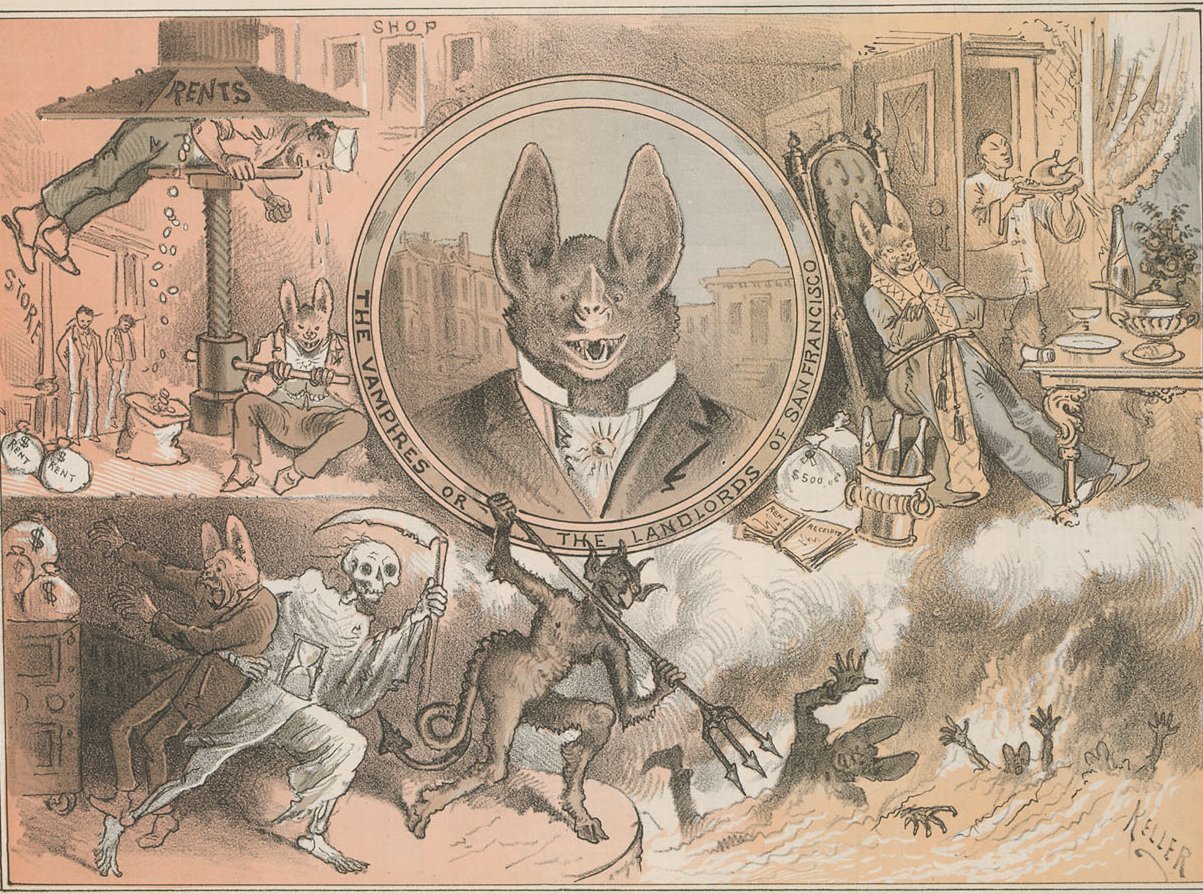
Back in the 18th century, people called bankers, insurers, and landlords, "the sterile class." I think we should bring the term back, and include speculators, traders, and almost anyone we might call a "financier."
They're "sterile" because they don't produce anything. At best, they help move money around, and at worst they just sit on resources and charge for access. But even in the best case, where they provide some function, the more of them there are, there aren't just diminishing returns, there are dangers.
Think of it this way. In a village of a hundred people, where one person does the banking and the other ninety nine do labor that provides goods and services, the people living there will probably thrive. And to be completely fair, this village might do better than a village with zero members of the sterile class. Some amount of financial services can help facilitate growth and opportunity through loans and investment.
But, reverse that, where ninety nine people are members of the sterile class, and only one person actually makes anything, then that village will almost certainly collapse. When that one laborer dies from over work, the remaining financiers are going to struggle to feed themselves with derivatives and securities.
The amount of financial services needed for a proper functioning society is somewhere in between those two extremes, though almost certainly as few as possible is best. Exactly where the line is drawn is a matter of concern. There is a case to be made that the current over financialization of the overall global economy is a higher risk to stability than most other concerns, like AI and mechanization. https://www.youtube.com/watch?v=uXrCeiQxWyc
The problem of over financialization is that less profit is being used for reinvestment into development and creation, and instead is simply rewarding investors. Money goes out of companies, away from research labs, optimization of production, labor, and into the pockets of shareholders who buy another Tesla. And forty years after Reagan and Thatcher, what was obvious then is irrefutable now, that nothing trickles down, it just goes off shore. https://en.wikipedia.org/wiki/Panama_Papers
What this has to do with Bitcoin Cash is that I see a similar process at work. Though it's not exclusive to Bitcoin Cash by any means. The whole crypto space has been largely co-opted by speculators who are only interested in seeing advancements that meet their one need of deriving profits for profit's sake. They don't care if any one development on any blockchain is qualitatively better than before, they only care if the number in their portfolio is quantitatively higher than before.
They're thrilled to see all sorts of creative financial instruments that move money around in complicated ways so that they can make ever more sophisticated bets on the random ups and downs of price tickers.
Recently, there's been a lot of excitement over SmartBCH, a side chain that enables smart contracts and decentralized finance, or "defi." People are excited about it, because defi is where the heat is.
But, heat for who?
One of the reasons SmartBCH is seen as a big move for Bitcoin Cash is because many BCH supporters watched as Ethereum moved into the number two spot in terms of market capitalization on the strength of its defi features.
Market capitalization is a big deal for investors, as it gives them a sense of where to invest. Does market capitalization actually represent anything about utility, though? Does it reflect sentiment or drive it? I think the latter, and I think everyone who has pulled off a pump and dump scheme knows this is the case.
What does defi really bring to the table? Just like a village can benefit from one member of the sterile class, I'm sure defi can create opportunities. I think SmartBCH is a good thing. But like all powerful tools, there are as many risks as benefits. Returns not only diminish with more financial instruments, they may actually suffocate the market.
Decentralized finance, at its core, is an outgrowth from "smart contracts." Smart contracts are basically a way to set terms of an agreement to be carried out by neutral computers. You can, in theory, set any kind of agreement between two parties to make something happen based on a specific condition measured at a specific time.
An example I've seen over and over on web sites when trying to explain how smart contracts work is to set the weather as the condition for a payout of some kind. You might, for example, have an out door concert planned, and maybe only if the weather is good by a certain time do you actually take payment and issue tickets. That would be kind of neat.
However, I think that situation is often recited more because of its friendly accessibility than for any kind of market demand. The number of show producers who would want to set up a system like that is pretty small.
The far more likely use case for smart contracts is setting a price on a stock or token, and if that price is met, an order is executed to buy or sell. Traders can already do this kind of thing on exchanges, but defi would bring down fees and possibly make it more accessible, something maybe you could do straight from your phone's wallet app. More buy and sell orders by more retail investors, buying and selling money, to make money.
Looking at a list of possible use cases for defi that I found, most of them are geared towards financial instruments. Gaming and analytics seem like harmless use cases. Tokenization and "Decentralized Autonomous Organizations," or DAOs, could go either way. But asset management, lending and borrowing, insurance, decentralized exchanges, margin trading, and staking are all of more interest to the sterile class than anyone else. https://101blockchains.com/features-of-decentralized-finance-defi/
The majority of defi functions, by category and very likely by volume of use, service various ways speculators can think of to buy and sell money in order to make money, generating nothing, putting the village at risk. Risk, because all speculators want to use any of this for is moving some fiat into the ecosystem and pull more fiat out.
Just like rewarding shareholders takes money out of a company's research labs, extracting fiat out of crypto strangles adoption. The trading and price speculation is the root of volatility. The more volatility there is, the harder it is to achieve utility. Without utility, there is no adoption. A person shouldn't have to think about buying a coffee in terms of financial markets and whether or not the price will be more or less worth it tomorrow. Nobody wants to have to think about currency when they buy a coffee. They want to think about the coffee.
Bitcoin Cash is one of the few cryptocurrencies where people in the community will tell speculators that speculation is not the point. In r/btc on Reddit, you will often see a post asking about investment met with comments saying BCH is meant to be used, not held. This, in my opinion, is good. https://www.reddit.com/r/btc/
But perhaps this attitude doesn't go far enough. If the Bitcoin Cash community, on the whole, admonishes people for speculating, but then at the same time offers a buffet of financial instruments via defi on SmartBCH or the main chain, isn't the net result a kind of hypocrisy? Or at least, mixed signals? "We don't want you to invest, but if you're going to, we have so many great ways for you to do it!"
Of course, BCH is a large community with various motivations and opinions. It's as meaningless for me to evaluate the community as a whole as it would be to advocate for a unified stance on any topic. Communities just don't work like that.
But I can point out that we'll all have to lie in the bed we collectively make. Defi is not just a technology, it's also an unintentional declaration of intent. If you build the tools to make financial instruments, everyone is going to assume that's what you want made. More financial instruments will attract more of the sterile class, who will want to engage in more speculation, manipulation, and gambling. And volatility. Which will suppress utility. And suffocate adoption.
In my ideal fantasy world, the sterile class would be met with outright hostility. Which sounds extreme, but, it doesn't actually matter if it's extreme or not. You can't get rid of the sterile class no matter what you do anyway. Capitalism isn't about friendship, it's about money, and if there's money to be made, they don't care what you say.
But maybe more diplomatically, I'd hope to see more SmartBCH projects, and projects related to Bitcoin Cash in general, justified in terms of how they drive real world utility, not financial opportunity.
The more the community actively rejects the idea of catering to the sterile class, the better off it will be. Ironically, even for the sterile class.
The Bitcoin Moral Panic
Bitcoin wastes two iPhone's worth of electronic garbage with every transaction, claims a new study. This is similar to the claims that Bitcoin wastes more energy than the state of Denmark first made a couple of years ago. And, of course, there are enough pundits to fill a terracotta army, who will talk about how Bitcoin is a Ponzi scheme, a casino, a vehicle for the rich to run pump and dump schemes to fleece the poor. https://www.theguardian.com/technology/2021/sep/17/waste-from-one-bitcoin-transaction-like-binning-two-iphones https://www.nytimes.com/interactive/2021/09/03/climate/bitcoin-carbon-footprint-electricity.html https://finance.yahoo.com/news/economist-bitcoin-is-a-pyramid-scheme-204217615.html https://news.bitcoin.com/the-cryptocurrency-market-has-become-a-casino/ https://www.vox.com/2018/4/24/17275202/bitcoin-scam-cryptocurrency-mining-pump-dump-fraud-ico-value
Within the Bitcoin and cryptocurrency communities, many were quick to point out that this latest study was backed by the Dutch central bank. Which feeds into pervasive narratives in the crypto space about how the traditional banking system is actively trying to suppress Bitcoin. It's about the only thing fans of various cryptocurrencies can agree on, when they aren't attacking each other. Many conspirophiles will have you believe this latest study is clearly part of a psy-ops campaign organized by the old world banking Illuminati to discredit Bitcoin by evoking people's rage against environmental irresponsibility.
What the conspirophiles tend to discount is how much humans are capable of coalescing around a shared perception, then acting on it with individual motivations. There doesn't need to be a cohesive group of people intentionally coordinating anything for there to be a general social push in one direction. All it takes is enough consensus that there's a problem, real or imagined, until it evolves into a moral panic. https://en.wikipedia.org/wiki/Moral_panic
Moral panics happen all the time, and come in many shapes. Probably the most exemplary moral panic was the "satanic panic" in the eighties. An idea took hold in society at large, mainly in the US, that there were networks of satanic cults engaged in frequent child sacrifices, sexual abuse, and just about any kind of reprehensible behavior you can think of. What makes this moral panic stand out from many others is that it was based on absolutely nothing. There were literally no satanic cults, it all started with the unfounded claims of one woman with paranoid delusions. But by the time society at large came to accept that there was literally nothing going on, people had gone to jail, and lives and reputations were ruined.
The "red scare" of the 1950s is another example. People believed that communists were everywhere in society, trying to undermine democracy. In this case, there was possibly some more credible foundation to kick start everyone's fears. There were, after all, whole nation states openly advocating for international communism. But, even still, there comes a point where people wondered, if there are as many communist agents as is being claimed, shouldn't they have easily taken over already?
The red scare was exposed as being just a witch hunt, and the term "witch hunt" comes from another famous moral panic, the Salem witch trials in the seventeenth century. The term "witch hunt" refers to when you make up targets for your crusade, just as the puritanical Christians of the time accused women of doing things they definitely weren't doing, labeling it "witchcraft", and then burning innocent women at the stake. https://en.wikipedia.org/wiki/Salem_witch_trials
Moral panics are are largely cobbled together out of exaggerations that may or may not be based in truths, and sometimes accelerated by the self interests of people who can use them to their advantage. Accusing a political rival of being a communist in the 1950s, for example, might help reduce your competition, regardless of whether or not you actually think that person is a communist.
Still, even though there will always be people willing to ride any wave that can take them further, with no concern for the ethical implications, there is no conspiracy behind a moral panic. They just catch fire in the public sentiment, finding a home on the edge between how we think the world should be and our fears about what might threaten it.
With Bitcoin, it's true that it's unregulated and chaotic, it's exaggerated how much significance it has, and it plays into common fears about how the world of money is unfair, exploitative, and corrupt. Just about everybody outside of the top 1% feels they are poorer than they should be, and believe there are systematic reasons why they don't get fairer opportunities. General suspicions of social inequity are easily turned into outright rage when seeing people get wealthy off of something as ethereal and seemingly meaningless as Bitcoin.
And, on top of that, it's a whole new technology, which is almost always met with suspicion. While some people embrace new technologies with Utopian hopes of problems being solved, as many or more fear that if the world moves under their feet too much, then they will lose their place in it. For them, new technologies are generally dangerous. Televisions will ruin your eyesight and rot your brain. Video games are addictive and leech time from anything productive. Genetically modified foods will destroy your health. Bitcoin will destroy the environment while it steals from the poor and gives to the rich.
One of the core symptoms that you can use to determine that criticisms might be more about resistance to change is when they ignore how the world might already be suffering, just maybe not for the person being critical. It may be true that Bitcoin chews through hardware and energy at a rate that doesn't seem to be justifiable. But, where are our standards for measurement? Are we asking the same questions about the established monetary systems we take for granted?
How much energy is burned by the computer networks that underpin traditional banking? How much hardware and waste goes into everything that moves physical money around, from mints to armored vans to ATMs? Is it more or less than two iPhones per transaction? By how much? How much truly egregious exploitative labor, sometimes including children, goes into mining gold and other precious resources? I don't have the answers, but the point is not to make a comparison with Bitcoin to see which might be better or worse. The point is that the asymmetry of where questions are pointed reveals biases.
Like just about everything else in the world, Bitcoin could absolutely be made more environmentally sustainable. Both in terms of renewable energy to drive it, and the material infrastructure that underpins it. But, to me, that's merely an engineering objective, not a moral judgment. Every technology starts out largely wasteful and inefficient compared to what it becomes. Or at least, what it could become. We could have had electric cars from much earlier on, so we can't ignore the fact that a lot of inefficiency comes from human greed and mismanagement that should be challenged, it's not just a matter of sterile technical evolution.
Bitcoin is just a thing, an idea made manifest in engineering, like any other technology we have. Just as a hammer can be used to beat someone to death or build a house, what our technologies are for isn't inherent in the technologies themselves, it's in our collective choices about what opportunities those technologies represent.
Bitcoin was originally intended to remove middlemen who charge a toll for the simple act of two people buying and selling from each other. All Bitcoin is, or was supposed to be, is money without a government. Or, if you like, money without a bank. It replaces middlemen with middle-machines, who we can trust more because they have no opinions, and who will do the work of ensuring our transactions for way less than a human would charge. If I buy something from you on the internet, why can't I just send you money like I send an email, and have it all handled by computers for almost zero fees instead of having to give some bank or credit card company a percentage? Bitcoin, the idea if not the actual technology in its current abused state, is really that simple.
I doubt anyone would have a problem with that. If the general consensus was that Bitcoin was just about letting people do business online without banks, people would probably still think crunching through two iPhones per transaction is overly wasteful, but the criticism would likely be framed in terms of simple inefficiency, not moral bankruptcy.
But, somewhere along the way, Bitcoin started to become worth something, and that attracted the financial class who care way more about price than value. Their insatiable lust for profit invaded the cryptocurrency space, and then turned around and presented to the world their view on the technology as if theirs was the original intent all along. Their voice, fueled by the money and influence they brought into the space with them, became louder than the technocratic pioneers who wanted to solve largely mundane economic problems.
As a result, Bitcoin and crypto are seen the same way by both those on the outside who see nothing but criminal and cult-like behavior, and those on the inside who hope to see numbers go up and cash out, having made nothing for anyone in the process. One side might think it's bad, and one side might think it's good, but they're both orienting themselves around a shared perception, that crypto is essentially about profit for profit's sake.
The greed that follows the potential for big returns has overheated the crypto market, creating profits and losses that will continue to attract speculators who hope to earn for themselves by having accomplished nothing more than picking one number at the right time, and another number at a better time. This will in turn keep fueling the moral panic around Bitcoin, because anyone critical of it will be partly right that, in its current widest use case, all Bitcoin does is make "hodlers" three percent richer or poorer every second minute.
Most moral panics eventually fizzle out one way or the other. Bitcoin, and crypto in general, is likely to be the target of lingering, slow burning, moral panic so long as there are speculators making price the most prominent point of discussion. The markets may cool now and again, and the moral panic in response may cool with it, but with every advancement in adoption or utility, the price noise and the resentment of it, is likely to return.
Two iPhones of waste per transaction is stupidly wasteful, and deserving of criticism. Unfortunately, like most moral panics, the target of anger will be misplaced, and probably the attempted solutions too.

If Not a Conspiracy, Why Is Blockstream Crippling Bitcoin?
"Truth is stranger than fiction," a conspirophile told me. The "truth," in this case, was that the CIA, or the Bildeberg Group, or both, are behind a conspiracy to destroy Bitcoin, using Blockstream as a front for their evil plans. https://en.wiktionary.org/wiki/conspirophile
Then shouldn't the truth be something different than the same boring story told over and over in countless conspiracy theories, as well as movies and books and other fiction? I've heard of conspiracy theories involving the CIA and the Bildeberg Group since long before Bitcoin even existed. So it seems to me that the CIA or Bildeberg option is the most mundane, uninventive possibility, far from the strangest. The least you could do is come up with new antagonists for your story.
The reality is that the truth is not obligated to be interesting or fantastical or anything. It just is what it is, and we discover it or we don't.
Anyway, having spent some time describing what the Blockstream Conspiracy isn't, I thought I would balance that with what I guess the Blockstream "conspiracy" to be. https://read.cash/@dave_gutteridge/the-truth-of-the-blockstream-conspiracy-exposed-f574a599
First of all, I simply don't believe the rationality behind the idea that organizations like the CIA, the Bildeberg Group, or anyone else, put lots of energy into simply maintaining an economic homeostasis for the world as it is. I believe these groups, and others, are motivated by things like capitalism and nationalism, and many other ideologies, all of which have generally one thing in common. They want to *win*. They want to find new ways to be better than everyone else. To be and have *more*.
Which means that I am absolutely sure that in bland meeting rooms with fluorescent lighting in some CIA office somewhere, there have been discussions about what to do with Bitcoin. And the questions weren't just, "Is this a threat?" but also, "how do we use this to *increase* US hegemony and *further* our interests." The questions weren't, "how do we do everything we can to stop this from happening so that nothing changes." In the end, I bet the CIA routinely uses Bitcoin to help facilitate whatever modern day Iran/Contra style operations they get up to.
Similarly, I don't think AXA Ventures, the supposed tool of the Bildeberg group, invested in Blockstream so that after spending tens or hundreds of millions of dollars they would have nothing more than they have now. I think AXA Ventures invested for the same reason anyone invests in anything. To reap some kind of reward that would launch them and their shareholders into the stratosphere.
In other words, there is nothing about the motivations of anyone closely watching Bitcoin, or hoping to invest in it, that inspires a need for any particular examination. Everyone is acting in self interest, capitalizing on new opportunities, or not, like they do with every new paradigm that comes along in the world. Blockstream is as free to develop and progress as any other IT company. Their motivations are to succeed and reap rewards, like every company, and it's that context in which I look at them.
At the heart of the whole concept of how Blockstream and the "Core" developers crippled Bitcoin is by setting a 1 megabyte cap on blocks. This is known as the block size debate, and the initial rumblings of it started as far back as 2011. I'm not sure when exactly second layer solutions as a possible solution entered the conversation, but somewhere along the way someone came up with the idea. It probably wasn't lost on them when they did that side chains could be immensely profitable, taking a cut of the earnings that are otherwise exclusive to miners. But, nonetheless, in the earliest days the discussion might have been more technical than economic.
A critical point is that the question of, "should there be some kind of block size limit?" is a perfectly reasonable question. Partly because almost *all* questions are reasonable. There's little harm in asking things, and in considering options and looking at possibilities.
I personally believe that the available technology in 2021 makes it obvious that block sizes of 8 megabytes, 32, or larger, are easily manageable. But even still, I don't know exactly the lines are. There could be unforeseen issues, maybe Moore's Law won't hold how I generally assume it will. As much as I am on the side of Bitcoin Cash in the block size debate, it would be pure hubris to assume there is no way I could ever be wrong about it. It would be equally myopic to look back to 2011 and say everyone should have known everything that is known now.
I believe the process of human thinking in this matter was somewhat organic. It starts out with, "*maybe* the block size could be a problem." Which then gets answered with, "*if* it is a problem, it *might* be solved with a second layer solution."
Then along the way, someone realizes, "this second layer, *if* it took off, *could be* very profitable." Then, as investors hear about this, and it seems like there's money to be had, people start dropping conditionals like, "if" and "could," and start saying, "the second layer *is* needed."
At this step, the people saying, "the second layer is needed," may only half believe it. But it's better to say it and get the investment than to present investors with uncertainty and get no investment. I've actually played the investment game before. I ran a small start up around the year 2000 during a dot com boom in Tokyo, and raised around a million US dollars worth of investment for my company. Small potatoes compared to the roughly 300 million US dollars that Blockstream has received over the years. Still, I have some idea of what it's like to have investors.
Relevant to this discussion is that what I experienced is that investors don't just pour money on your head and say, "do your thing and let us know how it goes." They check up on you, a lot. And usually investments come with fail safes, incentives, and other precautions to make sure you don't just take the money and fly away to somewhere with nice beaches no extradition treaties. You don't just get a million bucks in your personal bank account one day. Usually you get shares that don't vest until certain milestones are met, but there can be other things too, like maybe your position as CEO of the company is contingent on results, or your voting rights on the board, or salary, or whatever.
What I'm getting at is that there is high pressure to succeed. You're expected to "10X" the money given you. In other words, give back ten times what the investor gave to you. Depending on what's going on in your life, you might feel like your home, your family's security, your sense of validity is at stake. On top of this, you start hiring people, and they have lives and families that you start to feel responsible for.
The whole concept of, "second layers are needed," goes from the marketable description of a *possible* business opportunity in order to win over investment, and becomes a creed on which reputations, jobs, and lives are at stake. What felt like something you could maybe adjust and pivot as needed now feels like something you've said out loud so much that you can't turn back on it without everyone coming after you with pitchforks and torches. Even if one day you realized that the second layer solution thing isn't going to go as you expected, what are you going to do? Fire the whole company and tell the investors they just wasted their money on you? "Sorry everyone, my bad, let's just all walk away, okay?"
And also, there's the dreams, the hopes. What if it is really true that second layers are the solution to making Bitcoin work better? I personally don't believe it, but if I was working at Blockstream, I would at least consider the possibility. If nothing else, maybe it's not the only way for Bitcoin to go forward, but it is one possible way. And, if by some crazy set of circumstances, it did turn out that second layers worked out, then the potential for being the company at the center of a global currency... it's almost too much upside for a human to conceive of. Previous global tech companies and all their riches, like Facebook or Google, would pale in comparison.
So there's dizzying hopes and dreams on one side, and pressure and damnation on the other. And this brings me to a quote I've mentioned before, because I think it really speaks to the heart of the matter. Some guy named Upton Sinclair once said, "It is difficult to get a man to understand something when his salary depends upon his not understanding it." I believe this to be very true and have experienced it directly in my life. It can be adjusted slightly to say, "people will believe what they need to believe to justify their income."
I have no doubt that Core developers, Blockstream, and whoever else is invested in Bitcoin having small blocks and second layers, believes 100% that what they're doing is right and true.
Sometimes I cynically describe the situation as being that Blockstream has no reason to exist if not for trying to profit off their second layer services. This can make it sound like there was a deliberate attempt to suppress block size in order to justify the creation of their business. But, that puts the cart before the horse. I think the end result of Blockstream needing to manufacture a need for second layers to support their goals is true. But the more nuanced history is that everyone involved came to sincerely believe what they're doing makes sense because their position evolved naturally over years. The seed was a genuine question, "maybe we need second layers," and was forged by the pressures of investment and business obligations into the declaration, "we need second layers!"
And if you try and tell them that they only believe that because their income depends on it, that somewhere along the way, the cart got put before the horse, they will turn that logic back on you. Maybe it's you who believes in big blocks or no second layers because that's where you've bet your money. Which, if we're being objectively fair, could be equally true.
The part that conspirophiles can't accept is that everyone on both sides of the whole block size debate believes in what they're saying. Sometimes it might seem to one side like the other side is engaging in underhanded tactics to manipulate the truth, to discredit the other side, to troll, and to spread FUD. Some tactics are inherently deceptive in nature, and if someone is doing something deceptive, that seems like evidence that your opponent is fundamentally a deceptive and underhanded person.
However, every war is fought by people believing they're on the good side, but willing to do whatever it takes to win. The degree to which any side uses underhanded tactics is not a function of how noble the perpetrator thinks they are, it's a function of how evil they think their opponent is. The more you think your opponent is an existential threat, the more you think you're justified in showing them less mercy.
Small blockers are as genuinely convinced of their position as big blockers, and both sides feel that the existence of the other is mutually exclusive to their own existence. Precisely because everyone is so convinced that what they think is objectively true, they can't conceive that the other side is equally sincere in their beliefs, meaning everyone is prone to seeing the other as being criminal in their intent.
Both sides might be willing to use all sorts of tactics, from smear campaigns up to more honest campaigns of out competing the other with services and utility. In the end, though, I think the only way anyone on any side of this debate is going to be forced out of their position is when somebody's path crashes into a wall of reality. Somebody's blockchain spirals into chaos because of some technical failure, or some malicious attack, or the market for one simply dwindles away to into entropy.
Still, even if Liquid, or Lightning, or Bitcoin, or Bitcoin Cash, or anyone else crashes and burns, it's unlikely that anyone on the "losing" side will say, "oh wow, I was so wrong all along!" That generally only happens in movies written by writers without much life experience. If Bitcoin and Lightning and whatever crash and burn, they'll say it was because all its detractors sabotaged the system so that it didn't get a fair chance. Bitcoin Cash supporters, and any supporters of any failed crypto, will do the same.
And that is what I think the real Blockstream "conspiracy" is. It's humans arriving at positions because of circumstances, buffeted by promises of success and fear of failure.
The funny thing about writing something like this is that out there, somewhere, are people who actually know what happened. They were there forming Blockstream, and at pitch meetings with AXA Ventures, and whatever else. Should they happen to read this, they might have a laugh at how wrong everything I've said here is.
But then again, if I'm right that they were essentially seduced by the potential profitability of their own proposals, would they even know it? Am I blinded by my own lenses on the world? Who knows. No human sees the world as objectively as we think we do.
The only thing I know is that the truth, whatever it is, is more nuanced and human than the kind of conspiracy theory that would be indistinguishable from a forgettable episode of the X-Files.

The Truth of the Blockstream Conspiracy Exposed!
In recent months, as I've been writing about the fundamentally skewed thinking of conspiracy paranoia that is pervasive in crypto communities, I've had plenty of people contact me, through Read.cash and Reddit, telling me that I'm wrong and stupid for not being able to see the obvious workings of the grand conspiracy by Blockstream to destroy Bitcoin. https://read.cash/@dave_gutteridge/the-deep-state-isnt-sabotaging-bitcoin-and-the-idea-is-embarrassing-ac4ca9c4 https://blockstream.com/
The fundamental premise of the Blockstream conspiracy is that they are deliberately making Bitcoin unusable so that it fails to become a legitimate world currency. This is because the-powers-that-be see Bitcoin as a threat to the traditional banking system. If that banking system is upset, then they lose power, and so they are fighting to preserve their position.
Not only do I think there's no such conspiracy, but I think there are much better, more mundane explanations. https://read.cash/@dave_gutteridge/unincentivised-developers-and-the-real-difference-between-bitcoin-cash-bitcoin-and-other-cryptos-dc8f3b5a
In the course of debating with me about whether or not the conspiracy is true, not one single person, not a single one, who has contacted me, has shown me a single bit of even indirect evidence of any aspect of this conspiracy.
But, I'm nice, so I decided to help them out. I looked around to see if I could find any smoking guns for myself.
The first thing I found with a little Google searching was this Medium article by Jonald Fyookball which starts to at least outline some of the supposed evidence. I don't know much about Mr Fyookball, but I've seen his name around a bit, and I get the sense that he's a reasonable person, so this seems like an okay place to start. https://medium.com/@jonaldfyookball/is-this-the-beginning-of-the-end-of-btc-2687bb83181
But, some of the problems of that are common to pushing conspiracy theories start to emerge right away.
Phrasing
A lot of the "logical" justification for the conspiracy is phrased in a grammatical form known as the second conditional, such as, "*if you were* in power, then *you would* destroy any threat to that power." This kind of phrasing makes it sound as if the suppositions and their conclusions are so obvious as to be factual. Similar to, "if you were too close to a fire, you would step back so that you don't get burned." https://continuingstudies.uvic.ca/elc/studyzone/410/grammar/2cond
But, just because you *phrase* something as an obvious process leading to the conclusion you think is the most natural, doesn't mean you're describing a real situation. As I've described elsewhere, not only do I think the conspiratorial conclusions being drawn are *not* inevitable, I think they're the *least* likely scenario. https://read.cash/@dave_gutteridge/heres-how-my-conspiracy-will-destroy-bitcoins-potential-to-change-the-world-0c3b6a1e
A Waterfall of Words
Anyway, let's filter out the dubious phrasing and see what evidence we might have. Mr Fyookball links to this lengthy post on r/btc which lists all the connections between... well, everyone and everything. This is another tactic of conspiratorial theorizing, which is to pour a waterfall of words over you, to make you feel like you're being informed because of the volume of information. https://www.reddit.com/r/btc/comments/58ttsv/a_look_at_dcg_bitfurys_incestuous_ties_with_the/
But no single detail reveals anything important. Yes, I read the whole thing. No, none of it makes me think anything particularly unusual is happening. It's just a lot of "person X worked at place Y, and then sometime later, place Y hired person Z, so person X and person Z have a connection." It's so devoid of meaningful data points that I'm getting bored just thinking about it. So, let's move on.
Whose Conspiracy is This?
There's also this post on r/btc, which at least gets more to the point by claiming that AXA Ventures is a tool of the Bilderberg group. This claim is based on the fact that there the CEO of AXA is also a chairman of the Bilderberg group. AXA Ventures, if you're not already aware is one of the major investors of Blockstream. https://www.reddit.com/r/btc/comments/47zfzt/blockstream_is_now_controlled_by_the_bilderberg/ https://www.axavp.com/
The Bilderberg group is a meeting that takes place every now and again, where a bunch of rich and influential people get together to discuss the pressing matters of the world. Of course, the Bildeberg group itself claims that they're not much more than that. Just a discussion group.
But, even if we take them at their word on that, a simple discussion can have big implications depending on who is at the table. There's no doubt that people who attend Bildeberg meetings come out with new ideas about how they can use their wealth and influence, kind of like the inspiration people get from TED talks. After all, why else go to these things?
But, do they come away from their meetings with a vague sense of inspiration and the illusion of being informed, like TED talks? Or do Bildeberg group members have specific hidden agendas, to create subterfuge and shadowy psyops campaigns to manipulate the world? That's where it gets shaky. There is no evidence, recent or historical, that the Bildeberg group is responsible for anything like that. Which is pretty surprising given that they have had known monsters like Henry Kissinger among their attendees.
The thing is, Kissinger didn't need any Bildeberg group to help him massacre countless people in Cambodia. He had all the power and influence he needed to do that on his own within the US government. And that's the reality of the Bildeberg group. No one who goes to the Bildeberg group needs anyone else there to further their aims.
One part of convincing me that the Bildeberg group is controlling AXA is demonstrating that that the Bildeberg group has a cohesive singular policy, and that they have ever acted on that. Personally, my experience with humans is that if you have five of them in a room, you get seven different opinions, and I don't think the rich are any different.
Six Degrees of Kevin Bacon
Moving on, this article on Bitcoin.com talks about how Blockstream has a particular guy who is a known former spy in it. Wait... so you're telling me that people who specialize in cryptography might sometimes do the same kind of work in the government, and also sometimes in the private sector? Shocking! https://news.bitcoin.com/why-is-blockstream-working-with-national-spies-sigint-humint/
This connects back to the previous point about the fact that the CEO of AXA is also the head of the Bildeberg Group. People who are rich, successful, skilled, or knowledgeable, are in demand, and they move around a lot, network a lot, and have connections all over the place. You can probably draw a line between any two people on the planet, but the dots you need to connect are fewer when you narrow the pool down to 1% of the population.
This answer on Quora for example, shows how you can connect the CIA to Facebook. The CIA has an investment arm called In-Q-Tel. The first CEO of In-Q-Tel was also on the board of venture capital firm called National Venture Capital Association. Also on board member of NVCA was a guy who runs a firm called Accel Partners. Accel Partners invested in Facebook. https://www.quora.com/What-is-the-substance-of-the-claim-that-Facebook-is-funded-in-part-by-the-US-government-and-in-particular-a-branch-which-is-associated-with-the-CIA
Is that chain of associations the thread you can pull on to unravel how the CIA is using front companies to create backdoor access to Facebook? Or are you just knitting your own scarf by selecting the strings you like out of the billions of possibilities that are created by all the random interlocking connections between people living their lives and getting jobs and making investments within their area of interest?
The only way to show that the Bildeberg connection to AXA, or the Facebook connection to the CIA, is more than just imposing your own patterns onto the chaotic systems of life is to show some actual evidence of that connection being *used*. Some kind of communication that followed the path. A directive or an order. A statement of intent. Something. *Anything*.
But there isn't anything. I've looked at more pages and posts than the ones listed above, but very quickly, I didn't feel I was getting anything new or different. As conspiracy theories go, it's pretty thin. It doesn't even begin to compare to the mountains of dubious evidence that support other unlikely situations that are almost certainly untrue, like aliens hanging out in Area 51, or that 9/11 was an inside job.
Nothing Said Here Will End The Conspiracy Theories
The problem with talking to anyone who believes in a conspiracy theory is that their ultimate fall back position is that by definition a conspiracy can't be proven to exist. If there was any objective, provable, verifiable evidence, then the conspiracy would be exposed and have fallen apart already. A lack of evidence, therefore, becomes evidence of an even better conspiracy.
And also, as I've experienced, I will be accused of either being duped by the conspirators into helping provide a cover story for them by coming up with plausible alternative narratives. Or I'll just get accused of being a paid shill tasked with providing a smokescreen.
If someone ever happens to talk to Blockstream, maybe let them know that they owe me for all this work I've been doing for them for free?

Unincentivised Developers, and the Real Difference Between Bitcoin Cash, Bitcoin, and Other Cryptos
Every blockchain has a problem that is intrinsic to the way blockchains are created and maintained.
That problem being, that miners get paid to mine, but developers do not get paid to develop.
This problem does not simply exist without attempt to resolve it, though. Just about every single blockchain project has their own way of dealing with it. How they do so is, in my view, the most significant differentiator that determines their viability, their credibility, and ultimately underpins the value proposition of the entire project.
The unincentivised developers problem isn't exclusive to Bitcoin and the countless similar crypto projects in its wake. It's a problem for almost all open source software, which is what Bitcoin is. However, what makes Bitcoin, and almost all blockchains different from other open source projects, like Firefox or LibreOffice, is that Bitcoin is intrinsically about money and value. To create, develop, and contribute to Bitcoin is to help generate and facilitate overt wealth that largely goes to other people.
Imagine you were a developer for Firefox. You write some code and it helps web pages load faster. That's nice. Arguably, you've possibly helped people save money on data rates or something, but no one is likely going to make a billion dollars from your efforts. Or at least, it's very hard to draw any direct lines between code contributions to Firefox and the money people make.
But if you contribute code to a blockchain project, you will see lots of people around you getting rich. Investors and miners are almost certainly going to make tons more money than you. Money they wouldn't make at all were it not for you and your code. All that cash is flowing right in front of the developers eyes, but without that developer being automatically in the stream.
Satoshi Nakamoto essentially premined a bunch of coins, but, at the time he, she, or they were doing that, there was no assurance at all that this was going to be worth anything. It's plausible that Nakamoto mined the coins with no motivation other than a sincere effort to simply launch the system and keep it going until it grew into a network sustained by many people.
Almost no coin created since can claim to be as altruistic. It's a little grey, but with each new coin coming onto the market, it became more clear that blockchains had value, and no one wanted to create one without being sure that they would get some of that value for themselves.
Litecoin was supposedly distributed fairly from the start, in that mining for coins became immediately accessible to anyone who may want to try. There's a little debate about the particulars of that, but even if that's the case, it's always true that the initial developers have a jump on anyone else in terms of caring about their new coin. Vitalik Buterin mined a bunch of Ethereum for himself, securing himself a large economic incentive to see his coin succeed.
Many other coins since have essentially done the same thing that Buterin and Nakamoto did, just in various forms. There are openly declared pre-mines, and ICOs, and developer funds, and more. The bottom line is that every coin since the earliest days has been made with some system in place that ensures that developers get a cut of all that money that flows around. No developer, or investor, or anyone, wants to be sitting on the sidelines, watching miners get all the money.
Which is what puts Bitcoin in an interesting position. The lead developer seems to have disappeared, leaving a vacuum that other coins have filled with directly incentivized developers.
Note that I said "directly" incentivised developers. A Bitcoin developer could, for example, buy some Bitcoin like anyone else and then contribute code in hopes that their contribution will make the value of their Bitcoin go up. But that's different from being offered coins early, or to get an extra cut, *because* they help develop it. Anyone wanting to get involved in helping develop Bitcoin isn't going to do any better than anyone else who happens to buy in.
Bitcoin developers are *indirectly* incentivized. Is that a problem? There are two ways you might see that as a bad thing.
One is the same issue that plagues all open source projects. Without direct incentives, projects tend to progress haphazardly, both in development and progress. Projects like Firefox, LibreOffice, and GIMP, don't have anywhere near the market share as Chrome, Microsoft Office, and Photoshop. Partly that's marketing, and partly that's because of stuttered development. GIMP is an interface and feature disaster compared to Photoshop, which is a shame. But that's a topic for a different day.
The more important unincentivised developer problem for blockchains is that a blockchain without a leader is the target for those who would want to lead it, and the consequences can be severe.
Say what you will about block sizes and Moore's law and stores of value and centralization, and everything else that gets thrown around in the constant war between Bitcoin and Bitcoin Cash. But, for me, it all can be traced back to the fact that Blockstream and Core developers would have no reason to exist were it not for the potential profits they intend to capture from layer two solutions like Lightning or whatever else. Income that essentially just goes to miners otherwise.
Blockstream saw the void, recognized that with more control comes more upside, and seized an opportunity to fill it. They found a way to become the incentivized developers, and so far, their plan is working. For them, at least.
Blockstream is not the only group to try and fill the void of no incentivised developers working on Bitcoin. Craig Wright wanted to claim some of the pre-mined money held by Nakamoto by trying to rewrite the rules so that unspent or dead coins could be revived. His plan was a non starter on the Bitcoin BTC chain, but for a while he managed to get some traction on the Bitcoin Cash BCH chain. In a weird way, he was trying to be a retroactively incentivized developer. His plan was ultimately rejected by the Bitcoin Cash community, forcing him to try and make his plans a reality on a new fork.
More directly, BCH developer Amaury Séchet tried to solve the unincentivised developer problem by rewriting the rules so that a percentage of miner block rewards would go towards developers. Séchet's plan was also ultimately rejected by the community, and he also had to create a new coin, forked off of BCH.
Bitcoin is not the only coin under the kind of financial Bernoulli effect of a void inside a project creating pressure from people wanting to take over. Dogecoin's original developers walked away without any real hold over the coin, or claim to any rewards, because they made it as a joke and didn't think it would go beyond that. Now, though, it's being bought and sold for significant value. Elon Musk is circling the project, and it seems likely to me that his interest in Dogecoin is highly correlated to how much he thinks he can take command of it. Taking over existing businesses and then making it sound like he came up with them is how he got to where his now.
Sure, Musk could just buy some Dogecoin, just like he bought some Bitcoin, and maybe Tweet his holdings upwards. But, that's just the game anyone can play. Being at the helm of the ship is where you can derive real potential profits. If Blockstream can get everyone on board with Lightning, the potential billions or more to be made could make Musk look like the petty middle class in comparison.
Which is why Bitcoin Cash is different from all other blockchains. It has no leader, no directly incentivized developers. And not just by happenstance. It has twice kicked out people attempting to move into the position of lead developer. Three times if you count the initial forked that created it. Depends on if you want to look at that as "kicking out" Blockstream, or "walking away" from them.
Is that a good thing? I think yes, though with some caveats. It does mean development and growth will be haphazard and frustratingly slow, just like any open source project. It's also potentially vulnerable to people attempting more community takeovers, something the rest of the community has to be vigilant about. Each time Bitcoin Cash has had to fight off others vying for control, it's cost countless hours of debate, development slowdowns, and potentially billions dollars worth of market share.
But, the main advantage has to do with the implications of "incentive." Every blockchain project will tell you that it's good to have at least some leadership, someone to make final decisions, someone to settle arguments, someone to push things forward. Do you want to be a part of a success like Apple, or just sort of continue to exist, without becoming a household name, like Linux?
And it seems that the leaders of a project would act altruistically in terms of doing what's best for the project, because its success is their success too. It's the Utopian version of capitalism at work, where we all win together, even if some of us win a little more.
But I'm skeptical of that reality. The fact is that anyone who has both incentive and control is tempted to use that control to juice their incentives all the more. There's a reason Apple charges three times as much for their proprietary charging cables than cables for other devices made with universal USB connectors.
I'm less interested in blockchain projects where developers have the potential to steer the ship in a direction that suits them more than anyone else, while paying lip service to how it's ultimately for the betterment of all. In the void left behind by Nakamoto, Bitcoin Cash has so far shown that it will aggressively oust anyone who pursues incentive at the potential expense of the community at large.
Bitcoin Cash has no directly inventivised developers. Almost every other blockchain project will talk about that as if it's a problem. For me, it's a feature.

"Technical Analysis" is Meaningless Financial Astrology
I got interested in crypto around 2017. Coming to understand how it all works was a steep learning curve, with plenty of difficult technical terms related to how blockchains work.
And there was also a lot of new financial concepts to learn about. Whether we like it or not, crypto markets move up, down, and around, largely the same way that stock markets do. This means that if you hold any crypto, it benefits you to learn at least a little about trading and the words used to describe it. For some reason, probably because they want to make it sound more involved than it is, people in finances want to complicate things with terminology, like saying "short" and "long" instead of saying they'll sell "sooner" or "later."
In the midst of learning about how stock markets work and things like "dollar cost averaging" and "market capitalization," I came across "technical analysis."
It sounds like something rational and somewhat scientific, and people who talk about it use terminology that blends in with more standard financial terms. They say things like "price resistance" and "testing the ATH." If you're new to all this crypto and market stuff, as I was, it seems like "technical analysis" is another corner of the financial world that you just don't get yet.
However, a little research soon revealed to me that "technical analysis" is actually very easy to understand. It follows a very simple principle:
It's complete horse shit and can, and should, be totally ignored.
"Technical analysis," which I'm putting in quotes because I refuse to acknowledge it as anything even remotely legitimate in this world, is basically financial astrology. It's an attempt to grasp at a sense of control over a random universe by claiming some kind of mastery over finding patterns in chaotic systems.
The first hint that it's total pseudo-science is that it attempts to predict the future, which can't be done. Or at least, it can't be done by trying to redefine chaos. It's possible, for example, for meteorologists to give you a good idea of tomorrow's weather by looking at the flow of high and low pressure areas from satellite data. They look at fundamental forces that drive the weather, and then tell you about possible results, like the presence of clouds.
The price charts of any one crypto or stock is the end result of all sorts of variant chaotic systems, not all of which are known. The resulting chart is effectively random, being pushed by fundamental forces that exist outside of the chart. Trying to look at the patterns of movement in a price chart to say anything about where it will go after the present moment is like trying to talk about tomorrow's weather by measuring how much today's clouds are shaped like horses.
The other reason you can safely disregard "technical analysis" is that there is absolutely no consistency in it whatsoever. Patterns in price movement will be selected at all sorts of time intervals, and any number of lines or patterns can be overlaid on top of them to come to any conclusion at all. If there were any science to "technical analysis," then different competing people doing it would all generally arc toward similar conclusions. With "technical analysis," you can find any conclusion you want at any time.
Not to mention the constant weasel words used to hedge predictions. A meteorologist will say tomorrow has a 70% chance of rain. You can then go over their historical records to see how accurate they were. "Technical analysis" only ever goes as far as saying, "the price ***could*** go up." Sure it can. Or it ***could*** go down. Statements like this hold so little information that they're effectively true no matter what actually happens.
I'm writing this in hopes of saving someone out there a little time. If you're wondering if there's anything to "technical analysis," as I did, let me assure you, the answer is an unqualified "no."
Here's How My Conspiracy Will Destroy Bitcoin's Potential To Change The World
After my last article about how conspiracy theories undermine the potentially good reputation of crypto, I got this comment on Reddit: https://read.cash/@dave_gutteridge/the-deep-state-isnt-sabotaging-bitcoin-and-the-idea-is-embarrassing-ac4ca9c4 https://www.reddit.com/r/btc/comments/ookocx/the_deep_state_isnt_sabotaging_bitcoin_and_the/h64ne6h?utm_source=share&utm_medium=web2x&context=3
Let's say you work at a high level in the $1 trillion per day global finance system and I build a system which competes with it. What do you do?
The comment implies that it's obvious that a person who benefits in the current economic system would obviously fight any competing system that undermines their power. And that's true... so far as you assume that the new competing system is mutually exclusive to your current status. But is that the case?
I responded: https://www.reddit.com/r/btc/comments/ookocx/the_deep_state_isnt_sabotaging_bitcoin_and_the/h67g3tp?utm_source=share&utm_medium=web2x&context=3
I would use my current wealth to buy a significant amount within the system you've created in order to protect my position no matter which way the wind ended up blowing. It's so much easier than trying to manipulate secret plans.
I felt there was so much more to explore with this concept. I kept thinking about the question of what would I do if I were part of this supposed global elite trying to suppress Bitcoin. I mean really, really think about exactly how I would deal with a potential threat from Bitcoin.
Let's say I'm some kind of billionaire type, the kind who golfs with politicians, I can buy media companies, maybe I build space ships for kicks. What gives me all my power is wealth. I want to keep my position so that I can act on all the things I think is good about having power. Maybe I want to make my mark on history like some kind of modern day pharaoh, maybe I just want cruise around on a huge yacht with a bunch of scantily clad models, maybe I just like having everything go my way.
They key point here is it actually doesn't matter to me *how* I have wealth in order to support my power, just that whatever society considers valuable, I have it. Whether it's cash, stocks, gold, celebrity status, information, Pokemon cards, chickens... could be anything. All I need to do to preserve my position is to make sure a lot of whatever it is we're all using to measure wealth is in my control. I probably have my wealth diversified across different forms already, and I probably already have some contingency plans in case of problems. If the economy of one country collapses, I'll just go to one of my other houses in a better country.
So along comes Bitcoin and it's going to shake things up. Does that mean I'm going to stop it? Why would I? Why not just buy it like I do everything else that supports my wealth and power? It's just another part of my diversified portfolio. If fiat starts having problems, I have gold. If gold has problems, I have real estate. Or whatever. If any of the other things have problems, I now have Bitcoin too.
That's something I already casually mentioned in my Reddit response, but let's think about it a little more deeply.
Let's say I think Bitcoin is in some way mutually exclusive to some of my other assets, mainly the ones more closely tied to fiat cash. As Bitcoin goes up, those other assets go down. That's a problem. But still, it's not only easy enough to buy some of it to make sure my wealth in Bitcoin climbs as my wealth in other assets depreciate, it's practically a steal.
Bitcoin right now is light years from having the scale of acceptance of anything like an actual global currency. Which means it has a long way to go before it's actually any kind of threat to any economic system. And that also means that if you believe that it really could become that threat, then it's currently extremely cheap. One Bitcoin now could be a fortune in the future. As a billionaire trying to protect my position, I could buy enough Bitcoin now with an insignificant fraction of my portfolio that would ensure that by the time Bitcoin was actually upsetting the fractional reserve system or whatever, I would have plenty of it to continue being rich and powerful in the new paradigm.
And this is true for governments as it is for individuals or companies. As I've talked about before, the US government didn't invent gold, it just bought up enough of it to have control over the world supply of gold and it's impact on the global economy. It could just as easily do the same thing with Bitcoin. Much easier and cheaper with Bitcoin, in fact.
Compare that with me trying to come up with some kind of plot to suppress Bitcoin in some way. Get my political friends and other rich dudes together and pool our resources to get the CIA and Academi to run psy-ops campaigns. Maybe also get our buddies in Goldman Sachs and the Fed to start doing funky things with banking services.
All of which costs money, because no one is acting for free. And comes with a lot of risk. A leaked email could blow the whole thing up. And even if we do everything right, those dastardly Bitcoin enthusiasts might still pull it off and all my efforts will have been for nothing. And then I'm stuck without any wealth in a new Bitcoin future.
That seems like a really, really dumb investment compared to just buying some Bitcoin. Not only is it less risky than covert operations, I could openly Tweet about it, and if I'm rich enough, my Tweet will cause the price of Bitcoin to go up, which, you know, is nice, because that recoups some of my investment already.
But there's even a further problem that makes any kind of covert operation less appealing than just buying a bunch of Bitcoin to make sure I'm still rich if it takes off.
I've been told that the word "conspiracy" is maybe too volatile, and that really when Bitcoin people talk about conspiracies, they're really talking about an "alignment of interests" of certain groups. Groups like the rich and powerful who benefit from the current system.
While the people who benefit from the global financial hierarchy are definitely an identifiable group, who probably all show up to each others's parties on the French Riviera or wherever rich people hang out, where do their loyalties to each other lie?
If I'm super rich, do I care if the super rich guy beside me also stays rich? As long as I continue to reap the benefit of whatever it is I get out of power, whether it's hedonistic excess or trying to make my mark on history, I can't see why I care who else is getting their fix of the benefits of wealth.
Put another way, why would Mark Zuckerberg need Jeff Bezos or Warren Buffet to stay rich in order for him to have his own wealth? He doesn't. None of them *need* each other, they just leverage each other so long as it's beneficial. People move in and out of the rich elite for all sorts of reasons all the time. In some ways, it's less desirable for me to have other people in the world as rich as me, because those are the people I can't easily compel to do my bidding.
Which means that maybe if I'm out to destroy Bitcoin, others may have done their own math and come to the conclusion that if Bitcoin succeeds, and they get in on it early, then I'm going to be left in the dust while they have a good laugh. After all, the Bitcoin I don't buy is the Bitcoin they can hoard to their benefit.
Again, this is as true for countries and corporations as it is for individuals. If the US tries to suppress Bitcoin, then other countries might find it beneficial to support it, openly or covertly. And within that, national interests are rarely so unified. Does the entire US government have just one position on, well, anything? There are competing factions within competing factions.
If I were rich enough, influential enough, powerful enough, I wouldn't want to have to rely on anyone else to preserve that position. Given a choice between starting some nebulous conspiracy that could go wrong in so many ways and buying my own personal pile of Bitcoin, the choice is pretty obvious.
So that's my conspiracy, or at least the conspiracy of the me that is hypothetically super rich. For a tiny fraction of my current wealth, I'll buy more Bitcoin than you can ever afford to buy or lose. If Bitcoin succeeds, I'll be wealthier than you in Bitcoin. If Bitcoin fails, I just laugh it off and keep being richer than you anyway.
That's the real conspiracy of the rich.
Using Rakuten Wallet to Pay With Bitcoin Cash in Japan
There's been some news floating around that it's now possible to use Rakuten services in order to pay with cryptocurrency at stores in Japan. I've just successfully made my first purchase using this Rakuten system, so I thought I'd just provide a short synopsis of how this system really works and if it's worth it. https://global.rakuten.com/corp/news/press/2021/0224_03.html
First, I'm not sure how well known Rakuten is outside of Japan. If you're not familiar, it's like the Amazon of Japan, not only in that it's an online market for selling stuff, but also in that it's a huge conglomerate business that does all sorts of different things. For example, they're currently building an entirely new cellular phone network infrastructure across Japan, from scratch. https://www.rakuten.com/ https://www.rcrwireless.com/20210514/5g/rakuten-mobiles-4g-network-reaches-80-of-japans-population
The first thing I had to contend with in order to figure out how to use Rakuten to spend BCH at a store was to understand all the different related services that seemed to possibly be relevant. There's a Rakuten Account, Rakuten Bank, Rakuten Wallet, Rakuten Pay, Rakuten Cash, Rakuten Points, and different apps connected to each. Where does one even start?
It took me about two months to sort them out and sign up for everything. That time includes all the failings of Rakuten services. Every foreigner living in Japan will be familiar with dealing with complexities like having to deal with confusion between how one's name is written in Japanese versus English. But Rakuten adds even more layers of hassle. But this article isn't about that, so I won't go into further details. I'll just say that it was not easy to get this set up and I had to get customer support to straighten things out multiple times.
So, anyway, I eventually chopped my way through the weeds and figured out what's what. And here's how it all breaks down, for the purpose of spending with BCH.
A **Rakuten Account** is just the account you set up if you make purchases on their online store. I don't think this is strictly necessary in order to set up BCH payments, but, it does help in that you can link accounts so that you don't have to enter the same address information over and over. https://my.rakuten.co.jp/ https://www.rakuten.co.jp/
**Rakuten Bank** is just a normal online bank account. In retrospect, I think this is also not a requirement for the rest of the process, but, similar to having the Rakuten Account, having it means you can link accounts and skip having to do extensive KYC for each other service. By the way, the level of KYC to open a Rakuten Bank account was more than I've had to do for any other bank in Japan, and would probably make most crypto enthusiasts' heads explode. https://www.rakuten-bank.co.jp/
**Rakuten Wallet** is basically a custodial wallet linked to an exchange. It's where you do your crypto trading. It only deals in BTC, ETH, and BCH. https://www.rakuten-wallet.co.jp/
**Rakuten Cash** is basically money you hold inside the Rakuten walled garden. You can use it to purchase things directly on the Rakuten Store, I think, and you can also exchange it for Rakuten Points or use it for Rakuten Pay. https://cash.rakuten.co.jp/overview/
**Rakuten Pay** is the system that's used in stores for QR code purchases. When you scan something using Rakuten pay, it debits your Rakuten Cash. https://pay.rakuten.co.jp/
**Rakuten Points** are bonus points you earn for making purchases or whatever, and they're not really relevant to the crypto flow. I only mention them so if you see them mentioned elsewhere you know that they can be ignored. Hopefully save you from some of the confusion I had at first. https://point.rakuten.co.jp/
So, the flow goes like this. You transfer some amount of BCH from your preferred wallet to the Rakuten Wallet. Then you sell it for Japanese Yen, just like any exchange. Then you have the option of withdrawing that Yen to your Rakuten Bank account, or you can buy Rakuten Cash with it. If you withdraw it to your Rakuten Bank account, there's a 300 yen service charge.
If you buy Rakuten Cash with it, then, assuming you have your Rakuten Pay app correctly configured to use Rakuten Cash, you can pay for things at stores that accept Rakuten Pay with a QR code.
When I first heard of this system, I thought maybe it would be a way to buy things with Rakuten and have it automatically debit a BCH wallet. That would be cool. Sadly, this is not that. You have to sell your BCH for Rakuten Cash first, and then you can spend it.
But, there is a reason to use it, which is that there is no service fee for converting Yen to Rakuten Cash in the Rakuten Wallet. That lack of friction makes a worthwhile difference.
When you convert your BCH to Yen in the Rakuten Wallet, there is a spread between buying and selling prices, and so far as I can tell it's no worse than any other exchange I've dealt with.
Since there's no service fee, it does mean that if you sell some small amount of BCH and do the purchase right then, you're pretty close to buying goods and services with BCH at current rates. My experience with the whole speed of transfers and sales with Rakuten was very smooth and quick, so it's feasible you could make a decision right there in a store or restaurant to use BCH for the purchase, move some to the Rakuten Wallet, convert it, charge your Rakuten Cash, and make a payment.
It would take a few minutes, so it's not something you'd do impulsively at the register. But it does bring BCH that much closer to the marketplace.
Sometimes when BCH has an increase in value, I'll feel like using that bump to buy something. Before I had this system, I could think of maybe buying something on Purse.io. Maybe I'd consider cashing some out. But, for the most part, options for using my BCH when I felt like it were limited by the fact that it's often not worth exchanging small amounts.
Now, the process is easy and cheap enough I could move more trivial amounts of BCH, get some Rakuten Cash with it, and then buy something minor. Since there's no service fees, I could do more frequently with trivial amouts for more frivolous purchases. Spend and replace.
All in all, it's definitely not as good as being able to use BCH directly. Obviously. But, as a route to get at least some liquidity in the system, it's a step in the right direction. I'm glad I have it set up now because it does mean I have more options with my BCH than I did before, and more options are always better.
The Deep State Isn't Sabotaging Bitcoin, and The Idea Is Embarrassing
I actually believe in some conspiracies. For example, I think it's very possible the US navy shot down flight TWA 800 and covered it up. I think the shot was an accident, but, still, there were cover ups and misdirections after the fact, and that's where the conspiracies lie. https://en.wikipedia.org/wiki/TWA_Flight_800_conspiracy_theories
I also think I could be wrong. That's kind of crucial to not letting a preset conclusion become the start of how you see all the evidence that may or may not be there.
Which is where almost all the conspiracy theories that run rampant in the cryptocurrency world lose me. They start with the conclusion that various powers that be are out to destroy crypto in order to preserve current power structures, and then work backwards to whatever inference can be twisted into supposed "evidence."
Who exactly is behind this plan to suppress everything that crypto could become? The Bilderberg group, the Illuminati, "statists," bankers, the 1%... they're kind of whoever you need them to be in order to believe they have the power and resources to be capable of all the things people want to attribute to them.
This is another hallmark of fantastical conspiracy thinking, an expansive and boundless scope. "They", whoever "they" are, are in all the halls of power, in the government, the banks, the secret services, the rich, the influential, whoever they need to be in order to execute any recent set back against crypto.
Generally speaking, the conspiracy theories in the world of crypto stop a little short of a New World Order controlled by aliens, but only just barely.
Nonetheless, a general conspiracy by the global elite runs wild in the world of Bitcoin and cryptocurrencies in general. "They" don't want us to have financial freedom, so "they" are trying to sabotage Bitcoin by using all sorts of psy-ops campaigns, financial manipulation, and government opposition.
Starting from the assumption that the US Federal Reserve Bank, or CIA, or whoever is working against Bitcoin, it becomes possible to see their hand in every slightly odd occurrence, anything that seems to go against the desires of the person proposing their involvement.
One reason I don't believe in most of the conspiratorial thinking because of a lack of concrete evidence. It's just a lot of reading what one wants to see between the lines. But the biggest reason I don't believe in a grand conspiracy against Bitcoin is a bit of Occam's Razor. Occam's Razor is often defined as "the simplest explanation is often the correct one," but is more accurately, "the explanation requiring the least amount of assumptions is more likely to be correct."
There is enough greed, stupidity, and competition among humans to adequately explain all the failings and infighting in the world of crypto without having to also add in the supposition of shadowy actors trying to push a specific agenda that ties everything together into a coordinated master plan.
For example, one of the big conspiracy theories in the world of crypto, particularity among supporters of Bitcoin Cash, is that the company Blockstream is the front for some larger conspiracy to sabotage the Bitcoin project. There are some aspects of Blockstream's involvement in Bitcoin that feed into conspiracy theories. They took a lot of investment, where not all the amounts or sources are known, and then started making decisions that a lot of people believe crippled Bitcoin's development. Decisions like forcing people to use Lighting, which puts control of their money into custodial, centralized services. Some say that crippling was deliberate, because otherwise, Bitcoin could become a legitimate competitor to the US dollar, and global power, and blah, blah, blah.
I think it was simple profit motive. In a way, Blockstream was, is, trying to solve the same problem that Amaury Sechet was trying to solve with his funding proposal. The fact is that miners get money to mine, but developers don't get money to develop. It is a fundamental disparity in the cryptocurrency space that many people have tried to address in different ways. Pre-mines, ICOs, and so on. https://read.cash/@dave_gutteridge/was-there-ever-a-funding-problem-e616f3a6
Blockstream managed to get investment by proposing that the huge potential future profits of Bitcoin could, at least in part, be siphoned away from miners and into the pockets of developers and their backers so long as people could be convinced to move their transactions onto side chains.
And an interesting thing happens to people when money is involved. Upton Sinclair alluded to it when he said, "It is difficult to get a man to understand something, when his salary depends on his not understanding it." In other words, when people believe their income, their livelihood, maybe even their survival, are at stake, they believe whatever they need to believe that supports the income stream they have.
I bet the people in Blockstream who push Lightning, or whatever, legitimately believe that blocks can not scale. To not believe that would mean resolving cognitive dissonance in a way that forces them to accept uncomfortable truths. That's what people do. They lift themselves up and then believe whatever narrative can assure themselves that what they did to get where they are was honorable, natural, and right.
When people are faced between a choice of believing a fact, or believing that they are a good person, they will almost always abandon facts in favor of self image. And then do whatever backward rationalizing needed to make it all make some kind of sense.
This seems like a much simpler explanation with less moving parts than a grander conspiracy backed by shady global power elites with secret back room dealings.
Of course, it's not my place to tell anyone what they should believe, and I don't think anything I say here, or anywhere, will convince anyone to stop believing in the conspiracy theories anyway.
I just sigh with disappointment any time I'm hanging out in Bitcoin Cash communities, online of off, and people start casually talking about Bitcoin is being suppressed by forces in power that want to see crypto fail. Partly because it's a self serving narrative that reduces the complexities of the world down to comforting bed time stories about battles between good and evil. It's also notably self serving, in that of course the people who put forth these ideas get to imagine themselves as the good guys.
More than disappointing, though, if I'm being totally honest here, it's embarrassing. I'm cautious about how I talk to my friends about my involvement or interest in crypto, because probably the second biggest reputation crypto has after that of being a meaningless Ponzi casino, is that of crypto being a community of paranoid delusionals who LARP as freedom fighters in a secret war against the global Illuminati.
There are a lot of people doing good work with crypto. Building infrastructure and services, trying to on board people who are as yet unable to participate in the world economy as it is, and trying to promote a very simple and powerful premise: that currency need not necessarily be backed by government. I'd love for crypto to be known for those things.
But all those concepts are easily undermined each time someone comes along to say, "... but of course, *they* don't want crypto to succeed, because *they* are trying to control you..."

It's Not a Choice Between Banks and Crypto
Bitcoin Cash is going to bring down banks and free people from centralized fractional reserve based currencies and help the world become a better place.
... is the kind of thing you hear, or read, a lot of when you enter the world of crypto.
And it's just wrong. It's binary thinking that just doesn't reflect reality.
It's not just that the financial world will adapt and change the same way telecoms and media adapted and changed in response to the advent of the internet. If crypto becomes a viable currency, then banks will almost certainly offer crypto services. But, more importantly, consumers do not have to make the stark choice that every crypto enthusiast seems to want them to make.
I currently have about half a dozen bank accounts. Each one has a different purpose, but let me focus on two. One is a huge traditional bank with brick and mortar locations everywhere in Japan, where I live. The other is a strictly online banking service.
The huge bank charges higher fees, but, when I have an issue, or some complicated business operation I want to do, it's nice to be able to go down to a physical branch in person and walk through it with a teller. The online bank leaves me to fend for myself for most interactions, with fairly scant online support. But, its cheap, so, in most cases where I only need to do simple things, it saves me money.
It would be nice to have one bank that is both cheap and has robust customer service, but, that's like hoping for ice that's both warm and solid. Customer service is expensive to run, which is why the costs get passed down to me.
So in order to to get the best balance to meet all my needs, I have set up a situation for myself with an array of options. And that's actually what I do now with my crypto assets. I have hot wallets and cold wallets, and different crypto assets earmarked for different purposes, and they exist alongside my fiat options.
As crypto becomes a more viable form of actual currency, I'm not going to shut down all my bank accounts. I'm going to continue to make my crypto accounts just another set of options, to meet whatever specific needs I have in any one particular context.
I was thinking one time about the possibility of buying or selling some Bitcoin Cash in person to someone I connected to through a service like local.bitcoin.com. Let's say I meet the person at a cafe, and they'll hand me cash, and I'll transfer some BCH to them. What's to stop the person from literally physically grabbing the cash back off the table and running out the room once the BCH transfer completes? Or vice versa, what's stopping me from running with the cash as soon as it's handed to me, before pressing send on the screen of my phone?
We'll be reduced to silly games of schoolyard levels of trust and ritual, which is a problem solved by having third party intermediaries. Like banks. It doesn't have to be banks. But it could be.
Or, consider online purchases. If I buy something online, my transaction record is public and secure, recorded on the blockchain for all time. But that does nothing to help me if the company I bought from doesn't send me the goods I ordered. In the worse case scenario of outright fraud, the Sats I sent are shuffled and untraceable, the website changes domains, and is off to scam new people. If I bought by credit card, I'd have insurance to compensate me. But, with BCH, that money is just gone.
What if a bank were to step in and offer payment insurance for crypto purchases? Would I spend, say, an extra couple bucks as a one time fee for a particular purchase if I was a little unsure about the store? What about banks offering certification for stores, and the merchant pays a little for that certification in order to bolster consumer confidence?
There are a lot of ways banks could work with crypto in order to provide new services, and develop new revenue streams.
There are areas that banks might have to concede entirely to crypto. Just like telecoms, so far as I know, got decimated in the long distance calling market. Does anyone pay for a long distance phone call anymore? I think everyone, even in, or especially in, low income areas of the world, hops on a wifi network and does a voice chat using one of a million free apps. But maybe there's still some place where long distance calling exists.
One area that crypto is likely to potentially steal all or most of the business from banks is in overseas remittances. An international BCH transaction costs less than a cent, but an international transaction through a bank can cost tens of dollars. I think the last time I did one it cost about forty dollars US.
But again, this doesn't mean that banks will die, they'll just let that branch fall from the tree. Telecoms shifted into building cellular networks and providing data services. What will be the banking equivalent? I don't know, but I know that the financial services industry is nothing if not creative about coming up with new ways to move money around for a price.
Bitcoin Cash, and crypto in general, will absolutely effect the banking system. It will create pressure to lower fees and shift services. Overall, I think the net effect will be positive. Just like the internet has made communication more free than what it was under the previous regime of telecoms, banks will have to bow to pressure for more efficient and effective services.
But be wiped out? I don't see that happening anytime in any of our lifetimes.

There's Only One Way Bitcoin Cash Will Get Ahead, and It's Not By Explaining
I remember the first time I used Google. At the time, Yahoo was probably the most standard search engine, and there were others like Ask Jeeves and Webcrawler. A friend and I were sitting in front of my computer, and I was going to look something up, and before I typed in the address for Yahoo, my friend casually asked, "oh, have you heard of Google? You should try it."
The only reason Google was more appealing than any other search engine was that the interface was clean. Just a field to type in what you wanted to search for, and two buttons, "Search" and "I'm Feeling Lucky." I have never in my life pressed the "I'm Feeling Lucky" button.
But, like many people around the world, from that day forward, Google became synonymous with searching, and still is. It happened that easily. A friend said try it, I did, and then it stuck.
It was mostly the same the first time I used Facebook. I had heard of Facebook a little before I actually bothered to use it, but one time at a party, when it felt like the millionth person asked me if we could connect through Facebook, I said, "fine," and then I was using Facebook.
YouTube, Twitter, podcasts, Reddit, Instagram, Netflix, Amazon... I've been onboarded to each of them as easily as having a friend suggest I use it, and then I do it. Over the years, as the services evolve, I may stop or move on or change my opinion of them. But, there's a huge, significant similarity between all of them.
The lack of explanation.
In the Bitcoin Cash community, and many other cryptos, maybe all of them, there are people making videos to explain what it is and how it works. There are countless blog posts and articles. There are how-tos and FAQs and beginner's guides, and all sorts of explanations of why and how that I can't help but notice I have never, ever used for any other wildly successful service that has exploded into the world.
I never watched a how-to video for YouTube. I never had anyone "on board" me to Reddit. No one had to explain to be the benefits of using Facebook. I don't think I've ever seen an ad for Amazon or Twitter.
If Bitcoin Cash is so great, then why doesn't it just blow up on it's own, through word of mouth, like almost all the internet phenomena have?
The answer is pretty obvious, really. Cryptos simply do not do what they promise. Bitcoin Cash doesn't. None of them do.
They're supposed to move value around quickly and easily, at least if you're going with the original description in Satoshi's white paper. But they don't. The volatility means even doing a simple remittance means you have to time things right or you could lose a significant percentage of value.
Let me break that down because it may not be obvious what I mean. If I send someone a hundred dollars through a bank, the recipient doesn't have to worry about exactly when it arrives in their account. It arrives there, and it's a hundred dollars, and maybe they don't notice until they look at their bank statement at the end of the month. But if I send them the equivalent of a hundred dollars in BCH, and they want to actually have a hundred US dollars, then they have to know when I sent it because if they wait even a few hours to convert it to fiat, the value could change a lot. Could it go up? Sure. But it might not, and no one wants uncertainty about their money.
Even if you believe the idea of a "store of value," crypto doesn't do that very well either. You can see your value drop by half in less than a day, at any random time, for no definitively knowable reason.
YouTube does exactly what it promises. You want to watch videos? YouTube shows videos. Want to buy things and have them delivered? Amazon does that. I'm not advocates of these services, nor am I blind to their problems, like the YouTube's ridiculous system for copyright claims, or Amazon's exploitative business practices. It's just that looking at them, and others, in terms of the value proposition from a consumer point of view, what they offer is obvious, and manifest. It's a huge part of why they succeed.
With Bitcoin Cash, what you get is ease of payment that is about as equal as just about any other mode of payment. You get price volatility which may lose you money. You get explanations of how this is all better because of privacy and security in terms that most people have never thought of until they unfortunately bumped into an overly talkative crypto enthusiast at a party.
The value proposition for most users just is not there. And so Bitcoin Cash enthusiasts do what ever crypto community does, which is resort to explanation after explanation of why everyone in the world should want to use Bitcoin Cash. Crypto enthusiasts hope to close the gap between people's expectations and reality by hand waving and talking and convincing.
But the world does not want to be explained to. They want obvious services that clearly do things that add value. They want to just start using things as easily as they first start using TikTok, or Tinder, or Twitter, and have the results be immediate and clear.
The only way Bitcoin Cash is going to get traction so that it's not constantly spinning its wheels with explanations is to actually live up to its own promise. For there to be a use case where it makes a promise, then obviously delivers. There are a few ways it can do this, but they aren't easy, otherwise they'd have been done already.
One is solve the volatility problem. To be useful as remittances, payment, and, well... as currency, it needs stability that is at least as predictable as major fiat currencies. Whether this is done through some kind of stable coin or hedge system, doesn't really matter. What matters is that a user should be able to send a dollar's worth of money to someone else, and it's still a dollar days and weeks later. Solve that, and Bitcoin Cash will not need an explanation to catch fire.
Another is to find a niche where volatility doesn't matter as much. Content creators, charities, and maybe other groups will put up with volatility because any amount of money they get is better than not getting that money. I personally think this is the easiest to solve, though it still relies on building services. But if services exist so that people can can get income they weren't getting before, then Bitcoin Cash will sell itself.
There may be others. My point is just that Bitcoin Cash is not slowly crawling forward, one random coffee shop somewhere in the world at a time, because people don't understand it. Bitcoin Cash's growth potential is inhibited by the fact that it fundamentally does not do anything for the world to get excited about.
I believe it can. I believe the issues I've mentioned are not only solvable, but that solutions are inevitable. Bitcoin Cash is an exciting technology with the power to change the world. But it's like someone invented an engine, but no one has figured out how to make the rest of the car so that people can actually use the engine to drive.
When the rest of the car is made, no explanations will be needed.

Subtipper
Subtipper is a bot on Reddit that pays out Bitcoin Cash to the highest upvoted posts within an individual subreddit on a regular basis. This page is intended as a reference in simple terms for how it works, for people who might have received a tip and are wondering what's going on.
If You Have Absolutely No Idea What's Happening
It's possible that you've come to this page because you got a message saying that you've been given a tip from Subtipper, but you have no idea why or what that is. It seems like someone is offering you money, but you don't know how to claim it.
If you are completely new, first off, don't worry, nothing is being asked of you. You don't have to do anything if you don't want to. If you decide you're not interested, and take no action, then nothing will happen.
However, the amount being offered to you is probably a few dollars (in US currency terms), so that might be an amount you want to claim. If so, then the process is outlined here.
Is This Some Kind Of Scam?
One concern you might have is to wonder why someone would offer you money out of the blue, and that might seem suspicious.
First of all, please note that under no circumstances do you have to pay any amount of money to receive your tip from Subtipper. *Never* send money to anyone who promises to send you money in return.
You also do not have to provide any identifying information. Subtipper only uses your Reddit user name to send you notifications of when you are being tipped. *Never* send identifying information to people you don't know.
The reason people set up systems like this is and provide money to support it is because they believe that Bitcoin Cash, the currency you're being tipped with, becomes stronger and more valuable as more people have it and use it. So they are motivated to give out small amounts here and there in order to get more people, like you, exposed to it. In the long run, as the currency grows in popularity, its value and utility increase, which ultimately brings benefits back to the people who donate to this system.
It would be beyond the scope of this page to explain everything about what Bitcoin Cash is, or what a cryptocurrency is. If those are new concepts to you, please research them to your own satisfaction. We suggest starting with this page, or this one, or this one. You can also ask about it on the r/btc group on Reddit. https://whybitcoincash.com/ https://bitcoincash.org/ https://cointelegraph.com/bitcoin-cash-for-beginners https://www.reddit.com/r/btc/
How to Claim Your Tip
If you have been tipped by Subtipper, you will have received a private message on Reddit with instructions. This private message will come from a Reddit user named `u/chaintip`, which is a bot that helps make the Subtipper system work.
You reply to the message, and in your response you include a Bitcoin Cash address.
If you do not have a Bitcoin Cash address, or are unclear on what that is, you will have to download a "wallet" app for holding cryptocurrencies, and learn how to create an address for receiving.
It's very simple do, but it's beyond the scope of this article to give step by step instructions. For people who are completely new, we recommend you start out by downloading the Bitcoin.com wallet, and following their instructions for sending and receiving Bitcoin Cash. Later you can switch to any wallet you like. https://wallet.bitcoin.com/ https://support.bitcoin.com/en/articles/4363482-getting-started-how-to-send-and-receive-bitcoins
Once you've sent an address, Subtipper will record it, so if you are ever tipped a second time, you do not have to repeat the process. Tips will always be sent to that address.
If you want to change your receiving address, you can send a new address in a private message to `u/chaintip` any time. You can learn more about Chaintip and its function from the Chantip website. https://www.chaintip.org/
How Posts Are Selected
Subtipper is only active in subreddits where it has been set up for use, so you must post in one of those subs to be eligible. Each subreddit where Subtipper is active operates independently of all other subreddits. Each subreddit has a separate Subtipper fund of its own. Donations and payouts in one subreddit do not affect payouts or donations in any other subreddits.
Subtipper takes posts created after its last payout, and orders them from highest voted to lowest voted. It then pays out to the top ten posts on that list.
Payout Amount
When Subtipper is activated to execute a payout, it will pin the value of votes as being 1 US cent per vote, rounded to the nearest Satoshi. The payment will be made in BCH, so, of course, because of volatility, the US dollar value of the tip on any one post may shift up or down before tip values are seen or claimed. https://www.investopedia.com/terms/s/satoshi.asp
Subtipper won't pay out more than ten posts, and won't pay out more than 1/3rd the value of the available fund.
Payout Timing
The exact payout time for Subtipper is random, so no one, not even the developers, can predict when a payout will happen. However, certain parameters have been set so that, on average, payouts will happen roughly once a week.
There is a cool down period of 3 days once a payout happens, to prevent one payout from happening immediately after another.
Technically, the Subtipper looks at the hash number that is generated with each block on the BCH blockchain. It takes the last three digits, and if those digits are between `000` and `006`, inclusive, then a payout is triggered, so long as it's not in the cool down period.
Payout Notification
When Subtipper is activated, it will post a notification to the subreddit, with a list of the posts that have received payments, and how much each post earned in tips.
Subtipper will also comment on each of the posts being tipped. Reddit should alert a poster when their post has a new comment, so this will hopefully alert the poster to the fact that they have a tip to claim. The post comments will include instructions on how to claim the tips.
How Subtipper is Funded
Each subbreddit has its own BCH address that receives donations and from which it pays out tips. Anyone is welcome, and encouraged, to donate at any time. The best way is to simply put the following text in a comment on the notification post when a payout happens:
`u/chaintip`
This will prompt the Chaintip bot to send you a BCH address. Any BCH you send to that address goes to the fund for that subreddit's Subtipper. https://www.chaintip.org/
Note that the developers do not take any portion of your donation, and 100% of the tips Subtipper gives out go to the posters. The only fees involved are the standard transaction fees when sending money on the BCH blockchain. Fees on the Bitcoin Cash blockchain are almost always less than a cent, regardless of the size of the amount being sent, making it worth while to claim even very small amounts.
Subtipper is not for profit, and was made purely with the intention to help promote and distribute BCH to new people, and also experiment with finding new and interesting ways to use micropayments to help foster good content online.
Disclaimer
Please note that this is a living document that may change as the specifics of how Subtipper works changes. In order to best further Subtipper's goals of promoting BCH, tipping fairly, and countering any attempts to game the system, Subtipper may be tweaked and refined at the discretion of the developers.
This page was last edited on June 6th, 2021.
Subreddits Where Subtipper is Currently Active
The BCH address attached to each subreddit listed below is where you can send donations to help fund Subtipper for that community.
r/btc https://www.reddit.com/r/btc/
bitcoincash:qqh0ld4vw7z97d7t0q2k5kmfhsmmzc4wtc79yn2etl https://explorer.bitcoin.com/bch/address/bitcoincash:qqh0ld4vw7z97d7t0q2k5kmfhsmmzc4wtc79yn2etl
Credits
Subtipper was first conceived as a general idea by Dave Gutteridge, and then the heavy lifting of coding it was done by Tibanne, who is also the maker of Chaintip. Initial funding to launch the project was provided by Molecular. The three members confer on Subtipper development via Telegram, and are active on Reddit in the r/btc community. They can be contacted via their Reddit username (u/davegutteridge, u/tibanne, u/moleccc). https://read.cash/@dave_gutteridge/how-to-turn-reddit-into-a-bitcoin-cash-marketing-machine-using-chaintip-ef46b691 https://www.reddit.com/user/davegutteridge https://www.reddit.com/user/tibanne https://www.chaintip.org/ https://www.reddit.com/user/moleccc https://www.reddit.com/r/btc/
If you would like to help with Subtipper, especially with getting it set up in new subreddits, please feel free to get in touch.

The Key Ingredient to Make an NFT Actually Valuable
As a person who would like to make a living off my creativity, the idea that I could sell art as NFTs sounds great. But, as much as I'd like to capitalize on the hype, I just have a hard time seeing NFTs as having real value.
Value, which is different from price. NFTs clearly can command a high price. But, a price is something that happens at a moment in time, in the instant of transaction. Famously, a screenshot of the first Tweet was sold as an NFT for about 2.9 million US dollars, which is a high price. But will that price, or higher, be attainable again? Not if that NFT doesn't retain some kind of inherent *value*, which is a product of desirability lasting over time. https://www.theverge.com/2021/3/22/22344937/jack-dorsey-nft-sold-first-tweet-ethereum-cryptocurrency-twitter
I was, for a while, pretty sure that *all* NFTs lacked *any* value, and that all the headline making sales was just a bubble on top of a fad on top of a mania. But, then I saw this video, and it changed my mind. There *can* be value in NFTs. https://www.youtube.com/watch?v=UpXCUEOcyNs
Or at least, there's value in NFTs *if* you accept the premise that there are some things in this world that can be collectable. Which is by no means a premise you have to accept. But, if you don't, then we might end up arcing towards the existential angst of confronting the reality that everything beyond our basic food and shelter needs is just a bunch of bullshit we make up to fill time until we die, and nothing we make is valuable beyond the importance we arbitrarily assign to it. No want wants to think about that, though, so let's move on.
You may not collect things. I don't collect things. But still, you and I both understand that people collect things. People collect stamps, coins, comics, historical artifacts... maybe cars if they're rich enough. Or paintings. Whatever.
One thing that people collect is sports cards. In the video I mentioned, they talked about baseball cards. Where I grew up, people collected hockey cards. I'm sure people probably also collect cards for soccer or whatever else. https://www.youtube.com/watch?v=UpXCUEOcyNs
If you think about it, it's a little strange how sports cards, baseball or hockey, get their value. Their value comes from the player they refer to. Usually. Sometimes there are misprints and things that are special to the card themselves. But, for the most part, a sports card has value if the player has value.
A Wayne Gretzky rookie card can be worth up to 1.29 million dollars. Lots of rookie cards get printed, but none of them have anywhere near the value of Gretzky's rookie card. The other cards are forgettable because the other players they refer to were forgettable. The Gretzky card gets its value because the Gretzky player turned out to be the highest scoring ice hockey player of all time. https://www.latimes.com/sports/hockey/story/2020-12-14/wayne-gretzky-rookie-card-auction-sale-record
I think there other collectables besides sports cards that might work in a similar way, at least some of the time. There are probably stamps and coins that are made more valuable by who or what is depicted on them.
And that's how NFTs can be legitimately valuable. If you're willing to accept that it's normal for a sports trading card to be valuable because it's a reference to a player, then why not accept that an NFT has value because it's a reference to something? That's where the video left it, and it's a reasonable position. Again, though, only reasonable if you are comfortable sitting on top of the premise that people and cultures can all agree that various arbitrary things have any value at all.
But I'm unsatisfied with stopping at the conclusion that NFTs derive value from the item they point to, because that simply passes the question of value to the item being referenced. Why does *that* have value?
I'm nearly 100% certain that whoever spent almost three million dollars to buy a screenshot of a Tweet has essentially lit their money on fire. Well, except it seems that the money was mostly, if not entirely, passed on to charity. As a stunt to raise funds for a good cause, maybe that's fine. But, just on the level of what it means to buy an NFT, I think the long term potential to resell that Tweet is diminishing rapidly.
As opposed to a Gretzky rookie card, which is likely to sell for a slightly higher price some time down the road. Both are collectable references, but one has something the other doesn't. Something that fuels lasting value.
Community.
The Gretzky rookie card didn't become worth millions of dollars merely because it's unique and auctionable. I don't even think it's unique, there are probably a dozen or so surviving cards, so it's merely rare. In any case, it took decades of both hockey and cards, players and fans, teams and markets, to build up a world in which there are common points of reference among large groups of people. People who have a shared understanding of what things are important, what's interesting, and what's special.
I'm only a casual hockey fan, but I know who Gretzky is and understand that anything associated with him has a certain gravity to it. Owning the card is like owning a small piece of the Gretzky story, which is a small piece of the world of hockey, which is a place inhabited by millions of people.
A screenshot of a Tweet has it's own story, but it's mostly self referential. A lot of what makes it valuable is the story about how valuable it is. There isn't a lot of depth to that story, not a lot of shared reference among the people who tell it.
That doesn't mean that a screenshot of a Tweet can't build from wherever it starts and attain a community that supports its value. Who knows, in ten or twenty years maybe there will be conventions for screenshot and meme collectors, the same way there are comic conventions and sports events.
But I doubt it. When you compare the depth of community that sustains the value of other collectables compared to the value that NFTs are trying to claim, it's not even close. Most collectables are built on decades or more of growth before anything they made got converted from sentimental value to commercial value. NFTs are trying to short circuit the process, leveraging their properties of assured uniqueness and proof of ownership, without putting in the ground work of figuring out who should care and why.
Which is not to say that NFTs can't have community value. They absolutely can. I'm only saying that so far there hasn't been any community that has established itself in any way that's sufficient to both exploit the useful features of NFTs and sustain value in the long term. There are definitely attempts to try and create communities and shared stories around NFTs, but, most of them are still stuck in the phase of only being worth talking about because everyone is talking about NFTs.
I'm certain eventually there will be communities that manage to build NFTs with agreed upon value that lasts. It's just not clear yet who is going to be able to pull it off. Even if a well established community were to start issuing NFTs, for example, if the NHL issued a Wayne Gretzky rookie NFT of some kind, it's still unclear if that would be accepted by fans and collectors. Most projects to create collectable items, even using well established intellectual properties, simply fail. NFTs won't be any different in that regard. https://en.wikipedia.org/wiki/The_Guardian_Project_(comics)#Marketing
Bottom line, if you want to sell NFTs, then make them and sell them now before the heat dies down.
But if you want to buy NFTs in hopes that they'll have a higher price later on, the question you need to ask is, what is the community that gives this value?
If you can't answer that, then all you're buying is a number stored on a blockchain.

Introducing Subtipper, the Bitcoin Cash Community Reward Bot for Reddit
A while back, I wrote about how a system like Chaintip, a way for individuals to tip BCH to other users on Reddit and Twitter, could be expanded to drive more Bitcoin Cash adoption by taking it beyond the one-to-one level. https://www.chaintip.org/
Although you can read about the original concept here, just as a quick summary, the idea was to create a BCH fund that regularly pays out to the highest voted posts in a subreddit community. This would enable tipping on a more community wide level, so that posts that are appreciated by everyone get rewarded, not just ones that match the whims of individuals. I think this creates more motivation to create high quality posts because there's more clarity on the potential to get a tangible benefit. And it's another proof of concept of how the micropayment potential of cryptocurrency can make social media a better experience. https://read.cash/@dave_gutteridge/how-to-turn-reddit-into-a-bitcoin-cash-marketing-machine-using-chaintip-ef46b691
I was happily surprised when the maker of Chaintip, Tibanne, got in touch with me to talk about maybe making my idea a reality. I actually didn't realize Tibanne was the maker of Chaintip when he first spoke to me. I was only made aware when another person interested in helping, Molecular, pointed it out when we all started chatting on Telegram. Although I was happy to have anyone reach out to help, I couldn't have asked for a more credible person than the one who built the very system I referenced in my original proposal!
We talked a lot about how such a system could work, considering different ways for people to call upon the bot, and what kind of increments of value per vote to use, and other issues. One of the bigger questions was what would be the best way to trigger the bot into action. If it happened at regular intervals, it might be gamed. If it was invoked manually, it was still too similar to the kind of individual tipping the Chaintip bot already does.
The "aha!" moment came when Tibanne had the brilliant idea of tying the timing of payouts to the progress of the BCH blockchain itself, so that payout times would be automatic but somewhat unpredictable. The same way that BCH blocks are mined at random intervals that average out to one discovered every ten minutes, we could make payouts happen roughly once a week, but no one could predict exactly when.
This way, we have a pervasive potential for payouts, meaning it's always a good time to post some good content. People who want to support the community by donating to the fund from which payouts happen can do so any time and it's always helpful. And also, it's hard for anyone to try and game the system when they can't ever know when the next payout will occur.
So what's going to happen is, at random intervals that will average close to once a week as time passes, the Subtipper bot is going to look at the top posts for the week. It will assign a Satoshi value per vote. Then it will start at the top post for the week, pay out an amount equal to the number of votes it has, multiplied by the Satoshi value per vote. With the remaining votes, it will go to the second highest post and pay for its votes, and so on. It keeps going down the list of top posts until it runs out of Satoshis designated for this payout.
At first, we're going to keep the value per vote really low, at a fixed value of 1000 Satoshis per vote, and the number of votes that get rewarded fixed at 3,000. This should make the first payouts in the range of about $30 USD. Small enough so that we don't lose too much if there's some unforeseen issue, but enough so that the first recipients get enough BCH to be worth claiming.
Once we're sure the payouts are happening reliably, we'll adjust the values so that the amount of BCH people are receiving is a little more enticing.
In the long term, the exact value per vote, as well as number of votes rewarded, would both ideally be variable, to scale along with the size of different subreddits and the amount of BCH in the fund. We don't want any one payout to clear out the fund, because then there might be no payout for next week. On the other hand, if the fund increases, we don't want to just be sitting on a pile of money that goes nowhere. Another consideration is that we'd like to see more people get BCH, so as the fund increases, we'd like to favor tipping more votes than seeing the value of each individual vote go too high.
If you have suggestions on a payout algorithm that balances these factors nicely, please let us know. We have some ideas we're considering, but we're always open to input and discussion.
The Subtipper bot is going to be activated on the r/btc subreddit shortly after this article is posted, under the username u/rbtc-tipper. The first payout should happen within a couple hours, because it's going to be manually forced. This just so people can see it in action, and for testing reasons. After that, nobody knows when the next one will be! The schedule will be up to the blockchain. Fun!
In time, assuming that the bot works as hoped, then we'll start approaching other subreddits to see if they'd be interested in having it, because what we'd really like to see is new people get exposed to BCH. We're especially interested in approaching subreddits that represent communities where a little money could be really helpful for people. In the long run, though, we'd like to roll it out to just about anyone interested in using it. If you are part of a subreddit where you feel Subtipper might be well received, please suggest it to us.
Each subreddit needs to have its own separate fund and bot username, so it can't just be used anywhere like the Chaintip bot. Also, we intend to make it standard practice to get moderator approval, because we want to make sure no community feels like they're getting spammed with something they might not immediately understand. That might have the reverse effect of giving people a bad impression of Bitcoin Cash. Thanks to the mods at r/btc for giving us the go ahead to start there!
If you think this is a good idea and want to help support it, you can send BCH to this address. However, we recommend using Chaintip to send a tip to the Subtipper bot. In the case of r/btc, you would send your tip to u/rbtc-tipper. The best time to do that would be on a comment on the post announcing when payouts happen. That way, people can see your support, and hopefully inspire others to do the same. A big thanks to Molecular for helping kick start the fund with his initial donation! And also, any tips on this article will be added to the fund as well. https://explorer.bitcoin.com/bch/address/bitcoincash:qqh0ld4vw7z97d7t0q2k5kmfhsmmzc4wtc79yn2etl
**Update:** The first Subtipper payout has happened, so if you want to see it in action, see it's inaugural post here. https://www.reddit.com/r/btc/comments/mwttmx/subtipper_has_just_tipped_the_top_posts_for_this/

What I Hope For From Bitcoin Cash as a Content Creator
My bio on Read.cash says I'm a writer, artist, and comedian, and, after those, a "Bitcoin Cash enthusiast." The Bitcoin Cash part may seem tagged on, but they're actually all related. I'm into Bitcoin Cash for what it could to help my creative aspirations.
I'm not holier than thou, or anyone else, though. When the price of BCH goes up, I'm happy about it, and if it went up by a lot, that could really impact my life. So, it would be dishonest of me to claim that I'm not partly in it because of the potential to profit from the value increasing.
But I just can't relate to people who talk about crypto *only* in those terms. I mean, I understand where they're coming from. Everyone likes having more, and if you can get more seemingly by just kicking back and watching a number go up, who wouldn't take that option?
The problem I have with the simple "put fiat in and get fiat out" attitude towards crypto is partly pragmatic. If that's all anyone is doing with it, then it literally is just a form of Ponzi scheme. People putting money in and swirling it around and around while more people join, until eventually everyone cashes out, and those who get out just in time win, everyone else loses.
The cash-out investor types are probably coming at crypto with the same attitude that people come to stocks. You don't have to participate in a company in order to invest in it. But, don't you have to believe in it?
I mean, technically, no, you don't. So long as you think the stock is going to go up, then pure capitalist dogma says you should invest in it. A tenet of capitalism is that if something is good, it has market value. But I think somewhere along the way, that belief has been distorted into thinking that if something has market value, then it must be good. Which is definitely not always the case. Ask any drug addict.
But that's a deep philosophical well to go down. My point is, I understand why people play stocks with only a concern for whether or not it goes up or down, not for what the company is doing. Assuming they're not willfully disregarding clear human rights abuses or criminal behavior, a person isn't necessarily bad or unethical for just focusing on stock price.
But I wouldn't want to be like that. I trade some stocks, and part of my criteria for stocks is whether or not the company backing them helps make the world more like the one I want to live in, even if it's just a small and frivolous way.
I feel even more that way with cryptocurrency, specifically Bitcoin Cash. I don't just want my BCH holding to increase in purchasing power just so I can go retire on a beach or whatever boring trope of retirement it is that no one seems to actually do. I don't see Musk, Bezos, or Zuckerberg stopping now that they have more than enough money to retire on any beach in the universe. So why do we always talk about money like it's this thing that would make people retreat from life, as opposed to engaging it more, with increased freedom and options?
The internet has created all sorts of new ways for artists to reach out to audiences, but it's still limited in how audiences reach back. There's more feedback in the form of getting people's comments or whatever. But financially, models for income are still largely stuck in the 1990s. Advertising, monthly subscriptions, agents and publishers.
The internet has enabled some more direct models of payment, like Patreon and Twitch and others. But in all cases, there are financial institutions sitting between artist and audience, taking their cut. That economic friction limits the degree to which any artist can receive support for their work. So far, it hasn't been enough to truly upset the status quo.
What I want from Bitcoin Cash is to help realize a world in which there are no middlemen taking a cut of content creation simply by controlling the means of value transfer. I'd like to be a writer, artist, and comedian, with much more control over the financial relationship I have with my audience.
In a way, the most pure form of artist to audience financial relationship is that of a street busker, the kind you see playing an instrument or doing something out on the street, with a hat on the ground for collecting donations. A huge component of what makes busking work is that there is zero friction, 100% of the audience payment goes to the artist, which, in my experience, is something audiences feel good about.
Also, just as critical, is the lack of minimum payment or obligations. A person can throw a penny into the hat just as easily as a bill. The audience can also throw some amount in, and not have to commit to any agreement of any kind, especially to pay monthly or other problematic payment schemes that are becoming more popular online. And lastly, but still important, the audience who throws money in stays completely anonymous.
In a way, I'd like all payments across the internet to be just as frictionless and "mimimum-less" as street busking. That would be a game changer for my aspirations as an artist, and that's why "Bitcoin Cash Enthusiast" is a part of, not just an add on to, my identity as a creator.
Just like I don't think banks or governments will crumble in a crypto world, I don't think a *de facto* worldwide peer-to-peer currency would eradicate the kinds of businesses that aggregate content and provide marketing and audiences on behalf of creators. I just think that in all these arenas, the parameters will change, and give more leverage to individual creators. It might be in my interest to work with a company that promotes me, but the negotiation will be a lot more fair to the degree that I can establish direct access to paying fans.
In my opinion, Bitcoin Cash is currently the only cryptocurrency that has the potential to achieve the kind of near frictionless content creation marketplace I hope for. So I not only hold BCH, I try to use it, to buy things, to move it around, to help create the world I want to be in.
And by doing so, it helps, in theory, move the value up. Which is also nice.

The Government Isn't The Enemy of Bitcoin
Listening to the discussion between Kim Dotcom and some BTC enthusiasts, what stood out to me most was the points where they agreed. They both took it as a fact that "the government" will definitely try and stop Bitcoin. https://vimeo.com/531063964#t=2:34:22
Neither Kim Dotcom nor the discussion moderator, who I don't know and didn't catch their name, got into the conspiracy theories you hear a lot of in the crypto world. There are people who believe that the CIA or NSA or someone have already taken actions with the goal of preventing Bitcoin from succeeding as far as it might have done already. Nothing said in this particular debate excluded that possibility, but, the broad outline of Kim Dotcom and the moderator's mutual understanding was that "the government" had not yet taken decisive measures to eradicate Bitcoin with finality. However, it was only a matter of time before Bitcoin reached a scale that would draw the full attention of government forces.
If Bitcoin is to survive that full attention, according to both sides, it needs to lay the groundwork now to build a base of resistance to government intervention. It's only here where Kim Dotcom and the moderator started to branch off into different directions. The moderator's side, broadly representative of BTC in general, was that the best resistance against the government was to have large financial institutions hold vast amounts of money in Bitcoin, so that they are motivated to defend it. They are, according to the moderator, the ones with the financial and political power to exert influence, so they have the best chance against "the government."
Kim Dotcom, broadly representing the standpoint of BCH, says that the best way to build resistance to the government is widespread adoption among the common people. With mass adoption, there comes a point where Bitcoin is too intertwined into the lives of every day people so that it becomes unfeasible for the government to extract it.
The hows and whys of both positions were described in terms block sizes and full nodes and centralization, and all the familiar sore points between the BCH and BTC camps. I'm not going to delve into those points, partly because they've been beaten to death. Odds are that if you're reading this, you know them all too well already.
The main reason I'm not going to get into those details, though, is that before we even get there, I don't agree with the foundational concept that "the government" is the enemy of Bitcoin.
Some governments already regulate or ban crypto, but, lots of governments do lots of things, for a wide variety of reasons. So I don't think any one government's position on crypto can be assumed to be representative of how governments in general operate. Consider that Zimbabwe does not issue it's own currency, but we don't take this to be evidence that all or most governments would like to eventually do away with their own currency.
When we talk about "the government" regulating or outright banning crypto, we're really focused on the larger economies that tend to set the tone for international business and conventional local practices. And the obvious leader, is, of course, the United States. Many speak about the potential for the US government to ban crypto within its borders as being largely synonymous with crypto's chances for adoption worldwide. It's certainly true that if the US outright banned crypto, even if no one else did, crypto could be largely regulated to dark markets.
Will the US definitely ban Bitcoin in particular or crypto in general, should it ever evolve beyond the level of novelty asset that it is now?
I don't think so.
For one thing, it's a big "if" as to whether or not crypto would ever reach a level where it becomes not just a viable currency for every day transactions, but a *preferable* one. It may be that it remains volatile enough that one always has to wonder if it's worth spending now or waiting until tomorrow to see if it's worth a little more or less.
As much as crypto people tend to hate institutions like federal reserve banks, there's a lot to be said for currencies with values that have some regulation and aren't completely at the whim of market forces. I like knowing that tomorrow's price of carrots is not going to surprise me. I think most people like that kind of stability. It makes it possible to budget for groceries and rent and the rest of my life. Will Bitcoin ever be able to provide that? Who knows. If it doesn't ever achieve a consistent enough value, it might always be used alongside other currencies, not supplant all contenders.
But, let's say it gets to a level where anyone could walk into a shop and be equally likely to use Bitcoin or the US dollar. Does this mean it is a threat to US economic hegemony?
Consider the way the US handles gold. It didn't invent gold the way it invented the US dollar. Which means the gold reserves it famously keeps at Fort Knox and probably other undisclosed locations, was acquired. And the purpose of acquisition was to have influence in the gold market.
Why wouldn't the US do the same with Bitcoin? Acquire a bunch of it to have a lot of say over its value and trade worldwide? I think this is a lot more likely than a general ban, not just because it's easier to do, but also because it potentially converts Bitcoin from a potential economic threat to another vector for economic leverage.
Assuming that economic leverage is a goal, which is merely one possibility among many in which the US government finds a suitable use for Bitcoin to futher it's own aims. Many of those possibilities are probably beyond the imagination of someone like me who only has a layman's understanding of economics.
But just asking what those "aims" are leads to my more central point, which is that talk about "the government" is too broad and nebulous to be helpful. A government, especially the US government is a huge organization where the left hand doesn't know what the right hand is doing, and if they did know what each other was doing, they'd probably disagree anyway. It doesn't have one aim. Maybe it has so many aims that it effectively has zero aims.
People in the crypto world like to talk about how the US exports lots of violence around the world. Which is true, the US arguably exports more violence than any other country today.
However, it also exports the most food and other forms of aid. Does that redeem it? No. But it does point to the fact that the government has many goals. Some of them might even be at odds with each other depending on the context.
Similarly, crypto itself is not merely one thing. It can be used to fascillitate illegal dealings between people who want to avoid being tracked. It can also reduce transactional friction so that people with less money can enter the marketplace. "The government" probably wouldn't like the first feature, but could find a lot of benefit in the second feature because it creates more consumers and workers that can be taxed.
Both governments and crypto are just tools that have good and bad effects, some intended, some unintended. What happens when they meet?
Governments are almost certainly going to try to tax it more, because history has shown us they always look for a cut wherever there's money flowing. But they're also like any other group in the world in that they'll use it in as far as they can benefit from it.
The government is not a de facto enemy of crypto, any more than the weather is an enemy of your plans tomorrow. The government isn't friend or foe, it's just part of the landscape in which crypto will navigate as it expands. Thinking of "the government" as a monolithic organization with one overarching agenda is, frankly, naive.
If you want a more realistic model as an analogy for how "the government" and crypto are likely to interact, I think you should look at the issue of climate change.
Climate change is an issue people have very strong opinions on, and there are lots of vested interests trying to push their agenda. Different groups have different levels of influence and push "the government" in different directions. The results we see are a mixed bag. Sometimes "the government" acts to protect the environment, sometimes it acts in favor of business development at the expense of the environment.
In either case, regardless of which way "the government" goes, the other side complains that "the government" as an enemy, an obstacle, a problem. Somehow, even though environmental consciousness is more prevalent in the government today than fifty or a hundred years ago, and economies keep growing, no one is ever satisfied with the current progress.
I think crypto is likely to see a similar path. It will slowly become a part of life for the betterment of all, but at a pace that no one will be happy with, every obstacle will be labelled as the harbinger of doom, and all sides will feel that the other side is winning unfairly.

How To Turn Reddit Into a Bitcoin Cash Marketing Machine Using Chaintip
Every now and again I see someone on the r/btc subreddit propose that people with a little BCH to spare should go around to other subreddits and tip people using Chaintip. https://www.reddit.com/r/btc/
If you're not familiar with Chaintip, it's very simple. It's a bot that allows you send someone an amount of BCH through a comment on Reddit. All you have to do is reply to someone's comment or post, and write in the amount of BCH you want to send, and boom, that's it. There is a simple syntax you have to use so the bot will see your comment, but it's very easy to use. The process is also pretty simple for the person receiving your tip. And once they've set it up once, it's even easier thereafter. https://www.chaintip.org/
In principle, the idea of getting people interested in Bitcoin Cash by giving them some is something I not only agree with, I've strongly advocated for it in previous articles I've written here on Read.cash. People are motivated by getting something, not by explanations. https://read.cash/@dave_gutteridge/no-one-cares-about-bitcoin-cash-if-it-doesnt-make-them-money-a7fc4d7e https://read.cash/@dave_gutteridge/a-proven-model-for-adoption-that-bitcoin-cash-should-use-8afad9a0
But... I think that giving random tips to people with Chaintip is not likely to be enough to move anyone's interest meter.
Think about it this way. Let's say someone came up to you out of the blue and said, "hey, I like what you just did, let me give you one Moroccan Dirham." Now, you, the person reading this, might already know what a Moroccan Dirham is, but I had never heard of it before just now, when I looked up the currency of Morocco, a country I picked at random for this example.
Would I be thrilled to get this free money? Or would I just be confused? It's not really an exciting opportunity for me to learn about Moroccan Dirhams, because I'm not going around looking for new currencies in my life. I think I would appreciate the gesture, but when I look up online and find out that one Moroccan Dirham is worth ten US cents, that's where it would end for me. I wouldn't even bother finding out how, let alone if, I could spend it or convert it into a currency I understand.
If I received the equivalent of ten dollars in some weird new currency I've never seen, I'd be more motivated to find out what to do, but there would be a limit to how far I would put energy in. If the amount got up to fifty or a hundred bucks, then I'm more committed.
Those numbers expose my privilege. For different people, the rates will be less, or more, but everyone has their ranges. There's a floor amount that's too small to bother with, and a range above that where difficulty and benefit have to be weighed against each other.
So, in summary, I don't think giving some random person out on Reddit a small amount of BCH in a Chaintip does much to win people over. It's like throwing Moroccan Dirham's at people who have never been to Morocco.
There is potentially a better way.
What I'm about to propose requires two things. One is a fund of money of a few tens, to hundreds, to maybe thousands of dollars. This can be raised through the community, or particularly motivated BCH evangelists or companies, or whatever. The exact amounts will become clear in a bit, but the point is, it will have to be enough to matter to people.
The other thing needed is a bot that builds on what Chaintip does and can do just a little bit more monitoring of Reddit activity. I don't know how to make bots on Reddit, so I couldn't do this myself, but I do know enough about coding to know this should definitely be possible.
Just for ease of explanation, let's put a name to the bot or system that I'm proposing. We'll call it Votecash. I'm not married to that name, it doesn't really matter for now.
Anyway, here's what Votecash would do. First, a fund is raised, and then a value amount is assigned to each Reddit vote. Let's say we decide each vote is worth 5 US cents. And let's say we raise a thousand dollars for the fund. That's a twenty thousand votes that can get rewarded.
Now, you take a sub, it can be any sub, the only criteria would be making sure the size of the sub and the normal amount of top posts balances out with the amount of rewarding you want to do.
What you do is decide a set period of time, like a week, and at the end of that week, the Votecash bot will look at the top posts in a subreddit and give out a nickel per vote to the users that posted them. It just keeps giving out nickels for votes until it's exhausted the thousand dollar fund.
For example, let's take the sub for my hometown, r/Vancouver. The top post for the last week as I write this got 5400 votes. That's 270 dollars reward. That's something that definitely people will go out of their way to check. The next highest is 2900 votes, for 145 dollars. It goes down to about the seventh highest post before the fund runs out, so the seventh person doesn't get the full amount for their post, which was at 2700 votes. The fund was short thirty dollars, so they got 105 dollars. https://www.reddit.com/r/vancouver/top/?t=week
Note that the rewards are not given out one vote at a time. The Votecash bot would wait until a predetermined finish time, then look at the vote totals for the top posts, add up the total value to find the amount of BCH to send, and then make one transaction per post.
Also, the numbers could be adjusted so votes are worth a little less and more people get rewarded. It's all about finding the right balance of the most people receiving BCH without it being diluted so much that none of them care enough to claim it. I think, actually, the values I gave in the example above might be a little high. I think it would be ideal to dial in the numbers so that the most likely top post of the week would earn up to a maximum of about 100 dollars.
And, I'm not sure if Chaintip already does this, but it would be ideal to have a time limit so that unclaimed funds can be carried over into rewarding others who will claim it.
Think of all the benefits to tipping on other subs this way.
For one thing, it's hard for this to be gamed. Maybe someone smarter than me can figure out how, but, since all the votes are community driven, anyone posting low effort attempts to essentially just try and cash in will almost certainly not get upvoted. And if bots and trolls try and suppress this campaign, by downvoting posts all they do is ensure the cash is spread out to more people. Minimums and maximum payouts could also be implemented. Also note that all posts will be subject to the same moderation that happens on Reddit anyway.
For mods it's attractive, because for any sub that Votecash is pitched to, it encourages their members to post high quality content, and maybe draws in new members.
The idea would be pitched to various subs, by going to their moderators to get their approval, backing, and hopefully their help in promoting it. After all, they don't have to do anything to make it work other than the moderation they're already doing. No one has to do anything, even the people who win don't have to claim the money if they don't want it.
Also, instead of random individuals getting some amount of BCH they may or may not care about, the whole sub is informed of the potential to win, so that informs potentially thousands, or even millions of people at a time.
I'm envisioning this as something that happens in discrete campaigns, not an indefinitely ongoing thing. One week on one subreddit, and then another week on another. How frequently campaigns are run would be determined by funding and interest.
I think the first sub to try this out should be r/btc. Turn it into a place where votes have value on a regular basis. Imagine all the other crypto subs starting to wonder why their sub doesn't consistently reward them. It would also encourage high quality posts, which r/btc could use, just like every subreddit.
Then, when the idea is battle tested a bit, take it to other subs, just going one at a time, offering them BCH for just doing what they're doing.
Votecash, or whatever it's called, could take the potential of Chaintip and level it up into something that eventually all of Reddit might take note of.

No One Cares About Bitcoin Cash if it Doesn't Make Them Money
Privacy? Whatever. No one cares if the government tracks how many coffees you buy.
Peer to Peer? Everyone is doing just fine with the money and credit they use through banks.
Security? Is having to remember a 12 word passphrase that you can never recover if you lose it so much better than having to trust a bank?
The lives of everyone who are not using cryptocurrency are just fine right now. Let that sink in a bit, don't just gloss over it. People are shopping at stores, getting paid at their job, going out to restaurants, and it all works the way everyone expects it to work. No one is standing at a cash register in a grocery store yelling, "There has got to be a better way!"
No one looks at Bitcoin Cash, and pays for something with a QR code, and thinks, "Wow, that is totally unlike the dozens and dozens of other electronic payment available to me already!"
While each and every store that takes on Bitcoin Cash is a tiny step in the right direction, the idea that you could go to a place and *also* pay with Bitcoin Cash for a thing that you can just as easily pay for with dozens of other methods just isn't that dazzling.
People in the cryptocurrency world in general, and the Bitcoin Cash community in particular, talk about all sorts of issues that people *should* want out of a new world currency. And issues of privacy and security and no third parties and whatever *do* matter... to about 1% of people, most of whom are already involved in crypto.
The fact is, there is one reason, and one reason above all else, that the wider world of people are coming to cryptocurrency. They hope to *make money*.
Right now, that mostly involves investing in Bitcoin like a stock, hoping it will go up so they can cash out later. And people who buy Bitcoin don't feel any obligation to use BTC, or care about its particulars, just like they don't expect to directly use something made by an aerospace or biotech company that they've invested in.
And Bitcoin is winning in terms of cash influx above all other currencies because they promise not much else, and so far they've delivered. Sure, it's all a Ponzi scheme, and the market is being juiced by Tether, but that only matters if you're one of the people who gets out of the game too late. For now, it looks like there's a lot more game to be played.
Meanwhile, people in the BCH community are busy right now making new videos to *explain* Bitcoin Cash, or raising funds for some marketing push. *Explaining* how it works better than real cash, *explaining* how everyone would be better off using it. And they're essentially screaming this to a world that just doesn't care.
No.
One.
Cares.
Bitcoin Cash isn't selling something that people need. And I say that even though I will argue until I'm blue in the face that BCH can make the world a better place. The problem is, it will make things better once it's established, but it won't get established unless people use it, and people won't begin to use it without an *immediate* benefit. BCH needs a way to attract people in the now, or it might never get the spark it needs to start a fire.
The 99% of the world who aren't already part of the cryptocurrency world are only going to be interested in one thing about Bitcoin Cash.
Will it provide them with a means to get more money than they have now?
There are two ways it might. One is by investment. Many people believe it's undervalued right now, and that's a good narrative, one I think is likely to be true. Especially over the long term.
However, for a person who is coming from the larger world, who hasn't heard of, and doesn't care about, scaling debates or proof of work or anything like that, Bitcoin Cash doesn't have a lot to differentiate it from the dozens of other coins available. Even if they've never been subjected to the negative propaganda pushed by Bitcoin maximalists, it takes a lot of explaining to get people to see what makes Bitcoin Cash a legitimate contender. "A lot of explaining" is never a good thing when it comes to convincing people.
Bitcoin Cash is at a serious perception disadvantage when it comes to investment, where it has to compete in the casino of coins pumping out bubbles all the time.
But arguably, it's not that important for Bitcoin Cash to compete in that arena. Attracting people who just want the number to go up will elevate BCH's credibility among the masses by raising its market cap now and again. But that doesn't build any foundation.
And foundations are where BCH competes the best. Not the foundations of peer-to-peer freedoms and security and whatever thing that matters to crypto enthusiasts.
Bitcoin Cash is already out in the world doing things that other cryptos are still building towards. I'm talking about services like Noise.cash, which can be explained by simply saying, "It's like Twitter, except you can make money for popular posts."
"*You can make money.*"
That's the part that sells it.
If Bitcoin Cash wants to succeed, it doesn't need to be explained any more. There are countless explanations in all sorts of media. All that explanation is largely hitting only people who are interested in cryptocurrency for its own sake anyway.
What Bitcoin Cash needs is more services like Noise.cash, where you can simply say to people, "It's like X, except *you can get paid.*" You like Twitter? How about no ads and you can make money? It just makes sense, you don't have to explain anything.
There needs to be more services like this.
Instagram, but with tipping.
Facebook, without ads, and likes have real value.
A Reddit where upvotes can be cash.
A podcast player where people can support podcasts with micropayments. A Patreon service where there are no monthly subscriptions or minimum fees. A Meetup.com where people can pay for events right in the app.
The list goes on and on. There are so many services and apps that could be made more appealing by combining them with BCH and allowing people to transfer value around. I'm sure there's more than I can even conceive of.
This is how BCH can compete so much stronger than any other crypto. With masses of people who don't care at all about scaling debates or crypto factions simply using services they want to use, and getting paid in ways they weren't making money before. Not getting rich, just getting new flows of revenue.
Or, it could be people, like those in developing nations, where the ability to make tiny online transactions with no prohibitive fees opens up new ways for money to flow. They'll be able to develop services that matter to them that I'm too privileged to imagine. The point is, it's not the scale that matters, it's the immediacy of the benefit.
No one will be able to deny BCH's value, no matter how much it's decried in Reddit forums, when its transactions are going through the roof on the back of a multitude of services.
If you're thinking of making a service or product that helps grow BCH adoption, then ask yourself, "how does this let people get money *they weren't getting before*?"
If you can't answer that, well...

The B&T Index: How Much is the Bitcoin Cash Subreddit Being Attacked?
On the r/btc subreddit, where most discussion about Bitcoin Cash happens, people frequently complain they are the target of coordinated efforts of bots and trolls to suppress discussion. But that might just be a persecution complex. Is there any objective measure? That's what I set out to find out. https://www.reddit.com/r/btc/
I'm not a trained statistician or anything, so, my methodology might be flawed. If it is, I'm sure the internet will let me know. In any case, I tried my best to be scientific about it. Here is what I found out by trying to find a real measure of manipulation.
First, I took the top twelve cryptocurrencies by market capitalization. At the time of writing this, those currencies are Bitcoin, Ethereum, Tether, Cardano, Ripple, Polkadot, Binance Coin, Litecoin, Stellar, Chainlink, Bitcoin Cash, and Dogecoin. https://www.reddit.com/r/Bitcoin/ https://www.reddit.com/r/ethereum/ https://www.reddit.com/r/Tether/ https://www.reddit.com/r/cardano/ https://www.reddit.com/r/Ripple/ https://www.reddit.com/r/dot/ https://www.reddit.com/r/binance/ https://www.reddit.com/r/litecoin/ https://www.reddit.com/r/Stellar/ https://www.reddit.com/r/Chainlink/ https://www.reddit.com/r/btc/ https://www.reddit.com/r/dogecoin/
Then I ranked them by how many users they have in their respective subreddits. Right away I noticed some oddities that say something about the market.
For example, Polkadot has recently rocketed up to having the sixth largest market cap at 25 billion dollars, but is the second smallest on my list with a mere 13 thousand users on its subreddit. That seems odd to me. For a crypto with such apparently large value, you'd think more than a few thousand people would want to talk about it. It might just mean that people who invest in Polkadot aren't really into using Reddit. But, personally I think it's indicative of how market capitalization might not be a good indicator of how much people use, invest in, or develop a crypto.
The smallest subreddit on the list, the one for Tether, also has a huge capitalization, but it actually doesn't seem so odd to me that few people join a forum for it. Tether, being pegged one to one with the US dollar isn't really any kind of investment vehicle or anything. I know people have concerns about whether or not it's actually backed by as much fiat as is claimed, but, there isn't much to say about development or adoption. It probably gets discussed more in other subreddits, like r/Bitcoin and r/cryptocurrencies, in terms of how it facilitates trading other cryptos.
In any case, I reasoned that if there is a sustained attack by bots or trolls to suppress activity in a subreddit, they would be downvoting a lot. Which means that if one subreddit is being attacked more than others, then its popular posts would, on average, have less upvotes than other subreddits.
Here it should be mentioned that for any post you see on Reddit, its score doesn't directly show how many people upvoted it, minus the number of people who downvoted it. The number displayed is some sort of post-algorithmic processing, where presumably Reddit is doing it's own form of defense against vote manipulation. However, I don't think this meaningfully distorts the end conclusions, because however Reddit is calculating scores, it's doing the same calculation for all the subreddits. So it's an even playing field on that level.
I took the median of the top ten most upvoted posts of each subreddit from the last year, so we have one number that represents what's a normal score for the most popular posts.
The top posts of a subredit with a million members will be more upvoted than a subreddit with ten thousand members, so it doesn't help to look at these scores in terms of absolute numbers. We need to make them proportional. So I divided the number of subreddit members by the median upvote number. This gives a number where the higher it is, the more downvoting is happening (see ***note 1*** below if this is not clear to you). I'll call this number the "Vote Ratio."
One number that pops out at this stage is the Vote Ratio for Dogecoin. Even though it's the second largest subreddit on my list, it has the lowest Vote Ratio by a significant margin. Remember, a low Vote Ratio implies less negativity, meaning its most popular posts are highly upvoted.
However, if you know Dogecoin, this isn't really so strange, as the coin pretty much exists for making memes. People on the Dogecoin subreddit are just having good time, and there are no lofty aims to change the world or upend finance, like other coins, and so it stands to reason there's probably much less controversy and downvoting.
At this point, I thought it would help to add into my calculations some other subreddits of similar size, as a sort of control group. After all, it might be that subreddits related to crypto have more or less negativity related to non crypto subreddits.
I chose six semi-random subreddits. *Semi*-random because I decided they should not be obviously political in nature, because political subreddits are almost certainly subject to lots of brigading and troll action that might skew things. I also avoided subreddits with more than two million members, to keep the scale in line with the crypto subreddits. In retrospect, the size constraint might not have been important, but, that's what I did.
Beyond that, though, I pretty much just grabbed whatever subreddit I happened to scroll upon in r/all. I ended up with r/Vancouver (okay, this is my home town, so this one is even less random, as I pulled it from my front page before realizing I should go to r/all), r/TikTokCringe, r/AskHistorians, r/ANormalDayInRussia, r/HumansBeingBros, and r/unpopularopinion. https://www.reddit.com/r/vancouver/ https://www.reddit.com/r/AskHistorians/ https://www.reddit.com/r/ANormalDayInRussia/ https://www.reddit.com/r/HumansBeingBros/ https://www.reddit.com/r/unpopularopinion/
One thing that pops out is that *all* the non-crypto related subreddits have low Vote Ratios. indicating that it's somewhat normal for crypto related subreddits to experience more negativity than other subreddits. Except Dogecoin. Much win.
Of course, the more subreddits I add in, the better, but, I'm doing this all data entry manually, so I can only handle so much. Maybe if they were interested, someone more clever than me can build some kind of program that fetches the relevant numbers and output more robust data.
Now I have a Vote Ratio for eighteen different subreddits, twelve of which are crypto related, and six that aren't. What I want to see is something that establishes what's a "normal" amount of negativity, and which ones are noticeably different from that.
After trying to remember my high school math, and a little Google searching, I discovered that what I want is called a "Z-score." A Z-score is where the median of all numbers is scored at zero, and every other number is given a score more or less than zero depending on how far it deviates from the median. (See ***note 2*** below if this is unclear to you.)
I'm going to give a specific name to the Z-score being used in this specific situation, which is "B&T Index", for "Bots and Trolls." A higher B&T Index means potentially more troll and bot action on Reddit. A high B&T Index doesn't *definitely* mean more bots and trolls, but it does indicate *unusual* downward pressure on vote scores in a subreddit.
Interestingly, in spite of the wide range of vote ratios, the B&T Index for almost all the subreddits are comfortably within one point from the median, ranging from -0.85 to +0.77.
But two stand apart. The B&T Index shows us that even with general crypto subreddit negativity taken into account, Bitcoin Cash and Ripple are way outside the rest, at +2.59 and +2.29, respectively. Remember, just like the Vote Ratio, a higher B&T Index indicates more downvoting. For these two subreddits, it indicates *way* more.
I have to admit, the result surprised me. Which I take to be good thing, because if you try doing some analysis and only get the results you expected, you might have been influencing the outcome too much.
I thought Bitcoin Cash would emerge alone with a high B&T Index, because I'm already familiar with seeing trolls on the subreddit.
But why does Ripple have such a high B&T Index? I'm aware that Ripple has always been slightly controversial in terms of whether or not it's really a "cryptocurrency" in terms of the lack of decentralization. And now, of course, it's being sued by the Securities and Exchange Commission in the US. But are they being singled out for some kind of attack by bots and trolls?
They certainly seem to think so. I went onto the Ripple subreddit, and, much like the Bitcoin Cash subreddit, there does seem to be some discussion about being the target of people spreading FUD about Ripple. I saw some blame of BTC maximalists, but a lot of vague allusions to how "they" don't want Ripple to succeed. https://www.reddit.com/r/XRP/comments/kmh1cy/if_xrp_is_such_a_failed_crypto_why_are_the_fud/
I'm just not that interested in Ripple, so I'm not going to take a deep dive to really figure out their issues. But I did do the same kind of broad searches on other crypto subreddits, and found that, for example, as far as I can tell, people on Ethereum and Dogecoin are not particularly concerned about attacks on their subreddit. At least, if a lack of discussion about it is an indicator.
So what does all this mean? I think it means that Bitcoin Cash and Ripple are, in fact, seeing an unusual amount of downvoting, and that is indicative of some kind of deliberate effort to suppress discussion in those forums.
When I started this little research project, I thought that demonstrating that the Bitcoin Cash community was the target of a deliberate suppressive action would, in a roundabout way, validate it. It only makes sense to attack something if it seems likely to win otherwise. No one puts a lot of effort into attacking the more obscure cryptocurrencies, because, as history shows, they come and go like mayflies.
But, I've looked into Ripple before, and I don't think it's a coin I want to invest in. So a high B&T Index does not automagically indicate to me that a coin is doing something with merit.
I think it's fair to say, though, that in both cases, there's nothing about either coin that justifies an attack. I personally don't care if Ripple has a future or not, so I wouldn't support any kind of action against it. Just let it do its thing, and the market will eventually sort everything out.
A high B&T Index only indicates the presence of a deliberate attempt to push a subreddit down. It's up to you to figure out why.
***Note 1****: A little explanation of why the vote ratio indicates negative downvoting.*
*Imagine a subreddit that has a hundred members. The top ten posts from the last year all have 100 votes each. The average of all top posts is 100. So, if you divide the number of subreddit members, 100, by the average score of the top posts, which is also 100, then you get 1.*
*However, now imagine a subreddit has 100 members, but the top ten posts from the last year all have 50 votes each. The average is now 50. If you divide the number of subreddit members, 100, by the average top post score, 50, you get 2.*
*So, the higher you get from 1, either not everyone upvoted, or some people downvoted, or something happened to make scores low. This means a higher Vote Ratio indicates more negativity.*
***Note 2****: How Z-Scores work.*
*Imagine you have 6 numbers, 2,3,3,3,3, and 4. The median number is 3. The number 3 is therefor assigned a Z-Score of zero. The number two might have a Z-score of -1, and the number 4 would have a Z-score of +1. The Z-score indicates how much individual numbers in a set differ from the rest of the numbers.*
*The math to determine this is way too complicated for me to go into, as I don't fully understand it myself. It involves standard deviations, which involve all sorts of magic math. Magic to me, anyway. If you're interested in how exactly it works, please Google "Z-score" and "standard deviation."*
How To Start Your Your Bitcoin Cash Based Media Empire
I'm a big fan of Read.cash. I like what it's doing in terms of demonstrating a BCH based service that people actually want, and it's benefited me materially. I recently passed the milestone of having made over one full BCH through my writing here on this site. That's incredibly satisfying for someone like me who would like to earn my living off the content I create.
However, there is a slight problem with the Read.cash model. A problem that could extend to Noise.cash, and any other Bitcoin Cash based social and content platforms. Fortunately, I think it might be a solvable problem with the right marketing approach.
The vast majority of my income on Read.cash has come from "The Random Reward Bot." Despite the name, it's not actually random, but a reasonably sensible system for rewarding content, and similar to how Medium allocates earnings. What the bot does, as I understand it, is look at metrics such as the number of times an article is read, and how long a user stays on a page, and perhaps if they scroll top to bottom, and other things. The details are kept hidden to try and prevent people gaming the system, but the principle is to reward the articles that actually get read. https://davegutteridge.medium.com/
The money for the Random Reward Bot comes from the Read.cash fund, which is a pool of BCH donated by people who support the site. Currently, the vast majority of the funding is coming from a handful of people with large reserves of Bitcoin Cash who are motivated to push adoption. Not exclusively, and individual tipping also happens, but I suspect most of the people doing individual tipping are also people who have been using BCH for a while, and so they already have some on hand before coming to this site. I recognize some user names from their similar handles on Reddit.
As much as I'd like to support other creators on this site, as someone creating content myself, it would be a little circular for me to take the earnings off my writing and reward other writers. If we all did that, then this site would just be a self contained system of everyone trading BCH back and forth for no particular end. What I really want to do, what I intend to do, is take earnings from here and use them to buy things in my life, just as I would do with any other income from any writing job.
This means that BCH is flowing from people who *already have* holdings of BCH to writers who are producing content, and then out to somewhere else again. This is fine for a creator like me who now has BCH that I didn't have before. But, if part of the goal is to drive adoption, then there's one critical group not part of that BCH flow, which is the audience who does most of the reading.
The strategy, as I understand it, is that if content creators are attracted by this earnings potential, they will start contributing great content, which will attract an audience. That audience is, hopefully, people who do not currently use BCH, but will want to support the creators they like, and get involved in buying BCH to do so.
But, since the creators are already being compensated by a third entity, the existing BCH holders, the non-BCH audience gets the content without having to figure out how to materially contribute. I'm sure some cross over to being donators or tippers, but, what I'm pointing out is that there is nothing inherent in the system as it is that *compels* a new reader to want to participate materially. If the current BCH holders turn off the tap and the fund dries up, then everything might slow to a stop.
I think this problem is solvable, though it takes a bit of legwork, and it would possibly be easier or at least more manageable with a token system in effect.
Right now, as I write this, there's about half a million dollars in the Read.cash fund. That's a lot of money. Some of that money could be used for a more proactive approach than just a "build it and they will come" strategy.
There are content creators out there using sites like Medium, Patreon, Twitch, and more to try and earn incomes from their content. Not to mention people on Instagram who are just trying to build followings and would love to see direct income instead of vague hopes that a large enough audience will translate in some vague way to opportunities or sponsorship.
Take some of the money from the Read.cash fund, and proactively approach content creators who have small followings. People who are too big don't have too much motivation to do anything new, and people with little or no followings don't add value. But there are countless creators of all sorts who have a few hundred followers or few thousand, or more, who want to grow and profit.
I've been using Read.cash as an example to start from, but this strategy could work for Noise.cash, or any other Bitcoin Cash based platform that wants to trade in content.
So, the pitch to these content creators would be, within a limited amount of time or other considerations, for each post you put on our BCH based platform, we'll give you something like ten or twenty dollars, or whatever, so you're guaranteed income from your posts. You can use the same content you're already posting elsewhere, so it's not additional effort. It's money you're just leaving on the table if you say no.
But, more importantly, in addition to that, here's an additional sum of money that you divide up and give to your existing followers to come join our site. The followers can use that money to tip or reward anyone, not just the creator who invited them. But the creator is motivated to invite their fans because a lot of that money is most likely to come back to the creator.
I think this approach would work best with some kind of token, because, if I understand tokens correctly, you could designate certain tokens as being gifts or only for use within the site, so that there would be some control over how the flow of money goes from creator to fan and back into the site ecosystem. But, someone more clever than me would probably have a better idea of how tokens could be implemented. But even without tokens, I think the approach still works fine, because in the worst case scenario, the fans use the BCH elsewhere, but they're still using BCH in some way.
The net result of this approach is that you have content creators who do not already know BCH pulling in their fans who do not already use BCH. The quality of content goes up, making the site more attractive to new audience in general, because this would be targeting content creators with proven track records. And the potential that the audience might convert to buying new BCH in order to participate is higher because they now have the experience of using it.
There's also the benefit of helping to cultivate the culture you want for your site. By going out and targeting content creators, you can favor the ones you think represent the site you want to build. If you leave it to chance, there's no guarantee that the people who come won't be less than ideal for growing beyond a certain point.
The only downside other than it takes money, is that it takes someone to reach out to content creators. But, that's a position that could be paid, given, for example, the amount of money available on the Read.cash fund. It could even be done possibly on a commission basis, and made a community effort. For every creator brought in, you get a small slice of the advertising fund.
Of course, this strategy isn't the be all and end all for adoption strategies. Different sites have different cultures and considerations. For example, Medium requires that you buy a membership to see certain articles, and I think in some cases forced buy in for participation is more effective than voluntary tipping.
One platform type that I think would respond especially well to this approach is a BCH based Instagram replacement. I use and like Instagram, but I hate the advertising and the distortions it brings to both how content is presented to me and to how my content goes out. I'm definitely not alone in that. Creators that I follow are routinely complaining about how Instagram's vague algorithms seem to be holding them back. https://www.instagram.com/davegutteridge/
Content creators on Instagram could easily be motivated to come over to a new site where there was potential direct payment, because on top of their complaints about how the site works, they're not getting payment anyway. The key, I believe, to killing Instagram and most advertiser based models is that people will tip and donate if the values are so small that it doesn't feel burdensome and frees them from ads. BCH could make that happen in a way that sites like Patreon can't.
Hit me up if you want to build and Instagram killer, because it's something I'd love to do. But if you're thinking of building any kind of content site, this approach could help a lot. Especially if you're wanting to effectively replace an existing site, because then you have the advantage of knowing which content creators to approach. Twitter, Reddit, Tumblr, Medium, and more.
The main point is, if you're thinking of building any site where content is compensated with BCH, just thinking that if you build a good platform that people will eventually find it and use it is probably not enough. A proactive approach like I've outlined above is what it takes to ensure you get the ball rolling.

If You Want Uncensorable Media to Work, Get Serious About It
Imagine you're invited to a party. That would ordinarily be a fun option to consider, but imagine you're told that every moment you will be recorded on video, and that video will be made available for everyone to see, forever. Does the party still sound fun?
If you think that even at your drunkest and rowdiest you would never do anything immoral or wrong, that's no guarantee that other people might interpret your words or actions differently. If you've never been misunderstood, then you are unique among humans.
If you ended up going to the video taped party anyway, you might be more cautious about what you say, more careful. More inhibited. It doesn't seem to me like bringing the video camera has made anything better.
Discussions about "uncensorable" social media, especially in the Bitcoin Cash community, tends to focus on big, high level topics. The main focus of BCH enthusiasts is on r/bitcoin, and how it uses aggressive moderation tactics to preserve a certain narrative. It's a pretty big deal if you consider that the narrative they preserve is what supports billions of dollars of Bitcoin value.
But the topic of uncensorable social media goes beyond the immediate concerns of people in the cryptocurrency space. It's also about how services like Twitter can potentially impact global politics by denying some people a voice on their platform.
But not all interaction between people has such weight.
I perform live standup comedy, and part of the process is to test out jokes on audiences at smaller shows. Some jokes just don't work in front of people as well as they seemed like they might when I thought of them in my head. Most jokes are in a middle ground, where they're not so funny now, but with a little tweaking and experimentation, they can become grade A material. Any time you have ever seen a big show by a comedian you thought was funny, all their jokes went through that process, and you are seeing the last version of the joke that worked best.
What if every joke I ever tested was preserved and put on the net forever? What if, when people searched for my name in relation to my comedy, they came up with ten times as many examples of my half baked jokes as they did the final product? They might think I'm nowhere near as funny as my polished show actually is.
These days, places like Twitter can be a place to try and be funny. If someone posts a joke, and it gets no response, then the poster might want to remove it. Just so they can keep the overall level of quality on their feed up, so that people browsing get a good impression.
I just don't see this as any kind of big crime or loss to the world. It's just jokes, who cares if a joke that wasn't funny gets deleted from the universe forever?
Similarly, so what if someone takes a picture of their dinner last night, and then later decides it wasn't as good a picture as they thought? What if someone accidentally writes something a little too private to Facebook and wants to take it down?
Not all information is representative of huge social issues. Most of what people want to post on the net is frivolous to the point of inconsequential. It just doesn't matter enough to make a permanent record of it.
Worse, just like all your actions at a party being recorded, the thought of having to worry about the permanent implications of all our casual online interactions can make people overly cautious, inhibited, or possibly avoid participating at all. That's no fun, and I wouldn't want to live in a world like that.
This is the essential problem with a service like Memo.cash.
I think Memo.cash is actually a very good idea. I think it has a place in this world, and possibly a net benefit for society. I just think it's positioned wrong.
Memo.cash has tried to basically be Twitter, but with permanence, and that is a huge buzz kill. It's the equivalent of the video recorder at the party. I'm willing to bet that the reason Memo.cash has stayed static at just under two thousand actions a day for the last two years is because a significant portion of people went there, posted something, and then decided it wasn't something they really wanted to say, realized it was not possible to edit it, and then re-evaluated the stakes of using that service.
Instead of being a place where people have casual interactions elevated into a permanent record, Memo.cash should embrace its role as a serious place where people make a stand on issues they are willing to commit to. The same way that Wikipedia doesn't just let anyone post anything because they're trying to be a helpful resource and not just entertainment.
Memo.cash doesn't work as entertainment, and there's nothing wrong with that. Not every format or media or platform provides benefit in every single way.
Memo. cash does, or could, work very well as place where people get serious and think long term.
Memo.cash should be *challenging* people to commit to their truth. In that mode, Memo.cash could live alongside other social platforms, like Reddit, Twitter, or Noise.cash, where more casual discussions play out. At some point, on any other social network, if the discussion elevates to a certain point, someone could say, "Really? You stand by that? So much so that you'd be willing to post it to Memo.cash where it will stay forever?"
Potentially, a service like Memo.cash could be the ultimate point of reference for politicians, pundits, and anyone else who wants to try and make a claim for how the world should be. A politician might say whatever on Twitter, but, at some point, someone could dare them to take it to Memo. If the politician is unwilling to do that, then that could impact their trust level.
Like all tools, uncensorable technology is not *inherently* good or evil, it matters how it's used. Applying uncensorable technology to frivolous interactions could be inhibiting to the point of killing a lot of willingness to experiment and speak freely. It might dampen growth and change.
But if targeted right, a more serious and conscientious approach, could make a service like Memo.cash a force for good.

What People Really Want From Bitcoin Cash Is for It to Be Money
There are a lot of exciting possibilities that emerge from the technology that underpins Bitcoin Cash.
The two features that I'm personally most interested in is coin shuffling, to create truly fungible and anonymous currency, and non fungible tokens to create and track unique or collectable items. I also like the potential to create tokens for all sorts of uses, such tickets, point cards, and more.
But even though I think there are all sorts of exciting future pathways, I think there's a case to be made that sometimes they obscure the real value of Bitcoin Cash, which is its use case as money. A use case that it does just fine already. Well enough to support successful replacements for existing services that people want.
And I don't think it's just me who feels this way, I think the market is speaking.
Compare Noise.cash to Memo.cash. Both are Twitter clones, both are "based on" Bitcoin Cash. But they have very different ideas about what that means. https://noise.cash/explore https://memo.cash/all
Memo.cash is built in such a way that every post is stored on the blockchain, where it can never be removed again. Since no one controls the blockchain, posts stored there can not be removed by anyone, not even Memo.cash. It's an exercise in how blockchain technology can fundamentally alter the underpinnings of how we communicate on the internet. The intention, and it's main selling point, is that it is "uncensorable."
Noise.cash doesn't use blockchain technology or any specific feature of BCH to make it function. It basically works the same as any other website or social media service, using standard web server technologies. The BCH factor is only that users can tip and reward each other with Bitcoin Cash. It is, in essence, Twitter, but with the ability to give money for posts you like.
Noise.cash is still only in early release stages, it doesn't even yet have all its intended core features implemented. For instance, tipping is still done with QR codes, not with a built in wallet like it's sister site, Read.cash.
And yet, Noise.cash is already surpassing Memo.cash in usage. I read somewhere that Noise.cash had around 50,000 users signed up within its first month. I've seen comments on r/btc that attribute the recent surge of BCH transactions to Noise.cash, but I'm not sure it can be known for sure that's the case. We know Noise.cash launched, lots of users signed up, and transactions went up. Occam's razor suggests Noise.cash is what's driving transactions, but so far as I know, that's speculation.
Memo.cash has been around since early 2018 or so, and if I'm reading their stats and charts correctly, their growth has been largely static. They get a few dozen new users a day, which should mean a slow and steady growth in activity. But their daily on-chain actions, which I assume includes everything users can do, such as posts, comments, and tips, has been close to, but under, two thousand a day for the last two years. My read on this is that people are joining, trying it out a while, and becoming inactive. It's almost certainly not as simple as that, but whatever the details are, it's clear it's not growing. https://memo.cash/stats https://memo.cash/charts
In any case, you can see the activity difference in real time. Just now as I write this, I loaded Noise's Explore page, and there are 39 posts within the last minute. On Memo, on the Everyone feed, there weren't any posts under a minute old, and the top ten most recent posts stretch out to nine minutes.
I think the lesson here is pretty clear. The market overall, does not care whether or not their posts are "uncensorable." They are interested in going somewhere that their posts can potentially be rewarded.
Which is not to say that accountability and censorship aren't issues to address, or that the attempt to provide a solution isn't a noble cause. I'm all for upsetting the balances of power in society and ensuring that truths aren't suppressed, and that communication isn't restricted.
And I think Bitcoin Cash could help with those issues. It's just that storing data on the blockchain isn't the part of BCH that is best suited to helping create a more accountable world.
Consider that one of the major reasons why Twitter, Facebook, Instragram, Reddit, and other social platforms are not completely fair and open forums for discussion is because they rely on advertiser revenue to be profitable. It's not the only reason they're problematic, but it's a significant one. We'd be better off if that distortion didn't exist.
I personally believe that if truly *micro* transactions were possible, then platforms could earn revenue directly from the people that use them, and the organizations that run them would therefor be accountable to their users, not corporate sponsors. That would be a power shift of real significance.
But that's something we'll only find out if and when viable peer-to-peer money is standard enough in the marketplace. And we'll get there by having services popular enough that people want to use them. And that's what Noise.cash is doing.
And they're doing it by exploiting the most important feature of Bitcoin Cash:
It's *money*.

I Don't Want To Be On Your Uncensored Social Media
Just as his presidency was drawing to a close, Donald Trump was banned from Twitter. This moment added fuel to a frequent discussion among many BCH supporters about building "censorship resistant" social media platforms. The discussion had nothing to do with Trump's politics, which I'm not going to talk about here. People in the BCH community generally seem to lean toward the idea that no one should have their voice muted, regardless of whether or not anyone agrees or disagrees with the content of what's being said.
Many Bitcoin Cash supporters, want to use the BCH blockchain to create clones of Twitter or Reddit where every post is permanently stored and unalterable. The idea being that once something is said, no one can take it down again. No one's voice can be muted.
It's an issue of particular importance among the BCH community because most of them feel that BCH adoption is artificially suppressed by BTC supporters actively blocking open discussion in major community forums, such as r/bitcoin. And I would generally agree that BTC would not have the market share it currently enjoys were it not for the aggressive tactics by BTC supporters to shape how people see Bitcoin.
There's a whole discussion to be had about what exactly "censorship" is, because I am not sure that Twitter banning Trump is genuine censorship. As a private business trying to foster the community that brings in the most advertising revenue, Twitter kicking Trump out isn't much different from a restaurant kicking out a customer that is bothering other customers.
That's where I stand, just so you know my particular biases. But I'm not going to go down the semantic well of trying to build consensus on what censorship really, really, really is, because it's kind of a distraction from the issue I want to look at, which is whether or not building a blockchain based "censorship resistant" form of social networking service would achieve the goals people have for it.
The idea, as I understand it, is that by writing every post, every "tweet", to a blockchain, no one, can remove it. Most importantly, not even the people who built the interface that allows you to make those posts could reverse them. The blockchain is outside of anyone's control.
Memo.cash is an example of such a service. Memo.cash is essentially just an interface, or a gateway, for storing data on the Bitcoin Cash blockchain. Even if Memo.cash as an organization or service were to go down, the "tweets" they helped you place on the blockchain will continue to exist, forever. https://memo.cash/
Which sounds unappealing to me. I'm somewhat glad that services like Facebook and Instagram and others became a part of daily life some time after I had grown up enough to have a sense of identity and how to present myself. There are a lot of things best left private that I might very well have made public when I was a dumb teenager. I wouldn't have wanted them preserved even as quasi-permanent as posting them to Facebook would have been.
Even as an adult, I've sometimes changed my mind about how I want my persona to come across on Facebook or Twitter or elsewhere, and I've removed past posts. Sure, those posts might still exist deep down in some backup drive somewhere. But they're buried enough that they won't come up in a search, and that's good enough for me.
There are also cases where people have perfectly good reasons to want data removed, or limited. For instance, what if someone is accused of rape, and is later exonerated? Right now it's unlikely someone could get that initial connection between their name and a rape allegation completely wiped from Google. But, in principle, it seems like a good thing that they could potentially turn to an entity like Google, or Twitter, or Facebook, and have mention of the wrongful accusation scrubbed so that it's not the default that the allegation is the first thing that comes up in a search.
This is exacerbated by the fact that it happens all the time in the world of media that people run wild with half baked perceptions of some event or statement, potentially causing someone social ruin. A person is accused of of something, and by the time the truth comes out, the fact checked reality is barely reported, and the world has moved on. There are a thousand search hits that lead to the wrong information for each truthful search hit. Just because the truth is there for all to see doesn't mean people will find it.
I think the people who want to believe that in a BCH based social network believe that the mere existence of the factual post will undo the damage of the lie. But I don't see any evidence of that, because you can already see this kind of situation in action. There are sites that save and preserve every post made to Reddit, so that people can see what posts might have been removed by moderators, but that doesn't seem to have done much to sway the control moderators have over their communities on Reddit.
Also, just because no one has control over a blockchain, that doesn't mean that people can't edit how they retrieve information from it. Memo.cash might choose to simply show every post stored on the blockchain. But someone else can come along and build an interface that filters out objectionable content, like racism and child pornography.
Or at least, that's what they claim. Whether or not they're removing other content to shape a specific message about other topics is just a matter of tweaking algorithms.
If that second site becomes more popular for whatever reason, and reasons for sites becoming popular are finicky and beyond anyone's control, then you're back to square one. You've got people screaming that the truth is being shown over on one website than no one looks at, while everyone is over at the more popular site, doing whatever it is they're doing.
There is nothing about a blockchain based social media system that is going to solve problems of censorship, perception, and open dialogue just by virtue of it's immutable preservation of data.
Maybe more importantly, I don't even think it's really that appealing as a sales point to tell people that nothing you can post can ever be deleted. It's the kind of constraint we want for everyone else, but not for ourselves.

Why the Sudden Drop in BTC Price Is a Good Thing in the Long Term For BCH
As I write this, today, on January 22, 2021, BTC dropped by about 17%, going from $36,000 USD to $29,000 USD in under twenty four hours. It may drop more, it may bounce back up.
Although the overall cryptocurrency market doesn't move in lock step with BTC price as much as it used to, it's still the case that in general, if BTC goes up, so does everything else. And when it goes down, so does everything else. I mostly hold BCH, which has dropped by a similar amount, so, I'm not happy to see my potential purchasing power go down.
But, in the long run, I think this time, there is more than just a silver lining to the dark clouds.
All crypto prices go up and down for largely unknown reasons, but sometimes a narrative emerges that becomes the commonly accepted explanation, whether or not it's true. This time, the story is that the reason BTC price dropped is because there was a double spend on the BTC blockchain.
I was actually under the impression that double spends happen more often, but, it turns out, I was a little confused about the difference between a "double spend" and a "replace by fee". So, in trying to understand what's going on, as always, this was a good learning opportunity.
In any case, my current understanding of what caused the current drop is that someone intended to transfer some BTC, but then later wanted to get the transaction to go through faster, so they tried to replace the transaction with a new one at a higher fee. After that, I get a little fuzzy on the technical details, but apparently some blocks got orphaned or something, both transactions went through, the result being a double spend. It wasn't, by all appearances, a malicious attempt to defraud the network, just an unfortunate set of circumstances.
Nonetheless, it calls into question the integrity of the network if double spends can happen, even if it's a very unlikely form of accident. The price seems to be dropping because people are concerned that their money is tied up in a technology that is not as safe as they thought it was.
Which means people are surprisingly, at least to me, sensitive to the technical merits of BTC, and possibly of crypto in general. Banks make errors all the time, such as depositing transfers into the wrong account. I've personally experienced them. And yet, people tend not to withdraw all their money over any one technical glitch they may have heard about.
The reason I see this as a good thing is that it means the technical limitations of Bitcoin are not just a theoretical disincentive. In the BCH community, people talk all the time about how BTC is fundamentally broken in ways that should make it unappealing. And yet, those limitations don't seem to have meant much in the face of people seeing huge gains in their investments. No one cares if BTC fees are high and the processing times are slow if they are making ten and twenty percent or more increases in a matter of days or weeks. Sure, it's all a Ponzi scheme, but that only matters if you're not one of the people to get out in time.
But here we have a clear example of the technical problems of BTC scaring people who back off, which lowers the price, which scares more people, and so on. This development does empirically show that technical merits are not just the obsessive concerns of fanatics, but tangible concerns to everyone's bottom line.
The only question is how to capitalize on that, because there is a second layer to the problem of BCH flipping BTC, which is that most reporting on BTC, even before today's downturn, is limited to talking only about BTC. The mainstream news, the ones not specialized in cryptocurrency reporting, says, "BTC has a problem, so cryptocurrency seems unreliable" It doesn't say, "BTC has a problem, as opposed to other cryptocurrencies without this problem." BTC still has a hold over people's perception that there is essentially only one cryptocurrency, Bitcoin.
Personally, I don't think all the existing, well intentioned, videos and blog posts and whatever else that explain the differences between BTC and BCH are going to help push BCH into the minds of the public that is not yet aware of it. The main messaging problem BCH has had up to now is that it emphasizes that it is the "real" Bitcoin. I think it need to position itself more as the "fixed Bitcoin."
It's a subtle difference, and some BCH purists might object on the grounds that BCH represents having stayed true to the original course. BCH is not a "fix", it's a commitment to the original ideals, and all development on BCH has been to preserve and accentuate the original intents of peer to peer currency as outlined in Nakamoto's white paper.
However, that's a complex message to people who aren't already familiar with the issues. If you were new to Facebook, but unsure about it, would you consider switching to the people who said they had the *original* Facebook, or would you switch to the people who said they had a *better* Facebook?
Whatever BCH's origins or philosophies are, I think it's better branded as "improved Bitcoin," "Bitcoin 2.0", "updated Bitcoin," and similar descriptions that capitalize on any perception of BTC as limited. It's a simpler message that cuts through, is similar to how people understand other software and services, and there isn't really any conflict with reality, it's just another way of looking at it. After all, removing the one megabyte cap is just as much an "upgrade" as it is a "commitment to original philosophies." Not to mention the continuing developments, like zero confirmation times and tokens and more.
Many cryptocurrencies claim to be "better" than Bitcoin by whatever metric, and in some cases that may even be true. But only BCH can claim to actually be Bitcoin, but improved. Not preserved. Improved.

Bitcoin Won't Save The World
One of the conspiracy theories that floats around the Bitcoin Cash world is the idea that Blockstream took over BTC specifically to neutralize Bitcoin as a threat to the status quo. Some versions of this story have the CIA or governments in general being the ultimate masterminds, because if Bitcoin became big enough, both private and central banks would be wiped out, robbing the government of a lot of control over the economy.
I'm sure there are analysts at intelligence agencies the world over who look at cryptocurrency and it's potential effects on the economy and how that might impact national security. These guys have to justify their budget, and finding new vectors of threat is one of them.
But do they pump millions of dollars into trying to force a particular outcome for Bitcoin? I doubt it, because even a little bit of analysis would show that even at it's best possible outcome, Bitcoin is not going to destroy banks, or threaten any nation's ability to regulate its economy. It just wouldn't be worth the effort to try and force Bitcoin away from it's current potential.
Bitcoin, or cryptocurrency in general, will definitely force banks to change their business models, and governments will have to take a position on them. But saying banks and governments will crumble is like anyone in 1990 saying the internet is going to force telecom companies out of business and make it impossible for government to censor anyone.
The impact of the internet on communication and society makes a good parallel for how cryptocurrency will impact banking and government.
The internet effectively destroyed any and all profits telecom companies made from international calling and most local calls. But telecom companies shifted and moved so that now they are the ones making profits on cellular networks. Some companies came and went, but, to me, swapping one company for another isn't exactly a revolution.
The internet also eradicated postal mail as a form of interpersonal communication. A paper letter from a friend or relative is a deliberate novelty now. But postal services didn't cease to be, because what they lost in letters was more than made up for with home delivery for online shopping.
The internet also reinvents old problems. Services like Uber start out as being a great way to shake up the monopoly of taxi companies. But then questions of labor standards and fair pay and corporate responsibility come up, and laws start to emerge to regulate. Hopefully something new can be made that's better than the old taxi monopolies. But, it's not clear at the moment that we're not just moving sideways on the issue.
Similarly, Bitcoin, should it ever be stable enough, could potentially wipe out the money banks make on transfers, especially international transfers. But banks will probably just put more effort into other services that Bitcoin can't compete on, at least, not anywhere near as easily, such as credit and insurance.
Maybe banks will offer their own crypto wallet apps where they also offer to insure your balance should you lose it. Most current crypto enthusiasts might scoff because they feel capable of managing their own security. But a lot of people might prefer that service over having to engage in the technicalities of encryption technologies. Just like how everyone who drives a car shouldn't be expected to be able to repair it.
I have friends who are bankers, many of whom hold Bitcoin or other crypto assets, or at the very least, don't see it as a threat. The idea that bankers are ideologically committed to fiat because it affords them control over their profits strikes me as uninformed about the people involved in banking. So far as I've known bankers, like all people, they have a variety of opinions and ideologies, but their approach to making money is largely, "if Thing X has value, get more of Thing X." If Thing X is Bitcoin, then fine.
Which is to say that banks aren't fighting Bitcoin because it's an existential threat. Individual bankers may believe it has value or not, but altogether, it's an asset no different than stocks, mortgages, or dealing in fiat exchanges.
Right now, most crypto trading is being done by new companies calling themselves exchanges. They may be very profitable, but if banks start offering that service, I think the current players will get wiped out or bought out. The same way that a little company called Rio made some of the most popular MP3 players for a few years when MP3 were still a minority compared to CD sales. But then one day Apple decided to make an iPod, and Rio evaporated.
In short, we've seen examples of big new technologies coming in and shaking things up, but it's almost never been the case that large institutions just get crushed. Usually if that happens, it's not because the new technology had features that strong armed old businesses out of their position, but because old companies missed the opportunities on offer. Blockbuster could have bought Netflix for a mere fifty million in 2000, but didn't. Is it more accurate to say streaming put them out of business, or mere shortsightedness?
There will probably be various banking institutions that get Blockbustered, but when you're talking about the banking industry as a whole, you're talking about a huge number of businesses operating in a wide variety of services, as opposed to Blockbuster's single operation. For any one bank, just as an example, if their international remittance business goes down, that doesn't mean they lose their mortgages.
In short, Bitcoin entering the world of finance isn't a big earthquake that destroys everything and forces a complete rebuild. It's like a river that hits the ocean for the first time. It brings fresh water and silt and other things in that the ocean has never seen before, it forces change, but it doesn't destroy the ocean.
I'm personally looking forward to a day when Bitcoin Cash will make it viable to transfer money internationally with no risk of loss, something not possible with current volatility levels. When that happens, my life, and the life of others, will be improved. When people who have extremely low levels of income and who are undeserved by current banking systems can start to do more commerce, their lives will improve.
So Bitcoin Cash and other cryptos will make things better. But bring down governments or the banking industry and create some kind of free market utopia? Not likely.

 @dave_gutteridge