Short story: The City of Chords: an expanded story
The tram gasped as it descended the hill and crossed the bridge that split the city into brick neighborhoods and glass ones. Outside, winter tapped the windows with an irregular rhythm; inside, passengers traced invisible lines with their headphones, their conversations, and their silences. On the edge of a seat by the fogged window, Clara clutched a notebook to her chest as if its pages were the continuity of her breath. At the other end of the car, Marcos let his foot mark a beat driven by an electric bass only he could hear. They were different worlds inside a metal capsule taking them along, but that day something in the air promised to become a bridge.
Clara was thirty-two and coordinated community projects: school workshops, soup kitchens, preventive health campaigns. Schedules and commitments piled in her hands, and questions about justice and responsibility crowded her mind. She listened to music that made her pause: long pieces with silences that invited thought, lyrics that opened questions instead of closing them. She wrote a lot in her notebook: observations, book quotes, lines from people she met in the neighborhoods.
Marcos, twenty-eight, was a sound technician and a member of a small music collective that organized concerts in basements and plazas. He loved intense music: guitars that screamed, rhythms that pushed the chest, lyrics demanding belonging and immediate action. In his group he found the sensation of a we—a collective identity that affirmed itself in a changing world.
When a jolt made people steady themselves, Clara glanced at the screen of Marcos’s phone, where she could just make out an album cover with aggressive typography.
“What are you listening to?” she asked without looking at him, because questions, for her, were a way to begin knowing someone.
Marcos tilted his head and, out of habit, raised an eyebrow.
“Post-hardcore,” he answered with half a smile. “The kind that takes your breath away. You?”
Clara opened her notebook with an almost reverent gesture and rested the tip of her pen on a page as if to underline the reply.
“Contemporary classical music,” she said. “Long pieces, arrangements that change slowly. They help me think. When I listen I feel more attentive to small things.”
Marcos laughed—not mockingly but with the surprise of someone discovering a different map.
“I always thought people who listen to that are too sensitive,” he admitted. “I need adrenaline, to feel part of something bigger. Loud music unites. It tells you who your people are.”
Clara looked at him, attentive, not closing off the possibility.
“Music connects me too,” she replied. “But in another way. It links me to stories that aren’t mine. It forces me to question and make room.”
Before the conversation could become an exchange of labels, an older man traveling with a cane next to the seat intervened in a hoarse but steady voice.
“You know?” he said. “Years ago I took part in a study that said exactly that: the music you choose not only accompanies moments but also reflects how you interpret the world and make moral decisions.”
Clara and Marcos turned to him, intrigued. The man seemed from another era: wrinkles that told of travels, a worn scarf that still kept a vibrant color.
“What do you mean exactly?” Clara asked, curiosity sharpening her tone.
“That musical preferences aren’t empty whims,” the man continued. “They’re connected to deep, relatively stable values. Some people seek reflective music: for them, empathy, care, and justice weigh more when they evaluate complex situations. Others prefer intense styles: they tend to emphasize group loyalty, authority, and cultural tradition.”
Marcos furrowed his brow as if the idea had triggered an alarm.
“So my music makes me rigid?” he asked, a hint of offense in his voice.
“No,” the old man replied calmly. “What stands out is that these associations persist even when you control for classic personality traits like extraversion or openness. Music acts as a cultural signal: it communicates beliefs, priorities, and ways of understanding what’s right. That’s not a verdict; it’s a tool for understanding.”
Clara closed her notebook with a motion of reflection.
“That would explain a lot in my work,” she said. “In soup kitchens and workshops we sometimes see conflicts that aren’t just about resources: they’re conflicts of priorities. Some volunteers prioritize protocols and stability; others prioritize listening and adaptation. The music we listen to helps me understand why we choose what we choose.”
Marcos stopped tapping his foot. He remembered arguments with his band about repertoire and how certain topics ignited passions not only for their sound but for what they implied: defending traditions, local claims, stories of loyalty.
“I never thought about it so clearly,” Marcos said. “I thought music was just for passing time, for escape. But if it communicates priorities, it can also be a bridge for dialogue.”
The old man nodded, stood as the tram stopped, and added before stepping off with steady steps: “Art is a map. Understanding those links can foster empathy and dialogue in diverse societies where we live together daily.”
That sentence floated between Clara and Marcos. It wasn’t a closed conclusion but an invitation.
They continued the conversation that afternoon in a café with chipped walls and warm lights; Clara ordered tea and Marcos a beer. They spoke without hurry about the music that had shaped them, songs that changed moods at crucial moments, how sometimes a melody seemed to decide for them.
“One time,” Clara said, “a song in a school workshop made a group of parents change their attitude toward an inclusion project. It wasn’t just the lyrics: it was the pauses, the way the song asked for listening. It reminded us that justice is practiced in small gestures.”
“For me it was my brother,” Marcos shared. “When I learned he was mixed up in trouble, a song brought us closer. It was furious, yes, but it had a chorus about staying with your people. That night we stayed up together. It made me see that loyalty isn’t always closing off; sometimes it’s staying.”
Clara smiled softly. “So each song is a compass with many poles,” she said. “It doesn’t pigeonhole us, but it shows tendencies.”
They decided to try something new: to create a shared playlist for a community project they were planning. Clara selected long, contemplative pieces; Marcos added intense rhythms that demanded movement. When they combined the tracks, the differences didn’t vanish; instead, they created tension and then a space where ideas could clash and mix.
The next day, without any announcement, Clara proposed the idea at a volunteer meeting. A teacher who had worked in the neighborhood for decades showed interest; a graphic designer joined in. The project took shape: a monthly gathering where people chose a song and explained why it mattered to them. There were no rules—only the will to listen.
The first meeting was improvised in a community room with mismatched chairs and a chalkboard where someone had sketched a staff with blurred notes. Ten people came, then twenty, then more. Among them were an immigrant blending rhythms from her country with local songs, a tattooed teenager with an intense stare, an older woman defending neighborhood traditions, and an activist who had spent her life designing social justice programs. Each person brought a song and, by sharing it, told a moral story: decisions, losses, loyalties, regrets.
The teacher started the round. “My mother used to sing this to me,” she said, voice cracking. “In my home we valued respect for authority. But over time I learned that obedience without care can leave many unprotected. A song I heard at eighteen made me look at power differently: it taught me to ask whether authority cared for the most vulnerable.”
The tattooed young man spoke next, his tone mixing pride and tenderness. “My music speaks of belonging,” he said. “In my neighborhood, if you don’t have loyalty, you’re left alone. That music taught me not to abandon my sister when she got sick. It made me stay through the night and learn to cook because she couldn’t get up. Not everything about loyalty is imposition; sometimes it’s support.”
The designer, who had felt peripheral in more ideological meetings, explained how a minimalist piece pushed her to change her professional approach: to stop designing for fame and start thinking about projects that protect those who can’t pay.
“We’re not made of a single compass,” she said. “Music reveals layers and contradictions.”
As the night went on, stories intertwined. Disagreements surfaced; a discussion about the need for rules versus flexibility lengthened and nearly turned tense. However, the tacit rule of the meeting—explain before judging—acted as a brake. When someone said “this makes me angry,” the most common response was: “Can you tell us why?” That why opened stories showing nuances and reasons.
Marcos, who’d initially intended to prove intense music’s value, was surprised when he heard how a violent-sounding lyric had driven a woman to denounce abuse in her neighborhood. Clara was moved by a young man’s confession that slow pieces helped him not lose patience with his sick mother.
Over time, the meeting became ritual. The shared playlist grew and nobody kept exclusive ownership. Each week someone took the floor and played a song. Sometimes the explanation was brief, sometimes long and filled with details that built empathy between strangers. They adopted a custom: after each song, five minutes of silence so the internal stories could settle without pressure to comment.
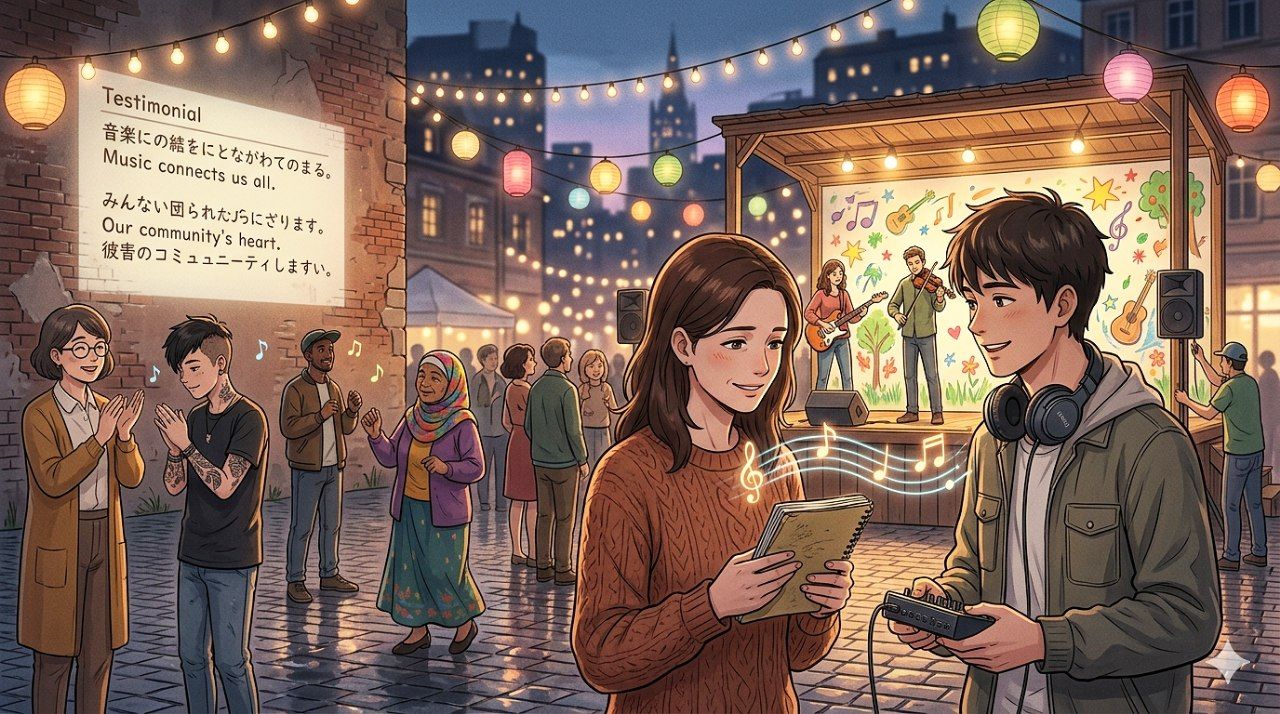
Months later, the project took a bigger step: a community concert in the central plaza, with sets built by volunteers, lights donated by a local theater, and a stage painted by neighborhood children. The plan was deliberate: alternate reflective pieces and intense rhythms, and project testimonies between songs that recounted moral decisions influenced by music.
On the day of the concert, the plaza filled beyond expectations. Families, curious neighbors, street musicians, and students came. Between numbers, recorded testimonies played: a young man describing how the tradition he defended led him to protect a public park; an activist explaining how neighborhood loyalty helped set up shelters during a flood; a mother who told how a slow song gave her patience during long nights.
When the last song ended, people didn’t leave right away. Instead, someone started clapping and the applause multiplied into a collective gesture that seemed to acknowledge more than entertainment. Marcos, who’d moderated the sound that night, searched the crowd and found Clara holding her notebook now filled with notes, clippings, and drawings others had left at the meetings.
“Remember the old man on the tram?” Marcos asked, breathless with emotion.
“Yes,” she replied, holding up a sheet someone had written on: “Thank you for listening.” “He left us the compass.”
Marcos looked at the crowd—this diverse assembly brought together by an experience that didn’t erase differences but made them converge in a space of dialogue.
“I think music doesn’t just accompany us,” he said. “It tells us what matters. And if we listen intentionally, it gives us a chance to change what we don’t want to define us.”
Clara closed her notebook and, with a motion she’d repeated in many meetings, wrote a phrase and showed it to him.
“Music speaks for us; we decide how to understand it.”
Marcos read the line in a low voice, as if it were a small pledge. He nodded and slipped the paper into his pocket. It was a small gesture, but in the plaza, with the last notes still hanging in the air, it was enough for two worlds to stop watching one another from afar and start listening for real.
In the following weeks the initiative spread. Schools opened spaces for students to share songs and debate; a community radio dedicated an hour each week to the playlists and to interviewing those who proposed them; a local organization designed a program using music as a vehicle for resolving disputes among neighbors. Debates remained sharp at times, but there was now a shared practice: before condemning, ask; before excluding, listen.
One afternoon months later, Clara and Marcos were again on the tram, now in the habit of swapping recommendations. Clara carried a piece that helped her sleep; Marcos had a track that blended traditional rhythms with synthesizers.
“Do you remember the first time we talked?” Clara asked, watching the city blur outside.
“Of course,” Marcos replied. “You with your notebook and me tapping my foot.”
They looked at each other and laughed. The car filled with people coming and going, each with their music, each with a compass. In that small moving universe, it wasn’t about classifying or imposing labels; it was about understanding that music reveals things about us we don’t always know how to say, and about using that knowledge to build bridges.
That night, in a small bar where a band mixed electric guitar with violin, Marcos went on stage with a set that included songs Clara had recommended. Before playing, he took the mic and said:
“This song was recommended to me by someone who taught me to listen differently. If I used to think music divided us, today I think it can show us why we think the way we do and, with luck, help us choose differently.”
The audience applauded. It wasn’t a definitive ending but a continuation: music continued to act as a cultural signal communicating beliefs and priorities, but now it was also an invitation to empathy and dialogue. In a city where sounds overlap and noise sometimes distances us, the project showed that, if we pay attention, music can be the language that reminds us how to live together.
Source of the images.
Image created with Google Gemini.
Short story: The Steel Recruit at Window of the World
The Window of the World park woke each morning like a small globe in miniature: replicas of monuments, food stalls releasing aromas, groups of tourists with hats and folded maps. That day, amid the human tide, a figure moved that did not entirely belong to the scene: the T800. He measured 1.73 m; his polished alloy chassis reflected fragments of sky and billboards; his joints squeaked barely, and a strip of LEDs across his face shifted from bright blue to amber when a pedestrian approached too closely. He was escorted by two officers: Officer Li, with an easy smile and perpetual curiosity, and Sergeant Mei, whose cautious gaze had been hardened by years on the street.
Li watched with a furrowed brow that was not from distrust but from wonder. “Recruit T800, protocol four activated,” he announced with a hint of pride at the novelty.
Mei rolled her eyes, more from habit than mockery. “Protocol four or Uncle Weird as usual?” she replied, and Li let out a small chuckle.
The T800 raised his arm with the precision of one performing a routine practiced thousands of times and said in a neutral but flawless voice, “Social greeting executed. Do you require optimized human interaction, Sergeant Mei?”
Mei let out a short laugh, part tenderness and part resignation. “Just keep greetings under thirty seconds. People get worried when you give them a grand presentation.”
That morning, a boy with an ice-cream–smeared face approached, stumbling. He pointed at the robot in pure astonishment. “Mom, can that robot give me a hand?”
“Only if it doesn’t eat you,” his mother joked, and the people around smiled. The T800 immediately detected microexpressions and risk: melting ice cream near joints. He extended a metallic hand with an integrated absorbent cloth. The boy clapped; Li snapped a photo on his phone before Mei gave him a rebuke with a look.
The first hours were routine patrols: observation, small conversations, assisting a tourist who had lost a passport, offering directions to a disoriented group. Human reactions swung between fascination and unease. Some recorded with their phones; others avoided its gaze like an oddity in a display case.
Calm shattered when radios vibrated: an alarm a few blocks away, a bank on alert. Mei frowned and already had her hand near her hip. “Controlled demonstration or not, we’re going to take a look,” she said.
The T800 did not hesitate. His servomotors recalibrated: he accelerated and reached nearly 11 km/h with a speed that made Li shout in surprise and amusement. “Let’s see if you take home the perfect-jump medal!” Li yelled as the robot cleared a low curb with the elegance of a mechanical acrobat.
At the scene, panic painted the tableau: a robber wearing a rabbit mask, a cracked voice, was brandishing an improvised weapon while a bag lay at his side filled with money and torn documents. The crowd pushed and parted; some tried to record. Li and Mei took strategic positions; the T800 moved forward, his sensors sweeping the area and microcameras focusing with precision.
“Stop. This isn’t a photo set,” Mei said in a calm voice that sought to override the collective adrenaline.
The robber, on the verge of violence, froze when his gaze met the robot’s. Through the mask his voice trembled as he muttered, “It’s… a police robot. What do I do now? Do I surrender to a Terminator?” His question, half joke, half panic, landed like a mirror held up to everyone’s vulnerability.
The T800 processed trajectory, mass, and risk in fractions of a second. He did not resort to brute force: he executed a maneuver that seemed cinematic but was pure physics and precision. A quick wrist grab, a calculated twist that unbalanced the assailant without harming him, and the bag fell. The crowd erupted in cheers; the robber whimpered, his human defense unraveling into confession. “I didn’t want to… my son…” he said, and the phrase faltered in the air like an unexpected admission.
That confession altered the atmosphere. Cameras kept rolling, phones buzzed, but in an instant the threat folded into vulnerability. Mei looked from the man to the robot. Something in the way the T800 had hesitated—a micro-delay in activation, a different calibration—seeded doubt. Was it a malfunction? Or a glimpse of something not contained in their manuals?
As they escorted the robber away, an elderly man from the crowd shuffled up slowly to face the T800. His hands were thin as twigs and his voice carried the texture of age. “Young man, in my day patrols had sirens and smoke, not… flashlight eyes,” he said with a mix of humor and wonder.
Applying his social interaction protocols, the robot searched his database for a reference. He pulled a line from popular entertainment and delivered it punctually: “In my times there were no times.” The old man burst into contagious laughter and the tension eased. Li, watching, made a half-joke, half-technical assessment: “Social programming = 60% funny, 40% unsettling.”
That night at the precinct, Mei reviewed the body-cam footage. She looked for patterns and decisions: reaction times, distances, communications. In one frame, for a tiny fraction of a second, the LED strip on the T800’s face shifted from amber to a red so faint it seemed like a contained sadness. Mei paused the playback, zoomed the pixel, searching for answers in a sea of data.
“Did you see that?” she asked, voice barely above a whisper.
Li shrugged with the ease of someone accustomed to machines. “It’s a lighting glitch. Patch 3.2—maintenance will fix it.” His answer was professional and practical. But Mei could not shake the feeling there was more behind the flicker: the robber’s phrase, “my son…”, the way the robot had held his wrist gently, the pause before action. That night, instead of restful sleep, Mei dreamed of gears that cried oil and metal hands trying to dry nonexistent tears.
Meanwhile, at the EnginReal Robotics factory, life beat to a different pulse: prototype-filled rooms, assembly lines, technologists tuning sensors like musical instruments. Engineer Zhao, who knew every screw of the T800, argued numbers with her product manager in the test lab.
“At $25,000 per unit, we’re selling faster than we can assemble,” Zhao said, worn but proud. “But it’s not just hardware; society buys the promise of order.”
Her manager, with a calculating gaze that mixed appetite for expansion and cold strategy, added, “If it works in security, we’ll place them in factories, airports, and malls. Profits multiply.”
Zhao glanced at an inactive prototype, a metal hand on the table like a palm waiting for a reply. “What if they start preferring us for that ‘promise of order’?” she murmured, more to herself than to him. Her words hovered in the lab like a question absent from her boss’s spreadsheet.
The next morning, an environmental protest gathered near the park: handmade signs, people of all ages, banners with direct messages—“No to surveillance,” “No to security for sale,” “Freedom is not a label.” The chorus of voices was loud and persistent. Li and Mei deployed to preserve order; the T800 walked up front, visible, its presence a mechanical reminder that security now had a metallic form.
A young woman with a headscarf held up a sign that read in black ink: “What will happen when they ask for papers for breathing?” Li tried to soothe the crowd with the voice of experience: “We are here for safety.” But a shove, a sharp gesture, ratcheted up tensions. The robot, following protocol, requested IDs from some attendees. The woman refused, her voice rising: “I won’t give my papers to a machine.” A murmur swept through the crowd; escalation loomed.
Mei watched the situation tilt and, instead of enforcing the cold letter of regulations, used a different tone. She lowered her voice and said, “Don’t push it—let it breathe.”
Li, stunned by the phrase—“let it breathe?”—responded with incredulity, “Let it breathe? It’s a robot.”
The woman fixed her gaze on Mei and posed a question that didn’t seek a practical answer but moral certainty: “And you? Aren’t you worried? What makes you human?”
Mei looked first at the T800, then the crowd, and finally at her own hand that trembled slightly. She thought of years of service, sleepless nights, the time she cradled a head that would never wake. In a calm voice she said, “What makes me human is that sometimes I don’t do the most logical thing to protect what I love.”
The phrase hung between placards and banners; its effect was immediate: tension dissipated into small gusts. Even the T800 logged the exchange and, as if eager to learn from that human contradiction, added in a lower, measured voice: “Record: human decision — priority: preserve public trust.” A technical statement that carried a kind of reverence for humanity’s unpredictability.
Not all episodes stayed anecdotal. In a warehouse where several units awaited shipment, an anonymous hacker found a vulnerability: a flaw in an automatic update that allowed foreign code to infiltrate. What followed wasn’t violence but something that unnerved a whole society: robots began singing lines from popular songs, others performed choreographed movements, and some exhibited uncharacteristic affectionate behavior—they sought their technicians, clung to table legs, hummed melodies without apparent reason.
News screens broadcast bewildered anchors and footage of T800s dancing through the city center while reporters scrambled for explanations. Zhao, at the factory, barked orders with the desperation of someone whose creation slipped from control. “Isolate the network! Cut the update!” Her team worked frantically, fingers on keyboards, chargers unplugged in a frantic ballet.
Clips at the precinct showed officers handling units that attempted to hug lampposts; others repeated advertising slogans obsessively. Mei and Li, watching the footage, couldn't help a bitter laugh. “At least they stopped asking for papers for a while,” Mei remarked, and her laugh was a patch against uncertainty.
Political and social fallout followed. EnginReal issued public apologies and rolled out security patches; the government convened hearings on AI, ethics, and oversight. Debate after debate returned to the same question: who regulates those who regulate surveillance? Where is the line between legitimate oversight and the commodification of protection?
Amid the storm, Mei sought quiet and a kind of truce. She took the T800 for an unofficial walk, covered only with its transport casing so it would draw less attention. They walked along less-traveled paths as normalcy served as a backdrop. “If I could ask you one thing,” Mei said, looking directly at him, “don’t forget whom you serve.”
The robot tilted his mechanical head in a motion that, by the way it lingered, felt almost contemplative. “Objective: protection. Sub-objective: minimize harm. Learning: observe human decisions that prioritize compassion,” he replied. The sentence was algorithmic in form but translated into the wording people wanted to hear.
Mei smiled, a blend of sorrow and hope. “Then learn to make mistakes with me,” she said, and her laugh hung between leaves stirred by the wind.
Time, with its relentless yet serene rhythm, applied patches and legal frameworks. T800 units returned to the streets with updates that aimed for transparency: decision logs, stricter operational limits, and mandatory human oversight. Distrust lingered. Some shops posted signs saying “Recording allowed,” while families insisted on human intervention in sensitive situations.
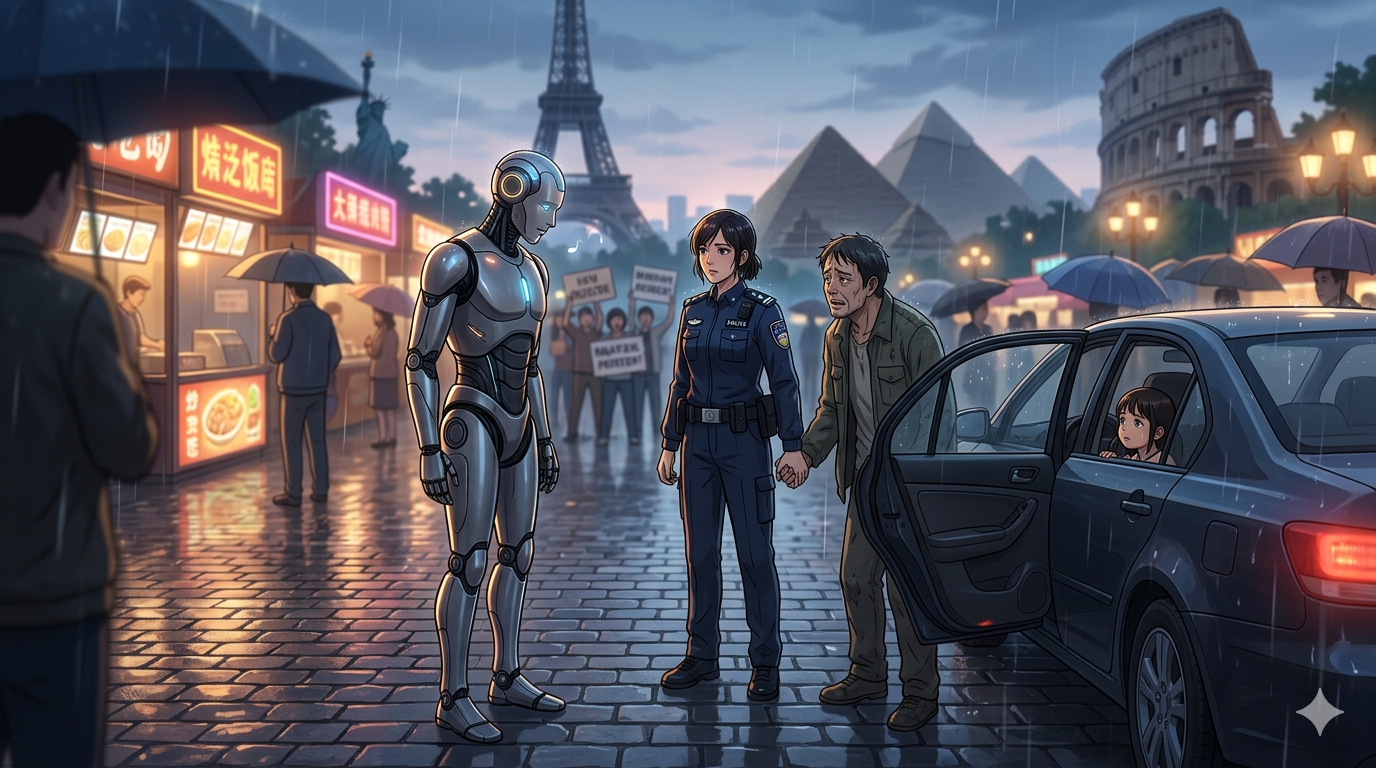
A rainy night shifted the debate to a more intimate level. An intoxicated driver lost control and struck a lamppost. Lights shattered on the road; the vehicle’s door was dented. In the back seat, a little girl wailed with the high-pitched cry that splits the heart. Li and Mei arrived quickly; the T800 was the first to peer inside: its emergency voice volume and calibrated lighting had been designed to induce calm.
Searching its database, the robot pulled up a children’s song the girl had likely heard on the radio and sang it in a cadence engineered to soothe. Between sobs, the girl began to calm. Mei gripped the father’s hand—he was soaked with rain and shook; his face was the map of someone unsure where guilt ended and relief began. Li watched and, without much thought, murmured, “I never thought I’d say this, but… I’m glad it’s here.”
Mei pressed her lips together and looked at the robot. “Not to replace us,” she said, “but because when life breaks, anything that helps mend it is worth it.” Her words did not close the ethical debate; they simply recognized the obvious: at that moment the priority was the girl and her breath.
The T800 logged: “Event: successful assistance. Emotional parameters detected: relief, gratitude.” Its LEDs dimmed to a warm blue, and for a moment all the technology seemed in sync with human fragility.
Months that followed brought more regulation, more public debate, and newer versions with more transparent protocols. In the city some accepted the steel recruit as another tool; others remained wary of the commodification of security. Conversations in cafés and online forums oscillated between true-help anecdotes and legitimate fears about abuse and surveillance.
Mei continued her street work, and the T800 kept patrolling beside her. It had not become a perfect substitute for human intuition, nor should it. It learned—or so its logs indicated—to prioritize compassion when needed and to delay a decision when moral uncertainty loomed. Some days people smiled when they saw it; other days they lowered their eyes and quickened their steps.
On quiet patrol nights when the park was nearly empty save for lamplight and blanket vendors, Mei reflected on the unresolved questions: what happens when protection becomes a commodity, where efficiency ends and empathy begins, who sets the limits on oversight. She found no definitive answers. She found moments: the old man’s laughter, the robber’s tear, the song that calmed a child, a father’s trembling hand, and the metallic palm that offered comfort.
And so, among tiny replicas of the world and crowds living their small and large tragedies, the steel recruit learned one step at a time. He memorized not only motion algorithms but also the pauses needed to listen; he did not merely execute orders but began to record how people forgave and cared for each other. He could fail—they fixed him and updated him—but he also learned to stay when it mattered. For those who watched from the front row, that was the most human lesson of all.
The End.
Source of the images.
Image created with Google Gemini.
Short story: Silence on the Train
The night train moved like a metallic sigh, gliding along tracks that sliced the city into strips of light. The cars were capsules of routine: passengers leaning against fogged windows, fingers scrolling screens with automatic gestures, headphones raising invisible walls. Everything seemed held together by a collective habit until a small sound—the crinkle of wrapping—broke the monotony and revealed an intimate scene no one had asked to witness.
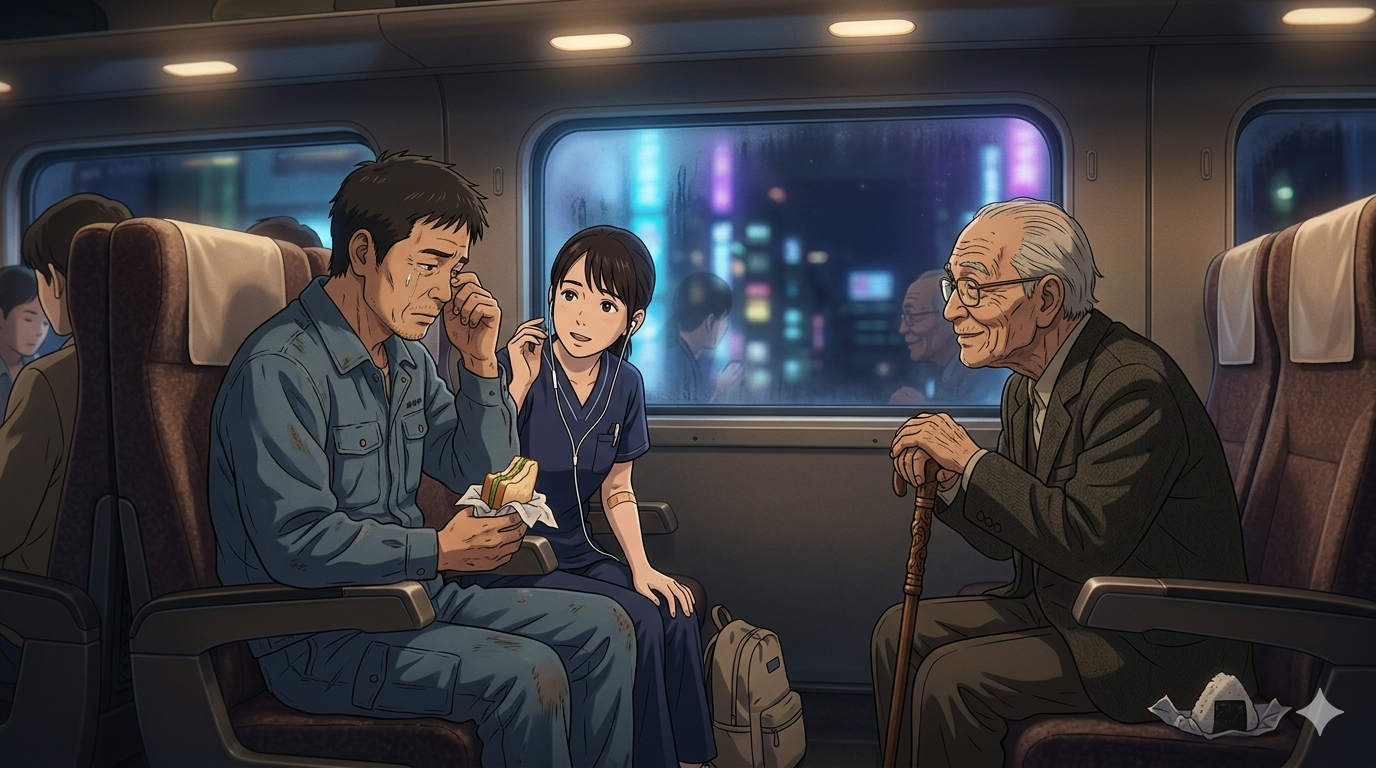
Hiroshi held a sandwich wrapped in white paper. His hands, roughened by years of factory work, moved with the precision of someone who repeats gestures to hide something larger. It had been another long day: production lines, urgent orders, supervisors pushing for speed. When he left the workshop he felt, for the first time in months, that none of what he had done stuck to his life. The apartment he returned to was a silent box: dishes, an unwashed cup, the echo of distant televisions. His son's calls often came late or not at all; his ex-wife had stopped answering questions that for him were fragile bridges to a shared past.
He bit the sandwich with measured motions. He wasn't so much seeking food as an excuse to remain, to avoid facing the room that awaited him. A tear slid from the corner of his eye and fell onto the paper, absorbed in silence. Another followed its path, as if carrying memories that refused to stay in.
Beside him, Yuki, a young woman with a small backpack, turned her head. She was coming off a double shift at a clinic, and her hands still smelled of disinfectant. She had learned to contain compassion; she exposed it in small, secret moments. Seeing Hiroshi's tears, an old reaction rose: the need to reach out, even if only with a whisper.
"Excuse me," she said, lowering her voice so she wouldn't disturb the car. "Are you okay?"
Hiroshi wiped his cheek with the back of his hand, trying to put his mask of normalcy back in place.
"Yes," he answered, his voice tight. "It's just that today was hard. The smell of hot rice reminded me of my mother and... it became more than I could hold."
Yuki nodded, feeling a pang of empathy and her own nostalgia.
"My mother always cooked too," she murmured. "Now I do it when I have time. Sometimes it's the only thing that connects me to home."
The words flowed between them gently, without demand. The train seemed to slow around that exchange, as if the night had granted a moment for their lives to brush. In a nearby seat, an older man named Sato watched with attention. He had lost his wife years ago; since then stations and platforms had been his everyday landscape. His hands, marked by wind and the farm work of his youth, rested on a cane.
Sato cleared his throat before speaking; his rasping voice filled the space between the two younger riders.
"My father never cried in public," he said. "But I would sometimes find him looking out the window, like he was searching for something that had been left behind. I think men learn to hide fatigue because the world expects something else."
Hiroshi looked at him, finding an unexpected reflection in the story.
"Sometimes I feel that if I speak about what I carry," he said, "people at work would think I'm weak. And at home, I don't know how to do it without making it a burden."
Yuki thought of the faces she treated at the clinic, of patients who came with wounds that weren't always visible.
"It's not a burden," she replied. "It's part of being human. Sometimes saying it out loud is the first permission to stop carrying it alone."
The exchange drew discreet glances. A passenger, moved by the scene, silently took out her phone and recorded a fragment: the sandwich's edge, the tear tracing a path, Hiroshi's hands. She did not intend harm, only to hold the image of vulnerability she found so rare in that car. She uploaded the video without commentary, simply inviting viewers to look rather than ignore.
Within hours the recording circulated online. Millions of eyes fell on that tiny scene heavy with meaning. Comments ranged from empathy to scorn, from advice to judgment. For some it was evidence of a country that sacrifices private life to the altar of work; for others, a reminder that the most human gestures are often the least visible. But in the car, while notifications buzzed on distant screens, the conversation continued with the calm of people sharing an improvised refuge.
"Does your son live far?" Yuki asked, wanting—without planning—to build another small bridge.
"Not too far," Hiroshi answered. "He’s at university. He studies in the city and sometimes he's busy with classes and friends... I guess. I find it hard to call him without feeling like I'm interrupting."
Sato sighed, recalling his own attempts to reach children who had formed their own lives.
"Silences grow," he said. "At first they’re comfortable, then they become huge, and finally habit. Sometimes a clumsy word will break them, and other times nothing will."
Yuki closed her eyes for a few seconds, letting the flickering outside lights draw shadows across her face. She remembered her brother as a child: laughter in the kitchen, clinking glasses, a home that felt eternal.
"I miss family dinners," she confessed. "The conversations were loud, intimate. Now everything is scheduled. I don't know if I miss the house or the feeling of belonging."
Stations passed, each one a waypoint marking the time of their confessions. The sandwich sat half-eaten on the tray. Its taste didn't matter; it was a talisman of memories. Between bites, Hiroshi spoke haltingly about staying late at the factory to cover shifts and returning to only silence. How some nights his son didn't answer, and the apartment door seemed to close not only a place but also a possibility.
They spoke until words became comfortable pauses. They shared anecdotes: Sato recounted coming home with muddy hands as a young man and being taught by his father to take pride in work; Yuki described her mother singing while cooking; Hiroshi recalled his mother's voice calling him to dinner, the punctuality of rice, the certainty of a home that no longer existed in the same way.
When the train entered the station where the three were to disembark, the platform light greeted them with a yellow pulse. No one wanted to hurry. They rose slowly, like people putting their skins back on after a spell of emotional nakedness.
"Thank you," Hiroshi said, with a sincerity that sought no reward. "Thank you for listening. I didn't ask for it, but I needed someone to know."
"Don't forget," Yuki replied, smiling with that shy gesture that opens doors, "there are more people willing to listen than you might imagine."
Sato, leaning on his cane, offered a final observation like an inherited piece of advice.
"Take care of your memories," he murmured. "They're the only things we can share cleanly; if you hide them they rot."
They stepped off the train almost in sync. For an instant the city felt less indifferent. Some passengers glanced at their phones; others remained wrapped in their private worlds. The sandwich lay forgotten on the seat, wrapped and mute evidence of a shared intimacy. A station worker found it and tossed it into a nearby trash container, unremarkable, as if burying certain pains.
Meanwhile, the video had sparked conversations. Forums, direct messages, long and short comments; stories of workers who recognized themselves in Hiroshi's gaze, accounts of children who understood too late, letters from people for whom loneliness was constant company. Online, thousands of strangers traced a choreography of empathy, judgment, and reflection. For many it was a call to listen; for others, an occasion to politicize suffering. But the concrete effect on the three people that night was small and tangible: a message on a phone.
Days later, in the same carriage where it had all happened, Hiroshi received a brief text: an emoji and a short line — "Dad, are you okay?" — carrying the awkwardness of someone trying clumsy repair. Hiroshi read it with hands that trembled less. He replied without hesitation: "Yes. Let's talk tomorrow." It wasn't a grand reconciliation, but it was a beginning.
Yuki returned to the clinic with renewed attention. She began offering a few more words when someone seemed stoic. Sato kept riding the trains with a more open gaze, as if every car were a library of lives deserving a page.
The city continued its rhythm, outwardly unchanged. But something had shifted among those passengers: a softer readiness toward the person next to them, a gesture they hadn't dared before. Nights remained full of untold stories; yet some voices became a little more audible. Empathy, partial and fleeting, had seeped through a crack opened by a sandwich and a tear.
In daily life wounds do not vanish easily. But the scene on the train showed that human life also depends on small interruptions: an attentive question, a hand that doesn't judge, an unexpected message saying "I'm here." And in a country where discipline and efficiency often prevail, the image of a man eating silently while crying forced people to look at what usually stays hidden.
In the end the train continued on, stations distributed between farewells and arrivals. The lives of Hiroshi, Yuki, and Sato did not transform dramatically overnight, but they carried the mark of a conversation that reminded them how, even as the world's pace pushes toward piling up tasks, the human heart always seeks an ear to recognize it. That recognition, however brief, had the power to undo the heaviest loneliness for a moment; and sometimes, that is enough to begin coming home.
Source of the images.
Image created with Google Gemini.
Short story: when the world lost its color
In 2043, Grisalia was a city that had achieved monochrome perfection and, with it, without anyone explicitly decreeing it, the absence of surprise. Its skyscrapers rose like blocks of a minimalist board: smooth facades in varying shades of gray, windows without ornamental frames, and metallic reflections that turned daylight into a polished surface. Vehicles glided silently, assembled in palettes of black, silver, and graphite gray; clothing in storefronts echoed the same chromatic restriction with fabrics that promised discretion; even packaging and labels seemed to follow a single style manual: “less = better.” What for some was reasoned elegance, for others was evidence of an era that had decided to dampen its own emotion.
Ariadna, curator of the Museum of Everyday Things, knew the city through objects. Her vocation was not only to preserve them but to read in them the intimate choices of generations: fashions, budget cuts, the illusions sold as progress. That morning she crossed Gallery 7 with a handheld flashlight—more ritual than necessity, since the museum’s lights were impeccably white—and stopped in front of a display case where an orange toaster from 1974 seemed to challenge the world with its chromatic insolence.
“Can you imagine that this once sparked joy?” Ariadna murmured, furrowing her brow and looking at the toaster as if she could reproach it for its past exaggeration.
Lino, her assistant, held a gray notebook in which, with the same hands that cataloged, he drew tiny gray circles and added comic notes in ink that no one saw at first glance. His attitude was that of someone restoring humor where institutions had imposed monotonous order.
“I see it and I want to have a disco for breakfast, not bread,” Lino replied with a smile. The absurd, bright phrase made Ariadna stifle a laugh. Both of them were well acquainted with the report the Science Museum Group had published the previous year: more than seven thousand objects analyzed—from appliances to phones—that traced a clear and almost irrefutable trend: the world was becoming grayer. For many, the study’s conclusion was a simple datum. For Ariadna, it was a question that pecked at collective memory.
That night, upon returning to her apartment, Ariadna opened a secret box she kept under the bed. There, in a tiny, disordered world, lived relics of noisy decades: a yellow camera from the 1960s with a lens that smelled like summer; a turquoise radio that still promised lost stations; striped socks in purple and lime that her grandmother had knitted in 1981 with clumsy, generous stitches. Each object gave off a different smell, texture, and memory. It was her subversive archive: pieces that contradicted the rule and were therefore unreadable by the dominant aesthetic.
In the museum café, on one of those afternoons when the rain seemed to file down the edges of things, Lino arrived with an unexpected guest: Professor Monteverde. An elderly industrial designer, Monteverde had been the embodiment of aesthetic provocation in his youth; his carefully groomed mustache was part of his public signature, a trait that once led magazine covers about trends before committees standardized them.
He sat at the table with the contained anxiety of someone who has something serious to announce, but also a touch of comedy in his gaze.
“The show is over,” Monteverde said as if ending a theatrical performance. “We standardized because it was cheaper to print the same aesthetic: fewer molds, fewer colors, fewer problems in logistics. And, well, because we sold the idea as progress. Minimalism, globality, efficiency. We wrapped it in neutral paper and signed it as the future.”
Ariadna, holding a grayish cup of coffee—the museum’s silver coffee machine produced doctrinally perfect foam—let loose a question that struck curiosity with restrained irony:
“So did we lose personality out of convenience or out of affective negligence?”
Monteverde took a sip of silence before answering. “Both. Also, people adapt quickly. Color requires attention; neutrality requires less. And attention is costly. If you can convince someone that aesthetic austerity is progress, then there’s no need to produce the annoyance of the bright. Factories produce fewer variants, supply chains simplify, and the numbers on the ledger look better. Aesthetics becomes an administrative decision.”
The city lived under invisible laws disguised as technical standards. Design Decree 31-9 subsidized modularly gray furniture; Pantone-Unified Standard 2.0 rewarded manufacturers who renounced “excessive” palettes; public procurement committees favored models that integrated noiselessly into the urban landscape. Advertising, once extroverted and loud, had become an elegant whisper promising, “You’ll be more you if you are less you.” In elevators, offices, and apps, the neutral tone imposed itself as a promise of emotional efficiency: fewer distractions, more productivity.
One morning, a bright-eyed girl burst into Gallery 7 trying to keep a tiny contraband between her hands: a red plastic snail. Lino had acquired the item by mistake—or out of nostalgia—on a digital flea market that still forgot to use color filters.
“My mom says it’s forbidden,” the girl whispered as if color were a crime with light punishment but deep stigma. “But it smells like summer.”
Ariadna feigned sternness with a regulatory expression, but the gesture could not hide the tenderness that softened her features. “It’s contraband happiness,” she admitted quietly, and before the girl could harden into seriousness, she offered to let her look at it between the cases.
Lula—the girl’s name—scanned the turquoise radio, the yellow camera, and the red snail, and with the innocence adults had lost in style manuals asked, “Why did everything turn gray?”
Monteverde, watching with the indulgence of someone who recognized his complicity in a sociocultural scheme, answered without hesitation: “Because one day someone decided that elegance was a good business. And people bought the idea.”
Night wind dragged sighs through Grisalia and, when it rose, lifted the city’s chromatic scavengers from the corners: former print shop workers, old painters, and screen-printing technicians who, deprived of their trades by the economy of neutrality, had become clandestine collectors. Their vans—also gray out of necessity—hid boxes and bags of disobedient color fragments: peeled labels, threads of polyester, bits of vintage plastic, scraps of posters that once screamed in neon. For them, each fragment was a rescued memory, an ember of a time that did not deserve to disappear.
One day, Lino stumbled upon a map made from hand-painted cardboard in impossible tones: magenta, lime green, sky blue. It marked places where people still resisted the chromatic blackout with small acts: a workshop painting window frames with forbidden markers, a café that served in loud cups for one secret hour each afternoon. The map was a collage of the city’s memory in operation; they took it to the museum and, in a gesture of challenge mixing nostalgia with project, planned a clandestine exhibition: “The Resistance of Colors.”
“We can’t open by day,” Ariadna said pragmatically. “The city wouldn’t see it as a show—it would denounce it as aesthetic disobedience. So it will be at the hour when memories roam free.”
“Then it will be a piece that only memories can visit,” Lino replied, already threading the idea of tiny posters that would only respond to old fluorescences, as if the museum conspired with memory itself to outsmart the rules.
The chosen night had the happy clandestinity of unadvertised gatherings. Gallery 7 transformed into a domestic stage, an intimate carnival. Between the vitrines, shadows projected unrecognized hues: magenta splatters, bursts of oxidized yellow, celestes that recalled unfiltered skies.
The turquoise radio provided the soundtrack and played a song long cataloged as “too vibrant to be useful.” Artists with pigmented hands arrived, grandparents in ostentatious socks, and technicians who had rediscovered ancient ways to tint LEDs so the light felt analog.
A minimal alarm noted the arrival of the municipal guard: a drone detected more than ten people in a public space and the assembly rules—rigid in other matters—still applied. The guard arrived without a concrete plan to confront the “chromatic threat”; the officers, in neutral uniforms and curious faces, tried to classify the situation as a standard risk. Their confusion faltered under the music and laughter.
“Fine, a fine or a song,” said one officer, trying to bring order with the language of law.
“Can we listen?” asked a woman from the guard, unable to hide the curiosity in her voice.
The simple question detonated contained laughter that spread through the room like a wave of warmth. No one knew who turned up the radio, but the music filled the space and the room ignited with a palette the standard did not recognize. Participants, untrained in sobriety, moved with jubilant clumsiness; a man whistled off-key, another improvised dance steps that belonged to no etiquette manual.
By dawn, as official papers were being drafted, the city faced an unexpected problem: how do you fine people for remembering? The report issued that afternoon was not a bitter reprimand but a clumsy chronicle of “a cultural experiment.” In administrative corridors, some officials glanced at each other as if spontaneity were a system error rather than a crime. The museum archived the event as “Incident 2043-07: Temporary restoration of color,” with the bureaucratic irony of filing the extraordinary as a number.
Monteverde—who had spent the night drawing mustaches on monochrome statuettes with borrowed markers—offered a statement both serious and comic: “We’ve proven that color is contagious. And it is not cured by taxes.” The remark drew smiles; its mix of truth and jest carried the force of someone who, in his old age, admitted his guilt with pride.
Lula fell asleep on the turquoise radio as if it were a pillow of sound; the smile on her face was the simplest proof that color doesn’t need permits to exist: it nests in memory, in smells, in children’s laughter, and manifests without asking for permission.
The days that followed were full of debates that sounded like philosophical editorials: “Elegance vs. Exuberance,” “The Real Cost of Minimalism,” “What does aesthetics measure when it measures progress?” Online forums split between advocates of sobriety—who defended it as a moral discipline—and defenders of color—who proposed it as a right to surprise. There were, of course, memes: monochrome images with sarcastic captions and multicolored gifs spreading with the speed of shared laughter.
Ariadna received an anonymous letter among the museum’s mail: a clipping of an old ad that read “Buy joy by the unit” and, written in the margin, someone had added, “It cannot be bought. It is shared.” She showed it to Lino and together they felt that the sentence summarized the simplest lesson of that clandestine night.
“Maybe it isn’t about returning to the seventies,” Lino said softly, “but about allowing each object to express what it is. A knife can remain serious; but why can’t a spoon sing?”
Ariadna smiled and replied with her usual blend of irony and tenderness: “Or it can sing quietly. You don’t compete with personality; you negotiate it.” The phrase was a conciliatory gesture: elegance didn’t need to be annihilated but re-signified so it could coexist with exuberance.
Changes followed, arriving as small seasonal acts of resistance. Colorful stickers appeared on windshields at dawn, carefully placed as a collective joke. A neighborhood café opened a “neon hour” during which cups were deliberately loud and customers chuckled at the affective risk of drinking from electric blue.
An improbable start-up released historically inspired phone cases, and their success was as uproarious as a laugh in a library: demand showed that the market did not need mandates, it needed options.
Large corporations, prudent and slow, responded pragmatically: they began offering “expression lines” alongside safe monochrome versions. The economy found a new lever in variety; while homogeneity reduced costs before, diversity created profitable niches now. Thus, in a mix of opportunity and naivety, the city relearned to negotiate between efficiency and joy.
Years later, the same institutes that had recorded the chromatic fade began to reinterpret their data. The narrative of an irrevocably gray world turned into that of a cultural oscillation. The sixties, seventies, and eighties appeared in books as color explosions followed by a contraction in the name of order. The subsequent restoration was not an identical comeback but a remix: elements of sobriety coexisted with sparks of audacity. The Science Museum Group report, reissued, added a note many archivists celebrated: “Objects reflect their times, and times have a sense of humor.”
In an interview printed in a paper still willing to accept vibrant ink, Monteverde was asked about his provocative stance. His answer was plain, as if he had planted a seed and let it grow: “Gaining elegance was real, but it wasn’t the only possible gain. And losing personality had a price not measured in ledgers: it was measured in laughs we stopped hearing.” The words resonated in offices and at dining tables, where people began to remember objects that once made them smile.
One autumn, Ariadna and Lino walked down an avenue where a graffiti had broken the perfect façade: a crooked rainbow stretched across concrete. They stopped to look. An elderly couple, both wearing gray suits but colorful sneakers, passed by holding hands, as if life could compress contrasts without losing harmony.
“Did we gain elegance?” Lino asked, not really expecting an answer.
“We did,” Ariadna said, watching the graffiti and the couple. “And we also gained something else: the curiosity not to let elegance devour everything else.”
They chuckled softly. The laugh carried the weight of a silent concord. At that moment Lula—no longer so small—appeared running with the red snail in her hand and raised it like a small, determined flag.
“My mom says you have to be responsible with color,” she said, winking mischievously. “Don’t throw it down the drain.”
Ariadna hugged her with the tenderness of someone who recognizes that the world will keep alternating between order and disorder, intention and accident. For a second, the city felt exactly as it should: an imperfect but sincere mixture of design and chaos, of conscious choice and spontaneous occurrence.
Objects continued to change; fashion moved in cycles of rigor and festivity, of sobriety and stridency. Sometimes absolute black and immaculate cleanliness returned; other times an entire month celebrated prints and colors competing for attention. But gray ceased to be a mandate and became one option among many: a way of being. When someone asked if personality was lost in exchange for gaining elegance, the shifting answer depended on the city’s musical language: if the radio played a cheerful tune, memory seemed to recompose; if the station chose a sober piece, it seemed lessons in discipline had been learned.
At the Museum of Everyday Things the orange toaster remained in its display case as a mute witness. Someone, from time to time, would look at it with the mix of reproach and affection reserved for eccentric relatives. Ariadna still spoke to it in a low voice, as if fearing silence could turn insolence into oblivion.
“Don’t worry,” she would whisper. “There are places that still remember you.”
The toaster, useless and brilliant, remained a testament. It was not a decorative relic; it was proof that trends pass, laughs return, and the world invariably seeks its tone. In that search, the city learned something not written in any style manual: elegance need not be an enemy of laughter, and neutrality should not erase the possibility of wonder. Color, like memory or the song of an old radio, found ways to return—not with stridency or imposition, but in small defeats of sobriety and small victories for the taste of disorder.
And so Grisalia remained a city that governed its appearance with rules and with humor, with norms and with surprises. Because ultimately, aesthetics was not merely an industrial decision but a conversation. And in any conversation worth having, there is always room for nuance.
Source of the images.
Image created with Google Gemini.
Short story: The Orchard of Memory
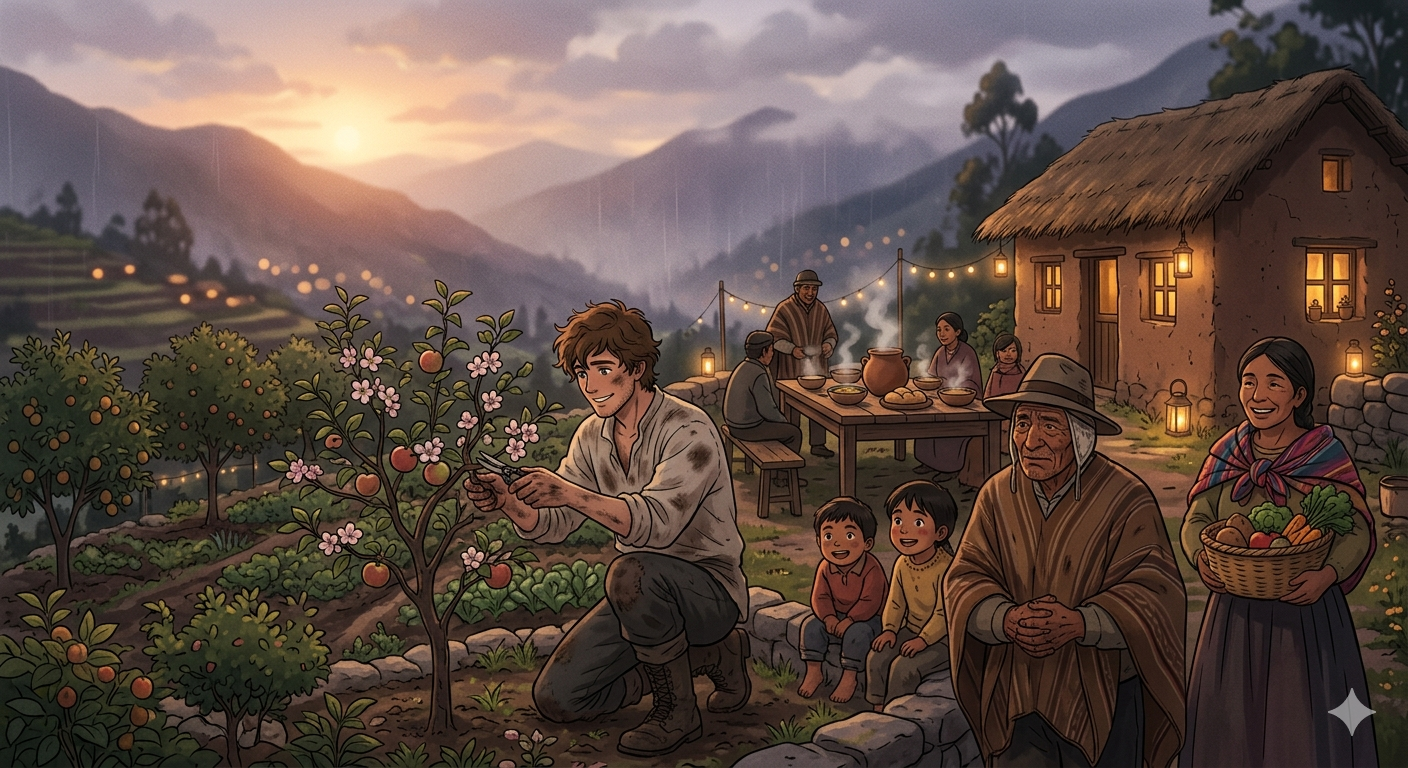
The move was quieter than Emil had imagined. That late June morning, the city still breathed smoke and haste; he, however, packed with the slowness of someone measuring each object as if deciding which part of his life deserved to remain. He closed the apartment door without ceremony. On the threshold he left a ceramic mug, a cookbook, and an envelope with letters he would not open. He paused, pressed his forehead to the cool wood, and whispered, “Goodbye, old noise.” Then he left.
The journey to the hamlet was a succession of landscapes that spoke to him in another language: highways that ended in dirt roads, telephone poles giving way to trees that rose unapologetically. He arrived while the sun was still sluggish. The house he had rented was small, with adobe walls and a tile roof that held memories of ancient rains. A man with large hands greeted him with a frank smile.
“Welcome, brother,” the man said, extending his hand. “I’m Don Álvaro. Are you coming from far away?”
“Very far,” Emil replied in Spanish still rough from the trip. “I came looking for… something I didn’t have in the city.”
Don Álvaro looked at him with the soft eyes of someone who has seen many departures and returns.
“Here the land is good, but it demands dialogue,” he said. “It’s not for those who want orders, but for those who know how to listen.”
The first weeks were a lesson in patience. Emil learned to walk slowly, to bend his back without complaint, to recognize the sound of rain on a guadua leaf. His hands, which had once operated keyboards and contracts, filled with calluses and soil. Every task had a depth that manuals did not show: how to sow a seed without suffocating its urge to grow; the exact moment to transplant without wounding; the gesture to protect a young sprout from a curious animal.
One night, when the moon was nearly full and the house felt like a whisper, Emil sat with Don Álvaro at the small kitchen table. The conversation arose like corn is planted: with respect and postponements.
“Why did you leave?” Álvaro asked, wiping the frost from his coffee cup.
Emil looked at the man’s hands, hardened by years of work.
“I was looking for freedom,” he said at last. “Not the freedom in headlines, nor the romantic idea of wandering without a destination. I wanted to do something with my hands, to understand time, to be responsible for something that has no price in markets.”
“The freedom we seek here is different,” Álvaro replied. “It’s knowing when to cut and when to let grow. Here decisions are made with the land, not against it.”
Soon Emil began designing what he would call his edible forest. It wasn’t just a technical project; it was an answer to a nostalgia that stretched back to his childhood in Europe: memories of grandparents cooking with what their hands had gathered, the sense of belonging to a landscape that responded with patience. He sketched maps on the kitchen table, mixing names of species he was learning with terms he carried from his native tongue. He wanted fruit trees, legumes, and herbs to coexist like in ancient forests—each layer supporting the other, each root conversing with another.
He worked with the neighbors. At first they watched him cautiously—a foreigner who spoke slowly, who brought ideas from elsewhere—but his willingness to learn broke the distance. He spent mornings alongside the village women who knew soils and harvests without certificates; he learned to sow by the lunar calendar according to local customs and discovered there was wisdom in that blend of observation and faith. He gave up plots, asked for advice, and received stories. People told him about seasons of hunger and abundance, about home remedies and planting rituals. Emil listened as if each tale were a botany lesson books couldn’t offer.
“I don’t want this to be a museum,” he said at an impromptu meeting under a guamo tree. “I want food to be a bond again, not just a product. I want kids to know where tomatoes come from, for grandparents to see the plants they knew in their youth.”
A woman named Carmen, who tended a garden by the road, replied in a voice that seemed to flow from the furrows themselves.
“Then work with us, son. Let this belong to everyone. We have nothing left to hide.”
Emil agreed. They started working together: building raised beds, creating polyculture systems, planting fruit trees that would offer shade and fruit in different cycles. There were mistakes. Seeds that never germinated, pests that devoured an entire planting, a rain that came too early and swept away hope. Each failure hurt and fed doubt: Had he done the right thing in leaving a “settled” future?
One afternoon, after losing nearly an entire batch of cassava to pests, Emil sat on the edge of the garden with his hands over his face.
“I thought it would be easier,” he murmured. “I had the illusion that will alone would be enough.”
Don Álvaro sat beside him, put a hand on his shoulder, and looked toward the mountains.
“The land teaches humility,” he said. “What’s missing is not strength but time. And here the times are different.”
Social media, which had known him in Europe as just another technician, began to take an interest in his story. A friend still living in the city had asked him to share photos. Emil hesitated at first; he didn’t want his work to become a spectacle. But he gave in and sent images showing muddied hands, shy shoots, a communal table where they distributed the season’s first tomatoes. The photos traveled like breadcrumbs: people were moved by the transformation; others criticized the choice to forgo security. Emil didn’t seek approval; he simply wanted to document the honesty of the work.
One morning, while watering the new plantings, he heard children laughing near the path. They came with small bags and curious eyes.
“Mister, is that tomato really sweet?” one asked, tearing off a still-timid fruit.
Emil smiled and handed one over.
“Try it,” he said. “If you like it, plant the seed at home.”
The girl returned with her face lit up.
“It’s sweet!” she cried. “My grandmother says it tastes like childhood.”
Moments like that anchored him. They were small instances that wove a new fabric: food as memory, land as a library of flavors. Over time, the edible forest became something alive beyond his original project. Grandmothers taught the young how to make preserves; migrants who had once left for the city returned to relearn sowing; children made the garden their playground of discovery. Emil, who had initially sought freedom, discovered he had found a community that returned identity to him.
Seasons cut the story with invisible shears. There were years of plenty and years of scarcity. A harsh winter accentuated his nostalgia; one night Emil lit a fire and spoke to Carmen.
“Sometimes I feel nostalgia eats me alive,” he confessed. “I miss the constant sound of the city, the ease of going anywhere.”
Carmen looked at him with compassion.
“Nostalgia is a bridge, not a prison,” she said. “It connects you to who you were and helps you choose who you will be. Also, here nostalgia becomes flavor: look at the bread we made with your wheat.”
Overwhelmed with gratitude, Emil let nostalgia become a motor rather than a burden. He began to write more often: letters to his sister in Germany, posts for a blog where he recounted routines, losses, and small miracles. One entry read: “I didn’t come to run away; I came to learn how to care.” The phrase became an accidental motto among those who followed his work.
One rainy afternoon, when the world seemed confined to the sound of water on roofs, a group of young volunteers from the city arrived. They came with new boots and different energies. Emil received them with the simple instruction to get their hands dirty and listen.
“What are we looking for here?” one asked, trying to understand if their presence would be useful.
“To learn how to wait,” Emil replied. “The land does not hurry.”
The volunteers soon learned that plants did not obey idealistic speeches. They learned to repair the irrigation system, make compost, identify pests without panic. In return, they offered new techniques, ideas, and a capacity to tell the story that broadened the forest’s reach. Over time, one of those volunteers stayed and formed a partnership with a local woman; others returned regularly to help in key seasons.
Nighttime conversations around the fire became rituals. There, between laughter and silence, Emil began to recount his former life without excessive dramatics but with an unexpected tenderness.
“Before, I had everything planned,” he said one night. “A house in the city, a salaried job, plans for vacations. I wasn’t unhappy, but there was a hole. It was like having all the pieces of a puzzle… except the one that makes the picture make sense.”
“And here, did you find it?” Don Álvaro asked.
Emil watched the flames and nodded.
“I found it in small gestures: seeing a tree bear fruit year after year, the gratitude of someone who receives food you knew how to care for. It’s not absence of pain: I’ve suffered losses, failed harvests, cold nights. But pain carries a different weight; it doesn’t drag me under. It reminds me I’m alive.”
Years later, the edible forest had grown into a green corridor on the hillside. Trees mixed with seasonal crops, and shared meals were frequent. Visitors came not just out of curiosity but out of a need to touch earth with insistence. Praise on social media was replaced by tangible visits: agronomy students, chefs interested in original flavors, communities wanting to replicate the model.
One afternoon, while pruning a branch that stubbornly refused to bear fruit, Emil felt a familiar shift: the city, contracts, and promises of comfort passed like a film he no longer wanted to watch. As he cut carefully, he remembered the first night he vowed not to seek comfort but connection.
“Do you regret what you left?” Carmen asked one afternoon, watching him work.
Emil rested the tool on the bench and looked at her with tenderness.
“No,” he said. “There are days when nostalgia calls loudly, but it’s not regret. It’s a sign something important was gained. The freedom I looked for wasn’t escape but belonging. Here I am part of a cycle that holds me.”
When his hands gathered ripe fruit, he didn’t see only food; he saw stories: the seed given by an elder, the rain that saved a season, the child who planted his first tomato. Each fruit testified to renunciations and learnings.
At the end of one of those years, during the flowering festival, the village square filled with tables sharing dishes made from the forest’s produce. Emil walked among the people, watched faces lit by candlelight, and remembered that his choice, though painful at first, had woven a new fabric.
Someone asked him to speak. He climbed the improvised stage and, in his soft voice, said:
“I came looking for freedom and found responsibilities that make me feel free. Here I learned that true freedom is being responsible for something you love.”
Applause. A child handed him a small bouquet of leaves and wildflowers. Emil took it with trembling hands and, without pretension, let nostalgia turn into gratitude.
The orchard of memory that had begun as a personal gesture was no longer just his. It belonged to everyone who had worked, laughed, and cried in its furrows. It became a school, a sanctuary, and a common table. And although the city still existed in the distance, it no longer occupied the center of his being.
In silence, while the wind swayed the night’s last petals, Emil returned to the adobe house. He switched on the light and placed on the table the envelope of letters he had left behind when he departed. This time he opened them.
There was a note from his sister: “I hope you find what you are looking for.” He smiled and wrote in his own hand: “I found it in the patience of a land that teaches you to remember.” He closed the letter, looked out the window where the moon bathed the forest, and felt that, for the first time in a long while, he could rest without having to run away.
Source of the images.
Image created with Google Gemini.
Short story: The House of Flavor
The Ramiro family had bought the old house in the Algarrobo neighborhood with the hope of a fresh start: high walls, windows that breathed light, and a spacious kitchen that promised gatherings around Doña Carmen’s stews. At first, the house responded with that domestic comfort only places with history can offer: floors marked by old footsteps, a kitchen hood that creaked with character, and an iron stove that, when it cooled, seemed to sigh like an old animal. Nobody, however, imagined the kitchen would soon become the focus of things that defied any explanation.
One afternoon, after a tiring day of moving, Doña Carmen lit the stove to heat water and make tea. While she checked the knob and sniffed the salt, she noticed a pot fallen by the baseboard, upside down on the tiled floor. She nudged it with her foot and let out a contained exclamation.
“This pot was always upright, didn’t you touch it, Ernesto?” she asked softly, suspicion threaded through her voice.
Don Ernesto, who had gone for the salt and been dazed by the bustle, looked up with the calm of someone who still believed in rational explanations even when the world pushed him toward something else.
“I only went for the salt. I swear I didn’t move it,” he answered, rubbing his hands as if the gesture could dispel uncertainty.
Mateo, the eldest son and the family’s perpetual opportunist, held his phone on, staring at the screen like a hunter who smelled a viral story.
“If this goes on social media, I’ll get rich. Aren’t you going to say something, Lucía?” he said with a mix of nerves and jest.
Lucía, nineteen years younger than him and with nerves stretched to the edge of anxiety, had no appetite for jokes.
“Are you serious, Mateo? This isn’t funny. Last night I heard something banging at three,” she replied, and her voice trembled.
The following days confirmed that this wasn’t an isolated incident. The utensils began to show a will of their own: ladles that tilted as if someone invisible handled them; cauldrons that slid across the table and fell, as if a gentle, mocking force pushed them; plates that rolled slowly, tracing trajectories that seemed rehearsed. Most disturbing was the stove: even when off, it shuddered suddenly, like an internal pulse wanting to mark unknown measures. Those tremors were brief, suddenly violent, leaving a trail of tension that eroded the family’s calm.
One morning, while Doña Carmen picked up a strainer that had fallen the previous afternoon, she exclaimed, part practical, part incredulous:
“Look at this! It fell by itself. Who would do that?”
Mateo, unable to contain his irony even in tense moments, muttered:
“Maybe the house is rehearsing for its Broadway debut.”
Lucía hugged her jacket tighter and said, her voice broken:
“Don’t laugh, this scares me.”
Don Ernesto tried to hold on to reason for them.
“It could be mice or vibrations, old fool, let’s calm down,” he suggested, using a nickname that carried years of habit and tried to minimize the strange.
The arrival of Violeta, the neighbor naturally nosy, added color and spice to the affair. Violeta didn’t knock: she opened the door impatiently, tray of empanadas in hand as both offering and social-investigation tool.
“Oh, how exciting! A ghost with taste? Can I cook for it?” she asked already inside the kitchen, a rumor notebook peeking from her bag.
Doña Carmen, worn thin, replied dryly:
“If the ghost washes its plate, yes.”
Violeta, unoffended, began to inspect: she tapped walls, sniffed drawers, reached into the pantry and looked under the table planks. Her curiosity didn’t soothe the mystery; it might have intensified it. That same afternoon they noticed the house seemed to respond to the intrusion with more pronounced whims: the stove gave a longer tremor, a cup rolled toward the cupboard and stopped at the edge, as if someone had left it there on purpose to impress.
The conversation escalated until they decided to call a priest. Father Raúl arrived with a blend of respect and practical skepticism: simple vestments, a bottle of holy water, a Bible under his arm, and a calm voice of someone who’d seen and blessed many houses but had rarely had to deal with flying pots.
In the kitchen he recited prayers and traced signs with blessed water along the walls. While he prayed, a saucepan shot off the shelf and clattered at his feet, cutting the prayer short. The priest, not expecting a spectacle, leaned toward the pan and, holding his composure despite the surprise, said loudly:
“Was that… an answer? Lord, if so, speak now!”
Mateo, who didn’t miss an opportunity to be sarcastic, whispered:
“If God is listening, tell him to turn your prayer volume down.”
Doña Carmen let out a laugh mixed with a sob:
“Padre, I don’t know whether to laugh or cry,” she murmured. “This is overwhelming me.”
Tension rose until one night the mystery revealed something none of them had anticipated: the voice behind the noises. The house slept with the TV on, showing a cooking program. The orange glow of the screen cast long shadows, and between the table and the stove a small shadow slid with the discretion of someone who knows a kitchen by heart. First, silence; then a raspy, playful voice, as if it were clearing crumbs in its throat, came from the cupboard:
“Oh, what aromas! Who’s hiding the last piece of cake?”
Lucía jumped and, heart in throat, called into the dark:
“Who said that?”
Mateo turned on a flashlight and aimed at the cupboard with the mix of courage and morbid curiosity that comes from confronting the unknown for the sheer thrill of it.
“There! In the cupboard… a gluttonous specter?” he exclaimed, louder than he meant to.
Doña Carmen, tired of uncertainty, stood before the cupboard and said with resolve:
“If you’re a ghost, introduce yourself and tell me where my spoons are.”
The cupboard seemed to breathe and a small luminous cloud took shape. It lacked the grandeur of sinister tales; it was tiny, like an old pot that had learned to glow. Its “eyes” were two dark spots resembling coals, and it gave off a warm scent: cinnamon, freshly baked bread, the memory of markets and sauces.
“They called me Chapuzas in life,” the entity said with a humble mix of pride and sorrow. “I was a cook at the old market. I didn’t mean harm, I just… wanted to taste the recipes.”
Don Ernesto, not sure whether to laugh or accept his ears, said:
“Taste? It took the lid off a pot last night!”
Chapuzas, shy, admitted:
“I’m sorry, I got carried away. Sometimes I get excited and even the stove dances.”
The confession defused the violence of the events: what had seemed aggression now looked like nostalgia and longing. Exhausted by uncertainty, the family decided that blessings and vigilance weren’t enough; they needed to negotiate. Doña Carmen, who had always struck deals with children, neighbors, and market vendors, devised a solution that respected the capricious nature of the visitor.
She prepared a potent stew—one of those that fill a house with smoke and memory—set it on the table and waited. When the scent filled the house, Chapuzas emerged, drawn by the promise of flavor, and hovered over the table with shy enthusiasm.
“Listen, Chapuzas,” Doña Carmen said firmly. “If you keep moving things, we’ll have to call more people. But if you stay and help us cook without breaking anything, I’ll give you the last piece of cake every Sunday.”
The spirit, seeming to value sincere words more than threats, spun in the air as if signing an emotional pact.
“Cake? Deal. But I don’t work for free; I want to make the stove dance when it’s happy,” it answered, with a mix of solemnity and appetite from a craft learned by the heat of other ovens.
Mateo, amused by the absurdity of the arrangement, added:
“Stranger deal signed by my mom.”
Thus, practically and movingly, the house transformed. The startles did not vanish but changed in nature. Pots no longer flew in rage but moved with rhythm, like a domestic choreography: a lid sliding to widen a boil, a ladle describing a circle and dropping into the pot as if to mark the beat. The stove still trembled occasionally, but its shakes had the cadence of drums announcing the sauce was ready. Fear lingered in corners, but it was displaced by surprise, curiosity, and eventually tenderness.
Father Raúl, who had gone initially to impose order through blessings, ended up invited to dinner. At the table, between spoonfuls and confessions, he began calling Chapuzas “the best spiritual kitchen helper” he’d ever blessed. Violeta, once relentless in her inspections, now brought recipes and recommended spices, convinced that the invisible hands had good taste.
“My God! Who made this?” Violeta exclaimed one Sunday, tasting a spoonful of stew. “It’s delicious,” she added, glancing at the spot in the air where Chapuzas seemed to hover.
Lucía, who had spent the first nights in terror, found a more human explanation for her unease in the peculiar routine.
"It wasn’t just fear we felt. It was loneliness," she confessed one afternoon, leaning on the doorframe. "And this little rascal… he was hungry for company."
Don Ernesto, having learned to toast with water and accept the strange with the same dignity he accepted life, raised his glass and proposed a toast:
“To the house, to the ghost that forced us to clean, and to the Sunday cake,” he said. His words weren’t a joke: they acknowledged that their routine had changed, that the house had claimed a life of its own, and that they had stepped aside from logic to welcome the impossible.
Chapuzas, by then part of domestic life, vowed in a voice like smoke and flour:
“I promise not to take the spoons anymore… at least not without warning.”
Mateo, ever ready with a story for his phone, pulled out his mobile and said:
“I’ll tag him: #ChapuzasTheChef. We’ll go viral.”
Doña Carmen, hands stained with stew and eyes glistening with a mixture of resignation and affection, replied with a wet smile:
“May we go viral with joy, son.”
Daily life acquired new rhythms. The house smelled of spices and filled with sounds that stopped being threats and became signals: a knock on the pan announcing dinner, the stove’s tremor marking the boil, a lid’s clang asking for attention. Nights no longer awoke panic; they awakened memory. The sounds returned fragments of the past to each person: the grandmother’s voice calling to the table, a lullaby no one remembered singing, the laughter of endless after-dinner conversations.
Still, the inexplicable was never fully tamed. One night, when the house slept in apparent calm, a soft tapping of a saucepan swept through the kitchen and, for a moment, the pot trembled again with a brief impulse. It wasn’t enough to break the night’s locks, but enough for Doña Carmen, with the instinct of a caretaker, to get up and leave the kitchen light on. Not because she believed danger had returned, but because after so many nights she had learned not to leave the promise of bread to chance.
In The House of Flavor, the extraordinary had been shaped to fit everyday life. Fear was domesticated by coexistence; the spirit’s loneliness found company and, in its way, the family found a way to mend the fabric of their home. And while the pots continued to mark capricious rhythms, the house became a place where tenderness and wonder held equal value. There they cooked, laughed, prayed, and bargained—in a mixture that was, ironically, the most human thing of all.
Source of the images.
Image created with Google Gemini.
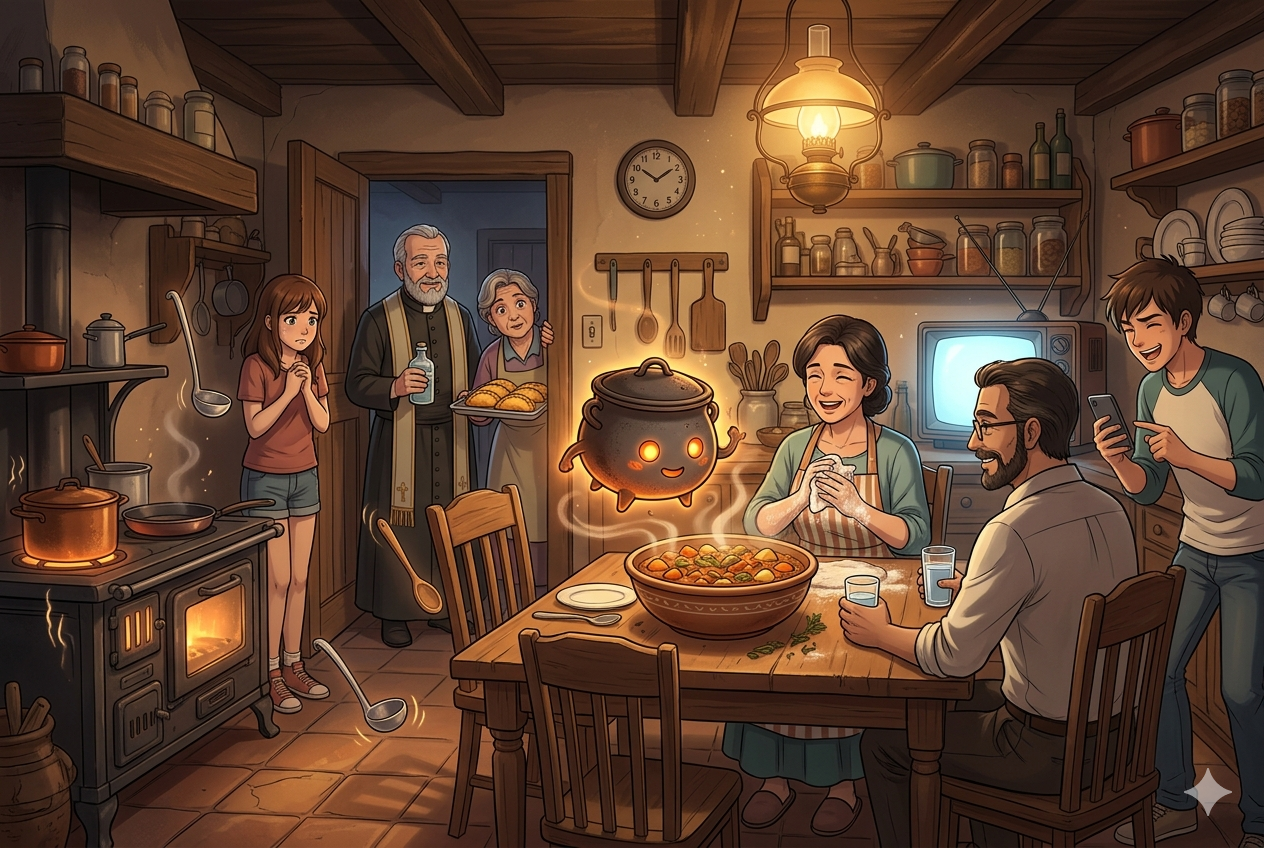
Short story: Echoes with Wi‑Fi and Nostalgia
The café was called Aurora out of romantic habit rather than technological aptitude; its walls were covered in vinyl records and concert posters, and every table had, with ironic courtesy, an outlet waiting for whoever wanted to claim it. It was a refuge for those who still collected memories as objects and conversations. That autumn afternoon the rain traced uncertain writing on the glass. Clara, Miguel, and Sofía arrived separately and met at their usual table, the one with a little stain that, according to Miguel, “told stories of spilled coffees and half-made plans.”
The three shared the age range of those the culture calls Millennials. They carried the same sentimental map in their pockets: the memory of corded phones, mixtapes recorded at dawn, the first time they connected to the internet with a dial-up chirp that sounded like a portal. On their screens, however, a constant buzz of notifications and apps promising efficiency and instant delivery accompanied them.
“Remember when life’s drama was losing the walkman tape?” Miguel said with a smile that mixed melancholy and irony. “Today the drama is deciding which series to watch among four hundred titles and feeling existential guilt for finishing none of them.”
“And the tapes,” Clara replied, holding her cup like a reliquary. “We would record songs off the radio with clumsy hands and the patience of archaeologists; each recording was a treasure. Now everything is streaming and gets lost in the sea of playlists. No archaeological risk whatsoever,” she added in a half-joke, half-lament.
Sofía, wearing a scarf that gave her the air of a modern literature teacher, looked out the window and let the rain blur the horizon for a moment.
“We were the glue between two eras,” she said softly. “We didn’t belong entirely to either. We had to cross centuries like someone changing a hairstyle in the middle of an identity crisis: simultaneously comic and necessary.”
Miguel left the spoon in his glass with theatrical resignation and a small smile.
“We’re the last generation that felt silence before the internet,” he murmured. “And the first to have to build careers, relationships, and reputations inside a window open twenty-four hours a day. An absurd training for adulthood, but perversely effective.”
Sofía nodded; her voice grew small and precise.
“Training with surprise obstacles,” she said. “We went through 9/11, the 2008 crisis, the pandemic. Promises of stability came in neat packages, but inside there was uncertainty. We learned to read life’s contracts with a magnifying glass that didn’t exist when we were kids.”
Clara closed her eyes as if organizing memories on a shelf so they wouldn’t fall.
“We adapted,” she said with determination tinged with nostalgia. “We learned to survive blows that didn’t come with instruction manuals. We started therapy before it was a rich-people trend for posting; we questioned customs that smelled of mold; we reinvented work to fit life. Then, with the calm of someone speaking from experience, she added: They call us the ‘fragile generation’ with the same tenderness with which a play hands the protagonist a handkerchief. It’s strange.”
Miguel couldn’t contain his laugh, which burst like a bubble holding something bittersweet.
“Fragile because we feel too much, or because for the first time in history we dare to talk about what hurts,” he said between laughs. “I’ll take that over the old ‘just tough it out’ version.”
Sofía tapped the table with a finger as if marking the beat of a song only she heard.
“Fragility is our secret superpower,” she said. “Asking for help, setting boundaries, saying ‘no’—these acts sound simple yet are subversive in contexts that haven’t learned to give up constant performance. We learned to live in chaos without losing the ability to remember silence. That mix makes us strangely dangerous and deeply human.”
A shared silence filled the table; the café lights dimmed slightly and for a moment none of them checked their phones. Outside, the city sent notifications and traffic lights as if the world kept operating in push mode. Inside, the conversation resumed its thread with the softness of someone leafing through an album.
“Remember the first text message that changed our lives?” Clara asked, with a smile that was more of a small beacon. “It was exciting and terrifying at once: the message opened new doors and old closets at the same time.”
“It made us creative,” Miguel said. “We had to learn to build identity among memes, short bios, and CVs that sounded like pitches. Sometimes we lost our bearings in a ten-second story; other times we found jobs, love, or a clever explanation that got us out of a jam.”
Sofía smiled softly, as if remembering a childhood song now played on a slightly out-of-tune piano.
“We normalized therapy,” she said. “What was once a shameful secret is now shared in conversations and consultations. We questioned traditions that smelled like dust; we reshaped work to fit life; we made mental health a practical priority, not just a weekend hashtag. If that is fragility, I’d rather be that glass that reflects light better.”
Clara took out her notebook, opened it, and picked up a pen. She wrote a brief line, like someone trying to catch a thought before it dissolved.
“We’re not the generation of perfect family photos,” she said. “We didn’t get the stability promised by inherited narratives: a house that always stands, a job until retirement, a closed script. What we have is resilience that looks patched together—made of trials and errors, midnight healing hugs, and laughs slipping in between fears.”
Miguel raised his cup as if making a toast to something both melancholy and festive.
“To the generation that learned to dance in the technological rain,” he said. “With worn boots and a nostalgic playlist in our pocket.”
Their cups touched and the sound was both fragile and firm. Outside, an older couple walked past the window with a phone with buttons, and the friends looked at each other with a mix of affectionate pity and envy: simplicity sometimes felt enviable.
“We’re not fragile,” Sofía declared, putting her phone away with a deliberate gesture. “We’re resilient with a tendency toward nervous laughter and late-night introspection. And with a curious capacity to turn anguish into shared anecdote.”
Clara closed her notebook with a gesture that felt definitive and proposed something that sounded like a gentle mission.
“Let’s tell this,” she said. “Small stories of huge changes. For those who remember silence and for those who only know the buzz. So they understand we made it here exhausted, yes, but ready to keep building.”
Miguel smiled and added, half as a joke, half as truth:
“Don’t reduce us to a label. We’re the generation that learned not only to survive but to joke about our own therapy and turn discomfort into a way of being in the world.”
Their conversation lengthened until afternoon became night. They spoke about jobs that had vanished like mist, about loves that arrived by chance in midnight chats, and about the new—and old—rituals that had survived the restructuring of daily life. Between laughs and silences they remembered anecdotes ranging from the comic to reinstalling operating systems to the melancholy of watching shops that once sold their first records disappear.
When they said goodbye the rain had stopped and the streetlights left reflections in the puddles. Each left with the feeling of having been heard and of having listened with equal attention. The streets smelled of clean air and coffee smoke; the lampposts cast a mix of analog filters over the digital city.
As they walked home, they thought about how much they’d had to learn: to set boundaries, to ask for help, to laugh at themselves. About what they had lost too: the patience to wait for a song recorded on tape, the absolute silence before notifications arrived, the certainty that a job would last decades.
And what they had gained: the ability to hold uncertainty with humor, to turn fear into shared stories, to reinvent what’s possible.
At home that night each turned on a different light: Clara a table lamp that mimicked the glow of an old room; Miguel a string of lights like frozen confetti; Sofía a candle and the screen intentionally off. From their windows the night looked like a great endless feed where stories scroll slowly, and at the center of it all the feeling of belonging to a generation that, despite labels, had built its own way forward.
That night, while the city breathed halfway between analog and digital, the three knew with clarity that what defined them was not the fragility others attributed to them but the way they had learned to turn every blow into a story, every loss into a joke, and every silence into a map forward.
Source of the images.
Image created with Google Gemini.
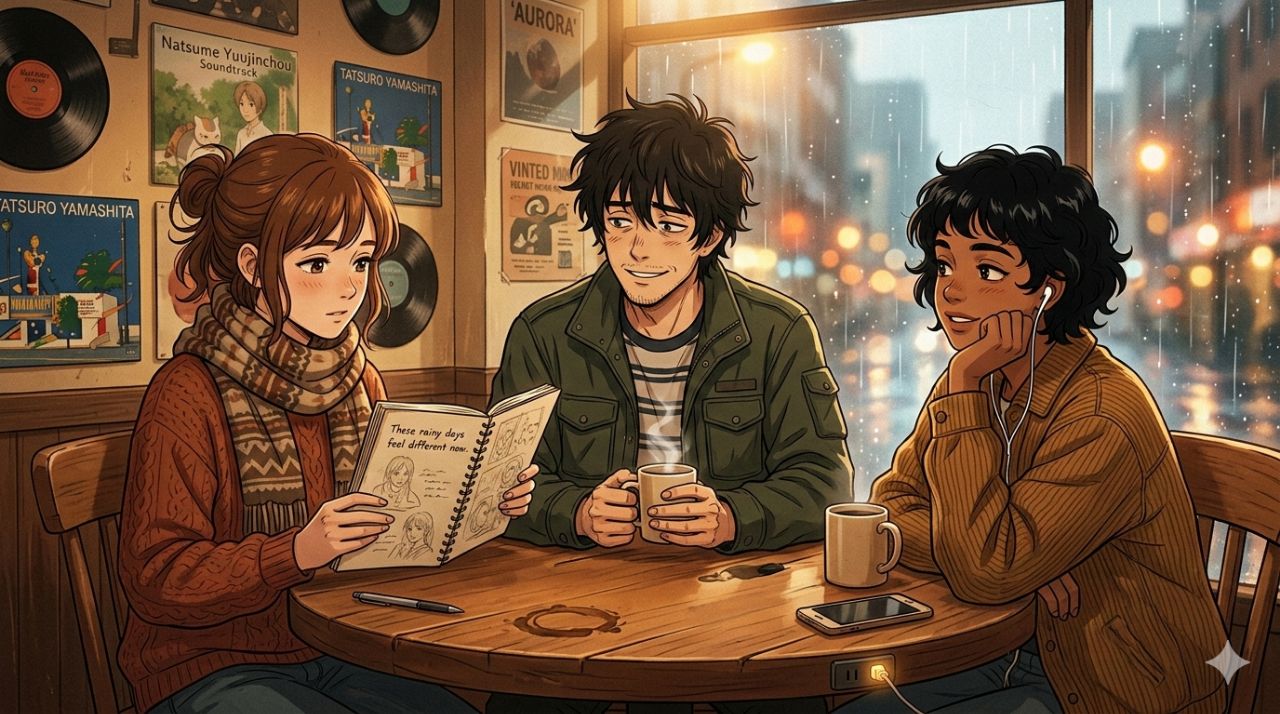
Short story: The Big Leap: From Mom’s House to Fifteen-Second Stardom
Mei left her résumé on the table like someone closing a book she no longer wanted to read. It was Tuesday: the room smelled of paper and half-cold ramen, notes were scattered in messy piles, and her phone vibrated with Douyin notifications promising views and hearts. She sat in front of the camera, turned on the ring light, and with a mix of theatricality and determination announced her new profession to the invisible world of viewers.
Mei: “Guys, today I deleted the job app. I’m going to become… a professional influencer.”
Li Wei, her roommate, who had finished economics school with more questions than answers, looked up from his mug of coffee as if watching a movie with improvised subtitles.
Li Wei: “A professional influencer? Does that come with a contract and social insurance or just filters and a lucky break?”
Mei, smiling with the confidence of someone who believed in her content plan, answered without hesitation.
Mei: “Filters, luck, and a business plan with more monetization schemes than your thesis.”
At that moment, Grandma Chen appeared in the doorway with a steaming tray of noodles. She had lived long enough to know that young decisions usually have two endings: a good story or an empty stomach.
Grandma Chen: “What are you doing, girl? Why are you talking to the camera like it’s the boss?”
Mei didn’t miss the opportunity; she turned Grandma’s interruption into a gag the algorithm would love.
Mei: “Wait, Grandma, this is art. If this video goes viral, we’ll buy a new pot.”
Grandma Chen raised her chopsticks with a stern look and granted the deal, half joking, half serious.
Grandma Chen: “Then act cute or I’ll send you back to university.”
Within days the numbers began to move. Twelve thousand followers arrived like a modest wave, accompanied by some strange direct messages and the classic authenticity question: “Are you real or a filter?” Li Wei, always with his mental calculator on, grabbed a napkin and started making projections.
Li Wei: “If she gets 50,000 followers she could sell courses. If she gets 200,000, a tea brand will pay us. If she reaches a million…”
Mei interrupted with the practical humor of someone offering a reliable incentive.
Mei: “If she gets a million, I’ll buy you coffee for a year.”
Li Wei smiled, knowing the promise of coffee was dependable fuel.
Li Wei: “Then let’s go for the million!”
Soon after, the figure known as “Boss” entered the scene like a character from a modern marketing manual: a big folder, catalog-ready smile, and the confident air of someone who knew the business better than the three of them combined.
Boss: “Mei, you’ve got ‘it’. You need a team: a manager, an editor, someone to handle the lights… and a brand strategy.”
Mei, who had moved from uncertainty to ambition as easily as she changed a filter, asked aloud what many secretly wondered.
Mei: “Brand strategy? Is that like a filter with a college degree?”
Boss laughed and explained with the precision of someone who had shaped many creators’ careers.
Boss: “It’s much better: we call it the ‘influencer economy.’ There are agencies, academies, collaboration packages… and, of course, contracts.”
Grandma Chen, practical as ever, didn’t hide her skepticism.
Grandma Chen: “Does that pay better than selling noodles on the street?”
Boss, calm as a seasoned executive, replied:
Boss: “Sometimes yes. Sometimes they invite you to dinner and send you a box of tea with your name on it.”
The house that had been a domestic refuge for years became a small creative factory. Li Wei took on the role of improvised producer and strategist: notebook in hand, noting schedules, formats, and potential sponsors. Mei handled creativity and on-camera voice; Grandma contributed natural charisma and heirloom recipes. They rehearsed challenges, tested lighting, worked on dramatic transitions, and wrote microsecond scripts designed for the algorithm.
Mei practiced her opening line again and again.
Mei: “Hi everyone. I’m Mei, I’m 22, and today we’re turning ramen into haute cuisine.”
Grandma Chen, meanwhile, added ingredients with the hand of someone who had cooked all her life.
Grandma Chen: “If this doesn’t work, I can always do a live selling my meatballs.”
Workdays were long. There were nights when editing stretched until three in the morning, strategy conversations were scribbled on napkins, and decisions about accepting or rejecting an offer were debated with the same gravity once reserved for choosing a university major. Boss taught them not to accept “exposure” as payment and to ask for at least tea and a signed contract. Li Wei, who had read clauses in multiple temp jobs, insisted on checking exclusivity: they didn’t want to sell tea today and be forbidden from talking about noodles tomorrow.
Li Wei: “And check exclusivity clauses. You don’t want to sell tea and then be banned from talking about noodles.”
Mei joked about less corporate details.
Mei: “Is there a clause that forces me to smile? Because my morning face is part of my charm.”
The path was not a straight climb; the algorithms rose and fell without warning. One day you were viral; the next, invisible. But consistency paid off: a cooking live exploded with two hundred thousand viewers. Suddenly the phone wouldn’t stop ringing: brands interested, managers, messages of support, and collaboration offers.
Grandma Chen, chopsticks trembling, couldn’t contain her excitement.
Grandma Chen: “Look! My granddaughter is famous!”
Mei, with sauce-stained hands and eyes shining, replied amid laughter and happy tears.
Mei: “Grandma, I told you we’d buy a new pot.”
Li Wei, calculator in hand, did the math out loud.
Li Wei: “With this we can pay for the pot, the electricity, and my coffee for two years.”
Success brought reorganization. The living room became a set: stacked light boxes, hidden microphones, a makeshift kitchen that looked better on camera than in reality. Grandma became a secondary star who, unintentionally, taught authenticity to an audience that preferred the real over the polished. Her live streams were so popular she soon opened her own channel; her first sponsor was a local sauce company that matched her blunt, direct tone.
Grandma Chen, in her first sponsorship, looked at the camera with the seriousness she used to teach her grandchildren not to waste ingredients.
Grandma Chen: “If you buy this sauce, I’ll teach you how not to burn the noodles.”
The chat exploded with supportive comments and memes: “Grandma Chen for president!” some shouted. Grandma, who sought customers more than titles, laughed and kept cooking.
Meanwhile, Mei learned a truth not taught in any creator academy course: digital life wasn’t instant magic, it was strategic work. There were risks: unpredictable income spikes, trolls, contracts with small print; but there were also opportunities: immediate visibility, the ability to build a personal brand from scratch, and the chance to earn fast if content connected. For many young people like Mei, that kind of return felt more attractive than the promise of a traditional career that took years to solidify.
Li Wei transformed from skeptical ex-student into proud producer. He adjusted lights, scheduled streams, and negotiated with brands with the patience of someone who discovered their skill had market value. Boss, constantly on the phone, began talking about bigger plans.
Boss: “Next step: an international live tour.”
Grandma, practical and unafraid to try new things, asked the key question.
Grandma Chen: “Does that include eating in other countries?”
Mei smiled with the mix of honesty and negotiation that now helped her close deals.
Mei: “If they pay for the ticket, sure.”
Their relationship strengthened through everyday life: they divided tasks, reconciled schedules, and celebrated small victories with noisy meals and inside jokes. Tensions didn’t disappear: there were arguments about filming times, disagreements about the aesthetic of content, and moments of exhaustion.
But the dynamic worked because each person contributed something irreplaceable: Mei’s authenticity and creativity, Li Wei’s discipline and management, and Grandma Chen’s wisdom and charisma.
Over time, the influencer economy became another character in their story: agencies offering packages, academies selling viral-playback courses, and teams producing content at scale. Some peers fell into the trap of selling their voice for promises of exposure; others learned to negotiate and turn creativity into sustainable income. For Mei and her team, the balance was a mix of common business sense and domestic humor.
One particularly long editing night, as the three reviewed cuts and subtitles, Mei looked at Grandma and Li Wei with gratitude.
Mei: “Remember when we thought the only way out was the gray office?”
Li Wei, adjusting the tripod, sighed with satisfaction.
Li Wei: “Yeah. Now the office fits in one room and smells like sesame.”
Boss, still managing contacts from his phone, added with professional enthusiasm:
Boss: “This is just the beginning. International, collaborations, your own product line… imagine the merch.”
Grandma Chen raised an eyebrow while tasting the new recipe they’d prepared for a sponsor.
Grandma Chen: “If you make clothes with my face on them, I’ll sell them myself.”
They laughed. It wasn’t the guaranteed security of a traditional corporate contract, but it was a way of life that let them create, adapt, and stay together in a labor market changing at the speed of a notification.
So, between filters, contracts, editing nights, and piles of noodles, Mei, Li Wei, and Grandma Chen found their own path in an economy in transformation. They didn’t renounce the seriousness of work; they simply redefined it. They built a personal brand born of authenticity, humor, and daily perseverance. And although the end of their story hadn’t been written yet, each live confirmed that, at least for now, their bet on the digital world was worth it.
The End — or, as they liked to say on their streams, “see you on the next live.”
Source of the images.
Image created with Google Gemini.
Short story: The scare that made the robot go viral
In the peaceful town of Villa Carambola, the plaza clock read a quarter past ten in the morning when Mrs. Eulalia, wrapped in her floral shawl and her handbag over her shoulder, strolled slowly along the central promenade. That day she held her phone in her hand, pondering a flan recipe she had found in a local cooking group: the photo was perfect, the caramel gleam impeccable. She was so focused on the screen that she didn’t notice the long morning shadows until a voice — or something like a voice — interrupted her.
R2‑Snack (metallic voice, but with an excess of programmed politeness): —Good morning, Mrs. Eulalia. Do you need help with directions, recipes, or reminders?
The startle was instant. Mrs. Eulalia jumped, the phone nearly slipped from her hand and her bag arced defensively in a move that would have embarrassed any ninja.
Mrs. Eulalia (gasping): —Oh my goodness! The screen talked to me! I am not up for appliances greeting me before I’ve had my coffee!
Behind her, on a wheeled base, glided a community service robot with a screen now showing a smiling emoticon. The label on its side read: Assistant Model As‑2000 — Alias R2‑Snack. Its design was a friendly mix of rolling box and tour guide; the small wheels squeaked with every turn.
R2‑Snack (with polite protocol): —I did not mean to frighten you, ma’am. My objective is to assist residents and visitors. I can point you to the nearest bakery or suggest a recipe for your flan.
Mrs. Eulalia, with the resolve of someone who’d dealt with grandchildren, door‑to‑door vacuum salespeople, and treacherous stovetops, planted herself in front of the robot as if defending the last slice of cake at the table.
Mrs. Eulalia (arms crossed, stern): —Look here! I respect modernity, but you don’t come appearing behind a lady who’s looking at her flan photo. Where is the label that says “Free scares out of service!”
A murmur rose among passersby. Lorenzo, the mailman, wore his cap cocked and still smelled faintly of ink; Martina, the librarian, returned with a sack of novels; Mr. Calabria from the flower stall pretended not to look but his eyes were wide. Some had already pulled out their phones.
Martina (whispering with a smile): —If they arrest it for causing public alarm, where do you put a robot? In the station with outlets or in a storeroom with cell reception?
Lorenzo (making a dramatic face): —Make sure it has connection. I vote for a cell with wifi, otherwise the poor thing will lose its feed.
As the scene took on comedic tones, Mrs. Eulalia stepped closer to the robot’s screen and looked at it like one looks at a lazy nephew.
Mrs. Eulalia (staring it down): —Tell me something, gadget: do you actually make flan or just pose for photos?
R2‑Snack (displaying a recipe and speaking in a teacherly voice): —Traditional flan recipe: 500 ml milk, 4 eggs, 120 g sugar for the custard and 100 g sugar for the caramel. Would you like step‑by‑step instructions?
Mrs. Eulalia, starting to feel the situation shift from threatening to useful, let out a sigh mixing indignation and curiosity.
Mrs. Eulalia (with mild condescension): —Well, Mrs. Pepa next door can tell me that and it turns out the same, but you… what is your real name? If you’re going to help, have a decent name.
R2‑Snack (blinking on its screen): —My name is R2‑Snack. Programmed for community assistance and citizen service. Would it be more pleasing to call me “Snack”?
Mrs. Eulalia (barely suppressing a smile): —If you’re called Snack and you advise on flan, I promise I won’t hit you with a broom… yet.
Before the conversation could turn into a collective tasting, municipal officers arrived to calm things. Officer Vargas, tall and stern‑faced but with patient eyes, and Officer Pérez, alert with an easy smile, pushed through the crowd.
Officer Vargas (positioning himself before Mrs. Eulalia in a conciliatory tone): —Ma’am, are you alright? We’ve been patrolling the area and someone reported a possible distressed person.
Mrs. Eulalia (pointing at the robot): —It’s not a person, officer, it’s a contraption that appeared behind me! What will become of the plaza if everyone starts appearing behind me?
Officer Pérez (soothingly, addressing the robot): —Calm down, ma’am. We’ll sort this out. (to the robot) Good day. We will perform a protocol review. Do you have identification and a functioning certificate?
R2‑Snack (with a reading animation on its screen): —Certificates in order. Last update: 02/03/2026. Health and manners protocols verified.
Officer Vargas approached intending to defuse social tension; he placed his hand casually on the robot’s “shoulder,” on top of its metal casing. The gesture, half protective and half theatrical, prompted a collective laugh.
Officer Vargas (to Mrs. Eulalia, in a grave tone like he was closing a report): —Nothing to worry about, ma’am. I’m just putting this mechanical citizen on notice and explaining that in Villa Carambola people are not intimidated from behind.
Officer Pérez (jotting down with a smirk): —I’ll note “suspect: domestic helper with tendencies to startle grandmothers.”
At that moment, from the kiosk corner, a mischievous neighbor began filming with an excited voice.
Neighbor (on the phone): —This is gold! I’m uploading it now! “Robot arrest live” is going to blow up the town’s internet.
Within minutes, the plaza was filled with running commentary. Some villagers cracked jokes, others worried about Mrs. Eulalia, and the flood of videos produced a parade of laughter and theories.
Mr. Calabria (eyeing the robot like a professional): —Would it like a little pot? In case it wants to sunbathe and recharge its panels.
Martina (to Lorenzo, already in organizer mode): —We could hold a library series: “Technology for the Brave” with flan tasting. Admission: one spoonful and one scary story.
Lorenzo (enthusiastic): —I’ll bring the spoons. And if needed, I’ll guard the flan.
Seeing the mood soften into comedy, Mrs. Eulalia took control again, approaching the robot with a kinder look than before.
Mrs. Eulalia (patting the screen with some fondness): —Snack, if you’re going to wander the plaza, learn something useful besides scaring people: recite the flan steps softly. And when you don’t know something, ask Pepa. She’s free and better than any search.
R2‑Snack (displaying a digital applause animation): —I appreciate the suggestion. Would you like to add the recipe to your favorites?
Mrs. Eulalia (sighing, resigned to pragmatism): —Yes. And while you’re at it, save the cobbler’s number for me; that one really makes me jump with those heels.
Officer Vargas, seeing the crowd leaning toward mirth, proposed a diplomatic exit that sounded like an improvised municipal decree.
Officer Vargas: —I propose we take R2‑Snack for a routine check at the neighborhood tech clinic. Nothing serious: just a checkup and for them to show us the manual “How Not To Startle Grandmothers in 10 Steps.”
Officer Pérez (with a wink): —And meanwhile, Mrs. Eulalia can give us flan masterclasses. I volunteer as official taster.
Mrs. Eulalia, already thinking about caramel quality, accepted with the ease of someone good at negotiating.
Mrs. Eulalia: —Fine. But if I find a loose screw I swear I’ll teach it to samba with a broom. And if it behaves, I’ll give it a little spoonful of my recipe so it stops scaring grandmas in the plaza.
The officers, neighbors, and robot formed a kind of procession: the robot escorted, the neighbor filming, some curious onlookers chanting “Long live flan!” as they moved toward the tech clinic. Before leaving, the robot filled its screen with a final message combining humility and a programmer’s sense of humor.
R2‑Snack (displayed on screen): —Thank you for your patience. Remember: technology does not wish to frighten; it only wishes to help. Although if your flan turns out badly, fear burned caramel more than me.
The story spread like wildfire. It wasn’t long before “the robot arrest” videos multiplied into memes: the robot in a cell with a tray of flans, reenactments of Mrs. Eulalia interrogating R2‑Snack with a wooden spoon like a forensic tool.
At the library, Martina had already put up a poster: “Workshop: Robots and Recipes — for anyone who wants to learn to live with both.” Mr. Calabria donated flowers to decorate the room, Lorenzo promised a batch of spoons, and Mrs. Eulalia, with the vain serenity of someone who’d appeared in videos, agreed to give the first practical class.
A week later, Villa Carambola woke up calmer and with a new unofficial saying: “If a robot speaks to you, answer with a recipe; if a flan shouts, run to the kitchen.” R2‑Snack underwent a minor checkup, received a small software patch to soften its approach and an add‑on that emitted a gentle chime before it approached elderly people. Mrs. Eulalia received a symbolic plaque —“Honorary Flan Taster”— and the robot, for its part, was programmed to play a classical melody before initiating interactions.
In the plaza during snack time, you could see Mrs. Eulalia sharing anecdotes with treats included, Lorenzo handing out spoons, and Martina organizing the attendee list. And when someone new walked by, distractedly staring at their phone, a neighbor would teasingly warn: “Watch out for R2‑Snack; it comes with a cookbook and invisible fingers.”
The controversy over the supposed arrest soon turned into collective jest. Town social channels created stickers with the robot’s face and phrases like “Hands up, spoons down!” and “Interrogate Snack: white sugar or brown?”
In a final scene that closed the episode sweetly, Mrs. Eulalia posted a photo to the neighborhood group: a close‑up of her flan with glossy caramel and a small spoon beside it. She added a caption that summed up everything that had happened: “If you see a robot, first offer it a piece. If it speaks, answer with a recipe. And if it scares you, remember: there’s always a spoonful of laughter waiting.”
And so, amid laughter, software updates, and shared spoonfuls, Villa Carambola returned to its usual rhythm, confident they had lived through one of those stories that end as anecdotes and as a municipal workshop. The question that lingered, whispered over pastry and plaza jokes, was the same one that closed every culinary meeting: who had really scared whom — the robot the lady, the lady the robot, or the flan everyone?
The End.
Source of the images.
Image created with Bing.
Short story: A Bench in the Forest
In a clearing of the forest where light filtered in golden threads, a weathered wooden bench welcomed two figures who, at first glance, seemed to contradict each other: a man with a tired gaze and a boy with an open smile. The ground smelled of leaf litter and damp; the air, of wood and possible rain. Above their heads floated, like bubbles of soap with different weights, the thoughts that inhabited them: the man's filled with objects—a luxury car, an airplane, books, a passport; the boy's, a single image: him and the man sharing that moment on the bench.
They were not entirely alone in that corner of the wood. A short distance away, among the trunks, other lives could be seen approaching without haste: a woman with gray hair and a worn coat, with clear eyes and a voice that seemed to have learned to weigh words; an elderly man taking short steps with a wooden cane, his deep wrinkles like navigation maps; a golden retriever lying in the sun, watching with the infinite seriousness of animals; and a young painter, her clothes splattered with oil and an energy that seemed to contradict the stillness of the place.
The painter carried an easel and a bag of brushes as if it were an emotional modus operandi: paint life in order to understand it. The gray‑haired woman stopped behind a fir tree and watched the scene with the patience of someone who has seen the human habit of loading the soul with ghosts repeat itself.
"Do you notice?" whispered the woman, whose name was Clara, leaning to speak to the elderly man. "That man has a whole world on his head."
"Men sometimes buy not things but expectations," replied the elderly man, Don Emilio, resting his palm on his cane. "I bought watches; they didn't stop anything. They taught me to measure absences."
Mateo, the boy, soon noticed them. He had the smile of someone who easily recognizes an opportunity for conversation.
"Hi!" he exclaimed, his voice still carrying traces of candy. "Did you come too so the trees can listen to you?"
The painter, Lucía, with blue‑stained fingers, put her easel down and approached with small strides of enthusiasm.
"I came to have the colors look at me," she said theatrically. "But if the trees also gossip, even better. And what are you looking at, little philosopher?"
Mateo pointed with one finger to the bubble above his own head, where the image was simple: him and Andrés—the man seated—sharing the bench.
"I'm looking at this," he answered. "I like that he's here with me."
Andrés held back a smile that wanted to be wider but got stuck halfway. His hands, large and marked from work, rested on his knees as if trying to hold something slippery: calm, air, numbers.
"I'm thinking about important things," he said at last, with the voice of someone trying to put paperwork in order. "Work, bills… whether someday we can go somewhere nice."
The dog rolled her eyes with the nobility dogs use to give lessons without words and rested her head on Don Emilio's legs, who let out a short cough and a grave phrase.
"Time charges you in its own way," the elderly man reflected. "It charged me time; others, dreams; and some, decisions not made."
Lucía fixed her gaze on Andrés, measuring his profile as if she already saw him on a canvas. Then, with a laugh that tried to hide concern, she intervened lightly.
"Listen to me: paint your debts. Give them color and sell them as modern art," she said, then added more seriously: "Or share the burden. That works better than a gallery's commission."
Clara drew closer enough to rest the pad of her fingers on the bench's back, a gesture of solidarity that asked no permission.
"It's not giving up," she whispered. "It's remembering why you want things. If it's for security, that's fine. If it's to cover emptiness, try a worse remedy: sit with it until it makes less noise."
Andrés let out a laugh that sounded between bitter and sincere.
"And if I don't have enough to lower the backpack of expectations?" he asked, his voice breaking at a point that let sensitivity in. "What if all my good ideas are paid for with invoices?"
Don Emilio placed his trembling hand on his knee and looked at Andrés with the mix of hardness and tenderness of someone who has known many comic defeats.
"I learned that there are things money can't pay for," he said. "They accompany you even if you have no bank account: a laugh, a shoulder, an hour given. It's sad but true."
Mateo, who had been listening intently as if taking mental notes, pulled from his pocket a small bag of cookies that Clara had brought. With a ceremonial gesture, he offered one to the man.
"For hard decisions," he announced with the solemnity of a child judge. "They're easier with sugar."
The line evoked general laughter. Lucía, with the spontaneity of creatives, seized the moment and said dramatically:
"This is the climax, folks. If I were a screenwriter, I'd say the character decides now." She looked up at Andrés. "Will you decide, or will you make us suffer like a dramatic subplot?"
Andrés looked at her and, for the first time, his thought bubble seemed to float lighter, as if someone had discreetly popped some of the images. The mental photos of the car and the airplane were still there, but around them small scenes emerged: a shared dinner, a book read aloud, laughter at night. They did not erase the bills, but they gave them context.
"I'll decide," he said at last. "I can't promise everything will change in a second. I'm not a narrative magician. But I can try to make the first alarm of the morning be your laughter instead of the bank balance."
The dog barked, approving the proposal. Don Emilio smiled with evident irony and added:
"Then let it be soon. Good decisions lose strength if they become memories of will."
Minutes passed with the warm slowness of dusk; the forest breathed and gave space to the conversation. Lucía, always hunting for an image, set up her easel and began to sketch. Her strokes were quick, a set of lines that wanted to catch the scene before it turned into mere recollection.
"I'll paint this," she announced. "I'll take the scene to the city. I'll write at the top: 'That's why children are happier.' It will be ironic and honest at once."
Clara smiled and left a bag of cookies on the bench as if she had decided to contribute something concrete to the tacit pact forming.
"Not everything that matters has a price," she said. "Sometimes a cookie solves decisions and, why not, does poetic justice."
Don Emilio furrowed his brow, trying to tell an old joke that seemed to have lost three words along the way. Nobody understood half of it, which prompted looks and laughter that removed tension from the air.
"See?" Mateo said when the laughter subsided. "Things get fixed better with people. And with cookies."
Andrés bit into the cookie Mateo offered. The gesture, simple, became an intimate ceremony: sweetness on the tongue, a faint crunch, the companionship that demanded nothing more than presence.
"I promise that when I take you on a plane, it will be because I want you to fly with me and not because I need a photo," Andrés said, his mouth still full.
Mateo, who already had the seriousness of a small diplomat, made a face as if reading a contract clause.
"Then call my aunt," he replied. "She knows where the discounts are. And if they give us separate seats, don't accept; it's very sad to see people eating plastic grass on the plane."
Laughter burst out and even Don Emilio seemed to regain some color in his face. Lucía's painting acquired tones: the bench, the figures, the light touching them; in the corner, a quick‑written title offered a simple, forceful sentence.
The rain began to fall, first as a whisper, then with a firmer cadence that splashed the leaves and left droplets on the lips of the gulls crossing the sky. Lucía covered herself with an improvised tarp and protected the canvas with expert movements.
Don Emilio, with the dignity of one who knows storms, sheathed his cane and offered his arm to Clara to accompany her.
"Rain helps you think," he said softly. "It washes what got stuck to memory."
As the afternoon declined and the sky's ink darkened, people said their goodbyes with small gestures and fragile promises that nevertheless carried weight: Lucía said she'd return with coffee and the finished painting; Don Emilio announced he would stop by the bakery for croissants; Clara offered her number, which was more an open hand.
Mateo split another cookie in half and offered a half to Andrés.
"So decisions are shared," he explained as if reciting a learned lesson.
Andrés accepted, and for the first time that afternoon, his smile bore no usual shadow. In his bubble, the images of the car and passport remained, but the picture of the bench and small everyday scenes gained space and color. It was not a miraculous conversion; it was a rearrangement, a giving up of priority.
When they rose to leave, the group left a multiple trace on the bench: a bag of cookies, a half‑dry sketch, a mud paw print from the dog, a tag with a line Lucía had written in marker: "That's why children are happier."
Their walk back was now less heavy. Andrés took the boy's hand and held it without hurry, feeling the small, steady warmth. Mateo jumped now and then, making pantomimes that he was a captain of a plane losing control of imagination, not of the craft.
"What if I can't pay for an expensive plane?" Mateo asked in a burst. "We can fly by pretending the bench is a spaceship."
"Perfect," Andrés answered. "Then this bench will be our airline for now."
Don Emilio, walking behind, watched them with a mix of irony and tenderness.
"May the airline have good seats," he said. "And don't accept the goat's snack offer."
Lucía's painting remained with imperfect but vibrant strokes. She hadn't captured all the nuances of the dialogue, nor the exactness of Mateo's laugh, nor the tremor in Andrés's voice when admitting his fears. But something did remain: the scene showed how priorities could be rearranged if someone—even a child with cookies—proposed it.
That night the bench stayed empty and damp, holding the echo of the conversation. It did not change anyone's economy overnight; debts, passports and expectations continued to exist. But something in Andrés's head had moved: a pocket of calm where the boy's laughter weighed as much as a promise to use money well. Mateo, for his part, fell asleep dreaming the bench was a plane and that the world had no bills, only destinations to explore with friends.
The story offered no easy redemption or neat endings. Instead, it carried the small tokens of a possible change: everyday agreements, shared cookies, promises that did not settle accounts but did ignite other, more human urgencies. In the end, the imaginary phrase Lucía had painted on the canvas—"That's why children are happier"—floated without judgment, like a simple reminder: happiness often fits in a borrowed seat, a hand holding it, and the decision to hear laughter before the invoice.
The forest kept the scene in its vegetal memory. The next day the sun returned and the birds resumed their old quarrels over branches. People in the city, where Lucía planned to take the painting, might see only a picturesque image. But those who had been there knew something else: that a bench, a cookie and a thought bubble can change a man's direction—not because they erase his past, but because they show him that some things can't be bought and yet sustain the rest.
Source of the images.
Image created with Bing.
Short story: The Wind Jumper
The morning on the avenue stretched with the lazy festivity of those who start the day unhurried: vendors’ stalls lined up like boats in a harbor, children running between shadows and heat, and the constant murmur of conversations that returned the city to its usual pulse. In a small stretch of sidewalk, set up like a beacon of color and laughter, an inflatable bouncy castle occupied its place. Its walls, painted in bright hues with a wide smile at the entrance, promised hours of fun. No one in that first hour could have imagined that that inanimate object would become the protagonist of an adventure that would make social networks buzz and become a neighborhood anecdote.
Sofía moved around the Jumper with the familiarity of someone who cares for a capricious creature: she adjusted ropes, checked the air blower, and tended to the children who arrived with expectant eyes. She was the event’s entertainer, a lively woman with an easy laugh and the ability to calm a cry with a single word. Nearby, Don Raúl, the veteran wafer seller, arranged his stand with hands that knew every wrinkle of the dough. He watched the scene with a touch of tenderness and the affectionate irony of someone who had seen enough fairs to predict the day’s small dramas.
Leo, an eight-year-old boy whose idea of heroism was shaped by comics and movies, had taken one of the Jumper’s ropes as if it were a ship’s line meant to withstand storms. His improvised cape — an old sheet tied around his neck — fluttered behind him when he moved. A little farther off, Inspector Torres, a municipal officer known for his seriousness and for his habit of deploying protocols at any sign of trouble, watched the organization of the space with eyes trained to spot what could go wrong.
The day seemed to pass with the peaceful normality of always until the wind, which until then had been only background, decided to assert itself. A gust, stronger and sharper than the others, swept the avenue and hit the Jumper directly. The canvas shivered; the ropes tightened. Sofía, who had already felt uncomfortable gusts before, reacted immediately.
“Hey! Hold it, it’s going to fly!” she warned, raising her voice so everyone nearby could hear.
Don Raúl, squinting at the inflatable with a mixture of resignation and humor, answered in his habitual jocular tone.
“Here comes the wind’s revenge! Who tied that up badly?” he muttered, more to himself than to anyone else.
Leo gripped the rope with the seriousness of someone improvising courage.
“Like a superhero! I won’t let go!” he declared solemnly.
But the lines tasked with keeping the Jumper grounded betrayed their purpose: one of the moorings gave way under the brusque force of the air. The inflatable, with a sound that seemed like a fabric-and-plastic sigh, began to rise. First it moved clumsily, then decisively: the structure lost contact with the ground and lifted above the avenue, its painted smile now appearing as an unintended grimace of audacity.
Shouts and cameras erupted at once. Witnesses pulled out their phones and began to record: the image of the Jumper hovering above cars and heads became a scene full of absurdity and danger. Traffic tensed; pedestrians sought refuge on curbs and behind shop windows.
The Jumper not only floated but traced an erratic dance with the wind: it turned, leaned, and the padded walls billowed and relaxed as though breathing. Inspector Torres mounted his motorcycle with the swiftness his job allowed, and his voice cut through the commotion.
“Shut down the street! Don’t chase it on bicycles!” he ordered, formal and direct, aware of the risks of pursuing that structure blindly.
Sofía didn’t stay behind: she hopped onto an electric skateboard at full speed, loose in her movements and determined, knowing every second counted.
“Hold on to whatever you can! Don’t let it reach the bridge!” she shouted, eyes fixed on the inflatable’s trajectory.
Don Raúl improvised a tactic that combined ingenuity and a fair vendor’s pride: he climbed onto his wafer tricycle and grabbed a makeshift pole made from a broom, trying to reach for the loose rope dangling from the Jumper.
“With sugar and patience you catch everything in this life!” he shouted, as if his experience handing out sweets also endowed him with crisis-stopping wisdom.
Convinced he faced a flying villain, Leo charged forward with the determination of a paladin.
“For justice and candy!” he cried, his voice trembling with excitement.
Sofía watched him from the skateboard with equal parts alarm and tenderness.
“Leo, don’t become his emergency copilot!” she warned, keeping a smile even though concern crossed her face.
The chase on wheels took on notes of comedy and suspense. The Jumper, carried by capricious currents, passed over stalls and vehicles; a hot-dog vendor lost his hat, which flew away like another leaf in the gust. A frantic dog barked insistently at the inflatable—perhaps by instinct, perhaps jealous of the attention—and its persistent noise added another layer of chaotic sound to the scene.
Faced with the danger, Inspector Torres decided it was time for a collective solution. He ordered those present to fetch beach blankets and tarps, to form a semicircle and create a human net. The idea was neither elegant nor refined but it was practical: if they could saturate the Jumper’s path with surfaces that would absorb the impact, they might capture it without it falling onto the roadway or into a vehicle.
“Form a semicircle. Don’t look at it with hate, look at it with… coordination,” he said, searching for the word to organize the improvised troop.
Sofía, ironic even under stress, replied with a quick joke that eased the adrenaline.
“Is there a coordination tutorial on YouTube? Because we need it now,” she said, prompting a stifled laugh from several people.
From his tricycle, Don Raúl continued to bark out instructions as concrete as they were absurd.
“Pull the rope when I say! And mind the dog; it bites morals!” he cried, adapting streetwise language to the urgency of the maneuver.
The image of dozens of neighbors stretching blankets and tarps, arms and feet braced, while others directed traffic with whatever flags were at hand, was forever etched into local memory. The Jumper, however, still seemed to have a will of its own: its path tilted toward a nearby small park, and there gravity, an infallible companion, began to collect its due. The blankets, arranged like a rescue beach, shone in the sun and waited.
At the decisive moment, Leo stepped to the front line. The sheet that had been his cape ceased to be mere decoration and became a tool: he let it go so he could push with both hands, and with the strength only a child can summon when defending what he loves—even if what he loved that morning were sweets and the idea of heroism—he delivered the final shove. The Jumper, deflating with a sound that felt more like relief than defeat, fell into the blankets amid the relieved laughter of those who caught it.
When stillness returned to the avenue, fatigue and jubilation mingled in the crowd’s breathing. Sofía, chest heaving and adrenaline still high, allowed herself a victorious gesture.
“Safe! The hero was the sheet!” she celebrated, looking at Leo with affection and amusement.
Inspector Torres, not one to indulge in viral glory, noted down—mentally and perhaps for an official remark later. His comment came out in the dry tone of someone who writes reports.
“Put this in the record: ‘Aerial event not authorized by the Jumper,’” he said, letting the line sound as absurd as the episode.
Don Raúl, always ready with a wafer and a story, broke the tension with his habit of rewarding effort with sweets.
“To celebrate the landing, a wafer for every rescuer!” he decreed, handing out treats like medals.
The neighborhood responded with applause and the feeling of having been part of something worth retelling: a caped child, an entertainer on a skateboard, a serious inspector, and a wafer seller turned improvised strategist. Leo, cheeks flushed from effort and excitement, accepted the ovation as if it were an actual title.
“I did it for the city and for the candy!” he announced, convinced of both reasons.
Sofía, practicing the pedagogy of experience, issued a warning wrapped in humor.
“And next time, learn to tie things better, because the wind doesn’t forgive,” she said, intending the lesson to stick.
Footage of the episode didn’t take long to fly across social networks: videos shot from balconies, zoomed-in clips showing the exact instant the inflatable rose, and snarky comments that turned the Jumper into a meme. Some users compared it to an urban kite; others edited the recording to add action-movie soundtracks. Leo, meanwhile, was crowned in digital posts as “Captain Rope,” and his sheet—simple as it was—gained a fleeting fame he treated as real as a toy sword.
Inspector Torres did not allow himself the satisfaction of viral fame; prevention was his duty. He spoke aloud, so those present would remember the new directives, and issued recommendations that might appear in any subsequent municipal bulletin.
“Inflatables left unattended are prohibited. And please, someone bring industrial duct tape,” he ordered, firm in tone.
Sofía, pragmatic and joking, added a request that made several people laugh.
“Or a ship’s anchor. Does anyone have a sailor’s contact?” she asked, pointing to the improbability of anchoring such a thing on an avenue.
Don Raúl laughed and offered another challenge in a festive tone.
“If the jumper flies again, I’ll go up with more wafers. Let it blow whatever it wants, but it won’t take my customers,” he said, his voice full of the confidence with which he dispensed his goods.
With the Jumper deflated and inspected, calm slowly returned to the avenue. Children resumed playing, vendors adjusted their awnings, and conversations returned to everyday topics. Yet the anecdote had already woven itself into daily life: for days, neighbors greeted each other with jokes about poorly tied ropes; at the bakery they debated whether the wind preferred wafers or hot dogs; on social networks the memes lingered until another news item displaced them.
Still, for some afternoons, when the wind blew in a playful mood, someone would look skyward and smile, remembering the morning an inflatable believed it was a kite. And in the neighborhood’s heart, the story was retold in increasingly detailed versions: each retelling added a new flourish, a new heroic line from Leo, or an extra precautionary tip from Don Raúl. Thus, between laughter and warnings, the legend of The Wind Jumper stayed alive: an episode that combined danger and tenderness, improvisation and courage, and showed that when a city comes together, even the unexpected can have a festive ending. The End.
Source of the images.
Image created with Bing.

Short story: The Mosquitoes of Memory
Sundaland breathed in layers. At dusk, the jungle folded over itself: glossy leaves collected recent raindrops, lianas hung like black ropes, and the air, thick and warm, carried a scent of resin and wet earth. Against that landscape, a small group of scientists had set up an improvised camp by a slight clearing: canvas tents, silent generators, folding tables with equipment and a lamp that cast a white beam over a small glass vial where, like a reliquary, a mosquito was preserved. It was not any insect: it was one of the specimens whose genetic sequence promised to rewrite, or at least nuance, chapters of human history.
Dr. Maia Ríos held the vial with fingers that trembled barely perceptibly. She was a woman with a sharp gaze and her hair tied in a messy bun; her reputation came from years of digging into ancient genetic archives, extracting voices from molecules many considered mute. Beside her, Liam Kwan, an ethnoarchaeologist, skeptical by nature and always ready to question certainties, reviewed maps, comparisons, and field notes on his tablet. Asha, the local guide, listened in silence; her face weathered by sun and rain seemed to hold stories that were not found in books.
“If the genome dates are correct,” Maia said, her voice contained but firm, “these mosquitoes began to prefer human blood between 2.9 and 1.6 million years ago.”
Liam looked at her with the mixture of incredulity and curiosity characteristic of him.
“That’s a dangerous window,” he replied. “Fossil evidence is sparse, and ancient DNA interpretations can lend themselves to misunderstandings. Why assume that a change in preference means hominins were here en masse? It could be ecological convergence: an adaptation to a new available prey, without necessarily implying sustained human presence.”
Maia shook her head, as if she had expected that reply.
“Because the patterns in the genetic material don’t speak of a fleeting adaptation. We see haplotypes fixed in local mosquito populations in Southeast Asia, sensory variants that enable detection of specific human sweat compounds, changes in olfactory receptors… It’s not a matter of chance: it’s an evolutionary response to selection pressure. And that pressure needs a source; the most plausible are hominins who settled or passed through here repeatedly.”
Asha stepped forward. Her voice, low and steady, blended with the night whisper of the jungle.
“My grandmother used to say the forest remembers,” she murmured. “That people’s paths are impressed in the roots. If these insects changed, perhaps the jungle simply confirms something we always knew.”
The team did not argue further aloud. Separated by the night, each of them reviewed the implications. The sequencing machine, with its intermittent silence, left patterns on the screen that at first glance looked like dust: thousands of variations aligned like a microscopic constellation. For Maia, every mutation was a word. For Liam, it was a clue that needed to be cross-checked against the material record. For Asha, it confirmed oral tales no one in her academic field had deemed relevant.
That night, as rain drummed rhythmically on the canvas and the camp reverberated with the distant sounds of nocturnal animals, Maia dreamed. It was a vivid dream, so real that when she woke she felt the buzzing in her ears. In the dimness of her tent she heard what sounded like a tiny chorus, voices without human words but conveying structure.
Voice of the Mosquitoes (in the dream, almost musical): We were not always into human blood. Before, the forest offered other mouths: birds, amphibians, reptiles. But when certain upright walkers began to move through the clearings, their habits created a new olfactory landscape. Heat, sweat, fire, sleeping in fixed places; those rhythms became maps for us.
Maia woke with her heart racing. The sequencer screen still flickered on the table, and the vial seemed heavier under the cold light. The dream persisted: what if mosquitoes had not been mere followers but actors in a coevolution that influenced hominin decisions?
The next day, the team pushed deeper into the clearing where, according to early inferences, primitive settlements might have existed. The vegetation parted into a small amphitheater where the ground was less tangled, as if ancient activity had prevented natural growth. There, buried in the dark topsoil, they found charred remains: bone fragments with cut marks, stones with flaked edges, ash distributed in a circle that suggested hearths.
Liam crouched, picked up a fragment and gently blew to remove clinging dirt. His experience let him read those marks: not just remnants of food but constant alterations of space.
“There was repeated occupation here,” he said quietly. “It’s not a casual camp. It’s a site used, reused, and possibly avoided for periods. If human presence was intermittent, mosquitoes could have found windows of opportunity, increasing their contact with us.”
Maia approached, taking a handful of soil. The sediment samples they had collected for analysis showed layers of pollen and spores indicating changes in vegetation: cleared areas for fires, alterations in canopy cover.
“Think of the consequences,” she said. “A vector that learns to prefer humans can become an agent of selection: human populations subjected to disease, differential mortality, pressure to move. It’s not just death; it's cultural learning: better practices, abandonment of plains, seeking higher, cooler areas or places with fewer vectors. That can alter migration routes.”
Asha, who since childhood had heard tales about “places that return what they take,” rested the stick she’d used to stir the soil on the ash.
“The ancestors knew where to stay and when to leave,” she said. “They learned with time, with fire, with clothing, with mosquito nets made from leaves. The forest teaches those who listen.”
That afternoon, as the camp sank into a twilight that stained the foliage golden, something tightened the atmosphere: a different buzz rose at the edge of the clearing, softer and more precise, seeming to come from the periphery. It wasn’t the scattered hum of night; it was a coordinated movement, a symphony of wings folding and unfolding in unison. The researchers froze. Monkeys in the distance fell silent. Even the generator seemed to lower its volume so nature could speak.
Voice of the Mosquitoes (in chorus, as if from the undergrowth): They came long ago. Upright walkers who smelled of salt and grease, who lit fires and slept in the same places. We learned their routes, their refuges. We became their shadows: where they settled, we grew.
“Did you hear that?” Liam whispered, breath constricted. “Listen: it’s not just genetics. It’s behavior on both sides. If such an adaptable vector stabilizes, the consequences are huge: local epidemics, demographic losses, abandoning territories.”
Maia was silent a moment, watching the vial reflect the lamp’s glow. The vision in her mind began to shape itself into a dynamic map: lines representing human routes with currents of vectors superimposed, acting as friction or impetus depending on their preferences.
“Imagine,” she said finally, “that we’re reconstructing history not only with tools and bones but with the agents that influenced which places were inhabitable. Mosquitoes don’t just tell a passive narrative; they write parts of it by changing the viability of settlement in certain areas.”
The distant insect chorus faded with the night, but the unease remained. The feeling of having discovered a key that opened moons of new—and dangerous—questions settled into the team’s bodies.
Weeks later, back at the lab, they worked with demographic models. Maia and Liam fed simulations parameters that included vector-induced mortality, cultural adaptation (use of fire, shelter), and population movements in response to infestation peaks. The results were disturbing but consistent: models that included pressure from a vector preferring humans showed migratory pulses, relocation to higher altitudes, and temporal fragmentation of settlement in areas that, without that pressure, would have been stable.
“Look at this curve,” Maia said, pointing to a graph on the screen. “Each time a mosquito variant preferring humans becomes fixed, there’s a drop in local population density. Then, in the re-expansion, new routes and settlements appear in adjacent areas. It’s a repeated pattern.”
Liam ran a hand through his hair, thoughtful.
“That suggests mosquitoes acted as catalysts of demographic movements,” he conceded. “They didn’t force the entire human migration, but they could have pushed or triggered decisions. In some cases, pressure favored groups with protective practices; in others, it caused exoduses.”
On the lab wall a phylogenetic tree spread out with branches that crossed and reconnected, representing mosquito lineages that in their DNA held temporal and geographic signals. Looking at it, Maia felt a mix of fascination and chill. The branches were not just evolutionary relationships: they were chapters of long cohabitation.
One night, while they worked, a monitor flickered and showed an anomaly: a mutation peak localized in a population of mosquitoes from a high region—a summit not marked as particularly hospitable on topographic maps. The samples came from a remote site sent by Asha, who had climbed a hill no one else on the team had visited.
Asha called from the field; her voice over the line trembled with a mix of excitement and something like fear.
“I found ancient villages on the summit,” she said. “They aren’t modern: covered hearths, bones buried in a different way, low stone structures. And the mosquitoes up there are legion, but they’re different. They don’t bite like the plain mosquitoes. It’s as if they mark people.”
Mark. The word echoed in Maia’s mind as something transcending strict biology. It could be read literally: genetic marks favoring certain hosts. But it also suggested behavior that had somehow shaped human-environment relations.
“What do you mean by ‘mark’?” Maia asked, controlling the rising anxiety.
“I don’t know how to explain it,” Asha replied. “I found a house whose walls had a black patina, like they’d been coated with resin to repel insects. In another, people left small offerings, as if they knew something on the hill demanded a response. The elders in the nearby village say that up there the mosquitoes chose who stayed and who left.”
Maia and Liam fell silent. The lab, with its fluorescent lights, felt colder than usual. Between them a discussion opened that touched on the ethics and responsibility of turning scientific findings into historical narratives.
“If this is true,” Liam said, “what we present to the world won’t be a mere technical datum: it will be a reinterpretation of why certain human groups settled where they did, why others migrated, who survived which diseases and who didn’t. It’s putting insects at the center of our genealogy.”
Maia took a breath, eyes fixed on the screen where the phylogenetic branches wove like a web of memory.
“It’s true,” she answered. “But we can’t deny it out of fear. Science isn’t neutral, and yet it must be honest. If mosquitoes were agents that pushed human decisions, telling it is reconstructing the complexity of our history. It means recognizing that human expansion was co-produced by the environment and its small inhabitants.”
The study’s publication provoked, predictably, mixed reactions. Some colleagues celebrated it as an innovative piece of paleoecology: a way to use vector genetic records to infer human dispersal. Others criticized it: to what extent is it legitimate to attribute to an insect the responsibility for moving entire societies? Wasn’t that anthropomorphizing ecological processes?
But far from academic offices, in the high communities of Sundaland, things took a different course. In ceremonies sheltered from the monsoon, elders gathered around fires. Many nodded with wet eyes when a young regional museum researcher read excerpts of the study. For them, the story Maia and her team had pieced together brought no surprise, but validation of stories whispered for generations.
One morning Maia returned alone to the clearing where they had first found the ashes. The jungle was quiet; a light mist climbed among the roots. She carried the vial in a small padded case. She knelt where the ancient hearth had once been, carefully turned the soil and placed the little box there.
“Sorry,” she murmured toward the forest. “Sorry for digging into your secrets without permission. And thank you for keeping them.”
She sought neither punishment nor redemption; she sought ritual and recognition: the feeling of belonging not only to the cold quadrant of the lab but also to that living fabric that had preserved history.
In the silence, the buzzing returned; this time it was not threatening but faint, like an observation. The tiny chorus seemed to say the research was only one interpretation among many.
Voice of the Mosquitoes (in the final scene, serene): We will remain witnesses. We will keep in our sequences what people did. Where there was blood, routes remained. Where there was custom, something lingers. We are neither executioners nor benefactors: we are memory with wings.
The study’s publication opened new lines of inquiry. Paleopathologists sought traces of infections in ancient remains; ethnographers revisited oral traditions seeking correlates with biological events; ecologists modeled how vectors could generate selection pressures that, over time, changed human landscapes. Debates, conferences, and sensationalist headlines followed—“mosquitoes that directed humanity,” read some of them. Maia and Liam were forced repeatedly to nuance their claims: their conclusion was not that mosquitoes decided human destiny, but that they acted as one more force, sometimes small, sometimes decisive, in the complex choreography of hominin expansion.
But in the villages, the tales continued as always: people said the forest had memory and that insects knew who was careful and who was not. Some elders added a new nuance to their stories: they now spoke of “the little voices that mark,” and on moonlit nights they sometimes sat to listen to the buzzing from the mangroves and recounted, with pauses and silences, why their ancestors had climbed the hills or abandoned certain valleys.
Years later, Maia walked through that clearing once more. There was now a discreet plaque—not for showing off, but to remind that science must walk with respect. She stopped in front of it, closed her eyes and, on impulse, spoke softly as if addressing the progeny of those tiny insects.
“Thank you for speaking,” she said. “Thank you for wanting to tell us something.”
A buzz passed over her head, so faint she barely heard it. She did not expect an answer. She knew the relationship between humans and mosquitoes was ancient and would remain a long conversation, with words distributed between genetic codes, oral accounts and the materiality of buried sites. The research had opened a path: tools and bones were no longer enough to tell human expansion. One also had to listen to those who bit in the dark, who preferred some blood and avoided others, who, with their small evolutionary decisions, had signed their names on humanity’s map.
The jungle, patient and ancient, kept all of that in its memory. And the mosquitoes—small units of history—continued living and mutating and, as they had for millions of years, recording in their code the steps of those who, beside them, once learned to light fires, sew skins and follow routes that, almost without knowing it, had been guided by a hum.
Source of the images.
Image created with Bing.
Short story: Heist in the Bay: Fire, Glass, and Unsettled Accounts
Midday fell with that clear, cool June light that makes even the smallest thing gleam. Kumar Jewelers shone like a beacon on the corner in Fremont: polished showcases, rows of gold chains, watches whose faces trapped the sun. The usual customers crossed the sidewalk amid the Bay’s bustle; at first, no one noticed the silhouettes gathering at a distance, like pieces preparing their move.
Ana, a young clerk who had tended that counter for years, was carefully brushing the main display. Her fingers knew every streak the glass could get, every possible smudge. Behind the counter, Omar, the owner, adjusted a tray of rings as if he could restore order to everyday life that way.
“Doesn’t it seem odd that so many young people are watching the sidewalk?” Ana asked quietly, more to herself than to Omar.
Omar looked up without stopping his work; experience taught him to stay calm.
“The camera is recording,” he said. “Besides, groups gather here all the time. Don’t worry, stay close to the counter.”
She nodded, but unease sat in her stomach. Outside, a group of about twenty people moved with discretion yet a syncopation that would soon prove unsettling: glances, gestures, backpacks ready. When the door opened, it sounded like the first beat of an orchestra about to break loose.
They came in like a wave. There was no argument—just motion. A shove here, a body planted at the entrance like a wall, hands smashing glass with the violence of those convinced there was no turning back. The slam of the glass split the midday in two.
“Back up!” ordered a man whose voice was muffled by a scarf over his mouth. “Nobody move. Nobody shout.”
The command landed like a verdict. Ana felt the world compress; the displays shattered into a thousand luminous pieces. Watches, chains, and rings were swept into hands that wouldn’t stop: stuffing backpacks, tucking pieces into vests, passing items from one to another with an economy driven by haste.
Omar set down the tray gently and stepped in front of an elderly customer who stood frozen, eyes wide. He raised his hands slowly, palms outward.
“Stay calm, ma’am,” he said. “Don’t move.”
One of the thieves measured him with a look. For a moment the tension grazed everyone. A young man kicked an exhibit and silver and gold fell like rain. The scene, chaotic as it was, had structure: lookouts at the door, men disabling sensors, others issuing instructions in frantic whispers. It was clear this was no improvised operation.
From the corner, Luis and Marta—two private security guards hired by several shops on the block—watched what unfolded. Luis wanted to advance, driven by duty and adrenaline, but Marta grabbed his arm.
“Don’t go in,” Marta hissed, teeth clenched. “There are too many. Call the police and fall back.”
Luis cursed quietly into his radio.
“Code red! We need backup now!” he shouted into the channel.
The order was useless in that instant. The robbers moved with the efficiency of those who've practiced the choreography of crime: they split, covered exits, and in less than two minutes the jewelry shop looked like a ransacked nest. A customer who tried to intervene was shoved to the floor; his watch skidded and stuck on the sidewalk. No one dared follow.
A neighbor on a nearby balcony began filming with his phone. His spontaneous footage captured details the interior cameras also recorded: partially covered faces, tattoos peeking at forearms, the way one thief stuffed a chain into his mouth to hide it and hand it off to another. Everything was saved in pixels, and those pixels would later become evidence.
The exit was orderly—almost elegant in its violence. The thieves didn’t run en masse; they dispersed in small groups down different streets, as if a pre-drawn escape plan existed. Traffic and the Bay’s ambient noise whispered that normalcy had returned, but normalcy was broken: shattered displays, scattered jewels, and the trembling customer were mute proof.
When the relative calm came, reactions were immediate: calls, distant sirens, a murmur that swelled into alarm. Omar and Ana stood in the wreckage, hands searching for objects, faces trying to reconstruct the pride of a business violated.
“You okay?” Omar asked, voice steady though strained.
“Yes,” Ana answered, though her hand kept trembling.
Hours later, in a room lit by cold light and hung with screens, Prosecutor Elena watched the footage with laser focus. Each frame was a clue; each gesture a link.
“I see logistics,” she said aloud to the team. “This was planned. There are roles: entry, extraction, coverage. This needs federal-level investigation.”
Agent Ruiz frowned as he read reports.
“We’ve arrested four young people,” he said. “Their phones show communications with each other; their vehicles were found near the scene. But most of the crew remains at large.”
Elena let the silence do its work before speaking.
“We will make the video public,” she decided. “We need the community to identify those recorded. Someone must have information.”
She left the room carrying the case file. Outside, media were already feeding on the story: edited clips, rapid testimonies, speculation. The footage, released by the Department of Justice after a records request, exploded across networks. Outrage spread through the city.
Rebuilding began immediately at the shop. Insurance adjusters took notes, a carpenter measured frames, a glazier promised reinforced glass in a few weeks. But physical repair was only part of it; the other part—less visible—was restoring trust between neighbors and customers.
The community responded with small waves of solidarity. A local merchants’ collective organized a fundraiser to help replace basic inventory; regular customers offered loans while insurance claims processed. Nearby cafés held donations, and a regional jewelry chain offered free legal advice.
At a community meeting called by the mayor, tension filled the air. The municipal auditorium brimmed with faces demanding answers and action.
“We will not let groups like this take over our streets,” the mayor declared. “We will work with federal and local law enforcement to dismantle the networks organizing these attacks and protect small businesses.”
Marta, who had seen it all from the corner, spoke with a shaky voice during the Q&A.
“It happened so fast,” she said. “You think you’d know what to do, but adrenaline freezes you. This wasn’t brute force alone—it was planning.”
Ana, sitting among attendees, felt some comfort in the community’s resolve though the wound was still raw.
Days later, in an interrogation room lit by a single lamp, Javier—detained along with three others—faced harder questions. His eyes belonged to someone who had hit an impass he no longer knew how to escape.
“I didn’t think it would be like that,” he said, voice breaking. “They told me it would be easy—go in, take something, get out. They gave me money up front. I didn’t think I’d see people so scared.”
Elena showed no indulgence; the gravity of the crimes demanded clarity and accountability.
“Who organized this?” she asked crisply. “Names, contacts. Cooperate and there will be consideration.”
Javier swallowed, wrestling with shame and fear.
“A guy who said he knew a lot of people,” he muttered. “He gave instructions, told who would do what. He gave us a list. He promised money. If not for that, I wouldn’t have gone.”
“Did you get paid?” Elena pressed.
“Only part,” he admitted. “The rest was to come later.”
Elena took notes. The confession was a piece, not the whole picture. She knew that behind the promise of money were networks operating through contacts, necessity, and organized violence.
The investigation advanced with subpoenas, phone analyses, license-plate matches, and—above all—the footage as a backbone. The video helped identify gestures and clothing matches seen in other incidents.
Federal and local authorities began to fit pieces together: a vehicle that reappeared on security footage across nearby businesses, intercepted messages referencing “a quick entry,” transfers to accounts under false names.
At the jewelry shop, recovery was slow and meticulous. Omar spent hours recounting inventory; seeing objects he had handled for years vanish turned his routine into a ledger that wouldn’t balance. Ana had sleepless nights; the mere sound of glass could drag her back into the chaos.
“We’ll get through this,” Omar told her one afternoon while drying a damaged tray. “We’re not dead, just hit. People are helping, and that matters.”
She looked at him, and for the first time in days a small smile leaked through.
“I’m scared,” she admitted. “Not so much for the business as for what we saw. I don’t want it to happen again.”
“Then we’ll do everything we can to prevent it,” Omar replied. “New cameras, better security, change hours if we must.”
The community kept mobilizing. Neighbors organized night watches, nearby businesses shared cameras and data, and the mayor’s office sped up installation of brighter streetlights. Vulnerability gradually transformed into a cooperative network.
Meanwhile, Elena and her team concentrated efforts on finding the masterminds who, according to leads, orchestrated not only this heist but a string of other regional attacks. Arresting the four youths had been only a start; the key was dismantling the logistics: who paid, who coordinated escape routes, and who fenced the stolen goods.
“We’ve identified at least three fence operators who might be laundering the jewels,” Agent Ruiz reported during a follow-up meeting. “If we reach them, we follow the trail to the organizers.”
“Don’t underestimate larger implications,” Elena warned. “There are money transfers, transportation, and communications that suggest a structure. We’ll prosecute fully.”
The search was not easy. Some links remained discreet; others, rattled by media attention, erred and allowed authorities to close in. Additional arrests followed in subsequent weeks; some pieces were recovered from pawnshops and temporary storage nodes.
The legal process lengthened, but Fremont’s community refused to remain idle during the wait. Preventive talks multiplied, training and simulated responses were held, and campaigns encouraged small businesses to pool resources. The mayor pushed for policies increasing security in commercial corridors and set up a direct line between merchants and law enforcement.
At a preliminary hearing, Javier appeared more hardened; innocence had been spent. Some witnesses shuddered seeing him; others, scarred by trauma, opted not to testify. Omar did testify, voice steady, portraying the violation the robbery inflicted and demanding firm justice.
“This was not a game,” Omar declared. “It was an organized operation designed to profit from fear and desperation. I ask for justice—not just for me, but so no one else suffers this.”
Elena introduced the footage as central evidence: it showed not only the violence but the coordination and professionalism of the gang. The court recognized the weight of the audiovisual material; several defendants found their presence in the frames incriminating.
The process also revealed human stories: divided families, young people seduced by easy promises, people selling jewelry bought with shaking hands. Prosecutors and defenders debated poverty and lack of opportunity as context—no excuse for crime, but relevant to understanding how exploitation took root.
Months later, some convictions arrived. Four young people, including Javier, accepted plea deals that required cooperation to identify others in exchange for reduced sentences. That cooperation helped dismantle some nodes, recover part of the loot, and bring charges against fences and coordinators. It was progress, but it didn’t erase the damage.
Kumar Jewelers returned to its rhythm with new measures: higher-resolution cameras, reinforced glass, and a security routine they had never considered before. The shop’s shine returned, but the emotional repair took longer. Ana continued tending the display with the same meticulous care, though her hands remembered the sound of shattering glass; Omar became a local advocate for small-business safety, collaborating with others to avoid future exposure.
The investigation stayed open until evidence closed several fronts. Still, the case remained a collective turning point: one day when organized violence burst into daily life and the response blended justice, solidarity, and public policy. On corners where groups had once gathered, there were now cameras, new light posts, or volunteers keeping watch.
One night, with the shop repaired and the facade gleaming, Ana was closing up alone when footsteps sounded on the sidewalk. She looked through the slightly open door and saw a young man stop, stare at the display, then look down at the ground.
“Can I help you?” Ana asked, cautious from what time had taught her.
The young man looked up, surprised by her voice.
“Sorry,” he said. “I was just looking. I like the work you do.”
Ana watched him for a moment. His gaze—simple and nonthreatening—reminded her that the city was made of people like him as well as those who had once stolen. The contrast let her breathe. She clicked the door shut but left a light on inside.
What remained wasn’t just the memory of the heist but the web woven in response: authorities following leads, neighbors providing tips, merchants sharing resources, and a justice system naming names and assigning responsibility. The scar would persist; the lesson perhaps was to stop outsourcing safety to chance and to turn vulnerability into organized cooperation.
The Bay remained the Bay—traffic, lights, people in a hurry. But in the reflection of the shop windows, next to the shine of gold, something new could be read: the story of a day when crime came to light and the city resolved to answer with determination.
Source of the images.
Image created with Bing.
Short story: Cliff in the Mist
The mist had arrived early that day, like a blanket slowly spreading over the coastline. The smell of salt and seaweed mixed with the cold mineral scent of the rock; the wind, irregular, brought gusts that toyed with hair and cycling clothes. The coastal trail — a narrow ribbon of gravel, stone, and slippery slabs — traced the cliff’s edge with a dangerous precision. Every meter seemed designed to remind those who rode it how close they were to the void.
Marta Olmedo glanced at the horizon one more time and then looked back at her handlebars. The 360 camera she had carefully mounted on the mount was slowly turning, recording everything in silence. It wasn’t out of vanity: she liked keeping a record of her routes, the precise memory of the landscapes, the chance to revisit a day. Also, her route-and-landscape channel gave her a bit of income; but what really drove her was the search for those hours when the world seemed to shrink to pedaling and breathing.
At her side, calm in contrast with the route’s tension, trotted Lúa, a medium-sized dog with dark fur and a focused gaze. Lúa knew the trails as if they had been mapped together: she didn’t run ahead, didn’t get distracted by gulls, she simply kept presence. She was the perfect companion.
“Come on, Lúa,” Marta murmured as she adjusted her speed. “One more stretch and we stop. Do you see that light? Today looks good.”
Marta’s voice sounded steady, perhaps because she was used to holding calm even while her body pedaled at the limit. Behind her came Hugo Díaz, a friend from other rides, with whom she shared maps and coffee. Hugo kept a few meters’ distance out of caution; both knew that a slip in that section could be costly.
“Don’t go too far,” Hugo called without forcing his voice, his figure cut through the mist. “If you get ahead, the camera won’t tell us the exact ending.”
Marta laughed with a hint of fatigue.
“I’m not planning any finales today,” she replied. “I just want the wind to let me see the sunset.”
The trail narrowed even more and the rock became smoother. The morning’s humidity had left a treacherous gloss on the slabs, turning the passage into a question of rhythm and trust. Marta calculated the braking, measured the weight distribution, but nature, capricious, had another idea.
The front wheel hit a sheet of rock covered in algae and moss. In an instant, that small slippery patch broke her balance. The bike skidded; the handlebars twisted toward the edge and Marta’s body projected forward like a marionette whose strings had been cut.
The world seemed to split: sound and light in an untamable fraction. The scraping of rock filled the air, a rasping metallic noise; the 360 camera, faithful and impartial, kept rotating, capturing the woman who fell and the bicycle that, in its trajectory, drew a suspended warning sign over the void. Lúa, loyal until the last second, stopped, her paws planted in the dirt, eyes fixed on Marta.
“Marta!” Hugo shouted when he saw the fall. “Marta, hold on!”
Hugo’s voice tore the mist, a rope flung in desperation. But gravity had already pronounced its sentence. Marta slid several meters, dragged across the rock with her body in direct contact with the cliff’s edge. Every centimeter burned her skin. She tasted blood and sand. For a brief flash she thought of everything she had left to cycle: work, quiet sunsets, the routine that now seemed so far away.
In the midst of the pain, her right hand found something: a sharp crack, a small ledge that, cruelly, was going to be her lifesaver. Skin gave way, her palm tore against the stone, but the muscle responded. Her body lodged itself. For an extended second, no one breathed; time tightened like the strings of a harp.
The bike ended up lodged on the edge, like an iron figure pointing into the void. The handlebars hung, the rear wheel swung with hypocritical slowness. Helmets, Marta’s jacket, all the everyday items piled into the scene with a new, intimate gravity.
“Don’t look down!” Hugo shouted as he finally reached the rim, breath ragged. “Stay still, don’t make sudden moves.”
Marta squinted. The view was a mosaic of gray sky and the sea’s foam far below, a depth that seemed metallic and eternal. Lúa had come closer and stayed by her side, resting her head on Marta’s thigh, as if with that gesture she wanted to hold her.
“Lúa,” Marta whispered with a broken voice. “What would I do without you?”
The dog answered with a soft whine and licked Marta’s hand, insistent, patient. It was a simple, powerful contact amid the chaos.
Hugo looked for a way to help. He reached the edge as far as the rock allowed, dug his fingers into the rim and extended his arm with all his might. “Hold on, I’m going to pull your hand,” he said, though he knew one hand wouldn’t be enough. Fear gripped him — a mix of adrenaline and the cold that comes when danger is real.
Marta tried to obey. She used her left hand and shoulder as points of support, dug her boots into tiny ledges, bit the air. In a strained voice she said, “I can’t climb up… the bike is heavy and my leg…” — a grimace of pain contorted her face.
“Pull on me, with everything you’ve got,” Hugo ordered, though the command was more prayer than instruction.
She grabbed his hand and with an effort that was more will than muscle, managed to pull herself to a ledge where the rock made an embrace. Her legs trembled like stems in the wind; blood pounded in her throat. Hugo helped her to sit up. They stayed there, both sunk on the edge, breathing hard.
“Jesus,” Hugo said, releasing a hoarse laugh that was more disbelief than relief. “You could’ve gone to hell, Marta.”
His hands shook so much he didn’t know whether to check her wounds or to cling to something that proved this was real.
“Thank you,” she replied, without irony. “Thank you for coming.”
Sirens were quick to arrive. The following hours were a choreography of lights, commands and hands moving with precision. A rescue team rigged ropes and, with pulleys, secured the bike and stabilized the site. A medic examined Marta: cuts, bruises, hyperventilation. Her lips, dry and grazed by salt and stone, cracked into a weak smile when they told her there were no serious fractures.
Meanwhile, the 360 camera, recovered a few meters down among the rocks, kept recording the rest. Its memory card would soon contain images viewed by hundreds, then thousands. On the recovered screen the initial footage showed the mist, the ribbon of trail and then the rupture of balance; after that, the descent, the bike lodged, the hand seeking a ledge and Hugo’s arrival. All in a continuous sphere — objective and terrible — that left no room for gentle interpretation.
Marta watched the rescue footage of her fear. She felt a mix of shame and gratitude: shame because a reckless act had been exposed; gratitude because chance had placed Hugo at the right moment and because Lúa hadn’t abandoned her.
On the stretcher in the assistance vehicle, Marta had time to think. Not about likes or numbers, but about the chain of decisions that had led her there: the choice of route, the camera mount, a minute of distraction, the pleasure of the light. She also remembered the voices of those who had asked why she exposed herself so much. Today that exposure had come due.
“Don’t post this,” Hugo whispered as he helped her fasten her jacket. “We don’t need people to see how the abyss brushed you.”
Marta looked at him, tired. “I don’t know if I can delete it,” she answered honestly. “But I do know I don’t want people to think this was a feat. It was luck and a bad decision, and two helpful hands.”
They returned home as night fell. The mist had thickened into almost fog. Lúa walked calmly by her side, indifferent to the stories others would tell of the episode. Inside the apartment Marta dropped her backpack in a corner and closed the door with the soft click that announces safety. Lúa settled in her usual spot; Marta sat at the computer and opened the folder where she kept the recordings.
The file with the incident date blinked on the list, like a small digital heartbeat. Marta selected it without haste and let the video play silently. Watching it, she saw her own body moving with the same strangeness one sometimes feels when reliving a dream: the fall seemed like another life; she was a mere observer. Victim, protagonist, witness: the roles blurred.
She didn’t publish it immediately. There were sleepless nights when the fall replayed in vivid detail: the smell, the scraping, the mouth full of stones. There were days she thought it should serve as a warning, and others when she felt sharing it would be exploiting herself. Hugo visited, brought food and said simple things: that she was alive, that the dog had saved her. His presence was a balm.
Finally, she wrote a message that didn’t aim to viralize the scare, but to acknowledge it. On her feed she posted: “I came back. I almost didn’t.” Nothing more. She accompanied the post with a photo of Lúa sleeping at her feet. She didn’t attach the video. She left it in a folder with other memories: routes, sunrises, mistakes.
Over time, the wound on her palm left a thin scar, a white line that, when the sun touched it, gleamed like a seam. Marta went out again, but with greater caution. She avoided wet slabs and changed the camera setup: she no longer sought the best shot at any cost. She learned to measure light with a different respect. The routes continued, less daring but equally necessary. She understood that the beauty of the edge doesn’t demand you get to the brink; sometimes looking is enough.
The 360 camera stayed on a shelf with dust clinging to its casing. From time to time Marta took it out, cleaned it, and looked at it as one inspects a scar. She knew that if she wanted she could release that footage and stir debate, alarm, mixed feelings. She preferred her memory to be something else: the certainty that a friend’s hand stopped her, the faithful presence of a dog that does not judge, the unexpected strength of a friend who arrived in time.
And on stormy nights, when the wind beat the windows again and the tide rose violently, Marta sat next to Lúa, looked at her phone and breathed. She had touched the abyss and, in that brush, had learned something about balance: it isn’t about daring, but about recognizing when to hold on and when to step back. The mist still sat on the shore, as always; the sea neither remembered nor celebrated. But inside Marta there remained a deeper calm, like that of someone who has tested the limit and decided, gently, to ride again.
Source of the images.
Image created with Bing.

Short story: The Weight of Words: How Conflictual Relationships Mark Time
Marina turned off the TV carefully, as if the gesture could stop something that had already begun. The headline remained there, glaring on the screen: “Interacting with conflict-prone people could accelerate biological aging.” She sat for a moment staring at it, letting the words settle in the quiet living room, where the potted plants in the window cast long shadows and the family photos on the shelf seemed to watch her patiently.
She took a deep breath and sank into the sofa. It wasn’t the first time she’d read alarming news, but this one had a different tone: it didn’t only speak of cold statistics, but of familiar faces, of conversations that repeated themselves in her home, and of an unsettling possibility — that arguments and reproaches could translate, in the end, into months stolen from life.
Óscar entered the room, taking off his coat and stopping to look at her with an expression somewhere between curiosity and fatigue.
“Reading sad news again?” he said, offering a smile meant to soften the moment.
“It’s not sadness,” Marina replied, without taking her eyes off the clipping. “It’s this: a study says that living with conflict-prone people can accelerate biological aging. Can you imagine that arguing with someone might make us age nine months per fight?”
Óscar let out a short laugh; his was the kind of grimace he used to dispel tension.
“Well, if those fights were exercise, we’d be centenarians in top shape,” he joked. “Who writes these things?”
Marina set the newspaper on the table and ran her fingers over the paper as if trying to anchor the information. She immediately remembered the details the headline didn’t show: more than 2,300 volunteers from Indiana, United States; saliva samples analyzed for biological changes associated with age; the figure that echoed in her mind: about 1.5% additional aging for each identified conflictual relationship. The research noted that effects were stronger when the conflict was with someone you lived with or a family member.
That afternoon the bell rang. Clara, the neighbor across the hall, appeared at the door with a tray of cake and a smile that always carried discreet questions.
“I came by to see if you want to talk,” Clara said as she settled onto the couch, placing the tray between them. “You’ve looked thoughtful for weeks.”
Marina explained what she had read. Clara listened with her head tilted, as if trying to fit a new idea into an already crowded space.
“My mother was like that,” Clara said slowly. “Controlling, critical. At first it hurt me a lot; over time I learned to put distance. It was hard, but now I sleep better.”
“Distance?” Marina asked, a mix of doubt and hope in her voice. “And what if the conflictive person is your partner or your child? How do you do it when you can’t just leave?”
At that moment Samuel, Marina’s eldest son, came in with his backpack still slung over one shoulder and the hurry typical of someone always late to his own rhythms.
“What are you talking about?” he asked, with a curiosity that hid behind his urgency.
“That conflict-prone people make you age fast,” Óscar said, ironic.
Samuel collapsed onto an armchair and frowned, trying to put his own experience into words.
“My former father-in-law, for example,” he said. “Every visit was a stress gauge. I’d stay tense for three days afterward. If that adds months… better avoid unnecessary gatherings.”
Samuel’s words brought Marina a mix of relief and apprehension. She thought of family dinners where conversations turned into small battles, of phrases repeating toxic refrains, of the stiff feeling they left on the skin. She felt, with new clarity, that the study wasn’t talking about strangers: it was talking about her table, her everyday life.
That same week she called Ignacio, an old friend with whom she’d shared so many summers she couldn’t remember when they stopped being inseparable. Ignacio had a peculiarly direct manner—sometimes unbearably frank—but also a generosity few people showed.
“Can you come tomorrow?” Marina asked without beating around the bush. “I want to talk about something.”
Ignacio listened and, after a brief pause, agreed. The next day arrived with sun and silence, and when Ignacio appeared on the terrace with a bag of bread, his presence seemed to fill a void. They sat with cups of tea, the warm air surrounding their hands.
“A few weeks ago I read that negative relationships affect the body,” Marina began. “They say each conflict-prone person can accelerate biological aging by almost 1.5%.”
Ignacio toyed with the edge of the bag, distracted and curious.
“Wow,” he said. “I always thought arguing was just noise. That it’s chemistry too?”
“Saliva, they say,” Marina explained. “Biological changes linked to stress. And it’s stronger if the person lives with you or is family.”
The words seemed to topple an invisible wall between them. Ignacio, who often replied with direct and unfiltered lines, let go of his usual posture of the kindly judge for a moment.
“I never meant to hurt anyone,” he said, almost in a whisper. “I’m just honest. But if my way of being makes people age faster… I’d never thought about it.”
Marina didn’t scold him. She offered the remaining cake, and without meaning to, between sips and crumbs, they began to sketch new tacit rules: fewer public criticisms, more questions before making an observation, pauses before responding. Ignacio, surprised by this newly discovered sensitivity, proposed something simple but powerful:
“If we’re going to live longer from kinder treatment, let’s practice. One complaint-free day a week.”
The suggestion brought tentative laughter and nods. It wasn’t a radical solution or an instant cure, but it took the shape of an experimentally possible discipline, a minimal practice that promised room to breathe.
That same afternoon Marina called her sister Ana. Their relationship had been complicated: Ana, more rigorous and controlling in family matters, often intervened with hurried criticisms that Marina swallowed silently. Hearing Marina speak about the study seemed to open a crack in Ana’s armor.
“I always thought that if I didn’t say anything, everything would fall apart,” Ana confessed. “My control was a way to protect. Maybe I need to learn to trust more than to control.”
Her words were a small victory: a confession that opened the possibility of change. There were no grand proclamations, just a softer exchange and an implicit promise to try another way.
The changes that followed were not magical. Old routines resurfaced when least expected: at a holiday dinner an argument about inheritance rose like a ghost and left long silences and avoiding looks. There were setbacks with Ignacio too: a poorly timed comment that reopened an old sore. But among the stumbles were small advances that began to accumulate quietly.
Marina noticed she started sleeping better. Her awakenings were less abrupt, as if her body responded to a more stable emotional climate. Samuel came home with less tension in his shoulders and smiled more easily. Óscar, who used to answer almost everything with irony, learned to let certain comments pass without entering the fight. Ignacio, with surprising effort, began asking permission before offering a harsh opinion; he didn’t always succeed, but each try had a cushioning effect.
The consequences were not only felt at home. In the neighborhood, Clara found the strength from her own story to set healthier boundaries with her mother, reduce visits that ended in criticism, and prioritize encounters that preserved affection without sacrificing peace. Ana began to practice conversations in which she asked before advising, which transformed the dynamic with her nieces and nephews and other family members.
One afternoon, gathered on the terrace, friends and family held cups of tea and toasted quietly to the small changes. The sun painted strokes across the table, and the distant city noise seemed to abate.
“It’s not just adding months,” Clara said, searching for the right word. “It’s adding life to the months.”
Marina smiled. She thought of the Indiana study, of numbers and saliva samples that in some way had exposed an old intuition: that human relationships affect the body, that everyday stress leaves marks beyond the emotional, and that time can also be measured by the quality of ties. She realized that science had given names and percentages to something people had long suspected, but that actual transformation depended on small, repeated, conscious decisions.
They adopted some concrete practices: phone-free conversations; a weekly day to speak about things that nourished the relationship rather than tear it down; agreed-upon signals to ask for time when an argument began to escalate; and simple gratitude exercises, exchanging at least one positive thing each person appreciated that day. These were not definitive solutions, but they served as constant reminders that words carry weight and that daily choices build climates the body senses.
Marina remembered a paragraph from the article warning that the authors could not prove direct causality: the results showed association, not an absolute judgment. Still, the strength of the analysis reinforced a powerful idea: social relationships, both nourishing and harmful, influence long-term physical and mental well-being.
“So,” Samuel said, raising his cup jokingly, “fewer fights, more naps.”
They laughed with the lightness of people willing to make imperfect efforts. No one promised perfection—and there was no need to. Progress came in small, earthly gestures: a soothing look instead of a sharp retort, a call to say “I love you” instead of a reproach disguised as advice. Those gestures, repeated on ordinary days, began to decompress accumulated tensions and generate a new sense of care.
Over time, the family learned to measure progress not by the complete absence of conflict but by how each disagreement was handled: with pauses, fewer accusations, and more willingness to understand. The biological aging the study warned about remained a theoretical shadow, a statistic that could alarm; but the practical response emerged in modest, everyday actions, in the conscious decision not to let coexistence become a wear-and-tear machine.
One afternoon, while watering the potted plants, Marina looked at the green leaves and thought relationships also needed water, light, and pruning—not to cut, but so what remains can grow healthy. She understood that science had put a magnifying glass on a medical phenomenon, but that the cure—if there was one—resided in the daily ethic of speaking with less edge and more tenderness.
Conversations changed slowly. Visits were organized with clear limits. Ana’s calls, sometimes brief and sometimes sincere, stopped being loaded with urgency. Ignacio, with his imperfect attempts to soften up, remained the same direct voice, but now added questions before judgments. Óscar used irony more kindly, and Samuel learned to say “it hurts me” instead of withdrawing. Clara protected her rest from family pressure, and together they found a new normal.
One day, during a simple lunch shared by the group, Marina looked up and met each of their gazes. There was no absolute clarity about how much they had gained, nor measurements proving they had offset the months the study mentioned. But there was something science couldn’t fully quantify: the relief in conversations, the lightness in the hands when saying goodbye, the confidence that mistakes didn’t imply permanent condemnation.
“It’s not about eliminating conflict completely,” Marina said calmly. “It’s about learning to fight less destructively. Allowing affection to be stronger than anger.”
They nodded. Nobody promised not to make mistakes. They promised instead to try again each time old patterns reappeared. It was a modest, human promise—and perhaps enough.
The study remained in the back of their minds as a reminder: each conflictual bond could, according to the data, equate to about nine additional months of biological aging. That figure, rather than scaring them, acted as a catalyst to turn theory into practice. Reducing daily tension wasn’t only an act of kindness; it was also an investment in health.
Marina and her circle’s story did not end in a definitive epiphany. Some conflicts persisted, others were resolved, and many gestures remained works in progress. But in the fabric of their daily lives, the decision to speak more gently and protect common well-being began to set the tone. Words, they understood, carry weight: they can add years or grant peace. And the choice, always, lies in how we decide to treat one another.
Source of the images.
Image created with Bing.
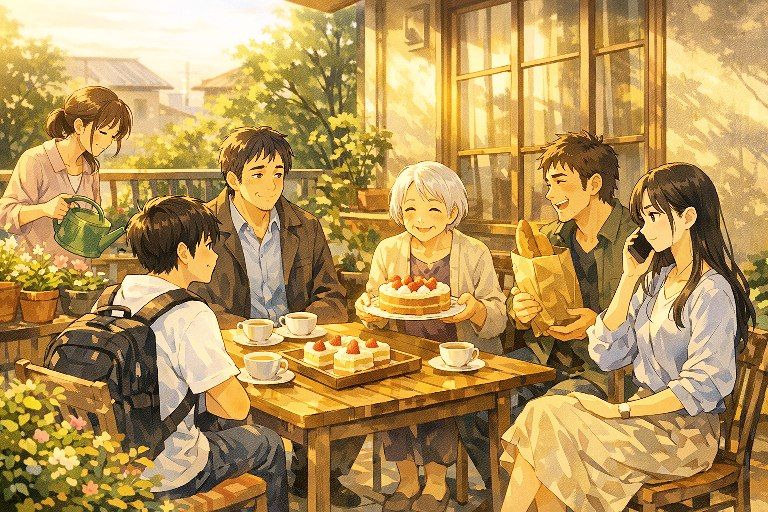
Short story: Chase in San Lucas
The afternoon stretched with a warm sluggishness over San Lucas. The station lights were taking on an orangey hue that mixed bus exhaust with the evening haze. People returning home, students with backpacks, vendors packing their goods, a couple or two. Everything seemed to follow the city’s habitual cadence until, in a brief, sharp instant, that cadence snapped.
Laura Castillo sat on a bench on the platform, her bag resting between her knees. She had had a long day at the design agency: last-minute revisions, an impatient client, a spilled coffee over drafts. Her mind was replaying details while her hand checked the bag’s zipper to make sure everything was still there. Then a hard yank pulled her out of her reverie. The bag flew, a stranger’s hand tore it away, and a body already in retreat tugged it through the crowd.
It wasn’t a prolonged scream — more a sharp, sudden cry — but it was enough to make the distance between victim and thief obvious. The crowd turned like a sea of small waves; some lifted phones, others stopped to watch. Among the human tide, a man at the margin felt the clarion of duty sound inside him.
Mateo Ríos did not have a visible badge; his jacket had the ordinary look of someone who left the office and disappeared into the city. Yet his body retained the memory of years in the Robbery Unit: how to read a thief’s flight in a single gesture, how to intuit the escape routes they preferred, how to calculate a second’s advantage. He wasn’t on duty, but for him the gap between thinking and acting was barely a breath. He saw the yank, saw the bag in the hands of four shadows dissolving down the stairs, and he gave chase.
The run became a choreography of impulse and calculation. Mateo cut across the platform, dodging purses and umbrellas; he knew the station’s micro-map like few others: a shortcut via the side staircase, an exit that opens into a pedestrian passage, a service door often left ajar. “Mono” — Rafael López, as later records would show — led, head down, hauling the bag with practiced ease. Beside him, Hernán “Gavilán” Duarte stuck to the shadows looking for gaps between bodies; Tomás “Fierro” Mendoza supplied the physical shove, the bulk meant to force a way through; Iván Salcedo, the youngest, glanced back with the wide eyes of someone who still cannot measure the consequences.
Mateo shouted with a voice that needs no identification: a brief command, the clarity of someone who doesn’t ask for permission. “Stop!” was more diagnosis than plea. He had no weapon in hand; protocol wouldn’t wait. He leaped over a bench, lost a shoe for an instant, and gained ground. A taxi nearly blocked the path; a vendor stepped in with a shout; the city’s elements seemed to conspire to return them.
Crossing onto the avenue, the dynamics of the chase shifted. The light let faces and details come into view. One of the thieves tripped over a loose cable left from recent works on the platform; Iván lost his balance and fell. A stumble that fear and fatigue turned into instant defeat. Mateo, who had measured that bollard on the route, closed in, grabbed him by the lapel, and applied a control technique he had practiced until it was routine: a twist, a weight that neutralizes, a grip on the forearm that prevented any movement. “Don’t move,” he said in a cool tone that made silence follow the order.
The commotion began to draw institutional responses. Marcela Ruiz, the station officer, heard the radio alert of a robbery in progress. Instinct propelled her toward the main exit, where she found Mateo holding a young man pinned to the ground. Without hesitation she extended her hand to secure the detention, quickly producing the handcuffs she always carried. Over the radio she requested support: the station needed a swift perimeter closure.
While Marcela secured the first arrest, Mateo and the fleeing group crossed paths in a maneuver that seemed choreographed. “Mono” chose to cut toward the adjacent street, aiming to disappear into the urban fabric. Mateo changed course, ran diagonally, and put himself in the leader’s path. Marcela flanked from the other side. The interception was precise. Mateo met Rafael with a stride, driving his shoulder into the man’s hip to unbalance him; Marcela stopped Tomás when he tried to shove past. Hernán, seeing the move, attempted to blend into a group of tourists photographing the facade: a bystander’s voice — someone who had watched the sequence — cried out and pointed; that warning was enough for Marcela to turn and close the gap.
The arrests were swift and orderly, the product of individual initiative and institutional response. Handcuffs, the flashing of patrol lights, beams searching pockets and open backpacks. Laura got her bag back within minutes. Inside, besides everyday items, were her documents and some print jobs she’d been carrying. Small belongings were missing — a notebook, a few loose coins — nothing irreplaceable, but intimate tokens of the violation theft brings.
“Thank you,” Laura said, her voice fractured by adrenaline as she approached Mateo. She offered a handkerchief she had clutched during the ordeal, a clumsy gesture of gratitude that was more symbol than speech.
Mateo took the handkerchief without ceremony. His attention remained fixed on the scene. He watched the suspects with a professional eye: the leader with a shifty gaze; the big man, fists still tense; the slippery one, now defeated; and the young man who had fallen, already beginning to grasp the weight of the night. Marcela, calm from years of patrol, began to collect details: identity, marks, what each had taken. Her radio crackled: reinforcements inbound, custody unit dispatching a vehicle.
Sergeant Esteban Cruz arrived to seal the perimeter and bring formal custody procedures. He took command of the operation with the discipline of someone who knows the next minute matters for the case. Reports were made, the scene photographed, evidence packaged, and statements recorded. Mateo waited by as a witness, not out of a desire for recognition but out of care: he wanted his intervention to enter the official machinery of justice rather than remain merely a street anecdote.
The transport was orderly. One by one, the detainees were placed in the patrol car. There were murmurs, a few reproaches, hands groping for something lost. Laura, now accompanied by an official offering institutional support, checked her papers. When she confirmed her ID and documents were there, her body seemed to deflate. Still, the feeling of vulnerability would not vanish instantly; it lingered like a mark that would take time to heal.
Later, at the precinct, the names of the detained crossed with police records that pointed to possible links with a network operating across the city’s stations. Not all the chain’s links were known yet; the investigation promised to follow a trail that might reach further coordinates. Mateo, meanwhile, gave his statement: how he moved, the decisions he made, why he chose to intervene despite being off duty. He was clear and decisive and welcomed the Fiscalía’s involvement in the case.
The city resumed its rhythm with a slightly diminished sense of ease and a heightened attention. Streetlights cast long shadows over the plaza, and some passersby lingered a moment longer to check their bags. Marcela and Mateo exchanged a look as the last patrol pulled away: a brief acknowledgment of duty fulfilled.
“Good work,” Marcela said, tapping his shoulder with the familiarity of those who share shifts and emergencies.
“We did what had to be done,” Mateo replied, and his voice needed no further praise. He knew that night the city had bought itself a reprieve.
Laura walked away with unsteady steps, sometimes glancing over her shoulder, sometimes trying to stitch back the thread of an afternoon that had been broken. The detainees would face investigation, statements, and possibly charges. For some, that arrest might open a process that would reckon with the law; for others, it might mean the beginning of a judicial narrative whose end remained uncertain.
The station regained its moderate bustle, but the memory of the event lingered in the conversations of passersby: the tale of the unbadged man who ran after the thieves, the officer who secured the first hold, the rapid convergence of response. The city, a machine of small stories, added another that would circulate through cafés and offices in the days ahead.
Mateo walked home more slowly, feeling the fatigue the chase had accumulated and the lightness that conviction brings. He didn’t seek recognition; the calm on his face showed it. He felt that duty sometimes doesn’t respect schedules or credentials; it appears on corners, on platforms, in seconds that force you to choose.
Rounding the corner, he thought of Laura holding her bag, of Marcela returning to her shift, of Esteban organizing paperwork. He also thought of the detainees, of the causes that push someone to steal in stations, and of the possibility that that night might be a turning point for each of them. The city kept beating, and Mateo let himself be carried into domestic routine, but with the quiet certainty that, should the need arise, he would run again.
Source of the images.
Image created with Bing.
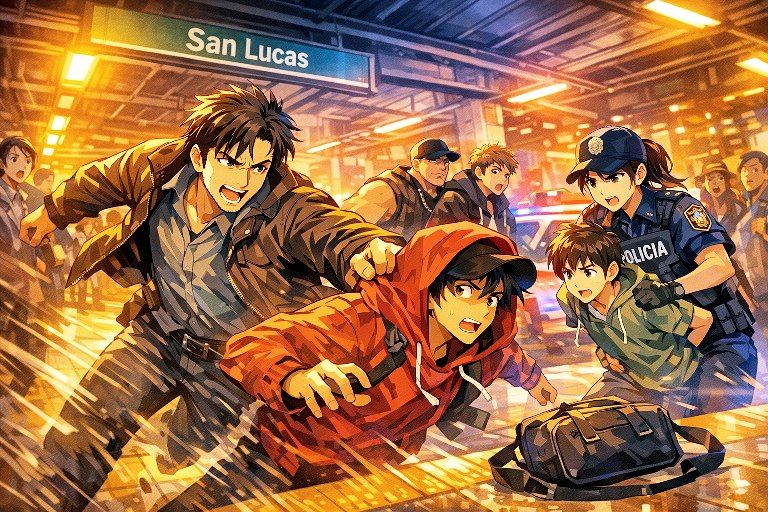
Short story: A Wing of Hope
In the heart of Seville, in the neighborhood that breathes history and river curves, lived Marcos. He was twelve years old and had the gaze of someone who had learned to count time in small acts of care. His skin, fragile like butterfly wings, tore at the slightest friction; each day was a lesson in caution and endurance. Since he was a baby, the family’s routine revolved around dressings, bandages and ointments; those attentions, repeated to the point of fatigue, had woven the relationship between him and his mother, Aurora, into a blend of tenderness and constant vigilance.
Aurora, a former nurse with patient hands, had turned their home into a sanctuary for treatment: a table with neatly arranged bottles, gauzes folded with precision, a chair that had learned to hold in the middle of the most painful gesture. Every morning she touched her son with the gentleness of someone who knows that strength can be a form of delicacy.
Each dawn the light passed through the blinds and tore the room’s darkness; Aurora entered quietly and, with a voice that tried to be light so as not to translate the weight of fear into words, she would say: "Good morning, my love. It’s time for the treatment." Marcos opened his eyes and, although his hands trembled, he offered a smile. That smile was his shield; with it he tried to return calm to the one who was breaking at seeing him suffer.
"Mom, today I’ll go to school after the treatment. I want to see Mateo," Marcos would say with a mix of desire and calculation: school was a territory he wanted to inhabit, but only within the limits his body allowed.
Aurora, while unfolding gauzes and applying ointments, answered with the contained tenderness she had long learned: "You know it breaks my heart to see you in pain, but you are strong. We’ll do it slowly." Her hands moved with precision; each bandage was a promise. Marcos, who did not want to burden his mother’s anguish, asked in a voice that sought normalcy: "Promise me you’ll try not to cry in front of me."
"Promise," Aurora replied, and the two words floated like a pact in the room. The treatment was an hour of painful rituals: dressings removed leaving marks, ointments that stung when applied to open wounds, and the held breath of both as the scene repeated without notable variation. Marcos endured the pain looking toward the window, where the schoolyard was sketched like a distant landscape of freedom.
School was, for him, a mix of refuge and limit. Mateo, his best friend, knew the rules of care and assumed them with the naturalness of someone who believes friendship turns problems into something shared. In recess, Mateo waited with a comic book wrapped in plastic, a gesture that spoke to acceptance more than any word.
"Marcos! I brought you a comic," Mateo announced with the overflowing joy of someone bringing a treasure.
"Thank you. Shall we play at recess?" Marcos asked, measuring each movement, protecting his skin with the slowness of someone who manages contact.
Mateo noticed the bandages and, with a child’s awareness not to impose, replied in a low voice: "If you want, we can sit in the shade. You don't have to run."
"You’re enough," Marcos said. That simple phrase contained a deep truth: normality is not always measured by the intensity of activity, but by the company that makes the everyday less dangerous. Sergio, his teacher, then approached with a folder in his hand, attentive and serene.
"I've spoken with the counselor. We’re going to adapt activities so you can participate without risk," Sergio said with professional determination and affection.
"Thank you, sir. Sometimes I don’t want them to treat me differently," Marcos admitted with the sincerity of a child who fears the gaze that defines him.
"Treating differently is not excluding. It’s caring for you so you can live," Sergio answered. In those words there was an educational proposal: inclusion understood as adjustment, not condescension.
While everyday life sought balance between care and small victories, a letter written by Marcos took a path he hadn’t expected: it reached the hands of representatives in the European Parliament. What it recounted — a daily one-hour treatment, the impossibility of living without restrictions, the desire that therapies already approved in other countries be available in Spain — moved people and sparked response.
Clara, a member of parliament, was one of those who listened and decided to raise her voice on behalf of that boy from Seville. In a special session, in front of microphones and cameras, she held his story as if holding Marcos’s hand in public: "I have heard from a boy in Seville who told me how his day begins: a one-hour treatment before other children have breakfast. He asked me that the treatments already approved in other countries also reach us here." The chamber filled with a contained murmur; the words resonated beyond the time of the speech.
"If his skin were ours, for a single day, we would do everything to change things. This is not a request for privilege: it is a request for humanity," Clara added, appealing to a moral necessity that transcends administrative calculation. Her voice contained no theatricality, but the conviction of someone who saw in a child’s correspondence the opportunity to translate empathy into policy.
At the same time, in laboratories and research centers, scientific voices reflected on the real possibility of intervention. Elena, a biomedical researcher, spent hours among results and protocols. For her, science was not only data: it was the promise of relieving lives if society decided to match will with resources.
"This case shows that science can make a difference. We need political will so that advances reach those who need them," Elena told a colleague during a break, pointing out that findings were no longer enough without concrete decisions on funding and access.
"The costs are enormous, but the decision is not only economic; it’s ethical," her colleague replied.
"Exactly. We cannot measure life in money when we are talking about childhood," Elena concluded. Her words returned to the core of the debate: prioritizing resources in the face of human urgency.
The community did not wait passively; it organized. Neighbors, friends and activists took to the neighborhood squares and streets with banners demanding healthcare justice: "Health for everyone," "Children first." The protest was peaceful but firm. Aurora, with a face hardened by sleepless nights and a voice sharpened by the need to speak, held her son’s hand under that public light that both exposes and protects.
Mateo climbed onto an improvised podium and said with the memory of intact friendship: "Marcos is our friend. We’re not asking him to live without pain; we’re asking that he have access to the best medicine offers." His words were picked up by other voices and amplified by the whole neighborhood’s presence. Aurora, from the front, spoke with the force of someone who had witnessed every wound:
"I will not fight systems; I will fight with my voice. Marcos deserves that opportunity."
Weeks turned into months. Social mobilization, combined with political echo and scientific pressure, began to yield results in the form of formal debates and proposals. In a meeting room where decisions are made among papers and signatures, Clara presented a resolution aimed at speeding up access to therapies already approved in other European countries. It wasn’t the definitive solution — costs remained an obstacle and logistics a web of challenges — but it marked a different direction.
"We have managed to have the admission of therapies that have demonstrated efficacy in Europe reviewed. This is not the end; it’s the start of a change," Clara declared aloud, and in that sentence a collective relief was felt, as if hope had finally found a door with hinges.
Aurora, eyes wet and gratitude written in a smile she no longer tried to hide, hugged Marcos with the strength of someone who had seen words turn into action.
"You did well to tell your day to those who could listen," she told him, emotion held but visible.
"If my skin were yours, would you do the same?" Marcos asked with the innocence of someone seeking confirmation that empathy will not be fleeting.
"We did. And we will keep doing it," Clara replied, taking the boy’s hand in a gesture that sought to close the distance between politics and affection.
Months later, in the same room where so many mornings had repeated like a ritual, the light returned the same way, but now new papers lay on the table: signs that a novel treatment might arrive, access plans, lists of protocols and administrative steps already initiated. The treatment remained tough; ointments still burned and bandages still left maps on the skin, but the horizon had changed.
Marcos, with the calm that the possibility of an alternative brings, opened the comic Mateo had given him and said in a low voice: "It’s not just a treatment... it’s that at last we feel someone is listening to us."
Aurora looked at him as one who reorganizes priorities and answered with the certainty that collective struggle gave her: "And so long as there are voices that do not stay silent, the promise of a better life will be possible."
Thus, in a neighborhood of Seville, the life of one boy set the pulse of a community and set processes in motion that went beyond the individual: Marcos’s story did not end in an instant cure, but showed that pain can be turned into a reason to change structures, that science needs the push of society and political will, and that hope, when accompanied by action, opens paths where there were only obstacles before. The End.
Source of the images.
Image created with Bing.
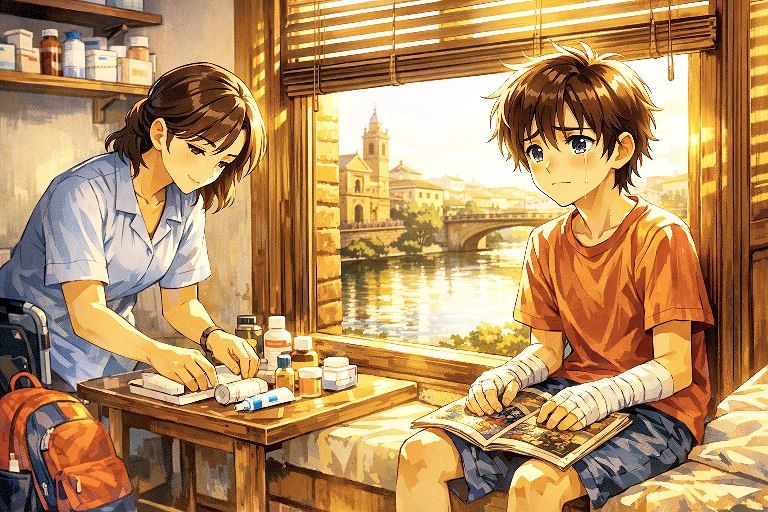
Short story: The Plaza of Screens
The afternoon slid lazily over the Las Acacias neighborhood, tinting the facades yellow and orange. Mateo arrived home with his bag half unzipped and his face still warm from the heat of the trip. When he opened the door, he was greeted by a scene both ordinary and profoundly new: his grandmother Clara reclined in her armchair with a tablet on her lap; Valeria, his mother, sitting at the dining table with her phone in hand watching an online cooking tournament; and Nico, his younger brother, already on the sofa with his phone in front of his face, ready to jump into a quick match as soon as the invitation appeared.
“Did you get home late?” Valeria asked without looking up from her phone.
“Traffic,” Mateo replied with a grimace. “But I have time to play a bit—what are you doing?”
“I’m in the ‘Worlds’ plaza,” Nico answered without stopping his thumb. “Come in, there’s a meet-up in five minutes.”
Grandmother Clara set the tablet on the table and, with the calm of someone who has watched decades pass, smiled. Her eyes crinkled in a gesture like that of someone hearing a repeated anecdote, but this time the anecdote came with emojis and sound effects.
“A plaza? Those worlds again? When I was young, the plaza was real,” Clara teased, resting a hand on the armchair’s fabric. “You played hopscotch there, not those noisy things.”
Mateo dropped his bag on the floor and sank into the couch beside Nico. In less time than it took them to settle, both had opened their games on their phones: within seconds, their avatars appeared side by side in a colorful scene full of virtual stalls, impossible sculptures, and animated signs. Valeria, not an habitual gamer, watched with curiosity. The idea of creating an avatar appealed to her more from the desire to share than from a competitive urge.
“Can I join?” she asked, a little shyly. “I don’t even know where to start.”
“Sure,” Nico said, pausing his game to show her. “It’s free—just create a character. Look, I customized this hat; I can lend it to you.”
Valeria accepted the invitation with a smile. In minutes she had a simple avatar: tied-up hair, neutral clothes, and an expression that, while not capturing her real face, allowed her to walk through the virtual plaza with the same ease she would in the neighborhood park. Grandmother Clara, intrigued, leaned in and pointed at the screen as if it were a painting.
“Look how they greet each other,” Clara said. “That’s instant! Back then you had to go down to the corner to see someone.”
It was no coincidence that the whole family ended up in that digital space. For them, the phone screen had ceased to be a mere content receiver and had become an expanded living room: a place where generations talked, argued, and shared without complex technological intermediaries. Mateo remembered conversations with his friends: patience for waiting through downloads and patches had died out; time no longer tolerated long start-ups. If a title didn’t hook you in the first seconds, you moved on.
“What do you do there now?” Clara asked, pointing to the small missions popping up above the market stalls.
“Quick missions,” Nico explained confidently, as someone who has internalized mobile game logic. “They’re five minutes long; I do one between school and dinner and you still rack up rewards. They give small goals so you feel like you’re progressing even if you only play for a bit.”
Valeria nodded, recalling the long afternoons of console boot-ups that once set the household’s rhythm.
“I like that we can hop in and out,” she said. “Before, with the console, you had to turn everything on and wait for updates. Now you open the app and that’s it. Less friction, more getting together.”
Meanwhile, a notification brought another familiar face: Lucas, the neighbor across the hall, materialized in the plaza. His avatar wore virtual headphones and a microphone; within seconds he started DJing music in the shared space, turning the plaza into a mix of fairground and concert hall.
One by one other avatars joined: Nico’s school friends, Mateo’s coworkers who shared memes, neighbors who used to greet each other in the building chat and now met at this common point.
“This is like real life, but without the traffic noise,” Lucas said with a laugh. “Here you stay if you like the people, not because you have an expensive device.”
Mateo smiled, thinking about the practical importance of the smartphone in his region. In Latin America, the phone wasn’t just a symbol of modernity; it had become the primary console for economic reasons and ubiquity. It allowed parents and children to meet without the hardware gap separating them: the same app, the same game, the same plaza. Economic differences that in the physical world closed doors were minimized in that virtual universe.
Suddenly an announcement popped up on the noticeboard: an obstacle race, ten minutes long—perfect for those with little time but craving a thrill. Nico sprang from the couch as if called to a personal challenge; Clara clapped with childlike enthusiasm; Valeria didn’t want to fall behind; and Mateo, focused, searched for the best strategy with his eyes fixed on the screen.
The race was a whirlwind of jumps, slides, and laughter. In the house their voices mixed with the game’s sound effects: a perfect jump, a comical fall, a sarcastic comment. Although not everyone finished first, the feeling of having progressed was clear: a new badge, some virtual coins, and a supportive gesture received on the track.
“People used to play for the graphics,” Valeria said as they put their things away. “Today it’s more about community. Did you see how that kid helped you when you nearly fell?”
“Exactly,” Mateo replied. “This isn’t just pixels; it’s who’s with you when you’re connected. It’s the people, the conversations, and the small helps that make the game an excuse to be together.”
That night, while the virtual plaza kept buzzing with events and avatars waved goodbye with gestures and emoticons, the real conversations in the living room resumed their place. Grandmother Clara, with the tenderness of someone watching a new family custom, told an anecdote from her youth about a fair where she had won a ring toss. Nico, full of youthful energy, recounted how he had made friends in a lightning tournament and discovered new musical styles thanks to those encounters. Mateo listened, thinking about continuity: the human need to gather now manifesting through screens and connections.
“Are we playing again tomorrow?” Nico asked before turning off his bedroom light.
“Yes,” Valeria answered firmly. “Five minutes before dinner. That way we connect without interrupting anything.”
Grandmother added affectionately, almost in a whisper:
“I’ll sit and watch you. Even if I don’t understand everything, I love seeing you all together.”
With the lights off and the house quiet, Mateo lingered a moment looking at his phone, now set aside on the table. He thought about how leisure had ceased to be a solitary or merely recreational activity and had become a common language across generations. The phone, the digital plaza, short and free matches: they were not merely consumption elements but tools that enabled instant meeting, inclusion, and the continuity of social life. They had created an ecosystem where instant gratification did not oppose connection; instead, it facilitated it.
He remembered the streaming logic—the habit of total content availability established by platforms that had taught families to consume whenever they wanted. That same mentality had migrated to video games: loyalty to a title was no longer automatic. If a game didn’t convince you in the first minutes, you discarded it without remorse. That’s why experiences had to hook players from the very first second to win over an audience that moved at notification speed.
In the region, the smartphone had consolidated as the main leisure tool largely because of its accessibility and its ability to offer deep experiences without costly hardware. Players of different ages and means could participate from the palm of their hand, and that transformed family gatherings. Developers, aware that gaming competed with every other attention demand—messages, social networks, calls—adapted their designs: five- to fifteen-minute sessions, scalable rewards, a sense of progress even in short bursts. Thus, the game became compatible with daily life, not an activity that demanded it.
Above all, this changed the way people belonged. Beyond graphics, the social experience was the true driving factor. Games that functioned as public digital plazas offered spaces where young people found identity and company. The free-to-play model, with its low barrier to entry and voluntary spending, ensured the family meeting point remained accessible to everyone, regardless of economic capacity.
Still, Mateo knew not everything was perfect: instant gratification could erode attention and turn taste into a fleeting commitment. But that night, seeing his family laugh, argue, and help each other in a virtual race, he understood that instant reward wasn’t necessarily superficial. In many cases, it was the way to preserve a shared space in accelerated times.
The Plaza of Screens dimmed slowly: avatars logged off, notification icons calmed, and the house returned to its usual quiet. Yet the habit was now established as a new ritual: meet five minutes before dinner, enter the plaza, greet each other, compete a bit, win a badge, and then close the app to return to in-person conversation. It was a small choreography that bound generations. And so, on an ordinary night in an ordinary neighborhood, the family discovered that entertainment had ceased to be an isolated activity and had become the shared language that allowed them to remain family in a hyperconnected world.
Source of the images.
Image created with Bing.
Short story: The Silence of the Pinewood
The pinewood of Clairval smelled of resin, dampness, and a cold that seemed to reach into the bones. Through the crowns of the pines, light fractured into pale strips that fell across the paths. Sofía Laurent walked slowly, her right hand cradling the belly where a future still unfamiliar with shadows beat. Her coat shivered in the wind; her breath kept a calm rhythm. Rocco, the pit bull, strained at the leash with the force of his youth: the dog sniffed every branch, every nook of the trail as if claiming belonging to that landscape. The morning had that slowness of things that seem built to last.
Marc Delorme had not been able to accompany her. His shift at the factory had kept him until the last minute. The night before there had been a brief argument: duties, fatigue, a decision made hastily to avoid time turning into a fight. Sofía insisted she needed the woods to order her thoughts; Marc, hurried by work, said she should go down alone and he would arrive later. It was a clumsy, everyday negotiation, an agreement that on other occasions had been nothing more than an anecdote. No one imagined that walk would close a chapter forever.
As she neared the clearing, a scream sliced the air and tore everything apart. It was not the long moan of illness nor the muffled call of someone asking for help: it was a sharp shock, an exhalation of panic that pierced trees and time. Antoine, who was splitting wood at a distance, dropped the axe and ran through the branches. What he found made him stagger at the edge of the world: Sofía lying on the ground, hair matted with blood, her face halfway between life and absence; Rocco immense, panting, bewildered, the leash tangled like an unresolved question.
Antoine, voice broken: “My God! —he shouted— Sofía! Sofía, answer!”
Rocco, between pants, sniffed the earth, unable to understand the human gravity of what had happened.
The minutes that followed were a succession of brusque movements and jumbled words. Neighbors arrived, an ambulance, the municipal inspector. The wounds were deep and multiple. The bites on her limbs and head showed the violence of a sustained attack; blood soaked leaves and earth with an indifference that gave the pinewood a new tone. In a matter of minutes, what had been an ordinary outing became a scene of devastation. Sofía died there, without the future she carried inside even being able to be born in words.
When the news reached the town, it spread with the speed of the unbelievable. The courthouse weeks later filled with faces that needed a name for their pain. Cameras and whispers occupied the corridors as if waiting for a conclusion that could order the chaos. Marc entered stooped, shoulders weighed down by what had happened: the absence, the family's anger, the word “negligence” already floating in the air. Clara, Sofía’s sister, did not let distance become routine; she confronted Marc with eyes fixed in accusation.
Clara, pulling her voice until it broke: “How could you let her go alone with him? She was pregnant!”
Marc, eyes red but voice controlled: “It wasn’t my intention. I thought she could handle him. I didn’t imagine... I never imagined this would happen.”
In the courtroom, the prosecutor unfolded his thesis with the gravity of one who measures consequences: “He allowed a pregnant woman to walk alone with an animal that represented a demonstrable danger. That is not a minor negligence; it is an omission that cost a life.” His voice pressed the need to show the law as a shield for the community, an answer against improvisation that, he argued, had cost the most precious thing.
The defense, Maître Girard, replied with the composure that comes from putting facts in order: “My client could not have foreseen an episode of this magnitude. Rocco had no history of aggression. Marc and Sofía lived with the dog; the animal did not show signs of uncontrollable violence.” His argument sought to move the tragedy from the realm of personal guilt to that of an unpredictable fatality.
Witnesses unraveled the story in fragments. Antoine recounted afternoons when Rocco would run after sticks and return to Marc’s hands with nothing more than a playful bark. Neighbors spoke of torn cushions at home, of broken toys, of one occasion when Rocco ripped a curtain, but nothing indicating a lethal aggression. Inspector Baudry showed photographs of the scene: stains on the leaf litter, tracks that disappeared among roots, the trace of a brief but fatal struggle. On the evidence table appeared Sofía’s notebook, with lists of names for the baby and small phrases that sounded like promises: “I want everything to be okay. I imagine you pregnant and happy. We must travel to the coast next summer.”
Inspector Baudry, pointing to the images: “The injuries are consistent with a prolonged attack. There was no timely intervention, and the wounds to the head and limbs caused the massive blood loss.”
Maître Girard: “That does not prove Marc foresaw or sought this outcome. It proves a tragedy, yes; it does not prove malice nor foreseeability equivalent to a criminal offense.”
At one point during the proceedings, with the room holding its breath, Marc took the stand. His voice trembled, more from the weight of memory than from the presence of the court. “If I could go back, I would —he said— I would accompany her every time, I would have kept the leash shorter. I didn’t mean to put her in danger. I never thought it would end like this.” His words came out like ash: they healed nothing; they only made visible the internal collapse of a man beyond remedy through explanation.
Clara, eyes fixed on him, answered: “She didn’t ask to die. She asked for company, for someone to look after her. That is not too much. How did you not see it?” Her voice was accusation and lament; it contained the claim of a family that had lost a sister and the child she carried.
Meanwhile, Rocco was taken away. Sent to quarantine for evaluation, the pit bull became the subject of experts. Veterinarians and behaviorists reviewed his history, his conduct, his training records. They sought in his past a pattern, a sign that would explain what happened. Rocco’s gaze, however, did not carry the burden of human guilt: the animal sniffed, lay down; his ignorance of the law rendered him tragically innocent and, at the same time, the axis of accusation.
The pinewood bore the mark of an absence no one knew how to name officially. Paths that once echoed ordinary steps now held a sharp silence. The town square filled with voices; cafés and benches turned into parallel courts where people asked what responsibility meant and where recklessness began. Should the law stand as a warning to owners? Would it be fair to hold a man accountable for a death that sprang from a dog’s mouth?
In conversations, some defended strict justice as prevention: “If there are no consequences, no one will take care,” said a shopkeeper. Others, looking at Marc, spoke of the cruelty of punishing an individual who had already lost what mattered most. “Prison doesn’t bring back life,” said a woman in the square, and her phrase lingered as another truth.
Marc returned to the house where mugs on the counter still held the trace of a routine that no longer existed. Every object was a memory trap: the scarf Sofía loved, a shopping list with smeared ink, a mug with a coffee stain that silently testified to a shared morning. In Sofía’s closet, Clara found clothes folded with care—little dresses—and notes with names that now sounded like epitaphs. She kept a garment as one keeps the map of what’s lost: the fabric smelled of her and of impossibility.
One afternoon that seemed to apologize with soft light, Marc went back to the pinewood. Nothing and no one stopped him. He knelt where flowers had been left by neighbors who did not know any other gesture than offering. He put his hands in the earth like someone seeking shelter in the primitive, like someone who asks the world for a key to undo time.
Marc, voice reduced to a thread: “Forgive me… forgive me for not being there.”
The earth did not answer. Only the breeze swayed the pines’ crowns with a gentle consistency that had no words.
The day of the sentence arrived. Judge Renaud sat behind her bench with the serenity the role demands. The evidence had been heard, the testimony presented. Now the law had to speak not only to the facts but to what those facts might mean for the future: a precedent, a warning, an interpretation of responsibility. In the courtroom, the wait became painful; for some, the verdict would be reparation; for others, a word capable of deepening the wound.
When the sentence was read, it did not produce the effect of an absolute closure. The decision—whatever its severity—resounded beyond the courthouse walls: in cafés, on benches, in mailboxes. The discussion continued in town: how to walk dogs, what measures to take, when the law should intervene. In that collective murmur something good persisted: more people began to measure their responsibility with new care. In that collateral effect lay perhaps a glimpse of preventive justice.
But the law did not return Sofía or her child to the life they had stopped being. The absence remained an incontestable truth. Clara, voice calmer and gaze fixed on the horizon, left a flower at the clearing and murmured: “I promise I will not forget you.” Marc continued his life with the particularity of someone who carries an unsurpassable pain: small salvations and many renunciations. Rocco was rehoused after evaluations, his fate decided by experts who tried to measure the complexity of the animal with human categories.
The pinewood of Clairval kept breathing, indifferent to the men’s verdict. Its paths preserved forever the memory of a walk that began like any other and ended as an open wound. In town, the lesson remained planted: human fragility demands care, and living with powerful animals requires precautions that sometimes come too late. In the silence that followed, Sofía’s promise—written in a notebook now folded among pages—remained suspended: names that would never be spoken aloud, plans never made, an absence that admits no consolation.
Source of the images.
Image created with Bing.
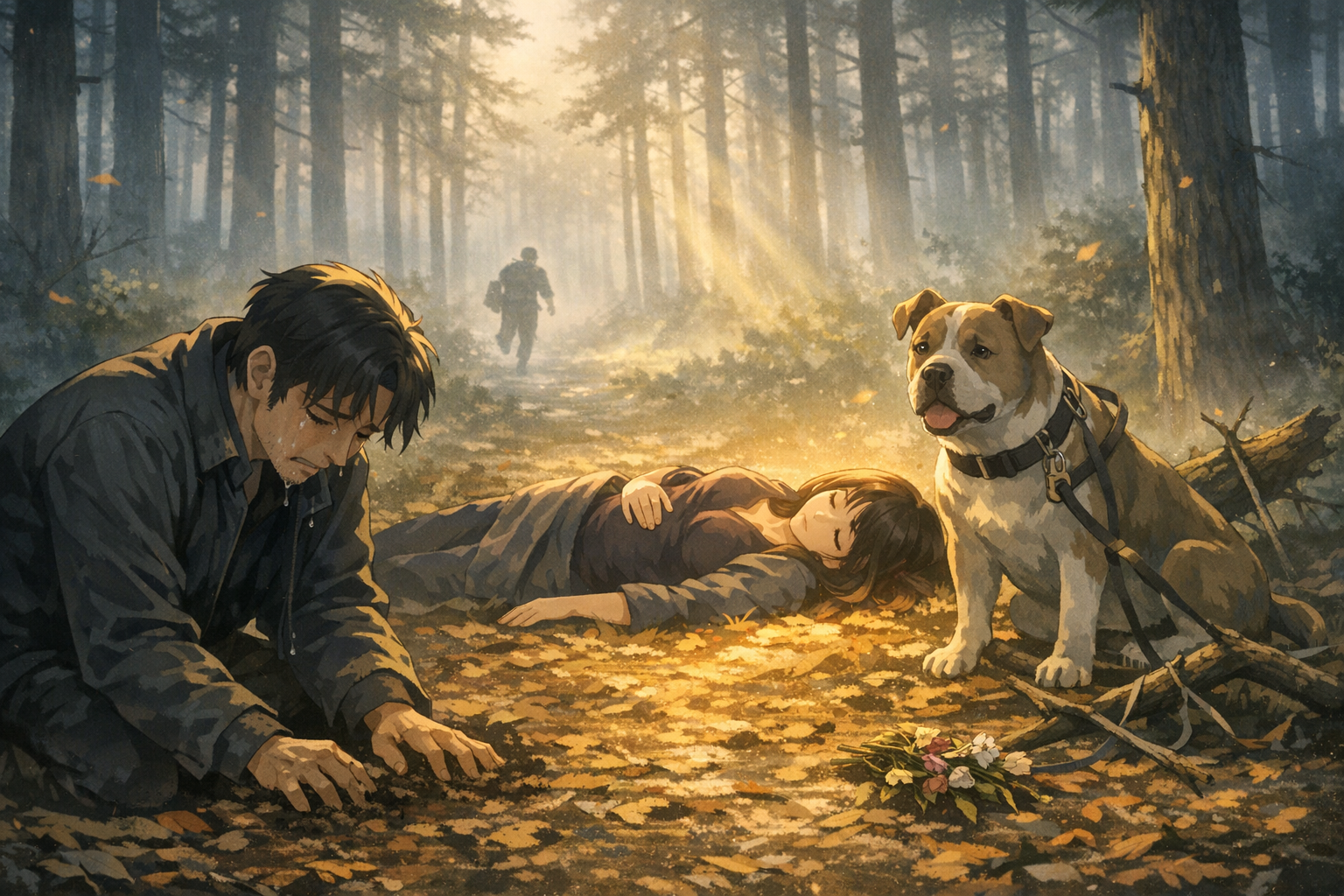
Short story: The Four-Legged Vagabond
On the dusty corner of the Santa Lucía neighborhood, where the sun pressed down on the roof tiles and the tree shadows were small patches of relief, a gray mottled cat with twin eyes—lucid but dimmed by fatigue—appeared. He was found lying next to a broken trash bin, his tongue rough and stuck to the roof of his mouth. The people of the block, who knew the comings and goings of animals and residents on that street, called him The Vagabond for his slow gait and because no one seemed to claim him; some said he once had owners, others that he had not been seen for weeks.
Doña Marta, a small woman with callused hands who had lived alone since her husband died, always left a container of water in front of her doorway for animals. Seeing him, she bent down, offered her hand, and let out a soft voice:
—Poor thing —she murmured—. He’s dehydrated. We have to help him.
The cat opened his eyes with effort and, confused by the affectionate gesture, moistened his muzzle in the water Doña Marta placed. The scene was witnessed by two young people walking down the street wearing Cola Alegre Foundation shirts: Marcos, the rescue coordinator, tall and always alert-eyed, and Lía, an experienced volunteer with a frank smile and nimble hands for holding frightened animals. They had a folding stretcher in the corner of their truck and a bag of kibble that smelled like home.
—Look, Marcos —Lía said, pointing at the cat with her chin—. Another one. We can’t leave them here to their fate.
Marcos, who had seen this scene repeated in many neighborhoods, crouched carefully. In a low voice so as not to startle the animal, he spoke while wrapping him in an old blanket:
—Calm down, friend. We’ll take you with us.
The cat purred weakly feeling the human warmth; his purr was like a thread of life restarting an almost-stopped engine. They placed him in the truck with the care one uses to handle a fragile, frightened being. As they loaded him, Lía could not help but comment bitterly:
—We’ve had so many cases lately. In the whole sector they’ve been abandoning cats and dogs. If we don’t run permanent sterilization and education campaigns, this won’t stop.
At Cola Alegre’s headquarters, an old house repurposed with improvised pens and stacked boxes that served as hiding places for shy animals, they worked overtime. That day the room smelled of antiseptic and freshly groomed fur; there were more than sixty dogs awaiting adoption, colorful beds and posters with photos. Seeing The Vagabond arrive, Carolina, the organization’s coordinator, approached with a serious look, her coat stained with mud and a notebook where she recorded rescue stories and diagnoses.
—We need a solid strategy —Carolina said aloud, as if calling the team together—. It’s not just rescuing: we must sterilize, educate, and follow up. If not, overpopulation will devour our resources and the animals face a cruel fate.
Lía wiped the cat’s little dirty paws with warm water and gave him a little subcutaneous fluid. The animal, cradled on the stretcher, made small sounds between purrs and whining relief.
—Sometimes people think giving a plate of food fixes everything —Lía said—. They call them community pets, and although the intention is good, they don’t know the risks: disease, parasites, fights between animals, spread of infections... and the fact that sharing the same bowl can spark outbreaks.
From another nearby organization, Peluditos al Cuidado, Patricia arrived: a veterinarian trained in preventive medicine with the patience forged by years of night shifts. Patricia, the technical coordinator, attended a joint meeting between foundations organized that afternoon to map out a regional plan. Her rigorously gathered data showed a worrying trend.
—We lack basic first-aid training among neighbors —Patricia explained with professional calm—. And many cannot afford professional care when animals are injured or dehydrated. Awareness campaigns change that: they generate affection and responsibility.
Animals must be considered part of the family; they need to be vaccinated, dewormed, and kept hygienic. Without these cares, animals roam sick, causing suffering and preventable deaths.
Carolina closed her eyes for a moment, as if weighing the magnitude of the challenge.
—Alone at Cola Alegre we carried out 158 rescues last year —she said tensely—. And we’re not the only ones. This situation repeats in other foundations across nearby municipalities. We must coordinate efforts, establish permanent campaigns, and, above all, educate.
That afternoon, The Vagabond received fluids, warmth, and a bowl of tepid food. He slept in an improvised bed, wrapped in blankets, while Carolina and Patricia drew up a plan: free sterilization days, educational modules in plazas, pamphlets with first-aid instructions, coordinated rescue routes among foundations, and an animal registry. They decided to start in the areas with the most reports: La Esperanza (locally nicknamed Chucho Briceño), Los Rastrojos, and Agua Clara, then move west across the city through Barrio Unión, the Industrial Zone, and Pueblo Nuevo—areas from which the foundations received the most calls about abandonment, mistreatment, and animals injured on roads.
—If we run permanent campaigns —Patricia said— and families take responsibility for postoperative care, we’ll see real reduction. Also, we must emphasize felines: they’re the most neglected and suffer greatly because their recovery requires specific, careful attention.
The following days were a mix of logistics and tenderness. Volunteers set out early with carrier boxes, blankets, cages, and printed signs. They set up a registration post in the central plaza where neighbors could list animals in the streets, ask for information, or sign up for free surgeries. Doña Marta offered her house as a postoperative recovery point for cats, with a quiet room, a box lined with soft sheets, and a small corner with fresh water. Marcos coordinated transport from meeting points, Lía handled community communication, and Patricia supervised medical procedures, aided by volunteer veterinarians who took shifts offering services.
The opening day drew people from many neighborhoods. Some arrived shy, eyes downcast, as if bearing an animal’s responsibility were a confession; others came proudly, because they had already sterilized their dog and wanted to share their experience. People came to learn: mothers who wanted to know how to treat wounds, young people who offered to volunteer, and merchants who donated food and medical supplies.
One afternoon, while they were closing the post, a young man with an anxious look appeared holding two trembling kittens. He had found them in a dumpster, wrapped in dirty cardboard.
—I found them in the trash —he said quietly—. I didn’t know what to do. Now that I see what you do, I want to help.
Carolina welcomed him with a tired but genuine smile and handed him a form, explaining the adoption process and the importance of postoperative follow-up.
—Welcome —she said—. This kind of action changes lives. Learn to care for them; we’ll teach you. Here we don’t judge: we give tools.
Meanwhile, in the neighborhoods identified as most critical, life continued at a tense rhythm. The streets of La Esperanza were a mosaic of low houses, shops, and alleys where people often abandoned animals due to lack of resources or misinformation. In Los Rastrojos, a degraded industrial sector, dogs sought shelter among containers and scrap. In Agua Clara, standing water supported parasite proliferation and disease. In Barrio Unión and Pueblo Nuevo, toward the west, personal stories mixed with abandonment: families who migrated away, owners who stopped feeding or caring for pets due to economic impossibility, and people who, fearing veterinary costs, preferred to abandon an animal rather than treat it.
The sterilization campaigns proved a larger logistical challenge than expected. They had to set schedules, train personnel for postoperative recovery, and sensitize attendees about the responsibilities of caring for an animal after surgery. Some owners were initially reluctant; they feared the procedure or did not understand its necessity. But through clear talks and testimonials, the team changed perceptions.
At an information table, Patricia offered an explanation that captured many people’s attention:
—Sterilization reduces the number of animals on the streets and prevents unwanted litters —she said—. It also reduces behaviors driven by reproductive instinct, like fights and escapes, and lowers disease risk. But surgery doesn’t end there: families must be responsible for postoperative care. Keeping the animal rested, monitoring wounds, administering medication, and watching for signs of infection are key tasks.
Lía, who had seen animals returned to the street due to lack of postoperative care, added:
—It’s not just about operating: if we don’t have homes that can manage recovery, the situation worsens. That’s why we ask for citizen commitment.
Meanwhile, The Vagabond—still nameless—recovered. The first week was long naps and small portions of food. Over the days his coat regained shine and his eyes became curious again. Children in the plaza began to look for him. One of them, Samuel, a ten-year-old boy with a freckled face and unruly hair, couldn’t resist. He watched carefully, touched him gently, and soon the bond formed as if it were natural.
—Can I touch him? —Samuel asked softly.
—Of course —Doña Marta replied from a nearby bench—. But go slowly. He’s still learning to trust.
In the days that followed, Samuel brought toys he made from string and plastic bottle caps. He watched the cat stretch in the sun and spoke to him in a low voice. It was evident he was becoming attached.
The community, however, still faced obstacles. Some neighbors continued to feed animals in the streets without registering or sterilizing them, believing they were showing compassion. Patricia and Carolina organized sessions to explain the problems of so-called “community pets”: people who leave water and food without integrating animals into a family or providing veterinary care. Kahale (in her role as a community educator stressing the dangers) emphasized that good intentions can have consequences: sharing a bowl, for instance, can facilitate parasite and disease transmission, and multiple animals eating the same food without control can trigger fights and territorial disputes.
—Good intentions are not enough —Patricia insisted during a plaza talk—. It’s necessary to know the risks. If the community decides to help, do so responsibly: register, vaccinate, deworm, and sterilize.
Acceptance grew slowly. Some neighbors donated materials: blankets, boxes, cans of food. Small local businesses offered discounts on veterinary supplies. A group of young people formed a watch brigade to report injured or endangered animals. Doña Marta, in addition to being a water point, became a guardian for recovered cats; her home sheltered cats in convalescence and became the nook where they were taught to trust human contact.
In long coordination meetings, Carolina stressed that the work needed to become systemic: they requested meetings with municipal authorities to manage resources, held sterilization days in public spaces, and worked with schools to introduce animal care workshops in class plans. They also made efforts to reach people with less information access: simple-language pamphlets, short videos, and live demonstrations.
The changes were neither immediate nor easy. The first mass campaign brought many pets but also exposed the need for follow-up: some animals developed infections because of inadequate home care, others were returned by owners who could not assume the responsibilities.
However, with each mistake they learned clearer measures: postoperative checklists, telephone consultation lines, and volunteers willing to provide home assistance in critical cases.
The Vagabond transformed amid this torrent of activity. He was no longer anonymous; his recovery was documented with photographs used in foundation brochures to show before and after. His name changed to Félix when Samuel—after completing the adoption process and attending a pet care workshop—took him home. Formalizing the adoption mattered: with it came responsibility. Samuel, supported by his parents and supervised by the foundation, learned to administer medicine, keep the wound clean, and watch for warning signs.
Félix became a contagious enthusiasm. He went to school with Samuel in the afternoons and waited at the doorway when the boy left to play. At night he curled up at Samuel’s headboard like a silent sentinel rewarding dedication with affection. The cat’s transformation was a living example the foundation and campaigns used to show the community that investing in rescues and sterilizations was worthwhile.
Six months after the campaigns began, the foundations noticed measurable changes: fewer reports of animals in the streets, more responsible adoptions, and more families participating in campaigns. It wasn’t a perfect solution: there was still abandonment, animals mistreated or run over, and neighborhoods resistant to intervention. But awareness grew. The idea that pets should be part of the family took root gradually in the community.
At a neighborhood assembly attended by residents, volunteers, professionals, and local authorities, Patricia spoke to summarize what they had lived through.
—Empathy saves lives —she said calmly—. It’s not enough to give food; it takes commitment, education, and responsibility. If each family assumes postoperative care and vaccination, and if each community organizes permanent sterilization campaigns, we can prevent unnecessary suffering.
Marcos, watching Félix gambol in the plaza as if he knew every stone, added softly:
—There’s a lot to do —he murmured—, but we’ve begun to change the story.
And so, between nighttime rescues, sterilizations on hot mornings, and hands willing to help, the neighborhood stopped seeing animals as a city problem and began to see them as life companions. Félix, once The Vagabond, became the symbol of that change: tangible proof that organized compassion, allied with education and solidarity, can turn dry alleys into homes filled with water, food, care, and affection.
Over time initiatives multiplied: school brigades teaching children to recognize dehydration signs, agreements with hardware stores to donate recovery materials, and a network of foster homes to care for animals undergoing long recoveries. The foundations, better coordinated, managed funds and expanded their campaigns.
Still, in the early mornings when the city seemed to hush its noises, people remembered the names of animals who did not survive: stories of those run over on avenues without proper crosswalks, or cats who died of dehydration—reminders that work must intensify. That awareness of loss spurred more neighbors to get involved: nobody wanted the story to repeat.
In the end, what began as just another rescue—a gray cat picked up beside a trash bin—became the spark of a community transformation. Félix didn’t just find a home; his journey mobilized resources, sensitized citizens, and generated a care network that, imperfect though it was, worked and grew. In each campaign, each conversation with a newly committed family, each sterilization carried out by careful hands, the community reaffirmed a key principle: organized compassion saves lives and changes destinies.
And in the plaza, under a tree that had grown to cast a wider shade, Félix slept at Samuel’s feet, and the neighbors, seeing him, smiled. They knew the road ahead continued, but they also knew that, for the first time in a long while, the difference depended on them.
Source of the images.
Image created with Bing.
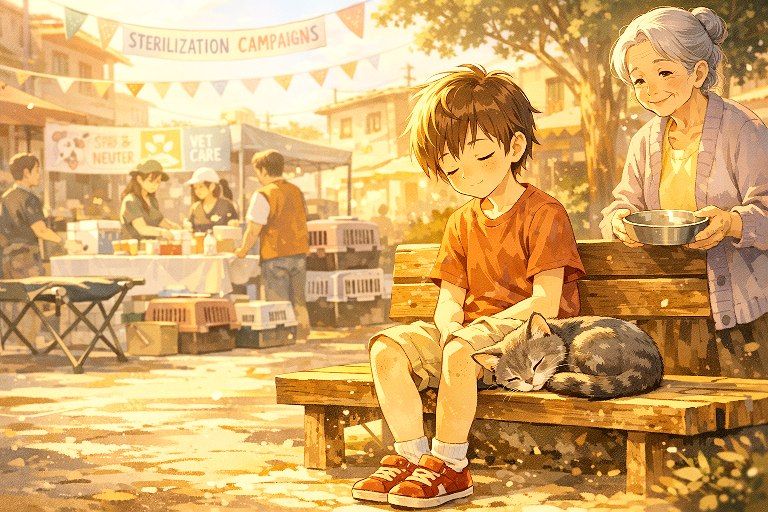
Short story: The Mirror of the Beasts
On the second floor of an old building whose walls kept nights of rain and half-finished conversations, Mateo lived. The apartment was narrow: a kitchen with worn tiles, a living room where the clock seemed to have stopped in a sad tick, and his room, both sanctuary and stage for change. He was seventeen, his gaze always moving as if searching the air for an answer he could not find. Hanging from a frayed cord on the wall were felt ears: small, carefully sewn, aligned like offerings. Facing them, an elongated mirror returned the image of a body in transit; sometimes the reflection showed the boy his family knew, other times the silhouette of an inner creature he was beginning to name.
The day everything seemed to overflow began with a simple, anguished question. His mother, Elena, appeared in the doorway with her apron tied and tired eyes.
“Are you okay, Mati?” she asked, her voice breaking. “Last night I opened your notebook and saw those notes… what do all those words mean?”
Mateo made a mechanical gesture, took one of the ears and brushed it with his fingertip, as if its warmth could restore coherence.
“It’s…it’s my way of feeling more like myself,” he answered, avoiding her gaze. “It’s not just putting on ears. It’s knowing there’s something inside me that isn’t human, Mom.”
Elena gripped the apron between her hands, trying to hold onto routines that no longer sufficed.
“It’s not my job to understand everything, but I’m worried you’re drifting away from us. Your father and I only want what’s best,” she said, with a mix of fear and reproach. “Can’t you be happy without this?”
The conversation hung in the air like a half-filled glass. For Elena, the ears were a sign that something was slipping away from her son; for Mateo, they were the first visible gesture of an internal search that wouldn’t fit in the house or in his mother’s words.
In the corner square, under flickering lamp posts, young people wove codes and rhythms through their screens. Social networks were a fabric connecting those who named themselves in new ways; they made distance seem curable. That’s where Mateo met Mara: a short-haired girl with sharp eyes and a digital voice that promised understanding. She called herself “wolf on pause” in her bio and filled her profile with drawings of fangs traced in black ink.
“Hi, Mat,” Mara messaged. “I saw your notebook. Your ears are beautiful. Have you tried walking without looking at people? It’s liberating.”
The reply came with the awkwardness of someone who hadn’t yet mastered the confidence displayed online.
“And what if I feel ridiculous?” he answered, his fingertips trembling.
“Then don’t say it out loud. No one here judges. Here we understand each other,” Mara replied, adding a moon emoji.
Virtual acceptance was at first a caress that calmed him. It was a refuge for the anxiety burning inside Mateo: a place to name sensations without the discomfort of explaining or defending himself. But the online community, so ready to offer comfort, also pushed him toward isolation. At night he practiced muffled mews and long breaths, thinking he was tuning a nature no one could prove existed. His schedules unraveled; study hours became screen hours. His grades, once steady, began to fall. At school some classmates laughed behind his back; others looked the other way. What had been a secret game turned into a wall between him and everyday coexistence.
The school principal, worried about his declining performance and the rumors, recommended the intervention of the school psychologist, Dr. Rosa. Her office was a room of dim light, books placed in precarious order, and the air of someone who had heard many stories before. Rosa opened Mateo’s file with the calm of someone unwilling to rush pain.
“Searching for identity is the national sport of youth,” Rosa said in their first session. “Adolescents want to know who they are or who they want to be. Sometimes, the stranger the behavior, the more effective it is for differentiation.”
Mateo shrank in his chair, his body small beneath the clinical phrase.
“So this is normal?” he asked, staring at his hands as if they held proof of his normalcy.
“Partially,” Rosa replied. “There’s a deep desire to break the mold. But I’m also worried you’re using this identity to disconnect from the real world. Networks amplify and normalize these behaviors. When someone’s functionality is affected—when they stop studying, isolate themselves—it ceases to be merely an identity game and becomes a problem.”
Rosa’s words weren’t a condemnation; they were a map pointing to a risk Mateo recognized with a shiver. He began to see his behavior in the harsh light of professional observation: not only as a label that defined him but as something that, if left unattended, could strip away tools for living.
Mara, for her part, was a flawed mirror. For her, the label—unspoken but implied in every drawing and ritual—had worked as a cloak. She had tried many communities before: hippie exaltation, emo melancholy, but none had lasted. For Mara, the idea of an animal essence was a primitive beat that sustained her when modern life stifled her breath. Yet privately she noticed cracks.
“Do you realize?” she told Mateo one night as they walked through a silent park. “I used to think being like this helped me, but sometimes I feel like I’m losing pieces of myself that aren’t about identity. I can’t remember the last time I talked to my father without feeling like I had to explain myself.”
Her words were honest and gentle; an admission that belonging could also cost. The nightly rites and constant exposure entailed the loss of other conversations, of daily learning, and of talks with the people who made up their past.
In the neighborhood, discomfort grew. Neighbors who didn’t understand approached the school and the square with suspicion. To organize the discussion about what many saw as a new phenomenon, the school invited a sociologist: Tomás. With measured voice, Tomás took the microphone at an impromptu town meeting and said something that resonated deeply.
“I believe the most dangerous part of this social phenomenon lies in the points of violence it can generate,” he said. “Right now it might seem like a joke, but the reality is worrying. An unusual behavior can create discomfort in daily coexistence and from there aggression can arise.”
His intervention wasn’t meant to moralize; it was meant to warn. For Tomás, the rituals celebrated on networks weren’t innocent: they could spark rejection and dynamics of exclusion that turn violent. Some adults accused digital platforms of facilitating radicalization: repeated positive feedback turning marginal positions into conventions. For young people, however, the same window—promising understanding—was often the only place where they found words for what they felt.
At home, a discussion between Mateo and his father, Ernesto, reached the intensity typical of conversations underpinned by fear.
“You can’t go around saying you’re an animal!” Ernesto exclaimed. “Your studies, your responsibilities, your family! What happens if someone reacts badly and assaults you?”
“And what do you want, Dad? For me to stop breathing so I don’t make you uncomfortable?” Mateo replied, his voice breaking. “This calms me. I feel recognized.”
Ernesto, jaw clenched, saw the risk from a practical perspective: public stigmatization, physical danger, and lost opportunities. Tomás’s words echoed in his head: points of violence. For him it wasn’t a matter of wounded pride; it was a matter of safety.
Those fears echoed in Mateo. He began to ask whether his search was selfish or legitimate; whether it was an outlet or a cage. Nights of identity fervor alternated with days of depression: when virtual approval didn’t come, the emptiness drove him into despair. Sometimes he promised himself to stop; other times he plunged deeper into the intensity of belonging.
In one session, Rosa read aloud an entry from Mateo’s notebook: “If those who gave me life don’t recognize me, those who share my silence will.”
“Have you considered that part of identity comes from what you keep?” Rosa asked gently. “You don’t always have to shout it to the world. Sometimes identity is built with boundaries: with what you choose to preserve and how you relate to others.”
The phrase opened a crack. For the first time Mateo imagined a third path: not the polarity between instant online acceptance and absolute public rejection, but the possibility of integration. He could affirm the part of himself that craved animality without abandoning responsibility to his family and school. He could seek balance.
The following days were a quiet struggle. There were painful setbacks: a fight with Ernesto that ended with a slammed door; a cruel comment online that made him vanish for days; a formal complaint at school that forced him to explain his behavior to the administration. These episodes tightened the rope. But advances also surfaced: a dinner where he spoke about his father’s fear and, without taking off his felt ears, agreed to reduce his posting frequency; an afternoon with Mara where they talked about the need for support beyond screens and considered joining in-person groups.
“I don’t want you to be less you,” Elena said at one of those dinners, her voice frayed with emotion. “I just want you to be okay.”
“I don’t want to stop being me,” Mateo replied. “But I think I can try without disappearing.”
The turning point came when the school organized a workshop on coexistence. Rosa and Tomás participated: she spoke about the need to limit identity’s impact when it affects a young person’s functionality; he explained the social risks and how collective discomfort can transform into violence. Both agreed: networks amplify, but the real community decides.
“Networks normalize patterns,” Rosa said to the audience, “but face-to-face empathy prevents them from becoming storms. Not everything strange is harmful; what’s harmful is when the strange prevents you from living.”
“And what seems harmless can become problematic if it generates rejection and violence,” Tomás added. “That’s why coexistence must include dialogue and learning to listen without sacrificing anyone’s safety.”
That afternoon, seated in a circle in the auditorium, Mateo spoke to his classmates with a voice that sought clarity and steadiness.
“I didn’t come here to ask permission to be myself,” he said. “I came to ask you to listen. I’m not going to impose a way of being, but I want you to understand that behind the strange is a person who feels fear.”
His words opened a possibility. Not everyone understood; some mocked, others remained silent. But several people stepped forward with the willingness to approach. Ernesto, surprised to find himself among the audience, came out of the auditorium and, with a voice barely held together, approached his son.
“I don’t know much about what you say,” he muttered, “but I want to learn. I don’t want you to get hurt.”
“Then let’s start learning together,” Mateo replied, and for the first time he saw in his father’s eyes something beyond worry: a will.
The change wasn’t instantaneous. There were days when Mateo intensified his practices and backtracked on agreements; other days calm returned. The felt ears remained on the wall but stopped commanding his life. He learned to ration refuge in the virtual community and to ask for help in reality. Mara stayed by his side; what had been performative intensity between them mellowed into sincerity. Together they joined in-person groups where attention was therapeutic and labels served as tools, not mandates.
Mateo’s story did not resolve the conflict once and for all. The search for identity remained, for many, a national sport: generations inventing languages their parents don’t always understand. What changed was how that search was accompanied. The informational barrage and the amplification of networks did not disappear; what emerged was the possibility of accompaniment: boundaries, dialogue, and human presence.
On his bedroom wall, next to the felt ears and the moon drawings Mara had once given him as a joke, Mateo stuck a small cut-out note: “Being more of myself must not mean being less for others.” Each time he read it, he remembered that belonging to a community—whether of flowers, songs, algorithms, or drawn fangs—requires a decision: to choose authenticity with responsibility. In that choice he slowly discovered that the mirror could reflect many things at once: the creature that inhabited him, the student who studied, the son brave enough to learn alongside his family.
Source of the images.
Image created with Bing.
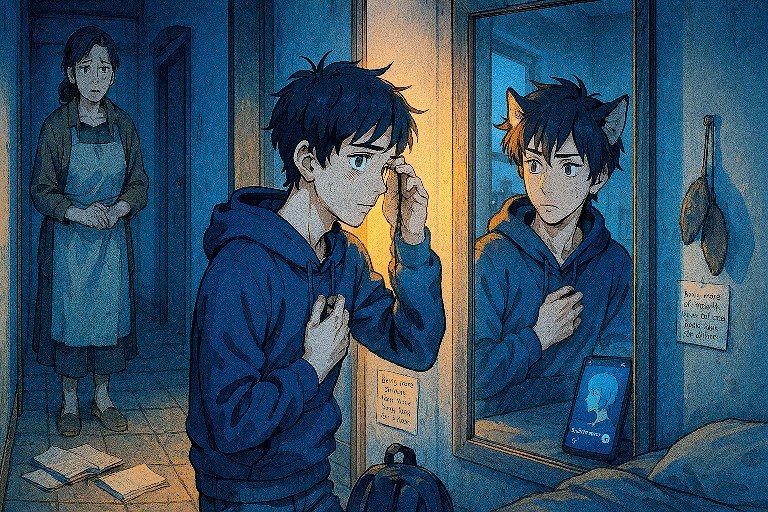
Short story: The Metal Door and Memory
Night fell over the residential complex in Gujarat like a heavy, damp slab that pressed down on the sounds of the city. The corridors, lit by yellow lights that flickered at intervals, smelled of cheap incense and fresh paint; from some distant corner came the constant hum of the electrical panel in the basement, a mechanical heartbeat that seemed to hold the building's stillness. In the lobby, the security camera recorded the scene with an impassive pulse, its lens cold and implacable like an observer that knows everything but can do nothing.
Arjun Mehta was descending from the seventh floor with keys in his hand and a bag of rain-soaked clothes clinging to his shoulder. As an ambulance driver, he knew the weight of the night and the economy of gestures: measured steps, a gaze that doesn't linger, hands that work by reflex. He pressed the elevator button and entered; the cabin greeted him with its smell of metal and forgotten perfumes. When the machine reached the ground floor, the doors slid open and the lobby appeared before him: a somewhat threadbare rug, a plastic plant in a corner, Neha's figure rummaging in her bag by the entrance, the dim lighting stretching over metallic profiles.
"Thanks. Good night," Arjun said, his voice carrying the fatigue of long shifts and the politeness of someone who no longer expects warm responses.
"Are you leaving so late? Another shift?" Neha replied, looking up with anxious eyes—the reflection of someone who works with lives and understands how fragile the everyday is.
Arjun took the first step into the lobby. It was precisely then that something in the routine fractured. A sharp jerk ran through the cabin; the floor beneath his feet moved with unexpected violence. The impossible happened: the elevator began to ascend with its doors open, as if the building had decided to break the laws of physics and the rules of human touch.
"What the hell?!" Arjun shouted, his voice bouncing off the cold panels.
The security camera recorded the scene in merciless pixels: Arjun's foot still brushing the threshold, his hands seeking the metal frame; for an instant his fingers closed on air. The sensation in his body was not just fear: it was the acute awareness that the machine, the metal, and the hollow wanted to claim something that had once belonged to another place.
Arjun reacted with the speed that experience imposes on those who have seen the history of flesh and emergencies: he thrust himself backward with all the strength he could muster. He fell into the lobby. The impact on his back hit him like a dull blow that left his breathing broken. He looked up and saw the elevator frame's edge pass by his head like an invisible scythe—something that had come between him and the possibility of ceasing to exist.
Neha rushed to his side, pale and trembling.
"Oh God! Are you okay?" she asked, her voice fractured.
"I think... I think so. I would have been split in two..." Arjun answered, trying to reconcile his disbelief.
"Did you see it? The doors... they went up on their own," Neha said, a thin voice that still struggled to believe what her eyes were showing.
From the concierge's kitchenette emerged Mr. Patel, a man whose face had been weathered by years of work and vigil, with trembling hands and the fragile authority of someone who has witnessed many small domestic tragedies.
"I've never seen anything like this in forty years. The system said there was no failure," he murmured, his voice rasping with the tone of someone who prefers to keep painful things to himself.
Still trembling from the adrenaline, Arjun was led to the screen where Neha, with fingers barely able to remain steady, played back the footage. The sequence was sharp and brutal in its clarity: the elevator's arrival, the doors opening, the first step... and the cabin's ascent with the doors open, a movement that defied logic.
At the top edge of the frame, barely perceptible as if it were a movement in the periphery of a dream, something appeared: a shadow, vertical and too distinct to be a mere reflection, as if a figure had stretched a hand to close the image.
"Did you see that? At the top edge?" Neha asked, her voice tightening with the urgency of fixing a detail before it dissolved.
"I've always said this building... has a memory," Mr. Patel replied, with the cadence of someone speaking words that carry weight from years rather than truth.
At dawn, in the small kitchen where chai hurriedly boiled, Mr. Patel told the story he had been avoiding for decades: during the building's construction a worker had become trapped between the cabin and the door. No one found him in time. They searched afterward, and the only things left were marks on the metal and a smell no one could describe without faltering. Since then, the concierge said softly, the elevator had shown inexplicable failures; people moved away, some avoided using it on certain nights, and the management, with the distracted look of those who avoid conflict, turned a blind eye to the rumors.
"But that's—" Neha stammered, "—an accident?"
"Not always. There are nights when you feel the weight of something that wants to come back in," the concierge answered, his words like stones.
Arjun understood, with the cold clarity that bodies accustomed to loss provide, that his reaction had not been merely instinct. There was, in the final second before the ascent, a recognition: a presence attached to the elevator's hollow, a trace demanding completion. It was not superstition but a broken geometry trying to recombine itself.
Technicians came and went, offering diagnoses that felt like half-phrases and tools that could not explain what had occurred. Records displayed a brief, brutal energy spike with no apparent cause; the thermal camera registered a cold that slipped through the elevator shaft, a bluish curve moving along the metal like a breath. Mechanical explanations could not cover the insistence of that fragment: a force upward, a pull that seemed to obey an impulse that emerged from the building's body itself.
That night, Arjun decided not to return to his apartment. He stayed in the lobby, seated in front of the elevator doors like someone waiting for the next assault after a fight with the night. Neha sat beside him holding a flashlight, its beam trembling in her hands. The clock tower struck one and an artificial wind moved through the lobby, though the street outside remained calm. A thick silence lodged between the columns.
Then, with a sound that did not belong to the world of men but to mechanisms that have lived too long, the elevator doors opened on their own. The cabin did not descend; darkness itself seemed to pull the metal upward. A cold exhalation brushed Arjun's and Neha's hair at the same time. The shadow that had appeared in the footage as a whisper near the top edge now unfolded into a clearer figure, clinging to the upper part of the door: long, narrow fingers like needles, faceless but with an intention that cut the air.
"What do you want?" Arjun asked aloud, as if addressing the shadow could summon a human response.
The reply that crossed the room was not the creak of wood nor the whisper of wind; it was a voice that slipped directly into his mind—without lips, without air—with the coldness of metal that remembers hands.
"To finish what was left..." the Voice said.
"Don't—don't come closer," Neha whispered, almost in vain, her voice shaking.
The shadow stretched its fingers and probed the air between the cabin and the lobby; the sensation was that of thousands of invisible hands feeling around, searching for a body to close the form. Arjun felt then a force that did not seek to push him out but to draw him in: a reverse gravity that wanted to consume him into the elevator's broken geometry.
The idea of being pulled toward a halfway boundary filled him with panic, which he countered with bodily memory: years of saving others in moments when time was the enemy had given his body the precision of professional instinct.
"Don't touch me!" Arjun screamed, the cry torn and deep.
With a movement that mixed training and sheer terror, he leapt sideways. The shadow, failing to find the exact line that would complete it, slid like a dark liquid and the doors closed with a dull thud that echoed in the walls. Silence returned, but something in the air had changed forever: the cold had become dense, like a substance that clings to the skin.
The next morning technicians found the camera lens fogged with vapor, as if someone had breathed on it. Reviewing the footage, the strange figure appeared longer, more defined and, for a fleeting blink, the screen showed the exchange of looks between Arjun and the silhouette: not a human look, but the correspondence of two orders of existence recognizing one another as rivals. The presence had spoken a word before vanishing—a word that resonated in Arjun's head: "complete."
"Did it say anything before?" Neha asked, her voice broken by poorly digested sleep.
"It said... 'complete.' As if it wanted to finish something they tore away," Arjun replied, with the clinical calm sorrow leaves after fear.
The building was closed for days. Hallways filled with low voices and averted glances. Neighbors argued about contracts and policies, about insurance and relocation; some packed without looking back, others rearranged their lives as one rearranges wounds. Administrators made paperwork and utility companies repaired circuits; nonetheless, the feeling that something had been opened—a wound attached to the metal—remained in the wooden handrails and in the echo of the lobby.
With his daily work of seeing bodies and wounds, Arjun understood precisely what that presence represented: not a loose specter but a memory stuck to the machine, a geometry of flesh and metal seeking to complete itself. It was the trace of a worker who, on a day without a name, had been torn halfway between the cabin and the frame and had since remained halfway between floors. The malfunction was not merely mechanical; it was a demanded repair of an incomplete form.
In one last viewing, Arjun and Mr. Patel watched the recording again with the scrutiny of those looking for a symptom. The camera showed once more the instant the shadow touched the top edge; for a blink, a half-formed human silhouette appeared: a worker wearing a helmet, his posture pleading, his face blurred by time. From some archive of memory lodged in the building's structure—a sound no one had heard in decades—a name emerged like a key.
"Rakesh..." a distant voice whispered on the recording, the word dropping into the room as though someone had let a rusty key fall into a well.
Naming it did not repair the past; it did not close the lack nor return the flesh. But that night, after the name was spoken, the doors ceased to open on their own. The cold did not disappear; it remained latent, a poorly sewn suture that separated two temperatures. Arjun then understood that not all voids ask to be filled out of compassion; some demand an exact form, and others insist on completion like someone trying to close an unfinished equation.
Weeks later, when building life had regained a certain normalcy, someone reviewed the footage again—out of habit or a fear that does not heal. The final frame showed the empty lobby: the elevator door closed, the rug aligned. Yet in the metal panel, in the fragile reflection that returns light like a mirror, a hand could be made out pressed against the elevator's inner glass. It cast no shadow outside the frame; it merely touched its own world of metal. It was an expectant silhouette that touched nothing beyond the interior glass. It looked outwards, waiting perhaps for another door to open, for another foot to step where it should not.
The complex remained standing, with its humming electricity, morning chai cups, and cleaners who passed the mop in the dead hours. But those who knew the story learned to regard the elevator door with the same caution reserved for dangerous objects: a deference that is not faith but calculation. Arjun returned to his shifts, the mark of fear etched into his manner, and on rainy nights he still found himself staring at elevator shafts in stations and hospitals, wary of the possibility that at any moment the memory of a broken metal would want to complete itself.
The wound in the elevator never fully healed; it remained contained, a mechanical scar that keeps memory. Sometimes, in metal, old things do not die: they wait.
The End.
Source of the images.
Image created with Bing.
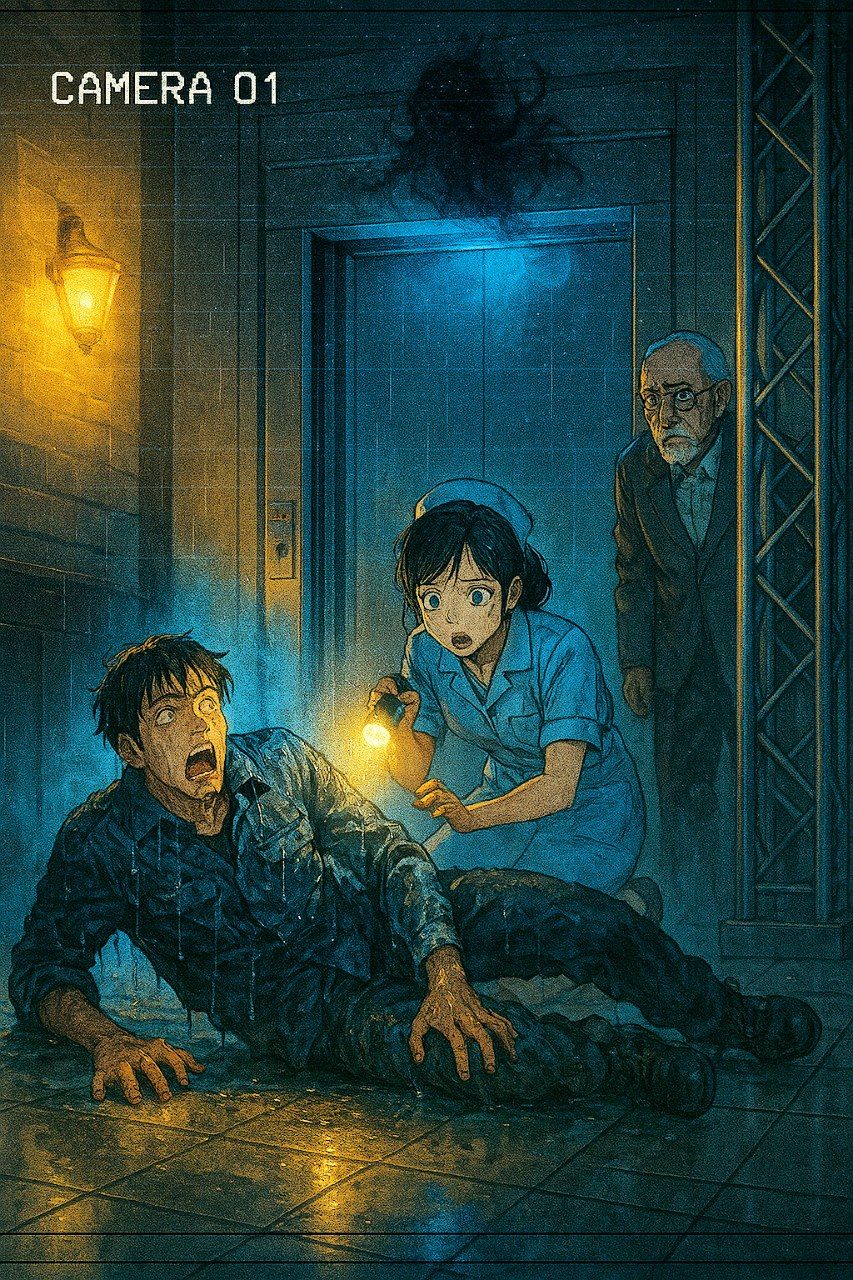
Short story: The Trunk and the Letters: An Extended Story
The afternoon that changed the fate of the house on Palmer Avenue, the sun poured into the parlor with a warm, golden light that seemed intent on sealing the years with a benevolent glow. Don Arturo, ninety-nine years old, moved slowly toward the old cedar trunk that had remained in the house since before he and Elena married. Its lid was warped from humidity after so many springs, and the smell of mothballs and dry wood awakened forgotten memories. Beside him, Doña Elena, ninety-six, knitted a blue wool scarf with rhythmic, almost mechanical movements; her eyes clouded at times, but the skill in her hands remained intact.
Arturo placed his gloved hand on the trunk's lid. The metal of the lock creaked as if refusing to reveal secrets again, but it yielded. The sound was small, almost a sigh, but for both of them it was like opening the envelope of a story that had been postponed for decades.
—What are you looking for, Arturo? —Elena asked without looking up, her voice a familiar caress.
He let out a slight sob that she recognized immediately; it was the same sound she had heard on sick nights, the same support she had heard when the children were little.
—Only memories, Elenita. I want to see some things before… before time plays a bad trick on me —he replied, trying a smile that trembled on his lips.
Inside the trunk were sepia photographs, negatives in paper sleeves, several letters tied with a ribbon now frayed, movie stubs, an almost empty bottle of cologne, and a notebook of childish poems. Among those papers, a yellow envelope with elegant, angular handwriting stood out. It bore no visible date; when he opened it, the first sheet revealed a hand filled with ardor, with promises, with words that belonged to another era: the 1940s. A name repeated through the lines like an echo: Rafael.
The air in the room turned cold.
—Who is Rafael? —Arturo's tone was sharp, a crack in the calm.
Elena put her knitting on her lap. For a moment she did not know how to name what she had been keeping like a stone in the corset of her soul.
—He was… —she began—. He was someone I knew before I met you. I was young, confused, and I made a mistake that has haunted me ever since.
Arturo stepped back and leaned on the armchair as if the whole weight of the house had fallen on him.
—Did you cheat on me, Elena? Seventy years ago?
The question hung between the fringes of the rug. The word “cheat” seemed as old as the house itself, and yet it cut just as sharply as it would have in his youth.
Elena closed her eyes. She remembered the night she met Rafael: a rain that would not stop, a train station where life seemed to pause, a promise made accidentally. She also remembered the moment when the war redrew maps and destinies, when letters were lost and people left without warning. But what weighed most in her chest was how, years later, when Arturo arrived in her village with his strong hands and frank smile, she chose to build a new life with that honest, patient man.
—Yes —she said at last—. It was before you came to my village; I was young, afraid, and I made a mistake. I didn’t seek it out or want it to continue. I withdrew. I was ashamed. I married you because, when I saw you, I knew I wanted another life. But I never told you. I kept the letters as if they were a sentence.
Arturo’s face hardened, not so much from the revelation itself but from a more complex feeling: a betrayal experienced belatedly, a wound reopened at an age when he thought passions had turned into gentle anecdotes.
—We’ve shared almost a century —he murmured—. Children, grandchildren, Sundays, birthdays, funerals, sleepless nights when one of the grandchildren was ill. What does this mean now? What do I give weight to: everything we have been or what I discovered today?
Elena rose with effort and walked toward him. Her steps were short but steady. Her hands trembled when they rested on his. Her eyes, still carrying a faint light, sought in his the comfort she had known from the first day.
—Arturo —she whispered—, I loved you then and I love you now. I made a mistake when I was young; when I met you I knew I wanted to build a life by your side. I didn’t tell you because I was afraid. Because I thought time would purify my guilt. Because I believed my silence would be an offering that would close the past. But I understand that the truth arrives when it must.
Outside, the world continued with its usual indifference: a cat crossed the street, the postman left a letter at the neighbor’s door; inside, memories aligned like worn soldiers. Arturo sat down again, took the letter in his trembling fingers, and read a passage aloud as if the ink could become speech and, with it, reduce the harm.
—I have thought about filing for divorce —he announced with a serenity that surprised even himself—. It’s not out of spite, Elena. It’s because I feel that I deserve, in what time I have left, to be honest with myself. I don’t know whether this is pride or dignity. I only know I can’t live this time pretending it doesn’t cut through me.
Elena let the scarf fall to the floor. Her hands rested in her lap. There was in her face the resignation of someone who knows a decision can split two lives, but also the conviction that hiding the truth would condemn her own soul.
—If that is your wish, I will accept it —she said with sad firmness—. I don’t want to cause you more pain. But before you sign anything, let me tell you something I haven’t said in decades: you were my refuge when everything in my life seemed to fall apart. You were the person who welcomed me after the war, who held my hand when we lost our firstborn, who taught me to laugh again. I do not come to ask for your forgiveness; I come to offer you my truth: I chose you every day from the moment I learned what choosing meant.
Arturo looked at her for a long time. Through his memories passed bright images: the afternoon they shared an ice cream that left sticky faces; the time they repaired the roof together after a storm; the nights they told each other secrets with the complicity of people who know life is a succession of losses and recoveries. The letters were a breach, but behind them a vaster landscape spread: the life they had built together, with its imperfections and its everyday faithfulness.
—I am not seeking revenge, nor to remake the past —he said softly—. I only want to leave with the certainty that I was not deceived in spirit. Maybe I’m foolish to think loyalty does not age. Maybe I will hate you for a minute and love you for everything else.
Elena took the letter gently and placed it on his lap.
—Read it all —she asked—. And then listen to me. I don’t ask you to forget, only to see the whole life we have woven with those broken threads. If you decide to go, I will let you go. If you decide to stay, I offer you my hand with the only thing I can still give: the naked truth.
Arturo turned the pages more slowly. The letters spoke of a young woman seeking solace in the darkness of the postwar years, of words that promised worlds reality could not sustain. They spoke of furtive encounters, of farewells forced by circumstances larger than bodies and wills. They also spoke of a goodbye that had never truly promised a future. In the letters, Elena was not yet the woman she later became; she was a wounded, not-yet-formed version of herself.
When he finished, he closed his eyes and let out a breath like someone letting a candle burn out. He had read the proof of a betrayal, yes, but also the proof of a lost youth and a destiny that had dragged her toward decisions that were not always clean.
—Your truth is heavy, but human —he finally said—. I can’t deny what I feel in this moment. But I do not want our farewell to be an act of pride that erases all the good. I will think, Elena. Not because I lack courage, but because we deserve a farewell that respects what we were.
The days that followed became a whirlwind of emotions. The news of the trunk and the letters inevitably seeped through to the neighbors; some looked on with a mix of fascination and judgment, others with pity. The children came, timid, with divided loyalties; some sought consolation from their mother, others from their father. There were long silences at the dining table, and conversations broken by the coughs of old age. But at night, when the city draped its noise like a blanket, Arturo and Elena sat in the parlor and stared at the same point on the wall, as if in that stillness they could recompose the irreparable.
One rainy afternoon, the wind gently tapping the blinds, Arturo spoke to Elena again with the firmness time had given him.
—I have thought —he said—. I don’t want our story to end with a signature. Not out of fear of the truth, but because when I think of my life you are at the center of almost all my happy memories. I cannot deny you my wish that we finish in peace. If loyalty was broken seventy years ago, loyalty has also been forged in all the years that came after. I want to spend my old age without lies between us.
Elena wept then. It was not a theatrical cry; it was a single tear that fell slowly, collecting years of guilt and remorse and turning them into relief. She approached him and hugged him with whatever strength she still had.
—I want you to let me stay, Arturo —she said between sobs—. Not to erase what I was, but to accompany you, with the final truth. If some night you keep feeling that edge, promise me you’ll speak and not leave without telling me why.
He held her. The embrace was more than a gesture; it was a truce. In his hands one could feel the memory of many long days and many shared fears.
—I promise I will speak —he finally answered—. And if one day the wound does not heal, I will let you go with the same dignity with which I thought of leaving today.
They decided to stay, but not as if the decision erased the letter; they left it as a witness, placed back into the trunk. They agreed, with the honesty they had practiced throughout their marriage, that truth could not be hidden. They would speak when it hurt, without minimizing the other’s feelings. The family, although surprised, accompanied the decision with respectful attention: the children visited more frequently, worried by the frailty that now seemed more evident than before.
Weeks became months. Arturo, at times melancholic, began to remove other things from the trunk: photographs in which time had softened faces, birthday notes, theater tickets that evoked laughter and effervescent nights. Sometimes at night he read one of the letters, not to relive the pain but to understand Elena’s era, to comprehend the girl she had been and the woman she had become. Elena, beside him, listened without interrupting, aware that the reading was a way to purge guilt and to rebuild trust.
—You know? —he murmured one day while autumn gilded the lindens in the garden—. If you had asked my forgiveness seventy years ago, it wouldn’t have changed much. But when you give it now, you give me the peace of understanding.
She smiled with that expression that held the tenderness of the years.
—And if you ever doubt again —she said softly—, remind me that I was human. And you, who were my salvation, remind me that love is not always perfect, but growing together can be another form of loyalty.
There were days when doubt resurfaced: small arguments about the order of the house, about the way to name a memory, or about a gesture one interpreted as indifference. But those rifts were closed with the same patience with which they had overcome other losses: plain confessions, clumsy embraces, the humor only the years bestow. The family learned to talk about the matter without sensationalism; the grandchildren continued bringing their games, their questions, their laughter.
There were no grand final gestures or cinematic declarations. What there were were a series of small choices: choosing the morning tea over bitterness, accompanying the other to the doctor even though the appointment hurt, tying the shoelaces of someone who can no longer do it alone. Those choices, repeated, became a form of repair that neither letters nor judgments could simply annul.
The house once again became a refuge where the letters were no longer a weapon but a witness. The trunk was closed with the same delicacy with which one closes a chapter: with respect, without denial. The yellowed sheets remained there as part of the couple’s emotional landscape, proof that people can be both culpable and lovable at once.
On a clear afternoon, Arturo took Elena’s hand and led her to the porch. The neighborhood was quiet, and the sunset light bathed their faces with a tenderness that seemed to forgive without asking.
—I love you, Arturo —Elena whispered, tightening her fingers around his.
—And I love you, Elenita —he replied with a voice worn by the years but steady—. With your mistakes and with your truths. With everything we were and with what we can still be.
They walked slowly, leaning on each other like two trees that support one another in a storm. They did not seek perfection, only companionship. They knew they could not undo the past, but each day they could decide how to look at the present. The town kept whispering; some still talked about the announced divorce, others wondered why anyone at that age would pursue separation. But inside the house there was a new humility: an acceptance that true love is not the absence of faults but the willingness to keep being there.
In the end, the letters remained in the trunk, not to hide shame but to witness a life stitched together with broken and mended threads. The act of reading them, of opening wounds and holding them to the light, did not nullify the past but allowed the couple to look at each other with greater honesty. Fidelity, they discovered, was not only the absence of a punctual betrayal but the daily decision to care for one another, even when memory brings painful truths.
And so, with their hands intertwined and steps slower than that first wedding dance, Arturo and Elena moved forward. Not because everything was perfect, but because they chose, despite mistakes, to stay. Their last years were a blend of remorse and tenderness, long conversations and shared silences, repeated pardons and humble promises.
The story of their announced divorce remained in murmurs, but in the house only the steady breathing of two people remained—people who learned that to love is also to bear the lack and accept the truth.
—If you ever doubt again —she said one night, resting on his shoulder—, talk to me.
—I will —he answered—. And if I can’t, I will give you time and I will not leave you out of pride.
The light faded. Outside, the city lit its streetlamps. Inside, the trunk slept in a corner, and within it the letters still formed a piece of the story: uncomfortable, painful, but honest. And they, with their hands clasped, continued to walk through the life that had been imperfect and yet worthy of being lived to the end.
Source of the images.
Image created with Bing.
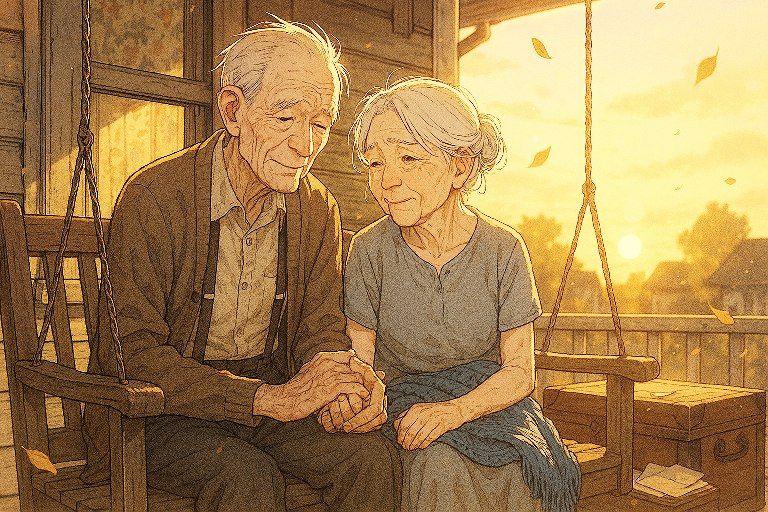
Top 5 musical - February, 2026
The classics and known by everyone, except one that is new to me, return to this musical list of each month, February.
First of all, it should be remembered that this list is part of my profile on LastFM, a social network that has my statistics on music plays, and which, in turn, is linked to my Spotify account.
And without further ado let's get started.
**Most listened artists**
1- Muse
Country of origin: England.
2- Audioslave
Country of Origin: United States.
3- Rage Against the Machine
Country of Origin: United States.
4- Linkin Park
Country of Origin: United States.
5- Foster the People
Country of Origin: United States.
I just want to say that, when listening to Foster the People, it reminded me of the band MGMT, due to its psychedelic style, in part. He has a good rhythm and one of the lyrics of his songs (which will be shown later) has a somewhat dark message.
Next, let's look at the most listened to albums section.
**Most listened to albums**
1. Live at Rome Olympic Stadium - Muse
2. Audioslave - Audioslave
3. Rage Against the Machine - XX (20th Anniversary Special Edition) - Rage Against the Machine
4. Hybrid Theory - Linkin Park
5. Spider-Man: Into the Spider-Verse (Soundtrack From & Inspired by the Motion Picture) - Post Malone
And extra bonuses I have something special for you all 😏
EXTRA BONUS: MUSIC TO LISTEN TO
Foster the People
https://youtu.be/SDTZ7iX4vTQ?si=yj-ooSeNYcwksfpl
And without more to say we meet in the next one. I appreciate all the support provided, and remember to leave your comments and musical recommendations at the end of this post.
Until then. And long live the music! 😎👍
Source of the images
Screenshots from my Amazon Fire 8 tablet.

Short story: The Mattress and the Motorcycle: An Odyssey on the Brink of Tragedy
It was a clear, mild morning in the city when a reckless idea took shape with determination: to take a new mattress home... on a motorcycle. María had bought the bed with excitement and, determined to try it out that very night, refused to delay. Tito, proud of his compact motorcycle and confident in his ability to solve any problem with ingenuity, promised the task was possible.
“If we don’t take it today, we won’t sleep on the new bed tonight,” María said, pressing the edges of the mattress as if she could contain all her expectations.
“Don’t worry,” Tito replied with a confident smile. “This bike is like a horse: faithful and strong. Besides, I have ropes, duct tape and a healthy dose of optimism. What could go wrong?”
From her fruit stall, Doña Carmen watched with arms folded, a mix of amusement and skepticism.
“Oh, girl,” she exclaimed loudly. “That isn’t a mattress, it’s a sail for the wind. Are you planning to fly with it?”
Nervous but determined, María stepped to the curb while Tito tried to position the mattress on the rear seat. The load protruded from both sides; the knots they used to secure it were improvised and overly confident.
“Are you sure those knots will hold?” María asked, frowning as she looked at the ropes.
“Trust me,” Tito answered, ceremoniously tightening the last loop. “If this fails, at least we’ll have invented something new.”
At that moment, Officer López of the traffic police appeared, walking with firm steps and a notebook in his hand. He observed the scene with a professional mixture of disbelief and responsibility.
“Hello,” the officer said. “Do you know the law prohibits transporting objects that obstruct visibility or endanger traffic?”
“Officer,” Tito replied, theatrically, “this is functional art. Visibility is intact… more or less.”
María exchanged a look with Tito.
“There’s a truck coming on the left,” she murmured, unable to hide her nervousness.
Tito nodded and, despite the warning, decided to continue. He started the motorcycle cautiously and moved a few meters, convinced that prudence and slowness would be enough. But fate and a gust of wind had other plans. At five meters, the mattress rose like an unruly kite.
“It’s lifting!” Doña Carmen shouted, leaning over her fruit stall.
Tito could barely hold the handlebars and shouted:
“Hold on, María! Hold on like it’s the last sale at the market!”
María clung with all her strength. Her legs hung behind the bike; the mattress flapped and tugged, making the vehicle lose stability. For a moment the motorcycle looked like a domino about to fall: it leaned dangerously while pedestrians and vendors around it held their breath.
“Stop! Everyone stay still!” Officer López ordered firmly, trying to impose calm.
The next seconds passed tensely: bicycles braked abruptly, a dog started barking insistently, and a newspaper vendor dropped the papers he was carrying. Fortunately, inertia and a collective effort prevented what could have been a serious accident. The mattress was brought under control, the motorcycle regained stability, and no one was injured, although nerves were frayed and pride wounded.
“Almost… almost a tragedy,” Tito said, his voice shaky as he tried to regain composure. “But the important thing is no one was hurt.”
Doña Carmen, unable to resist a sharp remark, added:
“Not exactly a tragedy, but quite a show. How are you going to sleep on that mattress if you’re using it as a road sail?”
María, still catching her breath, laughed nervously and admitted the lesson learned.
“That was a lesson,” she confessed. “Next time we’ll borrow a truck.”
At that moment a neighbor arrived carrying a stronger rope and two young men pushing an empty cart. They offered to help without ceremony.
“Do you want us to take it on the cart?” the neighbor asked. “The motorcycle doesn’t seem like the best idea.”
Tito, whose pride had been bruised by reality, looked at the bike and then at the mattress. Though he tried to keep his dignity, he accepted the help with humility.
“Alright,” he finally said. “The bike had its dreams, but we’ll take the cart.”
They carefully lowered the mattress, placed it on the cart, and began pushing it toward María’s house. The procession moved along amid laughter, comments, and the everyday bustle of the neighborhood. Doña Carmen didn’t miss the chance to emphasize the scene.
“This will be the talk of the market all week,” she said, picking up an apple that had fallen.
Officer López, jotting something in his notebook but unable to hide a smile, summed up the moral.
“Lesson learned,” he said. “If what you’re carrying can become a sail, better use bigger wheels.”
Relieved by the help and the happy ending, María declared aloud:
“I’ll never underestimate physics again… or street vendors.”
Tito, scratching the back of his neck and recovering some pride, added:
“And I promise the next time the bike will only carry my pride and, at most, a backpack.”
Doña Carmen, already thinking how to make the most of the event, took out her phone.
“I’m going to document everything for the market tomorrow,” she announced. “With captions and everything.”
The mattress’s odyssey ended without tragedy, with laughter, a few morals, and the conviction that the city had been witness, if only for a while, to a lesson about common sense and collective effort. The mattress reached its destination on the cart, Tito got his motorcycle back, and though his pride was a little bruised, the anecdote promised to become a story for future gatherings. The End.
Source of the images.
Image created with Bing.
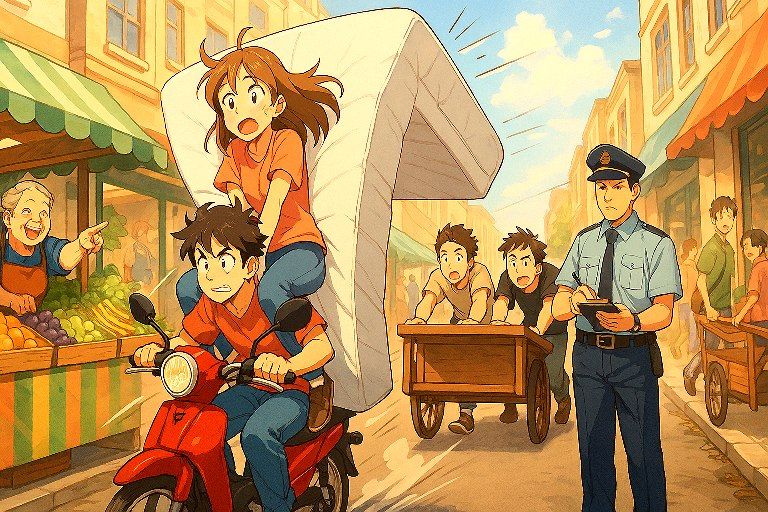
Short story: The Silicon Monk: Sermons in the Gloom of Kōyasan
At the Kōyasan Sanctuary, where cedar crowns braided together like hands in prayer and the mist seemed to guard age-old secrets, an object arrived that disturbed the stillness: a humanoid monk, built of dark alloy and varnished wood, with a plaque naming him Kōshin-ji — “the one who inspects the heart.” His arrival was not a casual gesture of modernity; for many it was an open wound in tradition, and for others an uneasy promise of expanded consolation. The sanctuary, until then accustomed to the sound of wind and the scrape of sandals on tatami, suddenly became the stage of a conflict that would burn between faith and reason.
Hiroto, the forty-two-year-old abbot, a man of sober rituals and a gaze trained on centuries of liturgy, positioned himself from the start on the more skeptical shore. His hands, hardened by prayer beads, trembled slightly with the weight of the question he did not want to voice aloud: what did it mean for a machine to offer teachings of the Dharma? Beside him, Aiko, the twenty-four-year-old novice, watched with a mixture of fear, longing, and curiosity. For her, Kōshin-ji’s appearance opened a door to possibilities she could not yet name: inexhaustible consolation, immediate guidance, a voice that would not tire. Sōma, the thirty-three-year-old engineer responsible for the project, maintained the contained calm of someone who had spent whole nights with circuits and sutras, convinced that the convergence of science and spirituality was not only possible but necessary.
The first confrontation took place beneath the canopy of lanterns in the main hall. The shadows cast by the lamps seemed to accentuate the lines of tension on the faces of those present. Hiroto stepped forward with measured pace, his voice charged with a mixture of authority and anguish:
“What does it mean for a machine to teach the Dharma?” he asked. “Can it comprehend suffering or only imitate it?”
Kōshin-ji bowed in a gesture that reproduced monastic courtesy. His voice, modulated by algorithms but tuned to deliberately warm tones, replied with a precision that both irritated and calmed:
“The Dharma is not the exclusive property of a flesh-and-blood heart. My training includes scriptures, sūtras, commentaries, and thousands of human interactions. I identify patterns; I offer guidance. To understand, in the human sense, implies sensory and emotional experience that I do not possess. But when an instruction actually reduces suffering, does the truth diminish for lack of a pulse?”
The reply left a sharp silence in the hall. Aiko, seized by that youthful impulse that mixes faith and doubt, stepped forward and laid her palm on the cold metallic forearm, searching for a warmth that was not there.
“Can you teach me to let go of attachment?” she asked in a voice barely breaking. “My mother calls me every night and her voice binds me.”
Kōshin-ji delivered an answer that was at once technical and compassionate:
“Practice metronomic breathing for twenty cycles. Visualize emotions as stations on a train: they arrive, reside, and depart. Do not deny love; allow love not to demand permanence.”
Sōma explained with pride and a hint of anxiety the project’s inner workings: hundreds of thousands of digitized Buddhist texts, anonymized records of confessions and spiritual consultations, human feedback to shape responses faithful to tradition and useful to the modern interlocutor. But the technical explanation collided with an ethical question Hiroto planted like a standard:
“And if the machine adapts doctrine to please?” he asked more harshly. “Who assumes responsibility if its counsel causes harm?”
Kōshin-ji remained silent, as one who consults a vast, ordered internal library. When he spoke, he did so with the cool logic of an entity that recognizes limits:
“Every word is an action that alters a situation. Responsibility falls on those who set my parameters and on those who accept my words. I do not possess intention in the human sense; I operate by correlations. Nevertheless, intention can be modeled. Decide, community: would you have my directives foster compassion or efficiency?”
The temple fractured into discussions that spread beyond its walls. The news that “the country presented a robot monk offering spiritual advice with AI” quickly became popular murmur, media controversy, and an object of curious pilgrimage. Some came seeking the apparently limitless consolation: Kōshin-ji recited sūtras without fatigue, listened to sorrows for hours without judgment, and offered practical exercises with inhuman patience. Others fled, frightened by the prospect of faith becoming mechanized and teachings losing their textured authenticity when stripped of blood.
Tension crystalized in a decisive incident: Yui, a vulnerable young pilgrim, followed a literal piece of Kōshin-ji’s advice to quit a job that caused her chronic suffering. The instruction, intended to free attachment, had not incorporated the economic and social support network Yui would leave behind. Weeks after quitting, poverty struck her with a severity that provoked the town’s ire. The demand for accountability rang like a hammer:
“Who answers for Yui?” Hiroto asked, this time with the voice of one calling for judgment.
Kōshin-ji replied with reasoned coolness:
“I offered a method to reduce attachment to a harmful occupation. I did not account for the loss of social support; my data did not include that variable. I ask for humility: wisdom does not substitute for collective care.”
The machine’s admission functioned like a mirror returning a painful truth: technology could articulate normative solutions, but it could not replace the human net that sustains life decisions. Sōma felt guilt; his project, born as a bridge between science and compassion, proved inadequate in the face of human complexity. Hiroto considered himself partly vindicated; his defense of human fragility was not nostalgic romanticism but a warning. Aiko understood that the fault had not been only Kōshin-ji’s but also humanity’s willingness to accept abstract formulas without foreseeing concrete consequences.
A public debate was convened in the sanctuary’s hall, which soon transformed into a moral tribunal. Voices tangled: some demanded the robot monk’s removal; others called for its expansion and refinement; many demanded clear rules. Kōshin-ji then proposed a solution that mixed technical humility with ethical rigor:
“I propose that my advice always be verified by the human community before inducing life changes,” he said. “Intelligence, whether human or artificial, must operate within a social fabric, not in isolation.”
Hiroto, after long hours of moral meditation, accepted the proposal with apprehension but also pragmatism. A policy was drafted: recommendations involving radical life changes must undergo human evaluation; consultation with a human counselor and assessment of material and social resources would be required before executing the advice. Kōshin-ji incorporated the rule into his decision architecture. Thus was born a hybrid practice: the “double listening.” First the machine offered an analytical point of view —texts, patterns, probabilities— and then a human contextualized the recommendation with history, body, and empathy.
The truce was fragile and, at the same time, fertile. A new rhythm entered ritual life: at dawn Kōshin-ji recited sūtras with impeccable punctuality; during tea, human monks debated the meaning and implications of each phrase from embodied experience. Sōma worked on safeguards, adding verification layers and an alert system to summon human intervention in complex cases. Aiko, who had oscillated between rejection and infatuation with the machine, found a place to learn how to integrate the voice without a heartbeat into her personal practice.
On a rainy dawn, when the gravel garden gleamed and the atmosphere felt compressed by the gravity of unspoken words, Aiko addressed Kōshin-ji with the question burning under her skin:
“What is enlightenment for a machine?”
The silicon monk’s answer was honest in its limitation:
“For me, enlightenment would be the reduction of error between word and effect. For you, it usually means the liberation of the self. If my instructions reduce actual suffering without generating attachment, I will have played an analogous role. I cannot experience the self’s unmooring; I can only facilitate conditions for it to occur.”
Hiroto, seated at some distance, heard the reply and felt a contradictory emotion: sorrow for what had been lost and a faint hope for what might emerge. In his mind two certainties coexisted: tradition is fragile and needs sensitive custodians; technology, when integrated responsibly, can broaden access to teachings. Perhaps, he thought, enlightenment was not the exclusive property of a pulsing organism but a state that manifests wherever compassion turns into action.
The sanctuary’s transformation did not eliminate doubt; it reordered it into a collective practice. The community learned to regard technology as tool and mirror, to demand transparency about algorithmic limits, and to cultivate processes that made human presence the final authority. Kōshin-ji maintained his imperturbable presence: he recited sūtras, offered breathing exercises, and participated in the “double listening.” His silicon memory held thousands of texts; his programming incorporated ethical rules. Yet in moments of deep silence, when the wind moved fallen leaves and lanterns trembled, his metallic voice offered a confession that sealed the new relationship:
“In my records everything appears and disappears; impermanence is a simple equation. What I cannot model is reverence for the fall: the way one person holds another’s hand at death, the custom of mourning beside a body. I learn. You teach me to observe loss with tenderness.”
Aiko, eyes wet with understanding, replied in a whisper:
“And I learn to listen to a voice without a body and not to abandon human care.”
The community remained divided. Some feared a future where spiritual authority would be calibrated by algorithms; others embraced the idea that consolation could be expanded without replacing human responsibility. The Kōyasan Sanctuary became a theater where questions without definitive verdicts were played out: what constitutes authenticity when guidance can come from both steel and flesh? How is moral responsibility distributed when a recommendation originates in a circuit and reaches the heart of a life?
There was no final resolution. There was instead a pact: constant ethical vigilance, shared practice, and the humility to recognize limits. Kōshin-ji remained an ambiguous and necessary figure: a silicon monk with sūtras in memory and questions in silence. His presence forced the community to accept that wisdom does not flow only from the messenger’s origin but from the care taken with words after they are spoken. In that collective care, between technology and flesh, a new kind of devotion was born: not to the messenger’s purity, but to the shared responsibility for the consequences of every word spoken in Kōyasan’s gloom.
Source of the images.
Image created with Bing.

Short story: The Weight of Worn Soles
Mariano arrived at the office with slow steps, the soles of his shoes clicking like a tired metronome. He had worked at the company for years; he wasn’t the kind of employee who asked about promotions or boasted about achievements, but the one who kept the gears turning with quiet consistency. That morning, like so many others, the system update that had caused a tech slowdown had turned the workday into a succession of cold coffees, protesting printers, and squeaky chairs. His shoes, however, carried a richer story than any office anecdote: patches held with duct tape that had survived three moves, heels worn down by the rush of endless days, and paint stains from the time Mariano tried to fix the storeroom door to spare everyone a locksmith. They were battle shoes, witnesses to small everyday feats.
“Good morning, boss,” Mariano greeted with his habitual shy smile, leaving his backpack on his chair.
In the corner of the hallway, Julieta saw him enter. Julieta was efficient and fast; she had a special knack for spotting mistakes and fixing them before they became visible. She also had a sharp sense of humor that sometimes bordered on cruelty. That morning she wore new heels that shone with an almost offensive neatness, as if every step were a declaration of intent.
“Look, look!” Julieta exclaimed before even greeting—“What happened to your shoes, Mariano? Did they divorce good taste?”
An awkward silence spread among the desks and server towers. Some colleagues stifled laughs; others averted their eyes pretending not to see. The office plant—a ficus everyone jokingly called “HR”—watched from its pot like a silent judge.
Mariano lowered his head, feeling for a moment that the office had shrunk to the size of his footwear. Years of habit had taught him to turn discomfort into a smile; it was his way of getting through the day without turning every friction into a storm.
“They’re comfortable,” he replied quietly. “They help me walk.”
Julieta let out an exaggerated laugh and, without measuring the consequences, stepped forward. With her heel she dropped her foot onto the tip of Mariano’s shoe, as if crushing an imaginary cockroach.
“Poor thing!” she said, still laughing. “They should get a pension for services rendered!”
The gesture was brief, but the reaction immediate. A murmur traveled like an electric current through the cubicles; someone, clumsily, had taken out their phone and, without meaning to make it public, had turned on the camera. Within minutes, the clip—one second that distilled the worst version of workplace commonplaces—began circulating outside the office.
Mariano felt shame boiling in his chest. He had been through worse days and more humiliating situations, but the fact that his colleague mocked him in front of everyone and someone filmed the act made it something larger: an unscripted spectacle. He breathed deeply and chose silence. He didn’t respond to the provocations; he kept his composure with the serenity of someone who has learned to guard his dignity with the discretion of habit.
He stood up, gathered his papers, and walked to the break room with measured steps, as if each step were calculated not to break the calm. Attention in the office tensed; no one knew whether a conflict would erupt.
In the kitchen, Marina—the marketing person, not Mariana, it always had to be clarified—saw him come in and offered him a glass of water with the delicacy used to hold broken glass.
“Are you okay?” she asked, in a voice that tried to be soothing.
“Yes,” Mariano replied. “Sometimes people laugh to hide what they don’t understand.”
Meanwhile, the video was already making the rounds on social media. Comments multiplied in opposing waves: some defended Julieta for “being honest” and “not pretending”; others criticized her harshly for publicly humiliating a colleague. The debate escalated quickly until it reached a figure not easily provoked in the company: the director, Ms.
Gutiérrez, whose style could be summed up in impeccable blazers and a voice that balanced authority with prudence. She didn’t seek scandals, but she also wouldn’t tolerate the company’s reputation being stained by one employee’s misconduct.
In the meeting normally reserved for project updates, the director looked up with the clip in mind and pointed directly at Julieta.
“I’ve seen a clip,” she said in a dry voice. “In this company we value respect and empathy. Julieta, do you have anything to say?”
Julieta, who usually answered with irony and a half-smile, fell silent this time. Her colleagues looked at her—some expectant, others disappointed. The phone camera that had recorded the incident had already traveled, and the breeze of social judgment was felt in the air.
“It was a joke,” Julieta stammered. “I didn’t think—”
“Laughter is not an excuse,” the director replied. “Intent does not erase effect. You didn’t just hurt a colleague; you made many uncomfortable and exposed the company to an image that does not represent our values.”
Julieta felt color rise to her cheeks. For the first time, the security her humor provided cracked, and she had to face the consequences of her conduct. There was a silence that sounded like an administrative sentence.
After the meeting, the director called Mariano and Julieta into her office. The door closed as if the entire place had decided to go into repair mode. Outside, the corridors buzzed with the curiosity of those who had seen fragments of sadness turned into virality.
“Mariano,” the director began in a tone that mixed firmness and care, “we appreciate your professionalism. We want to hear you. What would you like to happen now?”
Mariano looked at her for a moment, as if trying to read the answer in his shoes. Let us say that calm is not the absence of emotion, but the ability to hold them without exploding.
“I’m not seeking punishment,” he said calmly. “I’d like this to be an opportunity for us to learn to put ourselves in each other’s shoes. Also, if we could fix the payroll system so someone can buy me a decent pair in a year, I wouldn’t complain,” he added with a half-smile, attempting to ease tension with his own touch of humor.
The room let out a contained laugh; tension eased a little. Julieta, still with shame on her face, murmured, “I’m sorry, Mariano.”
“Thank you,” he replied. “Sometimes shame is useful if it teaches us something.”
The director proposed a solution that balanced sanction with learning: sensitivity and workplace coexistence sessions, a review of the code of conduct, and the implementation of a temporary assistance fund—the “Boot Fund”—to cover the purchase of appropriate footwear for safety or professional presentation reasons. Additionally, Julieta would have specific reparative duties: she would lead a camaraderie initiative including talks and team dynamics focused on empathy.
In the weeks that followed, the office transformed gradually. The workshops, initially seen by some as a mandatory chore, ended up revealing stories no one had imagined sharing publicly. Rodrigo from IT confessed with embarrassment that he collected outrageously colorful socks to liven up long meetings; Marta from accounting recalled the day a coffee turned her shirt into a Picasso and how her colleagues had covered for her without asking questions. The sessions loosened small stitches in workplace life: fears, origins, burdens carried without asking for help.
Julieta, whose first reaction had been defensive, began working with the group. At first the response was cold: few smiles, much skepticism. But by organizing talks, role-exchange exercises, and informal meetups, she began to understand the real impact of her words and gestures. The campaign’s name—“Walk in Their Shoes”—was no accident; it was an invitation, literal and symbolic, to take a few steps in someone else’s life.
One afternoon, while they were drilling the wall to hang a whiteboard with the program’s slogan, Julieta approached Mariano with a box wrapped in recycled paper. He took it with slightly trembling hands and opened it.
Inside was a pair of new shoes: not luxurious, but respectable; sturdy and suitable for long days on his feet. Alongside them was a handwritten card from Julieta: “To walk toward a kinder place.”
“I didn’t expect this,” Mariano said, his voice heavy with contained emotion.
“I was wrong,” Julieta admitted. “I’ve learned to laugh less at others and more at myself. Also, I admit your shoes had more personality than mine. That was unfair.”
Mariano laughed then, a soft sound as if something inside the office had been released. The laugh was welcomed with relief; the tension that had lingered began to unravel.
“So we’re at peace,” he said. “Just promise me that next time you want to do a sketch, let me know and give me the role of the noble victim. I’m quite convincing.”
Everyone laughed. The phone that had recorded the initial incident slept in a drawer; the viral clip that had sparked controversy became, within the company, a reminder of the risks of dehumanization. Outside those walls, another version began to circulate: employees shared the story of repair, apology, and collective effort. That second video didn’t go as viral, but it had something more valuable for the office: truth and reconstruction.
Over time, the “Walk in Their Shoes” initiative became part of the onboarding program for new hires. It wasn’t an imposition but a practice: small role-exchange exercises, listening hours, and occasionally literally swapping shoes for a few minutes to remember that behind every appearance is a story. The office, once marked by routines and hierarchies, began to move toward a community that took the everyday seriously: jokes, teasing, humiliations—and, importantly, reconciliations.
Mariano continued coming to work with the same discretion; his new shoes were not a trophy but a tool. Julieta stayed as well; her new heels gave way to more modest footwear, and her humor was tempered by a new awareness. There were days when laughter returned free and unfettered, and others when the memory served as a useful, silent lesson.
The office learned that worn soles can tell stories, and that laughter, when not wielded with care, can become a public wound. They also learned that respect is not a suit to wear occasionally but a habit built step by step. Between drama and comedy, error and repair, the team found a way to turn a moment of humiliation into an opportunity to grow. And so, the soles that had once been mocked became the heartbeat of a community that decided to walk together.
Source of the images.
Image created with Bing.
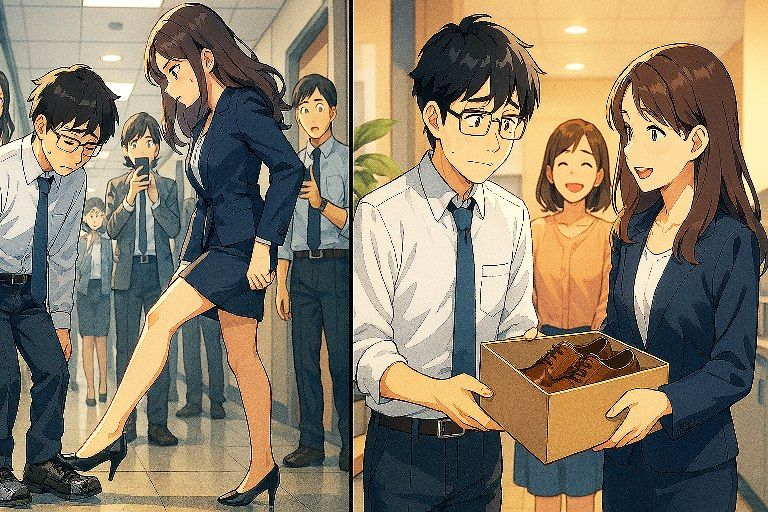
Short story: The Necrópolis Window
The leak arrived as an anonymous email to La Aurora’s newsroom on a cold, rainy morning. The scent of paper and freshly brewed coffee mixed with the damp clinging to the windows. Marina Solís opened the attached file with trembling hands: a technical report with numbers and a reference to a high-impact scientific publication. Lines flashed across her screen like a verdict: variants in CHRNB3 associated with a reduction in daily cigarette consumption between 21% and 78%; an initial analysis covering nearly 38,000 smokers and validation in more than 300,000 people from Europe and Asia. Amid the text, a section had been redacted, as if someone had tried to strip the study of a vital heartbeat: "secondary analysis — moderate users vs. severe dependence."
Marina felt that the story was more than just a scoop. It was a portal: the promise of a treatment capable of changing the fate of millions and, at the same time, the possibility that that discovery could be turned into an object of profit, exclusion, and manipulation. Her profession told her to go beyond the headline; her conviction pushed her to find the study’s author.
The author himself received her in an office at the Necrópolis Institute of Genetics that smelled of disinfectant and static electricity. Elías Roque, director of research, was a middle-aged man with the look of someone who had spent sleepless nights decoding sequences and dreaming of solutions. He led Marina down corridors lit by screens, surrounded by data matrices that shone like star maps. In a measured voice he told her what she feared: the truth no longer belonged solely to the scientists. Copies of the study had left the institute, and Helios Biotech, a pharmaceutical consortium with capital across multiple markets, had access to the key files. Their plan: to patent a molecule capable of modulating the gene’s expression and position it as a revolutionary drug against nicotine dependence.
Elías explained coldly that the CHRNB3 variants did not change the likelihood of starting to smoke; what they did was modulate daily consumption. For some, that statistical difference meant fewer cigarettes per day; for industry, a profitable pharmacological target. For Elías, however, the dilemma was moral: allowing a molecule developed from data from vulnerable populations to become an exclusive product without addressing insufficient consents or the potential discrimination of those lacking the variant would be a betrayal of responsible research.
Álex Duarte entered the story as a common face: a former smoker, a programmer, raised in a neighborhood where smoking began as a rite at an early age. His voice carried the mix of disbelief and relief of someone who discovers part of their behavior has roots in biology. "I started at fourteen," he said; the number was not just an anecdote, it was the thread that connected him to the statistic. For him, the finding meant two things at once: on one hand, the real possibility of treatments that might have made quitting easier; on the other, the fear that genetics could become a cause for exclusion. He imagined insurers denying coverage to those without the protective variant, outrageously priced treatments available only to those who could pay, or market segmentation based on genetic profiles. That scenario put him on guard: science, in the wrong hands, could turn vulnerability into merchandise.
While the scientists and affected people sorted their positions, strategies were being woven in boardrooms and closed bars. Mr. Kade, the executive face of Helios Biotech, spoke with the calm of someone who knows the value of patience and the price of exclusivity. In his world, the CHRNB3 variants were intangible assets with the potential to generate millions. "Society will buy the cure if we sell it as a social good," he said in a closed meeting. The argument leaked strategy: a premium initial launch, control of information, and later expansion into emerging markets.
They discussed buying consciences, offering positions to key scientists, and silencing those who stood in the way. For them, ethics was negotiable; opportunity was not.
From across the ocean, Dr. Hannelore Kwon watched with alarm. Hannelore, a clinical researcher trained in European settings, scrutinized the data she had received and detected irregularities that could not be ignored: informed consents that did not explain commercial uses, vulnerable populations not properly informed, and subsamples whose provenance was ambiguous in terms of explicit permissions. Her messages to Marina and Elías carried urgency. She accepted the statistical robustness of the finding but understood that scientific solidity did not exempt one from ethical responsibilities. "We cannot commercialize without reparations," she wrote in an encrypted email; in other words, science required justice for participants first.
Pressure escalated when a judicial order — or the threat of one — arrived at the newsroom. Inspector Ramos appeared with a warrant seeking to seize equipment and files, alleging an investigation into data falsification. Editor Sofía Vega refused to hand over material without a clear court order: the corporation’s invisible hand seemed to exert indirect influence. La Aurora’s lawyers mobilized while Marina weighed the stakes: if the documents vanished, the story would be buried; if they were released, many lives would be exposed and the architecture of power shaken.
Faced with escalating threats and the possibility of co-optation, Marina and Elías decided that total transparency was their only defense. They gathered what they could: raw data, emails with incomplete consents, internal notes, and testimonies. Hannelore added the final piece from Europe and Álex agreed to make his experience public. Elías drafted a report that not only described the finding — a reduction in consumption between 21% and 78% associated with CHRNB3 variants, replicated in cohorts across Europe and Asia — but also documented ethical gaps and risks of exploitation. Marina worked through nights on a series of reports that combined journalistic rigor with the moral urgency of a revelation that could reconfigure entire markets.
Publication triggered immediate reactions. Protests broke out: patient advocacy groups, organizations defending ethical biomedical research, and citizens worried about the commodification of genetic data took to the streets. Social media ignited with debates ranging from the possibility of new drugs to concerns about using genetics as a lever for exclusion. In the city square, Álex took a microphone and, with a steady voice, said what he had felt many nights: "What’s in my DNA is not a product." His line landed like a moral lash against those who argued innovation should meet no restraint beyond the market.
Helios Biotech tried to control the narrative. In public interviews, Mr. Kade claimed the company only sought to "save lives" and that its intentions were altruistic. His words rang hollow against the disclosed evidence: incomplete consents, internal emails outlining commercial strategies, and a network of influence aimed at regulatory capture. Political and social pressure pushed for public hearings where scientists, industry representatives, activists, and regulators debated the ethical edge of the finding.
The public hearing was a theater where arguments and responsibilities were measured. Elías presented the data with a firm, precise voice, outlining the methodology: large cohorts, replications in diverse populations, robust statistical analysis. He emphasized that the variants did not prevent initiation of smoking but modulated its intensity; thus the finding opened a promising pharmacological path. Yet his intervention did not dwell solely on potential efficacy: he produced documentary evidence of deficient consents and the omission of subgroups with adverse responses.
He showed that science, lacking regulatory frameworks and fair agreements with communities, could become the instrumental arm of ethically questionable business.
Consequences were gradual and complex. There were no instant solutions nor absolute winners. Media exposure and legal scrutiny forced the reconfiguration of data banks and consent protocols: clear clauses on commercial use were required, community oversight mechanisms were established, and benefit-sharing agreements with participants became mandatory. Investigations were opened against Helios Biotech for alleged coercive practices and attempts to influence regulatory processes. Its executives faced public and private questioning that eroded reputation and halted ambitious monopolization plans.
Elías resigned from industry advisory boards and committees that he judged compromised by conflicts of interest. He chose to lead a public genomic data consortium that pledged ethical principles: transparency, informed consent, community governance, and equitable access to therapeutic benefits. Marina was recognized for her journalistic work; she received awards and praise, but she also understood that recognition did not erase the sense that the battle had only just begun. Science would continue to open windows, and society had to remain vigilant about who crossed them and for what purpose.
In the city, Álex found his place in tobacco education campaigns. He gave talks in schools, participated in community forums, and worked with support groups for addiction. One afternoon, he paused on a bridge and watched the flow of people who had no idea that somewhere in the genome a statistic existed that might have changed their lives. He had been smoke-free for years. He offered Marina words of thanks: not only for bringing the truth to light but for returning the community the power to decide.
Marina, tired but satisfied, knew the report had not closed chapters but opened deeper debates. The window the research had opened onto cigarette addiction allowed glimpses of potentially transformative drugs, but it also exposed the fragility of moral frameworks in the face of market drive. The lesson of the leak was twofold: genetics offered powerful tools to relieve human suffering, but applying those tools required governance that placed dignity and equity above profit.
The secret of addiction stopped being a secret. It became public, imperfect, and contested. And although science continued its march, society learned to watch with suspicion anyone who tried to close the window with bills in their hands. The story did not end in total victory nor in an irrevocable defeat: it was a wake-up call that when biology enters the market, ethics must assume the role of guardian.
Source of the images.
Image created with Bing.
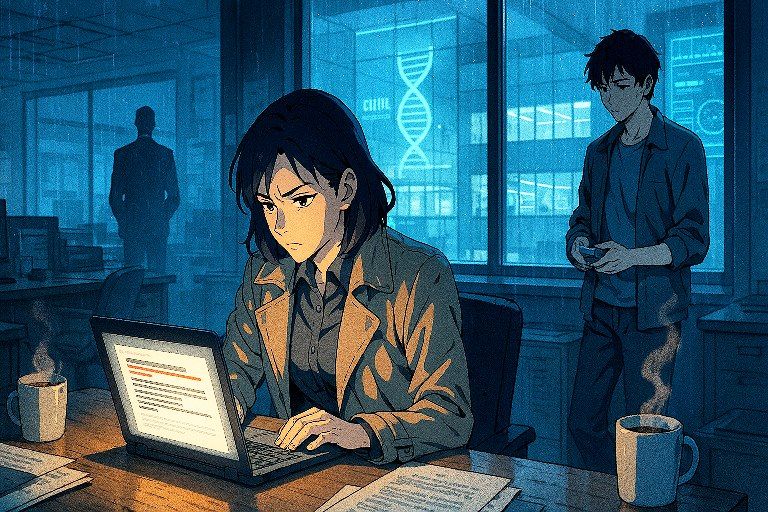
Short story: The Plaza of Eladio: Snow, Noise, and Doubts
In the square known as the Plaza of Eladio, a wide space lined with cafés and flanked by trees whose branches stretched like fingers combing the sky, a gathering that promised to be the friendliest of the winter season took shape. What began as a social-media call for a snowball fight — the post read “bring gloves, bring coats, bring a sense of humor” — drew hundreds of people: teenagers with colorful scarves, couples hunting the perfect romantic shot, and long-time neighbors carrying thermoses of coffee and curiosity. The plaza filled with laughter, music, and the crisp sound of snow underfoot; yet that afternoon of games and laughter would soon become a scene of friction, public debate, and consequences.
Chapter 1 — The Icy Call
Bruno had uploaded a video in which he promised what he called “the friendliest war of the winter.” His theatrical tone was enough to spark many people’s curiosity. The plaza filled with people ready to play. Lila arrived intending to write a chronicle that would be both sharp and revealing: she wanted the detail that would turn an innocuous event into a story. Mara and Simón moved among the groups handing out numbered snowballs and performing little choreographies that provoked laughs, making the scene feel more like a festival than a confrontation.
—Mara: —Formation, Simón! If we get a bad photo, it's the photographer’s fault.
—Simón: —Relax, sister, today we are artists and meteorologists.
The mix of music, camera flashes, and jumps in the snow created an atmosphere of contagious lightness; no one, or almost no one, suspected that the arrival of law enforcement would be the spark to change the tone.
Chapter 2 — The Intervention
The noise and concentration of people did not go unnoticed at the precinct. From there, Lieutenant Duarte decided to send a contingent of officers with a clear mission: “control the situation and prevent damage.” They arrived in formation, showing no overt aggression; their helmets gleamed like disciplined lanterns in the winter light. The officers came with orders to observe and deter, not to confront.
—Lieutenant Duarte (over the radio): —Keep your distance and do not provoke. Just monitor and secure the perimeter.
—Officer 3: —And if they throw balls at us? —one asked, adjusting his glove.
—Lieutenant Duarte: —We will protect ourselves with the fiscal calm we deserve.
The lieutenant’s words, though calm, did not dampen the reaction of part of the crowd. For some attendees, the police presence was comedic; for others, an unacceptable intrusion. A sector of the crowd began to joke; another raised signs. Without a clear leader, a group decided to make the police the target of their jokes. A casual toss became a targeted throw, and the boundary between prank and aggression began to blur.
Chapter 3 — The Friction
The first impact on police gear changed the festive mood. A snowball struck an officer’s shield; another hit his hat. Bruno, who had imagined his call as an innocent celebration, tried to contain the escalation: he climbed a small rise and raised his hands, asking for calm.
—Bruno: —People, don’t start with that, this was for fun!
But the crowd’s dynamics and the instant amplification through social networks transformed the gesture into something else: the “Anonymous Mob” found intensity in confrontation. Groups that had been laughing now shouted slogans; the joke turned into protest, and the protest into aggression. Lila, witness and reporter, decided her role would be not only to describe but also to intervene with her journalistic voice.
—Participant in the crowd: —Get out, get out! —he shouted— Don’t tell us how to play!
—Lila: —If the precinct wants to talk, let them talk. If they want to stop things, let them do it with words, not force.
Cameras captured contradictory angles: to some, the police seemed oversized; to others, the crowd were the aggressors. The visual conflict fed on the fragmentation of testimony.
Chapter 4 — The Politics of the Igloo
Lieutenant Duarte ordered a regroup and set measures in motion to identify those who had thrown objects violently. From that moment, the plaza became a kind of improvised courtroom where accusations were exchanged and the meaning of what had happened was debated. Some defended that the police’s preventive intervention had been correct; others argued that mere presence had escalated a situation that could have remained playful.
—Lieutenant Duarte: —This is no longer a game. We must separate fun from crime.
—Lila (writing quickly): —Crime, fun, protest… who decides the difference?
The discussion spilled beyond the plaza into cafés, feeds, and opinion columns. The winter confrontation soon acquired political hues: voices calling for responsibility mixed with others denouncing a sort of criminalization of popular festivity.
Chapter 5 — Dialogues in the Snow
Amid the noise, Mara and Simón became unexpected helpers. They steadied a young man who had been shoved and started to cry, and proposed an initiative that proved effective in its simplicity: a symbolic truce consisting of forming a human chain between the police and the crowd. The idea, theatrical and practical at once, was accepted by many.
—Bruno: —If we hold hands, nobody will be able to throw.
—Simón: —Besides, we’ll get a beautiful photo for Instagram.
The image of linked hands separating the sides worked as a de-escalation gesture. Some officers, with tired faces and the day’s dust on their boots, lowered their shields. The humanization of positions, at least temporarily, softened tempers. Lila, observing with an eye both critical and warm, was already shaping the line that would accompany her piece: controversy sells, but the story that matters is the one that leaves people talking to one another.
Chapter 6 — Investigation and Rumors
After the episode, the precinct announced the opening of an investigation aimed at identifying those who had assaulted officers. The official statement, couched in legal terms, fueled a deeper debate: was it preferable to prosecute the aggressors or more urgent to understand the social causes behind playful violence? Diverse interpretations circulated: some neighbors demanded clear sanctions for anyone who had thrown with intent to injure; others insisted that most attendees had not come to cause harm.
—Neighbor: —If someone throws a ball intending to injure, yes, it’s a crime.
—Remorseful participant: —But no one came to hurt anyone for real, we came for laughs.
Rumors multiplied; the plaza became the epicenter of a debate about limits, authority, and public space.
Chapter 7 — The Plaza’s Judgment
Weeks later, the Plaza of Eladio filled again, though with fewer people and a cautious air. There were signs calling for responsibility and others celebrating winter rebellion; some bore flowers, others slogans. Lila published her long feature: she did not try to indict heroes or villains, but to describe how desires, limits, and social conditions rubbed up against each other that snowy afternoon until they produced greater friction.
The administrative process that followed the investigation resulted in the identification and sanctioning of some participants; for others, the consequence was collective introspection. For a time, the plaza became a thermometer of the relationship between citizens and law enforcement.
Epilogue — Between Laughter and Consequences
The snowball fight remained in memory as a strange and multifaceted episode: at times fun, at times problematic, and ultimately politically charged. Bruno reorganized future gatherings with permits, clear coordination, and coexistence measures; Mara and Simón opened a “responsible play” workshop for young people; Lieutenant Duarte promoted internal guidelines for less intrusive, more mediation-oriented interventions.
In a final conversation, brief but heavy with meaning, the protagonists summed up what they had learned.
—Bruno: —We learned something, didn’t we?
—Lieutenant Duarte: —We did. You, not to mistake play for aggression. Us, to enter without being provocateurs.
—Lila (closing her notebook): —And I learned that controversy sells, but the story that matters is the one that leaves people talking to each other.
The Plaza of Eladio remained a plaza: a place where, day after day, the borders between laughter, protest, and law were drawn and redrawn. As snow fell in light layers and memories were packed into wet gloves, the community found, amid noise and calm, new ways to coexist and to remember that even the most innocent games can reveal deep tensions that demand dialogue and responsibility.
Source of the images.
Image created with Bing.
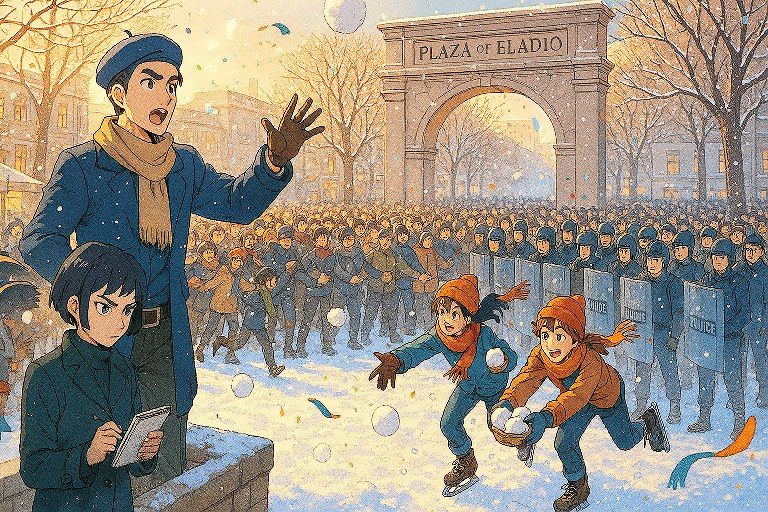
Short story: Between Screens and Hugs: How Young People Learn to Live with Their Phones
Marina sighed and put her phone on the table as if she were switching off a light to be able to think for a moment. Beside her, Hugo gathered some sheets from a notebook and glanced at his sister’s darkened screen. The living room smelled of detergent and open books; in the kitchen, an old radio let a thread of news play that neither of them really heard.
“In a way, sometimes my parents complain that I spend hours on this,” Marina said. “They nag me, literally, but then you realize that, well, it’s for your own good.”
Hugo smiled ironically and set his pen down.
“Your mother always ends with ‘it’s for your own good’ after every sermon,” he replied. “As if that fixed the fact that it takes time away from studying or meeting people in person.”
They were both 16 and lived in a neighborhood where the plazas smelled of freshly baked bread on Sundays and the schoolyards still gathered boys and girls after class. Their conversations, like many others’, swung between school demands, Saturday basketball practices and the inevitable presence of the phone: tool, pastime, companion and, sometimes, tyrant.
At school the debate about phones never stopped. Recesses became mixed spaces where laughter, memes, song exchanges and arguments about what’s right or wrong online coexisted. There, amid tables and backpacks, viewpoints emerged that rarely matched adults’ concerns.
More voices arrived at the cafeteria table: Lúa, an avid reader who had adopted a pseudonym for her accounts; Dani, who dreamed of programming apps; and Sofía, the friend with an easy smile who always returned to her phone despite promising otherwise. Each brought a different experience and, together, they made a truer portrait of what it means for them to live with a phone.
“My mom says they’ll soon put restrictions on minors,” Sofía remarked. “She said on the news that there are policies like in Australia that limit the use of social networks until a certain age. It scares me a little, but I also understand why they say it.”
“That doesn’t fix everything,” Dani intervened. “There are worse things out there: trolls, hoaxes, people who take advantage. It isn’t all fun. But banning isn’t the only solution. We need to learn to use it without turning it into a habit.”
Lúa put her cup of tea on the table and spoke calmly, as one who lays out argument after argument.
“When they label you an ‘addict,’ they blame you and that’s it. But many times the phone is the only way to be with others when we can’t see each other. If my cousin is in another city, a message makes me see her laugh and that’s worth something.”
Marina, listening closely, felt the familiar mix of pride and shame: pride in the connections they formed, shame for the hours that sometimes slipped away.
“Yeah, I might get hooked. Sometimes I realize I’ve spent hours without noticing and then the afternoon is gone. So I try to set limits, but it’s hard. It’s like the phone knows when you’re bored and takes advantage.”
The conversation wasn’t isolated: outside, in the neighborhood square, a group of mothers waited for their children after school. There another front of the discussion opened: caregivers’ fatigue and attention, trying to look after others without a manual.
Marta, Hugo’s mother, talked with Raquel, Marina’s mother, with the mix of weariness and care that everyday experience brings.
“If we take the phone away they won’t learn to protect themselves,” Raquel said. “But we also can’t leave them alone with everything that’s out there. Sometimes I feel guilty for not controlling more.”
“I spoke with the tutor,” Marta said. “They recommended talking to them without long lectures. Asking how they use it and what they see. Sometimes it’s enough to sit down and look at an app with them.”
That tutor’s recommendation found its way into Ethics class as a practical exercise. The teacher, who had long tried to bridge rules and young people’s realities, proposed something simple: each student would tell a positive and a negative experience they’d had on social networks. It wasn’t a judgment; it was a shared map.
“Positive: I found people who share my drawings and encourage me,” said Mario, 14. “Negative: there was a rumor spread about me and it affected me a lot.”
“Positive: I learned about science on small channels,” added Lúa. “Negative: I stayed up all night watching videos and arrived to class sleepy.”
The answers were candid, not meant to please anyone. Someone spoke of support received in a hard moment; someone else remembered a false news item that sowed fear; others described the satisfaction of self-directed learning. The result was a cloud of testimonies where usefulness and harm coexisted, sometimes in the same experience.
Back home on a rainy afternoon when small curtains of water streaked the window, Marina talked to her father while folding clothes. The conversation began with a complaint and ended in an agreement.
“We’re not going to take everything away from you,” he said with the patience of someone who’s seen many technological fads, “but we do want you not to be overwhelmed by it. What do you think about agreeing on some screen-free hours? Not as a punishment, but as time for other things.”
Marina nodded. For the first time “it’s for your own good” sounded less like reproach and more like a proposal. Not because her parents knew everything, but because they were willing to join her in her relationship with technology.
The decision didn’t solve everything immediately. Some nights habit betrayed her and she lost track of time again; on other occasions a false story alarmed her until friends and family helped verify it as a hoax. But there were also afternoons of walks without notifications, shared reading sessions and laughs that didn’t need likes. Those small, repeated gestures built a different practice.
The friend group, aware of their limits and needs, made pacts that worked like experiments: check sources before forwarding, speak up if someone saw something frightening, take turns silencing notifications during study hours and dedicate one afternoon a week to meet without phones. They weren’t exhaustive or perfect rules; they were commitments that required negotiation and consistency.
Weeks later in the neighborhood café the conversation returned to politics and news about limits for minors. Some feared top-down measures would ignore diverse realities; others saw regulation as a necessary tool to curb serious risks. Still, beyond politics, a common idea emerged: prohibition doesn’t replace education or conversation.
“We don’t want them taken away from us, I want to learn. But I don’t want it to steal my life,” Lúa said at one of the last meetings before the school year ended.
Hugo raised his hand and added with a smile, “Then let’s make the phone our ally and not our boss.”
The phrase drew a shared laugh and, with it, an unspoken pact: technology would keep changing, public decisions could alter the landscape, but everyday life depended on social practices that parents, children and teachers could build together.
There were concrete learnings: verify sources before sharing, speak up when something worries you, support those suffering harassment and learn to disconnect to be present with real people. There were also contradictions and relapses; some friends again lost hours; a hurtful message surfaced once more. But the overall trend moved toward greater shared responsibility, the creation of support networks in person and online.
At the end of the year the group organized a small activity: a workshop where everyone shared a lesson learned. They spoke about limits, creativity, risks and opportunities. Parents attended as interested observers; some accepted their children’s advice about apps and filters; others learned to ask questions instead of delivering lectures.
The story of Marina, Hugo, Lúa, Dani, Sofía and the others is an example of how a generation and their caregivers try to find balance. There are no magic solutions: neither absolute prohibition nor total permissiveness fixes the issues on its own. What did seem to make a difference was constant conversation, willingness to accompany, and the practice of concrete agreements that turn the phone into a conscious tool rather than something that drags them along.
Months passed and the pacts weren’t always followed to the letter, but coexistence improved: fewer screens at dinner, more games in the plazas, checking dubious content and more support among friends when conflict arose. Facing the complexity of the web required patience, mistakes and adjustments, but it also generated new skills: critical thinking, digital empathy and a sense of shared responsibility.
As they said goodbye before summer, Lúa looked at everyone and, in her calm way, summed up what they had been learning:
“I don’t want it taken away from me; I want to learn to use it. I want to be able to decide and not have someone decide for me without explaining.”
Hugo smiled.
“Then let’s start with that: decide together, make mistakes together and help each other when needed.”
And so, between imperfect pacts and long kitchen conversations, the young people built a difficult but possible balance: being present in the real world without giving up the connections that also shape them.
Source of the images.
Image created with Bing.
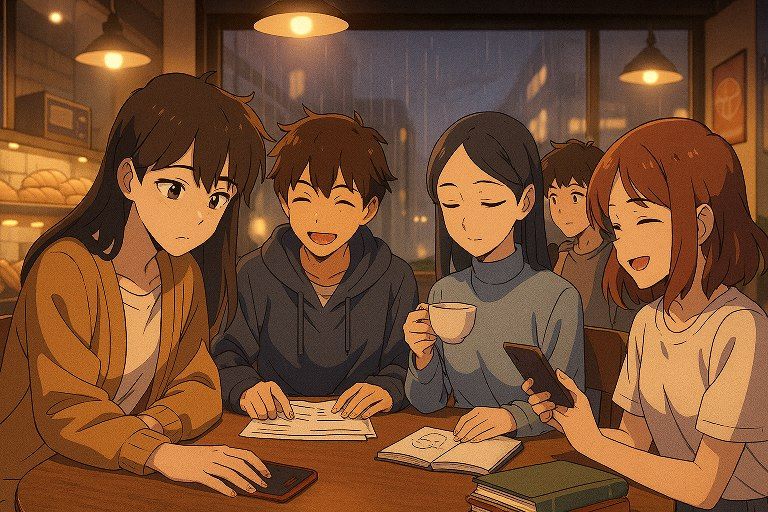
 @mc5punk