 @mc5punk
Short story: when the world lost its color
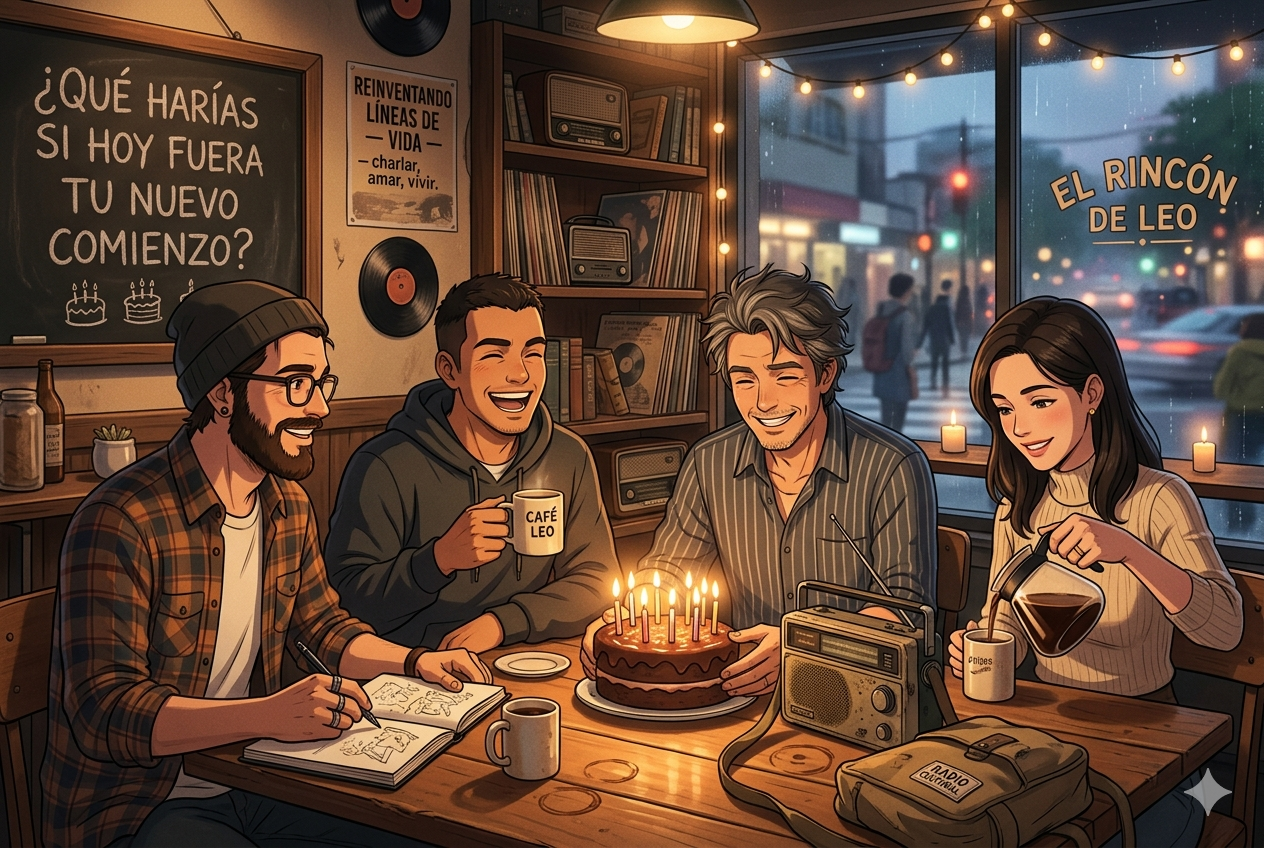
In 2043, Grisalia was a city that had achieved monochrome perfection and, with it, without anyone explicitly decreeing it, the absence of surprise. Its skyscrapers rose like blocks of a minimalist board: smooth facades in varying shades of gray, windows without ornamental frames, and metallic reflections that turned daylight into a polished surface. Vehicles glided silently, assembled in palettes of black, silver, and graphite gray; clothing in storefronts echoed the same chromatic restriction with fabrics that promised discretion; even packaging and labels seemed to follow a single style manual: “less = better.” What for some was reasoned elegance, for others was evidence of an era that had decided to dampen its own emotion. Ariadna, curator of the Museum of Everyday Things, knew the city through objects. Her vocation was not only to preserve them but to read in them the intimate choices of generations: fashions, budget cuts, the illusions sold as progress. That morning she crossed Gallery 7 with a handheld flashlight—more ritual than necessity, since the museum’s lights were impeccably white—and stopped in front of a display case where an orange toaster from 1974 seemed to challenge the world with its chromatic insolence. “Can you imagine that this once sparked joy?” Ariadna murmured, furrowing her brow and looking at the toaster as if she could reproach it for its past exaggeration. Lino, her assistant, held a gray notebook in which, with the same hands that cataloged, he drew tiny gray circles and added comic notes in ink that no one saw at first glance. His attitude was that of someone restoring humor where institutions had imposed monotonous order. “I see it and I want to have a disco for breakfast, not bread,” Lino replied with a smile. The absurd, bright phrase made Ariadna stifle a laugh. Both of them were well acquainted with the report the Science Museum Group had published the previous year: more than seven thousand objects analyzed—from appliances to phones—that traced a clear and almost irrefutable trend: the world was becoming grayer. For many, the study’s conclusion was a simple datum. For Ariadna, it was a question that pecked at collective memory. That night, upon returning to her apartment, Ariadna opened a secret box she kept under the bed. There, in a tiny, disordered world, lived relics of noisy decades: a yellow camera from the 1960s with a lens that smelled like summer; a turquoise radio that still promised lost stations; striped socks in purple and lime that her grandmother had knitted in 1981 with clumsy, generous stitches. Each object gave off a different smell, texture, and memory. It was her subversive archive: pieces that contradicted the rule and were therefore unreadable by the dominant aesthetic. In the museum café, on one of those afternoons when the rain seemed to file down the edges of things, Lino arrived with an unexpected guest: Professor Monteverde. An elderly industrial designer, Monteverde had been the embodiment of aesthetic provocation in his youth; his carefully groomed mustache was part of his public signature, a trait that once led magazine covers about trends before committees standardized them. He sat at the table with the contained anxiety of someone who has something serious to announce, but also a touch of comedy in his gaze. “The show is over,” Monteverde said as if ending a theatrical performance. “We standardized because it was cheaper to print the same aesthetic: fewer molds, fewer colors, fewer problems in logistics. And, well, because we sold the idea as progress. Minimalism, globality, efficiency. We wrapped it in neutral paper and signed it as the future.” Ariadna, holding a grayish cup of coffee—the museum’s silver coffee machine produced doctrinally perfect foam—let loose a question that struck curiosity with restrained irony: “So did we lose personality out of convenience or out of affective negligence?” Monteverde took a sip of silence before answering. “Both. Also, people adapt quickly. Color requires attention; neutrality requires less. And attention is costly. If you can convince someone that aesthetic austerity is progress, then there’s no need to produce the annoyance of the bright. Factories produce fewer variants, supply chains simplify, and the numbers on the ledger look better. Aesthetics becomes an administrative decision.” The city lived under invisible laws disguised as technical standards. Design Decree 31-9 subsidized modularly gray furniture; Pantone-Unified Standard 2.0 rewarded manufacturers who renounced “excessive” palettes; public procurement committees favored models that integrated noiselessly into the urban landscape. Advertising, once extroverted and loud, had become an elegant whisper promising, “You’ll be more you if you are less you.” In elevators, offices, and apps, the neutral tone imposed itself as a promise of emotional efficiency: fewer distractions, more productivity. One morning, a bright-eyed girl burst into Gallery 7 trying to keep a tiny contraband between her hands: a red plastic snail. Lino had acquired the item by mistake—or out of nostalgia—on a digital flea market that still forgot to use color filters. “My mom says it’s forbidden,” the girl whispered as if color were a crime with light punishment but deep stigma. “But it smells like summer.” Ariadna feigned sternness with a regulatory expression, but the gesture could not hide the tenderness that softened her features. “It’s contraband happiness,” she admitted quietly, and before the girl could harden into seriousness, she offered to let her look at it between the cases. Lula—the girl’s name—scanned the turquoise radio, the yellow camera, and the red snail, and with the innocence adults had lost in style manuals asked, “Why did everything turn gray?” Monteverde, watching with the indulgence of someone who recognized his complicity in a sociocultural scheme, answered without hesitation: “Because one day someone decided that elegance was a good business. And people bought the idea.” Night wind dragged sighs through Grisalia and, when it rose, lifted the city’s chromatic scavengers from the corners: former print shop workers, old painters, and screen-printing technicians who, deprived of their trades by the economy of neutrality, had become clandestine collectors. Their vans—also gray out of necessity—hid boxes and bags of disobedient color fragments: peeled labels, threads of polyester, bits of vintage plastic, scraps of posters that once screamed in neon. For them, each fragment was a rescued memory, an ember of a time that did not deserve to disappear. One day, Lino stumbled upon a map made from hand-painted cardboard in impossible tones: magenta, lime green, sky blue. It marked places where people still resisted the chromatic blackout with small acts: a workshop painting window frames with forbidden markers, a café that served in loud cups for one secret hour each afternoon. The map was a collage of the city’s memory in operation; they took it to the museum and, in a gesture of challenge mixing nostalgia with project, planned a clandestine exhibition: “The Resistance of Colors.” “We can’t open by day,” Ariadna said pragmatically. “The city wouldn’t see it as a show—it would denounce it as aesthetic disobedience. So it will be at the hour when memories roam free.” “Then it will be a piece that only memories can visit,” Lino replied, already threading the idea of tiny posters that would only respond to old fluorescences, as if the museum conspired with memory itself to outsmart the rules. The chosen night had the happy clandestinity of unadvertised gatherings. Gallery 7 transformed into a domestic stage, an intimate carnival. Between the vitrines, shadows projected unrecognized hues: magenta splatters, bursts of oxidized yellow, celestes that recalled unfiltered skies. The turquoise radio provided the soundtrack and played a song long cataloged as “too vibrant to be useful.” Artists with pigmented hands arrived, grandparents in ostentatious socks, and technicians who had rediscovered ancient ways to tint LEDs so the light felt analog. A minimal alarm noted the arrival of the municipal guard: a drone detected more than ten people in a public space and the assembly rules—rigid in other matters—still applied. The guard arrived without a concrete plan to confront the “chromatic threat”; the officers, in neutral uniforms and curious faces, tried to classify the situation as a standard risk. Their confusion faltered under the music and laughter. “Fine, a fine or a song,” said one officer, trying to bring order with the language of law. “Can we listen?” asked a woman from the guard, unable to hide the curiosity in her voice. The simple question detonated contained laughter that spread through the room like a wave of warmth. No one knew who turned up the radio, but the music filled the space and the room ignited with a palette the standard did not recognize. Participants, untrained in sobriety, moved with jubilant clumsiness; a man whistled off-key, another improvised dance steps that belonged to no etiquette manual. By dawn, as official papers were being drafted, the city faced an unexpected problem: how do you fine people for remembering? The report issued that afternoon was not a bitter reprimand but a clumsy chronicle of “a cultural experiment.” In administrative corridors, some officials glanced at each other as if spontaneity were a system error rather than a crime. The museum archived the event as “Incident 2043-07: Temporary restoration of color,” with the bureaucratic irony of filing the extraordinary as a number. Monteverde—who had spent the night drawing mustaches on monochrome statuettes with borrowed markers—offered a statement both serious and comic: “We’ve proven that color is contagious. And it is not cured by taxes.” The remark drew smiles; its mix of truth and jest carried the force of someone who, in his old age, admitted his guilt with pride. Lula fell asleep on the turquoise radio as if it were a pillow of sound; the smile on her face was the simplest proof that color doesn’t need permits to exist: it nests in memory, in smells, in children’s laughter, and manifests without asking for permission. The days that followed were full of debates that sounded like philosophical editorials: “Elegance vs. Exuberance,” “The Real Cost of Minimalism,” “What does aesthetics measure when it measures progress?” Online forums split between advocates of sobriety—who defended it as a moral discipline—and defenders of color—who proposed it as a right to surprise. There were, of course, memes: monochrome images with sarcastic captions and multicolored gifs spreading with the speed of shared laughter. Ariadna received an anonymous letter among the museum’s mail: a clipping of an old ad that read “Buy joy by the unit” and, written in the margin, someone had added, “It cannot be bought. It is shared.” She showed it to Lino and together they felt that the sentence summarized the simplest lesson of that clandestine night. “Maybe it isn’t about returning to the seventies,” Lino said softly, “but about allowing each object to express what it is. A knife can remain serious; but why can’t a spoon sing?” Ariadna smiled and replied with her usual blend of irony and tenderness: “Or it can sing quietly. You don’t compete with personality; you negotiate it.” The phrase was a conciliatory gesture: elegance didn’t need to be annihilated but re-signified so it could coexist with exuberance. Changes followed, arriving as small seasonal acts of resistance. Colorful stickers appeared on windshields at dawn, carefully placed as a collective joke. A neighborhood café opened a “neon hour” during which cups were deliberately loud and customers chuckled at the affective risk of drinking from electric blue. An improbable start-up released historically inspired phone cases, and their success was as uproarious as a laugh in a library: demand showed that the market did not need mandates, it needed options. Large corporations, prudent and slow, responded pragmatically: they began offering “expression lines” alongside safe monochrome versions. The economy found a new lever in variety; while homogeneity reduced costs before, diversity created profitable niches now. Thus, in a mix of opportunity and naivety, the city relearned to negotiate between efficiency and joy. Years later, the same institutes that had recorded the chromatic fade began to reinterpret their data. The narrative of an irrevocably gray world turned into that of a cultural oscillation. The sixties, seventies, and eighties appeared in books as color explosions followed by a contraction in the name of order. The subsequent restoration was not an identical comeback but a remix: elements of sobriety coexisted with sparks of audacity. The Science Museum Group report, reissued, added a note many archivists celebrated: “Objects reflect their times, and times have a sense of humor.” In an interview printed in a paper still willing to accept vibrant ink, Monteverde was asked about his provocative stance. His answer was plain, as if he had planted a seed and let it grow: “Gaining elegance was real, but it wasn’t the only possible gain. And losing personality had a price not measured in ledgers: it was measured in laughs we stopped hearing.” The words resonated in offices and at dining tables, where people began to remember objects that once made them smile. One autumn, Ariadna and Lino walked down an avenue where a graffiti had broken the perfect façade: a crooked rainbow stretched across concrete. They stopped to look. An elderly couple, both wearing gray suits but colorful sneakers, passed by holding hands, as if life could compress contrasts without losing harmony. “Did we gain elegance?” Lino asked, not really expecting an answer. “We did,” Ariadna said, watching the graffiti and the couple. “And we also gained something else: the curiosity not to let elegance devour everything else.” They chuckled softly. The laugh carried the weight of a silent concord. At that moment Lula—no longer so small—appeared running with the red snail in her hand and raised it like a small, determined flag. “My mom says you have to be responsible with color,” she said, winking mischievously. “Don’t throw it down the drain.” Ariadna hugged her with the tenderness of someone who recognizes that the world will keep alternating between order and disorder, intention and accident. For a second, the city felt exactly as it should: an imperfect but sincere mixture of design and chaos, of conscious choice and spontaneous occurrence. Objects continued to change; fashion moved in cycles of rigor and festivity, of sobriety and stridency. Sometimes absolute black and immaculate cleanliness returned; other times an entire month celebrated prints and colors competing for attention. But gray ceased to be a mandate and became one option among many: a way of being. When someone asked if personality was lost in exchange for gaining elegance, the shifting answer depended on the city’s musical language: if the radio played a cheerful tune, memory seemed to recompose; if the station chose a sober piece, it seemed lessons in discipline had been learned. At the Museum of Everyday Things the orange toaster remained in its display case as a mute witness. Someone, from time to time, would look at it with the mix of reproach and affection reserved for eccentric relatives. Ariadna still spoke to it in a low voice, as if fearing silence could turn insolence into oblivion. “Don’t worry,” she would whisper. “There are places that still remember you.” The toaster, useless and brilliant, remained a testament. It was not a decorative relic; it was proof that trends pass, laughs return, and the world invariably seeks its tone. In that search, the city learned something not written in any style manual: elegance need not be an enemy of laughter, and neutrality should not erase the possibility of wonder. Color, like memory or the song of an old radio, found ways to return—not with stridency or imposition, but in small defeats of sobriety and small victories for the taste of disorder. And so Grisalia remained a city that governed its appearance with rules and with humor, with norms and with surprises. Because ultimately, aesthetics was not merely an industrial decision but a conversation. And in any conversation worth having, there is always room for nuance. Source of the images. Image created with Google Gemini.
No comments yet