Random Thoughts
While I'm alone this is my **Random thoughts.**
"I think isn't enough!
I don't know i feel this way!
You nostalgic!
You did not mean it.
I want to help but you keep spending like that. How careless. You don't know how i tired and tried to make that such things!
Hayss!
I don't know if you want to revenge, how you feel before!
Maybe, i deserve it though! haysss! I keep overthinking everyday! I feel sick everyday! I feel unworthy everyday!
Why i feel this way!
Your such nothing hanhan but a d*mb."
Im sorry myself!
by: **Orchidaceae**
Can ancestral lands on Pinatubo support life now?
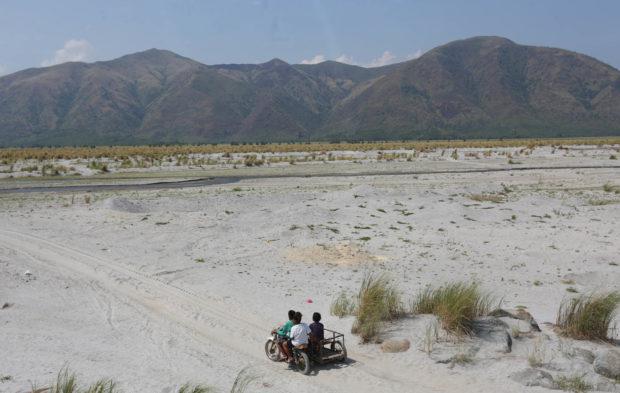
HOMEBOUND A family traverses the lahar covered Balin-Baquero and Bucao rivers to reach Baytan, a cluster of 11 villages in the Aetas' ancestral domain on Mt. Pinatubo in Botolan town, Zambales province. Baytans farms and forests sustained the community of indigenous peoples in Botolan until Pinatubo erupted in 1991 and forced them to start anew in resettlement sites.
-MARIANNE BERMUDEZ
(Second of three parts)
BOTOLAN, Zambales, Philippines - ReynaldoCabalic braved the rising waters of Balin-Baquero and Bucao rivers on June 2 to reach Sitio Tarupok in Villar, one of the 11 villages in the Aeta ancestral domain on the Zambales side of Mt. Pinatubo, and prepare ginger and taro plots.
That day, Tropical Storm Dante (international name: Choi-wan) had dumped heavy rain over the province and caused the rivers to swell.
Knowing when to shuttle between the Loob-Bunga resettlement in Botolan and Baytan, as the 11 villages are now called, is not new to the 65-year-old Cabalic. He has been doing this for 24 years since 1997, or six years after Pinatubo erupted on June 15, 1991.
Geologist consider the 1991 eruption as the world's second worst in the 20th century in terms of economic and environmental impact, including the vastness of its pyroclastic flow deposits.
The Philippine Institute of Volcanology and Seismology (Phivolcs) initially estimated the volume of block-and-ash flow deposits at 7.1 cubic kilometers, but it lowered the figure to 4.2 cubic km to 4.5 cubic km after taking into account recently digitized data. The Portland District of the US Army Corps of Engineers placed it at 5.5 cubic km, sald Phivolcs chief Renato Solidum.
fact sheet released by the US Geological
Survey in 1997 described the extent of
devastation as mind-staggering.
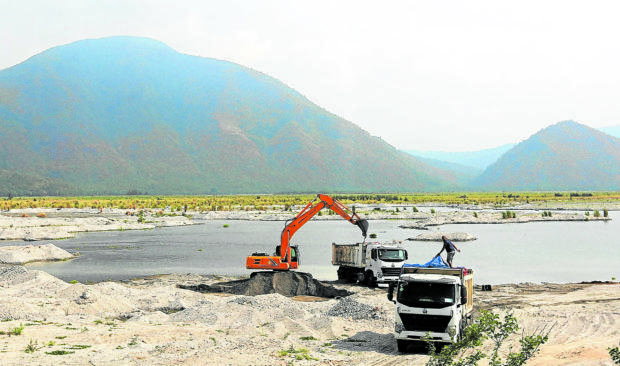
"In the first few years following the cataclysmic 1991 eruption, they have deposited more than 0.7 cubic miles (3 cubic km; equivalent to 300 million truckloads) of debris on the lowlands surrounding the volcano, burying hundreds of square miles of land. During heavy rains, lahars at Pinatubo can transport and deposit tens of millions of cubic yards of mud in a single day" it said.
Using Phivolcs data as reference to determine the volume of pyroclastic flow deposits still left,Solidum puts it at 24 percent, or 1.08 cubic km, the equivalent of about 90 million trucks full of ash.
If reckoned by the US estimate, the remaining lahar deposits blanketing areas around Pinatubo would be 43 percent, or 2.38 cubic km(198 million trucks of ash), he said.
'No intact village'
The 1991 eruption did not spare members of the Aeta community, according to
anthropologists. One of them, Jean-Christophe Gaillard, said: "The absence of any intact village, which could have maintained Aeta traditions, did not allow a retreat toward a preserved sociocultural environment"
Cabalic is one of the 3,000 Aeta people who have returned to Baytan, said Ladie Manalaysay de Leon, the indigenous people's mandatory representative (IPMR) in the Botolan municipal council. Baytan consists of the villages of Villar, Moraza, Belbel, Burgos, Nacolcol, Palis, Maguisguis, Cabatuan, Owaog Nebloc, Malomboy and Poonbato, its center.
Except for Palis, Maguisguis, Nacolcol and Cabatuan, the villages are covered by
certificates of ancestral domain titles (CADTs) that also draw the tribe back to Baytan, De Leon said.
Some 240 families now live in Nacolcol, De Leon sald. In Maguisguis, 130 families grow food and cash crops, Councilman Roger Devillena said.
At least 328 families are back in Poonbato, while 83 families have returned to Owaog Nebloc, according to Elsa Novo, president of the Samahang Nagkakaisa ng Poonbato.
They are either back for good or have retainedhouses in resettlement sites that are 40 km to60 km away from the volcano. They travel usingsmall heavy duty trucks called "weapon"kolong-kolong" or trikes, carabaos, motorcycles or by foot.
Farms in Baytan planted with palay, sweet potatoes, bananas, ginger, taro and vegetables are "beautiful to see," said Chito Balintay, former provincial IPMR in Zambales. These are rain-fed though several ponds, with one spanning 50 hectares, provide irrigation on dry months, he said.
The annual average income of the Baytan Aeta people is not known. For Cabalic, t is enough that his family does not run out of rice and food, and can save for seeds and tools.
Scarred land
Baytan has not been kind to agriculture after the 1991 eruption.
Ash and sand spewed by the volcano were still hot when the Aeta tribe of Lakas (Lubos ng Alyansa ng mga Katutubong Ayta ng Sambales) first inspected Sitio Yamot, 5 km from the crater, in 1993, elder Ben Jugatan recalled.
Yamot's land is untillable because when water eroded Villar, it turned the subvillage into a steep hill. At least 90 of the 200 tribesmen from Lakas resumed farming in Sitio Ugek, Burgos Because sediments have accumulated below, the Aeta people built their homes and farms in what are now the middle and upper flanks of the volcano.
Resuming farming was difficult. Cabalic only had a bolo to start with and at times used bare hands to clear thick ash deposits. Novo said the Aeta families of Poonbato revisited their old village in 1997 but they abandoned the idea of returning because conditions were not close to what they used to
be. "We had an abundant life back in Pinatubo. we had rice, crops, plants, wild pigs, fish,forests and herbs for medicines" she recalled.
The decision of some Aeta people to shuttle between their resettlement site and Baytan is described by Jugatan as "parang lagare" (moving from one point to another, like the movement of a saw).
But rebuilding lives is possible through "sariling sikap" (relying on oneself), Novo said.
Renato Solidum
Because more children are growing up in
posteruption Baytan, the Department of
Education built schools in its villages in 2019,
except in Malomboy. Senior high school is
offered only in Poonbato and Maguisguis.
This is a generation of Aeta families who havelived in settlements and tent cities, and who do not know how it was like growing inside their ancestral land, their elders said.
Safety
Asked if it is now safe for the indigenous
people to return around Mt. Pinatubo, Solidumvsaid: "Determining if an area needs to be settled is dependent on the potential hazards that can affect the area"
"Aside from volcano-related hazards, landslides and erosion during heavy rains are a big constraint, and also landslides during earthquakes" he added.
While lahar canyons eroded by water and winds dot Baytan, nothing else prevents the Aeta from rebuilding houses or resuming agricultural activities.
Phivolcs has not declared a permanent danger zone on the volcano. The rising number ofearthquakes and other chemical parameters prompted the agency in January to raise Alert Level 1 on Pinatubo but issued no warnings of an imminent eruption.
In the case of the 1991 eruption, it happened after almost 600 years of slumber.
The environs of Pinatubo are showing signs of self-renewal but these have not been widely reforested, data from the Department of Environment and Natural Resources (DENR)
show.
Between 2011 and 2018, the DENR's National Greening Program (NGP) planted trees on8,800.25 ha, or 16 percent, of five CADTs spanning 55,869 ha.
The NGP reforested 5,940 ha in Pampanga,2,229 ha in Tarlac and 630 ha in Zambales.
-Philippines Today
A Time of Exigency
A generation ago, youth ministry was virtually synonymous with high
school ministry. All of the major Christian youth movements, such as
Youth for Christ and Young Life, were aimed at high school teenagers,
and in many aspects, still are. Junior highers were still considered
children-too immature. But times have changed. It was in 1979 that
Dr. Urie Bronfenbrenner of Cornell University observed, "The
adolescents today are the 12-year-olds, and the 11-year-olds, and the
10-year-olds. That is, they are having the experiences that five years
earlier, adolescents didn't have until they were 13, 14, and 15; and they,
in turn, are having the experiences that adolescents used to have when
they were 16, 17, and 18."
A few years later Dr. Victor Stursburger of the American Academy of Pediatrics wrote: "Short of being in a war, these are the most dangerous times adolescents have ever had to face. There are more choices teens have to make at younger ages and less guidance to make those choices. Now, 14-year-olds are having to decide Am I going
have s*x or not? Am I going to use drugs or not? Am I going to drink alcohol or not?' Two generations ago those decisions were made in college. A generation ago they were made in high school. Now they're being made in junior high school."
And the trend has continued. All of us know of eight-, nine, and
0-year-olds who are struggling with issues that in previous gener-
ations were reserved for the teen years and beyond.
The cutting edge of youth ministry in today's church is at the
junior high and middle school level. This is not to say that high school
ministry is any less important now than it ever has been-but more
and more youth workers are recognizing that if youth ministry is to be
taken seriously at all, then junior high ministry has to be given a higher
priority.
On the Niagara River, there is a place called Redemption Point.
It is this spot that is considered to be the last reasonable rescue
opportunity for people who have been caught adrift in the river. If
people are swept into the river and drift beyond Redemption Point,
attempts to fish them out will be fruitless; they will plunge over the
raging waterfall and most surely die. All resources, therefore, are
implemented to snatch people from the river before Redemption Point.
I believe that junior highers have reached Redemption Point, It is here that their developmental course will largely be set for life. "To a many young people at this age are in danger of "going over the fall
with little chance of rescue. Now is the time for the church to implement every available resource to reach out to these kids before we lose them.
Adolescent psychologist Gary Downing, who has also served as church youth minister, expresses it well:
Because early adolescent growth has accelerated so much over the last 20 years... we must rethink our assumptions, our strategies, and our programs in order to respond to the changing needs of kids. We must overcome our ignorance, apathy, and our stereotypes so that we do not lose a whole generation of people so desperately in need of our love and concern. We cannot afford to dismiss this young subculture as "too squirrelly, too energetic, too disrespectful, or too shallow" to be worthy of our time and resources.We cannot expect to "warehouse" this group for several years and expect that they will be waiting for us when we decide we are ready
for them. They won't be there tomorrow because we aren't here today
when they need us the most."
The junior high years offer us a unique opportunity for ministry in the local church. At no other time in a person's life are so many options considered, changes made, and ives snaped. It is not a time for baby-sitting but for loving attention. we need to surround our junior
highers with caring adults who are interested in them and willing to mentor them in the Christian faith. "The most cost-effective program in any church is a strong junior high department," says Doug Murren, a pastor and leader in the modern church-growth movement.
"Junior high school is the make-
it-or-break-it time for children, in my
opinion.... Our best efforts and budgeting
need to be aimed at doing a good job with
kids in this age bracket."
I have always loved the picture that
Scripture provides of the boy Jesus,coming
of age as a young adolescent. Luke tells the story-perhaps with a smile on his face as he writes-of a 12-year-old boy separating from his parents (literally) and beginning his preparation for life as an adult.
When Mary and Joseph finally catch
up with him, they find him in the temple
courts sitting with the teachers, "listening to them and asking them questions." He wasn't shown to the playground or led off to the youth group for fun and games. Instead he was treated with dignity and respect and
given the attention that he deserved. And remember that these teachers didn't realize who he was. They didnt know they were talking to the Son of God.
That's why Luke comments that "they were amazed at his understanding." I am impressed with these teachers who were willing
to take time to listen to a 12-year-old boy.
What do you expect from junior highers? Too many people in the church answer, "Not much." But the time has come for a new way of thinking about this age group. I believe that if we start taking junior highers seriously, and begin to give them the kind of attention they
deserve, even skeptics will be amazed.
Every year his parents
went to Jerusalem fof
the Feast of thePassover. When he was 12years old, they went up to the Feast, according to thecustom. After the Feast
was over, while his parents
were returning home, the
boy Jesus stayed behind in
Jerusalem, but they were
unaware of it. Thinking he
was in their company, they
traveled on for a day. Then
they began looking for him
among their relatives and
friends. When they did not
find him, they went back
to Jerusalem to look for
him. After three days they
found him in the temple
courts, sitting among the
teachers, listening to them
and asking them questions.
Everyone who heard him
was amazed at his
understanding and his
answers.
-Luke 2:41-47
-Orchidaceae
five thoughts to energize you for work
Ang hirap talagang pumasok kapag galing tayo sa mahabang pahinga. Normally, at the end of the work week, marami sa atin ang nagsasabing, "Thank God, it's Friday!" Pero sa simula naman ng linggo, kadalasan ang sinasabi natin sa ating mga sarili ay "Oh my.. Do I really have to go to work today?
Kung yan ang iyong nararamdaman sa mga sandaling ito, meron akong five thoughts to energize yourself for work. Think about these:
**1. Work presents you with an opportunity**
**to express who you really are.** Who are
you? You are created in the image and
likeness of God, and part of this image
and likeness is God as a creative and
and working God. Sa Genesis pa lamang,
simulang-simula pa lamang ng Bible, ano ang description sa Panginoon? He was very busy creating the world. And we
are created in that image and likeness.
Part ng blueprint natin ang magtrabaho.
maging creative at maging productive.
**2. Work is a blessing, not a curse.** Bago
pa mag-fall at maparusahan sina Adamn
and Eve, inutusan na sila ng Diyos para
magtrabaho. The command to work was
given before the Fall. Work, therefore, is
a blessing. Obedience to God is always
rewarded with a blessing. Work is not a
curse, but a blessing.
**3. Work makes you grow as an individual.**
The opportunities as well as the problems that we have to face in the workplace become occasions tor us to grow.
Work provides you with a natural venuee
to develop meaningful relationships. How many hours do you spend in the office?
On the average, eight hours a day. Pero
mas madalas, higit pa ito sa walong oraS
dahil marami tayong panahong ginugugol sa opisina-at naturally, sa mga taong katrabaho natin. Kadalasan nga, di ba, ang office romance nagbo-blossom sa loob ng opisina? Dahil we spend a lot of time in the workplace. Work provides you with a natural venue to develop meaningful relationships. Make it a fun experience for your officemates to be in the office by being a good friend to them.
**5. Work gives you an opportunity to be**
**a blessing to others**. Kapag meron
kang natulungan, kapag nagkaroon ka
ng impact sa buhay ng iba, ano ang
pakiramdam mo?
Hindi ba you feel satisfied?
You feel happy; you feel good
about yourself. Everyday, when you go to
the office, you have an opportunity to
help others, to be a blessing to others, to
make a difference in other people's lives.
How can you be a blessing in the
workplace? By being excellent in what
you do. By giving your best in what you
do, because what you do affects the work
of other people, too.
Kung medyo na-tempt ka to call in sick
ngayong araw na ito kahit wala ka namang
sakit, think about these things that I
shared with you. Palalagpasin mo ba ang
opportunities na yan na naghihintay sa iyo kapag pumasok ka sa trabaho ngayon?
Be energized for work because there are lots of opportunities and rewards waiting for you.
-O

Why do you work?
Bakit ka nagtatrabaho? Why do you do what you are doing now? Naitanong mo na ba yan sa iyong sarili?
It is important that we take some time to ponder these questions. Ang sabi ni William Pollard, chairman ng Service Master Company sa USA, "Work is more than just performing tasks. It is part of who we are or a place where we should be. "Ang sabi naman ni Pope John Paul II sa isang aklat na kanyang sinulat, "Work is a calling in the development of dignity in people."
The early Protestant movement gave this reason for working: " We work as a natural outgrowth of the abilities that were given to us." Napansin nyo ba sa mga quotation na ito na wala ni isa dito ang nagsabing nagtatrabaho tayo para mataas ang kita natin, para meron tayong sweldo? There is more to working than just earning big bucks.
Let me prop to you three important reasons why we work.
**Work is integral to our being.** We have a creative, working God. Sa simula pa lang ng Bible l, sa Genesis, makikita natin na talagang si God ay bising-busy sa paglikha ng mundo. And since we are created in His image and likeness, work becomes an integral part of our being. Kaya kung tayo ay tatamad-tamad at walang ginagawa, we are not being true to how God created us. Bahagi ng blueprint ng Diyos sa pagkakalikha Niya sa atin ang maging productive tayo: mag produce , mag create.
**Work is God's command.** We ate commanded by God to work. Not to work is, therefore, going against His design.
Now, I am not saying that work always has to be in a structured environment. Basta tayo ay productive at mat nagagawa ayon sa ating talents at kakayahan, yan ay bahagi ng pagtatrabaho. Hindi kinakailangan na ang lahat ay maging employee, dahil yung iba naman ang talent nila ay sa pagnenegosyo. The point that I would like to highlight is that work is God's command. Not to work is going against God's design.
**Work is an opportunity**. Work is a God given opportunity for us to take part in what He's doing to make this world a better place. Kung ganyan siguro ang magiging pursigido tayo to be excellent in what we do to really givr our best in serving others. Dahil ang trabaho pala ay oportunidad para makilahok sa ginagawa ng Diyos na pagbabago at pagpapaganda sa mundong ito.
Work will be more meaningful if we look beyond the pay slip. When we work,we become true to God's design for us to be fruitful and productive. When we work, we grab the opportunity to impact the world.
-Orchidaceae

Surrendering to the Master's Voice
THE WEBSTER'S Dictionary defines "obey" this way:
To carry out the orders of; to execute, as an order.
To be ruled or controlled by; to follow the guidance, operation, etc., of..
Sounds convincing.
Right?
Wrong!
Why do we refuse to obey our Philippine laws, our supervisors, our traffic rules, our teachers and our parents?
What has happened to our respect for lolo and lola?
Does our generation practice discipline and obedience?
Are we willing to follow the guidance and leadership of others?
For most people, the honest answer is "no."
Our generation has been blasted with negative Western values and influences.
We are influenced by the disobedience and rebellion we witness in our imported movies and videos.
We eagerly read foreign books and newspapers that lead us to feel free to live our own lives without respect or obedience to our traditional values and rules.
Our cousins and classmates, living wealthy independent lifestyles in American cities like Los Angeles, San
Francisco, Dallas and Chicago, show no respect and obedience towards their mothers and fathers.
Likewise, their lolos and lolas are treated with disrespect,neglect and contempt.
Take heed!
l am convinced we have a tragic moral and spiritual problem threatening to consume our nation like some foreign disease.
Moral decay and disobedience from foreign cities have crept into our beloved Philippines.
Unfortunately, this moral decay is slowly spreading to the most remote provinces, cities and municipalities.
This horrible spiritual sickness does not go unnoticed, however. Listen to Jesus' warning for those who refuse to obey Him:
I have already told you, but you would not believe me... you will not believe, for you are not my sheep. My sheep listen to my voice; I know them, and they follow me.
John 10:25-27
According to St. John, those people refused to believe that Jesus is the Savior of the world. They were not willing to accept Jesus by faith alone.
They did not trust and rely on Jesus alone. Instead they requested more proof that He is the Savior of the world.
Even today, many of us still insist that Jesus prove His divinity to us. We demand signs and wonders such as miraculous healings. We seek guidance from our images and spiritual leaders, hoping to find the real Christ.
Unfortunately, our earnest religious works actually hurt us, not help. That is why Jesus says to those
who refuse to surrender to His voice:
you are not my sheep.
John 10:26
Jesus explains:
My sheep listen to my voice. . . and they follow me.
John 10:27
I just read several interesting historical stories about Americans living in the Philippines around the year 1900.
One American humorously claimed "a carabao has an inborn prejudice against white men." Another story recounted:
While walking alone in a bario after sunset, an American was suddenly attacked by an angry carabao. Fearing for his life, he quickly climbed a nearby tree to escape the carabao's wrath.
As darkness fell, he attempted to climb down from the tree past the sleeping carabao. Each timne he attempted to escape past the carabao, it awoke and sprang to attack. Alone and in a remote area, he slept the entire night up in the tree.
At last, dawn arrived. Soon a small Filipino girl about four years old arived and greeted the carabao.
Gently, she slipped a rope around the carabao's neck and led him off without the slightest difficulty.
Emily Hahn, The Islands
Do you understand the message from that humorous historical story? The huge carabao, feared by foreigners, recognized the little Filipino girľ's voice and followed her gentle touch.
The carabao recognized his master's voice.If you want to discover God's saving grace, you must be willing to recognize the Master's voice and follow His gentle touch.
You must be willing to surrender to Jesus Christ as your Lord and Savior.
Salvation comes to you when you surrender to Jesus as Lord by giving Him complete control of your life.
Jesus warns you, however
Not everyone who calls me "Lord, Lord" will enter the Kingdom of heaven, but only those who do what my Father in heaven wants them to do.
Matthew 7:21
Remember, a true Christian bears the Lord's voice and follows Him in total obedience.
Salvation is not just saying you are willing to give your life to Jesus. Please consider these thoughts about
salvation:
Salvation comes through confession of your sins to Jesus.
Salvation comes when you turn away from your sins by repenting.
Salvation comes through a change of mind towards your sinful life.
Salvation comes through faith in Jesus Christ.
Salvation means you surrender complete control of your life to Jesus.
Salvation comes because God's Son, Jesus Christ, died to pay the penalty for your sins.
Like the carabao responding to the little girl's voice, Jesus children recognize His voice and obey Him.
Remember, Jesus says
My sheep know my voice . . . and they follow me. John 10:27
Can you hear Jesus' voice calling you? Are you willing to trust His gentle touch? Do you have faith in His saving grace?
Remember, a true Christian hears the Lord's voice and follows Him in total obedience.
Are you following Jesus?
Answer in Comments Section below.
-Orchidaceae

Get Help When You Need it
You may be the kind of person who can do everything yourself, but it is
more likely that if you are single-handedly ministering to the junior
highers in your church, regardless of the size of the group, you could
benefit from some help. Junior high ministry is always best when it is a
team ministry. If you are a youth director or Christian education
director responsible for a number of age groups, no doubt you are also
in need of other adults who can serve as junior high sponsors or
leaders.
How many? Usually the size of the group will dictate the exact
number that is required. A good ratio is approximately one adult or
every eight junior highers, although every group should have at least
two adult leaders--one male and one female. The 1:8 ratio, although
arbitrary, is based on the idea that it is difficult to establish relation-
ships with many more than eight. It can be done, of course, but it's
much more difficult, especially with the many other responsibilities of
adult life. If you hope to be able to give some quality time to each
person, it is wise not to bite off more than you can chew.
Another important consideration is the male-female balance of
the group. If you are a male but your group is made up of quite a few
girls, you should have a female coworker who can relate to those girls as
only another female can. Junior high girls are just beginning to deal
with their emerging womanhood, and they need adult women whom
they can trust and confide in. The same is true for boys. It's not being
sexist to recognize that boys should have men they can relate to and
look up to and girls should have women.
Early adolescence is an
important time of gender identification, and it helps to have good adult
role models available.
A related problem for many young male junior high workers is
how to handle junior high girls who become infatuated with them, who
"have a crush" on them. This is not uncommon, and it also happens,
although less frequently, with female junior high workers and junior
high boys. I don't have an easy solution for this, but I have found that it
is very helpful (if you are male) to have a woman coworker who can
minister to the girls in the group, and vice versa.
The problem, of course, is not usually the failure to know when
more help is needed. The problem is knowing whom to enlist. For
reasons already stated, there is rarely a waiting list of people who want
to work with junior high kids. Usually those who do emerge are the
chronic volunteers-people who volunteer for everything. They're
usually fine folks, but they are more than likely volunteering for the
wrong reasons. To wait around for volunteers is usually not the best
way to get the best people. The best way is to take the initiative yourself
and seek out people who you have reason to believe would make
outstanding junior high workers. You have to recruit them.
Again, keep in mind that we're not talking about people who
have lots of youth ministry experience, or who are young and talented,
We are looking for people who possess to some degree the qualifi-
cations previously described in this chapter. Again, no one has to be
perfect. As a rule of thumb, I usually seek people who have the time
and the willingness to give junior high ministry a try and who seem like
the kind of people who haven't repressed their owm adolescence so
much that they find it impossible to relate to junior highers. From that point, other necessary or helpful skills may be developed.
When looking for junior high workers, I have found that it is
generally best to rule out high school students. They usually lack the
maturity to take on the responsibility for junior high ministry. That
doesn't mean that high school students can't be involved in the junior
high ministry in some very effective ways. I have used high school
students for leading music, doing dramas, helping out with games and
skits, even teaching. It's good for junior highers to see older teenagers
serving Christ, using their gifts and talents in ministry, and being
leaders and role models for them. But high school students are simply
too close in age to the junior high students to be reliable junior high
workers.
When I worked as a junior high camp director, I always had the
most difficulty with church groups that used high school-aged cabin
counselors. We frequently had to discipline male counselors who had
become overzealous about "counseling some of the female campers
long after the evening meetings were over. High school students may be
full capable of assisting in many areas of the junior high program, but
in most cases it is better to seek more mature leadership.
College students often make very good junior high workers, but
there are problems common to this age
group as well. One is that they are rather
transient-here this semester, gone the next, or away for the summer. It is best to find people who can give the junior high group a degree of stability over two or three years if
possible.
One middle school ministry that I
am familiar with requires a three-year
commitment from its adult leaders. A male leader, for example, at the beginning of this term is given a group of six to eight sixth grade boys, and he works with those boys for three full years (through sixth, seventh, and
eighth grade) until they move on to the high school department of the church. Of course, in practice, this model is no more free from breakdown than any other, but the reasoning is sound. For three years, each kid in the group has someone who knows him well and notices whenever he is having difficulty or is making progress. The end result of Such a plan should be a lower dropout rate as well as a more effective ministry.
Parents often are willing to work with the junior high group and,
depending on who the parents are, that can be either good or bad.
Some parents volunteer to work with the junior high group simply
because they have a vested interest in what's going on. They may want
to keep an eye on their kids, or they may want to keep an eye on you.
Needless to say, this is not the best motivation for doing junior high
ministry.
Parents can and should be involved in the junior high program
in some way, but there are potential problems with parents doubling as
junior high workers. They may be overly protective of their own
children or perhaps too close to them to deal with them in an objective
manner. It's difficult to be neutral with your own kids. You can give
objective, empathetic advice to other people's kids, but it's difficult to
do that with your oWn.
A bigger problem is that kids are often intimidated by the
presence of their parents in the youth group, which prevents them from
opening up as they might under normal conditions. Most junior
highers are involved, either quietly or overtly, in a struggle to free
themselves from parental domination, and they usually need adults
other than their parents to relate to during this time. For this reason, it's
a good idea to ask students how they feel about having their parents
involved in the youth group. You may be surprised to find that some of
your junior highers have no problem with it at all. In fact, some
students actually want their parents to be involved.
Despite the potential problems, I would not rule out parents of
junior highers as leaders for the junior high group, especially if they
sincerely want to be involved and appear to be qualified to do a good
job. It's strictly a judgment call. Il have more to say about the role of
parents.
When I am looking for junior high workers, I generally like to
recruit young adults, either single or married, in their 20s and 30s.
Young couples with no children or with young children often make
wonderful husbarñd/wife teams. I also like to go after older adults-
whose children have grown, or those of retirement age. So long as they
enjoy the kids and are able to understand and communicate with them,
they have all that it takes. Many times kids will love and respect older
folks more than those closer to their own age.
One of the most creative junior high workers I have ever met is
in his 60s. He teaches a Sunday school class of seventh-grade boys in a
Small town in Oregon. Once a month he has his class wear old clothes
to church and instead of attending services that week, they all climb
nto the back of his camper and go fishing. He provides the boy's with
ait, tackle, and even shows them how to tie flies. And according to tnis
Junior high worker, he gets more teaching done along the bankS Or a stream once a month than he is able to accomplish during the remaining three weeks of the month spent in the classroom. I wouldnt
doubt it at all.
@Orchidaceae

Losing face...finding Grace
I REPENT! "Pinagsisisihan ko ito!"
That is a lonely thought.
In our "never apologize" society the word "repent"
has practically become an ancient relic delegated to religious fanatics. The Bible teaches, however, that we must repent of our sin. It says you must be willing to:
Repent. . . and turn to God, so that he will
forgive your sins.
Acts 3:19
Please allow me to ask you a few questions:
•Is repentance feeling sorry for your sin?
•Can you repent by showing remorse for your sin?
•Must yourepent in order to receive God's forgiveness for your sin?
•What is repentance?
These are just a few questions which are often asked about repentance. Please consider, however, a much more common attitude towards sin and guilt:
When denial fails
. . always blame others
never plead guilty.
Those words sound much more familiar to most of us than the word "repent." It is really amazing that something so Wrong can seem so right.
Are we honestly willing to accept responsibility for our sins? Aamin ka ba? Is it not true that we frequently
blame others for our sins-ikaw kasi-...siya eh?
Somehow we have allowed the devil
to convince us that we have a rigbt
to deny the truth in order to bide
our ouwn guilt and sin.
Apparently the attitude of blaming others for our guilt describes most of us. Somehow we have allowed the devil to convince us that we have a right to deny the truth in order to hide our own guilt and sin.
Unfortunately, our desire to save face actually separates us from God's
grace. Consequently, we do not experience God's forgiveness for our sins and failures.
One of the most vivid examples of denial turned to blame unfolded nearby very recently.
For decades Japanese officials denied involvement with the so-called "comfort women" of World War II.
These Asian women from various countries in the region
were rumored to have been enslaved in military camps
throughout Asia to fulfill the sexual desires of Japanese
soldiers away from their homeland during the war.
Recent media reports say Tokyo continuously dismissed claims-pinilit na itinatanggi-charging them with abducting thousands of victims who were forced to work as sex slaves in brothels for imperial soldiers from 1932 until the end of World War II in 1945.
Several Asian women came forward recently with horrifying stories of abduction and sexual servitude in
Japanese-run brothels, demanding apologies and financial compensation from Japanese officials. Instead of
admitting guilt for their responsibility in the scandal, Japanese officials initially chose to shift the blame on to others.
According to early reports by the Japanese government, the brothels were the property of private owners-negosyo daw ng iba. Officials insisted that
private businessmen, not the Japanese government, were responsible for the operation of the brothels.
Unhappy with the government's denial of responsibility, many Asian women who were abused by the system
of injustice, along with numerous women's groups and human rights activists, placed increasing pressure on
Japanese officials by demanding the truth.
Finally, after an 18-month investigation, Tokyo
relented and officially acknowledged its participation in these degrading acts of brutalityumamin din. Official statements extended "sincere apologies and remorse to all those.. . who suffered immeasurable pain and incurable physical and psychological wounds as
comfort women."The confession admitted that the women "were forced to move with the military
and were deprived of their freedom and had to endure misery."
According to reported estimates, the
Japanese army had forced as many as 200,000 Asian women into sexual slavery.
Typically, denial is man's way of dealing with sin and guilt.
Instead of acknowledging our sin, we first atempt to deny any responsibility. We refuse to accept any blame or guilt. We usually deny any knowledge of the
problem. Ewan, wala akong alam diyan!
Then, when confronted with the facts, we attempt to shift the blame to others. We deny any personal responsibility. Basta, hindi ako kasali! We choose, instead, to place the blame upon someone else.
Finally, when cornered without escape, we reluctantly acknowledge our sin. Still, however, we attempt to deny any future responsibility toward others for our
shortcomings and failures.
God doesn't want our excuses. God wants us to repent.
Repentance is not just feeling sorry for your sin. Repentance demands that you turn away from your sin- talikuran mo-and turn to God through the risen Savior, Jesus Christ.Jesus insists:
If anyone wants to come to me, he must
forget himself, carry his cross, and follow me.
Matthew 16:24
Repentance is not just confession. It is rejection of sin and acceptance of Jesus through faith.
St. Paul pleads with you:
So then, my brothers, because of God's
great mercy to us I appeal to you: Offer yourselves as a living sacrifice to God, dedicated to his service and pleasing to him. This is the true worship that you should offer.
Romans 12:1
Furthermore, according to the pleas of St. Paul, repentance also demands a change of your mind:
Do not conform yourselves to the standards of this world, but let God transform you inwardly by a complete change of your mind.
Romans 12:2
Consequently, as a result of a changed attitude towards sin, you will then know God's desire for your life:
Then you will be able to know the will of
God what is good and is pleasing to him and is perfect.
Romans 12:2
If you really want to have a personal relationship with Jesus Christ and receive His free gift of eternal life you must be willing to lose face by repenting of your
sins and failures. You must be willing to lose face by agreeing with God that you are a sinner (repent) in order to find God's grace (God's forgiveness for your
sins).
I am sorry, Father, for the sin in my life. I want to repent of that sin. I want to confess my sins, and change my attitude about sin in my life. I know I cannot forgive my own sin. I know I need your forgiveness in order to receive your free gift of eternal life. Please forgive me
of my sins. I am willing to turn away from my sinful life, and trust Jesus to save me. I know I will not be perfect.
I know I will continue to commit sin in my daily life, but I don't want to sin. I want you to change me.
Thank you for caring about me.
@Orchidaceae

The God- Man
**WHO AM I?**
Have you ever asked that question?
I have.
Believe me, it takes great courage to pursue the truth about yourself. The answers given by friends, co-workers, and relatives can be painfully enlightening.
Discovering the truth about yourself can also be an extremely encouraging experience.
Jesus boldly asked that question. Searching the hearts of his disciples Jesus inquired:
*Who do people say the Son of Man*
*of (Jesus) is?*
Matthew 16:13
Listen to the answers given by his disciples:
•*Some say John the Baptist*
*•Others say Elijah*
*•while others say Jeremiah*
*•or some other prophet.*
Matthew 16:14
Searching the depths of their arts, Jesus persistently questioned his disciples about their understanding of
himself. Jesus insisted:
*What about you?... Who do you say l am?*
Matthew 16:15
Enlightened by the revelation of truth from the Almighty God, St. Peter responded:
*You are the Messiah, the Son of the living*
*God.*
Matthew 16:16
Millions of people around the world and throughout the Philippines struggle every day with the truth about the true identity of Jesus Christ. Although the Bible
clearly teaches that Jesus is the Son of God who existed before the creation of all things, many confused people insist upon denying His divinity. Despite the lack of understanding by those confused people, Jesus is God.
Even more confusing for many people is God's Son becoming a man. The Son of God became God incarnate. He became God in the flesh. As St. John
explains to us:
*Before the world was created, the Word*
*(the Son of God) already existed; he was with God, and he was the same as God. The Word (the Son of God) became a human being and, full of grace and truth, lived among us. We saw his glory, the glory which he received as the Father's only Son.*
John 1:1, 14
The truth about Jesus Christ obviously stirs the hearts and souls of millions of people, causing us to seek a very
personal relationship with Him as our Savior and Lord. It is apparent, however, that millions of people continue
to suffer from confusion and denial regarding the true identity of Jesus. They reject His divinity and His human-
ity, choosing instead to withdraw from Him entirely.
"Who," I am wondering, ". .. do you say Jesus is--- sino si Jesus sa iyo?"
Several years ago, while studying Tagalog in San Pablo City, Laguna, He developed a very close friendship with a store owner in the public market. Each day I dropped by her small store-nag-uusap kami-to practice my Tagalog lessons. She always listened patiently while I attempted to communicate with her in Tagalog. It was a very humbling experience for me as I struggled- hirap ako-to communicate using her heart language, but her calm spirit always encouraged me to come back the next day and try again.
On one particular morning, however, my friend greeted me with unusual excitement in her voice. As
I entered the crowded store, she directed my attention to a young girl standing near the rear of the store.
This is my niece from the United States," my friend proclaimed. "She is a Filipina, however, not an American."
"No! I am an American," ipinipilit ng isa-the young girl argued, "I am not a Filipina."
Turning quickly to me, "Please tell her that she is not an American," my friend pleaded.
Still visibly frustrated by the young girl's denial.
"Please tell her she is a Filipina," my friend begged for
my approval.
"Look at her skin complexion! Amerikana ba siya?»
she persisted.
"Paano yan nangyari? Please tell her she cannot be an American. Hindi pwede!" she insisted.
Suddenly I realized I was being draWn into a very passionate and delicate family debate.
Using caution and diplomacy-konting ingat
attempted to explain the difference between being an American by citizenship and being an ethnic Filipina.
"She is really an American," I attempted to explain to my friend.
"She was born in America as an American citizen,"
I pointed out.
"Consequently," I declared, "she is 100% American."
At the same time," I reminded her, "she is also an ethnic Filipina. Her mother and father are 100%
Filipino," I pointed out, "and her skin complexion, dark brown eyes, facial features, and black hair identify her
as a Filipina."
"All outward appearance indicates she is 100%
ethnic Filipina-sa tingin lang." Pero, "She is actually a
100% Filipina-American," I explained.
*Jesus as the God-Man qualified as*
*the perfect salvation for our sins.*
Like the young girl who is Filipina-American, Jesus is the God-Man. The young girl is an American of Filipino
descent. Jesus was a man of heavenly descent.
Jesus has always been God. He became a man so you and I could receive His gift of eternal life. Jesus became a man as a provision for our hopeless, sinful
lives. Jesus as the God-Man qualified as the perfect salvation for our sins.
Now you answer the question, "Who is Jesus?"
*THINK ABOUT ITS*
"Who is Jesus?" I ask.
"Jesus is God incarnate," you proclaimm.
"Tama ka."
Before the world was created, Jesus already existed as God. Jesus is actually divinity (the Son of God)
incarnate (in the flesh). Jesus claims He has the power to forgive sins. He also claims to have the power to judge
the world, along with the power to give life to men. You can observe Jesus' own words proclaiming his divinity:
Just as the Father (God) raises the dead and gives them life, in the same way the Son (Jesus) gives life to those he wants to. Nor does the Father (God) himselfjudge anyone. He has given
his Son (Jesus) the full right to judge.
John 5:21-22
As we have observed already, however, Jesus Was also a man. He was born into this world as a man. He man. He struggled with temptation, hunger and thirst. He became tired. He slept. He wept. Jesus was as much a person as you andI are persons. Jesus is the Son of
God incarnate. The word "incarnate" actually means "in the flesh." Jesus is the Son of God in human flesh-
nagkatawang tao. In order to understand God's purpose for becoming a man, you should consider at least four passages of
scripturesuriin mong mabuti--which clearly describe the incanation.
*****Jesus' Shining Glory Was Shut In*****
When God the Son became a man, it cost the Father dearly. While describing the incarnation, St. Paul challenged the believers:
The attitude you should have is the one that Christ Jesus had: He always had the nature of God, but he did not think that by force he should try to become equal with God. Instead of this, of his own free will he gave up all he had, and took the nature of a servant. He became like man and appeared in human likeness. He was
humble and walked the path of obedience all the way to death-his death on the croșs.
Philippians 2:5-8
The Son, limited by His himan body, shut in His shining glory. As a man, Jesus submitted to shutting in the shining glory and outward manifestation of His deity. Jesus was divine, but he was a real, live human.
He chose to limit Himself by becoming a human.
*****Jesus Became Poor*****
When God the Son became incarnate, He became poor. Although His shining glory and deity proclaim riches greater than any human could ever imagine, God became flesh and made himself poor:
You know the grace of our Lord Jesus Christ; rich as he was, he made himself poor for your sake, in order to make you rich by means of his poverty.
2 Corinthians 8:9
God chose to reveal Himself as a man in the flesh. In order to accomplish that awesome task, God decided to set aside his riches to make Himself poor. The Son
of God became a man. Rich became poor. He became poor so that we who are poor (because of our sin) could become rich (through His redemptive act).
God the Father decided tbe time
and the place to send His Son into the world. Man did not decide the time, nor the place-walang kinalaman ang tao dito.
*****God Sent His Son*****
The incarnation was a sovereign act of God. Jesus did not originate from the human side. Jesus is the chose So
on of God who became incarnate. God the Father chose to send His Son into the world. The incarnation was the
will of God the Father, not the will of man. St. Paul described God's sovereign act eloquently:
..when the right time finally came, God
sent his own Son. He came as the son of a human mother and lived under the Jewish Law, to redeem those who were under the Law, so that we might become God's sons.
Galatians 4:4-5
In today's terms, God the Father decided the time and the place to send His Son into the world. Man did not decide the time, nor the place--- walang kinalaman
ang tao dito. Mary, the human mother of Jesus, did not decide the time or place for the birth of Jesus. God the
Father did not ask for a vote from mankind. Only God the Father decided the time and the method of His redemptive action towards us as sinners.
*****Jesus Pre-existed*****
Actually, it is not really miraculous that Jesus is God. According to scripture, Jesus has always been divine.
There never was a time when the Son and Father were not together. The Son of God has always existed, even before the creation of the world. The miraculous truth
is that the Son of God became a man. When God the Son became a man, the miraculous occurred:
*The Word became a human being and, full of grace and truth, lived among us. We saw his glory, the glory which he received as the Father's only Son*.
John 1:14
Imagine, the pre-existent Word of the Living God became a human being--nagkatawang tao, and lived
on earth as a man. Jesus, God incarnate, became flesh and blood and walked upon the face of this earth in order to redeem our sinful nature.
You really need to know the truth about Jesus Christ. Perhaps you still do not realize all humans have a big problem. Sino'ng walang problema? Let's quickly
review
•Remember the Bible says we are all sinners. It teaches
that:
..*everyone has sinned and is far away*
*from God's saving presence.*
Romans 3:23
•Likewise, we cannot save ourselves. Salvation is:
.. *not the result of your owm efforts, but*
*God's gift*.
Ephesians 2:9
•Consequently, the payment for our sin is death. The Bible says:
*The sin pays its wage-death.*
Romans 6:23
There is Good News, however, for you --- Magandang Balita! God has provided a wonderful solution for your problem. Because God is a holy and just God, He
must punish sin. Yet, He loves you and provides forgiveness for your sin through His Son, Jesus Christ. Because of your sin, God the Father became flesh and blood to save your life.
*Dear Lord God in heaven, your shining glory is miraculous. Your wealth is greater than anyone can imagine.*
*Thank you, Father, for sending your Son, Jesus Christ, into the world as flesh and blood. I acknowledge the greatness of your miraculous act. I realize the incarnation of Jesus is your will alone, not the will of man. I give all the honor and glory to you, Lord I claim your grace and forgiveness for my own sins I believe you have provided me with an opportunity to*
*forgiveness for my sin through faith in your Son, Jesus Christ.*
*Amen.*
@Orchidaceae

Do Not Be Surprised-Surprises are a part of everyday life.
***Surprises are everywhere.***
Araw-araw, we discover them.
You suddenly see a former college classmate on the
L.R.T. in Manila.
"Hoy, kaibigan!" you yell.
You receive a telephone call from the U.S. informing you that your father has just died because of a heart attack.
"Diyos ko!" you cry.
Your wife returns from the doctor's office at Makati
Medical, and informs you she is pregnant.
"Talaga? Daddy na ako?" you shout.
Your director informs you that your office is being abolished, and you are no longer employed.
"Grabel Paano ako ngayon?" you whisper
over and over.
*****Surprises are a part of everyday life.*****
Although we have all probably experienced our share
of surprises, they just keep happening over and over
Surprises have always been a part of life-sadyang kaparte ng buhay. Just read what happened long ago
on the south side of the island of Samar during the war
between the Philippines and the United Stales:
On that sultry Sunday morning, September
28, 1901, most of the 74 American officers and soldiers awoke before reveille to reread the mail received by boat two days earlier. When the bugler sounded the mess call at six o'clock in
the municipality of Balangiga, the soldiers
straggled across the plaza to the tents where the company cooks were serving breakfast for the men.
Twenty minutes later, it happened.
Throughout the week, strange women had entered the church with coffins bearing the bodies of children, dead from a cholera epidemic (kuno!). That Sunday morning, only three American sentries were on duty. The local police
chief, stopping to chat with one of them, suddenly seized his rifle and fired a signal shot. The church bells then rang crazily, and the locals appeared from everywhere, brandishing bolos, picks and shovels. Rushing into the mess tent, they decapitated a sergeant-leaving him, as
one of his buddies recollected, "leaning forward with a spoon clutched in his hand... his head lying on the table." They pitched another soldier into a barrel of boiling water as he washed his utensils. Screaming and slashing, they stormed
the unarmed American troops.
Adopted from In Our Image
Only twenty of the company's original seventy-four members managed to escape by boat and survive the
massacre. Imagine the surprise on the soldiers' faces when they realized all those mourning women who
had entered the church during that week were actually Filipino men dressed as helpless women. Even more, imagine their surprise when they discovered the coffins were actually filled with bolos, not the corpses of children who had died because of a cholera epidemic.
THINK ABOUT ITs
Surprises are everywhere. Surprises happen to
everyone-sa lahat. Surprises can occur at any time. In fact, St. Paul warns us:
For you yourselves know very well that the
Day of the Lord will come as a thief comes at night. When the people say, "Everything is quiet
and safe," then suddenly destruction wil hit them!
1 Thessalonians 5:2-3
No surprise is going to be bigger
walang tatalo, walang hihigit-than
the judgment of Jesus Christ upon
the sins of this world.
With the suddenness of a thief who appears in your home when you least expect him, Jesus Christ is going to return to the earth. While those of us living
here in the Philippines and around the globe strive to achieve world peace and safety for mankind through our human efforts, suddenly and without warning the
Lord Jesus Christ is going to appear.
St. Paul warns us that Jesus is going to appear when we least expect Him to appear. He says that Jesus:
will come as suddenly as the pains that
come upon a woman in labor, and people will not escape.
1 Thessalonians 5:3
Like a woman suddenly experiencing the pains of labor during childbirth, Jesus is unexpectedly going to bring judgment and destruction upon all evil. When
People say, "Everything is quiet and safe-walang problema," Jesus is going to come to this world. He wil
bring destruction upon everyone who has neglected to trust Him as their Savior and Lord.
The Bible teaches that everyone deserves death and hell. As a payment for the sin in our ives, we deserve death. St. Paul warns each of us that:
sin pays its wage-death.
Romans 6:23
Life is filled with surprises. No surprise is going to be bigger-walang tatalo, walang hihigit-than the judgment of Jesus Christ upon the sins of this world.
While the world seeks the path of lustful pleasure and self-fulfillment, Jesus is preparing to come and bring judgment. When the world least expects it, Jesus is
going to return.
"You are a sinner," the Bible proclaims. You cannot save yourself. No matter how much you try to escape the payment for sin in your life, you cannot do it alone.
If you refuse to trust Jesus as your personal Savior through faith, you will not escape His judgment and Wrath upon your sins.
Unfortunately, many people will suffer the wrath and punishment of God because they refuse to repent of their sins and trust in Jesus to forgive them. Jesus will certainly bring destruction upon everyone who refuses to accept His free gift of eternal life. There will be no escape. Wala kang ligtas. There will not be a second chance. Handa ka ba? Are you ready to face Jesus? *****Do not*****
*****be surprised!*****
@Orchidaceae
Are Today's Junior Highers Different?
worked with junior highers for several decades now, I've often
reflected on how today's early adolescents are different from the ones
worked with back in the 1960s. There are differences, of course, but
most of them have little to do with the developmental characteristics of
junior highers that we will be discussing in the junior higher.
what I have to say about junior
highers hasn't changed much.
We need to remember that despite how much the world has
changed in recent decades, junior highers today are really not that
much different from junior highers of the past. They still are young emerging adults, going through the biggest
transition of their lives-from childhood
into adulthood-and they are asking the
same fundamental questions that you and I asked when we were their age: "Who am I?
What am I going to become? Does anybody like me? Am I okay Just as early
adolescents of every generation have had to come to terms with their identity, purpose, and meaning in life, so are the kids who inhabit our youth groups today.
They may look different, use a different language, and they may be experiencing a different world around them, but in the most important ways, they are the same.
That's why it is possible for adults to relate to junior highers simply by remembering their own junior
high years.
If we can stay in touch with our own early
adolescence, we can understand much of
what our kids are feeling.
But while it is true that junior highers
day are a lot like junior highers of the past, the same cannot be said for the world in which they live.
@Orchidaceae

Keeping Communication Open and Parents Need Encouragement, Too
It's easy to list all the reasons why we should work with parents. The
hard part is actually doing it. So let me give you a few practical ideas
and suggestions fora ministry to and with parents. The lists that follow
are neither exhaustive nor mandatory, but hopefully you'll find a few
ideas that will inspire you to think creatively about involving parents in
your junior high ministry.
The best place to start is in the area of communication. Too
many youth workers in the church fail miserably when it comes to
communicating with parents. As a result there is a lot of miscommuni-
cation and missed opportunities for ministry. Here are a few ideas:
*****Publish a newsletter for parents*****. Give it a catchy title and fill it full of
news, articles, cartoons, youth culture trends, quotes and excerpts from
parenting books (get permission), information about upcoming events
and so on. Most word processing programs come with templates to
make composing newsletters a snap. If you can't do this yourself, ask a
parent to do it for you.
*****Set up a youth ministry hotline*****.
Dedicate a phone line at your church
or home with an answering machine that provides information about
coming events. You might inquire about installing a total church
hotline with prompts for each department of the church ("For informa-
tion about the junior high ministry, press six"). Keep it updated and use
it to let parents know all those details that their kids forget to tell them.
*****Invite parents to a Junior High Ministry Open House*****.
Most parents feel obligated to attend open house at the beginning of every school year, to meet teachers and get a feel for what their kids will be learning.
An open house for your junior high ministry could be used to introduce
parents to yourself and the other adult leaders, and give them an
overview of your goals and programs. You can let parents know what
you'll be teaching so they can reinforce it at home. You might even want
to put on a typical junior high meeting for them, allowing the parents
to pretend they are junior highers all over again.
*****Visit parents in their homes*****.
Make a habit of visiting one junior
higher's parents every week. Call ahead of time, set up an appointment,
and take that opportunity to become better acquainted. Don't use this
meeting to recruit them to anything or to ask them for money. You can
share with them anything you would like for them to know about
yourself or the junior high ministry, and you can allow them to ask
questions and express concerns they might have. Above al, listen to
them and take notes.
*****Use parent permission slips*****.
The primary purpose of permission slips
is not to get a release of liability, but to inform and to show respect. This
is one way you can let parents know that they are partners with you in
ministry. Permission slips can carry information that parents need to
know, and give parents a way of communicating with you. It's best to
mail them directly to parents and to provide a self-addressed envelope
and a deadline for their return.
*****Parents Need Encouragement, Too*****
It's easy for parents of junior highers to get discouraged. They are
having all sorts of doubts and worries, not only about their children,
but about themselves. In most cases they are desperate for a sign-any
sign-that they (or their kids) are doing the right thing. For this reason,
ir's important for us to affirm parents and to encourage them whenever
we have the opportunity. Encouragement will not only lift the spirits of
parents, but it will do wonders for the relationship that you have with
them. Here are a few ways you offer encouragement to parents of your
junior highers:
*****Brag on their kids*****. Dont be a constant
bearer of bad news. Whenever you notice
one of your junior highers doing something good, make a note of it and share that bit of good news with the parents. Too often all they hear from the adults who work with their kids is bad news-when their kids are in trouble.
*****Brag on them*****. Afirm positive parenting. If you notice, for example, that a junior higher in your group has shown exceptional kindness to another person, give the parent credit for that. Next time you see that junior higher's parents, mention to them that you've noticed how well they have taught their kids to be kind to others. It's paying off! They may think you've mistaken their son ordaughter for somebody else's kid, but down deep they will be very proud and extremely grateful to you. It will also encourage them to continue to teach their kids positive values.
*****Make phone calls and send notes to parents.***** Whether you have any
specific good news or positive parenting to brag about, it encourages
parents when you drop them a note or make a phone call just to let
them know that you are thankful for them and their son or daughter
and that you are praying for them and their family. Make it part of your
weekly routine to contact two or three parents a week. just to
encourage them.
*****Let them see their kids in a positive light.***** Sometimes parents never
get to see their kids involved in mission and service, or being a leader in
the youth group, or sharing their faith with others. Invite parents to
attend some of these activities, or allow your youths to participate
regularly in the worship services at church. Parents love it when they
can watch their kids acting in a drama, singing in a musical group, or
giving a testimony. Take slides or videos of youth group activities and
show them to parents and other adults. Put up a youth ministry
bulletin board where you can post photos and other evidence that ther
kids are doing good things.
Remember (or attend) special family events. It is a tremendous encouragement to parents when you remember their kids on their
birthdays or when you attend their ball games, music recitals, or
graduation ceremonies. Obviously this will not always be possible,
especially if you have a large group of kids, but even a card or phone call
shows a lot of thoughtfulness and helps to keep parents on your team.
@Orchidaceae

So What Do You Cut, What Do You Keep? And The Variability of Early Adolescence
Even though we understand and appreciate the characteristics of an
effective junior high ministry program, we still have the problem of
deciding what to do. We know that we will have to plan a certain
number of meetings and activities, but how many, what kind, who with
and when? Two things are certain: (1) there will never be a shortage of
things to do, and (2) there's no way you can do everything. One of the
problems with going to youth ministry conferences is that you usuall
come home with a very long"to do" list. Every seminar leader gives you
a list of great ideas that he or she believes is absolutely essential for
effective youth ministry. As wonderful as these ideas are, the reality is-
if you try to do them all, you'll end up exhausted and your kids will end
up at somebody else's junior high group.
If you want to make good decisions about your junior high
ministry program, the following steps may prove to be helpful:
*****Develop a philosophy of junior high ministry that will guide*****
*****everything you do.*****
Some people refer to this as developing a vision statement or a mission
statement. The main idea here is to know why you are doing what you
do. You may want to base your philosophy on a key verse of Scripture,
such as Luke 2:52, Colossians 1:28, or Ephesians 4:11-13. You might
adopt a philosophy or mission statement like, "Following the pattern of
Jesus in Luke 2:52, the junior high ministry of [our church| is
committed to providing both the people and the programs to help
students grow strong in four key areas of life: the physical, the
intellectual, the social, and the spiritual." With a single, simple
philosophy such as this, you can evaluate everything you do in light ot
it. Decisions regarding programs and activities can be based on to what
extent it contributes to or detracts from the mission or philosophy
statement.
*****Set some priorities.*****
Even with a philosophy or mission statement, there will still be a need
You to prioritize. Some things are simply more important than others. You ll need to decide lor yourself (or with your junior high minisury team) where you chere your prioriues are. You may want to give evangelism and reach the highest priority. But what about community building'
Worship? Discipleship? Mission and service? Wlhile all of these are
qually important, most junior high ministries (indeed most churches)
find it impossible to commít the same amount of time and resources to
all of them. You will need to set some priorities, based on the needs of
your junior highers, the giltedness of the leaders, and where you feel
God is leading. After reading this , you may catch the vision for beginning a ministry to parents, or developing a mentoring program. If you want to give these a high priority, you will probably need to let a few other things go.
In addition you will need to set some personal priorities. You may have family or career responsibilities that will impact what you are able to do. In my own ministry, I have tried to remember a bit of wisdom I heard many years ago: "You must be first a person, then a partner, then a parent, and lastly a professional, whatever your
profession might be." That means I must take care of myself first
(especially in my spiritual life), then my marriage, then my children,
then the ministry that God has called me to do. With an understanding of priorities such as these, you will be able to make better decisions about how you use your time and energy.
*****Set some goals.*****
Once you have decided what the important things are, you can set some goals. Some may be long range; others can be short range. For example, if one of your priorities is to involve your students in mission and service, then a long-range goal might be to conduct at least one mission project per year. A short-term goal might be to have the specific details of the project for the coming year decided by a certain date--that is, what the project will be, when it will be done, etc.
This process of goal setting can be done
with every area of ministry that you have
made a priority.
Make some specific plans.
Next comes the planning stage, at which
time you decide how you will accomplish
the goals you have set. You can begin to fill in the calendar with specific
program elements. Once you have a general plan. you can involve your
junior highers in the planning of the specific details. I have found that
early adolescents really do enjoy being part of a leadership team and
helping out with the planning of their group activities. This will give
them a degree of ownership of the program and help them to develop
their leadership skills.
A word of caution, however. Junior highers are rarely capable of
deciding what needs to be done. They have a rather limited view of
their own needs and are better off serving in an apprenticeship role-
learning how to think creatively, what it takes to make things happen,
how to get things done, etc. Junior highers need to be given some
responsibility a little at a time. Whatever responsibilities we give kids,
we want them to be successful. This will build their confidence and
develop the skills they need to take on more responsibility next time.
Remember that junior highers should only help with the details of the
programs that you have already decided to do. If you allow junior
highers to decide what the programs or activities will be, they will more
than likely choose only fun things (10 trips to Disneyland), or things
they have done before (because that's all they are familiar with). That's
why ir's best for you as the adult leader to decide what will be done, and
then allow the junior highers to help make it happen.
***The Variability of Early adolescence***
Throughout this article I make quite a few generalizations about junior
highers, which Is a very dangerous thing to do whenever you are talking
about people.
It's especially hazardous when talking about junior highers, since no two junior highers are alike. In fact, the preceding
sentence is about the only generalization that can be made about junior highers with any real accuracy.
A key word to remember when dealing with this age group is
variability. Junior highers vary tremendously from one person to the
next. To know that a young person is 13 is to know virtually nothing
important about that person, except perhaps his grade in school.' Most
13-year-olds are in the eighth grade. Other than that, there isn't much
you can say about that young person with any accuracy. She could be a
fast developer, a slow developer, or somewhere in between.
Joan Lipsitz has noted that it is not unusual to find a six-year
difference in biological age between slowly developing boys and rapidly
developing girls in the same classroom.
This observation is based on
the fact that it is normal for there to be a four-year spread in the
average age of the onset of puberty. Add to that the fact that it is normal
for girls to be about two years ahead of boys. This means that there
could be a six-year developmental difference between a late-blooming
13-year-old boy and an early-developing 13-year-old girl.
Most of us who have worked with junior highers for any length
of time have seen this phenomenon firsthand. There in your eighth
grade Sunday school class is a girl who looks old enough to be dating
college guys (and she could be). And sitting right behind her is a
freckle-faced boy with a high-pitched voice who looks about nine years
old. Which one is the real eighth-grader? Which of these young people
do you choose your eighth-grade Sunday school curriculum for? These
are questions that will continue to plague those who work with this age
8roup and unfortunately there are no simple answers. "And here we are
considering only biological age," adds Lipsitz. "There is such extreme
logical age... may be the i most misleading social organizer that we
variability among individuals who are changing not only physically, but
sO socially, emotionally, and intellectually, that the label of chrono-
have adopted.""
This is one of the reasons it is important that you do not look at
your junior high group as a "group." Instead, you must see them as
Jason, Michelle, Christen, Geoffrey, Jennifer, and Nick. Your group is a
collection of persons who are all at different places in their develop-
ment and who have different needs at different times. We will be saying
a lot more in this book about the importance of relationships, but as
you can see, the need for a personal, one-on-one kind of ministry
becomes obvious when you consider the variability of this age group.
Additionally we may need to find better ways to group junior
highers than by age or grade in school.
There is much debate over the
appropriateness of grouping sixth-graders with seventh- and eighth-
graders in middle school programs. Do sixth-graders belong with older
kids or with younger? What about ninth-graders? Where do they
belong?
Some junior high ministries have experimented with grouping
kids according to maturity level. Others have tried grouping kids
according to interest, using a variety of electives and other activities
from which kids could choose. Some churches allow kids to simply
choose the group they feel most comfortable in. It is doubtful that there
exists a simple, clear-cut method that takes the variability of this age
group into consideration and works for everyone. One thing is clear:
The junior high worker who is concerned about individual kids will do
a better job meeting their needs than the one who is more concerned
about groups.
Nevertheless there are somne things that can be said about junior
high kids in general, and in this book I won't hesitate to say them. While
we cannot say that all kids are the same, we can say that the majority o
young people between the ages of 1l and 14 do have many developmental characteristics and needs in common.
But don't try to put the kids you work with in a box. Some kids will be way ahead of schedue
others far behind, and some kids will skip certain stages altogether.
@Orchidaceae

How Junior Highers Can Choose Friends That Are Good for Them :Watch Out for Loners
One of the great fears parents have is that their early adolescent
children will become part of the wrong crowd. Their fears are justified.
tis very easy for junior highers to choose friends who do not hold
Christian values and who may exert a negative influence on them.
There are many junior highers who smoke, drink. use drugs., or involve
themselves in other kinds of harmful behaviors. It is natural to want to
discourage this kind of behavior, if possible, and to encourage our kids
to choose the right kinds of friends.
One thing is certain: we cannot choose friends for our kids. They
must have the freedom to make their own friendship choices. We can
and should offer guidance, but it is usually counterproductive in the
long run to criticize or to put down the friends our junior highers have.
To do so is to attack their judgment and to show that we have little or
no faith in them. When it is apparent that there are some dangers
inherent in a particular relationship, then it should certainly be
discussed, but we must never assume that antisocial behavior is always
contagious.
I sometimes remind parents that when they were teenagers,
they probably had some friends they wouldn't want their own kids to
have as friends. Remembering this helps us to relax a little bit. We
survived a few bad friends; chances are pretty good our kids will, too.
Psychologist Eda Le Shan advises:
There are times when it is a necessary part of growing up to live
through a particular relationship. Much growth and learning about
oneself can take place, even in some of the most ill-advised
friendships.... The only real protection against poor friendship
choices is whatever help we can give our children in respecting
themselves so much that they are unlikely to choose relatíonships
that will hurt or demean them. ..."
Most adolescents choose friends from the group they feel most
comfortable being a part of. If youngsters choose friends from a group of kids who have low self-esteem and no sense of self-respect,there are
two possibilities: either (a) they are experimenting to see how it feels to
be part of this particular group; or (b) they ídentify with this group"
Young people who have no self-respect tend to seek out other kids who
have no self-respect. They will stick together and reintforce their
collective outlook on life. Conversely highly motivated kids who have.
healthy sense of self-respect don't feel comfortable being part of that group. Instead they tend to choose friends who are like themselves and
who have higher aspirations.
We must remember that young adolescents generally get a
sense of who they are (their self-image) from the feedback they get
from other people. They get it from their parents, their family
members, and from other adults who interact with them, as well as
from their peer friends and the media. If the primary message a young
person hears is you will never amount to anything, You are so stupid,You are a troublemaker, etc., it should not surprise us when she chooses friends who have low self esteem. Dr. Le Shan is correct: the best way to help kids to choose good friends is to give them a high view
of themselves. The best strategy we can take to help kids choose good
friends is to affirm them and let them know that we like them, believe
in them, and expect the best from them.
Another way we can help kids choose the right friends is to create a place where they can find the right friends. That's one of the primary goals of an effective junior high ministry. A junior high group
should be a place where kids are able to socialize, to have fun together to get to know each other, and to make friends with others who share their faith and values. Research has proven that if a young person has just one friend who will stand with him against the crowd, he will be much less likely to give in to negative peer pressure and much more
likely to take a stand for Christ."To have attended many junior high
conferences and watched kids stand together committing themselves
to be witnesses for Christ, or to abstain from sexual immorality, or to
say no to drugs and alcohol. Obviously it would be very hard for kids to
do that all by themselves. But positive peer pressure is just as powerful
as negative peer pressure.That's why its important to help junior highers find friends in the family of faith.
*****Watch Out For Loners*****
Within any junior high group there are usually a few kids who just dont
seem to fit in. While this is not a problem for most junior highers, there
are some who have real difficulty making friends and finding
acceptance from others in the group. They may be rejected because of
their appearance, personality, where they live, what school they go to,
what their family is like, their abilities, interests, mannerisms, language.
or perhaps just because they are new.
One junior high pastor told me
recently of a seventh-grade boy in his youth group who had been
sexually abused as a child and had a number of psychological problems
that caused him to be labeled as an outcast. A group of boys caught him
after school one day, beat him up, and literally set his nose on fire. I still
have trouble imagining this, but when I think about that boy, my heart
breaks for him.
The list of reasons why a person might be excluded from the
group can be endless, and they are undeniably insensitive from an
adult perspective. Even though junior highers may seem cruel to eacn
other, they are merely being typically junior highish. They have
discovered that one way to satisfy their own need to feel accepted or
superior is to find someone else whom they can look down upon,
ridicule, pick on or simply ignore. If a junior higher can identify
someone else in the group as a nerd or a loser, then that makes him look superior by comparison. It's a rather
sinister, although not unusual, way for a
young person to build his own self-esteem.
It can also be extremely painful to the young person who is the object of this kind of
discrimination-as most junior highers are
at one time or another.
No junior high group should allow a
situation like this to exist unchecked. It is
wise for junior high workers to stay on the
lookout for those in the group who appear
to be rejected and try to help them find their place in the group. While you can't force people into being well-adjusted and having friends, doing nothing is usually not the best alternative. Kids should
be made aware that one of the things that sets the Christian
community apart from the non-Christian community is that no one is
shut out. Everyone is accepted, regardless of how the world sees things.
That has always been an identifying mark of the Christian.
Some junior highers who are rejected are quite capable of living
with the situation without any negative impact, and they may appear to
accept their roles as loners with ease. We should, of course, be supportive and thankful for them. But that is usually not the case. Most young adolescents who have no real friends in the group and who are unhappy will, given the opportunity, simply leave and seek acceptance elsewhere
Those who, for whatever reason, must stick it out will more than likely
have a hard time and experience some long-term negative impact. We
should do whatever we can to find out why a person is being rejected
and, whenever possible, provide help.
A few years ago in one of my junior high groups, an eighth-grade girl was being shunned by the other girls (and boys) in the group.
it was having a negative effect on her, so we youth workers decided to
see if we could help. We discovered that her parents had been divorced
for some time and that she lived with her father, who had never
remarried. One result of this was an apparent lack of guidance in
personal hygiene and other social graces that are important for young
ladies emerging into womanhood. One of our female counselors was
able to spend quite a bit of time with this girl and helped her
considerably. Of course, acceptance did not instantly occur just
because she smelled or looked better, but gradually she did grow more
comfortable as barriers between her and the others in the group were
broken down. Her self-image began to improve as well.
There are no easy answers here, of course, but the sensitive
Junior high worker will give special attention to kids who need it and
will find creative ways to discourage the natural tendency for junior
highers to discriminate against those who may be a little bit different.
We Can help by getting kids involved with each other more and by
allowing needy kids to get more recognition by being allowed to do the
things they do well. Sometimes it just means that we must be an
especially good friend to every person in the group, thus becoming a
common link between them all. Perhaps in us they can see Christ, the
one who is able to make us all one.
@Orchidaceae

A Word about Balance
When you are planning your junior high program, it's a good idea to
keep in mind that balance is sometimes required, even when you have
set some priorities that get more attention. Veteran junior high worker
Darrel Pearson has identified six areas that are easy to get out of
balance:
*****•Fun versus serious.*****
Even though most junior high programming should include an element of fun, it's important to remember that weare not just trying to give kids a good time.
*****•High energy versus low energy.*****
Most junior highers have a lot of
energy to burn, so it's usually a good idea to provide opportunities for
that. If you start your meetings and activities with some high energy
games or crowd breakers, you'll usually have more successful quiet
times, when kids can sit, think, and relax.
*****•Large group versus small group.*****
If you have a large group, remember
that it's important to break them into smaller, more intimate units for
community building, discussion, and sharing. If you have a small
group, its a good idea to find ways to give your kids the opportunity to be with a larger group as well. Take them to citywide events, denominational youth gatherings, or combine with some other youth groups to do some things you can't do on your own.
•*****Scheduled versus spontaneous.***** While it is important to do advance
planning, it's also a good idea to leave enough time on the calendar to
allow for spontaneous activities that can be inserted from time to time.
It's also wise to remember that "the best laid plans" sometimes need to
be changed at the last minute. Junior high ministry requires a good
amount of flexibility and spontaneity.
*****•Basics versus in-depth.*****
It's not unusual to have junior highers in your group who are totally unfamiliar with the Bible, the stories of faith, or
other knowledge that would be considered basic. On the other hand,
you will have other students who have been raised in the church and
need to go deeper. Our programs need to reflect a balance that will
meet the needs of both groups.
*****•Intellectual versus emotional.*****
While junior highers are ready to begin
thinking through their faith, asking questions, and learning about
theological issues, they are also very emotional and have a need to feel
their faith, not just understand it. That's why it's important for us to
keep a balance between the intellectual (objective) and the emotional
(subjective.)*
Obviously we can't have perfect balance in everything we do, but it's helpful to remember that most of us are unbalanced personally, which makes our programming become unbalanced. If you are more of a thinker than a feeler, your tendency will be to program accordingly.
That's why it's helpful to remember to at least try to achieve some balance in what we do.
@Orchidaceae
Booorrring!
*****Most children have a hard time listening to a sermon because*****
*****sermon are boring*****. But they are not boring because the pastor is necessarily
boring speaker. Usually it's because a sermon consists primarily of
stage-four (abstract) concepts-which only those who have made the
shift from concrete to formal operations can understand. Even if a
child-or anyone who had not made the shift to formal operations
were listening closely, he or she would probably not comprehend the
meaning of what was being said.
It's common for pastors to include a children's sermon
somewhere in the church service to alleviate this problem. It is
intended to communicate with children on their level-the level of concrete operations. Unfortunately, a common mistake that is made in children's sermons is the use of object lessons and parables that require formal operational thinking to understand. Object lessons and parables, while they are very concrete, are metaphorical in nature. The
represent an abstract idea. For someone to make the leap from the object to what it represents requires the ability to think on an abstract level. It is ironic that we commonly use object lessons with children (who haven't yet developed the ability to appreciate them), and we stop
using them just when people have developed the ability to understand
them-at adulthood. We assume that they are too juvenile for older people.
But that is not the case. Most adults enjoy and prefer sermons that are well-illustrated with stories and
concrete examples. Jesus used parables and object lessons continually in his teaching. Junior highers, especially, love object lessons and stories because they begin with the familiar (concrete operations) and move them into the realm of their new thinking abilities-the abstract.
It is also important to recognize that
a person who has reached the stage of
formal operations may become bored when she is forced to limit herself to concrete thinking. No real intellectual challenge is offered when stage-four thinkers are asked to memorize religious facts or to accept everything they are taught without questioning. While it is always good to begin with some concrete learning, it is important to allow junior highers to do some abstract
thinking as well. Junior highers are ready to ask questions and to "learn about their
learning."
In many mainline denominations,
junior highers are given the opportunity to go through the process of
confirmation, a series of classes (often taught by the pastor or a priest)
that instruct students in the basics of the Christian faith. While these
classes are beneficial as a traditional rite of passage, they frequently
become tedious and counterproductive because they limit students to
the memorization of religious facts and dogma. While young
adolescents do need to learn what we believe as Christians, they also
need to explore their faith, ask questions, and discover why we believe
what we do. Unless kids are given the opportunity to do this kind of
thinking, they will not only find their Christian education boring and
irrelevant, but they will be unlikely to embrace their faith as their own.
@Orchidaceae

Junior High Faith Is Relational
James Fowler of Duke University conducted research in the field of fith
development and discovered-as Piaget did in the field of cognitive
development-that there are progressive stages of faith common to
almost everyone. He identified six stages of faith in all, including one
that applies specifically to junior highers.
This is his third stage-which he calls the
synthetic or conventional stage-beginningat around age 11 or 12 and ending (usually) at late adolescence, around 16 or 17. He found that young adolescents at stage three
base their faith largely on what others say or think-according to popular convention Chence the word conventiona). In Fowler's view, junior high faith "is anxious to respond
faithfully to the expectations and judgment of significant others. As yet the person is without a sufficient grasp of his or her own identity to make autonomous judgments from an independent perspective."
What this means is that the faith of a junior higher is extremely dependent on relationships. Junior highers need to have their faith validated by significant others in their lives. And since they are in the process of pulling away from their parents, those significant others are
more often than not peer friends and unrelated adults. It's not easy for a junior higher to feel secure in his or her faith without friends who share the same faith. On the other hand, if they have friends who believe as they do, they will feel rather courageous about standing up for their convictions. In that sense we can say that junior high faith is very relational. God communicates best to junior highers through relationships.
This understanding underscores the importance of doing junior
high ministry. One of our goals is to provide kids with a place where
they will feel affirmed and validated as a follower of Jesus Christ. Junior
highers need to know that they are not alone. In a sense we want to
provide some "positive peer pressure" to encourage kids to stand firm
in their faith.
Likewise, we need to provide junior highers with positive role
models-older youth and adults who are people of faith. So much of
what junior highers learn about faith and values comes not from words
but by example. It is vitally important that we surround junior highers
with people they can look up to and who will inspire them to follow
their example and to follow Jesus hrist, the ultimate model for all of us.
Junior highers are incurable hero-worshipers. They are easily
led (or misled) by anyone able to capture their admiration and
allegiance. In many cases, this amounts to near worship of teen idols,
singers, actors, and other celebrities who are marketed directly to this
age group. Howard and Stoumbis emphasize the importance of role
models:
***This is the time for admiration and imitation of the hero figure, which***
***makes important that the proper figures for emulation are***
***presented to the adolescent. While their parents and teachers are no***
***longer likely to be the persons to be imitated and admired, partly***
***because of their faliblity, familiarity, and authority symbols, the***
***eary adolescent will still seek an older model to emulate-preferably***
***one who is competent and successful by his adolescent standards."***
One of the most effective ways to reach junior highers for Christ, or to encourage junior highers to remain strong in their faith, is to point
toward models who are willing to identify themselves with Jesus Christ .
They don't have to be famous or talented, although I am thankful for the Christian recording artists and Christian sports figures who have become successful and accepted by the adolescent crowd.
We need more of those kinds of people.
But even more important than celebrity Christians are those
adult role models who really care about them. Early adolescents need and want adult friends who are
willing to walk with them across the bridge from childhood to
adulthood. Rather than isolate our young people from adults in the
church by creating a "youth ghetto," we need to find ways to encourage
interaction between the young and the old.
Like it or not, we who work with junior highers are more often
than not thrust into the position of model, simply because we are one
of the few adults who have regular contact with the kids. They watch us,
and we show them what adult Christians are like. We should not be
intimidated by this; we do not have to be perfect and give kids the
wrong impression. That's why it's a good idea to let kids see you in
different settings, not just at church when you are on your best
behavior. They need to see you at home, with your family, on the job, at
play, and whenever you are just being yourself. This is a tremendous
responsibility. We should strive to set as good an example for our junior
highers as we can. We shouldn't let our lives contradict the gospel that
we represent.
Most importantly, we need to love our junior highers. They will
follow us and become disciples of Jesus not because of what we teach
or say, but because of our love for them. The renowned psychologist
Bruno Bettelheim recently made this observation about Christ's
ministry to his disciples:
***Most of us, when hearing or using the word disciple are likely to be***
***reminded of the biblical apostles. Their deepest wish was to emulate***
***Christ. They made him their guide not just because they believed in***
***his teachings but because of their love for him and his love for them.***
***Without such mutual love the Master's teaching and example,***
***convincing though they were, would never have persuaded the***
***disciples to change their lives and beliefs as radically as they did."***
@Orchidaceae
Junior High Faith Is Inconsistent
One of the most *****frustrating***** aspects of junior high ministry is that
young adolescents are *****not very good at connecting what they believe*****
*****(or say they believe) with what they do*****. They don't practice what they
preach. David Elkind uses the term apparent hypocrisy to describe
this characteristic of early adolescence. "*****Young adolescents are able to con-*****
*****ceptualize fairly abstract rules of behavior, but they lack the experience*****
*****to see their relevance to concrete behavior*****. [They] believe that if they
can conceive and express high moral principles, then they have in
effect attained them and nothing more in a concrete way need be
done."
In other words, it is normal for junior highers to say one thing and to behave completely differently. What appears to be *****hypocritical to us is actually a step forward for them.***** It's good that they can now "conceive and express" their beliefs and ideals. But sometimes that's as
far as it goes. They haven't yet learned to carry out the actions that
would seem to follow logically from the beliefs and ideals that they now
profess to have. Unfortunately this makes them look like hypocrites.
But they are not being hypocritical in the same way we would think an adult hypocritical. Ordinarily when adults show hypocritical behavior, we assume that they have the maturity to understand that you should not say one thing and do something else that is obviously contradictory. *****Junior highers are beginning to understand how that*****
*****Works (and they are often quick to point out hypocrisy in others), But*****
*****they haven't learned how to apply it to themselves.***** This is why a junior
higher can express very strong views about fairness and then-without
a moments hesitation-be very unfair to someone else. We shouldn't be surprised when junior highers criticize
their parents for being selfish and
materialistic and then demand from them more money to buy the most expensive sneakers and the latest CDs. *****It's not unusual for junior highers to express strong feelings about saying no to negative behaviors of all kinds, and then engaging in those same behaviors the very next day.***** This is one reason why junior highers sometimes live
two lives--the one that attends church and the one that goes to school and hangs out with friends. *****Those two lives may be completely different from each other and very inconsistent, but the junior higher living them will not perceive that there is a problem-or at least not a serious one.*****
Obviously the Christian life requires
that there be a connection between faith
and everyday life. It's not enough just to believe. Faith must be acted out and lived for it to have validity. But while this is true, we must not expect too much from our junior highers too soon. We must be patient with them and recognize that they are doing well just to express their values and beliefs verbally (if they do).
In time they will discover the need to back up those beliefs with their
actions. And we as adults still continue to struggle with it. In Romans 7
the apostle Paul expressed frustration with his repeated failures to live
consistently with what he believed. Junior highers are just beginning to experience all of that.
We can also help junior highers practice putting their faith into
action by giving them opportunities to be doers of the Word. They wil
understand the connection between faith and works much better if
they can experience it for themselves. This kind of experiential learning
is sometimes called praxis, a term taken from the Greek word for
action. It is one of the best ways to teach junior highers. For example, if
you want your junior highers to understand the scriptural idea that we
Serve Christ by serving others, then do something more than have a
Bible study about it. Take them somewhere where they can actually
serve. Have them distribute food at a rescue mission, or visit people in
a convalescent home, or do yard work for shut-ins. Help them to see
firsthand how their beliefs translate into actions.
And in the classroom we need to emphasize the practical
aspects of the Christian faith. Young adolescents are not going to be
helped a great deal by studying a history of the 12 tribes of Israel. But
they will be helped by discussing how the Christian faith impacts their
friendships, their family life, their sexuality, their Tv viewing habits, and
so on.
*****If we want the gospel to make a difference in the lives of junior*****
*****highers, we must be careful to show them how the Christian faith*****
*****impacts their lives in the here and now.***** Junior highers need to see that
the gospel has practical applications. We cant assume that they already
know this. If we can demonstrate to them a few of the ways in which
Christ can enrich their lives and meet their needs, they will soon realize
that Christianity is much more than a private set of beliefs and
doctrines that only exist in your head. It can change the way you live.
Junior highers not only *****struggle with inconsistency, they sometimes stuggle with outright failur*****e. When I was a junior higher, my biggest problem with the Christian life was not so much not knowing what to do as being unable to do it. I was taught that good Christians do
not sin, or at least they dont sin very much. If they did sin, they were
extremely minor sins, more like little mistakes that were forgiven
instantly or hardly worth forgiving at all. But I was a sinner, sinning big
sins instead of little ones, and as a result, I was constantly losing my
faith. In my church we called it *****backsliding*****. For me it was usually more
than a slide backward-it was more like a crash landing.
Many junior highers experience this. They hear again and again that the Christian life is keeping the 10 Commandments, obeying your parents, loving your neighbor, sitting quietly in church, keeping a smile on your face, acting like an adult, and so on. And they find such a life impossible to live-so they just give up on it.Certainly all of us need to be challenged to have high standards and to live according to the commands and principles that are set forth
in Scripture. But we must be careful not to in Scripture. *****But we must be careful not to discourage junior high kids by misleading them*****. None of us are successful at doing the right thing 100 percent of the time. We need to let kids know that they can fail and still be a growing Christian, loved by God. Almost by definition, junior highers' lives are full of failure, and they need to know that Christ will be with them even in the midst of failure. God does not expect perfection from junior highers. Their perfection, after all was purchased on the cross and given to them as a free gift through Jesus Christ.
That's all they need.
In this regard junior highers can
begin to understand the true meaning of
commitment. *****Commitment***** is often misunderstood by today's kids. It
really has more to do with failure than it does with success. If you are
committed to something, then you hang in there and keep going even
when things aren't going too well. *****Historians claim that the inventor*****
*****Thomas Edison made over 900 light bulbs before he finally made one*****
*****that actually worked. In other words, he failed 900 times. Although he*****
*****must have been discouraged at times, he stayed with it simply because*****
*****he was committed to inventing a light bulb.***** ***He didn't give up***.
The *****Christian life is a lot like that.***** You don't get it right the first
time or even the second. Every time Edison made a light bulb that
didn't work, he learned one more way not to make a light bulb. *****It was*****
*****actually a positive experience. Maybe what we need to do is help our*****
*****junior highers learn from their mistakes, rather than be defeated by*****
*****them*****. Let junior highers be junior highers. They are not going to act like
adults. *****Spiritual growth takes time.*****
@Orchidaceae

Junior High Faith Is Emotional And Idealistic
Junior highers are experiencing
adult like emotions and feelings for the first time in their lives. And because these emotions are new, they are also surprising in their intensity and are very unpredictable. These emotions will stabilize as the years pass, but these early emotional experiences will be very
formative.
It is important therefore to give junior highers religious experiences that will allow them to "feel" God's presence and to sense his love. They need the kind of positive emotional experiences that will
validate their understanding of the Christian faith. Joy, wonder, sorrow,
guilt, compassion, praise, peace-these are just a few of the emotions
that are an important part of the Christian faith, and junior highers are
now capable of understanding them in a new way. They need to feel
deeply sorry for their sins and they also need to experience the joy of
salvation. When junior highers shed tears, they are real tears representing real feelings that will have a significant impact on their lives.
Junior highers will enjoy worship when it is an emotional
experience for them. In most cases, however, worship is anything but
emotional. Listening to boring sermons, reciting creeds, and singing
hard-to-understand hymns usually carry little emotional weight for
junior highers. This is why there is real value in taking kids to camps,
retreats, and other places where they can worship God and receive the
kind of mountaintop experience that may not last forever but will never
be forgotten. These experiences are formative in the spiritual develop-
ment of young people. We must never play on the emotions of junior
highers, nor manipulate them emotionally, but we can give them
opportunities to experience God's presence very deeply.
While junior highers need to feel emotional about their faith,
they also need to know that faith is not dependent on those emotions.
Faith in Christ sometimes makes a person feel euphoric or peaceful or
confident, but faith in Christ is not the result of these feelings. The
Emotions of junior highers fluctuate a great deal. They need to be
assured that Christ is always with them, even when they are despondent, ashamed, afraid, angry, or upset. They are just as much a christian at these times as when they are feeling happy and good about themselves. God is constant; we change. We are the ones on the roller
coaster, sometimes up and sometimes down. Junior highers are going
to experience a variety of feelings-some good and some bad---and
they need to know that Christ is always there and understands all of them.
It helps to remember that junior highers are full of conflicting
feelings at times. If they seem restless, bored, distracted, or full of
giggles during a worship service or when they are expected to pay
attention, it's not necessarily because they are unspiritual. They are just
junior highers, with a faith that is "under construction." Just as they are
learning how to solve the mysteries of algebra and to handle the
disappointment of a broken friendship, so they are trying to fully grasp
what it means to call themselves a Christian. As junior high workers, we
need to take their journey seriously, have patience with them, and give
them every opportunity to grow and mature as fellow members of the
body of Christ.
*****Junior High Faith Is ldealistic*****
it is part of the early adolescent paradox that even in the midst of
struggle, failure, and doubt, junior highers are extremely idealistic.
They have a strong desire to be committed to something and make
their lives count. It is not uncommon for junior highers to list as career
choices occupations relating to service, such as doctor, nurse,
missionary, and teacher.
For this reason it is important they be given many opportunities
to serve and use the gifts God has given them. Their idealism, while it
may be strong during their early adolescent years, will diminish over
the years if not given expression. Junior high workers in the church
should find as many ways as possible to channel the energies and
enthusiasm of junior highers into positive activities that allow them to
give of themselves and see the results of their efforts. They need to feel
the significance and affirmation that comes from doing things that are
worthwhile and that benefit others.
Junior highers need to know that they are important and that God can use them right now. They are not the future high school group.Neither are they the "church of tomorrow," as they are often called. I
heard a seventh-grade girl once respond to that description of the youth group with this question: "Don't they know I'm alive right now?" We need to include junior highers in the church of today.
Some kids may feel that they were hopelessly shortchanged
when God was distributing the talents, gifts, and abilities necessary for
becoming a somebody in God's scheme of things. A certain degree of
discouragement might set in when they compare themselves with biblical or historical heroes of the faith, popular Christian celebrities of today, or adult Christians they know, such as the pastor or the youth director. Despite a genuine desire to accomplish much and to serve in
some way, there is often the overriding fear that they are miserably
uhqualified and illequipped.
We can help junior highers to know that God can and will use
them just the way they are-like the little girl who wanted to become a great pianist, but all she could play on the piano was the simple little tune "Chopsticks." No matter how hard she tried, that was the best she could do. Her parents decided after some time to arrange for a great maestro to teach her to play properly. And of course, the little girl was
delighted.
When the little girl and her parents arrived at the maestro's
mansion for the first lesson, she climbed up onto the piano bench infront of the maestro's grand concert piano and immediately began playing "Chopsticks." Her embarrassed parents told her to stop, but the maestro encouraged her to continue. He then took a seat on the bench next to the little girl and began to play along with her, adding chords,
runs, and arpeggios. The little girl continued to play "Chopsticks." The
parents couldn't believe their ears. What they heard was a beautiful piano duet, played by their daughter and the maestro, and amazingly enough the central theme of it was "Chopsticks."
Junior highers may only have "Chopsticks" to offer to God right
now, but God sits on the piano bench beside them. He can take their
little and turn it into much. We just need to encourage them to keep on
playing.
@Orchidaceae

Junior High Faith Is Skeptical
When junior highers were younger, they had a faith that was simple,
almost mythical-one that provided clear-cut answers to life's most
difficult questions. It provided them with invincible heroes of the faith
to admire and to emulate. They believed primarily because their parents and their teachers believed. But now, with the advent of adulthood and the ability to think on an adult level (Piaget's stage of formal operations), they sense that the faith of their childhood will no longer suffice. They dont want to be embarrassed by what they believe. Instead, they need to develop a more mature kind of faith, one that is personal
and makes the transition from childhood to adulthood along with them.
Unless the church is willing to help junior highers discover this faith, it is in danger of losing them. Many junior highers reject their faith and lose interest in the church because they are still being asked
to believe in a God whom they have literally outgrown. It is important,
therefore, to help junior highers begin to experience God in completely
new ways and to see how their faith in Christ relates to the new world
that is opening up before them.
With their newly acquired ability to think, junior highers will naturally begin to doubt and question the faith of their childhood.
Some youth find it necessary to discard this old faith alto-gether, rather
than modify it or try to live it long enough to understand it more fully.
For others, faith in God is weakened by a growing mind and a newly acquired world view that discredits anything that cannot be empirically proven or that doesn't make good sense. Some kids begin to think of their religion as a world of make-believe, and like many once cherished childhood myths, it is temporarily cast aside. They may continue to believe in God, but they aren't real sure about
anything else. The quote by 14-year-old jean at the beginning of my article is typical.
Of course there are always a certain number of junior highers who will have no doubts whatsoever (no serious ones anyway) and will remain absolutely faithful throughout their early adolescent years, and for them we can be thankful. These young people will simply build upon the foundation of their childhood faith. Still they will need to modify their old beliefs and to increase their understanding of them. There will also be quite a few who have nagging doubts about their faith but are afraid to express them. Early adolescents generally lack the self-confidence necessary to express these feelings openly, so they tend to keep them locked inside. Doubting increases during early adolescence, and it helps to remember that it is normal, even necessary at times. There is really no need to discourage doubt or to
eliminate it. We can help junior highers by letting them know their doubts and
questions are permitted, they are normal,
and God approves of them. Doubt is a
necessary part of one's spiritual development. As Frederick Buechner once Wrote, "Doubts are the ants in the pants of faith; they keep it alive and moving."* Even John the Baptist expressed doubts about Jesus when he was imprisoned for his faith (Matthew 11:3). Kids need to know that while they may doubt God and find him confusing and distant at times, God never doubts them. Sensitive youth workers will try to provide an environment of safety where junior highers have the freedom to be
open, to ask questions, and to mine their faith for answers that make
sense to them.
This is another reason why relationships are so important in junior high ministry. Junior highers need a person, not a program, whom they can turn with many of the questions and problems they are struggling with in their lives. They need someone in whom they can confide-an adult friend who understands and cares enough to listen. They need someone who will take their questions and ideas seriously without criticism. In most cases parents are unable to fill this role. The solution to doubt is not necessarily better curriculum, more weekend retreats, confirmation classes, or a special youth commitment service. You can get a lot more mileage out of just being a mentor and friend.
@Orchidaceae

Junior High Faith Is Personal
Psychologist David Elkind observed that
religion changes for the early adolescent
from being institutional to personal. It
becomes more of a personal relationship
with God. For a child religion is tied very
closely to the church or to religious activities
(institutional). But for the young adolescent
who has acquired new ways of thinking
religion is tied much more closely to a belief
system, which is more personal and private.
Teenagers, who value their privacy-now that they have discovered that they can live in secret in their heads-and who are afraid that their secrets might be found out, discover that a personal God is a most trustworthy confidant. He won't squeal. The upshot of this is that some
young adolescents become turned off by
institutional religion. They may want to stop attending church or participating in
religious activities they enjoyed as a child. This causes alarm for parents
and church leaders who fear that the youth is in danger of losing her
faith. While such fears may be justified, there is a strong chance that the
Junior higher is turning her back on the church simply as a way of
expressing her need for autonomy. In a way she is saying" Im not a kid
anymore. I don't believe in that stuff anymore. its part of the process
of breaking free from parental and religious authority and the baggage that goes along with it. Junior highers who lose their enthusiasm for
church rarely feel that way because they have examined their faith and
foùnd it wanting. They aren't rejecting God so much as they are
rejecting an old way of thinking about God. Young adolescents simply
want to be able to make their own decisions about spiritual things, so
they may temporarily hang up entirely the faith they inherited from
their parents.
This does not mean that they don't have a personal belief in
God; they just don't see a need for the institutional part of it or the
outward expression of it. In fact, research has confirmed that 95
percent of early adolescents believe in God, and that 75 percent pray
every day.' There is no need to panic. Elkind recommends patience: "In
general, most young people return to the faith of their parents once
they become young adults and particularly when they become
parents." Scripture puts it another way: "Train a child in the way he
should go, and when he is old, he will not turn from it" (Proverbs 22:5).
I like to compare the transition that junior highers are making in
their faith with the circus acrobat on the flying trapeze. Just as the
trapeze artist lets go of one trapeze and sails through the air,
temporarily without any support, and then grabs safely onto another
trapeze-much like the one he left behind, so junior higher lets go
of his childhood faith in order to grab onto a newer, more mature,
version of it. It will look a lot like the one left behind, but this one will
be more personal, more secure. Meanwhile, like the spectators at the
circus, we gasp and hold our breath, hoping and praying that the trapeze artist-the junior higher-doesn't fall. And just as the trapeze artist "flies through the air with the greatest of ease, knowing that a safety net is in place, so our kids need to know that we are there for them.
We can be that safety net for young
adolescents who have temporarily let go of their faith by loving them and taking their need for a sabbatical from institutional religion seriously. That doesn't mean that we encourage them to stay home from church however.
I generally tell parents that its okay to force your kids to attend church. Staying home from church is not a good habit start in early adolescence. But you can force junior highers to like church or to participate in every activity.
One of the purposes of a good junior high ministry is provide for kids a place where they can be themselves and explore their
faith in new ways. Sometimes it helps to take kids away from the
church-to a home or a park or some strange location-and there
discuss spiritual things with them. This approach is less institutional
and much more personal. Young adolescents will respond positively to
an atmosphere of acceptance and friendship with opportunities to
discover Christ in a fresh, new way.
@Orchidaceae

Programs give Junior highers something to do and attract kids and create interest
By this I mean that programs get them involved. One of the primary reasons we plan programs is because we want to give our junior highers
opportunities to use their gifts, talents, and skills to be participants
with us in the life and ministry of the church. Some youth workers, I think, see programs as something to keep themselves busy, rather than
something to involve the kids. But we don't plan programs because they
are in our job descriptions, because we have time to kill, or because we
like to entertain kids. As we will discuss later, kids want to be involved,
and programs are ways to make their involvement a reality.
*****Programs attract kids and create interest*****.
Sometimes programs are used simply to draw kids to something that
they would not otherwise attend, or to motivate kids to learn about
something that they would otherwise ignore. It is helpful to remember
that there we must make the distinction between what kids want and
what they need. Some-times they don't want what they need. Programs
can be used to turn their needs into wants. For example, most junior
highers don't automatically gravitate toward Bible memorization. But if
you were to organize Bible quiz teams or play games that require
memorizing Bible facts, you'd find junior highers doing something they
wouldn't otherwise do.
One of the reasons we have to be creative with our junior high
ministry programming is because our goal is to meet kids' needs, not
their wants. Programs help to create interest and attract kids so that
those needs can be met. A rock music concert will attract kids to hear
the gospel. A Sunday morning pizza breakfast will attract kids to come
a worship service. A mission trip to an exotic location can help kids
realize, perhaps for the first time, that they can serve God and make a
Positive difference in the world. While we need to be careful to avoid
bait and switch" tactics that promise kids one thing and deliver something else, we can use programs very effectively to heighten interest and motivate kids to come.
*****Programs provide a place where relationships happen.*****
In junior high ministry, this reason alone can justity any program you
do. If you and other adult leaders are there, and if the kids are there
then there is a good chance that some relationship building can take
place and that makes it worth doing. Adults will come to a Bible study
simply to learn about the Bible, but junior highers won't. They will,
however, come for the relationships. For this reason every junior high
program needs to have a strong relational emphasis.
Youth ministry expert Dave Stone tells a funny story about a dog
food company that boasted the most nutritious dog food in America,
the best advertising, the best employee-benefit program, the best
production facilities, the best and highest-paid executives in the dog
food industry, and so on. But sales of this company's dog food were
slipping. They couldn't figure out why. Finally, they did some market
research to find out the answer: "The dogs don't like it."
Sometimes we boast about all the programs we have in the
church-the large budgets, the great facilities, the incredible high-tech
gadgets and gizmos-but even with all that, the kids sometimes stay
away by the thousands simply because "they don't like it." If the
programs provide a place where their friends are-where they can
enjoy relationships-they will usually like it. The big question kids
usually ask about programs is not "what are we going to do," but whose
going to be there." That's what matters most to junior highers.
@Orchidaceae
Faith Development of Junior highers and Junior high faith is Transitional
***I used to be religious, but I lost a lot of faith. I think I go***
***to church just to waste time. I'm not really into it. But***
***do believe in God. -Jean, age 14***
No one who is quite started sure how it all started, but everyone thinks they know started it. It happened during themorning worship
service, shortly after the pastor invited the congregation to
pause for a few moments of silent prayer and meditation. The organ
was playing softly. Heads were bowed and eyes were closed. Suddenly
there was heard a sort of mufiled, choking noise, like someone trying to
contain a cough. This was immediately followed by giggles, then snorts,
and within a few seconds, like a wave, the first three rows of the church,
occupied primarily by junior highers, were laughing hysterically.
According to one 14-year-old eyewitness, it started when
"somebody cut the cheese," although he declined to identify the guilty
party. Some believe that it was the same elder who tried to introduce a
resolution at the next church board meeting to ban junior highers from
all worship services where adults are present. "These children are not
capable of understanding the things of God," he said. "They are not
only irreverent, but they are spiritually incompetent."
There are quite a few today who hold the view that junior high spirituality is something of an oxymoron. They don't believe it is
possible to be both a junior higher and a spiritual person. They are
Wrong, of course. Junior highers are exploring their spiritual yearnings
and they are fully capable of making lasting faith commitments.
Significantly the only glimpse we have of the young man Jesus before
he began his public ministry is in Luke 2, in the temple. Jesus was 12
years old and like many junior highers, he was very interested in
spiritual matters. It's not surprising that the elders were amazed by
Jesus' questions and his grasp of spiritual things. If we would take more
time to listen to today's kids-allowing them to ask their questions and
to share their spiritual journeys with us__ we would also be amazed.
It's never easy to make generalizations about spiritual develop-
ment, but whenever we talk about the faith of a junior higher, the first
thing we need to remember is that it is junior high faith. It is not adult
faith. Nor is it childish faith. Junior high faith has distinct
characteristics of its own-appropriate for an early adolescent.
Roberta Hestenes, when she was serving as president of Eastern
College, was asked in an interview, "What exactly is spiritual maturity?
What does it look like?" Her response:
Maturity is engaging in behavior that is appropriate to the stage in
which you are. A four-year-old is mature when he or she does
everything that is reasonable for a four-year-old to do. We don't
consider a four-year-old immature because he cant do what a 12-
year-old does. But if he doesnt do the things four-year-olds are
capable of, then he's immature. So one definition of maturity is livingg
up to the capacities God has made possible for you.
This means that we need to ask: What can we reasonably expect
from a junior higher in terms of faith development? we will try to describe a few characteristics of early adolescent
faith.
*****Junior High Faith Is Transitional*****
When we talk about the spiritual dimension of life, we really can't set it
apart from the rest of life as i fit were an entity unto itself. It is not. One's
faith touches every area of life-the physical, intellectual, social, and
emotional. This is why we have devoted so much space to these other
areas so far. The "whole gospel" affects the whole person, not just the
soul.
As we have seen, junior highers are changing a great deal during
early adolescence in every area of life. They are, in many different and
important ways, making a once-in-a-lifetime transition from childhood
to adulthood.
And they are making the same transition in the spiritual area of
life as well.
When we talk about spirituality, we are talking about one's
relationship to God. And like most other relationships (a marriage, for
example) spirituality has both an intellectual and an emotional
component. Intellectually it is necessary to understand what the relationship is all about-who the relationship is with, why its
important-and there must be a commitment to that relationship. But
a relationship needs emotional validation, too. Such emotions can be
described with words like love, passion, affection, romance, infatuation,
adoration, devotion, and joy. Most marriages require that a couplè feel
romantic love at least once in a while to be successful, but they also
need a healthy dose of intel-lectual commitment to each other and to
the concept of marriage itself. Likewise, one's spiritual life is both an
emotional experience (feelings) and an act of the will (beliefs).
To assess spiritual development in junior highers, then, it is
helpful to pay particular attention to how junior highers think
(intellectual development) and how junior highers feel (emotional
development). If we understand that junior highers are in the process
of making a transition in life both intellectually and emotionally, then
we will have a better understanding of early adolescent spiritual
development. Junior highers are indeed making a spiritual transition
that parallels the changes that are taking place in these other areas.
@Orchidaceae

Behavior That Hides More Than It Reveals
People always wonder how an experienced junior high worker is able to
function in what appears to be a state of total confusion. I can remember times when I would invite the pastor of our church to speak briefly to the junior high group, and invariably he would stand before the group and try to quiet the kids down and achieve total silence-
unsuccessfully. Frustrated, he would look over in my direction and
expect me (plead with me) to do something, when really there was not
much that I or anyone else could do. What he needed to do was to
proceed and to ignore the ever-present stirring of the crowd. Despite all
the noise, he would be heard, even though he might wonder how in the
world that might be possible. Rarely can you tell how well you are
communicating with a group of junior highers simply by noting the
decibel level or by waiting to get positive feedback from the group.
Then there was the time I had spent several weeks studying and
discussing the concept of Christian love with my junior high group. We
particularly concentrated on what it meant to be the body of Christ and
how as Christians we should care for and love each other, to strive for
unity and harmony, and so forth. The kids were really into it, and I was confident that the way the group had responded to this material meant that our group was going to be the most loving, harmonious collection of junior highers in town. Unfortunately it wasn't to be. Less than a
week later, two of the dominant cliques in the group were at each
other's throats again, so one half wouldn't even speak to the other half.
It was all I could do to prevent an all-out war. Apparently our study
about love didnt make a very deep impression on them, I concluded.
Naturally when things like this happen, you begin to wonder whether you are getting anywhere as a junior high worker or teacher.
Normally, you hope that you see results reflected in some kind of
positive behavior, but with junior high kids, you just can't count on it.
And it rarely has anything to do with how well or how poorly you are
doing your job. Learning and growth in junior highers will be taking
place even when their behavior seems to indicate otherwise. A junior
higher's behavior will many times hide more than it reveals, so you can't
really depend on positive behavior to measure your success, failure, or
results. You will be disappointed when you do.
*****The Value of Patience*****
The unpredictability of junior highers predictably generates a good
of anxiety for people who work with this age group. It is no easy
of anxiety
task to adapt to the emotional ups and downs of junior highers week by
week .It requires a considerable amount of patience, particularly when
the behavior of the group is more negative than positive. The temptation he in such situations is to respond in anger, to punish them in some way, to give them a tongue-lashing, to call in their parents, or to threaten them with whatever might seem appropriate. In my experience as a junior high worker, I can recall times of panic, despair,
anger, and my impulsive actions at such times did more damage than good. If you lose your temper, or overreact in a negative way, it rarely
accomplishes much. It only reveals an area of weakness that can be
exploited by the kids at some later date. There is nothing wrong with
being firm and strict and honest about your feelings, but young
adolescents need to see maturity and consistency in their adult leaders
as much as possible. Junior highers demand almost superhuman
standards from the adults around them.
Rather than losing control, it's best to try to be as understanding
as possible and relatively good-natured through it all, even when the
kids are not cooperating with you. The best advice is to have patience,
make as few demands on them as possible, and wait it out. Sometimes
it's a good idea to punt-switch gears and move the program or the
activity in a new direction. For this reason, it's wise always to have a
backup plan.
To be patient with junior highers also requires resilience. When
young adolescents are angry or distressed, they are prone to attack you
verbally. They may tell you off, call you names, or tell you that you're
Stupid, or old, or ugly. If you are insecure about yourself or get hurt easily, you could be in trouble. Experienced junior high worker recognize that kids don't usually mean what they say when they
emotionally upset. If you can remain calm and refrain from responding in like manner, they will often come back with their apologies, asking
for forgiveness. Be sure to give it to them.
@Orchidaceae
Catch Junior Highers in the Act of Doing Something Good
You can't control how junior highers feel about themselves, but you can
control how you respond to them. You can impact their self-image
significantly by letting them know that you do indeed like them and
want to be around them. This is another reason why relationships in
youth ministry are so important-they help young people build self
esteem. You give junior highers some very important information about themselves when you let them know you believe in them and take them seriously. And as i discussed in my article, a good way to do this is to listen to them. When you give a junior higher your atten-
tion by being a good listener, you let her know that what she has to say is important and that you value her as a person.
Another excellent way to help early adolescents build self-
esteem is to say something positive to them whenever you can and
conversely, to avoid putting them down or making fun of them. Be
liberal with praise. Catch them doing something good and let them
know that you noticed. Most junior highers I know are so used to being
scolded, nagged, criticized, and ridiculed that they think they have a
sign on their back that says, "Kick me, I'm a junior high kid!" Compli-
ment your junior highers whenever you have the opportunity. Mark
Twain once said, "I can live two months on one good compliment."
Junior highers, of course, need to be complimented more often
than that. And when you do compliment them, it's best to emphasize
positive character traits rather than possessions or appearance. "Ireally
appreciated the way you helped out last night," rather than "That's a
great-looking shirt!" And don't hesitate to compliment them in front o
other people, especially their parents. Even though they may act
uneasy and embarrassed, down deep inside they are taking their bows
and basking in the glory of it all.
*****Giving Them Opportunities to Succeed*****
We can also help young adolescents build self-esteem by giving them
meaningful responsibilities and opportunities for success. The second
most important value to junior highers (the first is "to make my own
decisions") is "to do something important with my life"a Idealistic
junior highers have a keen desire to do something important with their
lives, but they have few opportunities to do so. As a result they become
discouraged and begin to believe that they are, in fact, incompetent
and useless.
Most adults consider junior highers too immature and too
irresponsible to do meaningful work. This is why there is virtually no
job market for them. Interestingly enough, junior highers are the
nation's baby-sitters. Almost every 1l-to-14-year-old earns extra money
by baby-sitting. The irony of this is that often the people who consider
junior highers to be so immature and irresponsible are the same people
who entrust their most prized possessions-their babies-into the care
and safekeeping of junior highers. Either junior highers are in fact
responsible, or adults are acting irresponsibly by leaving them alone
with their babies. I think we know the truth. Junior highers are capable
of accepting responsibility and they should be given every opportunity
to "do something important with their lives. The same junior higher who won't pick up his dirty clothes off the bedroom floor will often jump at the chance to do something for someone else who needs work done.
There are literally millions of junior highers all over America
who have nothing to do after school except to hang out, watch
television, or get into trouble. Some of them are the "latchkey kids" who
come home to empty houses because of working parents or parents
who are absent. These young people represent a tremendous mission
field for junior high workers who want to reach junior highers for Christ
and make a significant difference in their lives. Churches could provide
all kinds of meaningful after-school activities, such as mission and
service projects, apprenticeships, volunteer work, and the arts, such as
drama and music. The after-school hours remain a tremendous
opportunity for ministry to junior highers."
@Orchidaceae
Personality Development by Trial and Error
Perhaps the most accurate generalization we can make about the emotions of a junior higher is: you can't make many generalizations about the emotions ofa junior higher. They are completely
unpredictable. This helps to set junior highers apart from the rest of the
human race. Adults and little children can normally be put into categories without too much difficulty: "She's such a pleasant little girl or "Mr. Jones is a real happy-go-lucky sort of guy." Junior highers, on the other hand, may be pleasant today and holy terrors tomorrow. I have had kids in my junior high groups who were unusually cooper-
ative and enthusiastic one week and unexplainably belligerent and
disruptive the next. I've also observed aggressive hostility and childlike
submissiveness in the same meeting from the same kid. The young
person who is talkative and open one moment could suddenly clam up
altogether. It's easy to conclude that these might be victims of some
strange form of schizophrenia-but they are just being junior highers.
These strange shifts in mood and behavior are not limited to
individuals; they are also found in groups. It is not uncommon for the
dynamics in a group of junior highers to change drastically from one
week to the next. A particular lesson plan or program idea may be a
Smashing success on a given date with a given group of junior highers,
but it could have been a complete flop if you had used it a week or a month earlier. It all depends on the mood of
the group. In my own ministry with junior highers I have always had more concern (before a meeting, class, or social event) with the emotional condition of the group
(how the kids would respond) than with how many would show up or with how good the program or lesson plan might be. There was always the fear that the group might be wired (wild and crazy) or on a real downer (uncooperative or just plain nasty).
Is there a reasonable explanation
for such unreasonable behavior? As it turns out, there is one that makes a lot of sense. it certainly helps us understand what is going on, even if it doesn't alter
the situation much. Some psychologists have concluded that early adolescents are essentially "trying on" different personalities for size to see which ones fit them best. They will express a variety of emotions, feelings, attitudes, and temperaments to discover the range of reactions they get from others, especially their peers. If the reaction is favorable,
the behavior may be repeated; if it is not, the behavior may be discontinued. This may be an oversimplification, but it does help us get a handle on what's happening. It is consistent with what we know about the primary tasks of early adolescence. Young people are making
a transition from childhood to adulthood, and each one is trying to come up with an identity of his or her own. The personality, like the body and the mind, is being shaped during the junior high years, and it is probably in its most unstable period.
This is why it is not at all unusual for early adolescents to be
extroverts one day and introverts the next. They are experimenting in
order to discover the personality type they will be most comfortable
with as adults. Junior highers may try all sorts of personalities-the
class clown, the tough guy, the brain, the teacher's pet, the quiet type,
the spoiled brat, the flirt-before their own distinctive personality traits
begin to dominate. They don't commit themselves to a particular
pattern, that comes in a few years. If junior highers get positive feedback from others by acting a certain way, this behavior will no doubt be continued. Conversely, negative feedback will usually act as a deterrent. Keep in mind, however, that negative feedback from an adult may very well be interpreted as positive feedback to junior highers.
Obviously, this tends to complicate things when you are trying to
encourage or discourage particular kinds of behavior.
Keep in mind that all of this is quite involuntary. Junior highers
aren't actually aware of the subconscious trial-and-error personality-
Shaping process they are engaged in. A young adolescent doesn't wake
up in the morning and say to himself, "Yesterday I tried my warm and
friendly personality; today l'll see how my mean and nasty one goes
Over." On the contrary, this happens as part of the natural process of
growing up. It's normal and even necessary.
@Orchidaceae
Emotional Roller Coaster
One of the most common emotional characteristics of junior highers is
their *****moodiness*****. They can run the gamut of emotions in a very short period of time. It is not uncommon to hear a distraught and angry junior higher say, "I absolutely hate you!" this minute, and then five minutes later smile and say, "***You're not mad at me, are you?***
This roller coaster ride of emotions is usually attributed to hormonal changes that accompany puberty. As the body attempts to adjust to the presence of increasing amounts of hormones, the uneven secretions affect the emotions of early adolescents, causing them to be unstable.'
Kids who seem happy one hour can be
miserable the next, sometimes because of some seemingly insignificant event, and at other times for no reason at all.
It is important to remember that
junior highers are not very skilled at dealing with their emotional ups and downs. They often overreact to them, and display behaviors that can seem ***rude, insensitive, sarcastic, and hurtful.*** While there will be times when these behaviors are intentional, most of the time they are not.
Junior highers are so focused on themselves and their own needs they don't always realize they are being rude or that they are hurting other people's feelings. When a junior higher says didn't mean anything by it, "he is probably telling the truth. It's not always helpful to attribute bad motives to every bad behavior. As kids react to the emotion they are feeling at the time,
they often act before they think. As they mature they will hopefully learn to keep their emotional outbursts under control.
This kind of behavior is not limited to junior highers, of course. We all know people who continue to struggle with this well into their adult years.
How can we help junior highers deal with their emotional ups and downs? One way is by remaining calm. Junior high workers are well advised to keep an even keel in the midst of the storm. Adults who work with junior highers need to provide a semblance of stability when
junior highers are exhibiting distressing behavior. Junior highers are
not helped when their adult leaders respond to them with emotional
outbursts of their own.
We can also assure junior highers that their faith in God is not
dependent upon how they are feeling at the moment. *****They may be on a*****
*****roller-coaster ride, but God is always the same-he loves them and*****
*****stays close to them even though they feel far away from him*****.
@Orchidaceae
Psycho- Emotional in Junior Highers
*****I don't know why I cry so much and why I get so upset*****
*****over things. Sometimes I think l'm getting younger, not*****
*****older. -Lauren, age 13*****
By adult standards junior highers are very emotional people.
Because they have acquired the ability to think in a new way, they
have also acquired the ability to feel in a new way. They have
brand new emotions that are often very intense and completely
unpredictable. Junior highers have been known to giggle
uncontrollably during the first part of a youth meeting and then
become angry or despondent during the second half. And this can
occur for no apparent reason. While such behavior is typical, it is
important to understand that there really is no such thing as a "typical
junior higher" when it comes to emotions. In one junior high youth
group you can have kids who are alternately boisterous and loud, quiet
and shy, rebellious and mean, outgoing and confident, loving and
kind-and they are all normal.
Like the other areas of life that we have discussed earlier in this article, psycho-emotional development has much to do with the
transition from childhood to adulthood that is taking place during the
early adolescent years. More accurately, psycho-emotional changes are
the result of changes taking place in all of the other areas. The child
approaches the early adolescent years depending on the same mind
body, and social structures that have supported him for 11 or 12 .
Then, as if by magic, much that he has come to depend upon begins to change. His body begins to grow and
develop. His friends and interests outside
the home begin to compete with the
security previously found in his family. His view of the world begins to change as hismind devel-ops. And then he finds that his emotions begin to tlip-flop like Mexican jumping beans, due largely to the release of hormones into the body at uneven rates causing temporary chemical imbalances. The young ado-lescent's once stable world suddenly feels like it's made out of Jell-O.
Junior highers are emotional people,
but we need to remember that most
emotions are positive and not very
spectacular. When we think of emotions, we usually think of agitation and excitement. A person who is classified as
emotional is sometimes regarded as unstable-as if emotions were
strange forces mysteriously arising from the depths to seize the person
and place him at their mercy. This extreme view exaggerates the
dramatic and disturbing aspects of emotions and fails to acknowledpe
that much of an individual's emotional life is calm and constructive. A
person can be quite emotional without flying into a rage, crying hysterically, or being silly. Emotions are always present in one form or another, no matter what behavior we are displaying at the moment. All of this is true for junior highers as well as other human beings.
If junior highers experience emotional turmoil, it is the result of turmoil in the physical, social, or intellectual areas of their lives which are changing and growing. Emotions are not foreign intrusions; they are more or less a reflection of what is going on generally in one's life, as well as a reflection of one's maturity. They hardly exist apart from these contexts. This is why it is practically impossible to make predictions about how a group of people will integrate their emotions with their
behavior (especially junior highers), since people respond to situations
and circumstances in their own way. One person may go through a great deal of emotional stress in a given situation, while another person may have no difficulty at all. Such is the case with junior highers. There are some early adolescents who seem to be sitting on an emotional powder keg, while others are able to take most everything in stride and
show an unusual amount of emotional stability and maturity.
Even though emotional development is actually a secondary
characteristic of junior highers, their emotional inconsistency and
unpredictability cause a good deal of concern and frustration for
parents, teachers, and youth workers because a junior highers emotions are likely to be translated into some kind of action. In other
words, they don't hide their emotions very well, even though they may
try to. If a junior higher is feeling lousy, he will more than likely let you'
know in some disruptively creative way, and perhaps he will attempt to
make everyone else around him feel lousy, too. One of the real
challenges of junior high ministry is learning to understand and
respond appropriately to the sometimes erratic and bizarre behavior
that junior highers demonstrate from time to time.
*****They don't hide .*****
*****their emotions*****
*****well. If they feel*****
*****lousy, they'll let*****
*****you know and*****
*****probably in a*****
*****disruptively*****
*****creative way, too.*****
@Orchidaceae
Obstacles to Ministering with Parents and How to Overcome Them
Even though it's easy to make a compelling case for a ministry to and with parents of junior highers, there are plenty of obstacles that may be prevent from doing it. I have listed some of those obstacles below,
prevent you from doing it. I have listed some of those obstacles below, because I believe that the first step toward overcoming obstacles is to
acknowledge their existence. Don't let any of the following obstacles prevent you from making a ministry to and with parents a priority:
*****• I don't know the parents."***** There may be many parents of your junior
highers who don't attend your church, or any church at all. Find out
who they are and make an attempt to meet them. If they drop their kid
off at meetings or events, make an effort to catch them and introduce
yourself. You will need to take the initiative here.
*****• I don't like the parents."***** You may have reasons to dislike certain
parents, perhaps because their kid has revealed some rather
unflattering things about them. My experience has been that in most
cases, kids exaggerate quite a bit. Don't believe everything you hear. If
you are hearing reports of physical or sexual abuse, of course, then you
have a right to be concerned, and you should definitely intervene in
appropriate ways. But don't assume that everything you hear is
automatically true. Second, make sure that you are not being unfair in
your attitude toward parents in general. I know some youth workers
who say, "Parents are our biggest problem. If they were doing their job,
uas wouldn't be in such trouble." While there is some truth to that, we need to remember that some parents are doing the best they can and their kids still choose to be rebelliousness or antisocial. Don't avoid a ministry to parents because you don't have a high regard for them.
*****•"The don't want to be involved."***** Sometimes despite your best
efforts, parents will reject your invitation to be involved in any way.
Don't push them. Respect their right to stay uninvolved. Just keep the door wide open and continue to reach out to them.
*****•The kid's dont want their parents to be involved."*****
Some kids may feel smothered by their parents and may need a place where they can
be themselves without parents hovering over them. That is true, but not
for all junior highers. If a kid doesn't want his or her parents around,
find out why. Sometimes if you ask the youth for permission before you
invite his or her parents to be involved, they are more likely to approve
than after. But be positive. "Hey, Jason, I was thinking that your dad
would make a great addition to our junior high ministry team. What do
you think?"
*****•"Parents may interfere with my plans."***** If you feel threatened by
parents, you may need to evaluate your own leadership style. Keep in
mind that ministry in general is not about power, control, and
territorial rights. Some youth workers fear involving anyone at all as
part of a youth ministry team because they aren't team players. Parents
as well as other adults, are capable of understanding their role and tney
can be a very important resource for you.
*****•"Working with parents is out of my*****
*****comfort zone."*****
This is a common fear of many junior high workers who are great at relating to kids,but have a difficult time
relating to adults in general __perhaps
because of their age or experience. Don't let your fear of working with parents rob you of this opportunity for ministry. Keep in mind that parents may also fear you. They may feel embarrassment because their kid has revealed to you their failures as a parent, or they may worry that you know some of their family secrets. It is unfortunate that our mutual fears often prevent us from reaching out to each other. One way to overcome
your fear of parents is to spend some time
with them and to listen to them. Read q
book on parenting teenagers and you will
gain some insights into parents that will also help you to overcome your fears. We tend to fear that which is unfamiliar or strange to us.
*****•"Parents don't respect me or take me seriously."***** This is often the
result of negative stereotyping that is usually unfounded. Remember
that the best way to get respect is to give it. If you will respect parents,
they will be more likely to respect you. And keep in mind that if you are
young, single, or have no adolescent children of your own, you really cant expect parents to respect your ability to tell them how to parent their children or to judge them. Recognize your limitations and give yourself enough time to earn the respect of parents.
*****•"Working with parents is not in my job description."***** Unfortunately
some job descriptions are so narrowly defined in the church that you
may find yourself "out of bounds" when you try to work with parents.
For example, you might be trying to involve parents in the junior high
ministry while the adult pastor is at the same time trying to involve
parents in other ministries of the church. If working with parents is not
in your job description, change it. Some youth workers I know have
changed their job titles from "minister of youth" to "minister to families
with teenagers." This gives them the permission they need to include
parents in their ministries to youth.
*****•"I don't have time to work with parents."*****This of course is probably
the greatest obstacle for the majority of junior high workers in the
church. Most of us have too much to do and working with parents may
feel like just one more thing to do. Mark DeVries provides a helpful
perspective: "Youth ministry at its best involves a continual process of
Setting and adjusting priorities-deciding what we will wring our hands
about and what we will let slide. For most of us, ministry to or through
parents of teenagers has simply been one of the many things on our 'to
do list that we have had to 'let slide." DeVries compares youth work
with juggling balls or spinning plates. There is only so much you can
do.
If you are convinced a ministry that involves parents is worth
doing, you will probably have to take a close look at everything you are
doing and make some adjustments. It's possible that you will need to
hand off some of the less important tasks to someone else, or just drop
helping junior highers grow "in wisdom and stature and in favor with God and man" a ministry to parents is not one of the balls you want to let drop.
***Intimidated by parents? They may be intimidated by you_ embarrassed, perhaps, by what their kids may have confided to you about their inadequate parenting.***
@Orchidaceae

Cliques
The *****clique***** is probably the most prevalent social structure of early
adolescence. A clique is defined by Webster as "a narrow exclusive circle
or group of persons." Eric Johnson defines it as "a small group of friends
who stick together and shut others out."" While cliques are certainly
not limited to junior highers, they do seem to take on great importance
during the early adolescent years and cause a great deal of concern for
middle school and junior high workers and teachers. Ideally we want to
foster a feeling of unity within the group, with each person expressing
openness and friendliness toward everyone else, but that is very
seldom attained in junior high groups. Even though most junior
highers themselves regard cliques as unfair and wrong, they can't seem
to avoid them. They are a major part of the social life of the adolescent;
they help in the transition from dependency on the family to the many
upcoming associations outside the family. A junior higher would
probably define the clique that he or she is a part of as "my best
friends."
A common question asked by youth workers in the church is
"How can I break up the cliques in my junior high group?" The question
arises naturally, since it is generally acknowledged that cliques are not
desirable and should be eliminated if possible. For a long time I had
difficulty coming up with an answer that would satisfy me, let alone
anyone else. I, like most junior high workers, have never had much success at breaking up cliques. I finally came to the conclusion that it
was essentially counterproductive and perhaps even a mistake to try,
Good or bad, cliques are going to exist and are part of the early
adolescent landscape. It's best to work around them rather than against
them. It is possible, however, to reduce the negative impact of cliques
in the junior high group. One way is to provide as many opportunities
as possible for group interaction and participation. Whenever the
group or class is doing something together-mixing, playing games,
talking to each other-relationships between cliques and individuals
are more likely to improve. But when kids come to a meeting or activity
in their cliques. stay in their cliques, listen to or participate in the
program in their cliques, and then leave in their cliques, there is little
chance that conditions will improve. Rather than lecture on the evils of
cliques, it is best to involve the kids in a variety of activity-centered
learning experiences that require communication and cooperation
with each other, as well as in group games, and other chances to relate
to those outside their little cliques.
Most people of all ages find new friends by accident, not by design. You can't tell someone to stop liking one person and start liking someone else. You don't create community and unity by having little buzz groups and hand-holding sessions (although it has happened).
Community and friendships develop usually as a by-product of something else. If a group puts on a play, goes on a long trip together,
or participates in a service project, chances are good that kids will
make new friends, cliques will become less important, and community
will be encouraged almost automatically.
It's also true that small group projects or activities in which the
group is allowed to choose its own members serve to encourage or
strengthen cliques. Small groups work fine with junior highers, but it is
usually best to use a random selection process to determine group
members or to assign kids to groups not entirely made up of their close
friends.
*****Creating a Sense of Belonging*****
An appropriate goal of junior high ministry is to create a place where
every young person can feel that he or she is part of the group. This is
One reason why I believe that junior high clubs-with a unique name,
membership cards, caps or T-shirts, rites and responsibilities of
membership, etc.__ can be very effective. Many junior high groups have
names like JC-DC which stands for Jesus Christ's Disciple Club, or THE
CLICK, which stands for Christ Living in Christian Kids. Clubs like these
can provide a sense of belonging which is very important to early
adolescents.
Anything you can do to promote inclusiveness and community
wil be beneficial in junior high ministry. It helps to remember that
Junior high groups don't develop community automaticaly. In fact the
reverse is more likely. If you don't intentionally do things to build
community, you will more than likely see it fall apart. Kids naturally get
into their cliques and do as little as possible to allow new kids or kids
who are different to become part of their particular group. That's why
you will need to constantly be looking for ways to help kids get to know
each other better and learn to accept each other as fellow members of
the body of Christ.
@Orchidaceae
 @Orchidaceae