What is Jenga and How to play Jenga
I want to introduce Jenga Game and How to play Jenga
It is Familiar with you the Jenga Game?
Now let me introduce to you what is it
*****What is Jengga Game?*****
Jenga is a game of physical skill created by British board game designer and author Leslie Scott, and currently marketed by Hasbro. Players take turns removing one block at a time from a tower constructed of 54 blocks.
*****HOW TO PLAY Jenga Game?*****
1. Set up the tower. Place three blocks per layer
alternating direction by layer. Use the stacking
sleeve if necessary.
2. With only one hand, remove a block from
anywhere below the highest completed layer
You can touch the blocks to find a loose one
3. Place the block on top of the tower. Wait for
about ten seconds.
If the tower falls, you're out.
If the tower stands, the next player is up.
(Ifyou are playing solo, try to beat your own highest tower.)
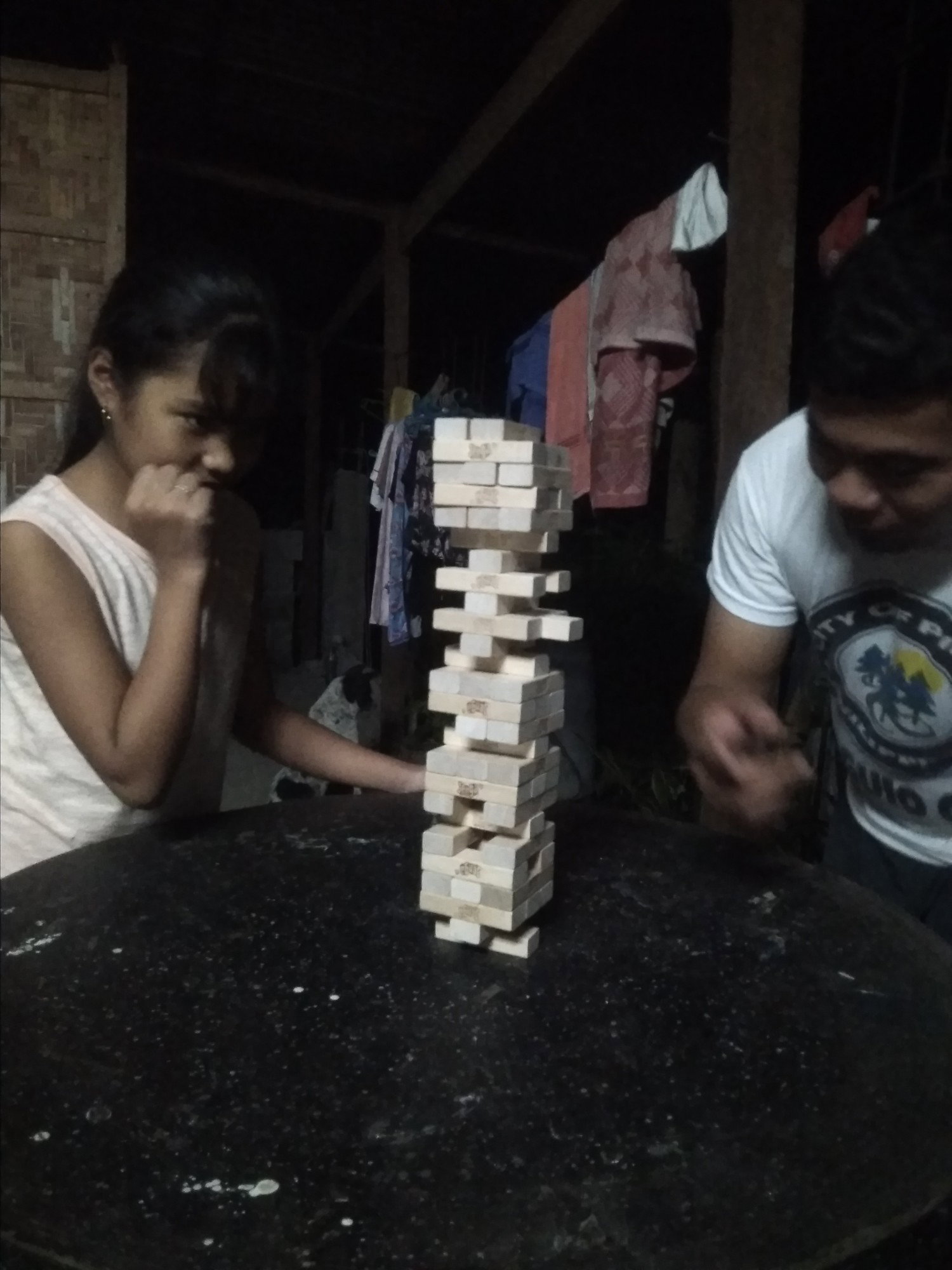
Our punishments of young people in Mug Church .
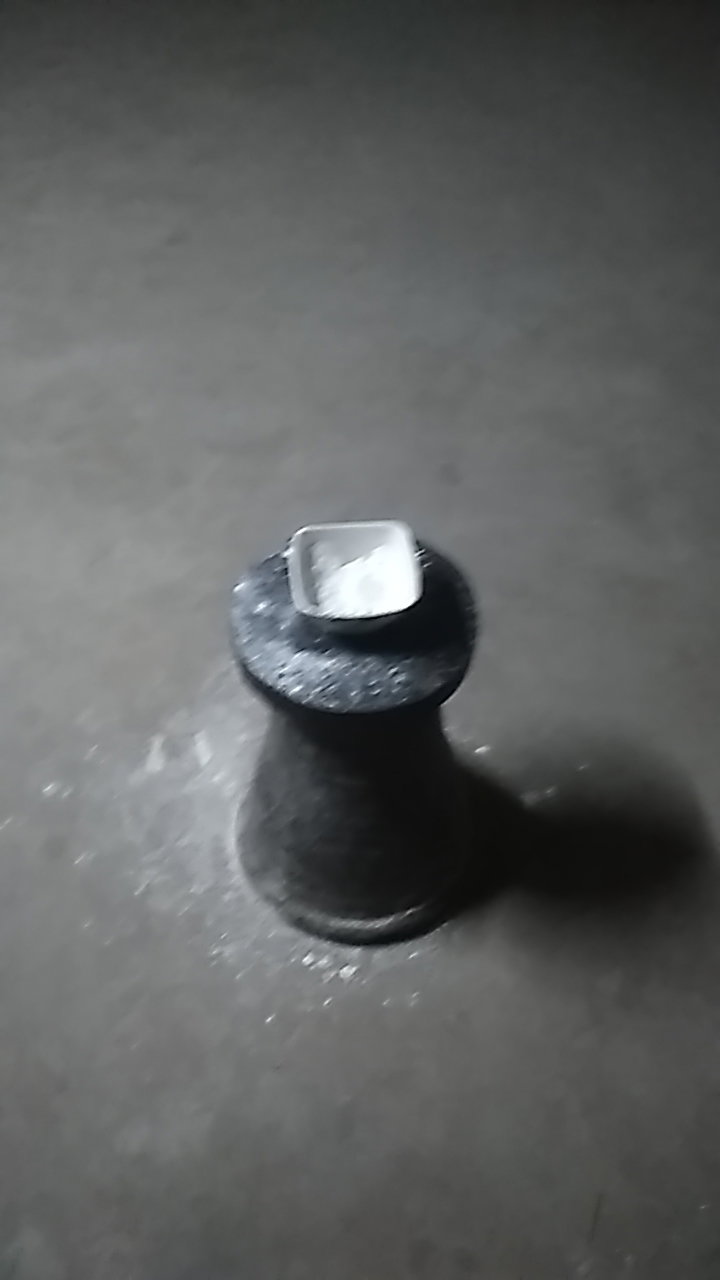
We make own punishments if you fall or crash the tower. You blow the flour in the plate.
When we play with the Young people of Mug Church.
I was in the point that challenge to me
I am in situation that I Fall the Tower so that what happen I blowed it and take the punishment because punishment is punishment for me.
*****How to Win in Jenga Game?*****
This is the tip
Be the last player to stock a block without causing the tower to crash .
Jenga Game is Good and Exciting .
@Orchidaceae
The Quest for Autonomy
To understand what is actually happening with junior highers in thesocial dimension of life, we must begin with a stock theme of adolescent psychology. Simply stated, it is a primary task of early adolescenceto break ties with the family and to establish an identity that is separate from parents or other authority figures. This is the adolescent quest for autonomy or independence.
Little children tend to be carbon copies of Mom and Dad. They follow their parents around, do what their parents tell them to do, believe what their parents believe. But when children reach adoles.cence, they want to be their own person, separate from their parents.They want to make their own choices and commitments, to be set free.
They want to be treated like adults, or at least to not be treated like children. This is when kids become highly critical of their parents and consider them and everything they do and think to be hopelessly old fashioned. They may be embarrassed by their parents and prefer not to be seen with them in the shopping mall or sit with them in churchbecause they don't want anyone to mistake them for children. While there are certainly exceptions, this behavior is normal and to be expected with early adolescents.
Obviously this accounts for many of the problems between parents and their early adolescent children. Many parents are caught completely off guard by this disturbing development. Some parents take it personally and feel terribly discouraged. They find it hard to understand why they are suddenly "losing control." They never had such problems before. Just when their children are finally learning to be good, obedient boys and girls, they become young adolescents and appear to take a giant step backward. I usually counsel parents that it s helpful to remember that adolescent development progresses via the detour of regression. Sometimes things have to get worse before they get better.
Many parents may understand this but are reluctant to allow it to happen. As their children move toward independence, they become more rigid and refuse to let out any rope. This results in clashes and strained parent-child relationships. Parents often need extra help understanding that their young adolescent child is not viciously turning against them. They need to know that the child is simply seeking autonomy trying to discover and establish her own identity as an individual, on the other hand , that parents should take a laissez-faire hands-off approch; this would be even more disastrous. Parents remain the most important influence on children throughout thier adolescent years. They are wise to work with their children, nurturing them by giving them a little more freedom, responsibility, and trust, rather than "provoking them to warth" while they are trying to grow up.
*****The Role of Friends*****
Along with this quest for autonomy comes a change in the nature of the relationships the young adolescent need and seeks out. A child's primary relationship is with his or her parents. Little children who grow up in healthy homes are generally showered with love, praise, and support from parents, which meets the relational needs of the child. Every child should feel that he is special, that he is the most important person in the world. They believe this because their parents tell them so. There is nothing wrong with this because their parents tell them so. There is nothing wrong with this kind of egocentrism. This gives the child security and confidence.
But when children grow into adolescence and begin their quest for autonomy and independence, they realize that the affirmation and support they get from parents is not enough. They need affirmation and support from "out there in the real world. " As children are beginning the process of leaving the nest, they want to know if they will feel as secure out of the nest as they did in it. They still need their parents' love, but they also need to find others who will validate their self-image in the world.
That's why, as I wrote earlier in my article, the most important question for a junior higher is "Do you like me? or "Am okay?" Junior highers want to what others think of them. Here, of course, is where Friends come in. Friends are the people who say, " Yes I like you; you are okay. I want to be with you. You are my friend. "For young adolescents, friends are mirrors, reflecting back a glimpse of who they are, and what their self-image looks like. If they can find friends,they feel good about themselves. If they cannot, they feel deep feelings of rejection and inferiority.
The junior higher's passion for friends explains some of the behaviors that we commonly associate with this age group, such as their penchant for self-absorption. They can spend hours in the morning getting ready for school, trying to decide what to wear or coiffing their hair. Psychologist David Elkind believes that every early adolescent play to an imaginary audience __ all those people who are watching him, thinking about him, making judgments about him__ and of course, that is everyone in the world. So it matters greatly how they look, what they say, who they're with, where they go. The most interesting subject to junior highers is themselves. If you want your junior highers to listen to you, talk about them. Make them the topic. You can be sure that they want to know what you think about them.
@Orchidaceae
Programming of Junior Highers
I would hope to be known as one who loved and built up people-not programs. It was for people, not
programs, that Jesus lived, died and rose. My legacy
must be in lives. Anything less would amount to very
little.
-Doug Burleigh
What does a successful junior high program look like? How
many meetings per week should there be? How many adults
should be involved? Should junior highers and senior highers
meet together or separately? Which curriculum is best? Are today's kids
too sophisticated to play games? What about confirmation classes?
How do I get my junior highers excited about Bible study? What about
sixth-graders-should they be included in the junior high ministry or
remain in the children's department should junior highers participate
in service projects? How do I motivate them to come? And, what is the
meaning of the universe?
Tough questions, all of them. Unfortunately there are no easy
answers that will hold true for everyone in all situations. A good answer
here might be a bad answer there. It's like telling someone that water is
good. That statement is true if you are thirsty, but not if you are
drowning. Likewise it's difficult to be specific about programming for
junior high groups. What works for one group may not work at all for
nother. People sometimes ask me, "What should my junior high
Program look like?" My best answer is usually something like this: "Do
whatever it takes to meet the needs of your kids. That could mean lots
meetings or no meetings at all, lots of activities or none at all. Lest
Sound like a complete evasion of the question, let me remind you
that Junior high ministry is first of all relational. The key is people, not
programs. If you love junior highers and are able to relate to them well,
just about any program will probably do the job.
Having said that, it's obvious that most junior high ministries
won't survive without programs. In this article I want to give you some
guidelines on how to go about creating a junior high ministry program
that will meet the needs of your kids and realize your ministry objec-
tives. I won't be describing for you the perfect junior high ministry
program (as if one existed), nor will I give youa list of program ideas
that are guaranteed to work with your junior high group. By the way, if
you ever see an advertisement for a junior high program that is
"guaranteed to work," be careful. "Guaranteed to work" is probably
pure marketing hype, especially when it comes to junior high ministry.
Still if you are brave enough to use them, I have include some of ideas for junior high ministry in this article.
*****The Purpose of Programs*****
Programs are tools that we use to make junior high ministry possible.
It's important to remember that they are not ends in themselves. They
simply provide opportunities to do ministry-to be with kids, to talk
with kids, to laugh and play with kids, to share Christ with kids.
Programs are the disposable part of youth ministry. It's best to "use 'em
and lose 'em." It's always dangerous to let programs determine what the
ministry will look like. It's the ministry that should instead determine
what the programs look like.
It's like the young couple who were preparing dinner. The
husband asked his wife, "Why did you just cut both ends off the ham
before cooking it?"
"Well, that's the way my mother always did it," she replied.
Later she asked her mother, "Mom, why did you cut both ends
off a ham before you cook it?"
Replied Mom, "Well, that's the way my mother did it." So mother
and daughter visited Grandma to ask her the same question.
"It was the only way I could get it into my pan," Grandma said.
The story illustrates how we sometimes keep on doing the same
thing in the church over and over-sometimes for generations-
without asking the question, "Why are we doing this?" I sometimes
suggest to youth workers that they consider throwing all their
programs out the window and starting over from scratch. (This is easier
said than done, of course, especially in a traditional church environ-ment) you may find out that you don't really need Sunday school classes, or those weekly youth group meetings, or that week at Camp F-U-N-Games. Those programs may have been perfect at some time in the past, but this is not your parents' junior high ministry.
To answer the question, "Why Junior are we high doing ministry. this?" it's helpful to
remember that the purpose of programming is essentially fourfold:
*****1. Programs help meet the needs of kids*****.
As we dicussed in this article programs for junior highers need to be
designed around an informed understanding of the needs of early
adolescents. We can't make the mistake of "drawing targets around our arrows." Using what we know to be true about junior highers as a guide, we can create programs that will not only be creative or fun or entertaining, but programs that will do something worthwhile.
There are all kinds of needs. In this article we have spent a lot of time looking at the developmental needs of junior highers have. We can say that they are common to the age group. If we have a good understanding of the needs of early adolescents, we will create programs that are developmentally appropriate for them. Unfortunately some junior high programs that are only discarded or warmed-over high school programs. The vast majority of junior high schools are nothing more than miniature high schools ___ which is why middle schools were created. The big idea behind the middle school movement has been to develop a new kind of school one that takes seriously the developmental needs of early adolescents youth. We will look at some characteristics of a junior high ministry program that is developmentally appropriate below.
There are other needs that will be specific to the junior highers
you are working with. Some needs will be determined by a particular
environment or ethnic background. Kids in Los Angeles have different
needs from those in Sioux Falls. The needs of urban Hispanic youth will
be different from those of suburban white kids. Needs will also be
impacted by news events of the day, popular culture, or individual life experiences of kids and families in your church. If your youths
this have
experienced the death of a friend, or have been victims of have crime, or
have lived through a natural disaster, they will have specific needs
which will dictate the kinds of programs you choose.
The best way to determine needs is to spend time with
kids.You can learn lot by reading books (like this one) and taking advantage of
other helpful resources specifically designed to keep you informed.
But there is no substitute for just being with students, finding out
firsthand their worries, concerns, fears, problems, likes and dislike opinions and ideas. Find out how they are feeling and what is important to them. Take surveys and conduct interviews with your kids
or with parents. Visit them in their homes, meet their parents, discover
their life situations. The more you know about your kids, the more successful your programming will be.
@Orchidaceae
Idealism and Pseudo-Stupidity
As junior highers develop new ways of thinking, they typically become very idealistic. Because they can now think in terms of possibilities, anything imaginable to early adolescents seem possible. And they tend to imagine things in terms of perfection. They have a hard time being realistic. They will offer ideal solutions to complex problems and perfect outcomes and alternatives to every situation. This characteristic of early adolescent thinking is very strong because their thought process lack ability to make the connection between what they think and what is reality.
Psychologist David Elkind calls this idealism pseudo-stupidity. It looks like stupidity when in fact it is not. It's just that the obvious or the realistic seems to elude them. For example, when a junior higher loses a sock or shoe or a book, he may look in the least obvious places. Instead of looking under his bed or the bottom of his locker,he will come up with mysterious conspiracy theories involving fellow students or even aliens from outer space. A junior higher may approach subject in school at a much too complex level and fail,not because the assignments are too difficult but because they are too simple.
When young adolescent make the shift to formal operational thinking,they need time to learn how to use their new thinking abilities. They don't always have them under control. The ability to weigh many different alternatives is not yet coupled with the ability to assign priorities and to decide which choice is most appropriate. Consequently, they often appear to be stupid when, in fact, they are too bright.
It is typically for junior highers to suspect complex, devious motives in the behavior of their friends, teachers, parents, brothers, and sisters for the simplest or most accidental occurrences. A simple discussion with a junior higher can become extremely complicated and sidetracked by the young adolescent's overeager intellectualization of the issue at the hand. This can result in miscommunication, misunderstanding, frustration,and, more often than not, hurt feelings.
Delia Ephron offers an example of this in her book Teenage Romance. What follows is a conversation between a mother and her teenage daughter. The situation: It's Saturday night and the girl's mother is insisting that she be home by midnight.
Oh,Mom, come on. Nobody gets home that early, nobody! Do you want me to be the only kid in the entire group that has to leave early? The only one can't stay out? Do you? Do you want me to ruin everybody else's time because I have to leave because my mom doesn't trust me while everyone else's mom does? Is that what you want? Is it? Great, just great. You're really getting impossible, you know that? You've changed, Mom, you have. You never listen, you never try to understand. You just give orders_ do this,do that .... You never let me do anything I want. Never. If you had your way,I'd be in jail. You know, you're running my life. Probably no one will ever invite me anywhere again as long as I live. I'll probably never have another date. I'll spend the rest of my life in my room.
It is helpful to remember that junior highers may sometimes think this way. They may say things that sound stupid and unreasonable when in fact they are being as reasonable as they can at this point in their development. As junior high workers, we should be as understanding and as patient as possible when confronted with the idealism of young adolescents. We can help them learn to be realistic and mature in their thinking by being realistic and mature in our responses.
The idealistic nature of junior high thinking can also be one of the endearing qualities of early adolescence. Sometimes their idealism translates into the kind of enthusiasm that is hard to find with other age groups, especially adults. For example, when you tell junior highers that God wants to use them to change the world, they get excited. They believe it! They see all kinds of possibilities and are ready to go change the world. Our challenge is to help channel some of that idealism into real opportunities for service so they don't become cynical and discouraged.
@Orchidaceae
Self-Esteem and the Early Adolescent
With all the changes that are taking place in the life of early adolescents, it's not surprising that they struggle with the feelings of the insecurity and self-doubt. Psychologists say that a person's self-esteem reaches its lowest point during early adolescence, particularly between the ages of 12 and 15.
Self-esteem ( sometimes used interchangeably with self-concept or self-image) is basically what or how people think about themselves.
There are many factors that contribute to a person's self-esteem, but chief among them is how other people relate to them. As wrote earlier, other people are like mirrors who reflect back to the young adolescent his or her self-image. If others treat them with respect, they will be more likely to treat themselves with respect. On the other hand, if others mistreat them, they will be more likely to mistreat themselves. Youth who develop a positive self-image and more confident, more successful at school, better solvers ,better able to cope with stress, and less vulnerable to negative peer pressure. They are also less likely to become discipline problems. Conversely youth with low self-esteem are generally more vulnerable to negative peer pressure and self-destructive behaviors.
Family therapist and former junior high worker Bill Wennerholm has identified a number of steps that young people must take to build self-esteem and to become healthy adults. They are part of a gradual process that usually takes several years:
The establishment of emotional and psychological independence from parents.
The achievement of a separate personal identity.
An ability to motivate oneself and set one's own goals and direction.
The development of one's own values and beliefs.
The ability to be in intimate reciprocal relationships.
The establishment of an appropriate sexual identity, which includes accepting and appreciating one's own unique body.
The ability to function in a work capacity.
Each of these steps takes time and requires the cooperation and feedback of others, especially parents and adults who interact with early adolescents. Notice that none of these steps are directly related to self-esteem. Just as happiness can't be achieved by acting happy, so a positive self-esteem is not achieved by thinking positive thoughts about yourself. True self-esteem is not contrived or pumped up. Its is a by-product of healthy development and healthy relationships. Self-esteem comes, as the old TV commercial used to say, the old-fashioned way: it has to be earned.
H.Stephen Glenn and Jane Nelson, in their book Raising self-reliant Children in a self-indulgent World offer another list they call The Significant Seven. It includes three perceptions and four skills that all children must acquire in order to develop a healthy self-concept and to function in the world as capable, self-reliant adults.
PERCEPTIONS
A strong perception of the personal capability. ("I am capable. I can do things for myself. ")
A strong perception of personal power. (" I can influence or control what happens to me. I am not just a victim of circumstances that happen to me.")
A strong perception of personal power. ("I can influence or control what happens to me. I am not just a victim of circumstances that. happen to me.")
SKILLS
Strong intrapersonal skills. The ability to understand personal emotions and use that understanding to develop self-discipline and self-control and to learn from experience.
Strong interpersonal skills. The ability to work with others and develop friendships through communication, cooperation, negotiation, sharing, emphathizing,and listening.
Strong systemic skills. The ability to respond to the limits and consequences of everyday life with responsibility, adaptability, flexibility, and integrity.
Strong judgment skills. The ability to use wisdom and evaluate situations according to appropriate values.
Building self-esteem is a multifaceted task. It involves having opportunities and tools to feel competent and successful at doing things. It involves learning how to make good decisions, how to solve problems and how to overcome mistakes. It involves getting recognition, encouragement, praise, and unconditional love from others__ especially from parents and significant adults.
@Orchidaceae
Avoid Embarrassing an Early Adolescent
Junior highers can be very cruel at times and take every opportunity to point out deficiencies in each other whenever it is to their advantage. They think that by making fun of someone else they can make themselves look superior. Usually junior highers are able to bounce back without any problem after some good-natured ribbing, but putdowns, ridicule and the accompanying embarrassment can be very damaging to relationships and to self esteem. A few years ago, a tragic story in a small town in Missouri made national headlines when a 12 year-old boy brought his father's gun to the school and killed a classmate who had repeatedly called him "chubby ". Then he turned the gun on himself and committed suicide."He was relentlessly teased about being fat,"said his teacher. "But neither of these boys were problem students. "While such extreme behavior is rare, it illustrates the magnitude of feelings that young adolescents carry with them when they are struggling with issues regarding their physical appearance. This is why it is so important for us to avoid situations in which kids might be looked down on because of ability, handicap, appearance, or physical development in general.
As a junior higher, I was a slow developer and not athletic as other boys my age. Because of that I did not enjoy my P.E classes at school. I enjoyed playing games and good competition as much as the other kids,but I hated when they would choose up teams. I was inevitably chosen last,simply because I wasn't very good at sports, and it was humiliating every time it happened (even though I didn't blame anyone for choosing me first. ) My label as a klutz was difficult to overcome, even though I caught up with most of my classmates in high school and did fairly well in sports later on.
This is why chapter 12 includes some games that are great for junior highers. Almost anyone can play them because they require little in the way of skill or ability. Why make junior highers suffer through like football, basketball, and volleyball when only a few people can excel at them? There are plenty of other games available that are fun,physical and very competitive ( which junior highers love) but downplay athletic ability. These are the kind of games we should play with junior highers. I visited a junior high gym class recently and watch a seventh-grade coed volleyball game. What a disaster! The kids hated it and couldn't wait for it to be over. Most of them were unable to return the ball successfully over the net. It was humiliating, especially for the boys. I was tempted to step in and show them a few games that were both fun and easy to play.
Despite all that you or anyone else can do, there is no good way to prevent junior highers from experiencing some embarrassment as long as they are around other people. It's normal and inevitable. But a junior high worker will at least be sensitive in this area,avoid putdowns and ridicule, and try to find ways to help each person feel accepted, liked, and important.
@Orchidaceae
It Takes Time~Your Time
You may have sensed by now that good high ministry could require a sizable portion of your time. It takes time,after all, to build relationships with individual students while organizing all the meetings, classes, outings, and so on. Time is a very important factor in the potential effectiveness of a junior high worker in the church, and the time demands can be discouraging. Rarely does anyone have more than enough time. With today's busy schedules, problem is usually finding any time at all.
Speaking from personal experience, this shortage of time can be the downfall of any well-intentioned junior high workers. You may like junior highers and have a strong desire to minister to them, but just be too busy to put that desire into practice. For the reason, I always list as a prerequisite for the junior high worker a willingness to allocate enough time to do an adequate job. The actual amount of time will vary a great deal from person to person, but it is certain that it will take more than an hour or two on Sunday.
Time plays such an important role because it is tied up with the fact that junior highers view things pretty much in black and white categories. That is, you are either a friend to them or you are not. When you say one thing and fail (or are unable) to back it up with your actions, you run the risk of being categorized as hypocrite. That, of course, is not always accurate, but proving otherwise can sometimes be difficult. Junior highers characteristically fail to understand adult obligations, and they often take this to mean that some other task is more important than they are.
The bottom line here is that junior high ministry must be more than good intentions. It does require time. When I look for someone to help with a junior high group, I try to find someone who is not already committed to dozens of other jobs in the church, since I don't want these other jobs to rob them of the time they are going to need to be with junior high kids.
On the other hand, I have learned that a little bit of time is always better than no time at all. If you are a volunteer, as most junior high workers are, you may have only one or two hours a week to do junior high ministry. You may have time to call or visit only two kids all month. But that's great ! Chances are that's more time than anyone else was able to give to those two kids all month, and God will bless that. Jesus fed a multitude with two fish; he can also work wonders with two hours.
@Orchidaceae
Adolescent Relapse
It would seem logical that with newly acquired mental capabilities, junior highers would be anxious to excel academically and to put their improved brain power to work,but the opposite is often true. For many junior highers, the quality of schoolwork goes down, not up, during their early adolescent years . Kids who may have excelled academically during their prejunior high years often do quite poorly when they reach adolescence, much to the dismay of parents and teachers alike. Junior highers seem intellectually lazy and bored with learning. This is something called adolescent relapse and it poses a frustrating problem for both school teachers and junior high workers in the church .
As I wrote earlier, some people have distributed this development to a decrease in brain growth which occurs during early adolescence, but such an explanation is not only dubious but overly simplistic. There are other good reasons why adolescent relapse is normal and to be expected.
First, one has to keep in mind that early adolescence is a time of rapid growth and enormous change. Kids are growing and changing in every area of their lives and this result in some major distractions. There are what I call other urgencies that take priority over academics at this time in a young person's life. Getting good grades simply becomes less important than making friends, falling in love, separating from parents, looking good, fitting in with the right group, and becoming popular. There is a lot going on in the life of the early adolescent, to say the least. To expect a junior higher to be a good student at this time in his life is not always realistic. It's not easy for school teachers (or junior high workers in the church)to make history lessons (or Bible lessons) interesting enough to prevail over these "other urgencies ". It is often not until the 10th,11th, or even the 12th grades that young people develop a driving intellectual curiosity and a pleasure from dealing with ideas. This makes designing junior high curriculum a real challenge for everyone involved.
A second reason for adolescent relapse, closely related to the first, is the newness of not only their new thinking abilities, but the educational setting in which they must learn. Most junior high and middle schools require early adolescents to adjust quickly to an entirely new way of relating to their teachers and their curricula. Students often have difficulty getting themselves organized for each class and being responsible for their assignments without a teacher watching and guiding them every step of the way, as is usually the case in elementary school. For a time the disorientation that early adolescents experience can negatively affect their school work.
Thirdly, because of all the internal changes they are experiencing, junior highers have shorter attention spans and shorter concentration levels than other age groups. This is handicap that forces them to work twice as hard to learn about the same as they did in elementary school. This can be discouraging for young people who are doing their best but doing worse. Teachers can help students by reassuring them that they are doing fine and that eventually all their hard effort will pay off.
Another cause of adolescent relapse has to do with motivation. Junior highers are not sufficiently motivated to perform at a high level academically. They are actually between motivations. When they were younger they were motivated to do well in school because it pleased their parents. They would bring their papers home from school (with good grades on them) and their parents would proudly display them on the refrigerator door. This motivated them to continue to get good grades. When they get older, they will again be highly motivated by a desire to be better equipped for adulthood, to get a good job, or to expand their knowledge on a particular subject. But during the early adolescent years, they are caught between these two motivations. They are motivated neither to please their parents nor to prepare themselves for adulthood.
@Orchidaceae
Everybody's Thinking about Me, Right?
Another characteristic of young adolescence made possible by the advent of formal operations is what Elkind has called the imaginary audience. It is this characteristic that accounts for the junior higher's extreme self-conscious. Formal operations enable young people to think about other people's thinking. This new ability to think about other people's thoughts, however, is coupled with the inability to distinguish between what is of interest to others and what is of interest to the self. Since junior highers are prprimarily preoccupied with themselves, they assume that everyone else has the same concern. Young adolescents believe that everyone in their vicinity is thinking about what they themselves are thinking about, namely "me". They feel like they are appearance and behavior as they are. They surround themselves with an imaginary audience.
This is another reason why young people teenagers will spend so much time in the bathroom bathing and combing their hair. When they stand in front of the mirror, they imagine how everyone else will see them and what they will think. Everyone does this to some extent, but with junior highers, it is commonly obsessive.
The imaginary audience also helps to explain why junior highers feel such a need to show off or to engage in disruptive or destructive behavior. In many respects such behavior is really a performance. When a young person commits an act of vandalism, for audience than he is about destroying property.
Fortunately imaginary-audience behavior tends to decline with age as young people come to realize that other people have their own problems and concerns. But until then the imaginary audience is very indeed. Elkind suggests that we can help kids learn to differentiate between their own concerns and the concerns of others by taking a middle-ground position. If a junior higher says that nobody likes him, for example, it would do no good to tell him that people do like him. Instead, it would better to say, well, I like you. And frankly I can't understand why others wouldn't like you, too. What do others say or do that makes you feel that way? This approach helps kids to test their feelings against reality and to see the world as it really is.
@Orchidaceae
The lie of the Personal Fable
Sometimes the idealistic nature of early adolescent thinking causes junior highers to temporarily hold an unrealistic view of themselves. Elkind has labeled this view the personal fable. It is a form of self-centeredness that says, "I am a special case. I am unique." Indeed, young people are special and unique, but the personal fable distorts reality to the point that the young person sees himself as immune or invulnerable to the things that happen to other people. "Others will get pregnant, but not me. Others will get hooked on drugs, but not me." The personal fable is an untrue story that young people tell themselves.
It is often futile to talk to junior highers about the consequences of their behavior, because they don't believe those consequences will actually happen to them.
They believe they will always be the exception. When kids get into accidents, get pregnant, or get involved with drugs, they do these things not because they have chosen to accept the consequences would happen to them. In the perfect world of early adolescence, things that happen to other people don't happen to them.
Despite the widely publicized health risks associated with smoking cigarettes, early adolescents continue to smoke at an alarming rate. When American Cancer society created a series of anti-smoking poster featured a celebrity with cigarettes stuck in her ears. The headline read, "Smoking spoils your looks". This poster was so effective because it emphasized smoking's effect on "how others see you "(the here and now) rather than "what might happen to you" in the future. Similarity, many junior highers express their fear of getting AIDS in terms of what others would think of them rather than in terms of the health risks.
Another example of the personal fable is the junior higher who says ," You don't understand me. You just don't know what it feels like!" The young adolescent perceives that his feelings and needs are so unique that they are beyond the realm of anyone else's understanding, especially that of adults. Sometimes this can make communication with a junior higher difficult, particularly when you are trying to let him know that you do understand.
It is usually unwise to argue with a young adolescent about this. Instead, accept her point of view and encourage her to check her version of reality against that of others. Rather than trying to persuade a junior higher that his perception of himself is wrong, you can help him see that other people are just as special and unique as he is. If we try to understand others better, then that opens the possibility that others can also understand us better.
Have a nice day!
BY: ORCHIDACEAE
What wrong with me?
*****I look so strong 💪, but you know Im tired🤦.Tired of being okay with things Im okay with.*****
*****I want to give up already but i know that i can't.*****
*****I want a long long hug, Im mentally, physically and emotionally tired.*****
*****I hate that moment when i Know im gonna break down and in need of a shoulder to cry on, But Will soon I realize that nobody's there, Im by myself, Im always by myself. I don't want to be alone I need somebody to hold me tight even if its just this time.*****
*****at night in our room, we can be our time selves, No pretending, no happiness. Just pure pain and sadness.*****
*****Can i have a night where there's no sadness and pain?*****
*****I cannot make anyone understand what is happening inside me But I want to say thank you to all the people who still love me at most unlovable*****
*****I may feel lost and alone. But God knows where am I and has a good plan for my Future*****
Thank you!
Have a Nice Day!
*****By: Orchidaceae*****
Shivering from the cool ocean breeze
*****SHIVERING FROM THE***** *****cool ocean breeze, they clung to the ferry boat with chattering teeth. Half-naked bodies, torn underwear, barefooted, water soaked hair, they could not be more than 14 years old. Most of them were much younger. Warm smiles covered their smooth round faces. Their dark brown eyes begged the crowd for another coin to be cast from the deck above them into the deep blue waters slapping gently against the ferry boat.*****
*****A friend and I were returning from a tragic mission trip on the island of Leyte. Days earlier, while operating my ham radio from Legazpi City, I had received news over the airwaves of a devastating flood in Ormoc City. Within hours, my friend and I boarded a midnight bus traveling to Samar from Legazpi City. On Samar island, the next morning we joined another friend for the final day of travel to Ormoc City.*****
*****After helping the victims of the flood for several days, we began our journey back to our homes on Luzon. While waiting for the ferry boat to transport us back across the San Bemardino Strait between the islands of Samar and Luzon, several passengers passed their time by tossing coins to eager young swimmers bobbing in the sea alongside the ferry.*****
*****Frequently, in order to provoke the passengers to cast a monetory offering into the sea, the young swimmers would dive high above the water. Each coin cast into the sea sent a wave of young boys from the ferry decks into the cool sea water----- parang mga isda sa dagat.*****
*****Undoubtedly, the boys are part of along history of accomplished divers. Probably, like their older brothers and fathers before them, they have entertained batch after batch of bored passengers, waiting to ferry the short distance from one island to the other. Their bravery, along with their warm smiles and enthusiasm, has captivated the hearts of thousands of weary travelers through the years.*****
*****In my opinion, however the most astonishing activity by the young boys is not their ability to drive from great heights into the sea below, retrieving the small coins sinking slowly into the deep blue water. But instead, for my part, their greatest skill is their ability to swim almost endlessly in the swaying waters. Many of the youngest boys effortlessly kicked their feet in a frog-like motion for hours, waiting for the next coin to fall from the sky .It is truly a spectacle worth seeing.*****
*****Despite the unbelievable abilities of those young boys. the Bible tells us about a Spectacle of much greater significance. When St. Paul addressed the church in Rome, he warned:*****
***. . .*** *****evervone has sinned and is far away from God's saving presence. But by the free gift of God's grace all are put right with him (God) through Christ Jesus, who sets them free.*****
*****Romans 3:23-24*****
*****According to the teachings of the Bible, everyone is a sinner. Because we are born into the world as sinners, no person-is without sin.*****
*****Since the fall of Adam and Eve, every person born into this world has a sinful nature and tendency to sin.*****
*****St.Paul says:*****
*****Everyone has sinned and is far away from Gods saving presence.*****
**That means everyone, including you and me! You may be arguing:**
*****• I am only human.*****
*****• I am not a bad person.*****
*****• I do good works.*****
*****• I attend mass regularly.*****
*****• I have never killed anyone*****
*****• I have tried to fulfill the ten commandments all my life.*****
*****No matter how good you are as a person, just like those swimmers who are unable to swim from the Philippines to the U.S., you cannot get Into God's Kingdom by your own efforts and good works. No matter how much better you are than me, you will not be able to get into heaven without the help of Jesus. It does not matter how hard you work if you do not trust Jesus to save you from death and destruction, you will ultimately die trying!*****
*****Despite your sinful nature, it is God's will for you to receive His free gift of eternal life.*****
*****Remember, you are only able to reach God's heaven by His grace. You cannot save yourself from the judgement due for your sins. It is only by the grace of God that you are able to enter His kingdom. In fact, the Bible warns that you:*****
*****Consider a few lessons from this Bible verse:*****
•***Only one sin makes you a sinner. Even if it is a little or big sin.***
***•Only one sin will separate you from a holy God***
***• Only one sin leads to death, because you cannot live with a holy God.***
*****Like all people born into this sinful world, your greatest problem is your sin which separates you from a loving and holy God. Because God is holy, he cannot look upon your sin. Your sinful nature will cause you to be separated from the presence of God in heaven. Your sinful nature prevent you from fulfilling God's purpose for your life. Like all other sinners, you deserve death, and punishment as payment for the sin in your life*****
*****Remember. however, God loves you. He has a purpose for your life. Despite your sinful nature, it is God's will for you to receive His free gift of eternal life. It Is God's will for you to enter His heaven.*****
**Have a nice Day!**
**By: Orchidaceae**
**Thank you!**
Our Savior and Our Liberator
*****OUR SAVIOR***** and *****OUR LIBERATOR*****, proclaimed banners hanging across streets and buildings every. where throughout the city.
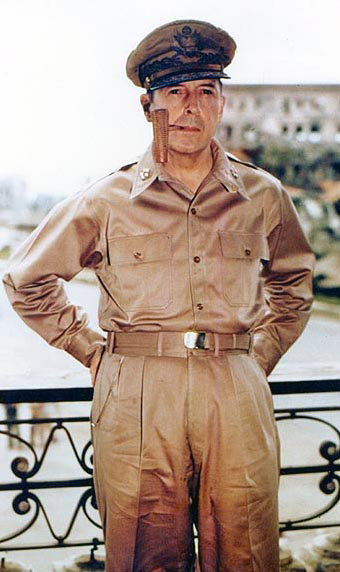
***At 4:30 P.M., . Julyy 3, 1961. General Douglas MacArthur arrived at the Manila International Airport aboard a Military Air Transport Service jet provided by U.S. President John F. Kennedy. Responding to an invitaiion extended earlier by President Carlos P. Garcia, MacArthur had come home in order to participate in the celebration of the fifteenth anniversary of Philippine independence.***
***Greeted by an explosion of pandemonium, MacArthur, at age eighty-one, stepped off the Boeing 707 jet dressed in his familiar khakis and crushed cap. Respectfully, he saluted the dignitaries assembled to welcome him for his first visit to the Philippines since the end of World War II. Following words of greeting, a band played the ballad "Old Soldiers Never Die." Afterwards, MacArthur and his wife, Jean, settled into a limousine for the shon journey from the airport to Malacañang Palace.***
***Huge crowds numbering in the millions packed the streets and dangled from building windows during the trip to the palace in order to catch a glimpse of the man most Filipinos considered to be a native son. Despite the short distance from the airport to the palace, the motor. cade took two hours to travel through the massive crowds of people. Nagsiksikan! Even the school children, taking advantage of the officially declared national holiday, chanted songs praising MacArthur as young girls tossed flowers in his path. MacArthur himself proclaimed the trip "a sentimental journey."***
Almost twenty years earlier, *****MacArthur***** had uttered three of the most famous words in world history. Following his forced evacuation from Corregidor to Australia, during World War II, MacArthur had boldly proclaimed to the Filipino people, "*****I shall return.*****" Weeks earlier, as overwhelming Japanese forces pounded "the rock," MacArthur received a message from Franklin D. Roosevelt, the U.S. President. Roosevelt instructed MacArthur to proceed to Australia in order to assume his newly appointed responsibility as supreme army chief for the Pacific. Prior toLo his departure, however, MacArthur was advised by Carlos Romulo, the chief Filipino propagandist of Corregidor, to extend a promise directed at Filipinos assuring them of his ultimate return to the Philippines. According to the words of Romulo, "if he says that he is coming back, he will be believed" *****_paniniwalaan siya.*****
***Of course, the world knows MacArthur waded ashore on the beaches of Leyte on October 19, l944, and proclaimed though a radio transmitter:***
*****People of the Philippines, I have returned. .. . Rally to me! . . . The guidance of divine God points the way. Follow in His name lo the Holy Grail or righteous victory!'*****
*****General Douglas MacArthu*****r
*****Jesus promises those who have faith, "I will come back."*****
The rest is history. Seldom are men fortunate enough to make and actually fulfill as great a promise as that of General MacArthur. Not only had he been able to fuIfill his first promise to return in 1944, but now he was able to return for a second dramatic appearance in 1961. It was truly a *****"second coming." Tinupad niya ang kanyang pangako!*****
*****THINK ABOUT IT*****
As exciting and dramatic as those moments must have been to Filipinos and the world, they are as total darkness compared to the brilliant light radiated by the second coming of the Son of God, Jesus Christ promises those who believe:
*****. . . after I go and prepare a place for you, I will come back and take you to myself, so that you will be where I am.*****
*****John 14:3*****
Despite winning the hearts of millions of Filipinos, General Douglas MacArthur is not *****"OUR SAVIOR" nor "OUR LIBERATOR."***** No matter how much you may or may not approve of MacArthur, he was just a man. In spite of his commitment to return to the Philippines during World War II, General MacArthur was as human as you and I are human. Tao lamang siya. However, the Son of God was not just a man, He is God. When He says He will return, He will certainly return! ***Tiyak na babalik siya dahil ipinangako niya***.
*****If you are willing to place your faith in Jesus right now, you can look forward to eternal life with him in heaven. He promises you that you will spend eternity with Him in heaven when you place your faith in Him as your Savior.*****
*****Your faith in Christ alone, not your works or commiment to church and human rituals, assures you a place in the Kingdom of God. If you are willing to trust in Jesus as your Savior, then the words of St. Paul will bring assurance and comfort to your life:*****
For we know that when this tent we live __ Our body here on earth-is torn down, God will have a house In heaven for us to live in , a home he himself has made, which will last forever. 2 Corinthlans 5:1
According to St. Paul, when you receive eternal life as a free gift from God, you will only live a full and meaningful life__***buhay na malabuluhan***-here on earth, but you will spend eternity with Jesus in Heaven.
*****PRAY ABOUT IT*****
***I am grateful that you have promised to return to earth from heaven, Lord. There may be difficult days in my life when I feel discouraged and hopeless, but I know you have provided hope through your Son, Jesus Christ. Thank you for loving me and providing a Savior for my life.***
*****Have a nice Day!*****
By: Orchidaceae
Thank You!
Dont Quit Just Pray
*****And I noticed that some people thought that suicide is the best way to escape their trials and pain . No, Isn't. Just Pray and Cry so that you can release that pain and find solution coz i know God heal you and help you anytime*****.
***And i know God give you that kind of pain because God knows that you can do it, your Strong and you can Overcome the pain that you feel. Just keep believing him and yourself. cheer up!***
"***Trials are not reason to give up and our pain is not an excuse to quit. Be strong pray, believe and trust God.***"
Keep believing yourself!
By: Orchidaceae
Thank you!
Life And Death
*****WHEN QUESTIONED ABOUT***** his exile in Hawaii during an interview with the National Broadcasting Company (NBC) on December 9,1986, Fernand E. Marcos, former present if the Philippines remarked:
It is not a choice of life, it is a choice of death. If this is life, I'd rather die.
*****Ferdinand E. Marcos*****
***Nakapalungkot naman!__*** how unfortunately sad! When faced with the choices of *****life and death*****, there is nothing sadder than facing either life or death without friends at our side to comfort and fellowship with us. Most of us can only imagine the loneliness of being isolated from us compadres, our country, and our creator. In fact as in the case of deposed President Marcos, life may seem more cruel than death__ ***malupit daw ang buhay***
Of all the men called upon to make the choice between life and death, in my opinion none looms larger than St. Paul. While exiled from his homeland to a prison in Rome, St. Paul questioned:
***• • • what is life? To me, it is Christ. Death, then, will bring more. But if by continuing to live I can do more worthwhile work, then I am not sure which I should choose. I am pulled in two directions.***
Philippians 1: 21-23
St. Paul was faced with a very difficult choice. If he died, he could be with Jesus right away. That would mean freedom from his cold prison cell. He would no longer suffer the pains of *****imprisonment*****.He would no longer be an exile in a foreign country. Imagine, no more lonely nights. No more of the endless separation from friends and relatives. Most of all, however, death would mean he could be with his Lord, Jesus Christ, immediately! Every true Christian who has placed his faith in Jesus as Savior and Lord looks forward to being with Him in His kingdom. Jesus promises every believer:
***There are many*** *****rooms in my Father's house,***** ***and I am going to prepare a place for you. I would not tell you this if it were not so. And after I go and prepare a place for you, I will come back and take you to myself, so that you will be where I am.***
***John 14:2-3***
St. Paul, on the other hand, had another choice. He wrote:
***••• if by continuing to live I can do more worthwhile work, then I am not sure which I should choose... but for your sake it is much more important that I remain alive. I am sure of this, and so I know that I will stay.***
***Philippians 1:22; 24-25***
If St. Paul remained alive, he could help his fellow Christians face their own spiritual struggles. He would be able to teach new believers about Jesus. He would be able to provide fellowship and training for young spiritual leaders and Christians. He would also be able to continue writing inspirational letters of encouragement to the young Christians and churches.
More than that, however, he could help those who were not christians . He could use the opportunity to explain God's free gift of salvation to those who did not understand God's purpose for their lives. He could warn unbelievers that their good works are worthless without faith in Jesus alone.
Remaining alive would give St. Paul the Opportunity to explain God's grace towards sinners He could help others understand the need to confess their sins to Jesus. St. Paul would also advise others to turn from their sinful lives to Jesus Christ through faith. He struggled passionately__ ***alin ang mas mahalaga?*** Paul said:
***••• I am not sure which I should choose. I am pulled in two directions.***
***Philippians 1:*****22-23**
*****THINK ABOUT IT*****
Like President Marcos, was faced with a very difficult choice. Unlike the former president, however, after prayerfully turning to Jesus and his friends for guidance, St. Paul chose to remain alive and minister to his friends while living in exile__ ***mas mahalaga ang buhay***.
Despite difficult circumstances, St. Paul believed God love him. He was assured of God's free gift of eternal life many years prior to being thrown into the Roman prison. Now, in spite of the hard life found in prison, did not complain or blame God for the hard times he had to endure in prison. He did not become bitter and angry at God. ***Hindi siya naghinakit.***
*****when you place your faith in Jesus Christ and receive His free gift of eternal life, your life immediately becomes more meaningful.*****
In fact, St. Paul praised God for giving him a reason to Live and share his faith with others. He believed the isolation from relatives and friends in a cold dark prison cell was worth suffering in order to be with those who needed him. ***Hindi siya nag-iisa.*** The need for others to hear and believe the good news about Jesus was greater than his own selfish desires. St. Paul had really discovered a life worth living. His life in Christ was worth living! Jesus assures you that, like St. Paul, you can also live a full and meaningful life right now. When you place your faith in Jesus Christ and receive His free gift of eternal life, your life immediately becomes more meaningful. Jesus wants you to know that:
***. . . the thief comes only to steal and kill and destroy, but he ( Jesus) came that you may have life___life in all its fullness.***
***John 10:10***
Unlike the thief who takes life by killing and destroying, Jesus gives life. Through His grace and *****free gift of eternal life*****, you can enjoy an abundant Christian life right now! 0o, ngayon din. However, you must be willing to receive God's free gift graciously. You must understand and agree that faith in Jesus is the only way to salvation and God's kingdom, not your good works. Jesus rightly proclaims about himself:
*****I am the way, the truth, and the life; no one goes to the Father except by me. John 14:6*****
A willingness to receive God's grace through faith in His Son Jesus Christ will bring immediate peace and understanding to your life. The moment you confess your sins to Jesus, admit you are unable to save yourself, and place your faith in Jesus Christ alone, the gift of eternal life begins in your life.
When you graciously accept God's ffee gift of eternal life, you actually receive more than eternal life. Your faith in the Son of God, Jesus Christ, as your Savior will lead you to a clear understanding of God's purpose for your life through the working or His Holy Spirit. God truly loves you and has a purpose for your life. St. John shares the Good News with you when he proclaims God's love:
*****God loved the world so much that he gave his only Son, so that everyone who believes in him may not die but have eternal life. For God did not send his Son into the world to be its Jugde, but to be its savior.*****
*****John 3:l6-l*****
You are the world that God loves. You are the world that God's Son, Jesus Christ, died to save. Jesus Christ died so you could live. God's purpose for your life is for you to receive His free gift of eternal life. God wants you to enjoy a meaningful and fruitful life right now. God wants you to know *****"LIFE CAN BE A BLOWOUT"***** if you receive His free gift through faith right now.
*****PRAY ABOUT IT*****
Jesus, thank you for giving life. Thank you for the free gift of eternal life which you offer to me. Sometimes I have difficulty understanding your desire for my life, but I pray you will help me discover the truth. Do not allow me to become defeated and discouraged with life. Please free me from rituals and meaningless religious ceremonies. Please free me so I can experience an abundant life through Jesus Christ.
*****Have a Nice Day!*****
By: *****Orchidaceae*****
*****Thank you!*****
Change the way they threatened you
lt's *****hard***** to *****see people change*****, specially when you *****miss the way they threatened you before.*****
Have a nice Day!
Enjoy
By: *****Orchidaceae*****
Nothing Is Free, Is There?
349 MAY BE THE MOST famous number in Philippine history.
According to media reports, about 500,000 Filipinos each ultimately claimed P500 prizes. The embarrassing mistake has already cost the promoters an estimated P250 million. It has turned out to be the largest corporate payoff to consumers in Philippine history. ***Nakapasakit kuya Eddie!***
They Called it ***Number Fever! . Millions of us collected tansans² for weeks.*** Each day, driven by the appeal of instant wealth, our families worked industriously to gather the ***tansans in hopes of becoming instant millionaires.*** None of us knew there were only 60 winning numbers. The odds of anyone becoming an instant millionaire were about 1 in 28.8 million. The chance of fulfilling our dream of instant wealth was almost impossible. Although the promotion began as a sincere effort to boost cola sales, it ultimately proved to be a nightmare for those involved. Tsk! Tsk! Tsk! Within weeks the promotion had increased corporate sales from a 17 percent market share to a 24.9 percent market share. Success encouraged the promotor to extend Number Fever for five more weeks beyond the original campaign. That decision proved to be very costly. ***Naku, laking pagkakamali***!
On May 25, 1992, company officials announced the winning number, 349 for the May 26 date. Within hours officials realized they had made a very serious mistake. They realized as many as 800,000 Filipinos could be holding the number 349 from the original contest. Adding to the confusion, the company tried to correct the mistake by announcing a new winning number, 134. But it was too late. The damage had already been done. ***Lagot! Huli na!***
***Eternal life is a free gift from God. LIBRE ANG KALIGTASAN! He contends eternal life cannot be earned or paid for by you or anyone else__ Walang bayad!***
Later, as angry crowss gathered outside corporate offices to collect their prizes, the company president proposed a solution to the massive confusion. He made an offer of P500 to each of the winners, instead of the enormous amounts being demanded bby the claimants. The payoff offer was extended to claimants for only two weeks. Before the deadline expired, about 500,000 winners claimed their prizes ***mabuti na rin kaysa wala*** totaling around P250 million. Number Fever still remains a hot topic for many Filipinos who dream of collecting their free gift and living lavishly. ***Kuwarta na naging bato pa***!
***THINK ABOUT IT***
For most people, ***ang maging milyonaryo ay panaginip lamang.*** The desire to have all the luxuries and lifestyle of corporate executives, movie stars and professional athletes are more hope than reality. In fact, experience tell us life can be very difficult, even cruel at times. Despite hard work and lengthy college and postgraduate studies, there always seem to be more days of hard work than days of easy living. ***Hay, naku! Hirap talaga ng buhay!***
While experience may tell us there are no free gifts in life, the truth actually offers a more realistic alternative. In his letter to the Christians in Rome, St.Paul declared that there is hope for all sinners. That hope, according to the Bible, concerns a realistic and attainable goal. That hope is made available to us through God's free gift of eternal life. St. Paul proclaimed:
•••sin pays its wage death;but God's free gift is eternal life.
Romans 6:23
In that statement St. Paul informs us that the payment for sin is death. Yes he says we deserve death as the payment for our sin. Just like a worker deserves the wages he earns for his labor, we deserve death as the payment for our evil deeds.
St. Paul insists, on the other hand, that eternal life is a free gift from God. ***LIBRE ANG KALIGTASAN!*** He contends eternal life cannot be earned or paid for by you or anyone else__***walang bayad!***
***Salvation• • • is not the result of our own efforts, but God's gift to us.***
Although we deserve death and hell as the punishment for our sin, God loves us and provides a solution for our sinful life. Because God Loves us, He gives us the opportunity to receive salvation as a free gift.
Regardless of our good works, we cannot earn out salvation. ***Hindi natin kayang pagsumikapan ang kaligtasan***! Salvation is God's free gift to us, if we are willing to have faith in Jesus Christ.
St. Paul was absolutely correct when he joyfully announced:
••• it is by God's grace that you have been saved through faith.
Ephesians 2:8
Do you understand that statement by the Apostle Paul? ***Naiintindihan mo ba?***
We are saved because of our good works. In other words, no matter how hard we work, we cannot earn our salvation. ***Hindi mo kayang pagsumikapan ang Kaligtasan!*** Salvation is God's free gift to everyone who receives Jesus Christ as their personal Savior through faith. St. Paul specifically warns us that salvation:
••• is not the result of our own efforts, but God's gift to us.
Ephesians 2:8-9
Please listen very closely to Paul's proclamation. St. Paul wants you to understand that eternal life is God's free gift you receive through your good works and good deeds, it is free gift from God__ ***Libre, walang bayad***!
You have two choices__***pumili ka!***
You can allow sin to control your life. Consequently, you will certainly die and face eternal death and judgment.
Or you can allow Jesus Christ to control your life by accepting God's free gift of salvation. As a result, you will receive eternal life, and you will live forever with God.
Obviously, you should accept God's free gift of eternal life. You should not reject it because of your sinful nature and your foolish pride.
You may never win the lottery. You may never an instant millionaire through a bottle cap promotion. But you can receive the greatest gift ever given away. You can receive eternal life when you have faith in Jesus Christ as your Savior and Lord.
Eternal life is an amazing truth, but it is free to you and me. Although it cost God His only Son, He offers the gift freely to you. Yes, I said ***free. Walang bayad, Libre!***
***PRAY ABOUT IT***
Dear Father God, I want to understand your purpose for my life. I have difficulty understanding your free gift of salvation. I confess, I am a sinner. Please, Lord, do not allow me to believe I can earn my own salvation is free. Thank you for caring enough to die for my sins on the cross.
Have a nice Day!.
Enjoy Reading!
By: Orchidaceae
Thank you!

Do not Throw me far Away
*****Blind me Lord from the things that will distract me***** to ***see your will in my life***. I ***admit*** that ****I'm a sinner but please**** "*****Do not throw me far away***** from your *****presence*****, and *****do not remove your Holy Spirit from me.*****
Good day
By: *****Orchidaceae*****
Thank You!
The Filipino Can!
**Do you really believe the Filipino can?**
**I do!**
Recently, an American friend residing in legazpi City with his Filipino wife and child told me of his own adventurous journey abroad to Costa Rica in South America.
When he arrived in the capitol city, he immediately rented a car and drove to a local hotel in order to rent a room. After checking into the hotel, he returned to his parked car and discovered he had been a victim of theft.
His Suitcase was gone. All his clothes had been stolen. His briefcase was gone. Alk of hud documents, including his passport and airline tickets, had been stolen. Everything was stolen. His only possessions were the credit card he had used to check into the hotel and his Philippine residence certificate.
Immediately, he drove to the American embassy, hoping to receive help with his problem. At the embassy, however, he only received a cold shoulder.
They were unwilling to help him retrieve the necessary documents in order to exit Costa Rica and return to the Philippines via the U.S. They actually accused him of possibly being a fugitive attempting to bypass U.S. immigration officials.
Maybe you are a criminal they explained. Why should we really believe you they asked, since you have no proof of your indentity? Maybe you are AWOL they charged. You could be a draft dodger from the Vietnam war attempting to return to the U.S.
I am not a criminal he protested. I only wanted to go home to the Philippines. Despite his desperate appeals for help the officials refused to grant him any new documents. They simply dismissed him as problematic.
Daily he wandered around in the international airport. How will I ever return to my home and family he Wondered.
One day, while questioning practically every clerk in the airport for a solution to his problem , he suddenly spied a clerk who appeared to be a Filipino. Are you a Filipino?, he asks excitedly. Surprised by the American's question, the clerk responded, Yes, how did you know? My American friend quickly exclaimed, Im Filipino too. After explaining his problem, the Filipino asked, Do you have any identification with you? Only my Philippine residence certificate. That's okay! insisted the clerk. I can get you an airline ticket to Mexico from Costa Rica without providing a passport. After arriving in Mexico, the clerk explained, you can travel to the U.S. border and walk across into California without a passport. Immediately, after expressing many thanks for the help of the creative Filipino clerk, my American friend exited Costa Rica and walked across the U.S. border via Mexico.
Yes, that's Real! The Filipino Can! Most of us would never forget an experience like that. Finding a resourceful Filipino would be especially delightful. Nobody, in my opinion , is more creative than the Filipino! Exactly!
*****Despite the resourcefulness and creativity of the Filipino, however, you can be certain that nobody will be able to enter the Kingdom of God without the help of Jesus Christ. Not even the Filipino.*****
You need to remember, When Judgment Day comes and you are standing before Jesus, no excuses will be accepted.
Millions... will ultimately stand before God and plead for permission to enter His kingdom.
Have a Nice day!
By: *****Orchidaceae*****
Thank you!

Someone accept you
You *****don't need someone***** to *****complete***** you, you only *****need someone to accept you completely.*****
Have a nice Day!
By: *****Orchidaceae*****
Thank you!
Does it hurt?
Have you ever *****felt the feeling***** that you *****want to talk***** to your *****friend*****, but you also *****feel***** that they *****don't want to talk to you*****, so you just made a way to *****end your conversation*****, even if you *****still want to talk to them, does it hurt?*****
Have a nice Day!
By: *****Orchidaceae*****
Thank you!
Make someone Happy
"If you have the *****power***** to *****make***** *****someone***** *****happy*****, do it. The *****world needs***** more of that."
Have a Nice Day!
By: Orchidaceae
Thank you!
When you are in God
When you are *****in God***** the devil cannot *****approach***** you because *****God is guiding***** *****you*****.
Have a Nice day!
By: Orchidaceae
Thank you!
Relationships like a Glass
Relationships are like glass. Sometimes it's better to leave them broken than try to hurt yourself putting it back together.
Good Day
By: Orchidaceae
Thank you!
Comforting you through Chat
I wish we *****didn't***** just *****met on the internet.***** i wish i *****live***** *****near your place,***** so every time you're *****down*****, feeling *****like not okay,***** wanna *****cry***** and having *****Family problems*****, I'm down to go out with you and make you *****smile*****, not just like this trying to *****comfort you through chat.*****
Have a Nice Day
By: *****Orchidaceae*****
Thank you!
Long distance
Have you ever fellinlove with someone you *****met online***** having relationship with them and one of it's *****riskiest***** part is *****entering long distance relationship,***** you're giving them your *****love***** and *****attention***** and one of it's *****saddest***** part is to *****letting go or breaking up***** with them *****without meeting them yet.*****
Have a nice Day!
By: Orchidaceae
Thank you!
Pain is temporary So smile
*****The pain that you're suffering right now is temporary, so smile*****
Have a nice Day!
*****By: Orchidaceae*****
Unfair to yourself
Now let me *****think***** how unfair you are to yourself, you're *****saving***** others from *****sadness***** while you're in sadness too, you're saving others from *****drowning***** while you're drowning too, you keep on *****cheering up***** other people while you *****can't even cheer up yourself********,*** you're saving others from *****darkness***** while you're in darkness too, *****why are you so unfair to yourself?***** First and foremost *****love yourself first before the others.*****
Have a nice Day!
By: *****Orchidaceae*****
Thank you!
Love Again
One of the *****saddest part***** is when you need to *****let go***** *****someone***** you love even you *****love each other***** and you both chose to be apart because it is the best way to look forward and be the *****best version of yourselves.*****
This is what happen Before but this time we choose to *****love each other again***** because we *****realized***** that we *****need***** each other.
Have a nice Day!
By:*****Orchidaceae*****
thank you!
Stay Strong in times of this pandemic
If you're *****suffering***** from *****sadness***** or *****depression***** because of this *****pandemic***** , don't ever *****forget***** that you have *****family***** and *****Friends***** especially *****God***** who *****love***** you dearly. If you *****fail to see the light*****, don't let *****darkness win*****. *****Stay strong. Things will get better, I promise.*****
Stay safe!
Good day
By: *****Orchidaceae*****
Thank you!
 @Orchidaceae