 @Jane
edited
@Jane
edited
The Impact of Instant Noodles (and Easy Chinese Udon with Japanese Sauce Recipe) **Udon** is a kind of thick noodles made from wheat-flour which is frequently used in Japanese cuisine but Chinese have their own version as well. It is often serve hot and commonly toppings are tempura, deep-fried tofu seasoned with sugar, soy sauce and mirin. At home, we have that Japanese sauce for different kind of noodles. I often used that sauce when cooking udon instead of adding sugar, soy sauce and mirin. And today, I will share to you a simple and easy cooking of udon with only few ingredients. **MAIN INGREDIENT**: Udon **TOPPINGS AND SEASONINGS:**
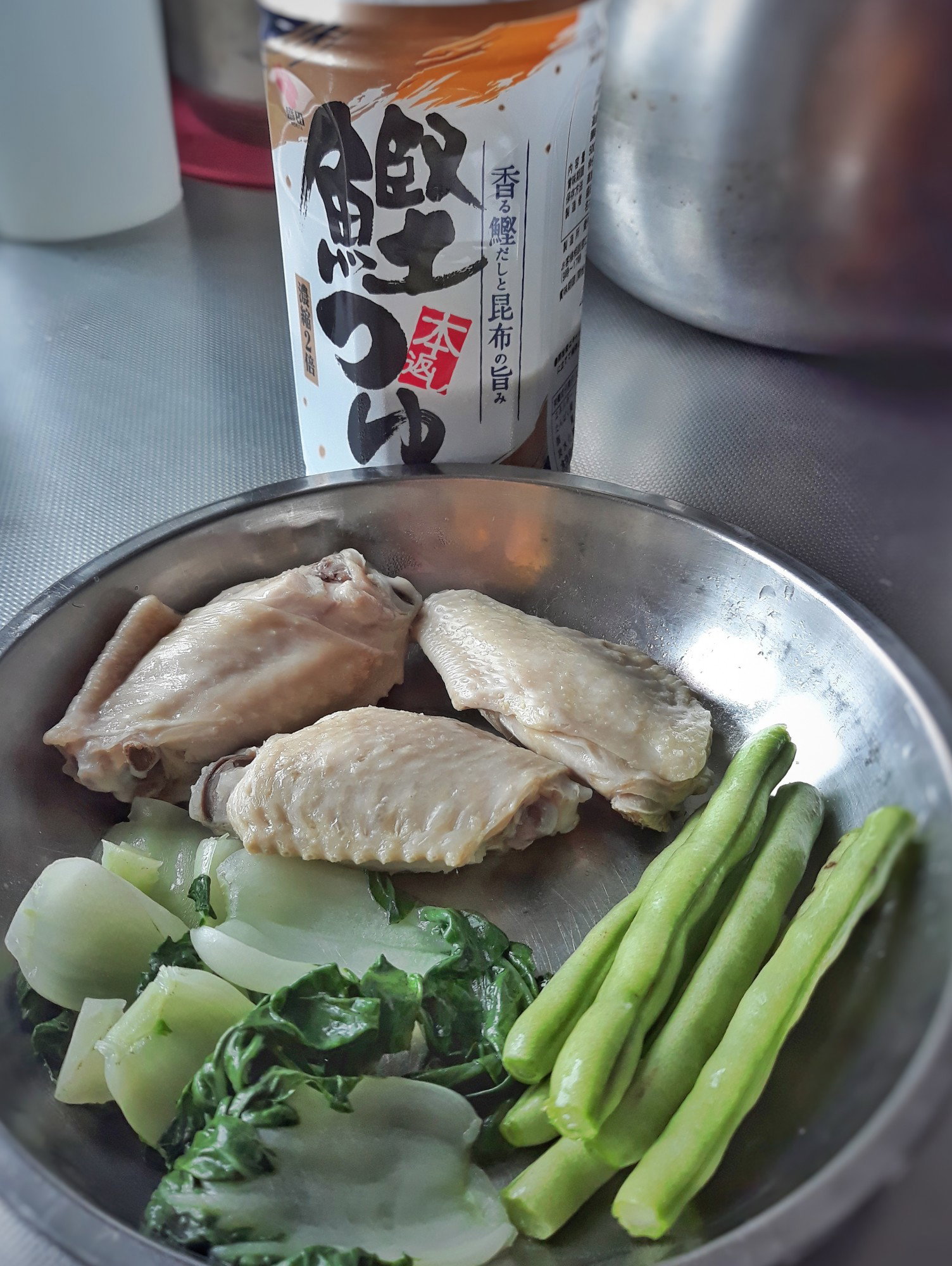
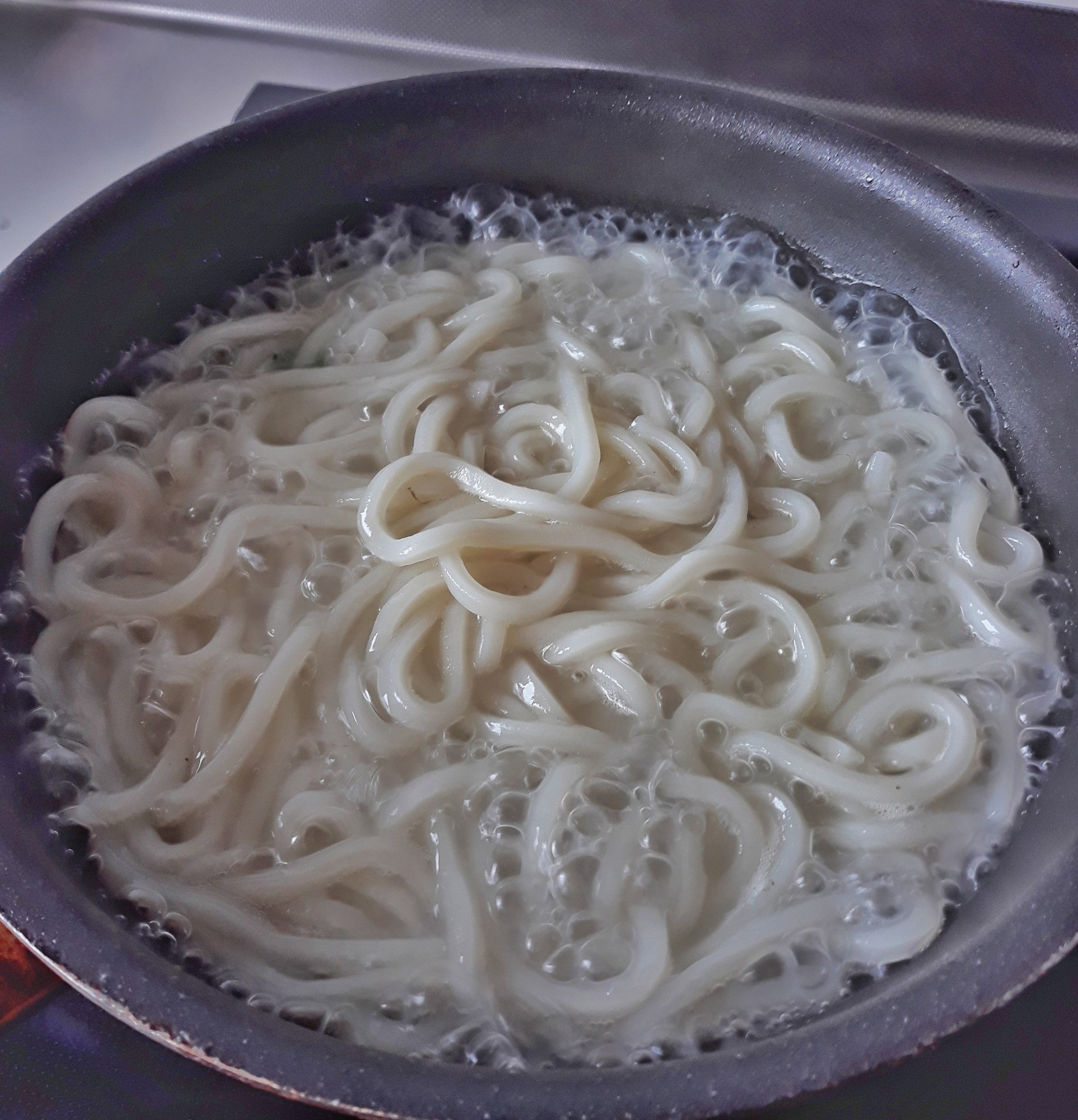
Chicken wings (pre-cooked, for toppings) Beans and bok choy (additional toppings) Japanesr sauce Sugar and dark soy sauce (for cooking chicken wings) **METHODS**: Cook the udon in a skillet/pan
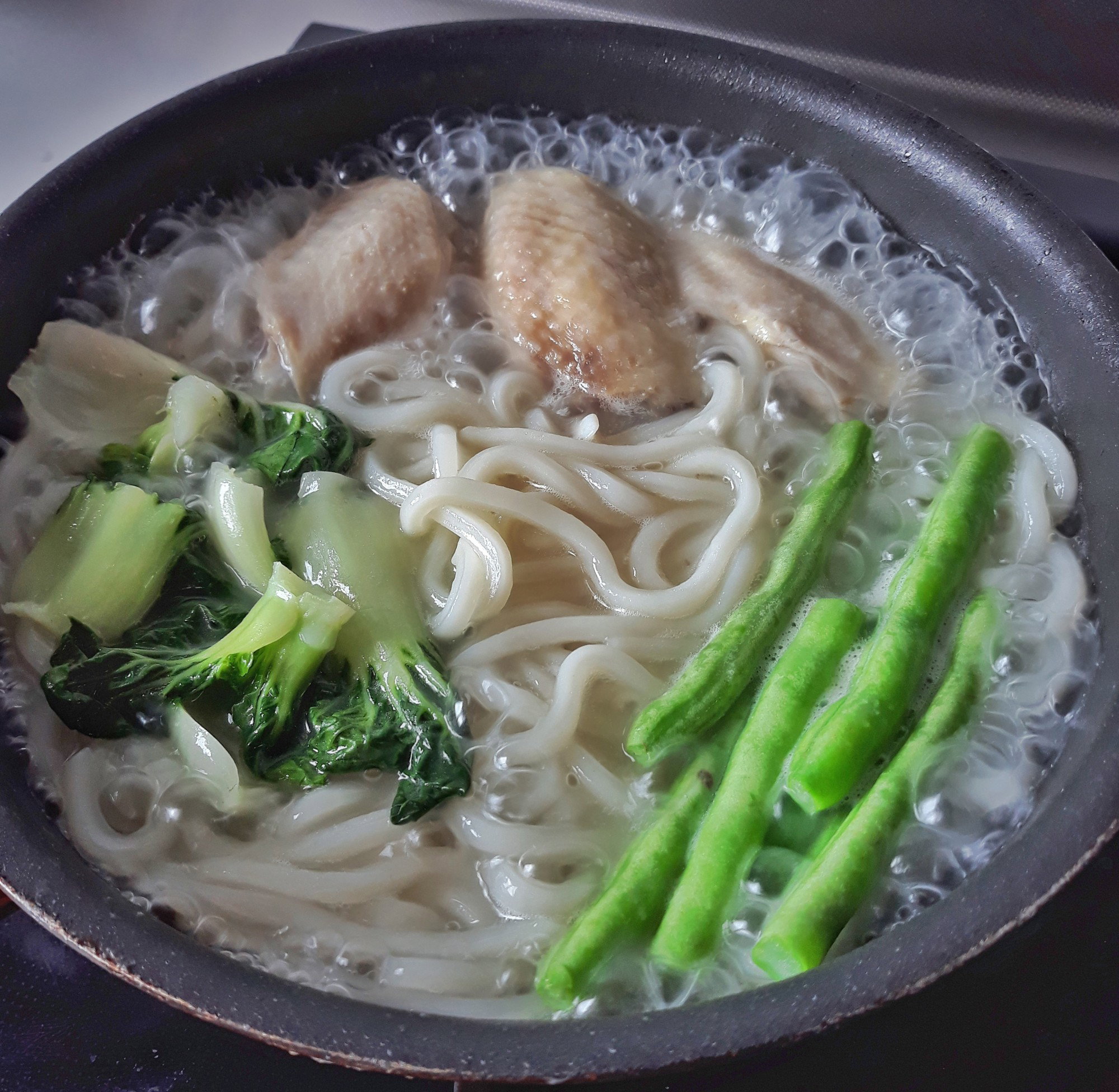
Add the pre-cooked chicken wings and vegetables on top. Simer for few more minutes until the vegetables soften.
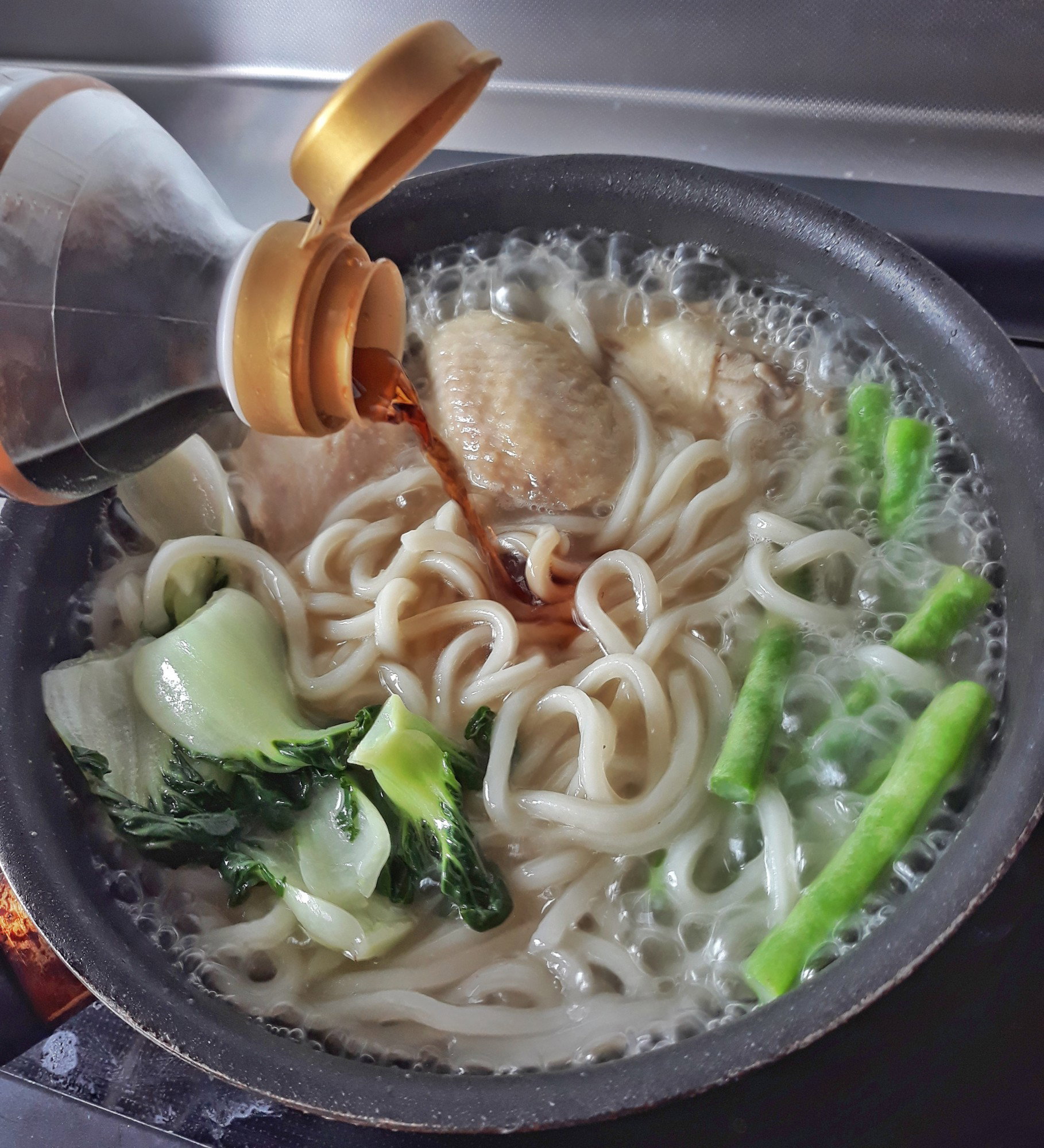
Season with Japanese sauce. If you don't have Japanese sauce for noodles, you can use soy sauce, sugar and mirin. Season it according to your taste preference.
Set aside the noodles and vegetables retaining the chicken wings.
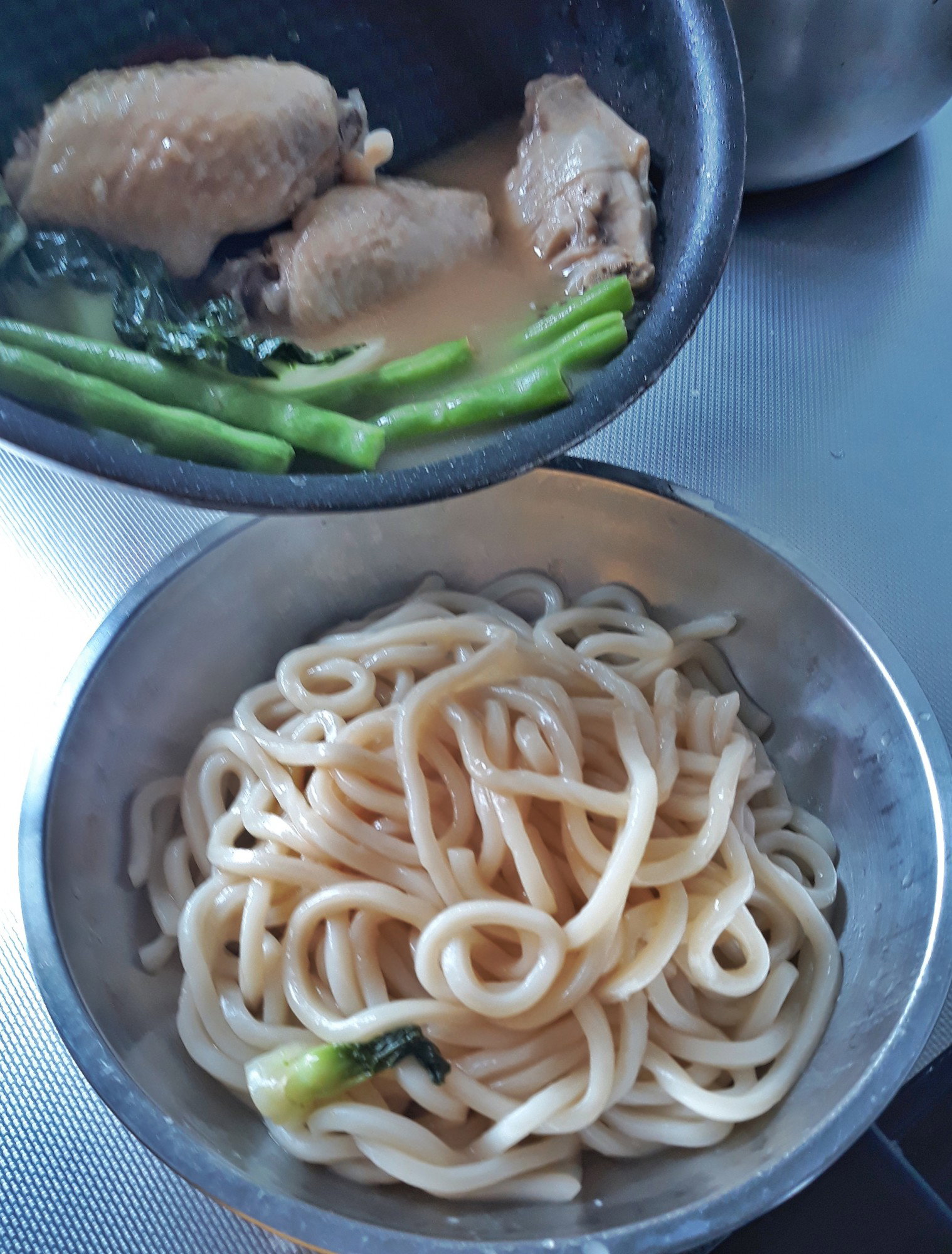
Using the remaining liquid, cook the chicken wings and add dark soy sauce and sugar. (If you don't want to add more flavor to the chicken wings, you can skip this step)
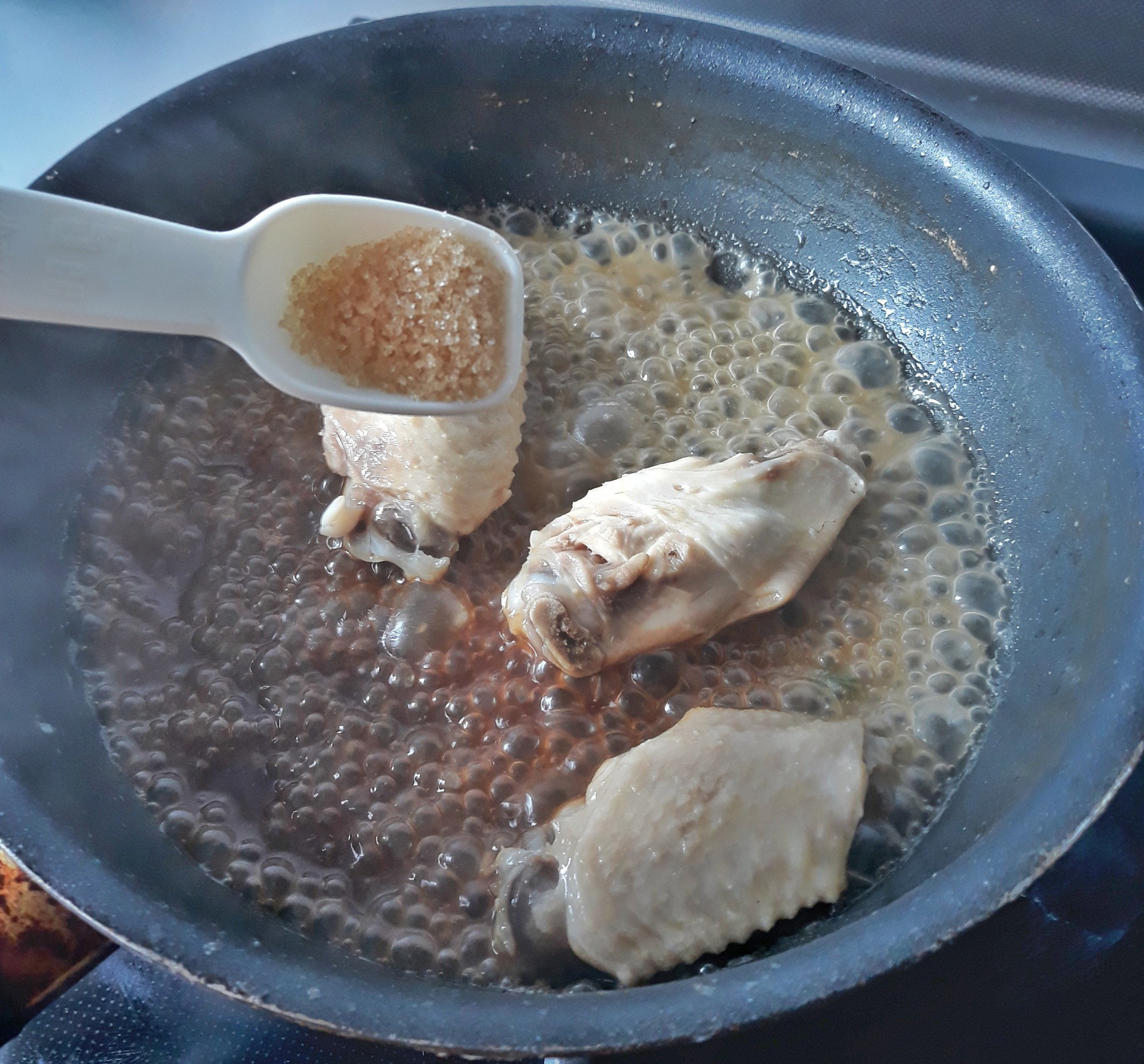
Cook the chicken wings while stirring for few more minutes until the sauce coated the chicken wings.
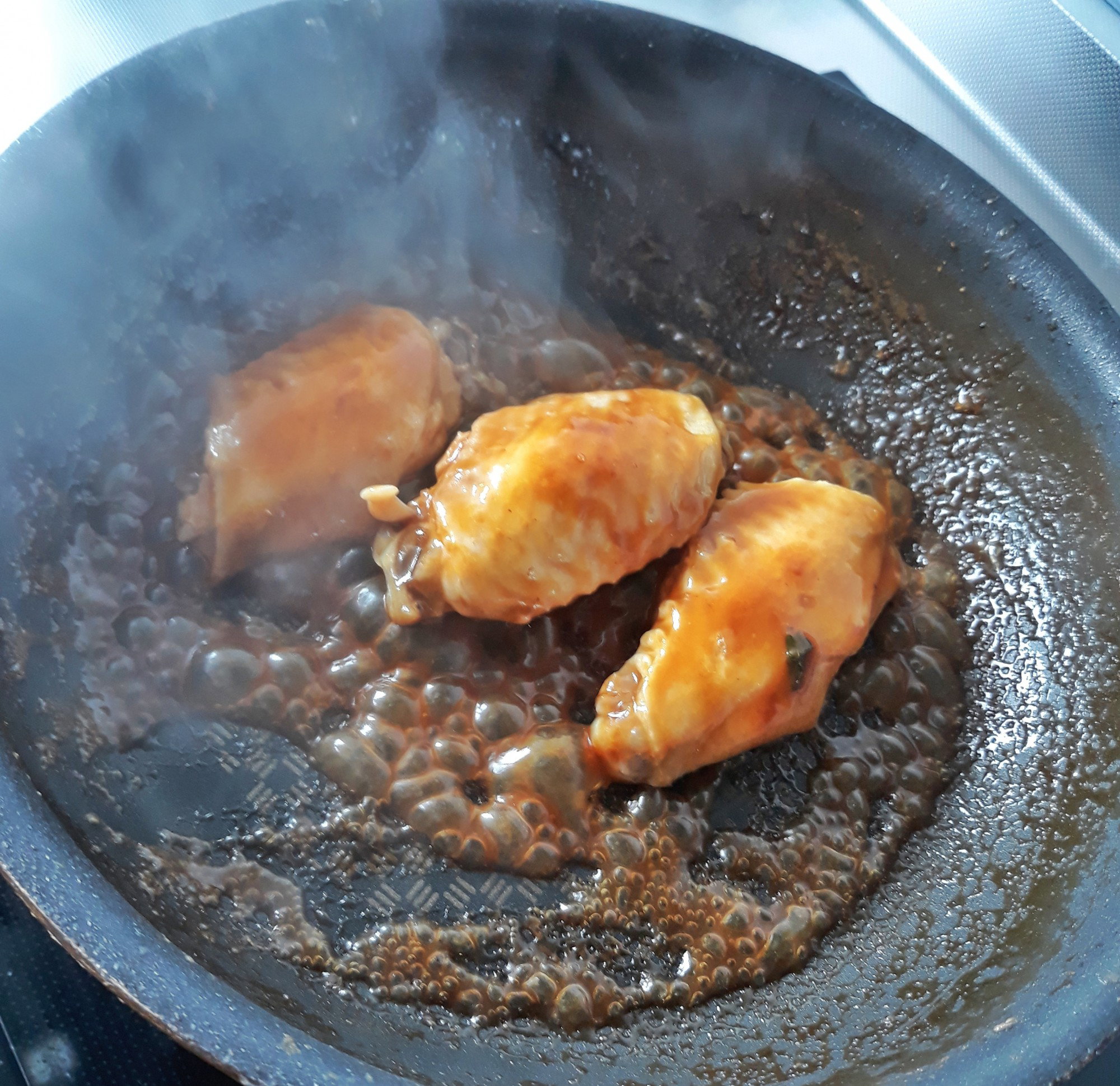
Dish out the chicken wings and serve udon with the toppings.
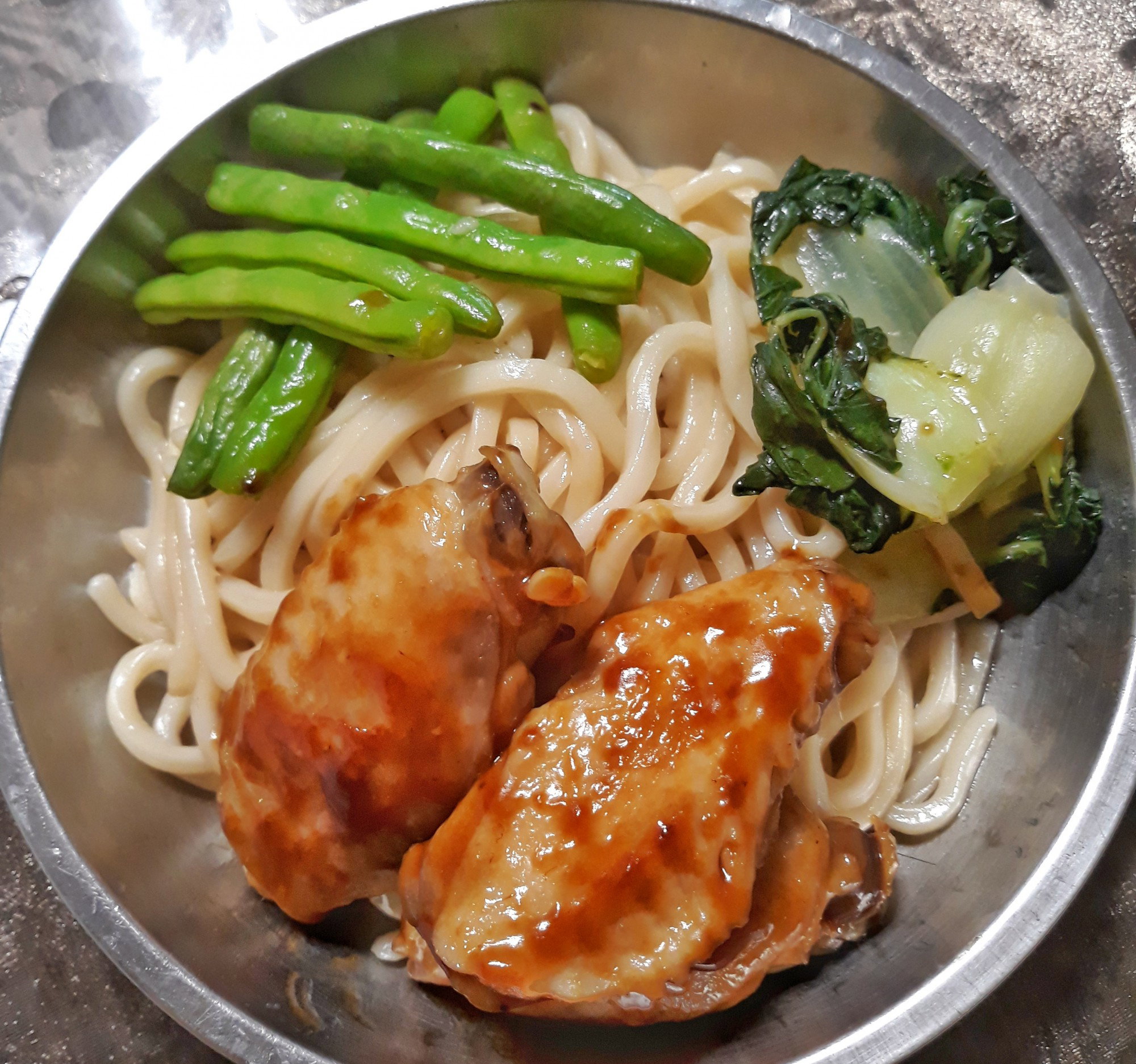
You can choose any toppings you like if you want to cook udon. **FACTS:** **Udon** is originally made in Japan and many stories explained how Udon was made. In AD 1241, a Rinzai monk named Enni, introduced flour milling technology from Song China to Japan. Flour crops where then made into noodles such as udon, soba and pancakes which were eaten by locals. The milling technology r eventually spread around the country. https://en.m.wikipedia.org/wiki/Rinzai https://en.m.wikipedia.org/wiki/Enni https://en.m.wikipedia.org/wiki/Song_dynasty During the Nara period, there were 14 kinds of confection introduced by Japanese envoy while being in China during the Tang Dynasty. One of them was called *sakubei* (索餅), which was listed as *muginawa* (牟義縄) in *Shinsen Jikyō* (新撰字鏡), a dictionary which was published in the Heian Era. It is believed that muginawa is the origin of many kinds of Japanese noodles. However, the muginawa in Shinsen Jikyō was made with wheat and rice flour. https://en.m.wikipedia.org/wiki/Nara_period https://en.m.wikipedia.org/wiki/Tang_Dynasty https://en.m.wikipedia.org/wiki/Shinsen_Jiky%C5%8D https://en.m.wikipedia.org/wiki/Heian_Era Another story claimed that *konton* was the original name of the noodle, made with wheat flour and sweet fillings. And another story says that during the Heian Era, Kukai, a Buddhist priest, introduced udon noodles to Shikoku. It says that at around the beginning of the 9th century, Kūkai traveled Tang China to study. The first province to adopt udon noodles from Kūkai was said to be Sanuki Province and Hakata claimed to have produced udon noodles based on Enni's recipe. https://en.m.wikipedia.org/wiki/Heian_Era https://en.m.wikipedia.org/wiki/Kukai https://en.m.wikipedia.org/wiki/Shikoku https://en.m.wikipedia.org/wiki/K%C5%ABkai https://en.m.wikipedia.org/wiki/Tang_dynasty https://en.m.wikipedia.org/wiki/Sanuki_Province
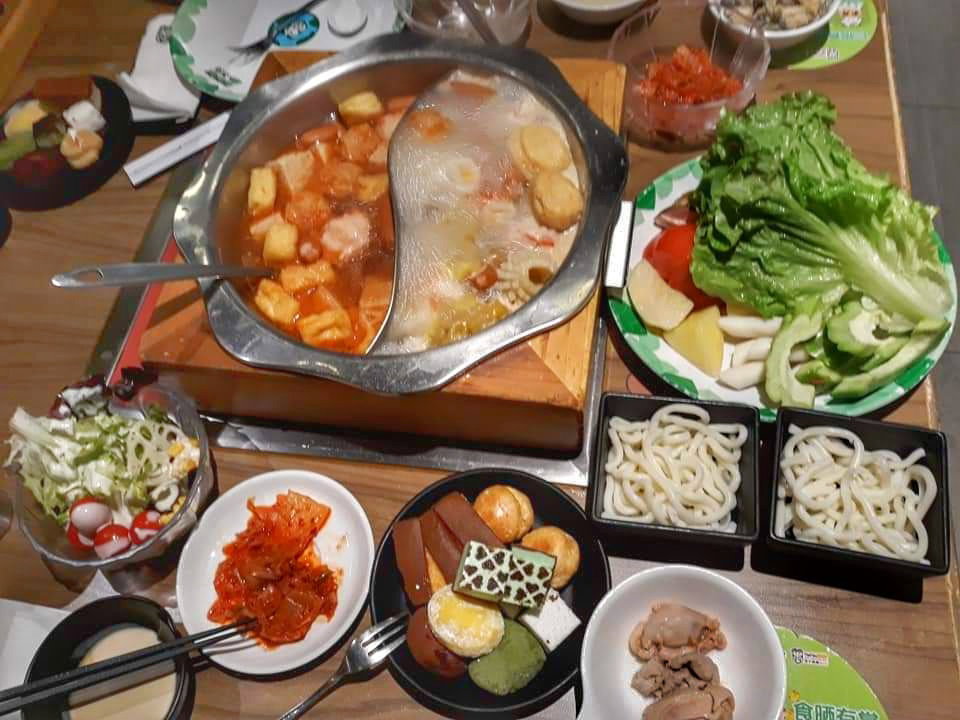
Udon is also serve in some hot pot and Japanese sushi restaurants in Hong Kong. It is usually serve with Japanese flavor soup (at Japanese sushi restaurants) and chinese flavor soup (at hotpot restaurants).
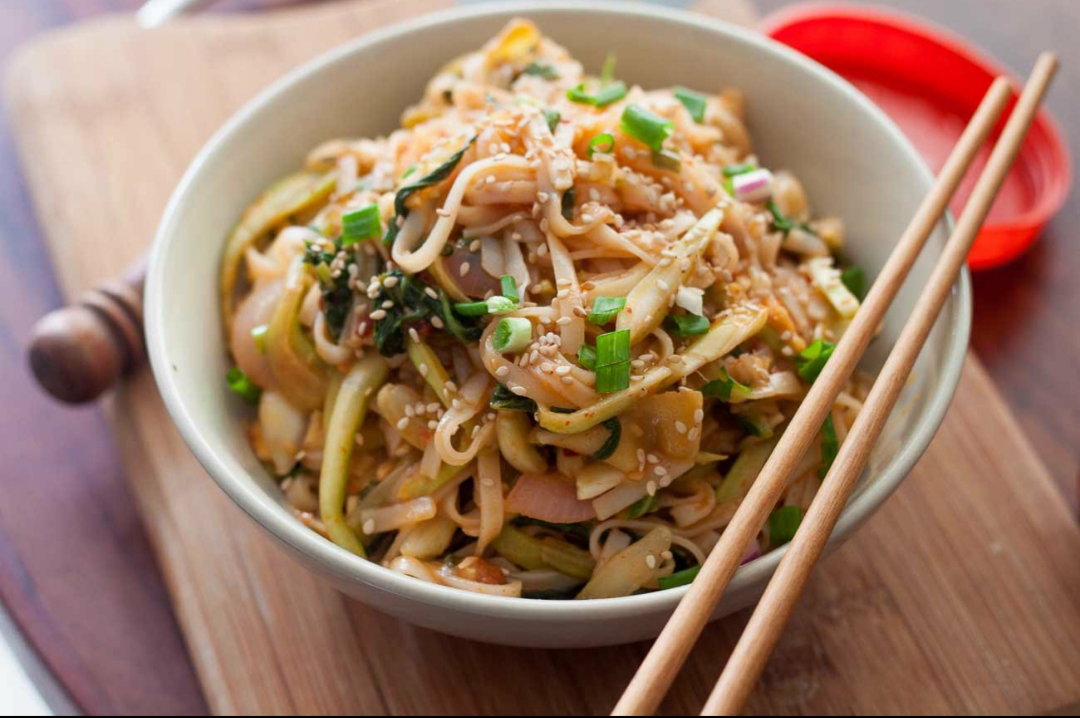
In Korea, udon dishes are served in numerous Japanese restaurants, while the Korean-style udon noodle soups are served in *bunsikjip* (snack bars) and *pojangmacha* (street stalls). Both types are called *udong* (우동), which is the transliteration of the Japanese word *udon.* https://en.m.wikipedia.org/wiki/Bunsik https://en.m.wikipedia.org/wiki/Pojangmacha
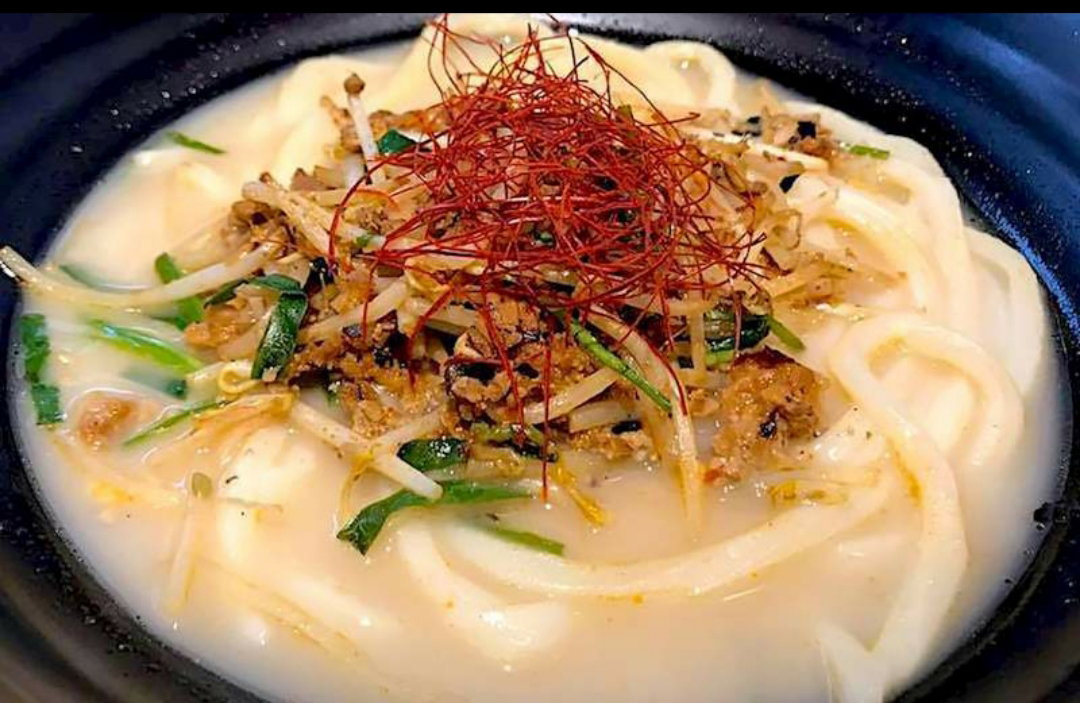
In Palau, there is also a dish called *udon* influenced bu the former Japanese administration. The broth is soy sauce–based like Japanese udon. However, as there were many immigrants from Okinawa, it uses less broth like Okinawa soba. Most notably, the noodle is that of spaghetti, as it is easier to acquire there. Source: https://en.m.wikipedia.org/wiki/Udon **IMPACT OF INSTANT NOODLES IN SOUTH KOREA, JAPAN AND CHINA:** Instant noodles are known for being an inexpensive, quick to prepare, and filling food item. The origin of instant noodles is tied to the introduction of ramen noodles to China through noodle dishes from the Chinese, with origins dating back to the 1660s during the rule of Tokugawa Mitsukuni. Demand for ramen noodles increased in Japan post-World War II, when the United States saturated the Japanese market with cheap wheat flour to compensate for Japan’s poor harvest and Japanese troops were returning home from China. From Japan, instant noodle technology spread to South Korea and China, where they were introduced in the early 1960s and became popular. In Japan, South Korea, and China, instant noodle dishes reflect the tastes and noodle dishes of their respective cultures, which allowed them to thrive in their respective regions. As a solution to waiting in long lines in Japan to an inexpensive meal that became popular among college students, instant noodles have become a prominent food product in Japan, South Korea, and China. The instant noodle also adapted to the tastes of the people of Japan, South Korea, and China, which allowed it to thrive in all three countries as a prominent form of noodles. Although excessive consumption has been linked to health issues, instant noodle companies are coming up with alternative processing techniques to make instant noodles a viable meal option. As instant noodle products continue to evolve and spread globally, perhaps one day they might truly become a “food of the people” across all cultures. Source: https://scholarblogs.emory.edu/noodlenarratives/2019/08/10/young-cho-history-forms-and-impact-of-instant-noodles-in-japan-south-korea-and-china/ **Related Articles:** I Tried To Cook Traditional Chinese Macaroni Soup From Leftovers https://read.cash/@Jane/i-tried-to-cook-traditional-chinese-macaroni-soup-from-leftovers-ef98139e She Told Me To Cook (Cheesy Macaroni Recipe) https://read.cash/@Jane/she-told-me-to-cook-e49710d6 **Food Photography (Shabu-Shabu a.k.a. Hotpot)** **Food Pphotography (Random Hong Kong Recipes)** https://read.cash/@Jane/food-photography-12-shabu-shabu-aka-hotpot-ef3a6991 https://read.cash/@Jane/food-photography-10-random-hong-kong-recipes-a9180910
37 comments

😂😂
Dugyot ni spongebob hays. Hahaha
Oo nga.. bat pinili mo. 😂😂
Eh ala lang miss jane. 😆
Wala magawa? Kumusta kna man?
Okay lang po miss jane dating gawi. Haha libang libang lang muna. Ikaw ba kumusta dyaan?
Ito sumasakit ang mata... kya hndi ako msyado active dto kc pinapahinga ko mga mata ko
Naku nakasalamin ka nga pala miss jane. Bala tumaas grado. Take care always dyaan.
How did you do thisssss
yummiiiiiiiiiiii.......dear this looks delicious.....i think i will try to cook one day.....i hope it will be tasty
It is.. you should try
This is Sunday morning don't tempt me to eato , thanks for that one
Haha.. why nit? Try to eat udon it's yummy
I will try it some other day not Sunday morning thanks
Welcome
Food of the people indeed. Sad we have a limited range of noodles here. I've been wanting the thick sauced black bean udon for a while now ;;-;:
Why don't you buy one.. udon is the type of noodles i like the most
I do when i crave but the supply here is too limited, most of the time out of stock agad orz i like this one though because the noodles are so soft
Yes it's soft even if it's thick... and yummy using any kind of sauce
Das it. By the next shopee sale, I'm stocking up on udon and ramen noodles 😤😤😤😤 u make me crave orz
Haha. Sorry.. buy many once there's stock at the supermarkets
I plan ton:"" at least a small box. That would be good for a while
Waaahh it made me hungry :3 and it reminds me of naruto who love noodles so much❤
Another anime fan here. 😅
Uwuuu
Well, you've got me salivating over here. Never tried it before but will love to try it. Looks really appetizing 😍
You can anytime
Looks delicious . Mouth watering huhu.
Try to cook udon .it's really tasty
I dont have an idea where to buy udon. I didnt see it yet hehe
At supermarkets..there are instant udon noodles.. but the fresh ones are yummier
I will try to find one hehe.
Hoping to taste authentic Udon someday :)
You should try it's yummy
I can't find authentic Japanese sauce :)
I love udon and I like how you caramelized the chicken at the end. It feels like chicken teriyaki almost :) What is Japanese sauce? Is it soy sauce?