How to get rid of knee pain in no time?
If you feel pain in your knee, don't suffer. Physiotherapists suggest these simple and quick solutions to alleviate the discomfort in the knee.
Ice
Ice is the simplest solution to reduce the feeling of pain. Hold the ice pack for 10 to 15 minutes in the area that hurts. Be careful to only protect sensitive skin on the inside of the knee with a thick cloth or damp towel.
Self-massage
It is certainly not as relaxing as if someone else had massaged you, but it will reduce your pain. You can also use some aids, such as a ball or stick, to massage the inside of the thigh. The adductor muscle (thigh muscle) and the hind leg muscles are connected at the knee, next to the wrist. By releasing these soft tissues, you will reduce the pressure in the area of the knee.
Stretching the inner thighs
Stretching in the butterfly position is done on the floor while your feet are joined and your knees are bent so that they almost touch the floor. Then push them as far as you can, but make sure your feet are together. This leads to muscle contractions on both sides of the knee and a decrease in pressure. Stay in the butterfly position for at least 30 seconds, and repeat three times.
Thigh stretching
This stretching is done on the floor, with both legs extended. It is important that in the initial position the back is straight in relation to the logs, and then bring the torso closer to the legs. These muscles connect in the lower back and in the knees, so by stretching them, you increase the compression in the knee. It is necessary to stay in this position for at least 30 seconds, and it is best to repeat three times.
Stretching the leaves
Start facing the wall. Place both hands on the wall and one leg back. Keep your back straight, and bend one leg at the knee and lean your hips forward to stretch the top of the sheet. Stay in that position for 30 seconds, then repeat with the other leg, at least three times.
Stretching the leg in four directions
During this exercise, lie on your back. First, tighten the upper thigh (quadriceps) to straighten the leg. Then lift your leg up to the ceiling, and repeat this exercise 10 times. Then turn to the side and place your leg flush with your torso, then lift it. Also do 10 reps. Then take a position on your stomach, without raising your back, and raise the same leg up, also 10 times. Finally, turn to the side where your leg is exercising. Bend it forward and place your foot on the floor in front of the other leg. Then raise the other leg straight towards the ceiling, 10 times. Then repeat all the exercises with the other leg.
Preparations for muscle pain
Although they do not offer a long-term solution, these topical preparations for joint and muscle pain can cool or warm the skin and lead to instant relief. These creams will deceive your brain, and instead of pain in the knee area, they will lead to relief.
Obland is a biscuit
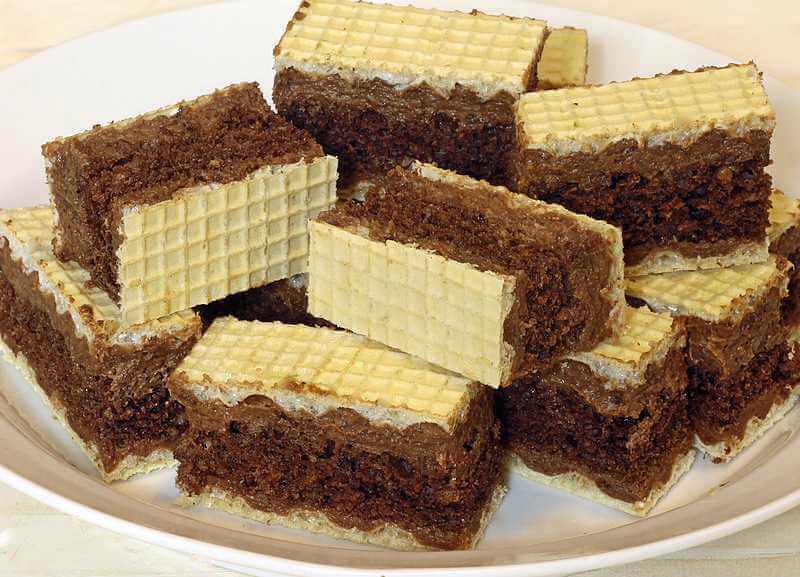
Prepare these wafers when you have a wafer or two left, then a double measure, this is how this one was created. I made several types of cakes and I was left with wafer and some other ingredients that I used.
Ingredients:
1 large wafer
100 ml of water
150 g of sugar
50 g of chocolate
150 g of ground walnuts
100 g of margarine
2 tablespoons powdered sugar
Biscuit:
2 eggs
2 tablespoons sugar
2 tablespoons flour
1 tablespoon cocoa
on top of a teaspoon of baking powder
Preparation:
First bake the biscuit. The biscuit is prepared.
Beat the egg whites with the sugar, then add the egg yolks and beat again.
Add flour, cocoa and baking powder and mix with a wire.
Preheat the oven to 200 degrees and bake the biscuit in a half-wafer tray.
Cool the baked biscuit.
While baking the biscuit make the filling.
Sprinkle the sugar with water for a few minutes, then add the chocolate and stir until it melts.
When it has melted add the ground walnuts and leave to cool.
Beat the margarine with the powdered sugar, then add the cooled filling and stir.
Place half of the filling, biscuit and then the rest of the filling on the wafer.
Cover with the remaining half of the wafer, press a little with your hand so that it sticks nicely, then leave it to stand in the fridge for a while, an hour or two, and then serve.
Pleasant.
Dear robot, you are gone, and for several days now I have been doing everything according to the rules of the site, so I am interested in whether I will be paid or not? I recorded this platform on my youtube channel and many of my referrals complain that they haven't been paid for a month, can you explain to me what the problem is, thank you in advance, best regards.
Oblande seven or + video
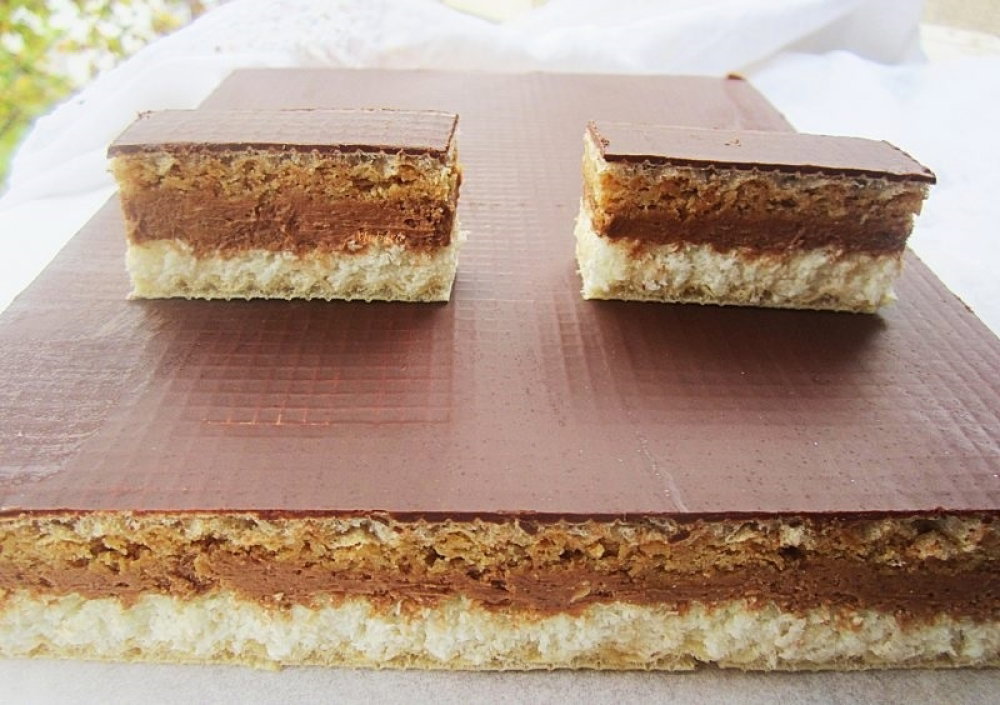
The holidays are coming, and with them this irresistible wafer. Biscuit and coconut, and chocolate filling, there's nothing to dislike!
Ingredients:
8 eggs
20 tablespoons sugar
100 coconuts
150 g of ground biscuits
3 tablespoons flour
150 g of chocolate
200 g of margarine or butter
2 sheets of wafer
Glaze:
150 g of chocolate
3-4 tablespoons oil
Preparation:
Turn on the oven to preheat to 180 degrees.
Beat 4 egg whites in solid snow with 6 tablespoons of sugar.
Add 1 tablespoon of flour and ground biscuits, then whisk everything.
Place the wafer on the oven tray, then coat it with this mixture and stretch it.
Bake for 13 minutes.
While the crust is baking make another.
Beat 4 egg whites with 6 tablespoons of sugar into a strong foam, then add coconut and 2 tablespoons of flour.
Combine everything and coat the second sheet of wafer.
Take out the first baked sheet, immediately put the second one to bake. We baked it for 11 minutes.
Put egg yolks and 8 spoons of sugar in a small pan and beat well with a mixer.
Place the smaller pot on the larger one with water, about 2 cm.
From the moment the water boils, cook for 10 minutes, stirring, then add the chocolate and stir until dissolved.
Remove from the heat to cool with occasional stirring.
Whisk together the softened butter or margarine, then add the chocolate filling and whisk everything.
On the first biscuit crust, spread the chocolate filling, then fold the second, coconut crust, which you now turn upside down.
Place a load over the tray and then in the tray to level the wafer.
Melt over a very low heat on a stove or microwave chocolate glaze with 3-4 tablespoons of oil and pour over the wafer leaves.
Leave everything to cool well, then chop and serve.
https://youtu.be/uhALe8YbKeQ
Pleasant.
How to properly maintain weight after dieting
You did it! You endured the diet to the end and lost the extra pounds. But how do you maintain that weight and stop gaining weight again?
The beginning of every diet is difficult, because the body needs a couple of days to get used to the new quantities, but also the type of food that you will eat during it. Like the beginning, the first week is difficult (and sometimes even two weeks), because the kilos return the easiest then, and the "craving" for food that you haven't eaten is great. How to avoid it? Follow these 13 tips and everything will be much easier for you ...
1. Eat a little more calories each day than the previous day (for example, 50 calories more).
2. Slowly introduce foods that you have not consumed during the diet into your diet.
3. Do not start eating fatty and sweet foods immediately, but wait a few days from the end of the diet.
4. Eat more often, but in small portions (every three to four hours).
It is also important that you do not stop using the diet you had while keeping your diet.
5. Pay attention to the caloric value of the food you eat.
6. Combine foods in this way: Half a meal - fruits and vegetables; quarter - meat and fish; eighth - fat and the second eighth - carbohydrates.
7. Food preparation is very important. Cook and bake more than you will fry.
8. Once a week, give yourself a break - eat something tasty and high in calories.
9. Two liters of water a day is a must!
Remember that in addition to good nutrition you must also take care of:
10. Vitamins. Don't forget about them and if you don't get enough of them through food, buy supplements in the form of tablets or powder.
11. Do sports regularly, at least 10-15 minutes a day. After the first month of training, you will surely notice good results in appearance.
12. Move as much as possible, walk. Walking will provide you with enough oxygen to help speed up your metabolism.
13. Sleep at least seven hours and do not go to bed late, until 10 pm.
How does hair grow?
The lawn consists of tens of thousands of individual blades of grass that together form the grass surface. Similarly, there are thousands of individual hairs on the head that together form the hairy part of the head. When a blade of grass is uprooted, it can be seen that the green blade has roots. Through this small tangle of roots, the leaves extract water and nutrients from the soil in order to survive. The way the hair is attached to the head is somewhat similar. The hair does not penetrate deep into the body. There is no central factory for making hair, deep in the body, from which a lot of hair comes out. Instead, leather is a shallow ground for hair; hair roots are found in the skin.
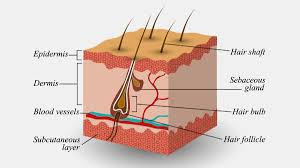
Hair strands are a long tube of keratin, a hard protein that also makes up nails. Although it looks smooth, the hair is actually covered with scales, like a fish. This layer of keratin scales is called the cuticle (these scales can be seen with a microscope). They get messy when the hair is dry and damaged - by excessive brushing, drying with hot air and the use of harmful dyes. In order for the hair to be shiny, in order to shine, the scales must be flat like the surface of a mirror. Inside the tubular hair is a spongy nucleus. Because of it, the hair is flexible, so it does not break when bent (thin airy hair sometimes does not have a spongy core). Beneath the surface of the skin, at the end of the hair, is its root. Each hair is enclosed in a thin sheath called a follicle. The follicle has the shape of a bulb and is rooted in the dermis, the inner layer of the skin, like a tulip bulb planted in the ground. Near the top of the follicle, just below the surface of the skin, the sebaceous glands secrete fat which, if not washed away, accumulates on the hair.
Here's how hair grows. At the bottom of each follicle bulb, there are cells arranged in the shape of a ring, which supplies nutrients and oxygen to a network of blood vessels. These cells divide to form new cells, in the same way that cells are created throughout the body. New cells accumulate in the shape of a tube and erupt through the follicle. Hair is formed from dead and hardened cells on the inside of the tube. The cells of the outer layer of the tube also die and harden, creating a cover, ie. wrapper. As they protrude through the follicle towards the surface of the skin, the hair and its sheath are firmly attached. However, near the surface of the skin, the chemicals released by the walls of the follicle corrode the sheath and reveal the hair beneath it. The hair is now, covered only with a layer of scales, lubricated with fat from the sebaceous glands. Then it breaks through the skin and comes out. It becomes hair. That is why hair, no matter how much it is cut or shaved, will always continue to grow, between 12.5 and 25 millimeters per month.
Is a panda a bear?
When is a bear not a bear? Maybe when it's a panda. Scientists disagree about which species of panda the animal belongs to. The problem is that there are two very different species of these animals. The black and white panda, which is well known to everyone, is called the giant panda. Giant pandas have bulky bodies weighing over 90 kilograms and look like very cute bears. But another, lesser known, small panda (barely sixty centimeters long), has rust-colored fur and a long shaggy tail. This animal, which is called a red panda, starting from the shape and size of the body to the tail with light and dark rings, looks more like a raccoon than a bear.
After studying both of these creatures, the scientists concluded that the small red animal is closely related to the large black and white. Their bodies are similarly built, and they have a similar way of eating and living. Because of these similarities, both animals are called pandas. But opinions differ from here. Some scientists say that the giant panda is definitely a species of bear. Some think the red panda is actually a raccoon. And there are those who believe that both species belong to a special family of pandas. Scientists are especially confused by the giant panda. Instead of galloping like a real bear, she hides. Instead of screaming, she bleats like a sheep. Unlike other bears, it does not hibernate and does not like meat. However, by studying and comparing the blood cells and other cells of giant pandas and common bears, the scientists concluded that pandas are indeed bears that have adapted to life in the mountains of China, Nepal and Tibet. They think that bears, raccoons and red pandas have a common ancestor, an animal that lived twenty million to forty million years ago. This explains their similar characteristics. But raccoons and red pandas evolved in one direction, and bears, including the giant panda, evolved in the other.
Giant pandas live in dense mountain forests, at altitudes of 1,500 to 3,000 meters, where they grow bamboo that grows on small isolated areas around trees. They eat a lot - they swallow about 14 kilograms of bamboo leaves and stalks and about 40 kilograms of young shoots every day. Red pandas also live in Asia, but not at such high altitudes. They live in the foothills of the Himalayas. Similar to giant pandas, they also feed on bamboo shoots, but they also eat fruits, nuts, and sometimes small animals.
Giant pandas give birth to one cub each. Like the cubs of other real bears, panda cubs are incredibly small. Newborn pandas are blind and naked, and they weigh only about 140 grams. Each of these tiny pandas faces a difficult task - in two to three years they have to increase their weight almost seven hundred times. Panda cubs are so small because they develop in a very special way before birth. Namely, the fertilized egg floats freely in the uterus of a female panda for several months, instead of, as in other mammals, it attaches to the wall of the uterus and grows quickly. This is likely to happen to ensure that the number of newborn pandas roughly corresponds to the amount of food available. If a female cannot find enough food during pregnancy, it can happen that the embryo never attaches and develops. But if all goes well, the embryo will cling to the wall of the uterus before the end of the panda's four-month (or six-month) pregnancy. After that, he won't have much time to develop and gain weight before he jumps out into the world. But when it is born, the panda cub grows at an incredible rate. When he turns one year old, the giant panda weighs about 35 kilograms.

How do fish breathe underwater?
Fish's respiratory organs are made to use oxygen found in water. All fish have gills in the body (gills resemble wrinkled curtains, and their surface is several tens of times larger than the body surface of the fish itself), through which blood circulates. Water enters through the mouth of the fish and exits through the slits in the gills. When it enters the gills, the water is separated from the blood of the fish only by an extremely thin membrane, less than 0.0025 mm thick. This means that oxygen only needs to travel that short distance to enter the fish's blood. Oxygen is quickly absorbed through this thin membrane, and blood, enriched with oxygen, flows through the arteries to the rest of the body, including the heart, and thus supplies the fish with fresh oxygen. At the same time, oxygen is absorbed in the gills and carbon dioxide is released, which passes from the blood into the water circulating in the gills.
The gills have a large surface so that they can come in contact with a lot of water, and so they bring as much oxygen as possible into the bloodstream of the fish. When fish are found out of the water, the typical gill dries out and fails, leaving the fish without an oxygen supply. However, some fish have developed gills that attract moisture and stay wet even when exposed to air.
Air contains approximately 21% oxygen, while water contains 0.5% dissolved oxygen. In addition, water is 1000 times heavier than air and at least 50 times more viscous (syrupy). That's why it's not easy for fish to get that little bit of oxygen out of it. That is why it is even more interesting that fish can emit up to 80% of oxygen from the water that passes through their bodies, although humans can only emit 25% of oxygen from the air they breathe. Therefore, fish are much better supplied with oxygen from the water than humans from the air.
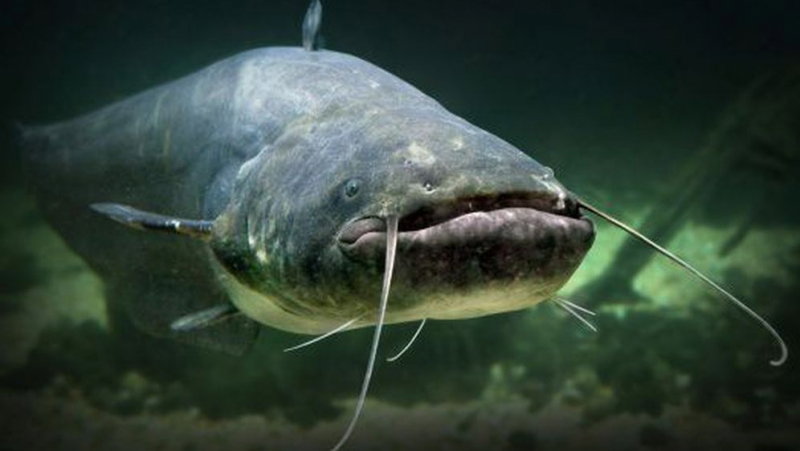
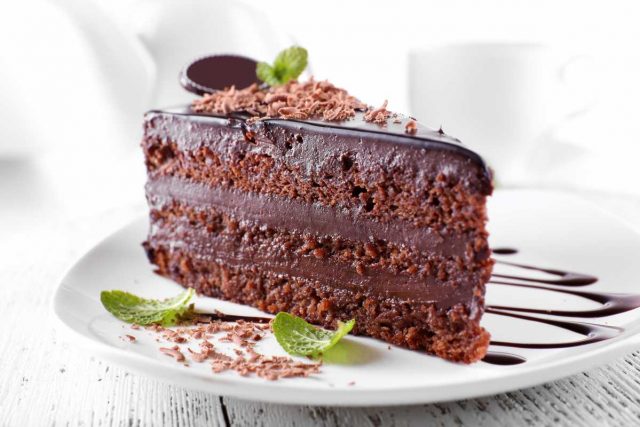
Conquering dessert: Chocolate cake ready in half an hour
Treat your family with this quick-to-prepare chocolate treat.
Ingredients:
150 g butter
150 g of dark chocolate
150 g of sugar
3 eggs
150 g of fresh cream cheese
100 g of soft flour
½ teaspoons of baking powder
Preparation:
Melt 150 g butter and 150 g dark chocolate in a bowl. Add sugar, eggs, fresh cream cheese, flour and baking powder to the melted mixture, stirring constantly to combine the mass.
Pour the mixture into a baking tin and bake at 180 ° for about 25 minutes.
PLEASANT!!!
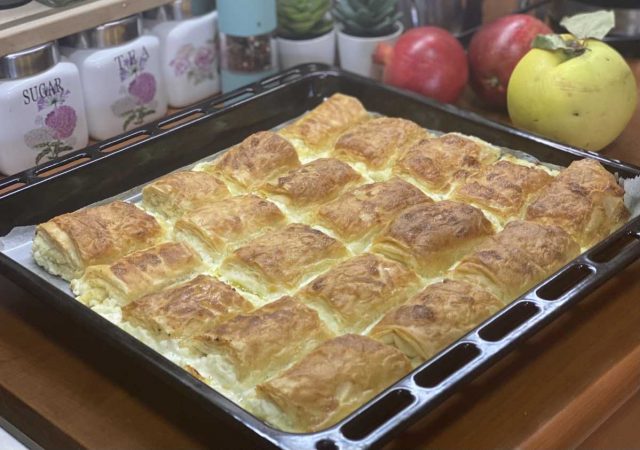
Drizzled with crispy butter pie with cheese and sour cream for cooking
Homemade juicy and crispy pie with cheese will delight everyone in the house.
Ingredients:
12 pie crusts
250g of cottage cheese
250ml sour cream for cooking
100g butter
20ml oil
are as needed
Preparation:
Melt the butter and add the sour cream for cooking. Combine everything nicely and that is our topping for the crust. Arrange the crusts by placing the topping on all three and the cheese on the third. Roll into a roll and cut into smaller pieces. Arrange in a baking tray, coat the rolls with the topping and finally pour over the remaining topping. Bake at 200 degrees for 20-25 minutes. Pleasant!
Follow the rest in the clip
https://youtu.be/hYPwUNk2thE
Banana cake with rolatima
Delicious and light banana cake.
Ingredients
For 4x covers:
4 eggs
4 tablespoons flour
4 tablespoons sugar
a little baking powder
File:
1 liter of milk
4 bags of vanilla pudding
1 margarine
5 tablespoons sugar
More:
4 bananas
300 g whipped cream
1/2 jar of jam
Preparation
Beat eggs with sugar, flour and baking powder. bake 4 crusts for 4 rolls. when baked coat with jam and roll. When all 4 rolls have cooled, cut them to the thickness of half a nail. Put half the amount on the bottom of the bowl in which the cake will be. Heat the milk with the sugar and cook the classic pudding. when cool stir in the whipped margarine. Put half of the filling over the rolls, then two chopped bananas, then repeat. Coat the whole cake with whipped cream.
PLEASANT!!!
User software
Application programs are programs that allow the user to use their computer to solve various problems.
In other words, it is most of the programs used by computer users, and they are also called user software.
In addition to computer manufacturers and specialized software companies, these programs are also written by users.
Classification of application software by its purpose
Word processing software
Enter text into the computer.
Modify the entered (delete and edit) text.
Formatting (formatting) text for printing.
*Notepad
*WordPad
*MS Word
*Word Perfect
*OpenOffice – Writer
Spreadsheet software
Tables for data entry, calculation and analysis.
Graphing and graphical presentation of data.
Special options for formatting, sorting and
by filtering data.
*MS Excel
*OpenOffice - Calc
*Lotos
*QuatroPro
Presentation software
presentation of products, ideas and services.
Teaching and lectures.
Creating advertisements or similar multimedia effects.
*MS PowerPoint
*OpenOffice – Impress
*Adobe Flash Adobe Dreamweaver
Image processing software (graphic and desktop publishing)
To design a company logo.
For designing posters and brochures.
For breaking books.
*Vector graphics: CorelDraw, Adobe Illustrator
*Raster graphics: Adobe PhotoShop, Corel Paint, Paint
*Publishing: MS Publisher, Adobe In Design
Internet environment software
*Opera
*Chrome
*Mozilla Firefox
*Internet Explorer
*MSOutlook
*Outlook express
*Thunderbird - Mozilla
Basic computer parts
Processor
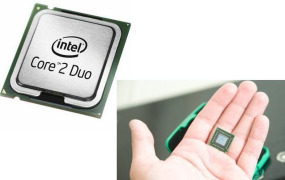
The processor (microprocessor) is an executable unit - it receives and executes instructions read from the appropriate memory. When we say "processor" itself, we usually mean the central processing unit (CPU). The CPU is the heart of every computer, although the CPU is not the only processor - it also has a graphics card (GPU), sound card and many other parts. It is an electronic component made of miniature transistors on a single chip (semiconductor integrated circuit). By itself, a processor does not make a computer, but it is one of the most important parts of any computer.
The first processors were mechanical and were practically not a separate part of the computer, then electromechanical (relay), then based on electronic vacuum tubes, and they were very large. Significant reduction of dimensions and improvement of performance was due to the use of transistors (miniprocessors), and in the second half of the 20th century, integrated circuits (microprocessors).
Each processor looks very simple on the outside, but is very complex on the inside, because it involves hundreds of millions of transistors housed in a single chip. The first time such a thing succeeded was in 1971, when the first Intel 4004 processor was made, which, admittedly, could only add and subtract, but for the first time, scientists managed to fit numerous integrated circuits and transistors in one chip. This has encouraged the further development of processors that consume much less electricity.
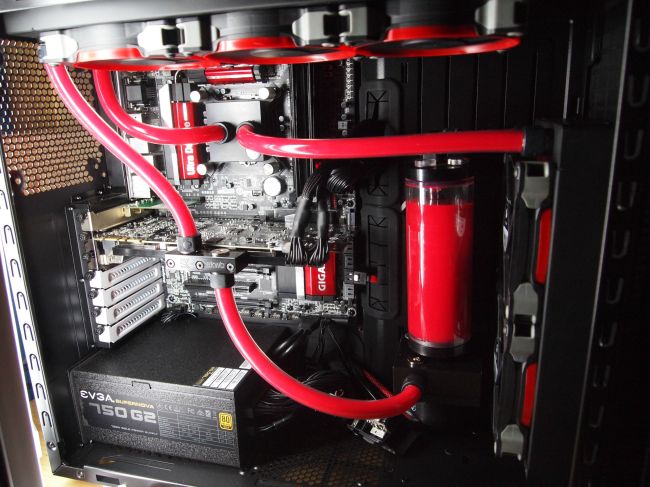
The processor is placed in the appropriate socket on the motherboard, and a heat sink is placed over the processor to cool it (previous picture).
The CPU usually contains:
A control unit that controls the operation of other components — specifically, the operating unit. In the early days of computing, the functionality of a control unit mostly differed in hardware (wired implementation), while today a microprogram implementation is usually used, where the processor operation, including its set of instructions, is implemented through a microprogram.
An execution unit, which usually contains: An arithmetic logic unit (ALU), which performs arithmetic and logic operations. Registers, which are used for temporary storage of data during program execution (general purpose registers), and for storing information about the current state of the program being executed (program counter, receiving instruction register, program status word, etc.)
Memory and peripherals connection subsystem (internal and external data paths).
Processor speed (clock speed) is measured by the number of cycles per second, that is, in hertz. For example, a speed of 3GHz represents 3 × 10⁹ cycles per second. Processor speed affects system speed, but not linearly. Over time, the processor speed increased significantly. However, it is not the only important factor in improving computer performance. In recent years, due to the increase in dissipation (heat dissipation 8) caused by the increase in processor clock speed, other ways to increase the processor speed have been approached - for example, the introduction of the concept of parallel processing.
Practice has shown that when executing real applications, some data is accessed more often than others. Therefore, in order to increase the speed of the system, a very fast low-capacity memory called cache memory was introduced. During program execution, the most commonly used data is written to the cache memory, which is the local, dedicated memory of the CPU. Today's computers have several levels of cache memory (usually three), which differ in capacity and speed. As a result, the data transfer rate between the main memory and the CPU is significantly increased, that is, the difference in the speed of the CPU and the main memory is reduced.
There are various caches: L1 (Level 1) is on the same chip as the processor (and is just as fast as the processor) while L2 is located separately from the processor (between the processor and RAM) and is slightly slower than working memory). Because the space on the processor chip is limited, the amount of L1 memory is also limited.
Although the L1 cache runs at CPU speed, instructions that reference memory are still slower than instructions that work with registers. There is still a memory cycle, but there is no waiting to retrieve data from memory.
It should be noted that the amount of cache does not increase the amount of memory available to applications. The larger the amount of cache memory, the faster the system works because it is more likely that the requested data is in the cache.
Higher quality newer processors also have more than one processor core, which further improves performance. The appearance of the dual-core AMD processor is shown in the figure.
In a computer system, the processor is mounted on a processor socket located on the motherboard. The motherboard is a printed electronic board (PCB), through which the work of all components of a computer system is integrated. Through the bus on the motherboard, the processor communicates with other parts of the system.
Types of memory
A RAM
Random access memory (RAM), or random access memory, refers to a type of memory that is directly addressable and whose contents can be accessed arbitrarily, not just sequentially (sequentially, as on tapes). It is most commonly used in computers as primary or main memory, although this is not necessary.
The term RAM often refers to memory that loses content after a power failure (e.g., as opposed to ROM memory), but this is not necessary because the abbreviation RAM only means freedom in the order of access. The appearance of the RAM module is shown in the figure.
RAM is directly accessible to the computer's processor via its main buses (address and data), with no need for alternative input-output and often significantly slower modes of communication.
The working memory is used to store data and instructions that the computer executes at that moment, that is, as the working memory of the computer (except in the case when its contents cannot be changed - various ROM memories).
RAM has the following features:
It is significantly faster (often thousands of times). Today, any part of primary memory can be accessed in just a few nanoseconds on average. In contrast, the hard disk, as the most well-known secondary memory, must first mechanically position the read head to the data cylinder, which takes about 9 ms on average and up to 20 ms in the worst case. It must then wait for the disk to rotate so that the data "comes under the head", which in the case of 10,000 rpm takes an average of an additional 3 ms. Finally, it is necessary to read the data itself (the duration significantly depends on the density of the data) and send it to the primary memory. As hard disks cannot work with blocks smaller than one sector (usually 512 bytes), all of them need to be transferred to the primary memory before any can be used, which in itself is so many times slower than direct access to the primary memory. Collectively, access to any data on a hard drive takes over 12 ms on average.
It is directly addressable. Example: A processor can at any time specify the address of any unit of data it wishes to access and perform a read or write operation. In contrast, hard disks always work with at least one data sector (usually 512 bytes) - the entire sector should be read each time it is read, and the entire sector should be re-recorded each time it is written, regardless of the amount of changes.
It loses content after power failure (except in the case of ROM memory). Example: When you turn off the computer, all the contents of the working memory are lost. In contrast, data recorded on a hard disk, CD-R, and the like. They remain and can be accessed upon reconnection.B. Virtual memory
Modern operating systems make it possible to simulate RAM in the form of virtual memory on hard disks. Operating systems that support virtual memory can simulate an increase in working memory by transferring the parts of working memory that are currently less frequently used to the secondary part (ie to disk), and "returning" the part that is needed from secondary to working. In that way, the physical working memory can be smaller than the one that is really needed by running programs, but with the slowing down of the computer - the bigger the difference between the required and real / physical working memory, the more often the mentioned replacement of parts will be needed, ie. communication with thousands of times slower secondary memory (disk).
Hence, increasing the computer's working memory not only affects the amount of data and programs that can be processed at the same time, but also increases the effective speed of the computer (because less time is spent on slow communication with secondary memory).
C. ROM memory
ROM (read only Memory) is read-only. It is also called permanent memory because its contents are not lost after a power failure. ROM belongs to a group of persistent memories. The basic applications of ROM memory are for: microprogramming, storing system programs, storing subroutine libraries for frequent use of functions and function tables.
Instead of ROM memory, similar subtypes are often used, for example:
PROM (Programmable Read-Only Memory) - ROM that can be programmed (content can only be written once)
EPROM (Erasable Programmable Read –Only Memory) erasable Prom (content can be written multiple times after complete erasure, usually by external methods such as illuminating the EPROM of the integrated circuit with ultraviolet light).
EEPROM (Electronically Erasable Programmable Read –Only Memory) - electronic erasable PROM (as EPROM but the content can be easily erased electronically)
Flash memory
Flash memory is named after the speed at which it can be reprogrammed. In terms of price and functionality, flash memory is located between EPROM and EEPROM memory. In flash memory, data is not deleted at the byte level, but at the block level. The entire flash memory can be erased in seconds. Flash memory is characterized by a high density of memory locations.
Hard disk
Hard disk is a type of secondary (external) memory. The data is recorded magnetically, in a concentric way
circles (cylinders) on the surface of solid round plates (disks).
There are the following types of hard drives:
*Internal disk.
*External disk.
External drives have a large capacity (up to several TB). Internal hard drives are smaller in size and capacity (up to 1.5 TB). There are magnetic internal drives (the most common, 99% of users) and flash internal hard drives, which are characterized by high speed writing / reading data, but are much more expensive. Flash memory is primarily used for small capacities, memory cards and USB flash drives.
There are many ways to connect a hard drive and a computer (more precisely, motherboards), and the most common are: ATA (ATA33, ATA100, ATA133), udma, idea, sata, sata2. Of these, SATA2 is currently the fastest, featuring high data rates. The connection standard for external hard drives is USB, Fire Wire and e-SATA.
The discs are sensitive to harmful environmental influences. To minimize this danger, the discs are in hermetically sealed housings and are produced in strictly sterile conditions.
An example of a 3.5-inch internal hard drive is shown in the figure.
Hard disk drive is an inevitable component of modern computers. It is used to store all types of data that the user wants to store on his computer, and he transferred them from the network or generalized on his own computer. Data recorded and stored on the hard disk can also be deleted. It primarily has a computer operating system installed. In addition, a large amount of data can be written (and then processed) to modern disks.
Removable disk. The external drive is fully portable. It has its own housing. It connects to a USB or e-SATA port, and is powered via a power adapter, like the 3.5-inch drive in the picture. Many models of 2.5-inch drives are powered by a USB cable that is also used for data transfer.
The entry and reading of the entered data is based on the electronic manipulation of the magnetization changes on the thin round plates located inside the hard disk. Modern discs are the size of a small pocket book, and in them, lined up next to each other, there are aluminum plates covered with a large number of small magnetic particles. Above and below each board is the head of its magnetic printer, which can also serve as a reader. The reader, that is, the writer, resembles the handle of a gramophone, but unlike it, it hovers above the disc discs at a distance that is 5,000 times less than the thickness of the average human hair. From such a short distance (less than two hundred parts of a micron), the state of the magnetic particles on the corresponding plate is read, or the particles are magnetized or demagnetized by electric currents flowing through the printer / reader head. The inside (head) of the hard drive is shown in the figure.
There is often a need to transfer large amounts of information from one computer to another. An external hard drive can be used for this, which can be:
Hard drive with drawer. The drawer has two parts. One part is built into the housing, and the other, portable, is mounted on the disk. The part of the drawer built into the case is connected with an IDE / ATA / SATA cable to the connector on the motherboard. The portable part can be inserted into any computer equipped with the same drawer. The example shown in the pictures has its own fan and disk temperature gauge.
Removable disk. The external drive is fully portable. It has its own housing. It connects to a USB or e-SATA port, and is powered via a power adapter, like the 3.5-inch drive in the picture. Many models of 2.5-inch drives are powered by a USB cable, which is also used for data transfer.
Network drive. The 3.5-inch network hard drive shown in the figure has a gigabit network interface (LAN port) for fast data transfer in the office, but also a USB2.0 port for comfortable use as a removable disk. It must have a power connection, as it is powered via a 12V / 2A power adapter. Capacity ranges from 500 GB to 2 TB.
Input / output connectors
Input / output ports are the elements that connect input / output (peripheral) devices to a computer.
USB ports
The most commonly used port of this type is USB (Universal Serial Bus). The first specification of this standard, called USB 1.0, was introduced back in 1996. The data transfer speed via the USB 1.0 port was a modest 12 Mb / s (megabits per second).
Another specification of this standard, called USB 2.0, was introduced in 2000 with a much higher data transfer rate of 480 Mb / s (40 times faster than USB 1.0).
A new standard, USB 3.0, is on the horizon, with even faster data transfer (5 Gb / s). Still, USB 2.0 is still the most prevalent standard on the market.
There are different types of USB 2.0 ports that connect peripherals to your computer (follow the pictures from left to right):
Male micro USB 2.0 (most commonly used to connect to digital cameras).
Male mini USB 2.0 type B (used to connect to external hard drives).
Male USB 2.0 Type B (used to connect to printers)
Female USB 2.0 type A (most commonly used on longitudinal USB Cables)
Male USB 2.0 type A (standard for connection to computers).
USB 2.0 has become the standard for connecting most peripheral input / output devices, such as a printer, scanner, webcam, mouse, keyboard, multimedia players, mobile phones, digital cameras, and more.
Therefore, today's desktops cannot be imagined without at least four USB 2.0 ports on the motherboard itself (rear of the case) and two separate ports on the front of the case (shown in the following figure). Also, newer laptop models have up to six USB 2.0 ports.
Serial port
For example, on PCs, the serial port is labeled COM1, COM2, COM3, or COM4. On the computer, it is a 9-pin D-type male connector, and sometimes a 25-pin riy connector on the computer, and the image on the right shows the serial connector (female) on the device that connects to the computer.
Parallel connection
The parallel port was previously used mainly to connect a printer to computers, so it is often called a printer port. However, it can also be used to control devices by changing the voltage level of individual pins. Previously, it was also used to transfer files between computers via a special Laplink cable.
On PCs, the parallel port is labeled LPT1 or LPT2. It has a 25-pin female connector on the computer, and a 36-pin Centronix D-male connector on the printer.
The serial port was often used in the past to connect various devices to computers. In the past, it was most often used to connect computer mice, computer terminals and early printers, but other devices that today mostly use a USB port. The serial port uses the RS-232 standard for communication, so it is sometimes called the RS -232 port.
It can also be used to manage devices and communicate with various microcontroller development systems. It was previously used to transfer files between computers via a special serial cable.
The adjective serially derives from the fact that a port sends bits of data one at a time, as opposed to a parallel port, which sends bits in parallel, eight at a time. A parallel transmission system transfers data faster, but requires more wires in the cable. On the other hand, the permitted cable length for serial communication is many times longer than the length of the parallel cable, especially at lower operating speeds.
Parallel connection
The parallel port was previously used mainly to connect a printer to computers, so it is often called a printer port. However, it can also be used to control devices by changing the voltage level of individual pins. Previously, it was also used to transfer files between computers via a special Laplink cable.
On PCs, the parallel port is labeled LPT1 or LPT2. It has a 25-pin connector on the computer and a 36-pin connector on the printer.
FireWire port
The FireWire port (also known as i.Link (Sony) or IEEE1394) is designed for high-speed data transfer. FireWire is often considered the successor to the SCSI interface. The FireWire port can hold up to 63 devices connected to a single FireWire port via various hubs.
It is most commonly used on digital video cameras, and the standard has been current since 1995, when Apple Computers finally finished it and launched it. Every modern Macintosh computer has built-in FireWire ports because they are standard for professionals in the field of audio and video technology, whose favorite platform for work is the Macintosh. The FireWire 400 standard supports data transfer speeds of 100, 200 or 400 Mb / s, which means that in theory USB 2.0 is faster (480 MB / s), although in practice it is not.
In 2003, Apple introduced the FireWire 800, with speeds of up to 786,432 Mbps. It supports automatic hardware detection (plug & play) and hot swapping, and the length of one cable 14 is limited to 4.5 meters. With the help of extensions, 16 cables can be connected, which gives a maximum length of 72 meters.
All about computers for beginners
Operating system
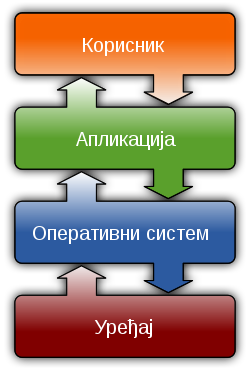
In computing, an operating system (OS) is a set of programs and routines responsible for controlling and managing devices and computer components, as well as performing basic system operations. The operating system integrates the various parts of the computer and hides from the end user the details of the functioning of these parts. The operating system creates a work environment for the user that handles processes and files, instead of bits, bytes, and blocks.
The location of the operating system in the computer usage view
Most operating systems come with an application that provides a user interface for handling the operating system, such as a command line interpreter and a graphical user interface. In addition, the operating system allows you to run other, user, programs such as editors, translators and browsers. A network operating system is another type of operating system.
The most commonly used operating system on desktops and laptops is Microsoft Windows XP. Stronger servers use Linux, FreeBSD and other types of Unix-like operating systems. However, these operating systems, especially Mac OS X, are also used on personal computers.
Microsoft
The founder of MICROSOFT is Bill Gates. He was born in 1955.
He founded the company with his friend Paul Allen.
Their joint product was Qbasic.
Microsoft is an American international corporation that deals with computer technologies. Bill Gates and Paul Allen founded it in 1975.
The corporation has about 80,000 employees in 85 countries, who produce a wide range of software such as operating systems, editing programs, databases, development tools…
The most famous Microsoft products
Microsoft Office is a software package that includes: Word - a word processing program, Excel - a program for creating tables with automatic functions, Front Page ) - a program for creating simple internet presentations, Access (engl. Access) - a program for creating and editing databases, Power point (engl. Power Point) a program for creating various types of presentations and various add-ons.
Microsoft SQL Server is a very modern relational database. In addition to the main database, it also contains additional tools: Query Analyzer - query console, Enterprise Manager - console for advanced database management, Profiler - tool for monitoring the operation of the database. There is also a free version of this Microsoft Desktop Engine (MSDE) database that does not contain additional tools, but contains additional programs similar to these tools from Microsoft SQL Server.
Microsoft Visual Studio is a software development tool. There is also a new, more developed and improved version of .NET (dot net), which is used more often for easier operation.
Pocket PC (Pocket PC) is a standard label for Pocket PCs, powered by a special version of Windows, adapted for Pocket PCs.
Microsoft windows
Microsoft Windows is an operating system created by microsoft.
According to the number of users, the most popular Microsoft operating system is Windows 7, which is found on 53.8 percent of computers. Microsoft Windows was first made in 1985.
Microsoft Windows is an operating system intended for personal computers and servers. The first version of this system was released in 1985. Windows is the most widespread operating system in the world.
The first version was introduced in 1985 in response to Apple's new strategy and the latest version of the Macintosh operating system, which used a graphical user interface. Over time, Microsoft Windows has gained a dominant position in the personal computer market. Microsoft Corporation is a closed source advocate and owner of all copyrights and distributions of Windows operating systems.
The word "Windows" in English means "windows". The term refers to one of the basic types of elements in a graphical work environment - windows - in which most programs run.
Windows was developed for IBM-compatible computers, which are based on the Intel86 (x86) architecture, and today almost all versions of Windows are made for this hardware platform. The exception was Windows NT which was made for Intel and MIPS processors, and later for Power PC, DEC and Alpha architectures.
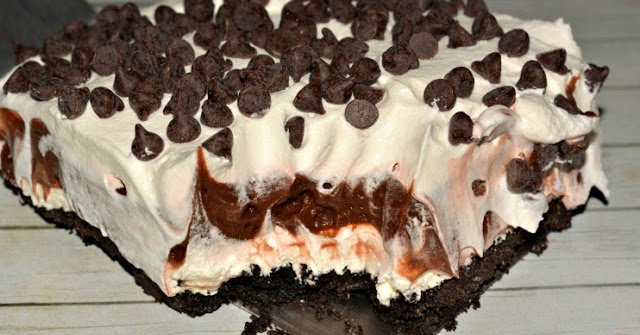
Chocolate lasagna, delicious and juicy cake that does not bake
Chocolate in any form is always a good solution, and if you really like it, then you will be delighted with the recipe for chocolate lasagna.
This cake is called chocolate lasagna because it has many layers, and each is better and more beautiful than the previous one. Plus, nothing has to be baked, so it’s just another plow.
Ingredients for the bottom layer:
300 g of cocoa biscuits
100 g of melted margarine
100 ml of milk
Middle part:
200 g cream cheese
50 g of powdered sugar
200 ml sweet sour cream
Chocolate part:
2 bags of chocolate pudding without cooking
500 ml of milk
Decoration:
200 ml of sweet sour cream or whipped cream
grated white and dark chocolate, chocolate balls
Preparation:
Mix the biscuits and melted margarine. Stir well so that all the biscuits come in contact with the margarine. Then add milk, then mix well again. Put the crust mass in a tray measuring 30 x 20 cm or so, and press with a spoon.
The cake can remain in the pan freely. Or put a cake ring on a tray and then make a cake, and take the ring off later. Whatever you want or have.
When you press the biscuit with a spoon, immediately make a white part. Mix cream cheese with powdered sugar. Whip the sweet sour cream separately. Mix cream cheese and sweet sour cream. Coat the resulting mass over the biscuit part. Make a pudding part right away. Mix pudding powder and milk and whisk.
Put a little pudding everywhere and spread evenly. Decorate the chocolate lasagna and cool, then serve.
PLEASANT !!!
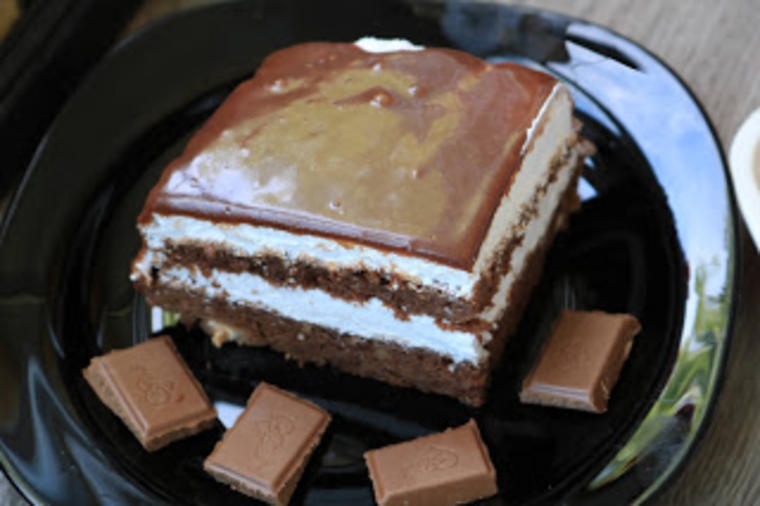
Ferrero rocher cake
Ingredients
Bark:
5 eggs
100 g of cooking chocolate
150 g of sugar
70 g of flour
1 baking powder
1 vanilla sugar
30 g pretzels
3 tablespoons ground hazelnuts
3 tablespoons ground peanuts
70 g margarine
File:
1/2 l of liquid whipped cream
100 g of nutella
100 g of cooking chocolate
100 g of ground hazelnuts
100 g ground peanuts
200 g hazelnut wafers (chop)
Glaze:
1/2 l of liquid whipped cream
300 g of cooking chocolate
Preparation
1-Crust: Melt the margarine and chocolate in a steamer, allow to cool. Mix the egg yolks with the sugar, add the flour, baking powder, vanilla sugar, pretzels, melted chocolate, ground hazelnuts, peanuts and egg whites (which you whipped separately).
2-Grease the mold, sprinkle with crumbs, shake the mixture and bake at 200 C for about 30 minutes. When the crust has cooled, cut it into two crusts.
3-Filling: Whip the whipped cream, add the nutella, ground hazelnuts and peanuts, melted chocolate and chopped wafer.
4-Divide the filling into two parts, then fill it into crusts, put the glaze over the upper filling, which is made by heating 1/2 l of whipped cream, make sure it doesn't boil, then add 300 g of chocolate.
5-Coat the cake with this icing and decorate.
Life among gorillas
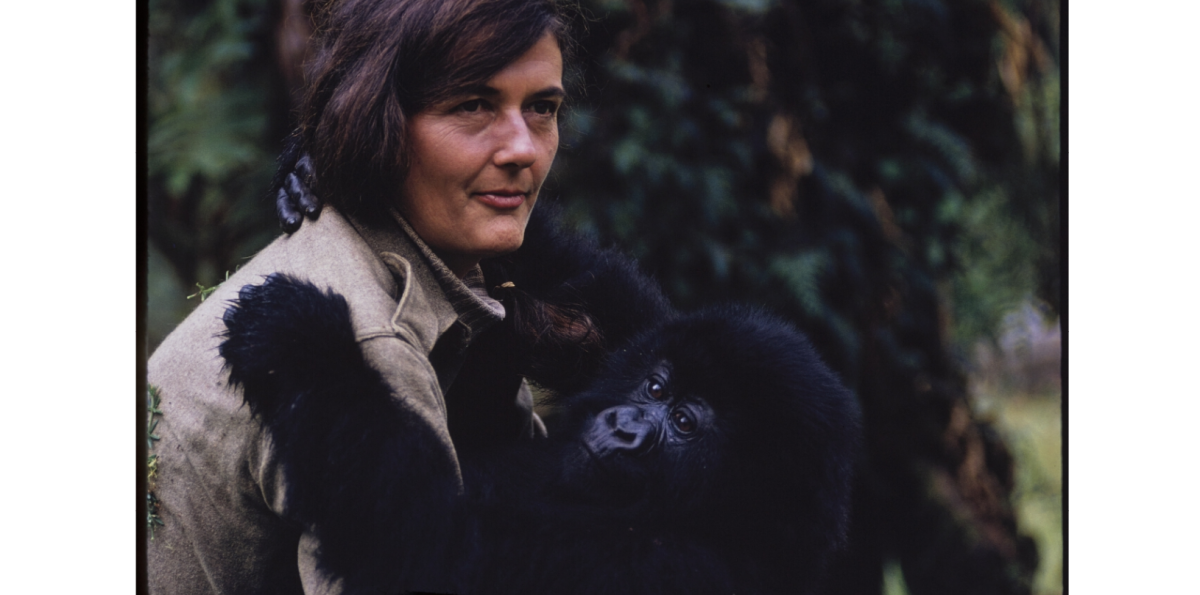
A woman who lives alone on a mountain ", is the name given to the local population of Rwanda by Diane Foss. And they are not the only ones to whom she was unusual. In her native San Francisco, most considered the idea of living in the wild, among gorillas, insane. Although today he is considered to be the greatest connoisseur of gorillas, at the very beginning, the scientific community also resisted the decision of its mentor, anthropologist Luis Liki, to research primates by people without proper formal education. Readers of her book Gorilla in the Mist, or viewers of the film of the same name, can describe her as incredibly brave, her collaborators probably as stubborn, and poachers against whom she waged war as dangerous. However, all its characteristics have contributed to the fact that mountain gorillas are today the only species of great apes whose population is growing. There are currently about 1000 individuals.
Although she loved animals since childhood and wanted to be a veterinarian, her mother, a model, and her stepfather, a businessman, wanted her to attend one of the business schools. She did not receive understanding and support from them, or even the money to enroll in the faculty she wanted, so she started doing various jobs. At the time she first went to Africa, she was working as a therapist at a children's hospital. The married couple Henry also worked with her, on whose farm she often stayed and from whom she borrowed money for the safari she went to in 1963. The two most important moments on this trip are meeting the gorillas in Congo and visiting Luis and Mary Leakey while they were doing research in the Olduvaj gorge. Upon returning home, all of this continues to pique her interests, and three years later she was given the opportunity to meet Lycia again, this time at a lecture he gave in Kentucky. She told him about her interest in gorillas, and he offered her to start one big research. Lifelong, as it turns out.
She became one of the women of the so-called Trimata, or one of the three "angels of Lycia". Besides her, there are Jane Godal who studies chimpanzees and Birute Galdikas who deals with orangutans. They were all hired as amateurs, which was controversial in scientific circles at the time, but Leakey has long been looking for people who are ready to completely change their lifestyle and dedicate themselves to the constant observation of primates. What these three women saw with their own eyes is hardly comparable to the experience of reading books in academic circles, and has made them the greatest authorities in their fields.
Thanks to the experience she had, distrustful of everyone, Diane Fossie thought that international organizations could not do much to protect gorillas, much less the National Park Service, which itself is involved in poaching.
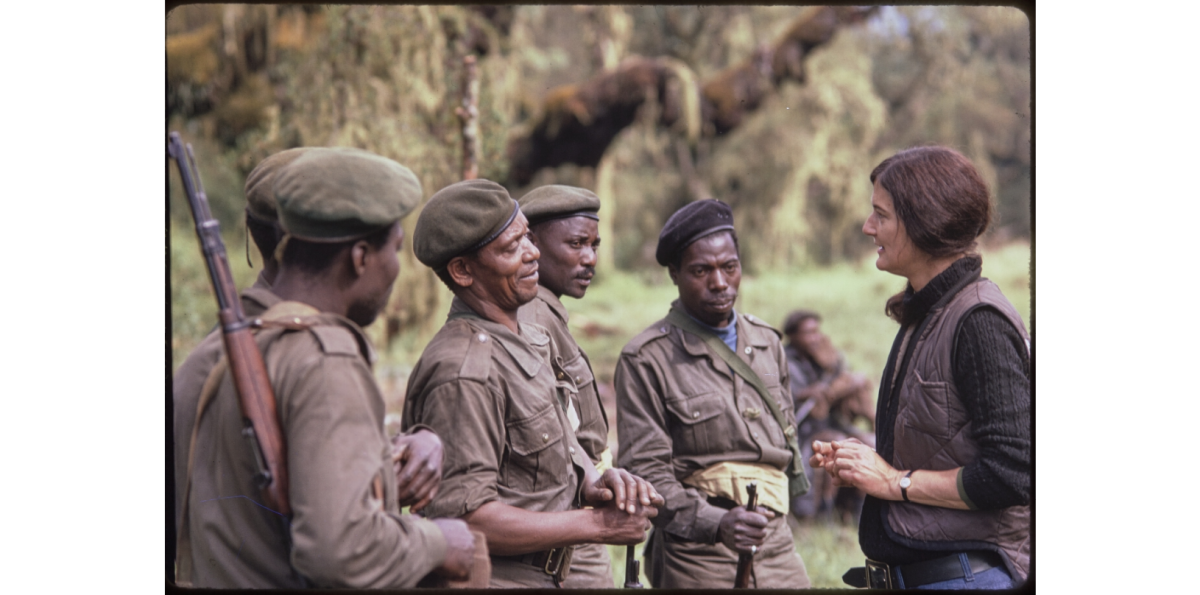
Fossi talks to Congolese soldiers, PHOTO: Bob Campbell, University of Florida Digital Collections
Her hut, PHOTO: Bob Campbell, University of Florida Digital Collections
Mountain gorillas were first recognized and described as a species in 1902, and Louis Leakey feared that they could become extinct in the same century. So he was looking for a person to do a lot of research. Before Diane Fossie, only one person studied these animals in the wild - American zoologist George Schaller, who began research in 1959 in Congo, but it lasted only 20 months. Diane Fossie will study these primates for 18 years.
She first came to the same place where her predecessor started working, but due to the unstable political situation in Congo, she went to Rwanda and founded the Carisoke Research Center there in 1967. Namely, mountain gorillas inhabit the mountain range of Virunga, which stretches along the borders of Rwanda, Uganda and the Democratic Republic of Congo. While the gorillas from Congo already had experience with one researcher, the only people those from Rwanda saw were poachers. That is why it was not an easy task for Diane Fossie to get closer to them.
However, it was even harder to defend them. Hunting was banned in Virunga National Park, but that formality had no real significance. The park staff was corrupt, as were the local population living in poverty, so there was no way to prevent the hunt. Diane Fossie often witnessed the cubs being caught to be taken to European zoos, and the parents fought to the death to protect them. Traders ordered gorillas' heads to be cut off and then sold as trophies, and severed fists as ashtrays. Diana's favorite gorilla, Digit, was also killed, so after that event, she set up a fund under his name to raise money for patrols to fight poaching.
Thanks to the experience she had, distrustful of everyone, Diane Fossie thought that international organizations could not do much to protect gorillas, much less the National Park Service, which itself participates in poaching. That is why she herself, with her patrol, destroyed the traps. It was noted that her four-member team destroyed 987 traps in just four months, while the National Park staff did not destroy any in the same period.
She waged a real war with poachers. Some would describe it as cruel, and some as perhaps the only possible one
Log cabin construction, PHOTO: Bob Campbell, University of Florida Digital Collections
She criticized international conservation organizations at the expense of the tourist programs they organized. In addition to believing that tourists disrupt the life of gorillas and her research work, she warned that gorillas are susceptible to human diseases. However, in the complex living conditions imposed by gorillas, it is not so easy to determine what is right, so today the Diane Fossie Gorilla Fund (formerly the Digit Fund) still advocates tourism as a way for the local community to dedicate itself to gorillas and their habitat.
In addition to poaching and disease, the challenge for mountain gorillas is the loss of habitat due to the expansion of settlements and forest fragmentation, which leads to the isolation of groups and a reduction in genetic diversity. Both wars and political instability are a constant threat. After the death of Diane Fossie, the Carisoke Research Center continued its work, but it was closed during the genocide in Rwanda and the civil war, it was destroyed and then rebuilt, it was moved. In such conditions, the researchers working in it still managed to improve the status of mountain gorillas. In the past decade, population growth has been recorded, so in 2008 this species was marked as critically endangered on the Red List, and since 2018 it has been endangered, which is still a slightly better status. Compared to today's thousand individuals, thirty years ago there were only 250 mountain gorillas.
FOTO: Bob Kembel, University of Florida Digital Collections
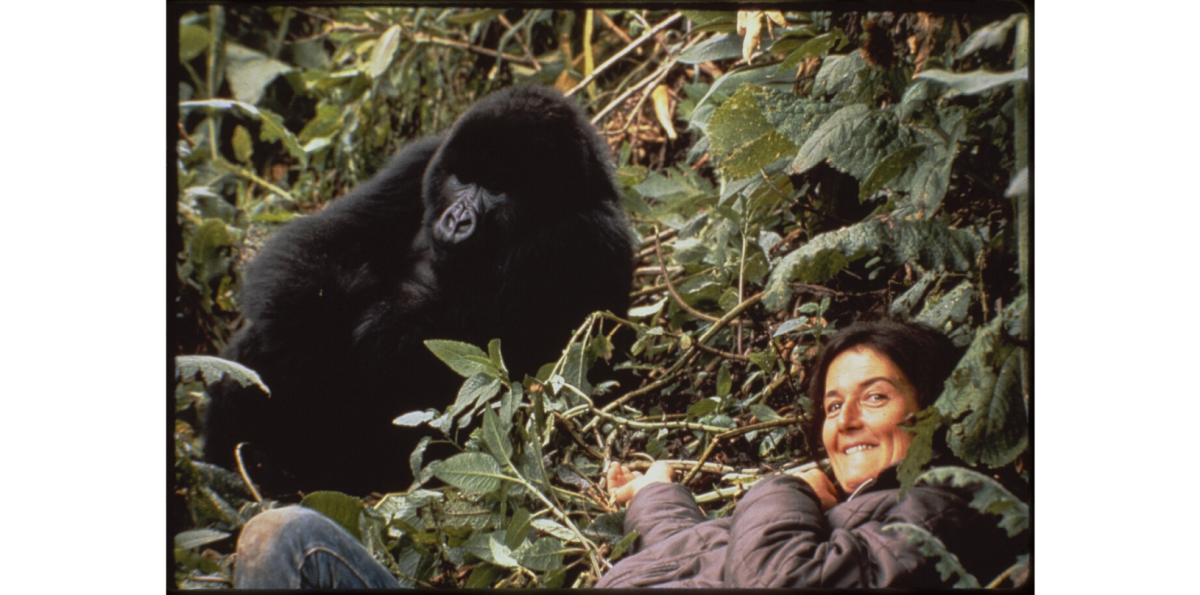
Diane Fossie described them as "elegant, sociable and gentle giants". She often achieved greater understanding with them than with people, always allowing them to be what they are by nature and trying not to disturb it with her observations. On the other hand, she was in conflict with people. Her temperament and ways of fighting were sometimes incomprehensible to her closest associates. She waged a real war with poachers. Some would describe it as cruel, and some as perhaps the only possible one. She intimidated the surrounding villages, and some allege that she would kidnap poachers, keep them as prisoners, interrogate them, beat them. Perhaps the most interesting description of her personality was given by her associates: "She was like a gorilla, she can scare you, and she can be gentle and full of love."
In the early morning of December 27, 1985, Diane Fossie was found dead in her camp room. She was brutally killed, and all around her there was broken glass and overturned furniture. Nothing was stolen and the motive was not robbery. The murder has not been solved to this day. The assumptions are numerous, and the most convincing seems to many that the motive was her fight against poaching. She was buried near Didigit, in a kind of cemetery she made for gorillas, and on her monument it is written: "Nobody liked gorillas more than her".
Plasma cubes with peanut butter
10 persons 45 min
Ingredients
It is necessary:
300 g Ground Plasma
400 g powdered sugar
200 g butter
300 g peanut butter
Glaze:
150 g peanut butter
200 g milk chocolate
50 g chopped peanuts
Preparation
1-Pour ground plasma and powdered sugar into a bowl. Stir the mixture with a spatula.
2-Add the peanut butter and mix the mixture nicely by hand. Finally, add the melted butter and continue mixing.
3-When the mixture is nicely combined, transfer it to a baking sheet lined with baking paper. Drizzle the mixture nicely with your hand and level it with a spatula.
4-Leave the pan to cool in the freezer for about 15 minutes.
5-Meanwhile, prepare the glaze. Add peanut butter to the melted chocolate and mix lightly with a spatula until the mixture is nicely combined.
6-Pour the icing over the cooled cake and sprinkle with chopped peanuts. Allow the cake to cool well. We cut cubes of the desired size and enjoy the wonderful taste. Pleasant.
AND HERE'S THE VIDEO TUTORIAL
https://youtu.be/yv0EQtjTmwM
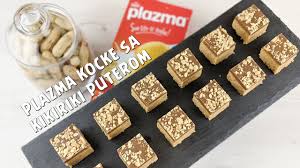
Heart Cake: Creamy and chocolatey, melts in your mouth!
The ideal dessert for any occasion ...
Ingredients-Quantity
Bark
eggs 3
sugar 3 tbsp
flour 3 tbsp
oil 1 tbsp
baking powder 1/2 sachet
cocoa 1/2 teaspoon
Phil
eggs 2
yolk 2
sugar 40 g
vanilla sugar sachets
cooking chocolate 100 g
sweet sour cream 100 ml
with 2 tbsp
butter 100 g
Glaze
cooking choc
olate 100 g
oil 2 tbsp
How to prepare
1-Whisk the egg whites until firm with the gradual addition of sugar. Add the egg yolk and oil, then stir to combine the ingredients into a smooth mixture.
2-Sift the flour with the baking powder and slowly mix it into the mixture by hand.
3-Divide the mixture into two parts. Add cocoa to one part and stir.
4-Oil the heart-shaped mold, sprinkle with flour and pour the dark mixture with cocoa.
5-Bake in a preheated oven at 200 degrees for about 10 minutes.
6-Bake the light crust in the same way.
7-Boil eggs, yolks and sugar until the mixture starts to thicken.
8-Add the broken chocolate and cook until the chocolate melts. Remove from heat and allow to cool.
9-Separately whisk the sweet sour cream with the honey. Add sliced butter, cooled chocolate mixture and stir with a mixer until the ingredients are combined.
10-Fill the crusts in the order: dark crust, filling, light crust, filling, and coat the whole cake. Place the cake in the refrigerator to cool and set.
11-For the icing, melt the chocolate with the oil and pour over the whole cake.
12-Decorate the cake as desired.
How to permanently get rid of foot odor?
Do you have an unpleasant foot odor? In order not to blush in society anymore, I reveal to you a way to solve this problem once and for all!
Your feet can indeed take you from point A to point B, but they are therefore susceptible to creating an unpleasant odor along the way.
While most people experience an unpleasant foot odor from time to time, some people do live in fear of taking off their shoes. I researched how to fight against unpleasant foot odor and everything I learned, I share with you in the following lines.
Let's first see why foot odor occurs at all.
Unpleasant foot odor causes
The medical term for foot odor is bromodosis. This is indeed a very unpleasant phenomenon, however, the good news is that there are many treatments against foot odor.
Legs generally sweat a lot, primarily because they have more sweat glands than any other part of the body. These glands release sweat throughout the day, which really helps you cool your body and keep your skin moist.
In fact, foot odor is not just sweat. These are bacteria that thrive in a humid environment and feed on dead skin cells, which causes an unpleasant odor. In general, sweat is odorless, and the cause of the unpleasant smell of sweat, which normally contains amino acids and proteins, are bacteria that feed on these compounds and give off a particularly unpleasant odor.
Namely, the bacteria that grow on your feet emit a certain gas while eating, which is the reason for your problem of unpleasant foot odor.
Everyone sweats, but teenagers and pregnant women are most susceptible to foot sweating, because during that period they produce hormones that make them sweat more. Thus, foot odor in women can be most present in pregnancy or if there is a hormonal imbalance resulting in more sweat.
People who are on their feet all day at work, who are under a lot of pressure, stress or have a health condition that makes them prone to sweating tend to be bothered by an unpleasant foot odor.
In most cases, foot odor is the result of a relatively benign condition that can be easily treated.
Poor hygiene as a cause of foot odor
Poor hygiene can play a role in causing foot odor. Irregular foot washing or not changing socks at least once a day can allow bacteria to multiply on the feet. This can lead to worsening foot odor.
Bacteria cause unpleasant odors
Some bacteria normally exist on the feet. These bacteria help break down sweat on the feet. If bacteria and sweat accumulate, an unpleasant foot odor can form. Additional bacteria are created when a person sweats in his shoes, takes them off, and then puts them on again, not allowing them to dry completely.
It is estimated that 10-15% of people survive a particularly serious form of foot odor due to the presence of the bacterium Micrococcus sedentarius in their footwear. This bacterium eats dead skin cells and attracts a moist environment in sweaty shoes.
These bacteria produce organic acids and sulfur compounds that smell like rotten eggs. Micrococcus sedentarius, which causes an unpleasant foot odor, is more of an inconvenience than a threat to health. Proper hygiene is key in eradicating bacteria.
Daily washing of the feet, frequent changes of socks and wearing different pairs of shoes are all ways to minimize the growth of bacteria on the feet.
Fungal infections
One of the most common sources of foot odor is the growth of fungus, and as if that unpleasant odor is not enough, fungus can also cause flaking of the skin on the soles or cause peeling of the skin between the toes. This condition is called athletic foot or tinea pedis. Athletic foot is a contagious fungal infection and can be transmitted from person to person in humid environments, such as pool floors, locker rooms, showers - where the fungus survives and comes in contact with the bare skin of the foot. Damaged skin due to blisters and dandruff can increase vulnerability to fungal infection.
Hyperhidrosis or excessive sweating of the legs
When the sweat glands work excessively, very awkward situations can occur in the form of unpleasant foot odor. Namely, sweat glands exist on most surfaces of the body. The autonomic nervous system responds to an increase in body temperature by stimulating the secretion of sweat on the surface of the skin, which cools the body through evaporation.
Some people experience excessive sweating reactions under the armpits, on the palms or soles of the feet, which is known as focal hyperhidrosis. Unpleasant foot odor can occur due to hyperhidrosis.
In some people, hyperhidrosis can cause such extreme feelings of shame, that people isolate themselves, thus suffering their social and emotional life.
Unpleasant foot odor treatment
You can really fight foot odor in a number of ways. These can be some medical and natural treatments, so take a look at some of the suggestions.
Home treatments will usually work well to reduce or eliminate foot odor. However, if these home treatments do not help alleviate foot odor, you should see a doctor. Your doctor may prescribe stronger antiperspirants and appropriate medical foot soap, and may also give you advice on medical treatments for excessive sweating or hyperhidrosis.
Keep your feet clean and tidy
Proper foot care is very important and you should not neglect it, if you want to avoid unpleasant foot odor. So follow these tips:
Use mild soap and a foot wash brush, at least once a day. The best time for that is during the morning or night bath. It is important to dry your feet completely after washing, and pay special attention to the skin between the toes, where residual moisture can easily cause the growth of bacteria and fungi.
Regularly shorten the toenails so that they are short and be sure to clean them regularly.
Remove thickened, dead skin from the soles of the feet with the help of a special foot stone.
Change socks at least once a day. If you are in a hot environment, exercising or in any other situation where your feet may sweat profusely, you should change your socks often.
Have a minimum of two pairs of shoes that you will change every other day. This allows each pair of shoes to dry completely from sweat or moisture throughout the day before putting them on again. You can take the insoles out of your shoes to dry as soon as possible.
Choose socks that absorb moisture. These include thick, soft socks made from natural fibers or sports socks.
Wear open sandals in warm weather and go as barefoot as possible indoors when needed.
Avoid shoes that are tight and tight or that can retain moisture.
You can wipe your feet with a small amount of alcohol every night with the help of a cotton swab. This will dry out your feet. Just don't apply alcohol to damaged skin!
Apply anti-fungal foot spray and foot odor or medical foot powder once a day. This works against fungi that cause foot odor.
Insert a medically deodorized insole into your shoes.
If you want to quickly reduce foot odor, feel free to apply an antiperspirant or deodorant spray to stink your feet.
Try different types of antifungal and antibacterial heel soaps until you find the one that suits you best.
Spray for unpleasant foot odor
Today, you can find a large number of sprays on the market that are antiperspirants and deodorants, which means that they mask an unpleasant odor or simply block sweating in the feet. Many anti-fungal and antibacterial sprays are also available that act on bacteria and fungi that cause foot odor.
They are very practical to use and you can carry them everywhere with you, and they work almost immediately after application.
In any case, my advice to you is to always opt for a natural foot-based foot spray, which can include various essential oils, such as tea tree oil, lavender, eucalyptus, rosemary, sage and other useful natural ingredients. Natural cosmetics are always a better option.
Essential oil for unpleasant foot odor
Ingredients needed:
8-10 drops of essential oil (eucalyptus, lavender or tea tree oil)
Half a bucket (or foot bath) of warm water
Add the essential oil to warm water, stir and soak your feet in this bath for 20 minutes.
Instead of using just one type of essential oil, you can make a mixture of 2-3 oils.
Apply this twice a day for a few days.
Essential oils have many useful properties: antiseptic, antifungal and antimicrobial properties, which kill bacteria and fungi that cause unpleasant foot odor. The pleasant smell of these oils will stay on your feet and cover the bad smell.
Lemon juice
Ingredients needed.
1/2 to 1 glass of lemon juice (freshly squeezed)
a small foot bath with warm water
Pour freshly squeezed lemon juice into a tub of water and soak your feet in this bath for 15 minutes.
In the end, just wash your feet with clean water.
Do it twice a day.
Citric acid present in lemon juice kills bacteria and reduces foot odor. It also has astringent properties that will reduce pores on the skin and help reduce sweating.
Tea bags against foot odor
Ingredients needed:
4-5 tea bags of black tea
hot water
small foot bath
Fill about 2/3 of the tub with warm water and soak the tea bags in this water, let it stand for a few minutes. Remove the tea bags and soak your feet in this water for 10-15 minutes.
Repeat this procedure twice a day.
Black tea is rich in tannins and polyphenols, which have antioxidant and antibacterial properties and help you get rid of unpleasant foot odor.
Salt water to remove foot odor
Ingredients needed:
1/2 to 1 cup salt
8 glasses of hot water
small foot bath
Pour hot water into the tub and add salt, stir for a few seconds to dissolve completely.
Soak your feet in this water for 20 minutes, and do it once or twice a day for a few days.
The salt absorbs excess moisture in your feet, which reduces the growth of bacteria that cause unpleasant foot odor. It also acts as an astringent.
Unpleasant foot odor of baking soda
Ingredients needed:
1.5 to 2 tablespoons baking soda powder
7-8 cups of warm water
small tub
Add baking soda powder to warm water and stir to dissolve. Soak your feet in this water for 15 minutes. Repeat this twice a day.
Baking soda (sodium bicarbonate) has antibacterial and anti-fungal properties, neutralizes unpleasant odors and softens the feet at the same time.
Coconut oil
Ingredients needed:
1-2 tablespoons coconut oil
5 drops of cedar essential oil
Wash your feet and dry them well. Mix cedar oil in melted and cooled coconut oil and apply this mixture on the feet, gently massaging so that the skin absorbs.
Repeat this every day until you get rid of the unpleasant foot odor.
Coconut oil contains lauric acid, which kills bacteria present on the feet, and cedar essential oil has anti-fungal properties.
Bitter with or epsom with
Ingredients needed:
1/2 cup bitter salt
a small foot bath with warm water
Add the bitter salt to the water and stir well to dissolve, then soak your feet in this water for 20-30 minutes.
Do this twice a day for a few days.
Magnesium in bitter salt absorbs excess moisture from the skin, which kills the bacteria responsible for the stench of the feet, and also reduces inflammation, softens the skin and soothes sore feet.
Sage and rosemary for unpleasant foot odor
Take one bucket or foot bath and fill it halfway with hot water. Add one tablespoon of dried rosemary and sage to this. Let it stand until it cools down a bit, then soak your feet in this for 30 minutes. Repeat this procedure daily for a week.
Sage leaves consist of a compound known as tannic acid, which helps reduce the secretion of sweat from the sweat glands. This medicinal plant also has anti-fungal and antibacterial properties, as well as astringent properties. Sage also helps fight hyperhidrosis or excessive sweating.
You can put dried sage in socks and shoes, which will pick up unpleasant odors.
Rosemary also has antifungal and antibacterial, as well as astringent properties.
Apple vinegar
Take a foot bath and pour 7 glasses of lukewarm water into it. Then pour half a glass of apple cider vinegar or white distilled vinegar. Soak your feet in this for about 20 minutes, 2 times a day. When you're done, just wash your feet with cold water and then dry them completely.
Apple cider vinegar is one of the most powerful natural remedies against foot odor
Vinegar creates an acidic environment that makes it difficult for bacteria to thrive.
It also helps maintain the pH level of the skin and permanently remove odors caused by bacteria.
Medical treatments for foot odor
Sometimes, despite your best efforts, you can't get rid of the unpleasant foot odor. When this is the case, you may need to see a doctor, who will prescribe you medical treatment.
Iontophoresis
This is an approach that involves applying a mild electric current through water to the skin, in order to reduce foot sweating.
Botox
Another option used in some cases is an injection of botulinum toxin or botox. This medicine is injected into the feet by means known as plantar injections.
However, these injections can be especially painful. The results usually last between 3-4 months, and subsequent treatments are necessary. Botox is also used for excessive sweating or hyperhidrosis.
Unpleasant foot odor is a fairly common occurrence and that is why there is no reason to worry much if you also belong to the group of people who have a problem with this. Today there are a huge number of treatments to solve this problem in a completely natural and safe way, so now you can get a spray for unpleasant odors on a natural basis. Try some of the above treatments and just be persistent and the results will surely come by themselves.
Living with the nature of the snake
POISONOUS SNAKE
I decided to introduce you to the danger of venomous snake bites for two reasons: first, the biggest real danger that animals threaten you with during your stay in nature is snake bites (there is very little chance that you are in immediate danger from another wild animal) and if this accident happens to you, it is important that you be able to save your own or someone else's life with a quick intervention.
Precautions
As a general rule, you are not in any danger from wild animals if you do not disturb them. All wild animals run away from humans and attack them only if they feel threatened! This means that you have directly encountered them, that they have cubs to defend, or that you have otherwise endangered their survival.
This is also true for snakes. They attack a person only out of fear, and only if you step on them! Snakes are very dangerous even in the mating season or while nurturing their young, but even then, if you retreat without sudden movements, they will not attack you. Protection against poison ivy bites requires no special measures but only caution! Take care not to walk barefoot and on the rocks. When picking stones, picking grapes, working or playing in an olive grove, field, etc. one should be constantly careful. The best prevention is to make noise when passing through thickets, through tall grass or forest: sing, talk loudly, pound with a stick, break the branches around you… All wild animals, even snakes, will get out of the way you are going. It's good to have boots with a thicker wall that snake teeth can't break through: leather, hiking, and even rubber boots can serve great. It is also good for your pants to be made of a firmer material. If the snake steps on it, it will instinctively turn around and bite its leg, most often at the height of its crotch. If you have boots on your feet then there will be no problem.
About snakes
Snakes are, as is well known, reptiles. They are either non-toxic and completely harmless, or toxic and very dangerous.
Venomous snakes are difficult to distinguish from non-venomous ones in speed, but the basic thing is that venomous snakes have a pronounced triangular head (in non-venomous ones it is more ovoid) and a rather narrow neck, while in non-venomous ones this is not the case. They live on all meridians but there are many more in warmer regions. The most dangerous are poison ivy in the tropics. In South America and especially in India, tens of thousands of people die every year from the bites of poisonous snakes.
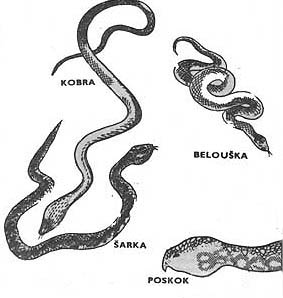
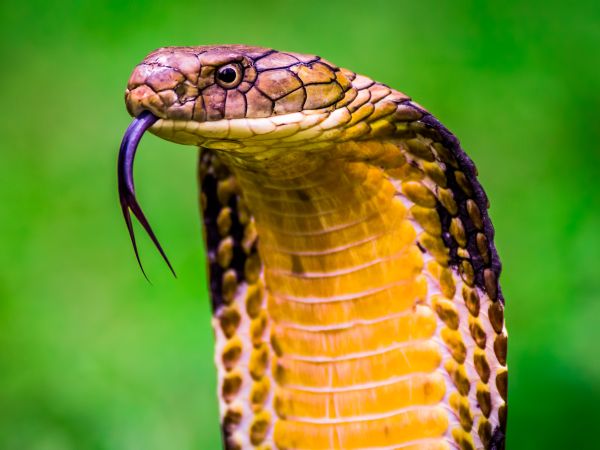
THE COBRA SNAKE
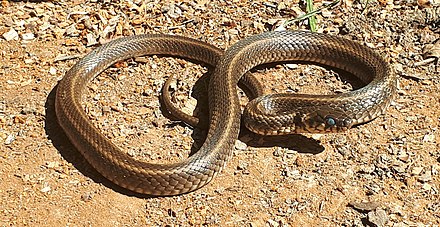
BELOUSKA SNAKE
SARKA SNAKE
SNAKE POSKOK
The group of dangerous venomous snakes consists of: the cobra, the East Indian spectacle and many other snakes from Africa, Australia and South America, which do not exist in Europe. But make no mistake, vipers live in Europe, which again do not exist in the tropics. Among these toxins, the most dangerous are: hopscotch and rockfish. Both species live in our region, and they differ from each other in the pattern on the back and on the head. The hinge was named after a dark, broken (zigzag) pattern on the back. It is thicker and larger than the hippopotamus. Hinges are usually found in wooded areas, while the hippopotamus is more often found on rocks, in warmer regions, at sea… The hippopotamus is a slightly smaller and thinner snake, but more dangerous and poisonous than the hinge. Like all venomous snakes, it has a very pronounced triangular head (seen from above) and a horn on its nose (no other snake has that).
The venomous apparatus in all venomous snakes is basically the same. It consists of two sharp and hollow teeth that are connected to two venomous glands. The location of the venomous glands depends on the type of snake, but most of them are located in the upper jaw. The glands secrete toxins that collect in sacs above the hollow teeth. The strength and amount of venom are different and depend on many factors: if the snake is full or if it has bitten several times in a row, the venom is weak and not enough, and if it is hungry or if it is in the sun for a long time, the venom is strong and abundant. .
The fact of poison
Poisons are very mobile, they are not timid, they can swim and attack quickly. The bite is lightning fast. Two small, non-bleeding stab wounds were seen at the site of the bite. Soon a red ring appeared in that place, which became bluish, that is. the wound turned blue and swelling appeared. Somewhat later, numbness appears on that part of the body. Once it enters the bloodstream, the poison spreads throughout the body. The poisoned person feels shivering and weakness, dizziness occurs, his pulse speeds up and his breathing becomes increasingly difficult, he is pale, often vomits and has diarrhea, he loses consciousness. Later, cramps and complete insensitivity (coma) occur. If you do not react in time, paralysis of the respiratory center occurs and a little later the heart stops working.
First aid
It consists in the complete rest of the injured person. The bitten limb should be tied up, moderately tightened with a bandage just above the bite site, and immobilized. Occasionally (3-5 minutes) loosen the bandage because blood must circulate through the poisoned part of the body, ie from the veins to the heart. At the site of the bite, two cross incisions (letter "X") are made through the skin to a depth of 3-4 mm, and the wound is allowed to bleed. That way, most of the poison will come out with the blood. It is not recommended to suck the wound with the mouth, because even the smallest wound on the mouth or oral cavity, as well as a decayed tooth, is enough to poison the one who is trying to help! Incisions are made with a knife, razor or other sharp object whose blade is burned on a flame or wiped with alcohol. Give the victim as much liquid as possible: tea, coffee, fruit juices and other beverages, but not alcohol. Then he should be transferred to the nearest medical institution as soon as possible, where he will receive the serum against snake venom.
Interesting facts about horses that you certainly didn't know
Beauty, strength, poetics, irresistibility, passion, speed, indomitability, temperament and ardor - all these qualities can be attributed to only one animal - a horse. Until we see them all free again, out of the reach of a human corrupt hand, we can learn together some facts that adorn them.
Horses can sleep in 2 ways - lying down and standing.
The horse's brain is the size of a potato, and its weight is twice less than a human's.
Horses live for about 20 years, and sometimes over 30. Legend has it that the oldest horse in the world lived for 62 years.
James Scott first coined the term horsepower, defining engine power.
Horses do not breathe through their mouths, therefore, and also, they do not burp or vomit.
Drawings of horses, drawn on caves, are about 17,000 years old.
The horse drinks up to 38 liters of water daily.
No two horses are the same. At the moment, there are as many as 75 million of them in the world.
With the help of wagging their tails, horses express how they feel.
Throughout history, horses have been known as both domestic and wild animals. It is believed that the first horses were domesticated thousands of years before the new era, and they were used for riding, towing and work.
Diet with apples - menu and weight loss effects
The apple diet will help you lose up to 5 kg in just three days.
The apple diet is a cleansing treatment that includes consuming apples in any quantity for 3 days. This diet is restrictive and should not be extended. A few days before you start the apple diet, gradually reduce the portions of what you usually eat. Give up meat, sweets, alcohol, coffee and strong black tea completely. Also, try to keep salt intake to a minimum. Eat as many vegetables and fruits as possible, porridge (buckwheat, barley, millet) and whole grain bread.
1. Start the day with a glass of water with the addition of apple cider vinegar.
2. Drink 2 liters of fluid during the day. Avoid strong tea. Herbal and fruit teas are recommended.
3. Eat apples with peel - they are rich in dietary fiber and vitamins.
4. If you do not feel well, are weak or have a headache - reach for extra snacks. If the problem recurs or gets worse, stop the diet.
See an example of a three-day diet menu.
Day 1
You can eat as many apples as you want. Drink 3-4 glasses of chamomile or mint infusion and mineral water (at least 2 liters). In the evening, you may experience a headache associated with low blood sugar.
Day 2
Continue to eat only apples, drink mineral water. You may suffer from diarrhea, which is associated with a higher intake of dietary fiber.
Day 3
Eat only apples, drink at least 8 glasses of liquid. Remember that you don’t have to eat only raw apples. You can also bake or eat fruit in the form of mousse.
After three days, gradually return to your usual diet, but still eat apples with at least 2 meals a day.
How can you use them?
breakfast:
mousse with natural yogurt and apple;
apple with kefir and cinnamon;
oatmeal with yogurt, cheese and apple;
wholemeal bread with white cheese and apple mousse;
pancake with cheese and apple mousse;
rice waffles with apple.
lunch:
chicken breast, baked apples, brown rice;
turkey breast with baked apple, broccoli with rice, sauerkraut salad;
grilled salmon with apples and brown rice.
Snack:
crispy bread with cheese and a little apple;
apple compote with whole pieces of fruit;
natural yogurt / kefir with apple.
Dinner:
apples baked with rice;
boiled spinach with a slice of whole grain bread, baked apple;
apples baked with ham.
The effects of a diet with apples
The effect of the apple diet is sensational, although it is not permanent, if you do not change your eating habits permanently. According to people who have used it, you can lose as much as 5 kg in 3 days. Apples have few calories. The average fruit has about 90 kcal. Losing weight on an apple diet causes a negative energy balance and loss of water from the body. You eat up to 1000 kcal a day. For most women, this is definitely not enough!
Advantages and disadvantages of the apple diet
Experts explain that it can cause weakness, impaired concentration, diarrhea and headaches. Proponents of the apple diet, on the other hand, say it removes toxins from the digestive tract and improves the appearance of the skin. Regular repetition relieves constipation and rheumatic pains. This diet with apples is recommended for those who have problems with gastrointestinal parasites. It can help you fight uninvited guests.
Contraindications to the diet with apples
It should be borne in mind that the apple diet can not be used by people:
with a sensitive stomach,
prone to heartburn
suffer from peptic ulcer disease,
suffering from irritable bowel syndrome,
suffer from ulcerative colitis.
3+ quick ways to make your own face mask
Even if you’re not good at sewing, don’t worry. We have found simple ways for you to make protective masks yourself - quickly and easily, from materials you probably have at home and without the use of a machine.
In addition to haircuts at home, making a protective mask has become one of the most popular "do-it-yourself" projects during isolation, whether it is masks for personal use or as a gift to family and friends.
The canvas mask can be made in many ways that do not require knowledge and experience in sewing, not even a sewing machine.
If you have the following materials in the house - you are ready to make a protective mask:
Cotton cloth, cotton scarf or T-shirt
Scissors
Meter or ruler
Elastic or larger rubber bands
Needle and thread
Here are 3 easy ways to make masks:
https://youtu.be/u4SfTm38GIk
https://youtu.be/_6UcIDaxfqk
https://youtu.be/uRfhuRNua_E
+ BONUS Protective mask made of scarf without sewing!
https://youtu.be/7TasM4uRj74
Smoking cessation plan and program
If you decide to quit smoking, you can find some useful tips here
HOW SMOKERS CAN STOP SMOKING
Plan and program
cigarettes in a bottleNo matter how convincing the facts that speak against smoking are, what a smoker needs is not just facts and statistics, but above all, a plan and program that will help him quit smoking.
As long as there is a desire to quit smoking, it still means something, however, many people make the mistake of not separating the desire from the strength of will. In addition to the desire to quit smoking, in order for a smoker to succeed in that, he needs to mobilize his willpower into positive action.
If a smoker wants to quit smoking, he should do it all at once, he should not try to do it gradually. The reason is that it is better to survive a few difficult days, than to drag such a situation for weeks and months. No long torture is easy. It is better to solve this dilemma at once, and that is usually easier to do than you think. when we say this we want to help the smoker resist the craving as soon as possible - in fact within five days.
After quitting smoking, the first three days are the hardest, but at the end of the fifth day, most smokers feel that the craving for a cigarette is much less or that it has disappeared. if the smoker stays for ten days, success is achieved. The smoker should tell himself "I decided not to smoke". The smoker should constantly repeat his decision, from the moment he opens his eyes in the morning until late in the evening until he closes them again. While the smoker repeats this, you have to believe in it. This is the right moment for the smoker to fully convince himself with the power of will and reason that tobacco harms his organism. We should not forget for a moment the connection between the mind and the body, because it can benefit the smoker when breaking this harmful habit. Every day, the smoker should repeat his intention "I decided not to smoke" with increasing engagement of the will and should not forget that this strong positive decision has a direct impact on reducing the physical need of his body to smoke, to the extent that many smokers there is a noticeable weakening of cravings.
By making full use of his will, the smoker will not only weaken his craving, but will also eventually manage to bring his bad habits under the control of his mind. In moments of strong desire to smoke, the smoker should look at his watch. To observe the secondary while going around the dial. Regardless of the strong desire, it is certain that a smoker can endure without a cigarette for one minute. If it already lasts one minute, then it can last another. That is more than certain, but he should pay attention to something else. When three minutes have passed, the intensity of the desire to smoke at his disposal, but the next hour and each new day will increase his decision and the strength of will he needs to quit smoking. there are certain rules that smokers should strictly adhere to. These rules will help them overcome the most difficult crises they will encounter on this journey to a new life.
1. A SMOKER SHOULD BATH MORE OFTEN
cigar lungsThis is really a time to enjoy. The smoker should bathe in warm water two to three times a day for 15-20 minutes. The smoker should relax. If the smoker feels that he can no longer endure without smoking, the smoker should go to the bathtub or shower again, and it is certainly impossible to smoke in the shower.
In addition, the smoker should try another way of relaxation - he should rub himself with a bathing glove. This procedure is known in the field of medical rehabilitation as vascular gymnastics, it will calm the nerves, increase circulation and the smoker will feel extraordinary pleasure. Here is what this procedure consists of. First, the smoker should get up in the morning a few minutes earlier than usual. Secondly, in a warm bath, the sink should be filled with lukewarm or cold water. do not blush.
Rubbing should be continued until a satisfactory pink color appears, which is an expression of increased peripheral blood circulation. Some people will conclude that it takes quite a long time to rub to make the skin pink, and that actually means that the peripheral or superficial blood vessels expand quite slowly. However, if the same procedure occurs the next morning, it will usually cause faster expansion of peripheral blood vessels. If the smoker gradually uses colder water every morning to achieve a better effect. However, one should not try to cover the whole body on the first morning. The second morning should include the other arm. On the third morning, the order should be as follows: left hand, right hand and chest, so that the whole body includes rubbing with a cold bathing glove. Some Spartan souls are finally starting to throw ice cubes into the water for morning rubbing. Cold, fast and strong rubbing with a bathing glove will wake up the smoker well and stimulate him for work, and he will not feel the desire to smoke.
2. A SMOKER SHOULD DRINK ENOUGH WATER
smoking a gun You should drink 6-8 glasses of water between meals. Data on this should be recorded if necessary. The more fluid you drink, the more nicotine will be excreted from the body. You should not drink alcoholic beverages, the importance of fluid intake that we mention does not include beer or wine.
People who do not know medicine, usually do not understand the importance of a sufficient amount of fluid for the normal functioning of all organs of the human body. Brain tissues, for example, contain 75% water. The nervous system cannot function without a sufficient amount of fluid. Water is necessary not only for the release of nicotine from the human body, but also for the good functioning of the nervous system.
Here we will give smokers suggestions on how and in what quantity they should use the timely action of the liquid, over the next few days: as soon as the smoker gets up in the morning, he should try to drink one or two glasses of warm water. At first, he may be forced to start making a habit of drinking water immediately after getting up in the morning. Later, the smoker should drink two glasses of water between breakfast and lunch, plus two more glasses during the afternoon. All this is 6 glasses a day.
These 6 glasses of water, along with fresh fruit juices that the smoker will probably want to drink during the day, will have a timely effect on the smoker's kidneys. In fact, this increased amount of fluid will make them (kidneys) work very intensively, but the result will be a significant reduction in the desire to take nicotine into the body during the first 24 hours after smoking cessation. After 24 hours, the writer can reduce the amount of water, but he should continue to take in as much fruit juice as possible.
We should never forget the decision that the smoker has already made, and that is "I decided not to smoke".
3. THE IMPORTANCE OF A REGULAR HOLIDAY
cigarettes are cut with scissors. The smoker should rest enough for the first five days, take normal daily meals at a certain time and go on a night's rest at a certain time (8 hours will not hurt him). During these five days, the smoker should not go out to cafes and restaurants in the evening. The smoker should do everything possible to keep the peace of his nervous system and that is why he should plan to go to bed a little earlier than his usual time. You should give your nerves the best possible rest, because fatigue, in all its forms, is a great enemy of willpower. Precisely because they are used to working or getting up late at night, many people deprive their nervous system of the necessary rest and that is why they get up in the morning sometimes more tired than when they went to bed, and their eyes are cloudy and inflamed. With such exhausted nerves who, under the influence of an old habit, crave a cigarette again, how is it possible for a chronically exhausted person to start a fierce campaign against anything, especially cigarettes.
Whether the smoker’s exhaustion stems from a lack of adequate rest or simply from overwork, in any case the smoker should provide himself with enough sleep during these five days.
4. A SMOKER SHOULD NOT SIT AFTER LUNCH
After smoking, the smoker should go out of the house, walk and take a deep breath for at least 15-20 minutes. The smoker should not sit down after eating, because at that time, he will want a cigarette more than anything. To make it easier for himself, the smoker should go out of the house.
Before this, the smoker used to eat well and after that he would sit down in his favorite armchair and, raising his legs comfortably, he would read the newspaper with a cigarette and watch TV. At this moment, his favorite comfortable armchair has become a double trap - it all still exudes the aroma of thousands of cigarettes smoked earlier in it, and at the same time part of his established habit.
If he sits in the armchair again, the smoker will be surrounded by the aroma of a cigarette coming out of the sofa, carpet and curtains, so it will be no wonder that the strength of his craving for smoking will be equal to real torture. With this in mind, walking after every meal should become the rule for smokers, who must unconditionally follow this period.
Immediately after lunch, the smoker should start doing his favorite hobby or go for a walk. A smoker can even go so far as to help his wife wash the dishes, for example. In fact, it is important that he does anything, but we must not allow ourselves to sit down.
Here is another reason that speaks in favor of the above. It is estimated that brain cells need about five times more oxygen than cells that are part of other parts of the body. From this follows the conclusion that by reducing the amount of oxygen the brain needs, we can significantly impair our mental functions.
Couldn't we make a logical assumption from this that the reduction of mental functions due to the lack of oxygen will also reduce the strength of our will, which is also vital at this moment in resisting the desire to smoke.
In addition, medical research points to the fact that the frontal surfaces of the brain are most sensitive to insufficient oxygen, and these are precisely the parts of the brain that direct the function of willpower and common sense. Therefore, during the next few days, when the role of strong will and calm nerves is so important, especially after lunch, the smoker should find time for walks that will provide the brain with sufficient oxygen.
Finally, it is important for the smoker to keep in mind the natural law according to which "the force is created from patience and time". In order for a smoker to be stronger than that irresistible desire that will occasionally haunt him, just when it seems to him that he can no longer stand it, he should say to himself "I have decided not to smoke". To drink a glass of water after that and start breathing deeply.
Within a few minutes, the smoker will feel that the craving begins to subside and that he emerged victorious from the moment of the crisis. These periods of craving for cigarettes will gradually become less frequent and weaker, and eventually the smoker will succeed in his effort to get rid of cigarettes.
These rules should be followed on a daily basis.
THE ROLE OF NUTRITION DURING SMOKING
1. SMOKER SHOULD BE CAREFUL IN RELATION TO DRINKS
from the ashes a manSmoker should not drink alcoholic beverages, coffee, tea, Coca-Cola. A smoker should avoid sedatives and any stimulants in order to strengthen his nervous system as quickly as possible. The only drinks that a smoker can consume should be milk and buttermilk. As a hot drink, he can use a drink made from cereal porridge.
Many smokers, in an attempt to get rid of cigarettes, double the daily amount of coffee used until then, not realizing that coffee can lead to the culmination of the craving for tobacco, which they try to quit. In addition to the previously established habit of a smoker smoking with a cup of coffee, the caffeine found in coffee stimulates the nerves and this is exactly what he should avoid now. It is very important that the smoker keeps calm now.
Another great enemy of willpower is alcohol. In any form, alcohol acts directly on the vital brain centers of reason, willpower and the ability to reason properly. For this reason, the smoker should consider alcohol the number one personal enemy for the next few days.
In almost every group of people who in any way try to quit smoking, we come across a significant number of those who are making extraordinary progress in this regard, but until that fatal afternoon when they suddenly find themselves at a cocktail party or reception. Many of them go to a cocktail party determined to sip a glass of beer throughout the afternoon and usually succeed, but only until an old friend approaches them and invites them to drink just a drop for the good old days. After this comes half a hell of a cigarette, because the drop has defeated the willpower.
2. SMOKERS SHOULD NOT EAT HEAVY DISHES AND SWEETS
mustikla cigarFood that is extremely pleasing to the passionate smoker is well-spiced food. A passionate smoker also eats larger amounts of meat, sauces and is extremely fond of fried and heavy meals, which largely make it impossible for him to quit smoking.
Passionate smokers like very spicy food, precisely because tobacco numbs the sense of taste. They usually feel the need for large amounts of strong spices in order for these to finally penetrate through the established nodules of the sense of taste. When a smoker suddenly stops smoking, his sense of taste begins to awaken from years of numbness, which leads him to start eating larger amounts of his favorite food, and this moment again requires another effort of willpower that should read at this point: I have decided to I do not teach. Therefore, it is necessary for the smoker to avoid all strong spices such as: mustard, pepper, paprika and horseradish in all possible ways during these days. The smoker should remember that it is better not to eat all those foods that sting the tongue even when eating cold.
During these five days, the smoker should remove from the menu all the rich steaks and foods fried in fat and oil. The smoker should give his body an ideal chance to strengthen himself by using fresh food prepared in the simplest possible way. Some people feel that a well-seasoned fine steak is enough in itself to be a source of a strong craving for smoking. the percentage of ammonia can stimulate the central nervous system. The richer the steak, the greater the amount of ammonia produced.
If a smoker tries to replace meat with fish, this will also have a beneficial effect on lowering blood cholesterol.
Just as all types of heavy foods should be avoided, so all sweets should be avoided during this period.
White refined sugar does not contain calcium, phosphorus, iron, or vitamin B. On the contrary, if a smoker uses food with a lot of sugar, his body will need a larger amount of vitamin B1 to burn blood sugar. therefore, whenever a smoker eats an increased amount of sugar, his reserves of vitamin B1, which should strengthen his nervous system during this period, will be used to burn the increased amount of sugar that the smoker has taken into the body. If the smoker does not listen to this advice, it will not be a miracle if his nerves are overly upset.
Having in mind the above, the smoker should give up during these five days all types of sweets that contain large amounts of sugar. This will surely help his nerves to calm the storm that is otherwise threatening them.
3. INSTEAD OF FATTY, SPICY DISHES AND SWEETS, A SMOKER SHOULD EAT FRUIT
smoker should eat fruits, vegetables, hazelnuts, almonds and nuts as much as he wants. A smoker who is quitting cigarettes should eat plenty of fresh fruit during this period - this is really an opportunity for a smoker to eat it well. It is best to eat fruits and vegetables with lunch, not between meals. A smoker can have fun with chewing gum, but not sweetened, if he wants it so irresistibly.
As a reason against quitting smoking, smokers state that they will gain weight and look like a ball. They often ask: "What's worse? Being overweight or at risk of the harmful effects of smoking." The smoker should not suffer from the weight problem for the first five days. Since they drink extra fluids during this time, they may gain a little weight, but they should not forget that this fluid is important to help them eliminate excess nicotine from the body.
However, the problem of being overweight is really important, but smokers will fight it much easier during these five days than they probably assume. The strength of their will increased significantly and it saved them from food and drink that could be harmful. this willpower will now become a valuable weapon in their fight against overweight. Most people find it easier to control their weight than the urge to smoke. Therefore, smokers need to be brave.
4. HELPING SMOKERS IN ADDITIONAL AMOUNT OF VITAMINS
cigarette lungs In order for smokers to take in an increased amount of vitamins, especially vitamin B complex, which will help the smoker's nerves when deprived of nicotine, he should take one to two tablespoons of wheat germ with each meal. As a substitute for wheat germ, you can take one to two tablespoons of brewer's yeast daily, which is a good source of vitamin complexes as well as excellent protein.
One of the ways to take brewer's yeast is the following: you need to stir a spoonful of dry yeast into a glass of tomato juice, close your nose and drink the mixture. This is a way that is suitable especially for those who are considered to be primary, because you should drink only this, and not some medicine with unpleasant tastes. Others who also want to take additional amounts of vitamin B1 in the body, can ask for the same from any doctor who will surely approve them for this occasion, in capsules or tablets.
5. ANACIONS (MIRACULOUS MEDICINES) CAN DISAPPOINT SMOKERS
smoking during pregnancySpecial tablets or other means may help smokers to quit smoking. Some of them claim that the pills helped them, while others did not benefit from them at all. Every smoker may want to try some of these pills. If the smoker's nerves become overly excited during this whole process, he is free to contact his doctor, who will recommend the use of a mild sedative for a few days. You should not take any medication at your discretion, but you should consult a doctor for each medication.
Special tablets, patches or other aids may help smokers to quit smoking, but do not take them without first consulting a doctor.
Baked pancakes with cheese
Ingredients
For the dough:
2 eggs
little salt
1/2 teaspoon sugar
300 ml of milk
200 ml of acidic water
220 g flour
3 tablespoons oil
For fil:
200 g of cottage cheese
1 cup (180g) sour cream
For topping:
1 egg
200 ml of yogurt
Preparation
Whisk the pancake batter (you can also use your own recipe), leave it to stand for about half an hour, then bake the pancakes. It takes about 10 pancakes.
Mix cheese and sour cream and fill the pancakes. Arrange them in a tray or in a fireproof bowl.
Beat egg, add yogurt, mix and pour over pancakes.
Bake for about 20 minutes in an oven preheated to 180 C.
Serve warm.
Pleasant!
Fish soup
Ingredients
It is necessary:
1.5 kg carp heads and tails
200-300 g kecige
300 g of carp spawn
400 g of onion
2-3 cloves of garlic
200 g carrots
50 g persuna
50 g of parsnips
50 g celery
1-2 fresh whole peppers
2 dl of squeezed tomato
4 dl oil
3 teaspoons salt
3 teaspoons of dry herbal spice
1 teaspoon ground pepper
2 bay leaves
1 bag of spices for fish soup
4-5 liters of plain water
if desired hot crushed peppers
Preparation
1.Put carp heads and tails and one small sturgeon to cook. Sturgeon is a fish that gives the soup a special taste.
2.When the water boils, cook for about 10-15 minutes, then strain the water and save it, so that the soup is poured over it.
3.Leave the fish to cool, then clean the meat from the bones.
4.Finely chop the onion and grate the rest of the vegetables (without peppers).
5.Saute the onion in oil, squeeze the garlic and other vegetables through a press, so that the mass turns into a puree. When you run out of liquid from the vegetables, add a little filtered water from the fish.
6.In a bowl, hand out the contents of the bag of spices for fish soup and stir with 2 dl of squeezed tomato, gradually pouring and mixing, so that no lumps form, then add 2-3 dl of water in which the fish is cooked. Pour the whipped spice into a pot with stewed vegetables and simmer a little more while stirring, then pour in the fish water. Cover to boil, and when you throw the key, add fresh whole paprika, salt, pepper, dry spice and bay leaf. Cook for about 5 minutes, then add the carp spawn (it is best when there are eggs and milk), which should be torn into pieces with your hands. After 10 minutes, add the cleaned cooked fish to the soup, and let it boil for another 15 minutes. During cooking, try whether the soup is well seasoned, then add spices to taste.
7.For the spicy taste of the soup, add a little hot ground pepper.
8.The fish water does not have to be topped up immediately, but after adding all the ingredients, assess whether the density of the soup is satisfactory.
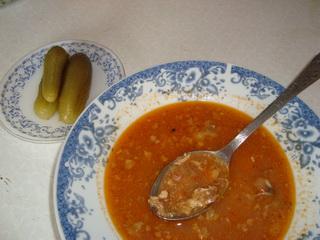
Chestnut cake
Enrich chestnut puree on a fine chocolate biscuit with whipped cream and enjoy a dessert with autumn flavor.
moderately demanding 45 min
Ingredients
3 eggs
150 g of sugar
1 Rum sugar Dolcela
100 ml of oil
100 ml of milk
200 g of Podravka Smooth Flour
a pinch of salt
1 Dolcela baking powder
80 g ground walnuts
200 g chestnut puree
100 ml of sweet cream
400 ml of milk
1 Dolcela chocolate cake cream
Whipped cream 5 + Dolcela
Preparation
1.Whisk the eggs, sugar and rum sugar and add the oil and milk. Finally, lightly mix the flour mixed with salt and baking powder and ground walnuts.
2.Mix the mixture well and pour into a cake tin (Ø 26 cm) and bake for about 30 minutes in an oven preheated to 180 ° C. Cool the baked biscuit and leave it in the mold.
3.Mix chestnut puree with sweet cream. Pour the contents of the cream bag into the cold milk and mix with an electric mixer to get the cream. Finally, mix in the prepared chestnut puree and apply the resulting cream over the biscuits in the mold.
4.Leave the cake in the refrigerator until serving.
Serving
Whip 5+ Dolcela to the desired strength and serve with the cake.
Tip
Decorate the cake as desired with chocolate icing or chocolate shavings.
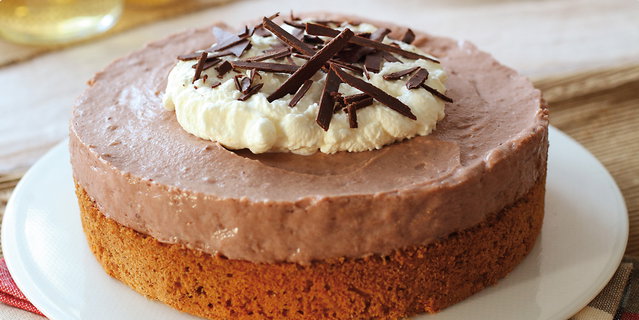
Beans with sausages
8 persons 120 min
Ingredients
It is necessary:
500 g white beans
2 larger onion heads
500 g of sausage of your choice
100 g kulena
3-4 cloves of garlic
Browned flour:
1 tablespoon fat
1 tablespoon flour
1 tablespoon red pepper
Preparation
1.Leave the beans in the water overnight. In a large pan, sauté the onion and carrot, add the chopped garlic, beans and sausage cut into larger rings. Pour with water, cook for about an hour and a half over low heat (depending on the type of beans). Halfway through cooking, add the kulen. Season the dish to your own taste. Make a sprinkle: fry the flour in the fat and add the red pepper. We add in the beans. The amount of spray is at your own will.
Tip
You can add bacon, smoked ham, ham, smoked bones, some smoked meat, .. instead of sausage.
Banana biscuit cake without baking
Ingredients - Banana biscuit cake without baking:
1 liter of milk
160 g of sugar
1 vanilla sugar
3 vanilla-flavored pudding powders
250 g butter
180 g sour cream
300 g Petit beurre biscuits
3-4 bananas
200 ml sweet sour cream
150 g of cooking chocolate
Preparation - Banana biscuit cake without baking:
1.step: Break the biscuit into larger pieces. Stir the pudding powder into 200 ml of milk, and heat the rest of the milk together with the sugar and vanilla sugar until boiling. Add the prepared pudding and cook on low heat for a few minutes until it thickens.
2.step: Add butter to the still hot pudding and stir until it melts, then add sour cream.
3.step: Add the broken biscuits, then mix everything well.
4.step: Line the sides of the cake tin (28 cm) with greaseproof paper, then pour in half of the prepared mixture. Arrange sliced bananas on the pudding and biscuits, pour over the rest of the mixture, then smooth the top of the cake with a spoon.
5.step: Leave the cake to cool to room temperature. After that, it should be topped with chocolate ganache cream.
6.step: Heat the sweet sour cream to boiling and pour over the crushed chocolate. Stir the cream until the chocolate melts, and then pour it over the cake.
7.step: Put the cake in the fridge for a few hours, so that the cream cools well and hardens.
Your Banana Biscuit Cake without baking is ready.
Pleasant!
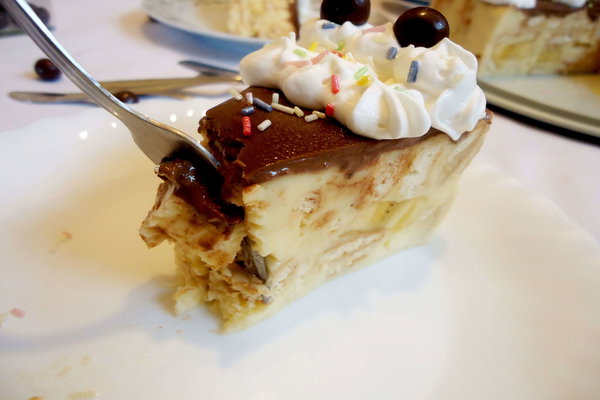
 @Dimke