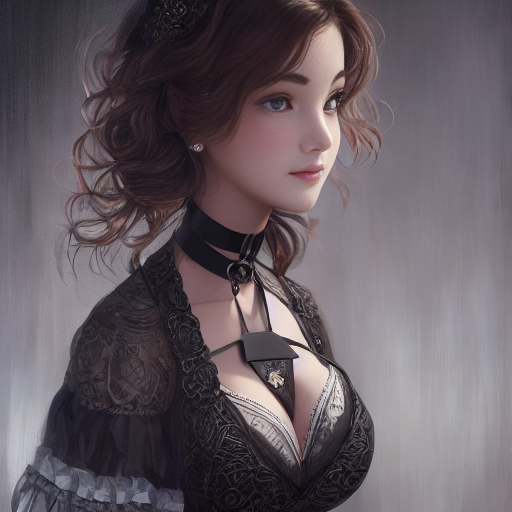
My thoughts on AI art
Happy New Year, everyone!
I have wanted to write an article about AI art for a long time - and that's a big word, since I haven't written anything on read.cash for 5 months, as of now. Basically half a year.
But first, let's have a word about me and my relationship with art
I'm not an artist - or at least, I don't identify as an artist. I occasionally draw, but I don't identify myself as an artist or illustrator or whatever.
I work as a professional software developer now, but I didn't always identify as a programmer: before getting a job as one, I preferred not to identify as a programmer, under the assumption that my skills at programming are too low to warrant the title *"programmer"*. Obviously, since I have been working as a software developer since 2020, that has changed, but I nevertheless wanted to mention it, to give another reason why I don't identify as an *"artist"* - at least not the audiovisual kind *(if you consider programming to be an art though, you can say that I'm some kind of an artist myself)*.
Back between 2008 and 2014, I dabbled in remixing music - however, it was mostly just taking MIDIs and putting some soundfonts and VST instruments on them, then some VST effects. I only tried composing my own music a few times, and the end result was always highly disappointing, with only a few examples I'm proud of.
As long as my level of interest in producing visual art remains just as surface level, as my interest in music production and audio engineering back in the *"good old days"*, I don't think I'll ever deserve the title *"artist"*. Nevertheless, as surface-level my knowledge, skills and interests be in audiovisual arts, I can at least pride myself in being a jack of all trades *(though, sadly master of none)*.
Nevertheless...
What is AI, and why should we (not) fear it?
AI stands for *"artificial intelligence"*. It is difficult to exactly define what "artificial intelligence" is, but in Plain English, the best explanation would be *"some kind of automaton or machine that performs a(n intellectual) task we normally expect to be performed by thinking humans"*. Basically, a machine that *"thinks"*, or is capable of fooling humans into the belief that it thinks.
In fiction, particularly advanced AI is often portrayed as a threat to humanity: AI becoming self-aware and sentient like humans, no longer being content with being enslaved by humans. In fiction, AI has the capacity to truly become sentient like humans, and override its initial programming. Effectively, in fiction, AI truly is an artificial brain, and is capable of performing all of its functions: which include processing completely new information and judging it. In fiction, AI is often paired with bipedal robots that walk on two legs and wield firearms, just like humans - a far cry from real-life AI, which most often is just a piece of software running in a computer, having no or very limited access to information about the outside world, let alone the ability to physically interact with the outside world.
In real-life, most AI is far less sophisticated than what we see in fiction. If the human brains and fictional AI can be compared to the general-purpose Central Processing Units of a computer, then the real-life AI systems we have created so far can be more aptly compared to application-specific integrated circuits. The AI we have created so far - with a few exceptions - are very application-specific, and only as sophisticated as they need to be for a specific task. https://en.wikipedia.org/wiki/Central_processing_unit https://en.wikipedia.org/wiki/Application-specific_integrated_circuit
For instance, all video games contain an AI of some kind: a set of IF-ELSE statements *(either hard-coded into the game executable, or written as part of the game scripts)* that govern how non-player characters - whether hostile or friendly - react to the player's actions *(as well as their normal daily routines)*, govern the tactics of hostile characters in combat, etc. The rather crude artificial intelligence employed by video games can be predictable and repetitive, but for video games, it is perfectly sufficient.
In contrast, artificial intelligence for more serious applications tends to take a different approach: instead of a series of IF-ELSE statements, they build an artificial neural network, which then needs to be trained with some kind of input data. I'm not going to get into how artificial neural networks work, because even I myself have a limited understanding of it, but it basically involves doing all sorts of mathematical calculations that somehow replicates how the human brains work, in a sense. This is called *"deep learning"*, and even the programmers themselves aren't fully aware what goes inside the AI's artificial mind: it's a black-box process even for the people who design and program it. https://en.wikipedia.org/wiki/Artificial_neural_network
In short, artificial neural networks are fed some form of input *(audiovisual media, text, etc.)*, and are told to produce similar results. The AI then begins to produce random results, and the more time we give it to train on human input data, the more convincing the AI-produced results will get, and this process is known as *"deep learning"*. So far, this type of AI has been successfully trained to produce believable human faces, to produce anime characters, to produce classical music, to finish music or variants of an existing song, etc. https://thispersondoesnotexist.com/ https://www.thiswaifudoesnotexist.net/ https://www.youtube.com/watch?v=SacogDL_4JU https://www.youtube.com/watch?v=iJgNpm8cTE8 https://www.youtube.com/watch?v=ozqXbZcRZ4M
AI isn't some grand conspiracy to replace artists, writers, etc. - the biggest driving force *(pun intended)* behind the recent boom in AI is self-driving cars, though obviously, people are exploring other uses as well.
I won't even be surprised if AI gets integrated into corporate and government decision-making processes already in this decade.
Nevertheless, we ought not to panic: AI in its current form definitely won't be waging a destructive war on humanity.
Is AI art art?
Depends on what we consider art. AI *"art"* can be visually appealing - however, we all know that beauty is in the eye of the beholder, right?
Obviously, AI "art" isn't art in the sense of human effort being put into it: unless you include the collective efforts of all the artists who produced the images on which the AI was trained on *(often without the consent of the artists)*.
I'd argue that being pretty alone doesn't qualify something as art: the feathers of a peacock, or certain natural rock formations can all be visually appealing to humans, but they were produced by nature, without any human intervention or input.
However, AI art isn't natural: it is very much artificial, even more so than art produced by humans. In fact, at the end of the line, the AI was trained on human-made arts, so, could we call it art in the end?
I'm not sure, to be honest.
Is AI art truly produced by AI?
I already mentioned the fact, that artificial neural networks cannot really create anything from scratch - other than maybe output random noise - and have to be trained on human-produced data to produce output that resembles something *(whether written text or audiovisual data)* made by humans.
Effectively, it is a random noise generator connected to a discriminator of some kind that can decide whether the produced random noise resembles a dog or not.
Is this truly artificial intelligence? Not in the traditional sense. The AI itself doesn't really draw, but rather, it curates: it curates random noise. It more or less *"learns"* during the training process some mathematical correlations regarding the shape of a bus or a human being, it learns patterns, and shoehorns random noise to fit into said patterns and mathematical correlations. If we are being generous, we could say that it modulates random noise into something recognizable by humans, but yes, at the end of the day, the AI is more of a curator rather than an actual artist.
Isn't this just another panic about technological breakthroughs?
When crossbows were invented Medieval European nobility hated them and wanted them to be banned, because they allowed an untrained peasant to effortlessly kill a knight who spent his entire life training in the art of warfare.
Ultimately, however, pragmatism won: nobles' desire to win battles was stronger than their desire to *"be honorable"*, so their armies continued to include conscripts and mercenaries armed with crossbows. Eventually, medieval blacksmithing has also advanced, creating armour resistant to crossbow bolts, at least at a distance.... Which worked out pretty well until gunpowder and firearms came along.
When firearms were first introduced to Japan, no doubt there was a visible segment, a loud minority within the samurai class, who considered it *"dishonorable"* and *"shameful"*, because it allowed a poorly trained peasant to easily kill a samurai who spent his entire life training for warfare - however, most samurai embraced firearms: as we know, real-life and real history are quite different from Hollywood fiction (e.g. The Last Samurai), and in real-life, the majority of samurai prioritized winning their battles and wars over *"being honorable"*.
When digital art started out, many traditional artists scoffed at it, and insulted digital artists, saying that they aren't *"real artists"*. They considered the ability to undo actions and composite separate layers together to be cheating, they viewed the ability to manipulate individual pixels to be unfair, etc. However, in the end, technology won out, and I have never heard of anyone younger than 70, who unironically believes that digital artists aren't artists.
So how is AI art any different? Well, it's **very** different. When crossbows and firearms were introduced, it was still a human being taking the aim and pulling the trigger. In digital art, it's still a human being behind all of it, working like a real human artist. Not so much with AI, where all the hard work is done by a machine, and the human only has to enter a prompt and curate. I think we can all agree, that AI prompters are **not** real artists.
But does that actually matter?
Sure, when AI prompters call themselves *"artists"*, it's cringe as hell and makes me want to gouge out my eyes and die of cringe-poisoning, but is that truly relevant to discussion?
Well, no, I don't think so. Being upset or outraged that someone can reproduce with less *(or zero)* effort what you have spent a lifetime to be able to be able to do is a valid emotion, but it doesn't make something more or less ethical, and it definitely ought not to be a factor in determining whether something should be legal or not.
Nevertheless, this recent surge in AI is different than previous technological breakthroughs. Previously, a frequently repeated argument against Universal Basic Income was *"well, if all the normal jobs are automated away, we're all gonna be artists then lol"*. Well, that's not gonna happen now, is it?
Whenever we discuss automation, labour-saving technology, and its potential to displace jobs, a common counterargument is *"B-but there are going to be new jobs we can't even imagine!"*. However, against that, I have the following counterarguments:
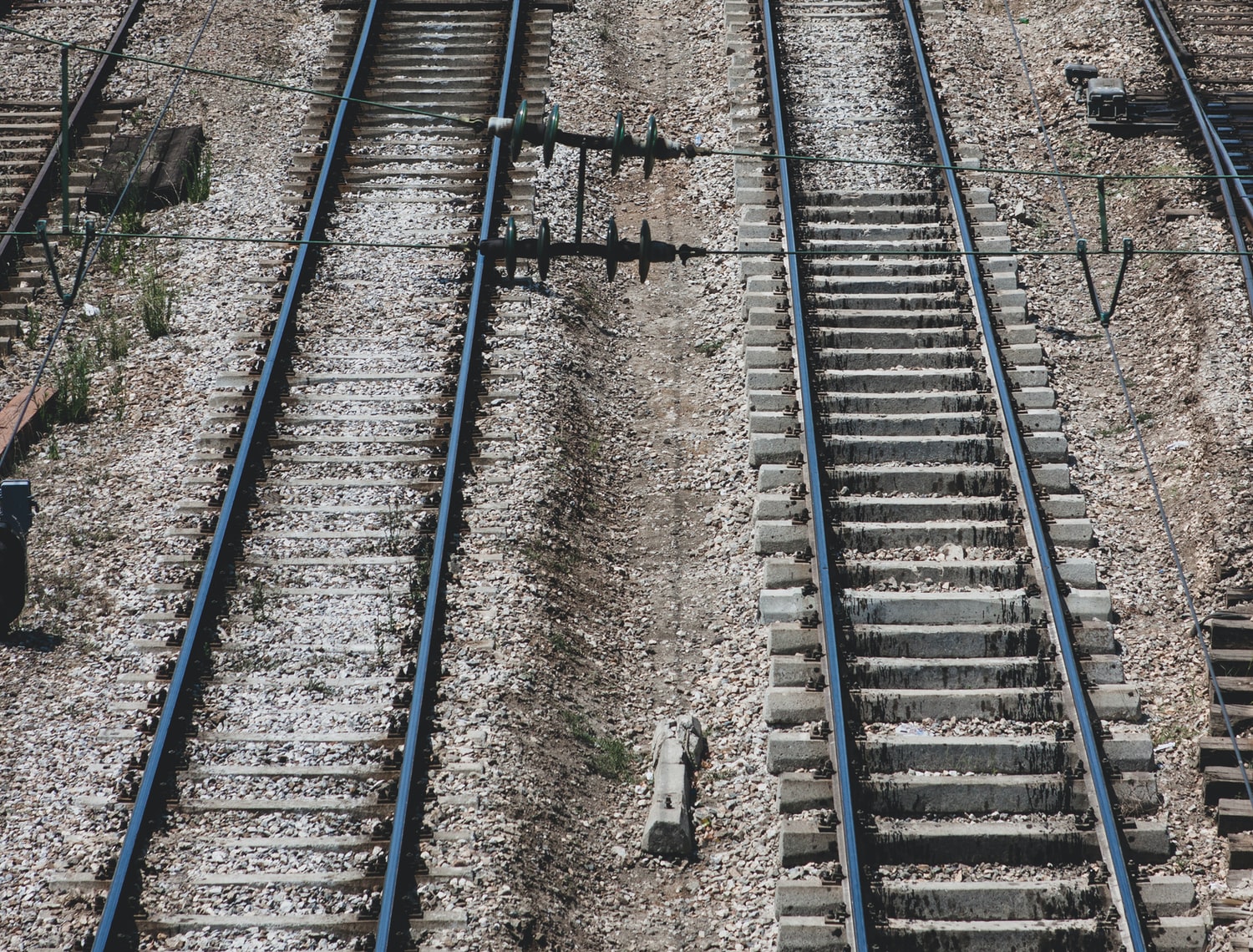
That is not a universal law. Did horses get new jobs, after trains replaced their traditional jobs? No, they didn't - they became useless outside some niche uses (which largely revolve around entertainment for the elite). Even for humans, we can confidently say that all three times *(all three Industrial Revolutions)*, the appearance of new jobs after the loss of old ones was a fluke, and isn't guaranteed to be repeated at all.
Oh yeah, automation is going to create new jobs: bullshit jobs. But I'll get back to this point later in this article. https://www.atlasofplaces.com/essays/on-the-phenomenon-of-bullshit-jobs/
**To reiterate**: Is it unfair that you have to spend a lifetime honing your craft, only for some random schmoe to come along and reproduce it within seconds with a machine? Yes, it is. But that doesn't make the machine's existence unethical. There are far more compelling arguments for AI art in its current form being unethical.
Is AI art legal?
As far as the law is concerned, art produced by artificial intelligence is in the public domain, and much to the chagrin of artists who are protesting against their art being used for training the AI, the act of scraping their art and training the AI on their art falls under Fair Use.
Even in the *"worst-case scenario"* - where an AI is trained on the works of a specific artist and/or prompted to draw something in the style of a specific artist - the process is *(usually)* considered transformative enough to be protected under Fair Use.
This makes AI art perfectly legal - though not necessarily ethical.
Is AI art ethical?
I'm not going to beat around the bush: AI art is controversial, and many claim that it is unethical.
Now, I know what most readers are thinking about: that just like the loom operators of old who went on their Luddite protests, artists fear being replaced by artificial intelligence.
Well, no, not really. Some artists do, but the majority don't. For the majority of artists complaining about AI art, this isn't even their primary complaint.
**The main ethical complaint artists have about AI art is the origins of the data used to** ***"train"*** **the AI:** specifically, copyrighted art. AI like StableDiffusion has been trained on the works of artists, who did not consent to their art being used in such a fashion, and many view this as blatant plagiarism - AI-produced art often contains the mangled watermarks of the artists it is *"imitating"*, AI has been at times trained to imitate specific artists without the artist' consent, AI datasets contain copyrighted material, etc.
Now, I'm not going to beat around the bush: yeah, in hindsight, taking the copyrighted works of artists without their knowledge and consent was kind of a **** move, and if the AI tech bros knew about the fallout it would cause, they probably wouldn't have done it.
However, we have to consider the fact, that there are multiple sides to all stories. It's easy to listen to the artists' complaint and be 100% on their side, and yes, I agree, ideally, we should have given artists the option to opt in, instead of forcing them to painstakingly go through a thousand hoops to opt out *(with no guarantee of success)*. Nevertheless. we have to remember, hear the story from the AI tech bros' point of view too: as far as they are concerned, they have built a machine that takes publicly available *(stock)* images and learns to produce similar results - which very much falls under Fair Use *(though, that's the legality of it, not the ethics)*. Is it truly their job to curate and decide? If you buy the right to use stock photos off a certain website, is it your responsibility to painstakingly go through all images, one-by-one, to ensure that none of them are problematic or copyrighted? No, of course not.
As unethical it may be to use someone's art for such purposes without their permission, this ethical violation wasn't intentional: the AI tech bros aren't mustache-twirling villains intent on stealing your art and mass-producing cheap knockoffs at an industrial scale. Some AI prompters do shamelessly abuse artists who share anti-AI sentiments, but let's be real: terrible human beings will always exist, and you can't blame the AI for this.
And no, AI techbros, comparing the training of the AI to the process during which human artists take inspiration from the works of other artists is incorrect. AI art often contains the mangled watermarks and signatures of the human artists whose works the AI was trained on.
So, in regards to ethics, I say this: in hindsight, indiscriminately scraping publicly available images off the Internet was a bad idea, and it should have been an opt-in system instead of *"painstakingly opt out, but success is not guaranteed"*. However, we do not live in an ideal world, we can't change the past, hindsight is useless: the genie is already out of the bottle, and the best we can do is damage-control.
What do I propose?
I know that artists will hate to hear this, but the genie is out of the bottle, and we can't lock it back in.
AI art isn't going to be banned - not only would it be a legal nightmare to ban it, but even if it went through, people would continue to produce AI art in secret. Such a ban would only put an end to legal research into the application of artificial intelligence in audiovisual art.
While in hindsight, it would have been ideal for the system to be opt-in instead of opt-out to begin with, we cannot change existing datasets, so as a stop-gap measure, I propose this: we amend copyright law, we amend Fair Use to cover all non-profit cases *(I have already written* *an article proposing changes to the copyright system**)*. If your AI has been trained on copyrighted works, you have to disclose it, you cannot use the AI-produced image for commercial purposes, and if possible, you have to credit the artists whose works you used to train the AI on. Alternatively, artists may be given the ability to demand royalties, if they can provide concrete proof that an AI that has been trained on their art has been used for commercial purposes. https://read.cash/@Metalhead33/is-copyright-maintainable-0886e176
I propose, that future art-producing AIs should be opt-in for the inclusion of art into their dataset, with artists being given the freedom to decide, if whether they allow for indiscriminate usage of their art, exclusively non-commercial use, or if they demand royalties for commercial use. In contrast, AI datasets created before this amendment would be restricted to purely non-commercial use.
I believe this would be a relatively fair compromise between the desires of artists, and the reality that the genie is already out of the bottle.
It would take a compromise from both sides: the AI techbros would have to accept reduced profitability and vow to gain profit from more ethical sources, while the copyright-holders *(whether artists or publishers)* would have to give up the right to police non-commercial use of their works.
The rabbithole goes so much deeper
It is my personal belief, that the main problem with AI art isn't AI art itself, but rather the economical context in which it exists: **capitalism**. Or more precisely, transactional economics, in which you have to sell something to survive.
To put it bluntly, the benefits of technological progress - especially in the fields of automation, labour-saving technology, artificial intelligence, etc. - are not being distributed amongst the population evenly. A select few reap all the financial benefits, while the rest of the population **may** see a negligible rise in their living standards as a best-case scenario.
**Lemme put it that way:** under the current economical system, what happens, when automation displaces your job? That's right, you lose your livelihood, and if you don't intend to starve to death, you better find a new job real fast. Good luck.
Since the 1970s, productivity has multiplied, risen by around 700% or more. Yet the salary of the ordinary worker has stagnated. The salary of CEOs has risen by around 1400% since the 1970s, while the salary of the ordinary worker has stagnated. https://truthout.org/articles/ceo-pay-has-grown-by-1460-percent-since-1978-as-workers-wages-stagnate/
In order to artificially maintain full employment and the 40-hour work-week in an increasingly automated world, we invent new fake jobs *- so-called* *"bullshit jobs"* *-* to compensate for the displacement of real jobs by automation. Everyone gets to sit at an office 8+ hours a day, bored to tears, their eyes glued to a computer, performing a task that is either straight-up pointless, or could be easily automated away if necessary. https://www.atlasofplaces.com/essays/on-the-phenomenon-of-bullshit-jobs/
**I'm** ****not**** **a Luddite.** I support labour-saving technology. I support automation. I support artificial intelligence. In an ideal world, automation would be celebrated, because it would increase our leisure time and result in us having to work less. In the clown world we live in, automation is feared and shunned, because it takes away our jobs, which are our only way to financially support ourselves - because our society is deathly afraid of wealth redistribution and is obsessed with making everyone work 9-to-5, even if it's completely pointless.
And this is my main gripe with AI and AI art. I'm all for automation - but not if forces career artists to return to the cubicle, working a job they hate *(a job that literally only exists to artificially make everyone busy)*.
I have always been a proponent of Universal Basic Income. In an ideal world, artists would be confident in remaining financially stable, regardless of the type of art they produce, regardless of the AI competition that exists, etc. In an ideal world, citizens of a first world country would be entitled to first world living standards by birthright, rather than the machinations of an elite class of capital-owners.
In an ideal world, profitability would take a backseat to human needs and human rights.
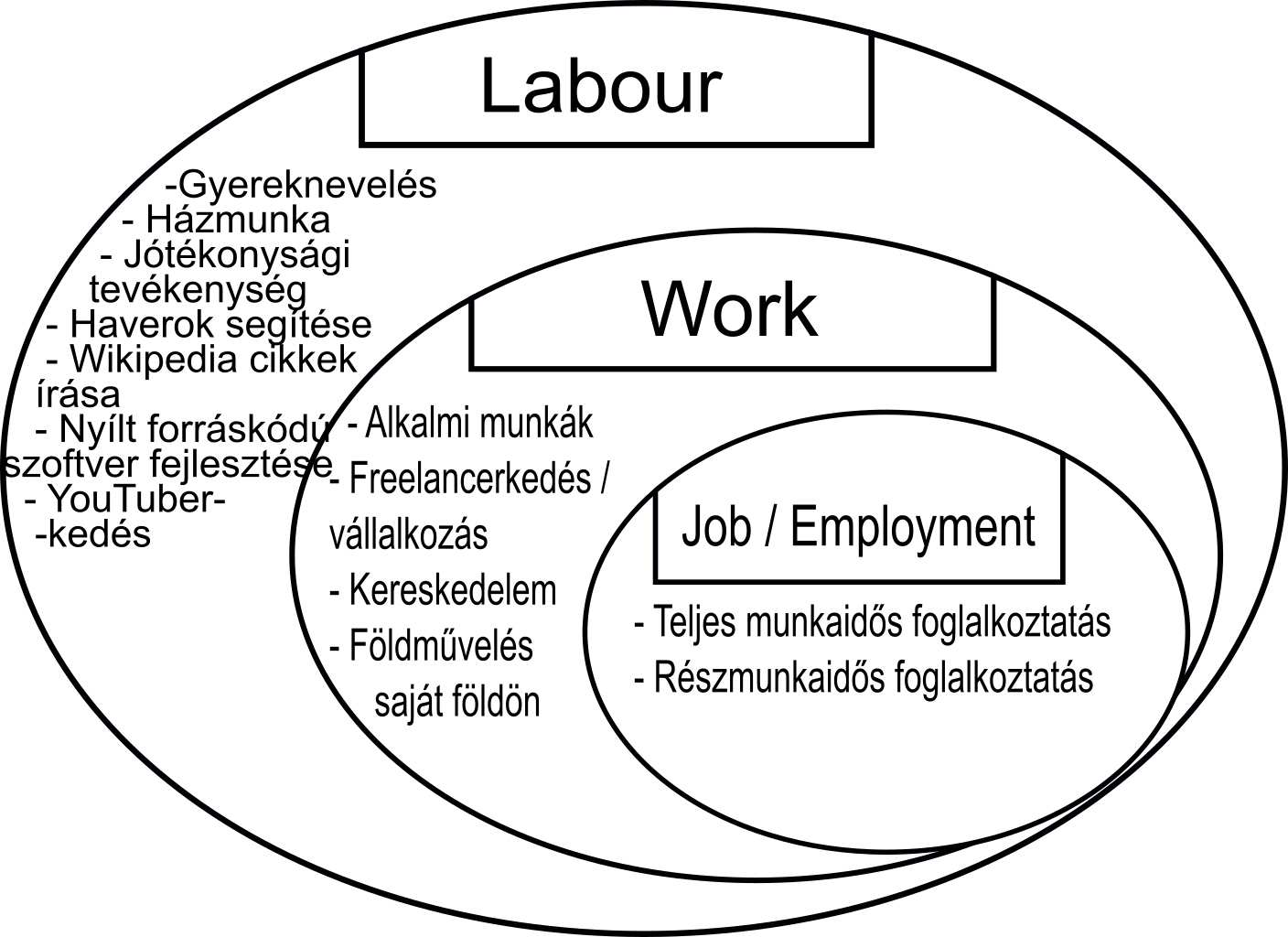
In hindsight, we as a species should have had a frank discussion about the nature of labor and employment, about the economical system, before experimenting with AI art.
Again, I'd be all for AI art, if we lived in the more ideal world, where financially stability is guaranteed to artists regardless how profitable their art is. I'd be all for AI art, if we had Universal Basic Income.
In the end, my opinion is irrelevant
It ultimately doesn't matter whether I support AI art or not.
Whether I like it or not, AI art is here to stay, AI art is in the public domain, and usage of publicly available artworks for training an AI is protected under Fair Use.
My opinion that AI art in its current form is highly unethical is just that: a personal opinion that wouldn't hold any weight in a courtroom. What we consider unethical is often perfectly legal, and vice versa. That's just how it is. The genie is out of the bottle, and much to the chagrin of artists, AI art won't be banned.
However, in a way, AI art makes me happy, because it demolishes an often-repeated counterargument against Universal Basic Income, the nonsensical claim, that in a fully-automated future, *"we will all be career artists"*. Well no, we won't be.
**So, my closing thoughts are this:** the controversial topic of AI is one with nuances. It is far more complex than *"evil robot plagiarizes our beautiful art"*. With that being said, I do sympathize with artists who are negatively effected. AI art highlights some even greater problems at hand.
I predict, that the novelty of AI art will eventually fade away, and when it ceases to be controversial, the artists will reluctantly put it into their own inventory of tools, just like they did with computer software.
Cars, Covid and School Shootings
If this is the first time you read an article of mine, I have a surprise for you. Two surprises, in fact. Surprise Number One: **I'm not American** - I am a Hungarian, from Central Europe, who has never set foot in the United States of America, nor do I really intend to ever do that. But the second surprise might be, that I am notorious for giving my articles clickbaity titles that are only marginally related to the core topic I am about to explore.
This is far from the first time I talk about education. I already wrote at least two articles about education, and even if you read neither of them, most of what you're about to read is nothing new - at least, if you have explored this topic before. https://read.cash/@Metalhead33/sunday-evening-musings-education-and-employment-863dac49 https://read.cash/@Metalhead33/unworking-is-to-work-what-unschooling-is-to-the-school-eef43a2a
The education system is fundamentally broken, school is just a prison for kids, et cetera et cetera. Yes, we've all heard it before, haven't we? But what does it have to do with cars, Covid-19 and school shootings?
Cars, Covid-19 and School Shootings
I'm not American... but thanks to the Internet, whether I want it or not, I constantly get exposed to what's happening in the US of A, and I have noticed a pattern: whenever there's a school shooting in America, the blame is always pointed at the guns, and liberals - who won't be satisfied until every single American who isn't military or police gets completely disarmed - instantly begin to use the latest school shooting as propaganda material for further gun control. The bodies are still warm, when the liberals begin chanting for further curtailment of responsible adults' liberties ostensibly in the name of *"protecting the children"*. You'd be forgiven for thinking that maybe, just maybe, these shootings are intentionally orchestrated by them to push gun control on Americans, but that's a rabbit-hole I won't be getting into in this article.
Anyway, where was I going with this? Oh yeah, so, whenever there's a school shooting, the proposed solution to school shootings is always gun control. Disarm all the law-abiding Americans! Make sure that only military and police *(and criminals who don't obey the laws)* get to have guns!
However, if you really want to put an end to all school shootings - nay, all violence in schools - there is one, slightly more radical *(it would certainly upset Conservatives possibly even more than gun control)*, alternative solution that has been staring us in the face ever since the Covid-19-related lockdowns ended: **homeschooling** ***and/or*** **online education**. That's right, your eyes are not deceiving you. If you genuinely want to eliminate any possibility of physical violence - which includes school shootings - within schools, the only sure-fire way is to, simply put, abolish schools as locations children have to physically visit to get their education. Which means online lessons, like during the lockdown. Or homeschooling. Whichever you prefer.
It would kill so many birds with one stone. No more school shootings. No more bullying *(at least of the physical nature)*. No more travel expenses for kids. No more need to maintain expensive classrooms, chalkboards, etc. No more cheating either, since digital technology has almost infinite possibilities to detect cheaters. No more ugly handwriting to deal with *(my handwriting was the bane of teachers in both high school and elementary school - college professors somehow managed to understand it though)*.
Sure, it would also introduce some problems as well: among other things, physical education, or any kind of lessons that require physical interaction with things *(like most of what you learn in trade school)* would be completely impossible to do remotely and online, and if children crave the physical presence of their friends, that's also an issue. Teenage romance would be mostly dead, unless students meet up in their free time, which many won't. So obviously, I don't deny that my radical solution would have its own problems, and would be non-workable in some cases, but I'm sure there are some people smarter than me who know how to mitigate those issues.... right?
Then again, many of those issues - with trade-schools and subjects that truly require physical presence and interaction being notable exceptions - simply stem from our perception of what's normal, and wouldn't be really problems if we were less narrow-minded and accepted that culture is shifting and going more digital/virtual. But I digress.
What is *"normal"* anyway? Is it normal for children and their parents to be physically separated from each other during the lion's share of their waking hours *(children go to school which gotta be 50 kilometres from home, their parents go to their wageslave jobs, and the office of course has to be 50 kilometres from home)* during the children's most formative years? Is this really normal? Because it certainly ain't natural or healthy, if you ask me. For most of human history, children spent their most critical, formative years in close physical proximity of their parents, learning their parents' trade and receiving the bulk of their education from their parents.
Just think about it.
Parents leave their homes on a daily basis., exposing themselves to the risk of traffic accidents or falling victims to violent crime, to make someone else richer and take a pittiance home, a good deal of which will be stolen by the government *(while the likes of Jeff Bezos pay precisely zero taxes)*. **Is it worth it?**
Children leave their homes on a daily basis, exposing themselves to the risk of traffic accidents, kidnapping, pedophile molestation or school shootings, all to cram in some government-mandated, mostly outdated lore *(most of which they will forget immediately + they could learn more effectively by just looking it up on Wikipedia or something)* and supposedly socialize *(school made me hate humans, thanks)*. **Is it worth it?**
Is it truly worth it? Before I succumb to my temptation to go on a tangent about how the amount of travel we *(are forced to)* do on a daily basis is unnatural and how we should normalize being comfortable in your own home, I'll just say that I'm sure we could come up with something better. I mean, the canard that mos of what you learn in school is utterly useless isn't new, people have been saying this for ages. Or the old tale about school making us all dumber.
https://youtu.be/Omx5KrRVkMc
It seems that we are so addicted to our misguided notions of *"normality"*, that we are willing to sacrifice literally anything for it: our free time, our health, our liberties, even our very lives.
If we just let go of our narrow-minded clinging to *"normality"* and explore the possibilities, I'm sure we'll find something superior to the current system. We definitely need to find an alternative, because the current system is...
The Prison School
To say that school is prison for children is no exaggeration. Just try to temporarily let go of what you've been raised to consider *"normal"*, and try to look at human society from the lens of an alien zoologist examining humanity as an outside observer. What do you see? You see that the highly irrational humans take their offsprings, lock them up in a large building, where they are then divided into groups based on age rather than level of skill or interest, and then they are put through a highly regimented, overly bureaucratized process, where all the children learn their lessons at a schedule that was defined from top to bottom.
What do you call an institution, where you are locked into a building - against your will - with a bunch of people you don't know *(at least not initially)*, don't like *(I'm sure we all had schoolmates we hated in school, or even bullies)*, where you spend most of your time bored to tears, and any fun or enjoyment you get out of the whole ordeal is something they probably did not intend you to do? **Prison.**
You force kids to sit on their asses for `45 x <the number of lessons>` minutes a day, punish them for making even one flinch of a movement, then complain that there's an obesity epidemic.
You force kids to keep their mouths shout for `45 x <the number of lessons>` minutes a day, punish them for talking to their classmates, then complain that kids these days are just so antisocial and don't know how to deal with people.
Then, on top of all this, they are given *"homework"*, which just reduces their already slim amount of free time, and often pushes their total amount of school-time beyond the 40-hour-per-week mark, which is the **absolutely maximum** that's considered safe for parents. Your read it right, workoholics - no one should work more than 40 hours per week.
And don't even get me started on bullying.
https://www.youtube.com/watch?v=Zs1Rjz6N3w8
If schools teach anything, it's that authorities are not to be trusted and authority figures deserve absolutely no respect at all whatsoever. I'm sure that's not the lesson they intended to teach me, but that is what they ended up *(unintentionally)* teaching me anyway.
It is no exaggeration to say, that schools are prisons designed to break children, with the actual education and literacy being only secondary - or even tertiary - aspects of it. Be an obedient sheep who won't fight back or question anything, memorize the state-approved doctrines, get the diploma, get the resume, be a good little wageslave, then maybe retire and have 5-10 years of freedom *(when you are old, weak, tired and probably in constant physical agony)* before the sweet release of death. **Is this really living? Is this peak human freedom?** I don't think so.
A Viable Alternative
Okay, let's ignore what I said earlier about homeschooling and online education. Homeschooling isn't really viable for parents that are working full-time *(even if they work remotely like I do)*, and online education still assumes/implies children having `45 x 6 or 7` lessons a day and ~~brainwashing~~ state-approved studying material fed to children in a strictly time-regimented fashion, which doesn't solve many of the problems I just mentioned with education. Plus, staring at a computer screen for 5 hours a day straight, with only 10-minute breaks every hour or so, isn't exactly health *(so I say, while working as a full-time software developer, staring at the computer screen 8+ hours a day)*.
Okay, so scratch all that I said about homeschooling and online education, we need a real cure for our *(lack of)* education, not symptomatic treatment. **Unschooling.** Unschooling is the answer. https://en.wikipedia.org/wiki/Unschooling
First of all, let's start with some key points:
**Education ought to take place during your entire lifetime**, not just your childhood, teenage and young adulthood. We live in a constantly changing world.
**Children are capable of learning on their own**, as long as you succesfully ignite their desire to learn.
Mixing education and entertainment in a non-cringe way is the best way to make students learn. I'm not talking about silly educational games. I'm talking about serious video games with actual knowledge intervowen into them. I am going to say it right here: I learned more about history from video games, than during history lessons in school. In fact, if it wasn't for Wolfenstein 3D, Medal of Honor, Stronghold and all those history-related video games, I wouldn't have the amount of interest in history I currently have - instead of the fun I had with those games, I would be associating history with the pain of having to memorize all those year-marks of historical events.
If video games are not your thing, then just make them watch historically accurate movies or something. Obviously, the movie itself needs to be entertaining - the more entertaining it is, the more likely it will ignite a child's desire to learn about history.
**We live in a changing world.** What is practical knowledge today, may not be that tomorrow - so the focus should be on teaching children adaptability, teaching them how to learn, how to absorb new knowledge properly.
**Focus on practical knowledge** - kids will learn about the non-practical, trivial stuff if they are interested about it. If I wasn't forced to memorize poems and over-analyze them in high school, I would be probably far more enthusiastic about literature than I am now.
I can not over-emphasize the importance of this: **number one priority ought to be to ignite the child's desire to learn on their own and be eager to absorb knowledge**. As it stands, schools neuter that desire, rather than feed it. This is primarily what we're doing wrong.
**Every child is an individual with their own interests.** At the end of the day, you cannot turn a football player into a software engineer or vice versa, at least not without making the kid seriously resentful and depressed. While there are some basic literacy stuff that everybody must learn, it should be ultimately up to the child what they want to learn - just like in college.
I'm not going to keep it a secret: I'm a nerd and didn't like physical education, and still have no interest in sports at all whatsoever.
Then again, maybe I'm talking bullshit, and it's just the college nostalgia taking over me when I write these words.
Cars, Covid-19 and School Shootings?
A good deal of what I said can be applied to adults too, not just children. If your job only needs a computer and an internet connection, there is absolutely no reason for the office to even exist - if it was up to me, your employer would be forced by law to at least offer you the option of remote work, if not outright demolish all the offices to make room for new apartments and end the housing shortage.
As I said previously, I consider it highly unnatural for children and parents to be forcibly separated from each other for the lion's share of their waking hours, and it would be my number one priority to engineer society towards a more natural and traditional state, wherein parents and children spend more time together, wageslavery as we know it is curtailed, and schooling borrows as many elements of unschooling as possible.
I know this will upset those who are filled with wanderlust, but I believe in a future, where the coercive forces coercing you to leave your home and travel over 10+ kilometres a day belong to the museum. If you want to travel, fine, do it - but don't force it upon me, and anyone else who is attached to the comfort of their own home.
Too good to be true
Most of what I said will never come to fruition. Public education is a highly useful tool for the ones in power, and they will never give up on that kind of power. Just like how work itself is more like a social ritual at this point rather than being about actual productive labour, school is not really about education, but about indoctrination and conditioning - conditioning to servitude to the system.
Obviously, I will never be in charge of society or have dictatorial powers to shape society to my will - but if I did, there would be a lot of changes to how we operate as a society.
In search of the Old Hungarian vowels
Well, this is unusual. I am writing an article on read.cash about linguistics. Quite the novelty. Still, I wanted to write this article for a long time, and figured - why not put it out here?
Anyway, this article will assume that you are already somewhat familiar with the International Phonetic Alphabet. If you are not, I recommend you to watch these two videos before further reading this article: https://en.wikipedia.org/wiki/International_Phonetic_Alphabet
https://www.youtube.com/watch?v=tpR5GdKXpGc
https://www.youtube.com/watch?v=olM1mm66YPw
Okay, now that all the linguistically illiterate people are out, let's get to the juicy parts: the issues with reconstructing Old Hungarian, more specifically Old Hungarian pronounciation.
Modern Hungarian phonology
Before getting into Old Hungarian phonology, it is important to first give readers a bit of a brief introduction to Modern Hungarian phonology. https://en.wikipedia.org/wiki/Hungarian_phonology
It is believed that Modern Hungarian has 14 vowels /ɒ aː o oː u uː ɛ eː i iː ø øː y yː/ respectively written **<a á o ó u ú e é i í ö ő ü ű>** and and 25 consonants /m p b f v n t d t͡s d͡z s z r l t͡ʃ d͡ʒ ʃ ʒ ɲ c ɟ j k ɡ h/ respectively written **<m p b f v n t d c dz sz z r l cs dzs s zs ny ty gy j k g h>**, with the following caveats: https://en.wikipedia.org/wiki/Open_back_rounded_vowel https://en.wikipedia.org/wiki/Open_front_unrounded_vowel https://en.wikipedia.org/wiki/Close-mid_back_rounded_vowel https://en.wikipedia.org/wiki/Close_back_rounded_vowel https://en.wikipedia.org/wiki/Open-mid_front_unrounded_vowel https://en.wikipedia.org/wiki/Close-mid_front_unrounded_vowel https://en.wikipedia.org/wiki/Close_front_unrounded_vowel https://en.wikipedia.org/wiki/Close-mid_front_rounded_vowel https://en.wikipedia.org/wiki/Close_front_rounded_vowel https://en.wikipedia.org/wiki/Voiced_bilabial_nasal https://en.wikipedia.org/wiki/Voiceless_bilabial_plosive https://en.wikipedia.org/wiki/Voiced_bilabial_plosive https://en.wikipedia.org/wiki/Voiceless_labiodental_fricative https://en.wikipedia.org/wiki/Voiced_labiodental_fricative https://en.wikipedia.org/wiki/Voiced_dental_nasal https://en.wikipedia.org/wiki/Voiceless_dental_plosive https://en.wikipedia.org/wiki/Voiced_dental_plosive https://en.wikipedia.org/wiki/Voiceless_dental_affricate https://en.wikipedia.org/wiki/Voiced_dental_affricate https://en.wikipedia.org/wiki/Voiceless_dental_sibilant_fricative https://en.wikipedia.org/wiki/Voiced_dental_sibilant_fricative https://en.wikipedia.org/wiki/Voiced_dental_trill https://en.wikipedia.org/wiki/Voiced_dental_lateral_approximant https://en.wikipedia.org/wiki/Voiceless_postalveolar_affricate https://en.wikipedia.org/wiki/Voiced_postalveolar_affricate https://en.wikipedia.org/wiki/Voiceless_postalveolar_fricative https://en.wikipedia.org/wiki/Voiced_postalveolar_fricative https://en.wikipedia.org/wiki/Voiced_palatal_nasal https://en.wikipedia.org/wiki/Voiceless_palatal_plosive https://en.wikipedia.org/wiki/Voiced_palatal_plosive https://en.wikipedia.org/wiki/Voiced_palatal_approximant https://en.wikipedia.org/wiki/Voiceless_velar_plosive https://en.wikipedia.org/wiki/Voiced_velar_plosive https://en.wikipedia.org/wiki/Voiceless_glottal_fricative
There is also a marginal vowel /ɒː/ that appears only in the word <Augusztus> /ɒːgustuʃ/
Some dialects still maintain a distinction between the open /ɛ/ and the close /e/, which has been lost in Standard Hungarian and most dialects. In some folk songs or poems where this distinction is relevant, the short close /e/ can be written as <ë>. Southern dialects - namely, the dialect of Szeged - has instead merged /e/ into /ø/, hence the local pronunciation of the city's name being /søgɛd/ rather than the Standard /sɛgɛd/, indicating that historically it must have been /segɛd/.
/ɒ/ isn't actually an open back rounded vowel [ɒ], but rather a near-open near-back weakly rounded vowel, which is difficult to mark in the IPA: [ɑ̝̜̈], [ɐ̠̜], [ʌ̞̜̈], etc. For the sake of simplicity, I will use /ɒ/. https://en.wikipedia.org/wiki/Open_back_rounded_vowel
/ɛ/ is phonetically more open [æ]. https://en.wikipedia.org/wiki/Near-open_front_unrounded_vowel
/o ø/ is phonetically more mid [o̞ ø̞], while their long counterparts /oː øː/ are close-mid [oː øː]. https://en.wikipedia.org/wiki/Mid_back_rounded_vowel https://en.wikipedia.org/wiki/Mid_front_rounded_vowel https://en.wikipedia.org/wiki/Close-mid_back_rounded_vowel https://en.wikipedia.org/wiki/Close-mid_front_rounded_vowel
While the long /iː yː uː/ are truly closed [iː yː uː], the short /i y u/ are somewhat opened and centralized [ɪ ʏ ʊ], though not to the same degree as in English and other Germanic languages. Native Hungarian-speakers still perceive the main difference to be vowel length, rather than vowel quality. https://en.wikipedia.org/wiki/Close_front_unrounded_vowel https://en.wikipedia.org/wiki/Close_front_rounded_vowel https://en.wikipedia.org/wiki/Close_back_rounded_vowel https://en.wikipedia.org/wiki/Near-close_near-front_unrounded_vowel https://en.wikipedia.org/wiki/Near-close_near-front_rounded_vowel https://en.wikipedia.org/wiki/Near-close_near-back_rounded_vowel
The front rounded vowels /ø øː y yː/ are not truly front, but rather near-front, somewhat centralized [ø̞̈ ø̈ː ʏ̈ ÿː]
Historically, Hungarian also had an *(alveolo-)*palatal lateral approximant /ʎ/, written <ly>. In Standard Hungarian and the majority of dialects, it merged into /j/, but is still written <ly>. https://en.wikipedia.org/wiki/Voiced_palatal_lateral_approximant
/n t d t͡s d͡z s z r/ are actually denti-alveolar [n̪ t̪ d̪ t̪͡s̪ d̪͡z̪ s̪ z̪ r̪], while /l/ is just alveolar [l]
/ɲ c ɟ/ are actually alveolo-palatal [n̠ʲ t̠ʲ d̠ʲ]. /c ɟ/ in particular vary between stops [t̠ʲ d̠ʲ] and non-sibilant affricates [t̠ʲ͡ç d̠ʲ͡ʝ]. In the affricate variants, the stop components are alveolo-palatal, while the fricative components are dorso-palatal, non-sibilant. https://en.wikipedia.org/wiki/Voiceless_palatal_fricative https://en.wikipedia.org/wiki/Voiced_palatal_fricative
/j/ has the fricative allophones [ç ʝ] when following a stop consonant, especially before a word-boundary, with /kɒpj/ and /dobj/ respectively being [kɒpç] and [dobʝ]. https://en.wikipedia.org/wiki/Voiceless_palatal_fricative https://en.wikipedia.org/wiki/Voiced_palatal_fricative
/h/ has four allophones:
Voiced glottal fricative [ɦ] between two vowels https://en.wikipedia.org/wiki/Voiced_glottal_fricative
Voiceless velar fricative [x] when geminated, or when in coda-position following a back/central vowel https://en.wikipedia.org/wiki/Voiceless_velar_fricative
Voiceless palatal fricative [ç] when in coda-position following a front vowel https://en.wikipedia.org/wiki/Voiceless_palatal_fricative
Voiceless glottal fricative [h] everywhere else. https://en.wikipedia.org/wiki/Voiceless_glottal_fricative
/n/ assimilates to the following consonant, with /np nb/ being [mp mb], /nf nv/ being [ɱf ɱv], /nc nɟ/ being [ɲc ɲɟ], /nk ng/ being [ŋk ŋg], etc. https://en.wikipedia.org/wiki/Voiced_labiodental_nasal https://en.wikipedia.org/wiki/Voiced_palatal_nasal https://en.wikipedia.org/wiki/Voiced_velar_nasal
/d͡z/ is always geminated [d͡zː] when between two vowels
/d͡ʒ/ exists only in loanwords, and is always geminated [d͡ʒː] when between two vowels, except in a few recent loanwords from English. Historically, it was treated like a consonant cluster rather than a proper affricate, just like in Russian, but now it has been established well enough as an independent consonantal phoneme.
In addition to these caveats, it is also important to note, that Hungarian employs heavy amount of consonant assimilation:
Stop, affricate and fricative consonants regressively assimilate in regards to voicing, e.g. <Buddha> /budhɒ/ being actually pronounced [bʊthɒ], with the /d/ assimilating to the /h/ by devoicing. The only exception to this is /v/, which does not cause the voicing of preceding consonants, phonologically behaving more like an approximant than a fricative.
/t.s/ and /c.s/ assimilate to [t͡sː]
/t.ʃ/ and /c.ʃ/ assimilate to [t͡ʃː]
/d.z/ and /ɟ.z/ assimilate to [d͡zː]
/d.ʒ/ and /ɟ.ʒ/ assimilate to [d͡ʒː]
/ʃ.s/ assimilates to [sː]
/s.ʃ/ assimilates to [ʃː]
/ʒ.z/ assimilates to [zː]
/z.ʒ/ assimilates to [ʒː]
/n.j/ and /n.ɲ/ assimilate to [ɲː]
/t.j/ and /t.c/ assimilate to [cː]
/d.j/ and /d.ɟ/ assimilate to [ɟː]
/l.j/ historically assimilated to [ʎː], which is now pronounced as [jː] in Standard Hungarian.
For most speakers, /l.r/ assimilates to [rː]. Not for me personally though.
To an extent, Hungarian historically employed vowel assimilation as well. The language still has a feature called *"vowel harmony"* - also present in other Uralic languages *(such as Finnish)* and various Turkic languages. It effectively means, that vowels are logically subdivided into two groups - front and back - and that if a a word's last syllable contains a front vowel, all the conjugations must use front vowels too; if a word's last syllable contains a back vowel, all the conjugations must use back vowels too.
A good example to vowel harmony would be the following two nouns and their plural forms:
gyerek *(child)* -> gyerek**ek** *(children)*
bot *(stick)* -> bot**ok** *(sticks)*
At one point, this vowel harmony was even more strict, demanding words to consist solely of front vowels or back vowels without allowing words to mix and match.
It is also important to note, that in many words, /i iː/ act as back vowels, despite being front vowels. This is because historically, they had back variants in an earlier form of Hungarian /ɯ ɯː/, but those merged with the front variants. When did this merger happen? We don't know. It could have happened any time between 1500 BC and 1500 AD. Whenever it happened, words that historically contained /ɯ ɯː/ are still conjugated using the back vowelled affixes, despite the fact that they are pronounced with /i iː/. To make matters worse for language-learners, we make no distinction in writing either, so if you want to learn Hungarian, you will just have to learn the words that historically contained /ɯ ɯː/ as exceptions, treating them like irregular nouns or something. https://en.wikipedia.org/wiki/Close_back_unrounded_vowel https://en.wikipedia.org/wiki/Close_front_unrounded_vowel
Let's go back in time
By convention, we split the periods of the Hungarian language into:
**Proto-Hungarian:** before 896 AD
**Old Hungarian:** from 896 AD to 1526 AD
**Middle Hungarian:** from 1526 to 1772
**Modern Hungarian:** from 1772
While in this article, I will be focusing on Old Hungarian - more specifically, Medieval Hungarian, from 1001 to 1500 - I will also address the other periods as well. I already wrote a good deal about Modern Hungarian phonology in this article, so, without ado, let's go back, as early as we can.
Hungarian is a Uralic language. While it was heavily influenced by Turkic, Slavic, Germanic and Latin languages, taking lots of loanwords from them, at its heart, Hungarian remains a Uralic language, more specifically a Ugric one. No, fellow Hungarian Nationalists, this doesn't exclude the possibility of affinity with Turkic peoples, you can put down the pitchforks *(especially if you are like me, and also believe in the Uralo-Altaic language family)*.
The Ugric family consists of Hungarian and the Ob-Ugric languages *(Mansi, Khanty)*. It is believed that proto-Hungarian split off from the Ob-Ugric languages around 1000 BC. The Ugric languages split off from Proto-Uralic around 2000 BC.
From Proto-Uralic to (proto-)Hungarian
Proto-Uralic had vowels 8 vowels <ä a e o i ü ï u> /æ ɑ e o i y ɯ u/ and a debatable amount of consonants, whose precise pronunciations are still up to debate. https://en.wikipedia.org/wiki/Near-open_front_unrounded_vowel https://en.wikipedia.org/wiki/Open_back_unrounded_vowel https://en.wikipedia.org/wiki/Mid_front_unrounded_vowel https://en.wikipedia.org/wiki/Mid_back_rounded_vowel https://en.wikipedia.org/wiki/Close_front_unrounded_vowel https://en.wikipedia.org/wiki/Close_front_rounded_vowel https://en.wikipedia.org/wiki/Close_back_unrounded_vowel https://en.wikipedia.org/wiki/Close_back_rounded_vowel https://en.wikipedia.org/wiki/Proto-Uralic_language#Consonants
It is taught in high schools, that when proto-Hungarian split off from proto-Uralic, /mp nt ŋk/ became [b d g], intervocalic /p t k/ were lenited [β z ɣ], word-initial /p/ was sprintalized to [ɸ], word-initial /k/ was sprintalized to [x] only before back vowels, word-final vowels were eventually lost, etc. Out of these consonants, /ɣ/ was eventually lost altogether, /ɸ β/ became labiodental [f v] *(I'll get back to the voiced one later)* and /x/ debuccalized to [h] in Modern Hungarian. https://en.wikipedia.org/wiki/Voiced_bilabial_fricative https://en.wikipedia.org/wiki/Voiced_alveolar_fricative https://en.wikipedia.org/wiki/Voiced_velar_fricative https://en.wikipedia.org/wiki/Voiceless_bilabial_fricative https://en.wikipedia.org/wiki/Voiceless_velar_fricative
To be more specific, during the transition from proto-Uralic to proto-Hungarian:
the proto-Uralic /ð ðʲ/ became [l ʎ], though the latter sometimes became [ɟ]. This convinced some linguists that Proto-Uralic /ð ðʲ/ were actually [ɮ ɮʲ]. https://en.wikipedia.org/wiki/Voiced_dental_fricative https://en.wikipedia.org/wiki/Voiced_alveolar_lateral_fricative
Proto-Uralic word-initial /s/ became silent, /ʃ/ was usually depalatalized to /s/, but seems to have remained /ʃ/ in some situations
/mp nt ŋk ɲʃ/ became [b d g ɟ]
/ŋ/ consistently became [g]
intervocalic /p t k/ were lenited [β z ɣ] https://en.wikipedia.org/wiki/Voiced_bilabial_fricative https://en.wikipedia.org/wiki/Voiced_alveolar_fricative https://en.wikipedia.org/wiki/Voiced_velar_fricative
word-initial /p/ was sprintalized to [ɸ] https://en.wikipedia.org/wiki/Voiceless_bilabial_fricative
word-initial /k/ was sprintalized to [x] only before back vowels https://en.wikipedia.org/wiki/Voiceless_velar_fricative
The original proto-Uralic gemination was lost, but then later gemination was re-gained
Most word-final vowels were lost.
During this period, Hungarian came into contact with Permic, Iranic and Turkic languages, and took a heavy amount of loanwords from them. This led to the introduction of words with word-initial voiced stops /b d g/, the reintroduction of word-initial /p/, the reintroduction of /k/ before back vowels and introduction of /x/ before front vowels, etc.
Besides the aforementioned changes to the consonantal system from proto-Uralic, the vowel system, I assume, was probably nearly identical to that of proto-Uralic, except for the introduction of vowel length, introduction of the vowel /ø/ and potential early loss of /ɯ/. Generally, in root words that were originally multi-syllabic in proto-Uralic but became monosyllabic in proto-Hungarian via the loss of word-final vowels, the remaining vowel was typically lengthened, though there are some exceptions.
**Examples:** PU *"kala"* -> MH *"hal" (fish)*, PU *"kalaw"* -> MH *"háló" (net)*, PU *"pälä"* -> MH *"fél" (half)*, PU *"juka"* -> MH *"jó" (good, river)*, PU *"jäŋi"* -> MH *"jég" (ice)*
From Proto-Hungarian to Old Hungarian
According to official, mainstream history, in 896, the Hungarians settled in the Pannonian Basin, bringing their language with them. While Hungarian did have a writing system - Rovásírás - written sources in it are rare and few between. In 1001, Latin became the official language of the Kingdom of Hungary, and remained so until 1844. Hungarian was seldom written, but when it was, the writing system was very rudementary, missing a lot of distinctions. https://en.wikipedia.org/wiki/Old_Hungarian_script
What is /v/ in Modern Hungarian - possibly [w] or [β] in Old Hungarian - was inconsistently written as either **<v>** or **<w>**
What is /h/ in Modern Hungarian - possibly [x] in Old Hungarian - was inconsistently written as either **<h>** or **<ch>**
/k/ was inconsistently written as **<k>**, **<c>** and **<ch>**
both /g/ and /ɟ/ were written as **<g>**
/n t l/ weren't distinguished from their palatal variants /ɲ c ʎ/, typically being written **<n t l>**
**<s>** stood for /t͡ʃ/, /ʃ/ and /ʒ/
**<z>** stood for /t͡s/, /s/ and /z/, though /t͡s/ was sometimes also written **<c>**
No real distinction was made in vowel length, though what are /øː oː/ in Modern Hungarian were often written as **<ew ou>**, potentially indicating diphthongal pronounciations [eu̯ ou̯].
No distinctions made between /u/, /uː/, /y/ and /yː/, all written as **<u>**, also used sometimes for /o/ and /ø/
No distinctions made between /i/ and /iː/ - or potentially /ɯ ɯː/, if they still existed at this point -, both written as **<i>**, sometimes **<y>**.
No distinctions made between /ɛ/, /ɛː/, /e/, /eː/, all written as **<e>**
If the language had separate /a/ and /aː/, no distinction was made between them, both written as **<a>**
If the language had separate /ɔ/ and /ɔː/, no distinction was made between them, both written as **<o>**
It is believed that Old Hungarian's consonantal inventory was virtually identical to that of Modern Hungarian, except for the absence of /d͡ʒ/ and presence of /ʎ/. However, their pronounciations were most likely different from Modern Hungarian, namely:
What is /h/ in Modern Hungarian was probably [x] in Old Hungarian, due to the frequent spelling as **<ch>**
What is /v/ in Modern Hungarian was probably [w] or [β] in Old Hungarian, due to the frequent spelling as **<w>**
/l/ was dental [l̪] rather than alveolar [l]. It could have been possibly velarized [ł̪] like in neighbouring Slavic languages, but this is purely speculative.
There appears to have been variants of Old Hungarian, where palatal consonants were depalatalized in certain positions, evidenced by the Modern Hungarian doublets "disznó" and "gyisznó", "lány" and "lyány". While Modern Hungarian retains the palatal consonants, in the aforementioned cases, the depalatalized forms became the standard ones, "lány" and "disznó" instead of "lyány" and "gyisznó".
There may have been a highly unstable /ɣ/ early on, inherited from Proto-Hungarian. This consonant eventually vocalized, creating diphthongs first, which eventually monophthongized. I'll get back into this later.
While Modern Hungarian has 14 vowels, Old Hungarian - at least, according to the mainstream - had a whopping 16 vowels /ɔ aː ɛ ɛː o oː ø øː e eː u uː y yː i iː/, though I personally also theorize the existence of /a ɔː/ and possibly /ɯ ɯː/ too, which means that Old Hungarian could have had anywhere between 16 and 20 vowels. https://en.wikipedia.org/wiki/History_of_the_Hungarian_language#Middle_Hungarian
The Old Hungarian vowels /aː ɛ ø øː o i iː y yː u uː/ clearly map to their Modern Hungarian equivalents /aː ɛ ø øː o i iː y yː u uː/. All the other vowels are slightly more complicated.
The Old Hungarian /ɛ/ and /e/ merged as /ɛ/ in Modern Standard Hungarian, though some dialects either retain /e/ or have merged it with /ø/ instead. The latter is in particular what Southern dialects - such as the Szeged dialect - do.
In some cases, the Standard Hungarian form of the word also uses /ø/ instead of /ɛ/, with *"sör" (beer)* and *"csöcs" (boob)* coming to mind, both having archaic and dialectal variants *"ser"* and *"csecs"*. However, it is also entirely possible that the the forms with /ø/ were the original ones, and the archaic variants simply came from a dialect that unrounded them.
The Old Hungarian /ɛː/ and /eː/ merged as /eː/ in Modern Standard Hungarian, though some dialects raised the original /eː/ to /iː/ before the shift to prevent a merger.
If you are a staunch believer of the 16-vowel model, then the Old Hungarian /ɔ/ corresponds to the Modern Hungarian /ɒ/. However, if you are like me and believe that Old Hungarian also had /a/, then the Modern Hungarian /ɒ/ is a result of a merger of /a/ and /ɔ/. **I'll make the case for /a/ and /ɔː/ later in this article.**
If you are a staunch believer of the 16-vowel model, then the Old Hungarian /oː/ corresponds to the Modern Hungarian /oː/. However, if you are like me and believe that Old Hungarian also had /ɔː/, then the Modern Hungarian /oː/ is a result of a merger of /ɔː/ and /oː/. **I'll get back to this later.**
We don't know when did the back unrounded /ɯ ɯː/ merge into /i iː/, but it must have happened by the 16th century at latest. As I said, it could have happened at any date between 1500 BC and 1500 AD, **we just don't know**.
If we are to use the 16-vowel model, then the Old Hungarian /ɔ aː ɛ ɛː o oː ø øː e eː u uː y yː i iː/ map to the Proto-Hungarian /ɑ ɑː æ æː o oː ø øː e eː u uː y yː i~ɯ iː~ɯː/, which in turn correspond to the Proto-Uralic /ɑ~o æ o~u y e~i~ɯ u y i~ɯ/. In Slavic loanwords in particular, the Old Hungarian /ɔ/ corresponds to the Slavic /o/, with words like **<pop>** /pop/ -> /pɔp/ -> **<pap>** /pɒp/ *(priest)*.
The Case for Old Hungarian /w/, /a/ and /ɔː/, and maybe /ɣ/?
The Modern Hungarian reflex of the Proto-Hungarian /w/ and /β/ is [v]. However, what is now /v/ in Modern Hungarian was inconsistently written as either <v> or <w> in Old Hungarian, with the latter particularly being preferred in the more German-influenced orthograpies - and we know for a fact, that the German <w> represented a labio-velar approximant [w] rather than a labiodental fricative [v] well into the 17th century.
So why does it matter, if at least some - but possibly all - of Modern Hungarian /v/ was actually /w/ in Old Hungarian? It matters a lot, because it makes it so much easier to explain why so many Slavic loanwords with /av/ in the original Slavic source have /oː/ in Modern Hungarian, with notable examples being *Ladislav* /ładisłav/ -> *László* /laːsloː/, *Stanislav* /stanisłav/ -> *Sztaniszló* /stɒnisloː/, *židov* /ʒidov/ -> *zsidó* /ʒidoː/, etc.
If we postulate Old Hungarian had /w/ instead of *(or in addition to)* /v/ or /β/, then it naturally follows - based on the above-presented evidence - that the Slavic /stanisłav/ became either /stanislaw/ *(my model)* or /stɔnislɔw/ *(strict 16-vowel model)* in Old Hungarian, which eventually became /stɒnisloː/.
However, the problems with the mainstream model don't end there. I find it hard to believe, that Slavic, Germanic, Latin and Turkic /a/ would become /ɔ/ in Old Hungarian - or that the proto-Uralic /ɑ/ would be reflected as /ɔ/ - so I postulate the existence of a short /a/ in Old Hungarian, which I believe merged with /ɔ/ to create the Modern Hungarian /ɒ/ in the 17th century.
I also postulate the existence of a long /ɔː/ in at least Late Old Hungarian *(1300-1500)*, which was must have been a result of a monophthongization of an earlier /aw/. This /ɔː/ merged with /oː/ in Middle/Modern Hungarian. The monophthongization of /aw/ to /ɔː/ was actually a fairly common vowel shift in Late Medieval European languages *(namely Middle English, Middle French and Southern German dialects)*, so even the time frame seems to match. If we want to make even more analogy between Middle French/English and Late Old Hungarian, the monophthongization of /ew/ or /ɛw/ to /øː/ and /iw/ to /yː/ could also count.
Under my 18-vowel model, out of the 18 Old Hungarian vowels /a aː ɛ ɛː ɔ ɔː o oː ø øː e eː u uː y yː u uː/, /a aː ɛ ɛː ɔ oː e eː u uː y yː i iː/ clearly correspond to the Proto-Hungarian / Proto-Uralic /ɑ ɑː æ æː o oː e eː u uː y yː i iː/, with /ɔː øː/ being exclusive to Late Old Hungarian and being a result of a monophthongization of earlier /aw ew/, /ø o/ mostly being results of Proto-Uralic /y u/ being lowered, and most instances of /oː/ coming from earlier /ɔw/ or /ow/.
My theory, my 18-vowel model is backed up by the fact, that Old Hungarian words of native Uralic origins used <a> rather than <o> for spelling the Hungarian reflex of the Uralic /ɑ/, as well as the obvious monophthongization of Slavic /av/. The monopthongization theory is also backed up by some forms of words in Modern Hungarian, e.g. tó *(lake)* - tavak *(lakes)*, ló *(horse)* - lovak *(horses)*, etc.which seems to indicate the original forms being /tɔw/ and /low/ before the monophthongization.
But wait, there's more!
You see, I kept mentioning proto-Hungarian having a voiced velar fricative /ɣ/ that was supposedly lost. Well... it did not disappear without a trace. A few written sources from the 9th century, written in the Runic alphabet, spell words that have /oː øː yː/ in Modern Hungarian as **<aɣ eɣ iɣ>** respectively. The most salient example is the Modern Hungarian word *"tű" (needle)* /tyː/ being spelled "tiɣ", or "menő" /mɛnøː/ being spelled "meneh" /mɛnɛɣ/. What's going on here?
You see, /ɣ/ did not exactly disappear without a trace. After a consonant, it was vocalized to /j/, while after a vowel, it was vocalized to /w/. Hence, /tiɣ/ -> /tiw/ -> /tyː/, /mɛnɛɣ/ -> /mɛnɛw/ -> /mɛnøː/, /ʃaɣ/ -> /ʃaw/ -> /ʃɔː/ -> /ʃoː/.
A perfect example is the Hungarian word for Pecheneg, "besenyő", which clearly comes from the Turkic "Beçenek": /bet͡ʃenek~beʃenek/ -> /beʃeɲeɣ/ -> /beʃeɲew/ -> /bɛʃɛɲøː/ https://en.wikipedia.org/wiki/Pechenegs
The Case for a schwa-like /e/
A friend of mine - to whom I shall only refer as *"Tangent"* - postulated that because the Old Hungarian <ë> /e/ is reflected as [ɛ] in Standard Hungarian and most dialects, [e] in some dialects and [ø̞] in Southern dialects, it must have had a vowel quality that was somewhere between all three, with his bet being a central mid vowel [ə]. https://en.wikipedia.org/wiki/Mid_central_vowel
The Case for a Late Loss of /ɯ/
*"Feheruuaru rea meneh hodu utu rea"* - /fɛhɛːrvaːru reaː mɛnɛɣ hɔdu utu reaː/
So goes the sentence according to the mainstream.... Or, in modern Hungarian: *"Fehérvárra menő hadi útra"* - /fɛheːrvarːɒ mɛnøː hɒdi uːtrɒ/.
However, I slightly disagree with the mainstream, especially due to the supposed shift of /u/ to /i/. So, my reconstruction of the pronounciation would be /fɛxɛːrwaːrɯ rea mɛnɛɣ xɔdɯ utɯ rea/.
My theory is based on the fact, that /ɯ/ eventually merged into /i/, hence the /xɔdɯ/-/hɒdi/ correspondence seeming far more plausible than /xɔdu/-/hɒdi/, I also went with /utɯ/ instead of /utu/, because it comes from the proto-Uralic "uktï" /uktɯ/. I went with short /a/ instead of long /aː/ in /rea/, because it ended up becoming /rɒ~rɛ/ in Modern Hungarian, and it seems far more plausible if both vowels were short to begin with. In fact, it isn't even that implausible, that the affix had already taken on its modern form by then, and it was just the scribes not bothering with the vowel harmony, instead writing out both vowels in a sequence.
/ɯ/ being misheard - and thus misspelled -as /u/ isn't that implausible.
As I previously said, the loss of /ɯ/ could have happened at any time between 1000 BC to 1500 AD... but if my theory is true, it actually happened some time between 1050 AD and 1500 AD. It's interesting to note, that a lot of Turkic /ɯ/ is actually reflected as /ø/ in Modern Hungarian.
The Case for a Creolized Old Hungarian
My friend Nika theorizes that there must have been at least two variants of Old Hungarian: one spoken by the actual Magyar migrants *(possessing a vowel system closer to proto-Uralic, just with vowel length distinction and the extra Ö)*, the other spoken by Magyarized Slavs.
True Magyars would have used [ɑ ɑː æ æː o oː ø øː e eː u uː y yː i iː β h] in *"pure Hungarian"*, while Magyarized Slavs would have used [ɔ aː ɛ ɛː ɔ oː ø øː e eː u uː y yː i iː w x] in their Slavo-Hungarian creole, and Middle Hungarian would have been the result of some sort of decreolization process, the collapse, the merger of the two varieties into one. One possible evidence to this is the fact that in Old Hungarian, Slavic loanwords preserved forms closer to their originals - in terms of phonotactics too - while in Modern Hungarian, they often have epenthetic vowels inserted. A good example is the Modern Hungarian "barát", which was "brat" in Old Hungarian and in the various Slavic langauges. She also made this suggestion based on the observation that Old Hungarian was *"more Slavic"* than Modern Hungarian, due to the presence of /x/ and /w/. https://en.wikipedia.org/wiki/Decreolization
While the hypothesis that the early Hungarians came in with just the men and married Slavic women is obviously untrue *(we wouldn't be speaking Hungarian now, if it was true, since the mother tongue is inherited from the mother)*, it is true that there was a lot of intermixing and intermarriage between Magyars and Slavs during the Middle Ages, nearly always leading to the Magyarization of Slavs. That, and a continuous stream of immigrants - not just of Slavic stock, but also Germanic, and to a lesser extent Latin/Frankish - getting assimilated, Magyarized.
After the transition to Old Hungarian to Middle Hungarian, we see a slight decline in the Slavic character of Hungarian, and instead, the language taking on more German(ic) overtones - still obviously remaining a Uralic langauge to its core though.
Modern Hungarian to Old Hungarian vowel correspondences under the 20-vowel model:
If a word has /ɒ/ in Modern Hungarian, it must have had either /ɔ/ or /a/ in Old Hungarian. If the etymology of the word is known, it's worth looking at its closest Slavic, Turkic, Germanic or Uralic cognates. If the etymology of the word is unknown, it is impossible to determine if it had /ɔ/ or /a/.
If a word has /aː/ in Modern Hungarian, it clearly had /aː/ in Old Hungarian.
If a word has /o/ in Modern Hungarian, it clearly had /o/ in Old Hungarian.
If a word has /oː/ in Modern Hungarian, it had /ow/, /ɔw/ or /aw/ in Old Hungarian, depending on the etymology.
If it has /uː/ in some dialectal forms, it must have been /oː/ in Late Old Hungarian, thus /ɔw/ or /ow/ in Early Old Hungarian
If it has /ɒu/ or /ou/ in some dialectal forms, it must have been /ɔː/ in Late Old Hungarian, thus /aw/ in Early Old Hungarian
If a word has /u/ in all forms of Modern Hungarian, it clearly had /u/ in Old Hungarian too
If a word has /uː/ in all forms of Modern Hungarian, it clearly had /uː/ in Old Hungarian too
If a word has /ø/ in all forms of Modern Hungarian, it clearly had /ø/ in Old Hungarian.
If a word has /øː/ in all forms of Modern Hungarian, it was /øː/ in Late Old Hungarian, which was originally /ew/ or /ɛw/ in Early Old Hungarian.
If a word has /y/ in all forms of Modern Hungarian, it clearly had /y/ in Old Hungarian too
If a word has /yː/ in all forms of Modern Hungarian, it was either /yː/ or /iw/ in Old Hungarian
If a word has /ɛ/ in all forms of Modern Hungarian, it clearly had /ɛ/ in Old Hungarian too
If a word has /ɛ/ in Standard Hungarian but /ø/ in some dialects - or vice versa - it clearly had /e/ in Old Hungarian
If a word has /eː/ in all forms of Modern Hungarian, it clearly had /ɛː/ in Old Hungarian
If a word has /eː/ in Standard Hungarian but /iː/ in some dialects, it clearly had /eː/ in Old Hungarian
If a word has /i/ in all forms of Modern Hungarian, it clearly had /i/ or /ɯ/ in Old Hungarian, depending on the affixation of the word
If a word has /iː/ in all forms of Modern Hungarian, it clearly had /iː/ or /ɯː/ in Old Hungarian, depending on the affixation of the word
Obviously, this cannot be applied entirely consistently, because Old Hungarian also had some random funky vowel switches - such as the Modern Hungarian "malaszt" /mɒlɒst/ being "milozt" /milɔst/ in Old Hungarian, but otherwise, I feel like it's a good place to start.
And with that, I leave you with the reconstruction of the pronounciation of the first three sentences of the Funeral Sermon and Prayer in my 20-vowel system: https://en.wikipedia.org/wiki/Funeral_Sermon_and_Prayer
*Latiatuc feleym zumtuchel mic vogmuc. yſa pur eſ chomuv uogmuc. Menyi miloſtben terumteve eleve miv iſemucut adamut. eſ odutta vola neki paradiſumut hazoa.*
**/laːtjaːtok fɛlɛim sømtøkːel mik wɔɟmuk. ɯʃa, por eːʃ xɔmow wɔɟmuk. meɲːi milɔstben tɛrømtɛweː elɛwɛ miw iʃemykøt aːdaːmot. eːʃ ɔdotːaː wɔlaː nɛki paradit͡ʃomot xaːzɔwaː/**
I did not just try to transliterate the spelling - I also kept in mind the modern pronounciations of the words, and worked my way from there.
In a year, there are 365.25 days.
In a year, there are 52.178 weeks, so roughly 261 weekdays and 104 weekend-days.
According to the Hungarian law, the average worker is entitled to at least 20 days of paid vacation per a year (more if they're older), atop ~10 government-mandated so-called "red-letter holidays" (Christmas, Easter, various anneversaries, etc.).
This all equates to the average Hungarian adult working roughly ~230 days a year.
In contrast to that, the average Hungarian schoolkid goes to school ~180 days a year.
Medieval peasants worked less than 150 days a year, with over 215 church-mandated holidays.
With that being said, I would still rather work 230 days at my current job, than 150 days at my previous job. Yes, it was THAT bad, and I'm eternally thankful for being rescued from that trainwreck of a sinking ship.
What is the abortion debate really about?
Yeah boiii....
Looks like my previous opinion piece raked in quite a bit of money, but it seems that Ukraine is out of the window - or as we say in Hungarian, *"lejárt lemez" (oldie, so-last-year)* - and the abortion debate is the next *"current thing"*, so, I couldn't resist the temptation to weigh in on this subject as well. So, abortion it is.
A Tale of Two Camps
The abortion debate can be basically broken down to the vicious struggle of two opposing camps, respectively the *"pro-life" (anti-abortion)* and *"pro-choice" (pro-abortion)* camps. I'm not going to beat around the bush and pretend to be unbiased: I am firmly in the earlier camp, and I will later explain why.
The pro-life camp includes people - both religious and secular alike, but especially Christians - who believe that a fetus is a human life, and *"aborting" (killing)* it constitutes murder. Some particularly radical religious fundamentalists go even further and oppose contraception, while the more moderate anti-abortion advocates make exceptions for cases like rape, incest, serious deformities and risk to the mother's life. Some people cynically accuse these people of *"being just pro-birth not really pro-life"*, because a lot of these people are on the political right and oppose welfare. It's a valid criticism of the pro-life camp, but I'll get back to that later in this article.
The pro-choice camp includes feminists, leftists, liberals and various other people who either don't consider a fetus to be a living human being *(and thus don't believe that abortion constitutes murder)*, or simply have *"more flexible morals"* regarding the non-consensual ending of a human life. Just like the anti-abortion camp, the pro-abortion camp is a diverse bunch and exists on a spectrum, with the more extreme ones not being satisfied with anything less than legalized infanticide *(often referred to by the euphemism "post-natal abortion")*, while the more moderate ones would be content with abortions being legal only in certain early stages of fetal development.
Once again, I'm not going to pretend to be unbiased here: I believe that these people are disingenuous, because they claim that banning abortion is a gross violation of women's bodily autonomy, while at the same time, these are mostly the same people, who spent the last two years crusading **against** bodily autonomy *(supporting vaccine mandates, the Covid-19 lockdowns, etc.)*. What are their true motives for abortion then, if not bodily autonomy? Keep on reading, because I will explain the real reason when I write about the social effects of abortion.
Anyway, in debates about abortion, pro-abortion people constantly bring up rape, incest, deformities, danger to mother's life, but....
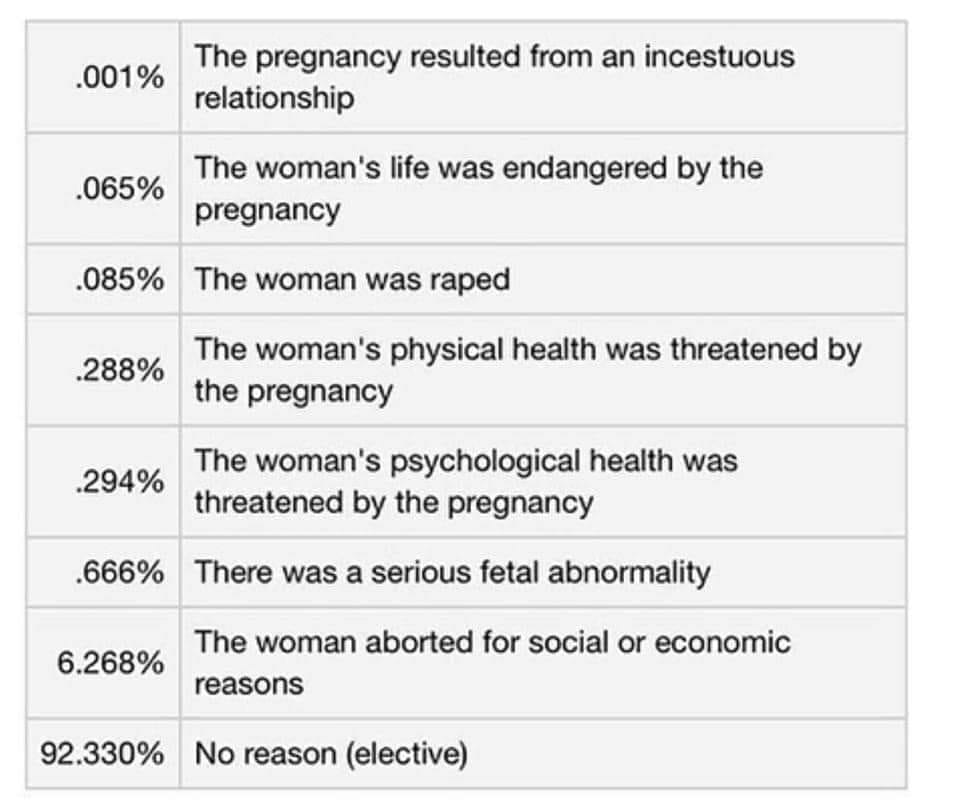
... rape only makes up for 0.085% of all abortions, danger to mother's life only makes up 0.065%, serious fetal abnormalities only make up 0.666%, etc. Despite being mentioned by pro-abortion advocates 99% of the time, these altogether make up less than 1.402% of all abortions. 92.330% of all abortions are purely elective, not even justified by things like poverty *(which supposedly makes up 6.268% of all abortions, allegedly)*. **These people are gaslighting.**
https://twitter.com/thefreerifleman/status/1521644867331403776
As I previously said, these people don't actually care about bodily autonomy *(if they did, and if they were consistent, they would have opposed the mask mandates and vaccine mandates, rather than supporting them)*, and are in fact motivated by something else, either knowingly or not. I will explain that in the next chapter of this article, but to give you a hint: it's about gender relations.
The Social Effects of Abortion
A Tale of Gender Relations: Ooga-booga, something something Paleolithic
We've all heard such a parable before about something. Once upon a time, during the ancient prehistoric times, our caveman ancestors did something, and this is somehow supposed to be relevant to a our modern-day social issues.
Humans are not animals of instinct. We live in a society, we have culture, religion, and all sorts of other excuses to go against our basal instincts. But so did our ancestors - it's easy to fall into the trap of trying to examine prehistoric human societies and earlier humans/hominids from a purely biological perspective, completely ignoring the fact, that just like us, they lived in a society, and probably had a religion and culture too, which would have likely compelled them to violate their instincts the same way we do today too. However, they did not leave any written records behind, and even material evidence is scarce - plus, we generally assume, that hunter-gatherers and other primitive cultures are more in tune with nature, including their own human nature. So, to keep it simple, I will be talking from a mostly biological perspective.
You see, we are not exactly made equal: for a man, all it takes is to ejaculate inside a woman's vagina, while for a woman, it means nine months of awkwardness, nausea and other debilitations until they finally get to painfully deliver the child - or children, in case of twins. Or, to reiterate, a single man can theoretically impregnate a limitless amount of women during a span of a year, while a woman only gets pregnant once a year at most, and they get to bear with all the consequences, they get to breastfeed the babies, etc. So, naturally, it follows that men's sexual reproduction strategy will be only slightly more sophisticated than *"spray-and-pray"*, while women are going to be the more selective sex, because they bear the brunt of the consequences of pregnancy. Men will instinctively want to spread their seeds as far and wide as possible, while women will want the father of their children to be the cream of the crop. **What does this translate to? It translates to polygamy**.
Some claim, that in the distant past, 17 women reproduced for every man, which naturally implies polygamy. However, this conflicts with early humans supposedly being driven to monogamy by STDs, and also fails to account for things like infant mortality, men being prone to hunting accidents, war and genocide *(through which men would be killed or enslaved, women would be raped and impregnated)*, etc. Not to mention, if we had a tribe of 30 hunter-gatherers, and all 15 women decided to become the harem of just one man, the remaining 14 men would probably lynch him. https://psmag.com/environment/17-to-1-reproductive-success https://www.theguardian.com/science/2016/apr/12/stis-may-have-driven-ancient-humans-to-monogamy-study-says
Polygamous societies are known to be less stable and more violent than monogamous ones, women have less *(or often straight-up nonexistent)* rights, rape is common, etc. This is why even cultures and religions that permit polygamy in theory *(e.g. Islam with a maximum of 4 wives for a man)* tend to reserve it as a privilege of the top 1% in practice *(less than 1% of all Muslim men worldwide actually have more than one wife to begin with, let alone the maximum allowed four)*.
We live in a society, and as such, even though men want to be harem-builders and women are naturally inclined to prefer being part of a strong man's harem over having a weak one all for herself, for much of our written history, society has mandated monogamy - as I said, even supposedly polygamous ones largely reserved the right to have multiple wives to the top 1% of society in practice.
But what happens, when that ceases to be the status quo?
Polygamy results in more violence, more competition, women having less rights (harem culture), a more inbred population *(because the male gene pool keeps shrinking every generation)*, a society with less cohesion *(Sultans collecting exotic wives and concubines like Pokémon -> more ethnic diverse -> inevitable ethnic conflict)*. To say that it makes the dating game more competitive *(for men, obviously not for women)* doesn't do it justice.
In contrast, monogamy puts the rights and social status of men and women closer to parity, forces men to go for quality instead of quantity *(thus, women have to compete too)*, and creates a more egalitarian and fair dating game. Monogamy also led to the creation of a social contract of sorts between men and women, where women get to enjoy the protection of men *(from other men, but still)* and access to resources and all while still getting to enjoy the benefits of being the reproductive selectors. All in all, it made our civilization possible.
Return to Polygamy
Then came the sexual revolution in the 1960s and 1970s, where alternative forms of sexuality - as in, alternatives to monogamous heterosexual relationships - were legalized and started to be normalized, the contraceptive pill made the risk of pregnancy less of an issue, abortion was legalized, etc. With abortion being legal, a condom breaking or a pill somehow not working was no longer an issue, as women could just get an abortion. Heck, why even bother with contraception at all, if you can just get an abortion?
Naturally, divorce rates skyrocketed, women decided to opt for *"focusing on their careers" (becoming wageslaves and spending more time with their bosses and coworkers than their families)* instead of bearing children, etc. Many women tried to - and continue trying to - have it both ways, but the inevitable result of that is exhaustion and depression. Disingenuous feminists will defend this and call it *"women's liberation"*, but really, going from having loving families to being forced to become office-wives of egotistic CEOs is not freedom at all. Needless to say, the result of this has been a demographic catastrophe for Western countries, with the abysmally low birthrates leading to companies being forced to rely on cheap immigrant labour, and the capitalist being the last one left laughing.
And because women are instinctively reluctant to date/marry a man unless he's stronger, taller, smarter and wealthier than her *(partially justified by how human reproduction works, but women do this even when they don't intend to have children - can't blame them, it's instincts afterall)*, them having careers being normalized also led to a large portion of women becoming disillusioned, expecting Prince Charming *(basically any man who is wealthier, stronger, smarter, taller, etc. than her)* to come swiping them off their feet, only to be met with disappointment instead. And now that more women are acing college while men are falling behind, even more women are going to be disappointed to find out, that a man who is above them either doesn't exist, or is already taken, forcing them to either lower their standards *(which they are reluctant to do, to say the least)*, or to die alone.
**But I think we got a little bit off-track. We're supposed to be talking about the social effects of abortion, right? Well, a return to polygamy is one of them.**
https://techcrunch.com/2009/11/18/okcupid-inbox-attractive/?guccounter=1&guce_referrer=aHR0cHM6Ly93d3cuZ29vZ2xlLmh1Lw&guce_referrer_sig=AQAAACS3mjing12OvzfO6QKHisUlnwkOmdzTtD4C1abKQhrAm3o8VJfM6PUgIL0I2KS0vuXHfoOM0QhpIyKB9GE0rbwbX314agO_S1rKA56lavtWN1Y6btxSGg3MAllMIr13Aeym-gKQa2rNR3vXoy5m2zX0WF7DrD1kutU583hvLjpU
What happens, when the condom breaks, and abortion is not an option? A shotgun wedding. Well, either that, or the man running off, and the woman becoming a living example of why you shouldn't open your legs to someone who doesn't intend to marry you. In other words: a society where people are reluctant to have sex outside of... well, not necessarily a marriage, but definitely a committed romantic relationship at the very least. **And if you ask me, that's the way it should be.** https://en.wikipedia.org/wiki/Shotgun_wedding
Now, what happens when the condom breaks, but abortion is available on-demand? **Nothing.** No consequences, besides the woman becoming less fertile. The man runs off, both forget about the one-night adventure, the woman might go complain about how all men are the same, etc. But overall, this means that the little f*ccboi - and the loose women who open their legs to him - face no consequences at all for engaging in an activity that carries the risk of pregnancy. No strings attached sex. Who doesn't want that?
Well, there's a bit of a problem with the normalization of no-strings-attached sex, you see...
Due to how our human instincts work, the normalization of casual sex - de facto polygamy - inherently favors a small minority of men at the expense of the rest. And when large portion of lonely men are forced to wageslave and expend energy and money to support a society that doesn't give them anything in return... well, that's when revolutions happen.
**And this is what the abortion debate is really about.** Abortion has nothing to do with bodily autonomy: it's about female control over men, sexual powerplay. It is a tool by liberal women and a small minority of men against the majority of men and sane women.
The abortion debate is effectively about monogamy vs *(de facto)* polygamy, the stability and civilized that monogamy brings versus a return to the Stone Age instinct-driven way of life. All other aspects - such as the morality of ending a life before it even begins - are secondary, and I dare to say, only excuses.
**Think about this carefully.** I'm fully aware that this so far sounded like nothing but mysoginistic ramblings *(even though I never even implied that women are to be blame for any of this, only pointed out what human instincts are like)* - *and no doubt, I will get a bazillion accusations of being an incel -* but the current way of things is largely to blame for the current epidemic of misery and unhappiness among women too. Everyone who lived a promiscuous life or spent too much time *"focusing on their career"* comes to regret it when they're old and lonely. **Also, heed my warning, women:** ***women's rights only exist under monogamy, they are erased under polygamy*****. Is that what you truly want?**
I think we've been all sold a lie.
Men are sold the lie of grinding until they are wealthy, only to find out that money means nothing by the time they're old. By that time, the best they can expect is golddiggers who will cheat on them behind their backs, not true love.
Women are sold the lie of focusing on their careers and getting a taste of every type of men until they are *"ready to settle down"* - but by the time they're *"ready to settle down"*, it's usually too late, as men prefer debt-free virgins *(not literal virgins, but you get the idea)*.
**Is this really the way our society should be going? Nevertheles,** ****THIS******, my friends, is what the abortion debate is truly about.**
What does this all say about our society?
Our ancestors would all be aghast to learn that we treat our own progeny - the most precious gift possible - like medical waste, or obstacles to a debauched life. Our ancestors fought violent wars against each other to secure a place for their descendants, only for their descendants to straight-up kill their own would-be-descendants. We throw away what is truly important - family - to pursue meaningless things, and make our corporate overlords richer and fatter. We practically enslave the majority of men *(and a good portion of women too)* to cover up for the mistakes of promiscuous men and women, and once again to make the corporate fatcats richer and richer.
Quite often, the very same liberals/leftists who complain about wageslavery and say *"There must be more to life than the eternal grind"* are all too eager to support abortion, which is quite literally a proxy for the undermining of family values and human life in the name of corporate capitalism. There must be more to life than the eternal grind, but there won't be until we cease our fixation on capital and recognize what truly matters again.
And no, I'm **not** one of those ultra-traditionalists, who wants to banish all women into the kitchen and ban premarital sex *(though, I do want casual sex - sex outside the bounds of a committed romantic relationship, not necessarily a marriage - to be stigmatized again, but not outlawed)*. I recognize that a large portion of women have talents in various fields that must not be allowed to go to waste. However, I will not stand by idly, as they sell wageslavery and misery as alternatives to motherhood and communities.
**And this leads back to the same point I made in my earlier** ***anti-work / pro-UBI*** **articles: until we start putting people over profit, we are nowhere near what is truly important.**
*"Give me convenience or give me death"* is the motto of our current hyper-consumerist society. All is sacrificed on the altar of hedonistic instant gratification. Nothing is sacred, indeed, the very notion is an anathema to these people, hence their visceral hatred of unborn life being regarded as sacrosanct.
What's in an (Graphics) API?
In the beginning, there was software rendering
Ever since the late 1970s and early 1980s, we had both video game consoles and personal computers. One was obviously geared towards entertainment, the other, not so much. As such, from the very beginning, video games had in-built - or, you could even say, hardware-accelerated - support for things like sprites, scrolling, tiles, and whatnot... Personal computers on the other hand, not so much, or to a much more limited degree.
// How to draw some things in bitmap.
// We're assuming 8-bit bitmap, and ignoring things
// like bound-checking for the sake of simplicity
uint8_t* SCREENMAP = 0xB8000;
uint8_t* image = ???;
const int SCREENWIDTH = 320;
const int SCREENHEIGHT = 200;
const int IMGWIDTH = 32;
const int IMGHEIGHT = 32;
const int IMG_OFFSET_X = 100;
const int IMG_OFFSET_Y = 150;
for(int y = 0; y < IMGHEIGHT; ++y) {
uint8_t * const screen_scanline = &SCREENMAP[(IMG_OFFSET_Y+y)*SCREENWIDTH];
uint8_t * const image_scanline = &image[y*IMGWIDTH];
for(int x = 0; x < IMGWIDTH; ++x) {
screen_scanline[IMG_OFFSET_X+x] = image_scanline[x];
}
}
Personal computers, in the very beginning, only had text mode (rendering characters are some minimal graphical elements), but then they later added bitmap mode, which allowed for direct manipulation of the pixels displayed on the screen. However, with some notable exceptions - such as the C64 and MSX - personal computers did not provide any direct hardware support for things like sprites and scrolling. In fact, the IBM PC - which is what I will be focusing on in this article - never did.
But just because that hardware doesn't support a feature, doesn't mean you couldn't emulate it in software. Yes, it was slower, but it was possible at the very least.
https://www.youtube.com/watch?v=kYzZcko3F50
But of course, PCs evolved, their CPUs became faster, and it was only a matter of time, before they realized that they could use software rendering to do polygonal 3D graphics as well:
https://youtu.be/-hKK4_gvOS0?t=173
https://www.youtube.com/watch?v=tyLC1vR9oGk&t=57s
On PCs, there was only software rendering until 1996ish, then, until 2002, software rendering would coexist with hardware-accelerated rendering until 2002-ish. To figure out how software-rendering can be done, see my series on software rendering. https://read.cash/@Metalhead33/software-rendering-part-1-setting-it-all-up-c2a84381
https://youtu.be/iaSJlwxtFKk
In theory, software rendering allows you to do whatever you want, with you having literally full control over the whole pipeline, full control over how vertices are translated, what kind of format do vertices have, how are the triangles rasterized, etc. with the only limitations being your own imagination.... and the RAM.... and the CPU cycles.
And the last one was the biggest issue. Speed. You see, 3D graphics is a computationally expensive task that involves lots of *(matrix)* multiplications and various other repeated tasks that can be - and should be - done in parallel. However, the x86 CPU - and general-purpose CPUs in general - are only good at processing instructions and doing math one operation at a time, and tend to scale poorly. In particular, the Pentium 1 struggled with producing acceptable framerates at the 640x480 resolution.... So what was the solution?
Well... they *"solved"* the problem by creating a new type of coprocessor that the task of rasterizing triangles could be offloaded to. As both Geri and I have already pointed it out, in hindsight, this was a big mistake, and continues to haunt us to this very day. https://read.cash/@Geri/software-rendering-is-better-than-directx-or-opengl-d94704d6#the-problem-is-the-3d-hardware-rendering-itself https://read.cash/@Metalhead33/hardware-acceleration-was-a-mistake-dade7306 https://read.cash/@Metalhead33/the-greatest-strength-and-weakness-of-the-pc-c643a821#a-mess-to-program-on
The Rise and Fall of the Fixed-Function Pipeline
**GPU**s - or **Graphics Processing Unit**s - aren't necessarily a new thing. You could argue, that early video game consoles - such as the NES - had GPUs too, because they had hardware-accelerated rendering of tiles, sprites, scrolling, etc. instead of just letting you draw pixels directly onto the screen.
The term *"Graphics Processing Unit"* also appeared in the the technical documentation of the PlayStation 1 in 1994, which was the second console to support hardware-accelerated 3D graphics *(**3DO* *beat them to the punch by a single year)*. https://en.wikipedia.org/wiki/PlayStation_(console) https://en.wikipedia.org/wiki/3DO_Interactive_Multiplayer
The venerable PS1 had GPU that could render between 90,000 and 360,000 polygons per second *(divide that with the amount of frames you want per second to get the number of maximum recommended polygons per frame)*, and also a math coprocessor called the **GTE** *(Geometry Transformation Engine)* that could do the hard matrix/vector math for transforming the vertices and doing lighting.
https://www.youtube.com/watch?v=x8TO-nrUtSI
It was truly a fixed-function pipeline, supporting only four rendering modes, four vertex types:
**Flat-shaded**, where colour was per-polygon rather than per-vertex, and thus each vertex consisted only of a 3D position
**Goraud-shaded**, where each vertex contained a 3D position and a colour that was interpolated for per-vertex colouring/lighting.
**Texture-mapped**, where each vertex contained a 3D position and a 2D texture coordinate, which was interpolated for texture-mapped polygons. The PlayStation 1 supported only affine texture-mapping without perspective-correction, resulting in warped and wobbly textures.
**Texture-mapped & Goraud-shaded**, a combination of the earlier two, with each vertex having a 3D position, a 2D texture coordinate and vertex colour.
This was eerily similar to the behavior of OpenGL 1.0, but we're getting ahead of ourselves....
And this was just the first one of the many limitations of the fixed-function pipeline I detest so much: the limitation, the fact that it was either the GPU's way, or the high way *(software rendering)*. Yes, I said it: the fixed-function pipeline was a huge step back, a huge downgrade from the infinite flexibility of software renderers. Sure, it was much faster *(with some exceptions)*, but at what cost? At the cost of not just flexibility, but also avenues for optimization, putting game developers completely at the mercy of hardware vendors and whoever wrote the drivers for the GPUs.
For instance, fixed-function hardware at the time couldn't do voxels, which is why games like Delta Force and Outcast relied on software rendering, even as late as 1999. https://www.youtube.com/watch?v=t6e3QA0wrYg https://www.youtube.com/watch?v=UOPVbgN2Pf8&
Anyway, in the aforementioned OpenGL, you basically render a triangle kinda like this:
glBegin(GL_TRIANGLES);
glVertex3f( 0.0f, 1.0f, 0.0f);
glVertex3f(-1.0f,-1.0f, 0.0f);
glVertex3f( 1.0f,-1.0f, 0.0f);
glEnd();
Or, alternatively, in modern C++:
struct Vertex {
float x,y,z;
float r,g,b;
};
void renderVertices(const std::span<Vertex>& vertices) {
glBegin(GL_TRIANGLES);
for(const auto& vertex : vertices) {
glColor3f(vertex.r, vertex.g, vertex.b);
glVertex3f(vertex.x, vertex.y, vertex.z);
}
glEnd();
}
Or, in older, more C-style code:
void renderVertices(const Vertex* vertices, size_t vcount) {
glBegin(GL_TRIANGLES);
for(size_t i = 0; i < vcount; ++i) {
glColor3f(vertices[i].r, vertices[i].g, vertices[i].b);
glVertex3f(vertices[i].x, vertices[i].y, vertices[i].z);
}
glEnd();
}
Now, there are problems with this piece of code. The most salient problem, is that we are required to store all the vertices in our RAM and then constantly re-upload them to the GPU on every frame, which is taxing on the CPU, GPU and the memory bus alike. This is known as *"immediate-mode rendering"*, and is contrasted with so-called *"retained-mode rendering"*, which I will talk more about later.
This is fine if your scene consists of just a couple thousand polygons, but obviously, as time progresses and video game graphics start becoming more sophisticated, this will eventually become unsustainable and a source of problems.
Another issue, is one I already mentioned: there being only a finite number of vertex formats being acceptable, and being particularly poorly documented in OpenGL 1.0. Yet, this is how they did it. It was either this, or software rendering.
Direct3D was the same - albeit somewhat lower-level, with a more involved initialization process than OpenGL -, except that it also supported retained-mode rendering, which was to keep graphics-to-be-rendered in buffers that would be reused frame to frame *(which had the problem of practically making it impossible to animate anything without downloading, re-uploading, defeating the whole purpose)*.
Early 3D accelerators on the PC were a mixed-bag. First came the infamous S3 Virge, which has been mocked endlessly, dubbed a 3D *"decelerator"*, because its performance was inferior to software rendering in many cases. Arguably, the 3dfx Voodoo was providing much better performance, but.... https://read.cash/@Geri/the-first-3d-cards-ad5c643e https://www.youtube.com/watch?v=A0ljjj4LTDc https://youtu.be/VkzO2w6EqK4
Well, the Voodoo at first only supported its own proprietary API *(Glide)*, with support for the Direct3D and OpenGL APIs coming later. Also, it basically only accepted a type of vertex that contained a screenspace coordinate, a texture coordinate and an RGBA colour. Yes, that was it, it was that limited. Other than that, the programmer had a limited amount of control over how was alpha-blending done, as well as how to blend the textures with the vertex colours.
https://youtu.be/R2C1aZWzMfY?t=335
But of course, graphics kept evolving, and soon, GPUs for the PC started to support using two or more textures at the same time, which also came with controls over how to blend them together.
By modern standards, this is rather primitive, rudementary and crude, but by standards of the time, it was obviously state-of-the-art flexibility. More specifically, Nvidia implemented a feature called *"texture environments"* on their Nvidia Riva TNT *(1998)*, which was essentially a set of settings for each texture.
GPUs were evolving, and APIs were evolving with them in order to accomodate for the increased amount of features and functionality. However, in the age of fixed-function pipelines, this meant that APIs became convoluted, Rube-Goldberg-like state machines that had to add more layers of complexity over more layers of complexity to accommodate for the new features. The pinnacle of this over-complication of the fixed-function pipeline was the so-called *"register combiners"* of the NVIDIA GeForce 256 *(1999)*, something I still don't quite understand. https://en.wikipedia.org/wiki/Rube_Goldberg_machine https://en.wikipedia.org/wiki/Finite-state_machine
Fragment/pixel processing, colour blending modes and textures weren't the only place where GPUs were evolving though: initially, GPUs only accepted screen-space or clip-space coordinates in vertices, which meant that vertices had to be transformed in software. While the PS1 had its GTE to hardware-accelerate these transformations, on PC GPUs, this happened in software, until the release of the aforementioned GeForce 256, which supported hardware-accelerated *"transform & lighting"*. ATI added support for the same feature, while 3dfx and S3 fell behind and did not support it, emulating it in software instead. Not everyone used Hardware T&L though, because it was inflexible, and programmers liked having control over how their vertices were transformed, which meant that many continued to do the vertex transformations in software anyway.
A point of contention between me and my friend Geri, is that he still favours the old fixed-function pipeline and immediate mode, while I personally prefer to pretend that it doesn't even exist, and hope to return to pretending that, once I am done writing this article. You see, this whole fixed-function pipeline was bleeding from multiple wounds:
If you wanted to do animations - or have fine-tuned control over vertex transformations - you had to upload every single vertex, every single frame, taxing the CPU, the GPU, the memory bus, throttling everything and constituting major bottlenecks. This was fine when we were dealing with only a couple thousand vertices per frame, but with gamers demanding more sophisticated graphics with more triangles, this was simply unsustainable on the long run.
It was initially very inflexible, and while it was evolving to be more flexible, this came at the cost of more and more needless complexity, turning the fixed-function pipeline into a Rube-Goldberg machine.
Poor standardization, with different GPUs supporting different features, and developers having to hack together stuff to make sh*t work on every popular GPU.
Most of the time, programmers were basically just hacking together to produce good results in spite of the flaws of the fixed-function pipeline.
A good example of the latter is the shader system of the Quake 3 Engine, where they basically transform vertices in software *(and allow developers to write some sort of script that controls this transformation)* and render models multiple types with different blending modes to produce interesting results. It was slow and costly, and a prime example of the programmer's struggle against the bull**** that was the fixed-function pipeline.
textures/liquids/lava
{
deformVertexes wave sin 0 3 0 0.1
tessSize 64
{
map textures/common/lava.tga
}
}
The above code is simply interpreted by the Quake 3 engine, probably compiled into some kind of bytecode, which is executed during the rendering of every frame. Besides the fact, that we're transforming vertices on the CPU and sometimes have to render the same model/mesh twice for certain special effects, the fact that we are forced to interpret some kind of *"script"* on the CPU **for rendering 3D graphics**, adds some extra unwanted overhead that no doubt throttles the CPU and is the source of slowdowns. *(This gets solved by Vertex and Fragment shaders later, which get compiled on the GPU, into GPU machine code)*
https://youtu.be/sARn-yt4Ygs?t=153
The game seen above is beautiful, and runs nicely on modern GPUs, but back 2000... it pretty much only ran on newly-released high-end PCs, and that had to do with all the hoops the developers went through to produce those beautiful cutting-edge graphical effects on the inherently inflexible fixed-function pipeline. It was a nightmare for programmers, and a prime example of smart developers hacking things to push bull**** to its limits.
Shaders, shaders, and more shaders
So, as I just said, the fixed-function pipeline had plenty of flaws, from CPU bottlenecks to inflexibility problems, to becoming too complex, etc. So what was the solution to these problems?
Well, it turns out, the solution was staring at us in the eye all along, because **programmable pipelines** are not a new thing at all: in 1986, Texas Instruments released the TMS34010, which was actually programmable. In fact, even the Nintendo 64's GPU allowed programmers to rewrite the microcode, which was functionally the same as having shaders. Hell, even the Rendition Verité in 1995 was programmable, containing a RISC CPU that could run *"microcode" (shaders)*, giving developers fine-tuned control over both vertex and fragment processing.. So why didn't it catch on, while 3dfx's fixed-function pipeline did? The answer is simple: developers just weren't interested back then, the implementation was bad *(fixed-function hardware was faster)*, and the puny 2-4 megabytes of VRAM was a difficult fit for textures, vertices AND the shader mirocode. https://en.wikipedia.org/wiki/TMS34010
However, by 2001, GPUs have had enough VRAM and enough transistors and clock cycles to make the transition to the programmable pipeline and shaders. In the mid-late 90s, the fixed-function pipeline looked impressive enough for most people, but by the early 2000s, game devs wanted more, and got it.
**Direct3D 8** started to recommend support for both vertex and pixel/fragment shaders in 2000 *(support for pixel shaders was mandatory, support for vertex shaders was initially optional and became mandatory later)*, and **OpenGL 2.0** followed suit in 2004... though, support for shaders was available earlier, albeit as extensions *(****NV_vertex_program*** *and* ***NV_texture_shader*** *in 2001,* ***ARB_vertex_program*** *and* ***ARB_fragment_program*** *in 2002)*.
The game has changed: now, all the vertices would be stored in the VRAM, so you wouldn't have to re-upload them every single time you wanted to render them, and you would transform them using a vertex shader, like this:
#version 330 core
layout (location = 0) in vec3 aPos;
layout (location = 1) in vec3 aNormal;
layout (location = 2) in vec2 aTexCoords;
out vec2 TexCoords;
uniform mat4 model;
uniform mat4 view;
uniform mat4 projection;
void main()
{
TexCoords = aTexCoords;
gl_Position = projection * view * model * vec4(aPos, 1.0);
}
The GPU would run this vertex shader for you, transforming the vertices, and interpolating vertex attributes. Then, the interpolated vertex attributes would be used as parameters/arguments for the fragment/pixel shader:
#version 330 core
out vec4 FragColor;
in vec2 TexCoords;
uniform sampler2D texture_diffuse;
void main()
{
FragColor = texture(texture_diffuse, TexCoords);
}
And that's it. No need to worry about throttling your CPU with vertex transformations or **glVertex3f** calls, or **glEnd** or **glBegin**. None of that. Instead, your new worry was about fitting all the textures and vertices in the VRAM.
Instead, now you just call:
glUseProgram(momsFavouriteShderProgram);
glDrawArrays(GL_TRIANGLES, 0, 3);
The programmable pipeline would look kinda like this:
*(Mandatory)* **Vertex Shader:** This is the stage where the input vertices are transformed. This is also where the skeletal animations take place, if you elect on using hard rigging *(which you should, since soft rigging is slow)*.
*(Optional)* **Tessalation Control & Tessalation Evaluation Shader** ***(OpenGL)*** **/ Hull & Domain Shader** ***(DIrect3D)*****:** Bigger polygons are broken up into smaller polygons, and manipulate their vertices based on stuff like heightmaps. Only available after 2010. Useful for providing more detail to objects when looking at them more closely, which can save VRAM.
*(Optional)* **Geometry Shader:** Takes a single primitive *(triangle, line, point, etc.)*, and depending on certain conditions, outputs either zero, one or multiple primitives. Only a thing since 2008, it's useful for dynamic particle systems.
*(Fixed-function)* **Rasterization:** The vertex outputs produced by the vertex shader are clipped, and then interpolated for every pixel that will be actually drawn to. This stage remains fixed-function even to this day, and the programmer has no control over this.
*(Mandatory)* **Fragment Shader (OpenGL) / Pixel Shader (Direct3D):** The per-pixel interpolated vertex outputs are utilized - along with any optional textures - to paint the pixels on the screen. This is the part where we sample textures, do any alpha-blending, maybe even dither the alpha, etc.
As I said, Tessalation and Geometry Shaders came later, and initailly we only had Vertex and Fragment/Pixel Shaders.
Anyway, power comes at a price, and while the the fixed-function pipeline was fairly simple to get into and learn, the programmable pipeline has quite the steep learning curve, which leads me to a bit of a segue....
You see, I told a simplified version of all this to a friend of mine called Roland, and he somehow came to the conclusion, that the fixed-function pipeline was somehow the result of intentionally dumbing things down to accommodate lazy programmers... Maybe I am just bad at explaining, but no, that's not how it happened. There was a time, when the FFP was in fact an accurate reflection of how the hardware worked, with much of the functionality being directly burned into the silicon, and programmability only being gradually introduced, until they had a revelation that all this new functionality needed a whole new clean-slate API.
And just to showcase how gradual was all this evolution... At first, programmable GPUs used separate compute units for executing vertex and fragment shaders, still relying on the exact same dedicated texture-mapping units as they did back in the fixed-function era *(in fact, they still do)*. One could not even access textures from within the vertex shader first, and could only use a limited number of opcodes! It was only after 2007, that the unified shader model became a thing, which mandated that GPUs have generic compute units that can allow vertex and fragment shaders to use the same functions. https://en.wikipedia.org/wiki/Unified_shader_model
Still, together with shaders came the mainstreaming of multiple render targets / rendering to textures *(not a new thing: was a feature of the PlayStation 1 too)*, having floating-point textures, etc. This opened up the door for things like HDR and bloom, which were initially overused. https://en.wikipedia.org/wiki/High-dynamic-range_rendering https://en.wikipedia.org/wiki/Bloom_(shader_effect)
https://www.youtube.com/watch?v=9pZ1je_XfJg
While obviously, video game graphics did not look photorealistic, and probably never will, the programmable pipeline made it oh so much easier to hide the fact that games are made up of 3D triangles, and made games so much more immersive.
Not to mention, they also paradoxically ease the burden on the programmer: if one wants to produce graphics like seen on the video, it's probably possible with the fixed-function pipeline, but only at the cost of extreme hacking, and lots of multi-stage magic that is no doubt also slow as hell. The programmable pipeline on the other hand follows a trend for moving more and more things from the CPU to the GPU, continuing the earlier trend started by Hardware T&L *(I really hope my readers don't have the memory of a goldfish)*.
Hardware continued to evolve, not just increasing VRAM, clock cycles, texture-mapping units, but also adding new features, like the aforementioned tessalation and geometry shaders, etc. Software continued to evolve too, with batch rendering, tiled-forward rendering, *"virtual textures"*, etc. all striving to squeeze out more performance out of existing hardware while also trying to get closer to photorealism.
Up until 2016, there were really only two major APIs: **Direct3D** and **OpenGL**, both having existed since the mid-90s, and having been in competition ever since. There were a few other ones as well, but all of them were hardware-specific proprietary APIs, like Glide, SGL, ATICIF, etc. resulting in the hardware-agnostic D3D and GL winning out in the end. Direct3D is exclusive to Microsoft Windows and is maintained by Microsoft, while OpenGL is platform-independent, but allows for hardware/vendor-specific extensions, which can be queried at runtime. If you want, you can query what kind of extensions are available and write separate code paths to leverage them when available, but most of the time, it's more trouble than it's worth.
Vulkanic Eruption
In 2015 and 2016 respectively, we saw the release of **Direct3D** **12** and **Vulkan**. We have already talked about Direct3D before in this article, so what's so special about the 12th installation? Well, the fact, that it is completely different from all previous iterations of the API, having far more in common with Vulkan, than with Direct3D 1-11.
Vulkan was created by Khronos, the same folks who took over OpenGL in 2006.
You see, there always comes a time, when you just gotta start with a clean slate, because you have accumulated so much cruft. Imagine inheriting a 300+ year old house. It's a nice house, but it's literally three centuries old, and to have warm, running water, electricity, an access to the phone line and the world-wide web, you have to make a lot of renovations, to the point where demolishing the old house and building/buying the new one makes far more sense.
This is specifically what happened with OpenGL. With OpenGL 2.0 in 2004, OpenGL made the switch from the fixed-function pipeline to the programmable pipeline, but the fixed-function pipeline functionality continued to be supported to support old legacy code and applications *(hardware no longer supported the fixed-function pipeline though, which was instead emulated using built-in shaders)*. Despite this transition, OpenGL retained the old, outdated state machine-based model, even though this was no longer an accurate reflection of how hardware worked at the time. in 2007, in OpenGL 3.0, they intended to replace this old system with a new object system, and remove all fixed-function functionality. Sadly, due to programmer outcry, they stuck with the same old state machine-based API, and instead of removing the fixed-function stuff altogether, they merely marked them as *"deprecated"*, and created a model, in which programmers could request either a *"Core"* context *(in which deprecated functionality is removed altogether)* or a *"Compatibility"* context *(in which deprecated function is simply emulated with in-built shaders)*. In OpenGL 4.X, after 2010, they did begin introducing new function calls that could bypass the nonsensical state-machine binding system, but by that time, it was too late. OpenGL had its API conventions, and they were out of date.
Around 2015, AMD created a new low-level API called *"Mantle"*, which promised better performance, less CPU usage, better scalability and support for multithreading, all at the cost of manual memory-management and more verbosity *(even rendering a triangle takes several thousand lines of code)*. By 2016, they donated this API to Khronos, which re-branded it as Vulkan, designating it as the successor of OpenGL.
Compared to the OpenGL it intends to replace, Vulkan is a brand new API, and a lower-level one, which gives far more control to the programmer. While previously, OpenGL *(for PCs)* and OpenGL ES *(for smartphones and consoles)* were two separate APIs, Vulkan provides a unified API for both types of platforms. Instead of one global state machine like GL, Vulkan has is object-based with no global state.
**Just for comparison, here is how you render something in OpenGL or OpenGL ES, the programmable pipeline:**
glUseProgram(momsFavouriteShderProgram);
glBindTexture(GL_TEXTURE_2D, texture);
glBindVertexArray(VAO);
glDrawElements(GL_TRIANGLES, 6, GL_UNSIGNED_INT, 0);
**In contrast, here is how you render something in Vulkan:**
vkCmdBindPipeline(commandBuffer, VK_PIPELINE_BIND_POINT_GRAPHICS, graphicsPipeline);
vkCmdDraw(commandBuffer, 3, 1, 0, 0);
vkCmdEndRenderPass(commandBuffer);
While yes, both contain "bind" commands, in Vulkan, we bind a named variable to another named variable which is clean, wheras in OpenGL, we bind a named variable to some sort of global state machine, which is unclean and hard to wrap one's head around. Arguably, Direct3D addressed these complaints of mine much earlier than Vulkan, but still.
Clean, efficient, flexible, and a far more accurate representation of how GPUs work, Vulkan delivered on its promises, and it definitely **does** provide better performance and less CPU usage in the hands of a skilled programmer....
https://www.youtube.com/watch?v=hvdAVsjrQRM
... in the hands of a skilled programmer. And that's an important addendum, because comparing GL to Vulkan, is like comparing an autopilot to manual driving. Yes, manual is better at the hands of a good driver/pilot, but not so much in the hands of a rookie, who will make all the wrong choices and screw everything up.
What does the future hold?
Well, as I said in several previous articles of mine, the line between CPU and GPU is getting blurred. CPUs are being extended with GPU features, GPUs have become able to do general-purpose computing, etc. which suggests, that it's not unreasonable to assume, that one day, the two will merge. Many have prophesized, that GPUs will disappear, and instead, we'll have hundred-core or thousand-core CPUs, running software renderers so fast, we won't be able to tell the difference between that and genuine hardware acceleration.
As a matter of fact, more and more PCs simply lack dedicated GPUs altogether, instead having APUs - Accelerating Processing Units, combining CPU and GPU on a single die, a single chip. While not exactly the same as having a 128-core CPU masquerade as GPU by doing software rendering, not exactly a far cry from that future either.
Even if what I said will not come to pass, GPUs have evolved to be so complex, that it has become quite a wise choice to create Vulkan and Direct3D 12 as more low-level abstractions of the hardware. This can make it easier for vendors to write drivers in the future, and they can just use an OpenGL-to-Vulkan wrapper.... which really brings us back to the 1990s, when 3dfx's OpenGL ICD was just an OpenGL-to-Glide wrapper.
To summarize:
In the beginning, there was only software-rendering, but by the late 1990s, gamers wanted more, but CPUs - namely the Pentium 1 - were too slow to do software-rendering beyond 640x400 with a large amount of polygons.
Hardware-acceleration came to the rescue, offering a cheaper alternative to just buying stronger CPUs.
But hardware-acceleration mostly only offered inflexible fixed-function pipelines, so some people stuck with software-rendering (e.g. Novalogic), some people didn't bother to buy GPUs for a while, so software-rendering and hardware-acceleration coexsted for a while.
Eventually, GPUs made the transition to the programmable pipeline with shaders, and continued to evolve
But the APIs - namely, OpenGL and Direct3D 1-11 - were lagging behind the actual evolution of hardware, necessiating the need for a new API: Vulkan and Direct3D 12.
With GPUs being able to do general-purpose computing, one could literally write and execute a software-renderer on a GPU, so in a way, the line between GPU and CPU is getting blurred.
In the future, there will probably be no GPUs at all, only 1024-core CPUs that can act like GPUs when need be.

The War in Ukraine: My thoughts about the future
The war between Ukraine has been officially raging on for two months as of the time of writing this article... though, many agree, that the war actually started in 2014, not 2022. Curious people flock to the analysts with the question *"Who'se gonna win?"*. **This is obviously a loaded question**, and for multiple reasons.
How do we even define victory?
Let's go back in time a little, right to 1940, and to Finland. Anybody remember the Winter War? The Soviet Union had a brief, three-month war with Finland, and the end result was a peace treaty, in which Finland ceded some land to the Soviets, but remained a sovereign state with an anti-Soviet government.
Was this a Soviet victory or a Finnish victory? Depending on the point of view, you could argue, that it was both. Officially, the Soviets won *(albeit at the cost of heavy casualties)*, they even gained some land (*Karelia)*, but Finland preserved their sovereignty both on paper and in practice - Finland wasn't annexed by the USSR, and neither did it become a Soviet puppet state, which more or less counts as a Finnish victory if you ask me.
If you, as a puny human being, encounter a bear, what kind of outcome qualifies as a victory? If you kill the bear, that's a victory. If you chase away the bear without getting injured, I guess that's also a victory. What if you chase away the bear, but get injured in the process? If we take this line of thinking to its logical conclusion, then we can safely say, that any outcome that sees you surviving the encounter - even if you lose a literal arm and a leg - can count as a *"victory"* against the bear.
Thus, by the above-established precedent, we could argue, that in a conflict against the mighty Russian bear, any outcome that excludes your annexation or vassalization by Russia can be considered a victory, even if you are forced to cede land to Russia or give other concessions.
But, if we ignore all that, let's look at another aspect to establish, whether a Russian victory or a Ukrainian victory is more likely. **What are their stated goals?**
Russia's goals
Russia's goals are simple:
Demilitarize Ukraine
Denazify Ukraine
Protect the ethnic Russians living within Ukraine
What does "demilitarize Ukraine" mean? It's a bit misleading, but what it actually means, is to expel all foreign military from Ukraine and prevent Ukraine from joining any international military alliance like NATO.
What about denazification? Ukraine has a rather strong far-right, which may not have much of a presence in their parliament *(though they still name streets after Stepan Bandera, a famous Nazi)*, it has infiltrated every level of their military and law enforcement. The infamous Azov Batallion is a thing, and it has been operating with impunity for a long time.
Protecting ethnic Russians - Ukraine has a rather large population of ethnic Russians, and the Ukrainian government has been mistreating them for a very long time. The aforementioned Azov Batallion was responsible for burning several alive. In 2014, Ukraine and Russia made an agreement - the Minsk Agreement - about the treatment of ethnic minorities, but then Ukraine began to violate this agreement immediately. This made it pretty clear to Russia, Ukraine will always mistreat its Russians, and the only way to truly protect ethnic Russians, is to straight-up annex Russian-majority lands, such as Crimea and the Donbass.
In the long-term, Russia's goal is to close off all the corridors, all the chokepoints, all avenues for an easy foreign invasion. Russia wants a buffer zone, for defensive reasons.
Ukraine's goals
What are Ukraine's goals? If you're a hardcore Ukrainian Nationalist, you might say *"to protect Ukraine's territorial integrity"* or "*to re-conquer Crimea and the Donbass"*.... but realistically, neither of those are going to happen. Realistically, Ukraine's goal is to survive, and to avoid becoming a Russian puppet state or satellite. Sure, you could argue, that Ukraine's long-term goal is Western/European integration, but in the short run, during this war, they have one objective: to survive.
Ignorant people might say, that unless Ukraine chases the Russians all the way back to Moscow and squeezes an unconditional surrender out of Putin, they will have lost, but let's be real: when your enemy is the mighty Russian bear, any outcome that has you surviving *(and not becoming a vassal of the bear)* can be considered a *"victory"*, even the bear successfully snatches a Donbass and an Odessa from you and forces you to swear an oath never to join NATO.
Potential for peace?
You may have noticed, that these two countries' goals aren't mutually exclusive.
Russia wants to keep Ukraine out of NATO - Ukraine's Zelensky has already accepted, that his country is never going to be a member of NATO, and if he's not completely demented, he'll probably agree to turn Ukraine into an Austria-style neutral demilitarized state.
Russia wants to denazify Ukraine - the Azov Batallion is in tatters, with much of them trapped in the sewers under the Azovstal factory. Besides, Zelensky is Jewish, shouldn't he be thanking Putin for getting rid of those Nazis?
Russia wants to protect ethnic Russians - As long as there is a significant Russian minority in Ukraine, Ukraine will never be part of the EU, and will always be contested territory between the Western and Russian spheres of influence. If anything, Putin would be doing Ukraine a favour by annexing Russian-majority territories.
Ukraine wants to remain sovereign and unaligned - So be it. As far as Russian geopolitical strategy is concerned, a neutral Ukraine is just as much of a positive to Russia's interests, as a pro-Russian Ukraine. In fact, if anything, Ukraine's neutrality could even be used as a shield against potential Western invaders.
Just like in case of the Winter War, we very well could end up with an outcome, where both sides can claim victor *(albeit with a stretch)* and not go home empty-handed.
The most likely outcome
If you've been following both Western/Ukrainian and Russian reports of the war, you may be forgiven for scratching your head and thinking that two wars are going on between Ukraine and Russia, in two parallel universes.
In one of these parallel universes, Western journalists and fact-checkers are reporting that the collapse of the Russian army is going to happen any day now, and that the superman Ukrainians, led by the Ghost of Kyiv, are going to chase the Russians all the way to Moscow.
In the other one, Russian journalists are reporting, that while the Ukrainians are putting up a valiant resistance, their collapse is inevitable, and it's only a matter of time before the Russian army is parading in Kiev.
Well, in the real world, neither is true, albeit the Russian version of the story is far closer to reality.
Yes, mistakes have been made. All of us initially assumed, that the special military operation would last only a single afternoon, and we'd see a total Russian victory. Yes, the Russian army made a lot of rookie mistakes, lost a lot of equipment, made many dumb decisions, etc. But let's not kid ourselves. This is Russia we're talking about. Russian incompetence will **not** lead to Russian defeat - it will only delay their inevitable victory and make it slightly costlier.
Unless Zelensky intends to fight to the last Ukrainian - in which case, he's probably going to get removed from power - the most likely outcome, is Ukraine being forced to cede the Donbass *(and maybe some other Russian-majority lands)* to Russia, agree to neutrality, and call it a day. Russia doesn't intend to do regime-change in Ukraine, and neither do they intend to wholesale annex the entire country - especially **not** the regions of Halych and Volhynia, they definitely don't want to touch those two regions, not even with a ten foot pole. https://read.cash/@Metalhead33/ukraine-set-up-for-failure-from-the-start-57271a14#a-house-divided
If the Russians really beat the Ukrainians extra-hard, they may try annexing all of Novorossiya and possibly Kharkiv. But them being content with just the Donbass - Donietsk and Luhansk - is far more likely and realistic. https://en.wikipedia.org/wiki/Novorossiya_(confederation)
No matter how many weapons do Western countries send to Ukraine, unless they want to risk all-out nuclear war, realistically, there is no way that Ukraine is going to get out of this war without losing territory.
A light at the end of the tunnel for Ukraine?
Let's suppose, that **hypothetically**, the unthinkable happens, and the Ukrainians somehow manage to completely chase the Russians out of their country, win the war, force Putin to concede defeat, etc. Realistically, the chance of that happening is near zero, but let's say, that hypothetically....
What then? What is the best-case scenario for Ukraine? Well, Jake Tran made a 18-minutes long video about that:
https://www.youtube.com/watch?v=T4g-M91WGbI
But in case you can't be bothered to watch a 18-minutes long video, here's a summary:
All the *"aid"* going to Ukraine is actually loans, **not** free money. They **will** have to pay it back, **with interest** none the less.
Ukraine already owed 22 billion dollars to the IMF even before the war, with 9% interest.
Ukraine's economy was already in tatters even before the war.... and who knows what kind of third-world conditions will be country be in, once the war is over.
There is no way in hell that the IMF will just forgive all that debt. They **might** forgive parts of it, in exchange for certain concessions, like more privatization, a more pro-American government, basically selling out the entire country to the international bankers.
Yes. And the video didn't even mention the fact, that Ukraine is suffering from some of the same problems as Russia *(ageing population, brain-drain, rampant corruption, etc.)*. The fact that virtually all educated people *(e.g. bankers, software programmers, engineers, etc.)* and the fertile, childbearing-age women having left the country before or during the war is only the icing on the cake. These nubile women have only one youth - they're not going to wait until the end of the war, they're not going to be saving themselves for a Ukrainian man. They're going to be marrying Dutch, German, English, Swedish, Czech, Slovak, Polish, etc. men, and their children won't be Ukrainian.
So yeah, if you're a hardcore, Russophobic Ukrainian Nationalist Warrior, this is the future you're fighting for. If you see Russian annexation as a fate worse than death, then this is your best-case-scenario: a future as a debt-slave, as a slave of the IMF. Compared to that, is Russian rule even that bad?
So yeah, there is no light at the end of the tunnel for Ukraine. Even the best-case scenario sees them effectively reduced to a third-world country where everything is owned by wealthy Western *"investors"* who never even set foot in the country, their women and children - the ones that remain, that is - exposed to the dangers of human trafficking and prostitution to sate the appetite of perverted foreign bankers, their men working 80+ hour weeks just to make ends meet and not starve to death, etc. All the fertile farmlands in Ukraine, all the oil fields and whatnot? All of those will be bought up and owned by rich Western investors. The entire country will become a literal debt slave. **And that's the best-case scenario for a nominally sovereign Ukraine that's not aligned to Russia. Sovereign on paper only either way.**
This is the future of Ukraine in the Western sphere of influence. So I ask Ukrainians this: is that really so much better than Russian rule?
Stuck between a rock and a hard place
The previous chapter was dealing with a hypothetical best-case scenario for Ukraine. But what about the most realistic scenario for the aftermath of the war?
As I said previously, the most realistic scenario is Ukraine having to cede lands to Russia - at the very least the Donbass region, but potentially more - and agreeing to neutrality.
After that, this neutral Ukraine will be saddled with debt that will never be erased. The IMF says they'll forgive some of the debt in exchange for installing a more pro-American government? Can't do it, because that would violate the peace treaty with the Russians, who would then attack again. We would end up with a bizarro Frankenstein Ukraine, that is nominally neutral, while dominated by the West economically/financially and by Russia politically/militarily.
Any regions annexed by Russia will see rebuilding - financed by Russia, obviously - and a return to normalcy. Any regions remaining in Ukraine's hands will see further deterioration of life under the rule of a government that's knee-deep in debt, doesn't even have money to clear out all the rubble or minefields, is forced to almost literally sell the entire country to Western "investors", etc.
Life in Russian-annexed territories will be comparable to that of Russia Proper - rampant corruption, but still somewhat bearable. They won't live like kings, but they'll definitely live better than Ukrainians.
Life in the remaining Ukrainian territories will be defined by a caste system, where the native Ukrainians are at the bottom, and absentée foreign robber-barons are at the top. Hell, at that point, the whole country might as well get bought by some rich Arab oil sheik. Everyone will try to leave the country, and after the current wave of war refugees, there's going to be a lot of economic migrants from Ukraine to the West.
What about Russia?
In many ways, Russia is in the same boat as Ukraine, though not as badly. Rampant corruption, endemic poverty, brain-drain, ageing population, separatist-minded ethnic minorities getting uppity, etc. Russia is rotting from the inside out, and if they continue on this trajecetory, the collapse of Russia is inevitable, though probably not within our lifetimes.
There is one major difference though:
Unlike Ukraine, Russia is rich in natural resources, which it can either sell to foreigners for money, or leverage for internal use. Oil and gas, baby.
Unlike Ukraine, Russia is self-aware of these problems, and actually trying to do something about them.The Western sanctions are basically doing Putin's dirty work for him *(purging the oligarchs)*, and Russia still has the strength to resist international pressure, while Ukraine is on its way to becoming an American colony saddled with billions of dollars of debt.
Unlike Ukraine, Russia can - at least, if they play their cards right - mitigate the aforementioned problems and avoid total collapse.
Russians are a hardy, inventive people. They will figure something out.
Was it worth it?
I'm sure I'm gonna get a ton of bad rep for this, gonna get demonetized for life, etc. but I've said it before, and I'll say it again: the war in Ukraine is, for the most part, America's fault. In fact, you could even argue, that this is not even really a war between Russia and Ukraine, but a proxy war between Russia and NATO/USA. Whether we like it or not, spheres of influence exist in the real world, buffer zones exist in the real world, Ukraine is sovereign on paper only, and the Russians were never going to tolerate the existence of a Western-aligned Ukraine ruling over millions of ethnic Russians and having no natural borders with Russia.
https://twitter.com/TulsiGabbard/status/1496695830715142148
Want proof of the US spending 5 billions on regime change in Ukraine? Here you go:
https://www.youtube.com/watch?v=WV9J6sxCs5k
Was it worth it? Were the thousands of lives lost and ruined, all for the sake of American interests worth it?
From the point of view of the USA's military-industrial complex, it was all worth it: their goal is to weaken Russia, and have them bleed out over Ukraine. They know for a fact, that Ukraine has no hope of defeating Russia, not even with all the western *"aid" (loans)* and weapons. Ukraine is being used as a sacrificial lamb to weaken Russia, and even if Russia manages to install a pro-Russian puppet regime in Ukraine (which is not their intention) that defaults on all the IMF loans... It will have been all worth it. And if the Russians are merely content with territorial gains at Ukraine's expense, the fact that the Western banker cartel will have an entire country as their debt-slave will only be the icing on the cake for them.
**TL;DR:** Ukraine is stuck between a rock and a hard place, and there is no way in hell that they're going to leave this war unscathed. If they won't be Russian slaves, then they will be IMF debt-slaves instead. Sorry, Ukrainian Nationalists, but you will have to pick one of two evils. Which one will you consider the lesser evil?
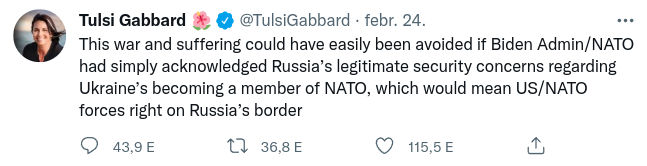
The Rise and Fall of Might & Magic: Part 2 - Ubisoft
In my previous article, I talked about how Might & Magic saw its birth as a passion project by an ambitious nerd named Jon van Caneghem, how the series spawned a spinoff that all but overshadow the originals, and how the series kinda went downhill after 2000, partially due to 3DO's conservative and overly-careful decisions *(such as not making the Might & Magic MMORPG)*, and partially due to them pandering to the fanbase and taking out what truly made Might & Magic unique. https://read.cash/@Metalhead33/the-rise-and-fall-of-might-magic-part-1-nwc-3do-b1542d83
In 2003, 3DO went bankrupt, but luckily, *(Heroes of)* Might & Magic fans could breathe a sigh of relief, for their beloved franchise wasn't dead, but merely under new management: the whole IP was bought by Ubisoft at a firesale price.
A new hope? Heroes of Might & Magic V
https://www.youtube.com/watch?v=AwHpP_RGhr8
Released in 2006, published by Ubisoft and developed ~~in the Siberian gulags~~ by Russian team Nival, the task of making **Heroes of Might & Magic V** was a simple mission: bring Heroes of Might & Magic into the 21th century or die trying.... or, make a new HoM&M game, and not **** it up. Did they succeed? Well, it depends on whom you ask, and when you ask.
The game spawned two expansion packs: **Hammers of Fate** *(2006)* and **Tribes of the East** *(2007)*, but I'll get into them later.
Entertainment media - that is, video games, movies, music, etc. - are seldom looked objectively. If they're old, we look at them through rose-tinted nostalgia googles. If they're new, we unfavourably compare them to previous entries in the franchise they're a part of *(with the previous entries having the benefit of the nostalgia filter, the new entry not)*. People hate change, yet at the same time also complain when a series grows stagnant, stale and repetitive, failing to innovate. Not to mention, fans are just spoiled and entitled. If you have a fanbase as big as that of the Might & Magic franchise, you're never going to please the fanbase, no matter what you do. Your best bet is to just let time do its job and let your game be vindicated 10+ years into the future.
So, looking back at the game 16 years after the its release, how good or bad was it really? How does it measure up to previous entries in the series? That is the question.
Heroes of Might & Magic V is basically *"back to the basics, with some twists"*. It is a return to Heroes of Might & Magic II-III *(II in some aspects, III in others)*, but in 3D, and with a few unique quirks: we have 7 creature tiers, with each non-neutral creature having one upgraded counterparts *(the second expansion however adds an alternative upgrade for every creature)*, just like in Heroes III, but each town/faction has only one type of hero class associated with it, just like in Heroes II. However, all classes of hero have a unique secondary skill *(Counterstrike for Knights, Necromancy for Necromancers, etc.)*, all secondary skills have a number of perks associated with them. Just like in Heroes I-III - and unlike in Heroes IV -, each army can only contain one hero, must contain a hero, creatures cannot be on their own, except when guarding towns or manning garrisons, and the hero cannot fight on their own, requiring at least one creature in their army, etc.
The gameplay is decent, albeit I find the creature animations and load times a bit too long. The music and graphics are good too, and hold up well even for 2022. It's a fine game to play when you're bored, and as I said, it still holds up nicely. If it wasn't for some of the negatives I am going to list - along with the slow animations and long load times - it would definitely be a worthy successor to Heroes III, butthurt fans be damned.
But now for the bad parts:
**Missing content.** A ton of em.
The base game contains just six factions: Haven *(Knight)*, Sylvan *(Ranger)*, Academy *(Wizard)*, Necropolis *(Necromancer)*, Inferno *(Demon Lord)* and Dungeon *(Warlock)*. Sure, Hammers of Fate introduces the dwarven Fortress *(Runemage)* faction, while Tribes of the East brings the orcish Stronghold *(Barbarian)*, but out of these, at least the Stronghold should have been in the base game from the start. It was part of all previous Heroes games. This is the birth DLCs, where stuff that should have been in the base game from the start is sold at a premium a couple of months later.
Some quality-of-life features added in Heroes IV - such as caravans - were missing in the base game before the expansions.
The base game contains only the campaigns and a handful of scenarios and skirmish maps to play, with no random-map generator or map editor. Hammers of Fate remedied this by introducing a map editor, but still, it's a far cry from the elegance, ease-of-use and user friendliness of the map editor shipped with Heroes IV.
Speaking of campaigns, while the base game has a campaign for each of the six factions it brings, the two expansions each only have three campaigns.
An overall narmy, campy story that is hard to take seriously. https://heroesinanutshell.blogspot.com/
Also, there is absolutely no continuity with the previous games. This is a hard reboot, set in a completely new world named Ashan, with only a few passing references to the most famous old heroes.
Slow animations.
Long load times.
The cinematics are terrible, even by 2006 standards. Ffs, in the base game, the heroes' mouths don't even move when they talk in the cutscenes. Luckily, this is partially remedied in the expansion packs, but still...
The AI takes too long to end the turn.
The game overall feels far slower-paced compared to its predecessors *(partially caused by the 3D animations)*, with siege battles being especially tedious.
Even with the two expansion packs, the game feels somewhat empty and lacking in content. I haven't counted all the creatures, artifacts, etc. in the game, but it just feels overall less explorable than the previous games.
While the Heroes of Might & Magic games aren't casual games by any chance, Heroes V is a bit more difficult to randomly pick up and play than its predecessors. Probably due to the intensive 3D graphics and long load times.
Despite all the negatives I said, it is still a good game, both as a standalone, and as an entry to the Heroes of Might & Magic series. Let's not kid ourselves: trying to please the Heroes III fans would have never worked. Even a 3D remake of Heroes III would not have satisfied those folks, and I'd rather see a half-ass attempt at experimenting and innovating, than making the whole series stagnant.
Remember what I said about time vindicating games that weren't received too well upon release? Heroes V - and to a lesser extent IV - are perfect examples. While fanatical Heroes III fans hated them upon release, the catastrophic failure of Heroes VI and VII resulted in many of them looking back at IV-V thinking *"perhaps I was a bit too harsh to these two"*, vindicating these two games after the fact.
Anyway, to me, Heroes V is the last **good** Heroes of Might & Magic, but before we talk about the rest, let's talk about...
Dark Messiah of Might & Magic
**Dark Messiah of Might & Magic** was released in 2006. The question is.... was it good? Meh.... maybe?
Look, I think at this point, it's quite clear how spoiled and entitled the Might & Magic fandom is. We wanted strawberry ice cream, and when we got cherry ice cream instead, we all collectively threw a massive temper tantrum, even though we could have gotten no ice cream at all. Which is to say, we wanted Might & Magic X, and instead, we got... well, whatever this is:
https://www.youtube.com/watch?v=UYnxwquZgrA
It's an action-adventure game, not an RPG. You control only one character, who already has a name and an established personality, there are no sidequests, no sandboxing, only minimal interaction with friendly NPCs - in this game, you spend 80% of the gameplay in combat, 10% at stealth, 9% exploring, and maybe 1% puzzle-solving. Nevertheless, there are still some RPG elements, like Sareth gaining experience points, which you can put into upgrading his combat, stealth of magic abilities.
The game uses the Source engine, along with its neat physics, but also suffered from game-breaking bugs at release. The gameplay is fine, I've seen games that aged far worse, but overall, it's nothing to write home about. There are other games that do whatever Dark Messiah was trying to do, just better, albeit without the Might & Magic trademark. If we disregard the fact that it's not the game us entitled fans were expecting, it's a decent-ish game that's mediocre at worst, and really, action-adventure spinoffs aren't that alien to the Might & Magic franchise anyway *(remember Crusaders of Might & Magic from the previous article?)*. In fact, you could even argue that Dark Messiah is a spiritual successor to Legends of Might & Magic, both being first-person shooters set in the Might & Magic universe.
Plot-wise, we're stil in Ashan - where else? -, set roughly twenty years after the events of **Heroes of Might & Magic V: Tribes of the East**, with the protagonist of that game's last campaign - Arantir - being the antagonist of this game. I'm not going to spoil much, but basically, Arantir is a necromancer, who is actually a good guy trying to prevent the demon messiah - who is secretly you, Sareth - from freeing his father from some sort of demonic prison. But you don't learn any of this until the late game, and thus, unless you played Heroes V's last campaign, you are most likely going to spend your entire playthrough assuming that Arantir is being a villain just for the sake of evil, when in reality, he's an anti-villain trying to prevent an even greater evil - potentially you - from.... I just said it, haven't I?
Might & Magic Heroes VI.... what?!
Yeah, that title confused me too. Seriously, what? It seems like after 2010ish, everyone decided to name their games backwards. Might & Magic Heroes VI... just why?
https://www.youtube.com/watch?v=X9qxtWYu0zI
Released in 2011, published by UbiSoft and developed by Black Hole Entertainment *(my fellow Hungarians)*, plot-wise the game acts as a prequel to Heroes V, set around five centuries earlier. Gameplay-wise... ho boy, is it a huge step back. But more on that after the positives.
On the positive side, the graphics are stunning, the music is great *(it intentionally appeals to our nostalgia senses by remixing and rearranging songs from previous entries of the series)*, the cinematics are great, the UI is clean-cut.
Now, on the negative side...
The base game didn't even have proper town screens. This was fixed in the expansions, but still.... what the hell?
No more creature dwellings. Seriously, wtf?! Basically, map buildings as a whole are replaced by some kind of *"kingdom"* system, where captured towns project a zone of influence around them, bringing with them all the mines and whatnot.
Both the old skill system and magic system replaced by some sort of weird *"talent"* system.
The base game only came with only five factions *(Haven, Sanctuary, Stronghold, Inferno, Necropolis)*, with Dungeon being added in the expansions. Where did the Academy/Tower go?! What about the Sylvan Elves?!
Only four types of resources: gold, wood, ore and crystals. Seriously, wtf?!
You can convert towns, forts, etc. to your faction. Now, I'm not offended by the inclusion and implication of genocide in a video game, but this just makes factions pointless. In the previous games, you could mix and match units from different factions, albeit at the cost of morale for the army as a whole. Here, there is no incentive for that.Now, yes, there are some missions in Heroes V where this very thing happens, but still, it was in a campaign, not a base game feature.
The old strategical considerations of transporting armies from one town to another and merging armies? Gone. Replaced by a system in which all towns generate units into a common pool, from which your hero can drain the creatures. Seriously, why?
The game is chock full of DRM and really trying to push the whole always-online bull****. The game is very much a product of its time, and I mean it in a negative sense.
The game is overall simplified and cassualized to a degree I feel rather uncomfortable with.
If you thought the plot of Heroes V was written by teenagers, then good lord, is the one of Heroes VI even worse. They shoehorned the exact same family - the Griffin family - into all factions of the base game, somehow. Could they not get any more creative ideas?
Speaking of which, the Sanctuary faction is a faction of Nagas with really bad Japanese accents. Heroes VI is a prequel to Heroes V, plot-wise. So, what happened to the Nagas after the events of this game? They are suspiciously absent from Heroes V. Was there some sort of Naga genocide?
Heroes VI also adds a sort of reputation system, where the more violent your heroes act, the more evil powers they unlock, while being merciful unlocks other abilities? I dunno.... Meh?
Now, I'm not necessarily saying that Heroes VI is a terrible game. Perhaps if it was a standalone game without the *(Heroes of)* Might & Magic trademark, I would be less harsh to it. But this just barely even feels like Heroes of Might & Magic at this point. Yes, even Heroes IV felt more like Heroes.
Hell, at this point, even Age of Wonders III feels more like Heroes of Might & Magic, than Heroes of Might & Magic VI does! How screwed up is that?!
Might & Magic Heroes VII... ugh....
Released in 2016, the sh!tshow continued with **Might & Magic Heroes VII**, developed by Limbic Entertainment and published by Ubisoft, and the last Heroes of Might & Magic game to be released as of date.... Ho boy. We're really in for it, are we not?
Alright, let's get over this trainwreck already.
https://www.youtube.com/watch?v=6U0gQTs7qXw
So the game is set a couple of centuries after the events of its predecessor, but still one century before the events of Heroes V, making this game a prequel as well.
The base game features just six factions *(Academy, Dungeon, Haven, Necropolis, Stronghold, Sylvan)*, with 8 units per faction, if not counting the upgraded variant of each unit, plus three unique war machine type units, which is pretty impressive and commendable. An expansion brings in the dwarven Fortress faction, bringing it back from Heroes V. Each faction has two types of heroes, just like in Heroes III and IV, on top of the whole blood-reputation thing carried over from Heroes VI.
Hero development and town development are decent, combat is good, but the AI is tererible, and the campaign is even more so. Still, the game brings back the resources from the older games, as well as the original magic system and skill wheel from Heroes V.
Overall, not THAT bad... They really paid attention this time, and rolled back some of the changes that people complained about in Heroes VI.
Yet it was a little too late. They went completely off the rail with the campaigns, and already burned their bridges with the fanbase, which has all but abandoned the hopes of a **good** Heroes of Might & Magic game ever being created under the ~~corrupting influence~~ watchful eyes of Ubisoft.
Between being a buggy mess, having terrible AI, terrible plot, missing content/factions.... I wouldn't hold my hopes up.
Might & Magic X: Legacy
The game we all expected to get in 2006, only to get Dark Messiah of Might & Magic instead. **Might & Magic X: Legacy**. Released in 2013 *(three years before Heroes VII)*, it... Well, I can't review a game I never played, but I can still talk about some of it.
https://www.youtube.com/watch?v=9TLMj8EYgV4&list=PLHG1AZirdj8p9t6wgmBnt9z0xueH5u_-7
Set in the same world of Ashan as Heroes of Might & Magic V-VII and Dark Messiah, Might & Magic X specifically takes place a couple of years after the events of Heroes VI, starting out in a suspiciously familiarly named town named **Sorpigal** *(that was the starting town in the original Might & Magic I too, back in 1986)*.
And this is all we need to know: after the disappointments caused by Heroes V, VI and Dark Messiah, Ubisoft must have been really desperate to win back some of the old Might & Magic fans, so they asked Limbic Entertainment - yes, the very same Limbic Entertainment that would developed Heroes VII too - to bring the main series into the 21th century, or die trying.
Did they succeed? Well, the game got generally positive reviews, and underneath the modernized 3D graphics, it plays almost exactly like Might & Magic III-V, from the early 1990s. This, did alienate a few fans of the latter entries of the series *(VI-IX)*, but oh well. As I said, I sadly never got to play this game, even though by the looks of it, I would absolutely love it.
The future of Might & Magic
While the last two entries of the franchise - **Might & Magic X** and **Heroes of Might & Magic VII** - were rather well-received, and reignited the hope of the franchise's revival, I won't hold out much hope: Ubisoft has been abandoning franchises left and right to focus on their beloved Assassin's Creed. Not to mention, before M&M X and HoM&M VII, Ubisoft's treatment of the franchise left a rather bitter taste in the mouth of the fans, leaving them - and me as well - rather cynical about the future of the franchise.
We don't know when the next *(Heroes of)* Might & Magic game will be developed, if at all. And that is perhaps for the best. I'd rather my beloved die with dignity, than literally fade away and go out with a whimper. In fact, many would argue. While Heroes of Might & Magic III and some of the Might & Magic RPGs still have a fanatical fanbase, and are fondly remembered, the post-2006 installments.... not so much. Very forgettable.
And that is the story of the Rise and Fall of the Might & Magic franchise.
We can all argue about where and when did it truly start going downhill. Some say it all went downhill the moment Ubisoft acquired the franchise and started to run it into the ground, watering it down, completely ruining the lore and distorting the series and everything it stood for. Some say it started going downhill before that, in 2000, after Might & Magic VII, with Might & Magic IX and Heroes IV. And some would argue, that the seeds of decline were planted as early as the mid-90s, when 3DO refused to greenlight the Might & Magic MMORPG project, causing the whole series to start its slow-motion downward spiral into oblivion.
Maybe it's for the better, if Ubisoft doesn't make any new *(Heroes of)* Might & Magic games. Maybe we should let the franchise die with dignity and/or pass the torch to someone else to carry on its legacy.... which brings me to repeating myself, and bringing attention to the fact, that even Age of Wonders III felt more like Heroes of Might & Magic, than Heroes of Might & Magic VI did. Now, Age of Wonders is not a new series, since its first installment is from the late 1990s, but it still feels like the true spiritual successor of the Heroes of Might & Magic series. It's basically Heroes of Might & Magic meets Sid Meier's Civilization, if those two games had a baby.
Might & Magic may be *(un)*dead in the hands of Ubisoft, but its legacy lives on, with still a large and dedicated fanbase hell-bent on preserving its legacy and telling everyone about the second greatest story ever told, about a fictional universe almost as expansive as that of Star Wars, with a lore just as detailed with a special attention. As such, I will always remain a fan of Might & Magic, which will forever continue to hold a special place in my heart.
And thus, to close, I leave you with a series of songs:
https://www.youtube.com/watch?v=sp0xiCuHepg
The Rise and Fall of Might & Magic: Part 1 - NWC & 3DO
The Might & Magic series is one I hold dear. To this day, it continues to hold a special place in my heart, and will likely continue to do so for the foreseeable future.
Now, some of my readers might see *"Might & Magic"* and immediately think of the *"Heroes of Might & Magic"* series, but nay, I am not exactly talking about that, albeit they are closely related. For the unaware, the **Might & Magic** series are a series of roleplaying games, while **Heroes of Might & Magic** is a series of turn-based strategy games, and a spinoff series of **Might & Magic**. Yes, a spinoff has become more popular than the original series that it grew out of. Such a rare event.
For the chronologically confused
Since HoM&M is a spinoff series of M&M, it naturally follows that M&M is an older series. But how much older?
Well, here be the list of all of the main M&M games in order of release:
Might & Magic I: The Secret of the Inner Sanctum *(1986)*
Might & Magic II: Gates to Another World *(1988)*
Might & Magic III: Isles of Terra *(1991)*
Might & Magic IV: Clouds of Xeen *(1992)*
Might & Magic V: Darkside of Xeen *(1993)*
Might & Magic IV-V: World of Xeen (1994)
Basically M&M IV and M&M V can be merged into a single game - World of Xeen - if you own both, unlocking an extra questline with an extra ending, as well as the ability to travel back-and-forth at will between the two worlds. The 1994 re-release further expanded on this by adding some voice acting.
Might & Magic VI: The Mandate of Heaven *(1998)*
Might & Magic VII: For Blood and Honor *(1999)*
Might & Magic VIII: Day of the Destroyer *(2000)*
Might & Magic IX: Writ of Fate *(2002)*
Might & Magic X: Legacy *(2014)*
Now, in contrast, Heroes of Might & Magic:
Heroes of Might & Magic: A Strategic Quest *(1995)*
Heroes of Might & Magic II *(1996)*
Heroes of Might & Magic III *(1999)*
Heroes of Might & Magic IV *(2002)*
Heroes of Might & Magic V *(2006)*
Might & Magic Heroes VI *(2011)*
Might & Magic Heroes VII *(2015)*
And if we merge the two lists, add some of the other spinoff games too, and order by release:
Might & Magic I: The Secret of the Inner Sanctum *(1986)*
Might & Magic II: Gates to Another World *(1988)*
Might & Magic III: Isles of Terra *(1991)*
Might & Magic IV: Clouds of Xeen *(1992)*
Might & Magic V: Darkside of Xeen *(1993)*
Might & Magic IV-V: World of Xeen (1994)
Heroes of Might & Magic: A Strategic Quest *(1995)*
Heroes of Might & Magic II *(1996)*
Might & Magic VI: The Mandate of Heaven *(1998)*
Heroes of Might & Magic III *(1999)*
Might & Magic VII: For Blood and Honor *(1999)*
Crusaders of Might & Magic *(1999/2000)*
Might & Magic VIII: Day of the Destroyer *(2000)*
Warriors of Might & Magic *(2000)*
Legends of Might & Magic *(2001)*
Heroes of Might & Magic IV *(2002)*
Might & Magic IX: Writ of Fate *(2002)*
Heroes of Might & Magic V *(2006)*
Dark Messiah of Might & Magic *(2006)*
Might & Magic Heroes VI *(2011)*
Might & Magic Heroes VII *(2015)*
Might & Magic X: Legacy *(2014)*
Obviously, the order of release is not the same as the chronological order of the lore. In fact, the whole lore gets tangled by the fact, that the whole series can be neatly divided into two or three groups:
**Might & Magic I-IX** and Heroes of **Heroes of Might & Magic I-IV** are set on a variety of worlds, but their plots are all closely intertwined, share a lot of characters, etc. even if a lot of Heroes 3 fans are unaware of this. Oh, and all of them were developed by New World Computing.
Can be further subdivided into the Corak vs Sheletm saga *(consisting of* ***Might & Magic I-V****)* - set on a variety of worlds - and the Kreegan-saga *(consisting of the rest of this group, except* ***M&M IX*** *and* ***HoM&M IV***) set on the planet of Enroth.
**Heroes of Might & Magic IV** and **Might and Magic IX** are set on the planet of Axeoth, but could be grouped with the Kreegan-saga group, because most of the characters are originally refugees from Enroth, including a large amount of familiar faces from previous games.
**Heroes of Might & Magic V-VII** *(and probably all subsequent entries for the foreseeable future),* **Dark Messiah of Might & Magic** and **Might & Magic X** are set on the world of Ashan. Besides the occasional easter-egg references to earlier entries, they are completely cut off from the previous continuity, with brand new characters and brand new lore. Oh, and they're all published by Ubisoft.
**Crusaders of Might & Magic**, **Warriors of Might & Magic** and **Legends of Might & Magic** are set on their own respective worlds, and the only thing they have in common with the rest of the Might & Magic universe is the fantasy elements *(dwarves, elves, necromancers, magic, etc.)*. They all have fully self-contained plots independent of the rest of the series, despite having been developed by New World Computing.
In this article, I am going to be focusing on the first group - which is to say, the games developed by New World Computing -, ignoring the other two, tho I might come back to CoM&M in a later article.
Now, the actual lore and chronology of even this one group - which I described as all being intertwined and connected - is still a bit tangled, and I will explain why. But first, I want to describe each game of the Might & Magic main series in a few words, and in order of release.
Humble beginnings
Let's talk about gameplay first
In a sense, the early Might & Magic games played a lot like the early Final Fantasy games *(and by that, I mean the ones on the NES and SNES, in case you're unaware of there being Final Fantasy games before 7)*. They were *"roleplaying games"*... which is to say, that they were dungeon-crawlers:
Rather than a single character, you controlled an entire party of named characters, who were mostly lacking personality, as they never talked
You had towns, which contained blacksmiths to fix your weapons, shops to buy weapons and armour and sell any unwanted stuff, churches to resurrect your dead characters, mages guilds' to buy spells for your spellcasters, training grounds to level up your characters, inns to hire new characters, taverns to listen in rumours and buy food, and the occasional NPCs to give quests, etc. You know, the usuals.
99% of all quests were simple fetch-quests: Go to a dungeon, fight your way through a bunch of mooks and maybe solve some puzzles, kill a boss to get some artifact, bring the artifact back to the quest-giver, and your rewards are money, items, experience points, and plot progression, basically. Rinse and repeat until you have beaten the game, oo-rah.
Beware of random encounters!
Now that I think about it, the first two Might and Magic RPGs played almost identically to the first three Final Fantasy games on the NES, except for being first-person instead of overhead, having somewhat cruder graphics, but a bit more sophiscated gameplay *(e.g. party members having to rest and eat, roguelike elements)* too. Both were obviously inspired by Dungeons and Dragons and other pen-and-paper roleplaying games, and both elected to throw away D&D's *"fire-and-forget"* magic system *(where a spellcaster temporarily forgets a spell after casting it, until resting)* and replace it with mana / spellpoints, a stat similar to healthpoints, functioning as *"currency"* to cast spells from.
Okay, so we have concluded that M&M and FF basically share a common heritage, in spite of the great geographical distance, but after the end of the 8-bit era, they obviously went to evolve in completely different directions. While Final Fantasy threw away character customizability and player freedom in favour of a more railroaded *(albeit polished)*, narrative-driven experience with memorable characters, Might & Magic remained a semi-sandbox RPG series with a high degree of player freedom, roguelike elements, with heavy character customizeability. What Might & Magic games lack in narrative or character interaction, they make up for in character customizeability, player freedom and character progression, with a huge amount of skills your characters can specialize in.
https://en.wikipedia.org/wiki/File:Might_magic1.png
The first **Might & Magic** game was released in 1986 on the Apple II. Developed by Jon van Caneghem as a passion-project, it was rather crude, but set the standard for the rest of the series. Besides the Apple II, it was also ported to the PC *(MS-DOS)*, Commodore 64, Mac, NES and MSX *(I strongly recommend playing the Mac or NES version)*.
**Might and Magic II** was released in 1988, also on the Apple II first, but quickly ported to the MS-DOS, Commodore 64, Amiga, Mac, and later the Sega Genesis and SNES too. Avoid the SNES version like a plague, for it is broken - play the Mac or Sega Genesis version. It plays almost identically to the first game, to the point that you can even import your characters from Might and Magic I, if playing on the same platform!
Besides the highly improved graphics, **Might and Magic III** - released in 1991, first on the MS-DOS, then ported to the Mac, SNES, Amiga, Sega CD and TurboGrafx16 *(I recommend the original MS-DOS version or the Mac version)* - saw combat better integrated into the main gameplay loop: in Might and Magic I-II, just like in Final Fantasy, any encounter with enemies resulted in us being transported into a separate screen, and our characters not being able to do anything non-combat related until the battle was over. In Might & Magic III, for the first time, combat would be conducted on the same screen, with the same UI as regular travels. Characters equipped with bows could shoot enemies from a distance before they could engage your entire party in melee. Hell, you could even run away from enemies that don't have ranged weapons!
**Might & Magic IV** and **V** - released in 1992 and 1993 respectively, both on the MS-DOS first, but then ported to Mac too - don't really add anything new to the mix in terms of gameplay. They use the same engine as Might and Magic III, and play just about the same. I mentioned this previously, but these two games are interesting in the sense that when you have both installed, the two combine into a single game called **World of Xeen**, and you actually unlock extra content that is otherwise locked when you only have one. This extra content includes another quest line, leading to a final ending.
https://www.youtube.com/watch?v=AifQeStLnQ0
**Might and Magic VI** - released in 1998, being a Microsoft Windows exclusive - came with a new 3D engine *(albeit monsters and NPCs still used sprites rather than 3D models)*, ditched the grid-based system of the previous games in favour of full freedom of movement and increased verticality, added tiers to the various skills and greatly expanded the list of skills. They also tied the magic system to the skill system *(e.g. having to have Basic / Advanced / Expert Spirit / Body / Water / Fire / Earth / Air / Dark / Light Magic skill to cast a certain spell)*, as well as the combat system to the skill system *(e.g. having to have Basic Blade skill to swing swords)*. Oh, and this game added hirelings too, who bring bonuses to the party, but cannot fight. Instead of being ghosts that pop up at buildings, NPCs now are visible and can be interacted with, albeit most have nothing to say.
https://www.youtube.com/watch?v=DAIbDkcPNlc
**Might and Magic VII** - released in 1999, another Microsoft Windows exclusive - brought unique prestige classes, giving characters a path at getting an upgrade depending on whether they chose Good or Evil.
https://www.youtube.com/watch?v=tElhhGHvdHQ
**Might and Magic VIII** - released in 2000, Windows exclusive - completely breaks everything by mixing classes and races, and making the player start with only a single character. Also, it used the same engine as Might and Magic VI and VII, which was really showing its age by 2000.
https://www.youtube.com/watch?v=KzTI_LbC0HE
**Might and Magic IX** - released in 2002, Windows exclusive - doesn't innovate anything, besides going back to the VII class and race system. Graphics-wise, it finally brought the series into full 3D, ditching the sprites in favour of 3D models. Unfortunately, this one was also the last one to be made by New World Computing, which went bankrupt after this.
**Might and Magic X**? I'm going to be honest, and admit that I never played it *(besides, in this article, I stated my intent to focus on the games actually developed by NWC)*, but it appears to be an homage to Might and Magic I-V, except with modernized graphics, so....
The Plot
This is the part where most people would put a spoiler warning and warn people to stop reading if they haven't played the games, and to go play the games.... But let's be honest here: there isn't much to spoil, because, frankly, straight-up adapting the plot of the Might & Magic games in itself wouldn't make for a particularly good book or movie *(unless you added some perks and quirks like* *Thuryl* *did)*. **But I digress.** With that being said, I will keep it vague and brief. For people who played only the Heroes of Might & Magic games, some names are going to be familiar. https://lparchive.org/author/Thuryl
Basically, the Might and Magic RPGs - at least the first eight entries - aren't truly fantasy, but science fantasy. Your characters are medieval knights, elves, wizards and magicians fighting with swords and first combatting traditional medieval fantasy monsters, but by the end of the games you will be equipping your heroes with blasters and fighting robots. Get used to it. By the way, the first five games are actually set on giant, planet-sized spaceships, or *"nacelles"*. Fun.
In **Might & Magic I: The Secret of the Inner Sanctrum**, six adventurers living on the world of VARN *(Vehicular Astropod Research Nacelle)* decide to go on an adventure to find a holy grail of sort and solve the Secret of the Inner Sanctrum *(and encounter - at least for Heroes players - familiar faces, such as Crag Hack and Lord Kilburn)*. During their adventure, they get entangled in a conflict between Corak and Sheltem. Who are Corak and Sheltem? Sheltem - who is masquerading as the formerly benelovent Lord Alamar - is basically an AI created by the Ancients *(some mysterious race who created these worlds)* originally created to guard the world of Terra, but he ended up going evil and flying other worlds into their suns to *"protect Terra"* and other villain stuff. - in the game though, he is only referred to as *"an escaped alien prisoner"*. Corak is another AI *(but for some reason has a spirit - don't question it)* created to stop Sheltem. Spoiler alert, Sheltem escapes, but the six adventurers follow him through some gate to another world. A perfect setup for a sequel....
... which is **Might & Magic II: Gates to Another World**, set on CRON *(Central Research Observational Nacelle)*. Sheltem is threatening to destroy the world within 100 years *(fun fact: even if you take 100 years to beat the game, it doesn't happen. Oversight?)*, and your adventurers *(you can import your adventurers from the previous game)* are supposed to stop him by helping Corak get to him. We save the world from being exploded, but once again, Sheltem escapes, and sadly, this time we wave one final goodbye to our heroes, because in the sequel, we can't import the old saved game.
https://www.youtube.com/watch?v=3vG3__wkiVE
The third game, **Might & Magic III** takes us to Terra, where all things have started. Eight new adventurers - Sir Canenghem, Crag Hack *(yes, THAT Crag Hack)*, Maximus, Resurrectra, Dark Shade, Kastore, Robert the Wise and Tolberti - take it upon themselves to aid Corak in once again attmepting to stop Sheltem. There are three kings in the land of Terra vying for power, one good, one evil, and one neutral but dedicated to free will. You have to help one of them to gain access to the final dungeon and end the game. Whatever evil plan Shletem had this time, you once again foiled it, but sadly, he once again escapes, and your heroes try to pursue him, but instead accidentally travel forward in time, and to another world, where you will meet them in **Might & Magic VII**. **But we're getting ahead of ourselves.**
https://www.youtube.com/watch?v=PDlEG2aBgJg
**Might & Magic IV: Clouds of Xeen** sets us up for an adventure to defeat an evil lord named Lord Xeen.
https://www.youtube.com/watch?v=8YjryUo-Hak
During the ending, we find out, that Lord Xeen was working for a mysterious figure wearing armour. Who could this be? Is that you, Sheltem?
https://www.youtube.com/watch?v=_cPFL0NfsRg
Yes, once again, Sheltem is masquerading as Lord Alamar. In **Might & Magic V: Darkside of Xeen**, we control the same group of adventurers as in the last game. Sheltem is trying to drift the nacelle of XEEN away from its sun and freeze the world, and we must stop him!
Luckily, Sheltem cannot escape any longer, we finally see the evil villain brought to justice, albeit at the cost of Corak's life.
https://www.youtube.com/watch?v=t2CbCBd_yhU
This brings the whole Corak-Sheltem saga to a ceremonious close. But this is not the end of the game: as I previously said, owning both **Might & Magic IV: Clouds of Xeen** and **Might & Magic V: Darkside of Xeen** merges the two games into a single game named **World of Xeen**, which allows players to come and go between the two sides of XEEN at will, and unlocks an extra quest line that sees the two sides of XEEN unified, the nacelle being turned into a planet, while somehow, everyone survives this and all buildings remain intact. Don't question it.
https://www.youtube.com/watch?v=rU6laeQT3BE
Now, unless you have the memory of a goldfish, you might remember that Might and Magic V was released in 1993, and Might and Magic VI was released in 1998. This 5-year gap actually had lore-wise consequences too.
You see, after M&M 1-5, New World Computing began working on the Heroes of Might & Magic spinoff, releasing one before being acquired by 3DO. Heroes of Might & Magic II would be the first game developed by NWC that would be published by 3DO. The original creator of Might & Magic, Jon van Caneghem mentioned in interviews, that he went ahead with the 3DO acquisition because 3DO had an MMORPG named Meridian 56 at the time, and he wanted to create a similar Might & Magic MMORPG *(as far as he was concerned, the end of the Corak-Sheltem saga was supposed to be the end of Might & Magic, at least the original series)*.
Sadly, there would never be a Might & Magic MMORPG. Instead, we got more Might & Magic, and Heroes of Might & Magic games *(more on them later)*. But what would these new M&M games revolve around, now that the Corak-Sheletm saga was closed? **Demons**. They decided to start with a new saga about the **Kreegans** - aliens from outer space, who merely happen to look like the horned demons from mythology, hell-bent on enslaving all the other races and their struggle about the Ancients. Oh yeah, anybody remember the Ancients? The guys who created both Sheltem and Corak? Yeah, me neither.
https://www.youtube.com/watch?v=7UvkyToUEK0
**Might & Magic VI: The Mandate of Heaven** involves four adventurers on Enroath, set seven years after the events of **Heroes of Might & Magic II** *(more on that later)*. Basically, demons have landed on the planet, and they have created a cult with the intent of overthrowing the good King Roland. Besides having to bully the aforementioned cult, we also have to rescue his evil brother Archibald, who got turned into stone *(more on that later)*. Why Archibald? Because apparently, he's the only one who knows some sort of code needed to prevent the planet from self-destructing upon the arrival of the Kreegans. Uh, okay. Anyway, the heroes get to learn how to use blaster guns, and then assault the spaceship of the Kreegans' ship and kill the Kreegan Queen. The demons are driven back, the heroes get their rewards for saving the world, hoo-rah.
https://www.youtube.com/watch?v=hQwVlY2YxzU
After the events of the previous game - and also after the events of Heroes of Might & Magic III, more on that later , in **Might & Magic VII: For Blood and Honor**, we control four new adventurers, who are on the Emelard Island, on a contest. The winner of the contest will win a castle and with it a land named Harmondale. Unfortunately, our castle is overran by Goblins, our new subjects treat us like ****, and worst of all, our estate is contested territory between the humans and elves, meaning we've basically inherited a future warzone.
But that's not all. Besides the whole war between the humans and elves - which the player can resolve peacefully and diplomatically, if they play their cards right - there is also an issue of the strange arrivals we see in the intro. Basically, eight strange figures - *"sea people"* - stepped out of the water, wearing black amulets, *"shedding their skin"*, and having their arguments, splitting into two groups. Who are those strange people? Glad you asked! Those are the eight heroes from **Might & Magic III**! That's right, they initially intended to chase Sheltem to XEEN, but obviously ended up crash-landing on Enroth instead.
Once again, we have to battle the Kreegans, we have to kill their leader Xenofex, help the aforementioned Archibald rescue his brother Roland from the Kreegans, and then decide on Good or Evil, meeting up with one of the two subgroups of the M&M3 adventurers. Depending on which side we choose, we either end up reactivating a clone of Corak who will give us advice on how to run the world in peace, or reactivating a so-called *"Heavenly Forge"* to manufacture futuristic blaster guns and conquer the world in the name of Evil. Originally, the Evil ending was supposed to be canon, but due to some conflicts between NWC/3DO and the Heroes of Might and Magic fandom, they went with the Good ending.
https://www.youtube.com/watch?v=B6533EjBMMo
**Might & Magic VIII: Day of the Destroyer** is basically about the aforementioned Ancients *- remember them? Me neither -* getting paranoid, being alerted by the last two demonic/Kreegan invasions, and deciding that the planet of Enroth is more trouble than its worth, sending an emissary to plant a bomb that can destroy the whole planet. Yes, that's pretty much it. Our heroes basically grind, complete a game's worth of quests, and stop the world from exploding. Hoo-rah.
https://www.youtube.com/watch?v=SQFh6cHjPrU
**Might & Magic IX: Writ of Fate** is set on the world of Axeoth, the same world as **Heroes of Might & Magic IV**, but on a different continent, so there isn't much overlap. All the sci-fi elements are removed completely, and instead, inspiration is taken from Germanic and Celtic mythology. Basically, the goal of the player is to beat back a Barbarian invasion and then? I'm honestly lost in this game's plot.
This was also the last game in the main series, before 3DO and New World Computing went bankrupt. And it shows. The game had a very rushed release, and it most definitely shows.
**Might and Magic X** is set on Ashan, the same world that Heroes of Might & Magic V and all of its sequels are set on. That's all I know about it.
Let there be spinoffs
The original Might & Magic games were mildly successful, but not as nearly succesful as the spinoff series Heroes of Might & Magic. In fact, the majority of Heroes fans never even heard of the original Might & Magic RPG games, let alone played them. This is going to have consequences, as we'll see later.
Released in 1995, **Heroes of Might and Magic: A Strategic Quest** created a whole new series, that would overshadow the series it grew out of. It was a turn-based strategy game with RPG elements, though I feel like the name is a bit misleading. Heroes?! These *"heroes"* are just standing around watching the battle, not even intervening at all besides casting spells! The adventurers from the original Might & Magic are far more heroic! Anyway, the *"heroes" (really, generals)* control armies, which consist of creatures you recruit from both towns and out-of-town dwellings. Heroes have stats that influence their creatures, each army of creatures must be led by a hero, and each hero must be attached to an army consisting of at least one creature. Your armies go around the map exploring, gathering resources, capturing buildings, capturing enemy *(or neutral)* towns, defeating enemy *(or neutral)* armies, etc. This all happens on the strategy/adventure map - when your army enemies a hostile army, you enter a battle map, on which you move your creature stacks around like chess pieces, while your hero may or may not have the ability to cast spells to potentially turn the tide of the battle. Also, you can equip artifacts onto your heroes, which will further empower them.... to empower their creatures.
https://www.youtube.com/watch?v=jahoqdju1pk
In Heroes I, there are four factions to be specific, named after the type of *"hero"* that commands their army: **Knight** *(good, might-oriented)*, **Sorceress** *(good, magic-oriented)*, **Barbarian** *(evil, might-oriented)* and **Warlock** *(evil, magic-oriented)*.
The game also features a campaign, during which the knight Lord Morglin Ironfist - who is originally from VARN or CRON, if you remember what I said about Might & Magic I-II -, the sorcerress Queen Lamanda, the barbarian Lord Slayer and the warlock Lord Alamar *(yes, THAT Alamar)* are vying for control over Enroth. Spoiler alert, Lord Ironfist wins *(ironic, since the Knight faction is the weakest in the game)*, and marries Lamanda. We also see some familiar faces from the original Might & Magic I-V games, such as Lord Kilburn, Maximus, Sir Gallant, Kastore, Crag Hack, Kastore, Crodo, Yog, Tsabu, etc. In fact, now that I think of it, the majority of Heroes from Heroes I **definitely** made an appearance in the Might & Magic I-V games as NPCs, enemies, hirelings or pre-made party members, reusing the same portraits too.
Humble beginnings for an iconic spinoff series that ends up overshadowing the series it grew out of.
https://www.youtube.com/watch?v=g42gSMad09Y
Released in 1996, **Heroes of Might & Magic II**: The Succession Wars brings to the table two new factions - **Necromancer** and **Wizard** - and so-called *"secondary skills"* for heroes, which brings various bonuses and ties into the magic system.
Story? Morglind Ironfist from the previous game unified Enroth, but now he's dead, so his two sons Roland Ironfist *(who is good)* and Archibald Ironfist *(who is evil)* are fighting over the throne. You, the player control a grand general, controlling heroes and armies to defeat the other side during the campaign. Canonically, Roland wins and turns his brother Archibald to stone, which becomes an important plot point during **Might & Magic Magic VII** *(hope you remembered that part)*.
After this, Roland marries Queen Cathrine of Erathia, which leads us to the next game....
https://www.youtube.com/watch?v=_pZKzUJwdaw
Released in 1999, **Heroes of Might & Magic III: The Restoration of Erathia** plays quite similarly to its predecessor, but vastly expands the reportoire of playable factions, castable spells, classes of heroes, number of creatures, etc. It also streamlines and balances everything. It is, without question, the most popular Heroes of Might and Magic game, the gold standard. The number of factions was increased from 6 to 8, being the **Castle** *(Cleric, Knight)*, **Rampart** *(Druid, Ranger)*, **Tower** *(Wizard, Alchemist)*, **Inferno** *(Heretic, Demoniac)*, **Necropolis** *(Necromancer, Death Knight)*, **Dungeon** *(Warlock, Overlord)*, **Stronghold** *(Battle Mage, Barbarian)* and **Fortress** *(Witch, Beastmaster)*.
Story-wise, we're set after the events of both **Heroes of Might & Magic II** and **Might & Magic VI**, with Queen Catherine - wife of the aforementioned Roland Ironfist - receiving news of her father's death, and promptly returning to Erathia to find out what's going on. The whole kingdom is under attack by the demons, the necromancers are conspiring to resurrect her father as a Lich, etc. You know, standard fantasy stuff. As the player, you control Catherine's armies and defeat all the evildoers to restore peace.
For Heroes of Might & Magic III, there were two official expansions: **The Armageddon Blade** and **The Shadow of Death**. The earlier is a true sequel, set after the events of Restoration of Earathia, Might & Magic VII, but before the events of Might & Magic VIII, also introducing a new faction, the **Conflux** *(Elementalist, Planeswalker)*. The latter is a prequel to Restoration of Earathia, telling us about rise and fall of Sandro, and how he tricked some heroes into doing his bidding and almost conquering the world.
**The Armageddon's Blade** is about a sword known as Armageddon's Blade, which is used to slay Lucifer Kreegan, the leader of the Demons.
Ohohohoh, but this was not enough. 3DO and New World Computing decided to milk Heroes 3 a bit more, and release a set of campaigns called **Heroes Chronicles**, featuring the protagonist Tarnum. They are all over the timeline. Some are set early enough to be contemporary with the plot of the first five Might & Magic games and the Corak-Sheltem saga. The last one is set following the events of Armageddon's Blade and Might & Magic VIII. Yes, it's tangled.
And one more interesting bit of trivia: Armageddon's Blade was originally intended to have a faction named the **Forge**, which would have been technology-based, with semi-robotic units equipped with modern weapons. This would have been based off the Evil Ending of Might & Magic VII, where the Heavenly Forge of the ancients is restored and starts producing blasters. Fan outcry - which included death threats - stopped the development of this in its tracks, and instead, they introduced the aforementioned Conflux, and made the Good Ending of Might & Magic VII canon. Fun, huh? Shows you that most Heroes-fans never played the original Might & Magic RPGs, given how ignorant they were of the existence of sci-fi elements in Might & Magic.
https://www.youtube.com/watch?v=MyFI5cZyYhs&list=PLHG1AZirdj8oA4RYIvVrIe8pqCgD1mR1o
Released in 2002, **Heroes of Might & Magic IV** is set in a completely new world named Axeoth - the same world that **Might & Magic IX** is set in. The old world of Enroth was destroyed in a cataclysmic event, but luckily, a large number of refugees fled to the new world to populate it, including almost the majority of our beloved heroes from Heroes III.
Heroes IV was rather hated back in the day I was active on Heroes of Might & Magic forums, because it was different from Heroes III, but I still loved it, and it still holds a special place in my heart, as the first Might & Magic game I ever played. Yes, I am biased.
But even taking my personal biases aside, Heroes IV is a step forward in some regards, but also a huge step backwards in many others. The graphics are beautiful, and so is the music. Heroes' skills have been expanded to include sub-skills, and now a hero's class depends on which skills they take and specialize in. Arguably, the biggest change is the fact, that heroes have gotten decoupled from armies: armies of creatures can now function without heroes *(albeit they cannot flag dwellings, mines and capture towns without a hero, only fight enemy armies, gather resources and explore)*, and heroes now take an active role on the battlefield, allowing heroes to exist without armies. A single army can now contain multiple heroes, or none at all! This was arguably the main reason why Heroes III fans hate Heroes IV so much, not liking the idea of heroes actually acting like heroes rather than armchair generals.
Arguably, the biggest steps back were in the number of unit tiers and factions. You see, in Heroes I, there were 5 tiers of creatures per faction, which remained unchanged in Heroes II *(though most creatures now had upgrades, with Dragons having two upgrades!)*. Heroes III increased this to 7 creature tiers per faction, and had a fixed, single upgraded equivalent for each un-upgraded unit. Heroes I had 4 factions, Heroes II increased this to 6, Heroes III further increased this to 8 *(9 in the expansion Armageddon's Blade)*....
... while Heroes of Might & Magic IV has 4 creature tiers *(albeit in each town you can recruit two level 1 units, while having to choose between two creatures for each subsequent tier)*, no more creature upgrades, and only 6 factions: ***Asylum / Chaos*** *(Thief, Sorcerrer)*, ***Necropolis / Death*** *(Death Knight, Necromancer)*, ***Haven / Life*** *(Cleric, Knight)*, ***Stronghold / Might*** *(Barbarian)*, ***Preserve / Nature*** *(Archer, Druid)*, ***Academy / Order*** *(Lord, Mage)*. Okay, so Haven equals Castle, Preserve equals Rampart, Academy equals Tower, Necropolis equals Necropolis, Asylum equals Dungeon, Stronghold equals Stronghold.... where's Fortress and Inferno? Your eyes are not deceiving you: they're not there. Some of Fortress's units got added into Asylum, while Inferno got merged into Necropolis, arguably the most controversial decision during the creation of the game. Heroes IV's Necropolis is an Infernopolis, featuring both Undead and Demons. Makes no sense to me.
To make matters worse, now all heroes start with the exact same skillset assigned to their class, adding zero tactical weight to hiring your heroes - you might as well pick them based off looks.
Returning to an earlier point, the whole thing about having two creatures per each creature tier, and forcing the player to choose between two units for every tier after level 1.... It was an interesting idea, and had potential, but it was rather poorly executed, because many of choices were literal no-brainers: e.g. Angels vs Champions, Black Dragons vs Hydras, Titans vs Dragon Golems, Devils vs Bone Dragons.... in these cases, everybody was going to pick the first one of each pair!
Still, on the plus side, Heroes of Might & Magic IV arguably features the best and most user-friendly map editor ever. It also added some quality-of-life features, like a Caravan system to easily transport armies from one town to another, or to remotely recruit from creature dwellings.
Heroes of Might & Magic IV spawned two expansion packs: **Heroes of Might and Magic IV: The Gathering Storm** *(2002)* and **Heroes of Might and Magic IV: Winds of War** *(2003)*. Both add new creatures, new artifacts, new maps and new campaigns, albeit the latter was particularly low-budged, and was in fact, the last dying breath of both New World Computing and 3DO. They both went bankrupt, and Ubisoft bought up all of their assets, including the rights to the Might & Magic franchise.
After this, they made **Heroes of Might & Magic V**, which I'm not going to talk about in this article. Only in the next one.
More spinoffs?
The Heroes of Might & Magic series is not the only spinoff of the Might & Magic series: there also exist the games and **Swords of Xeen** *(1994)*, **Crusaders of Might and Magic** *(1999/2000)*, **Warriors of Might and Magic** *(2000)*, **Legends of Might and Magi**c *(2001)* and **Dark Messiah of Might and Magic** *(2006)*.
Let's go over them in release order: **Swords of Xeen** was a fan-game made with the same engine as Might & Magic IV-V, featuring the exact same enemies, nothing else to say about it.
https://www.youtube.com/watch?v=sndjw11Ak8k
**Crusaders of Might & Magic** was an Action RPG.... and two different games. You see, it was released on both the PC/Windows and the PlayStation 1, and both games are quite different. The earlier version was released unfinished, features bad voice acting, is extremely easy, but overall has an okay gameplay. The latter version is finished, features even worse voice acting, but is actually very hard, basically the Dark Souls of Playstation 1.
https://www.youtube.com/watch?v=sjdilHfPYqE
https://www.youtube.com/watch?v=Xz2T8Gulems
**Warriors of Might and Magic** is a game I never played, but by the looks of it, it appears to play similarly to Crusaders of Might and Magic, whose sequel it was originally intended to be, before they changed their minds after the negative reception of the earlier game. It was released on both the PlayStation 1 and 2, but not the PC.
https://www.youtube.com/watch?v=mYjm03pHMpM
https://www.youtube.com/watch?v=OucZTw8vrow
**Legends of Might and Magic** was a first-person shooter. I never played it, but by the looks of it, it might as well be the spiritual predecessor of Dark Messiah.
https://www.youtube.com/watch?v=bnuSWgV-QaU
**Dark Messiah of Might & Magic** was published by Ubisoft rather than 3DO, so it has no place in this article, but only in the next one.
The Great Sale
Might & Magic started off as a passion-project by a lonely programmer, and evolved into something much bigger, before it fell victim to corporate greed. Under the overprotective rule of 3DO, the creative vision of its original creator Jon van Caneghem was being constrained, which partially contributed to the eventual fall of the franchise. 3DO eventually went bankrupt in 2003, and the Might & Magic franchise was auctioned off at a firesale price to Ubisoft, which took the series into its own hands.
In the next episode, we will learn what happened to Might & Magic under the custodianship of Ubisoft, and the final fall of the series from grace. Brace yourself, because it's going to get ugly. https://read.cash/@Metalhead33/the-rise-and-fall-of-might-magic-part-2-ubisoft-9e890cbd
Among other things, Ubisoft did a complete reboot of the lore, erasing all the previous worlds and having all new games set in a world called Ashan. All the sci-fi elements of the original Might & Magic? Gone completely.
Lessons: To redefine fantasy
When someone says *"fantasy"* in English, everyone instantly knows what it means: a genre of fiction that includes supernatural elements largely inspired by *(mostly European)* mythology, including magic, fictional races like elves and dwarves, etc.
In my native Hungarian, the word *"fantázia"* has a secondary meaning: it means imagination, it's a synonym of creativity.
Quite ironic, given how stale fantasy has grown the past decades, becoming less and less imaginative as the time went on. Now, don't get me wrong, I love me some Standard Fantasy tropes and races *(e.g. Elves, Dwarves, Orcs, Dragons, vampires, etc.)*, but I also like it when someone comes along to spice things up, which is what Might & Magic did with the sci-fi elements.
Yet at the same time, we saw them chickening out of the idea of adding Forge to Heroes of Might & Magic III due to fan outrage, which, I believe was the beginning of the end. Just four years after caving in to fan demand and keeping the HoM&M series as Standard European Fantasy with no sci-fi elements, they went bankrupt, the franchise sold to Ubisoft, which went the *"tried and true"* route, played it safe, still only getting lukewarm reviews.
Who knows, what could have been, had they been daring, defied the vocal minority among fans and went against the grain. Ironically, integrating Medieval Fantasy and Sci-Fi into each other is completely noncontroversial today, and video game developers ignore death threats. Or what would have been, had 3DO went along with the idea of a Might & Magic MMORPG instead of scrapping it.
In the next episode, we will see our childhoods uprooted, and turned into something.... something not of this world. In a negative sense. https://read.cash/@Metalhead33/the-rise-and-fall-of-might-magic-part-2-ubisoft-9e890cbd
The timeline that never was
Well, hello again, read.cash! This might be another first, because I don't think I ever posted alternative history onto read.cash. And by *"alternative history"*, I don't mean some alternative interpretation of our history or any kooky conspiracy theories, but rather, an alternative timeline that could have happened instead of our own, but obviously didn't.
Now, since I'm posting this onto read.cash, I am hoping, that in addition to entertaining my readers, I am also providing them with lessons to learn. Maybe we'll be exploring the reality of international geopolitics through alternative history.
There are plenty of over-discussed alternate histories out there. What if the Axis won WW2? Boring and overdone. What if the South won the American Civil War? How cliché. What if the British won the American Revolution? Also overdone...
**Here's something better:** What if Russia joined NATO and/or the EU? Yes, I know, it sounds crazy, but it almost happened in our reality. One of Putin's first steps, when he came to power in Russia, was to apply for NATO-membership and EU membership. https://www.theguardian.com/world/2021/nov/04/ex-nato-head-says-putin-wanted-to-join-alliance-early-on-in-his-rule https://www.quora.com/Why-doesnt-Russia-change-itself-and-join-the-European-Union-as-a-member/answer/Leonardo-Giuseppe-Masia
So why didn't it happen?
Our own timeline
Before we discuss alternative history and what could have happened, we first have to face the elephant in the room *(our own timeline, our own real, non-fictional history)* and discuss what actually happened, and why.
To make a long story short, between 1945 and 1989, the world was essentially divided into two major blocs, or three of you count the neutrals as their own bloc: the Western Capitalists led by the U.S. of A, the Eastern Communists led by the Soviet Union, and the Third World *(countries that pledged to be neutral)*.... at least, that's the oversimplified version: Communist Yugoslavia's early disagreements with Stalin's USSR led to the Yugos going their own path, the Sino-Soviet split resulted in the People's Republic of China also walking its own path independently of the Soviets, etc. Still, to keep it simple, we'll be focusing on the first two blocs for now.
https://en.wikipedia.org/wiki/File:Cold_War_alliances_mid-1975.svg
The USA-led Western Capitalist bloc organized itself **NATO**, albeit some USA-aligned countries *(such as Japan and Israel)* remained outside it *(though, for all intents and purposes, we can consider them de facto NATO members)*. The Soviet-led Eastern Communist bloc organized itself into the **Warsaw Pact**.
https://commons.wikimedia.org/wiki/File:NATO_vs._Warsaw_(1949-1990).png
So anyway, the USA-led Western Capitalist bloc and the USSR-led Eastern Communist bloc had their Cold War between 1945 and 1989, and spoiler alert, the Soviets lost. In 1989, the Soviet Union allowed most of their satellite states - such as my Hungary, Poland, Romania, etc. - to break off and be truly independent, and in 1991, the Soviet Union broke off into fifteen separate countries. One of those fifteen countries is Ukraine, but this article isn't about them.... at least not primarily. https://read.cash/@Metalhead33/ukraine-set-up-for-failure-from-the-start-6aeef621
Out of the post-Soviet countries, the biggest one is obviously Russia, and is thus often considered the *"successor"* of the Soviet Union, despite not being a Communist country. Anyway, in the early 1990s, Russia is in dire straits: mass unemployment, mass poverty, rampant crime, starving people, the rise of the Russian mafia and the oligarchs, the Chechen Wars, etc. Not a very fun time to be a Russian for sure.
https://commons.wikimedia.org/wiki/File:Cold_War_border_changes.png
1990s Russia was ruled by an incompetent alcoholic named Yeltsin, who tried to appease the West. In 2000, he was replaced by Vladimir Putin, who forcibly re-integrated the Chechens into the Russian state, partially fixed the Russian economy *(at the cost of having to appease the oligarchs)*, clamped down on crime, and overall made Russia an at least slightly livable country. However, he had one problem: the West.
You see, as I mentioned previously, Putin himself proposed Russia joining both NATO and the EU. In fact, applying for membership in both organizations was the first thing he did when he came to power. He was denied at both fronts. Then, after this, the West started its policy of pretending that Russia doesn't even exist, except when Russia makes a convenient scapegoat for something bad happening in the West. What could have been the start of a glorious friendship quickly turned into the beginning of a bitter rivalry that finally escalated into a proxy war in 2022, with the Russian invasion of Ukraine. But we're getting ahead of ourselves.
In the 1980s, NATO made an agreement with Gorbachev of the USSR that in exchange for getting his blessings for German reunification, there would be no eastwards expansion of NATO. Yet, in spite of this, in the late 1990s, NATO recruited Hungary, Poland and the Czech Republic, then in 2004 the Baltic states *(Estonia, Latvia, Lithuania)*. Now, to say that Putin was displeased would be a bit of an understatement. Not only was NATO for all intents and purposes making it clear, that NATO was repurposed into an anti-Russian alliance by rejecting Russia and recruiting former Soviet states, but they were doing it all so brazenly, so shamelessly, while still pretending to be a purely defensive alliance.
After 2004, NATO's next target for expansion was Ukraine, in which the CIA began the anti-Russian agitation campaign as early as 1980s. In 2014, Ukraine saw a so-called *"pro-Western revolution" (a coup, practically a coup)*, which was no doubt orchestrated by the Western powers. Russia moved in to claim the Crimea and began arming the pro-Russian insurgents in the Donbass, while Ukraine came to be ruled by a new, pro-Western government that aspired for Ukraine to join both the EU and NATO.
Ukraine continued poking the Russia bear, made a language law primarily aimed at the Russians *(**but also targeting my Hungarians**)*, and Russia finally had enough in Late February of 2022, when they decided to invade Ukraine and send a clear message to NATO to stop encroaching on Russia and expanding into their backyard. https://read.cash/@Geri/ukraine-ongoing-ethnic-cleansing-against-hungarians-fa40ea74
https://commons.wikimedia.org/wiki/File:2022_Russian_invasion_of_Ukraine.svg
For all intents and purposes, we saw the return of the Cold War, with NATO and other US-aligned countries being pitted against a so-called *"Emerging Outlook bloc"* consisting of China, Russia, Iran, and various other countries *(loosely)* aligned with these three. Proxy wars are back on the menu too: Libya, Syria, and now Ukraine.
Russia in the NATO/EU - and why it didn't happen
Let's lay our cards on the table, and propose, that in an alternative timeline, Russia's requests to join the NATO and the EU were both accepted. What then?
https://commons.wikimedia.org/wiki/File:EU-Russia_territory.png
Well, quite obviously, Russia's assistance during the invasions of Iraq and Afghanistan would have been a huge aid to the USA, leading to far fewer American deaths. Ironically, we would have seen veterans of the Soviet occupation of Afghanistan fighting side-by-side with the very same Americans who funded the Taliban back then.
Not sure how the EU would have handled the inclusion of a Russia with 170 million people into the EU, as it would have increased the population of the EU from 447 million to a whopping 617 million, potentially netting Russia around 25% of all the seats in the European Parliament! Even only counting the population of European Russia would net them around 20% of the seats, unless they agreed on reduced representation.
Russians and other EU people would have been able to travel between each others' countries without the need for any visa. Churchill's nightmare of the German industry being fueled by Russian resources would have come true. Large-scale Western *(namely German, but also French, British, and possibly even American)* investment would have created lucrative jobs in Russia, while visa-free access to Europe would have provided juicy Russian tourist money for the West. The Russian economy would have become supercharged, and Russia would have realized their true potential....
... and this is what some people specifically did **not** want. You see, the presence of Russia within the EU and NATO would have been quite the counterbalance to the American influence, and obviously, this would have been against American interests. An independent Europe that isn't vassalized by the USA?! How preposterous!
As some people might rightfully argue, Russia within the NATO and EU easily could have been a Trojan horse, evicting the American Empire out of existence.
New Enemies?
Back when NATO was conceived of, it was obviously an anti-Soviet alliance aimed at containing Soviet expansion and aggression, which it successfully did in Europe. When the Soviet Union fell, NATO's very reason of existence fell with it.... yet, despite Yeltsin's suggestions, we did not see the dissolution of NATO. Instead, NATO was repurposed, reorganized into an anti-Russian alliance... in our timeline, that is.
However, in this alternate timeline, where Russia was somehow allowed to join NATO.... well, what then? Who would be the new enemy for this enlarged NATO to contain? **China.**
https://www.youtube.com/watch?v=RDrfE9I8_hs
China is obviously an authoritarian surveilance-state even in our timeline, where openly criticizing the government can lead to your imprisonment, disappearence, or even death. In this alternate timeline, it would be an even more authoritarian - possibly totalitarian - one, quite possibly not too dissimilar from North Korea *(or China under the rule of Mao Zedong, whose brutal tyranny is still in living memory)*. Instead of the free/Western world sanctioning the **** out of Russia for bullying Ukraine, the Western world *(which would include Russia in that timeline)* would be sanctioning China for bullying Taiwan. Instead of a Russian invasion of Ukraine, we'd see a Chinese invasion of Taiwan in this alternate 2022.
Who would be the world's factory, if not China? Most likely India, but even Russia could potentially fit the bill. Or maybe some African country. Or maybe the USA wouldn't de-industrialize at all?
What about the CIS?
They say that Russia was rejected from the EU in our timeline, because "it is too big" - or because of American interference. That may be true. but maybe, possibly, Russia could have been denied because it was already a member of an organization quite similar to the European Union. https://en.wikipedia.org/wiki/Commonwealth_of_Independent_States
https://commons.wikimedia.org/wiki/File:CIS_(orthographic_projection,_only_Crimea_disputed).svg
While it's tempting to dismiss the Commonwealth of Independent States as a cheap knockoff of the European Union made in response to that, the CIS came into existence as soon as the Soviet Union was broken off, with the majority of the successor-states of the USSR being founding members of the CIS.
Now the question is - what would have happened, if Russia joined the EU? Would have Russia remained a member of both the EU and CIS? Or would it have left CIS, which would have no doubt meant the dissolution of CIS without Russia? Or would have the two organizations eventually merged into some sort of Eurasian Union? I honestly don't know.
There is zero guarantee, that a more European-oriented Russia *(being a member of both the EU and NATO)* would have given up on their sphere of influence in Central Asia. Let's not beat around the bush here, and just admit it: these countries are sovereign on paper, but in reality, they are extensions of Russia.
A different geopolitical situation
In our timeline, the post-1991 saw the beginning of a New Cold War, between the Western World, and the *"Emerging Outlook countries"*, which include Russia, China, Iran, and various other post-Soviet countries *(obviously excluding Ukraine and the Baltic states)*, as well as countries within the Global South. In a way, our own timeline's history is eerily similar to the background of Command and Conquer: Tiberium Dawn. https://en.wikipedia.org/wiki/Post-Soviet_states https://en.wikipedia.org/wiki/Global_North_and_Global_South
https://www.youtube.com/watch?v=2t6kzOqthJQ
If Russia - and probably most other post-Soviet countries with it - are part of the Western World in this alternative timeline, then what happens with this new cold war? Obviously, China will cling to their sovereignty, and most likely seek alliance with other like-minded anti-Western countries, such as Iran, Venezuela and Cuba.
Would this alternative timeline instead feature a near-literal Cold War between the Global North and Global South? A Third World War, where Communist China basically takes the role of Nazi Germany, and loses extra-hard as a result, with Russia once again being forced to bear the brunt of the casualties on behalf of the winning side? I honestly don't know, but all possibilities sound quite interesting, and someone ought to explore them in perhaps an Alternative History novel.
This alternate world would most likely see Islamic terrorism and Chinese antics being the two most important geopolitical issues, and it wouldn't be that unrealistic to suggest, that China would actually fund radical Islamists in this timeline, with the hopes of propping up Salafist insurgencies in Russia and the other CIS-countries, as well as any Western-aligned Muslim country. Maybe the dominant ideology of anti-Western terrorists would be some sort of Islamo-Communism in this timeline, trying to combine the two most anti-Western ideologies man can find.
Ukraine?
While I did say, that instead of a Russian invasion of Ukraine in 2022, we might see a Chinese invasion of Taiwan in this alternate 2022.... there is a chance that the Russian invasion of Ukraine would still happen in this alternate timeline. And instead of being condemned by the West, it would be **requested** by the West. Why? How?
You see, Ukraine has strong ultra-Nationalist / neo-Nazi elements, such as the Azov Batallion. These groups are officially integrated into the Ukrainian armed forces and have infiltrated the Ukrainian government. Why are Ukrainian Neo-Nazis so eager for Ukraine to join the West *(the very same decadent West hated by Neo-Nazis all over the world)* and walk hand-in-hand with the Globalist Liberals? Because they have a common enemy: Russia. Yes, their hatred for Russia is so strong, that even Neo-Nazis and pro-Western Liberals are willing to join forces.
Now, in this alternative timeline, that wouldn't be the case. With Russia being part of the West, the Ukrainian Liberal-Nazi alliance wouldn't exist, and instead, hatred towards Russia would be transformed into hatred towards the West as a whole *(of which Russia is officially a part of in this alternate timeline)*. If they, by some miracle would take over Ukraine, then Ukraine could become a North Korea-style pariah state in Europe *(and no doubt an exporter of violent terrorism)*, and the rest of the EU and NATO would give their full blessings to Russia invading and denazifying them. It cold be like a European Iraq or European Afghanistan. Or even European Syria, with the Nazis taking the role of ISIS.
Any morals to the story?
As I wrote at the very start, my goal wasn't to merely entertain you all, but also to potentially start a conversation and maybe learn something we can hopefully apply in our lives - or hope that our leaders will apply in politics. So what did we really learn here?
I guess the most important lesson here is that geopolitics is far more complex than trying to add the most powerful Pokémon into your army in hopes of beating your enemies. While the addition of Russia to NATO would have no doubt strengthened NATO *(and supercharged Russia's economy and military)*, it would have led to the USA's position as the leading force in Europe - or even as the leader of the Western world - being threatened by Russia. It could have opened the floodgates to Putin's other autocratic buddies in the other CIS-countries to join this Western alliance, bringing in corruption and unwanted migrants. The military benefits simply wouldn't have been worth it for the political cost of integration your emerging geopolitical rival into your alliance.
The other could be, that some things never change. Even with a Western-aligned Russia, the relatively stable 1990s world order would have collapsed and ushered in a new age of terrorism and instability. The Twin Towers would have fallen one way or another, even if Putin was our ally rather than enemy.
Another lesson to be learned, is how fickle definitions are. Right now, Putin is considered a *"dictator"* in spite of being democratically elected because he is challenging the USA-led unipolar world order, but if he led Russia to join NATO *(or more precisely, if his request to join NATO was approved)*, the West would view Russia as a *"shining beacon of freedom and democracy"* in spite of the corruption and autocratic elements. At worst, Putin would be viewed as a democratically elected pro-Western quasi-autocrat.
Someone ought to make a tier list
Someone ought to make a tier list
Let's say, that hypothetically, you decided to write a video game, and also decided to develop your own in-house game engine for it, rather than use an existing one. The engine itself - along with any and all CPU-intensive stuff, or anything you intend to hardcode - will be in C++ *(or C if you prefer, but I prefer C++)*, while for everything else, you will be embedding a scripting language into your application. Basically, scripting languages are for when you want to be able to modify aspects of your application without having to compile the entire thing, or resort to hex-editing when you lack the source code to it - since scripting languages are interpreted, rather than compiled, they are orders of magnitude slower than compiled languages, but this is the price you have to pay for introducing programmability to your app. And in most cases, the benefit of programmability easily outweighs the - usually marginal - performance cost. https://en.wikipedia.org/wiki/Scripting_language
But which scripting language should you use? There are plenty of them, and if you liked none of them, you could even create your own. Well.... **someone ought to make a tier list video.** Sadly, it probably won't be me, because I'm not that good at making videos, and I don't know enough scripting languages to truly rate every single one of them. But I will showcase a few in this article, without putting them into any particular order.
Should TypeScript and CoffeeScript be on the list?
TypeScript is a great language, with a huge ecosystem of existing modules and code, a neat syntax, a nice way of handling modules, overall good ****. It is what JavaScript should have been from the very start. **But I digress.** https://en.wikipedia.org/wiki/TypeScript
TypeScript is more than just a language: if anything, it is more like a linter. You cannot use TypeScript directly in anything, there is no TypeScript interpreter - it is a compiled language.... or more precisely, transpiled, because we don't compile TypeScript directly to any bytecode or machine code, we actually transpile it to JavaScript, which then gets executed by... well, your browser, NodeJS, or any application with V8 embedded in it. Of course, alternatively, you could *"compile" (transpile)* TypeScript to Lua too. https://github.com/TypeScriptToLua/TypeScriptToLua
As such, I feel a bit torn on whether TypeScript really has a place in any scripting language tier list, because it's not so much a programming language - at least in the traditional sense - as it is rather a tool that makes it easier to write JavaScript *(or Lua)* code. As such, I am going to reluctantly say **no**. However, I will still mention TypeScript at places.
Similarly, CoffeeScript won't be on the list, because just like TypeScript, it compiles - or more precisely, transpiles - to Javascript. https://en.wikipedia.org/wiki/CoffeeScript
How might I rate them?
As I said, I'm not going to make a tier list - someone else totally should, though - but I will still rate a few scripting languages - at least, ones I have at least some level of familiarity with - based on several parameters:
**Embeddability:** Arguably the most important aspect to any scripting language - especially one we intend to use in a video game - is how easy is it to embed within a C/C++ application, how easy is it to extend with additional functions written in C/C++, etc.
To an extent, this overlaps with Readbility & Aesthetics, at least when concerning the C/C++ API of the scripting engine.
**Performance:** Obviously, we don't expect an interpreted scripting language to have the speed of hyper-optimized hand-written assembly code, but neither do we expect the scripting language to single-handedly grind our game to a 1 frame-per-second PowerPoint slide either. Performance matters.... to a degree.
**Learning curve:** Does the language take an afternoon to learn, or does it take literal years? Obviously, a scripting language for a video game ought to be on the shorter side, being able to be learned by a large amount of modders.
**Readability & Aesthetics:** Unreadable code almost certainly equals unmaintainable code, which is especially problematic for a larger project like a video game. Now, you can produce unreadable and ugly code in any programming language - sometimes intentionally, in the case of obfuscated code - but some programming languages make it straight-up impossible to produce beautiful and easy-to-read code. Also, I am going to be a little biased here, and give bonus points to languages with a C-like syntax, curly braces and semicolons, while penalizing those that omit these aesthetics. https://en.wikipedia.org/wiki/Obfuscation_(software)
To an extent, this overlaps with Embeddability, at least when concerning the C/C++ API of the scripting engine.
**Ecosystem:** This is probably the least important aspect of an embedded scripting language, but it's still a nice bonus to have access to a pre-existing rich ecosystem of modules and optimized code written by others. Obviously, in this aspect, well-established languages like JavaScript, Lua, Python and C# are going to be winners, while relatively unknown scripting languages will be losers.
And with that out of the way, let's get ready to embed!
My brief review of some scripting languages
Lua
Lua holds a special place in my heart. It is the first scripting language I ever came into contact with, and the second programming language I ever learned *(the first being C++)*. Now, is it a good language? Let's see. https://en.wikipedia.org/wiki/Lua_(programming_language)
**Embeddability:** **5/5**. Lua is fairly easy to embed into C/C++ *(albeit there is an initial difficulty for even experienced programmers in wrapping their heads around the stack system of the C API, or the 1-based indexes)*, and you can also easily extend Lua with your C++ classes using the C API. Hell, there is an even simpler way using LuaBridge or SWIG. When embedding Lua into C++, I constantly have this site open. https://www.lua.org/pil/24.1.html https://loadcode.blogspot.com/2007/02/wrapping-c-classes-in-lua.html https://eliasdaler.wordpress.com/2014/11/01/using-lua-with-c-luabridge-part-2-using-scripts-for-object-behaviour/ https://www.geeksforgeeks.org/integrating-lua-in-cpp/ https://pgl.yoyo.org/luai/i/_
**Performance:** **5/5**. Lua itself is a fairly performant language, even when used in its original pure interpreter mode - its memory footprint is smaller than that of Perl and Python, faster than UnrealScript and Ruby, and overall more performant than JavaScript. It can be even faster when one uses LuaJIT, which has performance comparable to native C! How crazy is that? http://lua-users.org/wiki/LuaVersusPerl http://lua-users.org/wiki/LuaVersusPython http://lua-users.org/wiki/LuaVersusUnrealScript http://lua-users.org/wiki/LuaVersusRuby https://www.mediawiki.org/wiki/User:Sumanah/Lua_vs_Javascript https://en.wikipedia.org/wiki/LuaJIT
**Learning curve:** 4/5 - while Lua does have some unique quirks *(which programming language doesn't?)*, like 1-based indexes *(0-based indexes are the norm in programming, for any non-developers who are accidentally reading this article)* and being able to return multiple variables from a function, it is a language with a short learning curve and a well-documented, easy-to-read API. https://www.lua.org/pil/contents.html
**Readability & Aesthetics:** 2/5. Besides my subjective opinion on Lua's aesthetics *(syntax isn't C-like, there are no curly braces - except for arrays and objects/maps, - no semicolons, etc. overall looks like an overgrown ugly config file)*, arguably the biggest weak point of Lua is the readability of the code itself. It is not my subjective opinion, but an objective fact, that larger projects become utterly unmaintainable in Lua. Also, Lua is a dynamically typed language, which makes it easy to get lost at what type is a certain variable. All of these problems can be easily remedied with TypescriptToLua *(which comes at the cost of giving up on some of Lua's unique features like multiple return values, but oh well)*, but when we're restricted to vanilla Lua, it's a 2/5. https://github.com/TypeScriptToLua/TypeScriptToLua
**Ecosystem:** 3/5. LuaRocks is a thing, and there is plenty of Wikimedia Module code written in Lua for you to *"borrow"*. That's about it. It's good, but still a 3/5 because it is absolutely dwarfed by JavaScript's and C#'s much bigger ecosystem. https://luarocks.org/ https://commons.wikimedia.org/wiki/Module:Formatnum
**Overall Score:** 19/25.
JavaScript
JavaScript is arguably the most widely used scripting languange in the whole world. The Internet practically runs on JavaScript. It is embedded into almost every single webpage. Without JavaScript, we would be limited to completely static webpages with zero interactivity. But obviously, JS isn't used exclusively in the browser: it is also used stand-alone as a backend language, and is sometimes embedded into applications written in C or C++. How does it measure up in that department? https://en.wikipedia.org/wiki/JavaScript
**Embeddability:** **4/5**. When it comes to embedding JavaScript into C/C++, you have two choices: Google's V8 and Mozzila's SpiderMonkey. V8 is far easier to use and far faster than SpiderMonkey, so I reccomend using V8, but if you are feeling particularly experimental, you could try tiny-js, muJS, any of the other ECMAScript engines. https://v8.dev/docs/embed https://github.com/mozilla-spidermonkey/spidermonkey-embedding-examples https://developer.mozilla.org.cach3.com/en-US/docs/Mozilla/Projects/SpiderMonkey/JSAPI_User_Guide https://github.com/MarcoLizza/tiny-js https://mujs.com/ https://en.wikipedia.org/wiki/List_of_ECMAScript_engines
**Performance:** **5/5**. This depends on which engine you are using, but assuming that we're dealing with V8, the score can't be anything other than 5/5. While Google's claims about their V8 JavaScript being merely 20% slower than C++ is highly debatable *(as one person answered, it's more like 400%)*, it's still a fast language: it has to be, since it's embedded into every single browser. https://www.quora.com/Google-claims-that-JavaScript-V8-is-20-slower-than-C-its-true
**Learning curve:** 3/5. JavaScript is still one of the easier-to-learn languages, but definitely more difficult than Lua. Power comes at a cost, and JS's mutlithreading abilities *(async)*, object-oriented features *(objects, maps, arrays, and so forth)* and other niceties come at the cost of a slightly longer learning curve. While you could practically master Lua in a single afternoon *(or at least a single weekend)*, JavaScript requires more like an entire week.
**Readability & Aesthetics:** 4/5. It's a curly-brace language with a C-like syntax, which is a big plus for me *(I know, I'm biased)*, and is overall very much readable for C(++) programmers. However, there is one minor flaw within JavaScript is that it's a dynamically typed language, where it's easy to get lost at what type is each variable. If you add TypeScript into the mix - which is what you should be programming in anyway, rather than directly in JavaScript - then it would be a 5/5, but for vanilla JavaScript, it's 4/5.
**Ecosystem:** 5/5. Can't be anything other than 5/5. Pretty much every website uses JavaScript. There are millions of modules on NPM. TypeScript - arguably the best thing ever - is literally part of the JavaScript ecosystem. Really, I cannot give this any other score than maximum. https://www.npmjs.com/
**Overall Score:** 21/25.
C#
C# is a bit out of place on the list, because it is primarily not a scripting language, but a general-purpose programming language like C, C++, Rust, Go, etc. However, unlike those, C# **can** also be used as a scripting language. https://en.wikipedia.org/wiki/C_Sharp_(programming_language) https://www.mono-project.com/docs/advanced/embedding/scripting/
**Embeddability:** **2/5**. Arguably, embedding Mono into C/C++ comes with a confusing API, and one has to go around some hoops to invoke C/C++ functions from Mono. This can be remedied by using MonoBind or SWIG. However, vanilla Mono by default offers only roundabout ways to bind C++ functions and classes to C#. To make matters worse, C# isn't interpreted or JIT'ed directly by any engine, but is rather compiled to DLL files consisting of so-called *"managed assembly"*, which obviously needs to be recompiled for every change, so I am giving it an arguably still overly generous 2/5. https://www.mono-project.com/docs/advanced/embedding/ https://github.com/asc-community/monobind https://www.swig.org/ https://en.wikipedia.org/wiki/Managed_code
**Performance:** **5/5**. Cannot be anything below 5/5. The biggest strength of C# is its speed: it's a statically typed compiled language similar to C and C++, and while the code gets compiled to a type of bytecode *(which is interpreted/JIT'ed into machine code at runtime rather than compile time)* called *"managed assembly"* rather than actual machine code, it still retains just about all the compile-time optimizations that C and C++ offers, producing a robust scripting language with performance only slightly worse than C++! If we ignore the overhead of JITing the managed assembly into machine code at runtime, then the performance is comparable to that of compiled C and C++ code. If I was allowed to give it 6/5, I would. https://en.wikipedia.org/wiki/Managed_code
**Learning curve:** 3/5. Admittedly, C# is not that hard to learn, but in this aspect, is kept down by its C-like heritage. Learning C# is practically a cakewalk if you already know C, C++ or Java, but if you don't, then it's one of the harder-to-learn scripting languages.
**Readability & Aesthetics:** 5/5. C-like syntax, curly braces, semicolons, mwah, I love it! But besides my personal biases, C# is an easily readable programming language that allows for good organization of classes, namespaces and functions. Once again, people who already know C, C++ or Java are at a big advantage, and C++ being my preferred programming language is the main root of my bias, but overall, C# is a language that by its design promotes keeping your code neatly organized.
**Ecosystem:** 5/5. Just like JavaScript, I cannot give it a score any lower than 5/5. The C# language's ecosystem is practically synonymous with .NET, which is **huge**. It is an absolutely huge framework with extensive documentation, and millions of extensions. I repeat, this is another case of a scripting language with a 100% score in Ecosystem. https://en.wikipedia.org/wiki/.NET https://docs.microsoft.com/en-us/dotnet/ https://www.nuget.org/
**Overall Score:** 20/25.
Ruby
Ruby is scripting langauge that was developed in mid-1990s Japan by Yukihiro Matsumoto. I know for a fact, that Ruby is used in some webservers, and also in RPG Maker XP, RPG Maker VX and RPG Maker VX Ace. https://en.wikipedia.org/wiki/Ruby_(programming_language) https://rubyonrails.org/ https://en.wikipedia.org/wiki/RPG_Maker#RPG_Maker_XP https://en.wikipedia.org/wiki/RPG_Maker_VX https://en.wikipedia.org/wiki/RPG_Maker_VX#RPG_Maker_VX_Ace
**Embeddability:** **4/5**. Historically a big issue, not anymore since 2012, when mruby became a thing. https://en.wikipedia.org/wiki/Mruby
**Performance:** **3/5**. Supposedly half the speed of Lua. At least, as of 2014. Not sure how much did things change in the last 8 years, and what is the state of affairs as of 2022. http://lua-users.org/wiki/LuaVersusRuby
**Learning curve:** 5/5. It's a scripting language used in programs *(RPG Maker)* primarily intended for people who cannot into programming. Go figure.
**Readability & Aesthetics:** 3/5. Its syntax is similar to Python and Lua, which means it's not a curly-braced language, and that's a minus for me. It uses a lot of non-alphanumeric characters in its syntax, which is somewhat weird. I'll give it a generous 3/5. https://www.rubyguides.com/2019/02/ruby-code-examples/
**Ecosystem:** 2/5. Not a terribly big ecosystem, but definitely not a nonexistent one either. As I said, scripting the RPG Maker games post-XP are done in Ruby, so plenty of code to go around.
**Overall Score:** 17/25.
Python
Python is arguably one of the most popular programming languages out there. It can be used standalone, and also be embedded into C/C++ applications. https://en.wikipedia.org/wiki/Python_(programming_language)
**Embeddability:** **5/5**. Embedding Python into C/C++ is a pretty simple task. https://docs.python.org/3/extending/embedding.html
**Performance:** **2/5**. Slower than Lua and slower than Javascript. It's almost not even fair. http://lua-users.org/wiki/LuaVersusPython http://4.bp.blogspot.com/-Ojzabe1JG-k/UiXWXcyGnOI/AAAAAAAAAf0/ctFuTlP1MZo/s1600/speed.floats.png
**Learning curve:** 4/5. Takes more time to master than Lua, but just like in the case of JavaScript and C#, power comes at a cost, and Python compensates for the steeper learning curve with more features.
**Readability & Aesthetics:** 3/5. A similar syntax to Lua and Ruby, it is, quite obviously, **not** a curly-brace language, but as a plus, it mandates the use of indentation for if-statements, which at least forces programmers to produce more readable code.
**Ecosystem:** 5/5. Python is a widely-used programming language with a bazillion repositories on Github. It's used everywhere. Lots of Python modules. Five out of five. https://docs.python.org/3/py-modindex.html
**Overall Score:** 17/25.
Perl
Perl is an interpreted programming language created for heavyweight text-processing, especially regex magic. It can also be embedded into C/C++ applications and used as a scripting language - but the question is, would you want to? https://en.wikipedia.org/wiki/Perl
**Embeddability:** **3/5**. It's doable, but you're not going to like it. Especially when compared to Lua. https://perldoc.perl.org/perlembed http://lua-users.org/wiki/LuaVersusPerl
**Performance:** **2/5**. Pretty damn slow, unless you're using it for what it's intended for: text-processing. http://4.bp.blogspot.com/-Ojzabe1JG-k/UiXWXcyGnOI/AAAAAAAAAf0/ctFuTlP1MZo/s1600/speed.floats.png
**Learning curve:** 4/5. Relatively easy to learn.
**Readability & Aesthetics:** 2/5. Meh. It has curly braces and semicolons, but Perl also made the mad decision not to include any kind of argument listing at the declaration of functions, which is crazy. This leads to difficult-to-maintain code on the long run. http://sandbox.mc.edu/~bennet/perl/leccode/subs_pl.html
**Ecosystem:** 4/5. An extensive amount of Perl modules have been written. Not that you're going to use any of them in a video game, but they exist. https://www.cpan.org/modules/index.html
**Overall Score:** 15/25.
AngelScript
AngelScript is a scripting language intentionally created with the intent of seamless integration into C++ applications, specifically video games. It is so C++-like, that it follows the same syntax and doesn't even need proxy functions to glue the C++ engine and AngelScript scripts together. http://www.angelcode.com/angelscript/ https://en.wikipedia.org/wiki/AngelScript
**Embeddability:** **5/5**. Embedding AngelScript into C++ is childplay. In fact, no proxy functions are even needed to register C/C++ functions into AngelScript. How cool is that?! If I was allowed to give it 6/5, I would. http://www.angelcode.com/angelscript/sdk/docs/manual/doc_hello_world.html
**Performance:** **5/5**. Comparable to Lua, therefore fast. https://external-preview.redd.it/yZfOGgVseQAvzJ2USVuq96SSq1_W5GT2ZSUnXG7dsx0.jpg?auto=webp&s=6c843f495d01b6fbdb5fd68857958e514a2f3081
**Learning curve:** 5/5. Practically zero learning required, if you already know C++ - which I assume you do, if you want to program a video game.
**Readability & Aesthetics:** 5/5. The language has a syntax inspired by C++, intentionally to make it easier to learn for C++ programmers.
**Ecosystem:** 2/5. AngelScript doesn't have the huge ecosystem that Javascript or C# have. In fact, it barely even has an ecosystem at all. I've never even heard about AngelScript, until I read about it in a completely unrelated Reddit thread. I was surprised to learn that it's actually used in quite the number of video games. Nevertheless, a niche language like AngelScript - which it sadly is - simply doesn't have anywhere near the number of *IDEs / linters* available, nor the abundance of StackExchange answers and experts, nor countless books on shelves or blog articles or whatnot. **So why am I still giving it 2/5 instead of 1/5 or 0/5?** **Because it is so easy to register C/C++ functions into AngelScript - and the overall syntax is so damn similar to that of C++ - that you practically don't need a dedicated AngelScript ecosystem at all.** https://www.reddit.com/r/cpp/comments/co019p/typesafe_scripting_for_c_embedding_typescript_in/
**Overall Score:** 22/25.
Tcl
Tcl is a scripting language primarily made for graphical applications. https://en.wikipedia.org/wiki/Tcl
**Embeddability:** **2/5**. Looks fairly confusing to me, and the overall API looks messed-up. https://wiki.tcl-lang.org/page/Adding+Tcl%2FTk+to+a+C+application https://github.com/hpaluch-pil/tcl-cpp-example/blob/master/tcl_ex.cpp
**Performance:** **2/5**. Comparable to Perl. https://wiki.tcl-lang.org/page/Why+Tcl+is+so+much+slower+than+Perl
**Learning curve:** 3/5. I'm going to be honest here: I never used Tcl, so I am utterly unqualified to comment on this.... but I still have to give it a score, so I am going to be generous and give it a 3/5. From the looks of it, this is a language that would probably take a fairly short amount of time to learn, despite the esoteric syntax.
**Readability & Aesthetics:** 1/5. Looks fairly ugly to me, but I could be biased. I don't know about you, but my first reaction to this was *"What the hell am I looking at?!"* *.* That's definitely a 1/5 for me, sorry. https://en.wikipedia.org/wiki/Tcl#Syntax_and_fundamental_semantics https://en.wikipedia.org/wiki/Tcl#Object-oriented https://memegenerator.net/img/instances/61590596.jpg
**Ecosystem:** 1/5. Tcl is a niche language, and I only know **one** person - besides myself - who has ever heard about it.
**Overall Score:** 10/25.
Your own scripting language
Let's say that you like none of the languages I listed, and decide to write your own in-house scripting language. Epic Megagames did that for Unreal by creating Unreal Script. IdSoftware made QuakeC for Quake, Bethesda made Papyrus for Skyrim and Fallout, etc. https://docs.unrealengine.com/udk/Three/UnrealScriptHome.html https://en.wikipedia.org/wiki/QuakeC https://fallout.fandom.com/wiki/Papyrus
**Embeddability:** **5/5**. Obviously, you are writing it specifically to be embedded into your C/C++ application. It's made for that purpose.
**Performance:** **0/5**. Unless you are a REALLY good programmer - or use some Assembly magic to micro-optimize your interpreter / Just-in-Time compiler - you cannot hope to compete with established scripting languages that have years of multiple people working on it and optimizing it. I won't beat around the bush: generally, you can expect your own, homebrewed scripting language*('s interpreter)* to be orders of magnitude slower than the likes of V8 and Lua.
Just for reference, Papyrus is already being pushed to its limits even in vanilla Skyrim, let alone a heavily modded loadout.
**Learning curve:** ?/5. You made it yourself, so it should be 5/5 for yourself, but anywhere between 0 and 5 for others.
**Readability & Aesthetics:** ?/5. Can be anywhere between 0 and 5, but tending towards lower values.
**Ecosystem:** 0/5. For obvious reasons.
**Overall Score:** 5/25. Anywhere between 5/25 and 15/25. For the sake of simplicity, we'll just go with 5/25.
The Final Scores in order
In order, the languages I gave a brief review about are:
AngelScript, 22/25
JavaScript, 21/25
C#, 20/25
Lua, 19/25
Ruby & Python, both 17/25
Perl, 15/25
Tcl, 10/25
Your own homebrewed/in-house scripting language, 5/25
Now, I did say that I'm not going to make a tier list **video**.... but I still decided to make a picture of a tier list, based on this.
But I am just a flawed and biased man. I don't really have what it takes to make an objective, unbiased scripting language tier list. I'll leave that challenge up to other people.
The Hungarian Left: How to lose an election
Well-well-well... It happened. We had an election in Hungary, and the results aren't surprising anyone.
For anyone who isn't in the know, Hungarian politics ever since 2018, can be best summed up as a struggle for fight between three major parties/blocs:
**Fidesz**, the dominant party, led by none other than Viktor Orbán. They were the ruling party between 1998 and 2002, and then again from 2010 to the present. They originally started as liberals full of anti-clericalism, but lately *(as in, for the last ten years)*, they have been fashioning themselves as Christian Conservatives and Nationalists, but they don't really have an ideology: they are nepotistic kleptocrats whose only goal is to remain in power, and for that end, they shapeshift like a chameleon. Also, they hacked the election system to somehow ensure, that they get 66% of the parliament seats despite getting only around 48% of the vote. Despite all these negatives, they are still the lesser evil compared to.... https://read.cash/@Geri/viktor-orban-the-feminazi-state-god-of-hungary-3c324bb0
**The Left-Wing Liberal Opposition:** A hodgepodge of increasingly irrelevant *"left-wing liberal"* parties. I know, I know, any bona fide Socialist or Libertarian is going to laugh here, saying *"LOL, left-wing liberal? Sounds like an oxymoron to me!"*, but in Hungary, the words *"left-wing"* and "*right-wing"* take on completely different meanings than in the West. In Hungary, your economical views could be teethering on Communism, but if you support Hungary and Hungarians, you're right-wing - similarly, you could be the most ultra-Capitalist shill for the free market in the whole world, but if you favour foreigners and ethnic minorities at the expense of Hungarians *(or if you are pro-LGBT)*, you are considered *"left-wing"* in Hungary. As a matter of fact, the self-proclaimed *"Socialists"* are the biggest ultra-Capitalists in Hungary, favouring integration into the global Western economy, while the so-called *"right-wingers"* want a more balanced, albeit state-controlled economy. **TL;DR:** Our *"leftists"* are actually Neo-Liberals.
The typical *"ballib" (left-wing liberal)* voter in Hungary is always over 30 *(this ideology is nearly unheard of among younger people)*, lives in a big city like Budapest, has an irrational hatred towards their own country, is butthurt about Orbán's very existence, loves ethnic minorities, fetishizes homosexuality, is anti-natalist and hates the very idea of having children *(unless it's ethnic minorities having 10 children, which they support)*, is ultra-Capitalist and absolutely hates social services/welfare *(unless it's welfare for ethnic minorities, which they support)*, etc. They make up roughly one third of the population. Why do they still insist on living in Hungary if they hate it so much, is beyond me...
**The real underdogs:** **Mi Hazánk Mozgalom** ***(Our Homeland Movement)***, they actually are, what Fidesz merely pretends to be. While Fidesz merely pretends to be Nationalists and patriotic to cover up their corruption and power-schemes, Mi Hazánk are actually Nationalistic and Patriotic, advocate for an anti-corruption campaign, and actually want to rejuvenate the national economy instead of just filling their pockets. Naturally, they also want Hungary to quit the EU, and probably quit NATO as well. They want to put Hungary First.
As can be seen on the picture, Fidesz got 53.73% of the vote, the *"left-wing liberals"* got 34.56%, Mi Hazánk got 6.09%, which is actually above the threshold required to get into the parliament.
As I previously said, Fidesz was in power between 1998 and 2002, then has been in power once again since 2010, winning all elections since 2010 with a landslide. All of these elections were contested by the opposition, who cried foul and accused Fidesz of committing election fraud. In 2018, I actually saw plenty of suspicious things that makes me believe, that yes, there was voter fraud in 2018. What about 2022? **Despite all the negative things I said about Fidesz, I believe they won fair and square this time.** Why? Keep reading the article, and I will tell you why.
Step 1: A history of failure
My friend Geri already summed up the reason why *"Socialists" (Neo-Liberals)* are so unpopular in Hungary. Under their relatively brief - from 2002 to 2010 - iron-fisted rule, they increased the tax burden to support the elderly and the ethnic minorities, embezzled the seniors' retirement funds, unleashed the gypsies to terrorize the Hungarians, clamped down on freedom of expression *(mostly going after alleged "far-right" organizations)*, privatized the living **** out of everything that still remained in the government's hands after the disastrous privatization in the 1990s, etc. https://read.cash/@Geri/viktor-orban-the-feminazi-state-god-of-hungary-3c324bb0#problems-under-socialism-20
The core electorate, the core voting block of the *"leftists"* in Hungary includes the elderly *(their votes bought with promises of higher pensions)*, the ethnic minorities *(namely the gypsies)*, sexual minorities and the urban progressive, whom I already described in detail previously. Simply put, they do not appeal to anyone outside these groups, and after their previous failures, it is understandable, that no one will ever vote for them again: that is, no one other than the minorities and hyper-Western urbanites.
As a matter of fact, it wouldn't be an exaggeration to say, that most voters in Hungary aren't really voting for Fidesz per se, but *voting against* the left. Of course, the end result is identical: landslide victory for Fidesz.
Step 2: Disconnect from the people
Ever felt like you were physically somewhere, but your mind was somewhere else? I bet the aforementioned *"leftists"* feel that way all the time. Their physical bodies may be residing in Hungary, but their minds live in Germany, France, Britain and the United States. Hell, even calling them foreign agents wouldn't be an exaggeration at this point.
I'm not making this up - these people no longer even have their own independent thoughts and policies. The Hungarian leftist's *"platform"* - if you can even call it that - is to just literally copy-paste everything their Western cousins do, without any regard if it'll have any appeal in Hungary or not, without any effort to make any of it palatable to the ordinary Hungarian voter.
How do you win the vote of someone you are utterly disconnected from? You don't. Simple as that. That's why they only got one-third of the vote: that one-third are the most cult-like / devoted of the urban progressives, some ethnic minorities, and maybe some senior citizens who want more pension: basically, their core voter demographic, nothing else outside of it.
There is plenty of room for actual, real left-wing politics in Hungary, for discussions about welfare, the relationship between employees and employers, etc. Hungarians are very much open to actual left-wing economics. But what they're **not** open to, is all the Western woke/SJW nonsense, all the anti-white racism, feminism, LGBTQPwhatever+ supremacy, etc. Yet this is what the modern *"left"* is focusing on, while economically being ultra-capitalist / neo-liberal.
And no, I'm not exaggerating when I say that their *"platform"* is to just Control-C Control-V whatever the Western SJWs/progressives are doing - when the Russia-Ukraine war broke out, the left-libs **immediately** jumped on the pro-Ukraine bandwagon.... https://en.wikipedia.org/wiki/2022_Russian_invasion_of_Ukraine
... completely disregarding the bad blood between Hungary and Ukraine, as expected. Needless to say, it didn't win them any favour from the public *(in fact, this is precisely how they lost my vote - before the war, I was considering voting for them, because some of their candidates supported Universal Basic Income and I was strongly disillusioned with the establishment)*. **I believe this is what truly cost them the election, why Fidesz won fair and square.** https://read.cash/@Geri/ukraine-ongoing-ethnic-cleansing-against-hungarians-fa40ea74
Step 3: The Chickenhawks
Do you know what a *"chickenhawk"* is? A draft-dodger, who never served in the military, yet insists on advocating for war as a politician.
While the Western progressives were content with sanctioning Russia, virtue signaling online and sending thoughts and prayers to Ukraine, the Hungarian *"leftists" (Neo-Liberals)* went further than just supporting Ukraine. They openly started agitating for war, for Hungary to send weapons of war into Ukraine, to send soldiers to fight for Zelensky *(with whom our leftist presidental candidate was in direct touch)*, to fight for Ukraine *(**the very same Ukraine that is discriminating against their brethren**)*. Again, this didn't win them any votes. https://read.cash/@Geri/ukraine-ongoing-ethnic-cleansing-against-hungarians-fa40ea74
As a matter of fact, just few days before elections, Péter Márki-Zay - the presidental candidate of the *"leftist"* opposition - started to advocate for conscription!
Is this guy completely nuts, or what?
And this goes back to the original point I made about the *"left"* being completely out of touch with what the Hungarians want and care about, and why they'll always fail to mobilize more than one third of the population *(really, their core demographic)* to vote for them.
Us Hungarians, we know what Ukraine is like. We know about their mistreatment of the Transcarpathian Hungarians. We know about the atrocities the Ukrainian government has commited against their Russian-speaking citizens. **This is not our war.**
Yet he kept parroting his hawkish positions. Worst timing again.
A race against the clock
I already listed the core voting demographics of the Hungarian *"left"*: senior citizens *(bribed with higher pension)*, ethnic minorities *(namely gypsies, bribed with more welfare for them)*, sexual minorities and the ultra-progressive urbanite bourgeoisie.
Just what's the problem with these groups? Well, the fact that building your electoral strategy on them is a dead end, and a literal race against the clock:
Senior citizens are... well, senior citizens. Old people. Pensioners. They - especially the subvariant that lived under Communism *(1948-1989)* and has nostalgia for it - are literally a dying breed, living their twilight years. In fact, me and my friend constantly used to make jokes about how MSZP's electorate is rapidly dying off.
I also observed a shift in the voting preference of senior citizens, with many of them shifting towards Fidesz.
*"Sexual minorities"* is more or less a euphemism for homosexuals, who don't reproduce. Go figure.
The ultra-progressive urbanites do reproduce, but at a much lower rate than conservative villagers.
Even the *"ethnic minorities"* - which is a euphemism for gypsies, who breed like rabbits - have started to favour Fidesz ever since the European migrant crisis of 2015. They obviously don't want any foreign competition in being welfare-recepients. I predict the *"left"* eventually abandoning the gypsies in favour of African and Middle Eastern migrants, which they more or less already did halfway.
We can see, that the Hungarian *"Left"* is faced with a literal race against the clock, and even with all the pensioners, gypsies, homosexuals and Budapesters voting for them, being backed by Zelensky and the CIA, they still fail to to win the elections!
But with their voting base dying, what will the Hungarian Liberals do? How do they ever hope to win power? Only time will tell.
Ukraine: Set up for failure from the start
Long time no see, read.cash! I don't usually write articles here anymore, but when I do, it's usually about subjects I've been doing a lot of thinking about, a lot of internal dialogue with myself within my brains, and this is a topic I have been wanting to cover ever since the beginning of the Russian invasion of Ukraine in the late February of 2022.
Now, I won't even pretend to be unbiased and neutral: I'm Hungarian, I have plenty of valid reasons to have an anti-Ukraine bias, and my friend Geri wrote about them. Yes, as of 2022, he wrote that article over a year ago, so you can't accuse him of being Russian propaganda. https://read.cash/@Geri/ukraine-ongoing-ethnic-cleansing-against-hungarians-fa40ea74
With that being said, I will begin explaining why Ukraine was set up to be a failed state from the very start, and how Ukraine is always going to be a ****hole, for lack of a better term.
The Origins of Ukraine
From the Slavs to the Ruthenians
https://commons.wikimedia.org/wiki/File:%D0%91%D0%BE%D0%B9_%D1%81%D0%BA%D0%B8%D1%84%D0%BE%D0%B2_%D1%81%D0%BE_%D1%81%D0%BB%D0%B0%D0%B2%D1%8F%D0%BD%D0%B0%D0%BC%D0%B8.jpg
Our story begins in the 6th century Anno Domini. The Migration Period. Rome has fallen, the Germanic tribes have overwhelmed much of the former Roman Empire, and a lot of former Roman territories are being actively Germanized *(e.g. Britannia - English is a Germanic language after all)*, while in others *(modern-day France, Spain and Portugal)* a Germanic ruling elite rules over the Latin population, such as the Franks and Visigoths. A good deal of Eastern Europe - namely, modern-day Poland and parts of Ukraine were Germanic at one point, but the Germanic migrations during the Migration Period depopulated these regions, leaving a vacuum to be filled. And that vacuum was filled with the Slavs.
But Slavic expansion did not stop there. Between roughly 500 AD and 800 AD, the Slavs also expanded southwards, into formerly Roman Pannonia and Dacia, and eventually Illyria and even parts of modern-day Greece.
At the time, there were no Russians, Ukrainians, Poles, Serbs, or Croatians. There were only Slavs. They all spoke the same language: proto-Slavic or Common Slavic.
Now, eventually, this Slavic unity came to an end. There were two reasons for this:
an unattested, unwritten oral language is not going to remain united in an age without mass long-distance communications when spoken by a people stretching all the way from Novgorod to Thessalonika - it's going to inevitably fragment first into divergent dialects, then into separate languages.
The Hungarian invasion in 895 literally split off the Early Slavs into two major groups. South of Hungary would be the **South Slavs** *(ancestors of today's Slovenians, Croats, Bosnians, Serbs, Bulgarians)*, while North of Hungary would be the ***"North Slavs"***... which is an umbrella term for the **West Slavs** *(ancestors of today's Poles, Kashubians, Silesians, Czechs, Slovaks)* and the **East Slavs** *(ancestors of today's Russians, Ukrainians, Belarusians and Rusyns)*.
An interesting trivia is that the Slovenians were originally a West Slavic people, but getting isolated from all the other West Slavs - courtesy of my Hungarians - they got absorbed into the South Slavic sphere, thus began speaking a South Slavic language mutually intelligible with Serbo-Croatian. Now they're counted as a South Slavic people.
From the 8th century onward, the Slavic peoples would get Christianized. The West Slavs, Slovenians and Croats became Catholic, while the East Slavs and South Slavs *(with the exception of the Croats and Slovenes)* became East Orthodox. Keep this in mind, because this is going to be important later on.
Eventually, these three branches of Slavic - East, West, South - would diverge into multiple branches fairly early on. South Slavic diverged into Slovenian, Serbo-Croatian and Bulgarian. West Slavic split into Lechetic *(Polish, Silesian, Kashubian)*, Czech-Slovak and Sorbian. However, East Slavic remained united roughly until the 15th century, when it split into Russian and Ruthenian, the latter of which would diverge further during the 18th century, into Ukrainian, Belarusian and Rusyn.
At this point, some of the more pro-Ukraine readers might stop, and point at me, saying *"Haha, gotcha! Russian and proto-Ukrainian (Ruthenian) diverged all the way in the 15th century! They have been separate for 600 years!"* - to which I say: not exactly.
The Heart of Russia
You see, national identity is a complicated thing. First of all, Ruthenia is just the Latin name for Russia. Up until the 19th century perhaps, speakers of the Ruthenian languages identified themselves as Rus....sians. No, really, they did, they called themselves Rus.
Modern-day Ukraine was called the *"Red Russia"* or *"Red Ruthenia"*, or Червонная Русь (*Chervonnaya Rus'*)
Modern-day Belarus was called *"White Russia"* or *"White Ruthenia"* or Белая Русь (*Belaya Rus').*.. or Belarus.
Much of modern-day European Russia was called *"Black Russia"* or *"Black Ruthenia"* or Чёрная Русь *(Chornaya Rus')*
Modern-day Transcarpathia/Kárpátalja/Zakkarpatia - ruled by Hungary for much of their history - was called the *"Carpathian Russia"* or *"Carpathian Ruthenia"* or Карпатьска Русь (*Karpat'ska Rus')*;
Ukraine itself literally means *"the borderlands"* in the Slavic languages. There is a region in Croatia called *"the (Serbian) Krajna"*, because it was a border region settled by Serbs. Ukrainian didn't become an ethnic endonym until the 18th century - technically, anyone living on the border of Russia *(especially on the border between Russia and Poland)* was a *"Ukrainian"*, an inhabitant of *"the Ukraine" (the borderlands)*. For much of their history, the ancestors of the modern-day Ukrainians identified as *(Red)* Rus...sians.
That's right, Putin's claims about Russians and Ukrainians being one nation isn't some revisionist history or propaganda - over three hundred years ago, Ukrainians really did identify as descendants of the Rus, just like the Muscovites who came to subjugate them... or liberate them from Polish rule, as the Russians prefer to say.
But who are the Rus anyway? Where did they come from, and what can we know about them, besides the fact that they're East Slavic?
https://commons.wikimedia.org/wiki/File:Location_of_Kyivan_Rus.png
Just like how they spoke a single language for a long time, they were all parts of a state called the Kievan Rus. Yes, the capital of modern-day Ukraine, Kiev - or Kyiv, if you insist - was also the heart of the Rus, the birthplace of Rus*(sian)* culture and national identity.
But like all good things, the Kievan Rus had to end, and rather than going out with a bang, it went out with a whimper: from the early 12th century onward, more and more territory was sliced off from it, with its principalities gradually going fully independent. Among other territories, Halych and Volhynia changed hands between Poland and the Rus' consistently, with even Hungary occasionally conquering Halych, at least temporarily during the early 13th century.
https://commons.wikimedia.org/wiki/File:Principalities_of_Kievan_Rus%27_(1054-1132).jpg
In 1237, the Mongols under Batu Khan invaded the Kievan Rus, burned Kiev to the ground, destroying its beautiful libraries and churches. Practically all of the former Kievan Rus' became vassals of the Mongol Empire, and later the Golden Horde.
From Poland-Lithuania to Muscovite rule
While Mongol Yoke would rest on the Black Russian neck until 1480, the White Russians and Red Russians received their liberation from the Tatars a century earlier, with the Grand Duchy of Lithuania conquering Kiev in 1362.
Much of modern-day Ukraine would come under Polish-Lithuanian rule, which would last until.... depending on which pat of Ukraine we're looking at, 1658 at earliest, 1772 at latest. With the notable exception of Halych and Volhynia, all of Ukraine came under Russian rule in the late 17th century *(Halych would go under Austrian or Austro-Hungarian rule in the late 18th century, would Volhynia too would fall under Russia only during the late 18th century -* ***this would have long-lasting consequences****)*.
https://commons.wikimedia.org/wiki/File:Rzeczpospolita_1619_-_1621.png
Polish rule was not kind to Red Ruthenia / Ukraine, to say the least. Under the rule of the Polish-Lithuanian Commonwealth, there were forced conversions to Roman Catholicism, forced Polonization, suppression of the Eastern Orthodox Church and the *Red* *Russian / Ruthenian / Ukrainian* identity. In fact, some parts of Ukraine were practically ethnically cleansed of the native Ruthenians to make room for Polish settlers.
Under Polish rule, a new subculture would develop primarily among the Ruthenian subjects of the Polish-Lithuanian Commonwealth living in the border regions between Poland, Russia and the Golden Horde: the Cossacks, who were essentially the Vikings of Early-Modern Eastern Europe - albeit, Ukrainian Nationalists love claiming all of the legacy of the Cossacks to themselves, in reality, to be a cossack was more defined by lifestyle and occupation rather than ethnicity, just like how *"viking"* was originally a verb - something you did - rather than a noun or adjective - something you were.
These Cossacks launched multiple rebellions against the Polish crown, the most famous of which was led by Bohdan Khmelnytsky in 1648. Khmelnytsky first allied himself with the Crimean Tatars, but upon finding their aid inadequette, he sought protection from the Tsar of Russia, who was happy to provide it to him.
https://youtu.be/fzvxz8L_hg4
In 1668, Kiev officially became a part of the Russian Tsardom, and with it much of Ukraine, save for Halych and Volhynia. Of course, the Russians interpreted the word *"protection*" a bit differently from the Cossacks, and almost instantly began to curtail the autonomy they promised them.
The Ruthenian Cossacks fighting for Sweden against Russia during the Battle of Poltava in 1709 was the last straw, which caused Russia to strip away the last vestiges of the Cossack Hetmanate's autonomy.
While the cossacks would launch a few more unsuccesful rebellions against Russian rule, they would all fail, and Ukraine would remain under Russia rule until 1917. Under the Tsardom's rule, Ukraine would be known as *"Little Russia"*.
Soviet and Post-Soviet Times: A Country is born
As I stated previously in the article, Ukrainian national identity only came into existence during the 18th or 19th century - it did not exist during the time of the Cossacks. Cossacks like Bohdan Khmelnytsky identified as *(Red)* Rus'. If you took a time machine to visit Kiev at any time between 1400 and 1800, and asked the local Ukrainians about their ethnic identity, they would have answered *"Rus"* or *"Russian"*. Putin's phrase about the Russians, Ukrainians and Belarusians being one nation separated by an artificial border is not an empty phrase: it was a reality at one point.
There was never an independent country named Ukraine prior to 1917, and even in 1917, there was still competition between the Ukrainian identity and the Little Russian identity. With all the intermingling between Russians and Ukrainians, all the Russification, it's really a miracle that the Ukrainian identity won in the end.
In 1917, the Russian Civil War led to the creation of a short-lived independent Ukrainian state: the People's Republic of Ukraine. This short-lived state actually excluded Crimea and the Donbass region, both of which remained parts of Russia Proper at the time. Halych and Volhynia became parts of the newly-independent Poland, rather than the short-lived Ukrainian state.
https://commons.wikimedia.org/wiki/File:Union_of_Soviet_Socialist_Republics_(orthographic_projection).svg
In 1922, this People's Republic of Ukraine was absorbed into the Soviet Union, replaced by the Ukrainian Soviet Republic. Under Stalin's rule, there was brutal repression, more Russification, the Holodomor *(millions of Ukrainians starving to death in Stalin's man-made famine in 1932)*, and generally bad things - so it's no wonder that when Hitler's Germany invaded in 1941, the Ukrainians provided an ample amount of collaborators to the Germans. Following WW2, Halych and Volhynia became parts of Ukraine again.
https://commons.wikimedia.org/wiki/File:SBandera.jpg
Following Stalin's death and the ascension of Nikita Khrushchev to power in the 1950s - I guess as an apology for the Holodomor - Khrushchev simply expanded the Ukrainian Soviet Republic with the historically Russian regions of Donbass and Crimea. It's important to keep in mind though, that this was merely an administrative boundary: Russian was the main language of the USSR, so living in the Ukrainian Soviet Republic meant no difference from living under the Russian Soviet Republic. The various non-Russian languages within the Soviet Union were neglected in practice anyway, despite being respected on paper.
How to fail at being a country
A House Divided
In 1991, the Soviet Union broke up into 16 separate countries, including Russia and Ukraine. This had wide-ranging consequences, but among them saw the rise of Nationalism in the various post-Soviet countries, which would be highly problematic for the Russian minorities living in the various post-Soviet countries that weren't Russia. Just to name an example, in Ukraine, roughly one third of the population are ethnic minorities, chiefly Russians, but also my fellow Hungarians.
https://commons.wikimedia.org/wiki/File:Cold_War_border_changes.png
Anyone who has studied the Yugoslav Wars in detail knows what this situation could very easily lead to: war. Which is specifically what happened in 2022, but more on that later.
Remember when I mentioned that longer-lasting Polish rule would have consequences for parts of Ukraine?
Easterm Ukraine - which fell under Russian rule earlier, has a rather visible Russian-speaking minority, with some straight-up Russian-majority regions, like Crimea and the Donbass - became a hotbed for pro-Russian politics after 1991, while Western Ukraine - especially Halych and Volhynia, which were ruled by Poland for the longest time - gravitated more towards the West, with dreams of a *"European Ukraine"*.
Ukraine has been a divided country from the very start. As I just said, one third of the country is ethnic minorities *(predominantly Russians)*, a marked Northwest-Southeast division, etc.
Geography is destiny - a matter of national *(in)*security
Geography can be a major problem for any country. Geography is destiny, and Ukraine is a very unenviable position: no easily defensible borders, not much in the terms of rare precious resources beyond fertile farmlands. Ever since its independence in 1991, Ukraine has been sandwiched between the West and Russia, which is once again, a very unenviable position.
To a large extent, the recent war between Ukraine and Russia has its origins in the 1980s: at the time, the declining Soviet Union was led by Mikhail Gorbachev, who sat down with the leaders of the Western powers, with NATO, giving his blessings to future German reunification in exchange for there being no eastwards expansion of NATO. In 1991, the Soviet Union got dissolved, and NATO decided not to take this agreement seriously: they recruited the Visegrád Four *(Hungary, Czechia, Slovakia, Poland)* in 1998, and then the Baltic states in 2004.
This broken promise made the Russians rather paranoid. You see, just like Ukraine, Russia too lacks easily defensible borders. A prospect of a pro-Western Ukraine as part of both the EU and NATO frightens the Russians to highly degree, and this fear is not unjustified: if Ukraine were to join NATO, they would have nuclear missiles within striking range of Moscow.
Whether we like it or not, buffer zones are a thing, spheres of influence are a thing - Russia isn't there in Canada or Mexico, while America is pushing its nose right into Russia's backyard.
For Russians, this war was basically a now-or-never decision, knowing that if Ukraine was followed to continue with its pro-Western policies, NATO would have good strategic locations to strike Russia from, sanctions would come with or without the war and invasion of Ukraine, etc. and NATO wouldn't stop until complete supremacy was achieved over Russia, with probably a puppet regime installed in Moscow.
Russia desperately needs either a pro-Moscow or demilitarized & neutral Ukraine, otherwise it has an undefended western flank.
The Russians watched with clenched fists as the Ukrainian state continued to flirt with the idea of joining the EU and NATO. The Russians - very reluctantly, but still - sat ildly as Ukraine began its campaign to ethnically cleanse the Russians out of the Donbass region. The discovery of American-operated bioweapons labs was the last straw for the Russians. On the 26th of February, 2022, they decided to invade.
30 Years and nothing to show for it
Why do the Russians of Donbass want so desperately to be part of Russia rather than Ukraine? The answer is simple: because the Ukrainian state is a joke. Every post-Communist state in Europe multiplied their living standards, their GDP-per-capita by a hundredfold since the fall of the Soviet Union, except Ukraine. Ukraine remained poor, if not gotten even poorer. Unemployment went up the roof, there was massive brain-drain, and the Donbass region was hit the hardest.
The Ukrainian state and government had over three decades to prove to all their ethnic minorities that it's awesome to live under the Ukrainian flag and be Ukrainian - instead, they embezzled all the money, made life unlivable *(not just for the ethnic minorities, but also the ethnic Ukrainians)* by economically vampirizing the entire country, etc. For lack of a better term, Ukraine is like a third world country. Living standards are the second lowest in Europe, bottomed only by Moldavia. Ukrainian politics can only be summed up with one word: **corruption**.
The Russians of Donbass have every right to believe, that they have no future under Ukraine. And really, who was it that set the precedent? It was the West. By bombing Yugoslavia in the late 1990s ostensibly to prevent a genocide of the Albanians who were striving for independence, the West set the very precedent that Russia is following right now by intervening in Ukraine, by conducting their *"special military operation"*.
So, what does the future hold for Ukraine?
Unless the Ukraine-Russia conflict escalates into WW3 - which will no doubt result in nuclear annihilation for the entire human species - there are two potential outcomes for the war:
**Greater Russian Victory:** Russia annexing parts of Ukraine and installing a pro-Russian puppet government.
**Lesser Russian Victory:** Ukraine cedes some Russian-majority land to Russia and agrees to becoming an Austria-style demilitarized neutral state, a buffer zone.
Regardless of the outcome of the war, the future of Ukraine is clearly within the Russian sphere of influence. Putin made it very clear that he will not tolerate the existence of a pro-Western Ukraine, and he considers Ukrainians and Russians a single nation separated by an artificial border to begin with.
Ukraine really doesn't have a future. She is like the zombie of a stillborn fetus. Being in such close proximity to Russia - which has a tendency to be led by expansionistic autocrats - renders the realistic chance of being part of a *"modern, westernized Europe"* near zero, and the alternative - being part of the Russian sphere of influence - will inevitably result in Ukraine being absorbed into Russia.
But I could be wrong.
At Crossroads III - Goodbye, college? Maybe...
Long time, no see
Hello, read.cash! It's been a long time, hasn't it?
Ho boy, ho boy, lot's of things have happened since I wrote my last article. That time, I was preparing to quit my terrible job that was making me feel miserable and eating away at my soul. Since then? https://read.cash/@Metalhead33/at-crossroads-ii-a-new-beginning-d3e3bef2
I got a new job, which is infinitely better than the old one. I felt tempted to write about it, but I resisted said temptation, remaining cautious not to do such thing during the honeymoon phase. I won't be fooled again.
That being said, the new job really is so much better than the old one. I am paid almost double, have a completely flexible schedule, 100% work-from-home, occasionally get paid literally to just study more programming via Pluralsight, etc. The managers are far friendlier too, and all the plans and demands are given in explicit, unambiguous writing. Also, no more overly-long pointless meetings: we're agile, we're holding less-than-15-minutes-long stand-ups on a daily basis!
This extra flexibility allowed me to re-kindly my old hobby: roleplaying. If I can start working whenever I want, and don't have to fear being bugged by an asshole supervisor, I can just begin early, end early, and spend the rest of the day doing whatever I enjoy doing. Hell, this coming-out-of-retirement allowed me to make some new friends.
I also got re-introduced to some old, familiar faces, making up with some estranged friends, restoring some old lost friendships, etc. Though, I lost one on January, 2022.
Got a new cat. Now I have two cats.
Picked up a new hobby: drawing. I also got a Wacom tablet.
So, how did the previous year and the new year treat me so far?
Well, I can confidently say, that compared to the rest of my life, the last five or six months of 2020 *(after June or July 2020)* and the first nine or ten months of 2021 *(before October or September 2021)* were a living hell, and so far the lowest point of my life. The lowest point could have been the first couple months of 2021. However, after the September of 2021, things started to improve, with me getting the new and better job, returning to my old hobby, making up with an old estranged friend/frenemy, etc. When 2021 ended, it ended on a high note for me, because my life was - and still is - showing an upward improving tendency.
https://www.youtube.com/watch?v=sXSDMhWo6y8
https://www.youtube.com/watch?v=5oi98VbMPMs
https://www.youtube.com/watch?v=P4o051crG58
Sure, the New Year's Eve Celebrations were extremely disappointing: back in the good old days, it was my family tradition to stay up really late *(till 2-3 AM)* and get wasted on booze that day, but somehow, after 2018ish, my family gradually decided to no longer honour this tradition, and instead just go to bed completely sober at 10 PM. **Lame.** I was the only one deciding to uphold the family tradition, staying up till 2 AM, watching the disappointing fireworks at midnight, and sighing out of disappointment. Even the fireworks aren't the same. **Yet, despite this immense disappointment, 2021 still ended on a high note for me.**
So, here I am in 2022, writing an article after such a long gap....
A "gifted" kid's dilemma
Before the segue about how my life changed for the better in the last months gets way too long, I want to rewind "a little", and re-visit how I got into my predicament, and talk about how my life took a bad turn back in 2020. Now, I already wrote a highly whiny article about how miserable my life is/was... I also wrote another article about how I am *"too smart for my own good"*. https://read.cash/@Metalhead33/sunday-evening-rant-my-miserable-existence-dba2d582 https://read.cash/@Metalhead33/lessons-from-my-story-d703672f#lesson-1-discipline-over-talent
But just to reiterate: when I say that I am "too smart for my own good" or *"too lucky for my own good"*, I don't mean it as an ego-trip or to tout my own horn. No, quite the opposite: it's a curse. Healthy Gamer made a pretty spot-on video about why being a "gifted" kid is actually a curse... https://www.youtube.com/watch?v=QUjYy4Ksy1E
https://www.youtube.com/watch?v=QUjYy4Ksy1E
**... but if you can't be bothered to watch a 35-minute long video, here's the short version:**
*"Gifted"* kids like me excel at academics effortlessly at a young age. In *(early)* elementary school, they score straight A+-s without studying **AT ALL** at home after school, they never have to open the book at home because they can just memorize whatever they hear from the teacher, and even if they do open the book, it's a guaranteed straight A+. Academic success and parental praise practically get delivered on a silver plate, at least early on. It's a good thing, right? **Wrong!** It's a bad thing, because it deprives us of a once-in-a-lifetime opportunity to learn how to study, to pick up studying habits, to learn discipline, etc. - while the *"dumb"* kid may have to struggle hard early on, they develop discipline that will be quite useful later on.
You see, at one point, us gifted kids hit a wall. We hit a point where our intelligence is simply no longer enough to ace tests without actually studying for them, or our luck simply runs out. Either way, we hit a wall. Some of us hit it early enough to learn how to study, but for quite a lot of us, by the time it happens, it's already too late: you're already halfway to adulthood *(or are in fact an adult: a college student)*, and your mind is no longer as malleable as that of a child: picking up new *(good)* habits is either hard or impossible, dropping bad habits is equally difficult, and you are overburdened by the guilt or shame of having failed to live up to the expectations your parents and teachers set up for you.
In short, us *"gifted kids"* peak and bloom early, then face steep decline.
But what does this have to do with college?
The College Mistake
I don't regret going to college. I made quite a few friends there. learnt a lot of interesting stuff, my passion for some things I love got sparked, and overall, I had a fun time when I was a full-time student. However, I wasted those seven years in college, as I have nothing to show for those seven years: no diploma. I got kicked out for failing a single subject six times, and there, more than half of my progress is gone. I was just two subjects away from getting a diploma. And now all that progress is gee-oh-enn-ee. Gone. https://read.cash/@Metalhead33/lessons-from-my-story-d703672f#lesson-2-missed-opportunities
I instantly re-applied for college, but also became a full-time worker. And so far, it hasn't been working out nicely.
40 hours of work per week is already too much for me, adding in college studies on top of that is just, way over the line. So, despite paying for college tuition, most of the time, I don't even bother to attend lessons, to study for exams, etc. Even exams are unwanted, because they require me to take paid time off - paid time off I could have saved up for holidays.
Before I switched jobs in late September, I was considering leaving my shitty job to focus on college. If I was still at my old job right now, ~~I would have already gone insane~~ I would be seriously considering that. But with my new job, with its steady payment, security and flexibility? No way. No way in hell. Besides, what would I do after finishing college anyway? Return to the labour-force and **do exactly what I'm doing right now** *(working as a software developer)*? It seems like such a waste to me, if I got both my old job, and my current job without a college degree. Heck, everyone keeps talking about how college degrees are less and less important as time goes on, and how work experience is the real king.
So why should I even bother paying college tuition, when...
...I can't even be bothered to study, as I already feel very protective of my free time after work?
...I am rightfully skeptical of the increasingly diminishing benefits of acquiring a diploma?
So far, I have worked as a software developer for over one and a half year. That should certify me far more, than any diploma.
It all just seems like a major waste to me. What's the point even? Even my mother - who has always been far more adamant on me finishing college than even myself - is suggesting giving up on college.
At crossroads, once again
As of the time of writing this article - 6th of January, 2022 - I am one day ahead from a college exam, and another one next week.
However, the job I switched to, has a probation period of four months, meaning that I'm still on probation: if I suddenly decide to just leave college altogether, they may raise their eyebrows or even possibly fire me. My brother was given a time-limit on completing college to keep his job - I wasn't, at least, not as far as I'm aware.
It's quite possible, that the best course of action is to wait out the end of probation, and then talk to a superior about it, about whether it's fine for me to just ditch my quest to acquire a diploma.
At Crossroads II - A New Beginning?
On the 21th of July, 2021, I wrote an article titled *"At Crossroads"*. Since this article is a sequel to it, I **highly** recommend reading the original first. But in case you can't be bothered.... Here's a summary: https://read.cash/@Metalhead33/at-crossroads-96d40bc8
In the June of 2021, I - someone already dissatisfied with his job, but unwilling to leave before I have any alternative options *(either another job lined up, or unemployment benefits, which require you to work for 1 year)* - received a job offer from a Czech company, aced two interviews but failed the last one, and thus began to frantically send in my applications to other companies, to escape my current job.
Between the 21th of July 2021, and the 12th of September 2021 *(today, the day of me writing this article)*, I sent my application to around 350 companies. No joke. Out of them, maybe 50 bothered to write back to me instead of totally ghosting me. Out of those 50, I guess 5 actually bothered to interview me, while the remaining 45 informed me that *"regretfully, they will not be moving my application forward / they are moving forward with someone of more experience"*.
Out of the ones that interviewed me, one is already willing to hire me *(and offering me far better working conditions and salary, than my current job)*, one told me to wait until HR processes my application, one has scheduled a coding test on next Friday *(17th of September)*, and the other two are kinda ghosting me.
So, how did it get to this?
Let's just recap for a moment...
Let's just roll back time a little, right to.... say, February. The supervisor I hate so much wasn't officially my supervisor yet, but for some reason, he was giving me the tasks. And the first impression was terrible.
Instead of giving me written instructions with unambiguous details on what the hell was he wanting from me, he was giving me vague spoken instructions that I have a tendency to forget. When I asked him for UML diagrams and specifications, he was straight-up scandalized, acted all rude, complained about my style, etc. From that day on, I hated his guts, and began to intentionally clock in as early as possible, so that my 8-hour shift would end as early as possible, minimizing his window of opportunity to contact and bother me.
Months passed, my resentment grew. As I stated in the original article, in late June, 2021, I got my opportunity, my golden ticket to leave this sinking ship, this trainwreck of a company behind, and sadly, I failed. Worse yet, they made the supervisor I hate officially my supervisor.
But I did not give up. I kept applying to other companies, I got interviewed by them, etc.
Then, in late August and early September....
...**** just got real.
On the 27th of August - which was a Friday -, several of my coworkers - one of whom is a senior, who has been working for the company for over a decade, at least two more years than the supervisor I hate - announced their schedules. The junior colleague announced that he'd be partially working from home that day. The senior colleague announced that he'll be away for a bit of the day, but he'll make up for it in the evening.
My ***hole supervisor snapped at both, screeching about how worktime is between 9 AM and 5:30 PM, how any deviations from this must be anounced 48 hours in advance, how workers can only work from home on days other than Monday and Friday *(I work fully remotely btw)*, etc. He was ranting about how the intention was to allow workers to handle their clumsy everyday stuff, but still keep work in the forefront, and how we are abusing the system and prioritizing our personal needs at the expense of work, etc.
https://www.youtube.com/watch?v=yqyixwqiCag
I did not respond. I simply took a screenshot of the conversation and showed it to my friends, who were already well-aware of my resentment. I showed it to some of my family too. With the exception of my mother and my older brother, everyone was agreeing with me: **I must quit.**
Luckily, by that time, I have been already paid 12 times, I have been already working for one year, so in case of my departure, I would have been entitled to unemployment benefits for 3 months. Lucky me. I also had enough spare money to just tank it for a year or so, pay college tuition for two semesters, etc. So really, nothing was preventing me from taking a big leap of faith.
Still, to placate my mother, I gave the company **one** more chance. On the 30th of August - which was a Monday - I gave a call to the CEO *(who is actually a really nice guy, a friendly fellow)*, I confessed everything to him, I told him that I was considering quitting, that I witnessed my supervisor threaten a senior employee, that my employment contract says nothing about working 9-to-5 *(my contract only says that workweeks must be on average 40-hour long)*, etc. Just like my mother, he dissuaded me from quitting, and told me that he'll smooth things over, that he won't let someone get away with demoralizing coworkers like this, etc.
For a day or two, I heard nothing from my coworkers or my supervisor. But then...
...**** got even more real.
2th of September, 2021, Thursday. I read an e-mail sent out by the head of the development division the previous evening.
In this e-mail, he outlines some new rules and regulations:
Developers got *"flexible"* working hours - if we clock in one hour early, we can leave at 4:30 PM instead of 5:30 PM, and if we insist, we can clock in at 10 AM at latest *(but then have to work till 6:30 PM or so)*. Yay? Yeah, no, **** you. https://tenor.com/view/sarcasm-sign-quote-gif-10836119
We also must let our supervisors know about our schedules, and we can't change them at will. What the ****?!
Developers are still expected to answer urgent e-mails and respond to phone calls between 9 AM and 5:30 PM, regardless of their chosen schedules.
Every Thursday and Friday, there are going to be pointless meetings, starting at 3 PM on both days. These meetings are supposed to last 1 hour each, but so far, every time, they lasted over 1 hour 40 minutes.
The first time, I simply politely asked to leave. The next two times, I simply left without a warning.
But that was not the end of it.
On the 9th of September, Thursday, I got a phone call from one of the companies that interviewed me. They are willing to hire me, immediately. I told them, that by my heart, I want to accept immediately, but I'd still rather have some time for hesitation until Monday. They gave it to me. Basically, that day, somehow, I also worked one hour overtime, even with me leaving the pointless meeting without any warning.
And the following day - 10th of September, Friday, I got a message from my supervisor:
I see that you consistently report your "overtime" because of the meetings on Thursdays and Fridays. It's possible that no one has cleared to you what overtime means, so I will describe it to you to clear up any misunderstandings: it is up to the executive to declare overtime, which is labour outside of official work hours. The fact that a meeting, which takes place within general work hours happens to extend beyond your individually negotiated schedule does not mean labour outside official work hours. Because you have to adjust to the majority, I recommend that one those days, modify your schedule, e.g. start later or hold longer breaks, so that the meeting won't extend beyond your day's schedule.
My reaction? Laughter. This poor sod doesn't realize that I'll be quitting very soon. But besides that, I - having no respect for his privacy - screenshot his message, and showed it to all my Hungarian-speaking friends, so they could laugh at it as well, and further encourage me to quit. This time, even my mother was onboard with me quitting, and helped me prepare a letter of resignation.
Also, on the very same day, I once again haphazardly, without any warning, left a pointless meeting once my worktime ended, which was at 16:30, perfectly in line with the new rules and regulations. It seems that my supervisor is the one who didn't get the memo, but it doesn't matter: **this time, I'm determined to resign. And I will do it for real tomorrow, on Monday.**
The nice CEO still deserves a phone call from me though, I'd rather not be cruel enough to just shock him with my written letter of resignation. Hell, the reason I'm resigning on Monday is because I did not want to ruin his weekend to begin with. Otherwise, I would have done it on Friday, two days ago.
Okay, let's lay our cards on the table
My current job pays me a gross monthly salary of 300 000 HUF ($1012.72), but because of taxes, I only get to pocket 200 000 HUF ($675.14) per month. Yes, I'm arguably the most underpaid software developer in the world, but because of costs of living being much lower in Hungary, that 200 000 HUF would be a more closer equivalent to $2000 than $675. Still, it's a pitiful amount none the less.
Now, what are my new job prospects offering?
The company that is willing to hire me here and now is offering me gross monthly salary of 428 000 HUF ($1444.81), which obviously turns into a net monthly salary of 284 620 HUF ($960.80), but beyond that, they are offering 40 000 HUF ($135.03) of cafeteria per month *(it's a type of payment that you can only spend on food, nothing else)*, fully flexible working hours, full home office, support for training, a phone subscription after probation is over, and free private healthcare by Medicover. The fact that I am also going to get quarter-annual bonuses and raises is just the icing on the cake.
All this, and I get to say goodbye to the supervisor I hate so much? Sign me right up, baby!
But jokes aside, that's not the end of the story, because I had my final interview with another company on Friday, which is offering me a potentially even better salary, and I also had an interview with a Portuguese company, which will be testing my programming skills on next Friday. And two more companies also want to have a phone call with me.
Now am I made, or am I made, mang? https://youtu.be/ky7iU7pwwSY?t=5
https://youtu.be/ky7iU7pwwSY?t=5
This job has been making me miserable and eating away at my soul for a very long time. And now, I have genuine alternatives. Even one month prior to today, I already had the option of just taking unemployment subsidies while looking for a new job. But now I already have a new job lined up!
Once again, I am at crossroads. But unlike last time, this time, all I have are good, beneficial options. Last time I was writing about my career, I was stuck between a rock and hard place. Now I'm feeling like an attractive Chad that five women are throwing themselves at. That's why I'm feeling so confident. That's why I casually left the pointless meetings. Because I'm not their slave anymore.
Sorry, old workplace, but the moneymoon phase is long over. This marriage has turned sour, and I want a divorce. And much to your potential dismay, I already have another job to move in with. A job that offers superior benefits and career growth opportunities. **Sayonara.**
**TL;DR:** I'm quitting my job tomorrow, and I couldn't be happier for it.
Az unschooling az az iskolának, ami az unworking a munkának
Ez a cikk egy angol-nyelvű cikkem magyar fordítása. Hát lássunk bele! https://read.cash/@Metalhead33/unworking-is-to-work-what-unschooling-is-to-the-school-c50aca5d
Egy hete gondolkodtam azon, hogy folytassam egy korábbi, angol-nyelvű cikkem gondolatmenetét, miszerint elég erős párhuzamot lehet vonni a modern értelemben vett *"munka"* és *"oktatás"* között, miszerint egyik sem a hivatalosan kitűzött célját éri el, hanem mindkettő inkább a kontroll és agymosás eszközévé vállt. Egy hete írtam egy angol-nyelvű cikket ideológiai utazásomról, ahol a cikk elején felvetettem, hogy eredetileg a szóban forgó cikk folytatását akartam volna megírni, valamint hogy a munkahelyem és egy bizonyos munkatársam iránt érzett undoromat virtuális papírra vessem - és hogy ezen kettő ötlet helyett születettem meg a cikkem az ideológiai utazásaimról, azaz arról, hogy szépen bejártam a politikai iránytű egészét 2011 és a jelen között. https://read.cash/@Metalhead33/sunday-evening-musings-education-and-employment-863dac49 https://read.cash/@Metalhead33/ideological-journey-be524916
Végül úgydöntöttem hogy mégis megírom a cikket amit gondoltam, és meg is írtam - ámbár eredetileg angolul, és amit most olvas, az a magyar fordítás amit később írtam meg.
Unschooling
Az unschooling nem éppen újkeletű dolog - rengetek cikk íródott a témáról. Szószerinti fordításban a szót talán *"iskolázatlanítás"*-ra vagy *"ellen-iskolázás"*-ra lehetne fordítani, de egyik sem viszi át a szó tényleges jelentését, amely igazából olyan filozófiák halmaza, melyek a formális, iskolai keretek közti oktatás alternatíváit bajnokolják. https://www.koloknet.hu/iskola-2/a-gyerek-magatol-is-tudja-mikor-es-mit-akar-tanulni-az-unschoolingrol/
Az eredeti cikkben mutattam egy angol-nyelvű videót, melynek a lényege gyakorlatilag annyi, hogy az iskolák fő célja **nem** az oktatás, nem a tudás növelése vagy átadása, hanem inkább az agymosás, indoktrináció, az engedelmességre való nevelés és fennáló hatalom meg-nem-kérdőjelezése. A modern iskolát a poroszok találták fel a 19. század elején, és a cél abszolút nem a jólnevelt, kultúrált, tudományok iránt érdeklődő lakosság nevelése volt, hanem a lojális katonák és sztrájkról életükben nem hallott produktív munkások termelése. https://www.youtube.com/watch?v=Omx5KrRVkMc
Az unschooling egymással kombinálja a kellemeset és hasznosat, azaz a játékot és az oktatást, de **nem** a munkahelyi *"kötelező szórakozás" (kötelező bulik)* módján, hanem inkább úgy, hogy megpróbál játékosan tanítani, és megpróbálja motiválni a tanulót abban, hogy saját maga, saját akaratától fogva kezdjen el tanulni, kihasználva ezzel a gyerekek természetes, ösztönös felfedezés iránti vágyát. Ez teljes mértékkel ellene megy a modern, *(túl)*szabványosított, egy kaptafára menő iskolai rendszerünknek, ahol a kedveltebb módszer az, hogy lenyomunk a gyerekek torkán jónéhány vastag könyvnyi, praktikus haszonnal nem rendelkező tanulnivalót, aminek 95%-át azonnal el is felejtik az iskola befejezte után. És még csak nem is beszéltem a versekről - persze, persze, alapműveltség és hagyományőrzés, de abszolút nem praktikus. Jobb lenne, ha inkább több szabadidőt adnánk a gyerekeknek, hogy saját maguk fedezhessék fel a *(magyar)* irodalom csodás világát a saját maguk módján. Még a nagy könyvszeretők is rühellik a kötelező olvasmányokat.
Az unschooling-ot sokan egy *"természetesebb fajta okta*tás"-ként ´ írják le - sőt, gyakorlatilag minden olyan oktatási módszer, amely az iskola keretein kívül történik, unschooling-nak nevezhető, főleg ha a tanuló és tanár önszántukból döntenek mellette.
A tinédzserek vajon természetüknél fogva lázadók-e? Egyesek a tizenévesek lázadását azzal magyarázzák, hogy a tinédzserkor egy kényelmetlen átmeneti korszak a felnőttkor és gyerekkor közt - majdnem felnőtt test, nemi felnőttség, de közben gyerekes mentalitás - és a hormonok hírtelen robbanása okozza a tinédzserlázadást. Okos magyarázat, de én nem értek vele egyet.
Az én saját hipotézisem az, hogy a tinédzserkori lázadozás valójában több év során felgyülemlett frusztráció eredménye, s ezen frusztráció forrása a nyílvános iskolák oktatási módszerétől származik. A gyerekek természetüknél fogva szeretnek tanulni és új dolgokat felfedezni: a tanulás iránti szeretüket s kreativitásukat az iskolarendszer gyilkolja meg, s elvész a potenciál, és a végeredmény egy lázadó, rendszerellenes tinédzser, ki hallani sem akar szülők iránti engedelmességről vagy hagyományokról. Persze, sokuk felnőttként visszaszerzi a tanulás iránti vágyát és szeretét, de a rendszer által okozott sebek sohasem teljesen fognak beforrani.
Párhuzam munka és iskola közt
Gyerekként - főleg középiskolásként - érdekeltek az iskola alternatívái, és belevetettem magamat az anti-school *(iskolaellenes)* irodalomba, utánaolvasva a sok alternatívának, s hogy mennyire hatásosak voltak. Fontos megjegyezni, hogy konformista családba születtem, ahol a cél mindig is az volt, hogy hétköznapi szürkeegeret neveljenek belőlem, ki gondolni se mer alternatívákra - mikor a lelkiállapotomat őrlő munkahelyemről való felmondásról beszélek, meg arról, hogy jobban állna nekem az egyéni vállalkozás, sipákoló édesanyám hevesen tiltakozik. Mindig is én voltam a család feketebáránya, mert különböző ideológiákba belementem, és csakazért sem akartam az a tömegbe jól beolvadó jókisfiú lenni.
De én egy egyszerű ember vagyok - életem eddigi legszebb évei, az egyetemi éveim alatt gyakorlatilag el is feledkeztem a sok iskolaellenes dologról, és nem is akartam a rendszert megváltani, hisz míg jó volt az életem, mit kellett volna változtatni? Aztán bérmunkás lettem, bérrabszolga, és szinte azonnal belevetettem magam a munkaellenes irodalomba, pl. Bob Black könyvébe. Hiába próbálta velem sipákoló édesanyám elhitetni, hogy őrült vagyok, és hogy én vagyok a világon az egyetlen ember, aki másként vélekedik a dolgokról mint a többség - elég hamar rájöttem, hogy nem én vagyok az egyetlen. Egyszerűen gyűlölöm a munka fogalmát, és már két cikket is ırtam a munkaellenességről: Magyar bevezetés az anti-work és poszt-work ideológiába és A Lusta Manifesztó. https://read.cash/@Metalhead33/magyar-bevezetes-az-anti-work-es-poszt-work-ideologiaba-ca1955ee https://read.cash/@Metalhead33/a-lusta-manifeszto-03768f12
De ha már visszanyertem régi iskolaellenes emlékeimet, miért ne kombináljuk a kettő ideológiát, s vonjunk párhuzamot a meló és a suli között? Az unworking az a munka számára, ami az unschooling az iskola számára.
Ahogy előbb is írtam, az iskola lényege sohasem az oktatás volt, hanem az indoktrináció. A gyerekek bemennek, és kijönnek engedelmes felnőttek, kik készek hogy a munkapiacra dobják testüket, viszont mostanában egyre több *"selejtet"* produkál ez az egyszerű ipari átalakító folyamat. Ahogy a videó is mondta, mikor az iskolában valóban oktatás történik, az egy boldog meglepetés vagy egy melléktermék, nem az elsődleges cél. Az iskola fő célja olyan hűséges munkások produkálása, kik nem kérdőjelezik meg a felsőbb hatalmakat - a valódi oktatás hatása pont ennek az ellentéte lenne, és a valódi oktatás pont hogy gondolkodókat és szkeptikusokat produkálna akik okosan dolgoznak, nem keményen - többet ésszel mint verejtékkel! Viszont a független gondolkodás elég kényelmetlen lenne a fennálló hatalom számára, nemde?
Csakúgy, a meló, bérmunka fő célja **nem** a produktív munkavégzés.
Definiáljuk a fogalmakat: a **produktív munkavégzés** bármiféle energiahasználat egy olyan cél felé, melynek hasznos az egyén, család, közösség, nemzet vagy akár az egész emberiség számára. Ellenben a *"meló"*, **a bérmunka** *(vagy Bob Black szerint kényszermunka)*, mindent magában foglal, amit az ember a megélhetés érdekében tesz a legalitás keretein belül egy kapitalista vagy szocialista rendszerben *(azaz, egy olyan tranzakciós gazdaságban, ahol a többség számára bérmunka az egyetlen megélhetési lehetőség)*.
Igen, van átfedés a produktív munkavégzés és bérmunka közt, de a népszerű tévhittel ellentétben, ez nem a norma, és nem is célja a bérmunkának, máskülönben a bull**** munkák nem léteznének. Nem látom, hogy miért lenne produktívabb az utcai takarításnál, Wikipédia cikkek írásánál vagy nyílt forráskódú programok írásánál az, hogy a 8 órás munkaidőd végét alig várva poshad az ember a számítógépe előtt, gyakran Facebookozva munkaidő alatt mert már rég végzett feladatával. **A meló fő célja a kontroll, az irányítás** - máskülönben a középkorú főnökök miért elleneznék a távmunkát oly hevesen, mikor az egész Covid-19 fiaskó elég jól bebizonyította, hogy a többórás ingázásra abszolút nincs szükség, s a sok kutatás is kimutatta, hogy az otthon dolgozó emberek produktívabbak? Ne feledjük hogy mi történt az USA-ban 2020 nyarán: az embereknek volt szabadidejük, és politikai aktivizmusra használták, mely az elit rémálma. Pont ezért nem csökkent a munkaidő az 1930as évek óta *(mikor már Amerikában is törvénybe vetették a 40 órás munkahetet / 8 órás munkanapot)*. **A munkahelyen a tényleges produktív munkavégzés legfeljebb egy melléktermék.** https://hu.wikipedia.org/wiki/Bullshit_Jobs
De ha már párhuzamot vonunk a nagyon rossz munka és nagyon rossz iskola közt, miért ne vonnánk párhuzamot a lázadó tinédzser, és a kiégett munkás között?
Gyakran ismételt hazugság, hogy az emberek alapvetően lusták és undorodnak a produktív munkavégzéstől, és szívesebben aludnának inkább egész nap, vagy töltenék el napjaikat videójátszással és filmek nézésével. Nem hazudok, ez jelenleg sajnos igaz rám, de valószínűleg azért, mert a több mint egy éve tartó munkaviszonyomat traumaként élem meg - traumaként, amit majd ki kell pihennem. De nem. A felnőtt emberi *"lustaság"* valójában ugyanaz, mint a tinédzserkori lázadás - több évnyi felgyülemlett frusztráció, fáradtság és meghordottság, kiszolgáltatottság keverékének manifesztációja. Természeténél fogva az ember segítőkész, és segíteni akar közösségén *- a tévhittel ellentéttel, emberi evolúció fő mozgatórugója sohasem a versengés volt, hanem a kooperáció, az együttműködés, a csapatmunka -* addig, amíg gyermekkori ártatlanságunkat meg nem öli a kegyetlen valóság. Mikor a pénz és a *(szabad)*idő alacsony készletben áll rendelkezésre, az ember eléggé sajnálni kezdi őket embertársaitól, és vonakodni fog attól, hogy felebarátain segítsen. Bosszús, megbántott, elfáradt, zombi-jellegű felnőttekké válunk, akik csak lefeküdni és aludni akarnak.
Az unworking
Ha a rossz iskolára ott van válaszul az unschooling, akkor mi a válasz a rossz munkára? Az unworking. Az angol Wiktionary szerint az *"unworking"* jelentése a rombolás, valaminek a lerombolása, éltünetese. Igen. Rombolni is kell. Le kell rombolni azt a kizsákmányoló, elnyomó rendszert, amely felesleges kényszermunkára kényszeríti az embereket csak azért, mert az egyetlen alternatíva kényelmetlen lenne az elit számára. https://en.wiktionary.org/wiki/unworking
De viccet félretéve, ha megkapnám a hatalmat arra, hogy az angol szókincset újradefiniáljam, és megváltoztassam a szavak jelentését, az *"unworking"* szó onnantól azt jelentené a munka számára, mint amit az unschooling az iskola számára. Olyan filozófiák halmazát, amely a formális munkahelyen kívüli munkavégzést bajnokolja, főleg ha azok önkéntes alapúak és nem profitra mennek.
Tanultál már valamit ami iránt szenvedélyed van, teljesen a szabad akaratodból, tanárok és egyéb formális intézmények segítsége nélkül, és még gyakorlati haszna is volt? Ebben az esetben gratulálok, unschooling-oztál anélkül hogy ismernéd a szót.
Csináltál otthoni teendőket, segítettél egy idős hölgynek átmenni a zebrán, hozzájárultál egy nyílt forráskódú projekthez, Wikipédia cikket szerkesztettél, vagy esetleg megjavítottad a szomszédod kávéfőzőjét s még fizetést se vártál el érte? Gratulálok, unworking-oztál, anélkül hogy ismernéd a szót. Ha élelmiszerből önellátó vagy, s nincs főnököd, gratulálok, elérted az unworking csúcsát.
Úgy, ahogy az ipari forradalom a munkásosztály felemelkedéséhez vezetett, ha Isten úgy akarja, az automatizációs forradalom a munkamentes osztály felemelkedéséhez fog vezetni, reméljük. Jelenleg a nagytőkések aktívan dolgoznak ennek a megakadályozásán, hogy mindenáron dolgozzunk minél többet, de egy jobb világban ünnepre lenne ok, ha elvenné a munkádat egy robot, mert az alapjövedelemmel még így is lenne pénzed - egy jobb világban az unworking lenne a munka jövője.
Mikor a meló már nem előkövetelménye a túlélésnek, mikor a munkás-munkáltató kapcsolatot nem az éhhalál és mélyszegénység veszélye tartaná fenn, csakis az unwork maradna nekünk.
A kultúrális ugrás
Rómát sem egy nap alatt építették. Még ha meg is szabadulnánk a bull**** munkáktól, minden pénzünkent az automatizációba és alapjövedelembe ölnénk, akkor sem lenne munkamentes utópiánk, legalábbis elősször nem. Egy olyan rendszerünk lenne, ahol a feltétel nélküli alapjövedelem biztosítani az élethez szükséges alapokat, viszont bárminemű extráért továbbra is meg kellene dolgozni. Fokozatosan, ahogy a technológia visszaszorítaná az emberi munkaerő szükségletét, úgy növelnénk az alapjövedelem mértékét, míg végül csakis az unwork maradna.
Viszont csakúgy mint az unschooling, az unworking elterjedéséhez egy **hatalmas** kulturális változásra van szükség.
A jelenlegi kultúránk olyan, amely a konforizmusra, kockázatkerülésre, kapzsiságra, emberi felebarátaid eltiprására és az autoriter hatalmakhoz való engedelmességre ösztönöz. Szabványosítás, egy kaptafára menés, kamu műanyag-reklámok, agyonféltő helikopteres tyúkanyó-féle szülők, stb. A főáramlattól eltérő gondolkodást egyik korban sem szerették - se a jelenben, se a múltban - viszont ma jóval ördögibb a helyzet mint múltban: miközben a média hamisan ünnepli a felszínes különbségeket és sokszínűséget, a gondolati eltérést jóval szigorúbban nyomják el mint bármely múltbéli rendszerben.
Jelenlegi kultúránkban, jelenlegi politikusaink vezetése alatt, nem látom, hogy az unworking vagy unschooling gyökeret vehetne. A jelenlegi rendszer, ahogy most áll - iskolázás és munkavégzés terén egyaránt - egyszerűen túl kényelmes a fennálló hatalom számára, kik egyenesen **rettegnek** attól, hogy a lakosság elkezdjen gondolkodni, s egymásnak segítsenek anélkül hogy a kormányra vagy nagycégekre támaszkodnának.
Egy utópikus jövőben mi mind kényelmes életet élnénk anélkül, hogy fel kellene adnunk ébren töltött óráink több mint egyharmadát egy olyan munka végzésével amit utálunk; olyan dolgokról tanulnánk, amelyek iránt szenvedélyt érzünk; s szomszédainkat úgy segítenénk, hogy nem várnánk cserébe semmit; miközben továbbra is élveznénk a szólásszabadságot és kifejezés szabadságot. **Nem fog megtörténni.**
A mostani trendekből kiindulva, jóval valószínűbb, hogy egy disztópikus jövő felé közeledünk, ahol a kormány által kiszabott szabályozások megakadályozzák, hogy a nagycégeken/multikon kívül bárki is terméket vagy szolgálatást termeljen vagy adjon el; ahol minden termelő munkát végző állást megevett az automatizáció és emberi munkaerőt kiváltó technológia, de alapjövedelem helyett inkább kamu irodai munkákat találunk ki, melyek éhbért fizetnek, mi pont elég ahhoz, hogy az ember egészségtelen, mérgezett ételeket vegyen, melyek szépen széttrancsírozzák agyának szürkeállományát és jól lerövidítik életét. **Oh bocs, már ebben élünk, legalábbis félúton ott vagyunk.**
Nem hiszel nekem? Ez az egész koronavírus-fiaskó volt a legnagyobb vagyonátruházás a munkásosztálytól a Jeff Bezos-féle nagykutyák felé. És ez nem lesz semmivel se jobb, abszolút nem, kivéve ha nagy változások lesznek nagyon gyorsan.
De, hogy ne zárjam le a cikket olyan negatív hangvétellel, Klein Nikoletta videóját osztom meg, mint kedvcsinálót David Graeber *"Bullshit munkák"* című könyvéhez, kinek írásai erősen hatottak rám, és megihlették cikkeimet. https://hu.wikipedia.org/wiki/Bullshit_Jobs
https://www.youtube.com/watch?v=sn_NO7qSv6o
Unworking is to work, what unschooling is to the school
Around a week ago, I had an idea about writing a new article to follow up my older article *"Sunday Evening Musings: Education and Employment"*, and I even mentioned it in my latest article, *"Ideological Journey"*. At the time of writing that article, I also felt compelled to write about how much hatred I hold towards a certain coworker of mine. Since then, things happened: my coworker threatened a senior colleague of mine, insisted on us working 9-to-5 when our contracts say that our work hours are flexible *(we just have to work 40 hours per week)*, etc. Yesterday, I threatened to resign and reported my supervisor to the CEO, and we're yet to see the consequences of that. https://read.cash/@Metalhead33/sunday-evening-musings-education-and-employment-863dac49 https://read.cash/@Metalhead33/ideological-journey-be524916
Nevertheless, I thought to myself - what better time to write a follow-up to my older article, and invent a new concept?
Unschooling
Unschooling is not a new concept. There's literally a Wikipedia page about it. As the video mentioned in the older article says, school is **not** education. https://en.wikipedia.org/wiki/Unschooling
https://www.youtube.com/watch?v=Omx5KrRVkMc
BDobbinsFTW made a very long video about video games and education:
https://www.youtube.com/watch?v=1ebhepOmWws
It's a one-hour video, and it's well-worth watching, as every second of it is gold. But in case you can't be bothered, at least skip to the important parts: at 38:53, he talks about how school deprived children of their desire to explore, and at 42:16, he begins talking about unschooling. https://youtu.be/1ebhepOmWws?t=2333 https://youtu.be/1ebhepOmWws?t=2536
Unschooling integrated learning into play, but **not** in the obviously fake *"forced fun"* style that characterizes workplaces and jobs - instead, the goal is to direct children towards actually being willing to learn and explore, to discover their passions, and create that route accordingly. Our one-size-fits-all education system forces children to cram down all sorts of factoids, and they end up forgetting over 95% of them after school. I know I did. Don't even get me started on having to learn a bazillion poets - sure, good for cultural preservation, but it's not practical at all. It would be better to just give children more free time, and maybe encourage them to explore the wonderful world of literature out of their own free will. Even avowed book-lovers get squeamish at the idea of being forced to read a book against their will on the instruction of a teacher.
Unschooling is defined by many as *"a more natural way of learning"* - in fact, many would describe any and all education that doesn't take place within the boundaries of school as *"unschooling"*, especially when both the student and the teacher decide to go through the process willingly and voluntarily.
Are teenagers naturally rebellious? One could argue that, since teenage is that awkward transitional phase between adulthood and childhood *(where you're biologically almost adult and sexually mature, but mentally still somewhat childish)*, the sudden explosion of hormones makes the infamous teenage rebellion inevitable. A reasonable explanation, but I disagree.
My preferred hypothesis, is that teenage rebelliousness merely the explosion of years of pent-up frustration that they had to endure as children under the public education system? Who knows. What I do know for a fact however, that children, by their nature, have an innate desire to learn, to explore the world and know about new facts. This desire - along with their creativity - simply gets killed by the public education process, and what comes out is teenagers who hate the very concept of education. Some of them may regain a love for education and knowledge as adults, but the damage has been already done, and the scars just won't go away.
Work and school as an analogy
As a child - especially as a high school student - I was fascinated by the concept of unschooling. I read anti-school literature, and I kept reading article after article. You have to keep in mind, that my family is one of comformists, who don't want to stick out of the crowd *(not to mention, homeschooling is mostly illegal in Hungary anyway)* - so obviously, the idea of me getting an alternative form of education was out of the question. Hell, my mother strongly defends the idea of me remaining employed at the company that's making me miserable, and when I mention quitting, she immediately replies that I won't get another job - the idea of freelancing, or becoming self-employed doesn't even cross her mind. So, being born into such a conformist family, I pretty much become a black sheep by getting into different ideologies.
But I am simple man, who first and foremost cares about what is directly effecting him at the moment. I lost my interest in unschooling when I was in college - the best years of my life, really -.... however, I became **very** immersed in anti-work literature in less than half a year after I began working. I just can't stand the concept of work. I even began writing anti-work articles on this site.
So, what better to progress my anti-work agenda, than to coin a new term, analogoues to unschooling? Unworking is to work what unschooling is to schooling. If you're confused, I'll elaborate.
The main function of school is **not** education, but indoctrination. Children go in, obedient adults ready to enter the workforce go out - or rather, that's how it's intended to happen, but more and more *"waste"* has been produced lately. It's a simple industrial transformative process. As the first video I have shown in this article says, to the extent that education DOES take place in school, it's a happy accident or a by-product, but not the primary goal. The main goal of school is to produce loyal worker-ants who don't question authority - real education would have the opposite effect, producing thinkers who work smart instead of hard, thinkers who question authority and are skeptical of everything they're told. But that would be inconvenient to our ruling elites, wouldn't it?
Likewise, the main point of work is **not** productive labour.
Let's define our terms here: **productive labour** is any kind of expenditure of energy that is beneficial for yourself, your family, your community, your nation or all of humanity, regardless of the monetary compensation or motivation. In contrast, *"work"* is synonymous with **waged labour** *(or* ***forced labour*** *according to* *Bob Black**)*, encompassing everything you do to survive *(to put food on the table, to pay the bills, etc.)* in a transactional economical system *(not just Capitalism, but also Socialism, and just about every post-Medieval economy)* within the boundaries of legality. https://theanarchistlibrary.org/library/bob-black-the-abolition-of-work
Yes, work **can** overlap with productive labour, but that's not the main purpose - otherwise, busy work wouldn't exist, bull**** jobs wouldn't exist, etc. I fail to see how sitting by your computer and browsing social media *(after all your tasks are done)* while desperately waiting for your 8-hour shift to end is productive labour, as opposed to things like cleaning up the streets, writing Wikipedia articles or creating open-source software for free. **The main purpose of work is control** - why else would boomer bosses be so adamant to send all the workers back to the office after Covid-19 has proven the commutes to be unnecessary and research has some home office to increase productivity? Let's not forget what happened during the Summer of 2020 in the United States of America: people had free time, and used it to conduct political activism, which is precisely why we never saw any major reduction in worktime since the 1930s *(when the 40-hour workweek / 8-hour workday became enshrined in law)*. **To the extent that productive labour DOES take place during** ***"work"*****, it's a happy accident or a byproduct.** https://en.wikipedia.org/wiki/Busy_work https://en.wikipedia.org/wiki/Bullshit_Jobs
And what better way to connect the analogy between our highly flawed way of schooling and our highly flawed way of working, than to make the connection between the rebellious teenager, and the washed-out, jaded adult, the resentful wageslave?
It is a commonly repeated lie, that humans have a phobia against productive labour, and would rather lie down, and either sleep all day, or spend their time watching movies and playing video games. Guilty as charged, after one year of wageslavery, I'd definitely need a lot of that just to get over the trauma, but.... **no**. Not really. Oblomovism and the apparent *"laziness"* are merely the adult wageslave analogue to the teenage student's clumsy rebelliousness, the manifestation of years of pent-up frustration and tiredness. Humans by their nature are perfectly willing to help their fellows *(co-operation -* ***not*** *competition - was the primary driver of human evolution during the Paleolithic and Neolithic)*, until their childhood innocence is killed by the cruel reality that we have to endure. Things like *(free)* time and *(disposable)* money are in short supply, so people like me grow highly reluctant to spare any of them for the benefit of a fellow human being. We grow into resentful adults, just tired and wanting to simply lay down.
Unworking
If we have unschooling as an answer to the flaws of school, then what is the answer to the flaws of work?
To this, I propose coining a new term: unworking.... oh wait, Wiktionary already has a definition on *"unworking"*. A process of undoing or destroying something previously made? **Yes.** Even when re-defined by me, unworking ought to be a process of undoing and destroying the exploitative, ineffective and oppressive system that mandates unnecessary work just for the sake of work. https://en.wiktionary.org/wiki/unworking
But jokes aside, if I were to have the power to reform the English language and arbitrarily change the meanings and definitions of words, I would re-define *"unworking"* to mean something analogous with unschooling, which is correctly defined as a set of educational philosophies which champion education outside the standard school environment- I would redefine unworking to mean a set of philosophies which champion productive labour outside the standard work environment or formal economical system. https://en.wiktionary.org/wiki/unschooling
Have you ever learned - completely out of your own free will - about something you are passionate about without the aid of any formal institutions, and made practical use of the knowledge? Then congratulations, you have engaged in unschooling without even knowing about it.
Have you ever done any household chores, helped an elderly lady cross the street, contributed to an open-source software project, edited a Wikipedia article, or fixed something for your neighbour without expecting monetary compensation? Congratulations, you have engaged in unworking without even knowing about it. And if you grow your own food and don't have a boss, then congratulations, you have reached the pinnacle of unworking.
Just as the Industrial Revolution has led to the rise of the working class, God willing, the Automation Revolution ought to lead to the rise of the unworking class, hopefully. Currently, very powerful people with a lot of money are actively working to prevent it from happening at all costs, but in a better world - where your job being automated away was a cause for a celebration, and we had a Universal Basic Income - unworking would be the future of work.
When work ceases to be necessary for survival, when the employee-employment contract will no longer be held up by the threat of death by starvation, unwork will be all we'll have left.
The Leap of Culture
Rome wasn't built in one day. Even if we got rid of all the fake bull**** jobs, poured all our money into automation and a Universal Basic Income, we wouldn't have a work-free utopia, at least, not initially. What we'd have would be a system where UBI would provide the basic necessities, and you'd work for anything beyond that. Gradually, as automation would keep on advancing and swallowing jobs *(please stop inventing fake jobs to replace the lost jobs)*, the UBI benefits would increase accordingly, until one day, all we'd have left would be unworking... or Star Trek.
However, just like unschooling, unworking would require a **huge** change in culture.
Our current culture is one that promotes authoritarianism, conformism, risk-aversion, avarice and trampling on your fellow human beings. Standardization, one-size-fits-all, with fake plastic advertisements, helicopter-parenting, and so on an so forth. Unorthodox thinking was never practically well-appreciated in any society - past or present - but today's world is far more insidious, in its false celebration of superficial differences while suppressing dissenting opinions with far more ruthlessness than any system in the past.
In our current culture, under the rule of our current politicians, I can't see either unschooling or unworking taking root. The current system as it stands - in terms of both schooling and work - are just way too convenient for the powers that be to let go of that, and the idea of a free-thinking and educated populace having actual free time and helping each other without relying on the government or big corporations straight-up **frightens** the powers that be.
A utopian future, where most of us live comfortable lives without having to give up over a third of our waking hours for a job we hate, receive education in what we're passionate about, voluntarily help our neighbours with no strings attached, and still enjoy Freedom of Speech and Expression? **Never gonna happen.**
Judging by current trends, a far more likely future is a dystopian future, where government regulations have made it all but impossible for everyone except big corporations to produce and distribute goods and services, where all productive jobs have been automated away, and instead of implementing a Universal Basic Income, we simply replaced the lost jobs with meaningless office jobs that pay a starvation wage - just enough to buy poisoned food that'll erode your brains into mental retardation and shorten your lifespan. **Oh wait, we're already living in that dystopian future, or at least halfway there.**
Don't believe me? This whole Covid-19 fiasco saw the biggest transfer of wealth from the working-class to the top dogs, to the likes of Jeff Bezos. And it's not gonna get any better, not by a long shot. Not unless there's real change real fast.

Ideological Journey
I haven't written an article in over a week, and I had several ideas for a new article. I had two, actually.
On the 20th of August, Friday, we had a national holiday of Hungary, celebrating the anniversary of the founding of the Kingdom of Hungary. It was essentially the 1021th birthday of my country, so naturally, it was a holiday, a work-free day. Yet, I was somehow oblivious to it, and accidentally clocked in for two hours, wasting two hours of precious free time. Luckily, as I looked on the calendar, I realized my mistake, clocked out immediately, and went on with my day, as if it was the weekend. That day, I considered writing an article about the *"horror of work"*, and how much I detest a certain coworker of mine, how his very existence, the sight of his face fills me with dread, how I almost have a heart-attack every single time he contacts me. In the end, I did not write that article - *"too whiny"*, I thought, and besides, I would have been defiling our national holiday by writing such an article on such a sacred day.
On the very same day, I had an alternative idea for an article too. The other article I considered writing would have been a followup to *"Sunday Evening Musings: Education and Employment"*, where I, would have coined a new term - *"unworking"* - as something analogous to *"unschooling"*. I didn't write that article either, but I might do it later *(and I did)*. https://read.cash/@Metalhead33/sunday-evening-musings-education-and-employment-863dac49 https://en.wikipedia.org/wiki/Unschooling https://read.cash/@Metalhead33/unworking-is-to-work-what-unschooling-is-to-the-school-c50aca5d
I also realized, that it's been a long time since I last wrote an article about programming, computers, video games or cryptocurrency, and fans of those articles of mine might not appreciate the fact that I'm more or less moving into the anti-work niche. So, eventually, I **will** have to write an article that is neither political nor anti-work, nor personal. But that day is not today.
So instead, today, I decided to write an article about my own ideological journey, revealing my embarrassing past to all *(and revealing that, much to the cancel culture mob's dismay, I* ***don't*** *have an impeccable or immaculate past)*, and how I went from an edgelord extremist to someone who just wants to chill and not-work.
**A word of warning - I am going to describe the political views I held in the past, not present. I obviously disavow the views I held in the past. I hope this doesn't need repeating.**
In the beginning, there was edginess
It's terribly easy to hold edgy views, while you live rent-free in the safety of Hotel Mama, where food is free for you *(but not for your mama, who has to buy it)*, and your only real worry is what does your mother say - even if you yourself are approaching your thirties. And while as of the time of writing this article, I still haven't moved out of the birthgiving nest yet, I came to understand how ridiculous my past views would be, if applied to the real world, where one has to fend for himself.
Ah yes, the political compass. The favourite toy of people who make memes about politics, and the bane of every serious political scientists. It divides politics along two axes *(Libertarian vs Authoritarian, Left vs Right)*, resulting in four quadrants to make stereotype: the Auth-Left as Stalinists (more or less correct), the Auth-Right as Fascists/Nazis *(even though realistically, their economical policy would make them Auth-Center, we'll let it slide)*, the Lib-Right as Anarcho-Capitalists and Ephebophiles, and the Lib-Left as LGBT. The Auth-Left is into cult of personality, the Auth-Right is into incest *(because racial purity)*, the Lib-Right is really into money *(and teenagers)*, the Lib-Left is really into people of their own sex. At least, that's what the stereotypes say.
Between 2008 and 2013 I more or less started as Auth-Center, or even slightly Auth-Left. I was basically a Nazbol without knowing what Nazbol is. I admired both far-right and far-left leaders - I was a Nationalist, and I wanted to nationalize all industries to prevent foreign businessmen from having political influence. It wasn't a very coherent view, but apparently, many still hold such views.
After 2013, I began my journey to the southeast - I simultaneously started going both right and libertarian, albeit until 2017, I was still firmly in the Auth-Right zone. I was re-educated on the horrors of Communism, I read up on the economical failures of Socialism, etc. So, I became a pro-market Nationalist, who saw the key to national success in slightly regulated free-market capitalism. Again, at the time, I was a college student living rent-free in Hotel Mama *(my mother's house)*, having never worked a single day in my life before - so naturally, I thought I'd be able to bear with it once the day comes, since everyone else seems to bear with it.
In some time around 2017 and 2018, I made a huge leap towards the southeast, effectively becoming a Libertarian, or even Anarcho-Capitalist *(as a joke)*. The real reason was the revelation that Authoritarianism is... well, anti-freedom. And I love freedom. I didn't start identifying as a Libertarian because I was mortified by the mere thought of subsidizing the my neighbour's healthcare with my tax money, but because I considered *(and still consider)* Freedom of Speech, Freedom of Expression and the right to bear arms to be sacred *(this may be perfectly normal in America, but not so much in my Hungary, in Europe, where guns are banned and freedom of speech is eroding)*. To an extent, I always considered them sacred, but until then, I didn't realize how incompatible those values are with Authoritarianism of any kind. The nail in the coffin for my support for Authoritarianism was when my former friends went on about wanting to kill pornographers and ban pornography. This pushed me down to the lib-side. I severed my ties with the Auth-Right / Far-Right.
Now, as I said before, it's easy to hold edgy views while you live rent-free in Hotel Mama and never had to work a single day in your life. And the same can be said with holding Libertarian or Anarcho-Capitalist views. It's easy to be a Social Darwinist or Laisez-Faire Capitalist advocating for the abolition of welfare, when you live rent-free in your mother's basement, never having any financial troubles, the food and electricity coming free, etc.
Back to the center?
Then came the dreaded birthday, the day my world collapsed, the day I might as well have died. 26th of June, 2020. https://read.cash/@Metalhead33/sunday-evening-rant-my-miserable-existence-dba2d582#26th-of-june-2020-rainclouds-gather-around-my-brains
I failed college. Six failures, I was out. On my birthday. As I stated in a previous article of mine, what should have been the demolition of the last obstacle standing between me and my college degree, instead became a black mark in my calendar. That day, will forever live in infamy, at least for me. https://read.cash/@Metalhead33/at-crossroads-96d40bc8#the-honeymoon-phase-is-long-over
Sure, I re-applied to college and got accepted back, but my money was running out, so I had to find a job to pay tuition fee. Luckily, I still lived - and as of the time of writing the article - still live rent-free in Hotel Mama, which means I can just save my money for a rainy day, after paying tuition.
I got my first job on the 4th of August. Me and my mother were expecting the worst. We figured that without a diploma, the best job I can get is being an assembly-line factory worker. Much to our surprise, I became a software developer. My dream job, right?
Well, if you've been reading my articles, you know how quickly I became miserable. I immediately began resenting the 9-to-5, the commutes, the fact that commutes turned my de-jure 8-hour workdays / 9-to-5 into de facto 12-hour workdays / 7-to-7, while I was criminally underpaid *(153 000 HUF = 437.60 EUR or 512.43 USD per month)*. Sure, costs of living are much lower in Hungary, so you may want to mentally multiply my salary by three, but still, for a software developer, this is terrible *(from the October of 2020 they allowed me to work from home, and in the January of 2021, they raised my salary to 200 000 HUF = 572 EUR / 670 USD per month, which is still horribly low)*.
Again, I made the mistake of assuming that my reaction to this torture would be the same as everyone else's - everyone else seems to bear with it and consider it perfectly fine, so I'll probably find it okay too, right? RIGHT?! I underestimated my own eccentricity, my unique background, and the fact that I never worked at all before. 28 years of being sheltered from the terrible reality, only for reality come slap me in the face with full strength, and my response was growing resentment. *"This isn't life"* I thought. *"This is torture"* I thought.
That was the time I seriously began to re-evaluate my worldviews. I dropped the edgy stuff: who cares about national pride, when I am a slave working 40 hours per week for a pittance?! Who cares about purity, when I barely have time to catch my breath after work?!
I lived such an easy life before, and now I began to understand why people don't care much for Nationalism. Capitalism too became unappealing to me, albeit I didn't realize that until much later. Heck, even when writing my first article on this site four months ago, I was still identifying as Libertarian, when clearly, I was no longer one at that point. https://read.cash/@Metalhead33/is-labour-saving-technology-inherently-statist-6999b3f4
One month into being a wageslave, I revisited politicians I previously disparaged. I binge-watched debates between Andrew Yang and Ben Shapiro on my free time, I read Jack London's Iron Heel, I read Bob Black's Abolition of Work, etc. My resentment, my hatred towards the very concept of work began to overpower and overshadow all of my previous political views. I cared not about the abstract matters of the world, I cared *(and still care)* for only one thing: freedom *(from work, from forced labour)*.
Sure, we could argue, that at the end of the day, I'm just a spoiled child who resents reality and wants to return to the good old days of browsing the Internet till 3 AM, waking up at 11 AM, having lunch and spending the rest of the day petting his cat, playing video games and browsing the Internet. However, it's still pretty clear, how the views of a person change based on what affects them: before 2020, I had an easy life, so I could waste my time arguing with strangers about all sorts of abstract stuff that barely effects our lives. Now I argue with strangers about very real, down-to-Earth stuff that has a very real effect on my life.
It's easy to say that I'm just a lazy jackass who wants free ****, but anyone who reads my articles knows, that there is more to it than that. Yes, I am a lazy jackass who wants free stuff, but I also spent a good deal of my free time delving into various philosophical and political works that justify my belief, and came to the realization, that my views are what most people believe deep-down, or would believe, if it wasn't for the social conditioning.
I wrote plenty of anti-work articles so far, to explain what my ideology is now. But to sum it up: I want us to maximize automation, to put *(forced)* human labour into the museum, and implement Universal Basic Income. After that, secondary priority would be my belief in Freedom of Speech, Freedom of Expression, right to bear arms and freedom to do whatever you want with your body, whatever drugs. Third would be Nationalism, I guess.
All these things are correlated. There can be no true Freedom of Speech or Expression if your survival depends on your continued employment by someone who can fire you at any moment for any reason *(including the outrage of the woke mob)*, and likewise, you're not going to have much of a National*(ist)* Renaissance if everyone is constantly busy being a wageslave. Ergo, if anything, to be truly Libertarian and truly Nationalist, you have to be anti-work.
This means that I cannot be truly classified on the political compass. Lib-Left would consider me a *"fascist"* for not subscribing to their woke ideology. Lib-Right would consider me a Socialist/Communist for supporting UBI and hating work. Auth-Right would consider me a *"degenerate liberal"* for not wanting to curtail gay rights or ban pornography. Auth-Left would consider me a *"Capitalist bourgeoisie"* for not wanting to cease the means of production. But I can't be called a Centrist either, because I'm very much a political extremist extremely distant from the current status quo.
Criticism of my past views: Authoritarianism
The biggest issue with Authoritarianism of any kind the complete lack of guarantee that the authoritarian/totalitarian powers won't be abused. Absolute power corrupts absolutely, and once you go down the path of authoritarianism, it's hard to get out of it.
Don't get me wrong. I do realize that there are nuances to everything. A dictator could potentially do great things with his dictatorial powers, and no doubt that there may have been some benevolent dictators in history, like Lee Yuan Kew and Simon Bolivar. Hell, for a long time in my life - even when I identified as a Libertarian - I held the view that a dictablanda ruled by a well-intentioned and wise benevolent dictator who respects personal freedoms is preferrable to a democracy where most of the electorate are easily misled and would gladly sell their freedoms for empty promises. https://en.wikipedia.org/wiki/Benevolent_dictatorship https://en.wikipedia.org/wiki/Dictablanda
The only problem with this hopelessly naive belief of my self is that such a system would only last for a single generation, as it would require the dictator to be a literal saint, and any successors would no doubt be just regular human beings with human flaws that turn may be benign in an ordinary citizen, but manifest as absolute monstrosities when contained within people with political powers.
A dictator could theoretically use his dictatorial powers to do great things for a country, build up the economy, protect civil liberties, etc. but in reality, most dictators end up being self-serving, corrupt and abusive. It's hard to resist the temptation to use your powers for evil and selfish purposes. If you made my 2006 self a dictator, he would have straight-up banned several genres of music!
Then there is the fact, that humans absolutely detest surveillance, censorship and interference. They may say *"law-abiding citizens have nothing to fear, höhö"*, but in reality, even law-abiding citizens will be inexplicably shaking in fear for an unknown reason.
In theory, you could make a dictablanda work, if you combined it with a strong culture of vigilance, where dictators are made to understand that their power comes from the people. In reality, it just wouldn't work, or would maybe work for one generation at best, before it would degenerate into a complacent mass whose response to dictatorial abuse would be *"me ne frego" (I don't care)*.
Authoritarianism is essentially based on the idea, that humans are fundamentally evil, and thus need to constantly policed. But who will police the policemen?
Criticism of my past views: Libertarianism
Now, I agree with Libertarians on many things: Freedom of Speech is ought to be held sacred, Freedom of Expression ought to be held sacred, citizens should be allowed to bear arms, citizens should be free to put whatever drugs they want inside their body if they want, etc.
According to Libertarians, I may agree with them on several things, I don't understand why they support it *(or some other complex philosophical and pseudo-intellectual mumbo jumbo)*, but I don't care: I don't want to be censored, I don't want to be put to death or into prison for mere words that hurt no one, therefore Free Speech is good, simple as. Keep it simple, stupid.
Nevertheless, I disagree with *(Right-)*Libertarians on economics.
It is my opinion, that Libertarians live in a fantasy land, an idealized version of our reality, where the free market magically eliminates evil, where the free market punishes abusive bosses, companies that underpay or overwork employees, etc.
Except that that doesn't happen in reality. If you are an unhappy, overworked and underpaid worker working for an ill-reputed company, chances are, you don't really have other options. You may or may not have already tried jumping ship and going to work at another company, but they didn't hire you. If you simply quit, and you didn't find a new job super-fast, that would be a freefall into extreme poverty or starvation. Again, Libertarianism makes a lot of false assumptions, operating on the false assumption of perfectly informed human beings that will always act on their best interest, on the false assumption of the free market punishing toxic behavior and rewarding virtue, on the false assumption of the free market being free in the first place *(rather than being constantly manipulated by forces on the top, be it governments, hedge funds, oligarchs, etc.)*, etc.
The kind of fantasy world that libertarians live in just doesn't exist. Most people don't have the option to create their own business. Most people don't have better job prospects. For most people, it's a binary choice between a shitty job and death by starvation. The freedom of choice is an illusion, when the property rights of the top 1% are held to a higher priority than the personal liberties of the remaining 99%.
If Libertarians actually wanted the world to look like what they're describing - you having the freedom to quit your job at any time, and look for a better one, because the free market provides a better alternative - they'd be pro-UBI, because UBI would be a perquisite of creating a world where the employers' monopoly on the key to your survival would stop distorting and manipulating the free market. But no. most Libertarians are vehemently anti-UBI, because it's statist, because it's wealth redistribution, etc.
Libertarianism operates on the false assumption that humans are good, but if we removed all regulations and let people loose on the world, what would be the end result? An overpolluted hellhole and slavery. I can no longer identify with such a suicidal ideology.
Conclusion
You always take things for granted, and only start to appreciate them, when they are gone, or when someone threatens to take them away.
I identified myself with a totalitarian ideology, because I took my freedoms and liberties for granted, and only started drifting away to a different ideology when I saw the supporters of the ideology for what they were. I saw their true colours, wanting to ban everything I love. So I jumped ship.
I identified myself with a libertarian ideology, because I took the safety nets and social programs that the state provides for granted, and because I underestimated my own hatred for work, my own personality.
When I finally had to face reality, I dropped the old ideologies, and embraced the fact, that I never wanted any of this. All I ever wanted was for my childhood to continue into eternity. Work is a literal torture for me, but to be an adult is to work, unless you are super-rich- therefore, I resent being an adult.
Day after day, I peel off the social indoctrination, and gain bravery to expose my true self, my honest self.
A Lusta Manifesztó
Nézőpont kérdése
Sokminden nézőpont kérdése. Bár tény, hogy vannak olyan nézőpontok, amelyek igazabbak a többinél, és léteznek objektív tények - pl. hogy a víz két hidrogénatomból és egy oxigénatomból áll, vagy hogy az emberek 42 Celsius fok feletti testhőmérsékletet aligha fognak túlélni - nagyon sok dolog a világban szubjektív, pl. az erkölcs is. Ennek ellenére mégis sokan kritizálnak másokat szubjektív nézeteik miatt.
Sokan - pl. édesanyám - szerint burokban élek, mert az én szubjektív világnézeteim erősen eltérnek övükétől *(valójában nem, hisz ugyanaz az álmom mint több millió másik embernek, csak velük ellentétben én merek álmodni)*. Szerintem viszont ők élnek burokban, hisz én, mint *(volt)* külső szemlélő, látom hogy hány sebből vérzik a fennálló rendszer, míg szerintük bárki, aki gondolkozni is mer bárminemű alternatíván, az egy gyerekes gyerek akinek túl széles a fantáziája. Azt hiszik magukról hogy realisták, de valójában csak képzelőerőben hiányos megalkuvók, akiknek nem elég beletörődni a szenvedésbe, hanem helyette másokra is rá akarják erőltetni ezt a kilátástalanságot és reménytelenséget.
Egy ismerősöm szerint a valóság túl későn vágott engem pofon. Az én véleményem szerint, meg a *"valóság" (az elnyomó rendszer)* túl későn próbált engem betörni és háziasítani *(engedelmes rabszolgává tenni)*, ezért rebellis vadló maradtam, amely még mindig emlékszik a szabadságra, amely még mindig külső szemlélőként szemléli azt a rendszert, amelybe akarata ellenére bele lett kényszerítve. A testemet megtörhetik, de a lelkemet soha. A testemet tisztelet mutatására kényszeríthetik, de a lelkem akkor is köpni fog rájuk, s vígan mutatni fogja nekik a középső ujját.
Sokak szerint őrült vagyok, mert nem hiszek abban, amiben ők. Szerintem ők az agymosott kultisták, mert mint külső szemlélő, már távolról is látom, hogy hitviláguk mennyire irracionális, és tudom, hogy az emberiség kezdete óta mennyire csonkította meg az emberiséget a hitük.
Egy leláncolt nép
A munka szívás. Nemhiába írtam egy hete egy munkaellenes cikket magyarul *(első magyar nyelvű cikkem az oldalon, és jelenleg ezen cikk mellett az egyetlen)*, s bár nem én voltam az első *(azt a díjat a* *Mérce* *éredmli),* remélem nem én leszek az utolsó. https://read.cash/@Metalhead33/magyar-bevezetes-az-anti-work-es-poszt-work-ideologiaba-64c40549 https://merce.hu/2020/05/03/ki-nem-dolgozik-ne-is-egyek-munkaellenes-gyorstalpalo-a-munka-unnepere/
A munka egy vallás. Nem hiszed el nekem? Egy hete írtam cikket egy angolnyelvű cikket a modern világi szektákról, ahol több ideológiát is vallásnak tituláltam. Nem fogom lefordítani az egész cikkét *(kivéve ha a közkívánat azt akarja)*, csak kiemelném azt, hogy a szóbanforgó ideológiák valóban sok közöset mutatnak a szervezett vallásokkal: van egy papság, vannak szertartások, van egy eredendő bűn, vannak parancsolatok, van mitológia, és van jó sok babona. Az általam említett világi szekták közé tartozott az etatizmus, a piacfundamentalizmus, az extrém rasszizmus, a woke-izmus, de még a munka is. Igen, jól olvastad: **a munka egy vallás**, és mindnyájan agymosva vagyunk ezen szektába. https://read.cash/@Metalhead33/modern-secular-cults-070f6f68 https://read.cash/@Metalhead33/modern-secular-cults-070f6f68#the-cult-of-work
Próbálj meg racionális vitát folytatni a munkaellenességről egy tipikus hétköznapi emberrel. Hidd el, nem lesz szép vége. Hiába a tény, hogy okkal utáljuk mind a hétfőt és okkal várjuk áhítattal a péntek estét, hiába, hogy a nagy többség rühelli melóját - még a melóját rühellő átlagember is színes trágárságokkal fog dobálózni, ha felveted annak a lehetőségét, hogy a munkát meg kellene szüntetni, vagy a feltétel nélküli alapjövedelmet bevezetni a munka opcionálissá tételéhez *(azaz a kényszermunka megszüntetéséhez)*.
Mi ez, ha nem egy vallás? Látszólag utálod, de aztán mégis kiderül hogy micsoda igazi hívő vagy, mikor vitába keveredsz egy eretnekkel vagy hitetlennel, kinek mondandóját képtelen vagy elfogadni anélkül, hogy teljesen átértékelnél mindent és újraépítenéd világnézeteidet. Az emberi elme a könnyebb utat választja: nem, a hitetlennek nem lehet igaza! A szcientológiát többen is elhagyták, de a szektát elhagyók közül sokan bűntudatot éreznek, és küszködnek saját lelkiismeretükkel - persze nem azért, mert a szekta annyira jó lenne, hanem azért, mert a szekta ennyire effektív az agymosásban: átveszik az irányítást a lelkiismereted felett, és olyan dolgokra vesznek rá, amire józan ésszel sohasem gondolnál. Csakhogy nem vagy józan.
Attól hogy az egész lakosságot magáénak mondja a szekta, még nem változtat azon a tényen, hogy egy szekta. Attól hogy az emberi lakosság egésze magáénak tart egy irracionális hitet, a hit nem válik racionálissá: továbbra is irracionális marad, és a szekta továbbra is egy szekta marad, mely olyan hitelelvekben való feltétlen hitre buzdítja híveit, melyek objektívan kedvezőtlenül hatnak a hívek lelki, és gyakran testi egészségére is.
A munka nem egy akármilyen szekta: egy halálszekta. A könyörületet és irgalmasságot tanító Ábrahámita vallásokkal ellentétben nem vasárnaponta vannak a misék, hanem minden hétköznapi napon, s 8-12 óráig tartanak: a részvétel kötelező, különben a szekta által irányított teokrácia megvonja tőled a *"fizetés"*-nek nevezett alamizsnát, és nagy eséllyel éhenhalsz. A szekta emberáldozatokat is követel, melyeket meg is kap bőven: halálesettel végződő munkahelyi baleseteket, a munkába való *(vagy munkából hazafele menet)* utazásból származó halálos autóbalesetek, a munka által okozott stresszből származó gyakran halálos egészségügyi problémák, stb. https://hu.wikipedia.org/wiki/Teokr%C3%A1cia
Fekete-fehér betűkkel kiírod a szemed elé, hogy amiben hiszel, az egy destruktív, világromboló, emberiségellenes hit, és vérszomjas *"istened" (az ipar)* egyszerűen a ragasztógyárba fog küldeni miután megöregedtél, de nagy valószínűséggel te, az olvasó, csakazért is ragaszkodsz azon gyerekes hitedhez, hogy a kemény munka gazdagságot és jólétet termel, és hogy márpedig csakazért is a milliomosok közé fogsz egy nap kerülni - vagy, lelustázol, és azt mondod: *"Aki nem dolgozik, ne is egyék!"*, *"A lusta kéz az ördög játszótere!"*, *"Dolgozz parazita!"*. Nehéz megtörni az agymosott hitét, még akkor is, ha a felszínen azt hazudja, hogy utálja vallását és háta közepébe se kívánja vérszomjas istenét.
A munka névtelen istene vámpírként kiszívja a hívőkből a fiatalságukat és életenergiájukat, és a hívők - akik közül sokan tagadják, hogy hívők lennének - szívesen áldoznak és vezekelnek az eredendő bűnükért.
Merj lustának lenni!
A munka vallásában az eredendő bűn a lustaság és a szabadidő. A lusta ember boldog, és stresszmentes életét él, ami zöld irigységgel tölti el a keményen dolgozó proletárt, ki titokban úgy szeretne élni, mint a lusta ember - akármilyen vehemensen is tagja, a tény evidens, hisz rühelli a hétfőt, és áhítattal várja a péntek estét, hogy aztán a hétvégét boldog semmittevéssel tölthesse. Az ötnapos hosszú mise után a munka istene rádmosolyog, és két napnyi szabadidővel ajándékoz meg!
Érdekes ez az eredendő bűn. Miért oly rossz lustának lenni? Hisz pont hogy a lustaság az innováció anyja - ha az ember annyira imádná a munkát, akkor nem találta volna fel oly sok kütyüt, oly sok technológiát, melynek egyetlen célja az emberi munkaerő kiváltása.
Mondhatni, az emberiség egész történelmét végigkísérte a harc a munka vérszomjas istene ellen: a Ratkó-korszak előtt az összes generáció azért dolgozott véres verejtékkel, hogy az utána következő generációnak kevesebbet kelljen dolgoznia s kényelmesebb életet élhessen, s talán egy utópikus jövőben semennyit se. De az ember mégis fejet hajtott a munka istene előtt, feladva hagyományos vallását.
Ó igen, a hagyományos vallás! Az Iszlámban nem vagyok teljesen biztos, de a kereszténység és zsidó vallás szerint a munka Isten büntetése az eredendő bűnért, azaz nincs benne semmi erényes vagy ünnepelni való. Az ókori görögök és rómaiak mind megvetették a munkát, Ciceró szerint aki pénzért dolgozott az rabszolgák sorába süllyesztette magát, Szokratész szerint aki túl sokat dolgozik annak nincs ideje szerető családapának, jó barátnak vagy hazafias polgárnak lennie, Diogenész a gyökerétől kezdve dekonstruálta társadalmunk felszínességét, stb.
Akkor mégis miért olyan nagy bűn a lustaság, a szabadidővel való rendelkezés? Ahogy írtam előző magyar nyelvű cikkemben is: Az elitnek nagyon nem érdeke hogy legyen szabadideje, hisz akkor időd lenne a politikai aktivizmusra *(amely komoly fenyegetés a rendszer számára)*, saját üzlet indítására *(ami a nagyok riválisává tenne)*, vagy saját boldogságod maximalizálásra *(ami ellenállóvá tenne az elit demagóg politikájával szemben)*, és satöbbi. Na meg persze, az is tény, hogy egy régi korból maradt ránk a hit, amikor a munkára valóban szükség volt, amikor mindig munkáskézre szükség volt. A szupszerszámítógépek, robotok és mesterséges intelligencia korában ez egy idejétmúlt hitvilág, de az agymosott lakosság továbbra is ragaszkodik hozzá.
De én azt mondom: a lustaság nem bűn, hanem erény. Ha valamit egyszer meg kell tennem, megteszem. Ha kétszer is meg kell tennem, kicsit vonakodva ugyan, te megcsinálom másodszorra is. Harmadszorra? A pokolba vele, automatizálom! Igen, informatikus vagyok, programozó vagyok, és ha harmadszorra is végre kell valamit hajtanom, szkriptet fogok írni hogy autómatizáljam a folyamtot!
Az egész társadalom kb. ezt a mentalitást követte már ősidők óta, de ez leg látványosabban a késő 18. században mutatkozott először - ami kissé irónikus, hisz pont hogy az volt az a század, amikor az angol lordok bekerítették a korábban közös tulajdonban levő mezőföldeket, és elkergették a parasztokat ősi vidékeikről, a városba terelgetve őket, a napi 12-14 órás gyári munkába.
Ha az ember nem lenne lusta állat, a számítógép se létezne: a mai értelemben vett, Neumann-elveket követő számítógépet azért találták ki, mert lusták voltak kézzel kiszámolni a bombázási koordinátákat a 2. Világháború alatt, meg mert lusták voltak kézzel feltörni az Enigmát, és egyéb titkosítási rendszereket. Ha nem létezne az emberi lustaság, az én állásom se létezne, valamint az a cég se, aminek dolgozom: okosvízórákat gyártunk, és én írom azokat a programokat, amik felparaméterezik az eszközt. Bár ki tudja meddig, hisz frankón fel fogok mondani, ha végetér a home office.
A világot nem a kemény munka építette fel, hanem az okos munka, azaz a lustaság - a kemény munka legfeljebb fenntartotta azt, amit már korábban felépítettek a lustább, okosabb munkások. A lustaság nem bűn: **a lustaság erény.**
Merd bátran mondani a nagyvilágnak: márpedig én csakazért sem fogok gürcülni!
A munka vallása ellen
Magamat ismétlem, mikor mondom: a munka vallása talán a világ leg irracionálisabb és halálosabb vallása, vetekedik az etatizmus bálványimádatával, s nehéz eldöntenem hogy melyik rosszabb.
Mindkettőt rossznak tartom, és mindkettőt megvetem azért, mert alternatívája próbál lenni a kereszténységemnek: mindkettő megpróbálja lecserélni az Istenben való hitet egy világi fogalom istenítésére, legyen az a munka vagy az állam. A 30as és 40es években is mondták: a horogkereszt legnagyobb ellensége az egyszerű kereszt. Csakúgy, én is azt mondom: az állam és munka vérszomjas hamis istenének legnagyobb ellensége az igazi Isten.
De még mielőtt túlságosan elmerülök a vallási kérdésekben, inkább bíráskodok a főáramlatú politikai szereplők fölött:
**Baloldaliak:** Ne fetisizáljátok a munkát, mint a munkásnak identitást adó intézményt, hisz a munka a munkás szenvedésének forrása. A munka legfeljebb egy szükséges rossz lehet, de inkább minimalizáljuk az egyenlőség nevében.
**Jobboldaliak:** Ne etnicizáljátok a munkát. A cigányság egész története arról szól, hogy a fehér ember erőszakkal, tűzzel-vassal próbálta pont abba a munka-alapú társadalomba integrálni a cigányt, amelyből ő maga is legszívesebben elmenekülne. Mi van, ha mégis a cigányoknak van igaza, és nekünk kellene tőlük tanulnunk? Összetartó nép erős családi kötelékekkel, annyit dolgoznak amennyit kell, s áldoznak bőven időt a szórakozásra és társadalmi tevékenységre - ellenben a munka istenének áldozó magyarral, aki lassan már azt is elfelejti, hogy hogyan kell mosolyogni és örülni dolgoknak.
Nem én vagyok az, aki burokban él, hanem azok, akik azt mondják rám. Ők élnek a munka vallásának intellektuálisan megfojtó burkában, képtelenek kitörni onnan, és belátni a tényt, hogy az emberiség történelmének nagyrészében *(az angolszáz puritánok a nagy kivétel, a munka vallásának előfutárai)* az emberek inkább az enyémmel rokonszenvet mutató gondolatmóddal rendelkeztek.
Az ipari forradalom előtt az emberek nagyrésze úgy tengette életét, hogy megtermelte magának azt, ami kell, és az extrából megvásárolta azt, amire szüksége volt, de nem hajszolta a túlzott bőséget, se nem termelt oly sok kárba vesző selejtet, mint a mai ember.
Mi történik, mikor nem veszik meg az emberek a kenyeret, az okostelefont, a laptopot? A termelők kukába dobják őket, a kukákat fegyveres őrök őrzik, az utóbbi kettő esetében még eldózerolják őket, hogy senkinek se jussanak a kezébe a jól működő termékek ingyen, vagy a vártnál alacsonyabb áron. Termelik a felesleget, majd elpusztítják, ahelyett hogy jótékony emberek kezébe adnák.
A munka megsavanyítja az ember lelkét, s olyan embert farag belőle, aki inkább égetné le az egész élelmiszerkészletét, mint hogy egy morzsát is ingyen adna valakinek. S ha éhenhalsz a másik kapzsisága miatt, hullád egy emberáldozat a munka vérszomjas istenének.

Modern Secular Cults
Cult vs Religion
What is a cult, and what is a religion? What sets the two apart? Not an easy question.
Some say that a religion has a clearly established set of dogmas and an established scripture or set of strictures, while a cult typically does not.
But plenty of religions - especially Paganism - are characterised specifically by the **lack** of a unified scripture or strict sense of orthodoxy. Meanwhile, cults are often based on the writings of someone.
Some say that a real religion has hundreds or thousands of years of history and a relatively large following, while a cult is by definition new and has few followers.
Okay, but where do we specifically draw the line? When does a cult become a religion? How many followers does the cult need to gain, and how many years need to pass between the founder's death and the present day, for a cult to get recognition as a legitimate organized religion?
Also, there are several ethno-religious groups that are tiny, like the Samaritans and Mandeans, whose numbers are often dwarfed by those who join cults. Are the Samaritans and Mandeans cults now? Obviously not, since they are at least two thousand years old both, but still, the point stands. Where do we draw the line?
Some say that a cult is bad and a religion is good. Again, this is highly subjective and thus wouldn't fly in a serious scholarly discussion, takes a very overgeneralized view of cults, but still: when you compare doomsday cults and death cults to established religions like Christianity, Islam and Buddhism, it's hard to argue against that.
Maybe we could argue, that cults tend to focus on one thing - often on one specific event that may or may not happen in the future - while a real religion has an actual set of values that it aims to propagate?
Just to demonstrate: if you have a list of things that you think lead to a good life *(forgiveness, solidarity, kindness, diligence, mercy, compassion, team spirit, etc.)*, you have a religion. If you have a *"religion"* that preaches dressing up as a dinosaur and committing suicide on the New Year of 3000, you have a cult.
Okay, sure, but not every cult is like that. Not every cult is a Death Cult or Doomsday Cult. Some are just potheads trying to give their stoner communities a religious glamour.
Or, maybe, just maybe, the line between religion and cult isn't clear-cut. Some would describe a cult as a proto-religion, and I'd be partial to that explanation. Others say that a cult is just a social movement *(with spiritual undertones)*, which may or may not evolve into a religion eventually. As it stands, more or less, the word *"cult"* is pejorative and derogatory, and effectively means *"religion I don't like" (especially if said religion is new)*.
Secular Religions and Secular Cults
One might think that the a *"secular religion"* would be an oxymoron, as the very point of Secularism is to separate church and state, and make religion a personal matter - how could a religion be *"secular"*?! Well, according to Wikipedia, *"a s****ecular religion*** *is a communal belief system that often rejects or neglects the metaphysical aspects of the supernatural, commonly associated with traditional religion, instead placing typical religious qualities in earthly entities"* - the best example being the Cult of Reason of revolution-era France. Some people also describe Nationalism, Communism, Capitalism and Fascism as secular religions, however, I have a better example in mind that fits the bill, which I will mention later in this article.
So-called *"secular religions"* borrow heavily from the Abrahamic religions *(Judaism, Christianity, Islam)*, get rid of the theism, metaphysics and actual belief in God, but still keep their own version of biblical/quranic tropes like the original sin, salvation, apostasy, etc.
As a matter of fact, I could argue that Authoritarian political ideologies - whether on the left or right, but especially the right - are effectively secular versions of Zoroastrianism, a religion built on the idea of constant struggle between good and evil, while still borrowing the Abrahamic idea of the original sin tainting mankind, man being inherently sinful.
Libertarian *(both right and left)* and left-wing ideologies are more influenced by the teachings of Pelagius, a Christian scholar - condemned as a heretic by the church - who believed that man can overcome sin through his own free will, laying the groundwork for ideologies that do **not** view human nature as immutable, and at most extreme, transhumanism.
But if secular religions exist, what of secular cults? I am going all in, and yes, I am going to use *"cult"* in the pejorative sense, to describe commonly held secular beliefs that are almost objectively destructive to society. I'm going to admit: I am somewhat biased, as I'll be mainly showcasing secular cults that are attempting to replace my Christianity in society.
Secular Cults
The Cult of Statism
It is no exaggeration, that Statism is the most deadly ideology in the history of mankind. Throughout human history, more people have been killed by their own government than by foreign actors, such as foreign armies. In spite of this obvious fact, there are many who still insist on worshiping politicians and dictators, and insist that the government is always right, even when it's actually wrong.
We've all seen such people through the Covid-19 pandemic. They went out of their way to virtue-signal against people trying to just live their lives. They bullied people who decided against wearing masks, or against getting vaccinated. They snitched on their neighbours and looked with glee when the ones they disliked were arrested.
The negative effects of such religious devotion to the state cannot be overstated. When the Nazis carried out their genocides or the Soviets put millions of people into gulags, no one dared to resist. In fact, many cheered in the name of Statism.
Stalinism, Nazism and Fascism are all variants of the Cult of Statism. Even Mussolini himself said *"Everything within the state, nothing outside the state, nothing against the state"*, justifying absolute Totalitarian state control over the lives of citizens. The individual is an ant, and all that matters is the will of the state.
Statism is a religion, in which the state is the God, the government officials are the angels and saints, the dictator's will is gospel, and people like me are apostates, as we refuse to accept the sacrifice of our personal liberties - such as Freedom of Speech and Freedom of Expression - just to placate the ego of someone who clearly does not deserve it. **In fact, Statism might be the deadliest Death Cult out there.**
And it's not a particularly young cult either: its precursor was Despotism, which was already around in Ancient Egypt and Ancient China, two states ruled by God-Kings during Antiquity. One might be surprised to learn, that until 1945, the Emperor of Japan was worshiped as an actual deity.
**I reject the Cult of Statism, because I consider human liberties - such as Freedom of Speech and Freedom of Expression - to be sacred, and know for a fact, that throughout history, more people have been killed by their own governments, than by any foreign hostile agents.**
The Cult of Numbers
Described in my older-article *"**Market Fundamentalism**"*, there are many who essentially worship numbers like the GDP. Their irrational belief wouldn't be so harmful to society, if members of this cult weren't in positions of power within society. These are the people who put profits over people, who don't really care about actual human conditions, merely like to see numbers go up: that is, the GDP numbers to go up, unemployment to go down, etc. without any regard to what do these numbers even mean, and kind of sacrifices actual human beings have to make to make these numbers change. https://read.cash/@Metalhead33/market-fundamentalism-098761ac
Quite ironically, many faithful of this cult were already elderly when video games were popularized, so sadly, I can't really accuse them of treating life like a strategy game, when that's precisely what they're doing.
**Market Fundamentalism is clearly a cult that puts profits over people, and I'm the apostate who refuses to accept this as rational.**
**I reject the Cult of Numbers, because I put people over profits, and see the lives of individuals, not just silly numbers.**
The Cult of Work
Did you really think I was going to write an article about modern-day destructive secular cults without mentioning work? **That's right, work is a cult - a Death Cult, to be specific, and I'm not exaggerating at all.**
I already wrote plenty of articles *(the most recent being* *"The Gift that Keeps On Giving"**)* about why work - or more precisely, our insistence on shoehorning everyone into waged labour, wageslavery - is a outdated relic of a bygone era that belongs in a the museum, but it still needs repeating: **workism** is **not** a rational set of beliefs, but an irrational cult-like mish-mash of pseudo-morals, a desperate attempt to maintain the status quo via outdated moral arguments. https://read.cash/@Metalhead33/the-gift-that-keeps-on-giving-6f8ebec5
Besides the obvious *(workplace accidents)*, plenty of people are sacrificed every day on the alter of work. When you die of a disease, there is a good chance that you caught it at work, or developed it through work stress. When you die in a car accident, the one driving the car that hits you *(or crashes into your car)* is most likely driven by someone en route to work or going home from work - and most likely you too. Martyred in the name of work. Clearly a Death Cult.
Workism is clearly the secular version of Calvinism, a religion that teaches that *"idle hands are the devil's playground"*, and that hard work breeds dignity and wealth *(when in reality, the hardest workers can barely even afford to pay rent)*.
When I point out, that with current levels of automation and labour-saving technology, we should have put forced wageslavery into the museum a long time ago, people get either confused or angry, calling me all sorts of colorful slurs for refusing to share their enthusiasm towards suffering until the day I die. What is this, if not a cult that people get indoctrinated into?
Work is the reason we hate Mondays and can't wait for the weekend; work is why we dread the weekday morning and bless the evening; mankind's hatred of work has compelled her scientists to tirelessly work on inventing new labour-saving and automation technology, to reduce the work that needs to be done. Yet at the same time, we insist, that a man is worth as much as he works, that *"he who does not work shall not eat"*, etc. **What is this, if not indoctrination into a cult, and failure to unlearn what the cult has brainwashed us into?**
Work*(ism)* is clearly a cult or religion, where the original sin is laziness *(which is to say: being human, since humans are inherently lazy)*, and salvation is gained through virtuous suffering - that is, pointless labour. **And I am the apostate who refuses to be part of their irrational cult.**
Unlike science, cults and religions are under no obligation to have consistency and be bereft of *(self-)*contradictions - which is why the Cult of Work can easily get away with blatant doublethink: at one turn, we as a society believe that work is dignifying, that work gives your life meaning, that everyone looooooves work, while at the same time, simultaneously, we also believe that everyone would just become lazy and cease all productive labour if we implemented Universal Basic Income. Clearly a huge contradiction. https://en.wikipedia.org/wiki/Doublethink
Sadly, the Cult of Work has infected both sides of the political spectrum, people on the political left and right fetishize work, when in reality, work is the reason for all their woes. I could explain to the Leftist, to the Conservative and to the Nationalist, that 99% of what they're complaining about, is caused by work.
**I reject the Cult of Work, because I believe that in a world with current levels of automation and labour-saving technology, survival and human dignity should not be tied to pointless labour.**
The Cult of Race
Ho boy. This is a tough one, but we have to mention this, don't we? Basically, there are people out there, who openly and unironically proclaim, that their race is their god. No joke. These often claim to be *"Neo-Pagans"*, but in reality, the Paganism is just a poor excuse to cloak their political views in spiritualism, as their gods conveniently seem to constantly agree with them and their worldviews *(never mind that Ethno-Nationalism as a concrete political ideology a very recent invention, and not to be confused with pre-modern Tribalism)*.
Now, I'm not going to deny the fact, that there is a **lot** of variation within the human species. Unless you are literally blinded by political correctness, you'll recognize someone indigenous to Central Europe, someone indigenous to West Africa, someone indigenous to Northern India, etc. and can pinpoint their origins with a certain level of accuracy - which is to say, that race is real. However, these races all bleed into each other, they exist on a spectrum, on a continuum, and the lines we have drawn are 100% man-made. Apparently, my Hungarian people are considered *"white people"*, but you can still find plenty of Hungarians with Eastern features. The lines are blurred. https://youtu.be/nWPCVMEsyeM
https://www.youtube.com/watch?v=sf-Q9rAieWU&t=55s
So yes, it is real, but should you make a religion out of it? **Absolutely not!** Especially not, if you are going to turn it into a purity-cult that'll just alienate everyone and attempt to cover up the actual history of your nation.
My Hungarian people originated in Central Asia, so my ancestors 1200 years ago probably didn't look like me. Ever since the Middle Ages, Hungarian people claimed descent from Attila's Huns, had a lot of common history with various Turkic peoples, etc. Fast forward 1200 years later - due to all our racemixing with Germanic and Slavic peoples - I look white, and now White Nationalists are telling me to forget about my nation's history *(such as our Hunnic connections and cultural affinity with Turkic peoples, our mythology)* in the name of *"white unity"* - uhm.... no? Bugger off?
When the British were intentionally starving the Irish people into submission, the Ottoman Turks sent food to Ireland; likewise, when the Russians were oppressing the Polish people, the Ottoman Empire accepted plenty of Polish refugees - yet according to White Nationalist Cultists, this is all irrelevant, and Irish and Polish people ought to hate the Turks in the name of *"white unity"*. **What the ****?!**
What's next, pretending that Russians have more in common with Irish people and Spaniards, than the Tatars they've been living side-by-side with for centuries?!
As someone who is very proud of his nation and its history, you can see why I don't like the Cult of Race - just like various other cults and violent, over-dogmatic religions, it seeks to erase cultural differences and history, guilt-tripping people into rejecting their own history, their own identity, in favour of, what, some pan-X or pan-Y identity?
**I reject the Cult of Race, because I cannot condone blatant fraud** ***(historical revisionism)*****, and cannot condone the erasure of my national identity, history and historical connections in the name of race.**
The Cult of Woke
Ho boy, now I'm risking being demonetized for good, but so be it. If I punch right, I have to punch left too - it's only fair that way. I don't think I need to waste too many words on explaining what the Cult of Woke - or *"Social Justice Activism"* - is all about. Unless you've been living under a rock in the last eleven years, you know **exactly** what I'm talking about.
Social Justice Activism is a religion. And a particularly dogmatic one at that - which is ironic, since the dogma is constantly changing, yet it keeps being rigorously enforced.
The original sin is *"privilege" ("White Privilege", "Male Privilege", "Cis Privilege", "Straight Privilege", "Thin Privilege", etc.)*, and the only way towards salvation is to either be unprivileged, or to compensate for your *"privilege"* with endless self-flagellation and Social Justice Activism. The Cis-White Male is Satan himself, witchburnings have become digital *(cancel culture)*, etc.
J. K. Rowling - the author of the Harry Potter books, and an outspoken feminist - was once the darling of the Woke Left. **Not anymore.** Her specific brand of feminism - which excludes transwomen - alienated orthodox followers of the Cult of Woke, and she became public enemy #1. Do I need to mention the fact, that Rowling agrees with them in everything - such as immigration policy and open borders -, except the trans issue? **This is how obsessed they are about ideological purity.**
The political right tends to overestimate the strength of the Woke Cult, so let me tell you: despite all the pandering by big corporations and mainstream media, despite all the indoctrination by western colleges, the Cult of Woke is a paper tiger. Their obsession with purity will inevitably lead them towards self-cannibalization, which is sad, because some of their woes with modern society are very real, and I could easily get behind some of their causes: people shouldn't be persecuted for traits they have no control over, people shouldn't be persecuted for lifestyle choices that don't affect others, bullying is bad, etc. It's rather tragic, that such noble goals get distorted into a cult-like justification for relentless bullying, the so-called *"cancel culture"*.
**I reject the Cult of Woke, because it is an inherently divisive and over-puritannical ideology that expects complete immaculate conformity, and is clearly a top-down attempt by big capital to divert attention away from more important issues, such as high rent, healthcare costs, the nature of employer-employee relationship, etc. There are a ton of issues that affect** *****everyone***** **negatively - not just a small minority of people -, so why not focus on those?**
Lessons to be learned?
It is often said, that a real religion offers guidance, while a cult seeks control. We could say the same about these political ideologies. Just like religious cults, these extremist ideologies, these cults use the same tactics: get 'em while they're young, get 'em while they're vulernable, force them to ditch their old friends, etc. Some of these cults have such a strong influence in our societies, that most people don't even realize that they have been indoctrinated into a cult since childhood, and just like a good indoctrinated cultist, they react irrationally to anything that offends the orthodoxy of their cult - the cult's influence is so strong, and these people mistake the cult's unholy doctrines for *"common decency"*.
In order to liberate mankind from the mental prisons they are in, one must bring attention to the existence of these secular cults.
Magyar bevezetés az anti-work és poszt-work ideológiába
*"Ak nem dolgozik, ne is egyék!"* - Tesszalonikaiaknak írt II. levél, Újszövetség
*"A tétlen kéz az ördög játszótere."* - Puritán közmondás
Ugye többször is hallottátok ezen közmondásokat? Sokak szerint - mint például e cikk írója szerint is - idejétmúltak.
Az anti-work *(munkaellenesség)* és post-work *(munka-utániság)* ideológiája 2021-ben egy szinte futótűzként terjedő ötlet - 2021 nyarán egyre több külföldi YouTuber csinált videót olyan címmel/főmondandóval, hogy *"I don't dream of labour" (Nem álmodok munkáról)* -, ámbár gyökerei jóval korábbra nyúlnak vissza. A magyarság viszont mindenben megkésik, és minden forradalomhoz az utolsóként csatlakozik. Talán itt az ideje hogy ezen változtassunk?
Ezen cikkemben - mely kivételesen magyar nyelven íródik - bemutatom a magyarság számára az anti-work ideológiát. Próbáld meg előítéleteidet magad mögött hagyni, és ismerd meg évtizedünk talán leggyorsabban terjedő *"új"* ideológiáját, ami csupán annyit mond: a *(kényszer)*munka rossz.
Amúgy külön kis trivia, hogy a magyar *"munka"* szó egy szláv eredetű jövevényszó, és az eredeti szó a szláv nyelvekben kínzást, szenvedést, fájdalmat jelent. Találó, mi?
Egy kis angol nyelvlecke és halmazelmélet
Az angol *"labour"*, *"work"*, *"job"* és *"employment"* szavakat a magyar nyelvben "munkára" fordítjuk, ami bizonyítja ezen téren a magyar nyelv gyengeségét az angollal szemben, hisz egy szavunk van arra, amire az angolnak négy külön szava van, melyek bár néhány kontextusban valóban szinonimák, a legtöbb esetben különböző jelentésekkel bírnak.
A könnyűség kedvéért:
A *"labour"* szó bárminemű produktív erőfeszítésre utal, még akkor is, ha nem kapsz érte fizetést, azaz, a profitért végzett munka mellett beletartozik az édesanyák munkája *(a gyereknevelés)*, a különböző házimunkák, a tudás terjesztése *(Wikipédia cikkek szerkesztése ingyért)*, a nyílt forráskódú és ingyenes szoftverek fejlesztése, a jótékonysági munka, stb..
A *"work"* szó a legtöbb kontextusban bérmunkát, fizetett munkát jelent, ami nem csak a munkaszerződéses munkát foglalja magában, hanem idesoroljuk a*(z egyéni)* vállalkozást is *(Jézus Krisztus maga is szabadúszó halászcéget működtett barátaival)*, és kb. mindent, amit az ember a megélhetéséért tesz a legalitás keretein belül. Bob Black-t a *"work"*-t *"forced labour"*-ként *(kényszermunkaként)* definiálta - az ő neve a cikkben később újra fel fog tűnni.
Azaz, Bob Black definíciója alapján, ha az ember munkától független megélhetése már biztosítva van, akkor a munka már nem erőltetett, hanem önkéntes.
A *"job"* - munka*(hely)* - és *"employment"* - foglalkoztatás - szavak egyértelműen a munkaszerződéses munkára utalnak, legyenek azok teljes idősek vagy részmunkaidősek, ámbár ilyenkor elsősorban a 9-to-5, napi 8 / heti 40 órás munkákról beszélünk, azaz a *"melóról"*.
Ezek alapján a négy angol szó jelentése gyakorlatilag halmazokat alkot.
Sajnos ezek közül mindegyiket munkára fordítsuk, és holott a *"labour"* megfelelő fordítása inkább *"dolog"* lenne, a *"work"*-é valóban *"munka"*, viszont a *"job"*-é inkább *"állás"* vagy *"robot"*.
Mit és miért ellenzünk?
Az előbbi halmazt és magyarázatot azért kellett beágyaznom a cikkbe, hogy tisztában legyünk azzal, hogy az úgynevezett *"munkaellenes mozgalom"* pontosan mit is ellenez.
Tekintve hogy a szóbanforgó író a könyvében a work-t akarja megszüntetni, és nem a labour-t, mikor Bob Black azt írta az *"Abolition of Work" (A Munka Megszüntetése)* című könyvében, hogy *"Nobody should work" (Senki se dolgozzon)*, akkor **nem** arra gondolt, hogy az egész társadalom álljon le az összes produktív erőfeszítéssel és tunyuljon egész nap, hanem arra, hogy fel kell számolni azt a rendszert, ahol az ember olyan - általában társadalmi hasznosságában minimális értékkel bíró - munkába van kényszerítve megélhetése miatt, amely erősen negatív hatással van lelki és testi állapotára. Mikor David Graeber a Bullshit munkákról írt, akkor egyértelműen a teljesmunkaidős papírtologatókról beszélt. https://hu.wikipedia.org/wiki/Bullshit_Jobs
Azaz, mikor munkaellenességről beszélünk, akkor **nem** a produktív erőfeszítést ellenezzük, hanem a bérmunka de facto kötelességét, azaz, azt, hogy egy szerencsés kissebbség kivételét leszámítva a többségnek az éhhalál és a bérrabszolgaság között kell választania.
Sokszor hallottuk már gyermekkorunktól: *"Aki nem dúgozik ne is egyík!"*, *"A tétlen kéz ördög játszótere!"*, *"A munka nemesít!"*, *"A munka szabaddá tesz!"*, és satöbbi. Sőt, állítom, hogy sokaknak ezen mondások egyike lesz azonnali reakciója a cikkem olvasásakor, mielőtt alaposan le fognak lustázni, és mindenféle negatív jelzővel fognak illetni, mert képtelenek egy másodpercre is félretenni a társadalmi programozást.
De valóban nemessé tesz-e a munka? Az őseink valóban ezt hitték-e? Vagy ez a mondás csak egy úgynevezett *"cope"*, azaz mentális sebtapasz, amelynek az a célja, hogy tűrhetőbbé tegye a tűrhetetlent, a szenvedésed forrását: a melót, ami valójában a könyöködön jön ki, valld be őszintén.
Bob Black könyvében arról írt, hogy gyakorlatilag minden emberi szenvedés forrása a munka, és ahhoz, hogy megszűnjön a szenvedésünk, fel kell hagynunk a munkával. A halálesetek oroszlánrésze is a munkával köthető össze: nem csak a munkahelyi balesetek, hanem ezekmellett még a munkahelyen elkapott betegségek, a munkahelyi stresszből származó lebetegedés, valamint az autóbalesetek nagy többsége - ha elüt az autó, a téged elütő *(vagy a te kocsiddal ütköző)* autót valószínűleg olyan ember vezeti, aki vagy a munkába siet, vagy munkából jön haza, és jó eséllyel jómagad is vagy éppen munkába mész, vagy munkából jössz haza. Ha szerencsés vagy, megúszod azzal, hogy az évtizedek alatt tested és elméd teljesen le-amortizálódik, és mire nyugdíjba vonulsz - már ha megéred - gyakorlatilag élőholt vagy.
Az előbb említett író nevetségesnek tartja azt, hogy az Egyesült Államok egy demokratikus államnak tartja magát, miközben a felnőtt lakosság majdnem egésze életének oroszlánrészét olyan intézményeik keretei között tölti, amit csak diktatúraként lehet leírni. Az emberek lehet hogy meg tudják szavazni a politikusaikat, a képviselőiket, viszont mit ér az egész, ha ébren töltött óráik jórészét a munkahelyükön töltik, ahol diktatúra van?
Ha naponta 8 órát - azaz hetente 40 órát - dolgozol, és egészséges ember módjára 8 órát alszol, akkor hetente ébrentöltött 112 órádból elvileg 40 órát töltessz munkával - a valóság azonban más, hisz a 40 órába nincs beleszámolva a munkáltató által elvárt esetleges túlóra, a készenléti idő, az ingázás *(ami nálam a járvány második hulláma, a home office engedélyezése előtt naponta 3 és fél óra, azaz hetente 17.5 extra óra volt)*, a munkára való felkészülési idő, stb. Papíron az a 40 óra a 112 órának csak 35.7%-a, de ez felduzzadhat akár 60-70%ra ha minden munkával kapcsolatos tevékenységet beleszámolunk, arról nem is beszélve, hogy az idő múlásának érzete relatív és szubjektív, és és még az a 35.7% is inkább 90%-nak tűnik az átlagos ember számára.
Az, hogy a munkák jórésze - talán több mint fele, David Graeber szerint - teljesen felesleges, csak a hab a tortán.
Oké, a meló ***, de akkor mi a megoldás, okostojás?
-Kérdezheti az esetleges olvasó, aki bár titokban ki nem állhatja munkahelyét, a társadalmi programozása miatt gondolni se mer alternatívákra, és elfogadta, beletörődött abba, hogy 70 éves koráig melóznia kell, hogy élhessen, lenézve azokat akik segélyből élnek.
A kérdés valóban érdekes, és több válasz érkezett rá.
Bob Black a munkát *(work-t)* az *"erőltetett dolgozással" (kényszermunkával)* azonosította, és helyette egy *"játékosabb"* életet javasolt, amely állításai szerint közelebb állt az őskőkorszaki őseink életéhez.
David Graeber a bullshit munkák alternatívájaként a feltétel nélküli alapjövedelmet ajánlott, amely a magyar olvasókat erősen megoszthatja, gyakorlatilag két táborra bontva őket: azok, akik támogatják az ötletet, vagy támogatnák csak nem feltétlenül találják reálisnak; valamint azok, akik vehemensen elvetik az ötletet *(ezek főleg a munkásosztály idősebb tagjai, akik "ha megdöglött az én tehenem, dögöljön meg a szomszédé is"-alapon ellenzik azt, hogy a fiatalabb generáció élete jobb és kényelmesebb legyen - ugyanezek akarják visszavezetni a hadkötelezettséget)*. https://hu.wikipedia.org/wiki/Felt%C3%A9tel_n%C3%A9lk%C3%BCli_alapj%C3%B6vedelem
A probléma inkább társadalmi és kultúrális jellegű, mintsem hogy gazdasági lenne.
A mai társadalom kultúrája és gazdasága egy hatalmas nagy önellentmondásra épül: az ember alapvetően lusta lény, és már az őskortól kezdve azon dolgozik, hogy megkönnyítse saját dolgát, hogy neki *(és utódainak, leszármazottainak)* kevesebbet kelljen dolgoznia *(egy távoli utópikus jövőben talán semennyit se)*, de mindeközben a domináns kultúra azt tanítja, hogy az ember *(főleg a férfiember)* annyit ér, amennyit dolgozik, az úgynevezett *"protestáns munkaerkölcs" (amit evangélikusként kikérek magamnak, hisz igazából református munkaerkölcs)*, a tipikus *"a munka nemesít"*, *"aki nem dúgozik ne is egyík"* meg *"a tétlen kéz az ördög játszótere"* szlogenek, a *"munkaalapú társadalom"*, stb.
Ezt az ellentmondást többféleképpen is fel lehet bontani:
A mai gazdaság és társadalom úgy tesz, mintha ez az ellentmondás nem is létezne, és mikor a technológiai fejlődés munkahelyeket szüntet meg, a rendszer kamu munkák - azaz bullshit munkák - létrehozásával válaszol, amivel gyakorlatilag csak az elkerülhetetlent késleltetjük. Nem megoldás: ami késik nem múlik! https://hu.wikipedia.org/wiki/Bullshit_Jobs
A Luddizmus is egy *"megoldás"* - felismerik a tényt, hogy a technológia eltörli a munkahelyeket, feleslegessé teszi az emberi munkaerőt és az embert, ezért a *"megoldás"* a technológia visszafogása, hogy ne válljon feleslegessé az ember, hanem maradjon munkája. Ezt mi, munkaellenesek nem fogadjuk el.
Mi munkaellenesek a megoldást egy paradigmaváltásban látjuk *(azaz, nincs többé "aki nem dúgozik ne is egyík")*, ahol elfogadjuk, hogy nem képes mindenki piaci alapon produktív tagja lenni a társadalomnak, ezért alapjövedelmet ajánlunk *(ezzel megszüntetve a kényszermunkát, hisz ha nélküle is túl tud élni az ember, akkor nincs kényszerítve)*, hogy a társadalom ezen tagjai is érvényesülni tudjanak, pl. művészkedéssel, önkéntes munkával, Wikipédia cikkek szerkesztésével, open source szoftverek írásával, stb. Mindemellett azt is elfogadjuk, hogy a technológiának hála nem kell mindenkinek a társadalom produktív tagjának is lenni, de azért támogassuk azokat, akik mégiscsak azok akarnak lenni. https://hu.wikipedia.org/wiki/Felt%C3%A9tel_n%C3%A9lk%C3%BCli_alapj%C3%B6vedelem
**Röviden:** automatizáljuk a senki által nem szeretett melókat, és adjunk alapjövedelmet a népnek. Az ember alapvetően segítőkész lény, és kriminálisan alul van becsülve az emberek azon akarata, hogy hozzájáruljanak a társadalom fejlődéséhez. De még ha akadnak is olyanok, akiknek eszük ágában sincs bárminemű munkát végezni *(meg is értem, a bérmunkás trauma után)*, azok se fognak túl nagy terhet jelenteni egy olyan rendszer számára, ami az automatizációra épül.
Egyenlőre tekintsünk el a *"ki fogja fizetni?"* kérdésektől. Ezek mind csak felhőszöveg, amely eltereli a figyelmet a jóval fontosabb dolgokról. Ki fogja fizetni? Valószínűleg az, akinek a profitjai meg fognak duplázódni, miután az emberi munkásait leváltotta olyan robotokra, amelyek a nap 24 órájában, a hét 7 napján képesek dolgozni, nem alszanak, nem esznek, és még csak a mellékhelységet se kell meglátogatniuk minden 20 percben.
Hűde jó! És megvalósulhat-e?
Nem egészen. Ahogy David Graeber is írta könyvében, 1930-ban a világhírű angol közgazdász John Meynard Keynes azt jósolta, hogy az 1960-as évekre a technológia fejlődése a munkaheteket le fogja vinni 40-ről 15-re. Ez nem történt meg. Miért nem történt meg? David Graeber a könyvében pont ezt magyarázta meg.
Ahogy Graeber is írta, a technológia fejlődésével nem csökkent a munkaidő, hanem helyette felrobbant az adminisztratív szektor, és sok olyan munkahely jött létre, amiről korábban nem is hallottunk. Graeber ezeket nevezte *"bullshit munkáknak"*.
*"Úgy néz ki, mintha valaki csak úgy feltalálta volna ezeket a munkákat. És pont hogy ennek* ***nem*** *kellene megtörténnie a kapitalizmus alatt! Az ember ezt a régi, hatástalan szocialista országoktól várná el...."* - írta Graeber 2013-as esszéjében, egyértelműen utalva a Kádár-korszakbéli magyar *"rejtett munkanélküliség"*-re, meg arra, hogy a Szovjetúnióban gyakran 3 ember végezte el 1 ember munkáját.
Oké, a kommunzimusban a munka egy jog és egyben szent kötelesség, ezért a szocializmusban a bullshit munkák létezése nem meglepő. De a piac-alapú, kapitalista rendszerben, ahol a cél a profit?! Többféleképpen lehet megmagyarázni:
Az ember nem racionális lény, és még ha a cég pénzt veszít belőle, a főnöknek csakazért is kell egy titkárnő, aki minden reggel kávét főz neki, és egy ajtónálló, aki kinyitja neki az ajtót. Ezek egyike se termel GDP-t, de mégis *"szükség"* van rájuk, hogy etessék a CEO egóját.
A kormány által előírt *(túl)*szabályozások generálják a munkákat a főállású papírforgatóknak.
**Összeesküvés!**
Az én összeesküvés-elméletem az, hogy a nagycégek és az állam összefogtak a kis ember lenyomásában. Ha több szabadidőd lenne, lenne időd olvasni, gondolkodni, és a rendszert megkérdőjelezni - ami egyértelmű fenyegetés a jelenlegi fennálló rendszerre és politikusokra. Viszont lenne időd még vállalkozni, üzletet indítani is, ami meg a nagycégeknek nem tetszik. Ezért létrehoztak egy Frankenstein rendszert, amely se nem kapitalista, se nem szocialista, hanem a kettő hátrányait kombinálja, előnyei nélkülözésével.
A jelenlegi magyar kormány által szajkózott *"munkaalapú társadalom"* és *"segély helyett munka"* is arról szól, hogy mindenképp végezz munkát, s lényegtelen hogy mennyire felesleges és haszontalan a társadalom vagy a piac számára. Menj, és lapátolj kavicsot a Duna partján, mert addig legalább nincs időd se gondolkodni, se vállalkozni. A magyar kormány egyértelműen levonta a következtetést abból, hogy mi történt az Amerikai Egyesült államokban 2020 nyarán, mikor a koronavírus miatt leállt a gazdaság, a lakosok stimulus check-eket *(azaz, alapjövedelem-jellegű segélycsomagokat)* kaptak, és tele voltak energiával és szabadidővel, amit egy nagy lázadásra költöttek.
Ezt azt jelenti, hogy hacsak nincs kormányváltás - vagy a nép elég nagy százaléka nem követeli - nem lesz alapjövedelem, hisz a kormánynak az az érdeke, hogy légy elfoglalt, és ne legyen szabadidőd. A nagycégeknek úgyszintén ez az érdeke.
A legjobb dolog, amit tehetünk, hogy terjesszük a munkaellenesség ideológiáját, és ráébresszük az embereket arra, hogy szenvedésük felesleges, és egy elavult, zsarnokoskodó rendszer által van kierőszakolva.
A munkaellenesség történelme
Különböző vizsgálatok és felmérések kimutatták, hogy őskőkorszaki vadászó-halászó-gyűjtögető őseink jóval kevesebbet dolgoztak, mint az agrár, szocialista vagy kapitalista társadalomban élő modern ember. Az ősember naponta 4-5 órát töltött vadászattal és egyéb munkálatokkal, és idejének maradékát játékkal, tánccal, evéssel és meséléssel, közösségi tevékenységekkel végezte.
A tipikus középkori paraszt egy évben max 150 napot dolgozott, ellenben a modern magyar munkással, aki évente kb. 230 munkanapot kap, vagy a magyar diákkal, amely egy évben 179 nap jár iskolába.
Az ipari forradalom volt a pokol kezdete, mikor 18. században az angol lordok bekerítették a korábban közös tulajdonban levő földeket, elüldözték a korábban önellátó parasztokat a földről, gyakorlatilag szarvasmarha-csorda módjára a városba terelgették őket, ahol naponta 12-14 órát dolgozhattak az új gyárakban a legszörnyűségesebb körülmények között.
Adam Smith számításai alapján egy skót parasztnak 3 napot kellett volna sorvadnia egy gyárban azért, hogy megvehessen akár egy olyan cipőt is amit ő maga gyártott - vagy helyette csinálhatott volna három óra alatt egy brókus bakancsot disznóbőrből, oszt a nap maradéka alatt sörözhetett volna haverjaival.
Az első Ipari Forradalom hatására erősen visszaesett a lakosság életszínvonala, és ilyenkor jelentek meg a gépromboló ludditák is, valamint a korai, Marx-előtti elő-szocialisták. A 20. század elejére a heti munkaidő lecsökkent a 70-80 intervallumról inkább 40-re, de a Keynes által jósolt 15 soha nem jött el, máig se.
Talán az első modern munkaellenes ideológista Paul Lafargue volt, aki bár a Marxizmusból indult ki, kritizálta a szocialista munkafétisizmust is, elvetve a *"munkához való jogot"*, helyette inkább előírva a *"lustasághoz való jogot"*. Lafargue volt a munkaellenes anarchisták előfutára - a 20. század második felében a nyugaton egyre jobban háttérbe szorultak a hagyományos marxizmust/kommunizmust/szocializmust hírdető mozgalmak, és helyüket átvették a munkaellenes anarchisták, melyek közül többen letépték magukról a baloldali jelzőt, *"post-left"*-nek *("a baloldalon túl"-nak)* titulálva magukat. https://hu.wikipedia.org/wiki/Paul_Lafargue
Ezen post-left anarchista írók közé tartozik Bob Black, akinek 1985-ben írt esszéje nagy hatással volt a cikkemre
Maga Bob Black írta esszéjében, hogy fénykorukban az ókori görögöket a munkától való undor jellemezte, és hogy a római író Cicero azt írta, hogy *"aki munkáját pénzért adja el, a rabszolgák sorába süllyeszti magát"*, gyakorlatilag kitalálva a *"bérrabszolga"* kifejezést. Talán a legősibb munkaellenes filozófus Szinópéi Diogenész volt, kinek ideológiája -a cinizmus - a természethez való visszatérést és minimalizmust írt elő, de úgyszintén érdemes megemlíteni Szokratészt, aki azt mondta, hogy annak a férfinak, ki túl sokat dolgozik, nincs ideje arra, hogy jó *(szerető)* barát s családapa vagy jó *(hazafias)* állampolgár legyen. https://hu.wikipedia.org/wiki/Szin%C3%B3p%C3%A9i_Diogen%C3%A9sz
Bal? Jobb? A munkaellenesség kompatibilis-e a piacgazdasággal?
Ámbár sokan a munkaellenességet egy Marxoid, baloldali ideológiának tartják, én nem értek egyet ezzel a jelzővel.
Való igaz, hogy van átfedés a Marxisták és a munkaellenességet hirdetők közt, nem minden anti-worker kommunista. Jómagam kifejezetten antikommunista vagyok, és több cikkemben - valamint ebben a cikkben is - kritizáltam a szocializmust.
Bár valóban vannak olyanok, akik a kényszermunka megszüntetésének lehetőségét a termelőeszközök kollektivizálásában látják, én nem. Attól, hogy a munkások bírtokolják a termelőeszközöket, még nem szűnik meg a kényszermunka, hisz továbbra is dolgoznom kell ahhoz, hogy étel kerüljön az asztalra, és fedél a fejem fölé.
Vannak olyan munkaellenesek, akik a kapitalizmust és a munkaellenességet egymással kiegyeztethetetlennek tartják, de ezzel sem értek teljesen egyet.
Bob Black a kényszermunkát ellenezte. De mi is kényszeríti ki a munkát? Egy despotikus monarchia vagy kommunista diktatúra alatt az állam: az erőszakszervezetek fegyvert fognak a fejedhez, és dolgozz, különben meghalsz. Egy *"kapitalista demokráciában"* a kierőszakolást maga a gazdasági rendszer végzi: pénz kell ahhoz hogy hozzáférést szerezz a létfontosságú javakhoz is *(pl. élelmiszerhez)*, de a többség számára az egyetlen reális pénzszerzési lehetőség a bérmunka, tehát bérrabszolgaság. Ez azt jelenti, hogy egyik rendszerben sem dolgozol teljesen önként, hanem azért, mert az egyetlen alternatíva a halál.
De mi lenne, ha bevezetnénk egy olyan alapjövedelmet, amely munkaviszonytól és rászorultságtól függetlenül annyi pénzt biztosítana az összes állampolgár számára, amely fizetni tudja egy alacsony minőségű lakásbérét, napi 2500 kalóriányi élelmiszer árát, 56k-s Internet árát *(pont jó az álláskereséshez)*, stb.? Ebben az esetben a munka már nem lenne kényszermunka, hisz a túléléshez szükséges feltételek biztosítva lennének számodra munka nélkül is, és nem a túlélésért dolgoznál, hanem bármi extráért, amire az alapjövedelemből nem tellik.
Sokak szerint ez nem túl kapitalista, viszont pont hogy így nyerne torzítástól mentesen érvényt a piac akarata, és így derülne fény arra, hogy vajon mennyit is ér a munkaerő, mennyit is ér az adott termék *(hisz az alapjövedelem mellett bármilyen más jövedelmed tényleg csak annyi lenne, mint amennyit a szabad piac szerint érdemelsz)*. **Sőt, egy automatizált világban talán csak így lehet megmenteni a kapitalizmust.**
Imperium Galactica II: Alliances
Before there was Stellaris, Endless Space, Galactic Civilizations or Sins of a Solar Empire, there was Imperium Galactica, made in Hungary. The game I am about to review in this article is the second *(and last)* game, released in 1999, with its 1997 predecessor being a spiritual sequel to the 1995 game Reunion, which in turn was heavily influenced by the 1990 game Supremacy. *It's an interesting point of trivia, that Imperium Galactica, Imperium Galactica II and Reunion all had their soundtracks composed by* *Tamás Kreiner**.* https://en.wikipedia.org/wiki/Imperium_Galactica_II:_Alliances https://en.wikipedia.org/wiki/Reunion_(video_game) https://en.wikipedia.org/wiki/Supremacy:_Your_Will_Be_Done https://en.wikipedia.org/wiki/Tam%C3%A1s_Kreiner
Throughout the article, I will be using screenshots from the game, which I believe is protected under fair use, as this article is a review of said game. Without further ado, I begin by imploring everyone reading this article to begin listening to the amazing soundtrack of the game, as we begin exploring the wonderful world of Imperium Galactica II: Alliances. https://www.youtube.com/playlist?list=PLRISetYAvPAcRRDK7hbElHbaMDbPx-5_y
https://www.youtube.com/watch?v=hddAtwOHGvY&list=PLRISetYAvPAcRRDK7hbElHbaMDbPx-5_y&index=14
Imperium What?
In case it wasn't made obvious by now, Imperium Galactica is a game about space. More precisely, it's a 4X Grand Strategy game, where you control a space empire.
To sum it all up, you control an empire that spans multiple planets, though at the beginning of the game, it's usually just two planets and a small fleet. It is your responsibility to manage the buildup of the infrastructure of said planets, which the game calls *"colonies"*.
You colonize planets by sending a special type of ship - the Colonizer - onto them, however, it's worth terraforming said planets first using the Terraformer ship, because planets with a terrain type that your species likes are going to give you bonuses to production, tax income and population growth.
Unusually among other 4X games, in Imperium Galactica, the first two Xs - Explore and Expand - are highly interconnected, as your ships' and colonies' sensors have a limited range, and the further you get from your nearest colony, the weaker your sensors get, forcing you to actually build new colonies in order to explore space. Expansion is also vital for technology, as you are required to build more science buildings in order to be able to research higher-tier technology.
However, building new colonies is not the only way to expand: conquering other empires' planets is also a legitimate strategy. It typically goes like this: you take a fleet that is carrying tanks on it, and simply order to move onto an enemy empire's planet - or neutral empire's, if you are willing to declare war. Hostile planets are typically protected by a few space cannons and space bases, so you are guaranteed to get a space battle similar to when you encounter a hostile fleet. Once you have neutralized the planet's space defenses, it is your tanks' turn to win the planetary invasion against the defensive fortresses built on the planet and tanks stationed on the colony. Once you have eliminated every single hostile tank and turret, the colony is yours.
However, it takes more than a large fleet and large armada of tanks to win your space battles and planetary invasions. Sure, trying to overwhelm your enemy with numbers is a legitimate strategy - and in fact, recommended for one of the races I will mention - it is arguably better to rely on quality over quantity. But how do you increase the quality of your ships and tanks? Via **research** and **planning**, of course!
In addition to building up your infrastructure, researching new technologies, redesigning your ships and tanks, fighting space battles and invading enemy planets, the game also features diplomacy, espionage and trade.
The goal of the game varies, because there are three modes:
**The Multiplayer/Skirmish mode**, where the goal is simply to be the last one surviving, defeating every other hostile empire. You can set up the beginning parameters, pick what race you are playing as, how many planets, what starting technology levels, etc.
**The Mission mode**, where your goal is predefined: reach a certain population, conquer a certain planet, defeat a certain empire, defend a certain empire, etc.
**The Story mode**, where you are presented with a semi-linear story that integrates with your empire-building experience. You can either win by defeating every other empire, or by completing any of the other alternative victory conditions that are presented to you during the story. Be careful though, as there are some alternate defeat conditions too!
Empires at War
**Imperium Galactica II: Alliances** features 8 playable races, 3 of which are also playable in Story Mode.
The main ones playable in Story Mode are:
The **Solarian Federation**, who are just humans, called *"Solarians"* for some reason. They research new technology 30% faster and cheaper. Otherwise, they are average and mediocre in every way. They are also the only race able to research both the paralyzing beam and the anti-material beam, of which every other race can only research one or the other, but not both. The Solarians are a well-rounded race for new players.
The **Shinari Republic** are a race of horned aliens, who get double the trade income and their spies succeed at double the chance. However, their military is weaker, and they lack access to several weapon technology *(albeit they do have exclusive access to the Ship Manipulator, which turns enemy ships against each other)*. Their military weakness is not that much of a weakness, as you can simply compensate by building and buying more ships, overwhelming your enemies via sheer numbers. If you are an advanced player, or dislike battles and prefer to simply buy your way into victory watch as your spies make all hostile planets defect to you, play as the Sinhari.
The **Kra'Hen Empire** are a race of invaders from another galaxy. Besides their statistical bonuses and malluses - 30% cheaper ships, 30% faster shipbuilding, 25% more productivity, but research is 30% slower and more expensive, exclusive access to Destructor Rays - their playstyle is unique: they are literally incapable of diplomacy, espionage and trade, but also cannot be spied upon. This means that you will never have any allies, and once you have attacked another empire *(or they attacked you)*, there is no making peace - if you are stuck in a multi-front war, you're screwed.
Also, in story mode, the Kra'Hen Empire has some timed missions that you must complete on time to prevent defeat, e.g. completely destroying another empire on behalf of the God-Emperor.
The other five races - only playable in multiplayer, skirmish mode and the single-player missions - are:
The **Antarian Empire**, who look like the grays. Their radars are better *(allowing faster exploration)*, their ships are faster *(letting them always decide when and where do space battles take place, unless you are more technologically advanced than them)* and their ships can equip extra shields. https://en.wikipedia.org/wiki/Grey_alien
The **Iberon Empire**, which are aliens who build buildings twice as fast, build colonization ships faster and cheaper, and their ships can host more weapons.
The **Godan Kingdom** has a 150% population growth rate on all planets, not needing terraformers at all. They can also put more torpedoes and shields on their ships.
The **Cheblon Clans** has the ability to see what's on planets without building spy satelites, and are better at diplomacy than other races.
The **Toulen Empire** has a 30% bonus to population growth, and can put more bombs onto their ships.
There are also several races that are completely unplayable, appearing in story-mode only *(as enemies)*, or as races that your spies can be.
How to play?
You can legally buy the game on Steam. At one point, the game was available on Android too, but it seems that it has been removed from the Google Play store. https://store.steampowered.com/app/490370/Imperium_Galactica_II/ https://www.youtube.com/watch?v=3hr63vXbf-4 https://play.google.com/store/apps/details?id=com.digitalreality.ig2
The game features a tutorial that teaches you the basics. After that, I would recommend playing the Solarian campaign: the Shinari and Kra'Hen are recommended for advanced players. The campaigns, the story-mode is a great opportunity to familiarize yourself with the game mechanics and the various other races, before you get to play against them again - or as them - in Skirmish mode.
You want to be rather frugal and conservative with the spending, and not research much first - if you are Shinari, by all means, build trade-related buildings that give you credits upon arriving ships, but for other races, it is arguably more profitable to just hunt down trading ships. Unless you're playing as the Godans, it is strongly recommended to terraform every planet before colonizing them, as the suitable planets will give you a 150% population growth.
Even in story-mode, it's worth to build up a decent-sized armada early on, as you never know when you have an urgent mission to crush some pirate fleets and occupy their planets. It's also important to learn to utilize your race's strengths and the weaknesses of enemy races: e.g. the Kra'Hen's complete inability to conduct diplomacy leaves them vulernable to multi-front wars, thus it only takes an aliance of two empires to gradually grind them down; the Shinari's spying and trade strength allow them to subvert other empires and generate lots of money, which can be used to buy a huge armada that compensates for their supposed military weakness; the Godan don't need to waste time building terraformers; the Solarians will keep the technological edge in the hands of a smart player, etc.
You're learn how to exploit the AI's weaknesses pretty fast. The game might be a challenge at first, but it takes no time for even the hardest difficult to be a cakewalk, as long as you know what you're doing.
If you've already played games like Stellaris, then getting into Imperium Galactica II won't be too hard.
The Score
Imperium Galactica II is an amazing game, way ahead of its time. To me, it's an evergreen, I can always come back to it and never get disappointed. The controls are flawless. The interface is nice and convenient. The gameplay is pretty entertaining, and the story mode campaign won't disappoint you either. My only complaint would be, that ground battles are always rigged in favour of whoever is standing still, and against whoever is on the move - which is to say, that even when you're the one attacking, the best tactic is basically wait for the enemy's tanks to come and attack yours.
The graphics are pretty damn good for 1999, looking rather decent even by 2021 standards.
As I stated in the beginning of the article, the soundtrack is amazing, and I often listen to it even outside the game.
**10/10 - go play it!**
Loathing and Revulsion
*"Iszony"*.
No, I did not let my cat step onto my keyboard and type in random letters. I spelled out a word in my native language, Hungarian. The Hungarian word *"iszony"* means *"disgust"*, *"loathing"*, *"revulsion"*, *"fear"* and *"phobia"* in English - and it also happens to be the title of a novel written by one of the greatest, if not the greatest of Hungarian novelists of the 20th century. The novel does a terrific job at portraying the life of the typical upper-middle class Hungarian during the early 20th century, and how drastically conflicting personalities can completely ruin a marriage. The book was first released in 1947, and received a movie adaptation in 1965. https://en.wiktionary.org/wiki/iszony
Want to watch the movie adaptation? Well, unless you can speak Hungarian, you're out of luck, as no one has made any English subtitles or English-dubbed version for it.
https://youtu.be/RjykWIzHgJw
*(I will be using screencaps from the movie throughout the article. I believe it's fair use.)*
However, if you prefer books over films, you're in luck: English translations of the book are sold on AbeBooks *(who are NOT sponsoring this article)*, available on Google Books *(not sponsored by them either)*, etc. https://www.abebooks.com/servlet/SearchResults?kn=Laszlo+Nemeth%2C+Revulsion&sortby=20&cm_mmc=AMZ-_-DetailPage-_-OOS-_-NOISBN https://books.google.hu/books/about/Revulsion.html?id=Q8FBAAAAIAAJ&redir_esc=y
However, before I begin the review of the esteemed work of art, I need to put it into a proper historical context. Or more precisely, put the plot into a proper historical context, before I begin spoiling the hell out of it.
Between Two Cardinal Directions
We've all heard it before: Hungary is the gateway between East and West. *"Nyugati acél, keleti fortély" (Western steel, Eastern fortitude)* - so goes the Medieval Hungarian saying. The Hungarian people originated in Central Asia, but migrated to Central Europe during the Early Middle Ages, settling down, and starting a millenium of race-mixing with Germans, Slavs, and Turkic peoples. In 1001 AD, our first king, Saint Stephen converted to Roman Catholicism and made Hungary into a Western-style Feudal Monarchy. Thus, Hungary became a country both Western and Eastern, our traditions and culture influenced by both the West and the East, our language having loanwords from Latin and German, but also Slavic and Turkic languages too.
However, an underrated fact that's discussed far less often - which is to say, mostly not at all -, is how Hungary occupies a central position not just on the East-West Axis, but also on the South-North Axis in Europe, allowing you to find both tanned people with warm brown eyes and raven-black hair, as well as people with blond hair, blue eyes and other *"Nordic"* features.
Hot-blooded extroverts of the Southern type who live for chitchat and consider introversion a mental illness? Hungary got them. Cold-blooded introverts of the Northern type who prefer to have a small number of quality friends and lots of time for solitude? Yup, we got those too.
Why am I mentioning this? Because in the novel, we see the clash of North and South in the conflict between the protagonist and the *"antagonist"*, with the protagonist being a highly introverted and somewhat cold-hearted loner of the northern type, the *"antagonist"* being an instinct-driven and overly social go-happy guy of the southern type.
Premise
Our story takes place in Hungary during the 1920s, just after WW1. The war and the resulting peace treaty - the Treaty of Trianon - shaked Hungary up pretty badly, but not enough to get Hungary out of the interesting phase it was in between ~1870 and ~1940 that Hungarian historians call *"torlódott társadalom" (literal translation: Congested society)*, which is the term Hungarian historians use to describe the side-by-side coexistence of the old quasi-feudal agrarian society and the new industrialized urban society. The story takes exclusively place in rural areas, so readers are definitely going to get far more exposure of the *"old agrarian quasi-feudal"* side of things, rather than the urban one.
The protagonist of the story is Nelli Kárász, a loner uninterested in men, cold-hearted, introverted, of the northern type. She also comes from a family of impoverished Catholic aristocrats, with her family essentially living like peasants, in spite of their noble blood. Some critics compared her to the Greek goddess Artemis or Anna Karenina.
The *"antagonist"* - if you can even call him that, as this is a non-violent story with no heroes or villains - is Sándor Takaró, a highly extroverted and social man mainly driven by his instincts, very southern type. He's a simple man who likes simple things - he's also a wealthy peasant, and a Calvinist. He's the wealthy and college-educated representative of the aspiring peasant class that aims to emulate the lifestyle of the depraved gentry.
The contrast between these two characters is very clear. Woman versus man, northern versus southern, introvert versus extrovert, Catholic versus Reformed, impoverished aristocrat versus wealthy peasant. The conflict is set up from the very start.
The Story of a Failed Marriage
**Spoiler alert!** *This part is going to spoil pretty much the entirety of the plot. I'll spoil only what you can see the movie, omitting parts exclusive to the book. Still, if you intend to read the book, you may want to stop reading this article right now.*
*If you want to be spoiled, by all means, keep on reading.*
*An interesting fact is, that unlike the movie, the book basically tells the story as one giant flashback, with the protagonist Nelli reminiscing about her terrible marriage.*
Our story begins with Sándor Takaró and his brother Imre, having ended their military service and about to return to their university studies, visiting the Kárász-household during a winter holiday, establishing that there is some sort of connection between the two families, and that Sándor and Imre are on friendly terms with the Kárász-family. Sándor seems to be doing favors for the Kárász-family - in the movie, it is never established what it is, besides Sándor paying for the funeral expenses of Nelli's father, whose death comes roughly one-third way in the movie.
Very early on, it is established, that Sándor fancies Nelli, but this attraction is purely one-sided: Nelli would prefer Sándor's brooding introverted brother Imre. This early, Sándor attempts flirting with Nelli, who makes subtle hints that she prefers his brother. The hints are so subtle, that neither of the brothers understand it.
After the brothers leave, Nelli is pestered by her aunt, who praises Sándor, effectively poking and pressuring Nelli to accept his advances.
Afterwards, Sándor visits again, and Sándor attempts to kiss Nelli, who clearly does not consent, and pushes him away.
Following this, things go south for the Kárász-family, as Nelli's father gets really sick, and eventually dies. In his last words, he implores Nelli to marry Sándor, saying that *"he can be very good, if you know how to hold him"*. Following his funeral - for which Sándor paid and had everything arranged - Nelli and her widowed mother are invited to Sándor's place, meeting his father and mother, where Sándor's mother shows Nelli the garden, and makes a few misandrist remarks about men being negligent and unable to maintain fruit gardens.
Following that scene, Nelli expresses her reluctance towards Sándor, with her mother pressuring her to marry him. Nelli is reluctant, and it is then mentioned, that she and Sándor are engaged, even though it wasn't even alluded to or implied anywhere in the film previously. Still, silently giving up to peer pressure, Nelli agrees to the wedding, and we get a wedding scene.
The next scene has the newlywed couple visited by an old friend of Sándor, and said old friend's wife. The old friend is an extroverted and talkative go-happy guy like Sándor, making misogynistic remarks about having to *"break in"* the wife like a horse during the first weeks of the marriage, this leads to an argument, with Nelli making the claim that the marriage between her and Sándor is one between two equal parties, and rather than a hussar riding her horse, their relationship is like two horses pulling the plow.
After Sándor's friend leaves, Nelli acts somewhat neurotic and admonishes Sándor, making it clear that she doesn't like his friend. What follows is the first argument between husband and wife, foreshadowing all the things to come. Nelli tries to end the argument by finding a distraction, which happens to be cooking, only to be interrupted by nausea, as it is revealed that she's pregnant. The screen fades to black, and we instantly see their child. Fantastic.
In the very same scene, it is revealed, that Sándor's father has a health problem, and after he leaves, Sándor privately tells Nelli, that his father's days are numbered, as he is gradually growing less and less capable of swallowing anything, meaning that he will eventually starve to death, after the constriction of his esophagus will eventually render him completely incapable of ingesting food. The scene ends with Nelli showing him the baby, and talking about how next time, he'll be looking at the outside rather than be bedridden.
You guessed it, the next scene, he's already dead. Nelli and Sándor have moved to his estate - something that Nelli heavily disapproves of -, and are now directly managing the lands that Sándor has inherited. Sándor tries to get over his grief by forcing himself on Nelli, who tries to resist first, but quickly gives up.
The following few scenes show Nelli and Sándor arguing, then Sándor's friends come over to visit, giving Nelli more reasons to complain to Sándor after the visit is over. While Sándor is busy being social and doing smalltalk with his friends, singing and drinking, Nelli has an opportunity to talk to his brother Imre in private, who remarks that Nelli appears bothered and unnatural, making it clear to Nelli, that she will never become a social woman.
It is subtly alluded to, that Imre and his wife Rózsa don't seem to get along too well, and the marriage may be troubled. The viewers know: Rózsa should have married Sándor, and Nelli should have married Imre. Instead of two matches made in heaven, we now have two matches made in hell. Ouch.
The party scene is followed by Nelli complaining about the furniture, Sándor forcing himself on her, and mumbling some nonsense about buying new furniture during sex. The next scene, we see the new furniture, Nelli disliking it, and being inquisitive about how much did it cost the household, scolding Sándor for having so much debt. Sándor complains, that Nelli is demanding, and acts all raw when someone tries to make her happy. This is followed by a scene, at which Nelli is being admonished by another woman - Imre's wife - about how cruel she is to her husband, telling her to count her blessings, as Sándor constantly tries to make Nelli happy, doesn't beat her, practically worships instead, etc. She also warns Nelli that if things continue like this, Sándor will eventually cheat on Nelli.
Then, Sándor and Nelli take a walk, where Nelli accuses Sándor of treating love like a hunting game, where Sándor relied on different people to push Nelli into his bed: first her aunt, then her mother, her father's last words, his mother, etc.
Next, we hear about a new doctor - Jókuthy - moving into town. This is actually an important plot point: Nelli begins to meet with this new doctor, albeit they don't become lovers, not even friends really. I'll explain it later.
Nelli and Jókuthy begin meeting. The doctor flirts Nelli, who doesn't really accept his advances, but nevertheless entertains the thought of meeting him and possibly engaging in adultery with him. They have a conversation, during which Jókuthy easily finds out that Nelli doesn't love her husband, and is in fact repulsed by her own husband. Nonetheless, Nelli doesn't actually engage in adultery.
The next scene, as usual, Nelli is admonishing Sándor: Sándor spent money on getting a new set of formal clothes, when they can't even properly pay for the maintenance for their tractors. Sándor is getting into more debt.
Another scene, another party of sorts, where Sándor and his friends - as well as Jókuthy - play some card game. Nelli harshly rebukes Jókuthy, making it clear that no affair is going on. Fade to black, and yet another scene: Sándor is getting into even more debt. During the argument between the two, Sándor remarks that if he married a rock instead of Nelli, even the rock would be more moved by his suffering, while Nelli calls Sándor an incompetent pansy, saying that she has to be twice the man her husband is to compensate for his laziness and incompetence - an all too common reality in Hungary and Eastern Europe. Sándor says that he tries to do everything in his power to make his wife happy, and gets a scratch-cat fury in return. After a rebuke from Sándor's mother, Nelli leaves her husband, leaves her house, moving back to her own mother's household.
Following her departure, she is effectively *"interviewed"* by her other aunt, where Nelli reveals all her thoughts, all her disgust, all her sorrow at the prospect of ten fat meaty fingers having the right to touch her whereever they want whenever they want. Nelli gets admonished by her mother, who accuses her of being an un-Christian pagan, but still, Nelli gets accepted back at her home.
The next scene, there has been another implied timeskip: there has been an economical recession. Farmers and landowners - like Sándor - got into bad times, which is made even worse by the fact that Sándor's mother is ill. Soon, the Kárász-family gets a visit from Sándor, informing Nelli that her mother-in-law is deathly ill and wants to see her daughter-in-law one last time before her death.
Nelli agrees to visit her mother-in-law and comfort her in her final days, agreeing to her dying wish that she won't leave her husband again.
Then, yet another scene where Nelli is admonishing Sándor for being in debt and not being as frugal as her. Next, Nelli finds out that Sándor has been having an affair with a servant-girl: in the movie, all we're shown is that a man comes to take away the servant-girl, Nelli tells him that Sándor is at the bank, Sándor arrives home, and ominous music starts to play, followed by a fade to another scene, where Nelli is screaming at Sándor.
In the screaming scene, Nelli is making it clear that she doesn't care who Sándor cheats on her with, but he has no place in her bed. Sándor denies having cheated on her, starts to act irrationally, threatening to shoot Nelli with a shotgun, and already bringing the weapon out. Nelli beats the gun out of Sándor's hand, Sándor starts crying about Nelli not loving him, and we get another fade to the next scene.
In the next scene, we find out that Sándor was playing firefighter, resulting in him catching both pneumonia and the flu. His doctor - the old Slenkay - tells him that he is his last patient before he leaves town, which is going to leave Jókuthy as the new town doctor. Slenkay tells Sándor not to have sex, as his heart pulse is weaker than that of an infant's.
The following scene, Sándor is trying to fall asleep in Nelli's bed, attempting to have sex with her, only to have Nelli violently resist, scratch her husband's chest and accidentally smother him with a pillow, finding out that she accidentally killed her husband. As Wikipedia says: it is not clear whether he dies of choking or suffocation.
Nelli then calls Jókuthy - not Slenkay, who was Sándor's friend - to examine the corpse and create the necessary documents. She does so, because she knows that Jókuthy is in love with her and is sympathetic to her, eager to cover up the fact that she killed Sándor, faking an accident. We cut to the funeral, followed by Jókuthy visiting Nelli, and giving her an *"interview"*, where Jókuthy is effectively asking Nelli what are her plans for the future.
Jókuthy is once again trying to make his advances on Nelli, who harshly rebukes and rejects him. Unlike the unstoppable and creepy Sándor, Jókuthy accepts this rejection, but still asks Nelli *"And what are your plans for the future? Are you finished with life?"*, to which Nelli responds with a short monologue. And the movie ends.
What Went Wrong?
The marriage between Nelli and Sándor was a stillborn idea. It went wrong before it even started. From the very beginning, it was clear, that Nelli wasn't attracted to him at all, but rather to his more modest brother. From the very beginning, it is quite evident to both the book-readers and movie-watchers, that Sándor is definitely **not** Nelli's type. For all intents and purposes, Sándor lusts after Nelli's face and body, which is precisely what makes Nelli develop feelings of **revulsion** towards him.
Even in marriage, Nelli insists on being her own person, on being independent, on her bodily autonomy, and resents the touch of Sándor's fingers, resents his love. Sándor practically worships Nelli, while Nelli tries to be a good housekeeper, but a bad wife. Sándor's tragedy is his inability to see things from other people's points of view, while Nelli's tragedy is getting into relationships that go completely against everything she is.
This is the tragedy of all arranged marriages. The marital contract is one, where ideally both parties partially give up their bodily autonomy in favour of pleasing each other. Sándor would be no doubt open to the idea, but Nelli - who never fancied him to begin with, and gradually grows to be straight-up disgusted by him - just cannot accept such a proposition. This is the tragedy of all arranged marriages.
Sándor and Nelli are two completely different personalities that simply don't fit together. The go-happy male socialite versus the introverted and brooding noblewoman.
In other words, the tragedy of their marriage can be summed up as the marriage of two utterly incompatible personalities, the nun-like Nelli versus the overly social Sanyi, with their differences even showing in work *(Nelli being frugal and a good housekeeper, while Sándor has no long-term plans at all, and keeps getting into debt)*. Nelli was the victim of her circumstances, Sándor was the victim of his inability not to think with his genitalia.
In a way, it is the story of a typical Hungarian family. Among Hungarian millenials, it is an all too common background, that our fathers and grandfathers were alcoholic manchildren who married younger yet more mature, responsible women, who would wear the pants in the relationship. However, that was after the 1950s. In the 1920s, the old social norms did not allow the more responsible one to wear the pants in the relationship, and Sándor couldn't become the submissive simp he was probably destined to be.
So What Can We Learn From "Iszony"?
Plenty of things. The first thing to learn would be, that economically motivated arranged marriages never end well. Another important lesson is to consider the synergy between two individuals before deepening the relationship into a marriage.
The writer, László Németh intended to make the novel serve as an example of two individuals seeking to live out their individual desires at fullest at the expense of the other. An important theme of Németh's books - Iszony too, but also his other books - is an emphasis on the contradiction between serving one's community and self-realization as an individual, with Németh's mostly female protagonists typically coming to the tragic realization, that the choice is to either conform to society's expectations and be unhappy, or become individual, which usually leads to a tragic end.
The message of Iszony is as relevant in 2021 as ever, where people enter all sorts of relationships - sexual, professional *(yes, I said it in my previous article)*, etc. - not out of a genuine attraction or willingness, but out of a survival need, leaving the person highly unhappy. I wrote at least two articles drawing parallels between sexuality and work, about how relationship between employer and employee is definitely not a textbook example of consent. How many people throughout history lived very unhappy lives, all because of an arranged marriage?
Iszony is also a good lesson on peer pressure. Every time, it's the death of a relative that keeps pushing Nelli back into Sándor's bed against her will.
Iszony is an important lesson for men to be careful in picking the right woman: even if you think she is the right one for you, if you force yourself on her, you may unleash hell itself, as is the case with Sándor, who effectively committed suicide by marrying Nelli. He married death itself.
Iszony is a great counterargument against self-proclaimed *"traditionalists"*, who decry divorce as a great evil, and claim that all couples were happy in the *"good old times"*. The book was written in the *"good old times" (despite being legal, divorce was a big big taboo in Hungary well into the late 1990s and early 2000s, by the way)*, and it showcases a very unhappy and dysfunctional marriage in a realistic fashion that could have happened in real life.
I believe that there is another lesson in the book that the writer did not originally intend to communicate: the importance of your immediate family as a support network. When Nelli runs away from her husband, she runs back to her mother and aunt, who accept her, albeit keep admonishing her for her decision. After Sándor's death, Nelli once again moves back with her family, and begins working to support them. In the good old days, people didn't simply move out of their parents' houses just because *(a nonsensical idea that America exported to the rest of the world ever since the 1950s)* - even Sándor had his parents living with him. And if you ask me, that is the way it should be.
The Gift That Keeps On Giving
I just can't put that topic to rest, can I? As much as several of my readers are probably getting annoyed by me chewing on the same bone and writing about the same topic over and over again, it seems like I always have new thoughts, new ideas to put to ink and feel compelled to share.
My very first article on this site was about Universal Basic Income. Following that, I wrote an article about how fake our economy is. Then an article defending scammers, briefly touching the subject of UBI. Then an article that somehow connected *(sexual)* consent to UBI, drawing parallels between sex and work. Then an article about how UBI unifies all meanings of freedom. Then an article literally about financing UBI realistically. Then an article about how UBI would be cheaper than the existence of bull**** jobs. Then an article touching the connection between automation and UBI. Then yet another article somehow connecting consent to UBI. That's a whopping NINE articles about essentially the same topic! **Isn't it a chewed-down bone already? What more could I say about Universal Basic Income?** https://read.cash/@Metalhead33/is-labour-saving-technology-inherently-statist-6999b3f4 https://read.cash/@Metalhead33/is-economical-prosperity-hurting-you-and-your-causes-949fe1ac https://read.cash/@Metalhead33/in-defense-of-scammers-d3433cc1 https://read.cash/@Metalhead33/consent-d5db16d5 https://read.cash/@Metalhead33/freedom-462857a3 https://read.cash/@Metalhead33/financing-universal-basic-income-a99b9d09 https://read.cash/@Metalhead33/financing-universal-basic-income-ii-social-costs-of-jobs-1e02cf8d https://read.cash/@Metalhead33/chicken-or-egg-catch-22-0d5e1d66#the-great-leap-forward https://read.cash/@Metalhead33/coercion-c4e9dc19
Ho boy, there are still some thoughts I'd like to lay to virtual ink, and I hope I don't miss any of them today. I hope, that this shall be the UBI-article to end all UBI-articles.
Why We'll Never Have It, probably
The Frankenstein Economy
To paraphrase an earlier article of mine: the economical system we live under is neither Capitalism nor Socialism, but a weird Frankenstein hybrid that combines the worst of both worlds, while lacking the advantages of either. Just like under any true Capitalist system, even the air you breathe costs money - however, just like under many Socialist systems, welfare is given to some people *(albeit the bureaucracy that decides who is eligible is very byzantine)*, government red tape chokes anyone who wants to do business, taxes are high, etc.
You could even call this system Neo-Feudalism, as it benefits no one, but the top 1%, being hostile to both the working proletariat and small-time entrepreneurs alike. I'm not saying that my opinion is fact, but I believe that if you share this opinion with me, it becomes far easier to understand why the elite is not your friend. It becomes far more easy to rationalize the existence of bull**** jobs.
The late David Graeber - in both his shorter essay and his 368-page book - made the claim that a good deal of our jobs, possibly even half of them, are unneeded. In his book, he categorized these people into five categories. I won't get into details about that. https://www.strike.coop/bullshit-jobs/ https://en.wikipedia.org/wiki/Bullshit_Jobs
What stood out to me the most, was that he asked an important question. You see, these useless, unneeded jobs are largely in the private, corporate sector. In Communist countries, work was seen as both a right and a sacred duty, so in a desperate attempt to keep unemployment at zero, they invented fake jobs, or had three people do what should have been one man's job, etc. You'd think that this is specifically what's **not** supposed to happen under Capitalism and the ruthless market competition, yet it happens. Why does it happen?
The late Graeber spent most of the ink on explaining the answer to that question in detail, but it more or less boils down to managerial feudalism, and the ruling classes wanting to keep us working at all costs.
Reading this, the typical Capitalist or Libertarian will ask the question: if something is so unnecessary, why the devil would private companies involved in cutthroat competition actually pay people to do essentially nothing? Surely those people are worth their salary, right? Surely, companies that employ useless people get weeded out by the free market, by competition, right? Oh, you poor naive summer child...
A More Rational Answer?
Imagine for a moment, that we're in an Alternate Universe, where the culture is similar to that of Ancient Egypt, except that slavery has been abolished, and the economical system is Capitalism. If you aren't part of the hoi polloi, then all your ancestors were embalmed into mummies, you wear a nemes on your head, you already have a mastaba built for your future burial, you have two ~~slaves~~ servants who wash your genitalia, etc. https://en.wikipedia.org/wiki/Hoi_polloi https://en.wikipedia.org/wiki/Nemes https://en.wikipedia.org/wiki/Mastaba
You might think, that a rational and profit-oriented frugal businessman will eschew all these things that waste money, but in doing so, he is seen as weird, an outcast not worth doing business with, as he doesn't display wealth. What kind of businessman worth doing business with doesn't employ d***washers?!
That's right. What should be a huge disadvantage in the capitalist market-competition is not a disadvantage at all, because literally everyone is doing it, making it a non-issue. Or even worse, those who don't do it simply get ostracized out of the market and lose. Thus, paradoxically, the company is actually getting net benefits by employing the d***washers.
Thus, if your company is making the seemingly rational decision by refusing to employ a Sales Associate, Sales Team Leader, Sales Manager, Exec Sales Manager or any other useless person with a superfluous title, you are actually making a mistake that will result in you being cast out of the market, with other companies not wanting to do business with you. *"What kind of company doesn't employ an HR-PR-sales exec manager?! What a small-timer, clearly not worth our time lol..."*
**That's right. Even in the most Capitalistest society out there, there is a force far stronger than the profit motive: peer pressure and culture.**
My Conspiracy Theory
Take on your tinfoil hats everyone, because it's conspiracy theory time!
It is my personal belief, that even if we had the money and technology to implement Universal Basic Income *(and I reckon that we do)*, the elite would never ever implement it, because it means losing out on two important powers.
First one of these is welfare. Welfare is a particular strong means of control for the government. Do you know what is the easiest way to take complete control of a man's life? Take away his cows, then forbid him *(or at the very least discourage him)* from ever owning cows again, and then simply give him a glass of milk every day. Instead of being able to drink some of the milk and sell the rest for money *(and spend said money on whatever he wants)*, the man just gets barely enough milk for himself to drink.
Welfare is given conditionally to people without jobs, people with disabilities, people living in exceptional poverty, etc. *(tho, the Byzantine bureaucracy makes sure that only a small fraction of the eligible actually get their welfare, while a few fraudsters get through the cracks)*. Welfare carries a stigma with it, completely demoralizing recipients. Because it is conditional, it completely deprives the recipient of any remaining motivation to actually try to find work *(as if the demoralization wasn't enough)*. It's essentially a trap that keeps the recipient in perpetual poverty, completely dependent on the government's mercy, and lacking the energy, morale or motivation to rise above their situation.
The second weapon of control is **work**, paid labour - or should I say, **forced labour**? Don't be fooled: while under a Despotic Empire, Feudal Monarchy or Communist Dictatorship, you are literally forced to work at the point of a sword, at gunpoint, in a *"Capitalist Democracy"*, the exact same coercive force still exists, albeit cloaked up and camouflaged, with the enforcer being the economical system in itself rather than any human being - money is required to gain access to vital resources, and the only way to acquire money is to work *(unless you are part of the lucky few)*, which means that all the *(would-be-)*employers hold all the cards, and you depend on them. The economical system threatens to withdraw your access to vital resources - or, as some people who say, *"leave you to your own devices"* - if you refuse to enter a highly abusive relationship where you're technically free to walk away at any time, but doing so has highly negative consequences. Even the whole *"leaving you to your own devices"* is a giant fraud, as most countries have outlawed homesteading, and if you created your own farm, power plant, etc. in the middle of nowhere, the government would still find an excuse to bother you and attempt to extort you.
And that's not to mention the fact, that after 40-60 hours of work per week, you are tired, and lack the energy to challenge the system or educate yourself about the evils of the system. Remember what happened during the Summer of 2020? People went out to the streets and protested for a cause they considered right *(a cause I am against, by the way)*. And they could do that, because it was in the middle of the Covid-19 pandemic, with millions having lost their jobs, many receiving stimulus checks, etc. In other words: **people had time and energy.**
If we had a Universal Basic Income and work was made optional, people wouldn't be perpetually tired and out of energy, people would have time and energy - and the government doesn't want that.
And those are the two keywords here: **time** and **energy**. The elite doesn't want you to have either of those. They want you tired and sleepy, so you lack the power to resist their agenda, to educate yourself, to question their nonsense, or God forbid, rebel against them.
But if it's the government's fault, why are private companies inventing fake jobs? Why is the bulk of fake, bull**** jobs in the private sector, rather than the government sector?! **And here comes the real conspiracy:** the government manipulates the market and creates regulations that choke smaller businesses and result in the creation of full-time paper-pusher jobs, while big businesses cheer. Their competition is systematically eliminated: while they shrug off regulations, small companies drown in them, and people are too busy with their full-time jobs to create their own businesses anyway. **It's a win-win situation for both big government and big business, a mutually beneficial agreement.**
Useful Idiots?
Every system - no matter how bad - has its defenders. These people can be neatly divided into three categories:
Direct beneficiaries of said system.
Those who have important business connections to the maintainers of said system.
Useful idiots who defend said system for one reason or another.
I hope I'm not revealing anything new by saying that Communist China is an oppressive surveillance state and rather tyrannical. No? Good. Because, in spite of this, there are many Westerners who still defend the Chinese Communist Party.
Many Western companies - such as Apple - have important business ties with China, hence them lobbying against measures to sanction China for the crimes against humanity it has become guilty of *(Uyghur forced labour, Falun Gong organ harvesting, etc.)*, and I knew an American far-righter who supported the CCP because....? I don't even know why, and I don't really care for the motivations of a deranged supporter of tyranny.
Just like that, the biggest supporters of the current status quo are a mixture of those who benefit from it, and those who get exploited by it. If we implemented Universal Basic Income, who would be protesting against it the loudest? No, it wouldn't be the billionaires we'd be taxing to finance it - it would be the common plebian, the 40+ years old disgruntled worker who had to suffer, and wants everyone else to suffer too, refusing to accept a future where the younger generation will live better lives than he did. **Gone are the good old days of people sacrificing so much to create a safer and more comfortable future for their descendants.**
Then there are people with old-fashioned morals. Calvinists, who believe that *"idle hands are the devil's playground" (and thus work must be done, even if it's unnecessary and doesn't create value)*, greedy people who would sooner burn down their farm and food supplies than give even one morsel away for free and foolish dreamers who foolishly believe that they can succeed in a system that was specifically engineered to keep them down.
Economy and technology are no obstacles to Universal Basic Income. Fears of inflation and questions of *"who will finance it?"* or *"who will do the work?"* are all just distractions from the real Elephant in the room: the fact that we already live in a post-scarcity world, we just pretend that we don't. The technology to automate away most unpleasant jobs is already there, what's missing is society's willingness to embrace said technology and the changes it will bring.
It's a paradox, really. We are inventing new labour-saving technology and automation specifically to make sure that people have to work less *(hopefully not work at all in a not-so-distant utopian future)*, while at the same time, we insist on people having to *"earn"* basic necessities like food, drinking water and shelter. It's one giant contradiction.
The real obstacle isn't economics or technology, but society's unwillingness to re-think how it will work in a post-automation future. So we just keep delaying the inevitable and inventing fake bull**** jobs, keeping the 40-hour workweek a constant, and UBI a utopian dream.
Every Age Has Its Victors and Losers
I'm not revealing anything new by saying, that every big breakthrough, every time an era ends and a new one is ushered in, some people stand to win, others stand to lose. Every age, every era has its haves and have-nots.
When the Paleolithic gave way to the Neolithic, the farmer first suffered from constant droughts and famines, was shorter, weaker and less healthy than the hunter-gatherer, but through sheer numbers, managed to beat the hunter-gatherers and colonize much of the world.
The invention of metals such as bronze gave power to the elites that monopolized access to these metals, and thus the weapons made from said metals. The Bronze Age was an age of aristocratic chariot warfare and human sacrifice - yes, even in the Old World.
When the Bronze Age ended and the Iron Age began, iron - by virtue of being much cheaper than bronze - allowed masses of peasants to arm themselves and overwhelm the chariot-riding aristocrats, which led to the creation of more quasi-democratic, tolerant and cosmopolitan mosaic empires, and the end of human sacrifice in the Old World *(Afro-Eurasia)*, for the most part.
During the Late Antiquity and the Middle Ages, the chainmail and stirrup gave power back to the aristocrats, but improvements in transportation and communication technology *(such as the viking longships)* empowered the local nobility at the expense of the monarchs, decentralizing Feudal European realms.
Gunpowder democratized warfare, but also empowered the monarchs to *(re-)*centralize their realms at the expense of local nobility. Nevertheless, masses of peasants armed with guns became quite the threat to tyrants, as the United States has shown us.
Then finally, the Industrial Revolutions - because there wasn't just one, but actually four *(and we're in the middle of the fourth one, as of 2021)* - saw the rise of labour-saving technology, which concentrated - and continue to concentrate - wealth and power in the hands of a privileged few. And thus, we are at crossroads: we are inches away from another major technological breakthrough, and the question is - how will we handle it? https://www.youtube.com/watch?v=7Pq-S557XQU
a) We can just choose not to handle it all. Let technology displace all the jobs, and we either let the people who lost their usefulness to the economy starve to death, or invent fake jobs for them, like we have been doing for over 70 years, but that's just delaying the inevitable.
b) We can go the Luddite way, and keep down technology to prevent unemployment.
c) We can implement a Universal Basic Income, so that everyone can benefit from the technological breakthroughs.
Scoff as much as you like at the idea of wealth redistribution *(initially, I was hostile to it too)*, all major technological breakthroughs increase wealth disparity by concentrating more wealth and power in the hands of fewer and fewer people. And guess what: too high wealth disparity is bad for the economy! Your economy!
Yes, even if you are an ultra-Capitalist, guess what: rich people don't spend their money, rich people don't consume as much of their wealth as poor people do. If the masses don't have enough money to consume, your precious economy will simply grind to a halt. What are you going to do then, Capitalist?
Unless you want to be a Luddite and you want technological regression, there are really two options: either continue the eternal cycle of inventing fake jobs and then automating them *(which really is just delaying the inevitable, and deferring the decision to the next generation)*, or partially redistribute the wealth of those who stand to benefit from the increased automation, from no longer having to pay people for work *(which really is indirectly paying for their rent, for their food, etc.)*, as the human workers are replaced by automatons who can do their job 24/7 and don't have to eat or sleep.
Technology has made the *"It is mine, mine alone, I'd rather burn it all down than share even one morsel for free"* mentality outdated. If you have that mentality, I regret to inform you, that you belong to a museum, and your mentality is part of the problem. **The world is interconnected. We live in a society. Machines and technology have to benefit all of society, not just a few shareholders.**
It's time to do away with the notion that everyone has to work and contribute to society, when they are simply incapable of doing so under the framework of the current system. Maybe we can keep this notion, if we include in the group of contributors people who write Wikipedia articles and open-source software for free. But otherwise, we simply have to do away with it. **Technology made it obsolete.**
We have to completely re-think how our society will work. If we implement UBI and free people from the stress of forced labour, we will most likely see a Golden Age of art, science and humanism. Don't believe the nonsense that people would spend their extra free time doing alcohol, drugs and wallowing in their depression - their issues were created by the current system to begin with. The system we live under creates problems, and then sells *(fake) "solutions"* to it. **It has to be rejected.**
Closing Thoughts
I used to believe that maximizing economical freedom and minimizing intervention was the (gate)way to maximizing social freedom. But now I believe that my past self was wrong. Why? Just think about it.
Is there true Freedom of Speech in a world, where all it takes is for an angry mob of SJWs to dig-up a 10-year old Tweet of yours and get you fired, thus depriving you of your means of survival? No, there isn't. There can be no true Freedom of Expression in a world, where your survival depends on the whims of someone who can fire you any time for any reason.
**Without Universal Basic Income, there can be no real Freedom of Speech and Expression.**
At Crossroads
The Article that never was
Nobody can see the future. Because of the existence of human free will, I reckon that not even God can. Yet, people try to predict things all the time. It may come as a surprise for you, but journalists often write articles in advance for predicted events, such as two possible outcomes of a presidental election. When someone famous or important is near death, their obituary or necrology is usually written in advance, potentially years before their actual death.
Luckily, I did not write the article in advance, as I listened to the wisdom of my ancestors, who said *"ne igyál előre a medve bőrére"*, which literally translates to *"do not drink (i.e. rejoice) in advance on the hide of a bear (still at large)"* , but can be more accurately translated to English as *"don't count your chickens before they're hatched"*, or for the metaphorically challenged, *"one should not depend upon a favorable outcome to one's plans until it is certain to occur"*.
So I did not write that article in advance. And that was a wise move by me.
Second Love / Graduating to the Next Level / I'm Out
These are all titles I would have given to the article, had I written it, and had the event I was counting on actually happened.
https://www.youtube.com/watch?v=nCIsfDlCufk
I have no love for work, so calling my job *"love"* would have been obviously sarcastic. Why *Second* Love, though? Because I was interviewed three times by a foreign company. The first interview was with a very attractive HR woman, who successfully seduced me to the company with her list of benefits I would get for working for them. The second one was with a programmer - I thought I screwed up, but apparently, he was impressed, and allowed me to proceed to the third one, which was with a more senior programmer. Sadly, I really screwed that one up, so the HR lady regretfully informed me, that much to her sorrow, I will not be her coworker, at least for the time being.
But wait a minute, I'm already employed, so why the interviews? Well, in case you haven't been reading my articles, I am highly dissatisfied with my current job. For a software developer, I am criminally underpaid *(a measly net income of just 200 000 HUF per month after taxation - which is roughly 555 EUR or 653 USD - worse yet, I started out at 153 000 HUF per month, which is 425 EUR or 500 USD)* *- granted, the number is deceptive, as the lower costs of living make that 200 000 HUF more equivalent to 2000 USD than really 653 -* , my worktime isn't as dynamic as promised, there are talks about bringing the workers back to the office, and recently, they made a coworker that I really hate the supervisor of me and 5 of my coworkers *(previously, he was the supervisor of only one of my coworkers)*., etc. Now my leave requests go directly through him, and not the guy who just approved them silently. He might even question me if I make a leave request. Basically, I need to bail out and switch jobs **ASAP**.
I used the allegory of *"second love"*, because, at the beginning of July, 2021, I took part in a mandatory company meeting. For the most part, it was boring talks about this year's projects, but I also got to meet some of my other coworkers in person, like a nice and attractive HR lady, the CEO *(who was genuinely a nice guy)*, etc. They were extremely overjoyed and happy to finally meet me in person. Following the boring project presentations, there was eating and drinking. Yet, deep down, I already knew, that my days with this company are numbered, as this event was just one day after the second interview with the aforementioned foreign company. I felt like an unfaithful husband dissatisfied with his wife, receiving one last gift from his wife with a fake smile, while knowing full well that the marriage's days are numbered, still having plans to divorce her, completely unbeknownst to her. I knew: come the third date with my mistress *(third interview with this foreign company)*, and it'll be decided, whether I stay married to my current workplace or not.
Yet, that didn't happen. I screwed up on the third interview, so I did not get the better job. My monthly net salary would have been more three times my current net salary, or even four times, if I agreed to become a freelancer *(commissioned to do projects for four of the company's subsidiaries)* rather than a full-time employee. My schedule would have been completely dynamic *(as opposed to my current quasi-9-to-5)*, with the only restriction being that I must do 160 hours per month at least. Had I succeeded on the third interview, I would have accepted the new job without any thinking. I would have told my current company: *"you were nice to me, and I am thankful, but the honeymoon phase is long over, and I have to move on"*.
Yet Life Goes On
Slightly disheartened, I did not despair. Life is a war, a constant stream of battles: it is only natural, that you win some and lose some.
So, I kept looking for - and I am still looking for - alternatives. I keep applying to companies with remote opportunities, and in case I have to quit my current job without a another job in line, I already have at least two backup plans *(one being a crazy business plan, the other being just tanking it, and burning through my savings to finish college)*.
The Honeymoon Phase is long over
When I first got my job on the July of 2020, it was almost like a dream come true. I was a failed college student, who, after 7 years of studying, failed an exam the 6th time, meaning that I was out. I instantly re-applied to college and got accepted back in, with a lot of the subjects I have already finished being recognized, but I needed a job to pay for tuition. So I went looking for one.
Me and my mother were expecting me - someone without a diploma - to only be able to get a shitty assembly line factory job. Much to my surprise, I got a job as a software developer, albeit a criminally underpaid one, as I said before, starting with a monthly net salary of 153 000 HUF, which - at the time of writing this article - is roughly equivalent to 425 EUR or 500 USD. I had to commute to work using public transit, which turned my de jure 8 hour workdays into de facto 12 hour workdays *(which is precisely why I'll quit if they ever call me back into the office)*. Yet, I wasn't complaining, because in my head was the image of how worse my fate could be.
However, the honeymoon phase did not last long. I quickly started resenting the commutes. Luckily - for me, that is -, two months into work, the second wave of Covid-19 came, the government forced a lockdown, and the company allowed me to work from home. Finally, I worked 9-to-5, not 7-to-7 *(I consider the commute part of work)*.
In January, 2021, they made schedules for us software developers semi-dynamic: as long as we did our daily 8 hours, we could start whenever we wanted *(on paper at least)*, could take a break as however long we wanted, etc. So far, so good....
... but then, in June, 2021, they told me that it was unacceptable that I always began work two hours ahead of everyone, and wasn't available when the testers were having problems, causing delays that can be supposedly measured in days.
Back to the 9-to-5 it was, and it made me resentful. This was just one day before my birthday, and it was just four days, after a recruiter from the aforementioned foreign company sought me out, and gave me a test to complete. At the time, I was like *"What the hell, I'll do it, what could I lose?"*. Then came the return to the 9-to-5, my birthday, and the next Monday, the first interview with the very attractive HR lady. I didn't need much seducing to seriously consider defecting to her company, as I already resented my current job. In addition to being interviewed by her - and eagerly looking forward for the next interviews and e-mails - I also began to send my applications to other companies as well. I registered at all sorts of places for remote work opportunities, and continue to do so.
Either way, to give you a timeline of the events:
**2020, 26 of June:** My 28th birthday, and also the worst day in my life. I fail the exam the 6th time, thus get kicked out of college. What should have been the demolition of the last obstacle standing between me and my college degree, instead became a black mark in my calendar. This day, will forever live in infamy, at least for me. https://read.cash/@Metalhead33/sunday-evening-rant-my-miserable-existence-dba2d582#26th-of-june-2020-rainclouds-gather-around-my-brains
**2020, some time in July:** I get interviewed by the company I am currently working for. They accept me, and make me sign the contract.
**2020, 4th of August:** My first day at the job. My monthly salary after taxation is 153 000 HUF, which - at the time of writing this article - is roughly equivalent to 425 EUR or 500 USD. My commutes turn my de jure 8 hour workdays into de facto 12 hour workdays. I come home every evening exhausted. I gradually grow to resent my job.
**2020, some time in late September:** Due to Covid-19 and government restrictions, I start working from home. Real 9-to-5 begins. The novelty is great at first, but it gradually wears off, and I become resentful again.
**2021, some time in mid January:** A new system is implemented for the company that lets us clock in, clock out and declare our breaks. Also, my work hours are made semi-dynamic.
**2021, 18th of June:** The aforementioned foreign company's recruiter messages me on LinkedIn, and links me a coding challenge.
**2021, 22th of June:** I message her back, saying that I am saving the link for later, when I have time to do the challenge.
**2021, 25th of June:** My supervisor chews me out for beginning work at 7 AM instead of 9 AM, as my absence in the last two hours for the 9-to-5ers is supposedly causing delays.
**2021, 26th of June:** My 29th birthday. I complete the foreign company's coding challenge.
**2021, 28th of June:** My first interview with the foreign company, by the very attractive HR lady.
**2021, 7th of July:** The second interview with the foreign company. Interviewed by a programmer. I thought I screwed up, but apparently, he was impressed, and the HR lady congratulated me, saying that I can proceed to the third interview.
**2021, 8th of July:** I took part in the mandatory event of the company I worked for. Hours of boring presentations about projects I have nothing to do with, followed by drinking, eating and chitchat. Many were happy to finally see me in person, but deep down, I knew: my days with this company are numbered, and it's only a matter of time before I resign.
**2021, 13th of July:** Third interview, interviewed by a senior programmer. I screwed up badly.
**2021, 16th of July:** Results of the third interview. The HR lady told me that much to her regret, I am put on hold, not hired, which I guess is simply a euphemism for not being good enough.
**2021, 19th of July:** All of the sudden, the coworker that I really hate is my new supervisor. Not just mine, but also that of 5 of my coworkers. Previously he was the supervisor of only one of my coworkers. Now all my leave requests will go through him, and he will have the power to approve of them or not.
**2021, 20th of July:** Talks of workers in one region being forced back into the office. Not in the region where I work, but I figured: it's only inevitable before they say the same for me as well. That's when I decided: I need to find a new job **ASAP**. I need to bail out as fast as possible. So I begin franctically applying to every remote software development job I can find on LinkedIn.
**2021, 21th of July:** This is today. The date of me writing this article, and publishing it.
In Conclusion
In conclusion, I am approaching crossroads. As I am applying to companies, I am getting back e-mails from some, which will potentially result in me being interviewed by them. If I get accepted at any company that gives me a fully remote job for twice the payment I currently have, I'll take it without a heartbeat, and quit my current job.
If all else fails, I'll quit by the time they demand my return to the office. I have some saved-up money for college. I could also join one of those online courses that promises to give me a remote job with 90% certainty after completing it. All in all, I'm not afraid at all. I'm not even afraid of being fired.
Besides all my other complaints about my job, I also feel stuck. Like there are no advancement options. Yes, I know, me being concerned with the future of my career is very out-of-charcter, as I wouldn't even have a career *(or care to have a career)* at all if it wasn't de facto mandated by the economy, but, as long as we live in a UBI-less economy that forces me to be a wageslave, I'd rather be a wageslave with a high salary than one with low salary.
But to get the higher salary, I need achievements to brag about. And my current job doesn't involve using the new hottest JavaScript frameworks like Angular, React.js or Vue.js - not even jQuery. Instead, I am stuck making shitty GUI applications that configure obscure IoT devices that pretty much no one is buying - at least, no one I've ever knew. I feel like my job is a dead-end job. I'm not gonna get a promotion, and I'm basically being discriminated against due to my lack of *diploma / college degree*. In contrast, the foreign company I talked about would have offered me the gargantuan salary - at least by Hungarian standards - without a diploma.
In fact, pretty much every company - both foreign and Hungarian alike - is offering a salary at twice the one I get currently, without even requiring a diploma. The only issue remains my lack of professional experience with all those frameworks.
On the 12th of September, the story continues. https://read.cash/@Metalhead33/at-crossroads-ii-a-new-beginning-c3c776c9
Coercion
The Debate
Two months ago, I wrote an article about consent. Being read by just 40 people as of the time of me writing this article, it clearly did not generate the storm that I expected, but it **did** generate an interesting discussion on my Discord server. https://read.cash/@Metalhead33/consent-23a8f725
In the article, I brought attention to the fact, that power disparity has an ugly tendency to render *(lack of)* consent irrelevant, and how this applies not just to children, but to adults too. An example I picked out was prostitution, and how it renders consent rather dubious: sure, in the case of a hypothetical self-employed pimpless prostitute, no one is holding a gun at her head to force her to have sex with people against her will, but she still has to do it to earn money, because the alternative is most likely starvation or jail. You could say *"Why won't she get a proper job?"*, but the fact is, prostitution tends to be the absolute last resort of someone who ran out of other options. https://read.cash/@Metalhead33/consent-23a8f725#it-applies-to-adults-too
In that Discord discussion, we had three participants: me, Mr. Chow *(whose real name I do know, but won't disclose for privacy reasons)* and Mrs. Madi *(whose real name I do* ***not*** *know)*. I argued, that while you can't really call it rape, it's definitely not a textbook example of consent either. Madi argued, that sex in that kind of consent is a type of coercion, but Chow made the counterargument that coercion requires a rational actor to make a threat of violence. I made the argument, that a rational actor is not necessary, if the end result is going to be the same, and Chow accused me of comparing *"being left to your own devices"* to violence, arguing that if the unbearably negative consequences occour through no fault of the other party *(which is already subjective to begin with)*, it is not coercion. https://read.cash/@Metalhead33/consent-23a8f725#sex-and-work
The debate went nowhere, because Mr. Chow and I had a vastly different definition of *"voluntary"* *(him using it to mean anything that isn't achieved by direct coercion, me using it to mean things you do out of your free will, excluding things you do out of fear of negative consequences for refusing to)*. What followed was a debate between him and I about UBI, and about how just about every economical policy is coercive by nature.
Every society is coercive
Chow and I agreed that taxation is coercion. In fact, it fits the textbook definition of coercion: you either pay up, or you'll face the armed goons of the ~~mafia~~ government. Both Chow and I are at least adjacent to Anarcho-Capitalism, with me being only held back from being full-Ancap by my support for Universal Basic Income. However, among my counterarguments to Chow, I neglected to mention one thing.
That even the most Libertarian or Anarchist government requires coercion to remain existent. In a hypothetical Anarcho-Capitalist society, street lights, roads, police, etc. would be privatized, and thus - unless the city is run by some suspiciously wealthy super-charitable saint - most likely financed by forcing every resident of an area to pay some kind of subscription fee, which is taxation with extra steps. Failure to pay up? Then you're expelled! Is this not coercion? Pay up, or we will violently evict you.
How is this any different than the ~~mafia~~ government forcing you to pay ~~protection money~~ taxes? It's no different. A society based on 100% voluntary co-operation can only work if the society is extremely small, like a paleolithic tribe of hunter-gatherers with only 30-35 members. The moment society grows to a size that not everyone even knows each other anymore, society - no matter how libertarian - can only be maintained via coercion.
My friend argued that UBI is inherently coercive - as someone has to pay - but is the alternative *(the current work-or-die system we have)* any less coercive?
Against your own will and without your own consent, you are forced into a highly exploitative system where you require proper credentials to even have a job to begin with, and once you have your job, you basically have to work 9 to 5 every weekday, and once you are done with that, the government comes to ~~collect their protection money~~ tax your income. And you have no choice. Refuse to pay up, and you'll be taken to jail for tax evasion. Even if you became an independent farmer, the government goons would still come to collect their ~~protection money~~ property taxes and social insurance. **That's how mafia works.**
https://www.youtube.com/watch?v=ECAogkpR3Fg
*"Being left to your own device"* - this sentence cannot be uttered with a straight face in an early 21th century context. Most countries don't allow homesteading, they won't let you get away with occupying unoccupied land without a permit, without buying it, etc. And no, you cannot really escape the government either - with the exception of Antarctica *(good luck surviving there)* and international waters, every inch of this planet is accounted for, and is the property of a government. If you think that creating your own country in the middle of the ocean would be a viable idea, read up on the Republic of Rose Island. https://en.wikipedia.org/wiki/Republic_of_Rose_Island
**Every society larger than a tribe is coercive by default.** The question is not how to eliminate coercion *(as the only way to do it is to regress back to the Paleolithic)*, but how to redirect it for the benefit of as many individuals as possible. Implementing UBI via the taxation of those who employ robotic workforce would benefit everyone, while the ones who own robots would have to settle for eating caviar every week instead of every day. Boo-hoo. As much as I oppose wealth redistribution by principle *(unless it's UBI, which is awesome)*, I'd rather have society coerce a small minority *(which already has enough money to sustain an above middle class lifestyle)* than the majority. And yes, I am fully aware that we can't just *"tax the rich, höhö"*, because they're smart enough to outsmart the system, and will simply leave if we plug the loopholes - I'm just thinking out loud, rather than proposing actual practical solutions.
Any society larger than a tribe of 30-35 hunter-gatherers is too complex to be maintained by rational actors acting completely voluntarily.
The Labour Crisis of 2021 Spring/Summer and UBI?
In our debate, we briefly touched on the recent *(at the time of writing this article)* labour shortage in the United States of America. None of us in the debate are Americans, so our opinions are that of outside observers.
For everyone else, who is just as non-American as the three of us, long-story short, after the whole Covid-19 drama is starting to recede, the expectation was that people would return to work, go back to the office, etc. That's not exactly what happened.
American workers started quitting en masse as a response to the demand to go back to the office. 40% of millenials are considering quitting their jobs right now.
At the same time, unemployed Americans are highly reluctant to go *(back)* to poorly paid *(minimum wage)* jobs that pay less than unemployment subsidies, demand unpaid overtime, forbid expressions of individuality *(e.g. piercings, tatoos, etc.)*, etc. As a response to so-called *"labour shortages" (people being unwilling to take jobs that don't even pay a living wage)*, several American states are cutting unemployed subsidies.
I made the argument, that the labour market wasn't a truly free market, but a rigged market *(rigged in favour of the buyers: the employers)*, as the politicians are artificially inflating supply *(whipping people back into employment by cutting unemployment subsidies)* to drive down the prices *(to force people to take minimum-wage jobs)*. Mr. Chow made the counterargument, that unemployment subsidies are artificial to begin with, and that getting rid of them doesn't qualify as market manipulation.
I did not make any counterarguments, but if I did, I would have made the counterargument that the existence of unemployment subsidies *is/was* the status quo, and forcefully altering said status quo via a top-down government decision **is** a form of market manipulation.
My friend prides himself in his ability of logical reasoning, yet, if you ask me, he was making a moral value-judgement at that time.
If parents leave their infant child - someone who cannot realistically fend for themself - alone in the wilderness where the child's chances are survival are basically zero, is that not comparable to violence? No, it's not violence in the literal sense, but the end result is the death of a human being anyway. The death of a human being who was depending on you, with the person's death having a direct connection to your negligence. We as a society made that a crime equivalent to murder, because no matter how much you try to get rid of morals and emotions, at the end of the day, you can't expect an infant child to function as a person independent from their parents or other caretakers.
The same logic can be applied to adults too. Whether society owes you anything or not is not a logical statement, but a moral value-judgement. At the end of the day, if we consider the act of leaving an infant child or animal dependent on you to *"their own devices"* an act comparable to murder, what's stopping us from applying the exact same logic to adults, who depend directly on either their workplace or the government for their survival, and wouldn't last a day if put out to the wilderness with nothing but their clothes and a few agricultural instruments?
Real life isn't a video game. Real life isn't Minecraft, where you just get someone stranded on an island with nothing but their fists, and you can just expect them to craft tools after punching trees and build houses out of diamonds. Real life is a complex *"game"* where just about everything that a dependency on everything.
Even in the article *"Consent"*, I explored just how arbitrary is our division between child and adult: if the number of years that have passed since your birth is below a socially defined number, somehow, you cannot have sex, and can only be a passive victim of rape - but above that arbitrary number, apparently, you're only a victim if you were literally held down and violated, power disparities be damned. Again, I have to emphasize that real-life isn't black-and-white like that. Real life is complex.
So, if you are a child, leaving you to your own devices is equivalent to murder, but if you're an adult, it is somehow not? Isn't this the most logically inconsistent idea ever?
**Long story short:** if you refuse to get a highly abusive minimum-wage job that pays you less than unemployment subsidies *(being paid for literally nothing, or for looking for a job)*, and the government cuts your unemployment subsidies in order to whip you back into work, **you are definitely being coerced.**
How to minimize coercion?
Just like how we'll never ever live in a society that doesn't have any violence, we'll also never live in a society without coercion. So, if we are to set a realistic goal, we can't make it *"erase coercion"* - we can only make it *"minimize coercion"*.
UBI may be considered coercive insofar that the money has to come from somewhere (*which means taking the money from someone else, which is coercion)*, but I'd rather coerce a couple of rich dudes who'll remain billionaires even after being coerced, than the 99%, who are already struggling hard to begin with.
You know what true freedom is? True luxury?
I'll tell you what it's **not**: it's not villas, exotic carts or expensive food. Those are fake luxuries. Real luxury is to have the freedom to wake up and go to bed whenever you want, do whatever you want on your day, and still have a roof over your head and food on your table. **That is real luxury. That is real freedom.**
The way I see it, by guaranteeing this freedom for our citizens, we **decrease** the amount of coercion, not increase it. With a Universal Basic Income, workers could be be no longer coerced into doing extra unpaid overtime with the only *"reward"* being not being fired *(which is equivalent to their continued survival in a system where having a job is a de facto requirement for survival)*. Women could be no longer coerced into nonconsensual sex for their mere survival - because if your mere survival *(you need to have money to buy food, to avoid starving to death)* depends on you having sex *(as a prostitute)*, I do **not** consider that voluntary and consensual.
Yes, a few people - billionaires - would have to be coerced, but this would decrease the amount of coercion everyone else has to face. It would increase the weight behind the consent of everyone else.
The Rise and Fall of the Hungarian Text-Based Pet Simulator
Which profession is the most ancient profession? It is hotly debated. Many use *"the world's oldest profession"* as a euphemism for prostitution, but we'll probably never know what was the world's truly oldest profession. However, I can confidently tell you what's the world's second oldest profession: bootlegging.
When Mr. Caveman invented the wheel, his neighbor saw it, and created a knockoff for half the price. As long as mankind has existed, man has been making poor man's versions of everything. **Join me, on my tale as we explore the rise and fall of the Hungarian text-based pet simulators, a story of cutthroat competition and shameless bootlegging.**
In the beginning, there was silence and darkness...
... and man said: let there be Internet!
The ".hu" domain name ending was officially added to the Internet on the 7th of November, 1990. As of 1996, there were around 500 domains operating in Hungary, however, the ordinary civilian still had no access to it, or wasn't even aware of its existence. Let's keep it in mind: it was the 1990s, most websites were just static and usually text-only.
In 1997, we saw the appearence of the **DPG**, which stands for **DrótPostaGalamb** *(Wire Mail Pigeon)*, offering its users a mixture of e-mail services, mailing lists and online newspaper. One of its biggest innovations was that it did not even require an Internet service subscription at all, requiring only an ordinary phone line.
I guess my family was kind of a latecomer to the Internet - we got our first Internet connection back in 2003 or 2004, and it was operating on a phone line - the good old 56k dialup. And most of the time, we only connected to the Internet for like 1-2 hours at a time.
Just like the Internet in the rest of the world, the Internet that the average Hungarian civilian was using was a mixture of static websites, message boards and e-mail providing websites, and part of the latter niche was occupied by DPG, which was more or less its own thing accessed by its own program. It was the Dark Ages for us Hungarians.
Arguably, the biggest gamechanger was G-Portál, launching in 2002, which allowed just about anyone with an Internet connection to create their own website with a guestbook, a forum, a mailing list, a gallery, etc. albeit with some constraints. The level of customization was more akin to having a Tumblr blog than truly making your own website from scratch, but that was more or less the point to begin with: people with zero or minimal knowledge of HTML programming could create fansites for their favourite bands, or something of that kind. It cannot be overstated how much of a gamechanger **G-Portál** was, as we'll see later on. https://gportal.hu/
The Good
Pet simulator games aren't unique to Hungary. Hell, even web-based pet-simulators probably aren't unique to Hungary. I highly doubt that the idea of a website, where you own a virtual pet and have to *"feed"* it on a near-daily basis, can make it learn tricks, etc. is a uniquely Hungarian idea. https://en.wikipedia.org/wiki/Life_simulation_game
For my case study, I am going to bring up 5 examples that I was familiar with during my childhood:
**TeveClub** *(Camel Club),* first launching in 1997, is arguably the most straightforward example of a web-based online virtual pet simulator: should you choose to, you can adopt a camel, order it to learn tricks *(such as eating, sleeping, laying, standing, cooking, etc.)*, oversee the camel's emotion *(the camel gets sad if you don't come visit every day)* and weight *(gotta feed the camel)*. If you don't feed your camel often enough, it can die! You could also buy dates for your camel *(using real-money)*, which would temporarily give it superpowers. https://teveclub.hu/
Launching in 1999, **Slaveland** is a virtual pet simulator in the more abstract sense, as rather than raising a virtual pet like a camel, you are overseeing the life an alien, overseeing the alien studying, working, buying groceries, weaponry, etc. http://sl.e98.hu/
Launching in 2002, the **Larkinor Quest** *(**also available in English**)* is a straight-up online RPG of sorts, but I still feel like it fits the list, because even though daily/weekly participation wasn't mandated, many of the imitators I am going to mention will still end up copying aspects of it. Larkinor is a game, where you control a single person on his/her quest to buy his/her right to leave the island of Larkinor, using every available tool at the disposal: fighting monsters, digging for treasure, completing quests by visiting dungeons, joining guilds, robbing other players, stealing, etc. http://www.larkinor.hu/ http://www.larkinor.com/
Launching in 1997, **Hősemberképző** *("Hero-Man Academy")* takes the formula of TeveClub, but instead transplants it to raising a *"hero"* in the Paleolithic, more or less. You are expected to visit your hero often, otherwise the supposedly *"immortal"* hero dies. https://hosember.hu/cgi-pf/frameset.cgi
Launching in 2002, sadly closing down in 2012, **Thrillion Kincsei** *(The Treasures of Thrillion)* was a mixture of web-based RPG, strategy game and play-by-post RPG. Basically, you had a character who could amass wealth and level himself/herself up battling other characters, controlling armies to do raids, etc. and after reaching level 3, one was given access to the *"open playground"*, which was the forums where the play-by-post roleplaying was taking place. Just like Larkinor, Thrillion might feel a bit out of place from the list, but I am mentioning it, because it too had a heavy influence on the imitators I am going to talk about later. https://en.wikipedia.org/wiki/Play-by-post_role-playing_game#Message-board_role-playing
All of these websites had their golden years in the early-mid 2000s, already in decline by 2010. Thrillion was closed down in 2012, while all the others either became ghost towns, or might still be visited by a few cult followers.
The technology behind these websites was mostly a mixture of PHP, some database management, and a bit of Flash on TeveClub. Usage of JavaScript was either limited or near-nonexistent, with the bulk of the crunch being server-side, and much of the content being served in a format akin to static HTML pages augmented by buttons.
The Bad (and Ugly)
Remember my initial parable about Mr. Caveman and his bootlegging neighbour? Well.... With their rising popularity, these five websites attracted imitators.... but arguably, hilarious ones at that.
Armed with nothing but Microsoft Paint *(or a pirated version of Photoshop or Paint Shop Pro)*, Microsoft Office, an Internet connection and zero programming knowledge *(except maybe some HTML)*, a bunch of Hungarians aged 8 to 18 began producing knockoffs en masse. Everyone wanted to create the next *(poor man's version of)* TeveClub, Larkinor, Slaveland, Thrillion, etc. Except for one major problem....
Without programming knowledge, you weren't going to create even a poor man's version of those games. You were going to create an **extremely** poor man's version of those games. How poor are we talking about? Basically, *"too poor to own actual video games and thus forced to create homebrew board games to imitate part of the experience"*-level poor.
**Raise your own cat! Raise your own anime character! Raise a fantasy hero with a custom image!**
The *"technology"* behind these poor man's versions - if you can even call it that - was extremely crude. It was basically the Tiger Handheld Games of web-based RPGs.... or no, it was like board-games compared to video games. https://www.youtube.com/watch?v=_u5dtBtG9yU
Basically, these imitators established themselves largely on G-Portál. When you created a character, you basically input all the character's information into some designated guestbook of sorts, and if you got approved, the site's administrator would manually create an HTML page for your character stored on the website. Afterwards, it would get manually updated, **every single time**.
Character interactions took place through guestbooks, forums, e-mails, or even MSN Messenger or Skype. I guess you could say that one advantage of this crude system was that it was far more personal, one felt like belonging to a community, and new features could easily get implemented. https://en.wikipedia.org/wiki/Windows_Live_Messenger
The fact that administrators had to manually manage the stats of every single character/pet, manually approve of every interaction between each player and the rest of the world, etc. put a hard cap on the amount of players such an imitator could ever hope to achieve. The best you could hope for was maybe 15-20, but a lot of imitators barely got to a quint.
Oh, and most of these *"games"* were **made by kids for kids**... Which means that the biggest threat to a game was basically its administrator getting grounded by *his/her* parents.
The themes of these *"games"* were diverse though, I gotta give them that. You could raise a virtual dog, cat, horse, dragon, anime character, warrior, fantasy hero, anything! I remember I had at least three such *"pet simulator"* sites on G-Portál: one where the player controls a musician *(yes, a musician)*, one where the player controls a feudal lord *(adopting some elements of strategy games too)*, and one where the player controls a fantasy character.
These *"games"* - if you can even call them that - had their golden age roughly between 2003 and 2008. As of 2021, I can't imagine anyone considering it a genuinely idea to create another text-based Tamagotchi-imitator on G-Portál.
The Other Sides
While many were attempting to imitate the pet simulator-ish parts of the aforementioned websites, some looking more at the roleplaying side of things. Hell, many of the aforementioned G-Portál-based *"pet simulators"* functioned more like RPGs, where your character sheet may have been manually added by the administrator, much of the activity was play-by-post roleplaying. https://en.wikipedia.org/wiki/Play-by-post_role-playing_game#Message-board_role-playing
Before I fully migrated to message board-based roleplaying in 2008, even my own pet simulators were more like hybrids that still featured a forum for play-by-post roleplaying. Which is to say, that the migration was gradual. https://read.cash/@Metalhead33/11-years-of-ways-of-darkness-b281a7c1#little-metalhead33039s-adventures
The oldest Hungarian-language forum-based RPG is Martion, which opened up in 2000, albeit predecessors did exist on **DPG**. The Golden Age of the Hungarian FRPG was some time between 2004 and 2014, with their popularity dropping heavily afterwards, though several still exist - e.g. the aforementioned Martion is still active, and so are sites like Lanawin, Roxfort and Fantasia Empire. While I have no doubt that these sites still have some following, I think they are all past their prime, even if they are still kicking. http://martion.alomvilag.hu/ https://www.lanawin.hu/ http://www.roxfort.frpg.hu/index.php?PHPSESSID=e80740911f6a94b8e6a0d7bfd73b1fd4;www https://fantaziabirodalma.boards.net/
This article isn't about the FRPGs, so I won't really elaborate more on them.
Just like that, I won't spend too many words elaborting on the rise and fall of the Hungarian RPG Maker community either, only mention, that there was quite a bit of overlap between that community, and the Hungarian *"pet simulator"* and FRPG communities. https://en.wikipedia.org/wiki/RPG_Maker_2000
The Fall
G-Portál achieved its peak some time between 2008 and 2010, which is the point where it reached its maturity. After that came the appearance of social media like Facebook and Tumblr, which was quite the hit to the popularity of G-Portál. Even before then, G-Portál still had to compete with blogging services like WordPress, or even free forum-providing services like ProBoards and Forumotion.
While G-Portál is still kicking and running, I don't remember ever willingly taking foot on G-Portál since 2010, except today, to do some research for this article. I reckon that most Hungarian zoomers haven't even heard of G-Portál. To us Hungarian millennials, it was like MySpace for American millennials - an integral part of our childhoods if we had Internet access, yet now completely forgotten, effectively killed by Facebook and Tumblr.
The G-Portál-based pet simulator fad more or less faded away by 2009ish, give or take a year or two. Where did they go? Well, I have no doubt that many just grew out of the whole virtual pet thing, and became functional adults. Some of them - like me - instead transitioned to the FRPG genre and/or making RPG Maker games. A very few of them may have even learned programming and went on to establish an automated equivalent.
While I did mention at least four still-active Hungarian FRPGs, I also feel the need to stress once again, that even though this may offend their admins, I reckon that the player-base on these sites is a shadow of its former self. I'm not really sure what happened to the playerbase of Hungarian FRPGs, but I **do** know what happened to the playerbase of their English-language equivalents: created their own communities on Facebook first, then also Google Plus, Tumblr and Twitter, now having largely moved on to MeWe and Discord, with there being a few dedicated sites for setting-agnostic private roleplaying *(e.g. F-List, Litphoria, Ecchi Dreams,e tc.)*
Eventually, even the RPG Maker community went into decline too. I can't name anyone who developed Hungarian-langauge RPG Maker games after 2011. Even when I tried to make RPG Maker based games in 2012, I did so in English. https://read.cash/@Metalhead33/11-years-of-ways-of-darkness-b281a7c1#attempted-expansion-video-games-and-cartoons
And now what? I guess the aforementioned three communities still have a few fanatical members, but they are largely dead. The typical Hungarian adult has already moved on, and has either become an average person concerned with work, TV shows and social media drama, or has become possibly a game developer. Meanwhile, the tpyical Hungarian zoomer is probably just playing video games or mobile games.
The Future?
Nope. If you ask me, the three communities I mentioned have no future. A few devotees will remain, but I doubt that text-based pet simulators - or even actual automated web-based pet-simulators - are going to get revived any time soon. Same for FRPGs and RPG Maker games. At least in Hungary.
Especially given how the materials for programming and more widespread than ever, how the video game market and the mobile game market are more oversaturated than ever, etc.
And really, should they even be revived in the first place? Some would say that they existed in the Dark Ages of the Internet *(when having a good Internet connection was a rare luxury, when fluence at English was a privilege, etc.)*, and belong right there, or in a museum. I'll leave that discussion up to the others.
One could argue, that the text-based pet simulators owed their existence to the fact that multiplaying was kind of difficult and awkward in Hungary at the time, and gamers were looking for a cheap alternative that was personalized. But now, the majority of Hungarians have reliable Internet connections, zoomers can speak good English and usually play on Steam, etc.
Reality
rEaLiTy
*"Reality"* is a easily abused word. At least, in my world, in my life, it is. Remember my article about *"**maturity**"*, and how my mother and my sister contort its meaning to something.... something that has nothing to do with actual maturity? According to the two of them, a real mature man is completely apolitical, has no opinions of his own, has no dreams or ambitions, has given up on the world ever improving for the better, refuses to invest in anything risky *(like cryptocurrency)*, refuses to sit down on the ground at any time, electing to squat or kneel instead, no matter how much his back hurts. **Isn't that ridiculous?** https://read.cash/@Metalhead33/maturity-782abff5
In the last week, I had a chat with a friend of mine. He reads my articles, albeit is annoyed by my constant whining. You see, if you read my articles, you already know this, but if you don't, I may need to inform you: for the first twenty-eight years of my life, I have lived a life without responsibilities, sheltered from *"reailty"*. An extended childhood of sorts. That came to a crashing end when I got kicked out of college for failing a certain subject the 6th time, and that's when *"reality"* gave me a big-big slap, in the words of that friend of mine. And he says it was long overdue. I jokingly retorted, that had I invested in bitcoin in 2011, I would have never had to face *"reality"*, ever - because I'd be rich enough to live a decent life without work. His reaction was obviously a facepalm. https://read.cash/@Metalhead33/get-into-crypto-while-you-can-282cd3be
So, what does *"reality"* mean then? Well, in this context - or in the meaning that my friend used it - it certainly doesn't refer to the laws of our physical world, such as water making things wet, fire burning things, and wolf bites causing you to bleed. No. Instead, it's being *(ab)*used in a similar way that my mother and sister *(ab)*use the word *"maturity"* - it's a shorthand for Stockholm-syndrome, for being resolved to your terrible and miserable fate, and wanting everyone else to also get resolved to it.
*"You have to have a job to live. You just gotta have a job."* - said another friend of mine. But is that the reality? I reckon that it's not. The so-called *"FIRE"* *(Financial Independence & Retire Early)* movement rejects that *"reality"*, and does so quite successfully. Billionaires reject that *"reality"* as well, also successfully. NEETs reject that *"reality"*.
https://www.youtube.com/watch?v=AqSExy3HBm0
I guess by my mother's and sister's logic, none of the great historical figures in the world were *"mature"*, and by the aforementioned *(ab)*usage of *"reality"*, I guess George Washington wasn't living in reality either - he should have just accepted that the British rule in America was *rEaLiTy*, amirite?
Well, he didn't. He fought against that *"reality"*, and won. And now the United States of America is the largest economy in the world, while the United Kingdom is the fifth *(which is still a neat position to hold though)*.
Reality is whatever you make it out to be
Now, I know that this statement sounds like a cliché'd saying of motivational speakers, but isn't it true though?
You shouldn't let anyone dissuade you from your dreams or hold you down by forcing their Stockholm syndrome down your throat. Don't be afraid to dream, to have ambitions.
Who has the authority to decide whether your dreams and ambitions are realistic or not? No one, except maybe God and the laws of physics.
History was defined by people who went against the grain, who went against *"reality"*, who rejected the world the way it was, and sought to change it, for better or worse.
When I failed college on the dreaded 28th birthday of mine *(26th of June, 2020)*, my mother predicted that I'd become a factory-worker. I insisted that that wasn't the case, yet she kept insisting that I *"accept reality"* and get used to being an assembly line worker with no career advancement options. Yet, despite her predictions, I landed a job as a software developer! Granted, after less than half a year of work, I am miserable as all hell, criminally underpaid and already ready to reconsider the whole thing *(I was never destined to be permanently tied to a company to begin with - I am supposed to be a freelancer)*.
In fact, as of the time of writing this article, my employment status is probably hanging by the thread, as I refused to do unpaid overtime on Friday, and simply clocked out and logged off when my 8-hour shift ended without any explanation. But you know what? **If they want to fire me, so be it.** I'll find a better job, become a freelancer or just burn through my savings to finish college, or even go through with one of my crazy plans that might just work. If they want to lecture me about company loyalty, I'll give them a lecture about me not being compensated for overtime and me being criminally underpaid for a software developer *(700$ per month = 8400$ per year. No I did not miss any zeroes)*.
Don't be intimidated by *"reality"*! Don't be afraid to dream and have grandiose plans! **Don't be afraid to think outside the box and make your life better! You have nothing to lose but your chains.**
Don't be afraid to throw that dice
I once read a book on financial advice, and that book strongly advocated for embracing change - yes, change of any kind - and neatly subdivided people into three classes:
According to the book, people in the lower-class strive for survival, and live/budget on a day-to-day basis.
According to the book, people in the middle-class strive for comfort, and live/budget on a month-to-month basis.
According to the book, people in the upper-class strive for *(financial)* independence, and plan head for years or even decades.
Living on a day-to-day basis without planning for tomorrow and the day after tomorrow is the fastest way to get stuck in poverty. However, focusing exclusively on comfort will also hold you back. On the other hand, if you achieve independence, you will also achieve survival and comfort too. **Through independence, you will gain comfort, and through independence, you will survive and prosper.**
Yes, to a large extent, it's all a matter of luck, of being at the right place at the right time. However, you **are** at the right place at the right time far more often than you can even realize. It's just that you don't realize it, or if you do, just like me, you are paralyzed by fear and/or laziness.
In case I get fired from the job that is making me miserable - or I finally have enough and quit at one point *(if they demand my return to the office, that will really be the last straw)* - I have already several crazy back-up plans if I can't find another full-remote job. And even if those crazy plans fail, I have the ultimate backup plan. **And you know what? I will always stand back up, no matter what life throws at me.**
So gather your bravery and throw that dice. Don't fear the unknown. For too long, I was held back by fear of the unknown and comfort in what I already know. I was - and sadly still am - being held back by my middle-class mentality. I live relatively comfortably, but I still have to work 8 hours a day *(or even more, as sometimes they expect overtime, but never compensate me for it)*, and I am left with just enough free time to wallow in my depression. Maybe I have it too easy? Maybe if life threw a genuine challenge at me *(like me being fired from my shitty job)* and forced me to overcome it *(by becoming a freelancer, by working on my crazy projects, etc.)*, I would come off stronger, freer and happier - and most importantly, independent.
I don't accept the *"reality"* that I am destined to be a miserable wageslave till retirement. I don't accept the *"reality"* that you have to have a job to live a good life. No. I reject that reality, and when the time comes, I will actively fight against it. I will forge my own fate, through fire and steel, and I won't give up until my last breath. **They will not break me like my parents and their parents were broken in.**
You hear that, reality? Do your worst!
https://www.youtube.com/watch?v=eMFJRFXD5TM
Reality is what WE make it out to be
When you are feeling miserable, but get to see someone whose life is objectively worse than yours, how do you react?
My mother's reaction is, from my point of view, the weak option, the Stockholm-syndrome option: slapping herself, reminding herself how good she has it, and getting herself to stop complaining. The powers that be win. She loses. Everyone who is oppressing her wins.
My reaction is the strengthening of my desire to overthrow the current system, and enact reforms. My reaction is **not** *"Oh look how bad he has it, look how privileged i am compared to him, I better stop complaining"* - instead, my reaction is *"Oh wow, look how bad he has it, even worse than me! This is why we need reforms and change ASAP!"*. Why? **Because reality is what WE make it out to be. We have the power collectively. We just don't realize it. Through this realization, I win.**
Reality doesn't have to be what it is now. Reality doesn't have to be what the powers that be dictate. When a large enough self-aware mass rises up demanding change, and really puts their hearts to the cause, there is nothing that can stop them: violent response by the powers that be only galvanizes the opposition further, and creating martyrs only strengthens our cause. Indolence and being resolved to *"reality"* are the only way for us to fail. Victory is from rejecting what they call *"reality"*, and daring to demand.
When Christianity was first born, it was a religion harshly persecuted by the Romans. Yet they never gave up. They kept spreading the good news, the Gospel. And today, Christianity is the most widely followed religion on Earth.
Likewise, when Islam was first born, the followers of the Prophet Muhammad were subjects to persecution and harassment. Did the Muslims accept *rEaLiTy* and relent? No, they did not. Every martyr only strengthened their cause and further galvanized them, until they successfully overcame the pagans of Mecca and Medina - and now Islam is the second most widely followed religion on Earth.
Afraid and demoralized, we will forever remain slaves of the powers that be, slaves of *"reality"*. **United and determined, we are legion.**
**The only thing necessary for evil to triumph is for good men to do nothing. But we can't expect a superhero to save us all. No. In a time of crisis, we all have to be heroes, we all have to take up the mantle. We have nothing to lose but our chains.**
Two Steps Forward, One Step Backwards - The Socio-Economical Arms-Race
Arms Race
If we gloss over all the *(not so)* epic battles, arduous sieges and politicking, military history from the Neolithic *(10 000 BC)* all the way to the beginning of the 20th century (1900 AD) can be summed up as a constant arms-race between weapons and armour.
New armour was invented to protect against existing weaponry with mixed success, only to be followed by new armour-piercing weaponry made with the explicit intent of penetrating the aforementioned armour - and the cycle repeated endlessly until armour eventually, gradually gave up: first, full body armour was gradually replaced by breastplates and cuirasses in the 16th century, which was abandoned by the infantry by the 18th century, but still used by cavalry all the way to WW1. Full body armour never came back *(thought it might in the future)*, but the breastplate was revived in the form of the bulletproof vest after WW2.
Why am I talking about military history and armour in an article about economics? Because, fundamentally, the same story has an analogy to economics as well.
We could argue, that since a certain date - possibly the 18th century, but even before - economical history has been one giant arms-race between *(labour-saving)* technology, and the ability of human society and the economical system to adapt to it.
The results of these two worlds clashing were just as violent as before. First, manufactories phased out the old guild system *(a holdover from feudal times)* in the early 18th century and ushered in the transition to free-market capitalism. This wasn't an entirely peaceful process - early Capitalists like Adam Smith were closeted statists, who supported the government in its quest to enclose the commons, supported calling the national guard when it turned out that previously self-sufficient peasants were unwilling to give up their ancient rights and become wageslaves paid below-subsistence level wages. https://www.filmsforaction.org/news/recovered-economic-history-everyone-but-an-idiot-knows-that-the-lower-classes-must-be-kept-poor-or-they-will-never-be-industrious/ https://en.wikipedia.org/wiki/Enclosure
Then, in the late 18th century and early 19th century, with the Industrial Revolution in full swing, machines appeared to replace human labour, and we saw the rise of the luddites, high unemployment, there were massive strikes, etc. In the end, a compromise was reached: capitalism was here to stay, but with some regulations that favored the worker, at least on paper.
In the mid-20th century, technological innovation further reduced the need for human labour - society and the economical system coped with it by transitioning to a service-based economy and vastly expanding business administration *(which is to say - by inventing* *bullsh!t jobs**, as David Graeber wrote in his book)*. https://www.strike.coop/bullshit-jobs/
In the 2010s, we started another Industrial Revolution, Industry 4, which comes with smart devices connecting to each other, AI that drives cars and trucks, and so on and so forth. The question is, how will society and the economical system cope?
https://www.youtube.com/watch?v=7Pq-S557XQU
Self-driving trucks, general-purpose robots that can make your coffee, etc. are not the future, they're not science-fiction - they're the present-day reality, and have been here since 2014. In my first article ever written on this site, I explored one possible way society might cope with increased automation - however, I did so before reading Graeber's very illuminating work. https://read.cash/@Metalhead33/is-labour-saving-technology-inherently-statist-6999b3f4
I made the assumption, that when Terminator comes to take our jobs, our only way to cope as a society will be to implement a Universal Basic Income. I'm not the only one who is of this opinion: several big-name Capitalists, such as Mark Zuckerberg, Jack Dorsey, Tim Draper, Götz Werner, Elon Musk and Jeff Bezos are of the exact same opinion. Are we right though?
If David Graeber - may he rest in peace - is to be believed, then no matter the amount of technological innovation, the 40-hour workweek will remain a constant. For every job that is automated away, two fake bullsh!t jobs will be invented just to prevent you from having extra free time. Why? Because the political elite doesn't want you to have too much free time, as they don't want you to have time to think. Could it be that technology lost, and the political establishment won?
Two Steps Forward, One Step Backwards?
Before I got suckered into wageslavery, I used to be an avid gamer and movie fan, so I am going to bring up an analogy from gaming and cinema related technology.
When a new technology comes out, it's always two steps forward, one step backwards. Not just because the most optimal way to utilize this new technology takes years to learn *(and for the knowledge to spread)*, but also because this new technology is often abused. When 3D acceleration became mainstream, first-person shooters released at the time - like Unreal and Quake 2 - looked like an LSD trip with all the excessive coloured lighting. When Dolby Surround first appeared, movies were plastered with exaggerated surround effects. With real-time ray-tracing being a thing, all I see is screenshots with exaggerated reflections and unrealistic shininess - no doubt that when the novelty of the technology will wear off, developers will moderate the effect.
The same can be said about the evolution of technology and society.
Our Paleolithic hunter-gatherer ancestors spent less than four hours every day working, and the rest was almost pure leisure. Sure, they were almost consistently one meal away from starvation, mortality was high and life expectancy was low, but they lived relatively happy lives that were mostly spent dancing around the fire and listening to stories of their elders. Even their job - hunting - wasn't much of a job, as it was something that humans biologically programmed to enjoy doing. The further away your job is from hunting, the more miserable you will feel.
The Neolithic Revolution was a big step forwards, but also a huge step backwards at the same time. Though their numbers from the unprecedented population growth may have allowed them to overwhelm the hunter-gatherers by sheer numbers, the farmers actually had an inferior quality of life, at least earlier on. Research has shown that early agriculturalists were shorter and physically weaker than their hunter-gatherer ancestors, plague and famine were far more serious threats than before *(animal husbandry and living in close proximity with said animals exposed humans to various new diseases)*, floods and droughts constantly decimated the food supply of farmers, etc. Yet, despite all the shortcomings of the farming life compared to being a hunter-gatherer, there was no going back.
Eventually, as farming and food processing technology improved, smaller and smaller portions of the population had to be involved directly in food production, which led to the creation of more specialized jobs and complex societies, like the one we are living in right now *(in most developed countries, farmers make up less than 2% of the population)*. However, not all of these new, specialized jobs were cushy jobs in the entertainment industry or government/administration/finances - many were dangerous, low-paying and often humiliating jobs that involved painstakingly producing luxury products for the ruling class for minimal compensation. But you just had to do it, because you had to earn money to afford food - it didn't matter if one man could produce food for four *(thus reducing the population share of farmers to 25%)* - the remaining 75% had to have jobs too, for some reason.
Eventually, quality of life improved again. During the Middle Ages, medieval peasants worked at most 150 days a year *(220~ church-mandated holidays)*, as opposed to the 230 I work on a yearly basis. Sure, during harvesting season, they literally worked from sunrise to sunset, but during the rest of the day, it was typically four-hour workdays at worst.
https://www.pexels.com/hu-hu/foto/termeszet-napnyugta-divat-emberek-5091127/
Then, in the 18th century, together with the great leap forwards in production technology came a huge leap backwards, at least in terms of quality of life.
As this article said: *"See, English peasants didn’t want to give up their rural communal lifestyle, leave their land and go work for below-subsistence wages in shitty, dangerous factories being set up by a new, rich class of landowning capitalists. And for good reason, too. Using Adam Smith’s own estimates of factory wages being paid at the time in Scotland, a factory-peasant would have to toil for more than three days to buy a pair of commercially produced shoes. Or they could make their own traditional brogues using their own leather in a matter of hours, and spend the rest of the time getting wasted on ale. It’s really not much of a choice, is it?"* https://www.filmsforaction.org/news/recovered-economic-history-everyone-but-an-idiot-knows-that-the-lower-classes-must-be-kept-poor-or-they-will-never-be-industrious/
In 18th century Britain, factories as we know it first appeared, and the authorities did everything in their power to prevent peasants from being self-sufficient. Acting more like grotesque proto-Stalinists than the free-market Capitalists we think they were, they enclosed the commons and kicked the peasants off the land. Formerly self-sufficient peasants were herded into the factories like cattle, where they were paid but a pittance, working in highly dangerous conditions 10-14 hours a day, 6 days a week.
https://www.pexels.com/hu-hu/foto/no-dolgozo-lany-ipar-1108101/
Quality of life gradually improved again, until workers were no longer angry by the 1920s in the West - you could say, that quality of life has climbed back up, but I'd say, that it never did. Yes, we no longer work 96 hours a week, just 40. Yes, there are some safety standards in place. Yes, there are some labour laws to prevent abuse, but overall, we still work far more than our medieval and paleolithic ancestors.
As David Graeber wrote in his book, in 1930, John Maynard Keynes predicted, that by the 1960s, we'd be working just 15 hours a week instead of the usual 40, because labour-saving technology would simply increase our productivity that much. However, as the late Graeber lamented and I lament, that didn't happen. Instead, we invented fake jobs for paper-pushers to keep the weakly 40, the 9-to-5 constant.
We took many great leaps forward in productive technology and labour-saving technology in the last 50 years, yet we have also gone backwards at the same time - wages have stagnated, leisure time has stagnated, bosses have grown far more demanding than ever, and we are more at their mercy than ever. **What went wrong?**
To take a break from shilling for a dead man's amazing and illuminating book, I'll give the short answer: higher productivity per man-hour did not translate into more leisure time because all the increased profits were pocketed by the owners of the capital, who then spent the extra money on hiring flunkies to make themselves feel more important, goons who hurt people on their employers' behalf and useless taskmasters who just make life miserable for the actual workers.
In the 2010s, we started our journey on taking another great leap forwards: Industry 4, the Internet of Things, smart-this and smart-that, self-driving cars, AI that can compose music, etc. **The question is - what kind of backwards step will we take at the same time? Or can we finally stop making things worse?**
Every Second Counts
A lot of my articles have very anti-work overtones, but with the exception of one, none of them have anti-work as their primary theme, all of them having it as a secondary theme. So, here goes one new article that makes anti-work the primary theme. https://read.cash/@Metalhead33/sunday-evening-musings-education-and-employment-863dac49
Eight hours for work, eight hours for fun, eight hours for rest
If you're a full-time employee, chances are, you work 40 hours *(at least on paper)*, and you work 9-to-5, at least on paper. Was this always the case? Will this always be the case? **Let's find out!**
When the Industrial Revolution kicked off in the late 18th and early 19th centuries, there were no regulations regarding labour: people were working 80-100 hours a week *(10-16 hours a day, 6 days a week)*.
While the idea of an 8-hour workday dates back to the 16th century, the modern idea of it dates back to the Industrial Revolution, when workers rightfully demanded better working conditions and shorter work hours. It wasn't until the early 20th century, when the 40-hour workweek and 8-hour workday became the standard, popularized by the likes of Henry Ford *(who discovered that after a certain amount of work hours, they reach the point of diminishing returns when it comes to productivity)*, and demanded by labour unions.
The first country to actually enshrine the 8-hour workday into law was Sweden, in 1919, followed by other European countries in the same year, such as Spain and my Hungary. The 40-hour work week became part of US law in 1940, but several US states - such as Illinois - mandated 8-hour workdays as early as 1867.
Eight hours work, eight hours fun, eight hours rest - or so goes the song by Feró Nagy.
https://www.youtube.com/watch?v=b5TEg3WO7_Q
Sadly, reality is different
Eight hours work? Sure. Eight hours sleep? If you're lucky, sure. Eight hours fun? Hahahahahahaha.... no. Just no.
While the song sounds catchy as all hell, the title sadly doesn't reflect the reality.
In a day, there are 24 hours, and in a week, there are 7 days, so in a week, there are 168 hours. Compared to that 168, that 40 seems like a drop in the bucket, right? I mean, it's less than 24% of that 168, so it must be small enough, right?
Wrong. That 24%, those 40 hours easily dominate the remaining 76%, the remaining 128 hours. They dictate your sleeping schedule, eating habits, your social life, everything. In a 24-hour day, 8 hours take up one third of the day, which is no drop in the bucket to begin with, let alone when you realize how those 8 hours dominate and dictate how you spend the remaining 16 hours: preparing for work, preparing for those 8 hours.
*"8 hours work, 8 hours sleep, 8 hours fun"* - Ha! More like eight hours sleep, eight hours work, four hours commute, two hours chores, and two hours watching Netflix, amirite?
A Worker's Diary
How did my typical day go when I first started working, before the Second Wave of the Covid-19 Pandemic?
I woke up at 6:30 AM to dress up, brush my teeth, have a cup of coffee, pack my stuff into my bag, and maybe check up on the news if I had a few spare minutes before 7:20 AM, when I got up on the bus that took me 50 kilometres closer to work.
After a lengthy bus ride, I still had to spend around ten minutes on my foot to walk to the workplace, arriving typically just ten minutes before a co-worker with a key arrived to let me into the office, as they did not trust a newcomer like me with a key. This was followed by 8 hours of work, interrupted by a half-hour lunch break. Thanks to my generous boss at the time *(who sadly no longer works for that company)*, I could leave 15 minutes early, and leave work at 17:15 *(or 5:15 PM)* to catch the bus at 17:30, which would take me home by 19:00 *(7 PM)*. I spent at least one hour eating dinner, showering and preparing my clothing for tomorrow, and the remaining 3 hours....
...yep, you guessed it: procrastinating. 3 hours just isn't enough to immerse myself in a video game. If I wanted to watch a movie, those 3 hours would be over before I even picked it. So, naturally, I spent much of those 3 hours socializing with my online friends, whining and lamenting my miserable life. Then, at 23:00 *(11 PM)* I went to bed to sleep.
And this is how it went until the Second Wave of the Pandemic hit, when they finally allowed me to work from home. If they ever demand my return to the office, I'll quit. I'll resign. But that's not here or there. The point is that before they allowed me to work from home, my 9-to-5 was actually a 7-to-7. The commutes via public transport turned my de jure 8-hour workdays into de facto 12-hour workdays, and I resented the hell out of that. I wasn't compensated in any way, shape or form for this loss of time. And the worst part is - **I was still lucky**, because I still live with my family, with my siblings and my mother, who take care of buying groceries and cooking food. **Imagine if I was living alone and had to take care of it all too!** https://www.youtube.com/watch?v=UbxUSsFXYo4
Still, the home office gave me a real 9-to-5. Waking up at 8 AM, drinking a cup of coffee or tea, reading the news, starting work at 9 AM, having a lunch break at 12 AM, finishing work at 5 PM, then spending the remainder of the day doing whatever I wanted.
It still wasn't perfect, as the remainder of the day seemed to just fly away way too fast, but it was definitely a **huge** improvement compared to what I had before.
The next improvement was them allowing me to work dynamically, as long I filled in my daily quote of 8 hours *(which is to say: I am allowed to start earlier if I want to finish earlier)*, with the unpaid lunch break lasting however long I want it to last *(15 minutes are plenty for me, I don't need the 30 minutes or 1 hour)*, though sometimes one of my coworkers expect me to be present at certain times to answer to certain situations.
So now I start my workday 15 minutes before 7 AM, have a 15-minute lunch break at 12, and finish precisely at 3 PM, and go to bed between 10 PM and 11 PM. So, what do I do with those 7-8 hours of free time then?
Well, the first hour just seems to fly away instantly for some reason. I look at my clock, it's 3 PM, one second later, it's 4 PM. I guess it's a combination of inspecting what my mother has bought, helping her unload the groceries, etc. or I just unconsciously zone out for an hour to recover my energy or something. I don't know. At either 4 PM or 5 PM, I have my dinner, which typically lasts half an hour. Then I spend the rest of the day writing articles like this or studying *(I'm still a college student)*, or just socializing with my online friends. Either way, I very quickly reach 9 PM without having had anything meaningful done, at which point I turn off my computer and collapse into my bed with my phone, just browsing the Internet and talking to my online friends till it's sleep-time.
Maybe it's just me having really bad time-management skills and a lack of discipline *(hence all the procrastination)*, but I feel like I can't commit to any tasks that would take more than a couple hours on weekdays, because I'd probably get interrupted by either family members or online friends. I don't even play video games or watch anime on weekdays, because by the time I'd get immersed, I look at the clock and realize that it's sleep time. Free time just seems to pass away so fast. It's like when schoolkids constantly complain about weekdays lasting so long, with Saturday and Sunday just transitioning to Monday in a mere second.
Every Second Counts
They say that numbers never lie, but in case of work hours, oh boy, are the numbers deceptive. I already mentioned, that on paper, 8 hours is just one third of a day - 33% of it, and out of a 168-hour work, 40 work hours is - at least on paper - less than 24% of it.
Yet, for some reason, we feel like work takes up the majority of our time. Why is that?
Well, first all, *(our perception of)* time is relative. In theory, a weekend makes up two sevenths of a week *(28%)*, but to the typical student, it's going to feel more like one tenth *(10%)*. The schooldays make up five sevenths of the week *(71%)*, yet to the typical student, they'll feel like nine tenths *(90%)*. Time passes far more slowly when you're bored, when you're doing something you'd rather not be doing, etc. Time flies away fast, when you're either having fun or you're procrastinating. I remember that in my golden years - between 2018 and 2020 *(before the Summer of 2020)*, my days and weeks just melted into each other, as I did not even need to know what day of the week was it. **In other words: time spent working will always feel longer even if it isn't - that's just how the human mind works.**
But second of all, it is a lie by omission to say that work takes up just one third of your day. Yes, 24 divided by 8 is in fact 3. But how many hours of those 24 are you actually spending awake? For a healthy person, the answer is 16 or less. Now, all of the sudden, work makes up at least 50% of your day, not 33%. But it gets even worse if you count in the commute too. My pre-pandemic schedule basically involving me doing something work-related 12 hours out of the 16 hours I was awake, which meant that work took up a whopping 75% of my days!
Under the assumption that you sleep for 8 hours each day, you are awake for 112 hours out of the 168 hours of the week. Out of those 112 hours, you work 40 hours on paper, which would make it 35.71% of your walking life. Out of the hours that you're not spending sleeping, you're spending slightly more than one third of your life working. But because of how the human mind works, the remaining two thirds feel so fleeting, while that dreaded one third just stretches itself out into eternity.
But I made yet another lie by omission. Because those 8/40 hours have an ugly tendency to creep over and infiltrate the remaining 8/112. Make no mistake: you're probably spending the lion's share of the remaining 8 hours of the day either either preparing for work, mentally or physically recovering from work, or in the worst case scenario, commuting to and from work. And because how much work dictates your schedule, it would be nonsensical to treat it as just one third, or even half of your life, and it's more fair to treat it as five sevenths *(71%)* of your life.
Was work ever meant to make up five sevenths of your life?
**Probably not.** But because of how the human mind works, even if we reduced the 40-hour workday into a 24-hour workday *(6 hours per day instead of 8, 4 days per week instead of 5),* those 24 hours would still feel far longer than the remaining 144... excuse me, I mean the remaining 88.
So while I do believe that movements that are aimed at reducing the 40-hour workweek into a 30-hour, 24-hour or 20-hour workweek are admirable and ought to be supported, I believe that as long as there is a need for humans to be engaged in unwanted labour, people like me will always complain about having to adjust their entire schedule around something that on paper makes up only a minority of your day.
**Even if you only had to work 8 hours per week, those 8 hours would still dominate the rest of your schedule and at least partially dictate how you spend the remaining 160.**
**Every second counts.**
 @Metalhead33