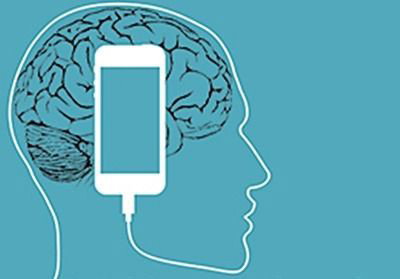
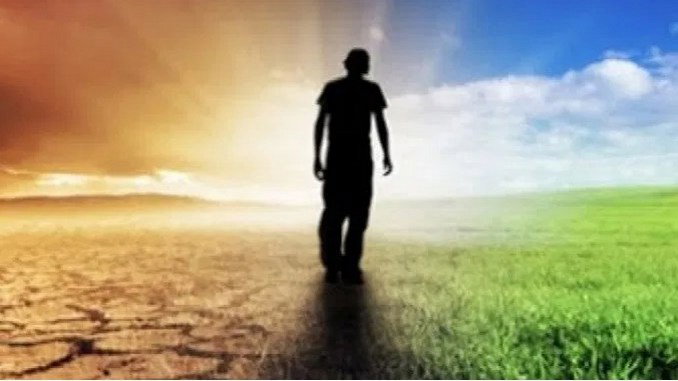
Get rid of negative thoughts and emotions from yourself and save your health
Your emotional system is like a folder or anything that serves to collect some other essential things.
This may seem like a very simple analogy, but it is true. The fact is that every time you experience some kind of emotion it will surely affect your body and it all adds up like a bunch of messages: one on top of the other, and if you don’t open any of them and just collect 1000 messages, you skip very important information or ideas needed for progress.
This is a little confusing for you… Well, that is the state that the information that your brain sends you when you start an avalanche of negative feelings, hatred, envy and break your peace with a whole series of destruction… chaos and confusion arise. What is the state of the brain, we can expect such a situation in the body because it manages the whole situation and sends confusing messages to the body, it simply raises our system to a higher level as a kind of alert.
You can hide all the emotional chaos for a while, but not for long. The psyche cannot be so easily deceived. All repressed emotions begin to revolt and create discomfort in your mind, such as bad mood, insomnia, panic attacks, anxiety…
Hidden and repressed emotions are constantly looking for a way out. Emotions are literally stuck in your body. This is because they have something called a motor component. This means that even before you can suppress or ignore them, emotions create micro activation in the muscles. And our bodies react to this process - almost instantly.
We often feel pain or tension in the part of the body that is affected by emotions, but we cannot explain it to ourselves.
This happens because the part of our brain that is responsible for emotions, the anterior cingulate cortex, is located next to the premotor cortex. And that means that when our emotion begins to be processed, a physical, bodily response is immediately created.
We know how often we feel fear somewhere in the stomach (for example, we feel anxiety in the stomach before an important event or we feel discomfort in the intestines). And how many times have we used the words "somewhere in the chest" to describe heart pain? From there, tachycardia, pain in the heart or left arm occurs. Pressure on the neck and shoulders is also usually a consequence of stress). There is even a saying: "Carry the whole burden of the world on your shoulders."
It is true that our bodies try to communicate to us, but in a specific way. If we learned to listen to him, we could prevent many diseases.
There are several scientific strategies that are very effective and can help you get rid of negative emotions. Of course, there is no universal option, but some methods are very good for most people, especially if they are used in tandem.
As a rule, no additional effort is required to determine the source of pain in the body - you can easily feel it. These can be the chest, abdomen, shoulders and more.
However, if you are unsure of the pain, do what is called a breath test. Inhale and exhale slowly, without a pause between inhalations. When you do that, you will immediately notice that there is still an unusual tension in some part of the body.
Visualize the place where you feel the pressure. In this case, you will begin to analyze what is happening, remembering some cases or previous versions of yourself. Keep a diary of what you have experienced and seen and remember that the body often speaks in metaphors, so it is not necessary to take everything literally.
The last, hardest and most important part of releasing your emotions is that you have to feel them.
Sometimes it means allowing yourself to indulge in all those emotions, and if you’re crying, crying, running, yelling. Allow yourself to relax. Allow yourself to let all those negative emotions out of your body in a simple way.
This is an experience that allows you to experience emotions, both good and bad, and not focus on any of them.
You were not born to be perfect all the time.
You weren't born to be happy all the time.
But if you work on yourself, you will become perfectly happy with your feelings and you will not endanger your health, and that was the goal.
*Source: Lovesensa Magazine, Beograd, 2020.*
*The photos used in this article are taken from the site* ***www.google.com*** https://www.google.com/search?q=People+and+machines&tbm=isch&ved=2ahUKEwjhkJKrieDsAhVUIhoKHQZIDz8Q2-cCegQIABAA&oq=People+and+machines&gs_lcp=CgNpbWcQDFAAWABgLGgAcAB4AIABAIgBAJIBAJgBAKoBC2d3cy13aXotaW1n&sclient=img&ei=E_-dX6G7E9TEaIaQvfgD&bih=625&biw=1366&rlz=1C1GCEA_enRS903RS903#imgrc=fkuqJNgp2iLXZM&imgdii=59WbsvxyMo2zmM
Dear friends, I took a break due to two accidents. One health, she coped with covid-19, although they say it's recurring and it's not over, let's move on. And the other problem is the work on the network in my neighborhood and the introduction of optical internet;) Everything is dug up and the signal literally flashes and is gone for hours, so it appears and lasts 5 minutes, then disappears for 5 hours, etc., it lasts for days. I will soon be back to normal <3 See you soon
William Shakespeare je rekao: Uvijek se osjećam srećno, znate li zašto? Jer ja od nikoga ništa ne očekujem; čekanje uvijek boli. Problemi nisu vječni, uvijek imaju rješenje, jedino što se ne može izliječiti je smrt. Ne dozvolite nikome da vrijeđa, ponižava ili umanjuje vaše samopoštovanje. Vikanje je instrument kukavice, onih koji ne misle.
Uvijek ćemo susretati ljude koji nas krive za svoje probleme i svi će dobiti ono što zaslužuju. Moramo biti snažni i reanimirati padove koje nam nameće život, kako bi nas podsjetili da nakon mračnog tunela punog samoće dolaze vrlo dobre stvari.
Prije nego što razgovarate ... Udahnite
Prije nego što kažete ... Slušajte
Prije nego što kritizirate ... pogledajte sebe.
Prije nego što napišete .... Razmislite.
Prije nego što povrijedite ... Pogledajte.
Prije nego što odustanete .... Pokušajte
Prije nego što umreš ... UŽIVAJ!
Najbolji odnos nije odnos s idealnom osobom, već odnos u kojem svaka osoba uči živjeti s nedostacima drugoga i zna se diviti njegovim dobrim osobinama.
Tko ne cijeni ono što ima, jednog će se dana požaliti da ga je izgubio, a onaj koji jednom pati, dobit će ono što zaslužuje.
Ako želite biti sretni: učinite nekoga sretnim; ako želite primiti: dajte se malo, okružite se dobrim ljudima i postanite jedan od njih.
Zapamtite: ponekad, kada to najmanje očekujete, bit će onih koji će vam pružiti dobro iskustvo!
Nikada nemojte pokvariti svoj dar iz prošlosti.
Jaka osoba zna kako održati svoj život u redu.
Čak se i sa suzama u očima prilagođava osmijehom i kaže: DOBRO sam.
For today we have on the menu Her Majesty"dramaqueen"
If a person about all the story exaggerated, with an excess of emotion, giving it too much importance, speak normally, she would have thought that no one would have heard even noticed, and that's because there is no good picture about himself or simply does not have enough arguments to convince his interlocutors of the truth of his statement.
By raising panic and drawing attention to himself, he tries to gain the empathy of his neighbors and applies the same tactics to his work environment. With this kind of manipulation, they bring unrest, but very skillfully use that chaos for their own purposes. Unfortunately, such people do not have enough quality, so they often manipulate cunning actions such as raising panic in their favor. They wrap each of their hysteria in the explanation that it is that she panics because of everyone's benefit and how does she take care of you ?! Sounds familiar: D ??? Here is a more professional explanation, pay attention to the following text because we meet such people more and more often lately ;)
There are people who experience everything dramatically and who communicate with others in the same way. When we say that a situation is dramatic, it means that it is full of emotion, reversal, that some great accident is threatening, that it is uncertain whether that accident will be avoided, etc. The person who dramatizes overemphasizes his experiences, and when he talks about something, he does so by choosing emotionally charged words, making grimaces in accordance with the accompanying emotion that he emphasizes with movements. It’s all drama: whether something happened, whether it could have happened, whether something that should have happened didn’t happen.
The problem that others who communicate with the person who dramatizes has is that she presents everything to them as very important, the most important. In normal communication, the interlocutor can determine whether the speaker is talking about content that is not so important or about those that are important, moderately important or most important. People experience emotions when they judge that something significant is happening and when they communicate emotionally. They, regardless of the content of the communication, use the emotion they show to tell others that it is very important to them. However, when someone speaks very emotionally about everything and everything, as if everything is of the highest priority, the interlocutor begins to doubt his credibility and to perceive that communication as difficult.
**Disputed psychic "gain"**
It is impossible to ignore people who dramatize during communication. Avoiding ignoring is their main psychological "benefit" from this pattern of behavior. They perceive other people's ignoring as a message that they themselves have no human value or that they do not exist. And that is why, with their dramatic performance, they simply make the environment notice them, deal with them, look at them and listen to them. If someone tries to ignore the person who is drama, he is ready to immediately increase the level of theatricality until the drama "for life or death" occurs.
Because of all this, people avoid communicating with the person they rated as the “queen or king of drama”. However, sometimes this is not possible. For example, when it comes to one of the parents or an associate in the company. In these situations, people simply have to endure part of the drama and dose the communication. What helps them deal more easily with people who play drama is to better understand why they do it.
What is hidden in the pattern of communication dramatization? If these dramatizing people spoke normally, without emphasizing and overemphasizing, without excessive emotions, they themselves would think that no one would hear or notice them. This is because they do not have a good image of themselves and their qualities. Although it seems to others that they are constantly making themselves important, they actually think of themselves as not important enough. They are convinced that in normal communication, their "signal" would be too weak and unimportant to others, and that they must maximize it in order for others to register and respect it. It is this "signal amplification" that underlies the dramatization.
**Attracting attention**
The second point in this pattern of behavior is attracting attention. It is the logic of a small child who mistakenly thinks that it is important to the mother only if the mother looks at him, and that it does not matter if the mother looks at his brother or sister. He then thinks: "The other is important, and I am unimportant", he becomes jealous and starts the action of attracting his mother's attention. If she fails to attract attention with positive behavior, he will attract it with negative. And if it is punished for that, it is satisfied, because negative attention is better than none. During development, children learn to separate love from attention, and begin to realize that their mother loves them even if she does not look at them or if she is absent. However, if a person does not outgrow the identification of love and attention, then even in adulthood he continues to behave like that from that part of himself that we call the "inner child". This is how an adult who dramatizes is born.
While drama and theatricality are one of the irritating communication styles, it is possible that it is so pronounced that the person and the people around him suffer because of it, so then we are talking about a disturbed personality. It is a histrionic personality disorder, which got its name from the Latin word histrion, which means actor. Such people behave as if life is a theater, other people are an audience that should be impressed, without the awareness that they are bad actors.
The photos used in this article are taken from the site **www.google.com** https://www.google.com/search?q=People+and+machines&tbm=isch&ved=2ahUKEwjhkJKrieDsAhVUIhoKHQZIDz8Q2-cCegQIABAA&oq=People+and+machines&gs_lcp=CgNpbWcQDFAAWABgLGgAcAB4AIABAIgBAJIBAJgBAKoBC2d3cy13aXotaW1n&sclient=img&ei=E_-dX6G7E9TEaIaQvfgD&bih=625&biw=1366&rlz=1C1GCEA_enRS903RS903#imgrc=fkuqJNgp2iLXZM&imgdii=59WbsvxyMo2zmM
Source: Zoran Milivojević: Формуле живљења, Beograd ,2020;
The formula of passion is not love
Is it enough as a feeling or should it be incorporated with a lot of concessions, attention, tenderness? ? ? How much can you say that your partner is your support? Are you safe next to your partner?
A thousand questions but not a thousand answers. Before making your relationship official, you still have to make a studious analysis of whether passion and infatuation alone are enough as a foundation for a long and secure relationship.
When two people love each other strongly, but have significantly different ideas or concepts of the relationship, then strong emotions will make the relationship unstable. - For the proper upbringing and independence of children with many kisses and tenderness, discipline is also necessary.
Whether it is about partner love, or about raising children, we can often hear statements that it is most important and quite enough for people to love each other strongly. How true is such a belief and does it really correspond to reality?
It depends on what is meant by strong love. Is that love like a mother's that forgives everything or does it have to have balance, that is, how much one side loves, as well as the other side reciprocating ?!
Many do not know what emotions are, or precisely love. They believe that love is in fact concessions, sacrifice, fidelity, etc., etc., which is not far from the truth. Along with love and attraction, passions need to have empathy, and even give sacrifice and fidelity as a contribution to the joint sharing of one period of your life with another person.
For an emotional relationship and for marriage, love is necessary, but it is by no means enough. The reason for this is that people have different ideas about what a relationship, if it is really based on love, should look like. If two people love each other strongly, but if they have significantly different ideas or concepts of a relationship, then strong love will not only not be enough, but the exact opposite will be what makes their relationship unstable.
The greater the distance between close people, the more tolerant they are of certain differences between them. However, when they are very close to each other, when they try to be "one", then even the smallest difference in their behavior can be "read" as a lack of love.
**Both love and quarrel**
A good example that love is not enough are those couples who opt for partner or marital therapy. They love each other strongly, but they get into a fight with each other in order to make the other partner fit into their idea of how the partner he loves and with whom they are in a relationship should behave.
When a partner’s behavior does not fit into their performance, they feel insufficiently loved, which is why, directly or indirectly, they require the partner to change the behavior and fit in. This is similar to jealousy, where a jealous person thinks that the problem is not in their jealousy, but in the partner's behavior that "makes" them jealous. That is why they try to force their partner to behave in the "right" way, because then they do not feel jealous. In other words, in both cases, the person thinks that he will get rid of bad feelings if he makes his partner change his behavior and start behaving "properly".
The dilemma is: If he loves me, why doesn't he change his behavior when he sees how much it bothers me? The partner who feels more betrayed, because things are not as he imagined, is often more aggressive in his demands. The other partner, as a rule, reacts defensively to that, so that the couple quarrels, gathering objections, which makes them, despite the love they feel, unable to establish a quality, stable and long-lasting relationship.
One of the ways to prevent numerous partner problems is to look at the partner in addition to the person and how he imagines the relationship, ie. cohabitation.
Many people enter into relationships and marriages without knowing what the partner's attitude is towards important life issues: having children, raising them, saving money, material goods, health, etc. That is why it happens that they are later unpleasantly surprised when they realize that there were differences that they did not think about in time.
Another solution is partner therapy where the couple, with the help of an expert, becomes aware of the differences that exist between them and learns ways to overcome them to the extent that will allow them to build a common concept of relationship that is "comfortable" for both parties.
Although love is a necessary element of a parent's relationship with a child, it is not enough for a child to be properly raised and prepared for independent living. In order to fulfill his educational role, the parent must prepare the child, which means that he must enter into conflicts with him: to thwart some of the child's desires and to force him to perform some actions that are useful and unpleasant to the child.
Another element of this relationship is discipline: setting boundaries for the child between what is allowed and what is not, as well as forcing the child to develop hygienic and work habits. Today, it is clear that the formula for optimal upbringing is: love plus discipline.
**Powerful, but not omnipotent**
Parents who offer only love not only do not contribute to the proper development of the child, but distort its development in the direction of spoiled child syndrome or overprotected child syndrome.
Love is a powerful force and a significant motivator, but it is not omnipotent. Too many times in our childhood we have heard stories about how love and goodness overcome all the evil of this world. That is why the notion of triumphant love as the strongest force broke out of our collective unconscious. Unfortunately, everyday life shows that this is not the case and that love is not enough.
The photos used in this article are taken from the site **www.google.com** https://www.google.com/search?q=People+and+machines&tbm=isch&ved=2ahUKEwjhkJKrieDsAhVUIhoKHQZIDz8Q2-cCegQIABAA&oq=People+and+machines&gs_lcp=CgNpbWcQDFAAWABgLGgAcAB4AIABAIgBAJIBAJgBAKoBC2d3cy13aXotaW1n&sclient=img&ei=E_-dX6G7E9TEaIaQvfgD&bih=625&biw=1366&rlz=1C1GCEA_enRS903RS903#imgrc=fkuqJNgp2iLXZM&imgdii=59WbsvxyMo2zmM
Source: Zoran Milivojević: Формуле живљења, Beograd ,2020; Broni Ver, Pet najvećih žaljenja, Novi Sad, 2013.
I could but... I didn't
The inability to achieve goals, to maintain an emotional connection, to be a favorite in society… all these failures create disappointment which is the trigger for many new problems. In order to accept our own incompetence, it is easiest to blame something or someone or a situation in which we did not react properly at the right moment. Someone else prevented us from fulfilling our dreams or if there was no tire defect on the car, I would have arrived on the plane in a better tomorrow. Is that OK?
This feeling occurs when people, dissatisfied with their choice and missed opportunity, realize that it is too late to do something different, although it is usually an idealized fantasy of a much better life.
Most people, when they look back and look at their lives, at the decisions they made at certain moments, they can find something that makes them feel sorry for doing it now or for not doing something else.
Life is often presented as a path, and on that path, from time to time, "crossroads" appear when a person has to make a decision on which side to go. When, after a while, someone realizes that he is dissatisfied with his choice, then he can regret that he did not decide otherwise - that he missed the opportunity. Sometimes it is possible to change the decision and go the other way, but most often it is not possible for various reasons or it is "late". Then a person has more or less regret for what he missed.
**They could, but they didn't.**
What do people regret? Some regret that they chose a profession that provided faster employment and a better salary, and not the profession they felt a passion for. Some regret marrying the "wrong" partner. Some regret that they did not opt for exciting employment abroad, but remained in the zone of the known and safe. People are different, so their regrets are different.
In theory, there are two types of regrets: in relation to what someone has done and in relation to what someone has not done. Research shows that many more people regret what they did not do, and they could. It is a pity for a missed opportunity.
When someone regrets a missed opportunity, he declares: If I had chosen the other, my life would have looked much different. At the same time, they assume that such a life would be better, of better quality, more meaningful, more satisfied. Life would certainly be different, but there is no evidence that it would really be better. People are not clairvoyant and that is why they simply cannot know how their lives would really have turned out if they had taken a different path. That is why their regret for what they missed is based on an idealized fantasy about a much better life than the life they live, which they are dissatisfied with.
In the depth of the feeling of regret for what was missed, there is a kind of anger towards oneself or others because the person made a "wrong" decision at some point in the past. Anger is a demand for change, and a person who is angry at himself and his actions in the past wants the past to change, which is impossible. In addition, regret for the missed passivates the person. If she is dissatisfied with her present life, she should do something, either change it and direct it in a satisfactory direction, or accept it as such and stop regretting it.
In a completely different situation are people who are at the end of their lives, who are dying of some incurable disease and who therefore do not have time to change anything in front of them. What is interesting is that according to reports, these people regret not so much some specific decisions, but regret that they did not live differently - that they did not have a different way of life.
The world public's attention to this problem was attracted by the book by the Australian caregiver of terminal patients, Broni Ver, about five main reasons why people mourn on their deathbeds. The main regret is that they did not live their lives more authentically, doing what they really wanted, and not what they had to or what others expected from them. People are sorry that they worked too much in their lives, and had too little fun and socialized with friends and relatives, and were happier. They are also sorry that they were not braver in expressing their feelings. Later, lists appeared that included additional statements: the better I took care of myself; that I no longer lived in the present and cared less about the future; that I understood life as something that is taken for granted, etc.
**I would repeat the same thing**
All these messages from my deathbed can be a useful reminder to those who do not think that life is limited and that everyone has a responsibility to themselves how they will live and live it. For all those who want to change the unhealthy psychic mechanisms by which they live, and which are reduced to a system of "commandments" (to constantly work, to please others, etc.) or "prohibition" (not to express their feelings, not to enter in conflict with others, that one's own desires are not important, etc.) modern psychotherapy has a number of techniques that lead to liberation from these mechanisms.
The goal is not a "happy" life, but a life filled with meaning. Such people know how to explain their life decisions, and when asked: What would you change if you had a time machine, they answer with: Nothing, I would repeat the same thing.
The photos used in this article are taken from the site **www.google.com** https://www.google.com/search?q=People+and+machines&tbm=isch&ved=2ahUKEwjhkJKrieDsAhVUIhoKHQZIDz8Q2-cCegQIABAA&oq=People+and+machines&gs_lcp=CgNpbWcQDFAAWABgLGgAcAB4AIABAIgBAJIBAJgBAKoBC2d3cy13aXotaW1n&sclient=img&ei=E_-dX6G7E9TEaIaQvfgD&bih=625&biw=1366&rlz=1C1GCEA_enRS903RS903#imgrc=fkuqJNgp2iLXZM&imgdii=59WbsvxyMo2zmM
Source: Zoran Milivojević: Žal za propuštenim, Beograd ,2020; Broni Ver, Pet najvećih žaljenja, Novi Sad, 2013.
"I can't be a part of the world where men dress their wives as prostitutes, showing everything that should be precious. Where there is no honor and dignity, and where you can only rely on 'I promise.'
Where women do not want children and men do not want a family.
Where fools believe they are successful while hiding behind the wheels of their father’s cars, and fathers who have any power try to convince you that you are nobody and nothing.
Where people falsely declare that they believe in God with a glass of alcohol in their hand and without any understanding of their religion.
Where jealousy is considered shameful, and modesty is a flaw.
Where people forget about love, but look for the ideal partner.
Where people fix every noise on cars, saving neither time nor money, and they themselves look so poor that only expensive cars can cover them.
Where boys spend their parents' money in nightclubs, imitating primitive sounds, and girls fall in love with them because of that.
Where men and women have not been different for years, and where all this is called freedom of choice, but for those who choose a different path, they are branded as retarded bullies.
I choose my path, but it is a pity that I do not find understanding in the people among whom I most wanted to find ... "
- Keanu Reeves.
I love myself the most in the world
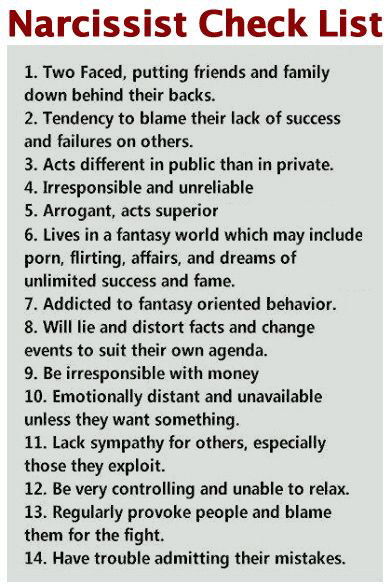
Recently, there has been a sharp increase in behavioral disorders called "narcissism" in children and youth, although it is gaining momentum, so it is also seen in the older generations of mature people. The next question is, where, how and when did this trend start? Children are understandably nervous when they are not in the center of attention of their environment and imagine a situation where everyone in one family has a desire to be the main one and only his wishes are fulfilled, etc.… Chaos in short.
Only half a century ago, families had several generations. So the children had an example in front of them that they had to wait in line until their time came. Now, families consist of parents and children, the elderly are separate households and are far from their heirs in order to have an impact on the way of upbringing and everything that one life does. And so in an indirect way we came to a phenomenon called "narcissus".
Average "daffodils", although they do not have some socially recognized quality, treat themselves as the "center of the world", and they have acquired and confirmed such a belief in the families from which they come. As new generations mature, the number of people with narcissistic personality traits increases. It is important to understand how these people function in interpersonal relationships, because knowledge about it contributes to others not becoming victims of narcissists.
It is a common belief that a narcissistic person is in love with himself. This is often the case, but does not explain the true nature of narcissism.
**The emergence of insensitivity**
If we start from the name of the mythical hero Narcissus, it should be pronounced Narcissus, because it has the same root as the word "narcosis". In translation, his name is Insensitive. In the ancient myth, the Insensitive is a young man of extraordinary beauty because of which many fall in love with him. Although many suffer because he does not return their love, their sufferings are funny to him and they simply entertain him. Due to the lack of compassion for those who suffer because of him, the lack of empathy, playing with their feelings, which led to several suicides, the gods decided to punish the Insensitive. The punishment was for him to fall in love with someone with whom he would not be able to reunite. It referred to his own reflection on the surface of the pond, because if the Insensitive tried to hug that beautiful young man he saw on the surface of the water, the character would disappear. Then the Insensitive felt the great pain of impossible or unrequited love, because of which he pierced his heart with a dagger.
This ancient story of the Insensitive is very important in order to see what his sin is and what his punishment is. Sin is his arrogance towards others, his lack of elementary love for another person: his lack of compassion, pity and empathy for others, and the punishment is self-love as impossible love.
Modern daffodils in everyday life are reminiscent of the ancient Insensitive. Egocentric, selfish, convinced that they are worth more than other people towards whom they take the position that others are worth only as long as they are useful to them and as long as they fulfill their desires. They are sometimes highly socially intelligent, manipulative, hidden behind a mask of caring for others. Despite that, there is always a moment when they show that they don't really care about others they "love". In an emotional sense, a narcissistic person lives in a monodrama in which other people are just scenes that testify to her greatness.
Narcissism has always been associated with people who have a trait that other people value highly or that causes admiration. Just as the Insensitive was extraordinarily beautiful, narcissists can be people of exceptional talent, creativity, intelligence, achievement. To them, some of these qualities were "proof" of exceptional value in relation to ordinary mortals.
Lately, we occasionally meet a new type of narcissistic person, and that is people who do not have a pronounced quality that would make others admire or adore them. Despite that, they have all the characteristics of a narcissist: a very high opinion of themselves; belief that they are worth more than others; selfishness; reduced ability to emotionally attach to others and the like. They are dominant in relationships, they expect others to please them, while they themselves are not ready to do something for others that would impair their comfort.
How did these "average daffodils" come into being, who, although they do not have some socially recognized quality, treat themselves as the "center of the world"?
The answer to this question is that they keep the image of themselves and others that they have adopted and confirmed in the families they come from. If someone was the center of his parents' world until he was 14, and if he received such treatment in the family even later, it is likely that he will keep that attitude later in life.
Many children and young people who were "princes" and "princesses" of their parents, in a collision with a group of peers during puberty and adolescence, change their image of themselves. But there are also those to whom parents continue to interpret that conflicts with peers or professors are actually just a reaction of someone else's envy and jealousy to the "exceptionality" of their child. Terrible. So, with too much parental protection, a pure surrogate of the "narcissistic" future parent is created, as well as everything else that concerns the profile of a mature man. This is a very interesting period for psychology because some phenomena such as "narcissism" have been popularized and imposed as a template in developmental pedagogy. A wide range of disorders used to be now accepted as a normal format.
**Love without discipline An**
educational style that includes worshiping the child, giving love, without discipline, creates adult "princes" and "princesses" who cannot create functional marriages and who, in the end, are often left alone. The problem that was not solved in early childhood by gaining independence and self-confidence is transmitted later and is reflected in the business environment. Such persons are a problem in themselves because they have an ambitious attitude towards themselves and create a very bad working atmosphere where destruction is reflected in all fields. Just to make them stand out and meet only their needs. Teamwork is almost impossible with such people precisely because of the loss of empathy and lack of respect for the environment. They are the same towards their parents, grandparents, relatives - unfortunately also towards their children.
Although constantly "flooded" with parental love, narcissists do not understand it as a parental sacrifice, but as a standard that naturally belongs to them. That is why they have neither gratitude nor love for their parents, which overwhelms elderly parents with disappointment.
Much can be learned about the treatment and principles of how to treat such people from the work of Erich Fromm, where the scientist claims that the core of aggression lies in a harmless narcissist. Today, we even notice that many politicians, public figures, actors, singers, in one word, the stage is colored with all colors and forms of behavior according to the rules set by an average narcissist. There is no end to that variety. Here is an example. we have selfies as a narcissus product… mirrors are already outdated: D
The photos used in this article are taken from the site **www.google.com** https://www.google.com/search?q=People+and+machines&tbm=isch&ved=2ahUKEwjhkJKrieDsAhVUIhoKHQZIDz8Q2-cCegQIABAA&oq=People+and+machines&gs_lcp=CgNpbWcQDFAAWABgLGgAcAB4AIABAIgBAJIBAJgBAKoBC2d3cy13aXotaW1n&sclient=img&ei=E_-dX6G7E9TEaIaQvfgD&bih=625&biw=1366&rlz=1C1GCEA_enRS903RS903#imgrc=fkuqJNgp2iLXZM&imgdii=59WbsvxyMo2zmM
Sources> Erich Fromm- The Art of Loving, Lectures by Professor Žarko Trebješanin, FASPER, Belgrade, 2000. g.
How to deal with stress
While working on some research on the topic of children's stress and fears, I came across very interesting and positive definitions and theories on how to overcome all that. But to make it clearer to you, I have to explain all that from the beginning.
We are in a time of information explosion and fast life in which resilience is a necessity. Did you know that in psychology, coping with stress is called resilience.
Resilience is a term derived from the English language (resilience), appropriated in other languages in the absence of a translation that would include everything that the term resilience encompasses as a very broad term.
The Merriam-Webster Dictionary defines resilience as "the ability to become strong, healthy, and successful again after something bad has happened" or "the ability to easily recover and adapt after bad events or changes," and Oxford's vocabulary as the ability to "feel better quickly after something unpleasant, such as shock, injury, etc."
There are currently a number of different definitions of resilience. This, on the one hand, may seem confusing, but, on the other hand, it is only an indicator of how comprehensive and important resilience, as a property that can be viewed as a whole set of traits, is.
Some authors define resilience "as a positive end to the distribution of developmental outcomes among high-risk individuals."
Others, such as Robert Brooks in the *Handbook for Resilience in Children*, define resilience as “a child’s capacity to deal effectively with stress and pressure, overcome everyday challenges, recover from disappointments, mistakes, trauma and adversity, develop clear and realistic goals, solves a problem, talks casually with others, and treats himself and others with diligence and respect, and as "the ability to meet life's challenges through truth, trust, meaning, responsibility, empathy and hope."
Many see resilience as "the capacity to adapt successfully in the face of challenges or threatening circumstances," and Charles Darwin's paraphrase of Leon Meginson, an American professor of management and marketing in 1963, wrote in his book Lessons from American Business : "According to Darwin's Origin of Species, it is not the smartest species that survive, nor are the strongest species that survive, but those species that best adapt and adapt to their changing environment." And it is precisely these species that are resilient.
Resilience as a trait in today's sense has been studied relatively briefly - since the middle of the 20th century. Norman Garmezy and Emmy Werner are considered pioneers of resilience research.
In 1973, Norman Garmezi published the results of a research on resilience. Namely, in his research, he relied on earlier studies, in order to discover risk and protective factors that can contribute to the definition of resilience and later give scientists "tools" and a way to approach the topic. He is also known for research on atypical schizoid patients (1970) and children of schizoid mothers (1974).
Amy Werner was one of the first scientists to use the term resilience in the 1970s. She is best known for researching children from Kauai Island (Hawaii). Children from this island grew up in very unfavorable conditions - they were quite poor, and many of them grew up with parents who were alcoholics and / or mentally ill people, often unemployed.
Werner noted that: about two-thirds of these children develop and exhibit destructive forms of behavior later in life (such as drug use, persistent unemployment, teenage pregnancies and childbirth), but one-third of these children did not develop such behaviors, but grew up independent. responsible, confident and caring people.
Amy Werner called this group a "resilient group". She believed that resilient children and their families had certain characteristics that distinguished them from other families, and that thanks to those characteristics, they developed differently during their lives.
During the 1980s, resilience became an increasingly important topic - both for research and for the development of the population for the sake of a more stable and prosperous society and environment that can cope with the challenges of the new times.
In Belgrade, Zana Borisavljević and Jelena Želeskov Đorić founded the Resilience Development Center in 2011 as the first such center in our region. Through an accredited program of professional development of employees in education, various trainings for personal development, trainings in the fields of business, health and programs for providing support to vulnerable groups, families and youth.
*The Center strives to contribute to the development of resilience in this area and thus provide support to individuals and society.*
All these definitions are exact definitions of resilience depending on which aspect resilience is viewed from, and in many ways they are similar.
Resilience, therefore, can be defined as the ability to adapt to change and the capacity for successful adaptation, despite challenges and difficult circumstances.
Resilience can develop, and in the 21st century, in a time of rapid change and new challenges, increased stress and information explosion, work on developing resilience imposes itself on us as a need for education and support in solving problems and meeting challenges, overcoming conflicts and stress, and time management.
Based on AQ, people can be quite different, because our attitude towards stress, challenging situations and difficulties shapes our actions and attitude towards life. Consider the percentage of some of these statements that relate to your relationship to yourself and life:
I often regret the decisions I make, I rarely take risks, and I prefer to play it safe in life.
I feel satisfied with what I am and what I have in life, and I take risks sometimes - and when that can't jeopardize my goals.
I like to take risks in life, I accept challenges, I have a lot of energy and I am a constantly active and very persistent person.
There is division according to which **on the basis of AQ** people divided into **3**types:
Give up (Quitters)
Tray (Campers)
Winners (Climbers)
Description of these types of people is quite extreme, to make them easier to illustrate, but hardly anyone of us is the sole odustajač, procrastinator or conqueror in practice.
**Quitters** are mostly mostly found in statement number 1. They do not take any risks, nor do they accept life's challenges, but **only play it safe**. They can often be depressed, emotionally cold and bitter. They regret their decisions, become jealous of people in the environment who are in better work and life positions, show a minimum of ambition and are not interested in work.
**Procrastinators** take risks but only until they become too difficult or until they achieve what they have defined as success. They are satisfied with what they are, but they lose the opportunity to see and experience what could be. When they work, they show some initiative, desire and strength to work, but often only until they achieve what they have defined as success or goal. An example of such behavior at the faculty are the very common "**campaigns**".
**Conquerors** continue to conquer and climb, that is, they **go forward** no matter what life brings.
Conquerors are characterized by a high level of energy, constant movement and activity, taking risks and accepting challenges that bring hardships and difficulties throughout life.
**They are persistent, persistent and very resilient.** If we think about the context of the faculty, it is the colleague who has a good or excellent average, trains, volunteers, engages in various projects, deals with various things and hobbies, maybe works along the way, and most wonder where that colleague came from. , ie colleagues, time and strength.
This branch of psychology is very young and is still in development, and unfortunately more and more of us are being put into these formats by circumstances and way of life. It is important to notice in time and apply the right therapy in order to continue with a normal life.
**Whether you’re a procrastinator or a conqueror, all the same just don’t give up. I wish you a successful day.**
The photos used in this article are taken from the site **www.google.com** https://www.google.com/search?q=People+and+machines&tbm=isch&ved=2ahUKEwjhkJKrieDsAhVUIhoKHQZIDz8Q2-cCegQIABAA&oq=People+and+machines&gs_lcp=CgNpbWcQDFAAWABgLGgAcAB4AIABAIgBAJIBAJgBAKoBC2d3cy13aXotaW1n&sclient=img&ei=E_-dX6G7E9TEaIaQvfgD&bih=625&biw=1366&rlz=1C1GCEA_enRS903RS903#imgrc=fkuqJNgp2iLXZM&imgdii=59WbsvxyMo2zmM
Sources are listed during the text.
Тo be wise, to be smart...
*“Pain encourages a person to think. Thought makes a man wise. Wisdom makes life bearable. ” John Patrick*
How many times do you find yourself in a hopeless situation, do you think that you need someone wiser who would know exactly how to solve a given problem with the least damage and consequences ?! Often the ancients would say "the one on the hill sees better than the one under the hill". So you don't have to be hasty. Wait for the dust to settle and the passions calm down, make a plan and solve the problem.
Smart perception of a situation or problem enables smart action, and the best way to avoid the trap of excessive emotional input and hasty actions is "ileism" - a side view.
How someone will decide to react in an important situation depends primarily on how they perceive it, that is, understand and evaluate it. What we can call "wise action" stems from previous "wise thinking."
The wise differ from the others precisely in the "breadth" and "depth" of the picture they have of a given situation or problem. When we say “breadth” we mean that they perceive a situation or problem taking into account many more elements, a broader context, than others do. When we say "depth", it means that they are trying to see the consequences of their own actions for themselves and others. In addition to the possible short-term consequences, they try to predict those that are more distant in time. It's like when a chess player thinks five moves in advance. This "broader and deeper" view of the situation or problem helps them to better assess which actions would have negative consequences and which would be useful.
***The error of overestimated importance***
If wisdom is related to "breadth and depth", its opposite is related to the "narrowness" and "shallowness" of thinking, and then of acting. The most common reason why people lose the "breadth" of perception is their unpleasant emotions. As it is known, they appear when a person assesses that something important is happening to him, and the more he assesses that it is more important, the stronger his feelings are. Unpleasant feelings are an internal signal that there is a problem, and that signal requires other mental functions to focus on the task of solving an important problem.
Thus, the nature of unpleasant feelings is such that it directs a person's consciousness to a problem that he has assessed as important. In affect, that is, very strong feelings, the focus of consciousness can be in the form of "narrowing of consciousness" when a person completely mentally writes off other aspects of the situation and the consequences of their actions, so that he does what he will, when he "expands and deepens" understanding , feel sorry.
This leads us to another characteristic of wise people, and that is that based on a good assessment of what is happening and what could happen, they better assess how important what is really happening is. In other words, they do not make the mistake of overestimating the situation, which is why their emotions are more moderate, in accordance with the assessment, so that their mental processes are not disturbed by overly strong emotions. And when they judge that they are too excited, knowing that strong emotions have a bad effect on the assessment, they postpone their decision according to the principle: Morning is smarter than evening.
***Relocation to the "third person"***
It is known that wisdom is attributed to older people. This is completely correct because living life is a kind of constant learning, gaining knowledge, experience, getting to know yourself and others, realizing how important things really are, etc. While this is probably statistically true, it does not mean that all the elderly are wise and that all the young are the opposite.
The question that arises is whether there is a way to increase the level of wisdom in younger people as well. It has been shown that a fairly simple mental technique can be a significant step in that direction. The point is that when people think about the problems that plague them, they start thinking about themselves in the third person. This means that instead of thinking or saying: This and that happened to me, they say: To Him, this and that happened to her. This technique also has a name, ileism, which originated from the Latin *Ille,* he or that.
What happens when someone starts thinking about themselves and the events in their life using a third person? For example, during an argument with a partner, the person is in his experience of the situation and is mostly aware of the partner and his actions. When, after an argument, he mentally "moves out of himself" and sees the given argument "from the side" from the so-called meta-perspective, "seeing" him and her arguing, the person becomes much more objective because he sees much more than he can when he sees " from myself ”. In addition, seeing "from the side" allows her to distance herself from her emotions in a given situation. That is why this simple technique helps her to "expand the picture" and to better understand the problem, which will positively affect her further actions.
Research has shown that those who think and talk about their life situations in this way for four weeks really increase their wisdom index. That is why school-age children should be taught ileism.
The photos used in this article are taken from the site **www.google.com** https://www.google.com/search?q=People+and+machines&tbm=isch&ved=2ahUKEwjhkJKrieDsAhVUIhoKHQZIDz8Q2-cCegQIABAA&oq=People+and+machines&gs_lcp=CgNpbWcQDFAAWABgLGgAcAB4AIABAIgBAJIBAJgBAKoBC2d3cy13aXotaW1n&sclient=img&ei=E_-dX6G7E9TEaIaQvfgD&bih=625&biw=1366&rlz=1C1GCEA_enRS903RS903#imgrc=fkuqJNgp2iLXZM&imgdii=59WbsvxyMo2zmM
Source: Zoran Milivojević, Formule življenja, "Treniranje mudrosti", Beograd 2019.
Bread, Chocolate and Kusta
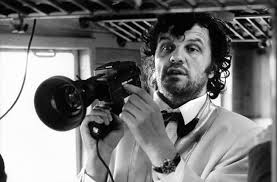
While reading "Politika", I came across this text and I couldn't resist the urge to show you the story of the great Kusta od milja called, and otherwise it is about Emir Kusturica, a great film director. To cut a long story short, you better read this article.
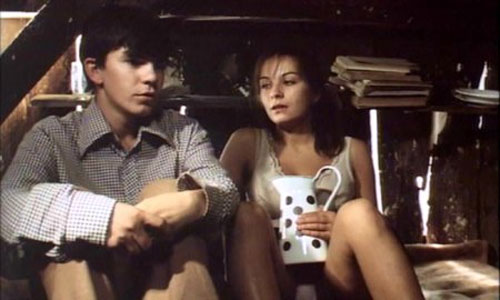
Watching a good movie on DVD is the best recipe to forget at least at night about the existence of this insane and invisible "cowboy crown virus" that makes our lives very bitter. After midnight, I put on a DVD with Kusturica's film "Do You Remember Dolly Bell"?
I read in Emir Kusturica's book that, when he was a student in Prague, he had to watch Fellini's film "Amarcord". He watched it, he says, four times. I watched it twice. Maybe even more, if I didn't have to return the DVD to the Paris media library for others to watch. Honestly, I haven't seen a better movie than "Amarcord". After watching, stunned by its quality, I was silent as if flooded.
"You don't have to become famous like Fellini, at least be like De Sica", a father would say to his son Emir, born in Sarajevo, such as Sarajevo children and Goran Bregovic, Zdravko Colic, Milic Vukasinovic, Momo Kapor, as well as the best journalist of "Politika" of all time, her famous correspondent from London, a gentleman with a bow tie Miroslav Radojčić. True, Emir Kusturica did not become De Sica, as his father had hoped. He became - Fellini.
The event that took place at the Cannes Film Festival in 1995 will remain in the film annals. The great Greek film director Theo Angelopoulos arrived in Cannes that year with the film "Odyssey's View", convinced that Cannes' "Golden Palm" could not escape him. His life got tired and he went crazy with jealousy and envy when the Cannes jury chaired by the famous French actress Jeanne Moreau decided to award the "Golden Palm" to Emir Kusturica's film "Underground".
Evil tongues say that Kusta's team in Cannes constantly watched the "Golden Palm" trophy. Out of a justified fear that Angelopoulos, completely upset and annoyed, will "smooth" her and take her to his Athens sooner or later in a victorious style. Later, there were Cannes stories that Kusta was willing to give the "Golden Palm" to his colleague Angelopoulos for one day. That Angelopoulos is watching her. To caress her. To admire her. And then, white, to return the "Golden Palm" to him, alive and well, as it should be.
Combining through a "thick comb" of Italian, Czech and French cinematography on DVDs borrowed from the Paris media library, after a while I came to the films of the great film director from our mountainous Balkans, the already mentioned, Tea Angelopoulos. Angelopoulos could have won the "Golden Palm" instead of our Kusturica for the film "Odyssey's View" of a calm soul. It will be that Cousteau, in the "Sarajevo" way, knew how to expertly charm and "roll the vine" around the film diva Jeanne Moreau, so she simply had no choice but to award our "macho and twisted charmer" the prestigious Cannes award.
While Theo Angelopoulos did not succeed in the first, he succeeded in the second Cannes attempt. He received the Cannes "Golden Palm" three years later for the film "Eternity and a Day". Believe me, I was looking forward to his "Golden Palm" just as if I had received it. Angelopoulos, from the Balkans, was immensely happy on the glittering Cannes stage, holding the "Golden Palm" in his hands, just like a child when his father fulfills his greatest gift-wish. Angelopoulos adored film art to such an extent that his film passion cost him even his life. While he was filming the movie "Another Sea" on the streets of the port of Piraeus, a Greek policeman who was not on duty at the time ran into him on a motorcycle. After that, Angelopoulos succumbed to injuries in the Piraeus ambulance, at the age of 74.
Watching a good movie on DVD is the best recipe to forget at least at night about the existence of this insane and invisible "cowboy crown virus" which makes our lives very bitter. After midnight, I put on a DVD with Kusturica's film "Do You Remember Dolly Bell?" Let me look at him one more time, then one more time, when the phone jerks. I knew, one hundred percent, that at that time, as usual, only Alexander Boguslayev (42), a Ukrainian businessman, could call me. That Boguslajev who, if you remember, recently bought the Italian island of Galinara in the shape of a turtle, for "only" ten million euros.
"How far have you come in the film?" Boguslayev asks me. "Did you come to that sequence when that little one says, 'Every day in every way, I'm progressing more and more'?" "No, I haven't yet," I said. "For me, that film is the best among Kusturica's films," Boguslajev said enthusiastically. "Have fun," was the last of Boguslayev before they wished me a good "crown night".
I mean something, the Monegasque Boguslayev is really right. "Do You Remember Dolly Bell" is really the best film that came out of Kustina's workshop. Sarajevo Paradise was having a crazy time on the carousel on Marindvor, and their idol Adriano Celentano and his "24,000 kisses" were blaring from the speakers. Kustin's film was included in the official selection of the Venice Film Festival. The commander of the barracks gave Kusti permission to go to the Venice Festival - after the "Golden Lion". I don't know whether Kusturica returned to the barracks with the "Golden Lion" and whether the commander of this barracks was promoted to a higher rank thanks to Kusturica's unprecedented success. Everything is possible.
The crown has now braked everything. Even making new movies. I guess that vaccine will finally arrive, so let's take a collective break. And for Kusta to roll up his sleeves again and get to work, which he does perfectly well. Will we finally see "On the Drina Bridge" on the movie screen, or is it too big a movie bite for the world's greatest directors? I watched Kustin's last film "On the Milky Way" when it was just released.
It was programmed in Parisian cinemas only for the end of July. The first thing that went through my head: Which French film distributor came up with the idea to show Kusturica's "On the Milky Way" in the summer heat, when no one goes to the cinema alive? This film of his, hand on heart, is not at the level of Kusturica's greatest films. But, admittedly, he was more or less saved by actress Monica Bellucci. Even now, it is not clear to me how Kusta managed to search normally with a film camera when the racial Italian beauty Bellucci is in the foreground. I am sure that the hand of the great Fellini of Rimini would also tremble.
I can only imagine what would happen to the Italian Nina Manfredi, the director of the great film "Bread and Chocolate".
** Graduated journalist and professor of sociology*
Tuesday, 17.11.2020. at 19:29
Đorđe Telebak http://www.politika.rs/scc/autor/659/Dord%D0%B5-T%D0%B5l%D0%B5bak
Source: http://www.politika.rs/scc/clanak/466884/Pogledi/Hleb-cokolada-i-Kusta
The photos used in this article are taken from the site **www.google.com**
https://www.google.com/search?q=People+and+machines&tbm=isch&ved=2ahUKEwjhkJKrieDsAhVUIhoKHQZIDz8Q2-cCegQIABAA&oq=People+and+machines&gs_lcp=CgNpbWcQDFAAWABgLGgAcAB4AIABAIgBAJIBAJgBAKoBC2d3cy13aXotaW1n&sclient=img&ei=E_-dX6G7E9TEaIaQvfgD&bih=625&biw=1366&rlz=1C1GCEA_enRS903RS903#imgrc=fkuqJNgp2iLXZM&imgdii=59WbsvxyMo2zmM
Why do we remember the best time as a period of wars with adults?
Good day, good people,
I don't know about you, but in my home, raising children is the basic motive. In addition to our children, the children of relatives came to our family for support and help with their studies. We have encountered many challenges but also their diverse natures and psychologies. From tiny babies, they grew up and formed their own identities. Thanks to their education, they left as formed and complete mature personalities ready to fight with life's problems and everyday life. But we have to go back to the beginning…
**And we would start with tears, carrying and singing…**
The first hands that held us from the first day of our birth are parents until we go to school. The first kiss, the first hug and all the first emotions come to us from our parents. But joining a group in a child creates resistance towards the parents. A child, like an adult, is a social being and needs to belong to someone or something.
The first group in which a child creates his identity is his family. As a rule, the mother is the most important, because in the first years of life, three to four, she continues to act as if the child is a part of her, so that the child develops the experience of a strong emotional belonging to the mother. During pregnancy, the child was a part of the mother's body, so that the mother experiences the child as a part of her personality in the first years of life. We call such a relationship symbiosis and it is necessary for the proper development of the child. In this relationship, the child develops the first feeling of fundamental security and acceptance. After that period, the child turns to other family members, including those important parts of the extended family - grandparents.
**The first attachment to others and the Balkan style**
Although for most children, staying in kindergarten is a necessary experience, because their parents are employed, children, as a rule, do not have a developed sense of belonging to a group in kindergarten. They are mostly attached to one of the other children, especially the one they play well with. Many children perceive a group of children in kindergarten as a worse substitute for a family group.
By starting school, children create a new student identity and have a need to belong to a group of children in the class. It should be noted that the situation in the first grades of primary school is not idyllic for the simple reason that children are not socialized enough. This means that in addition to friendly relations in the classroom, there are also hostile ones. Precisely because of insufficient socialization, some children in the class impose the "rule of the stronger", so that they gather around themselves children who are fighting for "power" and "popularity" with other similar groups. The task of the teacher is to cultivate and develop in the classroom such group dynamics in which friendly relations will prevail and "rule of law" in which it is not important who is stronger, but who is right.
Entering puberty causes a big change in the child's value system, because often peers are more important than family, especially belonging to this group and status in it. This is the normal phase of "belonging to a tribe" or "tribalism". It is interesting that this international word originated from the name of the Tribali tribe, which from 1200 BC inhabited the area in present-day Serbia (between South and West Morava) as well as parts of Macedonia and Bulgaria, and which, unlike the official historiography , in ancient sources considered Serbs. Tribals existed until the Roman conquest of these areas.
In the phase of tribalism, it is important for the adolescent to be accepted in the group of peers and to take an important place in it. While in the family the child builds a "primary identity", in a group of peers it creates a "secondary identity". For proper development, it is important that a person in both of these phases develops a positive image in himself.
After the phase of belonging to a peer tribe, the young person begins individual development, defining himself as an individual who walks his own life path. It is the phase of a functionally adult person who is socialized and capable of independent living. She has different "affiliations" to different groups and different social roles, but her self dominates in the Self-Other relationship.
**"Locked" in the past**
Adult individuals have a need for love, which is why they mate in love relationships, belonging to a partner, which usually leads to a new phase of belonging, and that is belonging to a secondary family, especially their own children.
If these were the stages of some development of belonging to a group, then we could also talk about how some people lag behind in some stages of belonging. There are those adults who still feel the most belonging to their parents. There are also those adults who are "locked" in the phase of tribalism, so they have to belong to some, for example, fan, political or ideological "tribe" that fights against "enemy" tribes. There are also those who have remained in the phase of individualism and, perhaps, narcissism, believing that such a way of life suits them best. The ideological "winds" that blow through the modern media actually promote individualism as the optimal way of life. This is indicated by worrying data on the long-term trend of declining birth rates and the declining number of those adults who are family-oriented.
The photos used in this article are taken from the site **www.google.com** https://www.google.com/search?q=People+and+machines&tbm=isch&ved=2ahUKEwjhkJKrieDsAhVUIhoKHQZIDz8Q2-cCegQIABAA&oq=People+and+machines&gs_lcp=CgNpbWcQDFAAWABgLGgAcAB4AIABAIgBAJIBAJgBAKoBC2d3cy13aXotaW1n&sclient=img&ei=E_-dX6G7E9TEaIaQvfgD&bih=625&biw=1366&rlz=1C1GCEA_enRS903RS903#imgrc=fkuqJNgp2iLXZM&imgdii=59WbsvxyMo2zmM
Sources: Zoran Milivojević, Pripadnost grupi, Beograd, 2020.
Be original and not duplicate
We live in a time of false perfection with imposed rules and a disturbed value system. Everyone strives for this so-called "perfection" in which many people, both young and old, try to present themselves to others as original, special, unique, different. Teenagers in particular try to stand out, be different from their peers and leave the impression of an interesting, and thus attractive person. No matter how expressed this aspiration is, the human brain functions in a different way: as a machine for imitating others.
Much of this imitation takes place on an unconscious level. Children imitate their parents, but also other children. Teenagers imitate their peers, but also choose "idols". Adults imitate others in order to be accepted or to occupy social status. Much of social learning takes place through the unconscious imitation of other people.
When an adult moves from one environment to another, a different environment, he unconsciously adopts the patterns of behavior, dress, expression, and speech that exist in the new environment. In a few years, she "drowned" in a new environment, so it is difficult to distinguish her from the "natives". The cause of this is the human need to be accepted, to belong, not to be different, different and foreign in a given social environment. This is in line with the Latin proverb: When you are in Rome, do what the Romans do.
There are several names for the psychic mechanism that underlies imitation, such as identification or identification, imitation, model learning, pattern, copying, and so on. At the core of this mechanism is the sense of sight: people imitate what they see, but not everything but only what they like. The importance of the senses of sight is indicated by the words s-see, where the root is sight, as well as the pattern, where the root zor means to look. Based on what is seen, there is a desire to have what others have, to be like others, to act like others.
All this makes the group of peers in which a teenager moves an important factor in the development of his personality. Teenagers have a strong need to be accepted and to belong to the group, so if members of the group have problematic behavior, it is very likely that the teenager will start behaving that way. This same mechanism that applies to bad society also applies to good society. If the group is made up of young people who behave in a desirable and positive way, the teenager will imitate them.
A positive imitation is when teachers and professors, through the splendor of their knowledge and their personality, achieve that they are role models for students, then they will unconsciously "absorb" not only the knowledge but also the behavior of given professors, and try to look like them. And when there are a large number of such teachers at a school or faculty, then it becomes the best school.
Many people intuitively know that when they are in contact with people who impress them, who are their role models, they develop as personalities because they feel that they are enriched in that way by "taking over" some positive ways of thinking and behaving.
The emergence of mass media, especially visual ones, has led to a new problem. While people used to imitate other real-life people, the media offered unreal, illusory characters as role models. On the one hand, they are real people, film and music "stars" who offer the audience carefully shaped images and personalities, hiding numerous aspects of their real personalities and real lives.
On the other hand, they are completely fictional characters from movies and series. There are many who unsuccessfully try to imitate film characters and transfer film scripts into real life.
Imitating others can also become a conscious way of personal growth and development. When someone is successful in something, people often envy him. When they see that someone they compare themselves to is more successful than them, they conclude that they are equally unsuccessful. Instead of seeing their own failure in someone else's success, they can turn a successful person into a role model. It simply means seeing what that person has been doing to achieve success, and starting to do the same thing to achieve the same kind of success. In that sense, perhaps the collective consciousness would change if we used "exemplary success" instead of the often used term "enviable success".
On the other hand, they are completely fictional characters from movies and series. There are many who unsuccessfully try to imitate film characters and transfer film scripts into real life.
Imitating others can also become a conscious way of personal growth and development. When someone is successful in something, people often envy him. When they see that someone they compare themselves to is more successful than them, they conclude that they are equally unsuccessful. Instead of seeing their own failure in someone else's success, they can turn a successful person into a role model. It simply means seeing what that person has been doing to achieve success, and starting to do the same thing to achieve the same kind of success. In that sense, perhaps the collective consciousness would change if we used "exemplary success" instead of the often used term "enviable success".
It is interesting that although people consciously and unconsciously imitate others, they do not like others to imitate them. Occasionally we hear a complaint from a woman that someone else is "stealing her personality" because he imitates her in dress, make-up and hairstyle. It is just a sign that she has become a role model, and that imitation is a form of flattery.
The photos used in this article are taken from the site **www.google.com** https://www.google.com/search?q=People+and+machines&tbm=isch&ved=2ahUKEwjhkJKrieDsAhVUIhoKHQZIDz8Q2-cCegQIABAA&oq=People+and+machines&gs_lcp=CgNpbWcQDFAAWABgLGgAcAB4AIABAIgBAJIBAJgBAKoBC2d3cy13aXotaW1n&sclient=img&ei=E_-dX6G7E9TEaIaQvfgD&bih=625&biw=1366&rlz=1C1GCEA_enRS903RS903#imgrc=fkuqJNgp2iLXZM&imgdii=59WbsvxyMo2zmM
Sources: Zoran Milivojević, Oponašanje drugih, Beograd, 2020.
Projekti koji menjaju svet / World-changing projects
Tekst preuzet sa Facebook-a, kao i fotografije koje su bile objavljene uz ovu objavu. **Tekst je vredan pažnje**... pošto je pisan na srpskom, prvo sam kopipejstovala original, ispod ovog originala ide prevod na engleski jezik.
**Nemanja Major** https://www.facebook.com/groups/425357888281517/user/100001543128492/?__cft__[0]=AZXbSMGKIfhWyEgP7BT-MzTvkXrMp_dLYW-kFRA6PmY01WhGxR9ByFYzoxkj2gupADSdrNwWGcfxO9RGKawetNhe9g3RAqSnNX4XZaoA2Kn_p26sE3PoNpuaFPTToA-Dl63gP8wmIqWgRIofCtPCcaw90xxzgBobZDzKmIPogZN6sap1xc5sYfp0lUATm0-wBH92Hnegq_eqzrJ3qQ0TXkBE&__tn__=-UC%2CP-y-R
**GEOGRAFIJA NA DLANU🌍** https://www.facebook.com/groups/425357888281517/?__cft__[0]=AZXbSMGKIfhWyEgP7BT-MzTvkXrMp_dLYW-kFRA6PmY01WhGxR9ByFYzoxkj2gupADSdrNwWGcfxO9RGKawetNhe9g3RAqSnNX4XZaoA2Kn_p26sE3PoNpuaFPTToA-Dl63gP8wmIqWgRIofCtPCcaw90xxzgBobZDzKmIPogZN6sap1xc5sYfp0lUATm0-wBH92Hnegq_eqzrJ3qQ0TXkBE&__tn__=-UC%2CP-y-R
**6. новембар у 22:50** · https://www.facebook.com/groups/425357888281517/permalink/847598112724157/?__cft__[0]=AZXbSMGKIfhWyEgP7BT-MzTvkXrMp_dLYW-kFRA6PmY01WhGxR9ByFYzoxkj2gupADSdrNwWGcfxO9RGKawetNhe9g3RAqSnNX4XZaoA2Kn_p26sE3PoNpuaFPTToA-Dl63gP8wmIqWgRIofCtPCcaw90xxzgBobZDzKmIPogZN6sap1xc5sYfp0lUATm0-wBH92Hnegq_eqzrJ3qQ0TXkBE&__tn__=%2CO%2CP-y-R
" VEŠTAČKA REKA U LIBIJI"
Znalo je rukovodstvo Libije da je pronalazak podzemnih jezera u zemlji gde je voda traženija od nafte pun pogodak.
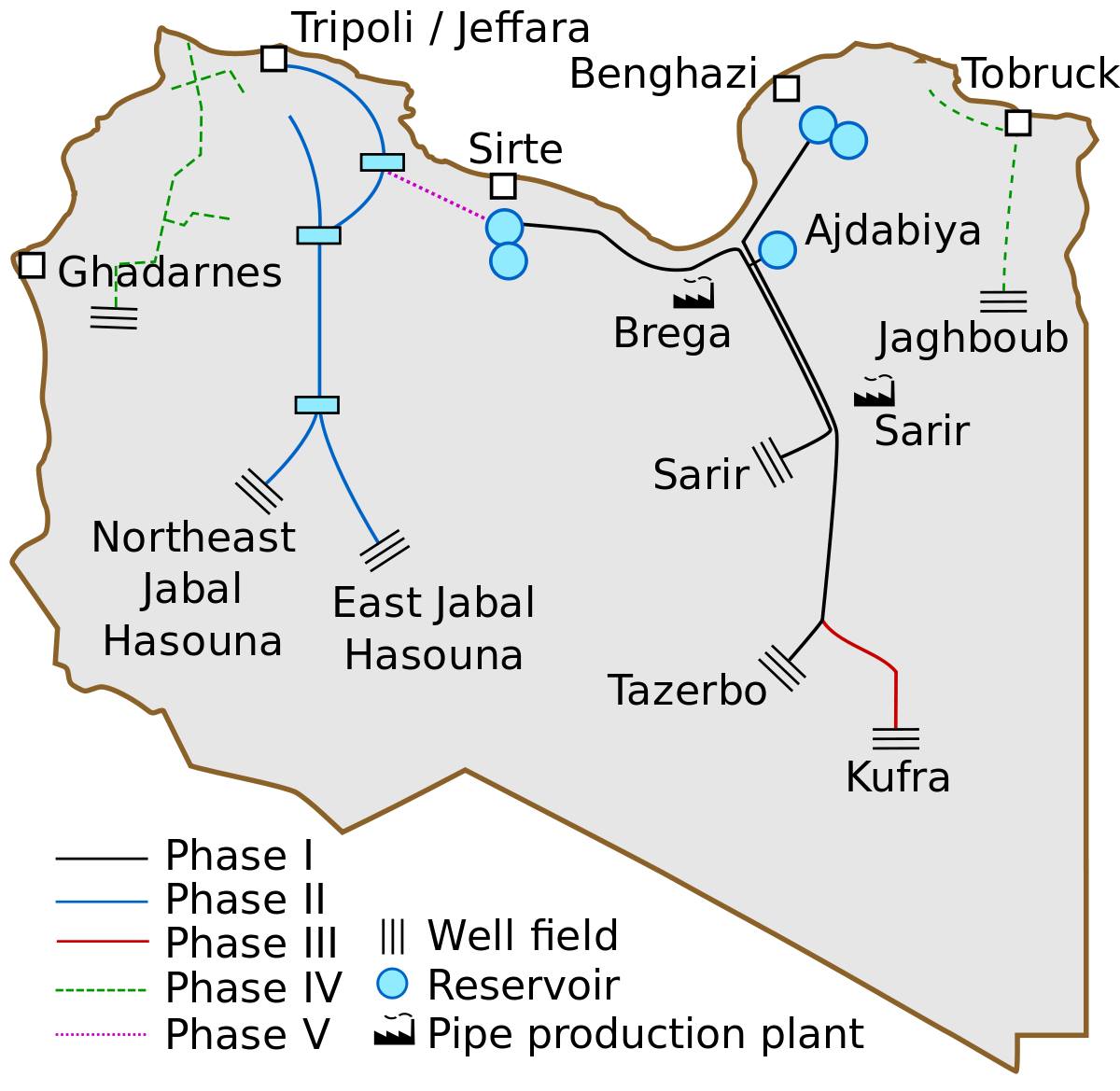
Vlasti su objavile da će napraviti osmo svetsko čudo. Cilj je bio da se iz podzemnih jezera cevima ispod Sahare voda doprema do Tripolija, Bengazija, Sirta i drugih mesta koja su u Libiji gotovo sva grupisana duž meditiranske obale, sa mogućnosti proširenja na Čad, Sudan, Niger i Egipat.
Osim da napaja svoj narod vodom, podzemna reka je prema Gadafijevoj viziji trebala da učini Libiju nezavisnom od uvoza hrane i vode i da njena teritorija bude zelena kao zastava Džamahirije.
Zapadne sile su odmah ovaj projekat nazvale "hobijem besnog psa i projektom sujete."
Ovo remek delo inženjerstva i životni san Gadafija počinje da se realizuje 1984. godine kada pukovnik polaže kamen temeljac u fabrici za izradu cevi u Bregi.
Hiljade radnika rade na projektu Velike veštačke reke, od kojih su mnogi bili i iz bivše **Jugoslavije**. Odlazili su u tu Libiju na rad i inženjeri i radnici, i lekari i medicinsko osoblje, građevinci, mehaničari...
Ogromne poslove po Libiji je radio Energoinvest, Hidrogradnja i ko zna koliko još firmi sa prostora bivše Jugoslavije. Nije bez razloga bila i avionska linija Sarajevo-Beograd-Tripoli i to dva ili tri puta sedmično.
U Beogradu je bilo i predstavništvo aviokompanije Libyan Airlines.
Za prvih 10 godina iskopano je 1 300 izvora na dubini od 500 metara.
Prvi krak reke sa svežom vodom kroz sistem cevi dug 2 800 kilometara stiže u Tripoli 1996. godine.
Nedugo zatim svežu vodu dobijaju Bengazi, Sirt i ostali veći gradovi.
Oko Bengazija sledeće godine odmah počinju da se zelene mladi vinogradi, poljoprivrednici dobijaju subvencije i vodu po povoljnoj ceni.
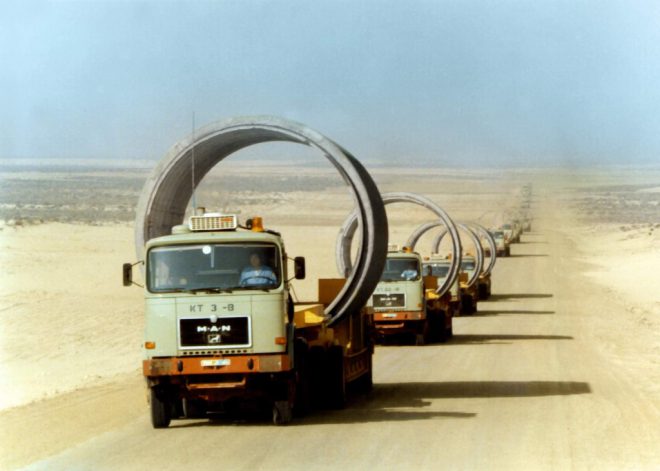
Kako je Libijska centralna banka bila u stoprocentnom vlasništvu države i sve je finansirano beskamatnim kreditima, Gadafi je nastavio da širi svoju veštačku reku kroz cevi prečnika 4 metra, koje su sprečavale da voda ispari u pustinji.
UNESKO je 1999. godine nagradio Gadafija i projekat Velike veštačke reke za značajan naučni doprinos u navodnjavanju suvih područja.
Svetska banka odmah usvaja politiku privatizacije izvora vode i naplatu po tržišnoj ceni, koja će varirati u skladu sa zakonom ponude i potražnje.
Odjednom, Gadafijeva Velika veštačka reka postaje bitan deo te slagalice.
Do 2011. godine Gadafijev sistem Velike veštačke reke se razgranao na preko 4 000 kilometara podzemne mreže preko koje se pitkom vodom snabdevalo 70% stanovništva Libije.
Gadafi je do ovog trenutka u svoj projekat najvećeg sistema za navodnjavanje na svetu uložio 30 milijardi dolara.
Plan je podrazumevao da poslednje dve faze Velike veštačke reke budu završene 2025. godine, kad bi sistem za navodnjavanje kultivisao 155 000 hektara pustinje.
Libija bi tada postala nezavisna od uvoza hrane i vode.
Uz obilje svoje čiste vode, uz bogate izvore najbolje nafte i stabilnu privredu, Libija bi postala nezavisna od drugih i pojačala bi svoj uticaj u svetu.
Gadafi svoj plan Velike veštačke reke nije uspeo da završi zbog jednostavnih okolnosti, ubili su ga.
"Humanitarna intervencija" je od jake i stabilne države napravila zmijarnik rata i poprište stradanja.
NATO je 22. jula 2011. godine krenuo sa vazdušnim napadima na Bregu.
Najintenzivnije udare vršio je na fabriku u Bregi koja je proizvodila masivne betonske cevi za sistem Velike veštačke reke i bila je jedina takva u Libiji.
Ovaj napad je uništio i vitalni deo mreže i izazvao je humanitarnu katastrofu ogromnih razmera. Nakon 2011. godine Libija je upala u haos, na vlasti su dve vlade jedna sa sedištem u Tripoliju koja je međunarodno priznata a druga nepriznata vlada u Bengaziju koja kontroliše istok zemlje, tu su još i desetine raznih milicija i paravojnih formacija koje kontrolišu neke delove zemlje. Projekat nije nastavljen a i ono što je bilo u procesu završetka nije završeno, mreža je dosta zapuštena i uništena a međunarodno priznata vlada Libije nema novca da ovaj projekat završi niti ima kontrolu nad teritorijom na kojoj se nalazi veliki deo ove mreže. Zbog rasula koji vlada Libijom preko njene teritorije prelaze hiljade izbeglica iz Afrike koje idu ka Evropi. Pre nekoliko godina pojavile su se i slike i snimci sa pijace robova u Libiji. Upravo je Gadafi upozorio da ako se uništi stabilna Libija da Evropu očekuje poplava migranata.
U martu 2011. godine, u intervjuu za televizijsku stanicu France 24, Gadafi je upozorio da bez jedinstvene i stabilne Libije "neće biti nikoga da kontroliše veliki broj migranata iz Afrike i Bliskog istoka koji će bežati u Evropu"
- Milioni izbeglica preplaviće evropske granice i definitivno iznenaditi zapadne političare - izjavio je libijski lider Moamer Gadafi nekoliko meseci pre nego što je brutalno pogubljen.
Gadafi 2011. godina.-"Slušajte me sad, vi ljudi iz NATO! Bombardujete zid koji stoji na putu migrantima iz Afrike ka Evropi, i teroristima Al Kaide. Taj zid je Libija. Vi ste ga razbili. Vi ste idioti, i gorećete u paklu zbog hiljada migranata iz Afrike, i zbog podrške Al-Kaidi. To će biti tako. Ja nikada ne lažem. Ne lažem ni sada", napisao je Gadafi u otvorenom pismu koje je objavio ruski dnevni Zavtra u maju 2011. nekoliko meseci pre nego što je ubijen.
Text taken from Facebook, as well as photos that were posted with this post. The text is worth paying attention to ... since it was written in Serbian, I first copied the original, this is a translation of the original.
Nemanja Major
GEOGRAPHY ON THE PALM
November 6 at 10:50 pm ·
"ARTIFICIAL RIVER IN LIBYA"
The Libyan leadership knew that the discovery of underground lakes in a country where water is more in demand than oil is a complete success.
Authorities have announced that they will perform the eighth wonder of the world.
The goal was to deliver water from underground lakes by pipes under the Sahara to Tripoli, Benghazi, Sirte and other places that are almost all grouped in Libya along the Mediterranean coast, with the possibility of expanding to Chad, Sudan, Niger and Egypt.
In addition to supplying its people with water, the underground river, according to Gaddafi's vision, was supposed to make Libya independent of food and water imports and to make its territory green as the flag of the Jamahiriya.
Western powers immediately called the project "a rabbit dog's hobby and a vanity project."
This masterpiece of engineering and Gaddafi's life dream began to be realized in 1984, when the colonel laid the foundation stone in the factory for making pipes in Brega.
Thousands of workers are working on the Great Artificial River project, many of whom were from the former Yugoslavia. Engineers and workers, doctors and medical staff, construction workers, mechanics
went to work in Libya ... Energoinvest did a lot of work in Libya. , Hidrogradnja and who knows how many more companies from the former Yugoslavia. The Sarajevo-Belgrade-Tripoli flight two or three times a week was not without reason.
Libyan Airlines also had a representative office in Belgrade.
In the first 10 years, 1,300 springs were excavated at a depth of 500 meters.
The first branch of the river with fresh water through a 2,800-kilometer pipe system arrived in Tripoli in 1996.
Shortly afterwards, Benghazi, Sirte and other larger cities get fresh water.
Next year, young vineyards will immediately start to be green around Benghazi, and farmers will receive subsidies and water at a favorable price.
As the Libyan central bank was 100% owned by the state and everything was financed with interest-free loans, Gaddafi continued to expand his artificial river through pipes 4 meters in diameter, which prevented water from evaporating in the desert.
In 1999, UNESCO awarded Gaddafi and the Great Artificial River Project for their significant scientific contribution to the irrigation of dry areas.
The World Bank immediately adopts a policy of privatization of water sources and collection at the market price, which will vary in accordance with the law of supply and demand.
Suddenly, Gaddafi's Great Artificial River becomes an important part of that puzzle.
By 2011, Gaddafi's system of the Great Artificial River had branched out into over 4,000 kilometers of underground network through which drinking water was supplied to 70% of Libya's population.
Gaddafi has so far invested 30 billion dollars in his project of the largest irrigation system in the world.
The plan meant that the last two phases of the Great Artificial River would be completed in 2025, when the irrigation system would cultivate 155,000 hectares of desert.
Libya would then become independent of food and water imports.
With an abundance of its clean water, rich sources of the best oil and a stable economy, Libya would become independent of others and increase its influence in the world.
Gaddafi failed to complete his plan for the Great Artificial River due to simple circumstances, they killed him.
The "humanitarian intervention" turned a strong and stable state into a snake war and a scene of suffering.
On July 22, 2011, NATO launched airstrikes on Breg.
He carried out the most intense blows to the factory in Brega, which produced massive concrete pipes for the Great Artificial River system and was the only one of its kind in Libya.
This attack also destroyed a vital part of the network and caused a huge humanitarian catastrophe. After 2011, Libya fell into chaos, with two governments in power, one based in Tripoli, which is internationally recognized and the other unrecognized government in Benghazi, which controls the east of the country, there are dozens of different militias and paramilitaries that control parts of the country. . The project has not continued and what was in the process of completion has not been completed, the network is quite neglected and destroyed and the internationally recognized government of Libya has no money to complete this project or have control over the territory where much of this network is located. Due to the devastation that rules Libya, thousands of refugees from Africa who are heading to Europe are crossing its territory. A few years ago, pictures and footage from the slave market in Libya also appeared. Gaddafi warned that if a stable Libya is destroyed, a flood of migrants awaits Europe.
In an interview with France 24 in March 2011, Gaddafi warned that without a united and stable Libya, "there will be no one to control the large number of migrants from Africa and the Middle Eastto Europe"
fleeing- Millions of refugees will flood European borders and definitely surprise Western politicians - Libyan leader Muammar Gaddafi said a few months before he was brutally executed.
Gaddafi 2011.- "Listen to me now, you people from NATO! You are bombing a wall that stands in the way of migrants from Africa to Europe, and al Qaeda terrorists. That wall is Libya. You broke it. You are idiots, and you are burning in hell for thousands of migrants from Africa, and for supporting al-Qaeda. That will be the case. I never lie. I don't lie now either, "Gaddafi wrote in an open letter published by Russia's daily Zavtra in May 2011 a few months before which was killed.
Text taken from Facebook, as well as photos that were posted with this post. The text is worth paying attention to ... since it was written in Serbian, I first copied the original, this is a translation of the original.
Nemanja Major
GEOGRAPHY ON THE PALM
November 6 at 10:50 pm ·
The greatest copy paste master whose ideology set back half the world
Karl Marx, the creator of the idea of a world of justice and equality, which initiated the most drastic social and political changes in the 20th century, represented the interests of the proletariat without ever meeting any proletarian. He did not visit factories and talk to workers, nor did he investigate the situation of the poor with his own eyes.
He was a cabinet scientist, and his most significant work "*Capital*" was created, Johnson claims, in large part. by rewriting the results of other people's research and insights, by deliberately distorting the facts in order to prove one's own views, by using outdated, inaccurate and falsified data and quotations taken out of context.
In his private life, the "*father of communism*" was prone to violence, unable to manage money, longed for power and needed to constantly exploit his surroundings, the author claims. He was also a model of an unhealthy life of a grumpy nature, quarrelsome and vengeful: he moved a little and ate too much, smoked and drank a lot, rarely bathed and barely washed (so he suffered from subcutaneous ulcers that made him irritable).
According to Johnson's writing, none of the many descendants of Karl and Jenny, who - due to Marx's inability to handle money - were in great misery (it would have been worse without the help of Friedrich Engels), but Marx's illegitimate son Henry Frederick Dermut, when he never officially acknowledged it, and got it with the only working-class representative he knew well — Lenhen's housekeeper.
The ideology that he devised on the basis of other people's ideas on all fronts is slowly losing its meaning because the utopian effect of "*all people in the world of the same status*" is in no way impossible. An economically unsustainable form that has the idea that only industrialization can achieve harmony in the equal distribution of capital. The destroyed agricultural structure, which is in fact the core of society, led to the collapse of communism.
The flames of communism are still smoldering in some parts of the world in countries that have erected fences from the rest of the world, because only in the conditions of the ghetto does this perverted political ideology succeed, even though, realistically speaking, they are the regime system.
Sour candy is easier to eat when wrapped in colorful foil.
Sources: Aleksandra Mijalković, Intellectuals of Low Passions, 2018
The photos used in this article are taken from the site **www.google.com** https://www.google.com/search?q=People+and+machines&tbm=isch&ved=2ahUKEwjhkJKrieDsAhVUIhoKHQZIDz8Q2-cCegQIABAA&oq=People+and+machines&gs_lcp=CgNpbWcQDFAAWABgLGgAcAB4AIABAIgBAJIBAJgBAKoBC2d3cy13aXotaW1n&sclient=img&ei=E_-dX6G7E9TEaIaQvfgD&bih=625&biw=1366&rlz=1C1GCEA_enRS903RS903#imgrc=fkuqJNgp2iLXZM&imgdii=59WbsvxyMo2zmM
Why with the use of smart technology we become stupider and demented
Тhe generally observed state of our intelligence and memory is getting worse. The most common power outage and internet signals cause strong waves of panic attacks. Common sense disappears in a second and makes us totally executed in space in time. The essence of the whole story is that technology facilitates many activities, which has the hidden consequence of "atrophy" of our brain.
Take for example the appearance of a calculator. Before him, people calculated much better, using pencil and paper. After the advent of the calculator, many are unable to perform basic mathematical operations such as addition or multiplication without it. It is similar with memorized phone numbers. Once upon a time, people knew by heart dozens of phone numbers, and today one or two. There is a new teaching philosophy in that direction, which believes that young people should not remember data, but only know where to look for them, if they ever need them.
It is known that human muscles adapt to the activities for which we use them. If we often use them for some repetitive activities that require strength, the muscles grow - *hypertrophied*. If we do not use them for a long time, they *atrophy*. In this way, our muscular system adapts to our activities.
The human brain functions in a very similar way: those actions that we repeat lead to the multiplication of the number of connections (synapses) between nerve cells in the nerve pathways that are used for a given activity. When we do not repeat this action for a long time, the number of synapses decreases. In other words, the brain behaves like a muscle: if we use it, neurons connect better, and if we don't use it, the number of connections decreases. This ability of the brain to save in adapting to requirements is called neuroplasticity.
There are numerous innate programs in the brain of a small child, but also a large number of nerve cells that have yet to build interconnections and establish nerve pathways. Which nerve pathways in the brain will be built depends on external stimulation: what is stimulated is built and maintained, and what is not, is not built and reduced. As the brain of a baby or small child is most stimulated by parents, its organization is not the result of nature, but it is the "social brain".
With the advancement of technology and the consequent entry of various contents through digital screens into the world of children, the question arose as to how prolonged exposure to digital contents affects the development of children's brains.
Children's brains develop quite differently under the influence of digital technology than in children who had normal development with the help of physical activity and learning how to function in the natural environment, relying on their physical abilities such as walking, running, overcoming obstacles, etc.
Digital terror pays tribute. Increased attention disorders, speech therapy defects, physical incapacity in the most ordinary activities, and of course the problem with supersensitivity and disorientation in the social environment. They are easily diagnosed just after expressing a panic attack when they encounter the most common problems, such as ordinary group children's play or not coping with school materials. In the presentation, the lecturers do not recognize a large number of expressions, numbers, formulas… It is difficult to maintain attention while reading longer sentences. Not to mention the texts, they totally lose touch with the essence. Speech delays were also noticed, which mostly took parents to a completely different extreme and suspected deafness. However, it is only a matter of lack of attention and non-recognition of sound signals, that is. non-recognition of the parent's voice in the mass of digitized sounds to which he is accustomed by simulating all day spending on television screens watching cartoons or worse, spending time watching various clips on mobile phones or playing games, playing music.
A much greater boon for your child is writing, drawing, sculpting in clay and plasticine figures and objects that surround them and getting to know the environment. Be creative and show them games from your childhood. Hide phones from them and help them to be physically and mentally developed normally. Do not allow your child to end up as a person with special needs from a normally born child. Fight it. It will be returned to you a hundredfold in the future.
Much less damage is the impact of digital technology on the normally developed brain than growth and development with digital technological terror. Scientifically proven.
Sources:
Mark Prenski, Thesis on Digital Natives and Digital Newcomers, 2001.
Gary Small, Gigi Worgan, Internet Brain, 2011.
Manfred Spicer, Digital Dementia, 2018.
The photos used in this article are taken from the site **www.google.com** https://www.google.com/search?q=People+and+machines&tbm=isch&ved=2ahUKEwjhkJKrieDsAhVUIhoKHQZIDz8Q2-cCegQIABAA&oq=People+and+machines&gs_lcp=CgNpbWcQDFAAWABgLGgAcAB4AIABAIgBAJIBAJgBAKoBC2d3cy13aXotaW1n&sclient=img&ei=E_-dX6G7E9TEaIaQvfgD&bih=625&biw=1366&rlz=1C1GCEA_enRS903RS903#imgrc=fkuqJNgp2iLXZM&imgdii=59WbsvxyMo2zmM
Superparents
From the moment man came into being, parents also came into being. We have to admit how many people and parents of different types, nations, races, mentalities…
As a child I did not have many encounters with children who have some health or mental problems, or at least we did not recognize it. Children do not make a difference when it comes to other children. He sees them with his simple gaze just as he sees himself. For them, there are no invalids, autists, deaf-mute or blind people. They unreservedly help to solve these obstacles in children's play. But these are all features of early childhood.
However, I did not want to write about children with special needs, but about their parents and how they accept the situation with the child. According to the research "Stress in families with children with special needs", back in 2000 in Kragujevac, out of 50 samples made, 18 families were complete, ie. They included mom and dad and another child. Two families were with two or more children with special needs, unfortunately they were single-parent families.
The results were devastating…
Most parents denied the shortcomings of their children and the accompanying result was that the mothers hid the shortcomings of their children and considered it a disgrace for her as a mother and her family?!?!?!
Rarely has a parent understood the problem they face in retardation problems and similar oligophrenological forms of the problem. The presence of depression in the mother was in all possible forms. Self-blame is one of the accompanying elements of parents of children with autism and motor disorders and behavioral disorders. As the cooperation between children and parents grew, so did the self-blame.
Great emphasis was placed on rejection from the family, especially in rural and backward areas where children with special needs were selected as a mockery and disgrace for that family, family and even for parents.
One case is the story of a mother with two blind children in whom blindness arose as a hereditary factor. After the birth of the first son, the child's mother asked for the cause of the child's blindness to be investigated, and the findings indicated a DNA factor and that the combination of the father's and mother's genes led to that deficiency. Not believing in these findings and results, the mother gives birth to another child also with blindness. The father is inconsolable, leaves the family and leaves the mother to take care of two blind children on her own.
It is amazing how much energy and positive we found in families where the parents of a deaf person with children are also deaf by nature. "Easy" communication is the key to functioning in all families. Where it is aggravated, the degree of parental depression and accompanying neuroses and psychotic episodes increases.
With this text, I wanted to show that where there are children with special needs, parents also have problems in functioning, just like their children. Unfortunately, many triggers are in the difficult economic situation of the society where such families live. Without the support of their society and the help of associates, many such families are in a desperate state.
Now that we have looked at other people and their stories, I wish you a happy and joyful day.
The photos used in this article are taken from the site **www.google.com** https://www.google.com/search?q=People+and+machines&tbm=isch&ved=2ahUKEwjhkJKrieDsAhVUIhoKHQZIDz8Q2-cCegQIABAA&oq=People+and+machines&gs_lcp=CgNpbWcQDFAAWABgLGgAcAB4AIABAIgBAJIBAJgBAKoBC2d3cy13aXotaW1n&sclient=img&ei=E_-dX6G7E9TEaIaQvfgD&bih=625&biw=1366&rlz=1C1GCEA_enRS903RS903#imgrc=fkuqJNgp2iLXZM&imgdii=59WbsvxyMo2zmM
Literature from the professional library FASPER Belgrade, 2020.
When you lose half your heart/ Kada izgubiš pola srca
Kako nastaviti život dalje kao sav normalan svet oko vas u momentu kada vam se ruši ceo svet? Da li ustati ujutru ili se samo okrenuti na drugu stranu i ignorisati i Sunce i ljude oko vas? Možda skratiti muke i potonuti u tamu smrti, staviti tačku na sve?!
How to continue living like the whole normal world around you at a time when your whole world is collapsing? Do you get up in the morning or just turn the other way and ignore both the Sun and the people around you? Maybe shorten the torment and sink into the darkness of death, put an end to everything ?!
Sve su ovo pitanja koja dobuju u glavi posle tragičnog gubitka voljene osobe. Život nije stao ni sekunde iako je vama sve stalo. Ujutru svane novi dan i taj dan ima svoj kraj ali opet sledi početak i sve tako u nedogled. Gledate svet oko sebe i ne vidite nikakav razlog da poželite naredni dan. Obuzima vas neka zlosutna tmina i otupelost.
These are all questions that come to mind after the tragic loss of a loved one. Life didn't stop for a second even though you cared about everything. A new day dawns in the morning and that day has its end, but the beginning follows again and so on indefinitely. You look at the world around you and see no reason to wish for the next day. You are overwhelmed by ominous darkness and numbness.
Radite automatski ono što vam vaši govore. Ne rezonujete šta je od svega toga uopšte realno i da li ima ikakvog smisla da baš to uradite. Prve reakcije na vaše stanje je da ste nemoćni i iznureni. Ne pružate nikakve reakcije i čitav vaš organizam se ponaša kao da je mrtav. Jedini dokazi da ste stvarno živi su potreba za snom i hranom.
Do automatically what your people tell you. You do not resonate which of all this is realistic at all and whether there is any sense in doing just that. The first reaction to your condition is that you are helpless and exhausted. You do not give any reactions and your whole organism acts as if it is dead. The only evidence that you are alive is the need for sleep and food.
Jedino pitanje koje se provlači kroz kriziranje je gde naći utehu. To je dokaz da organizam počinje borbu da sve vrati u pređašnje stanje. Mnogi naučnici navode čak vremenske periode koliko dugo čovek tuguje i davi se u tminama svoje psihe, ali sve je to pitanje jer koliko ljudi toliko i ćudi. Svako ima svoje tajminge. Svako različito reaguje na gubitak. Nekog gubitak tera na aktivnosti do iznemoglosti. Dok drugi ljudi polako kopne daveći se u sopstvenoj tuzi.
The only question that runs through the crisis is where to find solace. This is proof that the organism begins to struggle to return everything to its previous state. Many scientists even state the periods for how long a person mourns and drowns in the darkness of his psyche, but it is all a question because as many people crave as much. Everyone has their timings. Everyone reacts differently to a loss. Some lose their activities to exhaustion. While other people slowly land, drowning in their grief.
Razlog za život možete uvek naći u svojoj okolini samo ako imate želju za životom. Sitne radosti koje vam vaši bližnji pružaju u porodičnim okupljanjima mnogo znače. Podrška porodice je najbitnija u procesu emotivnog oporavka. Razgovori, zajedničko ispijanje kafe ili čaja, planiranja raznorazna, pa čak i odlazak u običnu šetnju na psihu deluje kao najprijatnija masaža.
You can always find a reason to live in your environment only if you have a desire to live. The small joys that your loved ones give you in family gatherings mean a lot. Family support is paramount in the process of emotional recovery. Conversations, drinking coffee or tea together, various planning, and even going for a simple walk on the psyche seem like the most pleasant massage
Sve ovo nisam kopirala sa stranica nekih čuvenih psihologa već je moje lično iskustvo. Borim se sa tugom već osam i po godina. Dođe tako jutro kada mi se oči neotvaraju i poželim da me nema ali cika i galama moje dece me prenu i vrate u život kao da sam ispaljena iz katapulta. Bum i kreće ringišpil zvani sasvim običan dan. Priznajem nekada davno bila sam željna dosadnih i običnih dana kada jedino čudo koje se desi je komšijska mačka koja skoči na moj prozor jureći goluba.
I did not copy all this from the pages of some famous psychologists, but it is my personal experience. I have been struggling with grief for eight and a half years. There comes a morning when my eyes do not open and I wish I was gone, but the squeals and noises of my children startle me and bring me back to life as if I had been fired from a catapult. Boom and moving carousel called quite an ordinary day. I admit once upon a time I was longing for boring and ordinary days when the only miracle that happens is a neighbor’s cat jumping on my window chasing a pigeon.
Borite se ljudi. Vaš život nije samo vaš. Uvek ima onih koji su životom vezani za vas. Zavise od vašeg raspoloženja i pomoći. Zahvalna sam što ih imam i što me drže iznad ponora zvani depresija. A za depresiju vezuju me samo tužne uspomene. Njih ne možemo da izbrišemo ali možemo da ih savladamo i da živimo normalno u onoj meri koliko smo spretni da sve to savladamo.
Znači život je u stvari borba. I ne treba stati nikada.
Fight people. Your life is not just yours. There are always those who are bound to you by life. It depends on your mood and help. I am grateful to have them and to keep me above the abyss called depression. And only sad memories bind me to depression. We cannot erase them, but we can overcome them and live normally to the extent that we are able to overcome them all.
So life is actually a struggle. And you should never stop.
Bivši i bivše /Ex and ex
Pošto kroz život nikada nisam imala predrasude i družila sam se sa ljudima od 7 do 107, tako sam nailazila na interesantne priče. Tako naletim na post moje prijateljice koja se kako ona kaže našla u „neobranom grožđu“. Osim nje i njen suprug ima Fb profil i naravno većina prijatelja im je zajednička.
Since I have never had prejudices in my life and I hung out with people from 7 to 107, I came across interesting stories. That's how I came across a post of my friend who, as she says, found herself in "unpicked grapes". Besides her, her husband also has a Fb profile and of course most of their friends have in common.
Primetila je da se na njihove uspomene sa odmora i izleta ispod fotografija pojavila nepoznata ženska osoba koja je sve svoje simpatije uglavnom upućivala njenom suprugu. Kroz neformalne razgovore sa njim, saznala je da je to njegova velika ljubav iz mladosti.
She noticed that an unknown female person appeared on their memories from vacation and excursions under the photos, who mostly directed all her sympathies to her husband. Through informal conversations with him, she learned that it was his great love from his youth.
Bili zajedno godinu dana i svako je otišao na svoju stranu kroz život kada su shvatili da nisu kompatibilne ličnosti. Ona je volela izlaske, on mir sopstvenog doma, ona hevi muziku, on romanse, ona nije bila tradicionalna devojka a on je želeo baš da bude u skladu sa tradicijom i svojom porodicom.
They were together for a year and everyone went their separate ways through life when they realized they were not compatible personalities. She loved going out, he loved the peace of his own home, she loved music, he loved romance, she was not a traditional girl and he wanted to be in harmony with tradition and his family.
„Sada se pojavila i leluja kao avet iz prošlosti na našim prelepim fotografijama sa decom… ne može da se smiri, tako matora žena i nije je sramota. Kako bi ona reagovala da ja njenog muža proganjam po Fb ?!?!?! …. „
Žali mi se prijateljica a meni smešno. Kao prvo, njih dvoje su pa jedno pola veka zajedno i ne verujem da bi jedna bivša ljubav rasturila takvu instituciju.
Možda su dosadili jedno drugome? Ušli u kolotečinu… sve im je postalo u braku ritual po već znanom scenariju.
"Now the swing has appeared as a ghost from the past in our beautiful photos with children" she can't calm down, she is such an old woman and she is not ashamed. How would she react if I chased her husband on Fb?!?!?! …. "
My friend complains and it's funny to me. First of all, the two of them have been together for half a century, and I don't believe that one former love would break up such an institution.
Maybe they bored each other? They got into a rut… everything became a marriage ritual for them according to an already known scenario.
Pa ne bih rekla. Deca dobila krila i odletela iz gnjezda. Kuća samo za njih dvoje. Počinju ponovo da upoznaju jedno drugo i shvataju zašto su zajedno svo to vreme. Bivše ljubavi mogu samo da im se pridruže kao dobri prijatelji iz daleke prošlosti, kažem ja njoj. Ona me gleda pronicljivo, žmirka, trepće, šmrknu jednom u maramicu da bi pojačala dramatiku i na sreću se složi sa mnom ali na kratko jer joj pade na um da ona se baš lepo seća njenog Dragana sa fakulteta, i senf žutog fiće koji je vozio pa je zbog nje promenio u crnog. Bio je tako visok da ga je videla na kraju ulice kada joj žurio na sastanak. Uh, reče još je steže u grudima, ali onu Violetu nije mogla da mu oprosti i sve se srušilo za minut.
Joj što bi im deca bila slatkaaaa …
Ja, tog momenta sam ustala i rekla da nije sve preljuba u životu. I da častan čovek kao što je njen suprug nije mu ni na kraj pameti ono što ona pomišlja. Prija mu pažnja bivše devojke, ali ***BIVŠE*** i to je to… eto da vide njegovi ortaci da još nije kanta za bacanje …
Well, I wouldn't say. The children got wings and flew out of the nest. A house just for the two of them.
They begin to get to know each other again and understand why they have been together all this time. Former loves can only join them as good friends from the distant past, I tell her. She looks at me shrewdly, blinks, blinks, sniffs once into a handkerchief to amplify the drama and happily agrees with me but briefly because it occurs to her that she remembers very well her Dragan from college, and the mustard yellow fiche he drove so he changed it to black because of her. He was so tall that she saw him at the end of the street when he hurried to meet her. Uh, he said, still squeezing her chest, but she couldn't forgive Violet for him and everything collapsed in a minute.
Oh, how cute their children would be…
I, at that moment, got up and said that not everything is adultery in life. And that an ordinary man like her husband doesn't even remember what she thinks. He likes the attention of his ex-girlfriend, but the EX and that's it… his friends will see that he is not yet a bucket to throw…
Da li vi u prijateljima na društvenim mrežama imate bivše partnere u prijateljima? Da li im ulazite u albume da procenite da li je srećan bez vas ili je ta svraka pored njega baš žalosnog izgleda i da vi ipak izgledate zgodnije hiljadu puta :D
Volela bih da čujem vaše mišljenje ;)
Do you have ex-partners in friends on social media? Do you enter their albums to assess whether he is happy without you or is that magpie next to him really sad looking and that you still look prettier a thousand times: D
I would love to hear your opinion;)
How important is the photography/ Koliko je važna fotografija
Sređujući fioke obavezno nađem stare fotografije. Oštećenih ivica, pune fleka, one meni evociraju i donesu puno emocija i informacija.
While arranging the drawers, I always find old photos. Damaged edges, full of stains, they evoke me and bring a lot of emotions and informations.
Fotografija prikazuje samo jedan trenutak. Fotografija zaustavlja vreme za taj jedan tren.
The photo shows only one moment. Photography stops time for that one moment.
Ona može predstavljati svedoka jednog tog momenta ili biti dokument sa svim podacima o tom vremenu, stilu i okruženju. Može baš kao slika da govori hiljadu reči.
It can represent a witness to one of those moments or be a document with all the information about that time, style and environment. It can be worth a thousand words just like a picture.
Nekada je bio običaj da se fotografišu najbitniji događaji jer je proces od poziranja do fotografije trajao dugo i bio skupocen posao.
It used to be a custom to photograph the most important events because the process from posing to photography took a long time and was an expensive job.
Развојeм технологије сада је доступна у новој форми као дигитални документ.
With the development of technology it is now available in a new form as a digital document.
Mnoge uspomene koje nosimo u našoj memoriji vremenom bivaju zaboravljene jer stižu novi momenti i nove impresije nekim datim okolnostima i dešavanjima. Međutim, fotografijom taj jedan trenutak izdvajamo iz tog perioda i ostavljamo kao dokaz ili podsetnik za neku budućnost.
Many memories that we carry in our memory are forgotten over time because new moments and new impressions arrive with some given circumstances and events. However, with photography, we single out that one moment from that period and leave it as proof or a reminder for some future.
Eventualno, moglo bi se govoriti o istrajavanju trenutka kroz sećanje nekog od aktera datog događaja. Ipak, trenutak bi i dalje ostao prolazan, s obzirom na to da egzistira kroz sećanje bića koje je i samo prolazno, to jest čoveka. Važi i obrnuto – ne samo da se trenutak ne čuva od zaborava ako nastavi da živi u sećanju nekog čoveka, nego se ni čovek ne spašava od zaborava ukoliko nastavi da živi kao deo trenutka oformljenog u fotografiji.
Eventually, one could talk about enduring the moment through the memory of one of the actors of a given event. However, the moment would still remain transient, considering that it exists through the memory of a being that is only transient, that is, a human being. The opposite is also true - not only is a moment not kept from oblivion if it continues to live in a person's memory, but a person is not saved from oblivion if it continues to live as part of the moment formed in photography.
Držimo li se ove definicije, fotografija dobija povlašćen status među umetnostima, jer ona najdirektnije kopira stvarnost. Svi ostali oblici umetnosti indirektno oponašaju stvarnost, a time je i u mnogo većoj meri menjaju. Osim toga, proces stvaranja svih ostalih umetnosti, kao i njihova recepcija kod posmatrača dela, sadrže forme koje traju i ne mogu biti svedene na trenutak.
If we stick to this definition, photography gets a privileged status among the arts, because it most directly copies reality. All other forms of art indirectly imitate reality, and thus change it to a much greater extent. In addition, the process of creating all other arts, as well as their reception by the viewer of the work, contain forms that last and cannot be reduced to a moment.
Spina znači život...
U Kragujevcu (Srbija), već par godina rade se teški operativni zahvati zbog kojih se ranije išlo po belom svetu. Iznenađujuće je koliko je odelenje za ortopediju i fizikalnu medicinu postalo na svetskom nivou. Osim iznenađenja,utisak je da je više donelo olakšanje.
Centar gde se korekcije obavljaju zove se jednostavno *Klinički centar Kragujevac* a odelenje *Spinalna hirurgija.* Lekari Odeljenja spinalne hirurgije KC Kragujevac su uz asistenciju prof.dr Norberta Venture obavili tri operacije kod pacijenata sa teškim deformitetima kičmenog stuba, savremenim minimalnoinvazivnim pristupom. Operisani pacijenti se uspešno oporavljaju u kućnim uslovima.
#Spinalnahirurgija #drSrdjanVlajovic #drIvanStojadinovic #drPavleDoderovic
U okviru centra za hirurgiju bolesti kičmenog stuba gde rade vrhunski specijalisti iz ove oblasti postoje sve vrste dijagnostike i procedura koje se odnose na kičmu i kičmenu moždinu.
Postoje 3 tipa procesa koji se na kičmi mogu lečiti hirurški:
Patološke promene koje vrše pritisak na nervne strukture (kičmenu moždinu ili korene živaca), nestabilnost delova kičmenog stuba, kao i neki drugi uzrok bola koji je moguće rešiti samo hirurškim putem.
Sama anatomija kičmenog stuba je veoma karakteristična. Sastoji se od pršljenova između kojih se nalaze diskovi koji funkcionišu kao amortizeri. Na kičmeni stub se sa spoljne strane naslanjaju mišići, a unutar kičmenog stuba postoji kanal u kome se nalaze kičmena moždina i počeci kičmenih živaca. Kičmeni stub se sastoji iz 3 dela: vratni (cervikalni), grudni (torakalni) i lumbalno-krsni (lumbosakralni).
Samo funkcionalni kičmeni stub znači zdrav i sposoban organizam koji može normalno da funkcioniše u svojoj sredini. Nekada su deformiteti uzrokovali stanja invalidnosti ali zahvaljujući naučnom radu i pristupu mnogi problemi budu rešeni sa par operativnokorektivnim zahvatima. Jednostavno rečeno stiglo je "Novo doba".
Autism...
Developmental disorder that occurs usually in the first three years of life. It is caused by a variety of factors that affect the brain's development, structure and functioning.
Sensory perception, speech, opinion, understanding of social situations is problematic and is therefore called into question and therefore results in a very different way through behaviour and relationship with the outside world.
Autism isn't really that rare. It is known that if the whole spectrum of autistic disorders is implied, the disorder can affect nearly 6 out of 1,000 people. Autism can happen to any family, regardless of racial, national and ethnicity, social and economic status, and is quadruple more common in boys than in girls. Early diagnosis, treatment and inclusion in the educational process are key for children with autism. This can help them develop their social and communication skills, become more independent and lead a more fulfilling and productive life.
No cure for autism has been found. Children with autism grow up to be people with autism. People with autism need support throughout their lives to achieve and enable their potential.
Many experts believe this complex problem is not caused by a single cause. There are serious indications that autism occurs as a result of various factors affecting brain development, its structure and functioning.
What is autism?
-autism is not a mental illness;
-children with autism are not rude children with behavioral problems;
-autism is not caused by "cold" parents who pay insufficient attention to their children;
-autism does not occur due to emotional deprivation and stress.
It's true:
-that people with autism are emotional;
-that people with autism want communication;
-that people with autism can be educated;
-that people with autism can work.
It has been scientifically proven that early identification and targeted early intervention can significantly improve the life outcome of people with autism. There are more and more examples from the world about people with autism who finish schools, colleges and qualify for a variety of professions, but in order to make it a rule we need the support of society.
There are many programs to help and work with people with autism but none are equally good and sufficient for everyone. Therefore, everyone directly interested in creating individual programs must participate: people with autism as much as possible, parents, family members, therapists and engaged experts.
The boy and the model ship
An 11-year-old boy, Carl Birgison, who has autism, built the largest Titanic out of Legos. The venture took him over 700 hours over 11 months and 56,000 dice. His ship is anchored at the Titanic Museum in Tennessee.
Ono kad ti pukne živac :D https://twitter.com/i/status/1315991941281181697
Getting to Antarctica
My childhood friend lives and works on an overseas cruise. She has traveled the planet straight 4 times, covering all parts of the world. He sends me the most beautiful scenes from a tour of Antarctica, which was unavoidable this year as well, despite Chovid 19.
Whether operators will be able to run trips will depend on whether the gateway ports – such as Ushuaia in Argentina (pictured) – will open up again. There’s no point in running a trip if passengers can’t get to the departure point.
It’s not just guests, but also staff and supplies too. If ships can’t get what they need in port and they can’t ensure everyone on board is free of Covid, trips won’t be able to run.
Cruise ships are already well equipped for managing the spread of illness because of the risk of norovirus, but coronavirus has taken the fear to the next level.
The biggest concern for all companies is what will happen if they do get a case. While all cruise ships carry a doctor and limited medical facilities, they are not equipped to deal with life-threatening emergencies. In such situations, the patient would normally be either transferred to another vessel that is heading back to port or evacuated by plane – but neither of those solutions would be an option with a live Covid case.
While Covid-19 might be a major concern for the Antarctic tourist industry, it could be good news for the region itself.
Without tens of thousands of tourists visiting, there’s less risk of non-native species being introduced, habitats being traed or pristine areas polluted.
One study into the gentoo penguin colony at Port Lockroy, a popular tourist site, showed that the number of breeding pairs had declined by 25% over the past 21 years. Other nearby and less-visited colonies were unaffected, suggesting the decline could be related to tourism.
But another study of stress hormones in penguin guano found no discernible difference in stress levels between penguins that live around visitors sites and those that don’t. The birds appear to have become habituated to the presence of humans.
The next breeding season will start around November, so experts are waiting to see if the lack of visitors this year will have a noticeable impact on the penguins’ breeding success.
For tour operators and visitors, these changes may even be seen as good news. As the ice melts, new sites open up and parts of the continent become more accessible.
Moj prijatelj iz detinjstva živi i radi na prekomorskom kruzeru.. Proputovala je planetom pravo 4 puta, pokrivajući sve delove sveta na sve strane sveta. Šalje mi najlepše scene sa turneje po Antarktiku, što je bilo neizbežno i ove godine, uprkos Chovid 19. Da li će operateri moći da vode putovanja zavisiće od toga da li će se portovi za prolaz – kao što je Ušuaja u Argentini ponovo otvoriti. Nema svrhe ići na putovanje ako putnici ne mogu da dođu do mesta polaska. Ne radi se samo o gostima, već i o osoblju i potrepštinama. Ako brodovi ne mogu da dobiju ono što im treba u luci i ne mogu da osiguraju da svi na brodu budu sigurni od Covida, putovanja neće moći da se vode. Kruzeri su već dobro opremljeni za upravljani za stopiranje širenja bolesti zbog rizika od norovirusa, ali je koronavirus digao strah na viši nivo.
Najveća briga za sve kompanije je šta će se desiti ako dobiju slučaj. Dok svi kruzeri prevoze lekare i ograničene medicinske ustanove, oni nisu opremljeni da se nose sa hitnim slučajevima opasnim po život. U takvim situacijama pacijent bi obično bio ili prebačen na drugo plovilo koje se vraća u luku ili bude evakuisano avionom – ali nijedno od tih rešenja ne bi bilo opcija sa živim slučajem obolelim od Kovida.
Mada bi Kovid-19 mogao da bude velika briga za turističku industriju Antarktika, to bi mogla da bude dobra vest za sam region..
Ostavši bez desetina hiljada turista kroz posete, smanjen je rizik da se uvezu nove životinjske vrste, da se staništa premeste ili da se zagađuju netaknuta područja... Jedna studija o koloniji gentoo pingvina u Port Lokroju, popularnoj turističkoj lokaciji, pokazala je da je broj parova za uzgoj opao za 25 odsto u proteklih 21 godinu. Druge obližnje i manje posećene kolonije nisu pogođene, što ukazuje da bi pad mogao da bude povezan sa turizmom. Ali druga studija hormona stresa u pingvinskom guanu nije otkrila primetnu razliku u nivou stresa između pingvina koji žive oko mesta za posetioce... Izgleda da su ptice navikle na prisustvo ljudi..
Sledeća sezona parenja počeće oko novembra, tako da stručnjaci čekaju da vide da li će nedostatak posetilaca ove godine imati primetan uticaj na uspeh uzgoja pingvina... Za turoperatore i posetioce, ove promene se mogu posmatrati čak i kao dobra vest. Kako se led topi, otvaraju se nove lokacije i delovi kontinenta postaju pristupačniji.. Rute i destinacije će se menjati kada nove oblasti postanu dostupne i dok se životinje budu premeštale u potrazi za novim uzgajalištima. Putovanja takođe mogu postati pristupačnija kako putovanja postaju lakša i popularnija.. Antarktički turizam cveta u poslednjih nekoliko godina, ali se eksperti nadaju da će pandemija pružiti turističkim operaterima priliku da se vrate korak unazad i ponovo razmisle.
Toblerone
Thousands of sweets and delicious desserts, I choose Toblerone.
Even if you don't know Toblerone's name, odds are good you can recognize it just by its shape. From the other side of a busy, crowded duty-free shop, it's easy to spot the pyramid-shaped, gold foil-wrapped chocolate bars the brand is known for.
Toblerones were invented in 1908 by Swiss chocolatier Theodor Tobler, who came up with the idea of filling creamy chocolates with crunchy Italian torrone (honey and nut nougat). That was the origin of the name Toblerone -- a mashup of Tobler's name and the filling's.
Although the quest to turn a bigger profit means that some food brands have strived to get themselves stocked in every grocery store in the world, Toblerone stands out as the rare product that hasn't tried to be all things to all people. They don't have any celebrity spokespeople or a catchy jingle. Despite the fact that you can get an identical Starbucks latte in any major city, a Toblerone chocolate bar still has a sense of insider access.
And while the packaging has remained the same, there have been some updates over the years. Originally only available in milk chocolate, Toblerone has expanded to include white, dark and other flavors.
In an increasingly connected world, where Coke cans and iPhones are as omnipresent in Malaysia as they are in Manhattan, opening up a Toblerone still manages to feel like an experience you can't quite replicate at home.
Despite its timeless feel, the candy is a relatively spry 112 years old.
Čak i ako niste čuli za Toblerone kao ime, šanse su dobre da ih možete prepoznati samo po obliku. Sa druge strane sveprisutne,prepuni su ih frišopovi, lako je uočiti čokoladne štangle u obliku piramide, zlatne folije po kojima je brend poznat. Toblerone je 1908. izumeo švajcarski čokoladijer Teodor Tobler, koji je došao na ideju da napuni kremaste čokolade hrskavim italijanskim torronom (med i nugat sa orasima). To je poreklo imena Toblerone. Iako potraga za većom zaradom znači da su se neki brendovi hrane trudili da se snabdeve u svakoj prehrambenoj prodavnici na svetu, Toblerone se ističe kao redak proizvod koji nije pokušao da bude previše nametljiv. Nemaju slavne govornike ili uzbudljiv džingl. Uprkos činjenici da možete dobiti identičnu Starbucks kafu u bilo kom većem gradu, toblerone čokoladica još uvek ima osećaj insajderskog pristupa. I dok je ambalaža ostala ista, bilo je nekih novosti tokom godina. Prvobitno dostupan samo u mlečnoj čokoladi, Toblerone se proširio tako da uključuje bele, tamne i druge ukuse. U sve povezanijem svetu, gde su konzerve koka-kole i ajfoni sveprisutni u Maleziji kao i na Menhetnu, otvaranjem Tobleronea i dalje uspevate da se osećate kao iskustvo koje ne možete baš da kopirate kod kuće. Uprkos bezvremenom osećaju, slatkiš je star svega 112 godina.

Webinari, kursevi i obuke ?/ Webinars, courses and trainings
Danas na društvenim mrežama zatrpani smo reklamama o silnim obukama, webinarima i kursevima gde za neke simbolične iznose dobijate svo potrebno znanje i veštine da bi ste mogli raditi u IT industriji. Koliko je sve to merodavno?! Kome verovati???
Today on social networks we are flooded with advertisements about great trainings, webinars and courses where for some symbolic amounts you get all the necessary knowledge and skills to be able to work in the IT industry. How authoritative is all this ?! Who to trust ???
poreklo reprodukcije Google Search
Evo na primer poslovi developera ili npr. dropšipera, virtuelnih asistenata su ogromne oblasti i zahtevaju konstantne edukacije jer se dnevno menjaju i usavršavaju tulovi i mora da se prati ritam da bi se održali na tržištu.
Here, for example, are the jobs of developers or e.g. droppers, virtual assistants are huge areas and require constant education because the bodies change and improve daily and the rhythm must be followed in order to stay order to survive on outlet.
Znači tržište je obezbeđeno i spremno ali šta ponuditi ili pak šta izabrati. Da li izabrati pojedinca koji nam nudi kratke obuke on line na mesečnom nivou u vidu podcasta ili izabrati realnu školu sa šestomesečnim ili jednogodišnjim planom? Samo se pitanje nameće posle odabira, da li je u planu obuke uračunata i praksa? To je u stvari srž takve edukacije.
So the market is secured and ready, but what to offer or what to choose. Should we choose an individual who offers us short online trainings on a monthly basis in the form of podcasts or choose a real school with a six-month or one-year plan? The only question that arises after the selection is, is the practice included in the training plan? That is, in fact, the core of such education.
poreklo reprodukcije Google Search
Na mnogim platformama data je prebogata ponuda kurseva ali praksa je tipa, provežbati posle predavanja u vidu testiranja pređenog gradiva. Za kraj svi oni daju digitalne sertifikate i tu stvarno nema problema ali se sada kao svršeni developer nalazite u još težoj poziciji. Sve vam je jasno, savladali ste neke osnovne stvari ali to je tek temelj. Sledeća stepenica je naći poslodavca i ponuditi svoje znanje. E tu vam sertifikat dođe samo kao podsetnik čime bi trebali da se bavite.
On many platforms, there is a very rich offer of courses, but the practice is of the type, to practice after the lecture in the form of testing the passed material. In the end, they all give digital certificates and there is really no problem, but now as a graduate developer you are in an even more difficult position. Everything is clear to you, you have mastered some basic things but that is just the foundation. The next step is to find an employer and offer your knowledge. Well, the certificate comes to you only as a reminder of what you should do.
poreklo reprodukcije Google Search
Poslodavci znaju da treba da im se završi nekakav posao i znaju neke osnovne stvari ali ne i da veština virtuelnog asistenta ne podrazumeva poslove programera ili pak developera. Oni mogu da ažuriraju sajtove ali ne i da ih izrađuju. Međutim, sretala sam masu ljudi koji su multipraktik i takav status su izgrađivali eto zahvaljujući poslodavcima koji kada se naviknu na rad sa vama teško se odlučuju za neko novo lice.
Employers know that they need to get some work done and they know some basic things, but not that the skill of a virtual assistant does not mean the work of a programmer or a developer. They can update sites but not create them. However, I met a lot of people who are multipractitioners and they have built such a status thanks to employers who, when they get used to working with you, find it difficult to decide on a new person.
poreklo reprodukcije Google Search
Zahvaljujući internetu edukacija nam je na "izvol'te" servirana, sažeta i dostupna 24/7 tokom čitave godine iz tople i meke fotelje. Na nama je da izaberemo pravac, i dovoljno volje i energije za novim znanjima i veštinama. Topla preporuka sa moje strane bez obzira koje polje izaberete. Možda se i pronađete. Srećno!
Thanks to the Internet, our education is "please" served, concise and available 24/7 throughout the year from a warm and soft armchair. It is up to us to choose the direction, and enough will and energy for new knowledge and skills. A warm recommendation from my side no matter which field you choose. Maybe you will find yourself. Good luck!
Life is never fair play/Život nije fer plej nikad
Zašto nam se gotovo uvek nameće pitanje da li je život prema nama fer plej? Da li smo takav zaključak izveli posle nekih teških i dugih rasprava oko ličnih statusa sa partnerom ili pak gledajući „sreću“ pojedinaca u našem okruženju kako voze upravo najnoviji model auta koji bi vama više odgovarao?
Why is the question almost always asked if life is fair play for us? Did we draw such a conclusion after some difficult and long discussions about personal status with a partner, or watching the "happiness" of individuals in our environment as they drive the latest car model that would suit you better?
Fer je vrlo interesantan koncept koji se tako često koristi u raznim dijalozima od ličnih dečjih do javnih odraslih, a tako se malo priča o samom stavu. Često se vezuje za nečiji stav zadovoljnog, uspešnog i srećnog čoveka, dovodeći se u sumnju na koje načine je on stigao do svojih ciljeva. Uspešno se uvek dovodi u sumnju ili pak se idealizuje nečiji status pa nam sve to deluje nedostižno i dovodi do apstraktnosti.
Fair play is a very interesting concept that is so often used in various dialogues from personal children's to public attitudes of adults, and so little is said about the attitude itself. It is often associated with someone's attitude of a satisfied, successful and happy man, questioning the ways in which he reached his goals. Successfully it is always questioned or one's status is idealized, so all that seems unattainable to us and leads to abstraction.
Retko se dešava da nečiji uspeh probudi ambicije kod nas i bude dodatno gorivo u putu ka našim višim ciljevima. To su uglavnom „zrele“ osobe i već dokazane u svom poslu. Ali kako one osobe koje nisu ni pokušale da dođu do uspeha i ne retko viđamo da neke uobičajene stvari iz običnog života pasivni tipovi smatraju ogromnim uspehom….
Blago tebi, ti imaš auto, ili pak, imaš devojku i ne znaš kako je kada si sam, a nikada ne dovode u pitanje a zašto biraju da budu sami i šta je to što ih sprečava i zašto smatraju da to treba sam život da im priredi umesto da se potrude sami. Razlozi su raznorazni i sa njihovog gledišta uvek opravdani i uvek je neko drugi kriv što su oni tužni i neuspešni.
It rarely happens that someone's success awakens our ambitions and is an additional fuel on the way to our higher goals. These are mostly "mature" people and already proven in their work. But as those people who have not even tried to achieve success and we often see that some common things from ordinary life passive types consider a huge success….
Bless you, you have a car, or you have a girlfriend and you don't know what it's like when you're alone, and they never question why they choose to be alone and what is it that prevents them and why they think that life itself needs them prepare instead of trying on your own. The reasons are various and from their point of view they are always justified and it is always someone else's fault that they are sad and unsuccessful.
Koliko god bili u aut fazi treba iz okoline crpeti pokretačke energije. Nekome je dovoljno da oseti zrake sunca na svom licu i da taj momenat bude razlog za pozitivni stav i dobro raspoloženje. Nečiji osmeh i ljubaznost na početku dana mogu nam pomoći da taj dan počnemo u lepoj i prijatnoj formi. Moramo i da se naučimo da je i davanje jedan od načina da sebi podignemo raspoloženje i izborimo se sa svim ne fer situacijama tog dana.
No matter how much you are in the out phase, you need to draw driving energy from the environment. It is enough for someone to feel the rays of the sun on their face and for that moment to be a reason for a positive attitude and good mood. Someone's smile and kindness at the beginning of the day can help us start that day in a nice and pleasant way. We must also learn that giving is one of the ways to lift our spirits and deal with all the unfair situations that day.
Sami u sebi nađimo pozitive i samopouzdanja pa ko zna, možda se izborimo za svoje mesto ispod ovog sivog neba.
We find positives and self-confidence in ourselves, so who knows, maybe we will fight for our place under this gray sky.
 @tatatatira