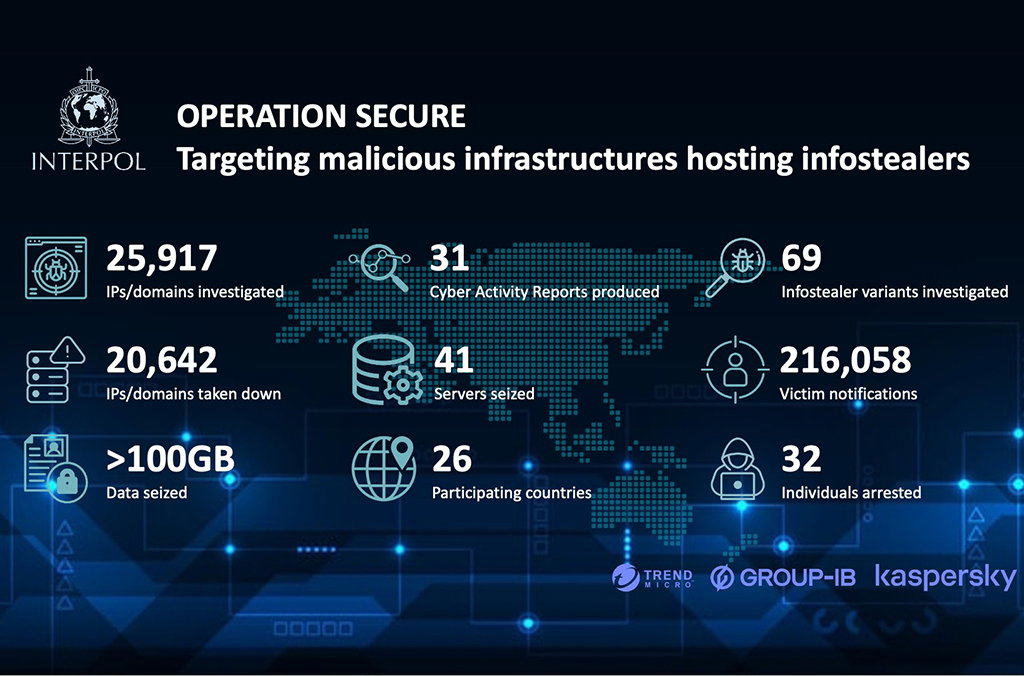
INTERPOL Takes Down a Infostealers Operation
Congrats to INTERPOL for taking down a major cyber information-theft infrastructure! Over 20 thousand Ips/domains were shuttered and 41 servers that contained more than 100GB of sensitive data was seized. It is estimated this group, 32 of which were arrested, victimized over two-hundred thousand people by stealing their login credentials, credit card information, and cryptocurrency wallet keys.
Such takedowns are a showcase of public and private cooperation across cybersecurity to undermine the proliferation of organized criminals and the cybercrimes they are committing.
INTERPOL Announcement: **https://www.interpol.int/News-and-Events/News/2025/20-000-malicious-IPs-and-domains-taken-down-in-INTERPOL-infostealer-crackdown**
Cycles That Drive Cybersecurity
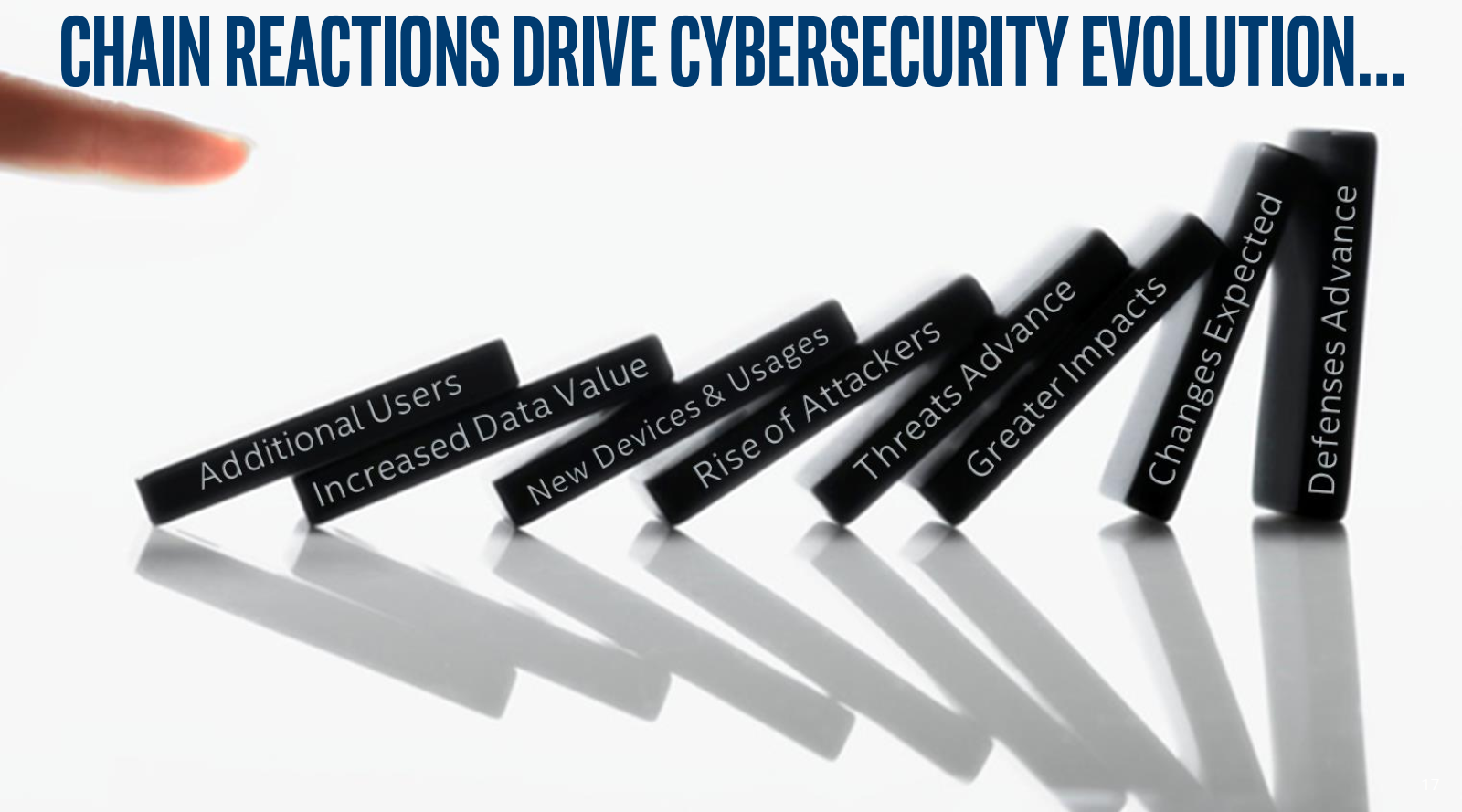
The cybersecurity industry moves fast! The attackers are constantly adapting and relentless in their pursuits that victimize others. New users are being added to the global online ecosystem. Services are hungry for data, which is rising in total value. The result is more attacks and greater impacts. These detrimental effects shift consumers’ expectations which in turn drive the slow gears of regulation. With greater public concern comes a willingness to spend money on solutions. This drives innovation and the advancement of cybersecurity defenses.
Having observed and participated in the cybersecurity field for over three decades, I first outlined this strategic cycle nearly 20 years ago. It has proven consistently true as an underlying engine that propels the cybersecurity industry forward.
This cycle will not stop anytime in the foreseeable future and there are lessons to be learned.
**Anticipate future threats**: Don’t just address today’s issues — invest in understanding and preparing for what’s next.
**Recognize the delay**: Solution providers will always lag behind attacker innovation. Be prepared for the attacker’s window of opportunity where tech tools fail, but behaviors and processes may provide risk mitigation.
**Stay agile**: Build teams and processes that can adapt as quickly as the threat landscape changes.
**Think strategically**: Never be fully committed to dealing with the issues of today, but allocate investments in the challenges we can anticipate in the future.
**Collaborate and share knowledge**: The more we work together, the stronger our collective defenses become.
Understanding the undercurrents that create chaos in cybersecurity can help leaders better navigate the storms and troubled waters more safely and sustainably.
Why Threat Agents Must be Included in Cybersecurity Risk Assessments
https://www.youtube.com/watch?v=MCof-cko2iI
In the ever-evolving landscape of cybersecurity, organizations face a constant struggle: how to best allocate limited resources to maximize their defensive posture. No one has enough budget, personnel, or tools to defend against every conceivable threat. When effort is misapplied to low-risk areas, higher-risk areas are left exposed. This inefficiency can prove disastrous. Risk management is a zero-sum game where every dollar, hour, or tool directed to one area means less for another. That is why having superior insights is a serious advantage.
With threats growing in sophistication and frequency, it’s easy to feel overwhelmed and tempted to defend every possible vulnerability. But as Frederick the Great stated “He who defends everything, defends nothing.” Proper prioritization is essential to align resources for the maximum effect. The key to efficient and effective cybersecurity is prioritization — and that means understanding and including Threat Agents in your risk assessments.
The Missing Piece: Threat Agents
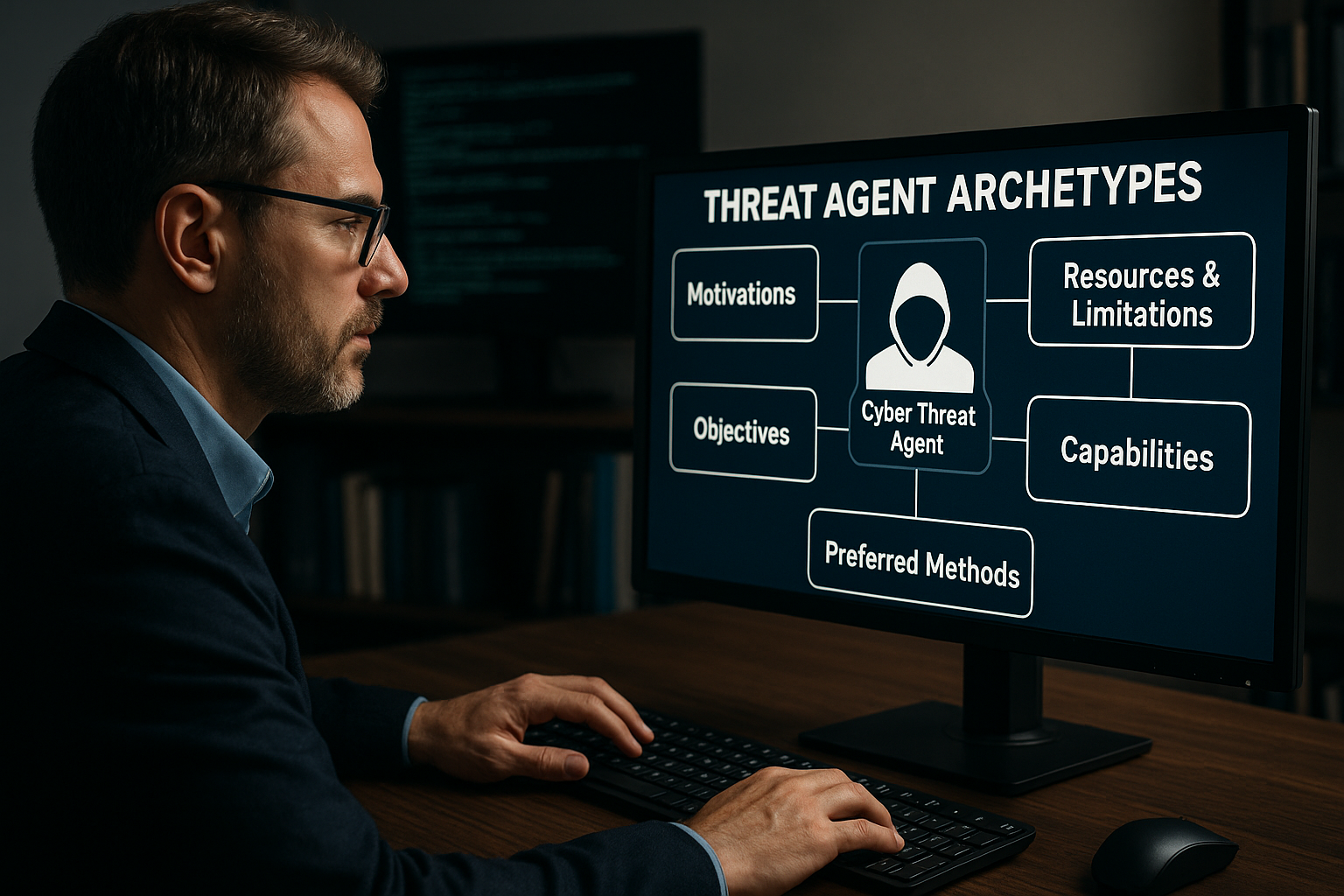
Most cybersecurity risk assessments focus on vulnerabilities, assets, controls, and potential impacts. But too often, they overlook the most critical element of all: the people behind the attacks. Every cyber incident begins with a person or group — whether it’s a cybercriminal, a disgruntled employee, a hacktivist, or a nation-state actor. These individuals, known as Threat Agents, have particular motivations, objectives, capabilities, and preferred methods.
Why Threat Agents Matter
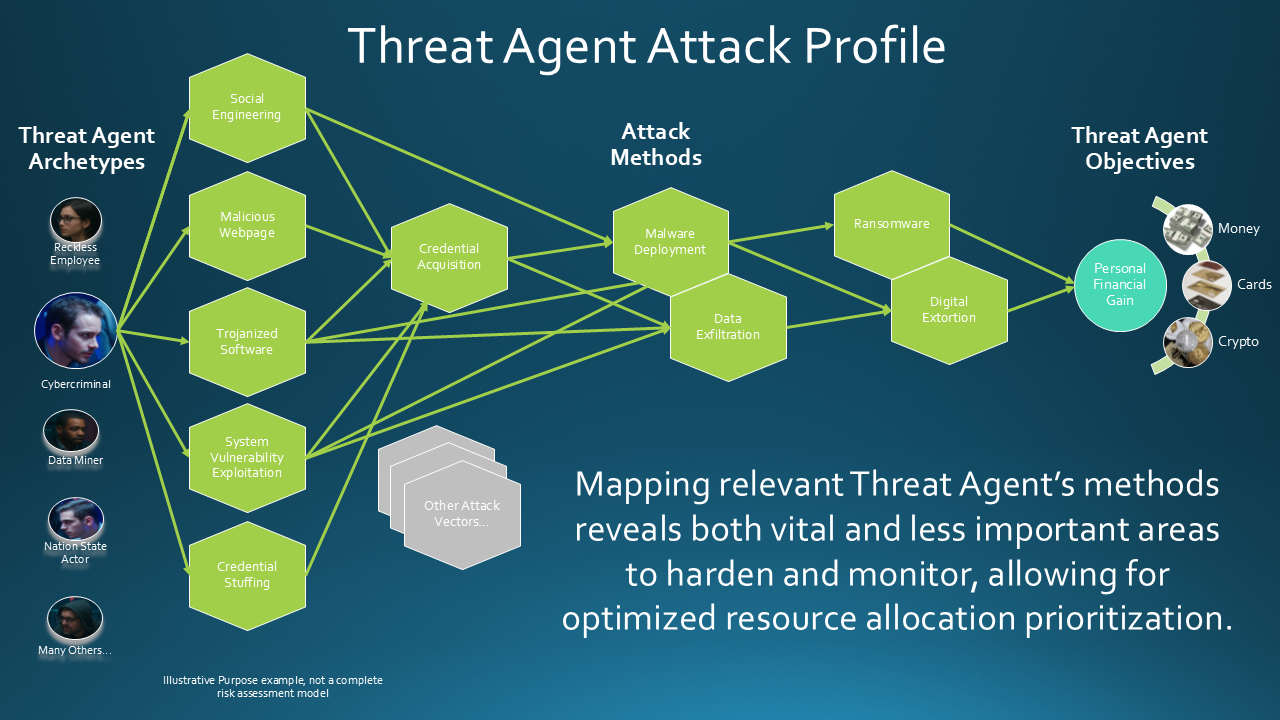
The crucial insight is that not all attackers are interested in your organization. Their motivations vary, and so do their targets. Some are in it for money, others for power, espionage, or personal vendettas. By identifying which Threat Agent archetypes are most relevant to your business, you can focus your defenses on the most likely threats. Equally important is to identify those personas who are not interested in attacking you, which can identify areas where deprioritization is optimal and resources reallocated to more important areas. This approach optimizes your resource distribution, ensuring you’re not wasting time and money defending against unlikely attack methods.
Understanding Threat Agent Archetypes
Threat Agents can be grouped into personas, or archetypes, based on shared characteristics:
Motivations: What drives them? (e.g., financial gain, political agenda, personal vendetta)
Objectives: What are they trying to achieve? (e.g., theft, disruption, extortion)
Resources and Limitations: What do they have access to, and what constraints do they face?
Capabilities: What overall actions can they take against you?
Preferred Methods: How do they typically attack? (e.g., social engineering, malware)
For example, cybercriminals are motivated by profit and will likely go after organizations with digital assets of monetary value or those that are likely to pay ransoms. Nation-state actors, are after intellectual property, geopolitical leverage, or seek to disrupt adversaries’ critical infrastructures. Data miners might only seek to collect information without causing direct harm.
The Benefits of Threat Agent-Focused Risk Assessment
By mapping the methods and motivations of relevant Threat Agents to your organization, you gain actionable intelligence:
Prioritize Defenses: Focus on the most likely attack vectors and deprioritize less risky scenarios.
Efficient Resource Allocation: Invest in controls that counter the most relevant threats.
Reduce Waste: Stop over-investing in areas unlikely to be targeted.
Improve Outcomes: Enhance prevention, detection, and recovery for the attacks you’re most likely to face.
Risk models can upgrade from a static compliance checklist to a living, threat-informed strategy that evolves with the adversarial landscape.
A Practical Approach
The process doesn’t need to be complicated. Start by studying common Threat Agent archetypes, detailing their motivations, capabilities, and behaviors. Map these archetypes to your organization based on your industry, size, assets, and digital footprint. Looking at the history of previous attacks, both successful and failed, is a good cross-reference.
Tools like the Threat Agent Library (TAL) are excellent starting points. I’ve personally maintained a custom version that I use in all my risk assessments to align controls with the most relevant attacks.
Final Thoughts
Cybersecurity isn’t just about patching vulnerabilities, locking down every tool, and building ever more walls — it’s about understanding your enemy. As Sun Tzu emphasized over two thousand years ago: “If you know the enemy and know yourself, you need not fear the result of a hundred battles.” In cybersecurity, knowing your enemy means understanding the Threat Agents who may come after you, their tactics, targets, and capabilities.
Incorporating Threat Agents in your cybersecurity risk assessments is not just a best practice — it’s essential for building a resilient and efficient defense strategy. By focusing on the adversaries most likely to target your organization, you can stop spreading your resources too thin and start building targeted, effective protections. It is essential for defending effectively in today’s adversary-driven threat landscape.
Bankers Association’s attack on cybersecurity transparency
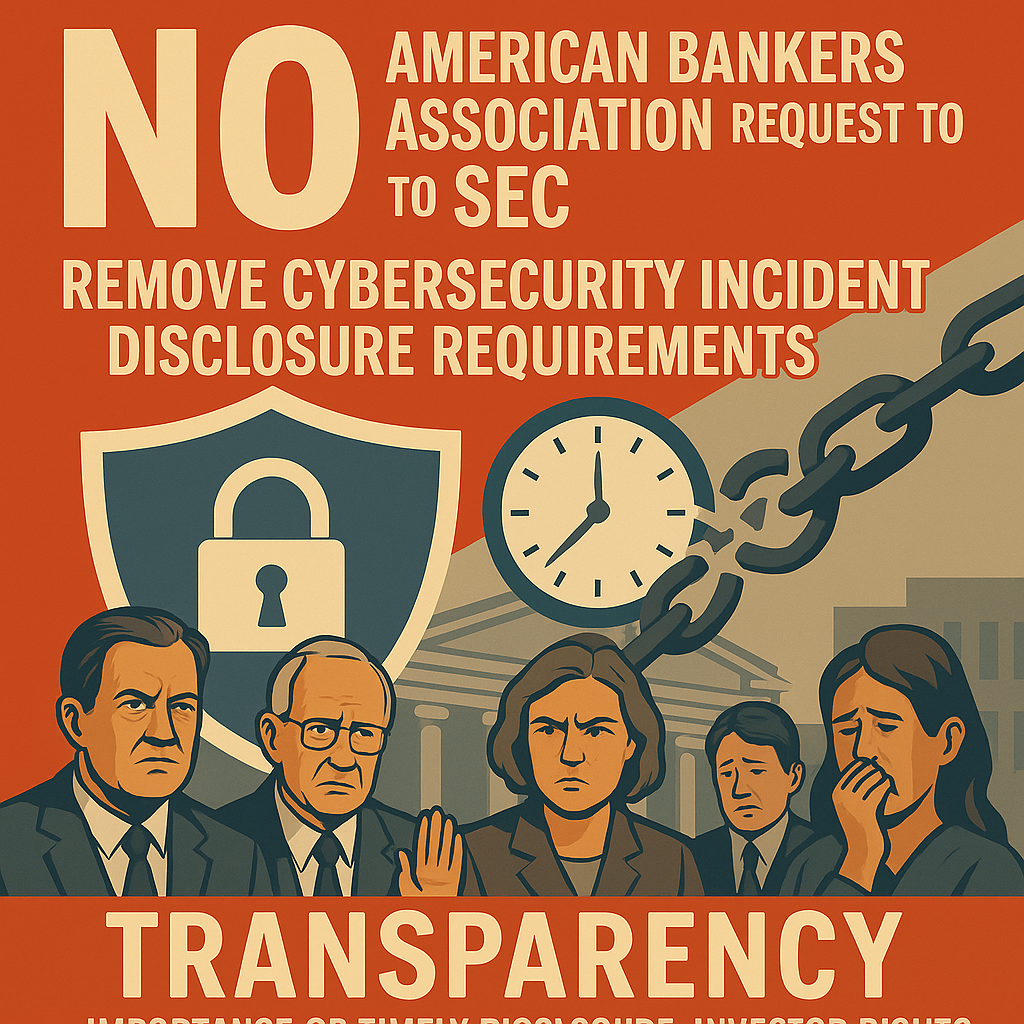
Myarticle on Help Net Securityhighlighting how the banking industry is leveraging their powerful lobbying groups to try and undermine the U.S. Securities and Exchange Commission 4-day cybersecurity reporting rule, which has been in place for over a year. https://www.helpnetsecurity.com/2025/06/03/bankers-association-attack-on-cybersecurity-transparency/
Their cited reasons are absurd and I fear the hidden reasoning is likely tied to managing their image during an incident and reducing negative investor sentiment — all at the cost of more victims, unfair insider trading, and less accountability for cybersecurity!
Truly shameful.
Let me know what you think!
Full Article:https://www.helpnetsecurity.com/2025/06/03/bankers-association-attack-on-cybersecurity-transparency/
Shameful Lobbying: Bankers Association’s Attack on Cybersecurity Transparency
https://www.youtube.com/watch?v=zkWj0UqzoK0
Banking industry lobbyists are pressuring the SEC to gut the four-day breach disclosure rule — an essential safeguard for shareholders and potential victims. Their arguments are misleading, self-serving, and designed to protect profits over public trust.
This video breaks down their claims and exposes the real motivations behind this disgraceful effort to undermine transparency and accountability.
Lobby Statement to the SEC:https://www.sifma.org/resources/submissions/letters/petition-for-rulemaking-on-the-cybersecurity-risk-management-strategy-governance-and-incident-disclosure-rule-joint-trades
For more Cybersecurity Insights, follow me on:
LinkedIn:https://www.linkedin.com/in/matthewrosenquist/
YouTube:https://www.youtube.com/CybersecurityInsights
Substack:https://substack.com/@matthewrosenquist
Cybersecurity Insights:https://www.cybersecurityinsights.us/
War & Cyber: 3 Years of Struggle and Lessons for Global Security
Russia is one of the most aggressive nations when it comes to state coordinated cyberattacks — and Ukraine has been at the center of their crosshairs for 3 years. This report, provided the State Service of Special Communications and Information Protection of Ukraine contains an incredible amount of cybersecurity insights, showcasing the coordinated aggressive cyberwarfare campaigns of Russia against Ukraine.
It brings to the forefront that understanding your adversary, especially an aggressive nation state, is important for cyber defense. Knowing their motivations, capabilities, and tactics becomes an advantage when allocating resources for maximum impact.
Intelligence shows Russia is on a cyber rampage, leveraging FSB, SVR, and GRU resources to professionally target Ukraine’s critical infrastructures, military, and international diplomacy support efforts.
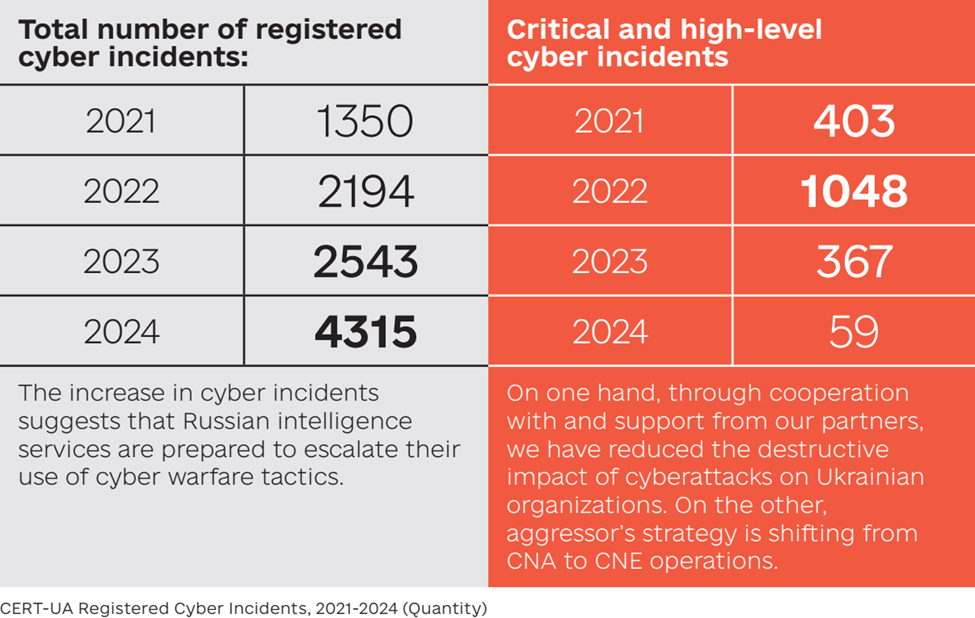
The number of total incidents against Ukraine, originating from Russia, has steadily increased from 1350 in 2021 to 4315 in 2024, but the number of actual critical incidents has been managed down from a high of 1048 in 2022 to a mere 59 in 2024 — showcasing how the rapid detection and response to cyberattacks has been impacted by Ukraine’s improved cyber resilience.
Even against a much larger adversary, Ukraine is showcasing outstanding cybersecurity, enabled by strong strategies and sound tactics. There are lessons to learn for any enterprise that could potentially be targeted by aggressive nation states.
Definitely worth the read!
Download:https://matthewrosenquist.substack.com/api/v1/file/c9352202-41e2-4c49-b473-07c10d8d42dd.pdf
Serviceaide Data Breach is Part of a Larger Healthcare Trend
https://www.youtube.com/watch?v=4Iqmgv3JXkQ
Another big healthcare sector data breach, impacting 480 thousand Catholic Health patients. Their 3rd party vendor Serviceaide is the root cause of this exposure.
This is the latest in many healthcare data breaches this year! Year-to-Date we are at a 25% increase in incidents as compared to the 2024 average!
U.S. Department of Health and Human Services (HHS) @Office for Civil Rights Breach Portal:https://ocrportal.hhs.gov/ocr/breach/breach_report.jsf
For more Cybersecurity Insights, follow me on:
LinkedIn:https://www.linkedin.com/in/matthewrosenquist/
YouTube:https://www.youtube.com/CybersecurityInsights
Substack:https://substack.com/@matthewrosenquist
Cybersecurity Insights:https://www.cybersecurityinsights.us/
Coinbase Hacked and Turns the Tables on the Cybercriminals!
This is how you handle cybercrime digital extortion! Cybercriminals attempted to extort $20 million from Coinbase, but Coinbase refused and will instead fund a $20 million bounty for those that provide information that leads to the attacker’s arrest!
This is AWESOME and should be the playbook for every company out there that is at risk of ransomware or other digital extortion!
Never fund your enemy or make yourself look like an easy victim.
My absolute congratulations and respect to Coinbase executive leadership!
https://www.youtube.com/watch?v=qtzcF29GGTE
For more Cybersecurity Insights, follow me on:
LinkedIn:https://www.linkedin.com/in/matthewrosenquist/
YouTube:https://www.youtube.com/CybersecurityInsights
Substack:https://substack.com/@matthewrosenquist
Cybersecurity Insights:https://www.cybersecurityinsights.us/
Cybersecurity Leadership Coaching
Very excited to share that I’m now offering cyber security leadership coaching!
With over 35 years of experience, I have become an outspoken advocate, mentor, and respected authority in the field of cybersecurity.
I can work with you on…
✅ Understanding emerging threats, opportunities, and the fundamental factors that drive the industry, in pursuit of optimal security levels
✅ Strengthening expertise in risk management leadership and career advancement
✅ Translating cyber risks into business priorities and building productive relationships with C-suite/Board
✅ Transforming cybersecurity from an overhead cost-center into a competitive advantage business-value contributor
✅ … and more!
Schedule a free 15-min intro call through my profile:
https://www.joinleland.com/coach/matthew-r-1
OneDrive’s New Sync May be a Privacy and Security Nightmare
https://youtu.be/hZVjJNPrWIM
There are many cybersecurity and privacy risks to consider, both from the user and the enterprise, when it comes to Microsoft's new OneDrive feature that will connect their personal OneDrive with their work device!
LinkedIn:https://www.linkedin.com/in/matthewrosenquist/
YouTube:https://www.youtube.com/CybersecurityInsights
Follow me on Substack:https://substack.com/@matthewrosenquist
For more Cybersecurity Insights:https://www.cybersecurityinsights.us/
PowerSchool Data Breach – Round 2 Extortions
The PowerSchool data breachnightmare of 2024 doesn’t end. Here is a quick rundown to catch up, before I call out some key learnings: https://www.theregister.com/2025/05/08/powerschool_data_extortionist/
In December 2024, PowerSchool was breached by ransomware attackers who claimed to have copied 62 million records, a figure that PowerSchool has declined to specify. Forensic assessments indicated the company failed to apply basic security practices. PowerSchool was less than forthright about the incident to the public but did eventually state a breach occurred, that they paid the ransom, and received assurances from the criminals that the records were deleted.
Cybersecurity professionals, myself included, proceeded to face-palm while laughing out loud at the absurdity of criminal assurances.
Here we are, a few months later, and surprise, surprise… Individual schools are now being extorted for money with the supposedly deleted records from the PowerSchool data breach.
Key Learnings:
1. Never pay the ransom. You become a bigger target. If attackers know you are gullible enough to pay once, they will target you to pay again. Plus, you are funding future attacks by giving aid to cybercriminals.
2. Don’t believe what criminals say. It is foolish and will make you a victim.
3. Don’t show your ignorance by saying the attackers provided proof they deleted the valuable stolen data (see 2. Above)
4. Make sure you have an experienced cybersecurity professional leading the efforts to protect sensitive data
To all the academic institutions that are currently receiving extortion demands:
1. Don’t pay the ransom! Don’t even think about paying a ransom.
2. Sever your business relationship with PowerSchool. Vendors must be trustworthy. PowerSchool failed in multiple ways. Don’t put sensitive records of children and your staff in their hands.
3. If contacted by criminals, notify law enforcement immediately. Start with your local FBI or Secret Service office. They will provide free guidance and assistance if they have time. If you want a deeper level of assistance, like reviewing all your 3rd party vendors who have sensitive data, then seek a cybersecurity advisor.
4. Sue PowerSchool for damages. Hold them accountable and seek to be part of a class action to pool resources.
Bonus suggestion: I suggest that Bain Capital, which acquired PowerSchool two months before the initial breach for $5.6 billion, evaluate suing the previous owners, as they likely were not fully transparent in disclosing the cybersecurity risks.
Unfortunately, it is the tens of millions of children who are the real victims. The current extortion pales compared to how such sensitive data could be maliciously used to harm them.

Microsoft Listens to Security Concerns and Delays New OneDrive Sync
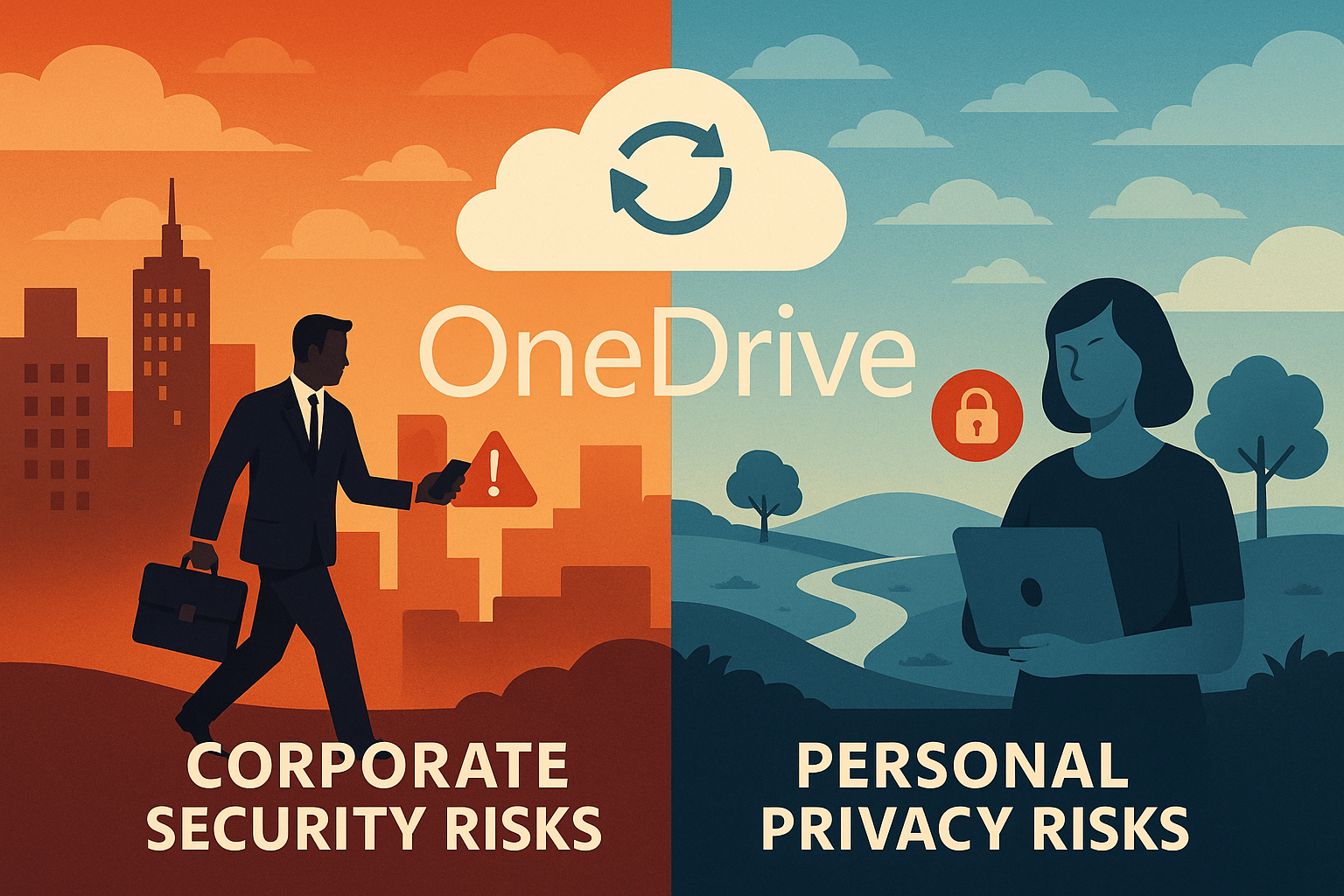
Misuse of the newly announced Microsoft OneDrive synchronization feature puts corporate security and personal privacy at serious risk in ways not likely understood by the users. Microsoft wants people to connect their personal OneDrive file share with their work systems, synchronizing potentially private files onto their enterprise managed PCs.
The problem is having these files copied to enterprise machines could be an avenue for attackers, by bringing in malware, a means to exfiltrate corporate data, and also undermine the personal privacy of unsuspecting users! Evan Schuman has written a timelyarticle in CSO, articulating many of the risks that both users and employers should avoid. https://www.csoonline.com/article/3981760/microsoft-onedrive-move-may-facilitate-accidental-sensitive-file-exfiltration.html
The industry pushback was immediate and it looks like Microsoft is listening. They are delaying the release, probably to better understand the potential risks. I expect they will now do an internal review with security minded people — which is what should have happened beginning at the architecture phase!
My guess is when the dust settles, they will not enable the synchronization feature by default, but require enterprise admins to turn it on before the users see the approval prompt.
Well, that is my hope anyways!
Microsoft’s approach in not fully understanding the cybersecurity ramifications of new features is not new. The highly controversialRecallfeature also experienced similar backlash, causing it to be delayed and ultimately abandoning the plans to turn it on by default. https://matthewrosenquist.substack.com/p/microsofts-recall-feature-another-systemic-cybersecurity-failure-1b02b94cf9ba?r=55ejzr
As we watch Microsoft reconsider its OneDrive synchronization rollout, it serves as a reminder for all software, device, and service providers: security and privacy must be foundational, not afterthoughts, in product design. Rushing features to market without fully understanding cybersecurity aspects beyond technical vulnerabilities can expose customers to unnecessary risks. As an industry, we must drive a culture-shift where cybersecurity is part of the development process from the outset to preserve and enhance trust.
Cyberwarfare Funding Accelerates and Everyone is at Risk
Nations are investing heavily in offensive cyber capabilities. The proposed 2026 US defense budget earmarks an additional $1 billion in funding for offensive cyber operations, specifically to the US Indo-Pacific Command (USINDOPACOM). In 2025, the Department of Defense spent over $14 billion on cyber, with $6.4 billion allocated to offensive operations. An extra billion dollars buys a significant boost in attack capabilities.
You can’t fight a cyberwar without weapons or a budget!
Other nations are also allocating serious amounts of budget, expertise, and other resources towards their offensive cyber capabilities, although they keep it more secretive. China and Russia are also likely devoting obscene amounts to their respective programs.
Offensive cyber investments include the ability to discover severe vulnerabilities faster, establish infrastructures to exploit those weaknesses, and develop tools to continually evolve the capabilities for greater impacts over time across every sector.
Cyber is an asymmetric form of warfare that can act independently to influence foreign policy or combine with traditional kinetic actions as part of a joint strategy. Cyberattack do not require a shared border with targets, can remain stealthy or deniable, and have the power to cripple a nation’s critical infrastructures — communications, transportation, shipping logistics, healthcare, financial systems, government services, power grids, fuel distribution, and food supply chains. The impacts of such attacks are felt by citizens and private companies. No one escapes unscathed. When combined, such attacks can compound to create severe havoc and disruption.
The world of cybersecurity is changing, even if we don’t see exactly what is occurring behind the curtain of global government budgets. As offensive capabilities grow, the ability for cybersecurity to protect the digital ecosystem that we depend upon, is getting exponentially more difficult. Every organization and person are at risk.
Welcome to the new era of cyberwarfare.
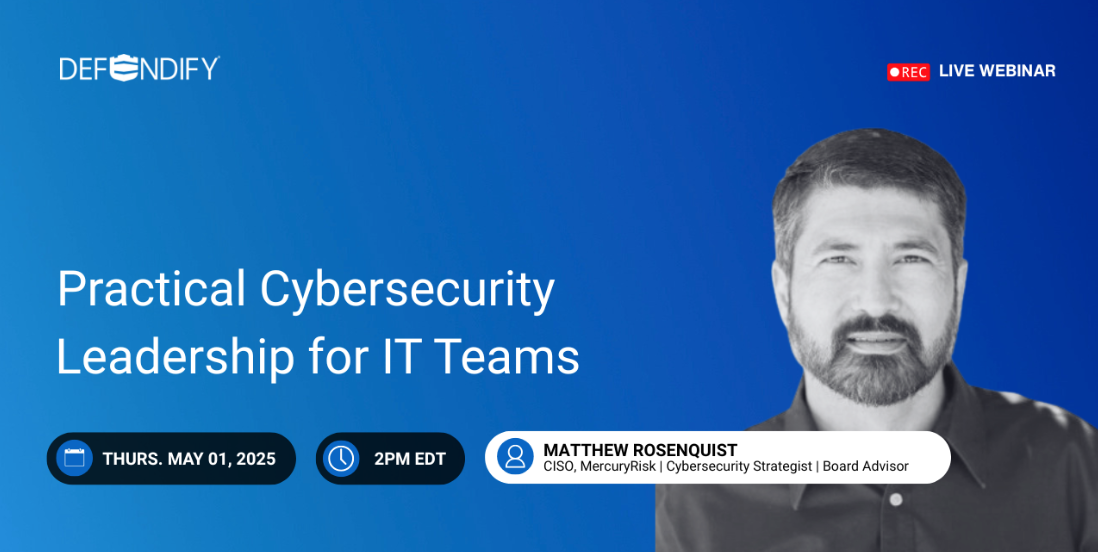
Practical Cybersecurity Leadership for IT Teams – Live Webinar!
Join me on Thursday May 1st, 11am PT as a guest with Defendify on a live webinar where I’ll discuss practical cybersecurity leadership for IT teams!
Communicating cyber risk in business terms to secure support and resources
Importance of planning and preparedness to reduce risks
Being an enabler versus a barrier to the business
Selecting the right tools and services to maximize effectiveness and efficiency
Register below!
https://defendify.wistia.com/live/events/235eorl8cs
Simplifying Cyber Safety for Everyone with Sandra Estok
https://www.youtube.com/watch?v=F_qC8n71y44
Cybersecurity is not just a technical endeavor. Attackers often pursue people to either gain access to valuable systems or to directly victimize them. This includes companies, adults, and even children.
In this episode of the Cybersecurity Vault I talk with Sandra Estok, founder of Way2Protect, about social engineering and online fraud. The industry is realizing that people are safer when they are properly trained to handle such online attacks.
Free checklist https://cyber.sandraestok.com/checklist
Books https://cyber.sandraestok.com/bundle 80% OFF with PROMO code for the podcast listeners “SPECIAL39”
Sandra’s LinkedIn profile: https://www.linkedin.com/in/way2protect/
Follow Matthew on LinkedIn: https://www.linkedin.com/in/matthewrosenquist/
Visit Cybersecurity Insights at https://www.cybersecurityinsights.us
Subscribe to the Cybersecurity Insights channel: https://www.youtube.com/CybersecurityInsights
Breaking Down Risks in Cybersecurity
https://youtu.be/Y60C5u6lzdI?si=XVq2oM9WJzxsn8OY
Cyber Crime Junkies podcast
Breaking Down Risks in Cybersecurity — A great conversation on the Cyber Crime Junkies podcast with David Mauro!
We covered so many different topics that the CISOs are struggling with:
· Generative vs Agentic AI risks and opportunities
· How cyber attackers leverage powerful tools like AI
· Why defenders are slower than attackers in using AI
· How attackers adapt with AI advantages
· Why the value of security is a blind spot
· The difficulty of cybersecurity metrics
· Not all incidents are equal — preparedness matters
· CISO and Board collaboration on common goals
· Why CISOs are now business leaders
· Different types of cybersecurity business value
· Understanding the difference: Obstacles versus Opposition problems
· The importance of good strategic goals
· Why CISOs must be a good story teller
· Examples of Board level metrics
Check out the podcast on YouTube https://www.youtube.com/watch?v=Y60C5u6lzdI and Spotify https://open.spotify.com/show/5y4U2v51gztlenr8TJ2LJs?si=537680ec262545b3&nd=1&dlsi=0bebeabd1b974a0d
Shameless Plug: If you are interested in a CISO mentor or advisory help on the Board, drop me a line.
Boards Challenged to Embrace Cybersecurity Oversight
Cybersecurity failures are now business risks that CEOs and Boards must own. The world of business owners, investors, and their representatives are collectively realizing the potentially catastrophic impacts of cybersecurity incidents if not incorporated into the strategic management of the most senior business leadership. Many regulatory bodies, insurance providers, business partners, and customers take cybersecurity very seriously and now hold the CEO and Board accountable. As a result, the oversight of cybersecurity is being elevated to the CEO and Board of Directors.
The newfound importance has rapidly elevated the career trajectory of security leaders into the ranks of the C-suite. The adoption of the Chief Information Security Officer (CISO) role is now common in medium to large businesses, and these professionals have a growing amount of visibility to the CEO and senior staff. Boards too are now under pressure to include oversight of cybersecurity as part of their fiduciary duties. CISOs have become a focal point, being the leader and subject matter expert, often providing regular status reports and conversing directly with the Board. This was unheard of just a few years ago when many top information security leaders were no higher than the Director level, existing several layers removed from the CEO with limited influence.
Times change.
Newfound Connections Between the Board and CISO
Most CISOs now have a regular audience with their respective Boards. For privately held companies, nearly 39% of CISOs provide reports to the Board of Directors quarterly, and 74% at least once a year. For Publicly traded companies, the numbers are even higher, with 89% providing a report at least once a year. Never has the CISO benefitted from such exposure to the Board as they do today. (Source: Hitch Partners 2024 report) https://www.hitchpartners.com/ciso-security-leadership-survey-results-24
With that newfound engagement comes expectations. Boards feel the pressure to oversee cybersecurity in the same strategic manner they manage other business risks, operations, and long-term strategies. However, most Board members are not familiar with the chaotic, ambiguous, and non-linear world of cybersecurity. It seems like it would be relatively simple, but the deeper one goes, the more it is revealed to be atypical and unpredictable.
Given the potential stakes, it is common for Fear, Uncertainty, and Doubt (FUD) to run rampant at the most superficial level because value is difficult to estimate. Regular tools, such as Return On Investment calculators, don’t apply. Potential losses seem obscured somewhere between zero and utter destruction. It is not uncommon for cyber risk estimates to be orders of magnitude off. The metrics for investment, success, and optimization are not robust or mature for cybersecurity, as they are for other domains the Board oversees. Even the insurance industry cannot get an accurate grasp of cybersecurity. The result of this ambiguity is that every company and Board evaluates and measures cybersecurity differently. Understandably, it is an ugly mess that the Boards now feel burdened with.
New Challenges for Board Oversight
Normally, when faced with new challenges, the Board would simply enlist the assistance of an executive expert to help fill in the gaps, make recommendations, and provide answers to the myriad of deep questions from Board members. Unfortunately, that is not working very well today when Boards call upon the CISOs. This is because most CISOs grew up from the technical ranks and rose quickly into management positions, without the benefit of business leadership and communication skills. It is very common that CISOs find themselves unprepared to effectively convey pertinent information and collaborate well with the Board. They are experts at the technology aspects of attack prevention, detection, and remediation, but not corporate savvy to explain the relevance in business terms that the Board can embrace.
The combination of Board unfamiliarity with cybersecurity and the CISOs’ less than mature skills to convey cyber risk in terms of business relevance, creates a chasm where Boards feel deficient in their new responsibilities to oversee cybersecurity and CISOs realize they are ineffective at explaining the significance, value, and unpredictability inherent to managing cyber risks.
This chasm must be crossed in order to establish productive communication and effective collaboration. CISOs must grow to fill the elevated role, but at the same time, the Boards must evolve as well.
Boards must improve their ability to absorb critical cyber risk information to make good business decisions, establish optimized cybersecurity goals for the CISO based upon overall business strategies, and properly support the effort to achieve those objectives.
Envisioning Board Needs
To set cybersecurity risk goals, decide on business risk tradeoffs, and be confidently accountable for the security of the organization, Boards need more than just information. They need a framework that paints an overlay to the business so opportunities and issues can be identified and strategies be pursued. Understanding cyber risk at this level is not about technology, telemetry, or security operations actions.
Instead, cybersecurity data must be transformed into business information with context on how cybersecurity may impact the core business or future plans. It must convey not only the risks but also the potential benefits of how cybersecurity can add additional value, improve competitive advantage, preserve important relationships, or contribute to the bottom line.
CEOs and Boards engage with CISOs in several ways:
CISO and Board Collaborative Objectives and Results — © Matthew Rosenquist
Adapting to Challenges
Both CISOs and the CEO/Board must work to close the gaps. A big challenge for any board is to understand the nuances of how cyber risk varies from other business risks. It must be handled with a different framework, that incorporates agility to counter adversaries who can operate without the burden of rules, in a highly chaotic and ambiguous environment, and with objectives that impact every aspect of the business. With the right framework, that has little requirement to understand technical details or operational minutia, Boards can adeptly incorporate cybersecurity into their normal business oversight processes with confidence.
*The CISO Transformation — A Path to Business Leadership* https://matthewrosenquist.substack.com/p/the-ciso-transformation-a-path-to
As I outlined in a previous article *“The CISO Transformation — A Path to Business Leadership”*, much of the onus rests with the CISO to better communicate and represent what the C-suite and Board needs. It is necessary that a transformation of the CISO occurs so they may better communicate to provide relevant and understandable guidance — thereby enabling collaborative organizational strategic planning, compliance, and enterprise risk management. https://matthewrosenquist.substack.com/p/the-ciso-transformation-a-path-to
A Board must also adapt so it can successfully position itself to integrate cybersecurity factors into the greater business oversight and make well-informed decisions that represent the best course for the success of the organization. This includes being able to decide strategic tradeoffs and provide clear guidance for the CISO.
Success is a CEO and Board that are well attuned to the strategic business considerations so they may confidently represent the inclusion of cyber risks into the overall business risk picture at a level that aligns with their fiduciary responsibilities.
Guiding the CISO for Success
CEOs and Boards have the highest level of accountability and the CISOs are expert functionaries to deliver to the cybersecurity business goals. By evolving in parallel, both Boards and CISOs can bridge the communication gap, enabling more strategic oversight of cyber risks. Boards that establish clear frameworks, adopt informed risk strategies, and support the CISO in delivering relevant insights will be better positioned to manage cybersecurity as a core element of business success. This collaborative evolution is essential for organizations to thrive amid a rapidly shifting cyber threat landscape.

Are They Vulnerabilities or Undocumented Debug Features
The recent undocumented code in the ESP32 microchip, made by Chinese manufacturer Espressif Systems, is used in over 1 billion devices and could represent a cybersecurity risk. Its reveal by security researchers has kicked off an interesting discussion regarding undocumented features in firmware devices - are they security vulnerabilities or just debug tools? https://www.bleepingcomputer.com/news/security/undocumented-commands-found-in-bluetooth-chip-used-by-a-billion-devices/
At the end of the day, any debug, test, or validation features should be removed (or fused off in the case of hardware) before they become available to customers. At the very least, features should be documented, so everyone knows the potential risk.
Otherwise, features become tools for threat actors who may use them separately or in combination with other tools to undermine the system, expose data, make lateral movements to other systems, or exfiltrate sensitive information.
This issue is widespread in the software, OS, firmware, and hardware industries, but that is no excuse, as these represent an aggregate risk. Every vendor should be responsible in removing debug, test, and validation features and at the very least documenting those which need to remain. Transparency is important for trust and security.
https://open.substack.com/pub/matthewrosenquist/p/are-they-vulnerabilities-or-undocumented

Ransomware Attack Ends a 150 Year Company
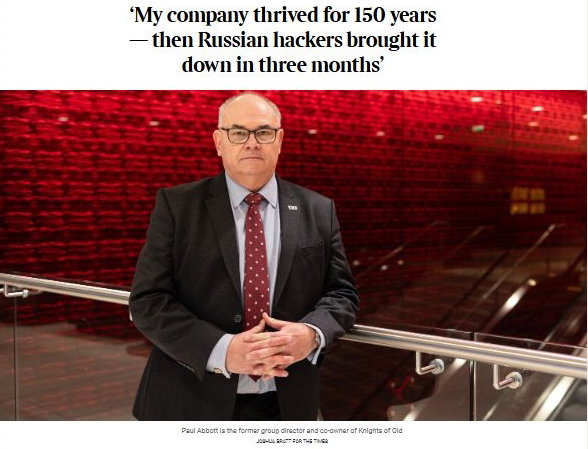
Knights of Old, a 150-year-old UK company, is gone – due to a cyberattack! This terribly unfortunate event is a good example of how cybersecurity matters to every company that depends on digital technology - even if it is to run your books or manage your logistics. Failures in cybersecurity can cause catastrophic impacts, up to and including the total loss of a business.
The other point is that cybersecurity is not binary. It is not you have cybersecurity or you don't - but rather how good your cybersecurity capability (tools, behaviors, and processes) is in relation to the threats it is working to mitigate.
What is the right balance? Depends. It can vary greatly from one company to the next and shift dramatically over time as attackers change tactics and targets. That is why it is absolutely crucial to have an expert cybersecurity leader to comprehend the risk situation and communicate the business landscape options.
To all the CEOs, CIOs, fellow C-suites, and Boards out there, be smart when it comes to cybersecurity. It is not just a technical problem that can be solved! It is a dynamic adversarial endeavor where risk must be continually managed. Make sure you have experienced leadership to help navigate these treacherous seas!
Read more on this story: https://www.thetimes.com/uk/technology-uk/article/hackers-destroyed-my-company-by-guessing-an-employees-password-62vcbddpx
The CISO Transformation – A Path to Business Leadership
The Chief Information Security Officer (CISO) position is on the precipice of transformation! The CISO role has dramatically changed over the years as the demands have significantly grown and expanded, elevating what was once a support function buried in IT to a high-profile role that regularly provides reports and updates to the Board of Directors. The Traditional CISO is becoming outdated and not on a trajectory for success. A transformation is needed.
The business impacts, visibility, regulatory requirements, shareholder expectations, growing threat actors, and reliance on new digital solutions have fueled the importance of cybersecurity and specifically, its leadership. Cybersecurity is now highlighted and considered one of the important aspects of business success!
Lessons from the CIO Evolution
A decade ago, CIOs underwent a similar transformation as digital technology became a dominant force in business strategy. There are valuable lessons to be learned from that journey.
I recently had a great conversation with Tim Crawford, an amazing IT leader who spearheaded the transformation of the CIO role many years ago. I found his article from 2017 “*The Difference between the Traditional CIO and the Transformational CIO*” to be eerily relevant to the current CISO situation. Tim emphasized that successful transformation begins with redefining the role’s characteristics, enabling leaders to see the necessity for change and its benefits. Only then, will the industry truly transform in meaningful ways at scale. https://avoa.com/2017/01/04/the-difference-between-the-traditional-cio-and-the-transformational-cio/
The Traditional CISO: A Model in Decline
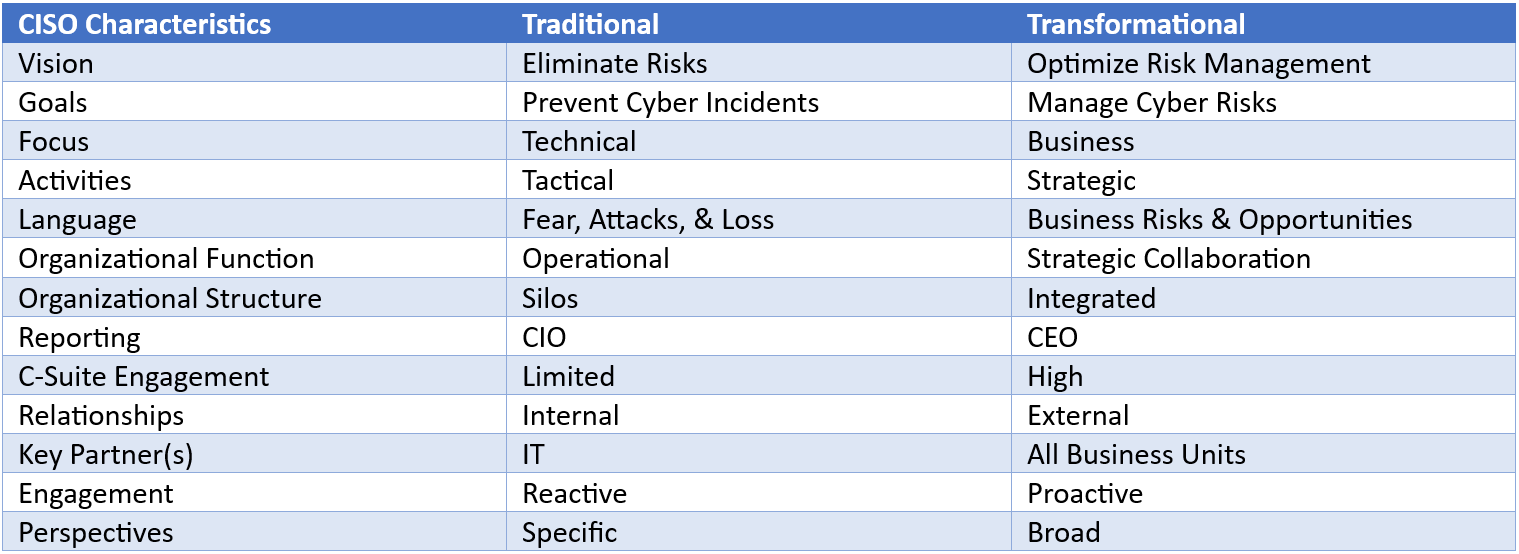
Traditional CISOs are often technical experts, who focus on tactical activities to eliminate risks and prevent cyberattacks. They tend to operate in a silo, in many cases reporting to the CIO or CTO and inheriting their goals. The organization is designed for operational functionality, and optimized to react to new vulnerabilities, attacks, incidents, and risks. Their interaction with the broader C-suite community is inconsistent and exposure to the board is limited.
CISOs often struggle to communicate with CEOs and Boards. Many CISOs and board members have admitted great frustrations in collaborating in efficient and productive ways – citing a lack of common language or expectations. Ironically, both sides have expressed concerns over misunderstandings, lack of support, poor collaboration, and surprises of unacceptable risks – which in turn have led to increased stress, a loss of confidence in cybersecurity leadership, and sometimes mutual animosity.
The majority of CISOs possess a strong technical background and rose through the ranks to a leadership position. That made sense as the precursors to cybersecurity, information and systems security, were seen as a tactical effort to secure systems and data. However, with the event of rich digital connectivity across almost every business system and process, the importance has risen to an executive role, with accompanying expectations.
Technical expertise is not as applicable when it comes to strategic business decisions and leadership. The results can be turbulence when it comes to the C-suite, specifically the CEO, and the Board’s involvement in navigating organizational success. Business leaders realize that cybersecurity is important and now part of their direct responsibility to address, but often struggle to understand how to integrate those challenges with other business priorities and broader decision-making.
The Transformational CISO: A Business Leader First
CEOs and Boards need a trusted cybersecurity partner who can translate complex risks into business terms and help them make the best decisions by guiding investments and strategies to support overarching corporate goals. They rely on key individuals to lead teams in their respective areas, and to pursue goals set by the senior leadership - including the CISO. Transformational CISOs bridge the gap between cyber risk expertise and executive decision-making. In order to be successful, it requires strong relationships and effective communication to convey cyber risks and opportunities for consideration in larger decisions, responsibilities, and corporate strategies.
Business leaders are no strangers to managing risk—financial, competitive, regulatory, and operational risks are all part of their dominion. However, cybersecurity introduces unique challenges that require an adept communicator who can contextualize risks within the broader business landscape.
Transformational CISOs possess deep domain knowledge but elevate their focus to strategic risk management. They operate in close collaboration with all the C-suite executives and proactively work to understand the lines of business to maximize the security posture while minimizing the undesired friction, that accompanies cybersecurity controls, ensuring security measures align with corporate objectives rather than acting as barriers. They support the initiatives of their C-suite peers and are seen as a welcomed partner in addressing ambiguous cybersecurity risks.
Transformational CISOs often report directly to the CEO or a top executive, moving beyond IT silos to influence enterprise-wide strategy. They build adaptive security organizations that respond effectively to evolving risks while maintaining alignment with shifting business goals.
These CISOs are adept at communicating with all levels, including CEOs and Boards, by masterfully translating complex data and situations into business terms and recommended actions. C-suites and Boards are not inherently cybersecurity experts, nor should they be, and attuned CISOs aren’t trying to transform them into cybersecurity specialists. Instead, they understand their role is to be the trusted professional who can communicate cyber risks and opportunities in familiar business terms that actively support the overall business goals. This enables leadership to make informed decisions, balancing cybersecurity investments with other strategic priorities. In return, the CISO receives clear guidance and necessary support to achieve their specific objectives.
**Traditional vs. Transformational CISO: Key Differences**
The Transformation Journey
This metamorphization has proven to be a challenge. The industry continues to struggle with forming highly proficient working relations between CISOs and the CEOs/Boards. It has often been an incredibly personal work-in-progress for CISOs to make this journey. During which, new skills must be learned and applied by the cybersecurity professional. The CEOs and Boards are also working on understanding how cybersecurity intersects with the success of their organization and how best to oversee it.
It is a chasm that must be crossed. Traditional CISOs frequently believe that CEOs and Boards should become experts in their all-important field. Yet that sentiment is not shared by the business leaders, who operate in a different manner across many such domains. Boards often expect CISOs to magically grow the skills to understand and present cyber risks in ways familiar to them and how they manage, which is an unrealistic near-term expectation.
The expectations for cybersecurity are not expected to shrink. It is already a Board level topic and no static or one-time solution can be purchased to ‘solve’ cybersecurity. The need to manage cybersecurity risks is here to stay and will be indelibly integrated into the scope of CEO and Board oversight. There are no easy solutions. The differences that exist in organizations lead to unique adaptations that are not scalable, durable over time, or persistent with personnel change. The pressure is forcing collaboration, with the hopes it will improve over time.
What is certain, is that both sides must adapt to effectively bridge this chasm in a sustainable way.
Frameworks are needed as a foundation to build strong relationships, deftly communicate cyber risks in business terms, and forge strategies that empower CEOs and Boards to make well-informed decisions to balance the value of cybersecurity investments with other imperative business objectives.
To thrive in this new era, the CISO and CEO/Board collaboration must embrace transformation. This will be the difficult journey that CISOs, CEOs, and Boards must successfully traverse together in the next few years. In today’s digital landscape, CISOs will need to transform into business superheroes to collaborate with executive leadership to set cyber risk oversight as a cornerstone for business growth and resilience!

Cryptocurrency Hack of $1.5 Billion
This may turn out to be the biggest #cryptocurrency hack in history! $1.5 BILLION. The details are sparse, but I am interested in the origins of this attack, especially if it was from a nation-state level attacker.
Apparently, it was the cold wallet that was compromised, which is impressive. Cold wallets are specifically designed to protect against such attacks!
In my 2025 Cybersecurity Predictions, I predicted that cryptocurrency would be heavily targeted (see Prediction 1). Unfortunately, my crystal ball was right, and I believe we still have many more months of these types of attacks ahead of us. https://open.substack.com/pub/matthewrosenquist/p/10-cybersecurity-predictions-for?r=55ejzr
Cryptocurrency institutions and users beware. Cybercriminals and nation state attackers are coming for your coins! Keep your #cybersecurity top-of-the-line and up-to-date.
Full News Story: https://apnews.com/article/bybit-exchange-crypto-hack-88256366c723a9de8327ef3d4071057e

Cybersecurity Perspectives for 2025 – Rinki Sethi
https://www.youtube.com/watch?v=U3BQxZroX9k
The Cybersecurity Vault - episode 44, with guest Rinki Sethi.
2025 will be an interesting year for the cybersecurity industry! Cybersecurity Insights interviews experts for their take on the most relevant changes. Rinki Sethi discusses how attackers are maneuvering, how business conditions are changing, and how technology innovation is impacting cybersecurity.
Rinki’s LinkedIn profile: https://www.linkedin.com/in/rinkisethi/
Follow Matthew on LinkedIn: https://www.linkedin.com/in/matthewrosenquist/
Visit Cybersecurity Insights at https://www.cybersecurityinsights.us
Subscribe to the Cybersecurity Insights channel: https://www.youtube.com/CybersecurityInsights
Strategic Insights of Cybersecurity – Career, Threats, AI, and Advice
https://www.youtube.com/watch?v=mnzaphZ6GOE
A fantastic discussion covering:
Career Lessons & Leadership – Pursuing Impossible Problems
Strategic Insights of Cybersecurity – Applying “The Art of War”
AI in Cybersecurity – Both Real and Fake Fears!
Cyber Insurance and the Challenges of Risk Metrics
Advice for Cybersecurity Professionals – Being a Trusted Manager Risks in the Face of Chaos
Much thanks to Alec and the AI Risk Reward podcast team! I had a great time and we covered so much ground!
#cybersecurity #AI #careeradvice #threats #risk
Healthcare Crisis Emerges: Cybersecurity Vulnerabilities in Patient Monitors Confirmed by FDA
For over a decade, we warned the healthcare industry this was coming. They ignored us. Their sole focus was HIPAA compliance — checking regulatory boxes rather than securing critical systems. We told them that system and service availability attacks were coming too. They didn’t care — until they were hit, and hospitals could no longer process new patients or handle billing.
The gravest threat are attacks on critical medical devices and the infrastructures that support patient care. That moment has arrived. We now stand on that precipice. Will the healthcare industry finally take appropriate action, or will their silence be deafening?
In this particular case, on January 30, 2025, the FDA confirmed what we feared: attackers can remotely control specific patient monitors and cause them to work in unintended ways. A backdoor exists, providing attackers a direct entry point into hospital networks that could bypass primary network defenses. Additionally, these devices are gathering sensitive patient data and exfiltrating it outside the network into the hands of unauthorized and potentially malicious actors.
These capabilities align perfectly with malicious attackers’ goals — disrupting operations, infiltrating networks, and stealing sensitive data. And this is just the beginning. Expect more vulnerabilities in medical devices, including those that have direct impacts on patient health and safety.
Cybersecurity is more important than ever in the healthcare sector — it will become a matter of life and death!
Read the FDA alert: **https://www.fda.gov/medical-devices/safety-communications/cybersecurity-vulnerabilities-certain-patient-monitors-contec-and-epsimed-fda-safety-communication**


Top 100 B2B Thought Leaders, Analysts & Influencers
I am honored to be recognized by **Thinkers360** as one of the "Top 100 B2B Thought Leaders, Analysts & Influencers You Should Work With In 2025 (North America)"! https://www.linkedin.com/company/thinkers360/
Full List: **https://www.thinkers360.com/top-100-b2b-thought-leaders-analysts-influencers-you-should-work-with-in-2025-north-america/**
The Data Diva Talks Privacy Podcast
https://www.youtube.com/watch?v=2u6E8r1OUo4&list=PLHWfb3mQ5tvpw1urr-MZHWvCCoXVbBS_I
I had such a wonderful conversation with Debbie Reynolds on here podcast "The Data Diva Talks Privacy". Cybersecurity and Data Privacy are conjoined. We will succeed or fail together! We all must work closer to protect the data and systems of our digital ecosystem!
Audio and transcript: https://www.debbiereynoldsconsulting.com/podcast/e221-matthew-rosenquist
A Top Cybersecurity Career Coach
Who is this cybersecurity guy on a New York Times Square billboard? Thanks topmate.io for the recognition of being one of the Top Career Coaches in the US!
**Cyber threats are evolving, and cybersecurity leaders must stay ahead.**
I help executives and security leaders understand emerging risks, optimize limited resources, and transform cybersecurity programs to deliver more meaningful business value. By proactively addressing threats and aligning security with business priorities, I enable organizations to be more resilient, cost-efficient, and sustainable.
If you're looking for strategic cybersecurity advisory to strengthen your leadership and success, let’s connect.
Topmate: https://topmate.io/matthewrosenquist
Webpage: https://www.cybersecurityinsights.us/
The Cybersecurity Vault Podcast 2024 Recap
My deepest appreciation to all the incredible cybersecurity luminaries who joined *The Cybersecurity Vault* podcast last year! Your insights, expertise, and thought-provoking discussions made each episode invaluable for the audience and myself. I appreciate your time and dedication to advancing the industry!
**The Cybersecurity Vault Podcast 2024 Recap:**
**Ian Thornton Trump**, CISO at Cyjax Limited - Loops and Angles of Cybersecurity Compliance https://youtu.be/ehESu8uexKI
**Christine Bejerasco**, CISO at WithSecure - Blaming Customers for Cybersecurity Breaches https://youtu.be/RwjHlzlWN74
**Malcolm Harkins**, Chief Security & Trust Officer at HiddenLayer - Incident Materiality and Meeting New SEC Requirements https://youtu.be/bNSaj8tE00o
**Cassie Crossley**, VP of Supply Chain Security at Schneider Electric - Best Practices in Securing 3rd Party Supply-Chain https://youtu.be/SpZLbW96q1M
**Justin Daniels**, M&A and Tech Transactions Attorney at Baker Donelson - Digital Dilemmas: Legal and Social Landscape of Ransom Payments https://youtu.be/A0pSHj4DDjk
**Lisa Forte**, Partner at Red Goat Security - Hackers vs. Heroes: Cybersecurity Crisis Response Leadership Best Practices and Worst Fails https://youtu.be/fBcflVIjNnM
**Donna Kidwell**, CISO at University of Arizona - Guardians of Academia: Battling Cyber Threats in Higher Education https://youtu.be/k1Olwlqc0CY
**Ian Thornton Trump**, CISO at Cyjax Limited - Ransomware: To Pay or Not to Pay? https://youtu.be/levZ_e-8Wwo
**Ejona Preci**, Principal Manager-Cybersecurity Risk at RISK NOW - Reality of Cybersecurity Risks for AI https://youtu.be/lRnmWMKlQtg
**Mikko Hypponen**, Chief Research Officer at WithSecure - Rising Threat of Russia’s Cyber Warfare https://youtu.be/E6OvLbAHM6s
**Chase Cunningham**, VP of Security market Research at G2 - Cybersecurity is Adversarial – Our Failures are Attackers Opportunities https://youtu.be/C4L26qjO0G4
**Ira Winkler**, CISO at CYE - CrowdStrike Global Outage: Unpacking the Fallout and Future https://youtu.be/sdsZRY9BKOs
**Ian Thornton Trump**, CISO at Cyjax Limited - Chaos in Cyber Regulations and Lawsuits https://youtu.be/1QwJUjyojsI
**Evgeniy Kharam**, former VP Cybersecurity Architecture at Herjavec Group - Importance of Soft Skills in Cybersecurity https://youtu.be/NKpYBkpG-yI
**Ian Thornton Trump**, CISO at Inversion6 - The Cyber Frenemy of the West: Understanding China https://youtu.be/S6_MRljeKQ8
Looking forward, I am excited for all the great guests and conversations we have lined up for 2025!
You can follow the Cybersecurity Insights channel here: https://www.youtube.com/CybersecurityInsights

Cybersecurity Perspectives for 2025 – Insights from David Hahn
https://www.youtube.com/watch?v=BCToMyW0u-M
The Cybersecurity Vault — episode 43, with guest David Hahn.
2025 will be an interesting year for the cybersecurity industry! Cybersecurity Insights is interviewing experts for their take on the most relevant changes. Experts discuss how attackers are maneuvering, how business conditions are changing, and how technology innovation is impacting cybersecurity.
David is the CISO Operating Partner at Ballistic Ventures, on multiple Advisory Boards, is an industry speaker, and benefits from 20 years in cybersecurity leadership.
David’s LinkedIn profile: https://www.linkedin.com/in/whamo6955/
Follow Matthew on LinkedIn: https://www.linkedin.com/in/matthewrosenquist/
Visit Cybersecurity Insights at https://www.cybersecurityinsights.us
Subscribe to the Cybersecurity Insights channel: https://www.youtube.com/CybersecurityInsights
10 Cybersecurity Predictions for 2025
The cybersecurity landscape is poised for transformation in 2025. The rapid evolution of technology, coupled with the increasing sophistication of threat actors, presents a future that is both exciting and daunting. In this era of digital interconnectedness, understanding the potential cybersecurity challenges that lie ahead is a crucial requirement to protect it from rapidly evolving threats.
The following predictions and anti-predictions offer a glimpse into the cybersecurity realities we may face in 2025. These insights are projections based on adapting adversaries, shifting business conditions, and disruptive technologies.
The digital world is more intertwined than ever before, and the future ability to effectively protect global electronic ecosystems will be shaped by our capability to proactively understand and strategically prepare for these potential challenges and navigate the complex cyber landscape of 2025 and beyond.
Executive Summary
These 10 predictions outline how the cybersecurity landscape in 2025 will present a complex mix of challenges and opportunities. Emerging threats from nation-state actors, AI-driven cyberattacks, and a burgeoning market for software vulnerabilities will redefine how organizations perceive and manage risk. Attackers will benefit from new advantages. Critical infrastructure, financial systems, and supply chains will face elevated threats, compelling businesses to adopt proactive strategies to mitigate risks. As cybercrime grows in sophistication and scale, the need for agile and innovative defenses will become paramount.
Advancements in AI and the rise of the “Strategic CISO” will drive significant shifts in organizational priorities. While attackers will leverage AI to refine and scale their operations, defenders will deploy AI-enhanced tools to automate threat detection and response. This dual role of AI will fuel an arms race, accelerating innovation on both sides. Meanwhile, successful CISOs will move beyond technical roles to become strategic business leaders, aligning cybersecurity initiatives with business goals, fostering a culture of security, and navigating increasing regulatory demands.
To thrive in this rapidly evolving environment, organizations must prepare for tighter governance, adapt to rising stakeholder expectations, and close the cybersecurity talent gap. The growing influence of cyber insurance, stricter regulatory frameworks, and expanded AI adoption will reshape the industry. Success will depend on fostering collaboration, embracing innovation, and building resilient cybersecurity programs to address the dynamic and interconnected threats of 2025.
Prediction 1: Nation-State Actors as the Main Catalyst for Cybersecurity Evolution
In 2025, nation-state actors will remain the central driving force behind the development of aggressive cybersecurity capabilities. Their relentless investments in research and the advancement of offensive digital tools will sustain a chain reaction, intensifying cyber risks across the global landscape. These well-resourced and highly organized entities will increasingly leverage sophisticated capabilities to further their geopolitical goals, circumvent trade restrictions, and weaken rival nations’ economies. This ongoing escalation will ripple through the cybersecurity industry, compelling organizations to address growing threats while struggling to meet elevated expectations with insufficient resources.
Background and Justification
Nation-states have been at the forefront of investing billions in cyber capability innovation, fostering highly advanced offensive and defensive programs. In recent years, these actors have demonstrated an increasing willingness to engage in cyber operations with increasingly profound impacts. Their motivations — ranging from espionage and economic disruption to advancing military and foreign policy objectives — drive the development of cutting-edge tools such as zero-day vulnerabilities, modular malware, and backing aligned 3rd party advanced persistent threats (APTs).
The financial backing of nation-states enables the rapid discovery of vulnerabilities and the creation of exploits with unparalleled precision. Such innovations inevitably trickle down to the broader cybercriminal ecosystem, either through deliberate dissemination or leaks, further amplifying the risks faced by businesses, governments, and individuals. The cybersecurity community has seen a sharp rise in the scale, sophistication, and frequency of attacks, underscoring the necessity for constant vigilance and rapid adaptation.
Aggressive nation-state operations are also becoming bolder. Over the past few years, attribution has ceased to be a significant deterrent, as many governments openly or tacitly accept responsibility for cyberattacks. The international community’s inability to establish and enforce meaningful consequences has emboldened bad actors to cross previously respected boundaries. Critical infrastructure sectors — including energy, healthcare, and transportation — are now prime targets, with the potential to disrupt daily life and undermine public trust.
The increased frequency and severity of nation-state attacks elevate the expectations placed on cybersecurity professionals and organizations. Stakeholders — from governments to private entities — demand stronger and faster responses to mitigate these escalating threats. Yet, resource constraints, talent shortages, and legacy systems hinder the ability of many cybersecurity teams to meet such demands. This creates a growing gap between what is expected and what is feasible, leading to heightened stress and greater risks of failure.
Tangible Outcomes in 2025
Increased Financial Crimes: Nation-state-driven financial theft and fraud will rise by an estimated 50%, targeting financial institutions, cryptocurrency platforms, and service-based institutions worldwide.
Bolder Attacks with High Impact: Nation-state actors will launch more overt and less restrained attacks, focusing on critical infrastructure sectors such as governance, energy supply chains, transportation logistics, financial institutions, and healthcare systems. Impacts against critical infrastructures in the US, Western Europe, and its allies will increase by approximately 30%, disrupting daily life and public safety.
Redefined Global Cyber Norms: The international community will face unprecedented challenges in establishing and enforcing acceptable boundaries for nation-state cyber operations. The lack of consensus and enforcement mechanisms will exacerbate tensions, fueling further escalation of cyber conflicts.
Prediction 2: The Software Vulnerability Market Grows Significantly
In 2025, the market for software vulnerabilities, particularly zero-day exploits, will experience substantial growth. Advancements in vulnerability detection tools will enhance the ability to stress, test, and deeply inspect software, driving increased discovery of exploitable weaknesses. Both open-public and private dark-web markets will thrive, making vulnerability research increasingly lucrative and attracting more researchers into the field. This surge in activity will fundamentally reshape the cybersecurity landscape.
Background and Justification
The software vulnerability market has seen consistent growth due to heightened demand for zero-day exploits and other critical vulnerabilities. Most reputable software vendors also participate in programs that leverage ethical researchers to find and report vulnerabilities. Governments, corporations, and criminal organizations actively seek these vulnerabilities to gain competitive advantages, bolster defenses, or exploit adversaries. The proliferation of bug bounty programs and specialized vulnerability marketplaces has legitimized and incentivized the hunt for software flaws, while dark-web transactions ensure a steady supply for malicious actors.
However, the definition of a “vulnerability” is evolving. Attackers are increasingly exploiting not only coding flaws but also design features and operational configurations that can be misused. Poorly conceived product designs, while technically functioning as intended, can offer attackers new avenues to compromise systems. This trend underscores the need for broader definitions and detection mechanisms.
The ability for attackers to chain vulnerabilities together into sophisticated attack sequences will significantly elevate the overall risk and impact of these exploits. As more vulnerabilities are discovered and shared within criminal networks, attackers will combine them to bypass layered defenses and achieve highly targeted and damaging outcomes. This compounding effect will further stress security teams and demand new defensive strategies.
Additionally, advancements in generative AI (GenAI) are poised to revolutionize vulnerability research. AI-driven systems, trained to analyze and stress-test software, will dramatically accelerate the discovery of flaws. This will empower both defenders and attackers, raising the stakes in the cybersecurity arms race.
The expected increase in vulnerability discoveries will elevate pressure on organizations to patch systems promptly and re-evaluate their software development lifecycles. Security teams will need to adapt to a more dynamic and demanding threat landscape, where the cost of delayed responses can be catastrophic.
Tangible Outcomes in 2025
Staggering Growth in Discovered Vulnerabilities: The number of identified vulnerabilities will surge by an estimated 30% to 50% due to improved tools and expanded research efforts.
Expanded Bug Bounty Programs: Organizations will broaden their bug bounty initiatives to include not only coding weaknesses but also exploitable design features and operational use-cases.
Emergence of GenAI Vulnerability Detection Systems: Dedicated AI models will be developed to specialize in identifying software vulnerabilities, revolutionizing the speed and efficiency of the discovery process.
Prediction 3: Cybercriminals Leverage AI to Scale and Refine Fraud Schemes
In 2025, cybercriminals will harness AI tools, social media platforms, and data from past breaches to significantly increase the realism, scale, and effectiveness of their fraud schemes. These advancements will enable the development and deployment of highly personalized and convincing attacks, giving cybercriminals a clear advantage. As security tools struggle to keep pace, attackers will exploit their technological lead to launch more extensive and profitable operations.
Background and Justification
Cybercriminals have historically relied on manual techniques and traditional tools to execute scams and frauds. However, the integration of AI technologies is transforming the digital landscape. Generative AI and machine learning models can analyze vast amounts of stolen data from previous breaches, enabling attackers to craft highly targeted social engineering campaigns, such as phishing and business email compromise (BEC) schemes. These AI-driven attacks can mimic human behavior with remarkable accuracy, making them harder to detect and resist.
Social media platforms play a pivotal role by providing attackers with an abundance of publicly available personal information. AI tools can analyze these datasets to uncover details about potential victims, allowing fraudsters to tailor their approaches. This combination of AI and social media intelligence will lead to an increase in both the success rates and scale of cybercrime operations.
The exploitation of past data breaches further amplifies this trend. Cybercriminals use breach data to create detailed profiles of victims, including passwords, financial information, and personal identifiers. When combined with AI’s ability to automate and refine attacks, this wealth of information enables increasingly sophisticated and convincing schemes.
Moreover, the growing availability of vulnerabilities and exploits allows cybercriminals to develop more effective methods for breaching systems and conducting fraud at scale. This leads to more elaborate attack chains that can bypass traditional security controls and inflict significant financial and reputational damage.
AI systems will also incorporate feedback loops, learning from failed attempts to continually refine their tactics and improve success rates. This iterative process will result in increasingly sophisticated and adaptive fraud schemes, further challenging defenders.
Attacks will continue through traditional portals such as email, social media platforms, and text messages but will also expand significantly into cloud service environments, taking advantage of inherent trust by users. Collaboration applications, meeting tools, and developer portals will become prominent new targets for exploitation, widening the threat landscape and exposing critical workflows to new vulnerabilities.
Tangible Outcomes in 2025
Significant Increase in Cybercrime Attacks: The overall volume of cybercrime attacks will rise by an estimated 30%, driven by AI-enabled fraud schemes.
Improved Success Rates for Fraudsters: The use of AI and personalized data will enhance the effectiveness of cyberattacks, increasing successful victimization by approximately 15%.
Shift Toward Larger Targets: Organized cybercriminal groups will focus on high-value victims, demanding larger ransoms and causing greater financial and operational disruptions. Ransomware will solidify its position as the most prevalent and severe threat in the fraud sector.
Attacks Conducted Via Cloud Service Environments: Fraud schemes expand from connecting to victims via email, social media, and text messaging, to now include common collaboration apps, meeting tools, and developer portals.
Prediction 4: Greater Overall Impacts and Losses
In 2025, the cybersecurity landscape will see a sharp rise in overall impacts and losses. This escalation will be driven by several factors: increased research into attack vectors, a growing pool of skilled professional attackers, the availability of advanced tools, and an ever-expanding array of vulnerabilities. These factors will culminate in a dramatically more dangerous cyber environment with far-reaching consequences across both public and private sectors. Critical infrastructure will remain a prized target, supply chain attacks will become more effective despite a moderate increase in frequency, and nation-state cybercriminals will set their sights on digital assets like cryptocurrency. The combined effect of these threats will not only increase the frequency of attacks but will also magnify the severity of their consequences.
Background and Justification
Critical infrastructure will continue to be a primary target for highly capable attackers in 2025. Energy, transportation, communications, logistics, finance, and healthcare sectors will face increasing risk as attackers hone their skills and techniques. These sectors, already under frequent assault, are vulnerable not only due to their value but also because of the cascading societal effects. A disruption in energy or healthcare systems, for example, can have immediate and devastating consequences for ordinary citizens, from power outages to life-threatening delays in medical care. As adversaries refine their tools and tactics, attacks on these sectors will become more precise and impactful, putting critical services at a heightened risk of interruption and exploitation.
Supply chain attacks will also see a rise in effectiveness, if not volume. While the number of supply chain attacks will increase by just 10%-15%, their effectiveness will be far more pronounced. In the past, attackers have used vendors as entry points into larger targets, but in 2025, these follow-up attacks will become more damaging and impactful, not only to individual organizations but to entire sectors. This will result in 30%-40% more victims or damage compared to previous years. Organizations that previously viewed their suppliers as peripheral risks will be forced to reevaluate their cybersecurity postures, as a single compromised vendor could trigger catastrophic consequences for multiple downstream partners.
Furthermore, nation-state cybercriminals will take aim at cryptocurrency exchanges, wallets, and other related digital tools. With digital currencies continuing to rise in value, these platforms will become prime targets for theft. Nation-states with advanced cyber capabilities will dedicate resources to stealing digital assets, possibly resulting in losses exceeding $2 billion. With little regulation and high-value targets, cryptocurrency exchanges will be forced to reevaluate their security measures, and consumers will likely face even greater risks of losing digital assets to cybercrime.
The overall rise in theft and fraud will be one of the most alarming trends of 2025. The convergence of traditional cybercriminals, data miners, and nation-state-backed actors will drive a significant increase in financial crime. Cybercriminals will continue to refine their tactics, shifting to highly sophisticated methods for stealing sensitive data, committing fraud, and exploiting new vulnerabilities. Whether targeting individuals, businesses, or government agencies, these attackers will push the limits of current defenses. As a result, theft and fraud losses could see an increase of 30%-60% compared to previous years. This surge will place significant pressure on organizations to adopt new and more proactive defenses to safeguard against an ever-evolving threat landscape.
The implications of these threats are profound and far-reaching. With the increasing sophistication and effectiveness of attackers, organizations and governments will need to take decisive actions to mitigate risks. Key areas of focus will include improving incident response capabilities, enhancing supply chain security, strengthening the protection of critical infrastructure, and implementing more robust fraud detection systems.
Tangible Outcomes in 2025
Critical Infrastructure targeted: A significant rise in cyberattacks on critical infrastructure, specifically from aggressive nation states, with increased public awareness of disruptions to essential services.
Cryptocurrency under attack: Cryptocurrency exchanges, wallet software, and related digital platforms will face targeted attacks by nation-state cybercriminals, potentially resulting in thefts exceeding $2 billion in digital assets.
Supply Chain attacks will increase: Supply Chain based attacks will rise by 10%-15%, with a 30%-40% rise in the overall number of victims or the extent of damage caused by these attacks.
Cybercrime Increases: Theft and fraud losses will increase by approximately 30%-60% compared to previous years, driven by a combination of cybercriminals, data miners, and nation-state-backed actors.
Prediction 5: Rising Expectations — The Growing Importance and Reliance on Digital Technology
As our dependence on digital technology continues to expand in 2025, the visibility and consequences of cyberattacks will grow significantly, leading to rising expectations across various stakeholders. The greater importance of digital infrastructure, services, and data in both business and daily life will drive this shift. In response to increasingly sophisticated threats, demands for stronger cybersecurity will intensify from all directions: consumers, partners, third-party vendors, regulators, auditors, C-suite executives, and boards alike. As cybersecurity incidents become more frequent and impactful, the pressure on organizations to meet these heightened expectations will reach a boiling point. Key drivers of this change will include the evolving role of cyber insurance and the growing capabilities of attackers, which together will reshape how cybersecurity is viewed and managed within organizations. The ability of cybersecurity leadership will be paramount in overcoming these challenges.
Background and Justification
The influence of cyber insurance will be a major force in the landscape of cybersecurity in 2025. In an effort to manage rising risks, cyber insurance providers will play a significant role in shaping corporate cybersecurity strategies. As incidents become more frequent and impactful, these providers will rely on fear-driven metrics, using the severity and frequency of attacks to justify premium hikes. Insurers will push for the adoption of minimum standards for cybersecurity controls, mandating organizations to implement specific protections to secure coverage. This move is likely to result in companies facing additional pressure not only to improve their security posture but also to navigate the complex landscape of insurance compliance. Cyber insurance, once seen as a safety net, will increasingly become a driving factor in pushing organizations toward meeting more stringent cybersecurity standards.
As attacker capabilities continue to improve, the scale and sophistication of cyber incidents will lead to a rise in consumer and stakeholder expectations. In 2025, the effects of these escalating threats will ripple through various sectors as individuals and organizations demand more robust protection from the growing tide of cybercrime. Consumers will expect greater transparency, data protection, and organizational responsiveness. Partners and third-party vendors will impose stricter cybersecurity requirements on each other to mitigate collective risk. Regulators and auditors will increase pressure for compliance with evolving cybersecurity laws, while C-suite executives and boards will become more vocal in demanding comprehensive, proactive strategies to address cybersecurity vulnerabilities.
This shift will redefine the conversation from reactive to proactive, as organizations will be expected to demonstrate a culture of security that is deeply embedded in their operations, rather than simply responding to threats after the fact.
The convergence of the growing influence of cyber insurance and the increasing capabilities of cyber attackers will create a high-pressure environment for cybersecurity leaders. With rising premiums and the need to meet evolving minimum security standards on one side, and greater expectations from internal and external stakeholders on the other, cybersecurity leaders will find themselves squeezed by these competing forces with insufficient resources. Organizations will be faced with the choice of adapting to these new pressures, which will likely require a significant shift in strategy, or risk having their long-term support from both leadership and stakeholders erode. Failing to meet these expectations could result in reputational damage, financial loss, and diminished trust in the organization’s ability to protect critical assets. The challenge will be navigating these demands while managing the complex, evolving threat landscape.
Tangible Outcomes in 2025
Cyber insurance will field several new methodologies: Insurance will employ new metrics for measuring cyber risk which will justify rising premiums. Providers will increasingly require organizations to meet specific cybersecurity standards and oversight to secure coverage.
Expectations rise for cybersecurity: Stakeholder expectations, including those from consumers, partners, vendors, boards, and regulators, will shift dramatically toward more proactive cybersecurity measures, including stronger data protection practices and incident response readiness.
Stressing cybersecurity: Leaders will face increased pressure to adapt to new requirements or face the risk of losing support from key stakeholders, resulting in a potential erosion of the organization’s cybersecurity infrastructure and reputation.
Prediction 6: The Rise of the Strategic CISO
In 2025, the most successful Chief Information Security Officers (CISOs) will distinguish themselves not by technical acumen alone but through their ability to effectively communicate security value, align cybersecurity strategies with business goals, and optimize limited resources. As organizations face escalating cyber risks and stakeholder expectations, the demand for CISOs and skilled cybersecurity engineers will surge by mid-year. However, it will be the CISO’s soft skills — communication, collaboration, and culture-building — that ultimately define success in this increasingly strategic business role.
Background and Justification
The evolving threat landscape and growing reliance on digital infrastructure are driving a paradigm shift in cybersecurity leadership. CISOs must bridge the gap between technical operations and executive decision-making, ensuring that cybersecurity efforts support business objectives without impeding growth or innovation. Boards and C-suite executives are no longer content with technical jargon — they seek clear, actionable insights and evidence of return on security investments.
To meet these rising demands, CISOs must excel at communicating the value of cybersecurity in terms of risk reduction, regulatory compliance, business continuity, and competitive advantage. Effective collaboration with internal departments, external partners, regulators, auditors, and third-party vendors will also be crucial, as cybersecurity increasingly permeates every facet of the organization.
Moreover, fostering a strong culture of security will become a priority. Employees at all levels need to understand their role in protecting the organization. CISOs who can inspire trust, champion security awareness, and promote accountability will drive a significant reduction in human-related vulnerabilities. These leadership qualities will overshadow purely technical skills, which are now table stakes for entry into the profession.
Tangible Outcomes in 2025
Talent demands rise: A marked increase in demand for CISOs and cybersecurity engineers by mid-year, driven by higher expectations for strategic leadership.
Broader skills sought: A shift in CISO hiring criteria, with greater emphasis on soft skills like communication, collaboration, and cultural leadership.
Growth of “strategic CISOs”: Organizations that invest in leadership development for CISOs will see improved alignment between cybersecurity strategies and business goals, resulting in measurable gains in both security posture and operational efficiency.
Prediction 7: Governance, Regulations, and Compliance Tighten the Grip
In 2025, governments across the globe will play an increasingly assertive role in shaping the cybersecurity landscape, introducing more complex and overlapping regulations that organizations must navigate. Regulatory frameworks will expand, targeting technology controls, banning specific vendors and technologies, and even mandating government access to certain products. This heightened governance will aim to mitigate national security risks but will place significant operational and compliance burdens on businesses.
Background and Justification
As cyber threats evolve, evidence will continue to surface that certain nations have coerced technology vendors into embedding secret backdoors, surveillance tools, and loaders into their products. This will deepen geopolitical tensions, prompting governments to ban foreign technology and restrict international data traffic to reduce exposure to potential compromise. Such measures will lead to greater fragmentation in the global technology market, with companies required to align their products with varied and sometimes conflicting regional regulations.
The maturing of regulatory enforcement will increase liability and litigation risks for organizations. Specific penalties for non-compliance with cybersecurity laws, such as GDPR, CCPA, EU AI Act, and emerging national standards, will become more common. Boards and executive leadership will face greater accountability, legal disputes over data breaches, product compromises, and privacy violations will intensify, resulting in higher financial and reputational stakes for non-compliant organizations.
Additionally, regulations governing artificial intelligence (AI) will expand to address cybersecurity and privacy concerns, adding new layers of responsibility for organizations deploying AI-driven technologies. Governments will mandate robust controls to secure AI systems and prevent their exploitation by malicious actors, forcing organizations to integrate cybersecurity into their AI governance frameworks.
Tangible Outcomes in 2025
Technology restrictions: A growing number of bans on foreign technology vendors and restrictions on international data flows to mitigate security risks.
Regulation enforcements: Increased enforcement of cybersecurity regulations, leading to significant penalties for non-compliance and heightened litigation risks.
AI regulations address security: AI regulations explicitly incorporate cybersecurity and privacy mandates, broadening the scope of governance and compliance requirements for businesses.
Prediction 8: Cybersecurity Staffing Chasm Begins to Close
In 2025, the long-standing gap between the high demand for skilled cybersecurity professionals and the underutilized pool of entry-level workers will begin to narrow. Employers will move away from unrealistic expectations of hiring “superstars” who can handle multiple roles simultaneously. Instead, they will recognize the need for a balanced approach: strong leadership, clearly defined roles, and the inclusion of entry-level talent. This shift will help organizations build sustainable frameworks that foster upskilling, career progression, and a more broadly skilled workforce.
Background and Justification
For years, the cybersecurity industry has struggled with a workforce paradox: hundreds of thousands of open positions requiring seasoned professionals and an equally large number of entry-level job seekers struggling to gain experience. A poor understanding of cybersecurity and unrealistic job requisites have perpetuated this divide, leading to critical staffing shortages even as demand for cybersecurity continues to rise.
In 2025, employers will begin in earnest to refine their hiring strategies, emphasizing clear expectations for each role and exploring variable talent pipelines. Cross-pollination from adjacent domains, like IT and engineering, as well as entry-level workers will increasingly be integrated into cybersecurity teams, supported by robust training, upskilling, and mentoring programs. This will not only address staffing gaps but also ensure a steady flow of skilled professionals to meet future demand.
As cybersecurity becomes more visible and strategically important, the role of the Chief Information Security Officer (CISO) will continue to evolve. The misconception of CISOs as purely technical leaders is being replaced by recognition of their contributions to corporate enablement, competitive advantage, and risk management. Consequently, many organizations will elevate the CISO’s reporting structure, shifting them from under the CIO, CRO, or product groups to a peer position in the C-suite, and in some cases reporting directly to the CEO.
This evolution will help bridge the cybersecurity talent gap, enabling organizations to build resilient and adaptable teams to meet the challenges of an ever-evolving threat landscape.
Tangible Outcomes in 2025
Building staffing channels: Increased hiring for leadership and technical cybersecurity roles, with a focus on sustainable growth and inclusion of entry-level talent.
Clear and reasonable job roles: More realistic job requisitions, better training programs, and opportunities for continuing education, enabling smoother entry and career progression in cybersecurity.
Rising visibility of cybersecurity organization: A continued shift in the CISO reporting structure, with more CISOs elevated to C-suite roles, reflecting their strategic value within organizations.
Prediction 9: Dual Role of AI in Cybersecurity — Attack and Defense
In 2025, artificial intelligence (AI) will prove its value in cybersecurity, marking the beginning of an AI-driven arms race between attackers and defenders. Both sides will harness AI for practical gains, with attackers initially winning the upper hand by being the first to leverage AI technologies to scale and improve their operational outcomes. By mid-year, however, defenders will begin to deploy robust AI-driven tools to counter or compensate against these threats, and change the dynamics of cybersecurity.
Background and Justification
Attackers will capitalize on AI to enhance their capabilities in areas such as social engineering, vulnerability detection, and exploit development. AI-powered social engineering will enable more personalized and convincing phishing attacks, while vulnerability detection tools will automate the identification of exploitable weaknesses. Attackers will also use AI to improve their reconnaissance efforts, analyzing environments, selecting targets, and generating custom and complex exploits at unprecedented speed. These advancements will allow attackers to scale their operations, broadening their reach, effectiveness, and impact.
On the defensive side, AI will be integrated into various cybersecurity processes to detect, analyze, and respond to threats more effectively. Security Operations Centers (SOC) will use AI to automate Level-1 tasks, including triaging alerts, identifying anomalies in telemetry data, and correlating threat intelligence. AI will also enhance user awareness and behavioral training by delivering tailored content which is relevant to audiences, and real-time feedback. Other areas, such as data classification, audit processes, and even cybersecurity sales and marketing, will benefit from AI’s capabilities.
By the latter half of 2025, AI-driven defensive tools will begin to address many of the attackers’ initial advantages. Effectiveness will be basic in the beginning and the maturity will quickly grow over time. These defensive tools represent the initial foundations of AI in cybersecurity and are an essential step forward for the industry.
Tangible Outcomes in 2025
Attacks scale with AI: Attackers will leverage AI to significantly improve social engineering, vulnerability detection, and exploit development, leading to more targeted and scalable attacks. Major hacking tools, frameworks, and services will incorporate AI functions.
Defenders respond with AI: SOCs will increasingly use AI for automating Level-1 tasks, anomaly detection, and threat correlation, enabling faster and more accurate responses. All major Security Information & Event Management (SIEM) and Security Orchestration, Automation, & Response (SOAR) vendors will promote AI features.
AI trains users to be secure: AI-driven awareness and training programs will enhance user defenses against social engineering attacks. All major security awareness and training tools will be promoting AI features
Escalating AI in cybersecurity: 2025 is the year the AI arms race between attackers and defenders begins in earnest. It will accelerate and drive rapid innovation in AI-based cybersecurity tools and strategies.
Prediction 10: AI Adoption Expands Security Boundaries and Data Protection Challenges
The adoption of AI tools in 2025 will fundamentally transform cybersecurity, expanding its scope to protect a vastly increased volume of data and interconnected systems. The scale and complexity of data requiring protection will increase dramatically as AI generates, aggregates, and shares vast amounts of new information across organizational and third-party environments. AI solutions will also circumvent traditional security boundaries as they integrate across diverse data repositories, networks, and audiences, creating new challenges for protecting systems and sensitive information.
Background and Justification
AI systems require vast amounts of data to learn and generate incredible quantities of information when operated. The production and dissemination of massive amounts of derived data, much of which will be sensitive, will require rigorous protection.
Existing data security frameworks, built for relatively static and compartmentalized datasets, will struggle to scale and adapt to these new demands. Organizations will face a growing need to classify, secure, and monitor data that flows dynamically between internal departments and external partners. Without robust cybersecurity oversight, this data could become an attractive target for attackers seeking to exploit AI-driven ecosystems.
As an example, AI-powered customer engagement systems will provide more responsive, effective, and empathetic experiences. By the end of Q2 2025, these systems will surpass human agents in handling customer needs, resolving issues efficiently, and fostering loyalty. However, their effectiveness will hinge on access to large datasets spanning various departments, including customer profiles, transactional history, and behavioral patterns. This expanded data flow will challenge traditional security models designed to safeguard data within defined boundaries by specifically authorized and accountable individuals.
The shift in data volume, distribution, and authorization complexity will force cybersecurity teams to rethink their strategies. Traditional perimeter-based security approaches will give way to more adaptive, context-aware models, emphasizing data classification, encryption, auditability, and real-time monitoring. Cybersecurity leaders will also need to collaborate closely with AI developers to ensure security measures are integrated into AI systems from inception.
The very adoption of AI solutions will redefine cybersecurity’s role, requiring innovation to protect data and systems in an increasingly interconnected and AI-driven world.
Tangible Outcomes in 2025
Rise of AI Customer Support: By mid-2025, AI-driven customer engagement systems will outperform human agents in responsiveness, issue resolution, and empathetic interactions thus requiring access to and protection of vast customer datasets.
AI Data Explosion: The volume of data generated, aggregated, and shared by AI systems will grow exponentially, challenging traditional data security paradigms.
AI Causes Data Breaches: Organizations will face heightened risks of data breaches and system manipulations due to the increased interconnectivity of AI systems, necessitating enhanced data classification, encryption, and oversight mechanisms.
AI Begins to Embrace Cybersecurity: Cybersecurity strategies will evolve to focus on securing dynamic data flows, collaborating with AI developers, and adopting more adaptive security frameworks.
Anti-Predictions
Fears often run rampant in cybersecurity. I hear the rumors and watch the swirls of people debating interesting vectors which create unnecessary distractions. So, in addition to predicting what will happen in 2025, I believe it is also important to dispel fears by calling out what will not happen.
Here are some of the burning cybersecurity concerns of 2025 that we don’t need to worry about, just yet anyways:
1. Behavioral security does not die. The dissatisfaction with ineffective employee training programs will not be the cause of ending such initiatives. In fact, the reverse occurs with better training, gamification, cognitive security, and positive reinforcement methods that reach the market and turn susceptible humans into better protective assets.
2. The CISO role does not end. The belief that the death of the CISO role will occur is premature. CISOs will continually adapt, as they always have, with their scope of responsibilities growing, not shrinking.
3. Quantum fears won’t materialize in 2025. There will be increasing talk about quantum, with many technology advancements increasing in momentum, but the industry is still a couple of years from nearing the pinnacle where quantum capabilities will undermine modern encryption in a practical way.
Conclusion
The cybersecurity challenges of 2025 will demand a heightened focus on understanding and addressing the most pressing threats, shifting business challenges, and impacts of disruptive technology. From the growing sophistication of nation-state actors and AI-driven cyberattacks to the expanding market for software vulnerabilities, the risks to critical infrastructure, financial systems, and supply chains will escalate.
Anticipating these developments is vital for organizations to safeguard operations, protect public trust, and minimize widespread disruptions. By gaining insight into these evolving threats, cybersecurity professionals can proactively prepare, adopting advanced technologies and strategies to enhance resilience, optimize capabilities, and minimize risks. By acting now to address the most critical risks, the cybersecurity community can build a more secure and resilient digital ecosystem, ensuring readiness for the increasingly complex threats of 2025.
Matthew Rosenquist — CISO, Cybersecurity Strategist, & Industry Advisor — Cybersecurity Insights.
Follow on LinkedIn and subscribe to the Cybersecurity Insights channel for more news, analysis, and discussions. https://www.linkedin.com/in/matthewrosenquist/ https://www.youtube.com/CybersecurityInsights
Sponsors and Supporters of the 2025 Cybersecurity Predictions
 @M.Rosenquist