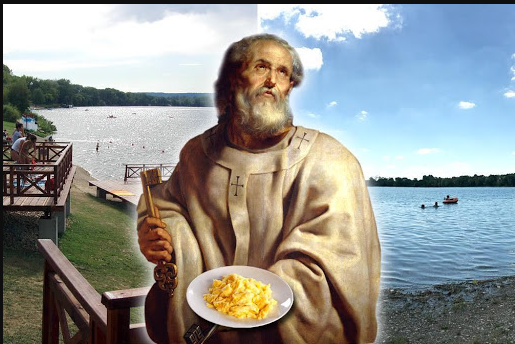
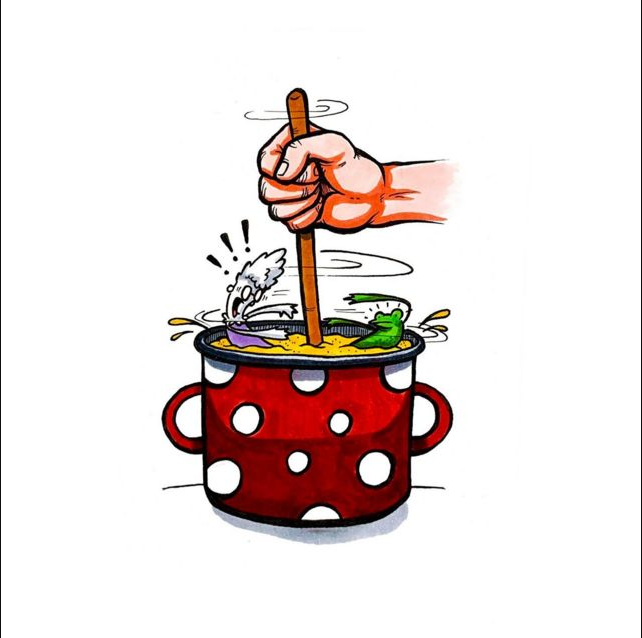
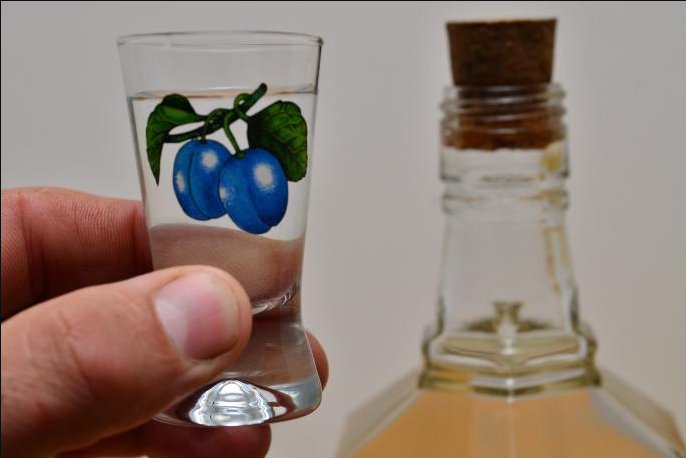
What does it mean to have merak?
I didn’t write for a few days even though I followed your articles. For some reason my comments as well as responses to your comments cannot be seen. I know this is not just my problem, but I was very sorry because I like to write and communicate with you. In the end, I decided to keep writing, just for merak.
Then I started thinking about how to explain the meaning of this word to you who are not from Serbia. Well, let me try.
**The meaning of the word merak:**
- desire, longing for something
- pleasant, pleasant mood, enjoyment, pleasure
- melancholy, depression due to excessive craving, longing for something
**expressions:**
Have merak on someone:
to want, to love someone, something: to crave someone, something
Make merak:
spend time in pleasure, enjoy
**Derived words:**
**Meraklija** meaning of words:
Who loves and knows how to enjoy something; one who loves and knows how to rejoice, to have fun
Among the most beautiful foreign words that describe well-being, love and positive feelings that will become part of the vocabulary composed of expressions and terms that describe pleasure around the world, according to the Independent, there is one word used in the Serbian language - merak.
Although this word is derived from the Turkish language, it is widely used in both speech and literature.It is found both in folk literature and in the works of some Serbian writers, such as Stevan Sremac.
"Merak, a Serbian word, means a pleasure that derives from small things", say the journalists of the Independent.
According to the choice of the Independent journalist, on the list of beautiful words that English experts are working on, "merak" was among those words that describe something wonderful, and it is not possible to translate them into English.
It is similar to the Hawaiian word "aloha", which is used around the world as a welcome greeting, although it literally means "breath of presence".
"Merak", "aloha", the Turkish word "gumuservi" which describes the reflection of the moon on the water, or "cveč" a word used by Welsh people to express the security of hugs, are part of the future dictionary used by psychologist Tim Lomas from the University of East London.
Among those words, the journalists chose the Japanese "nakama" which means close friends, one of whom is in love with each other platonic, but also "odal" which in Sri Lanka expresses false anger towards a loved one, the Dutch "gezeligeid" which expresses a feeling of warmth when you are together with a loved one.
Among those words is the Chinese "Ji ji ji show, yu zi xie lao" when you hold the hand of a loved one and grow old together, but also the anti-Portuguese "kafun" which means the feeling when you run your fingers through the hair of a loved one.
For now, there are slightly more than 200 positive, untranslatable words in that dictionary, which are divided into three groups. The first refers to feelings - positive and complex, the second to mutual relations and closeness, and the third to the character of potentials and spirituality.
I hope you enjoyed my article.
**In the end, remember, merak has no price, and I just had merak to write this article.**
8 revolutionary weapons of the First World War
The armistice day is being marked in Serbia and the world, in memory of November 11, 1918, when the Entente forces signed an armistice with Germany and thus ended the First World War.
The armistice in the First World War was signed on this day in 1918 in the woods near the French city of Compiègne, in a special chariot of Marshal Ferdinand Foch, and was in force until the conclusion of the final peace agreement in Versailles, June 28, 1919.
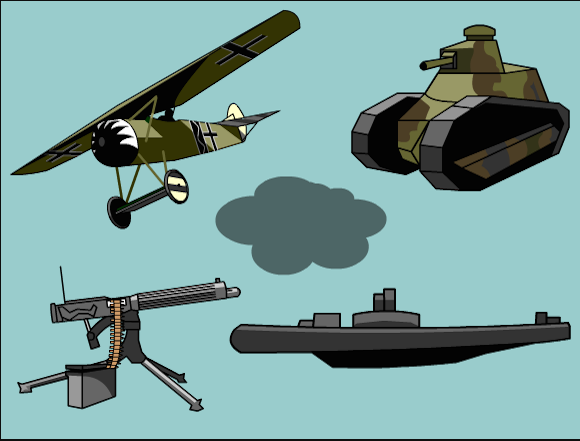
When we think of the First World War, we will see a picture of a static trench warfare where the only tactic consisted of mass infantry attacks that would be cut down by machine gun fire. Although there is undoubtedly truth in this report, the scientists and tacticians of the warring countries were constantly devising new ways to gain dominance over the enemy and break through his line. To achieve this, many new types of weapons have been devised. Some of them had a great influence on the course of the war, but also on the development of military technology after its end.
That is why the First World War or the Great War as it was then called is considered the first modern war
These are weapons and protective equipment that were first used in the First World War in the military, and still exist today, of course in a modernized form.
**8.Torpedo boat**
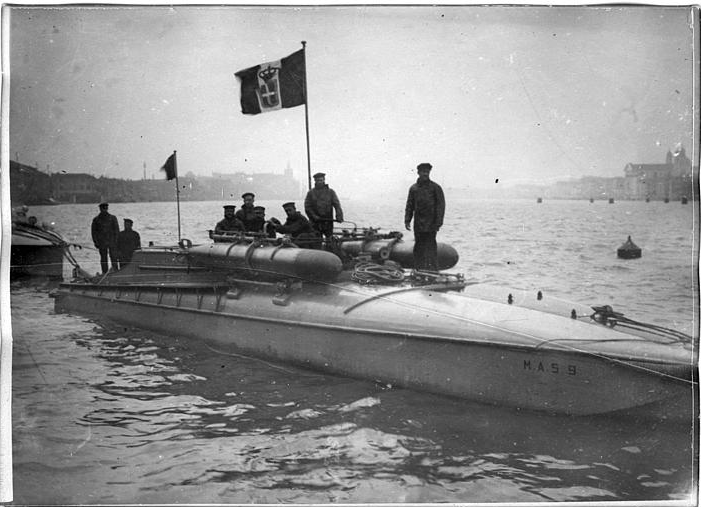
A torpedo boat is the name for a small and fast warship whose main weapon is a torpedo.
It was created at the beginning of the 20th century thanks to the development of an internal combustion engine, which gave it a higher speed and a smaller size compared to the steam engine of a forced torpedo boat. This is why torpedo boats are sometimes called motor torpedo boats after the British Navy, which named these ships the Motor Torpedo Boat.
Torpedo boats were first used successfully by the Italians during the First World War, the most spectacular of which was the sinking of the Austro-Hungarian battleship SMS St. Stephen near the island of Premuda.
This event prompted other navies to start building torpedo boats, and between the wars the standard of a torpedo boat was created as a small ship of 15-30 m in length and speed of 30 to 50 knots, armed with one, two or four torpedo tubes and several machine gun or light anti-aircraft cannon for protection. Due to the simplicity of their construction, torpedo boats were preferred by countries deprived of a strong ocean navy for various reasons, such as the USSR, ie the Kingdom of the Serbs, Croats and Slovenes. The latter, in cooperation with British shipbuilders, made several acclaimed examples from the Uskok and Orjen classes.
**7.Flamethrower**
Although devices for the production of the famous Byzantine Greek fire are considered the first flamethrowers, and although similar devices are described in books and official records of the Chinese Song dynasty in the 10th and 11th centuries, modern flamethrowers date back to just before the First World War. The invention of the first model is traditionally attributed to the German engineer Richard Fiedler; it was first used in 1915 on the Western Front, and soon after, its own models were developed by the British and later by other armies.
Then, as in later conflicts, the flamethrower stood out as a weapon that is extremely effective, but only for specific combat circumstances. It is one of the most effective means of neutralizing enemy manpower in trenches, bunkers and other fortifications, and its application usually has a tremendous effect on enemy morale. On the other hand, the flame jet cannot be longer than about 80 m, nor can it last longer than 2 minutes; this is due to both technical limitations and the weight of equipment and fuel that the flamethrower operator can carry.
Therefore, during World War II, flamethrower tanks were developed that were supposed to eliminate these shortcomings.
**6. Machine gun**
Automatic weapons, ie weapons in which the gas pressure or other technical solution drives the mechanism for re (automatic) loading and firing of the next bullet, originated in the 19th century. Machine guns were especially effective. However, they had a large mass and were difficult to move. This made them good in defense but awkward for offensive operations. Therefore, in 1915, a new weapon called a machine gun was introduced, a kind of compromise between the high rate of fire of a machine gun and the carrying capacity of a rifle. Only one soldier was needed to handle (although other soldiers would often carry extra ammunition). It has achieved so much success that tactics for small units of soldiers have become based on the role of a soldier carrying a machine gun.
Complementing machine gun fire at close and medium distances, machine guns served to repel attacks and counterattacks, to protect wings and flanks, as well as to hold important positions. In the middle of the First World War, the firing squads of many armies had between eight and twelve.
**5. Hand grenade**
Hand grenades were used in the Middle Ages, but they were very unreliable and at the beginning of the 20th century they were increasingly considered an obsolete type of weapon. However, due to the trench method of warfare in the First World War, the demand for them increased significantly because they could be thrown into the enemy's trench even from a sheltered position. The production of hand grenades grew sharply, but shortages were common. More advanced fabrication techniques have made them less dangerous to the user. The new bombs most often resembled a pineapple (the first such bomb was the British Mills bomb from 1915), but the German Steelhand grenades or grenades on a stick are also known. Both types were also used in World War II.
**3. Chemical weapons**
Chemical weapons were used en masse for the first time in World War I. The first use of poisonous gases occurred on August 26, 1914. when the French threw bombs filled with ethyl bromoacetate, a tear gas compound, at the Germans.
The first mass use of the deadly gas was on April 22, 1915, when the Germans used 168 tons of chlorine near Ypres, a gas that causes suffocation in high concentrations. The French soldiers left the trenches in panic, but the Germans failed to take advantage of this because their soldiers were also afraid to approach the clouds of poison gas.
In the following years, more lethal gases such as phosgene (colorless and highly toxic) and mustard gas (retained in the soil for days or weeks) were introduced. Relatively few soldiers were killed by the poison gas (about 90,000), but the number of wounded and maimed reached 1.2 million.
The use of chemical weapons is prohibited by the Geneva Convention. However, chemical weapons were used later, and even today there are many substances that are produced and stored in some countries, and are classified as chemical weapons
**3. Tank.**
Armored vehicles (armored cars) have been used since the beginning of the First World War. Although they proved to be effective weapons, they had a very limited ability to operate on difficult terrain and could not overcome obstacles such as trenches. Therefore, in 1914, British officer Ernest Dunlop Swinton came up with the idea of making an armored vehicle with tracks, which were already in use on tractors. It took almost two years to reach a practical solution.
Originally, the British military authorities intended to call the new weapon a land ship, but they changed their minds because the Germans could very easily conclude what kind of weapon it was. Therefore, factory workers were told to produce mobile water tanks for use on desert battlefields. By shortening that name, the word tank was coined.
The first tanks were used on the Somme on September 15, 1916. years. Tanks did not have a decisive influence on the outcome of the First World War, but they paved the way for the further development of one of the most recognizable combat vehicles today.
**2. Helmets**
At the time of the outbreak of the First World War, helmets had primarily a decorative and identifying role - their protective value was almost non-existent. The widespread use of artillery weapons resulted in numerous losses caused by shrapnel-hit shrapnel to the head, primarily because the head was the most exposed part of the body while soldiers stood in the trenches. Therefore, heavy steel helmets were introduced. In 1915, they were worn only by special units, and in 1916 and 1917 they became a standard part of military equipment. There were also experimental helmets with face protection visors, but they proved impractical. The German Stahlhelm, a very recognizable piece of German military equipment in World War II, was introduced in 1916.
**1. Aircraft**
Balloons and planes were used to reconnoiter the battlefield even before the outbreak of World War I, and during the Italian-Ottoman War and the Balkan Wars of the 1910s they were also used to bomb enemy positions. In the First World War, the use of airplanes became widespread, for the first time airplanes were used against enemy aircraft, and high-ranking persons such as generals took the place of air unit commanders. It was also the first war in which civilian targets were attacked from the air
At the beginning of the First World War, airplanes were used in all countries mainly for observations, reconnaissance and auxiliary tasks. They were not armed, and the pilots carried only cameras to photograph enemy positions. They were later armed with machine guns.
The real air war took place between 1916 and 1918. The most specific were the hunting battles on the Western Front, which inspired numerous writers and directors.
French pilot Roland Garros invented a new way of firing machine guns between propellers, and any pilot who shot down at least five planes would become a war hero. The most successful among them, with as many as 80 downed planes, was Manfred von Richthofen, better known as the Red Baron. He was piloting a red Fokker tricycle. His entire unit, called the Circus, also flew in such planes.
He ended unhappily, by being knocked down in the air by a beginner from the British Air Force, who simply accidentally shot at Richthofen's plane.
**All these weapons have become much more modern and deadly today. They have been used many times in the 102 years since the end of the First World War.**
**Although I know it's not realistic, I wish they were never used again.**
November 11 - Day of Armistice in the First World War
Today is the day of the armistice in the First World War. The Kingdom of Serbia had 1,250,000 victims, which represents 28% of the population it had before the war. Unfortunately, even this horrible data is not essentially accurate, the real percentage of victims is much higher. Essentially, realistically, genocide against the population of Serbia ("punitive expeditions of Austria-Hungary and Bulgaria") was mostly committed over that part of the territory and population that belonged to Serbia before the Balkan wars, and in the "new areas" - the territory of present-day Macedonia and Kosovo and Metohija - it was to a much lesser extent. If we look at the census before the Balkan wars that were fought just before the First World War, it would come to the point that 1,250,000 victims, compared to 2,784,000 inhabitants, make up an even more horrific 44.89 percent. With my articles today, I want to pay tribute to all these victims of the Great War, as they called it then.

Monument to the Unknown Hero - A magnificent monument to Serbian fighters or the whim of a Freemason
Yesterday I wrote about the town of Žrnovo, which was located on Avalahttps://read.cash/@ruza17/zrnovo-on-avala-a-city-that-no-longer-exists-96bcdf5b . A monument to the Unknown Hero was erected in its place today.
The official idea of demolishing Žrnovo was to provide space for a complex of monuments to the Unknown Hero, designed by Ivan Meštrović. Unofficial reasons allegedly lie in the king's superstition, and even in the involvement of Freemasons in such a decision. Proponents of this second theory cite as an example the almost identical decision to demolish the old chapel in Lovćen due to the erection of the mausoleum to Njegoš according to, accidentally or not, also Meštrović's project.
**The story of an unknown hero**
During the First World War, in 1915, a 15-year-old Serbian boy died near Žrnovo, in the battles between the Serbian and German armies. The Germans buried him and left the inscription "Ein unbekannter serbischer soldat", or "An unknown Serbian soldier", on an improvised wooden cross above the grave.
This is how the story began, which twenty years later led to the demolition of Žrnovo.
Not long after the end of the war, the grave of an unknown hero became a well-known refuge for unfortunate Serbian mothers. Namely, many child warriors died and were left lying unmarked, so this grave gave a glimmer of hope to many that their son, grandson, brother lay there. Shepherds from the village on Avala decorated the grave every day and spun stories about the beauty and heroism of a fallen young warrior. The legend that was needed by the grieving people who survived Golgotha and horror in the last war has spread.
Thus arose the need to examine the tomb and perpetuate the legend. The interrogations were undertaken in 1921 and it was determined from the clothes and ammunition in his hands that the unknown hero was indeed a Serbian soldier who was buried by the enemy, probably feeling sorry for his youth. The found corpse was without the left lung, which was blown up by a grenade, and someone commented that it was impossible for the enemy to bury the warrior's heart.
**Today, the unknown hero is a synonym for all the sacrifices that Serbia made during the First World War.**
**Construction of a monument to the Unknown Hero**
The monument to the Unknown Hero and the medieval town of Žrnov did not seem to be able to exist next to each other, by the force of fate or the whim of the ruler's will.
At the time when King Aleksandar Karađorđević decided to build a monument to the Unknown Hero on Avala, the practice of building such monuments had already gained momentum in Europe, in honor of the victims of the Great War, and all the time when man came to power to start a new war. even bigger. However, those were the years when peace was celebrated, the victims paid homage in his name and the possibility of building a more just and better society was believed
The problem with this monument concerns its location. Why did one historical monument of inestimable value have to pay the price of being wiped off the face of the earth in order to create space for a new monument. When rumors about the demolition of Žrnovo began to spread, people believed that it was a tasteless gossip, and when the news became official and the Serbian Orthodox Church rebelled against the ruler's intention.
However, the king was determined in his intention. Eyewitnesses claim that on one occasion someone dared to object to the demolition of the old Serbian town, to which he replied that he thought that Žrnovo was built by the Turks.
All in all, almost symbolically, three big explosions destroyed Žrnovo with the ground, so that there is no trace of it today.
**Fremasons and Yugoslavia**
On the border of conspiracy theories and verifiable historical facts, there are stories about the king's desire to establish Yugoslavia in the place of Serbs even in the consciousness of the Serbian people, which was symbolically done by demolishing the Serbian monument due to the construction of the Yugoslav one. another Masonic symbol on the territory of Belgrade.
One of those who wholeheartedly rebelled against the idea of erecting a monument on Avala was Branislav Nušić. He suggested to the king that the construction plan be directed to the very center of Belgrade, across Republic Square. However, the king did not listen to him, ironically, in the place that Nusic proposed for the monument to the Unknown Hero, today there is his monument.
There is a lot of information about the connection with Freemasons when it comes to King Alexander. Undertaking the work of demolishing Žrnovo, the king held a silver hammer in his hand, one of the basic Masonic symbols. The works were entrusted to the most famous Yugoslav sculptor of that time, Ivan Meštrović, who also belonged to the Freemasons.
He painted a draft of a new building on the top of Avala on a huge white canvas, with his hands completely open. The new building is presented as original, but it is a replica of the tomb of the Persian emperor Cyrus. The very shape of the truncated pyramid is one of the basic Masonic symbols.
The monument actually represents a tomb to which two gates lead and was built of black Jablanica granite. On both sides of the entrance, there are four granite caryatids dressed in the costumes of the people of Yugoslavia, but without a realistic depiction of details. It is assumed that the idea of the builder and the king was to erect a monument over the capital of the new state that would not bear the national color of only one of its peoples. Why Zrnovo had to pay the price of the demolition because of that remains a question about which opinions still clash today.
**A monument that reists time**
Huge money was invested in Meštrović's work. 4,000 cubic meters of stone were built into the monument itself.
Unprocessed blocks of granite, solid grayish-black stone (gabbro) from the state quarry "Jablanica", near Mostar in the Neretva Valley, were delivered to the railway station in Ripanj near Belgrade. From there, they were brought by a narrow gauge to the top of Avala, where the final polishing and ironing works were performed.
For that purpose, electricity and water were brought to the construction site. Not far from the old monument, barracks with stonemason's workshops and space for storing materials were erected. Monumental caryatid sculptures arrived from Meštrović's workshop in Split at the foot of Avala, and then, like stone blocks, they were lifted by pulling wagons to the top.
They were then placed by crane on a high scaffold built around the pedestal of the monument. After three years of work, it was completed in September 1937, and officially opened on June 28, 1938, on Vidovdan.
At the top of the sarcophagus is an inscription: "ALEXANDER AND THE KING OF YUGOSLAVIA TO AN UNKNOWN HERO", and on the opposite side is the year of the end of the monument "MCMXXXVIII" (1938).
However, King Alexander did not live to see Meštrović's work on the flat surface of the former Žrnovo, because he was killed in Marseilles on October 9, 1934, only a few months after the beginning of the construction of the pyramidal mausoleum.
**Judgment about the mausoleum**
It is very ungrateful to make any judgment about the mausoleum at the top of Avala. It really looks impressive. It is a favorite picnic spot for Belgraders and a truly representative monument when New York, Paris or Moscow would not be ashamed. It has symbolism because it pays homage to all the fallen warriors in the wars of 1912-1918. years
On the other hand, pity remains for the medieval fortress. Probably, that fortress would still be a tourist attraction today.
Žrnovo on Avala - a city that no longer exists
Every metropolis has its own enigma. Belgrade has several of them, and about one of its greatest writers in this text.
There are some stories that swallow the abyss of historical turmoil forever. Written or unwritten, not many of them remain, as if they were never even destined.
From the top of Avala, where the view reaches to the lowlands of Vojvodina and Šumadija, another such invisible mystery is watching us and a big question mark to which we will hardly be able to give satisfactory answers in the foreseeable future.
Why did King Alexander I Karadjordjevic mind the remains of the city that Evliya Celebi mentions as one of the six most important fortifications in Serbia, and archaeologists claim that people at this site were engaged in mining 4,000 years ago? Other peoples respect their history and keep medieval cities as great shrines. There is no answer and that mystery has never been solved.
**Medieval castle Žrnov**
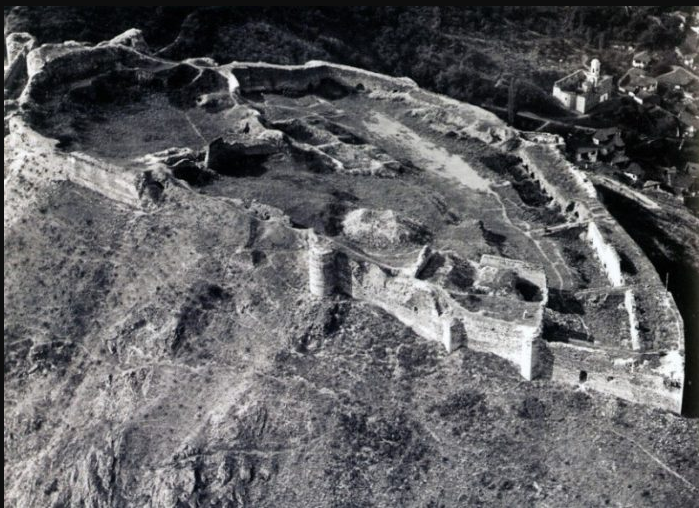
Few inhabitants of Belgrade know that the town of Žrnov, also known as Žrnovan, was built on Avala by the Romans. They chose that location for the fortification in order to control the approach to Singidunum, but also to protect their relatives who were about a hundred meters from the top of Avala.
The city was located at the top of Avala, at an altitude of 511 meters. Zrnov or Zrnovo, as it was also called, was a city of fortresses from which the view descended to Belgrade. Archaeologists claim that a mining settlement was located here 4000 years ago.
The presence of the Celts on Avala as well as in Belgrade is a historically established fact and it is believed that they laid the foundations of the fortress. Due to its mineral wealth, Avala was an important destination in history, and one of the first miners who exploited the ore on it were the Scordisci, a tribe formed by mixing Serbs and Celts, so according to some theories, they built the first fortifications.
On these foundations the Romans later erected their watchtowers. From there, they controlled the approaches to Singidunum (Belgrade) and supervised the mining mines on the outskirts of Avala. There is no reliable historical evidence about the significance and use of Žrnovo in the time of Byzantium, but it is certain that the first real fortification was built here during the time of Despot Stefan Layarević.
**Ottomans on (H) avala**
Having started successfully with the conquest of Serbian territories after the defeat of the Serbian army in Kosovo, the Ottomans reached Belgrade, and in 1442 they captured Žrnov itself. Immediately after the conquest, they strengthened its eastern and southern ramparts, however, two years later, they were forced by the Peace of Szeged to renew the Serbian despotism and return the fortress to the Serbs for an indefinite period.
That period, however, did not last long. Immediately after the deaths of Janos Hunjadi and Djuradj Brankovic, the Turkish army moved to Belgrade again and in 1458 captured Zrnovo. The siege of Belgrade did not succeed, but the Turks from Žrnovo, which they are strengthening, are building a fortress for the siege of the city which is in Hungarian hands.
Obsessed with the conquest of Belgrade, the Turks named the fortress Havala, which means an obstacle or a barrier, and the present name of the mountain, Avala, remained after it. With the fall of Belgrade in 1521, the fortress itself began to lose its strategic importance. However, it is believed that there was a military reconnaissance in Žrnovo until the 18th century.
**All sketches, illustrations and photographs of Žrnovo, united in one place:**
https://youtu.be/paunsp9XCaw
**What the city looked like**
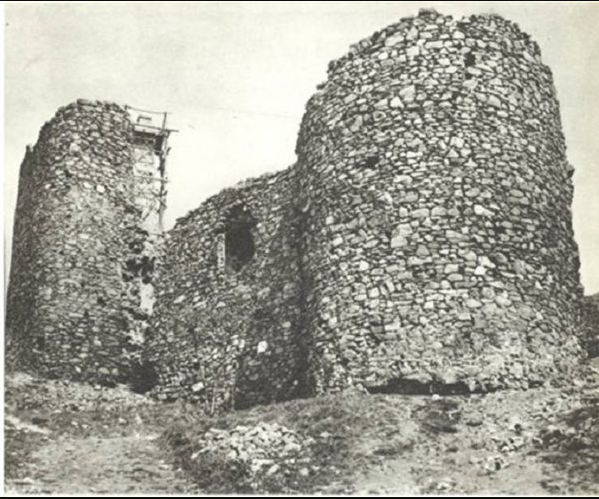
Žrnovo consisted of the Lower and Upper Towns, where the Upper Town represented a Serbian fortress with Ottoman expansion, and the Lower Wall, which followed the shape of a mountain. It was connected to the Small Town, which was based on a regular pentagon, surrounded by a dry moat.
The direction of the spread of the Small Town was northwest - southeast and it corresponds to the position of today's monument to the Unknown Hero. The small town with two towers on the southeastern rampart is the oldest part of Žrnovo and was a fortress at the time when the Serbs ruled Žrnovo. It was built in the Middle Ages, but the exact date of construction cannot be determined. The last parts of the city, towers, ramparts and a dry moat around the whole city were built by the Turks in 1458.
There is no trace of the city today, there are only records of its appearance and a couple of photographs that are kept in the National Museum. Evliya lebelebi pointed out that Žrnov is one of the six most important Serbian fortifications. The travel writer Felix Kanic states only that the Romans had their own observation post on Avala, and that the first fortification was built by Serbian rulers, when and which he does not state.
As for the origin of the name Žrnov, it is assumed that it was named after the millstone for grinding ore from the mines that existed along the edges of Avala, which before the Turks was called Žrnov.
**The unfortunate fate of Žrnovo**
After it stopped playing the role of an important military plant in the 18th century, the fortress of Žrnovo was left to the ravages of time.
However, the problem is not only that it was not taken care of as it deserved at the time of the formation of the Serbian state, but that it was compared to the country by inexplicable negligence and almost barbaric act of the Serbian king Zrnovo before it was fully explored.
**The historical and cultural significance of Žrnovo was such that even the world's largest cities would be proud of it, but it seemed to bother Belgrade.**
In 1934, Serbian King Alexander I Karadjordjevic, as part of a plan to erect a monument to the Unknown Hero, ordered the demolition of the medieval Serbian city in order to use the plateau on Avala as the foundation for a new monument. Why some other elevation in the vicinity of Belgrade was not used for that monument, of which there are enough, will remain an enigma forever.
I will write something more about the monument that was erected on the site of Žrnovo in tomorrow's article
Night of Broken Glass - An overture to the Holocaust
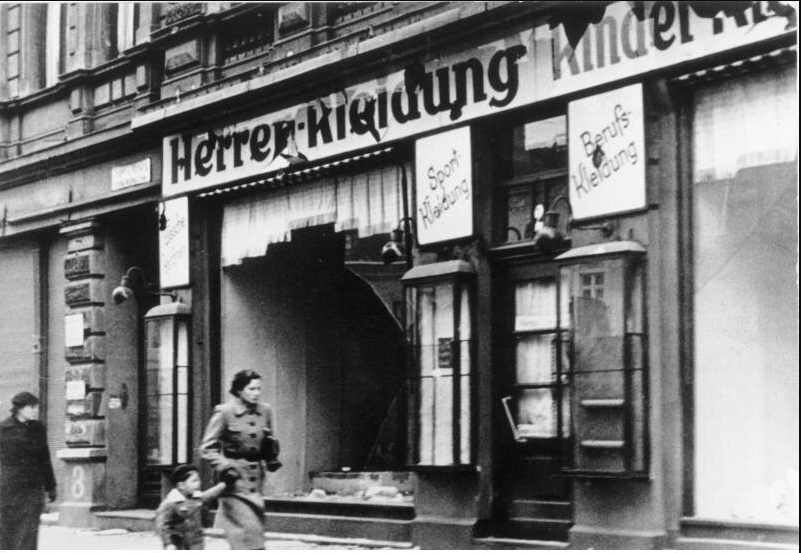
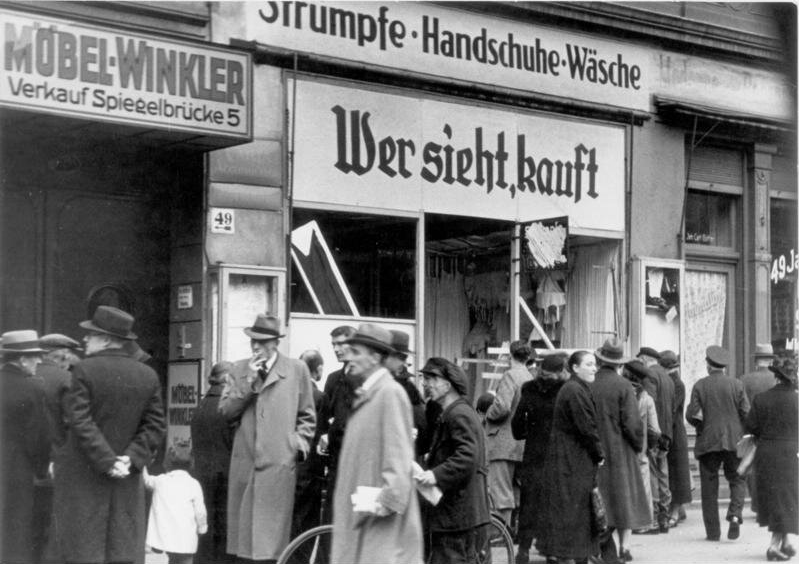
**It was "the event that started it all", an incident that was an introduction to the chaos that eventually engulfed the whole world. On this day, "Crystal Night" took place, the first mass act of anti-Jewish violence in Nazi Germany.**
Crystal Night (Night of Broken Glass)-, also known as the Imperial Crystal Night, was the first organized and massive great pogrom of Jews that took place throughout Germany on the night of November 9 and in the early hours of November 10, 1938. For many observers, he was the black indication of the horror that will follow and which we know today as the "Holocaust".
**Persecution as an excuse**
During the 1930s, many Jews of Polish descent lived in Germany, including some who were decorated World War I veterans. On Friday, October 28, 1938, 17,000 of them were gathered in the middle of the night without warning and deported from Germany to Poland.
The Polish government refused to receive them, which is why the unfortunate people dragged themselves between the German and Polish border posts during the cold days and nights until the German authorities finally convinced Poland to allow them entry.
Herschel Greenspan, a German Jew who fled to France, received a letter from his family describing all the horrors they had experienced. On Monday, November 7, revolted and furious, Greenspan shot the secretary of the German embassy in Paris, Ernst von Rat.
Two days later, Rat died in hospital, prompting the Nazis to organize a pogrom against all Jews in Germany.
**The night it all started**
Historians today agree that there is no talk that the "outburst of rage" that took place during the night of November 9 across Germany was "spontaneous and accidental." It was rather a well-organized and coordinated action of savagery organized by the Nazi government.
In the pogrom, about 1574 synagogues were damaged or destroyed, that is. almost everything that existed in Germany, many Jewish cemeteries and more than 7,000 Jewish shops and large stores.
More than 20,000 Jews were arrested and taken to concentration camps, and a few who dared to oppose were beaten to death while others were forced to watch. The number of dead has never been determined with certainty, and it is known for sure that some Germans were killed just because they "looked like Jews".
The event caused outrage around the world. Most European countries have severed diplomatic relations with Germany in protest. The United States withdrew its ambassador, and the pogrom discredited pro-Nazi movements around the world.
To add to the irony, after the event, the Jews had to pay a collective fine of 1 billion marks to the Nazi government. This night ushered in a new phase in the anti-Semitic activities of the Nazi party and state apparatuses, leading to deportations, and finally the horrific extermination of most Jews who lived in Germany during World War II.
**Name problem**
The name of this event is controversial. It was called "Kristallnacht" by many people because of the broken shop windows of Jewish-owned stores, but there are other explanations.
Dr. Walter H. Pele, a historian specializing in modern Germany, argues that direct translation is not acceptable because his original intention was to cynically propagate violence as something metaphorically “brilliant and radiant” and essentially positive for Germany.
Similarly, the term "Reichskristallnacht" - "Imperial Crystal Night" was used in German government propaganda during the Nazi period to describe an event of significance to the entire nation.
https://youtu.be/SiSLx8pcEAk
Otherwise, the forgotten origin of the word "Kristallnacht" is found today in the conversations of ordinary people of that time. Aware of the crime that took place, the Germans coined a euphemistic name because they feared repression by the Nazi regime if they called things by their real names.
This explains the prefix "Reichs" - "imperial", which people at the time used in other contexts to ridicule and criticize some other moves of the Nazi dictatorship.
Today, the term "Pogromnacht" - "Night of Pogrom" is mostly used in Germany because there is a consensus that "Kristallnacht" is too euphemistic a term.
Anniversary of the fall of the Berlin Wall, what happened in 1989?
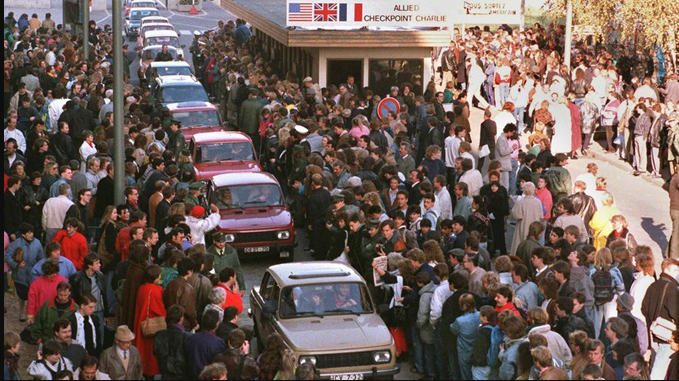
Exactly 31 years ago, the Berlin Wall fell, which is one of the most important events in recent history. On that day, a new world order was established. In January of 1989, Erich Honecker, the long-time ruler of East Germany and the German Democratic Republic (GDR), publicly predicted that the Berlin Wall would exist for another 50 to 100 years. By the end of that year, Honecker and his Communist Party had disappeared from the historical scene.
The communist regime of the GDR was anything but the least democratic. Citizens rebelled and began to leave the country en masse, in the hundreds of thousands, and those who remained organized demonstrations
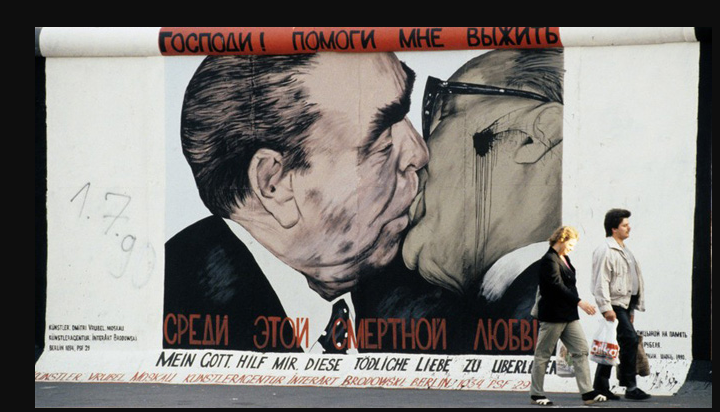
**Mural with characters by Leonid Brezhnev and Erich Honecker drawn on the Berlin Wall**
The main patron of the GDR was the USSR, which had its problems at the time. Soviet leader Mikhail Gorbachev even warned Honecker that the one that does not change over time will fail and that East Berlin cannot count on Moscow's unconditional support. The whole of Eastern Europe was in change, it was clear that socialism was collapsing and that the West was winning the Cold War.
East Germany, that is, the regime that ruled that country, historically known for its authoritarianism and the omniscient and omnipotent secret service of the Stasi, could no longer control its own destiny. And after so many years of repression, the citizens were moved by a reckless statement by an official, a media representative
**Citizens of the GDR move to West Germany with their "warburgs"**
Those words were uttered by Günther Šabovski, who told the press about the wrong conclusion from the previously held meeting at the press conference, and stated that one can immediately move freely from East to West Berlin. The citizens rushed in, the police missed them after a small hesitation, and so the Berlin Wall practically fell.
This building, a symbol of division, was erected in 1961 and was extended in the following years. The citizens of the GDR fled through it in the most ingenious ways, but many died there. The last victim was killed during an attempt to escape in 1989, at the end of which the Berlin Wall itself fell.
**A wall of remembrance dedicated to the victims near the Berlin Wall**
Corona memes that will help you keep your common sense
Mimes are jpg or gif formats, sometimes video clips, with accompanying text, and each mime is based on one concept, which each user can change, but not to disturb the basic structure in the process. Their goal is to convey a message, usually ironic, that has the function of social criticism. They do not know state borders, and the only limiting factor in their spread is the availability of the Internet, which indicates the dynamics of the development of global communication.
As social beings who migrate, people put a lot of effort into communication with family and friends, and if the closest ones are not physically present, they often experience pain that, according to many experts, is harder to bear than, for example, some physical injury. As communication strengthens connections, social networks have become an important moment in the evolution of the human race
Some mimes are used exclusively to popularize tolerance and positive ways of thinking, and thus bring balance to the cultural clash, since experts claim that mimes are a mirror of modern society and ways of thinking. Thus, they motivate users to think critically about their own, but also about the models of behavior of others, and contribute to the formation of new communities. In the end, everyone wants one thing, and that is to belong to a group, and mimes have become symbols of the modern age that define the values of a group, so it is up to the individual to choose a group wisely and intelligently create mimes that could eventually contribute to society becomes a better and stronger whole, composed of individuals who criticize and change negative patterns of behavior.
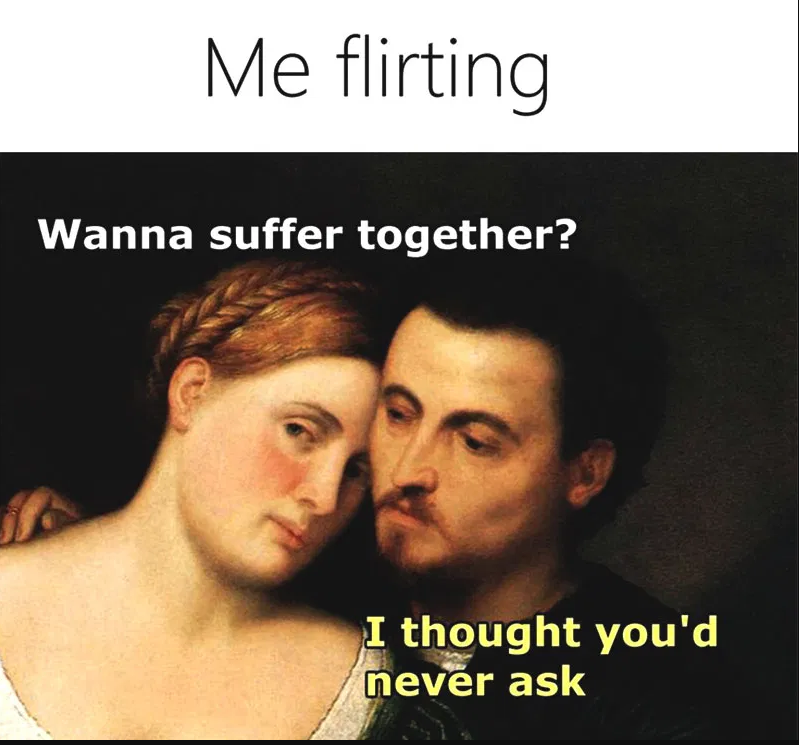
The Internet is already full of picturesque jokes about the corona virus. While spending more time online can be paradoxically exhausting and refreshing, there really is no doubt that this is the main way we connect with each other these days - and as a result, it means that internet culture is moving faster than ever, creating a wealth of witty and interesting mimes, which reflect the moment in which we live. Despite the fact that the whole world must respect social distance, these things bring people together.
I **singled out a few mimes that seemed interesting to me, and related to the current situation.**
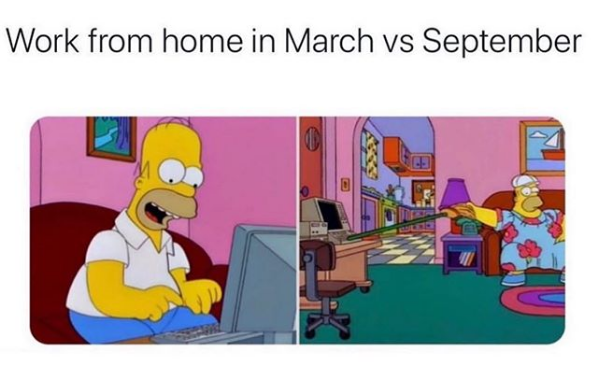
**Because of the corona virus, we started working from home**
**We had to be in self isolation**
**It is the most difficult for students**
**This year is not very good for control freaks**
**We have all become specialists in this scourge**
**We were all involved in the fight against this disease**
**And for the end:**
Mimes will remain for some time an important and inevitable form of communication for a whole generation that will not lose its importance. Still, it is certain that some future generations will look at the mime on something used by their parents, and it is questionable how much value they will find in them that he has today.
**I hope you enjoyed the mimes I have chosen and that they will help you keep your common sense in this madness.**
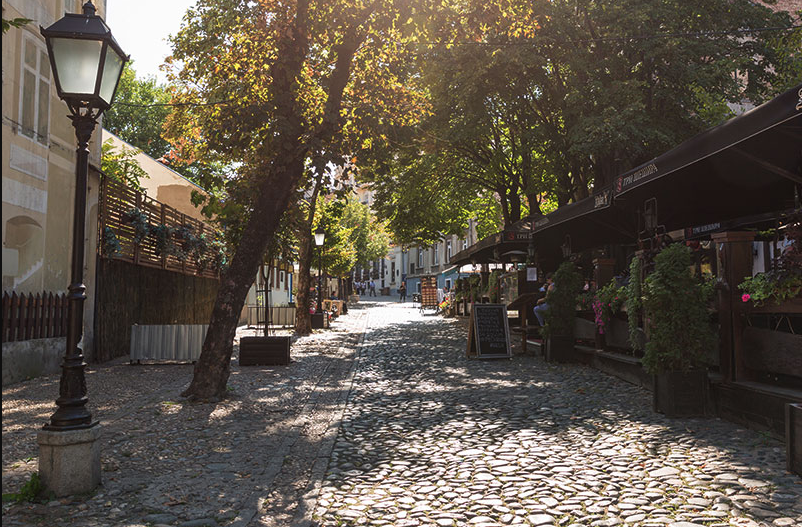
Belgrade Skadarlija - from a bohemian quarter to an ethno attraction
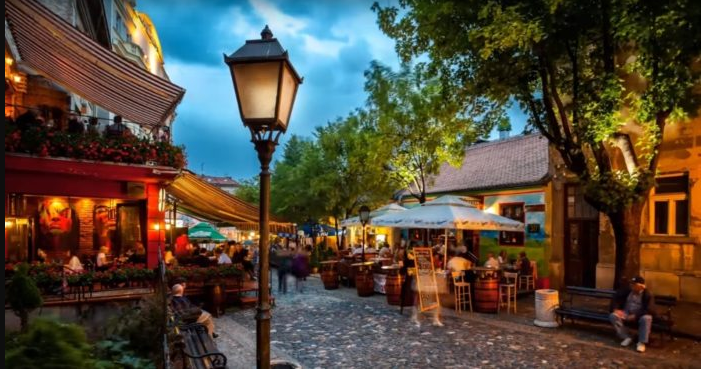
Skadarlija. The winding street with the spirit of old times floats, and the accumulated footsteps of bohemians, actors and poets who party until late at night still resound loudly on the cobblestones in the center of century-old Belgrade. Skadarska Street, full of famous taverns, remains a symbol of the city at the confluence of two rivers. The small treasury of dreams, which is visited by 20,000 people every day, is an unavoidable destination for every visitor to the city who wants to absorb the scents of ancient times and turn back the clock.
However, the legend of Skadarlija owes its huge role in the history of Belgrade to a modest beginning, a game of chance and the industrial progress of the city.
**The first citizen of Belgrade and the beginning of the creation of a legend**
The first houses in Skadarlija were built around 1717. Around the middle of the 19th century, this area was known as Šićan-mala, a Roma settlement with as many as 14 houses, and only in 1872 did it get its current name - Skadarska Street.
At that time, Bibija's stream flowed down a steep alley that springs near the Politika building (an old newspaper house in Belgrade). Potočić was named after the Roma deity of salvation Bibija, and today he was redirected to the drainage system. The street was also connected to the aqueduct whose largest arch was named after the city of Shkodra, later giving the street its name.
A couple of years later, on the edge of industrialization, about a hundred houses and the industrial complex "A small brewery" sprang up in Skadarska Street.
An interesting fact comes from 1892, when the famous Bajloni brewery was built on the site of the "Small Brewery", after which the nearby market was named. Namely, during the digging of the foundations, the skull of Homo primagenius was found, mercifully called "the first citizen of Belgrade". During the First World War (or the Great War as it was then called), every trace of it was lost to him.
The first cafes sprang up around this brewery. The guide through Belgrade from 1909 states that there were 14 cafes in Skadarska Street and its surroundings, while (unlike today's two million), only 90,000 people lived at that time. During that period, the then famous bohemian shelters "Bums Keller", "Vuk Karadzic" and "Golden Jug" were created. The famous poet Đura Jakšić almost never left Bokal. "Milos Obilic", "Bandist" and "Booms' Cellar", whose regular guest was the famous writer Tin Ujevic, were also popular. The gentleman was even nicknamed the "King of Skadar". "Filipova pivara" regularly hosted the unsurpassed Bora Stanković.
Today, the most famous Belgrade cafes "Three hats" and "Two deer" have survived from that time.
**How Skadarlija became the center of social life**
At the end of the 19th century, at the entrance to Skadarlija, there was a tavern "Pašonin bulevar". In addition to the summer garden, it also had a large hall for dances and weddings, which was the first Belgrade music hall. Around 1908, that place had the honor of hosting the first performances of the Belgrade Opera, and after its closure in 1928, the "Balkan" cinema sprang up in that place.
In the period before the Great War, famous people of that time who lived in this street or its vicinity contributed the most to the epithet "bohemian quarter" of Skadarlija. Among them are prominent writers: Đura Jakšić, Jovan Jovanović Zmaj, Antun Gustav Matoš, Bora Stanković, Branislav Nušić, Dragomir Brzak, brothers Vojislav and Žarko Ilić. Skadarlija was also home to actors Milorad Gavrilović, Uncle Ilija Stanojević, Dobrica Milutinović, Milka Grgureva, Žanka Stokić and many others
.Namely, after 1869 and the opening of the nearby National Theater, the artists needed accommodation. Skadarlija was the ideal solution. Of course, where the artists are, there is also entertainment, sleepless nights and entertainment until the early morning hours.
Little by little, Skadarlija became a gathering place for political, sports, artistic, journalistic and every other elite, and a cafe a location where life was conducted. Cafes were the internet at the time. A collection center for all the gossip, gossip, ideas and arrangements. A place where anecdotes were spread, art was created and important state matters were decided.
That is how the legend was born.
**Skadarlija in modern times**
According to the project of the architect Uglješa Bogunović, in 1966 the renovation of Skadarlija began. The goal was to revive the tradition, but in a modern way. The street was closed to the pedestrian zone, cobblestones and lanterns were renovated, and cafes were renovated.
The long-written verse began to live again:
"At night,
when it's a tiny hour,
you go Skadarlija,
to break your neck! ”
In the seventies of the last century, our famous street "twinned" with Montmartre in Paris. Skadarlija also hosted foreign greats: Queen Elizabeth, King Juan Carlos of Spain and Queen Sofia, George W. Bush, Willy Brant, Margaret Thatcher, Albert Moravia, Sandro Pertini, Gino Lolobrigid, Bert Lancaster. There is almost no end to the enumeration.
Upon entering Skadarlija, next to its flag with symbolic markings (girardo-hat, black cane and red carnation), a well-intentioned message was written in large letters: "Skadarlija - the center of artistic bohemianism, is a tradition of creation for a century. this corner of Belgrade to have fun and entertain, try to conjure up a long time ago with your imagination. Remember all those generations of poets and actors, journalists and painters, bohemians known and unknown ... "
So when you come to the bohemian district of Belgrade, remember the romance of old times and try to experience it and enjoy it. Don't forget that its ancient inhabitants and regular guests "spent their best days at night"
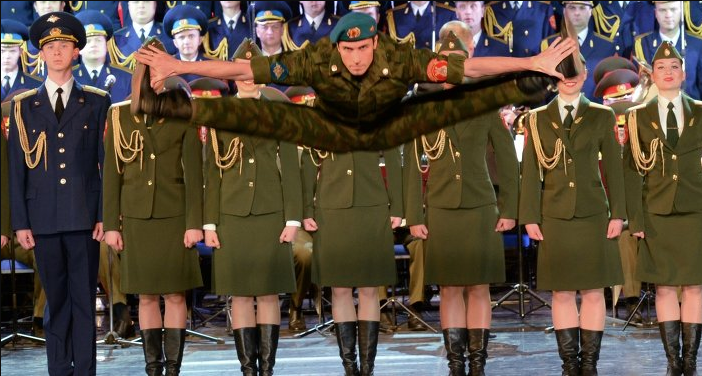
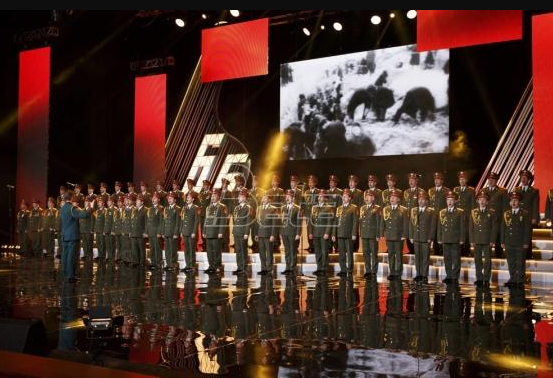
Choir that erases borders, Russian ensemble "Alexandrov"
Cold Russia. As far back as 1883. Alexander Vasilyevich Alexandrov, better known as Sasha, was born on April 13 in Plakhin, a village near Moscow. He soon amazed the world with his impressive singing, but history remembers him differently.
On October 12, 1928, Doctor of Science and Major Alexander Alexandrov transcribed notes recorded during the Civil War. A Red Army choir with 12 members is established.
It is led by Alexander Alexandrov. In the years to come, they become the pride and symbol of Russia. They erased boundaries with music. They performed in war zones around the world
On June 26, 1941, the Red Army went to the front, accompanied by a song by the choir of Alexander's Holy War. The same music was heard in 2007 at NATO headquarters. They are the only Russian choir that performed at the NATO headquarters.
They have performed in Yugoslavia, Afghanistan, Poland, Finland, Syria and many other countries. Music is not measured by numbers, but theirs are impressive.
They sing in almost all languages of the world, including Chinese and Indian. They have 2,000 songs in their repertoire, the ensemble has 200 members, and the performances have long since stopped counting.
The choir is one of the few ensembles that has toured abroad in Soviet times. He held several hundred concerts in the USSR itself, recorded several dozen gramophone records and discs and remained an unavoidable participant in public celebrations
However, the world especially remembered one date - December 25, 2016, 5 hours and 20 minutes.
The Tu-154 plane takes off from Adler in Russia to the Hmejmim military base in Syria. The members of the choir were supposed to celebrate the New Year there with Russian soldiers. Two minutes later, he disappeared from the radar. It was the last flight for 64 members of the Aleksnadrov ensemble.
https://www.youtube.com/watch?v=OomsesLqVPc
The Ministry of Defense of Russia renewed the ensemble, and they had their first performance after the accident in February. They decided that the memory of their colleagues lives on through timeless music.
In this video, the Alexandrov choir sings the song Holy War. It is a song with which they sent Soviet soldiers to the Second World War.
https://www.youtube.com/watch?v=FRHW5H5ggSk
The Alexandrov Choir has performed in Belgrade many times on various occasions.
**In honor of this choir, Alexandrov Park was opened in Belgrade in 2017.**
In the video you can hear the Alexandrov choir singing the Serbian song "Far away there" in Serbian languag. This song is very important for the Serbian people. It was sung by Serbian soldiers in the First World War.In the song, the Serbian soldier mourns the homeland he had to leave and remembers the victims that the Serbian army suffered in the war.
https://www.youtube.com/watch?v=bX3Q8gOghnA
In the last video clip, you are probably well acquainted with the Italian song "Bela cao" in their performance.
**I would recommend you to listen to all thre** **songs because they are performed by top singers, because only such can become members of this choir.**
20 od the most popular cartoons and animated shows , they're watched by children and adults
Cartoons are an indispensable part of our growing up. We also watch many animated series as adults.Carefree days were complemented by even more carefree characters, whose popularity has not declined over the years. For that reason, I present to you the 20 most popular cartoons and animated series of all time.
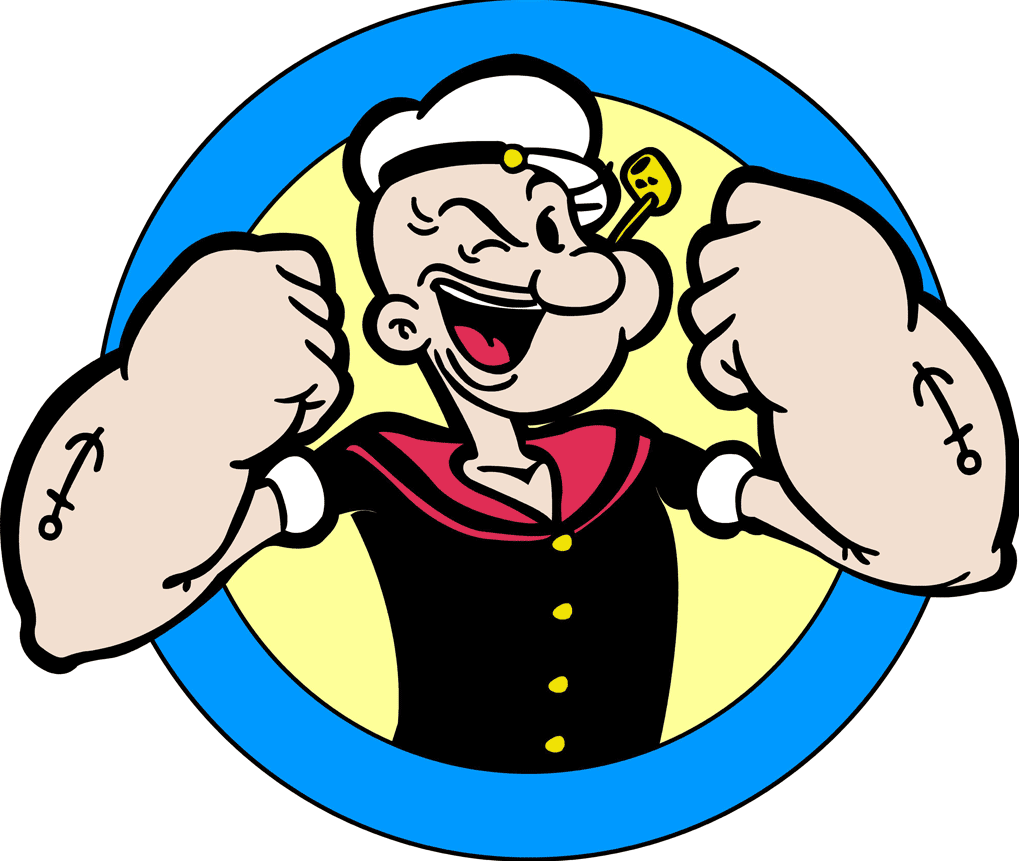
**20.Popeye the sailor**
The character of the sailor Popeye was created by Elzy Segar in 1919 for the advertising needs of a spinach factory. Only ten years later, the character of the sailor Popeye was introduced to comics, where he immediately gained great popularity, and became a star thanks to the Fleischer brothers who made the cartoon.
**19. Duck stories**
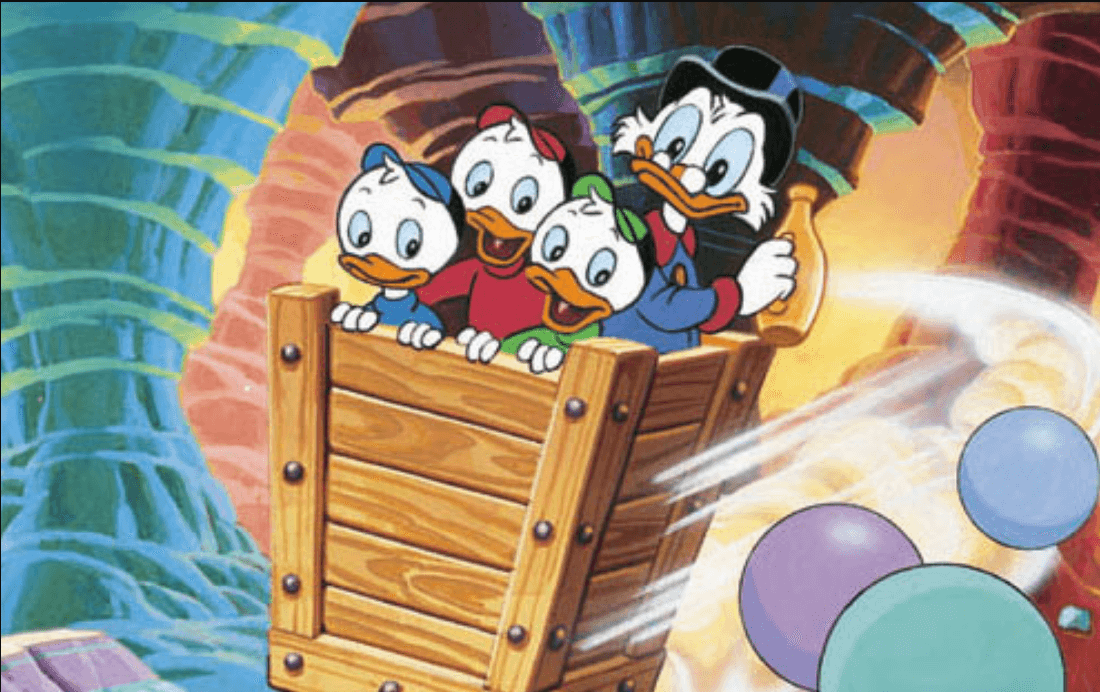
Duck stories are a TV series that follows the adventures of Donald duck and his nephews Huey, Dewey, and Louie , based on the comics of Karl Barks. About 100 episodes were made and a feature film - Slightly Lost Lamps. This is the first Disney feature-length cartoon to emerge from a TV series.
**18. Ninja Turtles**
A team consisting of four anthropomorphic turtles - Michelangelo, Donatello, Leonardo and Raphael. Their sensei, Master Splinter, made them skilled warriors. Their enemies are the Cutter, the Ninja Foot, the robot Nano, the Purple Dragons and many others.
**17. Supergirls**
An animated television series created by animator Craig McCracken for Cartoon Network. The series focuses on Blossom, Bubbles and Buttercup, three girls with superpowers, and also their father, the clever scientist Professor Protonium, who lives in a town called Townsville. The mayor often calls on them to save the city from criminals with his powers.
**16. Strange parents**
The creator of this series is Butch Hartman, and Nickelodeon is in charge of showing it. Godparents Cosmo and Wanda are trying to help Timmy Turner overcome frequent obstacles, fulfilling his wishes, from solving homework to babysitting. Despite their great powers, they manage to blow things up - every time.
**15. Regrets**
Animated TV series by creator Arlen Klaski for Nickelodeon. This is a story about babies told from their perspective. The main characters are Tommy, Chuckie, twins Phil and Lil and Angelica.
**14. Young Titans**
A TV series developed by Sam Register and Glen Murakami produced by Warner Bros. The animated film is about five superheroes, who live in the big T-Tower, in the American city of Jump City, and fight against everyday criminals. It is inspired by typical American animated films like Superman and Batman.
**13. Dexter's laboratory**
An American cartoon created by Jandy Tartakowski. It was produced by Hana and Barbera for Cartoon Network. The series is about an eight-year-old boy-genius with a strange accent named Dexter. He has a secret laboratory that is full of advanced technology and equipment that he made himself, it is hidden behind a shelf in his room. To access this lab he must say a specific code or activate a secret switch on the shelf. Dexter is almost always in conflict with his older sister, Dee Dee, who enjoys playing in her brother's lab and thus destroys his creations.
**12. Pokemons**
The series consists of 15 seasons that follow the adventures of the boy Ash Kecham from the city of Palette and his friends. Ash is one of the many Pokemon trainers, who prepare their creatures for each other's fights. Each Pokemon has its own special powers and abilities. In mutual fights, Pokemon trainers must use strategy and knowledge in order to use their powers in the right way and win. Ash's first Pokémon is Pikachu, a little yellow creature that emits electric shocks from its cheeks.
**11. Family gay**
An American animated series created by Seth McFarlane for Fox Television Network in 1999. The series was canceled in 2002, but after the extraordinary reactions of the audience after the series was released on DVD and the reruns were released on the Cartoon Network Fox channel, it continued the production of the series in 2005.
The series takes place in Quahog, a fictional city located on Rhode Island in America. The Griffin family lives on Spooner Street. At least one of the most important places is the Drunk Shell.
**10. South Park**
Animated sitcom by Trey Parker and Matt Stone for the Comedy Central television network. Intended for an adult audience, the series has become recognizable for its rough language and surreal, satirical and black humor that mocks a wide range of topics. The plot revolves around the experiences of four boys: Stena Marša, Kyle Broflovski, Eric Cartman and Kenya Makormika. Their bizarre adventures are set in the small town of South Park in Colorado.
**9. Avatar: The last gatekeeper of the Winds**
This cartoon series is also known in Europe as Avatar: Legend of Aang, it was originally broadcast from 2005 to 2008 in three seasons (Water, Earth, Fire). In 2012, it received a sequel - The Legend of Kora. The series follows the adventures of twelve-year-old Aang and his friends, who can bring peace to the country only if the mighty people of fire win.
**8. Batman: Animated series**
The series is based on the DC comic book about the superhero Batman, whose authors are Bob Kane and Bill Finger. It is highly respected by the audience as the most faithful depiction of Batman and his universe, and as the best animated series made according to comics. The creators of this series went so far as to animate the series on black papers, that is, they applied paint on a black background to make the series as dark as possible, and they completely succeeded in that. Although only the word Batman is used as the title, without any title shown in the opening credits, the official title is Batman: Animated Series, as stated by Warner Brothers.
**7. Futurama**
A satirical American cartoon series devised by Matt Graining (creator of The Simpsons) and David Ex Cohen. The plot takes place in New York, in the year 3000. The series begins with the celebration of the new year 2000, when Philip J. Fry, a pizza delivery man, is accidentally frozen. It is thawed a thousand years later, and he discovers New York, with many new laws and customs, which, although they seem unusual to him, seem completely normal to the inhabitants of that time. The series follows Fry's "adventures" while working as an interplanetary shipper. Although the environment is visibly different, humans and conscious robots have changed little. This is, in fact, what gives the series a satirical tone, because the message is that human society is still weak and slow to progress and develop.
**6.The Flintstones**
This is an American animated television series produced by Han and Barbera. The Flintstonesis the first animated series intended for adults that was broadcast in prime time evenings.
The shop is located in the fictional town Bedrock of in the Stone Age. As such, it represented an allegory of American society from the middle and third quarters of the 20th century; in Fred Flintstone fantastic version of the prehistoric past, dinosaurs, saber-toothed tigers, mammoths and other long-extinct animals live together with cavemen whose technology corresponds to the 20th century, mainly through the use of various animals. The characters drive cars made of stone, wood and animal skins and driven by the feet. Although the characters were set in the Stone Age, that did not stop the authors of the series from filming a Christmas episode during the original broadcast, as well as several Christmas special shows in the decades that followed.
**5.Sponge Bob**
An American cartoon television series and media franchise originally broadcast by the Nickelodeon network. The series was conceived by marine biologist and animator Stephen Hillenburg, and was created by his production company United Plankton Pictures. The series is set in the Pacific Ocean in the town of Bikini bottom and the bottom of a nearby lagoon. Sponge Bob is probably the most imaginative inhabitant of Bikini bottom . He lives in a pineapple at the bottom of the sea with his pet, the sea snail Gary. He is employed in a restaurant near Keba Kraba, whose owner is the greedy crab Eugene Crabs . His specialty is burgers, whose secret recipe he hides forever from his biggest enemy Plankton. Sponge Bob's best friend is a starfish named Patrick. The two of them are inseparable friends, full of interesting ideas. Sponge Bob's first neighbor's name is Squidward. There is also the squirrel Sandy O, Sponge Bob's friend who loves karate and lives in a huge glass dome at the bottom of the sea.
**4. Where are you, Scooby Doo**
American cartoon series produced by Hanna-Barbera. The cartoon series aired on CBS from September 13, 1969 to October 31, 1970. The series focuses on four teenagers, and they are Fred Jones, Daphne Blake, Velma Dinkley, Norwell "Shaggy" Rogers and the main character, a Great Dane, Scooby Doo. The group travels in a van called the Mystery Machine, solving mysteries containing local legends, and in each episode, a masked person commits crimes and they uncover it. Where Are You, Scooby Doo became the first cartoon series from the Scooby Doo series, which later became the longest-running media franchise, including several cartoons, movies, and similar content.
**3. Tom and Jerry**
Many people's favorite animated characters from the eponymous short cartoons. The most famous cat and mouse in the world that walk on two legs. William Hannah and Joseph Barbera were the first screenwriters and directors of these cartoons. From 1940 to 1958, MGM produced 114 of these cartoons. After some outside productions in the 1960s, Tom and Jerry reappeared in a series of cartoons produced by Hanna-Barbera Production and Filmation Studios. The first cartoon in which they appeared was called Maca was fired in 1940.
**2. The Simpsons**
TV series by Matt Graining, produced by Fox Network. It became one of the first successful series of this house, and also one of the most successful and most appreciated in the history of the media. The series is a satirical parody of the way of life of the American middle class, presented through the life of the family from the title. It deals with various aspects of human life, just like American culture, society as a whole, but also the very phenomenon of television, and is best known for its self-critical humor and meta-references. The Simpsons are by far the longest-running American sitcom and the longest-running animated series ever.
**1.Looney tunes**
The legendary animated show by Warner Bros was created in the person between 1930 and 1969 during the golden years of American animation. It brought to lie well-known characters such as Bugs Bunny, Donald Duck, Twiti, Tasmanian Devil, Silvester, Roadrunner, and many more. It was inspired by the musical series Silly Simphony by Wald Disney. The most popular character is undoubtedly Bugs Bunny which eve has his own star on the Hollywood walk of fame,
**Which of these cartoons marked your childhood, and which one do you still remember fondly and look at from time to time?**
**Do you like watching any of these animated series or maybe I missed writing about one of your favorites?**
Child - a victim of ambitious parents
Marcelo is a Serbian rapper who writes beautiful, life songs. In the song Pride, among other things, he says that parents are divided into two castes a) they are successful so you have to and b) they are not successful so you have to
Our daughters joke that we do not fit into any of these categories. It is true, we do not fit, but the division he made in the song unfortunately applies to many parents.
**Definition of an over-ambitious parent**
For over-ambitious parents, life consists of a series of small struggles. They try to be the best in everything, everything is a challenge for them and they think that they can always do better. They dream of being relaxed, of making their lives easier and more peaceful, of being able to travel somewhere more often, and not realizing that they are dictating the pace to themselves and their families. As a rule, they are either children of similar parents .
The children of these parents, if they do not kneel at the very beginning, kneel like young people, or manage to cope with all the obligations, but become the same as their parents.
**Imposing one's own will**
Parents often impose their unfulfilled wishes and unfulfilled expectations from childhood on their children. And children, on the other hand, out of a desire to be accepted and because their parents are their idols, unreservedly accept requests and stifle their own desires in an attempt to meet parental expectations.
Children usually stop being children early, precisely because of the influence of their parents. Parents use the fact that children, nowadays, have an excellent technical and technological basis and knowledge, so they use it to make them a "miracle child".
**Hyperactivity?**
Parents usually, due to lack of time and patience, characterize their children as hyperactive and then try to occupy their attention by overwhelming them with obligations. Children are by nature eager to play and challenge, so they gladly accept every new obligation, only to become trapped by strong obligations.
If necessary, parents are able to work overtime as well as financially to provide children with language courses, sports and equipment. A child wanders from school through a language course to training, and in fact he would just like to draw, drive a small metal car, play with a doll, make plasticine toys or watch a cartoon.
Finally, I would like to share with you Marcelo's song mentioned at the beginning of this text. The clip I posted is in Serbian, but still, listen to it because the music speaks a universal language.
**Pride**
You, your parents and your city, the eternal love triangle. What will you be when you grow up? You say this and that, they don't want to stop you, but they still know better. And then the gap, you are not what your father's plan is, and your mother has her own , al? it's not your bread either. They think only the best they know what they're doing, true, right? however, they are divided into two castes a) they are successful so you have to and b) they are not successful so you have to. And you are a little jerk and look at the miracles you have the whim to seek peace in artistic turmoil. Oh not a bad son, clean, are you going to eat my time these days ?! Instead of support, a stone look follows, it is not an option to disappoint and embarrass them. But hey, I choose my own paths, and that is not called spite but pride, it is a drive in the veins. What makes you swim alone for your self, for your cause.
Parents realize that you are an emperor when others tell them that you are an emperor. That is how it happens and there is no anger, it is important to care. And that they will be proud of your pride or spite.
**Chorus**
When you touch the sun every day, you burn your palm a hundred times completely. Even when they think best, they are not me again. What is good for me, I know best.
What love has I proudly present, as soon as you find me in the alley I am circulating fuel for, took off, fought for the verse, found my recipe. Solo revolt, stabbed pain under the dions. I'm from. I'm not resistant, those vaccines will never be! Nothing protects from the malice that small people weave. Roses that hurt me with thorns until yesterday, now they regret that I don't put them in my lapel with pride. I always know very well who was there and when, I love the city, but never the whole city .Well, it's easiest to say that success changes a person. I don't raise my nose, I just raise my hands from such people. When you don't have a serum against malice in the pharmacy of conscience, you only rejoice when someone else fails. Celebrates that our little one has succeeded. It's like you're everyone's, and of course you're not. The echo of ridicule reminds you of what happened before! let them hey! The closest society for ten years, has not changed its composition, we are now relatives. They are proud of me, I shine that I have them. With them, my pride is full and I remain proud.
**Chorus**
People often make mistakes about what support is, thinking that it is applause when victory is celebrated. Will I be encouraged when I already get medals ?! when I'm alone when it goes bad, when it's dark, the bottom, and I'm strong between me and the will. Then and only then is a sincere handshake and a warm word worth it and only then are you close, friend.
Children of other people's hopes, children of a small town. Why does this anger belong ?! What is it about us because we are not what you wanted from us or? to you for not seeing it before ... I keep myself from change, through change, and I carry everything in my pocket, and only I know where ...
**Marcelo**
https://www.youtube.com/watch?v=fy7vF9sBhxg
The best way to keep a man is not to marry him: the 20 best sayings of famous women
I woke up with a headache. It is dark and cloudy outside, which further spoiled my mood. Then I stumbled upon some interesting and humorous quotes from famous women that lit up my day as soon as I read them. I hope you will too.
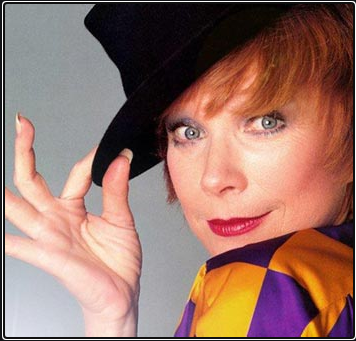
-"The best way to get a man to do something is to hint to him that he's too old for such things." - Shirley MacLaine, American film actress.
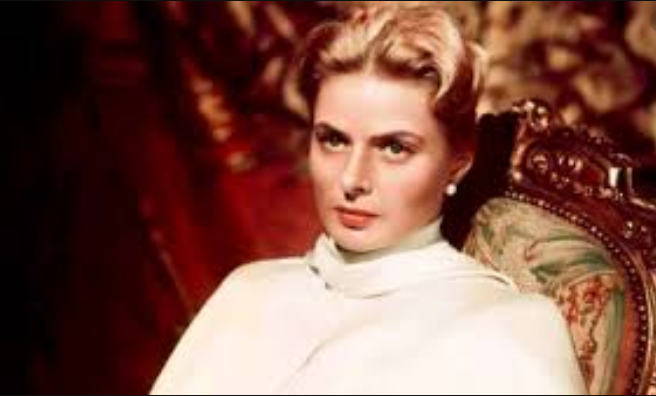
-"Happiness is good health and bad memory." - Ingrid Bergman.
-"There's no harder job than trying to look beautiful from eight in the morning until midnight." - Brigitte Bardot.
-"The secret of eternal youth is to live virtuously, to eat slowly, and to lie about your age." - Lucille Ball.
-"Beauty for a woman becomes a problem only in two cases: when she is gone and when there is nothing but beauty." - Monica Bellucci.
-"There are two periods in a man's life when he doesn't understand a woman at all: before the wedding and after." "Careers are harder for women because they don't have a woman to push them forward." - Yanina Ipohorska.
-"The best way to keep a man in love is not to marry him." - Catherine Deneuve.
-"God created man, and then he decided he was capable of more and created woman." - Adela St. John's.
-"A woman who is firmly convinced of her beauty will eventually be able to convince everyone else of her." - Sophia Loren.
-"A woman's most difficult task is to prove to a man the seriousness of her intentions." - Helen Rowland.
-There is an age when a woman has to be beautiful to love. And then comes the time when a woman needs to be loved in order to become beautiful. "- Françoise Sagan."
-Why does the wife try for ten years to change her husband's habits and then complain that he is not the man she married? "- Barbra Streisand.
-"With age, we don't get better or worse, we just get more like ourselves." - May Lamberton Becker.
-"The ideal husband is always married to another woman." - Faye Dunaway.
-"If a husband gives flowers to his wife for no reason, then there must be a reason." - Molly Magee.
The best series of the last five years of the second decade of the twenty-first century
My dear online friends, if you are like me fans of the series, I hope you liked yesterday's article. Today, I will present the series that, in the opinion of critics and viewers, have marked the last five years of this decade.
Make popcorn, settle in comfortably and move on.
**2015**
**Mad man**
In 2015, the historical drama said goodbye to the audience. The unusual television form that was introduced in the 1960s through the corporate system of Manhattan boys, their wives, mistresses, failed businesses, the cigarette market, alcohol and the first major television commercials is a kind of critique and mirror of every society.
**Ash vs Evil Dead**
The cynical and sarcastic horror gold was set 30 years after the events in the movie Evil Dead. Ash Williams may have ended up with the horrors that happened to him, but the book of the dead is certainly not with him. The cleverly witty and satirical series did not survive more than three years on television, but in the absence of good series in 2015, Ash vs Evil Dead was one of the best.
**2016**
**Stranger Things**
Stranger Things awakened the nostalgia of the eighties, the ideas from Stephen King's novel and the visual identity of Steven Spielberg. An experiment that went wrong, children's fantasies and mysteries about the world, which is a dark version of ours, is still one of the most popular series today.
**Westworld**
Westworld is hard to describe because of its complex nature and narrative intricacies, but let’s just say it’s a future where people go to amusement parks to vent their personal frustrations. The most popular park is a replica of western movies. Androids that imitate humans are beginning to develop consciousness, and with consciousness come memories of the disgusting human species.
**Fleabag**
Phoebe Waller Bridge, the author of the series Killing Eve, debuted almost imperceptibly with a pseudo-autobiographical story. When awards and praise began to arrive about the heroine who says to herself: "I have a terrible feeling that I am a greedy, perverted, selfish, apathetic, cynical, morally bankrupt person" the world, before you know it went crazy for a woman whose story we can all connect and empathize with. .
**2017**
**The Handmaid’s Tale**
She adapted the adaptation of Margaret Atwood's novel about the dystopian future of women who can give birth to children into the role of maids. A theocratic society with an aggressive use of force was told from the point of view of June, whose daughter was taken away and adopted in order to give birth to General Waterford's children. The dark dystopian drama in the first season represents a world that has gone without a trace. Unfortunately, the series after the first season is struggling to maintain the quality of the original content that was covered in the book.
**Mindhunter**
What are serial killers thinking about? What led them to commit heinous crimes? Do they repent or want more bloodshed? The detective drama Mindhunter in 2017 was the star of the hopes of Netflix. The series achieved increasing success as time went on, due to its detailed and analytical script nature that draws the viewer.
**Big Little Lies**
Lien Moriarty's novel could not get a better cast on the screens. A town full of vain people and mothers who fight hand to hand in schoolyards because of the success or failure of children, will let out a long tongue even more when a prominent member of the community is killed at a city celebration.You can read more about this series here:https://read.cash/@ruza17/big-little-lies-nevine-lazi-mini-series-a782aa09
**Dark**
In the small German town of Winden, dreams turn into a living nightmare. The safest place in the country becomes a slippery ground for life after a boy disappears and the city remembers an identical case from the eighties. Dark starts as a psycho-thriller, to start looking like a horror movie, and in fact it is a complex science fiction story that will require your attention and patience.
**2018**
**Killing Eve**
Another BBC miracle cinculates several things at once - action, mystery, thriller, drama and comedy. Yves Polastri as an atypical hero and Vilanel as an even more atypical antihero form the essence of "Killing Eve", which is a television diamond from the beginning to the end.
**The Haunting of Hill House**
When it comes to "The Haunting of Hill House" - words are superfluous. A family drama with a nightmarish element is the best example of what modern television should look like. From the divine aesthetics, the complexity of the plot, the sixth episode that was filmed without a single cut and looks unreal, through the cast to the heavenly narrative lucidity, there is almost nothing that can be blamed.
**2019**
**When They See Us**
The series based on true events focuses on the unjust fates of five boys who are accused of the murder that took place in Central Park in New York. The police, who have a bad reputation, convicted the boys in an urgent procedure outside the legal procedure and put them on a pillar of shame.
**Russian Doll**
Nadja's 36th birthday ends with a party in an apartment full of people and a tragic death. But, like in a bad movie or an unbearably difficult video game, life or death brings her back to the beginning. Nadja's life restarts every time she gets hurt and starts in the same place and at the same time - in the bathroom, before she infiltrates among a bunch of acquaintances and friends at a birthday party.
You can read more about this series here:https://read.cash/@ruza17/russian-dool-mini-series-584477e3
**Chernobyl**
The historical drama about the greatest nuclear catastrophe is a reminder of how negligence and ideological concern can destroy the continent.
In this and yesterday's articlehttps://read.cash/@ruza17/the-best-series-in-the-first-five-years-of-the-second-decade-of-the-twenty-first-century-0ae839aa , I presented you with the series that, in the opinion of critics and viewers, were the best in this decade. Some of these series I love immensely, and some I don’t like. Did I miss writing about a series that is your favorite?
The best series in the first five years of the second decade of the twenty-first century
The second decade of the 21st century is preparing for rest and historical eternal rest. She will be remembered in the television world as crucial in the fight against the film industry, which she compared to the country in the previous three years. An increasing number of successful and famous actors, screenwriters and directors are switching to streaming platforms because ten-hour stories are getting better, better and more accessible to audiences around the world. What was once unthinkable has become a reality. Video clubs are long gone, but the Netflix catalog for ten euros provides you to watch a bunch of content in the comfort of your home while you literally faint or faint. His streaming friends Amazon Prime, HBO Go and more recently Apple TV + and Disney + will do their best to leave an important mark on the 4K and HDR TV industry in the coming years because small screens are also a thing of the past.
Since the number two has been ticking for decades, these are the best series, according to experts and in terms of popularity, in the last 10 years.The series is many, so today I will write about those that appeared in the first five years of this decade.
**2010**
**The walking dead**
O yes. The walking dead dogmatized our homes in 2010 and are still babbling in the television corridors. The story of the end of the world and the deadly virus nine years ago was the most popular series on the AMC channel. In the meantime, the series has taken a different path, but it still keeps its loyal audience in a rotten zombie fist.
**Lther**
The crime drama about possessive, obsessive and violent detective John Luther, revived by Idris Elba and in 2010 was the most watched television program on the BBC. The series has become so popular that after five broadcast seasons, the Americans are planning their version, the Russians already have it called "Klim" and the Korean "Less Than Evil" started broadcasting in 2018.
**Downton abbey**
The historical fictional drama about the Crowley family in the period between 1912 and 1926 dug through the life of the British aristocracy and servants. The surprisingly ordinary concept has become a pop cultural phenomenon thanks to the ingenious script and characters. Actress Maggie Smith experienced her greatest popularity in her eighth decade thanks to the Harry Potter film series and the role of Violet in Downtown Abbey. This year, the series also received a film adaptation as a final greeting to loyal fans
**2011**
**Game of thrones**
It all started on April 17, 2011. An adaptation of George R.R.'s epic fiction. Martina did not become a world phenomenon after the first season, it took her two more years before everyone's mouths were full of Westeros, Targerian, Stark, Lannister, Wall, children of the forest and White Walkers. But, the first season will be remembered for the budget from which other televisions had a headache. Game of Thrones changed the rules and showed that series can look even better than movies.
**Homeland**
With Homeland, Showtime Television has secured a sea of awards for best screenplay, acting and best drama, even though it is a political thriller. Next year, Homeland will say goodbye to viewers with the last season in which Claire Dennis, as Detective Carrie with bipolar disorder, played the role of life.
**Black mirror**
Charlie Booker's anthology series on the re-examination of civilization and the critique of consumer and digital society became a global phenomenon after his debut on Channel 4. The popularity of the series grew over the years that Netflix leaders redeemed it in the blink of an eye. The first season, which debuted in 2011, is as difficult as black earth and just as important for modern television.
**2012**
**Girls**
The author's series Lena Danam is the antecedent of the series "Sex and the City". The existential crisis of the girls from New York and the story of superficial friendships in which everyone was guided exclusively by personal pleasure has been a favorite of critics for several seasons. "Girls" survived for six seasons, after which they said goodbye to the audience. However, according to the critics and the audience, the first season that debuted in 2012 is the crown of Lena Danam's career.
**Veep**
Julia Lewis Dreyfus, in her role of deputy president, has won numerous awards and praises in the satirical political comedy from the premiere in 2012 until today. Veep is one of the most beloved comedies of the second decade of the 21st century.
**2013**
**Breaking bad**
The last fifth season of Breaking Bad in the finale gathered 10 million people next to small screens. The narrative of a depressed and seriously ill chemistry teacher reached its peak in the last season. Breaking Bad, like Game of Thrones, experienced its greatest success somewhere in the middle of television life.
**Hause of cards / Orange is new black**
In the same year, Netflix had two huge hits up its sleeve - House of Cards and Orange is the New Black. Political drama and prison drama opened the door to the streaming platform and positioned it as a new place to spend hours of leisure and boredom.
**Peaku blinders**
The diamond of BBC 2 television is located in Birmingham after the First World War and follows the life of a street gang that ruled the city from the end of the 19th and the beginning of the 20th century. The beloved European series has never achieved much success in the West despite an aggressive campaign conducted by Netflix after it bought the broadcast rights from the BBC.You can read more about this series here:https://read.cash/@ruza17/peaky-blinders-birmigamska-banda-crimehistorical-series-456425d3
**2014**
**True detective**
The first season of True Detective is a cream a la cream of detective drama. The muddy and gray Louisiana has been haunted for 17 years by the ritual murders of a serial killer. The peak of the careers of directors Kari Fukunaga and Nick Pizolato was not repeated in later seasons because Fukunaga no longer wanted to collaborate with a colleague, and without him there would not have been such a good series.
**Fargo**
The anthological format of the Cohen brothers is a crime novel in its full glory and a black comedy in its darkest edition. The store, located in North Dakota, introduces us to a man on the verge of a nervous breakdown who tries to hide bloody traces after the murder, and a notorious killer who passes through the city.
**The leftovers**
The series based on the novel by Tom Perot under the direction of Damon Lindelof is a puzzle that television has never seen. The seemingly sci-fi story of the sudden disappearance of people one afternoon turns into an abstract and metaphorical life drama about religion, life, death and a better tomorrow.
**Penny Dreadful**
Penny Dreadful is one of the best horror series of the decade behind us. Vanessa Ives (Eva Green) is a very pious and dedicated Catholic, but her religious world is shaken by otherworldly forces that do not give her peace and question the existence of her god. Because of her unusual and mysterious nature, as well as her frequent struggles with voiceless faces that no one else sees, Vanessa has been repeatedly sentenced to inadequate psychiatric help, but her mentor and other father, Sir Malcolm Murray, knows what to do with Vanessa's struggles are not more imaginative, nor is she psychosis. Murray and Ives recruit adequate people around London to track down unusual creatures hiding in the dark. On their way there will be allies - the eternal drugged doctor Frankenstein and the charming Dorian Gray who never grows old, but there will also be those who will hide the long wolf's hair with the help of lambskin.
**We continue tomorrow ...**
We continue on the path of the endowments of the ruler of the Nemanjic dynasty
The Nemanjićs are the most famous medieval Serbian dynasty that ruled this area for more than two centuries. It was named after its founder, Stefan Nemanja, who was the great prefect of Raska and the ruler who laid the foundations for the creation of a powerful Serbian state in the Middle Ages. The dynasty gave eleven rulers, the last of whom was Tsar Stefan Uroš V, also known as Nejaki. They ruled Serbia from 1166 to 1371.
The first who, consciously or unconsciously, started this tradition was actually Stefan Nemanja
His personal name was Nemanja and as such it is mentioned in many written sources of that time. The name Stefan in the sense as it was used by the founder of the dynasty, and later by all his descendants, is actually a kind of title and in a figurative sense means king / ruler.
Stefan is a male name of Greek origin. It comes from the word "Stephanos" which means "wreath, crown". Stefan is actually "the one who was crowned". This name was carried by many European kings - English, Hungarian and Polish, and after Stefan Nemanja and all his descendants, heirs to the Serbian throne.
All of them, in addition to the ruler's name Stefan, also had a personal name - Stefan Prvovencani (his full name was actually Stefan Nemanja II), Stefan Radoslav, Stefan Vladislav, Stefan Uros I, Stefan Dragutin, Stefan Uros II Milutin, Stefan Vladislav II, Stefan Uroš III Dečanski, Stefan Uroš IV Dušan, and Stefan Uroš V. The name Stefan was added to the honor of the founders of the dynasty, tradition, but also a symbolic confirmation of their right to rule.
The Nemanjic dynasty left many endowments. I have already written about them in the article https://read.cash/@ruza17/in-the-footsteps-of-our-ancestors-some-of-the-endowments-of-the-first-serbian-ruling-dynasty-8d392fbc, and now I will introduce you to some more of them.
**Mileseva**
Near Prijepolje is the Mileseva Monastery, the endowment of King Vladislav.
In the narthex, which was added by King Vladislav in 1235, he laid the relics of his uncle Saint Sava. During the conquest in 1594, the Turks transferred them to Vračar (Belgrade) and burned them, in an attempt to break the Serbian spirit.
The monastery was founded during the Latin Empire, when the so-called "plastic style" was created, which is characterized by monumentality, avoids decorativeness and leans towards forms of classical antiquity. In 1377, Tvrtko I Kotromanić was crowned King of the Serbs and the Littoral in the monastery church. In 1446, Stefan Vukčić Kosača proclaimed himself "Duke of Saint Sava", after which Herzegovina was named.
The Milesevska printing house was here in the 16th century.
Mileseva's frescoes are among the best European achievements of the 13th century, and the most famous of them is the White Angel, which is part of the Myrrh-bearing fresco on Christ's tomb. In addition to the White Angel, other masterpieces are the Mother of God from the Annunciation and the Founder's Composition with a portrait of King Vladislav. These works also represent the greatest achievements of painting of that time in Europe.
Historical portraits: Iconography of Nemanjić, prince Vladislav on the south wall, and figures of Nemanja, Saint Sava, Stefan the First-Crowned, Radoslav and Vladislav on the northeast.
**Pec Patriarchate**
In 1219, Saint Sava established the first autocephalous archbishopric in the Serbian lands. It was the medieval Serbian archbishopric, which in history is called Zickom, or Peckom or Zicko-Peckom archbishopric. Tsar Stefan Dušan expanded its borders and raised its reputation by elevating it to the rank of patriarchy in 1346. Then, the Serbian archbishop Joanikije II was proclaimed the first Serbian patriarch with the throne in Pec.
The unfortunate political nature of the Serbian church after the fall of Smederevo (1459) came under the rule of the Ohrid Archbishopric. Only after a hundred years, the Sokolović brothers, Mehmed-paša Sokolović and Makarije Sokolović, managed to restore the independent Patriarchate of Pec
.The renewed Patriarchate of Pec is the most deserving for the Serbian national unification. Instead of the ruler, who, even when she was the best, still primarily looked after personal interests, the clergy was a more reliable leader. It was more difficult for the Patriarchate of Peja to protect the Serbian ranks from Islamization by culting the people's past and preaching national and religious solidarity, than to follow the heated religious struggle in the West.
**Sopoćani**
The monastery of Sopoćani, the home of the Holy Trinity, was built by King Stefan Uroš I (1243—1276) not far from the source of the river Raška.
The monastery is located 17 km west of Novi Pazar. At this place, the source of the Serbian medieval state of Nemanjić, the third son of King Stefan the First-Crowned left behind an endowment that surpasses all previous Serbian churches in its size and beauty. The frescoes of the Sopoćani monastery are a true masterpiece of art, which brought world fame to the people of Sopoćani many years later. Today, it is one of the most important Serbian cultural monuments, which in 1979 was included on the UNESCO World Heritage List as part of the monuments of the Middle Ages united under the protected whole of Stari Ras and Sopoćani.
Today, it is difficult to specify when Sopoćani was built. The most probable assumption is that the monastery was built in the second half of the reign of King Stefan Uroš I, most probably around 1260. This conclusion was reached by a detour, considering that the conclusion that the frescoes of the monastery were made in the 1960s is quite reliable. During the period of Ottoman rule, in the 17th century, the monastery suffered significantly, and was rebuilt in the first decades of the 20th century.
**Gračanica**
The Gračanica Monastery was built by King Milutin in 1321 and dedicated to the Assumption of the Most Holy Mother of God. The monastery is located in the village of Gracanica, 10 km away from Pristina, the administrative center of Kosovo and Metohija.
The church has frescoes depicting the genealogy of the Nemanjić dynasty, a copy from the Decani monastery, then the figure of Queen Simonida, the wife of King Milutin and the daughter of the Byzantine emperor Andronikos II.
In the 16th century, the narthex was painted with frescoes. Mihajlo and Evtihije, famous painters from Thessaloniki, finished the frescoes in the main church by 1321. Heavenly liturgy, prophets and evangelists are painted on the main dome under the fresco of Christ Pantocrator, while on the walls of the nave you can see cycles of the Great Feasts, Christ's suffering, miracles, stories, Christ's Nativity and Resurrection, scenes from the life of the Virgin, St. Nicholas and the Calendar of Saints. Scenes depicting the Eucharist as well as Old Testament motifs are found in the altar. Sv. King Milutin and his wife Queen Simonida, a Byzantine princess, are depicted in the central arch as rulers to whom God grant power through angels who place crowns on their heads. The Nemanjic tree of origin and the Last Judgment are painted in the front part of the nave, while fragments of frescoes from the 14th century have been preserved outside the narthex. Among other frescoes, the cycles of the Ecumenical Councils, the Akathist of the Most Holy Mother of God and the Birth of the Lord are significant.
**Visoki Dečani**
Visoki Dečani Monastery is a Serbian medieval Orthodox monastery - the endowment of King Stefan of Dečani and Tsar Dušan. The initiative for the construction of this monastery belonged to Saint Sava. King Uroš III of Decani clearly stated in his chrysostom that the place for the erection of the temple of God in Decani was chosen by Saint Sava I Nemanjić, but death overtook him, and King Uroš III was destined to build a monastery there. [1] Construction lasted between 1326/1327. and 1334/1335. year, the frescoes were completed around 1348. The monastery is dedicated to the Ascension of the Lord - Savior's Day (the fresco of the holiday is also shown in the dome called Christ the Almighty, omnipotent - in Greek Pantocrator). The main builder was master Vito Kotoranin.
**I hope you enjoyed this walk in which we visited the medieval monasteries built by the Nemanjic dynasty.**
Slava - a family celebration unique for Serbia.
The season of **slava** has slowly arrived. Although we are currently in this special regime due to the pandemic, I believe that everyone will celebrate slava in some way.
Since slava is typical for Serbia, I want to introduce our other online friends to this tradition of ours.
**How the Serbs began to celebrate slava**
One of the main features of Serbian Orthodoxy, which the rest of the Christian world does not know about, is slava. Before accepting Christianity, Serbs were a polytheistic people. In addition to the supreme god Perun, when everyone respected him, each home had its own domestic deity. By nature sentimental and related to domestic habits and customs, in the encounter with Christianity, the Serbs had the hardest time renouncing these domestic deities. Nemanja's wise and practical son, Saint Sava, replaced the polytheistic idols with the great saints of the Church of Christ, who became protectors and helpers of Serbian homes, churches and monasteries, families and tribes, villages and towns, and entire provinces and areas. That's how slava came about,
The significance of the slava, the celebration of the slava, remained the only uninterrupted tradition in Serbia from the time of baptism to the day. Many things have changed in the people's life and customs, but slava has been preserved as the greatest shrine of our people. The Serb celebrated slava in the most glorious days of his history, but also during five centuries of slavery under the Turks. Slava was celebrated in time and storm - in war and exile, in dungeons and hospitals, in sorrow and joy, in love and affection. in wealth and abundance.
In the midst of the fiercest battles in the trench, our soldiers broke the stale soldiers' bread (tajin), sang the troparion of their slava, lit a piece of candle they brought from home, prayed to God for help and happier days. After the Second World War, at the time of unprecedented atheist and anti-religious propaganda, Serbs did not renounce their slava and, it can be freely said, slava preserved the Orthodox faith and tradition in our people.
**Preparations for slava**
A few days before slava, in the home where the celebration is taking place, preparations begin in order to welcome the celebration as solemnly and with dignity as possible. The house is being cleaned, tidied up and tidied up. Residents, especially children, are bought something new, from suits, to "repeat" it on the day of the celebration. There is a festive atmosphere in the house, a cheerful spiritual mood and joy in anticipation of slava.
According to the ancient and established practice of our church, in the time before the celebration, the priest consecrates the water in the homes that celebrate. To consecrate the water, the housewife prepares the following: one bowl (bowl) with water, a bouquet of basil, a small candle, an incense burner with embers or briquettes, incense and a list of housemates. All this is placed on a table in the room where the glorious icon is, which is on the east wall of the room. It is desirable that everyone in the house with the host be present at the water consecration ceremony.
In some parts of our country, guests are invited to slava in a special way. The host, or one of the younger ones, goes to the house of the one he wants to invite, or whom he invites for years, and with an appropriate conversation, invites a friend to slava. Somewhere on the eve of slava, buns or small loaves of bread are baked in the houses that are invited for slava, and in that way the guests are invited to slava. Somewhere, he says again: "it is not called for slava". Both are correct, but it is good to remind your friends and guests a few days before slava, and to invite them to slava as a sign of attention and respect. Today, this can be done by phone, although it is more appropriate and polite to do it personally and directly.
**How slava is celebrated**
The host welcomes guests in front of the house or on the doorstep of his home. He greeted the guests in the most solemnly dressed and festive mood with the words: Welcome! The guests congratulate slava with the words: Happy slava to the host, to you and your home and your family, many years in health and joy. The host answers: Thank you welcome and may God and… (say the name of slava) help you to come for many years, and to celebrate in health and joy. The guests enter the house, and in their old age they sit at the table where the festive lunch is performed, or in some other room where they sit until the beginning of lunch.
What should be prepared for glory? The most important thing for the celebration is to prepare the following: a celebration cake, boiled wheat, red wine and a candle.
In addition to the above that makes the celebration: the celebration cake, celebration wheat, candles and wine, according to our folk custom, the host prepares a celebration lunch that is performed on the day of the celebration. In some areas, dinner is prepared on the eve of the celebration, which guests come to, and it is called the evening of the celebrations .
What kind of food will be prepared depends on whether the celebration is during Lent or not.
During Lent, fish, beans, various salads, pies, cakes without milk and eggs are prepared. The same food is prepared when slava is on Wednesday or Friday.
When it is not Lent or Wednesday or Friday, you can find a lot of food on the table such as ham, cream, cheese, salads, sarma. various types of baking and of course cakes.
**Most often slava**
In Serbia, St. Nicholas, St. George and St. Arandjeo are most often celebrated as slava. Of course, other saints are also celebratedas slava.
Slava is not only celebrated in homes.
In our tradition that certain craft associations (bakers, carpenters, merchants, etc.), guilds, companies, sports and other clubs, fraternities, communities, societies of doctors and various associations can have and celebrate their glory. For their glory, for their patron and protector, they take a saint who is suitable for that activity or profession. Doctors usually take holy healers (doctors), carpenters of St. and Righteous Joseph, because he was a carpenter, etc. The celebration is celebrated, as a church or school celebration, it has its host, or everyone prepares the celebration together, so everyone is the host. The cake and the wheat are brought to the church, or the priest comes to cut the cake and consecrate the wheat. Everything else is like a domestic or church celebration.
The most famous is the school slava of Saint Sava. Above is a picture from the celebration of Saint Sava in the school where I work. Saint Sava is celebrated on January 27.
**Ivko's slava**
Serbian writer Stevan Sremac wrote the book "Ivko's slava". It is a humorous book which, among other things, describes how his friends who came to his slava did not want to leave for three days, and they took over his entire house.
Here in Serbia, we know how to say when someone overdoes the celebration to celebrate Ivko's slava
This is a picture from a movie made after this book.
For the end, let's remind ourselves: "**Happy slava of the host**"
.
The Cannes Film Festival pays tribute to the victims of the terrorist attacks on the black carpet
At a special event at the Cannes Film Festival, a black carpet was laid in front of the Palace of Festivals and Congresses. This was done in memory of the victims of the terrorist attack in Nice. Gathered at the event, they observed a minute of silence in honor of the victims. The event itself replaced the traditional Cannes Film Festival, which was supposed to take place in May, but was canceled due to a pandemic. Instead, a three-day special event took place, already described as an "act of resistance to the coronavirus." Unfortunately, the events in the shortened version of the festival were overshadowed by the news that three people were killed by an Islamist attack in a church in Nice. The mayor called the incident "another terrible Islamist attack". He explained: "Of course I am afraid, but that is exactly what the terrorists want. We must therefore ensure a cold determination to eradicate this plague. "
During the three-day shortened program of the film festival, 4 films from the main program, short films and films by ambitious directors were shown. The jury awarded the Cinefondation award for the student film program and the Golden Palm for the best short film, which was awarded to the Egyptian director Sameh Alaa for the film "I'm afraid to forget your face".

Why is it said: It costs him like St. Peter's scrambled eggs ?
The term is often used in Serbia; "It costs him like St. Peter's scrambled eggs"
**This term is used to mean "very expensive" or "pay a high price".**
You have probably, at least once, wondered what kind of scrambled eggs must have been when it has remained to this day in an expression that signifies great, exceptional expensiveness. And why is this expensive scrambled egg associated with the name of St. Peter?
In Milan Shipka's book "Why is it said", it is stated that it is not clear from the expression "is it about St. Peter's scrambled eggs that cost someone dearly, or about some scrambled eggs that cost St. Peter himself dearly?" According to Shipka, the first interpretation is more convincing, and the expression comes from the Greeks who have the proverb "Is St. George's scrambled eggs expensive" where the name was changed, since St. Peter is better known in Serbia than among the Greeks.
And the legend that explains this expression says that a boy in Paphlagonia made scrambled eggs for St. George and took them to his church. Then four merchants came to pray to God and seeing the scrambled eggs, they could not resist and ate it. But the saint performed a miracle and the merchants could not leave the temple until each of them laid down one large gold coin. When they finally came out of the temple, they said: "Saint George, scrambled eggs are very expensive for you; we will never buy them from you again."
Another interpretation says that Jesus and St. Peter went to the world to tempt people, and with that "Christ tempts his Peter". One evening they found themselves with a poor widow who had many weak children. She welcomed them nicely and offered them scrambled eggs for dinner. Jesus gave thanks and did not want to taste the scrambled eggs, but went to the straw to sleep, warning St. Peter not to eat the scrambled eggs that the widow had prepared for the children. But, hungry Peter did not listen to Jesus, but reached for the scrambled eggs and wanted to eat it, but at the same time he became petrified so that he could not eat it.
In the morning, Jesus pronounced a heavy penance on Peter, so that Peter had to beg in the village to feed the widow's children, until Jesus returned and found the children alive and well. When he returned, Jesus asked Peter, "Is everything all right, so that I may forgive you?", And Peter, exhausted, said (according to the poem of J. J. Zmaj):"All is well, thank you very much! But scrambled eggs cost me dearly."
According to another version of this story, St. Peter received a thick beating from a host with whom he slept with Christ, because, without asking him, he prepared and ate scrambled eggs.
Namely, Jesus and St. Peter spent the night with a peasant, who did not offer them dinner, so they went to bed hungry. So at some point St. Peter woke up, stole a few eggs and made scrambled eggs. When he had eaten, he lay down to sleep beside Jesus. However, the peasant noticed the theft and the thief, so he shot him several times in the back with a stick, as punishment. That is why St. Peter woke Jesus and suggested that they change places, fearing what the peasant would do to him. Jesus agreed. But then the peasant remembered that he had slaughtered only one, and that the eggs had probably been divided, so he got up again and set fire to the other, that is. again by St. Peter.
These are Serbian words used by the whole world
Many people know the story of how the word vampire is the only Serbian word that is accepted in the whole world and there is no substitute for it. But, that is not the only word that is Serbian, and it is used in the world. When we talk about Serbs, a vampire is one of them. But, where does that word come from, if we know that Dracula is the most famous vampire, and he comes from Romania.
The vampire is a mythological phenomenon that is characteristic of the Balkans and Slavs. However, it was noted that the first vampire was Petar Blagojević.
Petar Blagojevic, in Austrian sources Petar Plogojovic, was a peasant from Serbia, who is said to have become a vampire after his death and killed nine people, including his son, before a local priest called on the then Austrian authorities to help the village against vampire
This case gained in mystery when the Austrian authorities decided to check the whole case. Thus, accompanied by two imperial officials, Peter's tomb was excavated, and then it was noticed that his body did not even begin to disintegrate. With this, the case of Petar Blagojević gained in mystery, and that legend has been passed down for decades.
The word vampire is one of the words of Serbian origin that has become common to all world languages. This expression was first recorded in a report by the Austrian official Frombald on a case that took place in the Serbian village of Kisiljevo in 1725, published in the Viennese magazine Vineries Diarum ("Vienna Diary"), under the title "Vampire von Kisilova."
This report is the first mention of vampirism in recent Europe, it has been translated into several languages and caused "vampire mania" in England, France and Germany.
In the "vampire case", the fact that foreigners knowingly "stole" and falsified a large part of Serbian history and culture reappears. This is most clearly seen in the case of the world's most famous vampire, Count Dracula, who is still an inexhaustible Hollywood inspiration, while the Romanians invented Dracula's castle because of this myth and made it a tourist attraction.
**However, although the word vampire is the most famous Serbism in the world, there are several more.**
The word paprika is a word that is often called Serbian. When it comes to food, there is also the word plum brandy, which is typical only for Serbs and is a national Serbian drink (plum brandy), and is used worldwide as slivovitz and slivovitz.
Serbs are the only people in the world who have a custom of celebrating the holiday of the family, slava (each family celebrates its patron saint of the house). Thus, the word slava is a word that is generally accepted in the world. The words **zadruga, skupština and četnik** are words that are characteristic of the Serbialanguage.There is also the word **vila** (fairy), also from the folklore of the Serbian people.
When we talk about customs that are related to the ethnology of the Serbian people, there are also the words **kolo** (a type of folk dance) and **gusle** (folk musical instrument).
How one queen transmitted a vicious disease to the to the most powerful rulers of Europe
Queen Victoria ruled for more than 63 years, so an entire era is named after her - the so-called Victorian era.
She died in 1901. at the age of 82. She ruled Great Britain for a full 63 years and seven months, setting a record for that country, and by the length of her reign she was overtaken in September 2015 by the current Queen Elizabeth II.
During her reign, as many as ten prime ministers changed in Great Britain. Victoria was attached to her husband - Prince Albert of Saxony-Coburg-Gotha. She bore him as many as nine children. However, he died early so Victoria has spent the last nearly 40 years as a widow. Shocked by the death of her husband, she wore black practically for the rest of her life. Despite this, she allegedly determined for herself to wear white instead of black at her funeral. She was laid in a coffin in a white dress and with a wedding veil on her head.
Interestingly, she had as many as forty-two grandchildren, and she is also called the Grandmother of Europe because many of her descendants became European rulers.
British Queen Victoria I was the first member of the royal family to suffer from a dangerous disease, hemophilia, and which she then passed on to the rest of the family, but also across other monarchies in Europe.
She married her children to other royal families, which is why she was nicknamed the "grandmother of Europe".
However, although this seemed like a great move in diplomacy, it had great consequences for the health of members of the royal families in Europe and led to the emergence of the "royal disease".
Namely, Victoria was a carrier of hemophilia, a disease that prevents blood clotting and can result in greater blood loss after injury - as well as permanent damage.
Although it is easier to treat nowadays, it was often fatal then.
Victoria's daughter Princess Alice inherited the disease from her mother. She married a minor prince who would become Ludwig IV, Grand Duke of Hesse - a duchy that existed in West Germany until the end of the German Empire in 1918. Her youngest son died from complications of hemophilia when he was only three years old.
Namely, the boy fell out of the window and although he survived and soon became conscious, the internal bleeding could not be stopped.
Princess Alice's daughter, Princess Irene, was also a carrier of the disease and passed it on to her two of three sons, Prince Waldemar of Prussia and Prince Henry of Prussia.
Henry died four years after the fall, while Waldemar died when he was growing up, due to the lack of blood transfusion facilities in Bavaria.
Alexandra Fyodorovna was the fourth child of Princess Alice and the Russian Empress. She also suffered from hemophilia. Fyodorovna was the wife of the last Russian Tsar Nikolai II Alexandrovich, and her marriage meant that the disease also entered the Russian royal family.
She transmitted the disease to her youngest child, her son Alexei Nikolayevich, who was the only male heir to the Russian throne.
His parents tried to cure him of the disease through the controversial healer Raspucin, while they kept his poor health a state secret.
However, their faith in Raspucin led to a decline in her popularity, and the Bolsheviks executed her and her family by 1918.
The eighth child of Queen Victoria, Prince Leopold, was the first member of the royal family to show symptoms of the disease.
He died at the age of 30 after a minor fall, but he transmitted the disease to his only child, his daughter Alice, who was small when he died.
Princess Alice, the granddaughter of Queen Victoria, then transmitted the disease to her son Prince Rupert.
Rupert died at the age of 20 from bleeding after a car accident.
Queen Victoria's youngest daughter and her sweetheart, Princess Beatrice, was also a carrier of the disease. She married Prince Henry of Battenberg, and their third son, Lord Leopold Mountbatten, died at the age of 22 during knee surgery, was unmarried and had no children.
Sir Son Connery - the legendary James Bond has moved into eternity today
Sir Sean Connery, the first actor to play the character of the legendary agent James Bond, passed away today at the age of 91.
**For many people, even today, James Bond is only one - Sir Son Connery**
Born in 1930 as Thomas Sean Connery, he chose Shane as his stage name, but later "returned" to Sean. When he was born, his parents - mom washing and dad truck driver - were so poor that instead of putting him in a cradle, they put him to sleep in a closet drawer. As a kid, he fished in the canal using his mother's old nylons, but later stated in interviews that he never allowed a humble start to hold him back in life.
He named his production company after his hometown of Fountainbridge in Scotland.
At the age of 13, he dropped out of school and did various jobs - he distributed newspapers, but also milk and dairy products, and was an apprentice at a local butcher.
He served in the Royal Navy for three years, in the late 1940s, and then did two tattoos. One says "Scotland Forever", the other "Mom and Dad". He left the Navy because of painful stomach ulcers.
After that, he polished coffins, delivered coal, worked in a printing house, posed for painting students and was even a lifeguard on the beach.
Having to drop out of school, he later set up a humanitarian fund to provide scholarships to poor Scottish children.
He donated all the royalties from the film "Robin Hood: Prince of Thieves" to that humanitarian organization, and later did the same with the salary from the film "Diamonds are Eternal".
In 1953, Sean entered the competition for Mr. Universe, and finished as the "second runner-up" in the men's competition.
He had one of the first roles in the film "Another Time, Another Place", in which his partner was Lana Turner. Her jealous boyfriend Johnny Stompanato made a scene and threatened him with a gun, because he thought he was flying Lana. He had to hide after that, because one of Johnny's friends informed him that Johnny had ordered his murder!
He almost lost his life on the set of the movie "From Russia with Love", because the helicopter on the set flew just above him and almost decapitated him, literally! He was later injured on the set of the movie "Never Say Never", because Stephen Seagal accidentally broke his wrist while showing him martial arts.
https://youtu.be/JVJzByu8RV8
He achieved the greatest fame as Bond, and he got that role not at the expense of his acting abilities, but due to the fact that his "sexy, panther walk" delighted the producers. The author of the Bond story, Ian Fleming, did not like Connery because he thought it looked like a "raw material", but later changed his mind.
Director Terence Young, who hired him for the film "Doctor No", thought that he would need a little "school" when it comes to style, so he bought him a fancy suit, and for a whole week he took him around the city to drink together. , are conducted and gambled.
In all the Bond movies, he wore a wig, because he started losing his hair at the age of 21.
His favorite Bond film was "From Russia with Love", and he left the mega-popular franchise because he could no longer stand the special effects, the dialogues that were repeated from film to film, and the public's obsession with his character and work.
He played James Bond in seven films, and he is the only actor who has that role in "CV", which won an Oscar, for the film "Untouchables".
His accent in that film was declared the worst in the history of cinema in the "Empire" magazine poll.
The role of the Irish policeman Malone in the film Untouchables (1987) will bring him an Oscar and a Golden Globe, and the role of the father of a famous archaeologist in the film Indiana Jones and the Last Crusade (1989) will only nominate him for the mentioned awards.
One of my favorite roles for me is the role of Ramirez in the film Highlander. . He was awarded the Lifetime Achievement Award in 2006. Sir Connery also tried his hand as a producer.
People magazine named him the sexiest living man on the planet in 1995, to which Connery responded with the words, "Thank God, everything is fine until I'm the most attractive dead man." the star of all time.In front of him of the men were only Johnny Depp and Robert Redford.
He married twice - the first time to Diane Silent, with whom he has a son Jason who is also an actor, and the second to the painter Michelle Rockenburn. Sean Connery retired from the film in April 2011.
https://youtu.be/fCmR1Ojrvck
**Today, Sir Son Connery has passed into eternity. I believe that this outstanding actor will be remembered for a long time. This is my humble contribution to remembering him.**
Galaxy of heroes or why should you watch "Star Wars"?
There are many reasons to watch the Star Wars series, because this film has been the subject of much debate since its release. If you’ve already watched it, you belong to a group that loves it or hates it, but you’re not indifferent. If you decide to give these films a chance, prepare for a breathtaking story. It doesn't matter if you like romance, science fiction, action or fantasy, give the film a chance and see why it lasts so long!
**Movies are classics…**
One of the main reasons why you should watch these movies is their value. Sometimes it is enough to watch movies because they are classics in their genre. I'm not saying you should watch them because they are popular, but simply give them a chance because of the place they have in cinematic history.
**… And are timeless.**
One big plus for movies is that they are timeless - the story itself never loses its importance, regardless of the years that have passed. The plot of the film has so many layers and nuances, that everyone can find a part that will suit them. No matter who you are and what you do, what you believe in, you will find something for yourself here. That is exactly why these films last so long.
**They were something unseen in their time!**
Although today the technique of filming "Star Wars" may seem ridiculous, at the time of their creation it was a big BOOM. While some parts were really funny, George Lucas really needs to take off his hat for Yoda, R2D2, as well as the unsurpassed lightsaber and good old Darth Vader.
**Old versus new**
Although the first half of the story, which actually explains the original trilogy, has some flaws, people still love it. Despite all the flaws, the "previous" trilogy is an important reason to watch the series itself. Simply, when you look at both halves of the story you can see the differences and progress of the recording technique. You can also decide whether you are a fan of the original or the "previous" trilogy.
**The story speaks for itself**
Everyone has their own way of watching movies. Some people watch them come out, first the original trilogy, and then the "previous one". If you are new, I suggest you take a look at the order in which the story unfolds, which means following young Anakin Skywalker on his journey, as well as the development of the Force itself. Start with "The Phantom Menace" and end with "Episode VI - The Return of the Jedi". Once you're there, you can also watch The Clone wars.
**I'll just say -** **Yoda**
Is there anything else to say? Yoda is one of the most famous characters in film art. His very appearance, whether dealing with philosophical issues or defeating enemies, is reason enough to watch the film. Everyone knows him, even those who have not watched the film.
**Mythology, philosophy, religion**
If you are interested in the above things, the reasons for watching only accumulate. You just have to look carefully and see fragments of myths, philosophical and religious issues hidden in the story itself. Another reason that films are timeless is that the past and the present do not diverge, but mix in the future.
**Music**
While this may be strange, one of the main reasons for watching these movies is their music. When the original trilogy came out, the music played an important role in the story itself. Even if you haven't watched "Star Wars", you can easily recognize the introductory theme of the series.
**The eternal question - Good against Evil**
Watch movies for the oldest reason in the world - good fights evil, but this time on a much more epic scale. Darth Vader is one of the best villains, because he was not always bad. He is a perfect example of what power can do to a man, while Luke is conceived as a completely good character, the opposite of a fallen Jedi.
After all, before you start criticizing movies, look at them. Even if you don't like it, you will have the right arguments for such an attitude and no one will be able to blame you. You don't have to be afraid that movies will turn you into nerds or real crazy fans. All that can happen to you is to discover something new, something that will fill these cold days for you.
**"If you didn't make any mistakes, and you still lose, you need to play another game" -** **Yoda**
**May the force be with you**
In the footsteps of our ancestors - Some of the endowments of the first Serbian ruling dynasty
Among numerous Serbian dynasties, the greatest contribution to the Serbian state and people was made by the Nemanjić dynasty, which ruled for two centuries (1169-1371). In eight generations of Nemanjić, as many as there were males, of which we know more than sixty by name, we celebrate nineteen Nemanjićs as saints, and even more than this number, bearing in mind the female descendants.
The ancestor of Nemanjić is the great Raska prefect Stefan Nemanja, the son of Prince Zavida. Stefan Nemanja was connected with the Vukanovićs in the male line and with the Vojislavljevićs in the female line. There are eleven rulers in the dynasty, with the dynasty continuing along the side, female line into the Lazarević dynasty, and later Branković, who ruled part of the Serbs until the first half of the sixteenth century.
Raising endowments was a very widespread custom among Serbian rulers in the Middle Ages. In the Nemanjic state, starting from the great prefect Stefan Nemanja until the last, tsar Uroš, and then in the kingdom of Mrnjavčević and in the principality of Lazar Hrebeljanović, and finally, in the despotate of Stefan Lazarević and Đurđe Branković, every ruler tried to build at least one big church or monastery, and there were some who could build a dozen temples. In the 12th and 13th centuries, only rulers and their closest relatives were able to build endowments for themselves.The monasteries are supported by the property donated by the founders. The thought of the giver, often written in gift charters and quoted in inscriptions, was the atonement of sins: the saint to whom the temple was dedicated became the founder's intercessor before Christ in the terrible judgment.
Monasteries and churches also had a practical purpose, and not only the one always present to spread and strengthen the faith of the people. According to the geographical distribution, and they were built on the most important medieval roads, it can be concluded that they also had a political role. Some churches, in addition to the above, had another purpose - they represented temples in episcopal seats, church administrative centers. Zica and Peja became famous for that role, as the centers of the Serbian archbishopric, then the patriarchate. Finally, many monasteries were built to become the tomb churches of their founders.
All Serbian rulers of the royal family of Nemanjić left behind endowments, their churches and monasteries, to redeem their souls and show their greatness. I'll give you some of those endowments.
**Đurđevi Stupovi**
Đurđevi Stupovi in Stari Ras, one of the oldest monasteries in the former capital area of medieval Serbia, built by Stefan Nemanja in the first years after the accession of the great prefect, dominates the valleys of Raška and Deževa with its silhouette. It is located about 4 km northwest of Novi Pazar. The silhouette of an imposing dome planted on a mighty pedestal of columns, arches and walls looks magnificent - seen from tens of kilometers away. The monastery was built on the very top of a prominent hill, and the special architecture of the church of St. George with two bell towers - a pillar - determined the later name of both the church and the monastery - St. George's Pillars.
https://www.youtube.com/watch?v=amN250loi8g&feature=emb_rel_end
According to his biographer and son, the later Serbian king Stefan the First-Crowned, during his captivity in a cave, Nemanja vowed to build a temple and dedicate it to St. George, to whom he prayed for help several times during his life. After he took over the supreme power in the Serbian lands (1166), Nemanja began the construction of the monastery. The church was completed in 1171, as evidenced by the founder's inscription on the western portal of the temple. Somewhat later, around 1175, the church was painted, and the monastery immediately gained a great reputation as the first ruling endowment of the Nemanjić dynasty.
Although Stefan Nemanja built churches and monasteries as a regional ruler, the monastery of St. George in Ras represents a turning point in the ruling ideology of Nemanjić. In an exceptional position, not far from the cathedral of the Raska episcopate, on old spiritual foundations, this monastery bases the Christian idea of Serbian statehood - the idea of complete harmony of faith and state that Stefan Nemanja built into the fundamental values of Serbian society. Under his arches, the young Rastko Nemanjić also gained his first spiritual experiences.
**Studenica**
Studenica Monastery is one of the largest and richest monasteries in the Serbian Orthodox Church. It is located 57 km from Kraljevo, and was founded by Stefan Nemanja in 1190.
The fortified walls of the monastery surround four churches: the Church of the Mother of God and the King's Church (Church of Saints Joachim and Anna), both built of marble, the Church of St. Nicholas (Church of St. Nicholas) and another church, preserved in the foundations. The monastery is known for its collection of frescoes from the 13th and 14th centuries. In 1986, UNESCO included Studenica in the World Heritage List.
https://youtu.be/zm0lO3-19Mc
When he later went to the Hilandar monastery, Stefan Prvovenčani took care of Studenica. There, Nemanja received a monastic vow and the name Simeon. Saint Simeon died in Hilandar in 1199.
Nemanja's third son Sava Nemanjić, after reconciling his brothers Stefan and Vukan, transferred the relics of Saint Simeon to Studenica, where they are still today.
Under Sava's tutelage, Studenica became the political, cultural and spiritual center of medieval Serbia.
**Hilandar**
The Hilandar Monastery was built before the end of the 112th century by Simeon Nemanja and Sava Nemanjić with the help of the then King of Serbia, Stefan the First-Crowned. It is located in Greece, on the Holy Mountain, and is a frequent destination for occasional travelers.
Hilandar's heritage is timeless and extraterrestrial. Hilandar Monastery is the first Serbian university and one of the oldest in the world. Saint Sava himself is the founder of the Spiritual Academy of the Hilandar Monastery, which lives all the time, without stopping until today. In terms of literature, religion, the study of nature, medicine, by all criteria, it was a real university, which educated the best connoisseurs of that time. The monastery keeps the largest collection of Serbian charters, arks, relics of saints, relics, old icons, has the largest number of miraculous icons in the world, as many as eight, of which the most valuable and most respected:.the icon of the Mother of God Trojerucica, the icon of Christ Pantocrator, which is the most beautiful icon of Christ on the planet and the icon of the Virgin Hodegetria, which is considered the greatest masterpiece of Byzantine art of the thirteenth century. Here is the largest library of manuscripts of the Serbian people, the largest collection of copperplate and copperplate plates, old liturgical textiles, old church vessels, woodcarvings, porcelain, goldsmiths and the most beautiful church on the Holy Mountain according to Byzantine scholars.
https://youtu.be/BKLdgmD9Tzs
**The video shows him one day in Hilandar**
Serbian literacy, translation and transcription activities were founded in Hilandar, the Serbian medieval legal state, diplomacy was conceived there and one of the first Serbian hospitals was founded. A place where Moravian architecture reaches its peak, through which the greatest artists of icon painting and fresco painting have passed for eight centuries. Until the 15th century, Hilandar owned over 30 large Metohijas in Europe and Asia with over 360 villages and a huge spiritual, human and material potential, which was measured by the strength of the state. In a word, what is preserved in Hilandar is bigger than all the preserved heritage in all other Serbian monasteries.
**Žiča**
Žića is a Serbian medieval monastery from the first half of the 13th century, located near Kraljevo. It was built by the first king of Serbia from the Nemanjić dynasty, Stefan Nemanjić, and his brother, Saint Sava, also played a significant role in its construction.
After gaining church independence in 1219, the seat of the autocephalous Serbian archbishopric was located in Žiča. At the beginning of the last decade of the 13th century, the monastery was attacked by the Tatars, after which the seat of the archbishopric was transferred to the Holy Apostles near Peja, and the monastery itself was restored by King Milutin at the beginning of the 14th century.
During the Middle Ages, bishops and kings from the Nemanjić dynasty were enthroned in Žiča, which is why it is also known as the "Seven Gates". Similarly, the main monastery church is dedicated to the Ascension of Christ (Holy Savior), so in professional writings it is also called the Church of the Savior, although this is mostly unknown.
What most people notice first when it comes to this imposing building is its color. Because, there are not many monasteries in Serbia, nor in the world that are so intensely red.
There is an interesting story about how this came about.
Namely, Žiča was raised by the first king of Serbia from the Nemanjić dynasty, Stefan Nemanjić, and his brother, Saint Sava, also played a significant role in its raising.
He stayed on the Holy Mountain for a while, and after returning from Nicaea to Serbia in 1220, he ordered certain changes in the architectural appearance of the church. In the third decade of the 13th century, the church was plastered and painted red
Art historians believe that this was exactly the idea of Saint Sava, who saw temples on the Holy Mountain, such as Lavra and Vatopedi, which were red. There he became acquainted with the belief that the church rests on the blood of martyrs and that it is symbolically brought to life in the color of the churches, and after that he demanded from the master to paint both Žiča in the same way.
**These are just some of the endowments of Nemanjić. If you like the article about the writer and others.**
If you haven’t watched “The Man on the High Castle” you’ve made a lot of mistakes
I don't know how familiar you are with jazz singer Billy Holiday's song "Strange Fruit", but this song puts an end to the very end of the second episode of "The Man in High Castle". The song, which is initially an allegory for the lynching that African-Americans survived in the first half of the 20th century, describes beautiful flower fields with traces of blood and broken human bones. When the cult song builds on the theme of the series that follows the parallel dystopian universe in which the Germans won World War II, then you can roughly create an image of what awaits you in this hidden diamond.
The alternative history that hit humanity was originally written by Philip Dick. His work "Man in a High Castle" was published in 1962. Imperialist Japan and Nazi Germany have put their paws on the world order, but the world is beginning to face a new horror as Adolf Hitler prepares to meet the Mower, and his loyal associates and accomplices in the new world order prepare the ground for another massacre.
Half a century has passed since the novel by Philip Dick, our world is not as he described in the novel, but there are some connections and fears that overwhelm us when we think about the future. If history has taught us anything, it is that the crisis periods are marked by right-wing ideas and an attack of religious fanaticism. Maybe the world didn't become a dystopia from "The Man in the High Castle" or maybe it even did.
"The Man in High Castle" introduces us to the new world order in America. Those who survived World War II with the set remember their freedom and do not talk much about liberation ideas because they live either in the eastern part of the American continent which belongs to Nazi Germany or in the western part which belongs to Japan. Less unhappy or happy people live in the neutral central zone of America, which is technically nobody's country.
The story of the man in the high castle begins when our heroine Juliana Crane, who lives in San Francisco (under Japanese rule), comes into possession of footage showing that the Germans did not win World War II. Adolf Hitler has long wanted to come into possession of the tapes in order to destroy them because he considers them a subversive attack on his government that propagates ideas that could harm the new world.
On the other side of the coast, Joe Black joins the resistance movement against the Germans and the Japanese, but it turns out that it is a secret SS agent who wants to come into possession of footage that damages the "reputation" of the government. Juliana and Joe meet on no man's land, but not to exchange footage, but an unusual set of circumstances.
"The Man in High Castle" examines even more deeply the ideas of Nazi Germany and fascism, which we probably left behind a long time ago. Jews, African Americans, "deviant" individuals are still not desirable in this world. They are tortured, humiliated, but they are not the only problem. The elderly, the sick, the infirm, the disabled are burned in several hospitals in America, so in nearby cities they are often faced with a rain of ashes - that is, the remains of people who were once there, and then comes the song Billy Holiday.
"The Man in High Castle" is an alternative historical story, with elements of thriller, drama, but also science fiction. It is adorned with a slightly slower and darker tempo, but the atmosphere and theme make it very attractive.
This is one of those hidden diamonds that people have bypassed, but it promises you a creepy ride through a world ruled by Hitler. Every time someone utters Hail Hitler with a Nazi salute you will cringe because there is a worse horror than the one we see in fictional horror movies.
https://youtu.be/zzayf9GpXCI
"My soul is in a hurry" by Mario de Andrade - A poem that leaves a deep mark
Today, a my colleague and a good friend sent me a poem by a Brazilian poet Mario de Andrade: "My soul is in a hurry." I liked the poem so much that I wanted to share it with you. I recommend those who understand the Serbian language to listen to it in an extraordinary interpretation by Voja Brajovic which I have placed here next to the English version.
https://www.youtube.com/watch?v=01ucgJ-rDp4
Mário Raul de Morais Andrade, better known as Mario de Andrade (Sao Paolo, 1893-1945), writing in an unconventional, hitherto unknown way, laid the foundations of modernism in Brazil. A poet, writer, essayist and musicologist, he left a great mark in both Brazilian and world literature.
He will be remembered for many ideas that bordered on bizarreness, but also for works that still live on.
https://www.youtube.com/watch?v=u9kbvQwWwmw
I hope you enjoyed it as much as I did.
How have vaccines changed the world?
In the eighteenth century, the whole of Europe was tormented by the same disease - smallpox. They spread uncontrollably, there was no cure and several hundred thousand people died every year. Among them were several rulers and members of their families. Empress Catherine the Great was very frightened. She well remembered her arrival in Russia and her first meeting with her future husband Peter the Third, when she described in her notes as "disgusting" because of the scars on her face that were left by the goddesses. On the other hand, he was lucky to survive the disease from which his ancestor Peter the Second died at the age of fourteen. Peter the Third was a very small boy at the time, but the disease known as "black goddesses", he will return to this court, as well as to many European families, several times, so the fiancé of Empress Elizabeth passed away. All this was kept in mind by Catherine the Great, who after the death of one of the court ladies, in 1768, decided to be the first person in Russia to try a new means of immunization discovered in Great Britain. In this way, he will not only protect himself, his son and those closest to him, but also encourage others to do the same.
The vaccine did not yet exist. The Empress underwent an incomparably more dangerous method of immunization, but at that time the only one available, which, despite all the risks, managed to save millions of lives. It is an inoculation that has been used on the British island for decades, and it meant the direct introduction of germs of infectious material in order to get a milder form of the disease, and then gain immunity.
Instead of the current vaccines that contain a weakened or dead form of the virus, and sometimes only their proteins or other agents that resemble the cause of the disease, in the process of inoculation healthy people were introduced into the body by a live virus removed from the infected person's envelope. In addition to the risk of a person who has undergone this type of immunization becoming infected, there was a danger of becoming a carrier of the disease. However, as already mentioned, there was still no other way to avoid the cruel disease.
**A poet who was looking for a cure**
The inoculation arrived in England from Constantinople in 1721, thanks to the poet Mary Montague. She herself suffered from smallpox, from which her brother died, and she saw the application of this method on her journey through the Ottoman Empire, where she stayed as the ambassador's wife. Today, apart from transmitting medical knowledge, it is best known for "Letters from Turkey", which deepened Europeans' interest in oriental art, but also encouraged women to dedicate themselves to travel prose. After her, the whole tradition of women's harem travelogues developed, which lasted until the 20th century, and one of its successors was the writer Jelena Dimitrijević.
**Edward Jenner vaccinates a boy (picture by Ernest Bord)**
The eighteenth century was coming to an end when the English doctor Edward Jenner found a safer and safer way to protect against the smallpox virus. More precisely, his invention was the first vaccine in the world, and he named it after the Latin word for cow. After hearing a rumor that workers who work with cows develop a milder form of the disease because in many cases they are already infected with smallpox (variolae vaccinae), he injected pus from the hand of a milkmaid into an eight-year-old boy, which really protected him from smallpox. As part of this pioneering endeavor, Louis Pasteur proposed in 1881 that all vaccines be named after Jenner. Of course, at that time, a new generation of these medical devices was already being developed, which was far safer. In those years, Pasteur also found a vaccine against chicken cholera and anthrax, and the first laws on mandatory vaccination were passed.
If we go back in history, it is easy to see that vaccines are safer today than ever. The process of research and clinical trials is usually very long and only those vaccines that have been tested and that bring the greatest possible benefit with the least possible risks appear on the market. Vaccines could harm some people, but immunologists and medical experts recognize such patients and do not recommend vaccination. They will be protected by immunity if all those for whom there is no risk are vaccinated. This brings us to the point where, in most cases, the only side effect of vaccination is redness or mild fever, and when many infectious diseases have been eradicated or reduced to a small number of cases. Among the eradicated diseases are smallpox itself, which was officially announced by the World Health Organization in 1980, and was preceded by a long global vaccination campaign.
**When Elvis gets vaccinated**
The vaccine significantly limited polio, and in the twentieth century, instead of the empress, the biggest motivator of the citizens of one country was the rock and roll star. In the 1950s, about 25,000 people in the United States contracted the disease each year, and there was a belief among teenagers and adults that they did not have to be vaccinated. That is why, during the great campaign in 1956, before the show of the Edward Sullivan Show, the biggest star of that time, Elvis Presley, was vaccinated in front of the journalists.
The photos of the act itself flooded America, which led to a 90 percent drop in the number of patients in this country. Today, this vaccine, according to the list of the World Health Organization, is one of the most effective and safest medicines. According to the data of this institution, in 1988, there were about 350,000 people suffering from polio in the world, and in 2018, only thirty-three.
Among the important vaccines that had an interesting development path, there is also the flu vaccine. It was preceded by a discovery made during the Spanish flu pandemic in 1918, when a blood transfusion of recovered patients to new patients proved successful. In the thirties of the 20th century, researchers from Vanderbit University announced that they managed to grow a strain of the H1N1 virus in chicken eggs, which caused this deadly disease. The same method was later applied to the cultivation of influenza viruses, so by the 1940s, the first inactive vaccine was developed and used during World War II.
Today, the flu vaccine is recommended for elderly people, chronic diseases and people who come into contact with a larger number of people at their workplace, and above all medical and gerontological workers, and it is received seasonally. It has been shown to be effective in preventing the disease in a large number of people, while one part gets the flu, but thanks to it, the clinical picture is milder.
Many medical experts, researchers, but also lay people, consider vaccines to be one of the greatest achievements of mankind. It all started with the idea that a small dose of the microorganism that causes the disease can cause a reaction in the immune system and prevent the onset and development of the disease, but the methods have improved over time to become more efficient and safer, and the range of diseases we can vaccinate against However, for some of them, that is still not possible, but if the efforts of researchers around the world prove successful, each of the new vaccines will be a great victory for humanity.
In the light of the pandemic that is currently shaking the world, the vaccine against the Sars-CoV-2 virus is currently most eagerly awaited, which is being worked on by almost all research teams in the world that have the necessary conditions and knowledge for that. By June, 159 vaccine candidates had been developed and they are currently in various stages of research. Although unverified rumors are spreading among the citizens, as is often the case with vaccines, the only diseases that are caused by corona viruses and against which vaccines exist are animal diseases, and these are different viruses from the one caused by Covid-19. Therefore, rebellions against the vaccine, which does not yet exist, and which, after all the research procedures, could one day become another great step in the history of medicine, are in vain.
Ten Serbian dishes that everyone should know about
I am writing this article prompted by a conversation with a friend I met on this blog @tired_momma . He says he is a big food lover. Here in Serbia, among other things, we are known for good and tasty food. Today, with this article, I will introduce someone and remind someone of the ten Serbian dishes that are indispensable on most of our tables.
**1. Sarma, a dish that never gets bored**
Definitely, sarma is the most popular and favorite Serbian dish. Many foreigners who visit Serbia for the first time, the first food they try is sarma. And they love her for life. Due to the great popularity of sarma, there are over 10 recipes, and every housewife has her own "little secret" on how to make her sarma the best!
The main ingredients from which sarma is made are sauerkraut, minced meat and rice. Fry the minced meat in the onion, add the rice and season as desired. The sauerkraut leaves are whipped with this mixture and wrapped. It is important to wrap them well so that they do not fall apart (which happened to me when I made it for the first time many years ago). Before cooking the sarma, the bottom of the sieve is covered with sauerkraut leaves, and the sarma is covered with them. when we add, for example, dry pork ribs to all that, we get an unforgettable specialty. Sarma is cooked at a low temperature, and then it is just right.
Sarma would not be sarma if they did not save it for at least two days. When heated, it seems even more beautiful. That's where the problem arises in my house. My husband loves sarma. When I prepare it, she starts eating while still howling, she also eats it while she is cooking, so I never know how many prepared sarma will be left for lunch in the end.
**2. Cevap, the king of Serbian barbecue**
Cevap, or as we call them out of mercy, cevap can rightly bear the title of kings of Serbian barbecue. Every celebration, going to a restaurant, excursions, barbecues in nature and socializing are unthinkable without this specialty. With a little onion, rolled or stuffed, with a glass of good beer, kebabs become a favorite food for anyone who tries them only once.
It is made from ground beef with the addition of spices. They can be stuffed, rolled (usually wrapped in bacon). We in Serbia have something we call mixed meat. Here, other types of grilled meats, such as sausages, vesals, burgers, chicken, and skewers, join the cevapi. They are often eaten with onions and french fries as a side dish.
**3. Karadjordje's steak, a brilliant invention of a Serbian chef**
Karadjordje's steak was designed by a famous Serbian chef, Milan Stojanovic, in order to impress special guests in his restaurant. And he succeeded in that. Karadjordje's steak has become a real Serbian brand, which not all real gourmets can resist.
Favorite in Serbia but also around the world. Karadjordje's steak or popularly "girl's dream", is a dish that was created spontaneously but managed to win many hearts. There are several variations in the preparation of Karadjordj's steak. Basically, it is a steak stuffed with kajmak, which is thus closed, rolled in flour, egg and breadcrumbs and then fried.
**4. Ajvar,"Serbian vegetable caviar"**
Ajvar is a special type of salad, a specialty of Balkan cuisine, made from red pepper. Ajvar is originally from Serbia, so it is also called "Serbian salad" or "Serbian vegetable caviar". It is used as an addition to many dishes, and most often as a bread spread.
Ajvar, spread on a piece of bread, can be a real treat for breakfast or dinner, but it is also unavoidable as an addition to barbecue, cabbage and many other main dishes. It is made from roasted peppers processed in a special way, and the taste of homemade Serbian ajvar cannot be compared to anything.
As a child, I used to spread a piece of bread with kajmak and put ajvar over it. What a pleasure it is to eat.
Ajvar is traditionally made in autumn, when the paprika season is full, and is used all year round. Ajvar is made from both hot and sweet peppers. It is prepared by hand in open pots on a wood stove. Before preparing the ajvar, the peppers are roasted, carefully peeled, drained and ground. Peppers are baked on the stove, on the grill or on the oven of the so-called "drummer". Before serving, usually add a little finely chopped, salted garlic. The name comes from the Turkish word havyar, which means "salted / salted caviar", and shares its etymology with caviar.
**5. A set of buns, away from ordinary buns**
This specialty is characteristic of the western part of Serbia, especially Nova Varos, Zlatibor and Uzice. Anyone who once had the opportunity to try a set of buns or as it used to be called - a bun with everything - could feel how this dish awakens all the senses. Unusual combinations of flavors of this dish captivate everyone.
In the original version, a wood stove, bun, melting pot, egg and kajmak are needed. The bun is cut horizontally with a slight indentation towards the middle, so that it looks like a bowl and the upper part looks like a lid. The lower part is coated with kajmak. Beat the egg with the kajmak directly on the bun. Then put everything in a preheated oven and bake for about 10 minutes (depending on whether you want a crumbly or crispy bun).
After roasting, the bun is taken out of the oven and poured over the heated melt, which is obtained by catching the fat after roasting lamb and pigs, mixing and leaving to cool.
This specialty has great caloric value.
**6. Vanilice, the best holiday cake in the world**
Favorite, simple and irresistibly cute! Vanilice is one of those cakes that everyone loves and everyone is looking forward to! In Serbia, they are made during holidays, celebrations, but also without a special occasion. The portal for culinary recipes "Food 52" declared Serbian vanilice the best holiday cake in the world.
There is no exact recipe for making this extremely simple cake, which in all variants contains three basic ingredients, flour, fat and sugar. Recently, a variant of fasting cake has appeared, where margarine without eggs is used instead of fat. From these ingredients he makes a dough that is usually cut into cookies with a small glass. When the cookies are baked, one is smeared with jam, closed with another and sprinkled with powdered sugar
**7. Prebranac, beans in the Serbian way**
One of the favorite Serbian dishes is prebranac or other "gravče na tavče". This very simple dish has a rich taste and is unavoidable at all festive tables during Lent. Due to the unusual way of preparation, it intrigues many foreigners to try it.
It is prepared from white beans and onions. The beans are cooked and the onions are soaked in cold water. Separate the onion into rings and fry. spices such as black pepper, allspice and other as desired are added. Arrange cooked beans and fried onions alternately in a greased pan. Each row is drizzled with oil. The last row should be beans.
**8. Gibanica, a pie what is nowhere to be found**
If a dish can be said to be nowhere to be found, except in Serbia, then it is gibanica - a pie that has its relatives throughout the region, but it can be eaten just like this only in Serbia. And her taste is in line with a Serbian saying - lick your fingers!
Gibanica is a type of Serbian layered pie, usually stuffed with white cow's cheese with oil and eggs, or less often, instead of cheese, with meat, potatoes or spinach. They differ from pies in slightly thicker crusts. Layers of crust and stuffing can be arranged flat, or more often as crumpled crusts soaked in stuffing with flat crust at the bottom and top.
**9. Kajmak, irreplaceably good**
Kajmak is not really a dish, but it is used in various possible ways as an addition to a dish. With potatoes, barbecue or polenta, kajmak wins the hearts of everyone who tastes it.
Kajmak is a dairy product with a creamy structure, pleasant sour taste and characteristic aroma. They are obtained by collecting fat that accumulates on the surface of boiled (heat-treated) and cooled milk (cow's, sheep's, goat's or their mixtures), which ferments for several hours or days (young or old kajmak).
**10. Sweet, delicious Serbian welcome**
This is already a traditional Serbian service, characteristic of Serbian hospitality. In many households, it is inconceivable that when a guest comes to the house, the housewife does not have sweets and water to take out in front of him. Due to the extremely pleasant and invigorating taste, it is not uncommon for someone to eat a whole or half bowl of this delicacy, when it is tasted for the first time. The jam is made from fruit, and the housewives simply compete in the originality and skill of making this serving.
In international terminology, sweet could be described as candied fruit. The hospitality ceremony in Serbia often begins with a sweet and a glass of water. Sweet is traditionally prepared on a wood stove in open pots that are used only once a year, only for cooking sweets. The sweet consists of whole fruit that can be recognized in a thick syrup. Serve in small bowls with a glass of fresh water. Usually the guest takes one teaspoon of sweet from a bowl and a sip of water (if someone wants more, he has to do it with a new teaspoon). The most common types of fruit used for cooking sweets are: wild strawberries, plums, quinces, cherries, figs, blueberries and blackberries.
I hope you liked my selection of Serbian dishes. I don't know about you, but I'm hungry while writing this.
"Gucci" from a bag shop in Florence to a world fashion brand
The Gucci fashion company was founded a century ago by the Italian businessman and fashion designer Gucci Gucci from Florence. The company is designed as a leather manufacturing company.
Gucci got the inspiration to open a company of this type in London, while working in the luxury hotel "Savoy". Seeing the refined elegance of the English aristocracy, he set himself the goal of transferring it to Italy as well.
Over the next few years, Gucci survived, expanded, and focused mostly on the production of bags, suitcases, gloves, shoes, belts, and leather goods. In 1938, Gucci expanded and opened its first store in Rome.
Guccio himself designed many important products of the company. A large part of Gucci's customers were local aristocrats who were engaged in horse riding, and their demand led Gucci to develop a unique equestrian product line.
With the opening of stores in Milan and New York, the company "Gucci" begins to build its place in the luxury world of fashion.
Gucci Gucci died in 1953, and his sons Aldo, Vasco, Hugo and Rodolfo took over the business. Aldo contributed the most to the company's survival.
Gucci has become synonymous with elegance and sophistication in the jet set. For the first time, he is also working on a personal order for Grace Kelly, Princess of Monaco, creating a silk scarf with a floral print.
Almost every celebrity wore a piece of the "Gucci" label at least once. Among them are Jackie Onassis, Sophia Loren, Rock Hudson, Wallis Simpson, Duchess of Windsor, Sidney Poitiers, Audrey Hepburn, Elizabeth Taylor, Jack Nicholson, Madonna, ....
Some of the fashion accessories of this fashion company, such as shoes, ties, handbags with bamboo handles, enter the history of fashion as some of the key elements of good style.
The first perfume was launched in the mid-seventies, under the name No.1.
In 1998, the Gucci fashion house found itself in the Guinness Book of Records with "Genius Jeans", the most expensive pair of jeans in the world.
The material of these jeans was torn and covered with African pearls, and they cost $ 3,134 in Milan.
5 conspiracy theories that are true (but not the way you think)
We certainly do not lack world conspiracy theories. You can jump to Facebook right now and find a few theories that 9/11 was instructed from within and that it was instructed by the same people responsible for sinking the Titanic. However, it often turns out that these nonsense about conspiracy theories are untrue and that they are revealed by conspirators who want to achieve a pre-conceived goal by spreading misinformation. The truth is, there is a secret plan between the lines… Only, not as the theory presents it… For example…
**1.** **"AIDS was invented by the American government" was actually KGB propaganda**
**Conspiracy theories:**
Since the appearance of the disease called AIDS, a number of people have believed that it is a kind of biological weapon created by the American government in order to use it against its people. According to some theories, this disease is designed to destroy certain groups of people, such as homosexuals and African-American communities. Of course, every other tragic event has its "new vision" from a "special angle" or "behind the scenes." Thus, the theory of the origin of the HIV virus had little help from Russia.
**Real conspiracy theory**
In 1980, the CIA estimated that the KGB would spend about $ 3 billion to inject its ideas among Americans. This includes various conspiracy theories about the Government of America, all with the aim of undermining the trust of the people.
The Russian government had control over all the media, and articles were published with various theories about how the Americans invented this biological weapon and, of course, detailed and very well-argued explanations on the subject, which were quite successfully accepted.
However, when the disease began to spread through the Soviet Union, Russian scientists asked American scientists for answers on how to deal with it, but no one had a solution. Since then, the Russian media have started writing contrary to what they have been publishing until then.
But, like any other good conspiracy theory, traces of this are still present among people around the world.
**2.** **Hitler believed in the "Jewish Conspiracy Theory" in part because he himself succumbed to propaganda deception**
**Conspiracy theories:**
Believe it or not, Hitler was not the first to come up with the theory that it was the Jewish people who wanted to dominate the world. He was obsessed with a pamphlet entitled "Protocol of the Sages of Zion" in which records from a secret meeting of powerful Jews that took place in a castle located in the Moonraker spacecraft were allegedly leaked.
It turned out to be a hoax that is a plagiarism of pieces - satire from the 19th century. Despite the fact that it may be partly responsible for the Holocaust, it actually arose from a completely different motive: to soften the attitude towards political dissidents in pre-communist Russia.
**Real conspiracy theory:**
Pyotr Rachkovsky is one of the greatest manipulators - spies of the Russian tsar. He worked for the Russian Secret Police (Okhrana) and, among other things, took care of exposing revolutionary groups, both in Russia and throughout Europe. One of the measures he took was instructed journalism - where the newspapers wrote what they were told. Okhrana probably invented the above-mentioned document called the Protocol, which aimed to discourage the communists from starting a revolution - because the communists themselves seemed to be being used as an instrument by the Jews to rule the world.
Why were the Jews taken as the main actors, probably because there were some in the area.
It is obvious that the goal was not achieved because the Russian revolution took place a few years later. Yet this wicked document - the Protocol came into the hands of dangerous and reckless people, such as Hitler, and the rest is a frightening history.
**3. The Romans claim that the Christian conspiracy happened because the emperor had to sew a catastrophic fire on someone**
**Conspiracy theories:**
It is known that it was not easy for Christians in ancient Rome. At a time when Christians were a minority, they were accused of various things, from eating babies as part of their rituals (it was really believed) to causing natural disasters. As a result, many were thrown to the lions in the arena.
**Real conspiracy theory:**
Remember how I mentioned above that it’s impossible to kill a conspiracy theory? Sometimes it is necessary to invent a new theory that would refute the previous one. In the year 64 BC, a great fire broke out in Rome, and after that the people began to sharpen their weapons and find various causes of the fire. A popular rumor was that Emperor Nero started a fire out of fun because he was the type of lunatic who eats crickets and plays the violin while the people are burning.
This rumor has survived to this day. But this is just a rumor because, above all, the violin did not exist at that time, and to make the matter even less probable, it seems that Nero was not in Rome at that time. However, the Romans did not have access to "databases" and once that rumor came to life, it spread among the masses. The only way to stop this rumor was for Nero to reveal that it was the Christians who were actually responsible for setting the fire.
Then the torture of Christians began, they were brutally tortured, they were asked to confess, and it is well known that when someone is brutally tortured, he says everything he wants. That is how Christians became responsible for the Great Fire in Rome.
Until one day Constantine realized that Jesus was a positivist…
And the one who accidentally dropped the candle, in the year 64 BC, escaped the contempt of history forever.
4. The Knights Templar are the sinister Illuminati, the story is made up to avoid debt
**Conspiracy theories:**
The reason you know who the Knights Templar are is, either you played the video game Assassin's Creed or you are a fan of Dan Brown's novel and his vision of history. As we would say - the Knights Templar were not as vicious warriors as the bankers who protected the property of pilgrims traveling to and from the Holy Land.
How then did we come to believe that the Knights Templar are Illuminati who dispute the church and spread heresy, such as that Jesus had children and what not? We can thank the King of France and his great debt for this.
**Real conspiracy theory:**
King Philip IV found refuge with the Knights Templar fleeing an angry mob. When he found himself in their castle he was the worst guest anyone could wish for. He spent incredible amounts of food and drink and borrowed huge sums of money from wealthy Templars.
But bankers are bankers wherever and in what century they lived, for them it doesn't matter if someone is a king or a monk, they will issue a bill to him. However, Philip thought - "Why repay the loan when you can simply beat him to death?" So in 1307, King Philip IV issued a decree that the Templars spread heresy, to practice orgies and wet the cross for pure fun.
Pope Clement V rejected the accusations and formally acquitted the knights. He sent cardinals to France and England to investigate the case, but Philip simply arrested them.
In the end, the pope himself was frightened by the king's wrath and dissolved the Templars - in order to avoid further consequences, and this was considered the pope's condemnation of the Templars and their reputation remains questionable to this day.
**5. "Climate change is a scam" is a secret conspiracy by the oil industry**
**Conspiracy theories:**
One of the biggest arguments is that a group of ecologists - left-wing politicians and scientists invented the whole thing.
**Real conspiracy theory:**
However, the claim that climate change is a great deception devised by the scientific community was first proposed by the American Entrepreneurship Institute in lobbying. Lobbying here means "the group of people who advocate for the opinions of the one who pays the most," and as the name suggests, the American Entrepreneurship Institute is primarily funded by completely impartial entities such as ExxonMobil and Koch Industries, each of which has cashed in over $ 1 million. .
After a thorough "research", the AEI (American Entrepreneurship Institute) came to the conclusion that climatologists cooperated in generating fear and that they themselves did not believe in climate change. The claim came to light after an anonymous hacker "released" more than 5,000 emails sent between climatologists in a "scandal" imaginatively called "Climategate". AEI reported: “
Of course, what they forgot to explain is that the emails show no signs of disagreement about whether climate change is present - scientists have simply discussed only some details in their algorithms. It’s kind of like exposing a group of physicists arguing about equations and then using the same as proof that gravity doesn’t exist.
Other investigations, by the British Parliament, the State University of Pennsylvania, two different branches of the University of East Anglia, the EPA and the Associated Press, have relieved researchers of any responsibility for data falsification. Even Senator Jim Inhofe reluctantly accepted the findings, despite himself being a keen skeptic about climate change.
But the AEI is not the only oil-lobbying-funded organization to claim that climatologists have devised some big conspiracy to scare the global population. The Energy Research Institute (IER, which, miraculously, is also funded by Koch and Exxon) says the urgency of climate change is nothing more than a product of researchers looking for ways to fund themselves, liberal politicians collecting votes, sensationalist media and green companies trying to to push their competitors out of the market. In fact, in a detailed report by the Union of Concerned Scientists (UCS), AEI and IER are just two of ten groups that generously fund fossil fuel corporations and are constantly spreading misinformation about global warming.
Since the report was published, Exxon and Koch have visibly reduced their funding for such groups. It is probably a coincidence that these groups suddenly experienced an unprecedented increase in secret donations, which come through mediocre players - groups that Koch Industries is known to fund finans but we still do not want wood-loving scientists to get away with lying to the public. In the end, what would happen to the world if we made the effort to move away from fossil fuels and thus reduce the rate of release of various pollutants into the environment?
**No, really, what would happen?**
 @ruza17