Prehistoric Cave Paintings-What did people want to tell us?
**Early cave art**
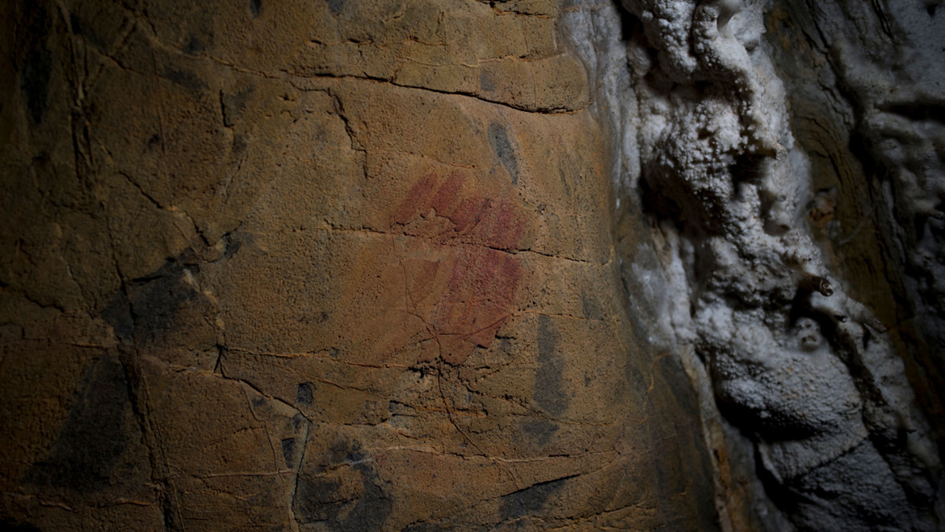
In 2018, the oldest cave paintings in history, made by Neanderthals 64,000 years ago, were found in the caves of La Pasiega, Maltravieso and Ardales in Spain. Like some other early drawings it was abstract in art. Archaeologists examining the caves; they saw ladder-like drawings, hand molds and drawings of vertical structures. Head of archeology at the University of Southampton, W.G. Pike says Neanderthals made this art in places they considered special. Most of the drawings are seen in the hardest-to-reach areas of the caves. This shows that the person who made them prepared pigment and found a light source before entering the cave to find the desired spot. The signs in the pictures are also quite interesting. Because each of them shows symbolic thought. Professor Pike says the important thing is not that Neanderthals painted, but that they were preoccupied with symbolism. Because the symbols show the Neanderthals' ability to have a language.
**Telling stories with human and animal figures**
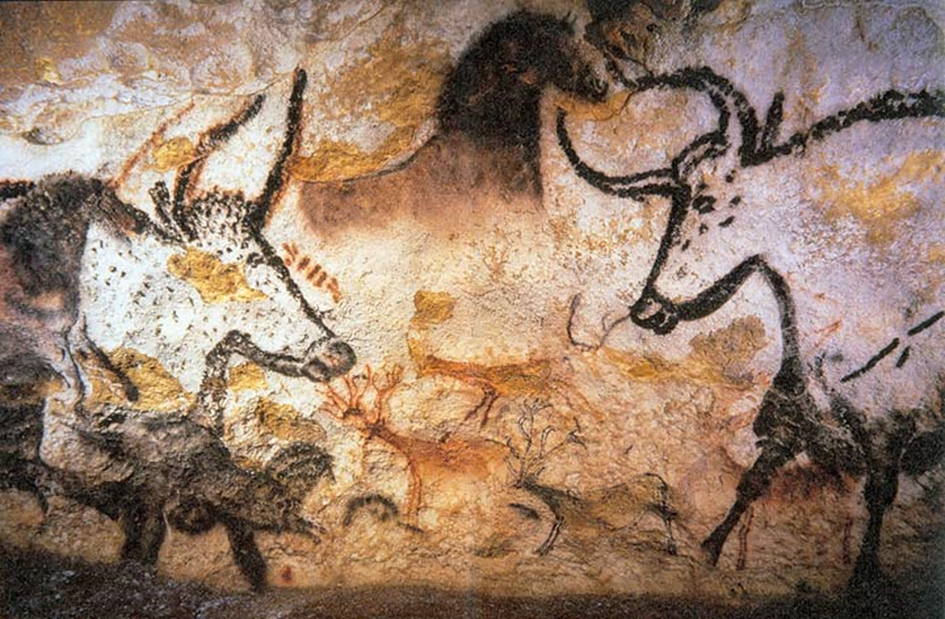
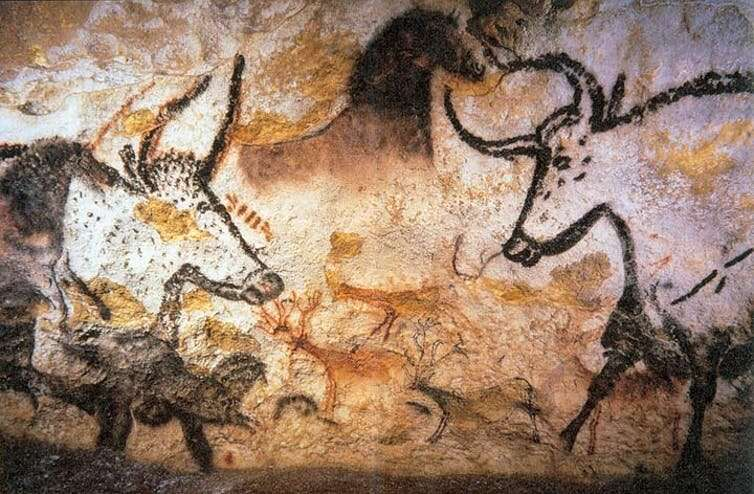
The most basic figures of cave art are humans and animals. Sulawesi pigs are seen in a 45,500-year-old cave art. The image is located in the Leang Tedongnge cave on the Indonesian island of Sulawesi. It is also home to a painting depicting the world's first hunting scene believed to be 43,900 years old. On the other hand, most of the paintings in the famous Lascaux cave in France depict easily recognizable animals such as horses, bulls and deer. Another unique image depicts a hunting scene with a bison and two men. The men died during the hunt. However, the artist seems to have paid particular attention to making the human figure anatomically male.
**Cave and rock art in America**
**Some of America's oldest cave paintings were made about 7,000 years ago. Many of these paintings were discovered on the Cumberland plateau, which stretches into Kentucky, Tennessee, Alabama, and parts of Georgia. Indigenous peoples also continued to create cave art in this area until the 19th century. It is seen that some of the paintings are grouped in the cave paintings discovered in this region. There is a narrative, but archaeologists can't quite decipher what the story is. This is also true for many cave art. Although archaeologists cannot fully grasp what an ancient artist said or wanted to convey, they claim that the artists wanted to create a narrative for themselves and others, and that they consciously used these images.**
Fascinating history-Ancient Egyptian Civilization
**Egypt Old Kingdom Period: 2686-2181 BC**
During the Old Kingdom, Egypt was mostly unified as a single state; became more complex and its successes increased, it expanded militarily. Old Kingdom rulers built the first pyramids. These pyramids were both tombs and monuments to the kings who built them. Building monumental architectural structures such as the Pyramid of Cheops and the Sphinx at Giza, as well as temples to different Gods, required a central government that could offer huge resources.
The pyramids were not built by slaves, but by peasants who worked in the pyramids during the dead season of agriculture. These villagers; He worked with specialists such as stone masons, mathematicians, and priests. As a tax, each household was required to provide one worker for these projects; but the rich could pay the price instead. This demonstrates both the power of the state to force people into the workforce and the advantages enjoyed by elites who can avoid paying to provide labor.
In addition, the Egyptians began to build ships built of wooden planks tied together with ropes and insulated with reeds. With these ships, products such as ebony, incense, gold, copper and Lebanon cedar, which were especially important in construction projects, were traded on maritime routes.
**Middle Kingdom: 2000-1700 BC**
Egypt was reunified during the Middle Kingdom, when the kings took power from the regional governments. After the Middle Kingdom, Egyptian kings generally maintained trained regular armies. The fact that the Egyptian state was able to establish and maintain a regular military force and build fortifications showed that it regained control of important resources.
As a result of the political fragmentation, the Second Intermediate Period began. While more incidents could be recorded through writing, many were still not recorded, and many were lost or destroyed. Therefore, an exact date for the Second Interim Period cannot be determined.
Around 1650 BC, the Hyksos emerged, taking advantage of the political impotence in Egypt. The Hyksos were Semitic people, meaning they spoke a language of Middle Eastern origin. This indicated that they were not native to Egypt. The Hyksos, together with their own political rulers; It also brought many cultural and technological innovations, such as bronze working and pottery techniques, new animal species and new crops, horse and chariot, compound bow, battle axes, and fortification techniques for warfare.
**New Kingdom: 1550-1077 BC**
Around 1500 BC, the New Kingdom period of Egyptian history began with the expulsion of the Hyksos from Egypt and the re-establishment of centralized political dominance. This period was Egypt's wealthiest and most powerful.
Also during this period, Egypt's most famous female ruler, Hatshepsut, established trade networks that prospered Egypt, and commissioned hundreds of construction projects, statues, and an impressive mortuary temple at Dayr el-Bahari. He also ordered the restoration of neglected or damaged temples during the Hyksos period.
The word pharaoh, which originally meant the king's palace, came to be used to mean king during this period, further emphasizing the idea of a holy kingdom. Religiously, the pharaohs associated themselves with Amon-Ra, although they also recognized other Gods.
In the mid-1300s BC, a pharaoh tried to break this tradition by choosing to worship only Aton and even changing his name to Akhenaton in honor of this god. Some researchers see this as the first example of monotheism, that is, believing in the existence of a single God. However, this change did not continue after Akhenaten.
During the New Kingdom period, Egypt was defeated by the pharaohs Seti I and II, who tried to increase Egypt's power against the Libyans in the west and the Hittites in the north. He reached the height of his power during the reigns of Ramses. The city of Kadesh, where the wall between the two empires was located, was the source of the conflict between the Egyptians and the Hittites, and they fought for it several times and then made the world's first known peace treaty.
**Third Intermediate Period: 1069-664 BC**
As a result of war expenses, increasing drought, famine, popular uprisings, and official corruption, Egypt was divided into locally administered city-states. A military force from the southern Nubian kingdom of Kush took advantage of this political division and conquered the united Lower Egypt, Upper Egypt, and Kush. Kushites were expelled from Egypt by the Assyrians in 670 BC. The Assyrians established a vassal state in Egypt that was self-governing but paying tribute to a more powerful state.
In 656 BC, Egypt was reunified and fell out of Assyrian control. The country enjoyed a period of peace and prosperity until 525 BC. In 525 BC, the Persian king Cambyses defeated the Egyptian rulers and took the title of Pharaoh as well as the title of Persian kingdom.
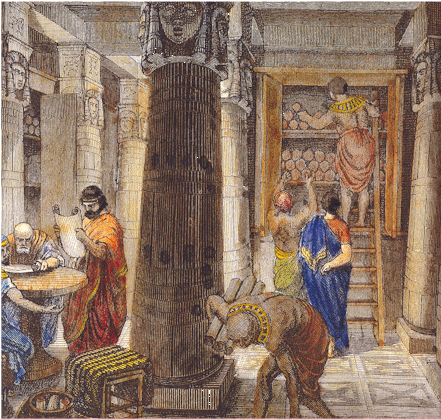
The Ancient Library of Alexandria.
Alexandria… It is a port city in Egypt, named after Alexander the Great, famous for its lighthouse, but also a center of science that hosted famous scientists of that period, and has a very important place in the history of science. city.
In this article, we would like to give brief information about how Alexandria became a science center, the scope of the Alexandria Library and museum, which branches of science were studied here, and how the library was burned.
Centuries ago, when Alexander the Great came to power, a powerful period began in the Mediterranean, and Alexandria, which he founded, became an important port city. The fact that Ptolemy I. Soter, who took over the administration after the death of Alexander the Great, first established a library and museum in Alexandria, turned this port city into a science city at the same time. When we look at history, the emergence of scientific developments is largely dependent on the approaches of societies to science and the support of administrators to science. It is very interesting at this point that Soter established a library and museum in Alexandria to support the development of science.
The library and museum of Alexandria became the most famous center of that period. Consider a library; In this library and the museum attached to it, there should be an example of animals and plants in all known countries at that time, an observatory and a botanical garden should be established, and there should be houses in which different branches of science were taught. Considering this, we can say that the library and the museum constitute a large complex structure. What made Alexandria, a city where the foundation of Hellenistic culture was laid, was popular at that time; It has been a library and a museum.
The Library of Alexandria was the library with the largest collection of Antiquity. The library, which is stated to have approximately 900,000 manuscripts, also included a large staff of staff. It is stated that the works were written on papyrus and stored in the form of rolls.
It is rumored that the library, which was supported by the king, also served as a publishing house. Greek translations and copies of many manuscripts belonging to civilizations such as Greek, Mediterranean, Middle East and Iran have been prepared here. Great importance was attached to improving the collection of the Library of Alexandria, and large sums were paid to obtain a manuscript from a distant place when necessary.
**The development of science through the Library of Alexandria**
Thanks to its geographical location and its library, Alexandria became the center of famous scientists of the period. The science houses in the complex we call the library hosted many scientists from different branches and played an important role in the development of science.
If we give an example of some of these scientists; the first name we should mention; is Euclid. Euclids is the name who established the largest mathematics school in the library and prepared the work called "Elements" (Stoikheia), which formed the basis of geometry education in the West.
Apollonios also became an important member of the school of mathematics. Apollonios, who examined ellipses and parabolas in his book "About Conics", has an important place for later periods with this work. In addition to this, he was also interested in irrational numbers, was also interested in astronomy and especially worked on the moon.
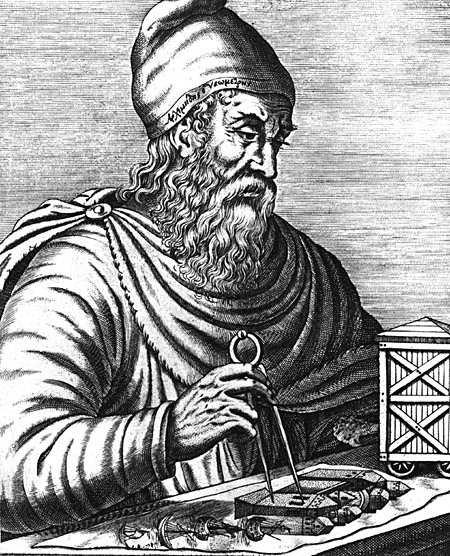
**Archimedes;** He founded the school of mechanics and found the "Archimedes Screw". Archimedes Screw; It is a device with spiral-shaped cylinders inside that is used to draw water. It is said that Archimedes, who is known as a mechanical genius, built celestial spheres and a kind of plantarium to depict celestial bodies, according to a rumor. Archimedes, who is also a genius in the field of mathematics, is also the person who found the number "pi" used to calculate the area of the circle. Ktesibios, who also found water clocks, and Hero, who was more interested in mechanical toys, were among the important representatives of the mechanical school. In this school, it is very important to find instruments such as "Odometer" for measuring road length and "Dioptra" for measuring ground.
The Alexandria Library has also hosted important names in the field of medicine. At the beginning of these names is Herophilos. Herophilos is a name that has gained a great reputation as a general practitioner and teacher. In addition to the cadaver examinations he made in Alexandria, the examinations he made in areas such as the brain, nervous system, pulse and diet are also important. After Herophilos, Erasistratos, who suggested that autopsy should be done to find the cause of death after suspicious deaths and did research on respiration, became another important name in the field of medicine.
If we talk about astronomy and scientists working in this field within the Alexandria Library; At the beginning of these names, we can say that the Chief Librarian Eratosthenes. The observations of Eratosthenes on the earth's globe and his studies on the sun are important. His work named “Geography” was used as a basic work for a long time. Hipparchus and Ptolemy, who were also important observant astronomers, were other important representatives of the school of astronomy. Ptolemy's studies on optics, his work "Almagest", which is also a broad summary of Greek astronomy, is important for the history of science. He also carried out important studies in the field of geometry.
Thanks to all these studies and scientists, the Alexandria Library has hosted different groups from other regions from time to time. The schools in the library were also the institutions that gave lectures to the outsiders.
**The unfortunate event in the history of science; Burning of the Library of Alexandria**
Books are the most valuable materials throughout history as a source of knowledge, but they are also the first to suffer in a negative situation. It is remarkable to encounter similar situations throughout history, albeit in different geographies. The great science center of antiquity; The end of the Library of Alexandria was tragic; The library was burned. Most of the manuscripts in the library were destroyed in this way.
Various arguments have been put forward regarding the burning of the library. The most well-known of these; During the siege of Egypt by Julius Caesar in 47 BC, the library was damaged and many of the works were destroyed. It is stated that the other sources that survived this event were destroyed after they converted to the Christian faith, because they were in the nature of spreading paganism. The date of this event is stated as 391 and it is said that all the artifacts left from the library were burned in the city's baths.
burning of the Library of Alexandria; Although there is no clear information, it shows a significant similarity with what was done in the following centuries to prevent the spread of information in different cultures. dissemination of information; tried to be prevented by the elimination of information sources.
The Oldest Trees on Earth
About 3,500 years ago, a small cypress tree sprouted in the swamps of Florida. Unfortunately, this tree was burned to ashes in 2012. Known as the "Senator", this magnificent tree was exactly 35 meters tall. Being one of the oldest organisms in the world, Senator has managed to survive many natural disasters during his long life. The place where the tree is has been one of the most touristic areas of the city for years. Many people, hoping to rest in the shadow of history, traveled hundreds of kilometers to see this tree. Unfortunately, even though we lost the Senator, there are still ancient trees in different parts of the world.
**Metheselah – California**
Located in the White Mountains of California, Metheselah is one of the oldest pine trees in the world. This tree takes its name from Metheselah, who is mentioned in the Bible as the oldest person in the world. The exact location of this tree, which is almost 5000 years old, is kept secret. Forest services said in a statement that location information would not be given in order to protect the tree well.
**Old Tjikko – Sweden**
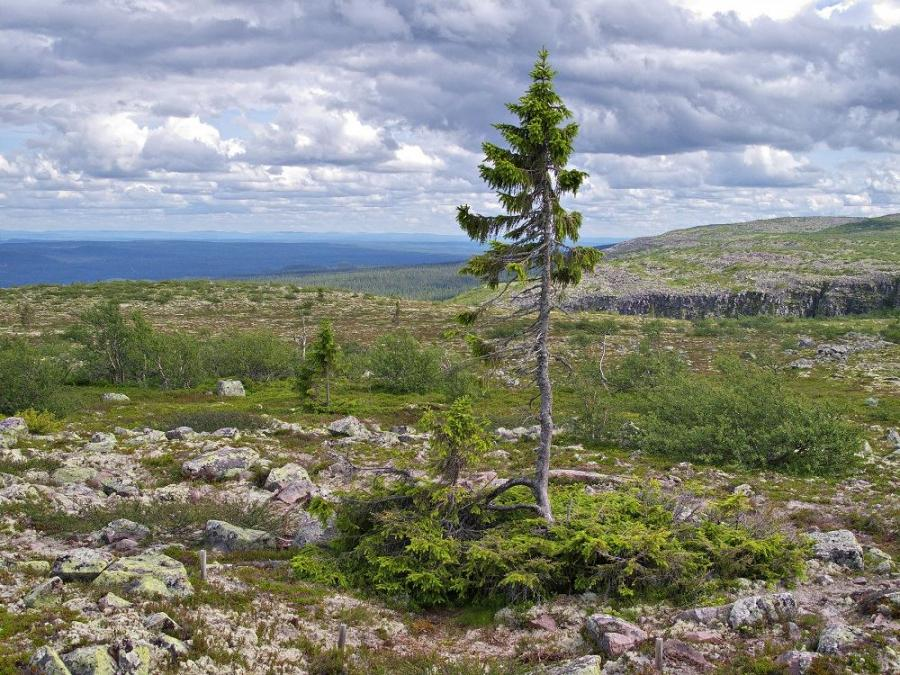
Old Tjikko, located in Dalarna, Sweden, is 9558 years old! Old Tjikko is now considered the oldest tree in the world. This tree, which is thought to have sprouted during the last Ice Age, is 16 meters tall. The old Tjikko, which is a type of Norway Spruce, welcomes thousands of visitors every year.
**Sarv – Iran**
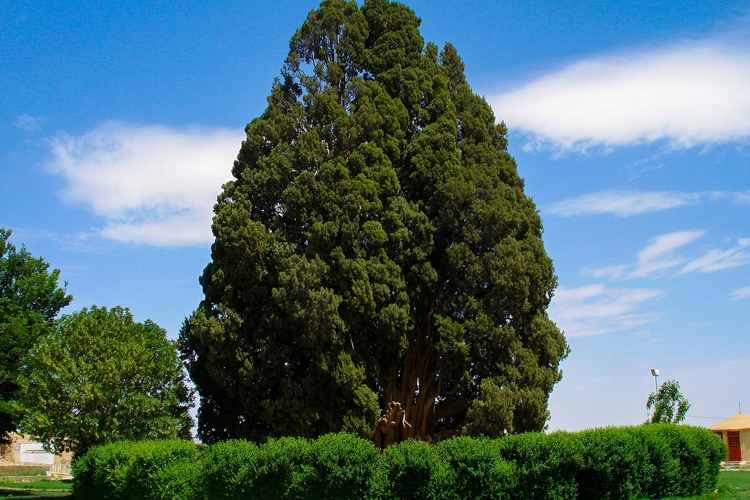
The full name of the cypress tree in Yazd province of Iran is Sarv-e Aberkuh. This tree, which is thought to be about 4800 years old, is exactly 25 meters long. Sarv-e Aberkuh is also known as the Zoroastrian Cypress. This tree, which is one of the most important cultural heritages of Iran, is considered sacred by Zoroastrians. Weather conditions in Iran are cited as the reason why the tree lives so long.
**Hundred Horse Chestnut – Sicily**
The chestnut tree found near Mount Etna in Sicily is thought to be around 3000 years old. Legend has it that 100 knights take shelter under this tree during a storm. Therefore, the name of the tree is "One Hundred Horses". According to people, the story may be true. Because this tree is indeed very large. Today, more than a hundred people can sit in the shade of the tree.
**Fitzroya Cuppressoides – Chile**
Fitzroya Cupressoides, a tall and evergreen tree species that grows in the Andes Mountains, is among the oldest tree groups in the world. Many of these trees, also known as Aces, have been planted in the last 200 years. However, there are also trees that are more than 3600 years old among them. These trees, which are under protection, can reach up to 45 meters in length and 3 meters in trunk width.
**Llangernyw – North Wales**
Llangernyw, on the list of the oldest trees in the world, is located in South Wales. Llangernyw, a lush 4000-year-old yew tree, sprouted in the Bronze Age. Today, the core of the tree is broken. st. Located in the Digain Church, this tree was included in the list of 50 Great Britain Trees in 2002.
Biphasic Sleep Pattern-Forgotten Habit of the Middle Ages
**Professor Ekirch says the phenomenon of biphasic sleep in the past was much more common and normal than we thought.**
Biphasic sleep is mentioned as an extremely normal situation in both historical documents and literary works of the period. For example, in Geoffrey Chaucer's Cantenbury Tales, one of the most famous works of medieval literature, and in William Baldwin's humor book, Attention to the Cat, written in 1561, biphasic sleep is described in the normal course of life.
But these examples are just the tip of the iceberg. Historians; they found thousands of references to the phenomenon of biphasic sleep in newspaper reports, letters, medical texts, plays, and diaries. So much so that this habit is mentioned even in famous ballads such as “Old Robin of Portingale”: “And when you wake up from your first sleep, you will drink something hot and the next time you wake up, your pain will go away…”
**Biphasic sleep is seen in many societies from the beginning of the Middle Ages to the Industrial Revolution.**
The first sleep is called "primo sonno" in Italy and "premier somme" in France. Apart from Europe, there is also some evidence of double sleep habits in the Middle East, Africa and South America. For example, in a text written in 1555 in what is now Brazil, it is told that the Tupinamba people ate their dinner after the first sleep. Because historical documents date back to ancient times, Professor Ekirch thinks we may have inherited the double sleep habit in early prehistoric humans.
**What were people's sleeping patterns like?**
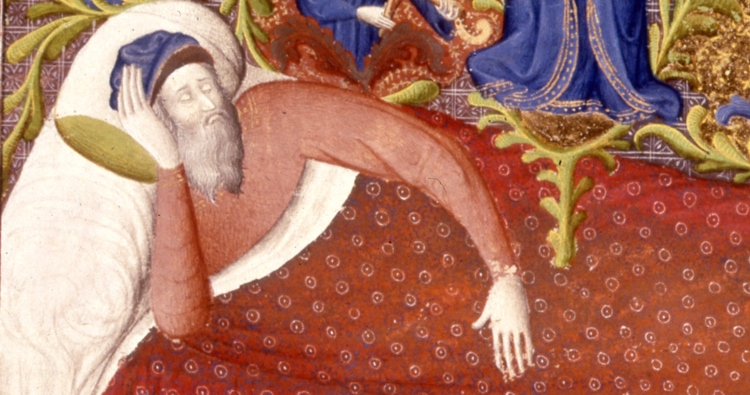
Sleep patterns in the past were much different than they are today. People would usually sleep for an hour or two between 21:00 and 23:00 and then wake up again. In those days, people often slept in the same rooms. However, there were some social rules to prevent undesirable situations. For example, it was necessary not to touch each other and not to move too much while sleeping. On the other hand, the lying position had a certain order. The younger girls slept on one side of the bed, with the oldest girl close to the wall. After the girls, the parents were lined up, and next to them, the boys were lined up in order of age. Non-family members, on the other hand, slept beyond boys.
After sleeping for an hour or two, people would usually wake up spontaneously around 11:00. Most of the time, the time to stay awake at night was two or three hours. After this period, the second sleep would be started at around 01:00. Hours of awakening were called "watch times". During this time, ordinary work was done by moonlight or candlelight. Controlling animals, spinning wool, cutting wood, or sewing were among the mundane occupations. On the other hand, “watch time” was also a suitable time for religious activities. People used to pray or perform their worship at these times. The next stage of sleep was called "morning sleep". Morning sleep usually continued until sunrise. With the sunrise, people were starting to do their mundane work again.
**How could the habit of biphasic sleep, which is so common and perfectly normal, be forgotten?**
The Industrial Revolution, which took place in the 19th century, had a profound effect on people's sleep patterns, as it did in all areas. Thanks to breakthroughs in technology, artificial lighting has become increasingly common. This has radically changed people's natural body rhythms. Since most people started working in factories in cities, they still had to get up early, even if they did not sleep early. Therefore, with the Industrial Revolution, many workers lost their rest period. By the end of the 20th century, the habit of two-phase sleep had completely disappeared. The Industrial Revolution had changed not only the technologies we used, but also the biology of people. Because artificial lights prevented people from sleeping in the early hours. On the other hand, the development of a new technology with each passing day has also changed people's understanding of entertainment. People who went to the factories early in the morning wanted to set aside their evening hours for themselves. After a short while, a new sleep habit was formed not according to the biology of the body, but according to the order of life.
On the other hand, with the change of sleep patterns, new approaches to sleep such as blaming those who sleep too much or worrying about getting up early have been adopted. Despite all this, Professor Ekirch considers the 21st century to be the "golden age of sleep". Because, like before, no one worries about being killed or frozen in sleep anymore. One piece of sleep may not be a "natural" process for humanity. But we can sleep in ergonomic beds and safe houses. According to Ekirch; Although humanity avoids intimate nightly conversations, at least it sleeps more comfortably in terms of physical and security.
Amazing Trading Network-The Great Silk Road
The Silk Road is a world-famous trade route network that connects China and other far eastern countries to Europe via Anatolia and the Mediterranean. This is a road where not only merchants but also scholars, soldiers and missionaries travel from east to west and from west to east. Therefore, not only exotic goods were bought and sold in the ancient trade network, but also the knowledge, technology and religious beliefs that reshaped ancient civilizations were transferred to different civilizations. Products traded on this road for thousands of years; bears the traces of religions and cultures and offers an extraordinary historical richness.
**-Silk**
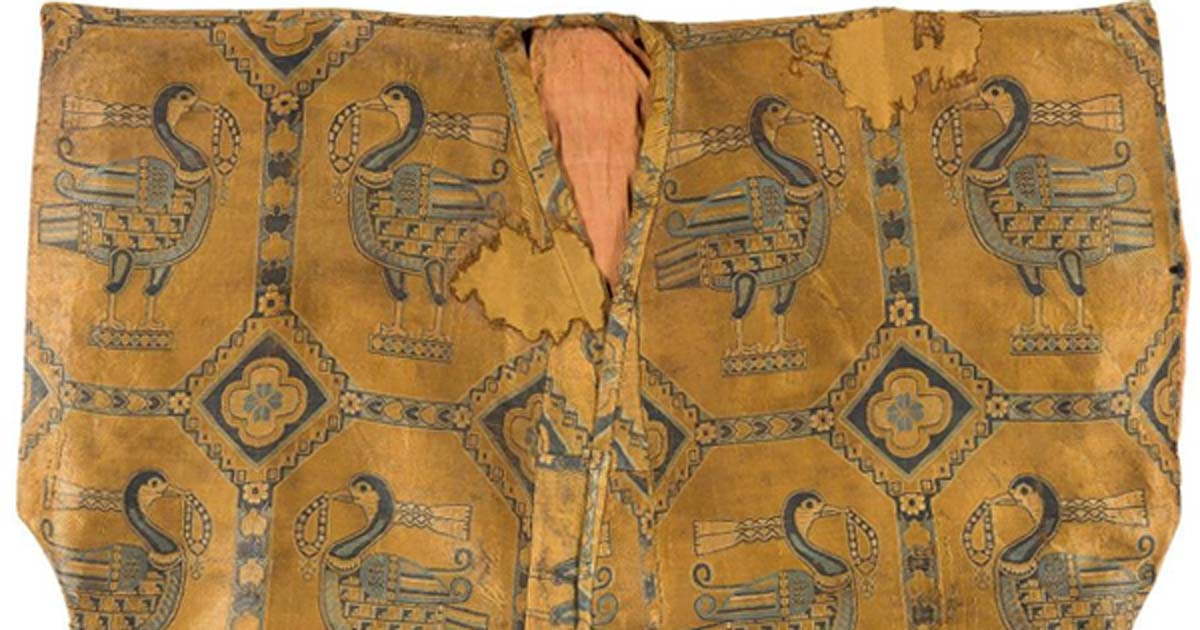
Silk is the most unusual and valuable item transported on the Silk Road for the Western world. So much so that this substance even gave its name to the trade route. For the first time BC. Silk produced in China as early as 3000 had quite a number of consumers. Traders and diplomats traveled thousands of kilometers to access silk. The carrying capacity of caravans in the early periods was quite limited. For this reason, traders wanted to take the most valuable and lightest item to their countries. İpek, on the other hand, fully suited all of these features. This high value and low weight product was versatile and could be used in many areas. For this reason, silk became one of the products that merchants carried the most.
**2. Horse**
Horses were first used in BC. It was domesticated in the Central Asian steppes around 3700 BC. Later, nomadic tribes living in China, India, Iran and Mediterranean countries began to domesticate horses. After agricultural societies discovered that the horse could be used for transportation, the horse became a sought-after means of transportation. The silk trade for horses was one of the most important and long-lasting trades on the Silk Road. Chinese traders paid in silk for well-bred horses from the Mongolian steppes and the Tibetan plateau. On the other hand, nomadic societies used silk to make clothes. At the same time, they could buy other products they needed with silk.
**-Paper**
Invented in China in the 2nd century, paper began to be used in all Asian lands with the spread of Buddhism. The use of paper became widespread in the Islamic world when Arab forces clashed with the Tang Dynasty in the 751 Battle of Talas. This product reached Europe in the 12th century when Caliph Harun al-Rashid built a paper mill in Baghdad. Traders on the Silk Road carried paper documents that served as passports to cross nomadic lands or spend the night in a caravanserai. However, the most important function of paper is; It was the transmission of ideas, thoughts, and religions to the rest of the world. One of the most important features of the Silk Road is the interaction of different cultures in this region. Paper, on the other hand, served as an important conduit to disseminate interactions.
**- Spices**
Spices from South Asia, cinnamon from Sri Lanka, and cassia from China were the most coveted commercial products of the West. Spices were not only used to preserve food. It was also highly valued for religious ceremonies and drug making. If the silkworm could be kept alive, silk could be produced anywhere in the world. However, spices were obtained only from plants grown in very specific environments. For this reason, spices, all of which were in the luxury category, were very valuable.
**-jade**
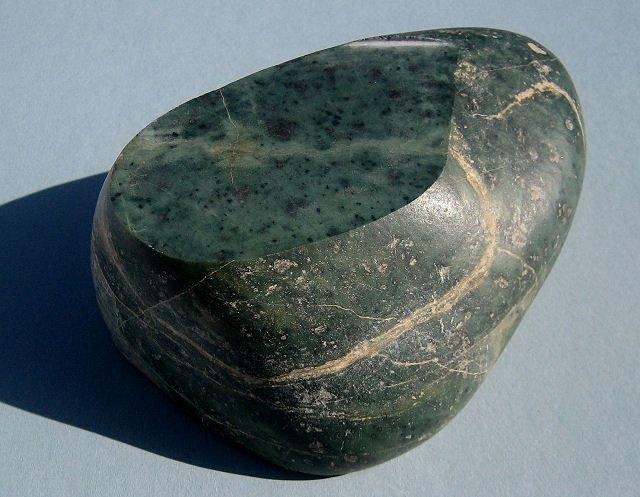
Hundreds of years before the Silk Road existed, China traded with its western neighbors on a network called the Jade Road. Used for centuries to make jewellery, this gemstone was central to Chinese ritual culture. For the Chinese, jade represented health and longevity. This belief in China spread over time to other parts of the world. Therefore, jade became one of the most traded products on the Silk Road.
**- Glassware**
When we say Silk Road trade, we assume that the exotic goods of the East go to the West. However, trade on the Silk Road did not just flow from East to West. E.g; Archaeologists excavating burial mounds in China, Korea, Thailand and the Philippines have found glassware made in Rome in the tombs of Asian elites. Many glassware products such as vases, glasses and plates were traveling from European countries to Asian countries via the Silk Road.
**-Furs**
The taiga is one of the world's largest evergreen forests, running through Siberia and stretching from North America to Canada. At the height of Silk Road trade, there were brave people in the taiga forests who gathered fox, sable, beaver, and ermine skins. These people made a living by making luxury coats and hats for the elite of the East. After a short time, the famous furs of Siberia became one of the luxury products in European societies. Although it was not traded as much as silk and spices, fur was one of the most valuable products of the Silk Road, as it was a status symbol.
How Did Humans Survive the Ice Age?
Between 24,000 and 21,000 years ago, the Ice Age reached its peak when glaciers covered the Americas and northern Europe. Our Homo sapiens ancestors survived by migrating from rapidly cooling regions of the world. However, it was not enough just to migrate. Because the climate in the places where they migrated was quite harsh. The first humans, who were almost physically similar to modern humans, managed to adapt to new, difficult and impossible to live geographies apart from surviving. So how did people live in harsh weather conditions?
**Language, art and storytelling helped us survive**
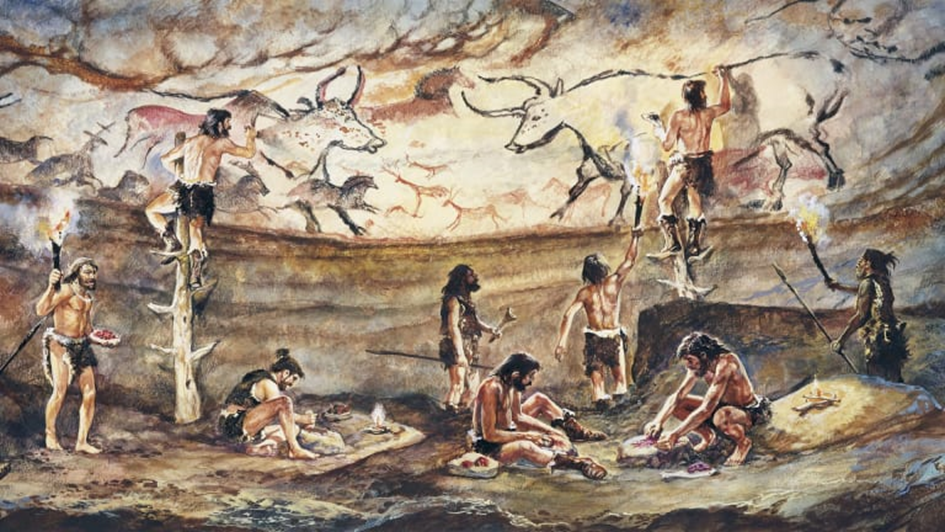
The most important advantage of Homo sapiens is the ability to speak fluently, to conceptualize and plan ahead. With the emergence of language, information about the world and new technologies began to be shared with other groups of people. At the same time, this information was passed on from generation to generation through storytellers. However, the way early humans knew about their environment and conveyed it was very different by today's standards. Our ancestors; He conveyed the seasons, edible plants, animal migrations and many other things through music, dance and art. For example, cave paintings found in Lascaus, France, are full of images of animals hunted by humans during this period. These pictures taught different groups of people which animals to hunt.
**Tools used by Ice Age people**
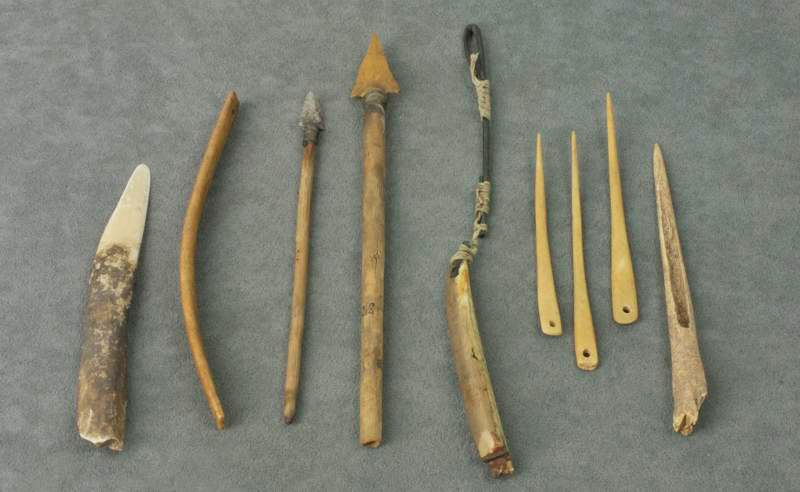
The Last Ice Age coincides with the Upper Paleolithic (40,000 to 10,000 years ago), when humans made great breakthroughs in tool making. One of the most important of these tools was the rock chisel, which was used to cut bones and horns. With this chisel, bone and horns were shaped and spear and harpoon tips were made. The spearheads were small and light enough for people to take with them over long distances. They also had a removable and replaceable form. But these magnificent hunting weapons were useless except for close range attacks. At this point, our ancestors made hunting non-dangerous by using their planning skills.
Ice Age hunters used fire to gather game animals in a certain spot. At a famous hunting ground in eastern France, hunters lit huge bonfires each autumn and spring to lure migrating animals into a narrow valley. The animals that came to the valley by following the fire were killed safely and easily at close range. Archaeological evidence shows that this well-coordinated massacre took tens of thousands of years.
**With the invention of the needle, personalized clothes appeared**
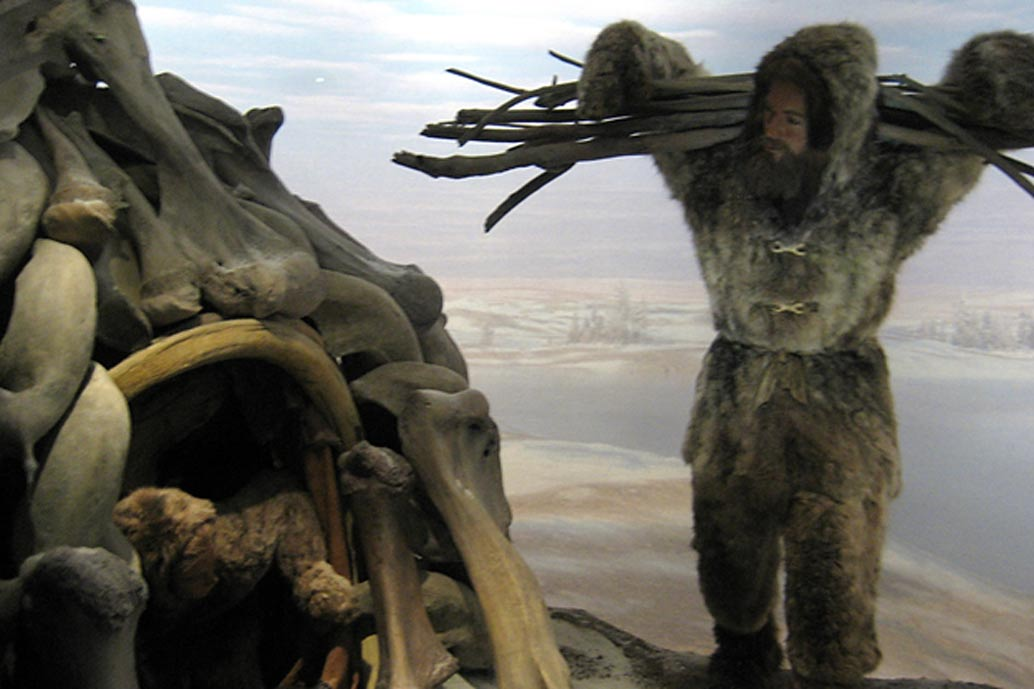
When the first humans started migrating about 45,000 years ago, they designed primitive clothing to protect themselves from the cold. They covered their bodies with sleeping bags, baby carriers, and loose-fitting skins. With the invention of the needle 30,000 years ago, people began to dress instead of "veiling". Needles from 30,000 years ago looked just like needles today. Thanks to the needle, people started to design clothes suitable for their own body. But as with modern mountaineering clothing, clothing in this period had to be worn in layers. An Ice Age tailor would carefully select different animal skins (reindeer, arctic fox, rabbit) and sew together three or four layers, from moisture-wicking underwear to waterproof trousers and parkas. The threads of this period were obtained from wild flax and other vegetable fibers. It was also painted in different colors such as turquoise and pink. As a result, people were able to protect themselves from the cold, despite the temperatures below freezing, thanks to these clothes.
**Rock shelters provided protection from the weather**
Our ancestors, who lived in the Ice Age, preferred rock shelters to shelter in the cold days of summer and wonderfully cold days in winter. They covered large skins over rock outcrops to protect themselves from the wind. They built tents, which they sewed from leather and supported with wooden poles, inside these rock shelters. They prevented the cold as much as possible by laying grass and animal skins inside the tents.
The Ice Age, which reached its peak about 21,000 years ago, ended about 10,000 years ago. Thus, the earth began to warm and people began to live in more favorable conditions. This warming process still continues today. The earth is warming outside of its normal course due to fossil fuels, greenhouse gas emissions, carbon dioxide and many other factors that people use without thinking about the end. In fact, if the natural cycle could continue, the earth would begin to cool again. Considering the reality of global warming, it seems impossible to experience an Ice Age again in the near and medium future.
The extraordinary works of Antoni Gaudi
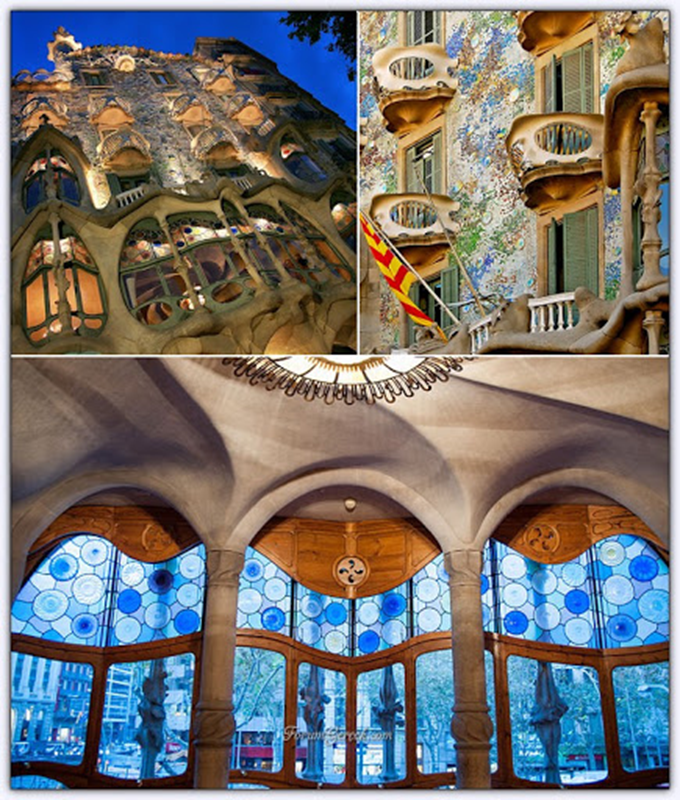
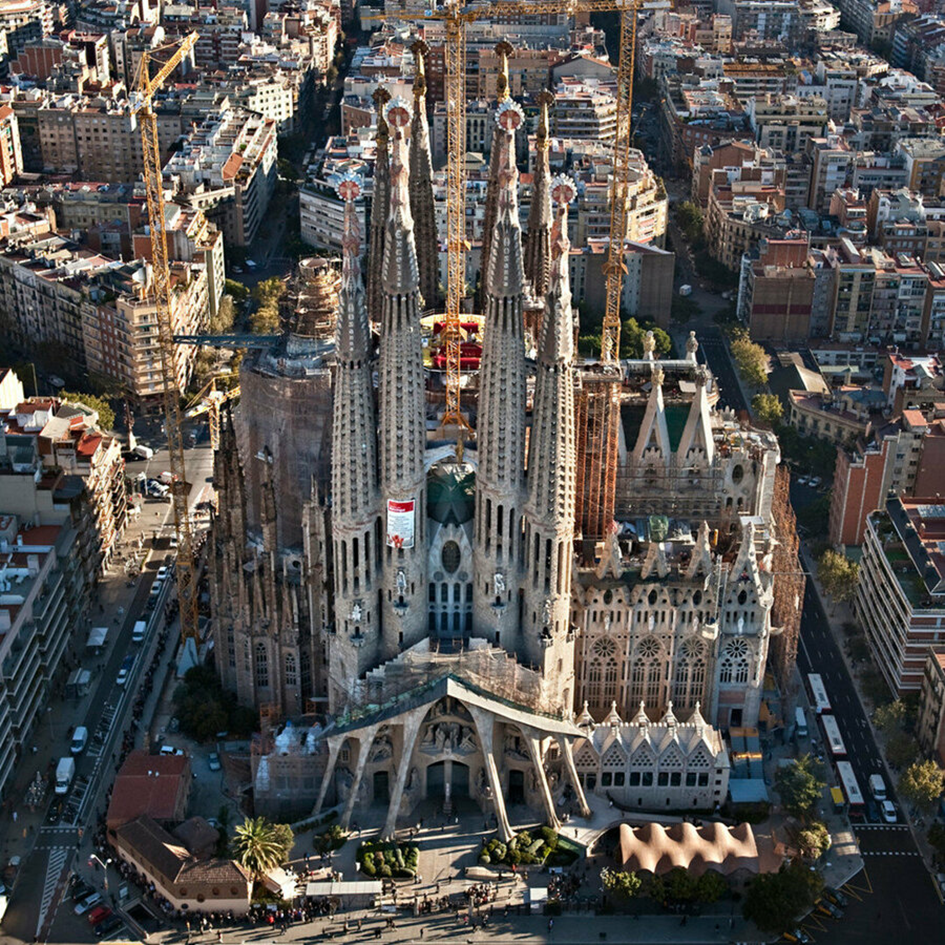
Antoni Gaudí, to whom his teacher said, "I don't know if we graduate a genius or a fool, only time will tell", is an architectural genius who has built fascinating works that have survived to this day with his unique style and surrealist perspective. Gaudi dedicates his life to La Sagrada Familia, one of his most valued and most important structures, and gives exactly 43 years to this work. Inspired by nature in his work, the famous architect manages to build a magnificent church by blending different art movements. The famous architect, who says, "The tree in my side garden is an inspiration for me," always expresses that he is inspired by nature while creating his works. It is possible to see the limitlessness of his imagination in his works. Antoni Gaudí is undoubtedly one of the greatest architects in history and still continues to fascinate and make people think with his works.
**Antoni Gaudí was born on June 25, 1852 in Reus, Catalonia.**
Antoni Gaudi was born in Reus, Catalonia, as the son of a coppersmith family. His architectural education, which he started in 1869, continued for eight years. He started working in different jobs in Barcelona, where he moved to continue his academic journey in this field. The talented architect Gaudi, who got lucky, met Eusebi Guell, one of the richest people of the time, during the early years of his architectural career, and they became close friends. With the financial assistance of Guell, Antoni Gaudi had the opportunity to make a rapid progress in his career.
***Famous architect Gaudi, Spanish pioneer of the Art Nouveau movement***
The famous architect, who listens to the voice coming from the heart of nature at every opportunity, expressed that everything can speak to us with the language of nature and reflected this understanding in his works; In addition, he benefited from mathematics, knowledge of physics and gravitational laws. Gaudi was influenced by some currents in this process and created a new trend. The New Art (Art Nouveau) movement originating in London is an art movement in which ornaments are used and plant motifs are blended. This trend, which includes folds, dates back to the 19th century. appeared towards the end. Gaudi was also heavily influenced by the English thinker John Ruskin, who expressed the art of ornamentation as the heart of architecture.
**His first important work is the summer house Casa Vicens in Barcelona, which he built for the Vicens family between 1883 and 1888.**
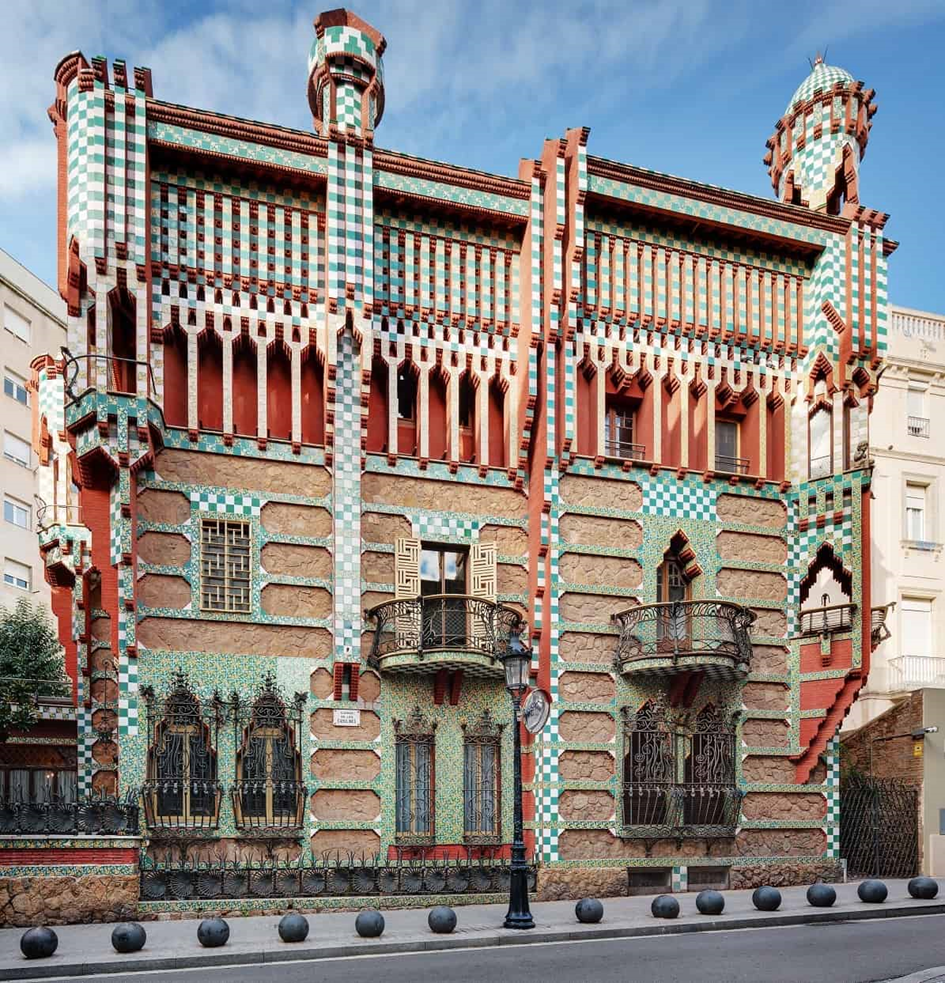
Casa Vicens, one of the first works of the Art Nouveau movement, is a summer house built by Antoni Gaudi for the Vicens family. We can say that it has a special value as it is considered to be Gaudi's first masterpiece. This house, which was included in the UNESCO World Heritage List in 2005, can now be visited as a museum. Each room of the house, which is equipped with figures that Gaudi designed equivalent to three-dimensional perception, is fascinating and enjoyable. The dining room, which is dominated by nature-inspired figures, the living room with its dome and striking decorations, almost proves the uniqueness of Casa Vicens.
The work, which has existed in all its glory for more than a hundred years, had to be restored in order to survive for many more years. Following the completion of the restoration process, which lasted from 2015 to the end of 2017, Casa Vicens was converted into a museum and then opened to visitors. The work, which has been restored in every detail by being faithful to the original, has a special value as it is considered as Gaudi's first masterpiece.
**His most famous work is the basilica of La Sagrada Familia, which is still under construction, to which he devoted his entire life.**
The Sagrada Familia is arguably the most precious work of Antoni Gaudi. The famous architect started to build the work in 1883, stopped receiving other projects in 1908, and continued to work on this basilica uninterruptedly until his death in 1926. The towers he designed inside the church had a meaning. He designed a total of 18 towers, 12 for 12 apostles, 4 for the Gospel writer, 1 for the Virgin Mary and 1 for Jesus. The Sagrada Familia, one of the most prominent and important structures of the Art Nouveau movement, is still under construction. For this reason, it is called the never-ending basilica among the people.
After the death of Gaudi, the civil war broke out in Spain and the Second World War. World War II disrupted and stopped the construction of the famous basilica. In fact, the construction took so long that it is even said that the first parts had to be restored before it could be completed. For this reason, the Sagrada Familia went down in history as the first building to be restored before its construction was completed. La Sagrada Familia, which has been under construction for 137 years, is planned to be completed in 2026, the 100th anniversary of Gaudi's death.
He died on July 7, 1926, at the age of 74, before he could finish his project due to a traffic accident. Gaudi; He was buried in La Sagrada Familia, to which he devoted his life.
While Gaudi was a person who loved to eat delicious food, dress well, and went to theaters and concerts in his youth, he left all these habits one by one, as his architectural intelligence began to produce incredible works. Day by day, he distanced himself from social life, turned into a man whose religious beliefs were dominant, who ate less and did not care about his external views. So much so that when he was injured in a tram crash in the vicinity of the Sagrada Familia church, where he spent 43 years of his life and lived in recent years, and was taken to the hospital, no one around him knew him and thought he was a beggar. It took a long time to realize that the man lying on the ground was the famous architect Gaudi. When he died two days after the accident, the people of Barcelona flocked to his funeral.
There are other rumors about the death of the famous architect. One of them is that when Gaudi went backwards to look at his work while La Sagrada Familia was under construction, he could not notice the train behind him and died as a result of a train accident. Another rumor is that he lost consciousness after a traffic accident on his way to church, and people took him to the hospital, but he died due to severe injuries on his body.
8 of the works by Antoni Gaudi are on the UNESCO World Heritage List.
From the works of the famous architect Antoni Gaudi; Park Guell, Palau Guell and Casa Milà were included in the UNESCO World Heritage List in 1984, La Sagrada Familia's "Birth of Christ" and the underground tomb, Casa Vicens, Casa Battlo and Colonia Guell Tomb in 2005.
**Park Guell**
It is just one of the works designed by Antoni Gaudi for the Guell family. Eusebi Guell asked Gaudi to build a city with a garden with houses, parks and gardens, and this is how the idea of Park Guell emerged. Due to the economic difficulties experienced during World War I, only 2 houses were built, one of which is the famous architect Gaudi's own house. Antoni Gaudi left this park unfinished in 1914 and chose not to continue after that. Even this unfinished state of the park is dazzling. The garden park was included in the UNESCO World Heritage List in 1984 and continues to fascinate its visitors.
Cybele - Goddess of Earth and Fertility
**Who is the goddess Cybele?**
Belief in the mother goddess Anatolia and around BC. It dates back to 6500 BC. In these fertile lands, where polytheistic belief is dominant, a figure that speaks to all gods is indisputably important. This figure, which is the symbol of fertility and abundance, is quite common in history. As a result of archaeological studies, the source of the mother goddess culture goes back to the Phrygian Civilization and the Phrygian fertility goddess Cybele. These findings, which are very important, have been an example for many civilizations in terms of the deep-rooted history of Anatolia.
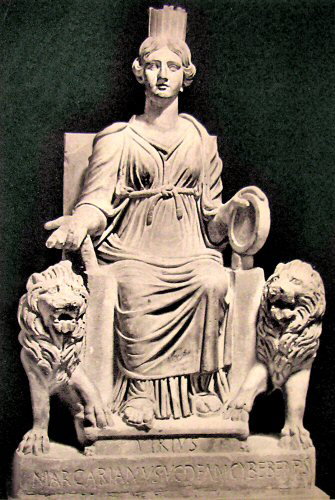
So what does the goddess Cybele represent? The goddess Cybele is the goddess of fertility, as we mentioned above. Abundance and abundance are among the most important definitions in societies whose lives are based on agriculture. For this reason, Cybele appears as an important god figure. The concept of fertility we are talking about is represented by fertility, which is a woman-specific feature. When the goddess Cybele statue is examined, it is seen that a large female figure is drawn to symbolize fertility. The two animals next to the Cybele figure are the leopard. The leopard is the queen of animals and is a symbol of eternal freedom. Goddess Cybele is a goddess who has influenced many religions and languages. It is a very important point that it can affect the language we use from 9000 years ago.
The answer to the question of where is the statue of Goddess Cybele is not known for certain. Because the statues of Cybele all over Anatolia make it difficult to give a clear answer to this question. In addition, the statue of Goddess Cybele, which we have mentioned in general terms, appears in different figures.
Finally, we would like to talk about the story of the fertility goddess. Since the goddess Cybele is a very precious figure in mythology, many legends have been told about her until today. The most popular of these legends is the story of Kybele and Attis, also known as the legend of Cybele, the God of Fertility. The goddess fell in love with the mortal Attis, the servant of the temple of Cybele. Attis has the same intense feelings towards Cybele. However, because Cybele is very jealous of her passionate love, she stipulates that she must take a vow of chastity. Attis also agrees to take this oath. But one day, Attis falls passionately in love with a mortal girl and forgets his promise to Cybele. Attis decides to marry this girl and they will have their wedding soon. But the glorious wedding has an uninvited guest; goddess Cybele. When Attis sees Kybele in front of him, he remembers his promise and oath to her and gets very upset. Attis can't stand this grief any longer and cuts off his genitals. Cybele can't stand the suffering of Attis, who is writhing on the ground in blood, and turns him into a pine tree right there. After that day, the pine trees remain green for all four seasons and the pine cone now becomes the symbol of Attis. This legend, also known as the legend of Goddess Cybele , has survived to the present day by being told from language to language.
Civilizations Disappeared in Antiquity
**Maya Civilization**
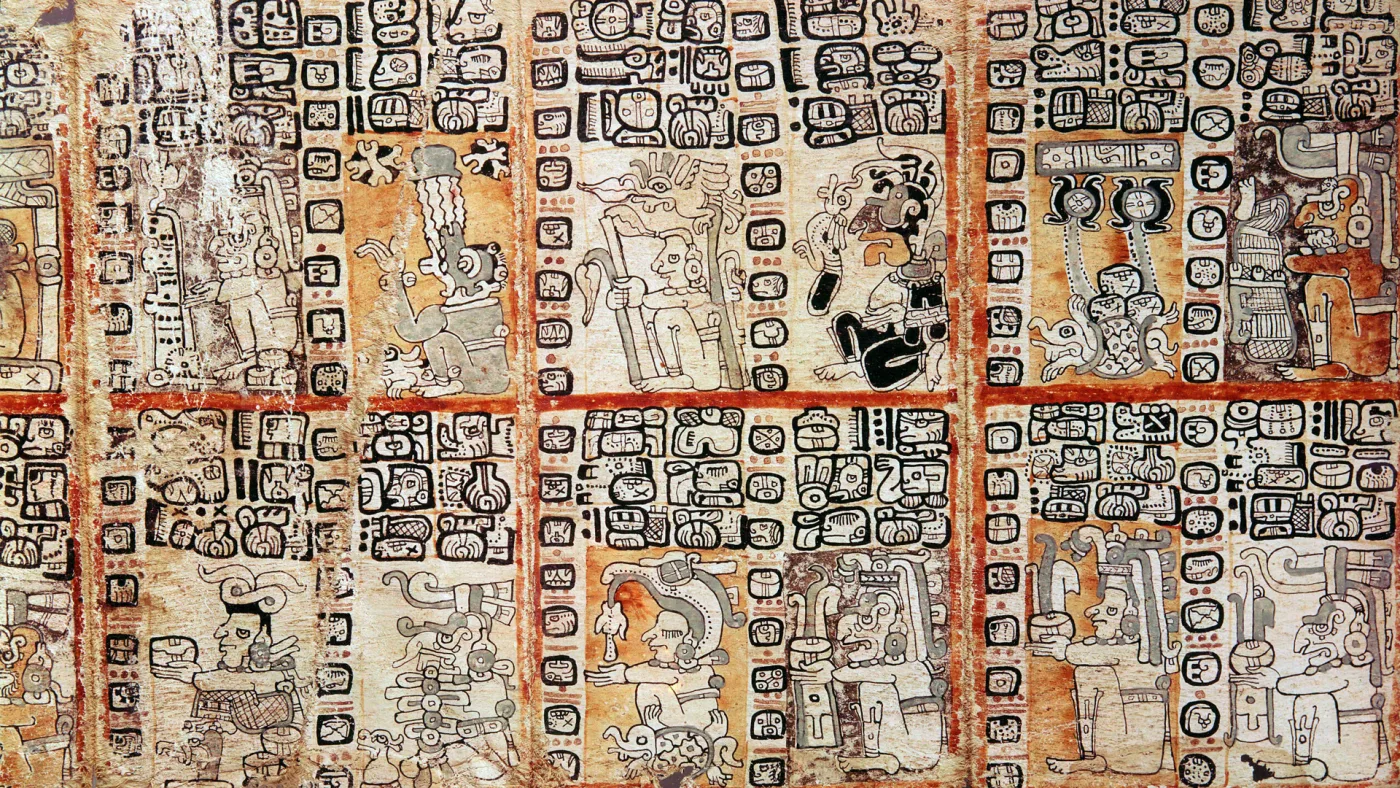
The Mayans are a civilization that lived in Central America. This region is suitable for living in terms of climatic conditions. Agriculture was developed in the Mayas. Their main product was maize, which was also their staple food. Cocoa, beans, and pumpkin were also cultivated crops. Hunting and fishing also flourished in the Mayans.
The Mayans were an architecturally advanced civilization. This civilization established great cities. The ruins of the cities of Tikal and Quirigua (Kuircua) are on the World Heritage List. One of the most important architectural works of the Mayans is the pyramids. This civilization, which was advanced in stonemasonry, used jade, salt and obsidian for commercial purposes. Sculpture and pottery are also the main occupations of this civilization.
*The Mayans developed an alphabet that they expressed through pictures and symbols.*
***Indus Valley Civilization***
In the region of present-day India and Pakistan, there was the Indus Valley Civilization 8 thousand years ago. In 3000 BC they occupied a much larger area than the civilizations of Egypt and Mesopotamia. Moreover, they made up 10% of the world's population. Using a writing system that has not yet been deciphered, this civilization was one of the most advanced societies in the world until the Roman period. However, around 1900 BC, people began to leave the cities. Scientists believe an Aryan invasion from the north wiped out the Indus people. However, recent studies show that the monsoon cycle has stopped for at least 200 years, thus drought has occurred. Earthquakes or epidemics such as malaria and cholera may also have played a role.
***Anasazi***
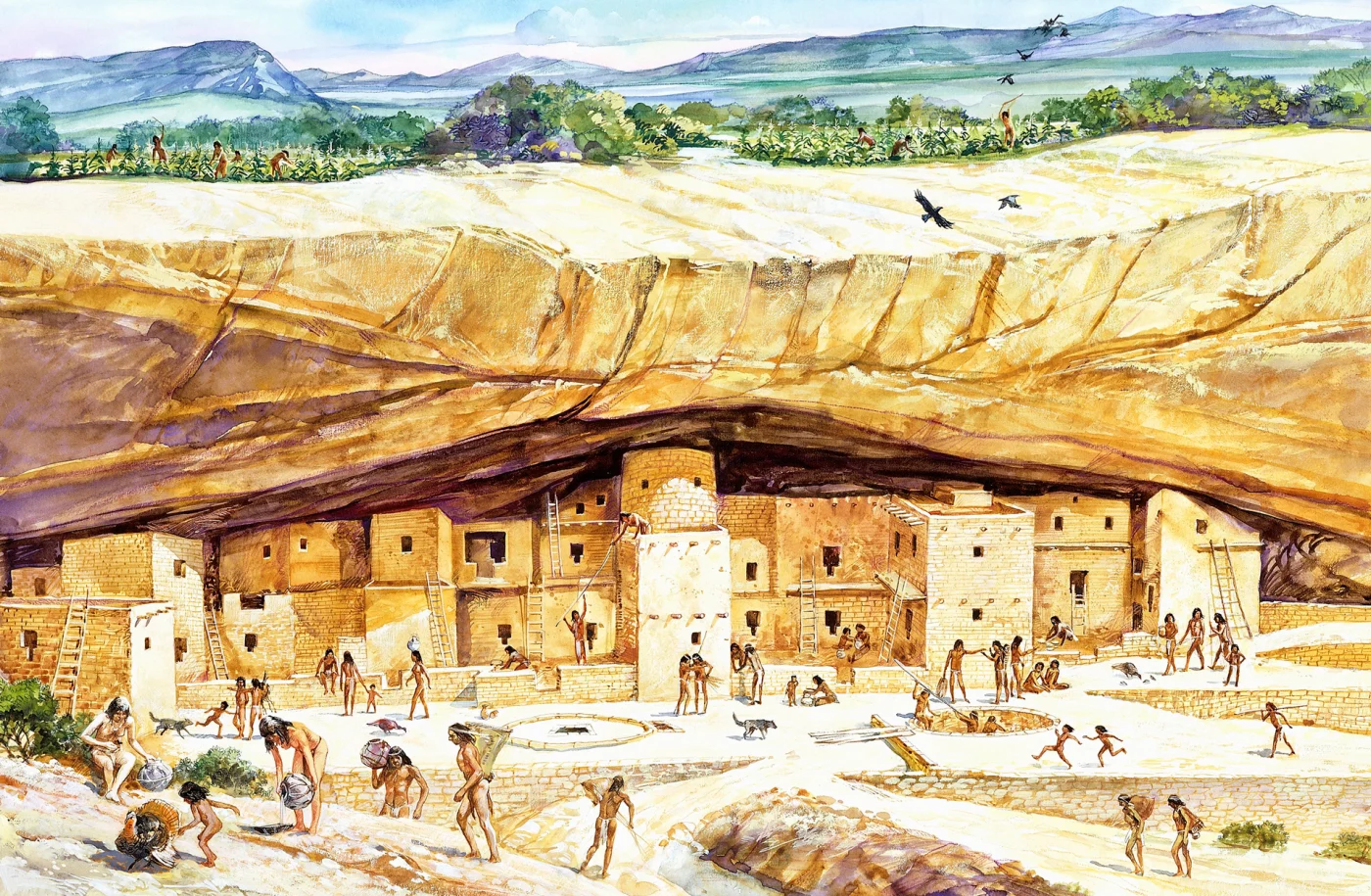
The Anasazi people lived in the 12th and 13th centuries in what is now the United States of America, Colorado and New Mexico. This civilization, which built houses with hundreds of rooms on the sides of the cliffs, built very high buildings. There are various theories for the vanishing civilization. Along with the signs of slaughter and cannibalism, drought may also have played a role. In addition, riots in the society may have caused people to leave the cities. Today, the descendants of this civilization prefer the name Puebloans to Anasazi.
Cahokia
With the spread of maize cultivation, villages began to appear in the fertile valleys of the southeast and midwest of the Americas. That was about 1200 years ago. The largest of these villages was Cahokia with a population of about 20 thousand. The city, surrounded by a high wooden fence, had at least 120 earthen mounds built with 14 million baskets of earth. The largest of them was about 30 meters. Using its own solar calendar, the civilization became a natural trade center thanks to its location. Around 1200 AD, a flood occurred and cities were abandoned. Studies show that there may be factors such as political and social unrest and disease apart from floods.
Easter Island
The Polynesians, who set out by canoe between 300 AD and 1200 AD, reached Easter Island, one of the most remote places in the world. Interestingly, they erected these stone statues even though they had no pack animals and no wheels. There are hundreds of these stone statues, the largest of which weighs 82 tons and is 10 meters long. By the 1800s, their population had dwindled considerably. Since then, scientists have analyzed the charcoal bits and pollen in the sediment cores, discovering that its inhabitants cut down nearly every tree and ate the seeds before the plants sprouted again. One of the most important causes of population decline is thought to be mass starvation. Ecological disasters and civil wars may also have played a role. With the arrival of Europeans, the population of the islanders declined rapidly. With the slave trade and smallpox, their numbers dwindled to 100.
**Greenland Vikings**
According to Icelandic sagas, Eric the Red set out with a fleet of 25 boats to colonize Greenland around AD 985. Vikings, who established a smaller western settlement with a large eastern settlement; he herded goats, sheep, and cattle, built stone churches, and hunted reindeer and seals. Their population reached roughly 5,000, but the missionaries who came to the island in 1721 could not find the people. Only ruins remained. Archaeologists have done a lot of research since then. In the 14th century, the entrances to Greenland may have been blocked by glaciers. In addition, with the effect of the Little Ice Age, the usage time of the land may have decreased. However, it is unknown where the killing blow came from. While some experts think they packed up and returned to Iceland or Scandinavia, there are also those who believe they died of starvation. In addition, the Black Plague epidemic may have affected this civilization as well. Vikings are not the only society to perish on this island, the Eskimos and Dorsets living here also perished in the following years.
Legend of Unicorns
*You can call the Middle Ages a mystical or dark period. However, there is a well-known fact that every innovation that emerges brings with it a sense of curiosity.*
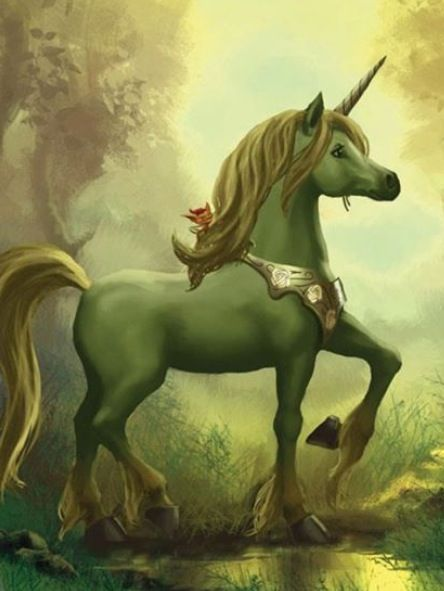
Unicorns may not be real, but if we consider the movies we watch and the fairy tales we read, we can say that they have managed to have a very lasting effect. Let's admit it happens when we feel like it was real from time to time. Legend has it that these magical and beautiful unicorns caused the water level to rise in the Indian river and brought abundance to the country.
**People have dreamed of the existence of unicorns for centuries.**
The earliest known depiction of a unicorn, found in the Lascaux Caves of present-day France, dates to around 15,000 BC. Or, people believed it was real until they realized that the Lascaux unicorn had two horns placed confusingly close together.
**According to the Greek historian Ctesias, unicorns are real, and they have records.**
The earliest record of unicorns in Western literature belongs to the Greek historian Ctesias. The Greek historian notes that the horse had a white body, purple head, blue eyes and a multicolored horn.
The earliest record of unicorns in Western literature belongs to the Greek historian Ctesias. The Greek historian notes that the horse had a white body, purple head, blue eyes and a multicolored horn.
**According to the famous traveler Marco Polo, ''unicorns are quite rude and ugly.''**
Marco Polo believed he had come across unicorns on his travels. The famous traveler said about this encounter, “They were ugly and rude to look at. Unicorns are not as charming and eye-catching as we have described. “This was because the animals the traveler saw were not unicorns but actually rhinos.
**Unicorns changed India's destiny**
It is stated that Genghis Khan decided not to conquer India after meeting a unicorn that submitted to him. Genghis Khan saw this as a sign of his deceased father and withdrew his army.
**Young women had power over unicorns**
During the Dark Ages, there was a time when science fell short of irrational intuition. Collectors, known as animal hunters, were listing the biological properties and medicinal use of the animal community, which then included unicorns. It was in these collections that it was first described that young women had great power over creatures.
**Unicorn myth endangered narwhals**
It was believed that the horns of unicorns could resist poison and purify water. Of course, this situation prompted counterfeiters. It was bad news for the narwhal population, as the single tooth protruding from the front of the whale's head resembled a horse's horn. Moreover, the Danes even had a throne made of narwhal horns.
**The horns of unicorns were really valuable**
The “unicorn horn” was literally worth 10 times its weight in gold. In 1560, German merchants sold horse horns worth an astronomical 90,000 scudi to the pope. Until 1741, London pharmacies were the subject of a rather interesting trade, selling unicorn horns in powdered form. How true this is, of course, is unknown.
**The unicorn is the national animal of Scotland**
Unicorn heraldry can be found on ancient seals in Babylon and Assyria, but the most famous are tied to King James III of Scotland in the 1400s. The two gold coins of that era were known as unicorn and half unicorn! Today, the unicorn still stands out as Scotland's national animal.

The mystery of the Mariana trench, which is the subject of legends
The deepest known point on Earth is considered to be the Mariana Trench. This trench is located in the Pacific Ocean between Japan and Indonesia, southwest of the Islands of Guam and Mariana.
The length of the Mariana Trench, which takes its name from the Mariana Islands, is 2,550 km and its width is around 69 km. The Challenger Deep, which is considered the deepest point of the Mariana Trench, is located at the southern end of the trench. The depth of this pit is 10,994 m. This depth is known as the deepest point on Earth ever measured. In order to explain it more concretely and to make it come alive before your eyes, let's explain it as follows; 10,000 m is almost the end of the troposphere and the altitude at which planes fly. Or let's put it like this; If the world's highest mountain, Mount Everest (8,848 m), had started from the bottom of this pit, there would be 2.1 km more water body above its summit! But let's give another interesting information: Challenger Deep is still not the closest point to the center of the Earth, because it is much closer to the equator.
In the news about this pit, it is also stated that a Turk fell into the Mariana Trench. There have been many reports about the Turk who fell into the Mariana Trench. While the ship was making its way through the Pacific Ocean off the coast of Japan on October 21, 26-year-old Cemil Cakir, who was a member of the crew, sank at 11 thousand meters in the region of the Mariana Trench, which is considered the deepest point in the world. However, it is among the records that no results could be obtained from the search and rescue efforts, which lasted approximately 9 hours. So where is the Mariana Trench? Has anyone been in the Mariana Trench? What creatures live in the Mariana Trench, the deepest place on Earth? How did the Mariana Trench get its name?
The Mariana Trench was discovered by chance in 1951 as a result of the investigations and researches carried out with a ship called Challenger 2. When researchers realized that a probe they dropped into the sea fell to a depth of 10,863 meters, they found the deepest pit in the world by chance. According to the detailed examinations made in the pit, this point is 10,994 meters deep, 2542 meters long and 69 meters wide. Moreover, it is considered the deepest point on earth. It is also known as the Challenger Pit. An iron with a mass of 1 kilogram thrown on the surface of the Mariana Trench takes approximately 1 hour to sink. Because the pit is so deep, there are many unknown details about the pit and it has always remained a mysterious place. The pressure at the bottom of the pit is almost 1000 times higher than the pressure on its surface. The Mariana Trench is located in the Pacific Ocean. Located in the southwest of Guam Island, between the lands of Japan and Indonesia, the pit is almost equidistant from both countries. Located at 11° 24 North latitude and 143° 16 South latitude, this mysterious pit is also of great interest to tourists.
***How was it formed?***
So how did this mysterious pit, which is considered the deepest point in the world, formed? The Mariana Trench, which is considered the deepest point in the world, was formed when the Pacific Plate entered under the Philippine Plate at the place where the Pacific and Philippine plates collided as a result of plate movements. Both of these plates are moving towards the northwest. However, because the Pacific Plate is moving faster than the Philippine Plate, it goes under the Philippine Plate, creating a constant pressure. This pressure causes frequent earthquakes in the region.
You may be wondering if there is life in this pit. Well, can you imagine the pressure at a depth of about 11 km in the Mariana Trench, which is the deepest place on Earth and in the ocean? 1,086 bars to be exact! Isn't it crazy! So, can life survive in a pit with such high pressure? This question, which has occupied scientists for years, is clarified when J. Piccard and D. Walsh, who descended to the Challenger Deep in 1960 with the Trieste submersible, announced that they had seen a flounder-like creature. Although no footage was obtained, it was now known to be alive in the Challenger Deep. But how was this possible at such a high pressure? Since calcium can only exist in dissolved form under a pressure of 1.086 bar, the bones of a vertebrate creature would literally collapse. For this reason, only non-vertebrate creatures that have adapted to this high pressure can survive in the Mariana Trench.
One of the deepest-dwelling fish is Pseudoliparis amblystomopsis, which is also a snailfish species. These fish, which live at 7,700 m and can be seen at 8,145 m, roam around in groups in the environment they live in. In addition, during the descents to the Mariana Trench, rat tail species living at 5,000 m, single-celled xenophyophores exceeding 10 cm in size, and giant amphipods about 20 cm in length at around 6,000 m were discovered. We would like to remind you that normally amphipods are about 2.5 cm in size. During James Cameron's exploration process and other landings in recent years, a new species of sea cucumber, most bacteria, and over 68 new species have been discovered. Since the pit is at the plate boundary, scientists estimate that these creatures may have adapted to life at that very point in the region, which is rich in minerals. At the same time, most fish species living here have life spans exceeding centuries. It is among the debates that these creatures have not evolved since the prehistoric period, but remained the same.
So how was this mysterious pit discovered? The Mariana Trench was discovered by the Challenger expedition between 1872-1876. The Challenger expedition has an important place in history because modern oceanic science begins with this expedition for the first time. This expedition is considered to be the first expedition to gather information on the characteristics of the oceans, the chemistry of the ocean water, currents, the creatures living in the ocean and ocean geology. Scientists travel 70,000 miles for 4 years with the British ship HMS Challenger, which also includes a laboratory and various scientific equipment. Researchers create the first ocean depth maps, current and temperature maps with this trip and discover about 4,000 new living species. One of the most important and resounding results of the Challenger expedition is; Discovery of the Mariana Trench, thought to be the deepest point on Earth.
After the discovery of the Mariana Trench, sonar (Sound NAvigation and Ranging) technology, which was used in the First World War to determine the location of submarines, is preferred to measure the depth of the trench in the early 1900s. With this method, sound waves are sent to the water. Sound waves hitting a certain surface are reflected and returned. Thus, by looking at the time elapsed between the sending and returning of sound waves, the depth of the surface where the sound is reflected can be calculated exactly. In 1951, Challenger Deep, the deepest point of the Mariana Trench, was discovered. The ship HMS Challenger II measured a depth of approximately 11 km in the Mariana Trench with an echo-sounder. In honor of the ship's name, this point was named Challenger Deep.


The Mozart Effect-Brain Power Music
This universal language is one of the tools that shape the emotional dimension in humans. We can say that this language, which affects emotions and thoughts, has different effects on many things. At a time when the effect of music on the brain is still not fully resolved, new research offers remarkable methods. In this article, I would like to talk about these methods created by the Mozart Effect and to explain what kind of results the studies carried out under the Mozart Effect had.
**Who is Mozart?**
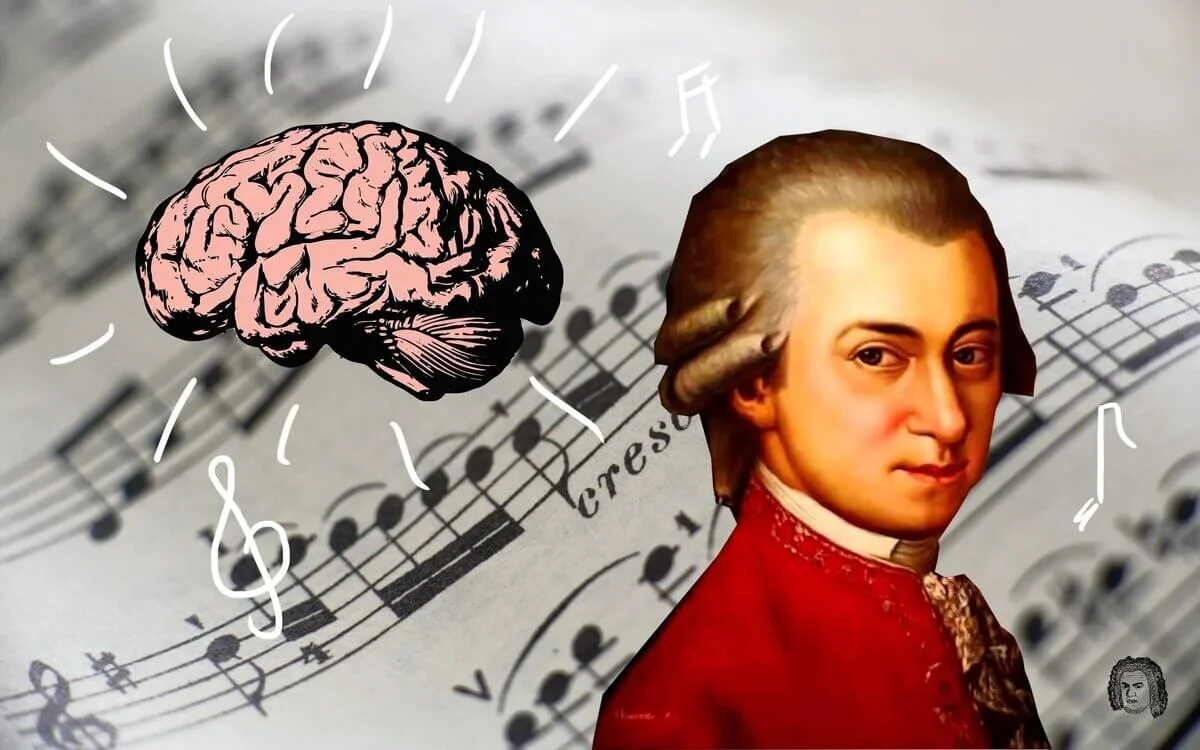
Wolgang Amadeus Mozart was born on January 27, 1756 in Salzburg. Mozart, one of the most important composers of Western Classical Music, started to show his skills when he was just 5 years old. His ability to play the piano and violin at an early age enabled him to compose. He has become one of the most important classical composers of all time with his contribution to the development of western music.
For the concept known as the Mozart Effect, firstly, “You must listen to Mozart for the development of intelligence. Even your unborn baby can listen to Mozart so he can be smarter.” has been called. It has been emphasized in studies that listening to Mozart's K.448 sonata has a great effect on IQ. Of course, it was also thought that these allegations could arise due to a commercial purpose. The situation that led to this thought was that after the work put forward to increase the IQ level, the sales of many DVDs and CDs, especially Mozart sonatas, peaked.
In an experiment conducted with 36 students at the University of California, it was claimed that students solved problems very easily after listening to Mozart. Thus, it has been stated that it makes mental skills more effective than it is even for a short time. According to the doctors who conducted this study, it was claimed that there was an increase in the IQ of the students. Thus, classical music, which was one of the pioneering activities in the development of intelligence, especially in which Mozart's sonatas took place, began to become popular.
The reason why the Mozart Effect is popular today is that many studies are still being carried out on this subject. In order to prove the existence of Mozart's effect on activities, as always, studies were carried out on mice. According to this research, a student named David Merell claimed that the mice that he listened to Mozart in a labyrinth formed by three groups of mice in his laboratory experiment finished 8.5 minutes earlier than the others.
According to the latest study among many other studies, it has been revealed that listening to Mozart is seen as an alternative method for the treatment of epilepsy patients. Studies indicating that Mozart had a positive effect in the treatment of epilepsy were presented in detail at the European College of Neuropsychopharmacology (ECNP) Congress. Epilepsy is a neurological disorder that affects more than 50 million people worldwide, resulting from an unusual electro-chemical discharge of nerve cells in the brain. Although the drug method is usually used for treatment, unfortunately this is only effective for 70 percent of people. Although surgery, neurostimulation and diets are among the other treatment methods, methods to prevent seizures do not work for the remaining 30 percent.
In the study, researchers had 13 epilepsy patients listen to Mozart every day for three months. In this process, they did not experience any disruption in their medication. Dr. “Our results showed that daily listening to the first movement of Mozart K.448 is associated with reducing the frequency of seizures in adults with epilepsy. This suggests that daily listening to Mozart could be considered as a complementary treatment option to reduce seizures in individuals with epilepsy.” said.
According to research, the only thing that can make the Mozart Effect true is that the rhythms in Mozart's music provide a relaxing feature for patients. The tempo, structure, melody and harmony of Mozart's music played an active role in this regard. The accuracy of these reports will only be seen after many studies to be done

Ragnarok Prophecies-The Concept of Doomsday
Ragnarok means the end of the world and the apocalypse as a result of the great war between the gods and the giants. Ragnarok prophecies explain this situation. According to the prophecy, both sides will lose the war, along with the gods and giants, humans will also be completely destroyed. Ragnarok can be briefly described as the apocalypse of Norse mythology. For the Vikings, the legend of Ragnarök is a mysterious prophecy that is uncertain when it will appear and when it will come true. In addition, the part of how the Viking people understood the world in their own time period is also an important point. When the prophecy of Ragnarok is fulfilled, incredible events will occur on earth and in the sky.
Ragna literally means the organizing power of the gods. The word Rok means apocalypse and destiny. The word Ragnarok literally means the fate of the gods. According to some Scandinavian works, it is also called the twilight of the gods. The name Ragnarok is also known as Ragnarök or Ragnanokr. “Ragnarok is exactly; It means the catastrophe of everything in the cosmos, even of the gods. So we can say that it is the end of everything that exists. This ending is called apocalypse. When we examine Scandinavian mythology, we can see that Ragnarok is at the very end. According to the prophecy, wars, massacres and deaths on earth during the Ragnarok period will come true and there will be blood everywhere.
**When the prophecy of Ragnarok begins to come true, an unprecedented winter will begin on earth.**
The sun, which covers all parts of the world, will not heat anywhere when the prophecy begins to come true. According to the prophecy, a continuous snowfall will begin from all directions and from all sides. The earth will be rapidly drawn into an unprecedented cold. This deadly cold will continue for three full winters with no summers. People will break all laws and all laws in order to find something to eat and meet their vital needs. The only concern and purpose of people at that time would be to struggle to survive. This cold period, which has just begun, will be the age of swords, clubs, and bloody days. In order to live, brother and sister will kill his child, whom he avoids from the father's eyes.
*****The new gods were coughing dryly and laughing. The blood gushing from the wounds they had inflicted poured down from Ymir's neck and shoulders and flowed endlessly, spreading like a warm robe over his chest and sides of his body, dyeing the glass ball red enough to almost drown the world inside it in a pool of blood. consuming the fountain of life hidden under clay and ice, leaving it dry to death.*****
Which gods and goddesses will die in Ragnarok, which is known as the inevitable end of the gods, is also predetermined.
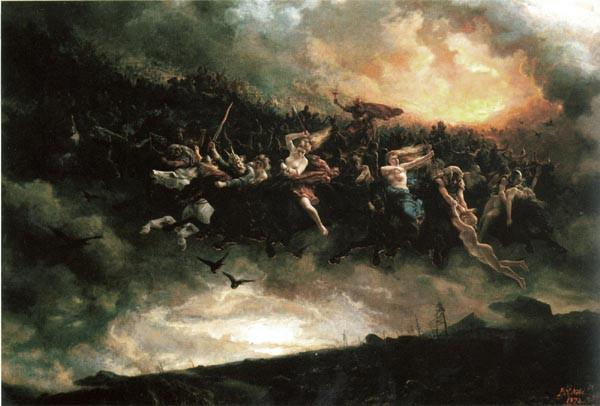
This situation was predestined, but no matter what, all the gods continued to prepare for the disaster that was coming to their doorstep. The glory of the Scandinavian gods and goddesses perhaps began with their opposition to the apocalypse that had come to their doorstep. The chief god Odin gathered his Valkyries and all his other successful and brave warriors and assembled a mighty army against the calamity that was at his doorstep. The last age that the world can see and see has begun with frightening and insurmountable events. There is no trace of the family culture, which was extremely important for the Norse culture. The seriousness of the situation of the period is mentioned in Scandinavian inscriptions. The prophecies that will occur during this period are as follows; At the beginning of many prophecies, it is written that packs of wolves will compete with each other to eat both the sun and the moon. When the sun and the moon witnessed this situation, they went from one end of the sky to the other and hid, looking for a safe place so that they could not find themselves.
*“The first wolf will swallow the sun and people will think it is a great disaster. The second wolf will swallow the moon, but this will not cause as much outrage as the first. The stars will fall from the sky, the earth will shake, the mountains will be tossed left and right, all ties will be broken, chains will be broken, and Fenrir the wolf will be free.”*
**According to the prophecy, there are three main factors that will bring the end of the world.**
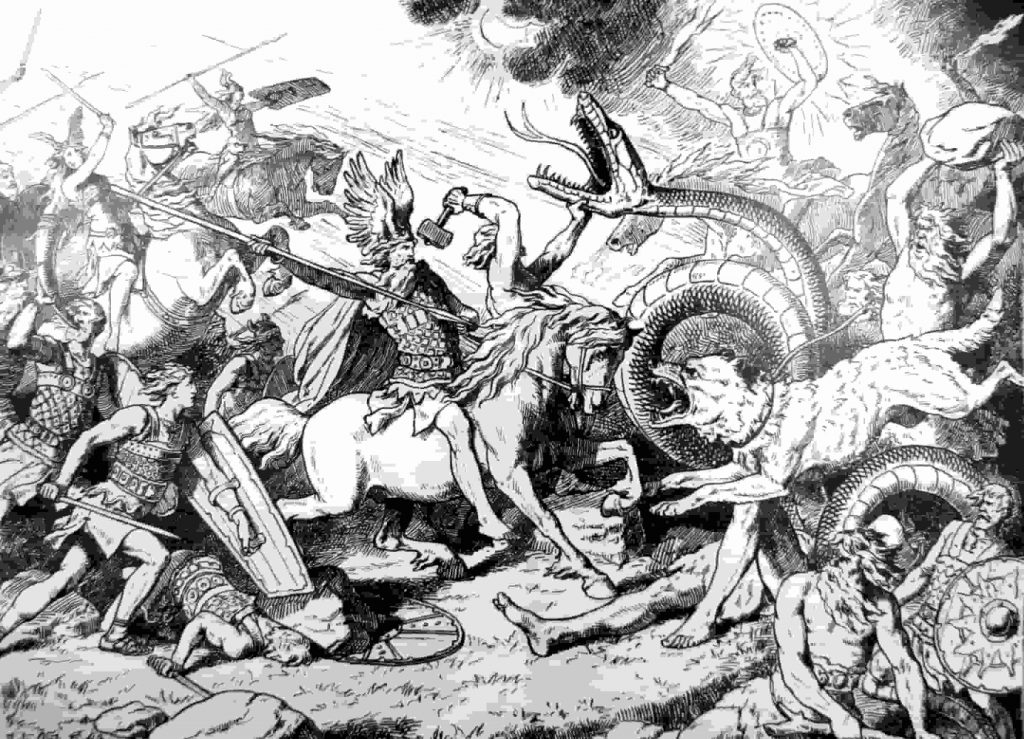
The first of these factors is the giant snake Jörmungandr, one of the children of the cunning Loki. Known for its warrior personality, this snake came by curling up from the darkest depths of the seas. It caused huge, frightening tides and huge waves to appear. These tides floated the ship known as Naglfar. The ship called Nalglfar is known as the nail ship. The reason why the ship got this name is that it was built by bringing together the nails of the dead people. Inside this ship live the giant descendants Hyrm and Muspell. Loki, known for his cunning, is in control of the ship. Surt, created by the fire, attacks from the southern region with a large army under his command. According to some sources, it is known that Muspell's children were also in this army. But the scariest of them all is a wolf, who is arguably Loki's child. The name of this wolf is Fenrir, whose name is legendary in Norse mythology. According to the very old inscriptions, for Fenrir; “If there was enough room in the world, he would open his mouth more.” expression is used.
God Freyr fought Surt in this war, but could not stand against her and was defeated and died.
Fenrir opened his gigantic huge mouth and swallowed the god Odin. Vidor, who sees his father being swallowed by Fenrir, immediately becomes involved and kills Fenrir in the same place by stabbing him in the heart. Thus, Vidor avenges his father. According to some sources, it is known that there were different encounters. Garmr the Hound, one of the great beasts, and the famous god Tyr came face to face and fought together. As a result of this great war, they both died there. The greatest hatred and enmity known to the majority is between Heimdall and Loki. It is known that in this war, they also killed each other disastrously. After these events, Surt covered the whole earth with the fire he created. He completely destroyed everything on earth. According to another belief, Ragnarok does not mean the end of everything. Ragnarok wants to eliminate all evil in the destroyed world, be free of dirt and create a new world where goodness and vitality prevail.
**When Ragnarok ends, a golden age will begin.**
It is believed that when this war ends, a golden age will begin. Before the crops are planted in the fields, the crops will sprout by themselves and a period will be awakened when all diseases will be cured. Balder, who was killed by Hod, will return. The children of the gods who died in Ragnarok will inherit their inheritance. Only two people managed to survive this fire that destroyed the earth. Two people clinging to life survived with the dewdrops appearing in the early hours of the morning. These two people will be the new mother and new father of mankind. And everything will be fresh and started all over again.
Ancient Egypt-Mummification
**Ancient Egypt-Mummification**
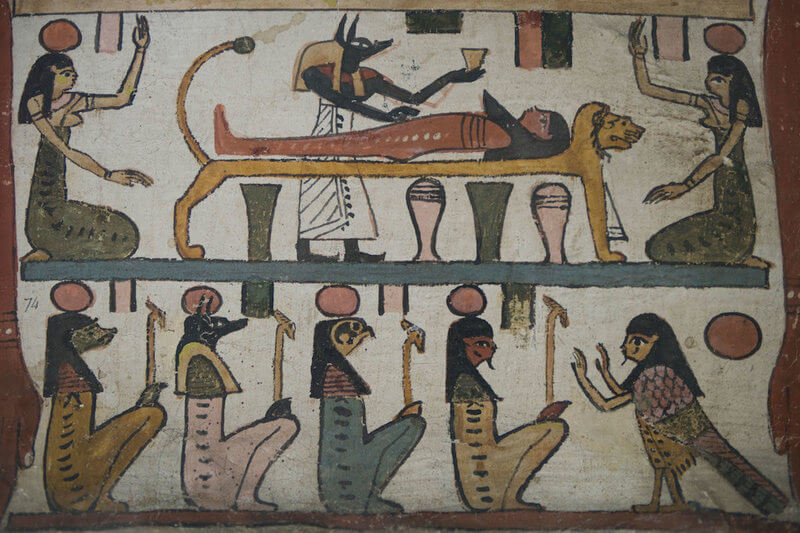
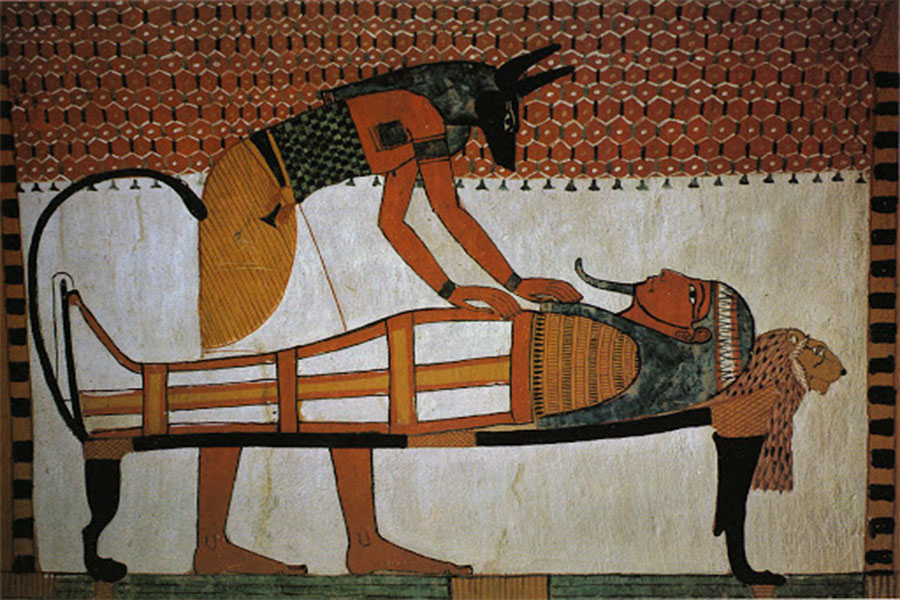
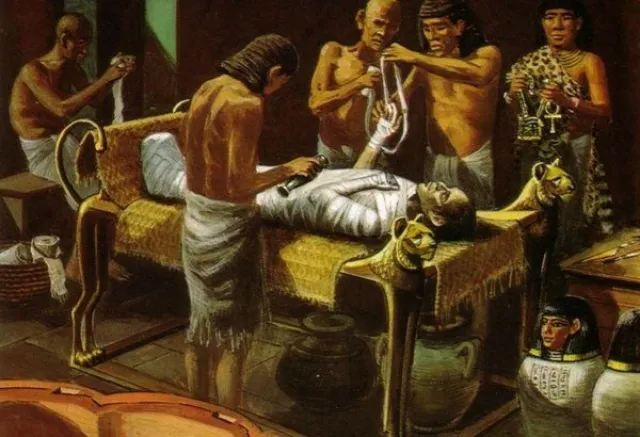
After the mummification process, which was initially applied only to the Pharaohs, it began to be applied to the nobles and commoners as well. There are mummification styles in almost every civilization. However, it was undoubtedly the Egyptian civilization that best practiced mummification in ancient times. Ancient Egypt was full of mummification examples. Even domestic animals such as cats and dogs were mummified. The reason for mummification was to remain the same as the appearance in the world at the beginning of the afterlife according to religious rules. Even people without arms were fitted with prostheses and the appearance was completed. Because he shouldn't have a missing limb in his other life. People who died also wanted their pets with them after they died. Cat and dog mummies are also frequently encountered in research on ancient Egypt. So what is used in mummification? How do mummies not spoil? Which organ is discarded during mummification? We have listed everything you wonder about mummification techniques for you.
Scientists also examined the mummy of Nesyamun, a priest during the reign of Ramses XI, and managed to make the mummy speak with artificial vocal cords. If you want to have detailed information about the sound obtained from a 3,000-year-old mummy, you can take a look at our content, "Scientists Who Can Hear the Sound of a 3,000-Year-Old Mummy".
**What is mummification?**
The process of embalming, or preserving the dead, was once a common practice in ancient societies. Although horror movies and gothic books are the first thing that comes to mind when mummification is mentioned today, the future of mummification had a very important place in ancient times. Mummies are also seen as symbols that evoke death for people. For this reason, mummies have been the subject of horror movies, religious traditions and novels over the years and have managed to attract the attention of the public. The mummification process, which was effective in ancient times, was carried out by knowledgeable people and was considered a very honorable tradition. It was applied as a means of blessing the deceased or to express a valuable religious belief, especially the belief in the afterlife. It is known that various cultures and beliefs in history mummified their dead. The best-known civilization was recorded as the Ancient Egyptians, but mummification was preferred and used by the majority of pre-Columbian Southern societies, including the Chinese, the ancient people of the Canary Islands, the Guanche, and the Incas.
**How is mummification done?**
We talked about the mummification process. So how is mummification done? Let's answer right away. Mummification is the process of preserving the body as it is after death by consciously drying the body or spraying it so that the physical body does not deteriorate. In general terms, this process takes place by drawing moisture from the body of the deceased and using resin-like chemicals or natural preservatives to dry the skin and organs. Mummies can also form through unintended or accidental processes called "natural" mummification. Natural mummification can also occur when the body of the deceased is exposed to cold and dry conditions or another environmental cause that slows down the decay process.
The oldest mummy in North America, found in Spirit Cave outside of Fallon, Nevada, is a natural mummy specimen. The mummy specimen, which was found in a deep tomb wrapped in straw, is preserved for years without deteriorating its appearance due to the dry air and low oxygen content of the cave. The body, discovered in 1940 and thought to be 2,000 years old, was actually more than 10,000 years old when radio-carbon dated in the 1990s. On the other hand, the oldest known naturally preserved Egyptian mummy dates back 5,500 years. It is estimated that the mummy belonged to a young woman whose body was wrapped in linen and fur after she died. Another mummy preserved by natural methods is also the oldest known mummy in Europe. After Ötzi the Iceman, who lived about 5,300 years ago, was killed on the spot in the present-day Italian Alps, his body was preserved intact in snow and ice until his remains were discovered by tourists who came to the area in 1991.
**What are mummification techniques?**
**1. Black Mummies**
It is at the top of our list of "Black Mummies", first published in the Latin American Antiquity magazine in 1995. The Chinchorros, a fishing people who lived on the coasts of Chile and Peru about 9,000 years ago, deliberately applied a different embalming technique to their dead. Chinchorros cut off the head, arms, and legs of their dead and cut off their internal organs. They made a hole in the skull of the deceased and removed the brain inside. In order to allow the body to dry in this state, they filled the body with coal. Then they peeled off all the skin. They completely covered the whole body with white ashes, they completed it with sticks they made from tree branches, and they finished the process using the hairs they took from animals. They painted the corpses of their dead with black manganese last and added a handful of black hair on their heads. Because of the use of black manganese, scientists named this mummy model "Black Mummies". Moreover, this frightening practice still continues in some villages.
**2. Mummies of Buddhist Priests**
Now we will talk about an interesting mummification technique. A technique where a living person dies of his own accord and buddhist monks carry out the mummification process. These people consume food consisting of plant seeds, namely roots, for 3 years with the idea of their bodies reaching nirvana as a result of their decision. In this way, there would be no fat left in the body and the mummification process would have started. People who applied this technique would get rid of body water by drinking poisoned tea and then vomiting so that bacteria would not rot their corpses after death. In addition, the poison in the blood destroyed the bacteria that rotted the physical body after death. So how is this mummification done? Let's explain right away. A priest who is fed as we have described, shuts himself up in a cave or a stone chamber and retreats into seclusion. The priest, who remains motionless, breathes through the pipe in his mouth. The priest holds a rope and on the other end of the rope a rattle located outside the cave. Those outside waiting for the secluded priest will find that if the bell does not shake, he is dead. When the priest dies, it is not moved and is left in the same place. There are 24 mummies found in this way from the 12th century until today. One such mummification was recently found in the interior of a Buddha statue in China in 2015.
**3. Mummies from Papua New Guinea**
In 1907, British explorer Charles Higgins recorded in writing the mummification of the dead by indigenous people when he went to Papua New Guinea. The deceased is fixed by sitting on a handcrafted chair. This person's internal organs are left in a smoked room, out of the sun, until they dry out. In order not to separate the dried pieces from each other, the pieces are covered with red clay. The mummy was then kept in temples built by the Papua New Guinean native. The mummies, which were taken from their places on special days, were carried around the villages with primitive methods. The relatives of the deceased talked and consulted with their ancestors about the issues that were on their minds and for which they were curious about the answer. Moreover, it is known that this practice still continues in some villages.
**4. Swamp Mummies**
The mummies found in the marshlands of Ireland are the best preserved mummies ever preserved, perfectly preserved. Some of the mummies have their throats cut, and some have a string around their necks. This supports the notion that the preserved mummies were those who were executed. It is thought that the reason why the corpses are so well preserved is the very low oxygen in the swamps and the inability of bacteria to contact the corpses.
**5. Egyptian Mummies**
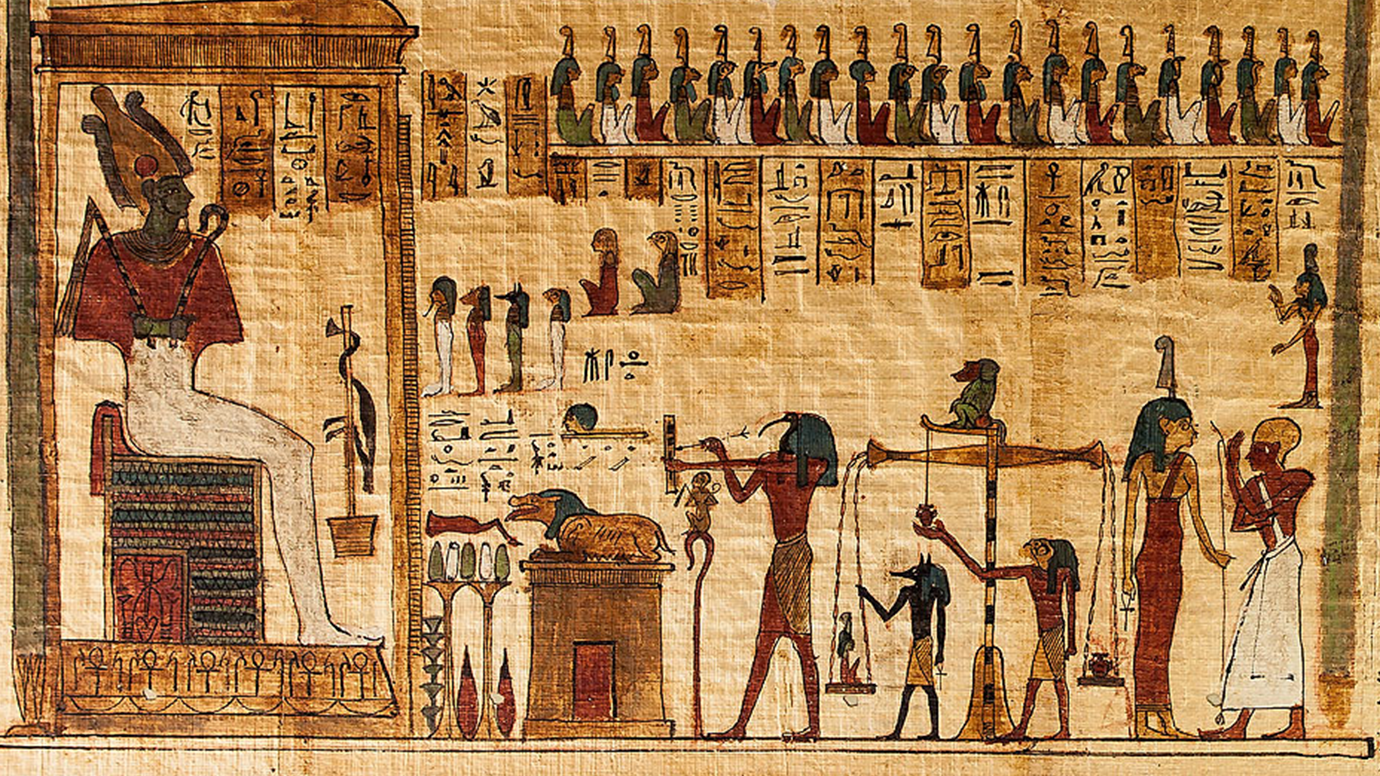
We can say that Egyptian mummies, which have been the subject of countless movies, are the type of mummies that everyone has heard of and knows the most. This mummification style was generally made for Pharaohs and noble family members. The deceased was mummified and placed in a sarcophagus or coffin. In Egypt, where souls were believed to live after death, the deceased soul would be lost if it could not find a body, so the bodies of the dead had to be mummified after death.
Ragnarok-Naglfar and more. Scandinavian Mythology
Ragnarok is called the Norse mythology apocalypse. According to Norse mythology, when Ragnarok begins, there will be war and death everywhere. According to belief, a great war will begin between Jormungand and Thor. Thor will win this battle, but Thor will die because Jormungand poisoned him. As the apocalypse continues, Fenrir will break his chains and break free and eat Odin. Odin's son Vidar will kill Fenrir. Heimdall and Loki will come face to face and a fierce fight ensues. On the other hand, in this chaotic environment, the world will be engulfed in flames and the entire universe will sink to the bottom of the waters. But this end will be a beginning. The universe will be reborn out of the waters, fresh plants will emerge, and life will resume.
**Norse mythology was first penned by the mythographer Snorri Sturluson**
Scandinavian mythology, which deals with the beliefs and legends of the Scandinavian people, was first written by Icelandic mythographer Snorri Sturluson. Snorri Sturluson wrote the glorious Scandinavian epics, but the epics that were written were Christian scriptures and were for Christian readers. Therefore, the source information varied.
**The days of the week come from the names of the Norse gods**
There are many gods in Norse mythology. It is believed that each of the gods has a distinctive feature and power. The names of the days in English are inspired by the names of the Norse gods. Each separate day chosen is named to honor a different god. For example, Tuesday comes from the old English word Tīwesdæg. Tyr means the god of victory and justice in Norse mythology. Wednesday comes from the old English word Wōdnesdæg, which means "Woden's Day". Woden, also known as Odin, is considered the greatest god in Norse mythology. As for Friday, it comes from the old English word Frigedæg, which means "Day of Frige". Frigg is the wife of Odin in Norse mythology and is the most beautiful of the goddesses. It is believed that her name comes from the same root as Freyja, the goddess of beauty and love. The Romans, on the other hand, use the word Dies Veneris, meaning "Venus Day", and dedicate this day to Venus, the goddess of love and beauty.
**Yggdrasil, the ancient tree of Norse mythology, is a gigantic tree that connects and protects all realms.**
In Norse mythology, Yggdrasil is the tree on which Odin hung himself for 9 days and 9 nights in order to attain supreme knowledge. It is said that the branches and roots of the tree are connected to the nine worlds and that it is mortal like every living thing. Moreover, in order to delay this death, the Norns living in the roots of Ygdrassil water it with magical water. The branches and leaves of the sacred tree represent life on earth, and its roots represent the other world, which is supposed to be underground.
**Contrary to popular belief, Norse gods are not immortal.**
Unlike the gods of other cultures, the Norse gods are not immortal. They just live a longer lifespan than usual. They owe their youth and vitality to the goddess Idunn and her magic apples. On the other hand, the most successful depiction of the gods as mortal comes from the legend of the Ragnarok apocalypse, in which many gods died in the great battle.
**The Scandinavian ship Naglfar is made from the toenails of the dead**
It is rumored that the ship named Naglfar in Norse mythology was made from the toenails of the dead. In the time period of Ragnarok, it is stated that this ship will wage war against the other ship carrying the terrible armies that will fight the gods.
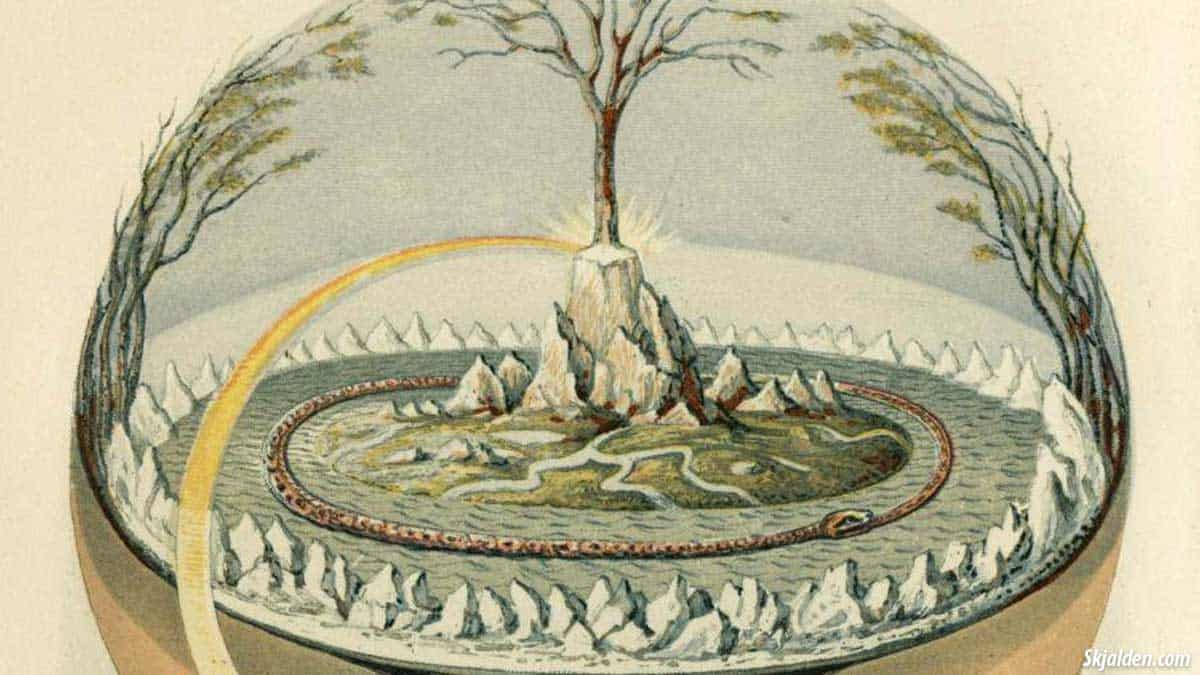
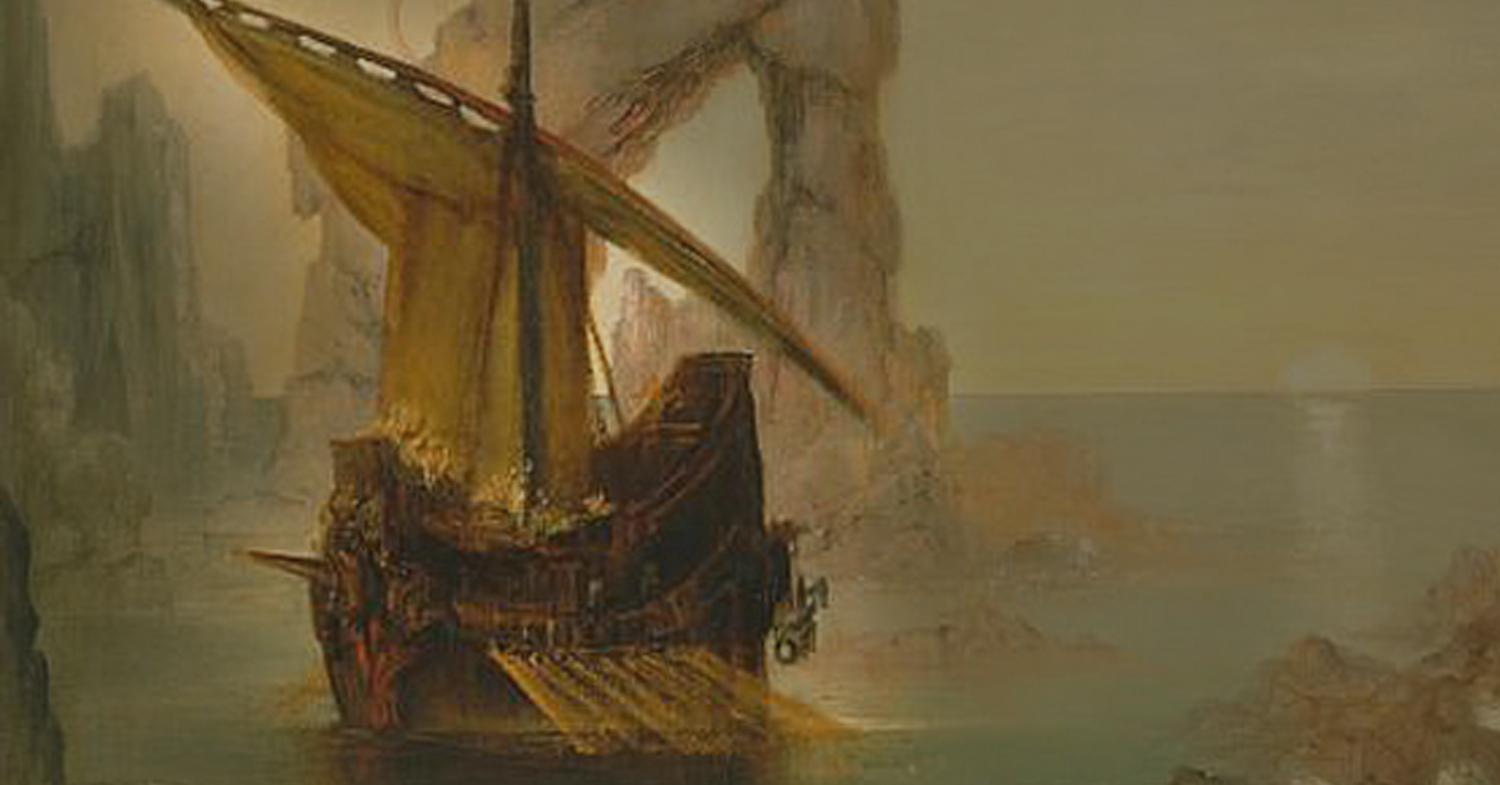
Death Anxiety
Although largely unconscious, the fact that our existence has an end and that each of us must die one day has a profound effect on our thoughts, feelings, and actions. The fear and emotional anguish caused by the awareness of the end of life is so painful that we need to protect ourselves from it.
People have a hard time confronting their own death directly. Therefore, they subconsciously suppress the reality of death and develop various defense mechanisms to deal with this reality. As some existential psychologists Victor Florian and Mario Mikulincer (2004) observed; "The paralyzing fear of being aware of one's own mortality leads to the denial of the reality of death and the suppression of thoughts about death".
Most people rarely think about death. However, on an unconscious level, feeling death anxiety knowing that we have our destiny affects important aspects of our lives and influences many of our actions.
Experimental studies by Terror/Fear Management Theory (TMT) researchers have shown that when attention is drawn to death, people change their behavioral responses and resort to certain defense mechanisms more.
In an experiment, it was observed that after the subconscious minds of the subjects were exposed to the word "death", they defended the worldview of their own ethnic group or nation more strongly, while at the same time humiliating members of other groups whose worldviews were different from their own (Solomon, et al, 2015).
In another experiment, again, judges exposed to the word "death" delivered more severe sentences than judges in the control group (ie, not exposed to the word "death").
Consequently, if, in an experimental setting, subconscious exposure to the word "death" can produce significant changes in the attitudes and actions of individuals, we can perhaps only imagine the powerful impact of numerous real-world events that remind people of their death.
*Child and death awareness*
In general, concepts of death and a finite existence develop gradually as a child matures. When children are young, when a pet dies or when they learn of the death of a loved one, they realize that it is the end of existence. Between the ages of three and six, children become conscious of their parents' vulnerability to death (Kastenbaum, 2000) and become aware that they themselves are mortal.
At this point, their world, which they initially believed to be permanent, is turned upside down. As the awareness that one day they must die and the terrifying feelings they feel afterwards are unbearable, they necessarily suppress this knowledge and emotions from the conscious mind to the subconscious. This realization effectively destroys the child's vision of self-sufficiency at any age. Although the defense mechanisms created prevent the child's awareness of death and the accompanying fear from being carried over to the conscious over time, the fear of death is preserved as it is in the subconscious. And so, the child's repressed fear of death continues to significantly affect his personal life, both in childhood and adulthood.
*The effects of death anxiety on the individual*
When death anxiety increases, individuals tend to become increasingly defensive in ways that are harmful to themselves (and often to others). Although most people initially respond positively to death anxiety by embracing life more tightly, the person becomes more defensive over time as the anxiety persists and/or increases. When a person denies death to protect himself, he may value the unimportant rather than the necessary and meaningful matters in his life. Many people tend to live life as if they will never die, and are willing to waste valuable experience in doing so.
Tragically, many people lose their meaning and enthusiasm for life as their defensive response to death increases. It gradually becomes more rigid and controlled, thus limiting the range of life experience. They may begin to display cynical and/or hateful attitudes towards themselves and others and give up on interests that once excited them. They may become less enthusiastic about life and feel more depressed and unhappy.
Many people adopt certain belief systems to maintain their hope of life after death. Many take a more philosophical position, while others believe that someone (such as a spouse, partner, guru, or leader) will eventually save them.
Some defenses against death anxiety have beneficial side effects. For example, the symbolic quest for immortality through creative works in art, literature, and science. Also, finding lasting meaning and trying to leave a positive legacy by feeling connected to family, friends, and people in general is generally positive for people with death anxiety.
**8 ways to deal with death anxiety**
Facing the reality of death as we get older is one of the challenges we all face. Today, escaping the reality of death, namely “Avoidance attitude”, is the most popular coping method. However, we should be aware that some of the usual ways of coping can create existential anxiety and can also steal from our quality of life.
In the face of the reality of mortality, it is important to have a “buffer system” to maintain our psychological calmness and cope with death anxiety (Routledge & Vess, 2019; Juhl, 2019).
Here are some suggestions that can buffer death anxiety:
**1. Creating meaning**
According to the Terror/Fear Management Theory (TMT), having the feeling that one's own life has a meaning or that life in general has a meaning enables the individual to live with the awareness of death and without fear. When people do something important that satisfies their soul, they have no time to worry about death. For this reason, it is very important for the individual to clarify his deepest personal values and to serve these values in his life. Research suggests that any resource that one feels meaningful (such as work, relationships, science, and belief) must serve an individual important value.
**2. A change in priorities**
Death anxiety motivates us to be creative. We can achieve more when time is limited. Mortality inspires us to live an interesting and meaningful life. It causes us to choose our priorities and live more effective lives. If we were immortal, we could rightly delay our actions indefinitely. It wouldn't matter if we did something now or tomorrow.
**3. Authentic being**
Authenticity/reality is the feeling of being one's own. And it includes the individual's own values, preferences, goals, decisions, and actions. Awareness of death also triggers a desire to focus on what is truly important to oneself. Pursuing inner goals is a solid buffer against death anxiety.
**4. Productivity**
The term productivity, a form of symbolic immortality, can be seen as an expression of going beyond our own existence to leave behind a positive legacy. Productivity can transform the fear of death into a deep sense of satisfaction.
**5. Acceptance**
As humans, we have a biased view of life and death. We see death as something that separates us from life (that is, from all our material and spiritual assets). Some ancient teachings speak of suffering because we are attached to the transient things in life that are constantly changing. The way to end our suffering is to cut off our attachment to ephemeral/temporary things. E.g; wealth, power, etc. Thus, we no longer fear death because we will have nothing to lose.
**6. A cognitive-behavioral approach**
Our emotional lives are shaped by our beliefs and values. The observer influences the "observed reality". By developing the capacity to choose how we interpret life and death, we can free ourselves from negative emotions. Stoic teachings suggest that we focus on what we can control and not worry about what we cannot control. Knowing that you are doing the best you can in the current circumstances allows us to accept everything (life and death) calmly and calmly.
**7. Exposure**
The most powerful way to deal with the fear of death is to face it instead of avoiding it. Research on anxiety reduction shows that exposure to feared situations is one of the quickest and most effective remedies. In the context of death anxiety, it involves practicing exposure to death-related issues. For instance; regularly reading obituaries in the newspaper, reading literary accounts of death and the law, writing a will, planning funeral arrangements, imagining your own death, eulogies about how you would like to be remembered after your own death, etc. These exercises can be very helpful in reducing death anxiety.
Yalom (2008) states that confronting one's own death fully consciously (with both thoughts and emotions) is to overcome death anxiety.
**8. You are important to others**
Man's need for the material world is universal. The feeling of being needed and important by others increases meaning in our lives. It also reflects how an individual's interpersonal relationships are, their capacity to adapt to life and their ability to increase their self-worth.
The deep and close bonds you will establish with your loved ones, the level of satisfaction you feel in your relationships, and the level of your death anxiety also play an important role.
Interesting facts that will surprise you
Only rabbits and parrots can see behind them without turning their heads.
The cracking sound of the whip is because the tip is moving faster than the sound.
With each sneeze, some of the brain cells die.
Due to the location of the heart, the left lung is smaller than the right.
Laughing reduces stress hormones and strengthens the immune system. A 6-year-old child laughs an average of 300 times a day, while adults only laugh 15-100 times.
Silkworms feed up to 86,000 times their own weight in 56 days.
Never cover your nose and mouth at the same time when sneezing; your eyes may pop out.
-In ancient Greece, children of wealthy families were dipped in olive oil at birth to keep them hairless throughout their lives.
Every Labrador retriever dreams about bananas from time to time.
About 1 in 6 of your life is spent on Wednesdays.
Every day, 12 newborn babies are given to the wrong family.
About 123,000,000 cars are used on American highways.
160 cars can drive side by side on the Monumental Axis in Brazil, the widest road in the world.
Cows produce 200 times more gas per day than humans. 😊
Giraffes can clean their own ears with their tongues of about 53 cm.
Goldfish have a recall lifespan of about 3 seconds.
Sharks are the only fish that can blink with both eyes.
Only 11% of the world is left-handed.
The human hip bone is stronger than concrete.
The world's oldest gum is 9,000 years old.
Iguanas can stay underwater for 28 minutes.
Ostriches' eyes are larger than their brains.
Bats always turn left when they come out of a cave.
Dolphins sleep with one eye open.
Humans breathe an average of 5 million times a year.
In the statues of the horseman, if both front legs of the horse are in the air, the person died in the war, if the horse's one foot is in the air, the person died due to the wounds he received in the war, if all the feet of the horse touch the ground, that person died of natural causes.
When you flip a coin 10,000 times for a coin toss, 5,000 times it doesn't come up heads; the number is approximately 4,950. Because the picture on the face of the heads increases the weight and therefore stays at the bottom.
In many advertisements and newspapers, the time shown on a clock is usually 10.10.
Humans are born with 300 bones; when they become adults, this number drops to 206.
There are more Monopoly coins minted in a year than real coins minted worldwide.
More people are killed by donkeys each year than in plane crashes.
Mosquitoes have teeth.
Most car horns sound the F note.
Many lipsticks have fish scales.
Most cows give more milk when they listen to music.
About 1000 birds die each year by crashing into windows.
The only bird species that can see the color blue is the owl.
The average person falls asleep in 7 minutes.
The average person has more than 1460 dreams per year.
One-fourth of the bones in the human body are in the feet.
By 2080, the world population is expected to reach 15 billion.
The average person would sleep 10 hours a day if it weren't for the stress of modern life.
A bee must be placed on 2 million flowers to produce half a kilo of honey.
A colony of 500 bats can eat 250,000 insects in 1 hour.
In 1386, a pig in France was publicly executed for murder of a child.
More than 52.6 million dogs live in America.
There are more chickens in the world than humans.
There are more plastic flamingos in America than real ones.
One in five adults believes that aliens disguised as humans live on Earth.
There are only 13 blimps in the world; and 9 of them are in America.
Windmills always turn counterclockwise; Except in Ireland.
The only animal that cannot leap is the elephant.
Your risk of being stung by a bee is highest on a windy day compared to other days.
Only 38% of Americans have breakfast in the morning.
Just like fingerprints, each person's tongue print is different.
Starfish are the only animals that can turn their stomachs inside out.
The state of Florida is larger than England.
The name Wendy was made up for the book Peter Pan.
The oldest known goldfish was 41 years old, and his name was Fred.
The largest eyed animal in the world is the giant squid.
The average person spends two weeks of their life waiting for traffic lights to change from red to green.
The highest point in Pennsylvania is lower than the lowest point in Colorado.
Houseflies buzz on the note fa.
Grasshoppers hear through holes in their hind legs.
A line 56 km long can be drawn with an average pencil.
The calories expended on eating a celery are more than the calories on the celery itself.
The longest recorded flight time of a chicken is 13 seconds.
According to the Oxford dictionary, the longest English word is "pneumonoultramicroscopicsilicovolcanoconiosis", a disease name.
Indiana University's main library sinks more than 2.5 cm. Because the engineers did not take into account the total weight of the books that will be in the building during the construction phase.
The handles of coffins used for cremation are usually plastic.
The luxury cruise ship Queen Elizabeth II advances only 15 cm with every gallon of diesel it burns.
Earth weighs approximately 6,588,000,000,000,000,000,000 tons.
The electric chair was invented by a dentist.
Scientists have witnessed butterflies fly for about 4800 km.
Profile Photo Source: **Pexels** https://www.pexels.com/tr-tr/fotograf/ada-su-ile-cevrili-evler-ile-havadan-fotografciligi-678725/?utm_content=attributionCopyText&utm_medium=referral&utm_source=pexels
Winchester Mansion with incredible secrets
Sarah Winchester was born in New Haven in 1839. Sarah Winchester, then called Sarah Pardee, was musically gifted and could speak foreign languages fluently. However, as she grew up, she turned into a very beautiful woman. She was one of the most beautiful women in the town where she lived. William Wirt Winchester was also raised in New Haven. William's father bought a company that made the Repeater gun, where the Winchester rifle was made. William took over the company after her father died. Sarah and William, on the other hand, loved each other and were married in 1862.
Sarah gave birth to Annie Pardee Winchester on July 15, 1866. However, this would be Sarah's last happy memory. Because Annie fell ill with marasmus and passed away on July 24. Sarah could not recover after the death of her baby. It took years for him to come to his senses. But this time, he was tested with another pain. On March 7, 1881, William Winchester died of pulmonary tuberculosis.
*In 1884 he bought an unfinished mansion in the Santa Clara Valley and turned it into a 7-story mansion. This place is now known as the Winchester Mansion.*
After William Winchester's death, Sarah acquired a 48.9% stake in the Winchester Repeating Arms Company with $20 million worth of wealth. However, she was making $1,000 a day. However, the money and wealth she had could not make her happy. Because Sarah only wanted her daughter and husband back. That's why she became a depressed person.
There are many different theories as to why Sarah Winchester bought this house and was constantly renovating it. But two of these theories are quite popular. The first suggests that Sarah bought and renovated this house after her husband's death, assuming she was looking for a move and a new hobby. The second theory is the most common and interesting.
Sarah told a psychic, “You have to start a new life and build a home for souls who have died with the Winchester gun your husband created. But you should never stop building. If you keep building you will live, if you stop you will die.” She bought the mansion and started the construction that would last for years.
This mansion that Sarah bought was located on an area of 162 hectares. The 160-room estate, later known as Winchester Mansion, had only 8 rooms when it was taken over by Sarah. Sarah, ignoring all the plans and drawings for the construction of this house, demanded that a complex mansion be built. This construction continued 24/7 for about 36 years. The team working on the construction of this mansion included more than 20 carpenters.
Sarah wanted to continue construction until the spirits left her and her family alone. However, she also designed the house like a labyrinth to protect himself from the spirits. The first thing to notice about the mansion was its size. But there are so many interesting things about this place. For example, although there are more than 2,000 doors, most of them open to high spaces or walls. So one wrong step in this house can cause death. One of the mysterious things in this house is the stairs. These stairs can take you directly to the ceiling instead of taking you to the next floor. In addition, there are expensive Tiffany stained glass windows in dark places. There's also an extensive network of secret passages that meander through the property. A closet door opens into a hive-like space of 30 additional rooms.
To escape from the spirits, Sarah Winchester slept in a different room of the house each night and used secret passages to get to these rooms.
An earthquake in 1906 struck San Jose and the Winchester Mystery House suffered extensive damage. Thanks to the floating foundation, the whole house did not collapse. However, the 3rd floor at the top was removed and took its current 4-storey form.
**The number 13 stands out in the Winchester Mansion**
For some unknown reason, Sarah Winchester was obsessed with the number 13. For this reason, there were many things associated with the number 13 within the Winchester Estate. As an example, 13 glasses in windows can be shown. Of course there is much more to it than that. But no one knows why the number 13 is so important to her.
*Sarah Winchester died in September 1922.*
After her death, Winchester left all his property except the house to his nephew. After her nephew got what he wanted, she sold the rest at a private auction. Six trucks worked eight hours a day for six weeks to remove all the furniture in the house, according to a statement discussed by the Winchester biographer. Miss Winchester never mentioned the estate in her will. Appraisers found the house worthless due to the damage caused by the earthquake, the unfinished design, and the impractical nature of its construction. Winchester Mansion was sold at auction to a local investor for over $135,000. It was then leased to John and Mayme Brown for 10 years, with the house opened to the public in February 1923 and Mayme Brown served as the first tour guide.
Today, the Winchester Mansion is owned by Winchester Investments LLC, a private company that represents the grandchildren of John and Mayme Brown. The mansion tells the story of Miss Winchester's unique touches that reflect her beliefs and her attempts to fend off malevolent spirits. These spirits are said to have directly inspired her in how the house should be built. The number thirteen and spider web motifs, which have spiritual significance for her, are seen all over the house.
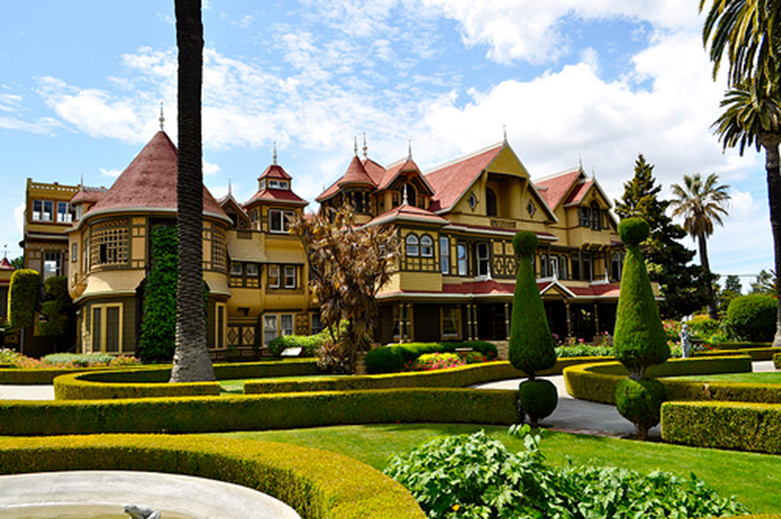
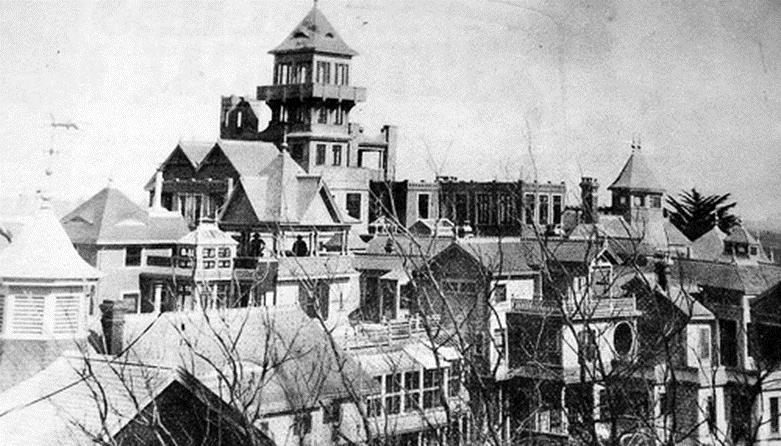
The Mysterious Story of Baby Annabelle!
***Do you know that this story is the subject of movies?***
**The True Story of Annabelle**
In 1970, a 28-year-old woman named Donna was given a shabby doll by her mother. In other words, this gifted doll was not a rare porcelain doll, as we saw in the movie version of this event, which was later made into a movie.
Donna was sharing an apartment in New York at the time with a girlfriend named Angie. Donna and Angie had never seen the baby move in person, but they could not find the baby in the same room they had left it. After a while, they began to find “Help us” notes around that seemed to have been written by a small child.
Later, when they noticed that blood spots were starting to form on the baby, they decided to call a psychic.
The summoned psychic claimed to have contacted a spirit named Annabelle Higgins. According to the claim of the medium; Higgins died young in that apartment, she. When Donna and Angie heard Annabelle's story, they felt compassion for her...
Angie's boyfriend Lou came to stay at the young women's home after this incident. The night he stayed there, he had very realistic dreams of the baby attacking him. But when he awoke in the morning, there was no sign of being attacked. The next day, when Lou was alone at home, he heard some noises from Donna's room… When he entered the room, he saw the baby lying on the floor. At that moment, he felt a great pain in his chest. His shirt was bloodied because seven wounds had suddenly opened on his chest. The wounds healed without scars after a few days.
Upon this incident, Donna and Angie decided that the spirit that possessed the baby was not in good faith. Donna decided to contact a priest named Hegen. After hearing the story, Hegen immediately informed Reverend Cooke, another priest who is an expert in exorcism… Cooke, on the other hand, called Ed and Lorraine Warren, who are also experts in paranormal subjects.
**Exorcism Performed on Baby**
The Warrens spoke to both women. They deduced that the baby was possessed by a demonic entity and that the person approaching the baby could also be affected by this spirit. Reverend Cooke performed an exorcism to exorcise the spirit from the baby. The exorcism ritual was nothing like soul capture. Rather, it meant filling and blessing the house with the creator's love. That's why the Warrens decided to take the baby for the women's safety...
The doll now resides in the Warrens' home in Monroe, which is used as a museum. The Warrens had many accidents while taking the baby home. As soon as they took it home, they immersed the baby in holy water and locked it in the closet. The baby is locked in a window. Thus, it was displayed in a way that visitors could see but not touch. The baby's name has remained 'Annabelle' ever since. In front of the window where Annabelle is, it says "Warning: Never open".
Over the years, unexplained events have happened to people who have had one-on-one contact with the baby at the Warrens' home. For example, once; A young priest held the baby contemptuously. That same day, that priest narrowly escaped a fatal car accident on his way back to church. In another case, a visitor threw something at the window where the doll was located and made fun of the doll. Less than an hour later, he lost control while riding his motorcycle and crashed into a tree and died tragically…
I feel worthless, I'm so sorry about it
**Self-worth and Self-Esteem**
Self-worth is a belief about how much we value ourselves and is very closely related to self-esteem. Because self-esteem is the reflection of how we see ourselves, how we perceive and how we evaluate ourselves. So, if you are feeling worthless internally, simply improving your self-esteem will not be enough.
**feeling worthless**
The opposite of self-worth is worthlessness. Situations such as job loss, divorce or financial difficulties can quickly lead to a person's depression. Those who experience adversity like these one after another are likely to feel worthless and question whether their life has any meaning.
The person who feels worthless tends to view all of life negatively and may have trouble finding any positive aspects. Therefore, they may believe that there is no chance of recovery. This is a distorted perceptual state and is likely to result from underlying conditions such as depression, anxiety, stress, grief, loss, and bereavement.
We can all feel worthless at some point in our lives. On the other hand, the longer a person is exposed to feelings of worthlessness, the more difficult it may be for them to overcome this feeling on their own without help.
*Causes and consequences of feelings of worthlessness*
You can overcome the feeling of worthlessness. However, for this, it is important to know where it originates first. A realistic look at your thoughts, feelings, and emotions can reveal the root cause. To help you with this, here are some situations that may make you feel worthless
**Mental Health**
Feeling worthless is mainly associated with depression. However, these feelings can also be seen as symptoms in schizophrenia, anxiety, or certain personality disorders.
A strong sense of worthlessness in children may indicate peer conflicts, neglect or abuse and should be taken seriously.
Feelings of worthlessness may also be associated with other emotions such as hopelessness, guilt, persistent sadness or loss of motivation. Many depressive disorders cause people to feel lonely and seek help and social interaction seem pointless. The problem is, it's a vicious circle. These feelings often lead to increased depression.
In summary, people suffering from depression and neglected/exploited as adults often carry a sense of worthlessness. On the other hand, on the contrary, feelings of worthlessness can lead to depression and vulnerability to neglect/abuse.
Unworthiness can manifest itself in different ways:
Severe and dull aches in the body,
Negative thoughts about yourself
Crying too often, despair
social anxiety
Loss of purpose in life, decreased interest in life,
Like suicidal thoughts.
A person who feels worthless:
May stay away from relationships
May use alcohol, cigarettes or drugs,
There may be a decrease in emotional expression,
May constantly express negative thoughts,
May feel drowsy and sleepy all the time
May ignore personal diary care. (Showering, eating, washing clothes, etc.)
If the person is experiencing these symptoms for more than two weeks, it is recommended to seek help from a therapist as they may be an indication of clinical depression or a related condition.
If the person who feels worthless is in depression and does not seek the necessary help, this feeling may lead to suicide. A study by researchers at Seoul National University concluded that feelings of worthlessness, which causes depression, are strongly associated with lifetime suicide attempts. If worthlessness triggers suicidal thoughts or causes another immediate crisis, it is best to contact a crisis helpline immediately or seek help from a therapist.
If you are physically unhealthy, you are likely to feel worthless. For example, if you have lost the integrity of your physical health, such as not being able to walk, eat certain foods, or do certain activities, this can directly play a role in your feeling of worthlessness.
On the other hand, the feeling of worthlessness can cause a negative mood as well as negatively affect physical health. This is because people who feel worthless are more likely to not protect their health, refuse health services, and engage in behaviors that negatively affect their health, such as smoking, alcohol, drug use, etc.
If at some point in your life and/or right now, you are around people who criticize you excessively, compare you to others, or do this to yourself, your beliefs about your own worth may quickly decline.
From childhood, we begin to form our thoughts, feelings, and beliefs about who we are, ourselves, and the world. Most of the time, we form our own thoughts, beliefs and emotional patterns that we have acquired by being influenced by the feelings, thoughts and judgments reflected on us from others. At this stage, if you've formed a harsh and extremely negative self-concept towards yourself, it probably isn't serving you well when you're going after what you want out of life. This “negative self” can cause you to fall into the trap of comparing your perspectives, appearance, personality and/or mind to other people.
Remember that as long as you compare yourself to others and feel negative in those comparisons, you will feel worthless. In order to deal with these feelings, it is important to understand that the perfection you can see in others is not real. Beneath the attractive features that you think you don't have, there are always flaws. Everyone has their own doubts and flaws. Just like you... As you get older, as your experience increases and the wisdom and strength of your character come back, you can gain more realistic perspectives on others and their lives, thereby easing the feeling of worthlessness.
At different stages of our lives, we take on a variety of roles. In our private life, children, partners, spouses, parents, friends, etc. We have roles. In addition, we acquire roles at certain levels and levels in our business life. When one or more of these roles is unexpectedly shaken, we are likely to begin to feel worthless.
E.g; When we get divorced, we are no longer a 'wife'. It is a common mistake to self-destructively form perspective on a situation when this role is lost. Ask yourself “Why did he leave me?” “What did I not do well enough?” “Why did my marriage fail?”. Now that I am no longer a wife, who am I? Questions like these and similar self-blaming questions can have a huge negative impact on your self-worth.
While a loss of role is not something that can cause us to lose our self-worth, it can be a heavy blow. On the other hand, if there is more than one loss of roles that may overlap, it will significantly damage our self-worth.
To recover from these negative role losses with minimal harm, it is important to remember, understand and acknowledge who you are outside of all your roles. Note that this role does not define “you” and your being. You existed and were valuable before any role, and you will exist and will be valuable after this. Actually you are you. Your existence and worth are not dependent on your family or social status.
If you have faced a lot of criticism early in your life, sometimes a feeling of worthlessness comes from those past criticisms. Over the years, it can build up, accumulate, become natural, and turn into a self-esteem and self-worth problem that is difficult to heal.
In fact, you may become as critical of yourself as the criticism you are exposed to, and you may be trapped in a vicious circle of negativity in which you criticize others as much as you criticize yourself.
In fact, instead of realizing that everyone makes mistakes and owning your problems, you may lie about your problems, belittle them, or cover up your mistakes because you are afraid of criticism from the society or your close circle. However, this approach will not contribute to your self-worth and will make you feel even more worthless because of your lies.In any part of your life, if you have encountered too many negative situations and/or people, you may be inclined to think that everything will always go negative and wrong. For this reason, you may start to see life as worthless, to think that it is pointless to try to do better.
The thing is, life isn't always bad and negative. It doesn't always work this way. So, drowning in negativity should be avoided at all costs. Adopting a negative perspective and attitude towards life and people will also negatively affect your self-esteem and self-worth.
It is important to look at the positive aspects of life, experiences and people, to give positive reactions and to take optimistic actions. This positive attitude will not only cause positive chemicals to circulate in your body, but will also increase your self-esteem and self-worth as you choose a positive posture instead of being negative in difficult times.
If you are struggling with self-worth issues in any part of your life, you are not alone. People can develop discouraging thoughts about themselves for a variety of reasons.
You may feel worthless right now, but with some support, you can improve your self-worth and feel better. In fact, with enough practice, you can transform feelings of worthlessness into new positive and productive feelings.
Ways to increase Self-Esteem
Valuing yourself means you believe you are important and can make a difference, and you treat yourself with value. There are several ways to increase your own intrinsic worth. Some examples;
**help others**
Start by making a contribution to society. Seeing and feeling that you are making a difference when you volunteer to benefit society will improve your mood and increase your self-worth.
**be grateful**
You should be grateful to the people who already exist, who you value and who value you, your positive and strengths, the aspects you are developing, your achievements, your experiences and experiences, your potential… that is, everyone and everything that is positive in your life and appreciate yourself. Exercise: Every day, find five things to be grateful for and list them down. After a while, you won't believe the length of the list.
Would you like to discover happiness with Hygge Philosophy?
Denmark is a country with a cold climate and low sun exposure. It is cold, difficult and dark… For people living in this country, the morning starts almost at dusk, the sun exposure time is quite short, and the hot weather does not go beyond a few weeks of the year.
However, these difficult conditions of daily life have led the Danish people to find the concept of happiness in simpler things, instead of making them pessimistic and turning them away from happiness. Perhaps the conditions that are always at hand for those of us who live in temperate climates have become even more valuable for them. Nevertheless, it should be admitted that the sources of happiness that this philosophy refers to are universal values.
**What Is This Hygge Philosophy?**
Hygge in Danish means “the art of creating intimate environments”, “feeling warm in the soul”, “the state of being away from all trouble, distress and frustrating”, “enjoying things that bring comfort and happiness”, “state of being with your loved ones”. being defined. I define this word, which is equivalent to the word "coziness" in English, as creating small happiness. According to Danlar, in order to achieve Hygge, you need to create an environment that will make you feel comfortable and safe. You may think of home environment. In fact, it doesn't even need to be a home. Even a tent that will make you feel peaceful can do the job.
The concept of hygee has been so adopted in Denmark that it has begun to be used as an adjective and a verb. For example, if a situation is very hygge, the adjective becomes "hygeelig" or "hyggelight". “What a hygeelig table!” or “I wonder if our guests could be as hyggelight as they wished?” they use it in their daily life so much that it is one of the first words that Danish learners learn.
The Happiness Research Institute in Copenhagen has published a 10-item manifesto for people to enter a high-quality hygge mood. The country wants to be happy so much that it even established an institute for it. I respectfully greet them and move on to the details of the 10-point manifesto.
**1-Make the atmosphere as natural as possible.**
When we look out the window or on the balcony at night, what we see is just darkness. However, it would be nice if we could see the stars. Their artificial light is destroying them. In the first item, the aim is to purify the atmosphere from highly artificial lights and create natural light. There will be moonlight, there will be stars… Of course, it is a bit difficult to reach them in the city environment. If you can't reach the moon and stars, candles with beautiful shapes and scents are just for you.
In addition, a person in Denmark consumes an average of 5.8 kg of candles per year. So, candle lights are very important for a happy environment.
**2-Stop posting stories on Instastory and live the moment!**
Although this item is defined as live in the moment in the manifesto, this is exactly what they mean. Lift your head from phones and computers and focus on those around you, the moment and atmosphere. While trying to capture the moment, we miss many moments, we are not aware of it. Let only you and those around you know that moment. Enjoy that moment to the fullest with those around you.
**3-Prepare small pleasures for yourself**
Reward yourself with tiny candies, chocolates and cookies that will make you happy. Chocolate gives happiness, increases your energy. It must be due to the climate, as the cold increases, the amount of sugar consumed in countries increases. Danes consume twice as much sugar as the average European. But they still haven't been able to take the sugar consumption first place from the Finns.
**4- The guest and the host should have equal rights and responsibilities.**
, when guests come to the house, the host almost cuts himself to serve. At the end of the day, with endless services and treats, there is a feeling of "tiredness" rather than happiness. In the Hygge philosophy, this situation is completely different. Everyone is equal, both the guest and the host. The table is set together, removed together; everyone keeps one end of the job.
**5-Be grateful for everything you have**
Be grateful for whatever you have, big or small. It can be a flower in your room or a close friend you have. Let's list the big and small beauties we have and give thanks. All that is with us is glad they exist. 🙂
**6-Stay away from ego and showing off**
The Hygge philosophy suggests that people live in harmony with one another, without showing off, without self-praise. Be in harmony with the environment without competing and trying to prove yourself. Put your egos in a bag and throw them in the trash and say hello to a peaceful life.
**7-Create comfort and coziness in your environment**
Comfortable clothes, cushions, comfortable seats, hot coffee or herbal tea, a peaceful place… Create an environment where you feel comfortable. Do whatever you like to do in this environment. If you ask me, now is the perfect time to read a book.
**8-Settle all tensions**
Keep yourself away from chaos. Keep away from people who will upset you and lower your energy. This is also called the "No more drama in my life" tactic. Do not talk about issues that may cause tension, such as politics or religion. Even avoid people talking. Tension is what shouldn't be in a happy hygge setting.
**9-Get together with your loved ones and enjoy being together**
It is important to have pleasant moments with your friends and family. When you are with them, you feel safe and happy, along with the “feeling of being at home”.
**10-Create a home environment or an environment that you think is safe**
To achieve the Hyggelig state, it is necessary to feel safe, to know that you are protected from danger. You don't just have to be in a home environment to feel happy. It is possible to feel “at home” in an environment suitable for the Hygge philosophy. In other words, any place where you meet the criteria such as comfort, warmth, safety and comfort can enable you to reach the state of hyggelig.
Except for a few months of the year, most of them are in darkness, they spend most of their days without seeing the sun, 60% of their salaries are taxed, and most of the year is cold; it is so successful in creating happiness in poverty that it has been leading the list of the happiest countries for many years. Sometimes you have to be content with the little happiness in life. The Danes have created little happiness for themselves. And what little happiness have you created for yourself? Whether you think about it or choose from here, the decision is yours.
Do you think someone likes you?
I met a person today and I ran to my close friend. I think I like someone. He likes me too. I am aware of this. So how did I find out? How does someone treat me when they like me? how do i start to behave when i like it. Can the other person understand this?
This behavior has been carried and passed on to us from our ancestors, until the modern age we live in, through the genes we have carried since the primitive times. I'm talking about prehistory, when men shared roles as "Hunters" and women as "Gatherers". The hormones secreted in the brain of a man who is essentially hunting while trying to ensnare his prey with various tricks and tactics, these are cortisol, which is the stress hormone; After all, at the beginning of the relationship, this hormone is secreted at a high level, as it carries the risk of rejection. Secondly, testosterone, the male hormone; we can interpret this as a desire for reproduction and the continuation of our species.
The male who wants to catch his prey will be very careful, attentive and thoughtful. During the first meeting, he will draw a profile that is curious, tries to get to know you by asking questions, and does his best to make you comfortable. Also, his body language will give him away. The first clue is that if he is smiling all the time, but this is really unstoppable, it will be very natural for him to smile. Second, if the pupils are dilated. Third, if he is leaning towards us with his body. Finally, we can look at his shoulders and feet, if possible, because the direction the shoulders and toes point is directly concerned with us. We can also evaluate it this way, let's say that the person we think he likes met a friend, let's take a look at it at that time.
According to the latest research, when we like a person, we release the hormone adrenaline, and the release of the hormone adrenaline can only be measured with minutes, which shows that it does not last for months, that is, it is instantaneous. If we continue to be interested in this person for months, it means that our brain has started to secrete the hormone dopamine. If the interest in the same person spreads over the years, then the oxytocine hormone is secreted in our body, which means that the lifespan of this hormone is three years at the most. After three years, the same person does not continue to produce hormones at the same intensity. Now, the process of connecting two people, which is the task of hormones, is over. After that, people's understanding, friendship, support, conversation and fun come into play. The relationships of people who enjoy each other and continue to admire each other go to that dimension and the life of the relationship will be long.
*What are the signs that attract men and women and show they like it?*
When an interested person comes near that person, their heart rate increases, their face turns red and clumsy (possibly shaking hands out of control). In order to suppress this situation, that person enters the state of speaking very quickly and without being silent. He might make some weird nonsense from time to time, but that shouldn't surprise us because he'll notice his situation too, and it might turn into a laughter between us.
As for the signs of being affected; After the images of women, men are most affected by their tone of voice and speaking style. Women, on the other hand, are more attracted to men with deep and full voices.
Men are drawn to hard-won women. As for the reason, the process of seducing the other person is much more intense. For a man who works hard, the person in front of him gains much more value. Women want to be persuaded by the person they like. She wants to be sure that she will be trusted, respected, protected, and loved.
If a man cannot reach the woman in front of him every time he wants, he wants the other person more. Women, on the other hand, want to see constant attention from the man they like.
People who like each other want to share very private information about themselves. If they explain the reasons for their separation from their last lover or spouse, which they did not share with anyone despite having just met, this shows their special feelings for the person in front of them.
Another sign of liking is the state of constantly playing with any object while talking to the person he is interested in. For example, constantly turning or taking off the ring on his hand, opening and closing the zipper of the jacket on it, or constantly playing with his hair.
When we talk to the person we like, we do the same movements without realizing it. If the head of the person we like is tilted to one side, we tilt our heads in the same direction. If he keeps one hand on his face and the other on the table, we can catch ourselves repeating that movement in the same way. But we should definitely not stand with our arms folded in front of the person we like. Because this posture gives a signal to the person that we are closed.
Another important sign is that he's more attracted to a woman who laughs at a man's joke. Having the same sense of humor brings people closer together.
The feeling of approaching and touching the person we like is very natural. But the occasional touch of our shoulder is friendly. The issue that we need to pay attention to here is that if the person in front of us compliments us by touching our hand or arm lightly or holding it for a short time, saying "How sweet or humorous you are" and at the same time looks into our eyes, it means that he likes us badly.
I would like to share an important detail while it is here. If we want to make it clear that we want someone we like, not as a friend, but as a lover, we can gently touch the top of his back from the middle of his shoulders to the end of his neck while passing by him or to say something. This gesture will give the other person the sign that we secretly like him.


Why are women so emotional?
It is said that women are always more emotional.So what do you think about it?
I want to give you some information.
*Left and Right Brain:*
Men and women are structured differently, so the brains of men and women also work differently. Women tend to use both the right and left sides of their brains, while men tend to use the left hemisphere of their brains. The left side of our brain is responsible for logical reasoning and problem-solving skills, while the right side of our brain is responsible for prosodic language functions, creativity, face detection and expressing our emotions. Therefore, while the left side of our brain is responsible for IQ (logical intelligence), the right side of our brain is responsible for EQ (emotional intelligence). Since men tend to use the left side of their brain, they are more effective in solving situations that require rationality and logical thinking. Because women can use both sides of their brains equally, they are more effective in solving creative and emotional problems. In addition, the right side of our brain is responsible for expressing our emotions, thoughts and language ability. For this reason, it is thought that women are more effective in language learning and creativity.
*To express yourself:*
Women have a more developed limbic system. The limbic system deals with human aspects such as behavior, emotions, and memory. The limbic system enables better understanding and expression of emotions and thoughts and easier bonding with others. However, the problem with this is that it predisposes to depression due to hormonal changes, especially during the menstrual cycle and pregnancy. In other words, excessive emotionality and pessimism can be seen in women during these periods.
*Coping with Stress:*
Women's ways of coping with stress are also different from men's. When a person is under stress, a hormone called oxytocin is released. These hormones work differently in men and women. When men are stressed, the hormones testosterone reduce their oxytocin levels, which makes men aggressive and angry. Estrogen in women, on the other hand, increases the oxytocin level and increases the calmness and maternal instinct. Men are not good at expressing their feelings and thoughts, instead they may react angrily or aggressively. They are always ready to fight instead of solving their problems by talking. On the contrary, women tend to solve their problems by talking to others until they feel comfortable.
*Physical Differences:*
Women feel their emotions differently and more often than men. They may get very emotional and cry, especially during PMS periods or during pregnancy. Many changes occur in a woman's body every month, and during these periods even normal matters seem like a task. Men undergo changes of relatively less intensity and are not easily emotional.
*Social Perception:*
Another factor is that men are taught from an early age to be tough. For this reason, when a man is sad and wants to cry in the face of a bad event, he restrains himself. This is because of society's perception of how men should be and how they should behave. Men are emotional too, but they cannot express it.
Men and women are constantly compared and judged, but men and women are created differently and have different inclinations. The important thing is to understand that although men and women are very different from each other, they are inseparable, which will help you understand that problems or differences between the sexes can only be resolved by mutual understanding. We need to be respectful of who we are and our differences.
It is very important for both sexes to understand why women are emotional. Knowing yourself will help women overcome depression and emotional changes. For men, it will help them understand that it is normal and natural for a woman to be emotional.
*Men and Men Mental Structure Differences*
The woman adopts the emotion, the man adopts the knowledge.
When solving problems, men focus on the result, not the how. Women, on the other hand, focus on the causes of the problem.
While men have the ability to produce many words, women are successful at adding meaning to words.
The man chooses what to do and the woman how to do it.
In visual perception, men perceive the useful part, women perceive the aesthetic part.
**Female and Male Emotional Differences**
Crying woman feelings,
Male shows angry. It has been observed that men who are very angry are depressed.
Feminine sensuality as romance,
Men perceive it as eroticism.
What a woman cares about in a relationship is that she is listened to and understood. Women relax by sharing their feelings,
A man is happy when he is talented and strong and when it is felt from the other side.
Man seeks happiness in success and result,
On the other hand, women seek in sharing, valuing and being valued.
The man does not want to be led by the woman. This makes him feel incomplete and powerless.
Women, on the other hand, perceive helping and supporting as an expression of love.
When a man encounters a problem, he becomes silent, does not want to talk and finds a solution within himself.
The woman tries to relax by telling her problems.
The important thing for a woman is to pour out her heart.
While the male makes less eye contact, the female attaches importance to eye contact.
For men, it's about achieving results.
Men want to be needed. He is attracted to the woman he feels he needs, and he feels stronger and more energetic.
A woman gets stronger when she feels loved.
All connections with the environment reveal the difference in emotional and mental structure between men and women. Objects that stand out in a space, permanence in memory, language and scent differences also affect gender orientation differences.
men; While they are more effective in chess, perspective vision, recognizing objects, and mental math calculations, they are more distracted than women.
Women; foreign language is good at seeing the whole better in the picture. Has a long attention span and is more interested in faces and people.
As a result of the studies, it has been revealed that women's memories are stronger than men's and that they remember events more quickly.
Especially in adolescence, gender differences are observed more clearly in individuals who try to recognize and prove themselves. Men with an analytical and exploratory mindset want to learn by exploring without help. The judges who are more successful in recognizing people can reach the result by empathizing. In this period, while men try to reveal their leadership aspects, they form groups and may try to be the leader of that group. In girls, it was observed that the groups formed were more distant from solidarity and leadership and were closer to each other. Boys agree with orders and sanctions, while girls agree through debate.
Unlike men, who try to show their defense with violence and fighting, girls try to express themselves through emotional bonds and conversations away from fighting environments.
What is ''Empathy'' actually?
Empathy; It can be briefly defined as understanding someone else's feelings, situation and how they feel. In addition, empathy is also used in the sense of projecting one's own feelings onto other objects. The word, which comes up with the definition of the ability to understand the feelings, thoughts and wishes of the consciousness in question by putting oneself in the place of another consciousness, is explained with many different expressions.
In short; There is no general definition of empathy. Moreover, when we look at the sources, the fact that we encounter different definitions of empathy proves this situation.
For example; empathy for the American psychologist Carl Ransom Rogers, one of the important founders of the humanistic approach; It is a person's putting himself in the other person's place and looking at things from his point of view, understanding his feelings and thoughts correctly and showing that he understands. In this definition of the famous psychologist, 3 basic rules necessary for the formation of empathy are also mentioned. These; It is to put oneself in the place of the other person, to look at the events from his point of view, to understand the feelings and thoughts of the other person correctly and to show that he understands that person. So, can anyone empathize? Or let me ask. Does everyone have the ability to empathize?
As a matter of fact, yes! Everyone has the ability to empathize in one way or another. It just depends on how much this ability is used. Research on babies also proves this proposition to be true. Because it is claimed that our innate ability to empathize is high. But the high empathy ability is lost over time, to use and use. Just like a muscle that is not worked, the ability to empathize melts away. That's why I think we should look for ways to develop empathy skills, let's stop developing it, at least we should learn to use it.
Now that we have examined what empathy is in detail, let's come to the question of what it means to have empathy! Although, by looking at the above, you have more or less got an idea about empathizing or doing. However, I still want to mention a few things. Because although empathizing is stated as putting oneself in the place of the other person, this phrase means much more. So what it means to empathize needs to be understood much better!
First of all, I would like to say that the ability to empathize is innate. In other words; We can empathize even when we are little babies. In the growth stage, we develop this innate ability by looking at the behavior of those around us and taking them as an example. The process of developing empathy, which starts with our parents, continues with the people around us and what we see and hear. At this point, some people constantly use the ability to empathize, while others do not realize how important this skill is. In other words; ways to gain empathy, also known as empathy, are not used.
Open-ended questions are not asked in order to understand the feelings, thoughts and wishes of the person on the other side. You know, I mean questions that start with words like "how, why, why". Let's say your coworker says he can't come to work tomorrow because he feels bad. And instead of asking him why, you say something like "hmm, get well soon". Or when your spouse says something like "I don't want that", he says it's okay or not, but for some reason you don't try to find out why. Because you don't want to use your empathy skills. You are running away from the easy or superficial one, and you do not understand how important it is to empathize in order to communicate correctly.
In order to empathize, we must be a good listener, increase our awareness, show that we understand it, make it more obvious with comments and really put ourselves in the other person's shoes. Otherwise, we cannot complete the empathy process correctly.
Empathy has a number of different benefits. And the most important of these is to be able to communicate correctly. Correct communication is also a skill that will contribute positively to the person in all respects. Empathy, which will make people's life easier in all areas, from their success in business life to their relationships in their private life and their social environment, is one of the keys to peace, prosperity and happiness both among individuals and societies.
If you want, let's understand more clearly what are the benefits of empathy with a few examples. For example; Suppose you are a manager and have little or no empathy in your business life. How well could you understand the wishes of your employees? Or how accurate answers could you give your customers? How successful and respected a manager could you be by behaving in the opposite direction where you should be understanding? Yes, do you understand what I mean?
I'm saying that empathy saves you from selfishness. It allows you to be a sensitive person and spend your life as a much more peaceful and happy person. You will understand the person in front of you better, you will be more successful in your social relations. You really try to understand people and you can help people more. You deal with your own and the other person's problems wisely, and you start to think more solution-oriented. You become a loved and respected person in society.
Extra Info: If you want to learn more about empathy, I suggest you read Empathy by Adam Fawer, famous for his book Improbable. Because in this book published in 2008, the author dealt with topics such as empathy, synesthesia, and gnosticism. All in all; You can place this book, which has received full marks by its readers, on your to-read list.
Well, what comes to mind when you talk about the harms of empathy? But wait a minute, how can something so positive and necessary hurt a person? I know you are in similar thoughts right now, but I would say wait until I tell you what I mean by the harms of empathy. Because the main thing I mean here is; Not empathizing, but empathizing too much or exaggerating the event can harm the person! To put it more clearly; When empathy reaches extremes, it can become harmful because the person goes too far in putting himself in the other person's shoes. And here, as in any case, excess becomes harm.
For example; Consider a manager with highly developed empathy skills. A manager who understands even the impossible because he puts himself in the shoes of his employees and is focused on solving the problems of the employee. Such a manager is abused over time and the operation deteriorates. Not only managers but also spouses, lovers and parents make the same mistake. Especially families who are overly empathetic! Parents who cannot bear their child's distress, distress and boredom, take on their children's responsibilities and negatively affect their development. Or the person sees the other person's problem as his own and makes his life unnecessarily difficult. For such reasons, it is necessary not to overdo it with empathy, that is, to have a balanced empathy.
By the way; Let's talk about empathy examples in a few small sentences. Let's say; You met with a friend and he told you how depressed he was. Then he told about all his problems, from the argument he had with his girlfriend to the problems he had with his parents. In such a situation, in order to empathize, you must be careful not to be affected by his mood and not to let negative thoughts enslave you. Otherwise, while you should give morale to your friend, you will make him more dark and harm instead of benefit.
What you need to do is to explain that you understand him, that you are trying to understand how difficult he is, but that he cannot come to a conclusion. In addition, you should put yourself in his place and seek a solution to his problem and offer alternative solutions for his problems. This is how you empathize.
Or, let's say you ran into a stranger outside that you saw in trouble. If you empathize at that moment, you go to the stranger and ask if you can help, and if there is anything you can do, you will. This behavior is also an example of empathy! Or wanting to help the injured animal on the street is also an example of empathy. Because you understand that he is suffering and you can sense how helpless he is.
To use power correctly, to be strong.
Power is relative. No matter how strong you are, you cannot be as successful as those who manage power. Having power alone is not enough. The important thing is to be strong to manage power. You have every opportunity, but you don't feel strong. You have enough strength to do anything, but you can't be strong.
Being strong comes from the person himself. A truly powerful person is a self-confident person even if he or she has no position, title or financial means. A strong person is a person who can start over with his own strength and get results, even if the conditions he is in deteriorate and he loses the opportunities he has.
Being strong is a concept related to a person's self-education, development and maturation, that is, "being". Having power is a concept related to possession, that is, to acquire. Just as “being” and “being wealthy” are not the same thing, “being strong” and “having power” are different things. Having power depends on having a source (money, position, title…) other than one's own; Being strong depends on the reasons that originate from the person himself.
There are people who are powerful even if they have no means. The strength of these people stems from their courage, industriousness, endurance and not giving up their struggle despite all kinds of difficulties. They derive their power from themselves, not from their money, their environment, their positions, their titles.
No ownership makes a person truly powerful. No matter how much a person has, if he does not have a power that comes from within, what he has does not give him real power, and it is never enough; Those who feel powerless – no matter how many opportunities they have – always need to have more.
As Erich Fromm said, "to have" is like the opposite of "to have". People who focus on being are not trying to gain power by getting things, having things.
For people whose qualities are the true source of their power, power is not something that has to be sought out and "acquired". Strong people are people who are empowered by having the courage to deal with their own weaknesses and fears.
Anthony Robbins says that what successful people have in common is that they overcome obstacles by discovering their inner strength. A person becomes stronger to the extent that he can overcome the obstacles he encounters.
On the contrary, there are people who are born into a life with many privileges and live unsuccessful and unhappy lives because they cannot realize the power within themselves, while all kinds of resources are at their disposal to succeed. In fact, these people do not need the help of anyone other than themselves in order to be successful. Success depends on discovering the true power within oneself.
We all have a talent, a genius. This talent can be an artistic talent for painting or music, a talent for numbers or words, or a talent for establishing good relationships with people.
When we discover our unique talent, that is, the feature that makes us who we are, and transfer it to life with enthusiasm, we gain incredible power. Whatever our age, title, rank, or resources, this perspective alone reveals the power to transform our own lives.
Unfortunately, many people live a life without realizing that they actually have real power. He's wasting his life.
Anthony Robbins says that people who get their strength from within live a life in accordance with five principles:
1-Emotional Dominance: What matters is how we interpret it and how we respond to events, rather than what happens to us. We do not take control of our emotions. We must ensure that our emotions do not sabotage us, but form as we wish. If we can control our emotions, we can have a positive outlook on life and build good relationships.
2-Physical Domination: We must take our physical and mental health under control. Most people continue to live by harming their own body, regardless of what they eat or how much sleep they sleep. However, having a healthy body and a healthy spirit is the first duty of all of us in life. We must do our best to keep our body and psychology healthy. In order to attain an energy that reflects vitality to the environment, we must take care of our own health.
3. Financial Domination: We cannot become stronger by focusing only on making more money. Being strong is a matter of how a person evaluates his material resources in a balanced way for himself, his relatives and other people. We all have to control our budget and be careful not to go beyond our means.
4. Relationship Domination: We must establish good and positive (quality) relationships first with ourselves and then with others. We must love ourselves and value ourselves. We must constructively develop our relationships with our spouse, friends, family, and colleagues. In no way should we harbor grudges and hatred within us. We must establish sincere, meaningful and constructive relationships with people.
5-Time Domination: The only scarce resource in the world is time. While it is possible to regain all resources, it is not possible to replace the time that has passed. Instead of watching the limited time given to us go by, we should learn to control time and use time efficiently. We should make an effort to use the "time wasters" such as television, computer games and social media that make us all inefficient.
It is not possible to be strong without putting these five principles into practice. But just by doing these things, a person cannot be strong. In order to be strong, a person must not only follow these five principles, but also discover his talent and struggle to build a life on it. Despite all the obstacles he will face, he must continue to fight.
Life is not a straight road for anyone. Everyone's life is full of many difficulties and troubles. Strong people are people who know their weaknesses but can build their lives on their strengths.
The resource of the strong man never runs out. A person who is determined to do his best, no matter what challenge or obstacle he encounters, has no fear of life.


Everyone lives their own life.
Unfortunately, we don't all have the same opportunities in this life. So, does this affect our success in life? of course not. True success is not the opportunities that others offer us, but the effort we make to survive, exist and prove ourselves to ourselves from scratch. We are not all of the same consciousness.
Excessive comparison causes jealousy. To explain jealousy simply; It is the feeling and feeling of wanting something that someone else has and not being happy because we don't have it and it's on the other side. Being stuck in the circle of jealousy will cause you to ruin your life. Fortunately, there are ways to deal with jealousy and pave the way for happiness and well-being.
Have you ever seen someone post a crappy photo on Facebook? On Facebook, we rarely see couples arguing with each other, people saying how much they hate their job, and declaring bankruptcy. Many people show you how they want to be seen from the other side. In other words, they present their own lives to us by polishing and polishing them.
The next time you envy someone's life, remember that you are only looking at a part of that person's life and that part is the part we wanted to show you.
Let's think about what feature of the person we envy that we do not have. For example; maybe much more popular and well known than you. On the surface, this indicates that that person is surrounded by people, that he is loved and respected by everyone; but in reality, people may have different opinions about that person. At this point, there may be 2 different situations perceived and seen in reality. E.g; many people can envy the glittering lives of rich and famous people; but have you ever thought about what kind of life a famous person actually has?
Ask yourself once, you go out to buy a newspaper in your sweatpants on a Sunday morning, and all of a sudden people surround you and they want to take your picture, even though you don't want to. So what you see isn't always real. In short, the next time you're going to be jealous of someone, keep in mind that you don't have full control over that person's life.
Sonia Devine talks about this in her book, How to Stop Envying Other People's Seemingly Perfect Lives: "Even though I may seem like someone who by nature avoids talking about myself, I wasn't always like that. In my 20s, I was always invited to parties, had many friends, was funny, smart, and popular. As time went on I became more introverted and soon I started to get angry with myself for not having many friends. Why wasn't I popular like other people?
There was a couple that my husband and I really enjoyed spending time with; however, whenever we saw them, it was necessary to make an appointment months in advance to schedule a program together. They were very socially intense, and seeing this, I asked myself: What will being popular bring me, and what is the essence of popularity really? His answer was simple: I wanted a sense of commitment and belonging. Then I realized that I already had the essence I was looking for. I loved my husband, I had a good family, and I had friends to spend my free time with. I realized that I actually hated everything I didn't have before, and I realized that being popular would make me miserable.
The next time you're deprived of someone or something, try to get down to the true core and ask yourself what your thinking will do, along with the question: Isn't this already here?
If you really want to play the comparison game, you must be willing to change your own life completely. That is, to have other lives and replace them with your own. We can do a little exercise to find out if you really want to own someone else's life:
If you are ready, think of someone whose life you envy right now. Then take a piece of paper and write in the left column of the paper: 'What do I have that they don't?'. Once you've done that, write in the right column: 'What do I want in them?' Under this question, write anything you want that person to have in you. For example; Does he make a lot of money? Does she have a beautiful house, beautiful clothes and a beautiful girlfriend?
After you have written down everything you want to have about the person you admire, move on to the left column and start writing down everything you have and value in your life. E.g; It could be your family, your friends, your pet, and anyone or anything that matters to you.
Warning: The person you admire may have friends, family and pets just like you. In this case, you should not look at what that person has; because even if you have the same things, you have a unique relationship with the people you love and your pet.
Therefore, it is useful to go through the specific features. Be open and precise about the things you love in your life. It could even be having the opportunity to finish work early and hit the gym on a Thursday at your job.
Now it's time to decide, and you've probably written much more on the left-hand list than on the right. Now ask yourself if you are ready to switch to the right and give up everything on the left to have another life. This exercise will show you how valuable and indispensable everything you have is.
***Gratitude exercise***
One of the reasons why you feel jealous may be that you always want to have good things in your life. When you are happy in life, good things will come into your life. Research on happiness has revealed that you don't have to be rich, powerful and famous to be happy. We can easily choose to be happy by paying attention to the good things around you. Before going to bed every night, ask yourself these questions:
1. What do I expect from life?
2. Who do I value in life?
3. Who supports me?
4. What pleasures set me free?
5. What advantages do I have in life?
Society has convinced you that your net worth equates to happiness. Many people are always striving for more; but none of these bring lasting happiness. These are always subject to change and non-permanent pursuits. Most importantly, these values consist of what you can earn regardless of your net worth. Now ask yourself: What really makes me happy? Money, property or fame? Or independence, peace or calm? Happiness is the ultimate currency we have, and no law can say there isn't enough.
Thanks for reading :)
Do you feel lonely?.. Don't.
Sometimes we feel alone. We don't want to share it with the people around us. We've all been through times like this. But as we grow up, our awareness increases and we begin to learn to deal with it but some of us have a hard time overcoming this problem Loneliness is a normal, human experience. But loneliness, when uncontrollable, can be bad for your physical and mental health. Some studies have found that loneliness is as bad for your health as smoking 15 cigarettes a day.
Whether you feel a little lonely at home from time to time or experience a deep sense of loneliness when you are alone at home, it is important to handle the loneliness in a healthy way. Here are 10 things you can do right away when you feel lonely.
*1. Acknowledge You Feel Alone*
Don't waste your energy fighting or trying to suppress your emotions. Everyone feels lonely sometimes.
And feeling lonely doesn't mean you're lame or weak. It just means you are human.
*2. Develop a Plan*
Sometimes you just need to fix a problem. Other times, you need to figure out how you feel about the problem.
Consider whether the best way to handle your feelings of loneliness should involve solving the problem (by communicating with someone) or figuring out how you feel about the problem (taking care of your feelings).
If you're feeling lonely on a Friday night, and you have friends or family members to call, you may decide that the best way to resolve the issue is to contact someone. For example, you might find that talking on the phone helps, or you might invite someone to spend time with you.
You may feel even more lonely if no one answers when you call. Only then can you consider tackling the problem from a different angle. Instead of trying to connect with someone in these situations, address how you feel about loneliness.
You can choose to engage in a healthy coping strategy that makes you feel better. Drawing, knitting or taking a walk while listening to music are just a few examples of solitary activities that can help you cope with loneliness in a healthy way.
*3. Connect with People from Your Past*
Sometimes it's easier to connect with old friends than to make new ones. Perhaps you've lost touch with your schoolmates in high school or college over the years. Or maybe you have a cousin you don't talk to very often.
You can call them right now and ask how they are doing. You can talk about how much you miss them and want to see them more often.
You may find it easier to connect with old friends, people from your old neighborhood, or previous coworkers because you already have things in common.
*4. Join a Group or Club*
In addition to potentially connecting with people from the past, you may also want to meet new people. See community events that might be available to you. From book clubs, playgroups, sports groups, and business groups, you'll discover there are many ways to connect with people around you.
You can use the internet to see what kind of activities are available in your neighborhood or within reach. Join an event that suits you and try to meet a few people. You'll find that attending a few different events or joining a few different clubs easily helps you meet more people.
*5. Read a Book*
Reading a book helps you get into the minds of the characters or writers. This can help you understand how other people think and bond with them so you don't feel lonely.
You can also choose a book that you would never normally read. Whether this is a novel or a self-help book, it will help you gain new perspectives. If you don't like reading books, you can still feel the same effects by listening to many voiced books.
*6. Find an Online Forum*
One of the great things about the internet is that you can connect with people from all over the world. With a little search and a few clicks, you can find people with similar interests, problems and goals.
From rare collectibles to unsolved mysteries, you can search for forums where people discuss topics of interest to you. You may find that talking to other people about things you're passionate about or things you enjoy helps you feel more social, even if you've never met them before.
*7. Learn Something New*
Whether it's a new language or a new skill, getting excited about something you've learned can help you feel better. It can also open doors for meeting new people.
Sign up for a cooking class, box, or go to an online training site and take a class in your area of interest. Thus, you can both add something new to yourself and communicate with people who are dealing with the same fields.
*8. Get a Hobby*
Taking up a hobby that can be done individually or collectively can positively affect your mood and help you live in the moment. This means fewer bad thoughts about “being alone forever” and less reflecting on negative events from the past like “I can't believe you told me that.”
If you don't have any hobbies, make acquiring one a priority. Try different activities, from fishing to pottery, until you discover what you love.
*9. Do Good*
Doing nice things for others can help you feel better.
Whether you're attending an official community fundraiser or deciding to do a favor for a friend, there are many things you can do for good. If you're having trouble finding something you can do, you can contact local charities, hospitals, nursing homes or animal shelters to find out how you can volunteer or offer help.
*10. Get Professional Help*
If you're struggling with loneliness and don't know what to do, you may want to seek professional help. Talking to a psychologist or psychiatrist can help you make more meaningful connections with people and explore strategies for coping with loneliness in a healthy way.
Thank you everyone.
The caterpillar came out of the cocoon and your butterfly was born. How are you feeling mom?
Do you think you open your eyes one morning and you have a feeling? You took the test and your feelings did not mislead you. You become a mother. Are your maternal instincts fully involved in that moment? How does it feel to wait for a caterpillar to come out of its cocoon? It's a lively movement. Such a bond is established that no one has the power to break it. You feel them without ever seeing or touching them. Despite all the pain, you don't care how he looks when you meet, what color his eyes are, whether his skin color is dark or light, he looks like his father or you. The bright drops dripping from her eyes better describe the happiness of reuniting with the butterfly inside her.
When you become a mother, you begin to understand that happiness is not in big things, but in small moments. You wouldn't change anything for a smile of your baby. That smile is enough to make you the happiest person in the world, it takes away all your worries.
Even after all those sleepless nights, you realize that you can find the energy to meet all your baby's needs during the day. Sleep deprivation no longer feels like a sacrifice, it becomes a part of your daily routine. Sometimes you complain about not taking time for yourself and not getting enough rest; but still you wouldn't change motherhood for anything in the world. You want to make the world a better place for your baby. You will feel strong enough to fight to protect him from all evil.
Once you understand what motherhood is like, you begin to have a special respect for all other mothers, especially your own mother. You realize how sublime the things your mother has done for you. After tasting this feeling, you realize that you have the best mother in the world, and you strive to be as good a mother as she is.
Nothing gives such a sublime feeling and happiness as motherhood, but also sadness and anxiety at the same time. In motherhood, you experience all the emotions on earth to the fullest. Feeling stronger emotions than ever and strengthening your instincts keeps you alive and you feel truly alive.
You know you had one life before you had kids, but you forget how! Having and raising children is a life-changing experience. You stop questioning the meaning of life, because together with your children you find the meaning of life! You really enjoy being a mother, and over time you start to think that you were born for it.
You start to care about things you used to not care about about your health. With the great responsibility of your baby, who you have to be with and meet all their needs, you will become someone who takes firmer steps.
Graduating, getting a job, getting a promotion, falling in love and getting married... These are all stages in your life that make you happy; but none of them gives the feeling of completion that motherhood gives. You will understand this when you become a mother for the first time. You will experience the happiness of being a complete family with your baby.
Excessive shopping spree in women is a disease.
What is shopping? Getting what you need. So this is the case for everyone these days. What is this shopping spree? Sometimes people are so blinded that they don't see anything, they just want to buy. It doesn't matter if he needs it or not. This much is not normal. Excess is the end of everything. Excess becomes a disease. There may be sectors that turn this business into an opportunity. But the important thing is not to get caught up in this trend. So, how does this situation come to the level of a disease?
**“Shopping Disease, which is more common especially in women and in the premenstrual period, is an impulse control disorder. Other impulse control disorders include Kleptomania (irresistible urge to steal), Pyromania (setting fires for pleasure), and Trichotillomania (repetitive pulling one's own hair for pleasure). This disorder, which was defined as "oniomania" in the psychiatry literature in the early 1900s, has been discussed as "compulsive shopping" in recent years. It is a disorder in which uncontrolled, impulsive and excessive shopping crises are seen. It is considered within the scope of impulse control disorders. The main feature of impulse control disorder is the failure to resist an urge, urge, or irresistible urge to do something that harms the person or others. The individual feels a gradual increase in tension or arousal before shopping, and then experiences pleasure, satisfaction and relaxation during shopping.**
**He may feel remorse, self-reproach, or guilt for spending a lot of money after shopping. Other impulse control disorders are Intermittent Explosive Disorder (severe attacks of aggression), Kleptomania (irresistible urge to steal), Pyromania (setting fires for pleasure), Pathological gambling, Trichotillomania (repetitive pulling of one's own hair for pleasure). It is seen in 1-6% of the American society, 80-90% of them are women. It is more common especially in the premenstrual period. The age of onset is around 18 years old, but it usually takes 10 years for this to be recognized as a problem. The reason is not fully known. However, according to the psychoanalytic view, these people generally have low self-esteem; clothing and jewelry are the most purchased items, and they are the objects that attract the most attention from the outside world. The person reduces the basic death anxiety by making himself believe that there is a future with his purchasing behavior. Women mostly buy clothes, perfumes and jewellery, while men buy electronics, cars or hardware. The shopping patterns of individuals with this disorder are typical. The urges to shop are usually episodic and occur around once a week in attacks lasting an hour on average. It is continuous throughout the year, not just on birthdays and holidays like others.**
**This urge appears when the person is usually at home, feeling depressed or tense, often shopping for oneself and sometimes for others. They buy lots of cheap items rather than a few expensive items. Women mostly buy clothes, perfumes and jewellery, while men buy electronics, cars or hardware. She often makes purchases with a credit card alone from department stores, often carrying more than one credit card with her. Most importantly, she buys things she doesn't need, her closet is full of clothes with tags on them that she's never worn. He sometimes gives them to others as gifts. His house is crammed with a lot of unnecessary household items. As seen in drug and alcohol addiction, tolerance develops after a while; People shop more and more in order to relax. Due to the nature and pattern of shopping, they start to have problems in their close relationships after a while, divorces are frequent. The person hides the things he buys. If he works because he spends too much time on shopping, he starts to have problems at work.**
**Thank you for reading.**
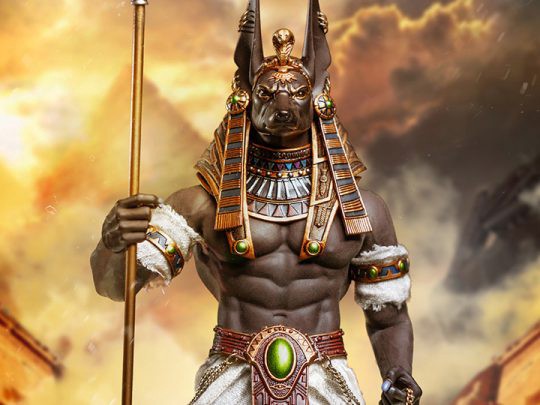 @beyourself