The Social Classes of Ancient Greek (Details)
Hello everyone 😊
In my last article, I told you about the sub-headings. Now I will elaborate for you.
**Women**
Women citizens had fewer rights than men. Without the right to vote, own land, and inherit women, her place was in the home and her purpose in life was to raise children. Contact with non-family men was not welcome, and they spent their time at home doing activities such as wool work or weaving.
Spartan women were treated a little differently than in other provinces, for example, they had to train (naked) like men, could own land, and drink wine.
Female citizens had to marry as virgins, and weddings were usually organized by their fathers, who chose the husband and accepted his dowry. If a woman did not have a father, her interests (wives and property management) were taken care of by a guardian (kurios), perhaps an uncle or other male relative. Love was of little importance for a husband and wife, who usually get married at the age of 13-14.
Of course there could be love between husband and wife over time, but at least for the man, philia – the feeling of friendship/love; eros, the love of desire, was found elsewhere. Marriages could be dissolved for three reasons. The first and most common was the husband's rejection of his wife (apopempsis or ekpempsis). In this separation without a reason, the only thing expected was the return of the dowry.
The second reason for separation was the woman's leaving the family home (apoleipsis), and in this case the woman's new guardian had to act as her legal representative. However, this was not a common situation, but as a result, women's reputation in society was damaged.
The third reason for separation was that the girl's father wanted his daughter back (aphairesis), probably because he had received a more interesting dowry offer from another man. However, this last option was only valid if the woman had no children. If a woman was widowed, she had to marry a close male relative to keep her property in the family.
Of course, women were also present in a number of other non-citizen classes. Among these groups, the group we learn the most about is sex workers. Women were divided into two categories here. The first, and perhaps the most common, were prostitutes (pornē). Second, they were upper-class prostitutes (hetaira).
Women in this last group were generally educated in music and culture and often had long-term relationships with married men. It was this class of women that entertained the men (in every sense) at the famous symposium.
Labourers
The ratio of workers to slaves in Greek society was significantly greater. These semi-free workers were completely dependent on their employers. Sparta's helot class is the most famous example of this group. These dependents were not the property of any particular citizen – they could not be sold like a slave – and often lived with their families.
They usually arranged agreements with their employers, such as giving a certain amount of their produce to the field owner and taking the rest for themselves. Sometimes the required quota could be high or low, and also some additional benefits such as numerical protection and security could be provided to the slaves.
But these slave classes, or helots, were never given real security, as they were given little or no legal status and were harshly treated, even killed in regular purges (especially in Sparta), in order to instill a fear of permanent subordination into the ruling class. they could not. During certain periods, such as during the war, helots were required to serve in the armed forces.
Helots could even manage to escape their own destiny by fighting well, and they could join intermediary social groups that included individuals who existed below the level of full citizenship and included children with mixed-status parents (eg: father-citizen, mother-helot).
Slaves
In Greek society, slaves were seen as a necessary and perfectly normal part of city life. Slaves obtained through war and conquest, abduction and purchase were clearly among the losers of life.
There were even intellectual arguments from philosophers such as Aristotle who suggested the belief that slaves were blatantly inferior, a product of their environment and hereditary traits. The Greeks convinced themselves that they had the best environment and traits, the purest bloodlines, and were therefore born to rule.
It is not possible to say exactly how many slaves (douloi) were in Greek society and how much of the population they constituted. It is unlikely that each citizen will own his own slave due to costs, but some citizens have undoubtedly owned more than one slave.
Accordingly, estimates of the slave population in the Greek world range from 15% to 40% of the total population. But Lysias' defense at a trial in Athens, and hints from others such as Demosthenes, strongly suggest that even if every citizen did not have a slave, they would certainly want slaves, and that having slaves was a social status gain.
Slaves were owned not only by individuals, but also by the state, who used them in urban projects in the form of mining, law enforcement, as in Athens.
More than 200 fields and occupations in which slaves worked were identified. These are domestic service, agriculture, industrial workshops (e.g. armor making, food, clothing, and perfume) mines, transportation, commerce, banking, entertainment, armored forces (on duty for their own owners) or goods handling, navy boating rowing, or even martial arts. .
Farms were often small businesses where even the wealthiest citizens tended to own several small farms rather than one large estate, so slaves were not concentrated in large groups as in later ancient societies.
At least for some slaves there was a glimmer of hope that one day they would be freed. There are instances where slaves, especially those engaged in production and industry, living separately from their owners and given a certain financial independence, bought their freedom with the money they saved.
Also, sometimes slaves in the army were freed by the state if they acted heroically.
Foreigners
Apart from slaves, most Greek poleis (city-states) could have a certain number of free foreigners (xenoi) who had moved to these cities from other parts of Greece, such as the Mediterranean and the Near East, bringing with them skills such as pottery and metalworking.
These foreigners often had to register their residence and thus became a recognized class (of a lower status than citizens) called 'foreign resident' (metoikoi). In exchange for the benefits of this 'guest' citizenship, foreigners; they had to provide a local sponsor, sometimes pay additional taxes, contribute to the costs of small festivals, and even participate in military mobilizations when necessary.
Despite the suspicions and prejudices against foreign 'barbarians' that arose in the literary sources, there were cases where the metoikoi managed to become full citizens after contributing to the well-being of the host state with an appropriate appearance of loyalty. They would then receive equal tax status and the right to own land. Their children could also become citizens.
However, some states, notably Sparta, at times actively discouraged immigration or periodically deported xenoi. The relationship between foreigners and local citizens appears to be a strained one, especially in times of war and economic distress.
Children & Adolescents
Citizens' children attended schools whose subjects consisted of reading, writing, and mathematics. Once these foundations were established, lectures were translated into literature (for example, Homer), poetry, and music (especially the lyre).
Athletics was also an important element in a young person's education. In Sparta, seven-year-old boys were grouped under the direction of an older youth to be strengthened by strenuous physical training.
In Athens, young adult citizens (18-20) had to fulfill their civil and military duties, after which their education continued with classes in politics, rhetoric, and culture.
Girls were trained in a similar manner to boys, but with a predominant emphasis on dance, gymnastics/physical education, and musical skill classes that could be shown at music competitions, religious festivals, and ceremonies. The ultimate goal in a girl's education was to prepare her to start a family.
The Social Classes of Ancient Greek
Although male citizens were in the majority with their full legal position, right to vote, holding public office, holding property, the social groups that formed the typical Greek city-state or polis of Ancient Greek society were extremely diverse.
Women, children, immigrants (both Greek and foreign), workers and slaves had certain roles, but there were interactions (often illegal) and also mobility between classes, especially in times of stress such as war with second-generation children.
**Ancient Greek society generally consisted of the following groups;**
-male citizens – in three groups: landed aristocrats (aristoi), poor farmers (perioikoi) and the middle class (craftsmen and merchants).
-part-time workers (eg Sparta's helots).
-women - they belong to all the above male groups without citizenship rights.
- children - are generally classified as under 18 years of age.
-slaves - douloi with civil or military duties.
-foreigners - those who are not resident (xenoi) or resident as foreigners (metoikoi), under the status of male citizens.
**Classes**
Although male citizens are at their best in Greek society, there are different classes within this group. At the top of this social tree are the 'best', that is, the aristotle. With more money than anyone else, this group was able to buy themselves armor, weapons, and a horse in times of military mobilization.
Aristocrats were divided into powerful family associations or groups within the police that controlled all important political positions. Their wealth has come from owning property or, more importantly, the best soil, in other words: the most fertile and closest to the city walls.
Poorer, second-class citizens are also seen. These are plots that have land, but whose land is perhaps less fertile, located further from the city, and therefore less protected than city land. Their lands may be so far away that their owners have lived there rather than constantly commuting to the city.
These citizens were called perioikoi (neighborhood residents) or, in a worse sense, 'unloved ones' and, depending on the local cities, came together in small village associations for protection. This second class grew significantly as city populations grew and inheritances became even more divided among siblings.
A third group was the middle class, the business class. This class, engaged in production, barter and trade, was the upstart/new rich class. However, they protected aristoitic privileges and political monopolies only by ensuring that landowners could rise to positions of power.
Still, there were movements between classes. Some could prosper and rise, while others could go bankrupt and fall into class (which could lead to the loss of citizenship or even enslavement). Disease, loss of inheritance, political revolutions, or war could result in the weakening of the 'best'.
I will write more about this in my next post. :) (Womens Class-Children & Adolescents-Labourers-Slaves-Foreigners)
Thanks for reading.
Pandora-The First Woman of Greek Mythology
Pandora is considered the first woman from Greek mythology. He is also a figure who is held responsible for unleashing all the evils of humanity into the world as an instrument of Zeus' wrath. Pandora was also an earth goddess who had no relatives in the early Greek pantheon.
**Pandora - A Punishment Tool**
The name Pandora means "gifts" and "everything". According to what is mentioned in Hesiod's (and perhaps even concocted) Theogonia and Works and Days, Zeus told Hephaestus to create the first woman, Pandora, from earth and water. Zeus' intention was to punish the guilty Prometheus, who had stolen fire from the gods and given it to humanity, using the beautiful and lovable Pandora as a tool.
Before leaving, Pandora was given a series of divine gifts by each of the Olympian gods. Athena taught him all the fine crafts and dressed him in silvery dresses. Aphrodite gave grace and tools so that she could create a great craving, and Hermes gave herself "the mind of a dog and a thieving character" and "lies and deceitful words" on her chest.
If that wasn't enough, Pandora was crowned with a magnificent gold headband made by Hephaestus, the Goddesses of the Seasons were given wreaths of spring flowers, and she was adorned with fine jewels by the Graces. Finally, Pandora was given a large storage jar to descend to Earth, which she was told she should never open under any circumstances.
**Pandora's Box: The Evils of the World**
Guided by Hermes, Pandora was sent to Epimetheus, Prometheus' brother. Foolishly forgetting her sister's advice never to accept a gift from the gods, the beautiful Pandora was entertained at Epimetheus' home, after which the two were married. They had a daughter named Pyrrha.
One day, she had fulfilled her destiny, Pandora, overcome by her curiosity, opened the lid of the jar and unleashed all the evil on the world. Among these dreadful things were sickness, war, immorality, labor and the need to work for sustenance.
Realizing her mistake, Pandora quickly closed the lid back on, but it was too late, and there was only one thing left inside the jar stuck to the rim of the jar—Hope—so that somehow humanity could endure its sudden and eternal misfortune.
"Hope" is the traditional translation from the Greek, but may actually be better represented by "anticipation," which includes the expectation of both good and bad events. With this punishment, Zeus thus repaid the theft of fire and restored the eternal division between gods and humans.

Dionysos-Greek Mythological God of Wine
Dionysus (Roman name: Bacchus, also known as Dionysus) was the ancient Greek god of wine, entertainment and theater. As the bad boy of Mount Olympus, he was perhaps the most colorful of the Olympian gods.
Despite being the son of Zeus and Semele (daughter of Kadmos and Harmonia) in Greek mythology, Dionysus did not get a good start in life when his mother died while pregnant. Hera, Zeus' wife, was jealous of her husband's illegitimate relationship and deviously tricked Semele into asking Zeus to show her in all her divine glory.
That was too much for a mortal. Semele died on the spot, however, Zeus took her unborn child and raised her in her calf. Most source satyrs and nymps describe Dionysus' caretakers in his childhood and Silenus the wise as his chief educator, far from Hera's wrath on Mount Nysa.
Homer describes the god as 'the joy of men' and Hesiod likewise describes him as 'very cheerful'. Undoubtedly, this is because it is believed that Dionysus gave wine to people. God gave the vine tree to Ikarios, a noble citizen of Ikaria in Attica.
The reason is that Ikarios made this vine-tree wine with a group of shepherds passing by. However, unaware of the stunning effects of the wine, the shepherds thought they had been poisoned and quickly took revenge and killed the unfortunate Ikarios. Despite this sinister beginning of the wine industry, wine became an immensely popular beverage in antiquity.
The Greeks usually drank wine diluted with mixed water (one part wine to three parts water) in a large crater bowl. Wine was drunk at banquets, festivals and private parties, especially at symposiums; it was a kind of informal, men-only drinking session where guests leaned on a sofa (kline) and chatted about everything from gossip to philosophy.
In Greek mythology, Dionysus traveled widely as far as India and spread his cult throughout Greece, in fact he himself is known to be of eastern origin. Rites resembling group sex were held in his honor, in which the participants indulged in a frenzied Dionysian dance and fun that surpassed them.
It is believed that the theater arose from this activity, as those who worshiped Dionysus tried to leave their personalities behind and integrate with the character they portray. Indeed, Dionysian priests were given seats of honor in Greek theaters.
When the Phrygian King Midas found Silenus, the god's chief follower and drinking friend, in a very bad condition in the garden after the drinking race, the king fed him and gave him back to Dionysus. In gratitude, the god granted Midas a wish.
The king wanted everything he touched to turn into gold, but unfortunately that included food and water, so the king nearly died of hunger and thirst, until Dionysus reversed the gift by telling Midas to bathe in the Pactolus river.
Another legend tells that Dionysus was kidnapped by pirates who were unaware of his identity. God turned the mast of the ship into a giant vine, dripped wine on the sails, and a divine chorus filled the air with music. Dionysus transformed himself into a lion and, with the help of a bear, killed the pirate captain. Terrified, crew members jumped into the sea and turned into dolphins.
The Helmsman survived only because he advised his crewmates not to detain that stranger. And then the boat sailed for Naxos, where God stayed for a while, and when Theseus stopped killing the Minotaur and returned, Dionysus fell in love with Ariadne and married Ariadne. When Ariadne died, Dionysus transformed the wedding crown into the constellation Corona in her memory.
Other legends include that Dionysus persuaded Hephaestus (possibly with wine) to return to Mount Olympus and release Hera, who had been deftly trapped on a throne by the metallurgical god. To express her gratitude, Hera made sure that Dionysus, who was actually only a demigod, became a full Olympian god with a permanent residence on Mount Olympus.
Lycurgus, King of Thrace, and Pentheus, King of Thebes, inflicted the wrath of Dionysus when they cautiously tried to curb the excesses of the god's festivities. King Lycurgus of Thrace went mad and Pentheus, King of Thebes, was torn apart by a group of women who believed in the mad Dionysus after disguising himself as a woman to spy on his vices.
The cult of Dionysus became an important part of Greek religion in Athens from the 6th century BC, and the Dionysia festival of Athens and other cities would later become the Bacchanalia of Rome. The island of Naxos was a particularly important temple site for the god.
There is evidence of a cult of Dionysus dating from the Mycenaean period (14th century BC), and this site continued to be important until Roman times. There was also a temple and a theater of Dionysus in Athens, and there was also a temple of Mycenaean origin, dated to the 2nd century.
Asgard,Jotunheim and more...
Hello, I wrote you a brief summary of these nine realms in my last post, now it's time to detail them all :)
Asgard
In fact, Asgard is thought to be part of the human world, but Snorri positions it in the sky via the rainbow bridge called Bifrost, which connects to Midgard.
Asgard is the realm of the Aesir gods, the majority of the Norse gods, who fight and make peace with other gods known as the Vanir, and exchange hostages to achieve this peace. Thus, while Asgard is primarily the realm of the Aesir gods, there are Vanaheim deities living there as well as the Aesir in Vanaheim.
The most well-known of the Norse gods are the Aesir and live in Asgard: Odin, Thor, Loki and Baldr. Asgard is depicted as a holy land of high towers surrounded by a great wall.
The famous Valhalla hall, where Odin's throne is located, is in Asgard. However, Hildskjalf is mentioned as a place or object name from which Odin could gaze at the whole world, though it is unclear whether this place was his royal hall or his throne (a separate place from Valhalla).
Jotunheim
Jotunheim (sometimes referred to as Utgard) is a land of rock and ice giants and is located near both Asgard and Midgard. Beyond the realm of order in Jotunheim/Utgard, chaos was considered a primeval place of magic and wilderness.
Loki, the dishonest god of mischief, came from Jotunheim but lived in Asgard. Jotunheim was thought to be best avoided, but there are stories that the gods of Asgard traveled there on purpose.
By the river Iving, which never freezes and is difficult to cross, Asgard and Jotunheim parted ways, but Odin went to Jotunheim to Mimir's fountain of wisdom and to Thor's stronghold of Utgard-Loki.
As the story of Thor and Utgard-Loki indicates, anything can happen to a person in Jotunheim: nothing Thor experiences on his journey is as it seems, and at the end of the story, the castle and everyone in it vanish.
Midgard
The realm of Men was first populated with Ask and Embla, from which all men are descended. Odin, Vili, and Ve, after killing Ymir and creating the world, walk by the sea and find two trees, one Ash and the other Elm. They create the first man from ash wood and the first woman from elm. However, they realize that these beings are helpless and easy prey for the giants, and they use Midgard to protect them.
Hel
Hel (sometimes known as Helheim) is a dark and gloomy realm, ruled by Hel, daughter of Loki and sister of the Midgard serpent and the wolf Fenrir.
Odin knew they would cause trouble and tried to place each one where they could do the least damage. Midgard placed his serpent in the seas surrounding the world, chained Fenrir, and sent Hel to a dark realm beneath the roots of Yggdrasil. Later, this area was surrounded by a wall with only one gate and could only be reached by traveling down a long road (known as the Helveg - the road to Hel) and crossing a dangerous river of guns.
Hel is portrayed as a sullen and brooding female giant, unlike Cate Blanchett's character Hela in the Marvel movie Thor: Ragnarok (2017). His realm, for obscure reasons, was originally associated with the souls of the dead who did not die in battle and those who died of disease or old age.
After a while, it became the most populated area of the dead, and most of the people who died were thought to have traveled to the dark realm of Hel, wandering in some kind of twilight, but other than that, they did pretty much the same things they did when they were alive. Considering his status among others, the great hero god Baldr should have gone to Valhalla, for it is not easy to decide who gets to the realm of Hel and how.
Muspelheim
According to Snorri, Muspelheim, which was instrumental in the creation of the world, is the first realm of fire. The fire giant Surtr lives in this realm and will appear in Ragnarok, the twilight of the gods, to destroy Asgard and everything else.
However, today's scholars disagree with Snorri's interpretation and believe that Muspell is actually a giant from the fiery realm, and this giant's only function in true Norse mythology is the part where he will play a role in Ragnarok.
Nidavellir/Svartalheim
The realm of Nidavellir/Svartalheim is the land of dwarves who work below Midgard, in the depths of the earth, and there forges. It is a land illuminated only by fires from the forges and torches on the walls. The gods had decided the realm of the dwarves based on their origin, just as Snorri had done in Gylfafinning.
Dwarves were associated with craftsmanship and magic. They created Thor's hammer Mjolnir, Odin's spear, and also the god Freyr's magic ship that could be folded and carried in his pocket. They are also responsible for the mead that Odin stole from the giants and gave to the gods. They then inspire poets to write their poems through drink.
Niflheim
Niflheim, along with Muspelheim, is the oldest of the nine realms, the first land of ice, fog and snow, where all life began. Snorri equates Niflheim with Nilfhel, which causes Hel to understand it as the location of his country.
Niflhel, if it existed in the pre-Christian Scandinavian universe, appears to be no mention of Niflheim at all, possibly a dark, imprisoned, dreary underworld of dead spirits that has been compared to Tartarus in Greek mythology or later depictions of Hel, a dreary underworld that may have taken place beneath Niflheim.
However, Nilfheim itself has nothing to do with the nether world. It is a cold and misty land where no one lives, not even ice giants. It is said that Odin sent Hel to Nilfheim and later gave him power over the underworld and the lives of beings in the nine realms. Later, however, he is thought to have moved from Nilfheim to Nilfhel (meaning dark realm), where he reigned.
Vanaheim
Vanaheim is the land of the Vanirs, another family of Norse gods associated with fertility and magic. The Aesir went to war with the Vanir, but the exact reason is unclear. The war may have been fought because the Aesir gods found practices such as incest and magic to be unacceptable and dishonorable.
For whatever reason the war broke out, it resulted in a peace treaty in which hostages were exchanged and the Vanir sea god Njord and his two children Freyr and Freyja came to live in Asgard.
Alfheim
Alfheim, on the other hand, is the realm of all elves, not far from Asgard, who also exist in the sky and after the work of the light (or bright) elves as well as Snorri. He was led by his god Freyr, one of the hostages sent from Vanaheim to Asgard at the end of the war. Elves are bright, beautiful, magical beings and they inspire art, music and creativity in general.
Scientist John Lindow (and others) noted that Alfheimar was geographically located on the border between Sweden and Norway, between the mouths of the Gota and Glom rivers, and the people there were deemed to be "more just" than people elsewhere.
For this reason, it is thought that the legendary Alfheim was inspired by this region, but the accuracy of this claim is disputed. The realm is not clearly defined in Norse literature, but elves are thought to be quite amiable by nature.


The Nine Worlds-Norse Mythology
In the Scandinavian universe, the universe is divided into nine. The center of the universe was Yggdrasil, the great world tree, and these nine realms came into being, extending from the roots of the tree in an extraordinary way down and side by side.
Old Norse works (known as Eddic and Skaldic poetry) presuppose a knowledge of the universe and are not too concerned with the description of the places of the realms, or even the details of what the realms looked like in some cases. So the truth is that the Norse faith had no written scriptures, and some realms are less well known than others.
Scandinavian religious belief was characterized by the concept of síður (meaning tradition or habit), because this concept was fully integrated into people's lives. People did not participate in a religious ceremony in any place, such as a church, but observed the worship of the gods in their own homes, in a clearing in the woods, or in sacred places such as the underground. Although there is evidence that temples to the gods existed, there is no record of what kind of rites and rituals were performed there.
Icelandic mythographer Snorri Sturluson (1179-1241 AD) wrote the glorious Scandinavian epics, but the epics written were Christian scriptures and for Christian readers, thus changing the source information. Even the Volsung Epic, often said to embody "authentic" Norse beliefs by scholars, was finally written down by an anonymous Christian scribe (Crawford, ix) around 1250 AD.
Subsequent works undoubtedly point to much older and true Scandinavian stories, but the works are colored by the Christian context in which they were written. For example, Hel is thought to be a purely Christian concept that was added to Scandinavian cosmology after Scandinavia's introduction to the new religion, although the understanding of the afterlife was known by scholars as Niflhel in ancient literature.
**The first nine realms in the Norse universe were:**
-Asgard - realm of the Aesir gods
-Alfheim - realm of light elves
-Jotunheim - land of giants
-Midgard - Land of Men
-Muspelheim/Muspell - Fire giants or the land of chaos
-Nidavellir - Land of the Dwarves
-Niflheim - Land of ice and fog
-Svartalheim - Dark elf realm
-Vanaheim - Land of the Vanir gods
After Snorri's work, the nine realms were changed, as he mixed the dark elves with the dwarven realm and combined Nidavellir with Svartalheim into a single realm, he also added the concept of the afterlife realm, Hel as the most populous realm in the universe, and made other changes. According to Snorri Sturlison and those who wrote after him, the nine realms are:
**Asgard - Realm of the Aesir gods connected to Midgard by the rainbow bridge Bifrost**
-Alfheim - realm of elves
-Hel - The land of sickness, old age, and most people
-Jotunheim - Land of rock and ice giants
-Midgard - the land of humans located between Asgard and Jotunheim
-Muspelheim - Realm of Fire, featuring the fire giant Surtr and his power of chaos
-Nidavellir/Svartalheim - Realm of the underworld dwarves
-Niflheim - The land of ice, snow and mist located next to Muspelheim
-Vanaheim - Land of the Vanir gods
These nine realms were probably unknown to a pre-Christian Scandinavian, but they are the most distinctive depictions of the nine realms available today. The same is true of the story of the creation of the world and of people, which can vary widely, while the Scandinavian faith is a living, dynamic faith.
All these nine realms coexisted, they work together, and so on until Ragnarok. Independent of the nine realms and living together at the roots of Yggdrasil, the Norns determined the destinies of humans and gods. Like the Three Fates in ancient Greek belief, the Seven Hathors in Ancient Egyptian belief, or Shay (Shai), the god of destiny, the Norn's decisions were final and no one could challenge them. The Earth and all nine realms would be destroyed, and there was nothing anyone could do about it.
Ragnarok would begin with a harsh winter of ice and snow, followed by the fire giant Surtr, who would come and incinerate the world at the same time as the Midgard serpent was released, churning the surrounding waters and sinking the world. The great wolf Fenrir breaks his chains and swallows the sun.
The rainbow bridge Bifrost collapses as Yggdrasil is shaken, and the gods brace themselves for the final battle to save the ordered world they've built from the forces of chaos. The gods realize they will lose by going to war, but a handful of people will survive the final conflict and eventually a new world and order of realms will rise from the ashes of the old world.
This was the prediction of Scandinavian faith: one could be sure of death and the loss of all loved ones, but then there was something else. This prediction was true for the soul of people as well as for the world itself and everything in it. What else could have been a mystery, there is no source for what the new world might be like after Ragnarok, but there was always a new beginning, loss, and hope for the continuation of life in the other realms after death.

The lost City-Atlantis
Atlantis (Lost City) is a legendary city described by the Greek philosopher Plato (429-347 BC). Atlantis, an incredibly wealthy and advanced civilization, is trapped in the sea and lost forever in a story that captivates the reader. Regardless of important information from archaeological findings or sources besides Plato, this myth raises more questions than answers.
Did Atlantis really exist? Was the story based on the ancient Minoan civilization? Was the catastrophe that destroyed the city the explosion of Thera in Santorini in the Aegean, or was the whole myth a fiction that Plato built to show the glory of his own city, Athens, or something that showed what happened to cities that did not accept the rule of law and became greedy over time? Was it just an example?
If it was indeed founded, who founded Atlantis? Why do we know so little about him? Where is it now? These are all questions that are endlessly sought after by scholars and history buffs, and to which no satisfactory answer can be found.
The story of Atlantis first appears in Plato's Timeos, one of his later works. The title of Plato's work called Dialogue comes from a hero, a Southern Italian Pythagorean philosopher, who discussed the soul with Socrates. However, this particular dialogue is more of a misleading exercise than a philosophical dialogue, and includes an extremely long monologue on the creation of the world in Plato's Timeos.
Philosophical ideas are open to discussion. However, the issue of what Plato's ideas were and who these speakers were in his dialogues raise questions that will be questioned for centuries. The passage in Atlantis is actually narrated early in the dialogue by Kritias, a Sophist who lived between 460 and 403 BC. In particular, Kritias, like all other sophists (as Plato also explained in the Phaedrus dialogue), exaggerates his ideas in order to attract the attention of the audience and convey the essence of these ideas to the audience.
His ideas are all blurred and nothing is clear. Whatever literary means are necessary to express philosophical ideas that are difficult to understand and to make them more understandable should be used. Maybe it is necessary to read the legend of Atlantis with this thought.
The story of Kritias is introduced by another visitor, Hemocrates (a historical general from Syracuse), who forces Kritias to tell his "prehistoric" story. Kritias begins by emphasizing that his story is true, and the Greek statesman and poet Solon, who lived between 640 BC and 560 BC, also vouched for him. Kritias admits that his story is "very strange, but every word of it is true".
He says Solon told this story to his friend Dropides, Kritias' great-grandfather, and bequeathed it to his future grandchildren. We are told that Solon learned this story during his travels in Egypt, especially by priest scientists in Sais, and wanted to put the story in writing, but never had the opportunity to do so.
Kritias wanted to tell this story because it symbolized one of Athens' greatest achievements ever. But, unfortunately, it was forgotten over time because it was very old according to the Egyptian priests who lived 9000 years before Plato.
It tells the story of Atlantis only to show that Ancient Athens was a great city and the people of Athens were able to defend their freedom under the rule of law against foreign aggressive forces. This is the purpose of the character, at least, Kritias. Of course, there is also a moral side to the story: that greed for wealth and power will only bring destruction.
As a metaphor, the story of Atlantis and the victory of Athens may represent the Battle of Marathon in 490 BC, in which the Greeks famously defeated the invading Persian army, Darius. The metaphor of Greeks fighting 'barbarians' represented as mythical creatures such as centaurs was already evident in Greek art before Plato. Could the phrase 'have to stand alone' refer to the absence of the Spartans at Marathon?
What about the physical location of Atlantis? Many believe that the island and its disappearance evoked the volcanic eruption, earthquakes and associated tsunamis on the late Bronze Age Aegean island of Thera, which destroyed this culture and sank much of the island. With its extensive trade network and fine arts, Thera would certainly be regarded as developed and wealthy by contemporary civilizations.
What better way to remember this shocking extinction than with a colorful legend? The description of the steep mountains of Atlantis would certainly fit that of a volcanic island, but its size and location in the Atlantic do not match that of Thera.
Then there is talk of hunting and sacrificing bulls in Atlantis. Could this refer to the well-documented practice in Minoan Crete, where bull-leaping, worship, and iconography (religious symbology) permeated the archaeological record?
According to many scholars, Plato's next dialogue was (coincidentally?) Minos, named after the island's legendary king, and he admired Plato's law-making skills.
Greek Goddess-Artemis
Artemis was the Greek goddess of hunting, wilderness, and chastity. Artemis, daughter of Zeus and sister of Apollo, was the patroness of girls and young women and guardian of childbirth. She was widely worshiped, but the most famous cult place was the Temple of Artemis at Ephesus, one of the Seven Wonders of the Ancient World.
Artemis is the daughter of Zeus and Leto in Greek mythology. Born in Delos or Ortygia (near Ephesus in Western Turkey), she is the twin sister of the god Apollo.
Given gifts such as a silver bow made by the Cyclops and a pack of dogs from Pan as a hunting companion, Artemis was at that time considered the patron goddess of hunting and wilderness and the mistress of animals. For this reason, it is associated with wild animals such as deer and wild boar (especially young ones), forests, and the moon.
Artemis Kourotrophos, goddess of chastity, childbirth and fertility, was the patroness of young women, especially brides-to-be who dedicate their toys to her as a symbol of transition to full adulthood and taking on the responsibilities of a wife. Finally, as an inhabitant of the wilderness, the goddess was associated with boundaries and transition, both physically and abstractly.
Perhaps for this reason, temples dedicated to Artemis were often built either on the edges of human settlements or where the terrain changed, such as swamps, or at water junctions.
**in mythology**
Artemis plays only a minor role in the Trojan War in Homer's Iliad and is often described as the 'archer goddess', also sometimes the 'goddess of the noisy hunt' and the 'wife of the wild beasts'. Supporting the Trojans, he heals Aeneas after he was injured by Diomedes. In The Birth of the Gods, Hesiod often describes her as 'Artemis shooting arrows'.
A notable episode at the start of the Trojan War involving the goddess is the rescue of Agamemnon's daughter, Iphigenia. The king angered the goddess by killing one of her deer in a sacred grove. As punishment, Artemis pacified the Achaean fleet, and only the sacrifice of Iphigenia could soften the goddess to give Troy a fair wind. Agamemnon duly offered his daughter as a sacrifice, but the goddess took pity on her at the last moment, replacing her with a deer and making Iphigenia a priestess in her temple at Tauris.
But Artemis' other events show her in a much less benevolent light. It is said that Artemis killed the hunter Orion after he attempted to rape himself or one of his followers. Artemis transformed one of the goddess's entourage, Callisto, into a bear after sleeping with Zeus, who later transformed her and her son Arcas into the major and minor bear constellations (not before Arcas founded the Arcadian race, of course).
The goddess uses her bow to brutally murder Niobe's six (or seven by some accounts) daughters after boasting that she is more capable of bearing children than Leto's. After Actaion the hunter dared to boast that he was the greater hunter, or in another version, after he spied on Artemis as she bathed in a forest pool, she was turned into a deer by the goddess. Actaion was then torn to pieces by his own pack of 50 hunting dogs.
Ultimately, Artemis sent a large wild boar to devastate Kalydon after the city neglected to sacrifice to the goddess. A hunting party of heroes, including Theseus, Jason, Dioskouroi, Atalanta, and Meleager, was organized to hunt and sacrifice the wild boar in Artemis' honor. After a long expedition, Atalanta and Meleager finally managed to kill the boar.
Artemis is often depicted in Greek art as a young girl with a bow and arrow or a spear. He is usually accompanied by a female elk, stag or hunting dog. Artemis sometimes wears cat skin. Ancient representations also emphasize her role as animal goddess and show her winged with a bird or animal in each hand. For example, the famous François vase (570-565 BC) holds a panther and a deer in one depiction and a lion in the other. Later, Attica is often depicted holding a torch in red and black-figure vases.

Palette of King Narmer
Narmer (c. 3150 BC) was the first king of Egypt to peacefully unite the country at the beginning of the First Dynastic Period (c. 3150 - 2613 BC). 6000 - 3150 BC) is also referred to as its last king. In the early days of Egypttology, these kings were considered two different men. It was thought that Narmer tried to unite at the end of an era and Menes succeeded him, starting the next period in Egyptian history.
This theory became increasingly problematic as time went on, and while little archaeological evidence supports the existence of Menes, Narmer is well confirmed in the archaeological record. The great Egyptologist Flinders Petrie (1853 - 1942) claimed that Narmer and Menes were the first pharaohs of the First Dynasty, for two names marked a man: Narmer was his name, and Menes was a sign of honour.
The same understanding applies to the other pharaoh associated with Menes, Hor-Aha, the second king of the First Dynasty (3100 BC), who is said to have united Egypt under central rule. If Hor-Aha is the ruler who unified Upper and Lower Egypt, then 'Menes'. it was simply his expression of honor, meaning "one who endures." It was not fully united until the reign of BC (2680 BC).
However, this claim has been repeatedly challenged, as there is clear evidence that king Den (2990-2940 BC) crowned Upper and Lower Egypt and signaled unification under his reign. More importantly, the Narmer Palette (an ancient siltstone slab), Narmer Thus, it is generally accepted that unification first took place under the reign of king Narmer.
**Narmer's United Kingdom of Egypt**
Prior to Narmer's reign, Egypt was divided into Upper Egypt (south) and Lower Egypt (north, closer to the Mediterranean). Upper Egypt was more urbanized with the fairly rapid development of cities such as Thinis, Hierakonpolis, and Naqda. Lower Egypt was on the Nile River. Both regions were more rural (generally speaking) with rich agricultural lands extending from Egypt's pre-dynastic period to Upper Egypt, which conquered its neighbor for grains or other agricultural products to feed the growing population or trade with other cultures and civilizations. It developed steadily over thousands of years until it led to the increased development of the
After Narmer established himself as the supreme king, he married in an alliance with the princess of Naqada, Neithhotep, to strengthen the ties between the two cities. Neithhotep's tomb, discovered in the 19th century AD, was detailed enough to suggest she was more than the king's wife, and some scholars believe that Narmer He claims that he may have reigned after his death. His name inscribed on serakhs from that period supports this claim, as do other inscriptions, but it is still not universally accepted.
Religious practices and iconography developed during Narmer's reign, and symbols such as the Djed (four-layered pillar representing determination) and Ankh (symbol of life) appear more frequently during this period. He led military campaigns in Lower Egypt to suppress rebellions and occupied their lands in Canaan and Nubia. He initiated major construction projects and increased urbanization under his management.
Egyptian cities never reached the size of those in Mesopotamia, perhaps because the Egyptians recognized the threats posed by such development. Egyptian cities such as Xois (to pick a random example) have been largely abandoned for thousands of years, while Mesopotamian cities have been largely abandoned due to overuse of land and contamination of water supplies. Although later developments in urban development ensured the continuation of cities, the early efforts of kings such as Narmer could have provided the model.
The details of his reign are unclear due to the lack of records discovered to date and, as noted above, the difficulty of interpreting these definitively identified inscriptions relating to Narmer.

Aphrodite-Goddess of Love and Beauty
Aphrodite was the ancient Greek goddess of love, beauty, lust, and all aspects of sexuality. She could drag both gods and humans to forbidden things with her beauty and whisper sweet things to them. Born near Cyprus from the severed genitalia of the sky god Uranus, Aphrodite was more important than just traditionally seen as a goddess of love.
Worshiped by men, women, and city-state officials, Aphrodite also played a role in the trade, warfare, and politics of ancient Greek cities. In addition, Aphrodite was honored as the protector of seafarers and, as expected, elite prostitutes and prostitutes. The goddess's counterpart in Roman mythology was Venus.
**Born from Uranus**
In mythology, the goddess was born when Kronos castrated his father Uranus (Ouranos) with a sickle and threw his genitals into the sea, after which Aphrodite appeared in the middle of the foam (aphros) that came out of the sea. In other narratives, she is the daughter of Zeus and Dioni (Titan Goddess). Hesiod is based on the first narrative and Homer on the second narrative.
For this reason, the Greeks were in trouble because of the contradiction between the two myth-makers. In fact, Plato, to reconcile these two ancient writers, suggested that these two goddesses were actually different persons with the same name; one represented (in her opinion) greater love between men, and the other represented love between men and women. Plato called them 'Heavenly Aphrodite' and 'Universal Aphrodite', respectively.
Believed to have been born close to Cyprus, Aphrodite was worshiped, especially at Paphos on the island - this geographical location indicates her eastern origins, goddess of fertility and possible evolution from the Phoenician goddess Astarte or the Near Eastern goddess Inanna (Ishtar). Two regions of Greece and the Near East, BC. They witnessed intense cultural exchange before the 8th century BC Archaic Period, possibly BC.
This is why it is important that the 5th century Greek historian Herodotus states that the oldest cult place of Aphrodite was in Ashkelon in Syria. It is also possible that the goddess was entirely derived from a local Cypriot god. His strong association with the candidate can be evidenced by the common name Cypris, meaning 'Cyprus'.
What is more certain of its origin is the goddess's nativity, her association with the sea, which later became prominent in many coastal temples dedicated to her, and her many common epithets, such as Aphrodite Pontia ('deep sea') and Aphrodite Euploia ('just voyage'). Aphrodite was associated with Venus, the brightest planet, and this could always indicate a valuable guiding aid, another connection with ancient sailors.
**Hephaestus & Ares**
Forced by Hera to marry Hephaestus, the not-so-attractive lame god of fire and crafts, Aphrodite proved not at all faithful by having notorious relationships with the gods Ares, Hermes, and Dionysus. His brief relationship with Ares was perhaps the most surprising of the many deceptions that had occurred within the Olympian Gods.
Hephaestus, a designer and engineer with a demonic mind, created a special gold bed to trap his wife. In the most passionate time of Aphrodite and Ares, the bed revealed golden chains that locked the naked gods in their forbidden embrace. They were even more embarrassed when the sun god Helios shined his bright light on the couple, so that all Olympians could take a good look at the disgrace. When they were finally freed, Ares fled to Thrace and Aphrodite to Cyprus.
Aphrodite represents Eros, Harmonia (from Ares), the Trojan hero Aeneis (from Anchises), the Sicilian king Eryx (from Butes the Argonaut), and Dionysus or Adonis, Priapus (from the great sexual a gardener with an organ) is considered her mother. The goddess had a retinue of lesser gods such as Hebe (goddess of youth), Horas, 'Dike and Eirene', Themis, Graces, 'Aglaea, Euphrosyne and Thaleia', Eunomia, Daidia, Eudaimonia, Himeros (Lust) and Peitho (Persuasion) .
Aphrodite often represented mixing or 'blendling' as well as unity and harmony, and this may explain the goddess's diverse relationships, such as war and politics, areas where different groups need to work together. She herself was especially the protector of the city judges, she.

Queen Himiko-Strong women in Japanese History
Queen Himiko, also known as Pimiko or Pimiku (183? - 248 AD), was the 3rd century AD ruler of the region that would later become known as Hsieh-ma-t'ai or Yamatai, later Yamato, in ancient Japan. She was regarded by the china as the ruler of all of Japan, or of Wa, she.
With the state power in her hands, she was in mutual diplomacy with the dominant Wei dynasty. A somewhat mythical figure, Himiko is interestingly absent from Japanese historical records, but is briefly mentioned in Chinese historical records. It is known that the queen was a shaman, did not marry and lived in a castle where 1000 women served her.
**Yamatai**
In archaic Japanese, Himiko's name means Child of the Sun or Daughter of the Sun, possibly implying her divine lineage based on the Shinto sun goddess Amaterasu. Just as all Japanese rulers would later be described as descended from this line. Scholars disagree about the exact location of Queen Himiko's state, Hsieh-ma-tai/Yamatai. A minority locate it in northern Kyushu, but the majority consider the Nara region as the closest candidate.
During the reign of Himiko in the 3rd century AD, Japan had about 100 kingdoms spread across the islands. It seems that Himiko's state was the most powerful of them all, and may have ruled 30 separate provinces as a free federation, given that the Chinese state of the time actually considered him the ruler of all of Japan.
It was not unusual for the rulers of early East Asian culture to have Queen Himiko in the role of female shaman or female high priest. This situation is also briefly mentioned in the Chinese history book Wei Chih (History of the Wei Kingdom), written in AD 297.
It is said in the book that Himiko "did in magic and magic, bewitching people" (Henshall, 152). Queen Himiko is not mentioned by name in histories of the Japanese Dynasty, such as the Kojiki (Records of Ancient Events) compiled in 712 AD and the Nihon Shoki (Japanese Chronicles and alias Nihongi) compiled in 720 AD.
Following this embassy issue, the Chinese bestowed Himiko the honorary title of “Queen of Wa, Friend of Wei” and a golden seal. Other gifts were given to the queen in return for her gifts, which included fine clothing and slaves to the great hegemony of the region.
Among them were beads, 100 bronze mirrors and swords. Some of these pieces may have become part of the Japanese imperial treasury. Himiko sent two more envoys to China in 234 and 247 AD. Despite all these good relations, there would be no further contact between the two states until the Sui Dynasty in the 7th century AD.
According to Wei Chih, Queen Himiko was chosen by her people after a tumultuous 70 or 80 years of war and upheaval. Although she had a peaceful reign, the queen is said to have never married and lived like a hermit in a mighty towered castle guarded by 100 outsiders.
Inside, there were 1,000 female servants serving the royal family. Himiko had a male attendant who served her meals and kept her in touch with her own kingdom and other states. He also left state affairs to his younger brother, or at least shared government affairs with him, while devoting himself to shamanism.
Perhaps the romantic portrayal of this seclusion and leaving politics to his brother may be the result of the author's bias. It was commonplace for Japanese rulers not to receive ambassadors. For example; this would cause the Chinese visitors to perceive a secluded monarch. Later, male writers were eager to establish an exclusively male-dominated lineage on the Japanese throne.
When Himiko died in AD 248, he was reportedly buried in a tomb measuring 100 paces (equivalent to 150 meters), and 100 slaves were sacrificed in his honor. With his death, Japan passed from the Yayoi Period (300 BC – 250 AD) to the Kofun Period (250-538 AD).
Zeus-The Punisher (Part-2)
**Zeus the Punisher**
God was also the great punisher. Those who did evil or disrespected the gods were often severely punished. The Titans were imprisoned in Tartarus, and after desecrations against Zeus, Apollo and Poseidon were forced to build the magnificent walls of Troy that proved very useful in the Trojan War.
One explanation for warfare in mythology was that Zeus was trying to curb the growing human population. Zeus also chose Paris as the judge in the famous beauty pageant between Aphrodite, Hera and Athena. It was cited as another, more humane reason for the Trojan War when the young prince won Helen as his reward for choosing Aphrodite.
Other victims of Zeus' revenge included the Titan Prometheus, whose liver was condemned to be eaten daily by an eagle after stealing fire from the gods and giving it to humanity. Atlas had to carry the heavens on his back forever for his role in Titanomahia. Punished for his deception, Sisyphus was doomed forever to roll a huge stone towards a hill in the Underworld.
Asclepius was killed by one of ZeusImage by' lightning bolts because his ancient medicine and ability to resurrect the dead threatened the balance of power between humans and gods. As the gift of fire was received, Pandora was the first woman sent to earth by Zeus. This woman would be the source of all mankind's misfortunes because she carried it in her box. Deceived by Hera into blinding his two sons, Fineus was blinded by Zeus, who also sent the Harpies to haunt him. Ixion hastily declared his love for Hera, and so Zeus exiled her to Hades to be tied to a spinning wheel forever.
Lycaon gave human flesh to Zeus to test his divinity, and the god punished his arrogance by turning him into a wolf. Salmoneus thought he was a god and pretended to be Zeus by throwing flaming torches to mimic lightning and getting into his chariot to make a thunderous sound, but Zeus quickly put an end to his buffoonery by killing him instantly with a real lightning bolt. The list goes on and on, but the message is clear, wrongdoing and disrespect were severely punished.
**Peaceful Zeus**
Despite the terrible punishments Zeus could inflict, he was also a peacemaker, known for reconciling Apollo and Hermes when they first fought for the lyre. Similarly, Zeus resolved the conflict between Apollo and Hercules on the tripod (the seat of the priestess in the temple of Apollo) from Delphi. He also persuaded Hades not to be with Persephony for part of each year, allowing Persephony to ascend to the earth.
Thus, he put an end to the terrible drought that Demeter, who missed her daughter, caused the human race to protest being held captive in the Underworld. To mere mortals, Zeus was at least fair-minded. At his feet were Zeus' jars of Destiny - one filled with bad things, the other with good things, and he distributed both with justice. Similarly, a mortal's time of death was carefully weighed on Zeus' gold scales.
**Sacred Sites Dedicated to Zeus**
Zeus, an important figure in Greek religion, had a very old (or even the oldest) oracle in Dodona in northern Greece. This priest interpreted the sounds of the wind in the branches of sacred oak trees and the babbling of water from the sacred spring, and the hermit priests served him. would. Another great sanctuary dedicated to Zeus was in Olympia.
Every four years from 776 BC, the Olympic Games gathered crowds from all over the Greek world to honor the Father of the gods, and 100 oxen were sacrificed to Zeus at the end of each Game. Also at Olympia, the gigantic 5th century BC temple of Zeus housed the colossal gold and ivory god statue of Phidias, one of the Seven Wonders of the ancient world. Other important holy places for God were Mount Lycaion, Athens, Nemea, Pergamum, Stratos, and Libya.
There were surprisingly few festivals in honor of Zeus, one of which was the Athenian Diasia. In general, Zeus, as head of the Greek pantheon, was ubiquitous and therefore made no particular allegiance to certain cities. However, Zeus was worshiped in most family homes, where an altar was often offered to him in each courtyard, for Zeus as Herkeios generally guarded the family hearth and property.
He was also Zeus Xenios, god of hospitality, Zeus Polieus, protector of cities, Zeus Horkios, protector of vows, and Zeus Soter, protector of all and general benefactor.

Zeus-God of the Sky (Part-1)
Zeus was the king of the Olympian gods and the supreme god in Greek religion. He is often referred to as the Father, the god of thunder, and the 'cloud-caller'. He controls the weather, gives omens and warnings, and in general ensures justice from his throne on Mount Olympus, maintaining order among both the gods and humanity.
Zeus' father was Kronos and his mother Rhea. Kronos had usurped control of the heavens from his father, Uranus, and was always wary that the same should not happen to his own children. Therefore, he devoured all his children to avoid any inheritance. These were: Hestia, Demeter, Hera, Hades and Poseidon. However, Rhea saved her youngest child, Zeus, by wrapping a stone in baby clothes and giving it to Kronos to swallow.
Zeus was taken to Dikti Mountain on the island of Crete. The god was raised there by the ancient goddess Gaia (Earth), or in some narratives by the Nymphs (Fairies). Among these was the nymph Amalthea (in some versions of the legend, it was a goat) who nursed the young god.
After reaching adulthood, Zeus forced Kronos to vomit back the children he had swallowed, and Zeus later married his sister Hera. However, the lawless Titans encouraged by Gaia immediately sought to seize control of the world from the Olympian gods in a ten-year war known as Titanomachy (or War of the Titans). The Titans were the brothers and sisters of Kronos.
But with the help of the Cyclopes (who make Zeus' lightnings) and the hundred-handed giants, or the Hekatonkheirs (Briareus, Kottos, and Gyges), Zeus was finally able to imprison the Titans in Tartarus, the deepest part of the Underworld. Zeus, who made himself the ruler of the heavens, gave the dominion of the seas to Poseidon and the Underworld to Hades.
Yet the Olympians still could not rule peacefully, as Gaia later enlisted the help of the fearsome and ferocious Giants to fight Zeus at Gigantomachy. The great hero Hercules assisted the Olympians this time, and Zeus defeated Gaia, who was attempting to give the giants a magic herb. The Olympian Gods once again won the battle for control of the world before the Giants wreaked havoc by moving mountains, islands and rivers.
Zeus' reign was once again in trouble when some gods, notably Hera, Athena and Poseidon, tried to take over the role of Zeus as the king of the Olympian Gods and tied him to his bed. However, Baba was released by one of the Hekatonkheirs and his current status was preserved.
**Sons of Zeus**
Although he was first married to the Titan Metis (she seems briefly) and later to Hera, Zeus was famous for his lecherous deeds in Greek mythology, and during this time he often used his magical power to transform himself into various things to lure his prey to bed. Therefore, they had many children:
From Hephaestus, Ares, Hebe, Ilithia - Hera.
Athena - She was a child of Zeus from Metis. Fearing that a son would usurp his throne, Zeus swallowed his wife, but Athena was born from Zeus' head. She later became God's favorite child, she.
Apollo and Artemis - from Leto.
Hermes - From the nymph, the fairy Maia. Fascinated by his cunning and silver tongue, Zeus gave him the role of messenger of the gods.
Dionysus - from Semele. Semele, on the other hand, was deceived by the jealous Hera and wanted to see Zeus in all his divine glory, and then he died immediately as a result. Dionysus was born from the calf of Zeus as a result of his mother's premature death.
Hercules - was from Alcmene, and therefore forever fell victim to the machinations of a jealous Hera, but after his death Zeus brought him to Mount Olympus and made him a god.
Perseus - from Danae. This woman was the one who succumbed to the temptation of Zeus, who appeared to him as a golden rain to enter the room where he was imprisoned by his father, Akrisios.
Persephony and Iaccus - by Demeter.
The children Mireler, Hours, Horae (Seasons), Eunomia (Legality), Dike (Justice), Irini (Peace)- are from Themis.
The names Helen, the Dioskouroi and Polydeuces are from Leda. Zeus turned himself into a swan for Leda.
The names Aglaea (Glory), Euphrosyne (Joy) and Thalia (A Beautiful Smile) - (Harites) are from Eurynome.
The children Minos, Rhadamanthys, and Sarpedon are from Europa. Zeus transformed himself into a majestic white bull and took Europa to Crete.
Epaphos, - from Io.
Iasion, - from Elektra.
Arkas by Nemf Callisto. Both mother and son were turned into bears by the jealous Artemis, but Zeus turned them into constellations. These were Ursa Minor and Major.
9 The Muses are from Mnemosyne. After the couple had been together for nine consecutive nights, their child was born.
Zeus was also seen as the creator of some races, especially the Magnesians and Macedonians. He also transformed the ants into the majestic Myrmidons who fought for his son Aiakos, who would later be led by Achilles in the Trojan War.
Part 2 is coming soon :)

Europa-Greek mythology
Europa is a figure from Greek mythology who later gave her name to the continent of Europe. In one popular example of her story, Europa was a Phoenician princess who was kidnapped by Zeus and taken to Crete; King Minos, aka the Labyrinth and Minotaur, would be one of the consequences of Zeus' rape. His investigation by his three brothers may well mirror the historical colonization of the Mediterranean by the Phoenicians from 1200 to 800 BC.
According to Hesiod's Theogony, Europa is the daughter of Ocean and the Titan Tethys (357), while in Homer's Iliad she is the daughter of Phoenix (14:321). In another version of the story, Europa is a Phoenician princess. She is the daughter and brother of the Phoenician King Agenor of Tyre and Phoenix.
This is the version of events presented by the 5th century BC historian Herodotus (1.2.1). With a somewhat strange courtship tactic, Zeus either transformed himself into a white bull or sent a handsome bull to impress the princess. Europa was actually fascinated by the docile beast and adorned it with flowers. Later, thinking he could ride such a kind animal, he climbed onto his back as the bull swam with him into the sea, rose into the air and carried Europa far from Phoenicia.
Flying bulls are perhaps not the best of air carriers, it is not surprising that the bull quickly fell into the sea, and from there the couple swam to Crete. While on the island, Zeus forced himself to the princess, and the couple had three children:
Minos, the future king of Knossos, will become one of the judges of the underworld. wise Rhadamanthys and, in a somewhat later culture, the supreme warrior and ally of Troy, Sarpedon. Although a god often loved and abandoned them, Zeus gave Europa some farewell gifts. There was a hunting dog there that always got its prey; Talos, a personal bouncer, a lively, brave man; and a spear that always hits its target.
Meanwhile, when Agenor realized that his daughter was missing, he sent his three sons to find her again. These were Phoenix, Cilix, and Cadmus, and although they were never able to find their sister, the children (in legend at least) found new colonies in Phenicia, Cilicia, and Boeotian Thebes, respectively. and hence they became the founding fathers of these communities.
The story ends when Europa finds solace in the Cretan king Asterius, whom she later marries and adopts her sons with Zeus. Eventually, the bull that Zeus created became the constellation Taurus. The legend of Zeus, perhaps, who attacked the Phoenician Tyre and carried the treasures back to the island It may have a basis in historical events, representing a true Bronze Age raiding party from Minoan or Mycenaean Crete, or alternatively, it represents an early Hellenic attack on Crete.
The search for Europa and the consequent establishment of colonies reflect the historical reality of Phoenician colonization in the wider Mediterranean between the 12th and 7th centuries BC, which is relatively now confirmed by archaeological evidence.
**Name and Book**
The name Europa means 'the vast face' and probably refers to the full moon. Alternatively, if the word is split as eu-ip then it means 'well watered'. The ancient Greeks applied the word Europa first to the geographical area of Central Greece and then to all of Greece. By 500 BC Europa represented the entire continent of Europe with Greece at its eastern end (although the Greeks only truly dominated the areas around the Mediterranean).
The Don River in the northern Black Sea was generally considered the border with Asia. Herodotus (4.45) agrees that the continent was known as Europe, but its precise boundaries were unknown and he could not discover why Europa was chosen as the name. Herodotus draws attention to the interesting fact that the Greeks applied three female names to the three large tracts of land they knew, Europe, Asia and Libya.
Europa riding the bull of Zeus was a popular subject in Greek art from the 6th century BC, although the earliest known depiction, an amphora relief, is from the previous century. 6th century BC), a frieze fragment from the Temple of Athena at Athos and a relief plate from Pergamon all show the myth. Black-figure pottery and gems were other means by which the Zeus-European myth was depicted, a very fine example of the former is an Edinburgh painter's amphora now in the Boston Museum of Fine Arts.
A full-figure statue has survived, a copy of an original from the mid-5th century BC, now in the Staatliche Museen in Berlin. Europa is shrouded in a himation cloak, and a smaller version of the figurine inscribed 'Europa' identifies the larger figure as the same subject. The European and bull theme was still popular among red-figure pottery painters in the 4th century BC, especially in Attica and the south of Italy.
The Romans continued to enjoy and perpetuate the legend, and even today the subject remains a favorite and is depicted on the reverse of two modern Greek Euro coins.

Cynane-The Warrior Sister
Cynane, (357-323 BC) Illyrian Princess Audata and King of Macedonia II. She was the daughter of Philip and the half-sister of Alexander the Great (356-323 BC). In keeping with the Illyrian tradition of female warriors, her mother trained her in martial arts and raised her in the belief that she was equal with men. Cynane grew up with this belief and instilled the same values in her daughter Adea, whom she would give up her own life to come to power.
When Philip I (382-336 BC) defeated the Illyrian King Bardylis in 358 BC, she took the king's eldest daughter, Audata, to keep the peace and as a spoil of war. Audata II. She was the first of Philip's seven wives, among them Alexander's mother, Olympias. Audata was a true Illyrian Princess as a member of a culture where girls were raised as warriors.
He trained Cynane in the Illyrian tradition, teaching him martial arts, hunting, tracking, horseback riding, and better fighting than most men. Before she turned twenty, Cynane's skills were known to everyone, and she was famous for her bravery and wits in battle.
Cynane II. She grew up at Philip's court alongside Alexander and his friends who would later become generals of Alexander's army. While every young woman at the Macedonian court was expected to behave according to her gender, Cynane refused to be subjugated by any man.
Cynane fought many battles alongside Alexander and his friends, but became a legend when she single-handedly turned the tide of the war with the Illyrians.
These stories of Cynane's bravery probably spread from word to mouth before historians like Polyaneaus wrote them down. This victory over the Illyrians made him a legend, but he was struggling to control his own life and provide a better future for his daughter. This aroused the interest of historians who would immortalize him, such as Polyaneus.
II. At Philip's request, Cynane married her cousin Amyntas and gave birth to her daughter Adea. II. After Philip was assassinated in 336 BC, Cynane tried to mobilize Amyntas to take the throne, but Amyntas ignored her advice. Whether one woman refused to take his advice or was afraid to take a risk is unknown, but it was a serious mistake.
When Alexander the Great took his father's throne, realizing that Cynane was trying to seize the throne, he had Amyntas killed. Widowed in her early twenties and expected to remarry, she refused all offers. Interestingly, she managed to maintain her independence despite the new king's desire to quickly marry her off to a suitor who was not a threat to her.
Although there is no record of how Cynane overcame this situation and how Alexander resisted his plans for her life, it is clearly known that Alexander remained single despite all his efforts. Alexander tried to neutralize Cynane by marrying her to Langarus, the king of the Agrians (Paeonia-Thrace tribes in Upper Struma in present-day Bulgaria), but the groom died of a mysterious illness just before the wedding. Although there is no evidence, Cynane may have poisoned Langarus to avoid becoming a pawn in Alexander's game.
****Cynane's Power Play****
Cynane realized that she could turn her half-brother's death in her favor, and immediately took action to take advantage of the opportunity. She was in her early thirties at the time, and she was an exceedingly outstanding wife-to-be. She could have offered to be a bride to Arrhidaeus, but she chose to raise Adea, she. Quickly mobilizing his troops, Cynane led Adea and her army to Babylon to force a marriage that would secure her and her daughter's future.
Cynane could seize power through her daughter. II. Being the daughter of Philip and a half-brother of Alexander, she naturally had the loyalty of Alexander's great army.
**Death of Alcetus and Cynane**
Upon hearing of Cynane's plans, Perdiccas sent Antipater, one of Alexander's generals, to Struma against him. Cynane quickly defeated him with superior tactics. He then continued towards Babylon. Perdiccas knew he had to be stopped before he could go any further. Therefore, he sent a second detachment against him. He carefully chose his brother Alcetus to rule the Macedonians.
It wasn't because of her combat skills, but because she was a close friend of Cynane at court when she was younger. The plan was that when Cynane saw his old friend leading an army against him, he would give up on his purpose and quietly return to Macedonia. Failing this, Perdiccas hoped that Alcetus would honor him in battle and neutralize him against any future interference.
However, none of these possibilities materialized. When the two Macedonian troops faced each other on the battlefield, Cynane chose to confront Alcetus in person and harshly reproached him with ingratitude and infidelity for having taken the job at her own expense.
Cynane was so convinced, for her own purpose, that her power would bring Alcetus to her knees and that his generals would obey her, that she underestimated Perdiccas' ambition and how far Alcetus would go to protect his brother's power and his generals' interests. Alcetus killed him before he even finished speaking.
With Cynane's death, Alcetus thought that his guardianship claims would also vanish, and that the plans of his brother and his generals would be safe. When the Macedonian army saw that Cynane's assassination was at the hands of their own generals, they rose up and Alexander's nephew and II. He demanded that Philip's granddaughter Adea be wed to Arrhidaeus, as Cynane had requested.
Adea married Arrhideaeus (who would become Philip III) and changed her name to Eurydice as she was remembered. As in her mother's dreams, Eurydice III. He became the force behind Philip. Even before Diadochi's First War and Perdiccas' death, she was speaking and making decisions for him. After Perdiccas' death she took more words on her husband's behalf; He participated in treaties, took part in public assemblies, and saw himself as an important political force.
But his achievements were not appreciated by Olympias, who had never loved his mother and him. Eurydice was arrested and imprisoned by order of Olympias. III. He was also forced to commit suicide after Philip's execution in 317 BC. Eurydice's achievements reflect the values taught to her by her mother, Cynane, who has always refused to play by anyone else's rules.
Although often overlooked by later historians, Cynane's actions after Alexander the Great's death greatly influenced events that followed him. She is remembered as a strong and independent warrior princess compared to many women of her time, including the nobles.
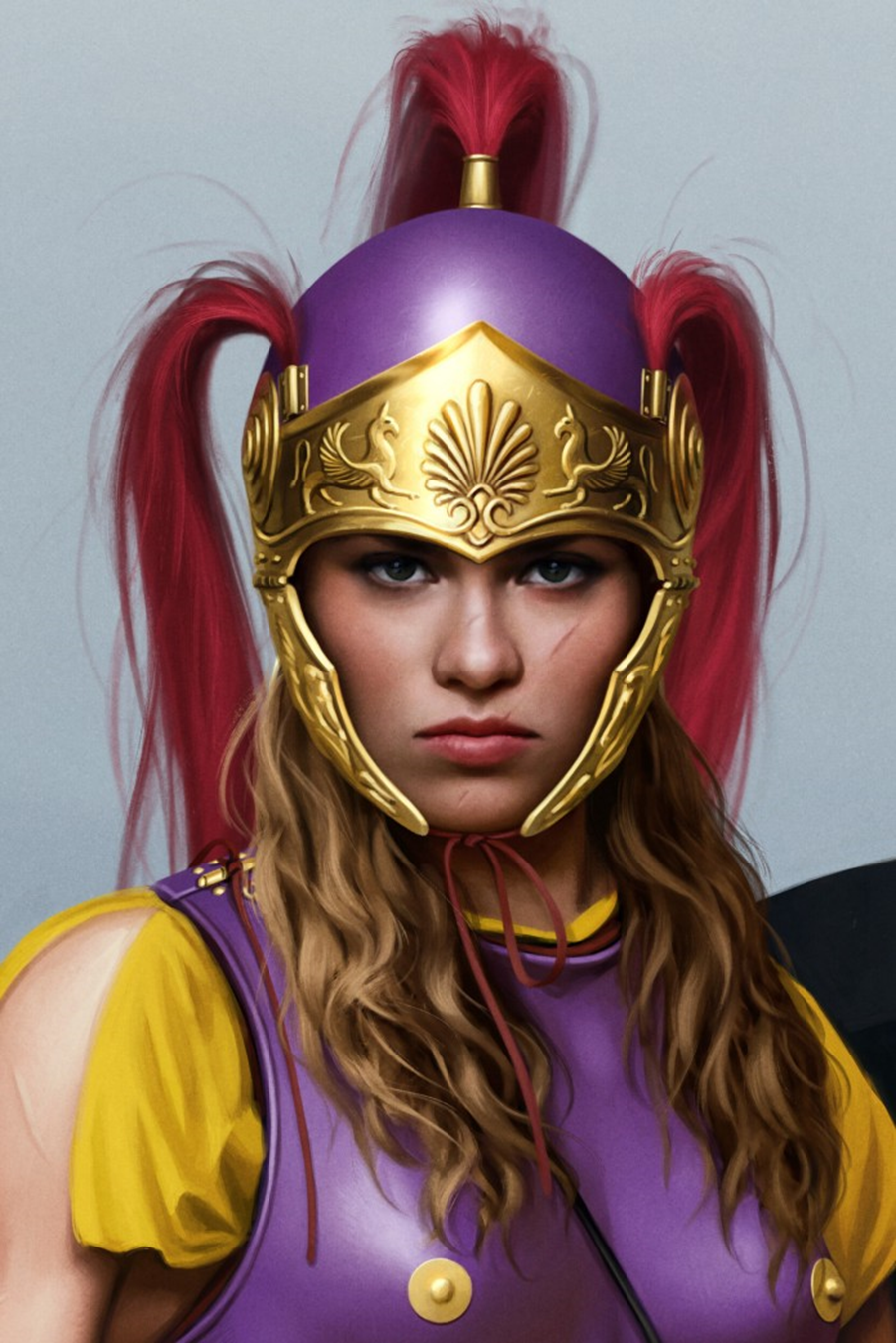
The Self-Lover/Narcissus-Greek Mythology
Narcissus is a character in Greek mythology who falls in love with his reflection in the water because of his incredible handsomeness. Even the beautiful Eho, the nymph, cannot stop him from melting day by day in line with his self-indulgence. The name of Narcissus was given to those who admired the flower and exaggeratedly himself.
Image by: https://pin.it/45NDKjP from Pinterest
**Narcissus & Its Reflection**
Narcissus was born in Thespiae in Boeotia, the son of the river god Kephissos and the nymph Liriope. The oracle Teiresias one day prophesies to Narcissus' mother that her son will have a long life "if he never knows himself". When the handsome young man reached his teenage years, he has yet to find anyone who can make his heart tremble, although he has left behind many sad and heartbroken girls and a couple of boys.
Then, one day, he accidentally meets his reflection in a puddle and falls in love with himself, thus living unrequited love to the fullest. Of course, this one-sided relationship leads nowhere and Narcissus can't help himself from its reflection, he is helplessly melting day by day and eventually dies of hunger and thirst. His corpse (or, in some versions, blood from the self-inflicted stab wound) transforms into flowers named after him, achieving a kind of immortality.
**Narcissus & Echo**
Another version of the legend is found in the work of the Roman writer Ovid. According to the story, Narcissus is handsome as ever, but cruelly rejects Echo. The beautiful nymph Ekho, heartbroken day after day, melts away from her pain, leaving only the echo of her voice. Because of this indifference, Narcissus is killed. In another version, Hera punishes her for distracting Echo with tales of her husband, Zeus, who had an affair with the mountain fairies, while sneaking away from Mount Olympus.
This explains why Ekho can only repeat what others have told him. One day, while hunting deer in the forest, Narcissus encounters Echo in his cursed form. After a few redundant words and phrases, Ekho tries to hug Narcissus but is rejected and quickly runs away. Eho also melts away in the forest, until only his voice remains.
**Ameinias & Artemis**
Other stories that diverge from the original legend of Narcissus, as in the Echo story, roughly reject their suitors. One of Narcissus's most ardent admirers was Ameinias, but Narcissus sent him a sword to kill himself, and he did.
Ameinias cursed the sword describing his unrequited love and asked the gods to curse Narcissus. Artemis responded to his request—perhaps because she disliked rival hunters—and made Narcissus fall tragically in love with her own reflection.
Unlike Greek artists, the Roman version of Narcissus and Echo was a very popular subject in Roman art and appears in nearly 50 murals in Pompeii alone. The Renaissance shed light on Narcissus;
The story involving light and reflection proved irresistible for Caravaggio, who captured the legend in his famous oil painting from the 16th century AD. Finally, Narcissus's name has been given in psychoanalysis to a state of self-indulgence, too much preoccupation with appearance.

Roxana-Wife of Alexander the Great
B.C. At the Battle of Gaugamela in 331, Alexander the Great's King III. After defeating Darius, Alexander had to deal with minor rebellions that broke out throughout his empire. B.C. In the summer of 328, a rebellion occurred in Bactria, an eastern satrapy, that would allow Alexander the opportunity to meet the beautiful Roxana.
When Bactria rebelled, Alexander and his army acted quickly to suppress the rebellion. Thirty thousand Bactrians took refuge in a fortress perched on top of a steep cliff called the Sogdian Rock. Alexander sent word to Arimazes, the commander of the fort, urging him to surrender. Reluctant Arimazes answered this call by asking Alexander if he knew how to fly, saying that if he did not have winged soldiers he would not be able to defeat him.
The proud Alexander had no intention of letting any impossibility stop him. Alexander summoned the best rock climbers in his army, offering a reward to the first person to reach the top of the cliff: three hundred volunteers thereupon. In the morning they had reached the top, with only thirty casualties – soon after that the citadel surrendered. According to one historian, it was there that Alexander saw his beloved Roxana for the first time among the captives and instantly fell in love with her.
In another version of the story, told by the historian Plutarch, Oxyartes, the satrap of Bactria, had Alexander hold a banquet in his honor right after the fortress had surrendered. That night, Alexander's eyes fell on one of the dancers. That person was Roxana, the sixteen-year-old daughter of Oxyartes, whose name means "little star." Roxana was hailed by people who saw her as the most beautiful woman they had ever seen—even more beautiful than the wife of the defeated King Darius. While Alexander might have been the only woman he truly loved, there was another possible reason for marriage, according to Plutarch.
(His marriage to Roxana, whom Alexander saw for the first time dancing at a drinking banquet, who fascinated him with her youth and beauty, was truly a love marriage, but it was also a move that allowed him to control the subjects he ruled. Thus, he honored the people of the people he conquered by choosing a wife from among them.)
The marriage of Alexander and Roxana had to wait, as Alexander and his army were called into battle elsewhere. Finally, Oxyartes and the new Persian King performed a Macedonian tradition and divided and shared the bread. Ultimately, BC. The marriage of Alexander and Roxana, which took place in 327 BC, remains a subject of debate among historians.
Was it a love marriage or was it a political alliance, as Plutarch claimed? Such marriages were made several times by Alexander's father. Also, without marriage, Alexander would not have been able to take advantage of Roxana, which would have been a violation of his own policies. This marriage was therefore compatible with Alexander's policy of uniting two cultures, Greek and Persian. Alexander would later insist that all his generals marry Persian women. (which would cause bitter feelings after his death)
From their marriage, Alexander's BC. Little is known about Roxana until her death in 323. Although some historians state that Roxana went to India with Alexander and sided with him in Babylon, everyone agreed that Roxana was pregnant at the time of Alexander's death. His passing to the next records is in Macedonia where his son, the future IV. It happened when Alexander was waiting for his birth with his mother-in-law, Olimpia. While he waited, the fate of the empire awaited with him.
Of Alexander's generals, only Perdikkas wanted to wait until the birth of the baby to determine the future of the empire. In his own interests, Perdikkas hoped to hold the empire together so that he could serve as regent for the young king. Other generals - Ptolemy I, Antigonos I and Seleukos I Nikatōr - did not want to wait and demanded that the empire be divided among them.
These discussions would eventually turn into what historians call the Successor (Diadokh) Wars. Roxana hoped that, with Olimpia's support, the empire could be held together for the yet-to-be-born Alexander. But there were other potential suitors for the kingdom, among them Phillip Arrhidacus, half-brother of Alexander the Great, son of Philip and Philinna of Larissa, but he was not in serious danger as he was seen as a fool.
**Did the kingdom have other suitors? It seems that Roxana wanted her own son to be the sole heir and summoned Statira, Alexander's "other" wife.**
***According to Plutarch;***
Roxana, now pregnant and respected by the Macedonians for this reason, was jealous of Statira, Alexander had her write a fake letter as if she was still alive and summoned her with this letter. When Statira came, she had her and her sister killed and thrown into a well where they filled their corpses with mud...
Jealousy and indecision had captured Roxana. Wanting to preserve what little part of the empire was his, Cassander decided to marry Antipater's son and heir to Macedonia, Roxana, and her thirteen-year-old son, IV. Alexander BC. He had him killed in 310. With the death of his son, Alexander's lineage came to an end.

The Wrath of Achilles
Achilles, a figure of Greek mythology and literature, is also the hero of the Trojan War. Supreme Achilles, leader of the terrifying Myrmidons, plunderer of cities, and murderer of Hector, was virtually invincible in battle. The most powerful Greek warrior, Achilles' long reign only ended as a result of the divine intervention of Apollo.
Achilles, the bravest, strongest and even the most handsome of the Greek army of heroes who went to Troy to get Helen back, was also too proud and mean for his own benefit. In fact, his reckless anger would cost both his compatriots and the enemy dearly.
In Greek mythology, Achilles is a hero born of Peleus and the Nereid Thetis. His mother held him in a sacred fire or, according to rumors, above the River Styx, to make her son immortal and inviolable. However, this part of the baby's body, hanging from its heel, remained a mortal piece of flesh, and eventually this weakness would lead to the downfall of Achilles.
Knowing that her son had a glorious but short life, Thetis tried to hide Achilles from the world, so Achilles, according to some rumors, disguised as a girl and was brought up in Skyros with the Lykomedes royal family. Some rumors owe the hero's education to the wise centaur Chiron, who also trained Hercules.
**Wrath of Achilles**
When Achilles learned of the tragedy, he was enraged; Now he would fight and avenge his friend's death in a terrible way. He immediately asked his mother Thetis to procure new armor, and he enlisted Hephaestus, the god of metallurgy, to forge the most magnificent armor ever made for the hero Achilles. Homer describes armor in great detail; The shimmering shield depicts all manner of decorations in gold, silver, and enamel, the knee pads were of shiny tin, and the helmet had a golden coat of arms.
Armed with his holy armor and still red with rage, the warrior Achilles stepped onto the battlefield once more and sent a huge line of Trojan soldiers to Hades, swaying the enemy left and right. He then pursued Hector, and although Apollo three times tried to protect the prince in clouds of mist, the two eventually met in single combat outside the walls of Troy.
Although Hector himself was a great warrior, he was no match for Achilles, who promptly sent him to Troy and strapped him to his chariot, dragging his body in front of the city walls in front of his grieving family in front of his bereaved family, and then returning to Achean, an act that violated all the war ethics of ancient wars.
King Priam of Troy secretly went to his enemy's camp to beg Achilles to return his son's body so that he could arrange a proper burial.
Despite these dramatic events, the war continued and Achilles continued to lead the process, even killing Memnon, the Ethiopian King and Priam's nephew. However, the end was near for the great warrior. Just as his mother had feared, our hero would be killed in his prime, despite gaining glory and fame. Once again, it was Apollo directing an arrow unleashed by the Trojan prince Paris, who meddled in people's affairs and started the war by kidnapping the beautiful Helen.
Of course, the arrow hit the only vulnerable place, the heel, and so Achilles was sent to Hades. The heroic Ajax was able to recover the body and took it back to the Achaean camp, where funerals were held in honor of the deceased warrior. The magnificent armor was given to Odysseus, who, after a quarrel with Ajax, would end the siege and victory of the Greeks as a result of a wooden horse conspiracy.

The Laws of the Twelve Tables
The 12 Tablets (aka the 12 Tablet Laws) were a set of laws inscribed on 12 bronze tablets created in ancient Rome between 451 and 450 BC. These were the beginning of a new approach to laws now adopted by the government, written so that all citizens could be treated equally before them.
It may not have been a fully codified system, but the 12 Tablets were the first step in allowing the rights of all citizens to be protected and wrongs corrected by well-written, well-known laws. As a result, Rome's approach to law would later become the model followed by many subsequent civilizations to the present day.
**Formation of 12 Plates**
According to tradition, in 451 BC, a committee called the decemviri was tasked, following public pressure, with creating a code of law that would better represent the interests of the common people (plebs) and reduce the unnecessary influence of aristocrats (patricians) and priests (papals) on Roman law.
These latter were exclusively involved in a council that interpreted the law as they saw fit. In preparation for this responsibility, a delegation of three was sent to Athens, where they studied the laws of the famous lawgiver Solon (640 – ca. 560 BC). Then, ten men, all patricians, were given consular imperium and allowed to draw up a list of laws they considered most necessary and useful.
This is the traditional view of events, but the composition of the Tables, perhaps more realistically, was an attempt by elites to better govern themselves and prevent abuses within their own social group.
In any case, the result was a list of written laws (legibus scribundis) presented in ten tables, and two more were added the following year to bring the total to twelve. Eventually, laws became laws. So this means that they were made after they were first decided by a legislature and they are no longer just based on custom and tradition.
The original reason for the preparation of the tablets may have been lost in the depths of history, but once written, their contents were consistently referenced in later Roman written works. The tablets have not survived, according to tradition, when Rome was sacked by the Gauls in 390 BC. From some of the remaining fragments and from these references in the literature, it is possible to identify at least some features.
The list of laws covers most areas of private law and seems to focus on relationships between individuals (as opposed to the rights of individuals and the state or non-citizens), and is therefore more of a list of civil cases and penalties than a complete, all-encompassing rule of law.
It also focused largely on areas related to an agrarian state. For example, the crime of arson was punishable by death (poena capitis). In this case, he would be punished by burning. The crime of using magic on crops was also punishable by death, but this time by a kind of crucifixion. There would be smaller penalties for property damage, such as exile from Rome, loss of citizenship, and confiscation of property for complicity.
Reconciliation can also be achieved by paying compensation to the plaintiff and thus avoiding court. Other areas covered were procedural, such as the ius profession, which was a special call.
If a plaintiff communicated to the defendant that he wanted to bring a case against him, then the defendant was compelled to appear before a magistrate and could even be physically coerced to do so. Family law was also part of the 12 Tablets, which governed the rules regarding marriage, guardianship, inheritance, and funeral.

Orion-(The Hunter) Greek Mythology
Orion was the great hunter of Greek mythology, famous for his good looks and many love stories. The gods turned Orion into a constellation, either as a result of his attack or Artemis' adoration. Referred to by ancient authors such as Hesiod and Homer, the constellation of Orion was used throughout antiquity as an important navigational and agricultural aid.
**Ancestry and Birth**
The myths about Orion are diverse and contradictory. In some versions, he is the son of Poseidon and Euryale, one of the three Gorgon sisters. Other writers consider him the son of Alcyone (One of the Lands) and Hyrieus, son of Poseidon. In this story, Hyrieus, a poor old farmer and beekeeper, gives his hospitality to Zeus and Hermes in exchange for the gift of a son.
Orion was born when Hyrieus followed the gods' instructions and buried the skin of a sacrificed bull in his wife's tomb. For this trick to work, the farmer had to put water on the leather first, and nine months later Orion emerged from the ground. This miraculous birth involving water explains the association with the coming of rains on the rise and fall of the constellation Orion.
Orion was said to have come from Hyria in Boeotia. It was an indisputable fact that he had a great body, good looks, and was an excellent hunter. Orion was also alleged to have fathered 50 boys from sleeping with 50 fairies, making him one of the greatest Greek lovers.
**Orion and Merope**
Not content with conquering the fairies, Orion went to Chios, and one of the Pleiades pursued Merope, the daughter of Oenopion, the granddaughter of Dionysus, and attacked her. Oenopion had offered his daughter to the famous hunter in exchange for getting rid of the island's troublesome wild animals. Orion did as he was told, but Oenopion, afraid of losing his daughter, refused to keep his word and pretended that many wild creatures still roamed Chios.
Orion later took his reward anyway and attacked Merope in her room. When Oenopion realized the crime, he sought help from Dionysus, and the god of wine first got the hunter drunk and then had him blinded by the satyrs. The unfortunate Merope would later become the wife of Sisyphus, and the shame of being the only one of her sisters to marry a mortal would explain why her star shone less in the Pleiades.
Fortunately, Orion would regain his sight if he could get himself to the point where Helios - the Sun - first rose each day above the Ocean, far to the east. So he crossed the sea in a boat, and when he stopped at Lemnos he took Cedalion, Hephaestus' assistant, as his guide along the way. Having achieved his goal, Helios properly restored Orion's vision, and Eos, the personification of Dawn and Helios' sister, immediately fell in love with the handsome hunter. Their illicit affair is said to explain the beautiful morning blush of dawn.
**Orion and Artemis**
Orion's next mission was even more ambitious and deadly, as he went to the goddess Artemis, who was also a famous hunter. For his bravery, Orion was transformed into the eponymous constellation, and his dog likewise into the bright star Sirius. However, in an alternate version of the story (and Homer's), Eos falls in love with the mighty hunter while visiting Helios, and Artemis jealously kills him with his arrows somewhere near Ortygia (Syracuse?).
In another version, Artemis accidentally killed Orion after Apollo was tricked into thinking the hunter was actually a villain who attacked one of his priestesses. While Orion swam to escape a giant scorpion (again sent by Apollo), he could only see the goddess's bobbing head in the distance and was killed by Artemis' arrows, as he could not recognize the hunter.
This tragedy occurred after two great hunters played sports together around Crete. Artemis attempted to enlist the medically gifted Asklepios to bring Orion back to life, but was just then destroyed by Zeus' lightning bolt as it was so useful in bringing the dead back to life and blurring the distinction between mortals and gods.
Artemis tried to commission Asclepius, a master of medicine, to resurrect Orion, but was overthrown by the lightning bolt of Zeus, who was very skilled at resurrecting the dead and blurring the lines between mortals and gods. This version, too, had to do with regret over the loss of his hunting mate that had allowed Artemis to become a constellation and gain immortality among the stars.
Another legend would say that Orion was not among the heavens, but less poetically, he was buried at Tanagra, north of Athens. The Greek travel writer Pausanias, who lived in the 2nd century AD, claimed to have even visited the site considered to be the place where Atlas sat and meditated.

The story of Carthage Coin
The Carthaginian coin was first minted in the 5th century BC. The Carthaginians, who initially adopted the dirham, later minted silver shekel coins. The Carthaginians, who initially adopted the drachma, later minted silver shekel coins. The designs were instantly recognizable as intended and featured famous figures such as Hannibal or local flora and fauna such as palm trees and elephants.
**Barter to Coin**
Carthage, like its Phoenician founders and many other ancient Mediterranean trading cultures, entered the coin world relatively late. Greece and its colonies had used them for several centuries. Barter and barter were the tried-and-tested forms of payment in the ancient world before coinage, and this system was useful for countries like Carthage, which traded in remote places where minted coins were less useful and where their value was not always recognized.
Ultimately, however, the convenience of carrying certain weights of ingots made of precious and semi-precious metals convinced the Carthaginians to adopt this method, and from there it was a small step toward printing more manageable forms of payment in the form of coins. .
The first Carthaginian coins were actually minted not in Carthage's hometown, but in Sicily in the late 5th century BC, not by coincidence, a place that has long produced its own coins. The beginning of a Carthaginian-controlled mint was due to the necessity to pay mercenaries, as had previously happened in wider Greece.
Soldiers in the field did not have much use for heavy metal ingots and could not comfortably carry large quantities of goods such as grain or other foodstuffs. Carthage's military campaigns in western Sicily in 409 and 405 BC and the arrival of coins were not unrelated at the time.
**Dirham and Shekel**
The first Carthaginian coins were made of either silver or bronze and replicated the Greek tetradirham (four dirham) coin and unit famously produced by Athens. They were printed in the typical fashion of the time by hammering a flat metal disc between two engraved paints. A Carthaginian silver tetradirham coin weighed about 17 grams.
From the 4th century BC, new coins of higher value were added to the assortment of electrum (an alloy of gold and silver) and pure gold equal to 20 dirhams. Carthaginian mint coins were also seen at home in the 4th century BC, and at the end of that century, the dirham was changed to a new unit, the shekel (c. 11 g), a heavy silver coin. There were fractions of a shekel coin for smaller purchases, and two, three, or even six (about 44 g) coins for larger expenditures.
When Carthage conquered southern Spain in the 3rd century BC and took control of the rich silver mines there, local mints were set up to cash this new prize immediately. Sardinia was an important mint, especially during the First Punic War (264-241 BC), when Sicily was under threat. As things began to turn bad for Carthage against Roman power, silver coins began to contain less and less silver.
**Coin Designs**
In the ancient world, coins were an important tool for conveying political and cultural messages by presenting the heads of rulers and figures from local mythology. Carthage was no different, and its coins depicted key figures such as Dido (aka Elissa, the legendary founder of Carthage, and distinguished by her long-necked and soft Phrygian hat with ear flaps), the god Melqart (typically wearing and/or wearing a lionskin headdress). . carrying a stick), the goddesses Tanit, Astarte, and more rarely Isis, and the great generals Hamilcar Barca and Hannibal. Other popular and immediately recognizable designs were the bow of a ship, palm tree, horse (head only or whole), lion, and war elephant.
Carthaginian coins sometimes included legends as well as pictures containing the city of export, such as Sys (Panormus) and Carthage, or words indicating immediate destinations: mhnt (army), 'm mhnt (army people), mhsbm (payers), and b'rst ( 'regions', eg Sicily and Spain).
Carthaginian coins were, at the time, an eclectic mix of Greek designs and Carthage's own artistic tradition, leading historian Dexter Hoyos to conclude that "the Carthaginians' ability to adopt, adapt, and develop what they wanted from other cultural worlds was no less evident in their coins."
That the coins were successful and helped increase Carthage's commercial prosperity has been proven by archaeologists finding them not only in Spain, Sicily, and mainland Italy, but also in remote places such as the Balkans and Azores.

Pegasus-Winged Horse of Greek Mythology
Pegasus (or Pegasos) is a winged horse from Greek mythology, born from the severed neck of the gorgon Medusa, whose father was Poseidon, who was killed by Perseus. At the same time and in the same way, Chryasor was born. Poseidon gave Pegasus to his son Bellerophon and put Pegasus to good use in his famous battle with the Chimaera.
The legend of Bellerophon begins with the hero visiting Tiryns and enjoying the hospitality of Proitos, the king of the city. But the trouble began when the king's wife, Stheneboia, fell in love with the hero and made inappropriate advances.
Bellerophon, a good guest, politely refused these advances, but predictably, Stheneboia saw the red and went before the king, accusing the visitor of trying to seduce him.
As punishment, Bellerophon was sent by Proitos to serve his father-in-law, King Iobates of Lycia. Upon arrival, Bellerophon was given a series of dangerous and incredibly difficult tasks, chief among them was to destroy the fearsome and rather strange Chimaera.
This fire-breathing creature was a terrifying mix of a lion's body with a snake for its tail, and a goat's head sprouting from its back. Bellerophon was lucky to have Pegasus at his disposal to assist him in this task. In some accounts he found the horse in the Pyrenean Fountain near Corinth, and Hesiod suggests that this fact explains the name Pegasus, which derives from 'water' - pēgē. Having tamed the horse with Athena's help, Bellerophon mounted (and flew) the Pegasus and was able to slay the monstrous Chimaera with his spear.
Bellerophon and Pegasus continued to have more success with other challenges where Iobates set the hero, including a battle with the Amazons. However, Bellerophon, who was so arrogant and thought he could fly high enough on his winged horse to claim his place among the immortal gods, was kicked out by Pegasus and returned to Earth unceremoniously.
Meanwhile, Pegasus continued on his way, and when he arrived on Mount Olympus, it was given to Eos, who was responsible for bringing Dawn into the sky each day. According to Hesiod, in his Theogony, Pegasus also brought thunder and lightning to Zeus when needed.
Pegasus is also credited with creating a series of bows with an imprint of its hoof. The most famous of these was the Hippocrene spring at Mt. Helicon was near the grove sacred to the Muses and the spring at Troezen.
Pegasus, the oldest BC. It appeared in Greek ceramics, which are 7th-century Corinthian wares. Pegasus, especially BC. It was also a popular design on coins from 6th century Corinth. A famous representation in the statue is from the pediment of the Temple of Artemis at Corcyra (580 BC). The legend of Bellerophon and Pegasus was also a popular subject in Roman art—especially engraved semiprecious stone cameos and floor mosaics—where the horse became a symbol of immortality.

Prometheus:The Fire Bringer
*Before I start, I must say that all of this is just mythology. They can be imaginary. Among all the myths, the story I was most impressed with is Prometheus. The punishment he received is really bad...*
In Greek mythology, the Titan Prometheus is known for being a clever trickster in his own right, and is widely known for giving humanity fire and metalworking. Because of this act, he was chained to a rock by Zeus and punished with his liver being eaten by an eagle every day.
Prometheus (Forethought: Forethought), passed between the Titans and the Olympian gods, and made for the seizure of heaven under the leadership of Zeus; He was one of the ringleaders in the war, which is said to have lasted ten years. However, when the Titans disobey his advice to use cheats, Prometheus switches sides and supports the victorious Olympian gods.
According to Hesiod in his work "The Birth of the Gods (Theogonia)", Prometheus' father Iapetus, his mother Clymene (in other versions the Goddess Themis) and his brothers the Titans; Epimetheus (Contemplating or Late Realizing), Menoetius and Atlas. Deucalion, one of the sons of Prometheus, managed to survive the flood that lasted for nine days and nights with his wife Pyrrha, just as Noah did, and the two of them became the ancestors of humanity.
In some traditions, Prometheus made the first man out of clay, while in others the gods created all living things on earth. He gave Epimetheus and Prometheus the task of bestowing gifts on humanity; so people survived and their well-being increased. Epipmetheus generously distributed gifts of fur and wings, but had exhausted his gifts before he had time for man.
**Prometheus' Crime**
Saddened by the weakness and nakedness of man, Prometheus stole the fire from the workshop of Hephaestus and Athena from the Olympos Mountains and hid it in the hollow of the dill stalk, giving humanity a valuable gift that would help in the struggle for survival. In addition, Titan Prometheus taught man how to use his gift and metalworking began; therefore Prometheus is also associated with science and culture.
In a slightly different version of the story, man already has fire, and Prometheus tried to trick Zeus into eating bone and fat while the best meat was still available, during a meal in the mountains of Olympus, and Zeus, enraged by this event, took fire from the hand of man and condemned man to eat raw meat. In another version, Prometheus stole the fire after this event. This also explains why the Greeks always sacrificed animals to the gods representing bones and fat and ate the meat themselves.
**Punishment of Prometheus**
Zeus was enraged that Prometheus had stolen the fire and sent him perhaps as far as we could say to the Caucasus. Here Prometheus is chained to a rock and Zeus sends an eagle to eat Prometheus' liver. To make matters worse, Prometheus' liver grows back every night, and the eagle continually comes back every day to persecute Prometheus. This is the luck of man; After many years, the hero Hercules kills the eagle with his arrow one day, while celebrating his own labor.
According to what is described in Hesiod's "Works and Days", Zeus punishes humanity by ordering Hephaestus to create the first woman Pandora from clay, because he took fire, and by bringing all the bad things of life - fatigue, sickness, war and death - to humanity through Pandora. and ultimately separates humanity from the gods.

Hesiodos
Hesiod (700 BC), along with Homer, is one of the first almost legendary Greek Epic poets. His works are not of comparable length to those of Homer. Hesiod's poems are considered epics not because of their length but because of their language.
Hesiod produced two completed works that reached us. These are Theogony and Works and Days. Both were written in the oral tradition. Various other works have been attributed, rightly or wrongly, to Hesiod. These include the Shield of Heracles, the Catalogue of Women, the Principles of Chiron, Melampus, and Astronomy. These are all in pieces. Unfortunately, the story that Hesiod was competing with Homer in a poetry competition is absolutely false.
**Theogonia**
The theogony consists of about a thousand hexameter lines and is a unique representation of the Greek gods and lineages. Hesiod, like many other epic poets, claims that he was inspired by the Muses (Museums) and that this happened "while shepherding his lambs under Mount Helikon".
**Theogonia mainly covers these areas:**
Earth's beginning with Chaos, followed by Gaia, Tartarus, and Eros (this chapter is mentioned near the beginning of Plato's Symposium)
Gaia creating Uranus and their breeding Titans, Cyclopes and other giants
The story of Kronos castrating Uranus
The upbringing of the twelve Olympian gods Kronos and Rhea, how Kronos ate his gods as soon as they were born, and how only Zeus survived and then forced Kronos to vomit.
The story of Prometheus, who tells how he was punished by Zeus for setting people on fire.
The Titanomahia War between the Olympians and Titans, in which Zeus was victorious, dragged the Titans and Typhons into Tartarus.
A chapter dedicated to Zeus, his last wife, Hera, and many other wives
**Birth of Hercules**
The offspring of goddesses and mortal men, two lines later added to enter the Catalogue of Women.
Works and Days consist of 828 hexameters. 'Jobs' refers to the events of the agricultural year. 'Days' (recorded from about 765 lines) deals with recording the days of the month that are auspicious or unlucky to do certain things. Again, the poem begins with an appeal to the Muses (Muses), but then goes on to address Hesiod's brother Perses, urging him to put their disagreements aside: "Perses, feel them in your heart and see how this chaos god ( Eris) don't let your heart hold back from work...'' (W.D. 28).
**Works and Days can be divided into these main areas**:
The justification for man's hard work and the obligation to act justly is explained by legends and proverbs such as the tales of Prometheus, Pandora, the falcon and the nightingale.
Instructions to Perses on how to be a good farmer (works)
Advice on maritime trade
Proverbs on religious and social expectations
Lucky and unlucky days ('days')
Not much is known about Hesiod's real life. He says that his father left his home in the Aetolian Cyme because he could not profit from the maritime trade; “He settled in Ascra, a wretched village near Helikon that was bad in winter, sweltering in summer, and never good.” (W.D. c. 640), and there are several passages in his poems that refer to his real life. The whereabouts of Hesiod's death is also controversial; There was a tomb for him in Boeotia, either at Locris or Orhomenos.
The Black Death: The Plague...
The plague, also known as the Black Death, was a plague epidemic that devastated Europe between 1347 and 1352, killing approximately 25-30 million people. The disease, which is carried by fleas in rodent animals, first appeared in Central Asia and spread to the Crimea through Mongol warriors and traders. The plague, carried by the rats on the Genoese merchant ships coming out of the Black Sea, entered Europe via Italy.
While two-thirds of patients die, between 30 and 50% of the population in affected areas are thought to have died from the plague. The death toll was so high that it had serious consequences for medieval European society. The lack of sufficient number of farmers led to the abolition of serfdom,[1] a general questioning of authority and riots, and the abandonment of many towns and villages. It would take nearly 200 years for the population of Europe to return to its pre-plague state.
**Cause and Symptoms**
Plague is a disease caused by bacillus bacteria and is carried and spread by parasitic fleas, especially in rodents such as brown sewer rats. There are three types of plague, and all three were probably seen in the plague epidemic known as the Black Death. Bubonic plague, most common in the 14th century epidemic, caused a heavy swelling in the groin and armpits, namely the lymph nodes, and was named the Black Death because of its repulsive black color. These black wounds, which could often cover the entire body, were caused by internal bleeding known as bubo, after which the bubonic plague was named. Severe fever and joint pains were among the other symptoms. If bubonic plague is left untreated, 30 to 75% of infections were fatal, usually within 72 hours. The other two types of plague, pulmonary and septicemic plague, are generally fatal in all cases.
**Spread of the Plague**
In Europe, the 14th century was considered a disaster even before the Black Death came. The earliest plague had hit livestock, and crops were scarce due to overexploitation of the land. This caused two great famines in Europe in 1316 and 1317. The tremors created by the wars, especially the Hundred Years' War (1337-1453) between England and France, continued. Between 1000-1300, even the weather is getting worse; Unusual air temperature cycles heralded the "Mini Ice Age", where the winters were steadily cold and long, the growing season and ultimately the harvest diminished.
Medieval doctors had no idea about microscopic organisms such as bacteria, so they were desperate for treatment. In the prevention phase, where they had the best chance of helping people, they tried to be prevented by very poor health measures compared to modern standards. Another useful strategy would have been to quarantine areas, but because people panicked from wherever the plague had occurred, they unknowingly carried the disease with them and spread it farther, with the rats taking care of the rest.
There were so many deaths and bodies that the authorities did not know what to do with them. Carriages overflowing with corpses had become a common sight in Europe. The only precaution that could be taken was to stay where you were, avoid people, and pray. In 1352, the disease finally wore off. However, it would reappear during the remaining medieval period with milder epidemics.
**Number of Deaths**
Despite spreading unchecked, the Black Death affected some areas much more heavily than others. The fact that medieval writers and some contemporary writers show this fact with exaggerated death numbers shows that it is very difficult to calculate the total number of deaths. Some cities, such as Milan, managed to avoid major impacts altogether, but other cities, such as Florence, were razed to the ground.
Florence lost 50,000 of its 85,000 population. According to Boccaccio, this number was unrealistically close to 100,000. In Paris, it is said that 800 people are buried every day when the disease is at its peak. However, other places were somehow able to stay away from this massacre. About 30% of the population in the affected area died, but some historians paint a picture of close to 50%.
This was probably the case in the worst-affected cities. Therefore, the number of deaths in Europe between 1347-1352 is thought to be between 25 and 30 million. The population of Europe, on the other hand, would not reach its pre-1347 state until about 1550.

Atlas
In Greek mythology, the Titan Atlas was responsible for the task of carrying the sky on his shoulders, which Zeus gave him as punishment. The father of many stars and the protagonist of one of Hercules' famous missions, Atlas was also known as a wise man and the founder of astronomy. According to Plato, the first god Atlantis was named after was king Atlas, and this gigantic god gave his name to the mountain ranges of northern Africa, the great Atlantic ocean, and map compilations.
Named for "Suffering" or "Very Endurable," Atlas was the son of two titans, Lapetus and Clymene (or Themis), and the elder brother of Epimetheus, Menoetius, and Prometheus. In the Theban narrative of these events, Atlas is Niobe's grandfather.
**Zeus Punishing Atlas**
Atlas was punished by Zeus to carry the heavens because Atlas led the titans in the battle between the Titans and Gods to control the heavens. Similarly, Homer, in his Odyssey, describes Atlas as "death-minded," knowing the depths of all the seas and holding the pillars in the Atlantic Ocean that separates the heavens and the earth.
In his Theogony, Hesiod also describes Atlas as holding the heavens and mentions that he is in the land of the Hesperides (female gods famous for their songs), located in the westernmost part of the world. Later traditions, including Herodotus, associate this deity with the Atlas Mountains in North Africa. Right here, as punishment for lack of hospitality, the Titan Atlas was transformed by Perseus from a shepherd into a gigantic mountain by the deadly gaze of the Gorgon Medusa. This story dates back to the 5th century BC.
**Atlas and Hercules**
Atlas is also mentioned as the father of many constellations, a great source of wisdom, the founder of astronomy, and the original king of Atlantis in Plato's Critias. Perhaps the most famous legend about Atlas is his role in one of Hercules' famous twelve missions. Eurystheus asked Hercules to bring the golden apples from the legendary gardens of the Hesperides, sacred to Hera and guarded by the fearsome hundred-headed dragon. Following Prometheus' advice, Hercules asked Atlas (Father of the Hesperides in some narratives) to take the apples, while with Athena's help, he bought the Titan time by taking the world on his shoulders for a while.
Understandably, Atlas was reluctant to retake the burden of bearing the world as he returned with the golden apples. The cunning Hercules, however, tricked the god into temporarily relocating and bought himself some cushions to carry this enormous weight more easily. Of course, as soon as Atlas took control of the skies, Hercules returned to Mycenae with his golden booty.
In Greek art, Atlas is featured in depictions of Hercules' missions in the 6th century BC, particularly in a metope from the temple of Zeus at Olympia where it was erected in the gardens of the Hesperides. Similar scenes, especially with his brother Prometheus, were also popular in Greek pottery decoration. In Hellenistic and Roman times, Atlas was often represented as someone with bent knees and back, carrying the world forcefully on his shoulders. Perhaps the most prominent example of this pose is a 2nd-century sculpture now in the Archaeological Museum of Naples.

Spartacus: History of Gladiator Revolt Leader
Throughout history, both ancient and present, the oppressed have fought to save themselves from oppressors. As in most civilizations, slaves in ancient Rome, Syriac, Greek, and even American, were not considered citizens but as working goods to the rest of society, both skilled and unskilled. Clearly, slave revolts, whether in Rome or elsewhere, posed a danger to all citizens, and while many of these revolts were quickly suppressed, BC.
A first-century revolt caused enough concern for the Roman Senate that they eventually summoned their two great leaders to suppress the revolt. Over a two-year period, this "little" revolt, led by a one-time gladiator, sparked the revolt that would become known as the Third Slave War, whose name was Spartacus.
Although little is known of his youth, Spartacus was originally from Thrace in northeastern Macedonia and was a Roman soldier. Historian Plutarch described him as cultured and intelligent, "more Greek than Thracian." It is unknown how he became a prisoner and gladiator during his military service (with his wife); however, his unique physique and strength caught the attention of a trainer named Lentulus Batiatus, and he was sent to a gladiator school in Capua, south of Rome. Life at the gladiator school was both brutal and harsh.
That's why BC. In 73, he and 78 fellow slaves rebelled, using kitchen knives. After escaping, they came across a small caravan carrying weapons and, having captured it, fled to nearby Mount Vesuvius. Soon after, the shepherds of the region joined them, and the small army numbered over 70,000. In order to survive, they began to plunder the center of Italy.
Although he had considerable success in the early period, even defeating the armies of the two preaders and the governor of Glya and seizing their weapons, Spartacus realized that Rome would eventually defeat him, so he wanted to travel north to the Alps, towards his home. He divided his forces in two in 72 BC. Half of them, Galaians and Germans, went with his gladiator friend Crixus, the rest, mostly Thracians, went with Spartacus. Although his intention was to return to Thrace, most of his followers did not want to leave Italy and headed towards southern Italy.
Besieged by the army, Spartacus hired Cilician pirates to take him to Sicily, hoping to increase their strength. Unfortunately, he couldn't get to the island himself, but his money was gone. Crassus trapped the rebellious slaves at Bruttium, where 6,000 rebels were killed. However, Spartacus eventually (albeit at a third of his strength) managed to break through the enemy lines and once again escaped and marched south, defeating Crassus' two commanders in the process.
He was eventually cornered, however, and defeated and killed in Lucania (though his body was never found).
More than 6,000 rebels were crucified; Their bodies were displayed along the Appian Way from Capua to Rome.
Crassus had hoped to defeat Spartacus before Pompey returned from Spain. Unfortunately, Pompey returned in time to defeat Spartacus' 5,000 followers and stole the majority of the victory. Both BC. While he was elected to the consulate in 70, a deep conflict occurred.
The war and Spartacus' role here made a lasting impression. With Julius Caesar being dictator for life, he never forgot the rebellion and was determined to prevent another rebellion. Through many laws, he hoped to reduce dependence on slaves by promoting the recruitment of free workers. History has different views on Spartacus, according to some he is a hero and representative of the oppressed, according to others he is a cruel and heartless rebel. But he is still remembered for leading the most famous slave revolt in ancient Roman history.

Perseus-The slayer of Medusa
Perseus was one of the greatest and oldest pan-Hellenic heroes of Greek mythology. As everyone knows, Perseus killed the dreaded Medusa, a gorgon with serpentine hair and his gaze that turned people into stone. This feat was followed by the daring rescue of princess Andromeda from a fearsome sea creature sent by Poseidon to strike fear into the Ethiopian kingdom.
Perseus is perhaps the oldest of the Greek heroes depicted decapitating the Gorgon Medusa, which is among the earliest scenes from mythology to appear in art. Even in mythology, it is believed that he lived three generations before the other great hero, Hercules, who lived a generation before the Trojan War.
Perseus's mortal father was Danaos, and his mother was Danae, the daughter of the Argos king Akrisios (or Acrisius). However, like other Greek heroes, Perseus was believed to have divine parentage, something that helps explain how humans can achieve such fantastic feats, provides a link between humans and gods, and serves as role models. is believed.
When Danae was imprisoned by her father, Akrisios, Zeus, the king of the gods, had intercourse with her. And later she was accepted as the real father of Perseus. Acrisios had his daughter locked up in an underground prison made of bronze after an oracle told her that her future grandson would kill her.
Of course, this was not an obstacle to Zeus, who entered the cell as a golden rain. Naturally, when the child was born, Akrisios did not want to believe Danae's exaggerated story about the golden rain. Suspicious and still aware of the prophecy, Akrisios had the mother and child thrown into the sea by closing them in a wooden chest.
Zeus, however, did not give up on his fatherhood and made sure that the seas were calm enough with Poseidon so that the ark landed safely on the shores of the Aegean island of Seriphos, and Diktys, the fisherman who found the ark, helped the survivors.
While Perseus spent his development years peacefully in Seriphos, he impressed everyone with his physical strength and courage. However, as he aged, Perseus became a stumbling block on King Polydectes' (or Polydectes') plans on Danae, and the king began looking for ways to get rid of young Perseus.
Without thinking about what might happen to him, he thought that he could kill the terrible Medusa, whose gaze instantly turned people to stone, and the opportunity arose for Zeus. Polydectes immediately challenged Perseus to keep his word, and if he failed, Polydectes would take over his mother Danae.
The task seemed impossible. But here Perseus received guidance from the gods. Hermes and Athena suggested that he take the advice of the three Graiai, who were known to be very wise and were actually sisters of the Gorgons. Three old witches shared a tooth and an eye between them. Perseus stole the eye from the witches and promised to give it back, provided he told him some truths that would help him in his dangerous mission.
According to some of the narratives, Perseus wanted to know where Medusa was. In other versions, he asked the Graiai where he could find nymphs who had Hades' hat that made the wearer invisible, and winged sandals that enabled him to fly. He also requested a special bag (kibisis) to safely hold the severed head of Medusa, whose deadly gaze was still strong even after her death. Naturally, Graiai wanted his eyes back, so Perseus got what he wanted. Also, Hermes gave Medusa a special unbreakable sword or sickle (harpe) to kill her.
Hesiod is the oldest surviving source of the story and gave us a little bit of information about Medusa. From Gaia and Oceanus, three sisters Sthenno, Euryale, Medusa were born, and only the last was mortal. Gorgons lived together in flowering meadows at one end of the Earth, beyond the Ocean.
Gorgons were fearsome creatures with claws, wings, and snake hair. The story of Medusa is quite tragic because once Medusa was very beautiful but after she was raped by Poseidon in one of the temples of the goddess, Athena turned her into a hideous gorgon. In another version of the legend, Medusa asked Athena if she could leave the far north where she lived and visit the south to see the sun for the first time. But Athena refused this request.
Medusa claimed that her refusal was because Athena was jealous of her great beauty. Enraged by this boast, Athena transformed her beauty into a fearsome Gorgon whose gaze instantly turned to stone.
When the hero returned home victorious, he was struck by the beauty of the helpless princess Andromeda, chained to a rock. Andromeda was the daughter of the Ethiopian king Kepheus (or Cepheus) and Cassiopeia (or Cassiopeia).
The god Poseidon was angered by Cassiopeia's bold bragging about her beauty, even greater than that of the Nereids, and therefore sent first a terrible flood and then a sea monster (ketos) to frighten the kingdom. The only way to appease the god and prevent disaster was to sacrifice Andromeda to the approaching monster.
Perseus, who fell in love with Andromeda at first sight, said that if he married the princess, he would take care of the beast. The helpless king agreed, and Perseus showed the head of Medusa, who still had his expressive gaze, turning the sea monster into stone. The king's brother Phineus, who usurped his reward, tried to prevent Andromeda from being promised to Perseus. Perseus quickly removed this obstacle by showing Medusa's head, which Phineus turned her to stone, too.
Finally returning to Seriphos, Perseus learned that King Polydectes had raped his mother in his absence. Therefore, while the hero offers the head of Medusa to Polydektes, as he promised, he turns Medusa's deadly gaze into the king's eye and turns it into stone. Perseus then presented the head to Athena as a gift, and Athena placed the head in the middle of her terrible shield.
Perseus' next success includes accidentally killing his grandfather while competing in a sports competition in Larisa, Thessaly. Acrisios had fled there to hide from Perseus, but fate would find its own way. Perseus shot into the crowd and instantly killed the old man, thus fulfilling the oracle's prediction. Perseus, unable to bear the ruling Argos and perhaps stuck with memories of his past.
He replaced his kingdom with that of Tiryns, where he went to find the nearby city of Mycenae. Perseus has four sons by Andromeda: Electryon, Alkaios, Perses, and Sthenelos, and a daughter: Gorgophone. Elktryon would become the father of Alcmene, and she would become the mother of Hercules.

History of the Medieval Knight
Knights were the most feared and best-protected warriors on the medieval battlefield, but apart from that, they were among the most fashionably dressed and best-natured members of society. However, as the Middle Ages progressed, attaining this high position became increasingly difficult as elites sought to maintain their privileged status.
Requirements to become a knight included an aristocratic birth, education from childhood, weapons, money for horses and squires, and knowledge of the rules of chivalry. Good looks, fine clothing, a striking coat of arms and the ability to recite poetry and song were optional, but these were highly desirable extras if one wanted to rise to the top of this elite medieval society.
**How to Become a Knight**
The process of becoming a knight started from early childhood. The typical starting point for a young boy 7 to 10 years old was learning to handle horses, hunt and use fake weapons while serving a knight. From the age of 14, the next step was to become an squire, with more responsibility than a servant, learning to use real weapons and beginning a training, especially knighthood training.
Adjutants assisted knights in peace and war, kept their extra spears or shields, cleaned their armor, and looked after the few horses each knight had. When all went well, the teenager, who was about 18 by then, would be knighted in a ceremony known as initiation.
For wording, a prospective knight would take a good bath and hold a vigil throughout the night. On the day of the ceremony, two aide-de-camp knights would wear a white tunic and a white belt to symbolize purity, black or brown stockings to represent the land to which he would one day return, and a red cloak for the blood he now possesses, thus making his baron ready to dedicate himself to his ruler and church. would have come.
His sword was returned, then blessed by a priest on the condition that he always protect the poor and the weak. The blade had two cutting edges; one represented justice, the other loyalty and chivalry.
The honoring knight could then put on a spur or put the sword and belt over the squire and give him a kiss on the cheek. Then with a heavy blow (colée or 'accolade'), the aide-de-camp, with a simple touch on the shoulders or neck, with a hand or sword, or a final blow, which he must take without retaliation, to remind him of his obligations and moral duty not to embarrass the man who struck the blow. was knighted. He was then given the horse, followed by the shield and banner that could bear the family crest. Thus, the ceremony would have ended with a great feast.
Early knights could come from any background, all it took was courage and effort. Many early knights were often given their titles on the battlefield by a lord or ruler (often symbolically in the form of spurs, hence the expression 'earning one's spurs'), often after showing a certain courage and efficiency in fighting the enemy. By the 13th century, most of the knights were sons of knights as the class sought to maintain its exclusivity in society.
**Knighthood**
A knight was always expected to behave like a knight. The ethical, religious, and social status of chivalry pervaded the upper echelons of medieval society and was made more important than ever by an endless stream of romantic literature praising the virtues of chivalric behavior.
Thus, in order to maintain a good reputation and be admired by those in power, a knight had to exhibit the essential knightly qualities such as courage, military prowess, honor, loyalty, justice, manners, and generosity, especially to those less fortunate than himself.
If a knight did not do these things, and worse yet, did the opposite, they could lose their knightly status and reputation, and their family's reputation would be tarnished forever. In such a case, the disgraced knight would have his spurs ripped off, his armor smashed and his coat of arms removed, or given an embarrassing symbol or simply shown upside down.
**Death**
It was not uncommon for a knight to come to the end of his war days to join a military unit to secure a fine place in one of the cemeteries or even churches. Sir William Marshal employed just such a strategy, becoming a Knight Templar at the last minute, interred in the Church of the Temple in London, and his statue still stands.
Depictions of knights were a common way of providing commemoration. Often depicted in full armor and bearing a shield, these stone carvings can still be seen in many churches across Europe and provide historians with an invaluable record of medieval weapons and armor, as well as reminiscent of revered knights in the Middle Ages.

Viking trading town Kaupang
Kaupang is a seasonal Norwegian Viking Age trading town founded in 780 and abandoned in 950. Kaupang; It is located west of the Oslofjord (Viksfjord) in Vestfold, present-day southeastern Norway with sea access to Skagerrak. Although much smaller than the Viking cities in Sweden and Denmark—Birka and Hedeby—Kaupang was economically important to the Norwegian and Danish Vikings who raided and traded with Western Europe and the British Isles. Kaupang can be said to be the oldest city in Norway, possibly being the same place as the place called "Sciringesheal" or "Skiringssal" (Old Norse: Skíringssalr) visited in the 9th century by the Norwegian sailor and writer Ohthere of Hålogaland.
Kaupang gets its name from the Old Norse word “Kaupangr” meaning “market place” or “city”. Kaupang was located where Tjølling Municipality is today. It is located 5 km (3 mi) southeast of the modern city of Larvik, about 140 km (88 mi) from the Norwegian capital, Oslo. In the early Middle Ages it covered roughly 5 hectares (12.5 acres).
Unlike the cities of Hedeby and Birka, the origin of Kaupang's founding is shrouded in mystery due to the lack of definitive written sources. Nonetheless, there is evidence to suggest that in the early 9th century Kaupang had a central power that organized activities in Kaupang in ways similar to Hedeby and Birka. Vestfold was arguably the richest and most fertile region in Viking Age Norway, and the Frankish Annals from 813 reveal that Danish kings fought for control of the region in the early 9th century. One of Kaupang's piers dates back to 803, and some scholars believe that King Sigfred (reigned 770-804) or King Godred of Denmark (reigned 804-810) settled it in Kaupang to increase his influence and political power in Norway. They suggested that he may have established or encouraged it.
Examples of houses, tombs, shops, warehouses, piers attest to the role Kaupang played as a trading center between Norway and the outside world. The first plots and structures were drawn and erected in Kaupang between 780-800 BC. While it was originally thought that the periods experienced in Kaupang were associated with the opening and closing of the seasonal markets, recent archaeological research by Dagfinn Skre between 2000 and 2007 has shown that Kaupang is inhabited throughout the year. (Still, some of the houses excavated at Kaupang do not appear to have a hearth, indicating periodic or seasonal settlement.)
Despite evidence of vibrant international trade in Kaupang, the city appears to have not been interfered with in an interesting way, in contrast to the cities of Birka and Hedeby. Changing maritime conditions in and around Kaupang perhaps helped protect the settlement from pirates and invading forces. The first settlers of Kaupang were traders, but the finding of agricultural tools used by the farmers in Kaupang's tombs indicates that some farmers were probably among the settlers. Some structures show local artisanal asset production in Kaupang. There is also evidence that some residents of Kaupang have responsibilities such as smelting and selling and exporting iron and other materials.
Around 875, Kaupang had around 400-1000 inhabitants. Kaupang's burial sites have long been of interest to archaeologists. The interior and surroundings of the family tombs are mostly from a century-old period, 840-940. Many items from Western Europe and the British Isles were found in these tombs. Ceramic objects from Denmark are common in these tombs. Other burial sites around Kaupang include a cremation cemetery and several funeral boats that may have belonged to wealthy Danish merchants.
Items discovered at Kaupang include German wine in Rhine pottery (glass filled with drinking horns), Vend (Slavic) honey, whetstone from anywhere in Norway, Danish pottery, Frankish or Frisian clothing, in addition to Frankish and Anglo-Saxon book mounts. and Irish jewellery. The discovery of walrus tusks and soapstone fragments is proof that Kaupang was also connected to Viking trade routes further north and trade routes to the Arctic regions. A number of foreign coins found in Kaupang - Anglo-Saxon, Frankish, Danish, North African, Central Asian and Arabian - indicate that Kaupang was linked to other Viking empires.
Kaupang's decline as a place of commerce and commerce is a reflection of Birka and Hedeby. There was a sudden growth and urbanization in other nearby towns. After the second quarter of the 10th century, there is a noticeable, sharp decline in artifacts, which is associated with abandoned human activity and settlement in Kaupang. Some scholars believe that Kaupang's decline was the result of the mid-10th century when the fast-growing city of Tønsberg in nearby Norway became the center of Norwegian trade, along with trade with Scandinavia and Western Europe. The city of Skien - located 38 km (24 mi) northwest of Kaupang with access to the Frierfjord - rose rapidly after 1000, gaining wealth thanks to iron and whetstone exports from Norway to Western Europe.
The abandonment of Kaupang can be explained by the rejection of trade links with Denmark, especially the city of Hedeby, or as a result of sea level variability. Sea level is known to have dropped in parts of Kaupang during the Viking Age, and Kaupang had better overseas connections 1,000 years ago. Today, sea level near Larvik has dropped roughly 3 m (10 ft) from Viking times. Norwegian archaeologist Caharlotte Blindheim proved this during Viking-era burial excavations near the cities of Larvik and Sandefjord between 1950 and 1957.
Archaeological excavations in and around Kaupang were begun by Norwegian archaeologist Nicolay Nicolaysen (1817-1911) in 1867, but the first extensive excavations of Kaupang's tombs and several other structures were made between 1956 and 1967. Today, archaeologists have excavated and discovered less than 3% of the 40,000 square meters (9.9 acres) that make up Kaupang. In total, about 1,400 square meters (1,5069 square feet) have been excavated.
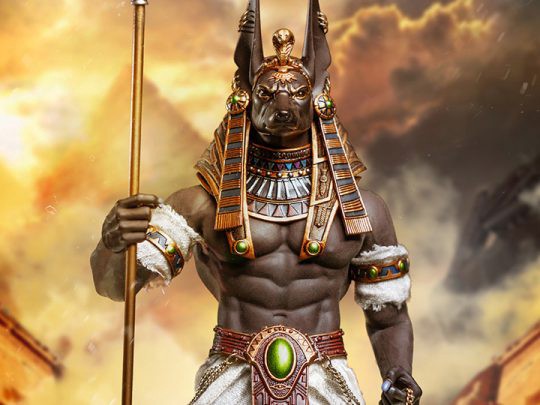 @beyourself


