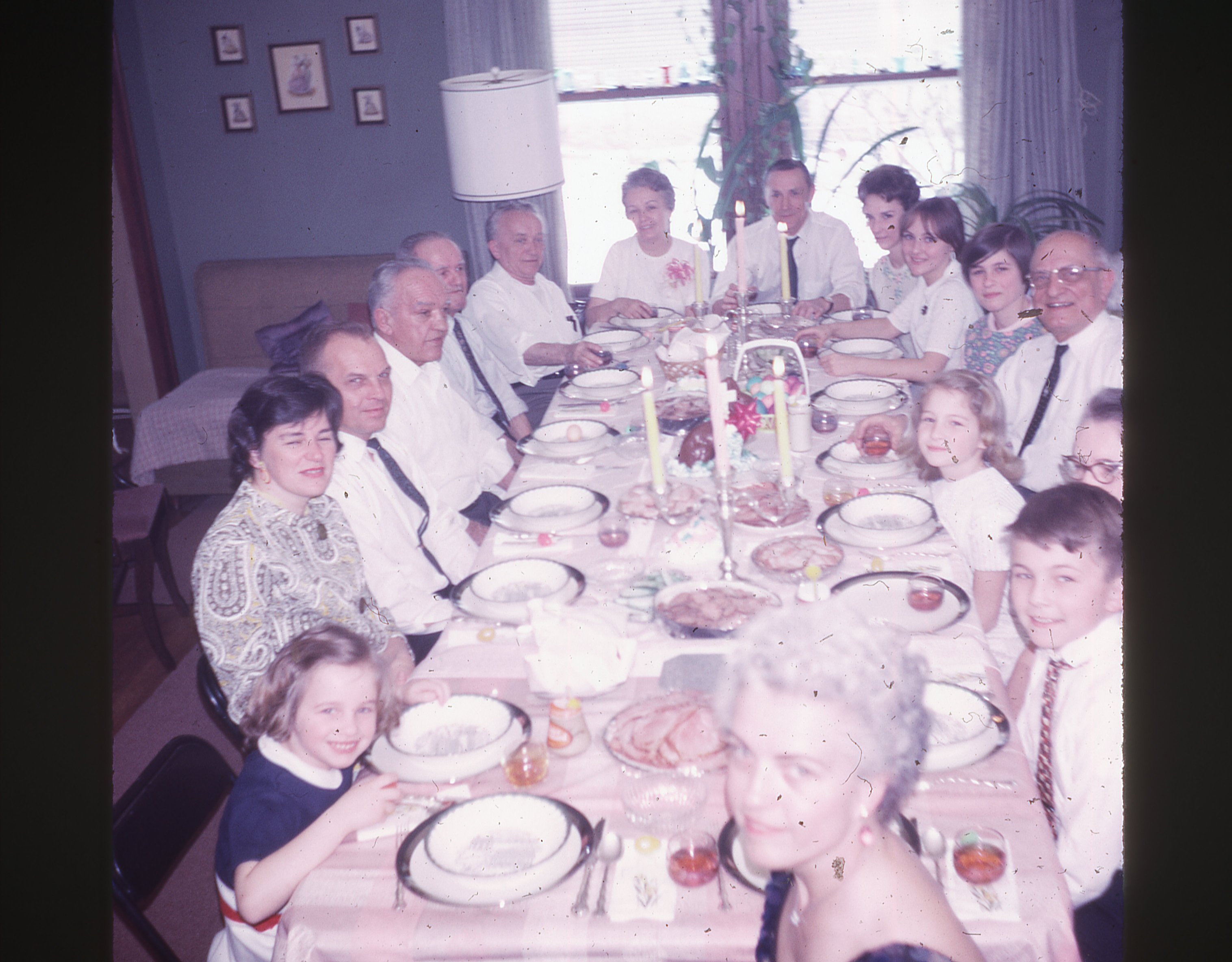
None of the photos in this set are labeled or dated but they would have been taken some time in the mid to late 1960s. I'm not sure if these were all taken at the same event or not but at least the second one appears to have been taken at Easter. If you look closely, you can see Easter eggs and a chocolate bunny near the center of the table behind the candles.
For more info and photos from this set, see https://hive.blog/photography/@darth-azrael/vintage-photos-ebay-set-1-02e25a5c656dc
Pi is digital currency that operates on a "proof of click" concept. To mine Pi you simply use the Pi app on your phone and press a button every 24 hours. As time goes on, the mining rate goes down.
The Pi network is still under development and has not gone live yet so Pi is not yet tradeable. However, in the last day or so, Pi has shown up on a couple of exchanges and the price has skyrocketed to well over $300 and as I write this is sitting at $283. So how can this be if Pi isn't even tradeable?
Read more: https://hive.blog/hive-167922/@darth-azrael/pi-skyrockets-to-usd330-or
Pi is a new digital currency developed by Stanford PhDs, with over 35 million members worldwide. To claim your Pi, follow this link
https://minepi.com/DarthAzrael and use my username (DarthAzrael) as your invitation code.
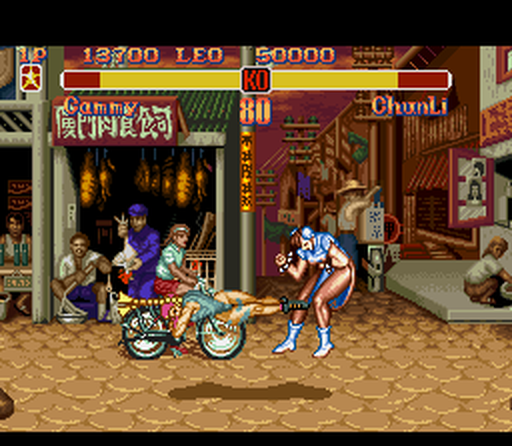
In my mind, Street Fighter II was the last really hugely popular arcade game. Sales numbers would seem to back that up as Street Fighter II was behind only Space Invaders and Pac-Man in terms of number of machines sold. Mortal Kombat and Mortal Kombat II are also high on the list but by comparison, the original Street Fighter II sold 60,000 machines (Street Fighter II Championship Edition sold even more at 140,000 machines). By comparison, the Mortal Kombat machines only sold in the range of 20,000 to 30,000 units.
Read more: https://hive.blog/hive-140217/@darth-azrael/super-street-fighter-ii-super
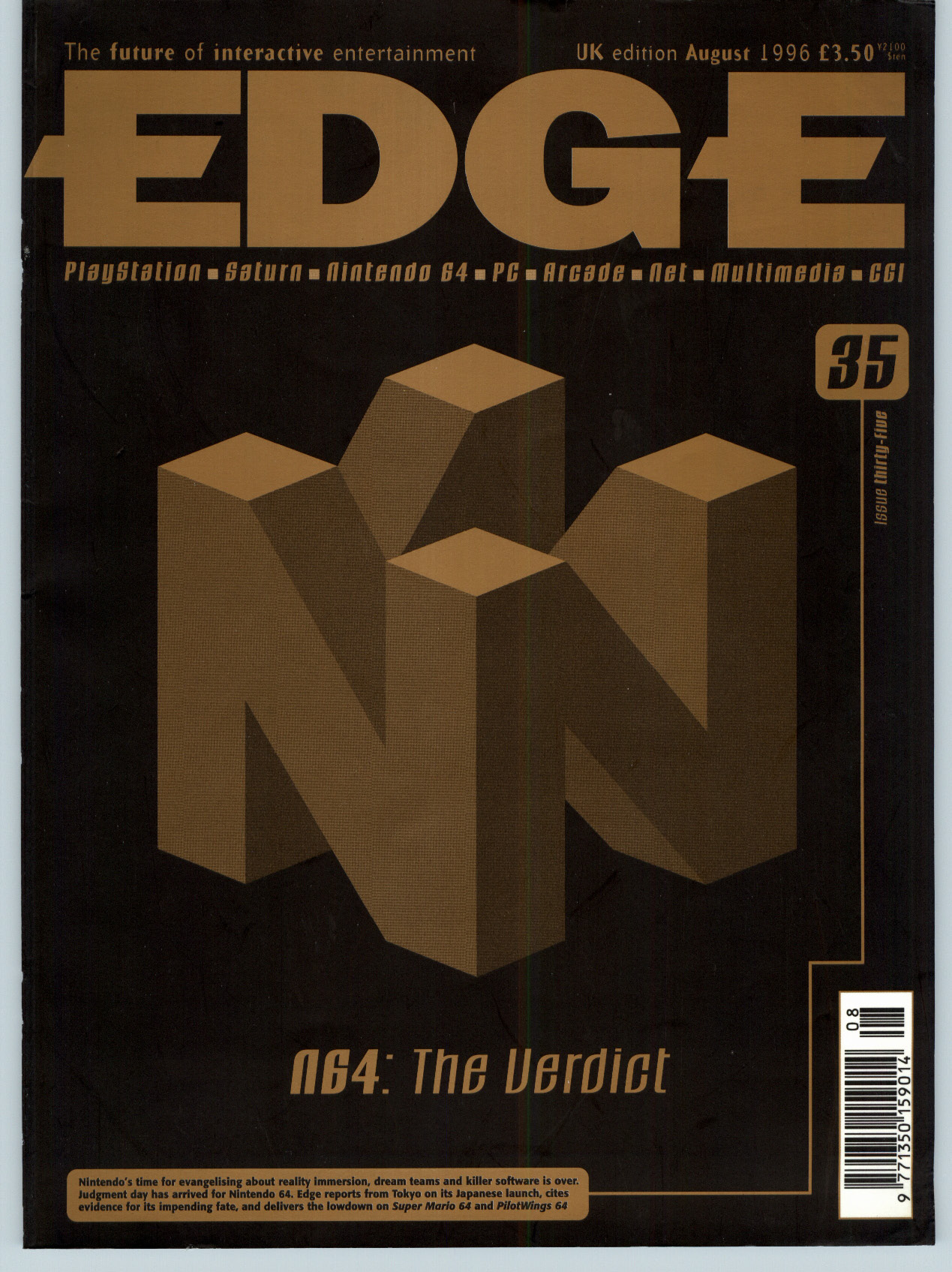
Edge was more or less the U.K.'s version of Next Generation and in fact they shared content. It covered what were considered "next generation" systems at the time. In 1996 that included the PlayStation, Sega Saturn, the PC, arcade games and the brand new Nintendo 64. The August 1996 issue includes:
Read more: https://hive.blog/retrogaming/@darth-azrael/edge-august-1996
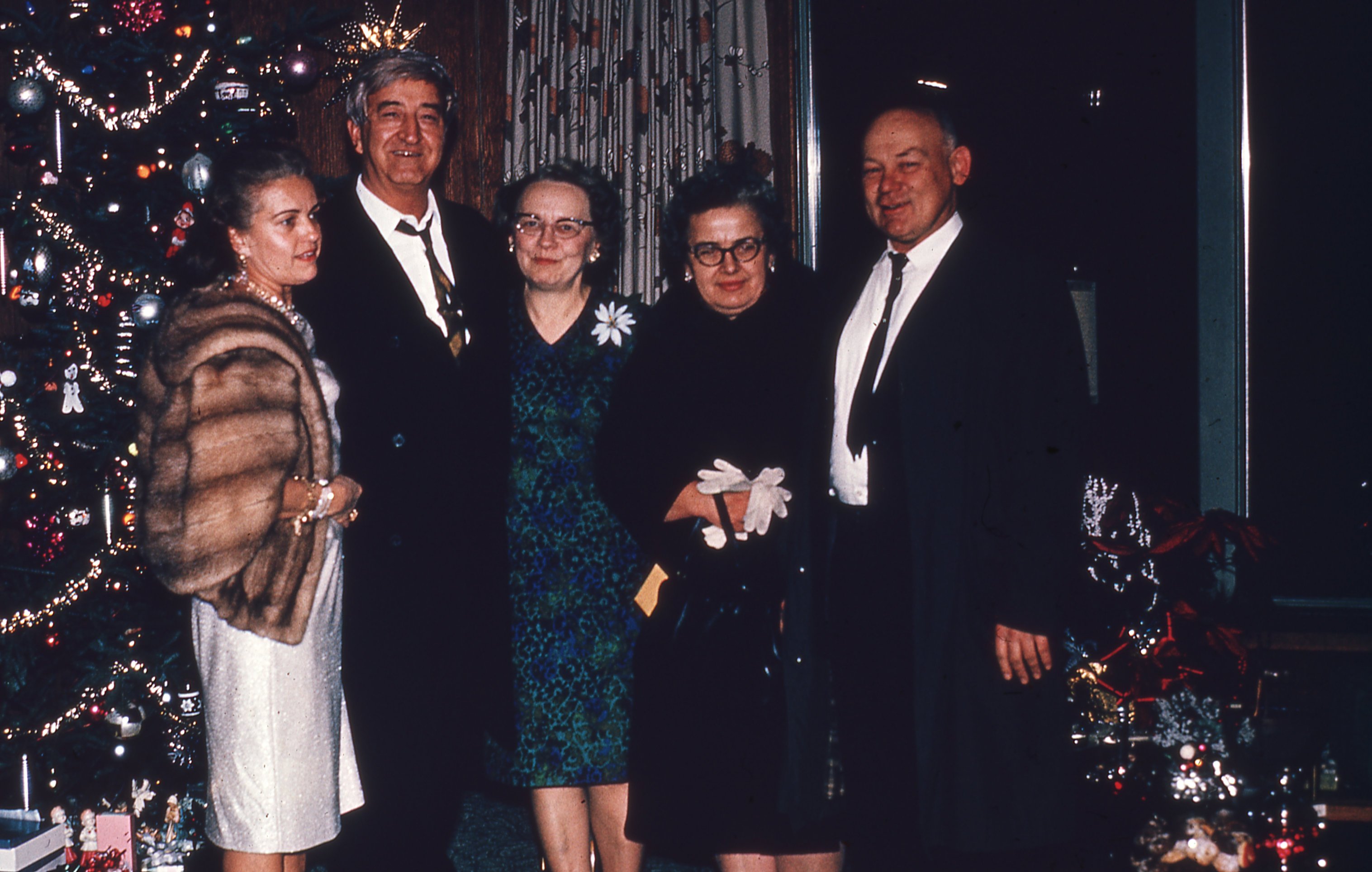
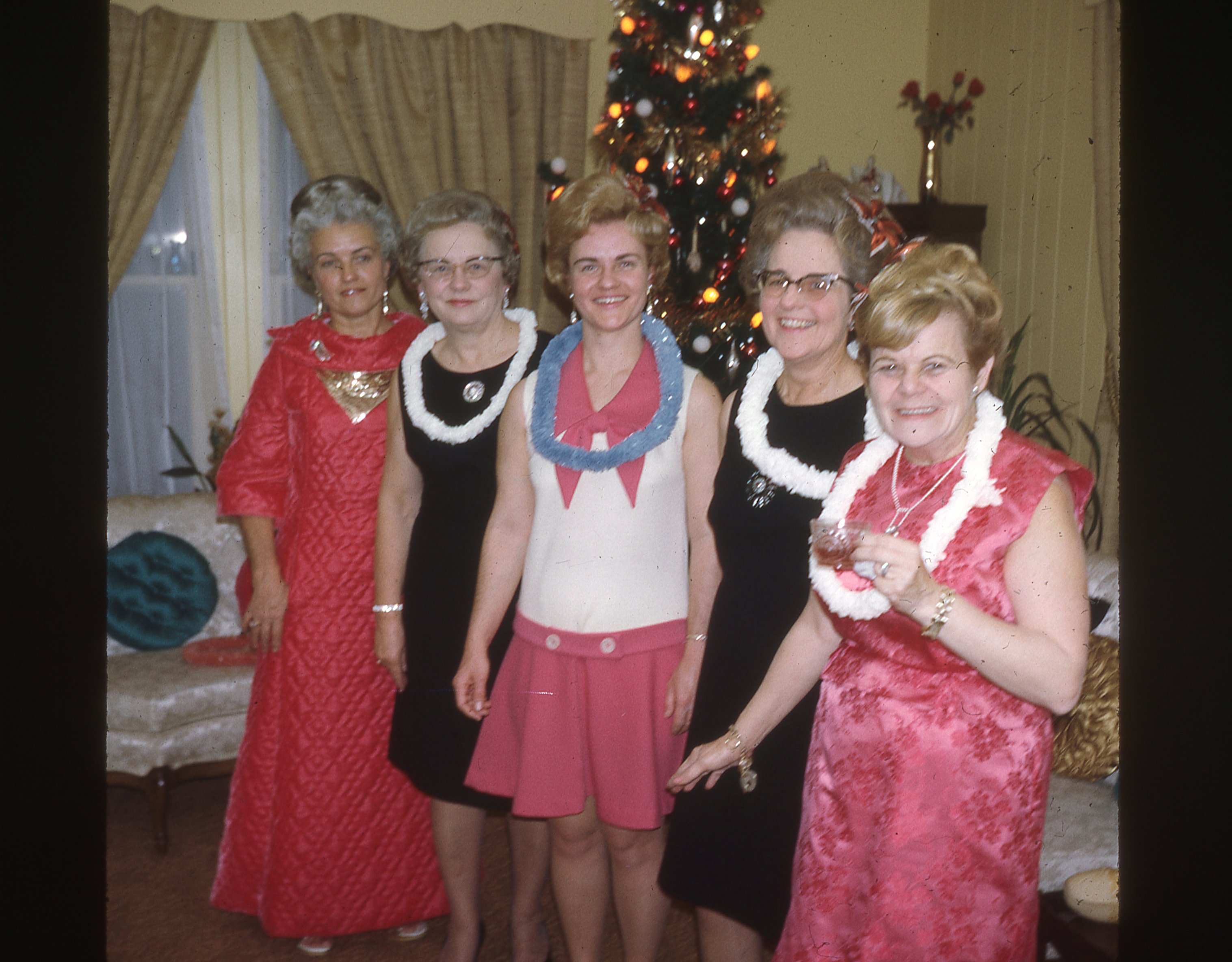
All of these photos were processed in May 1965 but appear to have been taken around the holiday season. The first two look like they were taken on or near Christmas, presumably of 1964. The first features a group gathered around a Christmas tree...
For more info and photos from this set, see https://hive.blog/photography/@darth-azrael/vintage-photos-ebay-set-1-fab20dd0f0e75
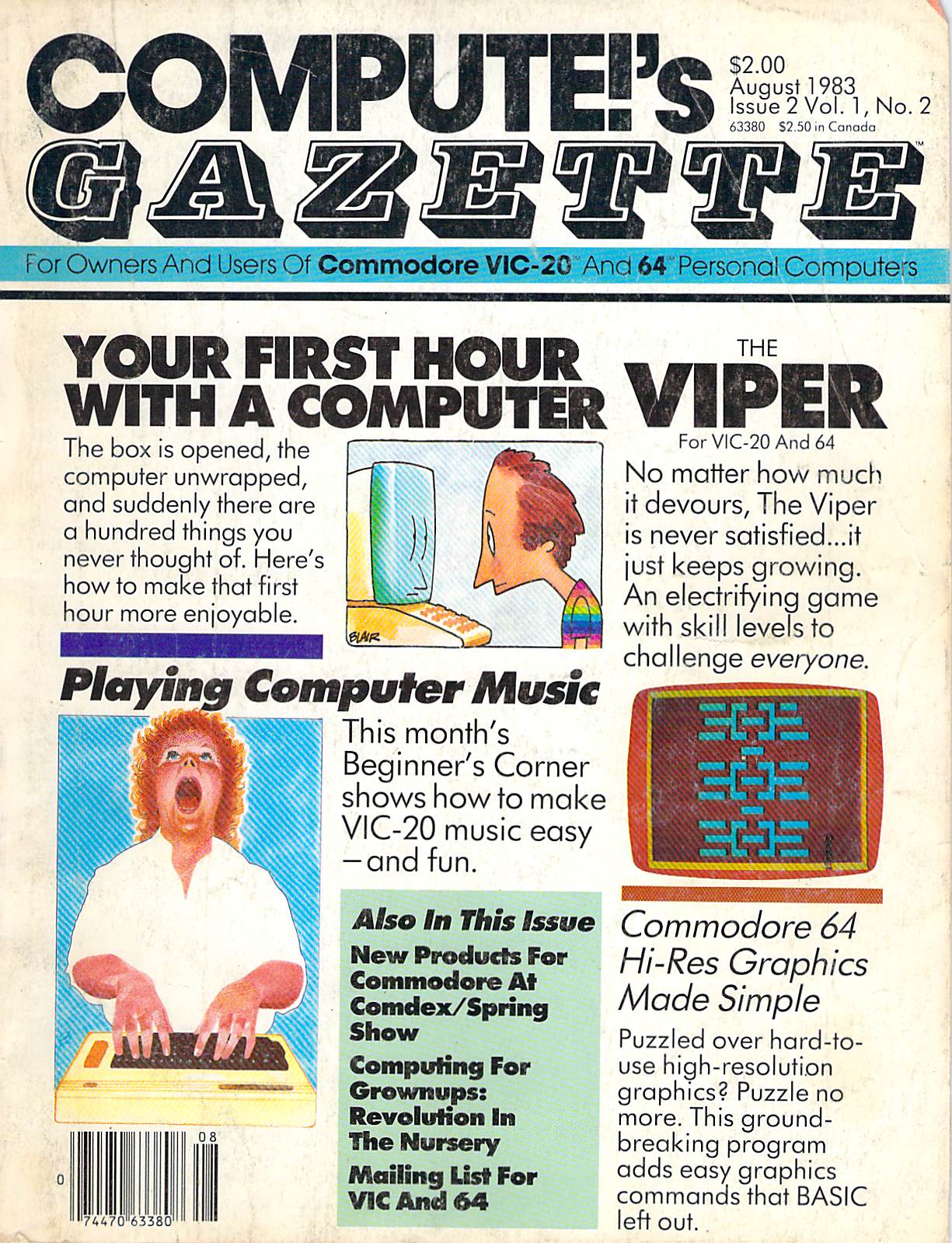
Compute!'s Gazette was the Commodore 8-bit spin-off of Compute!. It covered mainly the Commodore 64 but also the VIC-20, Commodore 128, and Plus 4 / Commodore 16 depending on the time period. It was published for about 12 years in one form or another. The August 1983 issue includes:
Read more: https://hive.blog/retrocomputing/@darth-azrael/compute-s-gazette-august-1983
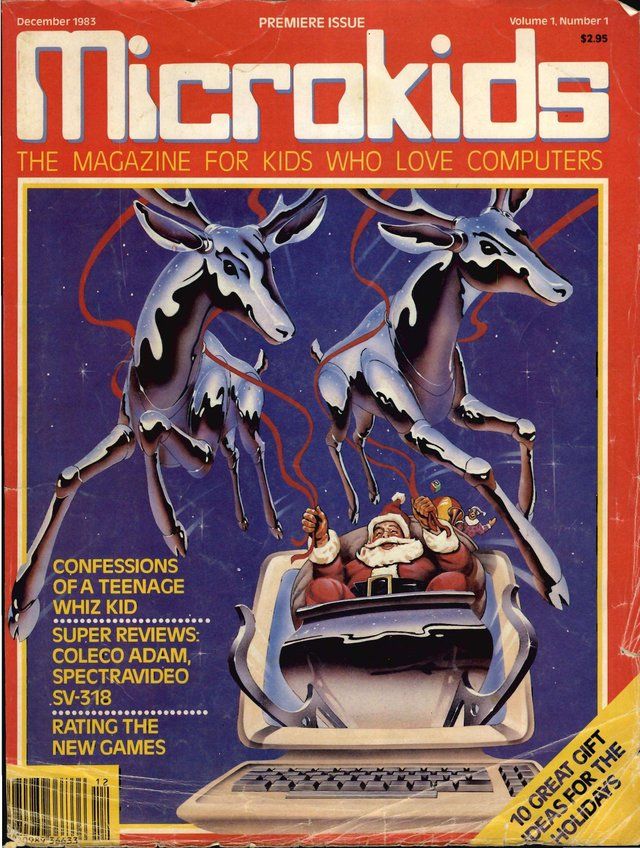
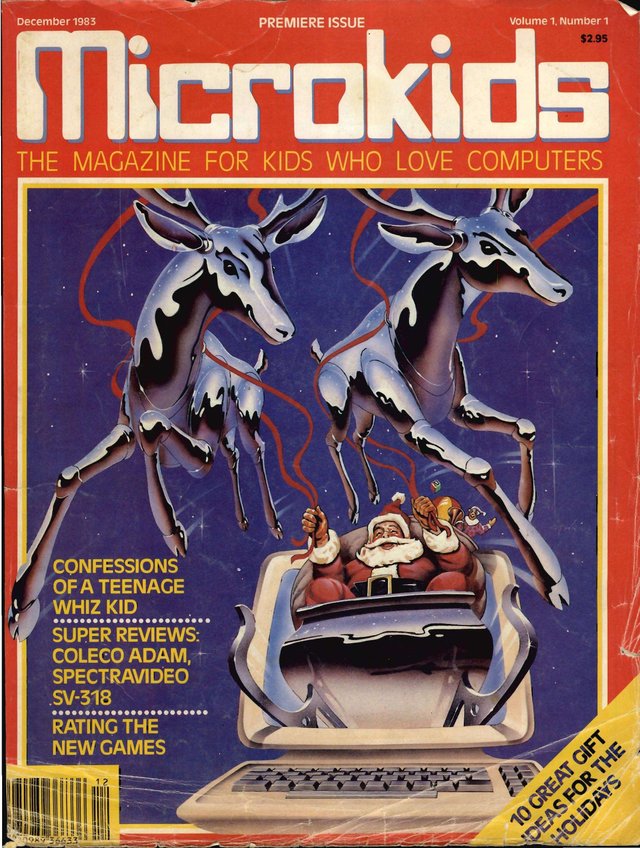
Microkids was a kids oriented magazine about computers. The content wasn't bad but it only lasted a few issues. The premiere issue from December 1983 includes:
Read more: https://blurt.blog/retrocomputing/@darth-azrael/microkids-december-1983
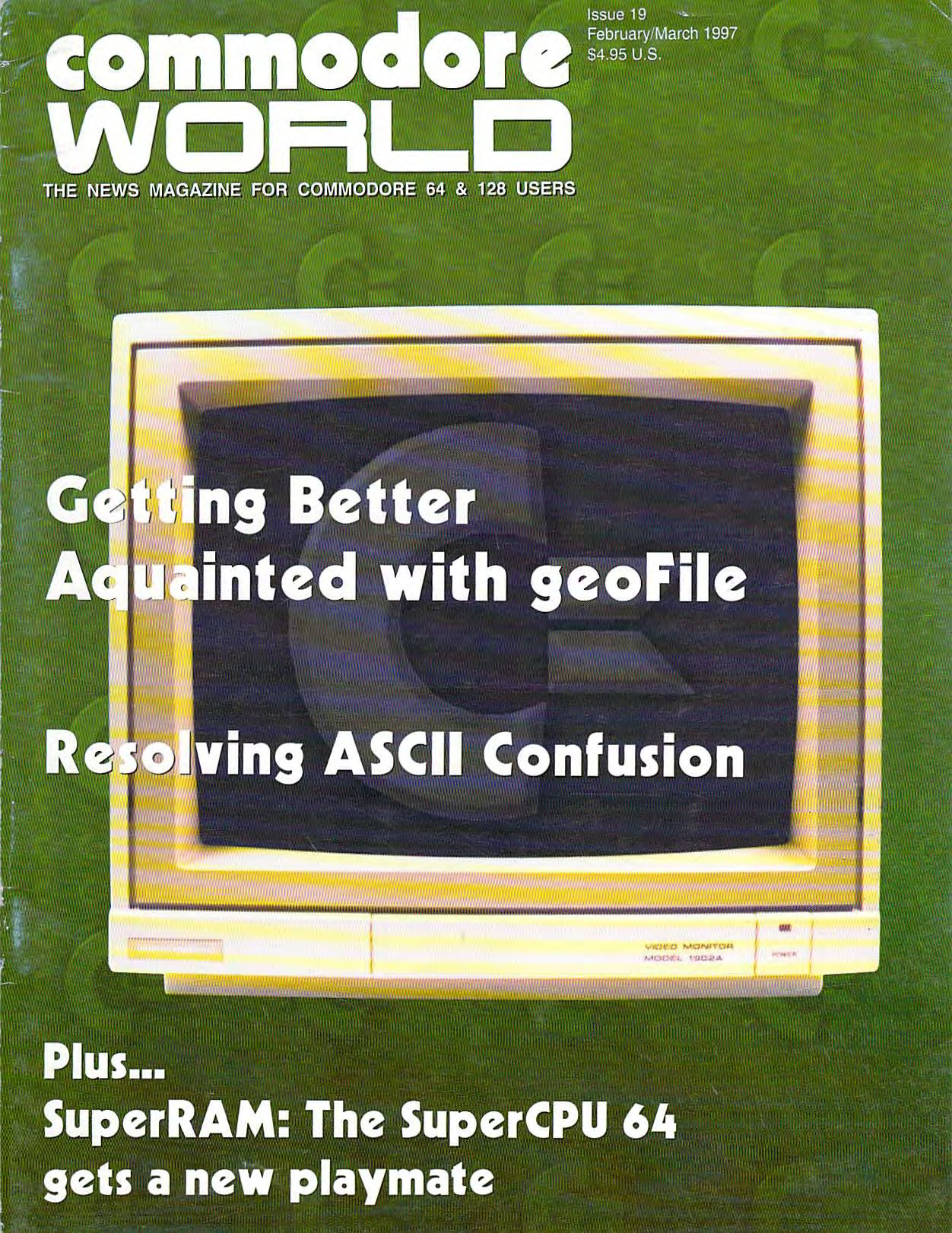
Commodore World was one of the last print magazines available for Commodore 64/128 users in North America. It continued to be published several years after Commodore had gone bankrupt and production had ceased. The February/March 1997 issue includes:
Read more: https://hive.blog/retrocomputing/@darth-azrael/commodore-world-february-march-1997-29f6facb84a08
Random Usenet post of the day:
---
Subject: Re: BE6II+IBM-30Mb problem
From: "Gordoaus" <gordoaus@iprimus.com.au>
Date: Sun, 13 May 2001 00:59:39 +1000
Newsgroups: alt.comp.periphs.mainboard.abit
Organization: CWO Customer - reports relating to abuse should be sent to abuse@cwo.net.au
References: <7AXK6.28$LJ6.1961@castor.casema.net>
Xref: archiver1.sj.google.com alt.comp.periphs.mainboard.abit:134753
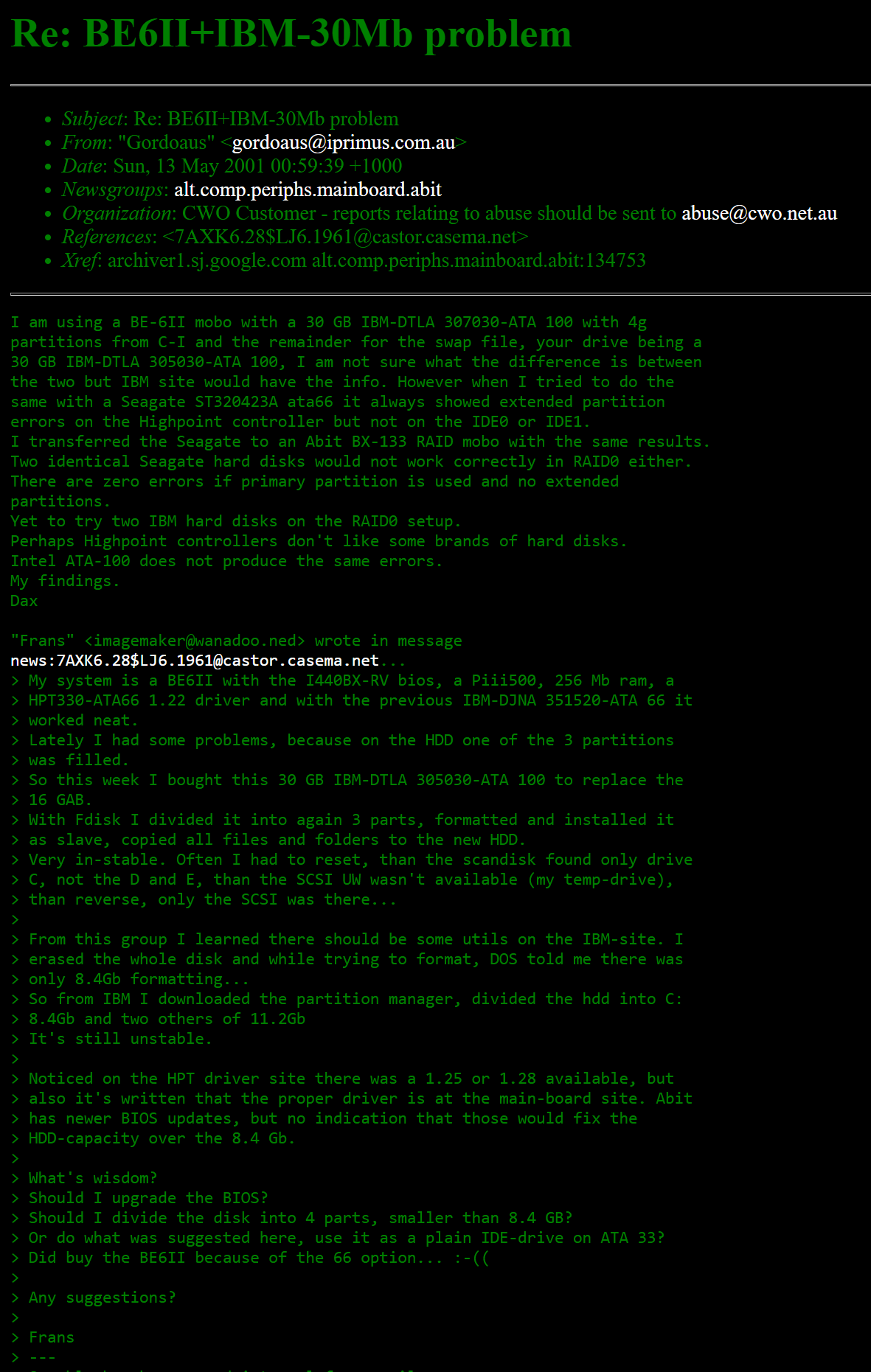
I am using a BE-6II mobo with a 30 GB IBM-DTLA 307030-ATA 100 with 4g
partitions from C-I and the remainder for the swap file, your drive being a
30 GB IBM-DTLA 305030-ATA 100, I am not sure what the difference is between
the two but IBM site would have the info. However when I tried to do the
same with a Seagate ST320423A ata66 it always showed extended partition
errors on the Highpoint controller but not on the IDE0 or IDE1.
I transferred the Seagate to an Abit BX-133 RAID mobo with the same results.
Two identical Seagate hard disks would not work correctly in RAID0 either.
There are zero errors if primary partition is used and no extended
partitions.
Yet to try two IBM hard disks on the RAID0 setup.
Perhaps Highpoint controllers don't like some brands of hard disks.
Intel ATA-100 does not produce the same errors.
My findings.
Dax
"Frans" <imagemaker@wanadoo.ned> wrote in message
news:7AXK6.28$LJ6.1961@castor.casema.net...
> My system is a BE6II with the I440BX-RV bios, a Piii500, 256 Mb ram, a
> HPT330-ATA66 1.22 driver and with the previous IBM-DJNA 351520-ATA 66 it
> worked neat.
> Lately I had some problems, because on the HDD one of the 3 partitions
> was filled.
> So this week I bought this 30 GB IBM-DTLA 305030-ATA 100 to replace the
> 16 GAB.
> With Fdisk I divided it into again 3 parts, formatted and installed it
> as slave, copied all files and folders to the new HDD.
> Very in-stable. Often I had to reset, than the scandisk found only drive
> C, not the D and E, than the SCSI UW wasn't available (my temp-drive),
> than reverse, only the SCSI was there...
>
> From this group I learned there should be some utils on the IBM-site. I
> erased the whole disk and while trying to format, DOS told me there was
> only 8.4Gb formatting...
> So from IBM I downloaded the partition manager, divided the hdd into C:
> 8.4Gb and two others of 11.2Gb
> It's still unstable.
>
> Noticed on the HPT driver site there was a 1.25 or 1.28 available, but
> also it's written that the proper driver is at the main-board site. Abit
> has newer BIOS updates, but no indication that those would fix the
> HDD-capacity over the 8.4 Gb.
>
> What's wisdom?
> Should I upgrade the BIOS?
> Should I divide the disk into 4 parts, smaller than 8.4 GB?
> Or do what was suggested here, use it as a plain IDE-drive on ATA 33?
> Did buy the BE6II because of the 66 option... :-((
>
> Any suggestions?
>
> Frans
> ---
> Spamblock: change .ned into .nl for e-mail purposes
>
>
---
https://www.megalextoria.com/usenet_archive/alt.comp.periphs.mainboard.abit/msg55884.html
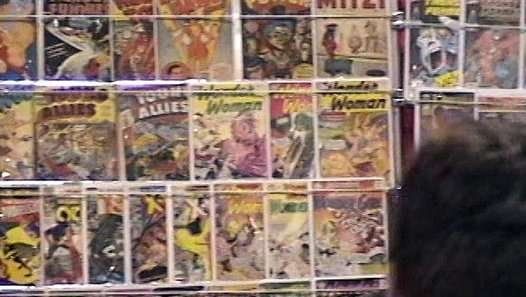
Walking around the vendor hall on Sunday of MegaCon 2003.
See the video here: https://blurt.blog/megacon/@darth-azrael/megacon-2003-4
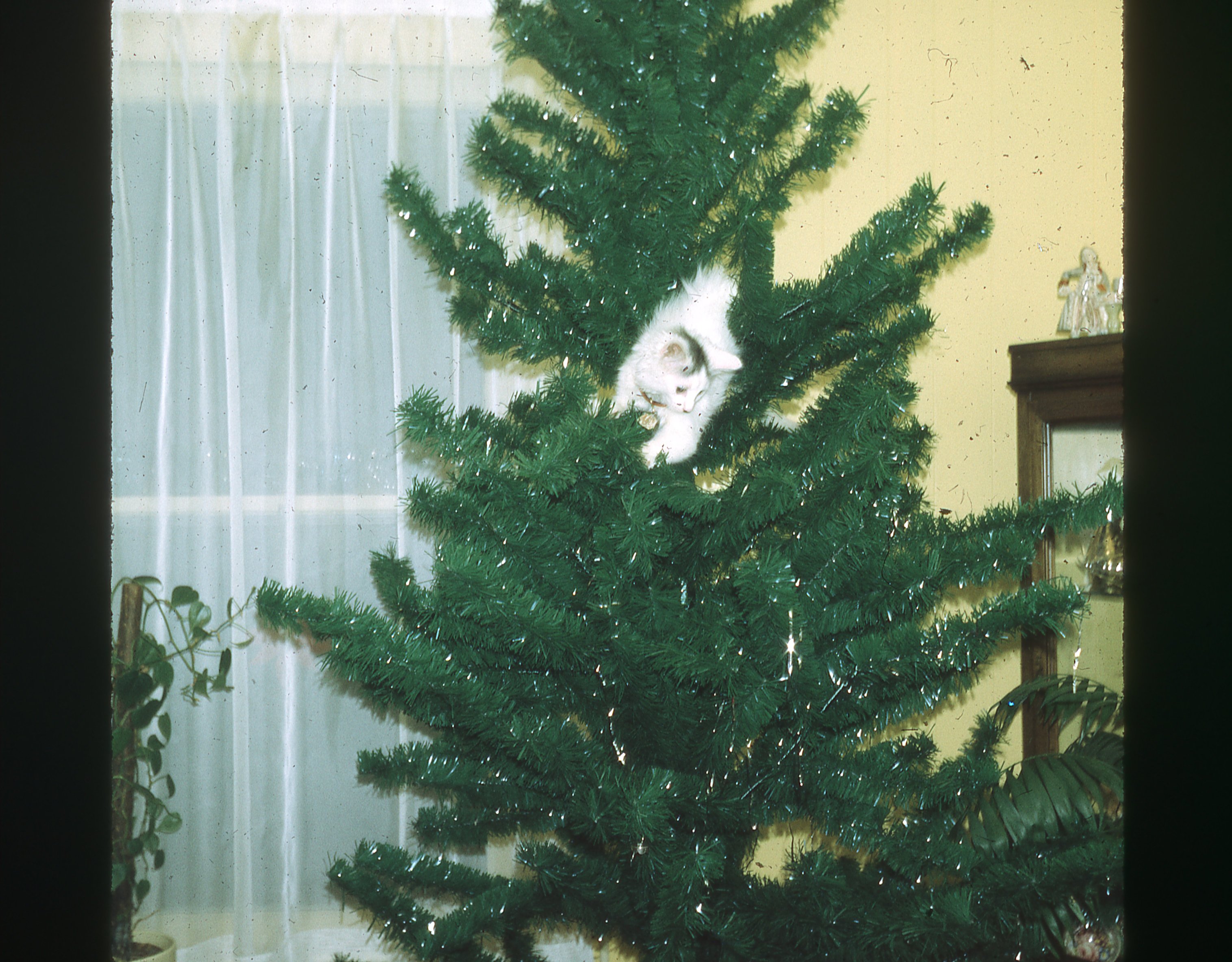
Today we would seem to have a cat themed set of pictures. The first three feature a cat scaling a Christmas tree. The tree is fortunately not yet decorated. I suppose these photos could have been taken either before Christmas while in the process of decorating for Christmas or after when undecorating. However, since these were processed in December 1968 they were probably taken around that time so I tend to think it was in the decorating phase.
For more info and slides from this set, see https://hive.blog/photography/@darth-azrael/vintage-photos-ebay-set-1-15b1a103b1ce3
Random Usenet post of the day:
---
Subject: Fedora 3: Orinoco Gold card not working -- beginner
From: "J-miami" <josh@thesouthbeachhostel.com>
Date: 9 Mar 2005 22:38:19 -0800
Complaints-to: groups-abuse@google.com
Injection-info: g14g2000cwa.googlegroups.com; posting-host=65.3.255.238; posting-account=-zJkaQ0AAAAz-UZarfpuUaEo2-915igG
Newsgroups: alt.linux
Organization: http://groups.google.com
User-agent: G2/0.2
Xref: g2news1.google.com alt.linux:5941
Hi,
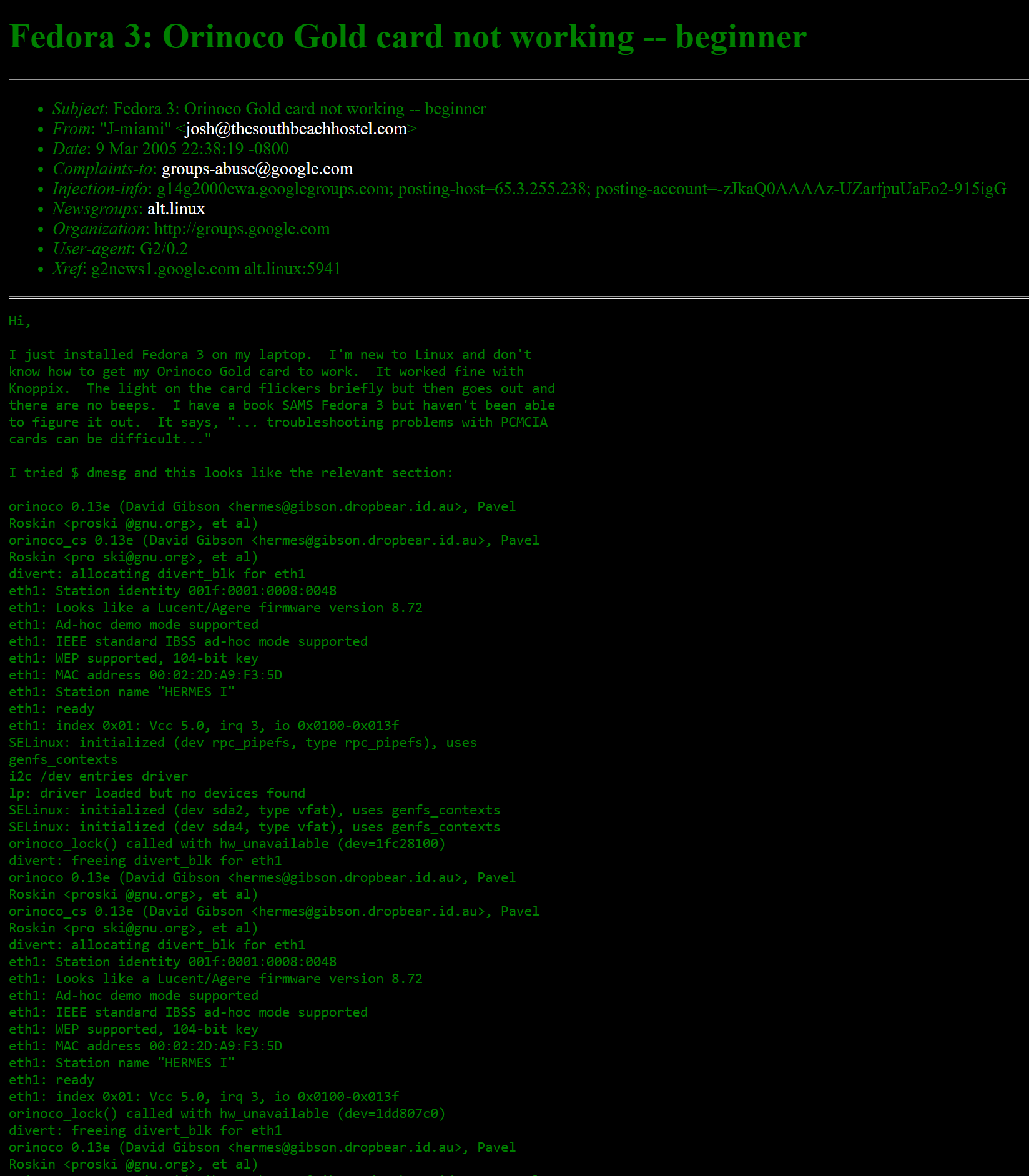
I just installed Fedora 3 on my laptop. I'm new to Linux and don't
know how to get my Orinoco Gold card to work. It worked fine with
Knoppix. The light on the card flickers briefly but then goes out and
there are no beeps. I have a book SAMS Fedora 3 but haven't been able
to figure it out. It says, "... troubleshooting problems with PCMCIA
cards can be difficult..."
I tried $ dmesg and this looks like the relevant section:
orinoco 0.13e (David Gibson <hermes@gibson.dropbear.id.au>, Pavel
Roskin <proski @gnu.org>, et al)
orinoco_cs 0.13e (David Gibson <hermes@gibson.dropbear.id.au>, Pavel
Roskin <pro ski@gnu.org>, et al)
divert: allocating divert_blk for eth1
eth1: Station identity 001f:0001:0008:0048
eth1: Looks like a Lucent/Agere firmware version 8.72
eth1: Ad-hoc demo mode supported
eth1: IEEE standard IBSS ad-hoc mode supported
eth1: WEP supported, 104-bit key
eth1: MAC address 00:02:2D:A9:F3:5D
eth1: Station name "HERMES I"
eth1: ready
eth1: index 0x01: Vcc 5.0, irq 3, io 0x0100-0x013f
SELinux: initialized (dev rpc_pipefs, type rpc_pipefs), uses
genfs_contexts
i2c /dev entries driver
lp: driver loaded but no devices found
SELinux: initialized (dev sda2, type vfat), uses genfs_contexts
SELinux: initialized (dev sda4, type vfat), uses genfs_contexts
orinoco_lock() called with hw_unavailable (dev=1fc28100)
divert: freeing divert_blk for eth1
orinoco 0.13e (David Gibson <hermes@gibson.dropbear.id.au>, Pavel
Roskin <proski @gnu.org>, et al)
orinoco_cs 0.13e (David Gibson <hermes@gibson.dropbear.id.au>, Pavel
Roskin <pro ski@gnu.org>, et al)
divert: allocating divert_blk for eth1
eth1: Station identity 001f:0001:0008:0048
eth1: Looks like a Lucent/Agere firmware version 8.72
eth1: Ad-hoc demo mode supported
eth1: IEEE standard IBSS ad-hoc mode supported
eth1: WEP supported, 104-bit key
eth1: MAC address 00:02:2D:A9:F3:5D
eth1: Station name "HERMES I"
eth1: ready
eth1: index 0x01: Vcc 5.0, irq 3, io 0x0100-0x013f
orinoco_lock() called with hw_unavailable (dev=1dd807c0)
divert: freeing divert_blk for eth1
orinoco 0.13e (David Gibson <hermes@gibson.dropbear.id.au>, Pavel
Roskin <proski @gnu.org>, et al)
orinoco_cs 0.13e (David Gibson <hermes@gibson.dropbear.id.au>, Pavel
Roskin <pro ski@gnu.org>, et al)
divert: allocating divert_blk for eth1
eth1: Station identity 001f:0001:0008:0048
eth1: Looks like a Lucent/Agere firmware version 8.72
eth1: Ad-hoc demo mode supported
eth1: IEEE standard IBSS ad-hoc mode supported
eth1: WEP supported, 104-bit key
eth1: MAC address 00:02:2D:A9:F3:5D
eth1: Station name "HERMES I"
eth1: ready
eth1: index 0x01: Vcc 5.0, irq 3, io 0x0100-0x013f
orinoco_lock() called with hw_unavailable (dev=1dd80140)
divert: freeing divert_blk for eth1
orinoco 0.13e (David Gibson <hermes@gibson.dropbear.id.au>, Pavel
Roskin <proski @gnu.org>, et al)
orinoco_cs 0.13e (David Gibson <hermes@gibson.dropbear.id.au>, Pavel
Roskin <pro ski@gnu.org>, et al)
divert: allocating divert_blk for eth1
eth1: Station identity 001f:0001:0008:0048
eth1: Looks like a Lucent/Agere firmware version 8.72
eth1: Ad-hoc demo mode supported
eth1: IEEE standard IBSS ad-hoc mode supported
eth1: WEP supported, 104-bit key
eth1: MAC address 00:02:2D:A9:F3:5D
eth1: Station name "HERMES I"
eth1: ready
eth1: index 0x01: Vcc 5.0, irq 3, io 0x0100-0x013f
It's a Toshiba Satellite Pro with Centrino (which didn't work either
but I didn't expect it to since it doesn't work with Knoppix).
Any suggestions?
Thanks...
---
https://www.megalextoria.com/usenet_archive/alt.linux/msg14904.html
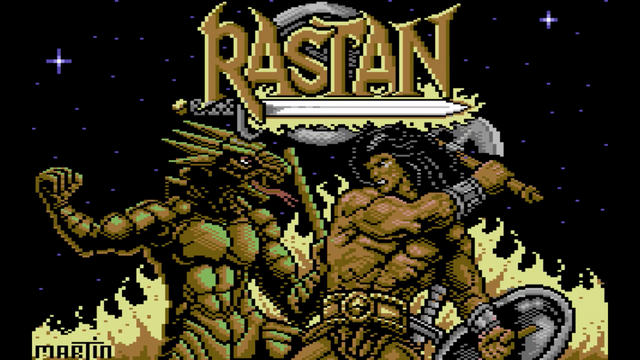
Rastan started life as an arcade game by Taito in 1987. It is a fantasy based side-scrolling fighting game. You fight you way through each level, facing various enemies and a boss at the end of each level. Various weapons and special items are available throughout the game.
Read more: https://blurt.blog/retrogaming/@darth-azrael/rastan-commodore-64
As most people reading this probably know, fiat money is money created by government fiat and is not backed by anything other than individuals' faith in that government. This is in contrast to currency backed by a commodity, traditionally gold. With fiat currency, government does not need more gold (or any other commodity) to print more paper money.
So how does the government create money? It turns out there are many ways that this happens though none are quite so simple as just printing it. The linked article goes over a few of them.
Read more: https://hive.blog/hive-167922/@darth-azrael/how-does-the-federal-reserve
The One is a U.K. games magazine that was published in the late 1980s and early 1990s. It covered mainly computer games, primarily the Atar ST, Amiga and PC though which machines exactly varied over the years. By 1992, it was mainly an Amiga games magazine. The March 1992 issue includes:
Read more: https://hive.blog/retrogaming/@darth-azrael/the-one-march-1992
The next two photos were processed in January 1969 and look like they were taken at a New Year's Eve party so they were probably taken on December 31st, 1968 or possibly January 1st, 1969.
For more info and photos from this set, see https://hive.blog/photography/@darth-azrael/vintage-photos-ebay-set-1-382d2acf32a4a
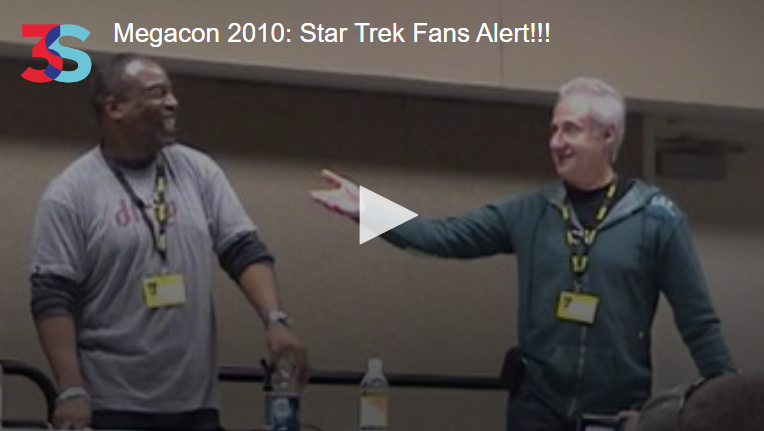
From the program:
Q & A with two of Star Trek’s most recognized characters Levar Burton and Brent Spiner moderated by Dino Leto. Brent Spiner, of course, played Data on Star Trek: The Next Generation and Levar Burton played Geordi La Forge.
See the video here: https://hive.blog/hive-181335/@darth-azrael/ugunakgq
Random Usenet post of the day:
---
Subject: Re: Forged mail addresses
From: "S.t.A.n.L.e.E" <LostRune+NGs@UofR.SlamSpam.net>
Date: Wed, 31 Oct 2007 00:09:48 -0400
Cancel-lock: sha1:soL6IQXZfBOi1T/JNHMeeVJ16uM=
In-reply-to: <fg8ko8$age$1@aioe.org>
Newsgroups: rec.arts.anime.misc
References: <1193429143.640925.75820@q5g2000prf.googlegroups.com> <4722686a$0$9539$4c368faf@roadrunner.com> <fftq5d$4am$1@aioe.org> <1193506335.576063.194400@v29g2000prd.googlegroups.com> <fg0da6$pvo$1@solaris.cc.vt.edu> <fg1gav$86f$1@theodyn.ncf.ca> <fg28ks$e59$1@solaris.cc.vt.edu> <281020071310545534%invid@localnet.com> <fg2hea$pr5$1@solaris.cc.vt.edu> <fg2rm3$dsu$1@aioe.org> <fg356j$mda$1@solaris.cc.vt.edu> <fg35d5$8ng$1@aioe.org> <fg385m$qff$1@solaris.cc.vt.edu> <fg3bkpUi2dL1@news.in-ulm.de> <fg4qog$3lq$1@solaris.cc.vt.edu> <fg577l$tqt$1@aioe.org> <fg5f8i$4qp$1@solaris.cc.vt.edu> <fg5jt8$3r5$1@aioe.org> <fg67pt$8m5$1@solaris.cc.vt.edu> <q98etdpaa8hz.1mbw2ygan7ebk.dlg@40tude.net> <fg8io3$lct$1@solaris.cc.vt.edu> <13ifledpj0bc31d@corp.supernews.com> <fg8ko8$age$1@aioe.org>
Xref: g2news2.google.com rec.arts.anime.misc:11860
Tue, 30 Oct 2007 9:11pm-0400, Blade <kumonryuu@hotmail.com>:
>
> "elsie" <lcubbison@earthlink.net> wrote in message
> 13ifledpj0bc31d@corp.supernews.com">news:13ifledpj0bc31d@corp.supernews.com...
>
> > So how did you keep from having to get it? I'm looking at needing to get a
> > new desktop for my home computer, but Vista is one of the things keeping
> > me from doing it. (That and the money I spent on dental work this fall,
> > which was worth a computer and a half.)
>
> Don't you have your XP discs from your last computer? If you're really
> determined to avoid Vista, delete it as soon as you get the computer and
> install XP instead.
>
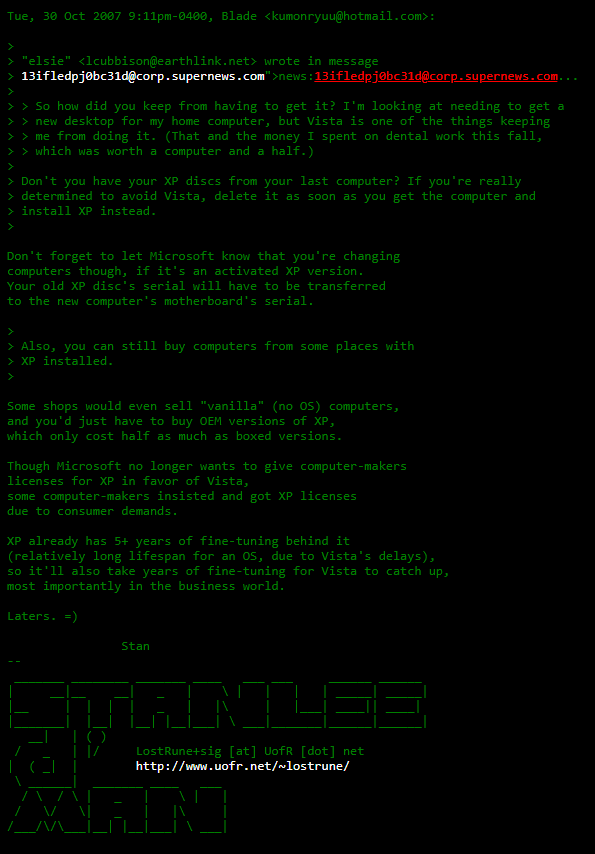
Don't forget to let Microsoft know that you're changing
computers though, if it's an activated XP version.
Your old XP disc's serial will have to be transferred
to the new computer's motherboard's serial.
>
> Also, you can still buy computers from some places with
> XP installed.
>
Some shops would even sell "vanilla" (no OS) computers,
and you'd just have to buy OEM versions of XP,
which only cost half as much as boxed versions.
Though Microsoft no longer wants to give computer-makers
licenses for XP in favor of Vista,
some computer-makers insisted and got XP licenses
due to consumer demands.
XP already has 5+ years of fine-tuning behind it
(relatively long lifespan for an OS, due to Vista's delays),
so it'll also take years of fine-tuning for Vista to catch up,
most importantly in the business world.
Laters. =)
Stan
--
_______ ________ _______ ____ ___ ___ ______ ______
| __|__ __| _ | \ | | | | _____| _____|
|__ | | | | _ | |\ | |___| ____|| ____|
|_______| |__| |__| |__|___| \ ___|_______|______|______|
__| | ( )
/ _ | |/ LostRune+sig [at] UofR [dot] net
| ( _| | http://www.uofr.net/~lostrune/
\ ______| _______ ____ ___
/ \ / \ | _ | \ | |
/ \/ \| _ | |\ |
/___/\/\___|__| |__|___| \ ___|
---
https://www.megalextoria.com/usenet_archive/rec.arts.anime.misc/msg225339.html
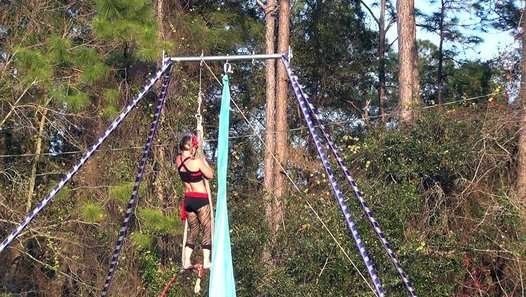
Tribal Circus Acrobatics at the 2013 Hoggetowne Medieval Faire.
See the video here: https://blurt.blog/hoggetowne/@darth-azrael/hoggetowne-medieval-faire-2013-tribal-circus
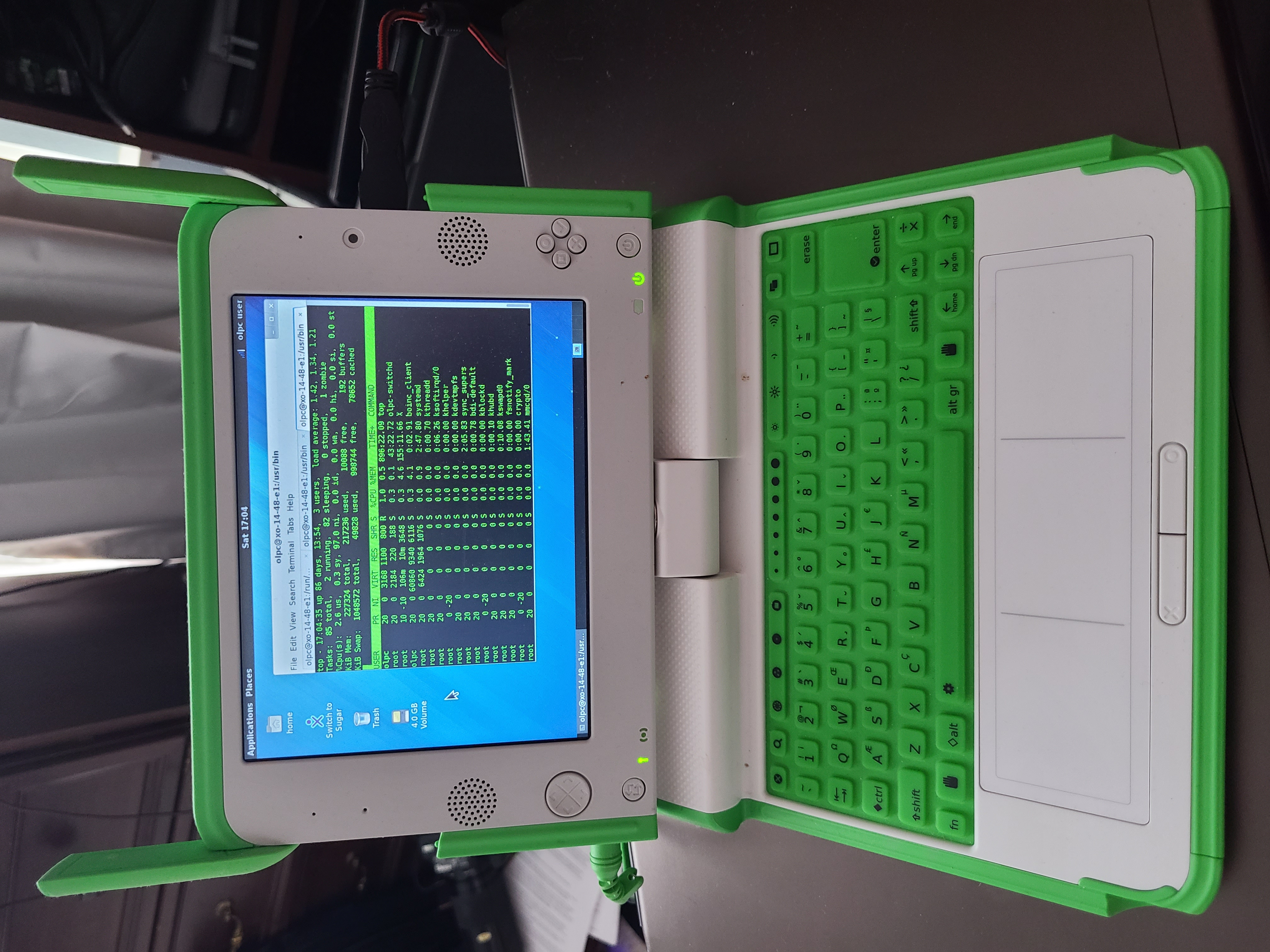
One Laptop per Child was a non-profit initiative designed to provide laptops to students without computers. The initial goal was to produce usable laptops for $100 each, though they ended up being closer to $180 by the time they shipped. The first result of this effort was the OLPC XO-1. It was designed to be very low power so that the battery could theoretically be easily charged with a solar panel or hand crank. However, they ended up shipping with a standard power supply. Released in 2007 the XO-1 had the following specs:
Read more: https://hive.blog/retrocomputing/@darth-azrael/digital-archaeology-olpc-xo-1
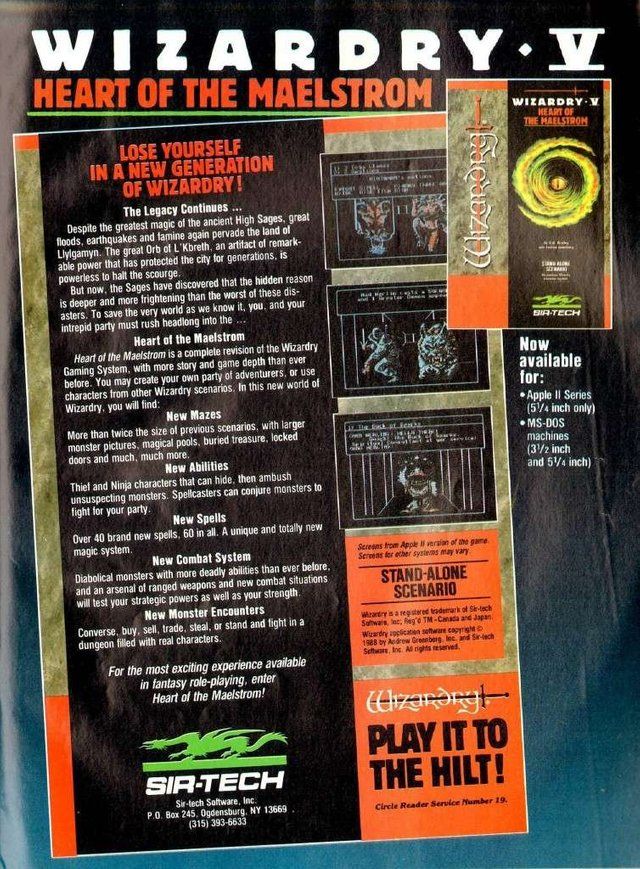
Each era has RPGs that it is known for. One of the more popular RPGs of the 8-bit era was Wizardry. The series started all the way back in 1981. Wizardry V was released in 1988 for perhaps the widest variety of systems of any Wizardry game. It appeared on the Apple II, Commodore 64, DOS, and Super Nintendo among others.
Read more: https://blurt.blog/retrogaming/@darth-azrael/wizardry-v-heart-of-the-maelstrom
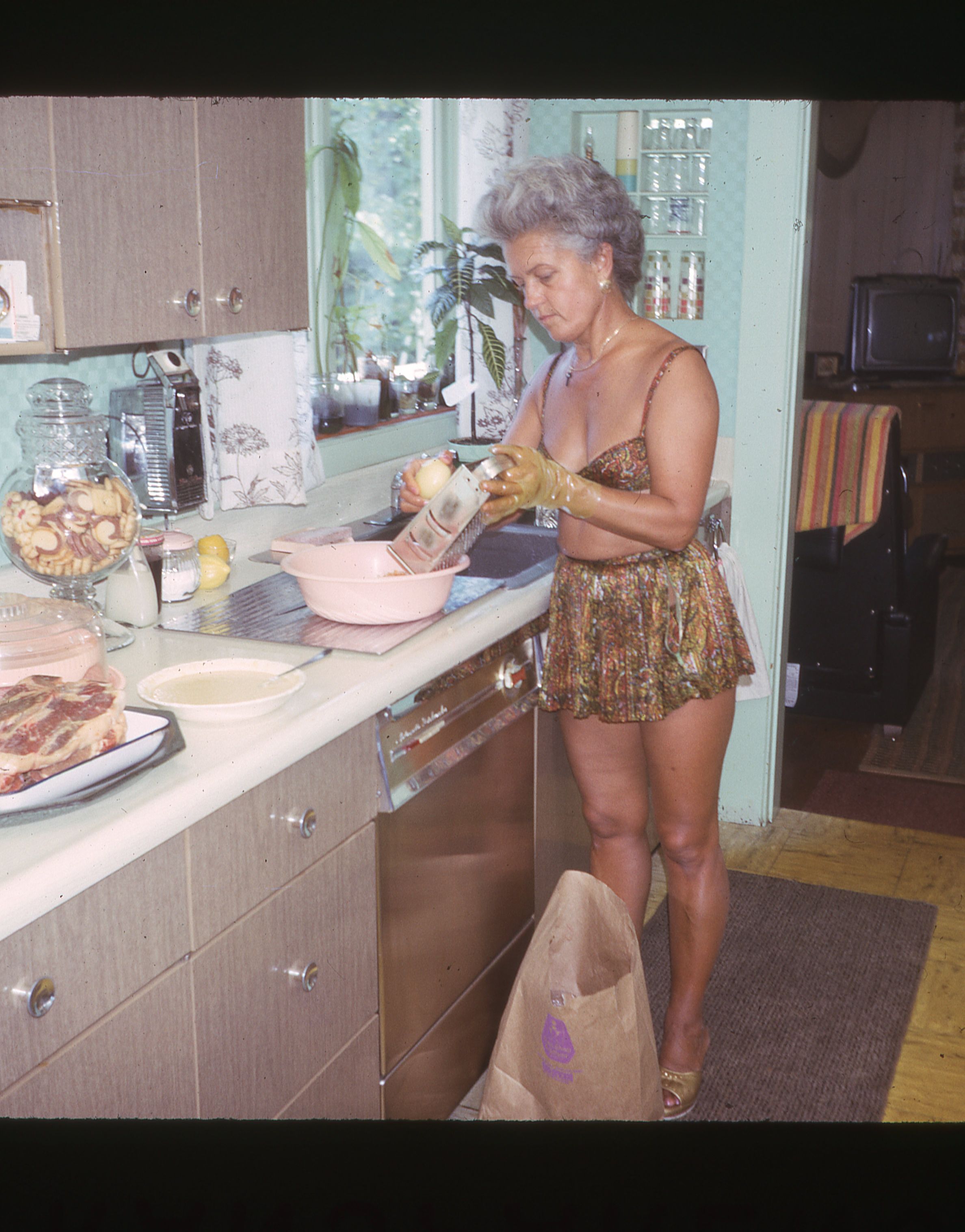
The next two photos do not have a date but would have been taken some time in the mid to late 1960s. The first of them shows a meal being prepared. It looks like some steaks and I'm not sure what is being grated. Maybe an onion or potato?
For more info and photos from this set, see https://hive.blog/photography/@darth-azrael/vintage-photos-ebay-set-1-9ce744aad9c1b
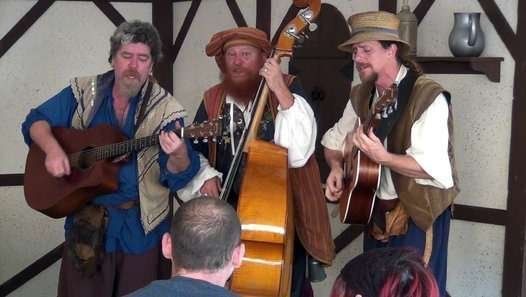
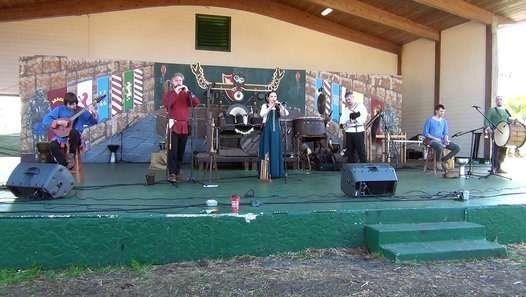
The New Minstrel Revue perform 'Black Leg Miner' at the pub sing at the 2013 Hoggetowne Medieval Faire in Gainesville, Florida.
See the video here: https://blurt.blog/music/@darth-azrael/hoggetowne-medieval-faire-2013-new-minstrel-revue-black-leg-miner
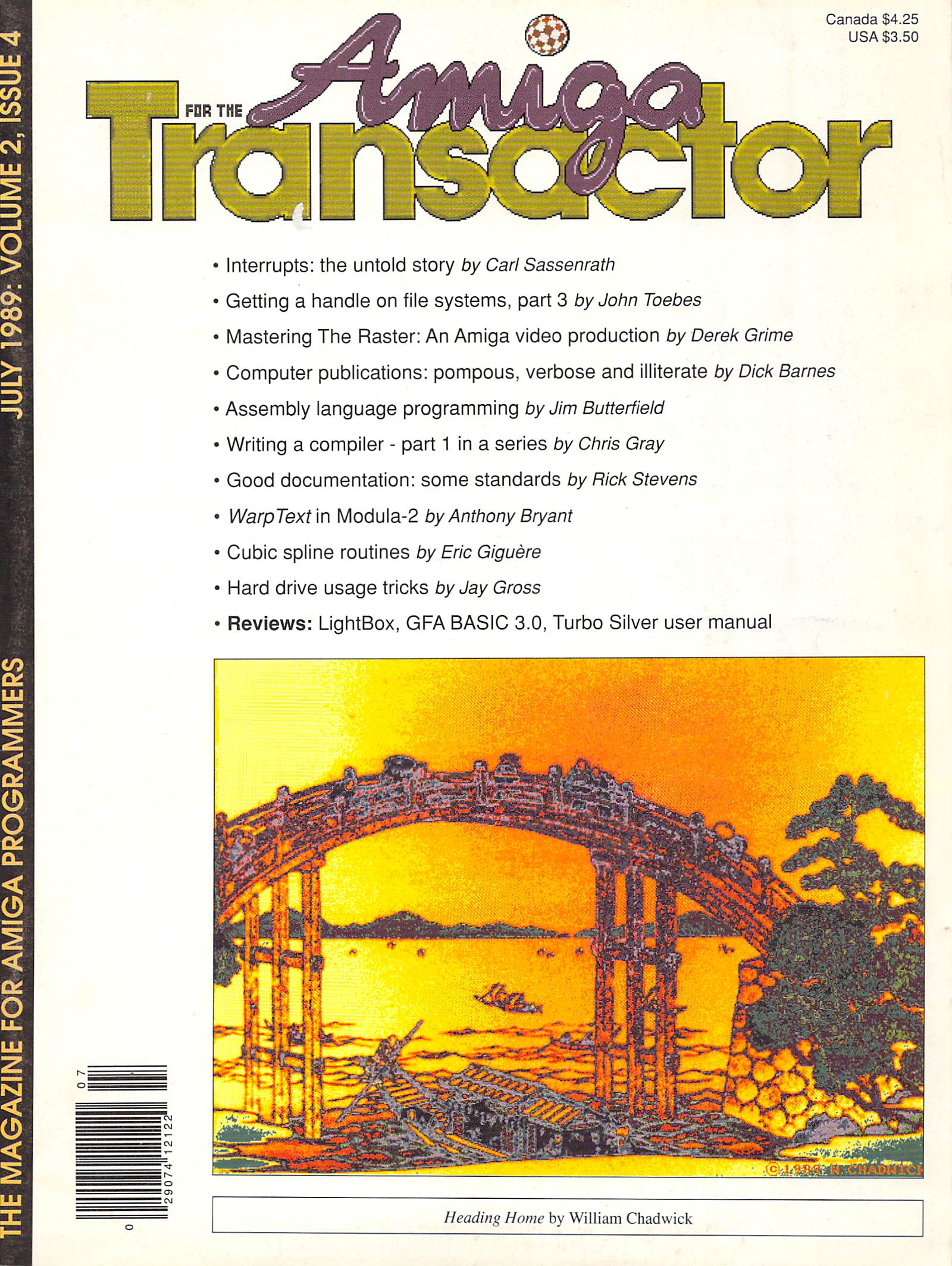
Transactor was a long running technical Commodore magazine that mostly covered Commodore's various 8-bit computers. It was published all the way from 1978 to 1989. There was also a spin-off in 1988 titled Transactor for the Amiga. As you probably guessed, it's basically the same kind of thing but for the Amiga.
The July 1989 issue of Transactor for the Amiga includes the following:
Read more: https://hive.blog/retrocomputing/@darth-azrael/transactor-for-the-amiga-july
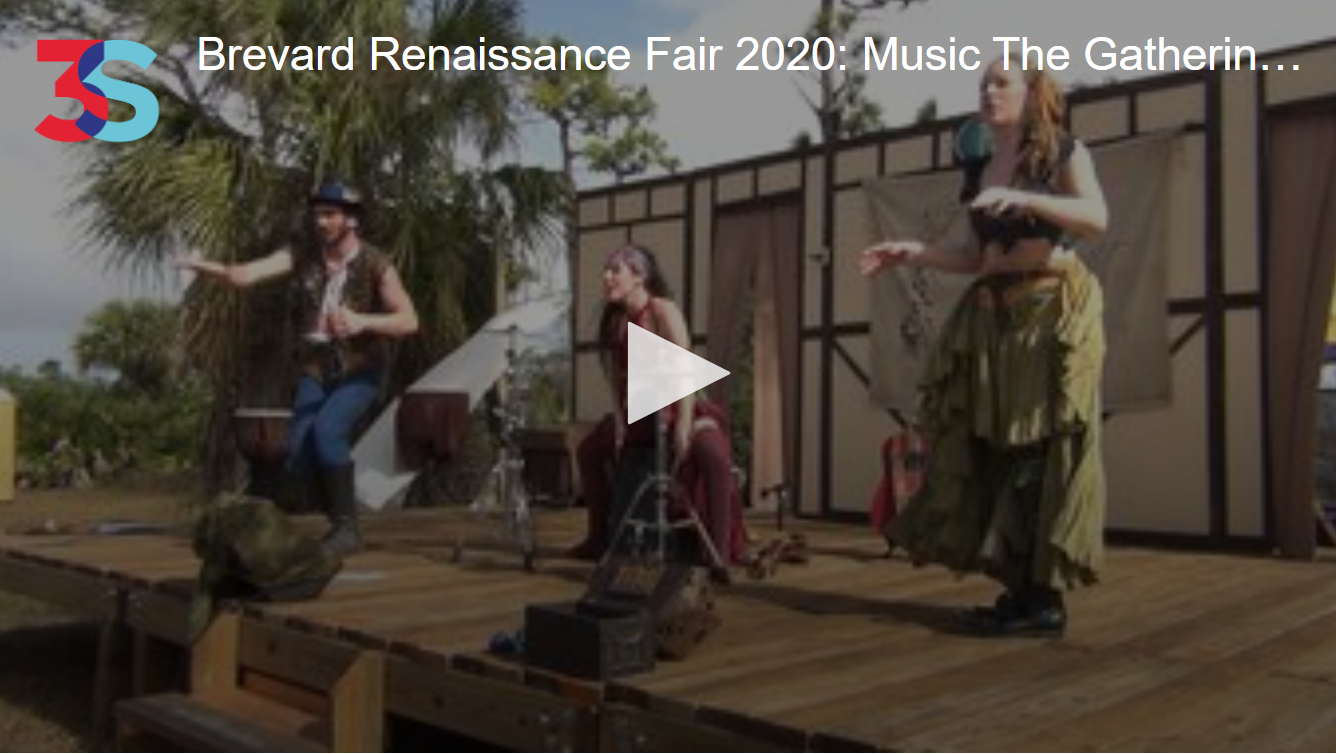
Music The Gathering performs 'Let The Bulgine Run' at the 2020 Brevard Renaissance Fair in Melbourne, Florida.
See the video here: https://hive.blog/hive-181335/@darth-azrael/bgcuakms
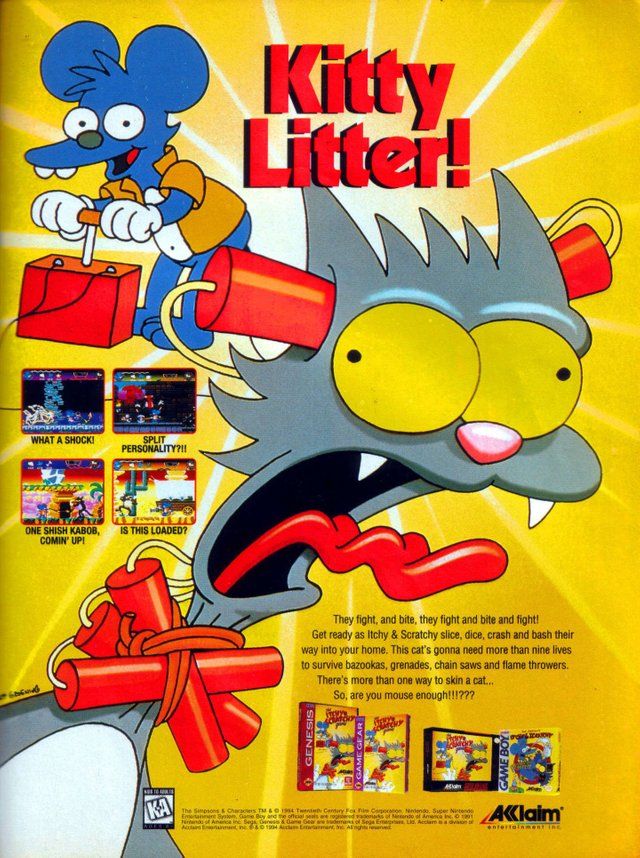
The Itchy and Scratchy Game is a video game based on a fictitious show within the Simpson's. It's basically a demented Tom & Jerry. The premise is Itchy the Mouse and Scratchy the Cat trying to kill each other in the most violent ways imaginable. The game takes the form a typical side-scrolling platform action game. You play the role of Itchy has he attempts to torture and kill Scratchy.
Read more: https://blurt.blog/retrogaming/@darth-azrael/the-itchy-and-scratchy-game
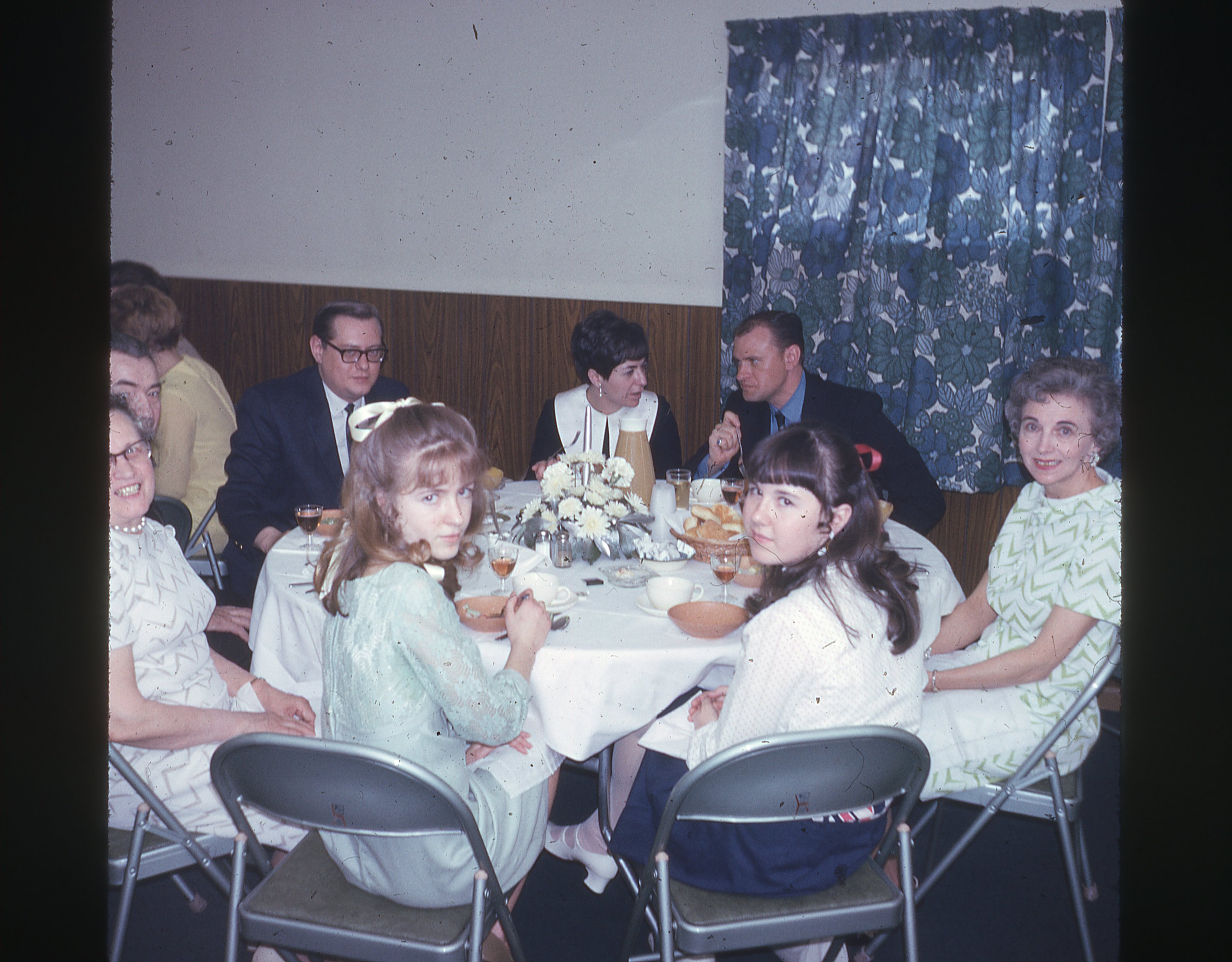
The first photo was processed in May 1969 and the rest were processed in April 1969. Despite the slightly different processing dates, this sure looks like the same event. This is some kind of dinner celebration, probably in a church building.
For more info and photos from this set, see https://hive.blog/photography/@darth-azrael/vintage-photos-ebay-set-1-dc219cb1d504f
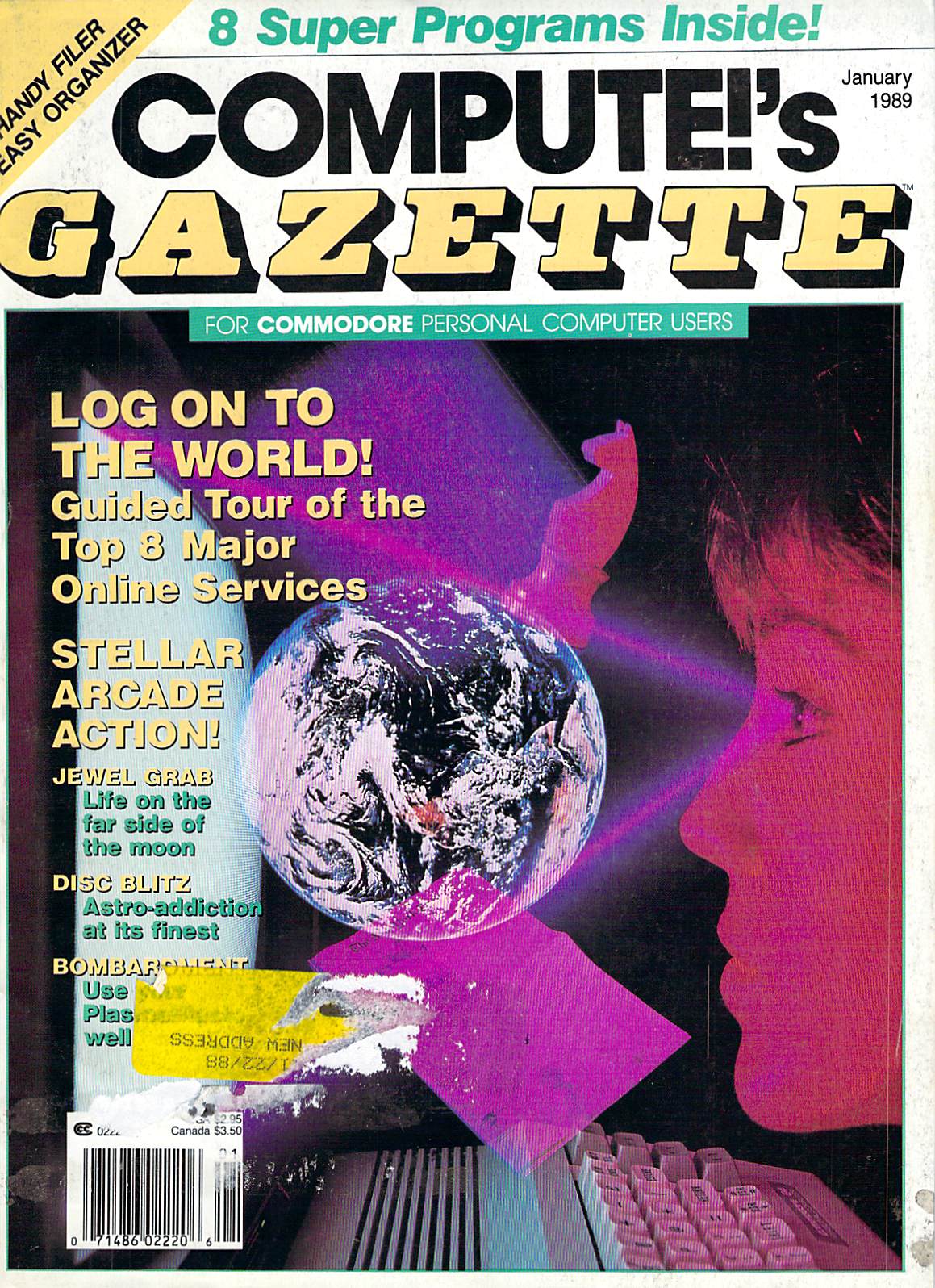
Compute!'s Gazette was a spin-off of the main Compute! magazine. Whereas Compute! covered many computers, Gazette was dedicated to the Commodore 8-bit line (mostly the Commodore 64). It was one of the most popular Commodore 64 magazines, at least in the U.S. The January 1989 issue includes:
Read more: https://hive.blog/retrocomputing/@darth-azrael/compute-s-gazette-january-1989
Stary Olsa performs "Fatalia Blazienska" at the 2018 Brevard Renaissance Fair in Melbourne, Florida (2018-01-21).
See the video here: https://blurt.blog/music/@darth-azrael/brevard-renaissance-fair-2018-stary-olsa-part-28-fatalia-blazienska
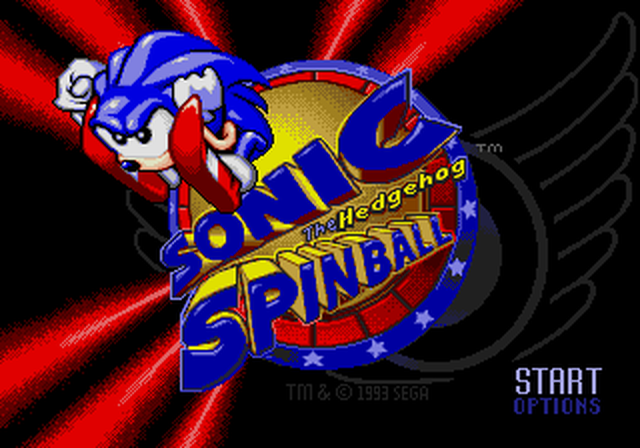
Soinc Spinball was a spin-off (no pun intended?) of the regular Sonic series on the Genesis. It was released late in 1993 between Sonic 2 and Sonic 3 and featured Sonic as the ball in a pinball themed game. This game was mainly developed as a stop gap to have a Sonic game available for the holidays since Sonic 3 was not going to be completed in time.
Read more: https://hive.blog/hive-140217/@darth-azrael/sonic-spinball-sega-genesis-1993
 @DarthAzrael