Getting their due
I'm glad, sad and mad all at the same time.
Glad because the Filipino athletes who represented the country in the 2020 Tokyo Olympics have received their monetary rewards.
And that's not just the medalists but the 15 others who competed in sports disciplines other than weightlifting and boxing, where the medals came from. Aside from the athletes themselves, the coaches of the medalists were also given rewards.
They all deserve the incentives. They worked hard, showed all they've got despite the odds and the limitations they had to work with. Hopefully, it will push them to train even harder and improve in further editions of the Summer Olympic games.
At the same time, I pray they will finally be given the support they need to truly become world-class athletes and bring more sporting honor and glory to our country.
On the same page
We can excel in sports. But government and the private sector must work together to develop athletes that can compete in the global arena.
That means providing logistical and financial support so they can participate in international events to gauge how they fare against the competition. It's the only way our athletes can become the best and qualify for huge sports events like the Olympics, as well as have a fighting chance for more podium finishes.
Realistically, the Philippines does not have an overflow of resources unlike powerhouse countries like China, Japan, and the United States. So, where government throws its support is crucial to ensure its limited funds will be best utilized.
But for now, I'm just glad that all the hard work of Filipino Olympians have been recognized and they get to enjoy themselves a little.
Now, why am I sad and mad?
All for nothing?
As our athletes are enjoying the fruits of their labor, our healthcare workers, nurses in particular, still in the frontlines risking their lives, have yet to be properly remunerated for their service.
Despite the pandemic, nurses here do not receive hazard pay. Instead, government promised them a Special Risk Allowance, (both for public and private hospitals) which under a Department of Budget circular, should amount to not more than 5,000 ($100) pesos a month.
Now, it's not a fixed amount but pro-rated based on the number of days the health worker reported for work, the cap which has also been set at 22 days. So, if they came in for more than that, those days will not be credited for SRA because the extra days will exceed 5,000 pesos.
It boggles my mind why it even has to be pro-rated when these nurses and other allied healthcare workers even go beyond the number of hours for each shift, taking in more patients and sometimes don't have days off!
Heroes with no value
No wonder these HWs don't give much weight when they're called heroes anymore because they are not treated as such. They're mostly paid a pittance compared to their sacrifices even before COVID, then any promised benefits for rendering service during the pandemic have been so delayed.
Worse, when they receive these, it's a pathetic amount that makes them weep even more.
As an example, a nurse posted that she received as SRA covering the months December 2020 to June 2021 a total of 3,863.63 pesos ($77.27). That's not even equivalent to one full month!!! Gasp. Isn't that an injustice?
Yet, when an audit was conducted of funds allocated for the pandemic under the Health department, it found that 11.7 billion pesos ($234 million) were not used! But when pressed to explain this, the Health chief said it was paid out to health workers for their SRA.
That amount wasn't enough to pay health workers? At 5,000 a month for 7 months is 35,000 pesos per HW. The unused amount should have paid 335,000 people in both the public and private sector, if indeed it was given to them.
If they wanted to pay more people, then 4,000 a month would be more welcome to recipients. But for them to receive less than 4,000 for seven months? That is CRIMINAL!
Maddening
Now you get why I'm mad? And I'm not even the one who's being shortchanged!
For more than a year already, government has not put its money where its mouth is. Both for healthcare frontliners and the public, many of who have been deprived of their livelihood due to lockdowns.
While vaccine rollout has been going on, supply is still insufficient and not all systems are running efficiently. In the meantime, a more deadly variant of the coronavirus is in our midst and medical facilities are again overwhelmed, not necessarily because of room or equipment shortage, but due to lack of workers willing to keep sacrificing and risking their lives for pennies.
I wish these medical personnel would receive what is truly due them so that like our Olympic athletes they will have reason to smile amid all the sacrifice they've given for the country and its people.
Street crossing 101
I went along with @wakeuplincs as she walked to a nearby ATM machine. You can check her adventure yourself. https://read.cash/@wakeuplincs/adventure-of-the-penniless-f05b390f
But I'm not going to talk about short walks, or going out without a centavo in my pocket like she did. What I picked up from her article is about crossing streets.
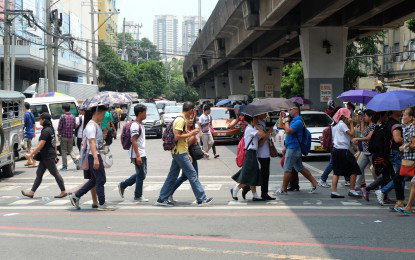
When in the metropolis as busy as Metro Manila, crossing the street is not as simple as it seems. First, there are areas without pedestrian crossings, especially in minor roads which can be just as busy as major streets.
The most common means of safe crossing (aside from pedestrian lanes) is an overpass but usually they're at least 500 meters apart, and the walkways are populated by vendors making it inconvenient for pedestrians to use.
Second, Filipino drivers are often crazy and don't respect pedestrians' rights. Instead of slowing down when someone has started to cross the road, they will speed up.
Therefore, it is a must for people to know how to cross the street while keeping safe. Their life will actually depend on this know-how.
Unfortunately, there are many people who don't know how to do this properly to save themselves. In particular, children are clueless when it comes to going to the other side of the street. Mostly, these are kids who are used to riding cars and will often be brought to the doorstep of wherever it is they're going.
Source https://www.pna.gov.ph/articles/1096057
The problem arises when they become adults and are out in the real world and have to navigate the streets on foot because of situations where riding a vehicle is impractical.
Believe it or not, when in the Philippines knowing how to cross the street is a life skill that should be taught, especially in private schools where students are mostly car-riding citizens.
Those who have no experience crossing streets are often fearful even before they step onto the road. Or just the thought of having to get from one side of the street to the other makes them break into sweat or shake in terror.
I remember walking with a friend once and we were at a busy street and needed to cross to the other side. While I do drive, I'm also a commuter and learned early on how important it was to be confident when crossing streets.
Even before we stepped off the pavement, she had already gripped my arm and I felt her squeeze tight that made me yelp a little in pain. It turns out she's scared of crossing streets and rarely does, or can't do so alone.
There have also been instances when I had to drag someone crossing the street with me because they're holding back for fear of getting hit. That could actually be more dangerous for the both of us.
Walk quickly
Having crossed streets since I was young, the one thing ingrained in me is to walk fast. Given that not all drivers respect pedestrians, you can't assume they will slow down for you. In fact, it's not uncommon for them to speed up, especially approaching street corners or intersections, even with the PED Xing.
So, my goal is getting from point A to point B as quickly as possible. In short, crossing the street should never be a walk in the park. I repeat: do not promenade.
There is an additional challenge when the road you have to navigate has bumper-to-bumper traffic (like those in busy Manila), where at any moment cars can move forward suddenly, or are cruising.
The trick in these situations is to weave in and between vehicles, moving fast, and never hesitating. Believe me, the more you hesitate, the higher the chance of you getting hit. Just keep walking.
You can always extend an arm to signal drivers to slow down, (they usually do) but unless absolutely necessary don't stop then go.
The basics
Of course, in areas where traffic is light, the rule is to look to your left then right before starting to cross. Sometimes, it's hard to estimate the actual speed of approaching vehicles but when they're still at a distance move quickly.
Stop at the middle of a two-way street, if warranted, to check for oncoming cars then proceed as quickly as possible. Do not vacillate, unsure whether to cross or not. You will get hit that way because drivers can't tell what you want to do and may not brake in time.
Pay attention to where you're going and what's around you. This way you can gauge your speed and pace in relation to vehicles on the road.
A really good tip when crossing streets without pedestrian lanes is to look and feel confident doing so. Projecting fear sometimes triggers foolish drivers to test you, and it could end up badly.
Like most anything in life, practice makes perfect. And it will build your confidence so that in no time, you're going to be crossing streets like a pro.
*Lead Image: Unsplash*
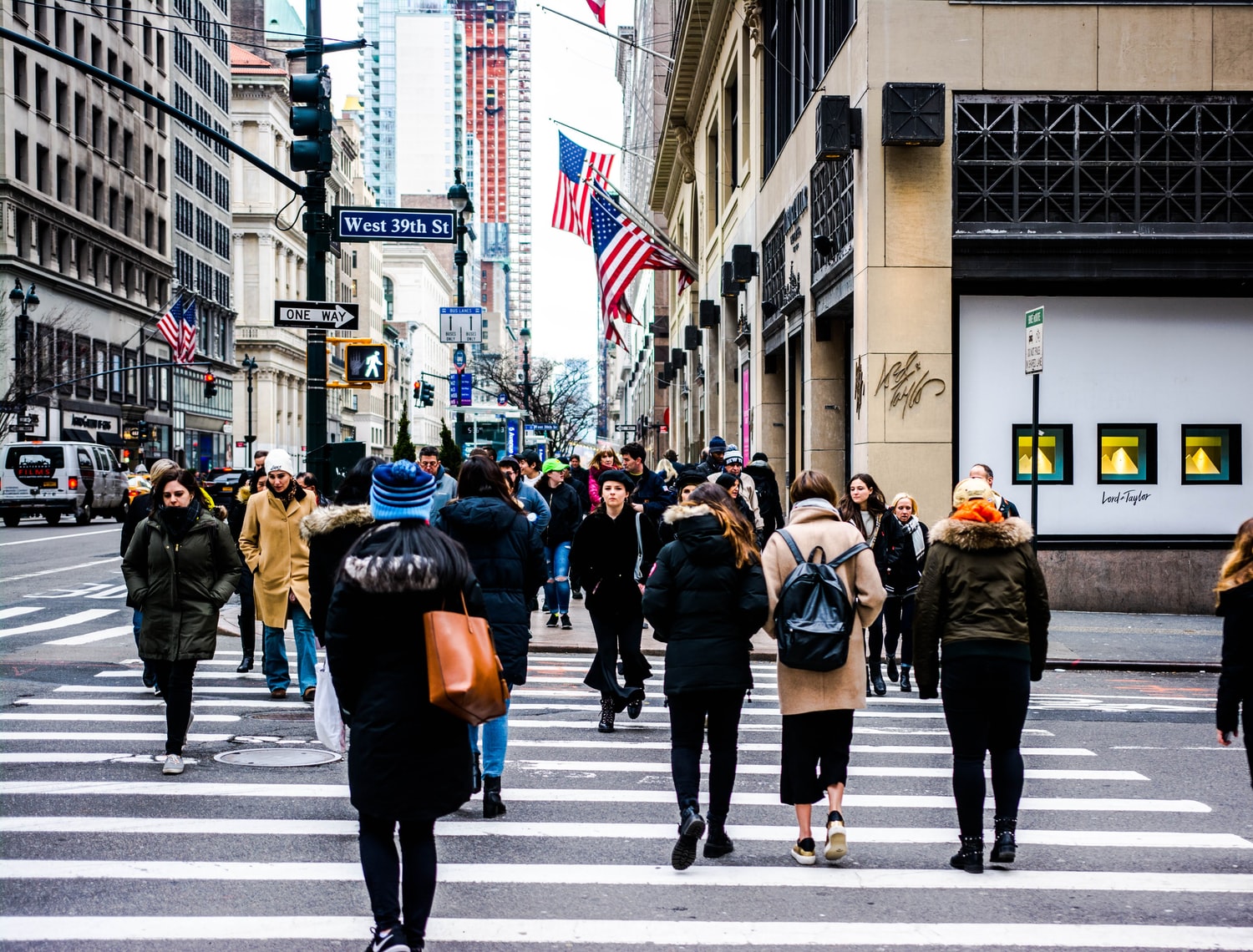
Memories on top of memories
My Dad was a consummate storyteller. If you let him, you two can sit down for hours and he'll never run out of stories to share. Among the tales he told that fascinated me was his relationship with his cousins.
His mother had eight other siblings, and save for one, his aunts and uncles had at least five children each. For every age group, there would be several cousins. And because they lived in the province where homes were usually of close proximity, they practically grew up together.
So, they would get into all these mischievous adventures or play pranks on each other. And because there were no other forms of entertainment in those days, everything they did was indelibly marked in their memories.
Because of their closeness growing up, they remained that way even into adulthood and despite the miles that eventually separated them as they scattered everywhere to live their lives.
Among my father's batchmates is an aunt, who is a year younger than him. They're pretty tight, and in the rare times they would see each other, you can bet there would be endless teasing and ribbing. And watching them interact was hilarious.
I had the rare privilege of seeing them this way about two or three years before my father passed.
For some reason, my Tita, who has long been based in Toronto, Canada with her family, decided to spend two to three months in their hometown during the cold months. She would leave her husband (because he was not fit to travel long-haul after a heart bypass) and she would fly in with her unmarried sister.
The two ladies would arrive around late January or early February then leave in April or May. The first time they came, we just learned of it when we arrived for our Holy Week jaunt in the farm.
It was a pleasant surprise because it had been years since we last saw them. Since the farm was just a 3-minute drive or 10-minute walk to their house, (which they had renovated and modernized) it was easy to drop in and visit.
A visit would usually last an hour or more and include either a meal or snack. And all throughout there would be so many stories exchanged and discoveries to be made.
I, my Dad's unmarried sister, and my niece would usually accompany him during those visits, so they got to know us quite well, too. Safe to say we younger generations developed quite a good relationship with my aunts, too.
My aunts, in fact, were so fond of my niece, that she would usually enjoy a bounty when they arrived or as we were about to leave. And among the younger generation, she was the one they were most familiar with.
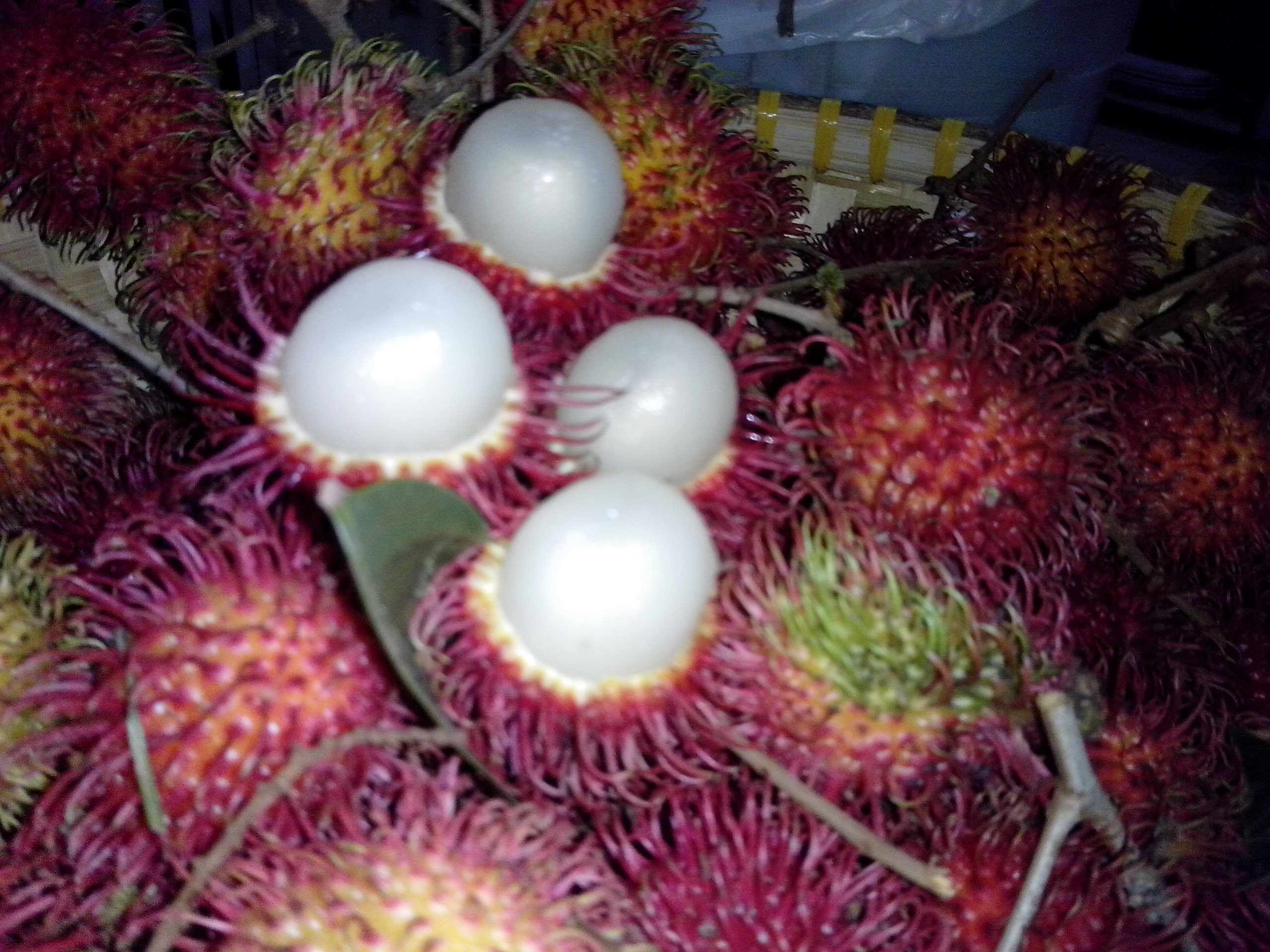
Whenever there was produce in the farm, usually fruits that they missed like rambutan, mangoes, or avocado, we would bring some over for them to enjoy.
It never ceased to surprise me that even if we saw each other everyday while we were in the farm, we would never run out of things to talk about or share.
And when it was okay with their schedule, we could invite them for some outing that we planned for the family, even if it's just to enjoy halo-halo!
When they arrived in 2018, my aunts were of course shocked that my youngest sister had passed the previous year and of my Dad's stroke and prolonged confinement in the hospital. They even planned to visit him in the hospital after jetting in, but it was just too inconvenient to drive from the province to Manila amid heavy traffic and then go back after a few hours.
Fortunately, they were still here when my Dad finally succumbed and made it to his wake. I know they considered it a blessing to have been visiting the last two years because they had at least spent time with their beloved cousin.
It was a comfort for us (Aunt and niece) that they were still around when we went for our Holy Week vacation that year. Visiting them daily distracted us from our loss and helped us deal with our grief.
I knew they were also grieving in their own way, but my aunt usually had a pleasant disposition and that was such a relief for us.
In 2019, they arrived later in the year because they decided to be present for the annual clan reunion, which their branch of the family would host. It had been a very, very long time since they attended this event and were excited to see their many cousins, nephews, nieces and grandchildren.
Alas, that would be the last time we got together. The good thing was they extended their stay a bit, and since I had to supervise a lot of renovations in the farm, I was travelling regularly, and got to see them more.
My Dad's favorite cousin recently turned 81, and via chat, she admitted it might no longer be possible for her to come here. We were of course very welcome to visit them in Toronto, but it won't be the same.
Being in familiar surroundings like their hometown always brought a lot of nostalgia whenever we were together. Besides, there were a lot of things from their childhood that we got to share whenever we were in the province.
Whether we would still get to see each other again or not, I am truly blessed to have been given that wonderful opportunity to get to know them, develop a good relationship, and share in the memories of their childhood.
That's what we miss in this day and age. Growing up together with cousins, enjoying simple things and making memories that we can carry on for life.
*Images: Unsplash (except credited photo)*
Of gold medals and rewards
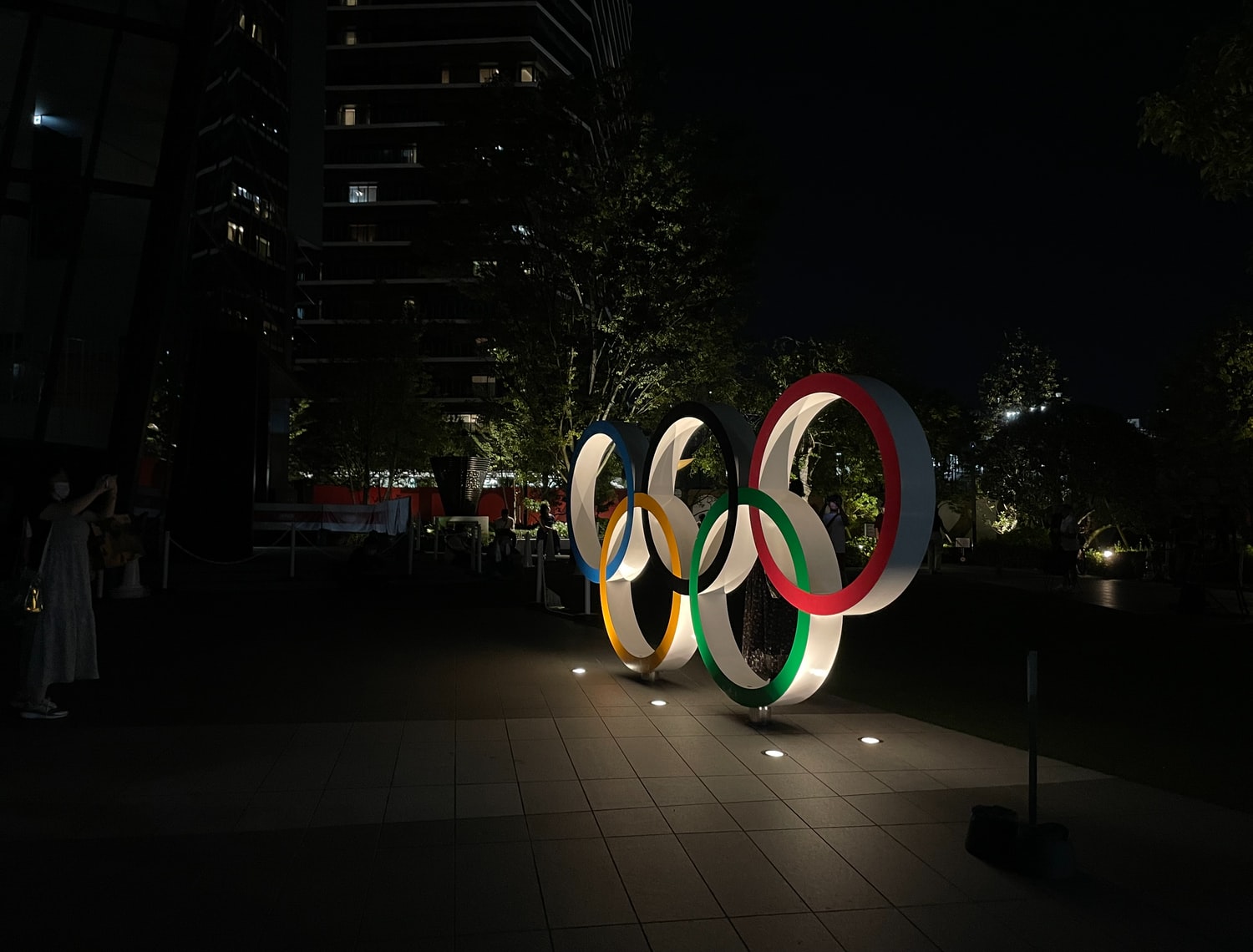
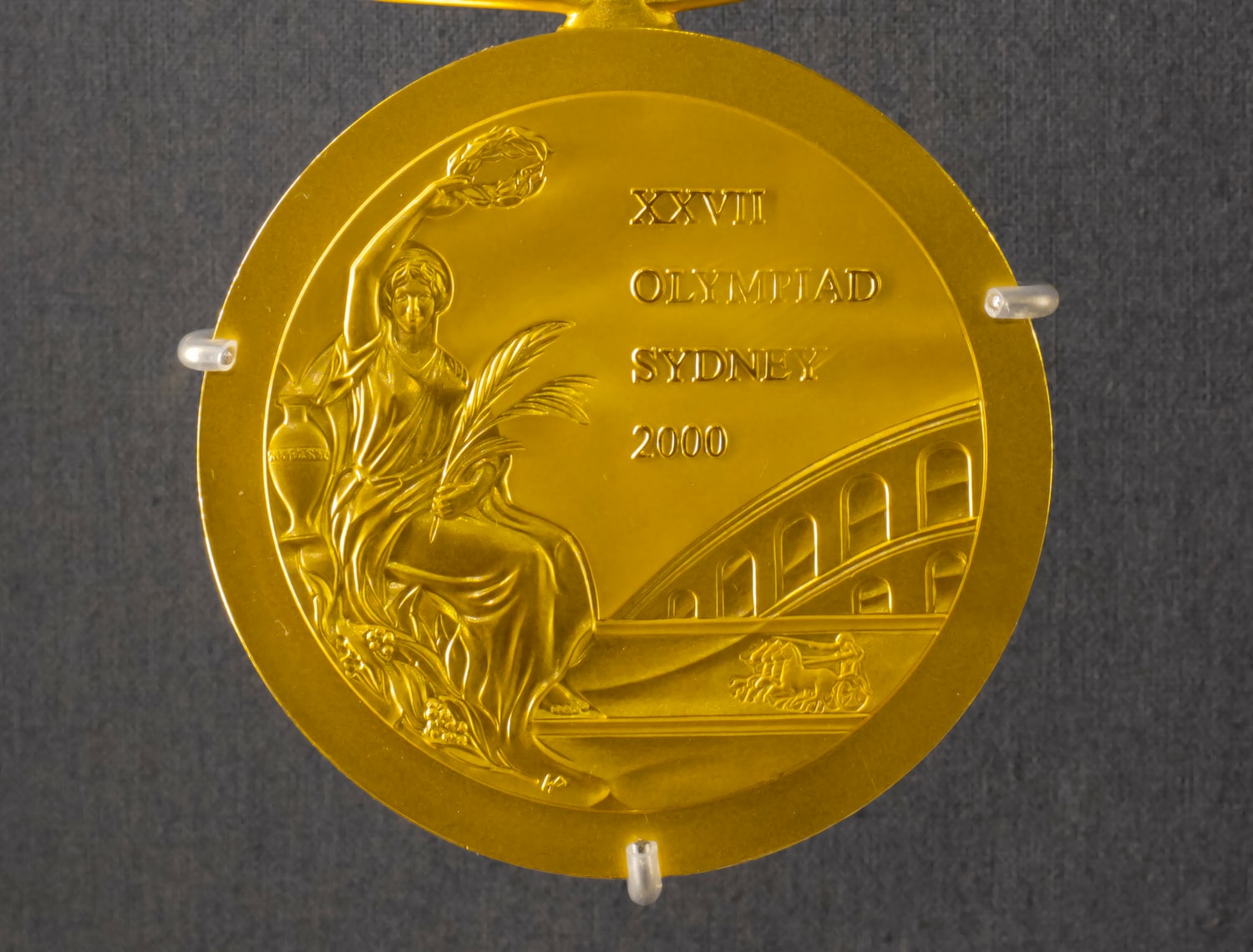
The 2020 Tokyo Olympics will come to a close today, August 8, 2021.
The summer games, originally scheduled last year, had to be postponed due to a pandemic that gripped the world, and continues to do so.
Organizers batted to push through with it a year later. No sense in postponing it further. They had prepared feverishly pre-pandemic and would take all the precautions necessary to keep delegations and everyone involved safe.
As scaled back as it was (gone were the crowds to cheer on athletes), the Japanese Olympic Committee still managed to pull off a memorable presentation and conduct all the events as efficiently as is expected of this nation.
History for the Philippines
It was historic for the Philippines for many reasons. This is the most successful campaign since the country started participating in the global sports competition.
While our contingent was lean, several athletes made the cut to the finals, although only four managed podium finishes.
Kudos to gymnast Carlos Yulo, who narrowly missed out on a bronze medal, pole vaulter EJ Obiena, boxer Irish Magno, and skateboarder Margielyn Didal as they displayed why they are the future of Philippine sports and medal hopefuls in coming Olympic games.
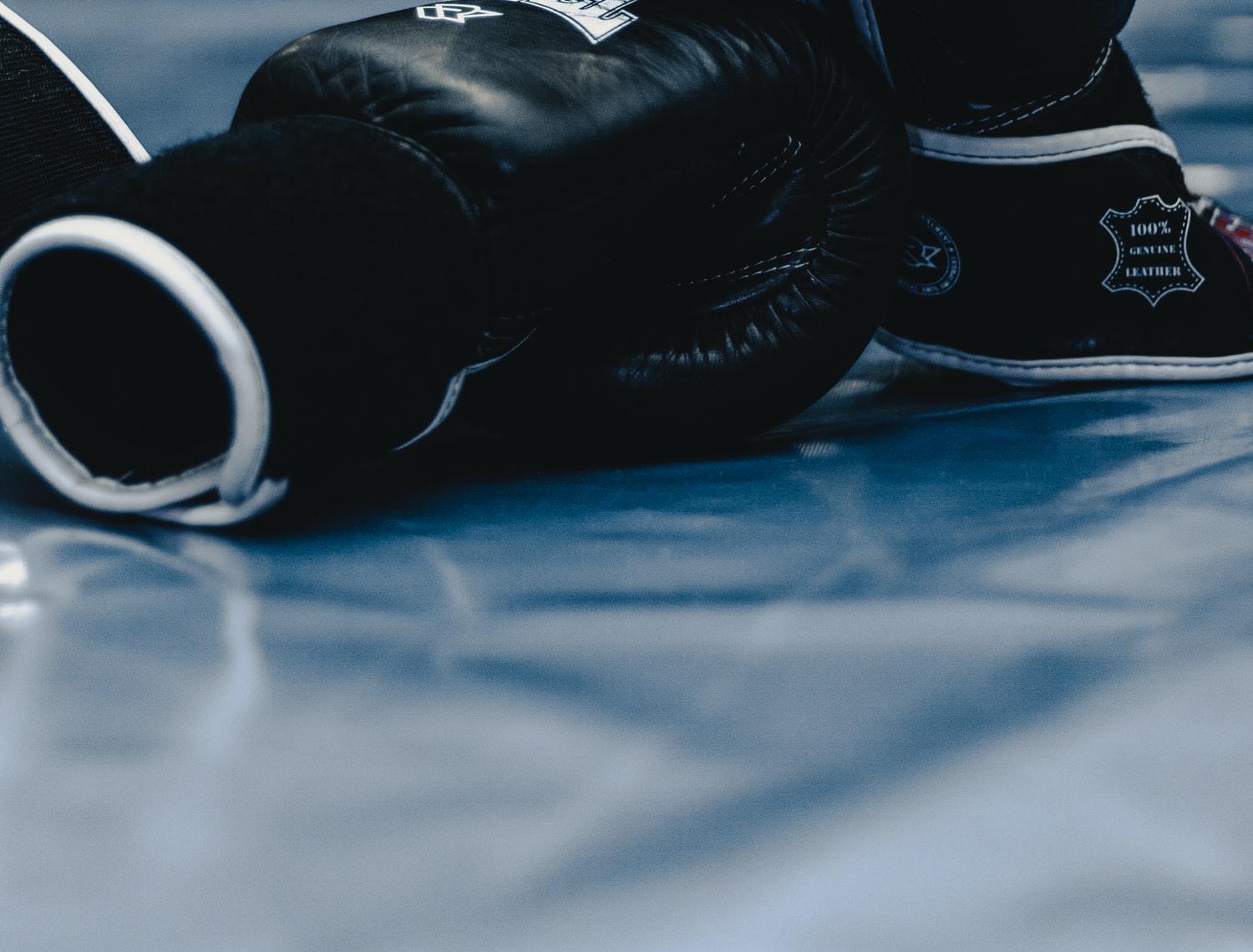
Our boxing campaign was most successful, with three qualifiers out of four bringing home medals - two silver courtesy of Nesthy Petecio and Carlo Paalam, and a bronze from Eumir Marcial.
But it is weightlifter Hidilyn Diaz who has unarguably brought immense pride to Filipinos for bagging the elusive gold medal for the Philippines.
Our first gold medal in nearly eight decades was literally snatched by a female athlete. It was lifting 127 kilograms in the clean and jerk category that propelled her to victory, stunning the team of the more favored Chinese opponent.
And I think there was a bit of controversy there because Hidilyn's coach was Chinese, and his compatriots were displeased with him for not disclosing his ward's true strength. But hey, isn't that called strategy? And since his services were being paid for by HD's team, he should be loyal to her and not his fellow Chinese!
Which brings me to talk about monetary incentives...
Monetary rewards
There is no monetary prize in the Olympics. You win a medal, especially the gold, then you distinguish yourself in the sports discipline you played in. It's bragging rights, both for the athlete and the country they represent.
However, winning a medal, especially gold, will open opportunities for the athlete back home. At least in the Philippines it will.
First, there is a law - Republic Act 10699 - enacted during the Aquino administration in 2015 that awards Olympic medalists with monetary incentives. (*I wonder if Hidilyn, who bagged the silver medal in the Rio Games in 2016, received what was due her that time*).
Under RA 10699, the pride of Zamboanga stands to receive 10 million pesos. Wow, that's a lot of moolah. The question is: when will she receive such bounty?
Before the start of the Tokyo games, business tycoons Manuel V. Pangilinan and Ramon S. Ang pledged 10 million pesos each for any athlete who will bring home the gold. Another 5 million pesos will supposedly be given by businessman Dennis Uy, and 3 million pesos will come from Deputy House Speaker Mikee Romero, a staunch supporter of sports.
An additional 5 million pesos will be added to her bounty from government because her feat also set two new Olympic records.
Several other private corporations have likewise pledged to give her a condominium unit, a house and lot, free flights, a car, even a lifetime supply of food products.
The cost of winning a medal
The windfall is mind-boggling. But... until the Olympic gold medalist actually receives all these, they remain promises or just talk.
I did see a post that she already received her car so at least that's for real.
There are questions as to whether the Filipina athlete deserves such huge sums of money and gifts.
What people don't realize is what Hidilyn and her team had to go through - all the blood, sweat and tears - to train and prepare herself for that fight of a lifetime.
It is not easy to train for a competition as huge as the Olympics. Millions are required to put up a decent showing. It's not only a matter of training to develop skills and be at par with the competition.
Most important is exposure. You can keep training by your lonesome, harnessing the necessary techniques and strategy. But unless you go toe-to-toe with the best in the world in your sports discipline, then it will be all for naught.
To participate in regional and world championships requires resources. Airfare, accommodations, nutritional requirements, equipment... and it is not just for the athlete but her team.
Source https://www.bworldonline.com/hidilyn-diaz-delivers-first-ever-olympic-gold-medal-for-philippines/
How can you become the best if you don't eat right, don't sleep comfortably, and have to worry where the funding will come from for the next competition?
Training, too, means foregoing any regular paying job. It's just not possible to work if an athlete is to focus on readying themselves to compete and climb up the ranks.
It is government's responsibility to support athletes, financially and with whatever they need, to excel. But how far will 43,000 pesos (USD 850) a month go? And that's one of the concerns that Filipino athletes have been bemoaning for years.
Yes, there are private sports foundations that provide assistance. But that is not for every athlete, just those where they see potential.
Still, because athletes play for country, a large part of financial support must come from government. At least, that's what I think so.
Many athletes have opted to hire foreign coaches, and they are paid a pittance. Others train abroad because of better facilities and opportunities to compete. All that costs money. Money, which most athletes do not have, and which force them to beg from whoever cares to listen to their pleas.
Watching Hidilyn lift that barbell weighing 127 kilograms, I still could not imagine what she had to go through to prepare herself for such feat, and the sacrifices she had to make to accomplish that historic moment.
Yes, a lot of it was her faith in God. That I believe, was key to making everything possible.
But still, government support was just as crucial, and she could have used more of that.
So, does she deserve all the pledges that she has received after winning that 127-kg gold medal? Most definitely! And our country owes her more for bringing pride to our people at such a dark time.
*Images: Unsplash (unless otherwise credited)*
The education outcome we need
Many parents today, more than their children, are grade-conscious. They're of the mindset that their kids must excel in school, get the highest marks in every test or paper, and be recognized for their achievements.
That's a lot of pressure on kids. While I agree that children should do their best in their classes, it should not take away enjoyment for learning.
After all, education is more than just studying subjects like Math, English, Science, Social Studies, and Arts. To my mind, more than simply gaining stock knowledge, children should be shown how these apply to real life.
Issue #1: Student-teacher communication
Based on my observation, students these days are too bookish, or more accurately, simply rely on information fed them in school, and worse, from the Internet. What they lack are critical thinking skills and personal development.
And I am puzzled by their reluctance to approach teachers to ask for clarification or guidance about school work, opting instead to second-guess what is required of them instead of getting clear instructions.
When I asked my niece why she or her classmates refuse to communicate with their teachers if the work being asked of them makes little sense or is obscure, she said when a student raises such concerns, teachers always take these as complaints.
And when a student complains, there are certain teachers who mark them, then eventually give them a hard time in class, including poor grades for their output. That's quite unfair, and will certainly not encourage communication between student and teacher.
Even worse are parents who also balk at speaking to teachers during conferences about valid issues as they take their children's word that they will become a target in class if they so much as raise a peep with their teachers.
Aren't parents supposed to be advocating for their children, when they see the kids struggling with school work instead of brushing such concerns aside to avoid confronting mentors?
If they truly want their kids to excel in school, then ensuring that there is clear understanding between students and teacher in class should be a priority.
Issue #2: Teachers lacking passion
I understand, especially in the public school setting (particularly here in the Philippines), how burdened teachers are with their workload. But I also believe that when they signed up for the profession (not just the job) they knew they would have to deal with children on a personal level and not just as educators.
I see teachers as second parents, as encouragers, as well as instructors. Not only do they teach specific subjects, but part of their duties and responsibilities is to look for potentials, help develop these, inspire students and push them to become good citizens and human beings more than simply excellent learners.
The problem lies in many teachers not having the heart and soul for teaching. They were either forced to take up this course in college, for one of two reasons: 1) parents believed they aren't smart enough so all they will be good for is teaching (the logic of which is totally preposterous!) and 2) because of financial opportunities open for teachers overseas.
They forget that without passion, teaching will only become a burden for a mentor because much is demanded of them, other than making lesson plans, preparing exams, thinking of projects, and grading papers and class participation.
Part of a teacher's duty is to know their students, find out why one is not doing well in class and not just dismiss them as slow learners or idiots, help them get on track, and boost their confidence so they can thrive not only in class but in life.
If their heart is not in being an educator, it will be doubly grueling to help a child become the best version of themselves because instead of going the extra mile to ensure the student learns and enjoys their time in school, they will not go out of their way for their pupils to make them feel they are being given proper attention.
But like I learned while covering budget hearings of the education department in Congress, not only is the entire bureaucracy very, very complex, education itself is, too. But that's an altogether different matter that is not up for discussion.
If it were me, knowing what I do now after so many years of real life experiences, I would settle for students to be good at reading (comprehension, too), writing and arithmetic, because everything else, subject-wise, will follow.
Basic education is what children need. When they get out of the classroom, and school, they should know how to read well, understand what they've read, be reasonably proficient at spelling and grammar, and can write even simple essays.
Math is math. Not all kids have the head for numbers and formulae to enjoy math, but there are now several ways to simplify lessons and break it down for those who don't enjoy this particular subject.
At the same time, students must be taught good work ethics, proper manners and decency, while inculcating in them a strong sense of dignity, integrity and respect.
What kids learn at home
There was a post that caught my attention about a teacher relating her meeting with a parent in a PTA conference. The mother of her student said she wasn't as interested about her child's academic performance because in time, her daughter would get all that.
What she wanted to know from the teacher was how her kid was as a person... if she was kind, helpful and got along with other students.
It was her child's character that was more important to the parent, because what she displayed in school would be a reflection of how she was brought up and treated at home.
In my opening paragraph, I pointed out how a lot of parents these days were becoming either grade-conscious or achievement-oriented when it came to their children's education.
To a certain extent, it's understandable when their kids are being sent to private schools, where costs can be prohibitive. Still, putting inordinate pressure on their children to excel in their studies is not healthy.
As much as all parents hope their kids end up with the jackpot in the intelligence gene pool so they can do good in school and get the breaks in life, what should be more important is that they develop into respectable, kind human beings.
Because ultimately, character shapes a man more than intelligence.
*Images: Unsplash*
A good work ethic
Never say that's not my job.
That was a post in Facebook that gave me pause. I thought of the days when I worked within an organization and if there was ever a time I was guilty of that.
I can't really think of an instance where I specifically refused to help out when I can just because it was not my job. (*But I will pass up helping when the task is highly specialized and requires experience or training rather than botch it.*)
The rest of the post by **Wes Prichard** read that saying "it is not my job" smacks of arrogance and laziness. An exemplary worker does not confine themselves just to their duties.
When workers lend a hand, whether to get a task done on time, or help someone find a solution to a problem, it adds value to any organization.
It does not have to be your responsibility to assist a co-worker when necessary, it just is a good work ethic to practice.
And most importantly, helping out should be done even when no one (read: superiors) is looking.
Early training
My early work training was with a lady who wore many hats. This meant she had so many things going on at the same time. And as her assistant, I was exposed to everything she dipped her hands in. (Check out a previous article about my early work experience: On the job training) https://read.cash/@zolabundance2/on-the-job-training-best-learning-experience-3037c9cd
What she taught me (without actually teaching me) was to be familiar with every step of whatever was being done to produce or create something. Since she was both involved in the creative and technical aspects, my boss knew a lot of things - from the most menial of jobs to the most complex.
And by observing her work ethics, I picked up on a lot of them, including knowing how to do every step within a certain process. And because I saw what is being done, it was so easy for me to jump in and help out when necessary.
Learn more, do more
The training ingrained in me the curiosity to learn about steps taken to complete any work done in my succeeding jobs. It was not necessarily to take on the responsibility, but to be able to assist when there is a need to speed up things or to catch up with deadlines.
This became invaluable when I was later appointed to supervise groups of people assigned various tasks. In educating myself about how things are done, and actually doing them, I became confident asking staff to take on tasks because as much as possible I never ask them to do anything that I couldn't do myself (except very technical stuff).
I know there have been underlings who have felt embarrassed when they see me helping out with what is supposedly their responsibility but I always brush them off. When it's our organization on the line, the more hands on deck, the faster we can deliver results.
Beyond office hours
Most of the jobs I held in the past did not operate on regular work hours. So, I was used to rendering work or service beyond usual office hours, and even working overtime when necessary.
In Congress, during budget hearings, we could be working until nine o'clock or even up to midnight. In the newspaper, there may be instances when a story is updated past seven o'clock.
I remember learning to lay out newspaper pages just watching the chief artist and having to take over the task during one stormy day and only a few people came in to work at that time.
I had little choice because no one else had been trained for the job yet. In hanging around the artist's work area, I picked up on how he did things and when it was time for me to do it myself, I fumbled a bit but still managed to get it done.
So, the attitude of not doing something that isn't my responsibility isn't in my vocabulary. I help when needed, and no questions asked because it is our company on the line.
It's not aspiring to be a know-it-all, but wouldn't it be an advantage to know as much as possible how things are done or created in whatever industry you're in? After all, we must never stop learning to grow as individuals.

Humility is true victory
Aside from synchronized swimming (now called artistic swimming in the 2020 Tokyo Olympics) and figure skating, tennis is one sport I enjoy as a spectator.
But since televised events for the first two sports are few and far between, it is tennis that I get to see regularly, especially Grand Slam tournaments.
For non-tennis fans, the Australian Open, French Open (Roland Garros), Wimbledon Championships, and the US Open make up the Grand Slam events. While there are many other tournaments played all-year round, to win any of these four is what every tennis player aspires for.
It is Wimbledon of the All-England Lawn Tennis Club that pioneered tennis tournaments, and while the three other events have become equally prestigious over time, it is still the tournament played on grass that is the ultimate championship.
Several players, both men and women, have achieved feats of winning one Slam multiple times, and even more astounding, winning all four slams more than once.
And while in recent years it's become rare for anyone to win more than one or two slams in a calendar year, it has been achieved in the past.
To win all four grand slams in one year is a dream, but rarely been accomplished. And when it's an Olympic year, like it is now (well it was supposed to be last year) there is another win that's equally important.
Tennis is among the sports disciplines being contested in Tokyo. And the professional tennis players are tapped to represent their respective countries.
Win an Olympic gold and it's almost like winning a Slam, except that you're not just playing for yourself, but for country as well.
If by some stroke of luck you happen to win all four Grand Slams and snag a gold medal in the Olympics, the player is said to have completed the "Golden Slam," a really impressive feat.
Source http://www.smallstepsproject.org/portfolio/steffi-graf/
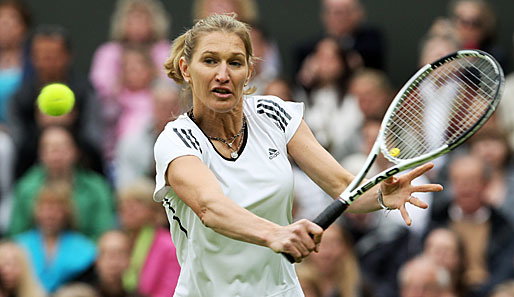
To date, only one player has ever achieved this rare feat - the German tennis superstar, Steffi Graf in 1988.
Graf, one of the most accomplished tennis players of all time, has captured a total of 22 Grand Slams in her career, winning all slams at least four times.
Why is winning all four tournaments such a triumph and a dream? Every slam is played on a different surface. Wimbledon, the grandfather of all tennis slams is on grass; Roland Garros is on clay, while the Australian and US Opens are on hard courts.
While the latter two are similar surfaces, there is still a difference in terms of speed with which the balls rebound. So, while a player may win several times in Australia, it does not guarantee success at the US Open.
Typically, someone adept on grass will not be as excellent on clay because they are totally opposite surfaces. The balls are fastest on grass and slowest on clay.
So, Graf distinguished herself by being both competent in grass and clay, although she's won more on Wimbledon (7) than in the French Open (6). But adjusting to very different surfaces in a span of four weeks is awesome in itself but can also take its toll on the knees and be a cause for injuries.
After 17 years as a professional tennis player, Graf retired in 1999, the same year she won her last Grand Slam title in Roland Garros in a most enjoyable finals game against the much younger Martina Hingis.
In spite her many accomplishments in the sport, life after retirement is totally removed from tennis. However, she did marry fellow tennis superstar Andre Agassi, with whom she has two grown children.
In all the years that I've followed her career, I've never heard Graf obsess about winning or setting records. She just played her best and displayed excellence on court.
Which is why it rankles that Serbian tennis player Novak Djokovic was so focused on reaching that goal of completing the rare Golden Slam this year.
Yes, since he's already won the first three slams (Australian, French and Wimbledon) this year, he was the only player with the fighting chance to achieve that. Win the US Open and he would make history.
But then with the Olympics moved from 2020 to 2021, he set his sights on an even bigger achievement - a Golden Slam.
Rarely do I hear other players, even the best like Roger Federer and Rafael Nadal, ever talk of breaking records or making history in the way Djokovic has.
Source https://www.townandcountrymag.com/style/news/a7341/real-value-of-a-gold-medal/
Already, he has equaled the records of Federer and Nadal of 20 Grand Slams won, but he's become more obsessed with setting records. To me, it speaks of pride and arrogance.
Champions like Roger and Rafa, and those before them like Pete Sampras, Bjorn Borg and John McEnroe even with their greatness never broadcast wanting to set or break records.
And that's the problem with Novak... as accomplished as he is, he has to keep reminding the public of his excellence. And this attitude doesn't make me like him at all, however good he is.
Heading into the Olympics, he was over confident about winning the gold, especially when he kept advancing to the next round.
But his world came crashing down after being beaten by young German Alexander Zverev in the semifinals. After that loss, he just lost the heart and desire to keep playing because his plan was foiled.
Most athletes who participate in the Olympics carry the burden of playing for country. But Djokovic looked like it was all about himself. He didn't even play good enough for the bronze medal.
Aside from excellence in playing the game, people root for champions who remain humble despite their accomplishments. To my mind, that's what a real champion is.
Humility, modesty, and magnanimity. So many of the successful athletes exhibit these traits and this is why they are well-loved.
*Lead image: Unsplash*
Wanted: Excellent skilled workers
While not totally inept at house repairs, I gladly give way to those who really know the trade to make sure things get fixed rather than more broken.
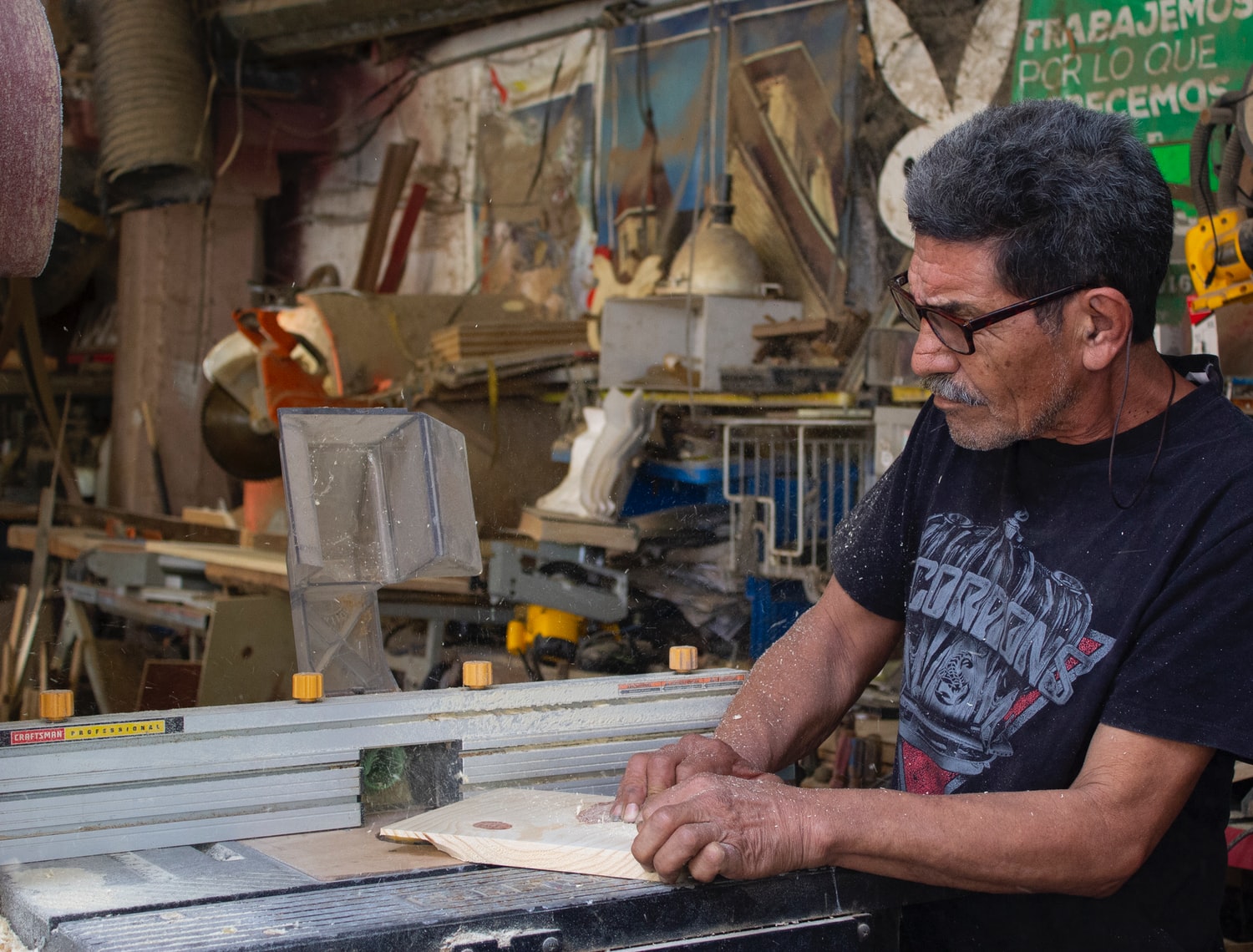
I have such high regard for carpenters, electricians, plumbers, mechanics, and anyone with innate skills who can build and repair most anything.
Reminds me of a family friend, who suddenly passed away early this year. There was little that guy could not do! And when he took on a project, he was always so focused and gave his 101 percent to it.
He actually comes from a family of artisans. But other than building, he was so creative and that's why I worked closely with him on many projects. Logo designs, t-shirt printing, backdrops... need anything with art, he's your guy.
But he could just as easily fix any electrical problems, paint your house to dazzle you, change busted water pipes, build a table, or a house, for that matter.
Then he suffered a stroke.
Unfortunately, skilled workers in this country do not command the high wages that they are entitled to in other countries.
A carpenter does not command the same respect as an office employee, and needless to say, nor do they get the salary they deserve regardless of their skill level.
I don't blame those who pack their bags for some foreign shore because there, they are paid what they're worth.
So, my friend ended up half-paralyzed with insufficient resources to go for therapy. But he's a scrapper. He strove to recover, did exercises to help him walk again, and while successful, he still ended up with a heavy limp.
One arm was also permanently paralyzed. But, did he give up? No! His movement may be limited but it didn't stop him from creating and working and supporting his children.
He's rarely idle. And when you look for him, he would be busy supervising construction work, or tile work, or making glass and aluminum cabinets. And that's how he survived.
Although the jobs were steady, they still didn't pay much. Yet, he continued to do extraordinary work, made more amazing given his disability.
Later, when I got to talk to him, or chat online, he'd share about how he wasn't feeling so well, and that he suffered from seizures, or aches and pains but didn't have enough to go see a doctor or buy the necessary maintenance medication he needed.
We helped as much as we could, but the man also had his pride. He'd offer his service for free in exchange for whatever he received previously, even when that was given as a gift.
The strict lockdowns meant he couldn't go out to look for projects or side hustles. But like I said, he had a lot of spunk and wouldn't let quarantine stop him from creating.
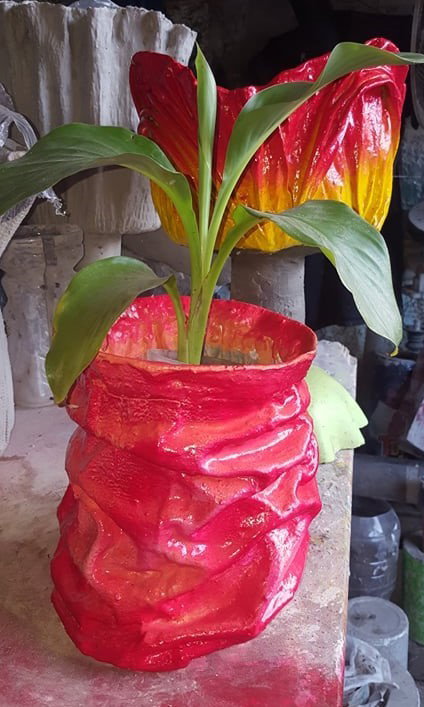
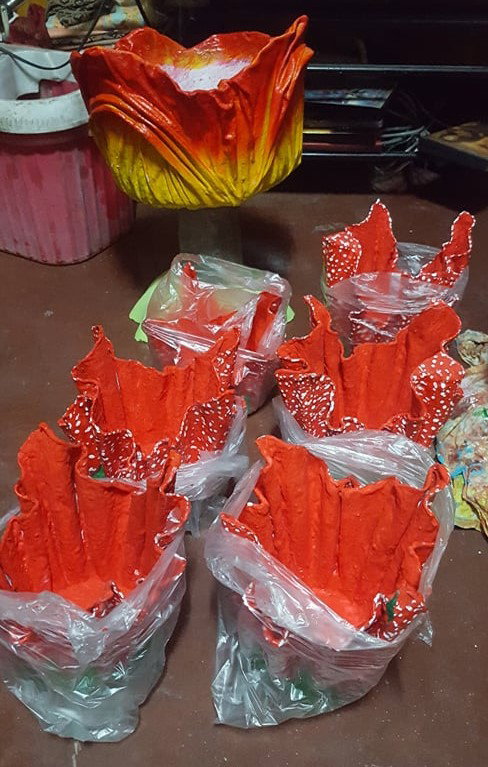
He took to creating colorful pots and selling these to friends and online. And with many people turning plant-crazy during this pandemic, he was kept so busy.
When I checked how he was doing, he would send me photos of his work and you'd never believe it was done by someone with just one good working hand! Even more astounding was how many he kept churning from his small home because the orders just kept coming!
That's why I miss him, and remember how good of a man he was, and how inspiring he's been not just for me but for many who knew or met him.
Now, he's got a nephew who's turning out to be a craftsman himself. The guy does know how to work a hammer and a saw, and turn wood into something right out of a magazine.
My dad saw the potential in him and pushed him because the guy didn't have much confidence in himself and his abilities.
Sadly, his insecurity stems from the fact that he never went beyond high school. I know he was sent to trade school, but there was no carpentry or furniture building course there.
Besides, he had such a fear of the big city and would rather languish working small jobs in the province rather than grab opportunities away from home.
What a waste of talent...
We can't even get him to come to our home and do any repairs or build stuff for us because he absolutely refuses to take a bus and travel to Manila.
And it's so difficult to find someone with excellent carpentry and repair skills here because most of them are working in construction projects.
When we do find one, we have to grovel to fit us in their schedule just to get things done. And while I don't like hovering around people as they do their work, I do find myself doing just that when someone comes in for repair work.
It's so fascinating to watch how they can make something look right again even when it was in a state of disrepair before they handled it.
And no, if you give me good work, I do not quibble about how much I need to pay for the service.
I also appreciate someone who provides options to minimize expenses rather than just going with a plan that will burn a hole in the pocket when a more economical alternative is available because they don't want to put a lot of thought into the job.
How I wish there were more young people going into carpentry or building, and they get the support to encourage them to pursue this as a career because we need more Filipino craftsmen.
*Photos without credit are original*
Thoughts for month's end
It's an hour before August rolls in. I committed to writing an article today, and have less than 60 minutes to do so. So, let's see how this goes...
After the historic gold medal victory of weightlifter Hidilyn Diaz, all eyes are on another female athlete, boxer Nesthy Petecio. She's already assured herself of a podium finish, but why settle for silver when you can go for another gold.
More than her fighting spirit when inside the ring, I love how she's already claimed a win for women in their respective sports disciplines, and her confidence that Filipinas will outshine their male counterparts.
The fact that the first Olympic gold for the Philippines came from the efforts of a woman makes the feat even sweeter. For so long, sportswomen have played second fiddle to guys.
Support for athletes is unfortunately inadequate. Sports is just not a priority in this country, and that is such a shame. Basketball is, however. And that's even more pathetic when I feel we can excel more in other disciplines where height is not a primary factor for winning.
It's also sad that the private sector is willing to throw in the big bucks to back basketball when there are other more worthy sports they can support with a better chance of winning.
So, it truly is a sacrifice that athletes must make in order to become the best in their chosen sport, especially in disciplines not as popular.
That they are deprived of international exposure due to lack of resources is a fact. So, they either have to beg for sponsorships or forego the opportunities that can further improve their skills as they compete against the best in the world.
How can government not support them when they'll eventually represent the country each time they participate in competitions? That's the bigger pressure on them: playing for flag and not just for self.
And because the only thing we fellow Filipinos can do is pray for our athletes in the Tokyo Olympics, especially those who have advanced so they can compete for at least a podium finish, then let's do that fervently.
I can't wait for the next few days when a boxer or gymnast or track athlete brings us another medal. Their victories come at a time when we need something to cheer about and light our way in the darkness we've been trapped in.
After next week, the National Capital Region and nearby provinces will again be placed under hard lockdown.
Hopefully, government already has a plan in place on how to arrest the alarming increase in the coronavirus Delta variant because otherwise, strict quarantine will be useless.
In the same vein, I pray that the citizenry will do its part to help curb this invisible menace that has disrupted life like no one ever imagined. In large part, I know that we are not moving forward to restoring normalcy in everyday life because so many people still don't care enough to do what is being asked to keep safe and protect others.
It's encouraging to read that local government units have been given the green light to go house-to-house in their vaccination drive. This should help minimize people going out, waiting endlessly in centers for their turn, while forgetting about safety protocols like physical distancing.
When you think about it, sending teams to go to people's homes is more effective. It may even increase the rate of inoculation because there are those who don't go for the jab because they have no means to travel, or have no one to accompany them, or have no one to stay at home with kids.
If the mountain won't come to Muhammad, then let Muhammad go to the mountain, goes the saying.
Besides, after accompanying my Mom for her jab, I saw teams huddled together waiting for people to come and get processed for vaccination. How's that for physical distancing?
They'd get the job done faster and more economically if they went to people's homes.
Sacrifice. That's the key. But it can't just be by one person or a few. The virus doesn't choose whom to attack. So everyone must sacrifice, in whatever capacity.
*Images: Unsplash*

Pleasant surprises
Seeing a rainbow is always a wow moment. At least it is for me. Yes, there is science behind it. The simplest explanation being "when sunlight is scattered from raindrops into the eyes of the person viewing it."
But there is something magical watching this colorful arc on the sky and imagining where its two ends are. Don't you ever get the urge to head to where you perceive the ends to be?
I remember as a child my parents would always call us whenever a rainbow forms right after the rain. And we would stand and stare at it for as long as we can, watching until we finally get bored and run off to play.
However, I don't recall having watched a rainbow disappear from the sky.
Until driving home one day, late in the afternoon, and there looming before me was a rainbow. I know it's dangerous to be distracted by something so pretty while behind the wheel of a vehicle.
But it was directly in front of me and the more I drove towards it, the bigger the smile on my face.
You couldn't really see all its seven colors clearly, and when I think about, from afar, ROYGBIV (red, orange, yellow, green, blue, indigo and violet) aren't all visible to the naked eye. We've just been predisposed to thinking they're there because that's what a rainbow is supposed to look like.
Anyway, I was completely taken by surprise when I saw one end of the rainbow slowly disappearing. Yes, it's as if it was being erased a little at a time from the sky, left to right.
So shocked was I by the sight that I decided to pull over to the side of the road and watch the entire spectacle transpiring before me. It didn't take very long before the rainbow was completely wiped out from the sky. Wow!
That was pleasant surprise number one.
On another drive along Roxas Boulevard, I was headed towards the Port Area from Ermita and I was caught in a heavy shower. It didn't really matter because I was already close to my destination.
As the car crossed Kilometer 0, which is right in front of the Rizal Shrine in Luneta, there was no rain!
But when I looked at the rearview mirror, it was raining like crazy behind me!!!
There was literally a straight line where the rain and no rain zone met. I think my jaw dropped at the sight and experience.
What were the chances I would get to see such a phenomenon? It was totally awesome!
That's pleasant surprise number two.
And I have never seen another like it again.
So, what's pleasant surprise number three?
Well, there are actually nine. I speak of the read.cash authors who have thrown their support for this humble writer by way of sponsorships. https://read.cash/@zolabundance2
My sincerest gratitude for this, and more importantly for dropping by and reading my entries, and sharing your thoughts as well. That means the world to me.
Without further ado, I present my sponsors, and invite you readers, to check them out too, if you haven't already.
@Eylz2021
@JonicaBradley
@Bloghound
@FrieLincs
@Bjorn
@ARTicLEE
@wakeuplincs
@Pichi28
@emily2u
Often, we are not aware of things happening around us because our mind is preoccupied by a myriad of thoughts, worries, ideas and we miss out on quiet surprises that can lift our spirit.
I'm quite surprised by how many of these pleasant memories come to mind now. Perhaps then I wasn't as mindful, but I do remember them when I sit thoughtfully, pondering life and how different it is today.
There is still much to be grateful for even as living today has become limited, with so many restrictions while the world battles a pandemic.
And while we're at it, thank you read.cash for providing the likes of me with a platform to express myself, meet people, and share experiences. You are a blessing! https://read.cash/@zolabundance2
Of squash and peppercorns
Never thought grinding peppercorn can be therapeutic. It may be the combination of doing something repetitive while exerting a bit of force that makes it so.
And though it appears to be a mindless task, there is an end goal - produce both finely and coarsely ground pepper.
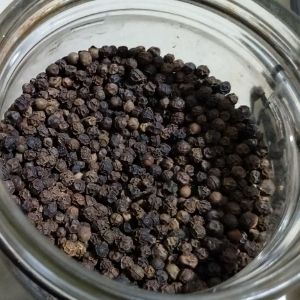
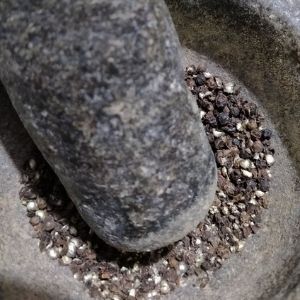
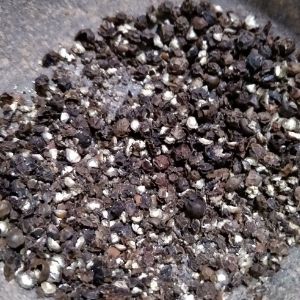
With an old and trusty stone mortar and pestle, I set about my task taking comfort in the grinding sound as I crushed the black peppercorns and watched it crack then open then slowly be reduced to smithereens.
Yes, there was a bit of an aggression there, even if I wasn't consciously aware of it initially. But as you keep moving the pestle round and round some unknown pent-up emotion just seems to fade away as the peppercorns change form.
It was enjoyable to do this by my lonesome - no talk, no distracting sound like the television, no one looking over my shoulder. Just the sound of stone on stone and bits cracking.
I appreciated the fact that the weather was muggy, with rain falling every now and then. It wasn't as hot and I wasn't dripping with sweat like I do on most hot days when cooking.
When I finished the first batch, I transferred the crushed peppercorn to a small sieve so I can separate the coarsely-ground pepper from the fine. Then it's into two separate bottles.
Three more small scoops go into the mortar and I do it all over again. Quite satisfying and relaxing once it's all done and I have a fair amount of freshly-ground pepper.
I needed ground pepper for the squash balls I wanted to try. It was inspired by a post of @TheSaltyLemon in noise.cash. Usually, I make these things without a recipe, and just wing it.
But this time, since I have not tried using squash, I decided to measure out everything I would use to have a base recipe of sorts. Even if I tweak it later, I have an idea what I did beforehand and make the adjustments accordingly.
I should've gone with my instinct to squeeze the grated squash to remove, or at least reduce, its liquid content. But I did not so...
Aside from the squash, I needed corned beef both to add flavor and somehow bulk up the veggie balls. Good thing there's the corned beef in 60 gram pouches. Perfect for test cooking.
I thought of using just one pouch to add to 250 grams of grated squash. But my niece, who decided to join me in the experiment, suggested to use two pouches, and she was right.
To season, it's a teaspoon of salt, half a teaspoon of my freshly-ground (fine) pepper, and since it's a favorite spice of mine, a teaspoon of ground cumin.
I decided to first saute one garlic clove, and a small onion (about 40 grams), both minced, then pre-cook the corned beef and squash.
As we left the mixture to cool, niece tastes it, then again suggests adding some Italian seasoning. I know, it's a bit fancy, but we had some on hand and it could elevate the taste. So, a teaspoon of that, too.
I added four tablespoons of flour to act as binder.
By this time, the mixture appeared soggy and I was worried it wouldn't form into balls, or hold its form as it's cooked.
We tested one ball, deep-frying it. It held its shape, but it turned out too soft upon tasting. But on the plus side, it did taste fantastic.
Niece was quite excited with the balling, but she ended up over-mixing everything, so it turned out more soggy. She did end up making them into proper balls, but when it was time to cook, they didn't hold shape (sigh!)
The first three that I deep-fried ended up first looking like nuggets, then finally gyoza as it cooked longer and we had a laugh there.
What if I stopped deep-frying and just pan-friend them? They were already soggy to begin with and cooking them in a lot of oil made them even more soft.
When I dropped them in the pan, they still lost the ball shape so I decided to just make them into slider patties. They cooked better and held shape.
About 16 slider patties came out of that recipe. Remember, sliders are about two-and-a-half inches in radius. And you need about three to four patties to be filled, whether eating it with rice or bread.
Yes, I was told it tasted good with pandesal because it was soft, and in contrast, the bread added some crunch to it.
I still have some squash, and will be trying to make real balls, but without pre-cooking. So it's just mixing all the ingredients then forming the mixture into balls, and frying them.
And oh yes, I will squeeze excess liquid from the grated squash because it will help to keep it from getting soggy or soft.
*All images are original...*
The SONA I don't miss
I've sat through maybe three or four State of the Nation Address (SONA) delivered by the President.
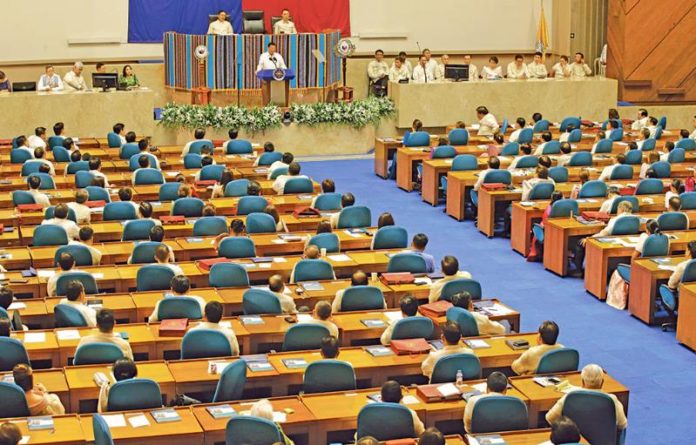
By sat through I mean physically sitting inside the Plenary Session Hall of the House of Representatives among the guests and listening to about an hour or so as the Chief Executive delivers an assessment of the country's state after a year.
It was my job as a journalist covering first, the president, then later Congress. I didn't particularly like it because it's tedious for one.
As is protocol, everyone must be seated an hour before the arrival of the president. And once the speech starts, you can't get out until it ends. Restricting movement of guests is for security purposes.
The second reason I'm not a fan of the SONA is because of the strict dress code. To be able to enter the Session Hall the attire required is at least semi-formal. Can you imagine having to dress up (to the nines for broadcast journalists who are going on-cam) just to sit through a speech?
A third reason is the need to come in so very early in the morning even when I live 15 minutes away from the Batasan Pambansa complex, where it is held. Again, it's for security reasons.
Security risk
There are usually protestors and demonstrators who line the streets going to the venue and law enforcers are tasked to prevent them from getting there. So, long stretches of roads are closed and anyone headed in that direction that does not have proper credentials (car passes) will be held up and turned away.
Congress employees, congressional staff, and journalists covering Congress are required to be inside the complex by 7 AM. You have to go through so many security checks to be able to get to the Media Room, or wherever you're headed to.
They search your bags, tag all communication devices like recorders, radios and cameras, and slap a sticker on you to indicate the only areas you're allowed to enter.
Aside from the SONA, which is set at 4 PM, there is the opening session of Congress (both House and Senate) that starts at 8 AM. There's usually a story or more during the morning session, so it's imperative to be there early.
If it's a new Congress convening, there will be an election of the Speaker of the House, and there's a lot of drama that goes on there so better to be in on the action from the beginning.
Behind the scenes
In writing a news report, just as important as what transpired during the event and sound bytes are what is termed as "colors".
This means additional information to add to the write-up such as a shouting match or arguments, how the players behaved or acted, or side stories that can be picked up from willing sources. And you need to be present for such stuff.
And since I also ran a weekend column of light news bits, being there throughout the morning session and the SONA itself was invaluable for me.
Source https://businessmirror.com.ph/wp-content/uploads/2020/07/03_SONA-696x445.jpg
For the presidential press corps, you can head to the Palace, wait for the press bus to bring you to Batasan, then work there after. The only problem is having to share equipment with the Congress Press Corps.
It's tough, because traveling back to Malacañang is foolish when you're trying to beat the newspaper deadline and the SONA ends at 5:30 PM.
Since the SONA is the only schedule of the president for that day (the fourth Monday of July, as stated in the Constitution), I once decided to head straight to Batasan early in the morning and hang out there, which wasn't really very smart.
Fashion show
Pre-pandemic, one of the highlights of the SONA, and most anticipated by the public are the clothes worn by the VIPs and the lawmakers themselves. Yes, it's a veritable fashion show.
Women especially change clothes from the morning session to the SONA. So, while they may downplay their outfit in the morning, opting for business suits, they can turn into a fashion model in the afternoon, as they walk the red carpet on the way to the Session Hall.
For many years, especially in the early 2000s, the fashion was just as big a news as what the president said. Sometimes, these clothes can be a statement in themselves, particularly among the opposition and activist lawmakers.
This fashion show did help showcase Philippine fabrics and designers because like showbiz events, the women were asked to describe their outfits and who made them.
There have been some bizarre outfits that can really take your breath away because they were really awful or hilarious. I had a lot of fun writing about those, and no, I never got into trouble because of what I put out.
Keeping an eye on people
One of the things reporters look out for during the SONA itself are reactions among guests, and counting the number of applauses the president received in the course of the speech.
Because it's quite a long speech, with too many details to catch, the SONA can be quite boring. Presidential reporters usually receive a copy of the speech ahead, but are asked to embargo it.
Embargo means not to release any details or contents until the speech has been delivered. Besides, there are presidents who can adlib, or do away with entire paragraphs of the speech so a journalist would be in big trouble if you release anything ahead of time and get it all wrong.
When you listen to talk that is an hour long (or longer), you learn to sharpen your ears so that you can quickly pick up on something newsworthy that needs to be highlighted even as you tune out the rest of what is being said.
Sitting through the SONA is a good time to people watch. You see officials who are dozing off, or yawning, those who are hacks of the administration and will often lead the applause, the people who react at what is being said, those who snub each other even when they're seated next to each other, and those who are friends.
The good speaker
Because the SONA is more than the usual speech, it really helps to have a good speaker. Someone who speaks clearly, (so you know the ones that rehearsed and the ones who're just winging it), delivers with the right emphasis, when necessary, and does not go off-tangent from the prepared speech.
Knowing how to work that teleprompter also takes practice. Of course, kudos to the good speech writers, who move the words along so it doesn't belabor a point, and the president who gives a lot of input so that they're comfortable enough delivering the SONA like they were just talking naturally.
Nothing can be more frustrating and annoying than those who slur their words, pause at wrong intervals, and pepper their words with expletives! For goodness sake, you're the head of state, so behave like a statesman!!!
TV coverage
In my last years covering the president, the press corps wizened up and passed up going to Batasan for the SONA. Instead, we sit in front of the TV like the rest of the country, and cover it from there.
With the embargoed speech on hand, we can either start a draft of the story we will file, leaving certain items blank (colors) to be filled up as it is going on or once it's completed.
After my reporter days, I still made it a point to watch the SONA on TV, just to get an idea what's going on. But after the current president's first SONA when he mostly ditched his speech, I gave up. I am not going to sit through THAT.
I'm simply grateful that I no longer have to cover that event because it's going to drive me nuts and stress me out.
Extracting the truth the lasso way
I am watching "Wonder Woman" for the nth time. While I love the original WW, Lynda Carter, I also thoroughly enjoyed Gal Gadot's portrayal of the female superhero.
Besides, the movie delved into Diana's beginnings and how she became Wonder Woman.
Imagine a world such as *Themyscira*, where women lived and are trained to be warriors! Of course, however good their skills and training, swords, bows, arrows, spears, and shields were still no match for guns.
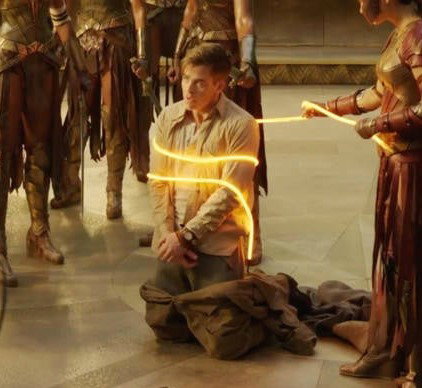
Anyway, my favorite weapon is the Lasso (Lariat) of Truth. That golden lasso that forces individuals to answer truthfully when it is wrapped around them. The more you resist telling the truth, the hotter it gets and pain forces you to answer honestly whether you want to or not.
It suddenly crossed my mind: what if there was indeed such a weapon and that it can be used against politicians to whip them into shape.
For one, it is disgusting how they can lie through their teeth about their ambitions, playing coy about plans of seeking higher elective positions (or not) in the coming elections, when in truth they've already made up their minds to run!
Second, it would be useful to make them acknowledge whatever promises they made in the past to get elected and admit they failed, then make good their word to at least kick out people who don't deserve to be sitting in positions of authority and service... and keep them out!
Fighting a bureaucracy
I get it. Bureaucracy is one convoluted system, which makes it so easy to manipulate or hide wrongdoing. You don't even need geniuses to get away with corruption and either squander government funds or filch them, you only need someone to be part of it for a very long time.
But put in a genius and voila! In the absence of a clear organization that is transparent in how things are done, crooks find it so much easier to create their own system that will line their pockets and enable them to use their position to gain power and influence.
With the Golden Lasso wrapped around the arms and torso of a corrupt or inept official, you won't need witnesses who disappear when it comes to testify against illegalities, and finding physical evidence will be simpler.
And wouldn't it be so much fun to have multiple persons caught in the lasso, everyone trying to out-sing each other in confessing to escape pain and further torture?
Source https://www.sideshow.com/tag/wonder-woman/
Streamline, simplify
A system. That's what my country needs to solve many of its problems. An order to doing things. Streamlining processes. Simplifying requirements.
Putting the right people in places where they can be most effective. Most of all, putting leaders who know what to do, or at least know people to tap who can help solve the problem and deliver rightful service.
And because they are public servants, these leaders must be held accountable for actions or decisions they make, especially those that didn't produce the desired results or were disadvantageous to the public.
Filipinos are forgiving, sometimes too much so, that they often let shenanigans pass and allow their rights to be trampled on. Yet it is hard to blame them when they feel powerless, so they would rather toe the line, however crappy it is, because they don't expect to be heard or paid attention to.
Small steps
It isn't right to oversimplify the myriad concerns faced by the country. Many of these issues are truly complex. But sometimes, a problem is better addressed with solutions applied in stages, rather than coming up with a big one meant to solve the issue in one go.
Pre-pandemic there were already many issues that needed addressing - traffic, skyrocketing prices of goods, wages of health workers, taxes, drug trafficking, and peace and order, among others.
The pandemic showed who can be relied upon to serve and respond to the citizens' needs and those who knew what to do in times of crisis. But it further exposed flaws and incompetence, especially at the national level, of leaders.
No, the Lasso of Truth wouldn't be of much help, except perhaps to make those in power admit to their shortcomings and perhaps apologize for it.
A true appreciation of the problem, seen from the ground, would go a long way in putting in place the proper solutions. Listening to those who know better and accepting suggestions, instead of criticizing or lambasting those who give their opinion, would be more helpful in resolving the crisis.
Perhaps, the citizenry should also be subjected to the Golden Lasso's power, at least to make them realize that we have had enough of politicians and need the real public servants.
We need to face the truth that we have the ultimate power to change things for the better, and only if we band together can this be achieved.
*Lead Image: Unsplash*
The last time...
I rode a plane was December of 2019.
The whole family (me, Mom, sister, brother-in-law and their three kids, plus my Dad's only sister, who is unmarried) were returning from a five-day visit to Tacloban City, where we joined the annual clan reunion on my mother's side.
We flew out two days after Christmas, and returned on New Year's Eve. Aunts and cousins were convincing us to stay through New Year, but no one was prepared to greet 2020 away from home.
The first flight out is always best to avoid delays. However...
The typhoon (Ursula) that pummeled Eastern Visayas before Christmas must've backed up flights because the airport was super slammed and it took us two hours to check-in on the way there!
So, the check-in and wait for departure was more than twice the length of the actual flying time.
Coming back, we were lined up at the airport an hour or so before they finally opened and allowed passengers to check-in. I dunno know why it took them forever to get started... The provincial pace, perhaps?
Both flights were uneventful. And because first flights required us to wake up very early, I slept as soon as I buckled up and awoke as we landed.
We were actually planning a trip to Japan in the summer, but COVID happened.
... I went inside a mall
It seems so long ago that I can't even remember!
What I do recall was driving to a mall to buy cake for my sister's birthday in July last year. That was around the time when lockdowns were easing because of the supposedly improving situation.
But it wasn't really inside a mall because the bakeshop entrance was still outside the establishment. There were other errands after that but nothing that would have me enter a mall.
I didn't go Christmas shopping in 2019 (yeah, I've become a Scrooge haha, and because I hate crowds), but I guess it was during the third quarter of that year that I last stepped in some mall.
The last time I went promenading in a mall was maybe early 2019. It feels like ages ago...
Do I miss it? Not really. I miss going to my Sunday market more.
Unless there was something very specific that I need to get from a store that's inside a mall, I avoid the place. Or if I do go, it is at some odd time - just as it opens or some dead hour - so I can shop or walk around in peace.
... I played in the rain
Was many moons ago!
Yes, I was already an adult, and it was so many years after running and bathing in the rain when I did.
First, it had to be hard rain, not just a shower that would end quickly.
Next it had to be continuous for at least 30 minutes. Why? We weren't allowed to go out right after the first downpour because you're catching acid rain. Not good for the skin or for our health.
We're blessed to have ample space around the house that would allow us to cavort and play with or without rain. At some point, we would be exposing ourselves because our gate is grilled, not some full steel door.
Still, who walks around under hard driving rain?
So, the last time I recall, and it is a hazy memory, I and my late sister braved the showers and took a bath under the rain. That means some running around first to enjoy getting wet without worrying, then standing under some spout to soap and shampoo.
There's a lot of shouting in glee, and due to the cold, when you play in the rain.
However, it is kinda difficult to get a proper bath under these circumstances.
For one, no one plays in the rain naked! Well, at least not if you're an adult (gasp!). Maybe small kids, if they were allowed to, would. But you at least need to be wearing shorts and a shirt. So, scrubbing with soap isn't as satisfying or thoroughly cleansing.
But rainwater is sort of slimy, so that should do the trick.
Second, you can't really stay long under the rain because it'll be cold and you could get sick. Thankfully, in all those occasions that we played under the rain, we never got the sniffles because someone would always be screaming at us to come in already.
Third, unless you have an outdoor bathroom, it's quite a challenge to get inside the house because you'd be dripping wet! Yeah, you can towel off but you'd still be wearing wet clothes while tromping to the bathroom.
Yes, I'd like to go one more round of playing under the rain, if possible.
... I wrote a letter by hand
Was probably a decade ago.
Blame it on the Internet, and emails and messaging apps. Why labor on writing with a pen when you can easily type your message and shoot these out using the quickest ways possible so the recipient gets it real time?
But for anyone who's ever written letters by hand, and used snail mail to get it to some far away place, there is a thrill to the whole exercise. (Right @emily2u ?)
During that era when I was into letter writing, most of these were done on my bed. Not on a table, or a desk. On my bed, hunched up, or lying on my tummy, while carefully crafting a letter so I didn't have to make a mistake that needed erasing, or worse, to crumple the stationery and toss it to the trash can.
I used to love collecting stationeries and would spend both time and money in bookstores, selecting new arrivals that I could both use to send letters or just to keep.
It's the process that held so much sentimentality.
If you did this regularly, it was like talking to someone about how your life has been, any significant events that happened that you wished to share, or some juicy news that the other person would get a kick out of.
The actual writing can make your hand ache, depending on how you write. But after, when it's time to fold the paper, put it inside the envelope, seal the envelope and stick a stamp on it... this was very gratifying.
Source https://silverpebble.net/21/write-letter-by-hand
You'd accomplish something because there was time and effort involved.
At the post office, you slide it into the mailbox and feel a sense of anticipation. The letter will be flying off to its destination, and will be received by the other party, who will hopefully reply the same way.
For anyone who's been in constant communication via snail mail, there is always excitement to receive a handwritten letter. It never mattered if it was long or short. It was getting one from someone who also took the effort to do what you did that made it a joyful exercise.
I pity kids today who do not know how to pen a letter. It's so alien to them that you could communicate back and forth to someone, even if it took days or weeks to receive.
Actually holding a pen and putting down words on a paper is not only a chore for them, but it makes them anxious. "What do I write?" they wonder.
It's a lost art, but one that should be re-introduced, don't you think?
For those who've never done it, try writing at least one.
*Lead Image: Unsplash*
Thank you @JonicaBradley for renewing your sponsorship! And just as important, I truly appreciate the inspiration you provide with each article you share with us!
Wastefulness: The by-product of compulsive buying
There is a small container beside the sink. It is used for food scraps that is given to the dog.
Sometimes, when I open it there will be rice, pieces of bread, unfinished scrambled egg, and other morsels of food.
When I see those, I know the culprit - my mother. I do not understand why she cannot finish those tiny pieces of food when it would take just another bite or two.
While it will benefit the canine, to my mind, it is wastefulness.
Unless food has gone bad, is stale, or turned into a science experiment due to its extended stay in the fridge, I clean up whatever I put on my plate.
Produce gone bad
But no, I, too am guilty of wasting food... produce mostly. There'll be greens in the fridge - *pechay, mustasa*, green beans, eggplant, and they'd be forgotten until they've rotted and are no good to consume.
I do try to salvage as much as I can when I catch those produce. Sometimes, I'm successful, other times not. And I feel guilty when it's the latter.
I've become better at controlling what is bought every week. This way, there will be less to waste. It can be a challenge though when I don't do the marketing myself.
I understand the attraction when you see mounds of fresh-looking produce in the market and you're tempted to buy more than is necessary. When this happens to me, I always remember storage or lack thereof so buying more is not a good idea.
Wastefulness American style
My dear friend, who has been living in America for more than 20 years now, surprised me when she told me about cutting down on her food purchases. Wow! That's something to cheer about.
Let me explain...
My friend is married, but has no kids. She works three jobs as a certified nursing assistant (CNA). That means she's barely home, and is mostly tired after her shifts.
One time during a video call, she showed me the contents of her chest freezer and it was full to the brim. I remember seeing slabs of steak, several packages of other meat products and seafood and so many other food.
But wait, there's more! Her freezer in her two-door refrigerator was just as packed with I don't know what else. And the pantry held three or four of every canned good! How can two people consume all that food?
Of course, they never really eat all that, or even get to cooking everything.
While cooking is therapeutic for my friend, she only has a day-off every two weeks. When she feels up to it, she will cook up a storm. Having grown up with four siblings and with money tight, her mindset is always to cook plenty now that she has the means.
So although none of her family is with her in Nevada, she still cooks like there is an entire village to feed, which is what her family has grown to now. When she feels like it, the feast she whips up will find its way to work where it will be shared by grateful co-workers.
Unfortunately, her husband - a true-blue son of Uncle Sam and army veteran - hardly touches the mostly Filipino dishes she prepares. So on those occasions when she cooks at home, the food will likely end up in the garbage disposal after a couple of days.
Think of all the people going hungry, I tell her. Why not give it away? No can do, she says. People are wary about strangers giving them food because it might cause food poisoning.
So, instead of some hungry stomach getting filled by food no one wants, it will find its way in the dumpster.
Compulsive buyer
It's not just food that my friend is wasting. Ever since I've known her, she's been a compulsive buyer. I guess it's having to grow up with so little and now having the ability to buy stuff that made her this way.
So, she will have three slow cookers, five blenders, and all sorts of kitchen equipment, which she will hardly ever use except for the first time. And they are all stored in the garage where her husband, a hoarder himself, will have just as many things stashed there. (He has three kinds of barbecue grill!)
A few months ago, she told me that she was trying to clean out their house of so many stuff. That meant filling up the recycling bin and garbage bin four times over! Can you imagine how much stuff that is?
And many of her previous purchases she's already sent to her siblings or given away!
During another video call, she showed me a 120-liter bin full of chocolates!!! It excites her each time they go to Costco and there's a sale for all kinds of chocolates so she hoards them and ships them to her nieces and nephews. I could get diabetes eating just a bag of that.
It doesn't help that her husband is a compulsive spender, too. So, there'll be times when he surprises my friend with some purchase - three or four of a kind - because it was on sale.
Therapy?
She isn't the only person I know who hoards stuff and finds pleasure in it, never mind the waste of money or food.
My sister says it seems to be therapeutic for Filipinos in North America. A number of their purchases end up being sent to their family. But many still end up in their garage, empty room, attic, or whatever available space they have at home.
But we shouldn't judge them, my sister adds. We don't know their life there... the hardships and trials they go through. So if shopping or compulsive buying helps them de-stress, then let's respect that.
Accumulating things that we end up not using or even needing in the first place makes me guilty. It is a waste of money. If you end up buying lots of food to feed the hungry, then I'm all for it. Or if you specifically buy something to give someone who needs it, then by all means.
But to stock up on canned goods, meat products, baked goods, kitchen appliances, etc. just because they're on sale, or just because you can, it's very disturbing.
For a while during the early phase of the lockdowns, I also found comfort in seeing the cupboards full of supplies. But eventually, I realized that I could still go out and buy what was necessary as we needed it. So why buy so many at one time and hoard?
Now, I like seeing the cupboards and fridge near empty. It only shows that we've consumed what we were provided with, and we can go spend wisely and prudently without wasting so many resources that others can only dream of having.
*Images: Unsplash*
Time lost
Have you ever felt like time stopped and something happened that you weren't aware of?
Wouldn't it be fantastic if time did stop when something monumental is happening, or we need to get out of some dire or stressful situation we're in just so we can get it done right?
I recall an incident years ago when I was aboard a jeepney on my way home. It was dark and rain was pouring. I was seated near the vehicle's entrance so I saw everyone who got on board and off.
I remember a young woman who rushed in to avoid getting wet. She sat near the driver. With the plastic window covers down, sound bounced around inside the jeepney.
I distinctly remember hearing the girl ask the driver to let her off some stop because she didn't know exactly where it was. And given the weather, it was understandable.
We were on the rotunda (roundabout), maybe 300 or so meters away from that particular stop, but vehicles crawled precisely because of the rain and because it was rush hour.
Since I was seated near the door, I could see the headlights of vehicles behind our jeepney, and was mesmerized by the rain illuminated by the lights as they pelted down the street.
I didn't know I was staring transfixed at the cars, lights and rain, but I knew in a minute or two, the girl would be alighting at her stop.
Where'd she go?
Whadayaknow? She never did! Or at least I didn't see her get off, and that was impossible because she would have had to pass by me. But nada!
I snapped back into the present when I realized we were moving and had passed the jeepney stop. I turned to look where the girl sat and she wasn't there! The jeepney was packed but I knew exactly where she was and someone else was sitting there.
What happened? That incident totally creeped me out and the whole time while on the jeep until I finally arrived home, I continued to ask myself that question.
Did time just stop for me?
Friday no day
Over Sunday dinner, my niece and sister were talking about how they both felt Friday had slipped by without their knowing it.
My niece described it aptly: "Like I slept on Thursday, and when I woke up it was already Saturday."
Her brother chimed in and said he felt exactly the same way.
They both couldn't recall what happened on Friday, and were completely surprised learning it was Saturday and never knew the last day of the work week went by.
Now throughout Friday, we were together going about the usual daily routine. Perhaps it was because classes have ended for my niece thus she lost track of time.
And I distinctly recall that at some point in the afternoon of Friday, my niece specifically asked what day it was. She was told it was Friday.
The 15-year-old was adamant that nothing like it had ever happened to her before, no matter what mood or snit she was in.
Time moves forward
That is so strange... to lose time like that. To not be aware that a day or some chunk of time had passed and you weren't aware of it until it was done.
I know that we can never make up for time lost. When it's passed, it's past. Unless you've a time machine that enables you to go back, time just keeps moving forward.
It's why people are taught not to waste time, that every minute is precious, that victory can be won by a mere second, or even a tenth of a second.
It's why we should not put off doing something now, or today, for later because who knows if we still have that time to spend tomorrow or an hour from now.
That's why I am particular about punctuality (I wrote about that here: Punctual: Familiar with the word?), because being tardy means not respecting time - yours and someone else's. https://read.cash/@zolabundance2/punctual-familiar-with-the-word-2667d345
Imagine wasting an hour or more of your time waiting for someone who believes they have ALL the time in the world, and does not think your time is any more valuable than theirs is!
But that is time lost with you aware of it. When you lose time unaware, that is something quite hard to explain or fathom.
Is the universe trying to tell you something when you lose track of time or some chunk of it passes you by without you knowing?
Anyone have a similar experience?
*Images: Unsplash*
Up, up and awry: A very stressful story
Wow, I cannot believe remembering some of the most stressful situations I've encountered in my work life could rile me up again.
Just talking about what happened in the past made my pulse raise a teeny weeny bit, but I am okay. Inhale... exhale...
Handling travel needs of Filipinos can be very stressful. This was at a time when bookings for hotel, flights, and tours still had to be done via airlines and travel agencies, and not online as they are now.
It is the propensity of Filipino travelers to book flights late, change their mind about schedules and to squeeze every centavo of an already limited budget that can give travel agents or planners a heart attack.
I was 22 or 23, on my second job working as admin assistant slash travel agent, when faced with a most trying circumstance I thought I would never get out of. I swear it was only by God's grace that I got through that alive.
The clients were a family of seven. They were friends of the boss. Usually, the boss would handle the travel arrangements, but she was out of the country at that time. She said it was simple enough to arrange: 4 days and 3 nights in Hong Kong, with a city tour, and a 3-star hotel.
It was the travel season that was the first challenge. Peak season means two things: reservations for both flights and accommodations are difficult. Everyone wants to travel at the same time. And because of the law of supply and demand, it can be relatively expensive.
This was during the time when the only deals you can get are an additional ticket for every X number of tickets you buy. Pre-pandemic, there were all sorts of flight promos that were sold a year or months ahead.
So, I made the arrangements for the date they chose and confirmed everything. The price I quoted was reasonable, because the boss said to give them discounts.
Then I get the call that there was a conflict in schedule of two passengers in the party. They would rather rebook when all could go at the same time. You've got to be kidding me!
Rebooking isn't just the flight going and back, but the hotel as well. And since you're buying tickets closer to the departure date, it will naturally cost more. But they were adamant. We all want to leave on this day.
Here's the thing with making travel arrangements: you have to book a flight first before proceeding to accommodations. It's logical because what dates are you blocking rooms for, right?
And hey, the closer to the departure day you book, the higher the cost of the plane fare.
At that point, flights were overbooked! So, I had to be on the phone the whole time I was at work to check if my booking was confirmed. Remember, it was not for one or two passengers but seven!
My mistake was assuring the passengers they could leave on the day they wanted, never mind if the booking was waitlisted. I was calling the airline every hour to check, and it was giving me palpitations and a migraine each time I would get the same answer - no confirmation yet.
The hotel was on standby, but unless they get that flight, I could not confirm that reservation either, lest they be charged penalty for not showing up.
Here's the kicker... the day before the scheduled flight, I was still waitlisted, and a typhoon landed! The office was in Makati, where waters can rise waist-deep when prolonged rains are dumped.
I was seriously in panic mode. I could not eat. I was pacing frantically. I would actually lock myself inside the bathroom to calm myself by praying several times during the day and night (we were stranded and had to stay at the office overnight). And outside, I could hear hard, driving rain pelting the roof and wind whistling as it rattled the windows.
By 7 PM, the flight still wasn't confirmed and I was breaking down inside the bathroom. Oh dear God!
I cannot recall how many Our Fathers and Hail Mary's I prayed during that time, mumbling for the Lord to get me out of the terrible fix I was in. I know I was bargaining things with God just to get my tickets for the next day.
I was actually wishing the storm would not let up and flights would be cancelled the following day. But by 10 PM, the rain was abating. The only problem was the flooded streets.
Angels were sent to me on that fateful night. Somehow, I managed to get confirmation for the plane seats. But at a cost. It was going to go way over budget. I didn't care. What was important was the passengers getting on in that flight.
The hotel reservations came through in less than an hour. The transportation and tour was okay. The only hurdle was getting the actual tickets and hotel vouchers to the passengers.
The flight was in the afternoon. The tickets had to be processed and paid in advance before it could actually be issued in physical form.
The movies where the protagonist was racing against time? That was exactly how I felt on that day. I wanted to stop time so I could get everything done.
Finally, the tickets were in my possession. But I had to get to the airport pronto. Good thing the flood had subsided and I could run out into the street. Of course there was traffic...
I didn't have a lot of money with me, but what little I had then I used for a cab ride. The driver must've been an angel, too, because we zipped through traffic and got to the airport with time to spare.
There was another hurdle: the passengers were already inside the airport (I can't remember how or why) and there were no cellphones then.
How did I get the tickets to them? I took a deep breath, swallowed hard, prayed to the Lord Almighty, and flashed the ticket to the guard who let me through no questions asked. (They weren't as strict then about people entering the airport premises).
The clients were lined up at the check-in counter and with sweat streaming down my face and back, I found them and handed the precious documents.
I wanted to choke as I exited the airport. It was done. By some miracle, I did what seemed impossible just 24 hours ago.
I never told them about the fare change, but when it was time to bill them, that was my next challenge. They absolutely refused to pay the added costs.
While I wanted to keep all that a secret from the boss, eventually she found out and was furious! Why did I not tell her what was going on? I was stupid, and over-confident that I could handle things.
As punishment, she had me pay for the extra cost, which was a lot of money, through salary deduction.
That was a very expensive lesson for me. And after that incident, it was a very, very, very long time before I ever handled travel arrangements again, for anybody.
*Images: Unsplash*
There's an Ivy in all of us
My niece, who loved books growing up, fell in love with a children's book series called **AlphaPets**.
From a child's point of view, the books were interesting because the characters were animals, whose names corresponded to a particular letter, with a description also starting with the same letter.
So, there was Albert the Absent-minded Alligator, Delilah the Demanding Duck, Katy the Kind Koala, Queenie the Quiet Quail, and Ziggy the Zippy Zebra, among others.
From a parents' or caregiver's point of view, the books were wonderful because the stories always had a lesson, and authors made sure to incorporate as many words beginning with the same letter as the animal featured.
It wasn't only my niece who loved the *AlphaPets* series but her older brothers as well. And since they weren't very long stories, these were easy to read. And we adults were equally entertained by the books and the characters.
My late sister and I had made it our mission to keep searching for all the books in the series, and I think we completed, or nearly completed, the set.
I know the only bookstore to carry these titles was **Books for Less**, and we will always be eternally grateful to them.
Values and character are often the lessons presented in each of the 26 stories.
One virtue that has made a mark on us adult readers is patience. And this is perfectly discussed in Ivy the Iguana's story.
The character is aptly named Ivy the Impatient Iguana and her story's title is "Ivy Can't Wait."
After reading Ivy's book, it became a joke that anyone in the house who behaved like the character would be addressed as Ivy the Impatient Iguana.
Later, when they grew older this was shortened to Ivy the Iguana and they would know what this meant.
Often, the moniker would annoy whoever was being referred to and will remind the kids about the need for patience.
The world in a snap
Automation, instant, convenience are today's bywords. Life has increasingly become a terrible rat race. If something can't be had at a snap of a finger, then it's no good.
Dinner is a phone call away. Shopping can be accomplished online with a few swipes on a cellphone and a few days wait for the delivery. There's instant coffee, instant noodles, instant soup.
A home can be built in a day. Diagnostic tests will have results in a few hours. And why waste time cooking when you can drop by a restaurant from work and eat?
This way of life may have slowed down a teeny bit at the height of the pandemic, but as things return to normal little by little, people are back to the feverish pace with which they live their lives.
And since everyone is so used to the convenience of just pushing a button for most everything they need, when something goes awry they're always caught off-guard and don't know what to do.
My eldest nephew is the star Ivy at this time. He expects most things to be done instantly. If things don't happen when or how he expects them, the young man gets frustrated big time and either gives up or gets into a bad snit.
On the flipside, if he can take as many shortcuts as possible to accomplish a task he will do so, never mind if in the end, it takes twice as long to get things done as he wants them. Waiting just isn't his strong suit.
Lately I've found I have little tolerance for people who don't take service to heart, even if it is their job. I'm acting a little like Ivy during such instances..
As hard as it is to admit, my patience tank is running lower as I grow older.
When I was younger, I had stores of patience for most everything and everyone. I could let many things slide even if I had to wait for hours to get it or it took many steps to complete them.
I didn't mind a 10-step process to do a task properly and present an excellent output instead of using hacks to work it out.
More patience
As I write this, we are being asked to be more patient with the continuing COVID pandemic.
Stay at home and wait till it's safe to go out and do all normal things as before.
Wait for the vaccine.
Wait for the economy to perk up again.
When things still aren't going right after more than a year, patience tends to run low and people are either skeptical about promises or only have a tiny ounce of trust for those in authority as they continue to bumble their way through all this.
While I'm not overly excited about the coming presidential elections because there are more pressing matters to manage instead of political maneuverings, I am looking forward to having someone who can give dignity and respect to the office they will serve.
And my patience is really running dry with all the political bickerings, which are magnified in social media and other online platforms, made worse by bashers, trolls and whatever else you call online ghouls.
Ivy the Impatient Iguana isn't really a favorite among *AlphaPets*, but I can relate to her when I see all that's happening around the world today, and I pray I won't have to be as impatient as she.
*All photos are original*
The ultimate driving test
Being part of a convoy is a good test of your driving skills. No, let me qualify - driving as part of a presidential convoy. It's a crazy experience but very thrilling if you manage to survive it.
We're three girls. But somehow we all got it in our head that when we're old enough we would learn to drive. It is a useful skill, after all.
As a kid, I would observe my father when he was driving. It looked easy enough when you're not doing it.
Hold the wheel, work the gear, shift your feet from gas to clutch to brakes. Easy! Until you finally sit behind the wheel yourself. An aspiring driver misses a crucial step that is part of driving - keep your eyes on the road.
Driving lessons
When told that we wanted to learn to drive, Dad agreed on one condition: we must enroll in a driving school. In short, he was not going to teach us.
Later on, I understood his refusal to be the driving instructor of his children. It can be quite nerve-wracking (no matter how composed you are) to give these lessons to a family member when you're out on the road and any manner of mishaps may occur.
He'd rather pay for seven days of lessons then take us practice driving once we complete the course to help us improve our skills than to actually teach us the basics.
I have cousins, guys of course, who learned to drive by themselves. Well, the youngest uncle would agree to teach them using a very sturdy owner-type jeep.
Initially, they'd go around the compound, just driving forward and backward, while making sure the engine never dies. When you're working with something as heavy as a jeep with very hard pedals and gear, by the time you get the hang of it, you'd be good to go on an actual road with other vehicles.
Of course, during those days traffic was relatively light and roads weren't as wide as they are today. A lot of the time, you even have to drive on rough roads, and that takes as much skill as maneuvering on a six-lane highway.
Anyway, it was driving school for me. Every day my father would ask me how the lesson went, how my city driving experience was and if I learned something new.
We're lucky to be living in a private subdivision with hardly any traffic, save for residents coming and going, which was just early in the morning and early in the evening.
So, there was a small window when Dad can test my new driving skills without being interrupted by other vehicles. I knew it was a proud moment for us both when I was able to drive several hundred meters without the engine dying on me.
Longer drives
Later, we progressed to him letting me drive the provincial highway when we went to Laguna. He'd carve 30 minutes to an hour of his time so we could drive out on the highway to check if I got nervous when on some open space.
It could be quite disconcerting when there are speeding provincial buses and jeepneys on the road with you. I'd often drench my back with sweat after those driving tests with Dad.
Eventually, I got enough practice to improve not only my skills but my confidence more importantly.
Two years after I was driving like a pro, with no record of violations and no accidents either. Hooray! And when we traveled to Laguna, my father was confident enough to let me drive all the way through and back.
Although I started working at 21, it was only during my newspaper stint that I would sometimes take the car to work, particularly to the presidential palace, when I had very early schedules or very late nights.
So, there was this one time when the president's schedule was quite early and just near my house. It seemed a waste of time to travel all the way across town only to come back to the venue which was so close to home.
Presidential convoy
I decided to drive to the venue and meet the rest of the press corps there. At this point I had not decided to drive to the press office with everyone else. But when I learned the rest of the schedule was packed and we had to work quickly after returning from the first event, I quickly made up my mind to join the convoy.
Here's the thing with presidential convoys: it travels very, very fast. The objective is to keep the president on the road in the least amount of time. That's why traffic officers on motorcycles hold up traffic in streets with minimum inconvenience and clear the streets so the convoy can drive by as fast as possible.
It's for security reasons. The longer the president is traveling, the harder it is to keep her safe from whatever threats. Usually, the security group wants travel limited to less than 30 minutes.
One of my colleagues offered to ride with me instead of going back with the press bus. Right after the event, we had to rush to the car and position ourselves in the convoy.
Because we're not a member of the security group or palace team, we had to be in the convoy's tail-end, which can be quite dangerous. The danger is getting boxed out or left behind.
At that point, I was quite confident about my driving skills, and my vehicle's road-worthiness.
We informed security aides that we would be joining the convoy and were instructed to take our position before the ambulance and last security vehicle, which is taking up the rear.
And so the convoy started and made its way back to the palace. And here I learned that you need a lot of courage to be part of their convoy. It meant driving very fast, almost crazy sometimes, to keep up with all the cars.
If I slowed down, there was a chance some lunatic would try to insinuate their vehicle in the convoy and box me out (happens many times). The thing with traffic police is that anyone trying to come near the convoy would be swept away by the motorcycle-riding patrol.
Five minutes or so after we left, I decided to get as close to the press bus as possible and they were about fifth in the order of vehicles. I had never driven as crazily as I did then, trying to overtake other vehicles in the convoy, but I made it.
For a while, the security guys were shooing me away so I had to flash my press card (while speeding along) to indicate I was with the group. They let me in, and I just had to keep up, driving at 70 to 80 kph.
After about 20 minutes on the road, we were finally entering the gates heading to the press office. I could only breathe a huge sigh of relief as I pulled into the parking lot and shut off the engine.
I survived!
It was nerve-wracking having to keep pace with such skilled drivers and I've never been more grateful that I was trained well and had nerves of steel as well as presence of mind to accomplish what I did.
*Images: Unsplash*
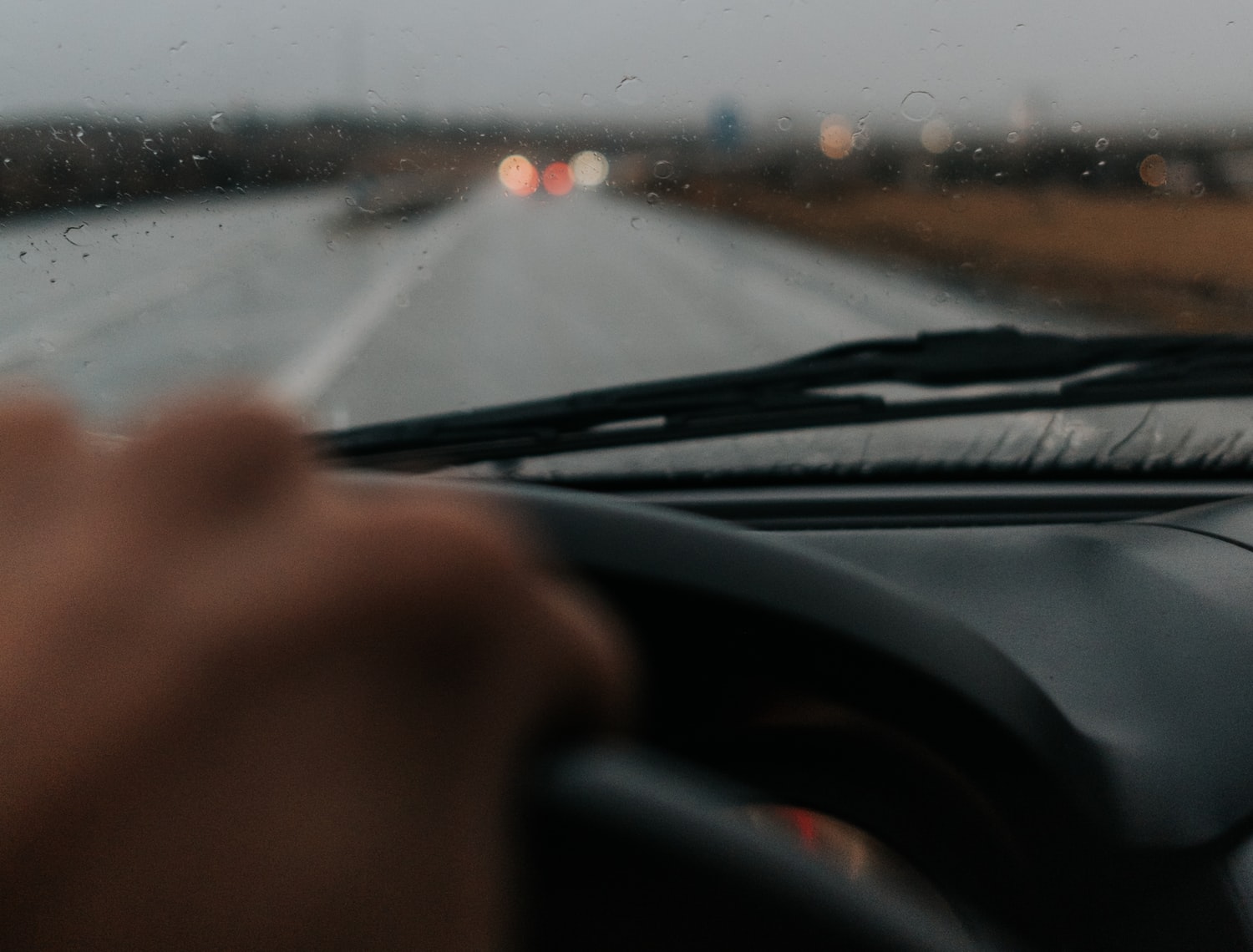
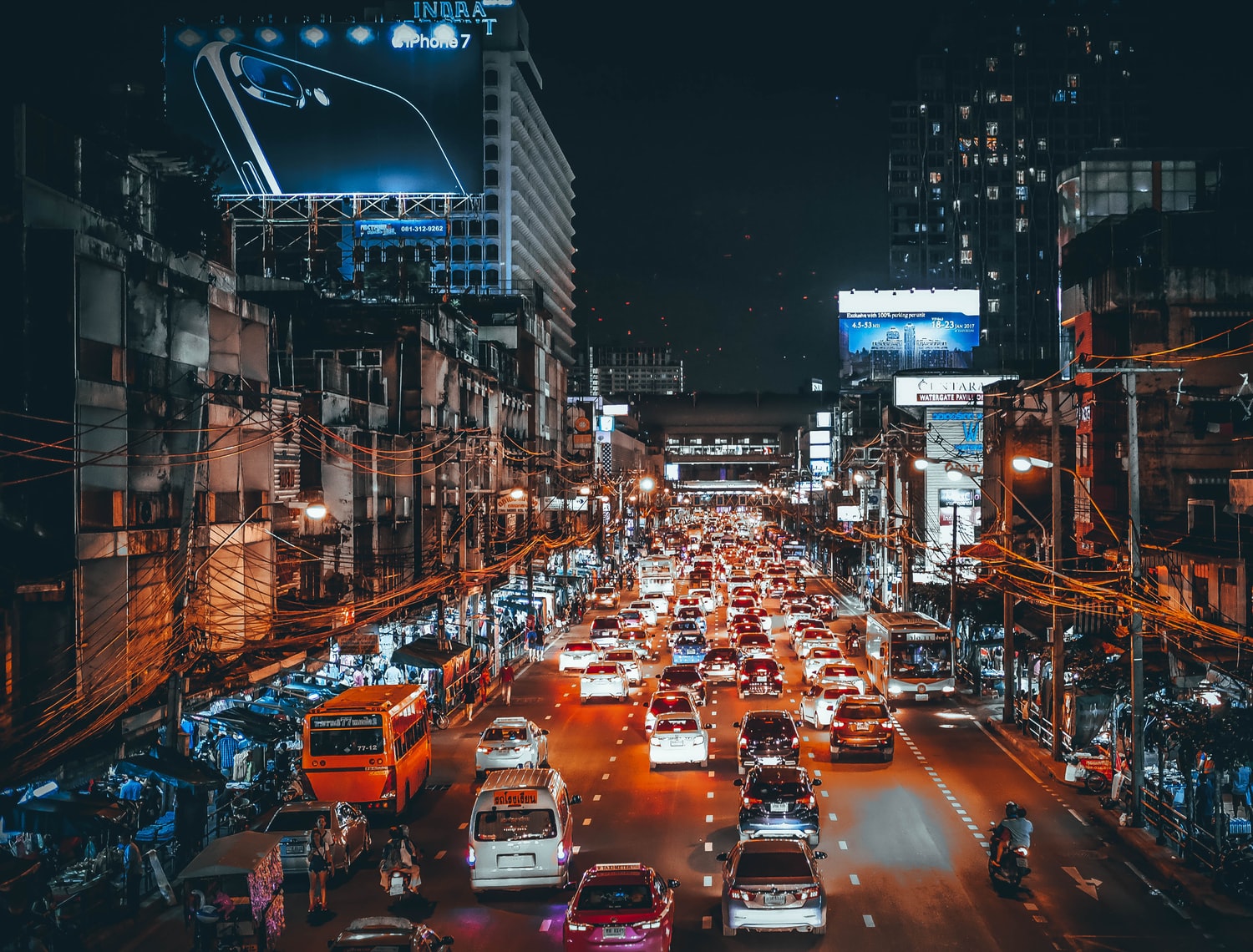
New normal in clinics; ready for vaccine
Mom went to her doctor yesterday. Her last consult was perhaps 18 months ago. She insisted on going because she wanted clearance to receive the COVID vaccine. I rolled my eyes when she asked me to accompany her. Like I would send her out alone...
Going to see her physician worried me. Her clinic is in one of the tertiary government hospitals. Pre-pandemic it was always busy, people going in and out non-stop.
When we arrived, my worrying wasn't baseless. There was a long queue to enter the medical building. And people, while with face shields (on their heads for some) and masks, were lined up so close to each other! Helloooo... physical distancing, remember?
The guards in the area didn't seem to mind. Ugh! They will once you're two meters away from the main door. Then you have to stand 3 feet apart, and wait till the concierge checks out your form and gives you stickers to mark that you've gone through security checks, or whatever.
New normal in hospitals
Going up to the designated floor isn't so much a challenge. You're starting at the ground floor so everyone gets out there. Only four passengers to an elevator car. Yeah, it's quite an old building and the lifts are probably just four square meters in size, or less. Each passenger gets to stand in one corner.
Coming down is the problem. There are higher floors, and when you're in some middle floor, the car is already full when it opens in yours.
The guard offered a solution: when someone gets off our floor, get in and take a short joyride up so you're already in the car going down.
One car opened, one passenger got off. I told Mom to get in and take the ride. I was taking the stairs down. I got to the ground floor before she did.
In the clinic, there's a clear acrylic partition on the desk for both patient and doctor's protection. So everyone has to talk more loudly during the consult, and if you're waiting outside, you can't help but overhear them.
As usual, the doctor arrives an hour later. But she gave notice she was going to be late. And there were only three patients scheduled for the day.
We were number two. The first patient spent maybe 15 minutes inside.
Unlike in the past when a physician routinely checks the patient by auscultation (listening to the heart, lungs and other organs with a stethoscope), this time there was absolutely no close contact between doctor and patient.
It's new protocol, says the doctor. This way, there is minimal contact and the stet could be a source of viral transmission when you use one instrument for several patients.
Mom was asked routine questions that could be a factor for not being qualified to receive the vaccine. She was cleared.
The doctor noted Mom's blood pressure, which the medical secretary took earlier. It was quite high. I quickly pointed out that it's what digital sphygmomanometers read. Very unreliable, I added, to which she agreed.
When we take her blood pressure at home using an aneroid sphygmomanometer, her diastolic and systolic numbers were usually normal - 120 over 80. If it was high, she never went past 130. So, the 135 over 90 that registered in the digital instrument was way over.
Then the cardiologist shared an anecdote when she received the COVID vaccine.
She's never been hypertensive, but her BP shot up to 170 over 90 during the prep stage before inoculation. And it was the same for many of her colleagues, who had no history of hypertension.
Ahhh, psychological...
Yup, she agreed. As medical frontliners, they were the first to receive the vaccine. And they had no choice in the matter since they needed to be vaccinated. So, even knowing it was to protect them, they still felt anxious and this caused raised blood pressures.
Once administered, their BPs went back to normal levels. Really, it's a mind game this vaccine thingy.
So my thinking is if you decide to get inoculated, be a hundred percent certain that you're all in. Settle any doubts, especially the big ones, and psyche yourself that it's all going to be good, and it's for your protection.
This way, you minimize anxiety on the day of the jab and hopefully, your BP doesn't shoot up to the sky.
I'm still wondering if people getting vaccinated truly believe it will effectively protect them or if they're just doing it because their neighbors and friends are.
Why do I think this? Because many are just going for the first dose and not coming in for the second! Like how is that going to protect them when it only kicks in after the second dose?
It's all these incentives and swapping of stories among the elderly, who think getting the first jab is license to go gallivanting like they did pre-pandemic and there's no need for basic health protocols.
Besides, logistics remain a problem here in my country. They want to vaccinate x number of people to achieve herd immunity but...
They don't have enough vaccines.
Not all local government units have put systems in place to facilitate quicker vaccination procedures.
Frankly, it does nothing to boost my confidence in both the vaccine and government's handling of the pandemic.
So, no, I'm not in a hurry to get jabbed. And until I'm fully confident, I will continue to do my share of wearing my face shield and mask when I need to go out, maintain proper physical distancing, and wash hands as much as I can, and avoid crowded places as much as possible.
To lick this problem - end the pandemic and return to normal - both the people and government have to work together, conscientiously and do everything practicable and possible to fight the virus and disease.
*Images: Unsplash*
Gut instinct
I hate being right... when it comes to my gut feeling about people. Makes me seem judgmental. Which I'm not, I swear.
But for some unexplainable reason, just by looking at someone whom I have never met or been introduced to will set off some alarm in my gut and will give me a strong feeling to dislike them.
I know it sounds almost judgmental. And it's awful.
If it were just one instance then I could probably dismiss what I felt. But it's happened many times over, and each time I was, unfortunately, right.
What's more uncanny is that I often just look at that person from afar and get the unpleasant feeling in my gut, which automatically transmits to my brain which tells me that at some point in time this particular person will be up to no good.
I've tried to kick myself many times when I get this signal because at the back of my mind, I know it's unfair to judge someone before I can even get to know them, or be introduced to them!
But it's been said that we need to trust our gut because more often than not they're right on the money.
Proving me wrong
And because of this, I often appear aloof to people I'm meeting for the first time. The signals plus my natural wariness for strangers does not make for a good first impression.
Do I avoid these people totally? Not really. But I try to limit my interactions with them as much as possible. We can exchange pleasantries or some mundane stuff, when in situations where talking is unavoidable. Just don't expect me to become chatty or for us to suddenly be best pals.
I do try my best to get to know the person by observing them from afar. Sometimes, I get to a point where I'm ready to forget my initial reaction to this individual. But then over time, I'll find out my dislike for them is not unfounded.
As disappointing as it is to learn that person did something terrible or horrible to someone else, therefore validating my first impression of them, I'm always grateful to have kept my guard up.
Never mind if people think me snooty or unfriendly, it's self-preservation.
Guard up
We all want to believe there is good in everyone, even the most evil person. But it's always good to be aware that someone can get you into trouble or do something bad to you so you have to be on guard.
Majority of the time, the wrongdoing is done to someone else, but how am I supposed to know who? So, there's never an opportunity to warn people about this individual because I only have my gut feel to base it on.
Case in point: when I was assigned to cover Congress, there was this reporter, somewhat popular because he's funny, who I was going to be introduced to. I first saw him in the doorway and the gut feel kicked in.
It's hard not to interact in a media room, even on a limited basis so I get to know the guy little by little. He's kind enough, polite enough, a bit brash, but a good journalist.
A few years later when I was about to be transferred to the newsroom, I learned he was involved in corrupt practices, acting on behalf of a congressman.
Like I said the wrongdoing doesn't have to involve me, but it will certainly be committed by that person who I didn't feel good about the first time. Gut instinct right!
Case 2
Then there is my cousin's wife. As friendly as she projected herself to be when I first saw her, something didn't feel right with her. I felt there was something put on about her.
Fast forward to several years later, I get the news from the family grapevine that my cousin was seeking to dissolve their union because she had hooked up with another man!
I feel so sorry for my cousin because he's the one that's been taking care of the kids and they are so attached to him. But he's been locked out of their home and hadn't seen the children for a long time.
Right again the second time...
Is this a curse? This knowing that a total stranger can do harm or wrong to another at some future time?
I pray not to encounter any more people that I'll feel strongly about. Because it's not a good feeling or knowledge to have.
*Images: Unsplash*
A humble salute to teachers
Teacher. Mentor. Educator. Professor.
They go by many names. But the role they play in helping develop individuals is the same - mold minds and character of the young.
At some point in our formal education, there will be at least one teacher who makes a tremendous impact in our life. The face and name of that teacher is ingrained in our memory and heart for how they treated us, supported us, reformed us, or even put us down.
In the same way that teachers have favorite students, most kids have a teacher that they are most fond of and are willing to work harder for.
Any truly dedicated educator will tell you that the biggest reward from teaching is being remembered by their students a decade or so after they've parted ways.
Yes, they are as proud as parents for the achievements of their former students once they're out of school and forging a path in the real world.
Honoring mentors
It was this unique relationship between student and teacher that inspired us to conceptualize and undertake a contest to honor educators. We thought of an essay-writing contest open to grade school and high school students.
After hours of brainstorming, we decided to call the contest: **LAB KO SI TITSER** (*I Love Teacher*). It was most apt because we wanted to know why students love their teachers, or a particular mentor.
The mechanics were simple: write about a favorite teacher. And the essay was to be handwritten. Why? It's one way to ascertain the participant did it themselves (the actual writing at least).
The contest was in line with a radio program we were producing for a senator, whose advocacy was uplifting the plight of teachers, particularly those in public schools.
No one among our group ever imagined the overwhelming response the contest received. Of course cash prizes were an incentive - 10,000 pesos for the top winner, and smaller amounts for those coming in 2nd to 5th places, for two categories.
Overwhelming
This was a huge undertaking that overwhelmed our group. Who knew there were so many details that needed attention for a national essay-writing contest?
But it was too late to back out. The announcement had been broadcast on radio, and the Department of Education agreed to help in disseminating information to all the schools in the country.
Logistics was one headache. Planning every tiny detail to ensure its success was stressful. But the real gargantuan task was selecting the best entries.
Culling the best from hundreds
To do that, we had to read through each and every essay submitted. And there were hundreds, if not close to a thousand (sacks and sacks of mailed entries)! Gasp!!!
The task of reading and sifting through each entry made our heads pound, and our eyes water and roll. We would spend a week or so to whittle it down to the best.
Aside from content, we had to be mindful of grammar and facility of language, (*we accepted entries both in English and Filipino*), aside from looking for that unique quality that made an entry stand out from the rest.
That meant spending not just hours but days pouring over pad papers or bond papers, deciphering handwriting, wiping our tears from both heart-wrenching stories or laughing our hearts out because of hilarious tales.
Once we'd chosen the top 10 entries for each category, a panel of esteemed judges, headed by our principal, would have the last say in picking out the final winners.
Even with the stringent pre-selection process, the judges admitted they still had a very hard time deciding on the ranking of entries, and choosing the eventual winners.
Pride in their hearts
After the winners had been selected, there was the matter of flying in those from the provinces and billeting them in hotels close to the venue of the awarding ceremonies.
The resources necessary to pull off what we thought was a small undertaking just blew our minds. We don't even know how we finally managed to raise the funds to cover all the expenses.
But to see the excited faces of the finalists and winners, along with their families, just wiped out the stressful moments and anxiety we were all feeling on the run-up to the awarding ceremonies.
I hardly slept the night before and was operating on adrenaline for most of that final day. As I stood on the podium to welcome everyone that night and express our gratitude for everyone who supported us, it was one proud moment.
And when the teachers referred to in the winning entries were asked to come onstage to take a bow, it was hard to hold back tears.
That evening, looking at every mentor's face as they glowed with pride looking at their beloved students, I knew we had accomplished our mission twice over.
It made me look back on my former teachers who touched my life in big and small ways and helped push me to realize my potentials.
And to every teacher who remains committed to bringing out the best in the youth that comes under their wings, in spite all the challenges and heartache the profession exacts out of you, my sincerest gratitude.
Thank you for your service.
*Images: Unsplash*
Order! Order in the brain
My head is wired in that it always seeks order around me. No, I wouldn't describe myself as obsessive-compulsive (OC).
For example, when I wash dishes, the spoons have to go in one utensil rack, the forks in another, and all others like knives and cooking utensils in another rack.
I'm really after efficiency.
It's so much easier to keep them after drying when they're already grouped together instead of things clattering as you sort them out while putting them in their proper places.
Organization = efficiency
I like systems that make it easier to complete a task. When I go to a shop to reproduce tons of printed material, the guys there are often embarrassed (but secretly glad) because I join them in collating all the sheets.
Doing that serves two purposes: I help them out since they're usually swamped with work, and I finish my errand faster. See? Efficiency.
It's very easy for me to step in where there's a ton of work that needs to be done when I can see a system in my head.
My brain always seeks how to make a production line for tasks that entail several steps. Whether I'm doing it alone or with others, a production line is usually efficient and time-saving.
Baptism of fire
I was 12 when I first organized our subdivision Christmas program. That means coming up with a line-up of activities, thinking of the games, asking neighbors for participation, conducting the games, and hosting the program.
It took about a week to put that all together. Was I nervous being assigned to do it? You bet! But I took it as a challenge, and swore I'd do my best to make it enjoyable for everyone.
Surprise everyone I did, especially the moms and dads. They probably thought I'd bungle my way through, but no... it was a roaring success. So pleased were they with the outcome that I ended up doing that for many, many more years.
It was a job no one wanted, or didn't know how to do. So why not assign it to me when I could do it myself?
And the only way I managed to organize such stuff was because of my ordered brain.
Going at it alone
In college, I recall one group project that required a presentation. Unlike today when there are videos and slides, this was to be a live presentation in front of the class.
I remember there were at least three of us in the group. But I ended up doing everything - from research, to making costumes and props, selecting appropriate music, and writing the script. And come presentation day, there was only two of us!
In truth I was ready to do the entire presentation myself, because I knew it like the back of my hand. I was so relieved that one of my group mates accepted one segment. The rest, though, I did myself.
As nerve-wracking as it was doing most everything alone, sweat trickling down my back and beading my forehead, it was a lot of fun and one of the most wildly applauded presentations.
Again, if I wasn't a stickler for order, I'd probably be bawling my eyes out because of a poor grade considering how uncooperative the other group members were.
Going pro
With exams just behind me on my final semester in college, one professor drafted me to serve in an international convention the Philippines was hosting that was happening in two weeks.
And there I was greeted by organized chaos. To survive in such situations, you need to be a fast learner, quick to pick up how things are done, resourceful, and ready to pick up slack any time.
My kind of workplace...
I did another international convention, so my training for organizing events was further honed. Then I progressed to organizing an international exhibition. That was an even bigger headache because of logistics.
But I thrived in such occasions. In my head, and with guidance from experts, I could streamline several steps to put things in order and come out with a successful event.
So other than writing, I knew I would be an effective organizer or administrator, and worked jobs that put these skills to good use.
So worth it
It helped that I am usually cool under pressure. Even when I crack, it's momentary and I can regroup quickly and figure out how to resolve issues and problems.
Heck, I've even organized and coordinated surprise birthday parties, weddings, reunions and seminars, where I had to deal with a hundred guests or more. As stressful as these can be, especially during the run-up to the actual event, the sense of fulfillment when you pull everything off successfully is so worth it.
As much as I can do a lot of things myself, I do need help and support for big events and know how to work well with a group of people, even with those I don't particularly like.
Needless to say, being around people who don't know how to organize things, schedules and themselves frustrates me, big time. I'd rather just do everything myself.
While I haven't done any big organizing in the recent past (except host a reunion), I know if ever there was a need or occasion for me to help out or step up, I think I'm still up to the challenge.
So grateful for my weird brain...
*Images: Unsplash*
Cigarettes and booze ain't for me!
I can count on one hand the number of times I've been inside a bar in my entire life. That's probably three times. And I can't even remember when or where. Definitely when I was in my 20s (or younger?), and for sure not by choice.
The one time I recall being dragged into a bar was after some event, and the people with me just couldn't resist going inside one since the night was still young, while I had no other means to get home.
It was an unpleasant experience to say the least. That much I can remember. First, I don't really like places where a) lights are muted with loud music or b) there's too many flashing lights. Both environments give me a headache.
Yes, I am slowly remembering... that first bar (it was quite swanky) also had a dance floor so the loud music made the flashing lights more unbearable.
As much as I love music and dancing, the atmosphere of a bar just doesn't suit me and will certainly make me lose interest in both.
One other reason why bars and I don't mix is because it is one place where people smoke and they serve liquor. You're hard pressed being with people in a bar and not be cajoled to drink.
For the record, I have tasted beer. Pale Pilsen didn't sit right with me. And even the light versions of beer don't uplift my mood. To progress to something more alcoholic is disaster.
It doesn't take one bottle to make me woozy. And I don't care for the feeling. Thankfully, I've a strong stomach and never spilled my guts out after a half round of beer.
Good thing, too, that I quickly learned all I needed to do to get rid of my semi-drunken state is to down glasses of water. It filled my bladder and when I pee, the alcohol drains out of me.
Still, no beer or gin or scotch or rum or whiskey or tequila for me!
Now, let's talk cigarettes...
Like most teenagers, I initially found puffing cigarettes cool. And at the back of my mind, I was thinking of trying it.
But I don't recall ever actually smoking one at that age. Kids love to do this in secret, filching a stick or buying one (there was no law yet prohibiting minors from buying cigarettes), then puffing it with friends. Just to get a feel for it.
Perhaps it was because I never really had a friend or group of friends who was into smoking so I never got to try one.
It was probably in my 20s when I finally had the courage to actually experience smoking. On my first try, of course smoke filled my lungs all wrong and I sputtered and coughed my face red!
That wasn't cool. It was embarrassing!
I've been around smokers enough - uncles, even aunts, cousins and friends - to be familiar with its smell. Later on, even my father took up the habit. He was always among smokers, so he figured why not join them instead.
And he did for 20 years. It was the company he kept. And the stress of work. At the height of his smoking years, he was up to a pack a day. Very, very bad.
(It's what eventually caused a heart attack... three of his four valves were clogged and he needed a heart bypass).
Dad tried not to smoke at home. But couldn't help it... until his first grandchild was born.
My sister laid down a rule: You want to hold the baby, you can't smoke.
That did it! He quit cold turkey. He loved kids more than he did Marlboros. He'd been waiting for a grandchild and was not going to be deprived of carrying one, or playing with his first.
It was being around my smoking dad that I learned to despise cigarettes. And deep inside, I was pissed at smokers, regardless of who they were.
Unfortunately, when you're young you can't scream the house down so people with the habit stop smoking. So I avoided places where they puffed. During parties at home, there were few places to hide.
And then I worked in a newsroom.
It was like being surrounded by chimneys! Front, back and center, someone would be smoking. These guys insisted they needed their dose of vitamin 'C' to get their juices flowing to clean up copy!
Fortunately, when I covered the president, there was a strict policy to keep the media room smoke-free. Turns out there were others (terrifying news ladies) who detested smoking like I did and could demand a no smoking policy.
So, it was a relatively healthy environment where we typed away our stories. When I moved to cover Congress, a few news hens and I had to find our own nook far away from everyone else, because majority would be huffing and puffing while typing.
I can't even imagine how people work with all the smoke swirling around them, makeshift ashtrays - scrap paper, old newspaper, plastic cups, empty beer cans- beside their typewriters, and that strong stench left by smoke sticking to their clothes.
That is what I so, so hate! The stink of smoke sticking to clothing and the hair. That's why I can be gone in a flash or jump 10 feet away from someone puffing a stick.
It was such torture to cover a news briefing where the subject (or subjects) was a heavy smoker. You had no choice but to stay close, and in the process leave with the stench of cigarettes stuck on you.
Eventually, they banned smoking in the newsroom. But you would still be surrounded by guys who smoked and had cigarette stink clinging to their clothes, and their entire being.
I learned about social distancing because of cigarettes. Sure I talked to the guys during breaks or after putting the newspaper to bed, but you can bet I'd be at least a meter away from them.
Perhaps they found me snooty because of that, but I know they still liked me because I listened and made sense.
Most journalists I know hit bars or have drinks after work to wind down and relax. I never joined them. No booze and smokes for me. They must've found me pretty boring...
To this day, I don't have to see anyone to know that someone is smoking around me. And I mean over the fence, outside the gate, 20 meters away... I can smell cigarette smoke from afar. I even know when I pass someone walking who was smoking.
As to drinking, I do take a glass of wine or champagne during New Year. And that's at home. A pitcher of water would be beside me to wash it off. But that's about all I can handle.
I even once covered a wine tasting event where eight different varieties of wine were offered. But the owner of the winery gave a tip that I remember to this day: That's why there are buckets around the venue, to spit the wine out and avoid getting drunk!
*Images: Unsplash*
The belting lesson
It was in the Bronze Age when people first started to wear belts. That would be around 3300 and 1200 BCE (before the common era).
It is uncertain if there were already belts made of leather at that time. Most were simply made of a cord or string, and was primarily utilitarian rather than for fashion.
Most obviously, the early belts were for the purpose of securing lower garments, and as is now, were tied at the waist.
Eventually, men found them useful to hold weapons or equipment. Women, on the other hand, discovered belts could accentuate their breasts when fastened below the torso. So that would have been the start of its being used for fashion.
During the dark ages and renaissance period, belts became a symbol of status when they started decorating them.
For a while, belts were replaced by suspenders. This was during the time when high-waist trousers were the style.
It was in the 1930s when belts made a comeback and it was also around this period when buckles and belt loops were introduced.
The wider belts, up to five inches, were coming into fashion. The 60s saw belts coming down from the waist to the hips. Width, color and materials became varied, including metal belts.
The leather belts took over between the 70s to the 90s. And they became thinner. From then on, utilitarian belts took on the appearance that is more familiar today, using leather or leatherette material and with buckles.
The evolution of belts is quite interesting. And looking back, yes, it would have started from cords or strings.
So, why belts?
Dad has been gone for three years. While most of his stuff have been sorted out and given away, there are two belts still hanging in my parents' bathroom.
They're in the exact same place they've been since he suffered a stroke.
My father has always been a belt-wearing man. I mean, I've never seen him wear trousers without belt loops, ergo, he was always with a belt.
I remember a time when his girth expanded so he needed new belts. I think even when he didn't need to wear them because his pants were hardly slipping, he still did.
Habit, I guess. He's been used to wearing one ever since... So, that was always among the gift choices for his birthday or Christmas. I know he used to own three belts and would use them alternately to match his trousers.
The thing is he loves the ones he has and won't replace them until these are worn out and the leather cracked.
Belts for discipline
Now, because Dad always has belts, it goes without saying they came in handy for punishment.
Yes, I do recall having received lashings from Dad's belt a time or two. And while I forget the offense, I do remember my Dad only used his belt as a last recourse because what I did was really bad.
No, I don't think he whipped me hard enough to leave welts on the back of my thighs or butt. And no, because you never know when that punishment is going to be used so I can never stuff newspaper or cardboard on my behind to soften the blow.
I do know Dad or Mom didn't use belting lightly and that they would rather not. Maybe a slap on the hand or the butt or a really painful pinch was it to remind me and my sisters to behave or that what we did was wrong.
And while I've been on the receiving end of such forms of punishment, I never resented or hated my folks for doing that.
See, it really was just meant to teach a lesson and instill discipline. It was never because they didn't love me or just wanted to inflict pain.
Because of that, I think I turned out pretty well. I've never had disciplinary issues in school. I've never been in big fights with other children. And obedience was ingrained in me.
That's what such form of punishments are meant for. I now understand that they do help keep a child in line and helps them grow up to be disciplined, obedient and respectful.
Not to hurt kids
However, I am against using belts or sticks or wooden spoons and whatever household equipment is available to heavily whack a child with because of some wrong they committed.
All the kid will remember is the pain and agony and shame, especially if they ended up bruised or wounded because of the heavy-handed punishment inflicted on them. Any lesson meant to teach them would fly out the window!
But these days there are laws against spanking or even pinching kids when they do commit a wrongdoing. And kids can up and complain about their parents even with just a threat of spanking!
So what do we have? Children who can get away with bad behavior. Or children whose mental health is compromised because parents just resort to shouting and name-calling and criticizing instead of just one fast whack to tell a kid don't do it again.
**Proverbs 19:18** says: *"Discipline your children while they are young enough to learn. If you don't, you are helping them destroy themselves."*
Don't beat your kids black and blue to teach them a lesson. That is wrong. But make them see what they did was not right, not acceptable. If it takes a soft whack or a pinch, it shouldn't harm them. But the shame of doing wrong will stay and they'll hopefully avoid doing it again.
Children need to understand parental authority. Sometimes, if you can't make them behave or stop with a look, a quick whack can help. It's just sending them message.
I associate belts with my Dad. But not because I remember any belt lashing from him. I knew it made him feel just as bad using it on me. But it straightened me out. And I will always be grateful to him for that.
*Lead image: Unsplash*
Lollipops and joy
Saw a photo of a man with a lollipop in his mouth. It made me smile.
How can that candy on a stick bring joy to anyone who pops it in their mouth?
Is it the color? Red. Orange. Yellow. Green. Purple. Sometimes, it's a combination of colors that make it fascinating.
Is it the flavor? Strawberry or cherry for red. Lemon for yellow and orange for... well, orange. Grape for purple. And oh, there's chocolate, too!
When children are old enough to eat candy, the first one they get a taste of is... lollipop! Why?
Probably because the risk of a child swallowing the whole candy is less than when they're given small candies.
See, with a lollipop, an adult can hold the candy and just let the kid lick it little by little.
On the other hand, a candy is popped into the mouth and can easily slide down the throat. Kids have little control of their mouth, both the tongue and throat, to prevent it from going straight down and blocking their air passage.
It's not to encourage parents or guardians to ply little children with lollipop just because it's safer, but if you want to give them some kind of treat, this is way better.
Meanwhile, if you're not a kid and just want to kick back and relax, sitting down with your feet up and a lollipop in your mouth is one way to do it.
Doesn't the thought bring a smile to your face?
Or... if you're in some snit and want to punch someone, try unwrapping a red lollipop and stuffing this in your mouth then suck. That burst of flavor can be quite distracting.
Ever tried thinking your way out of a problem while twirling a lollipop stick in your mouth? It's very helpful.
Even unwrapping one lollipop is kind of a ritual itself. Its sealed tight with the edges twisted on the stick. Usually, before opening one, you twirl it around, inspect it a little then sniff to check the flavor.
No one tears open the wrapper of a lollipop. Instead, you feel the edge then twist counter-clockwise until you slowly reveal the round colored candy sitting on top of a white stick.
You're either unmindful of this task and just pop it in your mouth once opened, or you focus on it as the candy is unwrapped then eyeball it first before sticking it in your mouth.
Those who haven't eaten a lollipop in a very long time often savor this experience of tasting it again.
They can move the candy around in their mouth without holding the stick, or keep twirling that stick while enjoying the burst of flavor.
I love walking into an office where there's a fishbowl sitting on a desk filled with colorful lollipops. Depending on who's office it is, I can be brazen and pluck one out after seeing the bowl, or be polite and ask to have one.
But I never just take a lollipop without eating it straightaway. Just because. It brings joy, remember?
I'm not sure if kids today still know what lollipops are, or if they enjoy them in the same way kids of my generation did, and do.
But the memory of that round candy on a stick not only takes me back to my childhood but brings me comfort even today when I can get my hands on one.
Funny thing is, it's not as exciting when you see it in a store shelf wrapped in plastic than when it's sitting on a candy bowl on top of a table. It's more inviting that way, don't you think?
Oh, there's another kind of lollipop, the big near-flat round one, usually with a swirl of colors. Since I cannot stuff that in my mouth, it's not as enjoyable.
So, when's the last time you had a lollipop?
*Photos: Unsplash*
And my tears fall
In a Facebook post, a fire captain wrote about his team responding to a car incident involving a pregnant woman and her three small children.
The woman had turned hysterical because she was suffering from abdominal and back pain. The two older kids were okay, but the youngest, a four-month-old, was screaming its lungs out as well.
Fire Capt. Chris Blazek brought the baby out, and after examining for injuries, carried her. As soon as the baby laid her head on his shoulder she calmed down.
Since the situation had been under control, Chris decided to sit for a while, baby in his arms. As he took a break, she fell asleep. While waiting for the mom to be transported to the hospital and the kids to be picked up by relatives, the man was reminded why he did what he did.
And my tears fell...
That's the thing... a simple dialogue in a television show or movie can make me tear up pretty quick. I end up with a red nose and droopy eyes after...
Sometimes, I don't even need to hear words to feel the sting of tears.
I can be reading a book, then come to a part which isn't totally dramatic when you read it, yet before I know it, I'm crying!
Danielle Steele is the hands-down winner when it comes to authors who can make me cry, and cry even harder when reading her books. She has never failed to make me wet the pages of her books.
A song, or just a line in a song, is also a trigger for my tears.
No, I am not a cry-baby. My threshold for pain is pretty high, and usually just wince, moan and grimace, but never shed tears because of pain. My default is usually prayer.
Cuts, sprains, bumps and even palpitations won't drive me to tears.
But show me a picture of a soldier running to embrace his boy after months of not seeing his family, and throw in a short story, and I will tear up.
I'm not particular about which words can activate my lachrymal glands.
And yes, when I am extremely angry and hold in all the tension bubbling inside of me (for fear I will regret saying anything to anyone), I will instead let out copious tears.
I can't remember how many times I've sniffled after reading some Facebook post, or dashed away tears from my cheeks because I saw some real feel-good story in the news.
So, what moves me?
Words do. And pictures, too. Both still and moving. I never know what can set off the tears.
There are times when my thoughts are already filled with something very emotional so even a word or line from anywhere will make me cry.
Other times a memory will link with the present and I'll find myself tearing up.
I do need a good cry every now and then. Just to purge all the heaviness in my head and heart. And I don't much like such times because it leaves me with a very clogged nose and struggling to breathe.
Being extremely frustrated with people also gets me going. It's a release I need just to calm me down.
On the afternoon before my late sister breathed her last, I broke down beside her bed in ICU. I remember we were praying the Rosary, when suddenly I just could not hold back the tears.
We were simply waiting for her to let go, having been resigned to the fact that she would not survive from the massive stroke she suffered.
But after that breakdown, and even until her casket was lowered to the ground, no tears fell. Somehow, I credit my sister for that. She made us feel she was truly ready, and that we had to be happy for her. So, no more tears.
I did break down a year later on the exact day of the week when I found her lying on the floor after she collapsed from the stroke.
It was the memory of finding her as if she'd just fallen asleep on the ground, yet knowing she would never wake that shook me.
I cry at funerals. Sometimes, I cry at weddings, when it's nothing overly pomp and some heartfelt scene just played in front of me.
My voice cracks when leading a prayer before many people, and I sometimes have to blink away tears threatening to spill.
A couple in a warm embrace filled with longing and devotion will make me sniffle more than a deep kiss will do.
I really can't tell when my tears will fall, what will make my eyes water, or make me suck in my breath to hold a teardrop at bay.
Perhaps it's because I always try to be strong in the face of trials and hardships that makes crying over little, seemingly inconsequential stuff a release for me.
I have not, and cannot break down in the midst of a crisis. I need to focus all my energy into getting things done so crying is out of the question.
Once all the important stuff is handled and taken cared of, then I am free to let all pent-up emotions just come out.
And my tears fall...
*Photos: Unsplash*
Womb of the universe
How can people not adore Sushmita Sen?
For some unexplainable reason, I was captivated by the Indian lass when she won the Miss Universe title in 1994. The pageant was held in Manila and it was the first time her country held the crown.
She was a very young 18, but quite wise for her age. I think that's what draws you in - her wisdom - beyond the physical beauty. Oh she was stunning no doubt, but it's true what they say: true beauty comes from within.
Her winning answer to the question *"what is the essence of being a woman"* remains one of the most profound and heartfelt ever given on a beauty pageant.
`"Just being a woman is God's gift that all of us must appreciate. The origin of a child is a mother, and is a woman... She shows a man what sharing, caring and loving is all about. That is the essence of a woman."`
I remember watching her, and recall seeing her think while she answered. It's most fascinating to watch someone's eyes while they think, because very few are capable of doing it.
To this day, I can still see her doing that when being interviewed so you know everything that comes out of her mouth is carefully thought of and purposeful.
Genuine... and wise
No longer 18 but a very successful and self-possessed woman, Sushmita Sen is as heartwarming and authentic as when she first made a splash as a beauty queen. She has since crossed over to films and established herself as an actress, and became a businesswoman as well.
But the class, elegance, intelligence and poise remain, even when she laughs or giggles in the middle of a conversation.
I read comments on videos of her interviews and I totally agree with most who say they can listen to Sushmita talk even for hours. Simply because she always makes sense, and is often astute with her answers.
Of course it helps that her beauty is arresting, even in her late 40s, and her voice, deep yet silky, is mesmerizing.
Yet, most of what she says are words of the sage and you cannot help but be in awe. Then there is her calm demeanor even when relating something so devastating, like her health crisis, which is truly admirable.
Raise more nurturers
Winning the beauty title gave her a platform to introduce herself to the world as a woman of substance, a woman to be admired and emulated.
But her winning answer was more than just a beauty pageant line, it became a seed that she nurtured in her heart.
Her deepest desire was to become a mother. Not necessarily a wife or have a partner to be one. She knew she was born and built to be a nurturer, as opposed to a provider, which is the primary role of men.
Sushmita, speaking to Indian film critic Rajeev Masand, said:
***"Being a mother is a calling that should not be confused with having a baby. Biologically, the one thing we should be craving for, naturally, is to be a mother."***
And to fill that void since there was still no husband in sight at 24, Sushmita decided to adopt. Not just any baby, but a girl child.
In India where girls are marginalized, many female infants end up being abandoned.
A visit to Mother Teresa's Sisters of Charity shortly after being crowned Miss Universe imprinted in her mind and heart the sight of 50 or so cribs filled only with female babies who, as Mother Teresa described, were blessed not to have been left in dustbins.
Mother Teresa also impressed upon the young Sushmita that she should not aspire to change the world. "The world will change on its own," she was told. Instead:
***"You can change one life, one thought, one opinion."***
When that time came for her to decide about adoption, it was clear that she would bring home a girl child.
Why a girl?
***"Because a woman has the womb of the universe."***
Caring for and raising a daughter, Sushmita said, will help sustain the nurturers of this world. "She (the child) will change the life beyond."
And the young mother-to-be would be doing her part to ensure there is a balance between providers and nurturers.
Fighting for a dream
It was an arduous process that required 26 documents and more affidavits to impress upon the court how serious her intent was to take in and raise a child. What made it doubly difficult was her being a young, unmarried woman.
India disallowed 24-year-old single women from adopting children.
But her heart was set on it, and nothing was going to stop her from fulfilling this dream.
***"When you're moving towards your destiny, God prepares you. And when you decide to do something, the universe conspires with you."***
Sushmita underscored the importance of a strong support system - in her case it was her family - when undertaking such endeavor.
When the court finally granted her the right to adopt in 2000, it was a nine-month old baby girl whom she named Renee, who would fulfill her dream of nurturing a child from the heart.
According to Sushmita, that decision paved the way for the adoption of more babies at that time, an increase of 45 percent.
She would adopt another baby girl, Alisah, in 2010. And since she had more than proven herself capable of supporting and raising a child in a loving home, she had little problem with her second petition.
I did it for me
Whenever people commend her decision to take in two girls and become a single mother, she makes it clear she did not do it out of charity. It was to ground herself amid all the success she was enjoying.
`"The wisest decision I made at the age of 24 was to become a mother. It stabilized my life. People think it was a great act of charity and wonderful action but it was self-preservation. It was me protecting myself."`
When you listen to Sushmita speak, you don't see a beauty queen or an actress or even a career woman. You see in her the embodiment of humanity.
She knows of the gift and privilege given her to inspire and move people and she does not take this responsibility lightly.
Grace, humility, honesty, sincerity, and wisdom. It is rare combination in one human being. Thankfully, there is Sushmita Sen.
*Lead image: Unsplash*
Politics and sincerity rarely mix
Rarely, not never.
Fortunately, there still are some people who truly see themselves as public servants, not politicians, and they do have their hearts in the right place.
But... there are very, very few of them.
Some politicians start out with good intentions and pure hearts. But somewhere along the way, especially once money comes into play, they lose sight of those good intentions.
Money changes the landscape completely. Why?
For starters, it takes a ton of money to get elected into office. I can't speak of other places, but in the Philippines, don't even begin to think you can win a political race with very little resources.
Maybe a handful can, but the strategy employed to accomplish such feat also requires money. Maybe even more so than when running for office.
When I covered political beats while working for a newspaper, I vowed never to work for a politician. I had seen enough of the maneuverings and mud-slinging and back-door negotiating to make me swear off being on the other side of the fence.
Of course, I ate my words. Need and despair make you clutch at opportunities you wouldn't necessarily seek had things been better.
Since I had some experience about politics, though as an outsider looking in, I had this idea that we could truly do some good the right way. For a while (*usually at the start of the term and with re-election still several months away*) you can actually do that.
(*In the Philippines, local elections are held every three years. One can run for, and serve as a congressional, municipal or town official for three consecutive terms or a total of nine years.*
*Seasoned politicians or those belonging to political clans usually take a break of one term, and someone from their camp takes over for three years before they run again for another three terms*.)
But once the next election is looming in the horizon, everything changes. Rules change. Plans change.
Unless you've set up something huge in the first 18 months that has made an impact on the constituency, you're going to be playing catch up the last 18 months to ensure you're coming back into office.
Catch up usually entails a lot of financial resources.
Unfortunately, the Filipino electorate has yet to mature that they can discern who can truly serve their best interests. Instead, money talks. Whoever gave the highest amount prior to election day gets their vote.
So, even if the alternative would be the better option, they still go for the traditional politician who handed them a few hundred pesos (the more generous ones give out a thousand). And it's a big lie when they say no vote selling happens during elections.
(*It made my stomach roil to have to arrange for the withdrawal and transfer of millions, in 20 peso-bills, to be used for the campaign of one of my principals*. *The money was going to be given away in the run-up to elections.*)
It is pathetic how sovereignty is given little value here. But then perhaps hunger speaks louder than principle so the politician will always win over the public servant.
So, where is sincerity in all this?
When someone aspires for political office, they go out of their way to listen to the people's sentiments. And when you do talk to them, you'll have this sense they are genuinely concerned about the plight of the people they are looking to represent.
At the start of their political term, they will attempt to live up to their promises... until they run into the problem of resources. Then they will finally realize that their vision requires millions, not just thousands, to successfully achieve.
To get adequate resources will now require compromise. Political favors. It's very much learning how to sleep with the devil. The goal now isn't so much as addressing a valid concern of their locality as it is to have something to show for come re-election time.
Whatever good plans were in the pipeline will likely be pushed to the backburner in favor of something requested by a political patron. It has now become a political game.
And like they say, in politics there are no permanent friends or enemies, only permanent interests.
When you're ready to throw ideals and principles out the window for political survival, it means losing integrity and alongside it, sincerity.
I can attest how these politicians can sit down with a desperate constituent seeking help for whatever legitimate concern, look them in the eye, then promise to help resolve the problem, even ordering in front of the audience to get the job done pronto.
But once the constituent is gone, they can dismiss the concern or just order some cursory assistance to pacify the person when they return to collect on the promise.
That's sincerity for you.
Politicians, or very few of them anyway, know how to say sorry. Even if they committed a real terrible mistake. It is like beneath them to apologize simply because they hold some elective position.
Instead of apologizing, they will gloss over their mistake with some empty gesture hoping the public has a very short memory and forget what they did wrong.
The one thing that completely stressed me out working for politicians is their promising the moon without even asking how it can be achieved then dumping the task on staff who have to move heaven and earth to get something near impossible done.
Sometimes, even I can't believe being able to do something that seemed unfeasible but by some miracle is accomplished.
Perhaps, it is the enormity of what they face as elective officials that makes them let go of their morals. Or ambition eventually clouds their judgement.
I hope I still get to meet an honest-to-goodness public servant who simply sets out to change one little thing at a time so they can keep their integrity and remain truly sincere in wanting to serve.
I hope, too, that my countrymen would eventually decide to want real leaders with their best interest at heart, and not people just out to take advantage of them in their pursuit of personal interests.
*Images: Unsplash*
 @zolabundance2