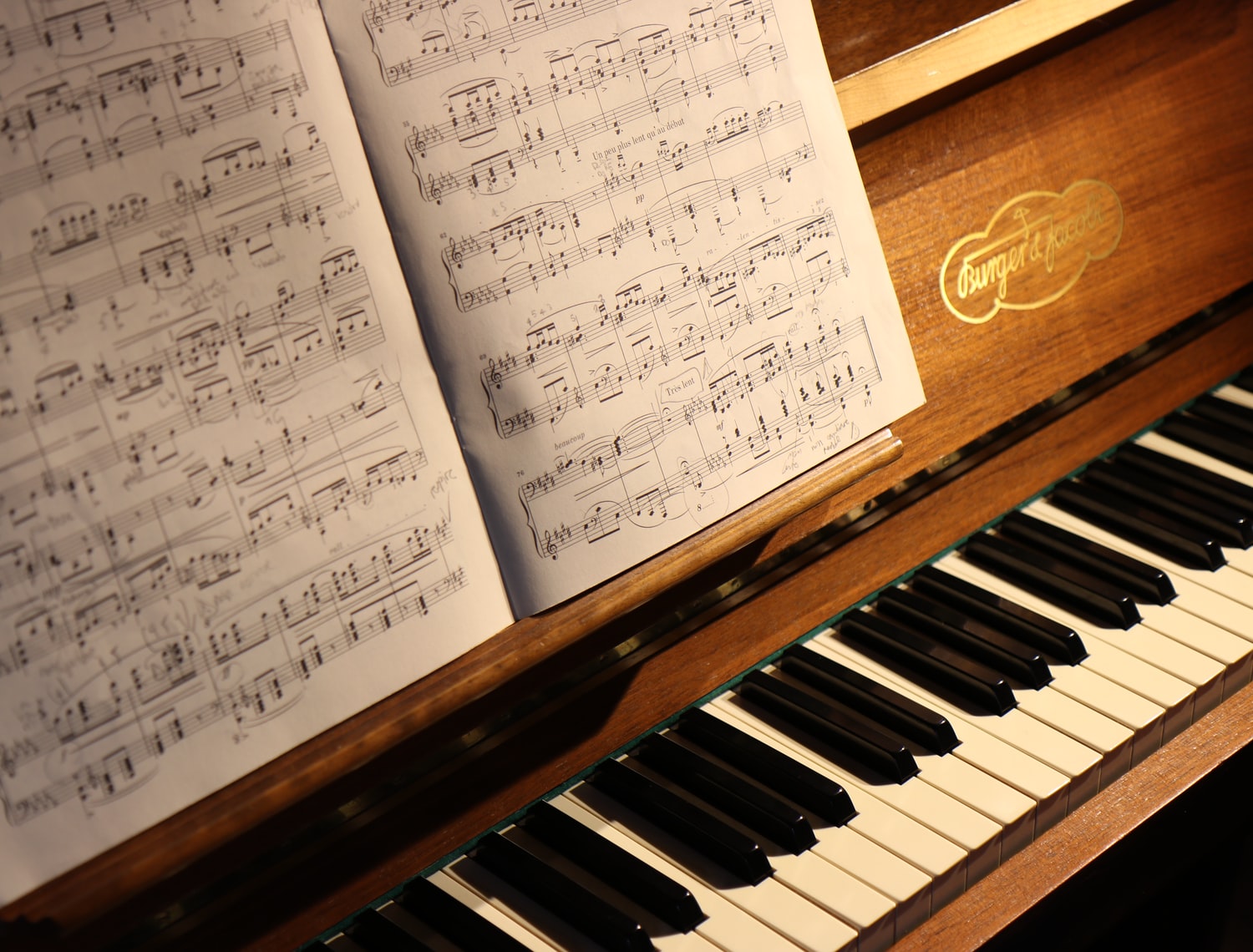
Dad and Nat King Cole
While I normally ignore the celebration of "special" days because I believe these have been highly commercialized, I am aware that tomorrow is Father's Day. And I am choosing to remember only because I miss my Dad, terribly. He's been gone for three years.
What made me think of my father?
A few days ago, I remembered the song *"Love Letters"* and started singing and whistling it. Then I segued to *"Autumn Leaves."* Both are songs of iconic singer Nat King Cole.
And well... of course, Nat King Cole is my father's favorite singer.
And although he is not of my era, I've grown to love his songs and unique vocals as well. I remember the collection of vinyl records of his albums.
Unfortunately, the cabinet these were kept in had been infected by termites and it was not just the album jackets that were destroyed but the records themselves. So, that's a sorry loss.
By then I'd grown accustomed to his music and still remember my Dad when he'd sit on the sofa while listening to the records playing on a turntable. He would often sing along because he knew the lyrics to most of the songs.
We would often tease him because he was usually a beat or two behind while singing along, and tell him that he was not running on 33 rpm (the usual speed of long-playing albums).
I never really asked why he liked listening to Nat King Cole. Personally, I find his songs easy to listen and sing-along to. The lyrics, while quite simple, speak volumes. I'm thinking if you wanted to tell someone of how you felt, singing a Nat King Cole song like *"Smile"* or *"Fascination"* would do the trick.
`Smile, though your heart is aching/Smile, even though it's breaking/When there are clouds in the sky you'll get by...`
Besides his songs are so short, about two to three minutes, and you can learn them in no time. They hardly run to three stanzas, and you just have to repeat them all, so it's impossible not to memorize them!
I think that's why Dad likes them so much.
As I write this, I am listening to *"Fly Me to the Moon,"* and I just finished humming to *"Stardust."*
What I appreciate most listening to Nat King Cole's songs is the orchestration of each song. The lilt of the violins, the soft piano in the background are so soothing. I am certain there are cellos and bass there, too.
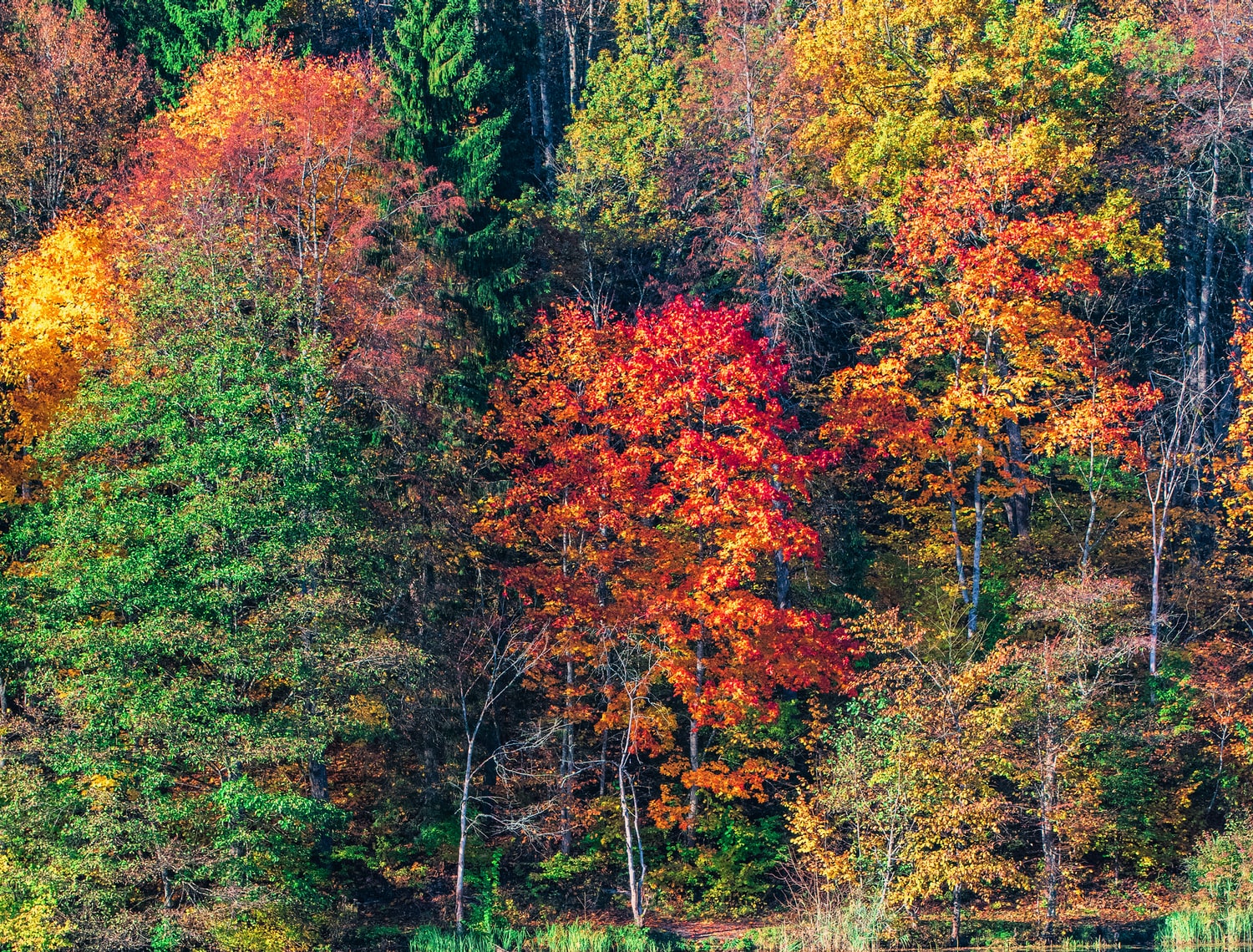
But while it is *"Unforgettable"* and *"When I Fall in Love"* that are his most iconic songs, I was so enamored when I heard first *"Autumn Leaves"* then *"Love Letters"* both for the melody and lyrics. Autumn is my favorite season, even though we never get to experience it here.
I love the reds, the yellows, the gold leaves that give off so much warmth, and just looking at photos of trees during fall mesmerizes me.
`The falling leaves drift by my window/The autumn leaves of red and gold/I see your lips, the summer kisses/The sun-burned hands I used to hold.`
`Since you went away, the days grow long/And soon I'll hear old winter's song/But I miss you most of all, my darling/When autumn leaves start to fall.`
And that's all the lyrics of *"Autumn Leaves"*...
I can't quite remember when and why I was hooked on "Love Letters." Perhaps, because I loved writing letters, both romantic and friendly, and appreciate the sentiment behind them.
Although the ease of communicating has been enhanced by technology (type up a message and send it via messaging app or shoot someone an email and they receive these in real time) much of the sentiment is lost because of technology.
For anyone who's ever received or written a letter by hand, you know there is much more feeling to it, both as you write or read one. It's recognizing the effort and time spent to hold a pen to paper and form the words that come to mind and heart.
And because you don't want to make a mistake, there is extra care penning a letter.
`Love letters straight from your heart/Keep us so near while apart/I'm not alone in the night/When I can have all the love you write.`
`I memorize every line/I kiss the name that you sign/And darling then I read again right from the start/Love letters straight from your heart.`
If you want music to dance to dreamily, this is a good bet.
No, I don't think Dad knows my two most favorite Nat King Cole songs. They're not among the most played or requested.
But I will always appreciate his introducing me to the singer and his songs. And for playing them so often in the house that they've gotten into my consciousness, and stayed in the deep recesses of my brain.
And I just know that when I think of Nat King Cole or hear one of his songs being played, I will always remember my father, and know he is somewhere out there watching over me and listening with me.
*Photos: Unsplash*
The price of listening
One of the skills I developed as a journalist is listening. Not hearing... listening. I can say a mouthful, but make it a point to be all ears when the person being interviewed is speaking.
And because I listen, asking follow-up questions comes easily. It takes discipline to pay attention to what another person is saying. At the same time, one must be aware of tone, gestures, facial expression, and other body language to have a better grasp of the subject and what they're trying to communicate.
Looking back, my listening skills came quite early, probably as a tween. My young friends then would just sit beside me and talk, not just about mundane, childish things but speak of their thoughts, share secrets, dreams and even fears.
In high school, while I didn't develop close friendships, several of my schoolmates would also pull me aside to talk and even seek advice. I am grateful to have been blessed with this gift of being able to serve as sounding board and advisor even when my life experiences then were limited.
This went on until college, although I was listening to mostly adults not fellow students by this time. When I worked part-time in Ermita while finishing my course I was mostly surrounded by people a decade or so older than myself, yet they found it easy enough to confide in me.
My life's purpose
And so it must be a life-long purpose and working as an interviewer and writer only helped to enhance this skill.
It's all well and good to be a shoulder to cry on, a sounding board, a counselor. It feels good to have helped someone, even if it's only to hear them out.
Even now, with technology enabling connections with people we don't really know or see, I still find myself "listening" (via chat or calls) and dispensing bits of advice here and there to virtual acquaintances and friends.
But lately, with the pandemic resulting in lockdowns and restricted movement, I've found myself being weighed down by all the listening and counseling I've had to dispense.
Taking a toll
It's dawned on me that I'm a sensitive person and all this listening is taking its toll on me.
I absorb everything I hear. And because I am sensitive, I feel everything, and think about things I shouldn't even be thinking of! But since I've heard them or had no option but to listen or read (when it's via chat), it gets to me.
When I'm listening to someone venting or ranting, I can feel anger well up inside me. When a person tells me a sob story, I want to cry with them but know I should not.
I get frustrated, disappointed, incensed, and depressed along with the person who's using me as a sounding board. And when you're at it for an hour or two, it can be very exhausting.
All talked out
Last March my dear friend who's in America called me asking if we could talk. She was depressed, having contracted COVID last year, and after recovering has gone back to working as a nurse aid, and being assigned to the hospital's COVID ward.
How can I not give her time? It was 10:30 P.M when we started to talk. We finally finished at close to 1 A.M.
My ears were all talked out. Half the time, I wanted to scream when she was relating her fears and missteps and things she was screwing up but didn't know how to stop.
I'd put in a word or sentence or two, nod in agreement, chuckle when appropriate and give my two-cents worth. I think in the end, she felt much better for having brought out everything inside her chest, but there I was picking up all the negative vibe she spewed out.
The price of...
Let me make this clear - I want to help people, and be there for them, and uplift their spirit. And I'd like to think I have managed to do that quite successfully. But at a price.
So while dealing with my own mental state due to this protracted quarantine and incompetent handling by government of the pandemic, I also have to get a handle on everything else I absorb from other people.
As much as I want to shut people out, I can't. I know I was built to listen. And there's this inner voice that keeps telling me to answer, to be available, to counsel, to share even with people I've never met. And thankfully, I have been guided with what to say, and when to say it.
So, much like when I faced my darkest hours, I turn to God asking to be illuminated, to be clarified, to be worthy of speaking my counsel.
I swear if I didn't cling to Him and turned to prayer, I would be no good for anyone. And that would be the saddest day of my life.
*Images from Unsplash*

Balut (not the egg!)
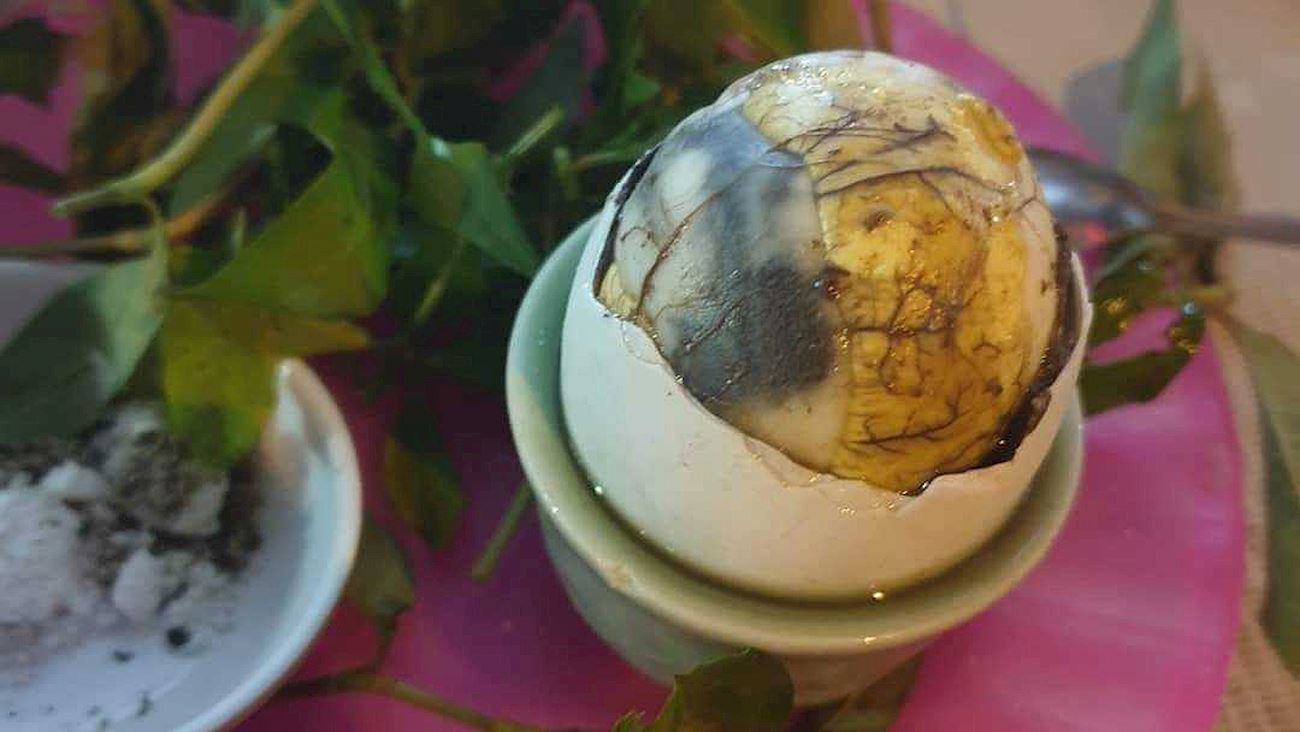
One delicacy that can make foreigners squeamish or cringe violently is *balut*. It's fertilized duck egg incubated for 18 days, boiled, and eaten by hand and usually, in the dark.
You crack the bottom (flatter) side of the egg, open a small hole then sip (*slurp is the better term*) the juice. Then you peel off the rest of the shell a little at a time, exposing the yolk, the white and the chick!
That is what drives people crazy.
Imagine seeing a tiny beak and feathers of the beginnings of a duckling and popping that into your mouth! That is why *balut* is usually sold by vendors at night, and is best eaten with little to no light.
I used to love eating *balut*. I would put a bit of salt then munch away, enjoying the delicacy. Others dip it in vinegar with chili. Then my late sister did the craziest thing - she pulled out the bird by the neck and swung it in front of my face!
Eeewwwww!!!
And from that time on, I never ate *balut* again. Well, some nice people give me the yolk just to prod me to eat. But they know I will never, ever eat a whole *balut* again because of that experience.
But the *balut* I want to talk about is not the street food.
*(I later did a write-up on an entrepreneur who brought balut to malls to upscale the street food. Fortunately, she also sold quail eggs and that is what I opted to eat when offered.)*
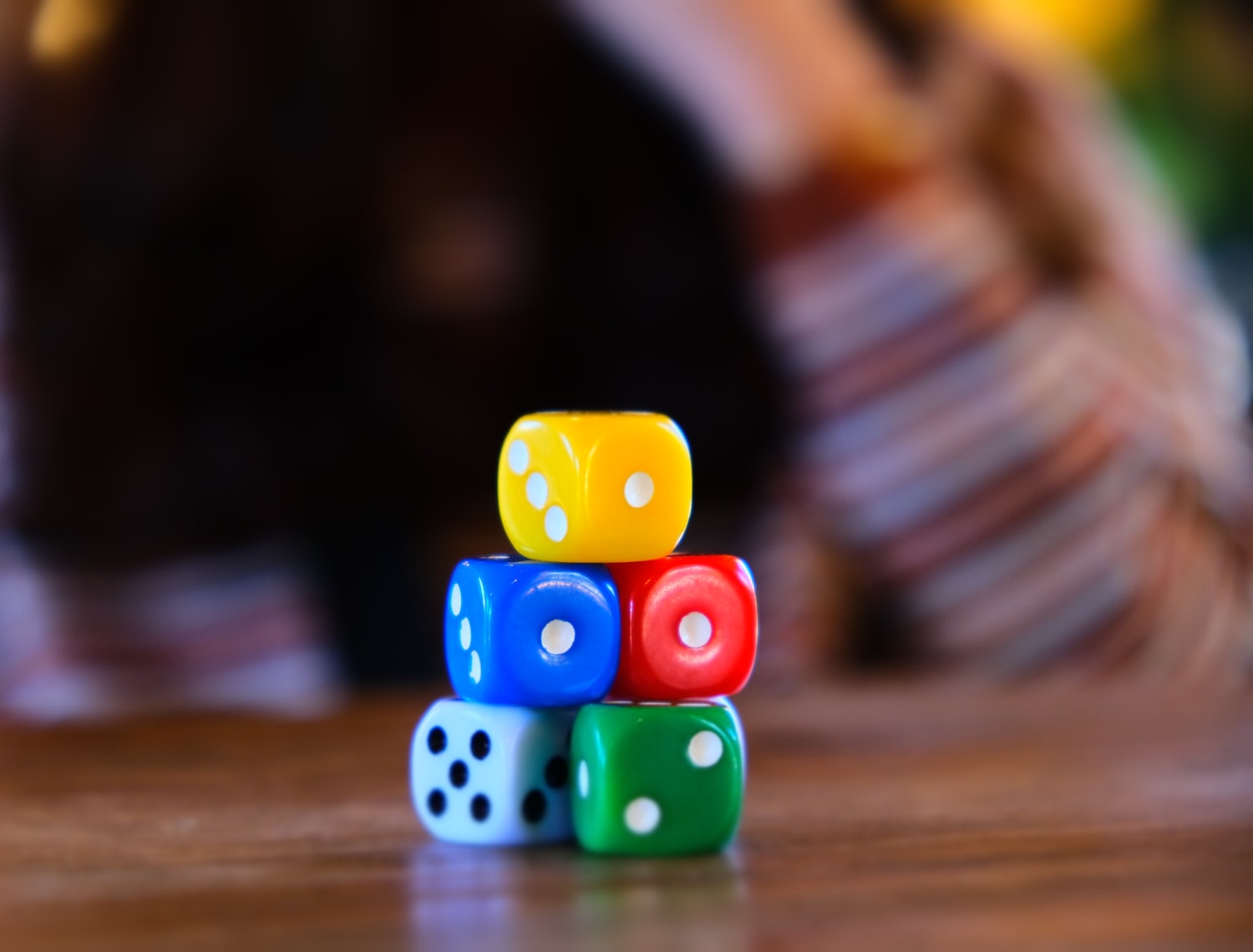
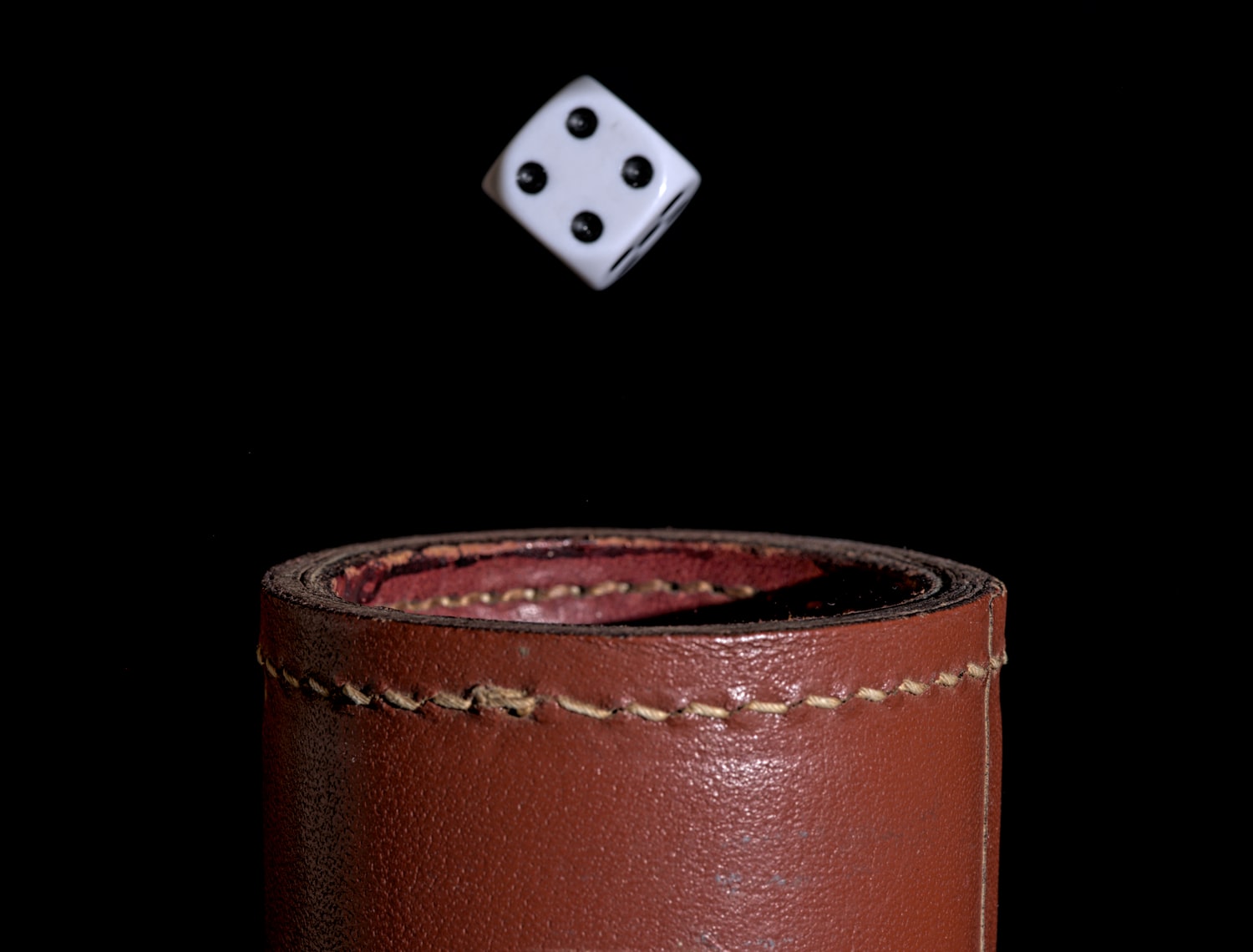
The *balut* I prefer is a dice game. Yes, dice. Or five dice, to be exact. You need a vessel to shake them in, then throw them on the table or flat surface and depending on what numbers come out, add up scores.
It's really poker dice, invented by an American soldier who was holed up in a hotel in Tacloban City. He wanted to play poker but had no cards. *(I wonder how they found dice instead!)*
He named it *balut* after walking around town and hearing a vendor bellowing **"Balut!"**
My dad, who loved all sorts of card or board games, introduced it to us.
Well, he bought this really nice leatherette cup *(so shaking the dice doesn't make a clanking sound)* and five big dice, slapped a pen and paper on the table and said he had a new game we could play.
The game is somewhat similar to poker. Any number of players can participate, and needless to say, the more, the merrier.
A score keeper is required, although one of the players can do that. The one with the highest score wins.
For each number **(1 to 6)**, a player adds up the total he gets for every turn, i.e., Player A scores 4 points when he throws four ones; Player B scores 12 points for throwing three fours; Player C gets 24 points for four sixes, etc.
For every turn, a player is allowed three throws, leaving the dice open for which a category is being played. *(First throw is 2 ones. For the second throw, shake 3 dice and another one appears. The third throw will have 2 dice in the shaker*). Whatever the outcome after the third throw is what is recorded as the score for the category being played for.
Aside from the numbers, there is **Choice, Straight, Full House,** and **Balut,** which is when a player gets five of any number. The score for this is 30 points.
**Choice** is a combination of any numbers once all six have already been filled, or there is a repeat. (Ex: Five already has a score, but a player again throws multiple fives).
**Straight** is either from 1 to 5, which scores 15, or 2 to 6, which is equal to 20 points.
A **Full House**, like in the card game, is a combination of a pair and a triple, the numbers of which are summed up for the score.
If most of the categories are filled, a player can opt to scratch the throw or leave a category zero.
Even with just three players, it can get very rowdy. Imagine if there were five or more playing!
It's the anticipation of scoring a **Balut** or waiting to get a decent score for every category each time a player throws the dice that makes this an *uber* exciting game.
Needless to say, anyone can play and kids have just as good a chance at winning as adults do. It is pure luck after all.
You'll hear shouts and screams, moans and groans depending on the outcome of each turn. Excitement builds up when most of the categories have been filled and it's only the elusive **Balut** that everyone is waiting for.
We've had occasion to play this with around eight players, I think. And boy, were we noisy enough to bring the roof down!
The game beats any mobile game app (although there is now a *balut* game app! waaaah!) because it is the interaction that makes it so priceless.
Even the most docile player will not be able to hold back emotions, even if its just a squeak or a grunt, if they're close to a good throw.
I can almost imagine my Dad's laughter now. He squeals in delight when he's winning or gets a lucky break, and rubs his hands together in glee.
Yes, we love this game, and love every moment spent playing it. Now, I miss both the game, and my Dad, and my sister...
If only I can find the shaker and the dice.
*Photos: Unsplash*
Give blood, give love
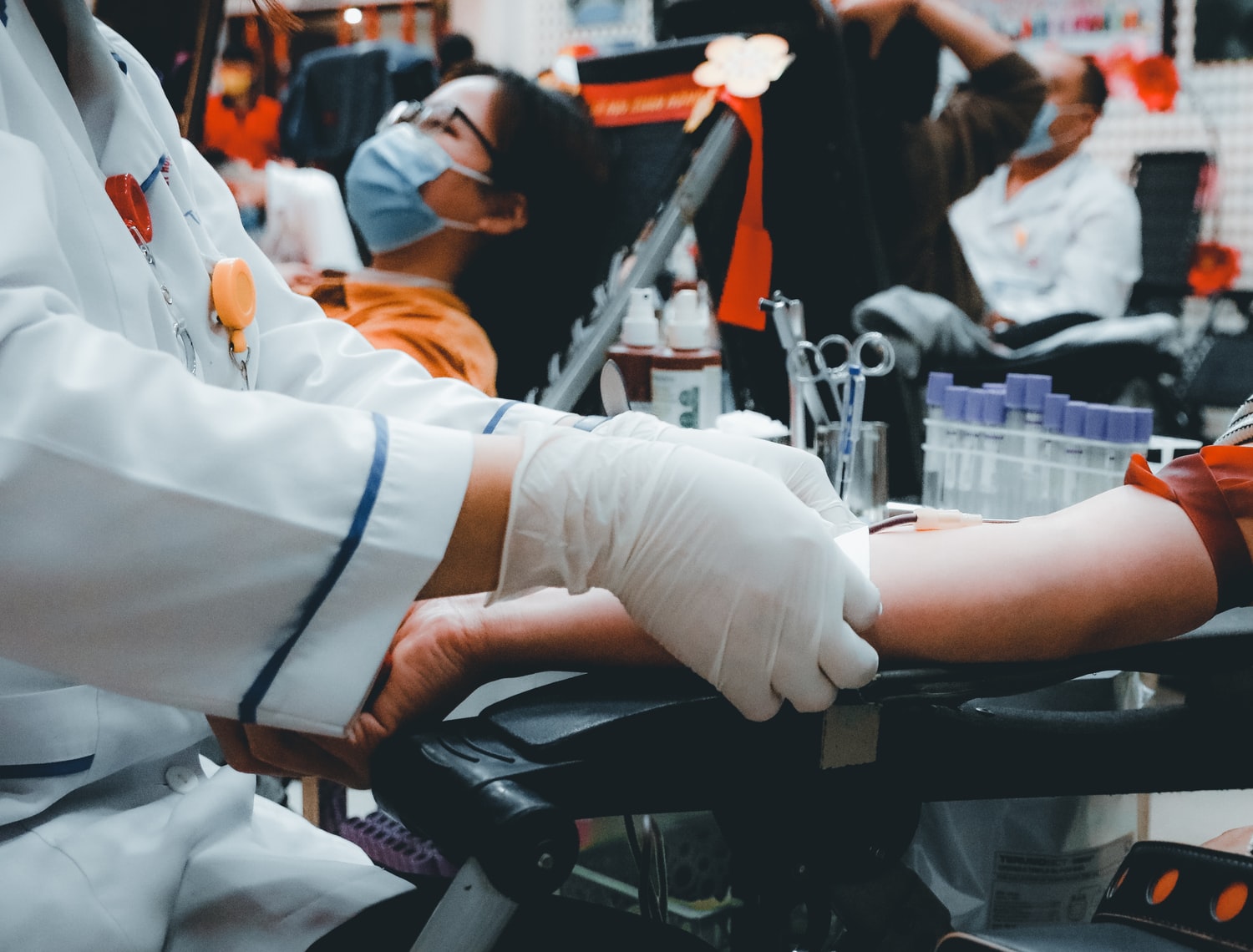
It might be a good idea to have your blood extracted and stored if you're having elective surgery. Just in case you should need blood transfusion. At least, you won't have to worry about waiting for blood of a similar type when you require it, particularly if yours is rare. And since it's yours, there's less concern about its source.
One of the most confusing things during hospitalization is when blood transfusion becomes necessary. Patients and their family are told not to worry because blood is free... if it is readily available.
It's that availability, particularly for not so common blood types (they're usually the RH negatives) that spells the difference between getting the transfusion the soonest or after several hours.
Tertiary level hospitals usually have their own blood banks. This means at any given time, they will have blood available when requested for a patient. It also means they have the capability to handle blood donations.
Find blood donors
When a patient requires blood transfusion, they are told to look for blood donors. This way, the units consumed from the blood bank will be replenished. Donors don't necessarily have to be of the same blood type as the patient, but of course it's a plus if it is.
Back to the confusing part... blood is free.
While there is no charge for the actual blood component used, the patient's bill will say otherwise. Typically, it is at least a thousand pesos (or more) per unit. It's an amount that can throw you off upon inspection of the billing statement.
So, how is that free?
Blood is free, storage is not
The explanation is that while you don't pay for blood per se, there are many attendant costs to ensure patients receive safe blood. So you're being charged for processing and storage of blood.
After collecting blood, this has to be tested, the components separated and labelled, then stored until requested. There are also equipment and tests used prior to and after the collection of specimen.
So while the blood itself does not cost anything, everything done to get that specimen to the patient carried a cost and that's what is reflected in the billing statement.
In other words, having blood donors doesn't nullify costs. What is simply means is you've helped replenish the country's blood supply after you took from it.
When my late Dad was in prolonged confinement, he required several blood transfusions due to low hemoglobin count. Sometimes he needed a pint, sometimes more.
So we really needed people to donate to refill the supply. We probably got six people to successfully give blood. Successfully because there were those who came to donate but were not qualified.
Save 4 lives
Donors must pass age, weight, and health criteria before being deemed qualified. They must weigh at least 50 kilograms, have normal blood pressure and heart rate, and should have recovered from mild illness at least a month before and free from chronic diseases.
Donating blood is good for the health. Aside from the fact that you will regenerate new blood cells after giving away blood, it is also a means to monitor your health. The lab tests required prior to donation can indicate potential health risks.
At the same time, one unit of blood (about 525 ml) drawn can help save four lives. Whole blood that is extracted from each individual, is separated into four components - red blood cells, white blood cells, platelets and plasma - that may be needed by different patients.
Benefits of donating blood
Regular blood donors also lower their risk of developing cancer, suffering a heart attack, and can keep the liver healthy and improve their mental state.
Besides, they do the country a huge service by helping maintain the national blood supply, which for the Philippines is one million units for its population of 110 million.
This is to ensure there will be no blood supply deficiency in case of disasters or calamities where massive blood is needed for a huge number of people.
A blood typing program here was initiated two years ago. The aim was to keep a database of blood types within communities for easier facilitation when there is need for blood without having to go far to obtain supply or find potential donors. However, there has been no news whether it was successfully carried out or not.
Today, June 15, is World Blood Donor Day. If you want to give love, give blood and save lives!
*Photos: Unsplash*
Missing farm visits
Two summers. That's how long we've missed our annual ritual of visiting our small farm in Laguna during the Holy Week.
Since the lockdowns imposed due to the pandemic, traveling outside of the National Capital Region for leisure has been limited. It is both to protect ourselves and others that we have opted to forego our trip.
Traditionally, the family plus my Dad's only sister would drive to the farm on Holy Wednesday and stay up to Black Saturday. Leaving very early on Wednesday means avoiding traffic, which can get horrendous during this season. The plan is usually to leave around 5 AM, but we often get backed up and finally drive off 30 to 40 minutes later. Guess why...
The trip, which takes 1.5 to 2 hours, unless we zip through the freeway and make no stops, includes breakfast on the road. Nothing fancy, just McDonald's or Burger King so it's quick serving.
Then we'd hunt for fresh tilapia (for lunch) along the road and stop by a market before finally heading to the family farm where we can relax and unwind from the stress of city living.
By the time we arrive, everyone is ready to stretch cramped legs and breathe in fresher air. The sight of so many trees, the sound of chirping birds, and the smell of rural life is actually quite refreshing.
The rest house is quite spacious. My father had it built that way expecting to have many people come and stay over. It has three bedrooms on the first floor, and one in the second floor, plus this wide open space with a queen-sized bed in one corner and lots and lots of space to lay mattresses on.
There was a time when cousins, nephews, nieces and aunts joined us for our yearly sojourn. And sleeping in one big room is always enjoyable because there is so much story-telling ang giggling before anyone ever really falls asleep.
It's made more exciting because we still use mosquito nets on the second floor so there's this camping feel, especially for kids.
Ahhhh, it was very, very different when the kids were younger and gadgets and phones were non-existent.
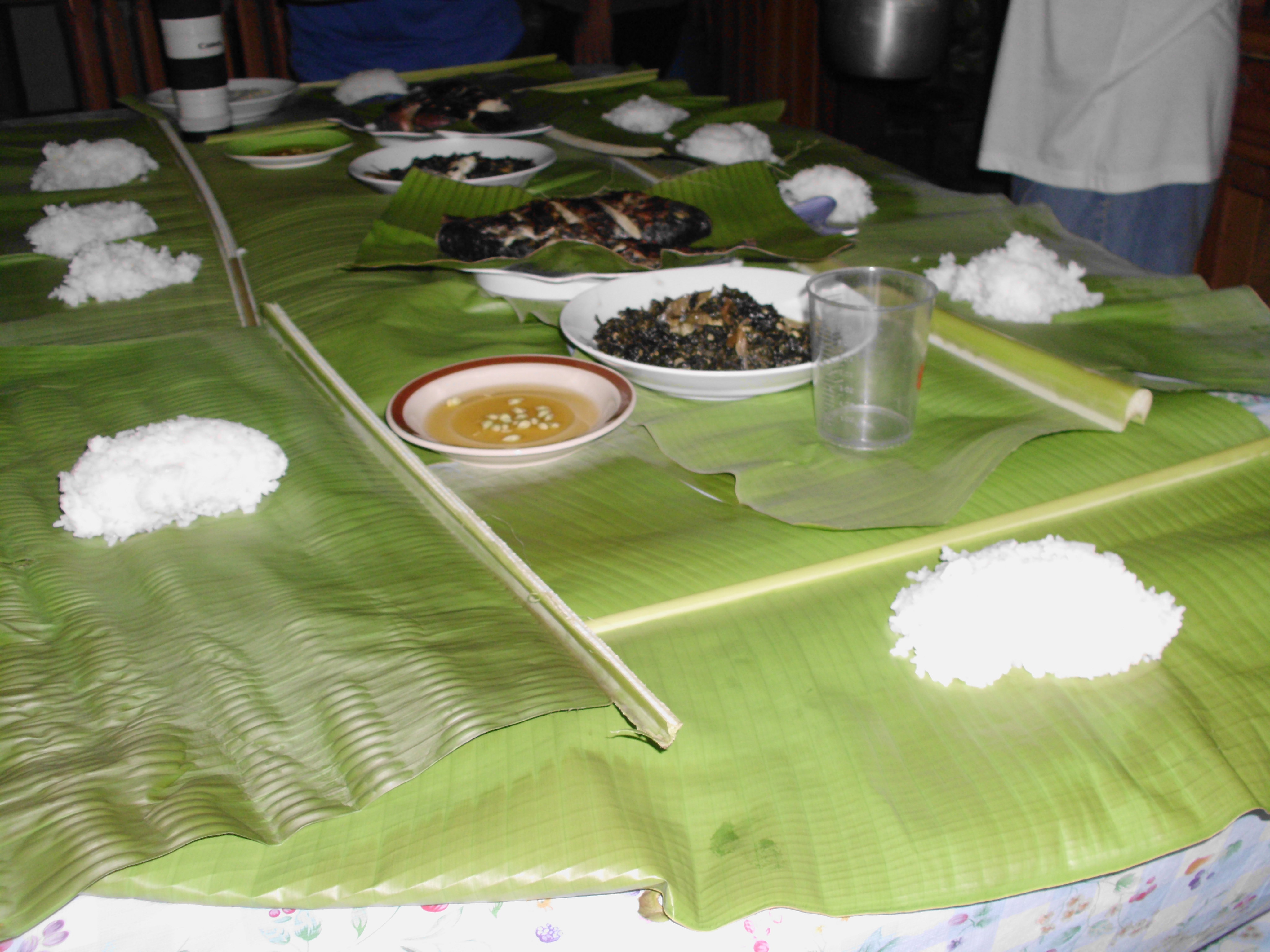
One of the things we never do away with when at the farm is eating with banana leaves laid out on the table to take the place of plates, and doing away with forks and spoons. With grilled fish, sliced tomatoes and onions and green mango, some fried chicken and blanched vegetables, and this was always a very satisfying meal.
Dad was a master at grilling tilapia and would do it most of the time. He used a lot of coconut milk to baste the fish as it grilled, so that added to the flavor. With the skin a bit charred but the flesh perfectly cooked, all we need is some fish sauce with calamansi and it's good to go!
As my father got older and would often tire from the long drive, my brother-in-law, and later my niece, took over the grilling chores.
When in the farm, sitting around the long dining table to exchange stories was a favorite past time. We could sit for hours and talk about anyone and everything.
Most of the time, my dad and aunt would reminisce about their life in their hometown. They had tons of funny tales about growing up, how much mischief my dad and his brothers got into, how they were always with their cousins...
No wonder the bond between cousins is so strong to this day. And one of the things I most appreciate is being exposed to these people and being included in their exchange of stories today.
That's the roots that my dad wanted for us. We may not know everyone in town like he does (and he really does know most everyone!) but when we came across folks downtown and they learned I was my father's daughter, there was always this sense of familiarity and inclusivity.
Part of the time in our visits is spent visiting relatives. It is a must to do so because when these people learn we were in town and didn't drop by, they would feel bad.
Visits meant a lot of food. If we called on three homes in one afternoon, we would be fed in each one. And we had to eat or they would feel insulted!
One of my father's cousins runs a successful catering business. And if we didn't feel like cooking for one meal, we simply had to drop by his place and we'd be laden with food. Or we could call and joke that we had nothing to eat and his quick reply always was, "How many are you?"
That's provincial hospitality. We weren't served anything fancy when calling on people. But we will always be offered something to eat, even if they have to go out of their way to prepare something.
A Good Friday tradition was participating in the Catholic or Aglipayan procession. That's late in the afternoon, and usually takes more than 90 minutes to complete the route.
We just used to watch the procession but when my niece was about 5 years old, she dragged me into marching with the congregation. And we've been doing it for several years. Somehow, as tiring as the activity was, you didn't really feel exhausted. Perhaps, it's because you're doing it in the name of faith.
Capping our Holy Week sojourn is a trip to Liliw, Laguna, slipper capital of the Philippines. We get our supply of slippers for the year, and hunt for sandals and shoes and whatever else we can find there.
We eat dirty ice-cream, have pancit hab-hab, and poke around the shops along with hordes of people who also drop by around this time.
But since last year, we've missed out on this annual trip. We missed the lethargy of being in the farm, and just sitting around and eating and swapping stories. We missed the fresh produce, the fruits that can be picked or bought along the way.
Most of all, we miss our Dad and sister. They were a huge part of these trips. It was 2017 when we last went there with them. I miss seeing my father sitting at the head of the table, reading, or writing, or talking to his sister. Or him going off to inspect the farm, and have one thing done or another.
My father was a dreamer, not a doer. So he could never figure out what he wanted to do with the farm. He'd grow one thing, lose interest, and try something else.
I guess it was just being in the farm that he truly wanted. It didn't matter what he did there. That was always his place, his home. It was the one place he could still be himself, remember his boyhood, and his growing up with family and cousins.
I now understand his need for roots for us. I've slowly planted mine.
*All photos are original.*
Best primary education ever!
Three schools in seven years. That's my primary schooling. It was a Catholic school for girls for three years, a year-and-a-half in a co-ed American school, and two-and-a-half years with a small co-ed private school (*which has grown so much bigger now*).
Unlike today when kids still in diapers are sent off to play school, I was six when I started kindergarten. By then I knew the alphabet, numbers, colors, and even to write properly. Home was my first school, my parents my first teachers.
My Dad wouldn't have it any other way. He was adamant about sending us to school so young. The man, whose parents were both schoolteachers, had been traumatized by early schooling.
He was too smart so they made him sit in class with older kids, with his mom as teacher. The subjects he could cope with and even aced. Relating to bigger boys and girls was the challenge. Often, he was the butt of jokes for being so small. And even up to high school, he was still smaller than most boys.
So, he put his foot down when it came to his kids. We would learn the basics at home then start school when we were old enough not to feel insecure around so many other children.
That's why he plied me with books, read to me, played with me, and taught me as much as he could. It also helped having grandparents who were teachers.
Ready for school
It was perhaps because I had been ready for learning that I ended up top of my kindergarten class. Back then, rankings were never announced until the final days of school, not quarterly like it is now.
The memory remains etched in my mind. The entire school was outside this huge quadrangle after flag ceremony. Then teachers started announcing names of students who topped their classes for the year.
When my name was called, I had to be prodded to go up front still unaware of what was happening. When you're a shy kid, that's almost terrifying. To stand in front of the whole school and be applauded, wow! That's why I remember it... always.
Nearing the end of second grade, my father, who had made Singapore his base to be close to work, decided he wanted us (mom and us three girls) to join him.
I think I didn't finish the school year but was given permission to take the final tests before I left. This way, I would have complete grades when my transcript was sent over to the new school.
Adjusting to the new
We flew out in March. School wasn't going to start until September. So, I was like on a six-month vacation. Which helped me acclimatize to our new home and surroundings. The downside was we didn't actually make a lot of friends.
There were no other kids in the apartment complex where we lived. My dad had a few friends with families. One had a baby boy, so that didn't count. The other had five kids, three of whom were much older than us, the two quite young.
We did become friends, but it was never the playmates that we had back home. For one, we didn't live near each other, so visits weren't often unless it was someone's birthday.
When school finally started, it was a totally new environment to adjust to. It was an open-classroom setup. The area where classes were held was this huge auditorium-sized room, divided into six separate classrooms, all of which had low bookshelves as partition. Half of the students were third graders like myself, the other half were in fourth grade.
It was an American school for children of expatriates. So, my classmates were all foreigners, most with varying shades of blond hair and a twang when they spoke. I think there were three or four of us with black hair.
I've never been big about making friends. One or two will do. And yes, one of my friends was also Filipino. But I knew everyone else in my class, and the next, because there weren't many of us.
Best memories
I have three memories of my time in that school. First is how we had ticket stubs for lunch. All the kids would line up at the cafeteria, hand over our stub for the day, then our tray would be filled with a plate of whatever was being served on that day, along with a cookie or cake, and juice or milk.
That was my introduction to American food. I loved the sloppy joe - which resembles spaghetti sauce but with more meat and red beans, a little spicy, then scooped onto a hotdog bun and topped with grated cheese.
The second was library hour every Fridays. Instead of class, everyone was asked to head to the library and pick out three books that we could take out for the week. If you were done selecting which ones and there was still time, you could just slump on the carpet by the shelves and read to your heart's delight.
I remember running late for the next class a few times because I got lost in my reading and didn't notice everyone had left.
The last memory is Reading class. That's when teachers gauge your reading ability. Everyone picks out a book, and teacher sits with each student, asking you to read aloud a page or two, or more if necessary, then asks questions. You get to discuss the story with her.
This teaching method is so invaluable. It helped kids get better at reading, pronunciation, comprehension, and discussion with an adult.
Kids weren't terrified of interacting with teacher because it was a one-on-one thing. Every other student was busy in their space or corner reading, and not being nervous when it was their turn.
So, what they taught me in that school only reinforced what my parents had been teaching me all along.
Planting roots
The decision to return to the Philippines came as a surprise. School had already started. But my Dad was being asked by his company to move again. It was only much, much later when I learned the choice was either to relocate to Scotland or come back home.
My Dad was very much a provincial boy at heart and very clannish. He didn't want his children to grow up without roots. Moving around every year or so would deprive us of planting roots. So it was back to the Philippines.
Finding a school to accept us *(my second sister was also studying by then)* in the middle of the schoolyear was a little challenging.
We were directed to a small private school not far from home. A neighbor had sent her kids to study there and vouched it offered quality education.
They asked us to take a test, which after thirty minutes the results were out. We were in! The challenge was to catch up. I had missed a couple of weeks of the third quarter already.
The school principal was a strict old maid, a schoolmarm, who loved everyone of the students in her school. For some reason, she took an instant liking to me. We came for the testing when classes were about to end for the day. She took me around, and introduced me to the teacher and class.
Of course, everyone was curious who I was, and why I was coming in late. It didn't help that the principal kept speaking in English and I responded accordingly. So, everyone thought I was an English-speaking kid, especially because I had picked up the twang from my old school!
Best experience
Naturally, only the bold and brave came up to make friends with me. No one wanted to keep conversing in English. Somehow, I never told them I understood them just fine, and I could actually speak to them in Filipino.
Eventually, they learned I was quite friendly, and not intimidating like they initially assumed. And by then, I had become comfortable speaking in the vernacular.
What I loved in that school was how kids were encouraged to do their best in academics. Every quarter, those who made it to Top 5 had their papers stuffed in an envelope (Quizzes and tests always had stars when you got 90 and above), and sent off to the Principal.
Painstakingly, she would write a short message for each quarter, to praise and encourage you. And yes, even with weeks missed in lessons, I ended up third in class for the quarter, to the annoyance of whoever I bumped out of the rankings.
To round out our education, each grade level had to make a presentation every year, where students get to sing, dance and act. This helped discover who had talent, and it was here when I learned I could dance.
By the following year, I was singing and dancing in the program, too. On my last year, I had been tapped to teach nursery kids how to dance. Woohoo!
And because we weren't a very big school, by the time I was in sixth grade everyone knew who I was, because of both academics and talents.
I think I had a very well-rounded foundation for my education. And I will always cherish the schools I went to and count them as huge factors into helping mold me into who I have become.
*All photos from Unsplash*
Getting my hands wet
Of all the household chores, I am most partial to (*okay, I enjoy it..!*) washing dishes. That's dish washing by hand, not dumping them in an appliance.
Why do I like being a dishwasher? Let me count the ways.
First, it's a mindless chore. I mean once you get it down pat how to do it most efficiently, you do it without overly thinking. It merely requires care so the plates and glasses don't end up in shards due to slippery hands.
I can't remember when I first learned to wash dishes. It must've been when we lived in Singapore for about 18 months.
Having grown up with household help, we were suddenly on our own in a foreign country. I was 9 then, and as the eldest, it was the most practical chore since my mother lives to cook.
First time
I remember the first few times doing it. I had to be extra careful handling the breakables, especially once they have soap on them. I made sure the sink was empty so I didn't knock things around and accidentally break them.
It was an especially proud moment to be able to finish doing the dishes, and getting a seal of approval from my mother. Good job!
When we returned, the house help were back as well. So there were very few occasions or opportunities to wash dishes. Sometimes, when I used something in between meals and no one was there, then I get to wash those.
It's been several years since we last had househelp, and because no one really likes the task, I ended up doing it.
Dirty sink, yuck!
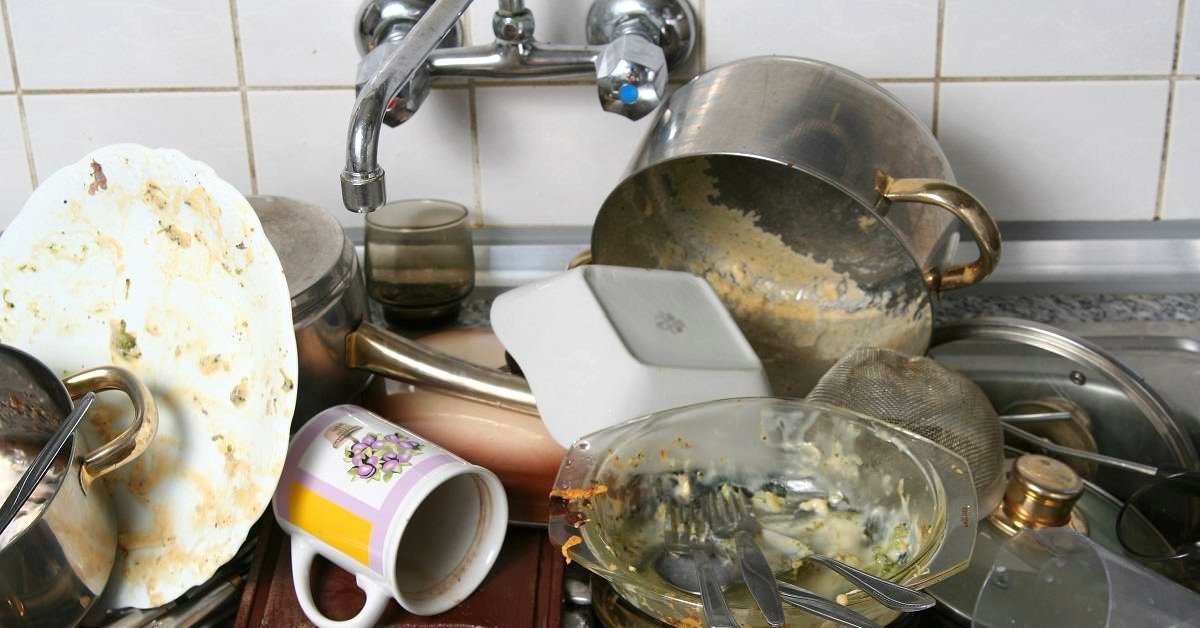
And for good reason... I hate seeing dirty dishes, pots and pans, piled on the sink. So, even when someone else should be cleaning up, I end up doing this just to put everything away.
Here's the thing - I like to smell whatever it is I am washing to make sure they don't just look clean (no remnants or scuds whatsoever) but they smell clean, too. Isn't it annoying when a pan or plate still smells fishy or saucy even after it's been washed? So, I sniff them after rinsing. If it has even a slight unpleasant odor, I soap them again.
There have been times when I inspect someone else's work by running my fingers on a plate or spoon, or sniffing them and I end up washing these again. It's also for my own peace of mind that I take on the chore.
How to wash dishes
So, glasses first because they're the least dirty or greasy. Then cutlery or flatware next. That's spoons, forks, knives. I'm particular about forks because often rice grains remain stuck in between tines and don't get noticed. Then it's the crockery - plates, saucers, bowls, cups. Finally, the pots and pans.
Watching others wash dishes where they just place it under running water and soap them makes me wince. No, honestly, it annoys me. To remove scuds or food remnants, especially those that have dried up, it helps to pre-wash them or soak them for a few minutes to loosen all these.
This is easier when hot water is available, but that's not always the case.
I usually run a slightly rough sponge on everything while these are soaking to scrape off any gunk so they're already clean even before soaping. The soap is just to help wash away smell.
Before putting them on the dish rack to dry, I shake off as much excess water so it doesn't puddle underneath.
I usually separate spoons, forks, knives and other cutlery used for cooking. This makes it easier when drying and keeping them.
Clear!
While I don't much like drying and storing dishes, I like it even less when the sink area is full of clean dishes and you're about to prepare for cooking. So, I sometimes end up doing that, too.
Needless to say, I hate entering the kitchen and finding everything in disarray. I've lived by the policy to clean as I go. So, most times when I cook, you won't know I did because everything would be in order after I finish.
Thinking spot
What's the second thing I like about dishwashing? I like the feel of running water on my hands. It helps cool me down, especially when the temperature is soaring. It also helps calm me down when I'm in a snit.
And there've been times when alone, I can even vent my feelings while doing the dishes. Yeah, letting my tears run down my face along with the water from the faucet.
I do a lot of talking to myself when I wash dishes. To help me through stuff that's bugging me. To let out frustration or disappointment. And to pray. Yeah, I do a lot of that while doing the dirty dishes.
Volunteer dishwasher
And if ever you invite me to your home and feed me, I'm open to doing the dishes, too. I've done it many times, sometimes to the chagrin of my hosts. They're embarrassed to let me wash plates, glasses, spoons and forks.
But hey, you cooked so I clean. No biggie. I get to check out your kitchen, too! Is it as clean as mine?
And washing after a party where there's a mountain of dishes to do? No worries. I've found a system to take that on efficiently as well.
I figured if I really needed a job and nothing else was available, I can earn a living (not a lot, I know) by washing dishes. At least I can be sure I'll have something to eat.
**P.S. Here's a tip how to remove grease from plastic containers:**
*Squirt some liquid dishwashing soap into the container, add a little water, throw in a paper towel (used is okay), cover, then shake vigorously. All the grease will be absorbed by the paper towel. Then you can wash it clean, and it should smell good, too!*
Lead image: https://advancedwaterinc.com/hand-washing-dishes-vs-dishwasher-comparison/
Dirty sink photo: https://cookit.guru/dirty-dishes-in-the-sink/

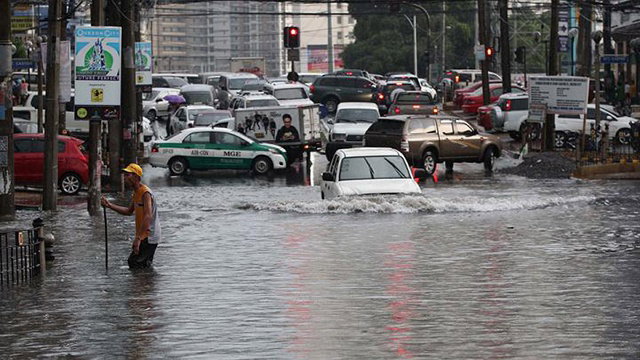
Here comes the rain again... floods!
With the rainy season come the challenges.
The proper government agencies are trying their best to minimize, if not eliminate, flooding especially in Metro Manila. That means a lot of clearing operations, de-clogging drains and sewers and canals, and cleaning up river networks.
The problem is they only do this when the rainy season sets in. And whether they actually have a long-term plan to address the problem is also a factor why perennial flooding is never fully addressed.
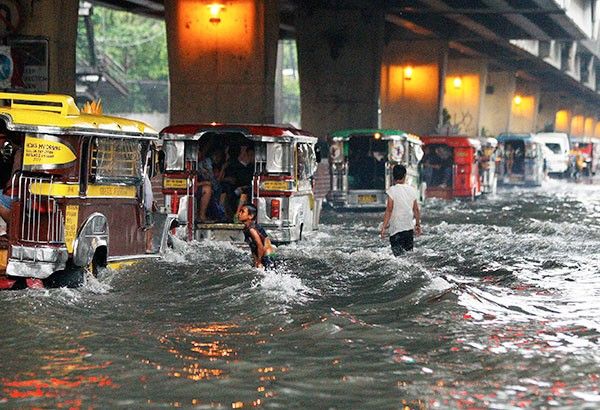
Yes, water recedes much faster now than it did years ago. But when vehicles are caught in a heavy downpour, or stormy weather, they will be crawling once water rises. They can also be stuck somewhere far longer than necessary because for certain, traffic would be horrendous.
There are areas - certain streets or districts - where it doesn't take much rainwater to cause instant flooding. So there's got to be something terribly wrong with the sewerage system for this to always recur.
As much as I appreciate the rain because it helps cool the temperature, reduces water costs when you have lots of plants to water, runs hydroelectric systems, and boosts agricultural production (provided it does not destroy crops), I cannot totally enjoy it here.
It's the flooding that dampens my spirit. Whether driving or commuting, it is a bigger hassle than necessary. With huge puddles and inconsiderate motorists, the likelihood of getting even more wet is a certainty.
Very few ever slow down when they see puddles or flooded roads with commuters waiting nearby for a ride. You might have walked carefully to avoid getting extremely wet up to the bus or jeepney stop, but once standing there waiting for a ride, some bus or car will come zipping by, its wheels creating this huge wave that splashes on you.
It's no better when you're driving and some jerk of a driver will overtake you even while negotiating a flooded portion of the road and splash your windshield with water! It's dangerous because it catches you off-guard and could mean losing control of your vehicle.
If there's one thing I learned driving through flooded streets, especially when the water is ankle- or shin-deep, it's to drive a bit slower than usual even if traffic is light. Just cross that area safely, then speed up.
I can't remember how many times I've had to drive through the flooded streets of Manila when I still worked with the newspaper in Port Area.
Floodwaters can rise knee-high in that area. It will subside a bit from the Manila Hotel along Roxas Boulevard until T.M. Kalaw near the Roundtable. Then prepare to turn amphibian near Manila City Hall up to Lawton.
Up Quezon Bridge will give you a reprieve, but approaching the Quiapo underpass, be ready to go amphibian again, while jostling with jeepneys and buses.
Most vehicles avoid Quezon Avenue (unless you're a truck, pick-up or bus, or some sturdy version of a car) because waters can rise up to the thighs or waist even.
I remember my youngest sister, who used to study in the University of Santo Tomas, coming home with her all-white uniform turned dark with filthy floodwater because she had to walk that road network to get home!
So, I often took the back roads, Maria Clara Street particularly, to come out at Welcome Rotunda. Even then, the waters along that long stretch of road were more than a foot high that you'd think only a pump boat could get across!
Try driving through there at 9 PM! I quickly learned the tricks to negotiating flooded roads - drive on second gear, let the car crawl because you never know what's ahead and as courtesy to other motorists *(believe me it feels like you're on a bumpy boat ride when cars alongside you drive a little too fast when floodwaters are high!)* , pump the brakes to dry them after crossing high waters, - and thank God, I never got stranded in such areas, or had the car engine die out on me while there.
It is this training that taught me to master driving on flooded streets, but I still hate it! I also realized not everyone knows how to negotiate floods, that's why they get stuck in the middle of nowhere. Good thing there are mobile phones now...
So, it still frustrates me that decades later, the situation has yet to improve. Waters still rise after hard rain, and traffic still gets snarled even with the slightest of rain because of slick roads and undisciplined drivers.
In the meantime, people have yet to learn about proper waste disposal, especially candy or biscuit wrappers, plastic bags, foil packs, and tetra boxes, among others. It's an entirely different situation when it comes to those who construct their homes near waterways and they end up dumping their trash outside their houses.
I remain a firm believer that it will take the full cooperation of the citizenry, and the timely action of government to ensure flooding will no longer be a problem not just in the metropolis but in every town and city across the country.
*Lead image courtesy of philstar.com*
Mount Pinatubo in my mind
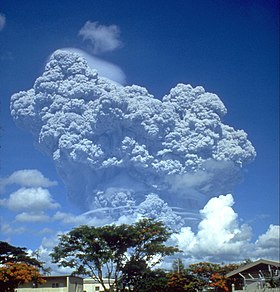
*The eruption of Mount Pinatubo on June 15, 1991 not only changed the landscape in the areas most affected by its explosion and the destruction it left behind. It also changed the lives of thousands of people who lived through the disaster.*
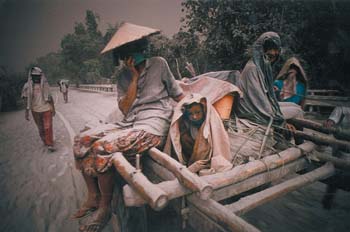
It was like a scene from a movie. You're standing outside, going about your business, when suddenly the surroundings turn ashen gray. Sand-like particles start to swirl above you and when you brush it off, more settle on your hair and clothes.
You make the mistake to look up and see the sky obscured by a light brown cloud of dust. Then you see the roof of cars being covered with falling ash.
Everyone rushes inside for cover. The chatter starts. And news breaks out. Mount Pinatubo, 400 years dormant, has started to rumble and was spewing ash. What we had experienced first-hand was ashfall that would cover Metro Manila - more than a hundred kilometers away - and its environs for several days.
The eruption itself would last for about seven to eight hours, but the magma, pushed by high pressure gas ejected five cubic kilometers of volcanic material.
For a while, Central Luzon, including the National Capital Region, was almost covered in darkness. Roofs were heavy with ashfall, and it entailed tremendous effort to sweep off, or wash away the debris.
Many vehicles that were parked outside without cover would suffer scratches if not dents, from the ashfall, especially when small sharp particles came with the fine ash.
Driving was a challenge as ash continued to swirl around and hit the windshields. No one quite knew what to do, except seek cover and stay safe.
For weeks from June of 1991, the Mount Pinatubo eruption would be the big news. Not only because the explosion was so unexpectedly terrifying, but more so, destructive.
I can't remember how many times we visited the areas that suffered the most devastation. So aside from Zambales, where the volcano is situated, those places were the provinces of Central Luzon particularly Pampanga and Tarlac.
As if metric tons of ashfall destroying homes or burying them were not traumatic enough, the rainy season was upon us, too. So from ash fall, there was lahar as well that proved even more dangerous.
People fled their homes, with their meager possessions, if not just the clothes on their back. Those who lived in the periphery of the volcano would never have survived if they stayed behind.
I have witnessed rampaging muddy waters in Pampanga, and seeing people stuck inside their homes waving or crying out for help. They would either be on the second floor of their homes - if there was any - or worse, on the rooftops.
Rescue was nonstop, but the Philippines unfortunately, was not equipped for this kind of disaster. Thousands perished, either buried in ashfall or mudflows. Billions in property, both personal and agricultural, were damaged or lost altogether.
Villages disappeared after homes were all buried. People lost their loved ones, and their livelihood. Even animals were not spared, with many unable to seek higher ground to stay safe.
It was heartbreaking to see all this death and destruction. And twice more difficult to report on what we saw, heard, or witnessed first-hand. Often it was frustrating to write about what was not being done for the people, or how they couldn't save areas from being further damaged.
While we may not have lived in those areas that resembled no man's land, (*all you could see was thick, brown lahar*) the agony and desperation among those who did, but were struggling to survive, would always hit a sensitive nerve.
Watching children walking knee-deep in lahar, eating by their doorway because the rest of their house was still covered in ash or mud, or people trying to live as normal as possible given their situation, cannot not tug at your heartstrings.
Yes, there were relief goods being distributed. But how long would these last? And how long can families subsist on sardines, noodles, and rice until they could stand up on their feet again?
Vegetation was gone. Those with small backyard farms that put food on their table daily now had nothing to rely on as they stared at lahar gone hard.
I applauded the men who would band together helping each other repair their homes, salvaging what they could, to at least give them decent living quarters.
Every time we traveled to some town most affected by the Pinatubo eruption, the experience was different. The bus route we followed often crossed rivers of lahar, or what used to be rice paddies that have been flattened by volcanic ash or debris. Kudos to our drivers for their expert maneuvering even when it entailed tossing us around as we scaled slopes and even canals.
The visits by the president, though it seemed unnecessary or even meaningless, were the exact opposite. It gave people hope. There was joy in their faces as soon as they saw the president approaching the makeshift stage. It meant they had not been forgotten.
Eventually, the millions of tons of pyroclastic material that had changed the landscape in many areas, were put to good use. These were mixed with cement to make hollow blocks or reinforce structures that were being erected to protect the towns from future destruction.
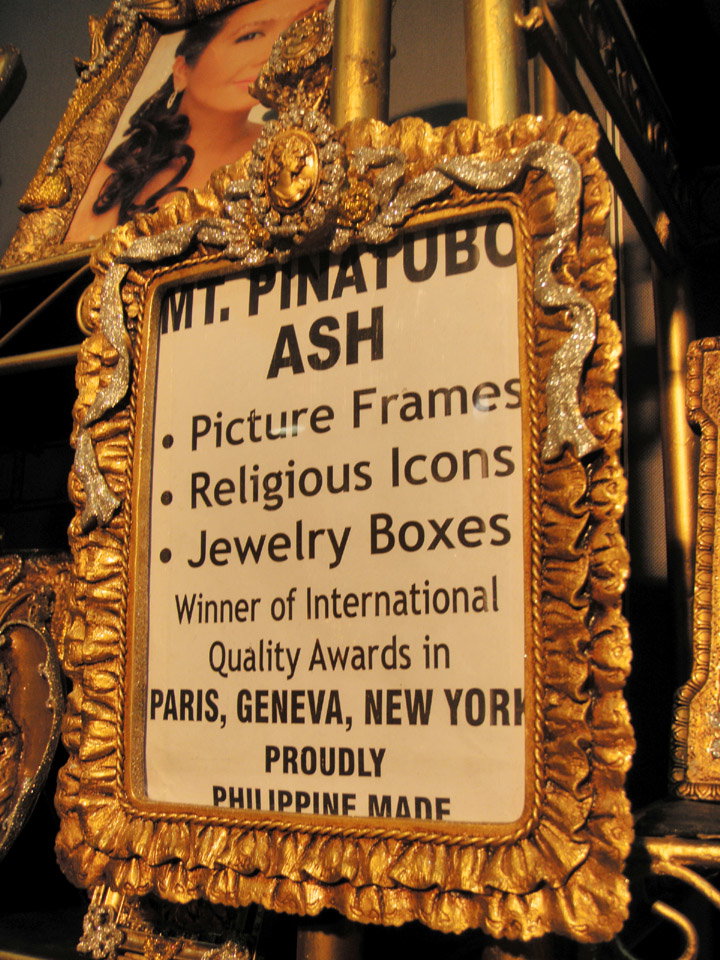
And the very creative learned to turn these ashes to decorative stuff that were sold to tourists.
It wasn't the government that helped the people who lost much get back on their feet again. It was the people who pushed themselves to rise again and be stronger against adversity.
Those who were able to rebuild their homes either added another floor to replace the one buried under ash and mud, or demolished what was left and erected a new, albeit simpler one. A house was always a priority. It was more than just a shelter or a roof above their heads. This was the one place to keep safe.
Experiencing the first ashfall was something I will remember. But etched in my heart are the stories of hope, of fighting, of rising up that will always humble me. They survived more than the worst volcanic eruption of the century. They survived what was perhaps the biggest test of their faith.
*Lead image:* *https://en.wikipedia.org/wiki/Mount_Pinatubo*
Puncturing the veins
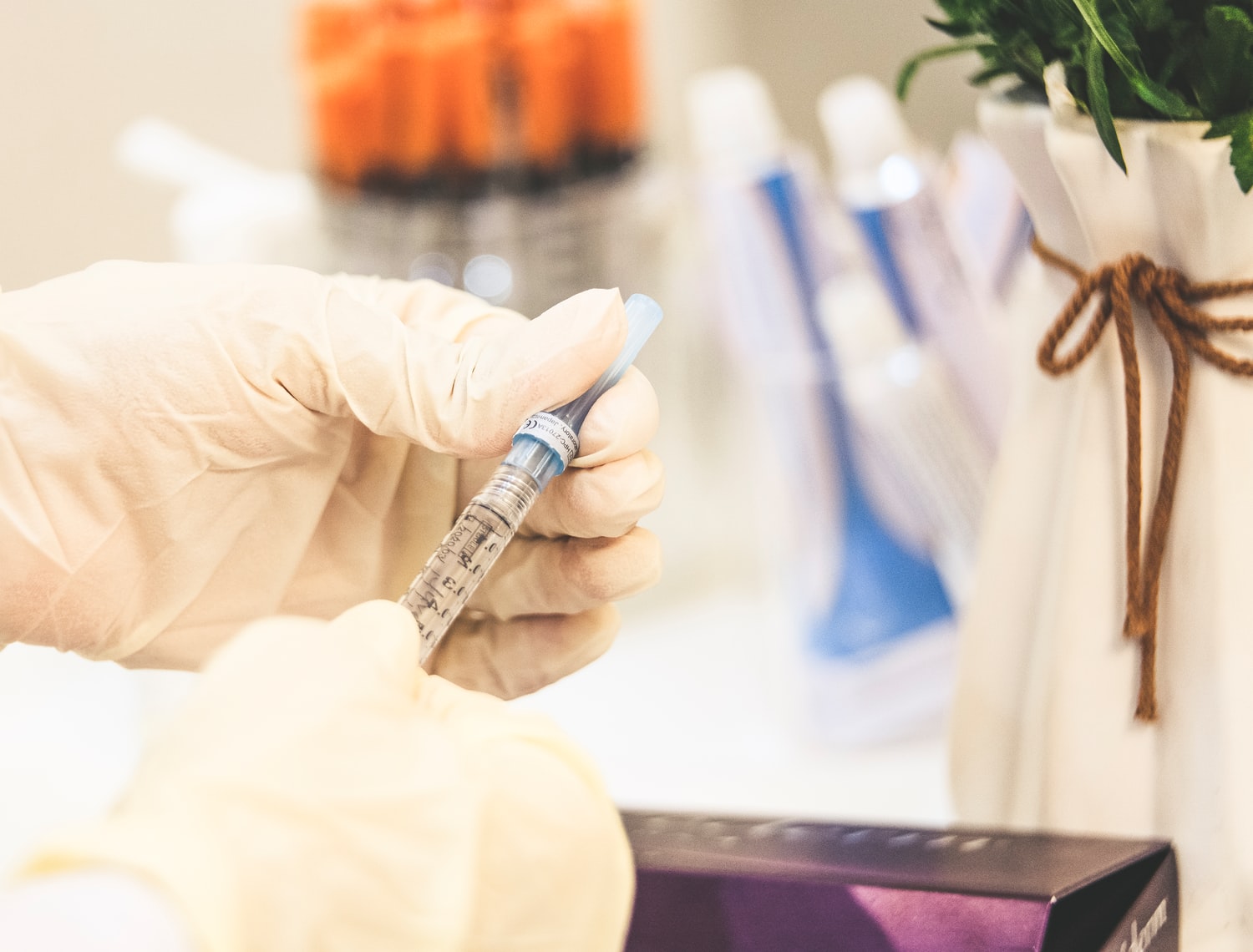
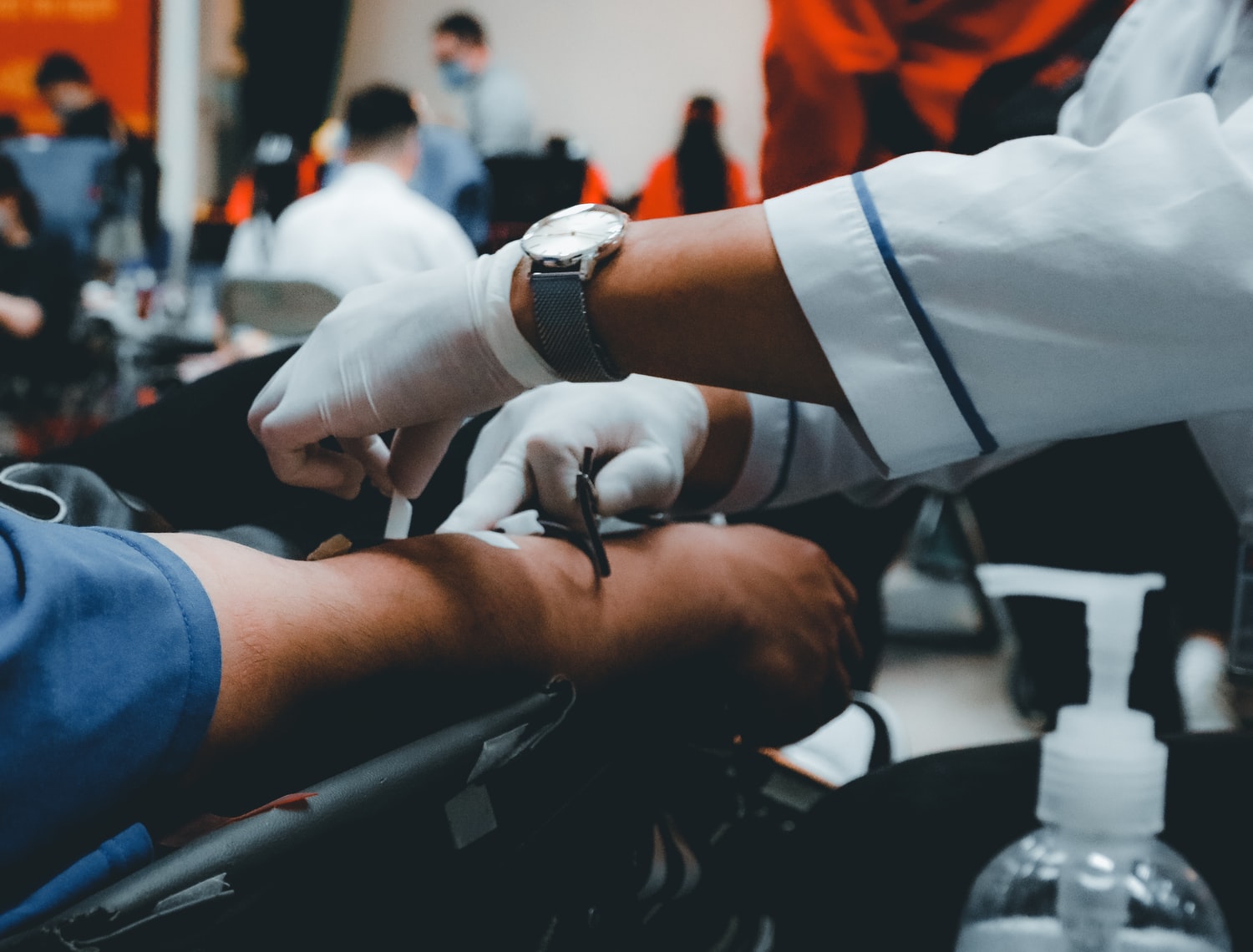
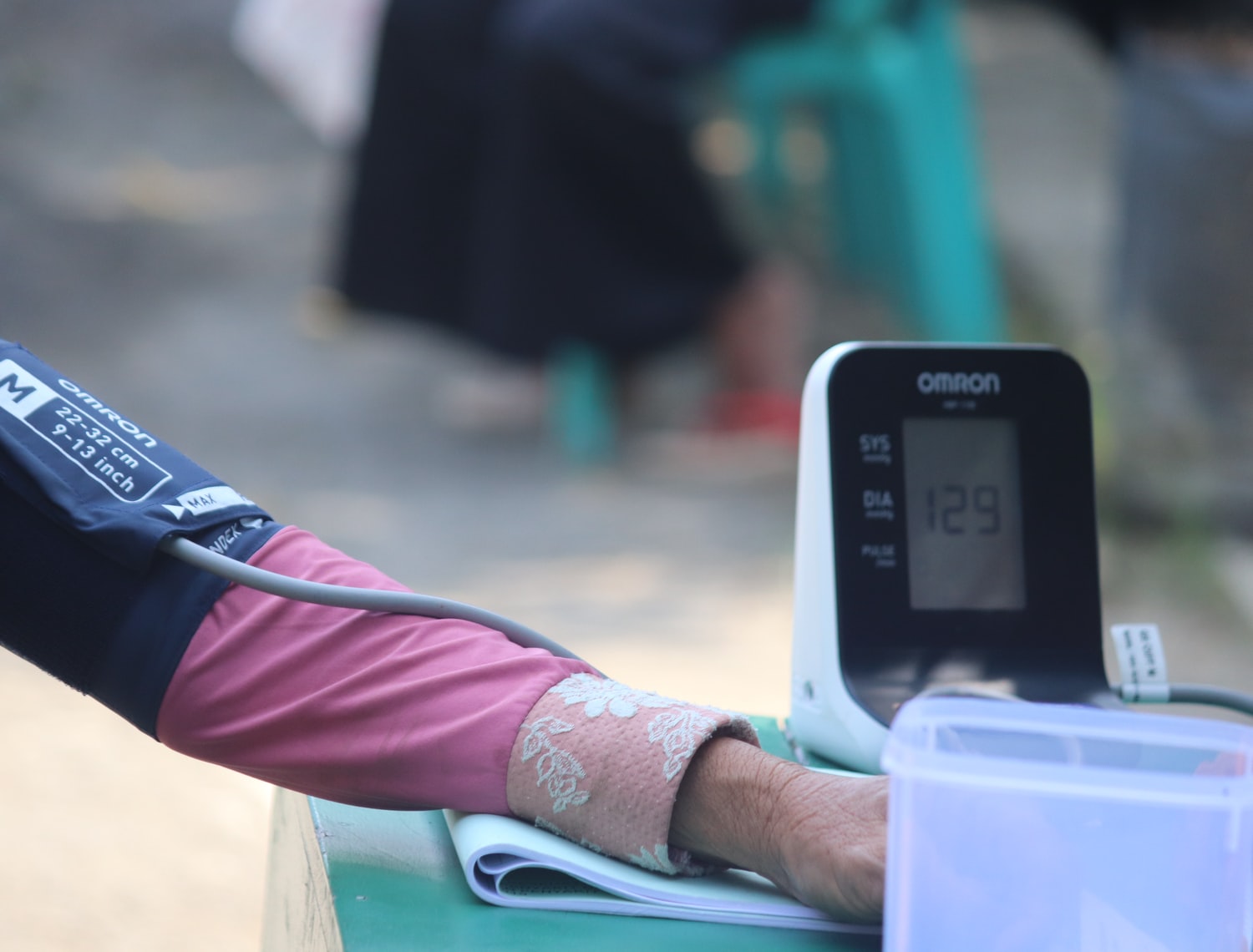
Unlike some people who quickly retract their arms, faint, or even run away at the sight of needles for blood extraction, I have no problem with them. I am also fortunate to have healthy (?) veins that it doesn't take much to push the needle in and draw blood for whatever test I require.
I've seen veins collapse once the needle has been inserted so the procedure has to be done again, this time at another location, or with another vein. There have also been instances when as the blood is being extracted, the vein caves in so a new puncture has to be made.
Puncturing the same vein over and over again will render them weak over time, or even permanently disable that vein so blood can no longer flow through them.
Competence matters
While one factor in unsuccessful blood extraction is the patient's physical readiness or quality of the veins, another is the ability and competence of the phlebotomist or medical technologist tasked to draw blood or perform venipuncture.
While I am not squeamish or have no fear of needles, there have been times when I've had to wince in pain or react because the procedure was more painful than I cared for.
And that is on the one drawing blood, not because my vein was too fragile or I was nervous about what was being done. I certainly don't care for this because among other things, it will often leave a bruise on my elbow crease, which makes it very uncomfortable to move later.
Efficiency and competence
I will give kudos to the medical technologists of the National Kidney and Transplant Institute (NKTI) where I usually have my laboratory tests done. It is precisely because they are very competent and efficient that I go there when needed.
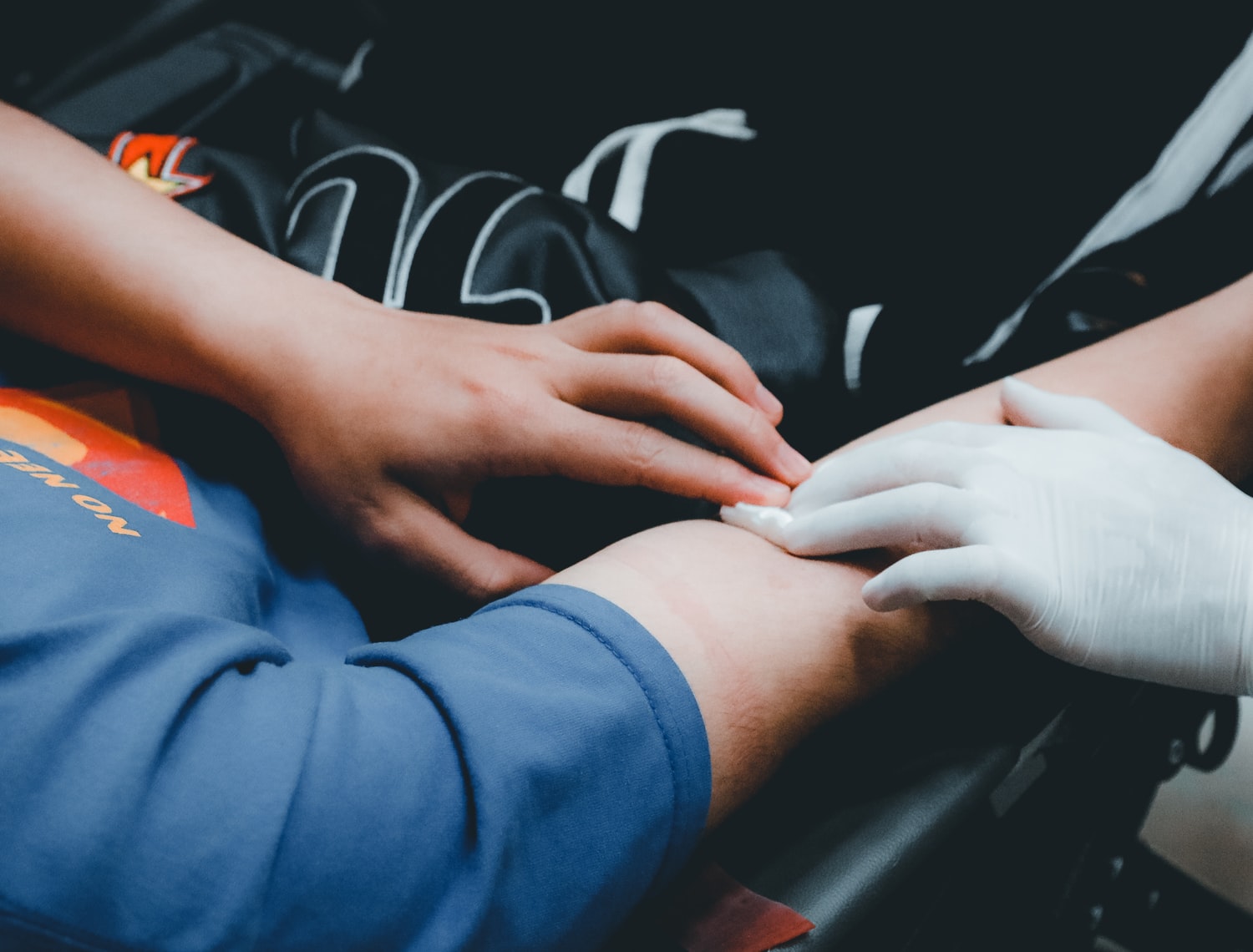
Once seated inside the extraction cubicles, they efficiently tie the rubber band around my elbow, insert the needle, and I can see my blood filling up the vial (or vials, as the case may be). Within a minute, I have a cotton ball with tape over it, my fingers pressing on it, and am out of there.
*(It actually takes longer to queue for the procedure when doing it first thing in the morning because of fasting requirements. So I've learned to go through the process a day before, and just bring all my receipts the next day when I line up for the extraction itself.)*
Lack of skill?
Unfortunately, the same cannot be said for nurses who are assigned to perform venipuncture for intravenous therapy. This means inserting a peripheral venous catheter, usually in the hand, to attach to an IV line.
Based on experience, only one or two in 10 nurses can ever get it right with one attempt. Most often, you notice their nervousness even before they start the insertion so it will most likely require more than one try.
My dad had his hand turn black and blue because it took three or four attempts to get that catheter inserted properly. To help relieve swelling, a warm compress will have to be applied.
More training
I can't help but wonder if local (PH) nurses in training are given enough experience performing venipuncture tasks to make them confident and competent once they actually begin doing this at work.
Practice does make perfect. And the more experience with all kinds of people and veins they have, the less anxious they will be when called upon to do it.
I remember speaking to the family pediatrician, a well-respected toxicologist as well, about this. And she related how when studying in the US, they were made to perform this over and over and over again. And it was because of such rigorous training that she became a favorite of attending physicians to do the task.
Yes, there is a special certificate course for phlebotomists in America, which I don't think is available here. And in my readings for an article I once wrote, it said hundreds of successful blood extractions were required to pass that course.
Valuable skill
While drawing blood is certainly not among the duties of ward nurses, I still think it is a valuable skill to learn and have in their arsenal to help ease the anxiety of patients.
Imagine a nurse nervous about needle insertion being asked to do it on a patient equally nervous! How many attempts will it take to get it in successfully?
My dad, who has a high tolerance for pain, suffered through such unsuccessful attempts, making him even more uncomfortable than he already was because of the medical condition he was being treated for.
Phlebotomy as I understand it, is an allied healthcare course. So, it's not like one needs to take up some medical-related course like nursing or medical technology, to become proficient at it and make a living out of it.
Of course, healthcare facilities may not see it as a necessity here in the Philippines because they often prefer staff who can do everything and not just one thing so they save on costs.
Get them ready
On the other hand, medical schools don't seem to find it necessary to give as much training for basic skills because there are medical technologists in clinical laboratories or other lower level hospitals who are not as competent at drawing blood as those in NKTI and other tertiary-level public and private hospitals.
I know that medical personnel - nurses, medtechs, and doctors - are already under extreme pressure at this time due to the pandemic. I also know that there are many more wanting to get into the profession to be of service to the people.
I just hope that they can receive the kind of training that will prepare them for the tasks ahead, even the most basic, that will make patients feel at ease while in a medical facility.
And yes, that includes venipuncture skills. The process itself can already be traumatic for some patients, so being confident about performing the procedure will be a big plus to make it less distressing or harrowing for both patient and healthcare worker.
*Photos: Unsplash*

From birthday to death
It is June 3, a day before my youngest sister's birthday. The last time we celebrated her special day was in 2017.
It has been tradition for the family - dad, mom, us three girls, and my sister's husband and three kids - to eat out whenever someone celebrated their birthday.
My sister had it all planned. She had gift certificates for a Chinese restaurant in Greenhills, San Juan, and we would have lunch there, along with my dad's only sister, who is unmarried.
It was a blistering hot day and there was only street parking available. That meant leaving our vehicles under the heat of the noon sun. We couldn't get out of the cars fast enough to run inside the restaurant and cool off.
Final celebration
Lunch would be a *lauriat* - around eight dishes ranging from appetizers of steamed shark's fin or pork *siomai* to soup, fried rice and entrees of lemon chicken, birthday noodles, beef with broccoli, to *buchi* for dessert.
We usually take at least two hours to clean up everything. It was cold inside the private room that was reserved for our group. Once the dishes start being served, it is non-stop eating, and chatting.
After lunch, we broke into two groups - one would head to the Greenhills *tiangge* to shop, the rest would head home. The aircon of the car left with the shoppers wasn't running well. (*Remember, it had been sitting under the sun for at least 3 hours*) And the celebrant was driving. Her companions would later remember how uncomfortable she seemed.
I am remembering this day because some three weeks later, my sister would suffer a massive stroke, and after three days would succumb.
Everybody's friend
There is a seven year age gap between my sister and I. But we still shared a room, since we were both not married and preferred to stay with our parents. My sister is my complete opposite. While I can stand not talking for long stretches of time, she can chat up a storm even when you're not listening.
It goes without saying that she had more friends than I. Making friends was always easy for her. She had lots of them - a group with much older folks, her high school best friends, priest friends or those from the seminary, friends from elementary and college and even friends of our parents!
A few years before, she already suffered an ischemic stroke. It affected her left leg so she was already walking with a limp. She was diabetic, hypertensive, and suffered from amenorrhea. Technically, she should be on maintenance medication. For a time she was until she wasn't.
So be it!
You can't help but think she had a death wish. My mom would always berate her about not caring about the food she ate as well as her being remiss in taking her meds.
When she and my mother would get into that argument, (*"Mamaya bumulagta ka na lang,"* my mom would say) her usual reply would *"eh di bumulagta!"* My mom is basically saying my sister is setting herself up to die and she would say "so be it!"
The one thing my sister has made very clear not just to us, but to her closest friends as well, is that if anything happened to her, she was not to be revived. In short, DNR (Do Not Resuscitate).
To this day, I have to live with the traumatic memory of finding her sprawled on the bathroom floor, loudly snoring but not moving. Neither would she respond when I tapped her cheeks, shook her or called her name.
The bathroom sink was a mess with vomit, and the towel holder had been pulled out of the wall. From that I surmised she had grabbed it as she was about to collapse.
I ran for the sphygmomanometer and stethoscope and took her blood pressure. It was 200/150. I called one of her friends, a cardiologist, and asked for help. She instructed to give her *catapres* to lower the BP, but we had none.
Off to the ER
I went next door to alert my sister. Then we had to call the emergency hotline for an ambulance, which seemed to take forever to arrive. All this we did without waking our elderly parents. We only woke them when the ambulance was there because the red and blue lights were too bright not to notice. That way, they wouldn't panic and make it more difficult.
The EMT personnel were very efficient. They quickly loaded my sister onto the stretcher and into the ambulance. We would go to one of the nearest hospitals where her doctor best friend was affiliated with.
At the ER, the doctors and nurses transferred her to a gurney and started taking her vital stats. They would later tell me that her BP was 300. The pressure was so high that it caused her to throw up before she collapsed.
I didn't pick it up when I took her blood pressure because who would've thought it would ever spike that high.
They tore her night clothes, pajamas and underwear and dumped them in the disposable waste bin. That was like a dose of cold water on me as to her real condition. They needed a CT scan to determine how bad it was.
Waiting and decisions
It was the longest hour of my life waiting for the results. It was even more agonizing waiting to be transferred to the ICU and to speak to a neuro-surgeon. I did know it was massive, with almost two-thirds of her brain covered by clot.
The doctor only arrived to explain things to me around 8 AM in the morning. She collapsed a little after midnight. The prognosis was not good. Surgery, while it would help de-pressurize her brain, did not guarantee she would get better.
The pons, the largest part of her brainstem, had been damaged. If ever she survived surgery, my sister would be in a vegetative state, the one thing she never wanted. And the doctor was honest enough to say she didn't have long to live; a week, he said, was a miracle.
We made the painful decision to instruct DNR. Even with such order, I learned hospitals don't like this instruction. The ICU staff insisted on giving her medication each time one of her organs would fail. Finally, I put my foot down. Just use up all the meds already in her IV drip system. Then we wait.
Letting go
My family is of the belief that the living can hold back someone ready to die. They have this very strong sense. While we adults had conceded, the three kids couldn't yet fathom why my sister didn't want to fight to live.
Convincing them to let go was just as nerve-wracking as waiting for my sister's last breath. We'd shed buckets of tears even before she finally passed on.
The ICU visiting hours started at 6 PM. By the nurse's calculation, the meds would run out around 9 PM. We had taken turns going inside to see her. When it was my dad's turn, before he could go in, the nurse was rushing out distressed.
She had flatlined. And she didn't want anyone of us to witness her go.
It took me three years not to have panic attacks each time the day she collapsed would roll around. I would always remember the trauma of seeing her lying on the ground, like she was just asleep. Somewhere in the back of my mind, I was still thinking what if she'd survived.
But I knew my sister was ready to go home to her maker. She had prepared herself for it. And we had to respect that, and be proud of her for being so brave.
*Photos: Unsplash*
Of bullies, ethics and efficiency in service
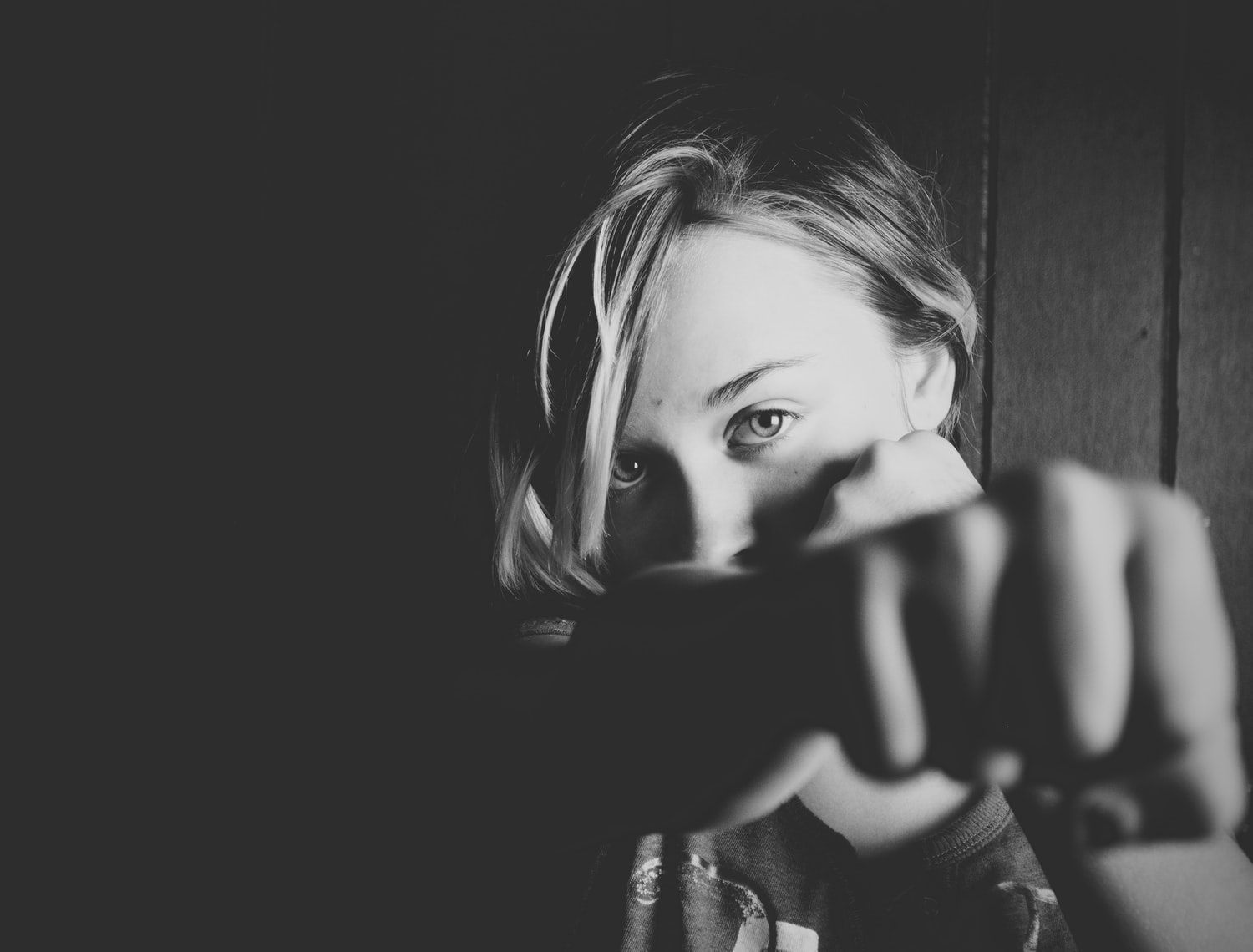
I am thankful for never having been bullied as a kid, especially in school. I could've been a candidate for bullying when I was younger because I was an introvert. Fortunately, schools I attended and the people around me then were respectful enough to let me be.
I played like a normal kid. I had one or two friends to hang out with. Otherwise, I was friendly with everyone else in a detached way. And I never made a big deal if I did well in class. I figured if anyone came up to bully me, I could stand up for myself.
In high school, I was involved in a lot of stuff to keep me busy that there probably was no opportunity for anyone to bully me. Or maybe I exuded a quiet confidence so they didn't think I was the bullying kind.
Aloof but friendly?
Perhaps because I developed into someone with a take-charge attitude, I came off as one of two things: aloof and arrogant; or just seriously detached. Unless a person is really very chatty, who strikes up a conversation with any stranger, they would never talk to me even when seated next to each other under some boring circumstance.
I am quietly polite among strangers. I will answer when spoken to, and I try to be as helpful as I can. Since I observe a lot, I usually pick up when someone is in a quandary and won't hesitate to offer assistance or go out of my way to do something for another person.
Those who have worked with me, and for me, know I am fair and patient. I will never ask anyone to do something that I myself cannot do, unless it requires some highly specialized skill, in which case I will defer to those who are trained for the task.
Although I appear to be aloof, I am friendly once comfortable enough being around a person. I try to make myself available to anyone who needs clarification, assistance and support in the course of work. I also make it a point to learn as much as I can from other people and the work they perform.
Demand for efficient service
As far as I'm concerned, I have never bullied anyone at work because of my position, social status or the things I know.
Have I ever been curt, rude or snide in public? Yes. Especially when I am in some place that supposedly renders service. So, that's either a restaurant, a retail store, public transportation, a bank, airport, or some similar establishment that is expected to deliver service in exchange for payment.
I put a high premium on service. At the minimum, I expect courtesy, transparency, promptness, and generally what makes for efficient service. I can wait, but not forever.
Because I know a human being is rendering the service, I expect that person to use common sense. Humans are, and should always be, superior to machines. If a system is not operating efficiently at any given time, a living, breathing individual should step in and assess the situation then take over from whatever automated process is running the show to set things right.
It is criminal to have people wait in line for an hour or two when in truth, such service can be completed in 10 minutes. A 30-minute wait is tolerable. Beyond that customers have the right to complain about the delayed service.
Brief interaction among those providing service is tolerable, considering how some tasks can be monotonous. But it is annoying when too much chit-chat affects efficiency.
In such instances, I have put my foot down and spoken in behalf of other customers to demand better service. I have, on occasion, raised my voice because it needs to be heard, but have not (yet) raised hell because of lousy service. And I am not above walking out of an establishment because they can't seem to get their acts together.
The worst bully
Now back to bullies... it is disgusting for members of an institution or organization, which due to their sheer size and supposed influence, disregard basic courtesy and respect for others by encroaching on property that is not theirs.
A private subdivision, regardless of it having guards at the gate or not, is not and should not be considered as public parking space. Just because it is located adjacent to their monstrous estate does not mean they own the space, and can be used by anyone from their organization to park their vehicles.
Repeated reprimands have been ignored, and that's largely because their leadership tolerates their behavior and has not taken action to make them stop. In other words, they all think it is their space to use freely as they please even when it is clearly not.
Is that not another form of bullying? And how can you ask for assistance from the city government, when they won't lift a finger to take to task the bullying exerted by the organization because of politics?
Now that is bullying of the worst kind...
*Photos:Unsplash*

The Lost Command
As a driver, being good with directions is a huge plus. In the days before there were GPS and Waze and all other apps to help you find your way, there were only maps, landmarks, and a good sense of direction.
It can be kind of tedious to rely on maps while in the metro, or in adjacent towns and cities. But the streets of Metro Manila can drive anyone nuts, so sometimes it pays to check out those guides before starting off somewhere unfamiliar.
There are big roads, little streets overlapping with major roads, hidden streets, and streets whose names have changed so often, you can't keep up. Exasperating if you don't know your way around.
Like a cabbie
Thankfully, I have a fairly good sense of direction. So, even in unfamiliar places, I can find my way to a destination and go back to where I started from. When I used to work with the newspaper, and traffic had started to get bad, or because of terrible flooding, I had to look for every side street to help me find a shorter route home or to the office or to steer clear of high water.
So, it wasn't uncommon for me to be driving through alleys and streets you never knew existed just to exit to a main road that would lead me to where I was going and get there faster. Manila is so notorious for those side streets.
Many people who would hitch a ride with me or join me to some destination have always been impressed by this. In fact, I've been told that I was like a cab driver, because they usually know the ins and outs of the metropolis. It was a necessary skill if you wanted to save on time and gas.
Come to think of it, I am sometimes better than some cab drivers, because I often give directions to take shortcuts when taking a taxi, and they'd be amazed when we popped out somewhere in less the time or to avoid jams. I just don't know if they took note of where we actually passed. Well, Waze and Google are there for them now.
No sense of direction
While I have a terrific sense of direction, there are people who are just along for the ride and can't be relied on to get you to a place, even if they've been there more than once. They're the passengers who never pay attention to where the vehicle passed or the corners turned.
They remember some landmark that is so common everywhere that each time they see it, they'd point and shout, "there!" only to learn there were four other similar landmarks before the actually place we had to be.
They're also the ones who typically arrive late when you meet up somewhere new because they'd get lost on their way to the place. Whether passengers or commuters, there is a term for them: The Lost Command.
The only way they are familiar with is the one from home to work and back. And that means taking that one same route each and every time. But if you give them a ride, and get caught in traffic, don't expect them to find some other way to get you out of the jam you're in. Because? You will get lost!
I remember once we were heading to a friend's new house and four other guys hitched a ride with me. They were all enroute to the destination so I volunteered to pick them up somewhere along the way. I had this thought that with the companions I had, there would be no problem finding the house.
And an hour-and-a-half later, we were still driving around... Someone would remember something, and we'd turn there, then bam! We would end up where we started from. Someone would say, "Oh, we're close..." and the only close I could think of after driving several minutes more was me getting close to being hysterical!
Family, too!
That's not just with friends, okay? There are family and relatives who are just as bad with directions. And they're usually demanding, or easy to cast blame when we get lost. Of course, once you reach the destination that whole experience is synthesized into an anecdote where everyone ends up laughing.
But I swear, it was not funny while stuck in that situation an hour earlier. Tempers rise, foul mouths explode, mutterings are plenty.
Good to ask
I am not averse to asking for directions, and I usually do, when I'm alone. (Men? they are so proud to ask) I learned that the best people to ask are tricycle drivers because they usually have the lay of the land. They give you accurate description of what to look out for, how many streets before making a turn, and often lead you exactly where you need to go.
It's also good to ask those who sit in front of their homes, or those in small groups exchanging chitchat. And with just the address, they'll even identify whose house you're searching for.
In the Philippines, people don't give directions with units of measure, like 250 meters or half-a-kilometer away. They will tell you to turn right on the fifth corner, then a left on the second stoplight, then count three houses and find the green gate.
Security guards of buildings and even parking lots are poor direction givers. They usually just know the block they're in and don't bother to find out streets nearby, or other buildings.
It's been a while since I've had to drive around with friends or family looking for a particular address. I do miss the Lost Command group of before because there are apps to guide you today. Still, I don't trust them a hundred percent because there are still streets and alleys that aren't reflected in them. You just end up with a dead end.
So, as much as I can, I will continue to rely on my sense of direction, and real maps not apps, to get me where I'm going. Being a member of the Lost Command group isn't among my aspirations.
*Lead image: Unsplash*
Crayons lighting up my world
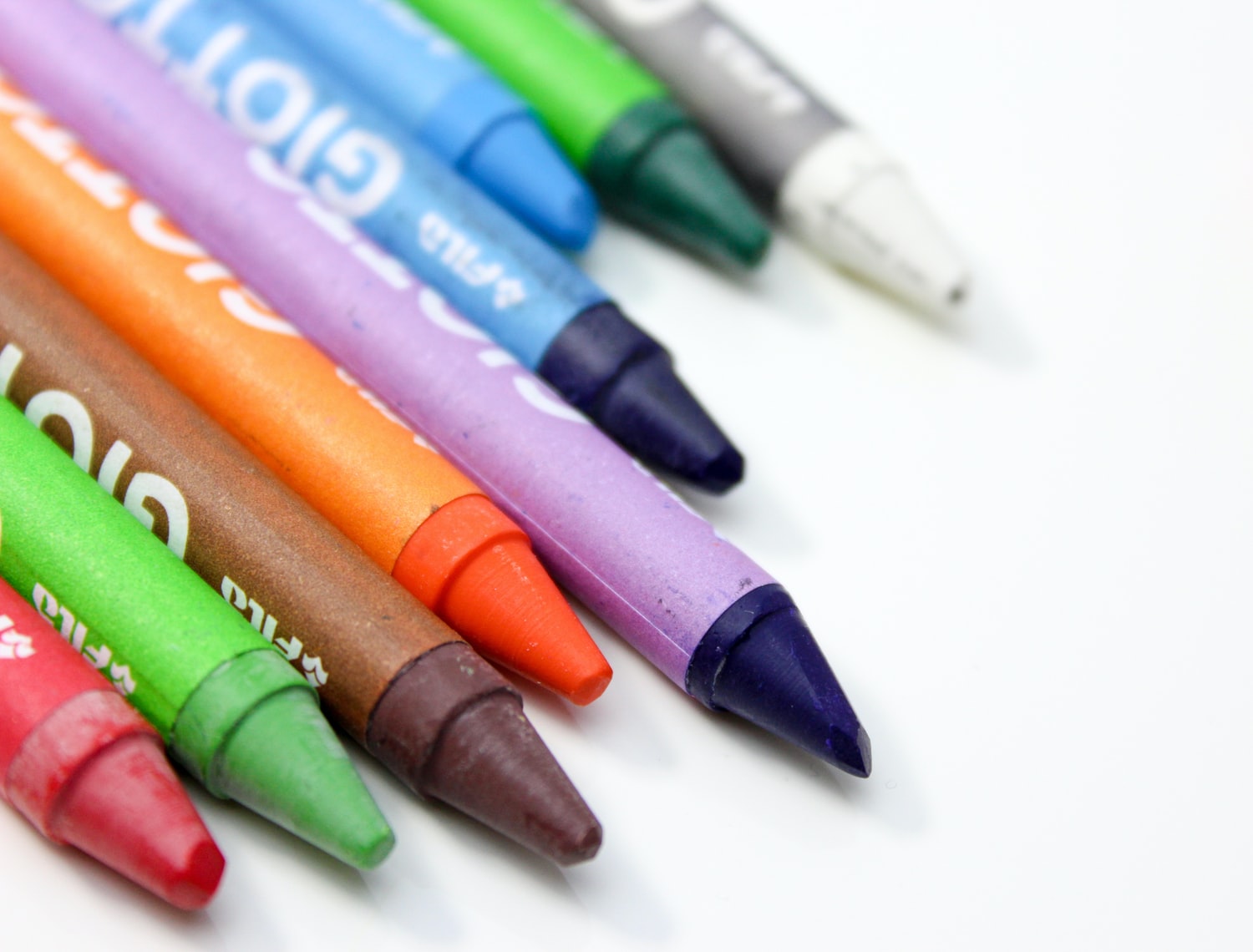
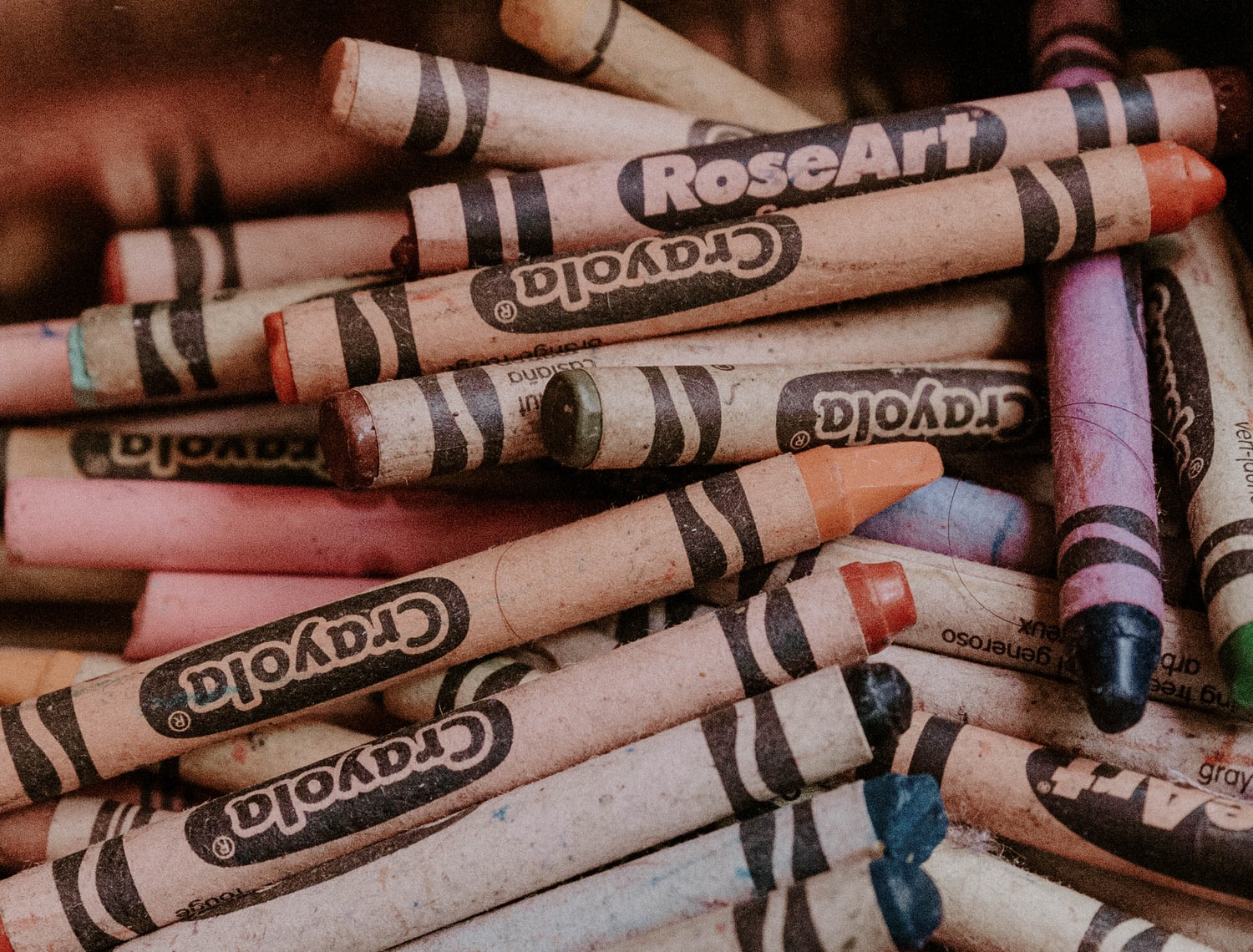
I was thinking what to write about when something suddenly popped into my head - CRAYONS! Yes! I loved crayons as a kid and even when I got older. There's just something happy about seeing all those colors, however basic they were, then using them to light up a page.
I'm not much of an artist. I do better than stick figures, but nothing life-like. I once took art lessons as a kid. And I did not enjoy it. For one, I wasn't good at it. You know drawing and coloring some object and approximating what it looked like?
I remember apples and watermelon. Most of the time, I came up with decent output because the art teacher helped me! So, no, art lessons didn't bring out the artist in me.
Eventually, out of necessity I learned to draw and color. That's how I produced two original storybooks for my creative writing classes in high school. Aside from the story, we needed to illustrate them. I passed, although it's probably not because of the artwork.
Color within the lines
Anyway, back to crayons. Next to books, which I loved, there were always coloring books and crayons around the house. Remember "don't color outside the line"? I took that very seriously. Shrinks would probably read into that and relate it to my personality.
But I just liked it neat. Coloring book pages colored every which way, and three colors on top of each other plus outside the lines made my nose wrinkle. So I was always proud of the work I did.
Back then, if you had a box of crayons with the most basic of colors - red, blue, green, yellow, black, brown, orange and violet - you were good to go. It was all you needed.
More colors
Then I discovered there were other colors, and bigger boxes of Crayola - 12 and 16. For the former, there was now white, pink, indigo, and gray in addition to the original 8. Then they threw in blue violet, blue green, red violet, yellow orange, red orange, yellow green, and the color wheel was expanding.
The box of 24 already blew my mind, until I saw the 48s! It was a sea of colors and kids were already imagining so many additional hues to make each colored page pop out, even if it meant coloring a dog lime green!
But what I eventually aspired for was the box of 64. That was a goal for me. I don't know why... And I don't quite recall when I was finally given that, or if my folks got it for me, or if someone gave it as a gift. It's all a fuzzy blur. All I remember was how excited I was to receive that box.
It's not just the variety of colors and shades. It was the sharpened crayons, with wrapper still in place. And the smell of crayons that was so fascinating. Then when you started using them to color and it was confusing to pick which shade would look better. And hey, skin color was no longer confined to brown or beige, but to other skin tones!
Another form of therapy
Crayons and coloring books were therapeutic for me. Well, I didn't know it then as a kid, but as I got older and I would sit down with little ones to color along with them, there was this sense of achievement and fun after completing every page. And I could do 3 or 4 pages in one sitting.
It was an enjoyable activity growing up, especially if you were doing it with a bunch of other kids. I noticed that personalities tend to pop up when coloring.
There were those who wanted to get it over and done with, so they'd color fast without regard for what it would turn out after.
Then there were the thoughtful ones, always analyzing which colors to use. And the ones like me, who always made sure to color within the lines, and in one direction only.
There were also those who were bold and gaudy, using heavy strokes and while it seems bizarre at first, the finished page always jumps out at you because it looked fantastic!
Big box of crayons
As an adult facing all the craziness of life, I still found solace in coloring books. When I went to a bookstore and would happen to see the shelves with crayons, I would sometimes hear it calling out to me so I would pick up a box, then head to the shelf of coloring books.
When we were spring cleaning once, we unearthed boxes and boxes of old crayons, all of them used up (of course) and half-finished coloring books. When we put them in boxes, I think we completed a couple of boxes and gave them away to public daycare centers.
I don't know why I suddenly thought of crayons. Or that dream of acquiring the Box of 64. When I googled Crayola, I was flabbergasted to see it now has a box of 152! My gosh! That is all colors of the rainbow and then some. And it's quite expensive, too.
Then I thought about it... do kids even enjoy coloring books nowadays? All I see are their noses glued to gadgets and devices and computers. Yeah, those are all visual, but where's the imagination in that?
How can all that screen glare be soothing to the eyes, to the soul? The mere stroke running a crayon up and down until an image is fully colored can actually be hypnotic, especially when you're so focused on the activity. Then selecting which color to use next, and returning the first one to its place... there's order in what you're doing.
And when you color a page or an artwork, there's this pride after laying down the last crayon then examining your work, checking for empty spaces or over the lines. Then you smile.
Yes, crayons still have the ability to make me smile. Even just the thought it. Perhaps, I can go on a trip to the bookstore and check out if they still print coloring books. And yes, I have to check out which box of crayons they have available. I'm excited just thinking about it.
*Photos: Unsplash*
Problematic healthcare system
I am going to pick up where @Bjorn left off when he wrote about his experience at a public hospital. Instead of attending to his medical concern, he was made to wait for hours for a doctor, only to end up being told the expected procedure that would address his pain and discomfort would not be performed.
With the pandemic far from over, it is understandable that changes have been necessary in terms of operations for medical or healthcare facilities. Doctors and nurses are overworked (*and likely underpaid)*, but attending to, and helping relieve patients of their health issues, should still be the primary objective of every facility.
Notoriously late!
Even before coronavirus shocked the world into a near standstill, PH doctors, unfortunately, were already notorious for being hours late. A one-hour wait is a miracle in many occasions. While clinic hours are posted or relayed by their secretaries, this has never been a guarantee that the medical consultant will make an appearance at the appointed time.
The closest to a punctual medical appointment I've ever been to is with my late father's cardiologist. After each consult, patients are asked to schedule their next appointment with the secretary, both date and time, based on the doctor's orders when to return.
Eventually, I wizened up and would always book the first hour for my dad's appointment. That meant 8:00 AM, or 8:30, at the latest. Even if the doctor arrived late, we would still be first in line. And chances are, he would only be 30 minutes delayed since it was his first clinic for the day.
Why the delay?
I soon realized that one factor contributing to the delayed arrival of medical consultants is that they hold clinic in two or three healthcare facilities that are usually nowhere near each other. Given the horrendous traffic at all hours of the day, it is no surprise why doctors are always running late.
Sometimes, they also have to make rounds of admitted patients before attending to clinical consults, further delaying arrival at their offices.
If your clinic of choice happens to be the second or third stop, then don't be annoyed or frustrated for having to wait forever till Doc arrives. We were fortunate because the hospital where Dad had his consults is less than 10 minutes away from the house. So, for afternoon schedules, I always call ahead to ask if the doctor has arrived and how many patients he's gone through from the day's list.
But what if the patient lives three hours away? Aside from the long drive, they have to suffer for several hours more waiting for their turn to be seen. So going in for a medical consult is pretty much a whole day activity.
Predicting how long the doctor will see each patient is a useless exercise. He can see one for as little as 10 minutes or as long as 30 to 40 minutes. On the average, it's typically a quarter of an hour. But some doctors can be quite thorough when it comes to updating patient history; on the flipside, certain patients have a million questions just to assure themselves they won't need hospitalization or have a relapse requiring more medication or therapies.
I try to confine our consults to 15 minutes as courtesy to others awaiting their turn. But I also ask a lot of questions in behalf of my dad, and really want to understand what is happening to him, and how best to care for him.
If seeing a doctor as an outpatient is an exhausting endeavor, getting admitted for confinement is an entirely different story.
More waiting
Assuming you go through the Emergency Department, there is often a minimum three-hour wait to get into a room. In the meantime, you join the multitude holed up in cubicles - if you're lucky - or slumped on wheelchairs or gurneys either parked in the hallway or squished in whatever available space there is in the ER.
Admission is on triage, too, and this is also contingent on the kind of room you've requested and how fast they're vacated and readied for new occupants.
Waiting to be transferred is as agonizing as the medical condition needing treatment. The cacophony of sounds in the ER can be traumatizing or hilarious, depending on your perspective. It's not to make light of other people's misery because you're pretty much in the same boat. But when you hear moaning and groaning, screaming (in pain), shouting because of arguments, while nurses, doctors and aids are talking over each other, it can get pretty crazy in that confined space.
Getting things done
Resourcefulness and initiative are necessary to survive those several hours in the ER if you want to get things done. That means seeking out nurses or doctors to check in on your patient, or get them to write out prescription for medication that can't be provided in-house.
If you're observant enough, you'll understand everything happening there, from oxygen cannula to blood extraction to x-rays and other laboratory exams.
Yes, it can be a nightmare going to a hospital and I definitely understand the hesitation and fear of many to see a doctor *(unless there's no other choice)* or be admitted into a facility. Aside from the looming expenses, it is the inordinate amount of time wasted waiting for something to happen that is very stressful both for patients and their kin.
I've had a run-in with nurses and doctors on a number of occasions, in the ER or while admitted. It's not for lack of sympathy for their work load and circumstances, but there've been medical professionals who've also been remiss in their duties or just plain sloppy that their attention needs to be called.
Otherwise, I've always been very considerate and try to take on certain tasks to lessen the nurses' load yet still keep a close eye on the patient's progress. And when we get into a rhythm, most nurses appreciate what I do for them.
For sure, COVID has changed the way things are run and done in hospitals. But given that sickness and disease are the same then and now, the delivery of health service should be the same if not more efficient.
*Photos: Unsplash*
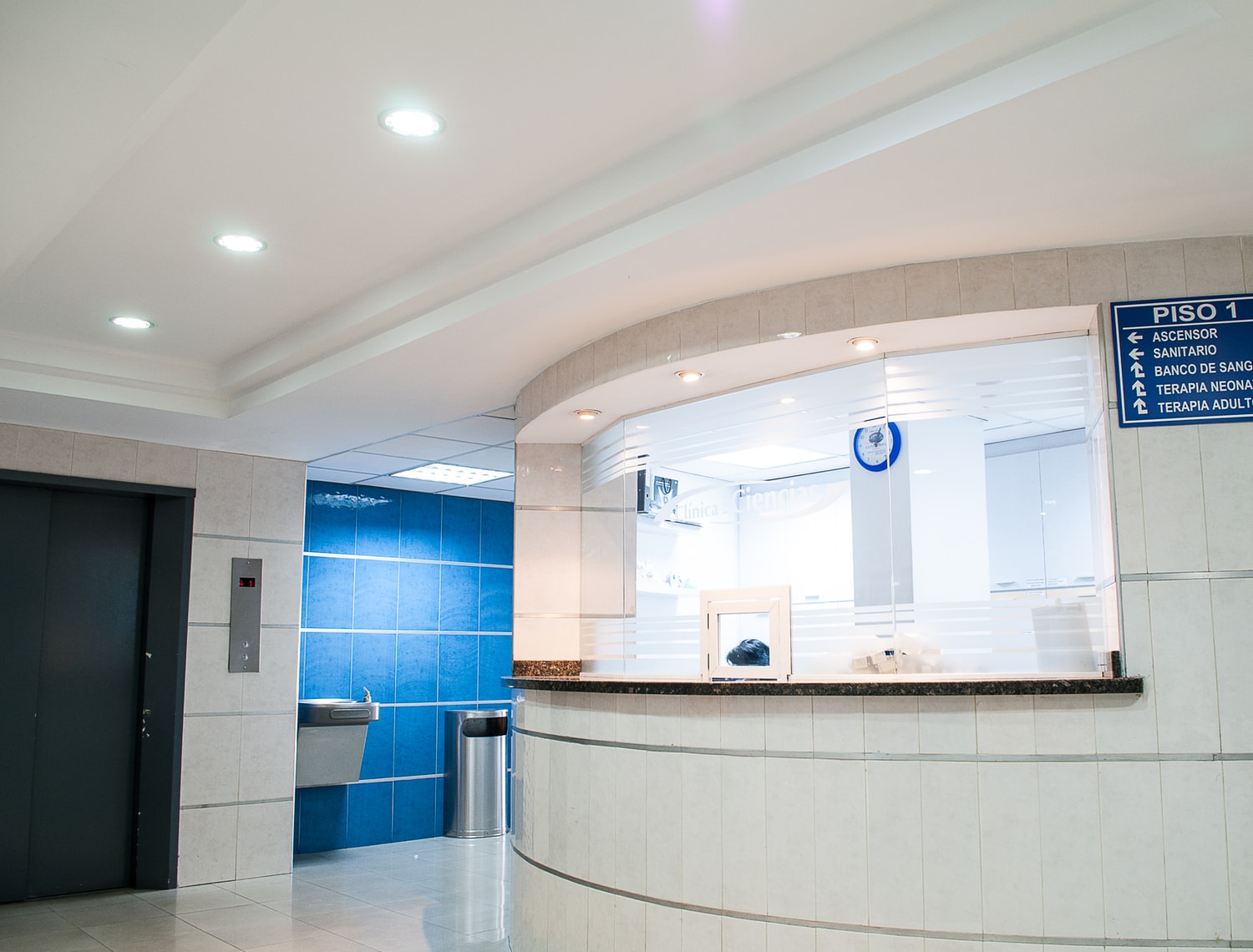
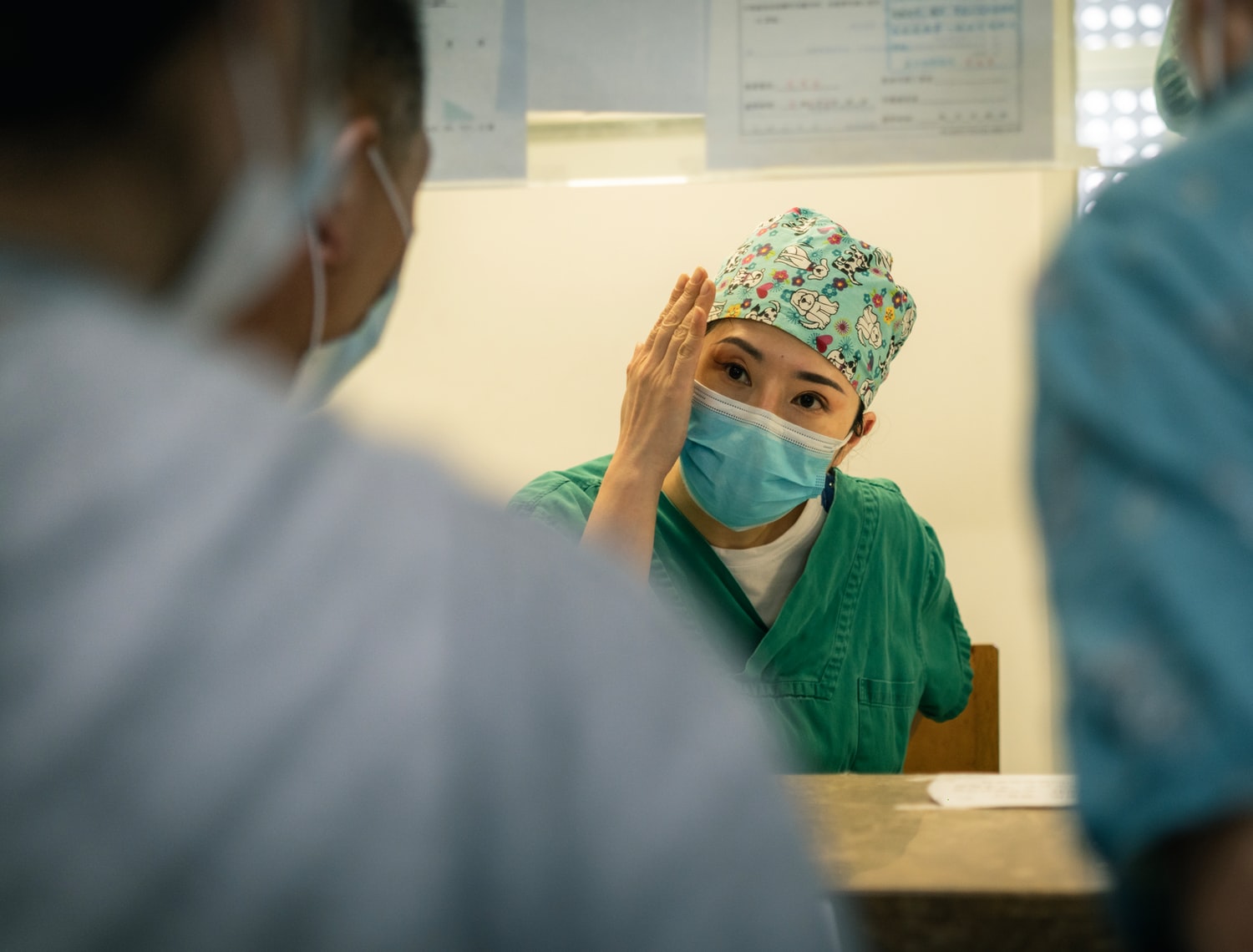
Stepping into darkness
Have you ever wondered what it would feel like to lose your eyesight? Yes, to become blind, to live in darkness... To miss out seeing the blue sky, the cottony wisps of clouds, the glaring rays of the sun, the sweet glow of a full moon.
The first instinct, I think, when losing the sense of sight is fear. There is uncertainty when we are unable to see what lies ahead of us, what is before us. What if we crash into an object and hurt our self? Or fall headlong because we missed steps in the stairway?
How do blind people cope, or adjust to a life where words are the only way they can paint a picture of what the world is like?
Step into their shoes
I remember an exercise in our Personality Development Class in high school. Our teacher, Mr. Ed Espiritu, wanted us to experience what it was like to lose this essential sense, so he challenged us to blindfold ourselves at home for at least 20 minutes and go around the house.
It seemed easy enough because most of us have memorized the layout of our homes, and take for granted everything that's laid out there. But that's because we can see them.
Mr. Espiritu wanted a report of our experience, so even the best writer cannot produce a convincing narrative without actually doing the exercise.
The moment you put on that blindfold, and you have to be honest to put it on properly where you absolutely can't see anything, you feel a slight trepidation even as you convince yourself that it was going to be a piece of cake.
That sense of confidence is from the knowledge that you know where you are, are familiar with your surroundings, and it was just going to be for 20 minutes.
Yet, the moment you stand up with nothing but darkness in front of you, automatically, you hold up both arms for two reasons: first, to find your sense of balance; and second to help you maneuver without getting hurt.
The challenges
Darkness disorients. What you thought of as just two feet away from you actually seems farther when you're blind. On the flipside, just as you're thinking that the dining table is several feet away you run into a chair that's tucked underneath it.
Suddenly, you feel like someone moved the furniture around and you're knocking your knees or feet into something hard and yelp in pain!
So, I completely understand why some sightless individuals choose to use a walking stick to guide them. When you're in familiar surroundings like your home, the best way to avoid getting hurt is to count the number of steps between furniture and fixtures (*and hope nobody plays a prank on you by moving things around*).
That's easier said than done where you're alone, which I was when conducting the experiment. That would mean going back and forth to measure the distance and it can be tiring to do that.
Frustrations
Next to feeling terrified, being unable to see is frustrating. And it is probably for this reason why the other senses are heightened to compensate for the sightlessness.
As I try to recall that exercise, I'm starting to remember I conducted it in another household, too. I know it's silly and increased the level of difficulty by two notches.
But being in an unfamiliar environment without sight definitely made me experience what it was like to be blind. Looking back, there were the beads of sweat while I attempted to mask my fear with laughter. I very nearly bruised my shin walking into the coffee table and hitting the edge of wooden chairs. I also slipped because there was a small step separating the living room and the dining room.
Twenty minutes in darkness is not a walk in the park. Aside from groping with your hands and feet trying to find your way around a room safely, several thoughts are running inside your head - anger and fear, you being an inconvenience to other people because of any mess you'll make, and your heart racing as sweat runs down your head and back.
Helping hands
Yes, the visually impaired eventually learn to become independent but they cannot and should not do it alone. They need support, a helping hand. Arrogance is not uncommon for those who become blind, especially as adults.
It will take small victories to be able to adjust and cope, because if life for the sighted is full of challenges, theirs is 10 times more difficult.
That exercise showed me how it is to be sightless on one level. It did not teach me what went inside the head of someone who actually lived in darkness. And I was only living with blindness temporarily and in one familiar setting. How much more did the sightless suffer because of this disability?
So, I am in awe of those who are able to live as normally as is possible given their circumstances and situation. How they are so much more sensitive to their surroundings, even to nuances in the behavior of people in their midst. That takes courage and a strong spirit.
One lesson I learned is that when we feel blinded by our problems, just do like the visually impaired do, tap into your other senses to help you discern.
*Photos: Unsplash*
The fight to be free
I was tagged by @deedum to take on the challenge of @JonicaBradley to write about Freedom. Years ago, I wrote a blog (as *sumanlatik*) to express my thoughts on this very subject. Not many would have read - much less remembered - that entry and I believe what I wrote then holds true today... So, I hope it still meets criteria No. 2 of the challenge.
The title of that old post was: **Sweet Freedom.**
******
Only those who have ever been held in bondage - in some form of another - understand what it truly means to be free.
Many people are guilty, myself included, of enjoying freedom yet giving so little thought to what it actually means because we never had to sweat to achieve it. In sum, we are basically free to live our life as we choose, express ourselves with little to no fear of reprisal, explore, create, excel, love, and grow.
Unfortunately, not everyone has that privilege. We only have to look around, read or see that there are those living in our midst who barely scrape by each day (*more so because of the pandemic*) or worse, are prevented from enjoying such liberties.
It is bondage to have to think of how to provide for the needs of your family every single day so they can survive; to have to rely on others to send your children to school when in truth, it is their right; to have to set aside your most ardent desires in favor of practicalities; to not be given the right to learn and make something of yourself because of gender, class, or beliefs.
For those who have never had to experience such dilemma, be grateful. You have been blessed and protected from the harsh realities of this world. And for every little thing that you enjoy, be humbled. It is the only way to be.
I was struck by the thoughts of a 12-year-old, who was commenting on the protracted hostage situation in Southern Philippines. (*It was this that prompted me to write the post*). While two of the Red Cross captives have been freed, an Italian volunteer remains in the hands of the terrorist group, Abu Sayyaf. With their bargaining leverage severely undermined, they changed tactics and are now demanding that Mindanao be emancipated from the Philippines in exchange for the release of the kidnapped Red Cross worker.
Regina Martha Lumungsod, who wrote the piece, said in reaction: "*Now, isn't that ironic? That some people can take away the freedom of others and ask for their freedom in exchange? There is no way you can solve this with both parties winning. One has to be selfish and the other selfless...*"
For someone as young as Regina, it shames me that she can understand and has a better appreciation of societal ills than I do; that she realizes the consequences of acts that should not have happened in the first place.
And what does this all tell us? Freedom always exacts a heavy price. Often, it is life - the taking of it or destroying it. While we can only pray that any such sacrifice to gain freedom does not necessitate extreme measures, we must accept that there are people who give little to no value to the dignity and life of others.
One other article that caught my attention was a piece on Ela Bhatt, who for the last 35 years (*at the time the blog was written*), has been working to free the poor women of Ahmedabad, India, by providing them with opportunities to gain a sense of dignity and self-respect.
https://timesofindia.indiatimes.com/city/ahmedabad/ela-bhatt-to-be-felicitated-by-wpdo/articleshow/57456940.cms
Her Self-Employed Women's Association (SEWA) has provided capital, marketing avenues, health and life insurance to the underprivileged women of the town. More than the opportunities to learn and earn, Bhatt is extremely proud of how women have found a sense of fulfillment and purpose, which they equate with freedom.
Initially, ambitions were limited to tangibles - money and things to help earn money. When they became empowered enough, they dreamt bigger: for their children to finish school, and to have more comforts in life.
She relates that not long ago, she asked the women of SEWA what freedom meant to them. Some answered it was being able to step out of their homes, others, for their toilets to have doors, having their own money, or something like fresh, clean clothes, or a mobile phone.
But there was one whose answer has become Ms. Bhatt's favorite: "*Freedom was looking a policeman in the eye*."
Freedom comes in many forms. And some people may not realize it but they may be fighting for their own freedom, perhaps not in the same way as that of the Red Cross worker or the women of Ahmedabad.
But know this, when you have finally won that freedom, remember your fight for it only made it sweeter.
*****
*Lead image: Unsplash*
Acquaintances, yes. Bestfriend, no.
When I look back on my high school days, it dawns on me that unlike most teenagers who found lifelong friends while in secondary school, I simply discovered myself.
Well, I have never really been the type to make best friends since I was young. I can be friendly, although I come off as aloof most of the time. Then, it was due to my being shy. Now, I just have a strong sense of being able to read people so I have become reserved.
Strike up a conversation with me, and I'll respond, or even turn chatty if it interests me enough to talk. Otherwise, I can be quite content being on my own and just silently observe what is going on around me. Thus, I have the tendency to see so many things after 30 minutes of lining up.
Perhaps it was always because I gravitated more towards adults when I was younger so unless it was play or school activities, I rarely hang out with people my age. So unlike most people on the planet who have 'besties' I just know a lot of people, have a number of acquaintances, and keep very few DEAR friends. There is no best friend to my recollection.
Singing and acting
So how did I spend my time in high school if not to hang out and make friends?
On my freshman year, I was involved with the glee club. And since we participated in an inter-school choral competition around Christmas time, much of my free time after classes was spent rehearsing for that.
Studies never took a back seat for me, regardless of the extra-curricular activities I chose to be involved in. So I was diligent when it came to homework, and projects, and anything school-related. And I still had time to get together with neighborhood friends after.
It is no joke rehearsing for a choral competition. First you learn the entire piece you need to perform. Then it's studying your vocal section, which will have to blend with all the other voices. And only then can you proceed to polish the performance.
I didn't really think much about winning (*it was my first competition*), but I was aware that I needed to give 100 percent effort to come up with a spectacular performance. Who knew what would happen on the day itself, or who you would be up against?
So for several days over the next two months, I think, we would rehearse, and go home much later than usual. Needless to say, our efforts did pay off some - we ended up third place beating 15 other schools that participated. It was a complete shock to everyone, because we had just formed the choir that year and most of those competing already were a gelled group.
And then it was the theater club. There were mini-workshops and activities and a play to keep us busy. The improvisational play was also for competition. The challenge there was the venue - far away Manila (Fort Santiago to be exact), which meant a commute of at least an hour each way.
That was fun, too. And because we also finished second or third in the competition, I was chosen to participate in the summer theater workshop that enabled me my first visit to a jail. (My Prison Visits) https://read.cash/@zolabundance2/my-prison-visits-1ed08515
Since I was the sole representative of the club for that summer workshop, it was my turn to be a facilitator in the club during my sophomore year. This is what pre-occupied my time during my second year in high school.
Cadet training
My third year was the most challenging after I decided to sign up for the Cadet Corps training. That was like six or seven months of training, so I had to drop out of glee club and theater club for the meantime.
Between training and studying, it was quite an intense year. Yes, I had buddies (*we were never allowed to walk by ourselves around campus so I was always with one fellow trainee while in school, walking in cadence, throwing a salute or greeting our officers while walking in the corridors*) but I can't remember that I really had one close friend.
I was a friend to everyone of my co-trainees because we had a shared goal and experiences. And we always had to have each other's backs. But to say I shared stuff with them outside of training, there was none of that.
Through bivouac camps and a summer of training at the armed forces base, I made it as a platoon leader of Charlie company. I was unable to attend the final interview for the training, which may have botched my chances for a higher position.
Leader and nurturer
But I loved being a platoon leader, and loved my platoon, the members of which loved me back, even if I made them march under the scorching heat of the sun, or made them squat under the sun for 10 minutes. I am, by nature, a nurturer so while I am also tough, I cared and that earned me their loyalty and respect.
While there were several other higher positions than mine, I would often be called to take over, especially during command exercises. Other than the discipline and leadership skills ingrained in me during training, I feel people (*not just in my batch*) took me seriously and looked up to me as well.
By then, I was elected president of the theater club (I gave up glee club), and would run workshops and direct a play on top of my corps duties and school responsibilities. So it was a very hectic fourth year for me.
No besties
Through all those activities, I never quite made a friend who I could classify as close or dear. But many would often approach me seeking advice, or just to have a shoulder to lean on. I was good at that.
So, when we graduated from high school and all the extra curricular activities had wrapped up, I just felt grateful for every opportunity I had or was given to discover my talents, my limits, develop my skills and just grow as an individual. And all these I took with me to college, where I still did not develop close friendships but made many acquaintances.
I'm weird, aren't I?
To this day, I have found close friends, the number of which I can count on one hand, but never a best friend. Do I find that lonely, or a flaw? Not really. I'm quite content being who I am, knowing who I do, and caring for those who need to be cared for.
But if anyone ever needed a shoulder to cry on, a helping hand, or just someone to listen, you can call on me, even if I wasn't your best friend.
*All photos from Unsplash*
Understanding palliative care
When you practically live in the hospital due to extended confinement of a family member, what do you do? My father suffered a stroke and we stayed there for three months straight. He would be in and out many more times later, until he finally succumbed after another month of confinement.
I was the caregiver assigned and only went home to sleep perhaps four times during that three-month period. Fortunately, I was given leeway to work remotely by my boss. And since we were a media firm focused on health, I would be given assignments to interview certain doctors.
One of the most interesting conversations I had was with pain management and palliative care specialist, Dr. Luzviminda Kwong. In the Philippines, awareness about palliative care among the public and even healthcare professionals is extremely low, and remains one of the physician's frustrations.
She's been in this specialty since 1994, but up until our interview colleagues have yet to fully grasp what palliative care truly entails, its benefits, and more importantly the comfort it provides.
There are three important things that people should understand about Dr. Kwong's specialization: first, it is not a cure. It is a form of caring, she explained. Her job is not to take over from the attending specialist taking care of the patient. Second, it is not only for terminal patients. And third, it is not a means to end life.
Relief not cure
A primary component of palliative care is pain management. Patients, especially those in the terminal stage of cancer, are usually in a lot of pain and only want relief. Often, they are also grappling with finances and are apprehensive about continuing with treatment that is mostly expensive.
Unfortunately, among the things that Dr. Kwong suggests to patients and their families is to stop treatment once she is called in. It's for practical purposes, she insisted. Why proceed with therapy that will no longer have the desired outcome, when a patient will benefit more if they are freed from excruciating pain.
The main objective in palliative care is providing high quality end-of-life care that will bring comfort to a patient and less stress to the family. This involves the administration of opioids such as morphine under her strict supervision to manage pain.
Managing pain
Providing the option to discontinue treatment and undergo pain management instead is perhaps one reason why other medical professionals are hesitant to propose this course of action to their patients.
It's also the use of opioids that other physicians are wary of, thinking it could eventually develop into an addiction. Perhaps they pass on this concern subconsciously to their patients, who then have second thoughts about seeking this therapy.
Dr. Kwong stressed that morphine, when administered properly, is not addictive. It will not cause damage to the liver or kidneys. It is safe for the very young (she mentioned a 4-year-old) and the elderly (70 years). It can even be taken on an empty stomach.
The specialist lamented that she is usually called in too late, and by then patients have had to endure pain far longer than necessary when she could have stepped in earlier to provide them relief. And families would have likely spent an inordinate amount of money, which they probably don't have.
Beneficial intervention
Palliative care is also available to patients with pain issues that are not manageable with the usual treatment protocols. Dr. Kwong related a case where an elderly patient developed pneumonia and was unable to expel mucus so suctioning was recommended. But given how painful this procedure is, the patient was adamantly against it.
Until Dr. Kwong suggested pain management. But the attending refused initially, arguing the patient was not a terminal case. Yet the intervention, once the patient and her family agreed to it, enabled painless suctioning and her pneumonia eventually resolved.
Not euthanasia
When families of patients seek Dr. Kwong, she makes it a point to get a sense about their understanding of what they want to happen. She typically asks families who call her one question: "What do you need from me, what do you want me to do?"
The most disappointing reply she ever got was: "Our patient is terminal, and we want you to manage him. Give him medication to make him sleep so he doesn't wake up."
This is not the answer she wanted to hear. As annoying as it was, she firmly but politely retorted, "Sorry, you made the wrong call."
Dr. Kwong is not in the business of ending life. Her purpose is to make life more bearable for people who know their time is coming to an end. Her wish is for the public and her peers to have a better appreciation of what her specialty is and how it is also an integral component of medicine.
*Photos: Unsplash*
I so appreciate your upvotes of my Master artist article, Gemstone, Judith1969 and Jnavedan. Thank you.
Master artist: Paper cutter extraordinaire
Luz Ocampo was turning 75 on our first encounter. (*She would invite me to her birthday party later*). I was prepared to meet an elderly woman, who moved about slowly, spoke feebly, and had a difficult time remembering things. Boy was I wrong!
She was sprightly, preferring to move about while talking, and had tales to share from when she was a young girl. But more than that, what blew my mind away was her ability to do paper-cutting and fruit carving with intricate designs at her age.
Ka Nene, as she was fondly called, made *pastillas de leche* wrappers, called '*pabalat*' and this is where her paper-cutting skills came in. Pastillas are carabao milk candies, a well-known product of Bulacan, a province more than 70 kilometers north of the Philippine capital.
As delicious as these sweets were, what made them more attractive and popular were the wrappers made by artisans like Ka Nene. They had a variety of designs, mostly inspired by the rich culture of her hometown, formerly known as San Miguel de Mayuyao. These ranged from as simple as flowers and basket combinations, to a nipa hut, coconut trees, and a man pounding rice, among others.
Meeting a genius
Her imagination was only matched by her excellent cutting skills. The designs are drawn in an area measuring 9 inches by one inch, then cut using a small pair of sharp scissors. Imported Japanese paper folded to size is the only kind of material Ocampo used. These were smooth, thin, and easy to cut.
At the time of our interview, her concern was that paper-cutting was a dying art. She couldn't even be certain of passing it on to any of her children, who showed little interest in the craft then.
The woman had been conducting training around the country but saw little actual interest and potential. Yes, people were amazed by her work, and perhaps intimidated as well. But the passion and commitment needed to be an excellent paper-cutter was missing. Her concern about it being a dying art was valid.
Patent it
One of the smartest decisions Ka Nene made was to protect her many designs. After all, she did put in time and used her imagination in a huge way to come up with each one. It wasn't just the elements that went into each design, but how to fit them in such small space and still make them recognizable.
She patented 25 out of more than 50 of her original designs depicting rural town scenes, from the iconic coconut tree, to the nipa hut, and the woman wearing a traditional Filipina dress.
Personalized designs
Designs can also be customized, with clients requesting names or logos on their wrappers. When I had a client seeking a special souvenir for foreign guests, I thought of Luz Ocampo. The idea was to incorporate the group's name within her usual local designs.
Instead of a candy wrapper, I laminated them and turned these to bookmarks. It was a hit! The souvenir was both personalized and unique, and didn't require extra space to bring home so they wanted more than one piece. What amazed them more was the fact that it was made by an octogenarian.
Mesmerizing
If the final product was astonishing, watching the woman work was even more astounding. With her three-and-a-half inch razor-sharp scissors, she cut along the design she had drawn as pattern on the Japanese paper, and spent about 15 to 20 minutes to complete each one.
Precise craftsmanship and a sharp sense of visualization are her tools to complement her designs. And she never missed a beat even as she talked while cutting.
Aside from candy wrappers, Ka Nene was equally adept at fruit carving. And her fruit of choice is the local lime called *dayap*, which is about the size of a golf ball. Instead of scissors, she used an umbrella rib to carve her designs. Once she completes the design, she would scoop out the flesh and seeds. Fourteen to 16 balls are transferred to 16 oz bottles and filled with syrup.
Self-taught
At 12, Ka Nene learned fruit carving and paper cutting mostly from the women in her town. With her mother into the art, she took a strong interest in it and followed suit. She was never formally taught but opted to watch and keep pace with the women who were doing it, gained confidence and perfected her skill.
After getting married and having children, she never formally worked, choosing instead to pursue the cutting and carving, and earning from it. Her work gained prominence and people were flocking far and wide for her intricate wrappers.
Passing the baton
At 80, and with no prospects of anyone taking over for her, she continued with her paper cutting to build inventory. An order usually consists of a hundred pieces, so she just kept cutting and cutting just to ensure she would have enough in case someone wanted to buy from her.
Eventually, her daughter must have realized how valuable the work and skill her mother had and accepted the legacy by taking on the art herself. Naty Ocampo-Castro is fortunate because she had patented designs to work with.
Luz Ocampo passed away at the ripe age of 93. She had retired from paper cutting at 88. I am certain she was settled after having passed on the tradition to her daughter. The art will continue to live, and hopefully thrive.
She was a genius, a master, a generous soul. And anyone who has ever seen or been in possession of her *pastillas* wrappers will never forget the woman whose creativity and passion further enriched the Philippine art culture.
*Lead image courtesy of bulakenyo.ph*
Whistling for joy
I love to whistle. I discovered I had the talent for it. Not everyone can whistle. By whistling I mean a tune, not just some random melody, but an actual song. I can probably accompany someone singing as the background music. That kind of whistling.
I just enjoy hearing the sounds coming out when I purse my lips and curl my tongue then blow. It's not only the sound that comes out but the beat I can create, and whatever else makes for music. I can increase the volume or lower it, and put in emotion like I would when singing.
It was a complete surprise to learn other people can never do it. My niece keeps bugging me to teach her. She would come up close to my face to check how I did it, but leaves frustrated, when all that comes out of her mouth is air! And sometimes, spit... ewww!
Learned or born with?
Who taught me to whistle? I can't say. Probably my dad. Or not. I never heard him whistle, come to think of it. Did I just wake up one day and I could do it? I really have no idea.
Nor did I give it any thought that there are people who would like to do what I can but just can't. Some have really been amazed by my ability. Hahaha! But I guess the fact that I can play a whole song, even those with difficult melodies, can be astounding to their ears.
While I can also carry a tune, sometimes I just find it enjoyable to whistle instead of sing. Or if I don't know all the lyrics to a song, but love the melody, I would whistle it.
Taking away boredom
While working, especially doing mindless chores like washing the dishes or doing the laundry, whistling takes away the monotony of the task. Sometimes, it's easier to recall a song when I whistle it than sing it.
And while driving, I whistle whether with the radio on or if I remember some tune I like. It can be relaxing, especially when stuck in traffic.
I can probably record a series of songs, all whistled. That would be fun! But I don't think I've ever recorded any of my whistled tunes. I think it would sound entirely different listening that way, rather than just hearing it live.
It's just as enjoyable whistling along to a song playing on the radio or whatever, then harmonizing, or adding my own spin to the arrangement.
Good for health, too
And guess what? Whistling also has health benefits. Increasing lung capacity for one. It takes effort to blow our air, and with the intent to create a specific sound, that effort is doubled. So you get to work out the lungs, and improve its capacity.
The pursing action of the lips also stimulates the vagus nerve. (I did NOT know that.) This nerve transmits a variety of signals from the digestive system and other organs to the brain and vice versa. It is quite an extensive nerve, running from the cranium, through the neck, to the thorax then all the way down to the abdomen.
And if you want to activate the thyroid and parathyroid glands, whistle!
No catcalls, yes to bird calls
However, I've also learned I while can do catcalls, another form of whistling that is meant to cheer or jeer, I rarely do it. Sounds a bit offensive. I can't whistle by placing two fingers on the lips and then blowing out a piercing sound to call someone's attention.
And oh, I can also imitate bird calls. It is another form of whistling after all. Sometimes, I call out to birds that way and they respond. But that's more tiring because I have to approximate the sound they make. Otherwise, I'm just polluting the surroundings with noise.
It's also challenging to try imitating bird sounds when I hear something new. That means a new specie has found its way to our backyard. As fearful as I am of feathered creatures coming into my space, I like watching them, and admire their colors, sizes, and whatever other features set them apart from others.
I've never really tried checking out for others with the same ability, or met someone equally adept at it. That would be fun, and we can do a whistling concert!
Sigh... I only wanted to take my mind off some bad vibes. Yes, whistling can calm me down. I'll feel better when I finish playing a few more songs.

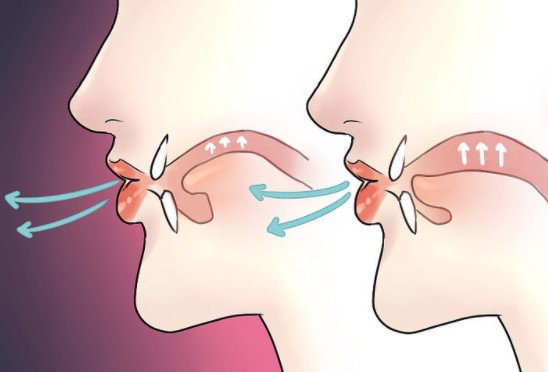
The quest for veggie burgers
The biggest challenge when everyone is at home and eating there three times a day, is what to feed them. In places where a sandwich, salad or even fruit is accepted to constitute a meal, it may not be such a problem. But when you live in a country where rice is the staple food, you better start getting creative with the viands you're going to serve.
What to feed picky eaters, who mostly love meat and other high-protein meals? I've found that veggie patties or burgers seem to work. The trick really is to make these look like they're made of meat. While there are some dishes that are enticing with aroma alone, it's what people see that makes them want to eat a certain dish or not.
Why vegetables? From an economic standpoint, they're far cheaper than meat or fish. Even if you need to use a few veggies to come up with patties, it still won't be as expensive as preparing a meat or fish dish. Besides, you're not using up a kilo or so of each vegetable to make them. When you total the cost, it will still come out a lot cheaper.
Health-wise, how can you argue with eating veggies for lunch or dinner when every nutritionist or health advocate is pushing to add more of the greens and reds and yellows for a healthier diet?
Thus it has become a crusade(?) for me to find recipes utilizing a variety of vegetables and turn these into patties or burgers, or creating them myself.
Initially, I started with potatoes and carrots and a smattering of zucchini and beets. I grated them, and sauteed them, except the potatoes, with garlic and onion. Then I mixed them with the uncooked potatoes, added an egg and fried them.
I don't use a lot of oil when frying so it takes a bit longer to cook. But that's a hit, and go-to food when no one is in the mood to cook. I can cook them ahead and store them in the ref, then reheat before eating.
Since I like to cut down on salt, I use more pepper and add a few other spices, including chili flakes. Spicy food, even those not so hot on the tongue, makes up for the decreased saltiness. Or, as the kids like to do, they simply top the patties with either *Cheeze Whiz*, a cheese spread, or sweet chili sauce.
I've since tried adding green bell peppers to that basic potato patty, although these are very finely minced so the kids can't pick them out.
Scrolling through Facebook, I came across a cool veggie burger recipe. It can totally fool anyone into thinking it's a burger made of beef. Thanks to red beets, that give it the meaty red color.
Burger look-a-like
For this recipe, I needed carrots, zucchini, radish, and beets, all grated finely, and their juices squeezed out. This is necessary so that patties don't turn soggy. What serves as binder is brown rice and flour. There's no egg needed here.
The main ingredients are cooked with onion and garlic, seasoned with salt, pepper, soy sauce and chili flakes, then mixed with the rice, flour, chopped cilantro, chopped nuts, lemon or lime juice and zest.
The patties have to be quite thick (another trick to make it look like a real burger), about three-quarters of an inch thick. One recipe usually makes nine patties.
This one is quite filling because of the brown rice, and can be eaten with rice or on a burger bun. There's an explosion of flavors - spicy, minty, salty, sour, nutty - so you never really think about it not being made using meat.
Later, I tried using *singkamas* (jicama) as a substitute for radish and there wasn't any difference in taste. Besides, it is hardier than radish, which if not refrigerated eventually softens.
Mung beans, too
Earlier today, I experimented using mung beans and mashed potato to create another patty. Taste-wise, I rarely have a problem since I throw in a bunch of spices and this does the trick. It was the consistency that had me stumped.
Even with flour and bread crumbs, it still came out soft after frying. Perhaps, it's because I don't deep- fry them? But I really like to minimize the use of oil when cooking.
So that needs a little more work. Maybe I don't have to mash the potatoes and just grate them roughly, then add an egg so consistency will improve.
I'm also contemplating a squash burger patty. Or even an eggplant patty (too watery)? The possibilities are endless. But to satisfy hungry stomachs, the quest is never-ending.
If you have any other veggie burger recipe, I'd love to learn about them...
*#All photos of patties are original*
Just a big thank you to my new sponsor @JonicaBradley! And what you shared is much appreciated!
My prison visits
Watching an episode of the police procedural "The Rookie" which was set in a penitentiary brought memories when I found myself in similar premises. Just to be clear, I have never been incarcerated. But somehow, I've found myself inside jails as a civilian.
Yes, I have been inside twice: first when I was still discovering who I am and what the world held for me; and second, when I knew who I was and learned the world could be quite cruel, regardless if you're a lawbreaker or not.
Immersion exercise
The first time I set foot inside a prison facility was at 14. (*I very nearly didn't get to go because my folks were apprehensive about me entering jail, and I needed a signed permission*). It was for an immersion activity of a summer theater workshop program. One of the things they teach in theater is being able to get inside the head of the character you will be playing. And the best way to do that is exposure to different kinds of people, and listening to their stories.
Speaking to inmates was certainly eye-opening. You first learn about the circumstances that landed them in jail, including their background and life experiences. Then you are regaled (*in case you get to talk to someone who's good at telling stories*) with their life behind bars.
Not everyone is as forthcoming, of course. There are those more willing to share what they've been through, as part of their reformation, while others still have yet to feel remorse and will be reticent.
We were ushered to the medium security compound, which houses criminals with short sentences or those who have a few more years left of their sentence to serve.
Since there were at least 20 from our group, the area where our activity was to take place was a high-ceilinged room, that seemed cavernous to me at that time. They had pushed back double-decker beds to make space where we could all sit on the floor.
Interaction with inmates
When we arrived, as is protocol I guess, the male and female inmates were already seated and looked at us with a myriad expressions on their faces. I don't know if they've done this before, although I do know the theater company has. They might have been a different set of inmates, thus the reaction.
Was I nervous? That I was stepping inside prison and talking to people who had committed crimes, not really. I was more anxious about HOW to talk to people because I was still painfully shy back then. If I didn't muster the courage to engage at least one person, I would've been a failure and the activity a waste for me!
I followed our facilitators, who were quite comfortable with the crowd, and slumped on the floor. Some of the workshop participants who were more outgoing that I struck up conversations with the inmates next to them. I would have happily just listened in on their exchange, but I was required to write my experience and interaction after the activity.
I finally turned around and found an inmate seated about two feet away from me. He was quiet, and watched everyone else talking. Mentally, I took a deep breath and started making small talk.
He was receptive, and offered a few words. I found confidence and chatted with him more. He became more comfortable, and was later sharing how he ended up there. I don't quite recall his name. But I do remember he was miserable retelling his story.
I think he was in for theft and assault. However, it wasn't the first time he was caught for the crime, thus his sentence. He still had a few more years to go. I think what made him despondent was the fact that he rarely got any visitors. When he mentioned that, I was suddenly relieved that we came, and I spoke to him.
The feeling it left me
With so many people talking at the same time, and some laughter interspersed with the conversations, the noise that bounced around the room was both comforting and disturbing.
Disturbing because it made conversation a bit difficult since you had to talk over everyone to be heard. We could not break up and go some place quieter. Comforting because there was no sense of danger or hostility in spite the surroundings we were in.
When the activity was announced to the workshop participants, we were asked to bring a couple of things to give to the inmates. Canned goods, toiletries and even a shirt or two. It was sort of a thank you gift for their agreeing to talk to us. Can't remember what I had in my bag, but it was met with a grateful smile when I handed it over before leaving.
In remembering that experience now, I can't help but feel emotional. Like his name, his story is a blur. It was more the feeling when I was there and listening to a man who admitted he was sorry for his actions and how much he wanted to be back with his family. The fear, however, was being accepted once he finished serving his sentence. By his family, his friends, and society.
Jail excursion #2
The next time I would set foot inside a jail facility was for an interview I was conducting with a prison doctor. This time, it was a city detention center. I didn't expect to head out there, but a sudden activity required my subject to be there and he had no other available time before my deadline.
There was to be no interaction with inmates. But the only place where we could talk was inside a small medical laboratory that was three floors up, and would require navigating an area where prisoners converged.
I've long known the problem with the prison system in our country. Too many criminals, insufficient space to house them all. The turtle pace by which cases were being resolved was the main culprit for jail congestion.
The din once I stepped inside the cramped facility had my heart pounding. That I had to maneuver myself through narrow, makeshift staircases clanging under my shoes did not ease my anxiety. Some of the inmates freely roaming the area were polite enough. Still...
Crowded, overcrowded
When I reached the second level, this gave me full view of a courtyard where thousands of inmates were cramped, each trying to squeeze themselves under a shaded portion. The problem was only a fourth of the courtyard was covered.
The facility was constructed to hold less than a thousand inmates. It had a population of three or four thousand at that time. At night, because there weren't enough beds, they would spread out in the yard and find a space to sleep. Often, they needed to take turns lying down.
A room for prisoners with medical conditions, like tuberculosis, further reduced quarters allocated for inmates. I can't even imagine what their mess hall looked like, or if they even had one given how limited the space is for the entire prison facility.
In speaking to the prison doctor and nurses, who hung around during the interview, I learned they all needed to undergo a year of training before finally being accepted as prison staff. The training was primarily to prepare them for common conditions and situations inside the facilities, like riots. Many applicants never complete that training.
Inside that 10-square meter room that passed for a medical laboratory, I felt cocooned from the harsh conditions of the jail facility. But the stories I heard still made me admire the staff more. They did more than deliver medical services amid risks to their lives.
At the time of the interview, I was told a bigger location was being allocated for the facility to help decongest it. I never heard if that plan pushed through.
Watching "The Rookie," one dialogue of an inmate, as advice to the juveniles who were being under a scare program, was that when you enter prison, you can't afford to be a human being. That is a very depressing reality. Yes, felons must pay for their crimes. But is not the purpose of incarceration reformation? How can anyone reform under situations where you lose humanity from the moment you step in?
It's not a perfect world we live in. And many people are still predisposed to being or doing evil. Perhaps, if more of us practiced basic humanity, there may be less of that evil.
*Lead image: courtesy of International Committee of the Red Cross*
My beauty queen coverage
I am watching the live telecast of the Miss Universe 2020-2021 beauty pageant as I write this. I know that in this day and age, many are wondering if such undertaking remains relevant. Notwithstanding opinion about the purpose pageants serve, those who participate in it, win or lose, still find it a life-changing experience that can be a springboard to achieving their dreams.
Anyway, one of the craziest things I proposed while still with the newspaper was to cover an international beauty pageant. More specifically, to get to know each of the candidates and feature them individually. My objective was for the public to get to know each one, regardless of their chances of winning.
The Philippines was hosting this pageant so it was a matter of tracking down where the women were billeted to have access to them. With so many activities each day prior to the coronation night that took the candidates everywhere, the only chance to catch them would be early in the morning before they left the hotel.
Challenging task
It was a humongous undertaking what with more than 50 contestants from around the world. I needed at least 15 minutes with each one to get the most basic information out of them, and an anecdote or two to help them stand out a little.
Initially, I did the interviews alone. Their hotel was close to my house so it was just a matter of waking up very early to drive over and talk to a couple of the girls as they came down for breakfast. Since they are beauty queens, they had to be dressed and made up before appearing in public.
By my calculation, I could cover them all in two weeks or so, and end the day before coronation.
Silly me for thinking I could do this by myself, including work on the write-up for each girl in time for publishing the following day. Waking up at 5 am and leaving the office at 10 pm was no joke!
But I was committed, not only to my editor for backing me up since the coverage did push circulation up, but to the girls as well so each had equal exposure.
Not a work for one
First, I had to target those who could speak English because I wouldn't need an interpreter or struggle with communication. Sometimes, I would chance upon a non-English speaking candidate who was friends with an English-speaking girl so I would request the latter to translate for the former.
I also had to make friends with some of the girls so they could connect me to the other candidates. After two or three days, they pretty much knew what I was doing, and were thrilled because I would provide them a copy of the issue when they were featured (*it was a good PR tactic for the newspaper*) so they were willing to be interviewed.
By the fourth or fifth day, I knew I needed help and roped in one reporter, who I usually assigned to do features. She had an idea about what I wanted done, and between us, we covered more girls. Still, there was more and they were winding down to their last weekend of activities before the contingent hied off to the location of the coronation night, which was hours away from Manila!
So I tapped three trainees and had them jump in to do interviews with us. It was an experience for them as well because prior to that assignment I don't think they've ever done a formal interview, much less write an article based on one.
I also managed to request photographers to take pictures of the girls. And with beautiful women as subjects, the guys were competing for the assignment!
Backbreaking but fulfilling
It was a very exhausting project. But very fulfilling especially when the girls came up to you with profuse thanks for being featured. It was something to show their folks back home even if they didn't win.
That last day of interviews was mayhem because we were just catching them in between their rehearsals, photo shoots and interviews. We would be sitting on the floor, hovering outside rooms or hunkering on their beds (especially towards the end of the evening when they were all tired) just to squeeze something out of them.
After going over the articles for all the women, most of which I wrote anyway, I had a good idea who were likely to be the top candidates on the final evening. I knew which ones were very serious about the competition, those who would do anything to win, and those who really were friends and supported each other.
Remember, these are all women, with their own aspirations, thrust into an arena where they would have to compete against each other and try not to lose confidence as they saw who they were up against.
The world of beauty
Oh, I heard stories of girls who hated each other's guts, who spread gossip about another, those who were messy, or with super-weird habits, and the ones trying to catch the attention of big-wigs running the pageant.
It was like stepping into another world, one that I would never be able to survive. I appreciated the real nice ones, who remember me and would throw a smile my way or a greeting when I saw them as they trooped to the bus before leaving the hotel.
And yes, I did cover the coronation night and witnessed the crowning of the new queen. I even got a few words from her afterwards because she knew who I was and gave me a few precious minutes while delirious with joy over her victory.
Following that project, I don't know how my perspective about beauty pageants changed, but I gained better appreciation for it. I did see how hard the girls worked to be there, and how much harder they had to try to be noticed in a sea of beauty, however it was perceived to be.
One takeaway, however, is that beauty is serious business. And it's not about appearance alone. As cliched as it sounds, it takes a combination of heart, brains and a stunning face to make it as beauty queen. Some women just have IT.
It was my good fortune to know a bevy of international beauties and help make each one feel important during such a nerve-wracking time in their lives.
Lead image: google.com
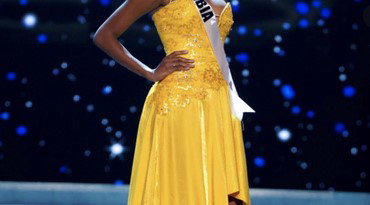

On-the-job training: Best learning experience
At 18, I took a leave from school after completing my second year of college. My reason for stopping may sound flimsy but I think I really needed to do it then so I can do better moving forward. Somehow, my parents didn't throw a fit when I told them I wouldn't be enrolling for the semester.
So how would I occupy my time without studies to keep me busy? With house help around, there was little to do by way of chores. Fortunately, my mother had a small enterprise - bag-making. And the workshop was right within our premises.
First job
I could help with non-sensitive tasks. Besides, I liked hanging out with the workers, who were like family to us. It seemed like a good proposition. There was no need to commute, or dress up. And I had something to occupy my time productively.
There was also a standing order of several hundred convention satchels with a deadline in the next few weeks. There were only three other people working on the project, so I was a welcome hand.
My tasks consisted of applying rugby on little pieces of material that would be used for piping, the flaps, etc. I later progressed to hammering the pieces together, then helping get parts ready for sewing. It was tedious work, because it was manual intensive and the volume. But because of the company, I enjoyed it and learned plenty from the experience.
I was completely surprised when mom paid me for the labor once the order was completed. Can't remember how much, but it was a joyous occasion! Like earning my first paycheck. And I didn't even expect to get paid.
From that experience, I learned about diligence, teamwork, perfection, following instructions, and how to stay awake beyond midnight because of a deadline you had to meet.
Part-time work
There was no other big job order after that, and the workers were enough to complete whatever other small orders there were. In short, my help was not necessary.
Shortly thereafter, Mom surprised me when she said a friend, who was one of her suppliers of indigenous materials, needed a girl Friday. Would I be interested? The office was in far off Ermita, Manila. She needed a lot of odds and ends done and didn't have anyone to do it.
The lady boss is a spinster, very strict, and with super high standards when it comes to work. You didn't have to be intelligent (that was a plus, however), but she was particular about having common sense and using it, as well as initiative and resourcefulness.
I guess I passed all her stringent requirements. Even better, she appreciated that I was fluent in English and could keep toe-to-toe with her. And I think what she liked most is that I wasn't afraid of her! Me, an 18-year-old, not afraid even when she raised her voice or went on a rant.
She was a meticulous person, very organized, extremely intelligent, and had so much passion for whatever it is she was doing or wanted to do, whether it was to create cakes, develop jams, write a book or search for the most unique of indigenous materials to be used for crafts.
And much of my work ethic, I later realized, came from watching and listening to her. It was getting an education outside of school, and I learned so much from my time spent with her.
Valuable mentor
It was also because of the opportunity she gave that I learned to somehow be financially independent. When I went back to school the next semester, I continued to work for her part-time on days I had no classes and Saturdays. So I was still receiving a salary from her. Somehow, it didn't seem right to ask my parents for allowance when I started attending classes again.
I am forever grateful to her for all that she taught me - about food, textile, organization, business, and life. In part, she helped mold me to be the worker I eventually became, as well as further developing my leadership skills.
Photo credit: Lead image: Lang Dulay Weaving Center T'Nalak House facebook page
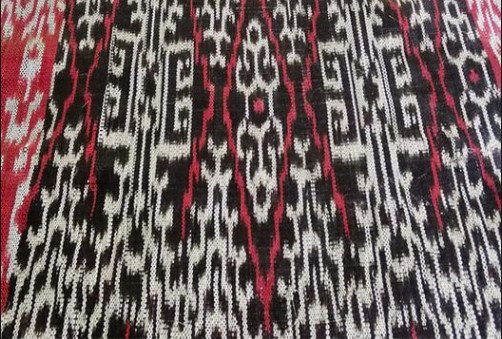
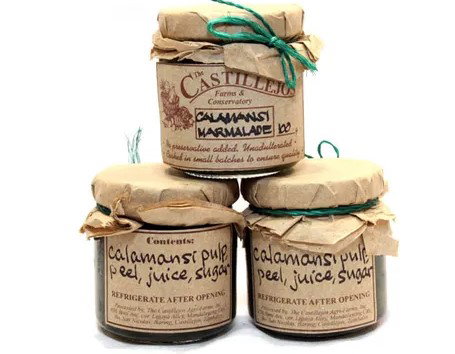
The power of the hand
A touch speaks volumes. It is communication in itself. When you hold someone's hand, and do it with sincerity, that simple gesture will send a message so strong to the other person.
Not everyone is a touch person. Some are quick to pull away when someone reaches out in the act of touching them. Others are simply uncomfortable having another human being in their space.
But for someone in grief, being held by the hand is a source of comfort. No words need to be exchanged. Mere presence, even amid silence, and that warmth provided by a touch can help relieve the ache in one's heart.
And even the most reticent person can use a touch during their darkest hours, and have been known to accept this comforting gesture and found relief afterwards.
Shaking hands
I pay attention to handshakes. While it is a form of courtesy, it is more than good manners to shake someone's hand. Anything less than a sincere handshake will give you an unpleasant perception about the individual.
Many years ago while working in the newspaper, movie stars would be invited to the office during the company's anniversary. During breaks from putting the paper to bed, I get dragged around the premises, and when I'm with an entertainment reporter, chances are we would run into an actor or two, who drop by for the celebration or to entertain employees and their families.
I will never forget this actress precisely because of her handshake. She was with her handler, I think, and when we were all introduced, the handler extended her hand and shook mine. Actress was forced to follow suit, but when I held her hand, it felt like handling overcooked noodles!
Yes, it was that limp. She merely touched the top of my fingers rather than clasp my hand fully. So I pulled my hand back quickly. It would have been more preferable if she simply said 'hi' and did away with the handshake. I wouldn't have taken it against her. Instead, I felt insulted like I was some giggly fan hankering for attention!
On the flipside, I've been introduced to politicians who are so eager and full of themselves that they grip your hand so tightly like they would when campaigning for votes.
A good handshake, to my mind, is a full clasp of the hand, firm, and maybe two or three small pumps. An extra squeeze conveys sincerity and when they look you in the eye at the same time means they are trying to connect with you. A smile wouldn't hurt, too.
Holding a hand
My dad wasn't really touchy-feely but on special occasions he always greets us with a tight hug. I know he met a lot of people in the conduct of business, many of them very important folks. So, I'm sure he has proper handshakes down pat.
But I've never known him to be a hand-holder. He was more the type to put an arm around your shoulder while walking or give you a quick tap on the arm to console you.
When he was hospitalized after suffering a stroke, there was a time when his nose would not stop bleeding due to ruptured blood vessels. Imagine how much pain he was in while hooked to a cannula oxygen, then being suctioned almost every two hours to clear his passages of blood and mucus.
It was during those two or three days (*it took a while to determine what was causing the bleeding and he was only given the go signal for surgery to cauterize the blood vessels a few days after*) that he would be gripping my hand for support.
Touch for a lifetime
I use the word grip because that is exactly what he did to my hand each time a nurse would perform the suctioning of fluids for about 5 to 10 minutes. It was always a bone-crushing grip that signified not only his pain (*his threshold for pain is very high*), but I am sure terror over what he was experiencing.
Prior to that hospitalization, my father has never held my hand. But in those few days when he was profusely bleeding, the handholding he gave me would last me a lifetime.
Each time he clutched my hand, I could feel his confusion, fear and intense pain pouring out of him. And I knew however painful the grip was, I would endure it just to make him feel that he was not alone in his ordeal. How I wish I could take away what he was feeling.
Later towards the end of his life and he was mostly unconscious, I would sit on his bed and just hold his hand to tell him I was there and would not leave his side.
That's why I put a high premium on hand-holding. If you can't give me a sincere touch or handshake, I would appreciate it more if you didn't attempt to do it at all. I would only feel bad and not think well of you. Perhaps you are not a touch person at all, and I would respect that.
I am always willing to offer a hand, a touch for anyone who needs assurance, reassurance and comfort. My hand, I like to believe, is built for it. A sincere handshake, a warm touch, even a hug I can share with all my heart.
Don't take for granted the power of your hands.
(*All photos from Unsplash*)
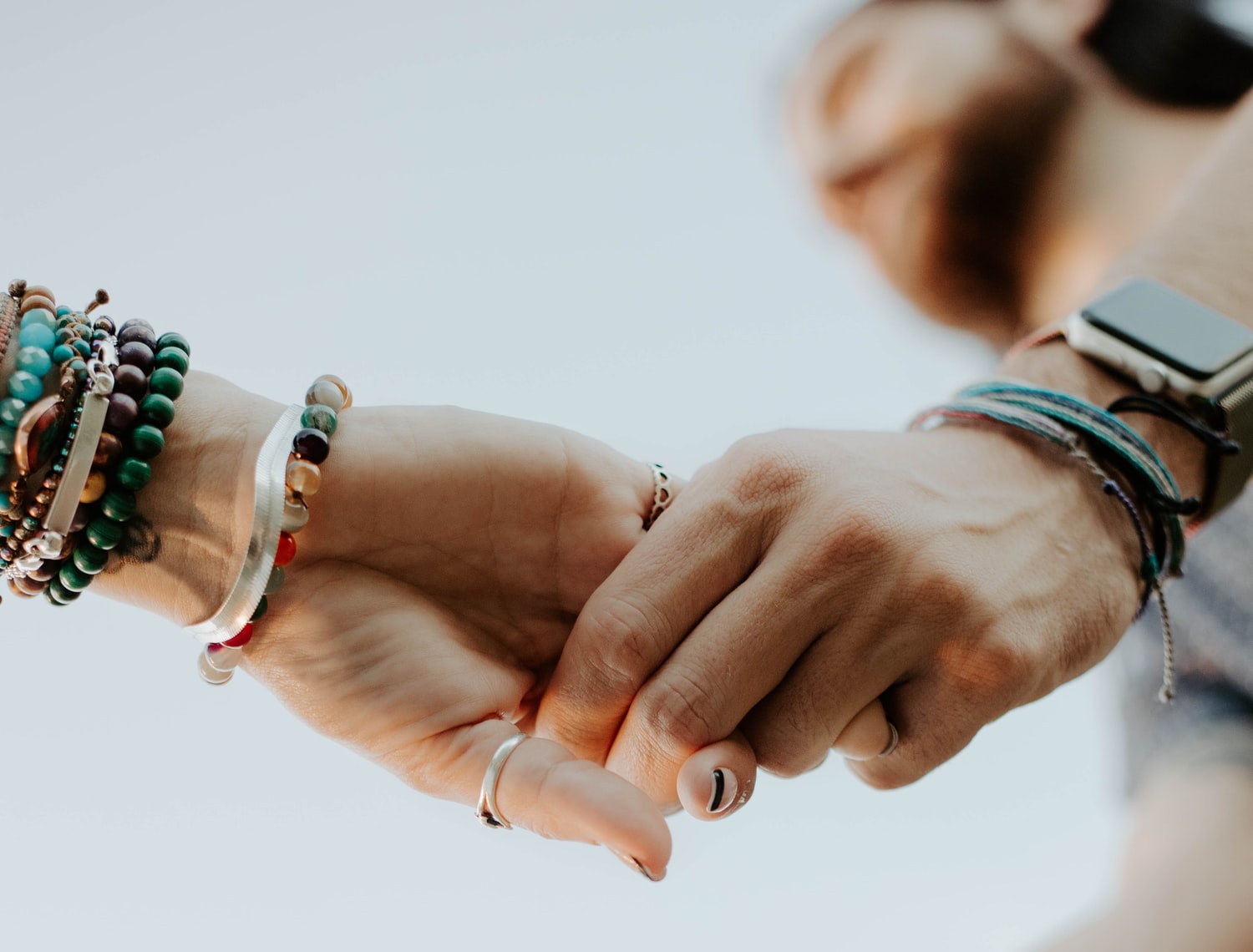

A tragedy that shouldn't have happened
Ten years ago today, I was driving at dusk to the hospital, where my father was confined. It usually took five to eight minutes to travel from our house to the hospital at that hour, traversing a highway that is 18 lanes wide.
But shortly after entering the main road, I was stuck. That was very odd. First, heavy traffic is on the opposite side at that hour, and second. any buildup in the approaching rotunda would not take long to clear.
Cars crawled, and as usual drivers would try to switch lanes hoping to move faster. I was drumming my fingers on the wheel, impatient to reach my destination where I was bringing soup to the patient for dinner.
After several more minutes, I saw the cause of the horrendous traffic. There was a cab, its rear end badly crumpled. As I inched closer to the site, I noted an ambulance and police cars.
Drivers stopping far longer to see what was happening during accidents annoy me so after several more feet and traffic cleared, I sped off. While the damage to the cab looked bad, I didn't think there was any fatality.
An hour or so later, I receive a call. It was one of my journalist-friends. Her voice cracked as she told me the tragic news.
Losing a friend
Her professional name is Chit Estella. She was one of the friends I made while covering the president. She's quite reserved, politically astute, and almost formal. She never talked nonsense, but she can be extremely funny trying to catch up with the trivial and inane. And she was among a group of four that became close even after Malacañang.
Since we all enjoyed food, we usually met up somewhere and had dinner and coffee afterwards to catch up. And because we lived near each other, and I had a car, it was my duty to bring Chit and another friend home afterwards. We had not gotten together for a while, and I later learned she was scheduling another food outing for us girls.
Chit died instantly. The bus, which was racing with another bus for passengers, slammed into the cab. The driver sped away after the collision. Witnesses later identified the bus to help the investigation.
Some were saying the cab was driving in reverse because it had missed the entry of the complex where Chit was headed to meet with high school friends.
Reports were conflicting as to what actually happened. Knowing the layout of the area, I surmised the cab, which came from the nearby university campus, made a U-turn but the distance between the slot and the complex entrance was very short (considering you had to cross at least seven lanes) and the driver might have overshot thus his decision to back up some.
What traffic rules?
Here's the crazy thing about traffic in this country - there are practically no rules. Well, yes there are, but drivers, especially of public utility vehicles are foolish enough to ignore them and usually cause accidents.
In that specific area where the Chit's cab was rammed, the bus stop is so close to the entrance that bus drivers would often block the entryway. But in instances where passengers are few and far between it's no surprise that these same buses race each other to the next stop.
(*Just to paint a picture for those unfamiliar with the Philippine bus system, bus drivers and conductors are not paid regular salaries. Instead, they have a daily quota called 'boundary' and anything over and above that amount is their take-home pay.*
*So it isn't hard to grasp why drivers would race each other to get more passengers, and why they fill their vehicles to the brim - think a can of sardines packed full, and you get an idea how inconvenient it is to take a bus*.)
There is another U-turn slot about half-a-kilometer away, which is safest to take if going to the complex. If the cab took that route, that accident may have been avoided.
At the time of the tragedy, there wasn't any speed limit for that highway. And buses, especially when wanting for passengers, are known to fly through that roadway to beat competition.
Sending a message?
Back to the phone call...
Recalling the ambulance I saw as I passed by the accident site, my legs turned to jelly. Chit was still there when I drove by and I had no idea it was her.
Making it even more eerie, when I scrolled through my phone I find a message from her! The timestamp on the message was around the time of her accident, and in it she was asking when we could go out.
Whether she sent that text or not, it was probably her way of saying goodbye.
Her death was big news. She was a known journalist after all, and in truth, that accident shouldn't have happened, if traffic rules were strictly observed and enforced.
To honor Chit, her death became a poster case for road safety. A speed limit of 60 kilometers per hour was imposed along that highway. And changes to traffic flow and enforcement were implemented.
The real tragedy, however, is that to this day, the criminal case filed against the bus company has yet to be resolved. Imagine 10 years and no one is still held accountable for her death.
The bus company is insisting it was the cab driver's fault, and the other bus driver's fault. It was never theirs. When her case will finally be resolved, no one knows.
In the meantime, a dear friend, a law-abiding citizen, an activist, a respected professor and an award-winning journalist was taken away from this world when that accident shouldn't have happened at all.
Lead image: unsplash
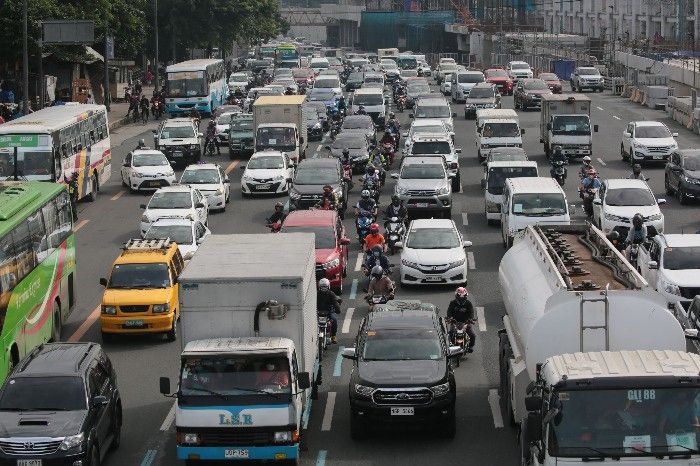
How to destroy a relationship
I have trouble understanding people whose life mission it is to destroy relationships. Why do they do it? What traumatic experience did they go through in the past to make them hate the thought of people having good relations with others? Are they simply craving for attention? And the most pressing question I guess is: have they nothing better to do with their lives?
When I was 12 or 13, I had a misunderstanding with one of my playmates supposedly because of something I said behind her back. For the life of me, I don't ever remember saying anything offensive or hurtful because I didn't want enemies, even for a day.
Petty fights
Taking sides among friends is normal among kids. And in our naivety at that age, we rarely confront the other to clarify things. Instead, we huddle with whoever decides to stick with us from among the group and blurt out our feelings.
Long story short, the one who stuck with me was the same one feeding me all the crap that caused the misunderstanding, and he made it all up! For what? I guess he was envious of my relationship with the other girls, and wanted to have someone to hang out with exclusively. He was gay, but hadn't come out yet, and didn't much like being with the boys then.
Very petty, I know. But if I hadn't caught on what he was up to, our misunderstanding due to nothing would have lasted for days and affected our friendship. I think after that incident, that boy rarely joined our neighborhood gang for our afternoon playtime.
And as we grew older, our relationship was confined to the brief hi-hello when we saw each other on the street. Eventually he left for the United States and I've never heard from him since.
Letters to keep in touch
I have a cousin, a girl a year younger than I. Since she lived in the province, and my visits there were few and far between (and vice versa), we decided to keep in touch by writing letters. This was when stationeries were the in thing among girls and writing by hand was the norm.
I think we wrote each other weekly or bi-weekly just to keep in touch with what was going on in our teen lives. They weren't long (how could they be when it was so frequent and the stationeries were only five inches in length). I enjoyed that exchange very much, especially because that was the period when we didn't get to fly out there for a long time.
Then the letters stopped. I think she didn't answer my last letter, and I am not sure if I wrote a final one before quitting, too. It never occurred to me to ask why we stopped communicating, even through our mothers (they are sisters). I simply took it to mean she was either busy with a lot of activities or was no longer interested to keep in touch.
Many years passed. We would sometimes see each other, but briefly and often with a whole bunch of other cousins or relatives, so there was no opportunity to sit down and talk. We'd grown up and so much had happened in our lives, which we only learned about from our moms, who both travelled often to visit each other.
Why it ended
It must've been fated to have closure about that sudden end to our communication. A whole kaboodle of cousins from the province came and stayed in our house for a few days, I think because of one family event or another. My pen-pal cousin wasn't among them.
But during one of our protracted lunches, two of my cousins brought up that subject of our letter writing, which ended abruptly. It was from them that I learned an older cousin was the culprit.
When she found out we had been writing to each other, she needled my pen-pal cousin that it was actually a competition. She insinuated I kept up with the letters to show I was better at writing! So each time she would reply, I would make it a point to tell an even better story to eclipse hers.
I was aghast! Seriously?? A competition? All I wanted was a relationship with a cousin who I liked a lot, however different we were. And since seeing each other regularly was not possible, keeping in touch via letters was the next best thing. (Long distance phone calls were expensive then.)
That knowledge crushed me. Here we were, two innocent people just building a relationship only to fall victim to one very insecure individual's malicious machinations. (We have since rekindled our ties and are now in constant communication).
And there's more...
And then it came out that culprit cousin had been putting a wedge on the relationships between other cousins and even our aunts by spreading lies, twisting stories, and feeding ugly gossip that were absolutely baseless.
It was despicable. Yet I wanted to give her the benefit of the doubt. She was close to my mom (or so I thought) and after that incident with the letters, what more could she do to hurt me? We didn't see each other often. When we did, I always tried to be nice to her, even with all her quirks and idiosyncrasies.
But she kept on with her destructive and busybody mode. I'd hear my two aunts were not on speaking terms, or two cousins were giving each other the cold shoulder treatment, etc. all because of her doing.
I have to hand it to her. She is very, very good at what she does. Except that she could use that skill for positive things and not to cause friction among relatives or sever ties among her people.
Now, she is also not in speaking terms with my mother. And I've nothing to say to her, too, after that stunt she pulled on my mom, my sister, and I.
Cutting ties
I just feel sad for this woman. She's brainwashed her kids against their father, and she will put anyone in a bad light as long as you're not behind her craziness. How many more relationships within the family will she harm?
Maybe if she found a job and focused her energies there, she would think less about poking into other people's lives. She studied to be a nurse, but never took the boards. She's a neat freak, an organizer, but none of those are put to good use.
I wonder if that time will come when she realizes all the misery, hurt, and anger she caused has taken away so much from her too. For what? Envy? She could have gained more if only she used her abilities to build than to destroy. Attention? It's far better to stand under the spotlight for deeds that dignify than degrade.
Her day of reckoning will come. I only hope by then she would have been enlightened.
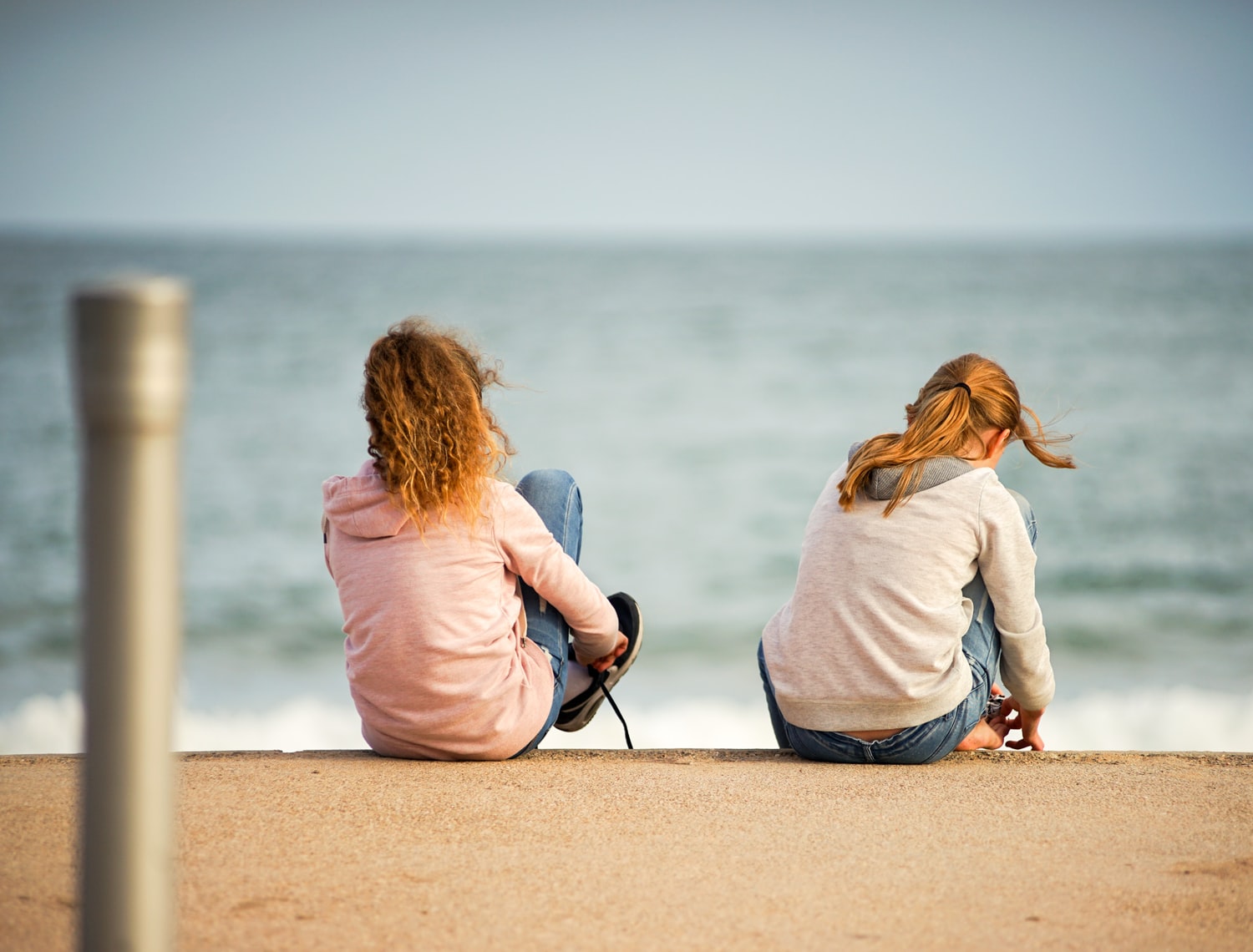
 @zolabundance2