Born in the USA - or "Once upon a time there was one country"?
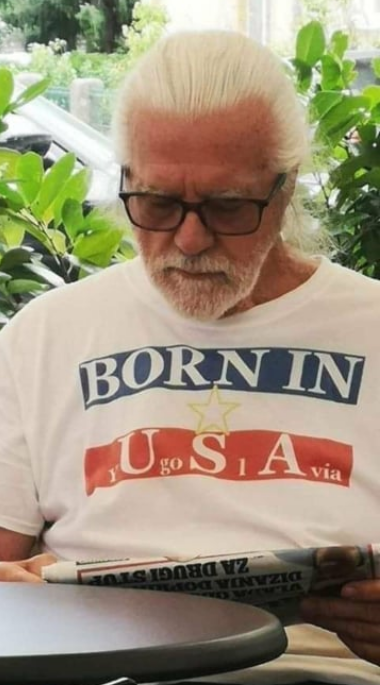
Yesterday my daughter sent me this picture and asked me if I liked it. At first I was surprised. What should I like about it when the picture shows an elderly gentleman with a T-shirt that says Born in U.S.A. Okay, I know there’s a song under that name, but still? Then I looked more closely and realized what was actually written on the T-shirt. You have probably noticed by now, writes Born in Yugoslavia.
Memories began to spring up. I was born in the same country as this gentleman. I spent my childhood and youth in it, I went to school there and started working. I don't know if I'm just nostalgic or not, but I remember how are we traveled to "our sea" every year as a child, how we all wore uniforms at school and didn't notice the social differences between us, how many generations used the same textbooks for school so that we could inherit them from each other, how we hung out and traveled freely wherever we wanted, how the faculties were enrolled by those with the most knowledge, but at that faculty they did not have to pay for the enrollment of the year or each exam ... I also remember those not so beautiful things: shortages of oil, coffee, gasoline (does anyone remember driving on even and odd days and even and odd weekends) When I add and subtract everything, beautiful memories prevail, or it bothers me just do it?
My daughters were not born in that country. It meant nothing to them when I tried to help them learn who belonged to the South Slavs, so I told them to just think of the countries that made up Yugoslavia and add Bulgaria. I don't know, maybe it's better now. What I know for sure is that I went on vacation every year, even though my parents had two high school salaries, and that we only managed to take our children on vacation twice, that textbooks are changed in schools every year (in different primary schools. are used even in the same year, different), the faculty can enroll anyone but also that it costs a lot ...
Maybe it was all like this, and maybe the memory is deceiving me. As Kusturica said at the end of the film Underworld
"Once upon a time there was one country"
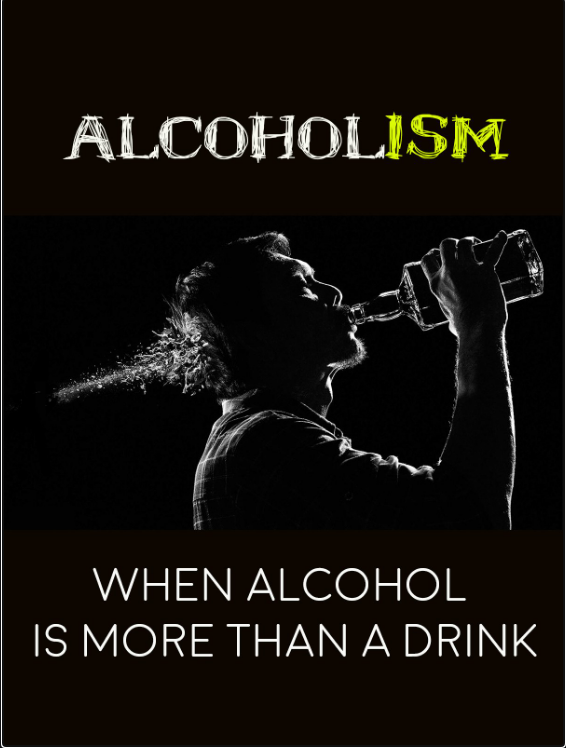
Is alcoholism a problem of the individual or the whole society?
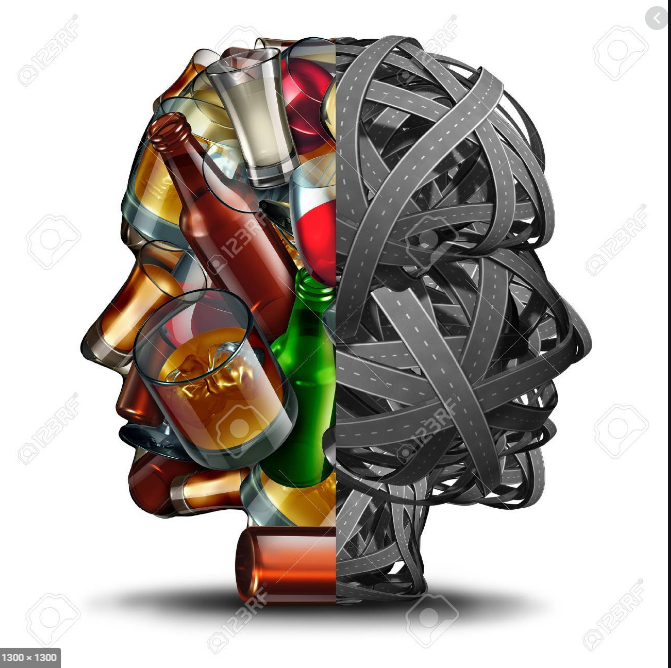
Addiction diseases involve the use of all psychoactive substances that are toxic to the body and psyche, and when continued, they can create the need for their constant intake and thus lead to health, social, economic and safety problems of individuals and society as a whole. One of the most common addictions is alcoholism. Alcoholism - a chronic, progressive, physical, mental and social disease that occurs through uncontrolled and regular use of alcoholic beverages in unlimited quantities and requires professional help.
The causes of alcoholism are: 1. biological (genetic predispositions)
2. psychological (dissatisfaction, difficult childhood, escape from problems, seeking solace, habit )
3. social (financial, social, family, professional problems )
4. wide representation and fast actio
The consequences of alcoholism are: 1. family (poverty, violence, intolerance towards other members and family breakdown )
2. psychological (depression, “delirium tremens”, changes in behavior)
3. professional (reduces efficiency at work, increases the number of injuries at
work )
4. physical (affects the development of various diseases in the body)
5. anti-socialbehavior (crimes, crime, violence )
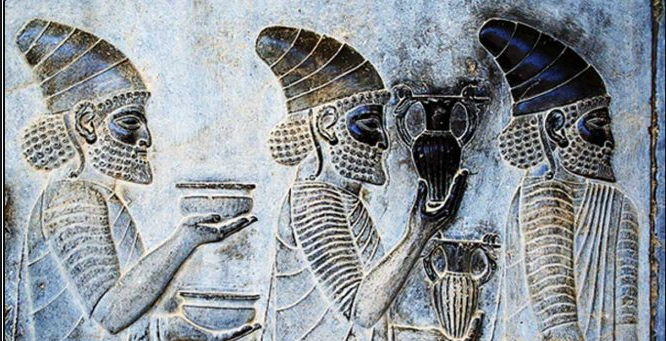
When it comes to alcohol, its use began quite by accident and has followed man throughout history. After tasting the rotten fruit, the man felt the pleasant effects of relaxation and began to leave the fruit in earthenware containers and through the fermentation process to obtain alcoholic beverages. Alcohol was considered a gift from God that has its role in the fight against unknown forces, adversities and diseases, however, its harmful effects have been noticed since ancient times. As a result of recognizing the negative impact of alcohol, various drinking bans have appeared for certain individuals or in certain situations.
The Imfluence of Alcoholism on Safety
Alcoholism is one of the three biggest addiction diseases, along with drug addiction and nicotine addiction. Alcoholism is the most widespread addiction (10-15% of the adult population) and significantly affects the increased mortality of the population. Alcohol severely impairs both physical and mental health, and shortens life by up to 15 years. Life expectancy due to alcoholism is reduced to 55 to 60 years (for the average untreated alcoholic).
When the consequences are added to all this due to traffic accidents in an alcoholic state, as well as due to fights and other types, even more severe aggression under the influence of alcohol, the picture becomes even more difficult.
Influence of alcohol in traffic
One of the most important factors that currently affect the psychophysical ability of drivers is alcohol. Like most other narcotics, alcohol leads to excitement and then to paralysis of the nervous system. This results in a reduction of attention, because an alcoholic driver is dangerous and incapable of normal participation in traffic.
Alcohol in drivers: prolongs reaction time (most often braking); narrows the field of view; significantly reduces hearing; it gives him a sense of omnipotence behind the wheel, which is why he often drives risky.
Drivers under the influence of alcohol usually make the following mistakes: improper bypassing and overtaking, disrespecting the right of way, improper speed, improper passing, later react to light and sound signals, more difficult to recognize red and green, more difficult to recognize interference at night and at dusk, often instead of braking, they press the accelerator pedal or vice versa, they are uncritical, self-confident, frivolous, overestimate their abilities, underestimate danger, etc.
These are all real risks for the occurrence of traffic accidents with tragic consequences.
According to the valid regulations, the allowed amount of alcohol in the blood of drivers in Serbia is 0.5 ‰, while for professional drivers it is 0 ‰.
Drunk drivers cause about 20% of all traffic accidents. There are three times more serious bodily injuries and deaths in these accidents than in sober drivers.
The impact of alcohol on crime
The link between alcoholism and crime has long been known. According to statistics, the perpetrators of 50% - 60% of all criminal acts are alcoholics.
The most common forms of criminal behavior related to alcoholism are: theft; aggressive and violent behavior; sexual offenses; severe bodily injury; murder and juvenile delinquency.
Nearly 50% of murderers and rapists were under the influence of alcohol at the time of the crime. About 50% of domestic violence is committed by alcoholic husbands. In 90% of hooliganism on the streets, the cause is alcohol.
According to the above, it can be concluded that alcoholism together with crime significantly affects the security of society.
The impact of alcoholism on the family
Alcoholism not only destroys the alcoholic and pushes him to the bottom, it also affects his entire family, so that over time it becomes completely dysfunctional.
In an alcoholic family, even minor crises and problems can lead to a complete blockade of its functioning. Defending against decay, a dysfunctional family produces a symptom (disease) in one of its members. It is paradoxical, but it is precisely this disease that is the factor that keeps the family together in the disease balance, which has an impact on all members. However, over time, there is more and more intense drinking and more frequent excesses, which lead to fierce quarrels in which the whole family participates. Usually it is the spouse who tries to take control while the children withdraw into themselves and live in constant fear.
Alcoholism of her family member inevitably creates family consequences and disrupts: communications, emotional and sexual relations, family roles, financial situation in the family, as well as social ties with relatives and friends. With its destructive effects, alcoholism often leads to divorce and the breakdown of entire families.
In addition to everything, alcohol causes sick jealousy, the main characteristic of which is the constant suspicion of infidelity and the search for evidence that would confirm it. This condition can lead to violent behavior and, unfortunately, the murder of a spouse.
At the social level, alcoholism is a bad model and a wrong example that must not be tolerated. Domestic violence often occurs in alcoholic families.
Children from alcoholic families have mental disorders, problems at school and problems with social adjustment.
The influence of alcoholism on the attitude towards work
The consequences in relation to which they are served:
- dismissal from work,
- frequent sick leave,
- injuries at work and
- disability.
An alcoholic is absent from work for 2 months or 10 years for the entire working life.
15% of the men on the disability commission are alcohol addicts, and since then 20% of them have received a category 1 disability. Alcoholics are harmed three times at work by the healthy.
Consequences related to alcoholic behavior at work are manifested as:
- loss of interest in the job
- changed the mood at work
- tendency to criticize and oppose
- confronting colleagues and
superiors at work
- blaming others
- frequent interpersonal conflicts
The state, as a social and political organization, has the primary task of preserving its security, that is, the security of society, and in that sense it bears the greatest responsibility.
When it comes to alcoholism, the analyzed results of the research speak in favor of the fact that alcoholism has taken the form of an epidemic and appears as a cause of death in an extremely large number of cases, and also affects the occurrence of various diseases, diseases and injuries. From the aspect of the safety of the state and society, a particularly important issue is endangering the safety of public traffic by driving under the influence of alcohol, which directly endangers not only the life of an alcoholic, but also other participants in traffic.The negative consequences of alcohol consumption are also reflected in the psychological state that alcohol causes, which can contribute to the occurrence of delinquent behavior, neglect of the family, social exclusion, reduced work ability, etc. Thus, alcoholism is a widespread socio-pathological phenomenon, the consequences of which are evident and known, but its strong destructive impact on the security of the state and society, which imposes the need to improve and create more effective prevention measures, has not been recognized.
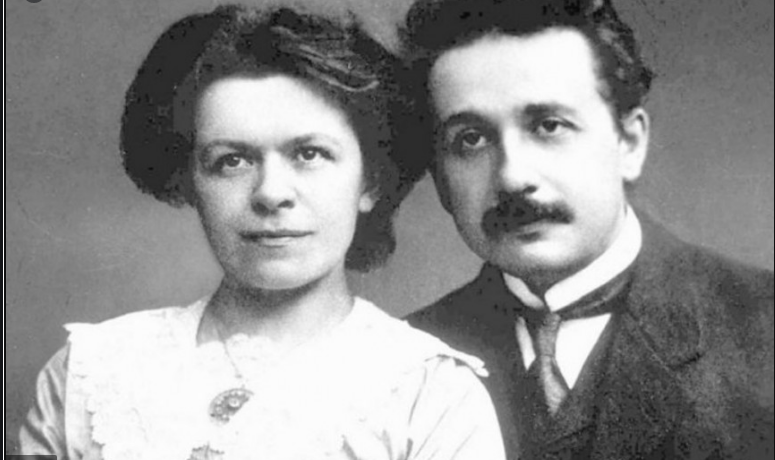
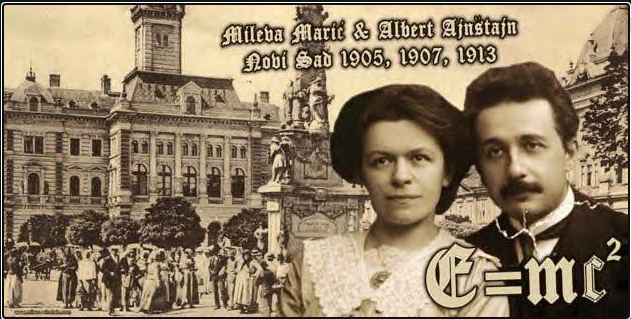
Mileva Maric Einstein - Unrecognized Scientist or Just Albert Einstein's First Wife ?
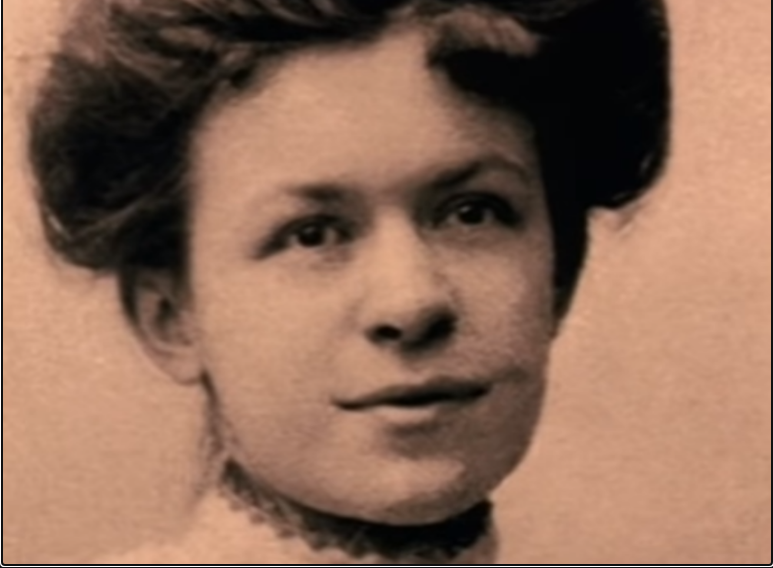
Mileva Maric Einstein was a Serbian mathematician and the first wife of Albert Einstein. She was born on December 29, 1875 in Titel in the Austro-Hungarian Monarchy (today's Serbia), and died on August 4, 1948 in Zurich, Switzerland.
Mileva Marić did not spare her life. She was born with a shorter left leg due to a hip dislocation, as the oldest of three children in a wealthy family. Her parents Marija and Miloš took her to the best doctors, taught her to walk properly, but that didn't help. She spent her earliest childhood with her grandparents on a farm in Kać.
Even as a child, she excelled in class, so her father made an effort to provide her with a good education. In 1886, she started the Women's Gymnasium in Novi Sad, and in 1888 she moved to the Gymnasium in Sremska Mitrovica, where she graduated in 1890 as the best in the class in mathematics and physics. From 1890, she attended the Royal Serbian School in Šabac. When she moved to Zagreb, she received a special permit to go to a school where only boys went.
In the summer of 1896, she enrolled in medical studies at the University of Zurich, and in October she transferred to the State Polytechnic School to study mathematics and physics. She was only the fifth woman admitted, and only the second to graduate from that college.
She met Albert Einstein,since she was 4 years older, at the college. Paulina Einstein, Albert Einstein's mother, was broken when she learned that her beloved son was in a relationship with a colleague, a physics student, an older girl of another faith, originally from remote parts of the Balkans. "If she gets pregnant, you'll be in big trouble," she warned him. But 22-year-old Albert, unrestrained and independent in his private life, just as it will be in science, did not pay attention and continued this love affair.
In 1902, Mileva Maric gave birth to a daughter, Lieserl Einstein, out of an extramarital affair with Einstein. Her christened name was Ljubica. However, according to some, Lizerl fell ill early and passed away soon after birth, and according to others, she was given for adoption in Serbia. Mileva and Albert were married in 1903 and later had two sons, Hans Albert Einstein and Eduard Einstein. They separated in 1914, and Mileva returned to Zurich with her sons from Berlin. They officially divorced on February 14, 1919, and he remarried the same year.
There are extremely controversial opinions about the role of Mileva Maritz Einstein in the scientific papers published by Albert Einstein. While some claim that she actively helped him in research, and solved complex mathematical problems, others point out that her active involvement in Einstein's achievements cannot be proven.
The fact is that this cannot be proven with certainty. However, there are certain indications that Mileva Maritz Einstein contributed a lot to the work of her husband, and some believe that the two of them worked together on the theory of relativity.
This theory was most ardently advocated by the American physicist Dr. Evan Harris Walker. In an interview, he boldly claims: "Albert Einstein and Mileva Marić discovered the theory of relativity together"!
As proof that Mileva was actively involved in the work of her husband, their letters are also mentioned, in which they mention joint work on the theory of relativity. Such is, for example, the letter that Albert Einstan sent to his wife on March 27, 1901, in which he wrote: "How I will be happy and proud when we finish our work on relative motion victoriously together."
Soviet academician Avram Fedorovich Joffe said that he was once on the editorial board of the journal "Physical Annals" , in which Albert Einstein published the first scientific article on relativity in 1905, and that he saw the originals of published texts from that year. They were signed with - Einstein-Marity! (which was the Hungarian variant of the surname Maric, and so Mileva signed her wedding certificate)
The question also arises as to why Albert Einstein gave the entire amount of the Nobel Prize he received in 1921 to his then ex-wife Mileva, and immediately after his death he sent his trustees to the house where she lived, who reviewed all the papers they found there, including and their personal correspondence.
Despite the multitude of more or less convincing statements that Mileva Marić greatly helped her husband Albert Einstein in his scientific research, it remains unclear how much that contribution was. Is there any hope of ever unveiling one of the greatest creative puzzles of the 20th century?
One thing is for sure, Mileva Maric Einstan trusted her husband Albert Einstan.
She trusted him, both the unknown and the known. And she never publicly accused or insulted him. Despite the bitterness that ate her more and more after the divorce, until her death. Mileva Marić Einstein remained. A rock with two names (ein Stein - one rock in German). A life companion of one of, probably, the most brilliant scientists in history. In the twentieth century, of course. How much did she help him with that?
Key skills of the 21st century - Media and digital literacy
Literacy has long been (not) what it once was. If you want to be literate today, you have to constantly work on media and digital literacy in addition to the "classic" one. The media and the digital world are changing day by day, so it makes sense that you too need to keep up with those changes to keep up. That is why it is important to be media and digitally literate.
Let me start by explaining these terms.
The notion of media literacy was defined at the Media Leadership Conference on Media Literacy (1992) as "the ability to access, analyze, evaluate and send messages through the media" (Aufderheide, 1992).
Unlike Media Literacy, whose term has long been defined, the concept of digital literacy is more recent. It has only been talked about for the last ten years.
Digital literacy implies the ability to find, analyze, evaluate, create and transmit information in digital format.
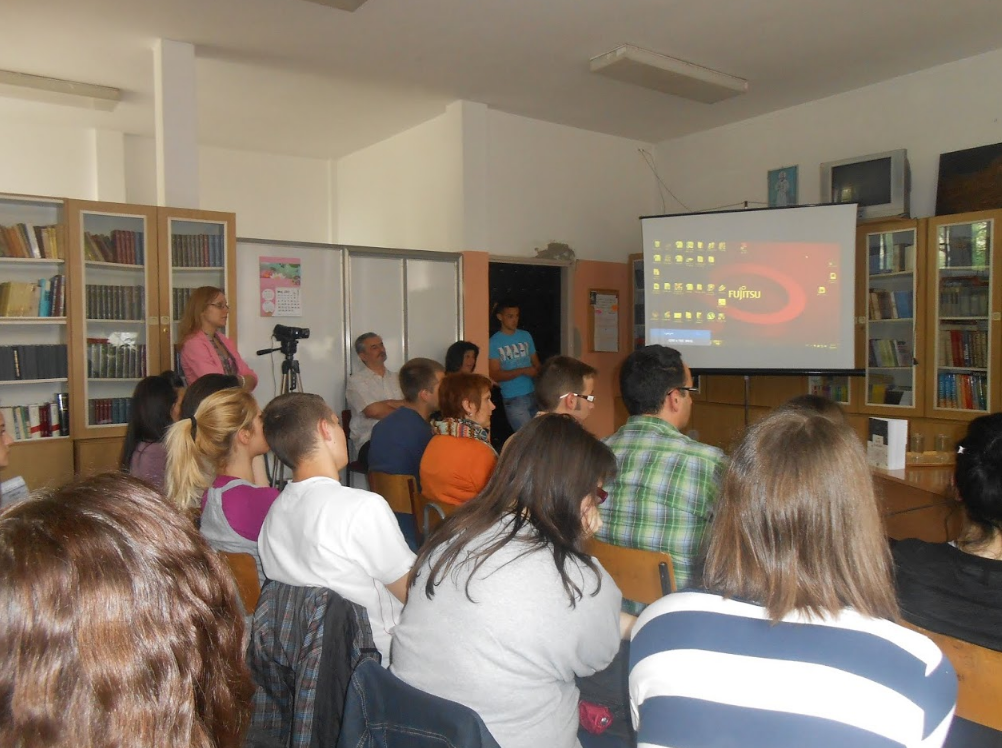
We understood the importance of media and information literacy in the school I work in back in 2012, when we joined the Internest project (nest of creativity). The name of the project was created by merging two key words that described it, the internet and the nest.
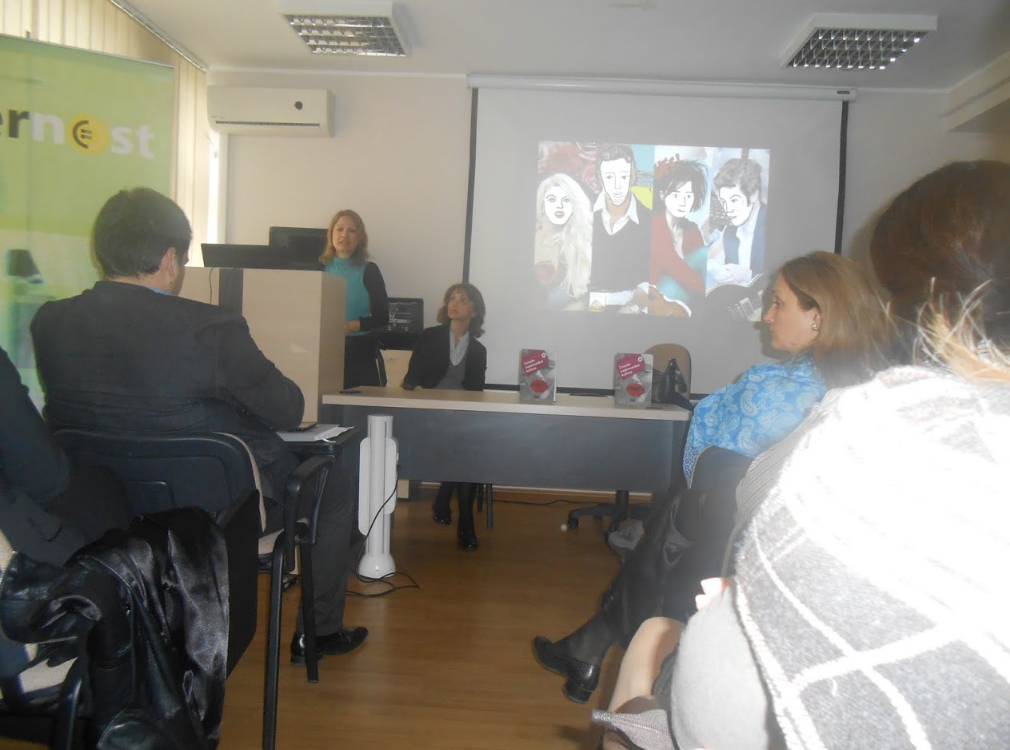
The goal of the Internest project was the development of media and information culture. Not just us, but also other schools that were included in this program, an interesting task was set: based on one of the books offered by the publishing house Clio, which was one of the bearers of this project, school teams created multimedia content as a kind of media expansion selected text. During the preparations, schools were visited by experts from various fields, and in the form of lectures and workshops they were assisted in working on the project task. The students presented their presentations at the Festival of Creativity, a kind of competitive review. The picture shows one of such lectures given for our school by Dr. Maja Vukadinovic, whose book we chose to do in 2013 as a project task.
We enjoyed the three years we worked on this project. Unfortunately, the project is over, but we still have a lot of knowledge gained in working on project tasks as well as many fond memories. That is why we gladly accepted the invitation we received from the CLIO publishing house to participate in the new project "Digital Drive".
"Digital Drive" is the largest project of media and digital literacy, which is under the auspices of the EU delegation in Serbia and which it mostly finances. It is conducted by the publishing house CLIO and the Novi Sad School of Journalism. The project started in 2018 and was planned to last for three years. The project involves 10 primary and 10 secondary schools, including the school where I work
The project began with a panel discussion with teachers, pedagogues, psychologists and librarians from the participating schools. The topic of the forum was the possibility of introducing media and digital literacy in the existing education system in Serbia
The "Digital drive" continued with a media literacy camp held in the ethno village of Sirogojno. There were 20 students and 10 teachers in the camp. I was a participant in that camp as a mentor to two of our students.
In the media camp, we listened to lectures by top media experts on various topics such as: Thinking digitally, Fake news - Fake public, participated in debates such as Are TV series the future of film ?, watched and discussed films on TV networks and Social Network ...
Students were tasked with creating digital content to present some of what they had learned in school. They worked in pairs, recording everything with their smartphones. On the last day, all works were shown, and all students were awarded books by the CLIO publishing house.
The first year of the project ended with seminars in the participating schools, so that autumn we also hosted lecturers who spoke to all interested teachers (and there were many of them) about various topics related to media and digital literacy.
The second year of the project passed similarly to the first. It began with a panel discussion and ended with a seminar in the participating schools.
In 2019, the Media Literacy Camp was held on Kopaonik at the Rtanj Hotel. 30 students and 20 teachers-mentors participated in the work of the camp. My colleague and I were mentors to three of our students.
Topics in the focus of this year's camp were project teaching and documentary film. Most of the time was devoted to making video works on a free and given topic. Still, it was harder than the previous year. The students had to do two works each, and they did them independently.
Lectures were held on topics from the ethics and ecology of media content, on project teaching and innovations in teaching with the help of information technology. Successful debates were held with professional lecturers and leaders. Two documentaries were shown so that students could get better acquainted with this media form.
On the last day, he chose the 10 best out of 60 works and awarded them with books. Two works from our school were among the best. Sara Milanović, student II 7, with the work Rtanjske visine (free topic-story from the camp) and Ognjen Cvetković, student II 7, with the work Cyber crime (given topic - showing the selected lesson)
The third planned year of the "Digital Drive" project has not yet been realized, and we have been prevented by the pandemic of the current COVID-19. We all hope that when the pandemic passes the project will continue and end successfully.
What is certain is that we all enjoyed and learned a lot the previous two years.
International Labor Organization - Lasting peace is possible only if there is social justice
The right to work is a human right guaranteed I believe in the constitution of every country (In Serbia it certainly is) Workers have been fighting since the 19th century to exercise their rights, first the right to fair wages, then the right to eight hours of work, and later other things
Did you know that there is an international organization that deals with the promotion of social justice and international human and labor rights. It is the International Labor Organization( ILO). It was founded at the end of the First World War by the Treaty of Versailles in 1919 (last year it celebrated 100 years of existence).
The International Labor Organization (ILO) is a specialized UN agency that seeks to promote social justice and international human and labor rights. It was founded in 1919 and is the only surviving international organization of the Treaty of Versailles provided by the UN system.
It can be said that the ILO is built on its fundamental Statutory principle that universal and lasting peace can only be established if it is based on social justice. It is this organization that has given the most important "seals" to industrial society, such as eight-hour working hours, maternity protection, laws related to child labor, as well as policies that promote job security and peaceful industrial relations. It also provides the international institutional framework necessary to address these issues and to find solutions and create opportunities to improve working conditions worldwide. In 1969, on its fiftieth birthday, the organization received the Nobel Peace Prize.
The ILO became the first specialized UN agency in 1946.
The ILO formulates international labor standards in the form of conventions or recommendations setting minimum standards on basic labor rights, such as: freedom of association, the right to organize, collective bargaining, the abolition of forced labor, equality in equal treatment and treatment, and other standards governing conditions. relate to the full range of labor law issues.
Primarily provides technical support in the fields of:
-professional training and rehabilitation at work;
-employment policies;
-leadership;
-labor law and industrial relations;
- working conditions;
-management staff development;
- cooperation;
- social security;
- work statistics and occupational safety and health.
The International Labor Organization (ILO) issues conventions and recommendations.The conventions are binding on all ILO member countries, while the recommendations only recommend what or how to do or explain the conventions in more detail.
The ILO promotes the development of independent employers 'and workers' organizations and provides training and advisory services to those organizations.
Unlike other specialized agencies of the United Nations, the International Labor Organization is a tripartite organization, ie an organization that has a three-member governing structure representing governments, employers and workers. The rationale for the three-member structure is to create a free and open debate between governments and the social partners.
The ILO has three bodies that reflect this tripartite structure: the International Labor Conference, which represents the highest body, the Administrative Body, which has an executive function, and the International Labor Office, which represents the Permanent Secretariat in Geneva
The International Labor Conference is held once a year (in June, in Geneva) and each member state is represented by four delegates (two representing the government, one employers and one workers, with so-called "technical" advisers). Representatives of employers and workers are appointed independently by their parent organizations and their right to vote is independent. Accordingly, when making decisions, they can vote against the opinion of their governments, and they may have conflicting opinions among themselves
The ILO's administrative body is the executive body that manages the work of the ILO between sessions of the International Labor Conference. It meets three times a year and discusses and makes decisions on various issues.
As of April 2016, the International Labor Organization has 187 members. Of the 193 UN members, 186 are ILO members. The ILO constitution allows any UN member to become a member of the International Labor Organization. To be admitted to membership, a potential member must notify the Secretary-General that he accepts all obligations under the ILO Constitution. Other states can be admitted to membership if they receive the votes of two-thirds of all delegates, including two-thirds of the votes of government delegates when voting on membership that can take place at any of the ILO conferences.
Unfortunately, we know that human and labor rights are not respected everywhere in the world. I sincerely believe that lasting peace could only be achieved if the basic principles on which the ILO is based are respected:Universal and lasting peace can only be established if it is based on social justice.
Share a smile, leave a like for love, and hate hatred
I have already written about the Peer Team for Combating Violence, Abuse and Neglect, which was established in the school where I work back in 2011. , of which I was the founder and first coordinator. The peer team noticed the danger of online violence very early on and started fighting it.
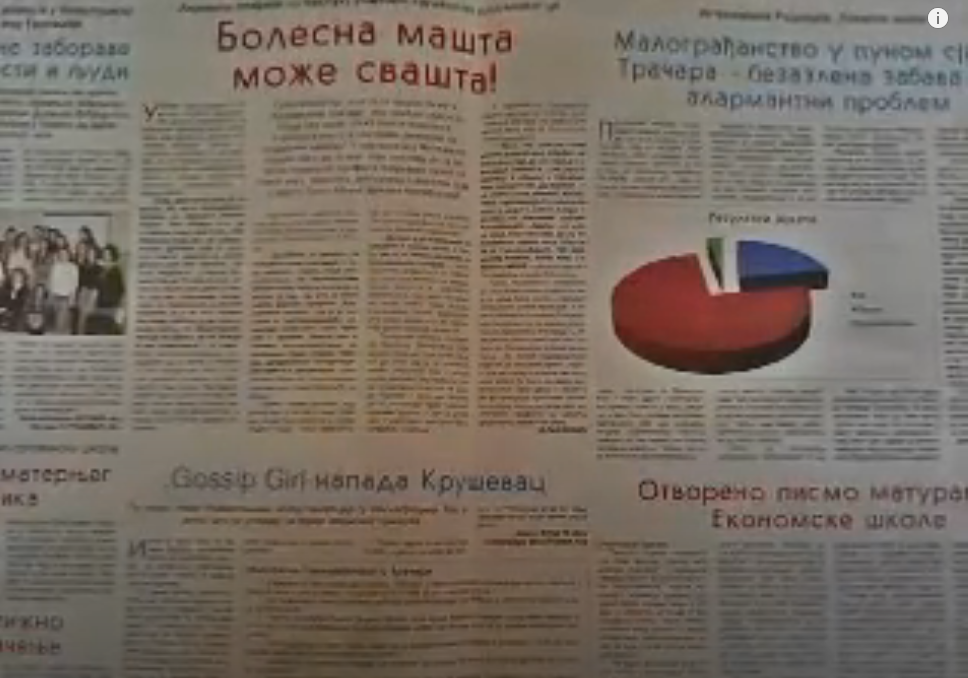
Following the example of the then current series Gossip girl, a Facebook page of the same name appeared in our city. They published gossips about young people which had extremely negative effects on them. I live in a small town where everyone knows each other so it was all really passionate and with potentially disastrous consequences for those young people.
Members of the Peer Team reacted immediately. They filed charges against John Doe with the police (we also educate the legal profession at the school), and the Gossip girl got "publicity" that she didn't want. In local newspapers, the entire middle side was devoted to its negative impact. The authors of the articles were students from all high schools who joined the initiative of our students. Some of the headlines were: Sick imagination can do anything, Gossip girl - harmless fun or an alarming problem, and our students sent her an open letter in the newspaper.
https://www.youtube.com/watch?v=rY5he_YUQ7o
We were soon informed by the police that a court in California was in charge of Facebook-related cases. Then the members of the Peer Team came up with a new idea. to open a page on Facebook that will publish all the successes of our students in any field. The idea was to fight against lies and gossip with truth and real, good news. The idea worked for them. Their posts quickly became very popular, everyone talked about the beautiful things our students do, and - Gossip girl stopped publishing.
About this event, the members of the Peer Team also made a short film called "Announcement, not gossip - a true story" with which they participated in the "Play Safe" competition and won second place.
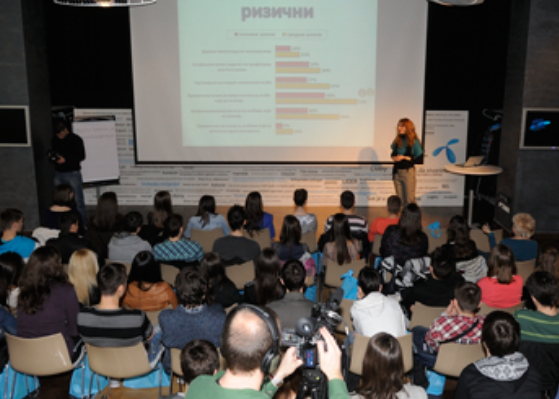
Our work was noticed very quickly in the Ministry of Education. We were invited to be one of the schools that is included in the "School without Violence" program, and we gladly responded to the invitation. The Ministry of Education, in cooperation with UNICEF and Telenor, organized a student debate in Belgrade on February 5, 2013, on the occasion of Safer Internet Day, entitled: "Share a smile, leave a like for love, and hate hatred" 40 students from 5 primary schools and 5 secondary schools from all over the country, accompanied by their teachers. I also attended that debate together with the elected members of the Peer Team.
In a very interesting conversation, the students showed that they are aware of the dangers that exist on the Internet, but that they understand the real danger of all this only when they experience digital violence themselves. They also talked about the ease with which most young people post their data on social networks and that often the quantity of friends is more important than their quality. A survey on digital violence, conducted as part of the "Stop Digital Violence" project in November among primary and secondary school students, their teachers and parents, shows that in each class at least two students accept a live meeting with a person they only knew through the internet, sometimes not knowing it was an adult.
During the debate, three films about specific cases of digital violence were shown, after which the students compared the seen scenes with the experiences from their schools and suggested solutions on how to prevent and protect themselves from such situations. The conclusion of the participants in the debate, primarily students, is that, as in other types of violence, it is important to reduce the number of passive observers, because the more visible the violence, the easier it is to oppose it.
The debate was broadcast live via live stream, where 510 students and teachers from all over Serbia followed the discussion, mostly from their schools, and slightly more than 100 students used the opportunity to comment and ask questions.
Digital violence is certainly a huge problem, and it needs to be constantly fought. What I learned while working with my students is that we should not underestimate young people and that we should only offer ready-made solutions, but we should talk to them and ask them for their opinion. You may be surprised - they have wonderful, innovative ideas.
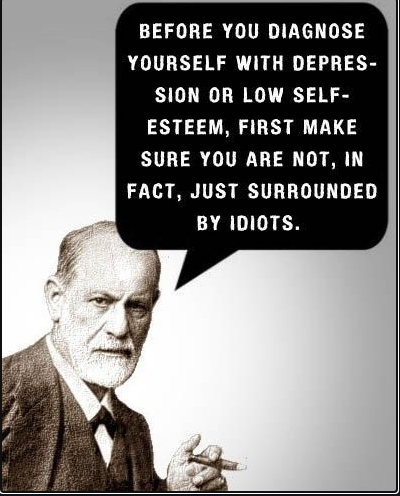
Before you think you are depressed, check that you are surrounded by idiots
In the title of this article, I paraphrased a statement attributed to Freud. I don't know who the author of this saying is, I'm not sure it's Freud, but it makes a lot of sense. In my opinion, idiots are too harsh a word, instead I would say - make sure that you are not surrounded by people who treat you badly and do not respect you.
Many times I have heard or read that someone says, "The more we radiate, the more we attract."
I do not think so.The idea that "as we radiate so we attract" is not entirely in line with reality. By that logic, if someone is bad towards us, it is because we "radiate bad", we think negatively or something like that.
Let me tell you something that happened some time ago. A group of passengers, including me, were getting off public transport. An unknown woman was trying to break through between the passengers who were coming out. I politely told her to wait for us to ride first and only then enter.
She glared at me angrily and said,
"You're fat."
I laughed. What has my obesity got to do with her eagerness to get on the bus. And why should “fat” offend me?
For the past couple of years, I've been gaining weight, but it's not a shame, I'm not ashamed of myself and my problem. I work on it the best I know and can.
I still haven't lost the extra kilos, but I did something much worse. I got rid of the bad habit of caring about the opinions of people who are not important to me.
How responsible are we actually for ourselves and our happiness?
Much of the responsibility is on us. But it is not complete. At least not when we talk about relationships with people. We cannot be 100% responsible here, because not everything depends on us. It also depends on the other person.
We are responsible for what we say (or don’t say), for what we do (or don’t do).
But we are not responsible for how others will understand it. And we are not responsible, at least not entirely, for how others treat us.
Many think that if someone behaves badly towards us, it is because we do not love ourselves enough, or our thoughts are not positive enough.
Some bad behaviors have nothing to do with us, we did not "attract them with our thoughts".
When someone treats us badly, it is normal for us to feel bad. It is a signal that we need to do something, that we are not satisfied with something and that something does not suit us.
Whether we will tolerate them and how we will interpret and accept them is our responsibility.
Someone is behaving badly towards me - I am bad / guilty / not good enough.
No, someone is behaving badly.
Point.
The question is how to protect yourself.
If people often treat you badly, it may be because you have not set clear and firm boundaries.
One documentary about psychopaths left a strong impression on me. There was talk about how the attackers judge by the body language who will not defend themselves and attack him.
That makes sense. People, consciously or unconsciously, estimate when and what can pass, and when and how far it can go.
When someone "radiates" a non-verbal message - it is okay to treat me badly and with disrespect, there is a high probability that someone, consciously or unconsciously (it doesn't matter), will abuse it.
The cure in that case is to reconsider and change beliefs.
No one has the right to treat me badly.
No one has the right to be bad to me.
No one has the right to be rude to me.
No one has the right to say ugly words to me.
No one has the right to hit me.
And period.
Nothing killed more human dreams than the sentence "You can't do that"
I'll tell you a story about a strange frog. The story goes that a group of frogs gathered to compete in climbing. The goal was to climb to the top of one of the towers.
A lot of observers also gathered. Nobody believed that a party would succeed because until then no one had ever been able to do that
The frogs began to climb. Observers shouted, "It's too hard, no one will succeed." And really, one by one the frog gave up. Only those who were most ready remained. However, the audience continued to shout relentlessly from the ground: "It is impossible to climb to the top! No one has ever succeeded."
In the end, there was only one frog left that climbed persistently to the top of the tower. "Give up, no one did it, so neither will you." What are you acting ?! Who do you think you are ?! ”,the audience howled at her
However, the frog continued to climb and eventually climbed to the top of the tower. Everyone was amazed. The first time someone did it the first time the impossible became possible. Everyone was wondering how she managed it? Then they found out.
The frog was deaf.
I know you get the point of this story. If you want something, do it. Don't listen to those who tell you, "You can't do that."
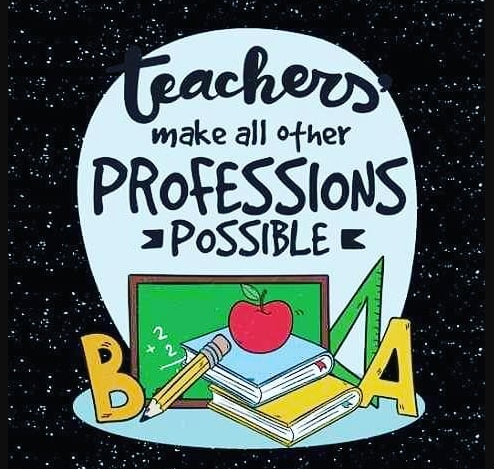
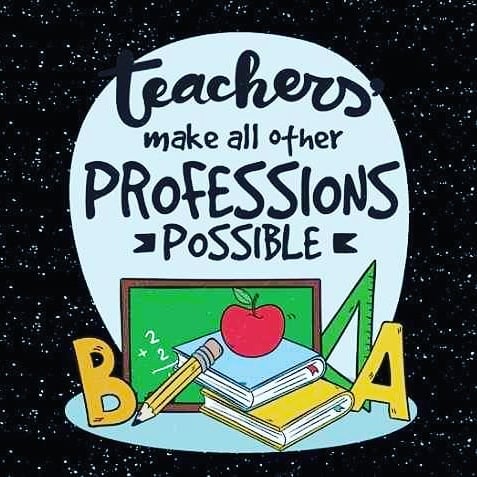
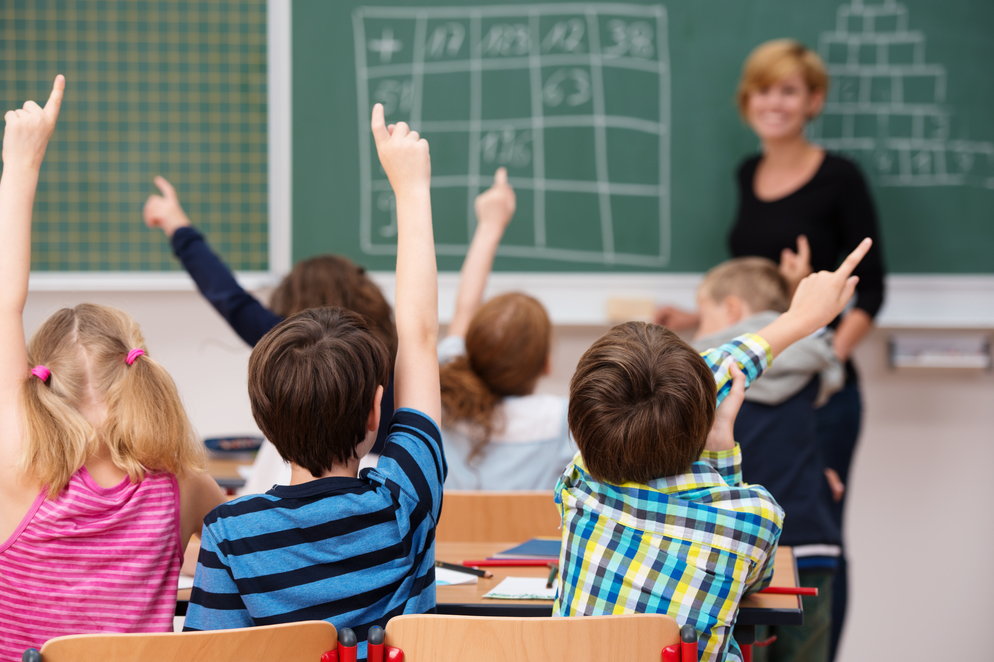
It's easy being a teacher, isn't it?
The ancient Greeks said: "If Athens does not have a shoemaker, the Athenians will walk barefoot. If they don't have a tailor, the Athenians will be naked. And if Athens does not have a teacher - there will be no Athenians. "
I am writing this article in the hope that at least some of you who are not engaged in this business will, when you read it, at least for a moment ask: How easy is it to be a teacher?
I have been working as a teacher for a long time. And I think that there are bad teachers, as in every business, there are good and bad ones. Still, most of us love a job that works and does it with utmost dedication and responsibility. However, there are many misconceptions about this profession. I will write today about the most common ones.
First I will tell you what is expected of us according to our pedagogical regulations:
"We are expected to have high moral qualities, humanity, to possess certain intellectual and speaking abilities and to have a fully developed personality. Also, it is necessary to have a good pedagogical and general education, to be aware of the need for continuous improvement, the spirit of collegiality, to govern ourselves and to have a positive attitude towards work. "
"A competent teacher loves his job, does not waste energy on class indiscipline and has authority that students accept. He has enthusiasm, integrity, honesty, honesty, fairness, consideration, care, modesty and compassion. "
"He has an understanding for students and their problems and a positive attitude towards young people. He has the ability to approach them, understand their needs and is ready to help them. He manages to establish friendly relations with them along the set boundaries, respects the student's personality and is required in accordance with the possibilities and abilities of the students. "
"A good teacher is responsible, consistent and fair. He cannot have double standards. He is dedicated, ready to cooperate and tactful. He is also adaptable, helpful, open, well-meaning and optimistic. "
"A modern teacher is creative and knows how to inspire. He is the organizer and leader of the teaching process, but also the coordinator, mentor, motivator and associate. "
Simple, isn't it?
What the majority of the public thinks about our business:
1. The teacher works 4-5 school hours during the day and has 3 months of summer vacation.
The job of a teacher is a demanding profession and the most difficult part is done outside working hours in the classroom. According to a survey conducted by the Government in Great Britain last year, a teacher works on average more than 50 hours a week. This data does not seem to be updated as I know many teachers who often work close to 60 hours per week. They spend a lot of time drawing up a plan for teaching, searching for literature, reading and correcting written assignments, devising new assignments, analyzing what has been done, assessing and assessing children's knowledge, and not just to make classes interesting and encourage students to participate in class, but to make sure that they have adequately supported each student individually and encouraged him to face new challenges. Children are often unpredictable so even the best-designed plans can fall into the water. That is why it is necessary for teachers to be flexible in planning and to count on numerous unforeseen situations, ready to rethink the way of teaching in order to meet the needs of students, from year to year.
As for the summer holidays, we also work when the students go on vacation (for me personally, that work is the hardest). In accordance with the law, our annual leave is as long as with any other employee. However, there is one difference. We have to make full use of it during the summer holidays, so there are no cheap holidays for us in the pre-season or after the season.
2. For teachers, going to seminars is just another excuse to take a day off.
You're right, we're going to seminars. We are obliged to have 120 hours of professional training during one school year. We improve in order to teach our students as well and as well as possible. And not only that, if we don't do that we can lose our job. What is not true is that because of going to seminars we take days off. Seminars are usualy held on weekends (in our free time) and we pay for these seminars out of our own pocket.
3. Those who have some knowledge and skills do some specific work, those who do not have it go to teachers.
I have to admit that I always feel sick when I hear this sentence. Everyone who has graduated from a faculty (I say a faculty because teachers have to finish it) has learned to do that job. It goes without saying that after the internship he will be able to do that job on his own. However, all teachers need many other knowledge and skills that are not taught in colleges.
No one can teach you how to pass on the knowledge you have to students who know nothing about it. I have a habit of quoting then "It is not knowledge to know knowledge, but knowledge to give knowledge".
4. Teachers are responsible for the entire education of the child.
I have heard many times how parents complain that their child does not know how to tie shoelaces, does not know the general culture, does not know the current events in the country ... Who is to blame for that? In their opinion, of course teachers.
Well, my dears, I will tell you my opinion on that. Every adult who spends time with a child is responsible for at least part of his education. Spend quality time with your children, talk, read, comment. Teach them how to tie shoelaces and practice it with them.
As for what we teach them from various subjects, help us by encouraging them to learn at home.
Just as the old African proverb says "It takes the whole village to raise a child"
For the very end, I will share with you an experiment that I read on one of the teacher forums.
If you want to know what it's like to be a teacher, stand in front of the TV on, turn it up and talk for 45 minutes about anything you know well. Of course you have to be louder than the TV and pay close attention to what is happening on the screen at all times. Whenever one of the housemates passes, answer each of his questions in a meaningful way and satisfy all their requests. During that time, be sure to be calm and pleasant, with a smile on your face in order to contribute to a better atmosphere in the room. Repeat this exercise at least 4 times every day (preferably with only short breaks for five breaks) for five working days, so you may then roughly understand what it looks like to be a teacher
. I'm just talking about holding classes here, you don't have to try everything we do, by which I mean writing numerous plans, preparations, research, designing classes etc.
After all that you have, I hope you have read, see how true the title of my article is:
It's easy being a teacher, isn't it?
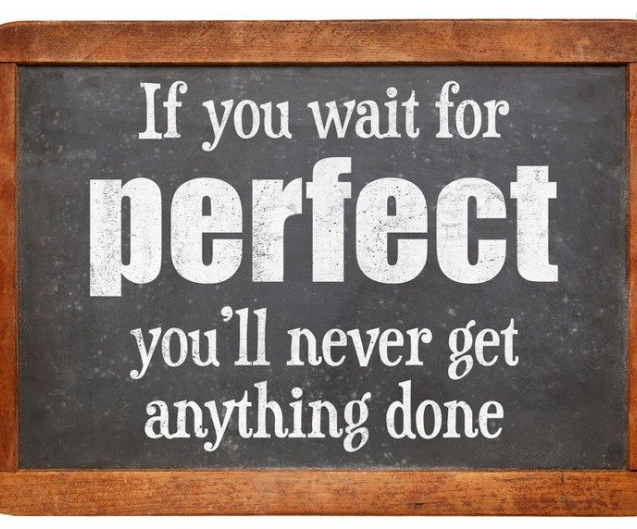
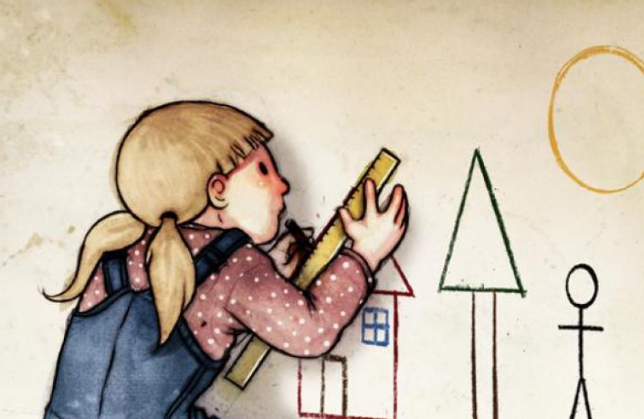
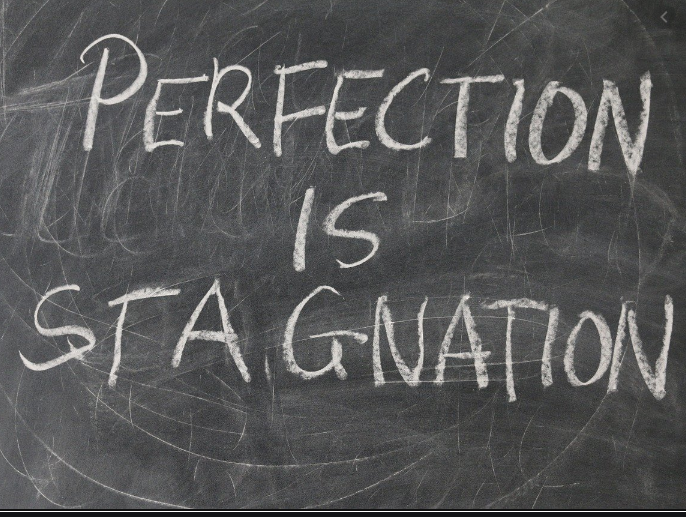
Do you make life difficult for yourself with perfection?
Perfectionism is reflected in the expectation of oneself to achieve perfection in everything we do, to achieve everything from the first time, easily and without mistakes. For some people, this attitude leads to high results, but the price is too high. The fear of making a mistake during the work process diminishes the satisfaction that an activity can give us. Even when the goal is achieved, there is no satisfaction, because a mistake can always be found.
Some others, in whom p
onism is even more pronounced, achieve less than they could, waste time dealing with irrelevant details and make more mistakes in the desire to avoid mistakes.
The main problem with a perfectionist attitude is that people who have it do not differentiate between themselves and the results of their work. If the job is done perfectly - they are perfect, if the job is done wrong - they are wrong.
That is a fallacy.
We are not the same as our actions. We are doing something better, something less well, something is not going well for us, and it is important to allow ourselves to be like that, instead of tormenting ourselves with too high standards and expectations.
Having high standards and striving for quality in work and life is fine, as long as we do not set them as a measure of our value. And as long as we are aware that mistakes and failures are inevitable and do not say anything about us and our qualities.
Perfectionism most often arises as a consequence of too much conditional and too little unconditional love during growing up. Too much criticism and too little praise. Criticisms of being instead of behavior also affect the development of a perfectionist attitude. "You are incompetent / stupid / crazy" instead of "You didn't study enough and that's why you got a bad grade / Be a little more careful / Try harder and you will succeed" leads to the construction of perfectionist criteria instead of realistic ones.
Children then experience reaching perfection and avoiding mistakes as a struggle for parental love, which for them is equal to a matter of life and death. When we grow up, we adopt those standards and continue to be too strict with ourselves. We condition our love for ourselves with our achievements.
How to get rid of perfectionism?
First, of course, admit to ourselves that we have perfectionist tendencies. Then, make a decision to change such an attitude and to have realistic expectations of ourselves in the future. This change takes time and conscious efforts are needed to bring about change. We need to pay attention to what we expect from ourselves, to recognize when we are too strict and to reduce criteria and expectations.
Instead of telling ourselves "Everything I do must be perfect / at the highest level", it is okay to expect ourselves to complete the task well enough and to allow ourselves to be satisfied with it. It is also important to differentiate the importance of certain tasks and jobs and to get rid of the "all or nothing" approach.
"Either work properly or don't work at all." It's better to replace. "I'll do the best I can in these circumstances."
Remind yourself that perfection is unattainable and that it is okay for what you do to be good enough.
Pay attention to everything you do well and praise yourself for it. Acknowledge your successes and achievements, although imperfect, they are yours and good enough.
Allow yourself to make mistakes, remind yourself that you, like all other human beings, have the right to make mistakes and fail.
Perfectionists view perfection as a path to love and acceptance. They believe that to be perfect and not to sin is a condition for being loved. And that's how they distance themselves from other people. They avoid intimacy because they are afraid that others will reject them when they see their imperfection. Other people find it difficult to relax next to them, because in contact with them they themselves are aware of their imperfection.
When we allow ourselves to make mistakes, we can be more relaxed, but then others in our society also feel more relaxed and pleasant.
You can encourage yourself with these sayings every day, and in that way bring your attitude from the perfectionist to the realistic over time:
"It's not worth being free if it doesn't include the freedom to make mistakes."
Mahatma Gandhi
"He who works makes mistakes."
"Learn from your mistakes."
"Ideals are like stars. We can't reach them, but we can orient ourselves towards them. "
"Imperfection is not our personal problem, imperfection is a natural part of our existence."
Tara Brach
When you make a mistake or fail at something, instead of blaming yourself and declaring yourself incompetent, analyze the situation, see what you did well, what you can learn from the mistake and what you can do better / differently next time.
Like all great goals, this goal, liberation from perfectionism, is possible and easier to achieve if we divide it into smaller ones and take steps towards it every day. For this goal, it is especially important to notice small changes and to praise and reward ourselves for every not perfect, but good enough step towards it.
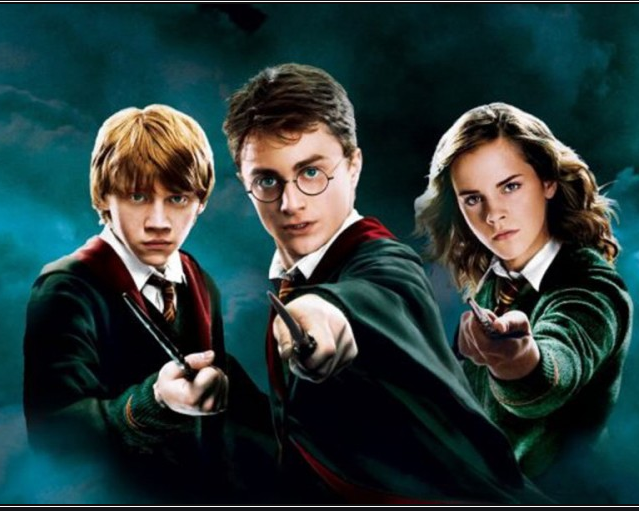
The magic of Harry Potter becomes eternal
I refuse to believe that there is someone who has not encountered Harry Potter movies. You must have watched a scene of so many parts.
Namely, who would not be attracted by the story of a boy who as a baby is left without parents and is left to his aunt and uncle who does not love him? He lives with thoughts of how worthless he is for almost eleven years, until he finds out overnight through facts that sound unreal when collected. He is a boy who survived, a boy who goes to school for wizards. Admit it, if you received a letter inviting you to one such school, you would certainly not refuse, would you? Magic, a completely different world, the knowledge that you are special, oh how special, Harry builds as a person and reading about his growing up we meet a bunch of wonderful and not so wonderful people who are always a step or two close to Harry. To follow that journey watching movies and reading books, over and over again I would say.
The British made sure that the magic of Harry Potter lasted forever.
An official Harry Potter statue will be erected in London’s Leicester Square this month. The statue, created by sculptor Andrzej Szymczyk, will complement the Scenes in the Square film gallery, which already houses monuments to characters such as Laurel & Hardy, Bugs Bunny, Gene Kelly as she sings Singin 'in the Rain, Mary Poppins, Mr Bean and Paddington. "The story of Harry Potter has fascinated fans of all ages for decades and we hope it will continue to bring joy to people," said a project representative.
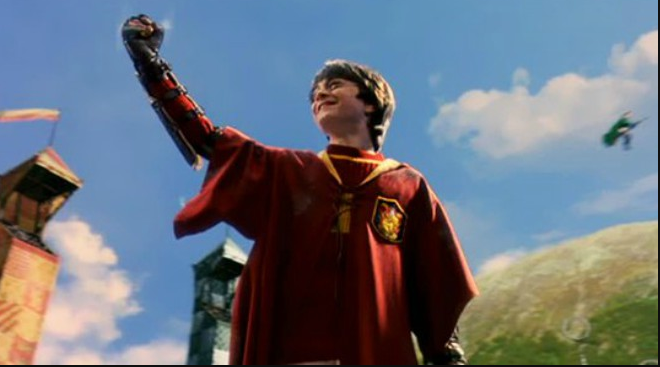
Stauta portrays actor Daniel Radcliffe in his famous role, from the first film adaptation of "Harry Potter and the Philosopher's Stone."
The statue will be placed on the north terrace of the square near the place where the franchise was premiered in 2001.
"The statues in this impressive installation represent some of the most significant characters and actors in film history, and we are thrilled to see Harry Potter hovering over the square," commented Josh Berger, global development president for the Harry Potter franchise at Warner Bros.
O. K. Boomers, Generation Z has arrived
You’ve probably heard the terms millennials or Generation X or Y many times without being quite sure what they mean. These are generations that were born at different times and that differ from each other precisely because of the conditions and habits in the years in which they grew and matured.
Baby boomers
Baby boomers are all born after the war, between 1946 and the 60s. years. As the name suggests, most babies were born in the post-war period, and demographers and analysts explain that it was quite logical. In America, in 1950, the population increased by over two and a half million. Today, baby boomers are mostly older than 60, they used to buy records, let their hair down, protest against wars ...
They are also recognized by the fact that they are afraid of technology or do not understand it, so they usually use mobile phones or e-mail only for work. The new generations seem to them not to be fully committed to the work they do. They still have the idea that if they don’t see employees in the workplace, it means they don’t even work. They live to work.
Generation X
Generation X were all born between the 1960s and 1980s. They came after baby boomers, and they describe them as mostly highly educated, happy and active people. They better accept religious differences, sexual orientation, class, race or ethnicity. They grew up in the shadow of their parents, baby boomers, and watched them sacrifice themselves for the work they do. Unlike them, those from Generation X work to live and do not hide their critical attitude towards the world.
Millennials, or Generation Y
Millennials or Generation Y were all born between 1980 and 2000. These are the ones who are getting used to new technologies much faster today than others. It is a generation that is now setting its own laws and changing the world. They grew up with technology, so the hardest thing for them is when they don't have internet or their phone battery runs out.
Generation Z
Generation Z are all born after 2000. They are children of Generation X and Generation Y and are young for general analysis, but analysts claim that this is the generation that lost its classic childhood because they grow up with a tablet and laptop in their hands, mature faster and prefer virtual socializing.
Very often, the suggestions or remarks of the elders are answered with O.K. Boomer
And what generation do you belong to?
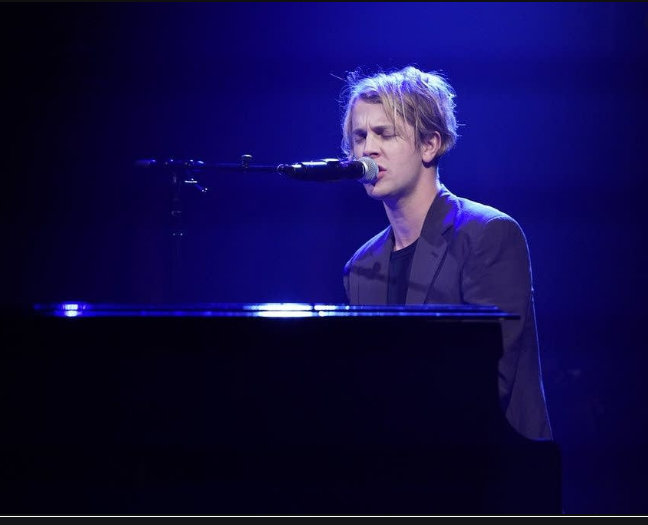
One slightly different love song - Tom Odell - Another Love
My daughter took me to the Tom Odell concert last year in Belgrade. Until then, I didn't know about this singer, and I really liked the concert. For those who don't know about this singer, let me say something about him. Thomas Peter, Odell English singer-songwriter, was born on November 29, 1990. He became famous with the song Another Love, which he released in 2012, and for which he was awarded. This versatile concertmaster plays the piano while singing his songs. He has released three albums so far:
Long Way Down (2013)
Wrong Crowd (2016)
Jubilee Road (2018)
I enjoyed his concert, and I hope you will spend a nice evening listening to him
https://www.youtube.com/watch?v=MwpMEbgC7DA
How to get rid of the fear of uncertainty?
How to get rid of the fear of uncertainty?
Great question.
The answer is very simple - no way.
It is impossible to get rid of the fear of uncertainty, but don't worry, the situation is not hopeless
Although it is impossible to completely get rid of the fear of uncertainty, it is possible to get rid of the bad consequences of that fear.
Negative emotions have a purpose. Their function is to enable us to function successfully and safely.
Many people make this mistake - they perceive the feeling of fear either as a sure sign of danger, or as a sign that something is wrong with them, that they are too insecure or timid.
When you accept the fear of uncertainty as a normal and natural emotion, it will no longer stop you and stop you in life. Don't wait to get rid of the fear, go forward with it and through it. In this way, you will turn the unknown into the known, and when it is known, the fear disappears.
All people feel fear of uncertainty, but almost no one will admit it. Like, it's a shame. And it's not. He's normal. And natural.
Any unknown situation is a potential danger and that is why the fear of uncertainty is useful. To warn us and to lead us to be careful, to pay attention to the environment and circumstances and to protect ourselves if necessary.
Instead of trying to get rid of it when you feel fear of uncertainty, take it as an invitation to ask yourself.
What scares me in this situation?
What could be dangerous?
How can I protect myself?
What is the worst that can happen?
Asking these questions will help you stay in touch with reality and prevent fear from paralyzing and stopping you.
Now think of a situation where you feel fear of uncertainty.

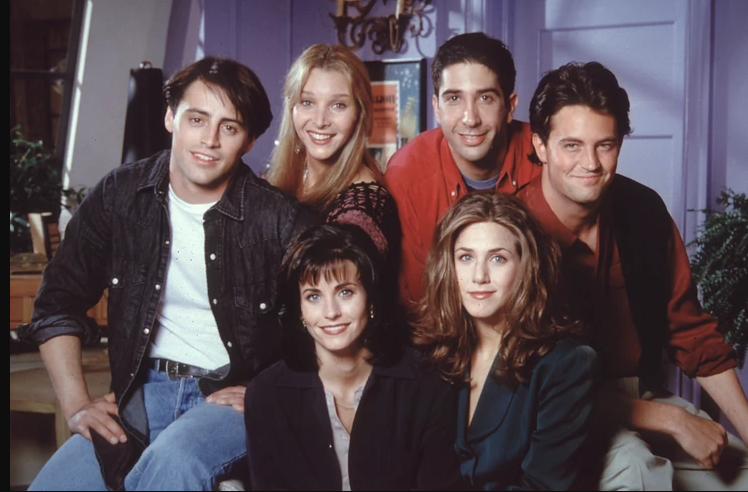
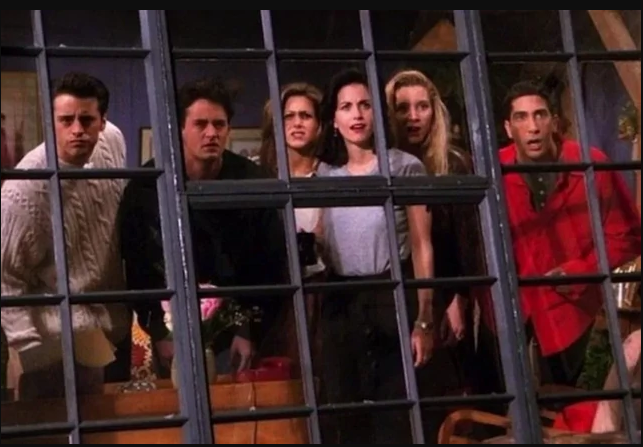
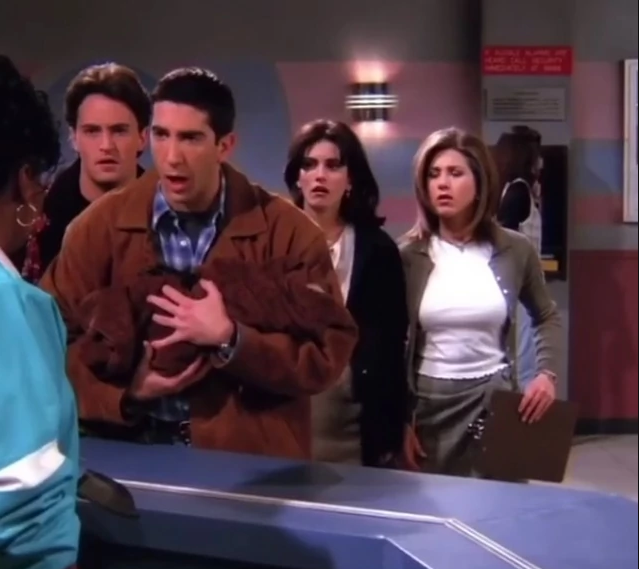
Lesser known facts about the TV show F*R*I*E*N*D*S
The show, which aired for the first time on September 22, 1994, changed television history forever, and also created some of the highest paid actors on television.
It is quite astonishing that 26 years after the first episode and 16 years after the finale of the series, we are still fascinated by the group of six "Friends", who became stars with this series. Jennifer Aniston (Rachel Green), Courtney Cox (Monica Geller), Lisa Kudrow (Phoebe Buffet), David Schwimmer (Ross Geller), Matt LeBlanc (Joey Tribune) and Matthew Perry (Chandler Bing) are still planetarily famous and popular in all countries of the world, although many of them did not become famous for their roles after the cult series.
More than 52 million Americans watched the finale of "Friends" on May 6, 2004, making this series the most watched television episode in the first decade of the 21st century. Every day, reruns of episodes are shown around the world, and the "Friends TV show" wins the sympathy of a younger audience every day and is one of the most successful television projects of all time.
When NBC bought the pilot, the title "Insomnia Cafe" became "Friends Like Us", then "Across the Hall", and after another untried name "Six of One", the series finally got the name "Friends", ie "Friends". ”.
Although this was not the case on television before, all six actors in the series always negotiated with the producers together in a group. In the first season, each member of the cast earned about $ 22,000.
In order for the "Friends" series to continue filming, in 1997, each of them demanded $ 100,000 per episode. This negotiation was successful, and the series was so popular that in the last season, everyone earned, no less - no more, than a million dollars per episode, which was an absolute record at the time.
Unusual replicas from the film, the cult cafe "Central Perk", which is still one of the most visited tourist attractions in New York, humor that satisfies the majority and unbreakable friendship are one of the main features and the reason for success.
Research shows that reruns are watched equally, if not more, than premieres, which makes "Friends" firmly on the list of the most watched television shows in the history of American production. That is why the series is a kind of phenomenon, since when the main actors still live and earn huge sums.
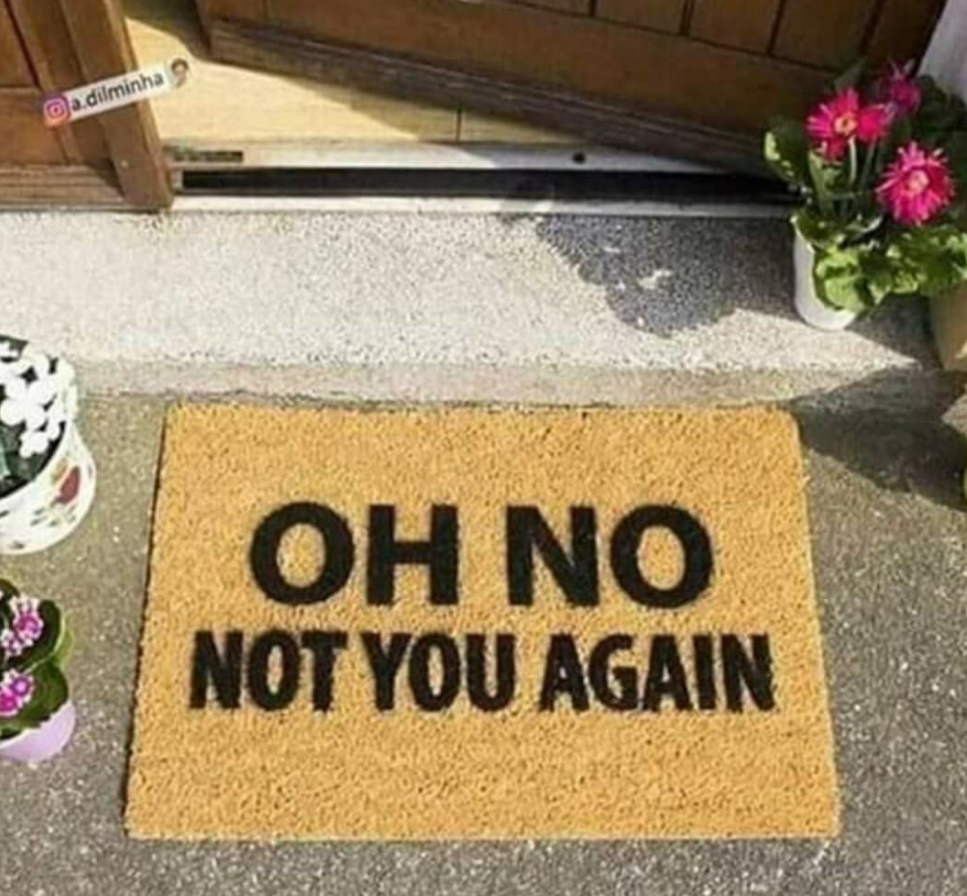
A place where you are always welcome
Do you like to joke? Do you know how to accept a joke? How would you react if you went to visit someone and saw a doormat like this in front of the door? I would laugh, would you?
Bela cao - A song that became a symbol of the struggle for the common man
The song "Bella ciao" is a well-known song of the anti-fascist movement in Italy, which was accepted and translated into other languages. It is a folk song that has its roots in the workers' song of a rice picker from the valley of the river Po. It was first recorded in 1906, when workers recognized their right to eight working hours a day. The phrase "bella ciao" repeated several times in a row could mean a farewell to youth and beauty that is lost on the swampy ground between hard work and trouble. The partisans sang the old song in somewhat different circumstances and partially changed the text, but it still expresses the same aspiration for justice and freedom.
The song Bela cao is often heard at football matches when fans celebrate the victory of their club.
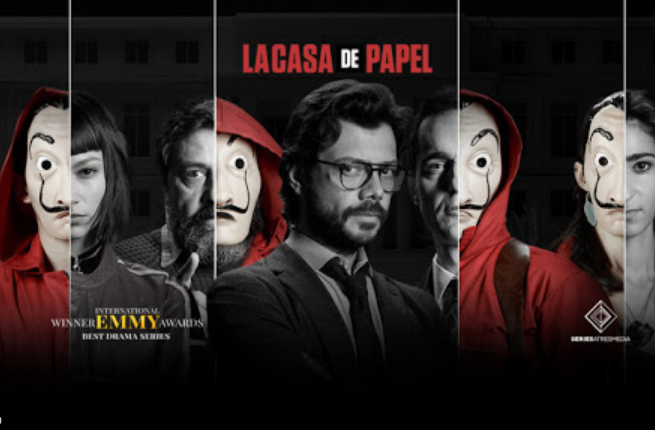
In recent years, it has become very famous mainly because of the series La casa de papel because that music accompanies the plot of the whole series.
With this wonderful song, I wish you all a pleasant Saturday night.
https://www.youtube.com/watch?v=nJTOD5jjac4&fbclid=IwAR2i1z8tA1a5lyGhsFcduIgB24-5vpk4Do8A1yvEdlIPoxJ9L_EXsbe6P9U
Goodbye, my Beautiful
One morning I woke up
goodbye my Beautiful, goodbye my Beautiful, goodbye my Beautiful, goodbye
one morning I woke up
and I found the invader.1 https://lyricstranslate.com/en/Bella-ciao-Goodbye-my-Beautiful-my-LOve.html#footnote1_t16x3g2
Oh partisan2 take me away https://lyricstranslate.com/en/Bella-ciao-Goodbye-my-Beautiful-my-LOve.html#footnote2_dqneq2w
goodbye my Beautiful, goodbye my Beautiful, goodbye my Beautiful, goodbye
oh partisan take me away
that I'm feeling like dying
And if I die as a partisan
goodbye my Beautiful, goodbye my Beautiful, goodbye my Beautiful, goodbye
and if I die as a partisan
you must bury me
You will bury me over there, on the mountain
goodbye my Beautiful, goodbye my Beautiful, goodbye my Beautiful, goodbye
you will bury me over there on the mountain
under the shadow of a wonderful flower
And all the people passing by
goodbye my Beautiful, goodbye my Beautiful, goodbye my Beautiful, goodbye
and all the people passing by
will say "what a wonderful flower!"
And this is the flower of the partisan
goodbye my Beautiful, goodbye my Beautiful, goodbye my Beautiful, goodbye
dead for our freedom
and this is the flower of the partisan
dead for our freedom
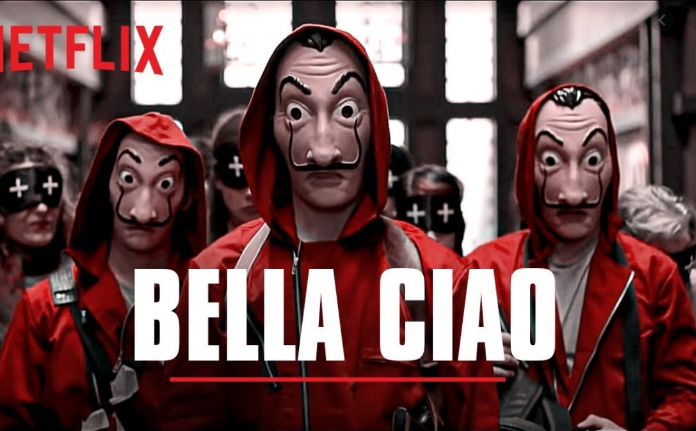
Why and how the La casa de papel series experienced planetary success
The series La Casa de Papel (House of Paper) is apparently one of the biggest profiteers of the global quarantine lifestyle in the spring of 2020. While in the years when the first season aired, the series gained an enviable fan base and could be considered an absolute success and mega hit of Spanish TV network Antenna 3, a real miracle happened when the rights to continue filming were taken over by Netflix (They named her Money Heist)- the records held by hit series like Game of Thrones, Westworld, Stranger Things, Walking Dead and others were broken years ago.
WHAT IT IS?
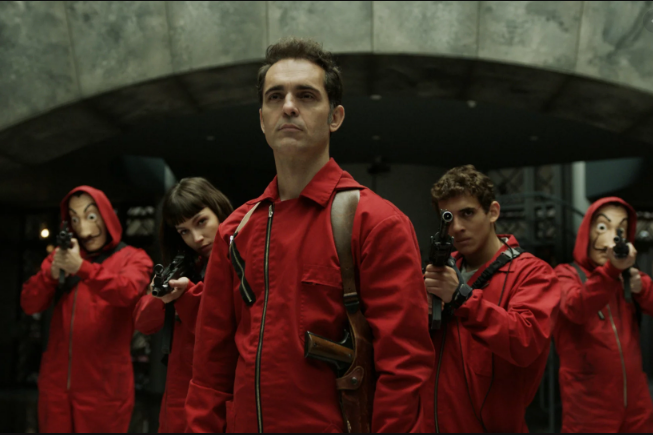
In short, he is a mysterious and intelligent guy known as "the Professor" (Álvaro Morte) who gathers a group of talented criminals to commit the robbery of the century together. Each of the robbers has a code name for one of the cities, and the narrator is "Tokyo" (Úrsula Corberó), an impulsive young criminal who has nothing to lose.
In the first two parts, the thieves attack the Spanish national mint, where they take hostages as part of their plan to print out and escape with 2.4 billion euros. In the third part, the surviving thieves, with the help of new members, plan and carry out an attack on the Bank of Spain.
What is the secret of the success of this series
What exactly did it take for a series that was not even filmed in English to experience such planetary success?
In short, this is a small man's uprising against a large system that is cold and without empathy - taking matters into its own hands. A group of a dozen people on the edge of the law is gathered by a mysterious leader, their organizer and ideologue, on a mission to break into the mint, but not to rob it but to get out of it with over 2 billion freshly printed money.
Although it sounds like a clichéd Hollywood screenplay, La Casa de Papel with its story and the realization of that story with Ocean 11 dynamics and melodramatics that only Spaniards can conceive (same director, Alex Pina, directed by Serano) created an authentic atmosphere and a lot of space to identify with someone of characters. That identification carries much greater potential than the realistic - it is an identification with something we could imagine in our teenage fantasies that one day we will become - rebels with an idea, bad guys with irresistible charisma, heroes with many negative traits in which in the end always prevails well.
The concept is almost archetypal - Robin Hood with the face of Salvador Dali and in a red working class jumpsuit. There is a class division all over the planet and it is like an elephant in a room when we pretend not to see most of the time. While serving a system that deepens this division, we hide somewhere in ourselves the need for rebellion, which we rarely know how to articulate in the dense schedule of obligations and pleasures that make up popular culture and the capitalist rhythm of life. La Casa de Papel fills that gap - a small man stands on the line of a large system and manages to surpass it.
In the background is Bella Ciao, the anthem of the proletariat, the people, revolt against the great enemy and faith in victory that comes only with sacrifice and unity. These thieves are not only there to satisfy their selfish needs but to show what all can be and do each of us, that borders do not exist. And this time, that enemy is in the present and it is very real - it is a system to which we all belong and whose shortcomings we are aware of. The comparison is very likely completely inappropriate from an artistic point of view, but just as we identified with Zhang while correcting part of the historical injustice in the American South in Tarantino's film, so we now identify with an organized criminal group that causes people to take to the streets. , and police inspectors re-examine whether they are on the right side in the eternal struggle of good and evil.
In the background is Bella Ciao, the anthem of the proletariat, the people, revolt against the great enemy and faith in victory that comes only with sacrifice and unity. These thieves are not only there to satisfy their selfish needs but to show what all can be and do each of us, that borders do not exist. And this time, that enemy is in the present and it is very real - it is a system to which we all belong and whose shortcomings we are aware of. The comparison is very likely completely inappropriate from an artistic point of view, but just as we identified with Zhang while correcting part of the historical injustice in the American South in Tarantino's film, so we now identify with an organized criminal group that causes people to take to the streets. , and police inspectors re-examine whether they are on the right side in the eternal struggle of good and evil.
https://www.youtube.com/watch?v=hMANIarjT50
If you haven't watched this series yet, watch the official trailer for the first one for its first season and judge for yourself whether it will one day become a cult series and whether it deservedly achieved planetary success?
A sure path to greater self-confidence
How is it possible to see mistakes so easily and focus only on them?
Why is it so hard for me to see what I'm doing well?
These are questions I often hear from a lot of people.
The answer to both questions is very simple - the school system has taught us that.
It would be a miracle if all of us who have undergone a decade of "treatment" in a system focused on looking for mistakes and punishing for them have healthy and strong self-confidence.
What is true, correct and well done is taken for granted. Errors and omissions are sought.
And when we finish school, we continue that "treatment" ourselves. We are simply not taught otherwise. We think that this is the only possible and correct way of functioning.
And it's not!
Not only is it not the only one possible, but it is not even correct!
He is very wrong. And harmful!
If you are focused only on your mistakes and omissions, it is logical that you feel unsuccessful and inadequate.
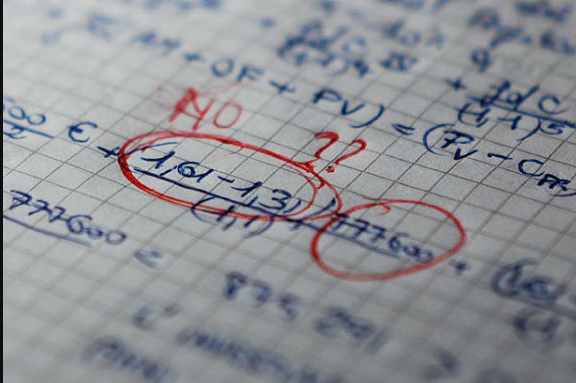
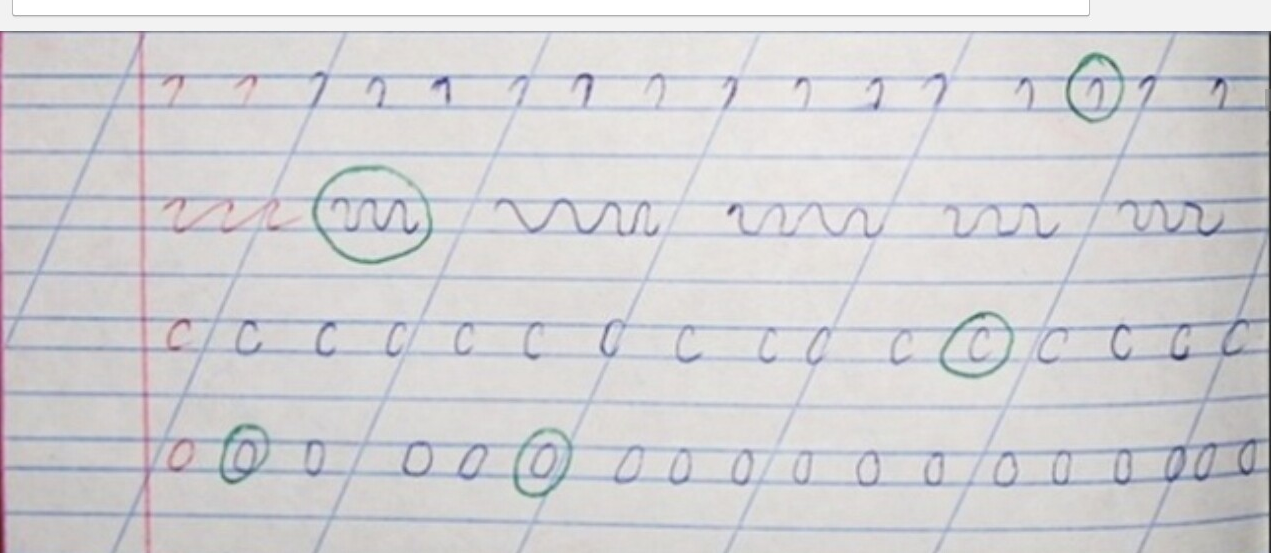
I believe that you are familiar with this picture.
And I believe that you are familiar with the feeling of failure that follows when everything you have done wrong is highlighted in red.
Well, imagine something completely different now.
Imagine that at school they marked everything that was accurate and well done with a green pencil.
Like this
One of my friends did just that while teaching her daughter to write.
And what do you think were the results? More importantly, how do you think her daughter felt while learning the letters?
When we focus on what we do well, our self-confidence grows over time. It becomes firm and healthy.
This does not mean that we should lie and deceive ourselves that what we are doing is perfect from the first.
Not.
It is important to be aware of our mistakes and omissions in order to correct them.
The key difference is the fact that we do not focus only on mistakes. And not to be afraid of mistakes.
Mistakes are not proof of our incompetence. Mistakes are proof that we learn and work.
I will repeat, from an early age we have been taught to take things for granted and to always look for mistakes.
How can we change that?
By setting ourselves every day and in everything we do, we remind ourselves what is good and exactly what we have done. In the beginning, it is not easy. In fact, as simple as it sounds, it goes pretty hard.
Don’t let that discourage you.
If you only remember one little thing that you did well to begin with, it is also a huge success. Over time, little by little, you will learn and become accustomed to seeing what is good before mistakes and omissions.
It is much easier to accept a mistake when we know that not everything we do is wrong.
Therefore, in addition to the usual, red pencil with which we mark our mistakes every day, we try to use this other, green pencil as often as possible.
With beauty and joy against peer violence
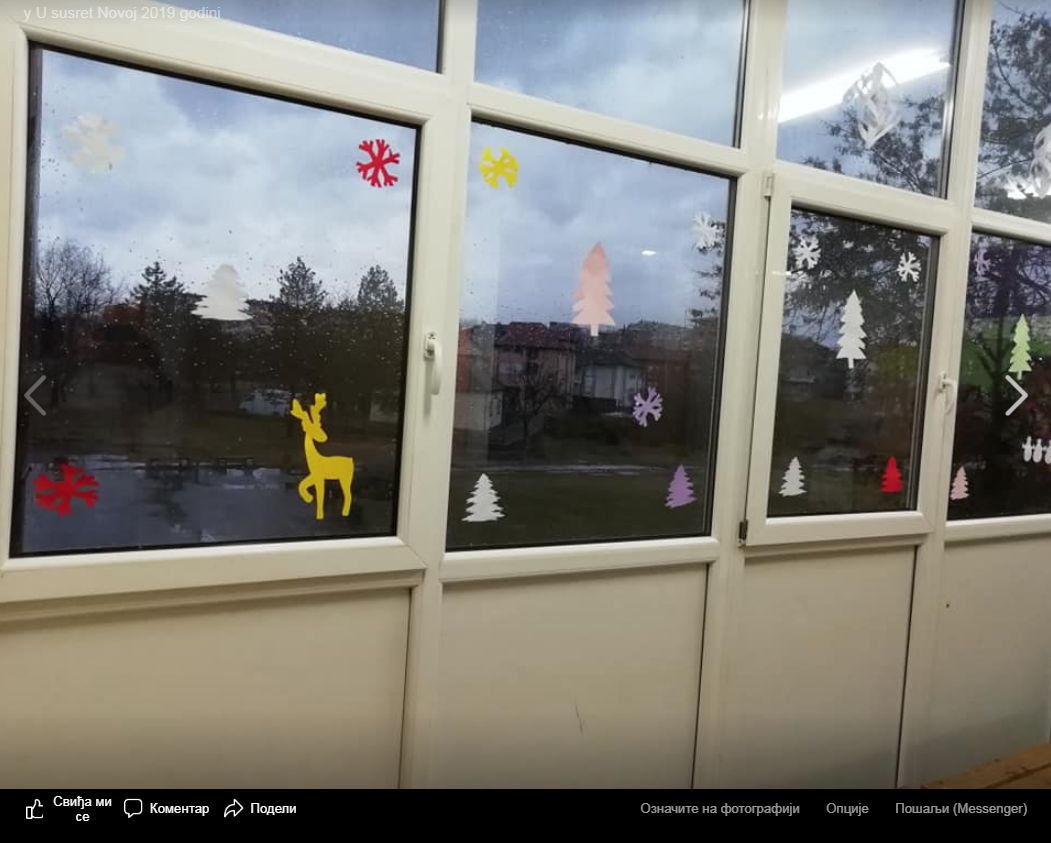
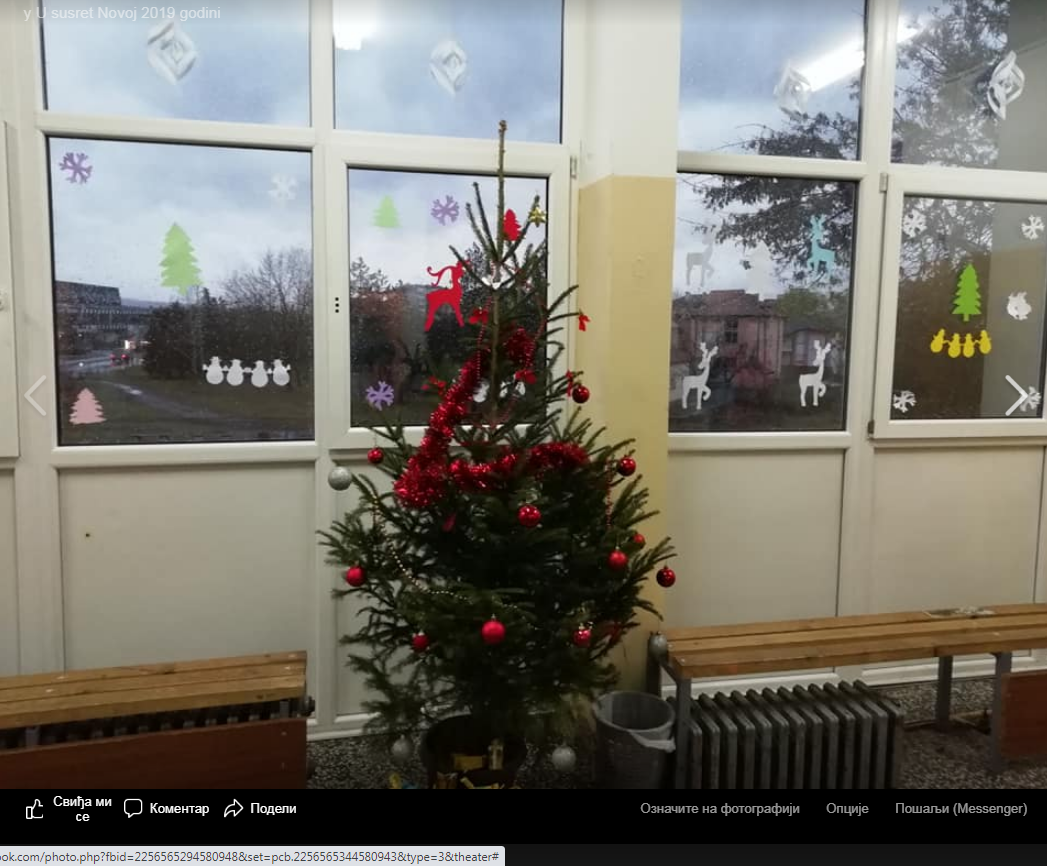
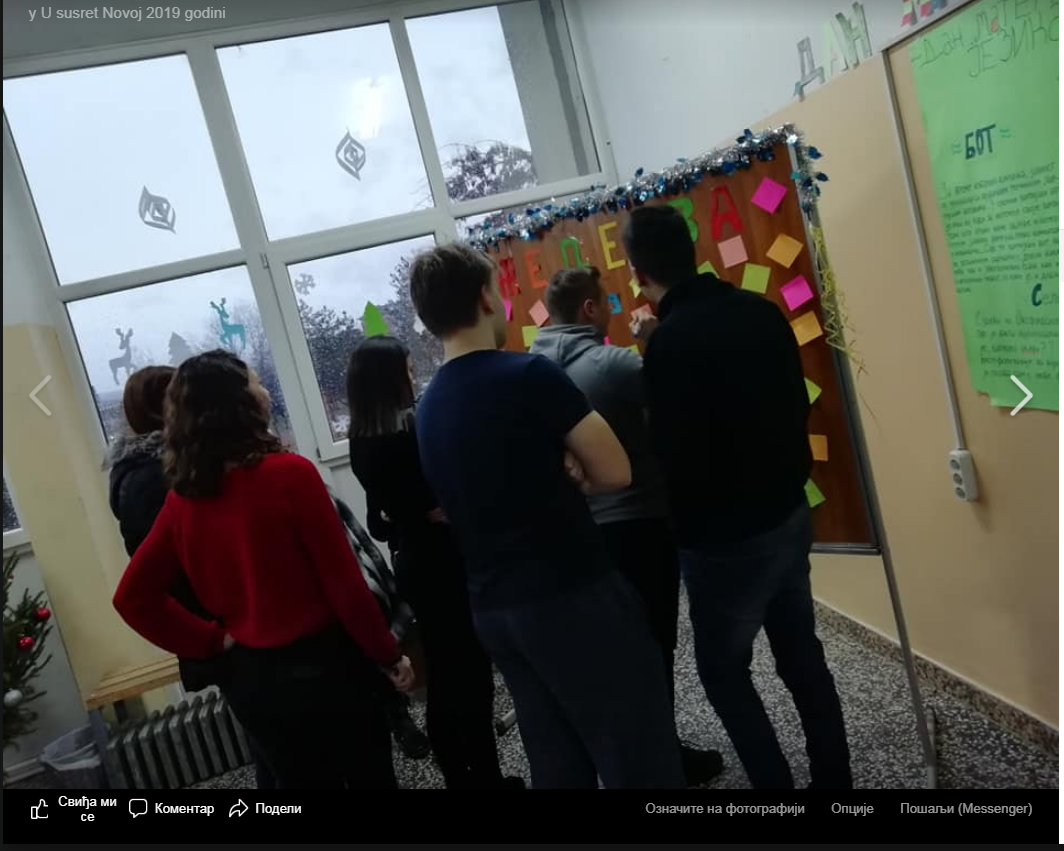
The problem of peer violence has been very present lately. Young people very often resort to various types of violence and thus can harm their schoolmates, but also themselves. Education on this topic is very important and should be constantly conducted. In my many years of work at the school, I have noticed that young people prefer to listen to their journalists from us, their teachers, or from some experts we have brought in to talk about this topic. That is why the Peer Team for the Fight against Violence, Abuse and Neglect was established in the school back in 2011. The team was made up of a group of young enthusiasts, and I was their first coordinator. I let them come up with ideas on their own, and only guided them when needed. They came up with wonderful actions, which are still being realized today. One of them is beauty and joy against violence.
The idea of the Team was that the more beauty around us and the more joy we bring to ourselves and others, the less violence there will be. So, now traditionally before every New Year, students decorate the school. The process itself begins with them making decorations themselves, procuring a Christmas tree that has a sod and which, after planting in the school yard, they put up boards on which everyone who wants (and wants a lot of them) writes their New Year's wishes. and teachers ... That wonderful, festive atmosphere really contributes to making us all feel better.
Ever since the founding of the Peer Team, the students have been saying that they are like a family to each other. The first members of the Team are now young people who have graduated from college, most of them have been employed. However, they still see the Peer Team as something of their own and are ready at any moment to help with anything that is needed.
Thanks to the Peer Team, they learned a lot of things, so that even after leaving school, they continued to spread joy and engage in various charitable actions.
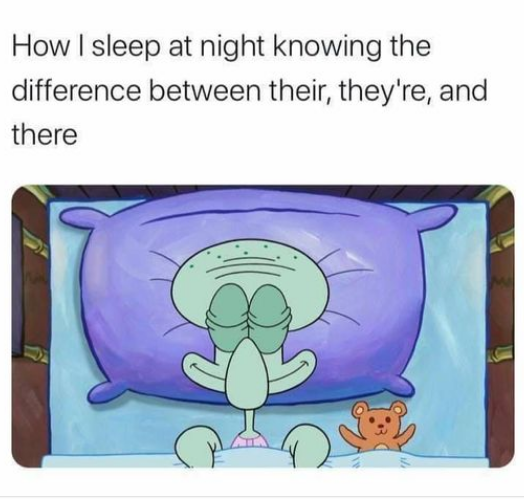
Big translation problems - In English their our know rules
Yes, the title is intentionally misspelled. The hall in the picture shows how translating is really difficult for many people. All those words are so similar, and in fact they all mean completely different things because sometimes it seems to us There are no rules.
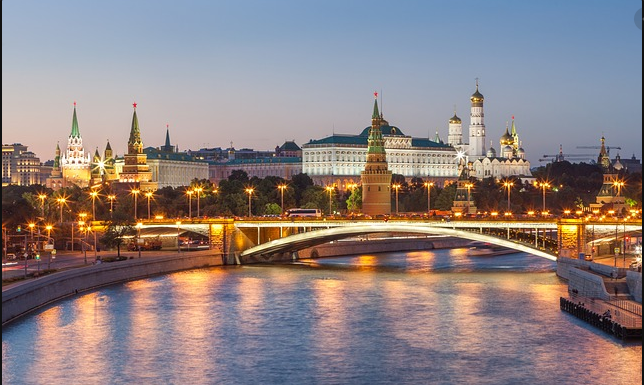
Romantic Russian song Moscow nights - Romanticna ruska pesma Podmoskovske veceri
With a beautiful Russian romantic song Moscow nights, I wish you all a pleasant evening before the weekend.
Moscow nights
Not a rustle heard in the garden,
All is standing still till sunrise.
If you only knew, how dear are you
Magic Moscow nights.
If you only knew, how dear are you
Magic Moscow nights.
River moving on and not moving on,
All in moon silver light.
You can hear the song and not hear the song
On those quiet Moscow nights.
You can hear the song and not hear the song
On those quiet Moscow nights.
So my dear why, are you squint your eyes,
Why bow your head so low?
It's so hard to say and not realize
Everything that my heart has known.
It's so hard to say and not realize
Everything that my heart has known.
And already dawn getting so near,
So be kind, please, make it right,
Those summer nights don't forget my dear
Magic Moscow nights.
Those summer nights don't forget my dear
Magic Moscow nights
https://www.youtube.com/watch?v=KairmsARpyo
Uz prelepu rusku romanticnu pesmu Podmoskovse veceri svima vam zelim prijatno vece pred vikend.
**Podmoskovske Večeri**
Ne čuje se u vrtu ni šuštanje,
Sve je ovde zamrlo do jutra.
Kad bi znali Vi, kako su meni drage
Podmoskovske večeri.
Rečica teče i ne teče,
Sva u srebru mesečine.
Pesma se čuje i ne čuje
U te tihe večeri.
Što'to ti, mila, promatraš iskosa,
Nisko glavu naklonivši?
Teško je izreći i ne izreći
Sve što je na srcu u mene.
A svitanje je već sve zametnije...
Tako, te molim, budi dobra,
Ne zaboravi ni ti, te letnje
Podmoskovske večeri!
Pointless and harmful: These are the worst diet tips you can hear
Experts in proper nutrition and exercise have singled out some of the most common and worst myths about nutrition and revealed to us what we should do if we want to preserve our health and shape.
Subtracting and adding calories
Losing weight and maintaining weight is a slightly more complex task than subtracting and adding calories, and using this method can lead to an impoverished diet that can cause long-term damage to mental and physical health. In addition, some foods, although very low in calories, can be harmful to health.
Instead of counting calories, you better focus on choosing foods that suit your body type, that will balance hormones, help burn fat and improve metabolism. There is no general formula for choosing these foods and it varies from individual to individual, but it is important to balance the intake of protein, healthy fats and carbohydrates in the diet. Also, you should include more fresh foods such as vegetables and fruits in your diet.
Eliminating carbohydrates from the diet
One of the worst and most widespread food myths lately is the one about the harmfulness of carbohydrates, which should be completely eliminated from the diet. First of all, not all carbohydrates are the same, and as an important source of energy, they give our body endurance, concentration and enable faster recovery.
Although the rejection of carbohydrates can give results, it is not sustainable in the long run because it deprives the body of vital nutrients. Instead of eliminating all carbohydrates from your diet, try to replace refined cereals, such as those found in white bread, with less processed ones such as those in rye bread, and adjust portions to a balanced diet with other nutrients.
**Vežbanje će ispraviti greške nezdrave ishrane**
Kao način postizanja optimalnog zdravstvenog stanja, stručnjaci preporučuju zdravu, uravnoteženu ishranu i redovno vežabanje. Ideja da ćete imati telo iz snova samo zahvaljujući vežbanju, jedan je od najvećih mitova.
Preterano vežbanje, suprotno vrlo raširenom mišljenju, podstiče u telu reakciju na stres, a kad smo preplavljeni kortizolom i adrenalinom znatno je teže gubiti težinu. Umesto napornih vežbi po preporuci nekog "Instagram fitnes gurua", pametnije je vežbati onako kako se osećate prijatno i što vam čini zadovoljstvo. Trudite se da vežbate 30 do 45 minuta, pet puta nedeljno, uz dan ili dva odmora svake nedelje.
All sugars are the same and their intake should be limited
The sugar in fruits differs significantly from the sugar in sweets and various sweets, and fruits, unlike sweets, give the body fiber, vitamins, minerals and a longer feeling of satiety. However, for a balanced diet, you should not overdo it with fruit intake.
The six most common myths about the CIA
On this day in 1947, the Central Intelligence Agency (CIA) was founded, and its headquarters are located in Langley, Virginia. Many things about that American agency are shrouded in secrecy, and various conspiracy theories are often tied to it. The CIA is also a frequent topic in Hollywood movies, which is why many things about it are misrepresented.
Let's get rid of some of the most common myths about the CIA
1.Not all CIA employees are spies
The CIA has a lot of workers, operatives, analysts, librarians, people in charge of communication ... and they are not agents. Spies are those recruited by the CIA to work for the agency.
2.Most of them are allowed to say where they work There are officials who live in secret, so they are not allowed to reveal information about their work, but most do not live that way. Most workers have a regular job from 9 to 17.
3.CIA officers do not carry weapons The public often confuses FBI agents and CIA officials, but the CIA does not have a law enforcement function. Its officers collect and analyze data and do not arrest anyone.
4.The actions do not end with shooting and chaos In fact, it is quite the opposite. If an operation is carried out, no one will probably even know that the CIA is present.
5.The CIA does not keep all government secrets Just because someone works in the CIA does not mean that they have unlimited access to government secrets. Every officer has access to information meaningful to the specific job they are doing.
6.The CIA does not create foreign policy The agency is an independent source of information and intelligence for policy makers, not its creator
An effective way to solve problems
- You know how to eat an elephant?
- No. How?
- Bite by bite. Although
I heard these words many years ago, I often remember them. Bite by bite. Step by step
. We all need to remember them often because we are often paralyzed by fear of the task before us. I can not do that. I can't at once. Dad says he has to at once. And it must be without error.
So often we were scolded, even insulted, when something came out the first time we do not do without error, to be in our brain made a path that connects task and fear.
Must suddenly.
Must be without error.
"Bring a basket of earth to one place every day and you will make a mountain." This is Confucius' version of the recipe for eating an elephant.
I have known a girl for a long time whose father did not read Confucius, in fact he did not read anything. Although very intelligent, life circumstances were like that that there was not much space for schooling. He finished his trade and got a job.
When a strong intellect is denied exercise, he knows how to deviate into narcissism. I'm better than everyone. I'm not wrong. My daughter is the best. She is not wrong. I have to control her. She is completely in my power. We must not be wrong! Must not!
It would be nice if instead of the stepfather of an aggressive, cynical drunkard when he grew up, he had someone as wise as Confucius. To tell someone, "It doesn't matter how slow you progress, as long as you go forward and don't give up. ”
That he had someone to teach him life, patiently, with love, with understanding and respect, perhaps his little girl would not be terrified of mistakes and paralyzed by perfectionism
Therefore, do not be afraid of tasks.
Remember. HOW TO EAT AN ELEPHANT? BITE BY BITE
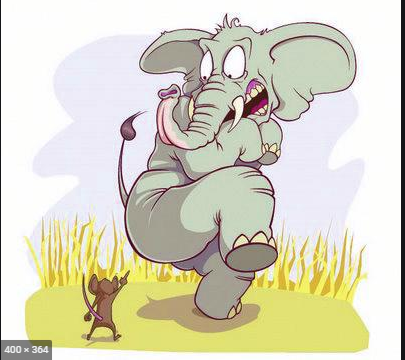
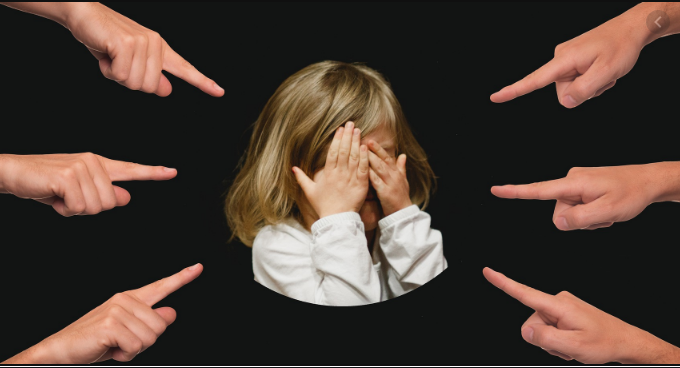
The impact of the global problem on local business
Famous gondoliers in Venice have reduced the maximum number of tourists they can transport in boats, stating that they had to do so because of overweight tourists
Unlike elevators, where only six people or the maximum weight is written, we do not have a scale for measuring people, which is why we have reduced the number of passengers, "said the president of the Association of Venetian Gondoliers, Andrea Balbi."Bombs are being loaded from some countries. And when the boat is fully loaded, the hull sinks and water enters. It is dangerous to drive with more than half a ton of meat on board," Roverato said.
The profession of gondolier has existed since 1094, and today it is practiced by 433 gondoliers and 180 replacement gondoliers.
"It's a matter of tradition. Who knows better than a gondolier about that business. Channels, buildings, the history of the city. The job of a gondolier is unique, there are 433 of us and if we found someone from Paris, New York or another city, it would not be a continuation of tradition "It would be like a pizza master who is not from Naples," Balbi said.
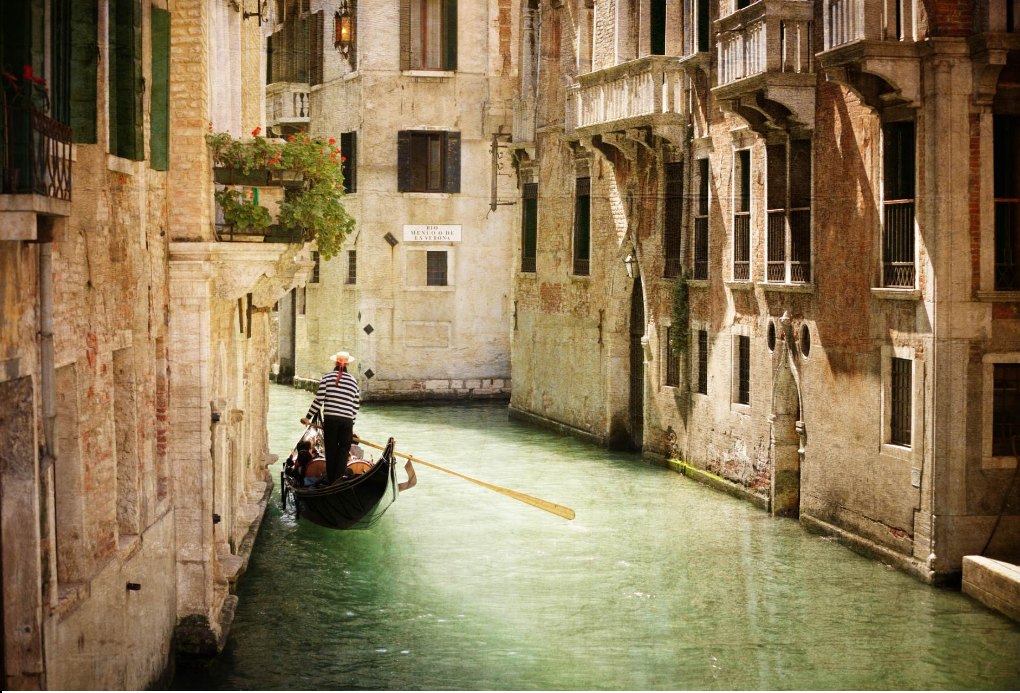
Let's call to help common sense
The last few months we have been living in the age of the COVID-19 vivus pandemic. The lives of all of us have changed a lot during that time: we wear masks, wash and disinfect our hands much more often as well as the homes we live in. The way we work has changed Many people are anxious and depressed, it seems to us that we are a generation that survives the worst and that a pandemic will never pass. Is that so?
In order to be able to react in accordance with anything in life, we must first of all know what it is that we are struggling with, what we are surviving. A PANDEMIC is an epidemic of an infectious disease that spreads through the population of a large area, continent or the whole world. We can talk about a pandemic if it meets 3 conditions:
-a hitherto unknown disease has appeared in a population,
-pathogens infect people and cause severe consequences,
- pathogens spread rapidly and persist among humans.
Infectious diseases have not only sown mass death throughout history, but have also greatly influenced the course of history and human identity. Thus, in the 6th century, "Justinian's plague" prevented this Byzantine emperor from joining the remnants of the former Western Roman Empire, which disintegrated in 476.
The apocalyptic atmosphere accompanied by infectious diseases facilitated the spread of Christianity, because ordinary people, in fear and inability to see the trouble that befell them, attributed a divine sign to them.
Empires rose and disappeared under the onslaught of plague and similar diseases. Wars were waged or suspended due to diseases, such as the "Centennial" between France and England (1337-1453) and the boundaries established after pandemics.
The fear of the apocalyptic end of the world - caused by infectious diseases - is much more intense than the new "Armageddon", as a consequence of nuclear war, or our individual fears of death.
Albert Cami also wrote about the efforts of the human species to resist not only death, but also the idea of it in the famous novel "The Plague".
Infections appeared at the time of the original civilization, when people were constantly on the move, gathering fruits in order to survive.
By switching to the agrarian type of life about 10,000 years ago, more permanent communities were created, which opened space for various epidemics. That is when malaria, tuberculosis, leprosy, flu, smallpox and other infectious diseases appear for the first time.
The oldest recorded pandemic occurred during the Peloponnesian War in the 5th century BC. The disease was transmitted from Libya, Ethiopia and Egypt through the walls of Athens, which was besieged by the Spartan army. According to the specialized site "History", two thirds of the population died.
Various other pandemics have been remembered, but history records the three largest, which, accidentally or not, occurred approximately 100 years apart.
1817: FIRST CHOLERA PANDEMIC
The first of seven cholera pandemics broke out in Russia, where a million people died. The bacterium was transmitted through water contaminated with feces and food, transmitted to British soldiers who then brought it to India, where a million people died. Given the size of the British Empire and its activities, cholera spread to Spain, Africa, Indonesia, China, Japan, Italy, Germany and the United States, where another 150,000 people died. The cholera vaccine was found in 1885, but the pandemic appeared several more times.
1918: SPANISH FEVER
The Spanish flu broke out at the end of the First World War and killed about 50 million people worldwide, according to some sources even 100 million - while half a billion or almost a third of the world's population was infected. That is a much larger death toll than in the first global war - in which 10 million people died
2020: Corona virus / COVID-19
The focus of the virus itself comes from the Far East, from China, but cases of coronavirus have been registered on six continents. The mortality rate is 3.4 percent, which is significantly less than when it comes to previous pandemics, but it is spreading much faster. At the same time, the percentage of deaths is 34 times higher than with seasonal flu. At the same time, panic is spreading drastically among people, while all security measures are easily understood and precautionary measures are not respected.
The only thing that can comfort us somewhat in this really awkward situation is the knowledge that this pandemic will pass. Let us recall something that was written on Easter 1827, during the cholera pandemic, by the great Russian poet Alexander Sergeyevich Pushkin, and is called "Let's call to help common sense "
Allow me, dear brothers, sisters, fellow citizens and all compatriots, to congratulate you on the great spring holiday from quarantine!
Everything will go and everything will pass,
all worries and panics will go away,
again the roads will become flat
and the gardens will be full of flowers again.
Let's call reason to help,
Let's defeat the disease by the power of knowledge,
And the days of a difficult exam
let's survive as one family!
We will become cleaner and wiser
did not succumb to darkness and fear.
Let us rise in spirit and become
closer and better to each other!
And let's be at the holiday table
We all rejoice in Life again,
And may the Most High on this day as well
send a piece of luck to every home!
A.S. Pushkin 1827
Welcome to the world of influencers
I came across an article about influencers by chance today. I know what influencers are, what they do and how much influence they have on many, especially young people, but because of the content of the article (which I will talk about later) I decide to look a little more precisely who they are, what and how they work. Well, let me tell you what I found out.
I came across an article about influencers by chance today. I know what influencers are, what they do and how much influence they have on many, especially young people, but because of the content of the article (which I will talk about later) I decide to look a little more precisely who they are, what and how they work. Well, let me tell you what I found out.
Who are the influencers? This is probably one of the most difficult questions you can ask an internet marketing person on Instagram. Because, no one from the industry is completely sure who the real influencers really are, and even less, what is the criterion to call someone that. When we talk about influencers, we are actually talking about a very fluid category that changes every day. Last year’s influencers don’t have to be this year’s either. Last month's hit Instagram profiles may "shut down" this month.
Influensers are mostly on Instagram, less on YouTube, and almost never on Facebook. From a political marketing perspective, they reside on Twitter. The number of followers used to be the main indicator, ie. metrics whether someone is an influencer or not. However, there is now talk of micro-influencers - Instagram personalities who do not have a large number of followers, but who have "influences", a greater influence than large influencers, to whom followers have become even a little suspicious due to obvious cooperation with brands in most photos.
Often more important than the number of followers is the niche of the influencer. Whether an Instagramer falls into the Beauty, Fashion, Lifestyle, Food, Gaming, Fitness, Photo, Teen, Music or Business category has a big impact on the way brands perceive them. It is understood that influencers in one category have a significantly higher number of followers than influencers in another category. For example, Teen influencers generally have over 100,000 followers, while Food influencers can have 10,000 and still be relevant. Beaty and Fashion categories are "more massive" in our country than Gaming. Therefore, an influencer can be a person followed by 150,000 people, but also one followed by only 5,000, or in some niches only hundreds of them.
Serious influencers who become aware of the power and potential of their brand hire someone in the business to help them raise their brand to a higher level when it comes to monetization. They have teams of people made up of a social media team, photographers, video producers, lawyers, business coaches, PR managers, etc. Great examples are Chiara Ferragni, Kelsey Wells, Kayla Itsiness, Zuzka Light, Marie Forleo, Julie Solomon, Amy Portefield… I can tell you, from what I’ve read in many places, they make more than good money.
I eventually came to the story of an article that prompted me to research and write all of this. A group of British fashion influencers formed the first union, in response to various bad practices, such as discrimination at various levels and pay inequality. In addition to prices, the new union of influencers "The Creator Union" in the UK, will also regulate formal contracts, various security measures, fair publication of content, and reduce many other discriminatory practices. A similar step was taken by American colleagues who founded the “Influencer Council”, which is not really a union, but a non-profit trade organization started in June by Qianna Smith Bruneteau with 12 colleagues. Although some influencers have protection and a better developed business, unions should make sure that everyone has the same position and opportunities for protection in the market, in order to be paid fairly. By merging, influencers encourage transparency and the removal of exploitation practices of some brands, a pattern that is increasingly present.
The conclusion I came to after all this that I discovered is that I seem to be very old when I have not yet realized how serious influencers are.
Modern society - Moderno drustvo
People experience both beautiful and difficult moments in their lives. Sometimes, in difficult moments, they resort to the gym, so it would be easier for them to survive. They joke with themselves, or the current situation because that way it is easier to overcome it. So it is with us today when the whole world lives in constant stress because of the current COVID-19 I will start this day by sharing with you an aphorism that I liked, and it has to do with the current situation.
Those who cannot breathe on their own are put on a respirator. If you can't think for yourself, turn it on the TV.
Zoran Doderovic
Ljudi proživljavaju i lijepe i teške trenutke u svom životu. Ponekad u teškim trenucima pribjegavaju sali , da bi ih lakse preziveli. Sale se sa sobom, ili trenutnom situacijom jer je na taj nacin lakse prevazici je. Tako nam je i danas kada ceo svet zivi u konstantnom stresu zbog aktuelnog COVID -19 Ovaj dan cu zapoceti tako sto cu sa vama podeliti aforizam koji mi se dopao, a ima veze sa aktuelnom situacijom.
Ko ne moze samostalno da dise, ukljuce ga na respirator. Ko ne ume samostalno da misli, ukljuce ga na televizor.
Zoran Doderovic
Well-known people and celebrities then and now - Poznate licnosti nekad i sad
Well-known people and celebrities then and now - how values have changed
Imagine a hypothetical situation that famous people of that time gathered at a feast in ancient Athens. Philosophers and historians, mathematicians, sculptors (say Aristotle and Socrates, Pythagoras, Phidias and Myron) and military leaders (like Miltiades, the winner of the Marathon, or Pericles, who defeated the Persians) would surely sit at the table. In Renaissance Europe, they would be versatile artists, thinkers and innovators, such as Leonardo da Vinci, astronomers such as Nicolaus Copernicus, researchers and sailors such as Christopher Columbus, and inevitably Johannes Gutenberg, who invented the printing press, and the author of "Don Quixote". Miguel de Cervantes
Painters Picasso and Andy Warhol, astronauts Yuri Gagarin and Neil Armstrong, physicist Albert Einstein, human rights activists Mahatma Gandhi, Nelson Mandela and feminist Betty Friedan would surely be invited to a party for celebrities a few hundred years later. not to mention the Beatles, the Rolling Stones and other legendary musicians, cult directors, actors, playwrights, composers, scientists, fashion designers, athletes.
What would that party look like today? Who are today's VIPs? Among others, the stars of various reality shows would be invited to such a party, the famous "lady" whose home videos of lascivious content "accidentally leaked to the public", and the former-current-future wife of the famous football player, with artistic and business pretensions, ready to he charms the audience by showing his naked knee to the church leader, various rising politicians and self-proclaimed artists at the end of their careers, then scandal-masters and "talent" hunters, various "perspective singers"…
What makes people today strive to become "famous" at all costs? In poor societies and difficult times, there are always many more pretenders to easy and fast earnings and fame. The greater the poverty, the lower the morale on the scale of values. That is why the ways to gain (a little) popularity and money are not chosen. The general crisis is leading to an increasingly competitive spirit in all spheres of life. Everyone is a competitor to everyone in the gladiatorial fight for work, fame, money… In such circumstances, the one who has the "strongest" stomach and Machiavellian character becomes famous mainly. Their audience has already proven that they have a steel stomach.
Poznati ljudi nekad i sad - kako su se vrednosti promenile
In societies that highly valued culture, morals, art, science, and even religion, for example, in the golden age of ancient Greece (around the fifth century BC) or during the European Renaissance, the role models were the best among them, appreciated for their merits. and with good reason. Today, at the end of Western civilization, when the hypertrophy of rationality has completely suppressed the imagination, emotions and myths so necessary to man, the role models are characters from "pseudo-romantic" television series, mediocre pop artists with a sense of scandal, and even complete anonymity. they make money on such people, and even promote them) suddenly become an unavoidable part of the public scene
Zamislite hipoteticku situaciju da su u drevnoj atini na neku gozbu pozvani svi poznati ljudi tog doba. Za stolom bi sigurno sedeli filozofi i istoričari, matematičari, vajari (recimo Aristotel i Sokrat, Pitagora, Fidija i Miron) i vojskovođe (kao Miltijad, pobednik na Maratonu, ili Perikle, koji je porazio Persijance). U renesansnoj Evropi bili bi to svestrani umetnici, mislioci i inovatori, poput Leonarda da Vinčija, astronomi poput Nikole Kopernika, istraživači i moreplovci poput Kristifora Kolumba, a nezaobilazni bi bili i Johanes Gutemberg koji je smislio štamparsku presu, i autor „Don Kihota”, Miguel de Servantes.
Na zabavu koju bi pravili za poznate licnosti par stotina godina kasnije sigurno bi bili pozvani slikari Pablo Pikaso i Endi Vorhol, astronauti Jurij Gagarin i Nil Armstrong, fizičar Albert Ajnštajn, aktivisti za ljudska prava Mahatma Gandi, Nelson Mandela i feministkinja Beti Fridan, da i ne pominjemo „Bitlse”, „Rolingstounse” i druge legendarne muzičare, kultne režisere, glumce, dramske pisce, kompozitore, naučnike, modne kreatore, sportiste.
Kako bi ta zurka izgledala danas? Ko su danasnje VIP licnosti? Na takvu zurku bi sigurno izmedju ostalih bile pozvane zvezde raznih rijaliti programa, poznata " dama" ciji su kucni video snimci lascivne sadrzine " slucajno procurili u javnost", pa bivša-sadašnja-buduća supruga čuvenog fudbalera, sa umetničkim i poslovnim pretenzijama, spremna da publiku šarmira pokazujući obnazeno koleno crkvenom poglavaru, razni političari u usponu i samoproklamovani umetnici na zalasku karijere, pa skandal-majstori i lovci na „talente”, razne " perspektivne pevačice"…
U društvima koja su visoko cenila kulturu, moral, umetnost, nauku, pa i religiju, na primer, u zlatno doba antičke Grčke (oko petog veka p. n. e) ili u vreme evropske Renesanse,uzori su bili oni najbolji među njima, cenjeni po zasluzi i s dobrim razlogom. Danas, na zalasku zapadne civilizacije, kad je hipertrofija racionalnosti sasvim potisnula maštu, emocije i mitove toliko neophodne čoveku, uzori postaju likovi iz „pseudoromantičnih” televizijskih serijala, osrednji estradni umetnici sa smislom za skandale, pa i potpuni anonimusi koji uz pomoć medija (jer oni na takvima zarađuju, pa ih i protežiraju) najednom postaju nezaobilazni deo javne scene
Sta to danas tera ljude da se trude da postanu "slavni" po svaku cenu? U siromašnim društvima i teškim vremenima uvek ima mnogo više pretendenata na laku i brzu zaradu i slavu. Što je siromaštvo veće, moral je sve niže na lestvici vrednosti. Zato se ne biraju načini da se dođe do (malo) popularnosti i novca. Opšta kriza dovodi do sve izraženijeg takmičarskog duha u svim sferama života. Svako je svakom konkurent u gladijatorskoj borbi za posao, slavu, novac…U takvim okolnostima, slavan postaje uglavnom onaj ko ima „najjači” želudac i makijavelistički karakter Njihova publika je već dokazala da ima želudac od čelika.
 @ruza17