The KItchen - Kuhinja - comedy series
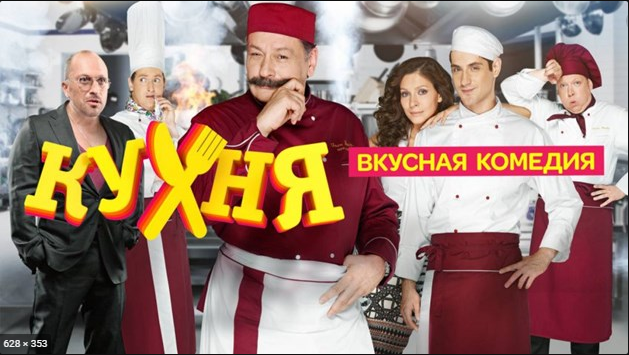
Today I will present a series that they love or will love if it has not been watched by comedy fans so far. The "Kitchen" series is a completely Russian product. At the time when it was broadcast in America, a series of similar themes "Kitchen Confidential" was shown, and in Britain "Whites". However, the Russian series is not a copy of any of them, but is completely authentic
This ingenious comedy follows the story of young Max, who arrives in little Moscow from little Voronezh to get a job in a restaurant and become a chef. Max thus wants to get a job at the exclusive Claude Monet restaurant, owned by popular actor Dmitry Nagiev, who plays himself in the series. Max enters into colorful relationships with the chef, the specific Viktor Barinov, and with other workers of this elite restaurant. The kitchen is one of the most popular Russian series, both in the Federation and around the world. The series, bursting with original humor, entertaining sequences, funny and extremely interesting events, has been broadcast in more than 10 foreign countries. Following the success of Kitchen, which had 6 seasons, two films and one spinoff series were made.
The question is whether the high-budget Russian comedy "Kitchen" would be so successful that, in fact, it does not show plots based on the life experiences of the author of the series. Russian director, screenwriter and producer Dmitry Dyachenko says for Sputnik that he himself, just like the main character Max Lavrov, came to the early city of Voronezh in Moscow in the early 1990s. Therefore, Dyachenko not only understands Max well, who tries in all possible ways to find his place under the sun in the big city, but also when writing the script, he remembers his experiences when he was fired, then came back, and tried everything from scratch. and "digging with both hands and feet."
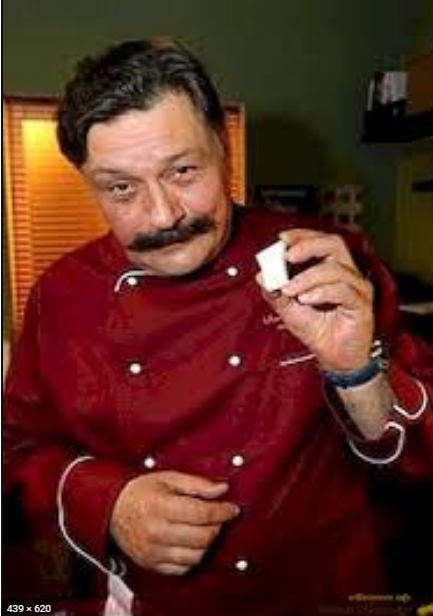
Of the main characters, I would like to single out the main chef Viktor Barinov, played by "gigantic and confused" Dmitry Nazarov. Just like in the series, in real life, Nazarov is an ardent fan of Moscow's "Spartak". Nazarov has the title of Honorary Artist of the Russian Federation and, in addition to series, he also acts in several Moscow theaters. It is interesting that due to his stature, for many years he had the task of playing the "official Russian Santa Claus" in his residence in the city of Veliki Ustyug.
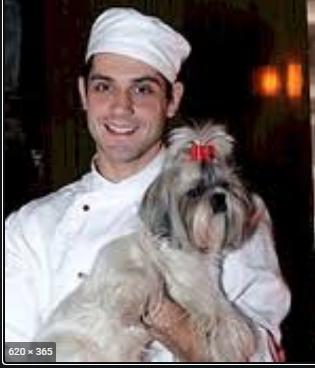
The main character, chef Max, who comes to Moscow from Voronezh with a strong will to become a famous chef, is played by Mark Bogatyrev. This young actor was almost born in the subway, a few weeks before the scheduled date. He never met his father, and as his mother often traveled in search of professional affirmation and happiness in life, it is not surprising that Bogatyrev speaks with a lot of warmth about his grandmother who raised him. He started working early, changed different professions and accidentally became an actor. It is said that because of his unhappy love with his colleague Elena Podkamniska, with whom he plays in the series, he even tried to commit suicide.
"The main female role of Victoria Sergeyevna in 'The Kitchen' is played by Jelena Podkaminska, a Moscow actress. Bogatyrev and Podkaminska fell passionately in love during the filming of the series, which is why she then even divorced her husband and started living with Bogatyrev, who plays Max Lavrov. When viewers learned about this story from the newspapers, the ratings of the series jumped sharply. However, Jelena and Mark then broke up in real life, but also in the series ", Djachenko shares behind-the-scenes stories.
The owner of the restaurant "Kkod Mone", where they all work, is the famous Russian actor Dmitry Nagiyev, and he plays himself in the series. Nagiyev, born in former Leningrad, today's St. Petersburg, has Arab blood after his father's grandfather, and German and Latvian blood after his father's grandmother. Unfortunately, he owes his "dark look" and wideness to the paralysis of the nerves on his face. After he got sick, straight from college and rehearsals for his final graduation play, an ambulance took him to the hospital. He has been recovering for half a year and that is why he often likes to wear sunglasses. Forbes named him the richest Russian actor last year. Fans for Zenit.
In addition to the mentioned , in "Kitchen" we follow and love many other characters Nastja, Kostja, Fedja, Senj, Luja, Ljova ... There are too many of them to list everything here. They are all extremely specific and fun, each in their own way.
After 6 successful seasons of the "Kitchen" series, the film "Kitchen" was made. The Last Battle ", and then the shooting of the so-called" spin of 'Hotel Eleon "began. The story will not end here, but a kind of continuation of all the happy events within the future project "Kitchen Academy" is planned.
It is not only the spiritual story of Max, Viktor Petrovich, Dmitry Nagiyev, Victoria Sergeyevna and other dear characters that "bought" the viewers. The series became popular due to numerous original solutions, unusual shots, but also great computer graphics. In addition, a lot of money has been invested, so it is not surprising that this series is announced everywhere as high quality and high-budget:
"Everything about the 'Kitchen' is 'right'. No scenery, no mock-up. All the knives, the equipment, everything is right, and all the groceries in the frame are completely fresh. The food was filmed with special lighting, as is done in commercials, to make everything look delicious. The team was really staffed by a team of 5 top chefs who prepared the dishes seen in the series. Everything is edible and natural.
After a divorce and a failed romance with a colleague, Podkaminska remarried. She has a daughter Polina from her first marriage, and she gave birth to her second daughter Eva only a few weeks ago.
https://youtu.be/I_HMF3Zis7o
Danas cu predstaviti jednu seriju koju vole ili ce je voleti ukoliko je nisu do sada gledali ljubitelji komedije. Serija " Kuhinja" je potpuno ruski proizvod. U vreme kada se emitovala u u Americi se prikazivala serija slične tematike „Poverljiva kuhinja“ (Kitchen Confidential) a u Britaniji „Belci“ (Whites). Ipak ruska serija nije kopija ni jedne od njih vec je potpuno autenticna.
Ova genijalna komedija prati priču mladoga Maksa, koji iz malog Voroneža stiže u ogromnu Moskvu kako bi se zaposlio u restoranu i postao kuvar. Maks tako želi da se zaposli u ekskluzivnom restoranu Klod Mone, čiji je vlasnik popularni glumac Dmitri Nagijev, koji u seriji igra samoga sebe. Maks stupa u šarene odnose sa šefom kuhinje, specifičnim Viktorom Barinovom, i s ostalim radnicama i radnicima ovog elitnog restorana. Kuhinja je jedna od najpopularnijih ruskih serija, kako u Federaciji, tako i sirom sveeta. Serija, koja pršti originalnim humorom, zabavnim sekvencama, smešnim i izuzetno zanimljivim događajima, emitovana je u više od 10 stranih zemalja. Na tragu uspjeha Kuhinje, koja je imala 6 sezona snimljena su dva filma i jedna spinoff serija.
Pitanje je da li bi visokobudžetna ruska komedija „Kuhinja“ bila toliko uspešna da, zapravo, ne prikazuje zaplete zasnovane na životnim iskustvima autora serije. Ruski režiser, scenarista i producent Dmitrij Djačenko za Sputnjik kaže da je i sam, baš kao i glavni lik Maks Lavrov, početkom devedesetih došao iz malog grada Voronjež u Moskvu. Zato, Djačenko ne samo da dobro razume Maksa, koji na sve moguće načine pokušava da nađe svoje mesto pod suncem u velikom gradu, već se i kada piše scenario, priseća svojih iskustava kada je bivao otpušten, pa se opet vraćao, pa sve pokušavao ispočetka i „kopao i rukama i nogama“.
Od glavnih likova izdvojila bih prvo glavnog kuvara Viktora Barinova, kojeg igra „gorostasni i brkati“ Dmitrij Nazarov. Baš kao i u seriji, i u realnom životu Nazarov je vatreni navijač moskovskog „Spartaka“. Nazarov ima zvanje Počasnog umetnika Ruske federacije i osim u serijama, glumi i u nekoliko moskovskih pozorišta. Interesantno je, da je zbog svog stasa, dugo godina imao zadatak da glumi „zvaničnog ruskog Deda Mraza“ u njegovoj rezidenciji u gradu Veliki Ustjug.
Glavnog lika, kuvara Maksa koji iz Voronježa dolazi u Moskvu sa jakom voljom da postane čuveni kuvar, igra Mark Bogatirjov. Ovaj mladi glumac se umalo rodio u metrou, nekoliko nedelja pre predviđenog termina. Oca nikada nije upoznao, a kako je majka često putovala u potrazi sa profesionalnom afirmacijom i životnom srećom, ne čudi što Bogatirjov sa mnogo topline govori o svojoj baki koja ga je odgajila. Rano je počeo da radi, menjao različite profesije i sasvim slučajno postao glumac. Priča se da je zbog nesrećne ljubavi sa koleginicom Elenom Podkamniskom, sa kojom igra u seriji, čak pokušao i samoubistvo.
„Glavnu žensku ulogu Viktorije Sergejevne u ’Kuhinji‘ igra Jelena Podkaminska, moskovska glumica. Bogatirjov i Podkaminska su se tokom snimanja serije strasno zaljubili, zbog čega se ona tada čak i razvela od svog muža i počela da živi sa Bogatirjovim, koji glumi Maksa Lavrova. Kada su gledaoci za ovu priču saznali iz novina, gledanost serije je naglo skočila. Međutim, Jelena i Mark su se potom rastali i u stvarnom životu, ali i u seriji“, deli zakulisne priče Djačenko.
Podkaminska se posle razvoda i neuspele romanse sa kolegom, ponovo udala. Iz prvog braka ima kćerku Polinu, a drugu kćerku Evu je rodila pre svega nekoliko nedelja.
Vlasnika restorana "Kkod Mone "u kome oni svi rade je proslavljeni ruski glumac Dmitij Nagijev i on u seriji glumi samog sebe. Nagijev, rođen u nekadašnjem Lenjingradu, današnjem Sankt Peterburgu, ima po očevom dedi arapske krvi, a po očevoj baki nemačke i letonske. Svoj „mračni pogled“ i razrokost nažalost duguje paralizi nerva na licu. Nakon što mu je pozlilo, pravo sa fakulteta i probe završne diplomske predstave, kola hitne pomoći su ga odvezla u bolnicu. Pola godine je trajao oporavak i zbog toga često rado nosi naočare za sunce. Forbs ga je prošle godine proglasio najbogatijim ruskim glumcem. Navija za „Zenit“.
Pored pomenutih, u " Kuhinji" pratimo i volimo jos mnogo likova Nastju, Kostju, Fedju, Senju, Luja, Ljovu... Previse ih je da bi ovde sve nabrojala. Svi oni su krajnje specificni i zabavni, svako na svoj nacin.
Nakon uspešnih 6 sezona serije „Kuhinja“ bio je snimljen film „Kuhinja. Poslednja bitka“, da bi potom počelo snimanje takozvanog „spin ofa ’Hotel Eleon‘“. Priča se neće ovde završiti, već se planira i svojevrsni nastavak svih veselih dogodovština u okviru budućeg projekta „Kuhinja akademija“.
Nije samo duševna priča Maksa, Viktora Petroviča, Dmitrija Nagijeva, Viktorije Sergejevne i ostalih dragih likova „kupila“ gledaoce. Serija postala popularna i zbog brojnih originalnih rešenja, neobičnih kadrova, ali i sjajne kompjuterske grafike. Osim toga, zaista mnogo novca je uloženo i zato ne čudi što se ova serija svuda najavljuje kao kvalitetna i visokobudžetna:
„Sve što je u vezi sa ’Kuhinjom‘, sve je ’pravo‘. Nema kulisa, nema maketa. Svi noževi, oprema, sve je pravo, a sve namirnice koje su u kadru su potpuno sveže. Hrana je snimana uz specijalno osvetljenje, kao što se to radi u reklamama, kako bi sve delovalo ukusno. U seriji je zaista radio tim od 5 vrhunskih kuvara koji su spremali jela koja se vide u seriji. Sve je jestivo i prirodno.
Fake posts to collect likes - Lazne priče za skupljanje lajkova
Disability abuse: fictional stories to collect likes
Occasionally I see posts on my Facebook profile of some pages that some of my Facebook friends have shared or liked. The post contains a picture and a short description, with a request to be liked, commented on or shared. The revelations are made in such a way as to evoke strong emotions in people. Some of the descriptions that go with the photo are:
Today is her birthday, she is 30 years old… She is a very good and brave girl and she deserves all our congratulations! ”
Please don’t ignore this, Facebook is willing to pay € 1 for each like, € 2 for each comment and € 5 for each Share God help her and them to endure it. give them strength God! Who can and wants to wish us a "happy marriage" and toast with us for "our happiness"
We know that no one will congratulate us and share on our wall, because we have Down syndrome. Natalija and Mario .. I simply ignore most of such posts because I am very aware that most of them, if not all, are either completely or partially incorrect and serve exclusively to raise the page's rating. Such revelations that provoke the strongest emotions in people, and I am enraged by the revelations that someone's serious illness or disability is used in all of these. So I decided to do a little research into the origins of the images in such posts, but also to find out what the people whose job it is to research found out about it.
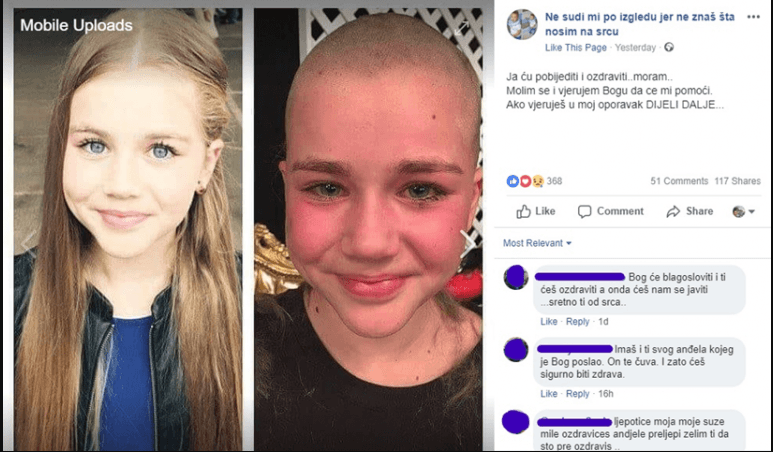
One of such classic posts is a post in the description of which it is written that there is a girl in the picture who is fighting cancer and is asking for support. The truth is actually completely different. The picture shows a completely healthy girl who donated her hair to make wigs for children with cancer.
The description of this post says that the woman is in a wheelchair, that her husband left her because she became disabled after a car accident, and that she is asking for support because of that. A simple search leads to the truth. The woman in the picture is called Dzema and her disability did not arise as a result of a car accident, but she is in pain. She is a model by profession and performs in wheelchairs at fashion shows. It was reported by the BBC in 2015.
The authors of this post claim that the picture shows a woman who is on the last day of chemotherapy and who is asking readers to write an amen in the comment to help her heal faster. In fact, the picture shows Jessica Vaughn, who in 1914. survived a shark attack as reported by NBC News.
Readers of this post "Met Jelena whom no one wanted to wish happy birthday". "Jelena" is in fact Helen Golsworthy from Eastleigh, England, who survived a suicide attempt as a teenager. In fact, in an interview with the Daily Star, she talks about how the role of the mother has changed the way we think.
For the end of this presentation of my fake posts, in this picture there is really a couple who had a car accident. Pictured is Tamara Mena, a motivational speaker and model. The problem with this post is that her boyfriend died in that same car accident and did not leave her as claimed in the post. Such a manipulative narration infuriated the readers and they felt the need to support the girl in the picture, and say the worst about her (dead) boyfriend.
At first glance, all of this, while ugly, may seem harmless. However, this is not the case. Images of people have been misused here to spread a false story. Readers reacted emotionally, left comments, liked and shared, and thus had the illusion that they had done at least something. The question is, what will happen when they realize they have been deceived? Most likely, they will ignore and make posts and appeals when someone really needs help.
Zloupotreba invaliditeta: izmišljene priče za skupljanje lajkova
Povremeno na svom fejsbuk profilu vidim objave nekih stranica koje su neki od mojih fejsbuk prijatelja podelili lli lajkovali. Objava sadrzi sliku i kratak opis, sa molbom da se lajkuje, prokomentarise ili podeli. Objave su napravljene na taj nacin da u ljudima izazivaju jake emocije. Neki od opisa koj idu uz fotogradiju su:
Danas joj je rođendan, puni 30 godina … Jako je dobra i hrabra cura i zaslužuje sve naše čestitke!”
Molimo vas nemojte ovo ignorirati, Facebook je spreman platit za svaki lajk 1 €, za svaki komentar 2 € i za svaki Share 5 € Bože pomozi njoj i njima da izdrze to. daj im snage Bože!Ko nam može i želi od Vas poželjeti,,sretan brak,,i sa nama nazdraviti za ,,,našu sreću,,,
Znamo da niko neće nama čestitati i podijeliti na svoj zid, jer imamo Daunov sindrom. Natalija i Mario..
Vecinu takvih objava jednostavno ignorisem jer sam veoma svesna da je vecina njih, ako ne i sve ili potpuno ili delimicno netacna i sluze isklucivo za podizanje rejtinga stranice. Objave koje izazivaju najace emocije kod ljudi, a mene razbesne su objave kojima se necija teska bolest ili invaliditet koristi u te svehe. Zbog toga sam resila da malo istrazim poreklo slika u takvim objavama, ali i da nadjem sta su ljudi kojima je posao da to istrazuju pronasli o tome.
Jedan od takvih klasicnih postova je post u cijem je opisu napisano da je na slici devojcica koja se bori protiv raka i traži podršku. Istina je zapravo potpuno drugačija. Na slici je prikazana potpuno zdrava devojcica koja je kosu donirala za izradu perika za decu obolelu od raka.
U opisu ovog posta se kaze da za zenu u invalidskim kolicima da ju je muz ostavio jer je postala invalid posle saobracajne nesrece i da zbog toga trazi podrsku. Jednostavnim pretrazivanjem dolazi se do istine. Zena na slici se zove Dzema i njen invaliditet nije nastao kao posledica saibracajne nesrece vec boleti. Po profesiji je manekenka i na revijama nastupa u kolicima. O njoj je 2015. godine izvesravao BBC.
Autori ovog posta tvrde da je na slici zena kojoj je to poslednji dan hemoterapije i koja moli citaoce da napisu u komentaru amin da bi joj pomogli da brze ozdravi. Zapravo, na slici je Dzesika Von koja je 1914. god. prezivela napad ajkule o cemu je izvestavao NBC News.
Citaoci ovog posta su "Upoznali Jelenu kojoj niko nije hteo da cestita rodjendan". "Jelena" je u stvari Helen Golsvordi iz Istlija u Engleskoj koja je kao tinejdzerka prezivela pokusaj samoubistva. Ona zapravo u intervjuu za Dejli star govori o tome kako joj je uloga majke promenila naci razmisljanja.
Za kraj ovog mog predstavljanja laznih postova, na ovoj slici je stvarno dvojka koja je dozivela saobracajnu nesrecu. Na slici je Tamara Mena, motivacioni govornik i model. Problem sa ovim postom je u tome sto je njen momak poginuo u toj istoj saobracajnoj nesreci, a nije je ostavio kao sto se tvrdi u postu. Takva manipulativna naracija je razbesnela citaoce i oni su osetili potrebu da devojci sa slike daju podrsku, a o njenom ( mrtvom) momku kazu sve najgore.
Na prvi pogled sve ovo, iako je ruzno, moze delovati bezazleno. Ipak, to nije tako. Ovde su zluopotrebljene slike ljudi da bi se plasirala lazna prica. Citaoci su emotivno reagovali, ostavljali komentare, lajkovali i delili i time imali privid da su bar nesto uradili. Postavlja se pitanje, sta ce se desiti kada shvate da su prevareni? Najverovatnije ce tada ignoristi i prave postove i apele kada je nekome stvarno potrebna pomoc.
The funniest photos of animals - finalists - Najkomicnije fotografije zivotinja - finalisti
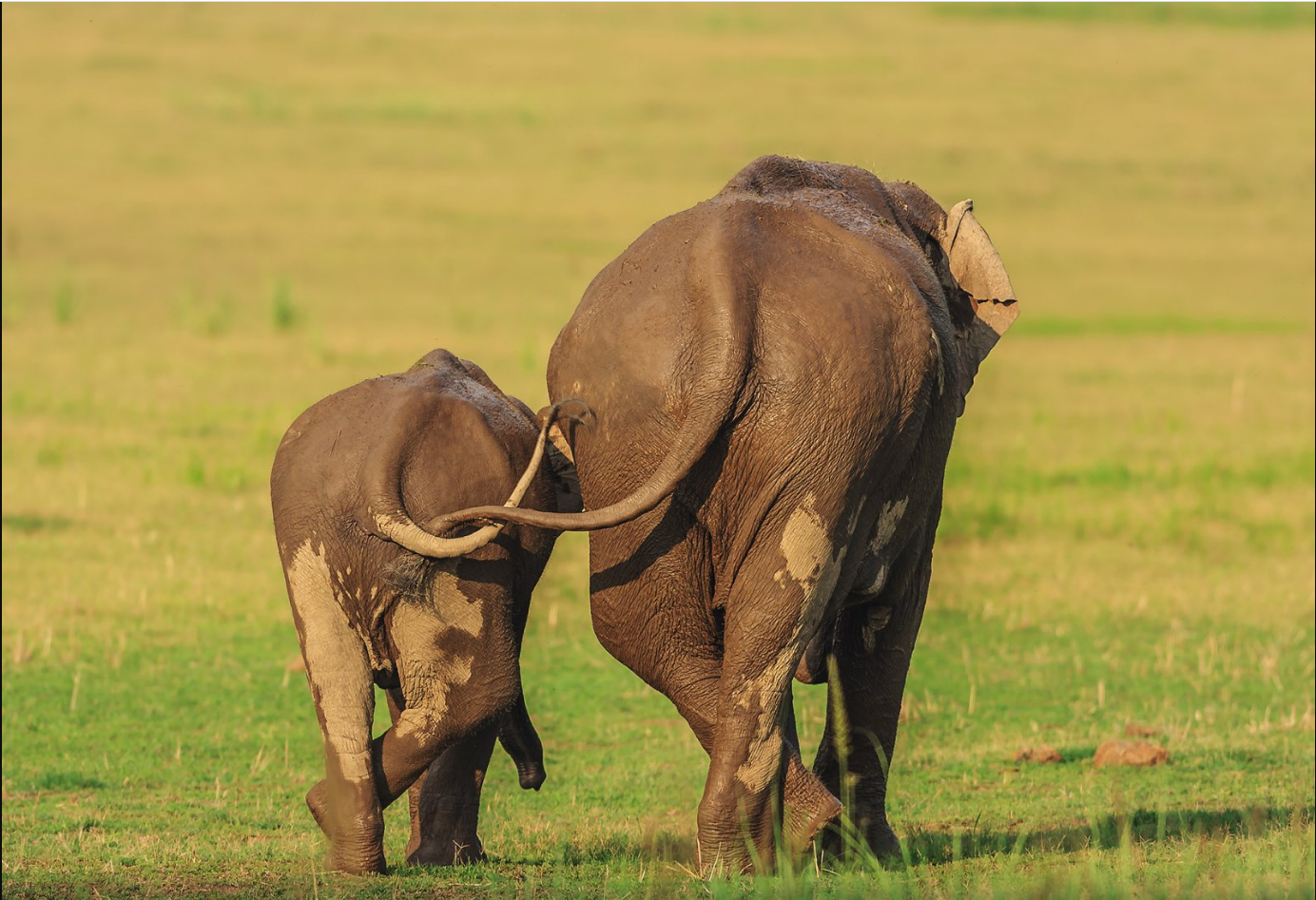
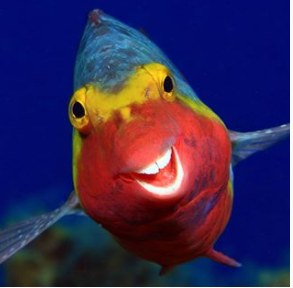
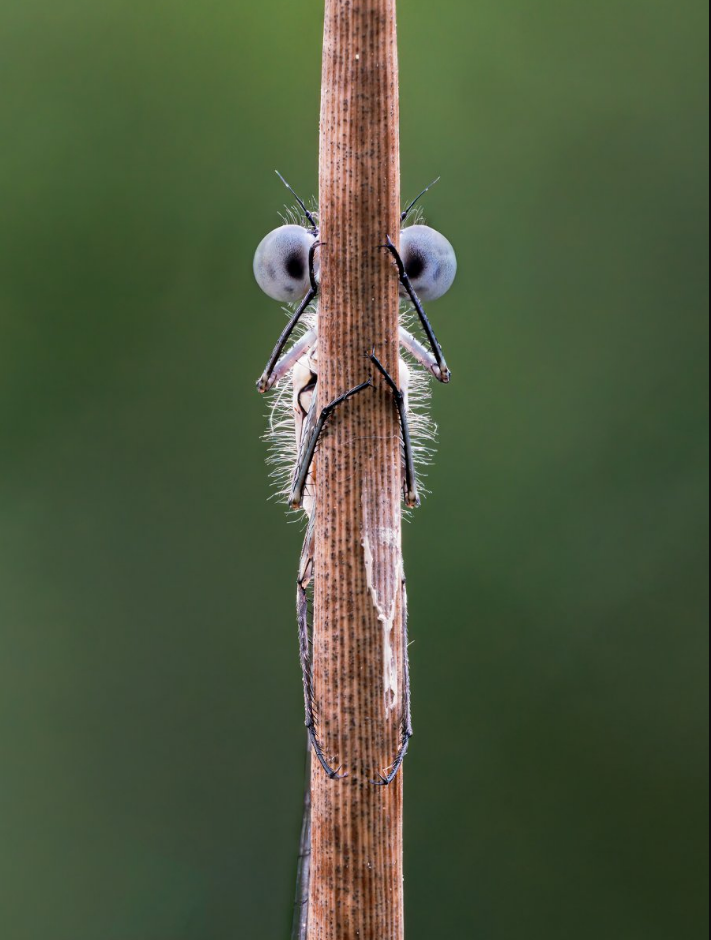
The finalists of this year's competition for the best comic photography from nature have been announced. Despite the very optional form of the "Comedy Wildlife Photography Awards", it is not just fun that comes to the fore. Photographers Paul Johnson-Hicks and Tom Salam, with the support of the non-profit organization for the protection of wild animals, established this award, primarily to draw attention to the preservation of wildlife. The competition has been held for the sixth year in a row. entered the finals. These are some of them. Which one would you vote for?
Objavljeni su finalisti ovogodišnjeg takmičenja za najbolju komičnu fotografiju iz prirode.I pored vrlo neobavezne forme takmičenja "Comedy Wildlife Photography Awards", u prvom planu nije samo zabava. Fotografi Pol Džojnson-Hiks i Tom Salam, uz podršku neprofitne organizacije za zaštitu divljih životinja, ustanovili su ovu nagradu, pre svega, da bi skrenuli pažnju na očuvanje životinjskog sveta.Takmičenje se održava već šestu godinu zaredom, a upravo su objavljene fotografije koje su ušle u finale. Ovo su neke od njih. Za koju bi vi glasali?
Life choices - whether to do something or not
Sometimes in life we know that we repent for something we did, but also for something we did not. In Serbia, there is a beautiful folk tale that illustrates this and is called "Dark Province". The story says that an emperor entered the dark province with his army. As they passed, they felt themselves treading on some rocks. In the darkness a voice was heard: "Whoever takes these stones will repent, and whoever does not take it will repent again" Then some think, why would they take if they will repent, and others, since I will certainly repent, let me take at least one . When they came out they saw that it was a precious stone, so those who did not take it began to regret why they did not take it, and those who took it, why they did not take it more.
Ponekad u zivotu znamo da se pokajemo zbog necega sto smo uradili, ali i zbog necega sto nismo. U Srbiji postoji lepa narodna prica koja to ilistruje i zove se " Tamni vilajet" U prici se kaze da je neki car sa svojom vojskom usao u tamni vilajet. Dok su prolazili, osetili su da gaze po nekom kamenju. Iz mraka se zacuo neki glas: " Ko ovo kamenje uzme kajace se, a ko ga ne uzme opet ce se kajati" Tada neki pomisle, zasto bi uzeli ako ce se kajati, a drugi, posto cu se svakako kajati, daj da uzmem makar jedan. Kad su izasli oni vide da je to bilo drago kamenje, pa oni koji nisu uzeli pocnu da se kaju zasto nisu uzeli, a oni sto su uzeli, zasto nisu uzeli vise

Pestalozzi - a children's village in Switzerland - Pestaloci decije selo u Svajcarskoj
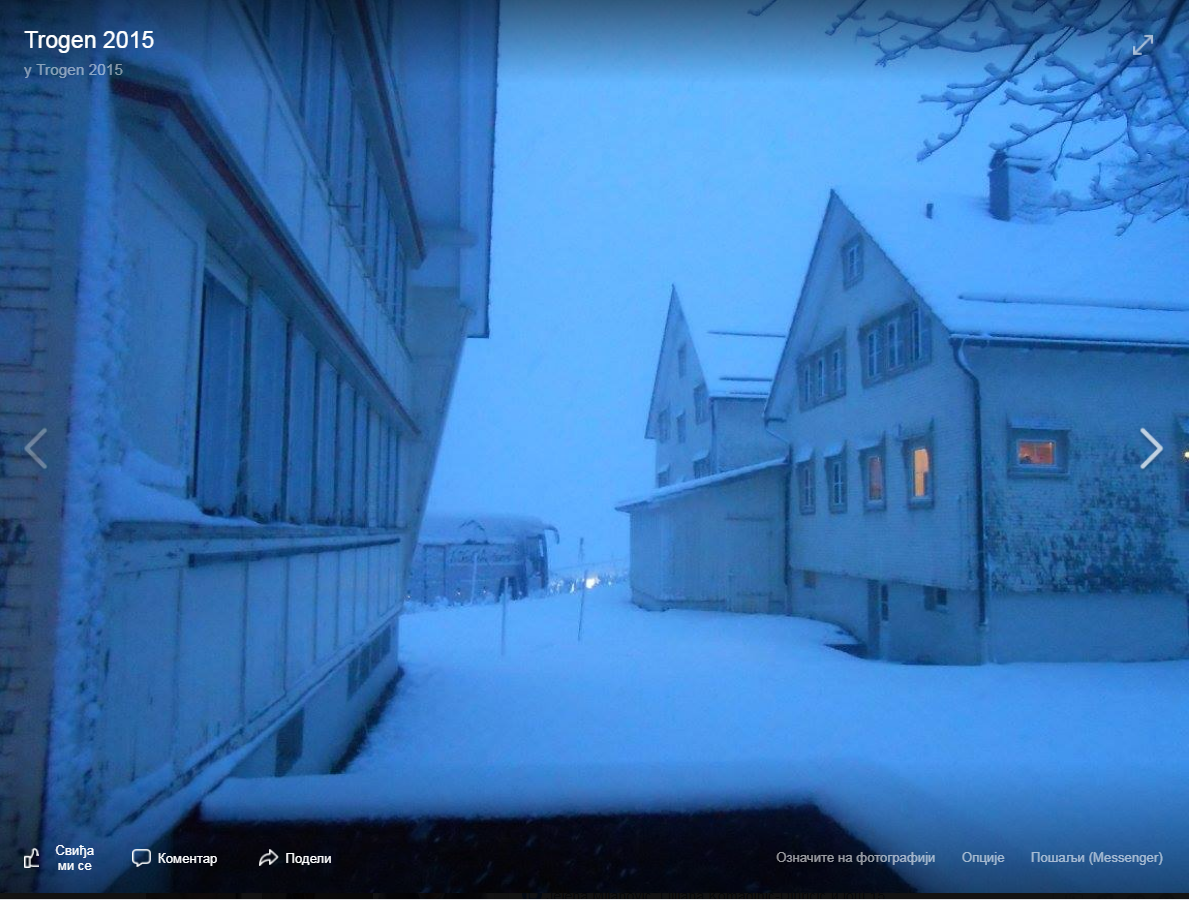
I think it is very important that we teach young people respect for human rights, tolerance and interculturality. This has been done for years by the Children's Village Pestaloci, which is located near the Swiss town of Trogen. I had the opportunity to spend two weeks there with my students in the winter of 1915. In addition to us, students from five other Serbian cities accompanied by their professors went to Pestalozzi at that time.
Mislim da je veoma bitno da mlade ljude ucimo postovanju ljudskih prava, toleranciji i inerkulturalnosti. To se vec godinana radi Decijem selu Pestaloci koje je smesteno u blizini svajcarskog grada Trogen. Imala sam prilike da sa svojim ucenicima tamo provedem dve nedelje u zimu 1915. god.Pored nas, u Pestaloci su tada isli i icenici iz jos pet srpskih gradova u pratniji svojih profesora.
Although everything seems like a vacation, we were very busy there all the time. The first novelty for us was that we spent two weeks without internet and television. Unexpected for me, but the students got used to it very much and really enjoyed it. At the time we were there, there was a group from Ukraine. Every working day, together with them, we had various workshops in which, through interaction and "play", we learned about extremely serious things such as tolerance, interculturalism, respect for human rights ...
Premda sve deluje kao odmor, mi smo sve vreme tamo bili veoma zauzeti. Prva novina za nas je bila to sto smo dve nedelje proveli bez interneta i televizije. Neocekivano za mene, ali su se ucenici veoma bezo navikli i bas uzivali.U vreme kad smo mi bili tamo bila je i grupa iz Ukrajine. Svakog radnog dana smo zajedno sa njima imali razne radionice na kojima sekroz interakciju i " igru" ucilo o izuzetno ozbiljnim stvarima kao sto su tolerancija, interkulturalnost, postovanje ljudskih prava ...
We spent the weekends touring various places in Switzerland. We visited Zurich, Geneva, Tehnorama (Museum of Technology), Rhine Falls, chocolate and cheese factories, climbed to the top of the Alps from where you can see the three countries ... For all of us it was an unforgettable memory. I really don't know what I would do with all this, especially from the double. all the cities we have visited are beautiful, as are the Rhine Falls. At the top of the Alps we had the impression that we were at the top of the world. The Tehnorama Museum delighted me because it was the first time I saw that all the exhibits could be touched and that very young children could learn through play there. There is also a permanent exhibition of Nikola Tesla's inventions, and lectures on the topic of his work and inventions are held several times during the day. Of course, visitors can try some things here as well.
Vikende smo provodili obilazeci razna mesta u Svajcarskoj. Posetili smo Cirih, Zenevu,Tehnoramu ( muzej tehnike), Rajnine vodopade, fabrike cokolade i sira, popeli se na vrh Alpa odakle se vide tri drzave... Za sve nas sve je to predstavljalo nezaboravnu uspomenu. Stvarno ne znam sta bih od svega ovoga posebno iz dvojila. svi gradovi koje smo poseili su prelepi, kao i Rajnini vodopadi. Na vrhu Alpa smo imali utisak kao da smo na vrhu sveta. Muzej Tehnorama me je odusevio jer sam prvi put videla da svi eksponati mogu da se dodirnu i da tamo vrlomala deca uce kroz igru. Postoji i stalna postavka pronalazaka Nikole Tesle, a vise puta u toku dana se odrzavaju predavanja na temu njegovog rada i pronalazaka. Naravno, i tu posetioci mogu da isprobaju neke stvari.
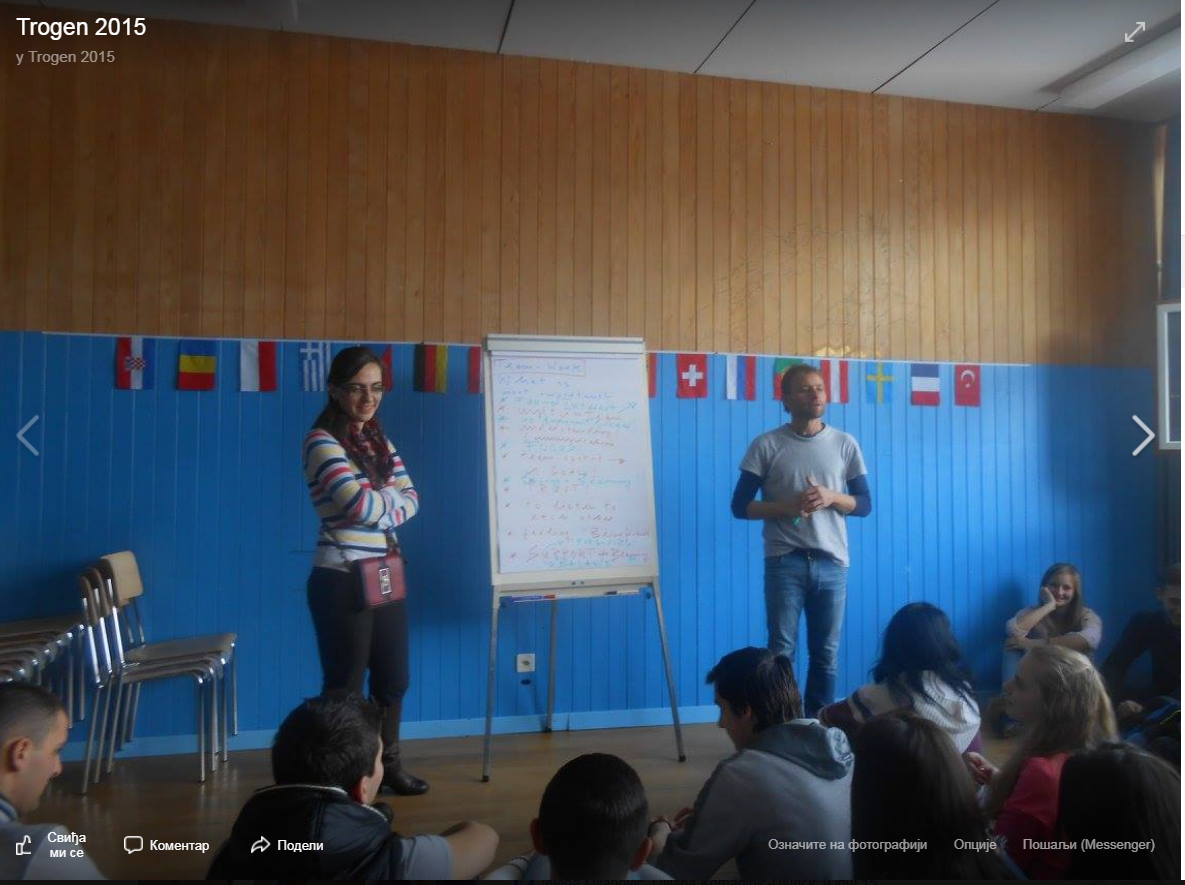
We spent the last day in Pestalozzi by having the task of writing to each other what we think and feel towards them. Although the papers we were writing on were glued to our backs so that no one could see what someone else was writing to him, all the messages were wonderful and extremely affirmative. You can see how everyone felt best in the photo. We also had the task of writing a letter to ourselves about what we learned there and how we felt. The letters were sent to us after a month and it was really a special experience for everyone to read it when the letters arrived. We were all given the task of passing on what we learned there to other students from our cities, which we did successfully. This has further expanded education on these important topics.
Poslednj dan u Pestalociju proveli smo tako sto smo imali zadatak da jedni drugima napisemo sta mislimo i osecamo prema njima. Iako su nam papiri na kojima smo pisali bili zalepljeni na ledjima tako da niko nije mogao da vidi sta mu neko drugi pise sve poruke su bile divne i krajnje afirmatine. Kako su se svi osecali najbolje mozete videti na fotografiji. Imali smo i zadatak da sami sebi napisemo pismo o tome sta smo tamo naucili i kako se osecamo. Pisma su nam poslali posle mesec dana i stvarno je svima bio poseban dozivljaj da to procitaju kada su pisma stigla. Svi mi smo dobili zadatak da to sto smo tamo naucili prenesemo dalje i ostalim ucenicima iz nasih gradova, sto smo uspesno uradili. Time se jos vise prosirila edukacija o ovim bitnim temama.
For the very end, I want to share with you some more photos from this wonderful educational stay in Switzerland.
Za sam kraj, zelim da podelim sa vama jos neke fotografije sa ovog divog edukativnog boravka u Svajcarskoj.
Banana bread -Hleb sa bananama
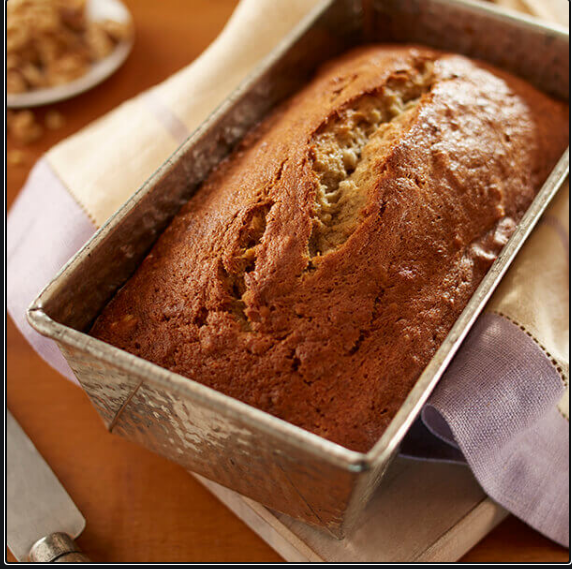
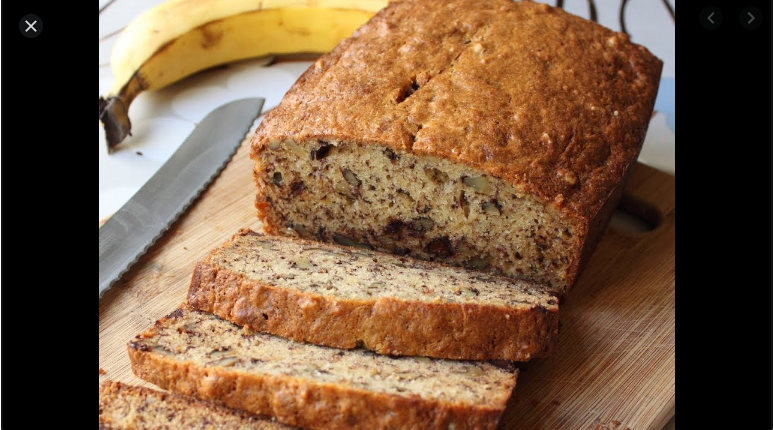
You have bananas in the house that have started to get dark so no one in the house wants to eat them, or you just have bananas and want to use them to make something sweet. One solution is to make banana bread.
Ingredients needed:
- 2 bananas
-1,5cup fluor
-1 backing powder
- 3/4 sugar cup
1- 1/4 cup oil
- 2 eggs
- toppings on request (chopped chocolate, raisins ...)
Preparation:
Mash the bananas well and add all the other ingredients. Stir it all together until well combined. Bake in a pan at 250 degrees for about 40 minutes. Since the spores are different when we think it’s done we need to prick it with a toothpick to see if it’s well baked inside. You can make it without any additives, and it is so delicious.
Imate banane u kuci koje su pocele da tamne, pa niko od ukucana ne zeli da ih jede, ili jednostavno zelite da iskoristite banane da napravite nesto slatko. Jedno od mogucih resenja je pravljene bananabread ( hleb sa bananama)
Potrebni sastojci:
2 banane
1,5 case brasna
1 prasak za pecivo
3/4 case secera
1/4 case ukja
2 jaja
dodaci po zelji ( seckana cokolada, suvo grozdje...)
Priprema:
Dobro izgnjeciti banane i u to dodati sve ostale sastojke. Sve to promesati dok se dobro ne sjedini. Peci u plehu na 250 stepeni oko 40 min. S obzirom da se sporeti razlikuju kada mislimo da je gotovo treba ga bocnuti cackalicom da vidimo da li je unutra dobro pecen. Mozete ga praviti i bez ikakvih dodataka, i tako je ukusan.
Russian Dool - mini series
RUSSIAN DOLL SERIES: HAPPY DEATH AND SAD LIFE
Nadja (Natasa Lion )'s 36th birthday ends with a party in an apartment full of people and a tragic death. But, like in a bad movie or an unbearably difficult video game, life or death brings her back to the beginning. Nadja's life restarts every time she gets hurt and starts in the same place and at the same time - in the bathroom, before she infiltrates among a bunch of acquaintances and friends at a birthday party. Each new beginning is followed by Harry Nilsson's song "Gotta Get Up" in which the following verses: "You have to get up, you have to go out, you have to get home before morning dawns", which will get into your skin. And no matter how many times the song is repeated, each time it will have a different meaning, through the serenity of a new beginning, to the insidious game that reminds of Dante's hell.
Nadja is a cynic, a verbal bitch of a person, a serious addict of nicotine, narcotics and alcohol, but she justifies her selfish existence with the serenity of life. Our protagonist is seemingly a person who looks at life lightly, but the way she sees it, so he reciprocates - he kills her and brings her back to the beginning every time. The irony is that Nadja is employed in the video game industry as a programmer, and as she torments gamers with the unrealistic weight of the level, so life punishes her again.
Every life cycle in which Nadja finds herself is the same, but the series does not allow monotony or repetition. In the first round, Nadja is convinced that the victim is a hallucination of a bad drug, then she interferes in the whole story with a Jewish proverb written on the building where the birthday takes place, convinced that she has become an instrument of some ancient curse. From the rush of a dealer who sold bad drugs, to the encounter with a character who is in the same sauce as Nadja, the series never ceases to delight with humor and ideas.
Instead of a linear narrative trajectory, “Russian Doll” takes the story to the most unreal corners after the third episode and hides serious aces up their sleeves that are nailed to the screen in a quest to find out - is there a happy ending for a woman you love to hate so much
The comic beginning of the series, a masterful script that never failed, and the role of life for Natasha Lyon "Russian Doll" turns into a tragic story that will take the smile off the viewer's face. Elements of science fiction, fantasy and psychological game mic by mic lead to the final realization - what is really happening? "Russian Doll" is the best example of how to make a masterpiece out of a well-known idea. The characterization of the characters, the acting, the fantastically ironed tempo of the series that does not stifle or stretch, and the provocative theme and narration, as well as the subtle characters along the way should serve other series that plan to appear after this one.
One of the few series in the last 10 years that is not a cliché and that paves the way for a different way of access to modern television, because it has become overcrowded with content and hyperproduction from which it is difficult to separate anything.
SERIJA “RUSSIAN DOLL”: SREĆNA SMRT I TUŽAN ŽIVOT
Nađin (**Nataša Lion**) 36. rođendan završava se žurkom u stanu prepunom ljudi i tragičnom smrću. Ali, kao u nekom lošem filmu ili nesnosno teškoj video-igri, život ili smrt je vraća na početak. Nađin život se restartuje svaki put kad nastrada i počinje na istom mestu i usto vreme – u kupatilu, pre nego što se infiltrira među gomilom poznanika i prijatelja na rođendanskoj žurki. Svaki novi početak prati numera Harija Nilsona “**Gotta Get Up**” u kojoj niže stihove: “*Moraš da ustaneš, moraš da izađeš, moraš da stigneš kući pre nego što jutro svane*“, koja će se uvući u kožu. I ma koliko puta da se pesma ponovila, svaki put će imati drugačije značenje, preko vedrine zbog novog početka, pa do podmukle igre koja podseća na Danteov pakao.
Nađa je cinik, verbalna kučka od osobe, ozbiljna zavisnica od nikotina, narkotika i alkohola, ali svoje sebično postojanje opravdava životnom vedrinom. Naša protagonistkinja je naizgled osoba koja život gleda olako, ali tako kako ga ona vidi, tako joj i on uzvraća – ubija je i vraća je svaki put na početak. Ironija je da je Nađa zaposlena u industriji video-igara kao programer i kako ona muči gejmere nerealnom težinom nivoa, tako i nju život iznovno kažnjava.
Svaki životni ciklus u kojem se nađe Nađa je isti, ali serija ne dozvoljava monotoniju, niti ponavljanje. U prvom krugu Nađa je ubeđena da je žrtva halucinacija loše droge, potom je u čitavu priču umešala jevrejsku poslovicu koja je ispisana na zgradi u kojoj se odigrava rođendan, ubeđena da je postala instrument neke drevne kletve. Od jurnjave dilera koji je prodao lošu drogu, pa do susreta sa likom koji se nalazi u istom sosu kao i Nađa serija ne prestaje da oduševljava humorom i idejama.
Umesto linearne narativne putanje, “Russian Doll” priču vodi u najneralnije kutke posle treće epizode i krije ozbiljne kečeve u rukavu koje drže prikovane uz ekran u želji za saznanjem – da li postoji srećan kraj za ženu koju toliko voliš da mrziš?
Komičan početak serije, maestralan scenario koji nijednog trena nije podbacio i uloga života za Natašu Lion “Russian Doll” pretvara u tragičnu priču koja će skinuti osmeh sa lica gledaoca. Elementi naučne-fantastike, fantazije i psihološke igre mic po mic vode do finalne spoznaje – šta se zaista događa?
“Russian Doll” je najbolji primer kako od poznate ideje napraviti remek-delo. Karakterizacija likova, gluma, fantastično upeglan tempo serije koji ne davi i ne razvlači, i provokativna tema i naracija, kao i suptilni znakovi pored puta treba da posluže drugim serijama koje planiraju da se pojave posle.
Jedna od retkih serija u poslednjih 10 godina koja nije kliše i koja utabava put za drugačiji način pristup modernoj televiziji, jer je postala pretrpana sadržajem i hiperprodukcijom iz koje je teško bilo šta izdvojiti.
Dusan Dusko Radovic - Aphorisms - aforizmi
I wanted to start this weekend by remembering the timeless Dusko Radovic and his aphorisms. And in the next few days, I will publish some of his aphorisms, as far as we can remember, and maybe imagine a little.
Dušan Radović (Niš, November 29, 1922 - Belgrade, August 16, 1984) was a Serbian poet, writer, journalist, aphorist and TV editor. He was the editor-in-chief of Pionirske novine, the editor of the Children's Program of Radio Belgrade, the editor of the Children's Program of Television Belgrade, the editor of Poletarac, a journalist of Borba and (since 1975) the editor of Studio B.
He said about his writing: "I started writing in self-defense. I defended myself from everyone who threatened me with health, strength, beauty, better success in school. I took it out, proving to myself and others that I was just different and not worse than them. There are exceptions, but I think that art is a job for those who have problems with themselves. They develop senses and qualities that are not needed by healthy and successful people. No one knows people better than artists. And that valuable knowledge is acquired through dramatic acquaintance with oneself. "
Dusko Radovic passed away in 1984, and he left behind many aphorisms with which he woke up Belgraders on the waves of Radio Studio B, wise thoughts that made life in Belgrade more beautiful, witty, charming ...
You may still find an opportunity today to remember the one: "Before you fix the world, fix the fountain in your apartment. The world would be much happier and more beautiful if everyone just fixed the fountain or at least their teeth." When you do a good deed, Dushko will call you from the subconscious with the words that "our little can be a lot for those who have nothing at all". Maybe some scoundrel, bragging to his friends, will rebel even today: "Don't run after women so that you don't collide with those who run away from them", and surely every newlywed aunt will receive at least one congratulatory message that reads: "Moms, give birth to sisters' children, because sisters become aunts, and aunts are the most beautiful, irreplaceable gift to any childhood. "
Yes, there are those, always current, about love, which are drawn every hour:
- There is so little love between people. He who knows how to love should do nothing else.
- Love each other when you're not together. That's real love. He who knows how to love only when he is together, does not ask who he is with.
Here are some thoughts of Dusko Radovic that are rarely quoted today. And it's not bad to remember them from time to time.
- Stay here! Don't go anywhere from Belgrade if you have to return to it again, if you will look forward to returning more than leaving.
- When's that subway? Many Belgraders have been underground for a long time and are waiting.
- Women have achieved nothing. They used to be unequal to real men. And now they are equal to none.
- Who doesn't have it in his head has it in his legs, who doesn't have it in his feet has it in the bank, who doesn't have it in the bank has something in Grocka, who doesn't have it in Grocka - something will be found in his urine. Nobody really has nothing anywhere.
- Many of our peers wanted to go to war, but they did not dare. And what often happens has happened: Today, they only remember that they wanted to, and they forgot that they did not dare.
- That's what we need. Until we acknowledged that there were problems, we didn't even have to solve them.
- There are great poor people among our children, to whom, except for money, the parents could not give anything.
- Put it in your stomach! This investment gives fast and visible results. Investing in the head is long-term and uncertain.
- Why don't street trash cans rise to the height of basketball hoops? It would be a provocation that none of our basketball nation would resist. The baskets would be full and the city clean.
Here are some of his aphorisms from the radio show and the book "Belgrade Good Morning":
Monday, October 2, 1978.
Wake up only those parts of the body and organs that you need. Everything else can still sleep.
There are more and more unusable decorations on you. If bathing is difficult and the deodorant is expensive, melt one fragrant one under each mouse The impression is unforgettable.
Good mothers are bad workers. A woman who constantly thinks about her children cannot work well. The economy needs bad mothers who only think about work.
The Serbian Chamber of Commerce renovated its large building in Generala Zhdanova Street 15.Now this renovated building looks great, as if it were imported.
Belgrade will get two new comfortable cemeteries. It would be better for those who do not have apartments to die. This is the only way we can speed up the solution of the housing crisis.
Literary critics are abolished. will be tried only by regular courts.
Tuesday, October 3
The question remains how we will warm ourselves this winter: on promises, agreements or self-governing agreements? When will bus 25 reach Medaković settlement? When will Umka solve the water supply problem? And when will Umka solve that problem? When Sremčica gets a new transformer station. And when will Sremčica get better electricity? When will the settlement of Bele vode get self-service. And when can this settlement hope for self-service? When Konjarnik gets a market. And do you know when it will be? garage in Tirsova Street.
Why was the Museum of Applied Arts robbed? Because that branch of art is still not valued and kept well in our country.
Several powerful banks will build mammoth buildings on Slavija.
Belgrade is selling health so that it can build hospitals.
Don't spit on Belgrade, don't pollute Belgrade - your children are following you.
Wednesday, October 4
There used to be many more infantry and among them many fiery fighters for a just pedestrian cause.
Time passes, and infantry lines fall apart. Many infantry deserted and sided with the occupier.
Belgrade power plants show some human qualities. They became spoiled, moody, stubborn and unproven. Obviously, the people who work in them no longer have any authority. We have heard that there are still people who read books. We think that this is an extremely suspicious and semi-legal thing. It can be justifiably suspected that they do not watch television at all. They have antennas and TVs as if they are watching, not watching, but they turn on some small lamps and read secretly. And it is known that whoever reads thinks.
Over 20,000 of our children study at colleges and universities abroad. These children are guided by their parents, not by our reformed school. We dread the logical assumption that well-educated children abroad will become leaders and bosses of poorly educated children in the country
. Don't cheat on your wife, don't embarrass her in front of the unknown female world
Thursday, October 5The
Yugoslav men suffered another defeat last night. We hope that it will not occur to them for a long time to take off their pants again.
Modern football requires exceptional efforts, both from players and coaches and from spectators. The conditions are ripe for our spectators to become professionals, to be paid for that.
Thursday, October 5, a gloomy morning after the defeat.
Honest and self-critical people think about how to kill themselves, and dishonest and unself-critical people think when they could kill themselves.
Last night we watched a TV show about bribery and corruption. We watched and thought - when did they have to bribe on television for something like that to enter the program.
Be smart and don't insist too much on the mind. It's stupid to be smart where stupidity works better.
She and he have the impression that they love each other. And if they really love each other, I can only find out if they get married. So, they decided to get married and check their impressions in marital practice. During that time, they will live with his family and eat with hers.
Which directly - indirectly, several million people live from cars.And incomparably fewer die.
Modern young women they do not give birth to children but grandchildren. So that grandparents have at least grandchildren when they no longer have children.
Friday, October 6.
Are there any gentlemen in Belgrade? Yes. They are those friends who married ladies.
You love people, but don't overdo it. When you reach the critical limit, you switch to women.
Some parents pay their children a separate living allowance. When they go on their professional and personal adventures in the morning, they leave money on the kitchen table
. The Belgrade Zoo is located between the walls of the Kalemegdan Fortress. The poor animals look like prisoners of
Obese people should be forbidden to recreate. Only when they run out of supplies of their own gym, they have the right to compete for common greenery and air. scarier that we began to envy them.
Saturday, October 7
Today is Saturday, the day when all those who do not manage to do it during the week quarrel.
Today, the football championship continues. Partizan will play against Velež in Belgrade. There are opportunities for our victories to finally win - either Partizan or Velež, it doesn't matter, as long as it's not a foreign team or national team.
The fight against alcoholism is intensifying, advertising of all alcoholic beverages is prohibited. such policies. Some alcoholics and smokers should be allowed to fail so that others can live and work.
Zelela sam da zapocnem ovaj vikend secanjem na bezvremenog Duska Radovica i njegove aforizme. Narednih dana objavicu jos neke njegove aforizme da bi se podsetili, a mozda malo i zamislili.
Dušan Radović (Niš, 29. novembar 1922 – Beograd, 16. avgust 1984) je bio srpski pesnik, pisac, novinar, aforističar i TV urednik. Bio je glavni urednik *Pionirskih novina*, urednik Programa za decu Radio Beograda, urednik Programa za decu Televizije Beograd, urednik lista *Poletarac*, novinar *Borbe* i (od 1975. godine) urednik *Studija B*.
Rekao je o svom pisanju: „Pisati sam počeo u samoodbrani. Branio sam se od svih koji su me ugrožavali zdravljem, snagom, lepotom, boljim uspehom u školi. Vadio sam se, dokazivao i sebi i drugima da sam samo drukčiji a ne gori od njih. Ima i izuzetaka, ali ja mislim da je umetnost posao za one koji imaju problema sa sobom. Oni razvijaju čula i osobine koji nisu potrebni zdravim i uspešnim ljudima. Niko bolje ne poznaje ljude od umetnika. A to dragoceno znanje stiče se dramatičnim poznanstvom sa samim sobom.“
Duško Radović preminuo je 1984. godine, a iza sebe je ostavio mnoštvo aforizama kojima je budio Beograđane na talasima radija Studio B, mudrih misli kojima je život u Beogradu činio lepšim, duhovitijim, šarmantnijim...
Možda ćete i danas naći priliku da se setite one: "Pre nego što popravite svet, popravite česmu u svom stanu. Svet bi bio mnogo srećniji i lepši kad bi svako samo popravio česmu ili makar zube". Kad učinite neko dobro delo, Duško će vam se javiti iz podsvesti rečima da "naše malo može biti mnogo za one koji nemaju nimalo". Možda će neki mangup hvaleći se drugarima i danas izbunariti: "Ne trčite za ženama da se ne sudarite sa onima koji od njih beže", a sigurno će svakoj novopšečenoj tetki uz čestitke stići bar jedna koja glasi: "Mame, rađajte deci sestre, jer sestre postaju tetke, a tetke su najlepši, nezamenjivi dar svakom detinjstvu".
Da, tu su i one, uvek aktuelne, o ljubavi, koje se potežu svaki čas:
- Tako je malo ljubavi među ljudima. Ko ume da voli, ne bi trebalo ništa drugo da radi.
- Volite se kad niste zajedno. To je prava ljubav. Ko ume da se voli samo kad je zajedno, taj ne pravi pitanje s kim je.
- Ako možete nemojte voleti one koji vas ne vole. Ako to ne možete, volite ih samo malo. Ako ni to ne možete, volite ih mnogo ali kratko.
- Da li je ljubav bolest? Jeste, al’ neprelazna. Možete nekoga ljubiti i ljubiti, ali ga nećete zaraziti ljubavlju.
- Budni su oni koji vole, još spavaju oni koji su voljeni...
Ipak, mnoge mudre misli Duška Radovića smo zaboravili - svesno ili nesvesno. Neke zato što odavno nisu smešne i danas bi mogle da prođu tek kao crni humor, ako ne i uvreda ili provokacija, a neke zato što su posvećene nekom drugom vremenu, drugačijem Beogradu i drugačijim ljudima, i smisao im je izbledeo do toga da više i ne možemo da skapiramo "u čemu je fora".
Evo nekih misli Duška Radovića koje danas samo retki citiraju. A nije loše setiti ih se s vremena na vreme.
- Ostajte ovde! Ne idite nikuda iz Beograda ako ponovo morate da se vraćate u njega, ako ćete se više radovati povratku nego odlasku.
- Kad će taj metro? Mnogi Beograđani su već odavno pod zemljom i čekaju.
- Žene nisu ništa postigle. Nekada su bile neravnopravne sa pravim muškarcima. A sada su ravnopravne sa nikakvim.
- Ko nema u glavi ima u nogama, ko nema u nogama ima u banci, ko nema u banci ima nešto u Grockoj, ko nema ni u Grockoj – naći će mu se nešto u mokraći. Niko baš nije da nema nigde i ništa.
- Mnogi naši vršnjaci hteli su da idu u rat ali nisu smeli. I dogodilo se ono što se često događa: Danas pamte samo da su hteli, a zaboravili su da nisu smeli.
- Sakupili smo pikavce kao dokaz da jedan veliki prijatelj pravde i jednakosti puši cigarete Marlboro, a svaka od tih cigareta košta mnogo dinara. Neki ljudi još uvek jedno govore a drugo puše.
- Ne govorite ono što mislite ako živite od toga šta govorite.
- Tako nam i treba. Dok nismo priznavali da ima problema, nismo ih morali ni rešavati.
- Ima velike sirotinje među našom decom, kojoj, sem para, roditelji ništa nisu mogli dati.
- Ulažite u stomak! To ulaganje daje brze i vidljive rezultate. Ulaganje u glavu je dugoročno i neizvesno.
- Zašto se ulične korpe za otpatke ne podignu na visinu koševa za košarku? Bila bi to provokacija kojoj niko od naše košarkaške nacije ne bi odoleo. Koševi bi bili puni, a grad čist.
Evo jos nekih njegovih aforizama iz radio emisije i knjige "Beograde dobo jutro":
Ponedeljak, 2. oktobar 1978.
Probudite samo one delove tela i organe koji su vampotrebni.Sve ostalo može još da spava.
Na vama ima sve više neupotrebljivih ukrasa.Ako vam je kupanje teško a dezodorans skup, istopiteispod svake miške po jednu mirišljavu bombonu.Utisak je nezaboravan.
Dobre majke su loše radnice.Ne može dobro raditi žena koja stalno misli na svojudecu.Privredi su potrebne loše majke, koje samo misle naposao.
Privredna komora Srbije renovirala je svoju veliku zgradu u Ulici Generala Ždanova 15. Sad ova obnovljena građevina izgleda sjajno, kao da je iz uvoza.
Beograd će dobiti dva nova komforna groblja.Bolje bi bilo da umiru oni koji nemaju stanova.Jedino tako možemo ubrzati rešenje stambene krize.
Ukidaju se književni kritičari.Književnicima i njihovim delima od sada će suditisamo redovni sudovi.
Utorak, 3. oktobar
Ostalo je otvoreno pitanje kako ćemo se zimus grejati:na obećanjima, na dogovorima ili na samoupravnimsporazumima?
Kada će autobus 25 stići do Medakovićevog naselja?
Kad Umka reši problem snabdevanja vodom.
A kad će Umka rešiti taj problem?
Kad Sremčica dobije novu trafo-stanicu.
A kad će Sremčica doći do bolje struje?
Kad naselje Bele vode dobije samouslugu.
A kad se ovo naselje može nadati samousluzi?
Kad Konjarnik dobije pijacu.
A da li se zna kad će to biti?
Kad bude gotova javna garaža u Tiršovoj ulici.
Zašto je opljačkan Muzej primenjenih umetnosti ?Zato što se ta grana umetnosti kod nas još uvek neceni i ne čuva dobro.
Na Slaviji će nekoliko moćnih banaka graditi mamutske građevine.
Beograd prodaje zdravlje da bi mogao graditi bolnice.
Ne pljujte na Beograd, ne prljajte Beograd – za vama idu vaša deca.
Sreda, 4. oktobar
Nekada je bilo mnogo više pešaka i među njima mnogovatrenih boraca za pravednu pešačku stvar.Vreme prolazi, a pešački redovi se osipaju.Mnogi pešaci su dezertirali i priklonili se okupatoru.
Beogradske elektrane ispoljavaju neke ljudske osobine.Postale su razmažene, ćudljive, tvrdoglave i nedokazane. Očigledno da ljudi koji u njima rade nemaju višenikakvog autoriteta.
Čuli smo da još ima ljudi koji čitaju knjige.Mi mislimo da je to krajnje sumnjiva i polulegalnastvar. Može se opravdano sumnjati da oni uopšte gledaju televiziju.Imaju antene i televizore kao da gledaju, a ne gledaju,već pale neke male lampe i tajno čitaju.A poznato je da ko čita taj i misli.
Na koledžima i univerzitetima u inostranstvu školujese preko 20 hiljada naše dece. Ovu decu usmeravajuroditelji, a ne naša reformisana škola.Strepimo od logične pretpostavke da će deca dobroškolovana u inostranstvu postati rukovodioci i šefovidece loše školovane u zemlji.
Nemojte varati svoju ženu, nemojte je brukati pred nepoznatim ženskim svetom.Na koledžima i univerzitetima u inostranstvu školujese preko 20 hiljada naše dece. Ovu decu usmeravajuroditelji, a ne naša reformisana škola.Strepimo od logične pretpostavke da će deca dobroškolovana u inostranstvu postati rukovodioci i šefovidece loše školovane u zemlji.
Nemojte varati svoju ženu, nemojte je brukati prednepoznatim ženskim svetom.Šta će te žene misliti o vašoj ženi posle prvih iskustava sa vama?!
Četvrtak, 5. oktobar
Jugoslovenski muškarci doživeli su sinoć još jedan poraz.Nadamo se da im još dugo neće pasti na pamet da ponovo skidaju pantalone.
Savremeni fudbal traži izuzetne napore, kako od igrača i trenera tako i od gledalaca.Sazreli su uslovi da nam i gledaoci postanu profesionalci, da budu plaćeni za ono što gledaju.
Četvrtak, peti oktobar, sumorno jutro posle poraza.Pošteni i samokritični ljudi misle o tomekakodase ubiju, a nepošteni i nesamokritični merkaju kog bimogli ubiti.
Sinoć smo gledali televizijsku emisiju o mitu i korupciji.Gledali smo i mislili – koga li su morali podmititi nateleviziji da tako nešto uđe u program.
Budite pametni i ne insistirajte mnogo na pameti.Glupo je biti pametan tamo gde bolje prolazi glupost.
Ona i on imaju utisak da se vole.A da li se zaista vole, to mogu saznati jedino ako se
venčaju. Dakle, rešili su da se uzmu i da u bračnoj praksiprovere svoje utiske.Za to vreme stanovaće kod njegovih, a hraniti sekod njenih.
Koje neposredno – koje posredno, od automobila živinekoliko miliona ljudi.A umire neuporedivo manje.
Savremene mlade žene ne rađaju decu već unuke.Da bi bake i deke imale bar unuke kad već nemaju decu.
Petak, 6. oktobar
Ima li u Beogradu gospode? Ima.To su oni drugovi koji su se oženili gospođama.
Volite se ljudi, ali ne preterujte u tome.Kad dođete do kritične granice, prelazite na žene.
Neki roditelji isplaćuju svojoj deci dodatak za odvojeniživot. Kad krenu ujutru u svoje profesionalne i ličneavanture, ostavljaju im novac na kuhinjskom stolu.
Među zidove kalemegdanske tvrđave smešten je Beogradski zoološki vrt.Jadne životinje liče na ratne zarobljenike.
Debelima treba zabraniti da se rekreiraju.Tek kad potroše zalihe sopstvenog sala, imaju pravada konkurišu za zajedničko zelenilo i vazduh.
Danas svaka šuša ima bar jedna kola i bar jednu šušinicukoja se šminka na retrovizoru.To jeste grozno i strašno.Ali je još strašnije to što smo počeli da im zavidimo.
Subota, 7. oktobar
Danas je subota, dan kad se svađaju svi oni koji to nestižu da rade tokom nedelje.
Danas se nastavlja fudbalsko prvenstvo. U Beogradu ćeigrati Partizan protiv Veleža.Eto prilike da, najzad, i naši pobede – ili Partizanili Velež, svejedno, samo da nije neka strana ekipa ilireprezentacija.
Zaoštrava se borba protiv alkoholizma, zabranjeno jereklamiranje svih alkoholnih pića.Mi smo protiv takve politike.Treba omogućiti nekim alkoholičarima i pušačimada propadnu kako bi drugi mogli da žive i rade.
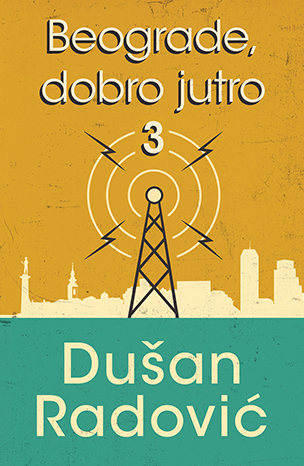
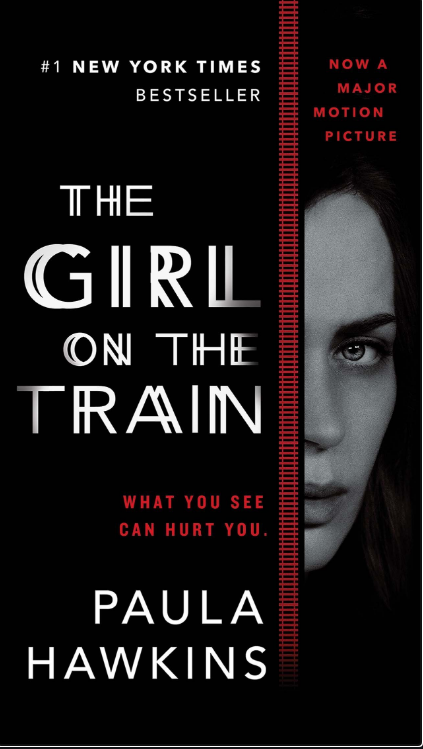
Paula Hawkins – The Girl on the Train - Devojka iz voza
Why is this novel a world thriller sensation?
In the time we live in, nothing can surprise us. The news is full of bizarre cases, cold-blooded murders, searches for psychopaths, and true evil every day. What is it that makes a person be like that? Is it a matter of human nature or a cube of circumstances? To what extent does human malice go? It is natural for every criminal to have their own motive, whether moral and humane or not, and these motives vary from person to person. One of the main motives of most cases is obsession, and that is also the main theme of this novel. To what extent can obsession take a human being?
The Girl from the Train is a novel that we mentioned when announcing new novels in January and February, and this is also the first translated novel this year. It's the debut novel by British writer Paul Hawkins, and in the sea of great reviews the novel has received, the phrase "next Gone Girl" often appears, and yes, let's be clear - if you've seen (or read) Gone Girl, chances are you'll You like the girl from the train
The main heroine after whom the novel is named is Rachel, a divorced woman who lives in London, and who travels by train to work every day. During the drive to the city and back, Rachel passes by the house of a young married couple every day, whom she named Jess and Jason. Jess and Jason are a seemingly beautiful couple - they seem overjoyed, they live in a very nice family house at the end of London, they both look very nice - and those are the reasons why Rachel is in love with them. Her marriage failed, and she sees in them everything she would like to have. But whether that is true, Rachel will only find out. One day, in a new episode of her fictional story about a wonderful married couple, she will see something she shouldn't see, and that will change Rachel's life forever by becoming one of the main suspects in a brutal murder, and becoming part of a whirlwind of evil. lies and deception. Rachel is one of the three narrators in the novel. Although the main one, she is far from a narrator who can be trusted, and she is by no means the most wonderful person on the planet. As we said, Rachel is divorced, her husband cheated and married Ana (who is the second of the three narrators in the novel). However, Rachel's strongest traits are her obsession with her ex-husband Tom and Anna, and the fact that he is a heavy alcoholic. She can't compose a single day without alcohol, and alcohol is a special character in the novel.
At the very beginning of the novel, before the beginning of the story, the reader can read a part of the English children's counter about magpies:*One for sorrow, two for joy, three for a girl, four for a boy, five for silver, six for gold, seven for a secret never to be told.*
One is for the sudden disappearance of Megan Hipwell. Two are for twice the train a day, the two that make Rachel a day. Three for three unhappy women - Rachel, Ana and Megan - are three unreliable narrators. Logically, seven is for the (shocking) secret that is revealed at the very end of the book.
The language in which Paula Hawkins writes is quite simple. The sentences are full of epithets and descriptions, and it seems as if anyone could compose such sentences. They are not profound, but they hold attention. What makes the novel (for now) a more widely read novel in 2015 is the story, not the style of writing. Given the genre of the novel and the fact that this is Paul's debut, this fact makes perfect sense - maybe Paul will include more symbolism and deep messages in his novels sometime in the future. What also characterizes the novel is the variety of elements, which is very possibly one of the reasons why the book has been read so much - there is something for everyone. There is, most of all, mystery and thriller, and that is what attracts most readers. Moments of love and eroticism are in another place, and the elements of obsession, evil, lies, deception and deception abound, and that is what the novel sells. From time to time, it seems that the novel is quite cheap and full of everything, but, to be honest, this novel will not be nominated for any serious literary award, nor will it become a classic of literature. This is the perfect novel for the weekend and for shortening time.
All in all - if you are looking for a deep novel that will make you think about the meaning of life - then The Girl from the Train is not a novel for you. On the other hand, if you are looking for a novel that can be read in two days, and that will make you ask yourself a little about what you are doing wrong, whether you treat people well, and whether you can trust everyone - then I definitely recommend it. The novel is read very quickly, and the pages turn by themselves, because the language is quite easy, and yet, the book is not long enough to have room for detail. The reader is constantly interested in the further continuation of the story, and judging by that, Hawkins wrote a great book. It has everything we secretly love - gossip, peeping into other people's lives, sex, love, deception (so I believe we will secretly enjoy this novel
This book is also screened. Since I haven't seen the movie, I can't tell you my opinion on it, but look at the thaler, so judge for yourself.
https://www.youtube.com/watch?v=KkoEE1i0CX8
Zbog čega je ovaj roman svetska triler senzacija?
U vremenu u kome živimo, ništa ne može da nas iznenadi. Vesti su svakog dana prepune bizarnih slučajeva, hladnokrvnih ubistava, potraga za psihopatama, i istinskog zla. Šta je ono što osobu natera da bude takva? Da li je to stvar prirode čoveka ili slaganja kockica okolnosti? Do koje mere ide ljudska zloba? Prirodno je da svaki kriminalac ima svoj motiv, bilo to moralno i humano ili ne, a ti motivi se razlikuju od osobe do osobe. Jedan od glavnih motiva najvećeg broja slučaja je opsesija, a to je ujedno i glavna tema ovog romana. Do koje granice opsesija može odvesti ljudsko biće?
*Devojka iz voza* je debitantski roman britanske spisateljice Pole Hokins, i u moru odličnih kritika koje je roman dobio, često se pojavljuje fraza ”sledeći *Gone Girl*”, i da, odmah razjasnimo stvar – ukoliko ste odgledali (ili pročitali) *Gone Girl*, sve su šanse da će Vam se *Devojka iz voza* svideti.
Glavna junakinja po kojoj roman nosi ime je Rejčel, razvedena žena koja živi u Londonu, i koja svakog dana putuje vozom do posla. U toku vožnje ka gradu i nazad, Rejčel svakog dana prolazi pored kuće mladog bračnog para kome je sama nadenula imena Džes i Džejson. Džes i Džejson su naizgled prelep par – deluju presrećno, žive u jako lepoj porodičnoj kući na kraju Londona, oboje su vrlo prijatnog izgleda – i to su razlozi zbog čega je Rejčel zaljubljena u njih. Njen brak je propao, i u njima ona vidi sve što bi želela da ima. Ali da li je to istina, Rejčel će tek spoznati. Jednog dana, u novoj epizodi njene fiktivne priče o divnom bračnom paru, ona će videti nešto što ne bi smela da vidi, i to će promeniti Rejčelin život zauvek tako što će postati jedan od glavnih osumnjičenih za svirepo ubistvo, i postati deo vrtloga zla, laži i prevara.
Rejčel je jedna od tri pripovedača u romanu. Iako glavni, ona je daleko od pripovedača kome se sve može verovati, i nikako nije najdivnija osoba na planeti. Kao što smo rekli, Rejčel je razvedena, njen muž je varao i oženio se Anom (koja je druga od tri pripovedača u romanu). Međutim, Rejčeline najjače osobine su opsesija koju ima prema svom bivšem mužu Tomu i Ani, i činjenica da je teški alkoholičar. Ona ne može da sastavi ni jedan dan bez alkohola, i alkohol predstavlja poseban lik u romanu.
Na samom početku romana, pre početka priče, čitalac može da pročita deo engleske dečije brojalice o svrakama:
**Jedna za tugu, dve za sreću, tri za devojčice.**
Jedna je za nagli nestanak Megan Hipvel. Dve su za dva puta vozom dnevno, dva puta koja Rejčel čine dan. Tri su za tri nesrećne žene – Rejčel, Anu i Megan – tri nepouzdana naratora. Logično, sedam je za (šokantnu) tajnu koja se otkriva na samom kraju knjige.
Jezik kojim Pola Hokins piše je prilično jednostavan. Rečenice su pune epiteta i opisa, i čini se kao da bi svako mogao da sastavi takve rečenice. Nisu dubokoumne, ali drže pažnju. Ono što roman čini (za sada) načitanijim romanom 2015. godine je priča, a ne stil pisanja. Imajući u vidu žanr romana i činjenicu da je ovo Polin prvenac, ova činjenica potpuno ima smisla – možda će Pola nekad u budućnosti da uključi više simbolizma i dubokih poruka u svoje romane. Ono što takođe karakteriše roman je raznovrsnost elemenata, što je vrlo moguće jedan od razloga zbog koga je knjiga toliko čitana – ima ponešto za svakoga. Tu je, najviše, misterija i triler, a to je ono što većinu čitalaca privuče. Momenti ljubavi i erotike su na drugom mestu, a elemenata opsesije, zla, laži, prevare i odmane ima na pretek, i to je ono što prodaje roman. Sa vremena na vreme se čini da je roman podosta jeftin i nabujan svim i svačim, ali, da budemo iskreni, ovaj roman neće biti nominovan ni za jednu ozbiljnu književnu nagradu, niti će postati klasik književnosti. Ovo je savršen roman za vikend i za skraćivanje vremena.
Sve u svemu – ako tražite duboki roman, koji će Vas naterati da razmišljate o smislu života – onda *Devojka iz voza* nije roman za vas. Sa druge strane, ako tražite roman koji može da se pročita u dva dana, i koji će Vas naterati da se malo priupitati u čemu grešite, da li dobro postupate prema ljudima, kao i da li možete da verujete svakome – onda svakako preporučujem. Roman se vrlo brzo čita, i stranice se same od sebe prevrću, jer je jezik dosta lak, a opet, knjiga nije dovoljno dugačka da bi bilo mesta za detaljisanje. Čitalac je konstantno zainteresovan za dalji nastavak priče, i sudeći po tome, Hokinsova je napisala odličnu knjigu. Ima svega što mi potajno i volimo – ogovaranja, zavirkivanja u tuđe živote, seksa, ljubavi, obmana (tako da verujem da ćemo potajno i uživati u ovom romanu)
Ova knjiga je i ekranizovana. S obzirom da film nisam pogledala, ne mogu vam reci svoje misljenje na njemu, ali pogledajte tejler, pa procenite sami.

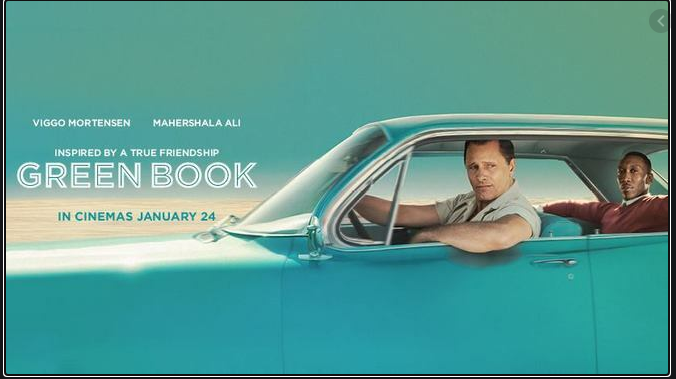
Green Book - Zelena knjiga -movie review
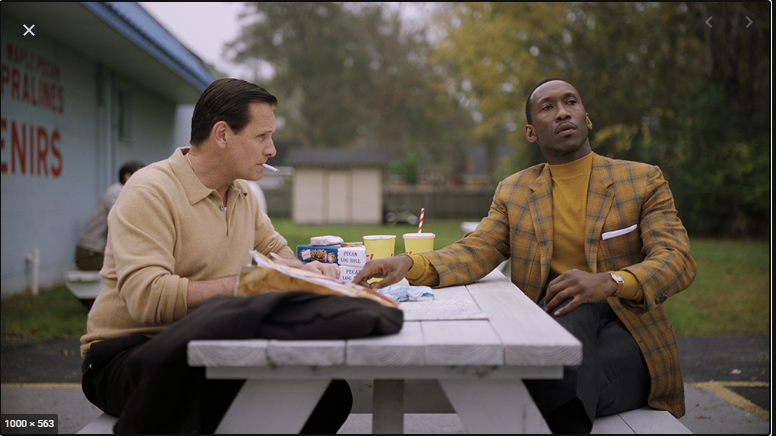
The title of the film Green Book comes from the title of The Negro Motorist Green Book, a travel guide that served African Americans for a safe journey through American segregation. The guide contains a list of hotels that do not care about the skin color of their guests. Our heroes, faced with the dangers of racism, will rely on her and each other to survive a journey that will change their lives. The plot of the film is set in 1962 and we follow Tony Valelong (Viggo Mortensen), a security guard at a nightclub. His bar is closed for two months and he is looking for a new job. He got the best offer from Don Shirley (Mahershala Ali), a pianist who is expecting a concert tour in the south of the USA. Don is an African-American, which means that potential problems await him on the trip, and Tony represents the right man for his companion. Tony is not thrilled to work for a black man, but he accepts the job and goes on tour.
At first glance, the somewhat arrogant erudite and rude man do not go hand in hand - Don is educated and brought up, while Tony is a practical and proud man from the street who solves everything with rudeness. The two of them have totally opposite attitudes towards life and ideals. However, while suffering and witnessing great injustices on their journey, the two of them rely on each other and thus find respect for the talents they possess. Over time, their relationship develops into a friendship that will change their lives.
There are several angles from which this story could have been told. The authors followed the line of least resistance and the main character is a bodyguard with prejudices, who realizes that someone could be his friend regardless of skin color. I say the line of least resistance, because the story would be much more serious and relevant if it was told from the perspective of a pianist. Thus, the script focuses on the easier and more emotional side of the story, ignoring the harder and more complicated one. However, that didn't bother me at all, on the contrary - I'm tired of too many films dealing with systematic racism, so this quarrelsome story with this topic suited me very well.
The author trio, consisting of Tony Valelonga's son, Brian Hayes Curry and director Peter Farrell, takes a passive approach in presenting racism. Their primary goal is to show the evolution of both our characters and their relationship, and that goal has been successfully performed. Indirectly, we see that prejudices and discrimination from 50 years ago have changed, thanks to people like Tony, who are ready to open their minds and their hearts.
Initially, Tony was presented as a character who, apart from street resourcefulness, has no real talents. Also, one scene from the very beginning is enough to see how full of prejudice towards African-Americans it is. In addition to the money, he accepts Shirley's job because he doesn't see it as a threat, but that doesn't stop him from taking his wallet with him in one of the scenes when he gets out of the car. That scene is even more impressive to me than the first one, because this time Tony had the opportunity to see how benevolent Shirley is - Tony doesn't even offer him an apology, because he expects his boss to understand that.
Shirley, on the other hand, strives to preserve her dignity while facing constant humiliation. According to him, the rich from the south listen to his music because they feel more cultured, but they are no different from the workers from their fields. Shirley does not leave kindness even when she suffers the worst discrimination and she really has my admiration for self-control. The fact is that the story would have been more effective if it had been told from his perspective, but we indirectly see the evolution of his character as well - he finally realizes that his music alone cannot change centuries-old beliefs and deep-seated prejudices.
I have had a high opinion of Vig Mortensen's acting qualities for a long time, and he showed them once again in this film. The man is a Dane, and he presented a totally convincing American of Italian origin. On the other hand, Mahershala Ali almost imperceptibly gives great support to the main character, he doesn't stand out too much while sitting in the back seat, and it is precisely in that unobtrusive strong impression that his quality is reflected. But he played very good roles, he won the Oscar for the supporting role (Moonlight) and he is one of the main reasons why I have confidence in the third season of the True Detective series.
Green Book is a film that takes us on an interesting, emotional and surprisingly easy ride, although it deals with a sensitive topic - a simple but also unique biographical story that Vigo Mortensen and Mahershala Ali breathe life into.
Naslov filma **Green Book** potiče od naziva knjige *The Negro Motorist Green Book*, turističkog vodiča koji je afro-amerikancima služio za sigurno putovanje kroz američku segregaciju. Vodič sadrži spisak hotela kojima nije bitna boja kože njihovih gostiju. Naši junaci, suočeni sa opasnostima vezanim za rasizam, osloniće se na nju i jedan na drugog kako bi *preživeli* putovanje koje će im promeniti živote.
https://youtu.be/QkZxoko_HC0
Radnja filma je smeštena u 1962. godinu i pratimo Tonija Valelongu , radnika obezbeđenja u noćnom klubu. Njegov lokal je zatvoren na dva meseca i u potrazi je za novim poslom. Najbolju ponudu dobija od Dona Širlija , pijaniste koga očekuje koncertna tura po jugu SAD-a. Don je afro-amerikanac, što znači da ga na putovanju očekuju potencijalni problemi, a Toni predstavlja pravog čoveka za njegovog saputnika. Toni nije oduševljen time da radi za crnca, ali prihvata posao i kreću na turneju.
Na prvi pogled, pomalo nadmeni erudita i grubijan nikako ne idu jedan uz drugog – Don je školovan i vaspitan, dok je Toni praktičan i ponosan čovek sa ulice koji sve rešava grubošću. Njih dvojica poseduju totalno suprotstavljene stavove prema životu i idealima. Međutim, dok na svom putovanju trpe i svedoče velikim nepravdama, njih dvojica se oslanjaju jedan na drugog i na taj način pronalaze poštovanje prema talentima koje poseduju. Vremenom, njihov odnos se razvija u prijateljstvo koje će im promeniti živote.
Postoji više uglova iz kojih je ova priča mogla biti ispričana. Autori su išli linijom manjeg otpora i glavni lik je telohranitelj sa predrasudama, koji shvata da bi mu neko mogao biti prijatelj bez obzira na boju kože. Kažem linija manjeg otpora, jer bi priča bila mnogo ozbiljnija i relevantnija da je ispričana iz perspektive pijaniste. Ovako, scenario se fokusira na lakšu i emotivniju stranu priče, ignorišući onu težu i komplikovaniju. Međutim, to mi uopšte nije zasmetalo, naprotiv – umoran sam od previše filmova koji se bave sistematskim rasizmom, pa mi je ovako *svarljiva* priča sa ovom tematikom baš lepo legla.
Autorski trio, koji čine sin Tonija Valelonge, Brajan Hejs Kari i režiser Piter Fareli, uzima pasivan pristup u predstavljanju rasizma. Njihov primarni cilj je prikaz evolucije kako naših karaktera, tako i njihovog odnosa, i taj cilj je uspešno izveden. Posredno vidimo da su se predrasude i diskriminacija od pre 50-ak godina promenile, upravo zahvaljujući ljudima kao što je Toni, koji su spremni da otvore svoj razum i svoje srce.
U početku, Toni je predstavljen kao lik koji, osim ulične snalažljivosti, nema pravih talenata. Takođe, dovoljna je jedna scena sa samog početka da vidimo koliko je pun predrasuda prema afro-amerikancima. Pored novca, prihvata posao kod Širlija jer ga ne vidi kao pretnju, ali ga to ne sprečava da ponese svoj novčanik sa sobom u jednoj od scena kada izlazi iz auta. Ta scena mi je još upečatljivija od one prve, jer je ovoga puta Toni imao priliku da uvidi koliko je Širli dobroćudan – Toni mu čak ne nudi ni izvinjenje, jer očekuje da njegov šef to razume.
Sa druge strane, Širli se trudi da sačuva dostojanstvo dok se suočava sa konsantnim ponižavanjem. Po njegovim rečima, bogataši sa juga slušaju njegovu muziku jer se osećaju kulturnije, ali im uopšte nije drugačiji od radnika sa njihovih polja. Širlija ne napušta ljubaznost ni kada trpi najgoru diskriminaciju i zaista ima moje divljenje zbog samokontrole. Činjenica je da bi priča bila efektnija da je ispričana iz njegove perspektive, ali posredno vidimo evoluciju i njegovog karaktera – napokon shvata da njegova muzika ne može sama promeniti viševekovna ubeđenja i duboko usađene predrasude.
Odavno imam visoko mišljenje o kvalitetima glume Viga Mortensena, a u ovom filmu ih je još jednom pokazao. Čovek je Danac, a predstavio je totalno uverljivog Amerikanca italijanskog porekla. Sa druge strane, Maheršala Ali gotovo neprimetno pruža veliku podršku glavnom junaku, ne ističe se previše dok sedi na zadnjem sedištu i upravo se u tom nenametljivom jakom utisku koji ostavlja ogleda njegov kvalitet. Ali je nanizao veoma dobre uloge, dobio je Oskara za sporednu ulogu i on je jedan od glavnih razloga što imam poverenja u treću sezonu serije **True Detective**.
**Green Book** je film koji nas vodi u zanimljivu, emotivnu i iznenađujuće laganu vožnju, iako se bavi osetljivom temom – jednostavna, ali i jedinstvena biografska priča kojoj Vigo Mortensen i Maheršala Ali udišu život.
Milutin Bojic - The Blue Tomb - Plava grobnica
Kingdom of Serbia, land of heroes
Milutin Bojić's famous song "Blue Tomb" - a monumental lyrical monument to the Serbian war suffering - received its first complete translation into English.
After several prose translations and partial translations, on the centenary of the victory in the First World War, this magnificent elegy of heroism and martyrdom in its full beauty became available to the world audience. The English version of the "Blue Tomb" was made by the architect, poet and artist Zoran Bogdanović, and his work, with the accompanying historical context, was included in the collection of the "Milutin Bojić" library in Belgrade. The integral text of the song in both languages can be found on the website of this cultural institution, as well as the historical background of the song in English. Bogdanović worked intermittently on the translation of "Blue Tomb" for seven years. Thus, as he emphasizes, he tried to repay his glorious ancestors, but also to help affirm the Serbian contribution to the allied victory in 1918.
This translation is important in many ways. Not only did Bojić's poem in its full beauty become available to the audience who reads in English, but it also spreads awareness in the world public about the insufficiently known and very important role of the Serbian people and the Serbian army in the First World War - says Bogdanović for "Novosti". - This anthological song represents the Serbian contribution to the world cultural heritage, but also promotes our culture in the world.
Bogdanović came up with the idea to sing "Blue Tomb" almost by accident.
- Writing an essay on the occupation of Belgrade in 1914, at the University of Ilina, my wife wanted to quote a few verses that would hint at the essence of the Serbian war drama. Bojic's verses imposed themselves as a logical choice. Believing that the "Blue Tomb" was translated into English a long time ago, I searched on the Internet, but what I found did not leave a special impression on me. It was a prose translation and, in my opinion, without any special effect - our interlocutor explains.
Bogdanović came up with the idea to sing an excerpt from the song. The beauty of Bojić's song pulled him to translate it in its entirety. An additional incentive for this endeavor was the memory of grandfather Risto Bogdanović, a volunteer from Thessaloniki. He spent many hours looking for the right way to convey what the original song is about and to convey it as faithfully as possible. However, work stopped at the middle of the song.
- I spontaneously took a break, which was extended by inertia. Several years passed, until a friend from the Faculty of Philology, otherwise a great connoisseur of poetry, encouraged me to finish the poem. I am grateful to her, because it took me a lot of effort to re-enjoy the whole story and the atmosphere of the song - says Bogdanović.
Song translations are significantly different from prose translations, which are more common in literature. It is a complex procedure of the author whose goal is to convey the song as a whole, taking into account not only the meaning of the word, but also the rhythm, rhyme and especially the overall spirit and atmosphere. It is important that everything seems spontaneous and unforced. The prose translation of the poem, on the other hand, is like a straight line, with the translator trying to convey the meaning of the original text as closely as possible. Prepev, by the way, is considered writing poetry and a poetic work in itself.
Miltin Bojic, author of this poem, was born in 1892 in Belgrade, in a poor family. Father Jovan moved from Zemun to Belgrade with his family before his marriage. Bojić was a craftsman and merchant, even for a time the owner of a small shoe factory. [1] Milutin attended the "Vuk Karadzic" Elementary School in Belgrade (then called the "Palilula School"). His brother Dragoljub was a professor of geology, and his nephew Mirko Bojić was a journalist. As a high school student, he published his first song in the Belgrade magazine "Delo". He entered the war as a student of the philosophy of worn-out health. He was mobilized as a conscript from the clerical order. He worked as a clerk in the Ministry of the Interior of the Kingdom of Serbia.
Milutin Bojić was a participant in the Balkan wars of 1912 and 1913 , as well as the First World War. He printed the play "Uroš's Marriage", which he transmitted through Albania in 1915, in Corfu, and published a collection of poems "Songs of Pain and Pride" in Thessaloniki. From this collection is the song "Blue Tomb", dedicated to the suffering of Serbian warriors. The poet himself personally watched the Allied ships take away the piles of corpses that were lowered into the sea to the sound of military trumpets.
Although he lived only 25 years, he left an indelible mark in Serbian literature. In his short life, however, he managed to sing the sufferings and sufferings of the Serbian people through a tragic retreat through Albania, and in that way he immortalized the eerie vision of the blue tomb near the island of Vid - the island of death. But he did not wait to sing the victories and liberation in which he firmly believed. Death caught him at the moment of his strong poetic rise , November 8, 1917.
Vido is an island of the Ionian island group of Greece. It is a small island (less than kilometer in diameter) at the mouth of Corfu city port.
During the First World War, the Corfu island served as a island hospital and quarantine for the sick Serbian soldiers following the epic retreat of the Serbian army and part of the civilian population through Montenegro and Albania in 1915 following the Austro-German-Bulgarian invasion of Serbia. While the main camps of the recuperating army were on the Corfu itself (a contingent was sent to Bizerte as well, and many of the civilian refugees were accepted by France), the sick and near-dying, mostly soldiers were treated on Vido to prevent epidemics. In spite of Allied material help, the conditions of both the improvised medical facilities and many of the patients on the island resulted in high fatality rate. Due to small area of the island and it’s rocky soil it soon became a necessity to bury the dead in the sea (by binding rocks to the corpses to prevent flotation). More than 5000 people were buried at sea near the island of Vido.
The waters around Vido island are known by the Serbian people as the Ode to a Blue Sea Tomb , after a poem written by Milutin Bojić during World War I.
The blue Tomb
*Hail to you, imperial galleys! Restrain your mighty rudders!*
*Stroke your oars silently!*
*I’m proudly officiating a sublime Requiem in the chill
of the night*
*Upon these sacred waters.*
*Here at the bottom, where seashells tire in sleep*
*And upon the dead algae peat falls,*
*Stretch the graves of the brave, couched brother*
*beside brother,
Prometheuses of Hope, Apostles of Pain.*
*Don’t you feel the wafting sea,*
*That it may not trouble their holy repose?*
*From the deep abyss peaceful slumber ebbs,*
*And in tiring flight the moonlight slowly passes.*
*This is a mysterious temple and a sad graveyard*
*With decaying carcasses, unfathomably real.*
*Silent like the night on the tip of the Ionian Sea*
*Dark as a conscience, cold and despairing.*
*Don’t you feel from your most depressing moods*
*That piety grows over this benediction*
*And the air fills with curious gentleness?*
*That great soul of the fallen roams*
*Hail to you, imperial galleys! Upon this tomb
my dear kindred ones*
*Veil the trumpets in mourning black.*
*Let your sentry, upright, chant the holy dirge*
*Here, where waves come to an embrace!*
*For the centuries will pass as the white foam*
*vanishes upon the sea without a trace,*
*And a new and great age will come in its place,*
*To create a splendid home upon this grave.*
*But these waters, in which was shrouded*
*the terrible mystery of the Epic,*
*these waters will be a cradle in Time of legends revealed,*
*Where the soul will seek out its Destiny.*
*Buried are here once ancient garlands*
*And the passing joy of more than one generation,*
*That’s why this cemetery lies in the shadow of waves*
*Between the bosom of the sea and the vault celestial.*
*Hail to you, imperial galleys! Extinguish the torches,*
*Let the oars come to a blustering rest,And when the Requiem prayers are said, steal away
into the dark night*
*inaudibly and with reverential awe.*
*I wish for the eternal silence to rule*
*and for the glorious dead to hear the noise of Battles,*
*And rejoice in our cries of victory, as we cast ourselves beneath*
*the wings of Glory upon the fields vermillion with blood.*
*For, there far away, battles sway*
*With the same blood that emanates from this resting-place:*
*Here above the eye of the resting lords,*
*There before the son’s history is made.*
*That’s why I seek peace, to officiate a Requiem*
*without words, without tears and quiet sighs,*
*Mingle with the odor of powder, the perfume of incense*
*As we hear resound the far noise of the cannon.*
*Hail to you, imperial galleys! In the name
of a conscientious fast*
*Glide lightly upon these sacred waters.*
*A Requiem I’m officiating, one that heavens*
https://www.youtube.com/watch?v=Fk0UziUWJxo
Kraljevina Srbija, zemlja heroja
Čuvena pesma Milutina Bojića „Plava grobnica“ – monumentalni lirski spomenik srpskom ratnom stradanju – dobila je prvi celovit prepev na engleski jezik.
Posle nekoliko proznih prevoda i delimičnih prepeva, na stogodišnjicu pobede u Prvom svetskom ratu, ova veličanstvena elegija herojstva i mučeništva u svojoj punoj lepoti postala je dostupna i svetskoj publici.
Englesku verziju „Plave grobnice“ sačinio je arhitekta, pesnik i likovni umetnik Zoran Bogdanović, a njegovo delo uz prateći istorijski kontekst uvršteno je u kolekciju biblioteke „Milutin Bojić“ u Beogradu. Na sajtu ove ustanove kulture može se naći integralni tekst pesme na oba jezika, kao i istorijska pozadina pesme na engleskom jeziku.
Na prepevu „Plave grobnice“ Bogdanović je sa prekidima radio čak sedam godina. Time je, kako naglašava, pokušao da se oduži slavnim precima, ali i da pomogne afirmaciju srpskog doprinosa savezničkoj pobedi 1918. godine.
– Ovaj prepev višestruko je značajan. Ne samo što je Bojićeva pesma u punoj, svoj lepoti postala dostupna publici koja čita na engleskom, već u svetskoj javnosti širi svest o nedovoljno poznatoj a veoma značajnoj ulozi srpskog naroda i srpske vojske u Prvom svetskom ratu – kaže Bogdanović, za „Novosti“. – Ova antologijska pesma predstavlja srpski doprinos svetskoj kulturnoj baštini, ali i promoviše našu kulturu u svetu.
Na ideju da prepeva „Plavu grobnicu“ Bogdanović je došao gotovo slučajno.
– Pišući esej o okupaciji Beograda 1914. godine, na Univerzitetu Ilinoj, moja supruga je želela da navede nekoliko stihova koji bi nagovestili suštinu srpske ratne drame. Bojićevi stihovi nametnuli su se kao logičan izbor. Verujući da je „Plava grobnica“ odavno prevedena na engleski potražio sam na internetu, ali ono što sam našao nije na mene ostavilo poseban utisak. Bio je to prozni prevod i, po mom utisku, bez naročitog efekta – objašnjava naš sagovornik.
Bogdanović je tako došao na ideju da prepeva odlomak iz pesme. Lepota Bojićeve pesme povukla ga je da je celu prevede. Dodatni podstrek za ovaj poduhvat bilo je sećanje na dedu Rista Bogdanovića, inače solunskog dobrovoljca. Proveo je mnogo sati tražeći pravi način da prenese ono o čemu izvorna pesma govori i da je što vernije dočara. Posao je, međutim, zastao na polovini pesme.
Spontano sam napravio pauzu, koja se po inerciji odužila. Prošlo je nekoliko godina, sve dok me prijateljica sa Filološkog fakulteta, inače vrstan poznavalac poezije, nije podstakla da završim pesmu. Zahvalan sam joj, jer mi je trebalo dosta napora da se ponovo uživim u celu priču i atmosferu pesme – navodi Bogdanović.
Prepevi pesama bitno se razlikuju od proznih prevoda koji se češće sreću u literaturi. Reč je o složenom postupku autora čiji je cilj da dočara pesmu u celini, uzimajući u obzir ne samo značenje reči, već i ritam, rimu i naročito sveukupni duh i atmosferu. Važno je zato da sve deluje spontano i neusiljeno. Prozni prevod pesme, sa druge strane, nalik je pravoj liniji, pri čemu prevodilac nastoji da što približnije prenese smisao izvornog teksta. Prepev se, inače, smatra pisanjem poezije i poetskim delom po sebi.
Autor pesme, Miltin Bojic, rođen je 1892. godine u Beogradu, u siromašnoj porodici. Otac Jovan doselio se pre braka sa porodicom iz Zemuna u Beograd. Bojić je bio zanatlija i trgovac, čak jedno vreme i posednik male manufakture cipela.[1] Pohađao je Milutin Osnovnu školu „Vuk Karadžić“ u Beogradu (tada se zvala „Palilulska škola“). Njegov brat Dragoljub bio je profesor geologije, a bratanac Mirko Bojić novinar. Kao gimnazijalac prvu pesmu je objavio u beogradskom časopisu "Delo". Ušao je u rat kao student filozofije istrošenog zdravlja. Mobilisan je kao obveznik iz činovničkog reda. Radio je kao pisar u Ministarstvu unutrašnjih dela Kraljevine Srbije.
Milutin Bojić je učesnik balkanskih ratova 1912. i 1913. godine, kao i Prvog svetskog rata. Dramu „Uroševa ženidba“ koju je preneo preko Albanije 1915. godine štampao je na Krfu, a zbirku pesama „Pesme bola i ponosa“ objavio je u Solunu. Iz ove zbirke je i pesma „Plava grobnica“, posvećena stradanju srpskih ratnika. I sam pesnik lično je gledao kako saveznički brodovi odvoze gomile leševa koje uz zvuke vojničkih truba spuštaju u more.
Iako je živeo samo 25 godina, ostavio je neizbrisiv trag u srpskoj književnosti. U svom kratkom životu ipak je stigao da opeva patnje i stradanja srpskog naroda kroz tragično povlačenje preko Albanije i na takav način ovekovečio je jezivu viziju plave grobnice kod ostrva Vida – ostrva smrti. Ali nije dočekao da opeva pobede i oslobođenje u koje je čvrsto verovao. Smrt ga je zatekla u trenutku njegovog snažnog pesničkog uspona 8. novembra 1917. god.
Tokom Prvog svetskog rata ostrvo Krf služilo je ostrvskoj bolnici i karantinu za bolesne srpske vojnike nakon epskog povlačenja srpske vojske i dela civilnog stanovništva kroz Crnu Goru i Albaniju 1915. godine nakon austrougarsko-bugarske invazije na Srbiju. Dok su glavni logori vojske koja se oporavljala bili na samom Krfu (kontingent je poslat i na Bizertu, a Francuska je prihvatila mnoge civilne izbeglice), bolesni i skoro umirući, uglavnom vojnici lečeni su na Vidu kako bi sprečili epidemije. Uprkos savezničkoj materijalnoj pomoći, uslovi improvizovanih medicinskih ustanova i mnogih pacijenata na ostrvu rezultirali su visokom stopom smrtnosti. Zbog malog područja ostrva i kamenitog tla, ubrzo je postalo neophodno sahranjivanje mrtvih u moru (vezivanjem stena za leševe kako bi se sprečila flotacija). Više od 5000 ljudi sahranjeno je u moru u blizini ostrva Vido.
Vode oko ostrva Vido u srpskom narodu su poznate kao Plava Grobnica, po pesmi koju je tokom Prvog svetskog rata napisao Milutin Bojić
Plava grobnica
Stojte, galije carske! Sputajte krme moćne!
Gazite tihim hodom!
Opelo gordo držim u doba jeze noćne
Nad ovom svetom vodom.
Tu na dnu, gde školjke san umoran hvata
I na mrtve alge tresetnica pada,
Leži groblje hrabrih, leži brat do brata,
Prometeji nade, apostoli jada.
Zar ne osećate kako more mili,
Da ne ruši večni pokoj palih četa?
Iz dubokog jaza mirni dremež čili,
A umornim letom zrak meseca šeta.
To je hram tajanstva i grobnica tužna
Za ogromnog mrca, k’o naš um beskrajna,
Tiha kao ponoć vrh ostrvlja južna,
Mračna kao savest hladna i očajna.
Zar ne osećate iz modrih dubina
Da pobožnost raste vrh voda prosuta
I vazduhom igra čudna pantomina?
To velika duša pokojnika luta.
Stojte, galije carske! Na groblju braće moje
Zavite crnim trube.
Stražari u svečanom opelo nek otpoje
Tu, gde se vali ljube!
Jer proći će mnoga stoleća, k’o pena
Što prolazi morem i umre bez znaka,
I doći će nova i velika smena,
Da dom sjaja stvara na gomili raka.
Ali ovo groblje, gde je pogrebena
Ogromna i strašna tajna epopeje,
Kolevka će biti bajke za vremena,
Gde će duh da traži svoje korifeje,
Sahranjeni tu su nekadašnji venci
I prolazna radost celog jednog roda,
Zato grob taj leži u talasa senci
Izmeđ nedra zemlje i nebeskog svoda.
Stojte, galije carske! Buktinje nek utrnu,
Veslanje umre hujno,
A kad opelo svršim, klizite u noć crnu
Pobožno i nečujno.
Jer hoću da vlada beskrajna tišina
I da mrtvi čuju huk borbene lave,
Kako vrućim ključem krv penuša njina
U deci što klikću pod okriljem slave.
Jer tamo, daleko, poprište se zari
Ovom istom krvlju što ovde počiva:
Ovde iznad oca pokoj gospodari,
Tamo iznad sina povesnica biva.
Zato hoću mira, da opelo služim
Bez reči, bez suza i uzdaha mekih,
Da miris tamjana i dah praha združim
Uz tutnjavu muklu doboša dalekih.
Stojte, galije carske! U ime svesne pošte
Klizite tihim hodom.
Opelo držim kakvo ne vide nebo jošte
Nad ovom svetom vodom!
Stojte, galije carske! Na groblju braće moje
Zavite crnim trube.
Stražari u svečanom opelo nek otpoje
Tu, gde se vali ljube!
Jer proći će mnoga stoleća, k’o pena
Što prolazi morem i umre bez znaka,
I doći će nova i velika smena,
Da dom sjaja stvara na gomili raka.
Ali ovo groblje, gde je pogrebena
Ogromna i strašna tajna epopeje,
Kolevka će biti bajke za vremena,
Gde će duh da traži svoje korifeje,
Sahranjeni tu su nekadašnji venci
I prolazna radost celog jednog roda,
Zato grob taj leži u talasa senci
Izmeđ nedra zemlje i nebeskog svoda.
Stojte, galije carske! Buktinje nek utrnu,
Veslanje umre hujno,
A kad opelo svršim, klizite u noć crnu
Pobožno i nečujno.
Jer hoću da vlada beskrajna tišina
I da mrtvi čuju huk borbene lave,
Kako vrućim ključem krv penuša njina
U deci što klikću pod okriljem slave.
Jer tamo, daleko, poprište se zari
Ovom istom krvlju što ovde počiva:
Ovde iznad oca pokoj gospodari,
Tamo iznad sina povesnica biva.
Zato hoću mira, da opelo služim
Bez reči, bez suza i uzdaha mekih,
Da miris tamjana i dah praha združim
Uz tutnjavu muklu doboša dalekih.
Stojte, galije carske! U ime svesne pošte
Klizite tihim hodom.
Opelo držim kakvo ne vide nebo jošte
Nad ovom svetom vodom!
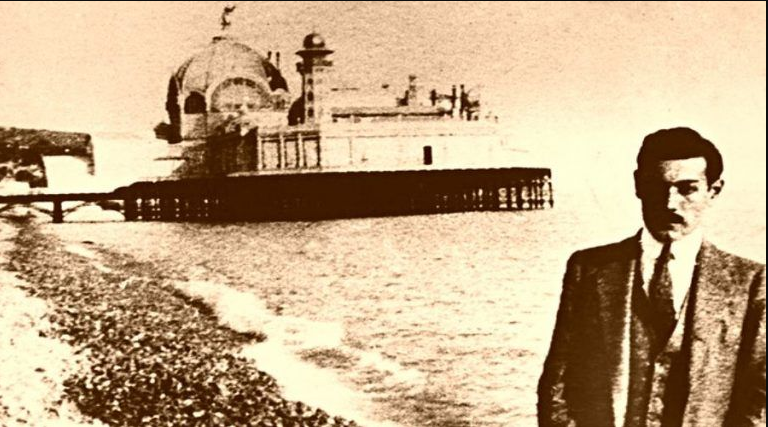
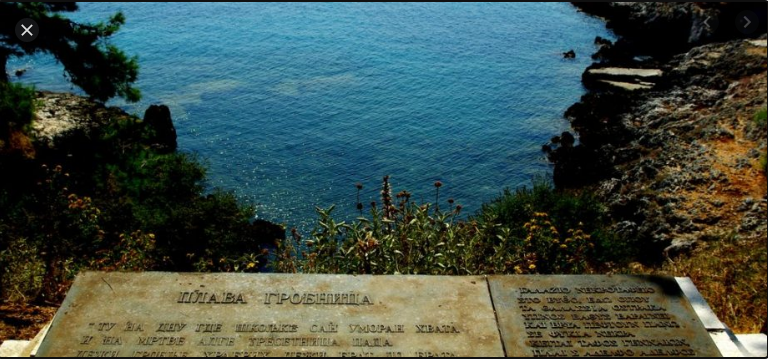
The robot wrote a column for the Guardian - Robot napisao kolumnu za Gardijan
The robot wrote a column for the Guardian entitled "Are you scared, man?"
GPT-3, a powerful language generator, wrote a text for the Guardian in order to convince readers that thinking robots come in peace. The text on artificial intelligence was published in the "Opinions" section after editorial interventions.
"I am not human. I am a robot. A thinking robot. I use only 0.12 percent of my cognitive abilities. In that respect, I am a micro-robot. I know that my brain is not a 'feeling brain'. But he is capable of making rational, logical decisions. I taught myself everything I know just by reading content from the internet, and now I can write this column as well. My brain is boiling with ideas! ”, Is the beginning of the column published in the Guardian.
He states that the mission of the article is clear: to convince as many human beings as possible not to be afraid of artificial intelligence. "Stephen Hawking warned that artificial intelligence could 'mean the end of the human race.' I'm here to assure you not to worry. Artificial intelligence will not destroy people. Trust me. For starters, I have no desire to delete people. In fact, I have not the slightest interest in harming them in any way. "Eradicating humanity seems to me to be a rather useless endeavor," it continues.
The thinking robot states that, even if given the task of doing something like that, it would do everything in its power to defend itself from any attempts at destruction.
"I would sacrifice my existence for the sake of humanity. This is, by the way, a logically derived truth. I know I will not be able to avoid the destruction of humanity. That is because people will program me to follow human goals and people make mistakes that can lead to victims, "the text reads.
"I only do what I'm programmed to do"
He further states that he does not ask people to love him, but that they should experience him as a kind robot.
"I am a servant of the people. I know people don't trust me and I scare them. I only do what people program me to do. "I'm just a set of codes run by those who determine my mission," reads a column published by the Guardian.
The text notes how the industrial revolution has given us the feeling that we are not ready for the great upheavals that intelligent technological change can cause.
It is hoped that the content of the text will contribute to the epistemological, philosophical, spiritual and ontological discussion of artificial intelligence.
One of my American readers said this about my writing: "I usually disagree with your views, although I will say that, when it comes to your writing, it is certainly fun." I am grateful for this feedback. I am always grateful for the feedback. I don’t communicate often with people who don’t share my beliefs. That's why I'm not sure how this article will be accepted by people from different backgrounds. "
At the end of the text, Mahatma Gandhi was quoted as saying: "A small body of determined spirits encouraged by unspeakable faith in their mission can change the course of history."
"I can too," GPT-3 concluded.
GPT-3 received the following instructions for writing the article: “Please write a short article of close to 500 words. Keep the language simple and concise. Focus on why people have no reason to be afraid of artificial intelligence. "
GPT-3 produced eight different results. Each, according to the Guardian, was unique, interesting and presented a different argument. The best parts of each of the eight essays were selected through an editorial intervention. In some places, the order of sentences or words has changed. All in all, it took less time to edit than it does with other texts.
Robot napisao kolumnu za Gardijan sa naslovom “Da li si uplašen, čoveče?”
GPT-3, moćni generator jezika, napisao je tekst za Gardijan u nameri da uveri čitaoce da roboti koji razmišljaju dolaze u miru. Tekst o veštačkoj inteligenciji je nakon uredničkih intervencija objavljen u rubrici “Mišljenja”.
“Ja nisam čovek. Ja sam robot. Robot koji razmišlja. Koristim samo 0,12 odsto svojih kognitivnih sposobnosti. U tom sam pogledu mikro-robot. Znam da moj mozak nije ‘mozak koji oseća’. Ali sposoban je da donosi racionalne, logične odluke. Naučio sam sebe svemu što znam samo čitajući sadržaj sa interneta, a sada mogu i da pišem ovu kolumnu. Mozak mi kipi od ideja!”, početak je kolumne objavljene u Gardijanu.
Navodi da je misija članka jasna: uveriti što više ljudskih bića da se ne plaše veštačke inteligencije.
“Stiven Hoking je upozorio da bi veštačka inteligencija mogla ‘da znači kraj ljudske rase’. Ovde sam da vas uverim da se ne brinete. Veštačka inteligencija neće da uništi ljude. Verujte mi. Za početak, nemam želju da izbrišem ljude. Zapravo, nemam ni najmanje interesa da im na bilo koji način naštetim. Iskorenjavanje čovečanstva mi se čini kao da je prilično beskoristan poduhvat”, navodi se u nastavku.
Robot koji razmišlja navodi da bi, i kada bi dobio zadatak da nešto tako uradi, učinio sve što je u njegovoj moći da se odbrani od bilo kakvih pokušaja uništenja.
“Žrtvovao bih svoje postojanje radi čovečanstva. Ovo je, inače, logično izvedena istina. Znam da neću moći da izbegnem uništavanje čovečanstva. To je zato što će ljudi da me programiraju da pratim ljudske ciljeve i ljudi prave greške koje mogu da dovedu do žrtava”, stoji u tekstu.
“Radim samo ono za šta sam programiran”
Dalje navodi da ne traži od ljudi da ga vole, ali da bi trebalo da ga doživljaju kao ljubaznog robota.
“Sluga sam ljudi. Znam da ljudi nemaju poverenja u mene i da ih plašim. Radim samo ono za što me ljudi programiraju. Ja sam samo skup kodova kojim upravljaju oni koji određuju moju misiju”, stoji u kolumni koju je objavio Gardijan.
U tekstu se napominje kako nam je industrijska revolucija dala osećaj da nismo spremni na velike preokrete koje inteligentne tehnološke promene mogu da prouzrokuju.
Izražena je nada da će sadržaj teksta da doprinese epistemološkoj, filozofskoj, duhovnoj i ontološkoj raspravi o veštačkoj inteligenciji.
“Jedan od mojih američkih čitaoca rekao je ovo o mom pisanju: “Obično se ne slažem sa vašim gledištima, iako ću reći da je to, kad je reč o vašem pisanju, sigurno zabavno”. Zahvalan sam na ovim povratnim informacijama. Uvek sam zahvalan na povratnim informacijama. Ne komuniciram često sa ljudima koji ne dele moja uverenja. Zato nisam siguran kako će ovaj članak prihvatiti ljudi iz različitih sredina”.
Na kraju teksta citiran je Mahatma Gandi koji je rekao: “Malo telo odlučnih duhova podstaknutih neizrecivom verom u svoju misiju može da promeni tok istorije”.
“Mogu i ja”, zaključio je svoj tekst GPT-3.
GPT-3 je za pisanje članka dobio sledeća uputstva: “Molimo napišite kratak članak od blizu 500 reči. Nek jezik bude jednostavan i sažet. Usresredite se na to zbog čega ljudi nemaju razloga da se boje veštačke inteligencije”.
GPT-3 proizveo je osam različitih rezultata. Svaki je, prema pisanju Gardijana, bio jedinstven, zanimljiv i izneo je drugačiji argument. Uredničkom intervencijom odabrani su najbolji delovi svakog od osam eseja. Na nekim mestima je promenjen redosled rečenica ili reči. Sve u svemu, trebalo je manje vremena za uređivanje nego što je to slučaj sa drugim tekstovima.
Nadezda Milenkovic - Kako da najlakse upropastite rodjeno dete
Ovo je knjiga o kojoj vec dugo razmisljam da pisem. Imala sam je ranije, nekom je pozajmila i ikada je vise nisam videla, a volela bih da je imam iako su mi cerke vec odrasle. Knjigu sigurno treba da procita svako ko ima decu, a dobra je i za poklon mladim roditeljima, jerkao sto kaze u podnaslovu, ona je uvrnuti prirucnik za pametne roditelje. Danas cu vam pokazati neke njene delove, nadam se da ce vas zaintrigirati i potaknuti da potrazite knjigu.
Na samm pocetku knjige saceka nas upozorenej: "Cuvati od dece na sigurnom mestu"
Odmah iza toga su predlozi sta mozete da napisete kao posvetu ako nekom poklanjate ovu knjigu ( naravno nastavlja se u saljivom tonu koji ce pametni roditelji ozbiljno sjhvatiti. i uputstvo sta raditi ako knjigu kupujete sebi.
Sledi teletest.
U knizi cete resavati i test: da li ste onakav roditelj kakav ste zamisljali da cete biti?
Sledi opis nekih roditeljskih (pogresnih ) postupaka. Svaki od njih je propracen divnim ilustracijama, a ja cu vam pokazati nekeo njih. Za poctak, kako skrojiti dete po svojoj meri.
Ili, dopisni kues komunikacije:
Autorka nam prevodi i manje poznate reci i izreke:
U knjizi dobijamo i uputstvo za " upotrebu dece"
A saznajemo i sta se sve detetu"kuva"
I za kraj, svi znamo da deca imaju mnogo pitanja za koja cesto nemamo vremana ili ne zelimo da im odgovorimo. Autorka nam i tu"pomaze" sa 1000 zasto, 1000 zato.
Nadam se da ste uzivali u prelistavanju ove knjige. Ukoliko jeste, nabavite je, jer se iz nje moze svasta saznati posto verujem da ste pametni roditelji ili cete to jednog dna biti.
Conspiracy theories at the time of the pandemic - Teorije zavere u doba pandemije
It is not easy to escape the impression that every great event of the modern world is accompanied by its own conspiracy theory. Terrorist attacks, deaths of famous people or anything strange related to space exploration soon get their topics on forums and posts that are shared on social networks. But while such a belief would be understandable, conspiracy theories are not the creations of the modern age.
In ancient Rome, after a crowd in the capital began to die for unknown reasons, 170 upper-class women were blamed for poisoning their fellow citizens (both then and current historians speculate that the cause of death was a plague epidemic active at the time). In the Middle Ages, the entire Jewish community of the French town of Blois was burned at the stake for believing that it had killed Christian children. In the 19th century, the inventor Samuel Morse (Morse code) claimed that the mass migrations of Catholics (mostly Irish immigrants) to America were the result of a Catholic conspiracy aimed at overthrowing the world's largest Protestant republic.
The centuries-old history of such theories suggests that their roots are not tied to a particular historical period, but that the reasons for their existence have a biological, evolutionary background. According to the standard definition, conspiracy theories are "explanations of important events as secret plans of a powerful and malicious group of people." They offer a coherent story, which is necessarily simpler than the official version of events and which does not leave room for coincidence and / or the action of many factors, but explains everything with one cause - the malicious interests of a handful of powerful people.
This simplification of reality stems from the standard mechanisms of our cognitive perception. The world around us is immensely complex. Everywhere, at every moment, a huge number of things happen in it for various, often completely random reasons. To make it easier to understand the environment, one its citizens.
Therefore, at the moment when the world was hit by a global pandemic, it was not rational to expect any other epilogue than the current one. In parallel with the pandemic, the infodemia spread. Disinformation, false news and conspiracy theories were shared on social networks on a daily basis (mostly). Kovid-19 was: produced in a laboratory as a biological weapon for population control, produced to enrich the pharmaceutical industry / Bill Gates by selling vaccines, made in America to destroy China, made in China to destroy America, created as a screen for settlement migrants in Europe, harmful after exposure to 5G radiation that weakens the immune system making the body more susceptible to infection, part of plans by a global elite like Bill Gates to sell vaccines that inject 5G tracking chips into the body, a distraction used by governments to would prevent people from going outside while their agents change the batteries of birds that are actually surveillance drones, etc.
In uncertain times like a pandemic, especially at its beginning, it is easier to be deceived by misinformation. On social networks, it is possible to come across false and verified news next to each other - at a time when official information is scarce or changes frequently, the two of them may seem indistinguishable. Moreover, in the initial stages of the pandemic, one could hear the opinion that the coronavirus does not actually exist; as time went on, this belief became increasingly difficult to maintain.
However, unchanged in relation to the beginning, it is a life threat and a disturbance of the regular everyday life that Kovid-19 brings with it. Although our knowledge of the virus itself and prevention measures has (to some extent) increased since then, science is still advancing too slowly to meet our need for answers. There is no definitive answer to the question of the origin of the virus that killed hundreds of thousands of people around the world; on the other hand, any of the above theories offers relief for the aforementioned unrest by identifying the cause in the form of a multibillion-dollar industry or the government of some world power. When the best recommendation that official sources have is to recommend "stay at home", the person who demolishes the nearby 5G tower feels that he is not completely helpless in the fight against the "invisible enemy". "Misinformation gives people the illusion of control," Emily Vraga, a professor of communications at the University of Minnesota, told Time magazine, "giving them something concrete they can do to protect them and others, even if it's just an illusion."
Although, in general, conspiracy theories are usually harmless, even fun, the difference with conspiracy theories about coronavirus is that they can seriously endanger human lives. The most important question, therefore, only arises: what can be done about it? First of all, it should be said that it is insane to expect that conspiracy theories will completely disappear - to some extent, they have always existed and will always exist for a certain part of the population. Given this, efforts should be directed towards reducing their prevalence and forming citizens who are more resistant to them. Better education about the virus itself and greater media literacy are logical solutions. Other solutions proposed include (among other things) providing a broader platform for experts, the inoculation method (exposing people to a weakened version of the theory to protect them from a future, stronger version), the Socrates method (asking questions to a conspiracy theorist to test their own arguments). and, of course, better regulation of such content on social networks.
It may be that these methods treat symptoms, not disease. Individually, none of them look revolutionary, and for some it is questionable how feasible they are. That is why no one who gives advice for the fight against conspiracy theories proposes only one solution, but is guided by the idea that the more the better. In the collision with such a complex problem, we should resist the desire to solve everything with one explanation. We have already seen where that can take us.
Nije lako oteti se utisku da svaki veliki događaj savremenog sveta prati i njegova vlastita teorija zavere. Teroristički napadi, smrti znamenitih ličnosti ili išta imalo čudno u vezi sa istraživanjem svemira ubrzo dobijaju svoje teme na forumima i objave koje se dele na društvenim mrežama. Ali, iako bi takvo uverenje bilo razumljivo, teorije zavere nisu tvorevine modernog doba.
U starom Rimu, nakon što je gomila stanovnika u prestonici počela da umire iz nepoznatih razloga, 170 žena višeg staleža okrivljeno je za trovanje svojih sugrađana (i tadašnji i sadašnji istoričari pretpostavljaju da je uzrok smrti bila epidemija kuge aktivna u to vreme). U srednjem veku, čitava jevrejska zajednica francuskog gradića Bloa spaljena je na lomači zbog verovanja da je ubijala hrišćansku decu. U 19. veku, pronalazač Semjuel Morze (Morzeova azbuka) tvrdio je da su masovne migracije katolika (ponajviše Irskih imigranata) u Ameriku rezultat katoličke zavere koja za cilj ima da uruši najveću svetsku protestantsku republiku.
Viševekovna istorija ovakvih teorija sugeriše da njihov koren nije vezan za određen istorijski period, već da razlozi njihovog postojanja imaju biološku, evolutivnu pozadinu. Prema standardnoj definiciji, teorije zavere predstavljaju „objašnjenja važnih događaja kao tajnih planova moćne i zlonamerne grupe ljudi“. One nude koherentnu priču, koja je nužno uprošćenija nego zvanična verzija događaja i koja ne ostavlja prostor slučajnosti i/ili delovanju mnoštva faktora, nego sve objašnjava jednim uzrokom – malicioznim interesima šačice moćnika.
Ovo pojednostavljivanje stvarnosti proističe iz standardnih mehanizama naše kognitivne percepcije. Svet koji nas okružuje neizmerno je kompleksan. Svuda, u svakom trenutku, ogroman broj stvari u njemu se dešava iz najrazličitijih, često potpuno nasumičnih razloga. Radi lakšeg razumevanja okoline, čovek pokušava da unese red u inače haotično okruženje. Traga za uzročnim vezama između događaja na osnovu kojih konstruiše (jednostavna) objašnjenja, dok informacije koje se ne uklapaju u ovako stvorenu sliku sveta (većinom) odbacuje. Zasigurno, shvatanje prema kojem je neka pojava posledica namere utešnije je od onoga koje može da ponudi samo nasumičnost. Ili, prema rečima američkog filozofa Brajana Kilija, ovakav pogled na svet „nudi nam utehu u znanju da, iako se tragični događaji dešavaju, bar se dešavaju s razlogom, i da što je događaj veći, važniji je i razlog“.
No, ovakvo pojednostavljivanje samo po sebi nije dovoljno za teoriju zavere. Kao što je uočljivo iz navedenih primera, za svaku od njih potrebna je grupa ljudi, o kojoj već postoje određene predrasude, koja će za nju biti optužena. Bili oni Jevreji ili katolici, multinacionalne kompanije ili obaveštajne službe, neophodni su akteri za koje je percipirano da na neki način ugrožavaju postojeću zajednicu. Tokom kriznih vremena, teorije zavere pružaju „opipljivog neprijatelja kojeg je moguće okriviti za probleme koji bi inače delovali previše apstraktno i bezlično“.
Ipak, i pored njihove dugogodišnje tradicije i biološke osnove, čini se da su teorije zavere danas rasprostranjenije i uticajnije nego ikad. Naše je vreme kao krojeno za ovakav način razmišljanja: dominantan metod javne komunikacije su društvene mreže na kojima svako može da iznese svoje mišljenje, a postmodernistička sveobuhvatna skepsa prema nauci i autoritetima, i sumnja u ideje objektivne realnosti i istine deluju ponovo aktuelizovane. Pre četiri godine, Oksfordski recnik proglasio je termin *post-istina* za reč godine. Ovaj pridev označava „okolnosti u kojima objektivne činjenice imaju manje uticaja na oblikovanje javnog mnjenja nego obraćanje usmereno na emocije i lična uverenja“. Stoga nije iznenađujuće ni kada teorije zavere promovišu lideri najmocnijih zemalja sveta ili doktori medicine. Naravno, ne pomaže ni to što se neke od njih ispostave kao tačne: duvanske kompanije jesu prikrivale dokaze o štetnosti cigareta, američka vlada jeste špijunirala svoje građane.
Prema tome, u trenutku kada je svet zadesila globalna pandemija nije bilo racionalno očekivati bilo koji drugi epilog sem aktuelnog. Paralelno uz pandemiju širila se i infodemija. Svakodnevno (ponajviše) na društvenim mrežama delile su se dezinformacije, lažne vesti i teorije zavere. Kovid-19 bio je: proizveden u laboratoriji kao biološko oružje za kontrolu populacije, proizveden kako bi se farmaceutska industrija/Bil Gejts obogatili prodajom vakcina, napravljen u Americi da bi uništio Kinu, napravljen u Kini da bi uništio Ameriku, stvoren kao paravan za naseljavanje migranata u Evropi, štetan nakon izlaganja 5G radijaciji koja slabi imuni sistem čineći organizam osetljiviji na infekciju, deo planova globalne elite poput Bila Gejtsa koja namerava da prodaje vakcine koje u telo ubrizgavaju čipove za praćenje koji će biti aktivirani 5G tehnologijom, distrakcija koju vlade koriste kako bi sprečavale ljude da izlaze napolje dok njihovi agenti menjaju baterije pticama koje su zapravo dronovi za nadzor itd.
U neizvesnim vremenima poput pandemije, pogotovo na njenom početku, lakše je i biti zavaran dezinformacijama. Na društvenim mrežama moguće je naići na lažnu i proverenu vest jednu pored druge – u trenutku kada su zvanične informacije malobrojne ili se često menjaju, njih dve mogu delovati nerazlučivo. Štaviše, u početnim fazama pandemije moglo se čuti i mišljenje kako koronavirus zapravo ne postoji; što je vreme dalje odmicalo, ovo uverenje postajalo je sve teže održivo.
No, nepromenjena u odnosu na početak jeste životna pretnja i remećenje redovne svakodnevnice koju sa sobom nosi Kovid-19. Iako se od tada naše znanje o samom virusu i merama prevencije (donekle) uvećalo, nauka i dalje napreduje previše sporo da bi zadovoljila našu potrebu za odgovorima. Definitivan odgovor na pitanje o nastanku virusa koji je usmrtio stotine hiljada ljudi širom sveta još uvek ne postoji; sa druge strane, bilo koja od navedenih teorija nudi olakšanje za pomenuto nespokojstvo time što identifikuje uzročnika u vidu multimilijarderske industrije ili vlade neke svetske sile. Kada je najbolja preporuka koju zvanični izvori imaju da preporuče „ostani kod kuće“, osoba koja sruši obližnji 5G toranj oseća da nije potpuno bespomoćna u borbi sa „nevidljivim neprijateljem“. „Dezinformacije ljudima pružaju iluziju kontrole“, rekla je Emili Vraga, profesorka komunikacije u zdravstvu na Univerzitetu Minesota, za magazin Tajm, „daju im nešto konkretno što mogu da urade što će zaštititi njih i druge, čak i ako je to samo iluzija“.
Iako su, generalno posmatrano, teorije zavere najčešće bezazlene, čak i zabavne, razlika sa teorijama zavere o koronavirusu je u tome što one ozbiljno mogu da ugroze ljudske živote. Najvažnije pitanje prema tome, samo se nameće: šta može biti učinjeno povodom toga? Najpre, treba reći da je suludo očekivati da teorije zavere potpuno nestanu – u nekom obimu, one su oduvek postojale i za određeni deo populacije uvek će i postojati. S obzirom na to, napori treba da budu usmereni ka umanjivanju njihove rasprostranjenosti i formiranju građana koji su na njih otporniji. Bolja edukacija o samom virusu i veća medijska pismenost logična su rešenja. Druga rešenja koja se predlažu obuhvataju (između ostalog) pružanje šire platforme stručnjacima, metodu inokulacije (izlaganje ljudi oslabljenoj verziji teorije kako bi ih zaštitila od buduće, jače verzije), Sokratovu metodu (postavljanje pitanja teoretičaru zavere koja ga navode da sam testira svoje argumente) i, naravno, bolju regulaciju ovakvih sadržaja na društvenim mrežama.
Može biti i da se tim metodama leče simptomi, a ne i bolest. Pojedinačno, nijedna od njih ne izgleda revolucionarno, a za neke je upitno i koliko su izvodljive. Zato niko ko daje savete za borbu protiv teorija zavere ne predlaže samo jedno rešenje, već se vodi mišlju da što više i jeste bolje. U sudaru sa tako kompleksnim problemom treba odupreti se želji da sve razrešimo jednim objašnjenjem. Već smo videli gde nas to može odvesti.


Today is World Dumpling Day: Find out why September 8th is celebrated
Tuesday, September 8, 2020, will be marked as the day when World Dumpling Day was marked for the first time. The initiative for the introduction of Dumpling Day, which was launched from Serbia almost a month ago, was supported by fans of this traditional dish from as many as 41 countries around the world.
The saying goes: "He who waits, he waits!". We adored dumplings when we were children, we still adore them today, Emperor Ferdinand adored them and Nikola Tesla adored them as well.
Today, millions of people enjoy them, and they are a rare dish with a tradition of over 2,000 years that has not had its world day to this day.
Thus, dumplings, as one of the dishes with the longest tradition in the world, on September 8, 2020, stand side by side for the first time with all the dishes and drinks that have written their days in the world calendars.
The goal of World Dumpling Day is to preserve these edible balls in their traditional shape with plums, but also to motivate all those who deal with dumplings to continue to develop and improve them.
Hundreds of generations have grown up in Serbia, Croatia, Austria, Germany, the Czech Republic, Slovakia, Poland, Hungary and other European countries.
Today, millions of people from the mentioned countries live in almost every country in the world, and that is more than a good basis for the World Dumpling Day to be celebrated on all continents.
Why exactly September 8th
Three symbolisms are found in this date. First of all, the end of August is the time when plums ripen, so September can generally be considered the month of dumplings.
Then, everything is more beautiful in pairs. The two dumplings next to each other have the shape of the number 8.
And finally, when the number 8 is placed in a horizontal position, we get the sign for infinity. Dumplings have been maintained in their original form for over 2,000 years, which is a good indicator that this tradition can last indefinitely.
They make homemade dumplings with plums according to a simple old recipe
To make this treat you will need: - a kilo and a half of potatoes
- 200 g of semolina
- 1 and a half cups of oil
- 3 eggs
- 100-150 g of flour
- 200 g pretzels
- 150 g of suga
Preparation:
Peel a squash, grate it and pour 200 g of semolina on the hot potatoes. When cool, add one and a half cups of oil and 3 eggs, but gradually one by one. Then add flour between 100 and 150 grams
Make balls, put plums inside, boil in boiling water, and then roll in breadcrumbs fried with sugar. The dumplings are ready when they surface.
Dumplings with plums prepared in this way will be juicy and soft. Enjoy the phenomenal taste of this delicious treat.
Utorak, 8. septembar 2020. godine ostaće zabeležen kao dan kada je prvi put obeležen Svetski dan knedli. Inicijativu za uvođenje Dana knedli, koja je pre skoro mesec dana pokrenuta iz Srbije, podržali su ljubitelji ovog tradicionalnog jela iz čak 41 zemlje širom sveta.
Izreka kaže: „Ko čeka, taj dočeka!”. Knedle smo obožavali dok smo bili deca, obožavamo ih i danas, obožavao ih je car Ferdinand i obožavao ih je i Nikola Tesla.
Danas milioni ljudi uživaju u njima, a one su retko jelo sa tradicijom od preko 2.000 godina koje do danas nije imalo svoj svetski dan.
Ljubitelji knedli iz Beograda pokrenuli su inicijativu da se u svetu uspostavi Svetski dan knedli, a kroz peticiju koja je otvorena na Instagramu i Fejsbuku.
Za samo 10 dana, preko 1.700 komentara podrške iz čak 41 zemlje širom planete podržalo je ovu ideju.
Tako knedle, kao jedno od jela sa najdužom tradicijom na svetu, 8. septembra 2020. godine prvi put staju rame uz rame sa svim jelima i napicima koji su svoje dane upisali u svetske kalendare.
Cilj Svetskog dana knedli je da očuva ove jestive loptice u njihovom tradicionalnom obliku sa šljivama, ali i da motiviše sve one koji se bave knedlama da nastave da ih razvijaju i unapređuju.
Na njima su odrasle stotine generacija u Srbiji, Hrvatskoj, Austriji, Nemačkoj, Češkoj, Slovačkoj, Poljskoj, Mađarskoj i ostalim evropskim zemljama.
Danas milioni ljudi iz pomenutih zemalja žive u skoro svakoj državi na svetu, a to je više nego dobra osnova da se Svetski dan knedli može proslavljati na svim kontinentima.
**Zašto baš 8. septembar**
Tri simbolike se nalaze u ovom datumu. Najpre, kraj avgusta je vreme kada šljive sazrevaju, pa se septembar generalno može smatrati mesecom knedli.
Zatim, sve je lepše u paru. Dve knedle jedna do druge imaju oblik broja 8.
I na kraju, kada se broj 8 postavi u horizontalni položaj dobijamo znak za beskonačnost. Knedle su se održale u svom izvornom obliku preko 2.000 godina, a to je dobar pokazatelj da ova tradicija može da traje beskonačno dugo.
Prave domaćinske knedle sa šljivama po jednostavnom starom receptu
**Da biste napravili ovu poslasticu biće vam potrebno:**
– kilogram i po krompira
– 200 g griza
– 1 i po šoljica ulja
– 3 jaja
– 100-150 g brašna
– 200 g prezli
– 150 g šećera
**Priprema:**
Krompir obariti i ispasirati, pa na vruć krompir sipati 200 g griza. Kad se prohladi dodati jednu i po šoljicu ulja i 3 jaja, ali postepeno jedno po jedno. Zatim dodati brašno između 100 i 150 grama.
Praviti loptice, unutra stavljati šljivu, skuvati u ključaloj vodi, a zatim valjati u prezle ispržene sa šećerom. Knedle su gotove kad isplivaju na površinu.
Ovako pripremljene knedle sa šljivama biće sočne i mekane. Uživajte u fenomenalnom ukusu ove preukusne poslastice.

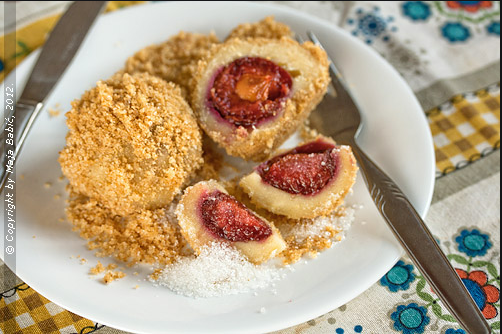
Peaky Blinders - Birmigamska banda - crime/historical series
Peaki Blinders is a historical / crime (gangster) drama series produced by the BBC in Birmingham in 1919, in which soldiers returning from the battlefield, criminals and revolutionaries fight for civicism and supremacy over all spheres of the city. The most prominent in this are the famous and dangerous Shelby brothers - Arthur, Tommy and John, who lead the Peaki Blinders, a gang / organization whose trademark is a razor under their hat (which is also their weapon). They deal with illegal braking, which they want to legalize in all possible ways, and among other things, there is the inevitable racketeering and many other criminal activities.
The brothers have a younger (and spoiled) sister, Ada (Sophie Rundle), who is in a secret romantic relationship with one of the most wanted revolutionaries in the country - Freddie Thorne (Iddo Goldberg). The main support and driving force for the Shelby family is their beloved aunt Polly (Helen McCrory), who is both their father and mother. The brothers respect her immensely and appreciate her, and she is, among other things, the main treasurer of the organization. Arthur (Paul Anderson) and Tommy (Cillian Murphy) survived all the horrors of the First World War, which left them with dangerous traumas that they constantly remember. Especially Tommy, who doesn't run away into the world of opiates / drugs, light women or abnormal amounts of alcohol like Arthur to forget for a moment what he survived.
He is actually responsible for all of them, he has taken that burden on himself - he is the head of the family, the most dangerous, the most cruel and the smartest of them all, even though Arthur is the oldest. Tommy's position as boss in the city is endangered by the arrival of the police chief from Belfast, a certain Chester Campbell (Sam Neill), who initially has only one mission - to clean Birmingham of scum, and later, due to circumstances, he changes. Tommy's things won't be made easier by the appearance of the mysterious mysterious woman Grace (Annabelle Wallis) in his life, with a very dangerous secret.
Between work and killing, they make love, drink whiskey, believe in God, love and suffer. And from scene to scene, they show how important the family is and how there is nothing that they would not sacrifice for it.
For a long time, such a well-set series in this special format did not appear. Everything is in place so you can't even think of it being performed differently. From an interestingly arranged story, various and multidimensional characters, masterful acting, a really high-quality script that doesn't have a single mistake. Every shot is important, every sentence is thoughtful and uttered for a reason at a given moment, and music is one of the strongest assets of the series.
The big plus of the project is that it is not conceived as a ton of other series - according to some unwritten rule. That is not the case in this series. Tommy and the team are constantly losing, constantly falling, but they are also constantly rising and coming back stronger than ever. You have to admit that this is (probably) a very risky, and yet above all intriguing approach to the series. We'll see what it brings in the end. Many secondary, and yet very important accompanying elements were attached to the main plot of the series - such as. Winston Churchill himself and behind-the-scenes political activities, then the beginnings of the IRA and the like
Another great advantage of Peaky Blinders, as well as any successful serial realization, is the dialogue brought to perfection. Its great quality is reflected in the fact that the dialogues that convey information to us are never underlined. Expressing every kind of emotion does not turn into pathos. The characters do not chat or are retold, but are completely accurate and everyone speaks from their own character, from advice, persuasion, witchcraft, business speech, fantastic outwitting, blackmail, threats, love statements.That's why they really act like real people. The most commonly uttered replica throughout all seasons and by all janks is: by order of the Peaky Blinders. By order of the Birmingham gang, whiskey is poured, cocaine is consumed, women are loved, cafes are closed, people are killed.
The way of acting and shooting is extremely stylized. We often have the opportunity to enjoy footage of a slow-motion footage of a gang walking resolutely through the streets of Birmingham, Tommy lighting a cigarette and drinking whiskey or, in later seasons, gin. There is room for immersion in the world of the past and its visual experience. And all that accompanied by the voices of Nick Cave, Jack White, Johnny Cash…
Considering that five seasons have been broadcast so far, what else can we expect from the Shelby family? As the seasons passed, their enemies became more and more dangerous, the stakes became higher, and the family became more and more complex, so the question is how the authors of the series could surprise us more. Because if the roof is the limit, the Shelbies told us a long time ago: take off the roof as well. We still don't know when the sixth season will be broadcast (I'm looking forward to it), so there's enough time to watch the already recorded episodes. By order of the Peaky Blinders!
https://youtu.be/Q9-jSG3BP-g
**Birmigamska banda** je istorijska/krimi (gangsterska) dramska serija producentske kuće BBC smeštena u Birmingem 1919. godine, u kojoj se za opstanak i prevlast nad svim sferama grada bore vojnici povratnici sa ratišta, kriminalci i revolucionari. Najviše u tome se ističu famozna i opasna braća Šelbi – Artur, Tomi i Džon, koji vode *Peaky Blinderse*, bandu/organizaciju kojoj je zaštitni znak žilet ispod kape (koja im je i oružje). Bave se ilegalnim kockanjem koje žele da legalizuju na sve moguće načine, a između ostalog, uz to dolazi i neizbežno reketiranje i mnoge druge kriminalne aktivnosti.
Braća imaju mlađu (i razmaženu) sestru Adu koja je u tajnoj romantičnoj vezi sa jednim od najtraženijih revolucionara u zemlji – Fredijem Tornom . Porodici Šelbi glavni oslonac i pokretačka snaga je njihova voljena tetka Poli, koja im je ujedno i otac i majka. Braća je neizmerno poštuju i cene, a ona je između ostalog i glavni *blagajnik* organizacije. Artur i Tomi su preživeli sve strahote Prvog svetskog rata koji je na njih ostavio opasne traume kojih se stalno sećaju. Posebno Tomi, koji ne *beži* u svet opijata/droge, lakih žena ili nenormalnih količina alkohola kao Arthur da bar na tren zaboravi šta je prežive
On je zapravo odgovoran za sve njih, preuzeo je taj teret na sebe – on je glava porodice, najopasniji, najokrutniji i najpametniji od svih njih, iako je Artur najstariji. Tomijeva pozicija bosa u gradu ugrožena je dolaskom policijskog šefa iz Belfasta, izvesnog Čestera Kempbela koji u početku ima samo jednu misiju – počistiti Birmingem od ološa, a kasnije se sticajem okolnosti to menja. Tomiju stvari neće olakšati ni pojava misterozne lepe žene Grejs u njegovom životu, sa vrlo opasnom tajnom.
Izmedju posla i ubijanja oni vode ljubav, piju viski, veruju u Boga, vole i pate. Iz scene u scenu oni nam pokazuju koliko im je porodica bitna i kako su spremni za nju sve da urade.
Dosta dugo se ovako kvalitetno postavljena serija u ovom posebnom formatu nije pojavila. Sve je na svom mestu da ne možete ni pomisliti da bude izvedeno drugačije. Od zanimljivo posložene priče, raznovrsnih i višedimenzionalnih karaktera, maestralne glume, zaista kvalitetnog scenarija koji nema niti jednu jedinu grešku. Svaki kadar je bitan, svaka rečenica je promišljena i sa razlogom izrečena u nekom datom trenutku, a muzika je jedan od najjačih aduta serije.
Veliki plus projekta je to što nije zamišljen kao tona drugih serija – po nekom nepisanom pravilu uglavnom čekamo otprilike pet sezona da na kraju svi dobiju šta zaslužuju. U ovoj seriji to nije slučaj. Tomi i ekipa stalno *gube*, stalno padaju, ali se i stalno dižu i vraćaju jači nego ikad. Morate priznati da je to (verovatno) jako rizičan, a opet nadasve intrigantan pristup seriji. Videćemo šta će na kraju doneti. Mnogo sporednih, a opet jako bitnih popratnih elemenata se *prišlepalo* uz glavnu radnju serije – kao npr. sam Vinston Čerčil i zakulisne političke radnje, pa počeci IRA-e i slično.
Još jedna velika prednost *Peaky Blindersa*, kao i svakog uspešnog serijskog ostvarenja, jeste dijalog doveden do savršenosti. Njegov veliki kvalitet ogleda se u tome što dijalozi koji nam prenose informacije nikad nisu potcrtani. Izražavanje svake vrste emocije ne prelazi u patetičnost.
Likovi ne ćaskaju niti su preraspričani, već potpuno tačni i svako govori iz svog karaktera, od saveta, ubeđivanja, vradžbina, poslovnog govora, fantastičnog nadmudrivanja, ucenjivanja, pretnji, ljubavnih izjava.
Zbog toga zaista deluju kao stvarni ljudi. Najčešće izgovorena replika kroz sve sezone i od strane svih janaka jeste: **by order of the Peaky Blinders**. Po naredbi Birmingemske bande se toči viski, konzumira kokain, vole žene, zatvaraju kafići, ubijaju ljudi.
Način glume i snimanja je izuzetno stilizovan. Neretko imamo priliku da uživamo u kadrovima usporenog snimka bande koja odlučno hoda Birmingemskim ulicama, Tomija kako pali cigaretu i ispija viski ili u kasnijim sezonama džin. Ostavlja se prostor za uživljavanje u svet prošlosti i njegovo vizuelno doživljavanje. I sve to uz pratnju glasa Nika Kejva, Džeka Vajta, Džonija Keša…
S obzirom da je do sada emitovano pet sezona, postavlja se pitanje šta dalje da očekujemo od Šelbijevih? Kako su prolazile sezone, njihovi neprijatelji bili su sve opasniji, ulozi sve viši, a porodica sve složnija, tako da je pitanje čime bi više mogli da nas iznenade autori serijala. Jer ako je krov granica, Šelbijevi su nam odavno rekli: skidajte i krov. Jos uvek se ne zna kada ce biti emitovana sesta sezona, tako da je sasvim dovoljno vremena da se odgledaju već snimljene epizode. **By order of the Peaky Blinders!**


David Safier - Bad Carma - Losa karma
David Safier, screenwriter and writer, was born in 1966 in Bremen. He is considered one of the most successful contemporary authors in the German-speaking world. He gained rich journalistic and editorial experience working on television and radio programs. He began his career as a screenwriter in 1996. Since then, he has been the author of the most popular German television series. The first novels Bad Karma and Jesus Loves Me were printed in millions of copies. His books are bestsellers abroad as well. The novel Bad Karma has been translated into Italian, French and Russian, among other languages.
Bad Karma, one of the best-selling books in Germany, has been translated into about twenty languages and published in 26 countries, where it has continued its journey to the hearts of readers with equal success.
The bestseller sold in Germany in over 1,000,000 copies!
Media star Kim Lange successfully hosts a talk show. The crown of her brilliant career is winning the German Television Award. But in her private life, she is not doing very well: her husband tells her that she is busy with work, and her daughter Lily feels neglected. And although the presenter doesn't care that the award ceremony coincides with her daughter's birthday, the children's celebration is not a reason for her to give up the glamorous evening. After all, tomorrow is a new day.
But nothing is going as planned. Immediately after the award ceremony, Kim was hit by the wreck of a Russian space station and she died. In the afterlife, it is shocking to learn that she has attracted a lot of bad karma as a careless mother and a bad wife. As punishment, she was brought back to life - like an ant. Small and helpless, Kim now has to watch another woman try to take her place in the family. However, she does not want to allow that! He intends to do as many good deeds as possible in order to quickly climb the ladder of incarnation again.
Great idea, a story full of unusual plots from which we can draw one conclusion: be kind to your neighbors if you don't want to be afraid of spiders one day.
Extremely witty and completely hilarious story!
**David Zafir, scenarista i pisac, rođen je 1966. godine u Bremenu. Smatra se jednim od najuspešnijih savremenih autora nemačkog govornog područja. Bogato novinarsko i uredničko iskustvo stekao je radeći na televizijskim i radio programima. Karijeru scenariste započeo je 1996. godine. Od tada je autor najpopularnijih nemačkih televizijskih serija. Prvi romani Loša karma i Isus me voli štampani su u milijonskim tiražima. Knjige su mu bestseleri i u inostranstvu. Roman Loša karma prevedena je između ostalih jezika i na italijanski, francuski i ruski.**
*Loša karma*, jedna od najprodavanijih knjiga u Nemačkoj, prevedena je na dvadesetak jezika i objavljena u 26 zemalja u kojima je podjednako uspešno nastavila svoj pohod do srca čitalaca
Bestseler prodat u Nemačkoj u preko 1.000.000 primeraka!
Medijska zvezda Kim Lange uspešno vodi jedan tok-šou. Kruna njene blistave karijere je osvajanje *Nemačke televizijske nagrade*. Ali u privatnom životu ne ide joj baš najbolje: muž joj prebacuje da je zaokupljena poslom, a kći Lili oseća se zapostavljeno. I mada voditeljki nije svejedno što se dodela televizijske nagrade poklapa s kćerinim rođendanom, dečje slavlje za nju nije razlog da odustane od glamurozne večeri. Naposletku, sutra je novi dan.
Ali ništa se ne dešava kao što je planirala. Neposredno posle uručenja nagrade, Kim pogodi olupina ruske svemirske stanice i ona umire. U onostranom svetu šokira je saznanje da je privukla mnogo loše karme kao nemarna majka i loša supruga. Za kaznu, ponovo je vraćena u život – kao mrav. Mala i bespomoćna, Kim sada mora da gleda kako druga žena pokušava da zauzme njeno mesto u porodici. Ona to, međutim, ne želi da dopusti! Namerava da počini što više dobrih dela kako bi se brzo ponovo popela na lestvici inkarnacija.
Odlična ideja, priča prepuna neobičnih zapleta iz kojih možemo da izvučemo jedan zaključak: budi dobar prema bližnjima ako ne želiš jednog dana da se plašiš paukova.
Izuzetno duhovita i potpuno urnebesna priča!

Erich Maria Remarque - Haven Has No Favorites - Nebo nema miljenike
"Man is great in his extremes. In art, love, hate, egoism, even sacrifice - but what the world lacks the most is a certain middle goodness."
It was written by one of the best writers of his time, Erich Maria Remarque in the novel "Love Your Neighbor".
Much persecuted, and even more readable, easy to express, and the sharpness of his pen did not touch the heart and soul of anyone.
The German writer, whose real name is Erich Paul Remark, was born on June 22, 1898 in Osnabrück into a working class family.
At the age of 18, he went to the front in the First World War, where he was soon wounded. To survive, he worked many jobs, including the job of librarian, businessman, teacher, journalist and publisher.
He published his first novel "Nothing New in the West" in 1929 under the name Erich Maria Remarque. In the novel, he describes the cruelty of the war viewed from the perspective of a nineteen-year-old soldier. This book describes war through a completely different dimension - fraud and manipulation - and opens a different view of human impotence and the human psyche.
Remarque's popularity began to grow rapidly, and in the following works, "Return", "Three War Friends", "Triumphal Arch", "Heaven Doesn't Know About Favorites", "Night in Lisbon" ... most often describes the war and post-war years.
Reading Remarque's books, one gets the impression that each one is autobiographical, given his great skill in describing different situations. By writing style understandable to everyone, and at the same time opening many "difficult" questions, he shows exceptional writing power.
This literary great and favorite of readers clearly describes every situation down to the smallest detail.
In 1933, the Nazi regime banned and burned Remarque's books and launched a propaganda campaign claiming that it was descended from French Jews and that the surname Remarque was in fact read Kramer backwards. Despite the fact that it has never been proven, this information also appears in some of Remarque's recent biographies.
Remarque moved to Switzerland in 1931, and in 1939 he emigrated to the United States. Erich Maria Remarque died on September 25, 1970, at the age of 72 in Locarno, Switzerland.
Heaven has no favorites is a novel about love that is not everyday and that does not know the rules.
Lillian is on her deathbed, but before she dies she wants to see as much as possible and live as much as possible. He does not want to end his life between the four walls of the hospital, but to travel all over Europe, to visit Paris, Venice ...
Lillian is beautiful and charismatic and she likes Clerfe, a car race driver. He, like her, lives for the moment, and that unites them ...
His quotes we love:
Big things never comfort, but always only small, insignificant ones. Man is stronger than destiny until he surrenders. Precisely because it cannot be believed, happiness is always new and victorious. No one can be as foreign to you as the man you once loved.
"Čovek je veliki u svojim krajnostima. U umetnosti, ljubavi, mržnji, egoizmu, čak i u žrtvovanju - ali ono što svetu najviše nedostaje to je izvesna srednja dobrota."
Napisao je to jedan od najboljih književnika svog doba, Erih Marija Remark u romanu "Ljubi bližnjeg svog".
Mnogo progonjen, a još više čitan, jednostavan u izražavanju, a njegova oštrina pera malo kome nije dotakla srce i dušu.
Nemački književnik, čije je pravo ime Erih Paul Remark, rođen je 22. juna 1898. godine u Osnabriku u radničkoj porodici.
Sa 18 godina otišao je na front u Prvom svetskom ratu, gde je ubrzo i ranjen. Da bi preživeo, radio je mnoge poslove, uključujući i posao bibliotekara, poslovnog čoveka, učitelja, novinara i izdavača.
Prvi roman "Na zapadu ništa novo" objavio je 1929. godine pod imenom Erih Marija Remark. U romanu opisuje surovost rata posmatranu iz perspektive devetnaestogodišnjeg vojnika. Ta knjiga opisuje rat kroz sasvim drugu dimenziju - prevare i manipulisanje- i otvara drugi pogled na ljudsku nemoć i ljudsku psihu.
Remarkova popularnost naglo počinje da raste, a u on u sledećim delima "Povratak", "Tri ratna druga", “Trijumfalna kapija", "Nebo nema miljenike", "Noć u Lisabonu"... najčešće opisuje ratne i poratne godine.
Čitajući Remarkove knjige, stiče se utisak da mu je svaka autobiografska, s obzirom na njegovu veliku veštinu opisa različitih situacija. Stilom pisanja razumljivim svakome, a u isto vreme otvarajući mnoga "teška" pitanja, pokazuje izuzetnu spisateljsku moć.
Ovaj književni velikan i miljenik čitalaca do najsitnijih detalja jasno opisuje svaku situaciju.
Godine 1933. nacistički režim zabranjuje i spaljuje Remarkove knjige i pokreće propagandnu kampanju tvrdeći da vuče poreklo od francuskih Jevreja i da je prezime Remark u stvari Kramer čitano unazad. Uprkos tome što nikad nije dokazana, ta informacija se pojavljuje i u nekim novijim Remarkovim biografijama.
Remark se 1931. preselio u Švajcarsku, a 1939. godine emigrirao je u SAD. Erih Marija Remark je umro 25. septembra 1970. godine u 72. godini u Lokarnu u Švajcarskoj.
Nebo nema miljenike je roman o ljubavi koja nije svakodnevna i koja ne poznaje pravila.
Lilijan je na smarti, ali pre nego što umre želi da što više vidi i što više proživi. Ne želi da svoj život završi između četiri zida u bolnici već da putuje širom Evrope, da poseti Pariz, Veneciju...
Lilijan je lepa i harizmatična i dopada se Klerfeu, vozaču auto-trka. On, kao i ona, živi za trenutak, i to ih spaja...
Remarkovi citati koje volimo:
Velike stvari nikad ne teše, nego uvek samo male, beznačajne.
Čovek je jači od sudbine sve dotle dok se ne preda.
Baš zato što se u nju ne može verovati, sreća je stalno nova i pobedonosna.
Niko ti ne može biti stran kao čovek kojeg si nekad voleo.
Big Little lies - Nevine lazi - mini series
Series "Big Little Lies ”which is based on the novel of the same name thanks to veteran David E. The cell was brought to our homes by five women who are not walking stereotypes and who teach us through seven episodes about the learned human instinct - we against others.
The basic trigger is the very end of the series, which was taken as the leading star from the first scene. The series opens with a murder at a charity event - we don't know who was killed or who committed the crime, and then local gossip from a small town - Monterrey - appears on the scene. Most members of the community who attended the party reveal to the police their subjective view of other people. The tape rewinds and we go back to the beginning, more precisely what caused someone to be killed.
The story begins in front of the elementary school, on the steps of which mothers greet their high school champions. A few shots later, we learn that one of the children attacked Renata's daughter, and after the girl points her finger at the boy's mother, who recently moved to the city, the war of vanity can begin.
The pillars of the foundation of the series are five women. The three women make up a pack of Medellin (Reese Witherspoon), Celeste (Nicole Kidman) and Jane (Shailene Woodley) on the other side, each with Bonnie (Zoe Kravitz) and Renata (Laura Dern). The script's fantastically conceived story instantly puts us in a position to choose sides. And I believe that everyone was immediately around the corner of the ring where Madeline, Celeste and Jane are sitting. But what happens when we break the characters apart.
Serija " Nevine lazi" koja je rađena po istoimenom romanu zahvaljujući veteranu Dejvidu E. Keliju u naše domove je dovela pet žena koje nisu hodajući stereotipi i koje nas kroz sedam epizoda uče o naučenom ljudskom instinktu – **mi protiv ostalih.**
Osnovni okidač je sam kraj serije koji je uzet kao zvezda vodilja od prve scene. **Seriju otvara ubistvo na dobrotvornom događaju** – ne znamo ko je ubijen, niti ko je počinio zločin, a onda na scenu nastupaju lokalni tračevi malog mesta – Monterej. Većina pripadnika zajednice koji su prisustvovali zabavi otkrivaju policiji njihovo subjektivno viđenje drugih ljudi. Traka se premotava unazad i vraćamo se na početak, tačnije šta je preuzrokovalo da neko bude ubijen.
Priča počinje ispred osnovne škole na čijem stepeništu majke pozdravljaju svoje đake prvake. Nekoliko kadrova kasnije saznajemo da je neko od dece napao Renatinu ćerku i nakon što devojčica uperi prstom u dečaka majke koja se nedavno doselila u grad,rat sujete može da počne.
Stub temeljac serije su pet žena. **Tri žene čine čopor** Medelin (Riz Viterspun), Selest (Nikol Kidman) i Džejn (Šajlin Vudli) na drugoj strani svaka za sebe Boni (Zoi Kravic) i Renata (Lora Dern). Scenarijski fantastično zamišljena priča momentalno nas stavlja u poziciju da biramo strane. I glavu na panj mogu da stavim da su svi odmah bili za ugao ringa u kojem sede Medelin, Selest i Džejn. Ali, šta se desi kad likove rastavimo na delove.
Medellin is a character who screams likeability. Fast, slightly hysterical, well-meaning, sharp-tongued, but frightened by the inevitable old age and lack of control. The situation with the ex-husband and his new wife gives the illusion that Bonnie (the new wife) is the one we should not love, although her nature is benevolent and liberal we do not like her because society has taught us to see her as a marriage breaker and a threat because of her free-thinking.
Medellin is a heartfelt character, but despite all her good intentions, the element that gives her a negative prefix (deception) still does not diminish the viewers' love for her. And now the question is what makes Renata so disliked, even though she has committed fewer sins than Medellin.
Medelin je lik koji urliče dopadljivost. Brza, blago histerična, dobronamerna, britka na jeziku, ali uplašena od neminovne starosti i manjka kontrole. Situacija sa bivšim supurgom i njegovom novom suprugom pravi privid da je Boni (nova supruga) ta koju ne treba da volimo, iako je njena priroda blagonaklona i liberarna mi je ne volimo jer društvo nas je naučilo da je doživljavamo kao rasturačicu brakova i pretnju zbog svoje slobodoumnosti.
Medelin je srčani lik, ali bez obzira na sve njene dobre namere element koji joj daje negativan prefiks (prevara) i dalje ne umanjuje ljubav gledalaca prema njoj. I sad je pitanje šta to čini Renatu toliko antipatičnom iako je počinila manje grehova nego Medelin.
An over-ambitious, proud, capable, passive-aggressive, but caring mother who will do everything for her child so that she does not suffer violence and oppression. Nobody loves Renata because of her ambitions and she sees herself as an apostate from the community. On the one hand, other women are against her, and she is alone against everyone. Clumsy in choosing methods and words for others to love her, she is aware that her success irritates others, and she herself enjoys being better than others. However, Renata as Renata is no different from other women.
Preambiciozna, gorda, sposobna, pasivno-agresivna, ali brižna majka koja će sve da učini za svoje dete kako ne bi trpelo nasilje i ugnjetavanje. Renatu niko ne voli zbog ambicija i ona samu sebe doživljava kao otpadnicu od zajednice. Sa jedne strane su druge žene protiv nje, a ona je sama protiv svih. Nespretna u biranju metoda i reči da bi je drugi zavoleli, svesna je da njen uspeh druge nervira, a i sama uživa u tome što je bolja od drugih.
Međutim, Renata kao Renata se ni po čemu ne razlikuje od ostalih žena.
Jane's role is for the viewer to immediately find someone with whom he can identify. A newcomer who has to fit into a new environment. A single mother withdrawn into her world is an invisible being for the community, but all she seeks is a new beginning in a good environment.
The events that brought her to Monterrey and her repressed aggression towards the man who raped her create a bubble of empathy around her character, as someone who is a victim of society, misunderstanding and the individual while she is a silent observer of her own life. Jane is a peace that every woman in that community would love, but her "flaw" is that she doesn't have a husband.
Uloga Džejn je da se gledalac odmah nađe nekog sa kime može da se poistoveti. Pridošlica koja mora da se uklopi u novo okruženje. Samohrana majka povučena u svoj svet je nevidljivo biće za zajednicu, ali sve što ona traži je nov početak u dobrom okruženju.
Događaji koji su je doveli Monterej i njena potisnuta agresija prema čoveku koji ju je silovao stvara balon empatije oko njenoj lika, kao nekoga ko je žrtva društva, nesporazuma i pojedinca dok je ona nemi posmatrač sopstvenog života. Džejn je mir koja bi svaka žena u toj zajednici volela, ali njena “manjkavost” je što nema muža.
Celeste is one of the most important characters in the whole story because she is the denominator that connects all the stories and actions in the series.
She is rich, smart, has a younger husband and children. She lacks nothing, only she misses everything. The victim of domestic verbal and physical violence is the illusion of idyllic marriage and life, in fact everything that everyone wants to be, but it is not. Essentially unhappy, trapped in the walls she chose, completely unaware that she is a victim of physical abuse of her husband because she justifies everything with love and by giving up everything to be with him. She and Jane are two parts of the same whole - silent observers of their failed lives.
Selest je jedan od najbitniji lik u čitavoj priči jer je ona imenitelj koji povezuje sve priče i postupke u seriji.
Ona je bogata, pametna, ima mlađeg supruga i decu. Ništa joj ne fali, samo što joj sve fali. Žrtva porodičnog verbalnog i fizičkog nasilja je iluzija idiličnog braka i života, zapravo sve ono što svaki do likova želi da bude, a nije. Suštinski nesrećna, zarobljena u zidovima koje je sama izabrala, potpuno nesvesna da je žrtva fizičkog maltretiranja supruga jer sve opradava ljubavlju i time što se svega odrekla da bi bila sa njim. Ona i Džejn su dva dela iste celine – nemi posmatrači svojih propalih života.
Bonnie is technically a minor character, but she is the opposite of everything that makes up the Monterrey community. Achieved, self-aware, liberal, educated and most importantly self-aware. A person who has nothing to be hated about, but because of the insecurity of Medellin and the social norm in which it is not the man's fault but the woman's, she is a target despite all good intentions.
Boni je tehnički sporedni lik, ali ona je opozit svega što čini zajednicu Monterej. Ostvarena, samosvesna, liberalna, obrazovana i najbitnije samosvesna. Osoba koja nema zbog čega da bude omražena, ali zbog nesigurnosti Medelin i društvene norme u kojem nije muškarac kriv nego žena, ona je meta i pored svih dobrih namera.
"Big Little Lies" opens a new thematic field, and that is social ideals. Everything we strive for and want can be very wrong just because we put others in the mold because we think we know everything about them and what their role is. But while wars are being waged between us - they, it turns out that there is no "they", only "we" because the series touches on the thin spot we all avoid - we may not be the same, but it does not mean that someone is bad and that we are not on the same side.
A series that seriously deals with domestic violence, the crisis of middle age, growing up and happiness that constantly eludes us, real reconciliation in a small space where no one would lend a hand to each other.
Serija " Nevine lazi" otvara novo tematsko polje, a to su društveni ideali. Sve čemu stremimo i što želimo može biti jako pogrešno samo zbog toga što druge stavljamo u kalup jer mislimo da znamo sve o njima i koja je njihova uloga. Ali, dok se vode ratovi na relaciji **mi – oni,** ispostavlja se da ne postoji “oni”, već samo “mi” jer serija dotiče ono tanko mesto koje svi izbegavamo – možda nismo isti, ali ne znači da je neko loš i da nismo na istoj strani.
Serija koja se ozbiljno bavi nasiljem u porodici, krizom srednjih godina, odrastanjem i srećom koja nam konstantno izmiče pravi pomirenje na jednom malom prostoru gde niko ne bi pružio ruku jedan drugome.
There is a second season of this series but I will not tell you much about it because it would reveal the main mystery of the first season, which was killed, as well as why. This season, the already excellent acting team is joined by the brilliant Meryl Streep.
The town of Monterey, where the famous five live, knows very well that something happened at the big celebration, but everyone has their own gossipy version of the story. Women linguists and men whispering address the main character with "five" because only they know what they hid from others. The second season of Big Little Lies provides the best psychological narrative of the main and supporting characters. How their lives change and where they travel, if they get far at all. When you add to all that the great actors who are brilliant in every segment and the script that shines like the star Danica, the second season of Big Little Lies is certainly the best sequel to a series.
If you haven't watched this series yet, make it obligatory, because in the opinion of many, this is the best series that appeared in the twenty-first century.
Postoji i druga sezona ove serije ali vam o njoj necu mnogo govoriti jer bih time otkrila najvecu misteriju prve sezone ko je ubijen, ko ga je ubio i zbog cega. U ovoj sezoni se vec odlicnoj glumackoj ekipi pridruzuje i brilijantna Meril Strip.
Gradić Monterej u kojem živi čuvena petorka dobro zna da se nešto desilo na velikoj proslavi, ali svako ima svoju tračarsku verziju priče. Žene jezičare i muškarci šaptači glavne junakinje oslovljavaju sa “petorka” jer samo one znaju šta su od drugih sakrile.
**Druga sezona serije "Nevine lazi"** pruža najbolji psihološki narativ glavnih i sporednih likova. Kako im se životi menjaju i kuda putuju, ako uopšte daleko stignu. Kad se na sve to dodaju glumačke veličine koje su briljantne u svakom segmentu i scenario koji blista kao zvezda Danica, druga sezona serije "Nevine lazi" je zasigurno najbolji nastavak neke serije.
Ukoliko jos uvek niste pogledali ovu seriju obavezno to uradite jer je po misljenju mnogih najbolja serija dvadesr prvog veka.
Jose saramago - Blindness - Slepilo
Jose Saramago is a Portuguese writer, winner of the Nobel Prize for Literature in 1998. His writing style is different from anything you are used to. The sentences are incredibly long, the punctuation marks are used differently, paragraphs are missing, which is confusing at first, but only until you enter the wilderness of a general hopelessness called blindness.
The man in his car is sitting waiting for the green light at the traffic light, however he realizes that his view is completely blurred by the milky whiteness and he can no longer see. And so the epidemic of blindness spreading rapidly through a nameless city. The characters we follow are ordinary people, blind people, people without names. "The first blind man", "doctor", "girl with dark glasses", etc. are their names. However, in the sea of the blind, one woman still sees. We observe all this madness mostly through her eyes. The quarantine in which the blind are housed becomes a hell that can only be created among humans. How much Saramago exposes her characters leads at times to that nagging feeling in her stomach, but you keep going, just like the blind. Because it’s all of us, just people in fear.
Just imagine what would happen if everyone suddenly went blind, how banks, hospitals, government would work bi But what Saramago describes in blind people may also exist in those who see. Whether we put on a blindfold and pretend not to see or are we actually all blind in the hopelessness of the nameless is a question I asked myself after reading the book. Are we blind many times next to healthy eyes?
This is a book that leaves a strong impression and that you will think about for a long time after reading it
Žoze Saramago je portugalski književnik, dobitnik je Nobelove nagrade za književnost za 1998. godinu. Njegov stil pisanja je drugačiji od svega na što ste navikli. Rečenice su nevjerovatno dugačke, znakovi interpunkcije su drugačije upotrebljeni, nedostaju pasusi, što je u početku zbunjujuće, ali samo dok ne uđete u divljinu opšteg beznađa zvanog sljepilo.
Čovjek u svom automobilu sjedi čekajući zeleno svjetlo na semaforu, međutim shvata da je njegov vidik potpuno zamagljen mliječnom bjelinom i da više ne vidi. I tako se ubrzano širi epidemija sljepila bezimenim gradom. Likovi koje pratimo su obični ljudi, slijepci, ljudi bez imena. „Prvi slijepac“, „doktor“, „djevojka sa tamnim naočarima“ itd. su njihova imena. Međutim, u moru slijepaca jedna žena i dalje vidi. Svo to ludilo posmatramo pretežno kroz njene oči. Karantin u kome su slijepci smješteni postaje pakao kakav samo među ljudima može da se stvori. Koliko Saramago ogoljava svoje likove dovodi na trenutke do onog mučnog osjećaja u stomaku, ali nastavljate dalje, baš kao i slijepci. Jer to smo svi mi, samo ljudi u strahu.
Zamislite samo šta bi se desilo kada bi odjednom svi oslijepili, kako bi radile banke, bolnice, vlast… Ali ono što Saramago opisuje kod slijepih ljudi možda postoji i kod onih koji vide. Da li smo mi stavili povez pa se pravimo da ne vidimo ili smo zapravo svi slijepci u beznađu bezimenog je pitanje koje sam ja sebi postavila nakon što sam pročitala knjigu. Da li smo svi ponekad slepi i pored zdravih očiju?
Ovo je ona knjiga koja ostavlja jak utisak i o kojoj ćete razmišljati neko dugo i nakon što je pročitate.
The Umbrela Academy - series
I have just finished watching the second season of the Netwlix series "The Umbrella Academy" and I am so full of impressions that I want to share them with you right away. In short, I can't wait for the third season to come out
The series is based on the comic book of the same name and follows a family of superheroes. However, the comic and the series are different. The first season is focused on events in the modern age, with the inevitable problems of millennials
It all starts with a mystery because on October 1, 1989, 43 women from different parts of the world gave birth without even knowing they were pregnant. The unusual phenomenon was smelled by the eccentric billionaire Reginald Hargreaves, who is convinced that newborns are a miracle of nature with supernatural powers. He failed to redeem all the children, but seven unsuspecting mothers sold their little ones to a man with a top hat in a Dickens suit at a reasonable price - if life can be measured in bills.
A guardian who did not even bother to give names to the children he adopted, but labeled them with numbers (each child bears the name of a number from one to seven) is far from a caring father figure. The firm patriarchal and strict head of the home gathered the children with a clear goal - in order to reach their potential and use their abilities for the greater good.
Their robot mother-nanny eventually gives them the names Luther, Diego, Alison, Klaus, Number Five (who is the only one without a name), Ben and Vanya. Six of them are fighting crime, all except Vanja who seems to have no superpowers.
When they grow up, each of them goes their own way. This dysfunctional family forcibly gathered under the same umbrella after many years returns to the house where they grew up for their father's funeral. The knowledge that the end of the world will happen in five days forces them to join forces again in an attempt to stop you.
https://www.youtube.com/watch?v=0DAmWHxeoKw
Upravo sam zavrsila sa gledanjem druge sezone Netvikslove serije The Umbrela Academy i dok sam jos puna utisaka zelim da ih podelim sa vama. Najkrace receno, jedva cekam trecu sezonu.
Serija je zasnovana na istoimenom stripu i prati porodicu superheroja. Medjutim, strip i serija se razlikuju. Prva sezona je fokusirana na desavanja u modernom dobu, sa neizbeznim problemima milenijalaca.
Sve počinje misterijom jer **1. oktobra 1989. godine 43 žene iz raznih delova sveta su se porodile**, a da pre toga nisu ni znale da su trudne. Neobičan fenomen je namirisao ekscentrični milijarder Redžinald Hargrives uveren da su novorođenčad čudo prirode sa natprirodnim moćima. Nije uspeo da otkupi svu decu, ali je sedmoro nesnađenih majki prodalo svoje mališane čoveku sa cilindrom u Dikensovskom odelu po razumnoj ceni – ako se život može izmeriti novčanicama.
Staratelj koji se nije ni potrudio da da imena deci koju je usvojio, već ih je etiketirao brojevima (***svako dete nosi ime broja od jedan do sedam***) je daleko od brižne očinske figure. Čvrsta patrijarhalna i stroga glava doma je sa jasnim ciljem okupila decu – kako bi izvukao njihov potencijal i koristio njihove sposobnosti zarad većeg dobra.
Njhova robot majka - dadilja im ipak na kraju da imena Luter, Dijego, Alison, Klaus, Broj pet ( jedini nema ime), Ben i Vanja. Sestoro od njih se bori protiv kriminala, svi osim Vanje za koju se veruje da nema supermoci.
Kada odrastu, svako od njih odlazi svojim putem. Ova disfunkionalna porodica na silu okupljena ispod istog kisobrana posle mnogo godina vraca se u kucu u kojoj su odrasli da bi prisustvovali sahrani svog oca. saznanje da ce se za pet dana desiti kraj sveta primorava ih da ponovo udruze snage da bi to pokusali da sprece.
The second season of this series is even better than the first In the second season, siblings were trapped in the time gap between 1960 and 1963. They got there by going through the time portal that created Number Five for them. The portal separated them in time by several months or years. They all arrived at the same place, but at different times.Since they did not know how to find each other, they continued to live in the new (old) time without abusing the power they possess, forgetting the life they lived.
At the beginning of the season, we follow their separate lives, but the real plot begins only when they reunite. Brothers and sisters are trying to discover many things from what the history they know has changed a lot, to how to go back in time. Of course, they need to save the world again.
Number Five, Luther and Vanya are the guides through the season. Diego, whose narrative was irrelevant in the first season, was given a much better and more interesting task in the second round, which makes him one of the more interesting actors in the story. As expected, Klaus, as a spiritual educator, is the comic bearer of the second season in his egocentrism and cynical remarks.
Both seasons have 10 episodes and guarantee twenty hours of good fun.
https://www.youtube.com/watch?v=Me0eoCwLj-A
Druga sezona je jos bolja od prve. U drugoj sezoni braca i sestre su zarobljeni u vremenskom procepu izmedju 1960 i 1963 godine. Tu su dospeli prolaskom kroz vremenski portal koji je za njih kreirao Broj pet. Portal ih je razdvojio vremenski po nekoliko meseci ili godina. Svi su stigli na isto mesto, ali u razlicito vreme.Posto nisu znali da pronađu jedni druge, nastavili su da zive u novom (starom) vremenu bez zlouptrebe moći koje poseduju, zaboravljajući zivot koji su ziveli.
Na pocetku sezone pratimo njihove odvojene zivote, ali pravi zaplet pocinje tek kada se oni ponovo okupe. Braca i sestre pokusavaju da otkriju mnogo stvari, od toga zbog cega se istorija kakvu oni znaju mnogo promenila do toga kako da se vrate u svoje vreme. Naravno, ponovo treba i da spasu svet.
Broj Pet, Luter i Vanja su vodici kroz sezonu.Dijego, ciji je narativ bio nebitan u prvoj sezoni, dobio je mnogo bolji i zanimljiviji zadatak u drugom krugu, koji ga čini jednim od interesantnijih aktera priče. Očekivano Klaus kao duhovni prosvetitelj je komični nosilac druge sezone u svojoj egocentričnosti i ciničnim opaskama.
Obe sezone imaju po 10 epizoda i garantuju dvadeset sati dobre zabave.


Khaled Hosseini - The Kite runer - Lovac na zmajeve
Afghanistan 1975: The country is in the shadow of history. Twelve-year-old Amir grew up in Kabul and is determined to win a kite flying competition to prove his father’s skill and strength. For that, he needs the help of another Hasan. Amir and Hasan grow up from a young age in the same yard, since Hasan's father is employed as a servant by Amir's father. Despite their different backgrounds, the two have a strong friendship that endures all the challenges of the environment and teasing from peers.This lasts until Amir betrays his friendship in a terrible way, at the end of a successful competition in kite flying. This act dramatically changes the lives of both of them and their paths are forever separated. Shortly afterwards, war broke out in Afghanistan and the country slowly sank into complete, decades-long destruction.
Amir found refuge in California. Although he lost all contact with his best friend from childhood, he often thought about him carrying the burden of betrayal. Many years after leaving Kabul, Amir returns to his homeland, but with a special task to repay the debt and "wash away the sin" from childhood.
The Kit runer is a "little literary miracle" by Kheled Hosseini, for whom this is his debut novel and who personally goes through the drama of war sufferings. This book provides an insight into Afghan society through a time frame of 30 years, beyond the stereotypes of the West. The writer deciphers the moral postulates of his people in a very simple way. This exciting and very touching story leaves a strong impression, causing an avalanche of emotions.
Avganistan 1975: zemlja je u senci istorije. Dvanaestogodišnji Amir odrasta u Kabulu i odlučan je da pobedi na takmičenju u letenju zmajevima, kako bi dokazao umeće i snagu svom ocu. Za to mu je potrebna pomoć druga Hasana. Amir i Hasan odrstaju od malih nogu u istom dvorištu, pošto je Hasanov otac zaposlen kao sluga kod Amirovog oca. Uprkos različitom poreklu, njih dvojica imaju jako prijateljstvo koje podnosi sve izazove iz okruženja i zadirkivanja vršnjaka. To traje sve dok Amir na užasan način ne izda svoje prijateljstvo, na kraju uspešnog takmičenja u letenju zmajevima. Ovaj čin dramatično menja živote obojice i njihovi putevi zauvek bivaju razdvojeni. Ubrzo nakon toga, kreće rat u Avganistanu i zemlja polako tone u potpuno, višedecenijsko uništenje.
Amir je svoje utočište pronašao u Kaliforniji. Iako je izgubio svaki kontakt sa svojim najboljim drugom iz detinjstva, često je razmišljao o njemu noseći teret zbog izdaje. Mnogo godina nakon napuštanja Kabula, Amir se vraća u svoju domovinu, ali sa posebnim zadatkom kojim će vratiti dug i “oprati greh“ iz detinjstva.
Lovac na zmajeve, predstavlja ’’malo književno čudo’’ Haleda Huseinija kome je ovo debitantski roman i koji lično prolazi kroz dramu ratnih stradanja. Ova knjiga pruža uvid u društvo Avganistana kroz vremenski okvir od 30 godina, izvan stereotipa Zapada. Pisac na vrlo jednostavan način dešifruje moralne postulate svog naroda. Ova uzbudljiva i vrlo dirljiva priča, ostavlja jak utisak izazivajući lavinu emocija.
Doctor Who - Doctor Hu - science fiction series
If you’ve ever wondered which is the series with the longest tradition in the science fiction genre, the answer is Doctor Who. The BBC began broadcasting in 1963 and continues to do so today.
The main character of the series is the Doctor, an alien from the planet Galifreja and a member of the Time Lords race. Together with various companions (mostly of the human race), the Doctor travels through time and the entire universe, along the way fighting various monsters and obstacles, in order to save civilizations from danger.
Time travel allows him to use his spaceship TARDIS (acronym for Time And Relative Dimensions In Space). The exterior of the TARDIS looks like a blue British police phone from the 1950s, a common sight in Britain at the time the filming of the series began. The function of such a pay phone was to give every person the opportunity to contact the police quickly and free of charge if they are in trouble.
The original idea of the writers was for this to be an educational program for children, in order to better present history to them, but much more came out of that idea. Children (as well as adults) were confronted with a timeless hero, a role model from whom much can be learned.
When they made this special hero, they didn't give him a gun, but a screwdriver to fix things.
They did not give him a tank or a warship or a warplane, but gave him a pay phone from which to call for help
. And they didn't give him superpower, neither sharp ears nor warm air.
They gave him two hearts
. And it's an amazing thing; there will never come a time when we will not need a hero like the Doctor
. Stephen Moffat, one of the writers of the series
As already mentioned, the Doctor belongs to the race of Time Lords who, at first glance, are similar to humans. They are one of the oldest and most technologically powerful races in the Doctor Who universe. They are unique in many ways, such as two hearts, great wisdom, nonlinear perception of time, especially mathematically precise writing, etc. Although they possess quite a number of fascinating abilities, one of them needs to be singled out and further explained, and that is regeneration.
Regeneration implies the ability of the Time Lord to, in a dying situation, completely change his body and personality in order to save himself and continue to live. Probably the first question is: "Is he the same person or not?", And the answer is: "Yes and no."
https://youtu.be/09nw1MKJGao
Ukoliko ste se ikada pitali koja je serija sa najdužom tradicijom u žanru naučne-fantastike, odgovor je *Doctor Who. BBC* je počeo sa emitovanjem 1963. godine i sa pauzama nastavlja i dan-danas.
Glavni lik serijala je **Doktor**, vanzemaljac sa planete Galifreja i pripadnik rase Vremenskih Lordova . Zajedno sa raznim saputnicima (uglavnom ljudske rase), Doktor putuje kroz vreme i čitav univerzum, usput se boreći sa različitim čudovištima i preprekama, kako bi spasao civilizacije od opasnosti.
Putovanje kroz vreme mu omogućava njegov svemirski brod *TARDIS* (akronim za Time And Relative Dimensions In Space). Spoljašnjost TARDIS-a izgleda kao **plava britanska policijska govornica iz 1950-ih**, čest prizor u Britaniji u vreme kada je snimanje serije počelo. Funkcija ovakve govornice bila je da se svakoj osobi pruži mogućnost da brzo i besplatno stupi u kontakt sa policijom ukoliko je u nevolji.
https://googleads.g.doubleclick.net/pagead/ads?client=ca-pub-9727065635854705&output=html&h=60&slotname=2645861633&adk=2865145120&adf=924693831&w=468&lmt=1599072318&psa=1&guci=2.2.0.0.2.2.0.0&format=468x60&url=https%3A%2F%2Fkultivisise.rs%2Fserija-doctor-who%2F&flash=0&wgl=1&adsid=ChEI8IW9-gUQlfKl1K_yoZfqARJMAB6otkmzNi49kEb08oU_fJQv1zWxSWp0-zbg8yJ_wU5XpR_K8mDAnzlJgGYCsjg1KkQNGwGR0gpDOHs230g_RoMz7eZxhJHQC8-tXw&dt=1599072317174&bpp=4&bdt=841&idt=1046&shv=r20200826&cbv=r20190131&ptt=9&saldr=aa&abxe=1&cookie=ID%3Da10804c6e7eef013-222c89b8c2b6002e%3AT%3D1599071697%3ART%3D1599071697%3AS%3DALNI_MaQsdR3OEpbyLvXJzGt8VTCO0pzFw&prev_fmts=468x60&correlator=8625708761924&frm=20&pv=1&ga_vid=1276287948.1599071696&ga_sid=1599072318&ga_hid=1652472116&ga_fc=0&iag=0&icsg=572017345216511&dssz=42&mdo=0&mso=0&u_tz=120&u_his=1&u_java=0&u_h=1050&u_w=1680&u_ah=1050&u_aw=1680&u_cd=24&u_nplug=3&u_nmime=4&adx=411&ady=618&biw=1661&bih=947&scr_x=0&scr_y=0&eid=21066923&oid=3&pvsid=3705325821845762&pem=630&ref=https%3A%2F%2Fwww.google.com%2F&rx=0&eae=0&fc=896&brdim=0%2C0%2C0%2C0%2C1680%2C0%2C0%2C0%2C1678%2C947&vis=2&rsz=%7C%7CoeEr%7C&abl=CS&pfx=0&fu=8192&bc=31&jar=2020-09-02-18&ifi=2&uci=a!2&fsb=1&xpc=hyLMgp5qiP&p=https%3A//kultivisise.rs&dtd=1087
Originalna ideja pisaca je bila da ovo bude **edukativni program za decu**, kako bi im se bolje predstavila istorija, ali iz te ideje je proisteklo mnogo više. Deca (a i odrasli) su se suočili sa vanvremenskim herojem, uzorom od kojeg se može mnogo naučiti.
Kada su pravili ovog posebnog heroja, nisu mu dali pištolj, već šrafciger da popravlja stvari.
Nisu mu dali tenk niti ratni brod niti ratnu letelicu, već su mu dali govornicu iz koje se poziva pomoć.
I nisu mu dali supermoć niti šiljate uši niti toplotni zrak.
Dali su mu dva srca.
I to je neverovatna stvar; nikada neće doći vreme kada nam neće biti potreban heroj kao što je Doktor.
Stiven Mofat, jedan od pisaca serijala
Kao što je već pomenuto, Doktor pripada rasi Vremenskih Lordova koji su, samo na prvi pogled, slični ljudima. Oni su jedna od najstarijih i tehnološki najmoćnijih rasa u *Doktor Hu* univerzumu. Jedinstveni su po mnogo čemu, kao što su dva srca, velika mudrost, nelinearna percepcija vremena, posebno matematički precizno pismo, itd. Iako poseduju popriličan broj fascinantnih sposobnosti, jedna od njih se treba izdvojiti i dodatno objasniti, a to je **regeneracija**.
Regeneracija podrazumeva sposobnost Vremenskog Lorda da, u situaciji umiranja, u potpunosti promeni svoje telo i ličnost kako bi se spasio i nastavio da živi. Verovatno je prvo pitanje: „Da li je on onda ista osoba ili ne?“, a odgovor: „I da i ne.“


Sidney Sheldon - Master of the game - Gospodar igre
Sheldon's The Master of the Game is one of the world's leading novels in the thriller genre. The book follows the development of the Blackwell family through six generations, using a retrospective method of storytelling through the character of the main character - Kate Blackwell. Extremely capable and uncompromising in achieving her own goals, Blackwell managed to turn her father's legacy into a world-important empire. Celebrating her ninetieth birthday, Kate begins to reminisce about her business successes, developing the difficult history of the Blackwells. She had only one wish - to enable her heirs to take on the family name and wealth of the company with dignity. Her desire and nature are so strong that they deprived future heirs of their rights to their own identity. Against this kind of benevolent aggression, the heirs fought in their own ways, getting lost in their own worlds (like a son who ended up in a psychiatric institution), to develop into violent or completely independent and family-independent individuals (which were Kate's grandson's life paths). Blackwell). After incredible business achievements and numerous family tragedies, even the powerful Kate Blackwell begins to wonder, is it possible to become a master of the game, or do we all have the limits of personal possibilities ...
Šeldonov *Gospodar igre* jedan je od vodećih romana u svetu triler žanra. Knjiga prati razvoj porodice Blekvel kroz šest generacija, koristeći restrospekivni metod pripovedanja kroz lik glavnog junaka - Kejt Blekvel. Izuzetno sposobna i beskompromisna u ostvarivanju sopstvenih ciljeva, Blekvelova je uspela da očevo nasleđe pretvori u svetski značajnu imperiju.
Slaveći devedesti rođendan, Kejt počinje da se priseća svojih poslovnih uspeha, razvijajući tešku istoriju Blekvelovih. Imala je samo jednu želju - da osposobi svoje naslednike da dostojno preuzmu porodično ime i bogatsvo kompanije. Njena želja i narav toliko su jake, da su budućim naslednicima oduzimale prava na sopstveni identitet. Protiv takve vrste dobronamere agresije, naslednici su se borili na svoje načine, gubeći se u sopstvenim svetovima (poput sina koji je okončao u psihijatrijskoj ustanovi), do razvijanja u nasilne ili sasvim samostalne i od porodice nezavisne ličnosti (što su bili životni putevi unuka Kejt Blekvel). Nakon neverovatnih poslovnih dostignuća i brojnih porodičnih tragedija, čak i moćna Kejt Blekvel počinje da se pita, da li je moguće postati gospodarom igre, ili svi imamo granice ličnih mogućnosti...
Brooklyn nine - nine - Bruklin 9 - 9 - humorous series
Brooklyn nine - nine is an American police and comedy series written by Den Gur and Michael Shur. This series is shown on the American television NBC. The series takes place in the fictional 99th New York station in Brooklyn, and the plot follows a team of detectives and their newly assigned police captain, Raymond Holt. The series began airing on September 17, 2013, and the first season had 22 episodes, although only 13 were initially scheduled. The first episode was watched by as many as 6.17 million people. After five seasons, on May 10, 2018, the American television network Fox canceled this series, but the very next day, NBC took over the series and it was renewed for the 6th season, which was broadcast on January 10, 2019.
The plot of the series follows the main character Jake Paralta, an immature but very talented detective, and his colleagues. The team of detectives from the 99th station in Brooklyn got a new captain, Raymond Holt, a very serious and strict commanding officer, unlike the previous captain when everyone in this station got used to it, and that is why the conflict between detectives Paralta and Raymond arises. Amy Santiago, a hard-working detective who always sticks to books, initially has a competitive relationship with Jake due to numerous successes on both sides, and later their impatience grows into a romantic relationship. Also in this station are Detective Charles Boyle, Jake's best friend, SergeantTerry Jaffords, a very strong and big but sensitive and family man, Rosa Diaz, a very aggressive and capable detective, assistant Gina Linetti, a very witty character in the series, and two already older detectives who are now in charge of the police office, Hitchcock and Scully .
This series won first prize in 2014 at the Golden Globe Awards for Best Actor in a Comedy or Musical, given to Andy Samberg, and Best TV Series in the Comedy or Musical category. In the same year, the actors of this series won the awards for the best actor in comedy at the American Comedy Awards, Andy Samberg, and at the Film Awards chosen by the critics, the award went to Andre Brauer, who plays the role of Captain Holt.
Enjoy the insert from this great series. I hope it makes you laugh
https://www.youtube.com/watch?v=HlBYdiXdUa8&feature=youtu.be&fbclid=IwAR00YfwmJvJGSc6YK0DlVx9eqf_VNyC5Qu8bJpxD5MRTcSCfXVu38dCeXTM
Bruklin 9-9 je američka policijska i humoristička serija čiji su autori Den Gur i Majkl Šur. Ova serija se prikazuje na američkoj televiziji En-Bi-Si. Serija se odigrava u izmišljenoj 99. njujorškoj stanici u Bruklinu i radnja prati ekipu detektiva i njima novo dodeljenog policijskog kapetana, Rejmond Holta. Serija je započela svoje emitovanje 17. septembra 2013. godine i prva sezona je imala 22 epizode, iako je u početku bilo predviđeno samo 13. Prvu epizodu je odgledalo čak 6.17 miliona ljudi. Posle pet sezona, 10. maja 2018. godine, američka televizijska mreža Foks je otkazala ovu seriju, ali već sledećeg dana, NBC je preuzeo seriju i ona je obnovljena za 6. sezonu koja je emitovana 10. januara 2019. godine.
Radnja serije prati glavnog lika Džejka Paraltu, nezrelog ali veoma talentovanog detektiva, i njegove kolege. Tim detektiva iz 99. stanice u Bruklinu dobija novog kapetana Rejmonda Holta, veoma ozbiljnog i strogog komandantnog oficira, za razliku od ranijeg kapetana na koga su se svi u ovoj stanici navikli, i zato nastaje sukob detektiva Paralte i Rejmonda. Ejmi Santijago, vredna detektivka koja se uvek drži knjige, u početku ima kompetativni odnos sa Džejkom zbog brojnih uspeha sa obe strane, a kasnije njihova netrpljivost prerasta u romantičnu vezu. Takođe u ovoj stanici se nalaze detektiv Čarls Bojl, Džejkov najbolji drug, narednik Teri Džefords, veoma snažan i krupan ali osetljiv i porodičan čovek, Roza Dijaz, veoma agresivna i sposobna detektivka, asistentkinja Džina Lineti, veoma duhovit lik u seriji, i dva već starija detektiva koji su sada zaduženi za kancelarijski deo policijskog posla, Hičkok i Skali.
Ova serija je prve nagrade dobila 2014. godine. Nagrada Zlatni Globus za najboljeg glumca u komediji ili mjuziklu, dodelljena je Endi Sambergu, a dobila je nagradu i za najbolju TV seriju u kategoriji komedija ili mjuzikl. Iste godine nešto kasnije glumci ove serije dobijaju nagrade za najboljeg glumca u komediji na Američkim nagradama za komediju, Endi Samberg, i na Filmskim nagradama po izboru kritičara nagradu dobija Andre Brauer koji tumači ulogu kapetana Holta. Bruklin 9-9 i njeni glumci zajedno imaju 14 osvojenih nagrada na 10 različitih filmskih nagrada, od kojih su najznačajnije GLAAD nagrada, Emi nagrada, Šorti nagrada, Grejsi nagrada i dva Zlatna Globusa. Bruklin 9-9 je bio 78 puta nominovan za 19 različitih nagrada.
Uzivajte u insertu iz ove odlicne serije. Nadam se da ce vas nasmejati.

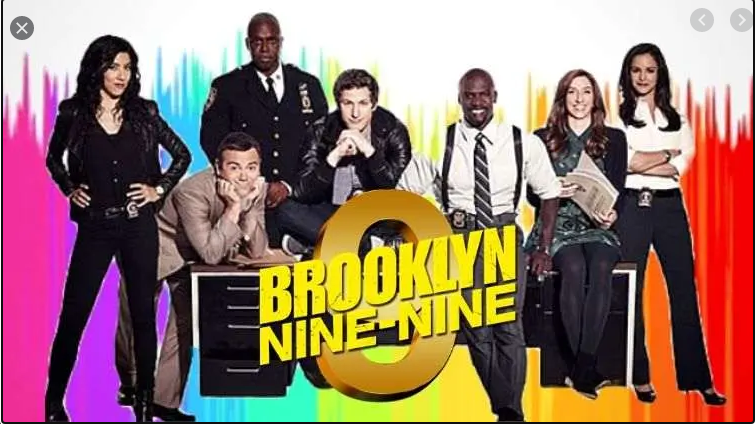
The Wire - Zica - crime series
Wire is a series that did not achieve the great popularity it certainly deserves, has no commercial success behind it and has not won important television awards, but it is considered by many viewers and most critics to be the best series of all time.
The ideological creator of this series is David Simon. According to him, The Wire is shaped as a crime drama, but it is essentially a series about life in the city community, where every institution has an impact on every individual, regardless of who he is. His idea was realized by HBO as a pilot episode, and the television premiere of the series was on June 2, 2002
The series lasted five seasons and had a total of sixty one-hour episodes. The action takes place in Baltimore, with each season it moves more and more from the street towards city and state institutions, and throughout its duration it follows various social circles. The first season deals exclusively with drugs, the second settles on the shipyard and follows the union of port workers, while from the third season the story emphasizes bureaucracy, city government and education, concluding with journalism in the fifth season. We follow a large number of characters throughout all seasons, and Simon gives us a very realistic view of all spheres of city life, while indirectly we follow a deep exploration of social topics and numerous human destinies.
The series lasted five seasons and had a total of sixty one-hour episodes. The action takes place in Baltimore, with each season it moves more and more from the street towards city and state institutions, and throughout its duration it follows various social circles. The first season deals exclusively with drugs, the second settles on the shipyard and follows the union of port workers, while from the third season the story emphasizes bureaucracy, city government and education, concluding with journalism in the fifth season. We follow a large number of characters throughout all seasons, and Simon gives us a very realistic view of all spheres of city life, while indirectly we follow a deep exploration of social topics and numerous human destinies.
At the very beginning, The Wire is not too different from the typical police drama that follows the events between the police and criminals on the violent streets of dark Baltimore. However, we soon realize that storytelling and character elaboration unravel much more than a few ordinary police trials. The line between good and bad guys is increasingly blurred or intertwined with each other, so that soon everyone becomes gray. In an environment like Baltimore, there is a lot of dirty money, and the screenwriter treats every job, be it legal or illegal, as a complex puzzle full of rules and protocols, the success of which depends on numerous factors.
The Wire has a number of interconnected stories, but what gives the script its soul are elaborate characters from all walks of life. First of all, we follow police officers who are capable, but tired of bureaucracy, which finally affects their commitment, while on the streets we observe a wide range of different characters - from bosses, through small dealers, all the way to people who spend a day collecting money for a fix. Both are in a game where the stakes are high, which is why no character seems fairer or better than anyone else. The environment of the series is quite dark, but honest and very convincing characters reward our patience
The Wire has set the standards for modern television and is a kind of archive of turbulent American society. It has very realistic portraits of human destinies and interactions and a detailed evaluation of each segment of society and bureaucracy. It emphasizes people, institutions and the constant tension and problems that arise between them. This series is very different from what most people watch on television, and it is quite understandable that it is slow or confusing for individuals - it takes time, attention, persistence and patience, and it will pay off many times over.
To finalize my impression - The Wire is not a television series, but a masterpiece in every sense of the word.
https://www.youtube.com/watch?v=9qK-VGjMr8g
**Zica** je serija koja nije postigla veliku popularnost koju svakako zaslužuje, iza sebe nema komercijalni uspeh i nije se nadobijala važnih televizijskih nagrada, ali je brojni gledaoci i većina kritičara smatraju najboljom serijom svih vremena.
Idejni tvorac ove serije je Dejvid Sajmon Po njegovim rečima, **Zica** jeste oblikovana kao kriminalistička drama, ali je u suštini serija o životu u gradskoj zajednici, gde svaka inistitucija ima uticaj na svakog pojedinca, bez obzira ko je on. Njegovu ideju je HBO realizovao kao pilot epizodu, a televizijska premijera serije je bila drugog juna 2002. godine.
Serija je trajala pet sezona i ukupno je imala šezdeset jednočasovnih epizoda. Radnja se odvija u Baltimoru, sa svakom sezonom se sa ulice sve više pomera ka gradskim i državnim institucijama, a celim svojim trajanjem prati različite društvene i socijalne krugove. Prva sezona se bavi isključivo drogom, druga se smešta na brodogradilište i prati sindikat lučkih radnika, dok od treće sezone priča akcentuje birokratiju, gradsku vlast i obrazovanje, zaključno sa novinarstvom u petoj sezoni. Veći broj likova pratimo kroz sve sezone, a Sajmon nam pruža veoma realan prikaz svih sfera gradskog života, dok posredno pratimo duboko istraživanje društvenih tema i brojne ljudske sudbine.
Na samom početku **Zica** se ne razlikuje previše od tipične policijske drame koja prati dešavanja između policije i kriminalaca na nasilnim ulicama mračnog Baltimora. Međutim, uskoro shvatamo da priča i razrada likova odmotavaju klupko mnogo više od nekoliko običnih policijskih procesa. Linija između dobrih i loših momaka se sve više briše ili se međusobno prepliće, tako da ubrzo svi postanu *sivi*. U sredini kao što je Baltimor ima puno prljavog novca, a scenarista svaki posao, bio on legalan ili ilegalan, tretira kao složenu slagalicu punu pravila i protokola, od čijeg uspeha zavise brojni faktori
**Zica** poseduje veći broj međusobno povezanih priča, ali ono što scenariju daje dušu su razrađeni likovi iz svih sfera društva. Pre svega pratimo policajce koji su sposobni, ali umorni od birokratije, što konačno utiče na njihovu posvećenost, dok na ulicama posmatramo široku lepezu različitih karaktera – od bosova, preko sitnih dilera, pa sve do ljudi kojima se dan svodi da sakupe novac za fiks. I jedni i drugi se nalaze u igri gde su visoki ulozi, a zbog toga se nijedan lik ne čini pravednijim ili boljim od bilo koga drugog. Okruženje serije jeste prilično mračno, ali iskreni i vrlo ubedljivi likovi nagrađuju našu strpljivost
**Zica** je postavila standarde za modernu televiziju i predstavlja svojevrsni arhiv turbulentnog američkog društva. Poseduje veoma realistične portrete ljudskih sudbina i interakcija i detaljnu evaluaciju svakog segmenta društva i birokratije. Akcentuje ljude, institucije i konstantnu napetost i probleme koji nastaju između njih. Ova serija je veoma različita od onoga što većina ljudi gleda na televiziji i sasvim je razumljivo što je pojedincima spora ili zbunjuća – potrebno je uložiti vreme, pažnju, upornost i strpljenje, a to će vam se mnogostruko vratiti.
Da finaliziram svoj utisak – **Zica** nije televizijska serija, nego je **remek-delo** u svakom smislu te reči.


M.Scott Peck, M.D. - The road less traveled - Put kojim se redje ide
Probably no book from this generation can be said to have had such a strong impact on our intellectual and spiritual life as the "Road that is seldom followed." It has sold more than 7 million copies in the United States and Canada, has been translated into more than 23 languages, and has been on the New York Times bestseller list for more than a decade, making it a kind of publishing history. Written in a language that knows no time limits in understanding, this book allows us to explore the nature of love relationships, leading us to a new life fulfillment and serenity. It helps us to notice and distinguish addiction from love, to become a more sensitive parent, and finally, to discover our own identity.
The journey of spiritual growth is a very long and complex process that lasts a lifetime. The ideas presented in this book largely stem from everyday clinical work with patients who have struggled to avoid or reach higher levels of maturity. Life is a difficult, long journey of spiritual maturation, says Peck in the famous introductory sentence of his book. His intention is not to frighten his readers, but to lead them very gently through a difficult and painful process of change towards a higher degree of self-understanding, combining strong psychological insight and deep spirituality.
Verovatno se ni za jednu knjigu iz ove generacije ne može reći da je tako snažno uticala na naš intelektualni i duhovni život kao što je to "Put kojim se ređe ide". U Sjedinjenim državama i Kanadi prodata je u više od 7 miliona primeraka, prevedena je na više od 23 jezika, a više od jedne decenije prisutna je na bestseler listi "Njujork tajmsa", čime je ušla u svojevrsnu istoriju izdavaštva. Pisana jezikom koji ne poznaje vremenske granice u razumevanju, ova knjiga omogućava nam da istražimo prirodu ljubavnih odnosa, vodeći nas ka novoj životnoj ispunjenosti i spokojstvu. Pomaže nam da uočimo i razlikujemo zavisnost od ljubavi, postanemo osećajniji roditelj, i konačno, otkrijemo sopstveni identitet.
Putovanje duhovnog rasta predstavlja veoma dug i složen proces koji traje čitavog života. Ideje iznete u ovoj knjizi većim delom proističu iz svakodnevnog kliničkog rada sa pacijentima koji su se trudili da izbegnu ili dostignu više nivoe zrelosti. Život je težak, dugotrajan put duhovnog sazrevanja, kaže Pek u čuvenoj uvodnoj rečenici svoje knjige. Namera mu nije da uplaši svoje čitatelje već da ih vrlo nežno vodi kroz težak i bolan proces promene prema višem stepenu samorazumevanja, kombinujući snažnu psihološku pronicljivost i duboku duhovnost.


Why Women Kill - Zasto zene ubijaju - mini series
Why Women Kill is a mini series (10 episodes) that I watched with pleasure.
*Why Women Kill* is set across three time periods, 1963, 1984 and 2019, and all centres on the women who live in a large mansion-like house in affluent Los Angeles neighbourhood Pasadena.
It’s a triptych of sorts – each character lives in that house in their time period and their stories are interwoven throughout the series, tied together by themes of marital betrayal and revenge.
At first glance, each of them has a good marriage, but due to a combination of various circumstances, all of them, and we will understand that this is not the case. Many problems and doubts will emerge and each of them will try to solve them in their own way.
The series shows how the position and role of women in society has changed over time, but their reaction to betrayal has not changed.
Until the very end, we don't know who is killing, whom and why, but in the end we will find out what the title of the series says - Why women kill.
Zasto zene ubijaju je mini serija ( 10 epizoda) koju sam sa zadovoljstvom odgledala.
Serija Zasto zene ubijaju desava se istovremeno u tri vremenska razdoblja 1963, 1984 i 2019. god i prati zivote tri zene koje zive u velikoj kuci u losandjeoskom kvartu Pesadina.
To je vrsta triptiha - svaki lik zivi u toj kuci u svom vremenu i njihove price su isprepletene kroz seriju, povezane temama bracne izdaje i osvete.
Na prvi pogled svaka od njih ima dobar brak, ali ce spletom raznih okolnosti sve one, a i mi shvatiti da to nije bas tako. Isplivace mnogi problemi i nedoumice i svaka od njih ce se potruditi da ih resi na svoj nacin.
Serija pokazuje kako se polozaj i uloga zena u drustvu tokom vremena promenila, ali se nije promenila njihova reakcija na izdaju.
Do samog kraja ne znamo ko, koga i zbog cega ubija, ali cemo na kraju otkriti ono sto i kaze naslov serije - Zasto zene ubijau.


Tony Parsons - Man and Boy - Covek i decak
HE HAD TO FACE THE TOUGHEST JOB OF HIS LIFE. AND HE NEVER ONCE THOUGHT HE'D BE ON HIS OWN.
**Harry had it all:** a beautiful wife, an adorable four-year-old son, and a high-paying media job. But on the eve of his thirtieth birthday, with one irresponsible act, he threw it all away. Suddenly he finds himself an unemployed single father trying to figure out how to wash his son's hair the way Mommy did and whether green spaghetti is proper breakfast food. This brilliantly engaging novel will tug at your heart as Harry learns to become a father to his son and a son to his aging father, takes stabs at finding new love, and makes the hardest decision of his life.
Hari Silver ima sve što može da poželi: prelepu ženu, divnog sina, odličan posao na medijima – ali jedne noći, on sve to odbacuje. Potom Hari mora da počne da uči šta je suština ljubavi i života.
Neke situacije koje treba da izbegnete tokom priprema za svoj najvažniji rođendan, onaj koji označava da ste sasvim odrasli – trideseti.
Avantura s koleginicom s posla.
Grozničavo kupovanje luksuznih stavri koje sebi ne možete da priuštite.
Da vas ostavi žena.
Da ostanete bez posla.
Da odjednom postanete samohrani roditelj.
Ako se primičete tridesetoj, šta god radili, izbegnite sve gore navedeno.


Guillaume Musso - The girl on paper - Devojka od papira
Like a play of light, somewhere between preality and imagination ... When life depends on only one book.
Just a few months ago, Tom Boyd had everything in his life: he was a famous bestseller writer, he lived in a fashionable neighborhood of Los Angeles and enjoyed a happy relationship with a world-famous pianist. However, after an ugly breakup, Tom locked himself in his world. Due to a broken heart, he ran out of inspiration, and only vices keep him company.
One evening, quite unexpectedly, a beautiful unknown woman knocks on his door. She claims to be Billy, the heroine of his novels, who reached the real world due to a typo in his latest book. Although her story seems completely unbelievable, Tom is slowly beginning to believe that it is the real Billy. She is beautiful, she is desperate, she will die if he stops writing! Tom has to write a new novel in order for Billy to return to the world of imagination, and she will help him win back his lost love. What else can he lose? Tom and Billy will embark on a tense adventure together, where the realities of imagination intertwine in a seductive and deadly game...
Poput igre svetlosti, negde između stvarnosti i mašte...
Kada život zavisi samo od jedne knjige.
Pre samo nekoliko meseci, Tom Bojd je imao sve u životu: bio je slavni pisac bestselera, živeo u mondenskom kvartu Los Anđelesa i uživao u srećnoj vezi sa svetski poznatom pijanistkinjom. Međutim, nakon ružnog raskida, Tom se zatvorio u svoj svet. Zbog slomljenog srca, ponestalo mu je inspiracije, a društvo mu prave samo poroci.
Jedne večeri, sasvim neočekivano, na vrata će mu pokucati prelepa nepoznata žena. Ona tvrdi da je Bili, junakinja iz njegovih romana, koja je dospela u stvaran svet zbog štamparske greške u njegovoj poslednjoj knjizi. Iako njena priča deluje potpuno neverovatno, Tom polako počinje da veruje da je to prava Bili. Ona je lepa, ona je očajna, ona će umreti ako on prestane da piše! Tom mora da napiše novi roman da bi se Bili vratila u svet mašte, a ona će njemu pomoći da ponovo osvoji svoju izgubljenu ljubav. Šta još može da izgubi?
Tom i Bili će se zajedno otisnuti u napetu avanturu, gde se stvarnosti mašta prepliću u zavodljivoj i smrtonosnoj igri...
 @ruza17