Devil 's town
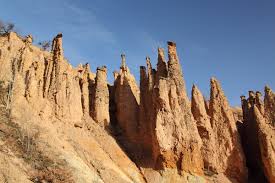
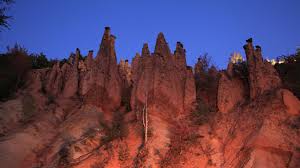
Devil's Town is one of the most unusual places in Serbia. Not far from Prolom Banja, on the slopes of Mount Radan, there is an incredible view: two spacious valleys filled with hundreds of pillars of petrified earth, up to 20 meters high and up to 3 meters in diameter.
Almost every pillar at the top has an andesitic cap in the form of a wide slab of stone. The very valleys in which these "devils", as the people call them, are located, have very suggestive names: Devil's and Hell's Valley.
There are two highly mineral springs near the site of Đavolja Varoš, as well as the ruins of an old church. Many unusual and imaginative legends are connected to this area, not only because of the fantastic appearance of the stone pillars, but also because of the fact that the process of forming the Devil's Town is not over: the figures collapse and grow again, just as if under the influence of some evil force.
History of the Devil's Town
The Devil's Town was created by erosion, ie washing away of the soil, which consists mostly of sand and gravel. The water flows down the slope of the ravine over a vast plateau, and carries away the land — except in places where large boulders weigh down the ground beneath them, and prevent the water from carrying it away. The result of this is a multitude of pillars topped with large stones.
The process of forming the Devil's Town continues today - the erosion of the land continues, so that some pillars collapse or change shapes, new ones are formed ... exactly this, together with the somewhat frightening appearance of the "Devils" themselves, led the people to spin. numerous legends. Here is the one we personally liked the most.
Once, wedding guests from two different villages started, and at the same time, to beg a girl from the third village, so somehow it happened that it was the same girl. God looks at it from above, and sees, it will not work out well ... and the bride and groom go to each other, and meet in a valley. While they are thus facing each other, ready to accept weapons, God, not knowing how to avoid bloodshed, decides to temporarily turn them all to stone, until he finds a better solution. However, in his preoccupation with heavenly things, he completely forgets about them - and that is why they stand, so petrified, even today.
And the very area where the Devil's Town is located is shrouded in a veil of secrecy: it is, some say, a zone of dragon's furrows, or, as this phenomenon is also called, dragon's heads. It is a zone of pronounced electromagnetic action and increased gravity. On the other hand, there is no evidence to support this story.
How to get to Devil's Town?
Đavolja Varoš is located on the southern slope of Radan Mountain, 30 km southeast of Kuršumlija, between the villages of Zebice and Đake, at about 660 - 700 m above sea level. The site itself is some 10 kilometers away from Prolom Banja, which can be crossed in 2.5 hours of easy walking.
More buses depart from Belgrade to Prolom Banja every day, and a ticket that costs around 10 euros is a composite ticket - you will change buses in Nis and Kursumlija, but the ticket in question is valid all the time, until the end of the trip.
When you arrive in Prolom Banja, from the bus station you do not go uphill to the hotel, but downhill, a few tens of meters, all the way to the road that goes along the stream. After about 15 minutes of walking, you will pass by the wooden church of Lazarica, after which the road bends to the right and goes uphill. The road contains a lot of serpentines and for a while you will not meet anyone or see any house. The road ends in the village of Prolom.
In the village, ask further about Đavolja Varoš. You should go down the path to a narrow stream, and then go uphill, along the stream, along a wide forest road, until you come out on a small meadow, where the road forks. There, continue straight, uphill again, pass a collapsed house and break out into huge green meadows. On the left side of the road, something like a farm will appear - next to it, you should turn downhill, into the forest, again along a wide forest road, and go down it all the way to the river. Then you go across the river, for quite a long time, through the forest, and it will lead you to the Devil's Town itself.
If you like adventure, don't turn downhill next to the farm, but continue straight for another two or three kilometers, to a small village of about ten houses, surrounded by a wooden fence, located on a glade surrounded on all sides by forest. Pass by the village and enter the forest by a narrow path, which after a few hundred meters leads to two large bushes. On one of them is engraved, quite illegibly, "Đ. Varoš" - pass between two oaks and after a few minutes of walking you will find yourself on the edge of a steep ravine, and you will see the devils deep below you, in the valley. We do not recommend a descent down this ravine, although we have proven that it is possible :)
From Prolom Banja you have several buses a day to Kursumlija, and from there there is a good connection to Nis and then to Belgrade.
For those who have a car, there is an asphalt road to Rača and then the macadam road gradually climbs some ten kilometers. In the middle of the forest is a small space that serves as a parking lot in the period when it is possible to approach by car. The further road to Đavolja Varoš leads through the forest, and it takes another fifteen minutes of walking.
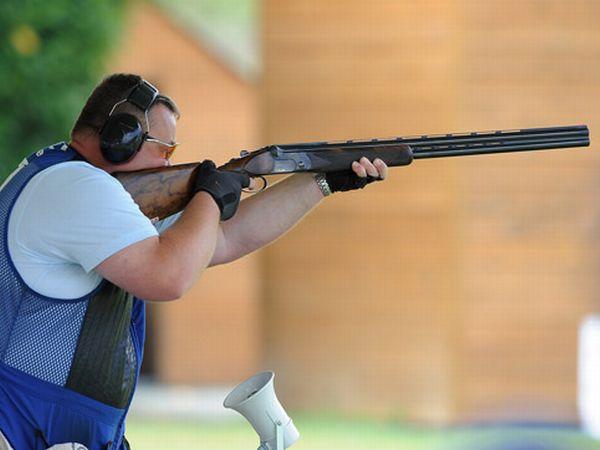
Shooting as a recreation and sport
Weapons can be used for recreation, concentration training, relaxation, sports, but they can also be used for killing and as such do indescribable damage. The history of weapons is as old as man. Ever since humanity has existed, people have fought with or without weapons for their existence or because of friction.
As with all other living things, humanity feels the need to protect its own existence. This includes providing food and protecting one's own species. We are omnivores, omnivores, and so we have tools for hunting and also for preparing plant and animal food. Over the last 2.5 million years, weapons have been constantly evolving, allowing for new possibilities in its processing, new materials, and ever new inventions. The improvement of weapons did not depend solely on the development of technology, but also on the cultural development and development of society. Hardly any branch of industry has had more innovations in its history than the armaments industry. From a very early age, it encouraged and accelerated research in the fields of chemistry, physics, metallurgy, materials research, machining techniques, internal and external ballistics, to name a few.
However, shooting has always been a recreation and sport and has required special individual abilities. Sport and recreational shooting was especially developed in Europe, where bourgeois shooting societies, also called shooting fraternities or shooting glides, have a long and rich tradition dating back to the 12th century. It is known that the first serious shooting championship was held as early as 1442 in Zurich, as shooting was well developed in the countries of the then Central Europe and the Austro-Hungarian Monarchy. That shooting guides were of great importance in history is also shown by the fact that they were often depicted by renowned painters, both in Slovenia (Karinger, Šubic) and in Europe. One of the greatest Dutch painters, Rembrandt van Rijn (1606–1669), painted a almost 16 m2 canvas entitled Night Watch. In one of the largest group portraits, the master painted members of the shooting fraternity. This painting is also one of Rembrandt’s most important paintings.
Looking back, we must not forget our long and rich history of shooting, which writes in its city chronicles that on July 14, 1562, the Ljubljana Shooting Association organized the first large free shooting at the bourgeois shooting range in Ljubljana.
Sport shooting developed further and became an Olympic discipline as early as 1896, at the first modern annual Olympic Games in Athens, Greece. Probably mainly thanks to their founder Pierre de Coubertin, who was also an avid gun shooter himself.
**Why is shooting so appealing and interesting to many?**
**At first glance, shooting is not a dynamic and active sport at all, but behind everything we see and even find boring, there is hard work, discipline and concentration, concentration and concentration again. Top shooters train at least once a day and the training consists not only of shooting, but mainly of endurance and coordination training.**
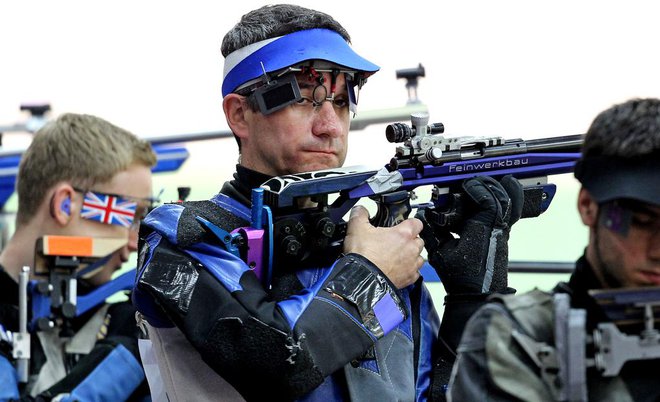
In order to become a successful sports shooter, you need not only a calm hand and perfect concentration, but also good physical fitness and, above all, excellent fitness. Athletes have to endure in front of targets for four hours in major competitions, and in addition to the often heavy and cumbersome equipment that helps them with stability, they always have to hold several kilograms of heavy weapons in their hands completely calmly.
I hope you enjoyed reading this article and learned a little more about this topic. I wish you happy holidays and send you a big greeting. @marilovic
***If you haven't read my new articles here are links to them:***
**Cycling as a healthy way of life**
**Hiking or trekking**
**Fishing** https://read.cash/@Jigglyspy/anatomy-of-autonomous-cars-f1716bd6#if-you-haven039t-read-my-new-articles-here-are-links-to-them https://read.cash/@marilovic/cycling-as-a-healthy-way-of-life-c30ec4ec https://read.cash/@marilovic/hiking-or-trekking-3b9897f8 https://read.cash/@marilovic/fishing-70d39e7d
Cycling as a healthy way of life
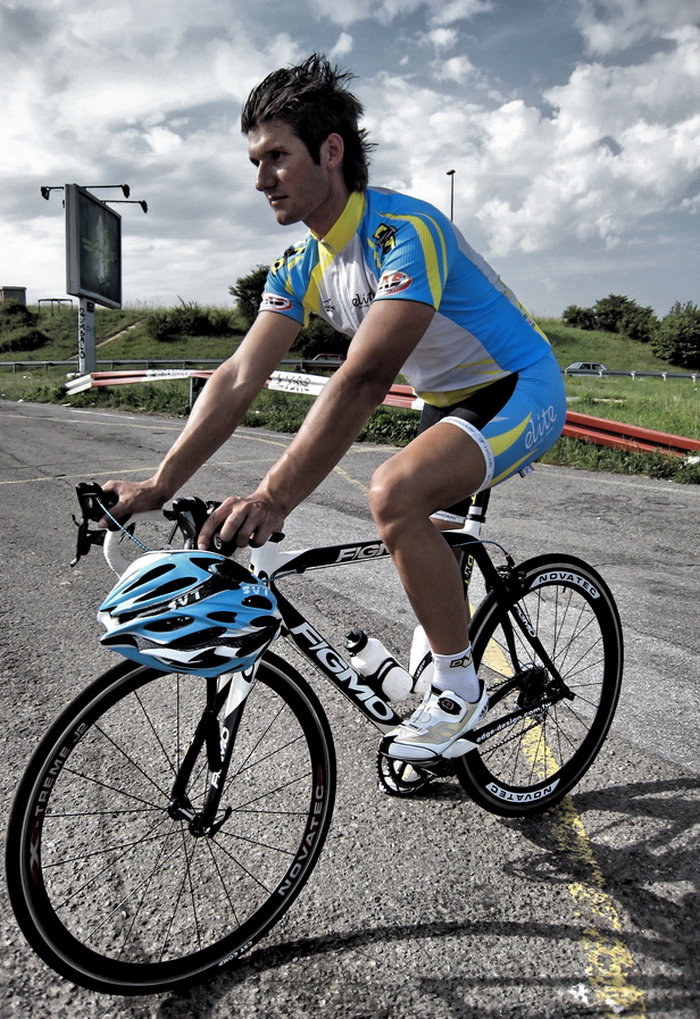
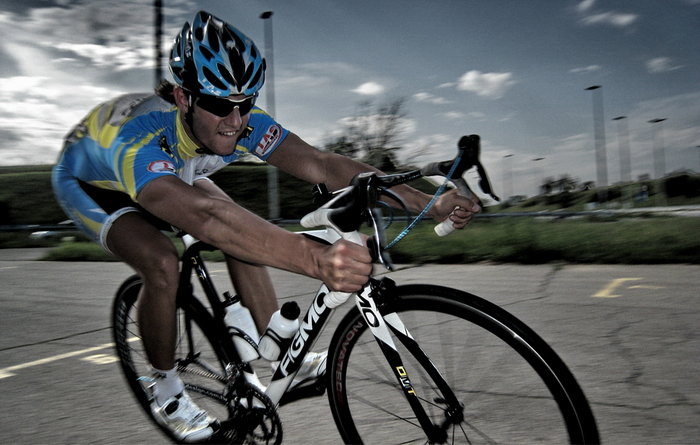
Novi Sad cyclist Zoltan Tarjan, during his active career, which recently ended, was a long-term representative of our country, but also the driver of a professional team from Crete. Although he now regularly follows current events in cycling in his well-deserved cycling retirement, Zoltan is the right person to convey the best advice for starting a cycling career.
"Even after the end of my career, I try to help future cyclists, regardless of whether they opt for professional practice or will be just recreational. There are many doubts about cycling, equipment, training, and in fact there are so many benefits of cycling from the point of view of healthy living and it just needs to start, ”Zoltan told us at the beginning of the interview for Oradio.
Summer is the time for bicycles, but for the biggest race in the world, it is the Tour de France. How far do you get to follow the race, who is your favorite cyclist?
Of course, I try to send as many stages as possible, if possible from the beginning, but the scope of work and obligations do not always allow me to do that. As far as cheering is concerned, I always try to cheer for the younger ones, and at this moment the Slovenes are very good, so somehow I cheer for them the most. For those who don't know, drivers are generally divided into those who prefer sprints and lowland stages and those who are better in the hills, although there are also those who can universally drive both equally well.
You were a professional driver for a few years. How did you get to that level and what is the life of a professional cyclist like?
I come from a cycling family, my grandfather and father were involved in cycling, so it was logical that I would continue that tradition. I started as a child and continued through the junior competition, where I came to the national team of the former Yugoslavia, and later as a permanent member of the Serbian national team. I went to all the major international competitions, collected points and got a chance to be invited by a professional team. Calls from professional teams from France, Germany, Italy and Greece followed. I chose the latter because it is closest to us and Greece also has a great tradition of riding on the track, in the gym, for which I specialized the most. Bicycles are ridden there, which have only one speed with which it moves and ends, and care must be taken both when moving and when standing, because it cannot stop abruptly.
As for the types of bicycles, what would you recommend to someone who wants to start doing this sport recreationally?
I would definitely recommend the basic model to start with, of course to be a racing bike, to have an aluminum frame and more solid mechanics, not some basic one that will break down quickly. Most racing bikes already come with equipment that will allow you to easily cover 50 to 100 kilometers. With adequate maintenance, this bike can serve you for several years without any problems. Of course, after a while, mileage and hanging out with other drivers, you will realize that you want to improve, but that is individual. In addition to the bicycle, the equipment necessary for cycling is very important, and these include: a protective helmet without which I would not recommend anyone to go for a ride, regardless of whether you go around the city or somewhere in nature, and this applies to the whole world. . In addition to the helmet, there are protective gloves, a seat that should be facing the person, cycling shorts are also important, sneakers, ...
How much can this kind of equipment and bike cost?
As for racing bikes, the basic models in the store are around fifty thousand dinars, and such a bike is quite good and enough to start with. As far as the equipment is concerned, the helmets are somewhere around seven thousand dinars, there are also cheaper ones, but I do not recommend them because the helmet is not for decoration but has its own function. If we add everything together around one hundred thousand dinars, it is a set of equipment with a bicycle that can serve you for several years.
And if someone wanted to buy some of the best and I guess the most expensive bike, how much money would they have to set aside? What is the price of bicycles ridden by professionals in world races?
Here, too, the prices vary depending on the equipment, but the average price of a good bicycle is around fifteen thousand euros. Frames are specially made for riders, of a special design, so such bicycles cost twice as much as this price, with each serious cyclist having at least one if not two identical replacement bicycles that are used in case of a fall or defect. In addition, there are several points that depend on the type of track.
And what about mountain bikes? Shock absorbers, disc brakes…?
As far as off-road is concerned, here again we have to separate the competitive models from the recreational ones. For recreation, it is desirable that the model has a shock absorber, the front, while the rear, at least for a start, is not necessary. Similar to the road model, the basic model is around forty thousand dinars and more, but such a model can already serve nicely when you go to Fruška gora. If you want something more than recreation, then of course you need a more serious model with more expensive equipment.
Which is your favorite destination, where would you recommend our fellow citizens to take a ride?
There are a lot of trails on Fruška gora that you can ride and enjoy, so it is very difficult to choose one tour. As for me, I prefer flatter trails because it is my specialty, so I like it the most and the route I really like is Novi Sad to Backa Palanka, crossing to Croatia and back over the ridge of Fruška gora, Susek, Banoštor all the way to Novi Sad .
If a recreational athlete wanted to try a real bike race, where could he do it?
There are recreational bicycle races organized by the cycling club "Elite" from Novi Sad called the Danube Cup, which has been organized for 25 years. As part of that, there are several races, not only in Novi Sad and its surroundings, but throughout Serbia, and even outside the borders of our country. In addition to the competition, there are many other associations where people can join, organize and start recreational cycling.
https://www.youtube.com/watch?v=NzgdMPGxoBU
Hiking or trekking
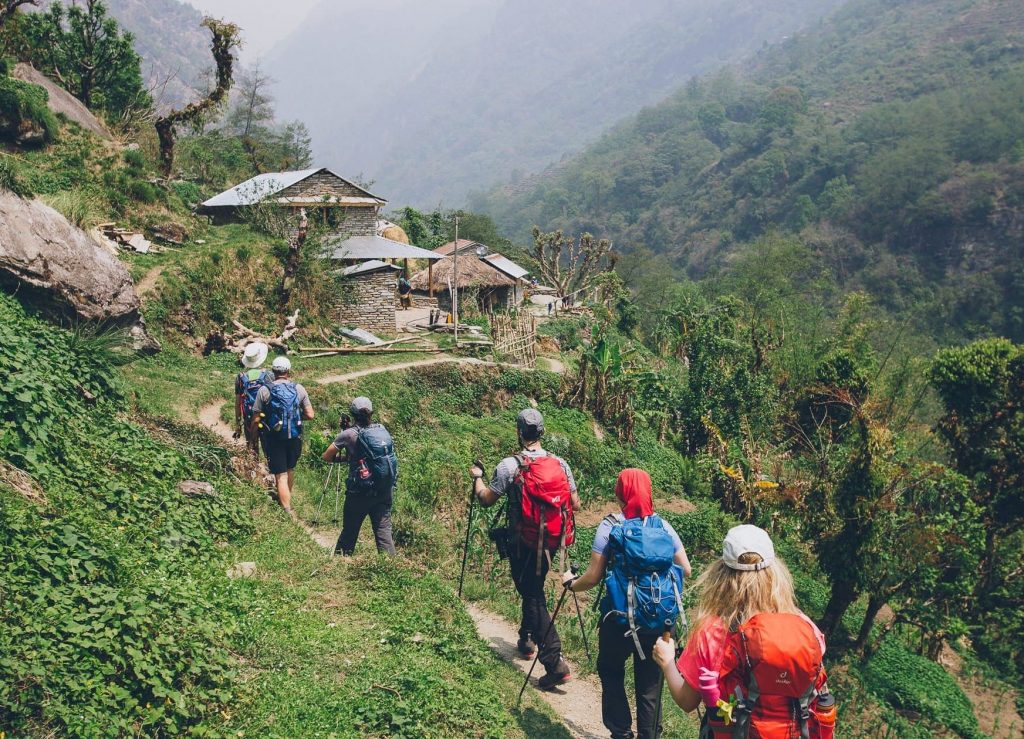
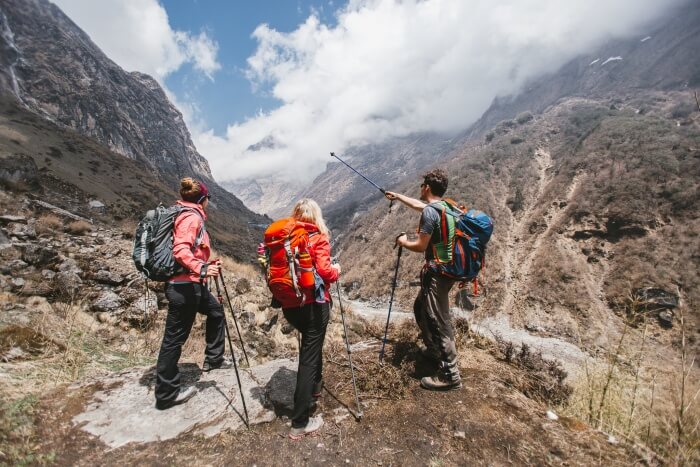
Preparation, training, equipment, fitness, nutrition… this text summarizes all the information whether you are just planning to go hiking or preparing for serious trekking adventures.
What is EST Adventure and why are we relevant to writing on this topic?
In the past 20 years we have gained a lot of experience, from the mountains in Serbia and the region to the Himalayas and Mount Everest, Kilimanjaro, Aconcagua, Mont Blanc… Under our supervision over 1000 mountaineers from the region climbed peaks above 5000m, 400 climbers successfully climbed peaks over 6000m, and 25 of them had the opportunity to see the world from the peaks at an altitude of over 8000m.
On weekends, we organize tours in the mountains of Serbia, and our treks around the world are for those who want adventure, like to spend their holidays actively, learn something new and get to know the culture of people from rural mountains around the world.
**Hiking (trekking) and hiking**
Hiking and Trekking mean walking in nature, the same necessary equipment and strenuous physical activity, but the differences between the two concepts still exist. Hiking is more about walking through famous landscapes, landscaped hiking trails and adequate accommodation on the trail. It mainly refers to shorter tours that you can do for the weekend, as well as to approach the starting point from which you start walking with your car.
Trekking refers to several days of hiking in mountainous areas, or more simply, it is hiking. For trekking, you need some additional equipment compared to hiking because you are longer in the mountains and cover longer distances on a daily basis.
**Hiking for beginners - how to start**
For a start, go for walks. It can be in a nearby park or hill, the location is not important, but it is important to get a routine and feel good energy after the walk. It is enough to start with 2-3 km, and then slowly increase the distances every following week.
As you increase the time spent walking, start taking care of hydration and taking breaks at regular intervals. It is necessary to ingest at least 3 liters of fluid a day, not counting soups and teas. Every 1-1.5 hours of walking, you should take breaks to drink enough fluids.
After the walk, it would be good to do simple stretching exercises because it will help your muscles recover as soon as possible. Always leave one day off between walks.
Take out the elevator as an option, take the stairs to your home or the next meeting in the office building. Stairs seriously strengthen your legs.
Weekend hiking
After one day, you should later switch to two-day or three-day weekend tracks, because that's how your feet get used to several days of walking. In the beginning, you should go on tours where you do not cross more than 15 km a day with a total ascent of 900 m, and later you can add both length and height. We recommend Beljanica, Rtanj, Stara Planina, and later weekend tours Durmitor, Olimp, Musala…
If you would like to go on a trekking adventure abroad, weekend hiking is part of the training and preparation for the trip and higher altitudes.
**Aerobic sports**
Over time, as you gain more fitness, add some of the aerobic sports during the week: cycling, swimming, running, squash… because that way you get a double benefit - you strengthen your legs and on the other hand you increase your aerobic endurance.
In the beginning, make sure that your heart rate is up to 130rpm, that is, that you are always in the aerobic zone and that your recreational training lasts as long as possible.
**Rules of behavior**
The basic rule is to respect your guide's decisions and never walk in front of him. The guide first puts the person who is slowest behind him and his rhythm should be the rhythm of the group's movement. If you have a problem, tell the guide immediately and do not wait for a break. It can be a problem with shoes, excessive sweating, nausea, shortness of breath… etc.
During the walk, and especially the break, put all your waste in the backpack. Even the peel of a fruit should not be thrown where that fruit does not grow, for example, in our country, the peel of a banana should not be thrown away.
Alcohol is fatal during long walks because it contributes to accelerated dehydration and sugar drop, so it is strictly forbidden on our tours.
Help each other because the top is not an end in itself but a means to help us be better people.
https://www.youtube.com/watch?v=MePJDeTg9nE
Fishing
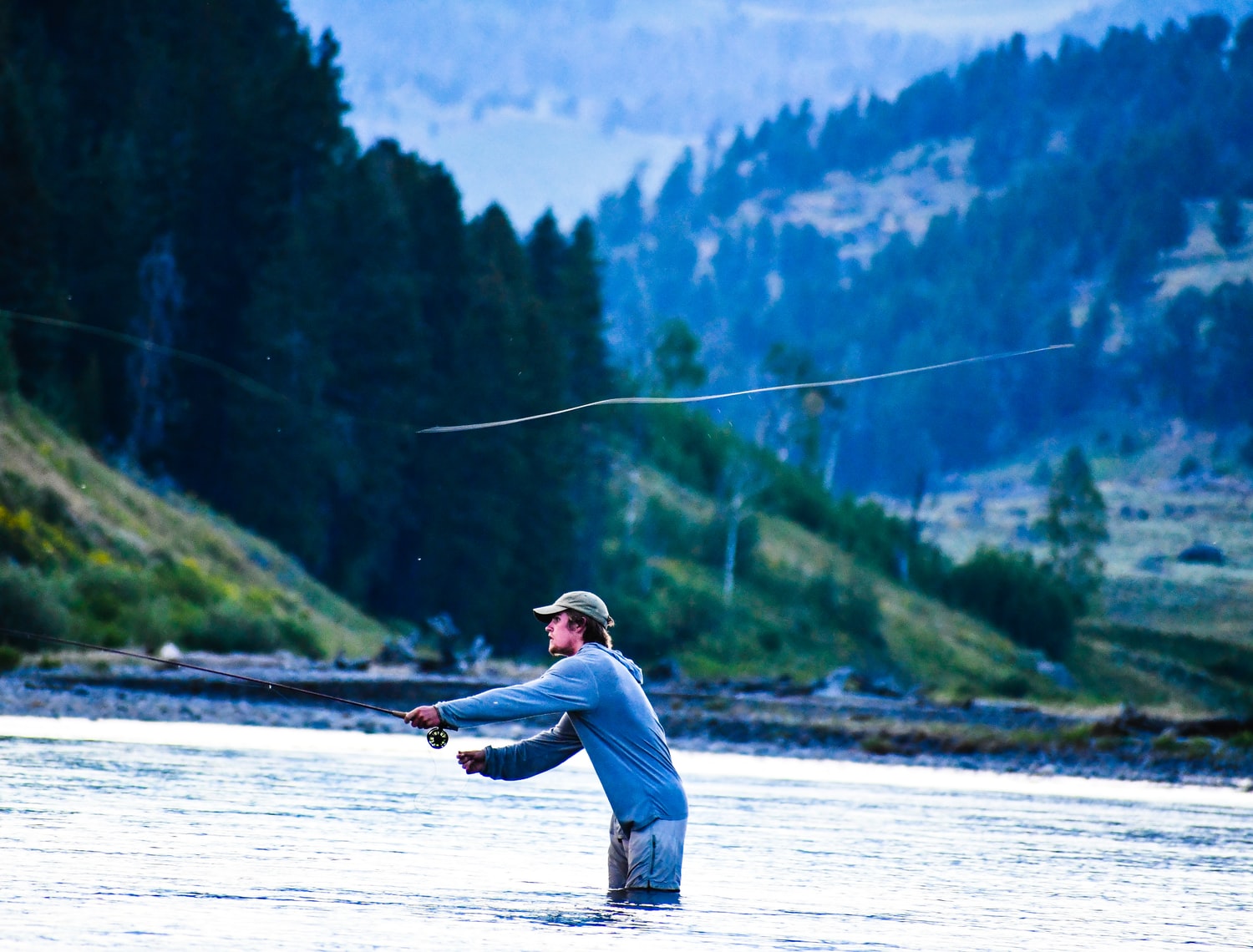
Fishing is a term used to fish in seas, lakes, rivers and other seafood such as shellfish, crabs and octopuses. Fishing is further divided into sport fishing (fishing as a hobby) and commercial fishing. Fishing is an old and widespread activity with various techniques and traditions, but also with the application of modern technological aids. Fishing on rivers and lakes predominates in our territories.
When I say fishing, I don't mean just fishing, but a comprehensive experience that includes going out in nature, socializing and, as the end product, fishing.
**Water etiquette**
Being a fisherman does not mean getting up early, going to the water to bake everything that is hooked on the hook, then the faster the better home to fry and eat the fish. If you treat fishing and fish this way, it is easier and cheaper to go to the fish market and buy fish. Read these basic rules of conduct on the water and try to follow them.
- RETURN THE FISH THAT IS UNDER THE MEASURE IN THE WATER !!! (Carp 30 cm, Pike 30cm, Timber 20 cm, Perch 35 cm, Carp 20cm, Sturgeon 30cm, Deverika 25 cm, Catfish 60 cm)
- Clean up the garbage you found, it's much nicer to fish on a clean shore. Put all the trash in a bag and throw it in the dumpster when you get home.
- Always leave the coast clean. Don't leave garbage, papers and other rubbish behind, you will be sorry the next time you come to that place and find a dirty shore.
- Do not make noise in the fishing place, it bothers fish and other fishermen.
- Always ask permission (from a fisherman who came before you) to fish near him.
- Handle utensils carefully and do not pass yours over someone else's.
- Do not throw close to the colleague who came first, move away from him.
- UNFORTUNATELY there are no private fishing places and don't try to argue with the "intruder" who sat in your place (your fishing day will be ruined). The fact that you prepared and fed it does not mean that you rented it, try to get up earlier than the "intruder" or find a hidden place where there is no "intruder".
- In the passage to the fishing place, always greet the fishermen you come across, NOT with a happy catch, masters, but with a simple BISTRO.
- Don't splash on the water.
- Save complete accessories (everything you need) before fishing, do not allow yourself to ask a colleague to lend you a hook, pencil, etc.
- If a child asks you for a hook, give it to him, they are still our heirs.
- Do not advise anyone, do not impose your opinion if no one asked you for advice and opinion.
Fishing tackle
What should a beginner fisherman know: which fish he wants to fish, on which he leads, and for that fish, what length of rod does he need and what actions should the rod be?
Do not take this division for granted, it is impossible to even recommend a rod for one type of fish. The same equipment is not used for fishing scrapers on the Drina and Sava rivers. The difference is in the accessories, whether you fish the same Sava scraper from a boat or from the shore. Before buying a rod, look at what older colleagues are fishing for, feel free to ask them for advice or contact us to help you.
-Light rods: They are intended for catching white fish (babushka, bream, bodorka, skobalj….), The weight of the throw is up to 40 g Recommendation to younger colleagues, for white fish, take a stick of action B-C, with a weight of 20-40 g. length 3-4m (depending on the water on which you fish).
-Medium rods: The purposes are most often for hunting predators and larger white fish. When choosing this type of rod, you should take into account where it is fished, which baits and how many fish are expected. The length of the rods ranges from 2.10 to 4m, if you fish from a boat a long rod can only bother you (when accepting fish), but if you fish from the shore and need to throw the bait 50m, or attract fish between water lilies and obstacles then the rod of 3-4m the right solution. These are usually sticks with a throwing weight of 40 to 80 grams of action B-A.
-Heavy rods: These are usually two-part rods, less often telescopic, which are intended for catching catfish, silver carp, grass carp, large carp. These are very "stiff" action A sticks and throw weight greater than 80g (even 100-200g). The same applies to the length as for the middle rods.
When choosing a stick, keep in mind that the "speed and sharpness" of your counter depends a lot on its action.
Action A or 4.5-5.0: bends only with the tip (extremely hard sharp stick).
Action B or 3.5-4.0: bend the first third of the stick.
Action C or 2.5-3.0: bend more than half of the rod.
Action D or 1.5-2.0: bend the whole rod
Throwing weights are the weights you will throw with that stick.
The materials used to make the sticks are the most diverse, we will single out the graphite sticks. The price of the stick is closely related to the quality and purity of the graphite used in making the stick. When you see the inscription "graphite composite" on the stick, it means that it is a stick with a very small percentage of graphite. NOTE: Graphite rods are excellent conductors of electricity, so we do not recommend fishing with them during storms and under power lines.
Hooks
Sport-recreational fishing is unthinkable and impossible without a hook. It is as old as this sport of ours, only over time we worked on its improvement, both in terms of the structure of the material and its appearance. There are many hook manufacturers, we would single out: "Gamakatsu", "Kamasaki", "Mustad", "Dam" and "Golden Lion". The size of the hook you will use is closely related to the type of fish you plan to fish. There are them with one, two, three and even four arms, the colors are white, yellow, brown, silver and even red. Depending on the size of the hook, plates for their numbering were made, but there are two: "Reditch" and "Kendol". Some countries use the Kendol table, while a larger number of countries have opted for "Reditch". Judging by some indications, everyone will soon switch to the "Reditch" scale. Hooks can be divided into good and bad. Better a poor horse than no horse at all.
Fishing thread
Silk, cotton and other threads, or horsetail hair, are a thing of the past because they have been replaced by synthetic materials: nylon, perlon and others. Nylons differ in durability, elasticity, resistance, color fastness, durability on the knot, but also in the duration, which is very important. It is very difficult to recommend a certain brand of nylon because new brands appear almost every day. We will recommend you some basic rules that we follow ourselves. It is essential to know that thinner nylons are used for fishing smaller fish and vice versa. Change the nylons on the typewriters regularly (every season), because in principle all new nylons are good nylons. Find a seller who has a good turnover, because otherwise you can buy nylon that has been standing in warehouses for 2 years. We have colleagues who change their nylon on the typewriter every 5-6 exits to the water, it did not happen to them that their nylon breaks.
Fishing techniques
The basic division of fishing is into sport and commercial fishing. Sport fishing can be further roughly divided into: waiting fishing and moving fishing. Each of these two methods adapts to the gear, water, fish species and other circumstances prevailing at the place of fishing. Waiting for fish can be deep or with the help of a float. If it is deep with sliding lead on the bottom, the baits are almost immobile or of very limited movement. In such cases, the fisherman is not in a better position either. His activity is limited to sitting or standing in anticipation of trembling the top of a stick or ringing a mounted flag. Float fishing is a little more attractive if you are fishing on a "ride", for the bait to swim downstream together with the float. Then the hands are in motion and something is constantly happening.
Fishing with movement involves cheating and torturing. These ways of fishing are considered real sport fishing, because a person must outwit a fish with a piece of broom, plastic, wig… At the same time, the fisherman is constantly on the move, recreating in nature. The success of fishing with artificial baits is often weaker than with natural baits, but the pleasure is much greater.
Techniques:
deep fishing, float fishing, cheating, music fishing.
https://youtu.be/DhEbgc_4p_U
Recipe for beans with dry ribs
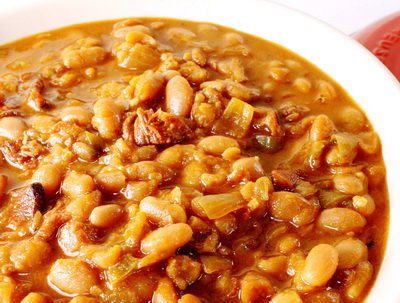
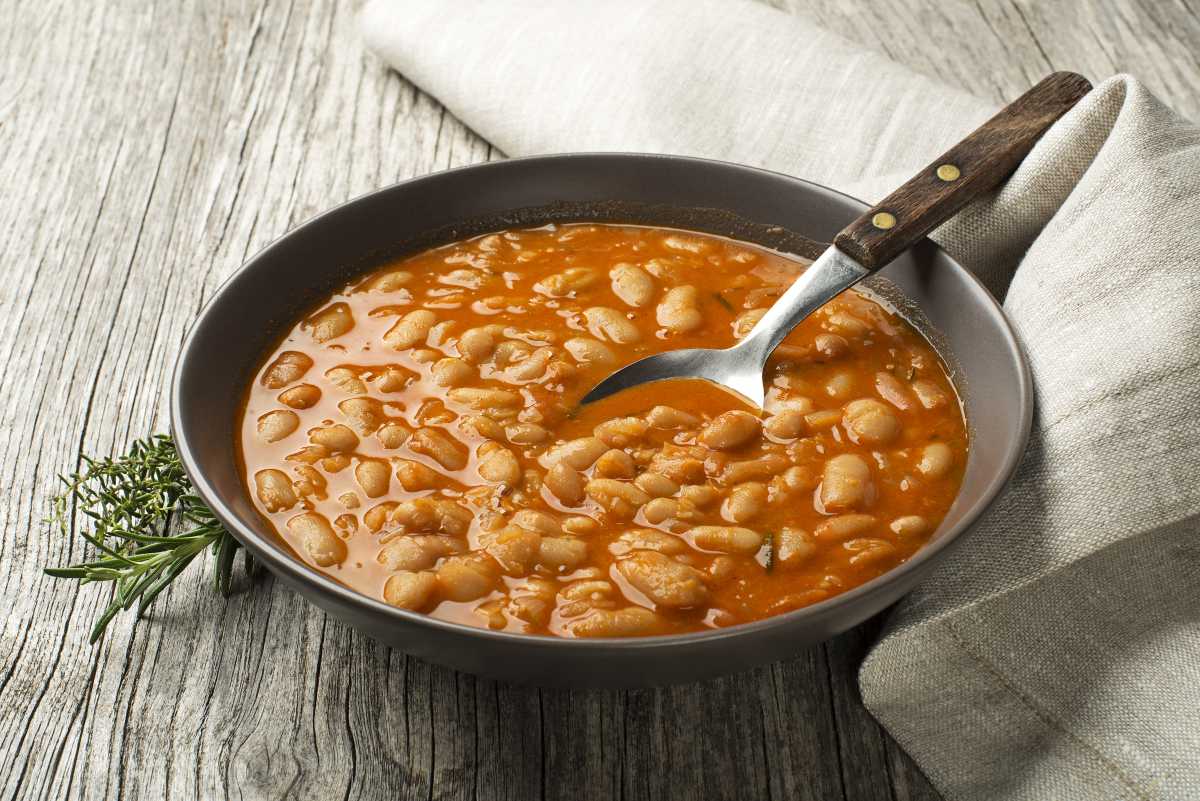
Whoever understands cooking at all will never fall for that naive saying - Just like beans! Absolutely not!
Preparing this Serbian specialty requires both skill and patience, and experience is not without significance for stewed beans with dry ribs. It is worth mentioning that each of those who have learned the knowledge has their own recipe for stewed beans with dry ribs, some small or big secret of their own. Let's also say that most of them claim with undisguised conviction (believing in it) that their stewed beans are the best in the world.
That is why this recipe for stewed beans with dry ribs is just one of countless variants.
Stewed beans with dry ribs ingredients
300 grams of white beans - Tetovac or Gradištanac
3 large onions
3 cloves garlic
1 large carrot
1 dry sweet or hot pepper if desired
1 tablespoon fat
1 tablespoon white flour
300 grams of dried ribs cut
Spices: Aleva paprika, peppercorns, ground pepper, lorber, salt, vegeta
**How to prepare stewed beans with dry ribs**
So, the cleaned and washed white beans are soaked in cold water in the evening and left overnight. In the morning, strain the beans and pour water over them again and put them on the stove to boil. In the meantime, clean and finely chop three medium-sized onions, then sauté on a tablespoon of fat. The onion in the pan should be slightly salted because it softens faster. While the beans are cooking and the onion is simmering, peel two or three cloves of garlic. Then it is cleaned, washed and one carrot is cut into rings.
Prepare three hundred grams of dry ribs. Dry ribs can be cut into pieces and should not be too wet, they are better drier, have less meat on them but give a better aroma. If someone wants more meaty stewed beans, they should cut one mediocre fresh smoked hanger or steak into smaller pieces and put them in the beans. Gourmets who like strong taste and rich stewed beans with dry ribs also chop one hundred grams of dry bacon, which they fry just a little at the end of the powder.
When the beans boil, strain again. In a suitable larger pot, pour the stewed onion, prepared garlic, carrot, bacon, dried ribs or smoked veshalitsa, add a few grains of pepper, a little ground pepper, a broken leaf of lorber, chopped dried paprika into strips, boiled beans, and all pour cold water so that it is at least twice as much as beans and other things. Put everything on the stove to boil, and then simmer over low heat until the beans are completely soft, at least for two hours.
The process of preparing stewed beans can be shortened by pre-cooking the beans in an espresso pot to cook well, then simmering is unnecessary. The best stewed beans in the world are obtained when prepared in a large cauldron and over a real fire.
***Preparation of broth for stewed beans with dry ribs***
Melt the fat cooker in the pan - you can also use oil, but the fat is tastier and gives a better taste to the food, so a fine flour cooker is added to it and it is quickly mixed so that it does not burn. When this mixture starts to turn red, add a spoonful of ground allspice and fry briefly, then remove everything from the heat. Then add half a head of finely chopped garlic to the soup for dry beans with dry ribs and mix well, but without frying, because allspice and garlic together want to be bitter. The spray is poured into the broth. The pan with the powder is washed with the water in which the beans were cooked and everything is mixed well. Return the beans to the hob to fry with this paste. Leave the stewed beans with dry ribs to simmer over a moderate heat for another ten minutes, stirring constantly, and taste. Add salt if desired with salt or vegeta.
Soup beans are traditionally best eaten with the following side dish - sauerkraut or cabbage salad, and flat bread instead of plain bread. He doesn't need anything else.
Enjoy.
Italian Lasagna
Definitely one of the most popular Italian dishes in Serbia. Probably because it belongs to strong food, it is baked in a casserole and you can eat a fair amount from one piece.
Unlike many other recipes of Italian cuisine, lasagna is very caloric and does not belong to healthy food, but it is very tasty. That's how it usually happens…
The Italians believe that today's version of this dish originated in Bologna, but it is true that they only perfected and popularized it, and that in fact the forerunner of "lasagna" is an ancient dish that originates from ancient Greece and was named after the clay pan "lasanon" in which was hell. Mashala!
Who would have known it… in any case what is certain is that the ancient Greeks did not make it (lasagna) with bechamel and ragout sauce 🙂 and the dough probably looked different… it looked more like some thin grinders and the meat was finely chopped , not ground. And the tomato? Not under miscellaneous! At least until Columbus' sailors brought him to Genoa and Venice from America… and only then did he reach Bologna. 🙂
Ancient lasagna apparently resembled our beloved Balkan king of all pies called BUREK! Nothing is accidental!
In any case, the evil Romans copied this as well as many other things from the poor Greeks, stole the trick and commercialized it globally. More precisely, it seems that the most deserving for the popularization of lasagna was the emperor Trajan, who seems to have fallen apart from the ancient lasagna, and so he popularized first in Rome and then in the provinces.
Today, lasagna is one of the most popular dishes in the world and the pride of Italian regional cuisine with all the copy right! Lasagna with meat is the most famous, but every region in Italy can boast of its own version of lasagna.
My favorite version is from Liguria and it is made with pesto sauce. Topic for the next recipe 🙂
Like many Italian dishes, this is made from leftovers. Lasagna is made according to the Italian tradition in order to use the leftovers of roasting, goulash, game. The crusts of the egg-based dough were developed by hand and stacked over the meat, all together in the oven with buttermilk and parmesan filling n not to be thrown away…
Today, thank God, lasagna is made on purpose and is very simple even for inexperienced housewives.
In our market, we have an abundance of dry lasagna crusts, Barilla, De Cecco, Buitoni, all sorts of things… but if you ask me, the best fresh lasagna crusts are home-made Durum. In addition, they are half as cheap!
If the Italians saw for what money pasta is sold here… they would die of happiness! My Milanese friends, when they come to visit me, have a stroke when they see that Garofalo pasta costs 375 dinars in Mercator !! The premium pasta from Naples, which is produced in limited quantities, does not cost that much there! In Italy, industrial pasta is considered a basic food and you will hardly find even a quality pasta in a package of 500 g for more than 1 euro. Shame!
Anyway, maybe our producers don’t know how to make good industrial dry pasta but that’s why they know how to make lasagna crusts! It should be used! I haven't tried homemade crusts from old bakeries (Cvetni trg I ostalo) or Kalenić, but whatever is homemade can't be bad.
The lasagna crust should be made of fresh egg-based dough in order to cook quickly in the oven, remain compact and soft and absorb the sauce. For this reason, it should be consumed quickly so that it does not spoil.
Components:
500g of Durum lasagna crust
Stew sauce
250 g ground beef - ham
250 g ground pork leg
500g tomato sauce (the best is homemade if you have if not, Tomato is a decent substitute)
1 onion
1 clove garlic
1/2 salt finely chopped celery root
1/2 salt finely chopped carrots
1 large bay leaf
Bechamel sauce
1 tablespoon butter
1 liter of fat fresh milk
2 tablespoons flour
sea nuts
a cup of freshly grated parmesan or if you ask me a branch of padano! (avoid packaged grated parmesan it's all just not parmesan)
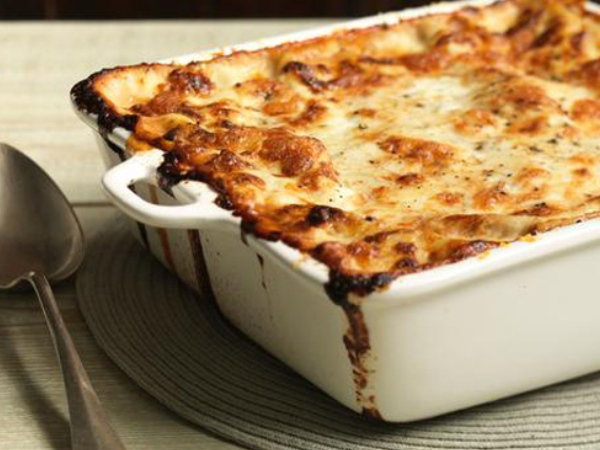
The first and main ingredient for a successful lasagna is, above all, a good rectangular pan! As with many other dishes in the oven, the clay pan is inviolable. Some of you may have been lucky enough to inherit it from your grandmother, so it would be good to keep it like eyes in your head because they are no longer made like that.
Who does not have such a dowry could cope with refractory rectangular pyrex pans or ceramic fancy variants.
Sauce sauce:
Finely chopped onion and garlic, carrot and celery fry in olive oil. Add minced meat and fry, salt and pepper. Then add tomato sauce and bay leaf. Cover to simmer for half an hour.
**Bechamel sauce:**
Melt the butter in a Teflon pot, remove from the heat and add the flour. Return to the heat and mix intensively until the dough cooks and becomes a smooth mass. Remove from the heat again and slowly add cold milk, stirring constantly, so that no lumps form. Add a little milk each time the mass becomes smooth again until the milk is used up. Return to the heat and stir gently until the sauce reaches the density of the yoghurt. Add salt, pepper, grated sea nut.
Oil the pan and lay the first row of lasagna crusts.
Sprinkle a row of meat over the crust, a spoonful of grated parmesan and a ladle of bechamel. And all from the beginning until the filling is used up.
In my experience, the best effect is achieved when the last layer consists only of crusts that you will pour over béchamel and parmesan. You will then sprinkle the topping with a little pure tomato sauce.
Bake in the oven for 20 minutes at 180 degrees.
Good appetite!
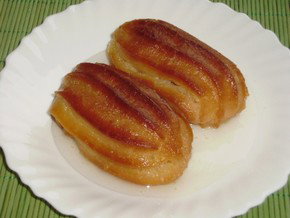
Turkish Tulumbe
**Ingredients Quanity:**
**-For dough:**
flour 300g ,oil 100ml, water 450ml, are few, baking powder 1, eggs 4.
-**For Sirup:**
sugar 700g, water 700ml, limone 1
How to prepare:
**1.**
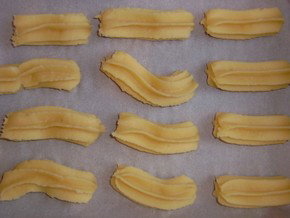
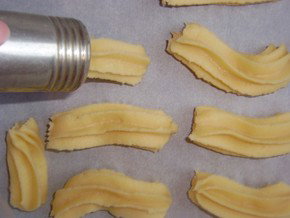
Bring water, oil and a little salt (on top of the spoon) to a boil. Remove from the heat, add flour and baking powder, mix. When cool, add the eggs, one at a time, and stir with a food processor. Pour the mixture into a syringe, then squeeze the tulumbe into a tray lined with baking paper.
**2.**
Bake for about 30 minutes in an oven preheated to 180 degrees. Reduce the temperature (up to 150 degrees), but do not open the oven during baking.
**3.**
Arrange the baked parties on a baking sheet and pour the syrup over them.
**4.**
Syrup: Boil sugar and water, when it boils, for another 10 minutes. Add the juice of one lemon. Pour warm syrup over the warm parties. Allow to soak and cool.
**Bon Appétit!**
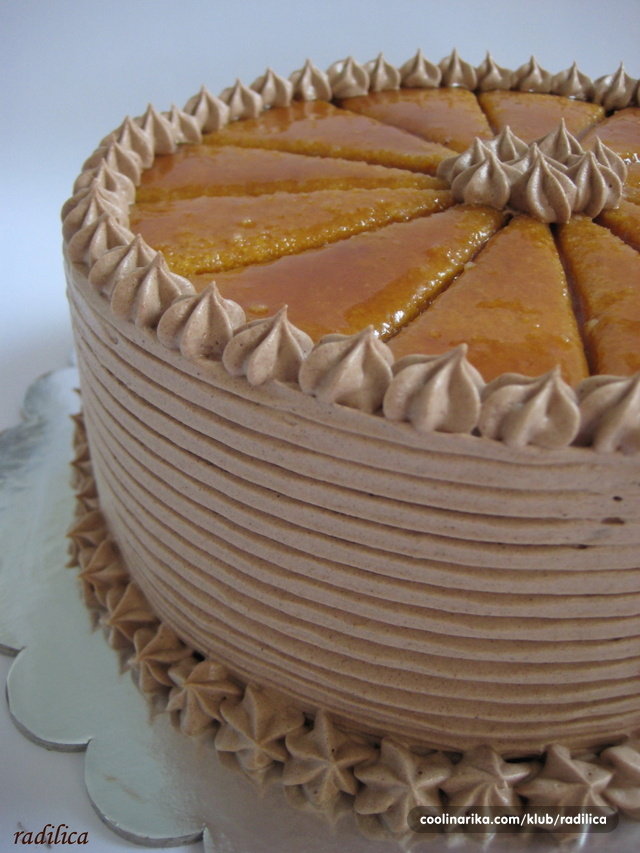
Dobos Cake
Preparation
I sincerely hope that this recipe will help many who are afraid to make this cake. The extensiveness of the recipe does not represent its complexity at all, but the help in making it.
Whether you are a beginner or a person with a long experience in the kitchen, I am convinced that you will succeed if you follow the instructions carefully, and for any doubts and ambiguities, you can contact me.
And now just be brave and remember, THERE IS NO THING YOU CAN'T DO UNLESS YOU DON'T! ;)
Kore
**1.**
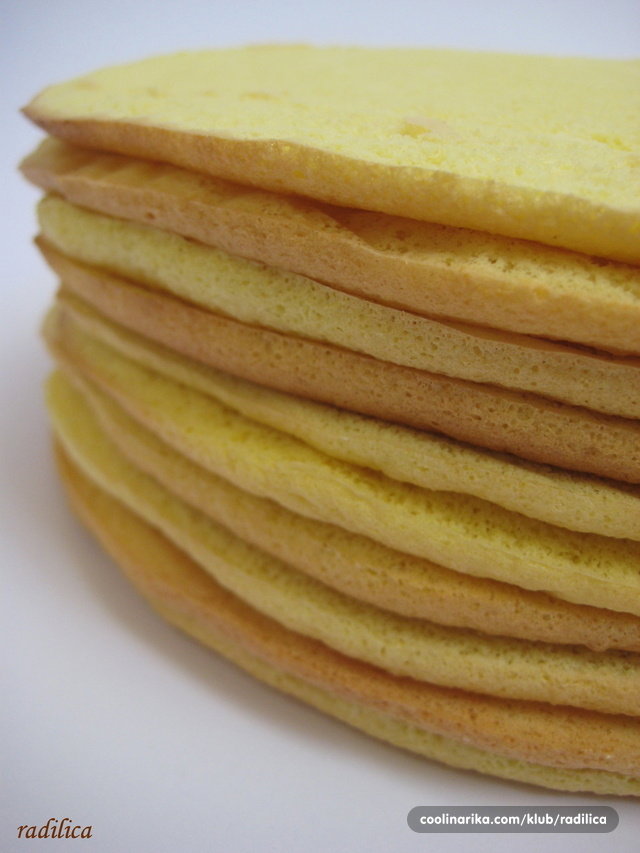
Draw 2 circles with a diameter of 20 cm on baking paper with a pencil. Prepare a total of 4 such papers, and then 2 more special papers on which you will draw one circle.
*** So: 4 papers x 2 rounds and 2 papers x 1 rounds.**
**2.**
Separate the egg whites from the yolks (for starters only 3 eggs). Whisk the egg whites with a pinch of salt, then add a tablespoon by tablespoon of sugar (3 tablespoons) until the egg whites are firm and shiny. Then reduce the speed of the mixer and add the egg yolks one by one (3 egg yolks).
**3.**
Sift the flour (3 tablespoons) directly over the beaten eggs, then mix the mixture very gently with a spatula until the eggs and flour are combined into a nice, smooth and uniform mixture, without lumps.
**4.**
Divide the mixture into 5 circles, three tablespoons each.
* Here's how: Turn a larger baking tray (from the oven), fold it over and stick a piece of paper with 2 circles drawn on it - spread it out and spread the mixture evenly.
Place the other paper on the work surface - spread and spread the mixture evenly (in 2 circles).
Let the third paper be the one where you have only one drawn circle, so also spread the mixture on it and spread it evenly (I put this paper on an inverted round pan).
**5.**
Preheat the oven to 160 ° C. Put the pan in the oven - be careful, the crusts are literally ready in 2-3 minutes. As soon as they get a nice brown color, take them out of the oven immediately.
**6.**
Remove the paper from the baking tray, then place another paper with the already smeared mixture on the baking tray and repeat the baking process, after this round, put the 5th crust to bake (round baking tray).
**7.**
Then, carefully remove the baking paper from each crust - chop it, it should be easy to remove. Stack the biscuits on top of each other and cover them with a cloth while preparing the next round, from the remaining 3 eggs. The procedure is the same.
Cream:
I write the way my mother conveyed her impressions to me, because she cooked it while I was at work :)
**1.**
Beat whole eggs and sugar with a mixer until foamy and white. Steam for about 20 minutes, stirring constantly. The cream is ready when you run the cooker through the cream and see the bottom of the pan / bowl.
**2.**
Then add the chocolate broken into cubes and stir on the steam for a few more minutes until all the chocolate has melted and combined with the eggs. Cover the cream with cling film and cool.
* The cream will be thick but not firm, don't worry, as soon as you combine it with butter, it will be perfect.
**3.**
Whisk the room temperature butter with a mixer, then add the cream little by little, stirring constantly. When the cream and butter are nicely combined, start filling.
*** If possible, use real butter, because the taste is significantly different, and the cream is much tastier.**
*** If you decide to make the cream first and then the crust, never put the cream in the fridge, because it will shrink so much that you will not be able to spread it. Whisk it with butter just before filling.**
**Filling:**
Cover the rim of the mold with foil on the inside and place it on a plate of the appropriate size.
Donuts
My mom has the best recipes for everything, because they are so simple, and they give fantastic results. These are beautiful, soft, hollow donuts that we all love.
Preparation
**1.**
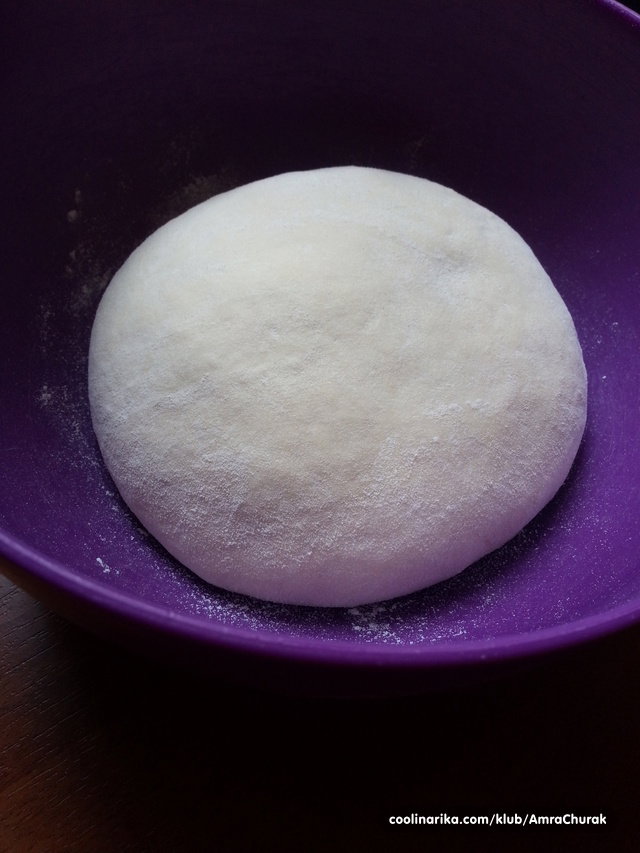
Pour flour into a bowl, add yeast, sugar and a pinch of salt, and mix. Add one egg, then pouring lukewarm milk, knead a fine dough.
**2.**
Cover the dough with a cloth and leave in a warm place for about an hour.
**3.**
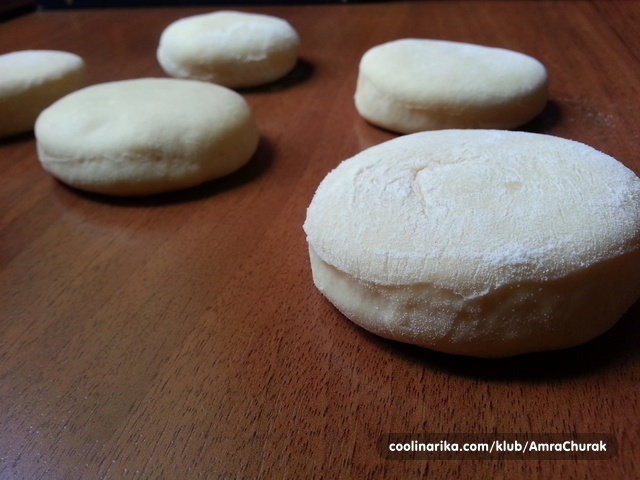
After an hour, knead the dough once more and roll it out with a rolling pin. Let it be neither too thin nor too thick, about the thickness of a finger.
**4.**
Remove the circles with a glass. Cover them with a cloth and leave for 15 minutes to rise. Then turn them to the other side and leave for another 15 minutes.
**5.**
Fry the donuts in a larger amount of hot oil. Lower them into the oil so that the upper raised side is now facing down. As soon as they are dipped in oil, close the sherpa and wait a few moments. When the underside turns yellow (it's a matter of seconds), remove the lid and turn the donuts to the other side, but now leave them uncovered until the donuts are fried (again it's seconds). So work with every tour.
**6.**
Remove the donuts with a slotted spoon and place them on a paper towel.
**7.**
If desired, press the jam or Eurocream into the donuts with a syringe, or dip them in melted chocolate. And they can be easily rolled in powdered sugar.
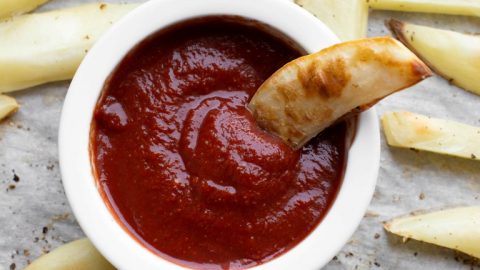
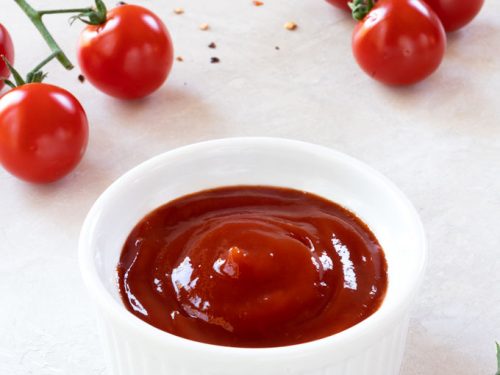
How to make Ketchup
Ketchup is an aromatic addition to dishes, and if you are one of those who enjoy its taste, this recipe will knock you off your feet, rest assured.
**Ingredients:**
5 pounds of tomatoes
Half a pound of onions
Half a kilo of peppers
4 cloves garlic
Half a liter of apple cider vinegar
2 cups sugar
A spoonful of pepper
2 tablespoons salt
Preparation:
Peel a squash, grate it and chop it finely. Peel a squash, grate it and squeeze the onion.
You need to chop the garlic on a board.
Put all the ingredients in a large pot with a thick bottom, cook on a medium heat until boiling, then reduce the heat and continue cooking for ten minutes, until the vegetables soften, stirring constantly.
Remove from the heat and mix everything, preferably with a mixer.
Return the pot to the heat, stirring frequently on medium heat, until the thin mixture thickens. The procedure takes about two hours.
To check if the ketchup is cooked, put a spoonful of the mixture on a plate, and your juice is ready if no liquid is drained from the mixture. Then pour it into sterile hot jars.
Sterilize by boiling in a water bath for about ten minutes. Allow to cool and store dry and cool.
American Pancake
**I tried these pancakes and i was thrilled i recommend you try them too.**
Before the recipe, let me tell you an interesting fact, there are a couple of confectioneries that charge Crypto currencies for their sweets instead of money, such as ***BitCoin*** *Cash* or ***BitCoin*** ...
This is a basic recipe for American pancakes that gives your imagination free rein - combine them with various creams, spreads, fruit and ice cream.
***Needed:***
2 eggs
2.5 cups of flour (with a cup of 2.5 dcl)
1 bag of baking powder
2 cups milk
1/3 cup oil
1/3 cup sugar
1 pinch of salt
Preparation:
Separate the egg whites from the yolks and make a solid snow. Mix the egg yolks with the sugar and add the other ingredients, taking care that the wet and dry ingredients combine nicely. Finally, mix the resulting mixture with egg whites. You can throw yourself into frying!
Spaghetti carbonara
https://www.youtube.com/watch?v=vCyQQ9kIBh4
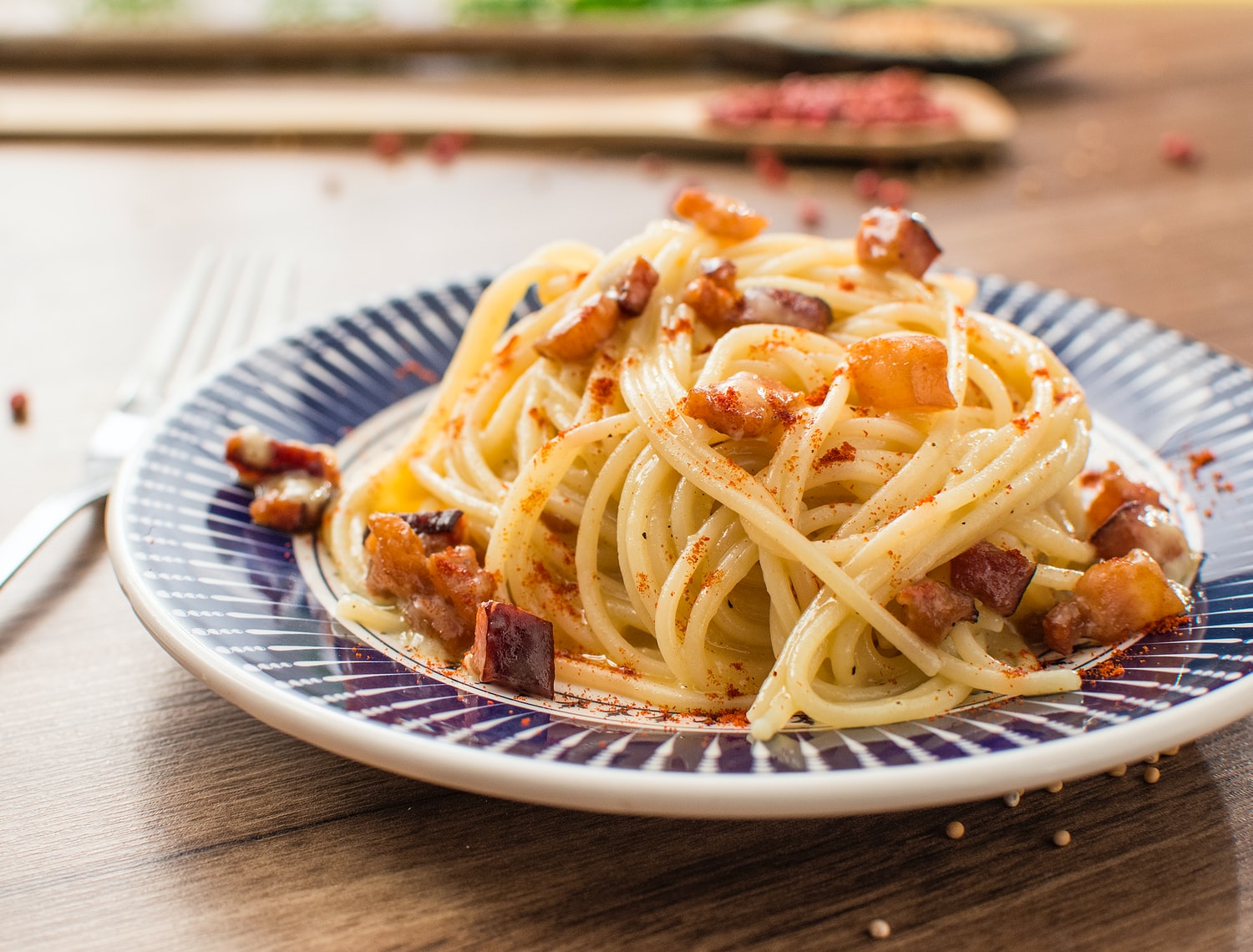
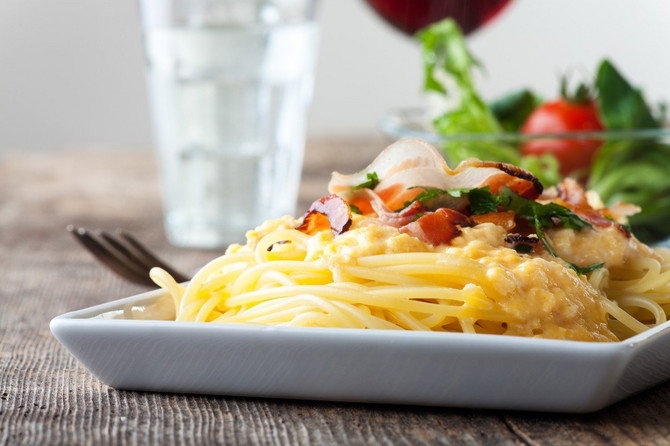
**Spaghetti carbonara** is an **Italian** pasta dish and is considered almost unavoidable in Roman cuisine. It is prepared in a simple way, it is very nutritious and quite strong in taste.
Long noodles are used to prepare carbonara - spaghetti or tagliatelle, or fettuccine. It is interesting that the Romans made this dish with short noodles, such as rigatoni.
Some culinary historians consider carbonara to be a Roman invention, while others associate it with the Umbrian region, ie they say that it was a favorite dish of Umbrian miners (carbon = coal).
Others are convinced that the recipe was devised by Ipolito Cavalcanti, Duke of Buonvicino **(1787-1859)**, a cook and writer of blue blood. Hippolytus came from a tribal family of which the famous poet Guido Cavalcanti was a member. At the beginning of the 14th century, the Cavalcanti family left Tuscany and moved to Calabria, and at the end of the 18th century, they received the title of Duke of Buonwichin.
Cavalcanti first published the book "Theoretical and Practical Culinary Arts" in Naples in 1837, and two years later an amended edition. This rich collection of culinary recipes contains explanations for the preparation of many dishes famous in the 19th century, among which the Neapolitan ragout stands out. In Cavalcanti's collection, there is a recipe very similar to the one used to prepare carbonara, although there is no official confirmation that he is the inventor of that dish.
Not far from Cagliari is the place Carbonia, so some believe that the carbonara actually originates from there, and that an unknown chef transferred his invention to Rome, naming it after his birthplace, instead of calling it by its name. In Rome, the dish quickly became a favorite, and then grew into a true gastronomic legend.
However, there is also the opinion that pasta ala carbonara was invented during the Second World War, when bacon was the only meat that could be found.
And, finally, the last assumption: the dish was named after the pepper that is sprinkled on the pasta at the end of the preparation, and which is black as coal (as we said, carbons in Italian means coal).
Since the caloric content of carbonara is high (pasta, fried bacon, cheese and eggs), it is usually served only as a main dish with a light salad. So, unless you work as a miner, this dish should not often be on your table.
And here is everything you need for this specialty and how it is prepared.
***Ingredients:***
200 g spaghetti
2 egg yolks
100 g dry bacon
200 ml of fresh liquid sour cream
40 g grated parmesan
50 g grated hard yellow cheese
1 teaspoon freshly ground pepper
2 cloves garlic
1 tablespoon olive oil
1 teaspoon salt
1 tablespoon chopped parsley
In some recipes for this dish, sour cream is excluded, in some, on the contrary, it is added. Experts say that in the Roman area, where the dish was made, sheep's milk cheese "pecorino romano" is used, instead of parmesan, which is made from cow's milk. They also say that the pancetta is not used, but the "guanciale" bacon, which comes from the pork background, while the pancetta is from the lower middle part.
Preparation: Put spaghetti to cook according to the instructions. It will take just that long to complete the other steps in the recipe. Wash and chop the primrose. Mix egg yolks with sour cream, salt and pepper, then add primrose. Add grated cheese and mix well, then set aside. Chop the bacon. Heat a tablespoon of oil over a medium heat, then put the bacon to fry, stirring constantly. Put garlic cloves in a piece, but first press them lightly to crack and release their aroma. When the bacon becomes glassy, remove it from the heat and drain the excess fat, and let a tablespoon or two remain. Mix hot, drained, spaghetti with hot bacon and pour the already mixed topping with egg yolks and cheese. Do not cook, just stir quickly so that the yolk does not clump. In this way, it will be thermally processed and safe to eat. The cheese will melt and give a creamy carbonate structure.
It is interesting that the feature film "**La Carbonara**", directed by Luigi Manji in 2000 is also dedicated to this dish.
Chocolate Cake
https://www.youtube.com/watch?v=2ppX6o789qg
INGREDIENTS
Biscuit:
(THE COFFEE CUP I USE IS 170 ML)
4 EGGS
1 CUP OF SUGAR
1 BAG OF VANILLA SUGAR
HALF A CUP OF OIL
4 SPOONS OF COCOA POWDER
1 CUP OF MILK
2 CUPS OF FLOUR
1 BAKING POWDER BAG
Bake at 180 C for about 20-25 minutes
Topping:
1 cup milk
half a cup of oil
2 tablespoons cocoa powder
1 cup sugar, 50 g cooking chocolate
Recipe for Greek gyros
https://www.youtube.com/watch?v=oZqufteqD9U
Ingredients
**For gyros:**
1 kg pork leg steaks (thinner but not too thin)
3 equal teaspoons of mustard
1 level teaspoon dried oregano
1 flat teaspoon pepper (or half a teaspoon if you don't like spicy)
1 tablespoon salt
2-3 tablespoons olive oil
+ a couple of tablespoons of frying oil
Tortillas:
If you want to shorten the preparation time, you can buy frozen tortillas in any supermarket. Otherwise, look for a recipe for tortillas, there are them on the Internet.
Tzatziki salad:
2 larger cucumbers or about 600 g
2 sour cream or 400 ml
ready-made seasoning for tzatziki or:
a bunch of finely chopped fresh spices
3 cloves garlic (finely chopped)
with to taste
a pinch of pepper
You can also find ready-made tzatziki salad in larger supermarkets.
Accessories:
French fries: 1.5 kg of potatoes
1 large red onion or 6 stalks of young onion
2 medium tomatoes
Preparation
1. ***Gyros***
Wash the meat, dry it with a paper towel, remove the fat and cut each steak into strips about 1 cm wide, and then cut the strips so that you get pieces about 3 cm long. Put the chopped meat in one bowl, add spices and olive oil and mix well to combine everything nicely. Leave the meat to stand covered in the refrigerator for at least two hours, and it is best to stay up all night. Fry the meat for about half an hour before serving to keep it warm. Pour oil into the sherpa, when it heats up, add the meat and fry it at a medium temperature. The meat will release water, so it will first be stewed in its own juice and spices, and when the liquid evaporates, it will take another 5-10 minutes. fry it with constant stirring. The meat must not be resh, because it will be hard.
2. ***Tzatziki***
Wash the cucumbers, wipe with a towel and peel. Grate the cucumber to the smallest (as for parmesan). Since the cucumbers are full of water, transfer them to a strainer and press with a spoon until they are completely drained. Then mix them with sour cream and spices in a bowl. Cover the bowl and leave it in the fridge for up to an hour before serving.
3. ***French fries***
If you are in favor of a healthier version of french fries, then prepare the potatoes as follows. Peel the potatoes and chop them like french fries, dry them well with a soft towel, add salt and a couple of tablespoons of oil, mix everything nicely and bake in the oven, taking care not to turn brown and be crispy.
4. ***Other accessories***
Cut the onion into ribs and the tomato into slices.

 @marilovic