 @fun_wine_mom
edited
@fun_wine_mom
edited
How to choose a cryptowallet?

This topic could be of particular interest to many users of this platform, as well as to those, who deal with cryptocurrency one way or the other in their day-to-day life. Because of a generally high cryptocurrency : currency value ratio, it is quite alright to be particularly concerned about fraud or theft of one's precious 'virtual' coins. Therefore, in this article I'd like talk a little bit about what cryptocurrency is and and talk about different ways of storing it after it has been acquired.

To start us off, let's brush up on some general knowledge. **Where does cryptocurrency come from?** Cryptocurrency, in a way, "comes" from the so-called **miners** who are a special bunch of computers that verify and add information about a transaction to the general database called **the blockchain**.

**What is the blockchain?** The blockchain is an encoded "line" or "chain" of transaction records. The reason why it is called a 'chain' is because the 'address' of one transaction, which is encrypted and turned into a so-called "**block**", is dependant on the also encrypted 'address' of the previous block. In this way, the structure that we are referring to is best understood as a line (chain) of operations (blocks).

****Why is cryptocurrency supposed to be so safe? Is it safe?**** If under 'safe' we mean 'more hack-proof' than other technologies today, then yes, it is. The trick to the blockchain's safety is the network of miners and their computers: when a new block is added to the blockchain, it must be verified by all the other computers, right? Well, if a hacker will try to alter one of the transactions, in other words one of the blocks, all the other computers that have already "agreed" over what that block contains will simply **ignore** the hacker's computer that is trying to trick them into "telling them" what the block must say for the hack to be a success.

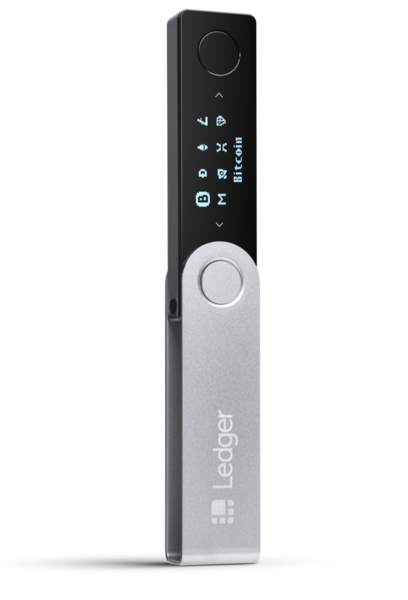
Sometimes, though, this whole system can be too safe, and in case you forget the special password, or "key" that allows your computer and, in turn, your wallet to locate the block that contains the recording of your transaction, say, you getting 1 BCH, then the transaction, as well as the money is unfortunately lost until someone else's computer would be able to guess the precise "address" of your block. Okay, so far - so good! Now, how do we keep our precious crypto assets safe? First of all, what you should know is that there are different types of storage and wallets. Storage can be: Cold Hot **Cold storage** or **cold wallets** refer to wallets that are offline, and **hot**, in turn, refers to wallets connected to the Internet. Hot types of storage obviously face a higher risk of being meddled with relative to the cold storage. In turn, wallets are divided into: Desktop Mobile Web Hardware Paper **Desktop** wallets are considered to be a pretty reliable choice. Amongst the pro's are the facts that you can only access your wallet from one machine, and that some cryptocurrency coin developers produce a desktop wallet software for their coin as well, which means good customer support. The downsides include the fact that you ought to closely watch the security of your system, as a virus or a malware programme can really make things difficult for ya. **Mobile** wallets are perfect for managing your assets on the go. Some even have an option to make a transaction by simply scscanning the address of the wallet that you'd like to make a payment into. However, this is a slightly riskier choice, as we tend to lose our phones quite often, so if your device, as well as your wallet is not password or seed-phrase protected, you can say goodbye to your savings. Sucks, doesn't it? **Web** wallets are usually found on cryptocurrency exchanges and are often quite easy to set up. You can't lose them either - they are up there in the Net and you can access them from any device you want. Two things should be kept in mind, though: cryptocurrency exchanges are a juicy target for hackers (check out the *Eterbase case*), and, sometimes, your private access key for your wallet *may* also be shared with the exchange itself, making a privacy leak even more likely. Now, let's discuss two types of wallets that may feel counterintuitive. I was low-key shooketh when I found out you can keep your crypto offline AND on a piece of paper. Let's take a look at how offine (cold) wallets work. So, **hardware** wallets usually look similar to a regular USB stick with one critical difference: unlike a USB stick that can be accessed by anyone, this one is password-protected and increases the safety of your assets also by keeping the access key to your funds offine. That deals with any potential hackers right away! I'd like to see someone try get in my USB stick - if they would, I wouldn't even be pissed off about the money - they deserve it for their efforts. A big downside of a hardware wallet though is its cost: some websites state it could be starting at 150 USD! Might have to cut back on them after-6 snacks and wine to afford one of those, am I right? https://www.finder.com/cryptocurrency/wallets
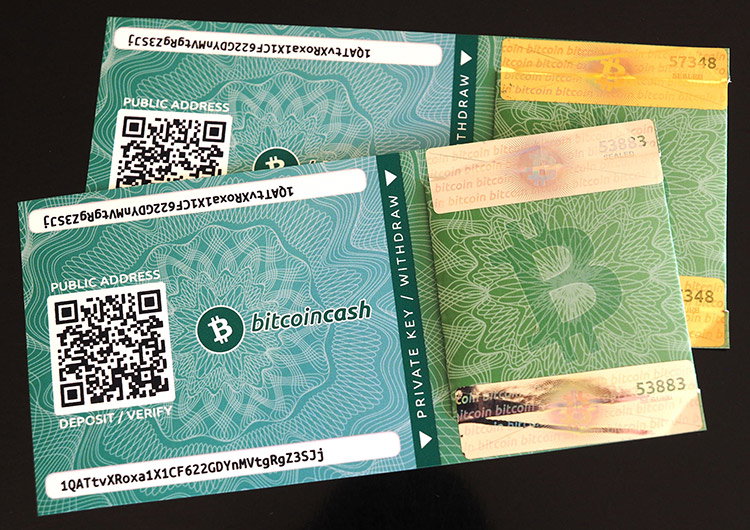
And finally, the truly interesting part: **paper** wallets. The reason why it's so cool that it is even possible to store your crypto in paper form is because you kind of have the opportunity to experience working at a money-printing company: you take something that does not exist physically, put it on a medium and by doing that, give it value! A paper wallet is basically a QR code on a piece of paper. In order to understand how they work, we need to understand the difference between a **public key and a private key**. A **public key is** the wallet address, and a **private key** is your password to access the wallet. So, to transfer money from a digital wallet to a paper one, you need to open a special webpage, print a **public key** for your paper wallet, and send money to it**.** To withdraw, simply log into your software wallet and put it your **private key!**
Alright, so having talked about different kinds of cryptowallets, let me outline a couple of questions you might wanna ask yourself when deciding, which one you should choose: How easy should my wallet be to use? What security features should it have? Will my private key be stored online or offline? What cryptocurrencies should my wallet support? Are there any extra costs I'm gonna incur and am I ready to do that? How trustworthy is the company or team behind the wallet?

I hope you will find this guide helpful. Since I'm quite new to cryptocurrency, feel free to point out a mistake in any of the definitions above - I'd love to learn more. *Shine bright like a diamond,* Fun_wine_mom *Sources:* Articles: https://www.finder.com/cryptocurrency/wallets https://www.finder.com/blockchain-guide https://www.computerworld.com/article/3191077/what-is-blockchain-the-complete-guide.html?page=1#toc-1 https://coinsutra.com/types-of-crypto-wallets/ Photos: https://porterfieldcpa.com/2019/10/when-a-taxpayer-cant-pay-the-balance-due/ https://drawception.com/game/O3tBByT5AG/little-green-ghouls-buddy/ https://www.pinterest.com/pin/181481059962708788/ https://www.wonkeedonkeetools.co.uk/brick-lines/how-to-lay-a-brick-wall-using-a-brick-line https://visitworldheritage.com/en/eu/mining-in-harsh-conditions/8fccf9f0-bca1-4eae-8e17-4166c53be586 https://shop.ledger.com/products/ledger-nano-x/?flow_country=AUT&gclid=Cj0KCQjw8fr7BRDSARIsAK0Qqr4kh_yuvJHcNwlj1-nSp4fZIphNh9I1SVGSum7HjPA19-ehLqdeMk4aAot0EALw_wcB https://www.pinterest.com/bearles1873/tom-jerry/ https://news.bitcoin.com/how-to-create-a-bitcoin-paper-wallet-or-paper-bill/


11 comments
I use Bitcoin.com and electroncash wallet.
and what about exchanges? I had a look at the website read.cash is suggestint for us to use, but it looks proper dodgy ngl
What do you mean by exchanges? What do you mean by dodgy? You mean this wensite read.cash we are using? I've been using it for almost a year. It uses an online wallet, but has no access to your funds, because only you know your seed.
I'm talking about cryptocurrency exchanges: you go on a website, and you sell your BCH for the currency of your choice. The website read. cash reccomends for this purpose looks very untrustworthy. Maybe it's just my first time visiting sites like that, but I don't feel safe sending my currency to any of the vendors there. Local.bitcoin.com is the address.
Local.bitcoin.com is a peer to peer exchange. You send your money directly to the seller, not to the exchange. Read more here: https://local.bitcoin.com/faq
I see where my my mistake was! I referred to local.bitcoin as exchange, whereas it really is a trading platform, my bad. Is a trading platform the only way to turn crypto into fiat currency and if so, can u recommend a better one?
I have never swapped crypto for fiat. I have always spent it. Here can you find how to spend Bitcoin Cash https://read.cash/@Read.Cash/whats-so-great-about-bitcoin-cash-26bdb6f0
Here you can read how to use https://read.cash/@Maxdevalue.BCH/creating-good-bch-offer-at-localbitcoincom-118e6809
Nice thanks
a hard wallet is by far the best however consider the amount you wish to store beforehand the cheaper wallet can have significantly less space. I bought the nano s first not nano x thought i got a deal , hopefully others learn from my mistake. great article overviews help everyone.
Thank you, I appreciate your support. Well done for bringing attention to the storage issue that I have overlooked!