Are Spontaneous Decisions Ever a Good Thing?
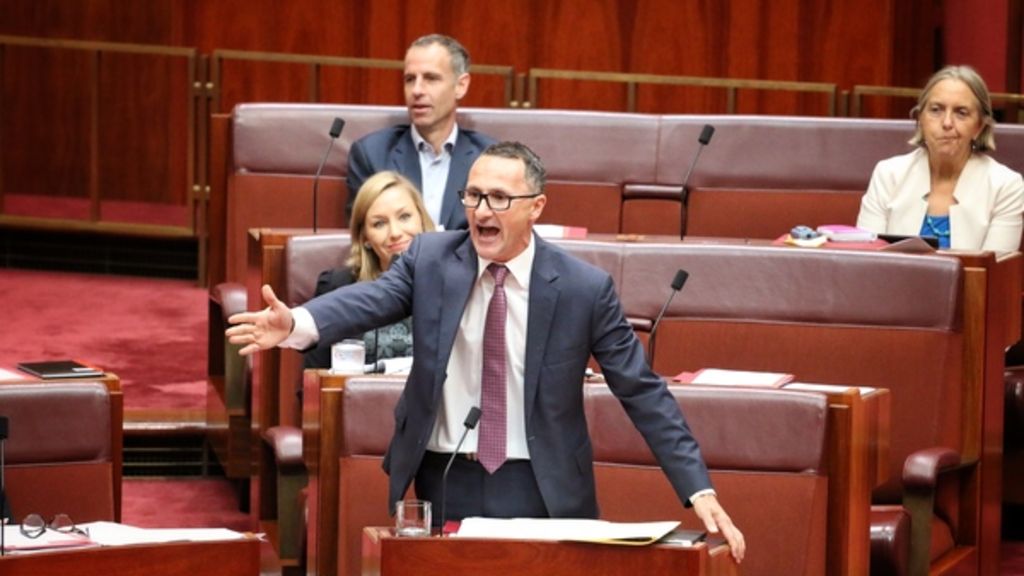
It is quite astounding how the speed with which a decision is taken influences the way the decision is received by the observers.
If faced with a choice of a venue to go to to have lunch, your hungry companion might loathe you for being too indecisive and weighing up the options. Though you are offered an opportunity to choose, you aren't actually **expected** to exercise discretion (fancy word for 'ability to choose'). For it would seem inappropriate to your hungry companions if you would start genuinely reflecting on each of the suggested options, examining it, and attempting to gauge what your inner voice is saying about the prospect of eating pasta, Mexican food, Japanese ramen, or an American burger. You are expected to value the expected result - the fullness that would trump the feeling of hunger - more than the process of getting there. You are expected to be open to spontaneity.
*storytime*
How many times, during a summer or winter getaway abroad, did my parents have a discussion on this topic! Me and my mom, you see, would get hungry after a day of walking around quite quickly. My dad, on the other hand, would not. Or maybe he would, I could never quite tell. But he used to take full advantage of the complimentary breakfast - like he would go down to the buffet at about 6.30 or 7.00, first alone. Then my mum would join. Then myself, at probably around 8.30. And I'd first have some cereal and an orange juice to get myself started. Then, I'd go on to the frying section - with bacon and sausages and various potato goods such as hashbrowns. Eggs, obviously.
Then...my memory gets a little hazy by this point. Probably because I'd already get quite full. But I guess then I'd have toast, or some sort of bread, probably with jam. And then something else. And then tea and crumpets. Boy, hotel breakfasts are the best. But I digress. My dad would basically eat non-stop between the hours of 6.30am and 12pm. So no wonder he'd still be feeling full for lunch. But mum would be starving by noon, and I- well I didn't really care, so long as they didn't argue too bad. So mum would be demanding that we would go somewhere that does "big plates", whereas my dad would be in favour of something that "does soups or light dishes". Then they would be unable to find a compromise, and we'd mostly continue our daily sightseeing hungry :(.
*back to the topic*
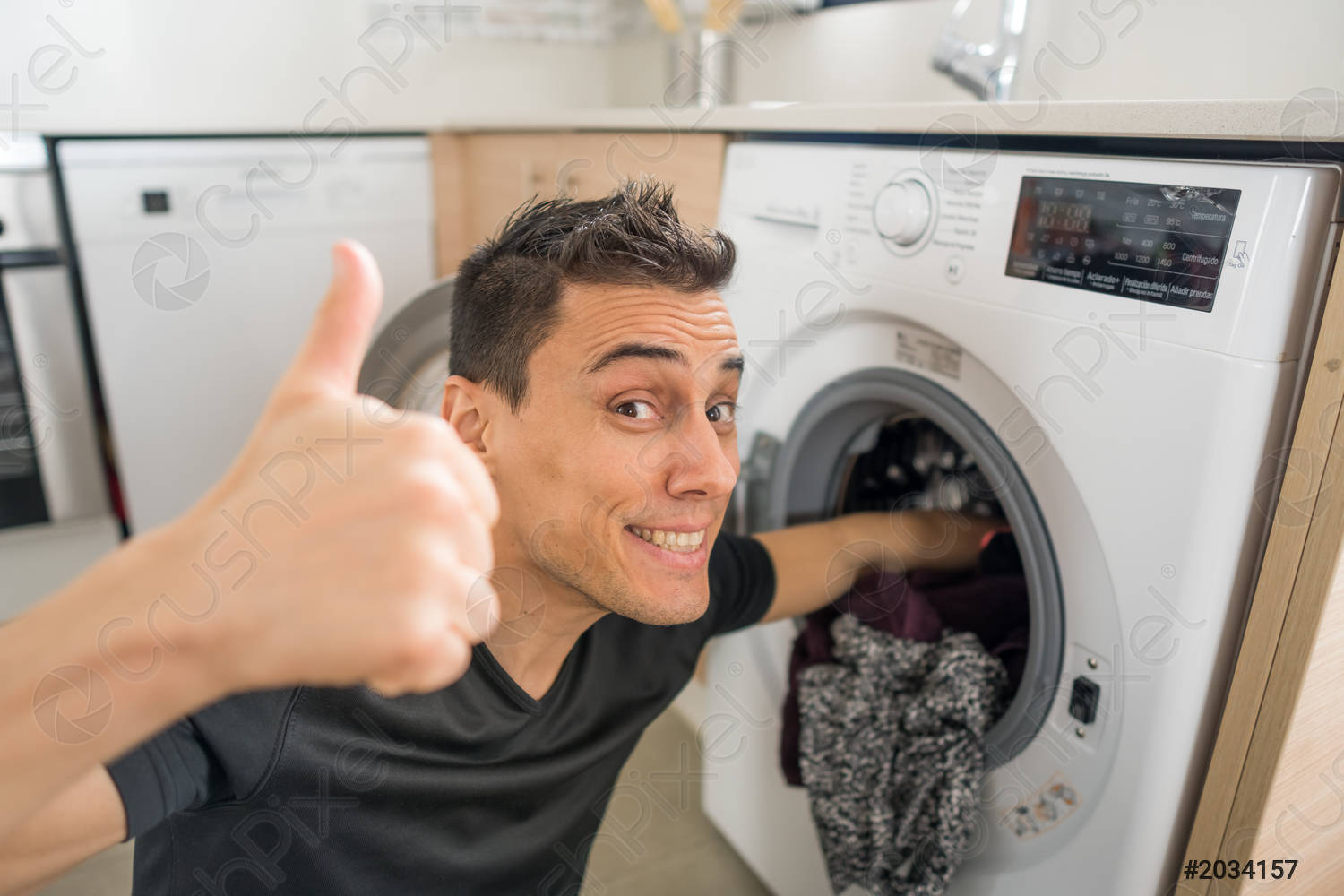
In a different situation, however, where you are thinking about purchasing, say, a washing machine, a decision made too hastily may be criticised. Naturally, it would be said, a washing machine is an expensive gadget, one that is an 'investment' and whose functionality is crucial for its enjoyment. Same with curtains. Or beds. Or TVs. We see the importance of taking your time when choosing those objects in the feeling of pride that washes over us when we announce that "Finally, I have found the washing machine that I was **looking** for!". For to resist the temptation to stop looking for that perfect thing and just buy something, the first washing machine you see, is, of course, a valid strategy, but one that would not emphasize the stoicism of the shopper. Here, spontaneity is not what is expected.
What is the meaning of "spontaneity"? Some would say it's "a form of action that is neither thoroughly mentally assessed, nor planned in advance". A poorly thought-through split-second decision following a gut instinct. The closest one can get to a perfect reaction. Though this makes sense, I don't think this is an accurate definition.
Is there a difference between a spontaneous decision and an automatic decision? Like when someone wishes you "good morning" and you reply with "good morning" - is that a spontaneous action or an automatic action? Both seem to fall under the heading "split-second decision", and yet there is a crucial difference between automacy and spontaneity. An automatic decision must be seen as a choice that has been made, following the process of consideration, *sometime in the past*, with the result of the choice being repeated in appropriate circumstances. Whereas a spontaneous decision is a decision that is indeed taken in the moment and, unlike an automatic decision, an original decision.
Having thus had a go at trying to draw a conceptual difference between spontaneity and everything else, let's try to arrive at a conclusion. Are spontaneous decisions good or not? But, wait. It would seem that by figuring out that the public treatment of a spontaneous decision varies according to circumstances, we have cut ourselves off from asserting that *all* spontaneous decisions are either good or bad. But wait. To say that spontaneous decisions may be categorized as either helpful or unhelpful does not exclude the existence of some sort of intrinsic value of such a decision, or lack thereof. So let's look for the intrinsic value of a spontaneous decision.
It would be unhelpful to try and think of a situation where a decision is spontaneous and has a negative outcome. For such an example would not be illustrative of a broader principle, but instead would point to one particular instance of where spontaneity is not a virtue. Instead, let's examine the broader idea of what does it mean for us to be able to make choices. Let's, therefore, discuss the idea of autonomy.
Autonomy, though unclear as many concepts are, in the accounts of most philosophers, dictates that we are free to make choices. But it is not any choices that would qualify one as free. For instance, a British philosopher by the name of Joseph Raz illustrates the concept of true autonomy by reference to two examples where autonomy is absent. He talks about the Man in a Pit and the Hounded Woman. (Both are googlable). The idea is that neither the first, nor the second is truly autonomous. Because to be autonomous, you must be free to make at any time a **combination of choices** that are **minuscule** and **unimportant** and **choices** that are **extremely important** and have **awfully serious** consequences. A further opinion on autonomy is that one cannot be truly autonomous if one finds themselves in a relationship that is oppressive - this is a view of a philosopher by the name of Marina Oshana. She says that, in essence, if a person makes a choice out of a number of options that is in one way or another limited via the oppressive nature of a relationship, then the choice is not *actually* autonomous even if the choice is *freely made*.
So embedded into the autonomy is, then, the consideration that one must make choices. No matter whose account of autonomy we choose as appealing - Oshana's or Raz's, it is understood that in order to even attempt to be autonomous, you must keep making choices. And so, in a way, it is good to choose, and twice as good to choose autonomously. But it is good to choose in the first place!
So then what is the problem with spontaneity? It is a choice, isnt' it, and therefore, it should be always intrinsically worthwhile? Well, that's the catch. To be autonomous means, at least to Raz, to not let your mind be easily swayed. Sure, you can make a choice and then ultimately choose against it, but this must be a part of a bigger strategy - say when you decide to start training to be a marine and then, after you have failed the entrance exam several times you decide that maybe it is not meant to be. But a short-term change of mind - like one day you want to be a soldier, the next day - a UN ambassador - is not a proper choice, as it is too surface-level, too naive and mood-dependent**.** Therefore, it would seem that spontaneity, when defined as we had defined it -a following of a gut instinct - is not an autonomous choice. Because it was made too quickly; in making that spontaneous choice you necessarily stray away from the sequence of events you've planned beforehand, and that is not a rational change of strategy, but rather a momentous caprice.
This does not mean, however, that there are no other reasons that would confer value on a spontaneous choice. Assuming it is not properly autonomous, it could still be simply free, or the speed with which it has been taken may be celebrated on utilitarian grounds. The choice to agree with me or not is, as they say, all yours!
*Sources for pictures:*
Shouting in Parliament https://www.abc.net.au/7.30/shouting-match-erupts-on-messy-and-ugly-senate/7249454
Hotel Buffet https://buffetodia.blogspot.com/2017/07/buffet-hotel.html
Dude with a hand in a washing machine https://www.crushpixel.com/de/stock-photo/man-putting-clothes-washing-machine-2034157.html
"Man Machine" by Fritz Kahn https://www.designcurial.com/news/man-machine-4183403
Blue cage, red balloon
https://coneybeare.com/uncategorized/forget-flexibility-your-employees-want-autonomy/
It's your choice: https://www.dreamstime.com/stock-illustration-s-your-choice-rubber-stamp-grunge-design-dust-scratches-effects-can-be-easily-removed-clean-crisp-look-color-image88635938
Is there a general, special or no obligation to follow the law?
(Here's an updated version of my formative essay that i had to write for my course. Let's start with a little bit of legal philosophy to get back in the game after a long break)
In answering the question whether there is an obligation (or duty) to obey the law, it will be submitted that the existence or absence of such duty largely depends on what the pursuer’s view of the law is. To demonstrate this, the legal positivism school and the natural law school shall be recalled. It will be established that, when looking at law as a legal positivist would, there can be no general duty to obey. For natural law theorists, on the other hand, establishing such a duty would be unproblematic.
As a background point, there are three kinds of duties discussed in the literature: a general (moral) duty[1], a prima facie (conditional) duty[2], and a special (limited) duty[3]. This work perceives the three as standing in a sort of a pyramid relationship to one another, with a general duty being on the top. The consequence of this is that, where a general duty failed to be established, a conditional prima facie, or a limited special duty might be found. Therefore, the work will proceed with an analysis pertaining to the presence or absence of a general duty as its first order, and will then apply, where possible, the findings to the other two kinds of duties.
Before turning to the main part of the inquiry, it is helpful to understand, why must an obligation of any kind to follow the law be established? This depends on whether one takes the view that obedience to law is the same as the obedience to a state which has produced the law. For two ways of thinking are possible: either the duty to obey the law must be established for its own sake[4], to justify the legitimacy of the law’s claim to obedience to itself, or to justify the legitimacy of the state that has authored the law [5]. In both cases, establishing legitimacy of a claim to obedience would have a two-fold meaning - it would a) provide a powerful ground for the affected person to do as the law demands, and b) change the character of a sanction imposed for breach of this code of conduct from a mere coercive one to a justified one.[6].
What would the finding of a duty to obey mean for a legal positivist? Legal positivists famously claim that the substance of the law does not affect its validity: the law can be unjust, and yet it will still be a valid law.[7] This ‘validity’ of the law does not mean the same as the law’s ‘legitimacy’ talked about earlier. A valid norm, like a correct mathematical equation, is simply a true fact; its only effect is that it assigns a norm to a particular legal system. This relationship of a norm to a wider legal framework does not, in itself, create a duty to obey the norm in question; only if it can be established that the wider legal system imposes on its subjects a duty to obey, could it be said that the overarching duty to obey would ‘rub off’ on a singular valid norm in the moment of it joining the wider framework. The finding of legitimacy of a system is particularly important for the case where a singular norm is “wicked or stupid”[8]. For if there is a general duty to obey the law simply because it is the law, then there would be no getting out of obeying a norm, no matter its individual merits. Seen from this angle, it is all the more important for a positivist to establish a general duty to obey the law.
As mentioned above, a positivist separates between the form and content of the law. We know, however, that a duty to obey the law does not arise from the law having merely been validly enacted - there is nothing in the formal requirement to justify a general duty to obey.[9] Therefore, to carry within itself a moral duty to obey, valid law must have an already embedded internal “ought” - the principle “(valid) law is to be obeyed because it is the law” must be logically sound. Alternatively, there could be an external judgment factor imposed on the valid law, which would constitute a valid “ought” - for instance that the “(valid) law is to be obeyed because the law is just”.
Hart and Kelsen argue that there is an embedded “ought'' and fail, one on the grounds that the ‘is’ of solidified social custom which is the law does not give rise to an ‘ought’[10], and the other on the grounds that the basic norm, which must in principle operate as an ‘ought’, is hard to establish and sometimes leads to a false positive (sometimes what seems as an ought of a system is not its ought)[11]. This is no surprise, for when a positivist tries to prove that the law is to be obeyed because it is the law, what they are really trying to prove is “valid law is to be obeyed because it is valid law”. The problem with this statement is apparent - not only does it remind of a circular fallacy, but also attempts to find an ‘ought’ from ‘is’.
Raz shows[12] why there could be no valid external ‘oughts’ imposed on a positivist legal system based on some examples. He discusses a variety of possible external “oughts”, e.g. “law must be followed because law is a promise” or “law must be followed because it constitutes an estoppel”. But because Raz does not provide, as he says, a “master argument for the non-existence of a moral obligation”[13], here is an attempt to do so in the context of our inquiry. If there is to be an external ‘ought’ imported onto the law by virtue of the law capable of having a particular characteristic - be it justice of the legal system, its fairness, etc., then the fact that in the positivist conception, the law must be merely **formally** correct to become valid means that it is just as probable that a law would have this characteristic as that this characteristic would be absent from a given law. And if it is the general duty to obey the law we seek, then even a single legal norm which lacks the desired characteristic would disprove its claim to general moral obedience.
The implications of this are the following: a legal positivist would never have a general (moral) duty to obey the law. They might find a prima facie duty - but with a variable degree of success, for it would depend on the extent to which a given law is capable of complying with an external standard that would give rise to an “ought” - it simply may not be enough moral force in valid law to even begin to contrast it with a polar moral obligation. Yet a special duty may be owed, for instance where the principles such as consent[14], promise, quasi-estoppel[15] etc. apply. Bear’s and Raz’s criticisms point out that a reason for striking down the proposal to impute a duty from one of the principles above is based on the reasoning, that the suggested sources of duty to follow the law fail to provide a rule to which there are no exceptions. This, however, destroys the potential for a consideration to be applied to justify a general duty, but not a special one.
And what of the natural lawyers? The natural law theory, the “historical opponent” of positivists[16], is famous for its assertion that there is a necessary moral component in law. Classical naturalists on one end of the spectrum see this component located in the substantive part of the law, whereas neo-naturalists on the other end are sometimes keen to focus on the procedural part of the law and leave the substantive part of the law aside.[17] Because the question of whether procedural morality is a valid term is less than unequivocal, this branch of naturalist theory will be abandoned in order to drive a wider point home.
Those naturalists who see the substance of law as having a necessary moral element believe that a valid law which is morally coherent[18].is a legitimate law - one that excuses the application of coercion (Acquinas, Finnes), or one that will not be criticised (Dworkin). By the very fact of so doing, the naturalists leave the proverbial back door in their conception of law open for an imposition of a moral duty to follow the law. The duty arises out of a fundamental assumption about human nature and the relationship of a human to the law.
The three naturalists mentioned above all rely on human characteristics to establish what this moral component of the law should be - Acquinas and his natural law theory of morality imply that because humans are capable of reasonable behaviour, they must also only create reasonable laws; Finnes says that because humans pursue basic goods, the law must take those into account when trying to distribute those; Dworkin, finally, says that those who apply the law also import principles of the (moral) common sense of the wider population into it. In doing so, all three implicitly establish *why* the moral component of the law has a binding effect - it is because humans must act in a morally right way.
In this assertion lies the true weak point of the natural law theory in general, for the validity of the entire school of thought depends on whether one can sufficiently justify whether we must be moral. However, a good argument is provided by Aquinas’s natural law morality theory: it is because humans, by the virtue of their consciousness having the capacity to tell right apart from wrong, must act in accordance with what is right, they must also follow such laws which are morally coherent. So therefore, so long as a law is just, one has to obey it. When a law isn’t just, it is not a law at all; therefore, even if it is valid, it *must* *not* be followed.
Thus, for a naturalist, ‘true’ laws go hand in hand with the general duty to obey them, for a legitimate law is also a morally sensible law. This duty is a general one and not a prima facie, because the moral person cannot choose a cause for action which suits them the best when several are available, for this would hardly be compatible with the key characteristic of morality, whose values are absolute[19]. Thus, once a law has been identified as a ‘just’ law, the duty to obey it cannot be overridden by following a moral reason to do the opposite. One may, of course, follow the opposing consideration, but doing so would result in breaching one’s duty to obey the law. It is open to interpretation whether ‘sham’ laws impose at least a prima facie or a special duty to follow them, but this does not need to be discussed here, for the essay title does not leave scope for the discussion of “non-laws”.
To sum up, it has been attempted to show why a legal positivist would never find neither a general duty nor a reliable prima facie duty to follow the law (= valid law), whereas a legal naturalist would always find a general duty to follow the law (=just law). It remains to be seen whether the relationship between the presence or absence of a duty to follow the law and one’s legal ideology is at all important insofar as other schools of legal thought are concerned.
[1] Raz, Joseph, *The Obligation to Obey the Law*, in The Authority of Law: Essays on Law and Morality, 2012, p.235
[2] Smith, M.B.E., *Is There A Prima Facie Obligation to Obey the Law?* in The Yale Journal, Vol.82/N.5, p.950
[3] Murphy, Susan P., *Special Obligations* in *Encyclopedia of Global Justice*, 2011 Edition, p.1027
[4] Hasnas, John, *Is There a Moral Duty to Obey the Law*?, in Social Philosophy and Policy, Feb. 2014, p.451-2
[5] Wolff, Robert Paul, *In Defence of Anarchism*, 1970, p.3-8
[6] Klosko, George, *The Moral Obligation to Obey the Law*, in Law Explorer, General Law, 08 Oct 2016, https://lawexplores.com/the-moral-obligation-to-obey-the-law/, last accessed 02.12.2021
[7] Green, Leslie and Thomas Adams, *"Legal Positivism*", in The Stanford Encyclopedia of Philosophy (Winter 2019 Edition), Edward N. Zalta (ed.)
[8] Himma, Kenneth Einar, *Positivism, Naturalism, and the Obligation to Obey the Law*, in The Southern Journal of Philosophy, 1998, Vol. 36
[9] Green, Leslie and Thomas Adams, *"Legal Positivism*", in The Stanford Encyclopedia of Philosophy (Winter 2019 Edition), Edward N. Zalta (ed.), Part 2
[10] ibid
[11] ibid
[12] Raz, Joseph, *Obligation to Obey the Law*, p.238-240
[13] idem, s.242
[14] Bear, David, *Establishing a moral duty to obey the law through a jurisprudence of law and economics,* p.494
[15] Raz, Joseph, *Obligation to Obey the Law,* p.238-240
[16] For the sources, on which the discussion of legal naturalism here and the following page is based, see Himma, Kenneth Einar, *Natural Law*, IEP, https://iep.utm.edu/natlaw/, last accessed on 02 Dec 2021
[17] this reference is to Fuller’s conception of “procedural morality” of the law
[18] this would cover not only Acquinases’ and Finneses’ “justness” of the law, but also “moral attractiveness” of Dworkin
[19] see Johnson, Conrad D., *Moral and Legal Obligation* in The Journal of Philosophy, Vol.72/N.12, p.321, 326
Als ich die letzte Stufe erreichte,
schlug der Wind mich ins Gesicht wie eine Ohrfeige. Vor mich labeg ein Quardrat eines Platzes in irgendeinem Stadt. Der Platz war stark betoniert: alle drei rämliche Dimensionen - die Länge, die Breite und die Tiefe - waren fast ausschließlich grau. Sogar der Himmel scheinte, die Farbe der sich langsam zerbrechenden Gebäuden übernommen haben. Mit der Farbe musste es auch das Temperament assimiliert haben, weil es alles anders als zufrieden aussah. Die schwach strahlende Sterne erinnerte mich an das Strahlen einer Lampe irgendwo sehr hoch an einem Wacheturm. In die Ecke, der aus zwei den Dach unterstützenden Pfeiler formiert wurde, orderntlich lag eine Strecke von Zeitschriften, die, man könnte sich vorstellen, diente als Bett. Alle waren durchaus nass. Der Mensch, der Sammler, war, natürlich, niergendwo zu finden.
Ich warf noch ein Blick herum, dieses Mal mit mehr Aufmerksamkeit. Einige Schritte entfernt, stand vor mir eine Telephonkabine. Hinter ihr lag eine breite Straße. Eine dessen Teile war in Rechtecke verteilt und musste einen Parkplatz sein. Weiter dahinten stand eine Linie von kleinen, kubish konstruierten Pavillionen - vermutlich Kiosken. Alle waren aber dichtgemacht. Hinter ihnen ging das Boden stark nach oben - ich stand also am Füße eines Hügels. Dieser sah ausnahmsweise sympatisch aus und bewegte sich zitternd. Bäume, kapierte ich. Okay. Ich drehte mich um. Ein paar grauen Monolithen formten einer Art Sackgasse, wodurch lag aber einen Fußweg. Aha. Das klassiche Rätsel. Der Held nimmt die falsche Richtung und stirbt, fällte mir ein.
Naja. Sterben kann man immer. Man kann streben, richtig zu sterben, aber man stirbt ja. Das Leben ist, bedaurlicherweise, eine Einbahnstraße. Ahem. Meine geistige Tyrade kam zu ihre Ende mit dem Geräusch aus meinem Bauch. Ich würde mich sehr auf das letze Abendessen freuen. Vorzugsweise etwas heißes, aber meine Möglichkeiten sich ja zimlich dünn. Erstmal zum Kiosken, und dann den Hügel hochklettern? Oder der Straße entlang gehen, die läuft unter die Überwachung der alten Apartmentkomplexen ins Niergendwo? Raus, in die Natur, näher zu den Stammen und den Urvorgängern, oder zurück in die Gesellschaft. Fick mich im Arsch, dies ist kein Hunger Games. Vielleicht kann eine kleine Runde rum den Platz hilfreich sein für das Treffen einer Entscheidung. Das werde ich machen, begleitet von den Stönen meiner Verdauungsorganen.
Teil 2/?
Plötzlich sprach der Fahrer
"Der Zug endet hier. Aussteigen"
Ich blinkte und shaute kurz rum. Alle schwarze Sessel in meiner Umgebung waren leer, und das Türlicht brennte mit Rot wie die Auge eines Zyklops. Der Wand der Station war dekoriert mit gemalten weißen und blauen Quadraten, aber die übliche Stelle, wo die Buchstaben mit der Name der Station normalerweise hängen, war leer. In Angst von Gefangenheiten, die das unerwartete Schließen der Türen zur Folge haben könnte, sprung ich auf die Füße, greifte meine Tasche von dem Boden und ging dem Zug raus.
Der Bahnhof war still und unwillkommend. Und noch dazu ziemlich kalt. Es war eine schlechte Idee, sich nur einen Hemd tragend einschlafen lassen. Zum Glück, die Ecke meiner Jacke, der ich in meiner Tasche zu finden kam, stellte sich begrüßend vor. Diese zog ich unverzüglich an, weil meine Zähne schon angefangen haben, sich aufeinander zu stoßen. Da niemand war in Sicht, hebte ich jeder von meinen Knien schnell zu meinem Brust und dann laß sie wieder fallen. Dann drehte ich meine Ärme als ob ich einen Kreis mit ihnen mahlen mochte. Erst nach dieser leichter physicher Anstrengung wurde mir endlich wärmer.
Okay, so weit so gut. Mein Zeitgefühl war außer Kontrolle geraten wegen des Einschlafens, und deswegen schaute ich wieder rum für eine Uhr. Diese ergab sich. Auf dem Bildschirm stand: 88:88. Hervorragend. "Ich hoffe, ich bin noch in dem Stadt", dachte ich, "und nicht in einem Dorf, das keine Bahnhofreparaturen leisten kann". Mein Handy war gleichermaßen unhilfreich. Es war tot, aber der Ladekabel war dabei. Ich brauchte nur Strom, und dieser war entweder in einem Bus oder an die Seite eines Werbungsmonitors zu finden. Wenn mich kein schwarzes Loch gefressen hatte und wenn ich noch in dem normalen Welt war, dann brauche ich nur etwas mit einem Kabel, um die damit notwenidgerweise einhergehende Steckdose zu nutzen.
Es scheinte so aus, als ob ich keinen Wahl hatte. Ich musste raus, nach oben. An beider Seiten des Bahnhofs fanden meine Augen die Treppe und ich fang an, die Treppe auf meine rechte Seite zu annähern. Meine Schritte klangen tief und eher metallisch. Ich lief an den Banken und der vollen Müllkontainer vorbei. Das Müll beruhigte mich. Es war mir bekannt und war Byprodukt lebendigen Organismen. Diese müssen auch relativ vernünftig sein, um ihres Müll so zu lagern. Jedoch ihre Zuneigung zur Sauberkeit war echt limitiert - ein paar Dosen lagen auf dem Boden, möglicherweise waren diese von dem oberfüllten Kontainer rausgefallen. Klasse. Ich kam zu der Treppe und fang an, sie hochzuklettern.
(Teil 1/?)

"...and so they gave him the monastery robes and a rope to tie around his waist, and told him that if he should feel as though he's being overcome by the temptation again, he should ring the monastery bell, and that the brethren, upon hearing the bell, shall go to prayer and pray for his soul as one and shall not let the devil have it.
And so he put on the robes, but, for he was still the same man underneath them, the bell rang day and night, and the brethren, upon hearing the bell, would go in rows to the chapel, and pray day and night for their brother's salvation..."
....and the wind buries it deeper and deeper...
A sequel to "*Menaces: Yearning, Burning*". https://read.cash/@fun_wine_mom/menaces-yearning-burning-f31aeac9
I can see her now: she is sitting on the beach, with her drink in her hand and her slippers next to her on the sand. Both the slippers and the sand are located, geographically speaking, somewhere on the south-eastern shore of England. Yet it is neither warm, nor pleasant: the sky is Manchester-gray and the waves are unsually bulky. She is watching two boys, well, fellows, as they swing flat stones into the water one after another. After a particularly lucky shot, one of them clenches his fist and drives his elbow down and closer to his stomach. She chuckles at the childish motion and moves her hair away from her eyes. They are young and carefree. Childen of workers, or maybe with low-middle class parents. Born spontaneously, accidentally and for absolutely no greater reason.
I hope they got clean. They look sober. What if they didn't?
Her favourite club snack was acid. The boys indulged in the dizz.
She liked how her eyes would feel strained, itchy and pleasantly fluid. The boys liked the confidence of the ecstasy. She wore bright colored tees and camo pants to the dancefloor, yet was surprisingly reserved while dancing. Step to the side, clap, step to the side, clap. The dudes would show up in dirty, black trainers and an ancient sports jacket. And oh how they would break it down. They would fistpump, they would push through to the front of the crowd, and when the deejah would put on "Freedom to the Lions", they would mosh, sometimes forgetting said trainers and coats in the middle of the jumping, shoving, falling over and getting up again human mass. Then they would go outside to smoke, because cigarettes seem to amplify any drug; they would search their pockets lazily, as if in deep thought, for rolling materials - filters, papers and, most importantly, tobacco, finding them and immediately losing in the myriad of the pockets (these would seemingly double and multiply every time). This went own painfully slow, waiting for the dedicated tobacco holder finish rolling was an absolute nightmare, and so they would just rip out the pouch and the papers out of each other's stale fingers. He whose pouch it was, didn't mind - their brain was slowly filling up with serotonin. Every breath was a pleasure, every step was an orgasm, they wanted to stay outside but their bodies would drag them back to the dancefloor after hardly having one puff.
There they would eat and drink, stuffing their mouths, wiping their palms on the tablecloth. The waiters would run up and down the restaurant hall, serving them fish after game after oysters. How long can this go on for, whispered the old cook to the waiter, while one of the guests was examining the other's throat trying to locate a stuck rib. The waiter smiled cheerfully and said, well, the gentelmen must be hungry, it happens, it's been a long day at work, no doubt. Then the maitre d'hotel flew in and, having caught the very end of the waiter's phrase, slapped him with a towel. *Alle! he roared*. The waiter picked up the heavy silver tray, stepped forth out of the kitchen doors with a funny circle in the upper half of each door and ran to the table, throwing fresh napkins, forks and knives down onto its surface as he approached. The dining hall was filled with the chomping, muching and gulping, but only two figures were engaged in consumption of food and beverages. Sitting with their backs turned towards the kitchen, their bold spots stood out like hilltops and their gray striped suits were bursting at the seams. Here's your *pollo a la Gascogne*, whispered he, staring onto the floor. Thank you, one responded in a thin sing-songy voice. *Don't forget your tip*, monsieur. The waiter raised his head and saw a part of a hand, covered in slivers of white burnt skin, the fingers crooked and slimy from the *delicious boullion*, and open ulcers. When they are not eating, they are gnawing on theur own flesh, he realised.
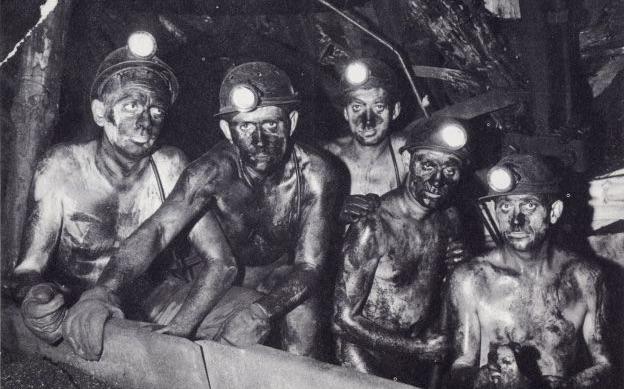
They know how the hunger feels, and they knew that they had to feed the fire if they didn't want it to spread to their very insides in an attempt to nourish itself. This is why, almost inevitably around three o'clock in the morning, one of them would blink in an almost conscious way, and the falling sensation in the pit of the stomach would make the smile tremble on their lips. Slowly, the panic would set in in all of them, spreading through their gazes or the taps on the shoulder or the hugs as they grasped at straws, trying to overwhelm the impending comedown with a warm body of a friend. It was never enough, friend. There were never enough friends to warm them up. So they rummaged around their pockets, their pouches, their socks and underpants with the dedication of miners looking for nuggets of gold on the bank of a river. Every crumb counts, every crystal matters. They have gone out with their pouches full and their hearts on their sleeve, but towards the end of the night their eyes become cruel and vicious, examining the room, recalling the favours, the debts and who's the most likely to be hosting the afterparty - them you do not touch. Their supply will come in handy later. But mostly they would just plead and beg. And then disappear in the toilet stall, only to emerge rubbing their nose, bopping again with the crowd, vibing, loaded, energized. They merge their hands and their foreheads glisten with sweat of reckless camraderie. But this is already the beginning of an end.
The pit in the stomach grows with every passing minute. The steps above the floorboards draw closer and closer. The soldier stops, slapping his baton on his own thigh. We hold our breath, but the monotonous beating of our hearts is capable of raising the dead. We can feel them staring at us from the dark of the basement, pointing, smirking, miming paragraphs from the rulebook to us. Do not leave anyone behind. Do not abandon your fellow soldier. Yet how were we to escape the rats if not for the poor old Steven, whose ample stature and, most importantly, whose waterproof coat held them back enough for us to slip out of the sevice trench and throw a dynamite stick into the grey cloud of whiskers and little paws. We have made it to a small house on the far edge of the battlefield - it is a mystery and a testament to God's never-ending mercy that none of the rockets hit it - where a nice elderly couple let us stay the night. The old man's clutch on his hunting rifle grew weaker once he saw our shoulder marks; we agreed that after brief rest we will let them come with us. We didn't tell them about the rats, and now Steven, we can't see his face but it is surely Steven, is standing right above us, wearing fresh grey uniform and a helmet with a spike on it, and he will scream "heil Kaiser" as he drives his sword through the floorboards and I will walk up to it and let it come right in and out of my side, because it should have been me in the first place.
But they had only stared at me with the coals of their eyes and said nothing. How was I supposed to know that such was their way of telling me that I will be the one who will live, or maybe the only one who won't. Their beach is secluded, it is lost amongst the English hills, and with them lost is my chance to be the stone slapping the crests of the waves, to be the white ulcer under the mourning hills; my eternal youth is lost in the sand and the wind that misses me buries it deeper and deeper.
I Was Brought Up By Cities
Liking places has always felt like an easier task to me than liking people.
This is why for the majority of my childhood and teenage years I'd been a loner. Actually, that's not quite true. I was indeed a loner, but it was because nobody had *taught me* how to *like* people. My parents, I think, don't like the majority of people either. They don't have a lot of friends, mostly acquaintances and colleagues at work, but even these didn't really come over to our place all that often. Mom is from a different city altogether, and I assume a lot of friends got lost in the move. Dad, well, he's a character and a half, which makes him difficult to tolerate. He doesn't try to be more easy-going either.
When I was a kid, I lived in a relatively recently built neighbourhood, which was quite a walk away from what could be called "the Old Town". There lived most of my school friends, and so meeting up and making plans to go somewhere together was not really something we used to do up until I was like 12 or something. But even then, it'd take you quite a while to wait for the bus going across the bridge over the train tracks into the Old Town and as a kid, there was no point in ever being home on time, so instead I'd be only allowed to go outside for an hour or so. That was not at all enough to go see friends, so I'd take a loop or two around the block, and then, when I grew up and could walk quicker, around most of the New Town.
By no means those walks were pleasant. The city outside Moscow where I grew up seemed like an architect's attempt at a fresh, modern, vibrant place to live which had failed completely and utterly. So, the city was a kind of an unsuccesfull marriage of opposites (kinda like my parents') - not at all beautiful and at the same time not ugly enough. There are almost no corners there that I consider "my own". I hate every district, every street and every building almost to the same extent. I guess that city taught me to "shut up, buckle up and wait". Wait for my pimples to leave, wait for my muscles to grow, wait for my face to become more handsome, wait until I'm finally 18, wait through the interrogation-like arguments I had with my parents, wait through the days, stay up all night long waiting for something meaningful to finally happen. Waiting to leave this place.
Then, by a peculiar change of circumstances which I will not go into right now, I found myself in a small Scottish city. When I first got there, I was way too stressed to appreciate its beauty. But then...oh God, the sounds of the sea, and the gulls barking, and wind and fog and sunrises and the hills to the right of the pier, that all barged into my heart and immediately barricaded the exit. So I think I have stopped feeling hate then. My anger went. Only saddness remained, the kind of deafening sadness that has been brewing and cultivating within me for years, and have been now pouring out of me wherever I went and whoever I was with. It would get so bad that sometimes, once it would get dark, I would run out of the campus gates and down to the waves at the pier. It seemed that only there could my soul be at peace. I did not have to explain anything to the wind and the sand - they understood me and accepted me just the way I was. There, on the dark brick roads, on the cliffs above the stormy waters, in the foggy valleys, I could finally see that I had to let the feelings that were cluttering up my chest out, one way or another, be it laying down on the cold November sand in my trenchcoat or writing poems on a Friday night in my room, at 2 am, when it was as if the whole boarding house belonged to me and me alone. I say "there I could finally see", but really, it was more of an instinct, an understated premonition, a survival mechanism. So, I suppose, it is that little coastal town that I have to thank for helping me become a person who can realise stuff like that. But all roads lead to London, and that mesmerizing little place became too small for me. We parted ways in 2017. Hopefully, to meet again some day.
Just like I said in my university application letter, I was "ready to dive into the challenges and opportunities London had to offer". This time, everything was quite different already from the very start: no longer was I a scared little mouse, avoiding the curious gaze of the border control officer. No, now I could return it, give her a kind of a half-smile and make small talk. So confidently that I almost could fool myself. And, shortly after I moved into my residence, somewhere between the first and the second pack of rolling tobacco to be precise, or even perhaps after my second or third time throwing up from drinking too much wine, I felt my eyes light up with the previously unfamiliar feeling of power. My original shyness was long gone, I have learnt to talk to strangers - at the train station, on the plane, at a cafe, anywhere; now, all I had to do was to do it all again, but with a purpose of making friends. Though it felt slightly nerve-wracking at first, I quickly got into it and started enjoying the process of seducing a listener, or rather, of how the anxiety, which pulsated in my chest like a dove while I said my first line, quickly disappeared, transforming instead into wit and charm. But then, a new enemy came. He did all in his power to make it seem like he came from the outside, but really, this new enemy was simply a reflection of the void behind my own eyes. It was the manifestation of my hunger and my thirst for more, for being the best version of myself I could be. This is how they get ya, these sneaky substances. With their help, I could do whatever I wanted - I could see lucid dreams, I could read between the lines, I could understand the intricacies of social cues and relationships, I could be confident, I could make people fall in love with me, I could, I could, I could... But I could not see, for some reason I could not see how one late night a week turned into hazy mornings, and how the point of my life was suddenly to keep going, to not stop, to dance, to have my heart stop right on the dance floor if that's what it took to remain in power, to stay on top of the world. Right up to the very moment it was time to leave for Berlin I still did not see what I was doing. So, you can imagine what the transition phase, the three month layover back home was like. Absolutely dreadful.
I didn't go fully sober then yet. In fact, the hunger which sat in my chest, the lust for more excitement, more thrill did not let me go until several months later when I checked into a hospital in Germany. It was unrelated to the hunger. I'll tell you about the hospital some time soon. But here in Berlin, especially after the virus came, I had a lot of time to think about what exactly happened there in London, what exactly was going on, what force was dragging me into a hole that progressively grew deeper and deeper? I still don't know fully. But what I know is that London, I guess, showed me how high I can go, how beautiful and magical life can be, with its twists and turns, highs and lows, with friends and by yourself. It made me more reckless, more daring, but also emptier and darker. I say "London made me that", but it had merely showed me how I can be this black hole that only grows bigger and more insatiable.
So, what did Berlin do to me? Well, I suppose it has brought me back. This city, as cosy as a petrol station in the middle of the woods, had helped me return to the basics. It showed me how much I can enjoy my degree, how decisive and diligent I can be. It showed me that I don't have to be things I don't want to be. To tell you the truth, I am tired of craving. I really would just like some silence and some peace of mind. But, apparently these are a luxury I cannot afford right now, and so I am going to make something of myself. So that my mentors, my cities, my dearest forests of concrete, asphalt, glass and stone could be proud of me. So that I could undo the knots on the fabric of the Universe that I have neatly tied with such passion just a couple of years ago. It might take a while, and there may be side roads to explore along the way, but I hope that by the time I leave Berlin (hopefully, also to return), I could preserve the gentle shoot of blinding light that has firmly planted its roots right into my heart.
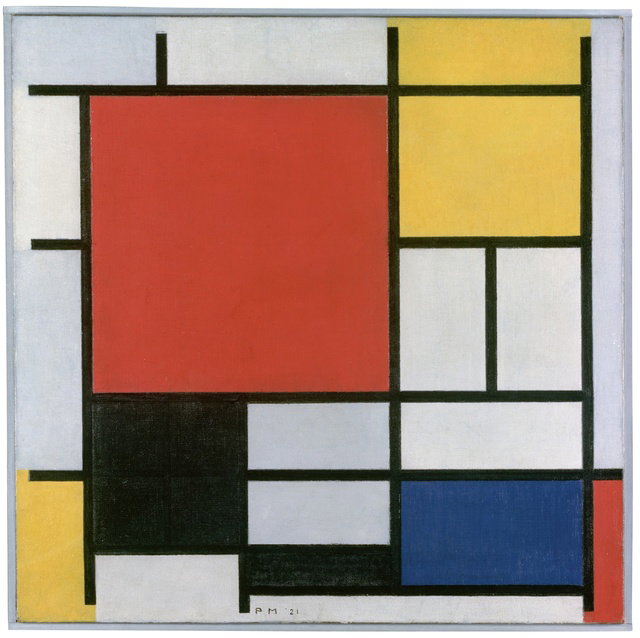
Cover image source: https://www.artsy.net/artwork/piet-mondrian-composition-with-large-red-plane-yellow-black-grey-and-blue
"Do Not Blame The Silent Majority" or "I Just Want to Grill, for Pete's Sake"
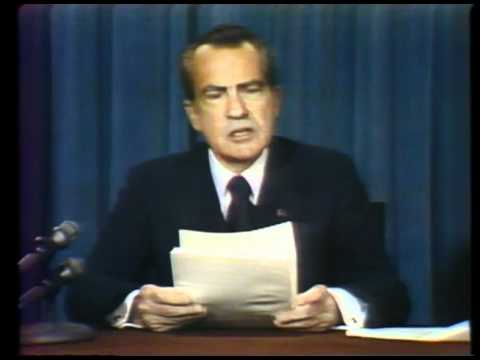
Foreword: I was looking for a nice photo of Nixon doing his famous speech to illustrate the title of the article and have found out that this phrase - "**the silent majority**"- seems to have been "re-purposed" by Trump supporters. What an interesting twist of history.
On **March the 3rd**, a young woman by the name of **Sarah Everard** had gone missing, sparking an information campaign on social media that urged anyone who has any knowledge of her current whereabouts to come forward and share them with the worried family and friends. Just seven days later, on **March the 10th**, it has been made known that the Metropolitan Police has found human remains in Kent, which, it was suspected, could shed some light on Sarah's disapperance. To great saddness of her family, friends and hundreds of people engaged into the search operation, it is now confirmed that Sarah has been kidnapped and murdered by a **police officer**.
Since then, the news, social media posts and even Stories on Instagram has been a mixture of grief and fury. People are mourning the loss of the Everards' family and stand with them, holding vigils and wakes. However, the significance of the tragedy goes beyond that: since the moment the investigation managed to produce a suspect, the subject of debate in the civil society, as well as in the political circles was the question of **whether we are doing enough to ensure a woman's safety in the city and on its streets**.
It is quite hard to believe that even in countries and societies that like to parade themselves as modern, progressive and liberal, variying levels of misoginy - ranging from disrespectful treatment to harassment and outright violence - are still extremely common. In fact, as demonstrated by the tragic abundance of cases like Sarah's, not a single layer of society, not a single industry can be absolved of blame, and even those, to whom we entrust our safety, have psychopaths walking amidst them, dressed in sheep's clothing. A corrupted individual does not always represent the corruption of an entite societal institute, but this defence does not hold when there are **so many vile individuals** that if every person who has ever harassed or violated a woman in any way was a dot, by connecting them we would produce a sickening diagramme to our collective failure.
Now, notice how in the paragraph above I said "person". This is not quite the term which the aforementioned articles, social media posts and stories use. The blame for being absolute douchebags to women lands on **one specific social layer** - **men**. Personally, I would like to agree with this observation. I think men do a lot of shit, from just "stupid" shit to shit that is so abhorrent and disgusting that sometimes you think "how the f*ck can you live with yourself you f*cking w*nker???" And I know for a fact that men are involved, nay, men *act* as agressors or perpetrators in the overwhelming majority of (if not in all) cases of public harassment or yeah, sexual offences. So, it is completely justified that men get the shit for being pieces of shit. That's the way it should be. You f*ck up - you get the guillotine. Fair enough.
That's the way it should be. You f*ck up - you get the guillotine. Fair enough.
However, some men have been feeling very fragile and very offended about this and came forward saying stuff like "Well, ladies, too bad that this all is happening in our cities, too bad that women get cat-called, that *a woman* *can't go back from a friend's place without being appoached to by a man who does not have even an ounce of self-f*cking-awareness that would tell him that all the questions or comment or, i don't know, recent news or whatever he ABSOLUTELY HAS to share with her should be rolled into a tight wad and inserted up his own bottom*, too bad that all of this is happening, yeah, but **I DON'T DO THAT**". They say that with the same sense of conviction as the infamous "nice guys" which love to assert that "they are true gentlemen", that they would "treat a woman well", failing to realise that to treat her well, to NOT DO THAT is a bare minimum of that what is expected of a man in a society.
So, as a response to those pricks, the people in whose hearts this cause has found a particular resonance have set out to show that everyone, or rather every man, is a part of the problem. One of the more widely used arguments was "You are not innocent - just look at all the things on **this list featuring the "ways of treatment of women that we as a society condone"** and tell us, honestly, that you have never done any of them. Aha, you can't! Caught you!" This list, indeed, is quite extensive and, if one was to categorise it in legal terms, includes **acts** as well as **omissions** (non-acts) as well as **mere indirect contributions** to a negative situation. Though I looked through it briefly, it reminded me of the list familiar to any law student in the UK: "*Aiding, abetting, counselling or procuring*". I'm not showing off. Sorry if I am. Point is - it is a broad, comprehensive list of negative behaviours that men carry out against women. Though it's a bitter pill to swallow, again, this list of "misdemeanors and offences" just goes to show how widespread and deep-rooted the misoginy is.
But what has rubbed me the wrong way - and we are finally coming to the meat and potatoes of this article - was an episode from a comedy show or something, shared by a social media user, where this guy said something to the tune of: **"Dear men, stop having a hero fantasy, and instead do something when your help and protection is needed. Take part. Be the change"** etc. Well, now that is absolutely ridiculous. Why shoud we force the good men to change? Shouldn't we only re-educate the ones who are at fault here, the harassers, the rapists, the abusers, the attackers? Why can we not leave the good men alone? They have enough weight on their shoulders as it is - the gender gap, the colonies, the patriarchy, the politics, the absent fathers, shitty jobs, fake friends, partners who don't really love them[, white guilt? (where applicable)]... Come on! The male psyche is not strong enough to bear all that! Lay off, will you? The women can manage it without the male help. Just legalise pepper sprays and open more karate workshops. Men can take a hike!
As valuable as this is - to address this gender-based problem within the society using society's own "internal tools" such as alluding to moral arguments, I think we need a much wider arsenal of techniques to tackle this societal corrosion. For this reason I find it a **bit odd** to see statements like "just don't do it [it =sexual offences, harrasment etc], is that so hard?". Of course it is not hard. Yet, these events should be treated **not so much as a gender problem, but rather as a perpetration**, with attackers and victims, because then we can open up another avenue that may help us prevent new offences, as we can then gain insight into the psychology of an offender with the help of existing developments in the field of criminal science. It is widely accepted that crime, even violent crime, can often be caused by something greater than just a sudden switch 'going off' in an offender's mind. So, if we agree that behind the acts of robbers, muggers, murderers, even rapists lie complex social and psychological factors, then surely we could use the same tools to better understand the enemy we are dealing with here - the culture of "toxic masculinity", the "spring break" phenomenon, guys egging each other on to hit on the pretty girl at the club and getting violent when she says "no".
Finally, I am really not sure that demanding that everyone gets on board with the cause is the way to go. I think it is already quite clear what the societal guidelines are - the only thing that needs to be made clear is that penalty *will* be imposed on those who like to play with fire. We do need to ring alarm bells and cry "Predator! " when we see misconduct. We should come together and lend a kind shoulder to the victims and ruthlessly isolate and rehabilitate the wrongdoers. But don't *make* the silent majority do anything. Thank you for giving them an incentive, a shove in the right direction. Keep doing that. Don't let them fall back into the post-dinner lull. Push their eyelids up, make them watch. But don't urge them to take action. Their own passiveness will make them feel worse than torture. You'll see.
Cover image source:
http://eyesofageneration.com/ultra-rare-nixon-jokes-with-crew-minutes-before-resigningforty-years-ago-toda/
Menaces: Yearning, Burning
This piece is a creative piece. All similarities to people, living or dead are completely coincidental, and only a fool would think otherwise.
There I am sitting , a porcelain cup in my hand, a toothpick in my mouth. The small steel balcony seems to be a weak refuge against the thick, string-like blue clouds that have gathered overhead. My hair is being blown around by gusts of wind; far ahead, beyong the city, somewhere behind the asphalt-grey ocean, bolts of cruel energy pierce the sky with steady pulsation. As I watch the storm draw nearer, a weird kind of excitement fills my chest and my limbs. I like bad weather. I like it when bad things happen. There, I'm in my element. There, between the hammer and the anvil, I have made my bed.
For a second, I imagine the storm suddenly becoming a thousand times more viscous, its rage increasing hundredfold. I picture the waves towering over the shore like angry giants and then breaking, ripping palm trees out of their cosy pots and launching them down the street, each like a great big living battering ram. Then, the pavement will crumble and yield under the wrath of the monsoon, and steel poles of the balcony will bend and crumble, and then some massive wave will come down and - it'll all get silent all of a sudden, like in the movies. I blink. The storm is timid again, and I am still alive, still holding my porcelain beauty. What a shame.
Almost a year ago, on this exact balcony here in Lima, I have learnt that Luis Sepulveda is dead. I found it out by complete accident, in the middle of a phone conversation with a friend, whose face no longer lights up in my memory when I think of her name. The exact reason why I found it out then? Because I'm a fraud. I can't even memorise a title of a book that I supposedly like, but I sure do love to go on about my passion for the "South American writers". So, to keep up appearances, I inevitably do a quick Google search whenever Sepulveda's novels come up in a conversation. Well, there I was, smoking on my stupid balcony, boasting about literature to my stupid friends, when I found out that Luis Sepulveda, the old man who read love novels, had died a couple of months ago.
Now, you have to understand: there is literature, and there is LITERATURE. To tell you the truth, I'm happy so many delightful books go undiscovered. Because once they are, people will hold them in their sweaty palms, turn the pages with their fatty fingers which grow suddenly unoccupied after sneakily submerging a pizza slice in garlic sauce and, well, then it is no longer literature. Do you know what would happen to *Mona Lisa* if there was no protective glass around her? "It would get stolen", you say? Bah! That's a best-case scenario. No, it would be soiled with people's fingerprints, their bad breath, the smell of their burps and their fucking stench. And then, you'd be lucky if someone steals it then. Hell, you could pay someone and they still wouldn't touch it with a fucking stick.
So, Sepulveda's work is "literature" in all caps, and now he's fucking dead. And you know, what's especially funny about this whole thing, why this feels so much like a disgusting joke? Because he wrote about that. He wrote about my non-meeting with him. Well, he wrote about non-meetings. I still don't know exactly what he meant, but I think he talks about the feeling. That tightness in your chest that you get, when you finally see that what could have been. When something comes so close, extremely close, excruciatingly close to almost never happening. That's his "Non-meetings". And now he is fucking dead. How can I go see him and buy him a drink if he's dead? How can I ask him about the circus performer with a sword stuck in his throat, or about the house that is nowhere to be found no matter how long you wander the streets? There is absolutely no way to now. Because now, his body is lying in the ground and an army of hungry worms have peeled every bit of his muscle from his bones.
And see, my friend didn't fucking get it, just as none of you will get it. She went on talking about some miniscule thing that bothered her at the time, and I had to sit there and feign interest, and nod, and say "oh honey, you're going to get through this, just don't give up", but all I could think is how two months ago I was doing something insignificant, probably standing in a queue at the shop, maybe buying some fruit, and while I was there, they were thowing fresh soil on top of Luis's coffin. And that was it. And then the jungle moved in, and its fresh, hungry roots pulled him apart, and there he went. Into the forest, into its dark warm belly. But what's this to you, isn't it?
This is why I have to sit up here on this balcony day after day, from dusk till dawn. Because there is no better treatment for a broken heart than cold ocean air. Moreover, after a while you learn to ignore the cold and the car horns down below, and you can really sell yourself on the fantasy that there is no-one else in the whole wide world. Not a soul. Just meat and fat and bones, and hair and nails. No, it's better to let them roam the streets, to let them fill the air with their breathing. This steel square is where I am Cesar, and the filth that is ruling my city will never get up here.
So I drink to forget the coming storm. I place my cup on its little ceramic tray and its tsin bounces of the walls and the windows and the drops of the rain that is starting to fall. The lightning halves the sky almost right above my head. I want to weep, I want to scream in fury, but that would be an act. I only get emotional about places I've never seen and people i have never known. This is where the beauty lies - right in beween things that could be barely felt and things that could be hardly comprehended. Luis knew it. I know it. And so do the wind and the ocean. And that is enough for now.
Can a country fully shut down its citizens' access to the Internet?
This (last for now) literature review will address the concept of a “complete network shut-down”, which the article “*When Do States Disconnect Their Digital Networks? Regime Responses to the Political Uses of Social Media”* brings to the reader’s attention. It will be considered here, firstly, what kind of situation does this term apply to; secondly, it will be assessed whether a “complete network shut-down” can be understood as a part of the concept of “filtering” proposed by the authors of “*The Dictators Digital Toolkit: Explaining Variation in Internet Filtering in Authoritarian Regimes”*, and, finally, it would be considered why a complete network shut-down is or is not a preferred strategy of authoritarian regimes when dealing with dangerous content.
To begin with, one has to note that it is possible that the word “complete” is slightly misleading. It does not refer, as the examples of Haiti in 1999, China in 2006, Egypt in 2011 in *Regime Responses to the Political Uses of Social Media*’s demonstrate, to a state stopping any and all access to the Internet within its sovereign territory. Instead, it is more of a controlled blackout, where a certain region or a certain group of people are temporarily disconnected from a network. Their purpose, so it seems, is to retain control of a situation by restricting the spreading of particular information within a country, as well as overseas. Furthermore, drawing on the section pertaining to the BlackBerry scandal in the UAE, one could suggest that this attempt of severing ties between a group of users or servers with access to this information and the rest of the Internet could often constitute a desperate attempt of a government to save face and “keep a lid on” compromising data or information. When seen from this perspective, this measure is both a preventive one, as the government tries to act as promptly as it can to nip the information loss in the bud, and, potentially, also a last-minute one, filled with desperation of a drowning person who is grasping at a straw.
An interesting question to ask oneself is if shutting down a part of the network can be understood as a “filtering tool”, at least in the sense Hellmeier’s article uses that expression. When approached purely linguistically, a “filtering” strategy seems to indicate a mechanism much finer than the brute force of a “shut-down”. In relation to the strategies of governmental control of traditional media as portrayed by *Regime Responses to the Political Uses of Social Media*, an act similar to a network shut-down would be “destroying newspaper supplies and seizing radio and television stations”, whereas “filtering” would be more akin to indirect economic pressure of media outlets, censorship of newspapers and TV channels, and journalists’ own self-censorship. Drawing this parallel underlines a clear difference in strategy and degree of impact between the two. However, there is an argument to be made in favor of including “complete” network shut-downs into the term “filtering”, too. *The Dictator’s Digital Toolkit* mentions “server takedown” as a filtering mechanism; this strategy perfectly captures the situation reported in *Howard’s, Hussain’s and Agarwal’s* article, namely the call of the German prosecution officers in 1995 to restrict access to a specific resource: in that case, one had identified potentially harmful content and moved through the proper channels, namely the judicature, to obtain a permission to take that content down. Also the desired effect of network shut-downs and filtering (in its broadest sense) is very similar: in both cases one tries to obstruct the process of certain information becoming known to the wider public, just in two different ways – either concealing it by basically making it invisible to local search engines, as what *The Dictator’s Digital Toolkit* seems to suggest with “dropping data packages according to destination, origin or banned keyword”, or, as is the case with shut-downs, preventing its sharing by “pulling the plug”. Moreover, an attempt to distinguish the two – filtering and shut-downs – based on a criteria of legality (or, to put it better, of whether an action is performed in accordance with the rule of law, this is to say “within a legal system that has some morality built into it”, as even the most despotic regime is capable of creating law) does not bear any fruits: just as both “softer” censorship can take place in democracies, fragile states and autocracies, shut-downs are fairly common in both regimes (see *Regime Responses to the Political Uses of Social Media*, Table 1). That all being said, though functionally the two may have a similar purpose, *Howard’s, Hussain’s and Agarwal’s* distinction between complete network shut-downs and “targeting individual websites or their users” seems to firmly place network shut-downs in a standalone category of activity pertaining to content regulation.
According to *Howard’s, Hussain’s and Agarwal’s* research, esp. Table 1, bringing the complete network down is not the governments’ preferred method of choice of dealing with dodgy content, and it is easy to see why. Firstly, as portrayed by the events of the uprising in Egypt in 2011, a shut-down is not always efficient: just as a mouse can squeeze through the tiniest of holes, all information needs is a single transmission channel that is still up and running, and, when taking the grassroots character of a popular uprising into account, it is only logical to assume that the protesters will try their best to find a way to get a message of what is going on locally out to the world, and will most likely find it. Furthermore, as was demonstrated by protests in Egypt, an authoritarian regime attempting a network shut-down needs to ensure the absolute loyalty of the very officials executing those orders, and command them to act promptly and efficiently, which is not always the case. Therefore, unless supported by some kind of repressive measures of an effective far-reaching state, a shut-down perhaps more often than not will not be worth the resources spent on it. Another argument as to why states seem to favor softer, filtering measures is the question of legitimacy: since it is crucial for an authoritarian state to mask its censorship attempts as “protection of public good” or “national security”, a network shut-down is too sloppy and risks damaging the state’s reputation. Finally, a harsh measure like that is bound to attract international attention, and authoritarian states should tend to avoid international scandals, because they lead to tribunals and investigations, which such a state cannot permit.
As a concluding remark, another reason for why authoritarian states seem to favor less drastic web-content manipulation measures, may perhaps lie in the character of the Internet itself. In his article on why securitization of Internet is a hard and a never-ending task, Schulze notes that the way one is currently attempting to make the Internet secure is by storing large amounts of data and meticulously going through them. (**Unsicherheit hinter dem Bildschrim**, Shulze in *Innere Sicherheit nach 9/11,* 2016 [DE]) In doing so, one tries to “separate” parts of an ever-expanding medium and by making those parts secure, make the medium more secure as well. However, that is Sisyphus’s work that never ends, because there are always ways to make “secured” content dangerous just by the virtue of interconnectedness of the Internet. In the same vein, just as securitization by limitation does not work, taking out a part of the Internet and imposing a blackout on it can hardly be done, as one cannot completely sever the connection between it and the rest of the global network. This is why less drastic measures that do not strive to separate the “flagged” content, but rather mask it, seem to be more effective and in line with what the Internet is. This may also make authoritarian states inclined to use censorship as opposed to bringing down the complete network.
Cover image source: https://www.zambianobserver.com/southern-province-in-internet-network-shut-down/
*Just how “complete” a “complete network shut-down” really is? To what extent is filtering the Internet a more desirable strategy for an authoritarian state over a complete network shut-downs?*

Why do authoritarian states seek tighter national control of the media?
This literature report will critically engage with the positions expressed in Nocetti’s article “Contest and conquest”, and Deibert’s “Authoritarianism Goes Global”. Firstly, this report will compare the stances of these two scholars on what the causes behind the movement towards nationalizing the Internet in general terms are; secondly, it will propose that both articles seem to suggest that no matter what the short-term aims behind the efforts of nationalizing the Internet are, the long-term goal of authoritarian states is to ensure their (the states’) regime stability and monopoly of influence over their respective territory; lastly, this report will closer examine the claim that by restricting, nationalizing or censoring the Internet the state preserves its sovereignty. This claim will be refuted at the end of the report.
Though many parallels and similarities can be drawn between the articles (for instance, Deibert’s distinction between countries advocating for openness of the Internet and countries that favor tighter control and its strong overlap with Nocetti’s idea that younger, less stable democracies (also non-democracies) tend to call for “sovereignification” of the Internet as opposed to established countries that act towards a more decentralized, independent cyberspace), the two works provide a contrasting view on the movement towards nationalizing parts of the internet. Nocetti’s approach and explanation of this phenomena is based largely on diplomatic relations between ‘younger’ and therefore ‘more likely to assert their sovereignty’ states on the one side of the spectrum, and ‘older’, which is to say more ‘secure in their independence’ states. According to him, younger states either want ‘to claim their slice’ of the Internet pie, or at least to protect themselves from foreign influence through this supraphysical.[1] In this way, as Nocetti concludes, the central driving force towards erecting more and more restrictions when it comes to viewing and accessing Internet content that Deibert talks about in his “four-generation” model, is the competition between countries that are essentially fighting to spread or establish their influence over the virtual land of the Internet.
Deibert’s reasoning is different: to him, the move towards nationalizing the Internet is closely related to the world-wide attempts of ensuring the security of the cyberspace in light of new, modern risks to government power such as terrorism. That, Deibert argues, creates a demand and a market for technologies allowing this greater degree of control. Those technologies, he states, more often than not have a restricting effect on the civil society. However, the issue that he points out is that countries with an established tendency of disregard towards or even abuse of human rights are much more vulnerable to the effects of this move towards greater Internet security, as the understanding of those less liberal states of what security is often stretches beyond continuity of the state and also often covers *continuity of a particular government*, which leads to people losing out on their right to freely express their political beliefs as those are deemed to be “dangerous”. In this way, though his initial approach might be seen as politically charged, Deibert does not place the blame onto any particular country; rather, as many scholars nowadays, he believes that the issue lies within this contemporary race towards ‘more safety’, and that nobody in particular is to blame for the mishaps that go side by side with implementing tighter and stricter security protocols.
Both articles offer another interesting perspective: no matter what the short-term motivation of regimes is that drives them towards “nationalizing” the cyberspace (be it to “de-Americanize” the Internet (Nocetti), or make it more secure (Deibert)), the long-term goal seems to be the consolidation of the regime and protection of the political status-quo by defining an ‘area’ of the Internet that coincides with a country’s national borders and ‘securing’ it, ‘colonizing’ it if you will. Deibert notes this by admitting that some states try to tighten “their grip on cyberspace within sovereign territorial boundaries…which often [has] the effect of strengthening the state”[2]. Nocetti, in turn, points out that some countries, e.g. Russia believe that in doing so they are protecting their national sovereignty.[3] Both works, therefore, point to the idea, that the states in question attempt to strengthen their regime, insure it from foreign or domestic intervention and thus avoid the regime collapse. But should this in fact be understood as an innocuous motivation of a state to preserve its sovereignty?
The understanding of the term “sovereignty” varies across disciplines, but the consensus is that “sovereignty” means “independence”. Therefore, in geopolitical sense, national sovereignty is the ability of a state to exercise its legislative, executive and judicial power over specified territory and population without any hinderances thereto.[4] In this sense, of course, the efforts in nationalizing parts of the Internet seem to be justified and in line with the idea that a country should have sole control of any medium, physical or virtual, that can potentially dwindle the extent of a country’s control over its territory.
This “power” or “control” is of course, not only political but also legal, that is to say “a recognized and effective power” to impose any sanction that the state sees fit onto the controlled territory and the population. However, this legal side of the state’s power does not originate from thin air. There are different views as to where it comes from, but the some of the voices in humanitarian science nowadays propose, in line with the classical idea, that the power to make decisions that affect the whole population of a country has been conferred onto the state by the population itself. According to the social contract theory, the people essentially came together and created a new entity on a basis of universal consensus, a “mortal god’ to rule over them for everyone’s benefit – causing the State to come into being.[5] To maintain order and ensure everyone’s safety from the capriciousness of the other, people have agreed to abandon some of their rights – namely the right to impose sanctions for wrongful behavior onto each other directly and conferred this power onto the State with the idea that it has to use it for specific purpose above – to guarantee safety from outside threats and to guarantee safety from within through law. If the State ceases to fulfill those objectives, then the contract becomes void, loses its legal power, and the people no longer have to follow the State’s commands.[6]
This shows that the source of a State’s sovereignty according to this model lies with the people. Moreover, to take this idea further, the State depends on the people’s recognition of the State, and its precise form and place on the political spectrum (autocracy, monarchy, theocracy etc.) is defined by the people too. Important is also that the people, being the ultimate source of State’s sovereignty, are free to re-invent and alter the exact form of what the State is according to political, cultural and social necessity. Unrestricted access to information, and by extension, access to the Internet, is a crucial condition that enables this process of constant analysis. When a State seeks to restrict this access, then it could be said that it seeks to establish a permanence of a certain form of itself, hindering its gradual improvement or alteration based on the needs of the population. By doing so, it goes **beyond** its power to preserve itself *insofar as it is necessary for preservation of its population and fulfillment of its security obligations to them*, and instead *preserves itself for its own sake without the regard to what is best for the population*. This, however, is a clear violation of the State’s power.
When seen from this perspective, if access to information and the ability to express oneself politically based *on* *the access* to that information is hindered through nationalizing parts of the Internet, then there can be no talk about a state attempting to maintain its sovereignty in its fullest sense. Indeed, its geopolitical sovereignty might remain intact, but its legal sovereignty must be considered compromised.
*Report Question: In which ways do the two scholars explain the move towards nationalizing the Internet? Does nationalizing the Internet truly protect the [authoritarian] state’s sovereignty?*
Cover image: https://en.wikipedia.org/wiki/Leviathan
[1] P.129, Nocetti
[2] Deibert, p.65
[3] Nocetti, p.129
[4] Definition employed (or assumed) by Nocetti, see p.111-112
[5] See *Leviathan*, T. Hobbes
[6] ibid

Media in Turkey and Hungary: Assignment for the course "Media and Undemocratic Erosion"
This literature report proposes an alternative look at the two articles, namely *Media in Hungary*: *Three Pillars of an Illiberal Democracy* (abbreviated to “Media in Hungary” below), and *Media Capture in New Authoritarian States: the Case of Turkey* (abbreviated to “the Case of Turkey” below) by applying the criteria formulated by Gerschwerski in his article *“The Three Pillars of Stability”* to firstly, propose that the media capture is a form of co-optation, secondly, to suggest that based on categorization of strategies of media capture mentioned in *Media in Hungary* and *The Case of Turkey,* the process of media capture seems to be the dominant aim supported by legitimation and repression, which seem to be the means of achieving that aim and finally, to draw parallels between the strategies the two regimes use and suggest that the striking similarities are not only simply part of the process of autocratization, but that they also may have been shaped by other factors, such as the economic situation in the media market.
Gerschewski’s pillars – legitimation, repression, and co-optation – ensure long-term survival of an authoritarian regime. If co-optation in Gerschewski’s definition is a form of “tying strategically relevant actors to the regime elite”, then it could be said that ‘media capture’ is a form of co-optation. The actor “needs to be persuaded not to exercise their power to obstruct” and instead “use their resources in line with the ruling elite’s demands”, so Gerschewski. Both the Hungarian and the Turkish regime do just that in relation to media, which they perceive as both a political actor, as well as a political resource, capable to provide invaluable support to the government in shaping the public perception of it. Both articles support this: *Media in Hungary*, as well as *the Case of Turkey* stress to what great lengths the ruling parties in each country go to disarm critical media and, if not eradicate it completely, then at least confine it to the sidelines. The aim of both governments is, therefore, to bring the media in line with the current political goals of the government, as well as minimize the opposition to its policies. This fits Gerschewski’s definition of co-optation perfectly.
If one were to consider the problem of media capture through the criterion proposed by Gerschewski further, one could then see an interesting pattern, namely that in both Hungary and Turkey, the process of media capture seems to be an aim in itself: such an important institution as this must be assimilated with no effort spared. The precise tactics that the two governments use are therefore truly diverse and seem to tackle this challenge from all sides. Yet, one may still neatly group them together in two categories – “maintaining facades” and “exercising pressure”, outlined in more detail below. Consequently, one must wonder: are those two ‘ways’ of capturing media really all that different to Gerschewski’s “legitimation” and “repression”?
‘Maintaining facades’ seems to be nothing other than the regimes’ attempt to lend their activity a sense of legitimacy by choosing to work through oversight institutions rather than “over their head” (Hungary) and using the existing legal framework of the Constitution and the Penal Code for political purposes rather than explicitly renouncing the regime’s commitment to operating within limitations laid down by law (Turkey). In Hungary, the executive thus permeates public bodies, all in accordance with due process as it might seem, but with the consequence that those bodies become informally accountable to it. In Turkey, in turn, the executive ‘strong-arms’ the courts, probably much like the journalists, “self-censor” themselves to guarantee a verdict that would be in line with the executive’s policy; yet on the surface, no rules are broken, the executive is holding itself in line. The idea that the tactic of “maintaining facades” is similar to Gerschewski’s “legitimation” may be supported by his example of disillusionment as the opposite of legitimation. If a regime oversteps certain boundaries like due process, then the people’s perception of it is negatively affected. This is exactly what the regimes in Turkey and Hungary are trying to avoid by using strategies of media capture that work not over, but through the existing institutional or legal framework.
‘Exercising pressure’ is, consequently, a form of what Gerschewski calls “low intensity repression / low intensity coercion”, where the defining characteristic is that the government does not “get their hands dirty” by using violent tactics; instead of terminating the players on the media arena directly, it chooses to slowly edge the ‘enemies of the state’ out by changing the landscape of the arena itself. The examples of this “low intensity repression” are numerous: from “manipulated tenders” in Turkey to benefiting politically connected enterprises in Hungary; from “punitive tax measures” on media groups such as Dogan in Turkey to “sabotaging and discrediting” of critical media in Hungary; finally, from using advertisement distribution and bans as “carrot and stick” (BIK, RTÜK) and thus encouraging self-censorship in the journalist community to allowing particular businessmen the use of state budget money for the purpose of purchasing media outlets that have fallen out of the government’s favour (Hungary).
One cannot overlook the fact how two very different regimes – one ex-Communist, the other with a deep religious and partiotic foundation – use very similar strategies of what could be described as “market-based pressure and political favouritism”. If one was to see both as authoritarian, and the process of media capture as institutional co-optation, then one must ask the question: do the other two “pillars”, namely “legitimation” and “repression” (its low-intensity form) merely *accompany* the task of institutional co-optation (as equals), or whether they are in a way the *tools* or rather *conditions,* in which co-optation takes place and are therefore secondary to it?
A further question that one may ask themselves is: how much, if at all, the specifics of Turkey’s and Hungary’s economic, political and social systems have played a part in enabling the process of autocratization? *Media in Hungary* and *The Case of Turkey* both mention economic factors, which may have played a part: the rise of neoliberalism in Turkey seems to have contributed to formation of a monopoly over media outlets, thus greatly simplifying the task of Erdogan’s regime of obtaining control over them. In Hungary, respectively, the central economic factor was the 2008 crisis that has affected the media by shrinking the spectrum of available advertisement sources and which has brought the state to the foreground, thus increasing the importance of media outlets forming a good relationship with this key player. However, ideological, historical and cultural reasons may be at play here too, and so a detailed investigation into the breadth of factors that have turned Turkey into ‘fertile soil’ for the rise of a new autocracy could definitely be the subject of future case studies on Turkey and Hungary.
*This is my own work.*
*“To what extent do the strategies of media capture in Turkey and Hungary overlap? Could the strategies outlined in “Media in Hungary: Three Pillars of an Illiberal Democracy” and “Media Capture in New Authoritarian States: The Case of Turkey” be reconciled with the analytical framework proposed by J. Gerschewski in “The three pillars of stability: legitimation, repression, and co-optation in autocratic regimes*? *Can the transitions we are seeing in Turkey and Hungary have further causes other than the rational choices of political actors involved*
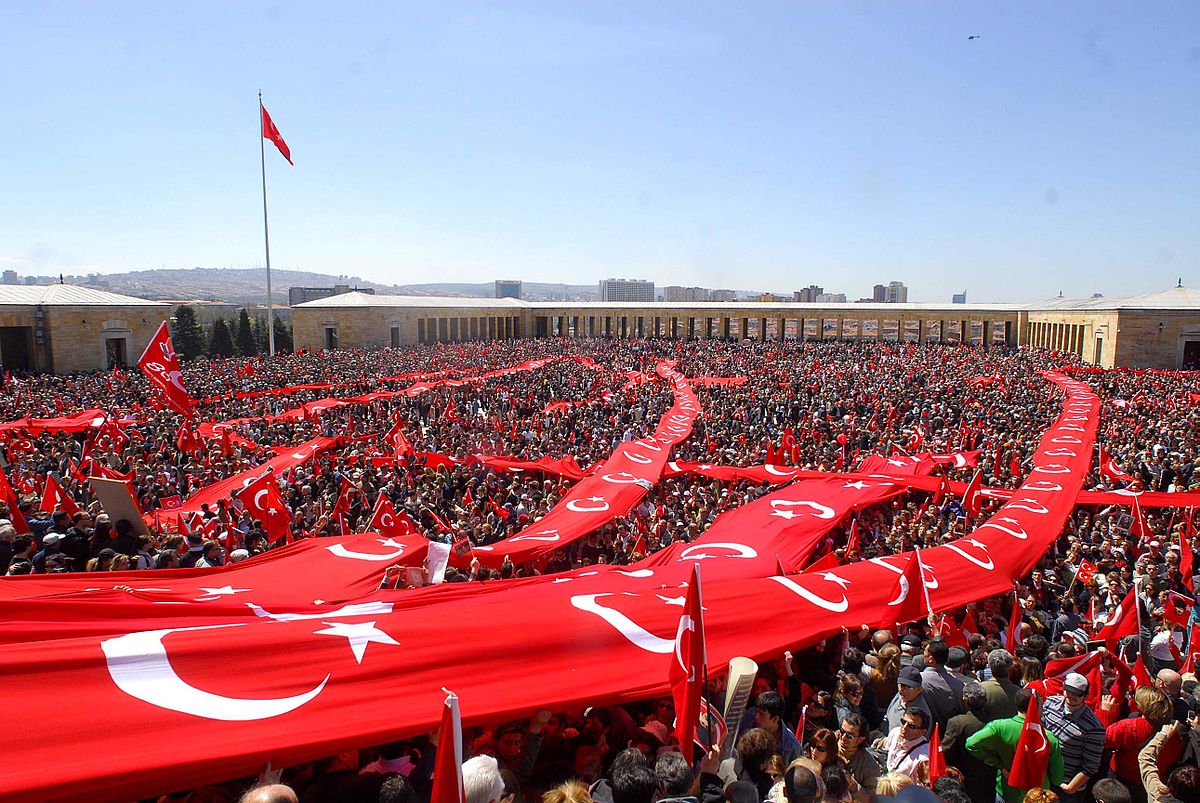
i'm back, baby
The 'American Pie' Syndrome
Does art imitate life? Or does life imitate art? How much, if at all, does cinema form and influence our mindset and attitudes to life? Let us discuss this relationship, as well as relationships generally, using the "American Pie", the jewel in the crown of modern American "coming of age and going off to college" movies. The plot is quite simple: four characters, each representing a particular approach to dating, are united by the same goal: to lose their virginity before going to college. They choose their targets, oil up their moves and it's a ready! set! GO!
To start off with, one cannot ignore that the movie carries two very important motifs within itself that are emblematic of the 'college movies' genre, and, seeing that the majority of those are produced in the US, especiialy the **American college movies**.
First, obviously, the setting: the classic "high school experience", which is in a lot of ways the survival of the fittest: not fittest as in the "strongest", but as in "being able to fit in the best". For those four dudes, the main characters, fitting in is about getting a taste of that "warm apple pie", aka getting laid. This seems to be an absolutely normal "teenage" desire, but when seen against the backdrop of the American culture, it becomes particularly interesting. It is well known that amongst the first Europeans to step on the soil of what is now the United States were the so-called Puritans - people who believed in chastity and staying "pure", hence the name. Some parts of and communities in America, for instance, the Mormon community, still maintain that all things sexual should be reserved for marriage. So, in a way, the behavior the characters in "American Pie" are displaying is not just caused by the hormones that turn teenagers into sex-obsessed monsters, but also can be understood as a social commentary of sorts, a tribute to the changed morals and societal norms in the US.
Second, it depicts the relationship between the sexes in a very particular way. We see something called "objectification" of female characters by the male quartet: for three out of the four guys, a girl is a means to an end, she is not an end in herself - in other words, they aren't pursuing a girl because they like her, they do it because winning her over will result in them boosting their own social standing. Even though later in the movie the 3/4 of the "wolf pack" seem to grow out of the belief that "sex makes you cool" and seemingly experience love each in his own way, the love-subplot seems to be secondary to the "chase" sub-plot, and rightfully so: from a producer's perspective, a desperate virgin is an easier target for jokes and gags than a person in love. It's not that I'm trying to attribute the behavior of female objectification solely to Americans, it's more that it seems to be a common theme in those 'college movies': guys aren't even oblivious that they only want 'da pussy', no, it is **embedded** in thei mindset that in those formative, college years, you must have fun as much as possible, which necessarily involves shagging a peng bird every now and then.
It is already getting hard for me, the author, to distinguish whether I've made that last point discussing the psychology of the *characters* of a college movie, or discussing the psychology of the guys I've met at uni myself. To me, there is a massive overlap between actions of the American Pie characters, and the 'lads' (UK word for 'dudes') and how they talk about and act around women, which indicates strong overlap between 'art' and 'life'. So how could we give a conclusive answer to this type of the 'chicken and egg' problem? Which inspires what, art or life?
Well, though it is hard to see how one could base their entire personality around a made-up character, it is not unheard of. I definitely tend to get impressed with particularly well-written novel or film characters for a while, and catch myself using the same kind of language as them, or maybe, when faced with a difficult decision, wonder for a moment: would would he/she (the character) do? It is nothing other than a search for a role model, and God knows, we all need a good role model every now and then. It's funny: God would actually surely know all about being a role model: this is kind of his main purpose, isn't it? Here, however, we are inquiring into something much bigger than an individual, namely a **way of thinking**. I'd argue that for art to give birth to a whole new way of thinking, it must be some pretty hecking good art, and very invasive art at that. Art, however, in my opinion, is not so much an influencer, but rather a cultural 'landmark': it's a mere indicator, a kind of snapshot of the relationship between the creator, a tiny bug, and a great big construction that is the civilisation. If seen this way, art can never truly be **prescriptive** - it can't tell you what to do, to **prescribe** a course of action, it is always **descriptive.**
Our **history and culture**, on the other hand, are two megaladons, in reaction to which art is produced. And, truly, if we were to consider how long it was normal to treat a woman like a subordinate, then like a object of pursuit and affection, and then like a capricious screaming child, it is no wonder that traces of that 'normality' are incorporated into movies such as the American Pie. It's also interesting how slowly, but also quite quickly the body of cultural opinions changes: it took so long for women to 'win' the right to be equal ('win' in quotation marks because they never lost it, the society was just a "bit" fucked up), but, with 20-odd years lapsing from the American Pie release date, we no longer can wholeheartedly laugh at the movie without realising quite strongly how reprehensible the 'psychology' of the characters is. In fact, today, one can't help but see it as a crude depiction of human mating rituals, and about as far from what the 'norm' should be as we are from the Stone Age.
Sources (pictures):
https://www.daily-news-media.com/ancestors-of-modern-humans-had-sex-with-at-least-five-different-archaic-human-species/
https://thetab.com/uk/liverpool/2014/02/22/5-signs-of-being-a-definitive-lad-11933
https://metro.co.uk/2016/05/07/omg-the-shermanator-from-the-american-pie-films-looks-totally-different-now-5867132/
https://futter.kleinezeitung.at/incels-wenn-sexuelle-frustration-in-frauenhass-umschlaegt/
https://www.kino.de/film/american-pie-1999/bilderstrecken/american-pie-so-sehen-die-stars-heute-aus/
How to choose a cryptowallet?
This topic could be of particular interest to many users of this platform, as well as to those, who deal with cryptocurrency one way or the other in their day-to-day life. Because of a generally high cryptocurrency : currency value ratio, it is quite alright to be particularly concerned about fraud or theft of one's precious 'virtual' coins. Therefore, in this article I'd like talk a little bit about what cryptocurrency is and and talk about different ways of storing it after it has been acquired.
To start us off, let's brush up on some general knowledge.
**Where does cryptocurrency come from?**
Cryptocurrency, in a way, "comes" from the so-called **miners** who are a special bunch of computers that verify and add information about a transaction to the general database called **the blockchain**.
**What is the blockchain?**
The blockchain is an encoded "line" or "chain" of transaction records. The reason why it is called a 'chain' is because the 'address' of one transaction, which is encrypted and turned into a so-called "**block**", is dependant on the also encrypted 'address' of the previous block. In this way, the structure that we are referring to is best understood as a line (chain) of operations (blocks).
****Why is cryptocurrency supposed to be so safe? Is it safe?****
If under 'safe' we mean 'more hack-proof' than other technologies today, then yes, it is. The trick to the blockchain's safety is the network of miners and their computers: when a new block is added to the blockchain, it must be verified by all the other computers, right? Well, if a hacker will try to alter one of the transactions, in other words one of the blocks, all the other computers that have already "agreed" over what that block contains will simply **ignore** the hacker's computer that is trying to trick them into "telling them" what the block must say for the hack to be a success.
Sometimes, though, this whole system can be too safe, and in case you forget the special password, or "key" that allows your computer and, in turn, your wallet to locate the block that contains the recording of your transaction, say, you getting 1 BCH, then the transaction, as well as the money is unfortunately lost until someone else's computer would be able to guess the precise "address" of your block.
Okay, so far - so good! Now, how do we keep our precious crypto assets safe?
First of all, what you should know is that there are different types of storage and wallets.
Storage can be:
Cold
Hot
**Cold storage** or **cold wallets** refer to wallets that are offline, and **hot**, in turn, refers to wallets connected to the Internet. Hot types of storage obviously face a higher risk of being meddled with relative to the cold storage.
In turn, wallets are divided into:
Desktop
Mobile
Web
Hardware
Paper
**Desktop** wallets are considered to be a pretty reliable choice. Amongst the pro's are the facts that you can only access your wallet from one machine, and that some cryptocurrency coin developers produce a desktop wallet software for their coin as well, which means good customer support. The downsides include the fact that you ought to closely watch the security of your system, as a virus or a malware programme can really make things difficult for ya.
**Mobile** wallets are perfect for managing your assets on the go. Some even have an option to make a transaction by simply scscanning the address of the wallet that you'd like to make a payment into. However, this is a slightly riskier choice, as we tend to lose our phones quite often, so if your device, as well as your wallet is not password or seed-phrase protected, you can say goodbye to your savings. Sucks, doesn't it?
**Web** wallets are usually found on cryptocurrency exchanges and are often quite easy to set up. You can't lose them either - they are up there in the Net and you can access them from any device you want. Two things should be kept in mind, though: cryptocurrency exchanges are a juicy target for hackers (check out the *Eterbase case*), and, sometimes, your private access key for your wallet *may* also be shared with the exchange itself, making a privacy leak even more likely.
Now, let's discuss two types of wallets that may feel counterintuitive. I was low-key shooketh when I found out you can keep your crypto offline AND on a piece of paper. Let's take a look at how offine (cold) wallets work.
So, **hardware** wallets usually look similar to a regular USB stick with one critical difference: unlike a USB stick that can be accessed by anyone, this one is password-protected and increases the safety of your assets also by keeping the access key to your funds offine. That deals with any potential hackers right away! I'd like to see someone try get in my USB stick - if they would, I wouldn't even be pissed off about the money - they deserve it for their efforts. A big downside of a hardware wallet though is its cost: some websites state it could be starting at 150 USD! Might have to cut back on them after-6 snacks and wine to afford one of those, am I right? https://www.finder.com/cryptocurrency/wallets
And finally, the truly interesting part: **paper** wallets. The reason why it's so cool that it is even possible to store your crypto in paper form is because you kind of have the opportunity to experience working at a money-printing company: you take something that does not exist physically, put it on a medium and by doing that, give it value! A paper wallet is basically a QR code on a piece of paper. In order to understand how they work, we need to understand the difference between a **public key and a private key**. A **public key is** the wallet address, and a **private key** is your password to access the wallet. So, to transfer money from a digital wallet to a paper one, you need to open a special webpage, print a **public key** for your paper wallet, and send money to it**.** To withdraw, simply log into your software wallet and put it your **private key!**
Alright, so having talked about different kinds of cryptowallets, let me outline a couple of questions you might wanna ask yourself when deciding, which one you should choose:
How easy should my wallet be to use?
What security features should it have? Will my private key be stored online or offline?
What cryptocurrencies should my wallet support?
Are there any extra costs I'm gonna incur and am I ready to do that?
How trustworthy is the company or team behind the wallet?
I hope you will find this guide helpful. Since I'm quite new to cryptocurrency, feel free to point out a mistake in any of the definitions above - I'd love to learn more.
*Shine bright like a diamond,*
Fun_wine_mom
*Sources:*
Articles:
https://www.finder.com/cryptocurrency/wallets
https://www.finder.com/blockchain-guide
https://www.computerworld.com/article/3191077/what-is-blockchain-the-complete-guide.html?page=1#toc-1
https://coinsutra.com/types-of-crypto-wallets/
Photos:
https://porterfieldcpa.com/2019/10/when-a-taxpayer-cant-pay-the-balance-due/
https://drawception.com/game/O3tBByT5AG/little-green-ghouls-buddy/
https://www.pinterest.com/pin/181481059962708788/
https://www.wonkeedonkeetools.co.uk/brick-lines/how-to-lay-a-brick-wall-using-a-brick-line
https://visitworldheritage.com/en/eu/mining-in-harsh-conditions/8fccf9f0-bca1-4eae-8e17-4166c53be586
https://shop.ledger.com/products/ledger-nano-x/?flow_country=AUT&gclid=Cj0KCQjw8fr7BRDSARIsAK0Qqr4kh_yuvJHcNwlj1-nSp4fZIphNh9I1SVGSum7HjPA19-ehLqdeMk4aAot0EALw_wcB
https://www.pinterest.com/bearles1873/tom-jerry/
https://news.bitcoin.com/how-to-create-a-bitcoin-paper-wallet-or-paper-bill/
How do the rich think?
With their brain cells, obviously.
Self-help literature has been popular for quite a while now. We are told that whatever the problem is, you just gotta change your thinking and - voila! - it will disappear like morning dew under the hot summer sun. I guess this is somewhat true. Thinking outside the box may lead you to see things in a new light, and something that you considered an impenetrable obstacle before might not seem that way once you've examined it from a different perspective.
However, I have a problem with books that present themselves as the Holy Bible in a specific area (often, it's something wealth and money-related) and attempt to teach you think like a person famous for their success, e. g. Bill Gates. The idea is that you are poor because you're not thinking right, that your ideas and aspirations are not broad and ambitious enough. It's a kind of "gotta spend money to make money" attitude.
Here's where the problem is: the reader is being used. They are being used exactly for what the book claims to be giving them - money. Do you think a book about Bill Gates mindset was actually written by Bill Gates? Or by a millionare? Or by someone with a nice house with a pool and a garden? No way. Well, maybe the latter one, after the author cashes out that sweet check she got for the book that is targeted at gullible readers of celebrity mags. Why at them, you ask?
Well, first of all, books like that are all about being memorable: "10 steps... 6 tricks... 5 ways... " and so on. The accent is placed on short, concise lists that mostly contain stuff you already know. They are like Buzzfeed articles: an illusion of content, but no actual substance.
Second of all, there'd be a couple of smart-sounding buzz words thrown into the mix just to add "legitimacy" to whatever basic crap the writer is saying. "Mindfulness", " Meditation", "Visualisation" are all great for this purpose. They have a similar effect on the reader as Latin. If one uses Latin, it's clear as day that they are smart. Or a show-off. The words above also convey a sense of exclusivity, but in a different way. Someone who says "Visualisation" sounds like he gets it. Like *really* gets it. Like he's guru of sorts. And with new age spirituality still being extremely fresh in our hearts and minds, we gladly gobble deep-sounding words up.
Finally, and this is pisses me off the most - the author rarely talks about factors outside of the reader's control. You see, thanks to 1920s America, we really love our "you can do it!" attitude. We are told as kids: "You can be a president when you'll grow up! " Or an astronaut. Or another Martin Luther King. Yes, it is important for kids to have dreams, but this is just simply not true. Some heights are not for us to climb. Social classes exist for a reason. Do you have any idea how hard it is to become a Supreme Court Judge? Or a member of the British Parliament? Arguably, to get a position like that, it must had been decided that you're worth it while you're still in your mother's womb! Sure, we don't really have aristocracy in the world anymore. Not in the "nobility" sense of the word, at least. However, we have the "have's" and the "have-not's". And the have's wouldn't be have's if they mingled with all sorts of various have-not's. So no, Christine, you're not gonna become the next Coco Mademoiselle. She was one of a kind. And no, Jeremy, you won't become the next PM of the UK. Why? Because your parents can't afford for you to go to Harrow School, that's why.
Instead, I think, we should normalize telling each other 'No'. I think we should normalize "crushing" children's dreams. Not in a sadistic sense, of course, but in a realistic sense. Nothing bad will happen to a child that knows they can't go to Hogwarts because Hogwarts isn't real. That doesn't mean they are not going to have dreams. Chances are, they will dream that there is a place just like Hogwarts that is real and where they will be welcome. Chances are, they might decide to build their own Hogwarts, a hundred times better than the one Rowling created. And not only they'll be happy, they'll also understand the value of doing something for others. This is another level, on which one could criticize the self-help literature: it is selfish, and it teaches that being selfish is okay. Focusing on yourself for a while is absolutely fine and is often very much needed. Having a clear idea about what you will and what you won't do is also great - being able to realise your own self-worth is marvelous! But being selfish, a.k.a saying "I too want to snatch a part of the common pie! Why? Well, others are doing it, Bill Gates is doing it, am I any worse than Bill Gates?", oh, that's bad. Why do that? You might want to have a claim to something just because you're alive - and that's fair enough, and if you want to do that, let's have a long and comprehensive talk on capitalism and socialism and see if maybe you'd like to change teams, but don't, for God's sake imagine, that because someone else was successful by being at the right place and the right time with the right idea and enough support that it might happen to you! The system that those self-help books described is a system of vicious competition, and such a system does not owe you anything. In fact, every book like that should have a warning banner: enter, but at your own peril!
And the children who grew up hearing the word 'No', who had the right amount of adversity in their life (not a lot, mind you, nothing serious, but just enough adversity for a young mind to learn to resist, but also give in when it's strategicly necessary), those children will turn into adults who don't need to buy a book "A Millionaire's Mindset" - they will be confident enough to either decide to learn the rules of the societal game of wealth and success directly by playing it, or will instead focus on something else that they see as necessary, good and useful - like frying pancakes competitively, or trying to grow worlds tallest carrot.

Navalny's poisoning: the Russian perspective and why it's full of sh...bias(Part 1)
As mentioned in my previous article, exploring the misfortunes Alexey Navalny, the "leader of Russian opposition" had to endure thus far, though Alexey has thankfully recovered from the poisoning, the story is **far from being over**. In this post, I would like to **focus on and critically approach a news article published by RIA News**, a remown mass media site that is offering another, **the Russian**, or perhaps even the **'pro-governmemt' perspective**. I will go through the original article paragraph by paragraph, pointing out things that do not make a lot of sense or things that I find particularly biased or unfair. In doing so, I hope to **sketch the perspective adopted by Russian sources**, as well as **establish** a couple of important **common themes** that play a central part in **attitudes** that Russian media holds **towards the West**.
The article starts off by discussing Navalny's interview with the German newspaper "Der Spiegel", in which Navalny attributes responsibility for his poisoning to no-one else but Vladimir Putin. The author of the RIA article, **Mr Akopov (Mr.A here and below)** comments on Navalny's interview, saying that: "[Navalny's] logic is ironclad: if he was poisoned by a Novichok-type substance, then the order to do so must have been given by the president, as this horrible poison is only in possession of the Russian secret services". Already, at the very beginning of Mr A's anysis we see an extremely dismissive attitude that is something akin to the "victim-blaming" phenomenon. Mr. A does not feel it important to condemn the fact of the poisoning in any way, or to show basic human compassion to the victim: he skips over that part completely, and instead focuses on the apparent "ridiculousness" of Navalny's claims. He continues to state that "*[Navalny's whole accusation] was built on the fact that Novichok was used, but, peculiarly, it was only the German medics that ascertained the fact of its use; its traces were not found by the Russians*" while Navalny was treated at the hospital. Mr A adds, that the Germans "refused" to share their findings with Russia. This is partly true: according to this article, Germany submitted their findings to the **Organisation for the Prohibition of Chemical Weapons** based in the Hague and not to Russia directly; however, as the article states, Russia is a member of that organisation and presumably may make use of an internal mechanism to access the relevant data. It is unclear whether Russia has in fact obtained the data, but the Russian Foreign Ministry was quick to call Germany's actions "**uncooperative**". In doing so, it could be argued, the Foreign Ministry had created the foundation for the Russian side of the story that is being blasted at the people at home, namely, that **'if the Germans don't want to give the data to us directly, then something must be afoot!"** https://apnews.com/article/moscow-russia-chemical-weapons-vladimir-putin-berlin-ff0a39d28499aa6673856a4e8e299deb
Mr A then poses a rhethorical question, namely whether someone else, and not Russia, could had been behind the poisioning. The way he formulates it though is quite typical of the Russian media: he uses sarcasm to point the seeming ridiculousness of the fact that the poisoning was ordered by the Kremlin, because if the Kremlin wanted someone dead, they would have already been dead. In this way, Mr A turns a completely legitimate question - who else could have profited from Navalny's poisoning?- into a humble-brag of sorts. At first he says that the scary, but ineffective poison that is Novichok is a great tool to "implicate the interested party", alluding to the claim that the poison is of Russian origin and hence, as the western media believes, can only or mostly be used by the Russians. Then the sarcasm starts coming through: he mentions the so-called "on-the-fencers", alluding to those who actually don't buy into this apparent Western propaganda and smear campaign, and adoptes their perspective to ask the following: if the Kremlin truly wanted Navalny, as well as the infamous Mr and Ms Skirpal dead, why *weren't they actually killed?* This is a reasonable statement, on the face of it at least, but why frame it this way? It is as though Mr A is boasting between the lines: **if Moscow** ***really and truly*** **wanted someone dead, nobody in the world would be able to save them**. This phrase does nothing to refute the claim that Russia could have been behind the poisioning, but instead, like a child at a playground, mocks the Western perspective. Is that really good journalism?
Around paragraph 5 is where it gets *more interesting*. Mr A. finally gets to the section of Navanlny's interview to "Der Spiegel", where N calls Europe to impose sanctions on the "Russian elite" and their ability to travel into Europe and spend (as well as hide, I suppose) their money outside the jurisdiction of the Russian law enforcement. Mr A is shocked by such a suggestion to his core: He "calls for sanction against his own [people]? But then, I guess, (sarcasm again), they are not his compatriots, they are the killers!" This is another beloved tool in the arsenal of Russian news sources: **to create a visible divide between the individual,** who is branded an outcast, **and THE PEOPLE, the nation, the ones who know the truth, the patriots** et cetera. In no way did Navalny show support for sanctions against Russia as a country and the Russian people, no, it was only the elites, the known 'offenders', the 'shadow cabinet' that should be affected and whose freedom of movement should be restricted. So why is Mr A so quick to cry "Wolf!" when there isn's one? Why does he blatantly ignore the intent behind Navanly's words, diverging the reader's attention with a kind of 'he wants ALL of us to suffer, the bastard"? The answer lies on the surface.
Having dealt with the first volley of shots fired at Navanlny's character, Mr A gets more and more steamed up. He quotes a speaker from the Russian parliament who **calls Navalny a "shameless scoundrel"** for having the audacity to question the integrity of staff on the Russian side and who states that everyone, from doctors to pilots to the president himself were doing their best to save his life. The speaker continues that "*the whole poisoning situation has been staged by the West to put Russia under pressure and prevent it from supporting Belarussian sovereingty*" Navalny and his wife did indeed question the integrity of the doctors treating Navalny in Russia, and I suppose that is fair enough: when someone is literally *trying to kill you,* you tend to be really jumpy, and if one takes into account the way the Russian system works, the victim is not safe even in their own home, let alone at a hospital. However, the second part of the speaker's statement is very telling and is another common media device: it serves **to create the "us and them"** division and is then prompt to **accuse them, in this case the West** (it is always the West, for at least 50 years or so), of meddling in Russian politics and preventing Russia from achieving its legitimate and peaceful objectives. This is a blatant tactic of scapegoating and pointing fingers that rarely works out in diplomatic relations...
(more in part 2)
Source:
Article by RIA News
https://ria.ru/20201003/navalnyy-1578133112.html
Article reporting Russia's request to share Navalny's data
https://europost.eu/en/a/view/germany-hands-navalny-test-results-to-international-watchdog-30750
Images:
Cover image:
https://imgflip.com/memegenerator/183419281/Its-Always-Sunny-Crying
https://ria.ru/20201003/navalnyy-1578133112.html
https://europost.eu/en/a/view/germany-hands-navalny-test-results-to-international-watchdog-30750
https://www.deviantart.com/binge-326/art/We-are-number-one-but-it-s-fanart-664700141
https://www.themoscowtimes.com/2020/07/01/the-taming-of-the-elite-putins-referendum-a70750
https://memegenerator.net/instance/61064937/lord-kitchener-you-sir-are-a-scoundrel
Alexey Navalny - the hero Russia does not want?
Putin's Russia is often described as an authoritarian regime, and he is often portrayed in the media as Russia's new Tsar. This is no wonder, as he plays just as much of a symbolic role in the Russian Federation as, for instance, Nicholas the Second did in the Russian Empire. Nicholas had the people beg him and the Empress for mercy with banners, songs and drawings of him and the Tsarina (another word for "Empress") on what history remembers as the Bloody Sunday. Putin enjoys a much quiter sort of popularity, a popularity based on, one could say, fear. He is rarely seen in public, his likeness is rarely reproduced in context that may indicate comedy or impropriety (look up the so-called "Gay Clown" image, which is banned from being shared in Russia), and the only crowds that gather in Moscow in relation to him are the crowds of protestors. Nevertheless, his grip on the country is, much like the proverbial curtain, iron, and with the amendments to the Constitution of the Russian Federation at his disposal, he is at a theoretical liberty to stay in power until 2036. If that would indeed happen, he will have stayed in power for a whopping 32 years! But today, I would like to talk about another prominent member of the Russian political scene, one, whose story has recently been all over the news - the opposition leader Alexey Navalny.
Alexey Navalny, the leader of the opposition party "Progress Party" has now recovered from his condition, though medical professionals are careful to point out that Alexey is not entirely healthy - long-term effects of the poisoning are possible and are unclear. But what was it that could have possibly provoked the poisoning, which was, as Alexey states, was politiclly-motivated and was ordered by someone in the current government?
Alexey has a long history of calling out the powers that be for their undemocratic stance and their alleged violations of the rule of law in Russia. Not a year goes by without him being arrested, sometimes multiple times, for threatening public order by taking part in and/or organising protest marches. In **2019**, after he has been thrown behind bars yet again, there even had already been an **attempt** at **poisoning**: Alexey acquired contact dermitits. Although his 'samples' were tested at a prominent medical institution in Moscow - the Sklifosofsky Institute - and came back negative, his lawyer at the time specified that the testing 'conviniently overlooked' the most important evidence - Alexey's bedsheets and clothes were never tested. One finds themselvers wondering - was this a merely unfortunate turn of events, or was it a purposeful oversight? Let's dig deeper and see if we can spot a pattern.
Between 2012 and 2017, Navalny had been involved in a series of legal cases against him. Some proceedings were initiated by the government, other - by high-standing government officials.
2012 - first big case that made the news. The prosecution argued, that in 2009, while Navalny was serving as an advisor to N. Belikh, the governor of Kirovskaya district at the time, they have 'stolen 10k cubic meters of timber' for the total sum of about 16 million. He didn't actually *literally steal that much timber*. It was more that his and Belikh's company bought timber at a suspiciously low price from a government-owned Kirovles, a timber company. The trial has gone on until 2013, when Navalny was finally convicted of embezzlement - misappropriation of funds - and was ordered to pay 500k rubles and was sentenced to 5 years imprisonment. The court has later suspended his prison sentence, essentially putting him on probation. The case was later tried in the ECHR, which had concluded that Navalny was refused a fair hearing, and that the sentence was unfair and had to be quashed.
Then, in 2014 - another hefty sentence, also involving an important deal. The prosecution argued that the company owned by A. Navalny and his brother, made a bad distribution deal with two Russian firms - Iv Roche and MPK, which resulted in a whopping 34 million ruble loss for the two. It was reported that both firms, appearing in the court as witnesses, stated that *no financial loss was suffered*. Internal audits of Iv Roche had the same conclusion - no loss sustained. Despite that, the trial went ahead, and Navalny was put on house arrest with an order of no-contact: he could only speak to his family, as well as his lawyer. That part was later lifted, but Navalny was nevertheless found guilty and sentenced to 3.5 years of suspended jail time (also, essentially probation). However, his brother was not so lucky and recieved 3.5 years of prison, which he found, as he stated in an interview, relatively 'easy to forget'.
Also in 2014, a number officials filed claims against Navalny for libel and slander. In all of them, he was found guilty and was ordered to pay fines as well as restore the victims' reputation. Furthermore, in June 2014, he got called in front of the judge again - this time, for allegedly being involved in handling stolen goods. Wait, it gets better - let me throw in some details. Navalny was gifted a painting. Pretty innocent, right? Well, turns out, that the painting was accidentally reported stolen by the painter. He, you see, put the painting in public display - hanged it somewhere on the street of a Russian city Vladimir, and then had the police ask him to come in for something unrelated. He, the artist, was given a paper with hardly legible text to sign, and he, being 'trusting' and 'wanting to get the whole thing over and done with', signed it. The paper turned out to be an official request for the police to investigate theft of the painting, which was then found in Navalny's possession.
Finally, in 2017, there was a re-trial of the *Kirovles* case about the timber. But wait a second, some of you might say, wasn't there a *European Court of Human Rights* ruling that the proceedings, as well as the sentence, must not stand on the grounds that Navalny was refused a right to fair trial? Oh, no. You see, in 2015, the Russian Parliament conviniently passed a law that allowes the Russian government to overrule decisions of the ECHR. Not all that unusual, as far as European countries go: ECHR decisions are considered not binding in the UK either - this is how the governemnt was able to get away with circumventing the ECHR declaraion of incompatability pertaining to UK refusing its prisoners the right to vote. However, it is easy to see how in Russia such a law may be particularly dangerous to have in place.
So far, the only red flag that one might see is the 2014 case, where, despite the statements by both witnesses that no financial loss had been suffered, the trial continued and resulted in a prison sentence for one of the two Navalny brothers. However, things are really put in perspective with those two facts: 2013 was the year when Navanlny attempted to run for the position of Mayor of Moscow against the current Mayor S. Sobyanin. Navalny lost, having gained slightly more than a quarter of all votes. Then, in 2018, Navalny attempted to run for the president of the Russian Federation, only - how unfortunate! - his previous convictions were a bit of a problem, and his name was thrown off the ballot.
Now let's sum up: an outspoken Kremlin critic had first been drawn into legal proceedings, was put behind bars and fined numerous times, and all around or near important dates in his political career. It only seems *convinient* for the status-quo that Navalny's resources, as well as himself, would be arrested to prevent him from campaigning, as well as to stain his reputation, preventing him from taking part in political fights. That leads him out on the streets, where he tries to defend his position, but - alas! - he becomes a treat to public order and has to be detained. Seems like something foul is afoot. And now, with the most recent poisoning, which also is claimed to be politically motivated, since the compound used was the same as in the *Skripaly* case, which was proven to be politically motivated, a clear picture arises. Someone thinks, that Russia is doing quite well without any opposition. On three, let's both say, who that certain someone is.
As said above, the story with the second Novichok poisoning is still far from over, but one thing is quite clear: we will see many more attempts at silencing the voice of those, who the regime finds threatening. And whether Navalny is the main character of this story, or merely an example, pointing out the general problem of the lack of critical discource in the Russian society, it is great to know that the current government is not as stable as it is told to the public - otherwise why would 'dissidents' be an issue at all?
*Sources:*
Articles:
https://en.wikipedia.org/wiki/Political_career_of_Vladimir_Putin
https://en.wikipedia.org/wiki/Alexei_Navalny
https://www.opendemocracy.net/en/odr/trials-and-tribulations-of-alexei-navalny/
https://www.rferl.org/a/oleg-navalny-released-from-russian-prison-after-3-1-2-years/29326978.html
https://www.spiegel.de/international/world/alexei-navalny-thanks-germany-and-describes-his-poisoning-with-novichok-a-f1249540-76f7-43ce-aa14-358d71256684
Images:
https://www.themoscowtimes.com/2016/01/22/russias-ruling-regime-must-modernize-or-face-collapse-a51526
https://time.com/5541411/conspiracy-theories-domestic-terrorism/
https://depositphotos.com/8902630/stock-photo-justice-is-blind-or-maybe.html
https://twitter.com/party_progres https://twitter.com/party_progress
https://en.wikipedia.org/wiki/Bloody_Sunday_(1905)
Seagulls, smoke and glass
*She is like an organism,*
*Made of smoke and mirrors,*
*And she's running constantly,*
*Mercilessly vigorous*
I get up because the ceiling in the corridor is leaking again. I call it a corridor, but really, it's just a room, about 3 by 3, with a bunch of mail addressed to people I don't know scattered around. There are two other flats in this house, but I never talk to the neighbours. I woud, if I ever saw them for more than just a moment. I only know that in the basement flat lives a lady, whose tan makes me immediately think she's Spanish, or Portuguese, or perhaps from somewhere in Latin America. She's got a family: a child and a husband. She and her husband argue often, sometimes I see their silouettes late at night when coming back from work. The couple upstairs, well, my roommate and I actually have a running bet: I think they are Hungarian, he believes that they come from one of those little countries in Eastern Europe - Slovakia, Slovenia, maybe even Serbia. She is blond and often wears purple. Her partner - well, he's not very memorable at all, but he does like his black leather boots.
While I'm making my breakfast, an omelet with Cheddar cheese and tomatoes, I always have something playing on my phone. Sometimes it's videos, other times it's music. Then, when my roommate Arthur got us a TV, I'd often put something on and close the thin wooden door of the living room. He is a sound sleeper, but I think it's just polite. I never have time to wash up: the tube station is about 15 minutes away on foot, and almost the same by bus. I feel weird walking all the way to the station in my trenchcoat and my red polished shoes, so I try to hop into the 25, but often it's full of screaming schoolkids going down the street, some from Ilford - the starting station far out, others...well, I never bothered to find out or even guess. On those days, when I don't want to deal with the noise and the pushing in the aisles, I walk briskly past the car wash, past the Sainsbury's on the right side and the Tesco on the left, down the street, past the cafe that I never bother to check out, past Nandos - the chicken restaurant and then take a sharp right through the shopping mall. This one is peculiar, this mall. The passage never actually closes, and the borough authorities let homeless people stay the night. I avoid going through past midnight. Not that it is not safe, it's just a bit weird. It feels like I'm intruding, like I've opened the door of someone's house and accidentally caught them coming out of the shower wearing nothing but a towel. The mall reminds me of street markets in Eastern Europe - during the day, there are rows upon rows of cheap blouses from Turkey, shoes from China, and vegetables, probably from somewhere down south.
I board the Cental line train invarioubly around 8:10 am. There is another route into the central, via the grey line, the Jubilee line, but it takes almost 40 minutes. However, on that one you could almost always find a seat even during the rush hour, so the trade off is nice sometimes. I board, avoiding looking at other in the carriage - this is the unwritten London etiquette rule number one, and off we go. I avoid breathing as much as possible - the carriage is sweaty and my nose is dangerously close to people's armpits. Not that they ever stink. It just feels impolite. I feel too tall for the train on all lines but one - District and Circle. Technically, they are two different ones, but both go around the city in a circle, so I tend to think of them as Siamese twins, bound together forever. The carriages that run there are nice - wide, airy, and the lighting is different, more yellow, more pleasant for the eyes. The Central line is exactly the opposite - the ceiling is round and it makes everything slightly more claustrophobic. I don't complain though - come to think of it, I actually kind of like it. This line, the Central, runs the whole night on Fridays and Saturdays, so I respect it much more than some of the other ones. She's a hardworking gal, serving the city that never sleeps.
I get off at Chancery Lane, the little street with delusions of grandeur because of all the law firms based around there, take a right, go down the side street that will be flooded with white collars in a couple of hours, past the university library...or wait, that is what I do on odd days of the week, but today is a Tuesday, and so I stay on until Holbourn station. I like it there. It is where two of London busiest lines - Central, the red one, and Picadilly, the dark blue, meet - and that intersection unleashes waves of passengers in all directions. I like being in the crowd. It makes me feel like a part of something. I hit my Oyster card - my trusted skeleton key to the entire London City transport network - on the paygate, and emerge out of London's belly. The first lecture is not until 9, or sometimes even 10 am, so I grab an Americano from Costa, or Cafe Nero, sit down, light a cig and take my first breath, the first whiff of the city. Inhaling its smoke pleases me more than the nicotine of my Golden Virginia rollie. Ah, London. Hers is a cold beauty. It oozes wealth, grandeour, luxury. This city is the definition of the Very Important Person. And I feel so priviledged that this icy queen lets me twirl her around at this never-ending dance party of hers. So, in return, I offer myself completely to her: my eyes are wide open, my nostrils flare up, capturing every smell... She can have everything, except for my ears. They are reserved for my black Sony headphones. These days, I'm into indie music again, which means I'm feeling somewhat melancholic, and the grey of my thoughts is nicely juxtopposed by the brightness of the album cover.
I finish my cigarette and I walk through Bush House to get to the campus. It used to be an embassy, I think. Just look at the walls, white as snow, pillars, wide as an oak, and marble floors. Delightful. She makes me feel special, Her Majesty London. She tries her best to make my head spin, to wow me. And I willingly oblige. The day is just beginning, but the campus already looks like an ant hill. I used to be a little intimidated two years ago, when I first came here, but now I nod at the guard ever so slightly, find my way to the auditorium, and walk in. I am always fashionably late. Everyone knows that classes are just a responsibility, a necessity, the price you pay.
Only once it will strike four, the day will truly begin. I will grab my pal Ameer, and we'll go to our favourite coffee shop on the South Bank. We'll walk across the bridge, and powerful gusts of wind will play with us, pretending to be trying to knock us off into the Thames.
Then, he'll go to the library, but I think I'll bail tonight. I will go over to Brick Lane, where men resemble peacocks, and women look like they've just finished a photoshoot, to have my lunch - a Pad Thai, or maybe something fancier. My mate is getting off work at 7, so we'll have a few drinks at the Blue Moon, where he will be trying to flirt with the bartender, yet again unsuccessfully. She always takes his compliments, and she just smiles. Sometimes she responds in short sentences, but she mostly looks at me, because we both know what's going on, we both know that he's hitting on her, and she will look at me after my mate will say something particularly ridiculous, and she'll raise one of her eyebrows ever so slightly, as if saying "is he for real?", and I will hide my smile in the corners of my mouth, and will roll my eyes as if to say "I'm really sorry that you have to endure this". But she likes it, I guess, she likes watching my friend be a bit of a buffoon, she often laughs, more at him than with him. We'll get proper wobbly, and we'll look at each other and say "Wanna go out?" almost at the same time, and we'll laugh at this coincidence that is actually a trained stunt by now. We'll put on our coats, and disappear into the night. I'll open my phone to ring up my guy, while my mate is examining what's on the party menu tonight, and we'll get into an Uber, and I will be watching yellow lights from the window with a smile and that familar wrenching feeling in my chest that always appears whenever you wake up from a heart-wrecklingly beautiful dream.
None of the pictures are mine, although the picture of the apartment is taken from a real estate website that is currently listing our old apartment. All rights to the photos go to their respective owners.
How do I feel one with the world?
This post, written at 1:30 am, is not intended to be serious. I do not want to push anything onto you, dear reader, but merely want to invite you to walk this short analytical journey with me, and *try* this way of thinking *on*. See what you think, and feel free to argue with me in the comments!
This topic raises more questions than gives answers. Several philosophies, namely Buddism, Hinduism and Taoism base themselves on the idea of internal unity of the world and the observer. This is one of the famous Buddhist riddles:
"If a tree falls in the forest and no-one is there to hear it fall, did it really fall?"
This short sentence encapsulates one of the key issues of our daily existence - the existence of a percieved border between 'inside', that is to say the person's own thoughts, and 'outside', the outside world. To some extent, the riddle implies, the world is not really there unless someone is witnessing it. The object observed is nothing without the observer. In a way, there is a common motif between this notion - the relationship betweeen the object and observer - and the peculiar philosophy of solipcism, which states that the only real thing, object or being in this Universe is you, the Observer, and the rest - well, it's no more real than a fever dream. The problem with this approach lies in the difference between 'knowing' and 'percieving'.
If you have spent a significant portion of your life on the surface of the Earth, observing the sky, then you have learnt that the Sun invariably, without fault, rises up every morning and sets every evening. So if you were to, then, live underground for some amount of time, though you would not actively percieve the Sun rising and setting, you would still be fairly certain that it does so, you'd *know* that it does. Therefore, from this point of view, the answer to the riddle above is yes! Anyone reasonbly aquainted with the laws of physics would confirm that indeed, objects tend to move downwards if they are not fixed in their position or held by someone. But an interesting thing occurs when we look at this riddle from the following angle. In the 20th century one of the scientific movements was of the opinion, that *every observation is only certain until there is no proof to the contrary*. In our example with the Sun, though we observe it rise and set every day, we cannot ever be **fully** certain that this is what it does. We can infinitely approach the state of absolute certainty much like the asymptote approaches one of the axis, yet never be fully certain, because for that we would have to stage repeated experiments until the end of time. Therefore, it is enough for the Sun to not rise and to not set in some distant future that we are not there to witness for our theory to be false. Following this line of argument, to say that "when a tree falls, there is always a sound" might be true as working hypothesis, but not a *true* statement.
But now, having prove the fact that, although we are reasonably certain that a tree makes a sound when it falls, it may not always be the case, the problem of an observer remains. After all, it is all the same if a tree falls with a sound or without a sound to this riddle. It focuses on *whether there has to be an observer* for the tree to fall, which is why we have to enter a different dimension for a moment.
Have you ever felt peculiar saying "I"? Like when someone asks you 'who is going to the shops?', and you say 'I am'. The pronoun "I" seems to be very straightforward at first - I is me, I is the speaker. However, if you think about it, "I" is a replacement for a name. Not just a replacement, in fact, it *is* a name that English attributes to the speaker. All of us separately, are called "I" when the first-person perspective is assumed. So "I" is not just you, the Speaker. It is a *symbol of the person that is speaking*, it *represents the person* without naming the person outright. This example demonstrates a much broader relationship between words and objects. If someone points at the water, and asks "What is this?", and you say "Water", this is not correct. Water is not the word "Water", it is a sound. Hence, if you wanted to *properly* describe water, you'd have to say something like "blupblupblup blblblblblblb blup". Much like the water, the tree falling is also a *sound*. Its "krkrkrkrkrkrkrkrkrKRAK........BUFFSH". So the question really is, does there have to be an observer for sound to take place? Now THAT can be explained in a much more straightforward manner. A sound is a wave, it is a rapid alternation of sound and silence, and for a sound to happen, there has to be something that recieves the sound, something that the sound could bounce off of. That could be our eardrums, another tree or any other surface. So in this sense, the question really boils down to whether humans (because presumably the observer is human, or an animal at the very least) are the only beings that can receive sound and therefore understand what is meant when someone says to you "the tree fell".
This could go both ways: you can say, well, the sound has to be *percieved* and *interpreted*, not just percieved, and the only natural thing that can percieve sound is a brain. So then you'd say "No, the tree *didn't fall* if there was no sound registered". Alternatively, you could probably argue that human hearing is not all that central: after all, if a deaf person would watch the tree falling, they would still be able to verify that it fell, even though they do not hear the sound of it falling. Furthermore, you could say that as long as there was *something* for the sound to bounce off of, it's fine, the tree fell. But what is the big deal with the tree and the sound and the falling anyway?
Well, you see, we have stumbled onto an interesting discovery: if a human, or even human hearing is not central to the tree falling, then could it be fairly said that the observer and the tree are one? After all, the sound of a falling tree may take place regardless of whether the observer is there or not. Only when humans were **not** located within the system with the falling tree it would be true to say that the falling of the tree depends on a human being present. But it isn't! The tree will fall regardless, because its roots are weak, or because it has rotten or something. We are not key to it being able to fall.
This notion, the notion of us living within, not outside of the system that we call the Universe, has another very simple example to support it. Thoughts. If a tree falls, won't you think something to the extent of "Gosh, I hope it won't hit me! I should probably stop and make sure I'm not in any danger!". Any extrenal, and even internal stimuli produces a mental reaction in us. The thought does not happen independently, it is *caused* by something, an event or even another thought. Therefore, just like we change the world around us, in other words, cause it to react to us, we react to it by thinking! This is the secret of unity between us and the Universe.
So, as a wonderful man has put it once, "now there is nothing left for you to do, but to have a good laugh!"
You are a part of this world. You are not a stranger here, not something that is here on probation, not something that has arrived here by fluke. Your existence is absolutely fundamental, and deep deep down, far far in, you are simply the basis and nature of existence itself, only you might not realise it.
Inspired by the works and lecture of Alan Watts
*Sources*
Fotos:
https://blog.oup.com/2011/02/quantum/
https://www.kompoz.com/music/collaboration/822379/seps;jsessionid=443B750B292DFBCAF33B64D629DC3D93
https://www.meandme.com/?lang=en
https://www.hearinglink.org/your-hearing/causes-hearing-loss/
https://en.wikipedia.org/wiki/Relativity_(M._C._Escher)
Cover image:
https://www.facebook.com/mondecerveau/
Top 4 most interesting 'fake sciences'
If you haven't been living under a rock, or maybe on a deserted island with a lighthouse (as nice as that would be), then you probably know what ***horoscopes*** are. **Astrology** - the study of constellations and their impact on a person's character, tendencies and their future - has made it into modern Western culture, and therefore our daily lives, and is seemingly here to stay. As interesting of a subject as it may be to read about in celebrity gossip magazines, on social media and creepy-looking magic websites (seriously, check out so-called **natal charts**, guys, they make for a curious Sunday afternoon), **astrology** posseses, according to the exisitng scientific consensus, little to no claim to being objectively true.
Here are four other **pseudosciences** that you might have heard about and, which are, though they might seem exciting, a bit of a lie.
**Phrenology** - the study of skulls
Some believed that one's **character** and **inclinations** may be studied via examining the **shape of one's skull**. So, a phrenologist would look at all the different dents, dimples, shape, width and length of your skull. Facial features, such as the shape of the forehead, or the size of one's nose would also be of importance to make a conclusion. It is quite easy to undestand, therefore, why some **Nazi scientists** used it to justify the system's **racist attitudes** towards specific nationalities and groups of people that were deemed undesirable, above all the **Roma people** and German citizens of **Jewish** faith... This goes to show that even pseudoscience can be a dangerous tool in the wrong hands.
**Alchemy** - the study of elements
**Alchemy** is based upon the belief that you could **turn an element** into **another element using a specific method**. I have spent many an hour playing the Alchemy game on my first smartphone: back in the day, around 2010, it was THE stuff, believe you me! In some ways, it was a **precursor to modern-day chemistry**, with one crucial difference: achemists were zealously pursuing **one particular element** - **gold**. Methods ranged from experimental to plain weird: ***some even tried to turn their own pee into gold*****.** Imagine if they would have succeeded! I wonder if this is where that one expression regarding showers comes from? Furthermore, according to some sources, alchemy was so wide-spread during the Middle Ages, that **Isaac Newton himself**, the father of calculus, **died** from mercury poison that was caused by his alchemy experiments.
**EVP** - the study of ghosts' voices
According to this paper, almost **half of all Americans** believe in **ghosts**. Perhaps it was the early colonisers carrying their belief in paranormal across the ocean, or the curious blend of European and Native American cultures, but one way or another extensive **ghost lore**, such as the famous **Headless Horseman**, started gradually appearing in popular culture. It is of no wonder, therefore, that the 19th and even 18th centuries were shaped in part by **secret societies** attempting to tell the **future**, perform **magic** rituals or even communicate with the **spirits** through the so-called "seances". With the discovery of **magnetic tape and recording devices**, "research" into all things ghostly had taken a new form: it was believed that if one was to arrive to a specific location, roll the tape and ask a question outloud, then, playing the tape back, you would hear a recorded answer! Despite **Thomas Edison himself** being one of the most famous participants and believers in this "science", research into something called "**confirmation bias**", as well as into the human psyche has since revealed that, unfortunately (or fortunately, who knows?) **people hear what they want to hear**. So if when started reading this point you decided to ask your favourite historical figure a burning question, it will sadly have to wait. https://encompass.eku.edu/cgi/viewcontent.cgi?article=1450&context=honors_theses
**Cryptozoology -** fantastic beasts and where to find them
Oh, this is probably the juciest one. I was absolutely fascinated by Dr Ernest Drake's
"Dragonology" when I was younger. In that book, this made-up traveller, ship captain and ***mystery beast researcher*** recollects his encounters with various fantastic creatures all across the globe, from the **Yeti** to the **Chimera**, a two-headed fire-breathing creature, and from **dragons** (did you know that there are many species of them?) to, naturally, the **Loch Ness** monster. To add to the "scientific" style of it, the book featured many beautifully made pieces of evidence, such as letters, describing many a mythical creature, as well as **photos** and even **skin** **samples**. No dragon, of course, was hurt in the making of the book, or I should at least hope so.
Back when the mankind started travelling across seas and oceans, visiting various continents and getting a hint of what life was like in other places, **journeys there and back were long and hard**. It was not uncommon for travellers, especially sailors, to hallucinate (perhaps from the critical lack of **food** and **water** and abundance of **alcoholic beverages**) or at least exercise in wishful thinking. This is exactly where the "**mermaids**" come from - it is believed that some particularly lonely sailors could mistake a **manatee** for a beautiful woman. Here's a picture of a manatee - they must have been *really thirsty* if you catch my drift.
And naturally, when back to *terra firma* (the shore), they would have the **open ear** of the rag-tag **port folk**, whose affection was easy and whose bewilderment was sincere. Furthermore, the **world** around those travellers, so **big** and so **dangerous** was practically filled with inexplicable **mysteries**, like, for instance, the zebra, or even the **platipus**. If creatures like those existed, the people must have thought at the time, then truly God's creative power and imagination had no limits, and anything at all was to be expected.
the Yeti footprint
Bonus: ***the Hollow Earth theory***
This one is short and sweet: **E. Halley** (the dude who got a comet named after him) and **C. R. Teed**, a physcian who lived almost 200 years after Halley, both believed that the **Earth** was actually **hollow**! And not just hollow, to be precise, but also choke-full of stars, planets and all that. You see (check out the diagramm above), they considered the **Earth** to be much **bigger** sphere than it is, and suggested that we live not on its **surface**, but rather on the ***inside*** *of it, and what we see when we look up in the sky is actually right in the middle of the sphere*. Crazy, isn't it? Though Halley had data regarding Earth's **magnetic fields** to back that up, the Teed guy came to realise this cosmic truth after he got **electrocuted**. So don't touch any wires and stay safe, people!
**Sources**
**Articles:**
https://examples.yourdictionary.com/examples-of-pseudoscience.html
https://www.liveabout.com/all-about-electronic-voice-phenomena-evp-2594007
https://www.liveabout.com/edison-and-the-ghost-machine-2594017
https://encompass.eku.edu/cgi/viewcontent.cgi?article=1450&context=honors_theses
https://en.wikipedia.org/wiki/Dragonology
https://www.wired.com/2014/07/fantastically-wrong-hollow-earth/
**Images:**
Cover photo: http://www.leicestersocietyofartists.co.uk/lsa-news-and-reviews/2018/wayne-anderson-ologyworld-books-news-2018.php
https://www.stuttgarter-zeitung.de/inhalt.monster-von-loch-ness-raetsel-um-nessie-moeglicherweise-aufgeklaert.02cfbaa8-0e31-4935-b9d6-e52ed9786e6a.html
https://www.nationalgeographic.com/news/2017/08/yeti-abominable-snowman-bear-daniel-taylor/
https://culture.pl/en/article/who-was-michael-sendivogius-biography-of-an-alchemist
https://www.today.com/video/boo-todays-dylan-dreyer-goes-on-a-spooky-ghost-adventure-632653379852
What should take priority, order or freedom?
Which political party do you support? What would you describe your own political beliefs as?
The vicious circle of loneliness
Suppose you've never been in a serious relationship...or any relationship for that matter. You've had crushes, you've talked to people you fancy, you've approached them on the street, asked mutual friends to set you up, slid in their DM's...but all your efforts had proven to be futile. And now, being almost through your prime, the first quarter of your life, you find yourself in one of the two positions:
you have entirely given up on relationships and have accepted that you will mostl likely will have to spend the rest of your days alone, or
you have made it your ultimate goal to have a relationship and they better believe that you'll get there or die trying, virtually of course.
To you, being in either one is far from ideal. But is that *really* the case?
Though it may not be breaking news to anybody, the root of the problem at hand lies in the complex relationship between you, also known as **the Self** in psychoanalytical circles, and **the Other**, namely, other members of your immediate society. The problem of Self and Other, generally, simply boils down to the fact that, according to a reasonable person's point of view, there is a clear difference between 'me' and 'them'. There is a barrier of sorts. Nobody can read your mind. A person's thoughts and feelings are their own sole property, kept under a lock and key. As Kant would put it, the ability to think independently, to make up your own mind, is the greatest gift bestowed upon the humankind. But arguably, it is at the same time one of the deepest causes of human despair.
The longing to be understood is, undoubtedly, a strong driving force behind our daily activity, and it manifests itself tenfold when seeking companionship. We looks for someone who could, ultimately, help us bridge the insurmountable gap between the being that is hiding behind our eyes, and the external world, represented by a person we like. And part of the reason it hurts so much to be rejected is that, in a way, it is not just another human who is refusing to be with you, nay, it is the human acting as a **symbol of the entire outside world** that does not "like you that way". So you see, it is most certainly hard to take blows like that one after the other, repeatedly, whilst maintaining some sort of dignity and composure. The world seems to be screaming again and again: "I don't want you!", and it seems to be mercilessly reminding you of your own inadequacy, of your own inaptitude again and again and again. It sucks, you guys. It absolutely sucks.
**As rational beings**, we tend to question reasons behind things, and it is only expected that we'd eventually stop and ask, or even demand to know: "Why is this happening to *ME?* What did *I* do??" The reasons are, as they always are, numerous, but, interstingly enough, also **none**. Think about this: truth may be objective, that is to say absolutely the same to everyone, or relative (subjective), meaning that everyone sees a thing, a question, a topic slightly (or very) differently. Objective truth, we largely accept nowadays, can only be produced scientifically, and even then it might mean that eventually a new "objective truth" will come along and replace the previous one, and then a newer one, and a newer one, and so on. Outside of science, therefore, we mostly deal with subjective perceptions of things, subjective explanations, and by Jove they are numerous! But precisely because of how many *ways* there are to explain things, it is easy to get stuck in the cycle of explaining, justifying, rationalising things over and over again. What is more, logic is unhelpful when dealing with question that really matter to you personally. How can you possibly cancel out the **yearning for being with another person**, a trumendously passionate and some would say, biologically conditioned emotion with something as fluid and uncertain as "subjective reason", with your own or someone else's logical *interpretation* of why that yearning is still not fullfilled?
No, it is better to lay interpretations aside for a while if you are stuck in a pickle like this. Let us take on the idea that *no reason is good enough to explain why we are so goddamn lonely*, and that maybe, there never *was* a reason in the first place.
So now we find ourselves, head clear with acceptant indifference, at one of the two points described in the beginning of this post: we either see finding love as the ultimate priority, or can't be bothered at all. This is assuming you haven't fallen into any traps along the way, for they are many, hate, resentment, feeling of self-inadequacy and 'niceguy/nicegirl' menatily to name a few. To climb out of those you will have to try pretty hard, and you might not succeed. Key word: *might.* But let's say you've ended up in one of the two states and...
...if you did, you have pulled the winning lottery ticket. Seriously. Here is why.
First, the easier situation, the one with you being absolutely nuts for love. Rejoice! You have a **goal**. You have the reason to get up every morning. You base, one way or another, you life around this thing, this idea, which is so incredibly attractive to you that you practically become obsessed with finding a partner. And that's good! It's good to be nuts about something! Some people are crazy about plants, others love cheese more than anything in the world, a minority of us is even obsessed with their *jobs,* isn't that weird? Hell, peole devote their lives to all sort of things, silly and not. So congratulations! This is simply the thing *you* are obsessed with, you have found it! Great job! You don't need to do anything else now, just keep on pursuing, and get a good kick out of it!
And now for the second scenario: you cannot be bothered anymore, you have given up. Here's a quick thought: no-one I have had a pleasure to meet has *really actually truly* given up on love. Are you seriously saying that if a gorgeour person would come up to you and strike a conversation with you and tell you how great you are you heart wouldn't melt? Of course it would. You are just *tired of pursuing,* that's all. So in a way, it is the feeling that the person in the first situation has, only kind of turned inside out. Well, don't pursue if you don't feel like it, but there is no reason why you should make it into a tragedy! Companionship is not meant for everyone. Even in nature, not every animal gets to mate, and this is just how things are.
A piece of good news, though: now you have all this space in your life, time and energy that you were previously wasting on chasing after people that don't care about you the same way you did (and that doesn't make them evil, by the way). So go do something truly unique. Talk to the world in a different way, learn to understand it and let it understand you. Shape the world, explore the world, create the world. Break the barrier between the Self and the Other, you and the world down as much as possible, and express yourself the best you can. And instead of being understood by a *person* you just might get understood by the entire *existence*. Because how else would you describe creative and self-expressive activities other than a "partnership with the world"? In learning to how to *feel* the world you will learn more about yourself. And isn't this what relationships are really about?
*Source*: https://hebazefolio.weebly.com/self-perception.html
*Source:* https://truthnet.org/God-and-Reason/3-Does-Truth-Matter/What-is-truth.htm
*Source:* https://www.quora.com/Where-a-good-place-to-clear-your-mind
*Source:* https://unsplash.com/photos/FGHtGvR5d98
How to stop a panic attack in its tracks:
In this day and age a lot of yound and older people alike seem to be suffering from various kinds of anxiety. The reasons why it is so are plentiful and deserve a separate mention in a longer post. As for right now, I would like to recommend you guys two techniques that I find particularly useful when I get that familiar "sinking" feeling in the pit of my stomach:
Focus on your breathing. Keep it slow and steady. Slowly inhale the air couting to 4, then hold and count to 4 followed by a slow exhale, also lasting four beats, and finally hold your breath again. Repeat until you feel better. If it helps, close your eyes and forget about the things surrouding you. People can see you, but cannot see through you. They cannot see your thoughts. You are safe.
The second trick is actually from a really good show. It is called a 5-4-3-2 technique. You want to take a deep breath, and then name 5 things you can see, 4 things you can feel, 3 things you can hear and 2 things you can smell. You can mumble those to yourself or name them in your mind, does not matter. The reason this works is because, again, like with the first method, you force yourself to stop paying attention to your worrying thoughts, snap out of your head and realise that the situation that you are finding yourself in is completely normal and that you are worrying about not what is happening right now, but what may happen. What may happen is not real. You, right now, are okay.
Stay calm, people!

 @fun_wine_mom