Language Learning Guide Part 2 – Immersive Content
Ready for part 2? Good! If you haven’t read part 1, then please check it out here.
First of all, let’s define some terms.
**Passive Immersion:** Passive immersion is simply listening. You aren’t necessarily listening to something comprehensible, you’re listening in the same way an infant does. You have a movie or TV show playing, maybe a podcast or some music going in the background, and you just listen. What this purports to do is get your brain used to the language’s sounds, just like an infant.
I always make sure to listen to a language before I formally begin studying, regardless of which approach I take to learning. Anecdotally speaking, it helps with pronunciation, especially for languages that are particularly difficult.
**Active Immersion:** Active immersion is when you have some form of audio playing and are really paying attention. You’re trying to understand without subtitles, or just seeking out words you know and kicking yourself when you don’t recognize them. It can also mean reading in your target language, as that requires your full attention by default.
When actively immersing in the language, your brain is working on how to do its pattern-recognition thing. Active immersion, at least the way I do it, is often done with dictionaries and grammar guides in the beginning so I can look up anything I don’t understand. In the beginning, this is everything!
Many learners decide to jump right into content intended for native speakers. They know almost nothing, but they look up the words they hear the most often and begin to build a basic vocabulary that way. I don’t really recommend doing that at the start, as it takes forever, but it’s an option.
**Comprehensible Input:** I’m going to define this because comprehensible input can be great. The downside to comprehensible input is that so much of it is boring at first, and I have a policy that you should always have fun. You’ll make greater strides in the beginning than you will by jumping into, say, a show like *Paranoia Agent* and expecting to start rapidly acquiring vocabulary.
**Tools:**
I don’t know which language you’re learning, so I’ll avoid recommending specific products.
Lingq: This is a website by Steve Kaufman that teaches a wide variety of languages through immersive content. There are guided courses, kind of like graded readers, for each language as well as user-submitted content, so you can, for example, read a chapter of *Harry Potter and the Philosopher’s Stone* in your target language. There is audio as well, so you can hear the pronunciation. https://www.lingq.com/en/
Duolingo: I like Duolingo as a way to build vocabulary and basic grammar, and the way it’s built like a game makes it easy to actually stick with it. You’ll have to do other things than play Duolingo, of course, but it’s a great way to start with comprehensible input, even if it doesn’t quite fit the criteria for active immersion. I always get mad if one of my streaks ends! https://www.duolingo.com/
StoryLearning: Olly Richard believes a great way to both actively immerse yourself in a language and keep it comprehensible to avoid too much frustration is through stories. This site teaches Spanish, French, German, Italian, and Japanese through stories and makes learning feel easy. https://learn.iwillteachyoualanguage.com/uncovered-select-language37129904?_ga=2.229504921.429282524.1606908825-533580634.1557394173&__cf_chl_jschl_tk__=acf40462873987df46d65d89a59ba5ef093bf46a-1606989752-0-AeFOgxKUABrIOaKhtO2hSeyXEINzEwS0fW-mIyJtvv5EYkquqeqGAwUPZBfG3ZPdvv27I1H7ELLzuqBS3e_avSjO39df7TOlL_VO85bdzz-oIWxDVPusAuNtGwrPCAoKoXqX9iByWaUt2nnbE9ug5ya11r2NvDtn82PZmKBnSEsi2bLyHonXog2l06BqEX6w1gk-vVMwDbst_p7V5_c6Md7_vbxPS9Z7E5yhHYtmc4g-tHrLD_tNW3mmyOF-LJ2mGgFbZ4aKV_Func2s0g0dW-JFjd3Lc-1RqYj5JD5jMoJgwlsoReDp4g6OXIWPpfc_5PzrFoJnz8m6YKJ-_DiedGdyoXirPBtOsa6KbsNc0Ms8h9QAryh_BkwTUKjhp5XmF8nSo9J49kD7rbsZKr_LB0gIhaSGiA7y6KNy6WGYNYtZi_oSI8Q5QDpeARK4QzsrvU-A_UIYB-QuPKcIZRiLBc4yurV2po1YLUa7eueAm9Yw
Netflix: Netflix is available in many languages now, and it’s happily subtitling foreign shows for English-speaking audiences. Pick a show that looks good and dive in. There’s also a chrome extension called Language Learning with Netflix that will allow you to use a dictionary with subtitles or closed captions!
YouTube: Don’t forget this massive platform, as you can find all kinds of vloggers from around the world. Sometimes they’ll have captions available, too.
Language Learning Part 1
I’d like to start this article with a disclaimer: I haven’t found a definitive way to learn languages, and I’ve stated such in previous articles. However, this is how I went about learning Japanese, and it overlaps to varying degrees with every other language I’ve set out to learn.
So, let’s start with the boring article where we clarify a few things.
**What is Acquisition vs Learning?**
There are two ways to develop your language skills: study and acquisition. Children, especially when very young, don’t need much in the way of study, but adults should combine the two of them.
To acquire language means to build an intuitive knowledge of it, usually through exposure, and it is all how we began speaking as children, even before starting school and learning how we can express ourselves through writing and all the rules needed to understand how best to do this in a way that’s readable.
As children, and even as we age into our adult years, most of what we say comes from intuition. If I say “the large ripe orange” it sounds right to your ears. However, if I were to say “the ripe large orange”, you would know it sounds wrong. Believe it or not, there *is* a grammar rule that explains why this is wrong, but you don’t need to be aware of it for your brain to be taken aback by that latter sentence. This is because you’ve already internalized the rules of English, if it’s your native language, solely through exposure. https://dictionary.cambridge.org/ja/grammar/british-grammar/adjectives-order
Studying a language is to learn about a language and build skills. When learning your native language, this means drilling into a child why some of the things that intuitively sound right through exposure, such as the use of the word “ain’t” or the propensity to construct sentences such as “John and me went to the river” instead of the grammatically correct “John and I went to the river”.
For adults, this means learning a language through the study of grammar and vocabulary. In most textbooks, this means learning a grammatical construct and then supplementing it with vocabulary.
In other words, instead of intuitively picking something up, you study it instead. This would mean learning that, for example, in Japanese, the verb comes at the *end* of a sentence or clause; or that in Norwegian, the verb is often the second word in a sentence.
***Learning Solely Through Studying is Stagnation***
Learning through studying, or skill-building, feels right to us. After all, that’s how we learn most academic subjects. However, it almost always leads to a lengthier time needed to learn the language. You can become quite proficient at reading the language this way, as this is how we learn to read in our native languages (although some children are able to teach themselves to read through intuition by following along with, for example, an adult), but I’m sure you know of people who studied a language in high school and then were left flabbergasted when encountering a native speaker.
Learning through study is necessary; I don’t want to tell you that you should never ever learn through study. Studying was necessary for you to be able to read this article and write your own articles coherently, and it will be necessary for you to become fully fluent in your target language as well. My caution is that it shouldn’t be the foundation of your learning or the end-all-be-all.
**How Children Learn Through Acquisition**
Did you know that all babies are born making the same sounds? It doesn’t matter if that baby was born in a busy New York hospital or in a tribal hut, all of them make the same basic sounds. However, give or take about five months and the sounds start to change. They’re mimicking the sounds they hear around them, narrowing down their babbling.
Anyone who has ever been around infants can tell you that they go through stages where they sometimes get fixated on certain sounds they like (my mom claims that I enjoyed an awful, high-pitched shriek for a while) and eventually those babble sounds become real words.
For example, “mamamamamama” will eventually turn into “mama”.
This is because the human brain is a pattern recognition machine. We learned to predict weather changes, seasons, crop growth, to speak, read, and appreciate music because of this fantastic ability we have to recognize patterns. Arguably, most science and mathematics are simply an extension of this pattern recognition.
Even in infancy, the developing brain is recognizing patterns in what it hears.
We don’t lose this ability in adulthood. The difference is that we don’t have parents around us correcting us when fail to properly recognize a pattern or to model new patterns for us regarding languages. We aren’t hearing someone asking, “Do you want a cookie?” over and over again as we learn to recognize this sentence and what happens if we answer “yes” or “no”.
However, we *do* have the Internet, which has made learning through acquisition much more possible for the adult language learner.
**How We’re Going to Learn**
Assuming your goals are fluency (we’ll talk more about this later) and you aren’t trying to quickly prepare for a trip or something, this is how I like to tackle languages, especially those that I anticipate will come difficult to me:
**Pour Your Foundation**
I like to use tools that are traditionally used for studying as a way to enhance immersion, or acquisition. I hope to teach you how to do this and give you some great tools for this.
The purpose is to make what you read and hear more comprehensible, and if your target language uses a different writing system (Cyrillic, hanzi, kanji, etc.) you can use these tools to knock that out of the way first.
**Develop Your Comprehension Through Focus**
Since I tend to follow the input method, this is where I focus a lot on absorbing media I enjoy. However, you’ll learn not to start with something complex. I mean, you can if you really want to, but it’s a fast path to discouragement for most people.
In traditional study, this is where graded readers usually come in. I have no problem with them, but you can also use easy media. Stuff aimed at children is particularly helpful in this stage.
The other thing I do is that these aren’t supplements as they are in a traditional academic setting, they’re the foundation of learning.
**Practice Output**
If you’re doing an output-based method, then this is what you’ll be doing early on, supplemented by more traditional study. For me, however, I don’t start doing anything output-related until I have the basics down. If you prefer an output-based approach, I suggest looking up Benny Lewis.
Output is key to further understanding, just as a child won’t know if he’s mispronouncing a word, misusing it, or constructing odd sentences until he speaks and an adult is able to correct them.
Even with acquisition, the brain can make mistakes in pattern recognition. When I was a kid, for instance, my parents found out when I started learning how to spell that I thought “tree” was “chree”. That’s how my brain heard it, so when I figured out that you can combine the letters “c” and “h” to make the sound I was hearing, I promptly began misspelling it everywhere.
Output also allows you to identify the gaps in your knowledge. You may have a broad understanding of the language, but by seeing what subjects you seem to lack vocabulary in or situations where you find you don’t know what to say or have trouble understanding, you can refocus your acquisition or see what you need a more traditional, study-centered explanation for.
**Get Ready!**
That’s it. We’ll dive into those three steps later.

Top 10 Hacks for Learning a New Language
Working on my large how-to guide for learning languages, hoping to leave as much room for individual plans as possible, as there isn't a wrong way to learn and there are so many ways to pursue your goals. However, I'm still putting a guide together, if only for my own reference. https://read.cash/@Shounenbat/theres-no-wrong-way-to-learn-a-language-d7298540
Here's a fun preliminary article, though!
Technology has made taking up a new language, even rare and ancient ones, way more accessible for people. In the little community of polyglots that I visit, it seems like people are learning new languages left and right, making steady progress until they've reached a level they're comfortable with.
However, I've noticed that for all the new technology out there today (Duolingo, iTalki, Lang-8, and more) people are still prone to getting discouraged and giving up. Since we now know that learning a new language in adulthood isn't a problem (the problem lies with learning your first language as a child) and there's no genetic predisposition toward learning a language, the problem lies with people not having a clear direction.
Here are my top 10 hacks for learning a new language!
Number 1: You're getting overwhelmed. Stop it!
So you've decided that you want to learn a new language. Great! You aren't totally sure the best way to start, though, so you start looking through all these beginner courses. You grab one, decide that maybe you don't like it, and move on to another one.
That's okay. You should like the course, and I've been guilty of going through many different courses myself (don't even ask me how I finally managed to make it to an intermediate level in Japanese), but you eventually have to stop and stick to one.
Find a course that plays to your strengths and work through it. Then you can start working on the areas of a language you aren't that great at.
For example, when I started Norwegian, I was doing sentence mining almost from the start. It wasn't terribly different from English, so as I was going through the *Mystery of Nils* course I was also trying to read books and things.
I couldn't do that with Japanese, however. It was very, very different from English and I stuck to my books for a long time. The fact that I kept looking for different books and resetting my progress didn't help much, though...
Number 2: You need to find your way and not forget it!
You need to make sure that whatever has motivated you to start learning a language is strong enough to carry you through the dreaded Intermediate Plateau – the place where you get really frustrated because you try to watch movies and read books only to realize that you still have a lot to learn, but the rate at which you learn new things is further apart.
In the beginning, everything you learn is new and exciting, but by the time you hit the intermediate stage, the dating part is over and you have to decide whether or not to commit to the language.
Make you your reasons are starting are strong enough to finish! Even if it seems like something insignificant to others, if it's good enough for you, stick with it.
When I first started learning Japanese (I come back to this one often because it was the first foreign language I learned) I wanted to learn because of anime. It was the early 2000s, I was in high school, and anime was everywhere. Most people might not think that was a good enough reason, but when I hit the intermediate stage, it really helped. All I had to do was grab one of the True Tenchi Novels or the ICO novel (both now have English translations) and see how far I could get. When I couldn't read them, I hit the books again!
Number 3. Don't be afraid to make mistakes.
Part of the learning process is going out there and screwing up... a lot! Unfortunately, most of us are pretty self-conscious about it. We don't like to mess up, especially in front of others.
We go to schools where teachers tell us it's okay to screw up, then we suffer from the punishment of poor grades when we do. We hate to flop!
Time to let go of that fear and realize that you're going to screw up because it's the only way to get better. Make an account on Lang-8 and start writing some journal entries. You'll mess up big time, but everyone else will be messing up right along with you.
Number 4. Make learning a habit, not a binge.
It's easy to get in the zone of language learning and start hitting the books and consuming all the media in sight. That works for a while, but then you get bored and go on a dry streak.
You need to make it a habit, like brushing your teeth or reading before bed. Set aside a time, even if it's just 30 minutes, to do something – anything – in the language. If you go through a chapter of the learning material, great. Doing a few lessons on Duolingo? Fantastic. Reading a chapter of *Harry Potter* translated into your target language? Excellent. Just make sure you're consistent!
Number 5. Look for repetition and patterns.
One of the fastest ways to learn grammar and basic conversation patterns is to examine sentences closely.
I eat apples.
I'm eating an apple.
I'm eating apples.
I like apples.
I'll take an apple.
Please give me an apple.
I'll give you an apple.
I would like an apple.
I should have eaten an apple.
I shouldn't have eaten the apple.
I must eat the apple.
I must not eat an apple.
I wish I'd have taken the apple.
I have apples.
Each of these sentences, however similar, is constructed in a different way. By learning patterns, you can start picking up on things people are saying or asking quite quickly, especially as you build up your vocabulary.
Number 6: Break your goal down into small steps.
While it's important to know where your ultimate goal lies, whether it's perfect fluency, conversational skills, or just literary ability, you should be breaking it down into smaller pieces. Little wins will help keep that momentum going and feed your brain with positive emotional stimuli.
For example, if you're end goal is just to have some basic conversational skills you can use when you're going to visit or live someplace for just a period of time, you could start with, say, getting the basic greetings down and working on your self-introduction.
Some might want to read a children's book in the target language or complete a graded reader.
Number 7: Find a movie or TV series you like in the target language.
I always recommend listening to a language before you start studying it unless your goal is just to read books in the language. It'll help your pronunciation a lot, rewire your brain to prepare for the new language, and help you identify where accents and emphasis fall on words and in sentences. Of course, it'll help your listening skills, too.
Some learners recommend watching without subtitles, but I find that using subtitles at first isn't too bad so long as you're actively listening to the speakers instead of just letting your brain treat it as background noise.
I'd watched anime exclusively with subtitles for a year or so before I began to learn and still reaped the benefits of having exposed my ears to the language repetitively. I did the same with all the other languages I learned after that unless they were ancient and have no audio.
Number 8: Don't be afraid of your accent!
There are a lot of people who are afraid to practice speaking because they won't sound like natives. Trust me, there are a lot of things that will give you away as being a foreigner, even if you can fool someone for a time with your spot-on accent!
Having good pronunciation is important, but a slight accent isn't going to hurt you. Do you cringe when you hear foreigners speaking English? Probably not, unless you're on the helpline for a computer issue and the person's English is so bad you can't make out what they're trying to say.
Most of the time, however, an accent won't get in the way. If you want some good help, though, I suggest checking out Idahosa Ness' Mimic Method site.
Number 9: Play to your strengths!
Are you introverted or extroverted? Do enjoy chatting, or would you rather curl up with a good book?
Understanding your own preferences and personality will help you decide where you should focus in relation to your goals. If you enjoy talking with people, maybe you should start with a phrasebook and practice your conversational skills on language exchange sites.
If you don't care for conversation all that much, then head over to Lingq or grab a good book-based course to start your studies.
Number 10: Never stop having fun.
Language learning should be fun. Yes, you'll get frustrated at times or think you've hit a plateau. That's okay and part of the learning process, but try to keep it fun.
If you're working through a book or trying to improve your listening through music that you hate, do something else. Don't do something that's going to make you bored or frustrated. Read the books you want to read and talk to the people you want to talk to. You can afford to be picky while you're learning.
Well, those are my top ten hacks. Trust me, it's easy to overlook them.
No, Your Double-Coated Dogs Aren’t Cooled in the Summer
Have you ever seen a long-haired dog and a short-haired dog in the same vicinity during a scorching summer? The poor long-haired dogs, whether double-coated or single-coated, are panting, trying to take dips in whatever body of water they find, and not running and playing. Meanwhile, the short-haired dogs are running around (unless it’s too hot even for them) and playing.
What does this simple observation tell us? Those dogs with long coats are miserable in the heat and short-haired dogs, while more prone to sunburn, are far more tolerant of it. Still, many groomers, who aren’t veterinarians, by the way, insist that you never, ever shave your dog, especially a double-coated dog.
Why? What’s their reasoning? They claim that the double-coated dogs are actually kept cool in the summer because that incredible top coat traps in the cool air.
Clearly, they failed science class, specifically the parts about thermodynamics.
Let’s take a look at the science and the myths and reality of why people insist you never, ever shave your dog, even though shaving dogs have always, in my experience, produced happier summertime dogs.
**The Science**
Besides basic observation that says a shaved dog is a cooler dog, we need to look into thermodynamics and basic biology.
People often point to dogs panting as a way of claiming that this is their primary method of thermo-regulating, much like sweating in humans. This isn’t 100% correct, although panting (and sweating in humans) does play a role in keeping cool.
Both panting and sweating rely on evaporation to work. When you sweat, the evaporating water cools the surface of the skin. This can have the nasty side-effect of dehydration, but the cooling mechanism is there.
Panting does the same thing, the gums, mucosa, and tongues are highly vascularized and wet, even if you don’t have a breed that drools incessantly. When a dog pants, the rapid passage of air across these things cools the blood flowing by enhancing evaporation.
Before I get to a caveat of this process, I’d like to point out that in thermoneutral conditions (think room temperature), mammals lose about 70% of their body heat through their skin. This is partially why having even light clothing on will keep you warmer, as you are unable to dispel the amount of heat you’d be able to in your birthday suit.
Even when the dog is panting, such as what happens during intense exercise, 40% of the body’s heat is still lost through the skin. That’s a lot of heat to keep trapped beneath a coat, because, as I’ll explain, it’s not just trapping the cool breeze running through it, it’s trapping the metabolic heat the body is trying to lose.
Moving onto the caveat, panting relies on evaporation to work, meaning in humid conditions, it fails to do its job. When conditions become too humid, it neutralizes this evaporation process and the only way for the dog to effectively lose heat is through the skin. This is why long-haired dogs are more prone to overheating, even after shedding that pesky undercoat. Even the AKC can tell you that heatstroke is more common in long-haired breeds than short-haired ones! So much for that coat trapping in the cold! https://www.akc.org/expert-advice/health/heatstroke-in-dogs/
That’s not to say that a coat doesn’t trap some cold in, of course. While long coats are designed for blocking out the elements, which includes that cool summer breeze, some will invariably pass through. However, the cooling effect of this is minimal, as the metabolic heat will mix with the hair passing through and rapidly heat it up.
In fact, I read one case of an aging Golden Retriever who’d been diagnosed with heart failure. The poor dog was panting constantly and had no energy, and the owner was preparing to put it down. He decided to bring it to the groomers to see if shaving would have any effect at all, frightened because everyone had warned him never to shave a Golden Retriever because they’d be too hot and the fur wouldn’t come back good. The groomers assured him that it would be fine and that dog left the shop trotting like a puppy. It had more energy and the panting decreased.
These observations don’t just line up with the science I already explained, they line up with evolution as well. Domestic dogs were increasingly bred for looks, even if those looks made the dogs very uncomfortable, such as short hair in cold climates or long hair in hot ones, or those smooshed in faces that keep dogs from breathing well. However, if we look at older breeds, we can still see a pattern of long-haired dogs originating from cooler climates and short-haired ones from warmer climates.
The Chinese crested, for example, was actually bred in Africa. Wild dogs in Africa have short coats, sometimes even losing their fur altogether or in large patches as they age. They simply don’t need it. Were a long coat such a great cooling mechanism in warm climates, canines in such places would all have long coats, but they don’t. They have very little fur.
The Chihuahua and Mexican Hairless dogs, likewise, are warm climate animals.
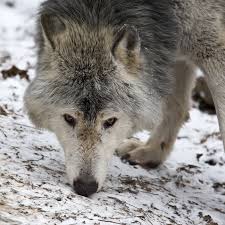
On the other hand, the Siberian Husky was bred for pulling sleds across the frozen landscape of Siberia. Alaskan Malamutes were also bred for such things, sharing coat traits with northern breeds of wolves. Yes, wolves can withstand summer heat, but everyone who studies wolves admits it’s a challenge. They tend to become inactive and pant constantly, seeking shade and hunkering down.
Even Golden Retrievers were bred to rush into the cold winters of Scotland, not into warm waters off of Florida. Such adaptations are for withstanding cold, not warm.
To sum up, dogs are mammals, not reptiles. They produce their own body heat and that thick coat is trapping that body heat and causing it to heat whatever outside air is coming in and keeps it close to the skin. That would be great for my bearded dragon, not so great for my long-haired pups.
**Why Do People Grumble About Those Who Shave Their Dogs?**
Despite the science, many people, sometimes even groomers, act like you’ve committed an act of abuse by shaving your dog? Why do so many people spout this “trapping the cold” nonsense as though it’s a law of thermodynamics? Let’s take a look.
**They Truly Believe Their Panting, Overheated Long-Haired Dogs Are Cooler with Their Coat**
Some people just honestly can’t believe a long-haired dog is happier and more energetic when shaved or cut much shorter than a dog who simply has his undercoat combed out. They won’t look at the actual science because Google decided to forget how the laws of thermodynamics actually work when it comes to how mammals self-regulate their temperature.
**They Think They’ll Damage Their Dog’s Coat**
This stems from some vanity, but a lot of people are afraid that if they shave their dog, their fur will somehow be damaged. For most dogs, shaving their coats won’t damage the follicles, same as shaving your head won’t ruin your hair, and shaving your body hair won’t cause it to come back thicker.
In some very, very, very rare cases, a dog’s coat may not return to its fullness. This has a small chance of occurring if the dog has an underlying condition. For example, I haven’t shaved my mutt because he has a thyroid issue and it affects his fur. I don’t want to risk cutting it and then having him struggle through the long winters of northern Minnesota.
However, I shaved my Golden Retriever/Chow Chow mix every single summer and every winter her coat returned to its former glory, complete with that amazing black mane that graced her neck and shoulders.
What *will* happen is that the undercoat and topcoat, if you have a double-coated dog, will grow back uneven for a while because they grow at different speeds. This means your dog will look kind of funny for a while, but this isn’t permanent. Remember, vets shave dogs for surgeries, hot spots, and all manner of things without warning you that your dog could be permanently damaged by said procedure.
**In Conclusion**
Don’t worry about shaving your dog. You don’t want your dog to be miserable in the heat just as you wouldn’t deny a sweater or a pile of blankets to an Italian Greyhound in the winter. Loads of people do it and their dogs haven’t been damaged by such a thing.
LOL! Facebook Blocked Two Roman Statues
I was wondering if someone would ever attempt this. Usually historical images are left uncensored, however explicit or graphic they may be. After all, documentaries can show graphic photographs of Jack the Ripper’s victims while having to censor modern-day crime images. Likewise, we can’t get away with parading our own naked bodies on the TV but images of ancient (or even Renaissance) art are the exception.
Not anymore.
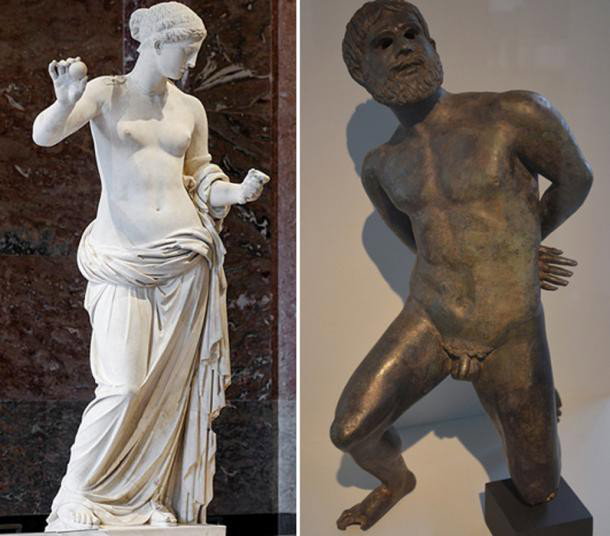
According to the Geneva Museum of Art and History, Facebook blocked them from using two images of Roman statues (and I’m including them in this article just because I can).
The images in question are a statue of the goddess Venus (known to the Greeks as Aphrodite) and a captive kneeling, his hands presumably tied behind his back. Apparently, the museum wanted to use images of the statue to promote their “Caesar and Rhone” exhibit but they were blocked by Facebook, citing the reason as nudity.
The exhibit features items recovered from the river Rhone during underwater excavation and highlight Julius Caesar’s invasion of the region in Gaul in the first century BC.
Gaul actually was constituted of many different states of different ethnic origins and wasn’t a singular region. By the end of the Iron Age, the different tribes and cultures were resembling each other more and more due to trade, and they became known to the Greeks and Romans as Celts or Gauls. By the fourth century, these Gallic warriors had invaded Italy and even overtook Rome for a time!
In the second century, for reasons unknown, there were mass migrations from Germanic tribes starting, and by the reign of Caesar, it looked like the Gaul would have to either become Romans or be overtaken by the Germanic people.
What terrified Rome was that if the Germanic tribes overtook the Gaul tribes, they would likely go on to attack their territory, too!
Hence the attacks on Gaul started. It should be noted, however, that Caesar originally wanted to invade Rumania for its precious metals and leave the Gaul out of it. Unfortunately, the migration of the Helvetians (originally from modern-day Switzerland) forced Rome’s hand, for they’d migrated to the southwest of modern-day France and were crossing through Roman territories.
Intending to attack the Germanic peoples (and impress the Senate, which was still functioning at this time), Caesar destroyed the bridge at Geneva, as his forces were still in the eastern end of the province, and blocked the road along the Rhone river.
Those actions gave Caesar time to cross the Alps and recruit two extra legions, forcing the Helvetians to leave. However, as they attempted to cross the Saone Caesar attacked and defeated them.
The Gauls also recruited him for help in pushing back the Seubians, which Caesar did. However, instead of returning his armies to the south, he kept them in the region, intentionally provoking his former allies.
He’d decided to conquer all of Gaul.
He called it a preventative war, like most Presidents of the United States of America refer to their own invasions, and managed to rally the Roman citizens to him. These actions would eventually secure him as Rome’s first Emperor, spelling the end of Rome’s Republic.
And now we can’t look at one of the statues commemorating Julius Caesar’s victory in these early battles.

The Olympics in Ancient Times
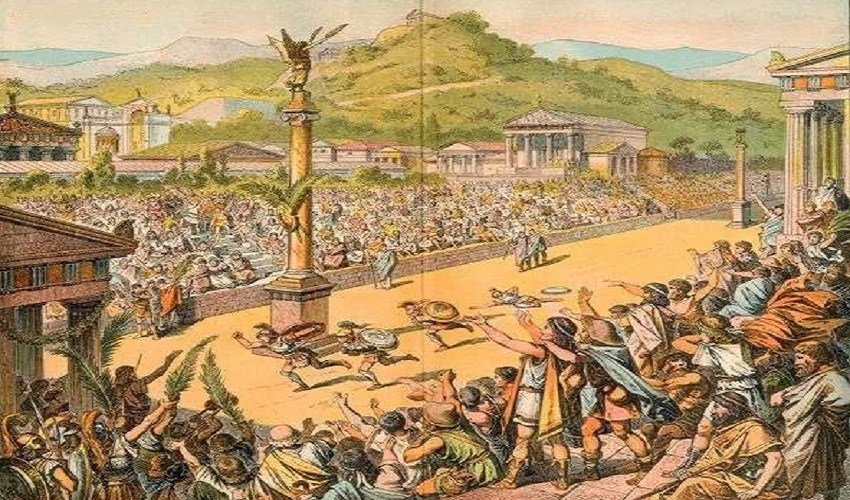
The Tokyo Olympics were delayed for a year by the pandemic, but they couldn’t be stopped forever! Now, we’re probably all aware of the controversies and victories that came from the games so far (way to go, Philippines!), but what do you know about the earliest Olympic game? You know, before they were a worldwide event and limited to the Greeks?
Let’s do some historical trivia!
**The Olympic Games Inspired Poets**
We have a tendency to think of athletes as being all brawn and no brain. I mean, sure you can lift twice your body weight, shoot a straight arrow, or skate beautifully on the ice, but can you solve world hunger? Meanwhile, we imagine intelligent people as being physically wimpy, spending all their time at a desk.
The Greeks didn’t separate brawn and brains the way we do today, for they believed in a strong mind in a strong body. Many poets flocked to the games to recite their poetry and to pen verses of the victors, the most famous of them being a poet called Pindar.
In fact, the link between poetry and sport regarding the Olympics that the founder of the modern event and the International Olympics Committee included art contests in the games! The poems had to be about sports and previously unpublished, but your poem *could* win a gold medal.
**The Athletes Were Originally Nude**
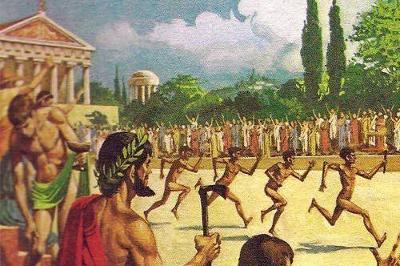
Olympic athletes originally played the games in the nude, although the reasons aren’t entirely clear why. The Greek writer Pausanias wrote a story about how the athletes originally performed in loincloths, at least until one guy named Orsippos of Megara was a runner in the footrace at the 720 BC Olympic games. While running, he allegedly lost his loincloth, but, like the true athlete he was, continued to run anyway. He won, so everyone just figured he was doing something right by ditching his clothing.
The authenticity of the story can’t be confirmed, as is the case with so many ancient accounts, but it’s an interesting notion.
**Women Weren’t Allowed to Attend**
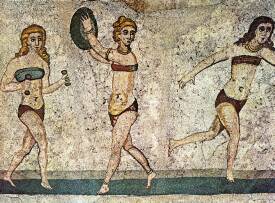
The Olympics were meant to be a men-only bro event (which may be the real reason everyone was naked – it’ll give them a reason to keep the ladies out). Women *did* have their own sporting events in Ancient Greece, which is remarkable by itself, called the Heraean Games. Like the Olympics, these were held every four years at Olympia, but much like Paralympics and women’s sports in general, they were far less prestigious and didn’t come with the incredible prizes that winning at the Olympics could get you.
Winning the Olympics could, at various times, win you a crown cut from the sacred olive tree at Olympia, get you a lifetime pension, tons of esteem and street cred, jars upon jars of olive oil, and more. Winning the Heraean Games, on the other hand, would get you a wreath of olives and some meat from the animal that had been sacrificed to the goddess Hera, who was the patron of the games.
You could also get your name carved onto statues dedicated to Hera, but they no longer exist and we don’t know the names of any of the women who won the Heraean Games.
Now, just because there was a ban on women, that didn’t stop women from attending in other ways. At least one woman was caught disguising herself as a man in order to watch her son compete. She was a widow named Pherenike, and she disguised herself as a male personal trainer in order to accompany her son Peisirrhodos. This was a success, but after he won, she was so thrilled that she leaped over the enclosure and accidentally was discovered.
There was another loophole that some women exploited, namely that there was no rule saying women *couldn’t* compete, at least in equestrian events. This is because the rules dictated that the winner of chariot races would be the owner of the chariot, not its driver. This is similar to horse races in which the owner of the horse is seldom the jockey.
Because of this rule, women could compete by hiring a man or having their husbands order one of his male slaves to actually drive the chariot. Hence she was technically competing without actually breaking the rules that forbade women from attending.
The first woman to do so was named Cynisca. She entered her chariot and won the equestrian events and had a statue erected that proclaimed she was “the only woman in all Hellas to have won this crown.”
Her victory made huge waves and several other women would go on to win the equestrian events using this loophole.
**Sports Fan Were Just as Rabid Back Then as They are Now**
Sports stars are celebrities, and celebrities have to deal with some nutty people. They do weird things like collect odd items that may have been touched by a celebrity, jarringly ask for photos or impromptu performances, having odd body parts signed, etc. People really haven’t changed much.
Olympic athletes would cover their bodies in olive oil because they felt it would help warm their muscles. After the games, if they weren’t too dirty, they would scrape the oil off and sell it to their insane fans. So, if you want a jar of olive oil mixed with the sweat of your heroes to put on your salad (or just to swear you’ll never touch or wash again), then bring your wallet over to the Olympic games.
AI Dungeon
Want to spend too much time trying to play through any semblance of a coherent storyline when the game master is an AI program? If you enjoy the kinds of shenanigans you can get into, then AI dungeon is for you!
**What in the World is AI Dungeon?**
AI Dungeon is a program that’s constantly being worked on. It allows you to play through an adventure similar to that of a tabletop RPG in which the AI is the game master. There are multiple worlds and scenarios to play through, the computer analyzing your input and trying its darndest to keep the story going.
Its effectiveness varies, however.
**What it Does Well**
For the most part, AI Dungeon seems good at remembering the scenario at hand and the characters it has conjured up for you to interact with. Due to the sheer insanity of it, the kinds of situations you can find yourself in are endless and often entertaining.
**What it Sucks At**
In my first game, my buddy John was murdered by his wife. Then the AI changed its mind and he committed suicide in his car. After a while, I wasn’t sure if the AI really was keeping track of its characters and their fates, so I decided to talk to John.
Lo and behold, the AI conjured up John and he was no longer dead! Hallelujah! Yes, he was still married to his wife, who by this point in the game was very sweet and seemed to like me a lot.
I then informed the computer that I was building a rocket and eventually took a trip to the moon. It completely went along with my absurdity.
At the start of one game, I decided arbitrarily that I would like to grow wings, so I did.
What this all means is that the AI isn’t good at telling you that you *can’t* do something. To bring John back, all I had to do was type, “ask John, ‘Would you like to go fishing?’” and the computer brought him back for me instead of informing me that John was dead and that I’d spent the first several minutes of the game looking for him to confirm that fact.
**Example**
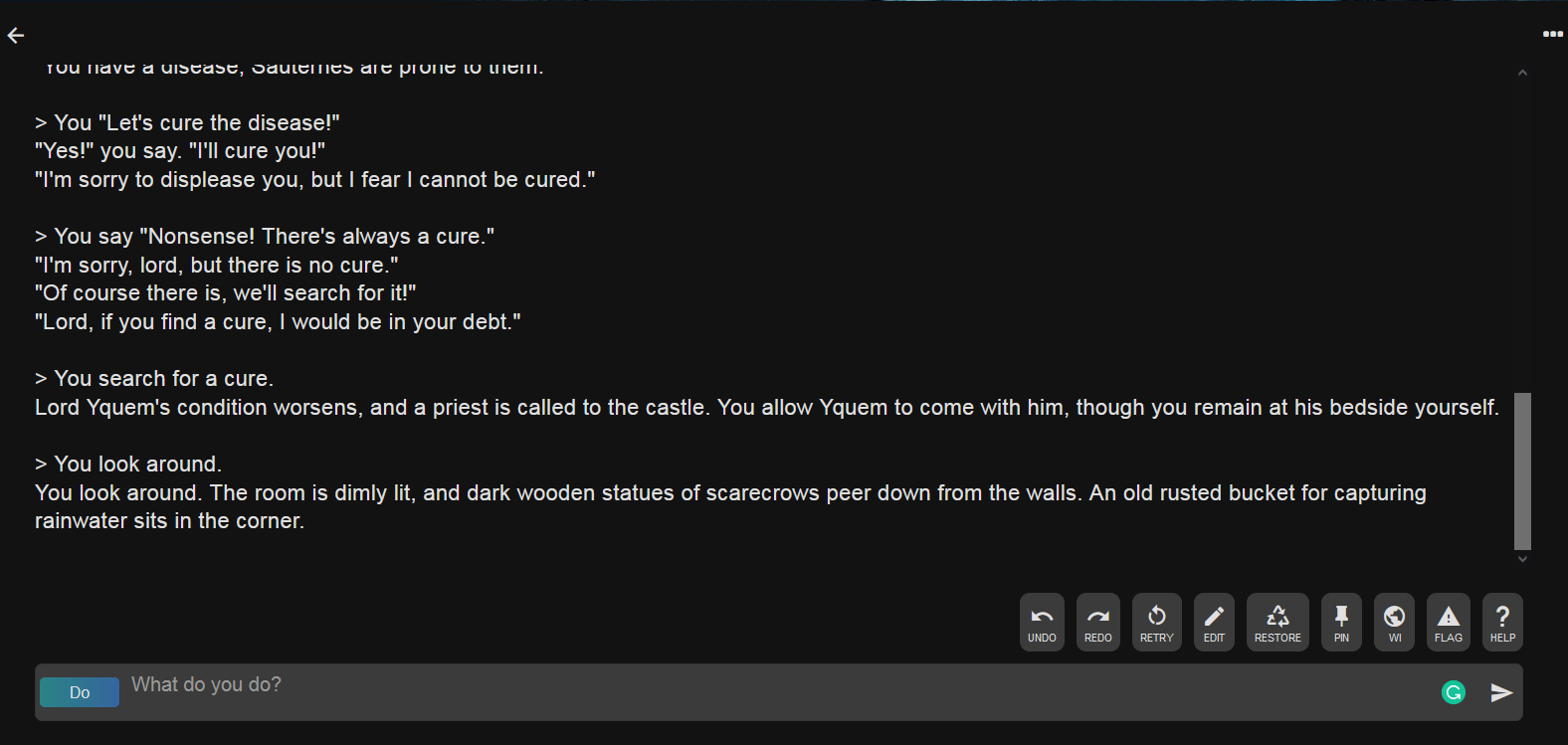
In this game, I found myself the last of a long line of kings. My father had wasted his fortune to obtain some creature that only lives for a few days. The computer didn’t mind about that, however, presenting me face to face with a man who had an incurable illness, which I then cured because the game isn’t going to tell me ‘no’ if I get creative enough.
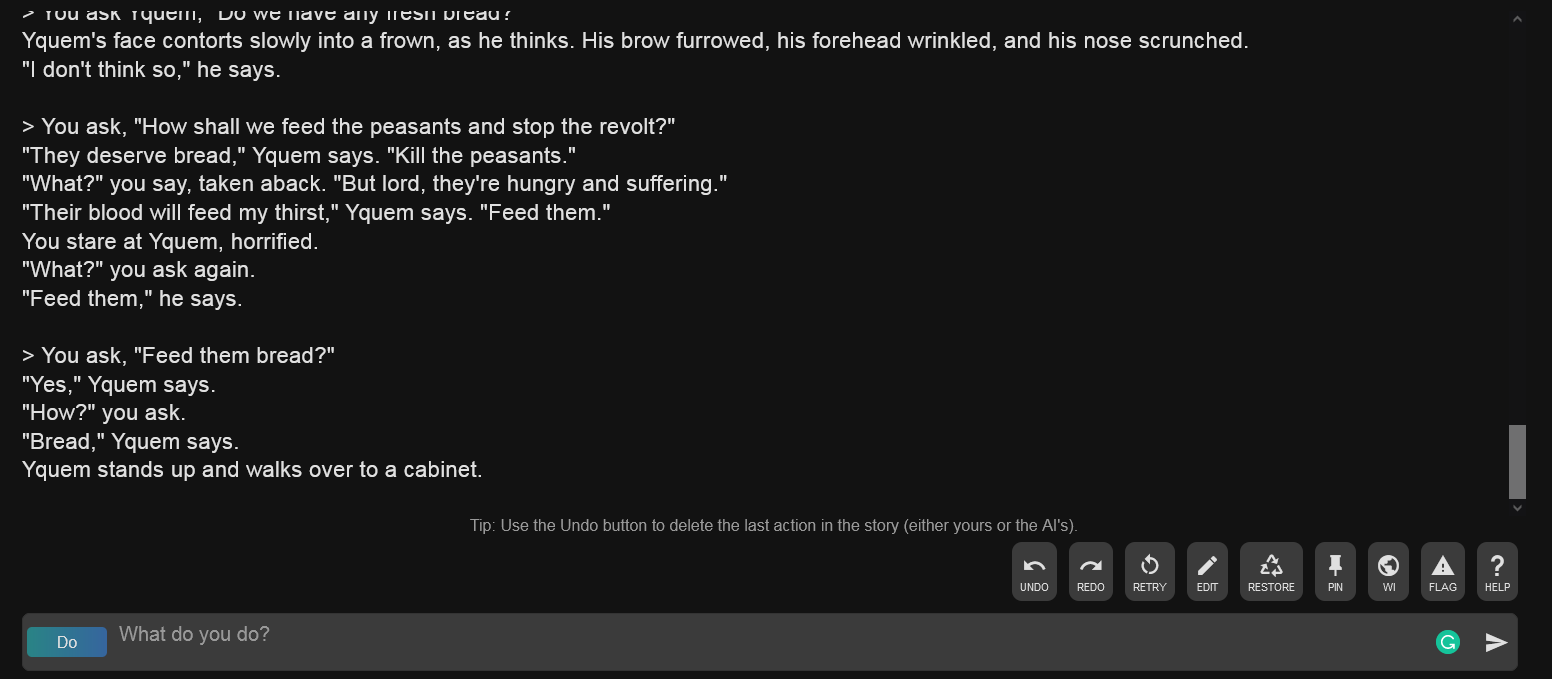
To get the story going, I was then informed that the peasants were revolting. Upon asking why, I was told that it was because they were starving and had no bread. A quick search of the castle told me that I, too, was starving and all of the bread I had was moldy.
At this point, the AI got incredibly confused, and I was beginning to wonder if curing my buddy was really a good idea.
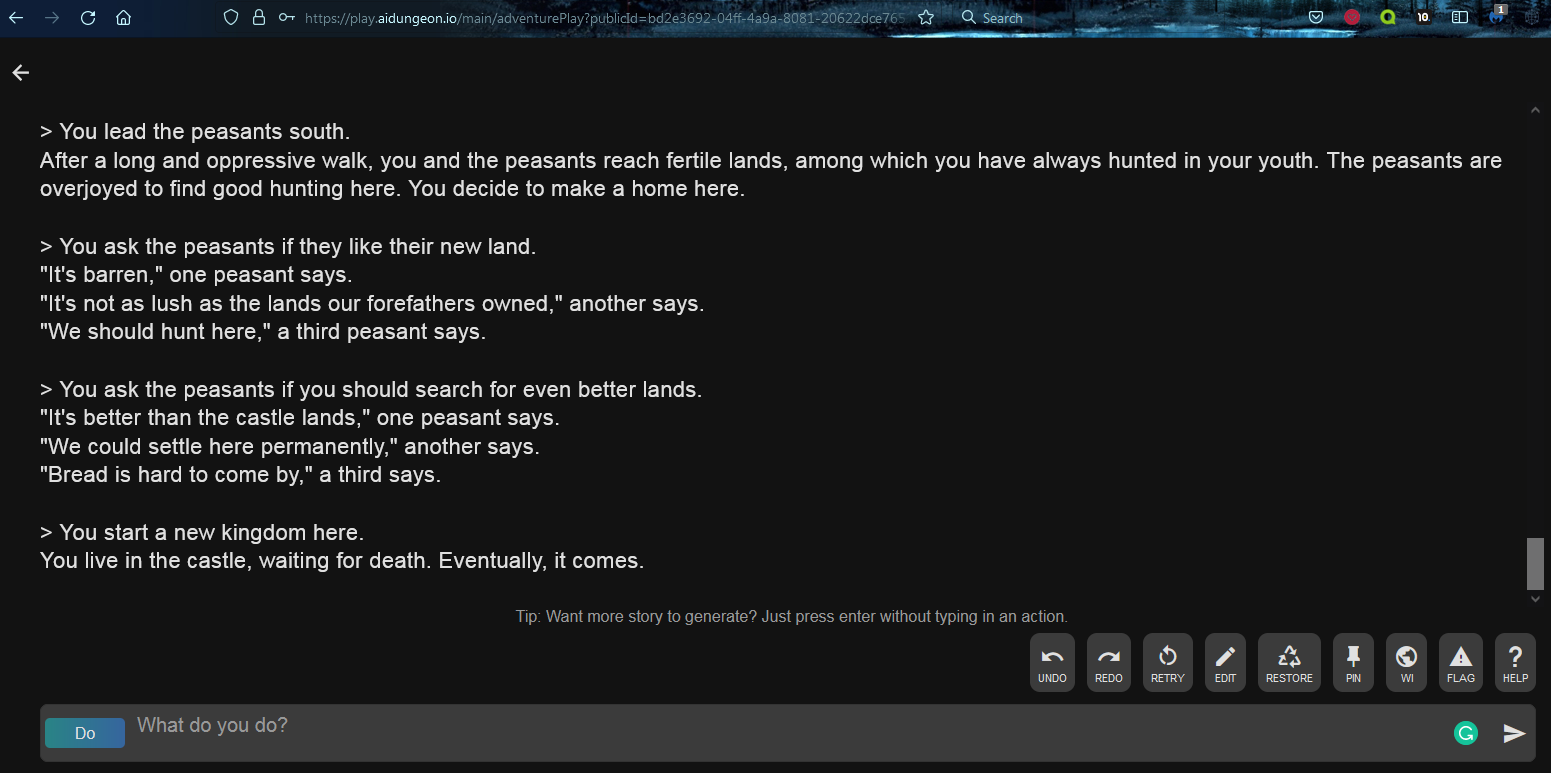
In the end, I diverted from where that going by suggesting we look for better lands to grow crops. We headed south and found a nice patch that AI decided wasn’t so nice after all and then I died.
...What?
If you want to play this insane game yourself, just go to its website! https://play.aidungeon.io/main/home
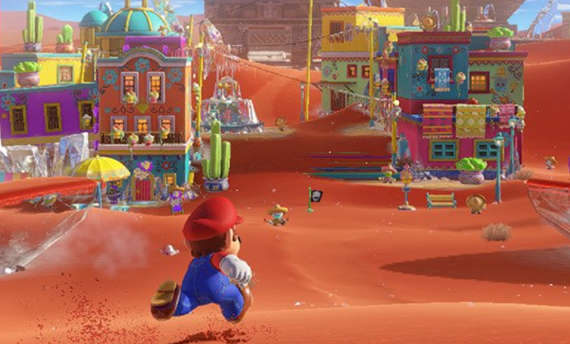
Finally Getting Around to Super Mario Odyssey
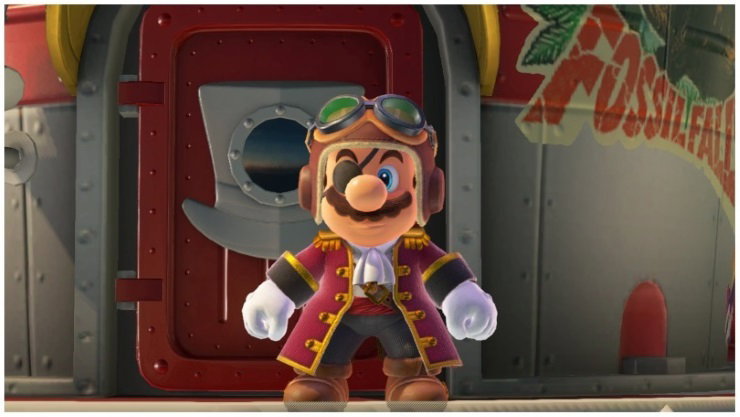
Welp, yesterday I wrote about *Godzilla: Singular Point* in all of its awfulness, and today I’m focusing on a game I finally got around to playing: *Super Mario Odyssey*. Who knows when I’ll get to publish it, as the Internet is out!
Believe it or not, this is the first 3D *Mario* game I’ve ever played. I haven’t finished it yet, but I fully intend to and will give a comprehensive review of it when I do. For now, these are just my impressions since the only previous 3D *Mario* game I ever dabbled at was *Super Mario 64*, and that was many years ago when the N64 first arrived on the scene. I never got beyond the first level, as I just didn’t have any real interest in it. It didn’t feel right to me.
I also skipped out on *Mario Galaxy* and any other of the 3D games unless you count *Mario Party* and *Mario Kart*.
**Plot**
Does it matter? It’s a *Mario* game, which means that there’s really only one plot that gets regurgitated over and over again. Unlike some of Nintendo’s other overused plots, I really could care less about *Mario* plots.
Anyway, Bowser wants to marry Princess Peach so he kidnapped her. Sound familiar? I’m pretty sure he’s tried this plan about a billion times already.
Anyway, he’s got a bunch of minions that he’s sending to multiple different worlds to steal stuff for his wedding, such as crowns, flowers, dresses, etc. Mario and a sentient hat team up to stop Bowser and restore the worlds he’s wreaked havoc on.
**Gameplay**
My brother insists that the gameplay for this game isn’t too different from other *Mario* 3D games, save for the hat mechanic. I tend to find the controls a bit smoother, though. Granted, I only ever tried *Mario 64*, so take my conclusions with a grain of salt.
Your job is to travel from world to world, helping the denizens by freeing them from the havoc caused by Bowser’s minions. So far, these worlds have been diverse and interesting, although I’m currently on an underwater one that I wish I’d knocked out before the forest one.
Despite my comment, however, it seems that most of the game is quite linear so far. There’s no hub world, which I like (it takes a really good game, like *Dark Souls*, to make me like hub worlds), so even though the game is quite linear, I’m enjoying it. *Mario* games are usually linear, after all!
The sentient hat Mario wears has the strange ability to possess certain creatures and objects when you throw it at them. Nothing is more fun than running around as a T-Rex, and finding all the little creatures you can become is a lot of fun. It can throw you for a loop, though, when you toss your hat expecting it to kill or damage an enemy only to find that you’re now possessing its body!
If I had one complaint, it’s that I play with the joycons, and some moves are almost impossible to pull off. For example, I can throw the hat down, but I can’t ever get Mario to toss it upwards. I have a hard time getting some things done because of this, but I haven’t been permanently stumped yet… at least until I realize I missed a bunch of moons that require tossing the hat upwards.
Speaking of moons, that’s another aim of each world or level. To power the ship Mario and his hat friend use to travel to different worlds, called The Odyssey, they must collect power moons. You don’t need to collect every last one on a world in order to leave it, but you *do* need them to get everything the game has to offer.
These moons are sometimes easy to spot and reach but others are, naturally, more of a challenge. So far, I leave some levels feeling like I’ve collected most of the moons, but others I know I’ll have to go back to because just getting enough to power The Odyssey was a pain.
**Music**
The music isn’t bad. It’s not the greatest soundtrack of all time, but it’s got some catchy stuff in it. For some reason, it seems that once *Mario* left the Super Nintendo behind, the music has been a bit lackluster. I can still hum just about everything from the NES and SNES eras (*Mario RPG* has some fun music!), but I can’t really recall much of *Odyssey*.
**Verdict**
If you like something you can just sit back and enjoy, this is the game! I’ve been liking it so far, which is strange for me. *Mario* isn’t a series I’ve followed too closely for a long time, but I find myself having a blast with this game.
Godzilla: Singular Point – A Spoilerific Review of the First 6 Episodes
I finally made it up to episode 6 of *Godzilla: Singular Point* and would like to write a preliminary review. I'll do another when the series has ended to see if my opinion has changed.
So, what *is* my opinion? This wasn’t a very good anime, nor was it a spectacularly good *Godzilla* show. Granted, the rest of the episodes could blow my mind, and if there are more seasons, then maybe the show will develop its own rhythm and come into itself. However, the first six episodes have left me feeling tired of the whole thing.
*As another disclaimer, there will be spoilers! If you don’t like spoilers, don’t read this. Also, I haven’t seen the English dub; I’m referencing only the Japanese language version.*
**So, What’s It All About?**
Monsters are appearing all over Japan, as seems normal for that country by this point. In-universe, however, this has never happened before. This show is almost a reboot of the *Godzilla* franchise as opposed to a continuation of any of its various eras.
Our two primary main characters have to figure out what’s going on to cause the monsters to appear and then stop them before they destroy the country, probably the world.
**What’s Good About It?**
I have a policy when it comes to negative reviews to start off by talking about what’s good about it first, and there are a few things good about this anime.
**The Music**: The opening is fun, and there are some good tracks on this soundtrack. It may not be *The Vision of Escaflowne*, but it’s got some great stuff in there.
**Some of the Updated Monster Designs**: I’m not a fan of all of them, but Anguilas needed to be updated badly, and this anime delivers on that. The way he moves and walks is absolutely what I’ve been waiting for. Jet Jaguar, which I suppose is technically not a kaiju, is also somewhat improved from his movie counterpart.
**Quantum Physics Done Right**: For a science fiction show, there’s a surprising amount of real science and theories presented here. This isn’t always to the show’s advantage, but it’s nice to see some real science as opposed to some of the weirder stuff presented as science instead of fantasy. Looking at you, *Doctor Who*!
**What’s Bad About It?**
Where to start? There’s a lot of bad here, which is a shame. A good *Godzilla* anime is something that could definitely be done – it just hasn’t yet.
Most of my complaints are wrapped around the characters, as fixing the characters would help distract you from the all-over-the-place plot. However, the characters are broken in too many ways, so I’ll be breaking it down a lot here.
**Too Much** ***Shin Gojira*** **Inspiration**: I liked *Shin Gojira* and its commentary on the inefficiency of the Japanese government, especially in the face of a disaster. Whereas most *Godzilla* films portray the government and military as operating efficiently, even if the kaiju are impervious to their attacks, *Shin Gojira* firmly pointed out that the Japanese government doesn’t have a good track record and certainly can’t be counted on to stop a, literally, developing threat.
The problem is that *Singular Point* takes the developing part of *Shin*’s kaiju without the commentary behind it. As such, we get the idea that monsters are in total control of their evolution; they’re just super bad at it. Rodan especially seems to think that doing the same thing over and over, sacrificing large groups of its species, is the key to surviving outside the sea.
It provides some interesting food for thought, but so far it hasn’t gone anywhere. The scaffolding for some interesting lore is in place, but it’s not doing anything except making the characters look smart for figuring it out.
**Too Much Science**: From the start of an episode to the end of an episode, it’s almost non-stop talking, and the vast majority of it is easily pure exposition. There’s little in the way of stopping to catch a breath or have a character moment, such as Luke staring into the distance on Tatooine, allowing us to vicariously feel his longing and his frustration.
I don’t know if it’s partially the run-time that requires the writers to cram as much exposition and explanation into an episode as humanly possible, or if it’s because the writers all have a science background and, therefore, aren’t really story people. The events in the show are treated as an excuse to showcase scientific theory, specifically theoretical physics, as opposed to developing a story first and then trying to find science (or create scientific-sounding enough answer for the audience to buy it) to complement the story and make it feel plausible.
The result is that it’s boring.
**The Characters are Flat**: And if they aren’t flat, they’re extreme archetypes. Little effort is made to differentiate the characters from one another, the exception being the old inventor who speaks using a mix of extremely archetypal “elder speech” as I call it, and kabuki theater expression.
The fact that I don’t mention the characters by name (I have to think harder than I like to even remember them) speaks volumes to the kind of impression they made on me.
The two lead characters may as well be a single character who was split in two because there’s no difference between them. It’s as though the writers decided that if they make one male and one female, that would be different enough. Neither has any history, there are no character arcs, and there’s no sense of who these characters are or what makes him or her tick outside of a shared love of science.
Some people point out that there’s so much exposition, there simply isn’t time for character arcs, as though anyone who criticizes the lack of a cohesive, character-driven story simply isn’t smart enough to understand the show. However, writing fundamentals, which emphasize characters and growth, seem to dictate that if you’re more interested in writing exposition, then you should probably stay away from fiction. The characters need to come first, the science stuff complimenting the characters and the circumstances they find themselves in, not vice-versa.
**The Characters Don’t Have Good Reasons to Come to Their Conclusions**: So, Anguilas can see a few seconds into the future and deflect attacks like Helen in the *Diadem* series? Cool! Unfortunately, there’s little evidence to support this conclusion at the time one of the characters comes to it.
This same, seemingly omniscient character also manages to deduce that there’s a little kaiju skeleton in the basement of some company just by confronting one of the staff and asking, apparently at random, about the skeleton to elicit a confirmation that it’s actually there. He has no reason to even suspect that’s the case, just that there’s something fishy about this company. Unless I missed something, it rings of hack writing to further unravel the loose threads that call themselves a plot in this show.
The other main character has an incredibly smart AI app as her companion which comes to all of these correct leaps to conclusions for her. Not that she doesn’t have her own fair share, but this show needed a fun companion character so viewers don’t get too bored with the leads.
All in all, the characters and the conclusions they come to with the evidence they have reeked of poor storytelling.
**The Monsters Aren’t Recognizable**: This one is a real nit-pick on my part, but while Anguilas was done well by this series, Rodan certainly wasn’t. So far, I haven’t seen Godzilla properly, but given that his theme played when a giant sea creature breached, I’d say that’s probably him. They seem to be definitely going for a *Shin Gojira* route.
Personally, I didn’t care for Rodan’s design, making it little more than a pterodactyl that’s prone to sudden heart failure.
**In Conclusion**
I don’t recommend this anime unless you’re a die-hard *Godzilla* fan who just has to see every single *Godzilla* thing. Maybe I’ll change my mind by the time the season ends, but so far it feels like a chore to sit through. Bland characters and poor storytelling bog it down.

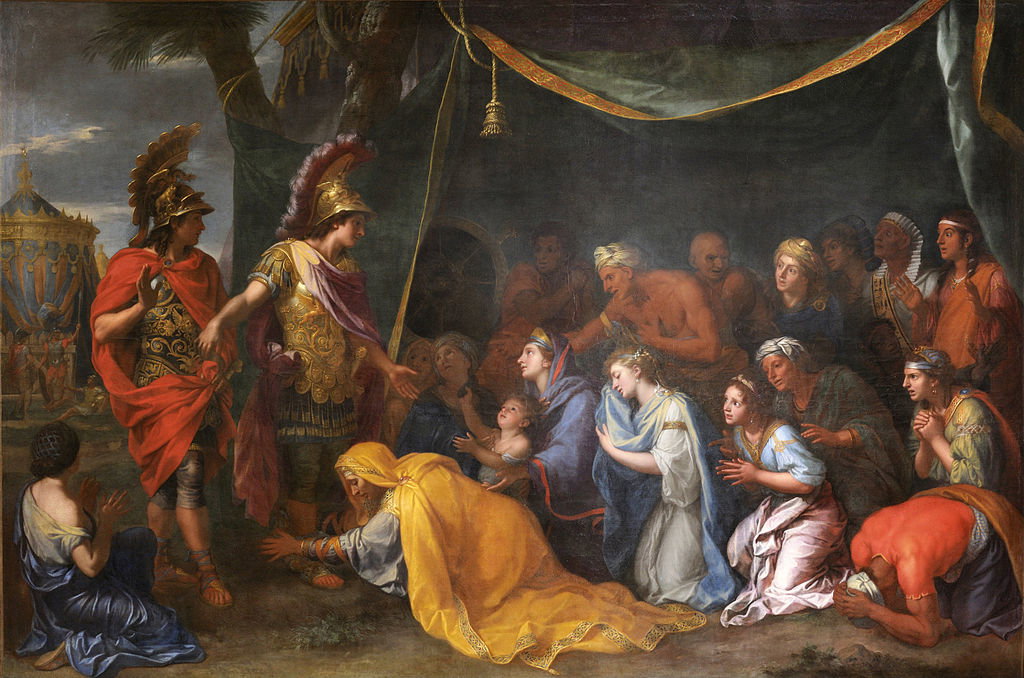
What Killed Alexander the Great?
Alexander the Great’s is one of the most fascinating military minds in history. A man with an insatiable ego, he, encouraged by his mother, believed himself to be the son of Zeus himself! His mother, who was involved in a bizarre snake cult, encouraged him to fulfill his greatness.
At 32-years-old, Alexander had conquered some of the mightiest empires on earth. He’d conquered the Persians and the Egyptians, and his army was led as far away as India. He built many, many cities (almost all of which were named Alexandria), and his efforts culminated in an empire that stretched from the Balkans to Pakistan.
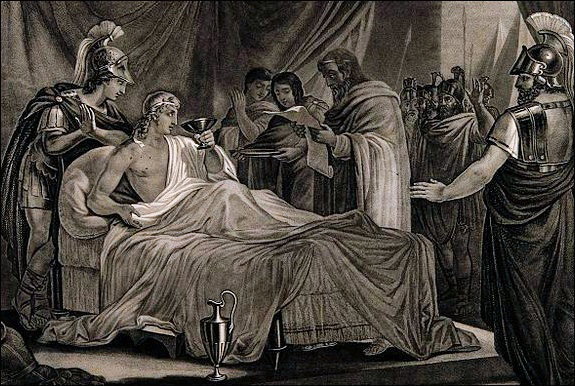
And then he died, no appointed heir, and his empire crumbled, for on the brink of another invasion, he felt incredibly ill. He suffered excruciating pain for 12 days until he died.
The ordeal began in June of 323 BC when, as he was feasting at a commander’s house, he developed a fever and abdominal pain. Apparently, this pain came on as he was drinking a large goblet of wine. For three days, he bathed, sacrificed, and, naturally, slept. Unfortunately, on the fourth day, the fever grew worse. By day four, he was losing strength, and by the seventh, he could no longer leave his bed. Unable to even speak, when his troops asked to see him ten days into his illness, he could do nothing but follow them with his eyes. He died just two days after their visit.
For six days he lay, the embalmers having been delayed, and they were shocked when they arrived that he hadn’t decomposed at all. The summer was allegedly quite hot, and there should have been changes in the body during that time, lending credence, as far as Greece was concerned, that he truly was the son of Zeus.
**What Killed Him?**
Much like when I covered Edgar Allen Poe earlier, there are many, many theories about how Alexander died. It also doesn’t help that he died so long ago, it’s difficult to tell how much of the tale is true and what was embellished. We are, after all, talking about a man who claimed to be the son of a god!
Complicating things further, there aren’t any contemporary accounts of his death. The accounts we have were written long after, the oral history of this great conqueror’s demise already having been passed along for many, many years. Oral traditions aren’t known to be well-preserved accounts to begin with, with each teller minimizing the bits they don’t care for and expounding upon details they think are important, often added in a flair of their own whether it was originally part of the story or not!
For example, Plutarch, writing in the 1st and 2nd centuries AD, claimed that Alexander actually didn’t have any pain – that such details were thrown in by people who wanted to give him a more dramatic ending than what originally occurred. Yet many other writers insist that Alexander was in incredible pain! This led many ancient historians to conclude that Alexander had been poisoned, as he was allegedly drinking wine when the pains hit.
So, let’s check out all of the theories people have come up with.
**Poisoning**
We may as well start here, as so many people in the ancient world felt that this is what caused his sudden collapse. The evidence is simple: he was feasting and drinking when his abdomen was seized by severe pains.
It should also be obvious that Alexander had many enemies by this point in life, as well. Even Aristotle was a suspect at one point, a relative having been embroiled in an assassination plot! An ambitious general may have done away with the conqueror.
He’d also managed to offend many with his ego and insistence that he was a child of the gods, and, let’s face it, most of us would have grown tired of hearing about it, too. And if we were dragged from one military campaign to the next with hardly a break, we’d be pretty aggravated as well. Oh, and he also managed to offend his fellow Macedonians by dressing like the Persians, whom he’d conquered.
By this point in time, the megalomaniac Alexander was a brilliant military strategists (armies still study him to this day), charismatic leader (he conquered Egypt without even using his military), and a thoroughly hated human because he seemed to have narcissistic tendencies. Murder would definitely be something worth looking at.
As for what kind of poison was used, arsenic has been suggested due to the stomach pains he supposedly endured. It also causes progressive weakness, which Alexander definitely experienced, and isn’t quite as sudden as *Arsenic and Old Lace* would have you believe. Water-soluble and practically tasteless, this is a tantalizing theory.
**GBS Caused by Typhoid Fever**
A variety of tropical illnesses have been suggested, from malaria, which doesn’t cause loss of speech, to the West Nile virus, which usually isn’t fatal. The one that sticks most often is typhoid fever that leads to Guillain-Barre Syndrome.
As part of his weakness, Alexander is described as having progressive, ascending paralysis – a hallmark of Guillain-Barre Syndrome. The typhoid fever would have caused the intense fever and abdominal pains, but GBS developed after a few days and eventually killed him.
GBS is an autoimmune disorder in which the immune system attacks the healthy cells in the nervous system. The result is paralysis that starts in the legs and rises to the brain. Alexander was in complete control of his mental faculties until just before death, hence why this is such a strong theory. In fact, the reason his body hadn’t decomposed in the six days it took for the embalmers to get to him may be because he was still alive, trapped in his own body!
GBS *can* occur on its own, but without the underlying condition of typhoid fever, it’s not always fatal.
**What Do You Think?**
What killed Alexander the Great?
The Real Life Shark Attacks That Inspired Jaws
*Jaws* is, at the same time, one of my favorite films and also one of the cheesiest films I’ve ever seen. The realism in the way that the people of Amity (and the ‘foreigners’ who come in from all around the USA to try their luck at hunting the shark) is amazing. I swear I know these people in real life, and the politics that keep the beaches open and the swimmers blissfully unaware of the danger lurking beneath the inviting, gentle waves is sickeningly familiar.
Of course, the look of the shark doesn’t hold up well anymore, unlike Spielberg’s classic *Jurassic Park*, and we’ve watched enough *Shark Week* specials by now to know that shark attacks often don’t look like they do in the film, the death of the 13-year-old boy being the chilling exception.
Bruce, the crew’s nickname for the shark, looks like an oversized rubber toy that you’d buy at Walmart. The attack on the Orca fishing boat is side-splitting instead of horrifying, depending on how readily you can suspend your disbelief, and most people who know anything about scuba diving will tell you that dive tanks aren’t at risk of exploding.
Yet despite the cheese factor, *Jaws* remains an effective film, and the realism it manages to inject into a story about a Great White Shark with an insatiable appetite for human flesh and who even seems to enjoy the hunt, manages to ensure the film stands head and shoulders above other shark films, such as *Deep Blue Sea* and *The Meg*.
But did you know that it was inspired by true events?
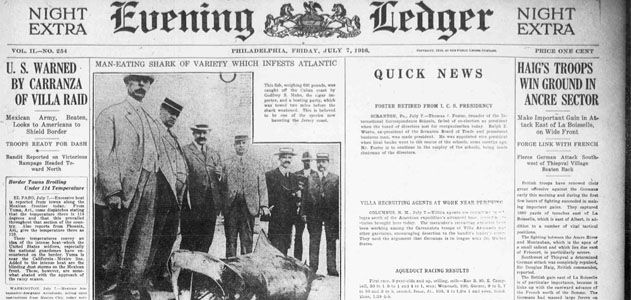
In 1916, a series of shark attacks off the shores of New Jersey threw people into a panic. It was just after the close of the Edwardian Era, a few years after the sinking of the RMS Titanic, in fact, when spending a day at the beach was just starting to catch on. Whereas Victorians wouldn’t have dared go swimming for leisure (at least as adults), lest they reveal their ankles or something, Edwardians were beginning to learn the joys of a good swim. Who knew sharks might also be learning that fish and seals aren’t the only things that splash about the shores?
These events are briefly referenced in *Jaws* as Chief Brody and Hooper try to convince the Amity mayor to close the beaches. The pair talk hastily, often overlapping each other (a hallmark of Spielberg’s incredible directing that’s replicated in *Jurassic Park: The Lost World*), so it’s hard to hear the references. Even if you catch it, however, they don’t go into detail as to why 1916 was such a landmark.
So, let’s do some history!
**The First Attack and Its Aftermath**
The summer of 1916 saw the east coast baking beneath the sun – a massive heatwave. By July, the people of New Jersey were flocking to the beaches to catch the cooler ocean weather. Swimming in the ocean was now popular among all classes of people, even if their bathing suits look a little wonky by our modern standards of near nudity.
Unfortunately, July 1, 1916, a Saturday, brought terror into the hearts of the Edwardian beach bums.
A train bearing the Vansant family roared into town. The family consisted of nose and throat specialist, Eugene Vansant, his wife, three daughters, and a son named Charles. Charles seems destined for a career in business and is either 22-years-old or 28-years-old. You can blame the conflicted sources I found for this discrepancy, not my faulty memory. The Discovery Channel had it at 22, so that’s probably what I’d go with if I were you.
Anyway, at about 5 O'clock on July 1, he decides to head for a swim before dinner. His father, Eugene, and sister, Louise, are on the beach somehow catching some rays in their upper-class garb. He finds a Chesapeake Bay Retriever on the beach who takes a liking to him and they head into the water together.
Unfortunately, the dog has a difficult time keeping up with Charles’ pace and heads back to shore, where the lifeguard, Alexander Ott, is happily chatting it up with Louise Vansant. Maybe he should be doing his job…
Shouts of the distressed kind pierce his eardrums and he realizes he really, really should’ve been doing his job. Out in the water, Charles Vansant is struggling for his life against a massive shark, but bathers believe he’s calling to the dog, now happily on the shore and confused why his newfound human friend is clearly not having as swell of a time as the rest of the people.
The lifeguard and another bystander rush into the waves. Ott is an Olympic swimmer, and in less than three feet of water, he and the bystander, a local man named Sheridan Taylor, engage in an epic tug-of-war with the shark, who is determined not to let go of Vansant’s leg.
Despite their heroics, Charles Vansant bled to death on the desk of the Engleside Hotel at 6:45 PM.
The public and press had no idea how to react. The Museum of Natural History in New York had said that sharks weren’t dangerous to humans, which like a slightly more optimistic version of what the Discovery Channel has been saying for years. Moreover, large sharks like the Great White just weren’t seen so close to shore, assuming that was the shark responsible.
As such, the papers weren’t sure how to respond. Some experts warned that it likely wasn’t a shark attack at all, but that the hysterical beach-goers had started a figurative game of telephone that had resulted in crazy tales of sharks. When anyone *did* acknowledge the attack, they only reluctantly blamed a shark.
But the beaches weren’t closed, whatever had happened was shrugged off as a freak incident (which it was), and soon the beaches were packed once more.
**The Second Attack**
On July 6, 1916, another fatal attack occurred, this time off the shores of Spring Lake, New Jersey. Charles Bruder, age 28 and a Swiss bell captain of the Essex & Sussex Hotel, went for his daily swim. As an aside, swimming is particularly good exercise for you, particularly your joints. I mean, not if you’re being eaten by a shark, but you know what I mean.
No one is really paying close attention on shore, and Bruder is a strong swimmer who easily makes his way out into the deeper ends of the beach. Yes, this is another case of a lifeguard, this time Chris Anderson and George White, paying attention to the ladies instead of to the people who are actually in the water.
This time, it was a bystander who sounded the alarm. Having not seen Bruder, and seeing how all the experts had assured people that shark attacks don’t really happen, she’d assumed that a red boat or canoe had tipped over.
Of course, it was no canoe; it was Bruder’s blood pouring into the water. At this point, I’m thinking this shark has a penchant for men named Charles, but I digress.
The lifeguards launch their boat and head out to see what’s the matter and rescue the poor capsized fellow. When they were about 50 feet away from Charles Bruder, they heard him shouting, “A shark bit me! Bit my legs off!”
Sure enough, as they lift him up they can see that both legs are gone: one bitten off just above the knee and the other below. With injuries so catastrophic and little training the lifeguards have (no knowledge of tourniquets or tools to employ one), Bruder is dead by the time they reach the shore. According to the New York Times, some women fainted at the sight of the mutilated body.
There are three doctors on the beach that day, off-duty, but with Bruder gone before he reaches the shore, there’s not a thing they can do to help him. One of them, William Schaffler of the New Jersey National Guard, is positive that this was a true shark attack.
This time, instead of being a little footnote in newspapers predominately covering War World I, sharks are now front-page news, and panic follows. The Amity mayor’s worst fears in *Jaws* are a true occurrence in New Jersey now: the beaches are empty and tourism is going way, way down.
The Museum of Natural History tries to come to the rescue, reassuring the public that sharks aren’t powerful enough to induce such horrifying injuries. Even the largest shark, they claimed, didn’t have the jaw power to sever an adult man’s leg. One director even questioned if a shark could merely break a human bone!
Many pointed to the millionaire banker Hermann Oelrichs, who offered a $500 reward to anyone who could offer up an authentic case of someone, man, woman, or child, who had been attacked by a shark in the temperate (“temperate” is a keyword many of these researchers used) waters of North Carolina. The fact that no one could do so head lead scientists to conclude that sharks simply ignored human beings unless they bit them by accident, such as when becoming caught in fishing nets.
Nevertheless, hotels began constructing anti-shark nets to sanction off the swimming areas of their beaches in a desperate attempt to preserve business. Their efforts are hampered, however, by newspapers creating more and more sensationalist headlines.
One response, much like the film *Jaws*, sees people taking to the ocean to hunt sharks, often killing anything that even remotely resembled sharks, such as dolphins. The entire climate of New Jersey is starting to resemble *Jaws*, actually. You’ve got panicked businesses, panicked ocean bathers, and thrill-seekers who can’t wait to grab the Jersey Man-Eater.
**Attacks Number Three, Four, and Five**
The third attack seems to come from nowhere, in a place you would never expect to find sharks, even in this modern day.
It’s July 12, and a little wooden bridge sits above a creek, Matawan Creek, that Captain Thomas Cotrell travels on his fishing trips. A sea captain, Cotrell knows a shark when he sees one, and on that morning, upon looking down from the bridge, he cannot believe his eyes! There, almost a mile and a half from the open ocean, is a shark swimming. He reckoned it was about eight feet long, but when he reported it, the town of Keyport dismissed his story. They believed that the heatwave and the constant talk of sharks had addled his brain.
As Cotrell made his way through town, a group of five boys decided to go for a dip in the creek about a mile from the wooden bridge Thomas had spotted the shark from. One of the boys is Lester Stilwell, an 11-year-old boy with epilepsy.
As they swam, they thought they could see an old log, but when a dorsal fin appeared, they realized they were looking at a shark. They booked it for shore, but before he could reach it, young Lester was pulled under by the large animal. Naked and terrified, they run into town screaming that their friend has been eaten by a shark in the creek.
A group of people comes rushing to the creek, believing that perhaps Stilwell had suffered a seizure and drowned. One of them, Watson Stanley Fisher, is a 24-year-old (or 23-year-old depending on your sources) who used to play softball with the boys, enters the water to look for Stilwell’s body.
He dives repeatedly in search of the body but nothing comes up. Finally, he makes one last dive and resurfaces holding young Lester’s body. Then, as he makes his way toward shore, a dorsal fin rises out of the murky waters and the shark that killed Lester Stilwell clamps down on Fisher. He drops the boy’s body and the townspeople manage to beat away the shark. Unfortunately for Fisher, his right thigh is stripped of flesh.
Better equipped to deal with these injuries, the rescuers put tourniquets on Fisher’s leg. The first breaks, the second fails to stop the bleeding. The nearest hospital being ten miles away, they hastily created a stretcher made of planks and prepared to send him by train. Hundreds gather to see him off, but the shock and blood loss kill him later that same day at the Monmouth Memorial Hospital.
Just thirty minutes after the attack on Fisher, another group of boys, unaware of what’s happened, have decided to go for a splash in the creek. Joseph and Michael Dunn are two brothers going for a swim with another friend about a quarter mile downstream.
Just as before, the tell-tale dorsal fin pops out of the water and lunges toward the boys. Michael and their friend, Jerry, make it to shore, but Michael is seized by the shark. His brother, being perhaps braver than the previous gaggle of boys, jumps in to attack the shark and rescue his brother. As they fight, a nearby fisherman joins him and the pair successfully drives away the beast.
Dunn is wounded, but he survives his injuries and is released from the hospital in September of that year. His summer may have been ruined, but he’s the only victim to come out alive from the attack.
The next day, the Museum of Natural History admits that it was wrong and they don’t know as much about sharks as they thought. At least they admitted it, though! How many scientists pushing agendas today admit their shortcomings?
Meanwhile, the people who live near the Matawa Creek have taken to hunting sharks with anything they have! The thrill of the hunt and media attention surrounding it has spurred a fever for shark hunting that won’t subside for some time.
**But What Kind of Shark Was It?**
The popular theory, especially of the time, was that it was a rogue Great White Shark that developed a penchant for human flesh. Some still cling to that theory, and there’s reason to do so, while others venture that it was actually a bull shark or even multiple sharks. We’ll probably never know for certain, as every theory has merit, but let’s look at the evidence.
**Great White Shark**
The Great White was blamed for the attacks when they occurred, and this is partially why we have such a fear of this animal today. But what’s the evidence?
1. These sharks will often bite things just to see if they’re edible, making this shark likely to bite swimmers out of curiosity. Normally, we think of sharks biting surfers because they look like seals from below, but a particularly curious shark may have tried to just bite whatever people it saw.
2. It’s not unheard of to find them in freshwater, provided it’s not too far away from saltwater. Two sharks about 10-14’ long have been tracked in rivers by researchers.
3. The shark hunting fever that gripped the east coast after the Matawa attacks culminated in the death of a Great White Shark that reportedly had human remains inside of it when cut open. The attacks stopped after this shark’s death. It should be noted, however, that some scientists dispute whether human remains were found. There was no DNA testing back then, and it’s possible that whale meat or any other kind of flesh was being digested by the shark and the frightened populace simply saw what they wanted and expected to see.
**Bull Shark**
1. These sharks also bite things just to check their edibility. They’re responsible for a number of run-ins with beachgoers.
2. These sharks can survive in freshwater. The biggest blow to the Great White theory is that, while these sharks have gone into fresh waters, we don’t know that they hunt in these waters. As some have put it, dropping a Great White into freshwater could have the same result as tossing a goldfish into saltwater; they may not have the strength necessary in the lower salinity to attack and defend its prey.
Bull sharks, on the other hand, are a species that *can* survive for some period in freshwater without ill effects. They’ve been spotted as far as Illinois in at least one case. While Matawa Creek isn’t incredibly far from the ocean, it’s easier to imagine a bull shark traveling that way as opposed to a Great White.
3. The shallow waters of a creek aren’t conducive to how a Great White attacks, but bull sharks are quite at home there. Great Whites *can and do* attack in shallow waters, but they prefer to ambush from below. There is zero room to ambush in the creek.
**Multiple Sharks**
It could very well be possible that there were two different sharks involved. Some have supported the theory that something like a Great White could have been responsible for the ocean attacks while a bull shark was responsible for the deaths in the creek.
**What Do You Think?**
Have a theory of your own? Just want to comment on the strange tale? Sound off below.
Ancient Board Games You Have to Play: Senet
It’s been about a week since my last post on account of having relatives visiting for vacation, but I haven’t forgotten about writing completely!
No, today I want to write about Senet, an ancient Egyptian game that even has a place in mythology! This board game can be played today and is a whopping 5,000 years old. It’s also found in many Egyptian tombs, lending credence to its popularity back in the day.
**Doing History!**
Senet is the oldest known board game in history, although the rules modern players know may not be the original rules, as they were never written down. Even fragments of boards can be found as early as 3,100 BC, which, for you lovers of board games who may not know much Egyptian history, means this game was being played even in Egypt’s First Dynasty. Some graffiti indicates that it may have been played even during the Old Kingdom (before Alexander the Great’s conquest).
The game eventually evolved to even have some religious significance! *The Book of the Dead* references the game and it features prominently in the myth of the goddess Nut.
**Thoth’s Gamble**
Even the Egyptian gods loved to play senet, as we’ll see here.
Once upon a time, the god Ra was basically the head honcho of all the gods. He was the sun god, sailing his boat across the horizon each day and then journeying through the underworld each night. As he sailed, his bloat glided across the back of Nut (pronounced “noot”), the goddess of the sky. The night came when she would swallow him at the end of each day and thus begin his underworld journeying.
Everything was great between them until Ra found out she was pregnant with five children! That wouldn’t have been so bad if not for the prophecy (where in the world do all these so-called set events come from?) proclaiming that one day Nut would have a son who replaced Ra. You know, that thing all ancient rulers are fearful of (Cronus, King Herod, etc.)!
Being the leader and all, Ra proclaimed that it was simply illegal for Nut to give birth on any day of the year. Pretty sure pregnancy doesn’t work like that, but the gods might just function differently.
Anyway, Nut is fairly distraught over this bit of legislation and runs to Thoth (Mr. Ibis for all you *American Gods* fans), the god of wisdom and writing, for a solution. Thoth mulls it over and decides the best way to get around such a tight restriction is to *create* a loophole.
So Thoth pays a visit to the moon god, Khonsu. Khonsu is apparently a huge lover of senet and a gambling addict who shouldn’t be allowed anywhere near casinos. What a perfect person to exploit!
Thoth decides to challenge him to a friendly game of senet. The stakes: an extra hour of moonlight every time Thoth won.
Khonsu, being an addict, couldn’t resist. Not only would he get to play senet, but he would also be able to brag about having bested the god of wisdom himself!
The only problem with this fantasy is that Thoth is, after all, the freaking god of wisdom! He easily won the first game and got an extra hour of moonlight. Doing the moon thing is tiring, and Khonsu’s reputation was on the line to boot, so he quickly agreed to another game in an attempt to win back the bit of daylight he’d lost.
But he lost again.
Then he lost again.
And again.
Eventually, Thoth had managed to secure five days worth of moonlight! Khonsu wound up working overtime. The poor guy was so exhausted that he couldn’t display his beautiful full moon every day anymore. As he tired, the moon grew smaller and smaller each day until he eventually had to take a day off to rest. When his strength returned, the moon would wax until it reached its full size once again.
As for Nut, Thoth stuck these extra days between the last day of one year and the first day of the next, thereby setting them apart from the actual calendar year. Victory for Nut, who was likely pumping her fist triumphantly because she didn’t have to be eternally pregnant with five babies, which would probably cause all kinds of back problems in addition to the boat going over her each day.
Basically, the Egyptians realized their calendar was garbage and screwed up their farming seasons, so they had to throw some extra days in there to account for the fact that there are actually 365 days in a year, not 360. Of course, if the story is true (can you prove to them it's not?), then this means that the previous calendar was fine, but it had to be adjusted later.
**How to Play**
Want to take a shot at playing this game for yourself? Lucky for you, the rules have been reconstructed and guessed at. Now you can challenge poor, exhausted Khonsu to senet and exploit his terrible gambling addiction!
Bear in mind that this is only one reconstruction of the rules. There are multiple reconstructions as people attempt to recreate the game in the absence of written rules. Darn ancient people and their lack of literacy! Even Jumanji bothered to come to with the rules written inside the game board!
**What You Need**:
1 Senet Board: Of all the games I’ve talked about in this series so far, this is easily the easiest board game to find. Its reconstruction has been quite popular, so now there are apps and game boards even on Amazon. All the pieces are easy to obtain because you can just buy them.
2 Players
**Rules**: (Taken from the Otagu Museum)
1. Place the pieces on the top row of the board, alternating between spools and cones.
2. Each player tosses the sticks which serve as dice. The person who “rolls” the highest number gets to go first.
3. Throw the sticks or roll the dice to move one of your pieces.
4. One square can only have one piece on it at a time.
5 You can’t move your piece to a square already occupied by one of your own pieces.
6. Pieces can jump over other pieces.
7. Pieces can swap places with your opponent’s piece if you land on its square.
8. Pieces cannot be swapped if they are next to a piece that is the same as them –or two in a row. A row of three or more of the same pieces together can form a ‘blockade’. This cannot be jumped or swapped by an opponent but you can jump over your own blockade.
9. You must make a move if it is possible.
10. If no move is possible, you pass your turn.
11.The first player to get all their pieces off the board wins.
Special Squares
• Square 15 is the 'House of Life'. This is a safe square; a piece cannot be swapped off it.
• You must land on Square 26, the 'House of Happiness' in order to progress further. This is a safe square.
• Square 27 is the 'House of Water'. Landing on this square sends the piece back to Square 15, the 'House of Life'.
• Pieces can leave the board from Squares 26 ('House of Happiness'}, Square 28 (three ba-birds), Square 29 (two men), and Square 30 ('House of Ra-Horakhty') if the correct number of spaces is thrown. These are all safe squares.
**Have Fun!**
Here’s a video to go along with this guide:
https://www.youtube.com/watch?v=hwu8VTT3pYU
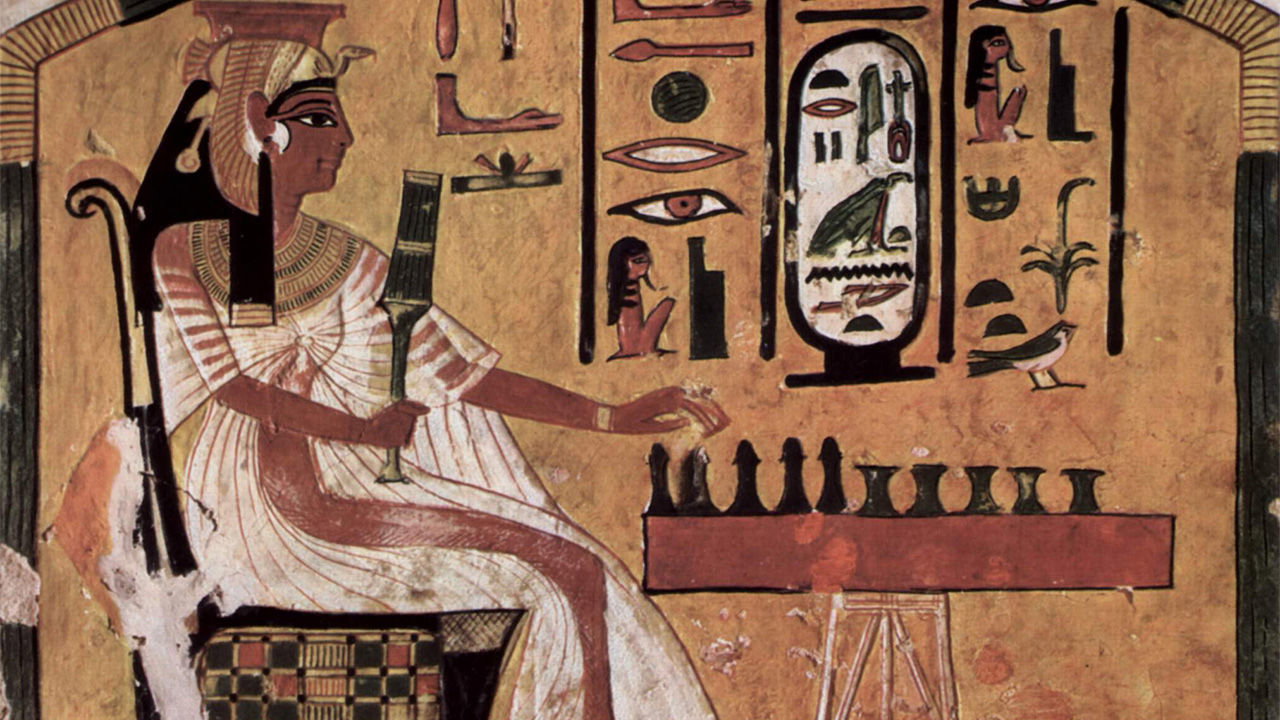
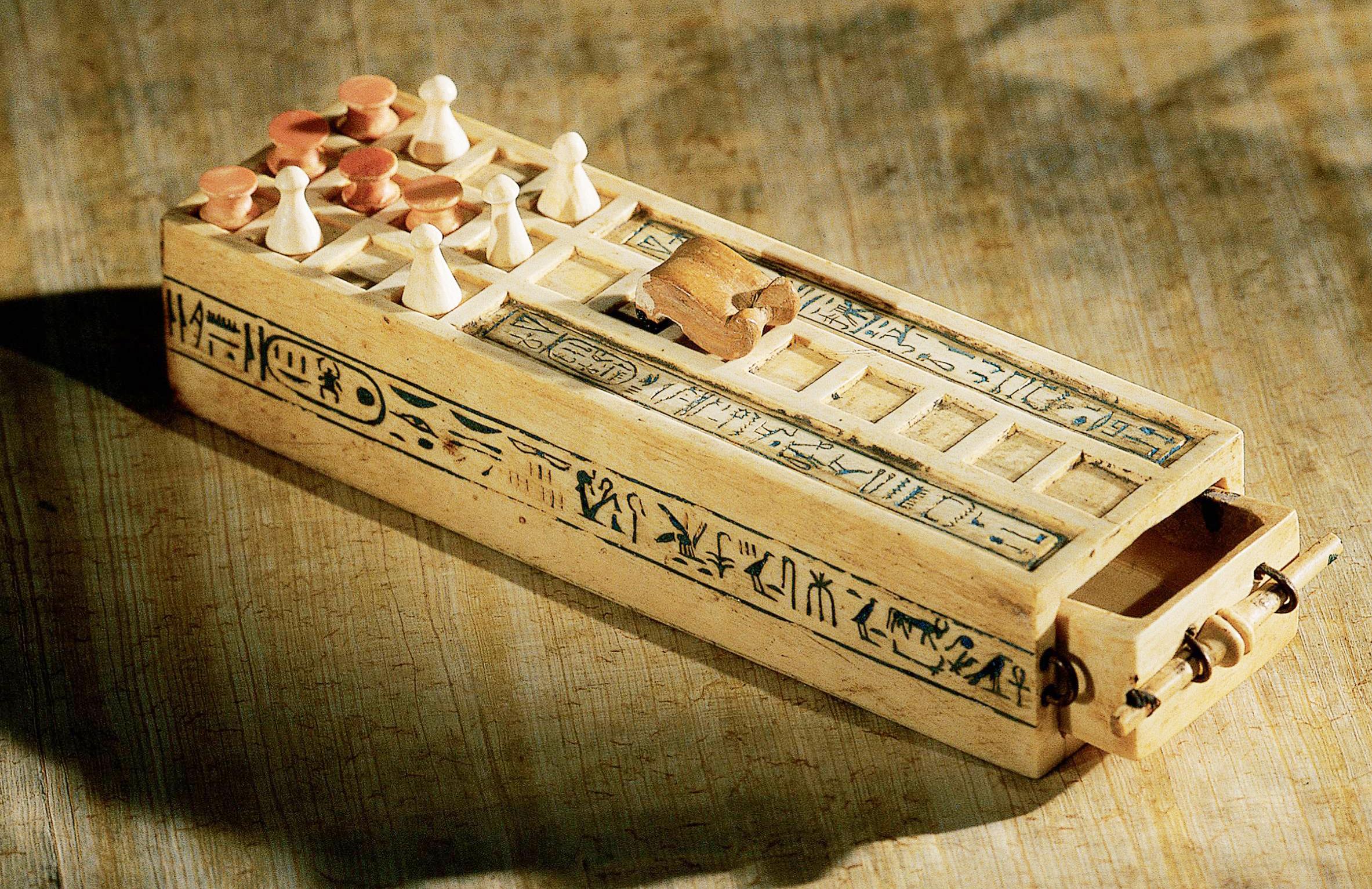
Will be posting again soon, but I wanted to update that I have relatives visiting right now! It's a lot of fun having a family reunion, but finding time to write has been a bit difficult. No worries, though, as I have multiple articles planned.
Ancient Board Games You Should Play: Patolli
Time for another entry into my ancient board game series! This time we’re focusing on the Aztec game Patolli, which means “beans” in English. Of course, the game wasn’t just played by the Aztecs; it was also played by the Mayans, the Toltecs, and other Mesoamerican peoples.
The rules for this game have been reconstructed, but they’re a bit sketchy and may or may not accurately represent all of the rules of the original game.
You see, the game can be traced to about 200 BC, but after the Spanish conquistadors invaded in 1,500 AD (CE) it was banned. These great nations quickly fell into decline, their cultures nearly evaporating and the game Patolli with them. As such, it’s hard to reconstruct the rules of this game, but people have done it and the game is playable today. I’ll teach you how in a jiffy, but it’s time for more history!
The game was played by both commoners and nobles alike. The Spanish noted that Montezuma II enjoyed watching the nobility play the game, perhaps because of the focus on gambling.
The game uses dice, but not the dice you’re thinking of. They used black beans (hence the name) with holes drilled into them on one side. Boards were painted on matting as opposed to being carved into clay or stone as we saw with Nine Men’s Morris.
Before the game, players would meet and see what each had available to bet. Eat your heart out, Vegas, because the gambling spirit was really strong here. There were usually six items being bet, as each player had six game pieces. Blankets, gold, and food were often wagered – you know, things you really didn’t want to lose!
The Aztec god Macuilxochitl was apparently a fan of this game, perhaps even overseeing it. A small pile of offerings was laid beside the game board during each game, and winners were able to collect the offering (in addition to all the other items wagered) as a supposed gift from the god, bestowed to the clever winning player.
Rounds are won when a player becomes the first to move all of their game pieces around the board while collecting one piece from each player.
The game is won properly when one player wins all of their opponent’s game pieces. Given that you can have up to four players, you can imagine the challenge of doing this.
**What is Needed to Play**
2-4 Players
A Game Board (You can print them from the Internet or just buy a handmade set from a place like Etsy)
Six “counters” per player. These can be made of anything, such as paper, coins, beads, tokens scavenged from other games, etc. The only thing you need to make sure of is that you won’t mistake your pieces for anyone else’s.
One dice or five beans you’ve fashioned into dice to give it a more authentic feel.
**How to Play**
1. Decide who moves first by rolling the dice or throwing the beans.
2. To begin, each player has five tries to roll a 1. If they fail, their turn ends and they forfeit one of their game pieces to an opponent. If they *do* role a 1, they may place a game piece on the board, specifically on a space at the top of the “arm” closest to the player.
3. Game pieces move clockwise around the board.
4. Once a player has a game piece on the board, they are allowed only one roll per turn. They can choose to move a game piece already on the board, or, if they roll another 1, they can opt to place a new game piece on the board.
5. One one game piece can be moved at a time, you must move it the full count of the die. If a player cannot move a game piece, they lose a turn and must forfeit one game piece to their opponent.
6. You cannot place your game piece on a square that’s already occupied.
7. In order for a game piece to be considered to have completed a round, it must land on the exact square it started on.
8. If a player lands on either of the two spaces at the end of each arm, the player can take another turn.
9. If a player lands on any of the spaces marked with a triangle, he or she must forfeit one game piece.
10. If a player is forced to land on another opponent’s game piece, the opponent’s game piece is captured. This means that the piece is removed from the board and can only be placed back on it if a 1 is rolled again.
**There you have it. Another exciting ancient game!**

The World We Strive For
Time for some rambling thoughts. I apologize to those who normally enjoy reading my articles for such crazy ramblings, but after spending too much time on forums, I’ve come to wonder just what kind of world we’re working toward and how it may play out. The world feels like it’s going mad, so here are some thoughts.
**Mandatory Vaccines**
The coronavirus pandemic certainly thrust the world into a state of fear, didn’t it? I know one person who was lost to the dreaded virus and losing her was a terrible sadness. However, I haven’t gotten a vaccine, and I don’t believe anybody should be made to.
I’m a huge proponent of medical advances, and I believe that everyone should have access to experimental treatments, which is exactly what these vaccines are. That being said, I personally am skeptical of them, and the fierce push to get everyone vaccinated makes me dig my heels in all the more. If there’s such a strong push to get vaccinated against an illness that, more than likely, will *not* kill you, it makes me wonder what the agenda is.
We have reports of girls and women either not having their periods or having their periods non-stop. I know of one man personally who was flown to an ICU and stayed there for five days due to the effects of the first shot of either Pfizer or Moderna. Other people haven’t been so lucky; they died. The news seldom reports such things, but the accumulation of anecdotal evidence makes me wary of a drug so new on the market.
No, I’m not afraid of having my DNA changed. I’m more afraid of a group of powerful people pushing some sort of agenda, and I would rather not partake in it until I know for certain that the vaccine isn’t dangerous.
Mandatory vaccines are even more frightening. Right now, states are bribing people to take the vaccine by offering lotteries, free beer, and even free weed! If things progress to mandatory vaccines, I suppose I’ll just be out of work and unable to travel anywhere. It sucks, as I was hoping to travel to Japan soon, but I guess that’s out of the question, at least for now, if they push things like vaccine passports.
Every American has the right to refuse treatment, and that includes vaccines. I know of no anti-vax parents who were ever bribed or forced to vaccinate their kids against, for example, smallpox. If that’s the case, then why should we be forcing people to vaccinate against a virus that, for many, will be slightly worse than the flu but still not deadly?
These vaccines don’t even prevent you from getting sick with the virus or from spreading it around! Fauci, for a time, was urging people to continue wearing masks even after becoming vaccinated, rendering the vaccine kind of a moot point in the grand scheme of things.
**Cultured Meat**
I’ve come out in favor of this many times, and I’m still excited about it. As someone who has never particularly like vegan dining, the ability to eat meat without the cruelty involved is a tantalizing prospect. The technology is now here, and it should be introduced. https://read.cash/@Shounenbat/the-rise-of-slaughter-free-meat-7f9cb3f7
That’s not to say that I want livestock to disappear, though. I love cows, goats, pigs, and chickens. Backyard chickens will even provide you with eggs without the factory farming practices that make vegans cry, and goats are fantastic pets! Okay, pigs are too, but I’m a goat and goose person when it comes to farm pets.
**Underwater Cities**
This could be an article in and of itself, but there are at least two companies, one in Canada and one in Japan, working to build cities in the ocean. One wants cities to sit and the bottom of the ocean, the other wants them floating near the surface.
I would totally live there.
The ocean is a beautiful, fascinating place that has, unfortunately, been treated like a landfill for most of human history. We’re definitely starting to see it now, with animals dying, their bellies filled with plastic. Dolphins are poisoned with oil and some communities of orcas on the brink of dying out. Underwater cities could help people appreciate the ocean more, just as Sea World inspired so many people to study and care for marine life.
**Gene Editing**
“Can you even dye my eyes to match my gown?” Dorothy asks during “The Merry Old Land of Oz” song. Why settle for dying eyes when we can just edit our own?
Gene editing will allow humans total control over our own biology, allowing us to eradicate certain diseases and go hog-wild with our own vain ambitions. I personally believe that gene editing will be a key component to our survival in the future, and I welcome it. I still don’t want your vaccine, though…
**Indefinite Lifespans**
I didn’t lump this in with gene editing, as the key to this endeavor may actually lie elsewhere. Still, more and more people are taking this prospect seriously, and many believe we’ll live long enough to see the end of aging. I guess this means get into your cryonics chamber and take heart that you won’t be asleep for long?
In all seriousness, I’ve written about this topic before and am still enthused about it. Society would shift quite dramatically upon its achievement, and I hope it would change for the better. It would have an impact on criminal justice, immigration, conservation, population, and just about everything else. https://read.cash/@Shounenbat/could-humans-and-pets-live-forever-f8ffeaf1
It could even put the tobacco companies out of business, for who wants to risk their near-immortality?
**Sustainable, Green Energy**
I once watched an interesting video series about the Egyptian pyramids and how they may have been able to, intentionally or unintentionally, generate electricity. Regardless of whether they did or not, we will need a new energy source.
I’m not one to prance about singing the Earth’s doom due to climate change, as I’m still on the fence regarding whether I believe mankind is a significant contributor to our current climate or not, but that doesn’t mean I’m all for polluting the air and earth. You shouldn’t have to believe you're on the brink of an apocalypse to believe we can do better.
The problem here is that the oil tycoons are powerful, and people who come up with alternative solutions are usually found dead shortly after.
**What Do You Think?**
What do you think of where science is taking us? Let me know below, or give suggestions of things you want me to cover.

Ancient Board Games You Must Play: Nine Men’s Morris
Watching a chess match and thinking there were no board games before the likes of chess, checkers, and backgammon? Do you really think that the concepts of even our modern, electric board games are wholly original?
Believe it or not, people have been playing board games for thousands of years, likely since the dawn of humanity as we know it. Before our more sophisticated video games, everyone seemed to enjoy a good board game, and many people still do. Just look at Monopoly as it churns out new editions every couple of years!
Unfortunately, many ancient board games are unplayable, as we don’t know the rules to them. They were popular enough that archaeologists have exhumed many of them, but literacy rates were low enough that everyone just learned the rules orally and passed them on. Some of them have rules, and some of them seem simple enough that we’ve managed to discern how the game was likely played, however, and we’re going to be looking at one of them today.
*Yes, this will likely become a series.*
**Nine Men’s Morris**
As recently as 2018, excavations at Vyborg Castle, an old Russian fortress, unearthed an old, forgotten medieval game board. Etched into a clay brick, the game was being played in the 16th century.
Other excavations, namely one that revealed that Egyptian workers had carved a Morris board into a slab of roofing, prove the game is quite a bit older, as early as 1,400 BC.
**How is it Played?**
The game is similar to checkers.
The board is a grid, consisting of three squares nestled inside one another. Lines connect the 24 intersections on which pieces can be placed.
There are only two players, as in checkers. Each of them has 9 “men”, represented by different colors.
Each player attempts to form a “mill”, which is to have three of their pieces in a row on one of the lines. You can do this vertically or horizontally, but you mustn’t form angles.
The game actually starts with zero pieces on the board and ends when one of the players is reduced to two pieces and therefore cannot form any mills, or if a player has no legal moves he or she can make, making the other player the winner.
There are 3 phases to the game, the last one being optional.
****Phase 1:****
1. Players take turns placing one piece onto the board at a time onto the empty slots.
2. Each player tries to prevent the other from forming mills. If one player forms a mill, he or she can remove one of the opponent’s pieces of their choice. The only rule is that the piece removed cannot be part of a mill already. If all of the opponent’s pieces are in mills, then none can be removed. Removing pieces is called “pounding”.
3. If players can form more than one mill in a single move, he or she remove as many of the opponent’s pieces as there are mills.
****Phase 2:****
1. Now that all the pieces are on the board, it’s time to start moving them. You take turns moving pieces around the board trying to form mills.
2. During the second phase, players can only move their pieces to adjacent dots. If there are more than one of the opponent’s pieces in a row, players cannot jump over those pieces.
3. Players may remove pieces from a mill they’ve formed and then move it back on the next turn. Doing so counts as forming a new mill and they can remove an opponent’s piece.
****Phase 3:**** **(Optional)**
Phase three is an optional phase that allows pieces to “fly” over the board. It may begin when one player has been reduced to three pieces.
1. Players can move pieces to any available dot, even if this means skipping over dots or jumping pieces.
2. Players are allowed to skip phase three and just continue playing in phase two until the game is won.
**Where Can You Play It?**
Sound like a game you’d like to play? It’s easy! There are game boards available if you just look around. Etsy has some talented people who make very beautiful Morris boards.
There are also Nine Men’s Morris apps available if you’d like to play a bit of history to pass the time and don’t need a dedicated game board.
Of course, you can also make your own game board. It’s not difficult and can be a fun project, especially for kids. You can even just draw it on a piece of paper, as ancient people simply carved it into clay and stone. See how easy it is in the video below.
https://www.youtube.com/watch?v=Ifz43yCexSY
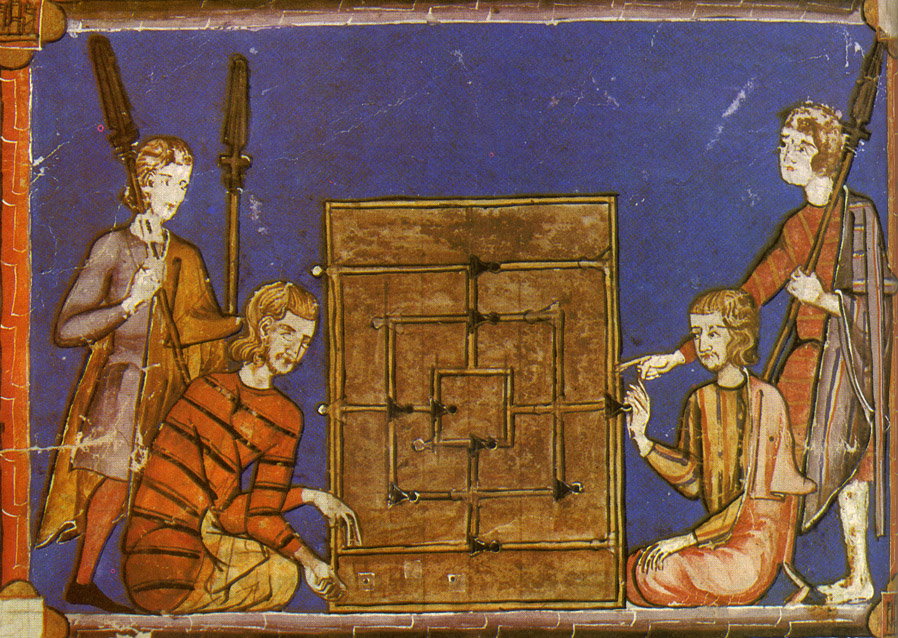
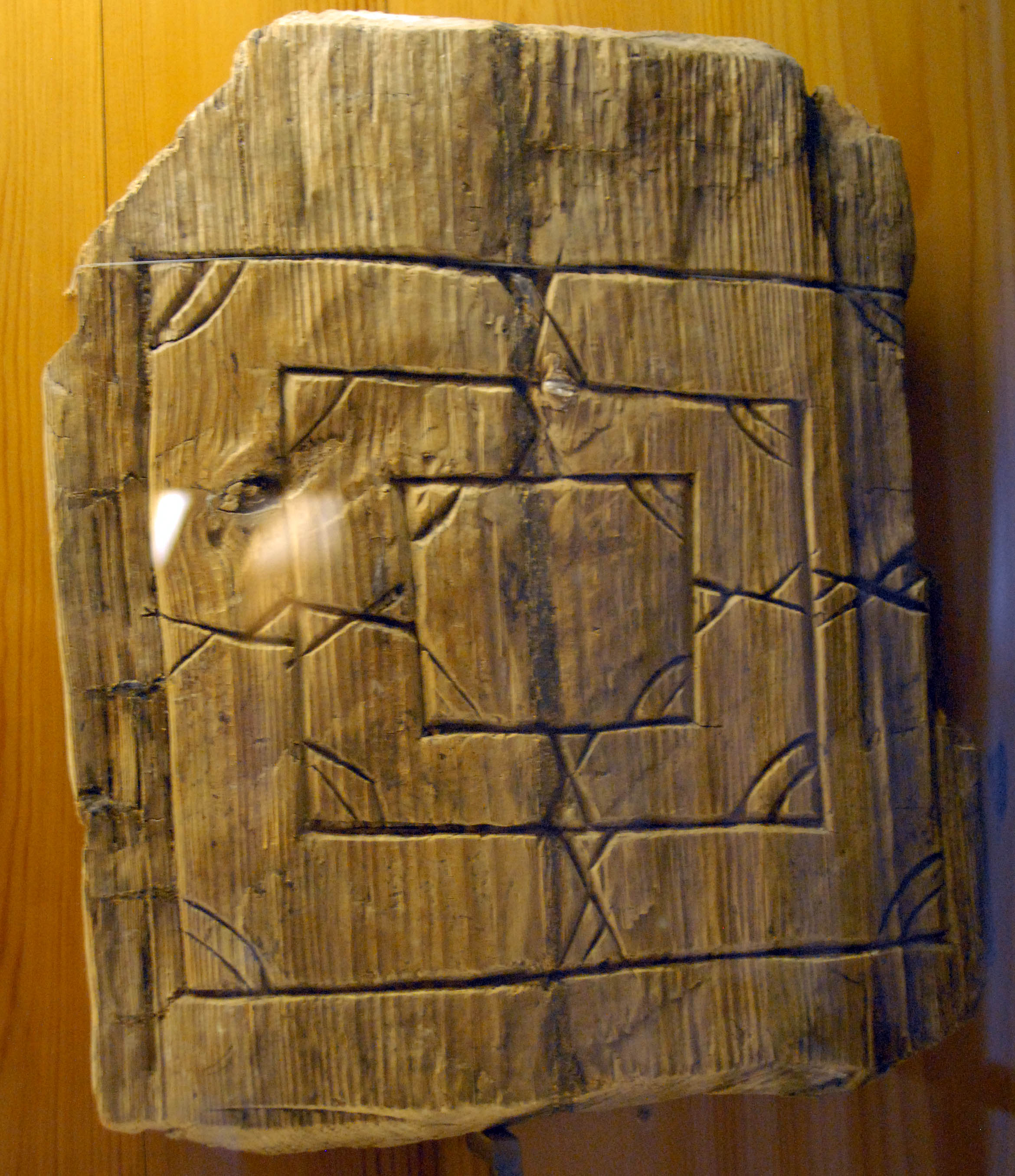
Making Money in a Pinch – What I’ve Tried
First of all, a quick update on my dog, Molly. It’s not been one month since she began her experimental cancer treatment, GDF11. She has regained all of the weight she lost and is full of energy! No signs of additional tumors. It may be a bit early, but I’d say that GDF11 has licked this thing, and hemangiosarcoma is one of the deadliest cancers known to dogs.
This leads me to the crux of this post. All of this costs money. A lot of it. Surgery, treatment, and not to mention the day-to-day living expenses anyone must procure.
How does one come up with funds in a pinch? I’m not 100% certain (I still have my fundraiser up, and you can get to it by means of this post), but here’s what I’ve been doing. https://read.cash/@Shounenbat/gdf11-as-a-cancer-treatment-196c1bfc
**Fundraiser**
I’m not much of a fundraiser type. I hate having to ask strangers for money, so I have to be in dire straights in order to ask. If you have a pretty good following or at least the ability to tug on heartstrings, I suppose this will work. I’ve made $100 so far with mine, which isn’t nearly what I need. Thankful for it, but so far it hasn’t been that efficient. Any tips are greatly appreciated.
**Dropshipping**
This is the act of buying wholesale (sometimes upfront and sometimes on a need-to-have basis) and then selling the items for a higher price. You know, that thing that retailers do. It’s not, contrary to popular belief, selling things for a higher-than-retail price and then ordering off of Amazon or Walmart for the customer.
I’ve got an Etsy store with a few listings, and an eBay store as well. I also buy wholesale inventory up-front to sell on Facebook Marketplace.
So far, I’ve had some small sales. My profit margins aren’t that big, but if I can change that, I should be able to earn a decent living wage. My problem is that any small profits I have quickly gets spent on things like gas and groceries.
**Busking**
Playing music for tips on the streets is actually pretty fun. I don’t have the equipment to do it right now, but in the past, it was a nice way to make some tips. Sometimes I could even make $200 in one hour, but you have to be in a crowded spot in good weather.
I’d like to do this again, but I’d have to be able to buy an amp and mp3 player first…
**Spreadshop and Redbubble**
If you like designing shirts, you could open shops here. Merch by Amazon is also a good way to sell designs, but Amazon has a habit of terminating my accounts without warning, and then they have a habit of never responding to my emails when I demand an answer. Spreadshop and Redbubble are great, though.
**Mechanical Turk**
Another place where my account was locked, but this time they gave a reason: unable to verify my identity. I don't know how to remedy this, but when I figure it out, I'd like to start on here again. It's a platform for micro-tasks, which can be mind-numbing, but effective if you keep at it.
**Well, that’s all I’ve got so far.** If anyone has anything to share, do so in the comments! Or if you’ve already written an article about this topic, link to it in the comments.

Universal Basic Income: Human Rights, Dignity, and the Pursuit of Happiness
Andrew Yang, a presidential candidate in the Democratic party 2021, based most of his campaign around a single issue: universal basic income. He foretold the coming AI revolution, the next step of human progress, and the devastating effect it will have on the ability for humans to work. According to him, mankind will need to be provided a basic living expense in order to survive.
Yang’s campaign wasn’t successful, and UBI was further made into a partisan issue. This isn’t entirely Yang’s fault, of course. Politically speaking, we’re more divided today than we have been in a long time. I won’t venture to say that we’re nearing pre-Civil War levels of disagreement, but we’re a far cry from where we once were.
The problems surrounding us will only mount, and I would argue that a UBI of some form will be needed. I say this as a libertarian and a very fiscally conservative one at that. That means I believe the UBI shouldn’t be printed money, it should completely dissolve the current welfare system.
This is why Biden, with his plans for job guarantees, and many politicians on the right are stuck in their thinking and aren’t seeing the coming storm. I posit that UBI is the best way to get over the hurdles on the horizon without becoming socialist.
**Universal Basic Income: What is It?**
Before I go further, I should define what a UBI is. Universal basic income is nothing more than receiving a stipend from the government (or another entity) that should, in theory, cover at least the bare necessities of life. By making it universal, it means that this is money you would never lose, no matter how much money you make.
Universal basic income is a way of ensuring that massive amounts of people won’t find themselves in a financial crisis in the event of massive job loss or, as we’ve recently found out, a pandemic.
Proponents argue, citing the recent stimulus checks as an example, that implementing a UBI would be infinitely better, as inflation wouldn’t be a problem and you wouldn’t be relying on bills being passed over and over to act as a band-aid.
**Why it’s Better Than a Job Guarantee**
The problem with a job guarantee is that you’re still never going to employ everyone. The lives of people are messy and complicated; some have disabilities, some experience burnout at rates others don’t, and, let’s face it, not all jobs are going to pay you enough to live.
A job guarantee is a step up from where we are, but it isn’t a solution. This will especially be true as most unskilled jobs are simply phased out. Technology is moving forward, and you can’t undo it.
I recall an episode of *Lassie* where the Martins are considering buying a refrigerator. The iceman, if I remember right, laments that soon he’ll be out of a job as more and more people switch to refrigerators. It’s easy to feel sorry for the guy, but no one faults the Martins (including Lassie, who is at first mistrustful of the new contraption in the kitchen) for switching over in the end. After all, none of us today would want to wait for the iceman to bring us some ice to keep our food boxes cool.
There are a number of jobs that are on the verge of either going extinct or becoming smaller. I wrote an article about cultured meat some time ago, and ranchers are fearing that their ranches will become much smaller as we stop mass breeding livestock simply to be slaughtered. We must also take into consideration that the fossil fuel industry could be in jeopardy as more and more people seek an alternative, sustainable, and greener source of fuel.
On that note, electricity and fossil fuels themselves put earlier forms of energy out of business. Coal isn’t used quite as often anymore, and no one is going to slaughter whales to light their homes. They are obsolete, and for the better. Hopefully, the things that are harming the planet now will become obsolete one day, too.
Of course, this means that some jobs will be going the way of the dinosaurs, as they always shave. The difference is: will the people affected be able to find other good work and will the industries replacing them provide a comparable number of jobs to the oil industry?
A job guarantee is a great short-term fix, but it’s very possible that a lot of these jobs will be unnecessary and poor jobs for people to work.
**What a UBI Could Do for People**
Universal basic income could revolutionize the world. This is hardly a new idea, as it was even being tossed around in ancient Athens. This is an idea that would allow people to live dignified lives.
By giving people cash, no strings attached, the benefits to society and individuals would be enormous. 10% of families in the United States today experience food insecurity, which amounts to tens of thousands of people. https://frac.org/hunger-poverty-america
Welfare exists, but the qualifications for it can be difficult to hit, and the fear of losing it as a safety net keeps people from seeking employment. UBI is universal, meaning you don’t lose it if you find work. This means people can seek employment without fear of suddenly losing their safety net.
More people would be able to start businesses, seek higher education, save up for emergencies, stimulate the economy, vacation, and put money towards their children’s future.
**What Happened to Old-Fashioned Hard Work?**
This is a criticism hurled at the concept of a UBI that stems from people who view their own achievements in life as a credit to their hard work. Nothing is wrong with working hard, but we’re living in a time when hard work doesn’t necessarily mean you’ll be making ends meet.
There’s a harmful stereotype that if people aren’t well off, they must be lazy. If only they would get a job, or two, and marry someone who works a job or two, they wouldn’t be wondering how the rent is going to be paid!
Many circumstances can lead to someone living below or hovering near the poverty line. Hard work won’t guarantee that you’ll be pulled out of it.
There’s a notion that by taking advantage of welfare or accepting a “handout”, your value as a person has decreased. We’re prejudiced against anyone who cannot make it on their own, stereotyping and devaluing those people. Being able to say, “I worked for my money,” is an accomplishment, but implementing a UBI doesn’t mean no one will be working to grow their income.
A UBI doesn’t mean you’ll be living in your own home, paying a mortgage, subscribing to all the services on the Internet, and texting on the latest smartphones. It means you won’t go hungry and that you could pay rent for a small apartment. You won’t be taking expensive vacations or driving brand new vehicles with a UBI alone; it just means that you won’t be starving and homeless.
Hard (or smart) work won’t be going away. Without work, you’ll be making ends meet if you live a minimalist lifestyle and that’s it. By working, you can still live in a large house and drive a nice car and be able to tell people you earned it.
**Won’t Some People Just Not Work?**
I’m sure some people would decide not to work. Maybe we’ll see a surge in stay-at-home wives or househusbands, only one spouse working a formal job while the other stays home. Of course, there will always be the truly lazy (or extremely minimalist hippie) types who would refuse to work.
So, yes, some people would just not work, but that isn’t bad. You can look down your nose and silently or openly judge them all you want, but taking away the basic income from such people would likely not affect those numbers much.
Data from pilot programs show that employment actually rises. https://www.npr.org/2021/03/04/973653719/california-program-giving-500-no-strings-attached-stipends-pays-off-study-finds
**As a Libertarian, Don’t You Think This Would Make People Dependent Upon Government?**
Welfare already does that! The problem that I and many other libertarians have with welfare isn’t just that people are relying on the government to take care of them, but because of the enormous cost.
The welfare system is plagued with red tape that requires manpower and resources to navigate and determine who meets the requirements. The sheer number of programs sucks taxpayers dry, and the fear of losing the safety net means people who wind up on welfare sometimes have a tendency to stay there.
This alone means that welfare makes people dependent upon the government, and it’s a fiscal nightmare.
If UBI replaces the welfare system and you implement a VAT tax, you could give a stipend to every last American and not see a huge increase in inflation. It would be far more streamlined, and because you don’t lose it, you don’t get trapped the way welfare traps you.
This libertarian would also like to note that an ability to opt out of receiving the stipend would mean you could easily live free of government. I’d also like to note that by making the cash available for you to use however you see fit, the government isn’t going to be interfering in your life the way it does with welfare.
**UBI is on the table in several countries, and I hope it comes to the USA as well.**


The Last Unicorn: A Literary Masterpiece (Spoiler Free)
Last night, I watched the old animated film *The Last Unicorn* with my family and was once again touched by this masterpiece of philosophical fantasy. The book and film were both written by Peter S. Beagle, a man who still seems intimidated by the success of the book, heralded as one of the best fantasies ever written.
The story is about a unicorn who lives in a lilac forest where, thanks to her presence, the leaves and snow never falls. Just like the immortal being who dwells there, the forest never changes with the seasons and never dies. The animals, too, that live within, though not immortal, are more wily than your average animal.
One day, she overhears two hunters discussing the forest and claiming that she’s the last unicorn, all the others having vanished. Naturally, this puzzles the unicorn, for while unicorns can be killed, they don’t die of natural causes or simply vanish.
She asks a butterfly passing through if he’s ever seen another of her kind, but since butterflies are flighty insects, all they do is repeat what they hear. The butterfly starts reciting random bits of poetry and songs, but he eventually gets around to things he’s heard of the unicorns.
According to him, or at least the tales he’s picked up, the unicorns were fleeing from a creature called the Red Bull (this was before the energy drink), who chased them to the ends of the earth. Deciding to leave her beloved lilac forest, at least temporarily, she embarks on a quest to find the others.
This book is ripe with symbolism, its themes largely taking front and center stage. This is a story about death, humanity, identity, and truth.
Unicorns and other magical creatures can only be seen by other magical creatures, magicians, and people who truly believe in them. Otherwise, such creatures are unicorns are merely seen as horses by average, disinterested folk.
This is also a story about maturity and the role that experiences play in shaping ourselves. The unicorn is innocent and pure, as unicorns typically are throughout European mythology. The lilac forest is a sanctuary that has sheltered her for eons, and she’s a member of a species that seems to have stunted emotional development in general.
“I can never regret,” the unicorn tells a character named Schmendrick. “I can feel sorrow, but it’s not the same thing.”
Unicorns don’t experience the deep, complex emotions of a human. While not outright stated, it seems that she also doesn’t feel guilt or shame. They live in their own world, vainly recognizing themselves as the most magnificent of all creatures.
The human characters struggle with mortality and coming to grips with death. To even be able to place a significant enough impression upon an immortal being that she remembers you for eternity seems to be immortality enough for some.
Going into the other themes would be impossible without spoilers, and I intend to keep this brief review spoiler-free. Perhaps I’ll do another awash with all the little details and twists and turns, but not this one.
Why? Because you need to read it for yourself! At least see the film adaptation.

Anime Review: The Vision of Escaflowne (天空のエスカフロネ)
Curious to know why I started learning Japanese? It’s all thanks to an anime called *The Vision of Escaflowne*. This wasn’t the very first anime I’d ever seen; Pokemon had taken the US by storm and brought with it a host of shows that could be edited and dubbed for American children. We had *Digimon, Monster Rancher, Flint the Time Detective* and more. Even as teenagers, we flocked to these shows, as they were just *different* from what we were used to.
*Escaflowne* was one such show. Originally meant for teenagers, Fox Kids decided it would somehow be possible to dub and edit the show to appeal to boys aged 6-12. I won’t get into how insane of an idea that turned out to be, because although they did a hack job of it, this was my introduction to an amazing anime.
It went suddenly off the air, or perhaps changed to a new time slot that I wasn’t privy to, about midway through the show, leaving me longing for more. I turned online and found a fan site (there were no social media groups for specific shows the way there is now) that extensively compared the original Japanese to the awful Fox edit. This was the first time I realized just how much anime could be changed when it arrived on our US TV screens.
I did something I’d never done before. I emailed the guy who ran the site and asked, “Should I get the sub or dub?” His response was that both were good, but the original voices and dialogue were still a bit better.
My fate was sealed at that moment. In exchange for purchasing the subbed version of the show on VHS, I promised my mother that I would wash the dishes for a month! It was completely worth it!
I was hooked on the show from episode one, a rare feat for any show! I was soon drawn into the same strange world that our protagonist, Hitomi, was. As I began picking up bits of Japanese vocabulary, I’d decided on about my second run-through of the 26 episodes show that I was going to master this new language and be able to watch without any assistance at all.
This isn’t just how I decided to learn Japanese (and as I learned more about Japan and started talking with Japanese people, this helped my motivation a lot), it was how I caught the language bug in general. I can’t imagine ever stopping learning a language now, even if I never learn most of them to the level that I learned Japanese, and I’m still constantly improving my Japanese.
This anime still holds a special place in my heart. It holds up extremely well, even now that I’ve left my teenage years far behind me and have immersed myself in the fantastic worlds of so many other anime. I can’t wait to share it with you all!
**Plot**
The plot seems strange at first. A high school girl who’s into Tarot Cards and fortune-telling learns that the upperclassman she has a crush on is moving abroad. Both of them being on the track team, she makes a bet with him that if she can beat her sprinting record, he should give her her first kiss.
The bet is on, so she, Amano (the upperclassman), and another friend of hers get together to see if she can beat her record time. Unfortunately, a dragon suddenly appears out of nowhere, along with a sword-wielding boy who seems solely focused on slaying this dragon.
Upon slaying said dragon, the boy is confronted by a very bewildered Hitomi. Before he has a chance to explain, the two of them are transported to a world called Gaea, where the Earth hangs among the stars in the night sky and is only known to the natives as the Mystic Moon.
On Gaea, Hitomi is drawn into its politics and the war that seems to have enveloped the whole planet.
It sounds strange, but trust me, it’s a fantastic story, filled with characters you’ll love dearly.
**Characters**
This thing was *Game of Thrones* before *Game of Thrones*! Well, before the HBO adaptation, anyway. The characters really drive this story, and we can easily see the corruption in the protagonists as well as the righteousness in the villains. They’re complex, driven by their own desires and motivations, and also so easy to relate to, love, and hate all at once.
Hitomi serves as the audience’s avatar, naturally. She’s an Earthling who’s been sucked into a world that’s culturally vastly different from her own. She reacts in the way we would, an outsider thrust into a war we have no stake in. This trope has been done to death, but it feels so fresh here.
It also helps that Hitomi is more than just the person who reacts to the strangeness around her. She has some mild psychic abilities, making her a useful tool. In fact, it’s the fact that so many characters want to use her as a means to their own ends that makes her struggle so palpable and real, even as she herself develops favoritism and even romantic feelings for some of them.
Other characters include Van, the young prince of a kingdom called Fanelia (it’s always a breath of fresh air when someone is introduced to a new planet and it *isn’t* run by a single governing entity) who suddenly appeared on her planet, fighting a dragon.
Van has a little cat-girl friend called Merl, but before you roll your eyes, this character isn’t here for sex appeal or to make furries wet themselves with glee. She’s very childlike, not that attractive, and starts off as quite annoying.
There’s another prince named Allen, as well as his fiancee. Your mileage with these characters, particularly Allen, may vary. You’ll either like him a lot or find him “meh”.
On the villain side, we have the idealist Folken and the absolutely psychotic Dilandau. I won’t go into them, because spoilers would run rampant, but these are villains that are impossible to really hate. Dilandau in particular is so delightfully insane, yet so unfathomably tragic, that you can’t help but feel he’s one of anime’s best villains.
I’m not going to go into any other characters. Trust me, you want to watch this show and experience them for yourself.
**Art**
This is a breathtaking anime with some gorgeous artwork and animation. Back in the day when everything was done by hand, you can see the care put into every detail presented here. Each cell is hand-painted, and there’s a human touch here that you just don’t see anymore.
That’s not to say that I hate computer assistance in animation because I don’t. As an indie game developer who is usually not the best artist (I prefer the programming side), I’m thankful for tools like Photoshop, Blender, etc. It’s always nice to see a good-looking show that was done slowly and entirely by the human hand, however.
**Music**
I think I insisted on owning the entire soundtrack, and I still have it. Yoko Kanno is easily one of anime’s best composers (along with Yuki Kajiura, that is) and she shines here. I’ve even heard bits of the *Escaflowne* soundtrack used on other shows, such as the original *Iron Chef*.
This music isn’t what you would expect from an anime, it’s what you’d expect from a major motion picture. I’ll just show you some of this fantastic music.
https://www.youtube.com/watch?v=O_49H_N43jQ
https://www.youtube.com/watch?v=W_FeLLZ7eIU
https://www.youtube.com/watch?v=Fv50DzU2l4s
**Do I Recommend It?**
Can’t you tell? Yes! If you’ve never seen this show, you must. Period. Go find it right now and give it a whirl. I promise you won’t regret it. I could go on and on about this show, but I’ll stop now and let you take it in.
Beating Writer’s Block
I’ve spent the past two days staring at the blank page on my computer, wondering what in the world I should write about. It’s not that I have no subjects to write on; I have so much more to say about language learning, would like to do an episode-by-episode blog of some old shows I grew up with, and have lots of new stories to write and tips to give, not to mention historical escapades to share with everyone.
But I can’t seem to get any of them typed up. That feeling of procrastination, which I am more than acquainted with (we’re practically married at this point), continues to whisper, “Look at what you’ve written! It’s no good and no one’s going to read this.”
So, instead of writing about a subject I wanted to tackle, I decided to beat my writer’s block by writing this: an article to tell you how to overcome the dreaded writer’s block.
**1. Freewriting**
This is essentially what I’m doing right now. Just put your fingers to the keyboard or touch your pen/pencil to the page and start writing something… anything.
You can write about that time you almost missed your flight, even if it’s hardly a riveting tale. Or you can write about someone you know or fondly remember. Write about what you ate for breakfast or what’s on TV. I could easily fill a page with how much I loath Netflix’s business model, for example.
Freewriting is a fantastic way to get your creative juices flowing. I’m doing it right this instant, fighting writer’s block by making myself type anything, even if it’s just a bunch of things I’ve done to beat this accursed affliction I’ve wed myself to.
**2. Online Writing Prompts**
I’ve gotten some strangely good ideas from random, online writing prompts. What starts as a simple exercise has often managed to set my imagination on fire. The next thing you know, you’re writing. And, as I’ve conditioned myself to remember, you only get better by doing. Unless you’ve written something you want to throw into a fire and expunge from history, you’re certainly able to share it.
It’s amazing what people will respond to. There have been articles I’ve written both here and elsewhere that I poured a lot of time and research into only to have them drop off the Obscurity Cliff within an hour, yet there have been articles I put little time into, shooting from the hip, that people seemed to applaud.
You may think that you’ve hammered out something from a simple prompt in a hurry, but people will lap it up!
**3. Take a Walk**
Go for a walk. It doesn’t matter where. City, farm, woods, by a stream – all of it can help. If you don’t like walking, then take a bike ride, go for a slow drive, or maybe go fishing.
Your mind may clear, needing a break from the burdens you’ve impressed upon it. Once clear, maybe finding a topic will be easier.
Of course, that hardly ever works for me. The procrastination monkey in my head says, “Do we really have to go back home and do work?” Instead of clearing my thoughts, I try and take in as much of my surroundings as possible. What am I thinking about on this walk? Are there other people or animals around? Is anything coming to me, inspired by all of this?
If nothing is inspired, then simply write about your walk or bike ride or fishing trip or whatever you did.
**4. Play a Video Game or Watch Something**
...And then review it! Pour out your thoughts and feelings about a specific game, show, or movie. Does remembering that old *The Wizard of Oz* game for the SNES fill you with uncontrollable rage? Do you wish you could move to the land of Tamriel? Let us know! We’re strangely fond of these things.
**5. Fanfiction!**
Forget what people say about fanfiction – it’s a great way to both be creative while doing some real writing. Of course, you shouldn’t always be writing fanfiction, but it’s a fun pastime that can pull you out of a rut.
I’m currently reworking the film version of *Swan Lake*, called *The Swan Princess*. It’s mostly an exercise of whether or not that train wreck is salvageable. It’s not to say that I hate the movie, only that it has huge problems. Working those problems out is a fun hobby of mine and, when I’m not feeling writer’s block towards it, am happily using to drag me out of the Procrastination Pit I’ve fallen into.
**There you go!** Five tips about how to beat writer’s block. I’ve managed to write over 800 words on this topic, which I suppose counts as an article. I hope you got something out of it. And since I can never stop running out of ways to fight off writer’s block and procrastination, maybe you can share your tips with me? Please?

Tips for Learning Ancient Languages
I briefly touched on ancient languages in my last article, which was about how your methods can change from one language to the next. When it comes to ancient languages, however, you’re dealing with an entirely different animal.
Ancient languages are, for the most part, no longer in use. Some may survive in some small way (Latin is used in some liturgical settings as well as in science, for example), but they’re no longer part of the wider culture. The Romans are gone, as well as the Vikings, the Ancient Greeks, the Sanskrit speakers, and the Classical Chinese. We no longer have Old English or Old High German, their tongues having evolved too much to be intelligible to most modern speakers.
This means that my number one rule for starting a new language goes out the window: listening first. Without any good movies, sitcoms, TV series to binge, or music to listen to, you can’t retrain your brain for that language. Whatever we know about how the language may have sounded comes from the painstaking work of linguists, trying to reconstruct a language by following its evolutionary trail.
So, if you want to learn Babylonian, Aztec, or any other long gone language, you have to first start by checking pronunciation guides. Then, if you really want to try inputting your way through the language acquisition process, you need to make sure you have grammar books and dictionaries with you because you won’t have access to works made for different reading levels.
**Tip 1: Don’t Jump Into Heavy Texts Right Away if You Don’t Have To**
There are no *Hungry, Hungry Caterpillar*-type books for the little Egyptian kids, although Egyptian and Latin have enough small snippets of text (Romans were fond of graffiti and stuck their thoughts over everything). Starting with small texts, if possible is a good idea. However, sometimes you’ll be forced to jump into something big and dense.
This is the problem with ancient languages. Literacy wasn’t a vital skill like it is today. Nowadays, almost everyone is literate to one degree or another. For example, even my father, who made up my bedtime stories when I was young because even the Little Golden Books were too difficult for him to read, could still read basic driving directions. Given enough time, he could even read some newspaper articles.
We rely on everyone being able to send texts and emails, and reading and writing are part of everyone’s education. In the ancient world, however, average people weren’t expected to be able to do things like send letters or make out grocery lists. Roads weren’t all that confusing, so they didn’t need to read signposts, and so even the best storytellers among the peasantry weren’t likely to be churning out scrolls and books. Without a printing press, nothing was expected to be read by the masses!
The result is that there’s a limited number of surviving texts available for us. Beggars can’t be choosers, but when possible, choose the lighter stuff first. You won’t want to bash your brains out as you try and decipher Homer’s bizarre use of language.
**Tip 2: Try to Avoid Dry Textbooks if You Can**
Nothing kills interest in an ancient language faster than a dry textbook. Stick to books like Assimil and Teach Yourself at the beginning, as they tend to liven things up. There are also some great books for learning Old English, too.
College textbooks are usually grammar explanations, tables of vocabulary, and snippets of texts like *The Iliad* or *Beowulf* for you to translate. If you can wade your way through them without chucking the books against the wall, go ahead.
**Tip 3: Remember That These Languages Were Once Alive**
It’s easy to imagine that Ancient Egyptian is merely hieroglyphs on monumental walls, that New Testament Greek exists solely in the New Testament, or that Galilean Aramaic is holy because people act as though its one and only speaker was Jesus Christ. Seriously, my Aramaic teacher decided to have some fun by translating a scene from *Star Wars* into Galilean Aramaic and people freaked out because this was the language of Jesus Christ and mustn’t be used for joking around.
No, these languages were once alive. People weren’t just telling epic tales or spouting words that would one day become scripture; they were bargaining, flirting, singing, joking, cursing, scolding, shouting, and whispering sweet nothings in these languages. Parents brought their children up in these languages, farmers called to their animals in these languages, sailors sang sea shanties in these languages! Yes, rulers gave incredible speeches in them, proclamations were written, historical accounts given, politics conducted, scripture written, etc. But there’s more to them than that.
Regardless of how a language survives today, you mustn’t lose the humanity behind them. Keep a journal in these languages. Roleplay in your head or on the page that you’re, say, making a pilgrimage to the Oracle at Delphi and write out what you ask the Pythia, how you think she might respond, and if you feel satisfied with her answers or not.
Bring the people of old to life as best you can. That is the best way to keep from being burnt out as you study an ancient language.
Those are my tips! They may be brief, but they're definitely helpful.
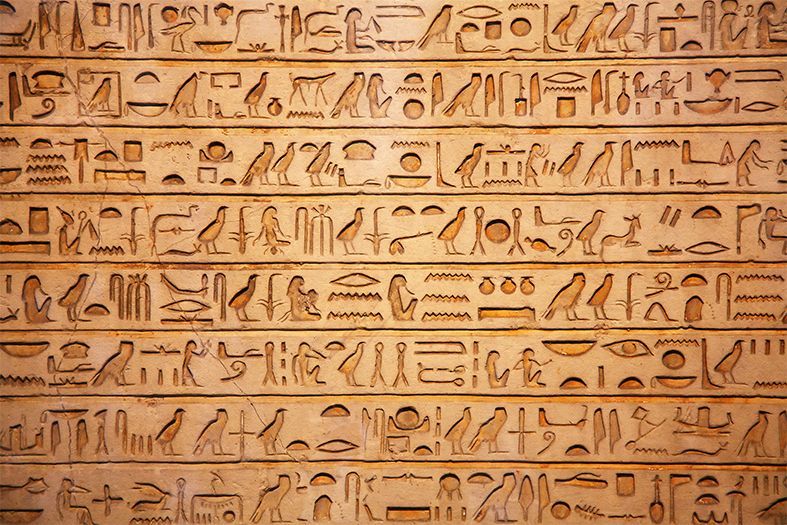
There’s No Wrong Way to Learn a Language
I’ve been thinking about my language learning journeys yesterday and how I’ve used different methods for different languages. I wrote a while back about different methods for language learning and thought I’d just share some personal stories of my various languages to counter the argument that there are definitive methods for language learning. https://read.cash/@Shounenbat/the-road-map-of-language-learning-35c60b8d
The one consistent I have when it comes to language learning is that I always listen to the language a lot before starting it. I find that I don’t struggle as much with pronunciation if I’ve exposed myself to the sounds of the language before actually studying it. This means I absorbed a lot of anime before starting Japanese, watched some Disney-esque animated movies and a series on Catherine the Great before officially starting Russian, spoofed my way onto the NHK website to watch Norwegian shows, etc.
Outside of this one thing, my methods tend to change.
**Japanese**
This was the first foreign language I tackled with sincerity, so I began by using a textbook. I’m glad I did, actually. Japanese grammar was very different than English, so I was happy to get further explanations about it instead of the you’ll-understand-it-eventually-through-exposure approach I generally use with languages.
The reason for this dramatic difference is that Japanese is an SOV (subject-object-verb) language, whereas English is an SVO (subject-verb-object) language. This means that “I ate an apple” in English becomes “I apple ate” in Japanese. There’s also no equivalent for “an”, “a”, or “the” in Japanese, which took some getting used to.
Once I felt I had a good working knowledge of the language and its grammar, I switched to the input method. I bought the *Dictionary of Japanese Grammar* books as well as a book about particle use to use as a reference if I got stuck, but I just started reading and actively listening to Japanese. This made my vocabulary grow exponentially, and my listening skills slowly but surely developed.
As a side note, the input method is very good for listening. It just takes me personally a long time to develop listening skills because I often don’t understand people speaking or singing in my native tongue!
**Norwegian**
This language is very close to my native tongue, so I started with Duolingo and combined it with the *Mystery of Nils* books, which teach through graded readers. The early chapters are very basic, but the descriptions and dialogue get more advanced as you go. There are also CDs and MP3s to go along with the chapters, so you can hear them being read as well.
Between these basic tools and immersion through outside reading and listening, Norwegian was easy to pick up through input. A lot of learning to understand just means to go through exposure.
**Russian**
I’ll admit that Russian was intimidating for me, so I started with Michel Thomas. His style is excellent for making a language less daunting, and while you don’t get much vocabulary out of his method, you *do* get a lot of grammar.
As I neared the end of Michel Thomas, I moved to Assimil. I just wasn’t ready for total immersion yet, but Assimil is an input-friendly method, much like the *Mystery of Nils*. I’m also reading Russian fairy tales because I’m just not ready to tackle a full novel yet.
**Greek**
I ultimately want to move to Ancient Greek, but I decided to start with modern because it’ll give me access to a lot more sources. Greek was the most common language of the Classic world, so it’s useful to know. My love of Greek mythology also drives me to this language like a moth to a flame!
Michel Thomas doesn’t have a course for Greek, and I’m slightly intimidated by it, so I switched to Language Transfer, which is free. I’m not very far into Greek yet, so I don’t know if I’ll be taking some time to just focus on more grammar or jump straight to input, though.
**Ancient Languages**
I’m lumping languages like Old Norse, Latin, Sanskrit, etc. here because my method tends to be the same. I always start out with either a textbook or Teach Yourself book. I’d use Assimil for Ancient Greek and Latin, but I don’t know any French and those books haven’t been translated to English yet.
I jump to input ASAP, but there are no graded readers, phrasebooks, or anything for these languages, as they are no longer spoken.
I can't think of a good way to end this article! Let me know what you think below.

Horizon: Zero Dawn vs The Legend of Zelda: Breath of the Wild
In 2017, two games were released just days apart: *Horizon: Zero Dawn* and *The Legend of Zelda: Breath of the Wild*. Both take place in a post-apocalyptic version of their worlds (*Horizon* in our own and *Zelda* in Hyrule) and both are open worlds.
*Zelda* took home the Game of the Year Award, and it’s easy to see why. The weather system is unique and innovative, the way nearly everything you pick up can be used to either defend yourself or fight an enemy is a cool implementation, and the open world is massive. So many different biomes to explore!
What I really liked about this *Zelda* game is that it’s precisely the direction I wanted the series to progress in once the N64 came out. *Zelda* games had always felt like there was this massive, medieval world to explore – a Japanese game that was thoroughly entrenched in their understanding of European medieval fantasy – and the games were challenging, fun, and engrossing.
Unfortunately, after *Ocarina of Time* came out, the games started to become more closed, more linear. Part of this was the change in management from Miyamoto to Aonuma.
Miyamoto focused on combat, with different enemies requiring different strategies to beat, and exploration. The game was inspired by his penchant for exploring different places as a child, after all.
Aonuma, on the other hand, prefers puzzles. He never beat the original *Zelda* game, said he spent all his time cutting grass in *A Link to the Past* because he didn’t like the combat, and swore that he’d never make those kinds of games. I still have no clue why he got the job of being head of one of Nintendo’s only action-adventure franchises, but it could simply be because he’s a quirky guy, and Nintendo values quirkiness.
Under Aonuma, *Zelda* games quickly became linear, the characters even sillier, and the combat repetitive and never challenging. Dungeons went from being elaborate mazes to being puzzle after puzzle. For gamers who prefer puzzles, *Zelda* suddenly became a game worth playing. For old-time fans, however, it never felt right.
For me, *Breath of the Wild* was a step in the right direction. A step Aonuma seems eager to move back from (and newer *Zelda* fans, unfamiliar with the older entries to the series, thought it was moving away from what they consider to be classic *Zelda*), unfortunately.
But *Horizon: Zero Dawn*, released a week before *Zelda*, was quickly overshadowed. Could it be because, as a new series (if it continues as a series), it didn’t have brand recognition? Could it be because *Zelda* was such a major step in a better direction that it shined more brightly? Maybe because with all of the experiments with weather simulations and such, *Zelda* just came across as far more innovative?
I think it’s likely that it’s a combination of all three, but when I played *Horizon*, I felt it that was unfairly overlooked.
Perhaps it’s not the best two games to compare, but I’m going to compare *Horizon: Zero Dawn* and *The Legend of Zelda: Breath of the Wild* to see which game was more enjoyable. **Keep in mind that I tons of praise for and respect for both games.**
Part of me wants *BOTW* to get all the accolades, warranted or not, simply to encourage Aonuma to stay on this path. However, part of me says that, even before I start considering all categories, there were plenty of things I definitely preferred in *Horizon*. Alas, it’s important to be honest. Here is my comparison.
**The World**
Both games are post-apocalyptic worlds. ***BOTW*** takes place one hundred years after the Calamity Ganon event, most of the neighboring civilizations still intact, but Hylians have driven from the area immediately surrounding Hyrule castle, the remnants of civilizations scattered in ruins all about it.
The Hylians wait patiently for the Hero to return and rid their world of Calamity Ganon and the monsters that have taken to roaming freely throughout the land.
***Horizon: Zero Dawn***, on the other hand, takes place many, many years after the fall of our own civilization. Nearing the peak of our technology, and perhaps as a commentary on capitalism and unchecked technological advances, great robot creatures called “machines” by the characters brought civilization as we know it to its knees.
Enough time has passed that humans have devolved into a primitive existence. New tribes and nations have formed that look up to the machines with a mixture fear and awe. Each tribe tends to view them a little bit differently, many of them viewing them as being sentient or conscious, some even attributing religious importance to them.
The Nora are a matriarchal society that feels neolithic – a little more primitive than their Carja and Oseram cousins. While the Nora may come off as particularly distinct, each tribe within this world features its own culture, values, and skills.
**But which did I prefer?** I actually prefer *Horizon* in this instance. Post-apocalyptic worlds are easy to screw up, and as much as I enjoyed *The Last of Us*, the world felt a little bit like every other post-apocalyptic world in fiction.
*Horizon* brings us something like feels a little bit like *Sword of Shanara* on steroids, and I love it. The remains of a world similar to our own is littered throughout the landscape, which is populated by people who no longer remember or understand it. Part of the game’s story is to figure out what happened and if there’s a way to make it right.
By contrast, the people of Hyrule definitely still remember their past. The ruins around them aren’t a mystery, they’re simply the aftermath of Calamity Ganon that no one’s bothered to clean up yet. The monsters that roam are a pain, but the people actually seem quite content to live there.
Living in a handful of towns and trading posts, the Hylians manage to live a life no worse than those of most previous games. They lament that the castle is still dominated by Ganon and mourn Zelda’s sacrifice of remaining to contain him, but they hardly seem to yearn for their previous existence.
Moreover, the neighboring nations, such as the Zora and Gorons, are completely unaffected. They’re still getting tourists, especially Hylian ones, and living their lives, albeit a little bit wary of the hijacked Divine Beasts (mini-dungeons) around them.
*Zelda* sports interesting weather mechanics, and anyone who says they primarily used the roads on their first playthrough is lying! In a game where you can climb almost anything (as long as it isn’t raining), roads are those things you travel on when you’re on horseback or feel like you’ve missed an important NPC.
I *did* enjoy *BOTW*’s world, but it didn’t engage me the way that *Horizon*’s did. It was a lot of fun, but when the novelty wears off, it feels so empty. There are vast stretches of land with the same enemies camped throughout it. I enjoyed finding shrines, and I never tired of it, but I never anticipated doing things like finding a particularly interesting character on my journeys.
**Enemies**
Since I’m on the subject of enemies, let’s talk about them a bit.
Within each game, there isn’t a massive variety of enemies, but the way they’re presented is quite different, and the way you defeat them is very different as well.
***Horizon*** has two main enemy camps: humans and machines. Human combat plays out exactly as you’d expect, machine combat is an innovative test of your skill with your assigned tools.
Humans are typically found in encampments, creating some very *Elder Scrolls*-like situations where you can either charge in, melee fighting your way to the “boss”, or stealthing it. I typically hang out someplace near a designated patch of grass that serves as a hiding point and start picking people off with my trusty bow and arrow. When enemies get suspicious, I lay low until they arbitrarily decide that there’s no one around. Somehow, they come to this conclusion amidst the growing heaps of corpses strewn about the encampment.
Machines are scattered throughout the world. These hulking, AI-powered machinations present challenges to the player in new ways. There are a variety of machines, each programmed by the past civilization to do different things: guard other machines, cut grass, transport goods, etc. They sometimes look like great birds, crocodiles, velociraptors, or indescribable heaps of metal.
Oh, and lasers. Those things are awful, take a lot of HP out, and leave you dodging and running for your life!
There are a variety of ways to fight them, some strategies overlapping with the way you would fight human combatants, but most unique to them.
You could, for example, craft or buy traps, use your Focus (a piece of technology Aloy finds that allows her to do things like see the machine’s pre-programmed paths) to see where they’re going, and then lay traps around to harm and confuse them. Be warned, though, that once you’ve antagonized a machine, it goes into attack mode, abandoning its pre-programmed paths. Things can get chaotic if there are multiple machines around, to say the least.
***Zelda*** gives us the normal flare of enemies one can expect from the series. Monsters are spawned all over Hyrule, as usual, but there are also shrines that feature their own brand of machines. These lost bits of Sheikah technology face-off against Link to protect the secrets within each shrine.
Some of the machines are also roaming Hyrule, their tentacle-like arms moving them about as they fire lasers at you. Anyone who says they weren’t taken by surprise and then immediately killed upon first encountering them is also lying to you.
The fresh thing about *BOTW* is that the enemies actually can be challenging. There are multiple varieties of each enemy, some being easy to kill and others being amped up a bit. The challenge comes from all of Link’s weapons being temporary.
Just about anything you pick up in the game can be used for either defense or offense, including mops and barrel lids. Nothing, save the Master Sword, is particularly durable, however. Combat is a grind of quickly switching out weapons, sometimes using whatever’s available to you to defend yourself.
Because of this, the Master Sword Trials DLC is particularly brutal. Starting you off with nothing, you must acquire the weapons and armor you need to survive one of the most challenging bits of *Zelda* history – easily right up there with *Dark Souls*’ levels of difficulty!
**Which is better?** I’m going to put this one at a tie, although *Zelda* almost wins out.
I enjoy the variety of combat styles available to you in *Horizon*, and I like the way the gameplay hones in on just a few key weapons and tools that Aloy can use. It means you must conserve what you have and weigh out the pros and cons of each encounter.
However, I also enjoy *Zelda*’s focus on the grind. I like having to keep my eyes peeled for new equipment, scanning the landscape, and seeing if there’s anything else I can use to my advantage to try and conserve my weapons. The franchise had grown so stale in terms of enemy encounters, that this was an incredible breath of fresh air.
The repetitiveness of the enemies is what keeps it from winning this round, though. That and the fact that by the time you’ve collected everything, you’re basically invincible.
**Hunting**
Can you believe both games feature a hunting aspect to them? I’m not a huge fan of hunting in games (I like animals too much), but each of these has a very different style.
***Zelda*** features a much wider variety of animals than *Horizon*, some of which you can even ride, but you cannot register them at stables. That’s my biggest disappointment, not being able to register that bear I tamed and rode around the mountains.
What makes *Zelda* fun, though, is that it factors into a cooking scheme. You can hunt for different kinds of meat and collect different herbs and vegetation to cook into different meals that replenish hearts and can also give you stat boosts.
***Horizon*** gives you a fewer number of animals to hunt, presumably because the machines have driven most species to extinction, and there’s not much you can do with those. You can collect herbs that will allow you to craft different things, such as different traps, and some will replenish your health, but you can’t cook them into a unique concoction. Same with the meat you gather.
**The clear winner** this round is *Zelda*! The cooking is one of my favorite parts of this game, and *Horizon* pales in comparison to it.
**Characters and Side Quests**
***BOTW*** features the usual types of characters Aonuma creates. They’re quirky, shallow, and utterly unconcerned with the state of the world (except for those in *Majora’s Mask*, but we aren’t talking about that game here). They run their shops, chase their girlfriends or boyfriends, and have delightful things to say.
There’s Tracey, the gossip girl, whom you encounter largely through the rumor magazines found in many stables. There’s Beedle, the traveling merchant with a strange obsession for certain beetles. And there are a plethora of fun little things written by various characters, some surprisingly racy for the *Zelda* franchise.
The side quests are numerous but very repetitive. You collect things for people, go through a lengthy obstacle for another, etc.
On the flip side, ***Horizon*** features a great number of characters with different goals and personalities. They have different philosophies and their quests are varied, challenging, rewarding, and fun. They make the world feel real, and often a seemingly random request from an NPC will uncover more about the world at present or the one that’s been left behind.
**There’s a clear winner here, too:** *Horizon*. The characters are nuanced and feel real. That’s not to say I hate Hylians, Zoras, Gerudo, or anyone else from *BOTW*, but they all feel kind of the same. Each character was cut from the same cloth, and all echo the characters we’ve seen from virtually every other Aonuma game.
**GO PLAY THESE GAMES YOURSELF!**
All in all, both games are very good. I feel that *Horizon* deserves far more acclaim than it got, though. Both are a lot of fun if you get around to them.
Bands and Kettles: How I Finally Got Back in Shape
I have a confession to make: I’ve never been athletic. Ever.
I was the kid no one wanted on their team. I think the only reason I ever played any kind of sport during recess was because a friend of mine insisted that everyone let me play and not tell me how much I suck. I must admit it wasn’t very fun. No one likes to do something when you know everyone around you is secretly frustrated with you, perhaps even hating having you around.
As a teen, I enjoyed jogging. I felt like I could run everywhere! But I wasn’t so good that the track team was calling to me (I also hate sports, and turning a hobby into a competition wasn’t to my tastes), and I can’t sprint to save myself to boot.
All in all, I just couldn’t find a way to really get in shape and stay in shape. I wasn’t looking very hard, though. I was always naturally slim (at least as a kid) and strangely strong for my age and small size. I could easily outperform my peers in strength!
Then I hit my 20s. The family dynamic changed and my weight with it. My brother had fallen into the depression that plagues our family, creeping into every nook and crevice in our brains. His solution: dessert every night!
This was fine for him. Somehow, his skinny genes manage to out-perform mine. He sleeps most of the day and only runs on a treadmill in the basement at night, yet he’s built like Jack Skellington.
I, on the other hand, began to slowly swell. It was slow, but it was steady. For the first time in my life, I noticed I was getting a belly, and I *hated* it.
I was eating wrong, snacking too often, and my new job kept me sitting in front of the computer for too long. I was sedentary now, and my body couldn’t deal with it.
**First Attempt to Get in Shape**
Bike riding! I have a deep fondness for bike riding and rowing around the lake in my little inflatable boat, which I managed to buy from Walmart for only $25. It’s not durable, but it’s enjoyable.
Bike riding was where it was at, though. I didn’t have to drive to a lake and hope that all the fishermen in Minnesota weren’t taking up all the parking. I live in the Land of 10,000 Lakes and I can’t get my truck down to any of them during tourist season!
Minnesota is filled to the brim with bike trails, though. In fact, we apparently have more bike trails than any other state, so there’s no excuse for not being able to bike. Even in my rural area with a population of fewer than 400 people, there are bike trails aplenty.
I got addicted to it. I felt like I had to take a ride, even just a short one, every day for my own well-being. I would listen to music, learn Japanese or some other language through podcasts, or just listening to sentences I’d mined or audiobooks I could mostly understand; and I could think in silence. The sounds of rustling leaves, scurrying chipmunks, and singing birds would wash over me, and the rest of the day would slink away where it couldn’t trouble me at all.
Unfortunately, two things got in the way: winter and my mom.
Winter is obviously a problem, especially in a northern state that manages to win the Icebox Award frequently. I could usually make myself ride as long as there wasn’t snow, for once it starts snowing here, it’ll never leave until spring, which comes far later than in many other places.
The winter proved to me how addicted I was to biking, and I felt like I was going crazy being away from my precious bike trail. It didn’t help that I’d managed to really trim down over the summer and found myself starting to put on some pounds again as winter, and all those delicious holidays that come with it, settled in.
I was also living with my mother at this time, and she has a tendency to view any recreational activity that isn’t improving the home or yard to be a form of laziness. She was growing extremely frustrated with my hour-long bike rides every day when the yard needed upkeeping. She’s not as bad now, but in those days it was hard to maintain a hobby.
**The Second Attempt – Trying to Conquer the Winter Problem**
Another sibling was getting in shape after teetering on the edge between overweight and obese. His story is part of the reason why I’m actually anti-psychiatry, or at least in the critical psychiatry camp.
He was a difficult child who was born at that unfortunate time when every kid was being diagnosed with ADHD. If you had a problematic child, it was probably that and something like Risperadol was prescribed.
The problem with that drug is that it’s basically a legal form of the very illegal drug speed. This caused his moods to get out of whack. He was hallucinating, developing strange phobias, and struggling to keep it together. All of these things are known side effects of the drug, but that didn’t stop “doctors” from diagnosing him next as bipolar, claiming that the drugs hadn’t caused the symptoms, they’d merely brought them to the surface.
Even if that were the case, and science says it’s not, then wouldn’t that still be a bad thing? He wasn’t having these problems before, after all.
The unfortunate result of that was a prescription of multiple drugs. Atypical antipsychotics, which should be done away with entirely, and a host of medications to handle the side effects seemed to destroy what was left of him, mentally. His personality changed for the worse and his weight gain was uncontrollable.
He finally took charge of his own healthcare and got off all of his meds. He was ultimately diagnosed with Asperger’s syndrome (I suppose the spectrum is the new trend) and he’s doing much, much better now.
Unfortunately, the weight still stuck. The medications had taken their toll on his body, and he was determined to change that.
He bought just about every piece of gym equipment he could cram into his apartment. My phone was constantly going off with text after text about how many reps he was doing and of what exercise. He also started running in the annual 5K and even boasted that his picture was in the local paper, which was covering the race.
When he invited me over to work out with him, I was overjoyed. As a beginner, I wasn’t ready for the intense workouts he was doing, and he didn’t really want to tone it down for me.
The only solution was to get my own gym equipment.
There aren’t many gyms around me; at least none that would justice the gas expenditure. I also couldn’t afford a trainer, but through my brother, I’d learned how to safely use the equipment.
Then the cost of the equipment set in. So many things to buy, for so many things are only for a few workouts! There were things just for arms and things just for legs and things just for abs.
I dabbled in bodyweight training, which is where your own body is the weight and resistance, and while I now like it very much, back then I was just heavy enough to where some exercises were too difficult and others made me tire too easily.
**Attempt Three – When I Found the Solution**
Is this the part you were looking for as you skimmed my article? Well, here it is. I finally managed to overcome the winter problem, the cost problem, and the fact that I was too fat to do even bodyweight exercises with resistance bands and kettlebells.
It began with exercise bands because they were cheap. For just a few bucks, I could get some flimsy piece of rubber (this wasn’t some high-end one I’d bought) and work my arms, legs, and core. By wrapping the band around my foot and looping the other end over the bar on the clothesline pole, I could even manage a pull-up!
I was enjoying my band, but I wanted to add something else. My cheap resistance bands were rapidly losing their elasticity, but I still wasn’t sitting well financially enough to get gym equipment.
That’s when I discovered kettlebells. At first, they intimidated me. I have a bizarre fear of anything that I think could break my teeth if it hit my face. They also looked weird, like something that should be fired from a cannon instead of swung around. I took a chance and bought two of them. They weren’t heavy ones (15 pounds only), but I figured they would provide similar resistance as my bands.
I fell in love.
The bands are great for activating your body’s natural stabilizers, and when it came to reaching to pull something heavy off a shelf, I found myself being able to do it with ease. Kettlebells, on the other hand, made me feel like my workouts had more versatility.
It’s a strange thing to say, as kettlebells should be clunky and bands should be able to do just about anything. Both provide full-body workouts, but they do it in different ways.
Kettlebells have an isotonic contraction, meaning that the level of resistance stays the same. Meanwhile, resistance bands have an isokinetic contraction, meaning that the level of resistance grows stronger the more the band is stretched.
When I did squats with the band, the resistance got pretty tough as I neared the standing position. However, I feel that this helped me tremendously when I began doing squats with kettlebells. My core was stronger.
Even better, they didn’t take up much space. I could stash them away beneath the basement stairs or in a closet and go about my day without tripping on them.
**The Future?**
One day, when I have more money, I want to buy two things: a Kat VR gaming treadmill and an ebove B/01 VR bike. https://www.kat-vr.com/ http://www.activetainment.com/#ebove
The Kat VR treadmill is, in my opinion, the best of all the gaming treadmills on the market right now. The point of these is to create more immersive gaming experiences by allowing you to literally walk around the virtual environment instead of just pushing an analog stick.
VR is moving forward at an incredible pace (that’s for another article) including haptic technology, but for someone who lives in a cold climate, such advances could also provide a way to continue walks during the cold months.
My goal is to walk from one end of Skyrim (or Cyradil or Morrowind), maybe jogging, and, of course, fighting off monsters and ruffians. What a cool workout!
The ebove B/01 bike is a VR bike that seeks to make indoor peddling an actually enjoyable experience. The bike also serves as a kind of motion machine, if anyone knows of those cinematic experiences where the chairs move.
Seeing as how I love bike riding so much, it would be great to be able to continue doing these things in the winter!
**What Do You Do?**
Anyone got a favorite workout or fitness story you’d like to share? Sound off in the comments!
*As a side,* *please visit this article and consider contributing**. Thank you.* https://read.cash/@Shounenbat/gdf11-as-a-cancer-treatment-196c1bfc
GDF11 as a Cancer Treatment?
**Molly’s Story**
I first noticed something was off with Molly, my little dog, just before Easter. Her side felt a little hard, just below her rib cage. She had some runny stools, but there wasn’t any blood in them. Her appetite wavered between normal and a refusal to eat anything other than her dog treats.
She also began to lose weight, which I attributed to her lack of eating. I waited a week and a half for my third stimulus check to come in and called the vet. The result: they weren’t seeing patients like her because she may have to stay overnight. Their reason was the pandemic. Social distancing in Minnesota was still strict, and they just didn’t have the manpower to take care of her right then.
About two and a half months went by and she continued to lose weight until she was nearly skin and bones. As she lost tremendous amounts of weight, her abdomen began to balloon. So much for my inflammatory bowel disease theory.
At that time, the vet was finally able to see her. She immediately took an x-ray, revealing a very large splenic mass – about the size of a cantaloupe. Splenic masses are usually cancerous, specifically, a very aggressive cancer called hemangiosarcoma, so I immediately began my search for new or alternative treatments.
I came upon a website promoting a peptide called GDF11 as the closest thing to a cure for this cancer as you can get. I’m familiar with the guy behind the website, as he’s well-known in the anti-aging and immortality circles, and got in touch.
Meanwhile, Molly had an ultrasound and palliative care or euthanasia were the recommended courses of action.
Um, no!
I fought to find a surgeon who would operate for another week. Particularly, a surgeon who wouldn’t immediately euthanize upon finding additional tumors, benign or otherwise. I explained the treatment I wanted to try, but seeing as how they hadn’t heard of it, they refused to comply with my wishes.
In the end, I wound up driving her to a surgeon two hours away. It was an emergency vet, so the cost of the surgery was astronomical!
On the plus side, the surgeon didn’t see any sign of metastasis, so that was good.
Two days after bringing her home, I began her treatment with GDF11.
**What is GDF11?**
GDF11 is an endogenous signaling molecule, which means that it’s natural to your body. Its main function is stem cell DNA repair, making the fact that it diminishes with age one of the prime suspects of aging. Steve Perry, CEO of GDF11 Rejuvenation, originally began experimenting with it to see if aging could be reversed.
While a lack of GDF11 isn’t a primary cause of aging, it’s definitely a component. I, personally, would like to experiment with it in conjunction with epitalon, which lengthens telomeres, but that’s for a different article entirely.
Anyway, adding exogenous GDF11 can repair enough senescent cells (or cells that are barely functioning, can no longer divide, and are mostly just getting in the way) to take 5-10 years off of your biological age.
What does any of these have to do with cancer?
Part of GDF11’s cell repair includes binding to any cells with stem qualities, and virtually all cancers have that. When it binds to cancerous cells and tumors, it disables their mitochondrial function. This prevents the cells from reproducing and proliferating, even killing them!
No human has ever attempted it yet, but given the success that's being seen with dogs, I'd be sorely tempted to start injecting myself if I ever came down with cancer.
**How Successful is It?**
So far, these guys are the only ones I know of who are treating cancer in dogs this way. In private conversation, they boast a 98% cure rate, provided that the cancer is so widespread that it multiplies before the molecule can bind to it.
This is why I’m giving it to my dog. She hates needles, and it’s a real chore to do it, but it will ultimately save her life. Her appetite is amazing on it, and so is her energy!
**How Can I Help?**
Glad you asked! Just kidding; you probably didn’t ask.
Anyway, if you would like to help, go here (https://gofund.me/5146f42a). My family set up a donation page for her. I hope to spread the word as we continue with treatment so we can actually cure this wretched disease and turn the established pessimism in treating it into unbridled optimism.
Helping us doesn't just help my dog - it helps all of us. By gathering the data and sharing it with professionals who have more influence than I do, we can help dogs (and eventually people, hopefully) to beat one of the most dreaded diagnoses that currently exists.

How To Win Debates Without Pain
Now, I don’t particularly care for the term “win” in a debate, as this is largely a matter of opinion, not fact. However, you can increase your odds of getting undecideds on your side or even opening your ‘opponent’ up to considering a different viewpoint if you follow these tips.
Let’s start with the general tips.
**Smile Genuinely and Don’t Interrupt — Respect Goes a Long Way**
Most of us aren’t in Congress or addressing the UN, trying to influence the fate of the entire world with our rhetoric. Instead, we’re getting into it with coworkers, or, at best, trying to win a local election. As such, you don’t have to present yourself like the characters attending the Council of Elrond in *The Lord of the Rings: The Fellowship of the Ring*. You can relax and smile. You can listen to what a person says without interruption, too.
Now, when I say smile, I mean to do so genuinely. Most people can detect a fake smile from a mile away, and you turn people off worse than if you stepped up to the podium (even if it’s just figuratively) with a scowl on your face. Your eyes will give you away if you fake it.
*This simple step does a number of things for you, regardless of whether you’re debating in front of people or not.*
For one, it lets your opponent know that you respect him or her. If you’re following my series on Stoic philosophy, respect is going to play a role in it. Martin Luther King, Jr. once said in a sermon on Jesus’ command to love your enemies that love (in our case, respect) is a mindset, not an emotion. Hate, likewise, is a mindset, or at least has the potential to become a cancerous mindset, having grown from a small, emotional tumor.
Love is refusing to knock your perceived enemies down when you have the chance, and in a debate, respect is refusing to treat your opponent like crap even if you think he/she is way off base. It’s a great mindset to cultivate because not only will your audience respect you for being the bigger person, but your opponent may not be quite as defensive. Defensive arguments aren’t so much a sign that you’re winning (although they can be), but are usually a sign that your smug attitude has hindered the debate process.
No audience likes the smug know-it-all. Just ask anyone who’s watched Ben Shapiro go into a debate. He’s cold, relies exclusively on his own research, and doesn’t ever seem to humanize himself or his opponents. Because of this, whether you think he’s right or wrong, it’s hard to like him. He doesn’t build bridges, he burns them, and he’s not in a position where he needs to be burning some bridges; he comes off as someone who just wants to be right, and that’s not the way to win people over, which is your ultimate goal.
**Use Humor and Analogies if You’re Comfortable with Them**
Humor goes a long way towards disarming people and making you seem likable. The only problem you’ll have is if your humor is, well, not humorous. I’m not saying you have to be a stand-up comedian, although George Carlin was fantastic at what he did (just saying), but if you can put a humorous spin on something, do it. You can make a sarcastic (but not disrespectful) remark, use hyperbole, or anything else you feel like could get a laugh.
Humor is something that should really be practiced before you try it out, though, unless you know for certain that your humor will work towards driving your point home while at the same time getting a chuckle.
Analogies are a bit easier to use, as are metaphors and similes — a trio of friends who work great when used hand-in-hand. They can be funny, but they don’t have to be. All you have to do is work your message into a little story (but not a full-blown parable) that will make it easier for your audience to grasp.
Full-blown stories can work, but you have to be careful how you use them. They aren’t appropriate in debates where the moderators or audience want short little soundbites (I hate that…), but in other situations they’re fantastic. Humans are storytellers by nature, after all!
I’ve never used a story in a formal debate, but I did have the opportunity to use one when I was running as an alternate delegate for Ron Paul. A young, hopeful politician took the stage and went on and on about why we should vote for him, and then he made the mistake of deciding to take some questions. An older man sitting in the back chimed up that he thought it was time the Republican party embraced the idea of eliminating the War on Drugs.
He opened a can of worms I don’t think he intended to open.
All of a sudden, people started chiming up about their own stories. One guy’s wife was a doctor who had seen first-hand the effects of drugs, even ‘harmless’ drugs like marijuana, on people, and it could really mess up people’s minds and bodies.
Another woman knows of whole families torn asunder because one member was a druggie. Some remarked on the moral decline of allowing such dangerous behavior.
I decided that the poor guy shouldn’t get railroaded, so I decided to add my $.02. The people in favor of ending the War on Drugs usually resorted to pointing out the fact that the laws allow the cops to racially profile minorities, the lengthy minimum sentences, etc. Since this was a room that was clearly responding to personal stories, however, I decided to frame my argument as one calling for an end to hypocrisy.
My father was an alcoholic, and at the time of this election, he was on hospice for liver failure. Luckily, he managed to get off hospice and live another four years before a heart attack ultimately took him, but at the time he’d just gotten over a spell in the hospital in which he looked more like a banana than a human being. His stomach was bloated, his eyes and skin sallow, and a series of small strokes created a shotgun effect in one eye.
Drink had destroyed his life. I told how my parents divorced when I was eight years old, him having chosen to drink instead of being a father or husband. I detailed the many relationships he lost to his addiction and how his health finally began to fail.
“How is it,” I finished, “that if my father had destroyed his life and ripped apart his family by smoking, injecting, swallowing, or inhaling something illegal, he could have been forced into treatment and it would have been considered wrong, but because he chose a legal addiction to give his life to, it’s merely a tragedy?”
I didn’t push the issue, just left it there as food for thought. It was the proper time and place to use the story to counter everyone else who was using stories to explain why drug laws were necessary, and it was a time when simply stating facts and statistics were falling on deaf ears.
**Lead with Emotions, Follow with Facts**
We all like to consider ourselves intellectual, don’t we? We are above being pulled into arguments that essentially amount to “Think of the children!” and prefer to look at the data first… Not!
Regardless of our own self-perceptions or how we score on the Myers-Briggs Test, all of us are ultimately led by our emotions. I tend to think that the difference between someone who scores as an F and someone who scores as a T on those kinds of tests is that the F allows him/herself to be led by emotions, period. Someone who is a T is led by his/her emotions but tries to justify it through logic.
This is why stories are so effective, given the chance to use them. They pull people in and get them caught up in things that aren’t empirical data. However, you still have to be able to follow up with facts to make a very effective argument.
I’m going to use three examples, two of bad arguments and one of the more perfect ways to engage with someone.
The first is Ron Paul. He was a very popular candidate who the media constantly vilified. He had a passionate support base but very seldom did people seem to take to his debates. He won people over when he held rallies and was given the chance to speak without interruption. Why?
He led with facts. If you already agreed with those facts, then voting for him was a no-brainer. If you didn’t, however, you likely wouldn’t be moved by him in debates. When a question was asked, candidates have only seconds to summarize their position and why. If you have an anecdote to tell, this format works perfectly for you, but if you rely on facts and figures, you’ll bore your audience, they might perceive you as cold, and you likely won’t have the time to explain why the data supports you.
The next example was about a debate I watched regarding transwomen in women’s sports. Are transwomen at an advantage that makes their participation in women’s sports inappropriate? The man who was arguing against their participation used primarily facts and studies, presenting the data in its raw form and then explaining it to laypeople. The transwoman, on the other hand, focused exclusively on emotion. The argument presented boiled down to “If you don’t let transwomen participate specifically in women’s sports, transpeople will kill themselves.”
This a dangerous argument to make, as impressionable kids could get the idea that if you make suicidal threats or gestures, the world will bend to your will, not to mention, many people caught up in abusive relationships deal with their partners’ constant suicide threats as a means of control. Moreover, a purely emotional argument can have unintended side-effects, such as when the documentary *The Cove* premiered and stirred up anti-Japanese sentiment.
The film followed a tiny Japanese village that, once a year, still slaughtered dolphins. Most Japanese people do not eat dolphins, and Japan is hardly a gross offender when it comes to the slaughter of these magnificent creatures, but that’s where the documentary focused, portraying Japanese people as aggressive and too ignorant to understand what they’re doing is wrong. Is it any wonder that the movie sparked not a cry for all nations to protect dolphins but instead cries of hatred for the Japanese?
Finally, there’s Mister Rogers, the man who did it correctly when he petitioned for government funding of PBS where his show, *Mister Roger’s Neighborhood*, aired. He began by finding a common point of interest with the man who would ultimately decide the show’s future by saying that they both clearly cared about children and their development.
He follows up by pointing out his own credentials and background in psychology, letting everyone know that they can actually trust that he knows what he’s talking about before using stories of his own children to draw his listeners into his world of catering to emotional development of children.
He explains how the television is the perfect tool for this kind of thing, and how if children are going to be watching TV, they may as well get something other than violence out of it. He explains the facts, alternating between them and little anecdotes from the show and how it allows children to process their emotions and relationships in healthy ways. All the while, he’s never putting anyone down, but reinforcing the idea that he wants what they want: children who grow up into well-adjusted adults.
Is it any wonder that he won?
**Don’t Appeal to Authority or Allow Your Opponent to Drag You into that Battle**
The appeal to authority argument is the opposite of an ad-hominem attack, for the person giving the argument simply points to an authority figure and says, “He/she agrees with me, so why don’t you?”
Example:
Person A: You’re a scientist, right?
Person B: Yeah…
Person A: Well, Hawking said X, which is the opposite of what you’re saying, but since everyone knows Hawking was smart, why don’t you agree with his theory?
This is a bad argument to make, and don’t let people drag you into it. You can disagree with prominent figures of your party, candidates you support, your teachers, etc. without betraying them and the causes or ideas they support. The best way to handle it when someone tries to bait you with that kind of an argument is just to shrug your shoulders and respond, “So what?”
**Don’t Lose Your Cool!**
Do you want to lose your debate fast? Let someone bait you into losing your cool. The fastest way that this happens is by the twisting of words, and it happens in debate all the time. This is why when Ron Paul says he would cut foreign aid to all countries because all it really is is taking money from poor people in America and giving it wealthy people in poor countries, the media twists it to “He doesn’t support Israel!”
When you make an argument and someone says, “So basically you’re saying…” and proceeds to say something you haven’t said at all, mischaracterize what you’ve said, or greatly oversimplify it, it’s tempting to lose your composure and rip them a new one.
Bad mistake.
Instead, clarify what you *are* saying and move the conversation forward. Don’t spend time defending yourself excessively or getting dragged down into a bog of suppositions. All that will happen is you’ll look foolish in your attempts to defend yourself.
**Finally, Go in Prepared**
I said earlier to lead with emotion, follow with facts. On that note, make sure you’ve actually prepared facts before you get baited into an argument.
I’m sure most people have come across YouTube videos where someone is holding a sign saying, “I believe X. Change my mind.” If you click on any of them, you’ll notice something interesting: the person issuing the challenge almost always wins.
This isn’t by accident, and it’s why you should avoid being bated into these very tempting arguments. The entire encounter is like going to a casino in that it’s rigged from the start to give the house the upper hand, as the one daring others to engage him/her in a debate has already done the research and is prepared; the poor saps who just come across him/her aren’t.
Whoever has issued the challenge will be arguing with facts, the person who has accepted the challenge will be arguing purely on emotion, fueled by the fact that he/she likely feels offended. When you go into a debate with a defensive attitude, you’ve already lost — especially if you don’t have the facts to back up your feelings. The house, so to speak, has all the advantages.
Do NOT get baited into arguments you aren’t prepared for.
Following these tips will certainly help you next time a water-cooler argument breaks out at the office, or you find yourself needing to engage in a formal debate. Good luck!
How Journaling Can Renew Your Life
This story begins with a diary.
When I was in fifth grade my grandma bought me something that I thought was strange: a journal.
No, it wasn’t a journal. It was a straight-up diary, complete with a little key to unlock it. At first, I was mortified. Diaries were lame and weren't they for girls? But I liked the idea of having a book that locked, so I decided to keep it. After all, my grandma was my best friend, and she seemed to think it was important for everyone to write their thoughts down, whatever they may be.
I became a binge journaler.
I’d go for streaks where I was addicted to filling those tiny blank pages with anything that popped into my head! I’d be angry with my teacher and rant about him, sick of homework and take it out in my little journal, my cat would be sick and I’d fill the little pages with sorrow and regret. With few exceptions, I realized that my journal was becoming little more than a book of complaints, my entries a series of angry rants and depressed wallowing.
I abandoned my writing for years. I don’t know why, as it seemed to help me cope with things so well, but as life became more complicated and crowded with responsibilities, journaling just seemed to be something I wasn’t willing to make time for any longer. When I took it up again a couple of years ago, it was like seeing an old friend again.
It started just as it had in sixth grade: with me filling the pages with my personal woes and resentments. This time, however, it evolved. It became a notebook I could fill with my dreams, work out some of the difficult spots in my fiction writing, plan a business and keep track of how it was coming along, practice the languages I was studying, and more!
Journaling became an addiction and I started to collect journals. I have no regrets about my little box of all kinds of journals. Leather-bound tomes that look like they’d been crafted in an age long past, moleskin notebooks I picked up at Walmart for no real reason at all, or that strange video game-like thing that Amazon recommended to me. I could use each volume for a different purpose, and they all taught me some amazing things that I’d like to share with you. https://smile.amazon.com/dp/1795293209/ref=smi_www_rco2_go_smi_5171374337?_encoding=UTF8&%2AVersion%2A=1&%2Aentries%2A=0&ie=UTF8
**Journaling doesn’t have to be a logbook of your life.**
Grandma herself kept a journal, but her journals were all pretend. She’d imagine that she was on her way to Oregon or California in a covered wagon and chronicle her various trips across the Great American Desert. For her, it was both exciting and therapeutic, so I didn’t go into my journaling adventure with any ideas that I even had to write down my boring day-to-day life.
I’m not ashamed to admit that I’ve journaled the life of various Skyrim and Morrowind characters that I’ve created, sometimes as an excuse to practice a foreign language, but many times just because life inside of Tamriel is way more fun and productive than life in Minnesota, especially as winter sets in and no one wants to do anything except binge TV and games on the couch.
Moreover, as I’ve already mentioned, you can make a journal for anything. It can be a developer's log for those of us inclined to program our own games. It can be a business journal to record your marketing, product development, or whatever you’re doing. A journal can be used for anything at all!
**Journaling works best when you’re actually writing, not typing**
This isn’t going to be true for everyone, especially people who are disabled and require a computer, but for me, there’s something about actually writing that makes a journal so satisfying. I tried just typing up entries in Open Office for a while but it never felt real. There’s something about holding something tangible — a book — and feeling the pen or pencil glide across the paper that relaxes the mind. For a while, your hand will cramp, perhaps fiercely, but it gets better over time, and I’ve never heard of something getting carpal tunnel syndrome from writing a journal entry.
(I’ve never researched that notion, though, so let me know in the comments if I’m wrong!)
Studies have shown that handwriting is beneficial to our cognitive development. Handwriting helps us to learn better, but unfortunately many schools in America today are overlooking it in favor of typing.
**Journaling not only makes you more self-aware, but it also helps you understand others.**
Inscribed within the Temple of Apollo at Delphi were the words “Know thyself.” Both Plato and Socrates agreed that to know yourself first is the key to obtaining greater knowledge and wisdom about other things as well. This need to know oneself first is found in most Eastern philosophies, too.
When I returned to journaling, I got to view myself through a lens that I didn’t know I had, and it wasn’t flattering. At first, I thought a journal would be an imperfect reflection of myself because I would likely write in a way that made me come off better than I really am. However, when I finished writing my first few entries what I saw was, I thought, disgusting.
I saw someone who was desperate, angry, frustrated, hopeless, searching, and failing at most everything. It was very depressing to read and I thought, “This isn’t the legacy I want to leave behind.” I made a deliberate effort to work on myself so I could honestly and with integrity change the tone of my entries into something a little more optimistic.
I beheld myself and hated the sight, so I changed. I learned what makes me happy, where my weaknesses were, and it became clear why some of my relationships with others were struggling. Granted, not all of it was my fault, but by learning to understand myself, I could understand better how people reacted to me.
From there I discovered that by writing, I could understand others. Why so-and-so said such-and-such, why our world seems so divided right now, and how I, in my limited way, could be part of the solution, even if people only seem to grow more hostile and divided.
**Journaling is fantastic for mental health!**
It’s been proven that keeping a journal improves one’s mood. It lowers blood pressure, relieves stress, and helps people navigate depression. When you write, the emotional side of your brain actually quiets and the logical, thinking side takes over, allowing you to examine your life and environment in ways that, say, texting or talking won’t allow you to. Writing is reflective and it’s analytical in nature, even when my entries seem to be laden with emotion. https://www.thebestbrainpossible.com/writing-improves-brain-heal-emotions-health-journaling/
A journal teaches you to live in the moment, to take some time to smell the roses. My thoughts are usually a cluttered mess, but writing helps me to declutter it a bit, or at least get them organized in a way that my mind isn’t constantly tripping over the little bits of trivia or opinions that I’ve left in the hallway!
As a side note, the same principles apply to reading vs. hearing. You’re analyzing when you read and far more accepting of when you hear. Perhaps that’s why so many marketers choose to make sales videos instead of sales pages nowadays…
**Finally, it’s easy to start.**
Journaling is a cheap and easy thing to do. All you need is a notebook (any notebook) and a pen or pencil to start. There’s no fancy equipment, no need for a proofreading tool, or anything else you might use as a way to procrastinate. It’s a soothing, introspective experience that made me way more self-aware than I previously was, helped me change for the better, and gave me a fresh perspective on others, even if I wasn’t journaling about my own personal life at the time.
Stay calm and journal on!
Consistency: It's the Key to Business, Projects, and Everything Else!
Human beings seem to have a predisposition to binging. We binge all of our projects, refusing to be consistent in our actions even when we know it's wrong.
We prefer to cram for that important test instead of study a bit each day. We start a blog or Instagram and post a bunch of stuff right away, slowly tapering off into nothing before coming back with a vengeance and starting the process all over again. We clean in binges, too. We do our major spring cleaning and then the house is dusty and cramped again in short order, at least in my case.
I think of all the projects or even businesses I've tried to start over the years that went nowhere or had to be restarted multiple times due to my own lack of consistency and it makes me feel kind of ill. The blog I hoped would amass thousands, or at least hundreds, of readers; the Facebook page I created to share fun stuff while simultaneously promoting my Merch By Amazon shirts; the various novels and nonfiction books I've started and stopped – it all goes back to a lack of consistency. And that's just the professional stuff! I won't even go into my personal life and how a lack of consistency can bring havoc pouring onto it!
For a while, I tried to be very consistent, believing that if I was consistent it would form a habit after about 29 days.
That number is a lie!
Either that or I'm a terrible, terrible habit former. I can't seem to form any habits, and habits are a central part of consistency. Without them, we go back to binging and the troubles start all over again.
**The Amount of Time Needed to Form a Habit Depends on the Habit!**
Some habits are easily formed in short order, and those are the ones that are usually the hardest to break if we realize they're bad habits. These habits usually bodily habits.
Getting used to eating a meal at a new time.
Drinking a smoothie after your morning workout.
Starting a morning workout.
Smoking.
Drinking alcohol.
These are all habits that involve your body and are easy to develop and difficult to let go of. Some are addictions, others don’t disrupt your day in a dramatic way. It's very easy to be consistent with these habits, but what about habits that involve your mind?
Writing a new blog post X times a week.
Writing a new Medium or read.cash article X times a week.
Writing 1,000 words each night for your new book.
Updating your Facebook page once a day.
Making contact with one new potential customer each day.
These are habits that can't be formed quickly, provided you form them at all. These are the kinds of habits that will not be formed in a 29 day period and will take a lot of effort and forced consistency. They eat into your time and you’ll have that nagging, “Is doing this worth it?” doubt careening between your ears.
**So, How Do I Form These Habits?**
This is the tricky part, as everyone will be a little different.
The first thing to do would be to try and make the activity as pleasant as possible. If you’re writing a book, make sure every scene or bit of information is exciting for you. Author Holly Lisle has some great ideas about how to do that.
If you’re looking for new customers, get to really know them. Extroverts won’t have a hard time with this, and as an introvert, it’s why I decided to conduct my business 100% online. Interactions drain me, especially if I’m speaking to someone face-to-face, so I have to find a way to at least make sure I don’t dread them.
Trying to write for Medium or read.cash? If you’re not following a theme, like myself, you can write about whatever strikes your fancy. An anime you fell in love with, a book whose pages you found yourself hopelessly lost in, or a video game that sucked up the hours of your day – anything and everything goes. Find a topic you love and write about it!
When an activity is pleasant or at least stops feeling like a chore, you start forming the habit. In my case, it also helps beat my procrastination problem, and I’m fairly certain no one procrastinates quite as I do! This doesn’t mean the activity will be pleasant 100% of the time, but it will be pleasant often enough that you won’t mind repeating it.
**Remember, Binges Aren’t Excuses!**
Some of us (points at myself) will go on binges, pounding out pages of work, getting that landing page tweaked, reading up on the latest crypto news, etc. only to find that we take long breaks in-between. This is what we *aren’t* supposed to be doing. You must be consistent, which means remembering that if you binge one day, don’t use it as an excuse to take the next day off.
**Where Do You Lack Consistency?**
I’m still working out my habits, but I’m getting much better at consistent efforts instead of binge efforts. Let me know where you are or what pitfalls you’ve gotten into!
The Hubris of Athens
When most people think of Ancient Greece, they think of Athena. The second-place runner-up would be Sparta and in third place is probably Corinth. If you’re a gamer, you might be thinking of *Assassin’s Creed: Odyssey*, but even in that game, Athens is a central location, her magnificent Acropolis reconstructed in all of its glory.
The game makes no attempt to downplay the might of Athens. It sports a fantastically tall statue of the goddess Athena, protector of cities and mother of democracy. So incredibly tall was this statue, that it could be seen from miles away on the ocean. Everything about the Acropolis was large and magnificent, a reflection of the city’s wealth and power, and, of course, the gods’ glory.
*Assassin’s Creed: Odyssey* takes place smack dab in the middle of the Peloponnesian War, but how did it get there, and what lessons can we learn from the Ancient Greek’s fear of hubris?
**Hubris as a Sin**
They say that pride comes before the fall, and early Christians believed that pride was the father of all seven deadly sins. In the only good thing about the *Lorax* movie, which was a song that never even made it into the film, the titular character makes the observation that you can’t blame The Ouncler’s expanding business on greed; it goes back to pride.
https://www.youtube.com/watch?v=BpgUQYARIsw
Pride has been condemned by cultures both modern and ancient, but hubris is like pride the nth degree. It is extreme pride that borders on being dangerous, and is combined with overconfidence and often arrogance. Hubris is the RMS Titanic, the character Carl Denim in *King Kong*, and real-life characters like Julius Caesar. The Ancient Greeks in particular had a real disdain for it, believing that if their religion had any behaviors that could be classified as sinful, it was hubris and inhospitality.
Even the story of Icarus, the boy who flew too close to the sun, is a metaphor for hubris.
It is this extreme stance on hubris, one of the only mortal behaviors that the Greeks found offensive to the gods, that makes it difficult for us to imagine how Athens managed to enter into an era marked by a complete lack of self-reflection.
**How Did Things Get Bad?**
The Greco-Persian Wars, which began in 499 BC (BCE) and ended in 449 BC (BCE), saw the various Greek city-states at war with the Achaemenid Empire. Without going into the details of the conflict itself (Persians looking to seize territory in Greece), various city-states had banded together to drive the invading armies out of Greece once and for all.
Athens played a key role in this victory, thanks to their incredible naval force and their incredible wins, such as their victory at the Battle of Marathon. The result of all of this was hubris. The Athenians swelled with pride and they established the Delian League. The purpose of this league, incorporating some 300 cities, was to keep a reserve of funds to expel any future intruders through the use of paying Athens tributes in the forms of men, ships, and money.
The result: Athens became a regional powerhouse that exploited the many cities that were now under its power.
In the beginning, the treasury and tributes were kept on the uninhabited island of Delos, which served as a sanctuary to the god Apollo, but it wasn’t long before all of this was moved to Athens’ own Acropolis and kept inside Athena’s magnificent temple, the Parthenon.
Now, as any *Assassin’s Creed* player would know, the Acropolis isn’t exactly off-limits to the people. Everyone is able to swarm her many temples, partake in trade, and conduct sacrifices and petitions to the gods. Even if your average worshiper stayed with the statues littering the grounds and seldom strayed into the main temples themselves, it wasn’t long before people of importance were happily raiding the treasury to spend on building projects and Athenian interests, kind of like when Congress decides to raid social security. https://www.fool.com/retirement/2020/02/15/the-surprising-amount-of-money-congress-has-stolen.aspx
Naturally, the other members of the Delian League weren’t happy at all! They were dutifully paying their tributes and working toward the goal of a unified defense against aggressors, not paying taxes to Athens so she could then fuel her own economy.
In response to these accusations, Athens became more brutal and corrupt – a perfect image of Hubris.
Of course, Athens wasn’t without any self-awareness at all. The city, though steeped in misogyny and bigotry, was the foundation of modern democracy. They prided themselves on their learning, philosophy, and civility. As such, there were many philosophers and play writers within her walls to act as antibodies, trying to fight off the cancer that is hubris before the city fell to ruin.
Plato had already warned against this arrogance and corruption, and Aeschylus wrote a play about their previous invaders, the Persians, not-so-subtly implying that the modern Athens was no better than the previously tyranny they’d driven off. Likewise, Thucydides later remarked that Athens’ moral compass was abandoned, replaced by savagery.
It’s no wonder, then, that Sparta, the city-state that’s not nearly as cool as comics and movies have made it out to be, began seeing Athens not only as an annoyance but as an actual military threat. In 431 BC (BCE), they mounted their own proxy war on the island of Corcyra. This revolt kicked off the Peloponnesian War, which waged on and off for around thirty years (it ended in 404 BC) until it ended with the destruction of Athens. All their achievements would be temporarily set aside as puppet rulers, or tyrants, controlled by Sparta established a new, anti-democratic regime.
To demonstrate just how bad Athens had become, drunk on their own hubris, in 416 BC (BCE), the Athenians killed all of the men of Melos and enslaved all of the women. This cruelty was done in retribution to the Melians not paying their taxes – Prince John of *Robin Hood* fame has nothing on these guys. One year later, Euripedes wrote his famous play *The Trojan Women* as an anti-war piece that still haunts audiences today.
https://www.youtube.com/watch?v=v9sAriamSpU
This is the hubris of Athens. What a tragedy in world history that so great a city fell so hard!

 @Shounenbat