 @Shounenbat
more from that month
@Shounenbat
more from that month
Horizon: Zero Dawn vs The Legend of Zelda: Breath of the Wild
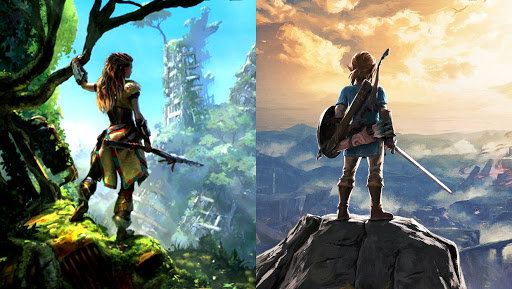
In 2017, two games were released just days apart: *Horizon: Zero Dawn* and *The Legend of Zelda: Breath of the Wild*. Both take place in a post-apocalyptic version of their worlds (*Horizon* in our own and *Zelda* in Hyrule) and both are open worlds. *Zelda* took home the Game of the Year Award, and it’s easy to see why. The weather system is unique and innovative, the way nearly everything you pick up can be used to either defend yourself or fight an enemy is a cool implementation, and the open world is massive. So many different biomes to explore! What I really liked about this *Zelda* game is that it’s precisely the direction I wanted the series to progress in once the N64 came out. *Zelda* games had always felt like there was this massive, medieval world to explore – a Japanese game that was thoroughly entrenched in their understanding of European medieval fantasy – and the games were challenging, fun, and engrossing. Unfortunately, after *Ocarina of Time* came out, the games started to become more closed, more linear. Part of this was the change in management from Miyamoto to Aonuma. Miyamoto focused on combat, with different enemies requiring different strategies to beat, and exploration. The game was inspired by his penchant for exploring different places as a child, after all. Aonuma, on the other hand, prefers puzzles. He never beat the original *Zelda* game, said he spent all his time cutting grass in *A Link to the Past* because he didn’t like the combat, and swore that he’d never make those kinds of games. I still have no clue why he got the job of being head of one of Nintendo’s only action-adventure franchises, but it could simply be because he’s a quirky guy, and Nintendo values quirkiness. Under Aonuma, *Zelda* games quickly became linear, the characters even sillier, and the combat repetitive and never challenging. Dungeons went from being elaborate mazes to being puzzle after puzzle. For gamers who prefer puzzles, *Zelda* suddenly became a game worth playing. For old-time fans, however, it never felt right. For me, *Breath of the Wild* was a step in the right direction. A step Aonuma seems eager to move back from (and newer *Zelda* fans, unfamiliar with the older entries to the series, thought it was moving away from what they consider to be classic *Zelda*), unfortunately. But *Horizon: Zero Dawn*, released a week before *Zelda*, was quickly overshadowed. Could it be because, as a new series (if it continues as a series), it didn’t have brand recognition? Could it be because *Zelda* was such a major step in a better direction that it shined more brightly? Maybe because with all of the experiments with weather simulations and such, *Zelda* just came across as far more innovative? I think it’s likely that it’s a combination of all three, but when I played *Horizon*, I felt it that was unfairly overlooked. Perhaps it’s not the best two games to compare, but I’m going to compare *Horizon: Zero Dawn* and *The Legend of Zelda: Breath of the Wild* to see which game was more enjoyable. **Keep in mind that I tons of praise for and respect for both games.** Part of me wants *BOTW* to get all the accolades, warranted or not, simply to encourage Aonuma to stay on this path. However, part of me says that, even before I start considering all categories, there were plenty of things I definitely preferred in *Horizon*. Alas, it’s important to be honest. Here is my comparison. **The World** Both games are post-apocalyptic worlds. ***BOTW*** takes place one hundred years after the Calamity Ganon event, most of the neighboring civilizations still intact, but Hylians have driven from the area immediately surrounding Hyrule castle, the remnants of civilizations scattered in ruins all about it. The Hylians wait patiently for the Hero to return and rid their world of Calamity Ganon and the monsters that have taken to roaming freely throughout the land. ***Horizon: Zero Dawn***, on the other hand, takes place many, many years after the fall of our own civilization. Nearing the peak of our technology, and perhaps as a commentary on capitalism and unchecked technological advances, great robot creatures called “machines” by the characters brought civilization as we know it to its knees. Enough time has passed that humans have devolved into a primitive existence. New tribes and nations have formed that look up to the machines with a mixture fear and awe. Each tribe tends to view them a little bit differently, many of them viewing them as being sentient or conscious, some even attributing religious importance to them. The Nora are a matriarchal society that feels neolithic – a little more primitive than their Carja and Oseram cousins. While the Nora may come off as particularly distinct, each tribe within this world features its own culture, values, and skills. **But which did I prefer?** I actually prefer *Horizon* in this instance. Post-apocalyptic worlds are easy to screw up, and as much as I enjoyed *The Last of Us*, the world felt a little bit like every other post-apocalyptic world in fiction. *Horizon* brings us something like feels a little bit like *Sword of Shanara* on steroids, and I love it. The remains of a world similar to our own is littered throughout the landscape, which is populated by people who no longer remember or understand it. Part of the game’s story is to figure out what happened and if there’s a way to make it right. By contrast, the people of Hyrule definitely still remember their past. The ruins around them aren’t a mystery, they’re simply the aftermath of Calamity Ganon that no one’s bothered to clean up yet. The monsters that roam are a pain, but the people actually seem quite content to live there. Living in a handful of towns and trading posts, the Hylians manage to live a life no worse than those of most previous games. They lament that the castle is still dominated by Ganon and mourn Zelda’s sacrifice of remaining to contain him, but they hardly seem to yearn for their previous existence. Moreover, the neighboring nations, such as the Zora and Gorons, are completely unaffected. They’re still getting tourists, especially Hylian ones, and living their lives, albeit a little bit wary of the hijacked Divine Beasts (mini-dungeons) around them. *Zelda* sports interesting weather mechanics, and anyone who says they primarily used the roads on their first playthrough is lying! In a game where you can climb almost anything (as long as it isn’t raining), roads are those things you travel on when you’re on horseback or feel like you’ve missed an important NPC. I *did* enjoy *BOTW*’s world, but it didn’t engage me the way that *Horizon*’s did. It was a lot of fun, but when the novelty wears off, it feels so empty. There are vast stretches of land with the same enemies camped throughout it. I enjoyed finding shrines, and I never tired of it, but I never anticipated doing things like finding a particularly interesting character on my journeys. **Enemies**
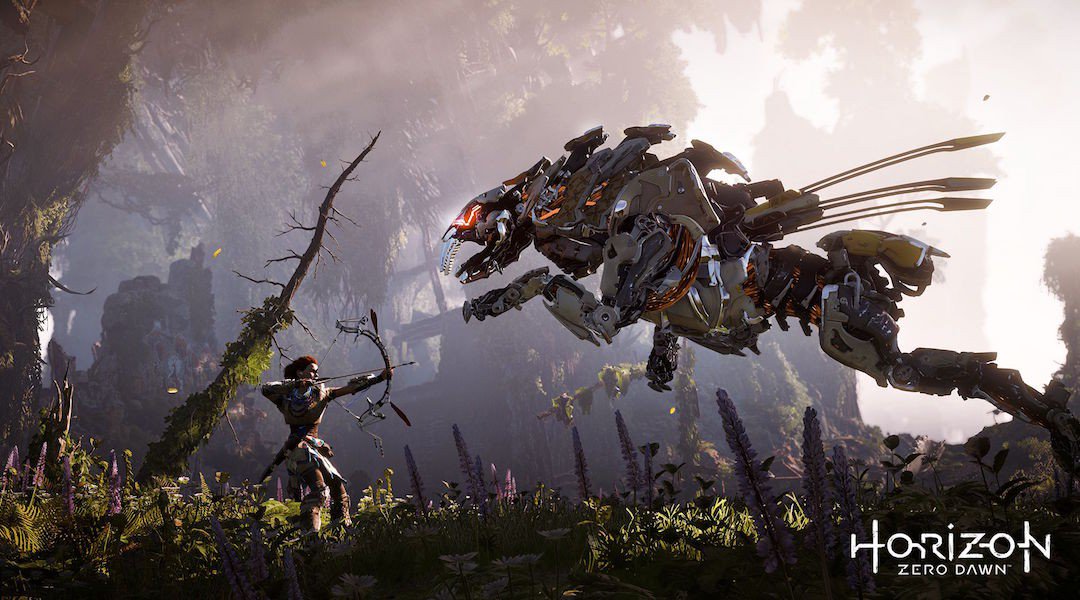
Since I’m on the subject of enemies, let’s talk about them a bit. Within each game, there isn’t a massive variety of enemies, but the way they’re presented is quite different, and the way you defeat them is very different as well. ***Horizon*** has two main enemy camps: humans and machines. Human combat plays out exactly as you’d expect, machine combat is an innovative test of your skill with your assigned tools. Humans are typically found in encampments, creating some very *Elder Scrolls*-like situations where you can either charge in, melee fighting your way to the “boss”, or stealthing it. I typically hang out someplace near a designated patch of grass that serves as a hiding point and start picking people off with my trusty bow and arrow. When enemies get suspicious, I lay low until they arbitrarily decide that there’s no one around. Somehow, they come to this conclusion amidst the growing heaps of corpses strewn about the encampment. Machines are scattered throughout the world. These hulking, AI-powered machinations present challenges to the player in new ways. There are a variety of machines, each programmed by the past civilization to do different things: guard other machines, cut grass, transport goods, etc. They sometimes look like great birds, crocodiles, velociraptors, or indescribable heaps of metal. Oh, and lasers. Those things are awful, take a lot of HP out, and leave you dodging and running for your life! There are a variety of ways to fight them, some strategies overlapping with the way you would fight human combatants, but most unique to them. You could, for example, craft or buy traps, use your Focus (a piece of technology Aloy finds that allows her to do things like see the machine’s pre-programmed paths) to see where they’re going, and then lay traps around to harm and confuse them. Be warned, though, that once you’ve antagonized a machine, it goes into attack mode, abandoning its pre-programmed paths. Things can get chaotic if there are multiple machines around, to say the least. ***Zelda*** gives us the normal flare of enemies one can expect from the series. Monsters are spawned all over Hyrule, as usual, but there are also shrines that feature their own brand of machines. These lost bits of Sheikah technology face-off against Link to protect the secrets within each shrine. Some of the machines are also roaming Hyrule, their tentacle-like arms moving them about as they fire lasers at you. Anyone who says they weren’t taken by surprise and then immediately killed upon first encountering them is also lying to you. The fresh thing about *BOTW* is that the enemies actually can be challenging. There are multiple varieties of each enemy, some being easy to kill and others being amped up a bit. The challenge comes from all of Link’s weapons being temporary. Just about anything you pick up in the game can be used for either defense or offense, including mops and barrel lids. Nothing, save the Master Sword, is particularly durable, however. Combat is a grind of quickly switching out weapons, sometimes using whatever’s available to you to defend yourself. Because of this, the Master Sword Trials DLC is particularly brutal. Starting you off with nothing, you must acquire the weapons and armor you need to survive one of the most challenging bits of *Zelda* history – easily right up there with *Dark Souls*’ levels of difficulty! **Which is better?** I’m going to put this one at a tie, although *Zelda* almost wins out. I enjoy the variety of combat styles available to you in *Horizon*, and I like the way the gameplay hones in on just a few key weapons and tools that Aloy can use. It means you must conserve what you have and weigh out the pros and cons of each encounter. However, I also enjoy *Zelda*’s focus on the grind. I like having to keep my eyes peeled for new equipment, scanning the landscape, and seeing if there’s anything else I can use to my advantage to try and conserve my weapons. The franchise had grown so stale in terms of enemy encounters, that this was an incredible breath of fresh air. The repetitiveness of the enemies is what keeps it from winning this round, though. That and the fact that by the time you’ve collected everything, you’re basically invincible. **Hunting**
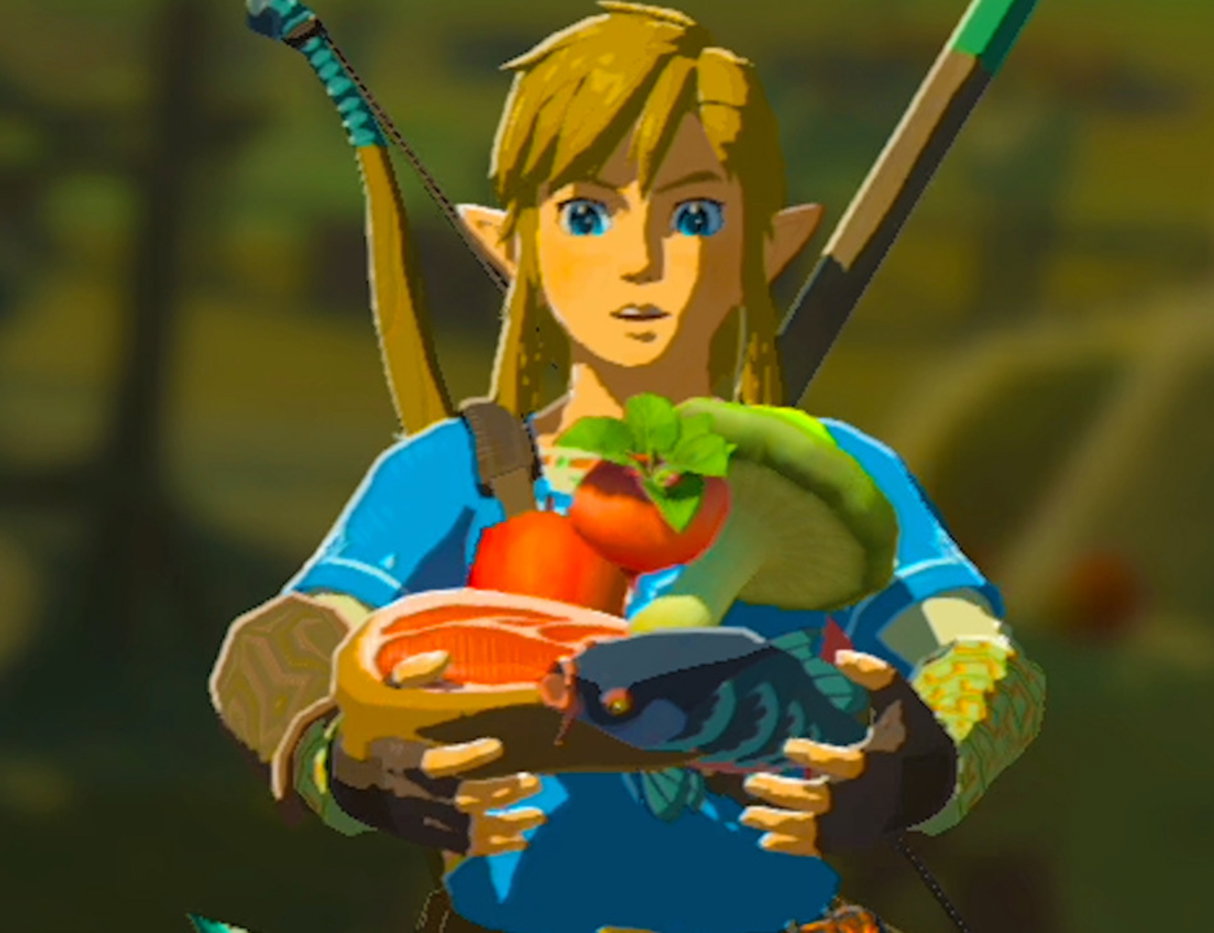
Can you believe both games feature a hunting aspect to them? I’m not a huge fan of hunting in games (I like animals too much), but each of these has a very different style. ***Zelda*** features a much wider variety of animals than *Horizon*, some of which you can even ride, but you cannot register them at stables. That’s my biggest disappointment, not being able to register that bear I tamed and rode around the mountains. What makes *Zelda* fun, though, is that it factors into a cooking scheme. You can hunt for different kinds of meat and collect different herbs and vegetation to cook into different meals that replenish hearts and can also give you stat boosts. ***Horizon*** gives you a fewer number of animals to hunt, presumably because the machines have driven most species to extinction, and there’s not much you can do with those. You can collect herbs that will allow you to craft different things, such as different traps, and some will replenish your health, but you can’t cook them into a unique concoction. Same with the meat you gather. **The clear winner** this round is *Zelda*! The cooking is one of my favorite parts of this game, and *Horizon* pales in comparison to it. **Characters and Side Quests** ***BOTW*** features the usual types of characters Aonuma creates. They’re quirky, shallow, and utterly unconcerned with the state of the world (except for those in *Majora’s Mask*, but we aren’t talking about that game here). They run their shops, chase their girlfriends or boyfriends, and have delightful things to say. There’s Tracey, the gossip girl, whom you encounter largely through the rumor magazines found in many stables. There’s Beedle, the traveling merchant with a strange obsession for certain beetles. And there are a plethora of fun little things written by various characters, some surprisingly racy for the *Zelda* franchise. The side quests are numerous but very repetitive. You collect things for people, go through a lengthy obstacle for another, etc. On the flip side, ***Horizon*** features a great number of characters with different goals and personalities. They have different philosophies and their quests are varied, challenging, rewarding, and fun. They make the world feel real, and often a seemingly random request from an NPC will uncover more about the world at present or the one that’s been left behind. **There’s a clear winner here, too:** *Horizon*. The characters are nuanced and feel real. That’s not to say I hate Hylians, Zoras, Gerudo, or anyone else from *BOTW*, but they all feel kind of the same. Each character was cut from the same cloth, and all echo the characters we’ve seen from virtually every other Aonuma game. **GO PLAY THESE GAMES YOURSELF!** All in all, both games are very good. I feel that *Horizon* deserves far more acclaim than it got, though. Both are a lot of fun if you get around to them.
No comments yet