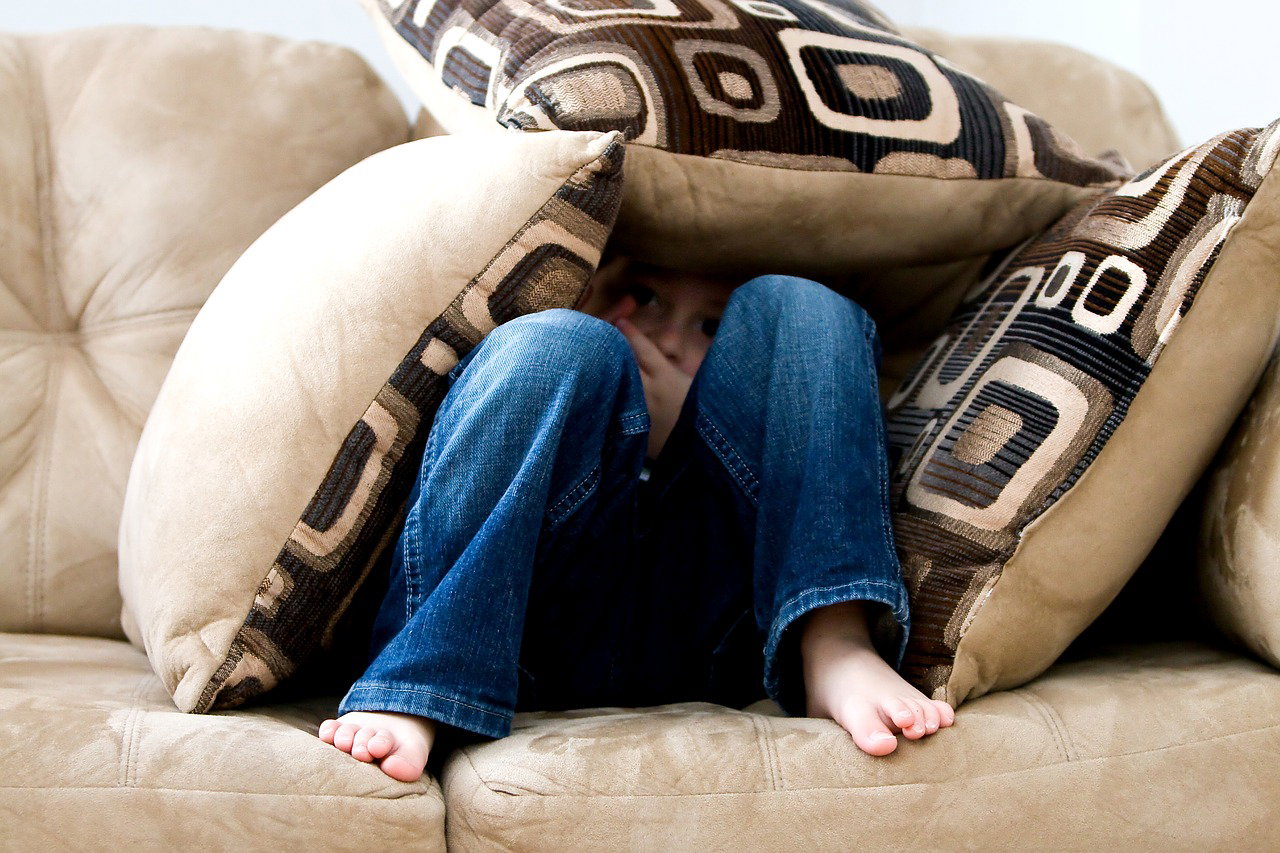
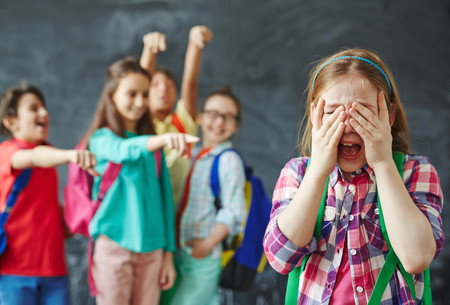
Psychology Of Fear
image source https://pixabay.com/es/illustrations/search/miedo/
To know more about the subject it is necessary to make several definitions among them, the fear, the brain before the reactions of fear and what is psychology.
Fear: Fear is an emotion based on an intense unpleasant sensation provoked by the perception of a danger, real or supposed, present, future or past.
The brain: Reactions to fear are recorded in the brain since the beginning of time and in fact, many parts of this organ are involved. The thalamus decides where to send sensory data, the sensory cortex interprets that data, the hippocampus stores and retrieves conscious memories and establishes the context, the amygdala (where fear memories and emotions are stored) decodes the emotions and determines the possible threat, and the hypothalamus activates the fight or flight response.
Psychology: studies the mental processes, sensations, perceptions and behavior of human beings in relation to the physical and social environment that surrounds them.
Knowing already some important terms to be able to focus on the subject of fear in psychology, let's start.
Fear is an emotion of the brain, the mechanism that triggers fear is found in the reptilian brain, which is responsible for regulating essential actions for survival such as heartbeat, breathing and eating. This system constantly processes, even during sleep, all the information received through the senses, and through the cerebral amygdala, which controls basic emotions such as fear and affection, it is responsible for locating the source of threat. When the amygdala is activated, the sensation of fear and anxiety is produced, the response can be flight, confrontation or paralysis. It has been found that the sensation of fear is mediated by the action of the antidiuretic hormone or "vasopressin" in the cerebral amygdala and that that of affection is mediated by the action of the hormone oxytocin, also in the amygdala.
Fear from different points of view
From a biological point of view, fear is an adaptive emotion, which is a survival and defense mechanism, created to allow the individual to respond to adverse situations quickly and effectively. In this sense, it is normal and beneficial for the individual and for his species.
From a neurological point of view, fear is a common form of nervous organization of the primary brain of human beings, which consists in the activation of the amygdala, in the temporal lobe.
From the point of view of psychology, fear is an affective and emotional state, necessary for the correct adaptation of the organism to the environment, which generates anguish and anxiety in the person, the person can feel fear without there seeming to be a clear reason.
From the social and cultural point of view, fear can be part of the character of a person or social organization. One can therefore learn to fear objects or contexts, one can also learn not to fear them, it is related in a complex way to other feelings (fear of fear, fear of love, fear of death, fear of ridicule) and is closely related to the different elements of culture.
For some, fear in the human being has no physiological relationship (as an alert), but is a product of the conscious self, which expands our level of knowledge.
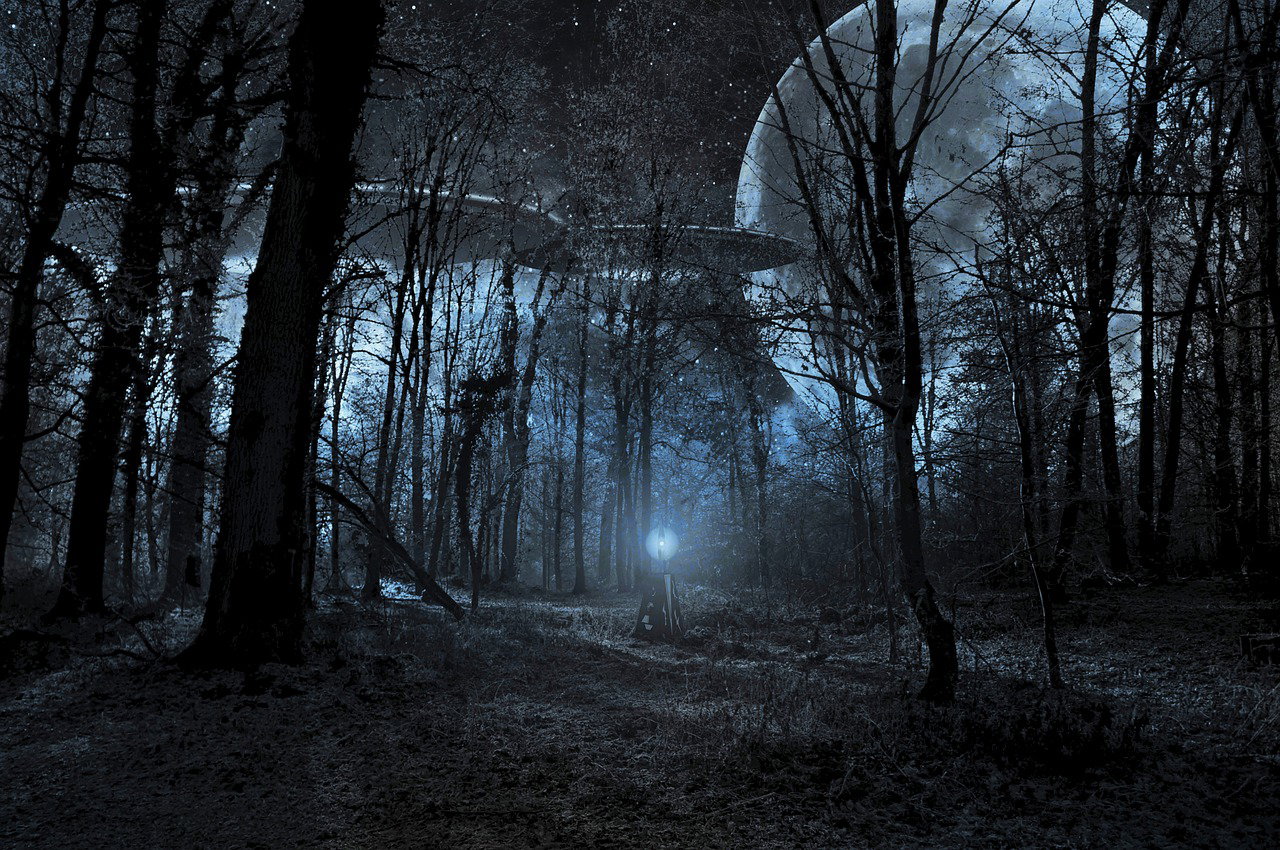
image source https://pixabay.com/es/illustrations/ufo-cubrir-alien-de-miedo-1951536/
Fear in art
The presence of fear in art is ubiquitous. It constitutes a narrative genre in its own right (tales of fear, horror novels) widely cultivated especially from the 19th century onwards by Romantic authors such as Edgar Allan Poe, Howard Phillips Lovecraft or even Gustavo Adolfo Bécquer. Literature has generated characters to portray terror and fear, such as Dracula or Frankenstein. Also a film genre. Western sculpture, especially medieval sculpture with its interpretations of the apocalypse, has elevated fear to the category of art.
Fear and society
Fear is an inherent characteristic of human society: it is at the base of its educational system and is a pillar of the socializing process. A large part of the normative system is based on fear, as shown by criminal law.
In the field of sociology, fear has been identified as one of the characteristics of postmodern society. Ulrich Beck calls it the Risk Society insofar as it is now the moment when for the first time the human species faces the possibility of its own destruction and extinction.
Fear and religion
Fear of disease, poverty, war and death are present in traditional apocalyptic iconography. The Four Horsemen of the Apocalypse, engraving by Dürer (1497-1498).
Monotheistic religions evidence a type of religious fear, the fear of God, and each one, from Judaism to Islam, has developed its particular theology in this regard. It is noteworthy that certain religions resort to indoctrinate in the infantile learning period with threats of infinite and eternal suffering if one does not believe in their postulates and if one does not comply with their norms. Other religions, such as Buddhism, are based directly on the need to avoid pain and suffering, and therefore, indirectly, have a special relationship with fear.
Innate and learned fears?
"a rapid reaction of the organism to a threatening stimulus with two components: a psychological one and a physiological one which is the body's motor response". The psychological part includes the memory of bad experiences: our system reacts to situations that in the past have caused problems, and the physiological part is a reaction to something we see and observe as dangerous.
image source https://pixabay.com/es/illustrations/fantas%c3%ada-antecedentes-obsesionado-6396010/
Conclusions
The question about instinctive fears is an old debate in neuroscience, but basically it can be said that "innate is the facility to associate certain stimuli with danger", such as the presence of bright colors or the way the spider's legs move.
"A newborn would not be afraid, but would have a facility to associate certain color schemes or shapes with a threat". What he will be afraid of later in life will be defined by experience.P.S: I want to let you know that English is not my native language, for that reason it is very likely that I may make some mistakes in the elaboration of this article. If this should happen, please feel free to correct me properly. It will help me in my learning process.
Your opinions are very valuable to me, I will be very attentive to your comments. Thank you for investing your valuable time reading my publication; best regards.
P.S: I want to let you know that English is not my native language, for that reason it is very likely that I may make some mistakes in the elaboration of this article. If this should happen, please feel free to correct me properly. It will help me in my learning process.
Human hypocrisy.
*We all know that life is complicated, but undoubtedly for some people it is much more so. For example women, we have had to live in the company of guilt, accepting shame and having to give an explanation for everything.*
Image source https://pixabay.com/es/illustrations/caricatura-imaginaci%c3%b3n-4804609/
Hypocrisy: is the act in which an individual behaves in a way contrary to the values held by the same individual, or to act in accordance with principles that at the same time are criticized.
In psychology: hypocritical behavior is related to the fundamental attribution error: individuals tend to explain their actions based on their environment, but attribute the actions of others to "innate characteristics", which leads to judging others while justifying their own actions.
Life is very complicated and we, although we know it is so, every day we take care of adding more difficulties, judging and offending the people around us, and the saddest thing is that many times we do it for no reason, to attract attention, or because we are simply not comfortable with our reality. This life is full of many contradictions created by the history of humanity itself, in my opinion I think that many times the story is told incorrectly, the problem is that we depend on the point of view of the individual who tells it, and if we add to that the interpretation of the listener, thus generating an infinite number of mixed stories that confuse and change the real story.
But the strange thing about all this is that although human history is constantly changing, there is a protagonist that remains intact in each story told, that is hypocrisy, human hypocrisy attracts us every day to his side and ends up swallowing us up every night at bedtime. We live in a highly observed society but we label as hypocrites only a few, only those who do not have the capacity to defend themselves; those who are in the minority groups and it seems to us that they may be taking advantage of it, as if there is some advantage of belonging to those groups; those who because of gender issues must excuse themselves and ask for forgiveness and permission for issues that others do not even think of; And then, the word, hypocrite, should bounce in our minds and hearts, but it never does.
I want to conclude by saying that in this unjust and double standard society, women's actions are scrutinized, questioned and manipulated by the rest of the individuals in our life story. A story that, although it should be ours, it seems that we are not the protagonists. Apparently, the rest of the world considers that we are not capable of making the right decisions, and that leaves us in a secondary role in our own story. Because apparently it is never enough, there will always be someone who will tell you that you could have done better. Finally, hypocrisy only seems to have an effect in the mouths of certain characters, the rest of us, no matter what we do, will continue to fight, trying to build a story where women are not fit into any mold and, of course, are the protagonists.
Image source https://pixabay.com/es/photos/auto-retrato-color-en-blanco-y-negro-532021/
Your opinions are very valuable to me, I will be very attentive to your comments. Thank you for investing your valuable time reading my publication; best regards.
**P.S:** I want to let you know that English is not my native language, for that reason it is very likely that I may make some mistakes in the elaboration of this article. If this should happen, please feel free to correct me properly. It will help me in my learning process.


The value of human life.
*There is nothing that should be valued more in this world than the life of the human being, just as there is no argument that validates the injustices that are committed by people who believe they are somehow superior to others. Sadly, we find ourselves submerged in an aberrant society that classifies human beings by their status, valuing them according to their fortune, possessions and achievements.*
Image Source https://pixabay.com/es/photos/ni%c3%b1os-familia-ciudad-la-carretera-6960579/
Some say that we are the result of a cosmic event, others that we are just biological beings who by chance acquired a higher consciousness, and some claim that we are the consequence of evolution. But what most agree on is that we are unique rational beings on this earth, with the ability to discern between good and evil. We have a value that cannot be calculated, we are formed of spirit, soul and body; which makes me think that we were created with a purpose, by a superior existence.
Image source https://pixabay.com/es/vectors/prehist%c3%b3rico-mamut-familia-1142403/
As rational and moral human beings we should not have as our main purpose to accumulate wealth and fortune with an individual vision. If we have the capacity to do good, what has happened then that we have devalued life? Why are we losing our sensitivity to the needs and pain of others?
Image source https://pixabay.com/es/photos/ni%c3%b1o-africano-pobre-pobreza-5445463/
Today we close our eyes and shut our mouths, as we witness the reality that is happening in this world, many human beings going hungry, in misery and need. Our rulers do nothing, rather they promote these injustices and imbalances, creating wars and violence that produce death and pain to thousands of families.
Image source https://pixabay.com/es/illustrations/siria-guerra-v%c3%adctima-refugiados-1202174/
We excuse ourselves that we can do nothing, that we do not have the necessary strength, because it begins with Evaluate your way of acting. We only need will and responsibility to fulfill the role that corresponds to us, being fair and honest helping those who need us every time we have the opportunity. Let us be part of the solution and not part of the problem.
Image source https://pixabay.com/es/illustrations/voluntario-las-manos-ayuda-colores-2055043/
Your opinions are very valuable to me, I will be very attentive to your comments. Thank you for investing your valuable time reading my publication; best regards.
**P.S:** I want to let you know that English is not my native language, for that reason it is very likely that I may make some mistakes in the elaboration of this article. If this should happen, please feel free to correct me properly. It will help me in my learning process.
Overwhelmed But Firm.
*Life is a cycle in constant motion, and we are all part of that cycle, understanding what place we occupy in this great game board and for what purpose is the difficult part. I confess I still don't have a title for this article, but as I write I will call it "Overwhelmed But Firm".*
I have been having trouble falling asleep for several days now, even though I go to bed very tired, I feel overwhelmed with a great weight on my shoulders and a lot of anxiety. For that reason I decided to write this article to analyze myself and unburden myself; I think I will start with my job, I know it has a lot to do with my mood. I work in a hospital as a nurse and I was working in the operating room area as an instrumentalist in the operations, but after enjoying a vacation when I returned to work, they had changed the head of the nursing department, and by necessity of service they changed me to the "Neonatal Intermediate Care Unit" (assistance of newborns).
I am sure you will think that it is not so bad, and that it will be easier and more pleasant to work in that area, but I am sorry to tell you that at least in my country (Venezuela), there is a shortage of medicines and if they are found they are very expensive, and many other factors that I prefer to tell you in a separate publication, in conclusion I have to see babies die every day, and the suffering of their families, the helplessness that all the staff who work there experience is overwhelming. Living this experience undoubtedly affects my state of mind.
Since the beginning of this year all my family members without exception have suffered from "covid", many of them for the second time, this month it was my mother-in-law, my husband and my children, thank God I only got a mild flu, but I had to bear alone with the care of his illness. By the way, I was finishing a semester in college and dealing with all that caused me a lot of anxiety. My youngest son is still sick with the flu, complicated with stomach problems (with his intestinal flora), my husband is having irritable bowel problems, and he is also stressed by his university, because he has to defend his thesis; this affects me greatly since I am very used to his unconditional support (I accept that I have been very dependent on my beautiful husband).
I don't want this article to be too long, and the truth is that there are many other things that are affecting my mood, but writing this article helped me to understand that many of them I give more importance than they deserve (for example that I am gaining weight). I also understood that I am neglecting my health "both physical and mental", I had a little medical checkup to rule out some concerns about it.
The images are created by me in the Canva application.
Your opinions are very valuable to me, I will be very attentive to your comments. Thank you for investing your valuable time reading my publication; best regards.
**P.S:** I want to let you know that English is not my native language, for that reason it is very likely that I may make some mistakes in the elaboration of this article. If this should happen, please feel free to correct me properly. It will help me in my learning process.
Articles related to me, Series my life expressed in letters:
Series My Life Expressed In Letters: My Presentation On Read.Cash https://read.cash/@Orianasidran/series-my-life-expressed-in-letters-my-presentation-on-readcash-54d4f65a
Series my life expressed in letters: Growing up without a father. https://read.cash/@Orianasidran/series-my-life-expressed-in-letters-growing-up-without-a-father-137b8db9
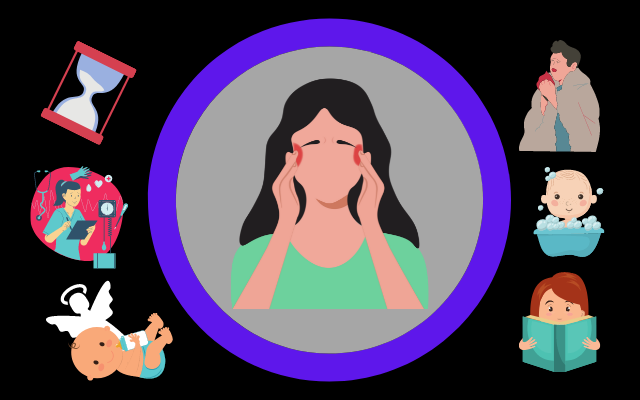
Depression is a very dangerous disorder.
*Depression is a serious health problem, which requires a very important attention since it can even lead to death.*
*Depression is more prevalent in women than in men and its consequences can have serious repercussions for women. The stigma attached to depression in men can lead to attempts to mask symptoms through high-risk behaviors. Women have higher suicide attempts, but in men attempts are more lethal. Rates of completed suicide in males are higher in most countries of the world.*
**Depression:** is a mental disorder characterized mainly by low mood and feelings of sadness, associated with alterations in behavior, activity level and thinking.
It is then characterized by its impact on people's mood and affect, linked to changes or problems such as appetite, fatigue, sleep, cognitive difficulties, excessive guilt and suicidal ideation. Although scientific research offers new elements to better understand the etiology of depressive disorders, fundamental questions remain to be answered. For example, some studies identify individual factors, such as genetic load, psychic trauma and/or vascular accidents, while others underline the importance of psychosocial factors, such as life events and economic crises.
The symptoms of depression are pathological sadness, loss of interest and enjoyment and a decrease in vitality that limits the level of activity and produces an exaggerated tiredness, which appears even after small efforts.
Throughout the course of the disease other symptoms may appear, such as feelings of guilt, irritability, pessimism about the future, suicidal ideation, loss of confidence in oneself or in others, decreased concentration and memory, restlessness, sleep disorders and decreased appetite.
**The most common symptoms are:**
- Pathological sadness.
- Loss of interest.
- Decreased vitality.
- Exaggerated tiredness.
**The types of depression can be classified in an easy way:**
**- Major depression:** has a more biological or endogenous origin, with a greater genetic component and less influence of external factors. It can appear recurrently and, in some cases, it has a certain relationship with the season of the year.
**- Reactive depression:** caused by poor adaptation to stressful environmental circumstances.
**- Dysthymia:** formerly known as depressive neurosis, which is characterized by a depressive picture of lower intensity than the previous ones, of chronic evolution (more than two years), without asymptomatic periods and with feelings of incapacity and somatization.
**- Masked depression:** instead of manifesting itself with the aforementioned symptoms, it appears as organic discomfort -somatizations- or behavioral changes.
The ideal treatment of depression will depend on the specific characteristics of the type and will be, as always, personalized, so an adequate doctor-patient relationship is essential. Basically, treatment consists of psychotherapy and pharmacotherapy.
Psychotherapy offers security, confidence, understanding and emotional support; attempts are made to correct distorted thoughts; the temporary nature of the situation is explained and the situation is de-dramatized; the patient's participation in the healing process is achieved and, finally, the patient is taught to foresee possible relapses. Antidepressants and anxiolytics are used as pharmacological treatment.
The images are created by me in the Canva application.
Your opinions are very valuable to me, I will be very attentive to your comments. Thank you for investing your valuable time reading my publication; best regards.
**P.S:** I want to let you know that English is not my native language, for that reason it is very likely that I may make some mistakes in the elaboration of this article. If this should happen, please feel free to correct me properly. It will help me in my learning process.
**Related articles:**
School Harassment Or Bullying https://read.cash/@Orianasidran/school-harassment-or-bullying-a8172644
Cell Phone Addiction https://read.cash/@Orianasidran/cell-phone-addiction-5006650a


Cell Phone Addiction
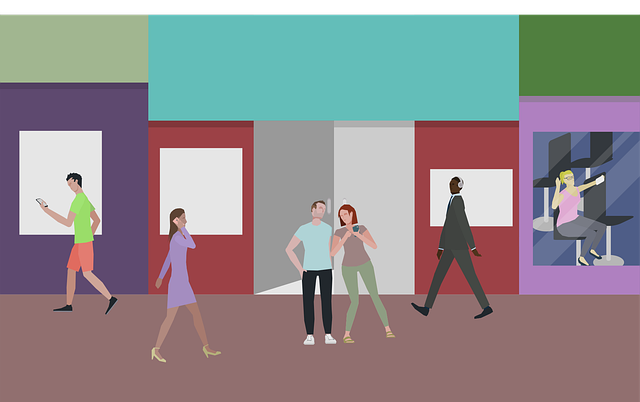
*Although it may seem exaggerated, there are many people with cell phones who are suffering from physical and psychological problems such as anxiety, palpitations and feel as if the world is ending when they forget about it, run out of coverage, run out of battery or when a platform they are involved with crashes.*
Image source https://pixabay.com/es/vectors/caminar-al-lado-de-la-gente-4435214/
It is clear that there are many advantages with the cell phone, for example, to call home, when I notice that I'm going to be late, to warn of any unexpected event. But many users have to start thinking about whether they are becoming truly "mobile-dependent", not being able to spend a single minute without their phone.
Many will wonder what is mobile addiction or what is it all about, let me share with you my research and we should really be more attentive to the signs that we give or give the people who are one step away from being addicted to cell phones.
**What is mobile addiction?**
Mobile has become important in our lives, for all that they offer, social networking apps, streaming, gaming and more, it can be a slippery slope.
Mobile addiction is not an official and medically accepted diagnosis, mainly due to the lack of research on the subject. However, there are criteria used by experts to describe behaviors, feelings and thoughts that indicate a lack of control over phone use. Among them, phone use interferes with commitments and relationships; lack of access to the phone causes dread, anxiety or irritability; and the ability to think deeply or creatively is hindered.
**Is the cell phone all-important in our lives?**
Cell phone use becomes an addiction when it becomes a repetitive behavior. It has been seen to occur in other types of addictions and to give us pleasure. It has come to be called "Telefonitis" and it is something that cannot be controlled from using the phone over and over again during the day or night. For the first time, we are beginning to talk about new technologies becoming part of the so-called psychological addictions or addictions without drugs.
According to experts, mobile addiction is suffered by 1 out of every 1,000 people who use cell phones, and they say that it is affecting mainly young people and teenagers. It is for this reason that it is important for each and every one of you to know what mobile addiction is, and to know the answers to avoid it.
Unlike other addictions, such as alcoholism or gambling addiction (compulsive gambling), etc. the age at which it starts is very low, from eleven or twelve years old, because it is very easy to have a cell phone, there are even cell phones especially for children with drawings for them, and also parents feel safe that their child has a cell phone to call in case of any emergency.
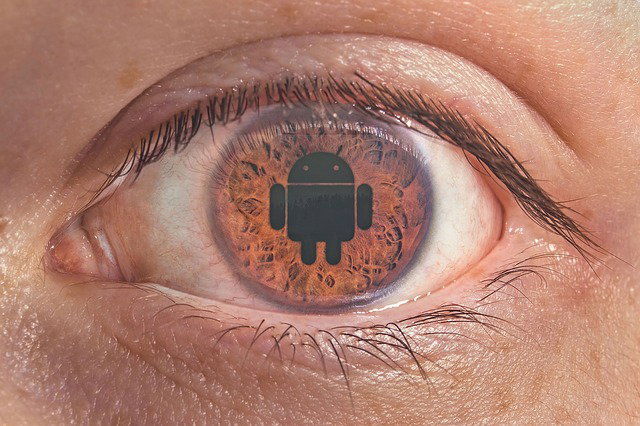
Image source https://pixabay.com/es/photos/ojo-android-iris-marr%c3%b3n-fanboy-814954/
**The problem begins when it is abused**
An irrepressible, uncontrollable and exaggerated behavior that makes us leave other activities, such as reading, face-to-face conversation with our family, friends, neighbors. Teenagers, the great protagonists, a population especially affected by this addiction are the Adolescents. The idea of "leisure and free time" seems to be linked to the cell phone.
**How cell phone addiction is generated**
For a person to become addicted, it is enough to be a person who has emotional problems, with difficulties to speak, or who is in a difficult period of his life, as is the case of adolescence in which it is especially vulnerable to the many claims of youth, often are not true, such as, for example, that it is fashionable to lose weight, get attached to video games, buy products, how not, to have the latest model of cell phone as soon as possible.
All this will make a large number of people fall victims of mobile dependence and therefore become addicted. And then, the addiction will make the person deviate from their family environment, their friends, reaching a great emotional suffering.
**Factors to Identify Cell Phone Addiction**
1. The cell phone everywhere: when the person cannot separate from the cell phone even to go to the bathroom, classes, or family gatherings.
2. Attitude of discomfort: When the person feels annoyed if he/she forgets the cell phone somewhere or lacks money or credit to keep it working.
3. Changes in habits: When you change sleeping habits by talking late at night.
4. He disconnects from the "real world": His world is communication through the cell phone, but there is a total distance from the people around him, whether it is his family, work or school.
5. He is an expert: His anxiety to call or receive messages and have the latest technology creates a feeling that he has become an "expert" on the device.
6. The cell phone bill: When the payment of cards or bills exceeds the monthly expense budgeted for this service.
7. Criminal attitude: He/she commits some thefts to be able to buy a phone or pay the rent of the cell phone.
Image source https://pixabay.com/es/photos/smartphone-hombre-noche-usuario-4540273/
**And to conclude I will mention some ways to combat cell phone addiction:**
1. Monitor cell phone usage: the first step is to be aware of cell phone addiction is to see how much time is spent on the cell phone. The best way to do this is to keep a record of how many times you pick up the cell phone and the hours you use it.
2. Turn off notifications or silence the phone: sometimes cell phone addiction is generated because every time we hear a notification, we can not help but look. It generates an obsession to know what has just arrived. We recommend that you turn off all sounds and vibrations, or at least do it with the least relevant to you.
3. Gray screen: many times we look at the cell phone because we have the reflex that we have received a new message or notification, but the truth is that the bright colors and the reflection of the screen give this false illusion. This is why it is recommended that to control the addiction to the cell phone set your screen to grayscale, as it is proven that it helps to do without the cell phone for much longer.
4. Leave the cell phone on airplane mode when you go to sleep: Another of the big concerns around the use of the phone is that it makes it difficult to rest at night. Normally people tend to look at their cell phone before and after sleeping, and some people even wake up in the middle of the night and check their notifications.
5. Eliminate social networks: as strange as it may seem, some years ago we had to wait until we got home to check the activity of our contacts. But now that we have all the social networks on our cell phones and we are constantly checking them, we have become obsessed with constantly refreshing to see what's new, when the truth is that we have already seen everything. Deleting the networks will make us go to the search engine every time we want to check them, which would make the task more difficult and tedious, and therefore decrease its use.
6. Use a classic watch: although it may seem exaggerated, the simple fact of checking the time, most of the time, leads people to end up spending up to 10 minutes more than planned on the cell phone. To control cell phone addiction, we suggest using a wristwatch and alarm clock, so that these tasks are autonomous from the cell phone.
Your opinions are very valuable to me, I will be very attentive to your comments. Thank you for investing your valuable time reading my publication; best regards.
**P.S:** I want to let you know that English is not my native language, for that reason it is very likely that I may make some mistakes in the elaboration of this article. If this should happen, please feel free to correct me properly. It will help me in my learning process.
**Related articles:**
School Harassment Or Bullying https://read.cash/@Orianasidran/school-harassment-or-bullying-a8172644
Remember that you can sponsor my contents and help me to make this Blog work, at the same time you will have the opportunity to advertise your web sites, through my Sponsors Banner.
Series my life expressed in letters: Growing up without a father.
Articles related to me, Series my life expressed in letters:
Series My Life Expressed In Letters: My Presentation On Read.Cash https://read.cash/@Orianasidran/series-my-life-expressed-in-letters-my-presentation-on-readcash-54d4f65a
*Continuing with the theme of my story expressed in letters, in this article I want to share with you a part of my story quite sad, and that undoubtedly gave a twist to my life. My father died at the age of 32, on August 30, 1995, in a traffic accident (due to a drunk driver) leaving 5 orphaned children, my siblings were between the ages of 10, 6, 3, 2 and I was 4 years.*
Image source https://pixabay.com/es/photos/beb%c3%a9-llorar-triste-emociones-5088496/
On September 1st was his wake and 21 days later I turned 5 years old, since then our life has not been easy, my father was the one who worked as a bus driver, we never lacked anything or food or comforts always strived to give us everything, because I do not remember having any need. When my father passed away, my maternal grandmother told my mother that we should move to her house, selling the house that my parents had bought for us; it was our home, my mother, feeling lonely and with 5 children, agreed to my maternal grandmother's proposal.
On the part of my father's family when he died, we died with him apparently, since they never took us into account again. When we moved in with my grandmother I think that's when our real lack of attention from my mother began, since my grandmother took care of us and my mother had to go out to work, something she had never done. Over time she found that she had fallen into a pit, which she thought was bottomless, she drowned in alcohol and cigarettes. Four years after the death of my father, my mother met a man and got pregnant with him, it was a boy who died hours after birth, since he was born with respiratory difficulties, it would be another loss for my mother, which ended up destabilizing her emotionally and more than that this man only wanted to mistreat us and in the end they ended up separating.
Image source https://pixabay.com/es/photos/mujer-pu%c3%b1o-concepto-ocurrencia-5670734/
Soon after, my mother met another man again while she was studying at the university, studies that she never finished because she became pregnant again, and when this man found out that my mother was expecting a child, he abandoned her and did not take care of what is now my younger sister, leaving my mother again in an unstable emotional state. Throughout my childhood, from the age of 4 until I was 11 years old, I did not have that father figure (according to pediatrics, 11 is the stage where childhood ends, where the child is mentally capable of recognizing a father or mother figure).
Undoubtedly growing up without a father significantly marked my personality, and now that I am a health professional, I recognize that this circumstance in my life gave rise to many behavioral disorders in me; to hide those feelings of unhappiness, anger, abandonment and fear that overwhelmed me. Growing up without a father can present many problems.
**Some of them can be:**
- Difficulty relating to other children.
- Attention deficit.
- Poor school performance.
- Resentments with their mother.
- Emotional emptiness
- Low self-esteem.
- Emotional problems such as aggressiveness, anxiety and depression.
- Fear of abandonment.
- Social isolation.
Image source https://pixabay.com/es/vectors/temor-ansiedad-depresi%c3%b3n-mujer-6562668/
To conclude with this article (I confess it was not easy for me to relive that stage of my life), as I was a girl who grew up without her father, and with a mother who did not know how to handle this situation well, and with the knowledge I have now and personal experience as a mother, with the luck of having a partner who is a good father; **I want to express my humble recommendation,** **in the complex process of having to raise your children alone:**
- When a woman is left alone in raising her children, she tends to be either too strict or too permissive with the rules. Neither is appropriate for children growing up without a father figure. There must be clear, but at the same time flexible rules that can be adjusted to situations and that guarantee the well-being of your children and yourself.
- When there is no one to share responsibilities with, it is common to have an excess of activities to do. In the same way, you have to reserve some time (no matter if it is short) to share and enjoy with your children: it can be reading them a bedtime story, taking a walk with them to the park, asking them how they did at school and studying with them, I assure you that putting this into practice will make a difference.
- Don't be afraid to seek psychological help from a professional. He or she can advise you and help you deal with the consequences of the father's absence, as well as with the problems that will surely arise in your relationship with your child.
- You have to learn to be patient and tolerant, not only with your children, but also with yourself. Avoid wanting to occupy both roles, that is impossible. You will undoubtedly have very difficult moments, just accept them. From then on, you will have to give your best for your child. What doesn't work out today can be solved later.
Your opinions are very valuable to me, I will be very attentive to your comments. Thank you for investing your valuable time reading my publication; best regards.
**P.S:** I want to let you know that English is not my native language, for that reason it is very likely that I may make some mistakes in the elaboration of this article. If this should happen, please feel free to correct me properly. It will help me in my learning process.
Remember that you can sponsor my contents and help me to make this Blog work, at the same time you will have the opportunity to advertise your web sites, through my Sponsors Banner.
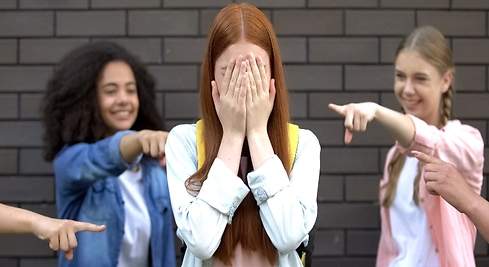
School Harassment Or Bullying
**Before going into the context of the topic, let's make a small definition of what bullying is:**
*Bullying is the exposure of a child to intentional and repeated physical and psychological harm by another child, or a group of them, when he/she attends school. The bully takes advantage of an imbalance of power that exists between him and his victim to obtain a benefit (material or otherwise), while the bullied feels helpless and can develop a series of psychological disorders that directly affect his health or even, in extreme situations, self-destructive behaviors.*
In a research I was doing for my psychology studies, I came across this sensitive issue of bullying, and I wanted to share it with you. For the elaboration of this article I chose a case of bullying, which occurred in a high school in Barcelona, Madrid. Which is treated by a psychologist of the student center, the case is of a student of the institute.
Image source https://s03.s3c.es/imag/_v0/770x420/9/a/2/490x_acoso-escolar-3.jpg
**We must mention the General Principles of the Code of Ethics of Madrid, as they refer to the protection of human rights and the obligation to report and intervene in situations of abuse, which would be:**
*Article 5, whereby the purpose of the practice of psychology is human and social, seeking the welfare, health, quality of life, full development of individuals and groups in the different aspects of their lives, both individual and social. On occasions when the case requires it, the psychologist must resort to the help of other professionals, without prejudice to the competences and knowledge of each one.*
*Article 6º, by which the psychologist must "respect the person, protect human rights, sense of responsibility, honesty, sincerity with his patients, prudence in the application of instruments and techniques, professional competence, solidity of the objective and scientific basis of his interventions".*
*Article 8º, The psychologist must inform the COP of situations of mistreatment, violations of human rights or cruel, inhuman or degrading conditions of confinement that are made by their patients, in order to establish the best plan of action to resolve the situation.*
*Article 9º, moral and religious criteria will be respected, although this does not prevent the questioning in the course of the intervention if necessary for the case.*
**For each process of psychological care the same must have a planning according to the seriousness of the matter we start:**
**Phase 1:**
It is about a student who requests a session with the psychologist of the institute, and expresses that since admission she has been suffering bad jokes, they harass her by calling her at home, they insult her, they laugh at her by calling her names, already reaching a limit where she feels humiliated, she decides to go to the psychologist before telling her parents because she is afraid that the situation will be more serious when she tells them.
At this point the specialist tries to identify the problem, collect all possible information provided by the student, and the possible causes of conflict.
The student asks for privacy for her consultation and asks the psychologist not to discuss anything with anyone.
The psychologist as a professional in the field begins to investigate on his side trying to find out by other means, found that her grades have dropped her grades are not the same, the next day the psychologist receives a note warning him not to intervene.
The psychologist notices that this case goes beyond that, and that the student, who is a minor, is in danger, so the first action he is obliged to take is to notify her parents or guardians, if applicable.
Image source https://img.remediosdigitales.com/635286/acoso_esxolar/450_1000.jpg
**The first dilemmas arise, then, in the case of a minor:**
What is the duty of a professional in the face of knowledge of a possible action that is harming the person, in this case a minor, who comes to consultation?
How far should the principle to which the psychologist is also bound in his or her practice - confidentiality - go in the case of a minor?
**With respect to this information, Articles 39, Section V, "OF THE OBTAINING AND USE OF INFORMATION", of the Code of Ethics, would be applicable, which stipulate:**
*Article 39º, the psychologist must respect the client's right to privacy, disclosing information only as necessary and always with the client's authorization.*
**Phase 2:**
With the information obtained, a bullying problem was identified and, at that point, the second stage of the model could begin, referring to the need to consider different alternatives to the problem. It is necessary for the psychologist to explore other possibilities.
However, although it is always advisable to listen, attend and give credibility to this type of statements made by children and adolescents, we only have the information given by the student. She cannot interview her family or friends. The only interview that the psychologist has done apart from the complaint itself has been a consultation with the student's guardian, and there has been no other evidence to confirm the harassment that the student reflected.
Therefore, and considering this, an alternative hypothesis that could be formulated would be that There is no case of bullying, and it may be a call for attention of the student, with which the problem identified would no longer be a case of abuse but would be before another very different one.
**Phase 3:**
In the opinion of the psychologist, the information they have is scarce and insufficient to confirm the real problem they are facing.
It would be risky for the psychologist to make a confirmation of bullying, based on the interview with the student, as it would also be risky to affirm that it is a symptom of another situation of psychological distress of the student, according to her grades.
Image source https://cdn.pixabay.com/photo/2018/01/18/10/06/bullying-3089938_1280.jpg
**There are, therefore, three options at this point:**
**Option 1-** Give credibility to the information provided by the student.
**Action:** Start an intervention aimed at interrupting the abuse.
**Option 2-** Do not give credibility to the information provided by the student.
**Action:** Start a targeted therapeutic intervention, arranging further interviews with the patient, trying to find out the type of pathology of the patient.
**Option 3-** Do not make any assessment based solely on the information available to you.
**Action:** Expand the information, making a more rigorous investigation of the case, although using a procedure of maximum urgency and priority, due to the importance of the case, based on the note she received.
**Phase 4:**
In this case, the psychologist finds the information provided by the student insufficient, which goes for option 3: Do not make any assessment, having to rely on scarce information, as it seems insufficient.
The intervention would begin by making a more in-depth investigation, conducting a clinical evaluation at the physical and emotional level, which will allow him to know her physical state as well as the resources and coping strategies that the minor possesses, interviews with the family environment of the student, with her teachers, with her friends, I would also suggest in the first instance, that she not attend school for a few days, to interrupt the acts against her, if they were finally confirmed.
**Phase 5:**
In this stage is to evaluate the process for the resolution of the ongoing problem, in this case, the solution has been to perform an evaluation, with maximum urgency and priority, in greater depth that will provide more information to determine if there has been a case of abuse; as it will ensure that the therapeutic intervention that is initiated will be appropriate to the case, and will ensure the improvement of the student.
Obtaining as a result the resolution of the problems and improvement of the student's grades.
Your opinions are very valuable to me, I will be very attentive to your comments. Thank you for investing your valuable time reading my publication; best regards.
**P.S:** I want to let you know that English is not my native language, for that reason it is very likely that I may make some mistakes in the elaboration of this article. If this should happen, please feel free to correct me properly. It will help me in my learning process.
Remember that you can sponsor my contents and help me to make this Blog work, at the same time you will have the opportunity to advertise your web sites, through my Sponsors Banner.
Series My Life Expressed In Letters: My Presentation On Read.Cash
*Greetings to all members and readers of this great platform as it is Read.Cash. Below, I present a short biography of my life. My name is Oriana Yariebth Sidran Acevedo; I was born in the city of San Fernando, Apure State, Venezuela, I am 31 years old.*
Since I was little I have been the most rebellious of my siblings I have 4 sisters and 1 brother, I am also the most beautiful among them all (just kidding), in the course of time I have gone through many difficult situations and my strong character has not helped me much but in turn these experiences have made me a strong, independent and enterprising woman. Without a doubt I am no longer that rebellious girl I once was, I have molded my character and matured a lot with the support of my family, husband and children.
In my life, especially in the economic part I have had many ups and downs (more downs than ups), but that is a topic for another publication, however I have never given up when it comes to fulfilling my dreams and goals, I have prepared myself professionally as much as I could and that circumstances have allowed me, I have a degree in nursing, I have a pre-hospital emergency technician (ParaMedico), a diploma in teaching skills (teaching component), and I am currently pursuing a degree in Clinical Psychology.
The best joy of my life has been the privilege of being a mother, I thank God for that, my oldest son (Juan Carlos) is 13 years old, and my youngest son (Carlos David) is 3 years old, the oldest is very quiet (too relaxed for my taste) and the youngest is too hyperactive (although I do not recognize him in public is just like his mother), but I love them and I love them as they are and I would do anything for them.
In order not to make this publication longer, I want to conclude that my life's journey has been a challenge and I have shed many tears but thanks to that, I am the person I am now and I have a beautiful family that I will not change for anything and anyone.
If you have read this far I want to thank you for taking the time to read my publication and know my story, I hope with my experience and my knowledge, I can contribute and share with you through my publications, in the areas where I perform best. And in some way, serve as an inspiration for the members of this great platform, of which I have heard a lot, and I have seen the quality of the publications made by its members.
Image source https://www.pexels.com/es-es/foto/amo-tu-decoracion-de-portapapeles-de-vida-811575/
Your opinions are very valuable to me, I will be very attentive to your comments. Thank you for investing your valuable time reading my publication; best regards.
**P.S:** I want to let you know that English is not my native language, for that reason it is very likely that I may make some mistakes in the elaboration of this article. If this should happen, please feel free to correct me properly. It will help me in my learning process.
Remember that you can sponsor my contents and help me to make this Blog work, at the same time you will have the opportunity to advertise your web sites, through my Sponsors Banner.
Good morning dear friends, today I would like to talk to you about DEPRESSION.
DEPRESSION, it can be described as feeling sad, melancholic, unhappy, depressed or down. Most of us feel this way from time to time for short periods of time.
Depression is a mood disorder in which feelings of sadness, loss, anger, or frustration interfere with daily life for a period of a few weeks or more.
Also associated with alterations in behavior, activity level and thinking, the core symptoms of depression are pathological sadness, loss of interest and enjoyment and a decrease in vitality that limits the level of activity and produces an exaggerated tiredness, which appears even after small efforts.
 @Orianasidran