When will the COVID-19 pandemic end?
This article updates our perspectives on when the coronavirus pandemic will end to reflect the latest information on vaccine rollout, variants of concern, and disease progression. Among high-income countries, cases caused by the Delta variant reversed the transition toward normalcy first in the United Kingdom, during June and July of 2021, and subsequently in the United States and elsewhere. Our own analysis supports the view of others that the Delta variant has effectively moved overall herd immunity out of reach in most countries for the time being. The United Kingdom’s experience nevertheless suggests that once a country has weathered a wave of Delta-driven cases, it may be able to resume the transition toward normalcy. Beyond that, a more realistic epidemiological endpoint might arrive not when herd immunity is achieved but when COVID-19 can be managed as an endemic disease. The biggest overall risk would likely then be the emergence of a significant new variant.

Watching the ‘Apocalypse’ On the Set of Apocalypse Now
IT'S A WONDERFUL LIFE
Featured Articles|Print Media https://maureenorth.com/category/featured-articles/ https://maureenorth.com/category/print-media/
Watching the ‘Apocalypse’ On the Set of Apocalypse Now
Newsweek – June 13, 1977
*In the tropics one must before everything keep calm.* – Joseph Conrad, *Heart of Darkness*
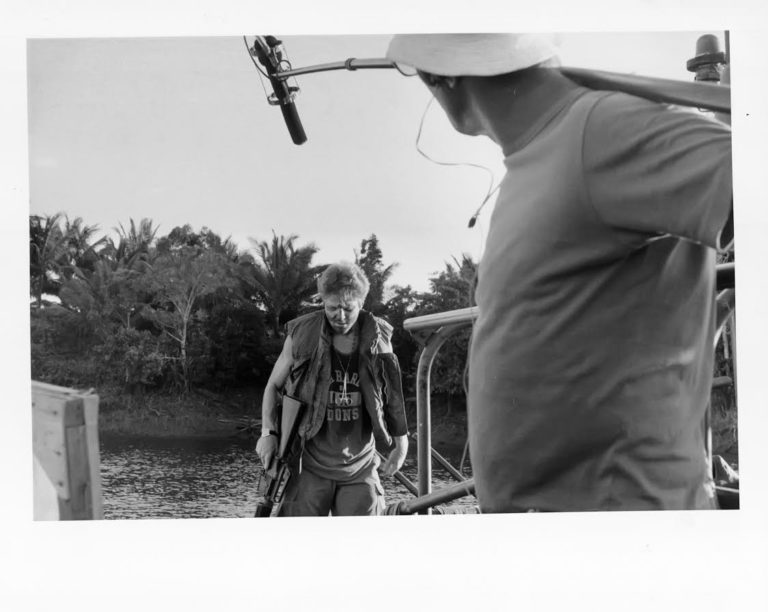
It was the middle of the day in the steamy Philippine jungle and the sun was merciless. Director Francis Ford Coppola, dressed in rumpled white Mao pajamas, was slowly making his way upriver in a motor launch. “Right here is where we hang the dead body,” he said to his production designer, Dean Tavoularis. “I want skulls – a pile, no, a wall of skulls.” “Can we light this for night?” he asked his director of photography, Vittorio Storaro. Storaro sighed and stroked his beard. “Fires should be burning behind the curtain,” Coppola said to Tavoularis, pointing to a striking red silk curtain that meandered 300 yards along the riverbank. When the boat docked, a set decorator complained, “Where are we going to get 200 skulls?” Tavoularis shrugged. After what he and everyone else had been through, 200 skulls were just so many coconuts.
For over a year, one of Hollywood’s most successful directors (“Godfather I and II”) had been shooting “Apocalypse Now,” a film about the “untouchable” subject of the Vietnam war. It had started in March 1976 as a $12 million movie that would take four months to shoot. Things quickly escalated. By the time the crew finally left the Philippines a fortnight ago, they had become battle-scarred, if well paid, veterans. “Apocalypse Now” had consumed more than 230 shooting days and a million feet of film and will end up costing about $25 million. (A little more than $7 million came from the sale of distribution rights in foreign countries; United Artists says it has put up $7.5 million and advanced the rest to Coppola, who has put up all his own assets as guarantees on the loans.)
Life on the set – four different locations in the Philippines – also escalated quickly to apocalyptic dimensions. The young crew, composed largely of Americans, Filipinos, and Italians, weathered a typhoon, survived dysentery and sweated through day after day of relentless heat – alleviated by periodic R&R trips to Hong Kong. Stuntmen amused themselves by diving from fourth-story windows into the motel pool below. The prop man, Doug Madison, became adept at fabricating top secret CIA documents, thought nothing of driving 400 miles to fetch a special Army knife, and made a connection with a supplier of real corpses – before he was vetoed. At one point, Coppola asked Tavoularis to produce 1,000 blackbirds, which prompted the designer to consider making cardboard beaks for pigeons and dyeing them black. The film company retained a full-time snake man, who appeared every morning on the set with a sack full of pythons. The Italians brought in pasta and mozzarella from Italy in film cans. Did Coppola want a tribe of primitive mountain people living on the set in their own functioning village? He got it.
**REPLAY OF A NATIONAL NIGHTMARE**
At night, General Coppola reviewed video cassettes of the film in his house in Hidden Valley, a volcanic crater, arriving there in a helicopter that he often piloted himself. By the time he finished shooting, he had lost 60 pounds, and the making of “Apocalypse Now” had come to resemble nothing so much as its subject – Vietnam.
For years, Hollywood has ignored Vietnam on the theory that nobody wants to see America’s worst national nightmare replayed. Now, a number of movies are being made about the war, but none so far-reaching as “Apocalypse.” The original script was written in 1967 by John Milius, an unregenerate hawk, but Coppola has reportedly long since abandoned all but the story line to move closer to the script’s original source, Joseph Conrad’s classic study of moral jungle rot in Africa, “Heart of Darkness.” Coppola’s idea has been to make the film on two levels – both as an entertaining war movie full of action, adventure and spectacular special effects, and as a mythical, highly stylized allegory of the American experience in Vietnam in 1968 and 1969 – all of it set to the rock music of The Doors and filled with psychedelic sound and light.
Martin Sheen plays Army Capt. B. L. Willard, hired by the CIA and sent upriver on a Navy patrol boat crewed by Frederic Forrest, Sam Bottoms, Larry Fishburne and Albert Hall. His mission is to kill Coppola’s “Mr. Kurtz,” one Col. Walter E. Kurtz – an officer gone insane – who lives in a temple resembling Angkor Wat across the border in Cambodia, is worshipped by the Montagnards and is played by Marlon Brando.
One of Kurtz’s entourage is a spaced out hippie photographer who’s had about 200 acid trips too many, a role Denis Hopper evolved for himself. Robert Duvall plays another kind of mad colonel who carelessly risks the lives of his men in order to land in a village that has perfect waves for surfing. As Sheen and his crew head upriver, they encounter a wild rock concert during which 300 horny soldiers storm a stage to get at a delegation of Playboy bunnies; a French plantation family determined to hold out at all costs; exploding bridges, and one peaceful group of Vietnamese whom they murder in panic. One helicopter battle sequence, choreographed to Wagner’s “Ride of the Valkyries,” took seven and a half weeks to shoot and will appear on the screen for only six minutes.
Ang telenobela ng buhay ko
Bata pa lang ako noong nabuntis ako, 3rd year college ako noon, di ko alam kung paano ko sasabihin sa mga magulang ko na nabuntis ako, alam kong di naman matatago ang katotohanan lalo pat lumalaki ang tiyan ko. Pressured ako that time, grabe yung hirap na dinanas ko, di ko alam san ako magsisimula, di ko alam sino ang lalapitan, iniwan kasi ako ng papa ng anak ko, umuwi siya sa lugar nila. mag usa nalang ako. grabe ang lungkot na dinanas ko noon. di ko pa masabi sabi ang katotohanan sa mga magulang ko. Kalaonan nalaman din nila dahil sa chismosa naming kapitbagay, pinuntahan talaga nila ang nanay at mga kapatid ko sa kabilang baranggay, akala ko magagalit sila, alam ko disappointed sila pero isinantabi nila yung galit nila alang2 sa pagbubuntis ko, baka daw ma stress ako at malaglag yung anak ko.
..... sa susunod na article naman yung kasunod, mag luluto muna ako ng sauce para sa fishball ko.
 @Marah22