Just Mining
Just Mining is a reputable Proof-of-Stake (PoS) infrastructure provider and Validator for newcomers. Cloud mining, hosting, staking coins, and Masternode formation are just some of the services available on the platform. Just Mining is also involved in the sale and manufacture of altcoin mining rigs.
According to company records, Just Mining is France's largest farm. Across a variety of PoS and DPoS blockchains, the platform runs a number of different Validators. Here are a few of the big issues that Just Mining is attempting to solve through its novel business strategy.
What issues is Just Mining attempting to solve?
The primary problem that Just Mining tries to resolve is consumer uncertainty. Staking, mining, and cloud resources can be intimidating to a new investor. It's difficult to know how to compare different products and navigate the market. Just Mining introduces a user-friendly interface that greatly simplifies these procedures.
**Cost barrier**
Just Mining is known for producing high-quality altcoin mines at competitive prices. The platform offers 24/7 assistance to assist you in setting up and mining your new rig. Users can also use the platform's cloud mining services. Cloud mining is a service that lets you rent hashing power from the network's data centres. Just Mining currently has a famous 2-year cloud mining plan on the market.
Just Mining's Benefits
There are several advantages of taking this approach. For starters, Only Mining employs experienced hardware and IT teams to operate high-quality rigs. Masternodes, mining nodes, and staking nodes are all linked to their respective networks as a result of this. When performing these tasks, uptime is crucial because networks will penalise you if you experience some downtime.
**Selection**
Only Mining has a large number of blockchain networks in which you can participate. Classics such as BTC, ETH, ZEC, ETC, and Others are available. Elrond, Polygon (Matic), and Horizen are three recent projects that aren't readily accessible from the competition.
**Customer Service**
A deep commitment to customer support is at the heart of Just Mining's strategy. Feedback and user recommendations are taken into account by the platform. Before you make some investments, you can speak to an expert in real time via their chat box. This choice is helpful to new users because the knowledgeable staff will point you in the right direction and answer any questions you might have about mining, staking, or running Masternodes.
How Just Mining Works
Just Mining works in a number of industries. The platform's multifaceted strategy has helped it to become a major player in the market. Investors will instantly begin receiving passive incentives by using the hosting, cloud, and staking services. With the firm's advanced altcoin mining rigs, you can also launch your own operation. Just Mining will also develop your rig according to your specifications in order to satisfy your current needs.
Just Mining is a custodial network that is centralised. If you want to engage in Only Mining's offerings, you'll have to give them custody of your coins. The network has a good track record in terms of protection and is probably the best performer in all French-speaking countries.
**Masternodes**
It's easy to run a Masternode on Just Mining. Masternodes are different from standard nodes in that they have additional network functionality. In terms of Masternode operation on Only Mining, there are two options: complete and shared. The shared alternative allows you to access the network without having to follow any of the network's node specifications. Masternodes, in particular, see ROIs of up to 40%.
**Staking**
The average return on investment for those who stake on Only Mining is up to 60%. The network supports all of the top staking sites. There is also a section devoted to those interested in Ethereum 2.0 stakes. Each coin has a calculator on it so you can find out how much your rewards will be.
**Miners**
Just Mining's mining features are simple to run. All important actions are streamlined by a control panel. Just Mining is notable for being the first company to deliver plug-and-play miners on the market. This decision is in keeping with the company's goal of educating and simplifying mining for newcomers.
**ASIC miners**
Only Mining makes it easy to buy an ASIC miner. You have the choice of having the rig pre-programmed by the manufacturer or doing it yourself. ASIC miners are currently the most strong mining rigs on the market. Just Mining produces high-quality Antminer rigs. These rigs aren't inexpensive, costing upwards of $3000.
**GPU miners**
GPU miners are a more cost-effective option for new miners. Despite this, these rigs are hundreds of times more powerful than CPU mining. You can also enter a mining pool to pool your money and receive consistent rewards. Bobs are the name given to GPU miners who only mine. They use an advanced AI algorithm to automatically find the most profitable blockchain to protect in order to optimise your profits.
How to use Just Mining
The first step in using Just Mining is to go to the website and choose the service you want to use. Masternodes, Staking, and Miners are the three choices in the middle of the homepage. Each section has a link to an educational blog that explains what the feature is and how it can help you. A Display Items button is located underneath this button. You'll be taken to the available staking and Masternode networks when you select this choice.
There is a table with each network and its payout incentives, much like most staking platforms. Just Mining, for example, recently added Cardano. You have the option of purchasing coins to stake at the bottom of the table or staking your own tokens. Every ROI calculator is located below that segment.
Now push the Stake Now button. This will take you to the login page for your account. The registration process is quick. Your full name, email address, phone number (if you're a company or an individual), and location are all required by the network. A verification email will be sent to you once you press register. You can then re-click the Stake Now option after clicking the connection.
Final Thoughts
Just Mining makes staking coins, mining blocks, and running Masternodes easy. The platform stands out because of its diverse set of features. The fact that customer service is available 24 hours a day, seven days a week is also a major plus, as many miners are new to the industry and need a little more information before making such a large purchase. As a result, Only Mining is expected to remain a major player in the EU market.

Tether
Tether (USDT) is a common stablecoin that has a one-to-one exchange rate with the US dollar. The coin can be found on a number of blockchains and has seen increased trading rates and liquidity in recent years.
USDT helps traders to escape the market volatility that most crypto assets experience. The extra costs and delays of converting between crypto and fiat currencies are also avoided by using stablecoins.
In recent years, Tether has also become one of the most common crypto-assets.
Tether
Tether, a stablecoin with the ticker symbol USDT, uses blockchain in the same way as all other digital coins and tokens do. Tether's value is stable, unlike Bitcoin and many other altcoins such as Litecoin and Ethereum, effectively resolving and removing the uncertainty factor of cryptocurrencies. Each Tether is instead backed by fiat reserves. Each token in USDT is backed by a single US dollar.
Tether Limited, the company behind Tether, has issued tokens pegged to other fiat currencies like the Euro and the Japanese yen, which is interesting. However, we can just consider the case of USDT, which is backed by Tether Limited's United States Dollar reserves.
History
Tether was born out of the 'Realcoin' project, which was revealed in July 2014. In October, Tether released the first batch of stablecoin tokens on the Bitcoin blockchain. Realcoin was renamed Tether in November 2014.
Tether's Controversy
Tether has, without a doubt, had its share of controversy. However, it has successfully faced the obstacles in order to remain afloat in the industry.
Tether Limited has maintained that any Tether stablecoin is 100 percent backed by its original currency since the project's inception. Tether Limited had $1 in its reserve for every USDT stablecoin in circulation.
Users may also exchange the Tether stablecoin for fiat currency, according to the company. These statements, however, lacked substantial evidence, causing controversy and debate about the lack of accountability.
Tether Limited announced in November 2017 that it had been hacked and that $31 million in Tether assets had been stolen. A few months later, the company was chastised for failing to demonstrate that substantial Tether stablecoin reserves exist. The firm was also accused of manipulating the price of USDT and Bitcoin.
Tether says that its stablecoins are backed by USD reserves. Since then, the business has stated that it uses conventional currencies, cash equivalents, and other properties. It also claims that every Tether stablecoin is pegged to the US dollar 1:1.
The Pros
Tether is a stablecoin that has a few advantages over other cryptocurrencies including Bitcoin and Litecoin.
1. Tether, unlike Bitcoin and other altcoins, is not volatile. It means that the coin's value does not change in response to demand. In the vast majority of cases, each Tether stablecoin will be worth $1.
2. Tether is a cryptocurrency that can be used on a variety of blockchain networks. Traders may select the network they want to send or receive Tether on.
3. Tether has almost all of the advantages of a cryptocurrency. For example, you can benefit from low transaction fees and increased protection. USDT is also suitable for a broader range of applications. Many traders, for example, use Tether as a go-to alternative to avoid the price instability that is sometimes associated with Bitcoin and other altcoins. Rather than cashing out the funds, a trader can easily convert them to USDT to keep the price stable.
4. You can also use USDT to get access to cryptocurrency exchanges that don't accept cash. Users can purchase the appropriate amount of USDT tokens and conduct the crypto-trading transaction instead of relying on cash. On that note, it's worth noting that Tether has low transaction fees when it comes to cashing it out in fiat currency.
Tether (USDT) is a better option for arbitrage trading because of these benefits.
Tether, in a nutshell, is a cryptocurrency that acts as a bridge between cryptocurrencies and fiat currencies.
The Cons
Tether has some possible problems that you should be aware of.
1. Tether is not a decentralised commodity like Bitcoin or Ethereum. As a result, the coin's growth potential is determined by the parent company, Tether Limited.
2. Because of its centralised existence, the Tether network requires you to give up your privacy in certain circumstances. Selling Tether for fiat money, for example, necessitates a thorough KYC.
3. Experts and veterans in the industry are suspicious of Tether Limited's claim to retain fiat currency reserves.
Ico, Ieo and Sto
An initial coin offering (ICO) is a relatively new method for blockchain startups to raise funds. ICOs, on the other hand, started to lose steam after a meteoric rise in popularity. Owing to a lack of oversight, several fake ICOs have arisen, and the cryptocurrency market's crash in 2018 has caused investors to lose confidence in new blockchain ventures. New fundraising strategies, such as IEOs and STOs, have been developed in an attempt to entice investors back to the blockchain industry.
ICO and IEO: The Difference
A serious problem inherent in ICOs is the prevalence of fake ICOs, as well as the unclear prospects for even those startups that aren't scams. One way to address these issues was to enlist the assistance of a third party who could root out fake ICOs and assist aspiring startups in attracting funding. This third-party position was taken over by cryptocurrency exchanges. Initial Exchange Offers (IEO) were first introduced in this manner.
An IEO is a form of crowdfunding in which a cryptocurrency exchange takes on the task of evaluating a project, attracting investors, and managing token distribution.
Despite the fact that an IEO is a form of ICO, the two fundraising approaches have some main differences.
The main difference is that a company seeking funding through an IEO has a key partner, namely a crypto exchange that serves as a middleman between the project's developers and investors. The cryptocurrency exchange assesses startups that have applied for an IEO and oversees the token sale.
Since fraudulent and unpromising projects are most likely to be omitted by exchange analysts, an exchange's preliminary assessment of projects significantly reduces investors' risk. As a result, investors have more faith in validated startups, which is good for the blockchain industry's development.
After tokens are sold, they are listed on the exchange within a few days. Tokens from an ICO are frequently not listed on a cryptocurrency exchange right away, but rather months after the token sale has ended. In certain cases, the project fails because the listing is never completed.
Only users who have an account on the exchange and have been checked may become investors since the selling of tokens for an IEO takes place via a crypto exchange.
Developers use an ICO to launch a marketing campaign. They do this by using paid ads, forums, and social media. For an IEO, the exchange assumes this responsibility.
A central authority: an exchange, manages an IEO. It enhances the process' centralization, which goes against one of the blockchain ecosystem's core concepts of decentralisation.
STO (Security Token Offering)
In addition to ICOs, the Security Token Offering (STO) model has recently emerged as a viable alternative. It is distinct from an IEO in that it does not involve a third party and instead aims to transform tokens into actual financial instruments. This model addresses the issue of crypto token legal compliance with stock market requirements to some extent.
A security token offering (STO) is a method of selling digital tokens on a blockchain that meets the requirements for securities. This means that the owner of the token has the same rights as a stockholder, including the right to a stake in the company, a portion of its income, and input into business decisions. In light of this, security tokens are entirely legal assets under most legal systems, and are on par with shares. This also ensures that the distribution of such tokens adheres to the stringent regulations that ICOs do not.
Conclusion
All three of the previously listed fundraising strategies are currently used by the blockchain industry. As you can see, each strategy has its own set of benefits and drawbacks, so which is the best? The response to the question is not as straightforward as it may seem at first.
While IEOs have a higher level of investor trust than ICOs, they have a number of drawbacks. To begin with, when following their own commercial interests, exchanges will filter out projects with high potential simply because the developers could not provide the exchange with an appealing commercial bid. Second, IEOs increase the barrier to entry for startups by being more costly to run than ICOs. Finally, participants in the IEO are limited to those who are able to register with the exchange.
While an exchange's selection of a project may improve investment security, it is by no means guaranteed. Under this model, there is still a possibility of fraud.
The STO fundraising model, though safer for investors than IEOs and ICOs, has its own set of issues. To comply with legal requirements, a developer must spend both time and money. While an ICO can be achieved for a low price, a STO may cost as much as a stock's initial public offering (IPO), negating the blockchain's gain. Furthermore, one of the major drawbacks of STOs is that they are only open to approved investors, making them unavailable to the general public.
As a result, we can conclude that naming one of these three fundraising strategies as the "best" is difficult. Each of the three has its own distinct characteristics that appeal to various types of investors. IEOs and STOs will most likely usurp ICOs' current dominance, but they are unlikely to do so in the near future.

Stop Limit, Limit and Stop orders
Many unprofitable trades, lost money, and dashed expectations for newcomers, according to most effective traders, stem from underestimating the risks, as well as an inability to stop in time to close unprofitable orders. The majority of books on the fundamentals of trading include descriptions of these theories.
Is there a way to solve this dilemma, or will traders have to spend a lot of time studying and practising? Dealing with these problems is actually very simple, particularly if you use a function that many beginners overlook: the Stop Limit order.
Stop Limit Order
A Stop Limit order is a pending limit order to buy or sell when a stated price is reached, an action known as a stop. When the price of a cryptocurrency unexpectedly rises or falls, this form of order may help traders prevent themselves from losing money or lock in income.
Traders who use Stop Limit orders have complete control over their trades. As a result, they can be used to buy and sell cryptocurrencies.
Stop Limit orders can also help long-term investors and short-sellers minimise risk. They have power over when an order is placed as well as the minimum and maximum rates at which cryptocurrencies can be bought and sold. This is particularly useful in volatile markets, where prices can change quickly and traders can't track their trades continuously.
Stop Limit Order: How it works
Stop Limit orders give traders more power over their trades by allowing them to set minimum and maximum order rates. A trader can accomplish this by creating two prices: a stop and a limit price. A Stop Limit is a type of order that incorporates two types of orders:
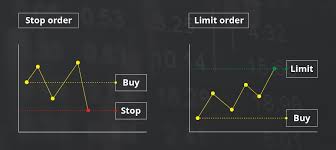
A stop order is a market order that is triggered when the price of cryptocurrencies exceeds a certain level (the stop price).
A limit order is a type of order that buys or sells a cryptocurrency at a certain price (or better).
The Limit order is activated when the price of a cryptocurrency hits the stop price, and an attempt is made to buy or sell cryptocurrency at the limit price or better.
How to Place Stop Limit Order
You must first register on an exchange before you can begin trading. After that, either make a deposit in fiat currency or crypto of your choice. Once you've decided on a cryptocurrency pair to trade — say, Bitcoin — you'll need to select an order form.
Select the Limit/Stop order tab from the drop-down menu. In the Limit/Stop data area, you can define a price limit or a stop price. Choose the power you want to use, then fill in the Take Benefit area with a price to lock in profits. Traders may use the following field to set a Stop Loss level to cover their positions.
Limit Order versus Stop Order
Traders may use Buy and Sell Limit orders to open a trade at their own price rather than the current market price. A Buy Limit order allows you to decide the precise price at which you want to purchase a cryptocurrency. This is generally the approximate starting price.
There are a few things to keep in mind when placing a Buy Limit order. StormGain can purchase the cryptocurrency at the specified price or a lower price if it happens on the market with a Buy Limit order. A Limit order is not expected to be filled; it will not be fulfilled if the market never reaches the required price level.
Once a certain stop price is reached, a stop order allows you to buy or sell a cryptocurrency at market price. A Sale Stop order is a stop order that is used while selling. It varies from a Limit order in that it involves a stop price, which then causes a market order to be activated.
The trader sets a stop price to sell in the case of a Sell Stop order. A market sell order is triggered when the market price of a cryptocurrency reaches the stop price. Stop orders, unlike Limit orders, may have some slippage since the stop price and the subsequent market price execution are normally separated by a margin.
**Buy Limit versus Buy Stop order**
The key difference between Buy Limit and Buy Stop orders lies in the type of order. A Buy Limit order will execute at or below the limit price while a Buy Stop order is filled above the current market price at the next available market price once the Buy Stop price is triggered. Buy Stop orders are generally used to close a short position on a cryptocurrency.
Sell Limit versus Sell Stop Order
Limit orders, on the other hand, enable traders to decide a price, while Stop orders require a particular price to initiate the exchange. When a Sell Limit order is activated, the order is filled at or below the limit price, while a Sell Stop order is filled below the current market price at the next available price. Sell Stop orders are often used to close a cryptocurrency buy place.
Difference: **Stop Limit, Limit and Stop orders**
Order forms are often misunderstood by inexperienced traders. Here's a quick rundown of the words Stop Limit, Limit, and Stop orders to help you understand them better:
A Stop Limit order is a pending (limit) order that allows a trader to close a trade (buy or sell) if a vital or desired price is reached. It can be used to hedge against losses or lock in income at a pre-determined amount.
If the target price is met, a limit order enables a trader to conduct an order (buy or sell).
If a certain price is reached, a trader may position a Stop Loss or Take Profit market order using a Stop order.
Final Thoughts
On the cryptocurrency market, stop limit orders are one of the most valuable trader's resources. They allow traders to minimise risk or lock in profits without having to track the price 24 hours a day. While Stop Limit orders make trading easier, they cannot be relied upon solely. To trade effectively, you must continue to read, find a method that works, devise a plan, and observe to gain invaluable knowledge.
Blockchain: Simplified
If most people think of blockchain, they think of Bitcoin and other cryptocurrencies. However, blockchain technology has a far broader range of applications than cryptocurrencies. Many people consider blockchain to be one of the most powerful inventions of the last ten years.
Blockchain Technology in Simple Terms
Understanding what blockchain is and how it operates may be difficult for those without an IT background.
A blockchain is, at its heart, a system of storing and transmitting data. It can be classified as a database, but it varies from conventional databases in many ways. A blockchain stores data in a series of blocks, each of which contains critical information (such as transactions) as well as the previous block's cryptographic hash. If you change the information in one block, you must also change the information in all subsequent blocks.
A blockchain is a distributed database, meaning it is not housed on a single computer. Instead, several similar copies are placed on a network of computers known as nodes. The content of the blocks is checked by the network's consensus of all nodes. This makes changing any information already in the blocks extremely difficult, and the complexity increases as the number of nodes in the network grows.
Blockchain: History
In his dissertation from 1982, cryptographer David Chaum introduced the definition of a blockchain-like protocol for the first time. Stuart Haber and W. Scott Stornetta later identified a cryptographically safe chain of blocks in which document timestamps could not be tampered with in 1991. They developed their concept in 1992 by incorporating Merkle trees, which increased productivity by allowing more documents to be stored in a single block.
However, it was thanks to the enigmatic founder of Bitcoin, Satoshi Nakamoto, who invented the concept of blockchain technology in 2008. On October 31, 2008, a whitepaper titled Bitcoin: A Peer-to-Peer Electronic Cash System was released. This whitepaper summarized the current state of blockchain technology. On 3 January 2009, Satoshi Nakamoto mined the first block of Bitcoin, putting blockchain technology into effect.
Blockchain: Its elements
**Block**
A block is the most basic component of the blockchain, and all blocks are connected together in a single chain. Each newly generated block contains a set of recently accumulated transactions as well as data from the previous block. Transactions on the blockchain are any actions carried out by blockchain users, such as sending money, registering property rights, and so on.
When a block is formed, it is validated by other nodes on the network, and then it is linked to the chain's end if everyone agrees. It is no longer possible to alter it after this has occurred.
**Decentralization**
There isn't a single place where the blockchain database is held. It is duplicated on several machines at the same time, and its data is accessible to all network members. When a new block is introduced to the network, the database is updated on all nodes. The data in such a database is available to the public and easy to check. Furthermore, if one network node fails or disconnects from the chain, the network's output is unaffected.
**Node**
A node is a machine that stores the most recent version of the blockchain in its entirety. When a new block is added to the blockchain, all nodes' copies of the blockchain are modified.
**Cryptographic Key**
Encryption means that users can only change the parts of the blockchain for which they have private keys. Without private keys, transactions are impossible.
Blockchain: How it works
1. A new transaction is started by the owner of a private key.
2. The blockchain network receives the requested transaction.
3. The transaction is checked by the network's nodes.
4. The block is updated with the validated transaction.
5. The hash of the block is calculated and recorded by the miner.
6. The blockchain is updated with a new block.
7. The transaction has ended.
Blockchain: its features
**Security**
Information is stored on centralised servers in conventional databases; every centralised database may be manipulated or changed by unethical employees. With blockchain technology, however, this is not the case. Changing the information in one block is pointless because you'd have to modify it in all subsequent blocks because each block includes encrypted data about the contents of the previous blocks. Because each of the other network members has their own copy of the blockchain, a separate copy will be easily marked as illegitimate.
To succeed, a hacker must modify at least 51 percent of the blockchain copies, which necessitates a considerable amount of computing power. Although blockchains with fewer participants are vulnerable to the so-called '51 percent attack,' attempting such an attack on a larger network is more complicated and expensive. Even if the attack succeeds, the majority of the network participants will note the changes and will most likely build a new version of the blockchain (a fork) that does not include the changes. Via the use of private keys in the encryption scheme, unauthorized transactions are also avoided.
**Transparency and Anonymity**
Any user can view a blockchain's transaction history, while participants' identities are either anonymous or pseudonymous, depending on the blockchain. Participants in the Bitcoin blockchain, for example, can see each wallet's balance and transaction history while their personal data is kept private.
**Immutability**
Blockchains are excellent for storing information since the contents of a block can't be altered without altering the contents of all subsequent blocks in more than 51% of the network's blockchain copies. Any documents that have been checked are permanent and cannot be tampered with. This ensures that if anything is registered in the blockchain, it remains unchanged for the duration of the blockchain network.

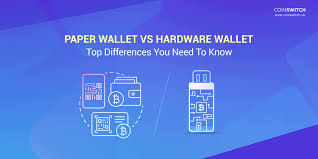
Hard Wallet Versus Paper Wallet
The number of options available when selecting a Bitcoin wallet can be overwhelming, particularly for newcomers. Although mobile and online banking are becoming more common, completely digital payment solutions, such as Bitcoin or other cryptocurrencies, are still a little daunting to the average individual.
Cold storage refers to the storage of cryptocurrencies on a computer that is totally offline. For those who want the most safe, cold wallets are the best choice. They are ideally suited for long-term asset holders who do not access their crypto assets on a daily basis. Hardware and paper wallets are two distinct types of cold storage.
Cold storage refers to the storage of cryptocurrencies on a computer that is completely offline. For those looking for the most safe type of storage, cold wallets are the best choice. They're perfect for long-term investors who don't need access to their crypto assets for months, if not years. Hardware and paper wallets are two distinct types of cold storage.
Hardware Wallet
A hardware wallet is a physical device used to store cryptocurrency.
KeepKey, Ledger, and Trezor are the three most common. Because of its limited features, another product, OpenDime, isn't actually a hardware wallet, but it is a cheaper alternative that performs many of the same functions. It's essentially one-time-use storage that allows you to add funds on a regular basis but must be physically destroyed to remove them.
The concept behind hardware wallets is to keep private keys apart from online storage methods like a computer or smartphone, which are more vulnerable to hacking. Hackers will have to physically steal your hardware computer in order to gain access to a user's private keys if you store your private keys offline. Even so, most hardware wallets require a PIN code to access, which adds an extra layer of security.
They are not, however, secure. However, if you own a large number of bitcoins, the cost can be justified. This system will safeguard a few hundred Bitcoins just as well as a few million.
**Possibilities Vulnerabilities**
There is no evidence that tokens have been stolen from a hardware wallet. However, it's important to remember that using hardware storage isn't a panacea. There are also a couple of potential flaws:
Replacing the address of the recipient.
It won't stop you from sending your tokens to the wrong location. For example, if a virus on your computer detects a large transaction, it can monitor it and replace the destination address. To solve this dilemma, using two-factor authentication to validate a transaction is suggested.
A poor generator of random numbers.
Internal random number generators are used for hardware wallets. Unfortunately, creating a true random number isn't that easy. A hacker might predict such values if a bad random number generator is used.
Bugs
The quality of a system's realization determines its security, whether it's hardware or software. Wallets made of metal are no exception. Firmware vulnerabilities may give an attacker access to a device's internal structure.
Manufacturing process has been harmed.
Also the best firmware and hardware can't guarantee that a deliberate or unintended interference won't occur during production.
The distribution mechanism has been harmed.
It's also simpler to delete or replace any hardware or software elements during distribution so that the consumer won't know. Many governments, according to some reports, intercept and modify various hardware items in order to create a backdoor.
Paper Wallet
Another form of offline cold storage for cryptocurrencies is a paper wallet. The private and public keys are printed on a paper wallet that can be kept secure. The key is printed as a QR code that can be checked to complete all transactions. It gives the user full control.
It's important to understand that it's the information stored in a crypto wallet that gets printed out on paper, not the cryptocurrencies themselves. People can move money using the private key printed on the paper, which gives them access to spending funds.
It's made with a program that produces a private and public key at random. The keys are one-of-a-kind, and the software that generates them is open source. These keys are produced in the background. This removes the possibility of cyber-attacks.
Some claim that as people become more used to bitcoin, paper wallets would be phased out and digital wallets will take their place. It's probable that this is the case. However, if you're worried about protection, it's an excellent choice right now.
**Risk**
Although paper wallets greatly reduce the risk of being hacked, they do come with their own set of risks, which include:
Instability
The wallet is nothing more than a piece of paper. It is easily degraded and will wear out over time.
Errors Made by People
The location of the paper can quickly be overlooked, and it can be ripped by mistake.
The Printer That Was Used
If the paper gets wet, non-laser printers can cause the ink to run off. As a result, a high-quality printer is needed.
Constraints
It's not a good idea to brag about your crypto money. It has the potential to make the holder a prey for predators.
Hardware Wallet is Better than Paper Wallet
If you use paper wallets correctly, they are secure. Hardware wallets, on the other hand, are designed to not only store bitcoin but also make it simple to use it while maintaining a high level of protection. Hardware storage is highly reliable and convenient for anyone with several bitcoins who spends bitcoin regularly.
The entire protected paper wallet mechanism is implemented in a user-friendly manner using hardware devices. Main generation on the fly. Space that is not available online. Signing a transaction offline.
Swing Trading
The most common trading strategies are likely to be trend trading and day trading. Thousands of traders are active in both around the world, in various markets. Swing trading, on the other hand, does not have the prestige it deserves.
The fundamental trading strategy has the ability to make a lot of money and can be used for a number of asset types. Cryptocurrencies are the type of asset that can be exchanged in a swing.
Swing Trading
Swing trading, in the common sense, is a proprietary trading technique used by traders in a variety of markets and properties. The dealer will keep the tradable commodity for a few days to several weeks.
That differs from day trading, in which assets are kept for less than a day, and trend trading, in which assets are held for weeks, months, or years depending on market patterns.
Swing trading has a number of advantages and disadvantages due to its position on the spectrum. Regardless of the asset you use for swing trading, it's critical to understand these advantages and limitations. Since crypto assets are so volatile and unpredictable, you should be extra cautious when swing-trading a cryptocurrency or another investment.
**Advantages**
Swing traders prefer swing trading to intraday and trend trading for a variety of reasons:
1. Swing trading, unlike intraday trading, does not necessitate the trader's continuous attention. The swing trader does not have to spend several hours a day in front of the machine crunching numbers, like a traditional day trader does. Swing trading requires a few hours of work per week if the trader has done ample research before investing in the asset.
2. Swing trading needs far less effort than day trading. Traders will almost always depend on Technical Analysis, which uses historical data and price charts to determine asset management decisions. This is a more convenient choice that does not necessitate a significant amount of effort on the part of the trader.
3. Swing trading any commodity offers a higher chance of making money in the short term. Swing trading, when focused on a well-curated collection of assets, may produce a significant amount of profit in a relatively short period of time. Swing trading is thus favoured by those who wish to generate a monthly income from trading.
4. Swing trading, as opposed to intraday and long-term trading, gives you more leverage over market risks. We should also keep in mind that swing trading requires you to search a smaller number of stocks rather than hundreds. As a result, the trader will concentrate on the investments and make the best decisions using Technical Analysis and Fundamental Analysis.
**Disadvantages**
Swing trading necessitates a little more focus or discretion from the trader in these regions.
1. Swing trading assets are vulnerable to other market risks due to the prolonged holding period. For example, overnight or over the weekend, trade positions can dramatically shift. Since the seller does not hold the asset overnight, this does not happen in intraday trading.
2. Swing trading also has the downside of losing out on some of the more popular market trends. Swing trading does not recognize future long-term profits because the strategy's main aim is to keep the asset for a few weeks and profit as much as possible.
3. Although swing trading does not take as much time as day trading, it does necessitate a greater understanding of the market by the trader. They'd also need to have a clear understanding of scientific and fundamental research.
Crypto Swing Trading
Swing trading seeks to benefit from price differences over a medium-term period. However, there are a few problems when we extend this principle to crypto properties. The issues emerge largely as a result of the crypto market's overall uncertainty. The most well-known crypto asset, Bitcoin, is the best example of this.
For years, traders have attempted to forecast the growth trends of the Bitcoin asset in order to benefit. Almost every time, however, an unforeseeable factor impacts the price of BTC, causing the value to fluctuate dramatically. There are stablecoins, to be sure. The central concept, however, has remained largely unchanged.
As a consequence, before Swing Trading crypto, you should weigh a few factors.
**Comprehensive Focus**: In the crypto world, you can't make money by focusing on only one asset. Even if you just trade one commodity, you should have a detailed understanding of the market at all times. Only then will you be able to comprehend how the asset you've purchased interacts with other investments, such as Bitcoin.
**Higher Risk**: If you intend to swing trade cryptocurrency, you can expect to lose your entire investment. To put it another way, traders are often told not to risk more money than they can afford to lose.
Conclusion
You will think about the best ways to swing trade crypto if you grasp these aspects. Choose a trading site that provides timely help and documentation to assist you in getting started with swing trading and other crypto trading strategies. Check to see if the platform allows you to select from a wide range of crypto assets available on the market.
After all, diversifying your cryptocurrency portfolio is a good way to stay in charge. However, you should devote more time to analytics.

Scams!
Scamming is an intricate method of taking advantage of uninformed individuals or organisations and profiting from their ignorance. Wherever money or wealth is involved, scamming has always been a problem.
Scams are highly common in the crypto market as well. In the crypto industry, there has been a long list of scamming tactics over the years. Since the field is new and, sadly, complicated, it is easy for a few to mislead the masses by making a variety of false promises. Scamming tactics vary, but they all aim to steal money from unsuspecting investors looking for a fast buck. The following is a list of some of the most common and well-known scamming techniques currently available.
Wallet hack
Cryptocurrency wallets can be hacked if attackers find an internal way in, despite how difficult it is. Internal methods include obtaining your phone's password, cloning your computer, learning your backup expression, and so on. Wallet hacks are uncommon since they are usually stored offline and protected by strong encryption. When a wallet is hacked, it is normally due to the wallet's creators' incompetence, as has been the case in the past.
Fake social media influencer
Many influencers and celebrities on social media sites such as Instagram, Facebook, and others are sometimes active in supporting ventures for which they are compensated. The majority of the time, the promoters have no idea what they're trying to sell. Celebrities such as 50 Cent, DJ Khalid, and a slew of others have been known to endorse crypto ventures and initial coin offerings (ICOs) that were almost certainly scams or false projects.
Cryptojacking
Cryptojacking is, in several ways, a way for cybercriminals to make free money with little effort. With only a few lines of code, cybercriminals can take control of another person's computer. As a result, the victim is responsible for the expense of the computations and energy used to mine cryptocurrency. The crooks make off with the tokens.
Telegram Scams
Telegram scam groups and Telegram chatbots are two of the most popular forms of scams these days. People are persuaded to join telegram groups or influencers who promise to make money for their followers. They create flashy displays that show you their cryptocurrency balance, trade snapshots, and customer feedback, all of which are typically fake. When a potential victim is persuaded and sends money, they close the show and change their credentials, searching for a new victim.
Dusting Attack
A Dusting attack is carried out by sending small amounts of cryptocurrency to hundreds or thousands of wallets, as the name implies. Scammers discovered that cryptocurrency users don't pay much attention to the small amounts that appear in their wallets, and they've been taking advantage of this since then. Hackers make a note of the wallet ID they send to with the small number. Following the dusting of several addresses, the next step in a dusting attack is to merge the analyses of those addresses to see which ones belong to the same wallet.
Fake ICOs
Scamming has never been simpler since the launch of the ICO (Initial Coin Offering) concept and the continuous changes in the Ethereum Ecosystem. Scams involving initial coin offerings (ICOs) can be the most difficult to detect because they often resemble legitimate offerings. The projects have a flashy website, a large and unfeasible whitepaper, and claim to address a variety of issues. Newcomers to the market are quickly influenced by the fake project's glamorous and aesthetic appearance, and they send money to them in the hopes of a massive return. The developers take the money as soon as the time limit expires. According to some figures, approximately 1/3 of all ICOs in 2017 is fraudulent. One of the most significant disadvantages is that most investors have no direct interaction with the project's developers.
Fake Airdrops
An airdrop is a basic term. It entails a company “dropping” small quantities of free crypto to individual wallets in bulk. To participate in an airdrop, you must first register using a Google form, a Telegram bot, or directly on the project's website. The aim of a dump airdrop is to create short-term hype about a token so that people will be willing to buy it when it becomes available on exchanges. Airdrops are another scamming tactic that involves following the accounts. Sending an airdrop puts one's account in the spotlight. After that, you can use regular dusting attack techniques.

The World of Dapps
Imagine a day when your car, which sits idle for ten hours a day, decides to rent itself out. Consider using your computer's idle GPU to make applications for others. Imagine your solar grid selling any excess energy it produced this month to the highest bidder. Much of this seems to be far too profitable and utopian. Yes, of course. But that doesn't rule out the possibility. Your applications will begin to communicate with one another and make decisions on your behalf in the near future. Applications that will help them pay for their repairs and file insurance claims.
There will be a change in how we communicate with software and hardware in the near future. They are becoming increasingly self-sufficient. How do we ensure that they behave in the best interests of their users rather than their own? What is the best way to distribute our faith to them?
We don't have to think about it anymore, thanks to Blockchain. Because of blockchain's distributed existence, trust is transferred and distributed among everyone on the same network. “I have faith in you to protect the network because you have faith in me.”
The blockchain, rather than providing a network, a central server, and a database, is a network and a database all in one. For the first time, decentralisation of confidence was possible with Bitcoin. We stopped relying on a centralised authority to make sure things went as planned. An application can be configured to function on our behalf thanks to advances in the same principle.
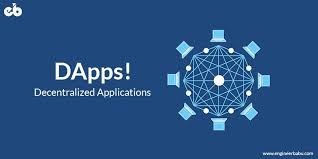
The paradigm shift that will shape our future is Decentralized Applications, or Dapps.
Decentralized Application
Dapps are essentially pieces of software that run on a distributed protocol's base layer. They aren't that different from the general programmes that operate on the Internet today, with the exception of their ability to function independently. Dapps can do all that conventional Apps can, but they can also simplify the process to meet the user's needs. With the advent of Blockchain technology, it is becoming increasingly possible to create new applications that operate on our behalf.
A Dapp has the same appearance as any other web-based application and performs the same functions while adhering to the same pre-defined logic. What's fresh is the integration of a public-private key infrastructure, which enables the app to function as a wallet. Smart contracts may be embedded into an application, given a set of conditions, and then left to run on its own. The application will now make payments, accept payments, execute contracts, and satisfy obligations.
Although the precise concept of a Dapp is debatable, most people would accept that a Dapp is something that follows a pre-defined logic, is open-source, has rewards attached to it, and runs on a base protocol. With this broad meaning, one might argue that Bitcoin is a Dapp because it meets all of the criteria mentioned above. Ethereum later expanded on this idea by focusing on what a Dapp should do. Ethereum has slowly emerged as the front-runner for Dapp creation by implementing Smart Contracts to execute Turing complete operations and protocols like ERC-20 and ERC-1450 to allow specialised operations.
For a successful Dapp to run and execute, it requires a framework that can support it. According to the State of the Dapps, there are currently about 3,500 Dapps operating across multiple platforms. Ethereum is the most common Dapp platform, with the majority of Dapps running on it. This is due to the Ethereum network's scalability and reliability.
Dapps are on the rise, as seen in the picture. It's only a matter of time before the Laggards arrive, with more and more developers playing with the technology.
Where Do You Create Your Dapp?
EOS is currently the most popular Dapp platform in terms of regular users, but Ethereum leads the pack in terms of active projects on-chain. Ethereum is attractive to developers who want to see how far they can go because of its versatility. Steem, on the other hand, is well ahead of its rivals in terms of average Dapp use. Steem is a blockchain-based reputation network that makes efficient use of the users' stake and connections. Although EOS and TRON currently account for the majority of gambling and gaming apps, Ethereum hosts the majority of usable apps in other categories.
Ethereum
Ethereum brought the promise of bringing blockchain-powered decentralised applications to the next level by providing a blockchain with a native Turing-complete programming language. Despite the presence of many rivals, Ethereum is still a viable forum for DApps. Solidity, Ethereum's in-house language, is a Turing-complete language that gives developers more versatility. Smart Contracts can be created in Solidity and executed when certain requirements are met.
**EOS**
EOS, like Ethereum, uses a delegated-proof-of-stake (DPoS) consensus model to achieve optimal performance over Ethereum's proof-of-work model. Increased centralization is a trade-off with this. EOS bills itself as a blockchain with no transaction fees. EOS's ownership model does this by allowing users to own and use resources proportional to their stake rather than paying for each transaction. In other words, if you own N EOS tokens, you have access to N*k transactions. This effectively reduces transaction fees while still increasing scalability thanks to dPos.
**Cardano**
Cardano, one of the most intriguing projects, is close to Ethereum. Cardano is a forum for smart contracts. A layered architecture provides scalability and security. Cardano's strategy is one of a kind in the industry. Under the leadership and vision of Charles Hoskinson, the creator and ex-founder of Ethesreum, it prides itself on scientific theory and peer-reviewed academic science. Cardano's theory requires that each step of the process be mathematically proved. Despite the fact that there aren't many applications built on the platform, Cardano is quickly becoming a household name in the Dapp community.
**TRON**
Tron is a smart contract-based blockchain platform led by Justin Sun, one of the most divisive figures in the crypto industry. It promises to make the transition from traditional to distributed applications easier, as well as hasten the decentralisation of existing platforms and the creation of new dApps. Tron claims to be a blockchain with high transaction throughput, scalability, and reliability, according to its official website. Tron could theoretically handle 80 times more transactions per second than the Ethereum blockchain, making it a very appealing option. This is due to the fact that Tron is less decentralised than Ethereum and the other cryptocurrencies.
The Tron network has been at the forefront of many debates. Misinformation abounds, social media growth is unhealthy, and Justin Sun's lofty promises have led many community members to believe Tron may not work as advertised, but that hasn't stopped them from being one of the most popular channels to date. Despite the fact that the majority of Tron-based applications are gambling-related, the network's transaction speed could theoretically allow for the development of better applications. It will be interesting to see what promises Tron keeps.
dApps Future
Despite some hailing DApps as a game-changing technology, the current state of the DApp landscape suggests a low level of demand. Of course, there's a case to be made that the scalability limitations of today's blockchains are limiting the popularity of DApps. CryptoKitties wreaked havoc on the community, and everybody remembers it. CryptoKitties is a collectible game based on the Ethereum Blockchain that has clogged up the network. The network's capabilities and promises were questioned after a single application caused the network to become unstable.
However, bottlenecks will not halt the rapid expansion of decentralised applications. Platforms like Ethereum and Cardano, among others, are quickly addressing issues like scalability, ease of use, and protocol flexibility to ensure that dapps run smoothly and without any of the protocol's drawbacks.
Decentralized systems hold the promise of eventually burying many of the problems that plague conventional apps. Misuse of control, lack of accountability, and weak security, for example, are all issues that dApps should address. Users would have more control over their data and use with the introduction of dApps. DApps can only work under the constraints set by their users. Although the process of developing dApps is still in its early stages, it has the potential to provide a more cost-effective alternative that addresses the limitations that plague conventional apps.
KYC
For quite some time, financial institutions have needed KYC and AML tests. These mandatory checks, which are mandated by a number of financial regulators around the world, have aided in the prevention of identity theft and other financial crimes.
The conventional financial sector has been targeted for KYC and AML audits. With the advent and development of the crypto industry, however, questions about whether or not to provide these tests emerged. The key source of concern was the lack of regulation around cryptocurrencies. Several exchanges, on the other hand, now follow the numerous KYC and AML regulations in effect. However, the question remains as to how these audits have affected the cryptocurrency industry.
KYC
Know Your Customer, or KYC, is a series of enforcement procedures used by financial institutions and other businesses to collect confidential information from new customers. These certificates assist businesses in determining a customer's legitimacy and preventing money laundering, terrorist financing, and other illegal activity from occurring over the course of the business relationship.
In the conventional finance sector, for example, new customers are required to have identity documentation before opening a bank account.
There are two types of KYC checks: manual and automated. Customer Due Diligence and Enhanced Customer Due Diligence are the two types of due diligence. The CDD protocol is needed to authenticate new clients. ECDD, on the other hand, performs extra tests on high-risk clients by profiling and interviewing them further.
The Crypto Industry and KYC Checks
No one knew much about cryptocurrency in the early years of its existence. Since most financial regulators didn't know what controls to put in place, cryptocurrencies were largely unregulated. For certain crypto enthusiasts, this was a positive aspect of the industry because it helped to preserve anonymity. The anonymity, combined with the decentralised existence of digital currencies, made the entire industry lucrative for some of the crypto space's main decision-makers.
Financial regulators started to turn their attention to the crypto industry as it grew in popularity. As a result, the conflict emerged, because the crypto industry has always prioritised privacy.
KYC checks are often misunderstood as posing a threat to the decentralised existence of digital currencies. Despite the fact that KYC is mainly provided to and for centralised entities, the tests do not centralise cryptocurrencies via monitoring. Instead, KYC checks aid in the tracking of blockchain transactions, enabling cryptos to be used legitimately as fiat currencies.
Cryptocurrency Exchange Procedures
It's worth noting that the KYC checks used by crypto exchanges differ from those used by conventional financial institutions. The main distinction between the two is that crypto exchanges perform KYC checks after a user has already registered.
KYC checks are not performed by all exchanges. The majority of them employ a tiered structure that allows each consumer to provide additional details before depositing or withdrawing significant sums of digital currency. Here are some of the procedures used by cryptocurrency exchanges:
Users will sign up for an exchange without having to complete any checks. They are, however, restricted to a few features, such as no withdrawals.
Users must upload some identification documents, such as an ID and a photo, as part of the basic KYC process. They also have deposit and withdrawal limits that are set in stone.
Full KYC – Before depositing or withdrawing significant amounts of digital assets, users must go through the entire verification process.
The Importance of KYC Checks in the Cryptocurrency Industry
ICOs/IEOs/STOs are one of the most important impacts KYC tests have had in the crypto industry. The growth of initial coin offerings (ICOs) has increased the number of cases of cryptocurrency fraud. As a result of the KYC regulations in effect, US investors are barred from participating in ICOs.
To avoid dire consequences with financial legislation, ICOs must check the position of their investors.
Crypto exchanges, even more than ICOs, must comply with the audits. Exchanges that primarily accept fiat currencies are required by law to record all of their transactions in detail. Exchanges that only conduct cryptocurrency transactions are subject to less regulations.
It's worth noting that KYC and AML checks can differ depending on the base country of an exchange. Almost all states, on the other hand, have taken steps to ensure that investors entering the crypto industry are honest.
KYC has aided the crypto industry in attracting further investors. Some investors who were previously wary of the industry are now more willing to invest in digital currencies. Smaller businesses, on the other hand, have come to a fork in the road as a result of these inspections.
Consider the following scenario. A small business that deals with cryptocurrency must collect and store sensitive information about its customers. The company's data is at risk if it doesn't have adequate security measures in place, as any hacker might gain access to it. As a result, requiring such a company to conduct KYC checks would put investors' information at risk, potentially driving them away.
Final Thoughts
In the crypto industry, KYC checks are a double-edged sword. On the one hand, these tests aid in the protection and safety of digital assets in an environment where confidentiality and uncertainty are critical. On the other hand, they impose limitations on investors and put their data at risk.
However, we cannot deny that KYC checks will benefit the crypto industry and help these currencies gain mass acceptance. Key players in the crypto room, on the other hand, would have to devise ways to ensure that investors and clients are screened while protecting their anonymity and the industry's decentralisation.

Market Makers
For a long time, the crypto business has been very volatile. Bitcoin, for example, has had periods of extremely high liquidity followed by periods of extremely low liquidity. Liquidity refers to an asset's capacity to be transformed into cash.
Crypto liquidity providers, on the other hand, have recently risen in popularity in the crypto world. What are cryptocurrency liquidity providers, why do we need them, and what are their responsibilities?
Crypto Liquidity Provider
Companies that actively engage in both sides of a security market, i.e. the bid and offer parties, are known as crypto liquidity providers. Their primary goal is to ensure that digital assets can be sold more quickly. They're often referred to as cryptocurrency market makers. They have estimates for both the purchase and sale of an asset. As a result, if there is no market for the coins, they will buy them, resulting in crypto liquidity.
**Market makers: why do we need them?**
Market makers reduce crypto price volatility, allowing for market efficiency by closing the gap between buyers and sellers. Bid spread is the price difference between the best bid and best ask.
Offer spreads are high for assets with low liquidity. Market makers ensure that the bid spread for specific assets is low, resulting in high liquidity. Liquidity is usually poor in markets with no market makers. This is because asset sellers will receive significantly less than the average market price, and buyers will be paying significantly more than the normal fees.
**What exactly do they do?**
Market-making best practises necessitate the ideal blend of market trading expertise and technology. To merge thousands of orders and match them to the best customer, the technology must be cutting-edge. Risk-takers and disciplined market makers are needed.
Making money in the stock market necessitates brilliance, innovation, and prioritisation. The company's digital assets will be safeguarded and its market place will be maintained with proper market making.
They have high-quality security solutions for blockchain-based currencies. Since they have a large number of clients and large asset portfolios, they boost trading confidentiality. All can trade safely while maintaining their anonymity.
Choosing the Best Cryptocurrency Liquidity Providers
Since liquidity affects the value of individual digital assets, we all want to find the best liquidity provider to ensure the highest liquidity for our digital assets. How can we locate the ideal candidate? What qualities do we look for in a market maker?
Since the crypto world has seen its fair share of scams, you can double-check the money maker's authenticity and reliability. Check out online feedback to make sure they're doing it correctly.
Efficiency – A successful cryptocurrency liquidity provider can complete tasks on time and correctly.
Is the existence of crypto providers legal? Are they registered as a business, or are they simply operating without a licence?
Trade infrastructure – The type of base they have in place can indicate whether or not they will be effective—the better the infrastructure, the better the services.
You can automatically disqualify a market maker if they are not truthful and effective. Look for someone who can make sure your digital assets are valued correctly.
What Does It Take For Market Makers To Be Effective?
Every market maker must be useful in his or her job. They must demonstrate competence when performing their duties. But, in order to be reliable, what do crypto liquidity providers need?
Capital efficiency
To provide excellent services, they must entrust a large portion of their digital properties to untrustworthy parties. To do so, they'll need to figure out the best ways to keep their capital safe and make money. They must have solutions that enable buyers and sellers to transact safely while maintaining their purchasing power. Business providers must have automated systems in place.
Security
Many exchange market participants have lost trillions of dollars as a result of forex market and other scandals. However, since blockchain transactions are irreversible, it is easier to ensure that digital assets are safe. For market vendors to be properly protected, they must be able to handle digital keys and other numeric entry passwords with care. Market makers will be able to guarantee traders' complete protection and confidentiality when trading online as a result of this.
Risk mitigation
Market makers should have a third party to minimise risks because they face a lot of them from credit-worthy customers. They will be assured of the creditworthiness of individuals by this third party.
Conclusion
Market makers have long existed in the crypto world and have proved to be a reliable source of security for individual digital assets. Trading in the crypto world can be difficult, particularly if you are new to it.
Market makers are a type of ‘outsourced' agency that will ensure the success of your crypto trade. Using crypto liquidity providers, on the other hand, provides liquidity benefits, preserving the value of your cryptocurrencies.

Alt Season
Cryptocurrency first appeared in 2009. The market has expanded rapidly since its creation, and there are now over 7000 cryptocurrencies. With major industry players as well as rivals, it has become a dynamic market. Furthermore, various words and trends have emerged in the market, such as ‘Altseason' and ‘Altcoins,' which cryptocurrency experts and traders have come out to clarify.
The first and most significant cryptocurrency was Bitcoin. However, several other cryptocurrencies, such as Monero, Ethereum, XRP, and Dash, have emerged as viable alternatives. Altcoins are a term used to describe these Bitcoin alternatives. Altseason refers to the time of year when alternative coins do better than Bitcoin.
What Causes an Altseason to Occur?
The cryptocurrency market share is split between bitcoin and altcoins, with bitcoin taking the majority of the market. The economy works on the demand and supply equation. An rise in bitcoin demand leads to an increase in BTC prices, which has the effect of lowering the price of altcoins. At this time, more people are buying bitcoin instead of altcoins or fiat currencies like the pound, euro, or dollar.
On the contrary, a drop in bitcoin demand results in a drop in price, which has the effect of increasing the prices of most altcoins. More people are interested in altcoins instead of BTC and fiat money at this time. The altseason is a time when the price of altcoins rises at the expense of bitcoin.
Following the rise of bitcoin and the crypto market's capitalization, a slew of new cryptocurrencies appeared as rivals to the BTC. The price of bitcoin was very high, and investors saw promise in some of the low-cost altcoins rising through the ranks of BTC.
As a result, BTC and altcoins have become major players in the cryptocurrency industry, with bitcoin dominating. As a result, any drop in bitcoin's market share leads to a rise in altcoin market share, resulting in an altseason.
Investors Benefits from Altseason
People grow a positive perception of altcoins as their prices rise during altseason. At the cost of BTC, investors boost their altcoin holdings, generating a market for more altcoins. Money invested in bitcoin flows through a variety of altcoins, causing a domino effect. The price rises for a brief period of time and then drops unexpectedly.
As a result, investors will profit from the altseason by investing wisely in altcoins at a time when their prices are rising. They must, however, be eager to resell the altcoins before the altseason ends in order to make a profit. In the crypto world, it's akin to Black Friday, and traders will make the most of their profits.
How to Tell the Difference Between an Altseason and a Bubble
When new entrants enter the market, a bubble develops, resulting in an unprecedented reduction in supply. To retain their earnings, current miners sell their cryptocurrency at higher rates. As a result of the operation, a slew of new investors flock to the cryptocurrency sector. Bubbles are difficult to detect since they only appear when they pop up. They will, however, burst as quickly as they popped, leaving investors with losses if they do not sell before the burst.
The supremacy of bitcoin, on the other hand, can be used to identify Altseason. When the percentage of capital market share and the price of BTC start to fall, it signals the start of altseason, as altcoins gain in value.
Altseasons in the Past has a long and illustrious history.
The most notable altseason occurred in December 2017, following the price of Bitcoin skyrocketing. The price of a bitcoin increased 19 times between January 2017 and the end of the year. In January, it was worth $1,000, but by the end of the year, it had risen to $19,000. Even though cryptocurrency had been around since 2009, many people learned about bitcoins for the first time throughout this bubble.
People started to see the low-cost altcoins as future cryptocurrencies with the potential to overtake bitcoin. BTC accounted for about 90% of the cryptocurrency market at the time, with other cryptocurrencies accounting for the remaining 10%. The demand for altcoins started to rise, and a flood of new investors flooded into the cryptocurrency capital market. By December 2017, the bitcoin bubble had exploded, and the altseason had begun, with bitcoin's capital market share beginning to fall.
In the following year, almost all altcoins saw a 400 percent increase in price, with some seeing a 400 percent increase. For example, in January 2017, Dash was worth $10, but in January 2018, it was worth $1439. However, altcoins have never seen such highs, and most of them have never seen such highs. Bitcoin, on the other hand, has regained its market share.
Thoughts
You can never be sure of making a profit in the cryptocurrency industry because it is so unpredictable. The pattern is characterised by long periods of lows and short periods of peaks. As a result, it is always a good idea to spend just what you can afford to lose. The altseason could arrive today or in the coming weeks. However, it is a safe idea to diversify your crypto portfolio with many altcoins in case this occurs.
Block explorer
Blockchain is a distributed, decentralised, and protected digital ledger that is immutable. This digital knowledge becomes clear and incorruptible as it becomes available to everyone on the Internet. A transaction on a blockchain is committed to all network ledgers once it has been validated through a consensus process. These ledgers are distributed databases that keep track of the data from a transaction. A Blockchain network is built on the principle of transparency.
On the blockchain, it's easy to misunderstand what transparency means. It does not imply that all information about each and every user is available for all to see. Transparency, on the other hand, implies that anyone who knows how to navigate a blockchain can fully comprehend the network.
Block Explorers are platforms that allow you to look into the inner workings of the blockchain and its transparency. They're the portals that allow us to peer into any blockchain.
Block explorer
People use a block explorer to view all cryptocurrency transactions on the internet. A block explorer, in particular, allows users to view all current and previous transactions on the blockchain. An explorer establishes the network's inherent transparency. An explorer can be used to obtain information about any aspect of the network.
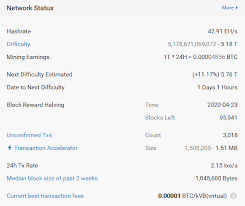
For example, one can see whether a transaction is confirmed or unconfirmed by looking at its transaction status. They can look at the network's hash rate, the status of any of the addresses, and the history of the network. If you know who owns a specific address, one of the benefits (or drawbacks) is that you can look at their entire history. What is their account balance, to whom did they send transactions, from whom did they receive them, and so on?
In essence, a block explorer is a one-stop shop for viewing and checking data on a specific blockchain. It gives you all the information you need about a specific blockchain.
What Can a Block Explorer Show You?
Block explorers allow you to access the blockchain in the same way as web browsers allow you to browse the Internet. They're search engines designed to look through the blocks of a blockchain. For transaction IDs and wallet addresses, block explorers may also be used as a search tool. It has evolved into a highly dependable tool that people who work with cryptocurrency rely on for any knowledge they need.
What's the Best Way to Use a Block Explorer?
Almost all block explorers on the market provide the same detail. It's easy to understand, and once you understand one explorer, you'll be able to understand the rest of the explorers for any cryptocurrency.
Let's take a look at a basic Bitcoin block from Blockexplorer.com.
From Address – These are the addresses used to initiate the transactions. You can use Block Explorer to click on any of the addresses and learn more about them.
To Address – These are the addresses that the transactions will be sent to. In addition, the addresses can be analysed further by looking at their transactional history.
Block Hash – The block hash is a one-of-a-kind identifier for a specific block. To ensure consistency, the current block's hash will be connected to the next block later.
Confirmations – The number of confirmations indicates how many blocks were mined after this one. Confirmations are important because they reflect the level of trust that miners have demonstrated. If a block doesn't have enough confirmations (at least four), it's possible that it hasn't been mined yet.
Total Amount – This is the total amount of Bitcoins sent in this block.
Block Summary – The majority of the information in a block is included in the block summary. Block summaries differ from platform to platform. They frequently shed additional light on block-related issues.
The total number of transactions on a block
Amount of transactions
Fees for transactions
The total amount of coins exchanged
Weight, scale, and version of the block reward
Who was the block's miner?
When was the block mined?
Nonce, Merkle Root
The existing block's hash
The previous block's hash and the next block's hash
An explorer can also be used to display the statistics of the entire network. Richest Address, Average Block Time, Network Hash Rate, and hundreds of other data are available from explorers like Bitinfocharts.com.
Token Burning
Token burning, also known as coin burning, is the deliberate action taken by the coin's makers to "destroy," or withdraw from circulation, a certain amount of tokens from the total available tokens. There are many reasons to burn tokens in this manner, but the most common purpose is to minimize inflation.
During a coin burn, the tokens are algorithmically eliminated from circulation by sending their outputs to a public address known as an "eater address." The keys to this public address are kept secret and are not available to the general public. As a result, once the tokens are sent to this address, they are unrecoverable and unusable because no one has access to the private keys.
While it might sound drastic, burning tokens does not actually disintegrate them, but it does make them useless in the future. The method entails the developers of the project repurchasing or withdrawing available currency from circulation by removing it from circulation. To do so, the signatures of the tokens are stored in an irreversible public wallet that is open to all nodes but perma-frozen. The status of these coins is made public on the blockchain so that everyone in the network is aware of what's going on and the senders can be open about it. If someone has access to the private key, the network will be alerted as soon as they attempt to remove.
The token burning mechanism has proved to be a successful method of preserving a balanced crypto-ecosystem in the short time since it became popular. With time, it is fair to assume that future cryptocurrencies will inevitably follow this mechanism, given its numerous advantages, especially in the early stages of a coin's growth.
So why burn token?
There are a number of reasons why people burn coins, but the most common reason is to take tokens out of circulation so that the ones that remain become scarce. Since the supply of tokens has been reduced, the unit price of the tokens may rise.
**Increasing demand by Reducing Supply**
Although larger blockchains like Bitcoin and Ethereum don't typically use this tool, altcoins and smaller tokens are commonly used to restrict the number of coins in circulation, offering investors more incentives.
Standard fiat currencies are not typically "burned," but the flow of available currency is limited in other ways. Token burning is similar to equity buybacks, which are used by publicly traded firms to minimize the amount of stock available. Token burning, on the other hand, has a number of implementations and serves a variety of purposes.
**Burning a token as proof of work done**
Proof-of-burn (PoB) consensus, which is focused on users destroying their tokens to obtain mining rights, is a common mechanism that developed from token burning. Proof-of-work is still a popular choice, thanks to Bitcoin's support, but it consumes a lot of resources and can be prohibitively expensive. PoB seeks to solve this problem by limiting the number of blocks miners can check (and add to the blockchain) to the number of tokens they've burned. They effectively build virtual mining fields that can expand as more tokens are burned.
**Dividends are received in an indirect manner**.
Dividends are profits returned to shareholders by a project or corporation. Safety token holders have the option of collecting dividends from the project's developers. But what happens to other token holders who do not actually carry security tokens? Token burn offers a solution to pay dividends to token holders indirectly. Developers put deflationary pressure on the token by removing a portion of the supply by either buying back and burning tokens or removing existing tokens held by the company.
**Others**:
In certain cases, token burns may result from error correction, such as the case for Tether. To avoid destabilizing its 1:1 peg with the US dollar, the company created $5 billion in USDT by accident and had to burn it.
ICO/IEO unused token burning – when an ICO or an IEO has tokens left over from its token sale, developers can opt to burn them rather than retain them as a liability.
Conclusion
There are plenty of event wherein token burning has occurred. Examples of this are XLM and BNB. And it showed a significant rally on their price.

Day Trading
You have a range of trading strategies to choose from as a trader. Others are best for short-term gains, whereas others are better for long-term investments. Day trading, on the other hand, is a good choice if you want to make small investments and see returns quickly. Day trading isn't a brand-new idea. It's been around for decades in the capital markets.
Day trading, however, is wide in that it allows you to work with a variety of assets, including but not limited to stocks, forex, and cryptocurrencies. Day trading with cryptocurrencies, on the other hand, is not as easy as it seems. Before you begin your cryptocurrency day trading hobby or career, you should think about a few items.
Day trading isn't a tough idea to understand. It's just what you'd expect from the name. It's the sort of trading that takes place during the day and only during the day. That is, you'd have to buy and sell the assets (for a profit) in a single day. Day trading is also known as intraday trading because of this characteristic.
Day trading, as opposed to long-term trading, allows the trader to concentrate on minor price fluctuations. You can't keep the asset overnight and expect that it will appreciate the next day. Day trading, on the other hand, can only operate on business days of the week. Intraday trading, like other forms of trading, necessitates a detailed understanding of the market. It's also a strength that can be honed with practise.
Things to consider on Day trading
Day traders consider a number of factors depending on the demand and the commodity they are working with.
**Liquidity**
The liquidity of an asset refers to how quickly you can cash in or out of it. In the case of day trading, it relates to how easy it is to sell a stock and earn a profit. Liquidity is defined as the ease with which a stock can be sold. If it isn't, the stock isn't especially liquid.
**Volatility**
The frequency and size of an asset's price are referred to as volatility. The asset is considered highly volatile if its value changes regularly. On the other hand, it would be considered non-volatile if it maintains its value for an extended period of time.
*Aside from these two factors, different traders use different tactics. For example, some traders may use Fundamental Analysis to gain a thorough understanding of the asset they are trading. Some traders, on the other hand, stick to Technical Analysis, which includes analysing historical data and trends to determine how an asset will behave in the future.*
Day Trading Strategies
**Scalping**
This trading strategy would concentrate on minor price shifts in a market asset. As a result, scalping necessitates the trader's sale of stocks as soon as possible. If you don't have the right access to live market data, you won't be able to use the scalping trading strategy. Since scalping relies heavily on overall volume, traders can be forced to margin trade in order to maximise profits.
**Range trading**
The trader must identify a price range in the market structure in order to use this aggressive investment strategy. The trade can only take place within this range, and the trader must keep going until the asset is outside of it. To get the best returns from range trading, the trader must have a detailed understanding of candlestick charts and momentum indicators.
**High-frequency trading**
HFT (high-frequency trading) is a trading technique that utilises algorithms. HFT traders can build algorithms and trading bots to track the market and buy/sell assets. HFT implies a higher benefit probability because transactions happen in milliseconds. Nonetheless, designing trading bots and algorithms necessitates coding skills as well as industry awareness.
What is Day Trading?
Cryptocurrency day trading is somewhat close to conventional day trading. Intraday trading, on the other hand, must adapt because it occurs in the crypto ecosystem. For example, even though you can concentrate on minute shifts in an asset's value, business hours do not limit your actions. At any time, you can easily exchange crypto assets.
You may, however, be required to pay network and transaction fees. As a result, selecting a cryptocurrency trading platform that is compatible becomes critical. You have no reason to trade crypto assets in the first place if you have to pay a transaction fee that is greater than the overall profit you make from the coin's volatility.
**How and why?**
When it comes to intraday trading, liquidity and volatility are the most significant considerations. These features have been hallmarks of cryptocurrencies since their creation. The value of cryptocurrencies fluctuates so much that even within 24 hours, the value of a crypto token may shift drastically.
Although these patterns are not as predictable as conventional trading trends, a strategic intraday trader who focuses on this value shift may make a significant profit. There are a variety of ways to cash in cryptocurrency assets in terms of liquidity.
When it comes to day trading cryptocurrencies, you now have a few simple options to choose from. The most convenient choice is to use a reputable crypto trading platform that allows you to buy and sell various crypto assets for cash whenever you want.
Another advantage is that you can perform these activities using a number of payment methods. Some trading platforms also offer margin trading, which helps you to buy crypto assets with borrowed funds to raise your profits.
Can I replace my work?
Day trading cryptocurrency is a viable way for someone to make a living. However, due to the higher volatility of crypto assets, you must devote more time to tracking market activity. Unlike conventional stocks, the price of crypto-assets will change in minutes or even seconds.
For example, if a country forbids the use of Bitcoin (BTC), the value of the currency could collapse in seconds. Similarly, even small shifts in the economy can have a major effect on the valuation of your properties. You can make cryptocurrency day trading a full-time job if you are prepared to deal with the uncertainty and instability.

Crypto Trafing Terms
In the world of cryptocurrency trading, there are far too many equations that change in a matter of seconds. Crypto traders use a number of terms, acronyms, and abbreviations, which is understandable. These concepts are often used to define a particular idea in crypto trading, investment management, or general finance.
**FOMO**
FOMO stands for "fear of missing out," and it refers to the act of panic-buying crypto assets. Traders can purchase crypto assets in a panic if they believe they will miss out on a lucrative opportunity. FOMO-ing decisions are motivated by raw feelings, as opposed to the ideal decision, which involves strategic thinking and market research.
Traders' FOMO typically means they're dealing with a bull market, which means asset prices are rising. Veterans in crypto trading may use the same word to refer to those who are new to trading and who purchase assets as a result of the general excitement surrounding crypto.
**HODL**
The trading strategy of buying and holding in the cryptocurrency market is known as HODL. Those who adhere to the HODL strategy will accumulate cryptocurrency assets and hold on to them even when prices plunge. Naturally, they pursue a higher profit margin by turning the assets into long-term investments.
The HODL strategy is commonly used by traders who believe in the future of a particular cryptocurrency. Many who use the method are known as HODLers, but the term has no negative connotation like FOMO. Many that have owned Bitcoin for a long time may have had a positive experience in the past.
**ROI**
The idea of return on investment, or ROI, is not unique to cryptocurrency. Traders have used ROI calculations to find out how well their investments have done in every market. You can measure the return on any investment by subtracting the asset's original value from its current value and dividing the result by the initial cost.
Your return on investment (ROI) will demonstrate how much your investment has appreciated — or depreciated — over time. Although the word "return on investment" is frequently used, it isn't the most accurate. Other considerations to consider include market risk and asset liquidity.
**DYOR**
In the crypto trading world, the phrase "Do Your Own Research" is self-explanatory. Traders are advised to perform analysis before making business decisions. It means that when buying crypto assets, a trader should not rely on pre-made advice. DYOR is also connected to concepts like Fundamental Analysis and strategy development.
As you may be aware, cryptocurrencies are subject to the same risks as other properties. As a result, a trader should assess the knowledge available to them and formulate a plan, taking into consideration the views of investors.
**KYC**
Know Your Customer is a series of guidelines designed to help companies better understand their customers' identities. In the crypto trading sense, KYC is concerned with cryptocurrency exchanges and trading platforms. Before authorising a customer to exchange, these services must check their identity and reputation. The KYC guidelines may vary depending on where the company is headquartered.
To avoid money laundering, crypto-based companies adhere to strict KYC guidelines. KYC isn't just for the crypto/investment environment. KYC rules are also used by general organisations to keep track of legality.
**DD**
Due Diligence refers to the study and care that a responsible individual or company may perform before entering into a contract with another party. Let's say a trader/investor wants to buy an asset. Any rational actor needs to make sure the deal is free of any possible red flags.
DD will assist traders/investors in staying secure in their decisions. It gives you a greater understanding of the company behind the asset you want to invest in, depending on the situation. Until bidding, investors must weigh the costs and possible benefits.
**AML**
Anti-Money Laundering (AML) refers to a set of rules that cryptocurrency and conventional trading platforms use to prevent money laundering. KYC, as previously stated, is one of the several components of the AML guidelines. AML is a collection of guidelines that makes it easier for regulators to understand how a trading platform might be manipulated.
Many regulators, for example, order the trading platform to review customer transactions and flag those that are suspicious. Companies can adopt different AML frameworks depending on their location and sector.
**ATH and ATL**
The peak value a particular commodity has achieved on a trading platform is referred to as an All-Time High. The ATH number is often referred to in pairs, rather than singularly. For eg, the current All-Time High of the BTC/USD pair is $57,125.93, which was set on February 2nd, 2021. When an asset hits its all-time high, almost anyone who bought it before will make a profit.
All-Time-Low, on the other hand, is at the opposite end of the continuum. The lowest value of a particular investment is referred to as the ATL. Traders who have invested in the asset, on the other hand, could be in deep trouble.
**FUD**
Fear, Uncertainty, and Doubt are not only correlated with cryptocurrency trading. It's a trading technique that involves disseminating knowledge about a specific asset or business. The theory is that this barrage of false information would instil fear, confusion, and doubt in other traders, causing them to make market decisions they would not have made otherwise.
To increase their profit, the trader who started the misinformation stream can sell the asset. The strategy is frowned upon, and traders are advised to double-check details about a business before making a decision.

Bug or Marc pulled out?
As I was browsing the top articles today, I've noticed something, something that made me a little worried. All the tips that those article came from other users. No tips came from@TheRandomRewarder. Does it have something to do with the missing funds?
It was first pointed out on this article that the fund information is missing. https://read.cash/@potta/wheres-the-fund-information-e75cddb7
And the developer made this statement about the fund information. You can see it on the read.cash stat.
So what is really going on?
**Bug? Maybe. Or did Marc pull out his donation?**
I hope that it was the first. And the developers can fix it soon.
I was only a user of read.cash for a month, and to be honest I've earned more than I expected. This rewards made me want to write more creative and informative content. Some may hate me for telling this, but I write because I earn.
So what will happen if the second was the reason why the tipping bot was missing?
A lot will walk away from this platform. And who knows what will the effect of this to the platform when that happened.
I know that some may not be bothered from this because they have other users backing them up giving tips by writing about bitcoin cash. But for me, who usually write anything that I found interesting, (**read.cash was meant to be this way. Write anything you want. You have the freedom to choose.**) will have a huge impact to me.
One thing more, with what have @potta have said on his article that maybe the focus was shifting to noise.cash. Well, we can't blame either the developers or investors. Noise.cash has proven a lot since the day it was created. Transactions flippening, BCH network activity, etc.
I'm just hoping for the best of both platforms, and wanting to find some answers for myself and others.
Thanks!

51% attack
Over the past year or so, a number of cryptocurrencies have come under 51 percent attack.
To understand what 51 percent attack is, we need to step back and understand a few concepts about how blockchains operate.
Decentralized networks have long existed before Bitcoin, the most notorious being Bittorent.
Yet Bitcoin is the first use of a decentralized network for finance.
But what makes Bitcoin’s decentralized network distinct from earlier P2P networks? In Bittorent, the same copy of a movie can be downloaded and shared several times.
However, when it comes to finance, transition of digital value has to be spent only once.
If Brielle sends Reva Bitcoin, we must be able to check that Brielle no longer has the bitcoin and that Reva has it. Nor should Brielle be able to undo the transaction afterwards to own the spent Bitcoins again.
In action, a blockchain is a form of democratic governance with pre-coded rules. The nodes (miners) check the transactions on the blockchain.
The more nodes, the stronger and more stable the blockchain is.
On top of that, the more the lack of confidence between the miners, the more stable the network because transactions can be checked without a vested interest.
51% attack
A 51 percent attack happens when a malicious miner(s) is able to control more than 51 percent of the hashing power in a network, allowing them to carry out unorthodox transactions, such as double-spending.
To understand how this works, we have to go into how Bitcoin records new transactions to its blockchain.
When a Bitcoin owner signs off a transaction, they add to the pool of unconfirmed transactions.
It is from this pool that miners pick transactions to build a block to add to the blockchain.
The Bitcoin blockchain’s speed is sluggish, supporting only 7 TPS. Transactions with higher transaction fees are given priority because they provide higher rewards to the miners.
To link transactions in the waiting pool to the blockchain, miners need to solve a mathematical problem using their computing capacity.
If the solution is found, the miner will broadcast it to the network and other miners will only accept it if all transactions in the block are legitimate according to the current previous transactions on the blockchain (this is consensus) (this is consensus).
The first step of the double-spend attack vector happens when a bad actor decides not to broadcast the solution, instead building a parallel blockchain, and adding more transactions to it.
At this stage, other miners can only add transactions to the true blockchain and not to the malicious actor’s secret blockchain.
The bad actor is still able to spend his Bitcoins on the true blockchain, but he does not record such transactions on his private blockchain.
The result: Bitcoins are invested on the real blockchain and not on the isolated one.
To be able to double-spend the Bitcoin, the miner would need to push the other miners to switch to the private blockchain, as the underlying governance protocol dictates.
This is where the hard part starts.
Miners follow the longest chain. The majority of miners inherently have a higher accumulated computing capacity, thereby they can add transactions to the blockchain faster than on a competing parallel chain run by one person.
Therefore, if the malicious actor can get the majority of hashing power, they can add transactions to the malicious chain quicker, making it the real blockchain.
Once the miner’s private blockchain surpasses the true blockchain’s true length, it can be broadcast to the network. Then, once the rest of the network discovers the current version of the blockchain is actually longer, they are forced to turn into the new chain.
When this occurs, all wallet balances and pending transactions are changed according to the new chain. All transactions not reported on this chain are automatically reversed.
This includes the malicious actor’s earlier spending, which is returned back to his pocket, allowing them to spend it again on the new chain.
This is a double-spend attack, or a 51 percent attack.
51% attack on Bitcoin
It is very difficult to conduct a 51 percent attack on Bitcoin because of the cost factor of obtaining the network’s control.
It will be incredibly costly to buy all the mining hardware to surpass half the Bitcoin network’s hashing capacity. Not to mention the operational risks (electricity cost, storage space for hardware, money laundering) and even the possibility of prosecution.
51% attack on other blockchain
Although Bitcoin is arguably the most stable decentralized network, other blockchains are more fragile.
A large network with a Proof-of-Work consensus protocol is very hard to compromise unlike a smaller blockchain using the same algorithm due to the reduced amount of hashing power for the attacker to deal with in the latter case.
A number of altcoins have fallen to the 51 percent assault in the recent past.
Blockchain Security
Blockchain protection is the umbrella term used to describe safety against attacks on all levels of blockchain networks. Blockchain security can be divided broadly into three parts:
Infrastructure level: protection of design and implementation. Case in point 51 percent attacks, Sybil and DDoS attacks
Smart contract: protection of token contracts such as NEP-5, ERC-20
User level: protection of wallets, websites, passwords 2FA
The double-spend attack is an example of an infrastructure-level blockchain security attack.
The odds of a 51 percent attack hinge on the network’s degree of decentralization; the more nodes on the network, the harder it is to pull off.
In addition, this attack can only be revelled at Proof-of-Work blockchains like Bitcoin or Ethereum.
Most of the forthcoming blockchains are using modern consensus algorithms including Proof-of-Stake, more mixed versions of the two or entirely new ones altogether.
The network’s ability to withstand a 51 percent attack is testament to its security. People will lose trust in a network that has experienced a successful 51 percent attack because a double-spend attack beats the logic of a cryptocurrency in the first place.
Due to the high risk involved, attackers only push through 51 percent attacks to be able to reverse transactions worth significant amounts of money or to threaten highly important parties such as exchanges.
To be more safe, the higher the number of confirmations of a transaction, the harder it is to steal those particular coins.
Other solutions
Using a Proof-of-Stake consensus algorithm is the most straightforward
Building a coin on top of another blockchain. For example, you cannot level a 51 percent attack on an ERC-20 token built on top of Ethereum.
Interchain connecting.

Coins Versus Tokens
In the sense of cryptocurrencies, recognizing the distinction between coins and tokens is a Herculean job. While both of these terms are sometimes used interchangeably, in the crypto ecosystem, they refer to two distinct definitions.
While using these words interchangeably per se is not an offense, to learn more about the future of crypto and blockchain, one must comprehend a simple understanding of coins and tokens.
Coins
Coins apply to cryptocurrencies based on the network of their independent blockchain. Bitcoin (BTC), which is also the world's biggest cryptocurrency by market capitalization, is the most popular example.
Bitcoin is operated by its native network of blockchains. Likewise, on their respective blockchains, Litecoin (LTC) and Ethereum (ETH) run. The scale, rules, miners, efficiency, etc. of these blockchains will differ.
Bitcoin (BTC), Ripple (XRP), Ethereum (ETH), Dogecoin (DOGE), Litecoin (LTC), and Bitcoin Cash are some of the common coins (BCH)
**How it is used**
Digital coins are intended for the same reason as physical coins: value transfer. Digital coins in the crypto ecosystem allow payments to be transferred. Digital coins often store value that is directly related to their supply and demand. The value of digital coins is, therefore, always unpredictable.
However, there are a number of exceptions to this. For example, ownership of Dash (DASH) would allow the client to vote on the DASH network's suggested decisions. However, in the case of Bitcoin, buying or mining them is the only way to get more Bitcoin. You may also consider Bitcoin as a form of payment, unless we forget.
Token
Tokens, meanwhile, refer to cryptocurrencies that don't have their own blockchain network. Alternatively, these cryptocurrencies are constructed on another blockchain. Users may use one of the many platforms in the DeFi (Decentralized Finance) ecosystem to build digital tokens.
Thanks to its support for smart contracts, Ethereum is one of the most common options. Since the Ethereum platform easily allows the production of tokens on top of the Ethereum blockchain, most of the digital tokens found today are ERC-20 tokens.
Thousands of tokens currently exist on the market. Some of the commonly-used digital tokens out there are Tether (USDT), USD Coin (USDC), DAI, UMA, and Basic Attention Token (BAT). Other than value transfer, these tokens can have powers.
**How it is used**
Much like digital coins, tokens also allow value to be transferred. A digital token, however, has some additional powers in most cases than being a means of payment. To meet unique functionalities, anyone can build digital tokens.
For example, in order to reward its users for browsing the web, a privacy-focused Brave browser uses the Basic Attention Token (BAT). When they view ads from publishers that have collaborated with the Brave browser, clients get paid in BAT.
For different purposes, various kinds of digital tokens exist.
**Security tokens** function in real-world assets such as equities and fixed income as evidence of investment. These are issued during the offering of security tokens (STO).
**Utility tokens** are designed to offer a specific service or product access. The FIL token will, for instance, access the Filecoin network.
**Asset tokens** are digital tokens connected to properties such as real estate, gold, etc. in the real world. In this case, the real-world investment is represented by a token
**Stablecoins** are digital tokens whose value is set. These are also pegged against USD or EUR fiat currencies.
**Non-fungible tokens** are special objects that can be true or virtual. An instance of these tokens is the objects used inside a game.
**Payment tokens** are almost identical to digital coins because, for goods and services, they allow a transfer of payment in return.
To get rid of intermediaries as well, some services build payment tokens. The client will be compensated for using these tokens over a standard payment system in most instances. Compared to creating a coin from scratch, it would take significantly less time to construct a token using the Ethereum platform.
The Difference
To sum up, the following are some of the main differences between a digital token and a digital coin:
Their blockchain network has digital coins, but tokens are based on an existing blockchain.
For processing payments, digital coins may be used, but tokens are sufficient for multiple needs.
It is harder to build digital coins than tokens that can be created on the basis of existing blockchains such as Ethereum.
Digital coins are mostly distributed through mining, while ICOs have made tokens common.
Approaching cryptocurrency markets is a daunting challenge, but knowing the fundamental difference between the different types of cryptocurrencies in a volatile environment will help you manage risk and make informed decisions.
Why we need to pump Bitcoin Cash price
We have seen lot of ups and down with the price of Bitcoin Cash. To its all-time high three years ago to its all-time low. At the time of this writing, Bitcoin Cash is trading at $718 and currently ranked 9th in the top ten coins by market capitalization.
Bitcoin cash was created to solve the scalability issue of Bitcoin. Bigger blocks means more transactions can be accomodated on the blockhain network. This will result to faster transaction and lower fees. This was proved this month when Bitcoin Cash flipped Bitcoin by daily transactions.
Those transactions still have lower fees. Unlike when Bitcoin network get congested, you needed to pay more so that your transactions will be prioritize by the miners.
Macro or micro, Bitcoin Cash will not robbed you by its transaction fee.
So why do we need to pump Bitcoin Cash price?
Bitcoin Cash goal is to be the digital payment system of the world. With its fundamental (low cost, fast transaction, reliable, secure) we know it will, But what is price have to do with this?
Bitcoin cash is known to be a hardfork of bitcoin. This means it is finite. Like Bitcoin, it has a limited count of 21million coins wherein it can be mined until 2140, not including those coins that are lost.
According to statistics, the total population right now around the globe is 7.8billion and it will grow as time goes.
To be able to achieve the goal of Bitcoin cash, we need to hardly pump its price to accomodate those numbers. It is estimated that the population will grow to 9billion in 2040.
With Bitcoin Cash price right now, one person can just get 0.16 dollar worth of bitcoin cash.
Total cap x BCH price ÷ total population 2040
Computation is based on 2040 population not 2140
Feel free to correct me. I'm not that good in numbers. 😆
How can we pump the price?
**Spreading bitcoin cash awareness**
Invite people and teach them the fundamental of bitcoin cash. I know that not all will be able to adopt, at least we have tried.
I've seen so many people on this platform trying all they can to contribute on this mission and I hope that they won't get tired from doing this.
We have recently seen how powerful spreading awareness can pump the price when Mr. Kim Dotcom created the site whybitcoincash.com.
**Spend, replace, and earn**
There are many ways to earn free bitcoin cash like this on read.cash, noise.cash (thanks Marc), lazyfox.io and others.
There are a total of 900 bitcoin cash that can be mined per day. I'm encouraging everyone to buy if you have the spare and take it away from exhanges. Hold. Think of it as long term investment. Maybe not now, but your children or grandchildren will thank you later for doing this.
Onboard merchants, there are a lot of benefits you can get when a merchant onboard on bitcoin cash. Its not about how effects its price but it will just show that we can use bitcoin cash on a daily use. Btw, if you wanted to earn while onboarding merchants, check out https://read.cash/@BitcoinCashSite/bitcoin-cash-1m-100-bch-in-prizes-up-for-grabs-73156133
Let us all make this goal come true.
Ps: sorry for the not so tidy article. I'm a little drunk right now.
Trading Bots
Churning out profit usually depends on how easily one ends up buying and selling digital assets in crypto trading. As a consequence, even a slight delay will lead to noticeable losses in these trade-offs. That is why individuals also consider using bots for crypto trading.
You may not be familiar with how crypto trading bots work and how you can use them as a novice crypto investor.
Crypto trading bots
Crypto Trading Bots are programs developed on your behalf to automate the trading of cryptocurrency assets. You (the investor/trader) have to sit in front of the desk in the normal scenario and choose which cryptocurrency to purchase/sell and at what time. You should always pay attention to the statistics of the sector that play a crucial role in trading activity.
The study and interpretation of market data can easily be automated by Crypto Trading Bots. They can capture, analyze, measure, and conduct the purchase/sale of cryptocurrency assets for market data, estimating the potential market danger. For instance, when the BTC price goes lower than a defined cap, you can set up a crypto trading bot to buy more Bitcoin.
Crypto trading bots will also save you lots of time this way. It's almost like hiring an expert while you can sit back and watch the profit rise, to do crypto trading for you. It is more cost-effective, however, to make use of crypto trading bots than to recruit human experts and gurus.
How it works
**Market data analysis**
This Bot module will store and analyze raw market data from various sources. On the other hand, it will determine if a particular cryptocurrency asset should be purchased/sold. In order to get refined results, several bots allow users to customize which types of data go into the signal generator field.
**Risk prediction**
This module also uses market data, but the possible risk in the market is estimated. The bot will determine how much to invest or sell, based on the data. It's potentially a crypto trading bot's most important feature.
**Buy or sell assets**
This bot module uses APIs to strategically purchase or sell cryptocurrency properties. Often, you may want to avoid the bulk purchasing of tokens. Some circumstances, on the other hand, call for urgent purchases. Such things are taken care of by the Execution module.
Pros of a crypto trading bot
**Efficient**
It is often more effective to exchange crypto-currency assets using a bot. There's no need for you to think about delays or human mistakes. It can exchange assets with a better chance of benefit as long as the bot receives the correct data and has acceptable algorithms. These bots will function 24*7, too.
**Emotionless**
Every single decision based on data is made by a trading bot. In comparison to humans, there is no greed for gains or fear of failure. Experienced traders may resolve their feelings and make rational choices, but that may not always be the case for or with beginners. A trading bot, on the other hand, still keeps emotion off the equation.
**Powerful**
There is a limit to the amount of data that can be processed at a time by a human trader. Even if they process all the information, it is difficult to obtain knowledge based on that information. Trading bots, however, can handle bulks of knowledge quickly and come to plausible conclusions.
Cons of a crypto trading bot
When dealing with a highly unpredictable market, crypto-trading bots are not flawless.
Situations such as the current pandemic can have an unpredictable market effect, and you can not always foresee how the economy will be impacted by these Force Majeure events. To keep racking up money, you need a better, psychology-driven approach. This is one area where you need to trust your intuition as bots do not have this skill (as of now).
Similarly, programming mistakes can affect the effectiveness of crypto trading bots as well. While determining the conditions of the bot and its behavior, particularly when building your crypto trading bot from scratch, you must also be extra careful. You should teach the bot, for instance, the ideal time/conditions to make the final purchase. When deployed, these bots conduct lightning-speed operations, which allows you no time to reconsider.
Starting to use crypto trading bots
**Use readily programmed trading bot**
One of the required crypto trading bots can be picked from the industry. Multiple cryptocurrency exchanges can incorporate these trading bot services and charge you a monthly or per-transaction fee.
**Build your own crypto trading bot**
You can create a crypto-trading bot if you need personalized control and performance. You can either build it from scratch or use a framework to customize the bot according to your needs. In either case, as per your plan, you have to program it.
**Thoughts**
Although they are not flawless, when you can program everything right, crypto trading bots can help you trade better. For those who can not spend 24*7 inspecting the business activities, bots are an outstanding option.
Just make sure the right trading bot is chosen/built for your needs.
Shitcoins
The demand for crypto-currencies is a hub with several different types of coins. There are also massive chances that some of these coins will be really good if the range is immense, and some of them will be really bad. So, any cryptocurrency coin that is not really liked by any human and they obviously don't even want to talk about it is the simple definition of shitcoin.
In short, as per the growing demand, it can essentially be any coin that has no decent and advanced technology. If the technology is not correct and a lot of problems may arise after investment, it is very difficult to manage such tokens. Traders don't call any coin shitcoin, literally, but just call the ones they deserve. Full times, this term is connected to some other token or coin only after a poor experience the trader had with something about the coin.
Shitcoins often have a greater aspect. There are a number of coins which are only priced on the basis of speculation. At the end of the day, the coins may not be so worthy only because they were not produced in good faith anyway.
Investors have shown a lot of interest in cryptocurrencies, and after the emergence of bitcoin a few years ago, it makes total sense why. The cryptocurrency question, however, is that in very little time the price can fluctuate very much. Digital tools are very volatile and that is what makes it what a cryptocurrency is. Again, it does not mean that all investors are no longer struggling to draw historical comparisons only because cryptocurrencies have created a new sector. Many investors can not understand the underlying technologies used to handle blockchains well, which opens up a range of doors for violence. It is difficult to understand the incorrect identification of whether a cryptocurrency is viable or was only developed to bilk investors.
Basically, Shitcoin depends on these variables. They follow the same sort of template, mostly. The coin or token is initially published with a great deal of interest, but the price remains relatively high. Investors pump in a lot of money, only because of the excitement and interest, the price rises exponentially and other investors find it will be very lucrative to invest in this coin. What you want is to draw on short-term income. In fact, calculating the price of these types of coins requires a different approach. In fact, any other price level needs a different approach that is overlooked by the investors at most to be dealt with.
Altcoins are not supported by the government at all, which is why none of the investors will actually look at the growth or inflation of GDP to decide if the coin price is undervalued or overvalued. Therefore, rates are driven mainly by speculation. At the end of the day, a cryptocurrency with no special features or utilities is called shitcoin. In simpler terms, what they are is a cryptocurrency that will be priced at 0 after a certain period. In reality, no one will invest in them for a long term, because you never know when it's going to be useless from absolutely nowhere.
You never know whether or not you own a shitcoin, mostly because in the crypto industry, the unpredictability factor is big. However, a financial planner will actually let you know whether or not you own a shitcoin after studying each factor a lot. You can instantly abandon the coins if he/she says yes.

Do your own research
In the world of cryptocurrencies, DYOR is one of the most commonly used terms. "Do Your Own Research" is the complete form of DYOR, which is a general reminder for a trader to make his own decisions as well as to have strong investment knowledge. This word is known to all the trading groups in the blockchain or literally in the entire crypto world. If a trader is new to the cryptocurrency, there are chances that other individuals will trick and deceive the person. This is why DYOR is very important and something that should not be overlooked by any trader, even once.
In the trading culture, newbies often rely on advice from other people without understanding that investing in a certain asset is a decision that the investor can make almost exclusively. It is certainly an option to consult a good analyst, but at the end of the day, the ultimate investment process is a personal choice and that is what should not be impacted by what any other person says in the market. In any industry, there are misleaders, but cryptocurrency is a little safer than them (due to the abundance of resources available on the internet), but that does not change the fact that it is deceptive.
When they don't get big sales immediately, most newbies are quickly disappointed, which is what they expect before learning about the market. No investment is going to make you rich in a night, and that's why persistence is one of the key tools in the cryptocurrency market to earn more money.
How to DYOR?
Every self-dependent trader needs a series of questions to ask themselves before investing in a certain coin in the world of cryptography.
It is very interesting to know all the main features of the cryptocurrency's blockchain for doing self-research. It is important to evaluate not only that, but also the progress of the coin over the years and the future development should be projected accordingly.
Security measures are very critical, as already stated, and that is why every trader should be aware of the legal barriers to entry. Each potential competitor that is very similar to the coin on which a trader is studying should be investigated. After doing so, after strategizing the project entirely, whatever appears best to the trader should be invested in.
The cryptocurrency should also be fully decentralized and should be capable of solving an issue. The latter is critical because that is when people are going to buy into it and the price is going to rise. Their roadmap should also be examined, and given the token's background, no red flags should be identified.
It is very important for the trader to know the scope of the target market and which exchanges have the relevant cryptocurrency. From only the ads and social media presence, the target market can be evaluated a bit. In this way, a trader will know what kind of audience the coin data is hitting.
Google is certainly excellent at learning all of these variables, but practical information is the strength at the end of the day. The more that you invest, the more that you understand. The knowledge you gain during the process will help a lot in the long run.

Non Funguble Token
Nonfungible tokens (NFTs) are on the rise in the rapidly emerging blockchain industry as tokens that are constrained in their digital scarcity. NFTs are bridging capital closer to blockchain technology through various collectible sectors, such as gaming, sports, and fine arts. But what exactly are NFTs and how do their results ripple through the world of blockchain?
Non fungible tokens
Nonfungible tokens (NFTs), also referred to as crypto collectibles or nifty, are blockchain technology-managed digital assets. Each token has a unique individual specification which is represented on the blockchain by an unadulterated record. Although NFTs can be produced and issued on a variety of frameworks, ERC-721 tokens with a smart contract code embedded with unique information are a large number of them. In essence, the tokenized representation of real or digital assets is the NFTs.
Instead of being split into smaller denominations, NFTs may only be sold, traded and transferred in their full form. It is also possible to restrict the supply of NFTs to a certain amount, which makes NFTs uncommon and enticing for users to obtain. As well as having a source of authenticity and possession, NFTs are used to store crypto collectibles.
Reshaping the Collectible Industry
Although the idea of assets-turned-NFTs could sound novel, in our everyday lives, non-fungible assets exist everywhere. Nonfungibility implies that, even though they are of the same type, an asset or component is not transferable to another asset. A ticket on the front row of a live concert, an account handle for Instagram, a baseball with a star athlete's autograph are all exclusive collectibles. Avid gamers can also find in-game things that everyone wants to get their hands on that are unique and desirable. Art collectors are willing to spend millions of dollars on a masterpiece of authentic, one-of-a-kind art.
In both physical and digital types, the collectibles industry has been present throughout history. However, the industry is experiencing an unparalleled transformation with many benefits from NFTs when brought into existence.
**Increasing Asset Movement and Tradability**
NFTs allow coveted products to become easily tradable and transferable among users on gaming and other Internet platforms. Users can sell and trade stuff freely through ecosystems. Collectible tokens are far more available to whoever wants them in an open peer-to-peer marketplace without being tied to the walls of the original environment.
In addition, users can also opt to make the transaction in their preferred way, be it auctioning, bidding, bundling, and more, in a large pool of currencies. As a consequence, due to their instant tradability, tokenized assets will become increasingly liquid.
**Secure the value of tokenized assets**
A tokenized asset helps maintain the quality and value of the collectible, such as an original artwork, unlike a tangible asset that comes with the risk of theft, failure or unauthorized duplication. This helps secure the creator's ownership and rights. Moreover, because NFT properties are encoded on the chain and can not be changed when released, it is feasible to impose a limit on the supply of NFTs. Therefore, the value of collectibles resulting from their scarcity is secured and maintained.
**Bring assets with possibilities for evolution to a unified shape**
There are no existing digital assets of the same way, as the systemic nature of the domain of a website varies from that of a concert ticketing platform, which causes friction when users try to move or trade these assets. As the use of NFTs puts these services together in an amalgamation of uniform principles, this dilemma can be overcome. As a consequence, it is possible to own, pass, handle and view tokenized properties seamlessly.
It is also anticipated that, thanks to its programmability, developers will further extend the technological possibilities of NFTs. Via complex dynamics, NFTs continue to develop as they are forged, redeemed, randomly generated, etc. NFTs are definitely not limited to a specific blockchain technology and ecosystem, as changes to NFTs continue to be made.
NFT projects
On the blockchain, a number of NFT projects are floating, but which ones are truly groundbreaking? This depends on the scale of the project's participating population (how many users are there?) and the project's financial value (how much USD is involved in platform transactions?).
A renowned NFT project, CryptoKitties, is an Ethereum-based blockchain game developed in 2017 by Axiom Zen. As one of the first attempts to bring blockchain technology into recreation, it gives its name to itself. In order to gather, breed, purchase and sell virtual cats on the CryptoKitties market, players spend real money on ETH. There are unique features for each virtual pet, or token, called cattributes. Some felines are rarer than others in the game, giving them a higher market value for assets. In 2018, a virtual cat called Dragon was sold in the form of an NFT for a record-breaking price of 600 ETH, or $170,000, making it perhaps the most exorbitant in-app purchase to date.
NFTs future
NFTs can be a gateway to bring millions of new users to the world of crypto and blockchain technology as a spin-off from the well known collectibles in the real world. As collectible in-game objects are changed into NFTs, players in gaming economies may become potential new blockchain users. Real world assets such as real estate and artwork can also be tokenized and exchanged on the blockchain in addition to the virtual world of gaming. NFTs are likely to provide these markets with the much needed liquidity and bring in previously untapped revenue sources.
Although the market size of NFTs is still very limited as the secondary volume of trading is at USD 2-3 million, in the coming years, the technology used in NFTs is expected to bring new changes not only to the collectibles industry, but also to the world of blockchain. Before then, in order to further penetrate into mainstream markets for interested new blockchain users, NFTs will experience several dramatic changes in infrastructure and user interface.
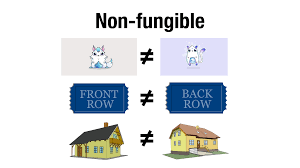
Smart Contracts
Smart contracts have emerged as a game-changer in the future of decentralized finance following the emergence of the Ethereum blockchain (DeFi). But what makes it so clever with smart contracts? In addition to the customization and the digital signatures attached, due to their self-executing nature, smart contracts are smart.
Smart contracts
Smart contract is a term used to describe computer code that executes all or parts of an agreement automatically and is stored on a platform based on a blockchain.
The smart contract refers to a computer program on a blockchain or distributed ledger technology that takes place. Since no third party to verify the agreement is involved, the corresponding blockchain network can verify transactions on the basis of the conditions stated in the smart contracts.
You may equate smart contracts to a digital vending machine where, without the need for an intermediary, the system itself dispenses the item after the user's item selection and payment completion. Decentralized Finance (DeFi), which seeks to eliminate intermediaries from the equation and produce safe and credible financial transactions, applies the same principle to Smart Contracts.
To verify a transaction between two parties without intermediaries, developers may establish a smart contract. Joe wants to purchase a house from Ben, for instance. Only after the payment has been made as per the terms and agreement will they rely on a smart contract to move the house ownership.
Similarly, for various purposes, smart contracts may be used, such as the transfer of proprietary information, including trademarks, copyright claims, the supply chain and even voting.
How it works
Smart contracts, like Ethereum, will take place on different blockchain networks. In the functioning of smart contracts, however, there are three essential phases.
A decentralized application is generated by the developer (DApp). These apps have smart contracts operating on a blockchain network that is decentralized.
None of the parties will make adjustments to them until smart contracts go live on the blockchain. After all of the requirements stated in the smart contract have been met, a blockchain network will then process and finalize the transaction.
Without any third party, the blockchain network guarantees that all ends of the agreement are checked.
Benefits
The key goal behind smart contracts is to remove the need for transaction intermediaries. As a consequence, due to human mistakes such as miscalculation and logistics management, clients are not expected to pay commissions to a third party or endure delays.
If the blockchain takes over, the various sectors involved (say, payment, approval, and confirmation) can be automated and consumers can deliver easy transactions.
It is also considered that smart contracts are more precise than conventional methods. They can be used from one party to another for the transfer of properties. Interestingly, in the absence of intermediaries, the trust element is seamlessly taken care of by the blockchain network.
Smart contracts are incredibly flexible as well. The author has considerable influence over how a clever contract works. That is basically why smart contracts rely heavily on Initial Coin Offerings (ICOs) and DApps.
Security
A smart contract has no absolute influence over any single entity. It is necessary to ensure the integrity of smart contract transactions. It also decreases to a minimum the chances of fraud.
A smart contract is managed and checked by various nodes of the blockchain network until it goes live on the blockchain network. That is possibly why smart contracts are deemed to be extremely secure.
If an attacker tries to alter a smart contract, all the corresponding blockchain network nodes, which is a near-to-impossible mission, will have to be changed.
Smart contracts will also help the crypto community become independent and trustworthy in this way.
Downside
While smart contracts are intended to eliminate intermediaries from transactions, this does not mean that they are free of software bugs that affect the function's execution. Depending on the design and sensitivity of a specific smart contract, it can be a major problem.
Thoughts
Although smart contracts can provide a safer space for the crypto ecosystem, they have a long way to go.
The technology of smart contracts is not as flawless as it appears to be at first glance. In the code, there might be some glitches and mistakes that should be reviewed and avoided. However, in the sense of how individuals and companies will communicate with each other, smart contracts seem to be a terrific technology.
Blockchain became an ecosystem where it was possible to conduct smart contracts in the right way. In order to enhance smart contracts and make them usable for parties to communicate without any intermediaries, the technology needs such additional features as oracles.
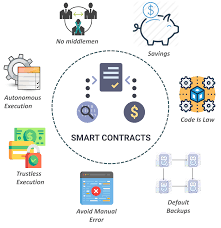
Cryptocurrency Wallets
You would need a wallet if you are interested in using virtual coins such as Bitcoin, Ethereum, Bitcoin cash or any other of the over 1,500 coins and tokens currently available on the market. This guide is your shortcut to knowing what a cryptocurrency wallet is, how they function, and which one suits you best, if you are new to cryptos.
Crypto wallets
A software application that gives you access to all the cryptocurrencies in your possession and enables you to control your holdings, store, receive and send coins is a cryptocurrency wallet or just a wallet.
Some wallets are designed to carry only one form of coin, while others are designed to hold several coins, which is very convenient if you don't want to restrict yourself to a single asset. There are other features in some wallets, such as monitoring live exchange rates for your favorite fiat currency.
There is a public and a private key in each crypto wallet.
Another crypto misnomer is a public key, since it is not a key but an address for a wallet. It's like a bank account number used by other individuals to transfer coins to your pocket.
Your digital signature and a PIN code are a private key to your crypto locket combined. The wallet is used to access and control the funds connected to it.
A private key is a string of randomly generated and encrypted letters and digits in the format your wallet supports. You don't have to go deeply into the technical details of how you have produced your private key, make sure it's kept safe and stable. It will be possible for someone who gets your private key to open your wallet and take your money. In addition, you will lose your money if you lose or miss your card. Just Forever. Regardless of what. No key, no cash. Keep it in mind and use your keys to be smart.
Technically, they delegate the ownership of the coins to your wallet address when anyone sends you Bitcoin or some other form of virtual currency. So the trade comes down to a blockchain record and a balance shift in a few cryptocurrency wallets. As such coins still exist only in a digital form, there is no physical exchange of coins.
Hot and cold
Hot wallets are still online, which makes them more agile, fast, and user-friendly, but less stable. Wherever you are, they give you immediate access to your digital properties, as long as you have a computer linked to the Internet. But this comfort comes at a cost: due to continuous Internet access, they are intrinsically unstable and vulnerable to theft. You don't even monitor the protection of your wallet at times, as it depends on your wallet service provider's practices.
Cold wallets with robust security and enhanced anti-theft protection are interned-disabled physical devices. When you need to make a purchase, you plug them into a device and then take them back to the safety of the offline world. They're pretty much hacker-proof, you just need to make sure they're not stolen, ruined, or lost. Cold wallets are a vault or safe deposit box cryptocurrency option where you maintain your long-term holdings. They are better used in the foreseeable future for storing vast quantities of cryptocurrency that you do not want to spend.
Types of crypto wallets
Any wallet is just a way to store a mixture of your public address and a private key, but different businesses have created numerous software solutions to enhance the user interface and include additional features that serve unique purposes.
**Desktop wallets**
Desktop wallets are programs of software that you download and run on a laptop or device. They are simple to install and available for all operating systems, although some can only be used on a specific OS. Upon launch, most desktop wallets have a mnemonic phrase for you. It's a long string of phrases that store data needed for a wallet recovery. If it is re-installed, you will need it to get access to your wallet. So storing the mnemonic phrase in a secure location, far from prying eyes, is important.
Pros: Desktop wallets provide a high degree of security since they can only be accessed from the device they are mounted on. The protection of your wallet is your responsibility. In order to protect your wallet from external threats, you do not have to rely on other people. Desktop wallets often typically have rich features and provide additional tools and functions. The majority of cryptocurrencies have created a desktop wallet for their coins.
Cons: You and your digital assets can fall victim to viruses and malware because your computer or laptop is connected to the Internet. You will lose your virtual cash if your machine is hacked or gets a virus. If you want to keep your coins secure and sound, antivirus, anti-malware software, and a decent firewall are a must.
**Mobile wallets**
Mobile wallets run on a smartphone or tablet as an app and are very similar with additional features such as the QR code scanner to their desktop siblings. They are the most widely used type of wallets, which is hardly surprising because people nowadays like to do stuff on the go, to be able to check their crypto balances, to send and receive coins anytime, anywhere. For both iOS and Android devices, all major cryptocurrencies have mobile wallets, while less common ones can only have Android versions.
Pros: There are very practical mobile wallets. In a retail shop, you can conveniently use it to pay or submit coins. They are smaller and quicker, since they are used on the fly.
Cons: Due to the limited space and power of a mobile device, mobile wallets only have basic features. More importantly, since they are still connected to the Internet and have weaker cryptographic security features, the vast majority of crypto wallets are vulnerable to cyber attacks, viruses, and malware. As someone who gets access to your phone or tablet with a crypto wallet on it will be able to take away your money, you also need to be extra careful about protecting your computer.
**Online wallets**
Online crypto-currency wallets live in the cloud and can be accessed from any Internet-enabled computer or mobile device via a web browser. They combine the versatility of desktop wallets with mobile usability, making them very attractive.
Pros: As there is no need to wait for the app to connect to the server, online wallets offer quicker transactions. Many of them are integrated with exchanges of cryptocurrencies or allow amounts to be transferred between supported coins. When you treat them like a digital piggy-bank for small sums, they can be really useful.
Cons: The low level of protection is their weakest point. Somewhere in the cloud, your private keys are held and managed by someone else, not you. For hackers and other crypto villains, it makes them a tempting option. You should always bear in mind that even more often than any other form of wallet, online exchanges and online wallets are hacked. The fundamental advice, therefore, is not to place all your digital money in an online wallet.
**Hardware wallets**
Hardware wallets vary fundamentally from all the other wallet types discussed above. On a separate offline computer, like a USB, they store your private keys. Just plug the unit into a computer with an internet connection, make a transaction and disconnect the wallet if you need to transfer cash. There are LED screens in some versions, which means you can get one without a device at all. You can store over 22 cryptocurrencies and hundreds of ERC-20 tokens through popular hardware wallets. They are the best way to save huge cryptocurrency quantities that you hold as a long-term investment and do not intend to switch around very much.
Pros: Hardware wallets concentrate on security. As they only allow online transactions, but the keys are kept offline, they provide the highest degree of protection against cyber attacks. As long as you make sure that you do not lose the device itself, you will not lose your money.
Cons: Hardware wallets are less user-friendly. Typically, they are compatible with most web interfaces, but in contrast to software wallets, their performance is low. Hardware devices cost between $70-$150 and are often sold out in a split second, so it's hard to get one for yourself if you would find it difficult.
**Paper wallet**
Paper wallets are an early prototype of a wallet for hardware. You build it via a dedicated service, print on a piece of paper your private keys and public addresses, either as a string of letters and digits or as a QR code, and start transferring coins to this one from your app wallet. You need to transfer funds from your paper wallet to your app wallet if you need to spend those coins. This approach is often called 'sweeping.'
Pros: At the same time, it is cheap and safe. Strange as it might seem, as they are not stored on a computer or any other Internet-connected unit, they are considered to be one of the most hacker-proof wallet types.
Cons: Paper wallets for newbies are not. To build and use it afterward, you need some technical expertise, patience and a high degree of caution. Paper is not a very sturdy material, so you have to take special care to keep fire, water, and a shredder out of your pocket.
Keeping your wallet safe
While some wallets are by their nature more secure than others, users must always take precautions and be vigilant when operating with a wallet. Complacency and negligence will dearly cost you.
**Diversify**: In a hot wallet, online or on computer, keep small amounts for regular expenses at hand and store the bulk of your cryptocurrency assets in a safe location as far from the Internet as possible in a clod wallet. If your computer or mobile device dies, the hardware or paper wallet will protect your money from hackers, malware, and viruses and allow you to recover data.
**Keep a back up:** It is a good practice to make a backup of your wallet, that will allow you to regain access if anything happens to your device. It is best done on an offline computer, like a USB drive, as it is possible to hack or compromise online storage. Also, just in case, keep hard copies of your mnemonic sentences, passwords, usernames and other access info.
**Keep updated:** Make sure your wallet software is up-to-date, as security updates are often released by developers to protect your wallet from new threats.
**Use best security practices**: You are solely responsible for the safety of your assets, so try to add additional layers of protection to your crypto wallet. Start with a strong password on all the devices you have installed with the wallet app. At all times when a wallet application is opened, choose wallet service providers with strong security policies such as two-factor authentication and pin code request.

Fear of Missing Out
FOMO is popular with traders. This stems from the belief that other traders are more successful and also generates an immediate desire to succeed. A lack of long-term perspective, too high and unreasonable aspirations, too little trust or overconfidence, and impatience may result from FOMO.
The feeling of losing out, for example, can cause traders at inopportune moments to close trades or risk too much money. It can also make traders with little thought join trades.
Cause
FOMO is caused mainly by cognitive biases. This phenomenon is used in psychology to explain "the tendency of people to overestimate their ability to perceive events that have already happened when the result could not possibly have been predicted."
A trader will think, for instance, "I could have doubled my account today." In retrospect, this is obvious, but until after the transaction has been made, there is no way to understand this.
A main driver of FOMO, too, is emotions. They may contribute to trading characterized by excessive levels of risk and neglecting a trading strategy. Impatience, greed, apprehension, anxiety, envy, and excitement include common emotions that feed into FOMO.
Triggers
FOMO is psychological, but several external variables can cause it, including:
Social networks, especially Twitter. It can be toxic to be inundated with social media success stories from traders. To avoid being manipulated into making bad decisions, it is necessary to study influencers and social media posts.
Rumours and news. News and speculation influence the world of trade and this may raise the fear of being left out.
Markets Volatility. No trader wants to miss out on good opportunities and, regardless of the direction of market action, this can lead to jumping on a pattern.
Coping
It depends on vigilance and strong risk management to deal with FOMO. To help conquer the fear of missing out, the following tip may applied:
Sticking to a strategy for trading. Know your approach, build a strategy based on this approach and stick to it. A robust plan helps you react in a controlled way to market movements. It also improves trust in trading by curbing emotional trading.
Knowledge of the markets is indispensable. To make informed trades, every trader should research and understand the markets and do their own analysis.
Waiting for other transactions. You need to know that other possibilities will come along, and waiting for the right ones is worth it. Know that trading has its ups and downs and, even with a strong plan, not every trade will be a winner.
Communicate woth other traders . It can make FOMO less intense and boost trading psychology by exchanging experiences with other traders and knowing that they are in similar or relatable positions. A good place to start are trading forums and professional groups.
Maintain a trading journal. A journal is commonly used by active traders and is one of performance management's most powerful methods. Holding a log for enhanced trading and future reference helps to document and review trades. It also helps to track progress and to investigate errors.
JOMO (Joy Of Missing Out). Trading professionally involves disconnecting from the market on a regular basis to do some research, improve your trading strategy, or simply enjoy the day. This will make you less eager to miss out on trade.
In the markets, FOMO leads to psychological trauma and accepting JOMO can minimize or remove this stress. This will go a long way towards enhancing your efficiency in trading.

Segregated Witness
The creation of SegWit resulted from the objective of growing the Bitcoin blockchain's transactional capability.
In August 2017, SegWit was integrated into the Bitcoin network and had a huge influence on Bitcoin and the wider marketplace of cryptocurrencies.
One of the key outcomes of the SegWit implementation was that a group of developers created a hard fork in the Bitcoin blockchain and formed a new cryptocurrency, Bitcoin Cash, which was also released in August 2017, which disagreed with the plan.
Background
Blockchain networks allow people, without the assistance of a third party, to conduct transactions with each other.
By employing public key cryptography, they do this.
A user on the blockchain has a public and private key, and a digital signature is created by combining the two keys, which verifies the identity of the user when making a transaction.
When Person A adds transaction data to Person B's public key, transactions on the blockchain are performed.
To create his digital signature and complete the transaction, Person A uses his private key.
Blockchain networks have network-based structures, and the transaction and its related details are transmitted to any device and user on the network if a transaction happens, which produces a distributed ledger: a shared database of all network transactions for all users to see.
Upon documenting the transaction on the network, users validate the transaction on the blockchain, the digital signature of the entity and the transaction details, and the block is added to the network.
Issues
The issue with this method is that it needs substantial data to build and validate blocks.
The digital signature generation absorbs the majority of the data in a transaction, about 65 percent.
Since blocks on the Bitcoin blockchain were restricted to only 1 MB of space, this data usage issue presented a specific problem for Bitcoin.
All those blocks were piling up as more and more transactions happened on the blockchain.
This size restriction has become a growing problem for Bitcoin in the past several years, as the number of users on the Bitcoin blockchain has risen and other blockchains have introduced alternatives to Bitcoin.
Since the blocks on the chain could not be larger than 1 MB, the number of transactions that could be performed on the blockchain had major restrictions, just around one every seven seconds.
This will hinder the scalability of Bitcoin and its potential as a high-volume payment scheme.
In the Bitcoin blockchain, a further problem was malleability.
Malleability allowed users on the blockchain to change the transaction ID information slightly before the transaction was validated on the network.
This did not pose a major problem for Bitcoin, but it stopped smart contracts from being enforced by the network.
The failure of Bitcoin to produce smart contracts threatened to become an additional problem for the future growth of Bitcoin, as the Ethereum network has gained popularity and value, particularly because it allows smart contracts and industries outside the cryptocurrency marketplace have taken an interest.
Solution
In 2015, Dr. Pieter Wuille proposed a solution to this scalability issue for Bitcoin at the Scaling Bitcoin Conference.
Dr. Wuille put forward an idea called Segregated Witness, recognizing that the digital signature and transaction data merged to form the data on a block and that the digital signature consumed the greater amount of data.
By eliminating the digital signature from the transaction data and transferring it to a point in the structure later in the transaction, Dr. Wuille's idea was to minimize the data involved in a transaction.
This will raise the block size cap from 1MB to 4MB, thereby raising the frequency of transaction data and enhancing the Bitcoin blockchain's scalability.
The principle of segregating the digital signature date from the transaction data gives Segregated Witness its name.
Since users on the blockchain check, or 'witness', the digital signature of a person, if the transaction data is separated from the digital signature, what is witnessed is essentially separated from the transaction data.
Implementation
Dr. Wuille's idea was accepted by a majority consensus of users on the Bitcoin blockchain, and work started on this new method.
Less than two years after he proposed the concept, Segregated Witness was incorporated into the Bitcoin blockchain in August 2017.
SegWit is a soft fork, a transition in a blockchain in which the transactions on the new blockchain can be accepted by nodes on the old blockchain, so that they can obey the new protocol while respecting the old one as well.
This ensures that transactions on the blockchain can still be checked by Bitcoin blockchain users who have not upgraded to the latest protocol.
Bitcoin cash was born
While the Bitcoin network had a majority consensus on SegWit, not all developers agreed with it.
A group of developers decided to simply increase the size of the blocks on the network rather than strip the digital signature from the transaction data.
So they've done.
"In August 2017, these users conducted a "hard fork" fork on the network and created Bitcoin Cash when SegWit was deployed as a soft fork on the Bitcoin blockchain.
A hard fork is a modification to the original blockchain that renders it incompatible with the new blockchain. The nodes on the new blockchain will not communicate with transactions or nodes on the old blockchain with a hard fork or accept them.
Bitcoin Cash's creation is probably the most important hard fork recently, especially because it was connected to Bitcoin, the highest profile and most valuable cryptocurrency.
Benefits of SegWit
SegWit has made it possible to increase the data size of blocks on the Bitcoin blockchain from 1MB to 4MB. This increase in block size has caused the frequency of transactions on the network to increase.
An additional advantage of removing the digital signature from the transaction data and reducing the transaction's data size is that more transactions can fit into a block.
Thus, not only are the block sizes bigger, but more transactions will take place in the block, causing the volume of transactions to increase even more.
In addition, SegWit accomplished its goal of solving the issue of malleability on Bitcoin. Users will no longer modify the specifics of a transaction ID.
This facilitated an increase in development work on features that would allow smart contracts to be executed, which are increasingly valuable to many industries in the wider digital marketplace because of their advantages.
Implementation Issues
While SegWit was rolled out in August 2017, it was not immediately enforced.
SegWit was used to make a minority of transactions on the blockchain (less than 25 percent).
SegWit is an option but not required for transactions.
A bigger problem facing SegWit was that, although the protocol was introduced in August 2017, it was not endorsed by many digital wallets. To allow it, it took time for well-known wallets, like Trezor and Ledger. Until February 2018, Coinbase did not endorse SegWit.
Although there have been problems and controversy about SegWit in the Bitcoin network, its creation provides a clear illustration of how blockchain networks may develop.
SegWit has demonstrated how developers can build a protocol on a blockchain network to optimize a blockchain network for technical advances and the changing marketplace.
It has also shown how developers can build a hard fork on a blockchain in response to the new protocol in the same network.

Fundamental Analysis
You want to know, as a crypto trader, what causes prices to rise, fall or stagnate.
Although markets are not always straightforward, you can sometimes get at least a fairly good idea of what the most likely outcomes might be, with good analysis.
A good trader understands when to trade. They consider business dynamics and recognise markets where they can forecast what will happen next in a reliable manner.
But how are they doing that?
Here, there are two answers: fundamental analysis and technical analysis.
The study of past market action to forecast potential price action is technical analysis. Technical analysis is an essential part of trade, primarily focused on human psychology-a fascinating field.
Fundamental analysis looks at the fundamentals of an asset, or any element of an asset that contributes to its overall value, in other words.
Fundamental analysis
Cryptocurrency is by no means limited to fundamental analysis-it is embedded in other forms of trading.
The idea is simple: if you can understand that an asset has an intrinsic value that is out of proportion to its current market price, based on your research, you can trade and, potentially, make a profit.
You should look at finding ventures that you think have a good chance of succeeding. Then other investors should note when you invest and the team proves its capability, and the market action should be optimistic.
That's simple research. To assess their potential worth, you're studying your investments.
It works the other way, too. You can decide that the asset is highly overvalued if you study an asset that has a large market cap. That's good, and sometimes happens.
When assets drop in price, you can potentially trade to make a benefit. This is known as shorting.
Situations where fundamental research plays out exactly as you would imagine, you will also find.
You can benefit if you can understand a project's future potential, or know that the project is currently undervalued in the market.
Smaller specifics also come down to fundamental research. In 2017, rebranding a token and giving it a new name and logo was very trendy in cryptography. Normally, a price rise will accompany a rebranding.
This has, however, stopped having an impact over time.
Traders need to be able to understand how market participants are going to receive structural shifts like this. In certain ways, it doesn't matter how you feel about it, it matters how you feel about it in the market.
A major difference can be created by little changes. Often meditate on:
What modifications are taking place?
How is the market going to respond?
Of course, more than just markets responding to developments, fundamental analysis is about. It is important to realise the possible future value of properties.
How to do fundamental analysis in cryptography
Many cryptocurrency ventures are not like conventional businesses. As with conventional equity investments, you do not have mounds of data to sift through as you might.
It is highly speculative, as crypto is in its infancy.
When reviewing an investment, there are several things to look out for (click the links to move to a section or scroll down to read everything):
**Target market**
There is a target demand for each product and this means that you should understand the size of the market.
It is not always easier to have a bigger market. If the market is high, solutions could already be over-saturated, reducing the probability of acceptance.
There are small niche markets, but they may be very open to a new approach to a problem.
**Competition**
In any industry, competition is significant, and you can use it to gauge the effectiveness of a crypto project. Consider of the:
How many are the competitors?
This makes it harder for your chosen project to gain recognition if there are lots of players.
How are they relative to their rivals?
Stacking something against rivals will illustrate strengths and weaknesses and indicate whether, in the long run, they are likely to defeat their rivals.
Evaluate the level of rivalry and determine, compared to the others, whether a project is in good standing or not. That could be a great sign if the product is special.
**Team**
Effective products have fantastic teams behind them.
What's there to find out about the team?
Look at senior management: who are they, where are they from, what background do they have? That's certainly a positive sign if there is a professional team with a wealth of experience.
**Roadmap**
Crypto ventures also, in one way or another, have roadmaps. They show what plans there are to move the project forward in the future. Take a look to see what you think of these proposals.
How optimistic does the roadmap look? Ambition is healthy, but too much can happen.
**Development and release**
You can look back to see how a project has done over time in terms of growth, just like a roadmap looks into the future.
If there is a healthy release history, that's a good look.
**Partnerships**
Partnerships are necessary in crypto to allocate importance, but before passing judgment, make sure you understand the specifics of the partnership.
**Demand, tokenomics and utility**
Supply and demand are driven by price and value. In principle, the larger the demand, the greater the price.
Demand is handled by tokenomics as well as utility.
Look at tokenomics, which is basically based on the token economy. To establish adequate demand, the token should be useful within the ecosystem.
Assess if the utility is adequate to drive future demand, and take into account future utility plans in your decision.
**Status**
On a level playing field, Crypto ventures don't start. If you were to launch a cryptocurrency tomorrow, and one was also launched on the same day by Google, it will possibly gain more traction from Google.
How is the business that controls this project set up? That could add to value if it already has a lot of users who will now use the cryptocurrency in question.
**Whitepaper**
Whitepapers outline a project's nitty gritty. They are technical papers, but they are important. They will explain what you need to know about how it works, which can have a big effect on your investment choices.
Prior to investing, read whitepapers.
**Community and reviews**
Take a dive into the forum and read project feedback. See what various individuals have to say about it.
**Real world use case**
At the moment, a lot of people get caught up and don't stop to think: why?
While there might be great fundamentals for a project, ask yourself if it needs to use blockchain and have its own cryptocurrency. That is something to worry about if it doesn't. Long-term value, one way or another, may sway it.
**Pre history and age**
Cryptocurrencies are going and coming. If a project has been developed for a long time and has held value consistently compared to other cryptos, it can have longevity.
However, from smaller, comparatively unknown coins that break out and become mainstream, greater returns can be discovered.
**Liquidity and volume**
How often do the cryptocurrency is traded?
This could be a token that's high in demand if there is a lot of competition and lots of trading.
**Market cap**
A market cap takes the availability of a crypto into account and extracts on that basis the real value.
To see the potential for growth, take the market cap into consideration. Compared to lower caps, projects with higher market caps are more likely to have smaller growth potential.
**Regulation**
Matters of regulation. That could have detrimental effects on the price in the future if a project does not adhere to laws and regulations.
Keep these things in mind when you are looking at a future investment. This is not an exhaustive list, but to help you become a better crypto investor, it's a great way for you to start researching possible crypto investments.

Initial Exchange Offering
Due to the possible profits that traders could make, Initial Coin Offerings (ICOs) grew in popularity in 2017.
ICOs are a novel form of crowdfunding ventures harnessing blockchain technology, more widely referred to now as IEOs (initial exchange offers). Traders add cryptocurrencies to the project (or fiat, occasionally) and get some of the tokens of the project in exchange.
Generated through what is known as a Token Generation Event (TGE), such tokens represent a unit of value within the ecosystem of the IEO project and are typically used on a platform or product to access those functions.
Of course, the tokens can be exchanged after being listed on exchanges.
IEO contributors also speculate that in the future, the value of the tokens they purchase will increase in value, earning them income.
Unlike an initial public offering, IEOs do not give a share in the business to the contributor. If they did, they will be security tokens and controlled by securities laws, such as typical company shares.
The IEO funding model provides a feasible alternative to the preservation of venture capital space. There have been thousands of altcoins released since Bitcoin's introduction in 2009, with IEO playing a part in many of them.
Under Coinschedule:
43 token sales were conducted in 2016, 209 in 2017, and there were more than 60000 in 2018.
The sum of money generated by token sales was around USD 11.4 billion in 2017. Between January and May 2018, funding for token sales had already hit USD 13.7 billion.
A recent Stratis Community study reported that 80% of 2017 token sales were scams.
Spectrecoin (741.42x), Neblio (84.83x), Icon (43.30x), Qtum (73.71x), and Tron were some of the most lucrative token sales in 2017. (42.80x)
Should developers pivot to IEOs over VCs?
IEOs present a viable option to the direction of venture capital, but they do come with a fair share of risks.
Money earned by token sales is called income, so taxes must be charged by IEOs. This has contributed to the rise of countries like Malta that have more lenient regulatory policies.
Also, donors to token sales must be careful where they put their money. Not only are token sales fraught with possible scams, but there are no guarantees of earnings, especially under the conditions of the bear market.
How it works?
A whitepaper containing all the essential project information, such as the business plan, token selling details, token inflation/deflation model, the team and other important information, will be developed by most IEO projects.
The project will be advertised shortly, after which the project will progress to the contribution process.
How to participate?
Depending on the amount of money you have, there are different contribution amounts.
Private sales offer cheaper prices, but greater investments are needed.
There is typically a lower capital limit for public transactions, but the price of tokens would appear to be higher than that of private sales.
Participation in an IEO on a forum is relatively simple. All the details about the initiative, the whitepaper, the participation process and all the official channels is available on the website.
A good IEO
In order to gauge the prospects of a project, an investor needs to look for a variety of bare minimums, including:
What does it seek to solve the project? Is the issue clearly defined, and how are they going to address it? Is there a working minimum viable product?
What are the qualifications for the team?
Are there any (even potential) partnerships?
You could get burned if you invest quickly and rashly in IEOs.
A project's success is never guaranteed, and projects will fail, returning zero investment value.
There are financial risks to even the best ventures, albeit in the short term, and investors need to be prepared for this.
Financial inclusivity and democratization are one of the aims of the cryptocurrency. But with certain token sales, donors with the most cash will purchase the most tokens at the best prices, balancing the chances in their favor unfairly.
Hackers and scammers seeking to target naive traders have also been drawn by the vast amount of money involved in IEO.
Investors must keep an eye on their own cybersecurity. It is a clever decision to use a safe and stable site.
IEO’s future
There is no limit on what can be tokenized, but it is most probably a thing of the past for the wild days of 2017. In 2018, token sales returns were even less favorable and many of those ventures that were crowdfunded in 2017 failed to survive the bear market.
In order to change the landscape, control of how token sales are carried out and best practices will play a significant role.
The regulation of crypto can emerge from within, but does not necessarily have to end there, to echo the blockchain proposition of self-governance.
In general, being able to engage in a legal-friendly atmosphere would boost the status of the space and offer confidence not only to more potential investors (retail and institutional), but also to more visionaries who need funding for their ideas.
But the token sales room is changing, and quality projects will continue to rise to the surface as we look forward to.
Final thought
In the blockchain room, a lot of progress has been made and we are now seeing legitimate businesses and ventures develop themselves and continue to innovate. Token transactions are not the slam dunk they once were for traders, but with prudence, there are still possibilities.