Yield Farming
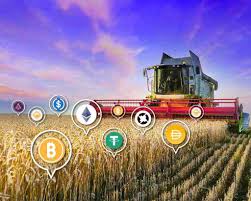
You must have come across the idea of Yield Farming when researching prospective techniques to increase your cryptocurrency asset portfolio. Yield farming could be a good choice if you have invested in unique cryptocurrencies and want to make a substantial profit. However, before you jump right on the bandwagon, it is important to understand how Yield Farming operates.
Yield farming
Yield Farming is a Decentralized Finance (DeFi) mechanism where a consumer can receive incentives in a Liquidity Pool built and managed by smart contracts that handle the 'confidence' portion for locking up their tokens. The cryptocurrencies applied to these liquidity pools, using lending, investing, staking, can be used by other users.
In the end, individuals will benefit from Yield Farming at both ends. The liquidity pool can be a useful source for those who want to lend tokens for margin trading. Yield Farming also opens up the prospect of passive income if you already have a few crypto tokens sitting idle in your wallet. However, the amount of incentives that you receive from Yield Farming is not exactly calculable.
How it works
You should consider the different individuals involved before you explore the various steps involved in Yield Farming.
The person who deposits the cryptocurrencies in the intelligent contract is first and foremost. This consumer is called the Liquidity Provider, while the Liquidity Pool is called the smart contract. The protocol sets out the rules of the smart contract, and the same rules dictate how much revenue you can earn from Yield Farming. Other users can use the Liquidity Pool for margin trading as a source of tokens. In the end, however, all is regulated by a smart contract.
Getting started
You deposit the desired sum of funds into Yield Farming's smart contract as the Liquidity Provider. In most situations, these funds would be stable coins pegged against the US Dollar (USD). USDT, USDC, and DAI are some of the options.
Yield Farming project returns would be in the form of the cryptocurrency that you have already deposited. In certain cases, however, Yield Farming often provides users with access to a few tokens that have not yet been identified on the open market.
You might want to concentrate on some stability after you get started with Yield Farming by selecting a reputable Yield Farming project with sustainable income and a stable back-end.
The smart contract locks these funds and is accessible according to the limitations of the smart contract and the Yield Farming platform. A Yield Farming project will provide you with returns depending on how much you have invested.
Nevertheless, the Liquidity Provider is free to develop intricate Yield Farming design patterns. The rewards from one Yield Farming project can be invested in another smart contract and so on. It will enable the LP to diversify its asset portfolio of cryptocurrencies.
You can produce a substantial amount of profit depending on how easily you resell the incentives from Yield Farming.
It will ensure that you have full advantages from yield farming by using a proper strategy. There are chances to gain better even when you get incentives in the form of the cryptocurrency you've invested in the first place.
The risk
Here are some of Yield Farming's common risks
The stability of incentives you can receive from the project may be influenced by bugs in smart contracts. In certain ways, the issues in smart contracts will adjust the estimation of incentives.
It could cause the loss of funds if the Yield Farming project is not properly audited and patched for bugs.
All is linked, including smart contracts, in the DeFi world. This means that the issues with one blockchain network, such as network delays and problems with authentication, will have an effect on your investments and returns.
Thoughts
Having said that, Yield Farming is not fully risk-free. But you have nothing to worry about as long as you choose a project that fits all your requirements. Yield farming is also not a method that is magically profitable. Yield Farming can provide you with some great returns if you know how to analyze the market and invest. You can broaden your crypto asset portfolio without much trouble once you understand all of these factors.
Bitcoin Mining
The backbone of the Bitcoin network is also represented by Bitcoin miners. They are responsible for generating new Bitcoins through the process of mining, validating transactions and ensuring that the network remains stable.
Bitcoin miners
A bitcoin miner really refers to a specialized machine that solves complicated problems with computing. Today, in thermally controlled mining warehouses that have access to low-cost electricity, most mining takes place.
As an individual, mine is no longer profitable unless you have access to free electricity (which college students have sometimes used to their advantage). It is almost impossible to cover operational expenses without entering a mining pool, as block incentives occur too seldom due to the laws of probability.
Cooperating miners consent in mining pools to share block rewards in proportion to their mining hash power contributed.
Hash power, or hash rate, simply refers to the speed at which an operation in the Bitcoin code can be performed by a mining machine. The higher the hash rate, the greater the likelihood that the next block in the blockchain will be identified and a reward will be earned.
How it works
Three things are done by mining:
Emission of new Bitcoins.
Transaction validation on the network.
Securing the network of bitcoin
It enables them to chain together blocks for transactions (hence the "blockchain") as mining machines solve complex computing problems on the bitcoin network.
The method of mining is what issues new Bitcoins, unlike a central bank that can issue new units of a currency at any time. New Bitcoins are awarded to miners every 10 minutes. In addition to new Bitcoins, miners also receive transaction fees that are paid to the network by users any time a transaction is made.
During the mining process, transactions sent to the Bitcoin network are validated because miners insert these transactions into their blocks. It becomes a stable and full part of the Bitcoin network when a transaction is embedded in a block.
Proof-of-Work
On the Bitcoin network, it is called a hash to address a cryptographic query. The hash of each block includes the hash of the previous block, and a hash function is considered one of the mathematical puzzles solved by miners, which means finding the input to an equation given its output.
These mathematical puzzles become more complicated as the Bitcoin network expands, and so more hash power is needed, which translates to more time, energy and money.
Bitcoin uses the consensus algorithm for Proof of Work (PoW). What makes the network safe is that the block must be validated by a majority of miners for a block of transactions to be added to the blockchain ledger. More than 51% of the total hash power would be sufficient for a malicious miner who wants to inject invalid transactions into the blockchain, which would be incredibly expensive in terms of mining machinery and energy.
PoW guarantees that any action on the Bitcoin network needs significant effort to be performed, such as a transfer being transmitted between two wallets. In addition, computational puzzle complexity is proportional to the number of miners. Any attack on the network would then take so much computing power that, because of the costs involved, it would be redundant.
How miners make money
When they build new blocks, miners are rewarded with bitcoin. Most miners will immediately sell ample amounts of their newly minted Bitcoin back to the ecosystem to cover their expenses, while their treasury will maintain the unsold balance.

Gas Fee on Ethereum
The fuel which keeps the Ethereum blockchain running 24/7 is provided by gas.
Gas is required for any Ethereum operation (whether it's a purchase, token sale or a hard fork).
Gas lets Ethereum measure the fees necessary for a given action to be performed, and ensures load balancing across the network.
Gas
Put simply, gas is the Ethereum blockchain's oxygen.
Specifically, it is a measurement unit that determines the amount of processing effort needed on the Ethereum network to perform a given action.
Gas is required for any instruction that is determined by a smart contract on the Ethereum network, and a specified set of instructions will be executed until the required amount of gas is transmitted to a smart contract.
Why it is important to Ethereum?
Gas is crucial to Ethereum's functionality since it offers an incentivization mechanism that brings more miners to the network.
It also has a higher hashrate when a P2P network such as Ethereum has more miners, which makes the system more stable and safe.
By mining blocks, miners earn tokens, but they can also earn tokens by managing their mined blocks temporarily and manipulating them for profit.
Computational power is also required to validate certain contracts when miners mine a block and encrypt it, and the gas functionality of Ethereum enables them to charge a fee for this, which can become a separate income source in and of their own right.
On the Ethereum network, gas provides an utterly vital incentivization process.
How Ethereum’s gas limit works
Before taking place, any transaction made on the Ethereum network must have a gas limit specified.
Although the sums involved may be infinitesimal, considering the gas cap as the absolute maximum someone is prepared to pay for a transaction is beneficial.
Generally, the transaction fee (gas price) depends on the complexity of the transaction involved. A relatively small gas charge would likely be incurred by simple acts such as sending Ether to a friend, whereas it would be far more expensive to build a smart contract to be used in a token sale.
The more complicated a deal, the more gas you have to pay to conduct it.
In order for a transaction to occur, a gas cap needs to be defined as previously set out. This implies that first the gas limit needs to be set by the person looking to perform the transaction.
It's worth bearing in mind that each transaction has a different gas cost if you do this yourself (for more insight into how much gas each type of transaction requires, see the Ethereum Yellowpaper).
That said, in each transaction, the actual amount of gas used is variable. As an example, this means that even though it may theoretically take 120 gas to pass ETH to a buddy, the network could actually only end up using 100 gas to complete the transaction.
If there is gas left over at the end of a transaction, the person who initiated the transaction is automatically refunded.
This refund is one way for miners to receive tokens for their activities.
But there's another case, one where the end user's gas limit is not sufficient to perform a given transaction. The process in question will "run out of gas" and return to its original state when this happens in the middle of the transaction.
The person who initiated the transaction still has to pay the full gas fee, however, and the transaction itself is still added (even though it has not been finished) to the Ethereum blockchain.
What’s the difference between gas limit and gas price?
In order to complete a purchase, the gas cap is the maximum amount of gas you are able to pay.
Although the standard gas cap is 21000 for most transactions, this will vary depending on the transaction's complexity.
You will not be able to undercut the amount needed for a transaction, because the gas cap is determined by the Ethereum network; you will need to pay the maximum amount of gas every time.
Before starting a transaction, if you do not set the gas limit high enough, you can receive the dreaded "out of gas" error and also use the gas limit set at the beginning of the transaction.
On the other hand, the price of gas is an adjustable rate that reflects the amount one spends per gas unit. Depending on how easily you want a transaction to be mined, gas prices can go up and down (or executed).
It will also decrease the overall cost of a given transaction and lower the amount of gas price charged, but it will also mean it takes longer, too.
Paying a higher gas price would guarantee that a transaction in the blockchain is prioritized, whereas paying a lower gas price would essentially ensure that a transaction does not take place for at least a few minutes in most instances.
How gas price impacts mining performance
When mining your block, miners collect any transaction fees involved. Naturally, higher gas prices attract miners, provided that they represent a higher incentive for mining a given block successfully.
With that in mind, setting the gas price for a transaction high enough to be tempting for miners is always useful.
This is a reasonable rule of thumb to use, considering that most miners prioritize gas price transactions. Setting the price of gas higher would mean that the purchase is processed more efficiently, but it will also ensure that the price will also be higher.
In general, a lower gas price is less appealing to would-be miners, so it would typically take longer to complete transactions that have a lower gas price.
If you are trying to complete a purchase as cost-effectively as possible, then it could be a smart idea to set a lower gas price.
Pros and cons
Because of their considerable cost and benefits, gas limits have provoked controversy in the community.
The existence of gas caps, on the one hand, ensures that miners are adequately paid for their work and controls the network's supply and demand.
It carries out the vital load balancing role, something that would be hard to do without a gas limit in place.
Gas caps, on the other hand, often mean that adding information to the blockchain is both expensive and time consuming for many.
Although the current state of adding data to the Ethereum blockchain is rather inefficient, many attempts are underway to scale the platform, and this gives many hope that as time goes on, gas limits will eventually decrease and the network will become more effective.
Distributed Ledger
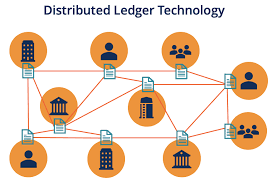
A distributed ledger is a database that is exchanged in various geographical places between a network. Traditionally, the concept of a ledger has meant a set of financial accounts. This has now taken on a new form with the advent of a distributed ledger.
For thousands of years, ledgers have existed. These documents may have been written in clay at the beginning, and they have moved over time to paper, and then to the birth of distributed ledger technology in the digital domain (DLT).
In this case, distributed means globally distributed and managed by multiple parties. Therefore, a distributed ledger is a database held and updated in various locations by multiple persons. To ensure consistency, the database is synchronized between the networks.
A ledger was used in the past to refer to financial documents. The reach of these databases has expanded tremendously with distributed ledger technology. Now, only the database is referred to by a distributed ledger and offers little insight into the content. The number of use cases is sky high for these groundbreaking databases.
Benefits
The key advantages of a distributed ledger are that it is highly stable, open, permanent and tamper-proof, while without the need for third parties, entries in this database will occur.
These few items are highly important. A distributed ledger is eternal, if set up correctly. This implies that it can not be rectified by another party until a report has been written on that ledger. As long as the ledger remains distributed, therefore, the data is 100 percent tamper proof.
With DLT, activity without the input of a third party is not always required, but it can be a huge bonus in certain use cases. In the supply chain industry, for instance, sensors can write results directly to the blockchain without a third party requirement, which saves a lot of time, money and effort.
A distributed ledger is decentralized by its very existence. As there is no centralized agency to target malicious activity, this provides a layer of protection. The database is distributed around the world, so it can not be targeted.
Transparency is often seen as a DLT advantage. A distributed ledger will make it simple and free to access all the information that is stored, which will bring a tremendous amount of needed transparency to a variety of industries.
How it works
Individuals known as nodes keep, manage and maintain a distributed ledger database. By processing every transaction that happens on the network and making its own conclusion on the progression of the database, each node independently builds the database.
All the nodes then vote on the transaction-based changes to the database, and when the majority agree on the new transaction, they are accepted into the database. Then all the nodes update their version of the database so that they are all the same. On the blockchain, the transaction is written into a new block. The majority needs to be greater than 51% of the nodes, and there is no central authority that has the power to overrule the database input.
In the case of Proof-of-Work (PoW) blockchains, nodes are also known as "miners" When they successfully placed transactions into a new block, miners earn a reward.
Being a miner needs computer power that is dedicated. To calculate the cryptographic hash for the new block, miners must function. The good miner who wins the reward is the first miner who manages to find the right hash. The more you have committed computational resources to finding this hash, the more effective you will be as a miner.
It gets more complex as mining progresses. The complexity of finding the next hash scale after each active block is produced. The aim is to ensure that the pace of block generation remains constant.
The rivalry is fierce now that mining has risen in popularity. If they expect to turn a profit, new miners must invest more than $1,000 to build a rig dedicated to mining Bitcoin. Competition is lower, but still rising, for other smaller cryptocurrencies. The high cost of energy that comes from operating a powerful machine 24/7 must also be regarded by miners.
Use Case
The design of the distributed ledger means that it can be extended to many different fields and could be used to strengthen current processes in many instances.
In the financial sector, one of the best recognized use cases is. Without the need for a third-party mediator, blockchain and distributed ledger technology can be used to strengthen facets of finance, such as cross-border transfers and enabling transactions to occur. Another useful case that can use smart contracts to promote this is peer-to-peer lending.
For open and equal voting, a distributed ledger might be used. Votes can be logged and securely checked.
To prove ownership and validity of a commodity, DLT may also be used. A commodity can be tagged from output, and from there, the transaction can be logged on the ledger when it changes hands legally, allowing the rightful owner and the integrity of the product to be clear.
DLT can be utilised by the food industry. A chain will follow the food route from the farm to the shelf, allowing consumers, for example, to see the origin of the food and ensure that it is organic.
As a final example, to track goods, DLT can be used in the supply chain sector. They can be scanned as products exchange hands, which will write the transaction on the ledger. In order to track certain elements, such as temperature or humidity, sensors are often placed in place. The ledger will be able to demonstrate that during transport, the correct levels have been preserved, and this will demonstrate that the product is available.
Alternative + Coin
Altcoins
Any cryptocurrency that is not Bitcoin can be referred as altcoin. This is because these other coins have been shaped as Bitcoin "alternative coins"
They can begin to lose their status as a 'altcoin' as coins become more established. As it is a fundamental component of crypto today, Ethereum is not often referred to as an altcoin.
But projects constructed on Ethereum will probably be known as altcoins.
With various objectives, Altcoins are created. Others are designed to fix financial industry problems, others may be targeted to disrupt different industries or functions, such as fashion or the supply chain.
Investing on Altcoins
No investment, particularly in crypto-currencies, is guaranteed. Before you start thinking about investing in an altcoin, you should ensure that you completely understand what gives a crypto-currency value.
Some traders chose to invest in altcoins because they trust the project's vision or the coin's use case. Others might look at the project's hype or big upcoming milestones.
Generally, the high potential for benefit is the appeal of investing in an altcoin. Altcoins have a slightly smaller market cap than Bitcoin, so major gains could theoretically be made.
Take note:
With the market cap, the value of the coin is not the price per coin. In the market cap itself, the valuation is expressed. Generally speaking, low market cap coins have more potential for growth than large caps, but they can be more of a risk.