Proven Productivity Systems to Help You Get More Done
As the world becomes increasingly fast-paced and demanding, it's important to find ways to manage your time and energy effectively. Luckily, there are many different productivity systems out there that can help you get more done and reach your goals. In this article, we'll take a closer look at three well-known productivity systems and what makes each one unique.
Getting Things Done (GTD)
Developed by productivity expert David Allen, the Getting Things Done (GTD) system is all about capturing, organizing, and processing everything that's on your mind. The goal is to get all your tasks and thoughts out of your head and into a trusted system, so you can focus on what's most important. The five steps of GTD are: capture, clarify, organize, reflect, and engage.
Pros:
GTD is flexible and can be adapted to suit your individual needs.
By getting everything out of your head and into a system, you can reduce stress and anxiety.
GTD helps you prioritize tasks and make better use of your time.
Cons:
GTD can be complex and overwhelming, especially if you're new to productivity systems.
It can take time to fully implement the system and make it a habit.
GTD requires a significant time investment to set up and maintain.
Pomodoro Technique
The Pomodoro Technique is a simple time-management method that's designed to help you get more done in less time. The idea is to work in focused 25-minute sprints, followed by 5-minute breaks. After every fourth sprint, take a longer break of 15-30 minutes. The Pomodoro Technique is based on the idea that shorter, focused work sessions are more effective than long, uninterrupted work sessions.
Pros:
The Pomodoro Technique is easy to learn and start using right away.
By working in focused sprints, you can increase your productivity and get more done in less time.
The regular breaks help you stay refreshed and avoid burnout.
Cons:
The Pomodoro Technique may not be suitable for tasks that require deep focus for extended periods of time.
Interruptions can disrupt your focus and make it difficult to get back into the flow.
It can be challenging to stay on track and stick to the 25-minute sprints.
The Eisenhower Matrix
The Eisenhower Matrix is a simple but powerful tool for prioritizing tasks and managing your time. The matrix is based on two questions: "Is it urgent?" and "Is it important?" Based on your answers, you can categorize tasks into four different quadrants:
Quadrant 1: Urgent and Important (Do these tasks first)
Quadrant 2: Important but not Urgent (Schedule these tasks for later)
Quadrant 3: Urgent but not Important (Delegate or outsource these tasks if possible)
Quadrant 4: Not Urgent and Not Important (Eliminate these tasks if possible)
Pros:
The Eisenhower Matrix is easy to use and understand.
It helps you prioritize tasks and focus on what's most important.
The matrix is flexible and can be adapted to suit your individual needs.
Cons:
The Eisenhower Matrix can be time-consuming to set up and maintain.
It may not be suitable for complex tasks that don't fit neatly into the four quad
So, what system do you think is the best? Let me know in the comments
Discovering Nobel Prize-Winning Literature: A Journey Through 10 Must-Read Novels
The Nobel Prize in Literature is one of the most prestigious literary awards in the world, recognizing exceptional writing that captures the human experience. In this blog post, we'll take a journey through ten must-read novels written by Nobel Prize-winning authors. Each of these books offers a unique perspective on the world and is sure to leave a lasting impression on you.
"One Hundred Years of Solitude" by Gabriel García Marquez (1982 Nobel Prize in Literature)
*One Hundred Years of Solitude* is a masterpiece of magical realism that explores the history of the Buendia family over the course of several generations. This captivating novel transports readers to the fictional town of Macondo, where the fantastical and the mundane coexist in perfect harmony. With lush, imaginative prose, Marquez creates a world that is both familiar and strange, and invites us to explore the complexities of life and family.
"The Remains of the Day" by Kazuo Ishiguro (2017 Nobel Prize in Literature)
*The Remains of the Day* is a beautifully written novel that explores themes of regret, memory, and the passage of time. Told from the perspective of an aging butler, the novel takes us on a journey through the highlights and low points of his life and career, illuminating the sacrifices he made for his profession and the relationships he neglected along the way. Ishiguro's understated prose is both haunting and elegiac, painting a vivid picture of a life lived in service to others.
"Beloved" by Toni Morrison (1993 Nobel Prize in Literature)
*Beloved* is a powerful and moving novel that explores the legacy of slavery and the effects of trauma on the human spirit. Told from the perspective of a former slave, the novel tells the story of Sethe's attempts to create a new life for herself and her children, despite the weight of her past experiences. Morrison's prose is haunting and evocative, capturing the complexity of the human experience in a way that is both beautiful and harrowing.
"The Old Man and the Sea" by Ernest Hemingway (1954 Nobel Prize in Literature)
*The Old Man and the Sea* is a deceptively simple story of an aging fisherman's struggle against a giant marlin. Despite its simple premise, this novel is a powerful meditation on themes of endurance, perseverance, and the human spirit. Hemingway's spare and direct prose is both beautiful and brutal, capturing the essence of the struggle at the heart of the novel.
"The Good Earth" by Pearl S. Buck (1938 Nobel Prize in Literature)
*The Good Earth* is a sweeping epic that explores the life of a Chinese farmer and his family over the course of several decades. This novel offers a vivid picture of Chinese rural life and culture, illuminating the complexities of tradition, family, and the changing landscape of a rapidly modernizing world. Buck's prose is rich and evocative, capturing the beauty and hardship of life in rural China.
"The Grapes of Wrath" by John Steinbeck (1962 Nobel Prize in Literature)
*The Grapes of Wrath* is a powerful and moving novel that explores the experiences of the Joad family, who are forced to leave their home in Oklahoma during the Great Depression. This novel is a powerful meditation on themes of poverty, desperation, and the human spirit, and is widely considered one of the great American novels of the 20th century. Steinbeck's prose is straightforward and unadorned, capturing the essence of the struggles faced by the Joads and countless other families during the Great Depression.
"The Magic Mountain" by Thomas Mann (1929 Nobel Prize in Literature)
*The Magic Mountain* is a sprawling, philosophical novel that explores themes of illness, mortality, and the human condition. Set in a tuberculosis sanatorium in the Swiss Alps, the novel is a meditation on the meaning of life and the search for truth. Mann's prose is dense and erudite, capturing the complexities of the human experience with a level of detail and nuance that is truly breathtaking.
"Light in August" by William Faulkner (1949 Nobel Prize in Literature)
*Light in August* is a powerful and evocative novel that explores themes of race, identity, and the human condition. Set in the American South during the early 20th century, the novel is a meditation on the complexities of the human experience and the struggle for meaning in a world that is often hostile and unforgiving. Faulkner's prose is dense and allusive, capturing the essence of the world he portrays in a way that is both beautiful and haunting.
"The Catcher in the Rye" by J.D. Salinger
*The Catcher in the Rye* is a classic coming-of-age novel that explores the experiences of a teenage boy named Holden Caulfield. Told from Holden's perspective, the novel is a powerful meditation on themes of innocence, disillusionment, and the search for meaning. Salinger's prose is straightforward and unadorned, capturing the essence of Holden's experience with a level of authenticity that is truly remarkable.
"Things Fall Apart" by Chinua Achebe
*Things Fall Apart* is a classic novel that explores the experiences of an African tribe in the late 19th century. Told from the perspective of the tribe's leader, Okonkwo, the novel is a meditation on the complexities of cultural identity and the effects of colonialism on traditional societies. Achebe's prose is rich and evocative, capturing the beauty and tragedy of the world he portrays in a way that is both beautiful and haunting. This novel is a must-read for anyone interested in exploring the complexities of the human experience in a global context.
Each of these novels offers a unique perspective on human experience, exploring themes such as love, loss, war, and identity. Whether you're a seasoned reader or just starting out, these books are sure to leave a lasting impression on you. So, make sure to add these Nobel Prize-winning novels to your reading list today!
5 tips on how to be the best reader possible
Read often
The more you read, the better reader you will become.
How to find time for reading often
It can be a little challenging, but here are three tips.
1) Set a daily schedule and make time for reading. Consider setting aside a specific time each day that you can dedicate to reading. This can be during your lunch break, before bed, or any other time that works for you.
2) Get an eBook reader or tablet. This can help you to read when you don't have access to a physical book. Many eBook readers and tablets offer access to libraries with thousands of free books.
3) Join a book club or local library. Book clubs and libraries offer a great way to get access to new books and reading materials. They often host regular events and discussions, which can help you to stay motivated and inspired to read more.
Read broadly
Challenge yourself to explore different genres, authors, and topics.
How to discover new authors or genres for reading
One great way to discover new authors or genres for reading is to explore the library or bookshop. Take the time to browse the shelves and look for titles that catch your interest. You can also look for recommendations from friends or family, or search online for reviews and lists of popular books. Additionally, you can try reading magazines or newspapers to find reviews of new books or authors. You could also attend book clubs or author events to meet new authors and get a feel for their writing. Finally, don’t forget to follow your favorite authors or publishers on social media, where they often share new releases or upcoming titles. With a little bit of exploration, you’re sure to find some new authors and books to enjoy reading!
Take your time
Read slowly and carefully. Don't rush through the material. Think about what you're reading and even take notes.
Why is it important to take notes while reading
Taking notes while reading is an important skill to develop because it helps you to remember and organize the information you are learning. It also helps you to stay focused and helps you to identify the main points in the text. Notes can also help you to ask more meaningful questions about the material and to better understand the concepts. Taking notes also allows you to look back at the material and review it more easily. Finally, it can be an important way to track your progress as you read, allowing you to review what you have already learned and identify any areas where you may need to focus more attention.
Ask questions
As you read, ask yourself questions about the material. This will help you further understand and remember what you're reading.
10 questions you can ask yourself when reading a book
1) What is the author's main message?
2) What themes are explored in the book?
3) How do the characters change throughout the story?
4) Are there any symbols or motifs present in the book?
5) What is the overall atmosphere of the book?
6) What values does the book promote?
7) Are there any lessons to be learned from the story?
8) How does the book portray different perspectives?
9) What elements of the book surprised you?
10) What connections can you draw between this book and other works you have read?
Look up words you don't know
Don't just guess or assume the meaning of a word you don't know. Look it up! This will help you build your vocabulary.
3 tools for looking up words you don't know
Merriam-Webster Dictionary: This online dictionary is a great resource for quickly looking up words you don't know. It includes definitions, pronunciations, and example sentences.
Google Search: If you type a word into Google, the search engine will often provide the definition and other helpful information.
Wordnik: This website allows you to look up words and get a comprehensive overview of the term, including origin, pronunciation, etymology, synonyms and antonyms, and usage examples.
Hope you like this articles, let me know your opinion in the comments bellow.
Así son las calles de Cuba (+fotos)
Caminata por mi ciudad
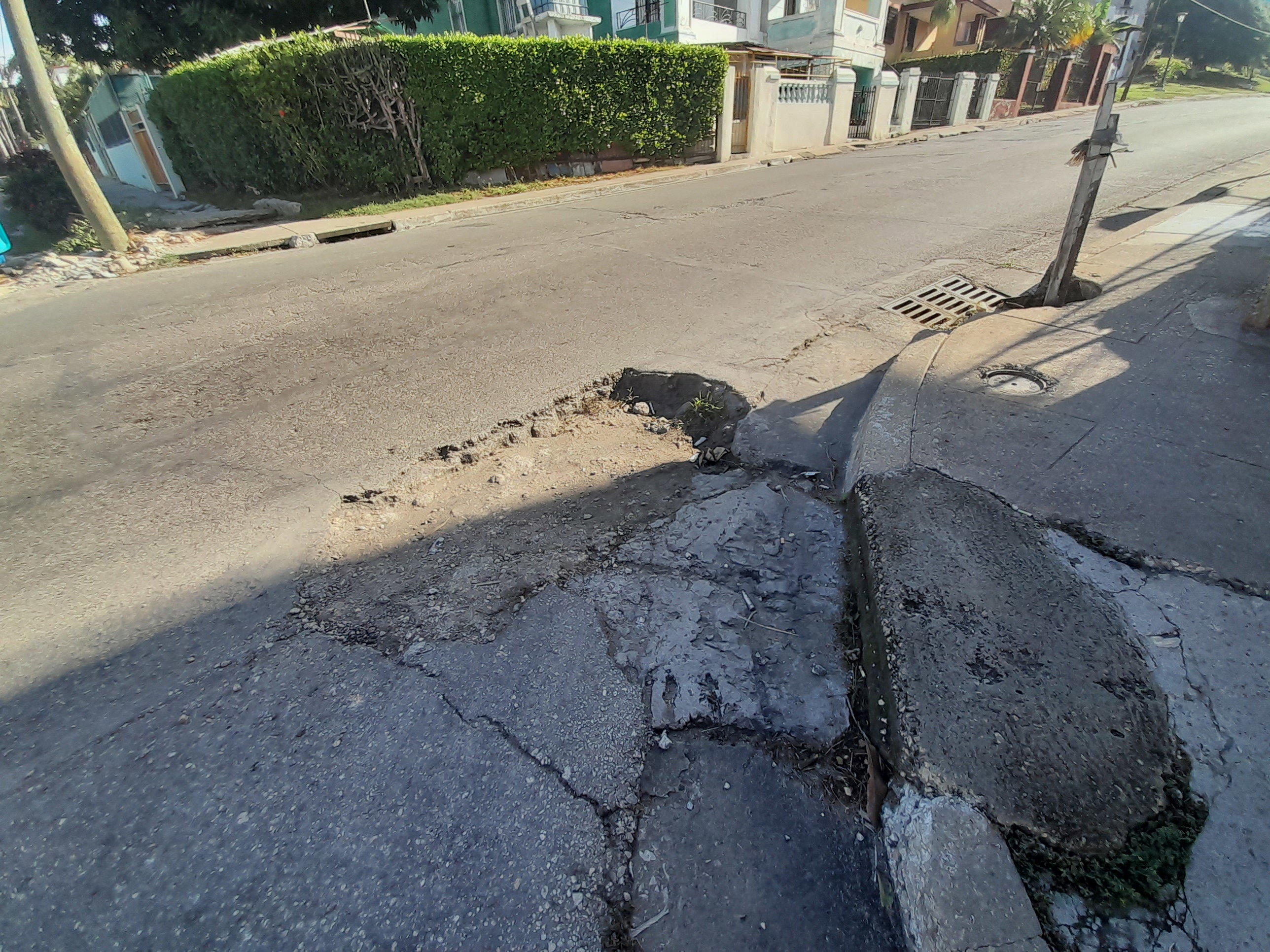
El otro día me di un paseo por el municipio de Diez de Octubre en La Habana. Amo caminar y más cuando puedo ir observando cosas interesantes y también personas interesantes. En esta caminata se me ocurrió empezar a tomar fotos a todas las cosas bonitas y feas que veía en el trayecto. Lamentablemente, fueron más las cosas feas que encontré incluso caminando por Santo Suárez y Lawton, dos barrios bastante bueno de Diez de Octubre.
Hay un montón de detalles de mi ciudad en los que no había reparado, simplemente porque uno va deprisa y se niega a mirar alrededor, a detenerse y tomarse un tiempo para meditar en la realidad en la que vive. Tomé muchas fotos y quiero compartirlas contigo en varias publicaciones. En esta primera te mostraré un poco de las calles de La Habana.
Las calles de La Habana
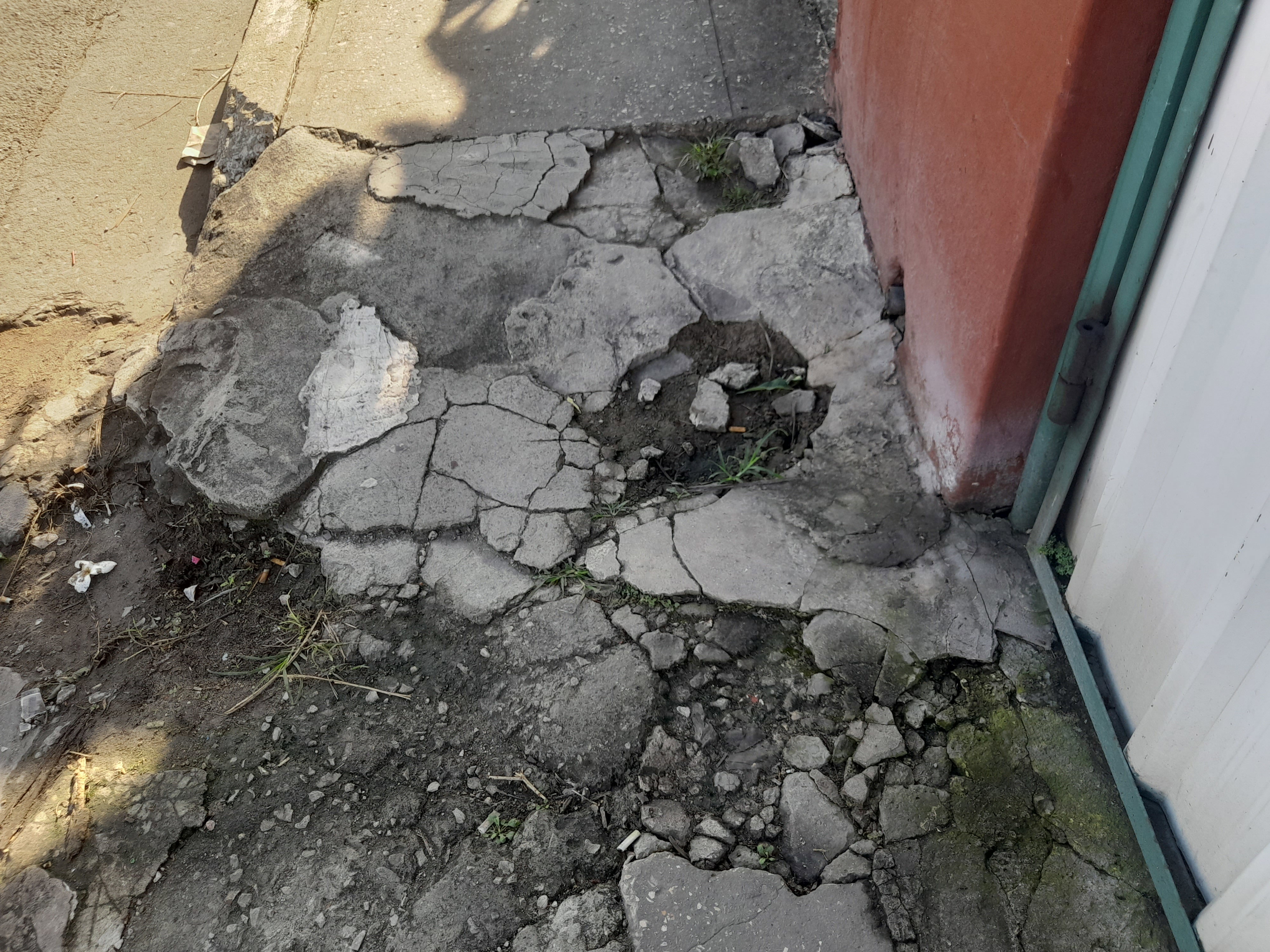
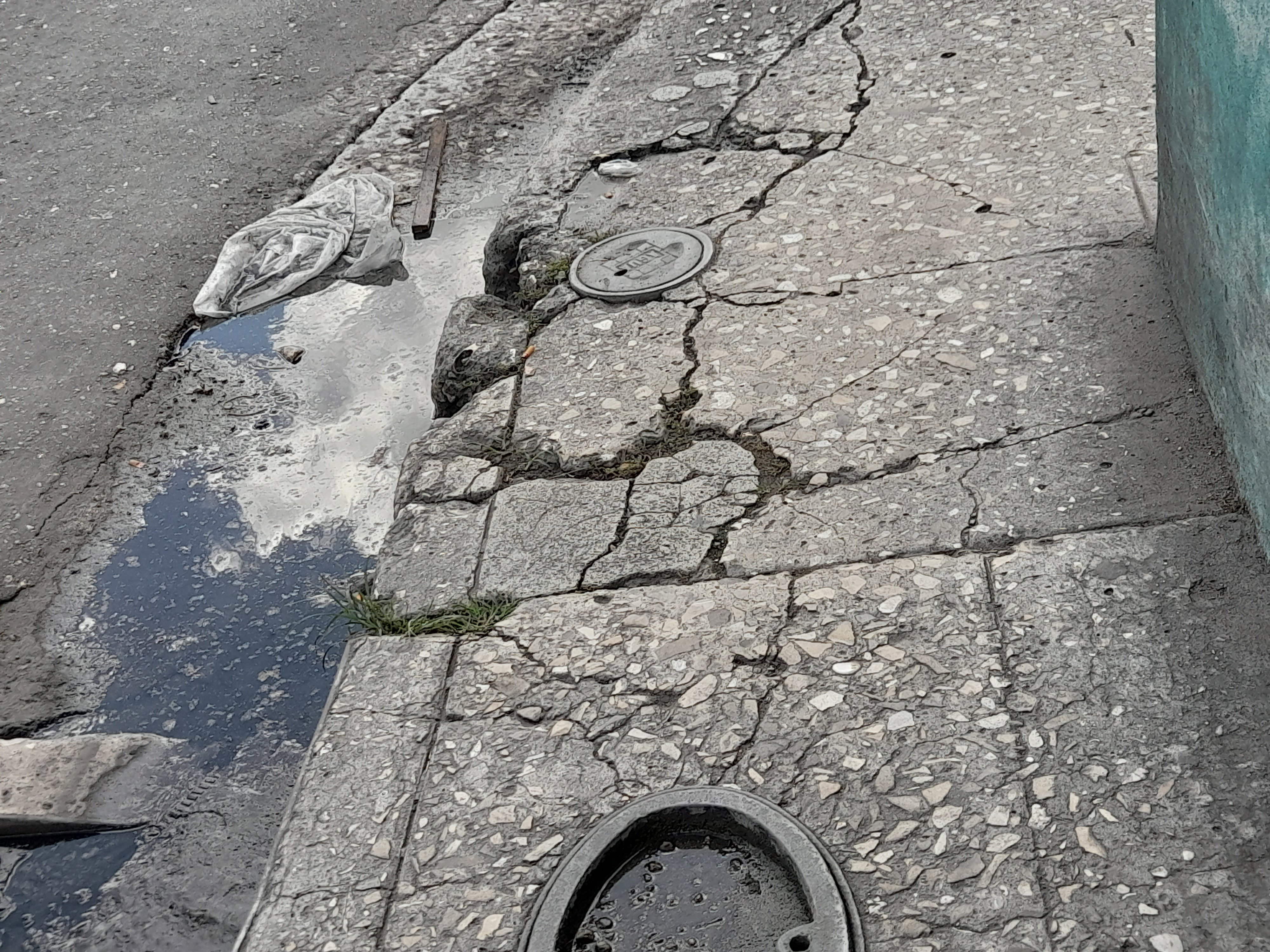
Las calles de la mayor parte de La Habana están maltratadas por el tiempo. Son pocos los lugares que se pavimentan con regularidad y, por tanto, los huecos o "baches", como nosotros le llamamos, son extremadamente comunes.
Estos baches dificultan el tránsito tanto de los carros como de los pasajeros, quienes caminan por ceras completamente desniveladas y agrietadas.
¿Cómo estoy aprendiendo dos idiomas a la vez?
Actualmente estoy aprendiendo inglés y portugués a la misma vez, eso sin contar mis estudios de lenguas antiguas: latín y griego. La verdad aprender muchas lenguas a la vez tiene algunas ventajas, pues puedes hacer comparaciones y entender mejor cómo funciona la comunicación humana. Sin embargo, también impone muchos retos: puedes confundir ambos idiomas al hablar, perder un poco de fluidez en uno de ellos o, simplemente, lanzarte en una carrera contra el tiempo para mantener tu aprendizaje vivo.
Es por eso que quiero contarte que cosas hago para aprender estos dos idiomas a la vez sin morir en el intento. Realmente todo se resume en dos simples principios.
Principio no. 1 No empieces a aprender dos idiomas al mismo tiempo
Sí, puedes aprender dos idiomas a la vez, pero no es recomendable que inicies al mismo tiempo. Evidentemente mi nivel de inglés no es el mismo que mi nivel de portugués. Empecé a aprender inglés hace varios años, pero hace poco alcancé un nivel avanzado en el idioma. Solo entonces me animé a empezar un nuevo idioma.
Lo ideal sería esperar a tener al menos un nivel intermedio en un idioma para ponernos a aprender otro. ¿Por qué? Porque los primeros pasos en cualquier idiomas son retadores, tienes que familiarizarte con la fonética, las palabras básicas e, incluso, la cultura de ese idioma. Si empiezas este proceso con dos idiomas a la vez el esfuerzo mental puede ser demasiado y probablemente dañe tu aprendizaje.
Principio no. 2 Consume contenidos en ambos idiomas
Mi idea de aprender un idioma no es simplemente tomar un libro lleno de anotaciones gramaticales. Por el contrario, un idioma se aprende estando en contacto con la lengua viva. Esto es mucho más importante si estás aprendiendo dos idiomas, pues puede llegar a suceder que pierdas fluidez en el idioma en que estás más avanzado.
¿Qué contenidos consumir? ¿Cómo elegirlos?
Debes consumir contenido tanto en formato escrito como oral. Particularmente yo amo ver vídeos de Youtube, oír podcast y leer libros.
Ahora bien, debes aprender a elegir los contenidos que consumes. Para ello hay dos principios básicos. El primero, es elegir contenido que te interese o apasione. Por ejemplo, yo amo la lectura, los viajes, la historia; por tanto, sigo un montón de canales en Youtube que hablan sobre esos temas en ambos idiomas, inglés y portugués. El segundo principio es consumir contenido relacionado con los medios en que intentas insertarte. En mi caso, me gustaría adquirir en algún momento formación universitaria en los idiomas que estoy aprendiendo; por eso, veo y leo materiales académicos, para adaptarme al vocabulario y la estructura que estos tienen.
Espero que te haya gustado mi post, déjame saber en los comentarios si tienes algún otro consejo y sígueme para leer más artículos como este.
Cuban blog no. 1. A day without electricity
A ruined day
I woke up this morning with tremendous apprehension, I had many pending and had to solve them as soon as possible. The most important of all is my thesis, the last obstacle towards my graduation. I also wanted to do the laundry and tidy up the mess in the house.
I sat down to plan my next few days, when my mind is scattered, it always helps to put everything on a calendar or make a to-do list. It gives you peace of mind to know that everything will be fine, that you have time to do what you need and that the people or goals that depend on you will not be left adrift. Once I put my life together, the blackout came. I should have expected it, but it was still discouraging, many of the plans for the day were necessarily postponed. Editing my thesis, endless work for me, was impossible because my laptop is very old and does not work if it is not connected to the power. I couldn't wash either, and cooking would be too hard because I wouldn't be able to use the electrical equipment.
Blockout planning
In Havana, we have planned blackouts for four hours every three days. We can consider ourselves lucky compared with other provinces that have affected electricity for long hours and almost every day of the week. However, nobody wants a blackout, not every three days or every ten. It changes your whole routine, it forces you to leave things for another day.
It is true that blackouts, at least those that occur in the morning, are not only planned but also announced. However, that schedule varies by week and I am tired of keeping up with it. That's why it takes me by surprise and ruins my day. I complained bitterly and my husband told me that I should have been more responsible to keep up with the schedule of blackouts. His answer irritated me because I knew deep down that he was right, you cannot live in Cuba thinking that you live in a normal country and that all the circumstances will be in your favor.
What to do on a blockout day?
On blackout days we need to get creative. There are many things to do, but my two favorites are running away and reading, which is another way to run away.
Running away
Today I went to my grandparents' house, but on other days I can choose to go to my mother's or my mother-in-law's house. As the blackouts are in areas of the city, not all of them are affected by the electrical flow at the same time. In any case, in addition to the planned blackouts, there are the spontaneous ones, which is why today the power went out at my grandmother's house while I was there, although it was for a short time.
Sometimes, when I take a look at the horrific outage schedule, I plan ahead to get things done outside the house on the day the power goes out. I go to the University, to the doctor, to visit someone, to do some paperwork, anything is better than being at home.
Why is it so horrible to be without power? In addition to the fact that it is impossible to use any electrical appliance, it also implies that, for some strange reason, the mobile data connection will be terrible. On the other hand, the heat is unbearable in the summer, and, considering that Cuba has summer almost every month of the year, it is always unbearable.
Reading
Reading is always a relief in times of crisis. My favorite spot to read is outside my house, there is so much green outside and also a bit of fresh air that never hurts in these temperatures. Also, this is the best-lit place in the house. I read on my Kindle, stories about ancient Egypt, Greece, and Rome, about the Etruscans; I read Cicero, and Don Quixote, which more than five hundred years later still makes me laugh, I read the Bible...
Reading is the most comfortable and heavenly way out of a blackout. It is true that if you read and don't cook you will die of hunger, because all the nearby cafeterias close due to lack of electricity. However, when reading you can travel without moving your feet, without exposing yourself to the annihilating sun, and without having to deal with more voices than those of the book itself. Reading is a selfish refuge, that's why I haven't chosen it today, but I have to admit I regret it.
Blog cubano no. 1. Un día sin corriente eléctrica
Un día arruinado
Me levanté esta mañana con una aprehensión tremenda, tengo muchos pendientes y debía resolverlos lo antes posible. El más importante de todos es mi tesis, el último obstáculo hacia mi graduación. También quería lavar la ropa y arreglar un poco el desorden de la casa.
Me senté a planificar mis próximos días, cuando tengo la mente dispersa, siempre ayuda poner todo en un calendario o hacer una lista de tareas. Te da tranquilidad para saber que todo irá bien, que tienes tiempo para hacer cuanto necesitas, que las personas o las metas que dependen de ti no quedarán a la deriva. Una vez que puse todos los asuntos en orden, llegó el apagón. Debía haberlo esperado, pero aun así fue desalentador, muchos de los planes para el día quedaban obligatoriamente pospuestos. Editar mi tesis, labor interminable para mí, era imposible pues mi laptop es muy vieja y no funciona si no está conectada a la corriente. Tampoco podía lavar, y cocinar sería demasiado engorroso, porque no podría usar los equipos eléctricos.
Planificación de apagones
En La Habana tenemos apagones planificados cuatro horas cada tres días. Nos podemos considerar afortunados, si comparamos nuestra situación con la de otras provincias que tienen afectación en el fluido eléctrico por largas horas y casi todos los días de la semana. Sin embargo, nadie quiere un apagón, ni a cada tres días ni a cada diez. Te cambia toda tu rutina, te obliga a dejar las cosas para otro día.
Es cierto que los apagones, al menos los que ocurren por la mañana, no solo están planificados, sino también anunciados. Sin embargo, esa planificación varía por semana y yo ya me he cansado de seguirle el ritmo. Es por eso que me coge por sorpresa y me arruina el día. Me quejé amargamente y me esposo me dijo que tenía que haber sido más responsable de estar al tanto al horario de apagones. Me irritó su respuesta porque sabía en el fondo que tenía razón, no se puede vivir en Cuba pensando que vives en un país normal y que todas las circunstancias estarán a tu favor.
¿Qué se hace en un día de apagón?
Los días de apagón necesitamos ponernos creativos. Hay muchas cosas que hacer, pero mis dos favoritas son huir y leer, que es otra forma de huir.
Huir
Hoy me fui a casa de mis abuelos, pero otros días puedo escoger ir a casa de mi mamá o de mi suegra. Como los apagones son por zonas de la ciudad, no todas tienen afectación en el fluido eléctrico al mismo tiempo. De todas formas, además de los apagones planificados están los espontáneos, por eso hoy también se fue la corriente en casa de mi abuela mientras estaba ahí, aunque fue por poco tiempo.
A veces, cuando me da por echarle un vistazo al horrible cronograma de apagones, planeo con tiempo resolver asuntos pendientes fuera de la casa el día que no tendré corriente. Voy a la Universidad, al médico, a visitar a alguien, a hacer algún tramite, cualquier cosa es mejor que estar en la casa.
¿Por qué es tan horrible estar sin corriente? Además de que es imposible usar ningún electrodoméstico, también implica que, no sé por qué extraña razón, la conexión por datos móviles estará pésima. Por otra parte, el calor es insoportable en el verano y, considerando que Cuba tiene verano casi todos los meses del año, es insoportable siempre.
Leer
Leer siempre es un alivio en tiempos de crisis. Mi lugar favorito para leer es la puerta de mi casa, hay tanto verde afuera y también un poco de aire fresco que nunca viene mal con estas temperaturas. Además, este es el lugar de la casa mejor iluminado. Leo en mi Kindle, historias sobre los antiguos Egipto, Grecia y Roma, sobre los etruscos; leo a Cicerón, el Quijote, que más de quinientos años después me hace reír, leo la Biblia…
Leer es la salida más cómoda y paradisíaca a un apagón. Cierto es que si lees y no cocinas te mueres de hambre, porque todas las cafeterías aledañas cierran por falta de fluido eléctrico. Sin embargo, al leer puedes viajar sin mover los pies, sin exponerte al sol aniquilante, sin tener que lidiar con más voces que las del propio libro. Leer es un refugio egoísta, por eso hoy no lo he elegido, pero tengo que admitir que estoy arrepentida.
The ultimate guide for being the best reader possible
There's a big difference between an occasional inexperienced and a professional reader. That difference consists in what the person reads, how the reading is done, and how much time is invested in it. It's not about the number of books you read. A person can read several books a year and still not be an experimented reader. So, in this post, I'm going to describe five qualities of a good reader that you can follow as a guide for yourself.
1. Makes time for reading
Of course, this is the first thing to do. If you pretend to be a good reader it's not enough to take a book once in a while, only when you have time for it. A good reader plans his reading because is important for him. Also, a good reader tries to enjoy that time the most he can, and there are several ways to do it, so I wrote an article entirely for this that you can check here.
However, I'm pretty aware that not always we have so much time to spare, and that is difficult to make time for things that we like, such as reading. But, first of all, we need to see the activity of reading as an inversion of our time, because we can benefit in many ways from it. Second of all, there are still different ways of making time for reading, as I explain in this other post. https://read.cash/@Elisabet/7-ideas-to-make-your-reading-times-amazingly-nice-0e69399c https://read.cash/@Elisabet/5-tips-on-how-to-make-time-for-reading-33d40466
2. Reads what is relevant to himself
Reading as an obligation is horrible, I can tell. It's true that sometimes we don't have too many options, but as long as we can choose we need to pick books that we really care about. There are so many ways in which a book can be relevant for you, but I divided it into two main purposes of reading.
no. 1 Entertainment
For many years, critics and others have roasted entertainment books. But, there is nothing wrong with books that we read for fun as we can do other activities such as watching TV, playing video games, etc. I would say that among all these entertainment ways, reading is the best and most useful.
no. 2 Learning
Nowadays, you can find a book for anything you want to learn. Also, you can learn with fiction books as well. For example, reading historical novels is a fun and great way of learning about other times and cultures.
3. Talks with the books while reading
I dialogue with my books, and sometimes people think I'm crazy, but I'm not (so far). Let me explain, there are two kinds of readers. First, those who accept passively everything they read. Second, those who participate actively in the reading as in a normal conversation. If you are a human being with critical thinking, you usually have questions and look forward to more elaborate explanations or reasons for making a point.
A great reader, asks all the time why when reading, analyzes every word, and makes points of contrast. To sum up, a great reader treats a book as a friend in a conversation.
Taking notes and underlining
A wonderful way of talking with the book is through notes and underlining. I'm never afraid to mark a book because that only means that the book has been used and enjoyed.
4. Choses a variety of genres and opinions
You can't be an experimented reader if always read the same things. Challenge yourself to go out of your comfort zone. Try new texts, authors, and genres. Most importantly, expose yourself to a different opinion, and be tolerant enough for reading a book which you don't agree with.
5. Takes time to reflect on what is read
A good reader is not hurried, and for that reason, I hate reading goals, because damage the quality of the reading. When reading, take your time, not only for taking notes but for reflecting and learning from what you're reading. That is an excellent way to remember better when time has passed.
I hope you have enjoyed this post, if so, consider subscribing and let me know in the comments what you think about it.
The ultimate guide for making reading a habit in 7 simple steps
Applying James Clear method for making reading a habit.
I have read so many books that have changed my life and one of them is Atomic Habit by James Clear. You probably have heard about it or read it yourself. The thing is that in this book the author documents his research on how to create small habits that can make big changes in your life. The methods he explains can be applied to anything and, because I'm obsessed with all about the experience of reading, I want to apply it to how to make reading a habit. Ready for the journey? Here we go.
Make it easy
A habit, to be formed, needs to be repeated a lot of times before. For that reason, doing things that are overcomplicated and are difficult to repeat with enough consistency, is a big mistake in forming a habit. Reading can be hard work for some people. Actually, depending on the texts, it is hard for every one of us. So how do we make it easy? By training, like with exercises. We don't run a marathon since the first day. Do we? So here are two pieces of advice for training on reading.
1. Start with shorts books
Quantity is the first thing to consider when reading. Trying to finish a massive book can be hard and discouraging. So, If you aren't already a great reader, I recommend you to start with short books, articles, stories, or poems. Something that can give you the satisfaction of finishing the whole thing.
2. Chose books according to your field of expertise and experience
This is the most important tip for becoming a great reader. In books and texts, there are levels as in video games. For example, in my country we have a writer named Alejo Carpentier that is very hard to read and, even when I found it amazing I don't recommend it to new readers. Another example, for me, is very difficult reading about physics topics, even when it's something written for all readers.
If you go step by step and read enough, as well as if you chose correctly your readings, you'll be able eventually to read more complicated things. The important is that you don't get stuck in the same level of comprehension forever, which I see happening in so many people. Take risks when reading, go out of your comfort zone, but not so far.
Make it evident
The next step for making a habit, in this case, reading, is that it is so inevitable that you almost can't avoid doing it. How can we achieve this?
3. Buy an eReader
I have said it a lot of times, an eReader is an open invitation to read everything you want at any time. It's small, a big difference from some physical books. So if you have your book in your purse while you're waiting for a bus, doing a line for buying something, or in a restaurant, it will be pretty evident that you have the intention to read.
It happens to me something funny. I used to hesitate to grab my Kindle because I didn't if I was going to have time for reading when I was out of my house. But that has changed, I realized that if I don't bring my eReader, I will use the blank spaces with social media scrolling. For that, now I always grab my Kindle and put my phone next to it in my purse. Whenever I want to use my mobile, I'm able to see my Kindle which is a reminder for reading.
4. Set a reminder
So, let's say you are actually scrolling your phone and then pups up a notification that says "Time for reading" and maybe have some kind of motivational or funny phrase after. More evident than that, impossible!
However, I do think that deleting reminders can become a habit too if we have the same reminders every single day. For that reason, try your reminders to surprise you so you can really perceive the urgency you have for reading.
5. Put your book on your bedside table
No matter if it's an eReader or a physical book, just put it on the bedside table, or next to your sofa if that is the place where you spend most of the afternoons and nights. The key is that the habit of reading can be joining another habit you already have.
Make it enjoyable and desirable
For repeating a habit you need to really enjoy it because that is the only way it can become desirable. How can we make this possible for reading?
6. Read books you actually are interested in
It's not only about reading books you can read, but books you want to read, which is the most important. When finding your perfect book you need to ask yourself what things you like, your interests, your future plans, and how a specific book can help you with them, etc. Try to avoid reading for obligation, mainly if it is for social pressure of those who are among you or just because that book is a must-read for everyone.
7. Do cozy and fun things while reading
Making reading time is important for two reasons. First of all, we need to enjoy life and the little things in it the best way we can. Second of all, having a fun and nice time reading makes more likable reading again.
Thinking of this I made a post a few days ago with some ideas on how to make your reading time amazingly nice, so you can check it here.
I hope you have enjoyed reading it, if so you can develop the habit of coming back to me so can read more posts like this, for that, you just need to subscribe
Also, please, let me know in the comments what was your favorite tip on this post or if you have another one.
How learning English has made me free
How I change my mind about English
English is not my first language, but my second. I started to learn it in elementary school but didn't take it seriously until I was 21 years old. I knew something, but not enough. Was because of the Covid-19 pandemic, that I became more interested in the language and had more time to learn it. In the beginning, it all was about having jobs and study opportunities. But, quickly it becomes a personal thing more than a professional one.
I found myself loving the language and the culture that involves it. I quickly get the ability to understand my favorite shows and YouTube videos in English, without subtitles, and with that perceive the essence of the language, the jokes, the puns, the smart phrases that don't exist in my language, whether they make sense to me or not. Nevertheless, above all things, I could finally feel overwhelmingly free, and that was something that I had never expected before.
The ways English has made me free
English has made me free, not only because potentially allows me to achieve new goals in my personal career, and with that, it can bring me some financial freedom, but also in the next two ways.
Free of judgment, prejudice, and censorship
I live in a country where basic human rights like free speech are a dream. I don't use to get very political or controversial in my writings. However, I feel so free to write whatever I want and know that is perfectly ok because those who are around me and the people from my country (almost anyone) can't understand what I say.
I know that I'm not completely free of judgment, because there are so many people who actually can understand me and criticize me, especially because of my level of English. But is more a psychological thing, when I write in English I feel a new person, who has the capacity of traveling anywhere far away from all I know and that feeling is amazing.
Free for learning
I have come to realize that English is not really a goal, but a tool for achieving my goals. One of that goals is to learn new things. There are so many learning resources in English that you can't find in any other language: YouTube videos, papers, articles, books, courses, etc. And is amazing having the capacity of accessing to that information. More than that is great being able to find that information because of your English knowledge and the ability to do research in that language.
I have learned a lot of things thanks to knowing English. For example, I finally can understand how the Youtube algorithm works, and have enough motivation to start my Youtube channel. I found read.cash reading in English in Medium, as well. I have also made courses in Coursera that have not Spanish subtitles. And I'd mention a lot of more things, that I'll bring up in new posts. http://read.cash/
I hope you have found interesting this article, if so, let e know in the comments and consider subscribing
5 tips on how to make time for reading
Reading has so many benefits for our lives: it increases our creativity, expose us to new ideas, changes our vision of the world, help us to write and communicate better, etc. However, it seems hard work making time for reading, even for the more avid readers. I always have believed that what matters is not how many books you read per year, because that number means really nothing, but how much time you spend reading daily. For that reason, in this post, I want to give you 5 tips that have helped me increase my reading time.
No 1. Swap your screen time for reading time
I saw this idea from a Youtuber called Haley Pham. The video she made is titled "swapping my phone screen time for reading…" and I've seen she is not the only one who has made this. So, in that video, we see that she spend normally between 4 to 6 hours a day on the phone. Once measured the screen time, Haley tries to read on the next days for the same amount of hours.
I also measure my screen time and detect that I spend approximately the same amount as this YouTuber, but some days I can be on my phone for as long as 9 hours, which is madness. So, here is what I've done to deal with my phone addiction and dedicate more time to reading.
1. Install a screentime counter
Of course, you can't see the magnitude of your problem if you don't measure it. Maybe you think that your screen time is not that much, but believe me that your can surprise yourself. For this purpose, I use *Bubble timer*, which has a very useful free version.
2. Plan according to the number of hours you want to spend reading
Maybe you want to do an extreme swapping, but I recommend going slowly. If your screen time usually is 6 hours, try to reduce at least the third part and dedicated 2 hours per day to reading. Then you can keep increasing that time.
3. Delete apps that steal your time
In this category, I include social media, games, etc. I'm no telling you to give up social media if you don't want to, but don't have the apps all the time on your phone, only install them when you have a great reason to use them. If you don't find anything distracting on your mobile you're more likely to grab a book.
No. 2 Read while you're waiting for something
So there are so many situations when you need to wait and instead of scrolling on your phone you can take advantage of that waste of time and read. For example, on a line for buying something, at the salon, or at a medical appointment.
A great warning
I don't recommend reading while you're on a bus or in a car. That damage your vision health. I know that the temptation is huge, and sometimes we need to travel for hours. But, think it this way, if you want to have more years for reading when you're old, you better take care of your eyes now.
No 3. Put your book visible
If you want to read more put your books visible, especially the book you are planning to read. A great place is your bedside table. When the night comes, you can have your book handy instead of your phone.
An eReader is the best invitation to read
I have several other posts where I talked about this. An eReader, helps you to read more for many reasons, but one of them is because is an open invitation to read any time you see it. And, pay close attention, is not an invitation to read something, but an invitation to read anything. If you are like me, who reads multiple books at a time, you'll know that not any moment is perfect for some books. Before I have my eReader I usually see one of the books I was reading and don't grab it, only because I was not in the mood for that specific kind of text.
It also happened to me that I don't get to see the books I was reading because they were one above the other on my bedside table. With my Kindle, that is not a problem anymore, because I have a Home screen where I can visualize all the books I'm reading at a time.
No 4. Put a reminder on your phone
Put two or three reminders every day for reading. Try to set these reminders when you're more likely to read. For example, I know that 10 a.m. is not usually a great time for me to read because is my time to study, write and work.
One great idea is putting in your reminders inspirational or funny phrases that motivate you more for reading.
No 5. Join a book club or read with a friend the same book
I study literature, so my class is my book club. And now that I'm finishing I've been asked to stay at the University as a literature professor, so I will have time to share my readings with others. I sometimes read with my husband, as well.
Reading with someone else, or at the same time, as well as being in an environment where people like and care about books, gives you the motivation to make time for reading.
I hope these tips have like you, if so, let me know in the comments and consider subscribing.
How to increase your creativity
Being a blogger or any kind of creator is an extremely creative job, and sometimes, because of tiredness or other reasons, we have a great lack of creativity and need something that boosts our imagination. For years I have struggled with those moments when I have nothing to say and eventually have learned how to deal with my creativity block.
For that reason today I want to bring you seven golden pieces of advice for being the most creative person you can be.
1. Read a lot
This is a tip you're going to find forever in my post because it's really important. You need to read content similar to what you intend to write or related to what you want to create. However, it's crucial that you read books, posts, articles, etc. that challenge your mind and bring you new ideas but also bring you questions. Having questions is the first step to creativity.
2. Start to create
I believe that discipline is above inspiration. The whole concept of inspiration sounds very romantic to me and I'm more of trust in hard work. Furthermore, in my own case, I have experienced how is to be without any idea and suddenly come up with a bunch of them, only because I start to work. So, no matter if you are a writer, a content creator, or a composer, what you need is to start creating.
3. Do mindmaps of what you learn
Mindmaps are incredible resources for learning and creating new things. In fact, I'm planning on doing an article dedicated to it. But for now I can tell you that mindmaps will help you to organize your ideas and your knowledge. Once you have clarity on what you know, new ideas will come to your mind.
4. Do questions
So far, I have talked about making questions, but this time, I want to talk about the questions as an attitude for living. Acceptance kills your creativity, nonconformity increase it, and this is especially true when we are talking about knowledge. Every day, whenever you see a TV show or walk in your neighborhood, keep active your mind and ask yourself things.
5. Try new experiences
Trying new things opens your world and makes you a more creative person. Try new food, clothes, activities, and travel to new places. What you're exposed to forms you like a person and as a creator.
6. Chose what content you are consuming
As I say when talking about reading. You need to consume content that really challenges you and helps you grow. So, I recommend you declutter your social media and unfollow all the accounts you follow that aport nothing valuable to you
7. Chose your friend carefully
What does this have to do with being a creative person? You may ask. Well, having interesting and smart friends is having the same kind of conversations and experiences. That allows you to be exposed to new ideas or ways to think about the world. I have some friends that really help me to rethink everything I know, because of their questions or their statements. That is the kind of friend you need in your life.
So, I hope you enjoy all these tips, if that is the case let me know in the comments. Consider subscribing if you want to read more content like this.
How to write in English if is not your first language
Why would you want to write in English?
Writing in English when this isn´t your first language can have several benefices, but I would like to share two of them here.
1. It helps you to improve your English. By writing in English I have learned so many new words that I didn´t know before and it´s been a great preparation for my English certificate exam, which have a writing part
2. It allows you to communicate your ideas to a higher number of people. English is the language for international communication. I have been on so many platforms learning new things and meeting new people thanks to my ability to speak and understand this language. So, when it comes to writing, I know that my thoughts have more probability of being read if a write in English instead of my first language.
Before writing
So, before starting to write in English I have some recommendations that truly can help you in your journey.
Read a lot
Sometimes we learn English through series and podcasts, and that´s great. But for acquiring writing skills is not enough. You can´t automatically transform the oral speech in written speech, because it has a completely different structure. For that reason I recommend you to be a great reader before being a writer. Also, try to read texts that are similar to those you intend to write. For instance, if you want to blog, search for English blogs on topics you´re interested in and read them.
Make first an outline of what your going to write
Don´t start to write if you don't have a plan. Write down the point you want to bring up in your text and organize them. This is going to help you to maintain a coherent speech and don't lose your readers.
While you're writing
There are two ways to write in English if is not your first language.
Option no. 1 Write in your language and then translate
This is not truly writing in English but is a technique that can help when you are too tired to think in your second language. However, you need to remember that every language is different, so when you translate it's important not to do it literally, but using every word according to its textual context.
Option no. 2 Write directly in English
So for writing directly in English I have two recommendations. First, you need to do it at a time of the day when you are concentrate and have energy. Like everything that takes mental effort, writing in a foreign language demands you're better energy because you not only have to organize your ideas and come up with something logical and coherent but also need to express them in words that you're less comfortable with.
After writing
Once you're finished make sure you correct your grammar and spelling. For that, you can use a physical grammar and a dictionary. Also, you can take advantage of the electronic tools we have nowadays. For example, I always use Grammarly for correcting my English texts. If you want me to talk more about this specific tool let me know in the comments.
7 ideas to make your reading times amazingly nice
One of the essential things for forming the habit of reading is making it enjoyable. For that reason, I´m bringing you in this post some ideas to transform your reading time into a super special and wonderful experience.
1. Make a cup of coffee or tea
Having something to drink always lifts up your reading time. I love having a cup of coffee and milk when I grab a book. It helps me to feel comfortable and relaxed at the same time it allows my mind to set the fact that I'm on enjoying time.
2. Prepare your own spot routine
Having a place to read, a chair, a sofa, or a small space in a corner of the room, is going to give you such motivation to read and will make your experience much more enjoyable. For me is my armchair in front of the door. I can say hi to the people who are walking outside and enjoy the breeze.
**3. Grab a blanket**
I live in a tropical country, and always have to face the highest temperature, which specifically in the summer is insufferable. For that reason, I always praise the cold weather and love it when there is a bit of fresh air because it´s the perfect excuse to grab a blanket and feel completely cozy.
**4. Sit in a nice cafeteria**
There isn´t something nicer than sitting in a cool cafeteria to read. Actually, there are some specifically for that purpose. You can enjoy your coffee, or a light meal while traveling across the words.
5. Put music in a low volume
There is nothing more relaxing than lofi or classical music while reading. For that I recommend getting earphones, for going deeper in the music as in what you´re reading. I use YouTube for lofi music, and an app called Idagio for playing classical music. I used to not like music with books before, but from time to this part, I´ve found it helpful to concentrate on what I´m reading.
6. **Take** a shower before
Taking a shower is extremely relaxing. Therefore, you're not going to enjoy your reading time while feeling uncomfortable. When you are refreshed you will be feeling in the mood for rest and grab a book.
**7**. Go for a pool day
So far, my recommendations have been focused on cozy reading time at home. But I have this fantasy of going for a reading day to the pool. For that, the best is having a waterproof eReader.
I hope you enjoy these ideas, if you have something else, please let me know in the comment section,
8+ travelling classic fictions for adventure lovers
Undoubtedly, delving into the pages of a good book is an amazing journey. Discovering new ways of seeing the world around us, new secrets are hidden from our adjusted knowledge, in short, a whole universe of possibilities, is without a doubt a wonderful adventure. Not satisfied with this, writers from long ago have not only told us about experiences in worlds unknown to us, but they have perfectly described the journey to and through these places.
Travelling is a symbol and as such can be interpreted in many ways: a religious pilgrimage, an opportunity for experimentation and knowledge testing, an adventure to get hold of treasure or a desperate search for rest and home. The books that I am going to be talking about next refer to all this sea of possibilities.
Before, I have to clarify something very important about the books that I will be mentioning. I believe that most stories involve a journey in themselves. In fact, Vladimir Propp in his book *The morphology of the story* describes the reason for the trip as one of the *narrative functions* that usually appear in texts of this type. However, there are stories that are specifically about the journey itself, without which the narrative could not exist. It is about this type of work that I want to talk about next.
The journey in Greco-Latin literature
In the classical world, travel literature had a very significant place. However, it was undoubtedly Homer’s *Odyssey*, an epic poem, marked the most important guidelines within the genre. Odysseus or Ulysses has become a prototype of every adventurous character. The book tells, with all the formal specificities of the Greek epic, the gripping story of the Greek warrior, King of Ithaca, who tries to reach his homeland after the outcome of the Trojan War. The journey includes encounters with Cyclops, mermaids, and even dead people like Agamemnon and Achilles on a brief descent into Hades. But not only that, the first four songs of the poem, known as *telemachy*, are dedicated to narrating the reverse journey, that of Telemachus, son of Odysseus, in search of his father.
Following the travelling line, we also have the story of Jason and his journey in search of the Golden Fleece. This story was told by various Greek authors, including the Hellenistic poet Apollonius of Rhodes in his famous epic poem called *Argonautica*.
Among Latin literature we have the wonderful work of Virgilio called *Eneida*. The first part of this narrates the journey of Aeneas and his companions, who had fled the destruction of Troy, on their way to Lazio. Here the hero would found a great civilization from which the Romans would come. In this narrative, there is also a visit to the underworld.
The Bible
A book as important as the *Bible* could not be missing in this recount of travel literature through the ages. However, the time when I would say that the journey is most important is the pilgrimage of the Jewish people through the desert for forty years. This time of crossing has been considered, by Christian and non-Christian authors, as an intermediate state between slavery and the complete freedom of the homeland, which allegorically can represent the transition between the absolute depravity of sin and paradise. The journey of the Jewish people is the journey of humanity and is, at the same time, one of the most profound representations that have been made of the human pilgrimage.
Dante’s spiritual journey in three books
Within the context of the Middle Ages, and specifically of his Florentine homeland, Dante wrote a wonderful work: the *Divine Comedy*. It is not called that because it aims to make people laugh, but because it has a happy ending, which, according to classical standards, could not be considered a tragedy. I include it in this list because in it Dante describes his journey through three places from which he named each of the books: *Inferno*, *Purgatorio* and *Paradiso*.
The book is a sample of how travel literature fits perfectly with the main concerns and ideas of an era. Through this journey, the character of Dante can finally come out of his doom, because he is transformed by what he sees.
The adventure of the New World
The adventures of the discovery of the Europeans in America were recorded in thousands and thousands of books: travel diaries, official relations, etc. The first and most important of all was that of *Christopher Columbus’ diary.* The Genoese navigator described in amazement all that he was discovered in the new American lands. However, he does not call them that, he does not even suspect where he was, but believed he had reached Asia. These writings were later compiled by Bartolomé de las Casas and are fascinating and worthwhile reading.
The pilgrim’s progress, a medieval symbol with a Protestant reinterpretation
Between 1678 and 1684 the Protestant writer of English origin John Bunyan wrote his book *The Pilgrim’s Progress*. This is a theological and allegorical novel that describes Christian’s journey from the *City of Destruction* to the *Celestial City*. The book turned out to be so important in English and Christian literature that it has been translated into more than 200 languages and also made into a movie.
The pilgrimage is a religious allegory that, although it is found in the Bible as we have already mentioned, is duly formulated in the Middle Ages. One of the most important religious rituals of Christianity was to make a pilgrimage to the city of Santiago de Compostela in Galicia. Bunyan somehow renews this idea and adapts it to his Protestant ideas.
Candide, the travel book par excellence
I have to admit that of all the travel books I have read, Voltaire’s *Candide* is my favorite. What I like the most is the way the distances are shortened, and the narrative time speeds up. The significance of Voltaire’s journey will be far from the ideals of Christian pilgrimage. Candide travels to discover, to learn, to experience the world from his eyes and thus arrive at his own philosophical conclusions. Voltaire’s way of narrating is hilarious and, although it is an 18th-century book, one cannot help feeling close, witty, well, wonderful.
Jules Verne, the traveler who never left France
I think there should be no list of travel literature in the universe that did not mention the French novelist Jules Verne. To how many incredible places Verne traveled with his books! The irony is that he himself never left France, but dedicated himself to writing all his adventures using maps, books, encyclopedias, etc. Here I am going to leave you a list of some of those most famous travel books that he wrote, all as part of his Extraordinary Journeys collection:
*•Journey to the Center of the Earth*
*• Five Weeks in a Balloon*
*• Around the World in Eighty Days*
*• From the Earth to the Moon*
*• Twenty Thousand Leagues Under the Seas*
C.S. Lewis and his Dawn Treader
Many travel books of the twentieth century could be mentioned, but I want to continue with the fantastic and transcendental line that characterizes most of the books that I have mentioned. That is why I want to tell you about the *Chronicles of Narnia* by the English author C.S. Lewis. Specifically, from the third instalment of this series, in order of publication, called *The Voyage of the Dawn Treader*. It tells the story of Lucy, Stephen and Eustace aboard a Narnian ship on a search for missing Lords, in the company of Prince Caspian. It really is an exciting novel, which can be enjoyed by any audience.
I’m not going to mention 21st century travel fiction books because I really don’t know of any that focus solely on this. I would dare to say that this type of literature has declined, perhaps because already discovering what exists in another part of the world does not seem so wonderful and fantastic to us anymore. Anyway, I’m going to ask you to recommend me a contemporary travel book in the comments section.
I hope you have enjoyed this article and that you read the stories I have mentioned. If so, you can subscribe to continue reading about literature, language learning, productivity and other related things. Also, let me know in the comments other travelling fiction you know.
My 3 problems with online tips on productivity
Let’s face it, we have all tried to do more tasks each day, to squeeze our calendar as much as possible to achieve those goals that have been spinning in our heads for a long time. The day seems too short for everything we want to do. **In our mind there is a utopian world in which, finally, we will be able to beat the clock and the almanac.** That day, as we think, we will be a kind of superheroes who own our own destiny.
We have reasons for this longing, modern life becomes more and more hectic with time. The internet, along with its majestic range of possibilities, brings us the feeling that there is too much out there that we have not tried and, above all, that we have not achieved.
**Then what do we do?**
Well, the natural thing to do, find a way to achieve everything that seems so easy on the screen of our smartphone. It is right there where we look for the solution with brief questions to Google. The answer to our questions is commonly called PRODUCTIVITY, a keyword that has made many people earn money through their courses, books, tutorials or YouTube videos.
Don’ t get me wrong. I believe that we can and should be more productive. However, **there are serious issues with this market and with the productivity narrative that I would like to address.** These problems are yours too, as they have been mine for a long time, because not only do this tips completly useless, but they can hinder you and cause you to fail in your projects.
Problem no. 1. Productivity guru tips generally set the bar too high
If you are reading this, I am almost completely convinced that you have seen some YouTube video about the habit of getting up at 5am and how it improves your personal development. But, let’s face it, how many times have you really been able to get up at that time in the morning of your own free will if you don’t have any urgent stuff to attend?
I confess that I have tried, and sometimes succeeded, getting up very early in the morning, like 5 am. However, this has been an unsustainable habit for me over time. Now I understand that the main reason for this is that it’s basically unnatural. If the sun doesn’t come out until 7 am, why would you have to be up earlier, unless you have an urgent obligation to attend to?
This is, sadly, just one example. **Productivity tips can be so extreme that instead of making your life easier, they become a difficult weight to carry.** Let’s put it this way, productivity in the end should be about making you happy. That is, you want to be productive to achieve your goals and that this ultimately results in your happiness. Wh, then, should you have to impose on yourself a lot of impossible burdens that destroy all enthusiasm for the tasks you want to do?
Problem no. 2 Constantly learning about productivity robs you of time to be productive.
It has surely happened to you, like me, that you watch 20 videos on how to make your day more productive. However, when you finish watching them, your eyes are so tired that it is impossible to concentrate on your tasks at school or work.
Something that I have come to realize, and that terrifies me a little, is the fact **that online productivity content can be one of the main sources of procrastination for** ***conscientious procrastinators***, including myself. Consuming this type of content makes us feel that, in some way, we are not being unproductive, but… that is exactly what is happening!
Problem no. 3 Productivity tips don’t work well for everyone or in all contexts.
This seems to me to be the most serious problem. Networks set us standards of productivity, but those standards do not serve all people and that does not mean that they are failures.
Not everyone is a good early riser, not everyone can keep their attention on a task for more than 10 minutes, and so on with everything else. **In my opinion, almost no productivity tip will work well for 100 percent of people.** However, we are usually led to believe that it does.
To give a concrete example: I am Cuban, I live on an island with thousands of difficulties to do or achieve anything. The productivity tips I see on the Internet is sometimes so out of date that it’s not really worth paying attention to. Many productivity apps are blocked for my country. Also, how am I supposed to make a daily schedule and a weekly plan if I don’t know if I will have electricity today?
Of course, everyone can do the best they can in their context and according to their possibilities. My point is that many times we adopt online productivity advice that does not apply well to our reality.
Now, it’s not that you can’t look for ways to be more productive and, of course, you will find many of these on the Internet. However, keep these three issues in mind so that the productivity tips don’t make you more unproductive.
Let me know what you think about it in the comments.
How my eReader has changed my life forever
According to the information that Wikipedia gives us, an eReader is “a mobile electronic device that is designed primarily to read digital e-books and periodicals”. An eReader “often features electronic paper rather than an LCD screen”, which means that we'll have a similar experience to physical paper, and also that the battery is going to last longer than other electronic devices like tablets or smartphones. Some of the most popular eReaders are Kindle (from Amazon), Kobo, Tolino, and Nook.
Now that I have a Kindle I can't believe how I spend so much time without getting one, it's inconceivable for me. The way that this eReader has changed my reading experience and my life is huge, so I want to share it with you. Maybe this article allows you to decide whether or nor is worthy to buy a Kindle in your case.
1. It reminds me to read
An eReader is an open invitation to read. Can a physical book do the same thing? Yes and not. Any book remember you to read something in specific. But that is not enough powerful, because maybe you´re not feeling like reading that in particular. When you see your eReader, you remember to read anything that you like, or even more than just one single thing. For that reason, I´ve increased my reading time since I have my Kindle.
2. It's lightest that many physical books
I love passing the page and feeling the paper, but I have to acknowledge the fact that the majority of the books are heavy and uncomfortable. If you´re an avid reader like me you can recognize that sometimes when you are laid down reading your hands get tired of holding the book. With an eReader, it´s nothing like that because the majority of these devices are extremely light.
3. It takes me away from other screens
I have an obsession with screens, above all my mobile screen. But having the Kindle to grab instead is great. It´s like a trick to my mind, to help me stay away from social media or Google. And I need to tell you, it really works.
Also, you can put your eReader where you normally put your phone, so when you want to take your phone you found your Kindle. In my case, that place is my bedside table.
6. It helps my eyes' health
Usually, Readers have an e-ink screen, that is better for your eyes than the normal screens. For me, this is a huge advantage over other devices like tablets. I have myopia and astigmatism, so since I´m a bookworm I need to take care of my eyes. Maybe you aren´t in the same case as me, but even if you have perfect vision, taking care of your eyes will pay off with the years.
7. It allows me to track my readings
With my Kindle, I have all my current readings in the same place, where I can see them and don't forget about them. But, the most important is that I also have on my devices those books that I want to read next. This is important because I usually forget about it, and this way I can speed up the process of going from one reading to another.
8. It helps me with my notes
With physical books, you can visualize all your notes at a time or the quotes you've underlined. That problem is completely solved with an eReader. This is particularly helpful when you take a lot of notes, for example, if you're reading a book for reviewing or for a test.
9. It saves me money
Physical books are usually more expensive that ebooks. Not to mention that you can find a lot of free ebooks on the internet, mainly by classic authors. If you are a bookworm like me, this is something great.
If you liked this post you can read this other about eReaders and also let me know in the comments what you think about it. https://read.cash/@Elisabet/why-i-think-ereaders-are-the-best-way-for-reading-38ca4360
How I became fluent in English without studying
I have studied English in an inconsistent way for several years, but I never saw real results. It seemed to be very hard to get fluent in that language, to have enough proficiency to communicate almost anything.
Then, the Covid-19 pandemic came, and a found myself with a lot of time for doing new things. So, I started to learn English, but this time I realize that I didn't need to actually study, but I needed to have an immersion process.
The results?
In less than 2 years a feel perfectly confident with the English language. I can speak, read, listen and write without too much struggle.
So, this is how I did it.
YouTube videos
First things first... YouTube has been an amazing resource in my learning process. I started to consume educational content about language learning in English and I ended up watching videos about a lot of different topics.
The thing is I have realized that when I see content that I'm interested in I'm more motivated to keep learning. It's been amazing to discover new creators and acquire knowledge that doesn't exist in my mother language.
If you want an article about the best channels for learning English and who are my favorite YouTubers let me know in the comments.
American series
I came to love American culture through American series. I have seen a lot of episodes of Full house and Chicago Med on YouTube, and I binge-watched Friends two times in a row. I'm currently watching The Big Bang Theory.
American series, as well as English series, are great for language learning for several reasons. First, because it's an enjoyable experience, which guarantees you're gonna keep going. Second, you can see how the language work in a simulation of real-life situations, which gives you a higher linguistic competence.
English books
So, when I felt like I'm ready I started to read in English. I already had read some blogs, but nothing so substantial. I first read Pride and Prejudice by Jane Austen, which was a wild experience because the style of this author is not particularly easy. Then, I read Redeeming Love by Francine Rivers, which has easier grammar and vocabulary. However, I truly enjoyed both readings and learned a lot because of them.
English apps
I have talked about the apps I used for learning English in another article you can check here. https://read.cash/@Elisabet/3-ways-to-make-language-learning-a-habit-ba60f618
My favorite app is Duolingo, where I also learned Portuguese. This app is amazing for the competition that motivates the students.
The other app I love is Cake, because it has a lot of videos and explanations, and it's like a game as well. Both apps motivate you to keep your streak, which is very helpful.
To sum up, you can learn English without actively studying as I do. I assure you that having fun it's the best way to learn.
I wish this article was helpful, if so let me know in the comments.
3 productivity mistakes to avoid when planning your tasks
So, I'm a mess, I have to recognize it. Maybe is that the real reason why I'm so obsessed with productivity and time management. The deal is that I've made a lot of mistakes in my productivity journey. I struggle a lot with getting things done.
However, my biggest mistakes in productivity occur when planning. For that reason, I would like to summarize three of the worst mistakes I've made when I tried to plan my work for you to avoid them as I also have learned to do.
Mistake no. 1: Too much planning and little action
This is my worst weakness. I'm a planner, not a worker and I need to acknowledge that. So, let's say I start my day full of energy and with the entire purpose of advancing in my work. I quickly grab a paper and a pencil, or my phone, and start to write down everything I need to do. But that is not all, I also schedule everything for the next three weeks which, of course, isn't realistic.
What happens?
Well, I lost like two or three hours of planning and at the end of the day, I don't have enough focus to do the work. On top of that, it's very likely I'm going to forget my entire planning for the next few days.
Mistake no. 2: Having unrealistic goals
This has a close relation to the last mistake. I've found myself planning to write 4000 words a day for my novel, which is madness.
The thing with having such huge goals is damaging to our mental health. At first, you feel unstoppable and amazing, but that doesn't last. As soon as you can't accomplish what you have planned, you're going to feel like a complete loser.
Our goals need to be measured in time and never in longings. For that reason is impossible to have an idea of what is going to take you doing something if you don't track the time while doing it.
My recommendation for you is to do this. For example, if you are a writer, first measure the time in which you write 1000 words, and do it more than once, because it always depends on what you need to write. When having an average of your writing time, you can schedule your next writing sessions.
Mistake no. 3: Not planning at all
Usually, when I fail planning, I just let things be and don't look at my schedule at all. HUGE MISTAKE! If you don't have a clear idea of what's going on in your day, there's a great chance that you finish doing nothing. Just remember, not task in your calendar make you a free day when maybe there are important things to do.
If you liked this post let me know in the comments.
Why I think eReaders are the best way for reading
A while ago I bought my first Kindle and fell totally in love with it. To this day I can only wonder how I didn't decide to buy one sooner. In this article I want to list the advantages that I consider the eReader has as a reading device, which make it unique and essential for any reader. I am going to divide my ideas into two parts. First of all I want to point out how the Kindle stands out over the physical book. Then I'll talk about the features that make it stand out from other digital devices.
Advantages over the physical **book**
I've always loved the feeling of reading a physical book, but I have to admit that eReaders have won the battle in my heart and here's why.
It is more **ecological**
The paper savings that reading on an eReader constitutes is massive which is very good for the environment. Even so, I think that this point is the least strong because, after all, there are many people who love paper and the sensation that comes from touching it.
It **is** more practical
Let's be clear, as much as you like to turn the pages and maybe turn the corners of the pages, just like me, books are uncomfortable and usually heavy objects. If you put them in a backpack or purse they get damaged and sometimes they don't even fit in the bag. Also, if you are like me who likes to read several books at once, it is much more practical to take your eReader with you than to carry all the books you want to read. Whether to go on vacation or simply to leave home, it is much more practical to take your eReader with you.
It **saves** time and money
Digital books are much more accessible than physical books. You just have to click and you have already made your purchase. In addition, they are much cheaper and often free if they are in the public domain.
It **saves** space
I know better than anyone how difficult it is to maintain a huge library of physical books. The dust and mess that can come from having so many volumes is really great. In addition, you have to allocate one more space in the house for it. Since I bought my Kindle I am seriously thinking about getting rid of almost all my physical books, which will help me to have my house more tidy and with it greater peace of mind.
**Advantages** over other electronic devices
All the above advantages may seem insufficient to choose to buy an eReader. After all, don't we have our phones or tablets? However, there is a big difference between these devices and eReaders
It's good **for** the eyes
Kindle display technology is designed to look like paper. I've read a few articles on the subject, but my eyes definitely have the last word, and they deeply appreciate reading on a Kindle rather than a mobile or tablet.
**It's** cheaper
In the case of the Kindle, prices range between 90 and 250 dollars, depending on the place and the model. In addition, you can buy it second-hand, as is my case, and it is cheaper. Tablets are much more expensive, so if you are going to buy one just to read, I would say that it is not worth having the eReader option.
**Helps** avoid distractions
When I didn't have the Kindle and I had to read something digital for school, it was extraordinarily distracting, because on my mobile there are all kinds of things to see. Now I still get distracted, but much less. I put my Kindle next to my bed to read in the morning and at night, and I try to keep my cell phone away from me.
**It's** the perfect size
Here everything depends on the model, but in my experience tablets are too big to have a comfortable reading, and phones are too small. The eReaders are the perfect size to feel comfortable with both the font size and the weight of the device.
….
Now it's your turn to tell me what you think. Leave me your thoughts in the comments and don't forget to tip me.
How to write stories that trap the readers
A good story, and when I say story I mean narrative, manages to capture the readers' attention in such a way that they cannot release what they are reading until they finish. All writers want to write such a story because a story that grabs those who read it is a story with at least a modicum of respectable literary quality.
Now, how to achieve this? How to ensure that the reader does not get bored? I’m going to tell you briefly in this story, and I’m going to give you examples, so pay close attention.
Tip no. 1 Create interesting characters
The characters, and especially the protagonists, must be attractive to the reader, complex enough to be interesting, and simple enough to be close. Perhaps in another post I will talk a little more about what an interesting character is and how to create it, but here I am going to summarize some of its characteristics. An interesting character:
• Has goals, things he/she wants to have or achieve. These can be very complex or very simple, such as getting the bus in time. They can also be material or more abstract and spiritual.
• Has strengths and weaknesses because no human being is completely good or bad.
• Has internal and external conflicts, that is, obstacles in the realization of their wishes.
Tip no. 2 Create unexpected plot twists.
**There is nothing more appealing than unexpected twists.** These are the actions that neither the reader nor the characters expect to happen. Sometimes it’s the unexpected twists and turns that create the main plot conflict. In any case, this is an extremely important element that always adds complexity to the story.
For example, an unexpected twist may be when Raskolnikov, the famous character from Dostoevsky's masterpiece *Crime and Punishment*, sets out to assassinate the elderly Aliona Ivanova and finds her sister Lizaveta on the scene. This means that he is forced to kill her as well so as not to be blamed later for his crime. This action makes the young murderer feel much more guilty and desperate.
Tip no. 3 Encourages the curiosity of readers
*Mant years later as he faced the firing squad. Colonel Aureliano Buendía was to remember that distant afternoon when his father took him to discover ice.*
Thus begins one of my most beloved books, *One Hundred Years of Solitude,* written by the Literature Novel Prize, Gabriel García Márquez. When reading those words, instantly the reader starts to ask a lot of questions. Who is this Aureliano Buendía? Why is he facing the firing squad? And the most important of all, does he finally get to be executed?
**This is one of the best ways to generate curiosity in readers, telling them the future without giving all the details.** This method is very old in the history of literature. In the Greco-Roman world, the oracles of the gods fulfilled the function of incompletely portraying the future so that spectators would be much more fascinated with the story.
**Another way to generate curiosity is by posing an unsolved mystery.** All detective literature feeds on this method, but many other types of novels also use this resource. For example, in all the books of the well-known *Harry Potter* saga mysteries are raised at the beginning and solved at the end of each volume.
I hope these tips have been useful to you and you have enjoyed reading them. If so, consider following me to read more stories like these and leave me your ideas in the comments.
3 ways to make language learning a habit
Over the years I have realized that the best way to achieve anything in life is by forming good habits. If every day we propose to do small things that contribute to a larger goal, at the end of the road we will have achieved beautiful things that will fill us with satisfaction. This principle applies to language learning as it does to anything else in life. Studying a new language can become really tedious and that is the reason why many people abandon their learning. That is why having small habits and taking steps in the right direction towards learning a new language is much more efficient in the long run than facing large amounts of study that we will not be able to sustain.
But, how do we make language learning a habit?
I want to show you three ways in which I have done it and those can help you too.
№1 Use social media
People currently spend a ridiculous amount of time in front of their mobiles consuming content on social media. I, for example, am a huge fan of YouTube, but I also love Instagram and Twitter. Well, the secret of my accelerated learning of English is precisely in my fondness for this platform. When I understood that I could take advantage of my leisure time as a study, I immediately began to put it into practice.
How?
Well, I started following people whose content was in English. Now, I didn’t start following random people, but people who created content about my interests: Christianity, art, literature, writing, productivity, etc. One of the ways I managed to do this was through searches. When I wanted to find something on YouTube I looked for it in English and not in Spanish, my native language. The result? Almost all the videos that YouTube currently recommends to me are in English. I recently did the same thing with Portuguese too, but this time it was a bit more difficult because I didn’t know nearly enough Portuguese to search in that language. So, what I did was simply use google translate for figuring out what I wanted to search for in Portuguese and then paste the translation into the search engine.
Doing things like these will force you to get out of your comfort zone. Maybe you deal with the discomfort of not doing the searches in your own language, or not understanding all the content you consume. However, if you can afford to feel like a fish out of water, I guarantee the results will be wonderful.
no 2. Make your learning fun
No habit is lasting if it is not enjoyed. That is why we do not let go the phone, because that brings us satisfaction. That’s why learning languages through games is a great idea. In addition to enjoying the experience, most of these games also involve some kind of competition, which makes the experience much more exciting.
In this sense, I think there is no better app than Duolingo. The fact that the app puts you in competition with other users, gives you rewards for your learning and encourages you to keep up your streak, allows learners of a new language to feel really excited about keeping going.
In addition to Duolingo, I have also used the Cake app, which helps me learn while earning points and watching fun videos. It works more or less like a game and encourages you to keep your streak. The difference between Duolingo and Cake is that in the latter you can only learn English.
№3 Keep your thinking in the language you are learning
One of the most useful things, when you are learning a new language, is to keep yourself thinking in this language all the time. For example, if you are cooking, you can think about how to describe each of the things you are doing in the new language. I guarantee that new words or structures that you don’t know will always appear. It is at that time, or later, that you can search for your doubts on the internet. The fact that your knowledge comes from a doubt makes it more durable in your mind.
I hope these tips have been useful to you, if so, let me know in the comments.
How to write a book review in three simple steps
Knowing how to review a book is a very important skill that every reader should have, especially if you want to start a blog about books. Today, on Instagram, Medium, and even YouTube we see a lot of book reviews. Of course, there are extremely good reviews and others that don’t hit the spot.
The best review I have read was written by a professor at my University. His writing was so good and attractive that it made me want to read that book he was talking about. At the end of the day, **that is the goal of a good review, redirect us to the book in question.** A good review meets the following characteristics:
• Grab the readers' attention
• Properly substantiate why the book in question should be read (or not, it can also be a negative review)
• It is brief
**In this story, I want to teach you how to write that kind of review.** The way I have learned to do it is through my writing courses at the University. The teachers insisted that for our professional performance it was essential to know how to write texts of this type with the highest possible quality. But first, I would like to make a necessary clarification, which might seem obvious, but it is not. Not every text that refers to a book to comment on it in some way is a review.
What is NOT a review?
A review is not a summary of the book. In fact, publishers often ask their reviewers not to say too much so that readers don’t lose their curiosity. This has all the logic, many readers will not find interest in reading a book of which they already know all the details.
A review is not an analysis of a book, nor a critical article. Especially because to analyze a book you need to tell a lot about its content and this goes against the very purpose of the review, which is to cause curiosity in the viewer.
Having seen what a review is, we are going to see each of the steps we have to follow to make one.
Step 1. Read the book carefully
Of course, you have to read the book, not missing a page. In addition, you must make sure that your reading is attentive so that you can capture the true essence of what you are reading. These are some tips that I give you to read a book to make a review of it later.
• If you are reading nonfiction, try to grasp the main idea that runs throughout the book from the beginning and analyze how each part relates to that idea.
• Underline the phrases that most attract your attention, you can also extract them to a notebook or a separate document on your PC.
• Take notes of your impressions so that later you can insert them in your review.
• Reread whenever necessary to better understand a passage or even to enjoy it more than once.
Step 2. Write the first draft of your review
It is time to write, but before starting I recommend that you organize your ideas well. To help you, I bring you a list of the elements that you should include in your review.
• Some information about the book such as author, publisher, date, and place of publication. In addition, it is very useful to provide the reader with information on where he can buy it.
• What is the theme of this book and how is it developed (not telling much, of course)
• What is new or interesting about this book, that is, why the reader should consider reading it.
• If it is a bad book, what is the reason, what are its deficiencies, and what other books of the same type have better quality. Recommending alternatives is very good because that way you don’t leave the reader lost and overwhelmed with so much pessimism.
• Your first impressions when reading it, and what contributed to your personal growth. This adds a human touch to the review and makes your readers more empathetic to what you write.
Step 3. Edit your review carefully.
This step should be followed when preparing any writing. Check the grammar of what you wrote and the spelling. **The cleaner your text, the more readers will trust you** and, therefore, the more safely they will read the book you recommend and future reviews you make.
At this point, you should also stop for a moment to think about the title of your review, because “Review of” does not sound very flashy. That should rather be the subtitle. So put all your creativity in motion.
I hope you have learned something from my post, if so consider subscribing and tipping me.
How to improve your writing skills in 3 steps
The concern of every writer, whatever the format or genre to which he is dedicated, is how to produce high quality written content. Let’s be honest, none of us wants to be the author of those hard-to-read, boring texts, in which you don’t even understand the author’s specific point. However, the sad reality we have to face is that what we write often doesn’t sound as great as we imagined it in our heads.
This is something that happens to me constantly, especially when I have a great idea that I know can be turned, at least potentially, into something extremely wonderful. However, after it goes through my own editing, after Eli-writer has been replaced by the Eli-editor, it turns out to be a completely imperfect, an immature work, to which there is always some loose end.
Over the years, and after venturing into poetry, essays and even narrative; After having written for artistic, commercial, personal or academic purposes, I have found that my writing skills have improved a lot. Of course, they are far from perfect, but at least I no longer feel like everything I write is a complete mess.
But… Why have I improved? What have I done to improve? What can you do if you want to be a better writer? The next are 3 steps I consider highly important for new writers.
Step no. 1 Read a lot
You have surely seen it repeated in almost every article on how to improve your writing on the Internet and here on Medium. The truth is that it is the best advice that can be given to a writer to be. However, it would be necessary to ask why… Why do so many people advise the same and so insistently? Well, to begin with, if you are not a prolific reader you do not believe in the means for living you are chosen. But, in addition to that, there are many more reasons. Here is a list of seven of those. By reading you:
• Increase your vocabulary.
• Improve your orthography and grammar.
• Have access to a deep and orderly formulation of concepts or facts.
• Get a starting point to develop new ideas.
• Increase your creativity.
• Increase your critical thinking.
• Improve your ability to be concentrated.
However, this is not going to happen absolutely every time you read, or at least not in the best way that it could. That is why you have to keep the following tips in mind when reading.
• Pay attention to what you are reading and try not to be distracted by your phone or your environment.
• Choose books that are reliable, pleasant to your liking and that are related to your interests in learning and personal growth.
• Do not read against the clock, but at a pace that allows you to understand well what you read.
• Don’t be afraid to reread some passages or even entire books.
• Highlight if necessary, but try not to do it randomly. Choose carefully when you need to do it.
• Extract, save and categorize quotes and ideas that can be used for future jobs or simply for your personal use.
And the most important tip for reading like a writer…
• Identify the strengths of what you are reading, to repeat them in your own writing, and the weaknesses also so that the same does not happen to you in your work
Step no. 2 Be curious
**If there is one thing a writer cannot afford, it is indifference.** Every issue around you should, at least, makes you curious. Especially since the world outside is abuzz with writing material. Dedicating yourself to the creative world does not mean that you have to know and interpret reality only through books. Here I am going to leave you four ways to be more and more curious:
• Spend time talking to people of different ages and backgrounds.
• Travel whenever you can.
• Take time to familiarize yourself with your political and social environment.
• Do not be left with doubts when you hear, read or see anything that you do not fully understand.
Step no. 3 Practice a lot
Not all the theory in the world can teach you better than practice. I remember when I was studying piano as a child and my lesson was divided into two parts: music theory and piano exercises. I always learned all the theoretical concepts to the letter, however, I was too lazy to spend hours repeating the necessary exercises on the piano that would allow me to truly play. That is why I was never a pianist, neither a professional nor an amateur.
The same thing happens with writing, if you don’t practice, you will never be able to improve. However, even though we know this truth, it is still difficult for us to sit down in front of the computer and, far from imagining, to put our ideas into practice. There are several reasons for not sitting down to write, here are some so that you can identify them and, therefore, avoid them.
• Lack of discipline
• Lack of compromise
• Lack of ideas due to lack of experiences, meditation and readings
• Vain perfectionism
• Take negative comments about my writing as a defeat and not as an opportunity to improve.
Of course, writing requires a lot more than these three steps, but this is quite an important and significant start. So I hope they have been very useful to you. In my opinion, anyone who loves enough this world and puts all their effort into it can become a good writer. What do you think? Let me know in the comments.
Don't forget support me with your tip.
I came to know about crypto by necessity
Six months ago I left my blogging career on Medium after facing what seemed to be an awful reality: I wouldn’t be able to monetize my writing work. The problem is not that small like not living in a country where Stripe (the way in which Medium do the payments) is available but is so much more serious. I live in Cuba, where not only Stripe but Paypal, Payoneer, or other payment gateways just don’t exist. We Cubans don’t buy on Amazon anything, not only because we don’t have enough money, but also because we don’t have the technical possibility to do it.
The reason?
Cuban faces U.S. sanctions that even if are made against the government of our country, end up damaging people like me. About these sanctions, their specific effects, and whether I believe that is a good political choice I’m not going to argue in this story. I’m only pointing out how they prevent me from earning money online.
In addition to that, we face other situations inside our country that for me are more damaging. For example, the low rate of the salary in every sector, being our government the first employer for the Cuban people. What I mean by this is we have remained without options to change our personal economical situation.
But for me, everything changed when I came to know cryptocurrencies. The first time I heard that word, I understood that it was about making *easy money*, speculating on the value that they had in the market, which is known as trading. This idea did not appeal to me for the simple reason that I did not have any money to invest or the knowledge to get into something like that. However, I later found out that many people were using cryptocurrencies as a payment method all over the world, and that was a totally different thing for me.
My amazement was greater when I discovered that there were platforms like **read.cash** and **publishOx.com** where bloggers can earn for their work in cryptocurrencies. So I started here on this platform to see how it goes and published some posts. http://read.cash/ http://publishox.com/
The results?
In three days of being on the platform, I have already earned 8.20 dollars in Bitcoin Cash. This may seem like very little, but to me, it is quite significant. That amount is the equivalent of 902 Cuban pesos, which is almost half the minimum wage in my country and a quarter of the average wage. All this in just three days!
Regarding Medium, my old blogging place, it does not exist yet, and I think that for a long time won’t, the possibility of receiving payments in crypto. However, I have realized the wonderful opportunities that I was missing by not keeping in touch with the small community that I have created there. That’s worth more than all the gold in the world. Also, who knows if one day I’ll have a way to monetize what I write on that platform as well.
Hope you enjoy reading. If so not forget to subscribe, like and tip me.
How to speed up your writing pace
Initiatives such as the NaNoWriMo, demonstrate the concern of writers to be more and more productive. This desire is completely justifiable, especially for financial reasons, the faster we have our book or our story for Medium finished, the faster we will be able to make money. In addition, it is not only an economic problem but a human need to prove to ourselves that we are agile in the profession that we have chosen for living.
Unfortunately, **writing is a job that takes time**: you have to investigate, formulate ideas, meditate on how we will gather isolated thoughts, write the first sketch, correct what we have written, in short, a whole long process. The blank page can become one of the writer’s greatest fears, and the word counter can become our hideous “success meter”.
**The sad truth is that there are no magic formulas when it comes to writing.** This is a task that takes time, period. However, some tips can **help us reduce this time and speed up our rate of writing**. That is what I want to tell you here.
These tips that I am about to give you, have helped me with the writing of s bunch of works: publicity texts (when I was working as a copywriter), academic essays, stories for Medium, and even the novel that I currently have in process. I hope they are as useful to you as they have been to me.
Tip # 1 Spend time reading
This advice is the most important of all. In several of my stories, I have spoken of the importance of reading for the writer and I will not tire of repeating it over and over again. However, this time I want to talk to you specifically about two aspects in which reading can speed up your writing pace:
• **When you have read a lot about the subject you intend to write about, you will know it better and you will be more fluent in developing it**. For example, if someone asked me to write a text on Philology in which to explain the most important concepts of this science, I would not have to stop long to think, I would be able to write very quickly about it because it is a subject that I have read a lot about. , because this is my career.
• **Reading increases our vocabulary, and our linguistic competence in a general sense,** so when writing we will spend less time finding the correct way to say things.
Tip # 2 Organize well what you are going to write
Unless you are struck by an irrepressible burst of inspiration, being a well-planned writer is always the best option. To be successful in this profession, as in all of them, you have to develop the discipline of writing, but also the discipline of planning well what you write.
I really believe little in the outbursts of muses (although I do not rule them out completely). The reason? As a general rule, the greatest literary works in human history have been the fruit of extensive meditation, research, and planning. For example, recently I was reading the wonderful work of Apollonius Rhodium, *The Argonautics*. In the exquisite structure of this piece, you can see the thoughtful organization of its author to masterfully arrange the elements of his previous research, add all his creativity, and thus create one of the most fascinating pieces that have ever existed.
Think of that novel that you have loved with all your heart or that book that really inspired and challenged you. I am almost sure that if you consider it, you will agree that this story or those fascinating thoughts cannot be the result of an outburst, but rather a thoughtful work of investigation and organization.
**You can organize yourself to write in many ways, but my favorite is making a diagram or mind map of what my text will later be**. Visualizing my ideas helps me develop them better. **On the other hand, when a text is structurally simple, it is enough to make a small list of the points that I am going to touch,** as I did to write this story.
It may seem like planning your writing takes time away from you, but let me tell you, it is totally the opposite. Once you have your ideas well organized it is much easier to develop them, therefore, you will do it much faster.
Tip # 3 Have on hand the quotes, data, and other elements that you want to add to your writing.
**This advice is closely related to the previous one. When you write you should have everything you need to add to your text (quotes, data, etc.) at your disposal.** Otherwise, if you remember at the time of writing that quote or statistic that you saw somewhere and at that moment you start looking for it on the internet, you will lose precious time.
This tip is especially helpful when writing nonfiction texts, especially scientific and academic articles. In any case, it is completely valid for writing any type of text. For example, while preparing a novel you can write down complex ideas that come to mind, quotes from books that you read in the process, historical data that help you in the development of our plot, all of this is very convenient to have on hand when you go to start writing.
Tip # 4 Have the dictionary handy.
**The dictionary is not only useful for reading, but also for writing. It can make life easier for us, especially when we have doubts about how to write a word.** In addition, you can know different details about its grammar that will help you write better. All of this will not only help you speed up your typing pace but will also save you time on the editing part.
On the other side, nowadays it is not practical to use the conventional dictionary, but **it is much more useful to use an electronic one**, which will greatly facilitate our search process and, of course, will save us time.
Tip # 5 Have the encyclopedia at hand or, rather, Google.
The encyclopedia, like the dictionary, is an extremely useful resource for saving writers time. **Today we have a huge facility that was unimaginable just a few decades ago: the Internet.** To navigate in Google is to explore a giant encyclopedia of unlimited information.
When I think about this, I only imagine Umberto Eco writing his famous novel *The Name of the Rose* without the Internet. So much historical data, so much level of detail, so many Latin citations are impressive considering that this author did not have access to online information, and had to embark on a sea of gigantic encyclopedic volumes and heavy books to write his precious work.
Nowadays it would be much easier, although it is necessary to know how to search well so as not to get lost in all the sea of information that the Internet offers us. **A good tip to save time for writers is to have located those websites where they can usually find good and reliable information on a topic that interests you and on which you want to write.** This will save you a lot of research and writing time.
Tip # 6 Don’t be too picky about your first draft.
One of the reasons we sometimes go too slow when we write is because we are overly perfectionists. Don’t get me wrong, being meticulous is good, as is striving for excellence in everything we do. However, sometimes our high demands on our own writing are an obstacle that prevents us from moving forward.
I recommend careful organization before starting the writing process. However, **once we start writing it is advisable to stop as little as possible. There will be time to review, cut out ideas and mercilessly edit each sentence we have written.**
Tip # 7 Practice a lot.
This is the most important tip of all. **The more we write the faster we will write.** The human being can accelerate the pace of any activity through practice. Some time ago, writing three hundred words was a real challenge for me, which took me at least an hour of work. Now, at the same time, I can easily write a fifteen hundred word article, like this one you are reading.
For a long time in my desire to be a writer, I thought that theorizing about the perfect text would make me better in this profession, now I know that only effort and practice can influence the quality of what I write and, above all, in the time it takes me to do it.
I hope you have enjoyed reading, but above all that you have learned something new. In the comments, I would like you to tell me which of the previous tips you find most useful. If you want to read more stories like these consider subscribe. Tips and sponsorships help a lot to continue my writing journey as well.
(A version of this text was originally published by me in Medium) https://medium.com/@elisabet_calas/how-to-speed-up-your-writing-pace-a776dd39d0fe
Reading is not about remembering, but about enjoying
Let me ask you a question. Do you remember exactly what you ate 10 days ago for lunch? And 5 days ago? I can assure you that unless it was a very special occasion you will not remember anything. The truth is, you probably have enjoyed your food and, most importantly, it has fed you and kept you alive.
Think about that when you become obsessed with remembering every detail of what you read. Before you read those ten thousand articles that are going to teach you how to remember your readings, let me give you a little preview of what’s going to happen: **you are going to forget a lot more than you will remember in your books. The reason is simple, we are not robots or computers, we are human beings.**
I have read *The Little Prince* four times, at different times in my life, and I assure you that, although the central character and some specific scenes remain etched in my mind, I have forgotten most of the details of the book and the order in which they occur. The same with the rest of my childhood and adolescence books: *Anna Frank*, *Alice in Wonderland*, *Harry Potter*, *The Chronicles of Narnia*, etc. All books that I enjoyed too much, but honestly, I don’t remember much about.
Without going any further, studying Philology I have read hundreds of books, obviously, I cannot remember all of them, and even those that have remained more fixed in my memory, many details have been erased. Perhaps you could say that I have not read correctly, or I have not paid enough attention, but if you are honest and think a bit you will realize that the same thing has happened to you and it is perfectly normal.
The memory we have of what we have read has an expiration date, the more time passes, the less you will remember. That is the reason why I try to read the books of my studies as close as possible to the moment when they will be evaluated or if not, I try to reread them. **Those books you read a month or two ago may still be a bit fresh in your memory, but the ones you read last year, or two, three or four years ago, have already started to collect dust in your brain.**
**Of course, when you read a book carefully, especially when you read it more than once, the essence of its text will be permanently etched in your mind. However, don’t expect to remember those little facts, the names of all the characters, all the plot threads. The same goes for non-fiction books.**
Disappointing? Well, the truth is I wouldn’t say that. The problem is in our way of thinking about books. We believe that they are only there to teach us what the world is like, to fill us with information, to make us more cultured people. However, from books, we not only take advantage of the knowledge that they can give us, but also the enjoyment.
Just as you do not need to remember the menu of your meals, you do not need to remember all the details of the books you read. **You read them to enjoy them and along the way, you also gained other things: you increased your curiosity and your creative thinking, you developed your emotions and way of thinking from the ideas raised in the text, you apprehended the author’s style and unconsciously you even improved your linguistic competence.**
**Reading has many more benefits than accumulating information** and learning things by heart requires much more than just reading and even much more than rereading. On the other hand, if you are still worried about your memory, I can tell you something that is totally true: the more you enjoy what you read, the better you almost always remember it.
In any case, we should not be ashamed of not remembering what we read in the medium and long term, in fact, it is what will inevitably happen. Bad meals, unless they were memorably bad, you won’t remember them either. However, no one wants to eat badly. Choose to read good books with the same care with which you choose your meals and do not obsess if you later forget most of the things you read, it will have been worth it if you enjoyed the bite.
If you liked this article, consider subscribe for more stories like this.
Pros and cons of having a goal for the number of books to read per year
YouTube algorithm has detected my passion for books and reading. That’s why it has been recommending me tons of stories and videos about annual reading goals and about the experiences of certain people who have read tons of books annually. Honestly, I have never counted the books that I have read each year, but being a final year student of Philology, and having been an avid reader since I understood the meaning of letters, I can assure you that there have been many books that I have enjoyed.
Even so, for a moment I felt that I wanted to do an accounting of my readings and not only those that I read out of obligation and academic interest, but also those that I read for mere pleasure. Moreover, I decided to read much more than I already did, mainly for pleasure, and to discover new horizons hitherto unexplored.
However, I soon found problems with the idea of setting an annual goal of books to read, although I can perfectly recognize the benefits that setting such a goal could bring. **In this story, I want to mention what are these advantages and disadvantages of reading goals so that you can also take them into account.**
**Pros of the read**ing goals
By setting a goal, that is, by defining and visualizing what you want to do, you will be much more likely to be able to do it. That is, if you want to read 50 books a year and you firmly propose it, you will most likely succeed. The reason is that you have your sights on target and that is why you will make your goal a priority. **If you don’t have any goals, you are less likely to be productive, not just in reading, but in anything in life.**
In addition, the fact of drawing up a plan will make you better choose which books you want to read since you know how many volumes you will be able to read in a year. **Many people, together with the number of books, also plan specifically what are those they are going to read. This is wonderful because you now don’t have a lot of time between one book and another.** Avid readers know how difficult it can be to choose the next book, and sometimes what ends up happening is that we don’t choose any.
Cons of the reading goals
At this point, I have to be a bit severe, but it is completely indispensable. The reality is that wanting to read a certain number of books a year and stick with that goal speeds up our reading time. This happens because, as I explained above, we have all our senses focused on what we want to achieve. This may sound good, but it is not. The time our readings should take should not be determined, in any case, by some kind of personal goal, but by the complexity and character of the book we are reading. Good readers know that there are books that vanish in our hands so quickly that, when we finish them, we feel desolate and empty. However, other texts take more meditation and attention, which means that they take much more time.
**When we set goals to read a certain amount of books per year, we are showing that we are more interested in the quantity than the quality of our reading.** In addition, we fall into the trap of reading so that others see what we read and how much we read, which gives us certain self-esteem. However, I know better than anyone how horrible it is to have read a book very fast without having caught its true essence.
A better alternative to reading more and better
As I said above, goals are good, they help us to be people who do something with our life. That is why I believe I have found a way to set reading goals that do not harm the quality of the reading. It is very simple, what I have decided to do, and you can also do, is to set daily, monthly, and annual reading time goals.
What does this mean? **That I am not going to measure the number of books that I read, but the amount of time that I spend every day reading. In other words, my goal is to make myself a consistent reading habit.** I am going to propose to read at least one hour a day and two hours on average. From there, I can multiply and get the amount of time I want to achieve reading monthly and annually. This time will be dedicated only to my leisure reading and personal growth. You can choose the amount of time that better works for you.
On the other hand, **I am also making a list of books that I want to read and the order in which I want to do it.** You can make a list of, for example, the next thirty books that you would like to enjoy. The list is a guide, not a straitjacket, your interests may change a lot as the days and weeks go by.
Then, we will not set a deadline to read the books, but we will take the necessary time, always being consistent with our reading habits. **With this method, we can take advantage of having a goal and, at the same time, guarantee the quality of reading times.**
Hope you enjoyed this story. If so, consider following me and leaving your thoughts in the comments.
What makes you a writer?
On some occasions, when I have opened profiles on new social media or websites, I have asked myself whether to put in my biography that I am a writer. The reason is that I don’t want to appear arrogant, or perhaps presumptuous. **How can I say that I am a writer if I have never published anything?**
Today, however, as I was thinking about ideas I wanted to write and this question came to my mind: **what makes me a writer?** I recommend that you also ask yourself that question because it is extremely important to build your personal identity. The answer I formulated in my mind was based on an idea I had read in James Clear’s well-known book *Atomic Habits*.
*Your behaviors are usually a reflection of your identity*
In other words, we act according to what we think we are and, at the same time, each of our actions defines who we are. **What is a writer supposed to do? Well, look, the same word is telling you: A writer WRITE**. This means that writing constantly can help you identify yourself as a writer and vice versa.
If you practice writing frequently, you don’t need anything else to consider yourself a writer. Of course, you can put adjectives to that noun. **Let’s see, you can be a good writer or a bad writer, a published writer or an unpublished writer, a prolific writer or a writer who spends a long time pondering what to write.**
Being a published writer is not the same as being a good writer
I need to clarify this because it is highly important. The publication is considered by many the consecration of the writer. However, let’s face it, there is a lot of junk content outside. Bad quality, like good quality, has different levels. In our times, and with the ease that almost anyone can publish their own book, we can find volumes even with obvious grammatical errors and full of spelling mistakes.
On the other hand, **the fact that an author has not been published does not necessarily make him a bad writer.** Generally, people who have not published are due to a lack of opportunity within publishers or because they have not had the resources to pay for their own book. Sometimes it is due to a lack of interest, but even so, this type of indifference cannot be considered synonymous with poor quality, because one thing has nothing to do with the other.
In addition, in these modern times, there are many writers who are not dedicated to writing books, but articles, reviews, scripts, etc. Are they less writers? Not at all. We need to open our minds to all the possibilities of this creative craft.
At this point, we must also talk about the influencers, or different personalities of culture and politics, of greater or lesser recognition or fame, who, just because they have published one single book, are already considered writers. Writing something once in your life does not make you a writer, nor does it make you a footballer to have played a couple of games with your friends, nor are you a pianist because you have learned to play a song.
**You are a writer here and now, if you are a bad writer and practice a lot you will probably become a good writer over time**, just as I wrote in a previous story. Publishing a book will not be a problem either if you try hard enough and if you are really interested in doing it, because I must insist that this is not the only way for those of our profession.
I have written all this to encourage you by saying this: if you want to be a writer, you just have to write. **Just start and go to kill it!**
I hope you enjoyed reading. If you did, let me know in the comments.
 @Elisabet