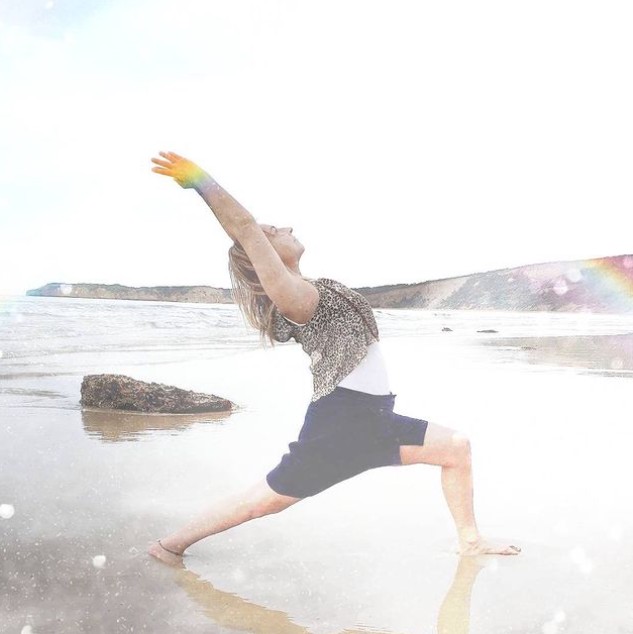
 @wilddreamings
edited
more from that month
@wilddreamings
edited
more from that month
On Solastalgia: Or, Rewild Yourselves, My Darlings *Once, we walked amongst the clawed and furred* *Striped creatures ochred on caves* *Dogs slept by us, part of our pack* *Like us, they gave birth on earth* *Pups anointed with holiness of dirt* *A blessing: this is your land, wild creature of a wild earth.* *And the birds would screech a greeting at the first mewl* *We'd turn our heads skywards in joy* *Ululate a greeting to the winged, the furred, the scaled alike* *Warm breeze in the summer, firelight on fur in winter* *We'd go by the river and dip the baby's fingers in the cool water* *Brush tricklets of water on the her skin* *Introduce them to wild things, her inheritance.* *Somehow, we cultured.* *The clawed became pests - they'd hunt sheep* *And besides, there was not enough food* *How could we accommodate all the wildlings?* *Some of us had already built sooty cities* *Created reasons for men to steal and starve* *Taught: you are this, and the forests are other* *Go no longer to the rivers for anointing -* *We have temples, and His law* *Gates to keep the wild out & all places left, terra nullius* *No man's land - only wilderness to be brought to heel* *Now, the women send their children away to school* *The fathers come home with cities in their eyes* *Black ribbons of road with thundertrucks taking the coal to the ports* *Strip the furred and winged things from the trees - woodchipped giants* *Split the ground asunder for gas* *Drill in offshore rigs - great steel things, so unlike our flesh.* *Soft hearts unite with steel: these economies thrive off dead things.* *The trees know - what's left of them* *So do the skulls of the creatures from the untamed past.* *The winged still call warnings of rain, fire, the tremors of the earth* *But we have forgotten to look up.* *Trembling with angst, we allow practices* *Whereby we walk reverently to where the wild things are* *Remember we are no different from the beasts that are going now, one by one* *We kick off our shoes and walk barefoot on the hot earth* *Take the children down to the water and brush their foreheads with cool water* *Say: rewild yourselves, my darlings.*
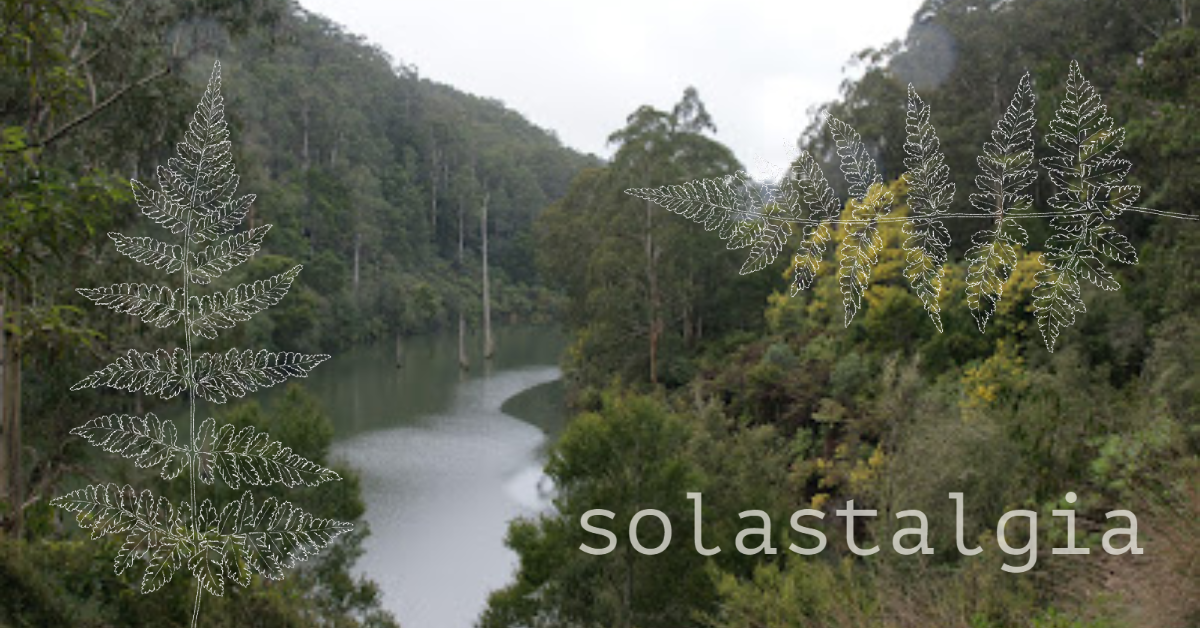
Originally written another space of this wild digital landscape, this edit of my dreaming of re-wilding is recrafted with consideration of cultural appropriation in light of the black lives matter storm that thundered in last year. Originally, I'd described this in words that connected it much more to an Australian sense of place - it was populated with quolls and thylacines, gang gangs and wombats. In my backyard in Victoria, brightly coloured lorikeets clung to trees, overcome with a mystery paralysis and a dead fruit bat hung on a branch with the sun shining through it's paper thin outstretched wings. I thought a lot about how much these wild creatures meant to me, and how stepping into their realms or at least stepping lightly around their edges. I also thought about time, and how forty thousand years people had been here before colonisation. I could imagine 'them', colonised, brutalised, Australianised in the most brutal sense of the word - dispossessed and removed from the wilds that supported 'those' who were this nation's first people. Empathising, I imagined a 'we' that included me in this experience, because by slipping into that imaginative landscape, I was both myself, and the other - human being and animal and plant alike. https://peakd.com/hive-181465/@riverflows/once-we-walked-amongst-the-wild-things) Returning to this poem a year on, I felt a twinge of shame, as if I should have known better. How could I possible write for the colonised where I, as a white woman, did not know the first thing about what it was like to have an inherited trauma of stolen children and dispossession from land? Could I write with any authority at all? Furthermore, I was unhappy how the first few stanzas wrote of the past as it was distance from this white skin and white mind and white inheritance and seemed to seamlessly slip into an experience that was entirely mind - a white woman meditating and dreaming she could rewild herself and coax others to as well. Perhaps, I thought, I should recraft the poem to make it more universal, or at least speak of my own experience. I had - and still have - a long way to go before I can truly understand the experience of indigenous men and woman in this country. On the other side of the world, I'd spent the first lockdown in England, watching the animals populate the wilds again and the trails from airplanes noticeably absent in the sky. The lines between the wild and us became blurred again. We met a family in a wood redolent with ramsons, their garlicky scent head on a warm spring day. The family had lived on this land for decades in small dwellings - low impact housing that could be torn down at a moments notice. For the first time in years he was cycling roads without lorries nearly running him over. We slept on a dutch barge on the Kennet and Avon canal and watched deer from the portholes on the other side of the river. Without the noise of traffic and planes, nature felt closer and more immediate. Under our feet were shards of Roman pottery. Human history was just as vivid here as it was for me in Australia's landscape. The pandemic gave us all a chance to look outside of ourselves and into time, and step outside our houses and workplaces into a natural world we had forgotten existed. People's socials became filled with small moments of gratitude: daffodils, dogs and children splashing in puddles. We were rewilding a little. Still, here, in the country of my birth, coal is still being exported, and the less socially mobile do not have the luxury to stay at home and walk along quiet rural paths, and children are still educated on screens in bedrooms as people make a living through zoom calls. It was hard not to write in 'thundertrucks' and 'woodchipped giants' of 'offshore rigs' - they were eco industries continuing even as the masses were locked down. Essential industries. Whilst I could be more globally understood with the 'winged' and 'furred', somehow the pillage of this great southern land needed to stay. Solastalgia, the title of the poem, is a reference to this existential stress in response to environmental change - a mourning over not only what is lost, but a pre traumatic stress over what might be.1 Solastalgia is all kinds of eco grief: but as is usual in these anxious dreamings of mine, there is also hope. https://en.wikipedia.org/wiki/Solastalgia Hope that some of us were able to step down to the rivers and rewild our children, a little, whoever we were, wherever we walked.
Did you look to the wild places and wild things for solace in your lockdowns? Do you struggle with solastalgia?

7 comments
Solastalgia - I like that. It's really disheartening seeing the effects of our destruction of nature. We are now reaping the effects of our greediness. Here in our place alone, landslides are happening to lands "developed." How ironic. How amazing it would be to see what you here, feel what you feel among those trees and forests and animals!
Thanks so much for your reply. I do feel heartbroken a lot, but I am still the kind of person that feels hope. I think it's harder when things seem to be happening so fast - landslides, floods and fires can change our worlds super quickly and we don't have time to adapt. That's super jarring.
Indeed it is hard when we see it and experience it. Those things are happening all over.
Solastalgia... Heard this word first time.
It's a new word I think, but I love it! I have only heard it recently too, but I think these new times need new words to explain how we feel.
Beautiful poem, I really liked the adaptation (although I didn't get to read the original), but I connected with that genuine and harmonic feeling, that call to return to the instincts and the earth. Welcome to Readcash
Thanks so much, and thanks for the boost as well!