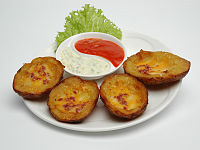
Cold War Recipes: U.S. (Potato Skins)
Here is a dish original to the United States- simple potato skins. While similar dishes have been around, potato skins as we know it have mostly been documented since 1974. https://idahopotato.com/dr-potato/history-of-potato-skins-on-the-menu https://en.wikipedia.org/wiki/Potato_skins
Ingredients:
6 small to medium sized russet baking potatoes
extra virgin olive oil
kosher salt
freshly ground pepper
6 strips of bacon
4 oz. grated cheddar cheese
1/2 cup sour cream
2 green onions, thinly sliced
Instructions:
Bake potatoes after scrubbing the potatoes clean with a microwave or an oven (if using oven, pierce a few times with knife or fork and bake in 400 degree Fahrenheit oven for about an hour. Use microwave, rub with olive oil and cook each potato for 5 minutes)
Cook bacon with microwave or on a skillet on medium low heat for 10 to 15 minutes or until crisp.
Cut potatoes in half and scoop out the insides, leaving one-fourth of an inch of potato on the skin.
Bake the potato skins on 450 degree Fahrenheit oven. Then rub olive oil on skins, outside or in while sprinkling salt. Cook with 10 minutes on one side, then 10 minutes on other side.
Add cheese and bacon.
Top with sour cream and onions to serve.
10 min prep time, Cook in 1 hr & 40 mins, Yield 4 to 6
Cold War: 5 Min RPG Cold War Game
I entered a quick game jam where you design a short RPG that you can play in 5 minutes with a six-sided die and nothing else.
The game I submitted to the 5 minute RPG game jam is called 'Ty Mc. 5 minute Cold War RPG'. Here is the description: With a six-sided die, you can play this quick RPG about a character adventuring through a world during the Cold War Era. It is a quick game that should only take 5 minutes.
*With a six-sided die, you can play this quick RPG about a character adventuring through a world during the Cold War Era. It is a quick game that should only take 5 minutes.*
You can go to itch.io to **download the text file for the RPG,** or you can play it with the instructions below: https://tmc21.itch.io/tyler-mc-5-minute-cold-war-rpg
**5-min-cold war rpg**
**a micro-micro RPG for one player**
**by Tyler McFadden**
**you are an ADVENTURER. you LIVE FOR THIS S***. you are going to go on a QUEST, then log it in your trusty LOGBOOK.**
**you will need: writing utensils - d6 - 5 mins**
**consider using a timer as well. time is of the essence.**
**roll the dice. you are:**
**1 - a former solider of the Soviet Army**
**2 - a former US Airman**
**3 - a USSR scientist**
**4 - a college-age American hippie**
**5 - a youth from East Germany**
**6 - a transfer student in West Germany**
**roll again. you have the following trait:**
**1 - Parkour (Agility)**
**2 - Super Strength**
**3 - Biohacking (healing)**
**4 - Telepathy (Intelligence)**
**5 - Magnetism (more items)**
**6 - Zen (Temporary immunity)**
**now the QUEST happens.**
**roll again. you are up against:**
**1 - an enemy sniper**
**2 - a member of the US National Guard/military**
**3 - a spy**
**4 - a terrorist**
**5 - drunk from the bar**
**6 - a Neo-Nazi**
**the quest is over. you’ve done SOMETHING, at least. maybe it’s winning, but maybe not.**
**you leave the battle:**
**1 - unharmed**
**2 - with more strength**
**3 - with better wits (more intelligence)**
**4 - defeated**
**5 - beaten and sore**
**6 - with new items**
**the remaining time is yours. remember your journey and decompress by writing in your LOGBOOK. be quick about it - an adventurer can hardly ever rest. when five minutes pass, you’re done.**
**embellish details, but don’t get bogged down. keep the pencil moving. think about how your background and your traits helped or harmed you in the fight. consider how you are forced to move forward.**
**inevitably, you are INTERRUPTED.**
**you have to stop writing because of:**
**1 - painful wounds. You need medical attention.**
**2 - hunger. you have to find food.**
**3 - a need to start a new adventure.**
**4 - a need to find a place to sleep for the night.**
**5 - a new threat appearing.**
**6 - someone appearing you need to talk to.**
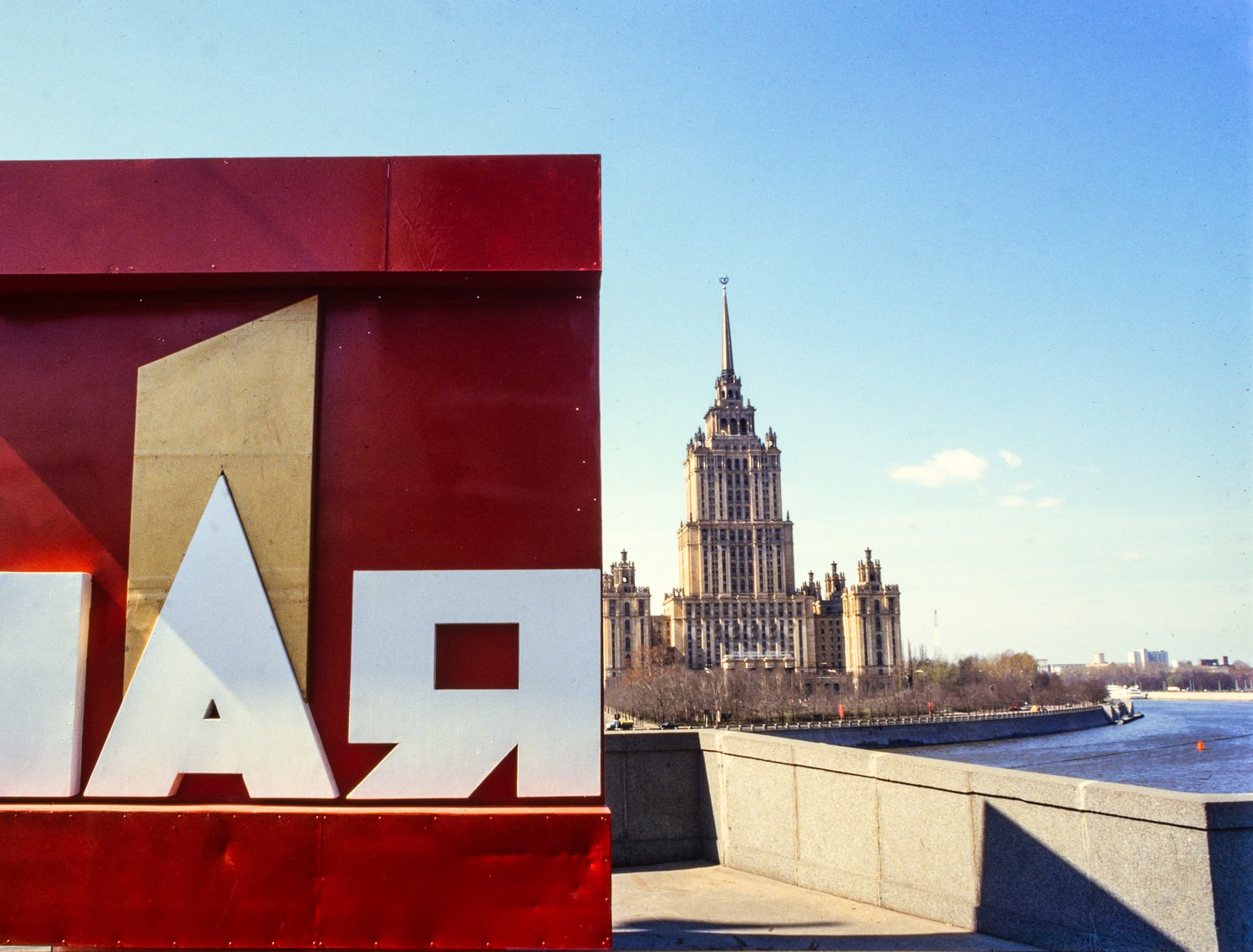
Cold War Recipes: USSR Olivier Salad
Olivier Salad is also know as Russian Potato salad. It is still a traditional dish in Russia and was a part of Soviet cuisine. https://valentinascorner.com/olivier-salad-recipe-russian-potato-salad/ https://en.wikipedia.org/wiki/Soviet_cuisine#Typical_dishes
Ingredients:
3/4 lb of cubed meat
3 potatoes, cubed and cooked
3 carrots, cubed and cooked
6 eggs, cubed and cooked
3 dill pickles, cubed
1 sweet onion, cubed
1 cup of fresh peas
half of a cucumber, cubed
1 cup of mayo
salt and pepper for taste
Instructions:
Add potatoes and carrots in a large pot and cover the completely with water. Boil the water and cook for 20 to 25 minutes or until a knife can easily go through carrots and potatoes.
In a small pot, add eggs with water and boil the eggs. Boil the eggs for 8 to 10 minutes.
Cube all of the ingredients.
Combine everything and mix. Add mayo.
Season with salt, pepper, and sugar.
Image of Russian Potato Salad from Valentina's Corner
Nutritional Information:
Calories: 301kcal
Carbohydrates: 15g
Protein: 13g
Fat: 20g
Saturated Fat: 3g
Cholesterol: 129mg
Sodium: 412mg
Potassium: 604mg
Fiber: 3g
Sugar: 4g
Vitamin A: 3385IU
Vitamin C: 16.7mg
Calcium: 64mg
Iron: 3.2mg


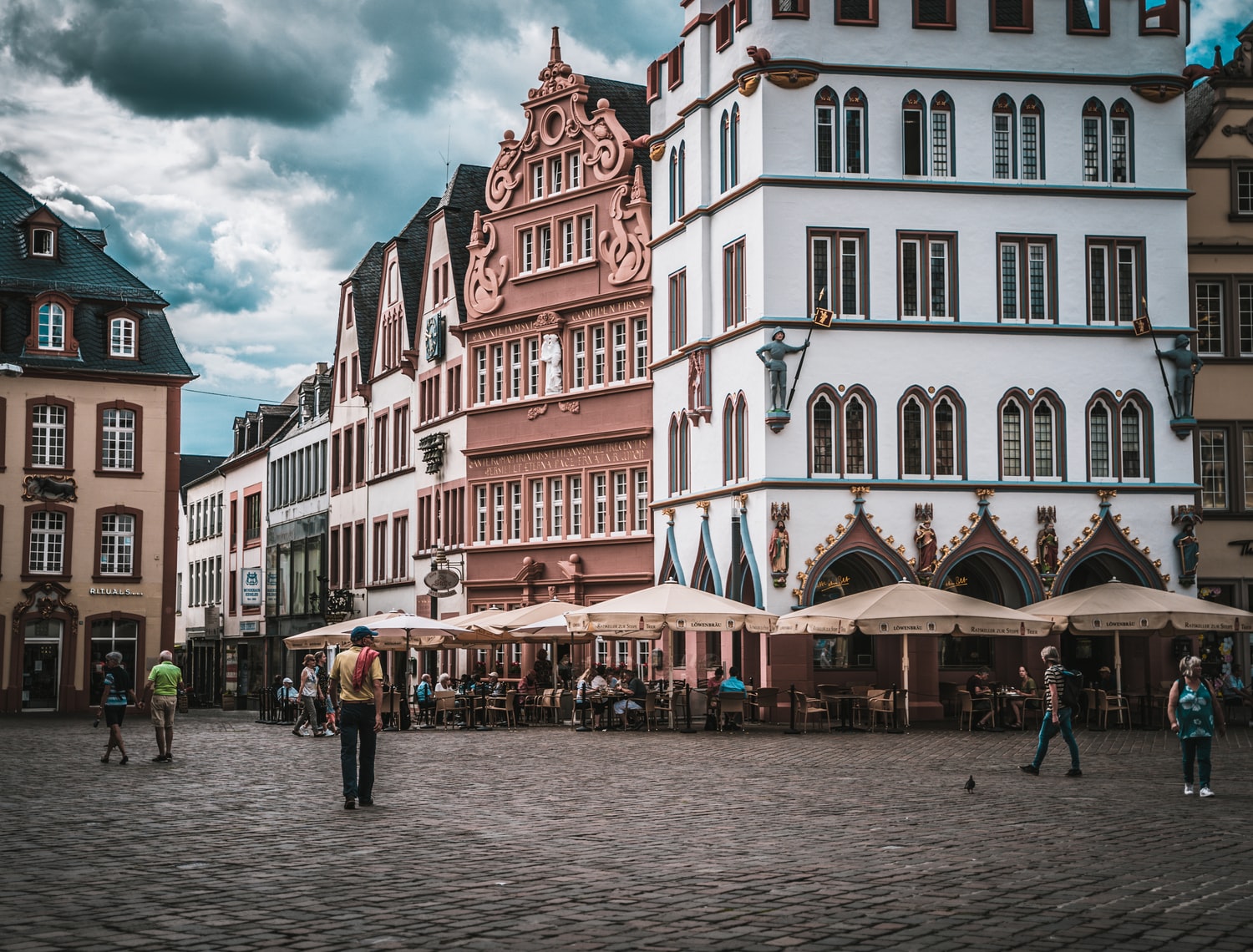
Cold War: East-West Germany Prelude (1945 to 1948)
During the Cold War, Germany was split between the capitalist market economy driven West and the Marxist socialist command economy driven East. Here, we are going to take a look at the Eastern portion of Germany during the Cold War:
East Germany was officially known as the German Democratic Republic. This country was also known as German Deutsche Demokratische Republik, or Ostdeutschland. After Nazi Germany was defeated in May of 1945, sovereign authority over Germany was essentially in the hands of the Allied forces of World War II. One-fourth of Germany's housing was destroyed or damaged & many cities had over 50% of their homes and infrastructure annihilated. The economy had largely collapsed & the former nation was occupied by Americans, British, French, and the Soviet Union. While in this state, Germany was split into four zones based around the nationality of the occupiers. The Soviet zone was one third of Germany and Berlin, the former capital of Germany, was practically surrounded by the Soviet zone. The Soviets unilaterally controlled Germany territories east of the Oder and Neisse rivers with many of the former provinces of East Prussia put under Soviet and Poland. https://www.britannica.com/place/German-Democratic-Republic https://www.britannica.com/place/Germany/The-era-of-partition#ref297750
Soviet occupation was somewhat supported originally by leftist parties that were revived after the defeat of the fascists in Nazi Germany such as the moderate Social Democratic Party (Sozialdemokratische Partei Deutschlands; SPD) & the German Communist Party (Kommunistiche Partei Deutschlands; KPD). They were active during the Weimar Republic, but suppressed by the fascists during World War II (because as mentioned before, Nazis supported limited capitalism and private ownership, had a market economy, and denounced Marxist ideas like Karl Marx's **dictatorship of the proletariat** - things both socialist parties heavily opposed). Under pressure of occupying authorities and the local communist party, the Social Democratic Party merged with the Communists in April of 1946 to form the Socialist Unity Party (SED), who rose to victory in the elections held in East Germany. Overtime, those who supported more moderate forms of socialism were removed from leadership roles and all parties were forced to join a coalition under SED leadership. https://www.britannica.com/place/Weimar-Republic https://read.cash/@tyler775/intro-to-the-cold-war-nazi-germany-d03dfb37 https://www.britannica.com/topic/dictatorship-of-the-proletariat https://www.britannica.com/topic/Socialist-Unity-Party-of-Germany
While elections remained by 1947, there were not more multiparty elections. The Americans joined with the British to try to foster economic recovery for Germany through a unit called Bizonia. This unit would later serve as the model for the government of the West German state. The Eastern Communist Party refused to cooperate with the west, so the Bizonia and Western occupiers decided in spring of 1948 to form a 'nation' of their own. https://www.britannica.com/place/Bizonia
Cold War: U.S. Manhattan Project
Now it is time to talk about one of the most important scientific projects developed by the United States during World War II and the Cold War:
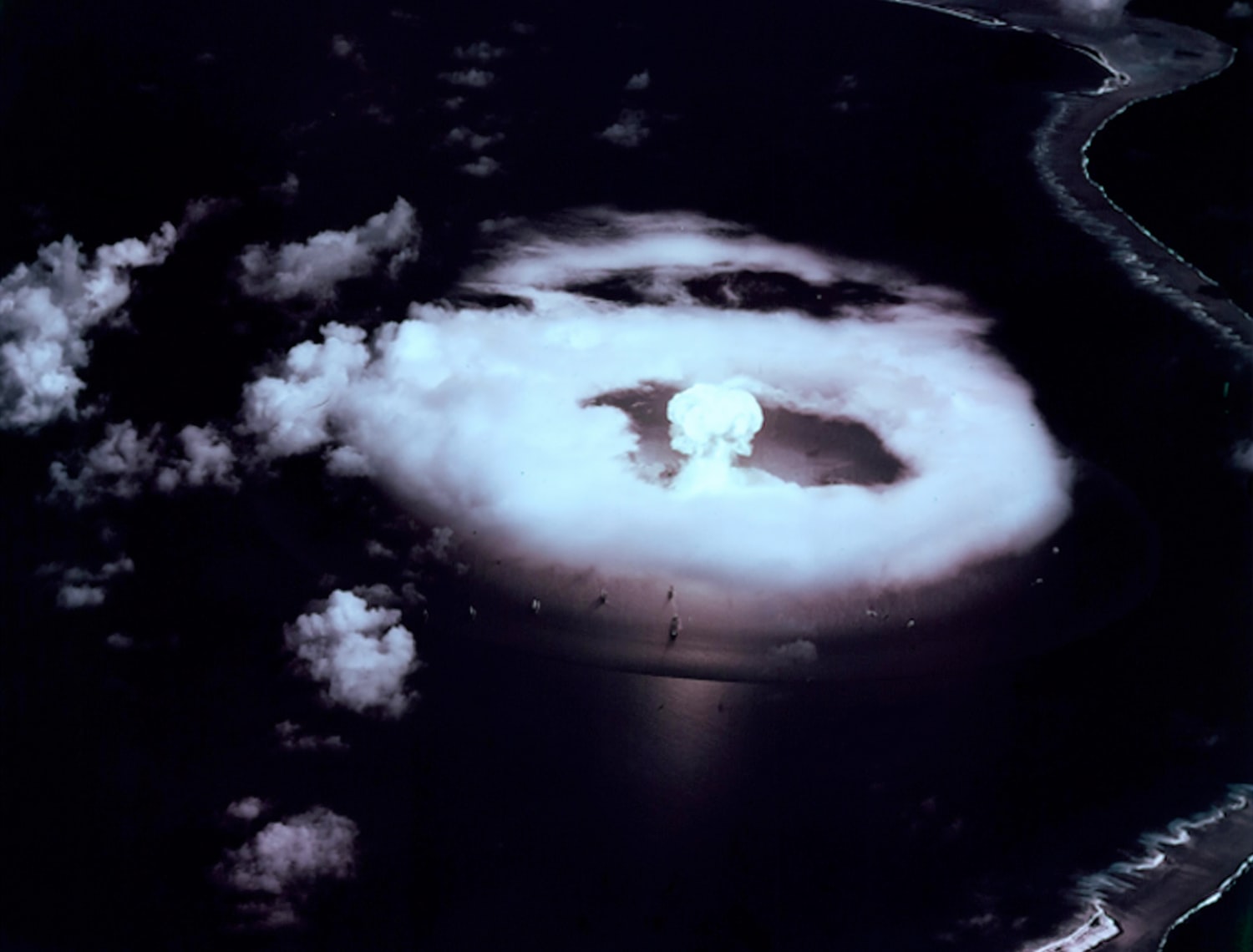
The Manhattan Project was a U.S. government research project used to produce some of the world's first atomic bombs. 1939, many scientists in Europe fled from the fascist regimes and came to the United States. These scientist were aware of advances in nuclear fission ( a process where a heavy atomic nucleus, like uranium or plutonium, divides into two fragments of roughly equal mass) and were concerned that the Third Reich and Nazi Germany could develop some kind of weapon based around nuclear power. However, the Nazis fell behind when it came to atomic physics due to things like a bias against then-theoretical physics like quantum mechanics and rejected many developments in nuclear science as "Jewish Science". A group called *deutsche Physik* rose in the Third Reich and promoted Aryan physics, which itself was a pseudoscience. Nevertheless, physicists like Leo Szilard and Eugene Wigner convinced Albert Einstein to send a letter to U.S. President Franklin D. Roosevelt to create an American nuclear program to counter the Nazis. Thus, the Advisory Committee of Uranium was created as a response with the project beginning on December 6th, 1941. https://www.britannica.com/event/Manhattan-Project https://www.scientificamerican.com/article/how-2-pro-nazi-nobelists-attacked-einstein-s-jewish-science-excerpt1/ https://journals.sagepub.com/doi/abs/10.1177/002200948902400103?journalCode=jcha https://en.wikipedia.org/wiki/Deutsche_Physik#cite_note-15 https://www.britannica.com/biography/Leo-Szilard https://www.britannica.com/biography/Eugene-Wigner
American physicist J. Robert Oppenhemier headed this important project to develop the first atomic bomb while Szilard and Wigner built the first nuclear reactor. There were many other important researchers such as Otto Frisch, Niels Bohr, Felix Bloch, James Franck, Emilio Segrè, Klaus Fuchs, Hans Bethe, and John von Neumann. https://www.britannica.com/biography/J-Robert-Oppenheimer https://www.britannica.com/biography/Otto-Robert-Frisch https://www.britannica.com/biography/Niels-Bohr https://www.britannica.com/biography/Felix-Bloch https://www.britannica.com/biography/James-Franck https://www.britannica.com/biography/Emilio-Segre https://www.britannica.com/biography/Klaus-Fuchs https://www.britannica.com/biography/Hans-Bethe https://www.britannica.com/biography/John-von-Neumann
Production of plutonium-239 was first achieved at the University of Chicago and scientists at Los Alamos, New Mexico found out how to bring fissionable materials to supercritical mass to create an explosion and how to control the timing of said explosion. The first test was tried on July 16, 1945 at Alamogordo air force base in New Mexico with a successful nuclear explosion.
Many originally considered using the atomic bomb in Berlin to end the Third Reich, but by the time the bombs were ready, the USSR had already defeated Nazi Germany in May of 1945. Instead, the bombs were used on Hiroshima and Nagasaki to destroy the fascist Imperialist Japanese regime. https://www.scientificamerican.com/article/an-alternate-history-of-the-atomic-age/ https://www.britannica.com/event/World-War-II/Yalta#ref53600
At least four Soviet spies we currently know about worked with the Manhattan Project and gave information on atomic energy usage and the bomb to the Soviet Union. One of them was a spy named Oscar Seborer who went undercover and worked at the Los Alamos National Laboratory in New Mexico. https://www.nytimes.com/2019/11/23/science/manhattan-project-atomic-spy.html https://www.livescience.com/manhattan-project-fourth-spy.html
Cold War Inventions: USSR (Theremin, Pobedit, Artificial Heart)
Here is a list of some very important and/or interesting inventions created in the Soviet Union, showing some innovations from the early USSR:
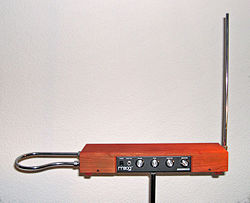
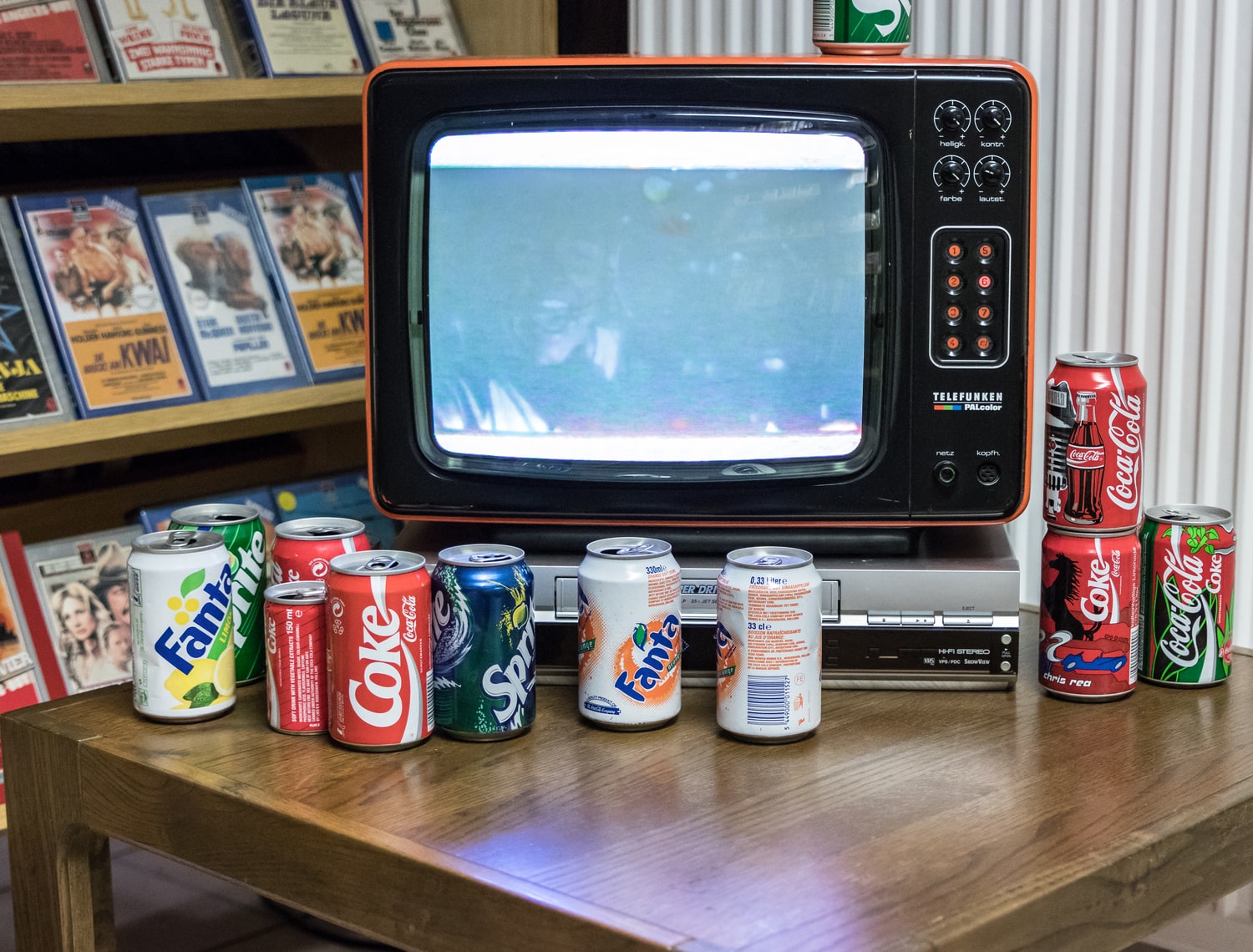
Theremin: the theremin is a electronical musical instrument that can be controlled without physical contact & played by moving your hands in electromagnetic fields surround two antennae on the instrument. It was invented by Soviet inventor Leon Theremin and was one of the first electronic musical instruments to be mass-produced. He created the device in 1920 in the Russian Soviet Republic. Leon moved to the United States and patented his invention in 1928, where he displayed the Theremin in concert halls. Theremin left the United States in 1938 and people though he was captured by the KGB and taken back to the USSR. However, according to the book *Theremin: Ether Music and Espionage*, he simply went back to the USSR to escape some personal debt he had racked up. Leon would not return to the United States until the USSR's collapse in 1991. This invention by a Russian was very popular in the West and has been featured in many movies, including Spellbound (1945), The Thing From Another World (1951), The Day The Earth Stood Still (1951), and The Ten Commandments (1956). https://www.merriam-webster.com/dictionary/theremin https://archive.org/details/thereminethermus00glin http://www.hist.msu.ru/ER/Etext/cnst1918.htm https://www.google.com/patents/US1661058 https://film.avclub.com/inventory-14-movies-from-two-ages-of-theremin-music-1798209672
Pobedit: Pobedit is a type of cemented carbide material that is close to the hardness of diamond with a 85 to 90 on the Rockwell scale: a scale for the indentation hardness of a material. It also has a wear resistance of 0.5 to 0.6 milligrams per square millimeter. It was made from a monocarbide with 90% tungsten and 10% cobalt. It was developed by the Soviet Union in 1929. This alloy was used for drawing tools, cutting tools, and drill bits. Soviet industry fabricated about 7000 tons of this material a year. Similar cemented carbides are still used today in the production of tools, including drill bits in modern Russia. https://encyclopedia2.thefreedictionary.com/Pobedit https://en.wikipedia.org/wiki/Cemented_carbide#Pobedit https://doi.org/10.1007%2Fs11665-008-9225-5 https://www.sciencedirect.com/science/article/abs/pii/S0263436814002108
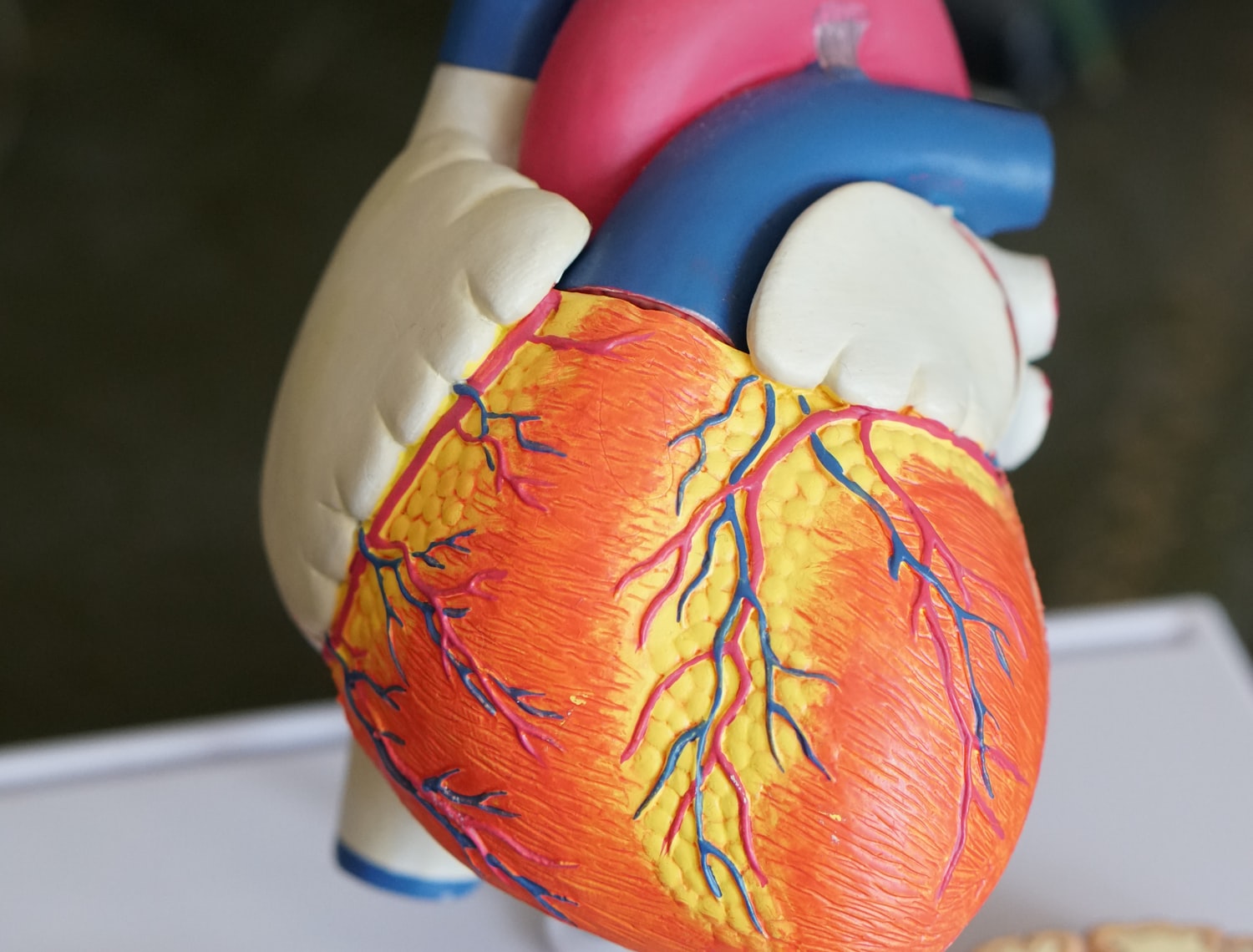
Artificial heart: In 1937, the world's first artificial heart was invented by Vladimir P. Demikhov. The heart was successfully implanted into a dog which survived for two hours after the surgery. Description of the artificial heart and procedure was published in April 1938 in the student papers of Voronezh State University - a university Demikhov studied at which was established in 1918 by students and professors moved to the city of Voronezh. This device eventually led to the more advanced artificial hearts we have today to implant in people with heart problems or dealing with cardiac organ failure. https://www.rbth.com/science-and-tech/326540-dog-heads-demikhov-soviet-medicine https://doi.org/10.1093/eurheartj/ehx697 http://www.vsu.ru/english/about/history.html
Cold War Inventions: U.S. (Credit Card, Cable TV, Supersonic Flight)
Now, I am introducing a section with my normal Cold War posts called Cold War inventions - little segments where I mention inventions and discoveries made by the United States and USSR during the Cold War that were significant during the time period:
Bank-issued credit card: The first credits cards were cards like the Charga-Plate created in 1928 or the Air Travel Card of 1934 created by American Airlines and predate the Cold War. The cards were made with sheet metal and embossed with the customer's name, city, and state. However, none of these cards were issued or back by banks, only merchants. The first bank-issued credit card was created by John C. Biggins in 1946. It was utilized by Flatbush National Bank of Brooklyn and allowed any bill to be automatically paid by the bank with money from your bank account, allowing a cautious spender to not have to worry too much about paying off their credit card if they had enough in their account. It also allowed cards to finally be issued by an accredited final institution that can keep track of bills and charges from various merchants a person would have to pay off in the future. http://departmentstoremuseum.blogspot.com/2010/11/charge-cards.html https://books.google.com/books?id=aXIHl--RuqkC&pg=PA11 https://books.google.com/books?id=OXT0MyOjhnIC&pg=PT55&dq=John+Biggins+and+credit+card&hl=en&sa=X&ei=6KeaT4GODon28gSJhJD-Dg&ved=0CEkQ6AEwAA#v=onepage&q=John%20Biggins%20and%20credit%20card&f=false https://books.google.com/books?id=I3uiLuTgbu8C&pg=PA136&dq=John+Biggins+and+credit+card&hl=en&sa=X&ei=6KeaT4GODon28gSJhJD-Dg&ved=0CE4Q6AEwAQ#v=onepage&q=John%20Biggins%20and%20credit%20card&f=false
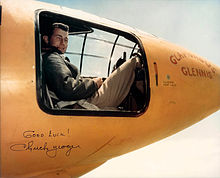
Supersonic aircraft: The first manned plan to break the sound barrier was created by the United States. It was called the Bell X1 or Bell Model 44 , with the word 'Bell' coming from the Bell Aircraft Corporation that worked with the U.S. Army and U.S. Airforce and the National Advisory Committee for Aeronautics to bring this plane to fruition. Chuck Yeager was the pilot who was responsible for the first manned flight in the supersonic aircraft on October 1947, reaching Mach 1.05, though this feat was not announce to the public until June of 1948. With this new aircraft, the United States proved that having aircraft move faster than the speed of sound while keeping human occupants of the aircraft safe was possible. New variants of the Bell aircraft were created, including the X-1A and X-1C (or Bell Model 58C). https://www.yumpu.com/en/document/view/7095890/the-naca-nasa-and-the-supersonic-hypersonic-frontier https://www.bellflight.com/ https://en.wikipedia.org/wiki/National_Advisory_Committee_for_Aeronautics https://archive.org/details/yeagerautobiogra00yeag/page/6 https://web.archive.org/web/20180723004851/https://www.nytimes.com/1947/12/22/archives/new-us-plane-said-to-fly-faster-than-speed-of-sound-said-to-have.html http://www.history.com/this-day-in-history/yeager-breaks-sound-barrier http://www.ufomind.com/area51/org/afftc/articles/airspace_9502.html http://www.joebaugher.com/usaf_serials/usafserials.html
Cable Television: John Walson Sr. was the man who is recognized by the United States Congress and the National Cable Television Association as the inventor of cable TV in 1948. John launch a system in Mahanoy City, Pennsylvania, a Appalachian town less than 100 miles away from Philadelphia and charged two dollars a month for this new service. Now instead of the over-the-air method used in previous forms of broadcasting, consumers could enjoy television delivered by coaxial cables and less interruptions in their programming. https://hbswk.hbs.edu/item/cable-tv-from-community-antennas-to-wired-cities
Username : @tyler775
Date : 29/09/2019
Previous platforms : Stack Exchange
Hey everybody!!
I'm Tyler Mc. I am a history tutor and I love writing about the Cold War. I also can write about other points of history, something I love to do daily in my free time. I also like to write about political news.
Categories : History, News
My previous work
https://read.cash/@tyler775/intro-to-cold-war-united-states-coal-wars-paint-creek-cabin-creek-strike-of-1912-4f7805b5
https://read.cash/@tyler775/cold-war-petrograd-soviet-13547303
https://read.cash/@tyler775/cold-war-bolsheviks-ideology-59c93d5c
I started recently, but I have a decent number of articles, six subscribers, and earned about $18 just from four days of articles.
I'm looking forward for the response from the community and hope to get sponsored to continue blogging about the history I (and hopefully others) enjoy...
Cold War: Bolsheviks' Ideology
Now it is time to address the political group and ideology which led to the rise of the Soviet Union, the Bolsheviks:
The Bolsheviks were known as the Bolshevists (or 'the majority') in English. It was led by Marxist socialist revolutionary Vladimir Lenin. As mentioned before, the Bolsheviks joined with other socialist groups during the Russian Revolution of 1905. The Bolsheviks were highly centralized and disciplined as a political party. They obtained funding by many avenues (including robbing the rich, which was found upon by the Mensheviks and the Esers). The group formed an official political party in 1912. https://en.wikipedia.org/wiki/Ushakov%27s_Explanatory_Dictionary_of_Russian_Language https://www.britannica.com/topic/Bolshevik https://read.cash/@tyler775/cold-war-petrograd-soviet-3e3bd770 https://www.britannica.com/event/Russian-Revolution-of-1905
The Bolsheviks considered the Mensheviks soft and to moderate in terms of their Marxist socialist beliefs to truly take charge of the proletariat revolution. The word Mensheviks literally meant 'minority' as in they only represented a small minority that couldn't truly represent a Marxist revolution. The Bolsheviks became increasingly popular among urban workers and soldiers following the February Revolution of 1917, especially after Lenin demanded that the workers' councils, or Soviets, assume power over the government on behalf of the common worker.
The reason why there were two different Marxist socialist groups with different ideas of how to achieve Communism is because Karl Marx mentioned multiple ways to achieve socialism (which Karl Marx called the lower-stage of communism) and the final stage of communism. As socialist writer Philip Gasper described it in *The Communist Manifesto: A Road Map to History's Most Important Political Document,* "Marx and Engels never speculated on the detailed organization of a future socialist or communist society. The key task for them was building a movement to overthrow capitalism. If and when that movement was successful, it would be up to the members of the new society to decide democratically how it was to be organized, in the concrete historical circumstances in which they found themselves.". So, the Mensheviks and Esers had one way to achieve socialism while the Bolsheviks had another. https://www.marxists.org/archive/marx/works/1875/gotha/ch01.htm
Ultimately, the Bolsheviks went with the mention for achieving lower-stage communism described by Karl Marx in his work *Critique of the Gotha Program,* where the socialist revolutionary stated "Between capitalist and communist society there lies the period of the revolutionary transformation of the one into the other. Corresponding to this is also a political transition period in which the state can be nothing but the revolutionary dictatorship of the proletariat." The dictatorship of the proletariat would be a form of socialism that represented the transition phase between the abolition of capitalism and establishment of communism, the Marxist definition of socialism. So the Bolsheviks experimented with achieving this form of socialism where a council of proletariat members and a potential leader of the council own the means of production on behalf of the common worker with the state. Personal property would be given out to workers based on the principle of **"each according to his contribution"** , a principle originally created by socialist thinker and Menshevik Leon Trotsky, but accepted by Karl Marx as acceptable for lower-stage communism: "accordingly, the individual producer receives back from society – after the deductions have been made – exactly what he gives to it. However, all utilities, land, and means of production would be owned by the state on behalf of the common worker. Marx and Vladimir Lenin grew to believe the dictatorship of the proletariat version of socialism would be the only way to achieve true communism, especially in places like Russia which had not fully industrialize, and could oppose capitalist nations that would seek to stop the revolution. " "The dictatorship of a single class is necessary not only for every class society in general, not only for the proletariat which has overthrown the bourgeoisie, but also for the entire historical period which separates capitalism from "classless society", from communism. Bourgeois states are most varied in form, but their essence is the same: all these states, whatever their form, in the final analysis are inevitably the dictatorship of the bourgeoisie. The transition from capitalism to communism is certainly bound to yield a tremendous abundance and variety of political forms, but the essence will inevitably be the same: the dictatorship of the proletariat." -Vladimir Lenin, The State and Revolution). https://www.britannica.com/topic/dictatorship-of-the-proletariat https://www.merriam-webster.com/dictionary/socialism https://en.wikipedia.org/wiki/To_each_according_to_his_contribution https://www.marxists.org/archive/trotsky/1936/revbet/ch03.htm#ch03-1
Marx believed that even if the dictatorship of the proletariat was literally authoritarian, it would eventually lead to the final stage of communism: a system where all property is owned by the community and each person contributes and receives according to their ability and needs instead of according to their contribution like in socialism. This is because the dictatorship of the proletariat would directly compete with capitalism and to do that, it was reasoned that it would have to provide education, technological development, and standards of healthcare. One society got advanced enough or defeated capitalism, which could take any length of time since Marx didn't put any specific time interval for when this should be accomplished, the state would erode away through a final revolution or natural human development to create a clean stateless society. https://www.lexico.com/definition/communism
Now that we talked a lot about the specific philosophy of the Bolsheviks, we can talk about the philosophy of American-style capitalism in the Cold War next.
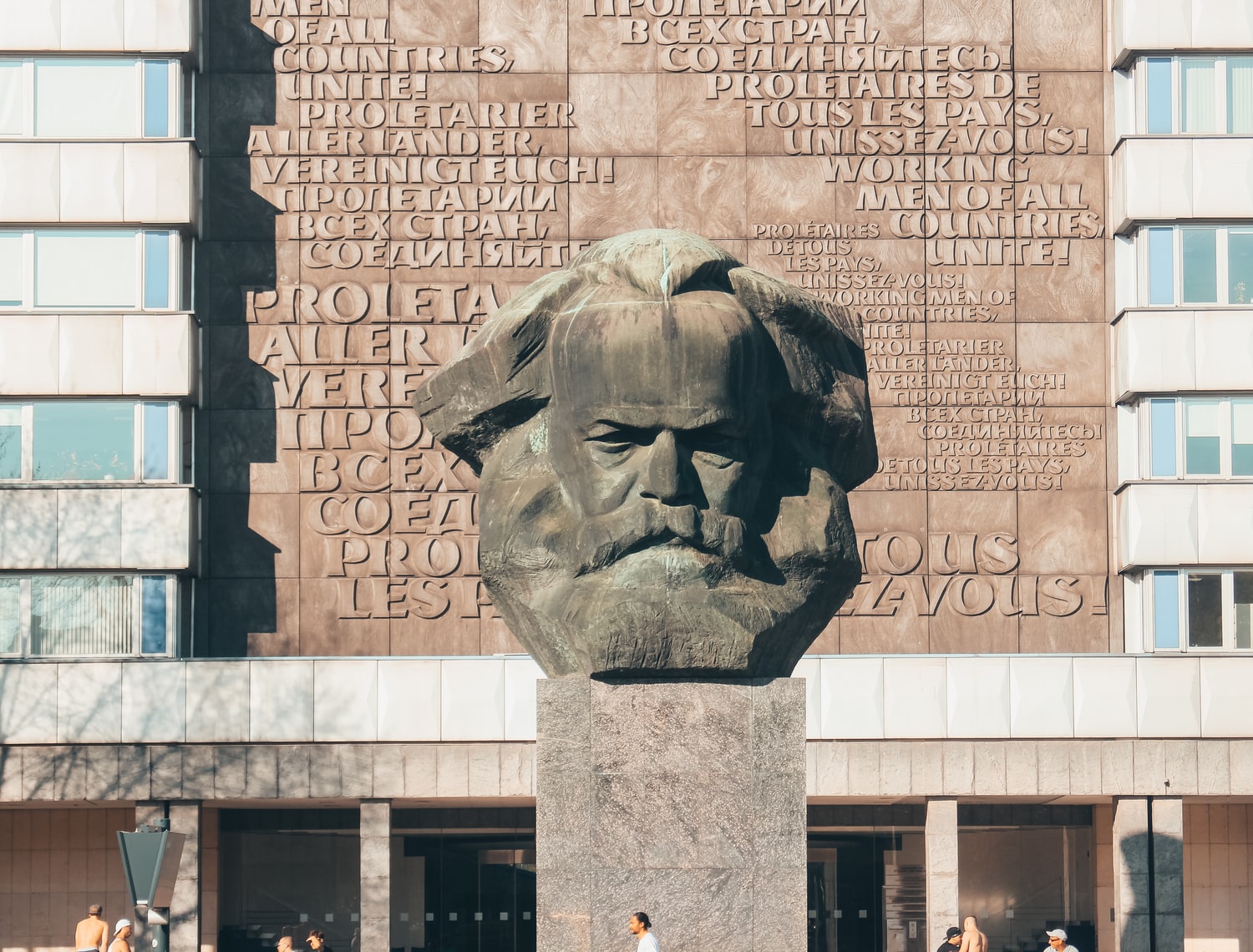

Intro to the Cold War: Nazi Germany
Most of my post are still talking about the lead up to the Cold War and the start of the Soviet Union and 1920s America, but with this post I am considering jumping forward in time to the rise of fascism. Most people have heard about Nazi Germany in one fashion or another, especially with their genocides like the Holocaust, but here I want to describe how fascism ended up affecting the actions of both the U.S. and USSR while helping to usher in the genuine start of the Cold War: https://www.britannica.com/event/Holocaust
Nazi Germany formed in 1933 after Adolf Hitler was appointed Chancellor. It was considered the successor of the Holy Roman Empire of 800 CE to 1806 CE (the First Reich) and the German Empire that existed from 1871 CE to 1918 CE (the Second Reich). The nation was based around intense nationalism, mass appeal, and dictatorial rule, and shared many elements of Italian fascism (being a fascist movement itself). Fascists like the Nazis of Germany hated Marxists of all stripes, from the Bolsheviks of the Soviet Union and totalitarian communists to democratic socialists. While having some similarities to authoritarian communists, fascists (especially Nazi fascists) were different since unlike communists, they supported limited capitalism and defended the interest of economic elites who agreed to their policies like how Nazi Germany allowed Coca-Cola's German branch to continue to own factories and property. Fascists were also nationalistic while totalitarian communists attempted to create international movements and own all the means of production on behalf of the common worker in accordance to Karl Marx's idea of the dictatorship of the proletariat & the Nazis had a limited market economy compared to a Marxist socialist command economy. https://www.britannica.com/place/Third-Reich https://www.britannica.com/topic/nationalism https://www.britannica.com/topic/fascism/Common-characteristics-of-fascist-movements#ref219364 https://www.businessinsider.com/how-coca-cola-invented-fanta-in-nazi-germany-2019-11 https://www.britannica.com/topic/dictatorship-of-the-proletariat
Despite supporting some degree of capitalism, fascists like the Nazis were against democracy and ownership of private property to the point where private enterprise existed in every industry. Hitler believed democracy undermined natural selection and was “nothing other than the systematic cultivation of human failure.” Joseph Goebbels, Hitler's minister of propaganda, maintained that history was never made by people ruling themselves, but by aristocrats. https://www.britannica.com/topic/fascism/Opposition-to-parliamentary-democracy
Nazism was about survival of the fittest and that the state existed to fight wars until only the strongest nation-state survives, even when such action is unprofitable and detrimental to the national economy. This belief even spread to Nazi allies like Imperialist Japan, who declared in 1934 in pamphlet publications that “War is the father of creation and the mother of culture.” The Nazi party also called for nationalization of industries like education, preventing any private business from being in those particular industries. https://www.bloomsbury.com/uk/international-fascism-9780340706138/ https://www.snopes.com/news/2017/09/05/were-nazis-socialists/
The Nazi Party got its support because of the weakness of Germany following World War I. Despite having nothing to do with the start of the war, Germany was blamed for World War I and given a crushing debt that took 92 years to pay. The Weimar Republic formed as a weak government that could only pay small portions of this debt. Problems like this led to discontentment and a rise in popularity for those who claimed they could fix Germany. https://www.history.com/news/germany-world-war-i-debt-treaty-versailles
Nazi Germany collapsed on 1945, which is the year we consider to be the official beginning of the Cold War. Since Germany had declared war on Russia during World War I and attacked during World War II, the USSR grabbed the eastern portion of Germany so Germany could never be a unified threat again &, in 1949, created a Marxist socialist republic called East Germany. Meanwhile, the United States and the West formed West Germany & the Cold War was truly off to the races! https://www.loc.gov/law/help/digitized-books/world-war-i-declarations/foreign.php https://www.history.com/topics/world-war-ii/battle-of-stalingrad https://history.state.gov/countries/german-democratic-republic https://www.britannica.com/place/German-Democratic-Republic https://www.britannica.com/place/West-Germany

Cold War: U.S. Fourth Party System
After talking all this time about Russian Revolutions, it is time to talk about the revolution happening in American around the same time as the overthrow of the tsars, the Fourth Party System:
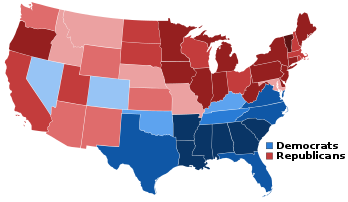
According to political scientists, the Fourth Party System of the United States occurred between 1896 and 1932. Political scientists like Robert C. Benedict, Matthew J. Burbank and Ronald J. Hrebenar documented this in their book *Political Parties, Interest Groups and Political Campaigns.* Late political analyst Elmer Eric Schattschneider referred to this period as the **System of 1896**.
This era began with the election of 1896 where Republican candidate William McKinley defeat William Jennings Bryan to become president. The central issue of the election was the money supply of the United States government as a small economic depression had started in 1893 and split public opinion. Some members of the population favored the gold standard (a financial system where a fixed quantity of gold is the standard unit of currency or the item that backs said currency) and other wanted free silver (system asking for unlimited coining of silver in addition to gold). Most Republican supported the gold standard while Southern & western Democrats favored free silver. The Republican victory led to the continuation of the gold standard, which was used by the United States until 1933 and the end of the Fourth Party System. https://www.britannica.com/event/United-States-presidential-election-of-1896 https://www.britannica.com/topic/gold-standard https://www.britannica.com/event/Free-Silver-Movement https://www.history.com/this-day-in-history/fdr-takes-united-states-off-gold-standard#:~:text=On%20June%205%2C%201933%2C%20the,to%20demand%20payment%20in%20gold.&text=He%20also%20forbade%20banks%20to%20pay%20out%20gold%20or%20to%20export%20it.
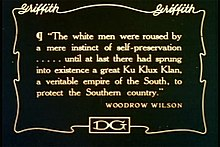
There were many Republican victories during this era except for the 1912 split where Democratic candidate Woodrow Wilson became president and remained in office until 1921. Wilson would implement many reforms. He would reduce taxes since he regarded high tariffs as something that "cuts us [the American people] off from our proper part in the commerce of the world, violates the just principles of taxation, and makes the government a facile instrument in the hands of private interests." The Revenue Act of 1913 reduced the average import tax rate from 40% to 26%, while the Revenue Act of 1916 would raise corporate income tax and reinstate the federal estate tax. The president would also help pass the Clayton Antitrust Act of 1914 and send troops to end a small civil war. Woodrow Wilson is controversial for his racist and segregationist policies, and he has been described as a man who "loved to tell racist 'darky' jokes about black Americans, placed outspoken segregationists in his cabinet and viewed racial 'segregation as a rational, scientific policy'". Yet, he disliked the Ku Klux Klan since he viewed lynching as un-American & after see *Birth of a Nation* at the White House, he disapproved of the film and was angry that the film misquoted him, even stating he was "unaware of the character of the play before it was presented and has at no time expressed his approbation of it. Its exhibition at the White House was a courtesy extended to an old acquaintance". http://www.presidency.ucsb.edu/data/turnout.php https://archive.org/details/presidencyofwood00clem https://archive.org/details/greattaxwars00weis https://books.google.com/books?id=z-v8_BkQ2n8C&printsec=frontcover&dq=inauthor:%22Joe+R.+Feagin%22
Another battle happened in 1909 over the Payne-Aldrich Tariff Act that would raise taxes on on goods entering the United States. This issue split the Republican Party and set things in favor for the Democrats. According to Kathleen Dalton, writer of *A Companion to the Gilded Age and Progressive Era*, this divide continue to some degree until Theodore Roosevelt brought progressive change while allowing the party to reassert itself as the part of big business and laissez-faire capitalism. https://timesmachine.nytimes.com/timesmachine/1910/04/02/105076865.pdf
After the October Revolution (which are going to cover later), the United States entered the Russian Civil War in 1918 during the Fourth Party System era on the side of the remnants of the Russian Empire and its capitalist allies against the Bolshevik socialists, Chinese Communists, and Ukrainian anarchists. This war could considered a proto-Cold War of sorts, which ended in Bolshevik/Soviet victory and America withdrawing from the region. https://archive.org/details/russiancivilwar00evan https://web.archive.org/web/20080118074241/http://members.aol.com/ThryWoman/MRR.html
Cold War: Petrograd Soviet
Continuing with the origins of the Soviet Union, this article will mention the Petrograd Soviet, precursor council to the Soviet Union. It will also mention a few important figures of Soviet Russian history:
The first Petrograd Soviet actually formed back when the tsar and Russian Empire were still in charge of the nation. This first workers' council was known as the Petrograd Soviet of Workers' Delegates. It arose from January-February 1905 meetings of workers at the apartment of Russian revolutionary
Vsevolod Mikhailovich Eikhenbaum. Soviet is simply a Russian word for 'workers' council', so while the Cold War has made soviet a common English word as well as a Russian one, an literal English translation would make this the 'First Petrograd Council of Workers and Delegates'. The council would have between 400 to 500 members who represented the common worker. These members were elected by about 200,000 industrial workers according to the records written by Leon Trotsky. http://dwardmac.pitzer.edu/anarchist_archives/bright/voline/biography.html https://www.marxists.org/archive/trotsky/1918/ourrevo/ch05.htm
Many of the meetings of the first Petrograd Soviet occurred during the 1905 Russian Revolution, a precursor to the transformative February Revolution previously mentioned in one of the previous **Cold War** posts. Many historians state that the 1905 revolution set the stage for the 1917 February Revolution. The revolution lasted from January of 1905 to June 16th of 1907, lasting about 2 years and 4 months. According to Sidney Harcave, historian and author of *The Russian Revolution of 1905*, four major problems led to the revolution and, by extension, the 1st Petrograd Soviet: the lack of land and financial opportunities for newly emancipated peasants, repression of national minorities, lack of protection for the working class, and a rise of educated college students interested in reform of the current tsarist system. As historian James Defronzo put it: "At the turn of the century, discontent with the Tsar’s dictatorship was manifested not only through the growth of political parties dedicated to the overthrow of the monarchy but also through industrial strikes for better wages and working conditions, protests and riots among peasants, university demonstrations, and the assassination of government officials, often done by Socialist Revolutionaries." https://read.cash/@tyler775/cold-war-prelude-to-the-soviet-union-in-tsarist-russia-2cf4e802 https://books.google.com/books?id=9J9Dt6EQHs8C&pg=PA1
The First Petrograd council would have between 400 to 500 members who represented the common worker. These members were elected by about 200,000 industrial workers according to the records written by Leon Trotsky. The council would own the means of production on behalf of 5 trade unions and 96 factories around Saint Petersburg. https://www.marxists.org/archive/trotsky/1918/ourrevo/ch05.htm
Three socialists groups were part of the First and Second Petrograd Council: The Bolsheviks, the Mensheviks, and the Esers (Socialist Revolutionary Party). In the 1905 workers council, the Mensheviks were the most influential and originally, there was no Bolshevik representation in the 1907 Petrograd.
Eventually, the Bolsheviks rose in popularity in a series of events known as the *Bolshevization of soviets.* The Bolsheviks, in response, began increasing the printing of Pravada: a series of newspapers advocating Marxist-Leninist socialism and the radical far-left ideas the Bolsheviks were known for. The first Soviet ceased to exist on December 1905 when many leaders of the council were arrested, the second lasted throughout the October Revolution and into the creation of Soviet Russia. https://www.nytimes.com/1996/07/31/world/russia-s-purveyor-of-truth-pravda-dies-after-84-years.html https://archive.org/details/sovietexperiment00suny/page/57
Cold War: Economy of Russian Empire
This post talks about the Russian Empire one more time before we move on to exploring more about the U.S. and a young Soviet Union. This is because I think looking at the economy of the tsars will help to not only show what led to the creation of the Soviet Union, but the economic conditions that made the people want to call for radical change:
Most of the population of the Russian Empire was rural and rapidly growing, with population rising from 126 million people in 1897 to 170 million citizens 1914. Fifteen percent of the population was living in towns, cities, and urban areas. Meanwhile, less than ten percent worked in industry. Meanwhile, agriculture and farm work provided for 80 percent of the population and was dominated by the Russian peasant class. The traditional household economies of the average Russian peasant was very inefficient compared to farming in Western Europe and the United States. https://www.encyclopedia.com/history/encyclopedias-almanacs-transcripts-and-maps/economy-tsarist#:~:text=The%20economy%20of%20the%20Russian,by%201914)%20was%20overwhelmingly%20rural.
Many peasants were serfs under Russian law - a feudal class of servant who was made to work the land of a private landowner or nobleman and couldn't leave this plot of land without that person's permission. Slavery was technically ended by Peter the Great, but he essentially made all slaves into serfs & became subject to taxation as well as military recruitment. https://www.collinsdictionary.com/us/dictionary/english/serf https://www.encyclopedia.com/people/history/russian-soviet-and-cis-history-biographies/peter-i-russia
Household serfdom was eventually ended in 1861 by the Emancipation Edict of Russia, liberating over 23 million Russian citizens. The serfs were not only free men, but were given freedoms like the ability to marry without needing the person of the lord/private estate that owns them. According to a 2018 study from the American Economic Review, there were "substantial increases in agricultural productivity, industrial output, and peasants' nutrition in Imperial Russia as a result of the abolition of serfdom in 1861". However, these serfs were given their freedom, but no land or guarantee of a home. Also, this stature only applied to household serfs, as serfs owned by the emperor weren't emancipated until 1866. https://archive.org/stream/harmsworthhistor07meea/harmsworthhistor07meea_djvu.txt
Small amounts of industrial capitalism coexisted with the primitive economy of Tsarist Russia. The tsars attempted to industrialize in the 1890s, but with little success. Eventually, the Russian Empire - despite having pockets of modernized society - fell behind the advanced industrialized Western nations like Great Britain, the United States, and Germany.
However, much of the Tsarist economy came from foreign investment from international private investors. In 1914, one-third of capital investment came from foreign Western nations and private businesses. This dependence on the West, combined with low productivity of labor & the ravages of World War I helped to create a rise in socialist opposition to the Tsar and the previously mentioned February Revolution. https://www.encyclopedia.com/history/encyclopedias-almanacs-transcripts-and-maps/economy-tsarist#:~:text=The%20economy%20of%20the%20Russian,by%201914)%20was%20overwhelmingly%20rural. https://read.cash/@tyler775/cold-war-prelude-to-the-soviet-union-in-tsarist-russia-2cf4e802
Cold War: Prelude to the Soviet Union in Tsarist Russia
Before we get into the USSR, we need to get into the Russian Empire a.k.a. Tsarist Empire, the nation which preceded the socialist revolution:
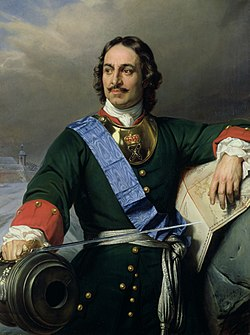
The Russian Empire started on November 2nd, 1721. On this date, the Russian Senate gave the title of tsar (emperor) of all the Russia upon a man named Pyotr Alekseyevich or Peter the Great or Peter I. Tsars existed before this period, such as when Michael Romanov was elected tsar in 1613, but usually these tsars had power over individual Slavic principalities like the Grand Principality of Moscow instead of controlling all of Russia & tsars were considered the patrimonial owner of the land instead of the true head of the state. The start of the Russian Empire changed all that. In theory, the Russian Emperor had unlimited power with no legal or economic defense against arbitrary use of power. However, many regions were autonomous with little control from the state such as Siberia and the Cossacks. Plus, the massive size of Russia and inadequacy of the tsarist administration at times limited the effect of this absolutist power. In 1721, Peter made the Russian Orthodox Church part of the state, combining church and state. https://www.britannica.com/place/Russian-Empire https://www.britannica.com/biography/Peter-the-Great https://www.britannica.com/place/Grand-Principality-of-Moscow
The state religion of the Russian Empire was Orthodox Christianity. In fact, the Emperor was not allowed to ″profess any faith other than the Orthodox″ according to Article 62 of the Fundamental Laws Constitution of tsarist Russia. According to the 1897 census, 69.3% of the population was Russian Orthodox, with the rest being Muslim, Catholic, Jewish, and other Christian denominations. Also, Russian was the official language, though French was also spoken by high society. https://web.archive.org/web/20121024115547/http://www.archipelag.ru/ru_mir/religio/statistics/said/statistics-imp/ https://www.rbth.com/politics_and_society/2017/05/25/why-was-french-spoken-in-russia_770185
Even before the uprising that led to the creation of the USSR, there were revolutions that occurred against the tsarist regime. There was the urban uprisings from 1648 to 1650 that resulted in the exile of Boris Ivanovich Morozov, the chief minister for Tsar Alexis. There was also the peasant rebellion that ran from 1670 to 1671 led by Cossack Stenka Razin. This rebellion actually led to the capture of several cities before Razin was captured and executed in Moscow. https://www.britannica.com/biography/Boris-Ivanovich-Morozov https://www.britannica.com/biography/Stenka-Razin
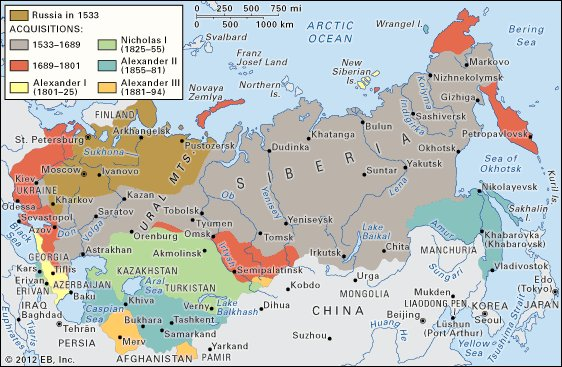
The Russian Empire grew to be massive. By 1895, the empire was 8,800,000 square miles in area. It was the third-largest empire in history and is only surpassed in size by the British Empire and the Mongol empire. http://www.escholarship.org/uc/item/3cn68807
The end of the Russian Empire is considered to have happened in March of 1917. Many specifically look to March 8th of that year, when a number of factories in Petrograd went on strike and many workers began to take to the street. At the same time this was happening, many women began celebrating the international socialist anniversary of Women's Day: a holiday promoting women's rights and achievements that became sponsored by the United Nations after 1975. Eventually, demonstrations occurred at the capital and the emperor began to order the military governor to fire on the demonstrators. However, many soldiers refused to use their rifles and many of them joined the workers. Some police did fight the workers, leading to the start of a civil war in the form of the February Revolution (though the revolution technically happened from March 8 to March 16 of 1917). Socialist revolutionaries and groups like the Bolsheviks (Marxist socialists who would come to form the framework for the Soviet Union) battled the Russian monarchists supporting Emperor Nicholas II. This battle led to the end of the monarchy and the formation of a Provisional Government for the tsars and the Petrograd Soviet. These two sides would temporarily share Russia before another revolution that same year would lead to the creation of a Soviet Russia and a start of the Soviet Union... https://books.google.com/books?id=BEoBCGJ4VqYC&pg=PA1 https://www.britannica.com/place/Russian-Empire/World-War-I#ref340510 https://www.britannica.com/topic/International-Womens-Day http://encyclopedia2.thefreedictionary.com/February+Bourgeois+Democratic+Revolution+of+1917 http://www.firstworldwar.com/source/firstprovgovt.htm https://www.britannica.com/topic/Petrograd-Soviet-of-Workers-and-Soldiers-Deputies
Intro to Cold War: United States Economy
Here, I am going to mention five important facts about the economics of the United States, since the economic factor was very important in starting the Cold War:
The United States' economy during the Cold War was capitalist. Capitalism is an economic and political system in which a country's trade and industry are controlled by private owners for profit, rather than by the state. Like all other capitalist nations, the United States has a market economy which it possessed since the days of the original 13 colonies. However, the colonies were originally under the mercantilist economic system. https://www.lexico.com/definition/capitalism https://www.britannica.com/topic/capitalism https://archive.org/details/economyofcolonia0000perk_j4y7
Mercantilism was an economic theory and practice common in Europe during the 16th to 18th century. Mercantilism was different from capitalism and socialism in many ways. First, in mercantilism, precious metals like gold &silver were deemed most important to a nation’s wealth and if there were no precious metals, the first thing a nation should do is obtain them through trade. While metals were valuable to the United States and USSR during the Cold War, they weren't considered central to the economy. Also, in mercantilism, colonies and territories were no allowed to engage in manufacturing goods & the mother nation was all colonies and protectorates were allowed to trade with. Trade with other nations or directly between certain colonies was either restricted or forbidden. Finally, mercantilism viewed wealth as finite and a zero-sum game where the main nation must protect its interest to prevent others from taking the finite wealth. While still under debate by economics to this day, many believe wealth can be increased (economically speaking) as new resources are discovered, new methods of harnessing and using resources are found, and new services that hadn't previously existed are discovered. Also, not all see economics as a zero sum game (others need to have less than their means in order for you to gain). https://www.britannica.com/topic/mercantilism https://archive.org/details/victoryofreasonh00star https://www.thestreet.com/world/what-is-mercantilism-14776819
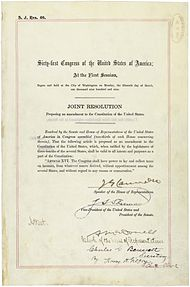
It took until the adoption of the Sixteenth Amendment to the United States Constitution in 1913 for the national government to be allowed to levy an income tax.
16th Amendment in National Archives
Wall Street, a location of chief financial institutions of the United States, was first built by Dutch settlers in 1653 in a region originally called New Amsterdam. Even before the American Civil War, the street was a financial capital for the United States after 24 stockbrokers met there under a buttonwood tree in 1792. The district contains the New York Stock Exchange, NYSE Amex Equities, and the Federal Reserve Bank of New York. https://www.britannica.com/topic/Wall-Street-New-York-City https://www.britannica.com/topic/New-York-Stock-Exchange https://www.britannica.com/topic/NYSE-Amex-Equities
In 1950s, enrollment in labor unions peaked for U.S. workers when 36% of American workers were in unions, though labor union membership is currently less than 15% with almost half being government employees. https://www.britannica.com/place/United-States/Strengths-and-weaknesses
Beware MLMs...
There are companies out there called Multi-Level Marketing companies or network marketing. These companies usually offer products that customers can't buy in a traditional retail environment. Said products are sold through independent, non-salaried distributors who usually earn commission through what few sales they make, but mostly through recruiting others. They are often mistaken for pyramid schemes and there is a reason for that: the MLM business model is shaped like a pyramid where the people at the top of the pyramid and have been in business longer earn money from their recruits and those in their 'downline'. https://www.entrepreneur.com/encyclopedia/network-marketing
Globally, network marketing makes $40 billion a year, but don't expect to get any of that money if you join an MLM as one of their distributors. According to a report cited by the Federal Trade Commission, 99% of distributors working for MLMs lose money or break even. https://www.huffpost.com/entry/mlm-pyramid-scheme-target-women-financial-freedom_l_5d0bfd60e4b07ae90d9a6a9e https://finance.yahoo.com/news/mlm-schemes-make-gambling-look-like-a-safe-bet-171253355.html https://www.ftc.gov/sites/default/files/documents/public_comments/trade-regulation-rule-disclosure-requirements-and-prohibitions-concerning-business-opportunities-ftc.r511993-00008%C2%A0/00008-57281.pdf
"Of the 350 MLMs I have analyzed for which a complete compensation plan was available, 100% of them are recruitment driven and top-weighted. In other words, the vast majority of commissions paid by MLM companies go to a tiny percentage of TOPPs (top-of-the-pyramid promoters) at the expense of a revolving door of recruits, 99% of whom lose money." -Jon M. Taylor, MBA, Ph.D., Consumer Awareness Institute, *The Case (for and) against Multi-level Marketing*
Even a 2018 study from the AARP found that only 27% of people in MLMs make any kind of money and don't lose by joining MLMs. So while some MLMs might brag that they are about offering products, most if not all of them are driven by recruitment and having those joining the company give money to those who recruited them. MLMs are not illegal like a pyramid scheme, but operates in a similar manner. The main reasons MLMs get a pass seem to be because of good lobbying in Congress (groups like the Direct Selling Association and the law firm Thompson Burton lobby on behalf of MLMs) and being able to hide behind a product or service they technically offer, even sales aren't their main source of revenue. https://www.prnewswire.com/news-releases/new-survey-reveals-73-percent-of-people-who-participate-in-network-marketing-opportunities-lose-money-or-make-no-money-300727716.html https://www.dsa.org/statistics-insights/overview https://thompsonburton.com/MLMattorney/
Many MLMs have a sketchy business history from specific instances of sketchiness ( Herbalife's settlement for bribing Chinese officials , the PETA-endorsed Arbonne MLM being sued for being a pyramid scheme and the FTC sending the company a warning letter against its unlawfully advertising that claimed their products treat/prevent COID-19, etc.) to overall statements against the businesses ("MLM makes even gambling look like a safe bet" was a recent quote from Jon M. Taylor, the terms "huns" being created to address women who fall prey to MLMs, etc.). But, long story short, MLMs are not a very good business to join. Plenty of news articles have been written describing why you shouldn't join them and hopefully more people can be educated on the pitfalls of joining one. https://www.forbes.com/sites/lisettevoytko/2020/08/28/herbalifes-123-million-chinese-bribery-settlement-is-latest-legal-trouble-for-mlm-giant/#67424b404fcd https://www.courthousenews.com/multilevel-marketer-arbonne-called-pyramid-scheme/ https://www.ftc.gov/system/files/warning-letters/covid-19-letter_to_arbonne_international_llc.pdf https://www.dictionary.com/e/slang/hun/ https://www.urbandictionary.com/define.php?term=hun https://www.huffpost.com/entry/mlm-pyramid-scheme-target-women-financial-freedom_l_5d0bfd60e4b07ae90d9a6a9e https://finance.yahoo.com/news/mlm-schemes-make-gambling-look-like-a-safe-bet-171253355.html https://www.biznews.com/good-hope-project/2020/09/03/multilevel-marketing https://news.google.com/articles/CBMiVmh0dHBzOi8vd3d3LnJvbXBlci5jb20vcC9uby1tb3JlLW1sbS1wYXJ0eS1pbnZpdGVzLWZvci10aGlzLW1vbS1wbGVhc2UtdGhhbmtzLTE5MTg5OTYz0gEA?hl=en-US&gl=US&ceid=US%3Aen https://news.google.com/articles/CBMirgFodHRwczovL3d3dy5wcm5ld3N3aXJlLmNvbS9uZXdzLXJlbGVhc2VzL25ldy1zdXJ2ZXktcmV2ZWFscy03My1wZXJjZW50LW9mLXBlb3BsZS13aG8tcGFydGljaXBhdGUtaW4tbmV0d29yay1tYXJrZXRpbmctb3Bwb3J0dW5pdGllcy1sb3NlLW1vbmV5LW9yLW1ha2Utbm8tbW9uZXktMzAwNzI3NzE2Lmh0bWzSAQA?hl=en-US&gl=US&ceid=US%3Aen https://news.google.com/articles/CBMiUGh0dHBzOi8vdGhlc3R1dGUuY29tLzIwMTkvMDkvMDYvaGV5LWh1bi1ob3ctbXVsdGktbGV2ZWwtbWFya2V0aW5nLXRhcmdldHMtd29tZW4v0gEA?hl=en-US&gl=US&ceid=US%3Aen https://news.google.com/articles/CBMiPmh0dHBzOi8vd3d3LnRwci5vcmcvcG9zdC9wZXJpbHMtbXVsdGktbGV2ZWwtbWFya2V0aW5nLXByb2dyYW1z0gEA?hl=en-US&gl=US&ceid=US%3Aen

Intro to Cold War: United States
Before we can talk about the Cold War, we have to talk about the two global superpowers at the center of the conflict: the United States and the Soviet Union. Here are five facts about the United States to introduce its history going into the Cold War. There will be more information on the United States in relation to itself and the Cold War, but this will act as a descent introduction to the country:
Currently, the United States is a federal republic of 50 states and the fourth largest nation on Earth in terms of area (with 3,677,649 sq mi or 9,525,067 sq km)after Russia, Canada, and China. The nation is secular with no official language or religion. https://www.britannica.com/place/United-States
The United States was originally thirteen British colonies: New Hampshire, Massachusetts, Connecticut, Rhode Island, New York, New Jersey, Pennsylvania, Delaware, Maryland, Virginia, North Carolina, South Carolina, and Georgia. These colonies were the states that existed in the United States prior to the United States declaring independence with a document called the Declaration of Independence in 1776. The American Revolution was a war between these colonies and the nation of Great Britain fought for colonist independence that occurred from 1775 to 1783. After the war, the United States formed as the first nation to be explicitly founded as a democracy. https://www.history.com/topics/colonial-america/thirteen-colonies http://www.digitalhistory.uh.edu/active_learning/explorations/revolution/revolution_declaringindependence.cfm https://www.britannica.com/event/American-Revolution https://www.weforum.org/agenda/2019/08/countries-are-the-worlds-oldest-democracies
Various inventions were created in the United States including the first automatic electric fire alarm in 1890 by Francis Robbins Upton, the first Ferris Wheel by Ferris Jr., the first liquid-propellant rocket in 1926, and the Iron lung medical device in 1928. https://worldwide.espacenet.com/textdoc?DB=EPODOC&IDX=US436961 http://www.hydeparkhistory.org/newsletter.html http://www.wdl.org/en/item/11369/ https://web.archive.org/web/20071201210444/http://liftoff.msfc.nasa.gov/news/2003/news-goddard.asp https://web.archive.org/web/20070311005730/http://historical.hsl.virginia.edu/ironlung/pg4.cfm
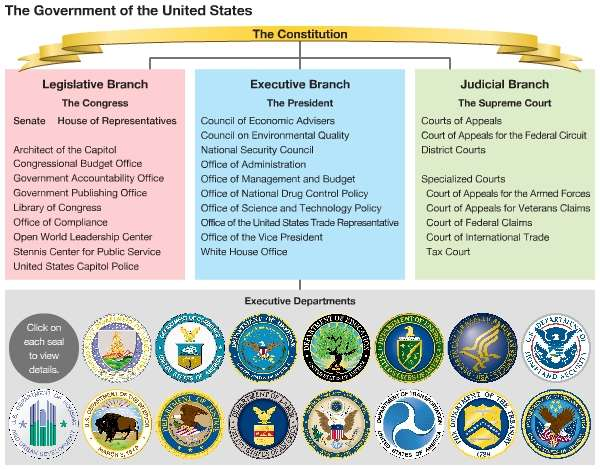
The United States has a Constitution, but before the current constitution, the nation had a document called the Articles of Confederation (1781–89) which basically made each state a sovereign nation in a confederation. It was abandoned because the weak central government was unable to demand centralized taxes or have a central military not made from troops volunteered by the states allowed an armed uprising known as Shays' Rebellion to occur from 1786 to 1787 that almost overthrew the government. The current constitution establishes a government with three branches of government: Judicial, Executive, and Legislative (with two houses: the Senate and House of Representatives). https://www.britannica.com/topic/Articles-of-Confederation https://www.ushistory.org/us/15a.asp
Image From Encyclopedia Britannica
The United States runs on a general two party system with no third party ever winning a Presidential election or majorities in the Legislative branches two houses or gained any share of electoral votes since 1968. The two main parties in modern times and around the time of the Cold War are the Democratic Party and the Republican Party. Third parties have to payee a fee and petition in each state to be placed on the ballet, plus the United States has a winner-takes-all system which would make it difficult for third parties to win without having sweeping support for the U.S. populace. https://www.youtube.com/watch?v=v8_IWtKvz2c&t=227s
Hello everyone. I am tyler775 and I am new to the community. One thing that is important for you to know about me is that I love studying history, especially the Cold War. So, every day, I am going to try to post articles about the Cold War so people can learn more about this interesting time in history and how the battle of ideology between the USSR and USA shaped the world we have today.
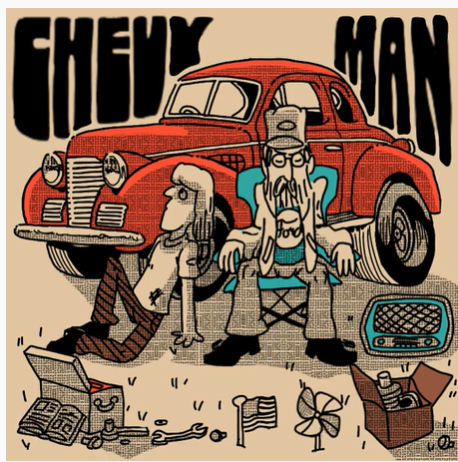
Chevy Man
https://youtu.be/e1PEyfV1s80
Above is a short, but fun, artistic music video from one of my favorite new YouTube artists, **CookieheyLookie**. It only has 329 views as of this writing, but I feel like it deserves more, so please check it out and share this video/post if you feel like it. It is a fun, colorful 22 second piece of art and if you like it, you can see more from this artist through his YouTube channel. There is also his video 'Chevy Man is Coming', a prequel of sorts that is animated like a digital album cover: https://www.youtube.com/channel/UC1B88OA7EYGoeeHt5_Vr3ZA
https://youtu.be/NWI3QShTGvA