Here is an article about a democracy from the Middle Ages called the Taifa of Cordoba: https://newsbreakapp.onelink.me/2115408369?pid=mp_1599872&msource=mp_1599872&docid=0p054av8&af_dp=newsbreak%3A%2F%2Fopendoc%3Fdocid%3D0p054av8&af_web_dp=https%3A%2F%2Fwww.newsbreak.com%2Faf-landing%3Fdocid%3D0p054av8
@tyler775
Joined 25 September 2020 · 49 posts
I am a tutor of AP History and Computer Science. I am also interested in writing short fiction. I also write articles on the Voice Social Media site: https://a…
120 KT
0 KT · 5¢ received · 0 KT · 11¢ given
Posts
The Simpsons: Intro to A Cultural Phenomenon and 5 Facts Here is an article I wrote about the Simpsons that I originally submitted to vocal.media: https://vocal.media/geeks/the-simpsons-intro-to-a-cultural-phenomenon-and-5-facts The Simpsons is a show and a piece of American culture that literally needs no introduction. The show was created as a great satirical depiction of American nuclear family culture, showing an awesome dysfunctional family going on great adventures with one another. Now, I love the Simpsons and have enjoyed it since I spent time watching marathons of the show in college. I still watch the show to this day whenever a new episode of the show comes out, even though the show is going through seasonal rot and many of the newer episodes do not hold up as much as the older episodes of the series. Since the Simpsons is a new thing I am writing about on the platform of vocal.media, I also want to try a new format when it comes to writing my articles. This new format is a kind of ‘Top 5’ listicle format that lists out five interesting facts about a topic I am interested in writing about. It allows me to produce quick and easy lists that can help me output quality writings quicker without having to constantly fight against writer’s block to get anything out of my head and onto an article. With this little written piece, I am going to try to provide five interesting facts about the Simpsons in a nice little list you can read through and hopefully share with your friends. These facts will be pretty short and I will probably make more listicles about the Simpsons in the future, because the Simpsons have gone on for so long that you could probably create an entire blog or YouTube channel or TV show that literally does nothing but analyze the tv show. So, enough beating around the proverbial yellow bush, it is time to get into 5 simple facts about the Simpsons: 1. The Simpsons has been running on television since December 17th of 1989. While the show is mostly seen as a great product of the 90s and has had a huge effect on the culture of the 1990s and the early 2000s, the show has technically started in the late 1980s with its first episode “Simpsons Roasting on an Open Fire” premiering as a Christmas episode. The episode has the production code 7G08 and was written by writer Mimi Pond - a famous American cartoonist, humorist, and comic book artist. This episode is considered to be one of Mrs. Ponds’ most notable works. 2. Because of this early premier, the Simpsons is now the longest-running American animated series. It has 703 episodes on the books as of this writing, giving it a longer run than most other pieces of television. The Simpsons is also the longest-running American sitcom as well as the longest-running American scripted primetime television series. The show first earned the title of longest-running prime-time award series in 2012 after reaching its five hundredth episode. The Simpsons is currently on its 32nd season which it reached when it aired its 700th episode known as “Manger Things” on March 21st, 2021. 3. During its time on air, The Simpsons has won dozens of awards due to the quality of its programming. The show has gotten 31 Emmy Awards, including 10 for Outstanding Animated Program. For those who do not know what the Emmys are, they are awards presented by the Academy of Television Arts and Sciences for excellence in television programs & they were first awarded in January of 1949, about 72 years ago. The Simpsons have essentially been an Emmy darling and it is guaranteed that most people will find one episode of the show that they will view as being deserving of such an award. 4. The Simpsons has also earned 34 Annie Awards and a Peabody. The show also has 3 previously mentioned records that are recorded in the Guinness Book of World Records. The show also has 9 Environmental Media Awards. 5. The Simpsons Movie also was nominated for several major rewards and even won the British Comedy Awards ‘Best Comedy Film’ awards as well as ‘Best Animation’ from the ITV National Movie Awards.

Useless History: A Brief History of the Social Media App Vine This article is something I am writing for a new segment that I am creating called Useless History. This is a segment that, unlike the Cold War and other important parts of history, is going to be filled with information about topics that are pretty much useless for you to know about. It is going to be historical data that could be fun to learn but will probably not be useful for the average person's day-to-day life. The useless topic can be anything: social media apps, defunct businesses with no big impact on history, people with internet fame, the history of some kind of failed and frivolous invention... basically any type of topic that would not affect humanity much if its history was forgotten. The Plenty of millennials and members of Generation Z probably have fond (or in my case, pretty indifferent) memories of the social media service called Vine. It was an American social media site that allowed people to share six-second-long looping videos, which made it very popular even in an age when other video-sharing platforms like YouTube and Dailymotion were already in full-swing. Here are some facts about Vine that allows this really short-lived social media platform to reach the mainstream before disappearing from the face of the Earth: Vine was technically founded in June of 2012, but it was acquired by Twitter on October of 2012. The acquisition happened for the reported sum of $30 million and the team who originally created Vine getting jobs with Twitter under a newly formed subsidiary called Intermedia Labs. Vine was able to officially launch as an iPhone app on January 24th of 2013 before releasing as an Android application on June 2nd of the same year. On April 2013, Vine became the most downloaded free app on the iOS app store. http://allthingsd.com/20121009/twitter-buys-vine-a-video-clip-company-that-never-launched/ https://techcrunch.com/2013/01/24/twitters-video-sharing-app-vine-goes-live-in-the-app-store/ https://vine.co/v/b3v5h3Piwt7 https://www.theverge.com/2013/4/9/4204396/vine-number-one-us-app-store-free-apps-chart On October 27, 2016, Vine announced that Twitter would be discontinuing Vine and that users would no longer be able to post to the social media platform. Some people believe the end came due to the arrival of other short-form video platforms. According to a former Vine executive speaking with the website The Verge, "Instagram video was the beginning of the end" for Vine. Marketers began to leave the platform and the revenue for Vine began to dry up. Vine founders were also against monetization and refused to take money from many brands which reduced the options Vine had to remain profitable and helped to lead to Twitter's decision to shut it down. https://variety.com/2016/digital/news/twitter-vine-shutting-down-1201902457/ https://www.theverge.com/2016/10/28/13456208/why-vine-died-twitter-shutdown For the record, Vine could be used to make somewhat entertaining short videos with some using it for basic video editing and short stop-motion animation. Many small businesses could use Vine to advertise their goods and services. The many uses of the app lead to Time Magazine called Vine one of the '50 Best Android Apps for 2013'. https://www.bbc.co.uk/news/magazine-21267741 After Vine died, one of the creators of the app named Dom Hofmann worked to create a new social media app called Byte that launched on iOS and Android stores on January 24th, 2020. TikTok also arrived from China as a new version of Vine for today's teens and young adults.

Game Engine: Clickteam Fusion 2.5 Intro As many people on this site already know, I create amateur web games for fun as a hobby for itch.io contests and tend to use websites like read.cash as a blog of sorts to show the kind of progress that I have made when it comes to different games. I also like learning how to work with different game engines. Currently, I am planning to take a free course on Udemy.com in order to learn how to use a new game engine to make mobile games for free in a short period of time. You can see the course here: https://www.udemy.com/share/103JUGBUodcF9RQXg=/. Hopefully, Clickteam Fusion 2.5 will be a good game engine to use for future game jams, especially ones with a very extensive time crunch. According to the Udemy course, it is a beginner level game engine & it is also a no-code platform (meaning you can code and program for the game engine, but that is not necessary in order to create a video game with it). The company that creates the Clickteam Fusion line of game engines was founded in 1999 with its headquarters in Boulogne-Billancourt, France. While many of non-professionals use Clickteam game engines to make their new games, there are professional indie studios that use Clickteam Engines to make their games. For example, the Clickteam Engine was used by indie developer Scott Cawthon to create the *Five Nights at Freddy's* game series that started in 2014 and became a global phenomenon. The indie game *Freedom Planet* was also made with Clickteam Engine as was *Spark the Electric Jester* and the incredibly difficult freeware platform game *I Wanna Be the Guy*. You can buy Clickteam Fusion 2.5 on Steam and on Clickteam's website clickteam.com, but I am going to be downloading the free Windows version of Clickteam Fusion 2.5 for the class. I will also be using this free version that allows you to make games for iOS, Android, HTML5, and MacOS. So, if you are interested in making games for Mac, browser, iPhones, or Android devices, you can try Click Fusion 2.5. I will be giving a proper review on how good of a game engine Clickteam Fusion 2.5 is. https://www.clickteam.com/clickteam-fusion-2-5-free-edition

Cold War: USSR Attempt To Join NATO There was a time during the Cold War where the Soviet Union attempted to join NATO. NATO or the North Atlantic Treaty Organization, is an intergovernmental military alliance that formed in April 4th of 1949. The alliance originally only had 12 countries. However, some consider NATO to have started in 1948 when the Treaty of Brussels was signed as a mutual defense treaty against the Soviet Union. This treaty was signed by Belgium, France, Luxembourg, the Netherlands, and the United Kingdom. However, this defense pact did not include the United States and future members of NATO. The 1948 Treaty was signed by: https://www.theguardian.com/world/2001/jun/17/russia.iantraynor https://www.nato.int/nato-welcome/index.html Prince Charles of Belgium, as the reigning Prince Regent of Belgium https://en.wikipedia.org/wiki/Prince_Charles_of_Belgium https://en.wikipedia.org/wiki/Prince_regent Vincent Auriol, President of France https://en.wikipedia.org/wiki/Vincent_Auriol https://en.wikipedia.org/wiki/President_of_the_French_Republic Charlotte, Grand Duchess of Luxembourg https://en.wikipedia.org/wiki/Charlotte,_Grand_Duchess_of_Luxembourg Queen Wilhelmina of the Netherlands https://en.wikipedia.org/wiki/Queen_Wilhelmina_of_the_Netherlands King George VI of the United Kingdom https://en.wikipedia.org/wiki/King_George_VI_of_the_United_Kingdom Paul-Henri Spaak, Prime Minister of Belgium https://en.wikipedia.org/wiki/Paul-Henri_Spaak https://en.wikipedia.org/wiki/Prime_Minister_of_Belgium Georges Bidault, French Minister of Foreign Affairs https://en.wikipedia.org/wiki/Georges_Bidault https://en.wikipedia.org/wiki/Minister_of_Foreign_Affairs_(France) Joseph Bech, Luxembourgish Minister of Foreign Affairs https://en.wikipedia.org/wiki/Joseph_Bech https://en.wikipedia.org/wiki/List_of_Ministers_for_Foreign_Affairs_of_Luxembourg Gaston Eyskens, Belgian Minister of Finance https://en.wikipedia.org/wiki/Gaston_Eyskens Carel Godfried Willem Hendrik baron van Boetzelaer van Oosterhout, Dutch Minister of Foreign Affairs https://en.wikipedia.org/wiki/Carel_Godfried_Willem_Hendrik_baron_van_Boetzelaer_van_Oosterhout https://en.wikipedia.org/wiki/Dutch_Minister_of_Foreign_Affairs Ernest Bevin, Secretary of State for Foreign Affairs of the United Kingdom https://en.wikipedia.org/wiki/Ernest_Bevin https://en.wikipedia.org/wiki/Secretary_of_State_for_Foreign_and_Commonwealth_Affairs Jean de Hautecloque, Ambassador Extraordinary and Plenipotentiary of the French Republic in Brussels https://en.wikipedia.org/w/index.php?title=Jean_de_Hautecloque&action=edit&redlink=1 Robert Als, Envoy Extraordinary and Minister Plenipotentiary of Luxembourg in Brussels https://en.wikipedia.org/w/index.php?title=Robert_Als&action=edit&redlink=1 Baron Binnert Philip van Harinxma thoe Slooten, Ambassador Extraordinary and Plenipotentiary of the Netherlands in Brussels https://en.wikipedia.org/w/index.php?title=Baron_Binnert_Philip_van_Harinxma_thoe_Slooten&action=edit&redlink=1 George William Rendel, Ambassador Extraordinary and Plenipotentiary of His Britannic Majesty in Brussels https://en.wikipedia.org/wiki/George_William_Rendel It was ratified in Belgium April 3rd, 1948. NATO predated the Warsaw Pact (which will be discussed in a future article) by about 6 years. The USSR offered to join NATO even though it was pretty much created as an alliance against the USSR & the Red Army. Officially, this was a defensive alliance, however, it was supposed to defend against any Marxist-Leninist socialist movements. Two important Soviet politicians, Lavrentiy Beria and Vyacheslav Molotov, had an interesting idea of becoming part of NATO. The plan would involve the USSR giving up East Germany and reunifying Germany as a neutral state when the Soviet Union becomes a member of NATO. The likelihood of the USSR being accepted into NATO was slim and the politicians knew this. However, the Politburo (Highest worker's committee) did prepare in case NATO said yes. The idea was also based around the Stalin Note, a note from Premier of the Soviet Union Joseph Stalin delivered to the Western Allies on March 1952 that proposed German reunification if German remained neutral. https://www.youtube.com/watch?v=FxhLkwmSu98 https://www.worldcat.org/title/documents-on-germany-1944-1970/oclc/643516898 The obvious answer was 'no' and the Soviet Union responded by creating their own defensive alliance in the form of the Warsaw Pact. The request was specifically rejected by the United States and the United Kingdom. https://web.archive.org/web/20120311044021/http://www.nato.int/history/doc/5-Soviet-Union-s-request-to-join%20NATO/Soviet%20request%20English.pdf

States with the Fastest Internet TechRepublic has a list of which states in the United States have some of the fastest internet in the country. The ten states with the fastest internet on average are: https://www.techrepublic.com/article/speediest-here-are-the-states-with-the-fastest-internet/ Rhode Island (129.0 Mbps) beating out two-time former record holder Maryland New Jersey (120.4 Mbps) Delaware (119.1 Mbps) Maryland (118.2 Mbps) District of Columbia (DC) (117.7 Mbps) Virginia (116.7 Mbps) Massachusetts (116.4 Mbps) Texas (110.7 Mbps) California (110.0 Mbps) New York (108.8 Mbps) Meanwhile, the ten states with the slowest internet in the United States are: Montana (54.4 Mbps) West Virginia (55.2 Mbps) Idaho (55.4 Mbps) Maine (56.3 Mbps) Wyoming (60.0 Mbps) Alaska (61.5 Mbps) Arkansas (64.9 Mbps) South Dakota (70.8 Mbps) Iowa (71.8 Mbps) New Mexico (72.2 Mbps) The average speed of internet in the United States is 99.3 Mbps, which is pretty good considering that the average global download internet speed is 34.82 Mbps according to statista.com. https://www.statista.com/statistics/896779/average-mobile-fixed-broadband-download-upload-speeds/
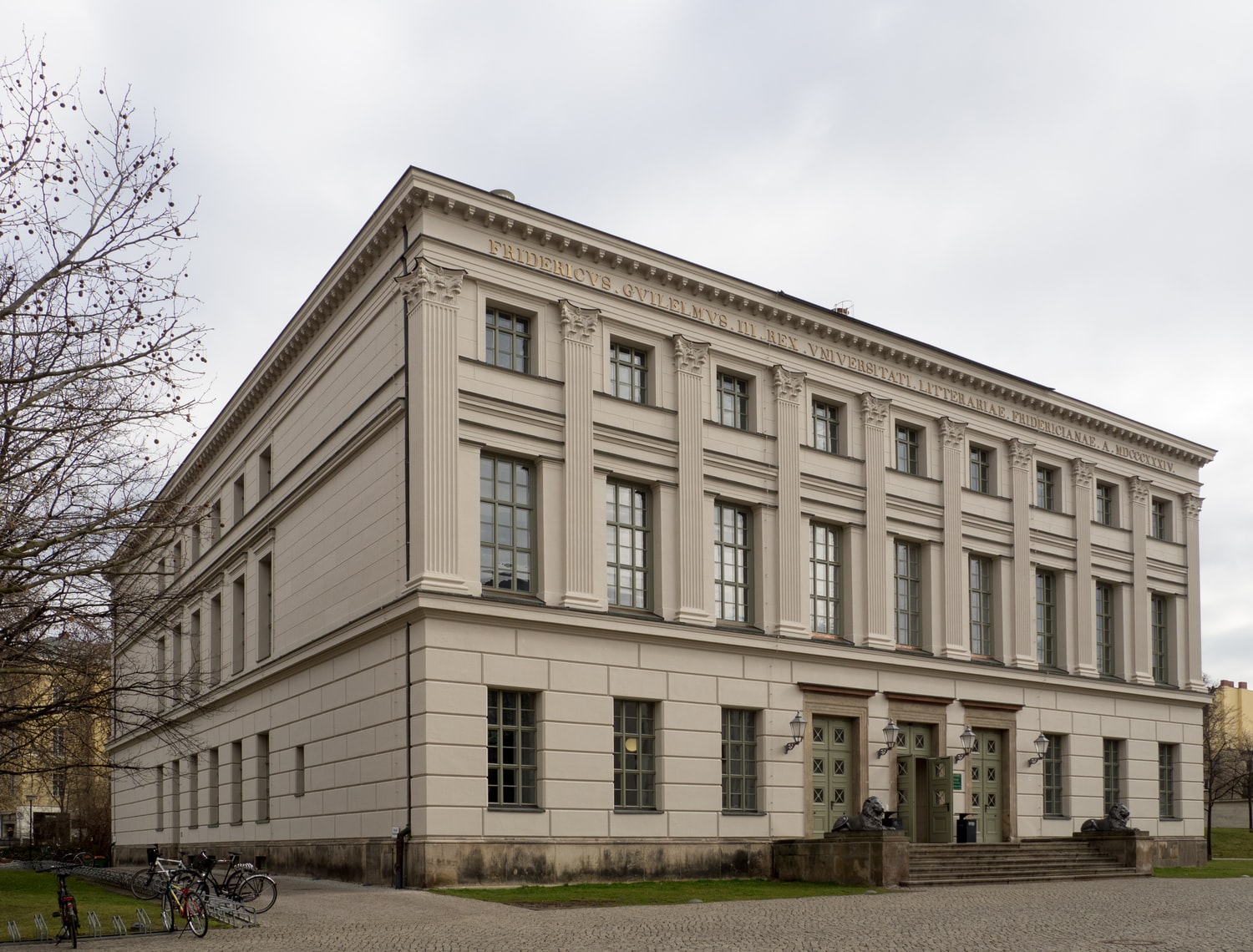
Cold War: Roosevelt University Roosevelt University is a private university with campuses in Chicago, Peoria, Waukegan, & Schaumburg, Illinois. Just like the **Moscow Institute of Physics and Technology** I mentioned previous, this educational complex was created during the Cold War. In fact, the institution was established in 1945 and set many **records** that still exists today: the university has the tallest educational building in Chicago, the second tallest educational building in the entire United States, and the fourth-largest academic complex in the world. The college was **founded by** **Edward J. Sparling**, a former World War I United States Army flying instructor, educator, and former president of the Central YMCA College from 1936 to 1945. The man wanted to find a college that would admit students regardless of their race or religion. https://read.cash/@tyler775/cold-war-moscow-institute-of-physics-and-technology-1f58c42f https://www.roosevelt.edu/campuses/conference-events/chicago/wabash https://en.wikipedia.org/wiki/Edward_J._Sparling https://interactive.wttw.com/loop/heroes-villains/edward-j-sparling The university was named after the late President Franklin D. Roosevelt two weeks after Franklin's death with the name Roosevelt College. In the beginning, the college had no library, official campus, or endowment. It was also chartered on March 28th of 1945 as Thomas Jefferson College. The financial backing came from Marshall Field III, an American investment banker, publisher, and philanthropist. In 1947, the university established a permanent home and by 1959, the university was given its modern name Roosevelt University. Early advisory board members for the college included Marian Anderson, Pearl Buck, Albert Einstein, Thomas Mann, and Albert Schweitzer. Undergraduates and graduates can get educated through seven schools: Chicago College of Performing Arts (Music Conservatory), Chicago College of Performing Arts (Theatre Conservatory), College of Arts & Sciences, College of Education, College of Pharmacy, Heller College of Business and Robert Morris Experiential College. There are also a variety of organizations such as Alpha Gamma Delta (an international fraternity and a member of the National Panhellenic Conference that was installed at the college in 2008), the Roosevelt Review literary journal, and the Colleges Against Cancer initiative. https://en.wikipedia.org/wiki/National_Panhellenic_Conference
Practicing Linux with Chromebook Here is an article about working with Linux on a Chromebook computer I wrote originally on vocal.media which can be found here: https://vocal.media/stories/practicing-linux-with-chromebook. Here, I am going to be talking about how to use a cheap netbook called a Chromebook to do work with the Linux operating system. As I have stated in a previous story, I have been spending my time working with Linux and attempting to get Linux certification. At this point in the process, I am working on doing labs where I can practice working with Linux hands-on. However, instead of working on the computer provided by my current employer, I am working on one of my own devices. The device I am currently using to practice basic Linux commands and working with the Linux terminal is the Acer Chromebook Spin 311, a little computer running ChromeOS that I had purchased last year to test Android applications on. This Chromebook, from what I can tell, works pretty well and also has a way to run Linux, which is very useful for preparing for certification. Many Chromebooks allow you to run Linux directly from the device with little modification. They use a program named Crostini. Crostini is used to run Linux apps from devices that run the ChromeOS operating system (the native operating system that runs Chromebook). To start running Linux on Chromebook, all you have to do is go into the Settings of your Chromebook and click Linux/Enable. Once active, you should see an option in the settings of your Chromebook named Linux(Beta) that you can use to edit how Linux deploys on Chromebook. When Linux(Beta) runs, it will do so from a virtual machine on ChromeOS that keeps the deployment of Linux (and almost everything you do on it) separate from the main system. To run this version of Linux, you have to go to the Terminal app on your Chromebook and open it. Opening it will open a Linux terminal where you can type in Linux shell commands to navigate the Linux environment. There are three main forms of Linux that all other distributions of Linux are descended from: RedHat, Debian, and SUSE. The version of Linux that runs on my version of the Spin 311 Chromebook is called Debian GNU/Linux 10 (buster). Debian uses the Advanced Packaging Tool (APT) to retrieve and resolve software packages. The apt command itself is used for options that allow you to install different Linux programs. Apt-get can be used to install and remove software packages. Meanwhile, apt-cache can be used to search software packages and display data on said packages to the user. Debian comes with the Chromebook I use and others, but you can download it for free on other devices due to it being open-source under the GNU General Public License. Now, I can’t practice any of the stuff from the Chromebook since part of the course talks about using a Graphic User Interface. This terminal version of Linux doesn’t have a graphic user interface and you have to do everything from the command line. However, pretty much everything else I am learning in the course can be practiced on the device with little to no trouble. I can use the ls command to list all of the files and directories that are contained in the current directory. I can also use the command ls -a to list every file and directory in the current folder I am visiting, including the files that are designated as hidden. Cd .. allows me to go ‘up’ a level and exit the folder I am currently in to move closer to the root (the user home directory of Linux) and I can use the cd command followed by the name of a folder to enter whatever folder I need to access. So far, this is all I need to do my basic Linux training, but over the coming days, I am going to see if my Chromebook can handle more advanced Linux functions. Stay tuned!

Christmas Tree Foods Here is a writing I made originally on vocal.media all about how you can eat your Christmas tree as a source of food for humans! https://vocal.media/stories/christmas-tree-foods There are a lot of things that you can be able to do with your Christmas tree that people have been unable to consider. I know that this story is coming out past New Year's Day, so most people have pretty much tossed their old Christmas tree to the curb, but maybe you can consider this interesting advice that you might be able to take into consideration for next Christmas. Now, you have considered using a Christmas tree as a festive ornament and display of cheer, but have you ever considered the potential nutritional value that might be hidden your Christmas tree. I know anyone who read that last sentence and realize that my fancy words are implying you should use a tree as a food source will probably be thinking that this article was written by a madman with the kind of crazy dietary habits you would expect from a reality TV show. However, if you give me some time to explain in this writing, you will be able to see how a Christmas tree can be turned into a pretty good treat in a few different ways… ways that I've been tested by others and might make your Christmas tree more useful than you think… The first thing I need a state is that the information I give you will only work on certain Christmas trees. obviously if you have a artificial Christmas tree, you should probably not try any of the suggested recipes in this article unless you want to end up in the hospital. Also, some Christmas trees have poisonous sap so you have to be sure you select the right one. On the YouTube Channel food theory, they use a blue spruce and turn it into a bunch of culinary concoctions. I would personally use a white pine tree since the white pine and other pine trees are known to be rich in vitamin C. The first thing you can do is eat the spongy inner bark of your Christmas tree. Don't eat the outer dark brown, black-ish bark of your tree. This inner bark has some good calories and you can get some vitamin C and fiber from it. It has been described as somewhat dry and bitter, but is still good to eat and has the consistency of coconut. Some French cheeses use this bark as an edible outer layer, so I'm not the only one considering the use of bark as some kind of holiday treat. You can also be able to eat the wood pulp of a Christmas tree because wood pulp is actually something that humans have been eating for a long time. Most people just don't know it. Wood pulp is used to make paper, but it's also used as an ingredient in some forms of parmesan cheese. It is also used in tomato sauce and as a filler in ice cream. It is used to make the ingredients cellulose gum and cellulose gel which you might be able to find on a food label for any of the previously mentioned foods. It can be used to help with preservation of foods and help preserve specific textures. Ice cream is made creamier and parmesan cheese is prevented from clumping thanks to your good friend wood pulp… wood pulp which is easy to find in a tree. The pine needles can be used both as an edible substance and as a method for creating tea. Yes, you can create Christmas tree tea just as easily as you make any other kind of tea. All you need to do is take the needles of a Christmas tree and and dice up the needles is finally as possible. Take your chopped up needles and place them into some boiling water. Wait for the boiling water to slowly turn a yellowish red color and voila… you have your tea. Plenty of websites from the Smithsonian to the Wall Street Journal have a list of different recipes you can be able to try. Take a look if you're interested and enjoy your Christmas tree!

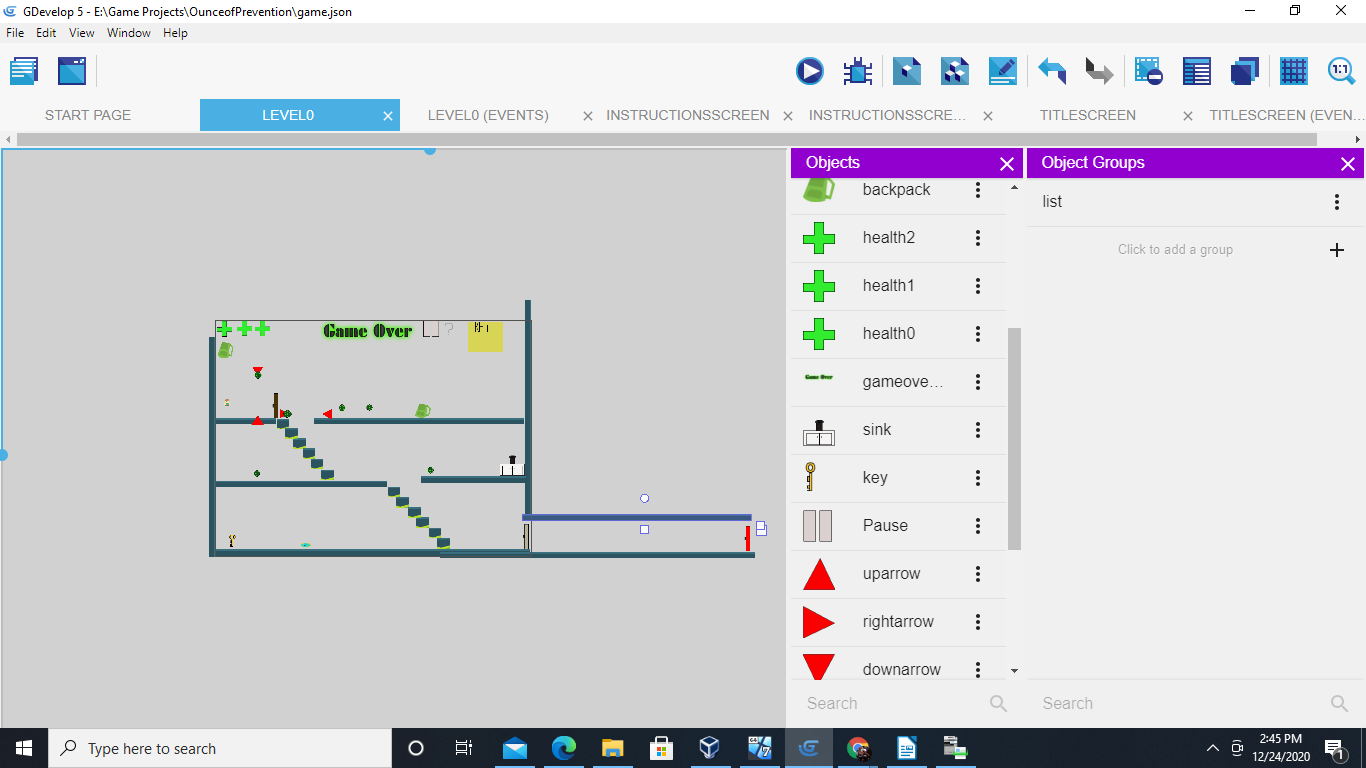
Gift Jam 2020 Game Log #2 (OunceofPrevention) I have added a lot to the game since I started. I added a list to the first level to see how many essential objects you have collected. The first level only requires you to collect a key to have enough to go to the next level: I also added a door that you touch when you have all the items for the next level. The door starts off as red and turns blue to show you've succeeded and are heading to the next level: I have also added instructions with two pages of said instructions: They are sloppy instructions, but they currently get the job done. You can also access the instructions while playing the game by clicking a question mark sprite. My goal is to have 3 basic levels before adding basic graphics for this alpha model of a game. Only 13 more days before the game jam ends and I have to submit...


+4 more
Saudi Arabia Blockchain Passports (Old News article I forgot to post earlier) Saudi Arabian business leaders have been having financial issues due to the current COVID-19 crisis. To deal with this problem, said leaders have suggested a radical idea: a **blockchain-based business passport**. This new digital decentralized passport - currently named the "Global Value Chain" passport - would provide a digital solution for people doing business in Saudi Arabia to get past repetitive, redundant border protection measures while verifying the visitor is who they say they are. The idea has also been pitched by the Saudis at the B20 Summit for global business leaders. If this idea is implemented and successful, it could change how passports are implemented... https://coindesk.com/saudi-blockchain-business-passport

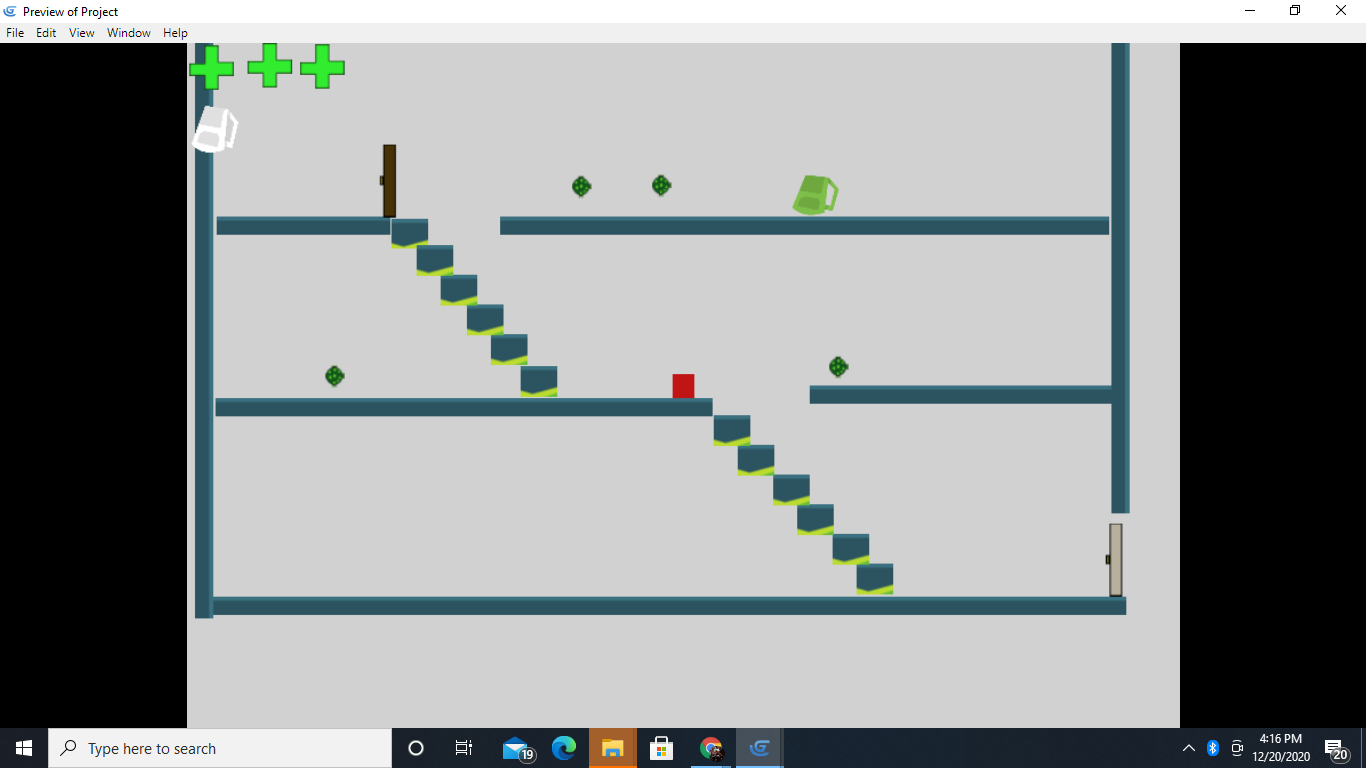
Gift Jam 2020 Game Log #1 (OunceofPrevention) I have been able to implement a form of pausing where you can press the Q button and pause the game. When you pause, a specific sprite appears in order to tell you the game has been paused: I also added a 'W' key as a button to interact with items like sinks and doors. Touching the sink & pressing the 'W' key allows a person to wash their hands (restoring you to full health), but also causes all of the germs that have been defeated or disappeared when you got hit by them to reappear and become threats once again. I also added another potential sprite to the 'virus' enemy called the bacteria sprite: I am also adding parts to a menu you can visit at any time that provides instructions for how to play: Going to keep working on this alpha model of the game until I have put in about a full six hours into this project. Stay tuned!



+2 more
Gift Jam 2020 Game Log #0 (My project6) I am working on a game for a game jam. Said jam is already accepting submissions and will stay open until **January 6th 2021 at 5:59 PM****.** I plan to spend less than 6 hours working on the game and start off making it a small playable game and 'gift' that I can expand into a larger game. Currently, I just call the game 'My project6'. https://itch.io/jam/gift-jam-2020 The game has three green crosses for the person's health. You lose health by touching hazards such as the green 'viruses' in the game world: You grab a backpack to gain the ability to collect other objects. In this platformer, you can go through certain doors, but others require items or 'keys' to open: The controls are pretty simple. Use the arrow keys to move (left to move left, up key to jump, etc.) and press 'E' with the backpack to grab/equip items. I have also made a simple game over sprite for when you run out of health: I also started working on a basic button on the Title Screen that takes you to the main game" Currently, one possible working title I have is 'Ounce of Prevention': This is hour 1 for the game. Stay tuned!


+8 more
Games I Have Made So Far Since I don't have a professional website yet for my indie game development, I have decided to use this blog as my 'website' for the time being when it comes to making games for itch.io. So far, I have published three very basic games: one 5 minute tabletop RPG ( 5 minute Cold War RPG) and two 2D games designed with the open-source game engine GDevelop (2:00 Dash To Class & Barefoot Arachnid Run). So far, these games have gotten 174 views and 24 downloads, which is pretty good considering that I am still new to making games and mostly do it as a hobby in-between my actual jobs of tutoring and working as a data scientist. These games are free so feel free to play them to your heart's content and leave any honest feedback you like! If I have time, I will work on a simple game for a new game jam called The Jam that Couldn't Jam. This Jam gives me a month to prepare with a concept and has an interesting premise: make a game that has a mechanic missing that is replaced by a mechanic the game shouldn't have. Hopefully, when I have the time, I can begin developing the concept and post on this site each step of the development process... https://tmc21.itch.io/tyler-mc-5-minute-cold-war-rpg https://gdevelop-app.com/ https://tmc21.itch.io/200-dash-to-class https://tmc21.itch.io/barefoot-arachnid-run https://itch.io/jam/the-jam-that-couldnt-jam

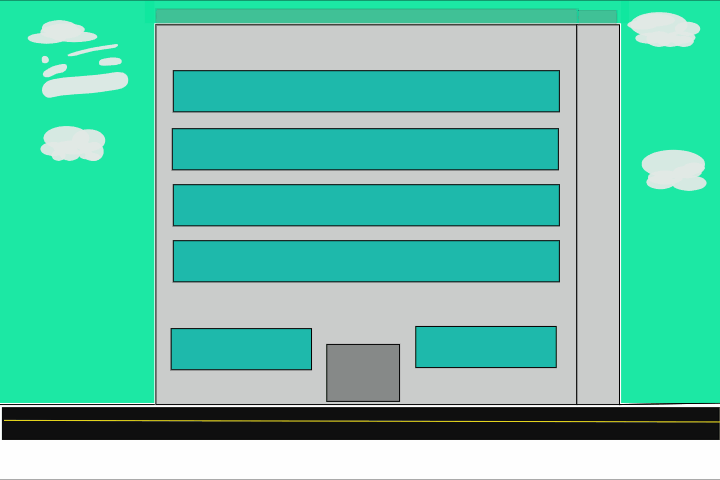
Wick Editor Amateur Drawings 2 Here are some more amateurish designs I made in Wick Editor. Enjoy!


+1 more
Basic Wick Animations Among Us Green (Badly Drawn movement animation) Ball Bounce (Badly Drawn movement animation) Copperhead snake Sorry to everyone for being gone for so long. Right now, I am spending time working on things, including basic digital drawing/design, tutoring, and getting tested to see if this cold I have had for a while is actually COVID (fun...). Currently, it is very amateurish and I am still learning the basics of an online tool known as Wick Editor: an open source tool for animation and basic game creation that is kind of being used by some as a replacement for Flash now that Adobe Flash is being phased out. You can work with Wick Editor at this website:? https://www.wickeditor.com/ .



+1 more
Blockchain Platform for Australian Banks **The Lygon blockchain platform** (a platform that runs on IBM Public Cloud) conducted a successful pilot of the platform with Australian banks ANZ, Westpac, and the Commonwealth Bank of Australia (CBA). The blockchain is being tested to issue bank guarantees and with this system, bank guarantees can be implemented in one day compared to current paper guarantees, which take a month. Bank guarantees are financial stops offered by banks as promises that the lender will ensure the liabilities of a debtor will be paid. Lygon and the Australian banks plan to expand Lygon's guarantees to customers and international markets sometime early next year. https://cointelegraph.com/news/blockchain-platform-commercializes-digital-bank-guarantees-in-australia

Cold War Recipe: USSR (Solyanka Soup) Here is a USSR dish that originated in Ukraine called Solyanka: Instructions: 2 bay leaves 6 black peppercorns 4 allspice berries 80 ounces of water 4 tablespoons beef base 1/2 head shredded cabbage 1 cup chopped celery 1 tablespoon oil 2 medium chopped onions 2 peeled and chopped carrots 1 pound Polish *kabanosy* sausage, sliced 1/4-inch thick https://www.amazon.com/Smoked-Kabanosy-Sausage-Ohotnichya-USA/dp/B001J1OHYO 2 cooked chicken breasts, cubed 1 cup cubed ham 3 large chopped dill pickles 6 ounces of tomato paste 2 tablespoons capers 3/4 cup sliced black olives 14 ounces stewed tomatoes 1 cup dry white wine Salt pepper Instructions: Tie bay leaves, peppercorns, and allspice in a square of cheesecloth Add water and beef base to the soup pot and boil. Add the cabbage and celery and simmer for 30 minutes. Put oil in a large skillet and heat sausage, chicken, ham, pickles, tomato paste, onion and carrots. Cook until onions are translucent. Put the contents of the cheesecloth and skillet to the soup pot. Enjoy!

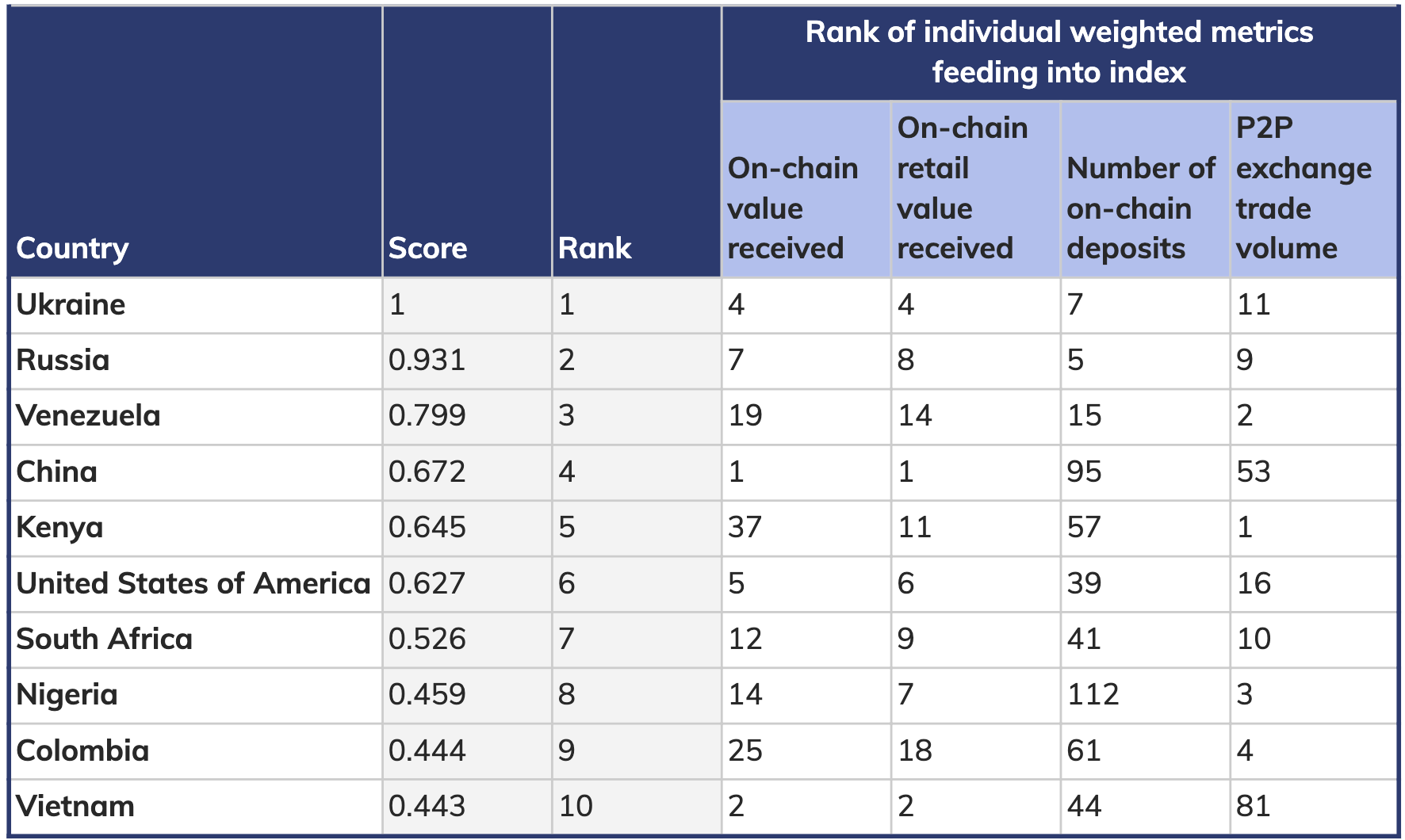
Crypto Adoption Cryptocurrency - **digital or virtual currency designed to work as a medium of exchange** - has been dealing with an uphill battle to be widely adopted along with the blockchain technology that powers it. Fortunately, there are many countries that are ahead of the curb and taking advantage of the new currency and blockchains in general. **According to decrypt.co**, the top ten adopters of crypto are Ukraine, Russia, Venezuela, China, Kenya, the United States, South Africa, Nigeria, Colombia, and Vietnam. Hopefully, these countries will continue to have people interested in crypto and interested in expanding how the currency and blockchain can be used in the future... https://cointelegraph.com/bitcoin-for-beginners/what-are-cryptocurrencies https://decrypt.co/41254/these-10-countries-lead-world-bitcoin-adoption

USSR One-Party System Now that we saw America's two party system, we can talk about single-party systems of the USSR: https://read.cash/@tyler775/american-two-party-system-0a451da1 The model of the one-party system found in Marxist socialism/lower stage communism was experimented with in the 20th century. The idea of one political party was supposed to spearhead the will of urban working class and help unite other workers such as peasants and intellectuals. This was supposed to add in the previously discussed stage of state socialism in Marxist socialism that acts as a transitory phase between capitalism and the final stage of communism called the **dictatorship of the proletariat**. The state would control the means of production on behalf of the common worker to prevent counterrevolution, provide proper education & healthcare to the common worker, and mobilize the people to compete against the capitalist market economy with a command economy. Party members who become part of the state would be members of the general public and the common worker who would work their way up through the state to have more of a direct say on the means of production. https://www.britannica.com/topic/political-party/Single-party-systems https://read.cash/@tyler775/cold-war-bolsheviks-ideology-59c93d5c https://www.britannica.com/topic/dictatorship-of-the-proletariat https://www.britannica.com/topic/capitalism Thus, the sole governing party of the USSR was made and called Communist Party of the Soviet Union (CPSU). It was known as the All-Union Communist Party from 1925 to 1952. Surprisingly, the Soviet Union did have elections that were open to the public even during the time of Joseph Stalin that was open every four years. However, those voting would only have the ability to vote for those under the Communist Party or those who were technically 'independent', but were still fans of Marxist dictatorship of the proletariat-style socialism. Those who wanted to run on platforms endorsing anything other than Marxist socialism were barred for running as public servants. https://www.britannica.com/topic/Communist-Party-of-the-Soviet-Union https://www.youtube.com/watch?v=vFjh8lBB6T4 If people running for the workers' council failed to get 50% of the vote, they would be removed from office or removed from the Communist Party and a new candidate (aligned with the values of Marxist-Leninism, of course) would be brought in. So, while not fully democratic since you had only one political party to choose from & those not in-line with certain political & economic beliefs would be prevented from running at all, many Soviet citizens could vote against those who are part of the worker's council or those who entered the state if certain local demands weren't met, ending the political career of certain state politicians & forcing the Communist Party to choose someone else. https://www.google.com/url?sa=t&rct=j&q=&esrc=s&source=web&cd=&cad=rja&uact=8&ved=2ahUKEwiIi5-Pia3sAhWDtlkKHeRBDIMQFjAAegQIAxAC&url=https%3A%2F%2Fwww.jstor.org%2Fstable%2F1958268&usg=AOvVaw1D-fvKWKLyHtt0j1cTiKP5

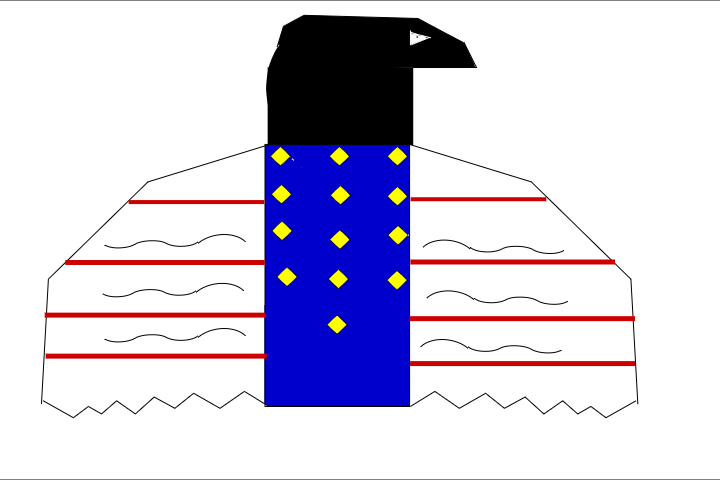
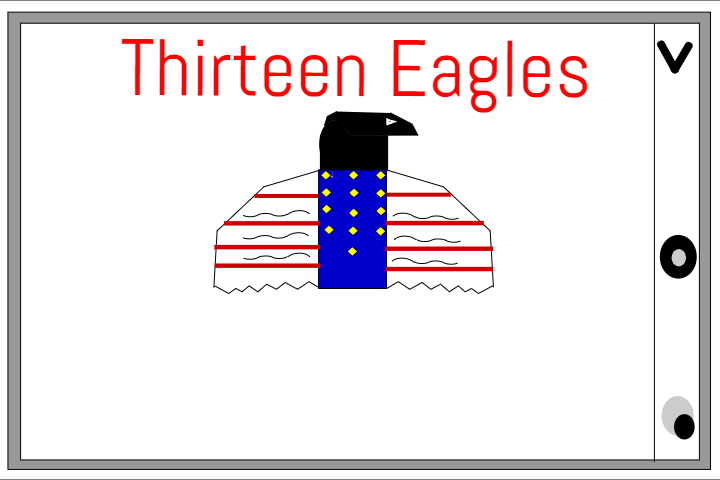
Grimdark Hopeless Game Jam of Doom Game Log #0 In addition to writing information about the Cold War and studying history, I also do some amateur game design by entering basic game jams. Currently, I am working on a gam jam called the Grimdark Hopeless Game Jam of Doom... a jam where you design a game set in a dystopian grim dark world. This game jam will last until November 10th, 2020 of 12:00 am. I am working with a free, open source online game engine I have never worked with before called the Wick Editor. It is an online web-based program that can be used for creating games, animations, and other forms of interactive web media. Any game created with Wick Editor can be exported as a html5 file and played similar to an old-school flash game using your computer's web browser. This is the perfect kind of file I can upload to itch.io for the game jam. https://itch.io/jam/grimdark-hopeless-game-jam-of-doom https://www.wickeditor.com/#/learn/ The game I am working on is one called **Thirteen Eagles**. The entire game will take place on a tablet and on that tablet, you will begin your work as an agent for the Thirteen Eagles agency, an organization in a more dystopian version of the modern United States where a security agency controlled by 13 officials who answer to no one except a small council from the Department of Homeland Defense. It is similar to the NSA we currently have except they have slightly more power to look at communications in and outside of the nation. Also unlike the NSA, the Thirteen Eagles have an armed wing with a private security sector that can act within their jurisdiction as federal agents. This game will have a basic loop similar to games like *Papers, Please!* and *Border Office* where you look through the profiles of people to determine if they are a security risk. If I do well enough with the game design, I might add extra things you can do like determine what should happen to a potential security risk (monitor, interrogate, arrest, terminate, etc.). Hopefully, I can finish the game before the time limit, but I think I should be able to pull it off since I am not trying to design the deepest kind of game. Basically, you should get some kind of criteria for whether someone should be considered a security threat or not and if you mark someone correctly, you get money and a better score. Do it incorrectly and you lose money & if you mess up too much, you will be fired in a grim dark America where many are already unemployed (and the homeless are liable to be harmed by officers of the law). I will add more information and provide more screenshots as I work on this little side project and get further along with development.

Cold War Recipes: USSR Syrniki (Cheese Pancake) Here is a recipe for Syrniki or Cheese pancake, a food from Soviet Belarus, Soviet Ukraine, and Soviet Russia: https://natashaskitchen.com/ukrainian-syrniki-recipe/ Ingredients: About 2 cups of farmers cheese 4 large eggs 3/4 cups of flour with separate 1/2 cup of flour 3 Tbsp sugar 1/2 tsp salt 1 tsp baking soda 1 tsp white vinegar 1 cup raisins 2 to 2 Tbsp of light olive oil for each batch Instructions: Mix 2 cups of cheese, 4 eggs, 3/4 cups of flour, 3 Tbsp of sugar, and 1/2 tsp of salt in a large bowl. Mix baking soda and vinegar in separate small bowl before adding it to the cheese mix in the large bowl. Mix until uniform consistency is in the mixture. Stir in raisins too with a spoon or electric mixer. Heat a skillet over medium heat and add olive oil to it. Add 1/2 cup of flour to a small bowl. Use a tablespoon or ice cream scoop to scoop up some of the cheese mixture in the large bowl. Sprinkle flour on this scoop and mix this flour with the cheese mix. Once oil in the skillet is hot, place scoop into skillet. Repeat the previous step with the cheese mixture in the large bowl to create more scoops and add them to the skillet. Flatten the scoops in the skillet to have them form a patty and saute the patties till it is golden brown (about 3 to 4 minutes each side). Transfer patties to plate and serve.

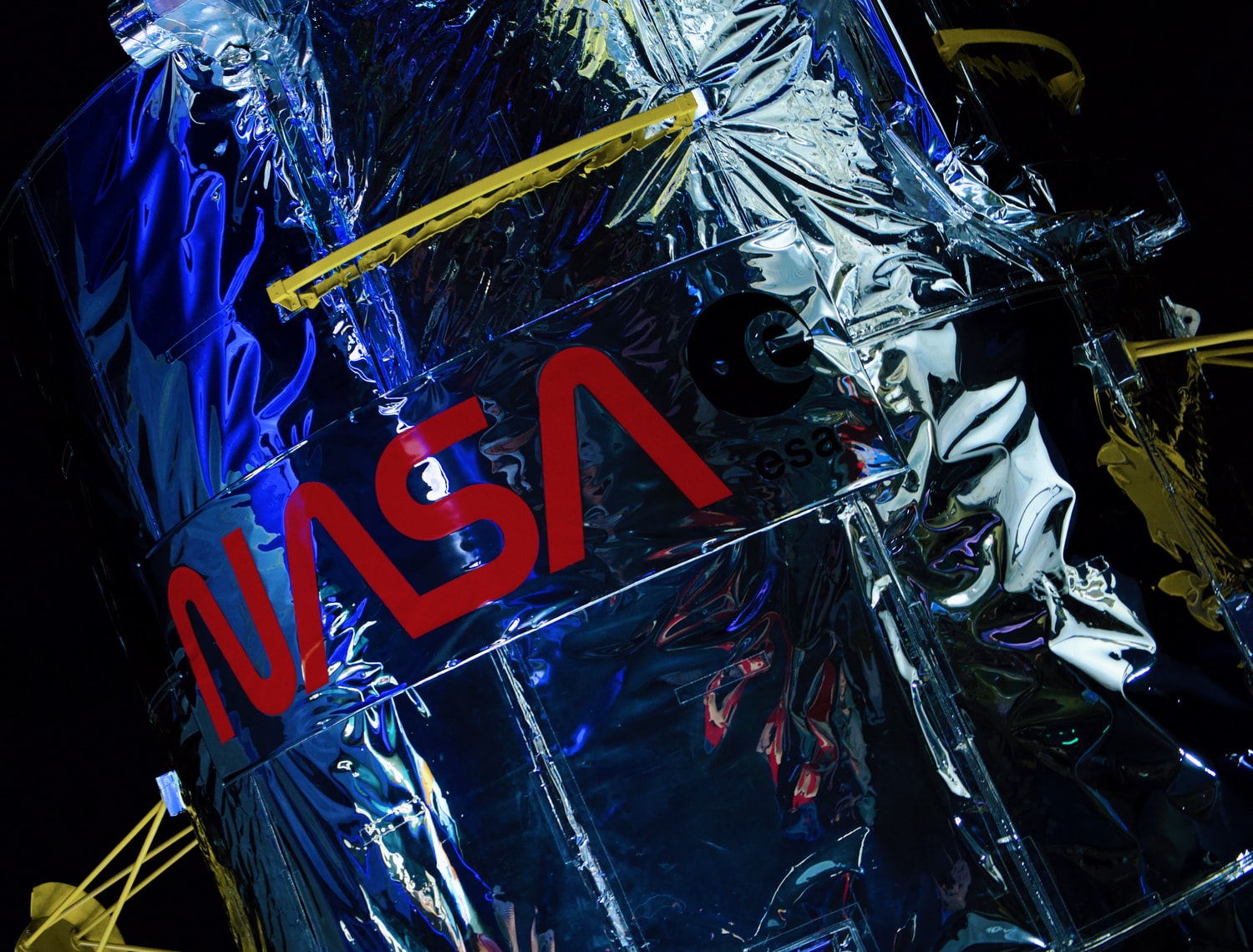
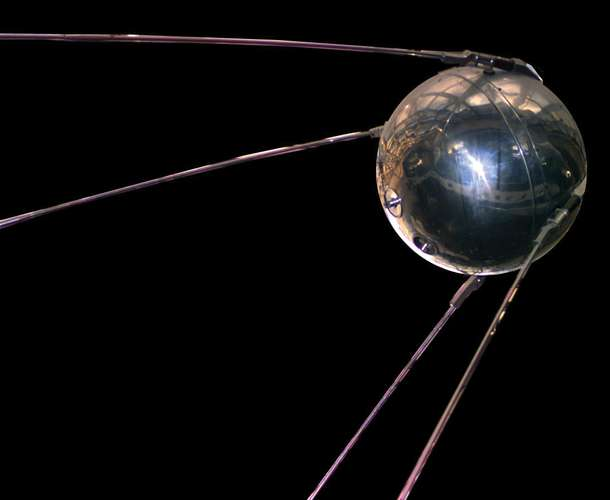
Cold War: NASA Now in terms of the Cold War, we are going to talk about the United States public space agency NASA or National Aeronautics and Space Administration. https://www.britannica.com/topic/NASA While still around to this day, it was founded in 1958 during the Cold War. It was created for the research and development of vehicles and missions for the exploration of outer space and Earth's atmosphere. There were four mission directorates for NASA: research in aeronautics; scientific programs for understanding the origin & structure of the universe, solar system, and Earth; development of space technology; and research into human exploration. This agency was created largely in response to the launch of Sputnik in 1957. Sputnik was the first artificial satellite sent into outer space and it was launch by the Soviet Union, marking a major mark in the competition for supremacy of space in the Cold War. It remained in orbit of Earth until January 4, 1958, where it fell back to Earth and burned up in Earth atmosphere. This event shocked many Americans, who assumed their country was technologically ahead of the USSR, and was what many believed to be the beginning of a competition for dominance of outer space between the nations of the Cold War called the "space race". https://www.britannica.com/technology/Sputnik NASA was organized around the National Advisory Committee for Aeronautics (NACA). This precursor was created in 1915 by the U.S. Congress and during World War II, it was described as "The Force Behind Our Air Supremacy" by leaders of the United States. The NACA was known for creating the wing profiles for the North American P-51 Mustang: a very important single-seat long-range fighter-bomber used in the Second World War and the Korean War. The mission statement of the NACA was " ...It shall be the duty of the advisory committee for aeronautics to supervise and direct the scientific study of the problems of flight with a view to their practical solution ...". https://www.britannica.com/topic/National-Advisory-Committee-for-Aeronautics-United-States https://www.nasa.gov/centers/langley/news/factsheets/WWII.html https://www.boeing.com/history/products/p-51-mustang.page One of the people placed on the NACA board was Orville Wright: one of the Wright Brothers who were a pair of American aviation pioneers credited for creating the first successful heavier-than-air powered aircraft. The organization was officially abolished with the creation of NASA. http://corescholar.libraries.wright.edu/following/symposium/program/3/ http://www.wdl.org/en/item/11372/ NASA worked on a project for the North American X-15 hypersonic jet. The jet was used from 1954 to 1968. Around the same time starting in 1958, NASA worked on a project named Mercury. This projected costed about $2.25 billion US Dollars if you adjust for inflation and ran until 1963. The project was about getting a human into space and back to Earth safely. While the program was able to get some people into space safely, it fell behind the USSR who got Yuri Gagarin into space and back to Earth on April 12, 1961. http://www.nasa.gov/centers/armstrong/news/FactSheets/FS-052-DFRC.html http://www.thespacereview.com/article/1579/1
Cold War: Moscow Institute of Physics and Technology The Moscow Institute of Physics and Technology or MIPT is a Russian university that was originally established in the Soviet Union. It was created after a government decree on March 10th 1946 mandating the creation of a "College of Physics and Technology". This mandate was created after a letter was sent to Joseph Stalin, Premier of the Soviet Union at the time, by Pyotr Kapitsa. The letter argued for the need of a school to maintain and develop the science & defense potential of the USSR. The degree was briefly halted before the school was officially established on November 25th of 1946 as a new school within Moscow State University. In the letter, Kapitsa argued the found principles should be: http://potential.org.ru/bin/view/Home/ArtDt200503051018PH5J3 http://potential.org.ru/bin/view/Home/ArtDt200504271517PH5J4 Rigorous selection of gifted and creative young individuals. https://en.wikipedia.org/wiki/Moscow_Institute_of_Physics_and_Technology Involving leading scientists in student education, in close contact with them in their creative environment. https://en.wikipedia.org/wiki/Moscow_Institute_of_Physics_and_Technology An individualized approach to encourage the cultivation of students' creative drive and to avoid overloading them with unnecessary subjects and rote learning common in other schools and necessitated by mass education. https://en.wikipedia.org/wiki/Moscow_Institute_of_Physics_and_Technology Conducting their education in an atmosphere of research and creative engineering, using the best existing laboratories in the country. https://en.wikipedia.org/wiki/Moscow_Institute_of_Physics_and_Technology Kapitsa was a prominent Soviet physicist who would eventually get a Nobel Prize in Physics in 1978 "for his basic inventions and discoveries in the area of low-temperature physics". The man graduated in 1918 from the Peter the Great St. Petersburg Polytechnic University after serving as an ambulance driver for two years during World War I. During that time, he lost his father, wife, and 2 children during the influenza epidemic of 1918-1919. He invented new machines for the liquefaction of gases and discovered the superfluidity of liquid helium in 1937. He was a man dedicated to science and developed an entire explanation of the phenomenon of superfluidity in 1941 and during the Second World War, Kapitsa became responsible for the entire Soviet production of liquid oxygen. https://www.nobelprize.org/laureate/110 https://en.wikipedia.org/wiki/Peter_the_Great_St._Petersburg_Polytechnic_University#Alumni_and_faculty https://archive.org/details/remarkablephysic00jame https://www.britannica.com/biography/Pyotr-Kapitsa On September 1951, a government decree established the institute as its own independent higher education institution. Many great scientists and thinkers would be alumni of MIPT, including Nikolay Semyonov, Lev Landau, Alexandr Prokhorov, Vitaly Ginzburg, Sergey Khristianovich, Mikhail Lavrentiev, Mstislav Keldysh, Sergey Korolyov and Boris Rauschenbach. http://potential.org.ru/bin/view/Home/ArtDt200507231448PH5J7 MIPT is still around today and still free to most students in accordance to the Soviet and Marxist socialist principles the university was founded on. Students also receive small scholarships that depend on student performance and cheap housing (about $13 to $20 US Dollars per month in 2020). https://mipt.ru/students/life/stipendii/gas/ https://mipt.ru/poselenie/students/oplata.php

Cold War Recipes: U.S. (Baked Dandelions) Dandelions are a broadleaf perennial flowers that can be found across the United States as well as other locations around the world. It is a member of the daisy family of flowers and can survive in multiple environmental conditions (shade or heat, in fertile or drought soil). Some treat dandelions as a weed, but in many rural regions of the United States and other parts of the world, dandelions are eaten as part of a delicious, nutritious food source. Here is a recipe for baked dandelions: https://turf.purdue.edu/dandelion/ Ingredients: Fresh large dandelion leaves Olive oil Spices Instructions: Preheat oven to 200 degrees Fahrenheit Place dandelions in a bowl and add a little oil mixed with spices of your choice. Mix well to make sure the leaves are covered. Place dandelion leaves individually on a baking sheet and bake in the oven for 5 to 15 minutes until they are crispy. Enjoy!

Soviet Union and Religion Religion was a very touchy subject in the Soviet Union. Religion was considered incompatible with Marxist-Leninist doctrine. As Vladimir Lenin put it: "Religion is the opium of the people: this saying of Marx is the cornerstone of the entire ideology of Marxism about religion. All modern religions and churches, all and of every kind of religious organizations are always considered by Marxism as the organs of bourgeois reaction, used for the protection of the exploitation and the stupefaction of the working class." https://en.wikipedia.org/wiki/Opium_of_the_people https://en.wikipedia.org/wiki/Karl_Marx https://en.wikipedia.org/wiki/Marxism http://www.psylib.ukrweb.net/books/maenl01/txt17 "Those who toil and live in want all their lives are taught by religion to be submissive and patient while here on earth, and to take comfort in the hope of a heavenly reward. But those who live by the labour of others are taught by religion to practice charity while on earth, thus offering them a very cheap way of justifying their entire existence as exploiters and selling them at a moderate price tickets to well-being in heaven. Religion is opium for the people. Religion is a sort of spiritual booze, in which the slaves of capital drown their human image, their demand for a life more or less worthy of man." -Novaya Zhizn by Vladimir Lenin The Soviet Union was officially state atheist with the state incorporating positive atheism or non-theism its workings. The USSR was particularly harsh towards the Russian Orthodox Church since it supported the White Army (the army that opposed the Bolsheviks and socialism during the Russian Civil War) and the former Tsarist autocracy. Believers were allowed to worship in private, but public displays were expressly forbidden. All cemeteries and funeral organizations were placed under the control of local Soviet deputies in 1929: https://books.google.com/books?id=XguDDQAAQBAJ&pg=PT74 https://books.google.com/books?id=YlBvcNMlr4EC&pg=PA33 Decree of SNK RSFSR #23-24, 1929: All cemeteries.. and all funeral organizations are hereby placed in the control of local Soviet deputies. (People's Commissar of Internal Affairs Tolmachev) https://en.wikipedia.org/wiki/Council_of_Ministers_(Soviet_Union) https://en.wikipedia.org/wiki/Russian_Soviet_Federative_Socialist_Republic While opposed to anti-Semitism, the Soviets and Bolsheviks were hostile to Judaism as a religion from the very beginning. In 1919, Soviet authorities destroyed Jewish community councils that were traditionally responsible for maintaining synagogues. Jehovah's Witnesses were deported during Operation North: an operation where many Jehovah's Witnesses and their families to Siberia on April 1-2 of 1951. https://www.loc.gov/exhibits/archives/anti.html

Cold War Games: Hotline Miami As someone who is a fan of the Cold war, it is nice to see video games that take place in that era. One of those games is a very enjoyable indie darling that I consider one of my favorite games of all time: Hotline Miami. The game was created by company named Devolver Digital using the GameMaker Studio 2 game engine. It was released in 2012 on Steam and GOG while a sequel, Hotline Miami 2: Wrong Number, was released in 2015. https://store.steampowered.com/agecheck/app/219150/ https://store.steampowered.com/app/585410/GameMaker_Studio_2_Desktop/ The plot revolves around a group of protagonists who live in an alternate reality Earth in an alternate reality version of Miami. These characters received mysterious phone calls from a quiet and powerful organization that tells them to attack members of the Russian mob, criminals, or sometimes ultra-nationalist organizations. They are expected to go on borderline suicidal missions to attack whoever the people on the other end want them to attack. The goal of the player is to complete the tasks given by the answering machine and survive long enough to try to figure out who is sending these messages. **Spoiler Alert for Hotline Miami**: In the alternate timeline of Hotline Miami, the Cold War grows into a conflict called the Soviet-American War. It happens during the 1980s and includes the Hawaiian Conflict - a series of battles where the Soviet Union occupied multiple islands in the Pacific including the state of Hawaii. Members of the United States military, including a group of protagonists you play as called the Ghost Wolves, fight to try an retake Hawaii. By April 3rd of 1986, the war escalates and leads to Marxist socialist forces firing a nuclear weapon on San Francisco, resulting in many deaths. https://hotlinemiami.fandom.com/wiki/Hawaiian_Conflict https://hotlinemiami.fandom.com/wiki/Beard%27s_Unit After this nuclear attack, there is a truce created called the Russo-American Coalition. While there is peace between Soviet Russia and the United States on paper, tensions grow and eventually lead to the rise of nationalism in the U.S. Eventually, a ultranationalist group forms called 50 Blessings: a terrorist organization that wishes to weaken the Russo-American Coalition and start a nuclear war between the USSR and the United States with the hope that the members of their organization and members of the U.S. government will survive global nuclear annihilation. 50 Blessings is the main antagonist of Hotline Miami and Hotline Miami 2 with many of the protagonists of the games who know about the organization working to prevent the group and its members from starting World War Three. https://hotlinemiami.fandom.com/wiki/Russo-American_Coalition https://hotlinemiami.fandom.com/wiki/50_Blessings

Cold War Recipes: USSR (Kharcho) There is a type of beef soup that was a form of cuisine in Soviet Georgia: https://en.wikipedia.org/wiki/Georgian_Soviet_Socialist_Republic Ingredients: 2 lbs beef 2 medium-sized onions (well chopped) 4 oz of rice (uncooked, rinsed in water) 2 large tomatoes (peeled & pureed with a blender) 2 Tbsp Tkemali sauce or vinegar 8 twigs fresh parsley (2 whole, 6 chopped) 8 twigs fresh cilantro (2 whole, 6 chopped) 1 Tbsp khmeli-tsuneli spice mix 2 cloves garlic (pressed) 2 red hot chili peppers Salt Black pepper Instructions: Cut beef into pieces, place in a large boiling pot. 8-10 cups of water and boil. Simmer on low head for 1.5 to 2 hours till meat is tender. Add rinsed rice, onions, 2 twigs of parsley and 2 twigs of cilantro. Simmer for another 20 more minutes. Add chopped parsley, chopped cilantro, garlic, hot chili peppers, spice mix, Tkemali sauce/vinegar, tomatoes, salt and pepper. Cook for another 15 minutes. Nutrition: Calories: 358 kcal Carbohydrates: 15g Protein: 21g Fat: 22g Saturated_Fat: 8g Cholesterol: 80mg Sodium: 83mg Potassium: 571mg Fiber: 1g Sugar: 3g Vitamin A: 895IU Vitamin C: 15.5mg Calcium: 41mg Iron: 2.6mg

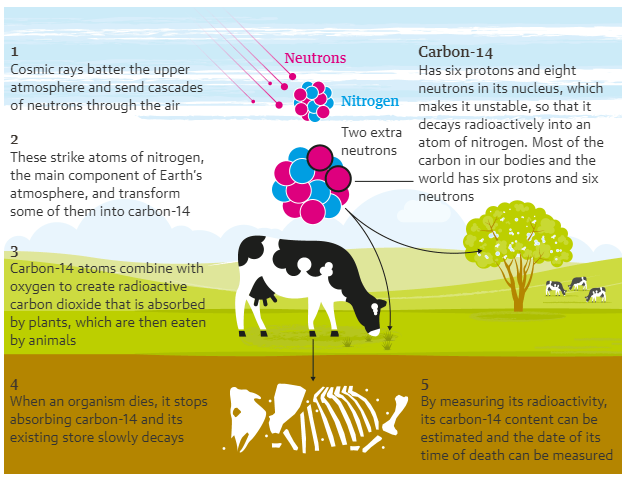
U.S. Inventions (Radiocarbon dating, Zamboni) Here, we are going to have another look at some interesting inventions from the United States during the Cold War: Radiocarbon dating was invented as a procedure by Willard F. Libby in 1949. In this process, radiocarbon (or Carbon-14: a carbon isotope with 6 protons and 8 neutrons in its nucleus) is used to help determine the age of objects containing organic material. Carbon-14 has a half life of around 5,730 years & can combine with oxygen to be absorbed by plants and become a part of carbon-based animals. Carbon-14 exists in tissue of every deceased animal and plants with one in a trillion of their carbon atoms being Carbon-14. The radiocarbon dating mentioned can be used to see how old an organism is and estimate its time of death up to 60,000 years ago. Libby used this form of dating to see how old wood from the Egyptian funeral ship of Sesotris III, a bread roll from Pompeii, and linen from the Dead Sea scroll are. The dates found from carbon dating matched the historical dates for each of the tested items, showing the accuracy in carbon dating. Plus, radiocarbon decayed the same way other radioactive materials decayed, including items that decay faster such as carbon-11 with a half-life of 20 minutes. Thus, radiocarbon dating can be trusted to test if an item is 60,ooo years old or younger, even if there is no recorded date for said item. In 1960, Libby won a Nobel Prize in Chemistry for this discovery and this new technique helped to usher in a revolution in the fields of biology and archaeology. https://web.archive.org/web/20030321003501/http://web.mit.edu/invent/iow/libby.html https://science.howstuffworks.com/environmental/earth/geology/carbon-14.htm https://www.theguardian.com/science/2019/aug/10/most-important-isotope-how-carbon-14-revolutionised-science https://doi.org/10.1016%2F0375-9474%2867%2990712-9 The ice resurfacer, or the Zamboni, was created by American inventor and engineer Frank Zamboni in 1949. The machine with a four-wheel drive smooths the surface of ice in an ice rink and was given a patent in 1953. Before the creation of this device, maintaining the quality of an ice surface was a time-consuming and labor-intensive task. For the Iceland Skating Rink, workers would have to scoop up ice shavings, spray ice with water, and squeegee the surface in a process which could take up to an hour to complete. The Boston Bruins, the National Hockey League team, began to use the Zamboni in 1954 and soon, other hockey teams did the same thing. Today, about 200 Zambonis are manufactured a year by the company created by Frank Zamboni himself. http://www.fundinguniverse.com/company-histories/frank-j-zamboni-co-inc-history/ https://www.dictionary.com/browse/zamboni http://www.zamboni.com/about/zamboni-archives/the-zamboni-story/2/ https://www.mentalfloss.com/article/24700/making-ice-nice-1949-brief-history-zamboni

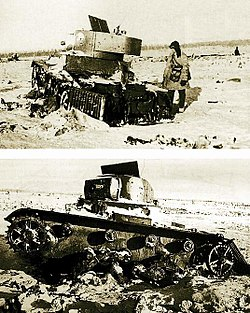
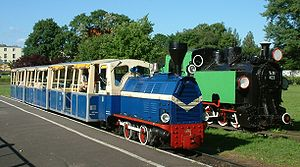
Cold War: USSR Inventions (Teletanks, Children's Railway) Here we have another article about the inventions of the USSR and unique innovations by one side of the Cold War. One of these creations in a remote controlled tank and another is a series of railways used to educate children: Teletanks were a series of wireless remotely controlled unmanned tanks produced in the USSR in the 1930s and the early 1940s. They were developed by the *All-Union State Institute of Telemechanics*, *Telecommunications Institute* and the *Electromechanical Research Institute*. The point for creating these tanks was to reduce combat risk for Soviet soldiers. These unique tanks first saw use in the Winter War at the start of World War II. These tanks, like the TT-26 model tank, were controlled by radio from a distance of 500 meters to 1500 meters. Some teletanks were equipped with DT machine guns, flamethrowers, and smoke canisters. Control teams were instructed to prevent these tanks from falling into enemy hands by detonating the tanks if they fell into enemy hands. During the Winter War, 2 battalions of teletanks were deployed. However, unlike modern drones, teletanks could not relay sound/audio to the human operators and it was hard for these robotic tanks to move on uneven terrain. While impressive technology since the teletanks were the first attempt by a nation to send robotic ground forces into battle, they were costly to make and, as mention before, needed decent terrain to operate. Afterwards, production was halted and was not reintroduced during the Cold War. https://translate.google.com/translate?hl=en&langpair=ru%7Cen&u=http://www.odintsovo.info/news/?id=1683 http://www.echo.msk.ru/programs/victory/50054/ https://www.popsci.com/blog-network/zero-moment/tale-teletank-brief-rise-and-long-fall-russia%E2%80%99s-military-robots/ Children's railways were invented in the Soviet Union. These where extracurricular educational institutions where children got to ride small locomotives while learning railway professions. The first one of these organizations was Gorky Park in Moscow, Soviet Russia in 1932. These railways were mostly staffed by 10 to 14 years old under adult supervision. The children who were members of the Young Pioneers movement of the Soviet Union were the ones who used to learn in the Children's railways. However, many of these railways are still being operated by children in multiple post-Soviet states and socialist republics to this day such as the Children's railway in Minsk, Belarus; the Baku Children's Railway in Baku, Azerbaijan; and the Yerevan Children's railway in Yerevan, Armenia. http://www.dzd-ussr.ru/towns/moscow/cpkio.html https://www.amusingplanet.com/2015/10/the-childrens-railways-of-soviet-russia.html http://www.dzd-ussr.ru/towns/baku/pr-eng.html http://www.yerevan-city.com/2009/05/05/detskaja-zheleznaja-doroga.html