 @mc5punk
more from that month
@mc5punk
more from that month
Short story: The Tent that Held Out (Chapters 3 and 4)
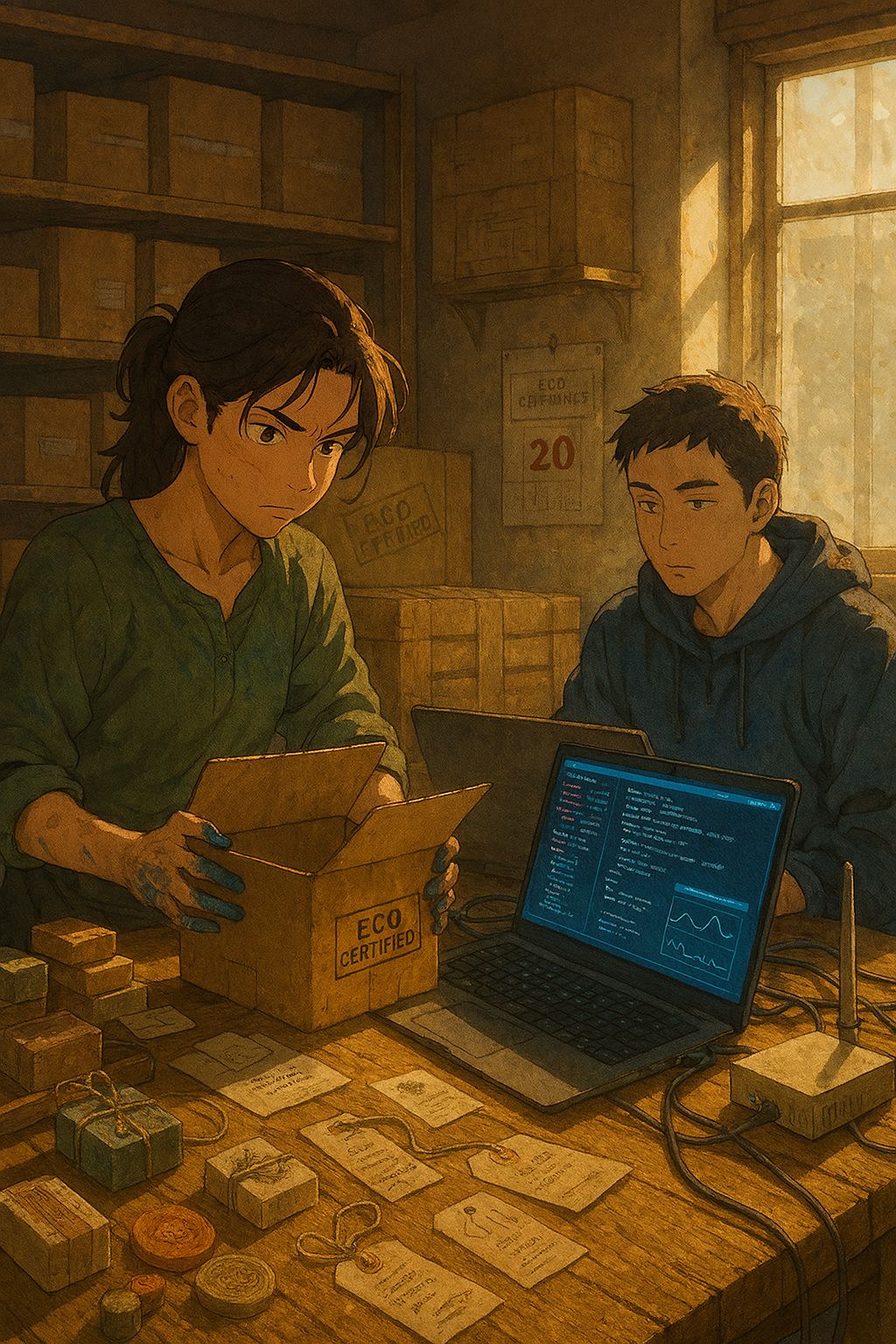
Chapter 3 — The Network of Support and the Temptations Valentina Cruz burst into Marina’s life as a promise wrapped in filters and flattering light. She was the perfect image of the digital age: an influencer with a measured smile, polished aesthetics, and a community that responded with quick reactions and impulsive decisions. For Valentina, collaboration was not altruism; it was an exchange. She offered Marina immediate visibility, access to an audience curve the brand barely touched on its own, in return for free products, discount codes, and a commission on directed sales. Her stories and posts could generate spikes of electricity in web traffic, but they could also be fleeting: likes that evaporated as soon as the trend passed. Marina knew this—she understood the power of the viral gaze and its price—and yet the offer gleamed. The possibility that someone would tell the story of her workshop with a flattering filter, that what she made by hand would reach homes that would never have discovered it otherwise, was a temptation hard to ignore. Omar Herrera, by contrast, represented another kind of promise: the rigor of the tangible. A longtime wholesale supplier, with hands seasoned by years of loading and unloading at docks and warehouses, Omar handled logistics like someone who understands how a net is stitched. He knew deadlines, knew safe routes, and could, with contacts and patience, secure the eco‑certified lot Marina had been seeking. That restock was not a whim: it meant raising the quality of the catalogue, opening the door to buyers who demanded certification and, potentially, positioning the brand in a segment willing to pay more for sustainability. But the deal came with uncompromising conditions: payment before the twentieth of the month, and a commercial margin that would vanish if not taken immediately. It was an opportunity with a time limit and clear consequences: seizing it implied financial risk; passing it up meant foregoing a competitive advantage. Between those two poles—the immediate visibility and the reliable supply chain—Marina had been weaving a more intimate but equally valuable network. Carla Méndez was an essential part of that web. An interior designer and regular client, Carla brought a different kind of capital: connections and credibility in the physical world. Her commissions were not anonymous: they came with plans, deadlines, and expectations, and her recommendations to colleagues or developers could translate into wholesale orders for concrete projects. If deliveries arrived on time and with the artisanal care that distinguished Marina’s work, the multiplier effect would be real: one satisfied project could mean several more contracts. Marina understood this and tended those relationships like someone saving a seed, aware that strands of trust are fragile and that a botched delivery or a late invoice could break a chain built with effort. Opposite this artisanal, relational network rose the machinery of the mass market. Lucía Vega embodied that force: regional manager of a chain with financial muscle and refined logistics, capable of moving inventories by the ton and optimizing every centimeter of space in vast distribution centers. To Lucía, products did not carry the patina of personal history; they were economic units that, multiplied by thousands, generated margins and circulation. Her gaze sought efficiency at scale, and in that equation there was rarely room for the subtleties of handmade craft. Andrés Paredes, her analyst, was the perfect complement to that vision: a cold, mathematical voice that translated business decisions into tables, projections, and algorithms. With data in hand they drew pricing and placement strategies, executed campaigns with precise keywords, and adjusted inventory to saturate search spaces until any niche became conquered territory. That duo—Lucía and Andrés—offered not only competition but a structured offensive: promotions that could lower the market’s average price, paid visibility deployments that drowned out attention, logistics that guaranteed presence on every digital and physical shelf. Their tactic smelled like end‑of‑season: discounts, excess supply, and enough noise to silence small voices. For Marina, the threat was not only losing occasional sales but seeing how, through competitive crushing, her story and distinctive value were relegated by the inertia of scale. Thus, at the heart of this chapter, the story moves between networks of support—people and contracts that delicately sustain an artisanal brand—and temptations that promise quick growth or security at the cost of autonomy. There are those who bring ephemeral audiences and promises packaged in filters; those who offer the certified material that elevates the proposition; those who turn recommendations into real projects; and those who, from the top of logistics, threaten to transform the market into a uniform plain. Marina walks among these forces: she must decide which alliances to accept, which to preserve, and which to resist, while her small workshop beats to the rhythm of decisions that will determine whether her voice remains audible or is lost in the noise of the giants. Chapter 4 — Decisions and Renunciations The afternoon Diego discovered vulnerabilities in the payment gateway arrived with the cold urgency that technical news often brings: quiet, but capable of collapsing plans. Between logs and stress tests fissures appeared that, if not fixed quickly, could translate into failed orders, duplicate charges, or customers abandoning carts out of distrust. The immediate solution proposed by the specialists wasn’t elegant or definitive: strategic caching to relieve spikes, temporary server scaling to sustain campaigns, and hiring a short-term customer service team to absorb inquiries, complaints, and frictions while the platform stabilized. They were operational patches—urgent but effective. That proposal, however, did not appear in a vacuum: every euro spent on patches was a euro that would not go toward paying Omar Herrera. Marina had budgeted the eco‑certified restock as the lever to push her catalogue to a new level; paying Omar before the twentieth meant taking advantage of a margin that would otherwise vanish. The business faced a fork where neither option was harmless: accept the investment in temporary infrastructure and guarantee operational stability and reputational risk mitigation; or refuse it and preserve the possibility of raising product quality and accessing more demanding market segments. The decision weighed like a double absence. Marina experienced the choice as a mourning between what had yet to be and what mustn’t be lost for a tomorrow: the absence of the lot that could transform her offering, add certifications, and justify prices more aligned with sustainability; and the absence of a solid operational network that, if fractured by poorly managed traffic spikes, would wound the credibility built through effort. She pictured concrete images: eco‑labeled boxes arriving at the workshop, new details on product pages, the spark of customers willing to pay for responsible sourcing; and, conversely, the nightmare of a promotional Friday with a collapsed server and angry messages on social channels that amplified a technical error into a brand crisis. Marina chose the lot. It was not a casual choice but an act of faith in the substance of her work and in the power of story to open doors. The decision was a bet: accept operational risk today in order to present tomorrow a tangible, certified proposal. She said, with the hard voice of someone who has weighed worries and hopes: “I’d rather risk not having the inventory we need. If we don’t show what we do, no one will know there’s another way to shop.” Diego listened with an honesty that didn’t hide his own anxiety. His gaze was fixed on dashboards and simulations: he’d seen numbers that dismantle dreams and budgets that fray easily. His reply was not reproach but professional warning: “I’d rather we still exist to be able to show it tomorrow. Don’t ask me to put the shop on a tightrope for a pretty idea.” Between them lay the awareness that there was no malice in the disagreement; rather, it was the friction typical of those who must prioritize survival and ambition. They did not yield out of selfishness; they did so because the company, small and young, lacked large cushions. The paths narrowed like tunnels in rock and each decision carved the shape of the future. In the end they opted to pay for the lot. The transaction was made with clenched hands and accounts reviewed to the last cent, aware that the payment would drain savings and that, if the worst happened on the technical side, there would be little immediate room to maneuver. But the choice came with an ethical pact: to bet on the honesty of the product, on the quality that could sustain a different narrative in a market saturated by low prices and empty promises. In the days that followed the workshop took on a feverish, methodical rhythm: the eco‑certified container arrived, reception became ceremonial, every piece passed stricter checks, and Marina personally oversaw labeling and paperwork accompanying each lot. Meanwhile Diego and his team improvised containment measures with what they had: finer monitoring scripts, cache rules applied to critical points, and a customer service protocol activated during peak hours. It wasn’t the ideal investment, but they sought to minimize harm with limited resources. The community reacted with a mix of curiosity and skepticism: some clients celebrated the arrival of certified materials; others queried delays caused by operational adjustments. Internally, the decision also sparked a deeper conversation about financial priorities, risk management, and the need to build reserves. Marina understood that choosing the lot was not the end of the dilemma but the start of another battle: how to turn that improvement into sustainable sales that would, in turn, finance the infrastructure needed to avoid facing the same choice again. Renunciation thus emerged as a silent protagonist. They renounced the temporary security of a robust platform to invest in the promise of product; they partly renounced immediate margin to bet on a quality differential. But they also renounced the innocence of believing good intentions alone would suffice; experience made clear that catalogue honesty required operational backing to stand in the real world. That decision traced new lines of work: plan financial reserves, seek bridge financing for technical emergencies, strengthen agreements with suppliers to allow more flexible terms in the future, and design a communications strategy that highlighted certification without exposing operational weaknesses. None of these tasks promised quick fixes, but they offered a map to mitigate the kinds of renunciations they now knew would recur. At week’s end, as eco‑labeled boxes settled on shelves and the website displayed new photos with more precise descriptions, Marina felt a mix of relief and responsibility: she had secured a lot that could change the commercial course, but the victory carried the obligation to honor the decision. Diego, for his part, remained vigilant, counting visits, watching peaks, and preparing scripts that he hoped would prevent a severe outage in the near future. The lesson that remained was sober and twofold: deciding always involves giving something up; and few decisions come without a price. In the workshop they learned that ambition without reserves exposes fragility, and prudence without boldness can bury opportunities. The path, as always, would be a precarious balance between the two. See previous chapters: https://read.cash/@mc5punk/short-story-the-tent-that-held-out-chapters-1-and-2-430001e4 Source of the images. Image created with Bing.
No comments yet