 @mc5punk
more from that month
@mc5punk
more from that month
Short story: Between Persuasions and Convictions
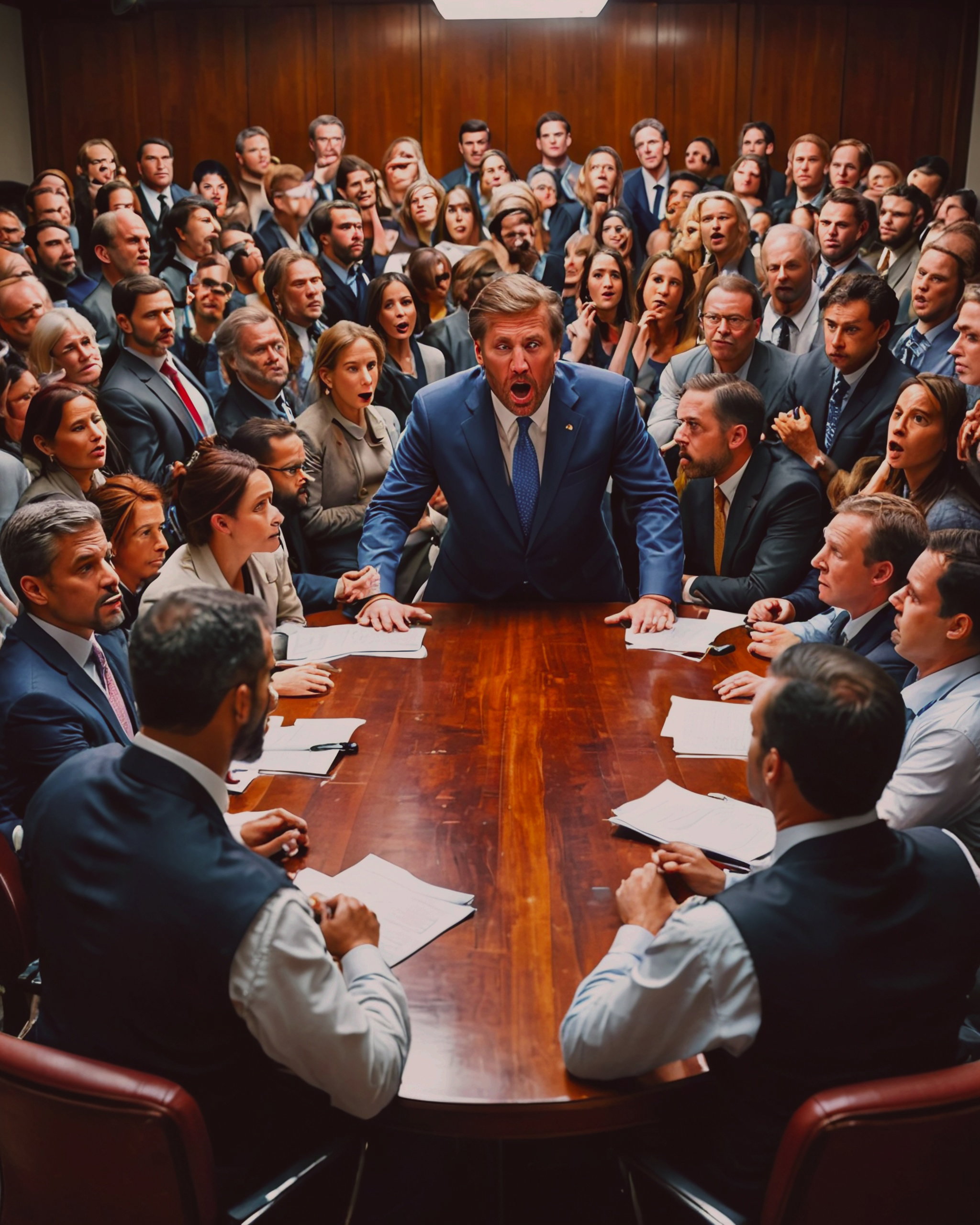
On a bright autumn morning, crisp fresh air filled the streets of the city, while the trees were dressed in golden and reddish hues. At the heart of this vibrant landscape, an old red brick building housed a Moderna cultural center. The wide windows of the place let in the sunlight, illuminating the lobby with a warm glow. Inside, a conference room was arranged with chairs in the form of a semicircle, surrounding a central table where documents and laptops were stacked. The attendees began to arrive, each one contributing their own energy to the atmosphere. Laura was the first to enter. Of medium height and with a charismatic presence, her dark brown hair fell in soft shoulder-length waves. She was wearing a black blazer that accentuated her figure and a white blouse that contrasted with her fair skin. Her green eyes shone with determination as she greeted the others with a warm smile. It was obvious that she was excited about the upcoming debate. Carlos arrived shortly after, with his determined walk and an inquisitive look. He was a tall man, of athletic build, with short, graying hair that gave him an air of wisdom. He was wearing a light blue shirt and dark trousers that gave him a professional but relaxed look. As he entered the room, his presence commanded respect; his dark eyes carefully observed the other participants as he settled into his chair. Ana, the social activist, entered with contagious energy. Her messy curly hair framed her full of life face. He was wearing a green T-shirt with an ecological slogan printed on it and distressed jeans, reflecting his commitment to environmental causes. Her brown eyes were sizzling with enthusiasm as she greeted Laura and Carlos with warm hugs. "I'm ready for this debate!", he exclaimed, his voice echoing in the room. Javier arrived shortly after, carrying with him a folder full of notes. He was a mature man, with a well-groomed beard and glasses that gave him an intellectual air. His outfit consisted of a gray sweater and dark pants, which made him look approachable but serious at the same time. He sat on the edge of his seat, eager to participate. Marta, the young graphic designer, timidly entered behind Javier. In her twenties, she had a fresh and creative appearance: platinum blonde hair cut into an asymmetrical bob and large colorful earrings that reflected her artistic personality. She was wearing a patterned blouse and tight pants that showed off her unique style. He settled into a corner of the semicircle, watching his colleagues with admiration. Finally, Felipe, the journalist, made his triumphant entrance. With a casual air and a charming smile, he wore a leather jacket over a white T-shirt and dark jeans. Her untidy hair gave her a youthful edge; her blue eyes sparkled with curiosity as she scanned the room for familiar faces. When everyone was seated, Laura was the first to take the floor. With a clear and convincing voice, he explained: "Advertising has one primary objective: to sell products and services." His gaze focused on each of his colleagues as he continued: "Advertising seeks to capture the consumer's attention and motivate him to make a purchase." His hands were gently gesticulating as he emphasized his points. Carlos interrupted with a wry smile. "That's true, but we can't forget that propaganda has a different purpose." His tone was firm but friendly as he looked Laura in the eye. "Its objective is not commercial; it seeks to influence people's beliefs and attitudes." His expression became more serious when he mentioned the political campaigns. Anna nodded fervently: "Exactly." His voice was passionate as he talked about how he had used propaganda to raise awareness about social issues like climate change. "We are not looking to sell something tangible; we are looking to change mentalities." His eyes sparkled with fervor as he recalled a recent campaign he had led. Marta perked up when she heard Ana: "It's fascinating how both concepts can be intertwined." Her voice was soft but confident as she shared her experiences working on advertising campaigns that also promoted social values. "A sustainable clothing brand doesn't just sell garments; it also tells a story about environmental impact." Javier meticulously took notes while listening to his colleagues. Then he intervened to summarize the key differences: "We can see that the goal is different: advertising seeks consumption; propaganda seeks attitude change." He looked at Laura curiously to see if she agreed. Laura pondered before answering, "It's true, but I think there are times when both concepts intersect." His expression was thoughtful as he considered what Javier had said. "Aren't there cases where advertising also tries to educate the consumer about important issues?". Philip leaned forward, interested by the direction of the debate. "That's a good question." His tone was intriguing as he continued, "Can we really completely separate these two concepts? Sometimes it seems to me that they overlap more than we would like to admit." Carlos smiled at the journalist's intervention: "It's possible that there are more similarities than we think." Her gaze moved between the participants as she continued, "They both use communicative strategies to persuade the public." Ana raised her hand as if she were in class. "Besides, both of them can be used for good or bad." His tone was serious as he looked at each of his companions. The emotional intensity in his voice resonated in the room. Javier nodded slowly. "That brings us to another important point: the ethics behind what we do." He turned to Marta and Felipe: "Don't you think that as communicators we have an ethical responsibility? Whether it's advertising or propaganda, we must be aware of the impact that our words and images can have on society." Marta replied with determination: "I totally agree." His voice was firm as he affirmed what Javier had said. "Sometimes I feel like we get so caught up in the commercial or ideological goal that we forget the real power of our stories." Felipe added: "And not only that; we must also consider how our audiences interpret those messages." His expression turned serious as he reflected on the ethical implications of his work. The conversation continued to flow between them, each contributing personal experiences and examples from their daily work; laughter erupted when they recalled funny moments during their professional trajectories. However, tensions soon arose when Carlos raised a controversial issue: ”The truth is that propaganda can often be manipulative." His tone changed to a more serious one as everyone looked at him expectantly. "I've seen political campaigns that distort the truth to get votes." “And what about the advertising campaigns?", interrupted Ana vehemently. "Brands also manipulate emotions to sell products." His eyes were burning with passion to defend his position. "But there is a difference”" Carlos replied quickly. "Propaganda can directly influence crucial political decisions; that has real consequences for our society.” Laura felt the tension growing and decided to intervene before the debate became too heated. “They're both right up to a point”" he said gently. "Ethics should be our compass in both advertising and propaganda. "But who decides what is ethical?", questioned Felipe frankly. "The lines are blurred; what is acceptable to some may be unacceptable to others." He leaned back in his chair, crossing his arms as he waited for answers. “That's precisely the complicated thing," Javier admitted thoughtfully. "As communicators we must be clear about our purpose." He glared at Carlos before continuing: "If our intentions are good but our methods are questionable... where do we draw that line?”. Ana couldn't contain herself anymore: “I personally think we should focus more on the positive impact.” His voice was firm as he spoke from his experience as a social activist. “I have seen how even small campaigns can generate significant changes." "But that's not always enough”" Marta replied gently but decisively. "Sometimes we need to be more aggressive to get attention; don't you think?”. He looked at Ana for support. "Aggressive? Manipulators?", questioned Carlos raising an eyebrow. “Don't you think it's dangerous to play with such tactics?”. ”It's dangerous not to act," Anna replied without hesitation. "Time is running against us when we talk about climate change." The frustration was palpable in his voice. The room was plunged into a tense silence for a few moments before Laura decided to break it again: “I think we all want the same thing at the end of the day: to make the world a better place.” He looked at each of them before continuing, “Maybe we should find creative ways to bring our approaches together.” Carlos nodded slowly although he still looked skeptical. "Maybe you're right." Felipe smiled, relieved by the change in tone. “We could collaborate on projects where both approaches are necessary." The conversation continued to flow between them, each contributing personal experiences and examples from their daily work; laughter erupted when they recalled funny moments during their professional trajectories. Finally, Carlos closed the debate with a reflection on the ethical responsibility of those who create persuasive messages: “It is essential to remember that our intentions must be aligned with a positive impact on society.” The room erupted in applause as the specialists stood up to exchange ideas and continue their conversation beyond the formal format of the debate. At that moment it became clear that although their approaches were different, they all shared a common commitment: to use their skills to positively influence the world. As they were leaving the building in the bright midday sun, Laura turned to Ana and said, “I would love to collaborate with you on a campaign about sustainability.” Anna smiled broadly; her face lit up with emotion: "That would be amazing! Together we could do something really meaningful." Carlos watched his colleagues with satisfaction as they walked away chatting animatedly; it had been a fruitful debate that had not only clarified concepts but also woven connections between them leaving open the possibility of future collaborations where advertising and propaganda could coexist in harmony for a greater good. The fresh autumn air enveloped the participants as they walked together towards a future full of creative and inspiring possibilities; they knew that there were still many debates ahead but they were ready to face them together. Source of the images. Image created with Starryai.
2 comments
I like people who discuss a lot because they know how to talk and can talk to you about any topic: politics, football, cooking, studying, everything. I like people like these because they help us a lot in our lives. You will not feel sad or depressed with them.
Totally true. Thank you very much for your comment😀👍