 @mc5punk
more from that month
@mc5punk
more from that month
Short story: Shadows of a Desolate Future
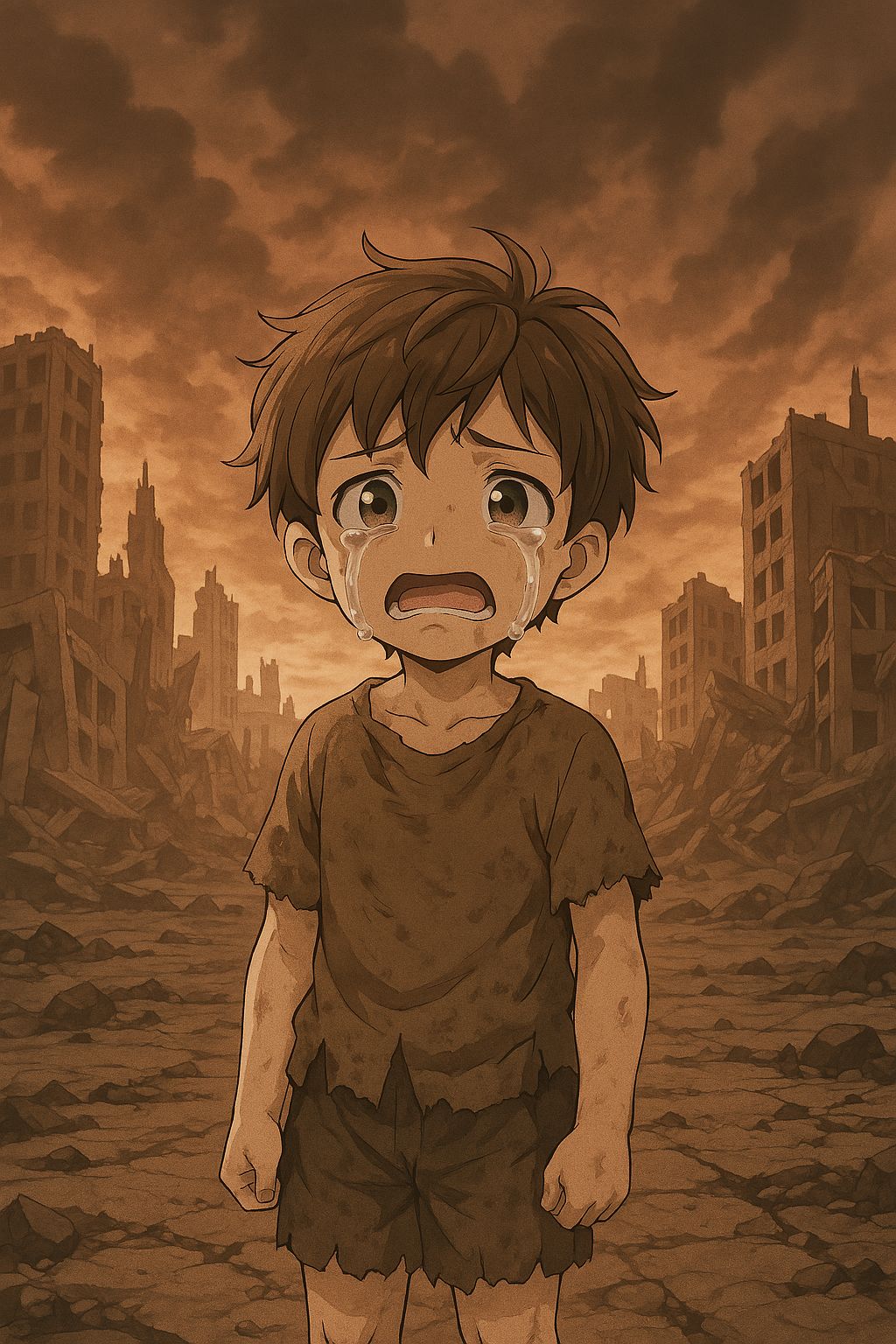
In the not too distant future, the world was on the verge of extinction. The Third World War had broken out, unleashing an Apocalypse that transformed the planet into a scenario of hunger and destruction. The cities, once vibrant and full of life, were now shadows of what they were. The streets of what was once a bustling metropolis were covered with debris and dust. Buildings that once stood proudly, with their glass and steel facades, had become crumbling ruins. Broken windows reflected a gray, leaden sky, while collapsed structures stood like monuments to a forgotten past. At every corner, abandoned vehicles could be seen, some overturned, others with the doors open, as if their occupants had fled in the midst of desperation. Parks, which used to be havens of peace and joy, were now jungles of metal and concrete, where nature had begun to reclaim what once belonged to it. The trees, withered and blackened, stood like sad shadows, and the birdsong had been replaced by the eerie silence of desolation. In this desolate landscape, the cry of the survivors echoed like an echo of pain, a constant reminder of the tragedy that had befallen humanity. As the war intensified, environmental pollution became an invisible enemy. Factories, which used to produce goods and services, were now factories of death, releasing black and toxic smoke that covered the air. The rivers, which used to be sources of life, were polluted, their waters had become dark and putrid, unable to support living beings. The once fertile land had become a barren desert, where crops failed and hunger became more palpable. Communities were struggling to survive in this hostile environment. Families were falling apart, and despair gripped the masses. In the makeshift markets, food prices were skyrocketing, and food rations were becoming increasingly scarce. People were forced to stand in long queues to get some bread or a handful of rice, and the struggle for basic resources was intensifying. In this context, morality was fading, and humanity was being pushed into barbaric acts in its struggle for survival. The war was not only physical; it was a racial, ideological and religious war. The nations were divided into factions, each fighting to impose its worldview. The propaganda spread like a virus, fueling hatred and distrust between peoples. The streets were littered with worn-out posters urging the population to join the struggle, while inflammatory speeches blared on radios and screens, inciting violence. The clashes were constant. In the neighborhoods, armed groups clashed in street battles, and the sound of gunfire and explosions became part of the soundscape. Emergency sirens sounded in the distance, but they rarely arrived in time to help. Life had become a daily struggle, and hope faded with each new conflict. In the midst of this barbarism, a group of young people decided to rebel. They were the last defenders of hope, who refused to accept a fate of destruction. They had grown up in a world marked by war and hopelessness, but in their hearts the spark of resistance still burned. They met in makeshift shelters, where they shared stories of a better past and dreamed of a different future. They knew the power of cyber warfare and used their skills to infiltrate the systems of the conflicting powers. On their screens, lines of code danced like a secret language, and every small success was celebrated as a victory. His goal was clear: to deactivate nuclear weapons and put an end to the madness that had consumed the world. As the young men progressed in their mission, the tension increased. The powers, afraid of losing control, launched a massive attack, and the world prepared for the impact of a new atomic bomb. At the last moment, the rebels managed to disable the launch system. The explosion that could have sealed humanity's fate was averted, but the cost was high. Many of the young rebels fell in the fighting, sacrificing their lives in a desperate attempt to save others. The news of his feat spread, but not like a ray of light, but like a whisper in the storm, an echo of what could have been. As the nations began to dialogue, the crying turned into an eerie silence. Humanity, although wounded and scarred by pain, seemed to be trapped in an endless cycle of suffering. Promises of reconstruction faded, and distrust settled in the hearts of the survivors. The factions, still divided, began to rearm, and the shadow of a new war loomed over the horizon. The leaders, instead of learning from the tragedy, clung to their ideologies, unable to see beyond their own interests. The old grudges resurfaced, and the hatred that had been nurtured for years was rekindled. Hope became a distant echo, and the future became uncertain. In a world that had known the Apocalypse, the light of humanity seemed to be slowly going out. The streets, once full of life, became a reminder of what had been lost. The struggle for survival continued, but the ambiguity of the future weighed on the hearts of those who remained. The shadows of war lurked around every corner, and the possibility of a new conflict loomed like a dark cloud over humanity. In the shelters, survivors would gather, sharing stories of those who had fallen and remembering the moments of joy they had once enjoyed. But even in those moments of camaraderie, the uncertainty was palpable. Could they really reconstruct what had been lost? Or were they doomed to repeat the mistakes of the past? As the sun set on the horizon, tinting the sky an ominous red, the survivors looked to the future with a mixture of hope and fear. The struggle for peace and reconstruction was a monumental task, and the road ahead was full of obstacles. Deep in their hearts, they knew that the real battle was not only against the external enemy, but also against the hatred and distrust that had taken root in their own souls. Thus, in a world marked by devastation, humanity faced an uncertain fate. The shadows of a desolate future hung over them, reminding everyone that even in the darkest moments, the struggle for hope and redemption should never cease. The story of their resistance would become a legacy, a reminder that although the road to peace is arduous and full of challenges, there is always a light that can shine, even in the deepest darkness. Source of the images. Image created with Bing.

2 comments
"In the not too distant future" At this rate, next week basically :D
That's right😆