Train Sounds
https://youtu.be/_7cARnxbWy8
You hear it in the distance. As the passengers wait, as the station employee waits, you wait for a dog to casually enter the frame. The logic of the image and the logic of the day makes it feel like it’s the kind of day where that’s possible. The wind runs an ‘Attaboy!’ hand through the gentle geometric chandeliers of the nearby trees. You hear the whistle again and try and imagine who or what could surf the wave of that sound. (A bandit being pursued across the top of the train making his final leap to escape? Christian Doppler attempting to demonstrate his eponymous effect in action to gathered students?)
Excerpt
Now Delancey Jones came into town on a dust storm, okay? Matter of fact: he might have waited for a dust storm to come rolling through so he could roll on in with it. You know what I’m saying? I don’t know if you’ve ever been in a dust storm, but I can’t help but wonder how much practice something like that took: did Jones and his gang try and invade another town and get lost on the way? Did one of his boys try and rob a cactus as a result of all the visual obfuscation? I didn’t have the chance to ask, nor was I particularly inclined to venture down that rhetorical route in the name of scientific exploration, as I was comfortable in the tree house I’d fashioned together out of bed sheets and bamboo poles that stood within distance of the family home. “Couple of hearty boys,” I’d hear folks mutter, and, yes, my friends and I were healthy. It was no great feat taking to the trees.
Three Things.
Hey, everyone —
I have a newsletter & might start incorporating the work of my newsletter over here. (You can subscribe/take a look here.)
Here are three things that have been posted on the newsletter recently — **a video of Terry Riley** (hypnotic, minimalist, looping stuff), **a letter** I wrote in response to a call for submissions for someone putting together a digital chapbook of ‘heartfelt letters,’ and an introduction to **a striking interview** I recently heard that might help reorient our frame of reference going forward — or, if not that, at least make a few things a little bit more clear. https://evanfleischer.substack.com/ https://evanfleischer.substack.com/p/terry-riley https://evanfleischer.substack.com/p/letter-c44 https://evanfleischer.substack.com/p/link
To add a little bit more to this post, here’s black and white video footage of a Prince concert from 1982.
https://youtu.be/uAYQUbh8HHA
Thanks. Hope you're all taking care of each other out there.
Evan
Letter
My friend,
I know any non-physical voice in a moment like this feels like a cardboard prop, something far off and far away, but I need you to suspend that filter for a second. I need you to believe that you're surrounded by sweat fleeing New York City cops with The Strokes. I need you to believe that the rivers and green of West Virginia are still glowing like a freshly struck bell. I need you to believe that you’re walking through a windswept section of Edinburgh, Scotland picking away at some fresh fish and chips before coming to a slow stop to wait for the bus. I need you to believe that the injury that sits at a ghost’s distance from our conception of doing good by each other isn’t forever out of reach, and that somewhere in our lungs is a breath deep enough to fill us up and send the haunting away.
Yours,
Evan
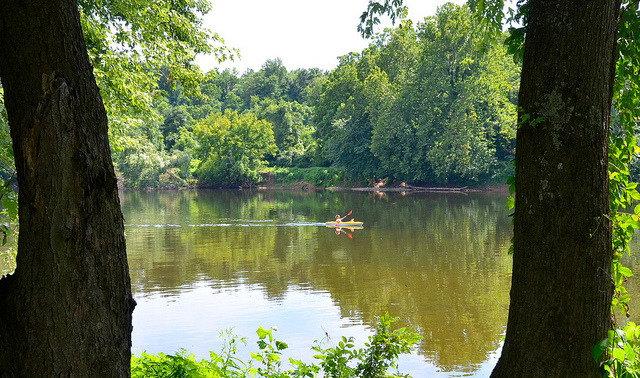
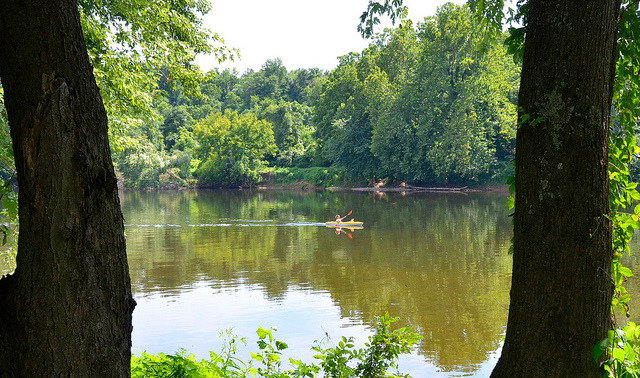
*(Photo* ***via****. Original letter published in a small digital chapbook put together by Matthew Burnside.)* https://mizar113.tumblr.com/post/167127678819/virginia
Three Playlists:
"Portuguese Punk." https://open.spotify.com/episode/5RlMWGGKB07ivQYxIMktuD
"Turkish Psychedelia." https://open.spotify.com/episode/6WZBLmCFtCXdiZep277WNS
"La Movida Madrileña." https://open.spotify.com/episode/21ERTa1OzprCYxg2A3jofk
Excerpt from a Novel
Pip Hardy was having ice cream when he noticed a woman pass by, riding an elephant, who was standing for Parliament. He’d learn all the details beneath the phenomenon later. *My forefathers and foremothers told me about the time in which they climbed the mountains and danced with snowflakes that aspired to be summerflakes, or ‘bees,’ as the humans call them. Must find a way to transcribe this.* The world moved in multiple gear shifts and multiple speeds, and sometimes the presence of one gear gravity-warped all the others. In the short term, though, it was a woman on an elephant in Glasgow passing by one prefabricated house after the other, moving with the kind of speed and grace that suggested that the buildings themselves were partly responsible for willing the creature and the rider into the world.
He had dropped his spoon on the table with a clatter and ran out into the road. A bit of coffee smudged itself on the page here as if to prove the point and flag the passing future gumshoe down. A far-off voice called out to my Nonno, “But you didn’t *pay!*” He turned around. “Non avete *pagato!*” He shrugged. Behind him, he could hear the elephant breathing in and out. “But for what?” He called back, then realized: the ice cream was still in his hand, but as he looked down, the trunk moved down, wrapping itself around the cone and tugging itself free from *mi nonno’s* hands with a slight, sucking pop, swinging itself free and clear in a wide arc to thwack against the door opposite The Ice Cream Parlor’s. There was a slight pause, some congenial kitchen whistling, and an old woman opened the door to see an ice cream cone with an elephant attached to it with a distant woman on top waving her arms back and forth and shouting, “Vote for me!”
New air-conditioning design takes energy from space
*Note: this was originally published elsewhere last year.*
Air conditioners have historically been a known factor in its impact on the Ozone layer and the planet for decades. The damage levied on the Ozone layer by chlorofluorocarbons emitted in no small part by air conditioners spurred the signing of The Montreal Protocol in 1987. Because of the agreement to reduce the amount of chlorofluorocarbons put into the air, the hole that had opened up in the Ozone layer over Antarctica is expected to return to the levels seen in the 1980’s by 2050. https://en.wikipedia.org/wiki/Montreal_Protocol
But that doesn’t mean that the problem is solved: air conditioning units still contribute to global warming. (Take a look at what occupies the top spot on The Draw Down’s list.) The chemicals that replaced the chlorofluorocarbons in old air conditioners are “2,100 times that of carbon dioxide” in their warming effect on the planet, as noted in The New York Times in 2012. 200 countries stepped in to regulate this in 2016. Even so: air conditioning use emits 100 million tons of C02 into the air every year. https://www.drawdown.org/solutions-summary-by-rank https://www.nytimes.com/2012/06/21/world/asia/global-demand-for-air-conditioning-forces-tough-environmental-choices.html https://www.nytimes.com/2016/08/10/science/air-conditioner-global-warming.html
Which is why it’s noteworthy that scientists at Stanford have developed fossil free air-conditioning. http://blogs.discovermagazine.com/d-brief/2018/11/09/air-conditioner-energy-saving-space-energy-radiation/#.W-vJnHpKgb3
The basic idea at hand is this: the device pictured above will absorb solar energy with its top layer and then shoot that heat back into space in the form of radiation using the bottom layer. The device creates a heat sink — which is what it sounds like: something that absorbs excess heat — and then cools a targeted area through radiative cooling. Or, as one of the lead authors of the paper attached to the device put it: “We’ve built the first device that one day could make energy and save energy, in the same place and at the same time, by controlling two very different properties of light.” https://news.stanford.edu/2018/11/08/new-device-can-collect-solar-energy-cool-buildings/
Radiative cooling is when an object lets off heat in infrared light. When these devices release infrared heat, they release it at a wavelength that can pass through earth’s atmosphere and into space.
The device remains in development and is far from ready for commercial use — the scientists here have yet to even see if they can generate electricity from the device — but, given the stakes of global warming and climate change, it is an intriguing development worthy of attention.
How I Want My Wikipedia Page To Be Edited After I Die
Summon a miniature conclave of Russian Orthodox priests to a laptop. Ask them how they are. Ask them if they had an appropriately holy commute. (Don’t pause for laughter.) If the laptop isn’t working, then the flock of Russian Orthodox priests might have to see if there is a computer available at the public library. Make sure they all sign the clipboard. Ask them to chant for the successful opening of the web browser. Apologize to the priests for the web browser taking such a short time to load and making it look like twenty bearded men in robes just hiccuped at the same time. Explain to the one zealot that the internet is not the devil’s work. Explain it once again after gogle.com takes you to a hardcore porn site. Pause. Pray.
Open Wikipedia. Ask my wife, son, and daughter to step forward. Have them sprinkle holy water on the computer. Move to the computer next to that when the water causes the computer to short circuit. Repeat the aforementioned process. Open up Wikipedia again. Check to see if Roger Federer is still alive and — oh! He was born in Basel, Switzerland? I wonder what Wikipedia has to say about that.
Return to the same computer in a month’s time after becoming consumed with Swiss passion and seeking and obtaining a second citizenship. Open up Wikipedia again. Go to my page. Take a moment to take it in.
Come to the conclusion that the page needs a few corrections. Replace my death date with “???” Add a section called “First Faked Death.” Add a section entitled “Second Faked Death And How His Wife Didn’t End Divorcing Him For Pulling A Stunt Like This A Second Time.” Show photographs of Evan and his family passing a vacation faking their deaths. Check to see if the priests are still okay with this.
Check to see if the “American Women Novelists” page still exists. If it does, turn me into a woman once a month and turn my wife into a man. Make sure to have thorough analysis regarding my writing my novels as a woman and my writing my novels as a man. Speculate as to whether or not I actually felt like this in real life or whether or not I’m pulling a pretty solid troll. Do this for a year. http://www.nybooks.com/blogs/nyrblog/2013/apr/29/wikipedia-women-problem/
Once a year has come to pass, the Wikipedia page should be turned into something that — should people wish — they can use as a script for a play. I have no particular demand as to content or style, but I would like to see something that somehow exists simultaneously as both a biographical Wikipedia page and a three-to-five act play. *Character-*wise, though, I wouldn’t mind seeing an old Uncle Vanya-type, someone who thought they were going to go see “The Book Of Mormon” but accidentally ended up catching “The Pillowman,” a guy running for Mayor on a platform of voter fraud who ends up getting five-hundred million votes (“See? The voters ended up backing my platform after all!”), the third member of Daft Punk (“C’est notre frère, Jerry Punk”), a drone hosting Saturday Night Live (“We have a great show! A band I’m capable of blowing up is here!”), someone claiming to be a Trysttrist (someone who studies trysts, much — we can assume — to the surprise of the two principal characters engaged in said tryst), and a waiter pulled into the theater from the nearest restaurant and told to take the orders of characters throughout the play.
I don’t think I’m asking too much.
After a year of this, you should change the page again.
Photo.
Took this photo a long time ago. Thought I'd share.
Open Question #2:
Hey, all --
Thanks for responding to the previous open question. https://read.cash/@evan.fleischer/open-question-65e79da6
Something of a follow up: have you encountered any particularly 'noteworthy' moments when it comes to crypto interacting with the 'real' world?
For myself, I'm thinking of when I walked into a Thai restaurant next to UT Austin and saw a Crypto ATM machine off in the corner. No one was using it. No one was coming in to use it. No one who worked at the restaurant paid it any mind -- as if it were a tiny little asterisk in the fabric of that reality waiting for its number to be called.
I got a kick out of it.
What keeps a valuable sports team competitive?
*Note: this story was originally published elsewhere.*
The question: do sports teams with evergreen sales have longer championship slumps than teams who depend on winning to sell the brand? Why invest when demand for your product is seemingly so inelastic?
There are a few ways to go about answering this: the first is to say that — as an academic named John Charles Bradburry noted in a paper published in 2016 — there is a positive correlation between winning and revenue in Major League Baseball, the NBA, and the NHL — but *not* in the NFL. (There’s also differing degrees of positive correlation between winning and revenue, with baseball being the highest.) It’s also worth noting “market size and winning both affect revenue, but they do so independently.” https://pdfs.semanticscholar.org/ea66/1addd18372829be7017a5b0f7d52015fe036.pdf?_ga=2.127762701.1066096934.1547966477-1077434713.1547966477
Conversely, Bradburry found little to indicate teams caught in a ‘loss trap’ — the notion that a team will deliberately lose to get a financial bump.
In other words:
(1.) Winning ‘sells the brand’ regardless of whether or not you get a championship.
(2.) A team that isn’t winning doesn’t necessarily have to worry about winning to sustain its finances, especially if it’s in a strong market.
What’s more, Bradburry, notes —
*Previous estimates of the impact of stadium quality on fan attendance have found a novelty or “honeymoon” effect from new stadiums that boosts revenue for between five and ten years, because fans are attracted to updated amenities and a new experience.*
It’s an observation which — with the exception of the NFL once again (where the initial bump in revenue begins to turn into a negative drain fairly quickly) — Bradburry more or less confirms.
It’s also worth taking into account the average length of a title drought: the average length of a title drought in the NBA — if we’re to count 29 of 30 teams — is 32.7 years. (One team — the team that won — will always be a ‘zero’ in this.) The average length of a title drought in MLB — if, again, we’re to count 29 of 30 teams — is 24.34 years. The average overall length of a title drought in the NFL if we’re to count all 32 teams is 61.5 years.
That means that the New York Yankees are starting to regress towards the realm of historical averages. (They last won a championship in 2009.) The Chicago Bulls are nearly on the verge of hitting the historical average as well, as well as the Houston Rockets (They last won a championship in 1998 and 1995, respectively.) The Lakers remain just ahead of the curve on the historical average. (They last won a championship in 2010.) The Dallas Cowboys — the most valuable sports franchise in the world — aren’t in the top tier of perpetually successful teams (they last won the Super Bowl in 1996), but they’re nowhere near the historical average either. https://www.si.com/nfl/2018/07/18/dallas-cowboys-forbes-sports-franchise-value
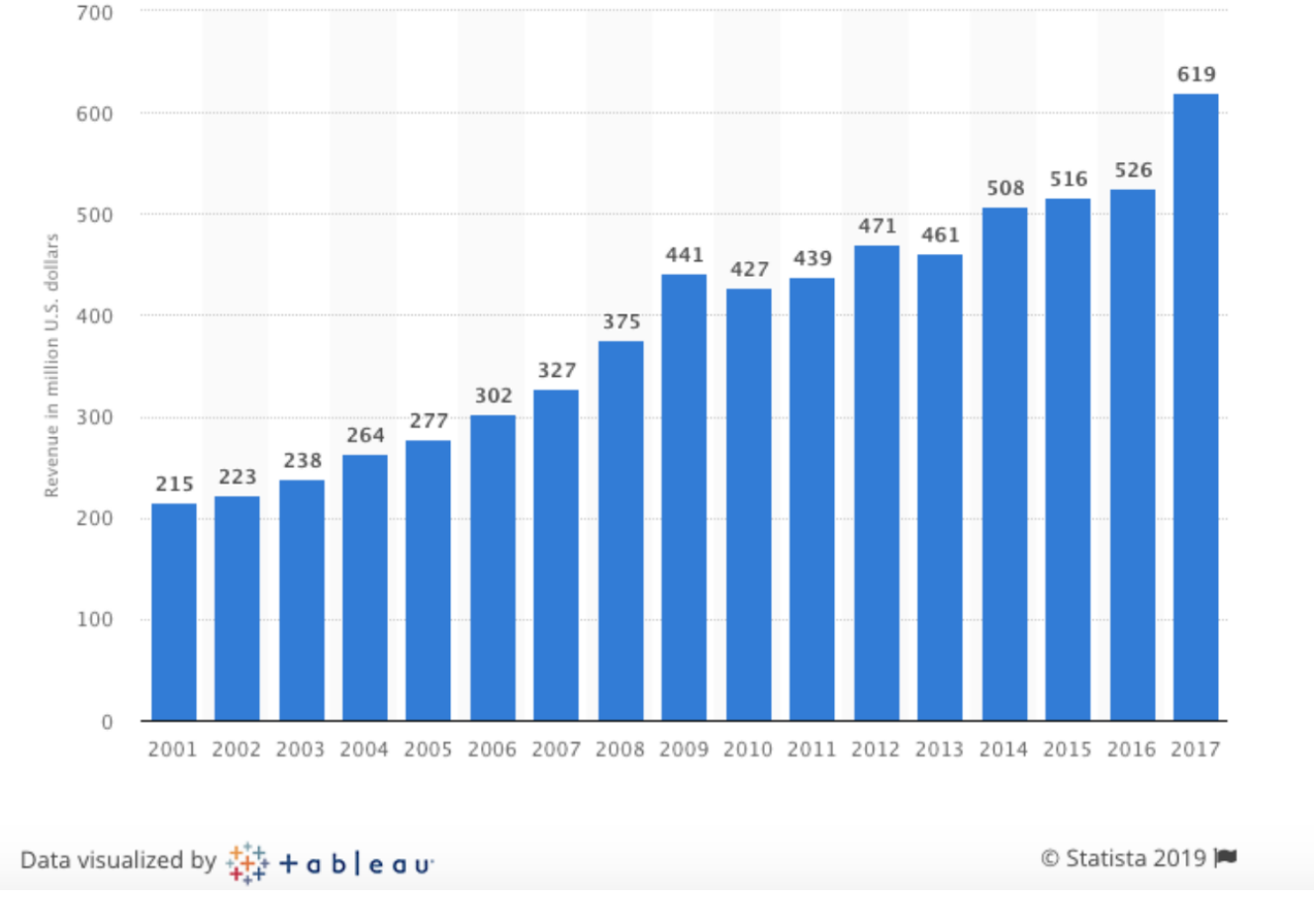
And yet: even though The New York Yankees haven’t won a title in a decade, their revenues — as we can see above — have risen steadily since 2001. Save 2011, the Chicago Bulls have seen their revenues steadily rise since 2001. The Los Angeles Lakers have shakily — and then rather quickly — seen their revenue rise over the same time period. The Dallas Cowboys have also followed an upward (and much steadier) trajectory. https://www.statista.com/statistics/196673/revenue-of-the-new-york-yankees-since-2006/ https://www.statista.com/statistics/196704/revenue-of-the-chicago-bulls-since-2006/ https://www.statista.com/statistics/196721/revenue-of-the-los-angeles-lakers-since-2006/ https://www.statista.com/statistics/195257/revenue-of-the-dallas-cowboys-since-2006/
Why is the NFL such an outlier in some of the data we’ve observed? Bradburry again: “Income per capita is positively associated with more revenue in the NFL — a one-standard-deviation increase in income was associated with a $6.6 million increase in revenue — but not for any other league.” The NFL is also a syndicate that shares revenues amongst teams and gleans its profits from a centrally dispersed television broadcast.
What does this have to do with winning? What does this have to do with the fact that the average length of a title drought in the NFL is 61.5 years? As Bradburry notes: “In the NFL, winning does not appear to provide any marginal financial gains and thus owners have no financial incentive to improve team quality.”
So what improves team quality? What’s the incentive to win that cuts across the NBA, the NFL, the NHL, and MLB?
Does a large salary improve team quality? Does a large salary incentivize players to win? It’s worth noting that a large salary is one of the most noticeably clear benefits to be gained from working in a monopsonic system, and that — until 1978 and the emergence of Dave Parker — the idea of rich athletes was something of a novel one. (A monopsony is the reverse of a monopoly: many suppliers. One powerful buyer.) But money doesn’t always buy success: think of the success of Leicester City F.C. or the emergence of moneyball in Oakland; think of the fact that — in order to give a team in the NFL an 80% win-rate — you’d have to outspend the average league salary by 174%. http://evonomics.com/economics-team-success-waste-money-big-name-stars-pro-football/
One argument from Christopher Maier of the University of Beyrouth and others that cuts against the grain is noting that the “integration of family and private problem support … show strong positive effects on athletes’ job satisfaction.” Indeed, the finding echoes some of the comments Paul George made when he spoke about why he decided to re-sign with the Oklahoma City Thunder. https://www.tandfonline.com/doi/abs/10.1080/16184742.2016.1188841
https://www.youtube.com/watch?v=5O792o18EIQ&feature=emb_logo
https://cdn.embedly.com/widgets/media.html?src=https%3A%2F%2Fwww.youtube.com%2Fembed%2F5O792o18EIQ%3Ffeature%3Doembed&url=http%3A%2F%2Fwww.youtube.com%2Fwatch%3Fv%3D5O792o18EIQ&image=https%3A%2F%2Fi.ytimg.com%2Fvi%2F5O792o18EIQ%2Fhqdefault.jpg&key=a19fcc184b9711e1b4764040d3dc5c07&type=text%2Fhtml&schema=youtube
There was a period during the NBA season that’s currently in the playoffs where Paul George was playing the best basketball of his life. And that’s why you should invest in the sport and go see a game: he’s an elite athlete. And that matters: when the NFL brought in ‘replacement players’ during the strike, attendance to games dropped.
So we have Paul George on fire. And even though the Thunder haven’t won a championship since 1979, revenues are going up. https://www.statista.com/statistics/196757/revenue-of-the-oklahoma-city-thunder-since-2006/
Procrastinator's brains are different than those who get things done
*Note: this was originally published elsewhere last year.*
Daydreaming is important — studies have repeatedly said as much — but maybe you shouldn’t daydream too much, as a recent study by researchers at Ruhr-Universität Bochum has come to the conclusion that — after looking at MRI scans of 264 individuals — the brains of doers differ from those of procrastinators.
Before we explain how they came to that conclusion, it’s worth going over a few basic terms: the first is the amygdala, which are two almond-shaped clusters of neurons buried deep within the brain. The amygdala helps you process smell, store memory, rewards your brain with dopamine, and helps you “assess different situations with regard to their respective outcomes.” If you’re trying to recognize a smell — if you beat a video game level and pleasant graphics fill the screen — if you’re unsure whether or not it will be worthwhile to go to a concert in the evening — all this goes through your amygdala. There's also the “dorsal anterior cingulate cortex.” This section of the brain currently appears to have a role in blood pressure, heart rate, attention, the anticipation of reward, impulse control, emotion, and — more broadly, though this appears to still be an area of active research — decision-making.
It’s helpful to have an understanding of these two sections of the brain when you read that “Individuals with poor action control had a larger amygdala” and that “the functional connection between the amygdala and the so-called dorsal anterior cingulate cortex (dorsal ACC) was less pronounced.” These results led Erhan Genç — a member of the research team at Ruhr-Universität Bochum — to hypothesize that “Individuals with a higher amygdala volume may be more anxious about the negative consequences of an action – they tend to hesitate and put off things.”
The study has sparked a wide-ranging conversation on Reddit, with questions being raised as to neuroplasticity (with an excellent reply reminding us about just how contextual neuroplasticity is) to former procrastinators chiming in with their autobiographical two cents to teachers talking about how they might apply the gist of this research in the classroom. (“This is great supporting evidence as to why teaching kids to take risks in the classroom is so effective.”) https://www.sciencedaily.com/releases/2017/10/171024112803.htm https://qz.com/953511/at-last-scientific-proof-that-daydreaming-doesnt-mean-youre-a-flake/ https://www.newstatesman.com/politics/health/2018/04/how-neuroscience-illuminating-importance-daydreaming http://journals.sagepub.com/doi/abs/10.1177/0956797618779380?journalCode=pssa http://news.rub.de/english/press-releases/2018-08-22-neuroscience-how-brains-doers-differ-those-procrastinators https://www.sciencedaily.com/releases/2018/08/180822090455.htm https://www.reddit.com/r/science/comments/9aext4/brains_of_doers_differ_from_those_of/ https://www.reddit.com/r/science/comments/9aext4/brains_of_doers_differ_from_those_of/e4v0kfv/ https://www.reddit.com/r/science/comments/9aext4/brains_of_doers_differ_from_those_of/e4v9ahr/ https://www.reddit.com/r/science/comments/9aext4/brains_of_doers_differ_from_those_of/e4v4nfe/ https://www.reddit.com/r/science/comments/9aext4/brains_of_doers_differ_from_those_of/e4v07zv/
The study works towards finding a neural base for some of these patterns — why, at the level of our hardware, things work in the way that they do — but — just as there was an active question as to the neural base of non-canonical uses of the nervous system — it’s worth wondering what a certain neural base actually looks like here when we can see so many different things come from the same seeming place — how a larger than usual amygdala seems capable of translating itself into procrastination; into a larger than average number of unique responses to a Rorschach test, autism, or the fact that “after an eight-week course of mindfulness practice, … MRI scans show that ... the amygdala appears to shrink.”
From an outsider’s perspective, it may feel a little like looking at birds and dinosaurs and knowing that each come from the same place.
But they do. And that’s the next thing to be figured out. https://bigthink.com/evan-fleischer/hints-of-wolverine-regenerating-tissue-in-boston-massachusetts https://www.sciencedirect.com/science/article/pii/S0010945208002104?via%3Dihub https://www.sciencedirect.com/science/article/pii/S0890856710002005 https://blogs.scientificamerican.com/guest-blog/what-does-mindfulness-meditation-do-to-your-brain/
Elsewhere (Two Links):
****Concertina**** (Bending Genres). https://bendinggenres.com/2019/10/15/concertina-2/
****Political Poem (Glass: A Journal Of Poetry)**** http://www.glass-poetry.com/poets-resist/fleischer-political.html?fbclid=IwAR2lPrbMm40p1GrlziyKYjVAcUHdbo-V1Y7t9HPZ-gnI9p3XlKD9k5IXvEQ
To Aid The Blind, An Assist From Cameras
*Note: this was originally published elsewhere in 2014.*
In two labs some 50 miles apart in Israel, computer scientists and engineers are refining devices that employ tiny cameras as translators of sorts. For both teams, the goal is to give blind people a form of sight — or at least an experience analogous to sight.
At Bar-Ilan University near Tel Aviv, where Zeev Zalevsky is head of the electro-optics program, these efforts have taken shape in the form of a smart contact lens. The device begins with a camera mounted on a pair of glasses, and the contact lens, Dr. Zalevsky explained, is embedded with an electrode that will produce an image of what is before the camera directly on the cornea. The image would be experienced in one of two ways: If an apple is placed before the camera, it could be “seen” either as the contour of an apple or as a Braille-like shape that a trained user would recognize as a representation of an apple.
Yevgeny Beiderman, a graduate student who worked with Dr. Zalevsky in testing the prototype, said: “The first time, the usage of the glasses feels strange. It takes at least a few attempts to start using it.”
The image captured by Dr. Zalevsky’s device is 110 by 110 pixels — hardly photograph-quality resolution, but Dr. Zalevsky said by email that the camera captures several images in time, and the compressed and encoded result “is enough to allow functionality to the blind person (for example: Braille contains only six points and is enough for reading.)”
Dr. Zalevsky is awaiting permission from a hospital to test the electrode lens on people, so in the meantime he has conducted preliminary trials using lenses that apply air pressure to the cornea instead. He has also conducted tests in which participants identified various shapes based on electrical stimulation of the tongue, after the same sort of training that would let someone wearing his lens “see” an apple as a Braille-like pattern.
Because the electrodes are clear and the lenses are standard soft polymers, Dr. Zalevsky said, the lens should be virtually unnoticeable to the wearer. “Soft contact lenses you put in in the morning and take out in the evening, if all is O.K.,” he said. “I guess the same will be true here.”
Dr. Jason Moss, an ophthalmologist at SUNY Downstate Medical Center in Brooklyn who was not involved in the research, said he found the idea of a smart contact lens interesting, but expressed caution about the limitations of resolution and the effects of the lens rubbing on the eye. “The cornea is a very delicate structure that is very susceptible to injury,” he said.
Such concerns are certain to arise as technology-equipped contact lenses find a broader audience. Google recently filed a patent for a camera to be part of a smart contact lens — including a proposed feature in which absorbed data could indicate via a voice warning, for example, whether a crosswalk is safe to cross.
A separate technique meant to assist the blind, developed at the Hebrew University of Jerusalem, spares the cornea entirely, instead recruiting the ears as a substitute sense. The device, like Dr. Zalevsky’s, incorporates a camera mounted on a pair of glasses, but in this case the images are translated into sound in a free iPhone app.
Known as **EyeMusic, the app** is the work of Professor Amir Amedi, who at **a TEDx Talk in 2012** demonstrated that by assigning sounds that correspond to specific images, people with visual impairment could “see” blue squares, lean over and grab shoes on the floor, identify individuals by the sound of their eyes and nose and eyebrows, and tell whether someone was smiling or frowning. https://itunes.apple.com/us/app/eyemusic-hearing-colored-shapes/id805461054?mt=8 https://www.youtube.com/watch?v=jVBp2nDmg7E&noredirect=1
EyeMusic works by assigning distinctive sounds to certain visual properties, and like Dr. Zalevsky’s lens, it requires practice to use. At its simplest, if a dog walked through your field of vision — low to the ground, moving in a straight line — the app would create a low, steady sound. A bird flying in a straight line through your field of vision would create a high, steady sound. A baseball rising up into the air — creating a diagonal line — would create a rising sound.
But firsthand use of the app is slightly more complicated than that. The program bases the audio output on a kind of infrared approximation of what’s before the camera, and when the image is complicated, the output can sound like someone dragging both hands across an organ. Listen to it often enough, though — film someone walking down the street, for example — and a user begins to notice subtle shifts and variations, pockets of sound changing as the image changes.
“One user blind from birth used the EyeMusic to look at the sky and was astounded by the shape and presence of clouds,” Dr. Amedi said by email. “He thought the sky would be blue and didn’t understand initially what are the white things that disrupt the image. Then he learned these are clouds — that create rain — and loved it.”
Dr. Amedi said he is working on a new iteration of the app that will add games to teach geometry and math, and he is pursuing several other sensory substitution projects to benefit people with impaired vision.
Devices like the EyeMusic app and Dr. Zalevsky’s smart contact lens have the potential to open up possibilities for people like Tanja Milojevic, a graduate student at the University of Massachusetts-Boston who is studying to be a Braille teacher.
Ms. Milojevic, 24, who developed glaucoma at age 5, has 20/800 sight within a narrow field of vision. She has worked as a teaching assistant, and said in a telephone interview that among those she has worked with, “the biggest reaction would be from students losing their vision quickly or are in the process of losing it, because they’re so used to the visual world.”
“With people losing their vision,” she continued, “they want to be in the sighted world as much as they can for as long as they can.”
Is It Really Possible To Map Faulkner’s Yoknapatawpha County?
*Note: this was originally published elsewhere last year.*
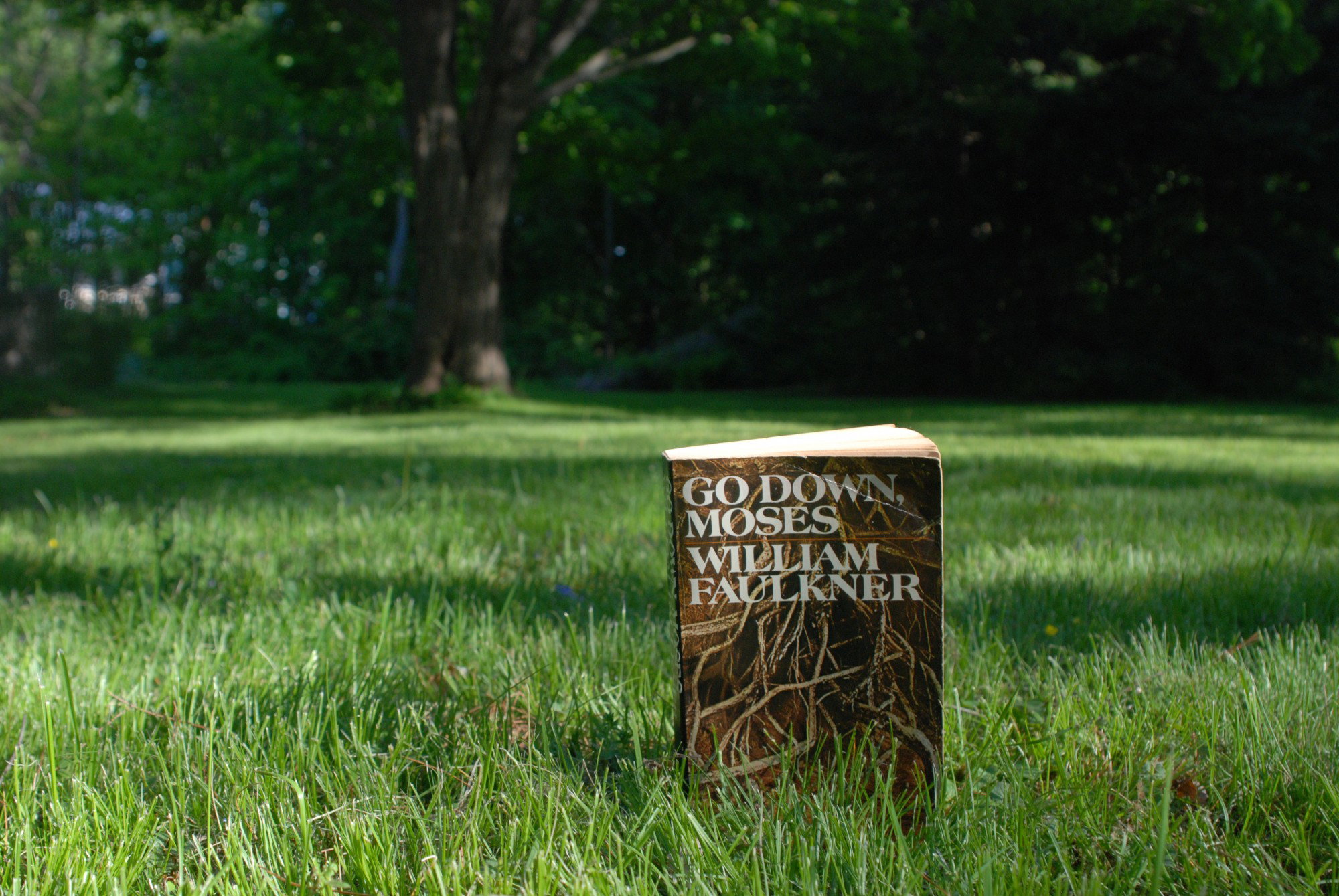
If William Faulkner had ever been given enough money to recreate Yoknapatawpha County in the world, would he have done so? The short answer is “no,” thus ending an essay long before it even had the chance to begin, ignoring my compelling concern about location and landscape stemming from Taylor Hagood’s academically thick definition of Faulkner’s definition of place …
*Faulkner establishes plots of space informed by an Arcadian ethic and haunted by configurations and reconfigurations of pagan values. And he uses these places to tease out the conflicts of speech and speechlessness by invoking literal historic earth to expose the mythic layers of experience that define the mythic-imperial place and control its constituents.*
… and what it might mean to physically sit with the maps of Yoknapatawpha County and the stories of Faulkner themselves.
I think Hagood’s point regarding Faulkner is a good point but is one that misses the breadth of usefulness contained in having a sense of location. Vladimir Nabokov used to recommend to his students at Wellesley that they draw out maps and rooms for characters as they made their way through the world of the novel. I keep that piece of knowledge in mind when asking myself, “What does it mean to map out Yoknapatawpha County as a *writer?* What does it mean that Armstid Farm seems to move in-between “Spotted Horses” and *As I Lay Dying?”*
Does this mean there is a secret story somewhere where Henry Armstid and his wife bring workers in and move their land from one spot on the map to another? Who did they bring in to get that job done? Were there children around? How do they remember the day?
And what does it mean that the rivers that run through the county don’t seem to act like normal rivers? What does it mean to tell a story to get a sense of where you are? How do you map the invisible amongst the lines of an “actual” map?
Would we find these questions aided if we tried to bring the actual Yoknapatawpha County into the world, buildings and all, as if it were a cross between HBO’s *Westworld* and Peter Jackson’s *Lord of the Rings?*
Perhaps what the map emphasizes in Faulkner’s work— beyond the way in which characters mistreat the environment and African Americans— is the inadvertent idea that a location must be worthy of the story of our situation; that our feelings transpose us onto and into these places regardless of whether or not the location is directly capable of mirroring those feelings back to us, so even though— as John Michael Vlach notes in an essay on “The Architecture of Urban Slavery in the Antebellum South,” that “…while the [slave] quarters [in the Robinson-Aiken house in Charleston, South Carolina] may have been pleasant to look at, the rooms in Aiken’s slaves quarters were oppressive”— the stories fill the place up. In “A Bear Hunt,” for instance, an enslaved man remembers the fact that a man in the party burned his shirt collar with a cigar, and— as a bit of revenge, years later— tells local Indians a lie so as to scare the man out of his wits, leaving the man thinking that he could very well be eaten alive.
When we ask ourselves where a story can situate us, we find ourselves asking parallel questions as well, questions that drag us back into the useless realm of perpetual usefulness: where does the phone situate us? Where the song situate us? Where does the computer screen situate us? Where does the movie situate us? (In a world akin to *The Purple Rose Of Cairo?*) Where does the highway situate us? The dirt road? The building? The neighborhood? The woods? The article? The book?
Barack Obama was repeatedly praised for his ability as a storyteller, but in rereading some of these articles of praise (like John Dickerson’s preview of Obama’s Inaugural in 2009) it was fairly clear that others kept coming up short in understanding the function of its use. (Though it appears Beto O’Rourke in Texas seems to have studied the function of story in Obama’s telling and gotten a decent sense of how to make it his own.) One reason why Obama was successful was that his storytelling *situated*. Note that “situated’ is different from ‘provided context.” And I’m aware that to single out Obama’s talents as a storyteller because of his ability to “situate” the listener almost suggests an invocation of an Eisenhower-styled era of idealism— which doesn’t quite get to the nub of as to why was as effective as he was— but the argument here isn’t about casting the act of situating in storytelling as being exceptional; it’s not; what this is about is what it means to tell the story of who we are—and where we are—in uninterrupted flows that make their way into the sky and beyond.
That’s why it’s worth studying—even if only for an afternoon— the way Faulkner’s characters move through the landscape, even if his stories seem to resist the gravitational pull of this particular dimestore exegetical impulse. To do so leads one to realize that the text we encounter is not Iain Sinclair walking through London in the name of psychogeography to declaim on the graffiti he sees without nudging his way too deeply into the history that brought that graffiti forth. We get a little closer to the idea of the dynamic we envision when we read Jean-Paul Clébert’s descriptions of Paris, but that isn’t quite the “there” of it yet. Instead, piece by piece, we read about a camping/hunting trip recounted in broad strokes with comparatively little attention paid to the landscape. A child recalls the same woods (and their legendary occupants) in mytho-poetic terms. The face of a relative of a man referenced during said camping trip is described as “big, broad, dust-colored … of a certain blurred serenity like carved heads on a ruined wall in Siam or Sumatra, looming out of a mist.” These linkages are made over three different stories— “A Bear Hunt,” “The Bear,” and “Red Leaves,” respectively. Ironically, they make clear that the process of situating ourselves is not and has never been done in a straight line.
This is also what makes Facebook’s power plays (and the power plays of others, like Peter Thiel’s Palantir) and our broad cultural acquiescence to the rules contained within these power plays so pernicious. An A/B test of a hashtag of moral urgency can only move power to a certain point. People and a better understanding of the subtleties of dynamics are needed to carry the baton the rest of the way.
Our lack of appreciation for both empathy and polyphony— let alone our felicity with it (we insist on certainty; when we enter into the world of online rhetoric, we so clearly know; that clarity of intent drowned out our attempt to be critical or self-reflective for years)— leaves us stumbling through the wilderness hiccuping. And our insistence on reading everything within a lens of immediately actionable use speaks to the way in which the current matrix of power roils our senses. As of this writing, there are approximately 63,000 google searches done every second, and we seem to want to read and put pieces of information together as if we can move on par with that or perhaps even faster than that—as if we can move in a way akin to the language that was put to use at the beginning of the internet, as actual “surfers.” It puts me in mind of Maria Bustillos’s first piece for *The New Yorker* and how one can cultivate an analogous approach to reading. https://www.newyorker.com/books/page-turner/what-george-orwell-henry-miller-and-john-waters-taught-me-about-what-to-read-next
But this isn’t to court the language of fatalism, defeat, or to describe one’s encounters with time. It’s just to write to say that if you find yourself adrift in this current socio-political moment and know you feel like you need to have someplace where you can begin; if you find what you could have sworn was the urgency of your personal clarity lost upon others who were keenly telling personal truths of their own and can feel your part in being part of the political moment moving elsewhere, then one way forward—if Faulkner is any indication—is to say that you couldn’t do any worse than by taking a look at where you are.
Doctors in Shetland can now prescribe a walk in nature
*Note: this was published elsewhere last year.*
Since October 5th, Doctors in Shetland have been authorized to prescribe “nature prescriptions to their patients.” It’s thought to be the first program of its kind in the U.K., and seeks to reduce blood pressure, anxiety, and increase happiness for those with diabetes, a mental illness, stress, heart disease, and more. https://www.theguardian.com/uk-news/2018/oct/05/scottish-gps-nhs-begin-prescribing-rambling-birdwatching
There is a leaflet of ‘nature prescription’ suggestions that accompanies all this filled with amusing, charming, sometimes seemingly off-kilter suggestions as well: in February, you can “draw a snowdrop” or make a windsock so as to “appreciate the speed of the wind”; in March, you can “borrow a dog and take it for a walk” and welcome Oystercatchers home; in April, you can “touch the sea” and “make a bug hotel”; in May, you can “bury your face in the grass”; in July, you can “pick two different kinds of grass and really look at them”; in August, you can summon a worm out of the ground without digging or using water; in September, you can help clean the beach and prepare a meal outdoors; in October, you can “appreciate a cloud”; you can “talk to a pony” in November, “feed the birds in your garden” in December, and do so much more. https://www.healthyshetland.com/site/assets/files/1178/730-1309-17-18_nature_prescriptions_calendar_4sep.pdf
The evidence for the benefits of nature on mental and physical health are numerous: if you spend 90 minutes of your day outside in a wooded area, there will be a decrease of activity in the part of your brain typically associated with depression; spending time in nature not only reduces blood pressure, anxiety, and increases happiness, but it reduces aggression, ADHD symptoms, improves pain control, the immune system, and — per a summary of research regarding the health benefits of nature — there’s even still more we don’t know and are figuring out every day. http://www.pnas.org/content/early/2015/06/23/1510459112 https://www.ncbi.nlm.nih.gov/pubmed/26886475 https://www.ncbi.nlm.nih.gov/pmc/articles/PMC3987044/ http://journals.sagepub.com/doi/abs/10.1177/0956797612464659 http://citeseerx.ist.psu.edu/viewdoc/download?doi=10.1.1.644.9399&rep=rep1&type=pdf https://ehp.niehs.nih.gov/doi/10.1289/ehp.1408215 https://linkinghub.elsevier.com/retrieve/pii/S0012369216347663 https://www.ncbi.nlm.nih.gov/pubmed/20487629 https://www.ncbi.nlm.nih.gov/pmc/articles/PMC5744722/
In *Landmarks*, the writer Robert Macfarlane bemoaned the disconnect between the landscape and the words used to describe and engage with that landscape, as well as all that disconnect implied. The book attempted to serve as something of catch-all for words Macfarlane worried was being lost. There are Shetlandic words in the book, including *grumma* (mirage caused by mist or haze rising from the ground), *flaa* (hunk of turf, matted with roots of heather and grass, torn up by hand without a spade and used in thatching), *skumpi* (clumsy, lumpish peat; outermost peat in each row as the peats are cut out of the bank), *dub* (very deep bog or mire), *yarf* (swamp), *iset* (color of ice: isetgrey, isetblue), and others.
One could imagine that someone encouraged to spend more time in nature by their Doctor won’t just feel better — they might think about tearing a *flaa* out of some *skumpi* before turning around and heading back home. They’ll spot some isetgrey ice. And, as they reconnect with nature, they will reconnect with the language *of* nature, a language that is frequently site-specific and carries with it a quiet institutional memory of its own, a memory worth recalling as the world faces development and climate change.
Five Things (12/5/19):
Highlights from the Merseyside derby. https://www.youtube.com/watch?v=1bE6rjf_9MY
Two quick notes on Pete Buttigieg and James Harden. https://open.spotify.com/episode/0EhPYHs9RALNs0aG1zUSsT
Kamala Harris drops out. https://open.spotify.com/episode/7CgZRGpmLXrRjeVPPjaWIL
Does anyone know/recall if Sebald had any interest in MRIs?
Why not spend the holidays with MF Doom?
https://www.youtube.com/watch?v=ZIDW4WadOag&feature=emb_logo
Grizzly Bears
*Note: this was originally published elsewhere last year.*
At the end of September, U.S. District Judge Dana Christensen ordered the restoration of federal protections for grizzly bears in the Northern Rocky Mountains. The decision sought to answer the question as to whether or not the U.S. Fish and Wildlife Service exceeded its authority in taking the grizzly bear off the endangered species list in 2017. The judge concluded that they had. https://www.washingtonpost.com/national/energy-environment/judge-restores-protections-for-grizzly-bears-blocking-hunts/2018/09/24/a9df2920-c050-11e8-9f4f-a1b7af255aa5_story.html?utm_term=.fdaba2e860f0 https://earthjustice.org/sites/default/files/files/2018-09-24_Doc-266-ORDER.pdf
What was in the decision? A recap of how the population of grizzlies reached the point that it did, for one; in 1922 there were 37 separate grizzly populations, and by 1975 that had dwindled to six. There is a cursory summary of the recovery efforts undertaken to rehabilitate the creature, as well as a notation that none of the current grizzly bear populations are close enough to suggest interbreeding. There are methodological details in the text — the fact that it took six years to get an accurate sense of the creature’s population — and there are biological details in the text, i.e., “Grizzly bears have one of the slowest reproductive rates among terrestrial mammals.” It runs for 48 pages, and it’s worth reading in full.
Why deny the attempt to take the grizzly bear off the endangered species list? For some reason, one of the studies the Fish and Wildlife Service relied on to support delisting grizzlies argued that the health of the bear would ultimately be fine because of — and I’m quoting from the judge’s decision here — “new genetic material.”
From the decision again —
*“… inadequate regulatory mechanisms existed to ensure a healthy and adequate grizzly population post-delisting; and the Service failed to consider the threat posed to the Greater Yellowstone grizzly by a decline in whitebark pine seed, a substantial source of food.”*
The judge’s decision also meant that the first planned hunt of Greater Yellowstone grizzlies in 40 years was blocked. There had been initial plans to hunt 22 bears in Wyoming and one in Idaho. The last hunt of grizzly bears in Yellowstone took place in 1974. They were listed as endangered in 1975.
It’s worth noting that the order from the judge comes in light of the EPA seeking to dissolve its Office of Science Advisor while the Supreme Court court has heard a case that will shape the government’s ability to protect future habitats for endangered species as climate change ruins their current homes. With the former, the agency risks losing someone who helps inform the head of the EPA about “the scientific research underpinning health and environmental regulations.” https://www.nytimes.com/2018/09/27/climate/epa-science-adviser.html http://www.scotusblog.com/case-files/cases/weyerhaeuser-company-v-united-states-fish-wildlife-service/
The latter is a case that tried to figure out whether or not the EPA could declare an area “critical habitat” if a habitat couldn’t support a species at the time but — with “reasonable effort” — *could* support a species? As of this writing, there are suggestions the court could ultimately vote 4–4, but the ground that was covered during oral arguments didn’t necessarily give way to any clear through lines of argument either: while Roberts, Alito, and one other justice all spoke about the limits of a potential restoration of a habitat, none of the talk of limitation seemed to necessarily preclude any of the considerations advanced by Sotomayor, Breyer, and others. Breyer — for instance — seemed to think that the authority for a Government agency to restore a habitat already exists.
Regardless of whether or not the EPA dissolves the position or the Supreme Court rules one way or the other or the grizzly bear keeps or loses its endangered species ranking, you can always watch webcams of bears that have been set up to get a sense of how these creatures move through the world and why an animal like the grizzly bear would inspire all the action that follows. https://explore.org/livecams/brown-bears/brown-bear-salmon-cam-lower-river
Open Question:
In broad strokes -- you don't have to give the game away -- what's your crypto strategy?
A Quick Note re: Once Upon A Time in Hollywood:
While I would recommend A.O. Scott’s review and this episode of Radio Open Source to help you flesh out a little bit more the context for the film (though I don’t know how I feel about the accuracy of Scott’s ‘conservative’ charge), I wanted to flag a quote from *Inherent Vice* that’s worth bearing in mind — https://www.nytimes.com/2019/07/24/movies/once-upon-a-time-in-hollywood-review.html http://radioopensource.org/tarantinos-9th/
*“Was it possible, that at every gathering — concert, peace rally, love-in, be-in, and freak-in, here, up north, back East, wherever — those dark crews had been busy all along reclaiming the music, the resistance to power, the sexual desire from epic to everyday, all they could sweep up, for the ancient forces of greed and fear?”*
— as I feel it helps emphasize why Tarantino left Sharon Tate — and, therefore, per Joan Didion’s logic, the 60’s — alive.
Open Question:
What do you wish the 'average' person understood better about cryptocurrency?
Americans can and should be learning African languages
*Note: this was originally published* *elsewhere* *in 2015.* https://qz.com/545232/americans-can-and-should-be-learning-african-languages/
More Americans should learn to speak languages native to the African continent. There is a small, statistical base of speakers in the country—according to the 2011 US census, 884,660 individuals aged five years or older already speak a language originating in Africa. But we could have so much more.
Arguably, the most useful, indigenous African languages for Americans to learn are Yoruba (primarily spoken in Nigeria), Xhosa (South Africa), Swahili (Kenya, Tanzania, and much of East Africa), and Amharic (mainly Ethiopia). Four languages out of approximately 2,000 on a continent of 1.1 billion—but together, they share 210 million speakers.
The United States is the second biggest investor in African economies behind France. The Financial Times reports that, “the US was the top source country by number of [African] projects last year, with 67 US companies launching or announcing 97 projects—a 47% rise on the previous year’s tally.” The US was the third-ranked country for capital investment in Africa in 2014, with roughly $8 billion invested by US companies last year alone. So, economically and sociologically, there are huge impetuses for acquiring African languages. http://www.ft.com/cms/s/3/fea83f20-6c2d-11e5-aca9-d87542bf8673.html
“In most African countries a child is born in a particular linguistic community where they grow up speaking that community’s language,” Angaluki Muaka, a professor of African and African-American studies at the University of Minnesota, tells Quartz. “When they start school, they’re taught a colonial language and one of a country’s major languages, sometimes referred to as a ‘national language.’”
By the time they are in the equivalent of the sixth grade, Muaka adds, their medium of instruction is generally the colonial language—French in places like Gabon or Côte d’Ivoire, Portuguese in Angola and Mozambique, English in Kenya and Ghana. By that age, they might be fluent in as many as three languages: the colonial language, one of the country’s national, languages, and their mother tongue. In South Africa, an example of this phenomenon might be a child from a Tswana-speaking community, educated in English or Afrikaans, and fluent in Xhosa.
In short, unlike Americans, the multilingual African is the norm, not the exception.
So, if most Africans are already equipped to conduct business in multiple languages, including major world tongues like English, French, Portuguese, or Arabic, what’s the point of Americans returning the favor?
“The commercial value of learning a language depends on the number and level of income of the group of language speakers,” counters James Foreman-Peck, a professor of economics and international development at Cardiff Business School. “My impression is that most of Africa has a long way to go before its languages become commercially valuable. Law and order would help, along with a marked reduction in corruption. These would encourage economic growth and create a market worth selling to. Then there would be a demand for Nigerian languages perhaps. Even so, Mandarin must surely trump all of them.”
But perhaps the impetus to learn major, indigenous African language goes beyond the immediately visible factors, in terms of commerce.
“The difference between Chinese and American enterprise in Africa is Chinese interest in learning local languages and culture,” Angaluki Muaka says. “A new or foreign language opens incredible doors of opportunities. Americans would tremendously benefit from learning African languages, especially regional lingua francas like Kiswahili of East and Central Africa, Hausa and Yoruba in West Africa; Zulu, Xhosa, and Shona in Southern Africa; Somali in the Horn of Africa; Arabic in North Africa, et cetera.”
“We should also not overlook the growing population of African immigrants in the US,” Muaka notes. “Not only do these immigrants produce heritage learners of African languages, but knowledge of their languages would considerably enhance US government service-delivery to their communities.”
“Just yesterday a friend who is the executive director of a Minnesota-based non-profit that operates in Tanzania returned from a Tanzanian trip,” she recounts. “She told me that on that single return trip of hers between Dar es Salaam and Amsterdam, flight attendants twice called for Kiswahili and Somali speaking passengers to help them with interpretation. My Caucasian friend had to step in for Kiswahili.”
Of course, it’s worth considering the moral weight of “decolonizing” language. Beyond getting ahead of the demographic curve with strategic cultural engagement, prefiguring an eventual business relationship, the moral impulse to study African languages could, in some fashion, quietly (and very partially) redress the structural, cultural inequalities perpetuated by colonialism. It’s a plan with precedent. Consider Yeats’s advocacy for the Irish language over the course of his own life (which now enjoys official status in Ireland), how people brought the Wampanoag language back to life, or how Māori and the Hawaiian language were pretty much saved through “language nests.” http://www.aljazeera.com/programmes/livingthelanguage/2012/04/2012416141630195978.html
The difference here is that Americans learning African languages would not “save” these tongues from extinction. They are in no danger. And though there is no immediate, large-scale economic relevance to Wampanoag, Hawaiian, or Māori, there is to Yoruba. Or Xhosa. Or Swahili. Or Amharic. A language is accessible to a potential population in a way that the levers of a production economy are not. And perhaps enrolling in Introduction to Zulu it is the first step someone can take.
re: Nightmare Burgers
*Note: this was originally published elsewhere during last year's Halloween.*
If you’re a fan of the podcast My Brother My Brother and Me, you’ll be aware of a segment of the show called “Munch Squad,” which focuses on food and drink companies doing their best to get you interested in their particular product through the ever successful love language of press releases. This past Monday, “Munch Squad” focused on a burger put out by Burger King called ‘The Nightmare Burger,’ which Burger King claimed would ‘give you nightmares,’ a claim they said was backed up by an exceptionally real scientific study, which claimed to have tested 100 people and observed ‘a 3.5 increase in nightmares” due to a particular combination of protein and cheese. http://www.maximumfun.org/shows/my-brother-my-brother-and-me http://www.maximumfun.org/my-brother-my-brother-and-me/mbmbam-431-very-spooky-burger
While there is little joy to be found in attaching a list of facts to a comedy podcast like a teacherly barnacle, it’s worth making the point explicitly clear: there is no direct scientific proof that what you eat will have an impact on your dreams. A 2015 paper published by the National Institute Of Health that dug into this particular topic only found one study that even came close to getting at the subject, and it was a study featuring 7 men and 42 women which revealed that https://www.ncbi.nlm.nih.gov/pmc/articles/PMC4330685/
*… participants who expressed a preference for organic foods reported more frequent dream recall, recurring dreams and meaningful dreams, as well as more dreams containing particular themes such as flying, risk-taking, sex, and water. In contrast, participants who expressed a preference for fast foods reported less frequent dream recall, as well as fewer recurring dreams, nightmares, and sexual dreams.*
Other attempts to examine the link between food and dreams have pursued a path simultaneously sublime and ridiculous. A 2005 study conducted by The British Cheese Board concluded that “eating Stilton cheese often led to crazy or vivid dreams while eating cheddar cheese often led to dreams of celebrities,” though information available about the study is — in the paper’s words — “extremely sparse.” https://www.dailymail.co.uk/health/article-362101/Sweet-dreams-cheese.html http://www.cheeseboard.co.uk/
There is *something* of a link between food *deprivation* and dreams. Five of fifteen individuals deprived of water for 24 hours in 1958 had a dream that “contained thirst-related content, but these did not depict the dreamer as thirsty or in the act of drinking.” Individuals with eating disorders were found to have statistically higher reported incidents of dreaming about food. “One study found them in 58% of patients with bulimia, 26% of patients with anorexia, and 44% of patients with anorexia and bulimia combined.”
There’s also something of a link between eating late and dreams, but — in the main — “Disturbing dreams [as opposed to what the paper calls ‘vivid dreams’] were not, however, significantly related to the quality of participants’ diets, having only a marginal positive correlation with drinking coffee.”
And while a man named Hamburger once did work on looking at the link between food and dreams, there’s little evidence that you can hold the other hamburger responsible. At best, it can be said that “food sensitivities and intolerances, especially lactose intolerance, could play a significant role in food-dependent dreaming.” And that’s about it.
Money and Athletes
*Note: this story was originally published elsewhere.*
There have always been rich athletes, but it is not unreasonable to suggest that today — in this century — there are more rich athletes now than there used to be. If we’re to define ‘now’ as occupying the 20th century and ‘rich’ as getting paid more than one million dollars per year, then we can say that some of the first ‘rich’ athletes of our modern times included Dave Parker (MLB), Nolan Ryan (MLB), Moses Malone (NBA), Bobby Orr (NHL),Derek Sanderson (NHL), and Lam Jones (NFL.) https://www.cincinnati.com/story/sports/2015-all-star-game/2015/06/21/career-firsts-former-cincinnati-reds-star-dave-cobra-parker/28813377/ https://baseballhall.org/discover-more/stories/inside-pitch/nolan-ryan-million-dollar-man https://vancouversun.com/news/local-news/this-week-in-history-bobby-orr-becomes-first-nhl-millionaire https://en.wikipedia.org/wiki/Derek_Sanderson https://en.wikipedia.org/wiki/Lam_Jones
There were certainly rich players before the modern age. Not only was the Roman athlete Diocles purportedly worth $15 billion at the end of his life, but Babe Ruth, the Sultan of Swat, who nearly made the equivalent of one million per year during the height of his powers, was so comfortable with his wealth that he was rumored to have thrown a piano into a lake to test his strength. https://bigthink.com/paul-ratner/the-highest-paid-athlete-in-history-actually-lived-in-ancient-rome https://www.firmex.com/thedealroom/when-did-athletes-start-getting-rich/
But there’s a reason why athlete wealth has hit new heights.
**The powder keg**
So what prompted the change? What took us from an era of soccer players being former coal miners to soccer players being rich? What sparked the sudden contemporary surge? The short answer: the re-establishment of sport as a modern spectacle, free agency, and television. https://en.wikipedia.org/wiki/Alex_Raisbeck#Early_life https://theconversation.com/entertaining-the-masses-sports-spectacles-of-today-began-in-the-20s-35749
Free agency is when an athlete, in effect, offers themselves up to highest or best bidder. And, until relatively recently, that wasn’t the case. From 1879 to 1975, the ‘reserve clause’ was the rule by which American sports teams operated. A ‘reserve clause’ effectively meant that a player could not negotiate a contract with another team. A player could be traded, sold, or released at a team’s whim.
One reason why this problem persisted for so long — why a team could buy or sell a player without so much as a question put to the player — was the fact that Major League Baseball had an exemption from federal Antitrust laws. Why? A decent argument could simply be central position baseball occupied in American culture. Judges knew what baseball meant, so they kept finding ways to ‘protect’ it. https://slate.com/news-and-politics/2002/07/why-does-baseball-have-an-antitrust-exemption.html https://blog.oup.com/2013/03/baseball-history-antitrust-law/
The reserve clause finally began to change when Curt Flood refused a trade from the St. Louis Cardinals to the Philadelphia Phillies in 1969. He objected to how poorly the Phillies had been doing, the quality of the stadium, and his concern over encountering racist fans.
Flood eventually sued Major League Baseball. The case made its way to the Supreme Court, which ultimately sided with Major League Baseball. Flood was blackballed from the game. It wouldn’t be until 1998 that Congress would officially pass the Curt Flood Act to recognize the fact that players officially have a right to their free agency (though nothing was mentioned in the Flood Act about team relocation, broadcasting agreements, and more.) Sports had, by then, gained a series of rights through incremental steps taken by collective bargaining. https://en.wikipedia.org/wiki/Flood_v._Kuhn https://www.congress.gov/bill/105th-congress/senate-bill/53
Additionally, television ads brought (and continues to bring) money to the game. Consider that the Dodgers made nearly $200 million from TV advertising and broadcasting in 2016. NFL TV ad revenue hit $3.5 billion in 2017. March Madness made $1.2 billion from advertising in 2018. TV ad revenue nearly accounts for 40% of hockey player salaries. https://blogs.fangraphs.com/estimated-tv-revenues-for-all-30-mlb-teams/ https://www.forbes.com/sites/kurtbadenhausen/2017/03/01/nfl-tv-ad-revenue-hits-record-3-5-billion-despite-drop-in-ratings/#7f234d54525b https://www.broadcastingcable.com/news/march-madness-drew-1285b-ad-revenue-kantar-media-172359 http://thesportsdaily.com/the-nhl-money-machine-how-does-it-break-down/
But beyond free agency and television, it’s also worth noting that the presence of certain players alone caused the price of athlete salaries to jump. In 1995, Patrick Ewing was making a little over 18 million dollars with the New York Knicks and was the highest paid player in the league; the next year saw Michael Jordan make over 30 million with the Chicago Bulls.
**A period of growth**
How much have athlete salaries have grown since the 1970s or 80s? How do these wages compare to the average American?
The wages of athletes in the NBA have increased 344% between 1980 and 2016, 304% in Major League Baseball, and 266% in the NFL. (As of this writing, we have yet to come across relevant NHL-related data.)
During that period — nearly three decades — the average American worker has not seen their purchasing power move. In 1981, indexed for inflation, the average American made a salary of $13,773. As of 2017, the average American salary is $50,322 per year. That’s an on-year percentage increase, but there are reasons why that isn’t good enough: the price of schools has gone up. The price of housing has gone up. To summarize *in extremis* the well-researched thesis of *The Two-Income Trap*, parents have been increasingly financially punished for being parents for the past 40 years, forever pushed into paying more and more for the necessities of life. http://www.pewresearch.org/fact-tank/2018/08/07/for-most-us-workers-real-wages-have-barely-budged-for-decades/] https://en.wikipedia.org/wiki/Inflation_(economics) https://www.ssa.gov/oact/COLA/AWI.html https://thinkprogress.org/in-the-last-30-years-college-tuition-tripled-8561bd86077b/ https://www.cnbc.com/2017/06/23/how-much-housing-prices-have-risen-since-1940.html
As of 2016, the highest average player salary breaks down as follows: The average NBA player makes $6.25 million per year; the average baseball player makes a little less than $4.6 million per year; the average hockey player makes a little less than $3.1 million per year; and the average American football player makes $2.1 million per year.
**Do athletes deserve that much money?**
Yes. Even as they’ve made more money over the past thirty-some years — even if we’re to skip past the fact that athletes making more money overall is a comparatively recent historical trend; even if we’re to point out something a little bit more situational, like the fact that Liverpool F.C. used to be comprised of literal coal miners — the legal structure in place in which these sport teams operate are still abnormally tilted in the direction of the owners.
And it isn’t just that athletes deserve the money; it isn’t just that college kids deserve the money or, at least, more options for them to choose from. It isn’t just that payment toward athletes and student athletes needs to be much more reflective of a commitment to racial equity. It’s that athletes deserve a stable exit path for when they leave the sport that they play, too. https://www.ozy.com/the-huddle/the-ncaas-dominance-is-weakening-enter-the-g-league/90716 https://www.washingtonpost.com/posteverything/wp/2016/01/08/college-sports-exploits-unpaid-black-athletes-but-they-could-force-a-change/?utm_term=.edd081025614
Per a 2009 Sports Illustrated article, 78% of NFL players go broke within the first two years after they leave the NFL. 60% of NBA players go broke within the first five years after they leave the game. J.R. Richard — a star pitcher with the Houston Astros — was homeless for two years (even sleeping beneath a bridge) before getting a job with an asphalt company. https://www.si.com/vault/2009/03/23/105789480/how-and-why-athletes-go-broke https://www.wbur.org/onlyagame/2015/08/22/jr-richard-still-throwing-heat-book
The story of rich athletes in our modern times is both a simple story and a complicated story. The examples are bright and present enough in all our lives for all of us to see, but — if we poke at the contours of the system just a bit; start to ask why things are the way they are just a bit — we’ll begin to get a sense of a long-standing historic financial structure that privileges the wealthy and the few.
Quick Introduction:
Hi, everyone --
I'm a writer, editor, and MFA candidate based in the States. (You can read more here.) I'm pleasantly intrigued by what I've seen on this platform already and am looking forward to contributing more to it. https://evanfleischer.weebly.com/
Hope to have the chance to engage with more of you as the days and weeks progress.
Evan
Court-Side Vision
This is an essay about a small point — about those who aren’t necessarily misinformed or delusional, but somehow nevertheless manage to see something in a game of basketball that simply isn’t there. While there is research that shows that someone who has played basketball is able to recognize a basketball play better than someone who hasn’t played basketball, I think that this phenomenon is *also* the result of — and bear with me — a relationship between the mental-verbal process of inventing an image for something that is absent coupled with a lack of appreciation for knowing what the body wants in landscapes both small and exactingly defined — that is to say, on a court — as well as ones that are seemingly amorphous and certainly large, be it the country, the city, or something in-between. https://journals.humankinetics.com/doi/abs/10.1123/jsp.2.1.14?journalCode=jsp&
The writer, critic, and artist John Berger argued in *Ways Of Seeing* that images were created to signify something that was absent. In hovering over ESPN like a sports version of Chris Matthews, the commentator Stephen A. Smith is as intent to create an image that is absent as anyone else in sports journalism: he regularly uses LeBron James as both a performative hero and as a demonstration that a performative hero is absent on the court. Smith has not played basketball since college, where the Coach suggested that Smith had “a suspect jump shot” and where — in seeming response — Smith wrote in the college newspaper that the Coach should retire for ‘health issues.’ There is a gap between what he sees and what is actually there.
*Stephen A. Smith says LeBron James “virtually non-existent.”*
*Stephen A. Smith says LeBron James “will never be Michael Jordan.”*
*Stephen A. Smith is “sick” of the LeBron James topics.*
*Stephen A. Smith wants to tell you something about how amazing LeBron James is.*
*Stephen A. Smith goes off on LeBron James for his ‘excuses’ about his struggles.*
*Stephen A. Smith says James Harden is ‘head and shoulders above’ LeBron James.*
*Stephen A. Smith defends LeBron James: He doesn’t deserve to be judged before playoffs.*
*— A Random Sampling Of ESPN Headlines.*
I do not mean nor have any tremendous desire to single Smith out, but his approach is emblematic of a certain style of sports journalism that does not know what it sees and so seeks to invent an image to replace it — either in the form of heroism, or — more recently — in the form of a certain reliance upon numbers that only serves to reveal the fact that the individual highlighting the numbers doesn’t know what those numbers mean. It is a pedestrian point, but it is a point that has consequences when 18 out of 21 ESPN analysts predicted that the Philadelphia 76ers would beat the Boston Celtics in the playoffs. (They did not.) It is a point that has consequences when Knight-Ridder was one of the few outlets to warn against the impending Iraq War, a handful of people warned about the housing crisis that eventually led to The Great Recession, and a handful of people made the point that it sure did look like Vladimir Putin was seeking to elect Donald Trump. https://twitter.com/AngryManTV/status/992916525479849984
That may look or sound like a leap — a sudden acceleration where a link becomes a leap becomes something taking flight — but it really isn’t much of a leap at all: it’s what I can only hope comes across as an act of *teaching*. If you can spot the things that someone misses during a game of basketball — if you find yourself not really trusting the sight of television commentators drawing a circle around a player to highlight the fact that a player is about to … walk in a straight line — then maybe you can start to think about about other things someone misses outside of that.
And you don’t even have to look on this through the lens of basketball either. Look at what Betty Gilpin as Debbie says during the finale of the first season of *Glow* and think again about ‘inventing an image for something that is absent coupled with a lack of appreciation for knowing what the body wants in landscapes … small and exactingly defined’ — “I actually … *like* wrestling. It’s like I’m back … in my body. It doesn’t belong to [my husband] or [my child]. I’m, like, *using* it — for *me*. And I feel like a goddamn superhero.”
[sponsors]
The emotion of the reality of the body and the nature of the place it occupies is worth more than what we sometimes give it. But we first have to come to terms with the fact that we are with our bodies. And I’m not trying to head down the path of the invincibility of youth or the inevitability of age. I’m not trying to re-visit the mind-body problem. I’m not trying to gently guide you into a Daoist Tent set up along Venice Beach with someone who may or may not be a poorly disguised con artist on the run from Johnny Law holding ethereal court on the inside. I’m trying to tell you that we do a disservice to ourselves and our sense of perception if we look at something that is fundamentally non-verbal and don’t even have a go at trying to verbalize it. It’s the kind of situation that leads Clarice Lispector to write, “I’m trying to write to you with my whole body, loosing an arrow that will sink into the tender and neuralgic centre of the world.” And yet the body — still knowing that it spins “On swivels of bone & faith, / Through a lyric slipknot / of joy” — still looks to the space it occupies and seeks to occupy, knowing that there is a game (or *something*) out there one “loves like a country.” https://www.poetryfoundation.org/poems/50245/slam-dunk-hook https://www.poets.org/poetsorg/poem/fast-break-0
And maybe that takes the form of simply sticking your hand out the passenger side window during the gentle evening blue of a summer ride, the hand somehow simultaneously riding both the waves of passing air and the waves of crickets and others of symbolic import playing in the dark. Maybe it’s in feeling basketball shoes seal themselves around your ankles like a piece of subtle alien technology. Maybe it’s in stepping outside a bar after a band has finished summoning sweat out of an evening’s dance — the echo of the dance still reverberating through your body as you take a breath of crisp air as the headlights around you slowly make their way home. Maybe it’s in trying to figure out what it feels like to be Marcus Smart scrambling for the ball or Brittney Griner leaping high in the air. Maybe it’s sawing a plank of wood in the garage.
The point is that that moment of recognition is yours, something you can slowly build upon, and I’m pretty sure that there is something in that recognition you can use to build up your perception elsewhere.
[sponsors]
A fair counterargument to all this could be to say that this is a process much easier said than done. And there’s a degree to which that is true. And part of the problem compounding connecting the body to one’s perception to one’s environment is that the eye treats what it sees and what it *thinks* it sees — an optical illusion, for instance — in pretty much the same way. As Claus-Christian Carbon notes in a 2014 paper on “Understanding human perception by human-made illusions,” “The strong reliance of perception on top-down processing is the essential key for assuring reliable perceptual abilities in a world full of ambiguity and incompleteness.” https://www.ncbi.nlm.nih.gov/pmc/articles/PMC4116780/
So what if that is one way we can start to rebuild the perception of those who miss things? What is more ‘down’ in a top-down world than the non-verbal? What is more ‘down’ in a ‘top-down’ world of clearly delineated exegetical organization than that strange thing called ‘art?’ Does that mean, then, that someone should enlist the Harlem Globetrotters to play a game entirely in slow motion? Does that mean that someone should try and schedule a game at Rucker Park in the middle of a pitch black night with thousands of tiny glow lights put onto all the players, leaving passersby to think they’ve just witnessed a bit of motion capture in the wild?
What might we not be seeing with Magic Johnson hiring Rajon Rondo, Lance Stephenson, Javal McGee, and Michael Beasley? (And here you can tell exactly when this piece was written. You can see old baseball cards stuffed into the time capsule of the text shooting up like sidewalk flowers.) Rondo’s, McGee’s, and Stephenson’s defensive ratings are high, but none of them had a positive plus-minus last season. Are we missing the fact that this might be part of an initial test phase laid down by Magic Johnson and that we should expect things to come around the All-Star Game? Or — and I say this while watching highlights of Kevin Durant scoring 66 at Rucker Park and people saying to each other I *told* you and ‘Yes, sir’ as he began to catch fire in the fourth — am I missing the fact that when Kevin Durant once walked onto a court in a gym in Maryland when he was young, he said, “You really know what love is — you know what I’m saying?” https://www.youtube.com/watch?v=DBsLxqH-0bQ https://www.youtube.com/watch?v=HtNWc1AIU20
https://www.youtube.com/watch?v=eBZX9TPWL6Y&feature=emb_logo
About Ada
Ada Books is closing in August in Providence, Rhode Island after 13 years of operation. Brian Legault is the owner. It’s a particularly well-curated store — they advertise plenty of zines and I later picked up a John McPhee book and a copy of *Astounding Science Fiction* from 1954 for two bucks; someone writing for Bookslut **noted how well curated the selection was in 2009** — and the combination of such a specific store sitting next to White Electric Coffee across the street from a high school defines the near-beginning of Federal Hill well.
http://www.bookslut.com/features/2009_01_013869.php
I visited near the end of July. Heavy metal guitar licks play off a speaker perched in the background to compliment Legault’s work sweeping the floors and nearly overwhelm the quality of the audio recording our chat. When we sit down to chat, he’s wearing a black-and-white t-shirt done up a bit like the shirt of a heavy metal or punk band fond of Mad Magazine from the 80’s that reads, “*READING IS FUN!”*
The reason why Legault closing is clear: he can’t make enough money selling books. And he’s a bookseller in every sense of the word: not only did he talk for a moment about the idea of raising his kid in the bookstore (“He had two years here, and he loves books. He especially loves to play with books as physical objects — and read, obviously, but …”), but he also cares about the details, too.
That comes out when he talks about some of his favorite things at the store being “little things, stupid things, like, expediting some books, you know — pricing or putting them away, which is really boring to most people, but — to me — it’s exciting. The best days were when I bought a big collection and had to go through it to see what I had — see what was good, see what was bad. Or, honestly — other favorite memories — favorite times — are when I reorganized something.” And, here, Legault gestured to an area behind me. “Kids books didn’t used to be in the front.”
https://www.youtube.com/watch?v=nVYoRQFzEQM&feature=emb_logo
“I had 200 reading events here,” he continued. “Poets, mostly. Kate Schapira — a great poet in her own right — Professor at Brown — she ran a really cool book-reading series, poetry reading, primarily — here for — well, since 2007. The last one was in the spring of this year. I assume she’s going to keep it going, but I don’t know where it’s going to be — maybe she’ll even have it at her house. She has a big house.”
After the store closes, Brent plans to teach. The inadvertent community that’s built up as a result of the bookstore “will be fine.”
What is he losing with the store going away?
“The biggest loss for me is my identity. I’m not going to be a bookseller anymore. I’m going to be just another person, which is fine — it’s probably what led to my holding onto it for too long. I should have gotten out. If it was purely business, I would have probably gotten out after three years. And I really wanted to do this until I was 75 years old. I really thought that was going to happen, but my revenue over the last few years had plummeted. And I’m coming in and losing money, working for nothing: I’ve got a kid — I’m stuck here on the weekends. My wife is off. They get to do fun stuff together. I want to go do fun stuff with my family.”
[sponsors]
As for what pushed Legault to make the decision, one of the culprits is a familiar one.
“Amazon’s been around for a long time, but … it’s encroached. It’s too easy. It’s just entered every aspect of our lives. Literature is a little bit more than ‘just a product,’ and that’s it’s downfall. You’ve got to have people who are *really* into books to support bookstores. You’ve got to have enough. You’ve got to have a real critical mass or else it doesn’t work. You don’t have to have a critical mass of people who need shoes, because everybody needs shoes. But a bookstore needs a certain amount of people — readers, *real* readers are already a minority. A real small minority of any congregation. And readers who are going to go into a bookstore are an even smaller population.”
“Do you think the U.S. would benefit from some kind of version of **Lang’s Law?**” I asked.
“Yes.” https://en.wikipedia.org/wiki/Lang_Law
A young man with a full beard entered the store. Legault nodded a hello and returned to our conversation.
“I’m not an artist. I’m kind of a dilettante. I have taste, you know? It’s my taste. Dilettante is not a nice word — I don’t mean it in a not nice way. I mean it in a sort of ironic way. I have taste and this” — that is, the store — “is my little art project: showing off my taste, because I can’t produce art myself. And now it’s gone.”
Six Writing Prompts
Write a piece of dialogue where a realtor tries to sell a home to Peter Parker without revealing Parker’s secret identity.
Write a piece of dialogue where a carpet salesman offers up their thoughts on *The Big Lebowski.*
Pick a famous letter. What was happening around the writer of that letter as they were writing it?
Write a piece of flash fiction where humans accidentally recreate a scene in either *Mossflower* or *Redwall*.
What do you think is in MF Doom’s ‘Money Folder?’
OPEN QUESTION: what will be the first flower to grow on the moon?
Quick note re: climate change, capital, and caution
This is a piece of writing intended to act as a suggestion of a frame, not as a substitute for action, and it begins with this: there are numerous opportunities for capital to move in such a way in this world to prevent climate disaster — in Germany, the aviation industry wants to reduce their carbon dioxide emissions to zero and is **prepared to discontinue local flights if rail travel is strong enough**; energy companies can move from extractive, climate-damaging practices to funding solar panels, windmills, and more — but we should also be mindful of the *numerous* ways through which capital has over the years attempted to step into the social fabric and sought to gain an economic advantage at the expense of everyday life. (We should also be mindful of calls to abandon growth as an idea altogether.) http://famagusta-gazette.com/2019/08/03/german-aviation-industry-presents-plan-for-zero-emission-flights/
[sponsors]
And the obvious thing here is: none of this has to be a thing. You don’t have to be the company that **attempts to securitize life insurance** at the height of The Great Recession. You don’t have to allow a system to go ahead if it means that people of color will live next door to polluting plants across the country, be it in **Braddock, Pennsylvania**, **Cancer Alley** (and the **multiple stories** attendant there), **the South or West Side of Chicago**, certain regions of Texas, **Roxbury, Massachusetts**, or elsewhere. https://www.nytimes.com/2009/09/06/business/06insurance.html https://youtu.be/OS7TPLrxzJ8 https://www.theguardian.com/us-news/ng-interactive/2019/may/06/cancertown-louisana-reserve-special-report https://bostonreview.net/race/robin-mcdowell-black-resistance-louisiana https://beltmag.com/green-new-deal-environmental-justice-chicago/ https://www.capeandislands.org/post/massachusetts-has-environmental-justice-problem#stream/0
In short: you don’t have to let pollution go ahead if you can’t make a buck off of it. The world is already filled with interesting examples of all the various approaches mankind is taking to meet the challenge of climate change already — the search engine **Ecosia** plants a tree for every 45 searches you make; Ethiopia recently planted **350 million trees in a day**; the German town of **Wolhagen has taken control of its own energy supply**; the residents of Gransby in Liverpool have slowly turned their area into a success — including breaking through concrete to plant a garden — **through establishing a Community Land Trust**; and there are companies that have taken socially responsible moves in the past to address what they see as a health crisis (i.e., **CVS stopped selling cigarettes in 2014**, **recent lawsuits surrounding other items notwithstanding**.) https://www.ecosia.org/ https://www.nytimes.com/2019/07/30/world/africa/ethiopia-tree-planting-deforestation.html https://www.theguardian.com/commentisfree/2018/feb/28/small-town-wolfhagen-community-revolution-german-europe-energy-contract https://www.theguardian.com/commentisfree/2018/feb/14/community-liverpool-residents-granby https://cvshealth.com/thought-leadership/cvs-health-research-institute/we-quit-tobacco-heres-what-happened-next https://www.vox.com/the-goods/2019/7/23/20707179/walmart-cvs-walgreens-opioid-crisis-lawsuit-trial
Meet Me On The Bridge
*Note: this was previously published* *elsewhere**.* https://www.theparisreview.org/blog/2013/06/25/meet-me-on-the-bridge/
One afternoon I decided to read Groucho Marx in French, because, well, why not? I had temporarily switched Boston for New York on the larkiest of larks, had accidentally been charged $9,000 for a pulled pork sandwich (where my saying “It’s that much because it comes with a little waiter who grows when you pour water on him, right?” fell *unbelievably* flat), and—with nothing in the immediate particular to do on that May afternoon—felt the moment was right for a book.
*Groucho and Me* was translated into French in 1981 as *Mémoire capitales*, and it begins so: “L’ennui avec une autobiographie, c’est que l’on ne peut pas s’ecarter de la verite. Quand on ecrit sur un autre, on peut se permettre des retouches, voire carrement de la broderie anglaise.” (The trouble with an autobiography is that we cannot depart from the truth. When one writes of another, one is permitted alterations, even downright English embroidery.)
Groucho wrote it like this: “The trouble with writing a book about yourself is that you can’t fool around. If you write about someone else, you can stretch the truth from here to Finland.”
[sponsors]
Just as Uriel Weinreich suggested George Barker’s linguistic taxonomy of code-switching between Mexican Americans in Arizona in 1947 was insufficient, so, too, can we say that the taxonomy of code switching in humor seems insufficient here, largely because there are times when code-switching and comedy seem to be one and the same, and that presents a problem: if you explain the context of an act of code-switching, you defeat the purpose of code-switching in the first place. But if “English embroidery” reads like a translator’s retreat—and I think it is (and even though we can imagine the Mighty Boosh and others riffing off of that, let’s stick to the text)—what’s the equivalent of going all in? How do you keep an act of code-switching relatively the same in two languages at once?
Because it’s ultimately rewarding, is the thing. If you watch enough of Al Bernameg, you begin to get a miasmic sense of how tetchy some in the Egyptian media landscape really are—the lightest satirical breeze knocks them over—and it throws the legal threats against Bassem Youssef into sharper relief. (It also makes you say to yourself, Where on earth did the revolution *go*?)
Eddie Izzard has been remarkable to watch in this regard. Whereas I have a book in which it took *two* people to render Groucho into French—and there you can read about the grandfather of Julius Henry Marx taking a job to repair umbrellas ( “ …il ne fait aucun doute que cette année-là fut la plus sèche de toute l’histoire des services météo de New York”), how Groucho got the middle name Henry (his mother owed five dollars to an uncle named Henry), or what kind of send-off Groucho got when he left to do shows in Grand Rapids and Denver (“… mais les autres demeurèrent stoïques, apparemment sans trop se forcer. Pour faire bonne mesure, le chien me mordit au moment où je partais”), Izzard actually went out and did his show *in* French, and it’s fascinating to watch him process both languages in real time, whether in saying “Ta gueule” after an audience member shouted something and—for a moment—you weren’t sure how he’d respond, whether he’d mangle a word or not and whether it would come out sounding like a rabbit that had just escaped the clutches of Joseph Beuys or *what*, or in watching him crack a joke that hinges on translation, i.e., “*Mein Kampf*—en français, c’est, *Je Veux Tuer Tout Le Monde (Sauf Les Nazis [Et Probablement Les Nazis Aussi])*.”
[sponsors]
Tim Parks argued in “The Dull New Global Novel” a few years back that when “an author perceives his ultimate audience as international rather than national, the nature of his writing is bound to change. In particular one notes a tendency to remove obstacles to international comprehension.” And I don’t know if that’s entirely true. http://www.nybooks.com/blogs/nyrblog/2010/feb/09/the-dull-new-global-novel/
When confronted with lexical gaps and untranslatability, we could look at the act to come—that is, translation—as having two “deep structures” speak to each other (where Chomsky argued that similar sentences come from a single source, meaning that the only “real” issue at hand is a kind of *mutantis mutdandis*). We could look at it as a matter of simply applying Skopos theory (where the act and delivery of translation is more about targeting a specific audience and not so much about the original text). We could pillage Mikhail Bakhtin saying that “An utterance, from its very inception, is developed according to its possible reaction-response” and suggest that translators having trouble translating a joke should play *into* the fact that they’re translating a joke (which would’ve come in helpful when *Why General Lee Blew the Duke at Gettysburg*—a fake book Groucho proposes—ends up being translated as *Les Sonneries de Gettysburg*, as in, “The Ringing Tones”). Or—if you’d like—we can pursue what Sergio Viaggio pursues in *A General Theory of Interlanguage Mediation*, which breaks translation down into what was said and the meta-representation of what was said, the latter being the thing that’s continually worked on, clarified, and added to with the benefit of age, wisdom, a loud person shouting in a café, etc., a quasi-Kantian rehashing of the thing that is and the thing that should be, mixed—of course—with a bit of neuroscience: that if someone’s speech can be damaged by aphasia, then there must exist a neurological compulsion to understand speech in the first place.
So—if I’m Groucho—would I be inclined to remove obstacles to international comprehension? Would I understand how to pivot a joke from English to French, or—if I were Bassem—from Egyptian Arabic to English? Would I have to worry about the English equivalent of Emad Eldeen Adeeb instructing me to buy tiger-themed bed sheets, too? (And seriously? *Tiger* themed?) I know I’d be tempted to take the Bakhtinian route and lean into the fact that an act of translation would be taking place—that someone could achieve *English as She Is Spoke* by intention rather than by accident (and that’s not the only way to lean into this, but it’s the first example that came to mind)—but I’m not so sure if that’s the best, most fruitful way to do it.
Looking to the book again, I came across this passage—
Il s’appellait Shean, et, avec un partenaire du nom de Gallagher, il chantait une chanson qui fait maintenant partie du patrimonie américain, au même titre que le base-ball ou le chewing-gum. Si vous ne rappelez pas le fameux refrain “Absolutement, Monsieur Gallagher; mais parfaitement, Monsieur Shean,” envoyez-moi dix dollars en timbres. Vous ne recevrez rien en échange. Mais envoyez-moi quand même les timbres. [Hover your mouse here for English translation.]
—and tried to imagine a Frenchman or a Frenchwoman translating it back into English. Où seraient-ils commencer?
 @evan.fleischer