 @elana
Words with more meanings
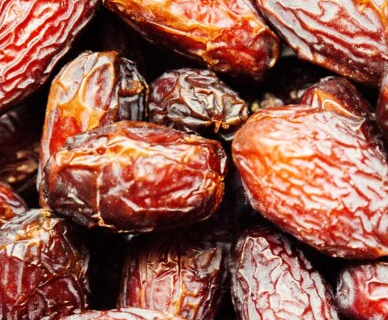
We are often confused by words with more than one meaning. There are lot of different words in English language that can make a real mess in our brains. For example, the word **date** can be brown sweet fruit . “I ate some lovely dates.”
Or if you have **a date** with someone you have an appointment to meet this person. “I’ve got a date with Mark next Friday". Here are more examples- **BEAR** 1.It can be a large mammal that lives in a forest: “There was a bearin the our back garden.” 2. If you can’t “bear” something, it’s too much for you:“I couldn’t bear the pain. It was awful.” **RUN** When you “run”, your legs move fast: “I’ve been running in the park.” If you “run” a company, you direct or manage it:“She’s been running the company alone.” There are 3 basic terms to describe the different types of words: **homonyms**, **homophones** and **homographs.** ***Homonyms*** **Homonyms** are words which have the same spelling and pronunciation, but have different meanings. For example: I lit the fire with a **match**. I got injured in the football **match** . ***Homophones*** ***Homophones*** are words which have the same pronunciation, but different spellings and meanings. I saw **eight** friends at the park. I **ate** a lot of food during weekend . ***Homographs*** ***Homographs*** are words that are spelt the same, but have different pronunciations and meanings. There’s a **tear** in my trousers. [a hole] pronunciation: /teə/ He had a **tear** in his eye. [liquid that comes out of your eye] pronunciation: /tɪə/ As you can notice we pronounce it differently. English can be difficult for learning because of idioms, homonyms, homographs and homophones. Do you often use words with more than one meaning? I actually use homophones very often.

2 comments
I am using then very often.THanks god people understand me what I want to say.This double meaning confuse many people.
Profesorica engleskog malo da nas nauci. Ja znam samo naše reči sa više značenja, eng i ne znam