StarTerra
DeFi actually gives many ordinary investors opportunities. Every user has the opportunity to access the core interest circle of the DeFi sector. In addition to being a contributor to the DeFi facility, such as providing liquidity to the protocol through liquidity mining, and earning revenue, DeFi players are also given the power and opportunity to become early investors.
At present, Uniswap, Balancer, Polkastarter, DODO and other decentralized protocols have gradually become the main battlefield of IDO. Many high-quality projects have also developed IDO based on these DeFi facilities, and many participating users can get a lot of benefits. , Such as UMA, MTA, API3, PREP and other high-quality projects also distribute their own tokens through DeFi IDO model.
However, autonomous IDO platforms such as Uniswap, Balancer, DODO, etc. are mostly built on Ethereum (asset richness and users are basically concentrated on Ethereum), which presents an overall problem of high participation costs. For example, it may cost tens of dollars to interact with the contract several times during the peak period, and you will lose money if you do not win the bid. Similarly, based on the problem of Ethereum GAS fees, there are still many problems.
IDO-focused protocols such as Polkastarter, Bounce, and Mesa, have bad economic model for users, which also makes users less motivated to participate. For example, the number of participants in a single project of polkastarter is mostly in the range of 100-300, and the IDO quota of a single user is also relatively low. Therefore, in the IDO sector, StarTerra, based on the Terra ecosystem and characterized by Gamified, shows considerable advantages.
**Terra ecology**
StarTerra is a gamified IDO platform built on the bottom of Terra. From the perspective of the bottom of the ecology, Terra gives StarTerra a unique advantage. In the Terra ecosystem, although the overall number of DeFi protocols is not large, the quality of DeFi members in the Terra ecosystem is generally quite high.
Terra is a blockchain protocol built on the Cosmos framework, so Terra also inherits the security and efficiency of Cosmos. Whether it is Ethereum or other blockchain ecology, the financial foundation is basically built on the value of ETH, BTC tokens and stable coins. In the Ethereum-led DeFi world, DAI, USDT, PAX and USDC and other stable coins has gradually become the main force of the current circulation of stable coins. In particular, centralized stablecoins such as USDT and USDC are risky.
Terra has built an algorithmic stable currency ecosystem, based on the native token LUNA, and produced the native stable currency UST by destroying LUNA tokens . In fact, UST value support is LUNA, not bank dollars or other mainstream currencies that are over-collateralized like traditional stablecoins. As the price of UST breaks down, users on Terra perform arbitrage to level off anchor. Based on the ecosystem built by Terra, users can use its stable currency for payment, investment and savings.
At present, the Terra ecosystem contains several high-quality DeFi protocols such as Mars Protocol and ANCHOR in the lending sector, Mirror Finance for synthetic assets, and so on. According to data from DefilLama, the overall TVL of the Terra ecosystem has reached US$3.76 billion, making it the fourth largest DeFi ecosystem after Ethereum, BSC, and Polygon.
At present, although Terra has sufficient funds, the overall thickness of the ecology is lacking. The overall TVL is mainly concentrated on Mirror Finance and ANCHOR, although in addition to these, it also includes such as the aggregator Orion Money, DEX's Levana Protocol, payment protocol Suberra Protocol, and More than 20 projects such as Angel Protocol, but at present, ecological richness is lacking.
Compared with Ethereum and BSC, their ecosystem has a relatively high-quality incubation section, such as the several IDO platforms mentioned above, which can help project teams raise funds and provide an early "incubation" for some high-quality projects, especially emerging projects.
For StarTerra, it plays the role of an incubator on Terra, makes up for the lack of Terra ecology in this sector, and provides help for emerging projects in Terra ecology, and further promotes the prosperity of Terra ecology.
**Gamified IDO Launchpad StarTerra**
Terra's bottom layer has good liquidity, and Terra has also launched the Terra Bridge cross-chain bridge.Terra is an independent public chain based on the Cosmos framework, so performance and security are guaranteed. Overall, Terra is more suitable for the "development" and growth of DeFi. StarTerra, as the Launchpad platform based on Terra, also has relatively unique advantages. In addition, the Launchpad track in the Terra ecology has less competition, and StarTerra has greater potential.
StarTerra is not only able to provide early fundraising (IDO) and marketing support, but also consulting, financial assistance, strategic partnerships and other support for IDO in the future. At the same time, from the perspective of users, StarTerra will participate in it in the form of gamification, which is relatively good step in the StarTerra ecosystem. Therefore, compared with other ecological IDO platforms, StarTerra's incubation nature is stronger, and its support for many emerging projects is also greater.
In addition to building a Launchpad platform, StarTerra has also built an incentive-rich game earning system. Users can participate in some activities on StarTerra in the form of games and enjoy different rights and interests according to the level in the game. Currently, according to StarTerra's Twitter poll, the game system is named "Interstellar". StarTerra divides investors into different levels. For example, the five factions that currently exist include StarTerra, Lunatics, Degens, Interstellars, and Whalecraft.
StarTerra uses ST tokens as its native tokens. Users can choose the form of staking to choose from the above-mentioned factions. Different factions need to pledge different amounts of ST tokens, and of course the rights they can enjoy are also different. Users can pledge more than 500 ST tokens to become members and enjoy certain airdrops and benefits. Lunatics, Degens, and Interstellars are at the middle level. Users need to pledge more than 3000 ST tokens and can choose to become a member of one of these three “systems”. These users will enjoy another 20% reward based on their original rights and interests.
So in general, users who first participate in StarTerra can enjoy the convenience and low GAS fee brought by the Terra ecology. Compared with other IDO platforms, StarTerra uses gamification as a basis to give users at different levels different rights and interests. At the same time, airdrops will be given to community users every week to help IDO project parties carry out marketing and so on. StarTerra not only benefits users on IDO, but in the overall gamification design, StarTerra still allows users to obtain corresponding benefits, namely "Play-to-earn", which is not available in other ecosystems.

Axie Infinity
The most popular project in the NFT field recently is undoubtedly Axie Infinity.
This is a game project on Ethereum. The gameplay of the project is relatively simple and straightforward, that is, players need to buy 3 elf to form a team, and then use this team to fight monsters and upgrades. In the process, players can get trophies or enhance combat effectiveness.
You can find a lot of articles on the Internet about how to play the game, as well as detailed strategies. These strategies are not complicated. Players who play games according to the introduction of these strategies can earn 30 dollar a day after investing 930 dollar.
The elf in the game are modeled on salamander and looks full of comics style. Now this sprite avatar is also quoted everywhere as the avatar of some players. This game was launched very early, but it didn't get very popular until the beginning of this year. Seeing its current prosperity reminds me of the experience I had passed with it.
I knew about this project probably in 2018 or 2019, when the market was in a bear market. I remember that the price of Ethereum was already very low at that time, and the price of ethereum was less than $300 as far as I remember. I was focusing into Ether while looking at projects worth investing in the bear market in a big way.
At that time, I believed that the game would be a good scene for Ethereum's landing application, but I was doubt that the performance of Ethereum is so poor, can it afford complex games? Especially when I think of the hot mobile games and web games at the time, I think about Ethereum. If you want to implement such a complicated gameplay on Ethereum, how much processing fee does the player need?
But despite this, I still watched a lot of games with patience, including cards, collectibles and Axie Infinity.
When I saw this project, my first impression was that I didn’t think the elf in the game were cute. At the same time, I also felt that this way of fighting monsters in groups of three is too simple and the game props and design can not be compared with traditional games . So I didn't pay attention to the development of the game since then.
When this game caught my attention again, it was the end of last year. The event that caught my attention was that the project issued the governance token AXS, and Binance launched this coin on its Launchpad.
When I attended a blockchain conference in April this year, I heard about a good thing of this project. This time I learned that this project in Southeast Asia, especially Malaysia, has become a livelihood for many unemployed people.
Malaysia has a special organization, YGG, which is mainly for local unemployed people. As long as these unemployed people have access to the Internet, this organization will help them find livelihood opportunities online. And this game has become a very good means of making a living. Many unemployed people make a living by playing this game to fight monsters and upgrades, earning fee sharing.
At this time, I realized that this game has such a big application scenario in another corner of the world.
Although there are such players in traditional games who specialize in helping people fight monsters and upgrade to earn a living, this game has a unique trophy. The token SLP it generates can be directly traded on exchanges and exchanged for legal currency. I think this mechanism is also one of the reasons why it can attract a large influx of players.
After the game governance token, AXS, went online at the end of last year, it has hovered around $0.3~0.4 value for a long time. The lowest is only $0.1 and the high is only $28, but the current price is $15. Its other token, SLP, has been hovering between 0.01 and 0.04 US dollars for a long time, but it has now risen to 0.36 US dollars, which is also a few times the increase. Looking back on my experience with this project, I have to feel how difficult is to break the shackles of traditional thinking in this field. Only by constantly self revolution and self "Negation" can I keep pace with the times and seize new opportunities.

3.0 NFT Era
**NFT 1.0 era, the first model**
NFT is currently a popular sector. From the perspective of NFT's potential, NFT can form a relatively deep linkage with many fields. In fact, if you look at the history of the development of the NFT segment, you will find that the concept of NFT really began to be clear from the beginning after the advent of the crypto cat.
In June 2017, a project called Cryptopunks was launched and was built on Ethereum. The two founders of Cryptopunks created a role asset with a total of 10,000, which means that every two assets are not the same. At the same time, these assets could be collected free of charge on Cryptopunks, which contributed to the prosperity of secondary market transactions at that time. These assets are "semi-homogeneous" assets between homogenized assets and non-homogeneous assets, but also during that time ERC-721 standard assets gradually emerged.
Therefore, NFT emerged with the continuous expansion of the crypto cat market, an emerging concept at that time, but at that time NFT was more positioned in the fields of encrypted collectibles and game assets. Starting in 2018, the very clear NFT sector is gradually entering the modern NFT period.
**In the era of NFT2.0, profit-seeking and maturity of the market**
After the advent of CryptoKitties, collecting or trading cryptocats can bring huge profits, but also attracted many developers to join the competition in the NFT field, which also makes the NFT field an unprecedented development. In 2018 and 2019, due to the mature trading markets like Opensea and SuperRare in the NFT field, NFT assets have formed a good liquidity depth. Although NFT has deeper applications in certain asset confirmation, synthetic assets and other sectors, the market as a whole is now based on collectibles, art and gaming assets as the main value form of NFT.
The outbreak of the DeFi market in the first half of 2020 has further promoted the FOMO sentiment and siphon effect in the cryptocurrency market. In addition to the DeFi participation methods such as liquid mining, due to sufficient market funds to snap up some NFT assets and sell them in the short term, it has also become A more efficient profit-seeking model. The most successful of these is the NBA Top Shot. According to statistics, as of January 2021, NBA Top Shot has reached a transaction volume of 1 million US dollars. And Opensea transaction volume in February 2021 reached 93.904 million US dollars, an increase of nearly 9 times compared to January.
Although NFT already has a relatively mature trading system, the market as a whole is driven by profit-seeking. Users participate in the NFT sector mainly through transactions and become members of the trading role. From the perspective of the NFT sector as a whole, a large number of NFTs are only concentrated in the niche art circle. With the continuous improvement of NFT infrastructure, the role of users will no longer be limited to traders. Ordinary users will also be able to become the creators of NFT assets, empowering their NFTs through different scenarios.
**In the era of NFT3.0, Deeply empowered the NFT**
Therefore, investors can deeply participate in the NFT sector, which is the key to the transfer of NFT market value from the surface to the deep level. At present, there are also many NFT infrastructure supporters who continue to promote the development of the NFT sector, helping NFT move from the 2.0 era to the 3.0 era.
FOXNFT is one of them. As the infrastructure supporter of the NFT sector, FOXNFT allows users to mint, store, issue and trade NFT assets based on the platform. NFT has considerable application prospects in all-round fields such as finance, games, collections, and social networking, while FOXNFT can empower NFT in a full range and deeply link with brands. FOXNFT uses BSC as the bottom layer, which can relatively guarantee the user's transaction efficiency, reduce transaction costs compared to Ethereum, and build a good foundation for the extension of the NFT scenario.
From the perspective of the traditional Internet, everyone can build their own brand and create their own IP. However, the centralized world is generally less open and lacks fairness. The decentralized blockchain world more embodies high openness and high customization.
FOXNFT can help many original IPs and provide a complete one-stop solution for NFT assets. For example, if you, as a painting author, build your own brand and IP through your own works, then FOXNFT can help you issue your own NFT assets, regardless of whether it is issuance, transaction or storage.
Polkadot allows developers to build parallel chains of shared security and so on through the Substrate framework. Developers can focus on the functions and logic of their own products without worrying about other unrelated sectors. Similarly, FOXNFT can help original IP creators to concentrate on constructing their own works without excessive worry about factors outside the works, such as creating and trading NFTs, etc., to further promote the integration of NFTs and original IPs.
Within the FOXNFT ecosystem, a DeFi market has also been constructed. Although there is consensus in the traditional NFT sector, the overall liquidity of assets and the utilization rate of assets are still very low. FOXNFT allows users to pledge their NFT assets to obtain corresponding income in the form of DeFi. By pledge of NFT assets, the user's income will be reflected in the form of ecological token FOX. Based on the consensus on the value of NFT assets, original IP users can use this as a basis to empower their NFT brand assets in depth.
NFT currently has more mature applications in the game field, collectibles and souvenirs, and FOXNFT has also made a deep layout in the games and souvenirs. In the game sector, FOXNFT supports some game development teams and helps them create exclusive NFT assets for user distribution, build ecological incentives, and destroy them to get FOX rewards.
Souvenirs and collectibles are more about consensus value. NFT, as a non-homogeneous asset, is the most suitable carrier for souvenirs and collectibles. For example, as an NBA fan, you will definitely be aware of some historical moments such as the Nuggets vs. Trail Blazers playoffs, Lillard made 12 three-pointers in a single game, Anthony ranked tenth in total career points and so on. And FOXNFT will record historical events and make some memorable historical nodes into NFT. As a user of certain hobbies, this type of NFT asset definitely has a very special meaning. This type of NFT assets will be used as investment products, with excellent value and reducing investment risks.
In addition to being an NFT all-round support ecosystem, FOXNFT is also a social ecosystem based on NFT. In the social section of FOXNFT, various roles condensed in the FOXNFT platform, such as creators, investors, and users, can conduct in-depth exchanges and conduct joint discussions on NFT to promote the overall positiveness of the NFT ecosystem.
**to sum up**
For the NFT sector as a whole, it has gradually leapfrogged from the early 1.0 era to the 3.0 era. We can see that based on NFT infrastructure such as FOXNFT, users will no longer only participate in the NFT sector as traders. Judging from the characteristics of NFT, it has great application prospects as a whole. At the same time, the application of NFT is even more advanced. At present, we can see that NFT has matured in the fields of art, collection, games and even other applications. At the same time, FOXNFT also allows NFT to seamlessly connect with many commercial sectors.
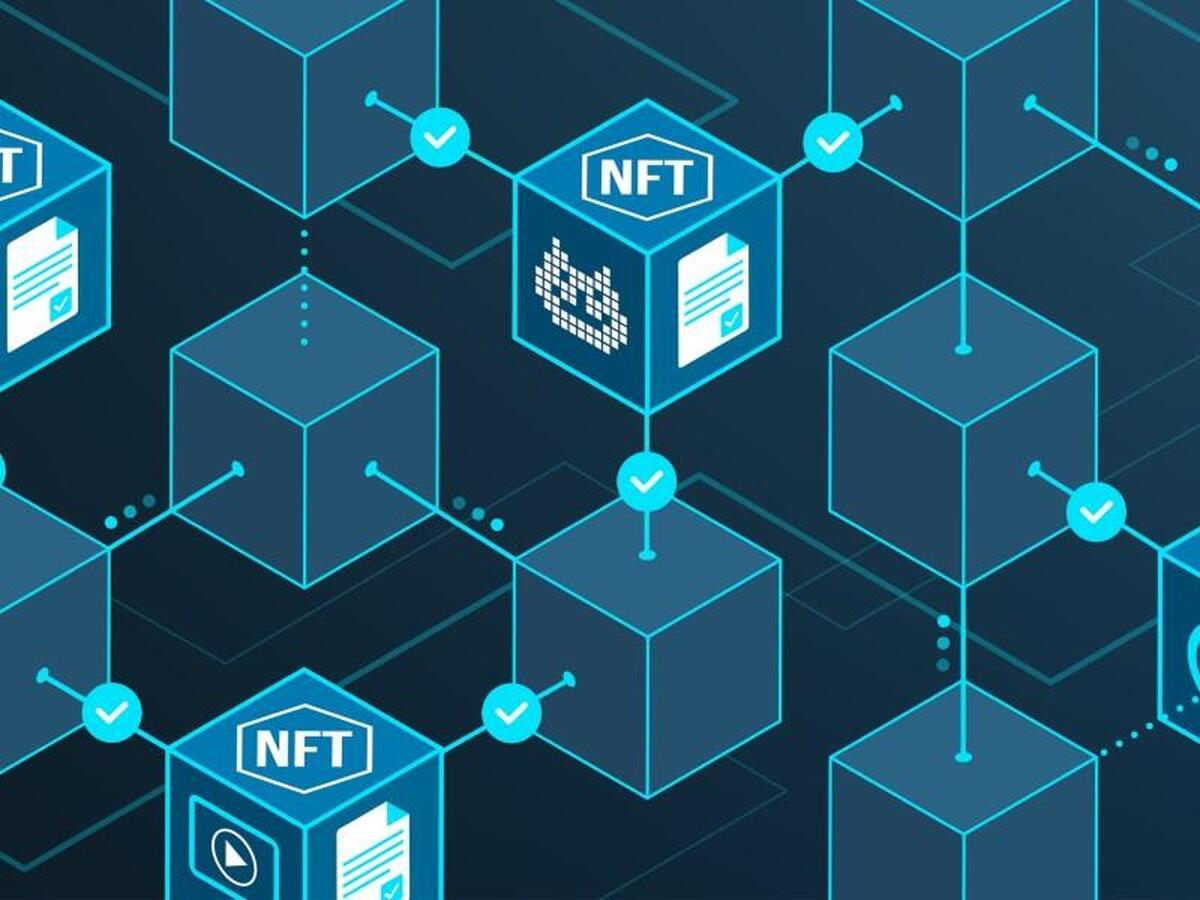
Public Chain and NFT Investment
NFT is hot for a while, and frequently on the news, but most of my friends do not understand the NFT field. Most people don't know which projects should be paid attention to and how to deploy. Even if they know that NFT is a non-homogeneous token, this may be a valuable field.
**Let's Talk about NFT investment deep logic**
Everyone who has experienced DeFi in 2020, some are good at buying low and selling high, some are good at discovering low-value items, some are scientists who use computer programs to eat the price difference, these people have made money. But for many friends are exchanging their Ether for a bunch of small coins such as pearls, cucumbers, sweet potatoes, etc., and it seems that if you exchange them back, ETH is becoming less - that is to say, your coins become less and you lose money.
And if you are optimistic about the value of the platform and have been deploying the platform currency of important platforms such as Uniswap, Curve, Compound, etc., the income from today's point of view is still good. Take Uniswap's platform currency as an example. Uni has risen 450% in the past 90 days. This 4.5 times return is believed to be much better than other DeFi short-term small currencies.
In the same way, when investing in a track, such as an NFT track, we should focus on the core value of this field. NFT (Non Fungible Token) is a non-homogeneous token, also known as an irreplaceable token. Compared with homogenized tokens such as BTC, ETH, etc., they have more commodity attributes than currency attributes . If it is confirmed that NFT is partial to commodity attributes, then the commodity trading platform is the first value;
The public chain where the commodity is located is where the second value lies;
The commodity itself is the third value.
The logic of the above three sentences will be explained in detail below.
**Two platforms: Opensea, Rarible**
There are many platforms such as Opensea, Rarible, superrare, terra virtua, etc., which are all NFT trading platforms.
Opensea and Rarible are currently the most famous NFT trading platforms , and Opensea does not yet have a platform currency. If it produces a market value of more than 500 million US dollars in the medium and long term-this market value is not small, and the current market share of the entire NFT track is Not big.
Rarible's platform currency (Rari) currently has a circulating market value of $3,849,880 . And some months before it was less than 7 million US dollars, of course it can be deployed. However, at that time, someone discovered the value of Rari, and there is no way to lay out too much, because the depth is too bad. Buying a thousand dollars can raise the price by more than 5 points. Similarly, some of the targets mentioned today are still in this state, you can only buy low order or uniswap slowly. If the operation is fierce, it is very likely to bear the pressure of loss in the short term.
Other platforms, such as Terra Virtua (TVK), do you want to deploy, large platforms have large funds, and small platforms have small funds. This market value is not enough for everyone to buy. Observe more and spend less money.
**Three public chains: ETH, Flow, WAX**
Why is the public chain not the first value, but the platform is the first value? It will be explained below.
At present, the most important public chains in the NFT market can be considered ETH, Flow, and WAX.
**Background introduction of ETH in the NFT field**
The classic NFT protocol standards such as ERC721, ERC1155, and ERC998 are all built on Ethereum.
ETH is still the most mainstream NFT public chain at present. Even if the NFT market fails, readers will still hold it. It's just that after emerging fields rely on ETH, it will make new contributions to the ecology and value of ETH.
**Flow background introduction**
Dieter Shirley, CTO of Dapper Labs, developed the ERC721 protocol standard in 2017 and made a great contribution to the development of the NFT field. In the same year, the first game on the blockchain, CryptoKitties, was also developed and marketed by the team, causing huge congestion on the ETH network. In 2020, DapperLabs launched the public chain Flow to serve decentralized game applications. NBA Top Shot is a project developed by the team at the beginning of Flow development, primarily the NBA Star Instant Photo-based NFT Card.
According to news reports from the previous months: "Calculated by historical total turnover, the turnover of NBA Top Shot surpassed CryptoKitties, reaching 29.48 million US dollars, ranking first, with 18,800 collectors. CryptoKitties retreated to second place with turnover. Nearly 29.41 million US dollars, the number of collectors is 91,900." It can be concluded that the two NFT products with the largest sales in NFT history were developed by DapperLabs.
**WAX background introduction**
WAX itself is a public chain built on the eosio-ETH cross-chain layer, which has considerable influence abroad, and then developed its own public chain also called WAX.
In one sentence, Flow and WAX were applications built on ETH and EOS in the early days. After they grow larger, they will develop their own public chains.
The value of these public chains is certainly not comparable to ETH, and compared to the two major trading platforms of Opensea and Rarible, which are growing day by day, their investment value also lags behind. This is why the platform is the first value and the public chain is the second value. You already have ETH, and the other two public chain values have different opinions.
An important item in the **third value: Whale**.
Why this project? First of all, it is not because of the rise of concepts such as social tokens.
Let me talk about it, as a commodity, its individual NFT investment value is only in the third place. Because the value of a single NFT is difficult to judge. Whether it is game, card, charity, or art NFT. Of course, if you like some games, it’s okay to collect game props NFT; you like basketball, like NBA stars, and it’s okay to collect NBA topshot card NFT; you have a unique artistic taste. Special preferences, and sure that this is the future art trend, it is also possible to buy such NFT artworks.
If you just think that NFT is promising, and then you buy a bunch of crypto cats, a bunch of cards that you don’t understand, and some unknowledgeable artworks, then you have entered the pit of investing in NFT, and your profits will very low, investment will become a gambling game.
**Why Whale?**
In fact, Whale may not be able to, but this part of the NFT track is more reliable than investing in other NFT. The soul of Whale is Whaleshark, this person (this team or with a team) is the largest buyer in the NFT collection field. After Whale is issued, he will put all his NFT collections in a Vault, this vault. Every month, Nonfungible.com acts as a third-party audit agency to audit its value, and then a certain percentage of collection sales funds will be used to repurchase Whale tokens, so Whale is equivalent to an index fund in the NFT field.
This article divides the pattern of the NFT field in to two trading platforms, three public chains, and one project. These mentioned projects are worthy of attention. However, the short-term investment risk is very high.

MDEX cross-chain and BSC
The decentralized exchange MDEX, which was first launched on HECO, now has also provide services on the Binance Smart Chain BSC, which is also the rare decentralized exchange in the industry that has deployed both the Huobi Ecology and Binance Ecology. Today we take a look at the recent relevant data of MDEX, and speculate how MDEX will perform after the cross-chain.
**MDEX usage experience and data performance**
MDEX is a comprehensive decentralized trading platform. It was launched on the Huobi Eco-Chain HECO on January 6, 2021, and MDX (Platform Token) launched on January 19 to start the "dual mining" mode of liquidity mining and transaction mining. The model, combined with fee repurchase and DAO governance, forms a cyclic system of MDX value.
**User experience**
**The handling fee is low :** MDEX transaction fees are as low as 0.1 cents per transaction, and 1 US dollar equivalent HT (or BNB) can support hundreds or thousands of transactions. Compared with the decentralized exchanges such as UniSwap, Sushiswap, and 1Inch on the ETH main chain, it is easily 50 -$100 transaction fee, MDEX reduces the transaction fee to an almost negligible level.
**Slippage is low:** Because the liquidity pool is generally large, the slippage can be as low as 0.5% or less, and mainstream trading currencies such as BTC, ETH, HT, etc. can be switched to 0.1% slippage and the transaction can be completed normally. The problem of DEX trading slippage is one of the core problems that plague DeFi traders. Because of the slippage problem, they dare not or cannot conduct relatively large transactions on DEX. MDEX, both HECO and BSC, has TVL of more than 2 billion US dollars, which means that its trading depth is very good, ETH/USDT, BTCB/USDT, FIL/USDT, BUSD/USDT, WBNB/USDT, LTC/USDT, DOT/USDT For trading pairs, in most cases, the slippage is ≤0.1%. This slippage control is basically higher than that of most centralized exchanges, let alone decentralized exchanges.
**Confirmation time** **3 seconds**: Compared with the 15s-1min confirmation time on the ETH main chain, the speed is increased by more than ten times.
**Trading is mining:** Transaction mining is a unique mechanism of the MDEX platform. The transaction will obtain the MDX output based on the cumulative transaction quota, and the value of the MDX platform currency obtained can cover the slippage fee expense, which is equivalent to subsidizing the handling fee and changing the transaction procedure, so the fee is reduced to zero (or even a negative value, that is, the subsidy MDX value is greater than the transaction fee). The transaction mining fee subsidy has reached 500 million US dollars. The extremely low handling fee and the "low slippage" feature provide enough trading and mining arbitrage space, so the profitability of trading mining can be so high.
**Liquidity mining has high returns:** In the three months since MDX went online, a total of 180 million MDX has been mined, worth more than 700 million U.S. dollars. The external intuitive manifestation is that the annualized rate of return (APY) is very high.
The above is the basic experience of using the MDEX platform.
**Data performance: TVL 4.64 billion US dollars (Heco+BSC)**
After MDEX launched on January 6, on February 1, the platform TVL (total lock-up volume) exceeded US$1 billion, and then the transaction amount exceeded US$2 billion for the first time on February 19th. According to the official data , the TVL of MDEX currently reaches about 4.64 billion U.S. dollars , and the 24h transaction amount is 1.74 billion U.S. dollars. Among them, the TVL on both HECO and BSC chains exceeded US$2 billion. Let's compare Uniswap, the leading DEX project in the industry:
Uniswap's TVL is 8.14 billion U.S. dollars, and its 24h trading volume is 1.45 billion U.S. dollars.
MDEX's TVL is about 57% of Uniswap's TVL, while trading volume is 120% of Uniswap's.
The MDEX platform's current repurchase amount has exceeded 84 million U.S. dollars, and the pending repurchase amount has exceeded 25 million U.S. dollars. The current output of liquid mining is 220 million MDX, valued at more than $600 million.
**Why cross-chain?**
The overall amount of funds on the Huobi ecological chain HECO is 6.8 billion U.S. dollars, and the TVL of MDEX on HECO is 2.4 billion U.S. dollars, which currently accounts for about one-third of the total TVL on the Huobi ecological chain HECO. MDEX has grown into a big tree in HECO, and needs to cross-chain to different ecosystems for greater development.
At the same time, users have a real strong demand for cross-chain, and the voice is very high. MDEX focuses on user experience, which is also in line with the goal of "large-scale decentralized cross-chain transaction agreement" when MDEX was founded. The cross-chain move is imperative, and it has now reached the stage of completion of the deployment.
**Points worth noting**
According to official information, I summarize the following points:
1. MDX has been mined on HECO chain to occupy 18% of the total amount of all, and 31% of the total amount has not been produced. After the MDEX cross-chain is completed, the BSC has not produced 31% (the two sides have not produced the same). The overall proportion of mining output is 80%.
2. The total amount of MDX has not changed, 80% of the total amount of mining has not changed, halved 45 days ahead of schedule, and the team part+ investor share remains unchanged. This action allows the growth rate of MDX circulation to be controlled and the interests of ordinary investors are more protected.
3. The transaction fee is 0.3%, while 0.1% of the transaction fee is used for ecological funds, 0.18% is used to reward MDX pledgers, and 0.02% is directly destroyed, further deflating MDX. The handling fee will be subsidized in transaction mining.
4. LP liquidity mining and single-currency pledge mining are simultaneously opened, among which a large number of popular mainstream currencies can be single-currency pledged mining such as WBNB, BTCB, BUSD, USDT, ETH, USDC, ADA, LTC, XRP, Link, etc. Wait, the speed of individual mining also depends on the size of each fund pool.
5. Transaction mining. Among them, BUSD/USDT and USDC/USDT have the highest transaction mining efficiency, with 8 MDX rewards per block, and both trading pairs are stablecoins. In this case, the slippage is extremely low, which is transaction mining. The return of transaction mining makes transaction fees almost zero, and even large well-known centralized exchanges have transaction fees. In terms of transaction fees, Mdex as a decentralized exchange is already superior than most centralized exchanges.
Review data: On April 8, 2021, MDEX launched Binance Smart Chain BSC, TVL reached 500 million US dollars within 5 seconds, 20 minutes TVL 800 million US dollars, 40 minutes TVL 1 billion US dollars, 1 hour TVL 1.3 billion US dollars, 2 hours TVL is 1.5 billion U.S. dollars, 4-hour TVL is 1.84 billion U.S. dollars, 12-hour 2 billion U.S. dollars, transaction volume is 2 billion U.S. dollars, and TVL is up to 2.7 billion U.S. dollars. In other words, MDEX's lock-up volume and trading volume on BSC have quickly reached and exceeded US$2 billion, which has been the same as the lock-up volume of HECO on the Huobi Ecological Chain.
3 months of MDEX online data:
MDEX's 24-hour trading volume surpasses CEX such as FTX, Bitfinex, Gate, Hoo and MXC, ranking 33rd.
MDEX's 24-hour trading volume accounted for the highest share of the DEX market at 42.49%.
The total TVL of MDEX dual-chain exceeded $4.3 billion, and the cumulative transaction volume exceeded $197.2 billion.
The highest APY for liquid mining is 452%, and there are only 43 days left before the halving.
MDEX24H trading volume exceeds the sum of these exchanges: Uniswap+Pancake+SushiSwap.
Crypto Investment and politics
The investment logic of this article is different from the investment logic of most analysts in the current market, because the subject matter mentioned in this article is hardly related to the deep study of economic models and technical strength, but from a political point of view, so it is called "bit politics".
Blockchain information is transparent, and safe, and it is more focused on "production relations". The main job of politics is to deal with relationships: the relationship between countries, the relationship between the people and the government, and the relationship between different teams and different individuals within the government. It's all about the realm of "relationships", during which there will inevitably be strong connections at some point. However, the blockchain of government affairs is not covered by this article. It should be noted that "currency" is always the top priority of political work. There is no political system that does not consider the economy, and the currency issue itself is the core element of economic life. The biggest application of blockchain is called cryptocurrency (or crypto asset). Therefore, blockchain is also a key issue that political practitioners must consider.
**Bitcoin: a confrontation and integration of hardware and finance**
Bitcoin's computing power is more in the hands of a major manufacturing country. It is hard to say whether the currency is also in the hands of a major manufacturing country. The general view is that more coins are in the hands of Americans , but a large manufacturing country must control more than 51% of the computing power, but not too high, for example, 80% or even 90% of the computing power is in the same country and this will be too centralized. If it is too centralized in the early stage, there will be no way for the game to continue. This is the possible reason for the policy-oriented, tight for a while and loose for a while-just like flying a kite, the line is put out and taken up, and the line does not leave the hand.
The United States more often uses Bitcoin as a financial tool. There are many speculations about the creation of this currency. Someone must know who Satoshi Nakamoto is, at least Satoshi Nakamoto himself (or they) know. It is the financial logic of the United States again, so the price of Bitcoin is getting higher and higher. Of course, the driving force behind it is not retail investors, but institutions. Large institutions have entered the market a long time ago.
I have computing power, and I have the ability to launch a 51% computing power attack , so that your currency zero; I have coins, and I can smash them to zero at any time. If you don’t do it, I don’t do it. A continuous game is in progress, and then people with coins will slowly have mining machines, and those with mining machines will slowly have coins in their hands. There is your balance in it. Politic is the art of balance . Just as the world we live in is in the era of nuclear deterrence, people sometimes forget this as it has been for a long time. Of course, confrontation and integration will continue and continue to hold Bitcoin.
**Public chain game**
It seems that all major public chain teams are American (Bitcoin is a special public chain and is not in this scope). However, if you look at the public chain of the top 20 currencies by market value, you will know which ones are related to the Asian or European. You can check for yourself who are the early investors (institutions) of the public chain of Ethereum, who is the most important promoter, and what different connections are behind the promoters. You will know that Ethereum, like Bitcoin, has risen as a whole. It's not as simple as technology or community.
Why did I ask you to pay attention to Conflux in October last year? Now that the price has risen, people call to say that most rich people have earn a tenfold profit, or that they didn’t hold it. Among these people are experts who study economic models, experts who study technical strength, and experts who study community dynamics. However, in the value analysis of the domestic public chain, these model studies are prone to failure-economic model can be changed, technology can be changed, community? In the face of large organizations, the population of a certain place is not difficult to change. The most important value responsibility of a domestic public chain is the emergence of a stable currency in a certain country in the future, and it will be issued on the public chain of that country. Put all the domestic public chains in a table, and find out those who have not had negative news and have technical strength. There are only one or two to satisfy this condition. You have a method of elimination in your heart, so I won't talk about it here. Then, check the price of this kind of project. It is lower than the price of private or public offering. You can come in with a larger position. If the price is too high, you can make a fixed investment.
**Stablecoin game**
At present, in terms of the "currency" attribute, which currency is the most useful for encrypted assets? Bitcoin? Ethereum?
Most people answer is Bitcoin, why because Bitcoin can buy Tesla can buy the Windows operating system, or go to the dark web to trade something? As far as currency properties are concerned, stable currencies are important at present and in the future. USDC, USDN, GUSD, PAX, DAI, USDT etc.. Why is cross-chain important? Because other important public chains will produce stablecoins of Japanese, Indonesia, and India in the future, multi-country stablecoins will interact with each other in the future. For various reasons, Ethereum cannot do that all stablecoins are willing to be issued on it, but its scale effect is huge, so many public chains that have nothing to do with Ethereum call themselves Ethereum sidechains, Ethereum Layer 2 network. Cross-chain is a must but currently, there is no mature, safe, and efficient implementation plan for cross-chain.
All our attention, love, passion, frustration, anger, investment, hype and other activities and emotions about new things (such as blockchain, crypto assets) are because this balance has not been completed. After many years, the balance has been slowly achieved.

Let's talk about NFT
Data show that in the past month alone, the global NFT art transaction volume has exceeded 400 million U.S. dollars. On the whole, the current market size of NFT has increased by at least 7 times compared with three years ago. The NFT market is entering a period of explosive growth.
**At present,** the number of NFT sales has exceeded 1 million, and the number of NFT wallets held has exceeded 1 million. Compared with the number of 1.6 million DeFi wallets, the development of NFT is very fast. And the highest selling price of a single NFT has been continuously broken in the past week, from 6.6 million to 7.8 million and a recent work sold at a price of about 69 million US dollars. In short, nft's market transactions continue to refresh our knowledge. An easy example, I drew a picture, and then my assistant bought it with 1 ether, and then I bought it with 10 ether, and let me buy it back again with my assistant for 100 Ether in this way to buy and sell back and forth, each transaction can raise the price, through this way to create heat, until the last picker appears, see this painting is speculated so high, thinking that he will soon be able to buy it, it was sold at a higher price, so he took out his 500 Ethereum and buy the nft work.
**This is a counter-knock,** which is actually a game of left-handed and right-handed. However, even if we discharge some of the trading volume, the real trading volume exceeds at least 200 million US dollars. For example, in the past March, there was a major event in the art market that is worthy of attention. The world’s top auction house, Christie’s, held its first digital art auction on the Internet. The auction was for an American graphic designer, Beeple , called "Every Day-First 5000 Days." This is a huge digital collage. At first glance, it looks densely packed, as if the entire painting has been mosaicked. But in fact, this collage is not easy. It took Beeple 13 years to create one image every day, and finally 5,000 images were used to form this painting. In other words, every small grid in this painting is a complete artistic creation of Beeple .
After this painting was sold, it was reported by mainstream media and non-mainstream media all over the world. In recent days, the record highs of Ethereum may also be related to the ranking of this painting . Now, the wealthy people around the world, especially those who like to collect art, pay attention to our currency circle.
Why is this auction attracting attention? First of all, this is the first auction of a digital art work by a top international auction house, which is of iconic significance, but what is even more surprising is that the final transaction price of this work is by far the most expensive NFT in history. The auction price at that time was 38,308 ETH reached 69.28 million US dollars at the time. If converted according to today's Ethereum, the price of this painting has exceeded 500 million, and this price has set a new record for digital art transactions.
**In addition to artists,** some stars and celebrities have also entered this field. In January of this year, NBA star LeBron James sold a video clip of his shooting in a Lakers game for $100,000. The American rock band Kings of Leon has made $2 million by selling NFT music. Just last month, the founder of social media Twitter, Jack Dorsey, auctioned his first tweet published in 2006 as an NFT, and finally sold for $2.9 million. Seeing this price, it makes people feel strange that for a long time, digital art has rarely been auctioned because it has no physicality, and it is very easy to copy and spread on the Internet. There is no scarcity at all. In that case, why did Beeple painting enter the auction channel again, and why the price was so high?
The key factor is the disruptive technology we are talking about today, NFT. It is it that gives digital art a scarcity that was not available before. I just recently saw an in-depth report on NFT in Time Magazine. The article believes that the emergence of NFT is shaking up the entire art market. Therefore, this trend is very worthy of our attention and participation, because today's NFT is the same as the ico in 2017, the ieo in 2019 and the defi in 2020. It is a very early stage.
Today’s NFT has formed a relatively complete industrial chain from planning, wallets, price discovery, secondary market liquidity, pass management, issuer tools, trading markets, issuance agreements. Moreover, the process of NFT generation is not complicated. For example, an artist creates a work of art, turns it into a picture, video or audio form, and uploads it to IPFS. At the same time, another NFT is issued to include the file in the original data. It's just like posting a post on a social network, it's not very complicated.
However, one thing to remember is that there must be a bubble in this market today, and the bubble will eventually burst, but there is a chance when the bubble bursts.
So when you participate, you must be cautious . At present, there is still a window period. This is a mixed market, and the threshold is relatively high. When entering this market, you must do your homework.
Let me tell you a few projects that can provide infrastructure for NFT in addition to Ethereum. The first is THETA, the second is enj, and the third is flow.
Let's talk about Dogecoin and its high value
When many people talk about Dogecoin’s skyrocketing, I guess the ultimate purpose of talking about it is not to analyze why Dogecoin’s skyrocketing, but to know how long this increase will last and whether it is worth buying now.
I remember when Musk called a single Dogecoin a while ago, we used to talk about Dogecoin. At that time, I thought it would be difficult to sustain this rise, and it would be difficult for Dogecoin to build a strong consensus like Bitcoin.
**why?**
Because from a technical point of view, Dogecoin is nothing new, and it did not perform very prominently in the last few rounds of bull markets. It is at best an old currency with a certain die-hard fan base. Then it's soaring before and now is undoubtedly mainly from Musk's call.
How long and how strong the power of such an order can be, I guess many friends know it, it is unsustainable. But why is there still such FOMO sentiment? I guess everyone knows that this is a bubble, but no one knows when the bubble will burst, so I just danced with the bubble.
When investors have this mentality, they are in fact a gambling mentality-thinking that they will not be the last to take the order, thinking that someone must be stupid than themselves and able to take their own order.
I always emphasize in my articles that in the investment market, if you want to live long and make long-term profits, a stable and rational mentality is fundamental. If you have the above mentality, even if you are lucky enough to make a profit in this Dogecoin gambling, it is very likely that you will lose the money you earned this time in some other pit in the future.
Open the trend chart of Dogecoin in coinmarketcap.com, we will find that the skyrocketing of Dogecoin probably started around December 12th last year. The price of Dogecoin was about $0.003 at that time.
If we are only bullish on the rate of increase, we will be very shocked, and then regret: Why didn't we buy it in the first place? At this time, we might as well pull the timeline back to December 12th last year, recall the market conditions at that time, and then ask ourselves from the bottom of my heart, why should I buy Dogecoin on that day?
At that time, I wanted to be stable, I wanted to invest in Bitcoin and Ethereum, I wanted to have high risks and high returns, DeFi, and even NFT. In this way, there are dozens of coins for us to choose from in total. Why do we look at this old currency that hasn't been paid attention to for "a hundred years"?
If you can't find the reason, it can only be said that the subsequent surge in Dogecoin was accidental. Since it is accidental, then we don't need to be too obsessed with such things, because it is God's will, not human.
If someone really has the inspiration to predict that Dogecoin will be taken by Musk later, then this illustrates another point I often mention: it is difficult for investors to earn money beyond their knowledge. After all, there are only a handful of people who can have this kind of inspiration, so most investors cannot earn this kind of money. Since this kind of opportunity does not belong to the public, then we should treat its skyrocketing with a peaceful mind . Such a FOMO mentality.
If we look closely at the trend chart of Dogecoin, we will find that it reached the highest peak of $0.07 on February 10 this year, and then began a sharp decline. On February 24, it fell to the lowest point of $0.045, and then The next month will last until March 27, and it has been hovering between 0.04 and 0.05 dollars.
Looking back at this trend now, we can also ask ourselves: If we bought before this plunge, would we regret that we shouldn’t follow the venture to speculate, or we are very convinced that the future of Dogecoin will definitely be there. A bright future so that you can hold it with confidence?
I believe that the vast majority of investors are the former-unable to withstand the torture of the plunge and leave the market.
Of course, there is another possibility to buy during this plunge. In this regard, we might as well ask ourselves, during that time, Bitcoin, Ethereum, and many DeFi star coins have plummeted.
Why don't we buy those varieties but prefer to buy Dogecoin?
Through this kind of replay, we can ask ourselves more questions like those above and we will find that for many investors, many so-called "opportunities" are not so much opportunities as luck.

Bull market and risks? Pay attention to these two signals
In a bull market, in addition to paying attention to the general trend of the market, I also pay special attention to changes in the macroeconomic environment. why? Because changes in the macroeconomic environment will affect the trend of the bull market.
Regarding the macro environment of this round of market, there has always been a general consensus within and outside the industry. Some time ago, the Fed Chairman made it clear in his latest speech that interest rate hikes might not start until 2023. This is considered the greatest comfort to market sentiment.
A few days ago, Brazil, Russia, Turkey and other countries have begun to raise interest rates, and Turkey's interest rate hike even immediately led to the collapse of the national currency exchange rate and the stock market. Yesterday, it was reported that Canada, a developed country, might withdraw from the loose policy.
**Why are the financial policies of these countries beginning to tighten?**
Because on the one hand, countries around the world are beginning to feel uneasy about the inflation caused by the surge in various assets; on the other hand, with the launch of vaccines, the economies of all countries have a tendency to recover, which will further lead to rising inflation; In the end, many scholars pointed out that the United States might start raising interest rates or tightening policies ahead of schedule (rather than in 2023).
Therefore, instead of waiting for the United States to start tightening policies and being forced to be sheared, these countries might as well start raising interest rates now. The damage to the country’s economy from raising interest rates is obvious to all. So this is really a bitter pill that I have to take.
So for the United States, the initiator of this round of money release, how do scholars estimate its future direction? I agree with the following view:
The United States will continue to release money , and after the first 1.9 trillion US dollars, there will be several trillion (some say 4 trillion) US dollars in infrastructure plans, and continue to maintain zero interest rates.
In addition, with the gradual push for vaccination in the United States, it is very likely that a large-scale vaccination will be obtained in June or even the second half of the year, so that life and work will gradually return to normal.
With continued stimulus and normality, the U.S. economy has gradually moved on track and rebounded strongly. Next, inflation accelerated, surpassing the 2% target set by the Federal Reserve, and even exceeded 2% to reach 2.5%. But the price is that inflation may linger at a high level for a period of time, eventually forcing the Fed to raise interest rates early.
Once the Fed raises interest rates, all the world's asset feast will come to an end, and the bubble will begin to collapse. Digital currency may not be spared either.
**So when will this happen?**
For this set of previews and speculations, I think the key is to understand its logical main line and development process, and grasp its key nodes: one is the inflation rate in the United States, and the other is the point in time when the Fed may raise interest rates .
Once the inflation rate in the United States reaches 2%, we will begin to be vigilant and prepare to formulate our own exit plan; once it exceeds 2% and lasts for several months, the peak of this bull market may be near; once the Fed officially raises interest rates , Then we can no longer have any illusions about the bubble and have to make the final clearance action.
The evolution of this macro environment is the fundamental bottom line for us to grasp the cash in this round of bull market. We can cash out before this, which is just a little less money, and we can't go crazy and fight after that, otherwise we'll probably have to wait for another turn on the high hills.

The DeFi wave or bubble?
The concept of DeFi was first proposed in August 2018, but it emerged from 2019 to 2020. Recently, it has become a climax due to activities such as liquid mining, IDO, and DEX, which once occupied the heads of major forums, communities, and media.
**Why is DeFi on the rise?**
**1. Blockchain ecology**
In today’s rapidly developing and ever-changing blockchain industry, any project or thing that is actually useless, has no application scenario, or has no real value, even if it becomes the center of attention due to some accidental or human factors, or the price increases for a short time, it will eventually be a bubble Such a short-lived phenomenon will be quickly swallowed by more valuable things in the historical torrent of the blockchain. From the development timeline, DeFi obviously does not belong to this category.
The concept of "decentralized finance" itself is advanced, and it is not an exaggeration to describe it as a "revolutionary" finance that challenges the current financial ecology. DeFi applications can not only make up for some of the shortcomings of centralized finance (high cost, low efficiency, and complicated process), but also supplement some of the functions of existing centralized finance ( DEX decentralized exchange, decentralized P2P lending, etc.).
On Ethereum, everyone can run programmable electronic value and open access to the world.
In Venezuela, for example, due to severe inflation, the government's crazy money printing has caused local prices to rise nearly 460 times. Therefore, more and more people choose to replace legal currency with more stable digital assets, without intermediaries, peer-to-peer transactions and no need to hold foreign accounts. People start to use digital assets to conduct transactions. Asset preservation or investment. Venezuela’s Bitcoin transaction volume continues to hit a record high. JPMorgan Chase has repeatedly called Bitcoin a “fraud”, but even it has to admit that decentralized tokens are the last life-saving for the Venezuelan people in dire straits. This shows that decentralized finance has enough rigid requirements to solve some of our pain points in financial life.
DeFi is so compatible and widely used in finance, so that it can develop a unique path in the blockchain ecology. The rapid development of technology also drives DeFi to continue to broaden its thinking and prosper.
**2. CEX pushed the wave**
Since the development of Bitcoin Market, CEX (Centralized Exchange) has not only accumulated a large user population, established a stable and mature matching system and wallet system, but also developed a large-scale user operation system.
Although the emergence of DEX (decentralized exchange) has diverted the active number and trading volume of CEX, and the position of CEX in digital asset trading and transfer has been shaken. On the contrary, CEX acted as the driving force that brought DeFi and its projects to the top of the wave while becoming the layout of DeFi.
Tokens were issued along with two star DeFi projects: Compound and Balancer. When this new model of projects first, then tokens, and then online trading appeared, it became the IDO that became the hot spot of DeFi, led by CEX and provided by the DeFi token project party, and the big carnival of exchange users' participation began.
**3. User level**
In addition to the large institutional players, there are some well-known capitals that have smelled the value and started to deploy in the early days of DeFi users, such as Coinbase, a16z, etc. Famous capitals can be seen in both MakerDAO and Compound, the head projects that become the hot spots of DeFi in 2020, or the rising stars Uniswap and Aave. Capital tells a story. At present, DeFi is an out-and-out wealth story, and this story attracts a large number of investors .
Since its inception, DeFi players have never been ordinary retail investors, but large investors and even institutions. Even for giants like Compound, they had no more than 1,500 users before launching the "borrowing is mining" strategy, but their lock-up amount reached 100 million US dollars.
After CEX deployed DeFi and formed the IDO system, affected by the profitability and operational announcements of its pioneers, retail investors also began to taste the sweetness of the DeFi project and its value. What needs to be vigilant is that in the field of digital assets, once a concept explodes, a bunch of imitators will follow.
DeFi itself also has certain shortcomings. In a broad sense, DeFi refers to decentralized finance, and its operational complexity still poses a certain threshold and challenge for newcomers. For example, trading on decentralized exchanges often encounters congestion on the chain and sometimes takes a long time .
It does not solve the problem of more resources entering the digital dimension, so the next DeFi should focus on the recasting of the industrial ecology. Another issue of DeFi that is widely worried about is security. The biggest worry of all blockchain projects or all decentralized projects is hacker attacks. According to statistics, in 2020 attacks on DeFi, the amount of coins stolen or stolen has reached 36 million US dollars. It is really unreasonable. Therefore, if the coins pledged on the platform are attacked by hackers, how to ensure the security of the assets is also a problem that the DeFi project needs to solve urgently. Before the security of the smart contract itself is not guaranteed, we should look at DeFi more rationally instead of blindly pursuing it.

Read cash Birthday October 18 2020
Today, **read cash** is one year old and as much as the read cash team have worked hard, I respect him for this great effort.
**Read cash** most important goal is to People use **Bitcoin cash** more and promote Bitcoin cash. But I think read cash will have to do a lot more work because there are so many publishing platforms in the market right now. Read cash needs millions of users and quality content creators right now. Many people come to read cash just to get some Bitcoin cash but on the contrary, there are also very good writers. We all saw when people started joining read cash, there was a lot of spamming, and read cash team worked very hard to control the spamming, but then the same thing comes to mind that people are using read cash to earn bitcoin cash, but they are not using bitcoin cash in their daily lives except for a few people.
On read cash , the Bitcoin cash community only liked ,upvote and support Bitcoin cash related articles/content and the other content writer was disappointed so read cash launched the first points system and when it was not successful due to spamming, he has now launched a great reward bot system which is working very well.
How can we all forget our brother **Marc De Mese**l ? It all happened because of his great support, But you all know how long Marc will continue to support this project with his own money. The best solution read cash team has come up with is to run this platform with advertising money and it buys Bitcoin cash with this money which I am sure will increase the value of Bitcoin cash a lot. Google's advertising revenue at the moment is 29 billion dollars. If Bitcoin cash gets a part of it, it will be a very big achievement. You may all be thinking that it is not so easy but this platform has a lot of power and I am sure that the time will come soon. The most important thing read cash needs to do at this time is to design a great website first and my request to @MarcDeMesel is that you support the read cash team to make a great Android and Apple application because 85% of the users are currently on mobile. VOICE social media platform that is running on the EOS blockchain spent **30 million dollar** just to buy their domain, so I request from the bitcoin cash community that Give importance to read cash platform and support it as much as you can.
I request @RogerVer to promote read cash in Bitcoin. com wallet and most importantly to support read cash team.
My request to the read cash team is to give tasks to the users on the website and create a separate page for it, such as which user promoted Bitcoin cash in his town/country this week and taught people how to use it. Such users should be ranked monthly and those who have done good marketing online and on the ground should be rewarded with Bitcoin cash. Bitcoin cash needs very good marketing at the moment and read cash users can be used for this task.
What will happen to the Bitcoin during inflation?
According to long-standing investment perceptions, investors in stocks and gold have completely opposite risk preferences. Therefore, under normal circumstances, if the market exhibits risks, investors who hold stocks will sell; if the market performs If the output is stable, investors who hold gold will sell.
Then under what circumstances will these two types of investors sell their assets at the same time?
I have been thinking about this issue, because if this issue is not clear, we have no way to make an objective prediction of the performance of Bitcoin in the upcoming or unfolding storm.
The answer to this question suddenly became clear after reading an article "The Black Swan is Coming " The answer to the question is: **Whether it is stock holders or gold holders, the judgment of the future has reached an amazing agreement** .
**Yes, it's deflation, not inflation.**
This conclusion overturned my previous views and made me have to reorganize all recent events to see the essence of them.
**In the case of deflation, the society no longer has demand, and the enterprise will be in depression. Therefore, the stock market does not have the fundamentals and fundamental motivation to rise, so stockholders sell stocks; in the case of deflation, the currency "appreciates" Therefore, gold's function of hedging and value preservation disappeared, and gold holders sold gold** .
This scene also happened during the financial crisis in 2008, not long or short, but 8 months. From May 2008 to January 2009, both the US stock market and gold fell.
**In the recent period, there is also a very strange phenomenon: that is, while gold is rising all the way, silver, which is also a precious metal, occasionally only rises slightly, but in most cases it falls.**
**This scene did not happen in the 2008 financial crisis, when gold and silver basically rose and fell simultaneously** .
Why is this happening? If you use deflation to explain, the truth becomes clear: **Silver not only has the properties of precious metals but also the properties of industrial metals. While gold is rising, silver is still falling, which can only show that the industrial metal properties of silver drag down the properties of precious metals.**
**Under the expectation of inflation, the industrial demand for silver will be greatly reduced, causing investors to be very pessimistic about the future price of silver** .
This scene did not happen in 2008 but continued to take place during this period, which shows that investors are far more worried about inflation this time than in 2008.
Combining the current epidemic and the oil crash, we can better understand why investors are worried about inflation.This deterioration shows no signs of improvement in the short term. Therefore, more and more cities and countries will enter a state of lockdown in the future: lockdowns, lockdowns.Once demand is lost, the economy will enter deflation.
The reason why Russia and Saudi Arabia failed to negotiate is most likely because both parties foresee that the development of the epidemic will greatly affect the global economy, leading to shrinking oil demand.
In this case, production cuts will not help increase oil prices at all, so instead of reducing production, it is better to kill opponents to grab stock market share.
After Saudi Arabia issued a ruthless statement to increase oil production, Russia responded quickly and said: Russia will be able to maintain oil prices at the level of US$25-30 for ten years. Both parties are unwilling to show weakness and are preparing to fight a battle in the oil market.
Therefore, inflation is most likely due to this sudden epidemic happening globally. However, demand cannot be increased due to the spread of the epidemic.
Back to Bitcoin, this is the first global crisis that Bitcoin has experienced since its birth. Unfortunately, this crisis may not be inflation, but it is most likely deflation. As I have just analyzed, in the context of deflation, neither risky assets nor safe-haven assets will be favored, and only fiat currencies will be favored. Bitcoin currently does not have the circulation functions and attributes of legal currency, so it will not be favored like legal currency, so we can only consider it as a risk asset or a safe-haven asset. Unfortunately, whether it is classified as a risky asset or as a safe-haven asset, it will not be favored . So how will Bitcoin go in the context of inflation? Bitcoin may fall . **So what should we do as investors?**
**As long as the expectation of deflation remains unchanged, except for cash, all other assets such as the stock market, precious metals and digital currencies will still maintain a downward trend. Although there may be a slight rebound in the middle, it will not change the downward trend.**
But I don't think that deflation will be the end of this crisis, and once the expectations of deflation are no longer expected, then everything we see now will be reversed, and the digital currency will surely usher in light.
To straighten out these intricate factors, we can find the answer by looking back at history.
**2008 financial crisis** .
When the 2008 financial crisis occurred, the price of subprime collateral plummeted. This plummet was transmitted to almost all financial investment products and derivatives, resulting in a large number of financial assets held by financial institutions instantly worthless and unable to provide liquidity. The exhaustion of liquidity is transmitted from individual financial institutions to all financial institutions in an instant.
So we saw the collapse of Bear Stearns, then the collapse of Lehman Brothers etc.
The U.S. Department of the Treasury and the Federal Reserve could no longer sit idly by and immediately injected unlimited amounts of cash into the nation’s important financial institutions, provided them with liquidity, and pulled them back from the brink of death.
During the period when the liquidity of major financial institutions in the United States was exhausted, investors desperately sold assets to grab cash, which was exactly the same as inflation.
This situation did not improve until the Fed implemented quantitative easing for a period of time, and once the cash was abundant again, it began to speculate again.
Going back to this crisis, **I think the current crisis has both deflation and liquidity tension.**
Under the condition of deflation, no one wants what the company produces. Without income, cash flow becomes extremely important. So we saw that everyone was selling investment products and cashing in, and the more liquid investment products were selling more severely.
So when will this situation change? Only when the new crown epidemic is completely contained in the world and the needs of social life are released again will it change. Even if it is short of money, the government can turn on the money printing machine again and spread money on a large scale, which will start a new round of bubbles.
During this process, we will see that all investment products continue to fall. Until the epidemic is well controlled globally and people’s lives begin to return to normal, investment products will begin to stabilize, and then accompanied by large-scale money printing. The price of investment products began to rise . So what should we do as investors? I still think it is a fixed investment. We will continue to make sure that we can survive until the epidemic is under control . The current market is full of treasures: oil, stocks, and digital currencies etc. In the long run, they will explode in the future. Although they may fall in the future, there is a risk of short-term fluctuations .


Is the hot project FLOW worth the investment?
FLOW is a blockchain public chain project. In the public chain field, almost all investors believe that there is no room for competition, and Ethereum has already taken advantage of it. Why does such a public chain project attract so many investors' attention?
Because the background of this team is not small, and the focus of this public chain is different from the general public chain.
The FLOW team is the team of the first popular game project "CryptoKitty" on Ethereum. Back then, with the game CryptoKitties, its team instantly became popular in the entire circle, and CryptoKitties also became an iconic game in Ethereum, which left a deep impression on people.
But after the crypto cat game, the team seems to have no more popular projects. Therefore, over the years, the team seems to have been forgotten by the circle. It was not until the launch of this public chain project that it attracted attention again.
From the newly launched project FLOW, the team has been studying the underlying public chain for these years, hoping to build a public chain specifically designed for blockchain games, and after years of unremitting efforts,found a solution to Ethereum's poor performance.
The team has now launched the FLOW project and started financing on Coinlist. It is worth noting that investors who want to participate in project financing must go through compliance review and KYC certification.
In addition to the investment threshold that limits the number of participants and affects the popularity of the project to a certain extent, the field in which the project itself is also faced with greater challenges-the biggest challenge is that the ecology of Ethereum has been so perfect Under such circumstances, how many future projects are willing to leave Ethereum and build on another public chain? The project party also bluntly admitted to this point.
In my opinion, in addition to Ethereum, EOS and TRON are also potential competitors for FLOW, and EOS and TRON have always been platforms for blockchain games, so FLOW is facing considerable competitive pressure.
In addition, from the perspective of FLOW’s issuance, its total issuance exceeds 1 billion. This time the fundraising was raised by a Dutch auction method, and a guaranteed reserve price of US$0.1 was set. Therefore, even if estimated with the guaranteed reserve price, its total issuance market value exceeds 100 million US dollars, and the highest price may exceed 1 billion US dollars.
This market value is not high but not low, so the price is not obvious compared with other popular projects.
Therefore, from the overall perspective of the team, ecology, and valuation, I think the biggest weakness of the project is the ecology. If Flow cannot break the barriers that competitors have formed in the ecology, I am afraid that the project will eventually become silent. ----Just like countless competitors who have claimed to defeat Ethereum.
The biggest competitive advantage of the project team lies in the experience that the team has accumulated in the game field, which is probably a rare advantage of other teams in the industry.
On the whole, based on the current price and market value, I wouldn't get into it , but will continue to observe the subsequent development of the project.


Just Add a Token: How Uniswap Became the First DEX to Overtake Coinbase
DeFi fever has become a high point for decentralized exchanges as well. One of the first DEXs to use smart contracts was Uniswap, which introduced Automatic Market Maker (AMM) technology.
Until this summer, Uniswap could not boast of impressive trading volumes, but only during June this figure increased 10 times - from $ 1.75 to $ 17.5 million, and by the end of August it exceeded $ 425 million, **overtaking the** American Coinbase.
**From Siemens to Ethereum**
The idea behind Uniswap has a specific starting point - **Vitalik Buterin's post on Reddit** from October 2016.
At that time, according to him, the problem of all decentralized exchanges was too large a spread. Buterin proposed to solve it with the help of smart contracts that would manage the reserves of different tokens and balance their prices relative to each other depending on supply and demand.
This idea was implemented by Hayden Adams, a young computer engineer from New York. He got into the crypto industry after being fired from Siemens in the summer of 2017.
After his dismissal, he was contacted by his friend, Karl Floersh, who offered Adams to retrain as a programmer and start writing smart contracts on Ethereum. Adams agreed and proceeded to create an "automatic market maker" (he calls the idea behind Alan Liu from Gnosis, who described AMM in the same 2017).
Floersh introduced Adams to the Ethereum developer community and in the spring of 2018 introduced him to Vitalik Buterin (who invented the name "Uniswap" - at first Adams called his project "Unipeg").
Already in August 2018, Uniswap **received its** first funding - a grant from the Ethereum Foundation in the amount of $ 100 thousand. According to Adams, Uniswap is based on "Ethereum values."
The official launch took place in November 2018. Presenting the platform, Adams listed its main characteristics:
**How does automatic market making work?**
In Uniswap, the AMM principle is implemented using liquidity pools, which are trading pairs and consist of users' funds blocked in a smart contract. The ratio of tokens in a pair determines the price of a token. The realized supply and demand for tokens changes the volume of tokens in the pool, therefore, the ratio between them, that is, the price.
Any user can participate in the pool - he needs to add both tokens from a pair to the pool in the ratio at the current rate. Such users become “liquidity providers” who receive 0.3% of the amount of transactions with the pool's trading pair for their contribution. Thus, the commissions are earned by the users themselves, not the platform.
Possible price deviations from the spot market are smoothed out by arbitrage. Another feature of the platform is that anyone can add a trading pair with a new token.
Climbing the pedestal
Uniswap did not conduct an ICO. The project has attracted money from professional investors. Uniswap **received** more than $ 1 million in 2019 from the Paradigm fund, and in 2020 it has already **raised** $ 11 million.
The rejection of the ICO is one of the reasons why Uniswap did not have its own token from the very beginning.
For a long time, Uniswap was inferior to centralized exchanges, and in the DeFi space - to lending protocols like MakerDAO. That all changed when DeFi products began to flood the market, providing passive income for providing liquidity.
At the same time, **profitable farming** became popular . By this time, Uniswap was already the most authoritative project in the DEX segment.
In addition, the Uniswap developers prepared for the hype from the technical side - a major protocol update took place in May . It eliminated the weakest points - in particular, they introduced a direct exchange between ERC-20 tokens (before that all exchanges took place through ETH), instant swaps for trading and improved control over quotations.
From the beginning of July to the end of August, the volume of funds blocked in Uniswap pools increased almost 5 times - from $ 47 million (July 2) to $ 831 million (August 31).
However, the success of the SushiSwap fork, launched in late August, contributed to the record inflow of funds into the protocol .
**SushiSwap** has offered record returns by distributing its own governance token to all members of its pools. Thanks to this proposal, the project pools, initially launched on Uniswap, received $ 1.4 billion in just a few days. It became obvious that it was precisely such an incentive as a token that was lacking for decentralized exchanges to accelerate.
At first, SushiSwap quickly poached the lion's share of funds from Uniswap users, but after the reduction in the distribution of tokens, SUSHI also rapidly lost them . They returned to Uniswap with the release of the UNI governance token, which was announced on September 16.
**What has UNI changed?**
Uniswap has learned the lessons of its fork.
Firstly, the emission of new tokens was turned into a large advertising campaign: 15% of all tokens were distributed for free to all users of the platform, including those who have not used Uniswap for a long time. The minimum amount of coins
was 400 UNI.
Such an impressive distribution immediately attracted the attention of a huge audience.
**Secondly**, the developers have changed the approach to inflation. In SushiSwap, for the first two weeks, the emission of SUSHI tokens was increased 10 times compared to the standard value. An oversupply of new coins has led to a drop in prices. In UNI, the inflation mechanism (2% annually) will be included only after four years.
Thirdly, Changed the approach to collective project management. The SushiSwap protocol provides for a developer fund, where 10% of all issued SUSHI coins go. Uniswap also has a fund - the so-called "community treasury". Over the next four years, 43% of all coins (430 million UNI) will go into it. The fund is intended to provide grants, encourage community initiatives, liquidity mining and other areas.
One month after the release of UNI, on October 18, the Uniswap community will take control of the fund. During this time, UNI holders must select a council of representatives from among the "protocol delegates". In six months, the community will take control of Uniswap's main lever - commission.
The creators of Uniswap urged the community to select from its ranks a “diverse and high quality roster of protocol delegates,” and to initiate discussions and communication about specific decisions to be made. And the community responded.
Thus, a "union" has already formed , attracting small UNI holders to its ranks. It aims to pool small steaks of coins in order to defend the interests of small users and have a voting share comparable to whales.
Will Uniswap Become More Decentralized?
The development team, which is entitled to 21.5% of UNI emissions), will continue to improve the protocol code and conduct audits. At the same time, team members will not be directly involved in governance, although "they can delegate their votes without intending to influence future decisions."
Another 18% of the coins were given to investors.
The creators of Uniswap are striving to further decentralize the project by transferring the levers of exchange management to the community. But it's not that simple.
Investors, advisors and members of the Uniswap team are entitled to 40% of the total supply of tokens, which are to be distributed via vesting. This procedure involves blocking a given number of tokens in smart contracts and issuing small amounts from it according to a specific schedule.One way or another, thanks to the implementation of UNI, the amount of blocked funds (TVL) on Uniswap not only returned to its previous values, but even exceeded them - and at the time of writing is $ 1.92 billion.
Investment is risky. Not investing does not mean that there is no risk. If you do not invest, your life may be worse than one day. The currency bull market also has money to make and lose, but most investors can still make a certain profit as long as they treat potential risks carefully, but it is difficult for many investors to stop losses in time.
Bitcoin's six consecutive declines are rare in the entire history. The current market is likely to be sideways for half a month. Then use the new market to push Bitcoin to rise or fall. But in the context of the global economic slump, most people will choose to hold Bitcoin to reduce economic risks. This will push Bitcoin to another new peak this year.
Understand the DeFi project in Polkadot ecology
Cryptocurrency has just entered the second half of 2020, and it has ushered in a big market explosion.
As a dark horse, the DeFi concept was the first to detonate the enthusiasm of the entire market. After three years of market expectations, Polkadot, a cross-chain concept, airborne the TOP5 market value, and many projects under the ecology are also blooming everywhere.
The DeFi concept is on fire, and the Polkadot concept is also on fire, and it is likely that it will last longer.
**Polkadot's DeFi project?**
**The king of cross-chain assets-ChainX**
ChainX is doing cross-chain asset transfer, which may be the most familiar Polkadot ecological project .
Through ChainX, assets such as BTC, ETH and EOS can be transferred to other public chains for circulation in a completely decentralized manner.
ChainX has also introduced a mining mode-mapping is mining.
Users only need to recharge or map currency assets, which will be converted into corresponding computing power according to the asset value, and then they can get income.
ChainX's token PCX has been very popular recently, especially in this wave of DeFi, which has doubled up to 9 times.
**Cross-chain Uniswap-Polkaswap**
As a decentralized exchange, Uniswap must be well understood by everyone. The only problem is that it can only trade tokens on Ethereum.
Polkaswap is a decentralized exchange specially designed for Polkadot ecology, which can directly cross-chain transactions.
Compared with Uniswap users, Gas fees can also be reduced, and theoretically more assets can be traded.
Polkaswap's token is PSWAP. On Polkaswap, a 0.3% transaction fee will be charged for each transaction, which is then used to repurchase PSWAP and mint new PSWAP to reward liquidity providers.
**Ethereum's DeFi rival-Acala**
Acala can be said to be a well-deserved brother of Polkadot DeFi, and is even considered to be the DeFi center of Polkadot ecology in the future.
Because Acala covers a lot of fields, stablecoins, derivatives, decentralized exchanges, etc.
Some people think that Acala = MakerDAO + Compound + Uniswap + SNX.
It can be said that as much as Polkadot's DeFi imagination space is, Acala's imagination space is so big.
**Solve the liquidity problem of staking-Stafi**
Stafi is a middleware protocol whose goal is to provide liquidity for staking assets.
Generally speaking, the liquidity and security of a project are in conflict. For example, when a user locks a position, it is very likely that the market will plummet and be unable to sell.
What Stafi does is to obtain 100% liquidity while staking.
Specifically, when users use the Stafi protocol when staking, they can get a 1:1 bond-Rtoken, and Rtoken can circulate freely without being affected at all.
Stafi received funding from the Web3 Foundation in December last year and recently completed a seed round of $600,000.
It can be said that both technology and capital are widely optimistic.
**It also solves the staking liquidity problem-Bifrost**
Bifrost is also a project that provides liquidity for Staking.
Like Stafi, users can also exchange assets that are being staking 1:1 at any time to obtain staking income and liquidity.
Bifrost also recently completed a round of seed funding of $600,000. Investors also have early Polkadot investors and institutions related to the staking business, and they may provide ecological and business support in the future.
As of press time, the Polkadot Web3 Foundation has funded a total of 138 projects in 7 batches. In fact, there are more projects in incubation.
And DeFi is not only a broad concept of decentralized finance, but also a new concept of "mining". I believe that more and more projects will migrate from Ethereum to Polkadot in the future.


Understanding Filecoin economic model.. Detailed analysis report
**What problem does Filecoin want to solve**
As a brand new data storage and distribution network, the Filecoin network expects to be a roughly distributed, efficient and powerful infrastructure for human information, storing valuable information in the wave of Web3.0.
As the wave of informatization continues, the gap in the demand for value information storage created by humans will become larger and larger. The above figure predicts the scale growth effect of the global storage data growth. At present, the top five centralized storage service providers in the world control 77% of the storage market. Any challenger who wants to enter the storage track needs to compete with top competitors for market visibility, equipment stability, and potential user stickiness. There is no doubt that this challenge is no different from hitting a rock with a pebble.
The Filecoin network currently has sufficient visibility and corresponding infrastructure on the storage track , and has the potential to challenge the traditional centralized storage service provider giants. It has launched an open participation model. Any competitor who wants to store effective information for humans can devote themselves to the Filecoin network as a storage node, as long as they have enough hardware equipment and can connect to the Internet.
In order to enable storage nodes participating in the Filecoin network to store value information more effectively, Filecoin officially designed a corresponding economic model to incentivize all network contributors. As an "island for exporting storage-related products and services", the design allows the individual behavior of all participants to be compatible with network goal incentives, so that the rational behavior of participants can benefit the network and thus benefit all participants.
**Deep into the underlying logic of Filecoin economy**
The Filecoin economic model is based on data storage. Storage miners play a central role in ensuring consensus on the chain and providing storage services. The **Filecoin blockchain uses its block rewards to subsidize consensus participation on the chain and provide available storage services. The current main source of income for miners to participate in mining.**
The life cycle of miners, create miners on the chain, acquire tokens and promise capacity to the network, start to produce blocks when the minimum miner size is reached, transact with users, upgrade the committed capacity sector to a transactional sector and get extra Transaction revenue, declaration and repair of failures.
Most blockchain networks without access restrictions require resources to participate in consensus. Filecoin must also contribute resources to obtain security. Filecoin storage miners are the providers of storage services and the maintainers of consensus on the chain. Like many other blockchain networks, in **order to ensure storage stability and network consensus security, storage miners need to pledge a certain amount of tokens when adding sectors. Filecoin network rewards**
On this basis, in order to minimize the burden on miners, the Filecoin network has designed three different pledge mechanisms:
**1. Initial pledge: The** initial pledge consists of two parts: storage pledge and consensus pledge. The storage pledge must be small enough to allow miners to join the network, while being able to deal with early failures, fines and fees. The consensus pledge depends on the sector's weighted byte computing power (QAP) and network circulation supply. Equivalent to 20 days of block reward + equivalent to 30% of the FIL circulating supply.
**2. Block rewards as pledge:** Block rewards are used to lock warehouses to reduce the initial token pledge requirements. In order to ensure that incentives are compatible as much as possible, Filecoin will penalize miners who fail to complete the promised period. Therefore, the block reward unlocking scheme is a necessary sub-linear release achieved by a short-term delay plus a fixed-term linear release. The initial parameter is that the unlocking delay period is set as 20 days + the linear release period is set as 180 days after the delay period.
**3. Storage transaction provider pledge:** Establish an incentive mechanism between miners and users to make miners stand out in the market. The agreement requires a minimum pledge to provide a minimum storage guarantee. If the transaction order withdrawal is terminated, this part of the pledge will be punished.
In the initial stage of the Filecoin network operation, the main income of miner nodes comes from block rewards and user data storage payment fees. However, when the network runs smoothly and the storage of high-quality value data reaches the corresponding volume, the value of retrieval income will be highlighted. The **official It is expected that the later retrieval income will be much higher than the sum of the block reward and storage incentive.**
**Mining the core elements of the economic model**
Filecoin officials believe that many project parties simply decay exponentially. This economic model can only provide short-term economic incentives, but for Filecoin distributed storage projects, if this model is used, it is very likely to cause storage miners to package storage as soon as possible. Block rewards for mining and over-investment in hardware. After consuming these early block rewards, the cashout is completed, and the network will no longer be operated and maintained. This will undoubtedly lead to the loss of user data and fail to complete long-term safe and effective storage. The miner nodes of network storage also have no additional motivation to improve the network, forming a vicious circle, which may eventually lead to the abortion of the project.
After Filecoin's own island economy takes shape, it needs to obtain the pirate universal token FIL if it wants to trade with island producers, but the over-issuance of FIL will undoubtedly directly or indirectly harm the interests of all participants.
Therefore, the official decided not to use the traditional time linear minting FIL coin, but innovatively adopted the "block reward benchmark casting" method closely linked to the network utility to estimate the network utility.
The biggest purpose of this method is to make the FIL currency output speed and the growth rate of network utility have a positive correlation, which is more in line with the economic law of distributed storage projects and is more sustainable. The method of “block reward benchmark casting” is to encourage the consistency of storage landing and long-term storage investment rather than just rapid packaging.
At the same time, this method will increase the block reward as the total storage power of the network increases. This not only preserves the structure of the original exponential decay model, but also improves it in the initial stages of network startup. Once the network reaches the baseline, it will issue the same block reward as the linear decay model, but if the network does not reach the pre-established threshold, it will delay a part of the block reward.
According to the design of the Filecoin economic model, the "simple casting mechanism" allocates 30% of the storage and mining quota, and the remaining 70% for the "benchmark casting". 30% simple casting can provide reaction force and resistance to fragility when the network is impacted.
The base line capacity of the casting share can start from a small percentage of today's global storage, then it will grow rapidly and reach a higher but still reasonable global storage ratio in the future. Initially, the network baseline will start at 1EiB (this figure is less than 0.01% of today's global storage capacity), and it will grow at a rate of 200% every year (higher than the 40% annual growth rate of world storage capacity). **When the amount of storage provided by the network is about 1-10% of global storage, the community can decide together to slow the growth rate.**
Filecoin tokens are a limited resource. Just like consuming any public pool resources, the speed of token generation in the network should be controlled to maximize net benefits for the community. The purpose of benchmark casting is:
1. Reward participants based on the provided storage rather than simply exponentially based on joining time.
2. Maintain a relatively stable block reward flow for a longer period of time based on the network utility valuation.
**Token distribution and punishment mechanism that investors care most about**
Many users who invest in Filecoin are most concerned about the release cycle of FIL, which is related to their investment return cycle. This report details the release and reward and punishment mechanism of the token.
The official understands and adjusts the incentive measures for participants based on the concept of a sector’s one-day income. The **reward release mechanism is that the unlock delay period is set to 20 days, and the linear release is 180 days after the delay period.** This means that the block rewards will be locked for 20 days first, and then released linearly according to the 180-day period. This model is undoubtedly a blow for investors who want to pay back in a short period of time (two months), but It laid the economic cornerstone for the stable development of the entire network.
Maintaining the security and stability of the storage network is the fundamental purpose of the previous test network operations, including the ongoing space test. The true security and stability are based on the technology of the due diligence of miners around the world, but if the miner node fails to perform due diligence due to evil or negligence, it will also be punished. The unit of punishment is mainly carried out in a sectoral mode.
Sector failure fee: equivalent to the estimated block reward of 2.14 days.
Sector failure detection fee: equivalent to an estimated block reward of 5.00 days.
Sector termination fee: Estimated number of days the sector has received block rewards, up to 90 days.
Network transaction fee: Based on the dynamic fee structure of network congestion.
**Points of concern for later project development**
1. The Filecoin network will refer to BTC's BIP and ETH's EIP model to design its own FIP method to govern the future direction of the network, but the details of the FIP process have not yet been determined. After the mainnet is launched, all parameters and mechanism updates will be determined through FIP.
2. Develop the Filecoin lending model **.** Token holders can lend their tokens to the mining work as a third-party pledge, and cooperate with miners to diversify the risk of market fluctuations and obtain benefits.
Third, general smart contracts may be adopted, and improvements to the Filecoin blockchain will be able to use general smart contracts and on-chain state machines.
4. Encourage storage miners to promise capacity to the network when there is no storage demand. Sectors with no transaction orders are called promised easy sectors. As long as the miners prove the supply and storage operation and maintenance capabilities, they can get orders when storage needs, and get Additional transaction income.
Will Polkadot surpass Ethereum?
Missed LINK, DeFi and Ethereum, do you still miss Polkadot?
In the past week, Polkadot DOT has more than doubled. Polkadot's total market value reached 5.4 billion U.S. dollars, and successively overtook EOS, BCH and other currencies to reach the sixth position.
KLP, KSM and PCX, which are Polkadot ecological projects, have increased by 330%, 166% and 56% respectively in the past 7 days.
**For a while, Polkadot replaced DeFi and became a hot spot in the market.**
According to Polkadot supporters, Polkadot integrates all hot spots such as cross-chain, DeFi, and DAO. In addition to the "King of Ten Thousand Chains" **Breaking $10 is only a short-term goal.**
In the eyes of Polkadot’s opponents, Polkadot may be just the next EOS. They also vowed to surpass ETH, and also said that they will do Internet 3.0. A similar approach: EOS nodes previously campaigned to buy coins, while DOT was a parachain campaign. Coins seem to be a reincarnation.
Whether it is right or wrong is hard to be determined, but none of them can stop the rapid advance of DOT and its ecological tokens.
**Is Polkadot hype or real demand? After crossing EOS, will Polkadot surpass Ethereum?**
**Polka makes wealth**
The rise of Polkadot has given birth to a group of upstarts in the currency circle.
Since the completion of the split, DOT has a sun line, rising for 4 consecutive days, reaching a new high of 6.3 US dollars.
If some time ago, some investors were still regretting that they missed the market price increase of DeFi and LINK. That Polka seemed to give them a chance to get in the car.
**“Missing Ethereum in 2014 was a stain on our investment career. Fortunately, after two years of Polka ecological track, I finally got a lot of pride.”** said the founder of a blockchain fund.
What is Polkadot? This is a scalable heterogeneous multi-chain system developed by Parity and Web 3 Foundation led by Gavin Wood.
Gavin Wood’s original explanation is that it is actually a network of networks, and it will eventually become a network of networks. In other words, it can be combined. It is a platform for blockchain innovators. You can use this platform to create new business logic and integrate it into a system without falling into the effect of the network.
**"Polkadot integrates all hotspots such as cross-chain, DeFi, DAO, etc."** One wave of card investors said that all public chains can bridge Polkadot, DOT plays the role of DAO governance, and all ecological assets can be DeFi. In his eyes, Polkadot is omnipotent. ChainX CMO Kristen said, DOT=ADA+XTZ+ETH2.0+EOS+ATOM
**"The public chain is the center of the ecology, and Polkadot is the center of the public chain."** In the eyes of some investors, Polkadot is already the next Ethereum-level investment opportunity.
In the past week, Polkadot DOT has more than doubled. Polkadot's total market value reached 5.5 billion U.S. dollars, successively overtaking mainstream currencies such as EOS and BCH, and came to the sixth position.
**Ethereum killer?**
"If Polkadot's parachain system can run smoothly, it will surpass Ethereum just around the corner." Some investors said.
**"One-click to issue coins" is the consistent slogan of Ethereum supporters, and Polkadot supporters have a more powerful slogan-"one-click to issue chain".**
Polkadot’s development tool, Substrade, supports one-click chain issuance, which allows you to issue a chain of your own within 15 minutes, and can also issue tokens on the chain. In addition, on Polkadot, users can design not only their own chain, but also their own economic model.
But in the eyes of expert players, the difference between Polkadot and Ethereum is mainly on-chain governance. Polkadot reacts quickly and upgrades quickly. Any new technology and cryptography can be added to Polkadot's chain, and these require community voting to implement.

How to understand the governance tokens in DeFi projects?
On June 16, Compound launched the governance token COMP distribution mechanism, and all users who use Compound deposits and loans can be allocated COMP according to the rules.
Coincidentally, the official decentralized stablecoin platform Curve also stated that governance tokens will be launched soon, and all users who provide liquidity for Curve from January 2020 are likely to receive the issuance of Curve governance tokens.
Why have DeFi projects recently announced the launch of governance tokens? What is the role of governance tokens in the DeFi ecosystem? Is DeFi governance token a good investment target?
**The role of governance tokens?**
Each token of a blockchain project has its own purpose. Some are value storage directions, such as Bitcoin, which can be used to store value and circulation value.
In addition to Bitcoin, some tokens can be used to pay transaction fees, and ETH is used to pay gas fees; some are used as work rights. Only a certain amount of tokens can participate in the network's block production, such as various PoS tokens (such as EOS, Harmony, etc.); some can capture transaction fees, such as kyber, etc. by destroying tokens to capture value; some tokens are mainly governance, such as MKR, 0x and other tokens. Of course, most tokens have more than one purpose. Some tokens can not only capture fees, but also can be used for governance, such as MKR and Kyber.
The fundamentals of the value of tokens that capture transaction costs often come from their business volume, such as the scale of transactions, and their premium comes from people's expectations of their future business volume growth. This is easier for everyone to understand. Today we are going to talk about the governance value capture of DeFi governance tokens. Its game value is not as obvious as transaction costs, so it is easy to be ignored by people.
The premium of DeFi governance tokens mainly stems from the scale of assets locked in the project itself, which is also related to security. With the increase in the scale of locked assets, the game demand for governance also increases.
**MakerDAO VS. Compound token governance mechanism**
The governance token of MakerDAO is MKR.
MKR is a voting right. Analogous to the DPOS head project EOS, EOS holders can participate in the election of 21 super nodes, and the super nodes initiate proposals and votes on behalf of the community. MKR has similar functions. MKR holders vote to determine the risk parameters in the system, such as collateral selection, liquidation ratio, stable fee rate, etc. If you think about it for a moment, you will know that the voting rights of retail investors are basically useless, and large investors have the right to decide.
MKR enjoys project dividends. When users redeem their mortgaged assets, they need to use MKR to pay interest, and this MKR will be destroyed. If the MakerDAO project works well, the destruction speed of MKR will help increase the unit price of MKR.
The "3.12" black swan event caused MakerDAO to generate about US$5 million in bad system debts, and the price of maker once dropped to US$200. For this reason, it was necessary to auction more platform currency maker to make up for platform losses. These MKRs are sold in exchange for DAI, and these DAIs are destroyed until the system disposes of bad debts. Bidders bid a fixed amount of DAI, and will buy less and less MKR until the bidder with the highest bid wins and the system's debt is repaid.
However, it is bold to imagine that if the black swan's influence continues and the system's bad debts continue to increase, then the MKR decline will continue, and a vicious cycle will follow. In addition, in terms of liquidity, there is a shortage of DAI in the market to participate in MKR auctions, so Maker quickly opened the USDC over-collateralization channel to make up for the lack of liquidity of DAI in the market.
**Next, let's take a look at how Compound's governance token is designed?**
Data on the chain shows that the total number of COMP tokens is 10 million, and they are ready for public review.
According to the news released by Compound, new COMP will be rewarded to the agreement users every day based on usage. 4.23 million COMP tokens (42.3% of the total) will be placed in a "Reservoir" smart contract, and each Ethereum block will transfer 0.5 COMP (that is, about 2880 COMP per day). This means that 4.23 million COMP needs 4 years to distribute), waiting for the agreement to be distributed.
Half of the daily COMP is allocated to the asset supplier, and the other half is given to the borrower. The most active assets will also receive the most COMP per day, so the configuration will change as the market changes.
Compound founder Robert Leshner said that Compound governance is ready to expand from the core team and shareholders to the entire ecosystem. Any community member can propose changes to the Compound protocol. Changes may include adding new assets, changing the model used to set interest rates on a given asset, or removing assets.
Only when 1% of COMP tokens indicate that a vote should be taken, will the proposed governance change be voted on. The entire process from voting to modifying the code takes several days. It is said that all these measures have recently been tried in a closed test of the governance platform.


DAO is the final form of DeFi? Miss DeFi, don't miss DAO again
After several of the largest DeFi agreements announced that they would make huge changes, **Dragonfly Capital** researcher **Ashwin Ramachandran and investor Haseeb Qureshi** began to express their deep expectations for the Decentralized Autonomous Organization (DAO).
DAO is a decentralized community controlled by algorithms. Usually, the person with the most tokens becomes the controller and can determine how their community operates.
Last week, some token holders from the DeFi protocol Yearn Finance and Aave implemented huge changes, giving users more control over the protocol. Dragonfly, a venture capital firm that has invested in DeFi projects such as **Maker and Opyn**, believes that despite the call for decentralization, these agreements operate in a more similar way to centralized companies.
Ramachandran wrote that since the idea of DAO came out in 2016, this encryption belief has begun to promote how these self-organized communities will "revolutionize governance" and make "governance fundamentally transparent, which is different from traditional closed-door companies." . DAO will "eliminate the need for companies, and DAO governance will go beyond the outdated forms of traditional listed company governance."
Compound used its COMP token to initiate community governance, which transfers protocol management to users. Recently, Synthetic and yearn.finance have done similar things. These tokens have accumulated value and soared rapidly; their rapid rise has brought DeFi billions of dollars in revenue.
Ramachandran and Qureshi say this is not particularly revolutionary. When transferring control to its users, the DeFi protocol is similar to "most western countries" and "most listed companies." This is no different from asking the board to decide how the company operates.
The main difference is that some management is automated through code.

The Bitcoin market is going through a healthy cycle, which will benefit its medium-term growth. Historically, in the Bitcoin bull market cycle, this cryptocurrency tends to have a sharp upward trend and consolidation phase. If Bitcoin continues to rise without a break, it may make it vulnerable to extreme fluctuations, such as the futures market. When Bitcoin stabilizes after a big rally, it will calm the market and strengthen the basic foundation of its upward trend.
Do you really understand the skyrocketing LINK?
LINK is so popular, and many friends are not familiar with it.
Chainlink, born in 2017, is a decentralized oracle project that mainly provides a large number of off-chain data sources, various APIs and traditional payment services for smart contracts.
ChainLink's LINK network is the first decentralized oracle network that allows anyone to securely provide smart contracts, **access critical external data** , offline payments and any other API functions. Any user who has a data feed, offline services (such as local payments) or any other API can directly provide it to the smart contract in exchange for LINK tokens. It can be said to be the leading project of **decentralized oracle** .
**What is Oracle?**
The function of the oracle is to write external information into the blockchain to **complete the data exchange between the blockchain and the real world** . It allows a definite smart contract to react to the uncertain external world. It is **the only way for** a **smart contract to interact with** the outside world, and it is also an interface for data interaction between the blockchain and the real world. Smart contracts cannot actively obtain data outside the chain, but can only passively receive data. Therefore, the importance of the oracle is self-evident. With regard to the detailed content of the oracle, due to the length of the space, the principal finds the opportunity to give everyone a detailed science popularization in the community.
**Why did LINK soar?**
Now the development of the DeFi base layer is accelerating. As mentioned above, the logic of the smart contract is completely dependent on the received data. If the data that triggers the contract is unreliable, the smart contract will fail, so the DeFi project needs the support of a decentralized oracle , And LINK is one of the leading projects. When the wind comes, pigs will fly, let alone the leading project.
Struggling iron still needs its own hard work. The reason why LINK can become the leading project of the oracle is that its own team strength is indispensable. A number of projects including Tornado.cash, a currency platform, and Digitex, a derivatives trading platform, have reached cooperation. In addition, the MakerDAO community has previously revealed that it is considering adding support for the Chainlink token LINK as collateral to further solve the liquidity and premium issues of the stable currency DAI.
We can see that many valuable small currencies have doubled this year, and some small value currencies that the principal often recommends to everyone have a very good increase. The skyrocketing of second-tier currencies shows that the style of market funds has changed, and the preference for second-tier small currencies has become more popular. As a value currency, LINK has the above two conditions. Firstly, it is strong and has strong fundamentals, and the second trend is coming, allowing the fundamentals to be confirmed and applied. Funds must follow the trend and intervene to promote consensus while driving prices.
Many people say that it is too difficult to make money by manipulating the currency circle. This is nonsense, no money is easy to earn. In the currency circle, you must constantly learn from people who are better than you.


How to use the token itself as a miner fee-EIP965 and slp postage agreement
Sending tokens requires the main network currency as a miner's fee, which is against human habits. The slp token on Bitcoin Cash needs BCH as a miner fee, the omni token on Bitcoin needs btc as a miner fee, and Erc20 token on Ethereum needs ETH as a miner fee.
**Why does the public chain need miner fees**
Sending a transaction on the chain, whether it is the mainnet currency or the on-chain token, requires payment of the mainnet miner fee. This is mainly to prevent DDoS. Imagine if there is no need for miner fees, one person generates two addresses, writes a script to transfer money to each other infinitely, and generates hundreds of millions of hundreds of millions of transaction data every day and sends them to the chain. The entire blockchain must not explode.
Can the token on the sending chain not use the main chain token as a miner fee by default? Why is no public chain designed to send tokens and use the tokens themselves as miners' fees?
Tokens can be generated at will. If a person sends a token, it has no value, and then use this token to send transactions on the chain indefinitely. Doesn't this also kill the chain?
Is there a way to make issuing tokens do not require the main chain currency as a miner's fee, and still be free from DDoS?
**Ethereum's solution**
Ethereum is the largest token economy platform. At present, the mainstream tokens in the currency circle are all running on Ethereum. Ethereum also most urgently needs a solution for issuing tokens without ETH.
In fact, in theory, Ethereum is very easy to solve this miner fee problem. Because Ethereum is a smart contract platform, you only need to write a contract that pays ETH miner fees for token transactions to solve the problem.
Ethereum has a proposal EIP965 ( **https://github.com/ethereum/EIPs/issues/965** ) that pays ETH miner fees for tokens , and another proposal that has not been assigned an EIP code: ERC865 ( **https://github .com/ethereum/EIPs/issues/865** ) https://github.com/ethereum/EIPs/issues/865
The basic idea of Ethereum to solve this problem is this:
Design a smart contract.
Deposit some ETH in the contract.
The contract designs a whitelisted ERC20 token list.
For ERC20 tokens in the whitelist, the contract is called when the user sends a token transaction. (This requires a good wallet design)
The user's transaction needs to pay a sum of tokens sent to the contract as a miner's fee.
The contract will pay the user an ETH miner fee when sending the transaction, so that the transaction can be packaged by the miner.
In essence, Ethereum's free miner fee is to design a contract store that allows users to exchange tokens for ETH.
But this solution of Ethereum has not been popular. On the contrary, Ethereum has generally adopted a centralized solution.
**Centralized solution**
The exchange actually solved this problem. We don't need the main chain coin as a miner fee when we withdraw any tokens on the exchange. The exchange directly deducts the token for us, and the exchange itself will add the main chain coin as a miner fee.
As a wallet provider, Bitpie has also provided solutions to help users pay miners fees.
To put it bluntly, the centralized solution is that users exchange tokens for the main chain currency of the centralized company, and even users can exchange it with RMB.
**BCH's solution**
The slp protocol of BCH's token economic system is now slowly entering the mainstream, and it is also necessary to solve the problem of exempting the use of BCH as a miner fee for issuing tokens to improve user experience.
BCH developers proposed a solution called slp postage agreement. ( **Slp-postage-protocol** : **https://github.com/simpleledger/slp-specifications/blob/master/slp-postage-protocol.md** )
The basic composition of a transaction using slp postage agreement is as follows:
The user uses anyone can pay to send an slp transaction with at least two transaction inputs:
Input1: The slp coin that the user needs to send
Input2: leave a bch output blank and leave it to the postage agreement service provider to make up
Input3: Generally, the amount of stamps is fixed. If the user's transaction size is relatively large, multiple stamps need to be posted, and multiple Inputs need to be left blank to post stamps to the postage agreement service provider.
At least three transaction outputs:
Output1: The destination address of the slp coin sent by the user
Output2: The service provider's coin receiving address, the user uses slp coins to pay the stamp to the postage agreement service provider
Output3: The address of the postage agreement service provider, the BCH amount of input2-the BCH amount of output3 = miner's fee. If there are multiple stamps, there will be output4.
Add a little knowledge of Anyone can pay's transaction format.
As the name suggests, it is a transaction that anyone can pay. Generally, when assembling a transaction, a transaction wallet will write all the input and output, and write the input signature, and then send it out.
When the wallet assembles anyone can pay transaction, the first sender is allowed to assemble only part of the input and sign and all the output, and if the vacancy is input, or the amount of input that meets the amount of input in the script will take effect. Then other wallets can actively add subsequent inputs and sign when receiving this transaction, but cannot add outputs.
With the above knowledge, the basic logic of postage agreement can be described:
The postage server establishes a whitelist of slp tokens.
The slp users in the whitelist use the Anyonecanpay transaction format to send slp tokens.
The postage server receives a portion of the tokens.
The server stamps the transaction, that is, adds the BCH miner fee and adds it to the user's transaction.
The transaction is established, the miner verifies and packs it.
Because the postage agreement is public, anyone can build a postage server, but it needs the support of the wallet. The wallet requires the user to be able to construct anyonecanpay transaction and add the slp miner fee to the postage server by default.
Three years after the birth of BCH, how should we improve the network effect of Bitcoin Cash?
At the beginning of its birth, Bitcoin swept the world like a storm. In turn, Bitcoin also cultivated a group of people who are committed to creating a future full of Bitcoin. In the process of nurturing this community, Bitcoin formed a network effect. Fast forward to today, we can see that this network effect has developed very rapidly and is mainly concentrated on Bitcoin. There are many reasons for this situation. I think it is more because people cannot clearly reach a consensus on the size of the Bitcoin block. As for the description of the original Bitcoin, the concept of blockchain is still concentrated in BTC, and the big Some people cannot distinguish the initial relationship between Bitcoin and BCH, so BCH cannot share this network effect.
Through this article, I want to tell everyone that BCH needs its own network effect.
**Community resource deviation**
In the past three years, BCH has not been able to persuade the BTC network ecosystem to use BCH, nor has it built a robust application layer, nor has it been able to continue to expand BCH's share in the digital currency market. Of course, BCH definitely has a strong trading environment and a good payment system, but the user layer is still lacking in essence.
Frankly speaking, from the perspective of business acquisition, globally, due to the efforts of many volunteers to promote, BCH has won some adoption by users and enterprises, but in addition to a few countries and regions such as Australia and Japan, The overall market adoption rate of BCH is not high. I think this is mainly because the community’s publicity resources and technical resources are not invested in suitable areas.
**Problems faced by the BCH network effect:**
The negative value return of commercial adoption
Lack of user layer based on BCH
DAA's instability leads to unstable user transactions
**Solution**
Commercial adoption has been the focus of the BCH community's efforts to promote BCH value growth. However, compared with the energy spent, the price of BCH has not risen significantly, and the return of adoption on the chain is negative, and the promotion of adoption has not achieved obvious results. The solution is to shift energy from advancing merchant and enterprise adoption to building more applications or platforms. Simply put, the focus shifts from promoting merchants to promoting users. If there are enough users, then businesses and enterprises will naturally accept BCH. If enough corporate customers use a certain currency and show willingness to purchase goods or services, then companies will naturally accept this currency as a payment method for their goods or services. Since BCH is a very low-cost method, companies don't need to invest anything, just start a new wallet and publish their BCH address.
Moving from a merchant approach, we can start to shift our focus to building applications or platforms in a niche environment. We focus on the niche market precisely because BCH is also a niche market. Therefore, by adding the right basic application, BCH may shine in the right market. Therefore, the solution is to build applications in the smallest niche market in an environment with little competition.
For example, customer reward points. Initially, Satoshi Nakamoto also stated that the early use case for Bitcoin was customer reward points, donation tokens, game etc . Satoshi Nakamoto said in an email with Dustin Trammell:
Going further in this direction will also stimulate the secondary effects of BCH applications. For example, this will lead to a surge in SLP development and wallet development, because wallets are essential for any BCH application or platform.
Regarding the DAA issue, it has received special attention from the community in recent months. Bitcoin ABC and BCHN, the main development teams of BCH, will optimize and improve the DAA and set the current top priority technical proposal. At present, BCHN has proposed specific improvements, and the problem of unstable BCH block generation can be quickly repaired.
**The way forward**
BCH has come a long way since its inception. It's been quite a journey, with the main problem being the lack of a robust application layer. Moving forward, the community should focus on smaller markets with more opportunities for BCH to shine, and we should do so as soon as possible. The new path builds the core application layer of BCH and provides an opportunity to build new network effects and bring BCH to market. This is the way forward for BCH.

Voice is online, can EOS reverse the defeat?
In March of this year, Block.one said it would invest **$150 million in the** blockchain social app Voice to support its independent operations. In order to deploy and promote Voice, Block.one only purchased the Voice.com domain name and spent $ **30 million.**
As a rough estimate, Block.one's initial budget allocated to Voice reached a staggering $200 million.Spend $200 million to make a DAPP? Isn't it good to spend money on the obvious trends of stablecoins, cross-chains, and DEX. Especially when DeFi is in full swing. BM(**Brendan Blumer)** doesn't understand DeFi?
**So today we understand the choice of BM, to understand Voice.**
**Mysterious Voice**
Ethereum became popular in 2017, and Ethereum's network performance bottlenecks were prominent, with network congestion, transaction delays, and high handling fees. This year, Ethereum killers have appeared, and EOS is the most promising and most promising high-performance public chain, known as **"a million-level TPS".** According to Bloks.io data, the **highest peak value of TPS for EOS is** currently 3996. Even so, it is indeed higher than most public chains.
**High performance and killer applications.** For DeFi, it is still idling on the chain, it is difficult to attract users outside the circle, and even the vast majority of users in the circle are only investing in decentralized DeFi projects on centralized exchanges, and have not been involved in the DeFi ecosystem.
So there is no other way out for the story of the public chain except idle DeFi? This may be the fundamental reason why BM bets on Voice.
What is Voice? Simply put, the **blockchain version of Twitter has** added a Token incentive mechanism (not EOS tokens, but a separate new currency based on the EOS mainnet), based on the user's likes and comments to see who's voice More worthy of recommendation, more voices recognized by more users can get more tokens.
**Voice positioning is social, and the benchmarks are platforms such as Facebook and Twitter, not just for the currency circle.**
**Voice's tokens have no pledge weight, and there is no argument that the greater the lockup, the greater the weight. One of the highlights of its token is the addition of the FOMO mechanism.**
**Voice is fully on-chain, all user behaviors are on-chain, and a unique KYC mechanism is introduced to focus on real-life social networking.**
**The official version of Voice will be based on EOSIO.**
Voice as for EOS is like DeFi as for ETH. BM bets on social media just to inject more new users into EOS through Voice. From the perspective of Voice positioning, BM wants to attract a large community of user groups outside the circle. Social software is a good entry point. This is the common need of all people and is most relevant to the lives of ordinary people, so as to create a real area. Blockchain killer landing application.
**So, from this perspective, is the choice of BM really wrong?**
**What are the chances of Voice being superior?**
**150 million USD budget**
Block.one has planned to invest $150 million to support Voice. Voice can easily reach the **level** of **one million users.** And Voice registered users will receive a gift EOS main network account, this account size has exceeded one million. Of course, not all money can be used for advertising.
**Token incentive mechanism**
The Voice token mechanism encourages users. No matter how exciting posts are in traditional social application platforms, they can only win some likes or retweets, and users can earn Voice tokens by posting on Voice, and the more popular the post, the more token gains you get. This is equivalent to behavioral mining, and voice tokens can be obtained by posting and interacting.
What is more conscientious is that the only way to create Voice tokens is through real-person communication or content creation. **Without ICO, 100% social behavior mining.** It is certainly unrealistic to rely solely on the token incentive mechanism to subvert the traditional social giants. From the initial point of view, the influence of EOS is still there. It is no problem for Voice to attract a large number of people in the circle.
**Can Voice reverse the defeat of EOS?**
At present, the biggest problem of the public chain is the lack of large-scale users and real landing scenarios. Even if it is the current popular DeFi, the user scale is pitiful, and the real demand of DeFi is not much. It is more **stimulated by the radical token mechanism False demand.** In contrast, social platforms are actually a good way to introduce incremental users.Once Voice succeeds, it will not only benefit EOS, it means that EOS has the ability to support large-scale commercial decentralized applications

Bitcoin, Bitcoin Cash help Filecoin mortgage system
We all know that whether it is a customer who wants to store files in Filecoin or a miner who is mining, they need to pay FIL.
But in the early days, we can also foresee that there will not be many FILs on the market.
As a user, what should we do if we don't have many FIL?
Method 01: Bitcoin
ChainX, a public chain that Polka has launched, has given a set of plans.
We all know that Polkadot has always been committed to building a blockchain that integrates different public chains. On Polka, various public chains can communicate with each other and exchange tokens.
Although Polka is still under development, one of its public chains has been launched, ChainX.
After paying attention to IPFS and Filecoin for a long time, they found that Filecoin is a storage market enough to attract a lot of capital. Joining the Filecoin ecosystem can be "profitable" to achieve a win-win situation.
**ChainX users who want to store their files in Filecoin can directly use BTC for storage and payment** .
Method 02: Bitcoin Cash
Permissionless Software Foundation, the license-free software foundation, aims to promote the growth of open source software and the adoption of bitcoin cash worldwide, focusing on software development and promotion, so that individuals can easily protect their privacy and avoid censorship.
On the 11th, the foundation announced that the **FullStack.cash system it operates will be bridged after the Filecoin mainnet is launched, and a program will be added to allow users to directly use BCH to pay for data storage on the Filecoin network** .
It is believed that in the future, more projects will join the ranks of the bridge, and by that time, more coins will be able to pay for Filecoin storage, which will facilitate the storage of our users.
Although Filecoin is not yet online, from the current perspective, many public chains and project parties are paying close attention. As ChainX said, cooperating with Filecoin to join the ecology is a win-win initiative for both parties.
Filecoin can be exchanged into USD, BTC, ETH and other currencies on the world's top exchanges
BCH! and my Thoughts
After going through a series of changes, the BCH community gradually realized the importance of development as the last word.
**Focus on external community expansion**
BCH has experienced two major battles, one was separated from Bitcoin and the other CSW. In the past, we can often see the battle between the BCH community, the Bitcoin community, and the BSV community, hoping to let more community members support themselves. But in the past, the BCH community put too much energy on the struggle between the communities, and did not put all their energy on expanding the external communities. Now that the situation has been improved, the BCH community has been constantly trying to use BCH to do something meaningful, trying to get more people to accept BCH and expand the community. For example, the charity Eat BCH helps Venezuela by receiving donations from BCH With poor people in South Sudan, BCH volunteers are preparing to build BCH embassies around the world, and BCH houses are used to promote BCH to locals and so on.
**IPF divergence makes developers pragmatic**
The starting point of the BCH Infrastructure Finance Program (IFP) is to solve the problem of BCH development funding difficulties, but it has evolved into a struggle between BCH community developers. At one time, the outside world mistakenly thought that BCH would split again, which had a bad influence on BCH. However, this controversy also brought some positive significance and made BCH developers more pragmatic. Developers who were once high on the ground began to put down the shelf to actively communicate with community members.The gradual improvement of BCH infrastructure means that BCH will become more friendly and more talents are willing to use it. Satoshi Dice once expressed his willingness to donate 1000BCH, but the premise is to remove the 25 transaction confirmation limit. Although Bitcoin ABC did not delete it, it plans to increase it to 50, which is also a big improvement.
**BCH is BCH, BTC is BTC**
In fact, not many people care whether BCH is bitcoin or not, that is just a religious superstition, just to prove its legitimacy, and only belongs to a small number of people. The usefulness of BCH is the most important, and the BCH community is no longer entangled in naming rights and is beginning to find its own unique development principles. The application of BCH has also developed rapidly in the past two years. For example, smart contracts, SLP tokens, stablecoins, and payment have achieved good results.
**BCH survival and development**
BCH puts survival and development in the first place. The community no longer cares whether BCH is operated by PoW or Avalanche, because the avalanche agreement can make BCH more valuable and allow BCH to be confirmed. More secure, shorten the transaction confirmation time to a few seconds. This also paved the way for BCH to enter thousands of households. Of course, it is no longer superstitious to follow the "Longest Chain Rule". In order to better survive and avoid 51% attacks, 10 confirmed irreversible rules are adopted. This rule is to protect BCH from attacks. The BCH community is now doing more for survival and development.
**In short, BCH future is bright .Please Less quarrels, more attempts, don't be afraid of failure.**

The game between masters is difficult to distinguish
There are almost no newcomers in the market. Some funds came in some time ago, but most of them are mainly institutional funds and value investors. Therefore, there are fewer and fewer speculators in the market. This is like a knockout game. It’s all eaten up, and now the rest is a group of masters who know how to trade. In the past, it was easy to make money because of the fools in the market, zero-sum games, and the strong to make money for the weak. Now everyone feels that it is difficult to make money, because the opponents in the market have become stronger.
It was quite obvious that Bitcoin was driven by US stocks yesterday evening. The bulls tried to pull it up several times and were taken down by US stocks. U.S. stocks are closed for two days on the weekend, and the market is expected to be relatively stable. For Monday, The probability of U.S. stocks continuing to fall is still not small. The main reasons are as follows:
1.The epidemic in the United States hit a new high in a single day of diagnosis. The epidemic has not only slowed down, but has intensified.
2.Large-scale riots and demonstrations continue, and Trump's continued toughness against the people makes it difficult to end the demonstrations in the short term.
3.Eleven states in the United States have suspended their economic restart, and the expectation of economic recovery has been hit hard.
4.The end of the federal unemployment expiration period will affect 33 million people, and will bring greater uncertainty to Americans without savings.
5.Biden's votes continue to suppress Trump, if eventually assumed office is expected by the capital market as a bearish stock market.
In summary, the situation is not friendly to us.

Understand the principle of Balancer "liquidity mining"
Many DApps require reliable liquidity pools to support their operation. One of the most interesting innovations in the field of liquidity pools is called Balancer. If you haven’t heard of the Balancer, now is a good time to learn.
What is a Balancer?
Balancer is an unmanaged General Automated Market Maker (AMM) agreement. This introduction is indeed very lengthy, but it is easy to understand once you have analyzed it carefully. You may be familiar with the AMM exchange mode like Uniswap, but the difference of the Balancer is that its generalization makes it suitable for various needs, which will be detailed later.
Balancer pools are like self-balancing index funds.
Anyone can create a Balancer pool and add liquidity to the agreement. However, what makes the Balancer pool so unique is that it is not limited to the typical 50/50 split between two tokens we are used to. The Balancer pool supports up to 8 custom allocations of tokens. For example, one liquidity pool can be 30% WETH, 30% MKR and 30% USDC, 10% LINK, while another liquidity pool is 80% WETH and 20% DAI.
Balancer uses smart order routing to plan users' transactions into a liquidity pool that provides the best interest rate after the combination. In essence, the Balancer pool is like a self-balancing index fund, but it does not charge you, but actually pays you for contributing liquidity.
Different liquidity pools meet different needs
As mentioned earlier, the Balancer liquidity pool is highly flexible and can be optimized for specific use cases. Balancer Labs even released a template designed for the new liquidity pool. For example, Liquidity Bootstrapping Pools, the community can use it to establish deep liquidity for their tokens. Even, establish a stable coin pool with zero impermanent losses.
Governance token (BAL) of the Balancer protocol
When Balancer V1 was launched, there were no native tokens. This latest update of the Balancer introduces the governance token (BAL) of the Balancer protocol. The holder of BAL will decide the future of the Balancer agreement and make decisions similar to the implementation of new functions and potential agreement fees. It even decides on more ambitious plans, such as whether to use layer 2 extensions and whether to deploy contracts on other chains.
Out of a total of 100 million BAL tokens supplied, 25 million were initially allocated to founders, core developers, consultants and investors, and all have unlock periods. The remaining 75 million BAL tokens will be mainly distributed to users who provide liquidity to the Balancer pool. This process is called liquidity mining.
Liquidity mining-earn BAL based on liquidity pool returns
In order to keep protocols like the Balancer decentralized, the governance process also needs to be decentralized. And it only makes sense for those who use the protocol the most to gain the right to speak in the above process. This is precisely the purpose of the Balancer liquidity mining.
Every week, 145,000 BAL will be rewarded to users who have liquidity in the Balancer pool. This part totals 7.5 million BAL every year. The idea is to create a very attractive incentive mechanism for early adopters to increase their liquidity and participate in the governance process.
Earn BAL in addition to fund pool swap fees
Each balancer pool has its own custom pool swap fee; whenever someone uses the liquidity in the pool to execute a transaction, this fee is evenly distributed to the pool's liquidity provider. Therefore, when you provide liquidity, you not only earn this fee, but also BAL.
Liquidity mining encourages lowering the cost of liquidity pools
One of the coolest things about liquidity mining is that it is designed to incentivize liquidity pools to reduce transaction fees. According to CoinGecko, the dollar value of the base token of each liquidity pool multiplied by feeFactor will determine how much BAL the liquidity pool is eligible for.
It can be seen from the above figure that the higher the fee and the lower the feeFactor, the less BAL tokens the liquidity provider of the pool can receive each week. The logic is that the lower-cost liquidity pool has attracted more users who are willing to trade on the Balancer, so these liquidity pools should receive more rewards.


 @arslankhalid


