Translated article about BCH short situation on FTX exchange https://read.cash/@arruah/marketmeikery-kotorye-sortili-bch-na-ftx-seicas-poxoze-v-interesnoi-situacii-928302d9
@arruahOnNoiseApp
Joined 10 December 2022 · 34 posts
120 KT
0 KT received · 0 KT given
Posts
Interesting research about BCH shorting on FTX and Binance. https://www.reddit.com/r/btc/comments/yzt6l7/the_market_makers_who_shorted_bch_based_on_ftx/
German-based Roth Composite Machinery strengthens its presence within the hydrogen sphere as it reveals plans to showcase its new commercial vehicle and hydrogen transportation-focused technology. H2 View understands the firm intends to unveil its new Filament Winding Machine FWA 1 Duplex which could be crucial in the production of larger storage vessels for applications such as commercial vehicles and hydrogen transportation. Filament winding is a technique to manufacture hollow tanks, by winding continuous fibre tows onto a rotating mandrel. Roth says ins new machine can half the winding time thanks to the ability to winding from both sides of the spindle, which is also suitable for wet or dry and towpreg procedures. In pursuit of showcasing its machinery that could enable the speedy delivery of storage equipment crucial for hydrogen’s widespread deployment, Roth will be exhibiting at the Composites and Advanced Materials Expo (CAMX) in Anaheim, US from October 17 to 20 (2022), as well as the Hydrogen Technology Expo Europe in Bremen, Germany from October 19 to 20 (2022). Commenting on the company’s product offering, Dr. Andreas Reimann, General Manager at Roth Composite Machinery, said, “Our new machine concept for the large-scale production of pressure vessels, particularly for the automotive industry, achieves twice the productivity of our current world market-leading standard. https://www.h2-view.com/story/roth-composite-machinery-to-unveil-tech-for-hydrogen-storage-vessel-manufacturing/
10 Web3 technologies you should learn in 2022: - Solidity - Hardhat - IPFS - Web3.js / Ether.js - The Graph - Chainlink - Moralis - Layer 2’s - Quicknode - Ceramic
Here are some Websites that come in handy for Machine Learning and Data Science: → Kaggle → Machine Learning Mastery → Analytics Vidhya → Khan Academy → Towards Data Science → Analytics India Magazine → KDnuggets → Elite Data Science → Data Science Dojo
Expedition scientists in Kazakhstan unearthed a Saka period burial of a warlord dated back to 3,000 years ago A unique archeological find was discovered nearby Bozai village, Ayagoz district, Abai region. Kazinform cites Khabar 24. Expedition scientists unearthed a Saka period burial of a warlord dated back to 3,000 years ago. The site turned out to be looted. During the digging, researchers found human remains and gold jewelry in animal style. The grave is about 30 meters in diameter. The team have discovered around 60 monuments dated to different periods in the Bozai burial ground since last year.

How to Study Python for Data Science https://towardsdatascience.com/how-to-study-python-for-data-science-888a1ad649ae

5 Software Architectural Patterns https://levelup.gitconnected.com/5-software-architectural-patterns-871e2705c998

30 Recursion Interview Questions and Coding Exercises for Programming Interviews https://medium.com/javarevisited/30-recursion-interview-questions-and-coding-exercises-for-programming-interviews-2816302e9ab
Datadog's security team has open-sourced a new tool named Threatest, a Go-based framework to detonate an attack technique, and verify that the alert you expect was generated in your favorite security platform Blog: https://securitylabs.datadoghq.com/articles/threatest-end-to-end-testing-threat-detection/ GitHub: https://github.com/DataDog/threat
In a "revolutionary" advance in the fields of molecular data storage and cryptography, scientists have managed to hide an encryption key within some special, polymer-laced ink. https://arstechnica.com/science/2022/08/scientists-encoded-the-wizard-of-oz-in-the-chemical-structure-of-ink/
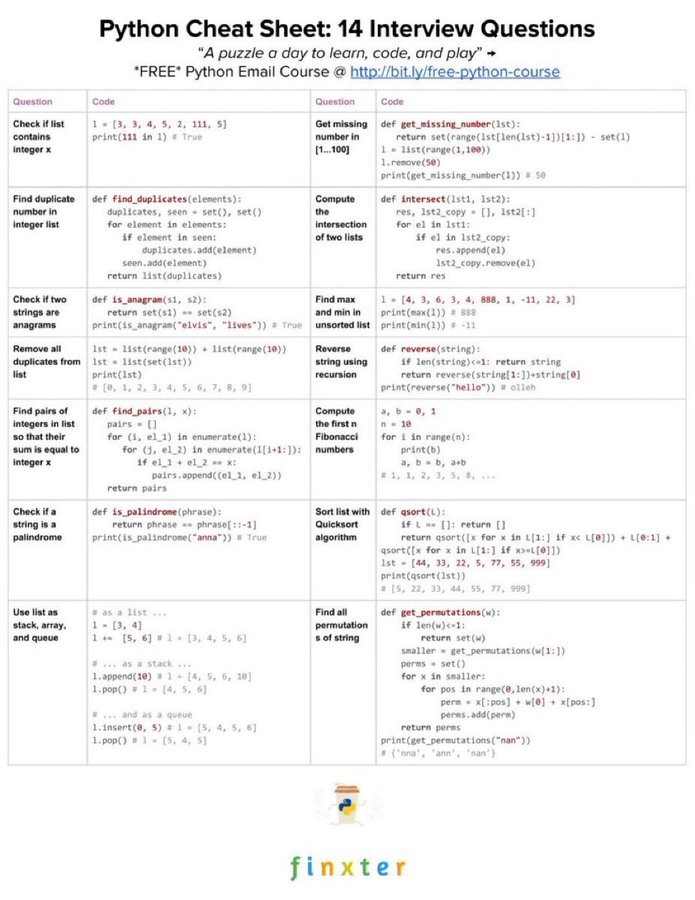
Python Cheatsheet: from https://blog.finxter.com/subscribe/
NGOs in Turkey maintain a personal register of violent deaths of women, including unsolved murders and incitement to suicide. Only according to the data for 2022, there are a lot of women from Central Asia on the list: Kazakhs, Kyrgyz, Tajiks, Turkmens, Uzbeks http://anitsayac.com/
Bitcoin’s longest-serving Lead Maintainer calls it quits, names no successor Bitcoin’s top developer and Lead Maintainer, Wladimir van der Laan, has confirmed that he’s retiring. Van der Laan is the second successor to Satoshi Nakamoto and is one of the few people in the world with final commit access to Bitcoin Core’s GitHub. Nakamoto held this administrative key, which was passed to Gavin Andresen, and then to van der Laan. Van der Laan took the reins eight years ago when Andresen, who learned how to maintain Bitcoin’s code directly from Nakamoto, stopped working on the project. Bitcoin’s longest-serving Lead Maintainer Van der Laan has maintained Bitcoin’s repository for even longer than Nakamoto but indicated in January last year that he planned to start phasing out his involvement. In a blog post, he cited “bizarre” arguments on social media and other interests that he’d like to pursue, while also expressing concerns about being a centralized bottleneck for Bitcoin’s development. And last week, he cited burnout as another major reason for resigning, saying he’d hesitate to get involved in another “thankless idealistic open-source or research project.” Bitcoin developers are essentially volunteer workers. A few receive charitable donations from other wealthy Bitcoiners or companies to subsidize their labor. Even with these donations, most developers are underpaid relative to similarly skilled developers working in other industries. Van der Laan pointed out that criticism for years-old mistakes was one reason he tired of his profession. Despite his fatigue, he categorically denied rumors that he’d become involved in any other crypto coin projects. Van der Laan’s career accomplishments Gavin Andresen nominated van der Laan to become Bitcoin’s Lead Maintainer when he stepped down in April 2014. Since then, van der Laan has been involved in the day-to-day maintenance of all aspects of Bitcoin’s development. It’s impossible to summarize everything he accomplished during eight years of code review, upgrades, bug fixes, dispute arbitration, and software maintenance. One example of the work he carried out was prioritizing splitting the Bitcoin-QT wallet away from the Peer-to-Peer (P2P) core code, and speeding up syncing the Bitcoin-QT wallet with the rest of the network. He also planned to create deterministic addresses and improve Bitcoin’s documentation. More recently, he floated the possibility of switching ownership of Bitcoincore.org to an organization rather than a single owner. He also mentioned encouraging others to set up mirrors for Bitcoin Core’s software. He wants Bitcoin to decentralize away from Bitcoincore.org, one of the few places people download the latest version of Bitcoin’s software. In 2020 he oversaw a Twitter spat over variable naming conventions in Bitcoin Core’s code that nearly led to him departing as Lead Maintainer. Craig Wright harassed and sued van der Laan Van der Laan has also been subjected to a lawsuit from the litigious self-proclaimed creator of Bitcoin, Australian computer scientist Craig Wright. In various courts around the world, Wright has repeatedly falsified documents and even reportedly perjured himself in the presence of a judge. Funded by billionaire and Bitcoin Satoshi’s Vision (BSV) promoter Calvin Ayre, Wright has a long history of using his fortune to harass Bitcoiners in court. Wright once named van der Laan as a defendant in a lawsuit that claimed ownership of Nakamoto’s whitepaper. Despite years of claims to be Nakamoto, Wright has never publicly signed a transaction from one of Nakamoto’s wallets. Moreover, Ayre and Wright’s fork of Bitcoin, BSV, is worth just 0.3% of Bitcoin. https://protos.com/bitcoins-longest-serving-lead-maintainer-calls-it-quits-names-no-successor/
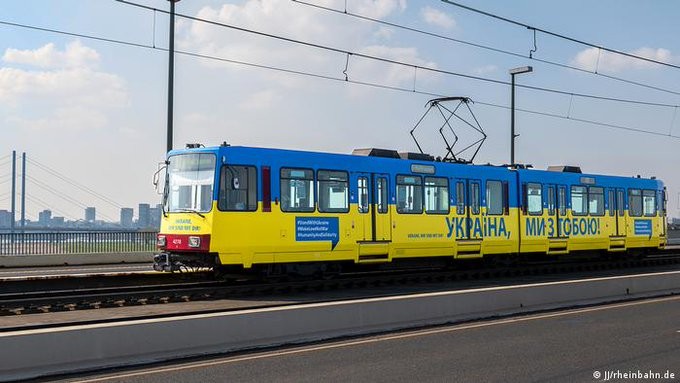
In Dusseldorf, all signs indicating the status of a sister city with Moscow will be removed from public space. Instead, signs with the new Ukrainian sister city of Chernivtsi will soon be installed, Mayor Stefan Keller said. In the photo: Düsseldorf tram
Calorie reduction lowers protein linked to the aging process https://medicalxpress.com/news/2022-08-calorie-reduction-lowers-protein-linked.html

All banks in Shanghai have restricted depositors from withdrawing money. A bank run is about to sweep. https://twitter.com/jenniferatntd/status/1534695853243392003?t=_IboyCXX992Jr1sJ556Rng&s=09

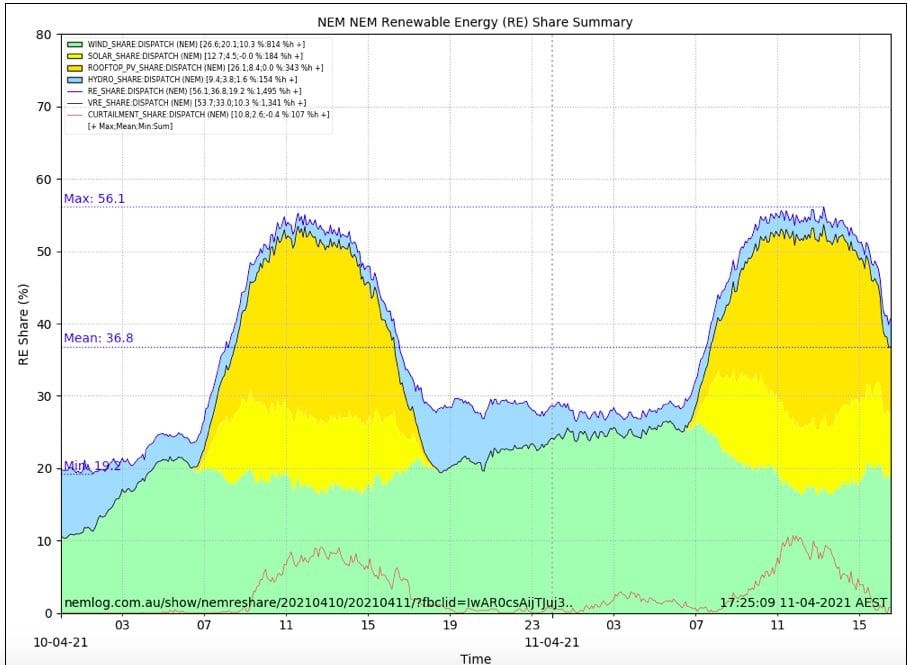
Australia's main grid hits record renewables high of 56 per cent on Sunday | RenewEconomy Australia’s main grid reached a record level of renewables in its electricity supply, and a record level of wind and solar penetration on Sunday. The peak renewables share appears to have reached 55.9 per cent at 11.05am on Sunday morning, with wind and solar alone providing 53.4 per cent, according to the OpenNem data page. However, other sources, such as NEMLog, claimed a higher percentage was reached, 56.1 per cent, at 1.15pm. Either way, the share of renewables was significant, and certainly a record level in terms of market share on a day with strong wind conditions, generally sunny conditions and low weekend demand. The share of renewables also held at more than 50 per cent for about six hours of the day – from 9am to 3pm – also likely a record. It also was above 50 per cent for several hours on Saturday. The share of gas fell to just 1.3 per cent, and coal to around 42 per cent. The average share of renewables over the last 12 months has been a little over 28 per cent, with coal at 65 per cent over the last 12 months, but more than 4,000MW of large scale wind and solar has been added in 2020, and a similar amount is expected to be commissioned in the current calendar year, along with nearly 4GW of rooftop solar. The Sunday record features another strong contribution from rooftop solar, which contributed 24.5 per cent of demand at that 11.05 peak, or 5,693MW. It was followed by wind (18 per cent), and large scale solar (10.9 per cent). Hydro was contributing just 2.5 per cent, while pumped hydro stations and big battery storage installations were soaking up some of the generation, taking advantage of the negative prices in all state grids, apart from Tasmania. The share of renewables might have been higher were it not for many wind and solar farms choosing to switching off to dodge the negative prices and the obligation to “pay” to generate. NEMLog suggested the share of voluntary curtailment might have been 10 per cent. Update: The Australian Energy Market Operator later confirmed that the main grid had indeed reached a new record for renewable energy share, although its data put it at 55.9 per cent at 1.10pm. It said this eclipsed the 55.1 per cent record set a day earlier, on Saturday. New records had been established on four occasions in November and October last year.
Biden sees `win' for US in electric vehicle battery deal. Two big South Korean electric vehicle battery makers said Sunday they have settled a long-running trade dispute. The companies pledged to work together to strengthen the EV battery supply chain in the U.S. WASHINGTON (AP) — Two big South Korean electric vehicle battery makers said Sunday they have settled a long-running trade dispute that will allow one company to move ahead with plans to manufacture batteries in Georgia. President Joe Biden called it “a win for American workers and the American auto industry.” The agreement between LG Energy Solution and SK Innovation ended the need for Biden to intervene in a case closely watched for its implications on Biden’s clean-energy agenda, which includes a sharp increase in the number of electric vehicles as part of his plan to address climate change. Biden had until Sunday night to make a decision, following a ruling in February by a trade commission. The companies said in a joint statement that SK will provide LG Energy with a total of $1.8 billion and an undisclosed royalty. They agreed to withdraw all pending trade disputes in the United States and South Korea and not assert new claims for 10 years. “We have decided to settle and to compete in an amicable way, all for the future of the U.S. and South Korean electric vehicle battery industries,” said Jun Kim, CEO and president of SK, and Jong Hyun Kim, CEO and president of LG Energy. The companies pledged to work together to strengthen the EV battery supply chain in the U.S. and support the Biden administration’s efforts to advance clean energy policies, including electric vehicles. The U.S. International Trade Commission had decided in February that SK stole 22 trade secrets from LG Energy, and that SK should be barred from importing, making or selling batteries in the United States for 10 years. The decision could have left Ford and Volkswagen scrambling for batteries as they both roll out additional electric vehicle models, a priority for the companies and for the Biden administration. SK has contracts to make batteries for an electric Ford F-150 pickup truck and an electric Volkswagen SUV. The commission said SK could supply batteries to Ford Motor Co. for four years and to Volkswagen AG for two years. The decision had jeopardized a $2.6 billion battery factory that SK is building in Commerce, Georgia. Democratic Sen. Jon Ossoff of Georgia, who at Biden’s request had jump-started negotiations between two companies, said the settlement “has saved the battery plant in Commerce, Georgia, ensuring thousands of jobs, billions in future investment, and that Georgia will be a leader in electric vehicle battery production for years to come.″ U.S. Trade Representative Katherine Tai said the deal “builds confidence” in the reliability and responsibility of the two companies as suppliers to the U.S. auto industry. The agreement puts the U.S. “in a stronger position to drive innovation and ... clean energy technology while also respecting the rights of technology innovators at the heart of trade and manufacturing policy,″ Tai said. Added Sen. Raphael Warnock, D-Ga.: “The best way to protect workers in Commerce — and the jobs Georgians were promised — is for the companies involved to negotiate a settlement in good faith,.” He said he raised the battery issue with Biden during the president’s March 19 visit to Atlanta. Biden said in a statement that building electric vehicles and the batteries needed for them is an important part of his $2.3 trillion infrastructure plan. “We need a strong, diversified and resilient U.S.-based electric vehicle battery supply chain, so we can supply the growing global demand for these vehicles and components — creating good-paying jobs here at home, and laying the groundwork for the jobs of tomorrow. Today’s settlement is a positive step in that direction,” Biden said. Gov. Brian Kemp, R-Ga., called the settlement “fantastic news for northeast Georgia and our state’s growing electric vehicle industry.″ Ford, in a statement, said the deal “allows us to focus on delivering a range of Ford world-class battery electric vehicles for our retail and fleet customers, while also supporting American workers, the economy and our shared goal of protecting the planet.″ Sam Abuelsamid, principal analyst for Guidehouse Insights, said a settlement was always the most likely outcome. Demand for electric vehicles is projected to rise dramatically by 2035, and other companies will start making them in the U.S. to meet that demand, he said. Switching the U.S. fleet of roughly 279 million largely gas-powered cars and trucks to electric vehicles is a focus of Biden’s infrastructure plan, with $174 billion allocated for EV incentives, a half-million charging stations and development of a domestic supply chain. Experts say it’s possible the U.S. will run short of electric vehicle batteries if it doesn’t set up its own network of parts suppliers. “We don’t have nearly enough (existing) battery production capacity to meet the kind of volumes that companies are talking about producing,” Abuelsamid said.

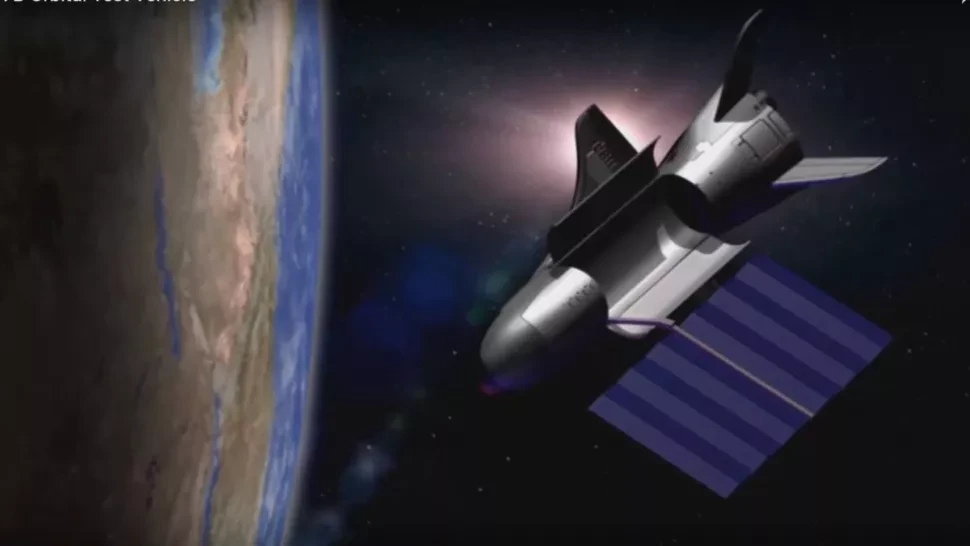
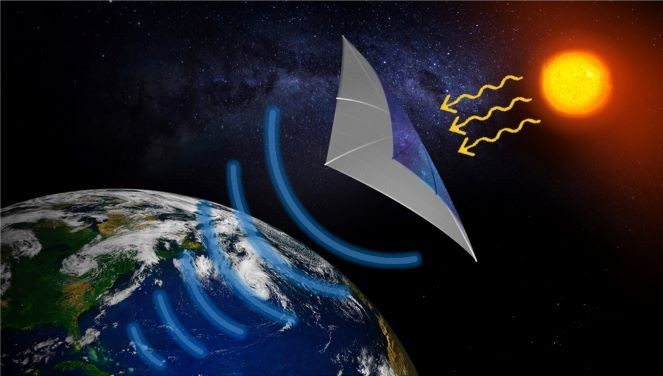
Space-based solar power getting key test aboard US military's mysterious space plane. PRAM-FX is a NRL experiment investigating transforming solar power into RF microwave energy. It helps advance a more ambitious objective — soaking up the sun's energy and broadcasting power to earth. A U.S. military space plane is being used to flight-validate the best ways to gather the sun's energy for power beaming from Earth orbit. In mid-March, the latest classified mission of the U.S. Space Force's X-37B robotic space plane winged past 300 days in Earth orbit. Most of the robotic space drone's duties on this mission, known as Orbital Test Vehicle-6 (OTV-6), are a tightly held secret. However, one known bit of research that the craft carries is the Photovoltaic Radio-frequency Antenna Module Flight Experiment, or PRAM-FX. The US Military's secretive X-37B space plane: 6 surprising facts PRAM-FX is a Naval Research Laboratory (NRL) experiment that's investigating transforming solar power into radio frequency (RF) microwave energy. PRAM-FX is a 12-inch (30.5 centimeters) square tile that collects solar energy and converts it to RF power. Paul Jaffe, the innovation power beaming and space solar portfolio lead at NRL, said that PRAM-FX is not beaming microwave energy anywhere. Rather, the experiment is gauging the performance of sunlight-to-microwave conversion. To be measured is how the PRAM is performing from an efficiency standpoint and also from a thermal performance stance, he said. Preliminary results That in-space task is relatively simple. But PRAM-FX helps advance a more ambitious objective — soaking up the sun's energy and broadcasting that power to an energy-hungry Earth. The first preliminary results from PRAM-FX aboard OTV-6 were published in January as part of a review paper co-authored by Jaffe in the Institute of Electrical and Electronics Engineers (IEEE) Journal of Microwaves. "Though these results are preliminary, they compare favorably with the performance documented in ground testing, which also demonstrated 8% total module efficiency. As the experiment proceeds, a full picture of the module's performance under different illumination and temperature conditions in the space environment will be uncovered," the IEEE paper points out. Step-by-step phases The Air Force Research Laboratory (AFRL) has blueprinted a major demonstration project that aims to beam power collected in space to expeditionary forces on Earth. That project is called the Space Solar Power Incremental Demonstrations and Research (SSPIDR). As outlined in the IEEE paper, SSPIDR's demonstrations include experiments called Arachne, SPINDLE, and SPIRRAL. "Arachne will be the world’s first space-to-ground power beaming demonstration of a solar-to-RF modular panel with in-situ surface-shape measurement to optimize beam formation. The solar-to-RF panel technology is designed to scale to very large apertures and to support high volume, low-cost manufacturing," the paper reads. Arache is scheduled to fly in 2024. AFRL received the first flight hardware component of the Arachne spacecraft from Northrop Grumman last December. SPINDLE will test on-orbit deployment of a sub-scale version of the operational system. And SPIRRAL "will test thermal management approaches to ensure a long-lasting, high-performance system," the paper reads. If all goes according to plan, SPIRRAL will launch in 2023 as part of the Materials International Space Station Experiment (MISS-E) Flight Facility. MISS-E is an in-orbit platform from Alpha Space Test and Research Alliance that's designed to be deployed externally on the International Space Station. Limitless and sustainable energy John Mankins is a longtime advocate of space power beaming and author of "The Case for Space Solar Power" (Virginia Edition Publishing, 2014). He worked at NASA for 25 years and is now president of Artemis Innovation Management Solutions, LLC. Space solar power has the potential to transform humankind's future in space, and it might provide a new source of virtually limitless and sustainable energy to markets across the world. So, Mankins said, why wouldn't we pursue such technology? "There is an array of new players in wireless power transmission — both via radio frequency and laser — in the U.S. and internationally," Mankins told Space.com. "China has just approved the formation of a national-level committee on space solar power and wireless power transmission, which will increase the prominence of their already strong research and development program." Mankins also points to the United Kingdom. That nation is now exploring the possibility of joining the international space solar power and wireless power transmission community, with a major assessment completed in January of this year. Looking outward beyond Earth, new applications of wireless power transmission are emerging in lunar exploration planning, Mankins said, where the ice deposits are located exclusively in permanent shadowed regions at temperatures around minus 390 degrees Fahrenheit (minus 234 degrees Celsius). "But hundreds of kilowatts of power will be needed to mine and process the water ice to make useful materials, such as propellants. Wireless power might be the answer to providing that power," Mankins suggested. Highly valued asset Overall, the prospects look encouraging that space power beaming may be a highly valued asset in the commercial sector. The technology may have a future akin to that of the United States' Global Positioning System, which started out as a military asset and transitioned to a globally utilized technology, experts say. Perhaps solar power beaming will become widely used down the road, providing plentiful solar energy everywhere regardless of the local weather, time of day or latitude. By the way, for you techno-history buffs: Nikola Tesla originated the concept of large-scale power transfer via free space at the turn of the 20th century!
The UAE begins its fiftieth year celebrations with the entry of a new era of environmentally friendly energy; as the first plant of Barakah has become the largest single source in the region to produce thousands of megawatts of environmentally friendly electricity.

New materials for organic redox flow batteries Scientists in Russia have designed a whole series of new compounds that could serve as catholytes and anolytes in organic redox flow batteries. The materials promise to open up new pathways for further research, and overcome some of the challenges for organic redox flow batteries in commercial, large-scale energy storage projects. Thanks to the potential size of the market for electric vehicles, battery research in recent years has tended to focus on innovations in lithium-ion and other related chemistries that promise to serve this market. For the large-scale energy storage that is increasingly required to balance the intermittency of wind and solar energy, however, redox-flow batteries present an attractive opportunity. The batteries are inherently scalable, and avoid many of the issues with long-term performance, safety, and material availability associated with lithium-ion batteries. Many of the early commercial projects for redox flow batteries (RFBs) rely on vanadium, which comes with some toxicity concerns. There is, however, a long list of materials worth investigating as flow battery components, including abundant organic materials. Among other issues, organic redox flow batteries are held back by low specific capacity. Finding new materials (and combinations of materials) with better characteristics is the simplest way to overcome this challenge, and has been the focus for a group of scientists led by Russian’s Skolkovo Institute of Science and Technology (Skoltech). “We are working with organic redox-active materials solubilized in organic solvents (non-aqueous organic RFBs),” says Skoltech Ph.D. student Elena Romadina. “The main advantages for non-aqueous organic RFB are high cell voltage (up to 5V, versus around 1.6 V for water-based systems), a huge variety of organic redox-active molecules which could be applied, and potential operability at low temperatures, without any concern for freezing below 0 degrees C,” she stated Romadina is the lead author of two new papers exploring new organic materials for RFBs, published in the Journal of Materials Chemistry A and in Chemical Communications. The first evaluated a series of seven promising catholyte materials, and the second describes the synthesis of a phenazine-based anolyte material.

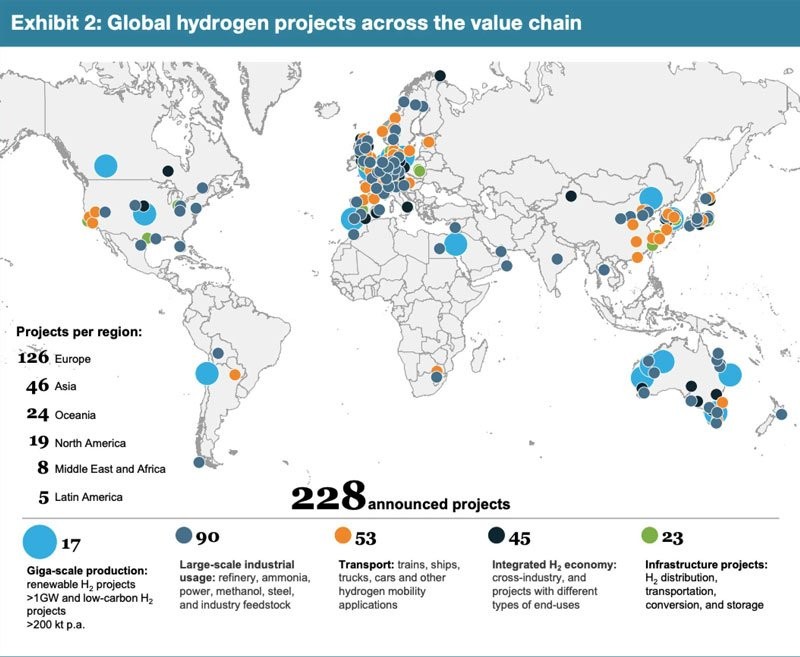
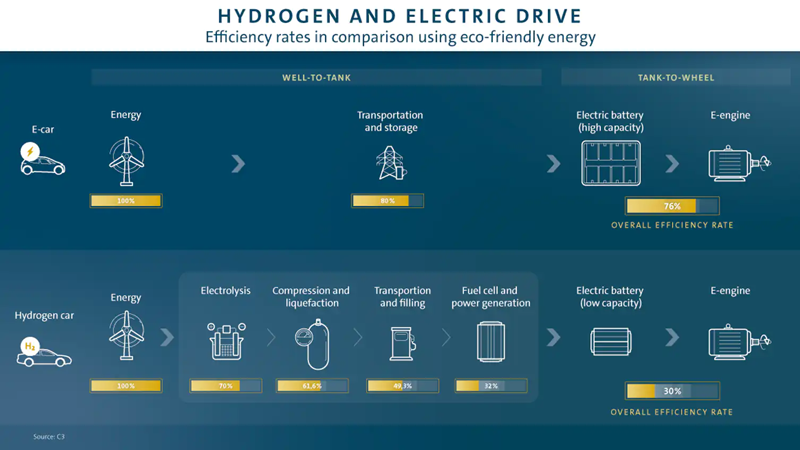
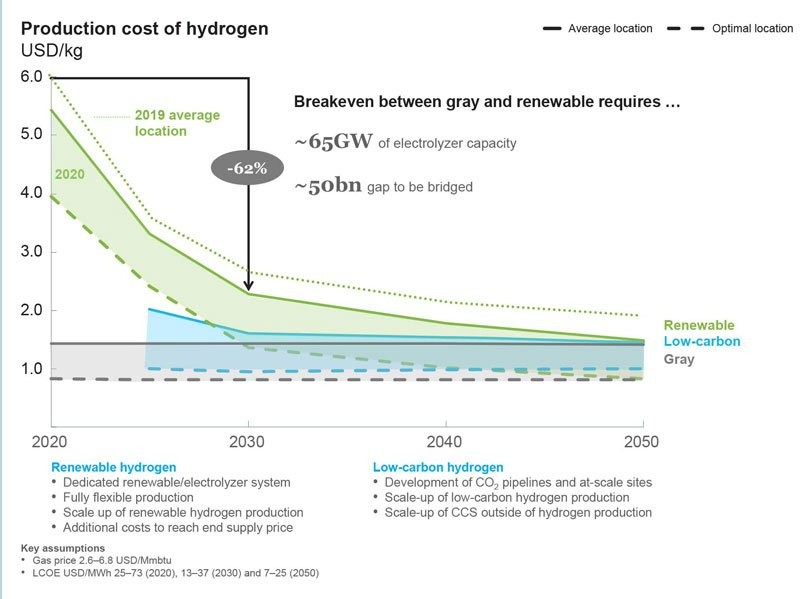
Green Hydrogen Is Bubbling with Hype—Again It’s lighter than air, more common than carbon, and burns with a bang into a puff of pure water vapor. Some see it as an essential element in decarbonizing electricity, transportation, and even steelmaking. Hydrogen is easy to love—but, for some of the same reasons, hard to handle. Recently, pressure has been building to make more of this gas and to use it to move energy in a form that can burn in power plants and steel mills, energize fuel-cell vehicles and generators, and combine with captured carbon dioxide to make liquid fuels or solid plastics. Japan, Australia, Saudi Arabia, and other nations are touting hydrogen production as a near-term priority and a major element in their long-term plans to decarbonize their economies. In a recent seven-part series on “The race to scale-up green hydrogen,” the Financial Times examined some of the 228 large hydrogen projects—involving $300 billion in capital investment—that have been announced. Hydrogen is high in the hype cycle. But we’ve seen exuberant predictions before that hydrogen’s ascendance was imminent—the Bush administration was bullish on it in the early 2000s—only to see those promises disappear in a flash. Today, the same questions that burst the hydrogen bubble 20 years ago remain unanswered and controversial. Make it from what? Move it how? And at what cost? Making It Hydrogen looks just as colorless whether it is split from water by electricity or yanked from fossil hydrocarbons. So what puts the green in “green hydrogen”? The answer is making the stuff from zero-carbon electricity and water. That’s not how it is typically done today. Only about 70 million metric tons of hydrogen are sold each year, and a meager 4% of that is the green variety. The rest is either “brown”—made from coal—or more commonly “gray hydrogen” produced by using superheated steam to strip H atoms off of methane’s CH4 molecules. For every kilogram of hydrogen made this way, 7 kg of carbon dioxide spew into the atmosphere. That’s bad. Less bad is “blue hydrogen,” still made from fossil fuels but with 50% to 95% of the resulting CO2 captured and permanently sunk underground, at substantial cost in both dollars and energy. 1. The ambitious vision is to turn the 4% green hydrogen / 96% gray hydrogen ratio upside down over the next 10 years—and to dramatically increase the total production of hydrogen at the same time. Technology Review laid out the vision in a recent article, noting that growing government mandates and subsidies for both green hydrogen and the cheap renewable power used to make it are reasons for optimism—especially if carbon surcharges erode the substantial cost advantage that fossil gas now enjoys.An eye-opening story in the Wall Street Journal described Saudi Arabia’s $500 billion plan to build a car-free megacity, complete with a $5 billion green-hydrogen plant, in a currently uninhabitable swath of its northwestern desert. The story reports that Australia is considering an equally bold, $36 billion-project to construct 26 gigawatts of wind and solar generation in its arid western state to power production of green hydrogen for export as well as domestic use. 2. But making hydrogen at a scale comparable to natural-gas production will consume enormous amounts of freshwater and vast tracts of land. Figure on zapping apart 10,000 liters of water with 50 MWh of electricity to make each metric ton of hydrogen, New Scientist reckons in a nice explainer of the technical obstacles and opportunities. That’s enough water to fill a small tanker truck and enough electricity to power four or five American houses for a year. Unfortunately, water is often scarce in places—like barren deserts in Saudi Arabia and Australia—where land is cheap and sunlight or wind are plentiful. Those places also tend to be remote. That brings us to the next big challenge…. Moving it You might think lightweight hydrogen (atomic weight: 1.008) would be easy to push around. But in fact, concentrating hydrogen and shipping it to end users is so difficult that it’s often hard to answer the obvious question: why not just use electricity instead? 1. It takes a lot of energy to move hydrogen from source to user. Every option available has issues. Gas pipelines work for short distances. But hydrogen is so light that pumping it hundreds of kilometers consumes as much energy as the hydrogen delivers. Germany has been talking to Russia—which supplies most of the natural gas that heats German homes, businesses, and factories—about mixing hydrogen into those streams as a workaround. As the New Scientist and Financial Times articles observe, gas companies like this idea, but many environmentalists do not. Japan is bullish on a second option: liquefying the hydrogen, and then loading it onto tanker ships and trucks. Later this year, Japan expects to receive its first oceanic shipment of 330,000 gallons of liquid hydrogen (the brown variety) from Australia. Kawasaki Heavy Industries reportedly is drawing up plans for hydrogen tankers with 128 times that capacity. But while it may be technically feasible to chill the gas down to a mere 20 °C above absolute zero, where it liquefies, the energy and expensive equipment involved make it very costly. Saudia Arabia says its megacity plant will bond the hydrogen it makes with nitrogen in the air to make ammonia (NH3), which is denser and liquefies at more reasonable temperatures. Concentrated ammonia is toxic, however, so storing and moving hydrogen in this form around cities could raise safety concerns. Then there’s the inconvenient physics that siphons energy away as hydrogen is made, moved, stored, and finally converted back to electricity (see graphic below). For charging vehicles, heating buildings, cooking, and other applications that can use electricity, hydrogen may have a hard time competing as an energy vector. 2. The tech industry may solve some of these problems down the road. Research into safer, more efficient, and more flexible ways to store and move hydrogen has been ramping up, with some encouraging results—including hydrogen goop. Hydrogen-burning planes have already taken flight, and aircraft companies are signalling robust demand that is attracting investment to meet the challenge. Pricing it 1. Green hydrogen is still too expensive, but costs are falling fast. Although green hydrogen is still three to seven times the cost of gray hydrogen, “that is half of what it cost 10 years ago,” the Technology Review article points out. “And as the cost of wind and solar power continues to drop, and economies of scale around green hydrogen production kick in, it could get a lot cheaper.” The Hydrogen Council, an industry group that includes many of the fossil-fuel majors, recently plotted its aspiration: cutting the price of green H2 more than 60% by 2030. For the cheapest production sites, that might be enough to match the price of gray hydrogen. But fossil gas would still be cheaper, unless carbon pricing makes up the difference. 2. Green hydrogen will be costlier than it ought to be so long as we have to build way more production capacity than we need. Some argue that green hydrogen could help solve the intermittency problems of renewable power plants by storing energy they make when it is not needed. But the dynamic can flip when solar and wind farms are devoted to hydrogen production. In a sobering paper recently in the International Journal of Hydrogen Energy researchers modeled a national-scale system for Germany that integrated green hydrogen into electricity production. They warn that far more power generation and H2 production capacity would have to be built than is needed, to work around the intermittency of solar and wind power. As a result, much of the equipment would be underused, ruining the economics of the system. What to Keep an Eye on Underlying these questions surrounding making, moving, and pricing hydrogen is a crucial, fourth issue: one of trust. New Scientist and the Financial Times both point to a provocative report by corporate watchdogs in Europe, who documented in December that major players in fossil-fuel industries have been lobbying intensely for billion-dollar hydrogen projects that, they say, effectively subsidize existing natural-gas infrastructure and “maintain dependence on fossil gas, with a small volume of hydrogen to greenwash it.” Add to that worry this concern: will Russia and Saudi Arabia be trustworthy in putting only green hydrogen and not gray hydrogen into the pipelines and ships they send to Europe and Asia? More broadly, we’ll need to keep an eye on how hydrogen technology develops and scales up to check that it actually accelerates decarbonization, rather than slowing it down.
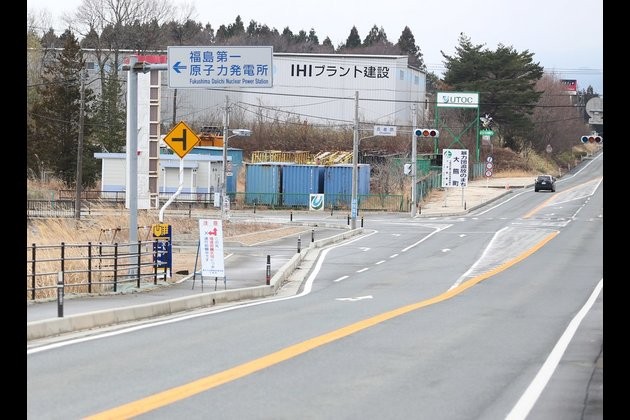
Japan to release radioactive water from Fukushima plant into Pacific ocean Japan's fisheries industry has voiced ardent opposition to the plan, while some of Japan's neighbors have expressed concerns about radioactive wastewater being discharged into the Pacific. TOKYO, April 10 (Xinhua) -- The Japanese government may announce as early as Tuesday plans to dispose of radioactive wastewater from the crippled Fukushima Daiichi nuclear power plant into the Pacific Ocean, sources with knowledge of the matter said Friday. The sources said the government will convene a meeting of relevant ministers and announce the decision as early as next Tuesday to formalize plans to release radioactive water that has accumulated at the plant into the Pacific Ocean. While treated, the radiation-tainted water, stored in tanks at the plant in Japan's northeast, is expected to reach capacity next year. The plant had its key cooling functions knocked out after being battered by a massive earthquake-triggered tsunami a decade ago, resulting in the world's worst nuclear crisis since Chernobyl in 1986. The tainted water contains radioactive tritium as a result of being used to cool down melted nuclear fuel at the plant in Fukushima Prefecture. Japan's fisheries industry has voiced its ardent opposition to the plan which may start in around two years according to the plant's operator Tokyo Electric Power Company Holdings Inc. (TEPCO), as the plan could cause further damage to the industry's reputation. Japanese Economy, Trade and Industry Minister Hiroshi Kajiyama said on Friday that while working on the concerns of the fisheries industry, the government hopes to seek cooperation of the International Atomic Energy Agency (IAEA) and other global organizations, while maintaining transparency over the matter. A number of countries and regions continue to impose restrictions on Japanese agricultural and fishery products as a result of the Fukushima crisis amid continued concerns about the safety of the produce. Meanwhile, some of Japan's neighbors have voiced their concerns about radioactive wastewater being discharged into the Pacific.


https://www.tradingview.com/chart/BCHUSD/YcQ3cryP-BCH-PARABOLIC-TARGET-4500-10000-BCH-X/
https://www.reddit.com/r/btc/comments/mjysey/the_btc_project_turned_into_a_surveillance_coin/
bullish

https://twitter.com/UltimateCrypto7/status/1372814110816014337?s=09