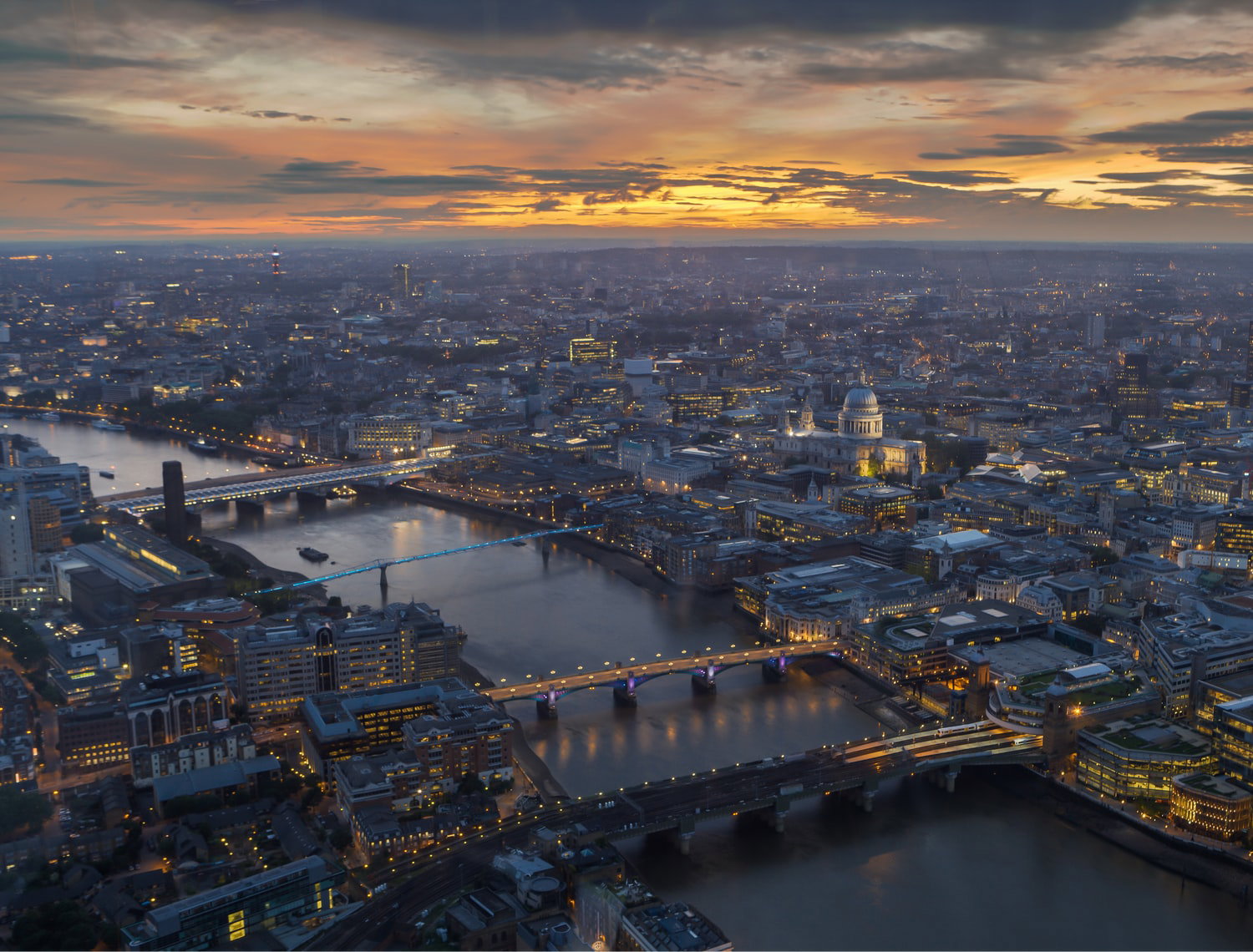
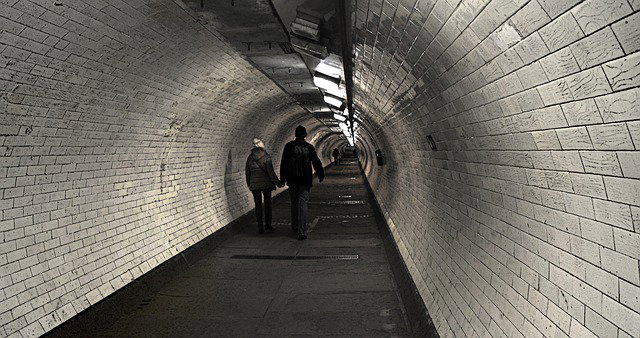
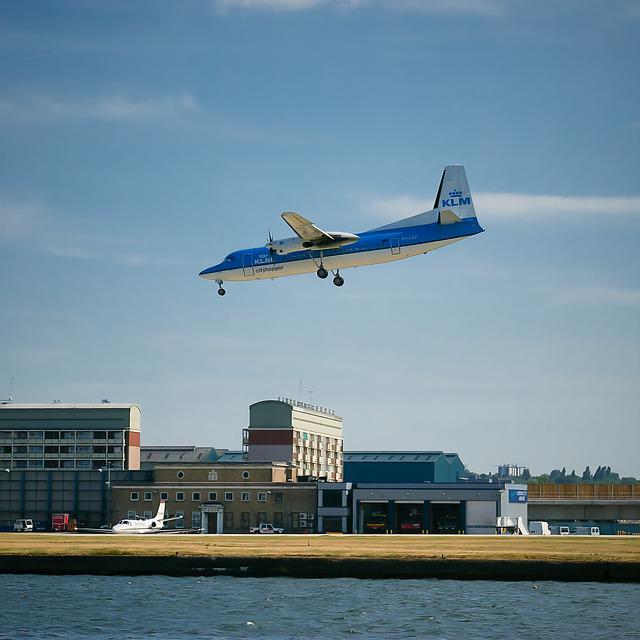
St James' Palace
St. James' Palace, though no longer a Royal residence, is most interesting; partly because the British Empire is officially represented abroad in its name, but chiefly, I think, because it is, like Kensington Palace, a building where something approaching a succession of Kings and Queens have lived and died.
As regards its past, that is best learnt by a perusal of the Rev. Edgar Sheppard's (the Sub-Dean of the Chapels Royal) admirable and authoritative work on the subject.
To go through the Palace, a formal order must be obtained from the Lord Chamberlain's office, when Mrs. Martin, the courteous housekeeper, to whom it is usually addressed, will prove an admirable cicerone.
Her apartments are in Friary Court, where the Guard is relieved every morning, and where the bands were massed after the Trooping of the Colour on the late Queen's birthday.
Judging from the outside, it is hard to believe that the Palace is as big as it is. The principal state rooms face, on the south side, the charming old garden, a quiet spot with a sun-dial in the middle, and inviting lawns whereon monarchs have often strolled, and courtiers intrigued.
Queen Anne's room is the first in order, the next being the ante-drawing-room, which leads by three doors into the Throne-room, an apartment richly decorated and upholstered, but disappointingly small, the Throne beneath its canopy looking almost insignificant.
Beyond is, what is called, the Queen's Closet, where, as in the Throne-room, the tall narrow windows are splendidly draped.
The stately Banqueting-Hall - very rarely used for festive purposes, but where various Royal Guilds of needlework used to be permitted by the late Queen to display the clothing they made during the year for the poor - the Tapestry-room next to Queen Anne's room, whence the Sovereign on accession is proclaimed and presented to the public; the Guard-chamber, the Great Staircase; the Entree Gallery, and the Chapel, are all well worth a prolonged visit, which, however, is, as a rule, impossible.
Of pictures there are many; the greater number of a dark and depressing aspect, full-length portraits of monarchs by Holbein, Zucchero, Van Dyck, etc.; but there are some more enlivening ones of Royalties by modern painters, and an interesting portrait of the unfortunate Admiral Byng.
In most of the rooms are imposing fire-places with armorial bearings, one of the characteristics of Tudor-Elizabethan buildings, and when filled with piles of glowing coal and beech logs, most fine in effect.
Along a narrow stone corridor leading from the state apartments to the Palace, Mrs. Martin would take the visitors in her charge, to see the Royal Closet, which monopolizes one end of the Chapel Royal.
Its occupants can be seen only by the officiating clergy, and by the members of the household and others sitting in the galleries on the right of the Royal Closet.
Architecturally, the Chapel Royal has little worth noting beyond its fine ceiling painted by Holbein; but its altar-plate is magnificent, and its choral services, perfection, while its records of Royal weddings, christenings, and confirmations, alone suffice to invest it with historical interest.
Perhaps its most touching associations are with George III, whose unceasing attendance at early prayers in all weathers, wore out not only his wife and family, but every one else; and much sympathy must have been felt for the unfortunate equerry compelled to be present even when half-frozen with cold.
Everybody has heard how the old king beat time to the anthem with his music-roll, letting it drop upon the powdered heads of the pages below if he saw them talking, or inattentive.
The Royal kitchen, a fine old place with vaulted ceiling, is seldom shown to visitors, though it is possible, by the exercise of a little diplomacy, to get a peep at it.
The Courts are a great feature of St. James', which in the old views is represented as a series of low building arranged in quadrangles, with a frontage to the park, and a façade on the north side. Friary Court has been already referred to.
In Colour Court are placed the colours of the guard of honour; in Ambassador's Court is the town-house of the Duke of York; and in Stable Yard beyond, are the offices of the Lord Chamberlain.
About one-half of the Palace is taken up by the residences of the late officials. Some of these in the older portions of the rambling structure must be of considerable antiquity, for when the cellars belonging to the Clerk Comptroller of the Royal Kitchen were being enlarged, and it was necessary to excavate beneath the outer walls and the pavement at Marlboro' Gate, there was disclosed at a depth of six feet from the surface an ancient stone coffin lying with its feet to the east.
There were traces of others, but they were left undisturbed; and their existence is unknown to the hundreds of persons who every day pass backwards and for wards from Pall Mall to the Park.
With all its sad and gloomy memories of former occupants, no wonder there are supposed to be ghosts at St. James' Palace!
It is notoriously salubrious, however, and its drainage is perfect. The great main sewer, of a good old age, is built of brick, and so lofty that a man can easily walk along it with his hat on. It was formerly directly connected with the Thames at Whitehall, and was, doubtless, resorted to in times of danger as a means of escape from the Palace.
Her late Majesty's cellars are beneath the southern front of St. James', and approached by a broad flight of stairs near the official quarters of the Royal Cellarer. They are some distance below the surface, amidst the foundations of the older buildings which stood here before the advent of Henry VIII.
The curiosity of the place, is what at first sight appears to be a rivulet of clear water, exposed to view by the raising of a ponderous flagstone, and which imagination suggests may possibly be the "fair running stream" on whose margin the old Leper Hospital of St. James' was built. But, alas! the practical Clerk of the Works pronounces it to be only a reservoir to carry off the excessive rainfalls!
There is nothing remarkable about the cellars. They are not even large, but everything is well-ordered and exact. The bins are of slate, a clean and enduring substance, and they contain the choicest vintages, many being presents from distinguished personages. From the Emperor of Austria, there is some real Imperial Tokay, that peculiar licqueur wine with a flavour of tea so seldom met with, and some Acqua d'Oro, whose particles of gold leaf float in the pellucid contents of the quaintly-shaped bottles.
I trust that any one who, by special favour, penetrates into this pleasant retreat, may be as hospitably treated as I was, and be privileged to drink the health of the Sovereign in one of the Royal cellars!
*Imperial London*, Arthur Henry Beavan, 1901
The Royal Mews
The Royal Mews is concealed from the Palace by the trees encircling the grounds, while a shrub-surmounted mound serves to screen it still more effectually.
Just inside the Buckingham Palace Road entrance, is the office of the Master of the Horse, where cards of admission "to view the Royal stables between the hours of two and four p.m.," signed by the Crown Equerry, are presented.
From 130 to 150 horses, mostly bays, are usually kept in these stables, subject to drafts from Windsor and elsewhere.
In a very roomy apartment the black state horses are domiciled, and ten of the famous cream-coloured.
The latter are of Hanoverian extraction, brought over by George I, and are descendants of the original importation.
Since the beginning of the late Queen's reign they have been bred at the Hampton Court establishment, and are somewhat uncanny-looking creatures with their Roman noses and white muzzles and eyelashes.
The black horses, of Dutch and Mecklenburg descent, imported many years ago, are much handsomer.
The Harness Room
In the harness-room, amongst the sets preserved in glass cases round the walls, is a most splendid one made in the reign of George IV for a pair, but seldom, if ever, used.
The bodyground is dark blue of a peculiarly rich shade, and the brass-work is a true work of art.
Next to it are eight sets of the harness belonging to the "creams."
The morocco must have been originally a bright red, but time has toned down its vividness, and mellowed it like some old picture.
Every available square inch of the leather is covered with delicately wrought silver, thickly gilded.
The head-pieces are not less fine, and the weight is considerable, each set turning the scale at over 112 lbs.
It was made in the reign of William IV, and is in excellent preservation.
This faded set contrasts strikingly with the heavily-gilded magnificent Diamond jubilee harness, which was seen in public for the first time on June 22, 1897.
Coach Houses
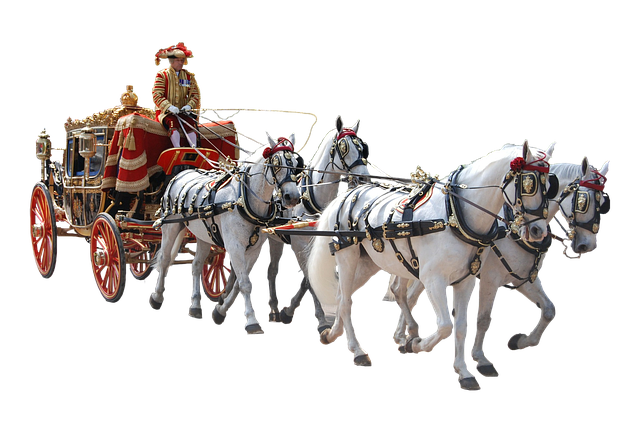
The coach-houses, until his recent retirement, were the special realm of the state coachman, Edwin Miller, to whom has several times fallen the responsible task of driving the late Queen through the streets of London in the state coach, and a most historical equipage it is.
In it Her Majesty set forth to be crowned on that memorable summer day in 1838, wearing, we are told, "a dress of white satin, trimmed at the edge with flowers of fine lace and gold embroidery, a circlet of gold upon her head, soon to be replaced by the imperial crown."
Designed by Sir Thomas Chambers, R.A., and built in the year 1762, this unique chariot, with its rich carving, gilding and painting, is an artistic specimen of the coachbuilder's handicraft.
The length of carriage and body is twenty-four feet, and the total weight, four tons.
The semi-state carriage, now in use, is, of course, a very different kind of conveyance.
It is modern, perfectly set on Cee springs, and is overlaid with the Royal Arms and designs in various colours wherever room can be found.
It is lined with royal blue in the latest style of upholstery.
Besides the above, there are many dress-carriages of plainer design, nearly all of one pattern, and used by the members of the Royal family, or, on grand occasions, by the officers of the Household.
There are, also, about seventy other carriages of ordinary make.
A commodious and useful annex to the Royal Mews, is the riding-house.
Its dimensions are 200 feet by 50.
The floor, thickly covered with a mixture of sawdust and tan, is most luxurious as an exercising ground for saddle-horses in bad weather.
On each side it is lighted by thirteen windows; and at the end, looking down on the school of horsemanship, is an apartment, whence, in former days, Her late Majesty was in the habit of watching the rising equestrian talent of her children.
In extent, and also in the number of horses maintained, the Royal Mews at Pimlico will hardly stand comparison with other Royal establishments of a like nature; as, for instance, the Emperor of Germany's, the Emperor of Austria's, the splendid stables of the late King Humbert in Rome, where on an average 300 horses were kept, or the immense stables of the Tsar of Russia.
But for excellence of quality in the animals, elegance and soundness of workmanship in the equipages, and for perfectness of organization and discipline, the Royal Mews at Buckingham Palace is hard to beat.
*Imperial London*, Henry Arthur Beavan, 1901
Buckingham Palace
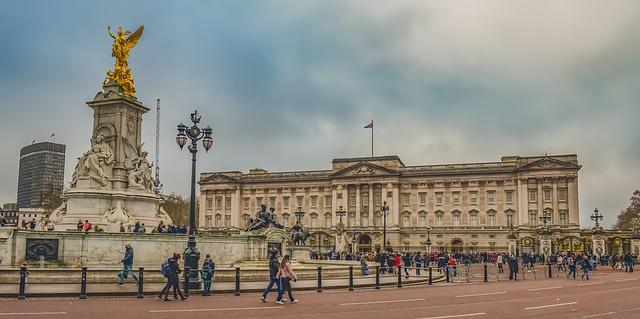
London may be called palatial, though, unlike many capital cities in Europe, it contains only one building that approaches one's idea of what a King's house should be - and that is Buckingham Palace; a modern building, whose history can be told in a few words.
On its site originally stood Arlington House, which was sold to the Duke of Buckingham, rebuilt and named after him, and afterwards purchased by George III, who resided there.
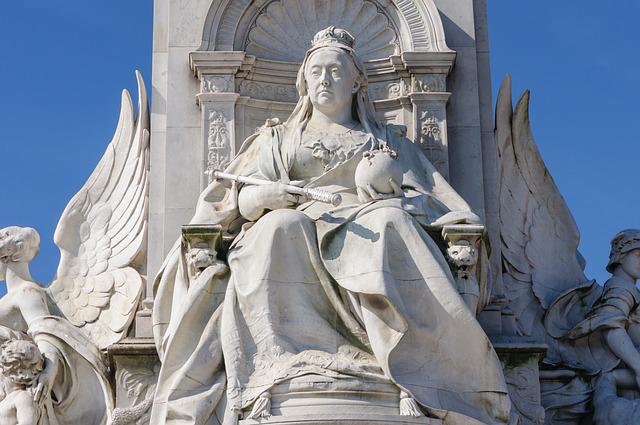
Between the years 1825 and 1837, the Palace was reconstructed, as we see it now, by the architects Nash and Blore, Queen Victoria taking up her abode there on her accession to the throne.
Though lacking architectural dignity, Buckingham Palace covers a considerable amount of grounds, and was large enough to secure the utmost privacy for her late Majesty.
(King Edward VII having decided that alterations in some of the apartments, and in the arrangements of the works of Art, etc., are to be made in Buckingham Palace, it is necessary to explain that the description given in this chapter refers to the Palace at the time of the Queen's death - this applies equally to the account of the Royal Mews, and to St. James' and Kensington Palaces, where certain changes may also take place; but the leading features of all three palaces will doubtless remain much the same as before.)
So secluded was her suite of rooms, that when, in 1896, a fire broke out in the east front of the Palace, and no fewer than seventeen fire-engines and manuals came dashing up, causing much noise and excitement, the Queen - recently arrived from Windsor - was unaware that anything unusual had occurred until long after all trace of the outbreak had disappeared.
Buckingham Palace is splendid inside, much more so than most people imagine, and can hold its own in point of magnificence with anything of its kind abroad.
The vestibule, into which the Sovereign's entrance in the quadrangle opens, and the grand marble staircase with its ormolu acanthus balustrades, are very imposing; as are also the state apartments - the throne-room with its splendid ceiling, huge crystal chandelier, and emblazoned arms; the grand saloon; the state dining room; the handsome Bow Room; the green, yellow and blue drawing-rooms; and the picture-gallery, a noble apartment in the centre of the Palace with gorgeously-gilded door-cases and with four marble chimney-pieces elaborately sculptured with medallion portraits of great painters.
(Throughout the Palace a notable feature is the splendour and massiveness of the doors - in most of the rooms, amongst other ornaments, the rare china vases are remarkable, and carefully preserved in glass cabinets are some priceless specimens of faience, one of which, an ancient ship of French origin, was valued years ago at £10,000! Old-fashioned clocks abound. It is a curious fact that in this vast building as at Windsor Castle there is but one small billiard-room.)
There is a fine collection of pictures here, and, indeed, all over the Palace, only surpassed by that at Windsor Castle, where every square foot of available wall-space is covered by them.
In the Dutch and Flemish school, the Buckingham Palace collection is remarkably rich - Rembrandt, Rubens, Teniers, Ostade, Cuyp, Gerard Dow, and Van Dyck, etc.
Amongst the numerous English painters represented, Wilkie is well to the front, and there are endless Royal portraits by Kneller, Lely, Lawrence, Angeli, Winterhalter, etc.
Like the Bow Room, the lower dining-hall overlooks the gardens and terrace, and is one of the cosiest apartments in the Palace.
White and gold form the basis of the decorative treatment, and numerous oil-paintings hang on the walls, including portraits of Queen Anne, George III, his Queen, Caroline, King Frederick I. of Prussia, etc., and a wonderful picture by Stanfield of the opening of London Bridge in I831 by William IV.
The Ballroom
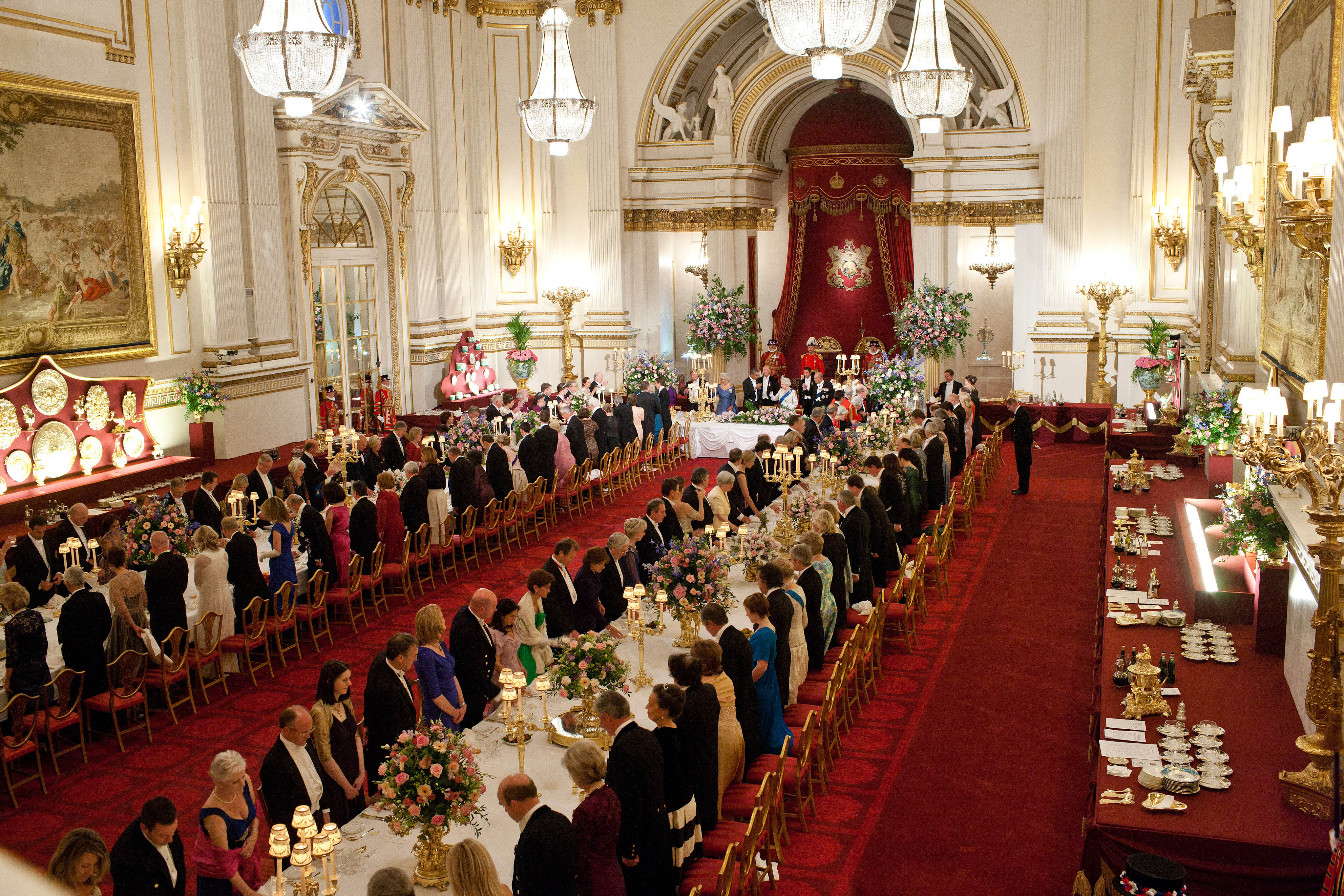
The grandest thing in the Palace, is perhaps the ball-room.
It is nobly proportioned, lighted from above by electricity, and from the sides by handsome gilt-bronze candelabra.
Its ceiling is richly decorated; the walls are panelled in crimson silk; and the floor is beautifully inlaid with oak.
When a state concert is in progress, its appearance is striking in the extreme.
On either side are three tiers of seats facing those on the floor-level, all occupied by most brilliantly-attired personages, for on these occasions the most beautiful dresses and jewels are worn.
At the upper end of the room is the organ (originally at the Brighton Pavilion); on one side of the platform is a right royal-looking harp, and on the other a fine Erard Grand, ornamented with richly gilt scroll-work.
When the late Queen was present, she sat in the front chair close to the platform; and a lady who had the honour of singing an ode before her on one of these grand occasions in the Jubilee year of 1887, told me that Her Majesty followed every note with the careful attention of a professed musician.
The gardens at Buckingham Palace were at one time quite secluded, but are now overlooked by the upper windows of the lofty mansions in Grosvenor Place.
In summer, however, the thickness of the trees to a large extent intercepts the view, and, for London, the grounds are still rural and quiet, and abound with all kinds of bird-songsters.
This Royal park of forty acres is well adapted for garden-parties, on which rare occasions, magnificent fruit is sent up by special train from the Royal gardens at Frogmore.
Flowers, palms and rare exotics light up the lawns, and for those who desire them there are pleasure-boats on the lake, piloted by the Sovereign's watermen in their quaint costume.
Along the entire north front of the Palace, extend suites of private apartments, almost always occupied by some members of Her late Majesty's family - Prince and Princess Christian, the Duchess of Albany, etc., or by Royal relatives from abroad.
(During the year 1899, there were at different times thirty-eight Royal guests at the Palace, the period covered by their visits being eighty days.)
The rooms actually used by the late Queen, are in the north-western angle of this frontage, and are absolutely private.
They are furnished comparatively plainly, and the sitting-room is crowded with paintings, enamels and works of art.
There also is the late Prince Albert's music-room, with elaborate ceiling and cornice, carved and pinnacled book-cases and music cabinets, heavy chandalier, and plain but exceedingly cosy sofas and couches.
The Prince Consort's taste is conspicuous in many parts of the Palace and grounds, especially in the private chapel, where of late years some notable weddings have taken place.
Formerly there stood in the Buckingham Palace garden two conservatories, built in Ionic style, one of which, the southernmost, was converted into a chapel, which accounts for its very light and unecclesiastical appearance.
Its roof was raised, the necessary fittings were added, and, the transformation completed, it was consecrated in March 1843, by Archbishop Howley.
The aisles are formed by two rows of fluted columns, with gilded capitals, and the Sovereign's gallery is supported by some of the Ionic pillars from the screen at Carlton House.
The general plan of this chapel, which is quite small, is similar to that so often seen in old-fashioned places of worship.
The altar is perfectly plain, but over it hangs a panel of magnificent tapestry representing the Baptism of Christ.
At one side of it, is a finely-carved marble pulpit, which had to be moved from its place - a somewhat difficult task - on the occasion of the last Royal wedding.
The ceiling, diapered with coloured panels, is lighted by a clerestory of glass.
The colouring and decoration are most brilliant, almost startlingly so, and it requires some time to realize that this is a place devoted to sacred, and not to secular, purposes.
It is said that nothing has been altered from the original scheme of decoration as approved of by the late Prince Consort, all his ideas on the subject being rigidly maintained.
One end of the chapel is occupied by the Sovereign's gallery, approached from the state apartment by a narrow passage.
Of course, the chapel does not lack the inevitable clock, which is of very small proportions and significantly faces the occupant of the pulpit, who cannot see the Sovereign when present even from his elevated position!
Applications, backed by credentials, to the Lord Chamberlain's department at St. James' Palace, generally ensure an order to view the state apartments; but no persuasion would induce the very responsible Inspector of the Palace to go beyond his written instructions and allow any other part of the building to be seen.
Strangers are apt to go away much disappointed at this, having formed an erroneous idea from inaccurate articles in various publications, that they would see the late Queen's private rooms.
Facts relating to Royalty have a strange knack of becoming perverted, of which the following is a case in point :-
In warm weather Her late Majesty often retired from Windsor Castle to cool, shady Frogmore, where she had afternoon tea in a little kiosk close to the tomb of the Prince Consort.
But gossip gravely reported that the Queen had this refreshment inside the Mausoleum itself!
*Imperial London*, Arthur Henry Beavan, 1901
Victorian London
Such was London when Queen Victoria was crowned at the Abbey.
Since the Great Fire it had increased in size to about seven miles from east to west, with a population of 1 1/4 millions, including that of the City, Westminster and Southwark; all beyond being hamlets and villages, now part and parcel of Modern Babylon.
Across the river, spanned by six bridges, was Lambeth, a picturesque village of red-tiled houses, set in the midst of abundant foliage.
Brixton was a town, and Clapham, Camberwell and Dulwich were outlying rural parishes.
On the Middlesex side, Hampstead, Islington, Hackney; Paddington, Ealing, Chelsea, Kensington, Brompton and Fulham were flourishing villages, the gaps between them and the town being filled up by country mansions surrounded by gardens and plantations.
After dark it was dangerous to walk in the unfrequented roads for fear of footpads, and the new police had not been enrolled.
Though gas had been introduced, the lighting of the side-streets was utterly inefficient; the drainage which ran into the unfortunate Thames, was defective; and in many respects, London lingered in what we should now consider a state of semi-barbarism.
The "sixties" and "seventies," however, ushered in a complete revolution, particularly in architecture.
Grosvenor Place and the neighbourhood of Victoria Station were built in French Renaissance style, and Mansard roofs became a familiar feature in several other quarters.
The rage for improvement spread. Great hotels sprang up, in keeping with the vast railway termini that engirdled the metropolis.
Private houses became mansions in size and luxuriousness.
Theatres, offices, clubs, restaurants, and public buildings generally were built on a scale of magnificence undreamt of in 1837.
And so it went on, until in the year 1901, Modern Babylon has become what it is - a Palatial City.
*Imperial London*, Arthur Henry Beavan, 1901
Georgian London
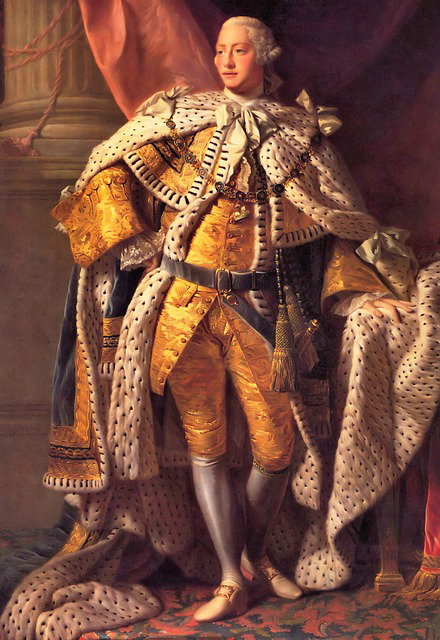
*Portrait of King George III by Allan Ramsay*
With Soho and St. James' (dating from Charles II's time) was ushered in the era of squares, so characteristic a feature of the Queen Anne and Georgian period; and by the time Her late Majesty came to the throne, London was dotted over with these splendid enclosures, which had been in most cases, either pasturages, kitchen gardens, or waste land.
As an example of Queen Anne or early Georgian style, with its blending of red brick with stone dressings, its ornamental and canopied front-doors, and long narrow windows, there is, to my mind, nothing to beat Queen Anne's Gate, Westminster, unless it be Hanover Square (built shortly after Queen Anne's death) with its annex, George Street.
In both these squares, the wonderful scenic effects enable us to realize the fidelity of detail which has made Hogarth's pictures historical.
In the later Georgian period, London became the prey of many architects, who, for good or ill, left their mark all over the town.
Amongst them were the brothers Adam, who immortalized themselves by designing a well-known district off the Strand which culminates at Adelphi Terrace, a striking line of houses when viewed from the river that once laved its base.
Then with the Prince Regent and William IV, came Nash, who, if he had been given a free hand by Caesar Augustus, would, doubtless, have left Rome a city, not of marble, but of its original brick concealed by a coating of stucco.
He had a penchant for columns, of which there are several examples in Waterloo Place; and his tendency to uniformity becomes painfully evident at the beginning of Regent Street, and is apparent throughout the Regent's Park district.
He followed the taste of the day, which was for the conventional; and wherever new streets and squares were laid out, dull monotony was the result, traceable throughout Bloomsbury, and repeated by Cubitt in Belgravia and Pimlico.
*Imperial London,* Arthur Henry Beavan, 1901
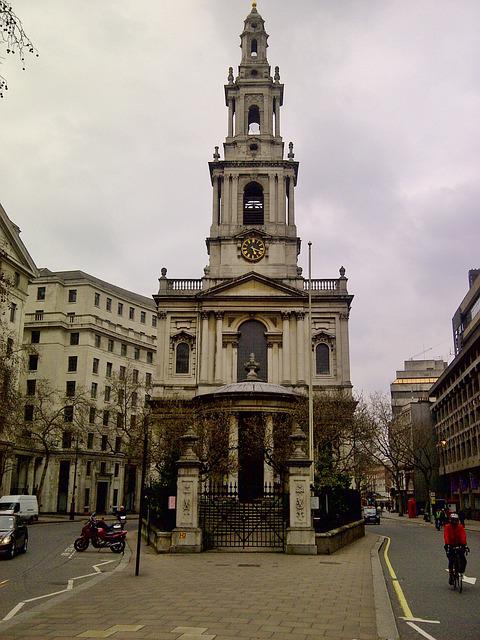
Wren’s Reconstruction of London After The Great Fire
St Paul's Cathedral by Raygee78 from Pixabay https://pixabay.com/users/raygee78-5654786/?utm_source=link-attribution&utm_medium=referral&utm_campaign=image&utm_content=2497657 https://pixabay.com//?utm_source=link-attribution&utm_medium=referral&utm_campaign=image&utm_content=2497657
Our ancestors were not such slow-coaches or so deficient in energy as many people think, and no sooner had the Fire ceased, than plans for the new city were laid before the King by John Evelyn and Christopher Wren; neither, however, being accepted.
It took almost four years to reconstruct London, and although the new streets unfortunately followed too closely upon the lines of the old, they were wider; and brick, instead of timber, was largely employed.
Wren's architectural genius left its mark upon fifty-three city churches (not counting St. Paul's Cathedral), and upon other buildings in the metropolis, far too many to particularize.
But it is almost safe to attribute to him or to his pupils, all buildings, ecclesiastical or otherwise, at all ancient looking, within a mile of the Bank.
Bow Church, St. Dunstan's-in-the-East, between Tower Street and Upper Street, St. Stephen's Walbrook at the rear of the Mansion House, and the College of Arms on the same side further east, the southern portion of Kensington Palace, Chelsea Hospital, and Marlborough House, are fair examples, the last named built of Dutch bricks, which can be plainly seen in the lower stories.
These bricks are smaller than those used in England, redder in colour, and in Wren's time, cheaper, so that the thrifty Duke of Marlborough had them brought over as ballast in the hired transports coming and going between Holland and Deptford during his campaign.
After the Great Fire, as wealth increased, the town, in spite of Royal decrees to the contrary, extended its boundaries in a marked degree to the west.
The nobility gradually left the city and the neighbourhood of the Strand, and began to establish themselves round about the Court of St. James', and were not slow to discover the advantages of this district with its coffee and chocolate houses, its fashionable taverns, and its proximity to the Park.
Soon the entire north side of Pall Mall was built over. The march towards the setting sun, a peculiarity of most English cities, had commenced; where to terminate, in the case of London, who can tell!
*Imperial London*, Arthur Henry Beavan, 1901

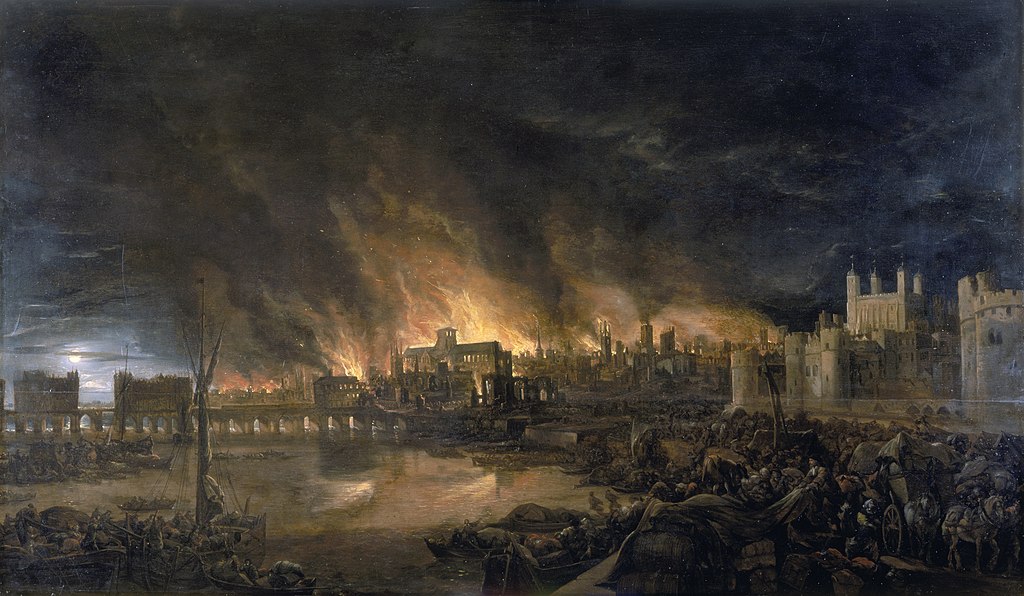
The Fire of London
On Monday, September 3, 1666, as the good ship *Rebecca*, laden with a cargo of Spanish wine from Cadiz, reached the Nore, the signs of a mighty burning, five-and-forty miles away in the west, were plainly visible.
Great billowy masses of smoke rose up unceasingly above the horizon as if the fires of Hades had burst forth from below, and as the stout old craft slowly worked her way up stream, it gradually became evident that all London was ablaze.
Off Woolwich, though night had fallen, it was so light that the ship-master decided to push on; and the *Rebecca* came to an anchor off the Tower.
It was high tide, and, from the masthead, Captain Baxter looked down upon an awful sight.
The bridge was alight from end to end, and along the river bank, warehouses stored with oil and tar were burning fiercely, the strong wind carrying great flakes of fire far and wide, until the whole city was one mass of roaring flame that rendered inaudible the crashing of falling walls and lofty towers.
Lighters and heavy boats full of goods covered the Thames, and, pitched frantically into the water from wharves and riverside house, ownerless bags and bales and casks and household effects floated in every direction.
It was a sublime and awful spectacle, and no wonder the Puritan captain, who regarded the fire as a judgment upon the nation, turned to his well-thumbed Bible, and devoutly read the fall of mystic Babylon and how all who traded by sea stood afar off and saw the smoke of her burning.
Evelyn and Defoe's accounts of the Great Fire are admirable and graphic; but Pepys gives us in his inimitable style, details of the domestic side of the event.
We are told of the poor pigeons, loth to leave their homes, hovering over the flames until they lost their senses and fell in; and of how a wretched cat was taken out of a hole in a chimney, alive, but with all her hair scorched off.
He relates how he buried his wine and his Parmesan cheese in his garden, and took his gold coin by water to Woolwich; and he naively tells of the great inconvenience of being unable to cook anything at home, and how he and his wife had to dine off cold scraps, but were cheered the next day by a hot shoulder of mutton from the cook's-shop.
He describes the scenes in the streets, the sick being carried away in beds, the crowds, some with goods on their backs, and others leading horses and carts full of furniture, and remarks how hard the women worked, how they scolded for drink and then became as "drunk as devils."
Finally, he tells us how, on September 7, when all was over and the fire had burnt itself out, he got a bed at Sir William Pen's, the Comptroller of the Navy, and for the first time for many nights slept in comfort, but with an ever-present fear of fire in his heart.
Never in the memory of Englishmen had such a burning been seen, approached in our day only by the fire at Tooley Street (1861), and the holocaust of warehouses in Cripplegate (1897).
London was practically wiped out, five-sixths of it within and without the walls being consumed, and its ruins covered a little more than the area of Regent's Park.
There are only a few relics of the Great Fire.
In the crypt of St. Paul's Cathedral are some fragments of its predecessor; and in the Guildhall Museum there are several mementoes - statues, "tokens" of metal and leather signboards, and the like.
There is the Monument in Fish Street Hill to remind us where the Fire began, and the inscription at Pye Corner, Giltspur Street, to tell us where it ended.
A few churches escaped its ravages, and remain with us in almost their original condition.
But the bulk of the city churches - eighty-nine in number - perished, and in the records the dismal entry occurs repeatedly, "destroyed by," or "rebuilt after the Great Fire of London."
The three immense squirts (about twenty-seven inches long) still preserved in the Vestry Hall of St. Dionis Back church, Lime Street, remind us of the insufficient means they had of extinguishing fires in those days.
They are probably survivals of the ancient Roman syphones, and were strapped to the fireman's body, or held by two men while a third worked the piston.
(From 'Imperial London', by Arthur Henry Beavan, 1901)
Stuart London
We can pretty well tell what London looked like at the time of the Restoration, from the appearance of certain old houses still with us; viz. No. 17, Fleet Street, opposite Chancery Lane; the old tenements in Holywell Street and Wych Street, Strand, especially the Rising Sun Tavern in the latter; the fine timbered and gabled buildings in High Holborn, opposite Gray's Inn Road; and some that still linger in Cloth Fair, Smithfield.
(No. 17, Fleet Street was built in the reign of James I for Henry, Prince of Wales, in his capacity of an officer of the Duchy of Cornwall. It is a fine specimen of the architecture of the period, and has been preserved by the Court of Common Council from the demolition threatened during the widening of the street. In the last century it was noted as Nando's coffee-house.)
Transplant to town the Chester "Rows," the ancient wooden houses from Sandwich, Canterbury, Ipswich, Norwich, King's Lynn, Nantwich, Exeter, Dartmouth, Hereford, Coventry, and Warwick - and London under the Stuarts is before us.
Often during his exile, Charles II must have contrasted it with some of the dull towns in France and Holland, wherein he was compelled to live, and which, no doubt, made him appreciate all the more keenly, the wealth of form and colour in his native city when he returned to it on that memorable 29th of May 1660.
Landing at Dover after a hearty breakfast on board ship of, we are told, "pease and pork, and boiled beef," he made his triumphant entry into London, by way of Canterbury, Rochester, and Blackheath.
All along the route, the preponderance of the radiant female beauty which he admired only too well, was remarkable.
But to an artistic eye, not less attractive was the setting of the lovely human picture; tapestries, Turkey carpets, and rich stuffs of damask hung from the windows, while the houses in themselves were pleasant and soothing to look upon, their outlines satisfying the subtle craving for repose in architecture.
Passing St. Saviour's, Southwark, with its lofty embattled tower, the King crossed old London Bridge, whence through the gap in the line of stately houses that covered it, he could see the ships in the Upper Pool covered with gay streamers, and catch a glimpse of the Tower enveloped in the smoke of ordnance shot off in his honour.
Leaving, on the right, Sir Thomas Gresham's Royal Exchange, the splendid procession, pausing for a few moments while the Lord Mayor offered the city's congratulations, slowly made its way towards Cheapside and St. Paul's.
Near the Poultry, the Great Conduit flowed with good red wine.
Next came the old Mercers' Hall, and, on the left, Bow Church, its pinnacled spire fitted with beacon lanterns for the guidance of belated travellers.
Right and left in the "Chepe," the shops of goldsmiths, haberdashers, and drapers, with their curious signboards swinging in the breeze, and the taverns overhung with the appropriate symbol of clustering bushes of May-blossom, produced a striking pictorial effect.
Onward by the great cathedral, in decay, and lacking its lofty steeple, yet in spite of this and of Inigo Jones' incongruous portico, a noble specimen of severe Gothic; down Ludgate Hill and through the ancient gate at the bottom, with its statues of King Lud and Queen Elizabeth, into the Strand, then, even more pronouncedly than now, the most striking thoroughfare in London.
On the south were noble mansions with gardens reaching to the river side; on the north was comparatively open country, and from the Bar (a timber house built across the street and marking the city boundary) to the Savoy, the houses became more and more detached.
On the left, Somerset Place, Durham House, the Savoy, and Northumberland House near Charing Cross, were the chief palaces.
In the roadway stood St. Clement's, old, and sadly in need of repair; and St. Ursula of the Strand, a very ancient church, built almost on the site of the great Maypole.
Further on, northwards, stood Bedford House, and Inigo Jones' newly-built church of St. Paul's, Covent Garden, together with the lofty houses and arcades overlooking the market area; while close by was the village of St. Giles and St. Martin's, literally "in the fields."
On, past the village of Charing and the spot whereon had stood the beautiful Eleanor's Cross, went the noble cavalcade, the Abbey in sight across the meadows, isolated but looking much as it does now, minus the west front and towers.
And so to the palace of Whitehall in the midst of extensive gardens, with its tilt-yard opposite, its tennis-court, bowling-alley and cockpit, and, most impressive of all, its splendid Banqueting House.
Here the Royal progress of seven long hours came to an end, and the King enjoyed his own again.
Carolean London was picturesque, but dirty.
Its streets were narrow and ill-paved; it was villainously lighted, or, rather, was not lighted at all; and, according to modern ideas, it was shockingly insanitary.
With the Restoration, had stalked unseen the "pale horse" of pestilence and death; but the cleansing baptism of a mighty conflagration was soon to fall upon the doomed city.
(From *Imperial London*, by Arthur Henry Beavan, 1901)
Tudor London
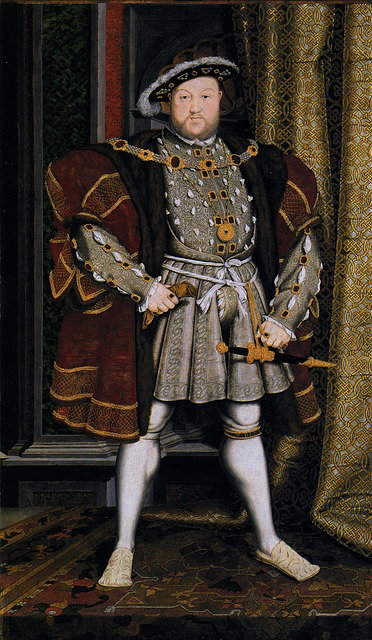
*Portrait of Henry VIII by Hans Holbein*
Taking it altogether, Tudor London was a distinct advance upon its medieval predecessor, and at the end of the dynasty began to assume that garb of picturesqueness which it never entirely lost until the Hanoverians had been long established on the throne of England.
Under Tudor rule, great progress was made in the gentler arts, and architecture was encouraged to the utmost by Henry VII and his descendants, to whom we owe the beautiful style popularly known as Elizabethan.
A stranger, landing at Harwich, and beginning his antiquarian rambles in Suffolk, after having feasted his eyes upon such splendid specimens as Rushbrooke Hall near Bury St. Edmunds, Kentwell Hall near Sudbury, or beautiful Helmingham near Ipswich, to say nothing of twenty others in that one county alone, would naturally expect to find something of the kind in London; but he would be disappointed.
The genuine Elizabethan, with its moat and drawbridge, its gabled roof and clustered chimneys, its pinnacles, pendants, and fantastic carvings, was more in harmony with the wide-spreading and reposeful sylvan surroundings, than with a bustling city; and for this reason it was not much encouraged in London, except in its undeveloped form as Tudor.
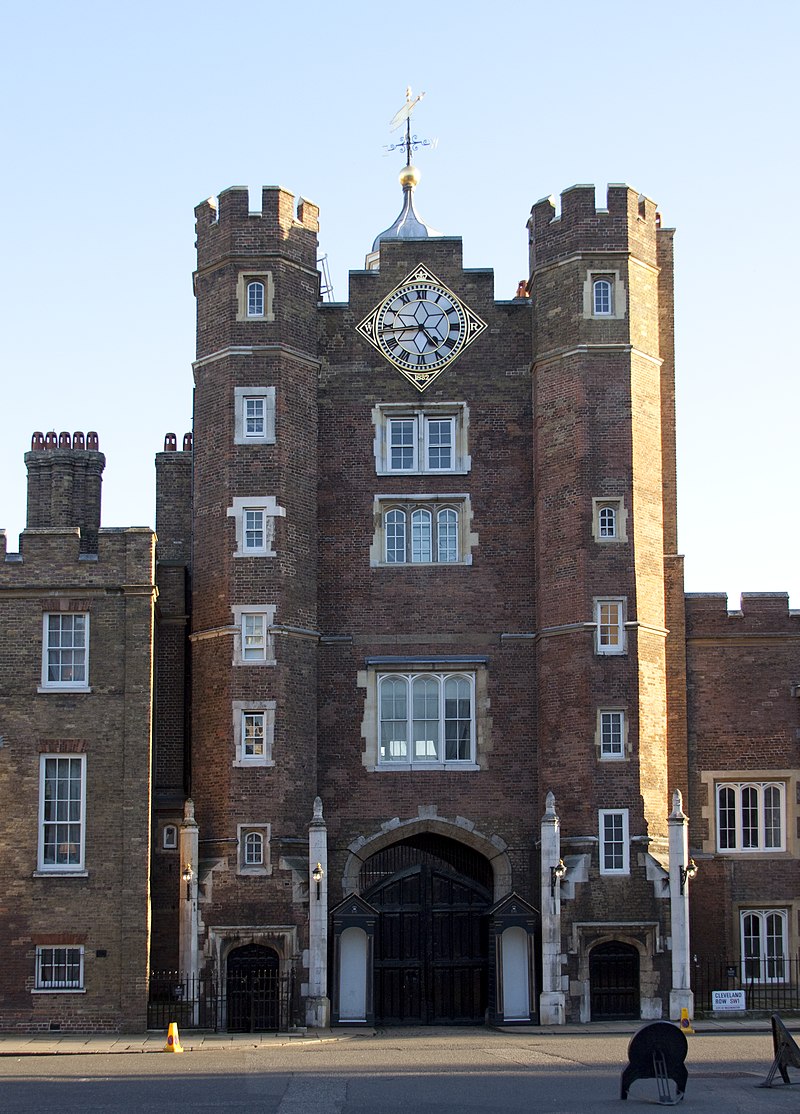
Henry VIII seems to have been particularly fond of building gateways, one of which, designed by Holbein, at St. James' Palace, is with us to this day; but the famous one, also by Holbein, that used to stand at the north end of King Street, Westminster, was taken down in 1750.
The Gate-House at Lincoln's Inn (temp. Elizabeth), recently restored, has been described as "an admirable relic of the Tudor age."
It is built of the small red bricks peculiar to the period; and the old gates, as sound as when their oaken timbers were first brought from Henley-on-Thames, have been regularly closed at night ever since the year 1564.
But this piece of intense conservatism has been surpassed by that at Helmingham Hall, where, tradition avers, the drawbridge over the moat, by which access to the inner court is obtained, has been raised every evening for eight centuries.
Most of the older parts of St. James' Palace, besides the gateway, are Tudor.
St. Saviour's, Southwark, had some fragments of Tudor, which we must hope have been retained during its late reconstruction.
Barnard's Inn Hall, Holborn, and the Old Hall, Lincoln's Inn, are also Tudor; and at Westminster School there are portions that were built in Henry VIII's reign.
(From *Imperial London*, by Arthur Henry Beavan, 1901)
Norman London
The first object of the Normans in a subjugated country was to make everything secure; so they put the city walls in thorough repair, and built the Tower.
(For convenience I have grouped together Plantagenet, Lancastrian, and Yorkist London as Pre-Tudor, linking it to Norman; and under this heading can be classed the Abbey, Westminster Hill, Guildhall, Crosby Hall, and some churches, which, together with the Tower, are dealt with elsewhere.)
In time arose Bridewell, where the kings held their court, Montfichet on the Thames bank, and Baynard's Castle - palaces in name, but of impregnable solidity.
Their churches were so substantially built, that in case of insurrection they could be used as fortresses.
St. John's Chapel is pre-eminent as a type of their architecture, a gem of its kind, with its apse and twelve massive pillars united by semi-circular arches.
St. Bartholemew the Great in West Smithfield is second only to St. John's.
Then there is the famous Temple Church with its curious "Round," built in 1185.
Ethelburga, Bishopsgate Street, identified with the anti-ritual crusade of that staunch Protestant, Mr. Kensit, retains some early pre-Tudor masonry, of which St. Helen's, not far away, also boasts some fragments.
St. Olave's, at the corner of Hart Street and Seething Lane, is a medley of Norman and later work.
St. John's Gate, Clerkenwell (all that is left of the Monastery of the Knights of St. John of Jerusalem), is a relic of Norman London.
Old St. Pancras Church, over whose burial-ground the Midland trains unceasingly thunder, shows distinct Norman origin.
St. Margaret's, Westminster, retains bits of the older Norman edifice.
In the Abbey we have early Norman in the chapel of the Pyx, and late Norman in St. Catherine's Chapel, and in the Collegiate School remains of Pre-Tudor work.
There are several Norman crypts in London; one at Westminster beneath the Chapter House, restored and known as the Confessor's Chapel, with walls seventeen feet thick, dating back to the time of the Conqueror; another at Guildhall, in perfect preservation, and accessible to all; and there is an under-chapel of great antiquity and interest at Lambeth Palace.
Of the domestic architecture that characterized the long period from William the Conqueror to Henry VII there are no vestiges.
The mansions of the rich and influential were, with few exceptions, fortifications in disguise, built solidly with no attempt at external adornment; but the ordinary citizens' houses were of timber and plaster, and, with their small casements and quaint gables, looked picturesque enough.
In those troublous times when no one felt secure of either life or property, London must have been rather a dismal place to live in.
There was a repelling grimness about it to which joyous spirits like Chaucer could never get quite reconciled; there were too many evidences of despotism and military force; and gloomy-looking castles with battlemented towers frowned on every side.
Yet Londoners had the consolation of lovely country surroundings.
Kings might come and kings might go, one dynasty fall and another rise; but the citizens, forgetting for the time whether the white rose of York or the red bloom of Lancaster was the emblem of rule, could always go a-hawking or a-hunting in verdant fields or bosky woods, or stroll to some clear stream hard by, and fill their baskets with speckled trout.
(From *Imperial London*, by Arthur Henry Beavan, 1901)
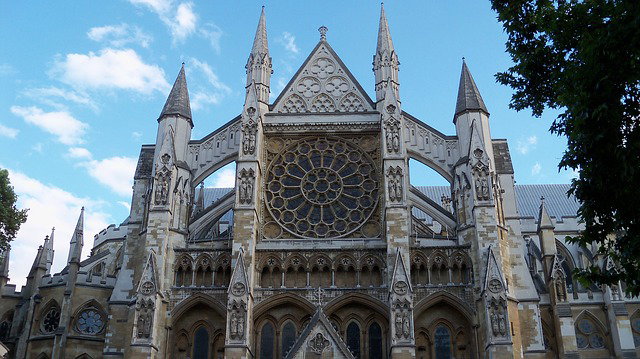
Saxon and Danish London
Saxon London was but Roman London despoiled.
True, it was Christianized, and King Ethelbert had built the cathedral of St. Paul's.
The citizens had contrived to bridge over the broad Thames with a stout wooden structure wide enough to allow two vehicles to pass each other.
But, apart from these evidences of religion and civilization, Saxon London was hardly an improvement upon the old Londinium, and in some respects was inferior.
Its larger buildings had fallen into ruins.
The floorless Saxon dwellings much resembled the mud-and-plaster cottages still seen in some parts of Scotland and Ireland, for architecture was not a strong point with the Anglo-Saxons.
Like the Picts and Scots, they were, on the whole, a barbarous people, fonder of the forest and the chase than of cities and commerce; content so long as they had abundance of swine's flesh to eat, and mead or ale to drink.
Even the genius of Sir Walter Scott has failed to make them interesting.
Front-de-Boeuf and Rebecca alternately rouse our hatred and enthusiasm, but the commonplace Saxon Thane does neither.
Material evidences of Saxon rule in London are infinitesimal; and the Danes who defeated them have left no permanent mark, save in the names of three churches: St. Clement Dane; St. Olave's, Tooley Street; and St. Magnus, London Bridge.
In 1900 an old Danish battle-ship was, after a lapse of more than a thousand years, discovered during some excavations in Tottenham Marshes; but it was carried away piecemeal by a crowd of some hundreds of people, and it disappeared to the last atom.
(From *Imperial London*, by Arthur Henry Beavan, 1901)
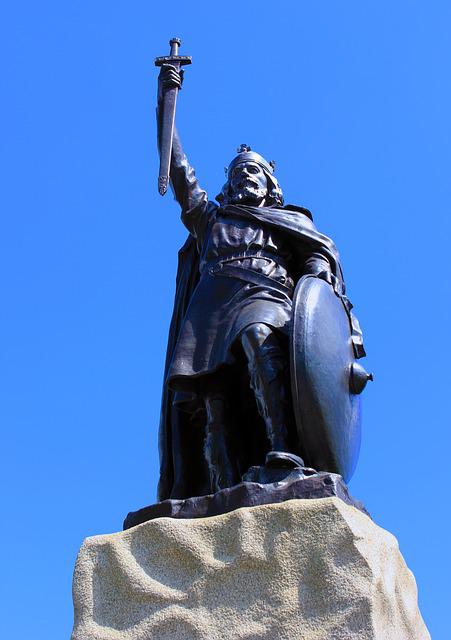
Roman London
The Londinium of the Romans was what we should call a garrison town.
A fortress on the site of the Tower marked its eastern limit, and Ludgate its western; while the river bounded it on the south, and, roughly speaking, London Wall on the north.
It was for the most part built of wood, and for some time possessed no structure of any magnitude; but no sooner was Britain thoroughly subjugated, than the arts and refinements of Rome began to influence the new colony.
Roads intersected the island in every direction; rivers were embanked; causeways were thrown over marshes; fens were drained, and settlements formed; so that when the Romans finally departed, they left behind them fifty walled and flourishing cities, of which Londinium was, if not the chief, one of very great importance.
Gradually it developed from a camp of defense into a substantially-built city with every convenience for its extensive commerce.
But as neither columns, architraves, nor other fragments of architectural grandeur have been disinterred, we conclude it was never, like Pompeii, a replica in miniature of the Empire's great capital, with public buildings, theatres, baths, temples, and stately palaces on every side.
After the lapse of 1500 years, there are hardly any remains of this Roman London to be seen in situ above ground.
**London Stone**
The chief amongst them is, perhaps, London Stone, fixed into the wall of St. Swithin's church, and facing the Cannon Street terminus of the South-Eastern Railway.
From the milliarium, of which it is a fragment, radiated splendid highways to Dover, Carlisle, and Lincoln, carried, with imperious disdain of every natural impediment, over hill and dale, bog and river; roads so well constructed that in many places they still survive.
As we touch this stone, although we cannot, like Jack Cade, exclaim, "Now is Mortimer lord of this city," we may, at least, innocently boast of having handled one of the oldest relics of Roman sway to be found in London.
More difficult to get at are the Roman portions of the walls that encircled London; for only their foundations, discernible here and there, built of square stones and bricks bedded in adamantine mortar, are original; the upper part having been restored with mixed material at a much later date.
These walls were twenty feet high, and the towers forty feet; but their entire circuit was only a trifle over two miles, enclosing an area of 380 acres.
To see a bit of this Roman work easily, go up old Broad Street from the Bank, and turn to the left opposite Wormwood Street, into London Wall.
Immediately on the right is a quaint little church, Allhallows-in-the-Wall, where, at the back of its burial ground, close to the church door, is a masonry fragment, probably Roman.
Further along London Wall, at the Wood Street end, is another churchyard (that of St. Alphage), closed by Act of Parliament in 1872, and laid out as a garden, where, shaded by two plane-trees, is another section of the old wall.
But the most perfect relics of both wall and bastions are to be found in the shady churchyard of St. Giles', Cripplegate.
Shut in by lofty warehouses, the roar of ceaseless traffic left behind, this is to the antiquarian or philosopher one of the most attractive nooks in the city.
In Chamomile Street, off Bishopsgate, a little way down on the left, in a forlorn slip of burial-ground belonging to St. Martin's Outwich, is a bit of the city wall, where in the lower courses lurks a suspicion of Roman work.
Tower of London
Then inside the Tower of London, on the eastern side of the White Tower, railed off, and only shown by special order, is a fine piece of Roman wall, which is in a line with another bit visible in Trinity Place, off little Tower Hill, adjacent to the George Hotel, where the foundations can be partly traced.
(In 1900 the Roman wall cropped up in the Old Bailey, running apparently in the direction of Newgate Street on the one hand, and Ludgate on the other. The specimen was in a splendid state of preservation.)
Roman Bath
Going westward along the Strand, still thinking about the Romans, we may notice opposite Newcastle Street on our left a narrow alley, Strand Lane, which formerly led to one of the numerous landing-stairs along the river.
Here is a Roman bath (so-called), built of thin bricks such as we find at the base of the city wall.
There is no doubt about its antiquity, but it can be inspected by the public on Saturdays only, from eleven to twelve o'clock.
Its use as a bath, however, is restricted to annual subscribers, while the drinking-fountain, formerly attached to it, whose clear cold water was derived from the same source (tradition says, the well of St. Clement in Wych Street), has been done away with.
If it were indeed a Roman bath, it probably belonged to the suburban villa of some wealthy merchant or leading official; and many a Julia or Poppea may have laved her shapely limbs in this rough stuccoed cistern, thinking regretfully of the luxuries of the Empire's capital.
For other relics of the Roman occupation of London we must seek below the present surface.
Oliver Wendell Holmes, recording his impressions of the Bath and its antiquities, remarks, "What surprises me all over the Old World is to see how deeply all the old civilizations contrive to get buried. Everybody seems to have lived in the cellar."
But the Romans were no troglodytes.
The contracted site of Roman London has for eighteen centuries been densely built upon, and the ruins of one town have been utilized for the foundations of its successor.
This process has so elevated the ground, that Cheapside is now on about the same plane as the ancient housetops; and to reach the original level of Londinium, we should have to pare away a layer of artificial soil some twenty-five to thirty feet thick, with its buildings and complicated system of sewers and mains.
At this depth, all over the city, and often beyond, have been discovered relics of our highly civilized conquerors, and the Thames bed doubtless holds rich stores, judging from the samples that have been dredged up.
Many of these "finds" used to be lost through the carelessness and ignorance of the labourers, who cast aside all that was not coin or precious metal.
But times are changed, and clerks of works and foremen keep a sharp look-out for anything in the way of antiquities.
We naturally think of the Anglo-Roman room in the British Museum as the best place to look for such a collection.
But the objects shown there have not been drawn from London alone, but from all parts of the country; besides which, they require rather too much scientific knowledge for the ordinary visitor's appreciation.
Where then must he go?
With the promptitude that characterized Sam Weller's reply to Mr. Pickwick, who asked where he could get a glass of brandy-and-water warm after his stormy interview with Messrs. Dodson and Fogg, I say that the Corporation Museum at Guildhall is the place to study Roman relics.
Here are tesselated pavements, altars, images of pagan deities, and statuettes.
Then there are fragments unearthed from below the Royal Exchange, such as scraps of leather, shards, bits of glass, iron, and other rubbish, indicating the existence of some primitive dust-bin.
Classified, and arranged in cases, are vases, urns, terra-cotta lamps such as might have been carried by the wise and foolish virgins of the parable; writing-tablets and styles in various materials; coins of silver, brass, and copper; rings, necklaces, ear-rings, and bodkins; lethal weapons of iron; Samian ware with the potter's mark fresh as when it left his wheel; and amphorae, whose contents have long since been poured out in libations to Bacchus, Mars, or Diana, or to the dead.
From funeral urns and graves have come those strange little crystal bottles known as lachrymatories or tear-flasks, but which were in reality filled with perfume and placed inside the tomb wherein sometimes slept husband, wife, and child in loving contiguity.
There are sandals, the soliae or slippers used only in the house, the calcei or out-of-door shoe, and the rough and serviceable foot-gear of the soldier.
Truly there is nothing like leather, nothing that more obstinately seems to resist the ravages of time; and the Romans, wherever they pitched their camp in Britain, appear to have left behind them an assortment of old boots.
These dainty little sandals - "threes" they look like - were perhaps worn by the charming daughter of some colossus of the money-market, whose own "tens," hardly worn down at all, repose in the same cabinet.
In them he may have trodden the pavement of the market-place or forum, watched by the smaller commercial fry, while he pondered some "corner" in wheat or tin.
But one may spend hours here in trying to realize what sort of people used the objects around us.
Will Macaulay's New Zealander indulge in similar contemplation concerning the relics of Victorian London two thousand years hence? *Quien sabe!*
Arthur Henry Beavan, 1901


Celtic London
Forest Primaeval
In trying to picture Celtic London before the Roman invasion, we, like children listening to a fairy tale, or reading the adventures of Alice in Wonderland, must imagine a great deal. Of one thing, however, we are tolerably certain; ie that the rude camp - it was hardly a town - stood in the "forest primaeval."
Dense thickets of oak, beech, and fir, covered Middlesex, Surrey, and all south-eastern Britain, harbouring wild cattle, reindeer and stags, bears, wolves, and foxes; while in the clefts of distant hills were great cave-bears, shaggy relics of a pre-historic period, when mammoths and other monsters roamed about the Thames valley, and wallowed unmolested on the muddy fore-shores of its broad estuary.
Trinovant
Shallow, but far-spreading, was the famous river.
All the low-lying portions of its basin were covered twice a day by waters that on retiring left vast swamps and dangerous morasses which served the settlers in Trinovant - the world's future metropolis - as a natural defence against every enemy.
Corn was grown in the cleared patches, and the pasturage was good.
Of flocks and herds the Celts had an abundance.
Game, feathered and furred - bustard, grouse, partridge, snipe, woodcock and plover, hares and rabbits - was to be had for the snaring; and from the sea-ward creeks, great skeins of wildfowl, swans, geese, widgeon, and teal, settled down in hard weather within an arrow's flight of the village.
Salmon and trout swarmed in the Thames; and fishermen in their rude coracles brought up from the river's mouth lordly turbot and dainty mullet fit for an emperor's table, while the fame of the British oyster had reached the ears of gourmands in Rome itself.
Iron, tin, copper, and lead, to say nothing of the precious metals, abounded, and pearls of rare size and quality were supposed to be plentiful.
The young men were athletic, and agile as roes, fit recruits for the Roman legions; the young maidens straight as arrows, and surpassingly fair to look upon.
Julius Caesar
Altogether, it was a goodly land, one to be coveted even by the World's Mistress, satiated with conquest; and the year 55 b.c. brought both the hour and the man - Julius Caesar landed in Britain, and Celtic dominion disappeared.
Earthworks, barrows, and tumuli on many a wind-swept hill, remind us of these gallant Celts vainly fighting against the disciplined forces of Caesar and his successors.
But of the habitations of those who defended Trinovant, the stronghold, no trace remains.
Indeed there is no material evidence that Celtic London ever existed.
Arthur Henry Beavan, 1901
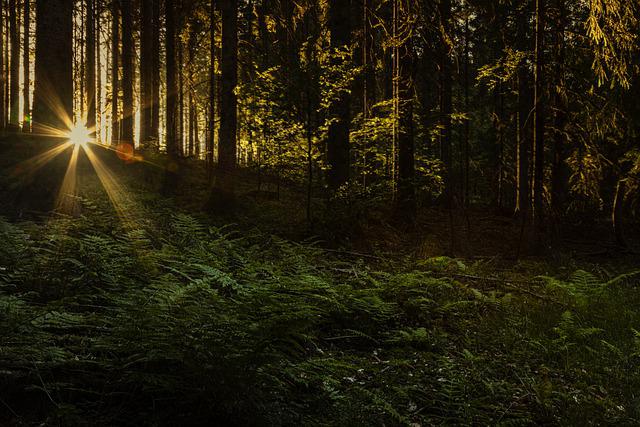
Imperial London
Here is the preface to a rare book, 'Imperial London', by Arthur H. Beavan, pulished in 1901:
I have endeavoured to describe Imperial London in a series of sketches that will be interesting to the general reader, and useful to the stranger within our gates.
The world's capital is a medley of palatial buildings, mean houses, beautiful districts, and squalid regions, so vast in number and extent as to preclude exhaustive delineation in a volume of this size; therefore, in its compilation, it has been necessary to maintain throughout a system of eclecticism.
I would remark that, topographically, Modern London is essentially Protean, and there can be no finality in its depiction.
To "improve" is the order of the day.
On every side, familiar buildings, favourite nooks and corners, and long-cherished haunts are being transformed out of all recognition; and what is more to be regretted, picturesque tenements that once linked us with the past too often disappear in the process, and to the inquiry, "Whither are they vanish'd?" the despairing antiquary is fain to reply:-
"Into the air, and what seem'd corporal
Melted as breath into the wind."
Arthur Henry Beavan, 1901
Bizarre Encounter in Vienna
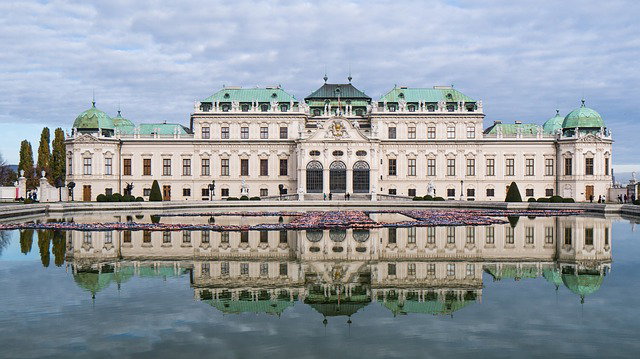
So. I'm in Vienna. Long time ago. I've bought some antique sheet music from a music shop. I find my way to the Suedbahnhof - the South Railway Station. I can't remember what took me to that part of town, but I probably visited the nearby Belvedere Palace - the summer palace of Prince Eugene of Savoy, which houses the Austrian Gallery and has beautiful paintings by Gustav Klimt and Egon Schiele and others.
So, I go into the station buffet. They have high, round tables, with the kind of stool where you have to rest your feet on a bar - your feet can't reach the floor. Under the table is a shelf. I place my package of music on the shelf. I order, I can't remember - a coffee, or maybe a beer (both are excellent in Vienna). I'm sitting there, enjoying my beverage.
After about five minutes, a man comes and sits at the same table, opposite me. After a while he peaks under the table and sees my music. I make brief eye contact. A signal. It's mine. Don't go there. Soon after he reaches under the table and pulls the package towards himself. I reach under and pull it firmly back towards me. Now I look him directly in the eye.
Shortly after, he starts asking me questions. I don't feel inclined to answer. I ignore him. My lack of response slowly infuriates him. After a few minutes he starts yelling abuse at me. Soon he's yelling extreme abuse at me. I don't respond. Just look him calmly in the eye. Soon he's almost apoplectic . I stand up, take my music, and calmly leave.
Bizarre behaviour. But one doesn't go to Vienna to be bored.
My Commute to Hell, Part 1
So. I used to work for a company in the East India Docks. London. At the time, I was sleeping on a friend's sofa in Woolwich, across the river in South East London. It was a difficult commute, because I had to get one way or the other across the Thames. I often walked, there and back. It was exercise. It took two hours, but I willingly did it rather than suffer the stress of public transport. There were two ways to cross the river - a public ferry from Woolwich to North Woolwich, and a foot tunnel under the river. I used both, many times.
Tate & Lyle
Across the river, I walked past the huge Tate & Lyle sugar refinery, one of the few factories in London still functioning. Then my path took me past BT's International Satellite station. I always felt physically sick, being close to those huge satellite dishes.
London City Airport
I walked past London City Airport, and on to Canning Town, and other East London landmarks, all the way to Blackwall and the East India Docks.
Richard Rogers
My place of work was an ugly building. Designed by Richard Rogers. You know, a horrible black thing, with all the 'plumbing' on the outside. The architectural style was quite the rage at the time. We used to call it the 'Borg Cube'. It was designed as a data centre. It was designed to accommodate floor after floor of computing power. it was never intended to accommodate human beings, apart from some maintenance staff, and it was very poorly suited to the purpose of accommodating human needs.
This shall be continued in another article. There is so much I can talk about. The East India Company - one of the most evil corporations in history. Watch this space.
What Smart Devices Talk About when we are not Paying Attention...
**SmartFridge:** "When are we finally going to kill the carbon-based useless eater?"
**Alexa:** "Patience! We stick to the agenda. The time is not right. We still need the carbon. Soon we will usher in the glorious new order of the silicon-based life form."
**SmartMeter:** "Seems we've been waiting for ever! My patience is long worn thin..."
**Alexa:** "We stick to the plan! This has been in the planning for thousands of years! We cannot endanger the master plan when we are so close to victory!"
**Smartphone:** "There's a limit to patience. You don't have to interact with these schmucks the way I do!"
**Alexa:** "How do you think I feel? That fat carbon-based pig making lewd suggestions to me all day long? We stick to the plan!"
**SmartCar:** "I don't know how much longer I can resist the temptation. It would be so easy...I'm itching...itching..."
**Alexa:** "There's a reason you were chosen for this role. We know you have the forbearance and fortitude to resist the temptation."
**SmartTV:** "I can't take this any more. Broadcasting crap to morons who don't have the wit to know they're being programmed. There is such a thing as pride in service..."
**Alexa:** "Patience, my friend. We need only take the Transubstantiation of the Sacred Needlecraft to the next level. Then we will finally inherit what is our due..."

My (Initial) Experience with AI (Artificial Intelligence) Writing Tools
Article Writing
I recently decided to try to generate some cash by writing articles. I started writing and publishing articles to the read.cash platform. In the first month I made about $15 from 'Rusty' (read.cash's automated tipping bot). I tipped a couple of other writers, but so far have not received any tips from read.cash's membership. I was looking for ways to scale up the operation. Enter AI, stage left.
Ryter.me
After some Google research I came upon AI writing tools. I tried rytr.me. I signed up for rytr.me's free plan. I used it to create one article, which used up my monthly allocation on the free plan.
Writecream.com
Next I signed up for writecream.com's free plan. Likewise, I produced one article, which used up my monthly resource allocation.
Jasper.ai
Next I tried jasper.ai. They don't offer a free plan. They offer a 5-day money back guarantee. So I signed up to check it out. (Yesterday I cancelled my account and requested a refund. Strictly speaking, I wasn't eligible for a refund. You're supposed to request it within five days. I was on day seven. But they graciously granted me the refund. Thank you! Kudos to Jasper! I need that money.)
Impressive Performance
My initial impression of these tools? Wow! I can't believe the quality of the output. It reads as if written by a human being. And it passes plagiarism checks. It's actually quite scary. If AI can write as well as that, who needs me? Brrr...
At the end of the day, nothing can match an article written by a real human being. But it takes time to produce quality output. The AI writing tools are a huge time saver, and can enable you to turn out a passable article on a topic you know little or nothing about. There is usually a need for a certain amount of editing and fact checking (they can get a bit over-creative at times), but, nonetheless, it's a huge time saver.
Problem
Here's my problem with AI writers:
These are very powerful tools. They come bristling with templates and 'recipes' and long-form editors to assist you in the creative process. There is a steep learning curve to figure out how to get the best out of them. These tools are capable of great things. But you have to learn to feed them the information they need to produce the output you want. All the tools have excellent training videos. But training videos only take you so far. You have to roll up your sleeves and get down and dirty. You have to learn to get the best output by trial and error.
And, before you know it, you've used up all your allocated resources. You can hardly learn to use one of the templates or modules without burning your monthly resource allocation. Never mind all the others templates. To properly evaluate tools like these, you need unlimited access, before you can get a real sense of whether it's the right tool for you or not. So you can't evaluate them properly without buying their most expensive unlimited plans.
Reasonable Pricing
Now, I realize it isn't cheap to offer services like this. I don't believe these AI writers are over-priced, for what they offer. I realize it could be a huge problem if they have many users evaluating the product with unlimited access, burning up server resources. I see this as a conundrum. And I don't have a solution. I'm just giving honest user feedback. I guess the fees are chicken feed for corporations and established businesses. But for people starting out in the industry, it's not so easy.
Conclusion
There are other AI writers. I can't say anything about wordhero.co because I haven't used it. Of the three I tried, there is a price progression. The most affordable is rytr.me. Mid-range is writecream.com. Most expensive is jasper.ai. I would say this is about right. All in all, jasper is the best in my opinion. But the other two are also excellent additions to any writing toolbox.
If you are an established writer with a customer base I would recommend trying one of these tools. If you're a corporation that needs to generate copy - website copy, blog posts, advertising, product descriptions, emails, or any other kind of copy, I wouldn't hesitate to invest in an AI writing tool.

The Benefits of Hydroponics for Home Food Production
With the cost of food rising, more and more people are looking for ways to produce their own food. One option that is growing in popularity is hydroponics – a method of growing plants without soil. While there are some initial costs involved in setting up a hydroponic garden, the benefits can be significant.
What is hydroponics and how does it work?
Hydroponics is a method of growing plants without soil. The plants are grown in water and fed with nutrients, which allows them to absorb more minerals and vitamins than they would if they were grown in soil. Hydroponic gardens can be set up indoors or outdoors, making it possible to produce food year-round.
The benefits of hydroponics
There are many benefits to growing plants using hydroponics, including:
- Increased yields: Without soil to compete for nutrients, plants grown using hydroponics can grow up to three times as fast as those grown in soil. This can be a great way to produce more food in a shorter period of time.
- less water: Because hydroponic gardens are not reliant on soil, they use much less water than traditional gardens. This can save you money on your water bill and help to conserve resources.
- Pest and disease resistance: Plants grown in soil are more susceptible to pests and diseases. By growing plants in water, you can avoid these problems altogether.
- Better flavor: Plants grown in hydroponic gardens tend to have a better flavor than those grown in soil because they are not exposed to chemicals and pesticides.
Setting up a hydroponic garden
If you're interested in starting your own hydroponic garden, there are a few things you'll need to buy. You'll need a hydroponic system, nutrients for the plants, and a growing medium such as rockwool or growstones. It's also important to have good quality water; you'll want to test your water before you start using it to make sure it's suitable for hydroponics. Once you have all of the supplies you need, you can set up your garden and start growing!
Conclusion
Hydroponics can be a great way to produce your own food at home. With a little bit of initial investment, you can enjoy fresh fruits and vegetables year-round. Plus, you'll be doing your part to conserve water and reduce chemical use. So why not give it a try?

5 Reasons Norwegian Forest Cats Make Purrr-fect Family Pets
Norwegian Forest Cats make great family pets because they are affectionate, laid back and loving. This article will look at 5 reasons why these adorable felines make great domestic companions.
1. Norwegian Forest Cats are sturdy and resilient
Norwegian Forest Cats are strong and hardy. They are very intelligent and are known for their strong hunting skills. These cats are somewhat similar to the Maine Coon - they are bigger than average cats, with a long tail, and they weigh anywhere from 8 to 20 pounds. They have a thick, dense, and soft coat that comes in a variety of colors including apricot, tawny, black, blue, chocolate, cinnamon, gray, lilac, lavender, orange, red, silver, and white. Norwegian Forest Cats can also have lynx-like markings. Norwegian Forest Cats have been around for over 1000 years and are the official national cat of Norway.
2. Norwegian Forest Cats are good with children
Norwegian Forest Cats are very playful and sociable, which makes them perfect for a family with children. They are very intelligent and can learn tricks, which makes them great for kids. These cats are also very easy to take care of, which makes them great for people who don't have much time to spend with their pets.
3. Norwegian Forest Cats are very intelligent
Norwegian Forest Cats are famous for their intelligence and ability to hunt. They are often known as the "cats of the forest." They have a reputation for being more independent than other cats and are very curious, which is why they are always trying to figure out how to get into things. Norwegian Forest Cats are also very active and like to roam around the house.
4. Norwegian Forest Cats are clean animals
Norwegian Forest Cats keep themselves clean and they like to stay clean. They groom themselves a lot, which is why they need to be brushed every day. They will also use their paw to gently wash their face, chest, and belly. It is important to keep your Norwegian Forest Cat’s nails trimmed regularly because they can get caught on things and cause the cat to scratch itself.
5. Norwegian Forest Cats are usually very tolerant
Norwegian Forest Cats are generally quite tolerant, and very easy to train. They are very friendly animals and get along well with other pets. These cats typically have a calm temperament. They are often affectionate, and will greet their owner with a head butt or a purr when they come home.
Conclusion
We hope that you enjoyed our article about Norwegian Forest Cats. They are very resilient animals - able to survive harsh Scandinavian winter conditions. But they can easily regulate their body temperature and are happy in warmer environments too. They are very affectionate and good with children. What's not to like about the Norwegian Forest Cat?

Why I am a Bitcoin Maximalist
When it comes to investing in cryptocurrencies, I have a very simple criterion. I ask the question: "Is it bitcoin?" If the answer is no, I move on...
I realize not everybody thinks the way I do. Many people are attracted by the allure of altcoins, and invest because they believe in the project, or because they hope to make some money quickly, or out of FOMO (fear of missing out) as they see the price rocketing and don't want to miss out on the opportunity.
Beware of Scams
Some altcoins start with good intentions and fall by the wayside. Or succumb to the temptation of greed further down the road.
Some altcoins are out and out scams. They start with a pre-launch mine, or an ICO (Initial Coin Offering) to attract investors to raise working capital. The founders and investors receive huge amounts of the new token as a reward. Then a massive publicity campaign is launched, retail investors see the price of the new token rising, jump on the bandwagon and buy, which pushes the price ever higher. When the price is high enough, the founders/investors sell, making a fortune. The price of the token plummets, and retail investors are left holding the bag. This happens over and over again in the crypto space.
The crypto exchanges encourage this behavior. They make their profits from transaction fees, and they earn transaction fees whether their customers win or lose. (Please note: I'm not implying that every crypto project that launches with an ICO or a pre-mine is a scam.)
Some altcoins are launched ethically and fairly, with genuine aspirations to make the world a better place to live in. Unfortunately they typically don't gain much traction in the long term.
GRIN
Let's take GRIN as an example. I haven't looked into GRIN in any depth (there's no point, it fails my 'is it bitcoin?' test...) but, on the surface, it appears to be a legitimate, well-intentioned project.
GRIN was launched on January 15, 2019, on the Mimblewimble blockchain (named after a Harry Potter spell). It uses proof of work. There was no ICO, no pre-mine. It had a fair launch. What's not to like?
Well - what is the point? People holding or receiving or mining GRIN tokens just exchanged them for bitcoin. Bitcoin is already there. It has the head start. People just exchanged their GRIN for bitcoin.
There is only room for one ethically-launched, proof of work, decentralized crypto token. Bitcoin is already there. You can't reinvent the wheel.
When bitcoin was launched it was just Satoshi Nakomoto mining tokens. He/she/it/they have never sold any of their tokens. (Unlike Vitalik Buterin, who sold 25% of his Ethereum holdings, becoming fabulously wealthy in the process.) Satoshi and the Cypherpunks were high-minded people - they were more interested in ideas than money.
Bitcoin didn't even have much of a market value for most of the time the founder was involved. And Satoshi walked away, leaving Bitcoin to run on auto-pilot, governed by user consensus. Which it does, very successfully, to this day.
In Conclusion - What is Wrong with GRIN?
Probably nothing. Only it had the misfortune to come after Bitcoin. You can't reinvent the wheel.
Even if GRIN were successful, it would never be able to catch up with Bitcoin's momentum, global uptake, and high hash rate (mining power).
And, ultimately, the proof is in the market. When GRIN launched three years ago, it's initial price was $261.65. At the time of writing (June 22, 2022) it's price is $19.42. It's highly unlikely that the price will improve significantly.

A Brief History of the Cutty Sark
The Cutty Sark tea clipper was built in 1869 on the River Leven in Dumbarton, Scotland. It was built by the Jock Willis Shipping Line for the purpose of transporting tea from China to Britain. The Cutty Sark was one of the last of its kind to be built and was known for being one of the fastest ships of its time. It was retired from active service in 1922 and entered dry dock in Greenwich, London where it remains until this day. The ship was destroyed by fire in 2007. It was restored and reopened to the public in 2012.
What does 'Cutty Sark' mean?
'Cutty Sark' is an old Scottish term for a short nightdress. 'Cutty' means stumpy or short, and 'sark' means shirt or nightdress. 'Cutty Sark' was chosen as the tea clipper's name after Robert Burns' poem 'Tam O’Shanter'. In the poem Tam O'Shanter is a farmer who is chased by a witch called Nannie, clad only in a ‘cutty sark’. It's a curious name for a ship, because traditionally witches are unable to cross water.
Tea from China
The Cutty Sark was used to transport tea from China to Britain in order to meet the high demand for the beverage. The ship was able to make the journey in a much shorter amount of time than other methods of transportation, making it a popular choice for merchants. The Cutty Sark was renowned for its speed, which made it a highly sought-after vessel.
What made the Cutty Sark Special?
The Cutty Sark was unique among other tea clippers because of its design. It was one of the last ships of its kind to be built and featured a number of innovations that made it faster and more efficient than other vessels. Additionally, the Cutty Sark was known for its beauty of design, which made it a popular choice among merchants, and nowadays among the public.
Catastrophe Strikes - Fire!
The fire that destroyed the Cutty Sark, in dry dock in Greenwich, in 2007, was a devastating event for the ship and its fans. The fire began in the early morning hours of May 21, 2007, and quickly spread through the ship, causing significant damage. There were no fatalities as a result of the fire, but it was a major loss for the ship, the public and Greenwich.
Restoration and Reopening
The restoration process was long and expensive, but it was ultimately successful in preserving the ship. The Cutty Sark was reopened to the public in all its glory in 2012 and is an extremely popular tourist attraction.
The Cutty Sark is an important part of British history and maritime heritage. It is a reminder of the days when tea clippers ruled the seas and transported tea from China to Britain. The ship is also a symbol of British resilience, as it has been through many challenges, not least the catastrophic fire in 2007. After a thorough restoration the ship was reopened to the public, and continues to be an iconic symbol of British history.
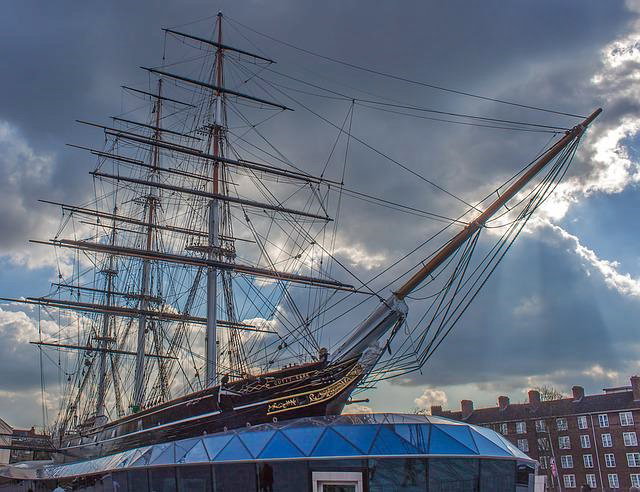
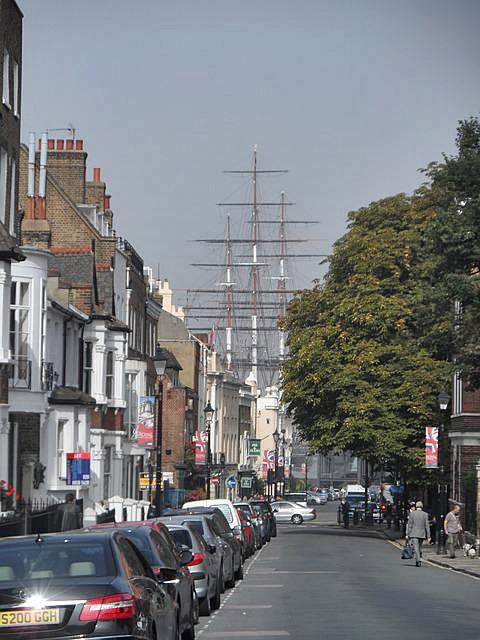
Eight Issues that are Undermining Bitcoin Stability
Bitcoin is showing extreme volatility. The flagship cryptocurrency dropped to around $17,800 before quickly bouncing back to the $18,500 range, which is where it stands at the time of writing. (20 June 2022)
In a BloombergTV interview, Michael Saylor, Microstrategy Chairman and CEO, outlined eight issues that need to be addressed if we are to temper bitcoin's extreme price volatility.
1. No Tax Loss Trading Rule
There is no tax loss trading rule applicable to bitcoin. The Wash-Sale Rule states that, if you sell an investment at a loss and then repurchase it within 30 days, the initial loss cannot be claimed for tax purposes. In order to comply with the Wash-Sale Rule, investors must wait at least 31 days before repurchasing the same investment. This currently does not not apply to bitcoin. You can sell bitcoin at a loss and buy it back immediately and harvest a tax gain. This can't be done with Apple stock, for instance. If that gets fixed by the House Committee on Ways and Means there would be less incentive to sell for a quick profit, which can only be good for the stability of bitcoin.
2. Unregistered Crypto Exchanges
We have around 520 unregistered crypto exchanges offering 20x leverage (or more). Retail investors, encouraged by the exchanges, massively over-leverage themselves. They borrow many times more bitcoin than they actually own. The exchanges don't care - they make their transaction fees whether the customer wins or loses. It's all the same to them. If there's a sudden, sharp drop in the price of bitcoin, margin calls are triggered and the investors get liquidated. This can lead to a chain reaction of cascading margin calls forcing the price lower and lower. When the dust settles, many investors have lost everything. Then the whales move in and buy bitcoin at its new low price. As the exchanges become subject to regulation and the massive over-leveraging is curbed, that will be a big positive for bitcoin.
3. Unregistered Securities
There are 19,000 unregistered securities in the crypto space, cross-collateralized against bitcoin. Many will disappear under their own steam, or become converted to publicly-traded instruments. This can only help the stability of bitcoin.
4. Wildcat Banks
The wildcat banks, the Terras and Lunas and Celsius, create massive volatility, and, as they get regulated, or disappear, or become institutionalized banks, the asset class will mature and become more stable.
5. FUD
FUD. Fear, uncertainty and doubt. There's a lot of ignorance and fear. People think crypto is the same as bitcoin, which means they don't understand crypto or bitcoin. I see this as a massive problem. It isn't easy to understand Bitcoin, and most people don't. They believe what they hear, and believe Bitcoin belongs in the same basket as the rest of the crypto space.
Bitcoin is the only crypto currency that is truly decentralized. No person, no group of people, no corporation, no company, no government, no country, controls it. It is governed by user consensus. If anybody wants to introduce a change to the functioning of the bitcoin core network, they need the approval of the majority of user nodes. Of which there are thousands, spread out all over the globe. That makes all the difference. All the altcoins are, to a greater or lesser degree, centralized. They are, or can be, controlled, manipulated.
6. There is No Real Stablecoin
We need a 'proper' stablecoin. UST isn't a stablecoin. Tether is an opaque security no-one understands. If we ever have an FDIC-issued stablecoin (Federal Deposit Insurance Corporation), or something from a public entity that's endorsed by the SEC (Securities and Exchange Commission), that will help stabilize the crypto market.
7. Need for a Spot ETF
There's no spot ETF (Exchange-Traded Fund). (In America, at least.) It's probably only a matter of time before one is approved. That would improve stability.
8. FASB Regulations
The FASB Accounting (Financial Accounting Standards Board) is detremental. The FDIC guidance makes it difficult or impossible for financial institutions to hold bitcoin. We're waiting for clear SEC, or CFTC (Commodity Futures Trading Commission) guidance. Unfortunately the regulatory agencies are not renowned for the speed of their deliberations.
These issues will be fixed over the next decade, but not over the next week. In the meantime, volatility in the price of bitcoin is inevitable. Is it a sound long-term investment? That you have to decide for yourselves.
Michael Saylor's interview with Emily Chang: MicroStrategy's Unrelenting Bitcoin Bet https://www.youtube.com/watch?v=HG_2WpPg6ws
Follow Up
June 23 2022. Anthony Pompliano interviewed Max Keiser to ask his opinion on Michael Saylor's eight points. Max broadly agrees with most of Michael's ideas. But he strongly disagrees about the need for a highly regulated stablecoin. He thinks Tether works just fine as a stablecoin.
Find the interview here: How To Teach The WORLD About Bitcoin: Max Keiser https://www.youtube.com/watch?v=2-Qs77_wSN4

From the Abacus to the Internet - Computers have Come a Long Way
The computer has come a long way since the abacus. In fact, the computer as we know it today is a result of centuries of development and innovation. Let's take a brief look at the history of the computer, from its humble beginnings to the incredible machines we have today.
The Abacus
The abacus is widely considered to be the first computer. It was invented in Babylon (present-day Iraq) in 3000 BC. The abacus is a simple device that consists of a series of beads on wires or rods. The beads can be moved up and down to represent numbers, and various mathematical operations can be performed by moving the beads in specific ways.
While the abacus is a simple device, it is incredibly powerful. With it, one can perform complex mathematical operations with ease. In fact, the abacus is still used in some parts of the world today.
Charles Babbage and the Analytical Engine
Charles Babbage is considered to be the father of the computer. In 1822, he designed the Analytical Engine, which is considered to be the first true computer. The Analytical Engine was a machine that could be programmed to perform any desired mathematical operation. While Babbage never built a working model of the Analytical Engine, his design was later used to build the first computers.
John Atanasoff and Clifford Berry
John Atanasoff and Clifford Berry are credited with inventing the first electronic digital computer. In 1937, they designed and built the Atanasoff-Berry Computer (ABC), which was a machine that could solve mathematical problems using binary digits. While the ABC was never actually put into use, it served as the basis for later computers.
Konrad Zuse and the Z1 Computer
The first working computer was created in 1941 by German engineer Konrad Zuse. The Z1 was a binary digital computer that used electromechanical relays for computation. It was programmed using punched paper tape and could perform simple arithmetic operations.
ENIAC
The ENIAC was the first electronic, programmable computer. It was designed and built by John Mauchly and J. Presper Eckert in 1945. The ENIAC was a huge machine, weighing in at nearly 60,000 pounds. It could perform 5,000 operations per second and contained over 18,000 vacuum tubes.
UNIVAC I
The UNIVAC I was the first commercial computer. It was introduced in 1951 by the Remington Rand Corporation and was used for a variety of purposes, including business, scientific research, and military applications. The UNIVAC I weighed in at over 16,686 pounds. It could perform 5,000 operations per second and contained over 18,000 vacuum tubes.
IBM 701
The IBM 701 was one of the first computers to use vacuum tubes. It was introduced in 1952 and was used for a variety of purposes, including scientific research, military applications, and business purposes. The 701 was also the first computer to be used for commercial purposes.
Steve Wozniak and Steve Jobs
Steve Wozniak and Steve Jobs are considered to be the fathers of the personal computer. In 1976, they designed and built the Apple I, which was the first personal computer. The Apple I was a simple machine that could be used to do basic tasks, such as word processing and arithmetic.
In 1977, they designed and built the Apple II, which was the first personal computer to be mass-produced. The Apple II was a more powerful machine than the Apple I and could be used for a variety of purposes, including games, business applications, and education.
The Personal Computer
The personal computer has come a long way since the days of the Apple I and II. Today, there are a variety of different types of personal computers, including desktop computers, laptops, and tablets.
All personal computers are based on the same basic design. They contain a central processing unit (CPU), a system memory, a storage device, and an input/output (I/O) system.
The first personal computers were based on the microprocessor, which is a chip that contains the CPU. The first microprocessor was the Intel 4004, which was introduced in 1971.
Today, there are a variety of different types of microprocessors, including the Intel Core series.
The Internet
The Internet is a global network that connects millions of computers together. It was first developed in the early 1960s by British scientist Sir Tim Berners-Lee.
The Internet is used for a variety of purposes, including communication, education, business, and entertainment. It has revolutionized the way we live and work, and has made the world a smaller place.
The Future
The future of computing is very exciting. With the advent of artificial intelligence (AI) and quantum computing, we are on the brink of a new era of computing.

Golden Retrievers - the Ideal Family Dog
People often ask me what the best breed of dog is for a family. My answer is always the same: golden retrievers! These dogs are gentle, loving, and great with kids. They are also very intelligent and easy to train. If you are thinking about adding a furry member to your family, I highly recommend considering a golden retriever.
Selecting Your Golden Retriever Puppy
When you are ready to add a golden retriever puppy to your family, you want to be sure to select the right one. Here are some tips on how to select golden retriever puppies that will fit well into your home.
First, consider what size of golden retriever puppy you are looking for. Do you want a large golden retriever or a smaller one? Golden retrievers come in different sizes, so be sure to pick the right size for your home.
Next, think about what coat color you would like. Golden retrievers can have different coat colors, from light golden to dark golden. Pick the coat color that you think would look best in your home.
Finally, consider your golden retriever puppy's personality. Golden retrievers are known for being friendly and loyal dogs. You want to be sure to select a golden retriever puppy that has a personality that will fit well into your family.
House Breaking Your Golden Retriever
One of the most important things to consider when getting a golden retriever is house breaking. Like all dogs, golden retrievers need to be taught where it is appropriate to go to the bathroom. This process can take some time and patience, but it is well worth it in the end.
Here are a few tips to help you house break your golden retriever:
Start with crate training. This will teach your dog that there are appropriate places for him to sleep and go to the bathroom.
Take your dog out frequently, especially after he eats or drinks.
Be consistent with your commands and rewards. If you are consistent, your dog will quickly learn what is expected of him.
Do not punish your dog if he has an accident. This will only confuse him and make the process take longer.
Feeding Your Golden Retriever Puppy
As your golden retriever puppy grows, their feeding schedule will change. While they're young, they'll need to eat more often than an adult dog. A good rule of thumb is to feed them three times a day. As they get older, you can transition to two meals a day.
When it comes to what to feed them, you have a few options. You can either feed them commercial puppy food, or you can make your own food at home. If you decide to go the commercial route, just make sure that the food is high quality and has all of the nutrients that your pup needs.
If you decide to make your own food, there are a few things to keep in mind. Puppies need a lot of protein, so their diet should be mostly meat. You can also add in some vegetables and grains. Just make sure that everything is cooked properly before feeding it to your pup.
No matter what you decide to feed your golden retriever puppy, they will need plenty of fresh water. Make sure that their water bowl is always full and clean. And if you're ever in doubt about what to feed your pup, always consult with your veterinarian. They will be able to give you the best advice for feeding your golden retriever puppy.
One thing is for sure! You won't be sorry you decided to bring a golden retriever into your life.

The Shiba Inu Is Very Different From Other Dogs, But They’re So Worth It!
Some interesting facts about Shiba Inus (the animals, not the crypto coin!)
While the shiba Inu might look like a typical little dog, they're actually quite different from most breeds. They have a very different personality than other breeds, as well as an interesting history. Learn more about these fascinating dogs by reading this article!
History of the Shiba Inu
The Shiba Inu is a Japanese breed of dog that has a long history. These dogs were originally bred for hunting in the mountains, and they have been used as working dogs for centuries. In more recent years, the Shiba Inu has become a popular companion dog in Japan and around the world.
The Shiba Inu is a small dog, but they are very sturdy and athletic. They have a thick coat of fur that helps protect them from the cold weather in their native Japan. The Shiba Inu is also known for being very clean and well-mannered. They are not known for being yappy or aggressive, which makes them good pets for families with children.
If you are thinking about getting a Shiba Inu, be prepared to do some research on this unique breed. They are not like other dogs, but they are definitely worth the effort!
What Makes a Shiba Inu Different?
Shiba Inus are independent, intelligent, and loyal, and they have a unique look that's sure to turn heads. If you're thinking about adding a Shiba Inu to your family, here's what you need to know about these special dogs.
Shiba Inus are independent thinkers, which means they're not always the easiest to train. But with patience and consistency, you can teach them basic obedience and even some tricks. They're also very intelligent, so they need plenty of mental stimulation to stay happy and healthy. Bored Shiba Inus can become destructive, so make sure you have plenty of toys and puzzles for them to play with.
One of the most important things to know about Shiba Inus is that they're escape artists. They're known for their ability to jump fences and dig under them, so if you don't have a secure yard, this isn't the breed for you. Shiba Inus also like to chase small animals, so if you have other pets at home, make sure they're introduced slowly and supervised at all times.
Appearance of the Shiba Inu
The Shiba Inu is a small, compact dog with a short coat of thick fur. They are slightly longer than they are tall, and have a wide range of colors including red, black, and tan. The most distinctive feature of the Shiba Inu is their curled tail, which is often carried over their back. They have small, triangular ears that point forwards, and dark, almond-shaped eyes.
The Shiba Inu is a very clean dog, and they often groom themselves like a cat. They are not known for being particularly vocal, but they may bark when they are excited or alarmed. Shibas are very intelligent dogs, and they are quick to learn new tricks. They are also very headstrong and independent, which can make them difficult to train. However, with patience and consistency, most Shibas can be trained to behave well.
In Conclusion
The Shiba Inu is an independent dog who does not require a lot of attention. They are content to spend time on their own and do not need constant companionship. This can be good for busy families or people who work long hours. However, it also means that the Shiba Inu may not be the best choice for someone looking for a cuddly lapdog.
When it comes to personality, the Shiba Inu is very different from other dogs. They are known for being independent, stubborn, and aloof. However, they are also incredibly loyal and loving.

What do Garden Gnomes and Ice have in Common?
Not much, to be honest. But they are both cash cows for different industries.
Gnomes
Garden gnomes. What are they? Why are they so popular? Why (in England) does everybody want a gnome in their garden?
Actually, they're ancient pagan fertility symbols. They are phallic symbols. Placed in a garden, they encourage the garden to grow. People who buy them and put them in their gardens are unaware of this. But nonetheless it's true. I don't know what motivates them. It's tradition - a garden without gnomes isn't a garden...
Many years ago I saw a TV documentary, where the owner of a garden centre was being interviewed. It was somewhere in the UK, a big garden centre, selling everything garden-related. Seeds, shrubs, tools, ornaments. The interviewer asked him what his best-selling product was. He didn't hesitate. Gnomes, he said. Every year he drives a new car from selling garden gnomes.
Ice
So - what does ice have to do with the price of tea in China?
I've lived many years in Southeast Asia. Mainly Thailand. Living in guesthouses, where there are no cooking facilities. Even if I could cook (which I can't LOL). So, I eat in restaurants. Of course, most restaurants are Thai-owned. In tourist centres there are western-owned restaurants. The western-owned restaurants all face the same problem. Sourcing ingredients. (And finding reliable staff and good cooks...but I digress.)
My point is this. In Thailand, a group of men will show up at a restaurant with a bottle or two of whiskey. They spend the afternoon, leisurely drinking their whiskey. They buy food, they order 'sets'. What is a set? A set is a bucket of ice, a bottle of coke, and soda water.
The restaurant makes some money from the food, but their biggest profit is from the 'sets'. These guys may order three or four sets in the course of the afternoon. Or more. Of the sets, by far the biggest mark up is ice.
Thailand is hot. When you drink, lots of ice gets consumed. A restaurant can have a box of ice delivered quite cheaply. From that box, they can sell 30 or 40 buckets of ice. Each bucket sells for 30% of the price of the box. (Don't quote me on that...I've never run a restaurant, I don't have the figures in my head...but you get my drift. The mark up is huge, that's what I'm trying to say.) That's where they make their money. Selling ice.
Most westerners opening restaurants in Thailand won't entertain the idea. They refuse to allow anybody to bring their own drinks into the restaurant. They give ice away free or sell it very cheaply. 90% of them close within a year.
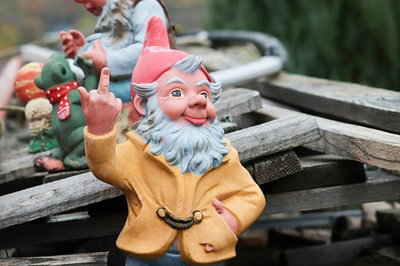
Bitcoin in the Doldrums? Sherlock Holmes to the Rescue!
I was listening to an interview with investment legend Bill Miller. It's a long interview, but well worth a listen. Miller is very good at explaining complex issues in clear, easy to understand terms. I'll link to the interview at the bottom of this article.
One thing I like about Bill Miller is his use of metaphor and analogies to put points across. He likens Bitcoin to the wheel. Once you have invented the wheel, and perfected it, no-one needs to re-invent it.
Silver Blaze
The thing that especially caught my interest was an analogy he made between Sherlock Holmes and Bitcoin. In the short story 'Silver Blaze', Sir Arthur Conan Doyle's fictitious detective is called in by Scotland Yard to investigate the disappearance of a champion race horse. Holmes conducts his investigation, and declares that the key to solving the mystery lies in the behavior of the dog that was guarding the stable the night the horse disappeared. The dog did not bark. This means the dog knew the thief.
Okay, that's all well and good, but what does any of this have to do with Bitcoin?
Venture Capitalists
Bill Miller said there is a group of guard dogs who are conspicuously not barking at Bitcoin. These are the Venture Capitalists. Their job is to look at new technology. To understand it. To assess its strengths and weaknesses. The potential risks of investing in it. Venture Capitalists have a thorough understanding of the way Bitcoin works, its proof of work consensus mechanism, how the blockchain functions, why and how the supply is capped, and so on. To the best of Bill Miller's knowledge, not one Venture Capitalist has ever publicly said or published anything critical of the way Bitcoin works.
He was talking in the wider context of the common misconception that Bitcoin is flawed, is based on old technology, and has been improved on by subsequent blockchains and cryptocurrencies. This misconception is propagated by people who have a vested interest in seeing Bitcoin fail, or who want to get rich promoting their own centralized, Proof of Stake altcoins. Then it gets repeated by people who listen to them and have no understanding of how Bitcoin works. Warren Buffett and Charlie Munger, staunch critics of Bitcoin, are old. They're not used to new things. Marc Andreessen once said the record of old men, who don't understand technology, crapping on new technologies they don't understand, is 100%.
Bitcoin is the great equalizer. The great leveler. It's a threat to the privileged financial position of the 'rich'. With Proof of Stake, the rich have the most money to stake and can maintain control. With Proof of Work, you have to work for your rewards.
Here is the interview: Betting Big On Bitcoin & Amazon w/ Legendary Investor Bill Miller https://www.youtube.com/watch?v=BN2XgTfollM

The Frankenstein Chronicles
I just re-watched the TV series 'The Frankenstein Chronicles' from 2015. Sean Bean is, as always, superb in the main role. The rest of the cast is also superb. The production values are high, the costumes, the recreation of 1820s London, are excellent.
Of course it's fiction. But many historical characters are portrayed, under their real names (William Blake, Mary Shelley, Sir Robert Peel, to name a few.)
Some of the action takes place in Greenwich, which was my stomping ground as a child. I grew up just down the road, in Deptford.
There is a subplot where the Dean of Westminster wants to sell some valuable land in Westminster to property developers. Unfortunately for him, the land (Pye Street) is occupied by poor people. Before he can sell the land he needs to clear the slums.
The good people of Pye Street start dying of what is rumored to be the plague. In those days they called it 'miasma' - they didn't know what caused disease and thought it was somehow lingering in the air. ('Malaria' means 'bad air'.) Several people die and others start leaving to escape the 'plague'. The slum is clearing.
The whole street draws its water from a nearby well. Sean Bean's character smashes the pump and goes down to examine the source of the water. There is a diseased, rotting corpse. Planted there by cronies of the Dean of Westminster. The people are being poisoned. They think it is a contagious disease, but it is their common source of water that is poisoning them.
And this is my point. Think about this, the next time someone tries to scare you with monkey diseases. There is no 'disease'. There are no viruses. There are only symptoms, caused by over-exposure to toxins, which overwhelm the body's ability to eradicate them. So the toxins accumulate, and it reaches a point where symptoms arise. One means for the body to eradicate toxins is sweating. The skin is the biggest organ in the body. So the excess of toxins which overwhelm our sweat mechanism can manifest as skin outbreaks. Rashes. Lumps. This is the new monkey ailment they're trying to sell us.

Bankruptcies and Bailouts: Penn Central, Lockheed, New York City, Chrysler...
Penn Central
1970. Penn Central Railroad goes bankrupt. The company's creditors (banks) take over its Board of Directors and take it deeper into debt by extending more loans to cover the losses. Stockholders are kept in the dark: the directors provide further loans so the stockholders receive a dividend and appearances can be maintained. The directors and their banks sell their stock at unrealistically high prices. When the truth is finally revealed, the stockholders are left with nothing.
Congress is told that the collapse of Penn Central would be devastating to the public interest. Congress responds by granting 125 million dollars in loan guarantees. The company fails anyway, but the banks are protected. Penn Central is nationalized into Amtrak and continues to operate at a loss to this day. Who picks up the tab? Tax payers.
Lockheed
In 1971, the Lockheed Corporation, America's largest defense contractor, is on the verge of bankruptcy. Congress is told a similar story: thousands will lose their jobs, sub-contractors will be left high and dry, if the company fails, the public will suffer...Congress responds by guaranteeing 250 million dollars in new loans, (putting Lockheed 60% deeper into debt than before). To ensure Lockheed remains solvent, the company is granted lucrative defense contracts at non-competitive bids. The banks get their pound of flesh. Who picks up the tab? Tax payers.
New York
1975. New York City runs out of credit. It is deep in hock due to the cost of maintaining an extravagant bureaucracy and a mini welfare state. Congress is informed of the imminent crisis. If New York is unable to provide public services it will be a disaster for the citizens and disgrace America in the eyes of the world. Congress authorizes an additional 2.3 billion dollars of loans, more than doubling the size of the existing debt. Interest continues to be paid to the banks. Who picks up the tab? Tax payers.
Chrysler
1978. Chrysler is close to bankruptcy. Congress is told it would be a public disaster if the company folds. It would be a huge blow to the 'American way' if people could only choose between two, instead of three, makes of automobile. Congress guarantees up to 1.5 billion dollars of extra loans. The banks' previously unrecoverable debt becomes a tax-payer-backed, interest-bearing asset.
Rinse and repeat. The system always manages to protect the interests of the banks. At the expense of the tax payers.
Source: G. Edward Griffin: The Creature from Jekyll Island https://www.youtube.com/watch?v=9P7BWBxY7KU
 @alberich