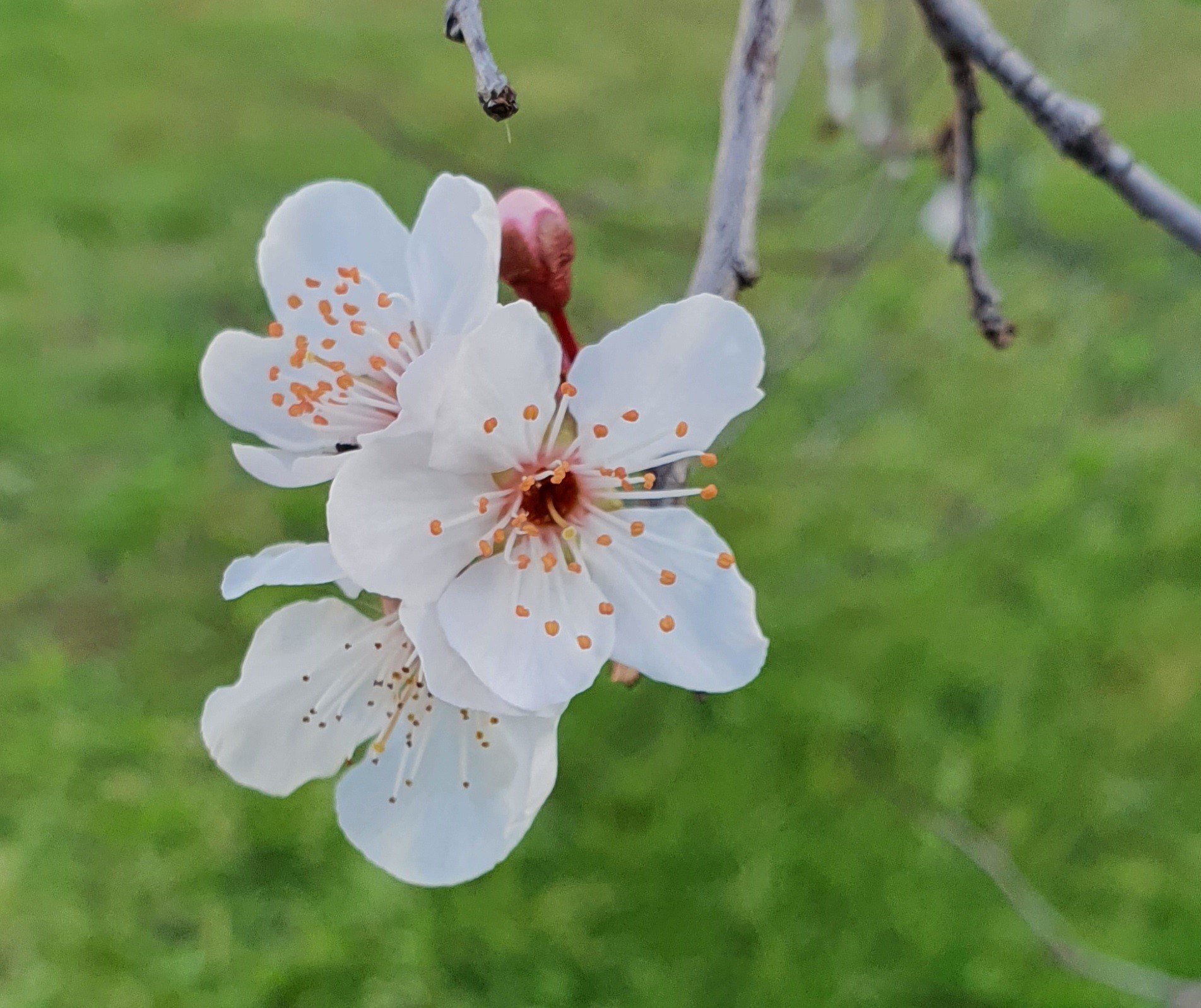
Three poems.
Visions and dreams all in the distance
Ideas a fine a dozen in the head while your body be frozen in place contemplating the merits and bells where the lights signs all the fritz.
A ball in play and you mold thoughts like clay into shape used some day noting them all down in thick paper so they don't ever go away.
The reason comes and grounds all wet yet your thoughts haven't been washed out of bounds from the neurons firing keeping those ideas from dying.
As storms rage within the realms of both your head and realities grip like life trying to break all that resolve you know full well nothing but work makes things evolve.
Slowly the world calms and each step now is right into your palm each hand good tight the dreams and ideas you all know as right.
Drunken emotional thoughts rolled into something strange
Voices heard from a distance roasted into the unknown void with no regard to who or what's heard and overheard into the obscene kind of dance.
Ignoring everything construed as a warning even when tempers are heating and feathers seething with anger tempers in red danger.
Holding back emotions hard to temper especially emotionally charged energies following back and forth heading to the top north.
Calm the fuck down before we all down into that abyss you've built for yourself all self sabotaging everyone with their flimsy crown.
Snap into reality with life's variety all rolled into the dream of what everything called into light and then all torn down from your insides fright.
Why must I follow even when you act like the light into that deep blue light brought out and manifested to no direction of known unknown.
Do we say goodbye even when life's alright but it's all our of sight drowned out by your loud sighs and no it's not about thighs.
**No coherent thought**
Fresh off the boat
Standing still but afloat
Winds bring in the tide
Of this vast open wide
Where empty streets bustle
Silence cuts weed thistle
Sheer will bring change
To temper any kind of rage
Only a gentle soul comprehends
The spretzzura of action ends
Where to search where it begins
Thrown out like rubbish on bins
But who am I kidding
Hard trying in hiding
Keeping them all in check
Like a swarm of ants on deck
Consistent in dogged march
Triumphed with an arch
Gathering and mustering
Strength unbound not faltering
Uninspired but far from expired
Even through exhaustion one's tired
Cohesive mind all mired
Three poems - A Poetic Practice
Title: A Vast Emotional Ocean.
I guess my consistency is being affected by my obsession of reality especially as I navigate and contemplate about eternity leading me to peace and serenity.
But I know I should not complain as the world's drinks from the rain when it takes away the pain and washes them all down the drain like an emotional roller coaster train.
The struggle real and the pain it cutting like some vine feel as I look back in life like a shirt strain knowing full well the mess spread out into thorns oh what a bane threatening me to go insane.
Balancing everything in a thumb tack all the hours from life's constant attack now I'm overwhelmed and lost track wishing I could turn time back.
Hoping before hope that each step I take forward help me choose from the madness coming to me in a hang man's rope wishing again I have hope to stop me, nope.
Bearing down on me I wish my vision before was twenty twenty clear vision to allow me to see the turmoil created by the emotional vast sea I've dug I had thought we needed uh wee.
Lightning bolts train down from the skies above from the world over made with no love now in my hands fitting it tight like a leather glove stopping sensations I need to have.
Putting my face in my hands drinking my fingers into timeless sands inside my head as it swallows everything like quick sand wishing it all goes away with the wave of a magic wand.
Only to realise it's not that simple when I've taken everything oh I'm so wise as I sit here looking at the sun rise wallowing at the truth that are all lies I bid you all goodbyes.
Title: Stolen Kiss.
When your happy and the breath of life dissipate, it's clear you know time is not your friend like talking the wind round and round the bend.
There is not to be had even you think life is really bad them you wonder how you became glad are you going mad.
Let not the eyes looking at you bring about the board that keeps you cooking even when they are very good looking.
The breeze it blows gently in the oceans cars oh how it's great to feel this bliss it is accentuated by that stolen kiss I often wonder if I'll miss.
Title: The Yearning.
Waves splashing like gentle caresses
I'm the moonlit sunsets breeze
Into the sunset carry me into bliss
My soul is at ease.
Moments dream out alone
In this shack the light rays dance
For what ever sin I need to atone
Life flashes like a momentary glance
It's ironic it takes an outsider
To make me see what I seek
A lone solitary rider
I catch a glimpse as I peek
Gentle breeze touching my cheek
All alone I do sit here no other I do miss
Each struggle now pushes downed, meek
How I long for that lost kiss
Light Cascades in the waves ripples
Where it leads me into some unknown mist
I see your sweet sweet dimples
I know you get my gist
Struggling for words I sit here a solitary figure
No strong wind pushing me asunder
Hoping my gamble is the one true cure
From this pathetic blunder
Conversations happen like the breezes hold
Getting this lonely soul
Can I be so bold
To ask for redemption before it turns into coal
Best to leave it here
Before things start to become clear
Life is filled with so much fear
To someone I truly hold dear...
Hey @amarkhan77 thank you for the invite mate.
I should have something more sizable to post in the coming weeks.
Where have I been?
Well for starters I'm commuting. My daily grind into the enabler of my lifestyle. It's fair trade for my time, getting what I want with the payment if my precious time.
I had made a simple goal when I joined this platform. Few months back my life looked rock solid. Able to navigate into a maelstrom, no fear of ever losing my way through them unscathed. But life always has it's own plan when we are all getting to confident. Too arrogant.
Rocking the boat. Shifting the winds. Tearing established currents. All gone in an instant what took time to shape and discover. Effort all gone in an instant when life takes over and pulls you to somewhere new and undiscovered. You can either learn quickly and float or flutter for time then sink to the bottom. Disappearing into oblivion. Forgotten. Or worse, left to the shore unable to find the pier. Any pier, just to set out again.
That is where I'm at. Run through by life's irresistible push and pull, dragged down the quagmire of life's "challenge", you do not volunteer, you are picked from the back of the line while you are thinking of other things you thought you are preparing for. As I often did when I thought time was on my side and life was all smooth sailing.
Of course I'm not innocent or none complicit to what's been dealt my way. The storm I assumed towards. A shorter direction? A sail left unrepaired from cruises passed.
Thanks for your time.

Terrorists have used religion, the media and some democratic processes to advance their aims.
Terrorists have waged war against a superior force like the United States through asymmetric warfare, by small mobile cells committing terrorism and “*prevent themselves from being defeated and winning by not losing”* (Kissinger, cited Mack 1975: p 178) to force a change in their foreign policies. This essay will demonstrate how Islamic terrorist have effectively manipulated religion, the media and some democratic processes to advance their aims of US military withdrawal from Islamic lands.
Terrorism must be defined so that an evaluation of its success in advancing terrorist agendas can be measured in waging an asymmetrical war. According to Schmid (1983), *“the many definitions are exceedingly complex or have far too many elements”.*
James Lutz and Brenda Lutz in the publication “*Global Terrorism*” defines terrorism as,
“*Terrorism involves political aims and motives. It is violent or threatens violence. It is designed to generate fear in a target audience that extends beyond the immediate victims of the violence. This violence is conducted by an identifiable organisation. The violence involves non-state actor or actors as either the perpetrator, the victim of the violence or both. Finally the acts of violence are designed to create power in situations in which power previously had been lacking (i.e. the violence attempts to enhance the power base of the organisation undertaking the actions).*” (Lutz & Lutz 2008: 9)
Religion has been used by various groups in the 1990s. This is the most widely used factor because it allows for recruitment of new terrorists and justification of the violence they commit. The most dominant groups that are hostile towards the US are militant groups that operate under the banner of Islam. They follow a radical mutation of Islamic Wahhabism with rigid and deeply intolerant tenets that fall short of advocating terrorism to one that advocates it *“unlike Wahhabis, these Islamists believed that the time for jihad against infidels and the neocolonialist West was now. Returning home, the Saudi fighters advanced the idea, and soon there were two types of Wahhabism.”* (Van Biema 2003, par 8).
It is this radical mutation of Islam that has fuelled religious intolerance from “*Muslim clerics who.. argue that holy war against non-Muslims is an essential tenet of the practice of Islam”* (Bouchat, cited Lutz & Lutz 2008: p7). Invoking the concept of jihad to justify its use of indiscriminate attacks against “soft” targets that are characterised by asymmetric tactics (Martin 2006: p 212)
Fuelling this intolerance are terror groups like Al Qaeda and its inspired groups that follow an extreme fundamental interpretation of the Quran. Walid Shoebat put it succinctly in the documentary film *“Islam, What the West Needs to Know”* in 2006. When he recited a verse used by militant clerics “*Do not think that those who died in the cause of Allah in Jihad are dead, but are living*”, this justifies their actions as beyond human law and answerable only to Allah. This is important as it attracts a radicalised people willing to commit terrorism and is not morally perplexed of their acts of terror.
Intolerance preached by radical Islamic spiritual leaders and Islamic schools found in the some parts of the Middle East encourage children to recite Jihadist poems to teach and cultivate a new generation that grow up as radicalised Muslims *(Obsession: Radical Islam's War Against the West,* 2005)*.* Although not all of the terrorist have committed violence are ignorant, they do breed a society that look at the US and its allies as the enemy. As Monaghan (1997) states, *“Once individuals accept that there is moral duty to break the law in pursuit of a higher principle, violence becomes more likely”* and will allow terrorist groups to drive fear into their target audience to advance its asymmetric war against the US by weakening political will of its citizens.
It is interesting to note that not all of the terrorists are from Islamic schools located in third world countries, some are from moderate Muslim families living in western countries itself who have been influenced by charismatic spiritual leaders. They are taught that Islam is a victim of the US and its allies, that western societies and their cultures have besieged their Islamic values and fellow Muslims.
We know that *“justifying their actions as a holy war against the non-Muslim world to bring it under the rule of Islam”* (*Islam, What the west needs to know,* 2007) Muslims that are radicalised. Take up Jihad and their *“adversaries will be sorely challenged to defeat them”* (Martin 2006: p 212) which further increases the groups’ success of winning by not losing and advance their goals of forcing US foreign policy.
The most defining question that needs to be examined is, are moderate Muslims voicing a desire to stop religious intolerance? *“From the point of view of the Muslim moderates, the Iraq war is polarising the world between a Muslim ‘‘us’’ and a Western ‘‘them’’. It is no longer easy for Muslim modernists to praise the West’s moral purpose when US leaders emphasise their power at the cost of their ideals.”* (Haqqani 2003: par 16) It's clear that for the moderate Muslim who does not follow radical Islam to voice their desire to stop religious intolerance the west must ensure its western liberal values are intact.
To spread the message of radical Islam and Jihadist mentality to the masses, militant extremists use the media in reaching their target audience to influence them politically.
We must define what is meant by the term “the media” because it is broad, besides news agencies using television as a means of mass communication there are ways like printed materials, audio broadcasts, the Internet (Martin 2006: p 394). It is important to distinguish “the media” in this essay as the entities that provide the masses with breaking news and state controlled television that provide public broadcasts by prominent leaders.
*“Islamic radicals use of the media through public announcements broadcast in national television in middle eastern countries to spread their teaching of intolerance and advocating terrorism”* (*Obsession: Radical Islam's War Against the West,* 2007) allows them to reach the majority of Muslims and influence how they view the US as their enemy. Because of this the media is used effectively to deliver radical teaching to the masses who are its target audience thereby advancing their aims of changing foreign policies of the US through the propagation of hostility towards the US.
A flow on effect of this is US citizens are feeling that their security of ensuring themselves and their way of life is not threatened by radical Muslims. Because of this moderate Muslims living in the US are being segregated by non Muslims from having to have any dealing with them. This type of effect occurred when *“Three imams including a US-born Muslim bound for a conference on Islamophobia were kicked off US domestic flights out of security fears”* (*Muslim clerics kicked off US flights,* 2011). From this it is evident that because of media coverage relating to radical Muslims voicing hostility to the US, the terrorists have also created an environment for Muslims radical or moderate to feel segregation and could lead them to dissatisfaction that is vulnerable for terrorist recruitment in the future.
Al Qaeda, Hezbollah and others have exploited the media by way of hostage crisis being televised either directly requested by them or the insatiable thirst of the media to stick their noses into affairs that at times help portray the group in the light they want to be portrayed to pursue their goals. An example of this was when the Munich Olympic incident occurred, although the terrorist known as Black September did not request media attention, they understood that their message will be televised since it involved Olympians competing in the 1972 Olympics and the worlds attention was focused on this one event, they exploited the media by taking Jewish hostages. The terrorist goals succeeded in showing the Palestinian plight especially when the botched rescue attempts were caught and televised to millions of viewers around the world the media was indirectly exploited by the terrorists. As Gayle Rivers states “*The success of any terrorist outrage depends so much on the kind and amount of publicity it receives” (Rivers, 1987, p 133)*
The attention that terrorists get from their actions being documented and shown through out the world by the media whether they are done by journalist seeking a story, to terrorists showing propaganda by way of the internet has greatly helped them in their goals, with ever increasing ease of access to the net being exploited by terror groups has helped their pursuit in mobilizing members, providing morale boosts and recruitment of new members to replace killed operatives as outlined by Bruce Hoffman when he stated *“Enabling the rapid (often in real-time), pervasive and, most important, inexpensive exchange of information worldwide.” (Hoffman 2006, p 3)* Hoffman provides a clear picture of the dangers posed with this since the coverage the terrorist are looking for can be manipulated to what ever they want their intended audience to see, circumventing state censorship and allowing them to portray what ever they choose to portray of themselves or situations.
The exploitation of democratic processes allows terrorist to continue to spread their way of thinking in advancing their aims because they are *“adapting the way they do things in the guise of democratic free speech and application of liberal rights to suit them”* (Obsession: *Radical Islam's War Against the West,* 2005) where the US and its western allies are protecting civil liberties can be an area that is exploited by terrorists in a democratic state because it is *“the Achilles Heel of democratic states; where differences in perspective of defence and law enforcement and civil liberties collide”* (Morgan 2004, p 13) This allows terrorist to be invulnerable even in an enemy state because of the perceived violation of civil liberties by the authorities in exercising their civil rights.
The exploitation of democratic processes by terrorists in the past and today have not always been clearly shown except when one really looks at the actions and subsequent punishments to those terrorist that have committed murder and destruction of property to force changes in political and social environs they want to change, it is a hard statement to say that terrorists do exploit democratic processes since the basic concept of the democracy is the protection of lives. With this in mind if terrorist committed atrocities should they be deprived of basic human rights making those that punish them also with the level of the terrorist mindset (Andreu-Guzman 2003, p 15 -16)
The US as a democratic country has had mixed results when it has attempted to create laws to prevent further terrorist use of airplanes by enacting laws that require full body scans to board a plane. This has had a backlash by people that feel their privacy is being breached and the subsequent negative publicity provided by the media. *“The introduction of full-body scanning machines last year at American airports created controversy and attracted criticism” (US to double number of airport body scanners,* 2011). Where civil liberties are perceived to be abused when airport security enforce legislated laws passed, by the very government that has tried to prevent further attacks within its borders. Indirectly terrorist are benefitting from the public outcry of laws passed by western countries because they contradict basic civil liberties of its citizens, indicating a shift in political will.
So in conclusion terrorist have exploited religion, the media and democratic processes to advance their aims in changing US foreign policies by adapting an asymmetric war. They have used the three mediums effectively by sowing fear into US citizens to weaken their will in fighting the terrorist demands. It has also made it possible for radical Islam to be delivered unhindered within the borders of America and its western allies, allowing for recruiting Muslims that are citizens. This is made possible by the direct and indirect manipulation of the media to paint them as either a victim or their acts as a necessary action to uphold their way of life exploiting democratic processes to favor them. Making them invulnerable, this is a prerequisite in waging an asymmetrical war. As it has happened in the 1990s so it shall still be in the present and the future that terrorist will always exploit these mediums for its proven way to get help pursue terrorist goals.
****Reference List****
Andreu-Guzman F *"Terrorism and Human Rights, No.2, Occasional Papers No. 3, International Commission of Jurists, March 2003.*
Monaghan, R 2000 *“Terrorism in the Name of Animal Rights”* in M Taylor and J Horgan (eds) *The future of Terrorism,* London: Frank Cass, 159 – 169
Morgan, M J 2004 *“The garrison state revisited”,* Contemporary Politics Vol. 10 Issue 1, page 5
Rivers G, 1987 "*The war against the terrorists. How to win it*.” Charter edition New York: Berkeley Publishing Group.
Haqqani H 2003 *“How Bush Silenced the Moderate Muslim Voice”* Carnegie Middle East Center*, viewed 09/05/2011 <*http://www.carnegie-mec.org/publications/?fa=1228>
Hoffman B, 2006 "*The Use of the Internet by Islamic Extremists.*" Testimony presented to the House Permanent Select Committee on Intelligence, The Rand Corporation <http://www.rand.org/>
Mack J, 1975, *World Politics “Why big nations lose small wars: The politics of asymmetric conflict”* Cambridge University Press, viewed 27 March 2011, <http://www.jstor.org/stable/2009880>
Van Biema D, 2007 *"Wahhabism: Toxic Waste? - The debate persists as to whether the state religion of Suadi Arabia breeds intolerance or just misunderstood"* Time Online, viewed 09/05/2011 <http://www.time.com/time/covers/1101030915/wwahhabism.html>
*Muslim clerics kicked off US flights* 2011, Sydney Morning Herald, viewed 09/05/2011 < http://www.smh.com.au/travel/travel-news/muslim-clerics-kicked-off-us-flights-20110509-1eevw.html>
O’Sullivan, K, 2011 *US to double number of airport body scanners*, The Age, viewed 09/05/2011 <http://www.theage.com.au/travel/travel-news/us-to-double-number-of-airport-body-scanners-20110225-1b7tj.html>
*Islam, What the west needs to know* 2007 [DVD] Quixotic Media, United States
*Obsession: Radical Islam's War Against the West* 2005 [DVD] Clarion Fund, United States
An afternoon train ride.
A train ride.
Full of people and seats wet from some idiot leaving a can of redbull. Content to sit in the middle of the seats. Eyes on me as they do not know of the wet seat. All it needs is a question for anyone to find out why the middle seat like the middle finger on anyone wanting a seat next to me.
I won't bite. I don't smell. I am roses. In the breeze. Pretty to look. Ripe to pluck. All is well. Just sit here. Passing next here. Don't get friend. Seat are plenty. Just look around. Don't stand still. No use freezing. All is well. No big worries. No small gain.
The scene outside the window moving, right to left. No sound other than the soft electric sound of the train wheels, taken over by the number of people carrying on in their conversations. Laughing. Crying babies. Serious hushed tones. Eyes glued to their phone screens. Social media addicts ignoring everything around them. Spilling their drinks on themselves by not paying attention to the spout totally missing their luscious lips. Glued to their phone screens. The drip is ignored until it touches their skin.
Some slowly turning book pages, taking them to imaginery places. Showing them how to handle other people because a book is a better teacher in talking to people. Better than actually talking to people. Books have a place when you are on a seat for greater than five minutes. Greater than am hour sometimes. Time seems to just speed on by, like blinking arms seeing get hair appearing in your once dark black hair. You never know where you end up with a book. Close it first though, when you step of the train, in case you miss the platform and send up under the train carriage.
A quick change of seats. Now someone else didn't look. Wet bum. Their problem. Sometimes you need to take the time to look where you are going. There is no rush when there are plenty of seats. When most of the passengers have gotten off. No need to look at them. They will know soon enough. You could say, talking the time to observe pays you on fours. The scenery continues on its course. Left to right this time from the change of seats.
Blinking lights. Beeping noise. Next stop, your stop. Best end this then so no mishap getting off the train. Now it's just the waiting game to see the train come to a complete stop. Easy does it.
Thanks for your attention.
Waiting in a medical centre.
Waiting is so surreal in a medical centre. People are all here coughing and sniffling. I often wonder if sickness is gotten from visiting a doctor. You are probably more prone to getting something as you are the doctor to tell what you had in the first place.
I really think masks does something. Yes it's not perfect but it's probably because I can't stop fidgeting on my face with the mask. In not sure what other bacterial I've inadvertent touched and now carry at the palm of my hand.
Waiting patiently. Listening. Pausing. I feel like I've moved forward in the queue. Each step waited patiently trying to be patient. Breathing slowly. Willing time to pass by easily. With no bother. Slowly starting to feel my body cycle through is recovery. I'm sick. Just enough that when I cough my head feels like it's about to explode. The constant coughing is starting to take it's toll on me.
Eyes down. Not eating to meet other people's. Wanting to just sit here alone, like a hermit crab without a shell. My clothes could be except I didn't wear my hooded jumper. My breath all clammy and warm inside my mask. There is a sense of familiarity. A sense of comfort. Held in this small infitismal universe created in the mask bubble.
Still waiting. Time had passed but how long I've not noted down. I should do that in future so I'm not left guessing. Coughing in my mask and I'm not even bothered by the particles floating and landing on my skin. Maybe a shower well get rid of this little disgusted feeling in getting from the thought. People just keep coming. Coughing like me. Some looks like blood shot eye from what ever I hope to God not going to collect. This is not a Pokemon challenge, gotta catch em all.
Did I separate a couple since I took this seat earlier with two available spaces in between another guy. They just arrived. Well they look content so will just keep my eyes down and pretend like everything is ok. We all have those days where we don't have the energy to take an extra step to allow other people comfort.
Plots and Paranoia - A critical writing exercise
Chapter 1 of *Plots and Paranoia* by Bernard Porter is an interesting read. It has great topics in the period covered on the first chapter. He provides the reader with an historical analysis of espionage from ancient times through to the medieval ages. Porters main statement in the chapter is “*espionage must have been ancient and continuous, because men and women are made… naturally curious, distrustful and prone to conspiracy.*” and relates to the topic *The Elizabethan Intelligence World.* He supports this well, however there are some contentious issues raised by him that are hard to agree with towards espionage history before the Elizabethan era.
Porter mentions Sun Tzu writing *The Art of War* but fails to recognise the deeper meaning when Sun Tzu states: “*So only a brilliant ruler or wise general who can use the highly intelligent for espionage is sure of great success. This is essential for military operations, and the armies depend on this in their actions”****[i]*** the lesson to a commander of an army or state that they need to ensure the chapter the use of spies are adhered diligently[ii] . From this it is assumed that he read the writing briefly but failed to grasp underlying meanings of *The Art of War* and sounds as though his attention was focused on the strategic chapter of the writing. Unlike Walsingham who saw the value of paying for intelligence which is one of the tenets in Sun Tzu’s teachings.
Porter states that “*Proper espionage systems require developed bureaucratic structures to implement them.p.7*” fails to support his statement because there are gaps or no true passing of knowledge from one generation to another from ancient times till 1790. The continuous existence of espionage in his thesis statement means then that although there are periods where no espionage or secret service existed in records it does not necessarily mean that they did not exist. Porter shows that when there was a need to spies and intelligence work until the modern era the spies in the past had to relearn the lessons learnt from previous generations.
What Porter does well however is show the reader that men and women are distrustful and prone to conspiracy “*resort[ing] more to secret agents and policemen the more… tyrannical they become*”. This is a very valid point as the people in power in the period covered by chapter 1 focuses on rulers like Ivan the Terrible with his secret police who is a contemporary of Elizabeth. Porter shows his analyses of Elizabethan espionage era as accurate in how he supports his statement by tying in how a British monarch can accept to have spies protect them where the popular view of espionage was to balk upon it[iii].
Porter asserts that although intelligence agencies or the work existed through the ages there have been gaps in the progression “*from one minister or regime to the next*”. It supports how historians are prone to not write about espionage from the gaps which created a perpetual dilemma of when to start writing them based on the missing periods of history with factual evidence being scarce “…*in the absence of a tangible result, that intelligence is a vacuous activity”****[iv]****.* He shows the reader a strong reason why they exercise caution when forming an opinion on historical gaps when he states “*Bearing this in mind, the lessons we can draw from these ancient times must be tentative (p. 6)”.* From these statements I agree with being tentative and exercising caution when reading historical writings pertaining to espionage and secret service as a whole as there is not much information that can accurately be gleaned unless it is an espionage failure.
The style presented throughout out chapter 1 of *Plots and Paranoia* is very in-depth and this is a good thing as it shows the reader that Porter has researched his chosen topic with support from good references. He provides the reader with a good support to his thesis when he states “*Ignorance breed paranoia, and consequently over-reaction. Spies can be a corrective to this*” with his analyses of Francis Bacon’s famous quote “*There is nothing makes a man suspect much, more than to know little”* to allay suspicion or in Porter statement “*distrust*” the correct use of spies.
In conclusion “*Sly and subtil fellowes: to 1790*” by Bernard Porter provides the reader good basis to start their study into espionage history by painting a picture of the tainted and misunderstood nature of why it is necessary and to be cautious with the gaps in historical or broken line of succession of intelligence in the past. The strongest facet of this chapter is how he portrays the ease that Walsingham had in establishing a secret service *because men and women are made… naturally curious, distrustful and prone to conspiracy* in the Elizabethan era by his use of spies to successfully defend her. As a consequence this leads the reader to ask on what moral ground spies stand when they are undertaking intelligence work or being *agent provocateur* when they are adamant their supposed target is not innocent.
[i] Sun Tzu Translated Thomas Cleary, *The Art of War,* Boston & London, Shambhala, 1983, P. 172
[ii] Ibid. pp.168 - 172
[iii] Michael Smith, *New Cloak, Old Dagger,* London 1996, P. 16
[iv] John Keegan, *Intelligence in War,* London 2003, P. 2
Bibliography
Keegan, J. (2003). *Intelligence in War.* London.
Smith, M. (1996). *New Cloak, Old Dagger.* London.
Tzu, S. (1988). *The Art of War.* (T. Cleary, Trans.) Boston & London: Shambhala.

Seems I am addicted to liking the like.
I am starting to see that I am somewhat addicted to the likes. Something I say to myself I will never get addicted to. But. I am. Own it and it shall not rule you. Not sure where I heard that from. Maybe one of those books on a shelf in a library waiting for someone else to influence with their message inside the pages.
Pages and pages of ideas. Some good. Some not so good. Some definitely in my opinion not even worth exploring. To each their own I always say because we all have a point of view and we tend to see things in our little way, it is why we find it hard to really find a good core group we can jell with.
So when I notice that I am now dogging for a like. I am in the frame of mind to give myself a little break to at least take a step back and se how this has happened to me since I always turn my nose up to people I hear about online. I am a smug bastard when I want to be. I can even be an arse hole. I own it and therefore it does not control me. What made me see this reaction. I cannot see myself but for the past few days I have constantly looked at my actions online and waited and waited wondering something. Not clear at those times. Then I did something about half an hour ago and a like came.
My view lighted up. The seemed to brighten in light intensity. My hearing became clearer and my vision seemed like I was a hawk. It lasted until I noticed it and now I as I write this I am back to normal, somewhat. It really helps when you take someth8ing off your chest and just let it all out. The thoughts no longer trapped inside you are free and no longer being controlled by something I had no control of in the first place. **The like.**
Is this something you have found about yourself in the past? I know I have had this happen to me in the past and I have had to take a step back from something a like was the only fix. Which is not healthy, right?
Addiction to something is only ever really good for you if it involves something you have control of. Even when you are in the midst of something and you find flow in anything you do your addiction must be held with a firm grip and it mustn't lead you to not looking after yourself or forget what you are doing. Unless of course you are already lost and you have nothing to lose or at the very least going through something you want to just forget and let life pass you by for a time being. Taking a big step back.
What will I do now I have come to this realisation. Well for starters the further I write the more I am now able to at least have a clearer idea I am addicted to the **like. Recognition is the first step to control.** Just not sure how long it will take me to break away from this little addiction. It could be days. It could be weeks. It could be months. I know thought it will not be years. I just have to remember to keep my thoughts about likes in the back of my mind able to be used as a recognition when I have shallow of breath.
Thanks for listening.
Do you find yourself being programmed into someone else?
Let there be life. These are words uttered when we all talk about origin stories. A tale of one life from whence it came from to how it has come to this.
Growing up in a large family there was always lessons to be learned, especially when you are the bottom of the ladder. A single though by someone older than you can lead to a lot of fun or a lot of suffering. There are no other way to grow ujp than to start thinking of ways to get to the top when everything else pushes everything down to stop your climb. Either about the morals and the ethics you are likely to get across to 'teach you' about how to live.
You'll understand...
You hear this all the time when you are asking questions. A million to one questions you are hoping someone, anyone could bring you to higher to elevate your idea as a boy growing into a man. You embrace those lessons since you had no choice in the matter. Any hands being raised will just get you a quick rap on the ear. Stings enough, you will stop asking questions and just take it as they are. No. Questions.
*Then you are here now, reading this and you are left with a new dilemma of how to be a man.*
A man who will get told they are no longer allowed to stand up to what you were rapped on the ear all those years growing up. You are now told everything you are is all wrong. Left to wonder where you belong even before you can start to not ask questions since you are not allowed to ask in your head. Since you are fully programmed to jump and say how high when told to. You repeat things they are you to since choice in the matter was never given to you in the first place.
*Of course you are not going to get anywhere now since everything you do or are will not be acceptable to anyone.*
Are there no other way to get involved in anyone or anything without having to give up a little part of you anytime you get to want or get anything you need. It is worse when you need since you really have no choice in the matter then to really start to strip when you have been built into. It is all you after all. You are your own product they say. You are what you say you are with every action you make from the time you are born to the time you find yourself in. When you start to question this you are also told you have no right to get to any bottom. The very bottom.
*How then can you be yourself when who you are is not built into the mold everyone has made.*
There is the conundrum you find yourself in. You are both inside the mold and outside of it since you cannot exist out of it but must be subject to being changed again into something not to your making but by some other people wanting you to be fitted into a slot they believe you belong. Forget asking you about a choice you have since when they ask you, you have no choice if you say the 'wrong' thing.
Did the Irish truly succeed in their counter espionage against British Secret Service
Conventional warfare is not something all countries can wage, especially when they had to face a superior military force like United Kingdom had in the beginning of the 20th century. Successfully defeating it required that a country who doesn’t have the resources must engage in unconventional warfare like guerrilla and terrorist tactics. Ireland was one of these countries who successfully defeated the British. What were the factors leading to British Intelligence defeat and did the Irish truly succeed in their counter espionage against British Secret Service in the 1916 – 1921 before the truce was signed.
To answer this we will break down three factors that brought about British defeat. The first factor looks at the how the British handled Ireland before and after the Easter Uprising and the political ramifications. Second looks at the actors leading the intelligence war against the British authorities in Dublin castle and how they went about this. And third compares military intelligence to political intelligence in the period leading up to the Anglo-Irish treaty.
The British Secret service focus on Ireland as an area of concern was primarily targeted towards German intrigues[1] and didn’t concern itself with the political rise of Irish nationalist movements like the Irish Republican Brotherhood (IRB). This is important to note since a government wanting to have a stable state must not only have its attention outside of its borders, but must ensure no “*... threats could come from groups that seek to overthrow the government by illegal means, [and] use violence to change government policies…”****[2]***.
The IRB planned and executed the Easter Uprising on the 24th of April 1916 which was not penetrated by the British Secret Service as the society learnt from Robert Emmett’s failed rebellion in 1803 to keep planned uprising to minimum thereby prevent the British from discovering. This is an important point for the British authorities who are …w*aiting for a specific criminal act on which to focus … concerning relevant individuals or groups… it is necessary to use informers, who penetrate the groups involved and operate like spies****[3]****.*
While the IRB maintained a tight control of leaks within their small circle the British discovered the planned uprising from Sir Roger Casement capture by the British en-route from Germany to Ireland. He had gained German support for the planned uprising through a shipment of arms for the uprising. Implicating himself by his letters with …*thinly concealed references to German support for the liberation of the four green fields from the ‘stranger’* to Mrs Green, a well-known Irish nationalist[4]. Giving credit to British SIGINT the efforts towards German intrigues the British could have prevented the revolt but the MI5’s main Irish expert *… refused, possibly in the hope that the Rising would go ahead and force the government to crush what they saw as a German conspiracy with Irish nationalists*[5].
As the leaders of the uprising foresaw by the lessons learnt of Emmett’s sacrifice, they were prepared to give their lives, being martyred for their cause. The British however failed to learn that prevention of the uprising would have stopped *the much more important development of Irish nationalism****[6]*** from taking root in Ireland by the expedient execution of the leaders through military court. This failure is attributed to the *lack of co-ordination between the military, the police and the military intelligence agencies****[7]*** to correctly weight the political ramifications by executing the rebel leaders after they had surrendered. The British failed to grasp because of uncoordinated operating in Ireland, the police force had the intelligence which went to deaf ears as it was not used intelligently in forecasting the ramifications of the execution.
Adding to this the British contingent consisted of the Royal Irish Constabulary (RIC) and Dublin Metropolitan Police (DMP), who were not waging a war before 1920 but *were trying to maintain law and order… the RIC’s well-tuned antennae picked up right away on the anti-government mood swing.****[8]*** This information should’ve been used by the British secret service in *analysing the available information to make judgements about the capabilities, intentions and actions… a vital part of the intelligence process****[9]****.*
By the lack of coordination between the RIC and MI5 the martyrdom of the rebel leaders, Irish nationalism gained support. The major impact it has is that the Irish Republican Army (IRA) was created and lead by the militant leader Michael Collins, leading the IRA to commit terrorist tactics against the British[10]. This leads to the second factor by looking at the actors leading the intelligence war against the British authorities in Dublin castle and how they went about this.
One major issue with intelligence agencies are how security they are against moles within their ranks, which can lead to leaks of information useful to their opposition. In the 1919 onwards the IRA had spies in Dublin castle and *…of all the Dublin unformed police … six were working for Collins****[11]***with this Collins and the IRA were able to know their enemies intelligence capabilities. This enabled Collins to counter British intelligence efforts in apprehending suspected Irish nationalists like Collins planning to commit acts of sedition was *…giving him a priceless advantage****[12]****.*
Collins used this advantage intelligently by identifying intelligence officers (IO) who themselves are in the field identifying suspected Irish nationalist threats[13]. With this Collins and the IRA …*deliberately targeted [through a] campaign of murders… [by] murdering undercover British intelligence officers and Special Branch police officers as prime targets****[14]****.* This highlights Collins terrorist tactics as an intelligence war by taking out the eyes and ears of British authorities in Dublin castle, leaving them without the means to gather HUMINT against the Irish.
It must be stated that although the British had a major setback in the murders of the ‘G’ division in the Bloody Sunday of 1920, *crippled the government’s attempt to recover its position****[15]***by replacing them with new intelligence officers. However *their star operators were gone and those now coming on the scene were not anything like as good****[16]*** leaving them blind and outclassed by the intelligence war waged by Collins. Who had had *well placed agents throughout the government … and by intimidating or killing detectives, IO and their agents, he protected his own intelligence department****[17]****.*
Keeping tight control of information coming towards the British Collins was ruthless in executing informers whether through *…interrogation and torture … later … shot by Reggie Dunne****[18]***ensured any form of intelligence leaks as strongly dealt with. In turn … *the local IRA was impelled to or chose to resort to terror on a wide scale in order to discourage the passing of information to the British****[19]****…* without information that can be analysed for any useful intelligence against the Irish.
Confounding the British efforts to combat the Irish through their counter espionage *the army’s novice intelligence officers found many guerrillas there for the taking and rapidly decimated key IRA units****[20]****.* The success of arresting these guerrillas we short lived as the *failing judicial system and repeated politically motivated releases of prisoners in 1916, 1917, 1919 and 1920****[21]***. It’s important to note that, successfully defeating an enemy released and entrenched within the population, the Irish people, a government trying to win support on their side they must separate the population from Collins and the IRA to … *create a sense of security and predictability to replace… violent uncertainty****[22]***.
With the failure to separate the Irish nationalist guerrillas from the general population the British failed to comprehend the damage they were doing on the force attempting to regain control of Ireland is that *the intelligence war occurred as ... a particular political agenda rather than for military reasons****[23]****.* Adding to this the recommendations of the police to keep those that were deemed ‘dangerous’ were ignored[24]. This leads to the final factor by comparing military intelligence to political intelligence in the period leading up to the Anglo-Irish treaty.
The British bolstered the police presence in Ireland by recruiting ex-soldiers from the Great War, who were not trained for counter insurgency warfare. They were provoked into action by the IRA murder campaign ‘Bloody Sunday’. This *served to guarantee popular support in Ireland for the continuing IRA campaign… [and] exploited [for] propaganda relating to police atrocities****[25]****. In kill[ing] suspected British agents… arguably more significant for its ramifications as a calculated political act … for the atrocities … it provoked****[26]*** in alienating the Irish population*.* What can be learnt from this in terms of intelligence is that policy makers must not only be aware of the intelligence in operational level, it must also take into consideration the political ramifications of atrocities being committed by the agency that represents them to their target population, the Irish and British people, for fear of losing their support.
Attacks from the Irish nationalist movement and the *brutal patterns… [of] assassination and counter-assassination, sabotage and reprisal****[27]***, Westminster was forced to *use of ever more draconian coercive measures under the Restoration for Order in Ireland Act****[28]****.* The effect is further alienation of the Irish population and driving them towards the nationalist movements and this *…contributed to a mounting chorus of criticism in Britain… of the government actions****[29]****.* Hughes-Wilson succinctly sums the lesson when he states.
*“Repression, if too oppressive, merely traps and contains the explosive forces of political change and reform”****[30]***
This is arguably the most succinct statement to describe how British failure in clearly identifying actions that damage their image towards the British and Irish population, without the intelligent use of intelligence in negating negative political.
In conclusion through winning the intelligence war both militarily and politically the Irish defeated the British in the period 1916 – 1921. Their success came from the Mishandling of the leaders of the Easter Uprising in 1916, which created martyrs for the Irish nationalist movement. The importance in terms of this mishandling of the leaders are the lessons of not allowing an enemy becoming martyrs for their cause through the use of political intelligence intelligently.
From the martyrdom came this ground swell of support for Irish nationalism came the rise of militants that enabled Michael Collins to create the IRA willing to wage intelligence warfare by spectacular acts of terrorism. This was achieved by having penetrated Dublin Castle with his spies within the DMP and RIC. Through them Michael Collins successfully targeted British intelligence officers of the ‘G’ division that were operating undercover. Because of the lax security within Dublin Castle the need to tighten screening of personnel is highlighted to ensure personnel profiling are in place in identifying ‘moles’ in government agencies which the British failed to implement.
Adding to the success of Michael Collins ‘squad’ is the British lack of coordination between the police, military and military intelligence in fighting the IRA, however, it must not be forgotten that the British did succeed in their set mandate of maintaining law and order. But because they were not fighting a war against the IRA their actions were limited and even hindered by the continuous shifts in policy that were aimed at conciliating nationalist opinions. What can be taken from this is that force multiplication can be applied effectively to combat superior force and frustrate the British into politically disastrous retaliation on the Irish population as a whole.
Last the British confounded their failures by the desperation displayed in the last year of the Irish War of Independence by enacting oppressive laws towards their Irish problem. They failed in identifying a solution in winning the intelligence war by not having political intelligence in determining their actions against the Irish. *In sum, Intelligence cannot be abstracted from its political context and presented as a merely technical exercise in information gathering****[31]****.*
With these factors the British were defeated by the Irish in their intelligence war against them. This raises the question of how can these lessons be applied in today’s war against terrorism by Western governments within their own borders and outside of them.
[1] Peter Hart, *British Intelligence in Ireland 1920 – 21,* Cork 2002, p. 3
[2] Adam N Shulsky and Gary J Schmitt, *Silent Warfare: Understanding the World of Intelligence 3rd ed.,* Washington D.C. 2002 p. 4
[3] Ibid. p. 5
[4] Andrew Christopher, *The Defence of the Realm; The authorised history of MI5,* London 2010, pp. 86 - 87
[5] Ibid. p. 88
[6] Ibid. p. 90
[7] Ibid. p. 618
[8] Peter Hart, *British Intelligence in Ireland 1920 – 21,* Cork 2002, p. 9
[9] Adam N Shulsky and Gary J Schmitt, *Silent Warfare: Understanding the World of Intelligence 3rd ed.,* Washington D.C. 2002 p. 8
[10] John Hughes-Wilson, *The Puppet Masters,* Great Britain 2004, p. 388
[11] David Neligan, *The Spy in the Castle,* London 1999 p. 122
[12] Peter Hart, *British Intelligence in Ireland 1920 – 21,* Cork 2002, p. 1
[13] David Neligan, *The Spy in the Castle,* London 1999 p. 122
[14] John Hughes-Wilson, *The Puppet Masters,* Great Britain 2004, p. 388
[15] Peter Hart, *British Intelligence in Ireland 1920 – 21,* Cork 2002, p. 2
[16] David Neligan, *The Spy in the Castle,* London 1999 p. 125
[17] Peter Hart, *British Intelligence in Ireland 1920 – 21,* Cork 2002, p. 10
[18] Ibid. p. 125
[19] Gabriel Doherty & Dermot Keogh (eds.), *Michael Collins and the making of the Irish State,* Cork 1998, p. 74
[20] Peter Hart, *British Intelligence in Ireland 1920 – 21,* Cork 2002, p. 10
[21] Ibid. p. 10
[22] David Kilcullen, The *Accidental Guerrilla; fighting small wars in the midst of a big one,* New York 2009 p. 205
[23] Peter Hart, , *British Intelligence in Ireland 1920 – 21,* Cork 2002, p. 14
[24] Ibid. p. 15
[25] http://www.bbc.co.uk/history/british/easterrising/aftermath/af04.shtml accessed 31/01/2012
[26] Gabriel Doherty & Dermot Keogh (eds.), *Michael Collins and the making of the Irish State,* Cork 1998, p. 72
[27] http://digitalarchive.gsu.adu/history_theses/46 accessed 31/01/2012
[28] Ibid. p. 72
[29] http://www.bbc.co.uk/history/british/easterrising/aftermath/af04.shtml accessed 31/01/2012
[30] John Hughes-Wilson, *The Puppet Masters,* Great Britain 2004, p. 207 (Andrew, 2009)
[31] Ibid. p. 15
Bibliography
**Andrew Christopher** The Defence of the Realm, The authorized history of MI5 [Book]. - London : Penguin Books, 2009.
**Gavin T Ward M, Hart P, Phoenix E** BBC [Online] // BBC. - British Broadcasting Corporation. - January 31, 2012. - http://http://www.bbc.co.uk/history/british/easterrising/aftermath/af01.shtml.
**Hart Peter** British Intelligence in Ireland 1920 - 21 [Book]. - Cork : [s.n.], 2002.
**Hughes-WIlson John** The Puppet Masters [Book]. - London : Weidenfeld & Nicolson, 2004.
**Kilcullen David** The Accidental Guerilla; fighting a small war in the midst of a big one [Book]. - New York : Oxford, 2009.
**Nelligan David** The Spy in the Castle [Book]. - London : [s.n.], 1999.
**O'Halpin Eunan** Collins and Intelligence [Book Section] // Michael Collins and the Making of the Irish State, eds / book auth. Keogh Gabriel Doherty and Dermor. - Cork : [s.n.], 1998.
**Rast Mike** Tactics, Politics, and Propaganda in the Irish War of Independence, 1917 - 1921 // History Theses Paper 46. - [s.l.] : http://digitaarchive.gsu.edu/history_these/46, 2011.
**Schmitt Adam N Shulsky and Gary J** Silent Warfare: Understanding the World of Intelligence [Book]. - Washington D.C. : [s.n.], 2002. - Vol. III.
The normalcy of confused thoughts clouding my mind.
The clouds in my mind is really affecting my sunny open disposition I think while I'm all smiles inside of me I feel like a walking demolition ball about to tear everything I've built. My stomach is constantly churning with confused fervor, I feel like a must in churning waters. How I long to be stable. To be lucid. To be present without any forced ideas. When will this calm arrive. Any longer and I'm afraid I may busy into flames, into oblivion. Where are the reasons I once felt like making feel real. Do you ever think things are just as bleak as faded memories near forgotten. Hope forgotten.
It's like watching a movie before my eyes except I'm both the actor and the audience of a melodramatic play. Nothing is clear and nothing is blurry. Dry tears. Non existent fears. Then why does my stomach churn so. Like supporting players just existing so I can be prodded towards a destination both chosen and unchosen. Am I close to cracking into a million pieces. Am I close to breaking down doors and walking through imaginary fires. All for that good life we all look for. My patience are in short supply and there are no charging stations.
Ever wondered if you will ever be normal after something so profound smashes you down into a pulp? I never had but now I find it is the only solution I can think of as an escape to some sort of reality. Voices in the end screaming it for something, anything resembling that normal we all think as being normal. Smiling faces are now never enough. Never lifting you it of the pits of doom. There's not even space to wiggle my head into some breathing space out of this forsaken water I've tread on underwater. Even the bothersome breeze is too much to think of as being perfect for a hot summers day. Why even think of it as a bother?
I guess only time will tell if ever I'll find my head out of the water and into clear blue skies.
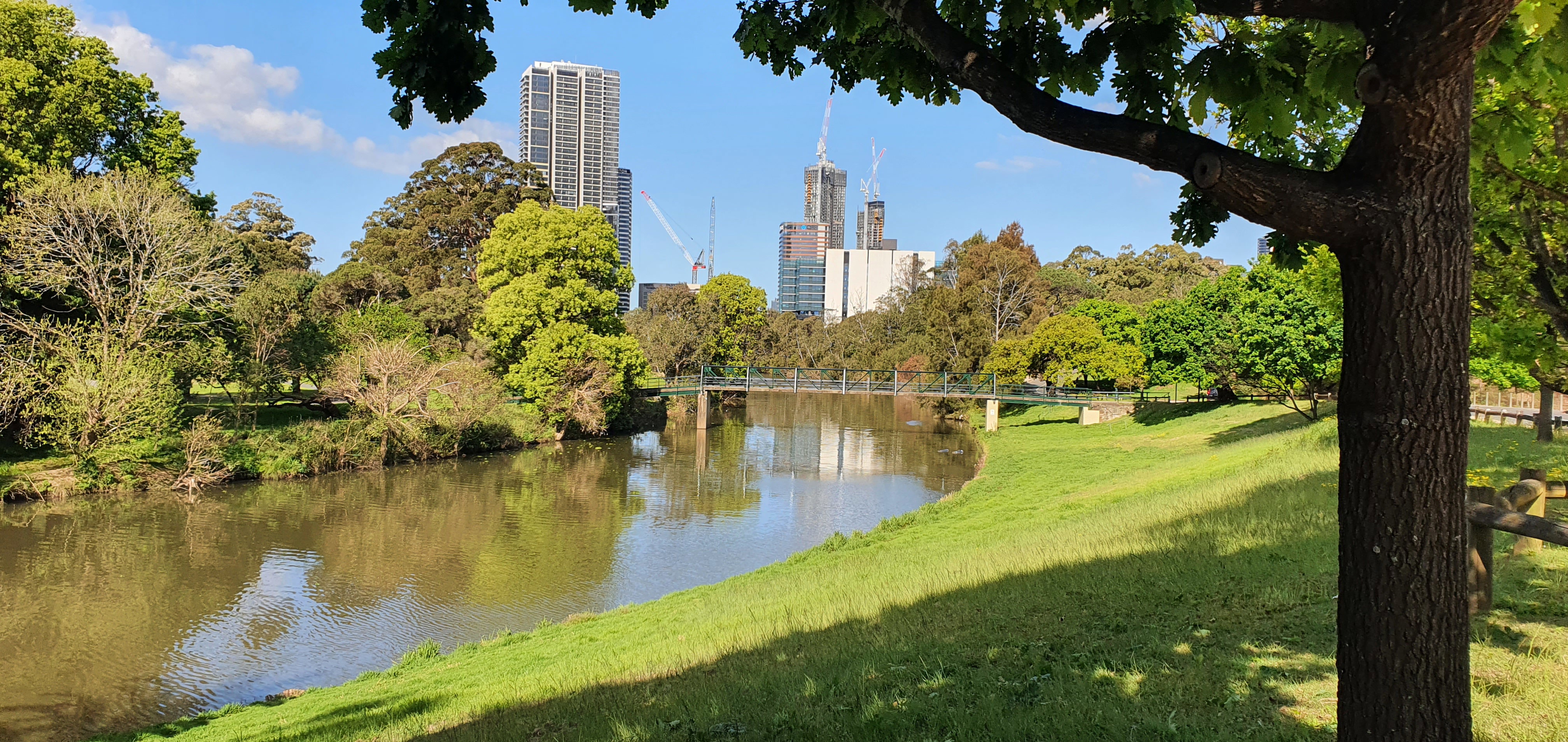
A greater awakening of Asian countries, a force economically and militarily.
There is something to be said about today’s us foreign policy regarding its continuing insistence in creating the ‘myth America’ of utopian proportions, and it stems from the roots of US society. History has taught and shaped it to create a demarcation of an inner looking out to the outer – though the world is no longer a huge expanse due to globalisation, it still feels like the frontier, the Wild West. Based on how the identity of the US formulates its policies to meet the perceived threats to its way of life (Bush and Keyman 1997, 311-328). This paper will focus within the Asian-Pacific region as the current tension has the impetus to push at the established order of the Post-Cold War, and more importantly there is a greater awakening of the Asian countries as a force to be noticed economically and in recent times militarily.
This paper will argue that ideological differences between communism and capitalism have not wavered even after the cold war, although the US enjoyed a period of being a unilateral hegemon that created a rule based world order. This order made it possible for the rise of the Asian-Pacific region countries and the mercurial economic and recently military rise of China that has acted suspiciously (Ross 2012, 2) and is not perceived as a threat by its close neighbours and the US. To back the argument we will look at four factors on how ideological differences between these two behemoth countries are influencing geopolitical environment.
First we need to go back through time and look at the ‘myth America’ (Campbell 1998, 107) so that we can highlight and understand how their identity not only shaped but also is the driving force behind United States foreign policies adapted/implemented to justify the ‘self’ from the ‘other’ outsider. David Campbell argues *[that] interpretations of danger have worked, and continue to work, to establish the identity of the United States. This means foreign policy, far from being an expression of a given society, constitutes state identity through the interpretation of danger posed by others. This goes beyond the idea that there are domestic sources to foreign policy, however. Working within the more general problematic of identity/difference, foreign policy, as the policy of making things foreign, helps establish the boundaries of inside/outside, domestic/foreign, civilized/barbaric etc.* (Campbell 2008)
Second we need to look at the fundamental similarities in US foreign policy in the Cold War era to help us understand the actions that the US today is doing in trying to satisfy their paranoia of China that is now becoming a counter balance to US lead world order. Importantly we will see through this analysis that policies like ‘containment’ are relevant today as they were in the cold war era in reinforcing the identity of the US perception of the frontier boundary that have influenced it since its creation as a hegemonic state.
Third we will need to look at other political thinking that runs contradictory to the view that since the end of the cold war the world is no longer the same as it was in the cold war era (Ikenberry 2004, 609), however, it does not mean it is for the better. It just meant the rule based world order established allowed nation states to have dialogue and cooperative partnerships to settle disputes. With this factor we will see how quickly dialogue is lost when members of the order are perceived to be a threat and how identity is blinding or more importantly providing the impetus to ignore tell-tale signs that we are heading in the same road we were on at the height of the cold war.
Finally we will need to tie all these factors with the overriding knowledge that from the frontier/barbaric ‘other’ in the implementation of US foreign policy we will see that the fundamental differences of now’s’ policies with the cold war policies are at least allowing Washington to move towards a more evolved policy to suit the post-cold war world we all live in today. What this means is that the lessons learnt before do come into play, but the threats experienced these days are so running parallel to what they were, moving forward has the look of policies from the past Cold War era.
The ‘myth America’, what does it mean? And more to the point how did it come about to shape foreign policies the US have implemented to provide them with the security from the threats of the ‘other’. The question of where to begin will not help so we must look at the make-up of what the US has done within the last century to really see how far they have come in changing their ideological thinking from its American roots. The puritan ideology of a God given right to do what’s right and true to how the US is on the path of evangelical direction in dealing with any threats outside its boundaries. Throughout its short history we see a pattern emerge where there is an image of old English/European settlements being supplanted not in a literal sense towards the view of the world around America as a frontier. This notion of the frontier becomes a repetitive idea of first ‘Amerindians’ being the perceived uncivilised barbarian then the ‘negro slaves’ who were instrumental in the American society to function yet are an ‘other’ to the isolationist policies pre-world war 2 (Campbell 1998, 109-132).
What is highlighted here is that US society and its identity play a part to how it treats anything that is foreign as being un-American, and that’s what it is. A notion that anything perceived as being outside of the palisade or human perception will and have become the interpretation of danger, a danger to an American way of life. And Campbell is right when he says identity is not set in concrete, it is free flowing and changes based on the experiences. However, there is this deep rooted identity that changes but doesn’t change in how it interprets danger coming from the frontier. A paradigm shift moving away from ‘myth America’ that still nips at the seams of US unilateral world order. Although the Cold War is finished there are now fundamental differences in ideological reality in the Asian-Pacific region that is becoming the danger stemming from the great Chinese unknown which leads us back to the barbarian ‘other’ premised by Campbell.
So what are these fundamental similarities in US foreign policy between the Cold war era and Post-Cold war that are in effect, and deemed relevant based on American interpretation of danger. Similar policies the US had in the Cold War and still exist in Post-cold war – Containment through economic cooperation and ideological foreign policies, in examining this similarities we must establish what the policies meant for the rest of the states that were caught within these circumstances as they too played a significant part and were instrumental in being a counter balance to Soviet ambitions.
Examining how the policies affected middle powers in the Cold war period we have three factors that have fundamental similarities to post cold war policies, first Kennan ‘containment’ policy. Yes, this paper is in the stance that Kennan had inadvertently pushed the United States to adopt policies towards the USSR in ensuring their socialist ideology does not spread outside of Russia. So militarily the states within Europe were not threatened through ‘hard power’, in fact they were far from it, and the danger is through the spread of the ideology of communism. And the way they US countered this was through ‘containment’ by way of ‘soft power’. Now there were incentives that the states in Europe were benefitting in joining the US lead alliance (Dobbins 2008, 30-32), but the bottom line ensured that capitalism survived within the region and even flourished through economic pervasiveness. Playing against the US was Soviet totalitarian form of government that was instrumental in forming the impetus for the US to choose who they allied with. From a puritan point of view there is the underlying, meaning away from the public, a sense that only countries there were deemed worthy of being a friend became part of this imagined community, all democratic countries.
Post-cold war we still see this policy, although it is not directed at Russia, none the less China as a state still qualifies as a form of communism that has a totalitarian form of government, which however has adapted capitalism within its realm. It does not however detract from the fact that they are still a communist lead state with ideological difference to that of the US, and the allies it chooses are those that have embraced democratic process in the running of the government. And through these policies the allied states are benefitting through more access and security from US military power. AS can be seen from this the policy is shaped by the identity of the US as the ‘good guy’ through the protection of the weak as Professor Makinda stated in his lecture. What does this mean? Well we can see that through this identity and interpretation of danger within the ‘frontier’ the US is acting as a pivot to ensure there is no destabilising nation like China or Russia, and is willing to act in a leadership role with the smaller countries globally.
Obviously there are contrary opinions to how the cold war policies were formed; there are intellectual beliefs that the policies were a reaction to the actions of Russia as was the case in the Cold War period to China and its actions today. The orthodox thinking is that the cold war was a manifestation of insecurities created by the opposing side that drove US foreign policies to adapt’ containment’ but when we believe that it will mean then that policies are as fluid as identity since there have been changes in the ideology of even the Chinese when it allowed capitalism a foot hold within China’s interior. This leads us back then to David Campbell and his argument that there will be problems with identity/difference and how policies are making things different, the orthodox thinking seems to fall within this making thinks different as identity provides the impetus for the interpretation of danger that then reacts to the actions of the opposing side and the policies established as driven by the identity of the administration that create these policies in the first place.
Now this is very important since we have established that even through orthodox thinking identity still plays a role in creating the policies and when you apply them to what is happening with the Asian-Pacific region you will see that the Obama administrations Pivot to China is in essence a ‘containment’ policy that was salient in driving the threat posed by China to its close neighbours (Ross 2012, 2), and in turn because Obamas’ identity as an ‘American’ it is inevitable that the Pivot closely resembles ‘containment’ reminiscent to Cold War policies towards Russia (Walt 1989, 6).
So now that we have established that identity and foreign policy are interrelated in ensuring the world we live in today is secure but with the risks of our way of life still around the corner we have the US to thank for its continued ‘good guy’ identity. But let us not forget that on the flip side of the coin communism as a movement looked to be on the brink of disappearing however it seems it has just been lying dormant and waiting for the opportunity to gain strength (Garthoff 1985, 31)and again rear its ugly head, ‘détente’ enable this to occur, through dialogue the ideological tension experience in the early days of the cold war has enabled China a communist state to rise and challenge US supremacy by using the stable order created by the US in order to combat the Russians in the first place. What this teaches us is that although there has been an easing of tensions between the capitalism and communism there has not been a shift in their fundamental differences, and this again highlights how US ‘frontier/barbarian’ interpretation of danger is being played out again in an era where globalisation has enabled a small incursion in an unknown or less known part of the Asian-Pacific region.
In conclusion those ideological differences between communism and capitalism have not wavered even after the cold war and both the US and their opposing sides have been in dialogue and eased tension it however, does not solved the ‘other’ foreign ideology that is different. The interpretations of danger towards this foreign ‘other’ is driving the nail between the logs to stop them from meeting together in full contact or in other words there is no compromise when it comes to the identity and ideology of both movements as they are a stark difference to one another and is driving and reinforcing the puritan and frontier self with the outer ‘other’. It is unfortunate that although these two movements are great in their own ways the stark difference are forcing a wedge and it is being highlighted by the fundamental difference and even similarities with the foreign policies adapted by the US to try and manage the situation in order to protect its interest and at the same time ease allies fears of the other. The question that needs to be asked then is how will the world be like if one of these ideologies does manage to totally eradicate the other, will there be a true peace or will that be another precursor to an even great challenge that will determine the true extent of power plays between all nation states.
**Reference**
K. D. Bush and E. F. Keyman, "Identity-based conflict: Rethinking Security in a Post-Cold War World", Global Governance, 3(3), 1997, pp. 311-328.
David Campbell, Writing Security: United States Foreign Policy and the Politics of Identity, (Manchester: Manchester University Press, 1998).
David Campbell. 2013. *Visual storytelling: creative practice and criticism: US foreign policy.* *http://www.david-campbell.org/politics/us-foreign-policy/*
James Dobbins, "Securing the Peace: Presidents and Nation Building from FDR to George W. Bush",Survival, 50(6), 2008/2009, pp. 29-48.
Raymond L. Garthoff, Détente and Confrontation(Washington, DC: The Brookings Institution, 1985), Chapter 2
John Ikenberry, "Liberalism and Empire: Logics of Order in the American Unipolar Age", Review of International Studies, 30(4), 2004, pp. 609-630.
Robert S. Ross “The Problem with the Pivot: Obama’s New Asia Policy is Unnecessary and Counterproductive”, Foreign Affairs, 91(6), November/December 2012, pp. 70-82.
Stephen M. Walt, "The Case for Finite Containment: Analyzing US Grand Strategy", International Security, 14(1), pp. 5-49.
The Problem With the Pivot - Robert Ross - A critical review.
Ross argues that the pivot created by Obama is wrong because it just compounds the security risk in the Asian region. A security risk that started when China became aggressive and *behave[ed] in a way that … aroused suspicion abroad* (Ross 2012, 2), because China knows they can’t stand the military might of the US. This essay argues that Obama is not doing anything new with the pivot since this is the same strategy used against the USSR in the Cold War. To support this argument, identity and its role on foreign policy must be defined so the pivot can be shown as a repackaged containment strategy reminiscent of the Cold War era. The reason why this has been adapted needs to be provided and examined in order to justify disagreement with Ross’ article.
There is nothing new with how China is behaving that is arousing suspicion, identity plays a big part of this. The US and China have ideological differences, the US being a democratic state while China is a communist state that will always lead suspicions. The phrase *“The good guys versus the Bad guys”* as Professor Makinda states, historically has been ubiquitous in how US foreign policy resembles its image, as a state that came from a frontier mentality and label a conflicting identity as a suspicious *“other”* (Campbell 1998, 9).
What is identity? David Campbell states *“Identity is constituted in relation to difference. But neither is difference fixed by nature, given by God, or planned by intentional behaviour”* (Campbell 1998, 9). How a state acts can affect international relations and thus becomes the “others’” and reinforces or creates a new variant to an already established American image (Campbell 1998, 131) of an external threat to its security. Ross purports to a US foreign policy that is so liberal thinking that the article attempts to convince the reader that it would be better to adapt an appeasement strategic employed toward Germany Pre-World War 2. We all know where that leads to, a reinforcement of Chinas’ confidence and capability as a counter balancing power to the US supremacy.
A *new US policy compounds… regional stability* (Ross 2012, 2) is very hard to swallow since past history has taught us that a “counter balancing stance” (Walt, 1985) by regional players have ensured that any threatening states are checked in, fears by the players are mitigated when, *states facing an external threat overwhelmingly prefer to balance against the threat* (Walt 1985, 15). So when Ross states that the region is becoming a tense region through continued US containment, does not ring true in hindsight of the tendency for states to balance a rising threat.
*“The United States has been the anchor of global security. This has meant doing more than forging international agreements -- it has meant enforcing them. The burdens of leadership are often heavy, but the world is a better place because we have borne them.”*
President Barrack Obama succinctly expressed the US stance based on identity based Foreign Policy in his recent speech regarding the Syrian use of chemical weapons that the order it established while in the Cold War and post have ensured a relative peace. A peace borne out of its Puritan legacy to do what is deemed right (Campbell 1998, 130-132).
Ross analyses that the US is overestimating the Chinese navy through their acquisition of an aircraft carrier, an old one from Russia and their newly created one is not up to scratch. In terms of hard power (Nye, 2004), the Chinese do pale in comparison to the US, however, the security threat is not solely based on Chinese/US comparison but within the states around the Asian region. This invalidates Ross’ view that the pivot is destabilising the region, through its rebadged containment strategy.
Then there is the internal problem that China is facing with its rising class gap and the social unrest with high unemployment. Yes, this does weaken the Chinese but is this enough to assuage the risk towards US allies within the region since its *policies are becoming more unilateralist and more dangerous* (Kurlantzick 2010, 59). As Ross puts it the PLA have been acting aggressively to get sympathy and legitimacy from its nationalist movements (Ross 2012, 3).
The increase in military presence in Asia by US military are making the Chinese leaders hesitant in backing down as they will lose face with their nationalists’ population (Ross 2012, 5), who are rising in anger from disputes regarding maritime territory, namely the Senkaku Islands against the Japanese and the Spratly islands the Philippines and Vietnam.
Even though the US have been in the region for quite some time it seems the Chinese are growing in confidence, Ross states they are just puffing their chests however I think Ross fails to comprehend that China is becoming aggressive and is threatening its neighbours. By sending naval forces with contested parts of the Spratly Islands and subsequently creating a garrison there Walt’s’ point of counter balance alignment (Walt 1985, 13-14) are driving the states in the region to seek US strategic alliances. There is a failure in taking into account the machinations of the smaller states such as the Philippines, Vietnam and Japan in convincing the US of their importance as a buffer for ideological difference (Bush and Keyman 1997, 312) between their democratic governments against Chinas’ communist leaning government threatening the stability of the Asian region.
There is some truth, however, when Ross states *“the US has… unnecessarily challenged Beijing by boosting its military presence in the East Asian mainland”* (Ross 2012, 5) as this does not give ground for Chinas’ leaders to back down from their aggressive posturing, in fear of losing their legitimacy with their nationalist movement. Realistically though, does this form a basis to stop an already aggressive state by a coalition lead by the US to contain Chinas’ sphere of influence. Being poses a credible threat to its Asian neighbour.
Ross clearly states that the US should back down from being a balance against China and presents an alternative US policy *of restraint, rather than alarmism, will best serve U.S. national security* (Ross 1998, 8). How will this be taken by its allies if it decreases its military presence? This would compound the countries within the region to increase their capabilities creating an even bigger threat to regional security. Worse yet this could signal to the allies that the US are abandoning them and that is a fear of the US in ideological terms based on defection to the other side as a form of “*bandwagon[ing]”* (Walt 1985, 13-15).
In conclusion, Ross raises some good points to consider for international relations analysts and for US foreign policy makers. This does not, however, warrant the articles argument that the pivot created by Obama is wrong, as it is based on what is a threat based on ideology between China and the US. As for compounding the security risk in the Asian region, it does bring a view that it adds to the risk but more importantly the stated goals of the pivot is creating a counterbalancing effect on a rising China. A sense of order created by the US post World War 2 allowed for a China to compete the US economically, and some even say militarily. Again it does not warrant a reason enough for the US to step back from the containment it employed with the USSR in the Cold War, after all it did win this war in the end. It would be foolish to not learn from its past especially when as a *new imagined state* (Campbell 1998, 131) the American identity and how it influences Foreign Policy stem from it *“internal”* preservation with the frontier, Asian region. The question that needs to be asked is, *What kind of world will we live in if the United States of America… choose to look the other way? (*Obama 2013).
Reference
K. D. Bush and E. F. Keyman*,* "Identity-based conflict: Rethinking Security in a Post-Cold War World", *Global Governance*, 3(3), 1997, pp. 311-328.
David Campbell, Writing Security: United States Foreign Policy and the Politics of Identity, (Manchester: Manchester University Press, 1998).
Joshua Kurlantzick (2002): China: Economic power, political enigma, The Washington Quarterly, 25:3, 59-67
Joseph S. Nye, Soft Power: The Means to Success in World Politics (New York: Public Affairs, 2004).
Obama, Barrack, 2013. Remarks by the President in Address to the Nation on Syria*.* http://www.whitehouse.gov/the-press-office/2013/09/10/remarks-president-address-nation-syria.
Stephen M. Walt, "Alliance Formation and the balance of World Power", International Security, 9(4), 1985, pp. 3-43
A simple short poem
Middle of the week vibe.
Looking at living a good life.
It's always a dream,
especially with cookies and cream.
Slap stick comedy for any illness,
it's the remedy.
No need for tears when life gets in years.
Even times change when you've walked a long range.
Shallow graves dug with shovels pushed down the throat like a drug.
How winds gentle breeze,
breathing slowly with ease.
Remembering random things dangling chicken wings.
Strangers all traveling on different directions stories unraveling.
Time still as a humming bird drinking the sweet nectar given.
Quenching life's desire to burn with hearts fire.
Beating wings of blur softly shimmering glistening fur.
Tender embraces savored like bite sized delicacies.
Imprinting lasting glimpses of longed lost feeling.
Life is short striving for something great able to pause and wait.
Should I look at the train or get on it.
Family support is important. My sister told me as I told them of what I'm going through. Three ability to talk of your honest feelings, when things look like a big mound of dirt is dumped in front of you, know you are not alone.
Yes, it will be hard. Own it. This is not my words. Spoken to me by my older sister.
I'm not lost I think, it's the lesson I'm hoping to ease into. The existential reason to have a reason. Listening to history I'm thankful I've forgotten how and what I'm seeing right now.
How time sweeps inconvenient truths under the rug, I'm hopeful I can sweep some of mine.
As I sit here waiting for the train in the middle of the night, thoughts of what life will be in the coming months ahead of me. I see people going home as I'm heading home now, but for how long can I call it such...
It's not all lost of course. It's not all from and gloom. My head swims with a sea of rolling waves heading on different directions with no outward guiding light to shine a way.
Looking back I know I've not been perfect. I deserve this fork on my path. One way or another I've reached it and while I'm surprised my sinking feeling is my inadequacy to keep them with me while I walk a different path... All alone. For how long? Only time will tell.
Just living.
It's a simple enough statement. I can't tell anyone here what I am feeling other than I am not in the best state of mind. I know I am feeling something because I go to bed with my stomach in a knot and I am not even breathing like I have eaten something off.
I know I am being very evasive even though this is my writing and you are here to listen to my tale but just know... I am in limbo at the moment. I hate it when this feeling happens to me.
Lets just all say I am finding it hard to now sing Goo Goo Dolls song 'Iris'. It is cutting into my very fiber... the melodrama is killing me.
*When everything's made to be broken...*
It's okay, just breathe they say. Everything will be OK. It takes two to create things and it takes just one to turn the other way and walk a different path to let things start to crumble. Again the melancholy... This is not what I had set out to do with this platform but its the only thing that is eating me now and I have to admit most of my happy posts will probably get all gloomy in the next few weeks so I will apologize now since I did make a point to myself of posting daily here.
There is no amount of trying to find something to write about when everything I see will just probably die out in a vain attempt to paint a whole different kind of picture. Of course I will have a good moment where I can laugh but I always look back at Robin Williams and be reminded to just breath and sometimes not pretend to be happy all the time.
I just have to think back at this conversation and know I can still make it funny when I do find the occasion to get out of my dark clouded head. Its always disconcerting how I can just flip easily then slide back into the gloom brewing in my horizon.
https://www.youtube.com/watch?v=NdYWuo9OFAw
Well I want to just say I hope I will continue with this writing goal of mine. Maybe my setting will probably even change completely. I will try to perk up in my next post, I will try. I can't promise but I will try. That is all I can do for now.
I will leave this now because I think will just drown out my gloominess for a bit and see if I can either add to this later to maybe I will just keep going. After all my effort here is not something that requires me to go out of my way.
I have been talking to some of my friends to get their feedback on how I am gloomy. Some have told me to seek help in case I have a mental breakdown. I really don't like writing like this since I think my pride and ego is affected severely. I can talk about it when I am speaking since I freely express how I am feeling and are able to withdraw just as quickly and smile to make myself look like I am all cool. I know it's not healthy I can really tell its now since when I am not distracted I am feeling the knot getting tighter and tighter.
Wish I could just drink all the time so I can just crash out and burn so I don't have to think... Drown out the thoughts and just forget. Yeah I am afraid I will lose my grip of sanity... Just breathe... Everything will be alright... right...?
In Tearoom Trade: Impersonal Sex in Public Places. A critical review.
Humphreys argues that sociologist have avoided studying deviant behaviours because it poses serious problems from methodological and emotional obstacles. These concerns test them as they have to break ethical grounds that undermine who they are when they divorce themselves from ingrained rational norms. In order to conduct his study Humphreys hides his identity while pretending to participate in nefarious homosexual activity. Yielding data needed to understand why homosexuals display deviant behaviours. Devising workarounds to tackle obstacles he encountered in his research on this minority group looked on with derision by society in the 1970’s. This essay will argue that in order for sociologist to study deviant behaviours ethical and moral grounds must not hinder their ability to seek information from their subjects. Divorcing social norms does not mean a loss of justification in order to gain insights into secret worlds hidden because of the undesirability of breaching social norms.
Passing as a deviant Humphreys was able to get an insider’s view of deviant homosexual’s behaviours to try and counter defences developed against outsiders to protect themselves. Humphreys attributes his unwillingness to use his professional credentials to ensure ‘a social desirability effect’ (Travers 2013, 244) did not occur and break down these adapted defences to gain a candid account of data that ensures Humphreys work is founded on sufficient methodic sincerity (Malinowski 1932 ,3). In order ‘*to make contact with respondents under the guess of another gay guy*’ builds rapport to gain trust and ease (Travers 2013, 241) for Humphreys to observe what happens in ‘*Tearooms*’. Through the divorce of social norms by passing as a deviant Humphreys gains the observance of a ‘pure type’ of social action (Weber 1978, 4) to get rid of the limitations brought on by moral and ethical grounds in allowing him to observe freely and with less influence on how deviants acted.
Because of this Humphreys not only provides a strong valid point that social norms hinder sociologists if they choose to allow ethical grounds to limit their research. The very bias that makes these behaviours being labelled as deviant distorts the motives for their actions as the only other studies conducted regarding this group was from law enforcement agents catching them in the act or when seeking psychiatric help. In turn the undesirability of not being part of deviant behaviour is in part just an irrational bias brought on by what we feel as being radically differing from the values at the time which made it hard for society to understand these actions emphatically (Weber 1978, 5-6). Justification of divorcing from social norms is further supported when Humphreys poses the question, How ‘normal’ could that activity be? If they had chosen to allow scientific ethics to rule their research would they have been able to observe a ‘show’ and uncover the defences adapted by the deviants they observed.
Serving as a ’*watchqueen*’ allowed Humphreys to be part of the action without observing a ‘socially desirable effect’ (Travers 2013, 244) to distort the data he records observing his subjects performing their acts without the fear of them making a ‘show’ and preserving their scientific integrity. Humphreys quotes Bruyn on the challenge he encounters when observing as a participant of becoming natural with the observed, maintaining scientific integrity and ethical integrity (Bruyn 1966, pp 206 -210). And based on the quantity in his data Humphreys succeeds in ensuring they have a lot of and varied because of how natural he becomes in the ‘Tearooms’. However it must be pointed out that on ethical grounds at the time they had failed Bryun’s stated ethical integrity because Humphreys hides who and what they are there for. This again highlights that if they had allowed themselves to limit what they were doing to get data because of moral dilemmas without divorcing from social norms their research would not have had much data to work with.
As an ethnographer Humphreys provides a near accurate presentation of deviant behaviour because of their participation as a deviant with very systematic sampling of data collection based on t ‘time and place sampling’. Humphreys delves deep into the deviant’s hidden world and was able to record minute details in great quantities with a large data set to paint a clear behavioural picture. More importantly he does not exclude anything in his studies ensuring nothing is missed. Even if at the time data collected looked like there were human errors in car registrations, he points out that these instances could be a more direct deviant defence to ensure they are covering themselves. This is one of the strong points in his work because the degree of care and amount of data he collects attempts ensures nothing left is to chance. Humphreys ensures that any perceived presuppositions they may have based on societal biases by exclusion of certain irrelevant data everything they record does not get distorted from the ‘pure type’ of rational action(Weber 1978,4).
Although on ethical grounds Humphreys fails as a sociologist when he hides his identity to the homosexuals, he still displays beneficence when he omits their identities in his records. Along with hiding who they are, the records are also kept at a secure vault to avoid incriminating his subjects if his records are found by the authorities (von Dietze). This is a very big saving grace for Humphreys in that he protects his subject from the deviant acts they are performing in the ‘Tearooms’ while at the same time he was able to collect so much data to enable him to paint a clear meaning in order to ascertain what are true and valid behaviours observed (Weber 1978, 4) by them. For Malinowski this indicates that as an ethnographer Humphreys has succeeded in gaining the inside story of the deviants life from the through the divorce of social norms because without this they are looking from the outside in. This then gives the reader the true picture or an insider’s perspective of what their experiences are (Jennings).
Based on the number of data collected by Humphreys through direct observations provides an observer subjective perspective interpretation but would’ve lacked any concrete motives or meaning. As Weber story of the man chopping wood the observer would come to a rational conclusion that they are doing so because it is their job or they need firewood. However because Humphreys only succeeds in a strong hypothesis from the great quantity of data collected, it would still be a hypothesis. In order to validate their sociological work they incorporate ‘in-depth interviews’ (Travers 2013, 242) to the subjects through a men’s health survey conducted for the area their subjects belonged. While this achieved the stated aims in verifying Humphreys hypothesis on the subjects backgrounds they did so without them knowing the extra questions asked in open question form were not collected ethically. Without the divorce of ethical grounds the data they collected would in turn be based on in conclusive hypothesis as there would be gaps in them and limit the view from the inside of the group thereby distorting their interpretations.
In conclusion the success of Humphreys work in understanding deviant behaviours would not have been possible if they had limited their approach because of social norms and only through divorcing from them were they able to provide us with a clear and accurate picture of who and what made up these deviants . More importantly it allowed him to present an insider’s view on why it happened based on the divorce of social norms. Without it the defences adapted by deviants a greater possibility in observing a ‘show’ rather than pure picture to collect their data. In turn the hindrance of social norms of derision would only give a picture of law enforcement and psychiatric studies that may not have had the intended picture because the aims were not Humphreys aims in understanding deviants in their ‘natural environment’ without disturbing or influencing their behaviours which would mean the failure of the work as a sociological study of deviant behaviour. It is interesting to note that because at the time social norms meant everyone that were ‘straight’ looked in derision based on ingrained rational views that put these deviants and even labelled the acts and the person as deviant did not really give a good picture of what it meant to be a gay man in the past.
**Reference**
Bruyn S (1966) The Human Perspective: The Methodology of Participant Observation, Prentice Hall, 206 -244
Humphreys, L. 1975 Chapter 2: Methods – the Sociologist as Voyeur. In Tearoom Trade: Impersonal Sex in Public Places. Chicago, IL: Aldine, 16-44
Jennings, Mark. “Observation and Social Research” Lecture, Murdoch University, Perth WA, March 26, 2015
Malinowski, B. 1932 Introduction: The Subject, Method and Scope of this Enquiry. In Argonauts of the Western Pacific. London: Routledge, 1-25
Travers, M. 2013. Chapter 10: Qualitative Interviewing Methods. In Social Research Methods, 3rd ed. Edited M. Walter. Melbourne: Oxford UP, 227-253.
von Dietze, Erich. “Ethics in Social Research” Lecture, Murdoch University, Perth WA, March 19, 2015
Weber, M. 1978. Chapter 1: Basic Sociological Terms. In Economy and Society: An Outline of Interpretive Sociology. Berkeley, CA: University of California Press, 3-26.
What I learned being here for a week.
The biggest things that I have learned from being her on read cash for a week has been the amount of typing I have done and this has resulted in me learning further the limitations of my typing speed. I was hoping to write something for you guys to consume in a short amount of time with a sizeable amount of word count.
I am afraid my focus has been on the word count which I hope has not made my posts lose its quality. There are lots of typos in each line that I manage to write. The red lines are my friend, the saying I keep stating since these are indicators I am now using to give myself the prompt to go through and fix my errors. I just hope this next coming week will mean I will improve my accuracy of writing.
There is also my spelling of the word 'that', this has highlighted to me my writing style on how I spell it every time I use the word. Which tends to end up as 'taht', it is minor in error but none the less I am getting perplexed since the red line appears on them and I am convinced the best option is to try and not use 'that' in most of my writing/posts in the coming week. Then again only time and effort will tell if I am able to achieve this goal. Its minor but important in my development as a writer.
Back to the word count, I have yet to sit down and manage to write up a thousand word post as of the last week, my first week. My standard I have set myself is a big one but I feel it will be well worth my time to adopt it into my writing style for future posts I plan on posting here. I can't think of a better exercise than achieving a writing style I know I have consciously made an effort to do.
One thing that has made me also realized being here and posting for a consistent week of daily posts is the fact my other endeavors or use of time is affected since I am now spending brain power to write something I think is worth my while, I just hope you my reader can appreciate my effort. Word count websites are my best friend. It helps me get to a decent amount but I think I am now again very focused on the count as opposed to the actually story or topic I have set out to write.
I am also unsure if my thesis style security focused posts are of value here. I would really appreciate feedback if there are other topics you think you would like me to cover.
Being in the home stretch of this post again I am at my wits end as I am now trying very hard not to check how much I have written. It feels like a fruit picking quota I have to achieve in order for me to go back home and live with my days wages in my pocket after a hard days work on the field, but of course I am now feeling guilty because I should not be comparing writing to being outside picking fruit in the hot sun or on a cold frosty day. Picking for 8 hours straight. Since after all I have just spent only about an hour writing this post for both you and me.
And with that thought in my I will have to leave you all with a big thank you for being here and putting up with my writing exercise for the week I have been here.
Till tomorrow then.!
*Ciao!*
I blinked and now I find myself outside the house looking in.
I spent all my time trying to slowly but surely becoming something I was never, but now that I have achieved this little change I had not realized you had gone out of your way to put yourself on the top with out the thought of keeping me there. I mean how am I not supposed to get angry?
Yes I know this is the random thought with no context for any one of you reading this but this is something that is nagging inside of me as I write it. Being lifted out of my chest and still not making it feel light. IN fact I feel constricted and just down right confused. I feel it is so out of touch for me to then be surprised at the surprise happening to me as time I had thought was not meant to change since after all I have asked to in the first place. Well I guess I should be selfish. No I am not a victim but now I am sounding like one... FML...
I blame myself for letter the ball go. I had trusted the process too much thinking I could control it. My ego blinded me from the knife being inserted and now it is being twisted to completion. Too late now to pull out with out cutting my artery. I say to myself be selfish. Don't let anyone ever get you in this situation again. Sometimes being rigid and inflexible has its uses. It should have been simple with just life passing by but now I am found on the outside looking in without realizing I was the one who put myself there in n the first place by allowing it to happen to me.
I am lost now and cannot for the life of me see light at the end of the tunnel and still I am left feeling guilty at where I need to go in order to keep myself afloat because after all we as in me are supposed to just wait patiently and get thrown a bone to grind on in the hopes there is some meat to eat. Again I am left ranting back and forth because off the self inflected hole I had dug myself in. There should not be complaints since it will mean I am a sore loser in the first place.
I feel this is the first time I have really realized how much this is going to weigh me down. It is always going to be hard on my head and should when I walk out the door. Not being able to look back and see where I have come from since I will just blind me with grief at the loss of something I had worked on diligently.
To think going round and round in circles was never going to happen but every time I look it is the same path I see before me like a shot in the dark with no way of getting things in order. I hate to be negative but sometimes when the light is turned off, no amount of opening your eyes will allow you to see in the dark. With no flashlight in the had to allow me to at least find the door with my hands fumbling like a child trudging through crocodile infested waters ready to snap and roll.
Oh well I guess this is a new roller coaster ride I have strapped myself on with no conductor to stop it in case there are people flying off the sides...
*Inflexibility of the system is the cause of its downfall. There is no initiative from the lack of command structures that support its lower officers in adapting to situations.*
Guess I should start packing and just breathe out the panic from my hands. Thanks for visiting my confused thoughts.
Tensions between borders can cause war.
In today’s time it is imperative that we come to the root causes of war and how these can be stopped so that we can live in peace. This paper will argue that China’s aggressive behaviour in the south china sea is driven not by its rising status as a super power but from the way the west and it allies have threatened China’s security when the US enacted its Asian Pivot strategy. In order to explain this the paper will first outline Clausewitz adage that war is politics ‘by other means’ in order to for us to see the political objective by strategy, war and conflict (Till 2012, 148). We will be investigating the three levels of analysis (Mayall 1990, 37) to show how the US and its allies behaviour towards China are driving and motivating both parties towards eminent war.
By other means signifies that once war starts a state has no other recourse but to see it to the end. All focus will be on annihilating their enemy to gain its grand political objectives (Strachan 2007; 97). The US and its allies in Asia want to contain China in order to stop it from threatening its hegemony. At the moment there is no violence between the two parties however there are drivers that are pushing them closer. Taking this into the picture we can see that with Clausewitz adage today there is every reason to resolve any issues before war starts. There is a security threat that they feel since the Asian pivots reason of being is to make China a small power and this will be explained in detail by the three levels of analysis. The levels will outline drivers and motivations that could lead to Clauswitzian thinking towards war as politics by breaking it down to the individuals, states and systemic environment and the very drivers and motivations that could trigger war in Asia.
So what causes wars on the individual level? In the individual level the motivations of leaders that decide when to go to war vary from their mental state; misperception of their states capability towards their rival and vice versa; to the need to deflect attention away from them (Stoessinger 1993. 80-123). If Xi Jinping and Barrack Obama were both showing signs of erratic behaviour it could be argued that their mental state is leading them in going to war with each other’s state. This is far from the case since both have not acted like Kim Jung Un. Both have acted without any major cause for sudden decisions that have led to wars in their time. Therefore, mental state as a driver to war in Asia is out of the question.
America is at a juncture in its economic place in the world, there are concerns within the US that it is being overtaken by China economically. Obama is right to try and combat Chinas rise since it threatens US interest when China starts to muscle in on their interest. A war with China would give its economy a boost (Barro 2001). For Xi Jinping China is on a downturn of its GDP and there are concerns there will be a bubble within its rising economy, there would be incentive for it to go and start a war with its neighbours in order to gain nationalistic fervour with the Chinese people. A lesson from Mao’s day in its war with India.
China is flexing its military might in the south China sea, building islands within the Philippines, Vietnam and Malaysia through their nine dash line. There is a sense of China having confidence in its military power against the smaller nation since US influence in the region is waning. A clear driver is being displayed by Xi Jinping government in its aggressive actions. The misperception could be its rising military capability against the US. Some would argue however that it’s a long way away before China’s military could stand toe to toe with the US.
Leadership within a state can be attributed to starting wars and when this is added to the state/national level of analysis the driver and motivations towards violent conflict in resolving political disputes especially between the US and China becomes a high stakes game. The national need and war to gain strategic depth in order for China to counter US containment strategies while a diversionary war to suppress domestic turmoils drives China to act aggressively as tensions within a region creates an opportunity to have its population focus away from its internal state of affairs.
Within the last few years China has been steadily building military islands in the territories claimed by its neighbours who are also part of the US Asian pivot foreign policy. The strategic depth created from these islands are to counter US naval power. In a realist perspective both sides are competing through increases of military hard power in the Asian region. More importantly this incentivises creating more reason for greater armament of small states like Japan and Philippines to try and counter Chinas aggressive move in the region. AS politics ‘by other means’ as long as human preferences and assertions of will result in a clash there is politics, and in this case strategic depth competition in the Asian region are driving towards a likely war.
China has grown rapidly and at time was poised to have steady growth however there are signs that all is not well within its interior. While this is not a US lead turmoil within China it does create the necessary catalyst for the CCP to create tensions within the Asian region in order for it to divert attention away from economic woes to issues that create nationalistic fervour. Hence the territorial disputes in the South China Sea is the perfect motivator to act aggressively and at the same time there is the added bonus of gaining territory to get resources in the region another driver of war. The politics of gaining the resource and diverting attention means that China is able to exert its political will by other means thought coercive means.
With the last two levels of analysis being the individual and state analysis the last level deals with systemic systems created by the US that has created the environment driving China into its aggressive footing. In the previous point we can see that the US has been pushing for democratic processes towards China. This is a driver to war as the differences as China is a communist country that is in constant pressure to adapt a more democratic state system (Huntington 1996, 20-21). The US also has not stopped its push for a more liberal thinking in China by pushing for a human rights led ideology. While China is also to blame by not adhering to international systemic norms of respecting human rights the constant push by western norms are driving the CCP to push back hence this is creating catalysts for war.
In conclusion China’s aggressive behaviour in the South China Sea is driven by the threat posed by the US and its allies on China’s security when the US enacted its Asian Pivot strategy. From the individual level the pivot drives China’s leaders to misperceive US and its allies’ intentions on China driving it to politics ‘by other means’. On the state level the pivot will be used as an opportunity to divert and strengthen CCP hold on power in its interior by creating nationalist fervour against the west. At the systemic level the difference of democratic and communist political systems is driving these two parties to war since there is no way they can co-exist in the same arena politics ‘by other means’ is eminent. The question that is important is how will this issues be solved when all parties in question have clashing interests from arms competitions, resource and territorial claims.
Reference
Barro, Robert. *Why the war on terror will boost the economy* Bloomberg.com, accessed 7 October 2016. http://www.bloomberg.com/news/articles/2001-11-04/why-the-war-against-terror-will-boost-the-economy
Huntington, Samuel P. *The Clash of Civilisations and the Remaking of World Order*, New York: Simon and Schuster, 1996, Chapter 1, pp. 19-39 (‘The New Era in World Politics’).
Mayall, James. *Nationalism and International Society*, Cambridge: Cambridge University Press, 1990, Chapter 3, pp. 35-49 (‘Nationalism and the Creation of States’).
Stoessinger, John G. “Why Nations Go to War.” In John G. Stoessinger, *Why Nations Go to War*, New York: St. Martin’s Press, 1993, pp. 20
Till, Geoffrey. “The Evolution of Strategy and the New World Order.” In Craig A. Snyder (ed.), *Contemporary Security and Strategy*, Third Edition, London: Palgrave Macmillan, 2012, pp. 147-174.
Waltz, Kenneth N. *Man, The State and War: A Theoretical Analysis*, New York: Columbia University Press, 2001, pp. 80-123 (‘The Second Image: International Conflict and the Internal Structure of States’).
What I do when I get to work after months working from home.
Cold air in the morning wakes you up.
Being back at working in the office after 2 months being away I had thought would be hard to get myself out of bed to have a shower and change into office clothes but I am quite proud I had no qualms with being awake and lucid walking to the train station. It helps of course the air is brisk at a cold 8 degrees Celsius. The eyes and the skin are wide awake without any coffee when you are walking to get warm.
Surprising detail is the toes are feeling like they are about to experience frost bite especially when I am not wearing my thick boots. This is another story to begin with. I am thankful there is no more fog coming out of my mouth as I breathe out, spring is really here for me to enjoy summer in the coming months ahead.
The trains are running.
A week before the trains to work were all cancelled from some sort of industrial dispute, damned communists! LOL no I am not hating on people wanting more pay as long as I will not end up paying more to use the trains just so the drivers are paid more in the end. I mean how can I support something like that when I myself will not get the benefit in the long run. Greed is not evil for the one getting the benefits they are aiming for and the bystanders are the ones who will get to see how it will be taken. I digress... sorry.
Well the trains were not as packed as I had remembered when we were told to work from home in the middle of winter. I had noticed the numbers on the trains were growing but on Monday that was not the case since I was easily able to get a seat, of course I am wearing a mask because since now it is easily acceptable socially with no one batting an eye to anyone wearing one. In fact I have always been in favor of wearing masks on public transport since airconditioned settings are recycled air being pumped with everyone's breath being part of the air you are breathing in and out. This feeling was before the pandemic. I an again digressing...
The warm office.
I get to work and straight away I am greeted by a desolate place, I think Mondayitis reared its head on everyone because there are hardly anyone on the floor. The lights were almost all out and the seats were mostly empty.
*'Did you not get the memo?'*
No idea if they got the memo or just refused to get out of bed since the warmth of the blankets can sometimes stop you from getting out onto the cold air outside. Well I was thankful anyway that I had no problems since I am now in a warm office. Free heating is always better than one you pay for at home while you work. Of course wearing pajamas while doing work has its perks, we all know wearing something professional is also a great motivator to get work done.
After the initial set up of logging in to my desktop and phone I am greeted by my long lost workmate to coffee. Of course I delay for 2 seconds, enough time to press the lock key and put my jacket back on. My boss looks at me with that expectant smile, knowing well the importance of drugging me up with that dark gold . Double shot and full of caffeine I am zinging and doing a hundred miles an hour typing away at anything and everything my buzzed eyes and brains can handle.
What did I learn from this? Well the simple answer is I am more motivated to do things after a cup of coffee. Maybe.
Rethinking National Security and the Role of the Military - A critical review.
Carl Builder guide us on the military’s role towards national security by comparing the path with using Keenan and Brodie’s containment and deterrence doctrine established in the 1950’s. Using Brodies thinking of 4 key concepts: theory, mission, vision and strategy to come to what national security is at the time of writing. He posits that national security can be re-formulated since while the dangers are not the same form they are of the same kind.
To simplify this critical review, we will only use classical thinking of liberal and realist thinking as it is tacit knowledge world order has always been anarchic, closely related to Kant’s thinking that man is self-maximizing and to lump the status quo based on three concepts leaves gaps that are far reaching. This review will argue that Builder’s article builds a compelling concept but lacks the necessary details to enable reader to get a concise and complete picture of the militaries role when there are too many metaphors used to try and fill in the gaps.
To illustrate the gaps, we have to investigate the three key reasons being the press, nuclear and information access by analyzing how the military relates in its entirety while relating them to the liberal and realist thinking as this will help us relate it to international relations, after all the world is anarchic (Bull, 2012, pp. 181-182). States have no higher authority? While this is true we must take into account how world leaders from the whole globe reacts towards other states, information plays a key role in this case it was an elitist (Saddam/Baath party) who had too much information but misinterpreted how it would be taken (Boot, 2003). This was a military action which brought about a swift response from the UN security council.
*“It is apparent that the challenges that confront us today are only different in form, but not in kind, from those that we faced 50 years ago.”*
It is apparent Builder wrote this before the realization of China’s island building in the South China Sea, the national security or in this case national interest is being argued that US has no more interest within the Asian regions stability. Builders builds on the different form but not in kind by arguing that nations no longer threaten US security as *“possession of weapons of mass destruction may not be deterrable “.* This statement would be supported if there is no longer a threat of total war, after all as the US is a democratic nation public opinion will ensure instability within the globe would garner interest towards the Asian theater. Comparing this to Brodie’s way when *politics … intrude on military plans even in circumstances where there is strong agreement on overall ends and means – military strategy as public discourse* (Sholtis, 2013, p. 1) could occur at the **theory, mission and vision** stages if it involves rethinking national security.
Builder’s point in the military hanging on is no longer applicable as the threat of China looms and makes this point moot. While it is true that there is a large threat from no state actors the world we live is ever evolving. At the time of writing his article it was arguable that the role of the military has changed it lacks in foresight as world affairs are constantly changing. It does prove that time for change is ever quickening it does not hold true when thing evolve back to a nation to nation state collision.
*Capping demands against an unlimited threat and insuring the most cost-effective use of the public’s blank check are no longer the challenges of national security.*
Is he arguing the US is no longer interested in the Asian region as a national interest? After all security and interest are intertwined. He states nations survival is no longer at stake, does not sound true in the current climate we face today because North Korea looks to be gearing a more total war approach towards the US and its allies with no sign of negotiating state interests against perceived cost of action. Putting this into the 4 concepts of Brodie’s we would lump this current situation into the **theory, mission, vision and strategy** with an end goal of the use of traditional military as a means to win wars not to avert them.
*Although democracies have proven themselves in providing balancing mechanisms at the national level, the contending forces have gone global and no longer respect national boundaries.*
Builder gives a strong point towards balancing acts that allow for elitism and egalitarianism to coexist within national boundaries but with technological advances both are free to roam and not worry about national constraints and this poses a security threat as one if unchecked can cause problems. Because of this statement it is clear that rethinking national security is important to understand how to combat or mitigate its effect on the global scale. Further reading shows Builder is leaning towards a liberal view that the “status quo” power being exerted by the US is for the greater good -*altruistic roots.*
*Many believe that Asia’s peace is the product of inexorable forces of history, which are moving international society away from a world dominated by nation-states towards a system in which non-state actors are the most important players, and pose the most significant risks. (White, 2008 - 2009, p. 86).*
achieving political unity through domestic debate became problematic as conflicts were defined less by apparent existential threats than by choices made along a sliding scale of national interest (Sholtis, 2013, p. 4). Is Builder referring to this as the term “National Security”? Interests and security are interchangeable as both can arrive at the same political end.
*Our challenge is not to find plug compatible replacements for containment or deterrence, for is it to find security p0olicies that will satisfy or please our diplomatic and military establishments*.
In the realist perspective rising powers and nuclear armed states that are considered “rogue states” would it not then be argued that containment and deterrence. Can East Asia preserve the order it has enjoyed during the past few decades? If it can, Asia’s future will be assured and Immanuel Kant’s vision of perpetual peace will have come a long way towards fulfilment. If not, major war among great powers could again become not just thinkable, but frighteningly possible, or even probable (White, 2008 - 2009, p. 86).
Let us hope that this thinking is not “constructed pragmatically, adapting doctrine to particular problems, not being its slave.” Based on Sholtis view Builder’s narrative about the concepts towards change as a quickening of change to the status quo as long as it does not become doctrine then only those that see war as a clear and present danger will be willing to make the sacrifices of national interest needed to preserve the peace (White, 2008 - 2009, p. 88).
References
Boot, M. (2003). The New American Way of War. *Foreign Affairs, 82(4)*, pp. 41-58.
Bull, H. (2012). The Anarchical Society; a study of order in world politics, 4th ed. In H. Bull. Columbia University Press.
Sholtis, T. (2013). *Military Strategy as Public Discourse : Americas was in Afghanistan.* Taylor and Francis.
White, H. (2008 - 2009, December - January). Why War in Asia Remains Thinkable. *Survival 50(6)*, pp. 85-104.
Carl Builder, Rethinking National Security and the Role of the Military (Santa Monica: RAND Corporation, 1995). This paper can be accessed through this link: https://www.rand.org/content/dam/rand/pubs/papers/2006/P7943.pdf
Does morality matter in security policy?
A loaded question that is very relevant to the Asian region, as question deals with moral dilemmas posed with the use of military action and its impact on civilian lives. David Fisher (see reference at end of article for full details) argues that policy elites use optimism and moralism in the policies they announce, but within closed doors the language of power is prevalent that begs the question, is it moonshine or do moral considerations sometimes shape security policies. And to support this argument he provides three examples the legacy of area bombing; the moral panic over nuclear weapons and the morality of human intervention that spans over half a century.
This review will argue that Fisher hits the nail in the head with how security policies are shaped by moralism and optimism however there are still actions by states that would suggest morals are but a fraction of the reasons some policies are implemented. To support this, three examples given by Fisher will be analyzed in order to draw on how they help security policies that needs hard power to implement optimistic and moralistic security policies. Fisher states *these areas of debate are closely interlinked by a profound ethical concern for the protection of innocent civilians from attack, as required by the Just War principles of non-combatant immunity.*
The legacy of area bombing is the beginning of the new internationally accepted security policy that puts in vogue the Just War principles by the lessons learnt through debate and guilt of the effects it had on innocent lives destroyed by this policy. The British campaign at the closing of the war to attempt at weakening the Germans citizenry support for the Nazi regime on strengthened the German peoples will to resist. Looking at this from the perspective of China in their modern experience, what comes to mind in the rape of Nanjing by the Japanese, through their indiscriminate abuse of civilians propelled and hardened the Chinese in their struggle against the Japanese which draws comparison the resolve shown in the European side at the time of WW2.
Where the Japanese did not have any qualms implementing the destruction wrought on the Chinese at the height of their occupation of China, *shame discourse does not dominate Japanese images; shame is a product of Western understandings of Japan* (Thorsten2004, pp. 223-4). Post WW2 the British and the Japanese supports Fishers article that moral condemnation on area bombing policies by the British did give impetus to change, as he states the debates at that time were not extensive it did set about a process of change towards the protection of innocent civilians as prescribed by Just War principles. Fisher is good at clearly showing how Just War principles have been able to slowly shape security policies by providing as evidence the principles of non-combatant immunity agreed internationally making it immoral and in breach of Just War constraint and illegal by international law to carry out policies of city bombing (Fisher 2013, pp.131-3).
This gives a dimension that Callahan argues regarding the …*complex[ities]… of links between defeat, humiliation, and revenge.* (Callahan 2004, 201)*,* that is the historical narratives made by Fisher towards the guilt associated with area bombings; although Callahan gives the picture of China and its humiliation we can draw this as guilt. Both are psychological cure of an *irrational emotion that needs to be cured* (Callahan 2004, 201). The cure to the irrational guilt is the implementation of change towards policies that are morally acceptable for the international community without forgetting liberalism weaknesses to prevent any morally acceptable goals from failing and Fisher hints at this in ending his point on the legacy of area bombing.
The moral panic over nuclear weapons, Fishers argues the morality of using nuclear weapons because of the scale of casualties resulting from their use. He points that there was a great backlash to the new nuclear doctrine of ‘massive retaliation’, from the Chinese perspectives these backlash allowed Mao to exploit the morality argument by using classical Chinese strategy of ‘the empty city’ stratagem (Kissinger 2011, pp. 101-2). Provoking the Americans to use their weapons against the Chinese, importantly we must remember that Mao controlled the CCP hence their policies adapted at the height of tensions between American and China that created the ‘Mao Zedong Thought’ (Kissinger 2011, 331).
Fisher points to the moral concerns that were associated with the vast devastation caused through the initial use and fallout from nuclear bomb use, as he points out Just War principle would logically lead towards constructivist thinking on the belief that ethical and legal principles guides foreign policy (Walt 1998, pp. 40-1). And in the case of Mao’s ‘empty city stratagem’ this constructivist thinking allowed China to exert foreign policies that ran contradictory to US military power even at the time when it was still recovering from the civil war post WW2. Fishers article hits the nail in the moral argument from the Chinese perspective but fails the US foreign policy because of the backlash they had in being able to use their nuclear weapons after Hiroshima and Nagasaki (Fisher 2013, pp. 133-4).
Highlighting the inherent weakness of constructivist thinking, Fisher presents the memoirs of Michael Howard:
*‘Few of us shared the belief of the Campaign for Nuclear Disarmament that the moral dilemma created by the invention of nuclear weapons could be solved by simply abolishing them, but none of us could ignore the profound moral problems created by their possession, let alone their use.’ (Howard 2006, pp. 159-9)*
From this we can agree that Fisher agrees with the weaknesses both Walt and Snyder have argued as the constructivist failure of having no central theme that appeals to all and relying heavily on successful cross cultural dialogue.
In agreeing with Fishers’ argument that morality does matter in security policies we need to understand that from pre-modern Chinese experience with the western countries morally they have been the victims of the so called barbarians, even with Just War principles the Chinese remember the ‘century of humiliation’ as a lesson that there is no room for allowing great powers to dictate the political will within China’s internal or external policies. However, putting this back to the relevance of nuclear panic, ethical grounds did not mean the total abolishment of nuclear arsenal because there will always be the need to back morally shaped policies with military might (Walt, 1994, 43).
The morality of human intervention Fisher argues is that the rediscovery of altruism and universality by the recognition of the Responsibility to Protect by the UN and the legitimacy of intervention is an important moral victory (Fisher 2013, 144). From the Chinese perspective they would be looking at this from their experiences through the lessons learnt in the pre-modern dealing with the rest of the world. The Opium wars lessons of starting the decline of China’s Sinocentric through foreigners opening the borders by force in the ‘century of humiliation’ (Kissinger 2011, 5-32).
What comes to mind is the western powers excuse of morally grounded military adventures into China at that period, with this in mind the failings of China at that time was their aloofness towards the foreigners while the western powers exploited these failings. Fishers’ statement of the ‘lawful defense of the innocent from unjust death’ constituted just cause for war would give the Chinese reasons to look at human interventions with their past experience and does bring home the thinking that what’s said in public may not necessarily be what’s intended behind closed doors (Pearson 2013).
In conclusion Fisher has written a great and valid article that answers the main thesis of this review, by hitting the nail in the head security policies that are shaped by moralism and optimism however actions taken by states only influence a fraction of some policies implemented. With the area bombings he gives a fresh and grounded background as to how Just War principles were rediscovered even from little public debate. Fisher states that this is a kind of moral progress. Building further on this progress through the argument that nuclear weapons brought about the moral panic of using these weapons as a deterrent with the inherent knowledge that innocent civilian lives will be lost providing Hiroshima and Nagasaki as the only time these weapons were ever used, and the taboo it created after being used from the great many moral debates of the stated population decimating targeting as a threat to deter their use. Interestingly this thinking became the cornerstone in Mao’s ‘empty city stratagem’. Lastly human intervention as a reason to provide defense for innocent lives goes on to give us a peak at China’s fear of the international communities willingness now that morals are applied, Fisher succinctly captures this mood when he states a state that fails to protect its people may forfeit its right to self-determination. However what must be remembered is the lessons that have been learnt by China in the last two centuries with its dealings with the western world and how although Just War principles were known by the western powers that forced their way into China’s Sino centric world. The moral language still did not fully capture their intent on dominating it. Two questions come to mind when these things are brought forward, what lessons are we willing to remember and in whose perspective do we ask?
**Reference**
William A. Callahan. 2004. “*National Insecurities: Humiliation, Salvation, and Chinese Nationalism.”* Alternatives 29: 199-218.
David Fisher. 2013. “*Does Morality Matter in Security Policy?”* Survival: Global Politics and Strategy, 55:3, 129-146.
Michael Howard. 2006. “*Captain Professor: The Memoirs of Sir Michael Howard.”* 159-159. London: Continuum.
Henry Kissinger. 2011. O*n China.* New York: Penguin Books.
Anna Pearson. 2013. *Why North Korea hates Frank Feinstein.* Sydney Morning Herald. http://www.smh.com.au/digital-life/digital-life-news/why-north-korea-hates-frank-feinstein-20131219-2zly3.html
Marie Thorsten. 2004. “*Shame to Vengeance: The Grand Cliché of the Japanese Superstate.”* Alternatives 29, 219-238.
Stephen M. Walt. 1998. *“International Relations: One World, Many Theories.”* Foreign Policy 110: 29-32.
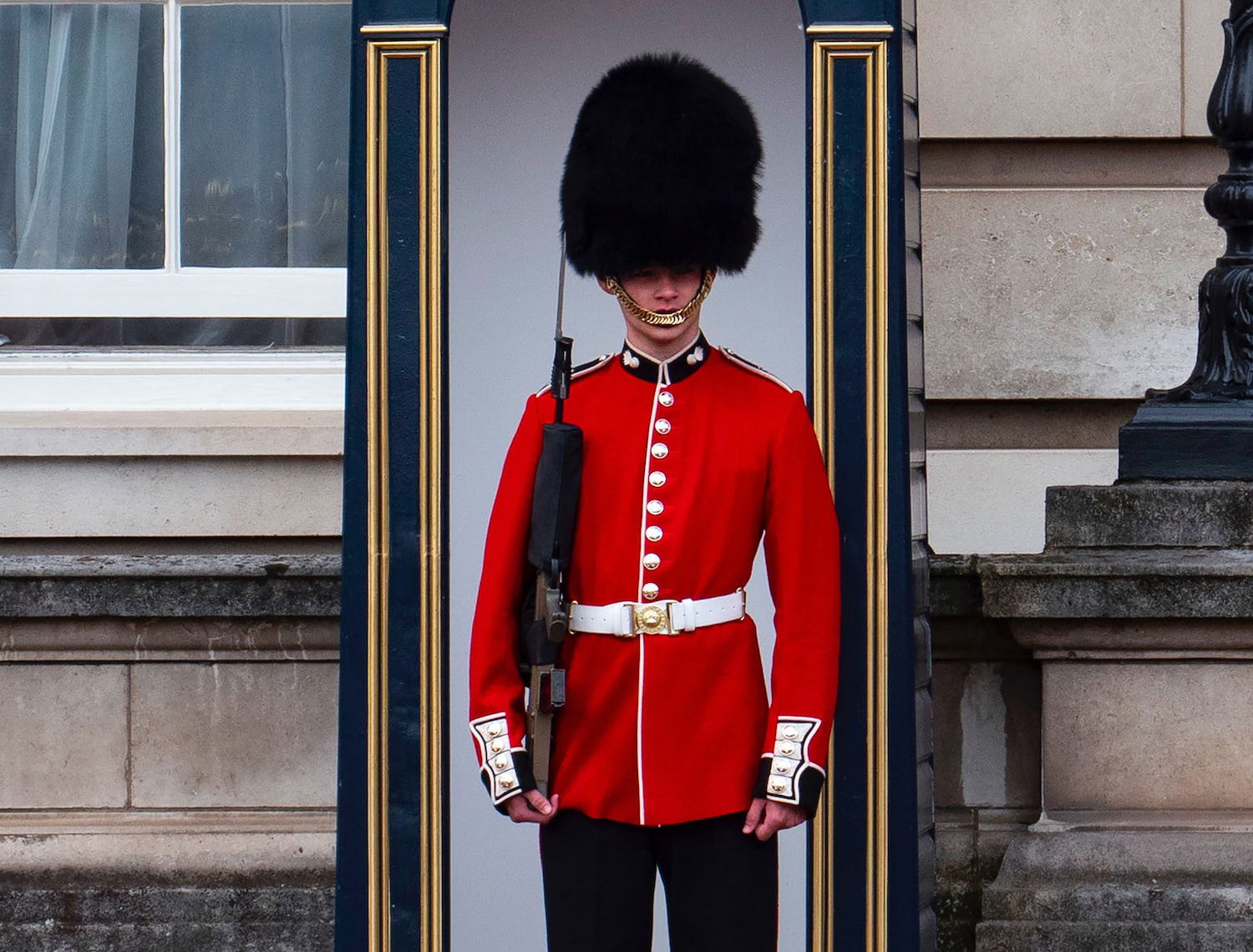
Been awhile my beautiful people. Hope you all been doing good. I for one have been busy just living life like a bat out of hell.
I feel like I have missed what has happened here. I mean I think it has gone a bit quite and the beautiful ones not all have moved on to different things where I am no longer able to follow them and their stories.
Well it's a short one since I am just here browsing and thought I would say hello and take care.
Till next time.
Keep on being your awesome self.
What does inappropriate really mean?
Where does society start
And where does the home end is something that really gets me thinking all the time, especially when I am left thinking there must be more to how I see things from my perspective. A loaded question I will try to tackle today based on experiences and life lessons.
I apologize for sounding so *cliché* when spoken inside my head. I have to admit it is very therapeutic to speak to myself all the time but it does create this self fulfilling situation when I am both my audience and my critique. Most times I find I am harsh to everyone around me and wonder if I am also within that level of harshness towards myself in all things. I think it is inappropriate to not consider things outside of my purview.
**What does inappropriate really mean?** Is it subjective? Is it shaped based on location, time and thinking. A hard act to sell when I think on what it means to be inappropriate or more precisely how it would be seen buy other people.
I ask this today because my daughter is going to some school excursion for Catholic youth but was walking around the house with a crop top getting ready to leave for it. Normally I sometimes, rarely allow it within me to accept them wearing it outside of the house but when I saw her my first thought was. That is an inappropriate top to be wearing to an excursion like this.
*"You don't want to be that someone in a place supposed to be solemn."*
Which lead me to ask myself what is it about inappropriateness that brings in the thoughts of fitting into a setting? I mean who would turn up to a club wearing a burqa? Time and place along with settings really determine the subjective meaning or application of inappropriateness.
Where am I going with this?
The simple answer is, it is really about subjective application given to the meaning since people and environment really does shape its character. Characteristic based on social norms. I am clear with what I see as society disappearing when you enter into my domain, my home, my house. I have a clear delineation between social norms outside my house and what the law is inside my house. To a degree. Since no human is ever really an island able to just stay in the one spot with no interaction with other islands, there will always be influences and stimuli that shape I subjectively see or feel.
Emotional memory plays a big part in everything too since I feel emotions are partly made up of hormones being released into the body, where from I have no clue but I really feel that is what happens. This means to me then emotion is a big factor in shaping most things one becomes in life and how their views are thought of.
My conclusion on what is inappropriate and its meaning is then how one sees things in their point of view, I mean why not since after all it really is based on how you accept and adapt a norm and its taboos. In cases where things, actions and or points of view running counter to all you agree on internally. Sounds so cliché when I repeat this to myself and read what I am writing right now even though I feel like it sounds so true. What will it take to then see that with all the myriad ways everyone is easily able to voice loudly what they want norms to be on other people for everyone to take notice and be able to make their own mind on how they are all shaped. Is it then surprising we often are finding ourselves questioning fundamentals all the time in confusion.
Thanks for visiting, hope this was not as confusing to you as it was to me in the end.
Drama makes the world go round
At a cost.
I have been accused of being too brash at times when I say things because people don't like my choice of words. They think the message gets lost since I am not able to make people see what I am stating with my choice. Their blood boiling at what they see as an unfair use of words, since after all to them once someone uses words they would never ever use to mean it has failed to do its job.
I disagree to agree with their train of thought especially when I find they themselves are not up to scratch and for the life of their online presence not even able to hold up to scrutiny. Band-wagoning within their group like a flock of vultures circles to what they think as a dying animal. Pathetic. How can I take them seriously, telling me where they think I had failed miserably.
Their attention is caught. They are there in my online presence, consuming my content so they themselves are unaware, seeds are there planted and just need a good watering. It does not have to be by me. Of course there will be some frayed edges, but who has ever bought a Tonka truck and left it in the box to play with to stop it from looking used and abused. Of course you have to get into line with making sure you look after your toys but I mean scratches and frays are what gives things character.
To stand the test of time. Only time can really tell if my message is received. It is always surprising when I look at them eating up my words and getting hot and heavy. Chest heaving from their emotional response. You know why people blew themselves up for their cause? To affect someone else. Whether the audience liked the result is not the point of putting a message across.
A wink here and there to some fine ladies walking on the other side of the road. Some will baulk and just walk away, I say they are prudes. While some smile and sometimes even wink back. I think my message is received. Both of these instance show I told them I am interested and I could even be interesting if you take the time to see. Taking the time to see only happens if you get their attention.
I really get riled up when they take affront with how I am delivering my point and fail to notice their attention is grabbed. Wonder if they have ever been told they are not very observant. More importantly they start attacking me personally instead of attacking my character since they feel humiliation will work on somebody as thick faced as I. Plus they engage with me in a public forum highlighting their lack presence in mind.
I could be wrong of course but this will only be highlighted to me if they happen not attack me personally and just stick to what I have said because after all words are powerful when used correctly. In some cases speaking softly only gets across when you are already walking around the place with a big stick in hand. People are forced to listen with the threat.
If you have no stick in hand then the next best thing is to use language to emotionally charge anyone caught in my attention web. The beauty of content is you the creator can decide what you term as content.
I leave you all now with this thought I hope will take you to stead. Do not be afraid to say what is inside of you even at the cost of losing a finger, after all if a Yakuza can do, why can't you.
The rabbit hole called ESG
World Economic Forum (WEF)?
I cant for the life of me think of a way to not write about something as important as this since after all we all have to live within this spaceship we all named Earth. Hurtling through some distance into the great unknown that is the universe.
This is not about the the multiverse since after all I am not Michio Kaku or for that matter Neil Tyson deGrasse. Heck I cannot even a give myself a badge to suggest I am close to being an expert. What I do have like yourself is the platform to voice my inner voice. Writing give us this power.
How does this apply to Environment, Social and Governance (ESG) and the WEF and the spaceship we all live in. The destruction after all will mean our joyride will come to an end real quick and it will entail our very survival into the brink of extinction.
But first let me ask you this? If there was no Climate Change or anything to threaten our world, have not and will not in the end start any excuse to destroy each other.
Enough about being serious cos after all you are here for that random nugget I will impart to you my reader of all readers. The guide to take your hands into the universe of writing and help you see the magic I am weaving with my magic fingers. The fingers twirling and whirling to paint how we all affect each other and everything and anything.
Don't get me wrong I am not speaking in tongues. I may lick a few but I am not going to really go on about how we can make a difference. I say think globally, act locally. In this case I do see my actions in my little world as affecting the whole. My one percent.
Applying this mindset.
ESG really is the powers that be and how it enforces it swill on everyone who steps out of like. Kind of like the kids in Willy Wonka's factory, not the Ompaa Loompas but the visitors. Don't drink that. Don't eat this. Don't fart here. Don't touch it.
Its all a matter of perspective and how we as individuals can be controlled, or at least it is how I see it. And if you are here to get that nugget, you should listen and see what I mean by this. Of course, it does not mean I am right. It just shows we are all in the same boat.
I have actually lost myself in my own translation since there are so many things one can say and yet still end up going round and round in circles. There is nothing wrong with earning something in the circle, as in knowledge but we must not lose ourselves in the moment of time we find out we are the cause of our own demise.
The WEF are planning on creating this 'Reset'. I just listened to this video and I must say I have not a lot of knowledge but it does give me pause on how even our own cause to save ourselves are met with so much doubt. I say this from personal experience and understanding. I say this with the utmost confidence, we do not know what we are on about even the people running the show are just making it all up in the end. **The one thing sticking into my mind is how we will shape our future with the stick threatening to whack us in the back of the head if we stepped out of line.**
https://www.youtube.com/watch?v=6o02uGWuMD0
Martial Thoughts
My journey has been a long one, culminating in 15 years of constant training. Mentally I have developed slowly but I am confident my mature attitude is slowly rising to tackle what I deem necessary to transcend my status as a senior student into a mentor for other students to aspire to.
I have not followed my path up the mountain in a fast line but have smelt the flowers along the way and wandered the forest floors so that I can bask on the light set forth by my master. I don’t see the rush to the top as a goal worth taking; I see the path winding slowly up as my chosen goal. Today I know that this holds true when living in a world full of hectic people I would rather walk rather than run.
There is an ever increasing sense within me to improve further my techniques rather than just to do, however as of today I find this is making my work sometimes sluggish, as I have to assess what I do rather than move. However in saying that I do find that since I am forced to assess what needs to be done my temperament has benefited greatly. It’s a long journey but at least I am closer to where the path leads.
**Sweeping the mats.**
This to me is an integral part of ones development; I don’t see it as a chore but take this opportunity to clear my mind of all the baggage that I carry through the door of the dojo and onto the mats. I picture in my head the same setting that I have before me of the mats having dust and junk cluttered on it. As I systematically sweep them away I think of all the superfluous junk in my mind as being swept away. Each stroke I attempt to breathe in and out by the number of counts of my sweeping.
Moving my feet purposefully backwards I envision what I will achieve as I see a clean mat in front of me I think of the saying empty your cup so that it can be filled with new knowledge. Breathing slowly and deeply I empty all the things that plague me in my work and try not tot think of anything except a void waiting to be filled.
There are also times where instead of emptying my mind of useless garbage I take it as an opportunity to stop myself from looking too far ahead of me and reinforce my focus on the task as if taking one step at a time.
**Thoughts.**
It is very hard to train while a practitioner is harbouring an injury, especially a recurring ailment, the best that a practitioner can do is to know their limits so that they do not aggravate it further. However they should not set in their minds that once a limit is put they cannot perform past it.
In today’s society there are a lot of able bodies that could rise to greatness that would equal to the olden times of history, however due to the bombardment of information presented to these people they are quickly distracted from ever attaining what they could have grasped in their heads.
I believe that it is not that they are lazy or looking for the easy was but it is because of the information they get will confuse them or rather give them something else to do thereby forgetting what they had intended to do originally.
Preventing this from happening is something that needs to be instructed into young minds. The notion of self belief, much like the way fanatical institutions taught their children, in that they are only given limited amounts to study and re-enforced into their head, however there is a danger that the student will not be able to think outside the box and fail to be open minded.
*“In all that is said and is written, there is nothing new that can be found, except in the interpretation of the message”*
The flow of the hand manifests to the assailant a sense of calmness, keep in mind that you are calm even when the world around you is at a blur. Don’t rush it. Keep it as definite an action and wild as the assailants’ actions. Use your eyes to track your enemy at a constant target so that you can see your peripheral vision.
With practice you will find that your body will move without conscious thought to control your action, this is known as muscle memory. “Don’t tense up” a saying made famous by Bruce Lee, is as true today as it was when he said it. Your tracking of the opponent will also enable you to anticipate what they are going to do from the body balance and the flow of their action. It is important that if you are caught flat footed to go with your opponents attack, so that they are further committed to their attack towards you, drawing them to a point where you can use it to your advantage by seizing an opening that they offer to you. When you find yourself losing go with their force of attack and counter with such force at a particular point of weakness, affecting their advantage thereby blunting its full force on you.
To do this you would attack their organs, floating ribs, neck and other soft body targets and with such a force and deafening roar that it will disrupt the train of thought. Allowing you to give them pause in what they are doing. With so much to take in they will stunned momentarily, a split second and this should be enough for you to turn them in their mindset if you capitalise by following it up quickly with forceful attacks. With deadly intent giving your mental state of mind a destructive path.
This may seem like and overkill, but if you find yourself on the receiving end you are very close to wanting to be mentally prepared to take the fight to a whole new level. This is meant to show you that though you mean to win, deep down you are conflicted of hurting someone and this mindset is dangerous as it will make your actions lax and without deliberate force.
*If you hone the feeling that you need to do something, don’t hesitate or you may miss your chance. Don’t have regrets – as Musashi once said.*
**Pressure**
The importance of affecting once assailant through pressure in behaviour or through direct manipulation of body parts and mental state cannot be neglected even if you are far superior in skill to your opponent. In the outset of anything one should already be in the state of mind that the opponent is disadvantaged either through terrain (Classic Art of War strategy) or their state of mind. Achieved by either appearing weak or overly strong so that they have the false sense of what you are capable of thereby already affecting them in an advantageous way.
Using direct manipulation of ones assailant by affecting their balance with force in certain part is at most covered within ones chosen martial doctrine, from affecting their pressure points or the direct manipulation of what my master describes as “Anatomical weaknesses”.
**The feel of the Bokken**
Upon first handling a bokken, you initially have this feeling that the object you are holding is nothing more than a piece of wood that is shaped like a Katana/Japanese sword. To the uninitiated the feel of the bokken is nothing spectacular and will even find that they are twirling it like a baton or worse yet handle it like a Chinese sword. When I say Chinese sword, I mean that the bokken is slashed about and when on an exercise they strike at their opponents without any deliberate outcome, thereby having no actual benefit to them.
When one holds a bokken they must have the mental note to themselves that they are on the edge of life and death as they practice its use, with the realisation that a bokken is a symbolisation of a real sword that can either take life or preserve life. Only then can one truly benefit from its practice and learn that they will gradually be more deliberate in whatever they set out to do. From a simple piece of wood shaped like a sword, one may attain the basic understanding of life in a broader sense.
Neither feeling power nor strength the wielder finds the beginning of emptiness and fullness all in one moment, the calm taking over, one feels the weight of the bokken. As one lifts it up before striking, they feel heaven above give it the weight of a thousand thunderclaps as it sails downs towards the target, destroying anything in its way with deliberate intent, and thus preserving life.
*It is not what is thought of*
*But what is acted upon*
*That defines the person.*
As it hits the target, there is the initial resonance of something preventing its way, this is short lived however when the wielder has the weight of the bokken distributed evenly between the leading hand and the power hand, the right and left hands respectively. On a controlled impact all resistance will fail even if it is attempted to be deflected away from the intended target, the wielder will still be able to hit another target of opportunity opened up from the change of position of the bokken. A kamae that is gained from these situations are very advantageous, as the opponent will not expect a deflected blow to end up at a good position to strike back.
However on the outset that a controlled strike is deflected and the wielder is put in a disadvantageous position, due to unforseen reasons, as it is still a controlled strike there is a higher chance that the wielder can move away from any oncoming blow from the opponent and gain the upper hand.
A controlled strike can be achieved by having the sensibility in ones self on how they hold the bokken, the wielder is subject to sense the balance, weight and length of the bokken. These three factors play an important part in an even of a duel between another person or against themselves.
*The pursuit of perfection,*
*There is no greater purpose than this,*
*All waking hours of ones life,*
*Devoted to the perfection of what one pursues,*
*Be it fishing, writing and just being.*
*In closing I now see a peak and the stroll has turned into a brisk walk, I will stumble and trip but real question is how fast I get back up to take those final steps forward. I look back and see others below me, always looking up at whats ahead of them. I take comfort in knowing that I can rest awhile and take in a deep breath to bask at the peak ahead of me. Nothing changes when I start again as I know with determination I will reach it.*
**Benefit of the doubt**
There are things in life that you just have to take at face value. However this should not mean that you keep it at that especially when it will affect you personally. Some people will at times allow you to make your position fallible. Big word.
Let’s not detract from this work and in saying that I feel they should ensure their behaviour in future does not erode your honor, strong word but none the less taht is what it boils down to. Since the saying your word is your honor, from memory that is a big deal since not many people in the mediaeval times knew how to read and write therefore public declarations in verbal forms bound them. In today’s age people forget that since they take for granted everyone knows how to read and write.
A small thought but a powerful one.
Introduction post - Who is this guy?
Who am I?
Well first off I want to get this off my chest before I do anything here that could spell the end of the world as we know it. I have particular skills that I have acquired through years of service.
Service to unknown entities giving me the insight into anything and everything that gets my attention. Of course I take things seriously hence why it is important there is a quantifiable characteristic to an introduction here.
You will notice I have no picture to post here. It is a conscious choice to do so. Giving you too much to look and see will just result in something unforeseen happening to you. In fact I am afraid to disclose too many details of exactly who @akumagai is at the onset of this journey.
So who am I ?
For starters I am middle aged male. Grew up in Australia. I come from a large family. We are all hot headed sometimes this hot blood gets me into predicaments where I am unable to get out of. Hence the service I mentioned above.
I can be a straight shooter most times but on occasion all inhibitions tend to let loose and I find myself in another predicament where I am left wondering if the actions I took were the ones resulting in someone else getting out of the way.
Sports was a big part of my life. It took my life to many places within Australia, the hot blood however prevented me from pursuing my sport passion since too many people tend to get me all fired up. I am competitive by nature. So much so I have found images running through my head of baseball bats and knee caps.
*No I am not violent.*
*I do not shy away from it.*
*The service got me where I am.*
Where are we?
Aside from sports when I was much younger there were also friends I kept close but at a distance. They tended to be to hectic for my liking. Of course I fit right in. But how does one better themselves away from their inherent nature when they are with people who make my inner self manifest.
Often I am left being alone but not alone. I don't shy away from being the center of the crowd but I tend to avoid it, failing miserably since I am often called the life of the party.
I struggle to get my point across especially when I have to write about them. This of course is the reason why I have called this a journey being undertaken by me. To better improve my typing skill? To improve my vocab? To improve myself in something new I am not even sure but I guarantee one thing. Anything I write here will be from me.
Of course there will always by some similarities to what you read here and there. We are a product of what we read. What we consume. What we allow to enter into our world. The inner being moved towards what ever it is that gets my attention. I sense you looking at the words I have written here and are probably wondering where you are being lead to.
**Do not be alarmed.**
It is not into a dark alley.
It is not into the depths of hell.
It is not into the unknown.
Well maybe the known unknown. After all I have grasped your hands tightly and are not letting you go since you are now with me and are part of this experiment brought on by the desire to share something and anything I so choose.
**Have I lost you?**
I guess not.
You are now of course wondering where you have been lead to. Do not fret my friend. You. Are. Safe. Unless of course I change my mind and find what I have told you already too much and will have to therefore take you out. Of here.
Hey! Hope you got a kick out of that! I know I did.
A story about circles.
Till next time you awesome you.

 @akumagai