Analysis of Physical Risks in the Maintenance Department of a Company
Throughout history, hygiene and safety has been conceived as a branch that deals with standards, procedures and strategies aimed at preserving the physical integrity of workers, in this way, said branch is a function of the operations of the company, and is basically aimed at preventing occupational accidents and guaranteeing personal and working conditions capable of maintaining an optimal level of health in workers.
Occupational accidents and diseases not only represent human suffering for the worker and his family, but also high economic costs for the productive sector and society in general. That is why the health and well-being of the working population, and consequently its productivity, are determining factors to achieve economic and social development, for which occupational hygiene and safety must control the risks existing in the work environment, as that these can cause unsafe conditions that lead to accidents or occupational diseases.
Therefore, risk analysis is a key element for planning preventive action in a company, since from this the protection and correction measures that will create adequate health and safety conditions are drawn up and developed. This analysis must be carried out on a mandatory basis and as many times as necessary depending on any change that occurs in the work environment, be it technological, regulatory, procedural, organizational, among others, that affects each and every one of the workers of companies, regardless of their qualification the activity that they develop.
Therefore, it can be complemented that safety at work would be a set of educational, medical and psychological technical measures, used to prevent accidents, eliminate unsafe environmental conditions and instruct or convince people about the implementation of measures preventive. Hence, lies the importance of hygiene and safety within organizations, which allows preventing and reducing accidents and illnesses, as well as preserving the health of workers, maintaining and increasing productivity, and reducing operating costs.
Through proper training of workers in risk prevention, it is possible to ensure that all staff are able to control their actions in an emergency situation. The appropriate techniques and procedures to carry out a correct planning of preventive activities, is based on the initial analysis of the existing risks in the work environment, as well as on various actions that must be framed within the policy of action of both private companies and of public administrations.
The public company is exposed to different types of risks such as: physical risks, mechanical risks, biological risks, disergonomic risks, meteorological risks, psychosocial risks, chemical risks and electrical risks that can alter the correct functioning of its activities, in order to to avoid the materialization of these risks in accidents and to minimize the consequences of the same in case they arrive To occur, the application of security measures is required to help reduce the risks to their lowest possible values.
In this sense, a physical risk is associated with the probability of suffering bodily harm. There are various activities and tasks that present a high physical risk since their development can lead to injuries of different kinds and even, in the event of an error or accident, cause death.
Therefore, the first objective of occupational safety is the reduction and, in its effects, the elimination of occupational risks and illnesses, thus reducing the probability of accidents occurring. The second objective is the minimization of direct and consequential losses when accidents have occurred, acting to reduce the intensity, that is, controlling the accident and losses.
In addition, the relationship between health and work is remarkable since the person, when doing the work produces variations in the environment that surrounds him. These variations can be physical, mental and social, sometimes these changes can affect the health of the worker, damaging her initial balance, a situation she calls health. It is not work, but if the changes that its performance introduces in the environment that can be aggressive for people make possible the existence of some problem in the workplace, in this way the health of workers is determined by the conditions of the environment environment.
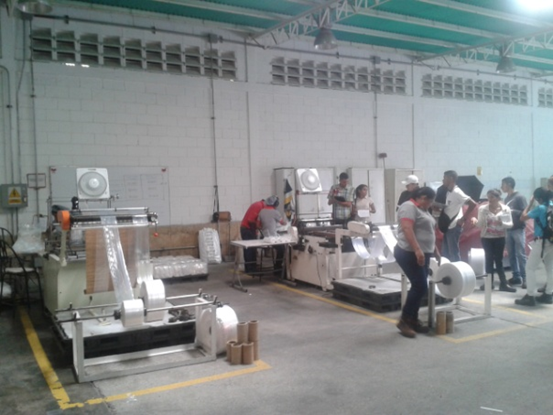
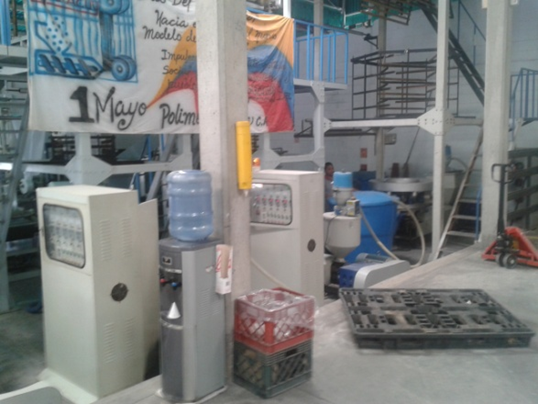
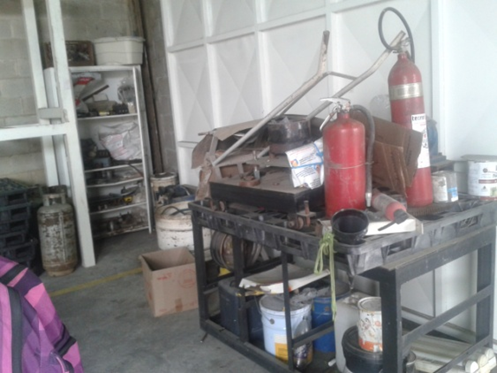
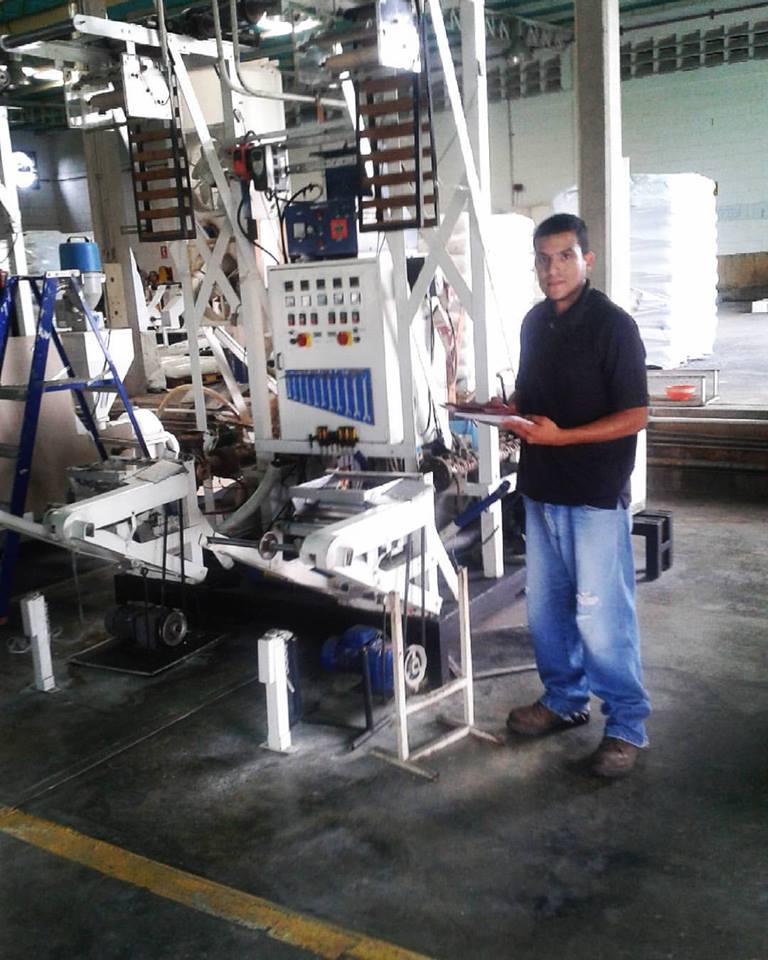
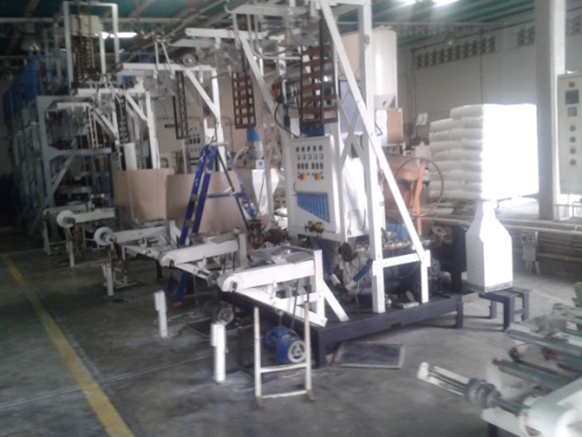
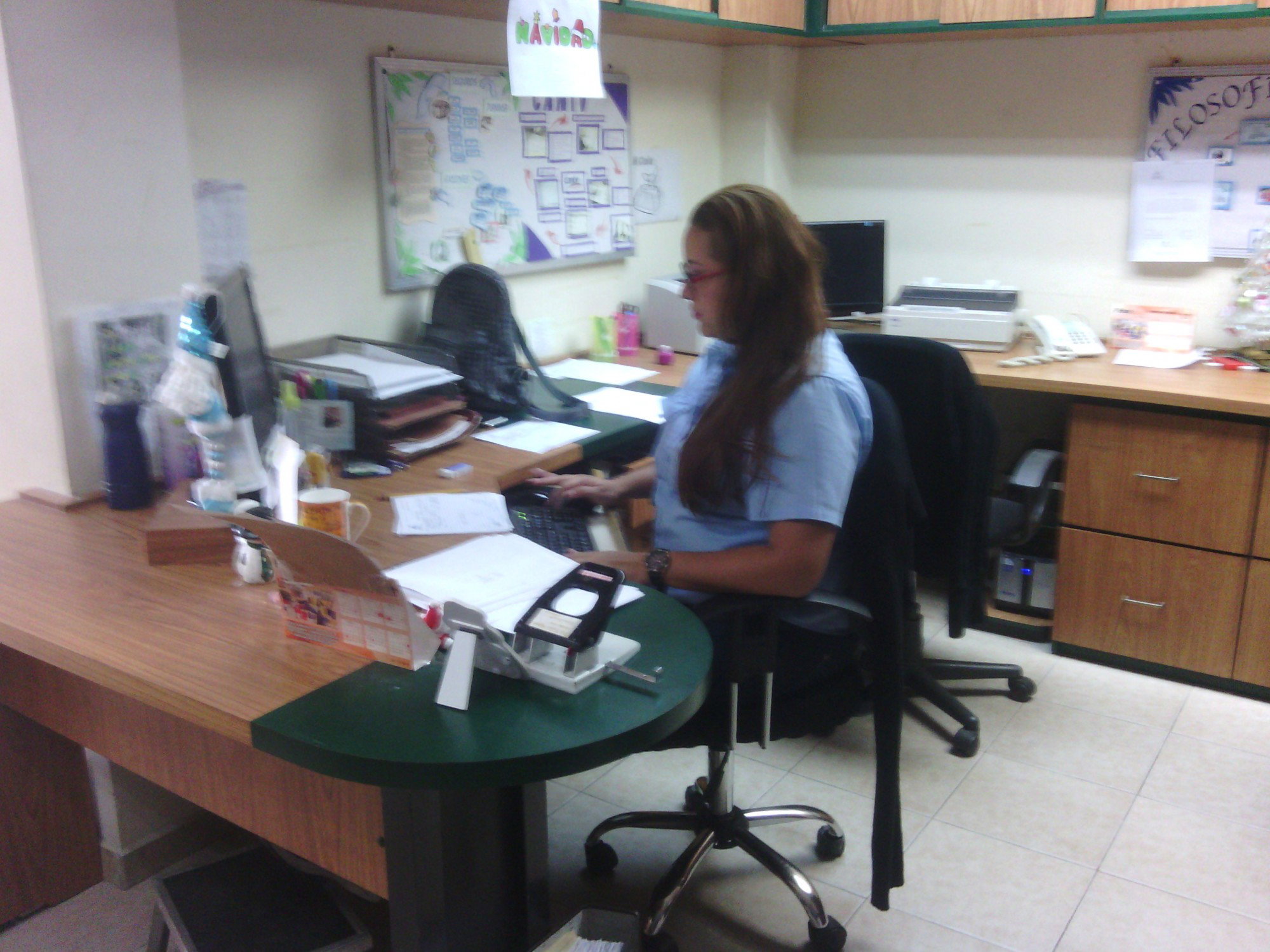
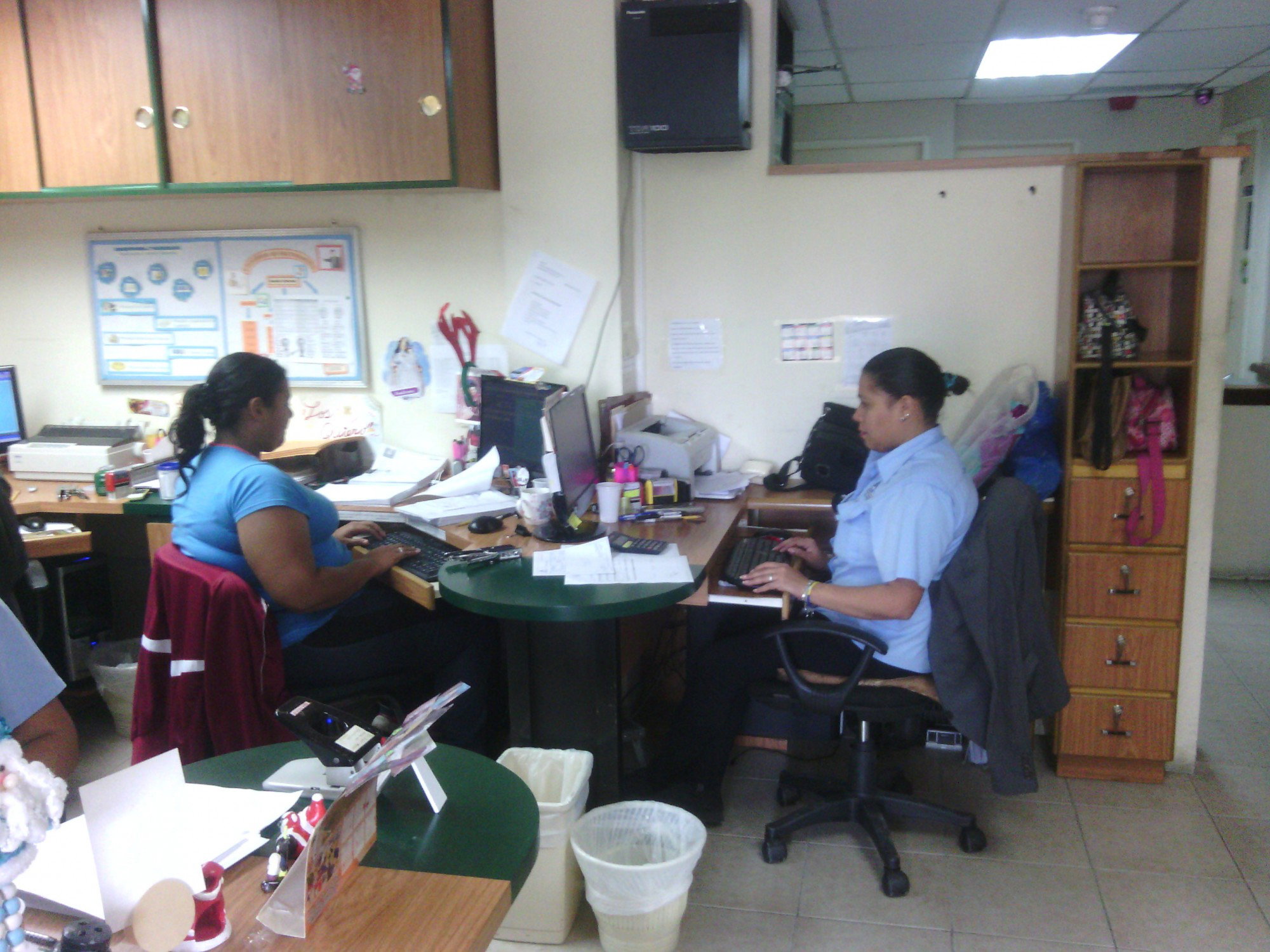
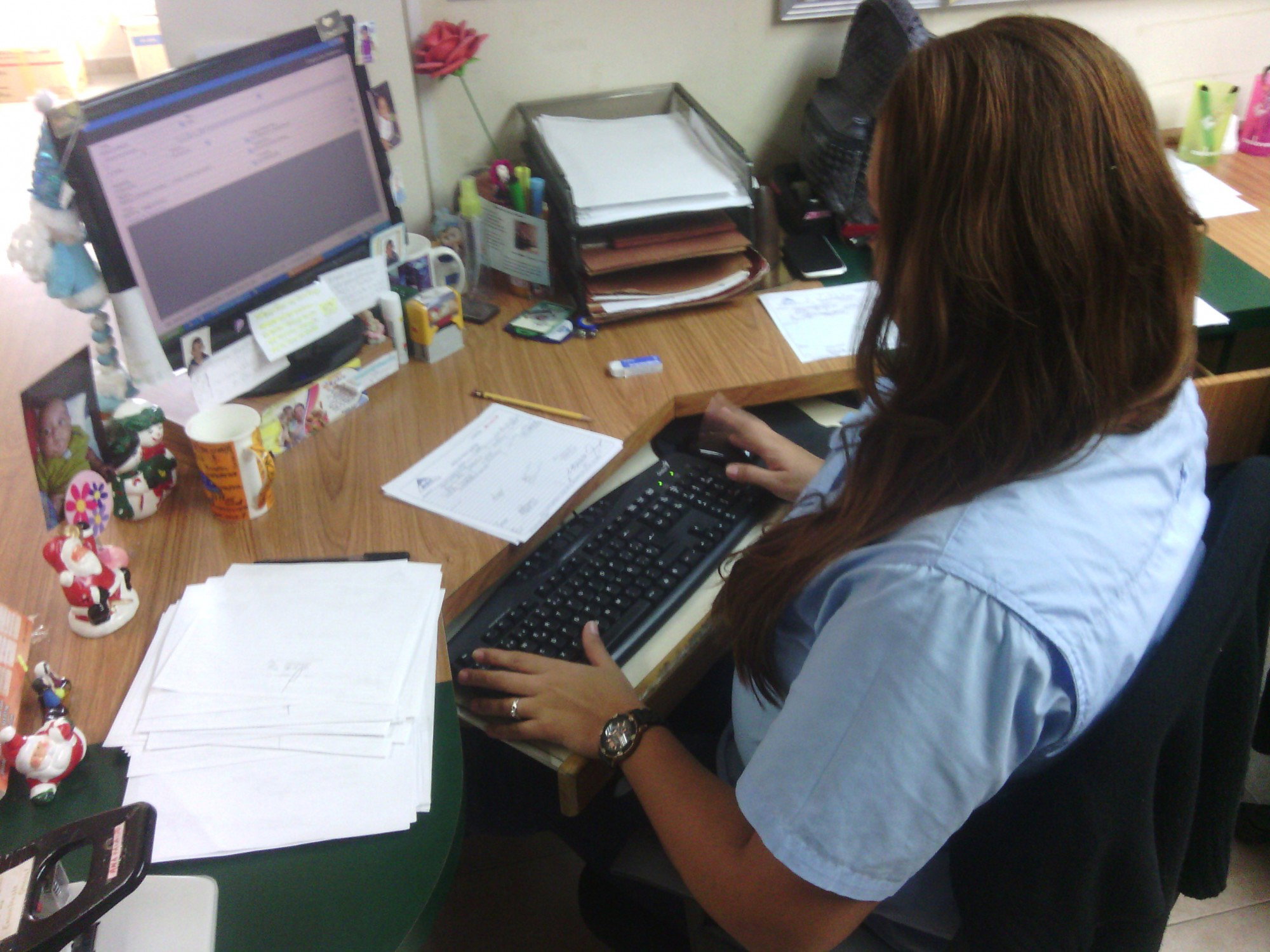
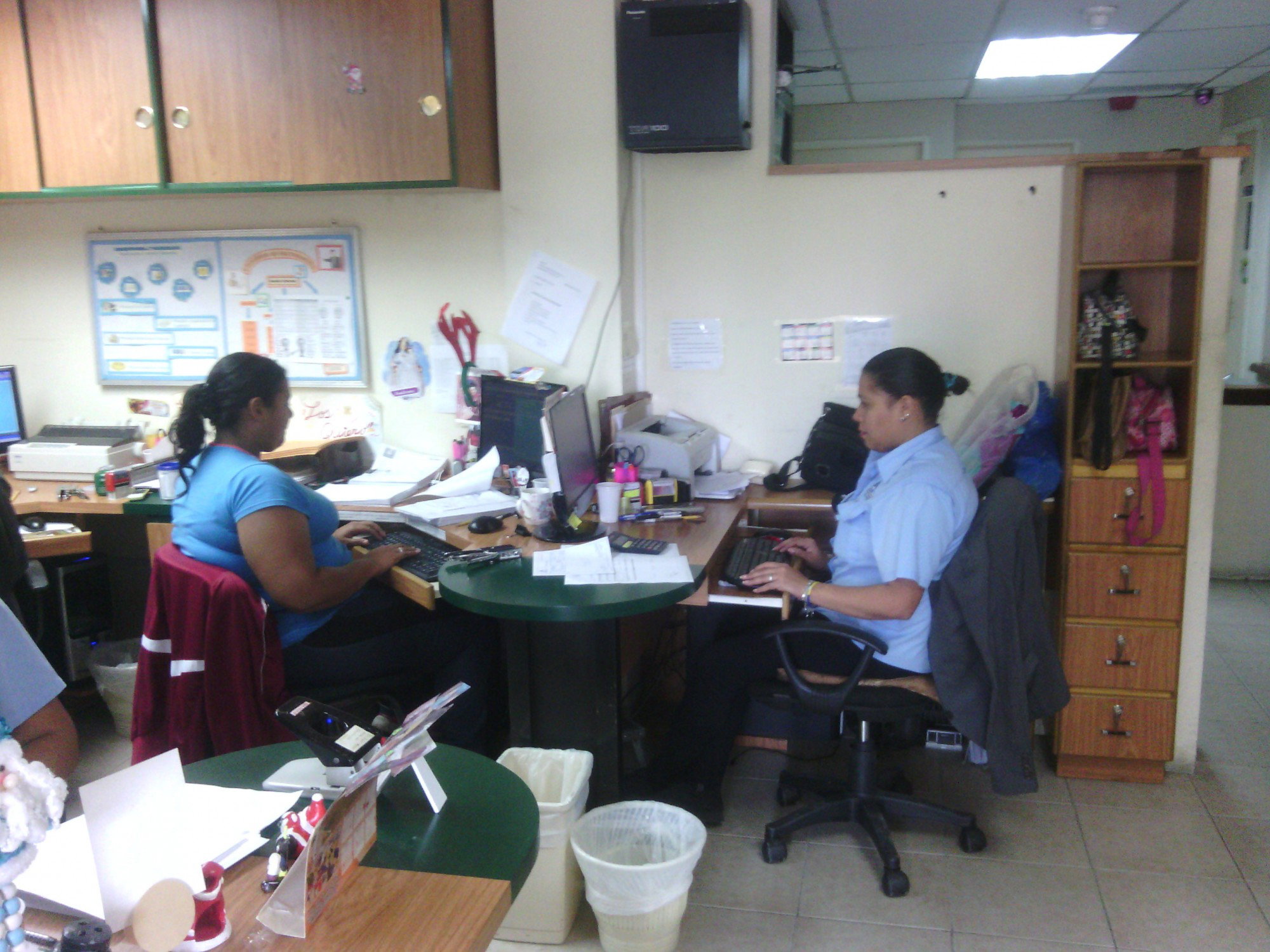
The research work will be carried out at the Demaseca company located on the Barquisimeto-Acarigua national highway, km 44, honey sector Gustavo Vegas León Municipality Simón Planas Municipality, it will be developed specifically in the maintenance workshop which has 38 workers and is located in the facilities of the industrial complex in an area dedicated to performing the various preventive maintenance; After an interview with Ingris Rodríguez, the integral security supervisor, it was determined that currently said area does not have a security plan, which generates greater vulnerability to latent risks.
Given the aforementioned, it can be translated into a high probability of accidents and occupational diseases due to the fact that the conditions of the area are not optimal in relation to occupational health and safety, since this area presents a deficiency in signaling and risk assessment to determine the consequences and take preventive measures to mitigate them.
The most common accidents in this area vary between falling from the same level due to the lack of signage, trapped due to the risk of lighting and hit by the tools that are being used due to work stress generated by the environmental heat; Occupational diseases that derive from physical risks would be: long-term hearing loss and muscle injuries; For this reason, it seeks to ensure the basic conditions necessary to allow workers to have access to hygiene, safety and occupational health services, in addition, working conditions are unsafe and not very efficient, increasing risks, incidents and accidents, for lack of essential personal protective equipment and training in procedures, safety habits and occupational health.
The main objective of the study is the analysis of physical risks such as: noise, lighting, ventilation, vibration, temperature, radiation and pressure existing in the maintenance department in the Demaseca company, it is necessary to define the policies that determine how to act In the most common cases in which any problem can be generated in a given system, it is important to consider all maintenance activities, know, study, and identify any type of threats existing in the maintenance department and thus be prepared to repair, avoid breakdowns, reduce wear, improve performance, operational safety, among others.
It is therefore essential that questions are suggested, including the following: What is the current situation in terms of occupational safety in the maintenance department of the Demaseca company? What physical risk factors are present in the maintenance department? in the Demaseca company? And what preventive measures should be applied to reduce the physical risks produced by mechanical equipment in the company's maintenance department?
**Research objective**
Diagnose the current situation regarding the physical risks to which the maintenance department workers are exposed in the company
Identify the physical risks present in the maintenance department of the company
Determine preventive measures to reduce physical risks in the maintenance department of the company
**RESULTS**
The information obtained after a tour of the plant with Ing. Ingris Rodríguez was obtained directly from the risks and weaknesses that workers in the company's maintenance area are exposed to, since this area does not have a security plan. which generates greater vulnerability to latent risks such as personal misfortunes and material damage, in view of the above, a high probability of an accident and occupational diseases can be translated, in addition to conversations with workers in the maintenance area, they stated that accidents more common that vary from falls of the same level to being hit by the tools used, to work stress generated by environmental heat due to conditions that are not optimal in relation to occupational health and safety
**Conclusions**
Once the study of the analysis of physical risks in the maintenance department in the company located in Lara state honey is concluded; supported by the previously stated objectives, the following conclusions could be reached.
An analysis of physical risks makes it possible to determine the probability and severity of the consequences and with this the risk estimation, which will allow the adoption of relevant control measures that mitigate the risk and thus guarantee the worker decent working conditions for the full exercise your skills.
**Recommendations**
Once the investigation is completed and the results obtained that generated the previous conclusions have been analyzed, the following recommendations can be specified:
Adopt preventive measures that minimize the consequences of the risks studied in order to meet the needs of the maintenance area of said company.
Once the preventive measures have been applied, a meticulous follow-up must be carried out to verify its effectiveness, and if they do not meet the expectations, they must be modified in order to comply with the requirements.
Occupational Safety, Health and Welfare
**Raosubterraneo**
Excursion To The Wine Waterfall
It is a comfortable natural paradise located in the state of Lara Venezuela, it is a beautiful place, which has a very pleasant climate and incredible landscapes. A few years ago with my cousins and some friends we launched an excursion to this natural paradise. I will tell you a little about the history of this experience, it started very early in the morning of a weekend that we had planned to carry out said excursion, we left the passenger terminal to take the bus that would take us from Barquisimeto - Lara Venezuela, to it Barbecue Village Located In The Same Edo Lara
.
In the bus we started the route on the way to our destination La Cascada del Vino - Dinira National Park, relaxed on the journey joking and talking to each other, enjoying the trip to our destination, some took the opportunity to sleep, others listen to music while we rolled. The bus made a stop and we took the opportunity to stretch our legs, buy some supplies and enjoy the scenery.
We continued our trip, the bus started we were on our way to climb the mountain towards the town of Barbacoa, the weather began to change and became more pleasant, the road was somewhat narrow and steep, you could observe beautiful landscapes while we climbed the mountain, they also let themselves be seen Some Ravines Some of them gave us something of vertigo but normal! Only already on the expectation because soon we would reach our destination, meanwhile we arrive at Barbacoa.
We took advantage We toured the little town, we met it, we bought the last supplies and we squared the jeep that would take us to the Dinira National Park. We started in the Jeep towards Dinira, a short trip of about 15 minutes, we continued enjoying the landscape and joking until we arrived. There We Interviewed With The Park Ranger To Obtain A Permit Because It Was Raining A Lot And There Was A Landslide And There Was Only Access On Foot And It Was At Our Risk To Continue, While We Still Enjoyed The Trip.
We obtained the permit and we continued our way on foot and we were a little short to get there, but on foot it would take longer, in addition to the rain we had to cross the landslide in which almost everyone passed without problems except me, I stayed I sank one of my legs in The mud and I almost lost my shoe Hahaha… But my friends helped me and we continued enjoying the landscape.
We kept walking and joking about standing up Hahaha… We also took advantage of resting a bit and then we continued… We walked a few more minutes until we began to descend the mountain to reach our destination, the Wine Waterfall that we could already observe from afar.
We finished descending the hill and finally reached the Cascada del Vino, we organized everything, we set up the tents, we ate, we inspected the area. We had the place to ourselves. I took advantage of it and I removed all the mud that I had on my clothes and shoes, then we took a dip. The water was ice cold.
Then we dedicate ourselves to rest from the trip, sleep a little. Later we continue to enjoy the place, we got to know it a little more about it, we took more photos sharing between us.
After dark to end an excellent day we dedicated ourselves to relax, have a few drinks, we made a grill that was very good, the rest will tell you the following images.
This trip was an excellent experience, there are more images that relate, what you can share, joke with your friends and enjoy an excellent landscape and good vibes during a trip, I hope you liked my anecdote, thank you very much.
Raosubterraneo
Work Safety
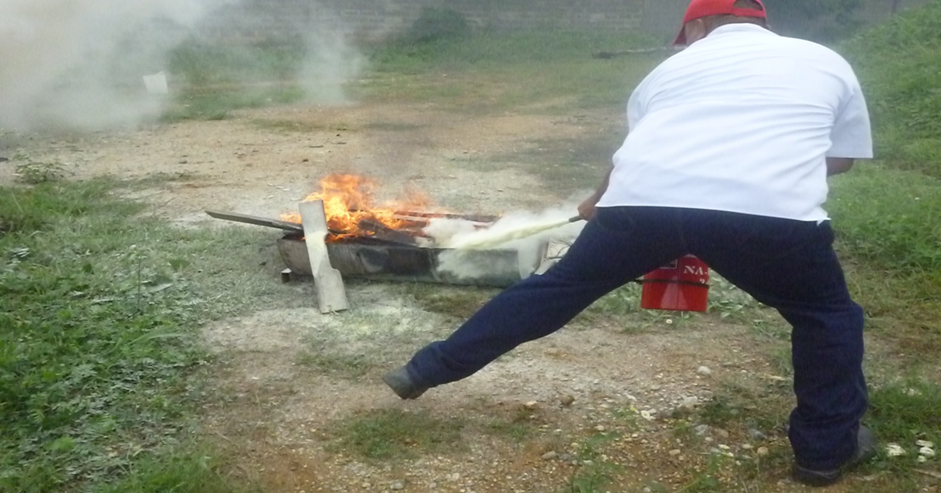
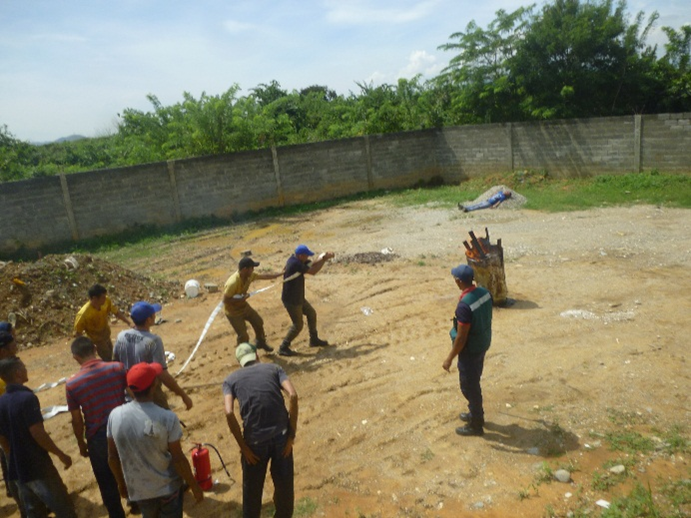
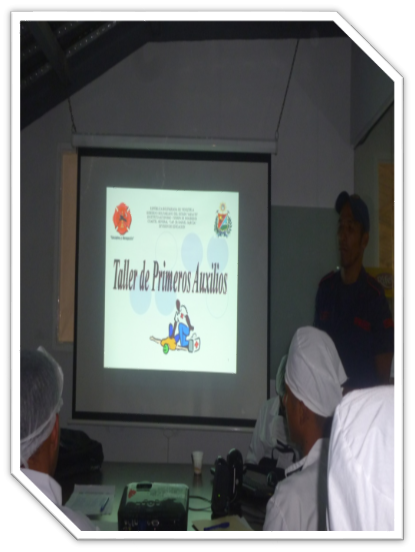
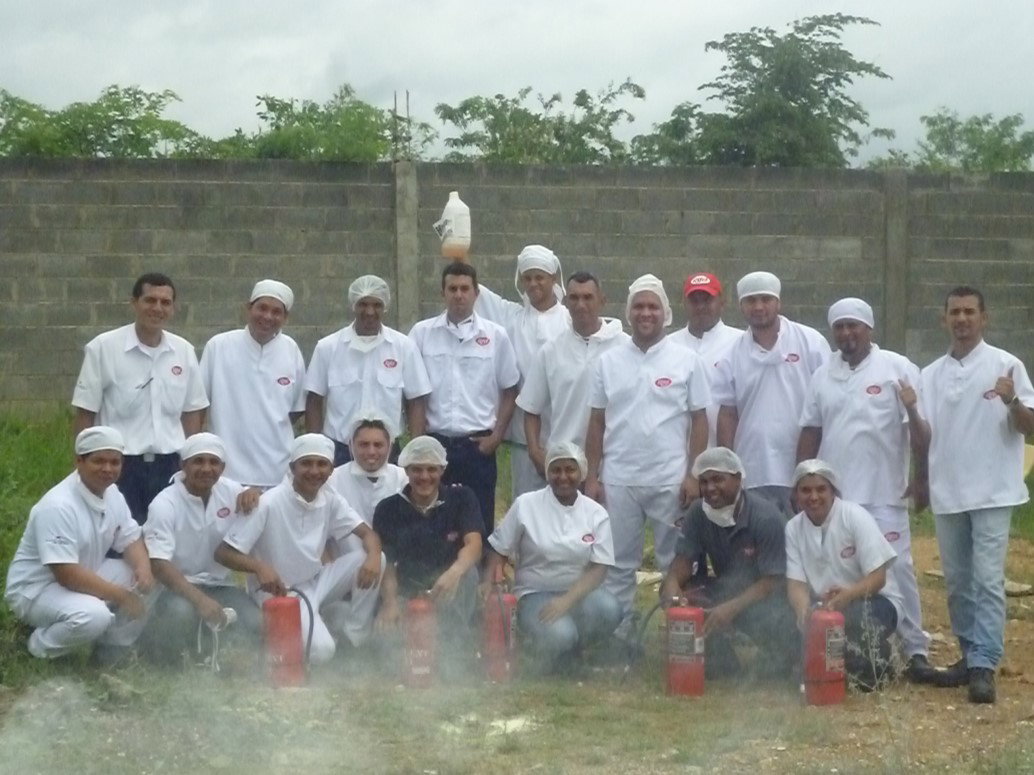
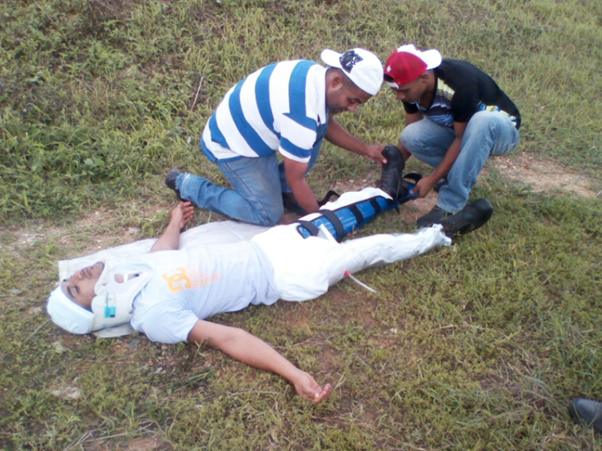
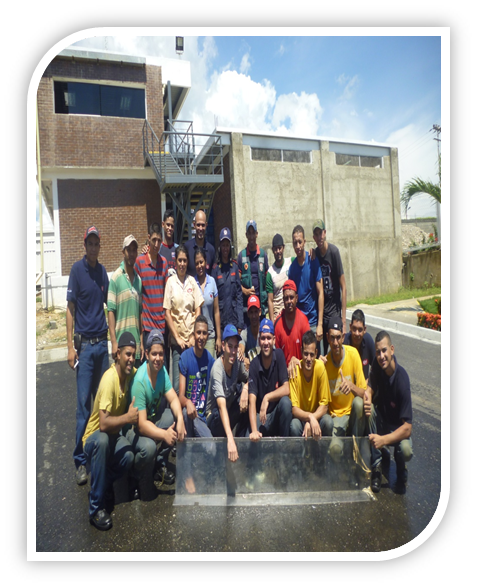
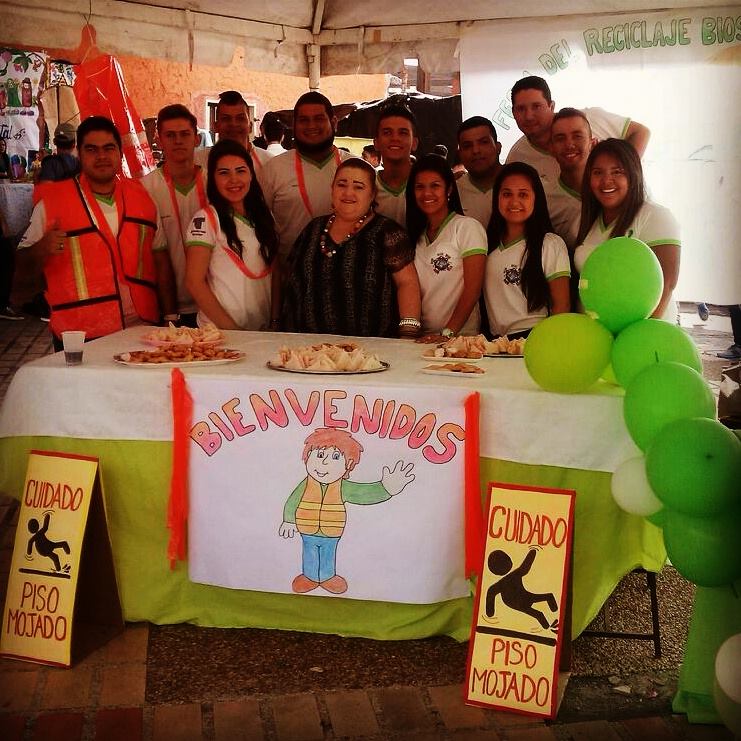
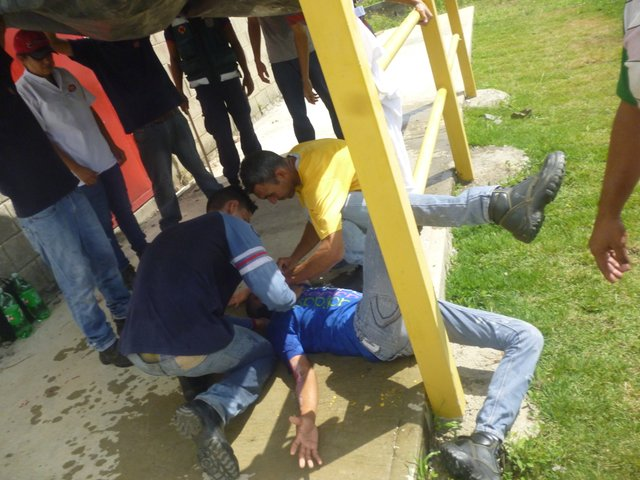
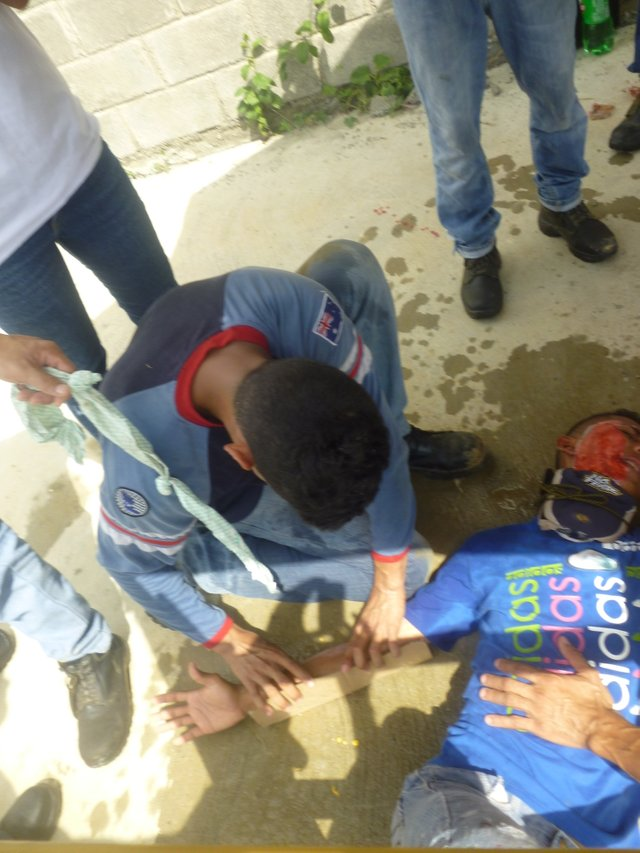
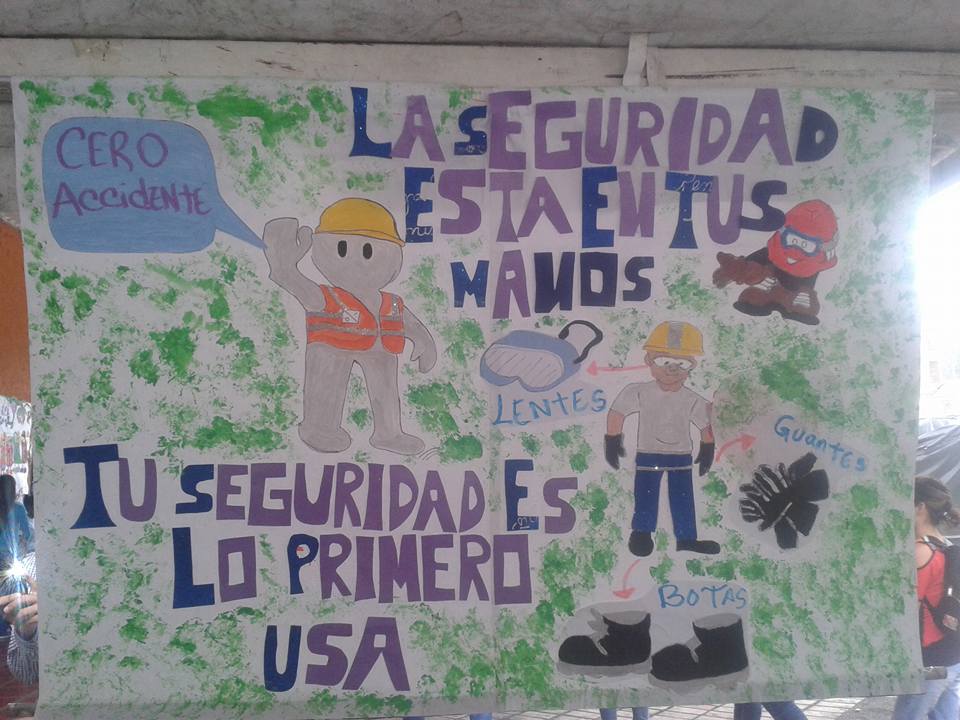
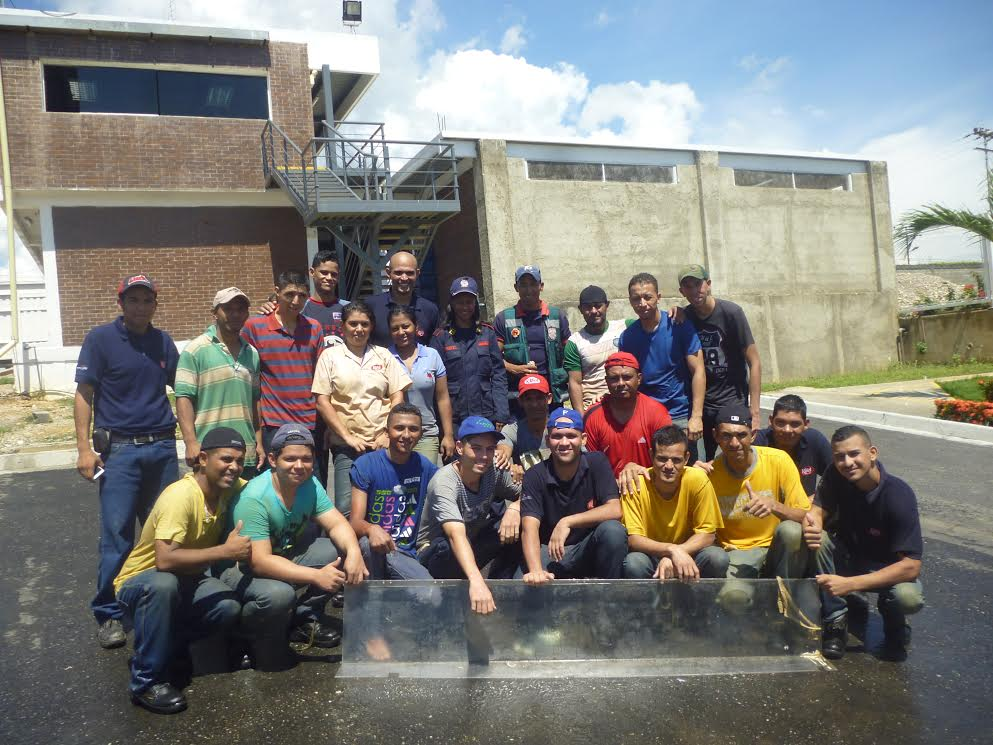
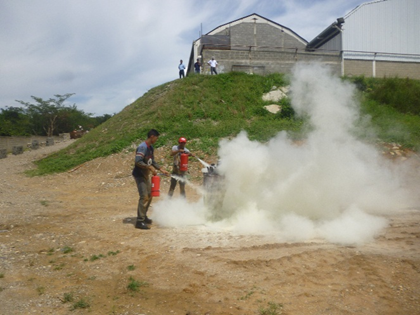
Greetings Community, I am TSU In Occupational Health And Safety. I'm going to write a little about safety at work. It is important that all workers feel safe and comfortable in their workplace and work environment, for this they must have optimal conditions, a healthy work environment and the same worker or employee collaborate with their health and occupational safety, abiding by rules, procedures and using your personal protective equipment. They must also be periodically trained and have risk information and suggestions either on billboards, signs and talks, then I will place some images where you can see some training that we did to the staff of a food company so that they could acquire knowledge for their safety and health at your workplace.
The best way that the performance of a worker is optimal is that they feel comfortable and safe in their workplace and in their work environment, for this they must be provided security, comfort, for the physical and mental well-being of the staff. This leads to the best operation and production of the company.
The best investment will always be human talent.
Raosubterraneo
Report of my Professional Internships in a Food Factory "Occupational Safety and Health"
**ACTIVITIES CARRIED OUT DURING THE INTERNSHIPS**
The professional internship was carried out at the NACIONAL DE ALIMENTOS company. Yaritagua Yaracuy State, began on October 19, 2016 and ended on December 12, 2016, the work was from Monday to Friday from 8:00 a.m. at 5:00 p.m., with a break from 1:00 p.m. at 2:00 pm, the work was carried out in the area of Occupational Health and Safety and during the estimated time of 40 working days, during the internship period the following activities were developed.
Days to update the health certificate for all employees and workers of the company in which support was provided to Eng Margie Fajardo in the organization and logistics, which was carried out within the plant facilities specifically in the area dining room by a doctor and two nurses who took their samples for examinations, vaccinated workers and their general check-up.
Reception of new personnel to fill in the documentation for entering the plant, they were given their notification of risks, a tour of the plant and their provision of uniforms and PPE.
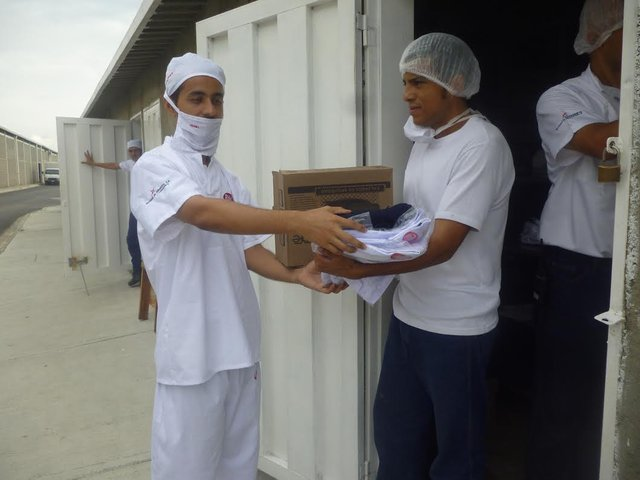
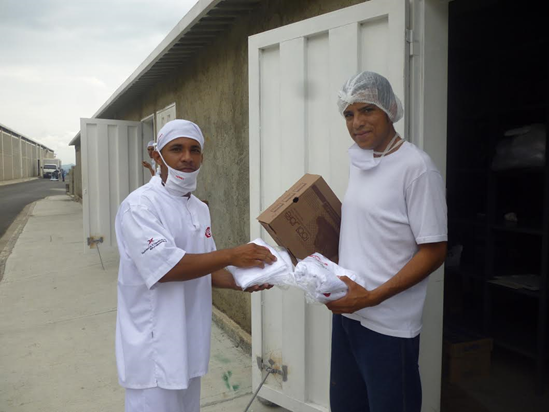
Support was provided to specialists in Occupational Health and Safety in the organization, logistics and delivery of the provision of uniforms and PPE that the company gives to all its staff every 8 months, we proceeded to assemble the bags of each of the workers and employees by production line, department or work area and shift, with their respective uniforms and epp, and then deliver said endowment.
Preparation and updating of billboards throughout the plant with information related to Occupational Health and Safety, day, time and topic of training and talks, morbidity statistics, general information, reminding workers and employees of the use of PPE and of maintaining the order and cleanliness of your work environment, taking care of what belongs to everyone and that prevention is everyone's responsibility.
Daily tours of the plant were carried out, providing support to the Occupational Health and Safety specialists in inspections of the areas, filling out work permits at heights, inspecting the first aid kits and providing them with the materials they needed, which are used. workers for example cloth gloves, plastics, glasses, masks, ear covers etc, depending on the area and work of each worker or employee.
Provide support to Occupational Health and Safety specialists in assisting workers who had incidents or accidents at the plant. Follow the procedures if the workers needed first aid and fill out the INPSASEL Online Accident Declaration.
Provide support to Occupational Health and Safety specialists in conducting, participating, and logistics of training and talks to workers and employees.
Data sheets for dangerous products used in the company were prepared according to the norm, information was sought on all the products used in the National Food Plant, among those used as raw materials, cleaning, cleaning and fuels. After I gathered all the necessary information, I proceeded to create such files.
Update of the emergency plan together with one of the Occupational Health and Safety specialists, the update of the location plans of the fire extinguishers, emergency routes, emergency lights and first-aid kits was prepared. As well as procedures to follow in case of events that may occur in case of an emergency.
Support was provided to a company called PROYEXYMA in charge of providing service and maintenance to the fire extinguishers, hose cloth and emergency lights in the plant. The plant was toured on two occasions with the workers of said company, supporting them in providing information and logistics so that they could perform their work in the best way possible.
Signs around the plant were placed with the Occupational Health and Safety specialists. A tour of the entire plant was carried out to visualize where said signs were missing in order to replace those that were already there, but needed maintenance or to be changed and place others where they were needed and had not been placed.
CONCLUSIONS
In the internship process, valuable knowledge was obtained for the progressive development of the career. Since there was supervision, and help from trained people in the area, which allowed the work to be carried out in the best possible way, and meeting the requirements of the NACIONAL DE ALIMENTOS company. In addition to reinforcing the knowledge acquired in academic training, it also generated new knowledge and different techniques, important methods applicable to professional and personal training.
He was able to develop in a good way at work and personally with what was the day to day in the plant, his environment and work environment with the people he interacted with on a daily basis and with those who not so much, he got along well with them In the treatment that was always based on respect, he felt comfortable doing my tasks either outside the office or in any area of the plant.
The internship period was 40 working days, during which time each of the activities entrusted by the company was developed, putting into practice the knowledge acquired during the years of study at the technological Antonio José de Sucre, fulfilling satisfactorily with the requirements of the company, and the academic institution.
RECOMMENDATIONS
Perform at the National Food Plant A.S.T periodically since the staff is very rotating.
Implement a fire system, and enable other emergency exits.
Solve the deficit that exists with the emergency lamps and make their respective maintenance to have them in operation.
Specify the emergency and rescue brigade, to activate the emergency plan and thus carry out drills and train all its workers, employees how their behavior should be and steps to follow in the event of an accident.
Place fire extinguishers and emergency lights outside the plant and more on the sides where the power plant and the diesel tank are located.
Treat boxes or sinks in storage areas to obstruct the view of the signs.
Try to motivate more workers, employees and their bosses to attend training, talks and use of PPE properly.
Occupational safety, health and well-being
Raosubterraneo
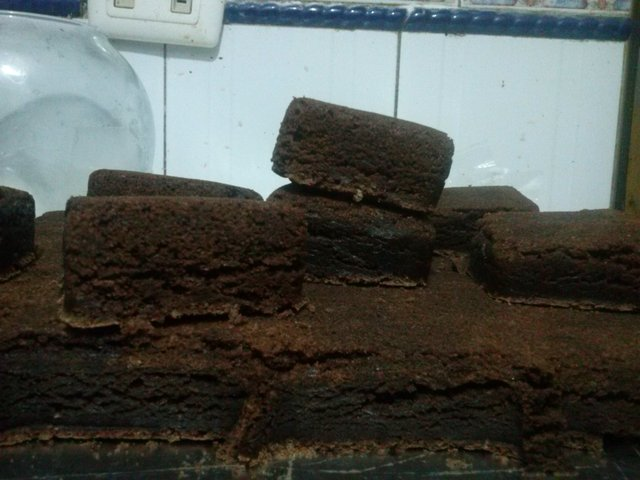
Pinguinito cake
Hello! Here I leave you another recipe for another exquisite dessert, I hope you put it into practice and enjoy it.
**PINGUINITO CAKE**
**INGREDIENTS;**
* 355 Grs of self-rising flour
* 435 Grs of sugar
* 110 grams of cocoa
* 2 cups of milk
* 1 cup oil
* 2 teaspoons of baking powder
*2 and ½ teaspoons of baking soda
*1 teaspoon salt
* 2 teaspoons of vanilla essence
*teaspoons vinegar
*3 eggs
**PREPARATION**
Sift the flour 3 times, to eliminate lumps, Add sifted cocoa to the flour, add the salt to the preparation, add the baking powder and the bicarbonate. Re-sift the dry ingredients three more times. Form a volcano with the dry ingredients and pour the oil into it; Mix all the ingredients until they are completely integrated. Mix the milk with the vinegar and the vanilla essence, add these liquid ingredients to the dry ones, mix until they are combined, add the eggs and mix. Add sugar and mix. Grease and flour a mold. Pour the mixture into the mold and take to the oven preheated to 350 degrees F. It will be ready when you insert a toothpick and it comes out clean.
**TO DECORATE**
We wait for the cake to cool, divide it in two, fill it with whipped cream and cover it with a mixture of chocolate, condensed milk and arequipe. We make this mixture by placing half a chocolate bar, half a can of condensed milk and 3 tablespoons of arequipe in a bowl and in a water bath, stir until everything comes together, remove from heat, wait for it to cool down a bit and bathe the cake , placing it on a rack to collect the surplus.
Bon Appetite!
Raosubterraneo
Industrial Emergency Brigades
A cordial greeting to the entire read.cash community, this time I bring you information about the importance of having an emergency brigade in companies, or industries, which may be in charge of any accident that may occur within the companies that endanger the integrity of their workers.
**Emergencies ...**
Emergencies can be man-made or natural.
**Why are the industrial brigades formed?**
The industrial brigades are born from the application of a resolution issued by the National Executive, through Official Decree No. 2195 (formerly Decree No. 46), "Regulation on Fire Prevention" dated 8/17/83, which in Article 22 specifies the obligation of every public or private entity to form, train and maintain a brigade.
**What are the emergency brigade?**
The industrial brigades are groups of people, workers from the different areas of the company, whose main function is the prevention and protection of lives, property and the environment of the company.
**What are the brigadistas?**
The brigadistas are a group of company workers who provide their service voluntarily, duly trained and trained to respond to an emergency at the company's facilities.
**Functions.**
The industrial brigadistas have among their primary functions:
Report unsafe conditions.
Verify the operation of fire prevention and protection equipment and systems.
Inspect escape routes and passageways.
Provide first aid to the injured.
Coordinate the transfer of the injured.
Use and handling of fire protection systems, such as fire extinguishers.
Participate with the units involved in the incident.
The brigade members are trained to act in emergency situations, such as:
Immediate attention to the injured.
Fire extinguishing in its early days.
Earthquakes.
**What do the brigadistas do?**
Participate in emergency operations in cases of natural disasters.
Participate in training programs and integrate family and friends into the activities of the brigade in order to stimulate a coexistence that transcends the labor barrier.
**Types of Emergency Brigades**
A) evacuation brigade
B) first aid brigade
C) fire prevention and fighting brigade.
**FUNCTIONS OF THE FIRE FIGHTING GROUP**
**BEFORE:**
**•** Periodic inspection of areas
**•** Inventory and periodic inspection of fire fighting equipment
**•**Attend scheduled trainings
**•** Carry out practices for updating
**•** Physical training
**•** Carry out drills
**DURING:**
**•** Locate the affected area
**•** Move the necessary equipment for the control
**•** Assess the affected area
**•** Control the event
**•** Check the area and control other sources of ignition
**•** Support first aid and search and rescue groups
**•** Support external entities that come forward
**AFTER:**
**•** Inspect affected areas
**•** Support the restoration of the area
**•** Maintenance and replacement of used equipment
**•** Evolution of the maneuvers carried out
**•** Adjustment of procedures
**FUNCTIONS OF THE FIRST AID GROUP**
**BEFORE:**
**•** Review and inventory of equipment for the care of injured
**•** Periodic review of first aid manuals
**•** Attend trainings and retraining
**•** Physical training • Conduct drills
**DURING:**
**•** Locate the event area
**•** Use elements necessary for biosecurity
**•** Assessment of the area and the patient
**•** Limit risks for the attendant and the patient
**•** Provide immediate and timely first aid.
**•** Transport the patient (s) quickly and safely.
**AFTER:**
**•** Evaluation of the response
**•** Correction of procedures
**•** Maintenance, replacement and inventory of resources
**•** Monitoring of the health status of the injured.
**EVACUATION**
refers to the action or effect of removing people from a certain place. It usually happens in emergencies caused by disasters, whether natural, accidental or due to acts of war, and in earthquakes or earthquakes.
**Safe zone**.
It is the area designated for staff to concentrate when an emergency occurs.
Every company, educational institution, or any space where there are people who interact in different activities regardless of their nature, should have a safe area or meeting point in case of an emergency or contingency, this space is defined as the demarcated area and duly identified whose function is to offer a security guarantee for people who have evacuated a certain space as a result of a possible emergency, in short it is a meeting point in case of eviction.
Thanks for reading me. Safety, Health and well-being ...
**Raosubterraneo**
Psychosocial Risk Factors that Influence Workplace Stress of Staff
Greetings Community, this Report deals with the Psychosocial Risk Factors that affect the Occupational Stress of Personnel, which depending on the exposure of psychosocial risk factors: ergonomic, physical, chemical and biological, diseases related to the work stress such as mental, cardiovascular, musculoskeletal, social and organizational problems.
Occupational diseases related to psychosocial factors can appear in any productive sector, with a greater probability of occurrence in the service sector, as it is a great generator of employment, with forms of contracting, outsourcing, which increases the complexity of work relationships as well points out the Manual of Psychosocial Risks in the World of Work. That is why when the worker begins to manifest a series of mood changes, absences from work, and repetitive health breakdowns, it represents a warning sign, which deserves attention, since this directly affects their performance and this in turn, in the productivity of the institution.
Work is often an essential part of life: it provides a source of income, self-esteem, status, social relationships, and provides a sense of achievement and integration. However, although many people get satisfaction from their jobs, for others it becomes a latent enemy that generates high levels of stress. When this appears, probably the number one psychosocial risk, which affects most organizations in our country and the world; that endangers job security and decreases the productivity of the company.
In all areas of life tensions are generated and when these stressful situations do not end, they become too great for the body, suffering serious wear, becoming a danger. To the previously described, García (2002), points out that stress "is one of the most important emerging risks and one of the challenges for safety and health that organizations must face"
**Identification of Risk Factors**
- Participation
- Involvement
- Responsibility
- Training
- Information,
- Communication
- Time Management
- Group Union
They represent the existence of a series of problems that are hindering the proper development of the organization from the psychosocial point of view. Hence, a more in-depth evaluation would be necessary to identify critical points and provide corrective measures to improve the situation. On the other hand, the Adequate rating for the Group Union indicator indicates a favorable situation from the psychosocial point of view, therefore it is recommended to investigate points of improvement that lead to a more appropriate situation.
**Factor Participation, Involvement, Responsibility**
In this sense, it could be evidenced that the deficient internal communication or nonexistence of it in the work-organizational environment is the main harmful behavior that harms the institution. Regarding this factor, which corresponds to autonomy, teamwork, initiative, control, rotation, supervision, enrichment of the task, it can be said that there is a situation of psychosocial risks. This denotes that the degree of autonomy of the worker to make decisions is hindering the adequate development of the organization from the psychosocial point of view.
**Factor. Training, Information, Communication**
Regarding the second factor corresponding to communication flows, recognition, training, isolation, job description, it is considered a level of low satisfaction. These results show that the degree of interest that the institution shows for the workers, the flow of information for the correct development of tasks is not well defined to guarantee the optimal adaptation between the job and the person who occupies it. In this regard, the psychologist Herzberg cited by Newell (2006), had the criterion that “the level of performance in people varies depending on the level of satisfaction, that is, the worker's responses to the company will be different when this level is high or when it's low ”(p. 244).
**Factor. Time management**
In most of the workers, it could be observed that they have an inadequate level in terms of work pace, workload, autonomy and fatigue. It is then evident that there are critical points that suggest organizational changes.
**Group Union**
In the group union factor, it was possible to show that workers have an inadequate social climate, conflict management, cooperation and work environment. The influence of group union is manifested in a greater or lesser participation of its members and in conformity with the majority. What can be said that the group structure and the relationships that emerge between its members suggest deficiencies in the work environment that show little group union. According to Guillén and Gil (2007), they affirm that the opinions of the workers are conditioned to an accumulation of personal circumstances, focused on the acquisition of knowledge and skills to obtain higher levels of competitiveness and understanding of production processes within the organizational framework, therefore that, the group union will allow to achieve the goals, maintaining the sense of relevance and optimizing the work environment.
**Recommendations**
- To the Institutions as organizations committed to their workers, to review and permanently improve the management processes of direction, organization, planning, communication, leadership, supervision, technology, that project it as a dynamic entity in light of the new role of educational institutions smart.
- To the Occupational Health and Safety Departments, initiate prevention programs in occupational health in order to detect possible emerging psychosocial risks that affect the health of the worker and the organization.
- To the Human Resources Departments, synchronize the policies to be followed in conjunction with the Occupational Health and Safety Service, in order to contribute to improving the (physical) work environment and the organizational climate. Likewise, as far as possible, study the feasibility of including more immediate reward systems for the worker that stimulate their performance and the possibilities of professional development.
- The administrative staff, organize themselves to resume the conformation of the Hygiene and Safety Committee in order that they raise awareness about the psychosocial risk factors, and promote recreational activities, use of free time, rest, to have healthy work.
- To the Heads of Departments, encourage the participation of workers, from the organization, distribution and planning of tasks, making the worker aware of the importance of the task carried out through feedback.
- Provide clear and precise information on what to do, communicating their functions, competencies, powers, responsibility and autonomy.
- Pay attention to recognition, personal relationships, sensitivity to the personal problems of its workers, favoring contact between them.
The Priority Should Always Be Occupational Health And Safety.
Raosubterraneo
How to Create a Manual for a company or organization
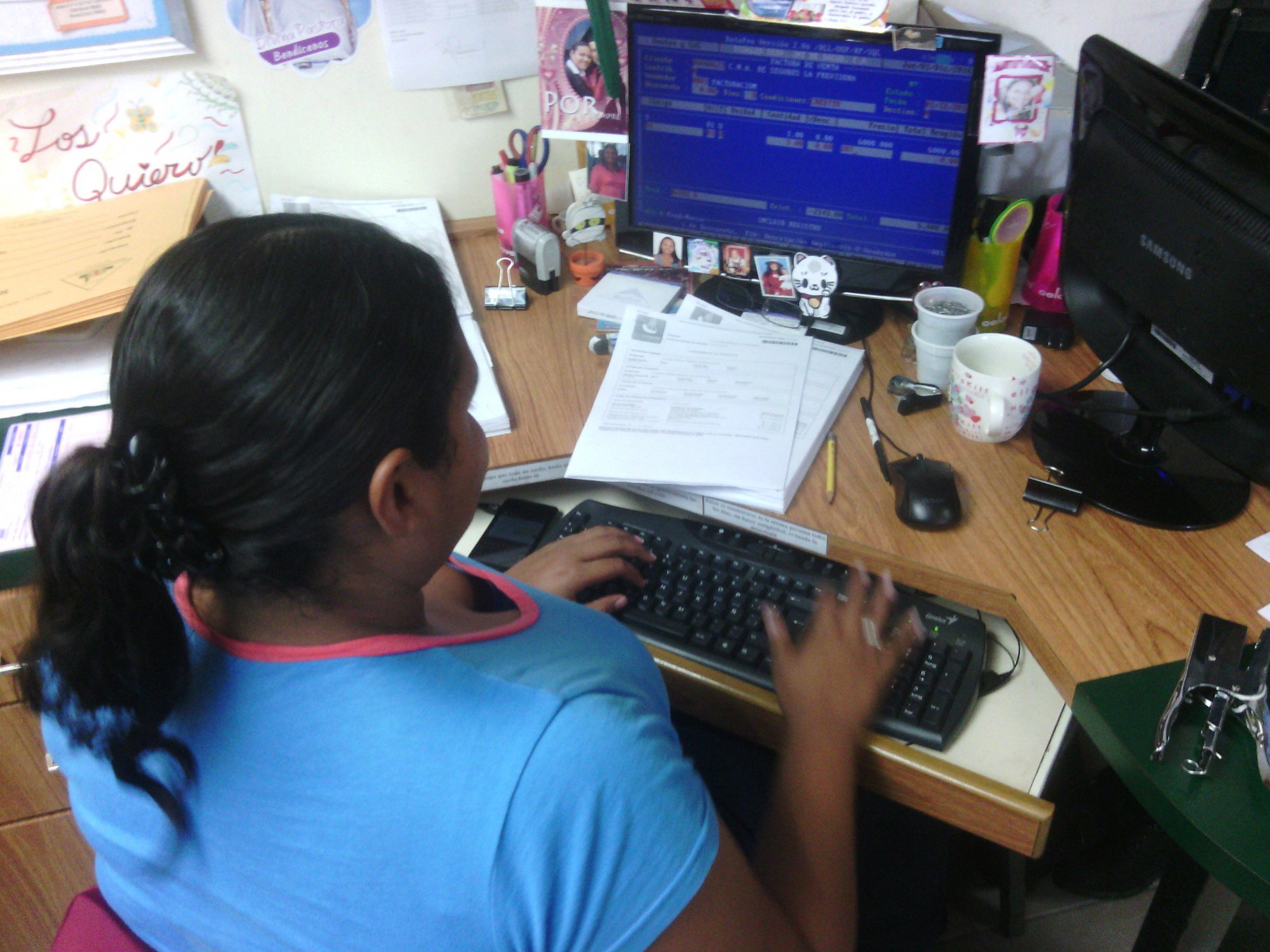
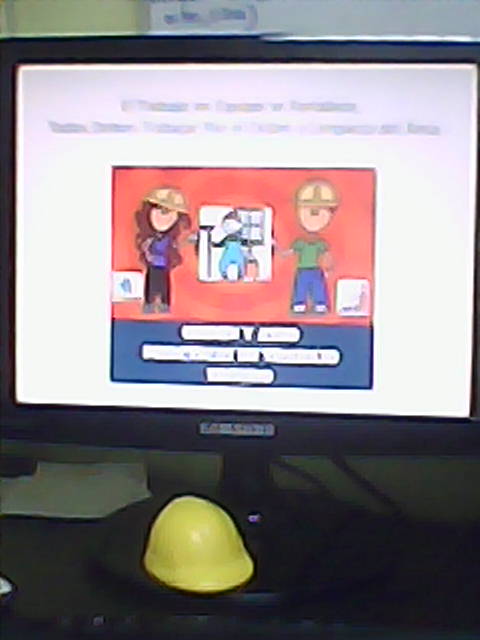
Greetings to the entire community that reads me, this time I bring you a post about the definition, the objectives, the types, the content, and the phases for the elaboration of a manual. The main objective is to indicate the bases for the preparation of manuals, this helps the functions of management, coordination and administrative evaluation through the systematization of activities, the identification of processes and the definition of the method to carry them out. It is convenient to prepare this post, to serve as a guide in order to provide the necessary guidance to develop the manuals.
One of the fundamental purposes of a security technician is the review and constant updating of systems, structures and work procedures in companies to guarantee the safety of all. Procedures manuals are administrative instruments that support this idea and are considered fundamental documents for coordination, direction, evaluation and administrative control, as well as for consultation in the daily development of activities.
**Definition of manual**
It is an administrative instrument that contains in an explicit, orderly and systematic way information about objectives, policies, attributions, organization and procedures of the organs of an institution; as well as the instructions or agreements that are considered necessary for the execution of the work assigned to the personnel, having as a frame of reference the objectives of the institution.
It is that document that will contain the description of the activities that must be observed in the performance of the functions of an administrative unit or several of them. It includes the positions and administrative units with their corresponding participations and responsibilities and also all those resources, information and necessary elements that contribute to the excellent operation of a company.
**Objectives of a manual**
a) Compile in an orderly, sequential and detailed manner the operations in charge of the institution, the positions and administrative units involved, specifying their participation in said operations and the formats to be used to carry out the activities indicated in the procedure.
b) Standardize and control compliance with work routines and avoid arbitrary alteration.
c) Determine in a simple way the responsibilities for failures or errors.
d) Facilitate the audit work, the evaluation of internal control and its monitoring.
e) Increase the efficiency of employees, indicating what they should do and how they should do it.
f) Help in the coordination of work and avoid duplication of functions.
g) To constitute a basis for the subsequent analysis of the work and the improvement of systems, procedures and methods.
**Types of manuals**
**Organization Manual:**
It contains detailed information on the Organization such as: background, legal framework, attributions, structure, functions, among others.
**Rules and Procedures Manual:**
It defines in a detailed, logical and sequential way the steps to follow to carry out a process, procedure or activity, explicitly identifying the administrative unit and the person responsible for executing each of the steps. It indicates the rules that govern each process or procedure. They are instruments that are part of the Internal Control System.
**Specific Operation Manual:**
Used to describe in a particular and detailed way the procedures of the Commissions, Committees, etc. It also serves for the development of technical and operational manuals, etc. In the case of Commissions and Committees, their organization, norms and policies that govern them must be included.
**Structure of the manuals**
**Organization Manual**
• Cover page
• Index
• Introduction
• Background of the organization
• Legal bases
• Goals
• Structure of the organization
• Mission
• View
• Values of the organization
• Organization chart
• Objective of each unit
• Functions and powers
**Rules and Procedures Manual**
• Cover page
• Review and approval signatures
• Updates page
• Index
• Introduction
• Legal bases
• Scope
• Goals
• Rules
• Procedures
• Forms and instructions
• Glossary
• Flow chart
• Annexes
**Specific operation manual**
• Cover page
• Index
• Introduction
• Legal bases
• Goals
• Structure of the organization
• Powers
• Functions
• Organization chart
• Scope
• Rules
• Procedures
• Forms and instructions
• Glossary
• Flow chart
• Annexes
**Phases of the elaboration of a manual.**
Work Planning.
At this stage, a working group is formed in charge of preparing the manuals. This can be made up of a representative from each of the administrative units of the institution or by a group of officials determined by the hierarch. A coordinator or person in charge must be appointed who will lead the work of the group in order to maintain homogeneity in the content and presentation of the information.
Also in this phase, the methodological tools that will be used to obtain the information to prepare the manuals are established, as well as the type of information that will be required and the schedule of activities to be developed for the preparation of the manuals.
Information Search.
Once the work planning is in place, the necessary information to prepare the manuals begins to be collected, according to the previously established methodological tools and the selected investigative techniques. The search for this information can be done by:
Documentary research: it tries to find all those printed or electronic documents in which relevant information is obtained for the preparation of the respective manual, be it normative, technical studies that support a process of administrative reorganization, previous procedure manuals, work reports, manuals service, institutional memories, among others.
Monumental investigation: it deals with all the information that is not written in any document and before which one must resort to interviews, surveys, observations, tests, among others, to obtain said information from the officials who know it.
Analysis of the information.
Once the necessary information for the preparation of the manual has been obtained, it must be organized and analyzed in a way that presents a logical order for the development of the manual. To guide the process of ordering the information, the following questions can be used:
What work or activity do you do?
Who is responsible for carrying it out? Or in a certain case if you do not have the data of the person in charge, who does it?
What are the means you have to do the job?
What is the work done for?
How is work done or done?
When or at what time is it done?
Why is it done?
These questions facilitate the work of analyzing the information and allow to know the activities of the institution, explain its behavior, identify the relationships that occur between each event, understand the operation of the institution and maintain the sequence and logic of the information.
**Preparation of the Manual.**
In this phase, the design and presentation that will be used to prepare the manual is established, for which the following must be considered:
The writing of the document, analyze to whom the manual is directed, to manage a clear, precise and understandable vocabulary for all users of the same
The elaboration of diagrams, be it flow diagrams, physical space distribution, organizational structure, process map, among others.
The format, making sure that the information presented keeps a logical sequence, that there is uniformity of the letter, and that its wording is understandable, among other aspects of form.
**Validation of the Manual.**
Once the administrative manual has been prepared, it must be presented to the hierarch and those responsible for each administrative unit to which the manual corresponds, so that they can proceed to validate whether the information presented corresponds to the responsibilities, attributions, functions and activities that It is up to the Institution to do both; as well as the administrative unit or units to which the manual is directed.
**Authorization of the Manual.**
When the manual has been validated, it must be formalized. At this point, the Institutional Hierarch or the person in charge of the corresponding administrative unit, must authorize the manual, so that it can begin with its reproduction, dissemination and distribution at the institutional level in general or to the corresponding administrative units.
**Dissemination and distribution of the Manual.**
Once a manual has been validated and authorized, it is very important that it be distributed among the corresponding administrative units, so that the officials have it at their disposal, know the document, and use it in practice. Likewise, the electronic version of the document may be incorporated into the Institution's electronic portal, in order to provide citizens with free access to the institution's organizational information.
**Review and Update of the Manual.**
The Manuals are subject to periodic reviews, and therefore, they must be flexible to the changes that occur in the Institution, for this, a record of their modifications and updates must be kept, in order to keep them attached to the institutional reality.
**Important!**
The preparation of manuals, which are the basic guides to carry out each of the activities carried out in any organization, is of utmost relevance for security. However, the importance of manuals is implicit in the content, since as they are consultation documents for all employees, they know from the beginning, both the tasks of each one, as well as what should not be done in the organization. Let us remember that it is a consultation tool, where the information can be modified according to growth and new ways of operation, as well as the changes that arise in the units.
It is also important to report every time there are changes in the manuals, not only in Operations, but in all the others. Finally, we strongly recommend considering that the manuals have to be practical and not simply abandoned in the archives, it is necessary to put into operation all the knowledge transmitted and collected within these documents to ensure the safety of each and every one of the members of the organization. organization.
Thanks for reading me, until the next post.
Raosubterraneo
Authentic Brownie
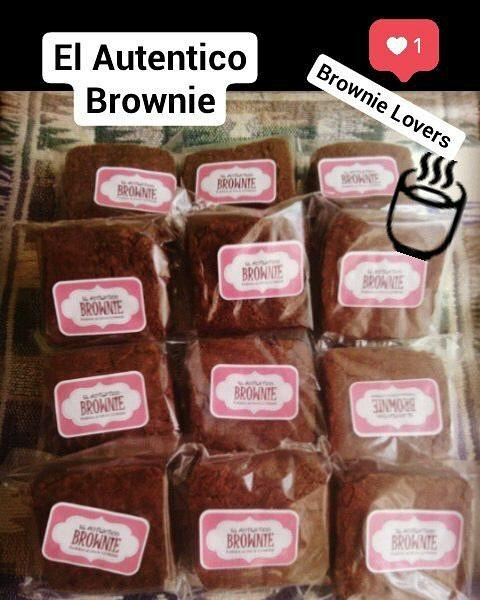
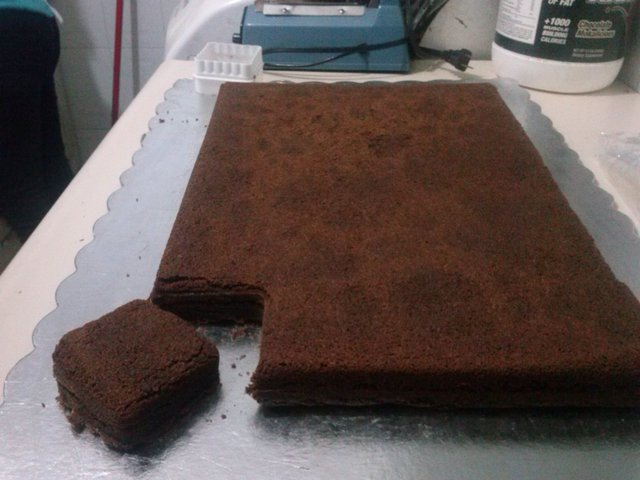
Hello! I hope you are very well, here I share the recipe and preparation of my favorite dessert, I hope you put it into practice and enjoy this exquisite dessert.
A rectangular mold or tray of approximately 41 cm x 27 cm will be used.
**Ingredients:**
• 300 grams of margarine
• 150 grams of milk chocolate
• 150 grams of cocoa
• 750 grams of sugar
• 20 grs. crushed walnuts
• 6 eggs
• 400 grams of all-purpose flour
• 10 grams of baking powder
**Process**
In a bowl you combine the sugar, the nuts and the eggs, without beating much, reserve, take the margarine, cocoa and chocolate to melt in a bain-marie or microwave (50 seconds) until melted, add this preparation to the sugar (the one that we reserve) when you have everything well united (you can do it with a whisk) you add the flour little by little with the baking powder in an enveloping way. You prepare the mold or tray by greasing it or placing waxed paper on it. Pour the mixture and bake at 175 degrees Celsius for 35 minutes.
Then to enjoy this delicacy.
combine it in your coffee breeak.
Raosubterraneo
Risk Analysis in Jobs
Hazards in any activity, no matter how insignificant, can cause lost working hours and have repercussions in the medium and long term. In this sense, companies must try to identify the dangers and risks existing in each job, to prevent them from affecting their workers. Education, development and high performance of modern organizations depend to a large extent on effectiveness and efficiency, as well as adaptation and the sense of responsibility of human resources. That is why every day more organizations contribute time and money to the safety and prevention of accidents with injuries that occur in the workplace.
Industrial safety and occupational health should lay the foundations for the establishment of a philosophy that indicates the guidelines and objectives in the area of safety, hygiene and environment of every organization, acting as a guide for the administration of resources and allowing managers to define the results that are expected to be obtained in the medium and long term within the management. In this way, it will be possible that these can be clearly executed and satisfactory results are obtained. Risk analysis in the workplace should be a priority for today's organizations, especially where repetitive activities are developed and that apparently do not require great efforts, but that in the long run, can trigger occupational diseases and affect the productivity of the company. company.
Occupational accidents and diseases not only represent human suffering for the worker and his family, but also high economic costs for the productive sector and society in general. That is why the health and well-being of the working population, and consequently their productivity, are determining factors to achieve economic and social development, for which occupational hygiene and safety must control the risks existing in the work environment, as that these can cause unsafe conditions that lead to accidents or occupational diseases. For his part, Carrillo (2009) defines: The safe analysis by job position as a risk analysis methodology that allows an activity to be broken down into its sequence of basic tasks to facilitate the identification and / or reduction of hazards or risks that could generate unwanted events in each of these, through the implementation of preventive and litigating measures.
Therefore, risk analysis is a key element for planning preventive action in a company, since from this the protection and correction measures that will create adequate health and safety conditions are drawn up and developed. This analysis must be carried out on a mandatory basis and as many times as necessary depending on any change that occurs in the work environment, be it technological, regulatory, procedural, organizational, among others, that affects each and every one of the workers of companies, regardless of their qualification the activity that they develop.
Therefore, it can be complemented that safety at work would be a set of technical educational, medical and psychological measures, used to prevent accidents, eliminate unsafe environmental conditions and instruct or convince people about the implementation of measures preventive. Hence, lies the importance of hygiene and safety within organizations, which allows preventing and reducing accidents and illnesses, as well as preserving the health of workers, maintaining and increasing productivity, and reducing operating costs.
By properly training workers in risk prevention, it is possible to ensure that all staff are able to control their actions in an emergency situation. The appropriate techniques and procedures to carry out a correct planning of preventive activities are based on the initial analysis of the risks existing in the work environment, as well as on various actions that must be framed within the policy of action of both private companies and of public administrations.
The public company is exposed to different types of risks such as: physical risks, mechanical risks, biological risks, disergonomic risks, meteorological risks, psychosocial risks, chemical risks and electrical risks that can alter the correct functioning of its activities, in order to to avoid the materialization of these risks in accidents and minimize the consequences of the same in case they arrive
If this happens, the application of security measures is required to help reduce the risks to their lowest possible values. }
In this sense, a physical risk is associated with the probability of suffering bodily harm. There are various activities and tasks that present a high physical risk since their development can lead to injuries of different types and even, in the event of an error or accident, cause death.
For this reason, the first objective of occupational safety is the reduction and, in its effects, the elimination of occupational risks and illnesses, thus reducing the probability of accidents occurring. The second objective is the minimization of direct and consequential losses when accidents have occurred, acting to reduce the intensity, that is, controlling the accident and losses.
In addition, the relationship between health and work is remarkable since the person, when doing work, produces variations in the environment that surrounds him. These variations can be physical, mental and social, sometimes these changes can affect the health of the worker, damaging her initial balance, a situation she calls health. It is not work, but if the modifications that its performance introduces in the environment that can be aggressive for people make possible the existence of some problem in the workplace, in this way the health of workers is determined by the conditions of the environment environment.
**Conclusions**
A risk analysis makes it possible to determine the probability and severity of the consequences and with this the risk estimation, which will allow the adoption of relevant control measures that mitigate the risk and thus guarantee the worker decent working conditions for full exercise of their abilities.
**recommendations**
Adopt preventive measures that minimize the consequences of the risks studied in order to meet the needs of the maintenance area of said company.
Once the preventive measures have been applied, a meticulous follow-up must be carried out to verify its effectiveness, and if they do not meet the expectations, they must be modified in order to comply with the requirements.
Occupational Health And Safety Is Essential.
Raosubterraneo
Unsafe Acts At Home
Kind regards to the entire community, today I bring you some information about unsafe acts at home, how you can identify, correct and avoid them. apply prevention at home with your family or at work with your colleagues, to maintain the health and integrity of you and yours, which is the most important thing, safety comes first. I hope this information is helpful to you, Thank you for your attention.
Accidents in the home happen very frequently because parents do not know some of the risks or do not anticipate that something wrong may happen when using everyday tools that appear to be safe because they have been used in the same way by many years, but the truth is that a few seconds in which the presence of an unsafe condition and an unsafe act coincide to cause a serious accident that you can regret all your life. Accidents can be prevented by knowing the risks to which we are exposed.
**Insecure Act.**
Unsafe act or unsafe practice is the action or omission of the worker that creates a risk against his safety and / or that of his colleagues. Unsafe acts are the human factor in accident causes. A significant number of studies consider that between 80 and 90 percent of accidents have their origin in unsafe acts.
Although the causes of this type of act are very varied, it is worth noting the inadequate or insufficient training, bad habits, overconfidence and haste. The lack of physical conditions for work, job dissatisfaction, inadequate workload (both due to excess and deficiency) or the influence of medications, alcohol or drugs can also be highlighted.
Home security well deserves a detailed concern of the dangerous aspects that can occur in each of the different areas of the house, (kitchen, bathroom, dining room WATER, GAS AND ELECTRICITY INSTALLATIONS).
Accidents at home: poisonings, burns, sprains, etc.
The main risks for intoxication, allergies and irritations in the home derive from the use of the following products:
• Medicines
• Cleaning products
• Insecticides and garden products
• Paints, solvents and adhesives
• Fuels
• Perfumery products
• Alcoholic drinks
Poisoning, allergies and irritations from these products are generally a consequence of their ingestion and more rarely, of their inhalation, in contact with the skin. As general rules of prevention we can cite the following:
• Do not leave the products within the reach of children and store them in a safe place.
• Label the containers properly and if possible keep the products in their original containers.
• Follow the manufacturer's instructions for use.
• Do not store different types of products together.
In addition to these general rules, some particular rules should be considered depending on each product:
• Medications: Do not store them on the bedside tables.
• Cleaning products: Do not mix them indiscriminately.
• Insecticides and garden products: Do not spray or apply them on food, people or pets.
**UNSAFE ACTS AT HOME AND WORK.**
Carry out work for which you are not duly authorized.
Working in unsafe conditions at excessive speeds.
Do not give notice of the dangerous conditions that are observed, or not marked.
Do not use, or cancel, the safety devices with which the machines or installations are equipped.
Using faulty or damaged tools or equipment.
Do not use established personal protective clothing or use inappropriate clothing.
Playing pranks at work.
Repairs machines or installations temporarily.
Carry out repairs for which you are not authorized.
Adopting incorrect postures during work, especially when handling arm loads.
Wear inappropriate work clothes (with belts or hanging or torn parts, too loose, with grease stains, etc.)
Wear rings, bracelets, necklaces, medals, etc., when working with machines with moving parts (risk of entrapment)
Use cables, chains, ropes, slings and lifting gear, in poor condition.
Exceeding the load capacity of lifting devices or industrial vehicles.
Stand under suspended loads.
Transportar personas en los carros o carretillas industriales.
**UNSAFE CONDITIONS AT HOME AND WORK**
Lack of protections and safeguards in machines and facilities.
Inadequate protections and safeguards.
Lack of warning system, alarm, or call for attention.
Lack of order and cleanliness in workplaces * Lack of space to work and store materials.
Improper storage of materials, disorderly stacking, packages deposited in aisles, piles that obstruct emergency exits
**Instructions.**
Eliminate all unsafe conditions in the house. Unsafe conditions are situations that favor the occurrence of accidents, such as leaving a ladder in the path of people, electrical outlets with an excess of connected devices that can cause a fire due to overheating of the cables, leaving cables or other objects crossed in the passage of people, make direct connections to electrical power cables, as well as many others.
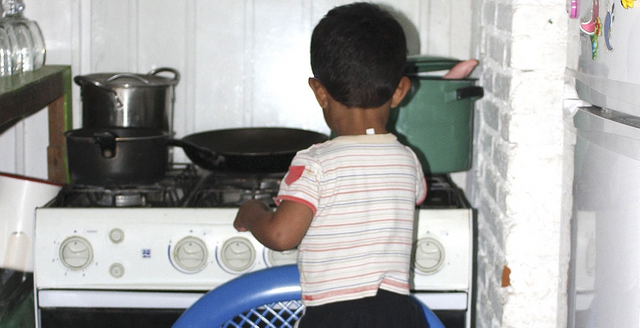
Some of these are allowing children to use sharp kitchen knives, letting them be in the kitchen when you are busy preparing hot food, letting them climb onto chairs to use as ladders to reach some objects, climbing onto the roof of the kitchen. house, climbing the walls of the house, using the microwave oven without prior training, using inappropriate tools such as knives instead of can openers or spoons instead of bottle openers, leaving children alone unattended in the pool or tub area bathroom, as well as a great deal more.
Educate children in all matters relating to home safety so that they are always aware of unsafe acts and conditions and can effectively prevent accidents. Take every opportunity to teach them why they should not do something and the consequences, when the risks are known and the concept is understood, they will usually think better of things before making a mistake that could cost very expensive for their health or home, including running in the toilets or entering barefoot, as this could cause them to slip and a serious accident.
**Risk Prevention: Is Your Home Safe?**
Is your home safe? To answer this question we must focus on the basic activities and conditions of our home. Every year and in many homes, they are affected by disastrous events, the product of unsafe actions and conditions.
Let's analyze a dependency, the kitchen:
**Electrical conditions:**
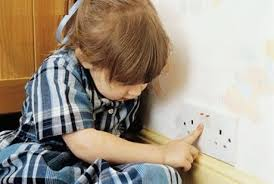
They must be in accordance with the rules of the same. Do not recharge the plugs using "triples" or extension cords. Repair damaged cables, do not repair them with “electrical” tape. This detaches over time, with serious danger of someone being electrocuted or a short circuit that will generate fire. Does the "automatic" act frequently? That means there is more electricity consumption in your home than supported by the available circuits. Request a review by authorized qualified personnel.
**Combustible material and heat:**
Oil and fat can easily be ignited by a heat source. Keep any spills and residual items clean. The frying pan, the oven, the microwave, have the same behavior. In the kitchen, there are elements that can be turned on such as curtains, kitchen towels, gloves, containers, oil bottles, plastic utensils, etc. It is clear that these elements are part of them, but from the "fire-fighting" point of view this corresponds to a fire load that must be under control, as well as at a safe distance from heat sources.
**Fire and children:**
Many children are struck by fire, they handle matches, lighters. These should be away from minors. Infants should not be left alone while there are appliances or items operating such as stoves, candles, etc. The handles of the cookware with an open flame should not be exposed to contact when passing by. They can be touched by children, including the elderly, causing accidents (burns, fires).
**Kitchen floor:**
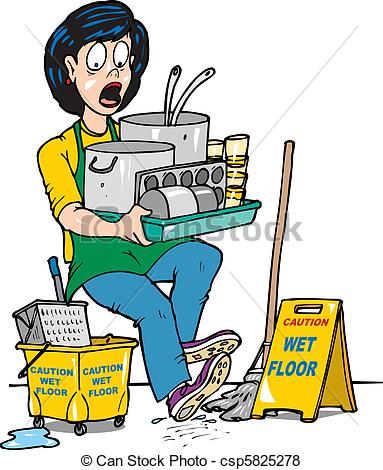
The floor must be dry, clean and tidy to avoid falls of the people who use it.
**Chemical materials or elements:**
There are many chemical elements of daily use, used in cleaning or washing; some flammable. Others should be taken care of from the point of view of pollution control
**Reflection**
We have only analyzed one dependency of our home, and in part. This same analysis should be done with the other rooms of our house. If we are thorough in the analysis, we will see that many unsafe conditions live with us. What's more, we commit unsafe acts, without thinking about the consequences. Hence the importance of a Safe Home. Our home should be a safe and welcoming space.
These are works and research that I did at the univ. On the web you can find a lot of information on this and other topics on occupational health and safety that in this case also applies at home.
Raosubterraneo
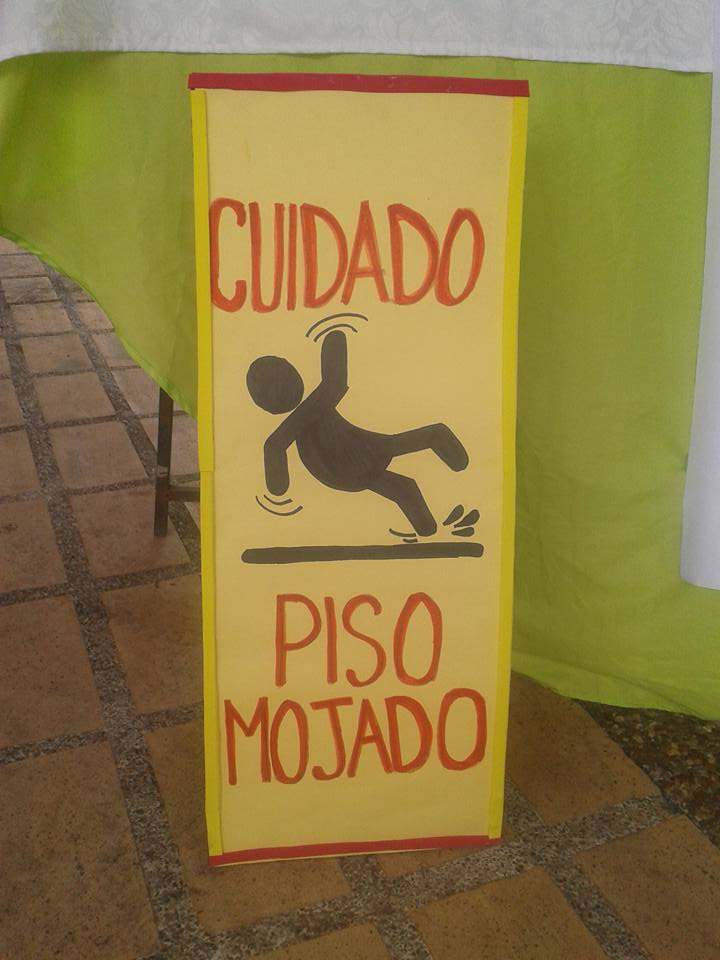
https://www.canstockphoto.com/wet-floor-5825278.html
Mushroom and Bacon Sandwich
One of the secrets of this dish is that you can choose different types of bread, from the traditional square, wholemeal, peasant or tap bread. If the presentation is canapés, put together a varied tray and use the mushroom mixture as a spread, especially if you add cream cheese.
Take note of the mushroom and bacon sandwich recipe:
**Ingredients**
- 200 gr chopped bacon
- 200 gr mushrooms cut into slices
- 200 gr grated mozzarella cheese
- 1 clove garlic, minced
- 1 sliced baguette or sliced bread
- Olive oil
- oregano
**Preparation**
1. In a frying pan, fry the garlic quickly and add the bacon with a few drops of oil until it loosens its own fat.
2. The mushrooms are added until soft and set aside.
3. Spread the slices of the baguette or sliced bread with a little butter.
4. Place the toasted bread slices in a baking dish, put a generous amount of the mushroom mixture and sprinkle generously with the mozzarella cheese and oregano.
5. It takes to the oven until the cheese is melted, it is removed and it is served.
Raosubterraneo

Venezuelan FoodPorn
Venezuela, country of a beautiful culture, of good and beautiful people, land of beautiful women, great athletes and exquisite food. On this occasion I am writing to show you food made in my homeland Barquisimeto known as the best in fast food "Fast Food" especially its pepitos, but this time I present this provocative and exquisite gourmet hamburger, made by my cousin who is a creative chef. The name of this burger is La Campiña, its name dedicated to a sector of our beautiful town of Cabudare. Raos
Raosubterraneo
Accident Prevention, Everyone's Responsibility
Good evening! I hope you are very well, this post is dedicated to an informative prevention material. This material is widely used to give training talks for workers, production, administrative personnel, etc., whether it be from a company, factory, commercial premises, among others. Accident prevention is essential for occupational health and safety, physical and mental integrity of ourselves, so we have to be the first to take this into account and avoid risky situations.
**Accident Prevention, Everyone's Responsibility.**
I have told you many times that personal injury is one of the great evils of modern industry. This expression is not exaggerated at all, so one of the main objectives that we seek in these five-minute talks is to teach them to prevent accidents. In the five minutes today we are going to try to clarify whose responsibility it is to prevent accidents and who is the person responsible when you are injured.
If I handed out a piece of paper among you and asked you to write who you think is the person responsible when you are injured, many of you would surely write: the general manager, you, the head of the department. Those who wrote this would be right, at least in part. To the general manager, to the head of our department, to me, we all care that you do not get injured. We know that accidents with injury produce physical and moral pain. Do you think that I would like to have to knock on the door of your house and inform your wife and children that one of you has been seriously injured at work and is admitted to the hospital? Nobody likes to report such sad news, and no manager or department head likes or benefits when the high rates of disabling injuries are posted at their plant.
Different programs are regularly carried out in our plants to help you prevent injuries. One of those shows is this five minute talk. In all these programs we present information that can help you avoid all kinds of accidents. Some of this information, I know, is not new to you, what we want is to refresh your memory, because they are points that we believe are very important and that can help you avoid suffering injuries.
Time and again we emphasize the importance of personal protection, for example. I know that sometimes it is a bit boring to have to always repeat similar advice and warnings, but if we think about how we can benefit from following those recommendations or advice, it is worth paying a little attention and following them. Have you ever talked to a co-worker who had a serious accident? Think for a moment about a co-worker who, let's say, lost both eyes. Do you think that if by a miracle he regains both eyes, from now on he would not do everything possible to protect his sight? The greatest things in this world, personal riches, such as sight, hearing, the members of our body, we do not really appreciate until we lose them.
And if any of you ever lose or incapacitate any of these organs or limbs forever, it will be useless for you to blame other people, to blame someone, like me, the boss for the loss or incapacitation of those organs or limbs. from our department, to our general manager.
With this I just want to tell you that ultimately preventing accidents is the responsibility of all of us, of each one of us. If you expose yourself to unnecessary dangers, no matter how much I talk to you, no matter how much advice I give you, it will be of little use.
I can talk to you over and over again about the importance of wearing a protective helmet, but if you do not put it on when you need it, my words will have fallen flat. I couldn't stop them from breaking their heads, because I can't wear their helmet for protection.
In short, it depends on you, on each one of you, whether or not you suffer an injury. With talks, with movies, with training programs, we try to create an environment in which you can develop correct attitudes, we try to teach you to protect yourself from the dangers that surround you. But you have the last word.
So, and with this I want to end, try to develop attitudes that are positive. Your physical integrity ultimately depends on your personal attitudes. And never forget that each of you is responsible for your actions, you are the only ones who can prevent you from getting hurt.
we read,
Raosubterraneo
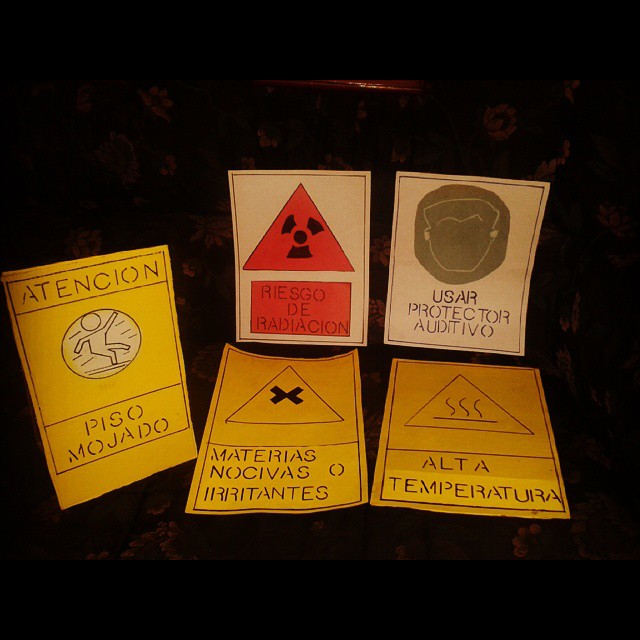
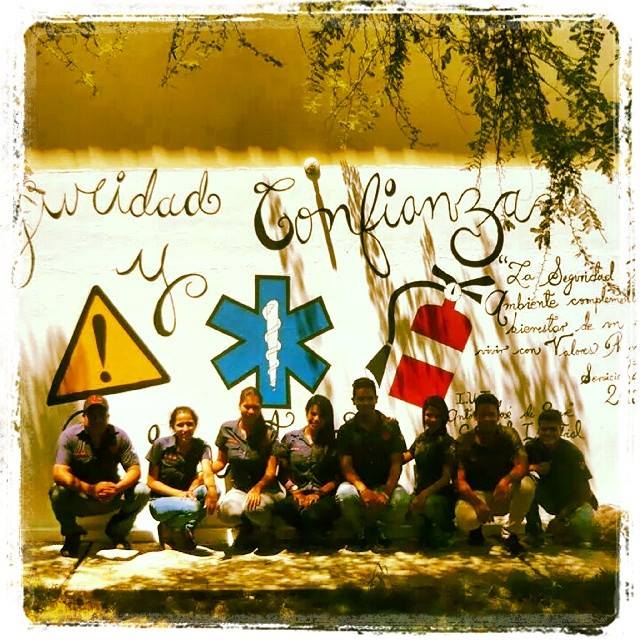
Inspections Workshop
Greetings all my readers, today I will share with you a guide on how to carry out a labor inspection in health and safety, both for occupational health and safety technicians and for those who are interested in knowing how to carry out a labor inspection. This guide was provided to us by Ing Maribel Pinto, she gave us the chair of occupational hygiene at the university. In it there are tips that tell you about the LOPCYMAT (Organic Law of Prevention, Conditions and Work Environment), Constitution of the Bolivarian Republic of Venezuela, the LOTTT (Organic Law of Labor, Workers and Workers) and Technical Standards . Thus, after the inspection is carried out, they are presented in INPSASEL (National Institute for Occupational Prevention, Health and Safety), it is the body of inspection, sanction and encouragement for compliance with the LOPCYMAT at the national level. If you are not a technician, it will help you identify the risks that you are exposed in your work environment.
Following the post I leave the guide, I hope the reading is pleasant and the information helpful, thank you for reading me.
**INSPECTIONS**
**GUIDE FOR INDUSTRIAL SAFETY TECHNICIANS**
There are different preventive analytical techniques, such as job observation, worker analysis, operating procedures and, finally, Safety Inspections, which is the preventive analytical technique par excellence. When we talk about facilities, equipment, machines and production processes, we refer not only to their conditions and technical characteristics, but also to work methodologies, human attitudes and behavior, aptitude of workers for the job they perform and organizational system.
**SITUATIONS TO CONSIDER BEFORE INSPECTING.**
Before conducting planned inspections, individuals should know:
The processes of the company.
Risk factors and how they are classified.
The raw materials and elements used in the organization and its flow chart.
The physical facilities and the production process.
The prevention and epidemiological surveillance programs that are developed in the company.
The equipment and machinery used in the different processes.
The procedures and standards of work and safety standardized by the company for the different activities carried out.
The main accidents and incidents that occurred in the area.
The aspects contemplated in the checklist.
**LEGAL BASIS OF SUPPORT FOR LABOR INSPECTIONS**
CONSTITUTION OF THE BOLIVARIAN REPUBLIC OF VENEZUELA, ART. 87
ORGANIC LAW OF LABOR, EMPLOYEES AND WORKERS. ART 156
LOPCYMAT, ART. 53 NUM 3, 4, 8, ART. 56, NO. 14, ART 62, NUM 1, 2, 3.
THE PARC REGULATION OF THE LOPCYMAT, ARTICLE 11, ART 21 NUM 1, 8
NT-01-2008 ART. 2. OF THE CONTENT OF THE WORK PLANS, NUMERAL 2.4. INSPECTION PROCESSES
**TYPE OF INSPECTIONS**
INSPECT BEFORE STARTING WORK: these are those that, as their name indicates, must be reviewed or inspected for environmental conditions, machinery, equipment and tools, as well as the organization of tasks and safe work procedures.
GENERAL INSPECTIONS: These are aimed at recognizing possible failures or risk factors present in the facilities in general. They mention those inspections that are carried out in a general way, without doing much detail in exhaustively carrying out the elements, but rather verifying compliance with all labor regulations, promotion and training for work, as well as the relative safety for health .
PERIODIC INSPECTIONS: are those that are programmed at regular intervals. They can be done semi-annually, quarterly, monthly or other suitable interval
CONTINUOUS INSPECTIONS: are those that are carried out weekly or daily and are directed to machinery, equipment and that their use does not imply any danger.
INTERMITTENT INSPECTIONS: are those that are carried out at irregular intervals. These tend to keep supervisory personnel attentive to any external inspection and further lead them to ensure that any unsafe conditions are corrected.
SPECIAL INSPECTIONS: These are necessary as a result of the installation of new elements in the process, the remodeling of structures and the appearance of new risks.
INSPECTIONS AFTER AN EMERGENCY: It refers to the inspection that must be carried out immediately when a dangerous situation arises that has threatened the life, health and safety of workers or has represented a risk of loss of raw materials, time or material goods .
**THE INSPECTION IN FIVE STEPS:**
STEP 1: Identification of Hazards and Exposed Workers
Remember: A hazard can be anything (be it materials, equipment, work methods, or practices) that can cause harm. Here are some tips to help you identify what the risks are:
Tour the workplace and examine what could cause harm;
Consult workers about problems they have encountered
Consider long-term health risks, such as high noise levels or exposure to harmful substances, as well as more complex or less obvious ones, such as psychosocial factors or risks associated with the organization of work
Examine the company's accident and illness history
Special attention must be paid to gender issues, to the groups of workers exposed to greater risk or who present special characteristics:
Workers with disabilities
Young and older workers
Pregnant and lactating women
Personnel without training or experience
Maintenance workers
Immunosuppressed workers
Workers who already suffer from a disease, such as bronchitis
Workers taking medications that can increase their vulnerability to harm.
For each risk it is important to clarify who can be harmed; this will make it easier to establish the best way to deal with it.
**STEP 2: Risk Assessment and Assignment of Priorities to them**
The next step is the evaluation of the risk derived from the work. This task can be approached by considering:
The probability that a certain hazard causes harm
The probable severity of the harm in question
The frequency with which workers are exposed (and the number of these
**STEP 3: Planning the Necessary Preventive Measures**
The next step is to decide how to eliminate or control the risks. In this phase it should be considered:
Avoid risks
Substitute dangerous factors for others that are not dangerous, or that are less so;
Combat the risks at source
Adopt measures that put collective protection before individual protection (for example, controlling exposure to fumes through localized ventilation and extraction systems, not through individual masks
Adapt to technical progress and changes in information
Seek to improve the level of protection.
**STEP 4: Adoption of Measures**
The next step is to adopt preventive and protective measures. It is important to get the participation of workers and their line of command in this process. Effective implementation requires the development of a plan that specifies:
The measures to be applied
Who does what and when
In what period it must be completed.
It is essential that priority is given to all risk elimination or prevention tasks.
Document the evaluation. The risk assessment must be documented. The obtained record can be used as a basis for:
Transmit information to interested parties
Follow-up tasks, in order to determine whether or not the necessary measures have been adopted
Monitor the evolution of the most significant risks.
Conduct reviews in case circumstances change.
It is recommended to document, at least, the following data:
- Name and functions of the people who carry out the evaluation
- Identified risks
- Groups of workers exposed to specific risks;
- Necessary protection measures (operational control);
- Information on the application of measures, such as the name of the person in charge and the date;
- Details of follow-up measures and subsequent reviews, including dates and time
intervening personnel;
- Detailed information on the participation of workers in the evaluation process
risk.
**STEP 5: Monitoring and Review**
Nor should it be neglected to carry out periodic checks to verify that the prevention and protection measures are working or are applied, and to detect new problems.
The risk assessment must be reviewed periodically, depending on the nature of the risks, the probability of a change in work activity or the conclusions of the investigation of an accident or incident (an incident is an event that has not caused injuries disease or damage, but could have caused them) Risk assessment is not something you do once and for all.
See you later, we read.
Raosubterraneo.
Evaluation of Disergonomic Risks in the Workstations
At present, one of the main problems that is affecting all organizations are those derived from poor working conditions, to which employees are exposed, which implies that they acquire occupational diseases in the short, medium or long term term. The International Labor Organization, (2001), indicates that musculoskeletal disorders constitute one of the most important health problems at work, both in developed and developing countries, most of the musculoskeletal disorders they produce local discomfort or pain and restriction of mobility, which can hamper normal performance at work or in other tasks of daily life. Most are work-related, in the sense that physical activity can aggravate them or cause symptoms related to them, even if the illnesses are not directly caused by work.
According to the Council of the International Ergonomics Association (2000), it defines ergonomics as the scientific discipline related to the understanding of the interactions between human beings and the elements of a system, and the profession that applies theory, principles, data and methods of design, to optimize human well-being and all system performance. A science in itself, which makes up its body of knowledge based on its experience and a broad base of information from other disciplines such as psychology, physiology, anthropometry, biomechanics, industrial engineering, design and many others. . Develops methods for determining the limits that must not be exceeded by man in different work activities.
In Venezuela, the official figures reported for 2006 by the National Institute for Occupational Health and Safety Prevention (INPSASEL) diagnosed 2,066 occupational diseases, of which 1,580 cases were due to musculoskeletal injuries: lumbar pain, protrusion and herniated disc; carpal tunnel syndrome, bursitis, representing 77% of all occupational diseases, constituting a public health problem in the world labor, this being one of the most up-to-date results so far, not escaping, so the figures are of much more diseases right now.
**Disergonomic Risks**
At present, the promotion of health and the prevention of occupational diseases are gaining momentum every day in the field of health in general and particularly in occupational health. The inadequate design of workstations can generate, among other diseases, musculoskeletal disorders, these include a group of conditions that involve nerves, tendons, muscles and support structures such as intervertebral discs, as well as represent a wide range of disorders that can vary in severity from mild periodic symptoms to severe chronic debilitating conditions that can cause pain so severe that it could make it impossible to perform daily tasks, such as dressing, cooking, among others.
Prolonged and repetitive efforts such as: lifting, pulling, pushing or carrying heavy objects, the workload, uncomfortable positions, contribute to this type of injury. The risk will depend on how long the worker is exposed to these conditions. The Organic Law of Prevention, Conditions and Work Environment (LOPCYMAT) 2005. establishes in article 59 (hygiene, safety and ergonomics) that for the purposes of the protection of workers; The work must be carried out in an environment and adequate conditions so that the workers are assured the highest degree of physical and mental health, in addition to adapting the organizational and functional aspects of the methods, systems or procedures used in the execution of the tasks, as well as in the machinery, equipment, tools and work tools, to the characteristics of the workers
**Recommendations.**
Workers must be trained on appropriate postures and dysergonomic risks, so that in this way, they can achieve the position that best suits them for the performance of their work, so this type of training must be carried out from the beginning of work in the Business, thus preventing these occupational diseases from occurring.
They are recommended to consider including ergonomic chairs that help the workers' postures, so that in this way a better task can be performed for both the company and the best health for the workers.
They should consider, the modification in the designs of the workstations, so that they are modified in this way, these postures and the workers do not show symptoms of fatigue and exhaustion due to the physical discomfort that they may present.
The Priority Should Always Be Occupational Health And Safety.
Raosubterraneo

BioSecurity, Ecology and Recycling
Greetings! On this occasion I share with you this educational and fun experience, we did a biosecurity, ecology and recycling journey. We did this day in two parts, the first part was an expo-fair at the university dedicated to the entire student community, teachers and the general public where we showed them and informed them about safety and personal protection equipment, which we did with material of waste. In each stand, small presentations were made explaining and informing about the importance of safety at work and the environment, how and when to use each one of the safety and personal protection equipment, measures on how to minimize pollution in the environment. We played games, riddles and some small drills to make this experience more dynamic and fun and thus teach and within all train a little to all the people who came and participated in our fair expo, it was an excellent experience.
The second part we did as a social work cleaning and planting some plants in a school in a neighboring community in Barquisimeto - Venezuela. It was also a very entertaining and fun experience, this time only the Occupational Health and Safety students participated, among colleagues we distributed tasks, the boys cleaned the weeds and opened the holes to plant the plants, the girls were in charge of sowing said plants and logistics. We worked on that for a whole morning, where at the end of the day we shared with colleagues, we enjoyed refreshments while telling different anecdotes shared during the day between laughter and the good feeling of having contributed and helped the environment, to children, school personnel, and your community. which was a very good experience for us as students and as people.
I share some pictures of this couple of good experiences.
Raosubterraneo
**Expo fair**
**Planting trees and flowers**
Labor Inspection To A Polymer Company
Hi! Community Here I Leave A Labor Inspection Report.
**Inspection Report**
An inspection was carried out on the Polymers company in order to identify risks and their factors that could affect the health of workers and in general the company in case of not complying with the provisions of the Organic Prevention Law Condition and Work Environment (LOPCYMAT) and its Regulations, the Regulations for Health and Safety Conditions at Work (RCHST) and the Technical Standard for Occupational Safety and Health Program. This company has 28 workers and (5) work areas, administrative, raw material warehouse, workshop, extrusion, sealing and finished product warehouse. Through an interview with an engineer in production and a delegate from the safety committee, it was learned that they currently do not have a technician in safety and industrial hygiene, that the workers receive safety training by said committee, they give the notification of risks workers, do not have a safety program, not complying with article 61 of the Lopcymat which establishes that every company, establishment, exploitation or task must design a policy and develop and implement a Safety and Health Program at Work , specific and appropriate to your processes. They do not have an established emergency plan, nor do they have a fire fighting system as such, if they have fire extinguishers and have the training to use them, they have signage although some are poorly located and workers are provided with personal protective equipment. They also told us that they have an occupational doctor and do not have a dining room or resting place for employees for their break time.
Then they proceeded to visit these areas and it was possible to observe several risks and their factors.
**In the administrative area:**
1- In this area it is an office and it was observed that workers are exposed to mechanical risk, it has several factors of such risk. An unsafe ladder without a protector or anti-slip that could cause falls and injuries to limbs, misplaced objects that can cause trips, blows, falls that can cause injuries to any extremity of the body of employees. Not complying with article 59. numeral 3 of the Lopcymat. protect the health and life of workers against all dangerous conditions at work. organic law of prevention, conditions and work environment.
2- It was also observed that there is a disergonomic risk due to such risk factors as that there is reduced space, poor location of the furniture, the placement of the equipment is not adequate and this leads to poor posture by the workers that can cause musculoskeletal injuries, fatigue physical, mental and stress, not complying with article 59. Numeral 2 of the Lopcymat, which indicates in the conditions and environment in which the work must be carried out ”adapt the organizational and functional aspects, and the methods, systems or procedures used in the execution of the tasks, as well as the machinery, equipment, tools and work tools, to the characteristics of the workers, and comply with the requirements established in the health, hygiene, safety and ergonomics regulations ”.
3- Another risk observed was the physical one, poor lighting, this can cause visual and mental fatigue and headaches and that the worker does not perform their work well because they do not have optimal lighting, they also did not have emergency lighting, which this does not comply with. what is established by the Standard (COVENIN) 2249-93 Illuminances in tasks and work areas. 2 PURPOSE AND FIELD OF APPLICATION 2.1 This Venezuelan COVENIN Standard establishes the average illuminance values in service recommended as normal lighting, to obtain efficient visual performance in the various work areas and for specific visual tasks under artificial lighting conditions. 2.2 This Standard also establishes the minimum values of average illuminance in service recommended as Emergency lighting for evacuation, security and protection; as well as recommendations to decide on the recommended values in general for reserve or replacement lighting. And not complying with article 59 numerals 1, 2, 3, of the Lopcymat in terms of the conditions and environment in which the work is carried out.
There are also problems with ventilation. They do not have a stale air injection and extraction system, this can cause a decrease in worker performance. Uncomfortable environment, fatigue him: discomfort. Respiratory diseases, which this does not comply with what the Standard (COVENIN) 2250-2000 establishes ventilation in workplaces 3.2 Local Exhaust Ventilation: It is the method by which the contaminants under control are captured in or near the place where they are generated or dispersed.
3.3 Ventilation for Dilution: It is required to reduce the concentration of pollutants present in the workplace before they reach the worker's respiratory zone, by mixing them with uncontaminated air.
3.4 Ventilation for Respiratory Requirements: It is required to dilute the carbon dioxide produced by the body and provide oxygen when the pollutants present in the workplace environment are originated only by the worker himself in moderate activity.
3.5 Ventilation for Heat Control: It is required to reduce the excessive temperature and / or humidity present in the workplace.
4.1.1 Any artificial or mechanical ventilation system in a room will be based on the injection of fresh and uncontaminated air into the room of a building, allowing stale air to escape to the outside, or on the extraction of air stale of the premises, allowing the entrance to it, a quantity of fresh and uncontaminated air from the outside. And not complying with article 59 numerals 1, 2, 3, of the Lopcymat in terms of the conditions and environment in which the work is carried out.
In the other 4 areas, raw material warehouse, workshop, extrusion, sealing and finished product warehouse. The following risks and their risk factors were noted.
**Raw material warehouse:**
1- Mechanical risk was observed, its factors were misplaced objects, poorly stacked at heights and not properly secured, which can cause trips, bumps, falls that can cause injuries to any extremity of the employee's body or even death. Not complying with article 59. numeral 3 of the Lopcymat. protect the health and life of workers against all dangerous conditions at work. organic law of prevention, conditions and work environment.
2- Physical risk its ventilation factors do not have a stale air injection and extraction system, as it is closed, heat and humidity can concentrate, this can cause a decrease in worker performance. Uncomfortable environment, fatigue him: discomfort. Respiratory diseases, which this does not comply with what is established by the Standard (COVENIN) 2250-2000 ventilation in workplaces. 3.2 Local Exhaust Ventilation: It is the method by which the pollutants under control are captured in or near the place where they are generated or dispersed. 3.3 Ventilation for Dilution: It is required to reduce the concentration of pollutants present in the workplace before they reach the worker's respiratory zone, by mixing them with uncontaminated air.3.4 Ventilation for Respiratory Requirements: It is required to dilute the carbon dioxide produced by the body and provide oxygen when the pollutants present in the workplace environment are originated only by the worker himself in moderate activity.3.5 Ventilation for Heat Control: It is required to reduce the excessive temperature and / or humidity present in the workplace. 4.1.1 Any artificial or mechanical ventilation system in a room will be based on the injection of fresh and uncontaminated air into the room of a building, allowing stale air to escape to the outside, or on the extraction of air stale of the premises, allowing the entrance to it, a quantity of fresh and uncontaminated air from the outside. And not complying with article 59 numerals 1, 2, 3, of the Lopcymat in terms of the conditions and environment in which the work is carried out.
3- Chemical risk its factors dust, polyethylene, containers with liquids. When entering the body by inhalation, absorption or ingestion, they can cause poisoning, burns or injuries to the systems, or even death, this will depend on the concentration level, the substance, and therefore the exposure time. workers in breach of article Article 53, numeral 1 of the Lopcymat that stipulates the following: Workers have the right to be informed, prior to the start of their activity, of the conditions in which it is to be carried out, of the presence of substances toxic in the work area, of the damage that they may cause to your health, as well as the means or measures to prevent them. Numeral 4: they have the right not to be subjected to dangerous or unhealthy working conditions that, according to existing technical and scientific advances, can be eliminated or mitigated with modifications to the production process or the facilities or jobs or through collective protections, and article 59 numerals 1, 2, 3, of the Lopcymat regarding the conditions and environment in which the work is carried out.
4- Dysergonomic risk lifting of loads of heavy materials that can cause injuries in the spine and musculoskeletal that could become occupational diseases article 59. Numeral 2 of the Lopcymat, which indicates in the conditions and environment in which the work must be developed ”adapt the organizational and functional aspects, and the methods, systems or procedures used in the execution of the tasks, as well as the machinery, equipment, tools and work tools, to the characteristics of the workers, and comply with the requirements established in the health, hygiene, safety and ergonomic standards ”.
**Workshop area.**
1- Mechanical risk was observed, its factors improperly located objects and tools, untidy, some objects in poor condition and without use that can cause trips, bumps, falls, cuts that can cause injuries to any extremity of the employee's body or even death. Not complying with article 59. numeral 3 of the Lopcymat. protect the health and life of workers against all dangerous conditions at work.
2- Chemical risk its factors dust, polyethylene, chips, containers with liquids. When entering the body by inhalation, absorption or ingestion, they can cause poisoning, burns or injuries to the systems, or even death, this will depend on the concentration level, the substance, and therefore the exposure time. workers in breach of article Article 53, numeral 1 of the Lopcymat that stipulates the following: Workers have the right to be informed, prior to the start of their activity, of the conditions in which it is to be carried out, of the presence of substances toxic in the work area, of the damage that they may cause to your health, as well as the means or measures to prevent them. Numeral 4: they have the right not to be subjected to dangerous or unhealthy working conditions that, according to existing technical and scientific advances, can be eliminated or mitigated with modifications to the production process or the facilities or jobs or through collective protections, and article 59 numerals 1, 2, 3, of the Lopcymat regarding the conditions and environment in which the work is carried out.
3- Physical risk due to vibrations and noise due to the use of machines and tools, also the temperatures can vary since practically said area is outdoors, this can cause a decrease in the worker's performance. Uncomfortable environment, fatigue him: discomfort. Respiratory diseases, Article 137 (RCHST) Noise and vibrations that may cause physical or mental health problems to workers will be eliminated or limited in every workplace. Article 141. In the work sites, the humidity and temperature conditions must allow the execution of the work, without prejudice to the health of the workers. Article 142. All workers must be protected against harmful radiation from any heat source. Article 143. Workers must be protected by natural or artificial means from harmful air currents, from sudden changes in temperature and from excessive humidity or dryness. When in an emergency, the work has to be carried out in very low or very high temperature conditions, breaks or respites will be granted. article 59 numerals 1, 2, 3, of the Lopcymat regarding the conditions and environment in which the work is carried out.
4- Dysergonomic risk its factors, inappropriate postures, inadequate movements, which can cause injuries in the spine and skeletal muscles that could become occupational diseases Article 59. Number 2 of the Lopcymat, which indicates the conditions and environment in which the work must be carried out " adapt the organizational and functional aspects, and the methods, systems or procedures used in the execution of the tasks, as well as the machinery, equipment, tools and work tools, to the characteristics of the workers, and comply with the established requirements in health, hygiene, safety and ergonomic standards ”.
**Extrusion and Sealing Areas.**
1- Mechanical risk unsafe ladder, without slip resistant, objects, equipment, machinery incorrectly located, lack of a protective railing between the 2 areas that are in the same shed. All this could cause, trips, blows, falls, cuts that can cause injuries to any extremity of the body of employees or even death. Not complying with article 59. numeral 3 of the Lopcymat. protect the health and life of workers against all dangerous conditions at work.
2- Physical risk ventilation does not have an injection and extraction system of stale air, it is very closed and the temperature is a bit high, there is a lot of heat and little air circulates, this can produce humidity and the lighting is not correct. Article 129 of (RCHST) The employer must take the necessary measures so that all places destined for work have natural or artificial lighting in sufficient quantity and quality, so that the worker can carry out his work with the greatest safety and without prejudice to your sight. Article 132. General artificial lighting must be uniform and distributed in such a way as to avoid intense shadows, violent contrasts and glare. Article 137 Noise and vibrations that may cause physical or mental disorders to the health of workers will be eliminated or limited in every workplace. Article 141. In the work sites, the humidity and temperature conditions must allow the execution of the work, without prejudice to the health of the workers. Article 142. All workers must be protected against harmful radiation from any heat source. Article 143. Workers must be protected by natural or artificial means from harmful air currents, from sudden changes in temperature and from excessive humidity or dryness. When in an emergency, the work has to be carried out in very low or very high temperature conditions, breaks or respites will be granted. Article 123. In closed workplaces, a mechanical ventilation system will be provided during working hours to ensure air renewal in the aforementioned proportions. The fresh air inlets will be located opposite the places where the stale air is extracted or expelled. Article 59 numerals 1, 2, 3, of the Lopcymat regarding the conditions and environment in which the work is carried out
3- Dysergonomic risk could be observed repetitive movements, forced postures. This can cause injuries to the spine, musculoskeletal injuries and ultimately an occupational disease incurring Article 59 numerals 1, 2, 3, of the Lopcymat regarding the conditions and environment in which the work takes place. and article 60 in relation to person, work system and machine.
4- Chemical risk equal to q in other areas, dust and polymer, containers with liquids. When entering the body by inhalation, absorption or ingestion, they can cause poisoning, burns or injuries to the systems, or even death, this will depend on the concentration level, the substance, and therefore the exposure time. workers in breach of article Article 53, numeral 1 of the Lopcymat that stipulates the following: Workers have the right to be informed, prior to the start of their activity, of the conditions in which it is to be carried out, of the presence of substances toxic in the work area, of the damage that they may cause to your health, as well as the means or measures to prevent them. Numeral 4: they have the right not to be subjected to dangerous or unhealthy working conditions that, according to existing technical and scientific advances, can be eliminated or mitigated with modifications to the production process or the facilities or jobs or through collective protections, and article 59 numerals 1, 2, 3, of the Lopcymat regarding the conditions and environment in which the work is carried out.
**Finished product warehouse area.**
1- Mechanical risk was observed, its factors, objects and tools badly located, disorderly, some objects in poor condition and without use, the finished product badly stacked, at heights not properly secured, which can cause trips, bumps, falls that can cause injuries to any limb from employees' bodies or to death. Not complying with article 59. numeral 3 of the Lopcymat. protect the health and life of workers against all dangerous conditions at work. organic law of prevention, conditions and work environment.
2- Physical risk ventilation does not have an injection and extraction system of stale air, it is very closed and the temperature is a bit high, there is a lot of heat and little air circulates, this can produce humidity and the lighting is not correct. Article 129 of (RCHST) The employer must take the necessary measures so that all places destined for work have natural or artificial lighting in sufficient quantity and quality, so that the worker can carry out his work with the greatest safety and without prejudice to your sight. Article 132. General artificial lighting must be uniform and distributed in such a way as to avoid intense shadows, violent contrasts and glare. Article 137 Noise and vibrations that may cause physical or mental disorders to the health of workers will be eliminated or limited in every workplace. Article 141. In the work sites, the humidity and temperature conditions must allow the execution of the work, without prejudice to the health of the workers. Article 142. All workers must be protected against harmful radiation from any heat source. Article 143. Workers must be protected by natural or artificial means from harmful air currents, from sudden changes in temperature and from excessive humidity or dryness. When in an emergency, the work has to be carried out in very low or very high temperature conditions, breaks or respites will be granted. Article 123. In closed workplaces, a mechanical ventilation system will be provided during working hours to ensure air renewal in the aforementioned proportions. The fresh air inlets will be located opposite the places where the stale air is extracted or expelled. Article 59 numerals 1, 2, 3, of the Lopcymat regarding the conditions and environment in which the work is carried out.
3- Dysergonomic risk lifting of loads of heavy materials that can cause injuries in the spine and musculoskeletal that could become occupational diseases article 59. Numeral 2 of the Lopcymat, which indicates in the conditions and environment in which the work must be developed ” organizational and functional aspects, and the methods, systems or procedures used in the execution of the tasks, as well as the machinery, equipment, tools and work tools, to the characteristics of the workers, and comply with the requirements established in the health, hygiene, safety and ergonomic standards ”.
4- Chemical risk, dust and polymer factors, containers with liquids. And flammable gases, when they enter the body by inhalation, absorption or ingestion, can cause poisoning, burns or injuries to the systems, or even death, this will depend on the concentration level, the substance, and therefore the exposure time. of workers in breach of article Article 53, numeral 1 of the Lopcymat that stipulates the following: Workers have the right to be informed, prior to the start of their activity, of the conditions in which it is to be carried out, of the presence of toxic substances in the work area, the damage that they may cause to your health, as well as the means or measures to prevent them. Numeral 4: they have the right not to be subjected to dangerous or unhealthy working conditions that, according to existing technical and scientific advances, can be eliminated or mitigated with modifications to the production process or the facilities or jobs or through collective protections, and article 59 numerals 1, 2, 3, of the Lopcymat regarding the conditions and environment in which the work is carried out.
In general, the company Polimeros Ocaña CA has a fire risk since its raw material is polyethylene "plastic" and it is flammable, in addition, in some areas it had flammable gas and fuel containers and as it does not have a fire system such as such, there is the possibility of a fire and the risk is present. This could cause injury to employees by 1,2,3 degree burns or even death of workers and like all cases of accidents, illness or death caused by any present hazard. It would be necessary to compensate the affected workers or in the event of death to their families, the company could suffer millions of dollars in damages in infrastructure losses, raw materials, the finished product, the employer could even pay in jail for not complying with the provisions of the Lopcymat, in the Bolivarian Constitution of Venezuela, the Technical Standard for the Work Safety Program and the Regulation of the Hygiene and Safety Conditions at Work.
**Recommendations**
• Hire an industrial hygiene and safety technician.
• Create an occupational health and safety program. As established in Article 61 of Lopcymat, Articles 80,81,82 of the Regulations of the Lopcymat. And it must comply with the Technical Standard for the Occupational Safety and Health Program (NT-01-2008) promulgated by the Ministry of Popular Power for Work and Social Security in 2008.
• I recommend complying with the provisions of the Lopcymat in articles 56,57,58,59,60.
**Imágenes De La Empresa.**
Administrative area.
**Workshop Area**
**Raw Material Warehouse Area.**
**Extrusion and Sealing Area.**
**Finished product warehouse area.**
Occupational Safety, Health And Welfare.
Raosubterraneo
Evaluation of the dysergonomic risk factors under the REBA method directed to the personnel.
Occupational Health has been in charge of preserving and improving the health conditions of all workers in all work environments; taking into account that for a long time and today it has been detected that workers are exposed to multiple dysergonomic risks, therefore, Occupational Health is shown with two main purposes, firstly, the promulgation of hygiene standards and safety at work through the identification of risks and secondly, the participation of the multidisciplinary and interdisciplinary team to fully comply with the legal bases that protect the health of workers.
The term forward-looking ergonomics means looking for alternatives in work design that avoid worker fatigue and exhaustion, in order to promote human productivity (for the benefit of themselves and others). This comprehensive approach to forward-looking ergonomics includes equipment and workplace design, as well as the design of working conditions determined by an increasing amount of information processing and an ever-evolving work organization. Prospective ergonomics is, therefore, an interdisciplinary approach.
Juan de Dios Huarte (1575) seeks the adaptation of professions to the possibilities of people, that is, that man should not adapt to the machine but the machine to man, based on this, it can be defined that ergonomics It is the study part of the work that, with the use of anatomical, physiological, psychological, sociological and technical knowledge, develops methods for determining the limits that must not be exceeded by man in the different work activities.
According to Burgos (2004, p. 7), industrial safety It is a discipline that establishes preventive standards in order to avoid accidents and its consequences. This indicates that it is a science that seeks to protect and improve the confidence of workers by following measures and alignments, to prevent accidents in their jobs, positively impacting the company
In this sense, the Organic Law of Prevention, Conditions and Work Environment in its title V of hygiene, safety and ergonomics (2005). Relationship of person, work system and machine in article 60 states:
The employer must adapt the working methods as well as the machines, tools and tools used in the work process to the psychological, cognitive, cultural and anthropometric characteristics of the workers. In this sense, they must carry out the pertinent studies and implement the changes required both in existing jobs and when introducing new machinery, technologies or methods of work organization in order to achieve that the conception of the job allows the development of a harmonious relationship between the worker and their work environment.
Considering this, employers will be obliged to adapt the machines and tools used every day by employees, taking into account its characteristics (psychological, cognitive, cultural, anthropometric, physical), with the intention of obtaining a harmonious relationship between the worker and their work environment.
Taking into account the above, the company who is dedicated to the distribution of materials for construction and hardware, has the obligation to provide service and ensure its continuity in the market. After an interview with the workers of the company, it was determined that there are flaws in the conditions and machinery present in the steel warehouse area since these are not adapted to achieve the best performance of the worker.
This situation becomes evident when observing that workers are standing during their working hours, which leads to prolonged standing, coupled with this, they perform inappropriate and repetitive movements, resulting in disergonomic conditions for the personnel who work there. It is for this reason that it is necessary to carry out an evaluation of the factors that may be causing dysergonomic risks through the REBA method (Rapid Entire Body Assessment) .This method is the result of the joint work of a team of ergonomists, physiotherapists, occupational therapists and nurses, who identified around 600 positions for their elaboration.
The method allows the joint analysis of the positions adopted by the upper body (arm, forearm, wrist), trunk, neck and legs; In addition, it defines other factors that it considers determining for the final assessment of the posture, such as the load or force handled, the type of grip or the type of muscular activity carried out by the worker. It allows evaluating both static and dynamic postures, and incorporates as a novelty the possibility of signaling the existence of sudden changes in posture or unstable postures.
The REBA method is a particularly sensitive postural analysis tool for tasks that involve unexpected changes in posture, usually as a consequence of handling unstable or unpredictable loads. Its application warns the evaluator about the risk of injuries associated with a position, mainly of the musculoskeletal type, indicating in each case the urgency with which corrective actions should be applied. It is, therefore, a useful tool for risk prevention capable of alerting about inadequate working conditions, in this case it will be applied to evaluate the disergonomic risk factors of the personnel working in the company's Steel Warehouse area.
Dysergonomics are certain characteristics of jobs that are associated with injuries. Including physical characteristics of tasks (primary interaction between the worker and the work environment). Posture is the position that the body adopts when carrying out work. Strength; amount of work that the musculoskeletal system must perform to perform lifting actions. Repetitions; it is the quantification of the time of a similar force performed during a task. Speed; It is the speed of the parts of the body in movement. Duration; It is the quantification of the exposure time to the risk factor. Recovery time; is the quantification of the rest time. Environmental characteristics; heat stress, cold stress, vibrations towards the body, lighting and noise.
From this point of view, this research is considered significant by virtue of the fact that it seeks to evaluate the dysergonomic risk factors under the REBA method, aimed at the personnel who work in the iron and steel warehouse area of the company Hierro Lara CA, Likewise, it is justified this evaluation because it will allow to know if the job is adapted to the worker obtaining ergonomic conditions or not, thus it will be possible to reduce the possible illnesses that workers may acquire, such as: those mentioned in the list of illnesses of the technical standard (02-2008) Occupational Lumbago, Intervertebral Disc Disorders, Carpal Tunnel Syndrome, Tenosynovitis and tendinitis, Disorders of the cervical disc with radiculopathy, Other disorders of the vertebral disc, Disorder of the lumbar disc with radiculopathy, Disorders of the Non-specific intervertebral discs, Pre-patellar bursitis, Meniscal injuries due to long periods of d e work in kneeling or squatting positions, Unspecified shoulder injuries, Trigger finger.
After applying the REBA method to some workers, it originated conclusions and recommendations to the company and its workers.
**Conclusions**
The evaluation of disergonomic risks carried out to the workers of the company's steel warehouse was carried out through observation, in order to control the ailments and discomforts that are manifested in various parts of the body of the workers of said company, these Ailments are caused by the bad postures adopted and repetitive movements, which are carried out daily by the workers in their work environment, in which it was observed that the most affected areas are the neck, shoulders, back, forearm, wrist and hand.
For the type of ailments manifested, we base or support the REBA method since this method is in charge of studying the upper parts of the body, evaluating the positions of the workers to study them and in this way apply the necessary corrective actions, according to the results obtained. The employees analyzed under the method yielded a level of 20 and 18 which is an immediate action level, which means that deviations must be corrected immediately.
It is important to mention that the steel warehouse does not meet the necessary and ergonomic conditions suitable for the workers who work there, culminating in our evaluation, it is extremely important to note that what was displayed at the beginning of our evaluation coincided with the analysis.
**Recommendations.**
Take immediate action to correct dysergonomics in the work environment to avoid occupational diseases.
Adapt workstations according to the physical and ergonomic conditions of the worker.
Workers should not stay in one position for so long and should do stretching exercises from time to time.
Carry out the notifications of risks or safe work analysis (A.S.T) of each worker according to the present disergonomic conditions or any other type of risks existing in the workplace.
Train workers on the positions they must obtain at the time of carrying out their activities, these must be conditioned to each workplace and inform them about inappropriate positions.
Reduce or rotate from time to time the workloads of each of the personnel to avoid stress, fatigue and routine.
Train workers in job safety.
The company must encourage workers with new job satisfaction policies, so that they are motivated with their work.
Design motivational activity plans for workers, and thus improve interpersonal relationships between them.
Prepare an area for the worker to rest during non-working hours or meals
This was done as a field research work in a company in its steel warehouse area, I wanted to share it here at read.cash. We read
Raosubterraneo
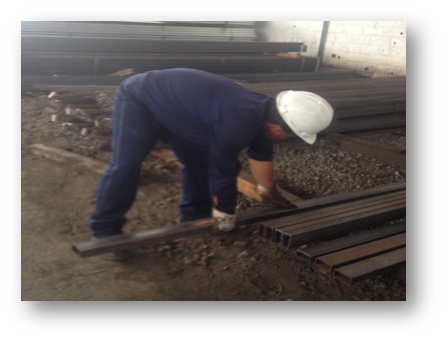
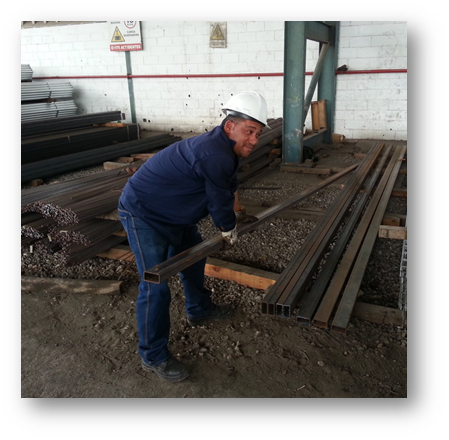
Risk factor identification guide (Psychosocial).
**Psychosocial Risks:**
Any aspect of the conception, organization and management of work as well as its social and environmental context that has the potential to cause physical, social or psychological damage to workers. The existence of this type of risk affects both the health of workers and job performance.
**They are classified into:**
Stress.
Fatigue.
Monotony.
Interpersonal relationships.
**They originate from different aspects of work conditions and organization:**
Characteristics of the task: Monotony, repetitiveness, excessive or little responsibility, lack of skill development, excessive pace of work, etc.
Structure of the organization: Lack of definition or conflict of competences, little or distorted communication and information, few or conflicting personal relationships, authoritarian command style, etc.
Job characteristics: Poor job design, poor ergonomic, safety or hygiene conditions, inadequate salary, etc.
Work organization: Shift work, night or weekend work, etc.
Factors external to the company: Quality of life of the person, social problems, family problems and all kinds of problems of a social nature, etc.
**Psychosocial Risk Conditions - Causing Agents (List of Occupational Diseases NT-2-2008)**
Occupational stress: Demands related to time (length of the day and shift), quantity or intensity of work, work surveillance, performance evaluation systems, quality or content of work and those of the type of activity. The (Physical) environment of the work, the organizational climate and the possibilities for professional development also contribute.
Labor Fatigue: High demand for quality or quantity of work, reduced rest periods.
Emotional exhaustion (Burnout Syndrome): High emotional demand.
Response to workplace harassment (Mobbing Syndrome): Interpersonal relationships with characteristics of harassment.
Non-organic sleep disorders: Permanent night or early morning shift. Hours in the morning or until very late at night. Long hours of work or two shifts in a row. Short period between shifts. Long intervals between breaks. I work in a different time zone. Unbalanced free time period.
Post traumatic stress disorder: Exposure to a situation of an exceptionally threatening or catastrophic nature.
**Preventive Measures to Control Psychosocial Risks**
**About the Organization:**
Modify the leadership and management systems by others in which the skills to handle conflicts adequately prevail.
Promote changes in the company culture that favor the correct resolution of conflicts.
Avoid conflict and role ambiguity.
Promote stability in employment, integration and group support.
Improvement of communication systems.
**About the Physical Work Environment:**
Good design of the workplace.
Correct lighting and adequate noise level.
Correct temperature and humidity conditions.
Correct workspace.
**About the Individual:**
Campaigns for healthy lifestyles.
Relaxation techniques.
Assertiveness techniques.
Recreation.
Work motivation.
**Consequences of Non-Prevention of Psychosocial Risks**
**In the Individual:**
Cardiovascular problems and diseases.
Depression, anxiety and other mental health disorders.
Back pain and other musculoskeletal disorders.
Medical disorders of various types (respiratory, gastrointestinal, etc.)
Social and health-related behaviors (smoking, drug use, sedentary lifestyle, lack of social participation, etc.).
**In the organization:**
Increase in absenteeism.
Increase in “voluntary” withdrawals.
Decrease in motivation.
Deterioration of labor relations that damages the favorable climate that demands productivity.
Work accidents.
These images are from when I did an analysis on psychosocial risks to which the staff of a clinic in Barquisimeto, Venezuela were exposed
Raosubterraneo
Risk factor identification guide (Disergonomic).
Greetings community, today I will continue to share a post on occupational health and safety, which is also useful for any activity you carry out in your daily life. Next I will present a risk identification guide (dysergonomic), this guide was provided to us by Prof: Ing. Milagros Pacheco when taking the subject Hygiene at the Univ. I hope this informative post will be very helpful so that you can minimize such risks in their work and daily life, talks about how to identify risks, preventive measures and consequences of non-prevention.
**Ergonomics:**
It is a disciplinary that acts synergistically as a body of interrelated knowledge in its application to adapt the environment of life and work to man for his better quality of life, developing norms that require constant investigation and simultaneous actions.
Ergonomics Objectives:
Health.
Security.
Productivity.
Comfort and Satisfaction.
Broad notion of the human-work relationship.
Adaptation of work to the human being.
Comprehensive work evaluation.
When the physical demand of the tasks increases the risk of injury as well, that is, when the physical demand of a task exceeds the capabilities of a worker an injury can occur.
**Harmful health effects:**
Cumulative trauma, tenosynovitis, trigger finger, carpal tunnel syndrome, epicondylitis, raynaud's syndrome, occupational lumbago, bursitis, cervico-branchial syndrome, and others exposed in the list of diseases of Technical Standard -02-2008.
**How to control this type of risk?**
1- Job estimate:
This evaluation occurs in two steps:
Identification of the existence of dysergonomic risks:
There are several approaches that can be applied to identify the existence of this type of risk. The method used will depend on the philosophy of the company or the person in charge of carrying out the work, that is, the technician, engineer, supervisor, etc. hygiene and occupational safety.
Examples of approaches to identifying dysergonomic hazard conditions include:
A- Carry out the inspection of the jobs to detect the presence of risk factors.
B- Review of hygiene and safety standards, analyze the frequency and incidence of cumulative trauma injuries.
C- Interviews or surveys of workers about the work process (what? How? And why?) That can reveal the presence of risk factors. Also questions about work methods (Is it difficult to do the job?) That may reveal working conditions.
D- Document the information before and after the job modification.
Quantification of the degrees of dysergonomic risks
When the presence of dysergonomic risks has been established, the degree of risk associated with all factors should be evaluated. This requires the application of ergonomic analytical tools and the use of specific guides.
**Ergonomic analysis tools**
**METHODS ASPECTS ANALYZED DEVELOPED OWAS**
(Ovako Working Posture Analysis System) Arms, trunk, legs, head (analyzes posture and load as priority). Industrial and office jobs.
**POSTURE TARGETTING**
(Orientation Posture) Arms, forearms, trunk, head, thighs and legs (analyzes efforts made with the hands). Office work.
VIRA Shoulders and neck flexion. Sedentary jobs.
AET (Arbeitswissenschaftliches Erhebungsverfahren zur Tätigkeitsanalyse) Trunk, neck. All kinds of work.
ARBAN Arms, trunks and legs. Transportation and lifting of loads.
RULA (Rapid Upper Limb Assessment) Upper extremities. Works with PVD, supermarket cashiers, industry and clothing.
RULA OFFICE Upper extremities. Office work.
ERGO IBV (Evaluation of occupational risks associated with physical load) Upper extremities. Repetitive tasks.
STRAIN INDEX (Load Index) Distal Upper Limb. All kinds of tasks.
**Most frequent complaints in office workers:**
14% Headache / difficulty concentrating.
24% Pain in the neck and shoulders.
37% Back pain.
18% Pain in the butt.
19% Pain in the thighs.
29% Knee and Leg Pain
Implement methods for the prevention of musculoskeletal diseases:
Implement methods for the prevention of musculoskeletal diseases:
Adequate selection and training of personnel (good physical condition).
Use when possible, auxiliary elements to reduce efforts and facilitate the handling of loads.
Avoid handling loads that exceed capacity limits according to established criteria. The weight recommended by the ILO for men: occasionally 50 Kg, frequently 16 Kg; women: occasionally 18 kg, frequently 12 kg.
Use appropriate techniques for lifting and transport depending on the type of load to be handled.
Avoid laughing, coughing or sneezing while carrying loads.
Use the weight of the body to favor the handling of loads.
Store the materials that must be lifted to a level between the waist and the shoulders.
-Rotate staff if the task requires excessive effort or repetitive movements.
-Periodic medical check-up.
Ergonomic Principles of a Workstation:
Convenience and comfort at work are a MUST.
Avoid any inclination or forced position of the body. Lateral flexion of the head and trunk are stressful.
Avoid permanent extension of the arms forward, to the sides or upwards since it produces fatigue, decreases precision and manual skill.
Mobilize the arms alternately and symmetrically.
Secure workstations that allow changes in sitting and standing positions (avoiding standing and prolonged sitting).
The evolution of the world of work has brought changes in the way of working. Work becomes more of a "Mental" activity than a physical one, in which information management and the ability to solve problems efficiently and promptly prevail.
These images are from when I did my thesis on analysis of disergonomic risks through the RULA method to which the staff of a clinic in Barquisimeto, Venezuela were exposed
Raosubterraneo
Vinyl Art
Greetings Steemit community, today I will show you some images of some personalized pieces that they made for me on vinyl, on acetate discs that now serve for, among other things, the creativity of some people to express their art, some combined with wood and another equal to place on the wall directly. I hope they are to your liking.
The Image Of My Favorite Baseball Team, Lara Cardinals And The Other Is My Nickname.
My nickname.
My Favorite Baseball Team, Lara Cardinals
Raosubterraneo from Venezuelan
Homemade Chicken Fajitas
Greetings to everyone here, today I will share another culinary experience, we prepared some homemade chicken fajitas. We follow a simple recipe that we found on an Internet page, the appropriate one to make homemade fajitas. I'll leave them at the bottom for those who like to prepare them. They were not as I would have liked, but if they were good with a very good flavor and fresh, the best thing is that we shared the preparation and the food with each other, we had a very pleasant and fun time, I invite you to prepare yours and have an experience in family or friends. I hope you like it, see you later. Thank you
**Fajitas ingredients:**
1 large chicken breast
1 medium onion
Half a red pepper
1 Aji or hot chili
1 medium tomato
Several branches of coriander
Salt
Pepper
Paprika
1/2 lemon
1 package of wheat tortillas
**Guacamole ingredients:**
1 small avocado
1/2 lemon
a pinch of salt
**Guacamole preparation:**
Chop the avocado, skinless, into medium pieces
Put it in a bowl and mash it with a fork until pureed.
Agrégale un chorro de limón y una pizca de sal. Mezcla bien y reserva.
**Fajitas preparation:**
Chop the onion, pepper, tomato and chilli into julienne strips.
Chop the chicken into strips.
Season the chicken with salt, pepper, and paprika.
Sauté the vegetables over high heat in a large skillet: onion, pepper, hot pepper and tomato. Remove the vegetables from the pan, and reserve.
In the same skillet, sauté the chicken strips until golden on both sides.
When ready, mix it with the previously cooked vegetables and add salt if necessary.
Serve on a tray and add chopped cilantro and a little lemon juice.
Now you simply make the fajitas with chicken, guacamole and the vegetables.
Very Good Dinner. Raosubterraneo
PPE Personal Protective Equipment
Hi! I hope you are doing very well, this time I will leave you here, what are PPE (Personal Protective Equipment), for what and why its use and the advantages it has is important. Remember that your integrity and safety come first, in your work, housework and everyday life.
What is Personal Protective Equipment?
Personal Protective Equipment (PPE) can save lives, it is all that special clothing that must be used to protect a person from the risks present in the work area, this depends on the type of risk to which they are exposed during the performance of their normal work activity In the Organic Law of Prevention, Conditions, and Work Environment (LOPCYMAT) establishes that it is the duty of the employer, employer or employer, to provide adequate protective clothing for company workers, and thus avoid damage to health, for this it is essential to follow a series of procedures for the provision of Personal Protective Equipment.
When combating the risks of accidents and damage to health, it is necessary to use the application of technical and organizational measures designed to eliminate the risks at their source or protect employees through collective protection provisions. When measures are insufficient , the use of personal protective equipment (PPE) is imposed, in order to prevent residual risks. From a technical point of view, PPE works by reducing some of the risk factor components. To combat the risks of accidents and damage to health, it is a priority to apply technical and organizational measures aimed at eliminating risks at their source or protect workers through collective protection provisions. In the case of safety, PPE works by reducing the consequences derived from the materialization of the risk. In the case of industrial hygiene, the equipment usually works by minimizing the concentration of the pollutant to which the worker is exposed. To carry out an activity where there is a risk factor, it is important that the appropriate clothing is used to avoid contact of any risk agent with the body.
Types of personal protective equipment:
Hearing protection.
Protection for the whole body.
Eye protection.
Protection for hands.
Foot protection.
For the respiratory system.
For the head.
It is important to monitor the good condition of the pampering, expiration date or deterioration, to make the corresponding request for replacement. Likewise, the PPE must be for individual use and not interchangeable.
Among the advantages of PPE we have:
Provide a barrier between a certain risk and the worker.
Reduce the severity of the consequences of the accident that the worker may suffer.
Improve the protection of the physical integrity of the worker.
It is recommended that organizations continually discuss with their employees hygiene and safety standards for safe work.
This Is Me delivering PPE to a worker in a food company.
production process in the food company
Use as reference https://www.fastmed.com.ve/que-son-los-equipos-de-proteccion-personal/
https://www.nueva-iso-45001.com/2017/11/epp-equipo-proteccion-personal/
I hope the information described in this post is useful, it is my pleasure to be able to share it and have your attention. Thanks and until another post, we read.
Raosubterraneo
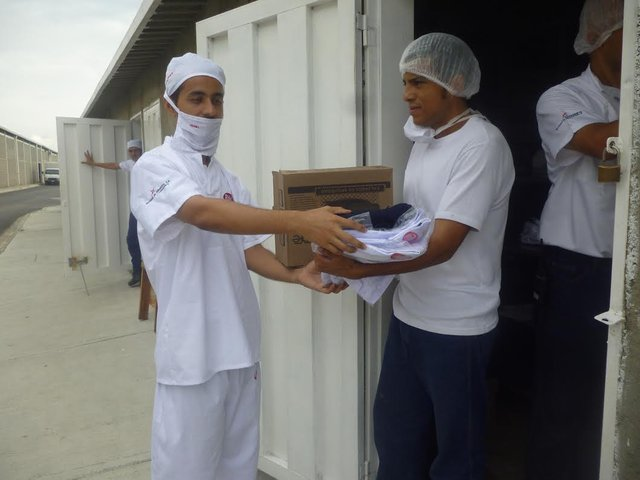
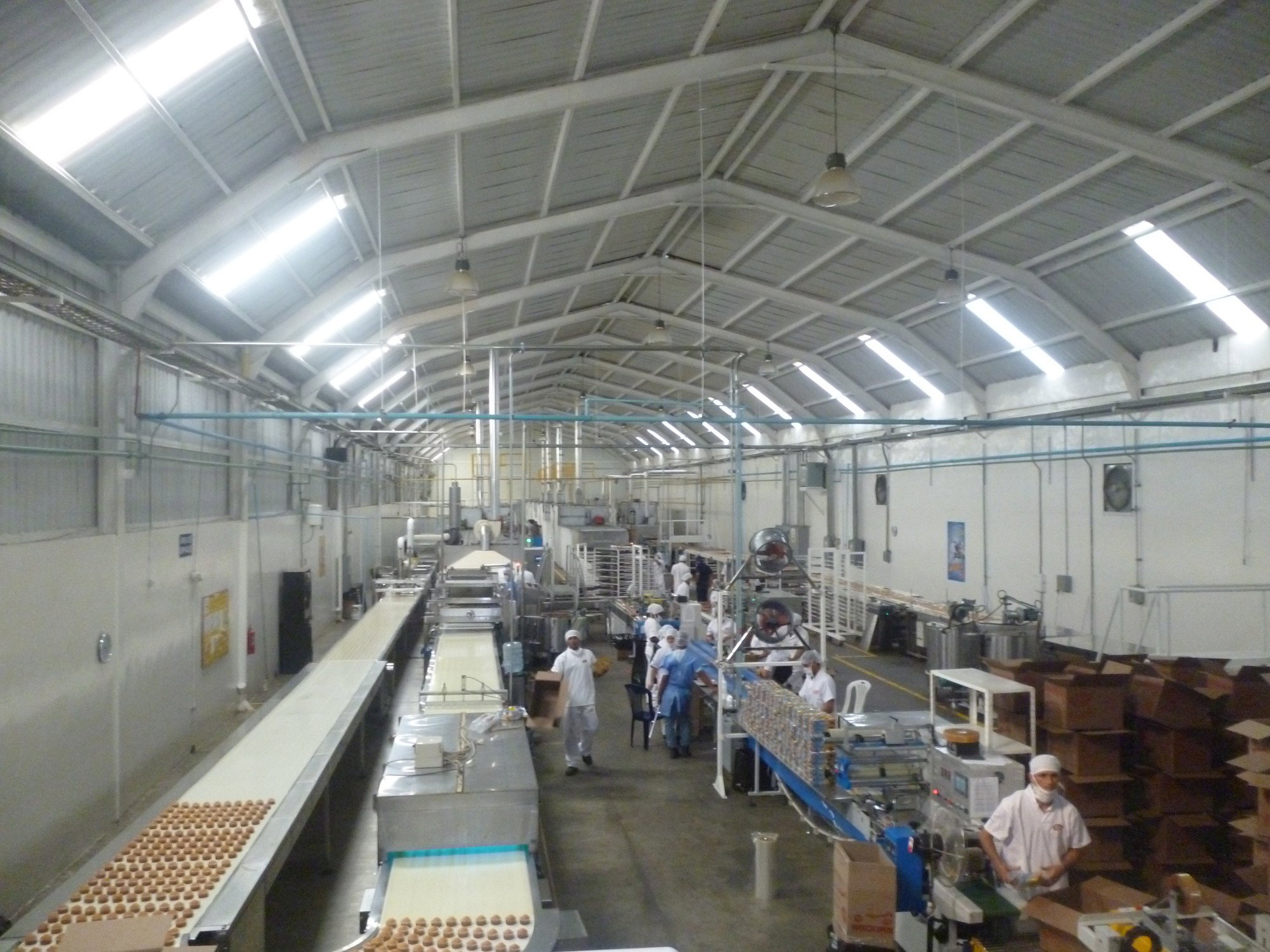
Strategies for training, first aid management, hygiene and safety rules for a community.
A cordial greeting community, here I leave you a community work that I did with some colleagues, when we finished our career at the university.
SUMMARY
The data is collected directly from reality and its main objective is to analyze the implementation of strategies to allow the formation of first aid and handling of hygiene and safety standards for community spokespersons. This study raises the theoretical postulates about first aid training and handling of hygiene and safety standards that place it in a community of extreme vulnerability and high level of risk. The study subjects are made up of 90 inhabitants of the community. to whom it is intended to approach by means of a survey type instrument carried out on the variables of: Education, First Aid, Hygiene and Safety once this is approved in its reliability and validated by experts to be applied and after that, their data will be tabulated and taken to percentage-frequency tables to be analyzed, through the revised theory. Then the conclusions and recommendations of the investigation can be established.
HIERARQUIZACIÓN DE NEEDS
According to diagnoses made on Wednesday, November 20, 2013, with the accompaniment of the spokesperson for education, culture and citizen training belonging to the community coordination group of the communal council "The Great Effort" area B Dennis Heredia and Yolanda de Méndez, it was carried out a visit by the community to carry out an ocular inspection through the observation technique where it was possible to detect critical and vulnerable high-risk areas to which the inhabitants of the community are subjected daily, among which we have: the train rails, the The unhealthy state of the pollutant in which the ravine is found, makes her lazier, being the causal agent of the outbreak of diseases such as dengue, gastrointestinal infections, skin scabies and respiratory diseases, among others, the Bolivarian School Dr. Juan Tamayo Rodríguez, in addition to other areas that They are frequented by the community mainly the library since it helps recreation, educac ion and intellectual training of each of the inhabitants of the area.
Among the most outstanding activities in the area we have:
Orientation and training on the practice and management of safety and hygiene standards and first aid in the community.
Absence of personal protective equipment (PPE) and at home.
Environmental pollution in the creek la ruezga.
Based on our situational assessment, the democratic decision was made to apply a survey, since it is a technique that produces results clearly and precisely that leads us directly to the main problems of the community in order to offer them a management plan that leads us to the solution of this problem, it is very important to emphasize that in this we have put into practice our acquired knowledge from our industrial security career. By means of the statistics produced by the surveys, the lack of methods and techniques to deal with accidents and illnesses at home was obtained; likewise the absence of measures for first aid care.
**PROBLEM**
According to the Standard to be agreed, industrial hygiene is the recognition and evaluation of environmental risks or tensions caused by some work reasons that can cause illnesses, affect health and well-being, or create significant discomfort among workers. Currently in Venezuela this standard is being complied with at the business level, that is, in small and medium-sized companies, being implemented to avoid human and / or material damage, avoid incidents, raise awareness about safety and prevent the degradation of natural resources . However, this norm is being established in the communal councils.
**OVERALL OBJECTIVE**
Implement strategies to allow First Aid training and management of hygiene and safety standards to the spokesmen and spokespersons of the communal council the great effort
**SPECIFIC OBJECTIVES**
1.- To sensitize the inhabitants of the community about strategies to allow First Aid training and management of hygiene and safety regulations for community spokespersons.
2.- Investigate the knowledge that the inhabitants of the community have in handling and using the first aid kit and hygiene and safety regulations in the event of a contingency.
3.- Describe the strategies to allow the formation of first aid and handling of regulations as an alternative of permanent training to the spokesmen of the community.
4.- Determine the strategies to allow the formation of first aid and management of regulations as an alternative of permanent training to the community spokespersons.
**IMPACTO SOCIAL AMBIENTAL**
The community research work in the community has a social-environmental relevance because it seeks to promote the improvement of the quality of life of its inhabitants through a positive attitude change in the face of contingency and high-risk situations that arise in the community. However, it is intended with the implementation of the first aid training strategies and management of hygiene and safety standards to generate a change of behaviors and ideologies about the social values that guide the community towards the management of the sense of belonging versus to adversity. Working together with the Fifth (5th) Plan of the Nation, at point number two (2) that alludes to the Supreme Social Happiness, what you want to achieve with this project is to successfully provoke changes in the population. In this sense, what it intends is to produce a more sustainable and equitable human biophysical environment.
**ACHIEVEMENTS**
The execution of the community service project aimed at the inhabitants of the community with the intention of achieving positive attitude changes for the strengthening and improvement of their quality of life through sensitization and awareness of the existing problems in the community, assuming responsibility and a sense of belonging when successfully addressing the alternatives and possible solutions to the problems under study.
**CONCLUSIONS**
The elaboration, planning and execution of the community service project of the community has generated an impact on the inhabitants of said community, awakening their participatory, leading and eloquent action in their personal integrity, awakening in the depths of their being sensitivity, awareness, and community action in the face of everyday situations to which they are subjected in the face of the adversities of nature and drastic climatic changes in the future in this world so convulsed by global warming.
Finally, the strategies and proposals aimed at the community turned out to be successful and other productive because they have generated very significant changes in the inhabitants of the community, committing themselves to ensure and comply with the maintenance and monitoring of the restored areas in order to better improve their quality of life.
**RECOMMENDATIONS**
Encourage the inhabitants of the community through workshops, meetings, conferences, among others, to join and get involved in the different activities and conferences on health and prevention in order to make decisions that allow guiding current actions and improving future ones.
Record and analyze the positive and negative experiences acquired in the framework of the project in order to determine the levels of development achieved to prevent future actions.
Security, Trust and Well-being. Raosubterraneo
Contingency Plan and Emergency Attention in case of Earthquakes and / or Earthquakes
Greetings to the whole community here I leave you with illustrated information on how to proceed in the event of this incident.
Procedimiento en caso de Sismos y/o Terremotos:
**BEFORE A SHAKE**
Securely fasten and secure dangerous objects involved in processes.
Have prepared: first aid kit, flashlights, battery-powered radio, batteries, fire extinguisher, etc. and some provisions in a known place. Remember that it is dangerous to store flammable liquids.
Train personnel on the escape route and the concentration area. The plan should identify a safe place to meet if the earthquake occurs and not all workers are together.
Make sure workers know how to turn off gas, water, and electric services in an emergency.
Always have on hand emergency telephone directory with the local numbers of Civil Protection, Fire, Healthcare and Police.
Keep the necessary tools to turn off the water and gas faucets in an accessible place.
Each worker must know which are the safest places in the building; such as under a table or under the arch of a door
For a quick eviction place the keys to the main doors or gates on a ledge near the exit. Keep exits clear.
Identify the most dangerous areas of each office, such as libraries and furniture that can fall and cause injury.
Check that the building or structure of the shed is properly adhered to the foundations. Extensive damage occurs when the site falls off the foundation during an earthquake.
Make sure that the liquefied gas cylinders are placed in a safe place and with the corresponding identification.
Put fragile or heavier items on the bottom shelves.
Check roof and foundation for deep cracks. Make the necessary preventive repairs and if there are signs of defects in the structure.
Permanently check emergency lamps, fire extinguishers, and fire detection and alarm systems.
Every person must know all the emergency exits, as well as the safety zones.
**DURING AN EARTHQUAKE**
If you are inside the facilities, stay inside; if you are out, stay out. Entering or leaving can only cause accidents.
Within facilities seek protection from strong structures: sitting on the side of a desk, table, or furniture, not under the lintel of a door, protect your head with your arms. Stay away from windows, balconies, or external walls.
Follow the instructions of the Brigades and never run abruptly towards the exit.
Stay away from electric cables, cornices, glass, parapets, among others.
**AFTER AN EARTHQUAKE**
Activate the emergency plan. At the end of the movement, evacuate the workplace or any other place promptly and in order. Go to the previously established place.
First, when evacuating take the first aid case with you, make sure that no workers have been injured. If positive, start by applying first aid.
Mentally prepare yourself for the nervous breakdowns that normally occur after an earthquake.
Do not light matches, candles, or tinder cases as there is likely to be a gas leak inside the facility and its premises.
Stay away from buildings that can collapse.
Disconnect the nearest gas, water and electricity service.
Check for water, gas, or electricity leaks. If you notice a gas odor, open the windows and close the main key. Do not turn on lights or electrical appliances until the odor is gone, as a spark could ignite the gas.
If the electrical cables have been broken and shorted, disconnect the electricity, lowering the main power supply (breaker).
Collect any flammable liquid that is inside the premises.
Be sure to check that the drain pipes are intact and working before using the toilet.
If a fire occurs, extinguish it as long as it does not endanger your life or that of other people.
Try not to walk barefoot. Pay attention to the debris you step on and be careful when moving it because they may be supporting falling structures.
Leave the parking exits clear for emergency vehicles.
Be prepared for secondary earthquakes, which occur after a major earthquake
In the following images you can see in a drill in which you participate how to apply first aid, rescue and transfer of wounded after the incident.
Prevention, Safety and Well-being. Raosubterraneo
Work Safety
Greetings Community! I am TSU in Occupational Safety and Health. I am going to write a little about safety at work, it is important that all workers feel safe and comfortable in their workplace and work environment, for this they must have optimal conditions, a healthy work environment. the same worker or employee collaborate with their health and safety at work, abiding by regulations, procedures and using their personal protective equipment. They must also be trained periodically and have information on risks and suggestions, whether in billboards, signs and talks, then I will put some images where they will be able to observe some training that we did to the personnel of a food company so that they acquire knowledge for their safety and health. at your workplace.
Fire training day
Fire Drill - Fight Fire
Transfer of Injured
Provision of Personal Protective Equipment EPP
Developing Informational Material For Billboards
Developing Technical Data Sheets for Dangerous Products - Support Material
Updating the Emergency Plan, the location plans of the fire extinguishers, emergency routes, emergency lights and medicine cabinets. As well as procedures to follow in case of events that could occur in case of an emergency.
Signs were made from waste material to familiarize themselves with the same
The best way for the performance of a worker to be optimal is that they feel comfortable and safe in their workplace and in their work environment, for this they must be provided with security, comfort, for the physical and mental well-being of the staff. This leads to the best operation and production of the company.
The best investment will always be human talent. Raosubterraneo
I did it! I am T.S.U in Industrial Security
Hello my name is Ricardo Oropeza, I am from Venezuela, I was born here and I live here, specifically I live in a city called Cabudare in the State of Lara. I live with my mother and brother in an apartment, in an urbanization called La Mora. ¡I Made It! today Even a couple of years of defending thesis, I received my T.S.U diploma in Industrial Safety. It is not a story and I have to certify it hahaha.
Two years ago when I finally defended and approved my degree thesis on an analysis of dysergonomic risks through the RULA method, this method is to detect the levels of dysergonomic risks that workers are exposed to, either because the property is not suitable for their work activity, or bad postures adopted in it that affect their physical health. The RULA method allows the individual analysis of the postures adopted by the upper limbs of the body called group A (arm, forearm, wrist), and group B of the trunk, neck and legs; In addition, it defines other factors that it considers determining for the final assessment of posture, such as muscular activity, load or strength developed by the worker.
In current times, work turns out to be a vitally important activity in society that allows human beings to function as useful people, developing their capacities, allowing them to sustain and support the family economically. Working conditions play a fundamental role in guaranteeing your health and physical integrity, so it is necessary to seek pleasant and safe work environments.
Occupational safety and health are essential for workers, as well as for employers. Such is its importance that a healthy and safe working environment and conditions should be created, reducing risk factors and thus preventing occupational diseases and occupational accidents or incidents, and offering better quality in their work and personal activities.
Occupational Safety is responsible for minimizing risks, preventing incidents and accidents at work, the physical, mental and social protection of workers, their medical monitoring, the implementation of technical controls and training related to risk control. That the industries, companies and establishments comply with the laws and regulations established by the competent organisms. Technological innovation, replacement of machinery, training of workers and regular controls are some of the activities related to Occupational safety.
Occupational Health is in charge of promoting and maintaining the highest degree of physical, mental and social well-being of workers, avoiding the deterioration in health caused by working conditions, providing protection in their companies from the risks resulting from harmful agents, properly locating and maintaining employees in all their physiological and psychological capacities. All this is achieved when it is possible to adapt work to men and each man to her work.
At the moment I am unemployed, for a long time I have wanted to start a business, selling EPP "personal protection equipment" wholesale and retail, these equipment are sold directly to companies, so that they can provide such equipment to their staff, or People who are self-employed, who need to acquire equipment for their personal protection, such as safety boots, safety glasses or helmets. but hey it is still a project for the future, I hope it will be in the short term. for reasons of how the economy in the country has been difficult for me at the moment.
I also want to start in the kitchen, I like it! lately I have worked in this field. well then I keep writing more about topics of interest about job security and some of the fast food in Venezuela, Thank you very much for reading. see you soon
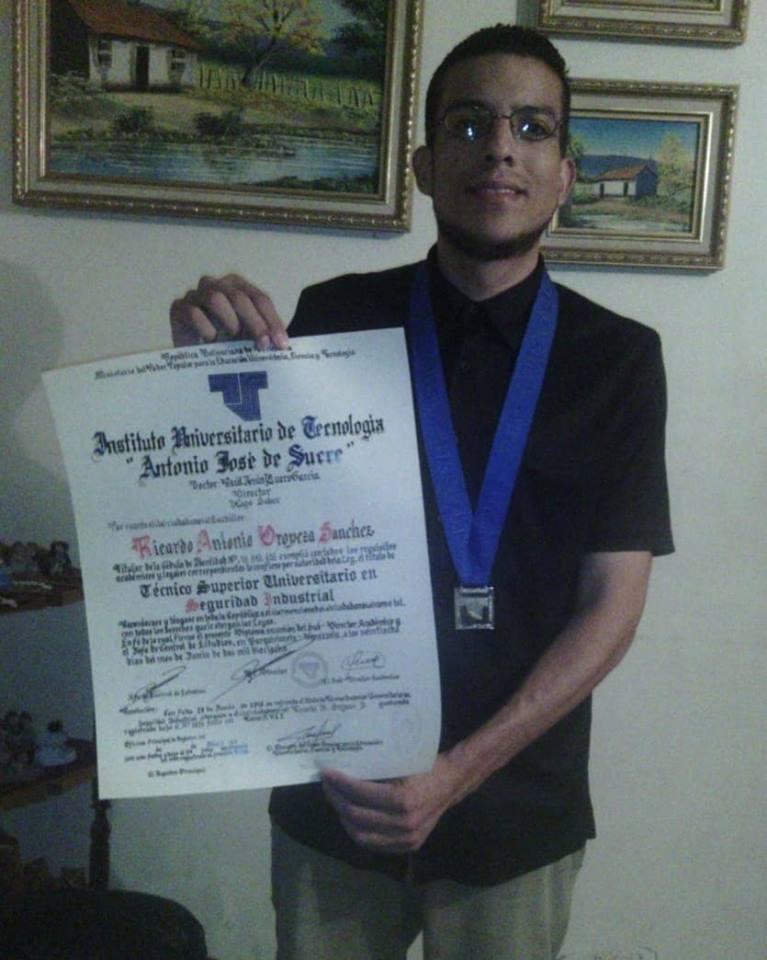
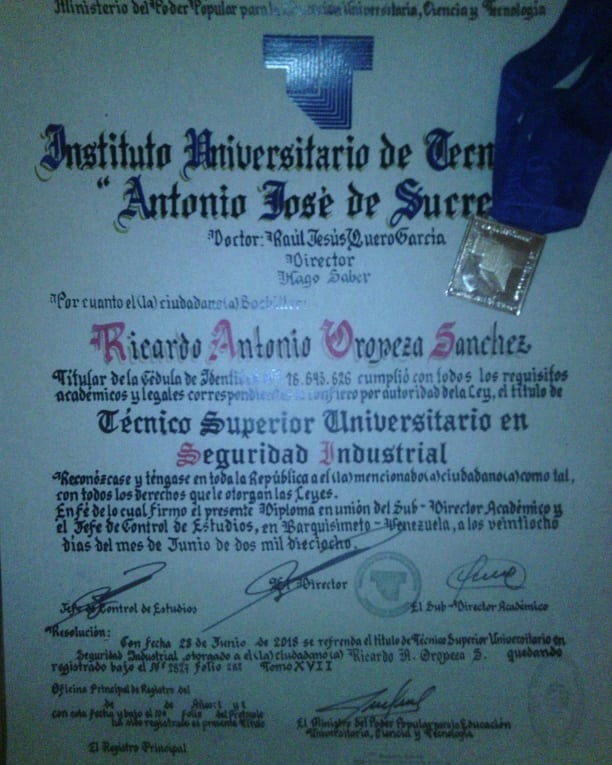
 @Raosubterraneo