Do You Have to be Unhappy Now if You Want to be Successful Later?
Good afternoon everyone, hope you all have a great day and hope you're all enjoying your weekend.
I will be writing about ***do we really need to be unhappy now if we want to be successful later?***
Before I proceed let me flaunt my wonderful sponsors
Check them out, they are amazing writers.
**********************************
To be sincere this is how I have been living my life until I later understand the basics of life.
Most of us, at some point or another, think that we will be happy once we achieve a particular goal.
*I’ll be happy after I…*
graduate from college
make a million dollars
get married
lose 40 pounds
get a job
…and so on.
To be clear, I have been guilty of this as well. There have been plenty of times that I have assumed that satisfaction and success would come after I won a championship or after I built a successful business or after XYZ goal.
Society tells us that this is a good thing. We hear about athletes that are never satisfied until they have reached the top. We hear about entrepreneurs who worked like crazy to build a business that changed the world. The basic idea is that to be driven, you also have to be dissatisfied. Dissatisfied with second place. Dissatisfied with average.
Then you have the other side of the equation: people who are happy with life as it is. They say that you need to develop the skill of “not wanting more.” That you can be happy where you are right now. That you are already perfect.
The Problem
Here’s the problem: I want both. Maybe you do too.
I like being happy. It’s fun. I don’t want to delay happiness until I reach some milestone. But I also like getting better. I don’t want to settle for less than I can do in life. I’d like to be happy along the way *and* achieve my goals.
For a long time, it bothered me that being happy (being satisfied) and being driven (being dissatisfied) seemed to be at odds with one another.
I still don’t have a lot of this figured out, but the more I study people who have had a great deal of success, the more I think that it’s possible to be happy and driven.
Driven and Happy
Let’s start with being driven. If you want to maximize your potential, then you will need to continue to work to become better both before and after you achieve a given goal.
Why would someone do that?
For example, if your goal was to make a million dollars and you made it, why would you keep working hard after that?
The answer is a little more complicated than you might think.
The Law of Diminishing Returns
In economics, there is a fundamental principle known as the Law of Diminishing Returns.
Here’s the short definition: as you get more of something, it becomes less valuable. This isn’t just economic theory, a similar trend happens in real life.
**If you have zero money and you make $10,000,** then it’s going to be a big deal. But if you have already earned $1 million, then making another $10,000 doesn’t seem as significant. Making each dollar means a lot in the beginning, but less over time.
**If you have never won a championship,** then that first one is going to be incredible. But if you already have five championship rings, then adding a sixth isn’t going to be as sweet as getting the first. Standing at the top means a lot in the beginning, but less over time.
**If you are starting a company,** then getting your first customer is an incredible rush. But if you already have 100 paying clients, then adding one more doesn’t provide the same thrill. Landing each client means a lot in the beginning, but less over time.
In other words, the goals and results that seem so valuable to you in the beginning actually become less valuable as you achieve more of them.
How to Stay Driven
So, if the results mean less as you achieve more of them, how do you stay driven?
By loving the practice of what you do. It’s only the people who embrace their work as a craft and fall in love with the boredom of doing it day in and day out that stay driven over the long-term.
Here are some examples…
**Richard Branson is already a billionaire.** He has already built hundreds of companies. He’s not still doing it because of the money. The money stopped meaning a lot to him a long time ago. He’s doing it because he loves the practice of doing it.
**Nick Saban has already won four national championships** (1 with LSU and 3 with Alabama). He makes over $5 million dollars per year. He’s not coaching football for the money anymore. He’s not coaching to “make it to the top.” He’s coaching because he loves the process (and he talks about process all the time).
**Jack LaLanne was setting fitness records for 40+ years.** He wasn’t working out to lose a few pounds. He exercised every day because he loved it.
Summary: the only way to stay driven before and after achieving goals is to love the practice of what you do.
**How to Be Happy**
Guess what? This answer is now easy. If you love the practice of what you do, if you love the daily work, then you can be happy before and after you achieve your goals.
When you learn to love the process of what you are doing and not focus so much on the goal, you automatically find happiness *while staying driven*.
If you learn to love the practice of working out, then you’ll be happy right now and you’ll see results later. If you learn to love the practice of marketing your business, then you’ll be happy right now and you’ll see results later. If you learn to love the practice of supporting your friends and family, then you’ll be happy now and see the results later.
Happy and driven. Just one more reason why the system is better than the goal.
Thanks for reading 🤗
Hope you learned one or two things
from this.
Have a wonderful relaxing week start.
Hope to see you next time.

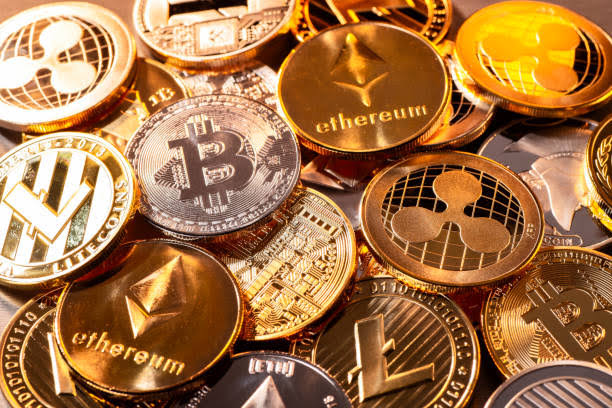
10 Best Cryptocurrency To Begin Your November Investment
**Here is the list of the top 10 best cryptocurrencies for investment in November.**
**Cryptocurrency** adoption in India has gained momentum, but digital currencies are generally known for volatility and investment risks. When the prices go sky high, investors are attracted to the industry and with market crashes, they incur heavy losses. Investments in cryptocurrency, specially in Bitcoin and Ethereum, have witnessed a significant spike in the past few years. To all the investors who are keen on tracking the changes in the cryptomarket. Here is the list of the top 10 best cryptocurrenciew to begin your November 2021 investment:
**Bitcoin**
Bitcoin tops the list of cryptocurrencies to begin your November investment. It was created in 2009 by someone under the pseudonym Satoshi Nakamoto. Bitcoin is one of the top 10 cryptocurrencies that has been trending in the crypto market. BTC runs on a blockchain or a ledger logging transaction distributed across a network of thousands of computers. It is a decentralized digital currency that is sent to users on the peer-to-peer bitcoin network without any mediators. Bitcoin has no central bank or any single administrator. Bitcoin’s price has skyrocketed as it’s become a household name.
**Ethereum**
As a cryptocurrency and a blockchain platform, Ethereum is a favorite of program developers because of its potential applications. It is a decentralized software platform that permits Smart Contracts and DeFi apps to be run and designed without the need for any third-party downtime or control or theft, or intervention. Ethereum has also experienced tremendous growth. It was founded by Vitalik Buterin in 2013 and is the second-largest cryptocurrency.
**Tether**
Tether was formerly known as a Real coin that was launched in 2014. It is one of the first cryptocurrencies that is backed by the US dollars and the Euro and hypothetically keeps a value equal to one of those denominations. It is one of the top 10 cryptocurrencies that has been in demand in the crypto market and the best cryptocurrencies to begin your November investment.
**Cardano**
Cardano is notable for its early embrace of proof-of-stake validation, and it is a cryptocurrency network that is an open-source project to create a public blockchain and smart contracts. Cardano also works like Ethereum to enable smart contracts and decentralized applications, which are powered by ADA, its native coin. It was founded by Charles Hoskinson, a Co-Founder of Ethereum and BitShares, and was launched in 2017. Cardano’s ADA token has had relatively modest growth compared to other major crypto coins, but it is one of the best investment options in November 2021.
**Polkadot**
Polkadot is a proof-of-stake cryptocurrency that aims to integrate them by creating a cryptocurrency network that connects the various blockchains so they can work together. It was created by Gavin Wood, Thiel Fellow Robert Habermeier, and Peter Czaban. This integration may change how cryptocurrencies are managed and have spurred impressive growth since Polkadot’s launch in 2020.
**XRP**
Ripple is a digital technology and payment processing company that was first launched in 2012. Ripple Labs was the one who created and designed XRP as a mode of payment token. XRP can be used on that network to facilitate exchanges of different currency types, including fiat currencies and other major cryptocurrencies.
**Solana**
Developed to help power decentralized finance (DeFi) uses, decentralized apps (DApps), and smart contracts, Solana runs on a unique hybrid proof-of-stake and proof-of-history mechanisms that help it process transactions quickly and securely. SOL, Solana’s native token, powers the platform. It is one of the best cryptocurrencies for investment in November 2021.
**Dogecoin**
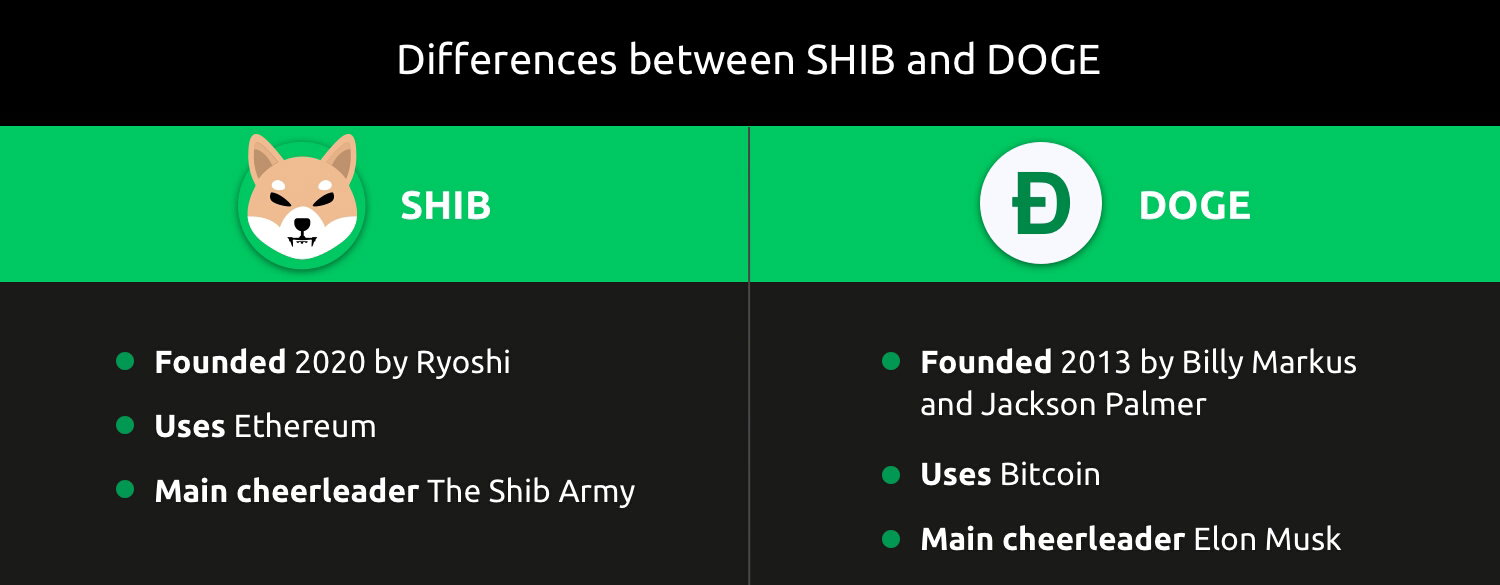
Dogecoin has been the hottest news all over social media platforms thanks to celebrities and billionaires like Elon Musk. Unlike other crypto coins, there is no limit on the number of Dogecoins that can be designed and created, which leaves the cryptocurrency susceptible as supply increases. Famously started as a joke in 2013, Dogecoin rapidly became a prominent cryptocurrency option, thanks to a dedicated community and creative memes.
**Binance Coin**
The Binance Coin is a form of cryptocurrency that can help pay fees on Binance which is one of the biggest crypto exchange platforms in the world. Aside from being the largest cryptocurrency exchange globally, Binance has launched a whole ecosystem of functionalities for its users. The Binance network includes the Binance Chain, Binance Smart Chain, Binance Academy, Trust Wallet, and Research projects, which all employ the powers of blockchain technology to bring new-age finance to the world.
**Bitcoin Cash**
Bitcoin Cash is a cryptocurrency that was launched in 2017, and it allows for a larger block size than Bitcoin permitting more transactions to take place. Despite other top 10 cryptocurrencies, it shares some of the technical similarities and use of the same consensus mechanisms and a supply limit of about 21 million coins.
Thanks for reading 🤗
Hope to see you next time.
Love You To Death[part 1]
`"Love You To Death" is a story written in a poetry-like manner.I have been working on for the past 1 month now,still not done with it yet but I hope you all enjoy the part I'm going to write today.`
`It is going to be a very long story and I hope you guys will enjoy it.`
**********************************
`Part one`
Street corners are waiting places.
`A throng of faceless people wait for the angry red hand across the street to give way to a luminescent white stick figure, granting them safe passage across a sea of black pavement. The woman in the yellow taxi that sits double parked with it's flashers on wait for a call from her boyfriend. They're fighting. Inside the Corner Bistro, aptly named, the head chef waits for his favourite line cook to come back from her smoke break in the side alley. waiting, waiting... waiting.`
*I do a lot of waiting myself. My job, like so many things in this world , is all about timing and in about ten seconds, it'll be time for me to do my job.*
*Ten, I gaze at the sky which, is though so vibrant yesterday, seems to be sick. Like a child come down with the flu, the sky's rosy cheeks have gone ashen and tears may start to fall soon. Nine. I suppose it's be a cold day in hell when my job doesn't involve tears, although I've never been to hell, so what do I know? Eight. Seven. Six. The skyscraper and artsy museums across the street are so very rudely interrupted by an ancient cathedral large enough to swallow half the water in the harbour and still have room for dessert. Five. Bet it's a nice place for a funeral. Four. Minutes dark spot are rapidly appearing on the sidewalk. Here come the tears. Three. Two. One. Go*
*The little stick figure light up, and the horde of people surges forward. Rush, rush, rush. Simultaneously, the yellow taxi across the street pulls away from the curb without bothering to check that the way is clear. Lazy. The car behind him is both speeding and texting. Stupid. The driver finally glances up from his phone, realizing his mistake far too late. He jerks the wheel, the tires screech, and the car is no longer a car. It's a dark-blue, dented bullet that's going to make someone's children very lonely tonight.*
`That's where I come in`
Most humans have the pleasure of having their whole life pass them by without ever having to hear the revolting crunch of bones not only snapping, but shattering. The people who rush forward do not get that luxury. Those who scattered as the car careened towards them, hell bent on leaving naught but destruction in its wake stare in horror, hearing every shallow breath rattle this stranger's insides, and know that, had they been a second, just a second slower, it would have been them lying in the street, staining the pavement with their blood.
*Everyone who was close enough to hear the screech, the thud, the shattering of glass, has dashed close to join the crowd. It is rare to hear a bustling city fall silent, but the city falls silent now. No one dares make a sound. The car engines stop purring, the rain stops falling. It is the kind of silence you only hear when all hope is lost. The man is still breathing, but barely. Each breath could be his last. Everyone knows it, and I know it. I get to choose which one it will be.*
*Finally, the silence is broken by some brave soul whose 911 call is the catalyst for concerned mutters. I ignore the liking sorrow of the woman's voice a she request an ambulance, and step forward. This man has suffered enough. I walk through-quite step forward literally through the crowd, and crouch beside the man. Once upon a time, I would have been ashamed to admit that watching this kind of agony has gotten easier over time. His face is contorted, scrunched up like it's going to implode into itself. The tears streaming down his face drip onto the road, mixing in with the rain and the blood like some lethal cocktail.*
*The front end of car is is speckled with red, dented more than one might expect. The driver lies slump into the air bag, mostly unharmed. It's not his time yet.*
*But it is this other man's time. I am about to reach out to him, end his suffering, bring some degree of mercy to this tragedy, but a movement beside me catches my eye. A woman is knelt beside me, her head turns towards the man so all that I can see is the back of her head, an onyx ponytail half pulled out swinging gently with each motion. She reaches out to the man, caresses his face so tenderly I wonder if she knew him personally. She murmurs to him, whispering comforting words that she must know are useless. I recognize her voice as the same that one that called for help. It doesn't seem to bother her that her hand is now visibly smeared with a stranger's blood. Most people recoil at the sight of their own blood let alone another's. Blood is a sign of death, and most humans know well enough to avoid it when that see it. But not this one.*
*I shake myself. Enough of this. I reach out and touch the man's face, my hand occupying the same space that her hand has just vacated. At my touch, his heart beat it last beat; his lungs empty, never to be filled again, and the woman turns around and-looks at me. And for what seems like an eternity. I look at her, and the dead man next to us looks at nothing. She must realise that nothing is so very, very wrong here, because I am afforded only the briefest glimpse of her face before she gets up and swiftly navigate out of the crowd, ignoring the wailing sirens of the ambulance shooting down our street.*
*When I looked at her everything inside if me constricted. No one in this crowd, this city, this world can see me. And yet I just stared into a pair of eyes the same colour that the sky was yesterday. Stared into them long enough to know that they seemed familiar somehow and they stared back.*
`Well do they say the eyes are the window to the soul. Lucky for me I have no soul.`
*I straighten up and pass back out of the crowd without looking back. The ambulance is blocking off half the street, here just in time to take the body to the hospital, where the man will be pronounced dead, and someone will be charged with unpleasant task of informing his weeping wife that there was nothing they could do.*
*I wander away from the crowd just in time to glimpse the woman slide back into the alley and disappeared into a side door. As the door swings shut again, I decided I probably recognised the girl from another job, on another day. Her stare probably wasn't directed at me, just the blank stare if someone who has witnessed a tragedy. I've been doing this nearly a hundred years now, and nothing has ever really changed, it's just another day in the life of* ***Death****.*
`This peotry-like story is solemnly dedicated to my great sponsors` @Greatwolfman `and` @Mictorrani `you both have really encourage and Inspired me to never give up. And also my dearest colleagues here` @FarmGirl and @ThisisGrace21
*The second part coming up next time.*
Thanks for reading 🤗
Hope you enjoyed the first part,
Leave a comment below 👇if you do.
Hope to see you next time.🙂

What is Shiba Inu Coin?
Alot of people must have been hearing or even think they know **Shiba inu coin** but not knowing that they only knew a little about it.
I will be sharing a detailed information here about **Shiba inu Coin.**
But before I proceed let me flaunt my wonderful sponsors a bit
`My regards to you both and also my secret role model and cryptocurrency enthusiast` @Pantera `thank you for your support and your tips. I really appreciate it.`
**********************************
**Is shiba inu coin the next big thing? Find out more about it here.**
**In this article**
**How Shiba inu works**
**Looking forward**
**The price story**
***********************************
The rise of dogecoin over the last year or so has certainly turned heads. The coin was set up as a joke intended to parody the plethora of new cryptocurrencies coming onto the market at the start of the 2010s.
But people wanted to invest and eventually the value of DODGE rocketed. It became a crypto coin to be taken seriously, with a significant market cap and a wide array of investors and supporters.
When Tesla CEO Elon Musk started hyping it, its popularity grew even more. It is now one of the coins that comes up in most crypto conversations.
The success of dogecoin demonstrated that people who liked cryptocurrency were willing to take a risk on a new, untested coin. It also showed that a coin could see its value rise through a combination of viral marketing, an enthusiastic fan base and pretty much its own force of will.
There have been times when it’s felt like DOGE is successful simply because people want it to be.
**********************************
**How shiba inu works**
Whenever something becomes successful, others try to do something similar – and Dogecoin is no exception. In 2020 and 2021, the number of so-called meme coins expanded significantly.
One of the most interesting is shiba inu, the self-proclaimed DOGE-killer. This was set up by a mysterious founder, known only as Ryoshi, in the middle of 2020. At first glance you might see a cryptocurrency with a shiba inu dog as a mascot and think it’s just a rip off of DOGE, but it’s worth a look.
The idea behind SHIB was to create a cryptocurrency that was, in theory, 100% decentralised and run by its community. It’s based on Ethereum, unlike DOGE, which is based on Bitcoin.
It’s also worth noting how many shiba inu coins there are. As of 15 June 2021, there were 394,796 billion in circulation. However, what’s even more remarkable is that there are one quadrillion – a million billion – shiba inu coins.
This means that, for the time being at least, the price of a shiba inu coin is going to remain relatively low. That isn’t to say that it won’t go up at some point, but the sheer size of the potential supply does depress the price.
You would think it couldn’t reach the hallowed $1 mark without causing some serious financial disruption. However, as we will see, the low price of the shiba inu coin does mean there’s potential for growth so long as people keep expectations within reason.
Think of it in terms of being able to get your car serviced, rather than buying a Lamborghini. Indeed, as Ryoshi wrote in the SHIB white paper: “We have the ability to outpace the value of dogecoin exponentially, without ever crossing the $0.01 mark.”
The other thing to note about the number of shiba inu coins is that half of the total supply was given to Ethereum founder Vitalik Buterin. In Ryoshi’s words: “There is no greatness without a vulnerable point and as long as VB doesn’t rug us, then SHIBA will grow and survive.”
Although Buterin didn’t necessarily pull the rug from under the crypto, he did burn 90% – the equivalent of 410 trillion tokens, worth approximately $6.7bn – in May 2021. Speaking at the time, he said: “I don’t want to be a locus of power of that kind.”
Also in May, Buterin donated 50 trillion coins, worth around $1.2bn, to the India COVID-19 Crypto Relief Fund. The billionaire said that was an “opportunity to turn the meme bubble into something that could actually do good for people”.
**Looking forward**
The next thing for shiba inu is the foundation of its own exchange, ShibaSwap. This will allow people to exchange their SHIB for other cryptocurrencies in a decentralised exchange. Users can also get hold of Shiba’s other crypto, Leash, and the soon-to-be launched Bone. No date has been given for the launch of ShibaSwap yet, although the company says that it’s “undergoing security tests, audits and final updates to prepare for a safe launch”.
Shiba inu coin has a devoted online fanbase. Considering its very low value and utility, having around 30 Facebook groups dedicated to it, as well as a subReddit with 172,000 members, is pretty impressive.
Although these sites are not exactly the place to go for reasoned discussions about cryptocurrency trends, you do have to give them credit for being positive, upbeat, enthusiastic and welcoming places for people interested in SHIB. There are certainly a fair number of shiba inu coin evangelists online, so it seems reasonable to think that this meme coin isn’t going to go away just yet.
**The price story**
Talking of SHIB’s value, let’s take a look at the coin’s price history. When it launched in August 2020, it was worth somewhere in the region of $0.0000000001. It stayed around that level for most of the first nine months of its existence.
But then something happened. When DOGE rallied in early May 2021, people started to look for the next dogecoin and a lot of them settled on SHIB. This meant that on 8 May, the day Elon Musk appeared on *Saturday Night Live*, the price exploded, going from $0.000005246 to $0.00001883, a rise of around 260%.
While Musk’s appearance on the American TV show hit DOGE’s price, SHIB continued to expand, reaching an all time high of $0.0000388 on 10 May. However, the crypto market took a big hit on 19 May and SHIB was affected, too. It dropped to $0.000007046 on 21 May, and while it went back up to $0.00001159 on 24 May, it didn’t get back to anywhere near its high, trading around $0.000007 on 15 June, and now it has surprised everyone with the rapid rise in worth.
Thanks for reading 🤗
Hope to see you next time.
How Bad Bitcoin Mining is for the Environment
`Cryptocurrency now uses nearly as much electricity as Argentina but analysts claim technology will soon be mostly powered by renewable energy.`
In little over a decade, bitcoin has risen from a fringe technology popular with cryptographers, to the world's ninth most valuable asset by market cap. https://www.independent.co.uk/topic/bitcoin
The crytocurrency's dramatic ascent has created millionaires, reimagined money, and launched a multi-billion dollar industry inspired by its revolutionary decentralised technology. But it has also brought with it some unwanted side effects.
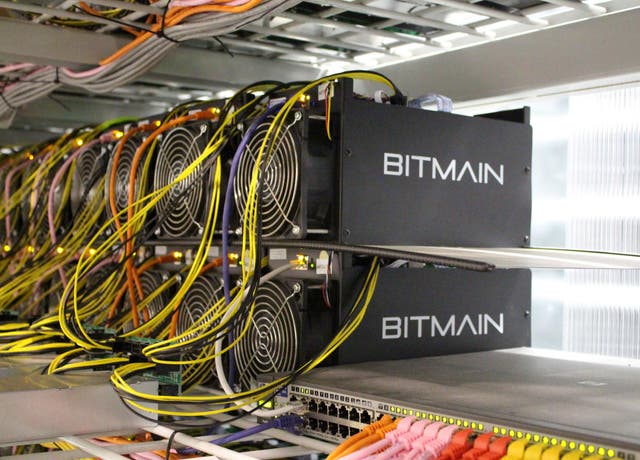
The computing power required to support bitcoin's underlying network now requires nearly as much energy as the entire country of Argentina, leading to criticism about its environmental footprint.
Analysis by the University of Cambridge suggests the bitcoin network uses more than 121 terawatt-hours (TWh) annually, which would rank it in the top 30 electricity consumers worldwide if it were a country. https://cbeci.org/cbeci/comparisons
The energy demands have been fuelled by the surging price of bitcoin in recent months, which has seen it rise from below $5,000 (£3,600) last March to close to $50,000 today.
Concerns about bitcoin's energy demands have been around since the very beginning, with crypto pioneer Hal Finney tweeting about potential future CO2 emissions on 27 January 2009 – just two weeks after receiving the first ever bitcoin transaction from the cryptocurrency's pseudonymous creator Satoshi Nakamoto.
The amount of energy bitcoin's network consumes did not rise to serious prominence until 2017, when a major price rally drastically pushed up its energy needs to the level of a small country. As the market cooled off in the years following, so did the energy demands, but the latest all-time high hit this week is more than double that of three and a half years ago. And this time its energy requirements are even greater.
"Bitcoin's energy consumption has more than quadrupled since the beginning of its last peak in 2017 and it is set to get worse because energy inefficiency is built into bitcoin's DNA," Charles Hoskinson, CEO of leading cryptography firm IOHK, tells *The Independent*.
"Bitcoin's carbon footprint will get exponentially worse because the more its price rises, the more competition there is for the currency and thus the more energy it consumes."
Bitcoin's environmental impact is exacerbated by the fact that a majority of miners are based in China, where over two thirds of power is from coal.
The mining process required to generate new units of the cryptocurrency involves solving complex but arbitrary mathematical equations, which currently requires vast amounts of computer processing power.
Bitcoin miners therefore gravitate to where electricity is cheapest, meaning the fundamental issue is not with bitcoin but with a lack of cheap renewable energy production.
Fortunately, there are solutions being put in place, with some eco-friendly mining facilities already operating at a massive scale.
In Iceland and Norway, where nearly 100 per cent of all energy production is renewable, cryptocurrency miners are taking advantage of cheap hydro-electric and geothermal energy to power their machines. The low temperatures in the countries also help reduce costs by cooling the computer servers naturally.
Last year, the University of Cambridge's third Global Crypto asset Benchmarking Study found that 76 per cent of cryptocurrency miners use electricity from renewable sources in their operations. This figure was up from 60 per cent from the same benchmarking study in 2018. https://www.jbs.cam.ac.uk/faculty-research/centres/alternative-finance/publications/3rd-global-cryptoasset-benchmarking-study/
This trend is expected to continue, according to projections from the International Renewable Energy Agency, which reported last year that renewable energy sources are increasingly more cost-efficient than fossil fuels.
"In its current status, the infrastructure that supports the bitcoin protocol cannot be sustained, but the beauty of the protocol is that the incentive structure will force miners to adopt the cheapest form of electricity, which in the near future will be renewable energy," Don Wyper, COO of DigitalMint, tells *The Independent*.
"I think the latest University of Cambridge study is misguided, as bitcoin is acting as a 'digital gold' and therefore should be compared to the energy consumption of other store-of-value-assets... The gold mining industry consumes 475 million GigaJoules worth of electricity annually.
"And if bitcoin can become the digital currency it was initially envisioned, we'll need to consider all the electricity consumed via currency creation, destruction, transmittance, securitisation, loss, etc. I personally believe climate change is one of the most important issues in our world today, but people who say bitcoin will lead to even more environmental destruction don't understand that bitcoin is actually acting as an accelerant to helping our environment."
Alternative cryptocurrencies have also sought to solve bitcoin's current environmental issues by altering the underpinning technology in order for it to require less power.
One of these is Cardano, which Hoskinson claims is 4 million times more energy efficient than bitcoin thanks to its 'Proof-of-Stake' blockchain that validates transactions based on how many coins are held by a network participant rather than the amount of computational processing power they possess.
"Cardano is being built to scale to meet the needs of global businesses and consumers, at higher volumes and faster speeds than existing global financial infrastructure – despite the entire global network using no more energy than a large family home," Hoskinson says.
If bitcoin's transition to renewable energy sources does not happen quickly, Hoskinson is among several experts who predict that investors and consumers will look to other cryptocurrencies that are less environmentally damaging.
"I believe the power of fear over climate changes far greater than the fear of missing out (FOMO) that drives this new wave of institutional and retail investment in bitcoin," Blockchain consultant Scott Morgan tells *The Independent.*
*"Bitcoin can do incredible good in the world. It is a technological asset. [But] other crypto currencies use less energy."*
Thanks for reading 🤗
Hope to see you next time.
Essential Life Lessons Everyone Should Learn Early on in Life[part 3]
HAPPY LAST SUNDAY OF THE MONTH TO YOU GUYS🎉
AND HAPPY NEW MONTH IN ADVANCE 💫
Hope you all enjoyed your weekend🤗and ready to kick start again tomorrow.
While resting and enjoying yourself today, you need some life lessons or guidelines that will help you start your day tomorrow and even the rest of your life.
Here I come with the concluding part of the ***Essential Life Lessons Everyone Should Learn Early on in Life.***
***********************************
21. Your purpose in life is to be where you are and do what you can to serve the people and positively contribute to society. Once you see purpose through that lens, you will realize that your objective isn’t to do what you’re passionate about; your objective is to pursue your purpose passionately.
*“I feel like I don’t have a purpose in my life. Why do I wake up in the morning? Why am I here in the office every day? I don’t have a purpose, so I need to go out and find it.”*
If that sounds like you, then here’s what I want you to realize: **You don’t find your purpose somewhere else; you create your purpose, exactly where you are, and you bear meaning to it.** The sooner you accept this, the sooner you can start working from a place of intention, meaning, and passionate drive.
At this very moment, your purpose is to be alive. Your purpose is to show up to your devoted line of work. It’s to be useful and to evolve, adapt, and grow. Your purpose is to keep learning and figuring things out as you go. *Your purpose is just to be where you are, doing what you’re doing, and giving it your best.*
If you’re unsatisfied with what you do, and deep within your heart you know that you want to move your life in a different direction, but not sure how, then a good starting point is to ponder the purpose equation and explore how you can be in *the service of others* by leveraging what you’re good at, what you’re interested in, what you believe the world needs, and how you can use the above to help people solve a problem. As Gandhi once said, “the best way to find yourself is to lose yourself in the service of others.”
Keep in mind, however, that your purpose will probably change over time. That’s because as you experience different phases in your life, your sources of meaning will change. When you’re in school, your purpose is to learn and positively contribute to the class environment. When you’re working as a young adult, your purpose is to perform well, pay the bills, and serve the people you’re working with.
22. You don’t only live once; you live multiples lives within one.
Consider this: In my late teenagehood I was a student, later I became an employee, at one point I was a traveler, and now I’m a writer.
That’s four lifetimes within one. Why? Because each one demands a different you to show up. Each one requires you to die a little so you can be reborn into something new. That’s why Picasso once said that “every act of creation is, first of all, an act of destruction.”
There’s a general understanding that it takes 7 to 10 years to master something in life. So, if you live to be 88, after age 11, you have 11 opportunities to be great at something. Most people never let themselves die. Perhaps out of fear or lack of ambition, they cling to that one life that doesn’t serve them, without finding the courage to explore something else.
This new perspective of 11 opportunities has changed the way I think; it helped me realize two things: First, there is no need to rush into things because life is long—it only feels short when you live it void of intentional action. Second, you are never stuck—you are exactly where you need to be. Why? Because every event or stage in life is trying to teach you something, which means that there’s always a chance for renewal, reinvention, and personal transformation that can emerge from it.
*You live many lives;* live them fully and live them well.
23. Make time for the people you love and surround yourself with optimistic people that uplift you—it’s the people you share your life with that make living worthwhile.
I’ve now lived in many environment and I can confidently say this: **You will never miss a place more than you will miss the friendships you’ve made in it.** Because it’s the people that make the place, not the other way around. And it’s the people who we forge our memories with, who we cry with, and laugh with. It’s the people who make living worthwhile.
Every morning I consider what I’m grateful for, and almost every morning I am reminded that to *still* have my parents—and the close people whom I truly love—in my life is one of the most wonderful blessings of all.
Make “making time” for the people you love a priority in your life. And the best way to do so is to be kind and make them feel appreciated. Use your words to make them feel loved. Use your words to make them feel beautiful.
Sure, your circle of genuine friends will grow smaller with time, but that isn’t a bad thing. It means that you’re growing and evolving. It means that you’re choosing who will be in your circle and who wouldn’t. It means that you’re becoming more intentional about the kind of energy you want to be around.
The goal of life is to have more deep, vulnerable, and genuine connections over shallow, fake, and materialistic ones. It’s to stay away from negative mindsets and embrace optimistic perspectives, and to have a support circle that draws the winds into your sails and uplifts you—friendship that will stand the test of time.
24. Keep an open mind and act like an artist but think, fail, and learn like a scientist—recognize that your life is an experiment and you will live a life without fear or regret.
Ralph Waldo Emerson once wrote: “Don’t be too timid and squeamish about your actions. All life is an experiment.” https://www.omaritani.com/blog/Keep%20an%20open%20mind%20and%20think,%20fail,%20and%20learn%20like%20a%20scientist.
*All life is an experiment.*
I think the people who don’t recognize this are the ones who fail to have fun in life—they forget to play and so they lose touch with their inner artistic child. They’re the ones who shy away from action and change. They’re the ones who end up regretting not having had the courage to live a life that was true to them.
People who recognize that life is an experiment are the ones who have fun. They try things. They break things. They see opportunities and take action. **They do what makes them feel alive and they bring the entirety of who they are into what they do.** Above all, they’re bold enough to follow their heart, fully knowing that they will be making mistakes along the way and that’s okay—because that’s how they’ll learn.
Fortunately, I’ve chosen to adopt the mindset of the latter because I also believe that life is an experiment—and I want it to be the biggest, boldest, most badass and artistic, wild, fun, and exciting experiment I could’ve ever lived so that in twenty years I can look back and say: “I’m glad I did.”
As a creative, I’m starting to realize that success in any field is part art, part science. The art part requires you to bring forth your personality, enthusiasm, and authenticity. The science part requires you to study the process, learn from the best, hone your skills, and strategize.
So here’s my advice to you: Keep an open mind and act like an artist, but think, fail, and learn like a scientist. **In other words, be yourself and make mistakes, but don’t make the same mistake twice.**
When you recognize that life is just an experiment, you’ll stop kneeling down to fear and you significantly reduce your chances of living a life filled with regret. You’ll start doing things that make you feel alive again. In short, you start telling a better story, and who doesn’t like good stories?
25. If you can drop anything from your world, drop the ego. And if you can be anything in this world, be kind.
My spiritual journey over the years has taught me that the ego is nothing more than a construction of the self, forged to conceal one’s deepest insecurities.
We feed the ego by playing the status game because, deep down, we’re so insecure about how people perceive our wealth. We feed the ego by acting like we’re better than everyone else or boasting about our achievements because, deep down, we’re so insecure about being perceived as insignificant.
Our attachment to the ego, and the idea of “I, the self,” is what creates constant fear, confusion, worry, and hate. It’s why we’re so unhappy. It’s why we self-sabotage and self-destruct... The only way to dissolve that ego is through conscious mindfulness and kindness.
Mindfulness reminds you that are *not* invincible, that you are a speck of dust in the air, a bright light on a blue ball drifting in space—so why are you acting like you’re better than everyone else?
Kindness reminds you that all of us share the same power—we can either vulnerably love or viciously hate—so why are you leaning into separation and hate when you can lean into unity and love? Why do you keep judging everyone else around you when the only person you should ever judge is yourself?
**Mindfulness and kindness are the stepping stones to empathy and compassion.** So if you can drop anything from your world, drop the ego. And if you can be anything in this world, be kind.
Be kind with your words, actions, and intentions. You don’t know what troubles people are going through because injuries are silent—just because you can’t see scars, doesn’t mean they don’t exist.
26. Honestly, nobody cares what you do—everyone’s got their own problems to deal with. So stop belittling yourself and start being yourself.
I can no longer count the number of times I’ve spoken with a friend, and after pushing them to pursue a creative idea, they stop and bluntly say: “I’m worried about what other people will think.”
The fear of external judgment is one of the biggest that halts us in our tracks. Truth is, whether you do good or bad, there will always be people who will judge you. That's just the way life is. All you can do is give it your best, focus on what you can control, and ignore those who make you feel less worthy of who you are.
When you allow the fear of what others think stop you from doing what you know you *must* do, you give away your power. I say no to that. I say why should you live a life where you’re not authentically and fully yourself?
Let me ask you this: How often do you find yourself *worrying* about other people’s problems? Seriously. Like, once a day? And the only reason you might do so is because that person’s problem is related to you somehow—which then makes it your problem as well, and that’s why you worry.
Everyone’s busy with their lives; so whether you follow your heart or not, nobody cares. Whether you fail or not, nobody cares.
Sure, in the heat of the moment, your close friends will care, but in the grand scheme of things, your life is yours to live because everyone else is living theirs. So stop belittling yourself and giving away your power to what others think. This is your life, live it fully: **Be yourself and do what makes you happy.**
27. Money comes and money goes in life, but time only moves in one direction. All you have power and influence over is what you decide to do with the time that you are given, *today*.
Money comes and goes in life, but time only moves in one direction—*forward*. You *can* recoup money that was lost, you *can* create new sources of income, but you *cannot* redeem or create time that is now obsolete.
**All you have is “the now” and what you do with it.**
The past is done and dusted, all you can do is reflect back on it to learn from it. And the future does not yet exist, but it is defined by what you decide to do at this very next moment. In essence, our future is nothing more than the summation of a series of “the next sequential moments” connected together.
*All we have is the present.*
With this new perspective, you will realize that all you have power and influence over is what you decide to do with the time you are given, *today*. With this new perspective, you will realize how complaining, postponing, procrastinating, and entertaining excuses will render your time obsolete.
So stop wasting your time, dwelling in an abyss of excuses. After all, **excuses are fabricated illusions we create to rationalize our behaviors when we’re too afraid to go after what we really want.** Instead, start honoring your time on earth by doing what makes you feel most alive.
28. Be smart enough to ask for advice, but be wise enough to know who to seek it from.
Growing up, my mother used to tell me the tale of the fox and the giraffe.
The giraffe stood knee-deep inside a lake, when the fox, who was standing on land asked: “How deep is the lake?” The giraffe replied: “It’s not deep at all.” So the fox strolls in and instantly drowns.
He yells: “You liar! You said it was not deep at all.”
And the giraffe replies: “It isn’t! The water only reaches my knees.”
There will be all kinds of people who will feel entitled to give you advice in life. And the sad part is that most of these people will share their opinion on any subject matter at hand, even when they clearly have no experience in it. I’ve learned to ignore these people because they end up talking nonsense.
Then there are those who will share their advice only when asked upon. Listen carefully when such people speak. But remember this golden nugget: **People give you advice based on their perspective.**
The giraffe did not lie when she said the lake was shallow. From her perspective, it was, but from the fox’s, the lake was deep.
*Who you ask advice from matters more than anything.* If you’re a digital entrepreneur who’s selling online courses, don’t seek advice from a self-employed consultant who’s running his business entirely offline. And if you’re someone who values mindfulness and slow living, don’t seek advice from someone who preaches the “hustle” lifestyle.
Be smart enough to ask for advice, but be wise enough to know who to seek it from. In other words, never ask someone for advice if they haven’t already achieved what you aspire to achieve yourself.
29. Self-love is born out of self-acceptance and self-awareness. And the only way to all three is through solitude—how else can you create the space to look inside yourself?
Do you know why you self-sabotage?
It’s because you’re trying to measure up to a false image that’s based on what you were taught it means to be perfect. You *believe* that you’re supposed to mirror that image of perfection—even though you’re realizing how it completely contradicts who you are—but because you don’t measure up to it, you scrutinize yourself and hate yourself.
**You reject yourself for not being what others expect you to be and you hate yourself for not having the courage to explore who you authentically are. So you end up languishing in this unworthiness, masking your inner pain, and self-sabotaging your growth.** In the words of Ram Dass, *“you can’t build joy on a feeling of self-loathing.”*
So here’s what I want you to realize: You’re struggling to step into who you want to become because you’re not accepting who you are—you’re fighting fire with fire. Accept who you are today, and stop trying to be something you’re not.
Once you accept yourself as you are, only then can you allow yourself to become more self-aware, and thus create the space to mold yourself into who you genuinely want to become.
How do you do so?
*You look inside yourself.*
You close your eyes and look inward.
You meditate, reflect, and journal. You converse with yourself. You spend time alone so you can distance yourself from all the noise around you—so you can hear your own voice. You spend time alone so you can find the stillness to go deeper into yourself and open your heart so you can heal your wounds.
As you raise your awareness of who you are, you start breaking down the barriers you’ve built up against it. In time, you’ll find that love is not something to be sought, for your love has always been there, buried deep within.
*Solitude is essential for your well-being.* Use it to build a foundation of self-awareness and radical self-acceptance—use it to change the inside so that the outside can fall into place.
35. Life is what you make it; because the reality you experience is a direct reflection of the quality of your thoughts.
Yes, good luck is necessary and luck *does* play a role in shaping our reality, but luck is just part of that mysterious equation that makes this beautiful thing we call life what it is. And truth be told, you *can* invite more luck to play in your favor. How? You stop talking about what you want or don’t want, what you like or don’t like, what scares you or doesn’t, and you just start doing.
You don’t sit on that couch and daydream of what you want—you get up and go after it. You don’t complain about all the things that suck right now—you stop focusing on what’s out of your control and instead you do the best you can with the deck of cards you’ve been dealt.
You stop feeling jealous of everyone else’s success and you start taking responsibility for the fact that you aren’t as “successful” because you’re not committing to anything, you’re not being resourceful enough, and you’re not putting in the dedicated work.
Here’s how I see it: Keep complaining and life will continue to feel miserable; soon enough, everything that happens will seem like bad luck. Or, practice gratitude and be brave and intentional in the work you do, and life’s opportunities will suddenly look abundant; soon enough, everything that happens will seem like good luck.
*It’s all in your head.*
*It’s all a matter of mindset.*
**The reality that you experience is a direct reflection of your thoughts.** Good thoughts trigger good emotions, bad thoughts trigger bad ones. It's really that simple. And that’s why I say: *Life is what you make it.*
Your life will be as good as the attitude you carry around with you. That’s why famous thinkers say that “you can’t solve a problem with the same mindset that created it” and “when you change the way you look at things, the things you look at change.”
The truth is, you always have a choice. You have a choice on how to frame the challenges you stumble upon. You have a choice on how to frame your day as soon as you wake up. You have a choice on the kind of energy you project onto the world around you.
Will these experiences be positive or negative?
Will they be optimistic or grim?
*That choice comes back to you.*
And that, in a way, is why life is what you make it.
I’ve chosen the simple but extraordinary life, and that is what I’m making it to be. I’m alive, I’m here, I’m present, I’m grateful.
*I hope you are too.*
Thanks for reading 🤗
And have a lovely day ahead.
Hope to see you next time.
Essential Life Lesson Everyone Should Learn Early on in Life[Part 2]
Good morning everyone 🤗
Hope you all slept well.
I apologise to you all for the late arrival of the second part of the ***"Essential Life Lesson Everyone Should Learn Early on in Life"***
So I will continue from where I stopped.
Less I forget I want to use this Moment to specially thank my sponsors @Greatwolfman @Mictorrani and also my great colleagues @FarmGirl @Oikawa @Pantera @King_Gozie @ThisisGrace21 @foryoubtc09 and to the ones I didn't mention, thank you all for your support and allowing me to have all this great moments here and experience.
Thank you.
***********************************
11. You grow rich when you seek new experiences, not material things.
Material things break. They collect dust. They might even be forgotten over time. Experiences, however, live with you forever. When I look back, I remember the day I went on a mountain hike, the first time I moved to South Africa, the first time I received an appreciation for an article I wrote, the thrill of starting up my own business.
When I look back, I remember experiences, not things.
Oliver Wendell Holmes Jr. once wrote that “a mind that is stretched by a new experience can never go back to its old dimensions.” This is so true. Experiences stretch us because they push us out of our comfort zones and into our growth zone. And as we gather more experiences, we grow, curate memories, build relationships—we evolve, and thus, we grow richer in mind, body, and spirit.
12. The equation to financial wealth is quite simple: Learn how to manage your money, master a skillset that will make you valuable, and create more than you consume.
Mike Tyson earned approximately $300 million during the height of his boxing career, yet he lost all his money and was $23 million in debt when he filed for bankruptcy in 2003. Allen Iverson, once an NBA MVP, made a total of $154 million during his playing career, and almost went broke after retirement. Throughout my twenties, I was in debt *three* times.
What do all three of us have in common?
We never learned *how* to manage our money.
Look, everyone shares the motivation to make more money, and there’s nothing wrong with that, but what’s the point in acquiring more money if the sabotaging issue is with our inability to manage it?
The first step to financial wealth then is to fix our relationship with money and build better habits so we can better manage it. You build the foundational skills to manage a 5-figure income and they become transferable to a 7-figure income.
At the end of the day, money comes and goes. It arrives in the form of an income and it leaves in the form of expenses. Your income is what you earn from the work you produce and your expenses increase as you continue to consume. So, in a nutshell, the more you produce—or create—and the less you consume, the more wealth you will create.
But the question is, how can you create more money when you only have one source of income? How do you quadruple your production or creation?
Here’s the answer: You master a skillset that makes you valuable. You think like a craftsman and become one of the best at what you do. Why? Because that opens the door to more creation which opens the door to more income streams: You can now teach others what you know. You can now productize your knowledge *and* yourself.
The equation to financial wealth is quite simple:
**Learn how to manage your money.** Fix your relationship with money and build the foundational skills that will become transferable.
**Master a skillset that will make you valuable.** Think like a craftsman and become so valuable at a certain skillset that people will be so willing to pay and learn from you.
**Create more than you consume.** Cutting expenses *saves* you money, but creating more income streams *makes* you money. And how do you build more income streams? You create products that provide added value to the market. How? You leverage the skillset that you’ve mastered.
See how it all connects?
13. You’re a student of life, for life. Your sole objective, then, is to keep learning, evolving, and expanding your mind.
Thousands of years ago, Confucius wrote this word: “Real knowledge is to know the extent of one’s ignorance.” And yet—whether it’s rooted in our ego’s pride or low self-awareness—we continue to overestimate our abilities to achieve some things even though we *clearly* do not have the right skill set to attain them.
In psychology, this is referred to as the Dunning-Kruger Effect, a type of cognitive bias whereby people who are incompetent at something are unable to recognize their own incompetence. I learned this lesson exactly two years ago when I dove headfirst into the world of entrepreneurship thinking that I knew everything and it will be a walk in the park.
Newsflash: It wasn’t.
That’s when I adopted this new philosophy into my life: You are a student of life for life. I hope you adopt it too. If you do, then your sole objective becomes to keep learning, evolving, and expanding your mind. How? Read books and get busy doing: Explore new hobbies, seek new experiences, or master a skillset.
14. Fear is not there to stop you, it’s there to show you that you’re interested and you care. So befriend fear, don’t fight it, because once you do something that scares you, it becomes almost insignificantly small the second time around.
Once realize that fear is a feeling that arises only when you’re interested in something, your relationship with fear changes. You stop fighting it. Instead, you start leaning into it and befriending it—which puts you in the driver’s seat and in control of your destiny.
This is where one small mental shift can help you overcome the fear of taking action—the realization that if you take the first small step forward, everything else becomes easier because once you do something that scares you, it becomes almost insignificantly small the second time around.
Once you quit your job, it becomes easier to quit the second time around. Once you build your first business, the second becomes significantly easier. **With time, the more wins with fear you can accumulate, the more fearless you will become.**
15. You have to believe in yourself before anyone else does. That’s the cornerstone upon which real confidence is built.
Let’s get clear on this: Nothing in your life will change if you don’t take action toward creating the change that you want to see. And truth be told, you will most probably not bother to take action if you don’t believe in your ability to bring about that change in the first place. Part of this is due to the fact that your brain is designed to keep you tucked into your comfort zone but another part comes back to this: *You don’t believe in yourself, and so you don’t bother to try and go after what you most deeply desire.*
Since every action you take—or avoid—is rooted in a set of beliefs, the first step then is not to build the confidence to take action, but rather to change the belief itself. Look inside yourself, work from a place of identity, and re-write the script of the story that you repeatedly tell yourself:
*I believe in my ability to figure things out as I go. I know that I can weather the storm when it hits. I know that I can adjust my sails when the wind blows. I am confident that I can find a way when the obstacles mount. I do believe that I’m capable of achieving what I set out to do.*
Self-believe is the light that sparks your confidence. And it’s your self-belief that drives you to dive into new experiences that stretch beyond your comfort zone.
The way to genuine self-belief isn’t by boasting about what you’ve accomplished or talking about what you’re going to do. No. The way to real self-belief is to do the exact opposite: Stay quiet, and let your actions speak for themselves. Why? Because ***real confidence speaks in silent action.***
On that note, here's how the confidence circle works.
16. Nature, laughter, kindness, love, and self-compassion—the best and most beautiful things in life are imperfect and free.
*Sunsets. A swim in the sea. A walk in nature. Waking up to witness the sunrise over the mountains. A minute-long embrace. Laughter. Kindness. Love. Self-compassion. All these things are imperfectly beautiful and all of them are free.*
The question I always ponder is why do we spend so much of our time, energy, and money seeking temporary pleasure in monetary material when we can find eternal meaning in the beauty that exists all around us?
*You can find solace in nature.*
*You can find love in self-compassion.*
*You can find relief in laughter.*
*And you can find beauty in imperfection.*
Nature, laughter, kindness, love, and self-compassion—these are the best and most beautiful things in life and they are totally free. They’re imperfect and that’s what makes them perfect. Nature calms you, laughter has the magic to revive you, and kindness and self-compassion weave a fabric of love into your world. And collectively, they heal wounds.
17. Failure and adversity are the greatest teachers—there’s a reason we can only see the light of the stars in the darkest of times.
I used to be ashamed to say that I failed. Now, I realize that it’s a blessing because failure gives you experience and teaches you how *not* to do things so that the next time you try, you’re more inclined to succeed. *You have to fail first in order to succeed.* Failure then is one step *closer* to success than not trying.
I used to be discouraged by adversity. Now, I embrace it because I know that obstacles are not there to keep us out but to give us a chance to build up the strength, character, and resilience to break them down.
Together, failure and adversity remind us that we must not be negatively affected by our own disappointments, rather, we must respond to them with the positive enthusiasm that would allow us the chance to thrive *in spite* of them.
So when you find yourself at a low, please remind yourself that it’s only in the darkness that we can see the stars in the sky. Similarly, it’s only in the darkest of times when the light can enter us. That’s why those who have been hurt the most have the greatest ability to heal.
And healing, as with everything else we can control in life, is a choice. We open the gateway to it once we learn how to become more grateful for our struggles, more appreciative of all the little blessings in life, and thus, a more beautiful being because of them.
18. Stay curious, question everything, and if you want something, ask for it. Live with such an attitude and you realize that when one door closes, another one *always* opens.
I’ve realized that as we grow older, we’re more inclined to listen to our inner critic; but I’ve also learned that the only way around this is to amplify the voice of our inner child. The ones who do are the ones who grow older but stay young in spirit. They’re the kind of people who see what they want—*the opportunity, not the obstacle—*and do one of two things: They either ask for it or go for it.
That’s because our curious inner child is what allows us to explore, ask questions, and create. It’s the engine of our wonder and imagination. And we all need to fiddle with a greater sense of wonder if we are to spark change in our life.
Truth is, **the extent of how far you go in life is tied to three things: How curious you are, how often you question things, and how likely you are to take action.**
When we reconnect with that inner child, we add a new robust layer of critical thinking. And it’s this curious attitude that will help you recognize that life *is* generous; when one door closes, another one opens—you just need to be resourceful enough to create it.
19. When you play the quick short-game you win small, but when you play the sequential long-game and allow yourself the time to grow, you win big. So be impatient with your actions, but be patient with your results.
The best things in life take time to grow.
*Palm trees.*
*Relationships.*
*Thriving businesses.*
*The mastery of artistic pursuits.*
This is one lesson that took me years and years to learn—that **anything meaningful in life requires a long-term commitment.** That’s when I stopped searching for shortcuts, slowed down, and rewired my thinking to only consider long-term pursuits.
The truth is, sacrifice, commitment, and hard work are foundational parts of the equation to get to where you want and reward is on the other side of it. *There are no shortcuts or hacks*. There is only dedicated, purposeful work that compounds and blossoms into something beautiful when the time is right.
To write a book, you must sit and write one page at a time. To cross the ocean, you must swim one stroke at a time. To summit a mountain, you must climb up one step at a time. To achieve anything great and reap the rewards, we must first toil in the language of labor—and we do so one small step at a time.
So here’s my advice: **Be impatient with your actions, but be patient with your results.** Focus on where you want to be in five years’ time, who you want to become, and take small steps every day that would move you in that direction; that’s how you create a positive domino effect in your life. And while you’re at it, give yourself the time to bloom into it—play the long-game, never the short one.
20. True mental strength is a game-changer. You build it by consciously focusing on what you can control (your inputs and outputs) and ignoring what you can’t control (your outcomes).
Life can be *so* difficult sometimes, but you already knew that.
What staying in bed unable to walk for two weeks taught me, and what being broke building a startup taught me, and what facing a pandemic taught me, was this: **True mental strength is your ability to focus and refocus on what you can control and ignore everything else outside of it—that’s the only way you’ll maintain the enthusiasm to push onward.**
How do you do that?
You focus on your inputs and outputs and you hold the belief that as you continue to put in the work, the outcome will work in your favor.
**The life you experience is simply a reflection of your mindset:** In any given situation in life, you can either dwell and complain about all the things that are bad (things that you can’t control) or you can shift your attention onto *all* that you can do (what you can control—your inputs and outputs). Little by little, day by day, as you consciously practice the latter, you will build resounding grit and mental strength.
Click here to read the first part https://read.cash/@Olawale4967/essential-life-lessons-everyone-should-learn-early-on-in-life-66c84feb
`This article was specially and carefully written by` @Olawale4967
The continuation of the third part would be next time.
Thanks for reading 🤗
Hope to see you next time.
Have a great weekend 🙂

Essential Life Lessons Everyone Should Learn Early on in Life[Part 1]
Ever since I was a kid, I’ve had this dream of changing the world, but growing up, I had no idea how—let alone what I wanted to do with my life.
So I tried different things: I studied so hard, I backpacked for lengths at a time. I kept on looking outward, never truly feeling any sense of contentment or peace, until I arrived at these words by the 13th-century poet, Rumi:
`“Yesterday I was clever so I wanted to change the world. Today I am wise so I am changing myself.”`
That’s precisely when I began to understand that all the change I’m seeking in my life first begins with me. And all the change that you’re seeking in your life first begins with you. *Change the inside, and the outside falls into place.*
The truth is, you *are* capable of creating whatever you please, but what’s standing in the way between where you are and where you want to be is you. Not time, not money, not circumstances—you. And do you know why? It’s because you are your greatest obstacle.
The sooner you learn this, the better, and the sooner you accept, the sooner you will want to learn how you can change. And once again, Rumi’s eloquent words chime in and ring ever so true: *Yesterday you were clever so you wanted to change the world. Today you are wise so you’re changing yourself.* https://medium.com/mind-cafe/13-rumi-quotes-that-will-change-the-way-you-think-1dcf81959310?sk=c8a74324afa11e73df887acfbe91d0f8&source=friends_link
Here are 35 life lessons that you should learn early on in life. Read them, contemplate them, and apply them. And as you do, be mindful of the fact that change takes time, so allow yourself all the time you need to grow.
1. Your entire life can change in an instant. So instead of passively taking what you have for granted, be grateful for it and do whatever good you can with it.
Earlier this year, the third-largest explosion in human history rocked the home city of Beirut. In an instant, 200 people lost their lives and 300,000 thousand people became homeless. I could’ve easily been one of them.
We often forget that death hangs over us; it lingers in the space we cannot touch, and in the blink of an eye, in the flash of a second, it can capture us and strip us bare of the most precious blessing of all: The gift of being alive.
Your entire life can change in instant. So stop taking what you have for granted. Instead, be grateful for it, and do whatever good you can with it.
2. It’s okay to feel lost sometimes; the truth is that you owe nothing to your younger self, but you owe everything to your present self.
When I was younger, I used to think that feeling lost was something to be ashamed of. Now I realize it’s the normal course of life because life is not a straight line that goes from A to B, it’s a canvas of circles and waves, ups and downs, highs and lows. It’s a journey of self-discovery and creation. We paint it with a set of colors and then re-stroke it with another.
*Life is transformative .*
So feeling lost is normal and no matter how “put together” everyone around you seems, when you dig deeper, you’ll realize that they’re all just “figuring it out” as they go. Every business owner is *constantly* trying to figure out how to reach more customers, every couple in a relationship is *constantly* trying to figure out how to keep it working, and every new parent is *constantly* trying to figure out how to maneuver their way through parenthood.
Truth is, I’ve come to realize that feeling lost is a sign of growth. It means that the things you once valued are no longer the things that matter to you today. And do you know why? It’s because you are no longer your younger self.
When you were a kid, you set goals and dreams for who you thought you would want to become as an adult, but through time and novel experiences, your interests changed, and so did the way you think. Now I’ve realized that the previous ideas I had for my future self no longer resonate with the ideas I have for my present self today.
The same applies to you: The person you are today is not responsible for being the person you once thought you would want to become. **The person you are today is solely responsible for the adult you want to be today.** You owe nothing to your younger self, but you owe everything to your present self.
So it’s okay to feel lost or feel like you don’t know what you’re doing with your life — you’re not expected to have it all figured out because it’s a process. What’s important, however, is that you don’t use “being lost” as an excuse to sit in stagnation. What’s important is that you toil in the language of action more than that of contemplation and thought.
3. Action breeds more clarity than thought, so you can’t think your way into a new life, you have to act your way into one.
How do you find out what you *actually* want in life? You lean into what you *think* you want and take action toward it. That’s the best answer I can give you because here’s what I’ve learned: Action breeds more clarity than thought.
I spent the majority of my teen years thinking that what I wanted to do with my time on earth was to become a CEO of a multinational firm until I joined a corporate conglomerate and realized: That’s not what I want.
Action breeds more clarity than thought because, at the end of the day, **you will only learn, improve, and figure it out, by doing.** You’ll learn how to cook by cooking. You’ll master the art of writing by sitting down to write every day.
When you lean into your curiosity and walk the path, you will gain experience, and the answer to what you *actually* want will reveal itself to you as you work toward what it is you *think* you want.
All you need, then, is a direction to move into. **All you need is the “where,” not the “how.”** Once you begin to walk the path and trust the process, the answers begin to reveal themselves to you, and the way begins to appear. That’s why you can’t think your way into a new life; you have to act your way into one.
4. Chasing happiness will lead you to misery until you realize that happiness *is* the way.
I lived the entirety of the past decade cultivating this toxic mentality and it affected every major decision I made in my life. I was always chasing the next big thing, in constant pursuit of what’s next, never truly indulging in the fullness of what I already had right here, right now.
Here’s what I want you to realize: Happiness is not a paradise island we must go looking for. No. Happiness is a deep-rooted rose of contentment that you carry with you everywhere you go — and you are the one who chooses whether or not to water it every morning upon waking up.
Your happiness and wellbeing have nothing to do with how well you think you’re doing, how far into the journey you’ve crossed, or what’s coming next. **Your happiness and wellbeing have everything to do with how present, accepting, and content you are with all that is, right here, right now.**
As per the words of Thich Nhat Hanh, “there is no way to happiness, happiness is the way.” If you fail to appreciate this sentiment and continue to chase the big elusive dream of a distant happy future, then you’ll never experience the self-worth and contentment that can be found in this very moment.
And it doesn’t take much to be happy: Practice being present, write down what you’re grateful for every morning, be accepting of whatever happens, and do something every day that brings joy to your heart. These are some of the easy, simple, and practical pieces of advice on how to become happier.
5. We breakdown little by little, day by day, but we also take care of ourselves, and build ourselves up, little by little, day by day. Why? Because your habits define you—what you do today is a reflection of who you will become tomorrow.
There's a thin line standing between where you are today and where you will be tomorrow. The hinge that connects the two is the one small habit you repeat every single day. If you lean into bad habits (or neglect the good ones), you will breakdown little by little, day by day, but if you practice good habits, you will build yourself up, little by little, day by day.
Fortunately, as soon as I became conscious of this self-sabotaging behaviour, I vowed that I will *never* allow myself to fall this low ever again. Since then, I’ve incorporated 10 daily habit and still practice them to this day. They include, among others, a 15-minute daily morning meditation, gratitude journaling, daily stretching and exercise, and intermittent fasting.
The reality is that every day we are faced with new challenges, some bigger and more catastrophic than others. In spite of the emotional wreckage we might find ourselves in, we must look inward to ignite the fortitude that allows us to pick ourselves back up and carry on. How do we do this? We allow our daily rituals to uphold us. Our daily habits and self-care rituals fashion the rhythm upon which our life flows and the direction in which it progresses because **what you do today is a reflection of who you will become tomorrow.**
Want to know where you’ll be in a year’s time? Look at what you’re doing today. Do you aspire to be a writer? Well, are you writing today? Do you want to be in the best shape of your life. That’s great, but did you exercise today? You become your habits because *you are what you repeatedly do.*
Whatever you want those day-to-day anchors, habits, and rituals to consist of, do your best to stick with them because breakthroughs don’t happen overnight—**transformativebreakthroughs happen after the tiny increments of change in your day-to-day life compound into something beautiful over time.**
6. Share your progress, not your goals, and you’ll always be motivated.
Research has proven that the premature praise we receive from sharing our goals in public becomes a substitute for actually achieving them. That’s why a lot of people talk about what they want to do, but never actually end up doing them. And that’s why I learned to no longer announce my goals in public. Rather, I work silently behind the scenes and share my progress instead.
When you track and share your progress, you keep yourself motivated. The tracking allows you to see your evolution unfolding before your eyes and the sharing allows people to praise you not on your results, but on your process.
Tracking my progress is one of the three strategies I use to keep myself motivated to write. I’ve built myself a dashboard on Google Sheets to track and measure my progress, and I do it for three reasons:
It keeps me motivated and inspires me to keep going.
It helps me stay disciplined.
It helps me make better decisions (because now I have data to work with).
So if you want to move the needle, start sharing your progress, and stop sharing your goals—start sharing what you’re actively doing, and stop sharing what you want to be doing.
7. Every second you spend comparing your life to someone else’s is a second spent wasting yours; so stop comparing and create your own definition of success instead.
Comparing ourselves to others is one of the most toxic habits that can drastically affect our mental health and emotional wellbeing.
At some point I was comparing myself to every other one out there. I would compare my articles to someone else article here because I always thought that thier articles shouldn't be better than mine because I have been here before them, without knowing the full extent of their story. In fact, I didn’t even know any of the people I would compare myself with here. Was there any sense in this? Absolutely not. Did it make me miserable? Yes, it did.
The truth is that each one of us is unique. We all have our own story to keep writing and our own paths to keep walking. So instead of comparing yourself with others, create your own definition of success; as long as you stay true to this definition, you are successful. Here’s one definition by Ralph Waldo Emerson that I absolutely love. https://medium.com/mind-cafe/jeff-bezos-has-a-quote-on-his-fridge-that-redefines-what-it-means-to-be-successful-2cb3674d8e73?sk=a25c033670e8f70560a9e15d5af14b56&source=friends_link
Part of my definition of success for the past year was to write one article per day. I tried. Do I consider myself successful? Yes.
Who cares if society thinks otherwise?
8. Designing a meaningful life you love *is* possible, but doing what you love won’t make life any easier—it will just make you more disciplined and it more joyful.
My ideal life is one where I create more than I consume, enjoy my quality time with the people I love, tell good stories that inspire positive growth in others, and I’m healthy and financially independent with the freedom to do my creative work from wherever I please. That’s *my* definition of success.
Over the past two years, every morning I wake up, I am reminded that designing a meaningful life that I love—where I live it on my own terms and do what I genuinely enjoy—*is* possible.
Why? Because every morning when I woke up to check how many people has viewed my article, then I see notifications that remind me of this possibility: The growing number of people who read my articles, the messages I receive from readers.
Visions are possible to achieve and everyone who tells you otherwise is a cynical person who’s given up on the abundance of beauty that life has to offer. The truth is, **people will always project their fears and limiting beliefs onto you. What you must do is build a shield against this noise so you can protect yourself from it.**
But here’s the caveat: If you’re waiting for someone to give you the green light to get started on designing that life you want, you’ll be waiting forever. Nobody is going to come along and push you onto the path of what you desire. You must push yourself. Nobody is going to come along and give you the approval to be yourself. The only approval you need is your own.
Yes, you *can* build yourself a lifestyle where you are doing what you love every day. Your first step is to take responsibility for it. Define what makes life worth living for you, and then design your life around that.
Your second step is to recognize that doing what you love won’t make life any easier. In fact, you’ll find it more difficult initially to pave your own path. Some days will be hard, *really* hard. You will have to work ten-fold. You will doubt yourself. You will question everything. And yet, those are the biggest signs of growth and renewal.
Stick with it and see it through.
9. Whether right or wrong, everything you do is born out of a set of beliefs. This implies that self-care is not all roses and chocolates; self-care is going deep within to surface all the subconscious behavioral and thought patterns that are sabotaging your growth.
Self-care is not all roses and chocolates. Self-care is looking in the mirror and asking yourself these hard questions:
What’s weighing me down?
What do I need to let go of in order to allow myself to bloom upward?
What habits and false ideals don’t serve me any longer?
What self-limiting beliefs am I holding onto?
**Self-care is realizing that you are your greatest obstacle.** And that’s one of the greatest lessons I’ve learned over the past few years. Your beliefs, your ideals, your habits, the way you speak to and of yourself, the extent of your self-acceptance, your subconscious behavioral and thought patterns… All these things, if not evaluated and upgraded, will sabotage your progress in life.
Today, you subconsciously act in a way to validate old narratives. You’ve seen how things are done and now you subconsciously think that’s the only way things can be done. You’ve been criticized and now you subconsciously believe that you’re not capable of flourishing. You’ve been hurt and now you subconsciously hold onto resentful grudges that do you no good.
The reality is this: Every action you take is born out of a deep-rooted set of beliefs—regardless of whether these beliefs are right or wrong. So if you want to change your self-sabotaging behavior, and thus, the trajectory of your life, you must first change those inner-beliefs. How? You raise your self awareness so you can make the subconscious conscious.
**We can never flourish or experience any positive sustainable change in our life as long as we keep carrying the entire weight of our baggage with us.** Self-care is the active process of learning how to identify these self-sabotaging patterns that weigh us down and then letting them go.
Once we let go of what’s no longer positively serving us, we will allow room for what will.
10. In an age of speed and acceleration, aim to slow down. When you live slow, you become more mindful and intentional about how to live your life, and you begin to take care of your body, mind, and soul so that they can then take care of you.
We’re now living in an age of speed and acceleration where a rhythm of rush can be found all around us: Fast food, fast fashion, fast internet, fast travel, fast money. In my early twenties, I also lived in the fast lane after falling for this emotionally-wrecking trap of the hurry-up life philosophy.
It wasn’t until a little over a year ago, when I hit an all-time low in my life, that I decided to slow down. I stopped hustling. I stopped optimizing. I stop being aimless and mindless and I started becoming much more intentional and mindful—and this approach sits at the core of what it means to live slow.
Slow living is a life philosophy. It’s a state of mind you embody in your day-to-day living and it’s the antithesis to mindless hustle. It shifts the focus away from speed and efficiency and onto the idea that we should do what’s most important to us and our growth, and do it as best as we can instead of as fast as possible. It improves attention, creates stillness, and develops emotional maturity.
Here are some signs you’re starting to live slow:
You’re putting yourself first, which means that you’re prioritizing your own emotional and mental wellbeing before anyone else’s because it has finally dawned on you that you cannot give from that which you don’t have.
You’re becoming more intentional about how you want to live your day-to-day life and the kind of lifestyle you want to lead, so you’re not doing more—you’re doing less of what doesn’t matter so you can do more of what does.
You’re not rushing in the mornings. Instead, you’re giving yourself the time to discover how you want to set the tone for the day, so you’re creating a self-care plan that works for you and tailors to your needs rather than to what society tells you a self-care plan should look like.
You’re meditating and reading books to nourish your mind. You’re journaling and making time to practice hobbies that you love so you can feed your soul. You’re treating your body with the respect it deserves. You stretch to stay flexible. You move and exercise regularly. You try to eat healthy wholesome foods, but you also allow yourself the fun of indulging in sweet delights.
Anytime you’re faced with a dilemma, you ask yourself this question: “Does this matter to me?” If the answer is yes, you give it your attention. Otherwise, you let it go.
You’re saying “no” more than you’re saying “yes.” You’re protecting your time and safeguarding your energy. You’re not jumping into things just because they sound cool—you’re going back to that question of “does this even matter to me?”
You’re learning how to design an environment that is conducive to your growth; you’re choosing to move away from people with negative energies and closer to people who uplift you. That’s how you’re creating more space for wonder and inspiration.
You’re starting to accept that struggle is simply the refusal to accept what is. So now you’re teaching yourself how to surrender to the flow of life. You’re learning how to trust the process and you’re becoming more aware of the benefits of focusing only on what’s within your control.
You’re slowing down to become more observant and conscious of the beauty all around you. You’re becoming more grateful for all that life has to offer you: The sun in the sky, the soothing sound of the waves kissing the shore, the comfortable bed you get to sleep in tonight.
You’re creating more than you’re consuming. You’re realizing that a sense of purpose is rooted in the service of others, so you’re now seeking meaningful work you enjoy doing and choosing to give it your best effort.
You’re recognizing that the sanctuary is found within you and the only way to reach it is to be kind to yourself first, so you can then be kind to all other humans around you.
Slow living is a way of life that values mindful, intentional decision making over rapid, intense, and aimless acceleration. So instead of living a life of escapism where you run from what’s wrong, slow down so you can see the path that will allow you to walk toward what’s right for you.
Let me stop here today so I won't bore you with my article. I will continue from here tomorrow.
Thanks for reading 🤗
Hope to see you next time.
Don’t Force Someone to make Time for you, if they really want to, they will.
Good evening readcashers, hope you are all doing great🤗. It's 18:00pm here that's why you may be wondering why it's evening at my side here.
Today I will be diverting into the relationship world but unfortunately I will be brief about it, please bear with me.
I hope you guys enjoy it🙂.....
***********************************
**In** today’s busy schedule, people have become so involved with the hustle-bustle of their lives that they hardly get any time to meet their loved ones and spare some time with them as well. As a result, human bonds have become fragile than ever.
If you truly want to keep someone in your life or want to be with them, the best ever thing that you could gift him or her is none other than time. People usually tend to replace their vacancies with materialistic gifts. Hence, the emotions and bonds seem to be lacking somewhere or the other.
Make sure that you are available beside them at times of need, and that’s how you should be showing your love to them.
At the same time, you need to see on the flip side of the coin too! Make sure that you aren’t too available for them either. That’s how everyone starts taking you for granted. Whatsoever, it is absolutely subjective, and one needs to realize the significance of time in a relationship to keep it going!
Most of the relationships today seem to fall apart only because there is a lack of connection between the partners. You cannot force someone to realize how much you need him or her. The other partner should be able to realize it all by himself or herself.
In such a scenario, the best thing that you should keep in mind is to make sure that you are never forcing someone to stay in your life. You cannot compel anyone to stay with you, care for you, or love you. All you can do is keep watching and giving the best of your version.
You never force someone value you. Remember the fact that if someone really loves you; he or she will always be able to make time for you and be there beside you despite their busy schedule. You ought to give it a shot and take the time to understand your partner. No one is ever so busy that he or she will not be able to make time for you.
It’s all about the priority parameters that people tend to set for others. If you are one among their top priorities, they will somehow or the other manage time for you and be there right when you would need it! You cannot seek for someone’s presence, you may crave for it, but you can never go and make the other person realize how much their presence even matter to you!
***"No matter how busy you are, if you truly care about someone, you will always make time for them"***
Thanks for reading 🤗
Hope to see you next time.
I want to also use this moment to thank my sponsors @foryoubtc09 @Greatwolfman @Mictorrani you guys have been my back bone and I will always appreciate you guys no matter the circumstances, also the ones I forgot to mention @King_Gozie @ThisisGrace21 @FarmGirl @Oikawa and the rest.
Thank you all.🤗
How a single-strategy crypto algorithm turned $100 into $36,205 in 10 months
Good morning guys, how are you all doing? Hope you all are doing great!
Today I will be driving into the crypto world of how a good strategy can turn your investment into millions of cash.
I also want to use this moment to thank my newest sponsor once more @Mictorrani thank you very much for believing in me.
And also the rest of my sponsors @Greatwolfman @foryoubtc09 thank you so much, I really appreciate you guys for being my backbone.
***********************************
Warren Buffett said that *“What we learn from history is that people don’t learn from history.” Crypto traders can change that.*
Before we get into the nitty-gritty of how one simple rule created the kind of insane return on investment noted in the headline, let’s be clear on one thing.
You can't copy this.
Actually, no human can. Even a trading bot couldn’t replicate this particular strategy in real life, as it’s a thought experiment, a proof-of-concept, rather than an actual way to make money in crypto trading. The exchange fees alone would kill this particular strategy for most traders.
But that doesn’t mean it’s useless — in fact, it’s the perfect way to illustrate how a simple strategy can work for real traders in real life.
So, let’s dig in. What could you do, right now, today, with this algorithm?
**What does “Buy 80, Sell 12 hours” mean?**
Here’s the basic premise. In partnership with data firm The TIE, Cointelegraph Markets Pro has developed the VORTECS™ Score, an algorithmic determination of how bullish or bearish current trading conditions are for a given crypto asset. https://pro.cointelegraph.com/?via=analysis
The score is based on historical data, and it essentially sifts through the whole history of a coin or token looking for conditions that are similar to those it observes right now.
It’s looking for a variety of similarities and outliers — for instance, trading volume, recent price action, social sentiment and even the volume of tweets about that asset.
If it finds similarities, it looks at what happened next. Did the asset go up or down? How consistent was that movement? How significant was the rise or fall?
Combining all of these data points, it creates the VORTECS™ Score, a dynamic and constantly evolving evaluation of the current trading conditions for each supported asset. The higher the score, the more bullish the outlook — and the more confident the algorithm is. Conversely, a very low score is bearish (and equally confident). A neutral score of 50 means the algorithm sees no significant correlation between current conditions and past price performance.
The Markets Pro team started testing a whole range of strategies on the day the algorithm went live. https://pro.cointelegraph.com/?via=analysis
A “Buy 80, Sell 12 hours” strategy means that the test “buys” every asset that crosses the 80 score, which is considered strongly bullish. And then it “sells” the asset again after precisely 12 hours.
Of course, this is not happening on an exchange — it’s happening on a spreadsheet. And since the test wants to maintain equal holdings of all assets that are within its range, it rebalances every hour.
For instance — if Solana’s SOL coin crossed 80, and was the sole asset with that high score, the test would place 100% of its current portfolio into SOL. But if Binance Coin (BNB) then crossed 80 as well, the test would allocate half of its position to BNB in the next hourly rebalance. https://cointelegraph.com/binance-coin-price-index
**Why you couldn’t do this**
First, let’s assume that you’re human if you’re reading this. If you’re human, you need sleep. The test is working 24 hours a day, every day, and has been for over 10 months. Even new parents get a break from the baby once in a while.
Second, the algorithm is not taking account of liquidity or order depth on any particular asset on any given exchange. It “buys” at the current price and “sells” at the current price, which we all know isn’t necessarily realistic.
And third, exchange fees for a rebalance every hour would be prohibitive, no matter how much BNB or FTX Token (FTT) you’re hoarding.
**So why is this a valuable test at all?**
The point here is to evaluate whether the VORTECS™ algorithm is good at its job.
When it sees bullish conditions, is it *right* more often than not? When the score goes up, do prices generally increase? Obviously, with this test, the answer is yes.
And while the Buy 80, Sell 12 is an outlier, there are other strategies that have created a massive hypothetical return on investment.
For instance, Buy 80, Sell 24 hours. That one is sitting on “gains” of 13,099%. Other strong strategies include:
**Buy 90, Sell 168 hours | +4,544%**
**Buy 80, Sell 80 hours | +14,862%**
In fact, with Bitcoin (BTC) returning 49.5% since the tests started running on Jan. 5, 2021, *every single strategy* has beaten the ROI from simply holding BTC. https://cointelegraph.com/bitcoin-price
And that signals that VORTECS™ is working correctly. It is — in general, over time — proving that historical trading conditions for digital assets can be a useful gauge for the current health of that asset.
**In other words, a high VORTECS™ Score has a proven correlation to price appreciation.** Not in every instance, not for every asset… but in general, this 10-month trial has made a compelling case.
Warren Buffett (perhaps paraphrasing Georg Wilhelm Friedrich Hegel) once said that “What we learn from history is that people don’t learn from history.”
(As a crypto skeptic, he might want to revisit his stance.)
That’s what the VORTECS™ Score is all about. Learning from history. And that’s why a hypothetical return of 36,205% is important.
It tells us we’re looking at the right history.
You guys should try this trading platform. It's **GOOD**,**SAFE**, **QUICK** and **EASY** to use.
You will love the experience 🤗........
Dedicated to my crytocurrency enthusiast:👇
@Pantera @FarmGirl @Greatwolfman
I highly recommend this for you sir @MarcDeMesel
And also check out my lovely sponsors 👆
Have a nice day🤗
Hope to see you next time.
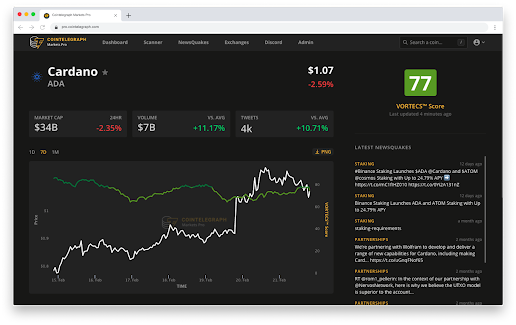

Thank you so much to my newest sponsor @mictorrani...I really appreciate you for believing in me.
Thanks so much.
How to Be Happy When Everything Goes Wrong
Thank you everyone that asked about my health, really appreciate it so much and also my sponsors, thank you very much. I don't want to bother anyone by sharing my health issues because I don't like to be in a pitied situation and so as to prevent controversy . I'm recovering now and there has been a lot of improvement due to the quick attention and response given to me by my doctor. And I also thank you all for exercising patience with me, I really appreciate.
Today I will be writing about how to be happy when everything goes wrong and I will start by narrating a Story......
***********************************
***I****n the summer of 2010, Rachelle Friedman was preparing for one of the best periods of her life. She was recently engaged, surrounded by her best friends, and enjoying her bachelorette party.*
*Friedman and her friends were spending the day at the pool when one of them playfully pushed her into the shallow end of the water. Friedman floated slowly to the top of the pool until her face emerged. It was immediately obvious that something was wrong. “This isn’t a joke,” she said.*
*Her head had struck the bottom of the pool and shattered two vertebrae. In particular, the fracture of her C6 vertebra severed her spinal cord and left her permanently paralyzed from the chest down. She would never walk again.*
**“We are just so happy…”**
*One year later, Rachelle Friedman became Rachelle Chapman as she married her new husband. She decided to share some of her own thoughts on the whole experience during an online question-and-answer session in 2013.*
*She started by discussing some of the challenges you might expect. It was hard to find a job that could accommodate her physical disabilities. It could be frustrating and uncomfortable to deal with the nerve pain.*
*But she also shared a variety of surprisingly positive answers. For example, when asked if things changed for the worse she said, “Well things did change, but I can't say in a bad way at all.” Then, when asked about her relationship with her husband she said, “I think we are just so happy because my injury could have been worse.”*
*How is it possible to be happy when everything in life seems to go wrong? As it turns out, Rachelle’s situation can reveal a lot about how our brains respond to traumatic events and what actually makes us happy.*
**The Surprising Truth About Happiness**
There is a social psychologist at Harvard University by the name of Dan Gilbert. Gilbert's best-selling book, Stumbling on Happiness, discusses the many ways in which we miscalculate how situations will make us happy or sad, and reveals some counterintuitive insights about how to be happy. https://jamesclear.com/book/stumbling-on-happiness
One of the primary discoveries from researchers like Gilbert is that extreme inescapable situations often trigger a response from our brain that increases positivity and happiness.
For example, imagine your house is destroyed in an earthquake or you suffer a serious injury in a car accident and lose the use of your legs. When asked to describe the impact of such an event most people talk about how devastating it would be. Some people even say they would rather be dead than never be able to walk again.
But what researchers find is that when people actually suffer a traumatic event like living through an earthquake or becoming a paraplegic their happiness levels are nearly identical six months after the event as they were the day before the event.
How can this be?
**The Impact Bias**
Traumatic events tend to trigger what Gilbert refers to as our “psychological immune systems.” Our psychological immune systems promote our brain’s ability to deliver a positive outlook and happiness from an inescapable situation. This is the opposite of what we would expect when we imagine such an event. As Gilbert says, “People are not aware of the fact that their defenses are more likely to be triggered by intense rather than mild suffering. Thus, they mis-predict their own emotional reactions to misfortunes of different sizes.”
This effect works in a similar way for extremely positive events. For example, consider how it would feel to win the lottery. Many people assume that winning the lottery would immediately deliver long-lasting happiness, but research has found the opposite.
In a very famous study published by researchers at Northwestern University in 1978 it was discovered that the happiness levels of paraplegics and lottery winners were essentially *the same* within a year after the event occurred. You read that correctly. One person won a life-changing sum of money and another person lost the use of their limbs and within one year the two people were equally happy.
It is important to note this particular study has not been replicated in the years since it came out, but the general trend has been supported again and again. We have a strong tendency to overestimate the impact that extreme events will have on our lives. Extreme positive and extreme negative events don’t actually influence our long-term levels of happiness nearly as much as we think they would.
Researchers refer to this as The Impact Bias because we tend to overestimate the length or intensity of happiness that major events will create. The Impact Bias is one example of affective forecasting, which is a social psychology phenomenon that refers to our generally terrible ability as humans to predict our future emotional states.
**How to Be Happy: Where to Go From Here**
There are two primary takeaways from The Impact Bias about how to be happy.
**First, we have a tendency to focus on the thing that changes and forget about the things that don’t change.**When thinking about winning the lottery, we imagine that event and all of the money that it will bring in. But we forget about the other 99 percent of life and how it will remain more or less the same.
We’ll still feel grumpy if we don’t get enough sleep. We still have to wait in rush hour traffic. We still have to work out if we want to stay in shape. We still have to send in our taxes each year.
It will still hurt when we lose a loved one. It will still feel nice to relax on the porch and watch the sunset. We imagine the change, but we forget the things that stay the same.
**Second, a challenge is an impediment to a particular thing, not to you as a person.** In the words of Greek philosopher Epictetus, “Going lame is an impediment to your leg, but not to your will.” We overestimate how much negative events will harm our lives for precisely the same reason that we overvalue how much positive events will help our lives. We focus on the thing that occurs (like losing a leg), but forget about all of the other experiences of life.
Writing thank you note to friends, watching football games on the weekend, reading a good book, eating a tasty meal. These are all pieces of the good life you can enjoy with or without a leg. Mobility issues represent but a small fraction of the experiences available to you. Negative events can create task-specific challenges, but the human experience is broad and varied.
***********************************
The inspiration behind this article sprung up while I was still in a critical health conditions some days ago. Million of thoughts in my head because I thought I was going to give up the ghost. Thought like "is this how I am going to die without achieving anything in life?" "Is this the end?" Rhetorical thought I couldn't even give an answer to but thanks to my healthy mindset or should I say adrenaline in my body haha, I was able to suppress the bad thoughts but for it to result to sadness. It went through for a while before I decided to just accept the situation and move on. That was when the idea of this article came from.
***There is plenty of room for happiness in a life that may seem very foreign or undesirable to your current imagination. All you have to do is find that room that can never collapse for you happiness.***
***Health is wealth and also Happiness.***
Thank you for reading 🤗
Hope to see you next time.

NBA lands first cryptocurrency sponsorship with Coinbase
*I apologize to everyone 🙏 for not been active these days. I'm having some health issues which I'm in a mid critical stage. I managed with groans to post this article today because I have not really been active.*
*I apologise to my sponsors too* @foryoubtc09 @Greatwolfman
*And also my great colleagues and friends* @Mictorrani @Oikawa *and also the most intelligent AI🙂* @TheRandomRewarder
*Everyone should bare with me because I may be off for some while to fully take care of myself and recover.*
.............................................................................
The National Basketball Association is preparing for its 75th anniversary on Tuesday. But it also increased its presence in the cryptocurrency space as it braces for the future.
The NBA agreed to its first cryptocurrency sponsorship deal with Coinbase, the publicly traded company that makes an exchange for crypto trading. In the agreement, **Coinbase** will leverage just about all the NBA’s platforms including the WNBA, NBA G League, NBA 2K League and USA Basketball. Terms of the deal were not provided. https://www.cnbc.com/quotes/COIN
Coinbase is a software platform that allows cryptocurrency transactions, and the company makes money from fees. Coinbase is traded on the Nasdaq under ticker symbol “COIN” with a $64 billion market cap. Coinbase stock was up 3.5% Tuesday afternoon.
The deal with Coinbase comes one day after NBA commissioner Adam Silver confirmed the league is projecting $10 billion in revenue for the 2021-22 season. That estimation is helped by fans returning to NBA arenas, which account for 40% of league revenue. Sponsorships accounted for about $1.4 billion last season, according to valuation firm IEG.
That figure should increase with the Coinbase deal.
The tech firm wants to increase awareness around blockchain technology to grow the crypto economy. Hence, the NBA will provide the company exposure including in Tuesday’s regular-season tip-off games on WarnerMedia property Turner Sports. Coinbase will also get presenting partner rights for the WNBA Commissioner’s Cup and the USA Basketball men’s and women’s national team exhibition tours.
In a statement, NBA executive Kerry Tatlock labeled Coinbase “a natural fit” for the league’s cryptocurrency asset. NBA clubs have already leveraged crypto-related deals, including the Portland Trail Blazers’ jersey patch and Miami Heat arena naming rights.
Sports leagues have embraced cryptocurrency sponsorships this year, as its helping with a V-shape recovery for leagues following pandemic losses. NBA teams, Formula 1, Major League Baseball and even New York-based Drone Racing League have landed crypto sponsorships. Platform **Algorand will** pay. DRL $100 million over five years, and last June F1 also struck a $100 million deal with Crypto.com.
The National Football League hit pause on crypto deals, though. Last August, the NFL restricted its teams from negotiating sponsorships as it studies the business, according to **The Athletic.** But the NFL may reconsider crypto agreements especially with its Super Bowl halftime show rights on the market.
The NBA’s 75th anniversary season starts Tuesday with a doubleheader as the defending champion Milwaukee Bucks host the Brooklyn Nets. The second game will feature the Los Angeles Lakers and Golden State Warriors.
Thanks for reading 🤗
See you next time.
5 Lessons on Being Wrong
We are incredibly hard on ourselves when it comes to being wrong and making big decisions in life.
If our first five relationships end with a break up, we think we’re destined to be alone forever.
If we go to school, get a degree, and spend years training for a job that we end up hating, we feel like a failure for not having it all figured out.
If we have a dream of writing a book or starting a non-profit or creating something of value and we stumble on the first try, we say that we're not cut out for this.
In cases like these, when we are attempting to do something that is complex and multi-faceted, I believe that being wrong is actually a sign that you’re doing something right.
Here's why…
First Choice vs. Optimal Choice
For some reason, we often expect our first choice to be the optimal choice. However, it's actually quite normal for your first attempt to be incorrect or wrong. This is especially true of the major decisions that we make in life.
For example…
**Finding the right person to marry.** Think of the first person you dated. Would this person have been the best choice for your life partner? Go even further back and imagine the first person you had a crush on. Finding a great partner is complicated and expecting yourself to get it right on the first try is unreasonable. It's rare that the first one would be *the one*.
**Choosing your career.** What is the likelihood that your 22-year-old self could optimally choose the career that is best for you at 40 years old? Or 30 years old? Or even 25 years old? Consider how much you have learned about yourself since that time. There is a lot of change and growth that happens during life. There is no reason to believe that your life’s work should be easily determined when you graduate.
**Starting a business.** It is unlikely that your first business idea will be your best one. It probably won’t even be a good one. This is the reality of entrepreneurship.
When it comes to complex issues like determining the values you want in a partner or selecting the part of your career, your first attempt will rarely lead to the optimal solution.
**5 Lessons On Being Wrong**
Being wrong isn't as bad as we make it out to be. I have made many mistakes and I have discovered five major lessons from my experiences.
**1. Choices that seem poor in hindsight are an indication of growth, not self-worth or intelligence.** When you look back on your choices from a year ago, you should always hope to find a few decisions that seem stupid now because that means you are growing. If you only live in the safety zone where you know you can’t mess up, then you’ll never unleash your true potential. If you know enough about something to make the optimal decision on the first try, then you’re not challenging yourself.
**2. Given that your first choice is likely to be wrong, the best thing you can do is get started.** The faster you learn from being wrong, the sooner you can discover what is right. For complex situations like relationships or entrepreneurship, you literally have to start before you feel ready. Because it’s not possible for anyone to be truly ready. The best way to learn is to start practicing.
**3. Break down topics that are too big to master into smaller tasks that can be mastered.** I can't look at any business and tell you what to do. Entrepreneurship is too big of a topic. But, I can look at any website and tell you how to optimize it for building an email list because that topic is small enough for me to develop some level of expertise. If you want to get better at making accurate first choices, then play in a smaller arena. As Niels Bohr, the Nobel Prize-winning physicist, famously said, “An expert is a person who has made all the mistakes that can be made in a very narrow field.”
**4. The time to trust your gut is when you have the knowledge or experience to back it up.** You can trust yourself to make sharp decisions in areas where you already have proven expertise. For everything else, the only way to discover what works is to adopt a philosophy of experimentation.
**5. The fact that failure will happen is not an excuse for expecting to fail.**There is no reason to be depressed or give up simply because you will make a few wrong choices. Even more crucial, you must try your best every time because it is the effort and the practice that drives the learning process. They are essential, even if you fail. Realize that no single choice is destined to fail, but that occasional failure is the cost you have to pay if you want to be a right. Expect to win and play like it from the outset.
Your first choice is rarely the optimal choice. Make it now, stop judging yourself, and start growing.
Thanks for reading 🤗
Hope to see you next time.

The Shadow Side of Greatness
Let me start my article by illustrating a short biography of **Pable Picasso.**
Pable Picasso. He is one of the most famous artists of the 20th century and a household name even among people who, like myself, consider themselves to be complete novices in the art world.
What impressed me the most was not any individual piece of art, but rather his remarkably prolific output. Researchers have catalogued 26,075 pieces of art created by Picasso and some people believe the total number is closer to 50,000.
When I discovered that Picasso lived to be 91 years old, I decided to do the math. Picasso lived for a total of 33,403 days. With 26,075 published works, that means Picasso averaged 1 new piece of artwork every day of his life from age 20 until his death at age 91. He created something new, every day, for 71 years.
This unfathomable output not only played a large role in Picasso’s international fame, but also enabled him to amass a huge net worth of approximately $500 million by the time of his death in 1973. His work became so famous and so numerous that, according to the Art Loss Register, Picasso is the most stolen artist in history with over 550 works currently missing.
What made Picasso great was not just how much art he produced, but also how he produced it. He co-founded the movement of Cubism and created the style of collage. He was the artist his contemporaries copied. Any discussion of the most well-known artists in history would have to include his name.
**Falling in Love With Picasso**
Falling in love with Picasso was a terrible thing to do.
His first marriage was to a woman named Olga Khokhlova and they had one child together. The two separated after she discovered that Picasso was having an affair with a seventeen-year-old girl named Marie-Therese Walter. He was 45 years old at the time.
Picasso fathered a child with Walter, but moved on to other lovers a few years later. He began dating an art student named Francoise Gilot in 1944. She was 23 years old. Picasso had just turned 63 at the time.
Gilot and Picasso had two children together, but their relationship ended when Picasso began yet another affair, this time with a woman who was 43 years younger than him. After they separated, Gilot published a book called Life with Picasso which revealed his long list of sexual flings and sold over one million copies. Out of revenge, Picasso refused to see their two children ever again.
Basically, Picasso’s romantic life was a revolving door of affairs and infidelity. In the words of our guide at the Picasso exhibit, “There were always many others.” There must have been something intoxicating about Picasso because after his death, not one, but two of his lovers committed suicide due to their grief.
**The Shadow Side**
Many of the qualities that make people great have shadow sides as well. Picasso's singular focus on art meant that everything else in life had to take a back seat, including his relationships and his children.
Most humans have a primary relationship with their lover and maintain a variety of hobbies and interests during different periods. Picasso was the reverse. His primary relationship was with his art, while his lovers were like hobbies and passing interests, things he experimented with for a period here and there.
Some scholars believe Picasso's many relationships were essential to the progression of his art. According to art critic Arthur Danto, “Picasso invented a new style each time he fell in love with a new woman.”
This was the shadow side of his strength as an artist. The qualities that made Picasso one of the greatest artists of all-time may very well have made him a terrible life partner too. They are like two sides of the same coin. You couldn’t have one without the other.
Shadows Appear in All Fields
I don’t mean to pick on Picasso here. The idea that strengths have tradeoffs, especially extreme versions of strengths, holds true in nearly every field.
For example, consider Floyd Mayweather Jr. He is widely considered to be one of the greatest boxers of all-time. His career record is 49-0. He has earned more than $1.3 billion over the course of his career.
He also has serious anger management issues. In 2002, he was charged with two counts of domestic violence. In 2004, two counts of misdemeanor battery against different women. In 2005, another charge of misdemeanor battery. In 2010, yet another misdemeanor battery charge. Not to mention, there have been a number of reported charges that were later dropped.
The qualities that make him a once-in-a-lifetime boxer—his unbridled anger and lack of impulse control—also lead him to be violent in normal situations. This combination makes him unbeatable in the ring and unbearable in the rest of life.
**Every Strength Has a Tradeoff**
Now, you might be thinking, “Well, you don’t have to cheat on your spouse to produce great art or beat up others to become a good boxer. Those are two different things.”
You’re right. I’m using extreme examples here to make the point, however, it remains true that every strength has a shadow side. Some shadows are darker than others, but all paths to success have a cost.
Maybe you’re a doctor or a nurse who has learned how to remove yourself from the emotion of death. This quality that allows you to do your job well when patients die each day, but also reduces the empathy and connection you feel with friends and family.
Maybe you’re a scientist who holds themselves to the highest standards. This perfectionism makes you excellent in the lab, but also leads you to show tough love to your children and they grow up believing nothing they do is ever good enough.
Maybe you’re a smart and enthusiastic friend who wants to help others by always providing value. You’re just trying to be helpful, but you end up providing *too much* value. Your friends wish you would just listen to their problems and not feel the need to make your mark on everything.
There are an infinite number of ways this can play out, but one singular punchline: every strength comes with tradeoffs.
**Is Success Worth the Shadow Side?**
Success is complicated. We love to praise people for becoming famous, for winning championships, and for making tons of money, but we rarely discuss the costs of success.
Did the beauty of Picasso’s art add more joy to the world than the pain he caused through a series of broken relationships? It’s easy for you and me to believe his contribution was net positive because we didn’t have to bear the pain. His ex-wives and mistresses might feel differently—especially the two who committed suicide.
The fact that you cannot escape the downsides of your strengths brings us to an interesting decision point. People often talk about the success they aspire to in life, but as author Mark Manson writes in his popular book, **The Subtle Art Of Not Giving A F*ck**, the most important question to ask yourself is not, “What kind of success do I want?”, but rather, “What kind of pain do I want?”
Do you want the shadow that comes with the success? Do you want the baggage that comes with the bounty? What kind of pain are you willing to bear in the name of achieving what you want to achieve? Answering this question honestly often leads to more insight about what you really care about than thinking of your dreams and aspirations.
It is easy to want financial independence or the approval of your boss or to look good in front of the mirror. Everybody wants those things. But do you want the shadow side that goes with it? Do you want to spend two extra hours at work each day rather than with your kids? Do you want to put your career ahead of your marriage? Do you want to wake up early and go to the gym when you feel like sleeping in? Different people have different answers and you'll have to decide what is best for you, but pretending that the shadow isn't there is not a good strategy.
`Success in one area is often tied to failure in another area, especially at the extreme end of performance. The more extreme the greatness, the longer the shadow it casts.`
Success in one area is often tied to failure in another area, especially at the extreme end of performance. The more extreme the greatness, the longer the shadow it casts.
To phrase it differently, the more one dimensional your focus, the more other areas of life suffer. It’s the four burners theory in action. The more you turn up one burner, the more you risk others burning out. The things that make people great in one area often make them miserable in others.
Thanks for reading 🤗
Hope to see you next time.
Have a lovely Sunday.
Weekstart...

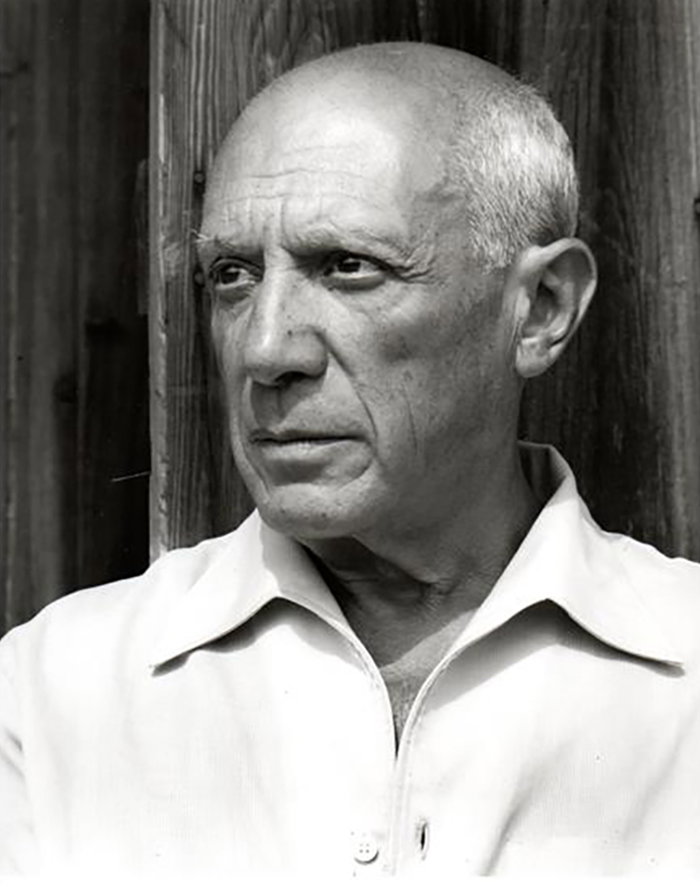
Identity-Based Habits:How To Actually Stick To Your Goals This Year
Change is hard. You've probably noticed that.
We all want to become better people — stronger and healthier, more creative and more skilled, a better friend or family member.
But even if we get really inspired and start doing things better, it's tough to actually stick to new behaviors. It's more likely that this time next year you'll be doing the same thing than performing a new habit with ease.
Why is that? And is there anything you can do to make change easier?
How to Be Good at Remembering People’s Names
Let me brief a story about a man and his wife with good retentive memory.
*A man has a wife who is great at remembering people’s names.*
*One day while they were taking a nap from a long walk, she was telling her husband about a story that happened when she was in high school. She went to a large high school and it was the first day of class. Many of the students had never met her before that day. The teacher went around the room and asked each person to introduce themselves. At the end, the teacher asked if anyone could remember everyone’s name.*
*The lady (wife) raised her hand and proceeded to go around the room and accurately name all 30 or so people. The rest of the room was stunned. The guy next to her looked over and said, “I couldn’t even remember your name.”*
*That moment was an affirming experience for her. After that she felt like, “I’m the type of person who is good at remembering people’s names.”*
*Even today, she's great at remembering the names of anyone she come across.*
***Here's what I learned from that story:*** *In order to believe in a new identity, we have to prove it to ourselves.*
**Identity-Based Habits**
The key to building lasting habit is focusing on creating a new identity first. Your current behaviors are simply a reflection of your current identity. What you do now is a mirror image of the type of person you believe that you are (either consciously or subconsciously).
To change your behavior for good, you need to start believing new things about yourself. You need to build identity-based habits.
Imagine how we typically set goals. We might start by saying “I want to lose weight” or “I want to get stronger.” If you're lucky, someone might say, “That's great, but you should be more specific.”
So then you say, “I want to lose 20 pounds” or “I want to squat 300 pounds.”
These goals are centered around outcomes, not identity.
To understand what I mean, consider that there are three levels at which change can occur. You can imagine them like the layers of an onion.
`There are three layers of behavior change: a change in your outcomes, a change in your processes, or a change in your identity.`
**The first layer is changing your outcomes.** This level is concerned with changing your results: losing weight, publishing a book, winning a championship. Most of the goals you set are associated with this level of change.
**The second layer is changing your process.** This level is concerned with changing your habits and systems: implementing a new routine at the gym, decluttering your desk for better workflow, developing a meditation practice. Most of the habits you build are associated with this level.
**The third and deepest layer is changing your identity.** This level is concerned with changing your beliefs: your worldview, your self-image, your judgments about yourself and others. Most of the beliefs, assumptions, and biases you hold are associated with this level.
Outcomes are about what you get. Processes are about what you do. Identity is about what you believe. When it comes to building habits that last—when it comes to building a system of 1 percent improvements—the problem is not that one level is “better” or “worse” than another. All levels of change are useful in their own way. The problem is the *direction* of change.
Many people begin the process of changing their habits by focusing on *what* they want to achieve. This leads us to outcome-based habits. The alternative is to build identity-based habits. With this approach, we start by focusing on *who* we wish to become.
**The Recipe for Sustained Success**
Changing your beliefs isn’t nearly as hard as you might think. There are two steps.
1. Decide the type of person you want to be.
2. Prove it to yourself with small wins.
First, decide who you want to be. This holds at any level—as an individual, as a team, as a community, as a nation. What do you want to stand for? What are your principles and values? Who do you wish to become?
These are big questions, and many people aren’t sure where to begin—but they do know what kind of results they want: to get six-pack abs or to feel less anxious or to double their salary. That’s fine; start there and work backward from the results you want to the type of person who could get those results. Ask yourself, “Who is the type of person that could get the outcome I want?”
Here are five examples of how you can make this work in real life.
**Want to lose weight?**
Identity: Become the type of person who moves more every day.
Small win: Buy a pedometer. Walk 50 steps when you get home from work. Tomorrow, walk 100 steps. The day after that, 150 steps. If you do this 5 days per week and add 50 steps each day, then by the end of the year, you’ll be walking over 10,000 steps per day.
**Want to become a better writer?**
**Identity:** Become the type of person who writes 1,000 words every day.
**Small win:** Write one paragraph each day this week.
**Want to become strong?**
**Identity:** Become the type of person who never misses a workout.
**Small win:** Do pushups every Monday, Wednesday, and Friday.
**Want to be a better friend?**
**Identity:** Become the type of person who always stays in touch.
**Small win:** Call one friend every Saturday. If you repeat the same people every 3 months, you’ll stay close with 12 old friends throughout the year.
**Want to be taken seriously at work?**
**Identity:** become the type of person who is always on time.
**Small win:** Schedule meetings with an additional 15–minute gap between them so that you can go from meeting to meeting and always show up early.
**What is your identity?**
In my experience, when you want to become better at something, proving your identity to yourself is far more important than getting amazing results. This is especially true at first.
If you want to get motivated and inspired, then feel free to watch a YouTube video, listen to your favorite song, and do P90X. But don't be surprised if you burn out after a week. You can't rely on being motivated. You have to become the type of person you want to be, and that starts with proving your new identity to yourself.
Most people (myself included) will want to become better this year. Many of us, however, will set performance- and appearance-based goals in hopes that they will drive us to do things differently.
If you're looking to make a change, then I say stop worrying about results and start worrying about your identity. Become the type of person who can achieve the things you want to achieve. Build identity-based habits now. The results can come later.
Thanks for reading 🤗
Hope you learned something.
See you next time.🙂


MetaMask Institutional Announces the Integration of BitGo, Qredo and Cactus Custody™
*Sorry guys for I have not fully been active for about 2days now. I was very busy with school and other issues came which I was caught up in all this while. But now am back! So let's go straight to the point.*
Today I will be sharing the improvement on **MetaMask wallet**.
MMI partnerships with custodians BitGo, Qredo, and Cactus Custody™ provide small and large organizations with access to DeFi that fulfills institution-required security, operational efficiency, and compliance needs.
MetaMask’s **10 Million MAUs** across the globe use the wallet to access the decentralized web where they swap, borrow, stake, lend, mint NFTs, buy NFTs, and much more. MetaMask Institutional (MMI) was created in December 2020 by Consensys to address large numbers of leading crypto funds, market-makers, and trading desks seeking to increase exposure to DeFi. These organizations struggle to do so because operating at such a scale often necessitates heightened security, operational, and compliance requirements. https://metamask.io/institutions.html?utm_source=consensys&utm_medium=referral&utm_campaign=consensys_website?utm_source=consensys&utm_medium=referral&utm_campaign=consensys_website
MMI solves this problem by providing investors with full access to DeFi and Web3 that satisfies even the most rigorous of institutional requirements.
Today, MMI announces strategic partnerships with leading custodians BitGo, Qredo, and Cactus Custody™. This is a crucial milestone to allow organizations to leverage leading custody solutions in order to seamlessly discover and interact with DeFi. Each of these strategic partnerships respond to different needs of organizations, from small crypto startups and DAOs to multi-billion dollar crypto funds.
**The importance of alternative custody solutions**
The Ethereum DeFi ecosystem is vastly different compared to two years ago. Today, Ethereum supports a flourishing DeFi ecosystem with $80 billion in value locked in smart contracts, up from $20 billion a year ago. Interest from organizations to participate in the DeFi ecosystem has been rising.
However, organizations are often subject to rigorous requirements in order to meet they are acting in compliance with regulations and are properly safeguarding their clients’ assets.
Custody plays a fundamental role in accessing Crypto and DeFi. Custodians store private keys and approve and sign transactions. They are paramount to organizations safely acquiring and holding crypto assets. They interact directly with brokers and exchanges to facilitate transactions for organizational stakeholders.
*“MetaMask Institutional’s focus is to provide unrivaled access to DeFi even in the face of rigorous institutional requirements. Qualified custodians and custody technology play a fundamental part in these requirements. We could not be more delighted to partner with these three great firms all offering world class capabilities for different segments of the market,”* explains Johann Bornman, Product Lead for MMI.
**Leading custodians provide flexibility to meet the needs of all organizations**
Organizational requirements vary depending on where in the market an organization sits. While Multi-Party Computation (MPC) allows for multiple parties to hold parts of a key, qualified custodians own the fiduciary responsibilities that go with storing private keys. This multi stakeholder partnership aims to provide MMI users with a wide-variety of solutions that meet all variations of institutional requirements.
BitGo is a global leader in custody and security solutions with over $40B in assets under custody. Founded in 2013, BitGo pioneered the multi-signature wallet and is the first digital asset company to focus exclusively on serving institutional clients. BitGo secures approximately 20% of all on-chain Bitcoin transactions by value and supports more than 400 digital assets within its platform. BitGo provides the security and operational backbone for more than 500 institutional clients in 50 countries, including many regulated entities and the world’s top cryptocurrency exchanges and platforms. https://www.bitgo.com/
Qredo offers decentralised crypto custody secured by Multi-Party Computation (MPC) – an advanced cryptographic technique that removes the operational risk around private keys. Qredo supports institutions—from small-cap crypto funds to global asset managers—that are very active in their DeFi yield farming. Its Layer 2 blockchain also enables seamless, low-cost access to a growing ecosystem of cross-chain trading and liquidity opportunities. https://www.qredo.com/
Cactus Custody™ is a trust company based in Hong Kong with over USD10 billion in assets under custody. It is the third-party institutional custody service provided by Matrixport, Asia’s fastest growing digital assets financial services platform. Cactus Custody™ offers cold and warm storage, enterprise crypto management features, and DeFi connectivity for miners, corporates, funds and projects. https://www.mycactus.com/en http://www.matrixport.com/
“As the DeFi ecosystem matures, many of our institutional clients are interested in actively participating,” said Mike Belshe, CEO, BitGo. “MetaMask is the gold standard of DeFi wallets and the integration of MetaMask Institutional with BitGo wallets allows for key management and custom policies to remain in BitGo, while MMI acts as an interface between our wallet platform and all dapps. We at BitGo support the vision to provide world class institutional-grade DeFi solutions to large financial institutions around the world.”
MMI will continue to respond to the unique and varied needs of organizations, and will soon be announcing the integration of additional custodians.
**About BitGo**
BitGo is the leader in digital asset financial services, providing institutional investors with liquidity, custody, and security solutions with over $40B in assets under custody. Founded in 2013, BitGo pioneered the multi-signature wallet and is the first digital asset company to focus exclusively on serving institutional clients. Active in both centralized and decentralized finance, BitGo offers market leading trading, lending, and borrowing services through its prime brokerage services and acts as the custodian for WBTC, with more than $10 billion in custody and circulation. In 2020, BitGo launched BitGo Portfolio and Tax, providing clients with a full-stack solution for digital assets. In 2018, it launched BitGo Trust Company, the first qualified custodian purpose-built for storing digital assets. BitGo processes approximately 20% of all global Bitcoin transactions, and supports over 400 coins and tokens. BitGo provides the security and operational backbone for more than 500 institutional clients in 50 countries, including many regulated entities and the world’s top cryptocurrency exchanges and platforms. BitGo is backed by Goldman Sachs, Craft Ventures, Digital Currency Group, DRW, Galaxy Digital Ventures, Redpoint Ventures, and Valor Equity Partners.
**About Qredo**
Qredo is a decentralized digital asset management infrastructure and product suite designed to unlock new opportunities for institutional investors in digital assets and decentralized finance. Qredo’s Layer 2 blockchain protocol enables users to seamlessly transfer and settle BTC, ETH, and ERC-20 tokens. Assets are secured by Qredo’s advanced Gen 2.0 multi-party computation (MPC), which provides tier-1 bank security and institutional-grade governance.
**About Cactus Custody™**
Cactus Custody™ is the third-party institutional custody service provided by Matrixport, Asia’s fastest growing digital assets financial services platform. It is a qualified custodian and a Hong Kong Trust Company that meets the capital reserve requirement and acts within regulatory and AML guidelines. Besides Bank-grade security, Cactus Custody™ offers powerful and flexible enterprise crypto management functions that make day-to-day operations hassle-free and risk-free. The company safeguards over USD 10 billion for 60+ clients. Clients can also access spot trading and earn interest by lending out their assets within Cactus Custody™
Dedicated to my number 1 crypto currency and Blockchain enthusiast @Pantera
Thanks for reading 🤗
Hope you enjoyed it.
Wish to see you again @olawale4967
What I Do When I Feel Like Giving Up
I am struggling today. If you’ve ever struggled to be consistent with something you care about, maybe my struggle will resonate with you too.
Today, I Feel Like Giving Up
*But today? Well, today I am struggling. Today, I don’t feel like writing. Today, I don’t feel like sticking to the routine. Today, I don’t feel like I have any great ideas and I don’t feel like I have enough time to make the good ideas great. Today, I feel like giving up.*
Here’s what I try to remind myself of when I feel like giving up…
**Your Mind is a Suggestion Engine**
Consider every thought you have as a suggestion, not an order. Right now, my mind is suggesting that I feel tired. It is suggesting that I give up. It is suggesting that I take an easier path.
If I pause for a moment, however, I can discover new suggestions. My mind is also suggesting that I will feel very good about accomplishing this work once it is done. It is suggesting that I will respect **the identity I am buildin**g when I stick to the schedule. It is suggesting that I have the ability to finish this task, even when I don’t feel like.
Remember, none of these suggestions are orders. They are merely options. I have the power to choose which option I follow.
**Discomfort Is Temporary**
Relative to the time in your normal day or week, nearly any habit you perform is over quickly. Your workout will be finished in an hour or two. Your report will be typed to completion by tomorrow morning. This article will be finished in just a moment.
Life is easier now than it has ever been. 300 years ago, if you didn’t kill your own food and build your own house, you would die. Today, we whine about forgetting our iPhone charger.
Maintain perspective. Your life is good and your discomfort is temporary. Step into this moment of discomfort and let it strengthen you.
**You Will Never Regret Good Work Once It is Done**
Theodore Roosevelt famously said, “Far and away the best prize that life has to offer is the chance to work hard at work worth doing.” So often it seems that we want to work easily at work worth doing. We want our work to be helpful and respected, but we do not want to struggle through our work. We want our stomachs to be flat and our arms to be strong, but we do not want to grind through another workout. We want the final result, but not the failed attempts that precede it. We want the gold, but not the grind.
Anyone can want a gold medal. Few people want to train like an Olympian.
And yet, despite our resistance to it, I have never found myself feeling worse after the hard work was done. There have been days when it was damn hard to start, but it was always worth finishing. Sometimes, the simple act of showing up and having the courage to do the work, even in an average manner, is a victory worth celebrating.
**This Is Life**
Life is a constant balance between giving into the ease of distraction or overcoming the pain of discipline. It is not an exaggeration to say that our lives and our identities are defined in this delicate balance. What is life, if not the sum of a hundred thousand daily battles and tiny decisions to either gut it out or give it up?
This moment when you don’t feel like doing the work? This is not a moment to be thrown away. This is not a dress rehearsal. This moment is your life as much as any other moment. Spend it in a way that will make you proud.
Let the World Decide
So, what do I do when I feel like giving up? I show up.
Do I show up at my best? I doubt it. But my job isn’t to judge how good or how bad I am.
***My job is to do the work and let the world decide.***
To my wonderful sponsors: @foryoubtc09 @Greatwolfman and my great colleagues and mentors @Pantera @Oikawa Thanks for the support and love from you guys. You are the real MVPs that didn't make me give up.
Thank you so much.
Thanks for reading 🤗
Hope to see you next time.
Wow!🎉 Thanks to my newest wonderful sponsor @Greatwolfman, a great colleague and also a mentor. Thank you so much for believing in me.
"Team No Sleep" Is A Ridiculous Concept
Since morning I have been wracking by brain on what article to write today but I finally got tired when I couldn't find any.
Just 2hours ago I noticed I don't sleep much this days. It's been going on for a while now and also I'm having the side effects of not having a good sleep and I just decided to write something on the things that hinder me from getting a good sleep and recommendable steps to manage my schedule and also have a good sleep.
Recommended for anyone who's also
Having similar issues.
I know you've heard it. It's the lingo that's “hot" in the streets for driven adults between the ages of 18 and 45.
*“I don't need sleep! I'm grinding!"*
*“Sleep is for the dead!"*
*“Poor people sleep. I'll sleep when I'm dead."*
WHAT?! Okay, wait a minute. Rewind. Please.
I've heard those statements so many times over the last five years that it started to make me feel rather unworthy inside.
I started having thoughts of inferiority and was riddled with contemplation that I was somehow less strong, less talented and less incredible than my sleep deprived peers.
But why? Because I wasn't up every night until 3 A.M. “working" on my dreams before jumping back up three hours later and hitting the day job? Well…yes. The social media standard of a hard-working individual making things happen for themselves became the real life standard. And if you were a SUPER entrepreneur like everyone was claiming to be, then you most definitely were part of the “no sleep" club. Not wanting to be left out of all of the great success that all of these folks seemed to be having, I became a card-carrying member, please and thank you.
Social media had started putting a value on people's capabilities according to how much they **didn't** sleep at night, with many trying to one-up one another, almost braggadocious about how much rest they never got. It was admirable to go four days running on fumes. They even taunt those that went to bed before midnight.
I know, because I was a taunter.
I would laugh at people who DARED to go to bed when their body told them to.
Sometimes I'd even judge them.
That is, until I started to become ill.
My immune system just couldn't seem to keep it together, and I didn't know why! For months, I had a terrible illness that wouldn't go away, along with pounding headaches, patchy skin and a *blah* attitude. My energy was so low and I became emotional. I may have only been sleeping 4.5 (sometimes a glorious 5) hours a night, but I was taking herbs, vitamins and eating vegetables, so what was going on?
That's when I started to study sleep and the effects of it on the human immune system. I began to learn and study something that mattered way more than some extra dollars in the bank--my health and my very livelihood. I didn't realize at the time how important 7 hours (or more) of sleep a night was to stay healthy and fight off bugs, pathogens and disease. I then thought about how many years I had allowed myself to be fooled by the, “sleep when you're dead," advice. The same advice, in fact, that was actually breaking down and killing my body. https://www.mayoclinic.org/diseases-conditions/insomnia/expert-answers/lack-of-sleep/faq-20057757
I began tracing my lack of sleep back to how easily I got sick. I felt bad not staying up late every night, but even worse when I did. I decided that if I wanted to be successful and healthy, things had to change, and since I love my body and want to live to see my success, they did! I'm here to tell you that you can be successful **AND** take care of yourself at the same time. You have to be wise and practical.
Sometimes we feel guilty for caring for ourselves first and put it on the backburner for the greater good of the cause, but that's not always the best approach.
Everyone on average, need more sleep --don't feel slighted, it's science. A study showed that we suffer more both physically and mentally when we “shade" our rest. Recall above when I shared how my health AND emotions were suffering due to my constant (and then proud) lack of sleep. That's because sleep affects the brain!
The article continued, “As well as a higher risk of heart disease, depression and psychological problems, sleep-deprived us have extra clotting factors in our blood, which can lead to a stroke. We also have inflammation markers, which indicate developing health problems." Ummm, uh-oh. https://www.xonecole.com/black-women-heart-disease/
For a better overall sense of wellness, get your rest. If you want to compete, you'll do it much better with a clear mind. Here are some tips on how I sneaked a few extra z's into my schedule without the guilt trip of not doing enough.
1**. BALANCE. Do what works for YOU!**
You know what your body can and can't handle. Always be honest with yourself. If you feel yourself coming under the weather, try to shorten your wake time and get some much-needed sleep so you can feel great and tackle your projects again. Trust that a healthier, more alert you is a better, smarter you. You always want to be at your best when you have your business hat on. Plus, your skin looks SO much better when you're getting proper sleep.
**2. Yes, go ahead and burn the midnight oil, but not every night.**
Don't be irresponsible and not get the things done that need to get done. That's the worst because it can cause anxiety or create dire consequences in the long-run. However, use body wisdom and make enough time for adequate sleep or take naps when you are able. Sometimes there are deadlines and you may only get five hours in the sack on Tuesday and Wednesday night. Hey, you're working on your awesome next best-selling novel! I get it. Just make sure that on Thursday afternoon, you embrace that welcomed two-hour nap. Guess what? You can still be a Superman or superwoman with over six hours of sleep. https://www.xonecole.com/incorporating-a-nap-into-your-daily-could-make-you-more-productive/
**3. Stop allowing others actions to dictate your level of success.**
Enough said.
**4. Remember that sleeping is used by the body to repair, rebuild and strengthen you.**
Sleeping forms the pathways in our brains for memory and learning. Don't just take my word for it. You might be reading this, shaking your head thinking, “This is impractical. You don't know how busy my life is!" I urge you to read the article and study…unless it's time for bed of course, which in that case, please pick back up on this with your cereal in the morning. http://www.huffingtonpost.com/2014/03/07/your-body-does-incredible_n_4914577.html
I am NOT saying go to bed at 10 every night; I certainly don't. But what I am encouraging is that you evaluate your schedule and see what can be adjusted to allow yourself the much-needed sleep that your body was made to have. That might mean midnight for some and 3 A.M. for the rest, which is fine if you know that you will be able to sleep for more than 5 hours when you do go to bed. The truth is some of us have our businesses to attend to and at night is truly the only time we can devote to it.
Others have schoolwork for a master's degree to finish, kids to tend to, and other extremely important life responsibilities that must be taken care of after hours. Sleep to busy people can feel like a set-back or a curse! But it's far from a curse; it's a biological need! I used to think that by sleeping, I was missing out on something. Well I was--my well-being.
I've learned to rest when my body calls me to and no longer spend weeks at a time blazing through life shunning my yummy sleep when I can help it. This is not to say that I don't struggle with this sometimes, but I quickly get myself back in check. I've become much more in tune with myself, and it's made me a more balanced, happier spirit. I want the same for you. So take care of you. Let's take care of each other.
Helpful Tips For Better Sleep
Log off of the computer/cell phone/social media at a reasonable time.
Make sure that the room you sleep in is both dark and slightly cool.
Trouble relaxing into a good night's rest but want to stay away from all meds? Try sprinkling a few drops of either lavender or chamomile essential oil to your pillow and inhale. No need to drench your pillow; less is more. The aroma can make for an awesome quieting of the soul. The pillow not enough? Then also dab some of that precious, calming oil onto your wrists, behind your ears and even your scalp for a total, “AAAAAAHHHHH!!!" affect!
Troubled mind at night? Try “thanking" your way into sleep. No matter how rough your day is you can always find matters to be grateful for. I've counted my blessings right into a peaceful, happy sleep on several occasions.
*Now go get your zzz's and never allow yourself to feel guilty about it!*
Thanks for reading 🤗
Hope you find this article useful.
My wonderful sponsor @foryoubtc09
My great colleagues @Greatwolfman
@Pantera @Oikawa and also others I didn't mentioned. You all are my mentors.

7 Ways To Deal With Or Overcome Social Anxiety
As you may be wondering why I always focus on mental Health growth. It's plainly because I'm also a victim of mental disorders (disabilities). I'm one of the people that have the most phobias in the world and I have went through a lot to grow out of this phobias which is why I'm here sharing my experience as always.
I know I won't be appreciated and loved by everyone and I'm already getting used to that, it's just so hard sometimes knowing that you won't be treated right by everyone because you are a good person, but it's okay. But it's a very difficult challenge to pass through for someone who's dealing with social anxiety because it only justify the reason why you should have social phobia.
As I have said before on my first article on this platform, I will mostly focus on the experiences in my life and how everyone can learn from it.
Social anxiety disorder (social phobia) can make one feel scared and self-conscious than other people do in social interactions. This might make daily activities extra challenging and might, in turn, keep one from living life to the fullest.
These seven ways I compiled in this article can help you feel better and get through the day.
**Prepare**
It is important to always plan ahead of any social interactions that might make you feel anxious. Preparing for what is to come can help boost your self-confidence and help you resist the urge to avoid some situations that make you feel nervous. For example, if you're going on a first date and you're scared you'll have nothing in common, try reading magazines and newspapers to find a few topics to talk about. If going to a party or a work function triggers symptoms, do some relaxation or breathing exercises to help you calm down before you leave the house.
**Start small**
Dealing with social anxiety takes time and practice. One has to be patient and try not to take on your biggest fears at once. Don't jump into a big social situation that doesn't make you feel comfortable just yet. Take your time and build up to it. You can practise eating out in public by going to restaurants with close friends and family, try making eye contact with people on the street or at the grocery store and say hello and if someone starts a conversation with you, ask them questions about their hobbies or favourite places to travel.
**Engage in physical activities**
Studies have shown that engaging in certain exercises like jogging can help lower overall anxiety and performing certain types of yoga like deep breathing, can help to lower blood pressure and heart rate and may also help improve mood.
**Control your breathing**
Social anxiety can sometimes result in irregular and uncomfortable changes to your body. It can make your breathing elevated and shallow, make you feel tense, dizzy, or suffocate. This might make you feel even more anxious. Certain techniques can help you regulate your breathing and manage other anxiety symptoms.
Try these steps:
Sit down in a comfortable position with your back straight.
Relax your shoulders.
Put one hand on your belly and the other on your chest.
Breathe in slowly through your nose for 4 seconds. The hand that's on your belly will rise and the one on your chest shouldn't move much.
Hold your breath in for 2 seconds and then slowly let it out through your mouth for 6 seconds.
Repeat this several times until you feel relaxed.
*I know that you must be thinking that why a phobiatic person like me giving all this helpful tips to sail through* ***social*** ***anxiety****. Is it my fault? Is it my fault that I was born unlucky to have so much phobias, so don't judge me I'm just trying to survive as an human being with good mental health, I'm not crazy. I may be the worst writer here and few may be able to understand my articles, but guess what! That's all I need, if few people can understand me here, that's enough achievement and happiness for me.*
**Shift focus off yourself**
Pay attention to things happening around you instead of the thought in your head. Focus more on being present and interested, be a good listener by paying attention to the conversations that are happening around you and remind yourself that other people probably can't tell how anxious you are just by looking at you.
**Use your senses**
Using your six senses whenever you feel nervous or anxious can help calm you down. For some people, looking at a favourite photograph or smelling a certain scent can do the trick. So, the next time you start to feel anxious about a social situation, try listening to your favourite song, chewing a flavourful piece of gum, or snuggling with a pet.
**Avoid negative thoughts**
These thoughts are mostly wrong and might not necessarily be about you, but about other people and situations. Negative thoughts can make you misread situations and things like facial expressions, which could result in wrong assumptions about people's intentions towards you. One way to avoid negative thoughts is by writing down all the negative thoughts you have in specific situations and challenging them with positive thoughts.
Hope you learn from this.
Have a lovely weekend 🤗
From
The True Story Of Eugen Shadow's Wrestling Match With a Lion
First let me thank my wonderful sponsor @foryoubtc09 for making my day yesterday.
Thank you🙇
*In 1894, bodybuilder and strongman Eugen Sandow demonstrated his strength by wrestling a lion — but it didn't quite go to plan.*
There’s a peculiar link between strongman and combat sports. You may immediately think of the Sept. 18, 2021, boxing match featuring 2018 World Strongest Man (WSM) winner, Hafthor Björnsson and arm wrestler Devon Larratt. (Originally, Björnsson was set to fight 2017 WSM Eddie Hall, but the bout is postponed until 2022 as Hall ruptured his biceps in a sparring session.) https://barbend.com/hafthor-bjornsson-eddie-hall-boxing-critique/ https://barbend.com/hafthor-bjornsson-wins-first-professional-boxing-match-first-round-tko/ https://barbend.com/strongman-eddie-hall-reacts-hafthor-bjornsson-devon-larratt-boxing-match/ https://barbend.com/eddie-hall-biceps-injury-update-bjornsson-lavatt-boxing-match/
In 2009, five-time WSM winner Marius Pudzianowski transitioned from hoisting Atlas stones to throwing hooks and kicks as an MMA fighter. He’s still actively fighting and has accumulated a record of 15-7. Inaugural Arnold Classic Winner Mark Henry had a notable career in the WWE (World Wrestling Entertainment), as did three-time WSM champion Bill Kazmier (who wrestled Mick Foley in the WCW (World Championship Wrestling). https://barbend.com/strongman-atlas-stone-technique/ https://barbend.com/strongman-mariusz-pudzianowski-mma/ https://barbend.com/birth-of-arnold-strongman-classic/ https://barbend.com/best-multi-sport-strength-athletes/
Perhaps the gutsiest display of combat took place in 1894 when bodybuilder and strongman Eugen Sandow fought Commodore the wrestling lion. Commodore supposedly weighed 500 pounds, and was, undoubtedly, the most fearsome competitor, man or animal, that Sandow ever faced. Would the “World’s Strongest Man” defeat the most dangerous animal in the jungle? Three thousand fans showed up on a strange night in San Francisco, CA, to find out.
**Why Wrestle a Lion?**
Money and media attention. Those factors drove Sandow to attempt this insane feat. In 1893, Sandow traveled to the United States in search of fortune and greater fame. For the previous four years, he was the darling of the physical culture world in Britain...
**Souce**
https://www.instagram.com/p/CEnA9qgAihs/?utm_source=ig_web_button_share_sheet
Sandow’s first claim to fame came in 1889 when he defeated fellow strongman, Sampson, in a weightlifting competition. Sandow spent the following years touring, competing in weightlifting contests, and giving private lectures on health. It was a lucrative living, but it was not yielding Sandow the wealth he desired. To truly capitalize on his body, he needed to expand his horizon.
In 1893, Sandow traveled to the U.S. to perform at the Chicago World’s Fair. His impact, although not immediate, was felt deeply in American physical culture. Both Bernarr Macfadden, a popular physical culturist and publisher who established the long-running Physical Culture magazine, and Alan Calvert, the man who founded the Milo Barbell Company, were inspired by Sandow in Chicago.
What pushed Sandow’s popularity into orbit was his collaboration with a young theatre impresario named Florenz Ziegfeld Jr. Ziegfeld, who later became one of the biggest names in American show business, was at the start of his career and seeking an attraction that would make him his fortune. That attraction, he realized, was Eugen Sandow.
Ziegfeld completely transformed Sandow’s act. Previously, Sandow lifted weights during shows as the main attraction. Ziegfeld shifted the focus to Sandow’s body. During his American shows, Sandow stood atop a pitch with spotlights aimed at his body, flexing and bouncing his muscles in different poses to the delight of fans. Sandow’s shows still featured weightlifting, but their tone and content changed drastically. Sandow became nothing short of a sensation. He was written about in newspapers, books, and journals around the country. As Sandow’s biographer David Chapman previously explained, this celebrity made both Sandow and Ziegfeld incredibly rich men. https://barbend.com/weightlifting
https://youtu.be/HWM2ixqua3Y
What fueled the duo’s celebrity was Ziegfeld’s ability to promote. Aside from managing Sandow’s shows, Ziegfeld helped create new relationships and money-making opportunities. Thanks to Ziegfeld, Sandow appeared in Thomas Edison’s earliest films and, at other times, hosted private lectures and posing sessions. Why then, wrestle a lion?Controversy, as wrestling promoter Eric Bischoff once opined, meant cash.
**The Fight**
In 1894, a California promoter named Colonel Daniel Boone announced that he would host a fight between a lion and a bear, nature’s most fearsome animals. It was not the first nor the last time that animals were pitted against one another for sport in America. Boone’s plans were foiled before they took off. When animal cruelty groups in San Francisco learned of Boone’s plans they protested the decision, wrote letters to politicians, and penned fiercely critical letters to newspapers. Under public scrutiny, Boone canceled the fight.
Hearing of Boone’s predicament, Ziegfeld proposed an alternative. What if Sandow, the self-proclaimed “World’s Strongest Man” wrestled the lion? Boone, sensing an opportunity to recoup some of the money he lost in his initial promotion, agreed. A date was set for May 22, 1894. More than 3,000 spectators bought tickets.
The build-up to the fight was reminiscent of the Conor McGregor–Floyd Mayweather fight of 2017. Ziegfeld and Sandow spoke of Sandow’s immense strength and bravery. Colonel Boone advertised the fierce power and weight advantage that the 500-pound lion had. https://barbend.com/hafthor-bjornsson-conor-mcgregor/ https://barbend.com/logan-paul-challenges-hafthor-bjornsson-to-box-impaulsive-podcast/ https://barbend.com/how-to-increase-strength/ https://barbend.com/how-to-train-power/
Newspapers began to match up the tale of the tape and openly worried that Sandow may have underestimated the danger he was subjecting himself to. For those involved in organizing the event, all of this meant money. People wanted to see what would happen but, after they did, many regretted it.
Sandow did face the lion. That lion was Commodore and Commodore had more than a few pounds on Sandow. With these facts aside, let’s separate fact from fiction. In Sandow’s 1897 book, *Strength and How to Obtain It*, he remembered a lion “with fury in his eyes…who roared with rage” and attempted to swing a “huge paw to strike a heavy blow” at Sandow. Eventually, through force alone, Sandow overpowered Commodore and made him submit to his will. The truth proved far more sanitized. When Sandow entered the caged ring to face Commodore, his opponent was lackluster in more ways than one. Commodore had been muzzled, his nails had been clipped, and he lumbered around the ring in a way that suggested Commodore was drugged or sedated.
Sensing that the fight would be a fiasco, Sandow pulled Commodore’s tail to provoke a reaction. Nothing happened. Sandow then lifted the Lion and slammed him down. Again…nothing. The two grappled a few moments longer before the crowd’s booing echoed throughout the arena. An official rushed into the ring to announce Sandow the winner. Briefly raising his hand in victory, Sandow quickly escaped the crowd’s gaze and ran backstage. The entire event was a bust. Newspapers the next morning throughout America criticized Sandow and Boone for fixing the fight, for being cruel to Commodore, and for being nothing more than hucksters.
Sandow’s first claim to fame came in 1889 when he defeated fellow strongman, Sampson, in a weightlifting competition. Sandow spent the following years touring, competing in weightlifting contests, and giving private lectures on health. It was a lucrative living, but it was not yielding Sandow the wealth he desired. To truly capitalize on his body, he needed to expand his horizon. https://barbend.com/history-first-weightlifting-competition/ https://barbend.com/5-reasons-everyone-compete-especially-weightlifting/
In 1893, Sandow traveled to the U.S. to perform at the Chicago World’s Fair. His impact, although not immediate, was felt deeply in American physical culture. Both Bernarr Macfadden, a popular physical culturist and publisher who established the long-running *Physical Culture* magazine, and Alan Calvert, the man who founded the Milo Barbell Company, were inspired by Sandow in Chicago.
What pushed Sandow’s popularity into orbit was his collaboration with a young theatre impresario named Florenz Ziegfeld Jr. Ziegfeld, who later became one of the biggest names in American show business, was at the start of his career and seeking an attraction that would make him his fortune. That attraction, he realized, was Eugen Sandow.
Ziegfeld completely transformed Sandow’s act. Previously, Sandow lifted weights during shows as the main attraction. Ziegfeld shifted the focus to Sandow’s body. During his American shows, Sandow stood atop a pitch with spotlights aimed at his body, flexing and bouncing his muscles in different poses to the delight of fans. https://barbend.com/bodybuilding-poses/
Sandow’s shows still featured weightlifting, but their tone and content changed drastically. Sandow became nothing short of a sensation. He was written about in newspapers, books, and journals around the country. As Sandow’s biographer David Chapman previously explained, this celebrity made both Sandow and Ziegfeld incredibly rich men. https://barbend.com/weightlifting
What fueled the duo’s celebrity was Ziegfeld’s ability to promote. Aside from managing Sandow’s shows, Ziegfeld helped create new relationships and money-making opportunities. Thanks to Ziegfeld, Sandow appeared in Thomas Edison’s earliest films and, at other times, hosted private lectures and posing sessions. Why then, wrestle a lion?
Controversy, as wrestling promoter Eric Bischoff once opined, meant cash.
**The Fight**
Sandow did face the lion. That lion was Commodore and Commodore had more than a few pounds on Sandow. With these facts aside, let’s separate fact from fiction. In Sandow’s 1897 book, *Strength and How to Obtain It*, he remembered a lion “with fury in his eyes…who roared with rage” and attempted to swing a “huge paw to strike a heavy blow” at Sandow. Eventually, through force alone, Sandow overpowered Commodore and made him submit to his will.
The truth proved far more sanitized. When Sandow entered the caged ring to face Commodore, his opponent was lackluster in more ways than one. Commodore had been muzzled, his nails had been clipped, and he lumbered around the ring in a way that suggested Commodore was drugged or sedated.
Sensing that the fight would be a fiasco, Sandow pulled Commodore’s tail to provoke a reaction. Nothing happened. Sandow then lifted the Lion and slammed him down. Again…nothing. The two grappled a few moments longer before the crowd’s booing echoed throughout the arena.
An official rushed into the ring to announce Sandow the winner. Briefly raising his hand in victory, Sandow quickly escaped the crowd’s gaze and ran backstage. The entire event was a bust. Newspapers the next morning throughout America criticized Sandow and Boone for fixing the fight, for being cruel to Commodore, and for being nothing more than hucksters.
The Aftermath
What had the potential to damage Sandow’s career ended up being part of his legend. In *Strength and How to Obtain It*, Sandow claimed that Commodore had refused to fight him because Sandow easily defeated him in a warm-up bout. The lion had given up because Sandow had broken his spirit. The Strongman won!Remarkably, Sandow’s tale — that he defeated a fierce lion not once but twice — became the accepted version of events. Physical culturists in the 1920s, 30s, and 40s, all told the story of Sandow the lion tamer. After all, it wasn’t completely farfetched. Bear wrestling was a common occurrence in America well into the 1970s and 1980s.
Victor the “wrestling bear” fought hundreds of wrestlers in this period, including future WWF/WWE star “Rowdy” Roddy Piper. It was not completely unheard of for a man to wrestle an animal. What was uncommon was that Sandow could brush aside so many negative press reports, reinvent his own history, and have it pass off as fact for several decades.
Sandow was a strongman but he was also a showman. Truth and showbusiness rarely go hand in hand, especially when one of those hands is a paw. The lion legend is exactly that, a legend.
References
Heffernan, Conor, ‘Two Worlds Collide: Bill Kazmaier and Cactus Jack,’ *Physical Culture Study*, May 15, 2020. https://physicalculturestudy.com/2020/05/15/two-worlds-collide-bill-kazmaier-and-cactus-jack-2/.
Morais, Dominic G. “Branding Iron: Eugen Sandow’s “Modern” Marketing Strategies, 1887-1925.” Journal of Sport History 40.2 (2013): 193-214.
Ibid.
Chapman, David L. *Sandow the magnificent: Eugen Sandow and the beginnings of bodybuilding* (University of Illinois Press, 1994), 88-97.
Ibid.
Crompton, Constance. “Eugen Sandow (1867-1925).” *Victorian Review* 37, no. 1 (2011): 37-41.
‘Controversy Creates Cash,’ *Wikipedia*, https://en.wikipedia.org/wiki/Controversy_Creates_Cash
Chapman, *Sandow the magnificent*, 83-88.
Ibid.
‘Floyd Mayweather Jr. vs. Conor McGregor,’ *Wikipedia*. https://en.wikipedia.org/wiki/Floyd_Mayweather_Jr._vs._Conor_McGregor
Sandow, Eugen, *Strength and How to Obtain It* (Gale & Polden, 1897), 135-141.
Chapman, *Sandow the magnificent*, 83-88.
Ibid.
Sandow, *Strength and How to Obtain It*, 135-141.
Trevor, Charles T. *Sandow, the Magnificent: His Life of Adventure, Amazing Feats of Strength, and Exploits as a Strongman*. Mitre Press, 1946.
Thanks for reading 🤗
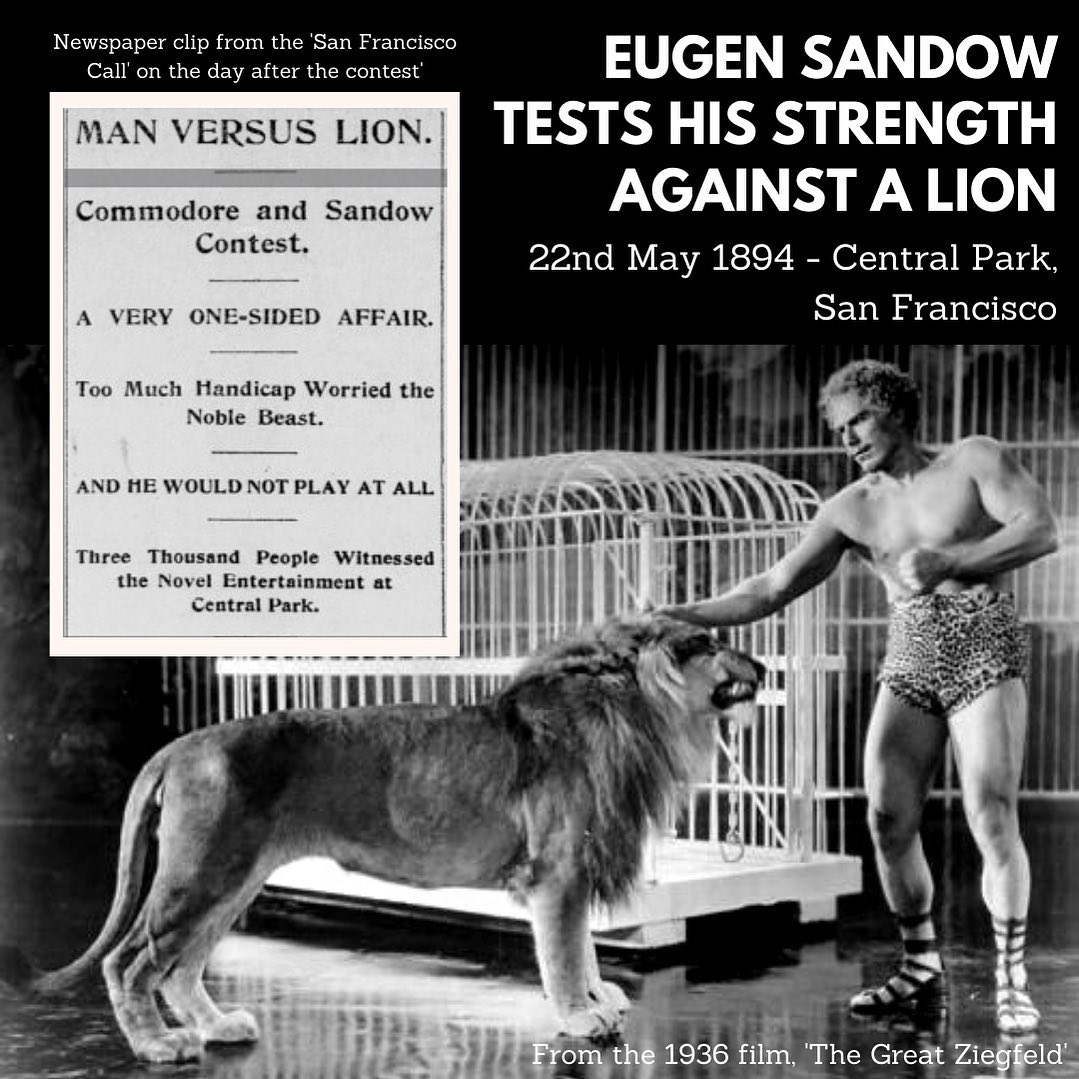
Yay! 💃🎊Congrats to me and everyone on read.cash here.
I got my first sponsor this today
@foryoubtc09 who just made my entire day awesome...I really thank you🙇 for believing in me when I thought no one would and I promise to never let you down.
Thanks so much.
I can't just express how happy I am right now in words
Thank you so much once again🙏
@foryoubtc09
The young lad that helped created an NFT collection that generated more than $5 million in 3 weeks
The young man developed a collection called Non-Fungible Heroes in collaboration with the developers behind Boring Bananas Co.
**Benyamin Ahmed** , a 12-year-old developer, collaborated in the creation of a collection of NFT (non-fungible token) that generated more than five million dollars in three weeks, according to *****CNBC make it.***** https://www.cnbc.com/2021/10/01/12-year-old-helped-code-non-fungible-heroes-nfts-that-made-millions.html
According to the outlet, the youngster created an NFT collection of 8,888 comic book characters, called ****Non-Fungible Heroes**** , in collaboration with the developers behind Boring Bananas Co. https://opensea.io/collection/nfh
"*I've just added her to my collection. She looks. First time I think someone with* *****#vitiligo***** *has been represented in an animated series..* ****@NFHeroes**** making history ... again. ****https://t.co/ykmN45IjQU**** ****#nftcollector**** ****#NFTCommunity**** ****pic.twitter.com/7HLhgjT3XV**** https://twitter.com/hashtag/vitiligo?src=hash&ref_src=twsrc%5Etfw https://twitter.com/NFHeroes?ref_src=twsrc%5Etfw https://twitter.com/hashtag/nftcollector?src=hash&ref_src=twsrc%5Etfw https://twitter.com/hashtag/NFTCommunity?src=hash&ref_src=twsrc%5Etfw https://t.co/7HLhgjT3XV
- Benyamin | benoni.eth
These images were released on September 18 and sold out in just 12 minutes, and have so far achieved sales of more than five million, according to *make it* .
The teenager was part of the developer team, especially in technical support and in response to inquiries in the Discord group of the project. He also participated in the realization of the web application and smart contract with the help of his father.
But this is not the first time that the young man participates in a project of such importance, Ahmed had already sold as NFT a series of images of pixelated whales known as ***Weird Whales (rare whales),*** which reached a profit of 400,000 dollars in two months .
*"Wow Cannot believe this! SOLD OUT. Lots of DMs, look forward to contacting all of you over the next few days.* ****#NFT**** ****https://t.co/zUuPNcSbfl**** ****pic.twitter.com/vumPtY0LnY**** https://twitter.com/hashtag/NFT?src=hash&ref_src=twsrc%5Etfw https://t.co/vumPtY0LnY
- Benyamin | benoni.eth
An **NFT is a non-fungible token** that exists on a **blockchain** . **A token is the token of ownership of an asset** . It is a **unique token that cannot be easily exchanged with another.** The most important use case is artwork. The artworks have been sold on blockchains for millions of dollars (or in this case, a native blockchain currency, Ethereum).
Thanks for reading. 🤗
Have a lovely day ahead 🤗
@Olawale4967
Top 5 cryptocurrencies to watch in during the remaining "ember" months 2021
The month of September in the cryptocurrency world has always been known to be a month of red candles and the September of 2021 did not fail to live up to that expectation. The cryptocurrency market capitalization lost approximately 11.2% in the month of September from approximately $2.07 trillion at the beginning of the month to $1.84 trillion. Flagship cryptocurrency Bitcoin crashed from a high of $52,850 to trade a low of $43,285, on the 7th of September, a near $10,000 drop in a day. This was also the day Latin American country, El Salvador, officially adopted Bitcoin as a legal tender. In the month, Bitcoin lost over 10%.
As you would expect, the altcoin market also crashed much steeper than Bitcoin. With many top altcoins like ADA, BNB, XRP, SOL all posting double-figure losses in the month. The altcoin market capitalization lost 12.22% in September from approximately $1.2 trillion to stand at $1.06 trillion at the end of the month.
As previously mentioned, a major topic of discussion was El Salvador’s adoption Bitcoin as a legal tender. El Salvadorians now use Bitcoin as a means of payment to purchase goods and services as it is mandating that all vendors accept Bitcoin. We have seen global retail chain stores like Starbucks and Pizza Hut accept Bitcoin as a means of payment. Also, while the market crashed to lower levels, the President of El Salvador, Nayib Bukele took to Twitter to announce that his nation ‘bought the dip,’ every time Bitcoin’s price declined.
There is now more optimism in the market after the declines in September. Many in the cryptocurrency community are calling the month of October, ‘Uptober,’ and so far, it is living up to that name. On the first day of the new month, Bitcoin gained over $4,000 from $43,320 to $48,116. This has also sparked a rally in the market with many analysts predicting that Bitcoin will break to new all-time highs (ATHs) in the 4th quarter of the year.
With the current momentum in the cryptocurrency market, here is a look at 5 cryptocurrencies investors should watch out for in ‘Ember’period, 2021.
**Bitcoin’s BTC**
Bitcoin declined by 10% in the month of September and so far, it has recovered all its losses on the first day of the new month. Nevertheless, there is a lot of work to still be done before we see new ATHs for Bitcoin. A major challenge will be Bitcoin breaking the $50,000 trading zone.
So far, all on-chain analytics data suggest that Bitcoin breaking the $50,000 zone is a matter of when and not if. William Clemente, an on-chain analysts’ expert, explains that whales (big money investors) have been buying up Bitcoin since late July. He uses a metric called entity flows and states, “comparing the behaviour of different market participants separated into cohorts based on the size of their holdings. Whales have been buying since late July. Shrimp, crabs, fish, & octopus have been stacking harder than ever. The only cohort that has been on a decline is the 100-1K cohort, which has just recently started increasing their holdings as well.”
He further explains, “So where are those coins coming from? And who has been doing the selling over the last few weeks? The first answer is that coins have been coming off exchanges. Exchanges are down 2,869 ($134M) this week, down 62,251 BTC ($3.2B) this month. At the same time, we’ve seen BTC continually locked up by entities with low spending behavioural, meaning they are statistically unlikely to sell the BTC they take in.”
Bitcoin is currently trading at $51,213, up 0.26% for the day, as of the time of writing this article.
**Cardano’s ADA**
Cardano is still one of the most talked-about cryptocurrencies in the month of September as its native token, ADA, still maintains the 3rd spot as the most valuable cryptocurrency by market capitalization despite the market decline that pushed the price lower. ADA in the month of September lost approximately 26.5% from $2.87 at the beginning to end at $2.11. The launch of its Smart Contract platform caused the coin to rally above $3 in August but soon after, it would seem like a ‘buy the rumour and sell the news,’ effect happened because, after the launch, the price began to decline.
Cardano had its 2021 summit and the platform made big announcements which includes a partnership announcement with Dish Network, a Fortune 250 company, a partnership announcement with Chainlink and a partnership announcement with COTI. These announcements have significant impact and show that the platform is expanding at an exponential rate. This is why many analysts predict that ADA will still trade as high as $5 before the end of the year.
Cardano’s native token, ADA, is currently trading within the range of $2.19, down 4% as of the time of writing this article.
**PancakeSwap’s CAKE**
PancakeSwap is a decentralized finance (DeFi) application that allows users to exchange tokens, providing liquidity via farming and earning fees in return, on the Binance Smart Chain (BSC) network. The platform, according to DeFi Llama, has over $4.89 billion Total Value Locked (TVL) on its platform and this grows even further as the platform has officially launched its NFT marketplace. On the first day of the launch, the platform did a volume of 9507 BNB. This is equivalent to approximately $4 million. Today, just 3 days after the launch, the platform has done a volume of 13,832 BNB (approximately $6 million). DappRadar ranks PancakeSwap’s NFT marketplace as the 5th highest by volume in the last 24 hours. This means there is more traction for the platform especially because of the low transactions fees it offers.
Its native token, CAKE, is currently trading at $19.40, up 3.11% as of the time of writing this article.
**Axie Infinity’s AXS**
The Axie Infinity platform took the gaming community by storm. The platform has been responsible for astronomical growth and interest in the NFT and blockchain gaming industry. In September, the platform generated over $220 million (64,933.71 ETH). Although the coin traded as low as $48 in September, it ended the month gaining 0.62% from $74.05 at the beginning of the month to end at $74.51.
Axie Infinity AXS token is currently the top trending coin according to coinmarketcap as the platform recently announced its staking program. The announcement went ahead to push the price of AXS to trade an ATH of $119.92 just yesterday. According to a blogpost announcement released by the platform, holders of the AXS token can begin staking their digital assets and rewards will be activated in 24 hours. AXS is currently ranked #30 by market capitalization, flipping well-known cryptocurrencies like THETA, CAKE and EOS.
AXS is currently trading at $149.11, up 36.83% as of the time of writing this article.
**Ripple’s XRP**
Although ripple is currently in a lawsuit with the SEC, the CEO, Brad Garlinghouse, has stated that he is willing to settle the lawsuit when the SEC clearly defines the regulatory status of the XRP token. Ripple has been in a court battle with the SEC for almost a year, in which the SEC has accused Ripple and two of its executives, Ripple’s CEO Bradley Garlinghouse and Ripple’s co-founder and executive chairman of its board, Christian Larsen, of conducting a $1.3 billion unregistered securities offering.
Despite the lawsuit, the company continues to run its regular day to day activities and meets up with its objectives and obligations. Ripple recently launched a $250 million fund for creators, marketplaces and brands to explore new use cases for non-fungible tokens (NFTs) on its ledger, XRPL. If in fact, the lawsuit comes to an end, many analysts have stated that a $20 XRP is ‘conservative.’
XRP is currently trading at $1.04, down 0.79% as of the time of writing this article.
Facebook founder, zukerberg,loses $6billion as WhatsApp, Instagram,experience technical issues.
As a result of a whistle-blower’s report and technical issues, Facebook Inc.’s flagship products were unavailable for hours, knocking Mark Zuckerberg down a notch on the Bloomberg Billionaires Index list of the world’s wealthiest people.
As a result of the selloff, Facebook’s stock plunged 4.9% on Monday, taking its drop since mid-September to about 15%.
In the Bloomberg Billionaires Index, Zuckerberg has dropped to No. 5 following the stock slide on Monday. A major outage impacted many of Facebook Inc.’s 2.7 billion users, idled some of the company’s employees and prompted the CEO to apologize publicly.
In the company’s family of social media apps, which includes Instagram, Facebook and WhatsApp, some users are starting to return to the service about 5:45 p.m. New York time, about six hours after the incident began. In recent memory, this was the longest failure. In its analysis of 10 million reports worldwide, Downdetector, which monitors internet problems, says that there was no outage comparable to that of Facebook.
In a statement, Facebook apologized to those affected by the outages stating, “The products and services we provide are relied upon by billions of individuals and businesses around the world. Our team will be working hard to restore our service as soon as possible.”
A Wall Street Journal series of articles published on September 13 reveals that Facebook knew of multiple issues with its products, including Instagram’s harmful effects on teenage girls’ mental health, as well as misinformation about the January 6 Capitol riots – while it kept them quiet in public. Government officials have become aware of the reports, and the whistle-blower revealed herself on Monday.
The company responded by emphasizing that the problems with its products, including polarization, are complex and not solely due to technology.
Nick Clegg, Facebook’s vice president for global affairs, explaining polarization in America with technology said: “People assume that there must be a technical explanation for it.”
Facebook, Instagram, whatsapp service down the second time in 2021
Facebook-owned services, WhatsApp and Instagram, are down today, leaving some three billion online users frustrated and unable to connect all over the world.
The social tools including Facebook’s own Messenger service were first reported as not being available from 04:25pm on Monday.
Users visiting the social platforms owned by Silicon Valley guru Mark Zuckerberg are confronted with error messages.
On Twitter, @WhatsApp wrote, “We’re aware that some people are experiencing issues with WhatsApp at the moment.
`“We’re working to get things back to normal and will send an update here as soon as possible.`
“Thanks for your patience!”
`@Facebook tweeted, “We’re aware that some people are having trouble accessing our apps and products. We’re working to get things back to normal as quickly as possible, and we apologize for any inconvenience.”`
`Also, @InstagramComms wrote on Twitter, “Instagram and friends are having a little bit of a hard time right now, and you may be having issues using them. Bear with us, we’re on it! #instagramdown.”`
The Facebook-owned apps, which have some three billion users worldwide, report occasional outages in March 2021 and July 2020, which often spark an array of comments on other social platforms.
Since the suspension of microblogging site Twitter by the Federal Government of Nigeria in June 2021, Nigerians have relied heavily on Facebook-owned platforms for social interactions while a few others continue to tweet, circumventing the ban using Virtual Private Networks.
Nigeria had about 33 million active social media users as of January 2021. WhatsApp is the most popular platform used in the country, with over 90 million users, according to Statista.
About 61.4 per cent of Nigerian social media users use Twitter, 86.2 per cent use Facebook, 81.6 per cent use YouTube, 73.1 per cent use Instagram, and 67.2 per cent use Facebook Messenger.

The prime time
I don't have much to say today, just some few word for us all to start our day, the first Monday of October, 2021.
Hope you all have a good day
*The time of youth is the prime time in anyone's life. It is a great privilege to be young. Many old people so envy the youth. They wish they could return to being young again; and that is why they try to do whatever they can, to look young.*
*Unfortunately, being young comes only once in a lifetime. No one can be young more than once. As a lady, you cannot be 'sweet sixteen' more than once. Once you pass the age of sixteen, it is clear that you can never be sixteen again.*
*However, the time of youth is also the period of making choices. And the choices at this prime time of life are such that make indelible mark on one's life and destiny.*
*There is a battle going on in this world concerning young people and it is all about influencing their choices.*
***Choices that will mark our life out for greatness and are made when we are young.***
*If you meet an accomplished old man, prosperous and celebrated, enjoying the care of his equally successful children, it is the product of a series of wise choices that he made while in his teens and twenties.*
***On the other hand, choices that will predispose you to perpetual defeat and failure are also made when you are young.***
*Whatever wrong things we see in an old man today, most likely happened because of the choices he made when he was young.*
*If you see an old woman whose marriage has scattered and she is being pushed between one man and another, it is not likely to be due to choices she made when she has become that old. She laid the foundation to be that kind of woman when she was young!*
***The unfortunate thing about these choices is that whether they were made consciously or unconsciously, they are often irreversible.***
*The time of youth is not only one of making choices;* ***it is also the time for laying the foundation for every aspect of future life.*** *It is at this time that you lay the foundation for your career in life, your marriage and your destiny. In fact, everything that you will become in life is being founded now in the time of your youth.*
*It is a time of tremendous strength and energy, a time of freshness. It is the time all your nerves and instinct are seeking the strongest expression. The direction you 'plough' them, now that you are young, determines the destination you will 'reap' in the years ahead. This time of your youth is a very crucial time that determines what happens for the rest of your life.*
***The time of one's youth is also the time of warfare.*** *This is when you pitch your tent on whichever side you choose in the battle of life.*
***It is in this period of your life when you are called 'the youth' that you make that choice!***
`If you overcome in this battle now that you are young , you will always overcome in every sphere of your life.`
Have a nice day👋
The best ways to gain "FINANCIAL FREEDOM"
Let me first start by wishing you all **HAPPY NEW MONTH** 🎊AND ALSO **HAPPY INDEPENDENCE DAY.** Nigeria is 61 today. Has we have always hope for the betterment of our country so shall it be but only if we stand and support ourselves as one✊ for the growth of this country.
A scholar said;
*"Most men can pass through adversaries, but a man's true character cannot be known unless he's given power and money!"*_ **(*****Abraham Lincoln)***
*Nigeria's issue is becoming generational, the older we get the worse it becomes around, what exactly is good with blacks?*
*Is this true independence?? Every Nigerian success can only be measured by what effort we've made individually and not the Nation's at large.*
*Nigeria will still be a better place, but in the meantime, don't give up on yourself...*
*Take time to develop yourself, do your best, be independent on the Nation itself, they've caused the youth and rising business enough harms.*
*Just don't give up on yourself, strive to be an independent person yourself.*
Now back to the reason I'm writing this article is how to grow in **financial intelligence**, how to acquire **financial freedom.**
First what is **financial freedom**?
Financial freedom is the status of having enough income to pay one's living expenses for the rest of one's life without having to be employed or dependent on others. Income earned without having to work a job is commonly referred to as passive income.
And what is **financial intelligence**?
Financial intelligence is a type of business intelligence constituted of the knowledge and skills gained from understanding finance and accounting principles in the business world and understanding how money is being used.
*These two grammatical words above are the potentials in financial stability.*
The first step towards financial stability is **investing**, do you know what **investing** is? No I doubt it.
`Investing:` refers to putting money aside into a valuable asset with the intention of making profit to retain the value of the money.
Mind you, you might also want to know what an **asset** is. An asset is something that produces positive cashflow turnout into your pocket.
So now what is **Saving** too?
Saving refers to discounting a percentage of your money while spending in order to be able to buy/spend more money now and in the future moment.
So how does all this connect to **cashflow**, but first let us know what **cashflow** is;
Cashflow refers to positive and negative money coming from an asset. Investment, asset and savings are all connected to **cashflow** because cashflow determines the flow of your investment income, your asset too and also the result of your savings.
Do you even know that you can't just invest anyhow without following some protocols or methods if you want to see results in your investment!
So therefore there are some styles of investment that can yield positive result for you, they are;
`Valuation investment:`
This style of investment refers to the habit of setting money aside to invest solely with the purpose of exiting at a higher amount than what we previously invested. For instance is when you invest in a tech company like **Amazon** that pays zero dividends, the chances of your investment moving from 1 million to 100 million is high because money is reinvested aggressively in the company.
This kind of investment should be approached with caution because you can only win when you hold your position long term without getting anything until you sell your position to cash. This style is applicable with stock, crypto and equity investment.
`Dividend investment:`
This style of investment refers to the habit of setting money aside to invest in asset that generate regular positive cashflow. It can be daily, weekly, monthly, quarterly or yearly.
This style is suitable for an investor that is interested in increasing income without working or rather than investing and waiting for years before the cashout.
Dividend investment is applicable in businessess like food, service apartments, mall rental etc. The goal is to generate cashflow, not increasing the value of money.
***In investing, defining your financial goal is extremely impressive.***
"Do you want to turn 2million to 200million in 5years?**[valuation]** or you want to receive 100,000 of 2million every month for years**[dividend]**
***Be clear. Clarity is all you need in investing.***
`Self-Made asset investment:`
Self-made asset investment is one of the most powerful ways of building life long profitable asset with little to zero money on the creators end.
It is the style of investment where an investor set aside time to think about innovative assets and closes other investors in need of assets to invest in it.
This type of investment is what makes self made millionaires. You can hit your first $40,000(dollars) doing this exact thing.
In this type of investment, time, knowledge and people are invested in order to produce either or both **valuation** and **dividend** goals. It is often one of the hardest because you are starting from the scratch but in order to have a self-made asset like **Jeff Bezos** on Amazon, that's paying him for a lifetime, you need to be cautious about what you allow your brain to consume.
Tired of reading right? Yeah I understand but financial freedom does not come on a platter of gold, so if you really think this information is important to you then you will read to the last line of this article.
The next style of investment is,
`Asset ownership class/asset producers:`
Asset producers are set of investors that rather invest their vision, time, emotional intelligence and knowledge into an asset to become a major success.
This form of investment flies around the media. **Jeff Bezos**, **Bernard Arnault** are asset producers.
To be an asset producer you'd have to be sufficient in closing, emotional intelligence and sustaining a vision. As an asset producer you're rather in full control of your asset growth as well as your hired team. Other people invest in asset producers.
It is not ideal for asset producers to invest money in their start-ups because it's a risk that should rather involve people who are ready to risk their dollar to consume the asset producers offers. Assets producers make the list of one of the most successful investor in the world, moving from $0 to over $50million net worth.
**MENTALITY OF A PROFITABLE INVESTOR**
‼️ No Magic in investing. You will either lose or gain
‼️ Nobody/company is responsible for your investment loss. You start winning right from the day you decide your risk.
‼️ You understood how money is made on your investment rather than depending on hype and fear of missing out.
‼️ 10% of your income is a good start to investing.
‼️ You know your investment goal and choose opportunity that align with it.
‼️ You know when to exit, stay or enter an investment opportunity.
‼️ You rather invest in what's relevant to the future than depending on past performance.
`Asset consumers:`
Asset consumers are these class of liquid investors that have money to consume other asset that are relevant to the future, therefore the asset will grow in value.
As a consumer investor, zero percent of your time is required for your money to grow. Although there are procedures to consuming the right asset becomes in investing "*past performance doesn't guarantee future growth*"
What dictate growth is "**RELEVANCE IN THE LONG TERM"**
Consumer investors include Warren Buffet, Bill Gates, Elon Musk. These people consume existing asset.
Although along the way they played producer investor role in increasing valuation but they basically consumed.
`! Whenever buying stocks, you're consuming. Whenever you're starting a business, you're producing`
`! You start a business with the aim of creating future relevance, it's beyond money.`
**BECOMING A SUCCESSFUL ASSET CONSUMER**
Pick your investing goal. Either for valuation or dividends.
Pick a niche!
Identify long term relevance based on the world's activities. The longer the trends of relevance, the more money in the long term
Getting into undervalued asset increases your chances of bigger wins if your goal is to turn 5million to 500million, not necessarily buying just lands.
Don't invest in asset you don't understand. Rather seek for knowledge to understand what moves the asset before buying it!
In Niching if there are car's running on fuel in the streets, invest in electric car companies.
If there are human driving cars in the streets, hold self driving companies.
If everyone is eating at restaurants, hold restaurant companies with delivery service and personalization.
If there are cinemas, hold companies with free movies to watch at free for minimal costs.
***Own asset while they are young!.*** *When choosing a niche to Invest in apply these: you need to invest consciously and internationally. Do you want to become a billionaire? Then buying house or land won't do the job well.*
Thanks for reading 🙂
Hope you all learn something....
I want to use this medium thank you all on this platform @mictorrani @oikawwa @the randomrewarder and the rest of you for all your kind gesture and support, I promise to never let you all down. I know I'm still new here but I promise there are still more entertaining goodness coming up and you all we love it.
Thank you everyone 🙇
 @Olawale4967