5 Ways You Will Lose Your Bitcoin Cash
If You Are Not a Professional Trader, Then Avoid Trading
One of the most frequent mistakes new users make is to start intraday trading with their BCHs: don't make this mistake. If you want to deal with Bitcoin Cash as an investment and you are not a trader, it is very likely that you should adopt a holding strategy: save them, spend them and study the underlying technology.
Many people have lost their Bitcoin Cash in an attempt to find the famous ATH (all time high), that is the maximum price peaks. How not to make this mistake? Avoid all tools that track the price:
Exchange apps
Widget with BCH charts
App with daily price notifications
Another fundamental advice: do not follow youtubers. These people don't know you as a person, your financial situation and your goals. In their videos they talk about the price of Bitcoin Cash and can influence your investment choices incorrectly.
ICO, IEO, IDO: What Do These Acronyms Mean?
If you know Bitcoin Cash, you will surely know that there are also thousands of cryptocurrencies: alternative coins to Bitcoin Cash. The phenomenon of altcoins was born shortly after the birth of Bitcoin: with a few changes to its code, people were able to distribute versions of Bitcoin with different names and parameters, this is the case of Dogecoin born in 2013.
Dogecoin was born from the Bitcoin code, however the limit of 21 million, has been removed, leading it to be infinite and the blocks of the blockchain are mined at a rate of 1 block per minute instead of every 10 minutes. Investing in alternative coins is pure speculation. There are literally infinite of them, they are infinitely inflationable and most of the projects are managed by companies or foundations and this makes them extremely vulnerable.
The same level of risk, if not greater, also applies to ICOs, IEOs and IDOs, newly born projects that organize sales of their tokens. What is the difference?
ICO: Initial Coin Offering, sale of shares by a company in the form of a token
IEO: Initial Exchange Offering, the sale takes place through a centralized exchange
IDO: Initial Dex Offering, the sale takes place through a decentralized exchange
If you are not an expert in the sector, we personally recommend that you study Bitcoin Cash thoroughly before diving into new and risky sectors.
**Trading Companies and Online Scams**
Using social media you could be contacted by the worst scammers on the Internet who will promise you the multiplication of your BCH through investments, algorithms, trading bots, etc. Ignore them, they are scams!
Another category are creative scammers: strangers will contact you (especially on Telegram or by email) who will ask you for help to withdraw their Bitcoin Cash from some Chinese exchange or will ask you to pay the ransom for some famous friend stuck abroad, promising to repay you for the annoyance. Obviously this is all false and you will lose your coins.
Your Bitcoin Cash Wallet Has Been Hacked?
Unfortunately we still hear many people losing their Bitcoin Cash. One day you open your wallet and find all the coins transferred to an unknown address. Now what? Unfortunately you will not be able to do anything about it, once a Bitcoin Cash transaction is confirmed it cannot be canceled.
How are wallets hacked? Most people use unsafe wallets, if you don't know which wallet to use for your Bitcoin Cash, we recommend to choose *Melis Wallet*: https://www.melis.io/
Here you will find all the features that make Melis the best wallet for Bitcoin Cash https://read.cash/@Melis/why-you-should-choose-melis-wallet-to-store-spend-your-cryptocurrencies-fa8de7bd
Here you will find a tutorial on how to open an account on Melis https://youtu.be/1-iSjdtq1b0
Moreover, Melis is a software wallet which is superior than hardware wallets because very often these devices get infected with viruses, trojans and keyloggers which manage to manipulate your device and withdraw the coins without your permission. https://www.bleepingcomputer.com/news/security/physical-addresses-of-270k-ledger-owners-leaked-on-hacker-forum/
Don't Keep your Bitcoin Cash on Exchanges
There are certainly hundreds of thousands of Bitcoin Cash stolen from exchanges in the last 10 years. Some cases have become famous in the industry: from MTGox to Bitgrail to QuadrigaCX.
Leaving your BCHs on exchanges is worse than keeping your money in a bank, as the refund procedures follow years of legal proceedings and international regulations often make everything slower and more complex.
An exchange can be hacked or it can fail as in some of the aforementioned cases and you will certainly lose some of your funds: your online account can be hacked more easily than your encrypted Melis wallet inside a dedicated smartphone and therefore not used on a daily basis.
Conclusions
If you have read this article carefully you will surely have understood the 5 big mistakes with which you risk losing your Bitcoin Cash, but above all you will have understood how to avoid them. If you have any doubts about the correct procedures, do not hesitate to comment below.
Why a CBDC Is Not a Threatening to Bitcoin Cash
Over the last few decades, man has come to digitize many services and tools: from cash, to communications, to remote working, to delivery services, to banking services, etc.
The two digital projects that we are going to talk about in this article came from the world of finance: Bitcoin Cash and CBDCs. The time has come to deepen this topic that many people see as rival of Satoshi Nakamoto's "creation": Central Bank Digital Currencies.
**What is a CBDC?**
CBDC stands for Central Bank Digital Currency and indicates a new form of money, a fully digital currency issued by a Central Bank (such as the European Central Bank in the case of the euro, or the Federal Reserve for the dollar).
Very often people find it difficult to understand the difference between a CBDC and the current form of money, because today most of the money is circulating in digital form. American data for example show 11% of physical money out of a total of approximately $14 trillion (M2). https://www.visualcapitalist.com/many-u-s-dollar-bills-circulation
The CBDC project is something that goes far beyond digital payments: a CBDC is a new type of fiat currency over which the Central Bank has more power.
Let's imagine a CBDC model in which every citizen is equipped with a digital wallet that can be managed via a mobile phone app.
A central bank could have a more capillary control of the monetary base : it could easily issue new money, for example in a limited geographical area in order to counter local crises or burn money supply in order to reduce inflation by directly altering the electronic balances of the areas most affected by inflation.
CBDCs would influence not only monetary policy, offering central banks tools never before had in history, but also payment systems.
Among the objectives of the CBDCs is to create a protocol based on DLT, Distributed Ledger Technology, that guarantees faster payments, especially with regard to cross border payments.
**What are the differences between Bitcoin Cash and CBDCs?**
For those who already know Bitcoin Cash, the real question arises naturally: is there something in common between BCH and CBDCs? The answer is ***NO***.
Bitcoin Cash is a totally different tool from CBDC from any point of view.
Bitcoin Cash protocol is open source, developed without the presence of a coordinator who can dictate the changes to the software, currently proposed through BIPs (Bitcoin Improvement Proposal) that can be freely adopted by users who will upgrade or not their Bitcoin Cash nodes.
A CBDC, looking at the path adopted by China, involves a central regulator that establishes the rules of the protocol.
The three cardinal principles of the Bitcoin Cash protocol are:
Borderless: Bitcoin Cash network knows no borders and it is the first truly neutral payment network;
Trustless: You don't have to trust the components of the system which will not be able to attack you in any way, the system is also based on redundancy and competition between miners, making a coordinated attack difficult;
Permissionless: You won't need anyone's permission to use the Bitcoin Cash protocol. Whether you are an American citizen, an undocumented refugee, a political prisoner or a farmer from Venezuela, you will always be free to exchange BCH with whomever you wish.
In a CBDC there is not even one of those three characteristics:
Trust in the system will increase, as the greater the power available to the central regulator, the greater the damage it can do through this Orwellian tool;
CBDCs cannot be borderless by definition as they are linked to states, governments or federations. We saw the use of payment circuits including Visa, Mastercard but above all SWIFT as a weapon between states;
In a CBDC system you will hardly be able to open a virtual wallet without providing your identity documents to the system responsible for KYC / AML (Know Your Customer / Anti Money Laundering), the permissionless component is absolutely incompatible with a CBDC model.
In addition to the technical differences, Bitcoin Cash protocol has another substantial difference: monetary policy.
Bitcoin Cash is defined as hard money due to its inflexible monetary policy, there may be a maximum of 21 million units and their issue is established by a precise algorithm.
**Are CBDCs a danger to common people?**
After explaining the differences between the two protocols, it is clear that Bitcoin Cash and CBDCs are two completely different projects: the latter are an absolute evil, a new tool in the hands of governments that will thus be able to increase interventionism on monetary policy, with devastating economic and social consequences.
One of the most worrying issues is certainly that relating to privacy, especially if the birth of CBDCs is accompanied by the abolition of cash.
If we were to arrive at a CBDC-based cashless society, more and more people will understand the importance of a protocol like Bitcoin Cash, which doesn't discriminate and guarantees anyone the freedom to transfer value, freedom necessary for the survival of an individual.
But it is not only Bitcoin Cash users who consider CBDCs a privacy problem, just read for example this PwC publication or statements by Senator Cynthia Lummis during a panel at the Bitcoin Conference 2022. https://www.pwc.com/it/it/publications/assets/docs/central-bank-digital-currency.pdf https://www.youtube.com/watch?v=oCgb1lTT4kI
Bitcoin Cash is therefore confirmed as a fundamental human right in order to guarantee financial freedom and fight digital surveillance, an increasingly real scenario in our society.

Why Bitcoin Cash Mining Is Not Polluting
Bitcoin Cash was introduced to the world in 2017 and has been the subject of criticism from newspapers, professors and mainstream media from day one. Allegations of being a Ponzi scheme, of being used only by criminals, and predictions of impending bankruptcy have continued for years.
For just over a year, however, Bitcoin Cash has become such a popular and recognized asset even in the traditional world and even the accusations have evolved. The attacks on BCH have therefore evolved from "it can't work" to "pollutes too much".
Premise: calculating the consumption of the Bitcoin network is not easy. The number of mining devices is not easily estimated as there is no register of miners, devices with different consumption are used and which should not be confused with the mining of other cryptocurrencies.
**How much does Bitcoin Cash actually consume?**
Let's start with the fundamental data. The most reliable estimates presented speak of an energy consumption equal to 0.003% of the energy used by the whole world (data referred to 2021).
So where does this myth of energy waste come from? You have often read headlines such as "Bitcoin Cash consumes more than entire nations", thus comparing a global protocol like BCH with a country of million inhabitants.
This accusation could be called an inadequate comparison, but in this article we will analyze the matter even more in depth.
**What energy sources does Bitcoin Cash mining use?**
Calculating the energy consumption of the Bitcoin Cash network is not the only aspect to consider, as most BCH mining uses renewable sources (hydroelectric, solar, nuclear, geothermal) and therefore have little impact in terms of pollution.
Bitcoin Cash mining is an industry that has brought both new jobs and technological innovations. In recent years, it has also been discovered that, not only Bitcoin Cash mining already used abundantly renewable sources, but that it even improved many processes in the energy sector.
Many sources capable of producing large quantities of green energy are located in remote locations, leading governments to finance complicated and expensive infrastructures for the transport of this energy to cities and industrial areas or even to give up their use.
Bitcoin Cash allows you to use energy that humans have never been able to use simply by placing a mining farm close to the energy source (a volcano or an ocean platform that exploits the tides are just two examples), then transferring the mined BCHs to a miner wallet in any part of the globe.
This is just one of the ways Bitcoin Cash helps the energy sector: some companies are using mining to reduce emissions from gas flaring , the activity of burning excess natural gas extracted along with oil.
**Bitcoin Cash consumes too much compared to what?**
When we talk about energy consumption , two similar elements are compared, but what could we compare Bitcoin Cash to? If we define Bitcoin Cash as a currency we would have to calculate, in order to have a reliable term of comparison, the consumption of the banking sector and of all the systems that today allow fiat currencies to survive, including the same nation states without which fiat currencies could not exist as there would be no enforcement of the legal tender.
Calculating consumption in the banking sector is certainly not easy, it would be necessary to estimate the consumption of hundreds of thousands of employees who go to their offices every day as well as to the systems managed by Central Banks.
**How much does a Bitcoin Cash transaction consume?**
When we talk about the consumption of Bitcoin, a completely wrong "energy cost per transaction" is often indicated for several reasons.
A Bitcoin transaction is not comparable to a traditional transaction because it could correspond to a batch payment , i.e. a payment to tens, hundreds or thousands of users. This type of payments are used for example by exchanges during withdrawals to users' wallets to save network fees and speed up confirmation times.
Bitcoin Cash is a protocol that works by levels just like the Internet (TCP/IP) and the blockchain is the settlement layer , i.e. the most secure and expensive level on which to transmit a payment and is comparable to Fedwire (the settlement layer with which the 12 banks American power plants transmit money to other financial entities). The Fedwire network now allows about 800,000 transfers per day while Bitcoin Cash has come to have about 2 million outputs (recipients of transactions). https://www.frbservices.org/resources/financial-services/wires/volume-value-stats/monthly-stats.html
Bitcoin Cash transactions may contain a notarization, token transfer, or other non-monetary functions.
What if we all used Bitcoin Cash?
Another erroneous reasoning that we often read is the belief that the consumption of the Bitcoin Cash network is directly proportional to the number of its users.
The adoption of Bitcoin Cash as a payment tool for millions of individuals is growing fast, but the estimated consumption per transaction peaked in the third quarter of 2020 at 183 kWh/tx and has fallen as low as 6.5 kWh/tx in the first quarter of 2021. https://www.reddit.com/r/btc/comments/sfpxix/bitcoin_cash_adoption_in_saint_kitts_nevis_is/
Conclusions
In this article we have dealt with only a part of this interesting and broad topic that would require hours of in-depth study to be seriously studied. However, we are sure that now your ideas are clearer.

Bitcoin Cash: A Revolution for Middle and Lower Classes
Inflation and deflation are market phenomena, effects of previous courses of action, which are free from any morality whatsoever. They are triggered. In a market economy, they are a voluntary and genuine determination. Problems arise when both occur in a manipulated economy, or worse, a command/control one. In this case their existence is artificial and, just as day follows night, the forcing of one phenomenon will subsequently trigger the appearance of the other which has been deliberately suppressed.
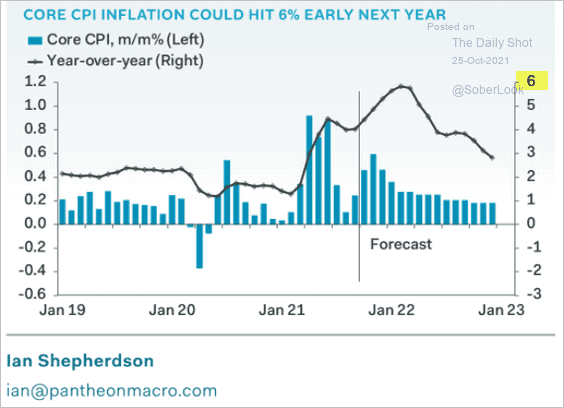
In the current economic environment, inflationary pressure is mainly linked to supply-related factors. If we think about the last two years in particular, we notice a certain acceleration: on the demand side we have had closures, logistics problems and consumer panic; but on the supply side we have an ECB balance sheet of €8 trillion, profuse money through the welfare state, significant shifts in the figures of larger money offerings and skyrocketing public debts. Bottom line: it was inevitable that prices would have risen.
Preventing a healthy squeeze of its counterpart phenomenon, pushing even more on the pedal of deficits and central banks printing money, is the smoking gun of a precise will to artificially favor one of the two phenomena mentioned above. But is it the fault of a subsequent deflation? No. It would mean blame the day/night cycle for one's failures. It is the push for one or the other phenomenon by a market maker, in our case States and central banks, the real cause behind imbalances and economic errors to be cleaned up, in addition to the growing damage we observe today.
Between 1985 and 1990 the FED let rates rise by 325 basis points and meanwhile the S&P 500 index rose by 45%, before the raising rates cycle brought down emerging economies in Mexico and States like California. Then the Fed reversed course. Between 1993 and 2000 it let rates rise by 325 basis points and the stock market in the meantime jumped 225%, before the recession of the early 2000s broke out. Then the Fed reversed course. From 2003 to 2007, the Fed left rates at 375 basis points and the market in the meantime grew by 30%, before the raising rates cycle led to the bursting of the housing bubble. Then the Fed reversed course. Between 2015 and 2020, rates rose by 200 basis points and in the meantime the market rose by 65%, before the Fed reversed course after a slight market correction.
History shows us that central banks are more concerned with financial assets than with consumer price prices. In early 2016, the S&P500 index faced an 11.3% correction and the FED only let rates rise once that year despite announcing four more hikes. In December 2018, the US stock market fell by 9% and in January 2019 by another 3.5%. Immediately thereafter, the Fed announced the interruption of its rate hike cycle.
To date, although a new round of rate hikes has been announced, it has not yet been implemented. In the event that it is pursued, the room for maneuver is somewhat limited: 150 basis points. But it will be reversed if the stock falls "enough". In the last 30 years central banks have become progressively more aggressive in defending the markets, precisely because their interventions have corrupted them more and more. And in the wake of these distortions, the noose of the "Inflate or die" trap has been put on central banks' neck.
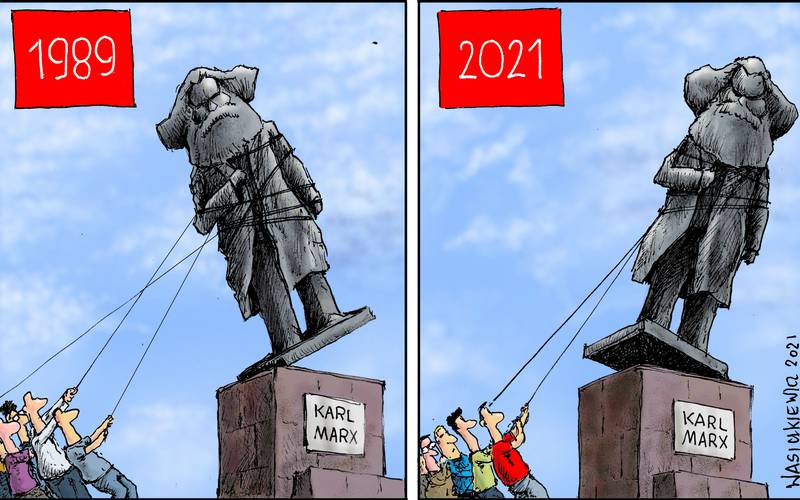
The central banking system is the best example of how socialism is prevalent today and of its hypocrisy. Advocated by Marx/Engels in their 1848 work, we note today how quick it is to intervene when Wall Street is in trouble, but it is slow to intervene when Main Street is. The FED, for example, immediately reversed the course when a danger of continued declines slightly scared the financial markets (i.e. 2013, 2020, etc.); on the other hand, it continues to chatter about rate hikes and to make excuses (i.e. "transitory") despite the fact that prices continues to rage.
This is a system that cannot be reformed, anyone who takes such a position is calling for more socialism. This system cannot be abolished, central planners who run it have built upon it a scaffolding of privileges that they strenuously strive to support with anti-market actions. This system can only be bypassed and led to obsolescence, a task that Bitcoin Cash is currently carrying out with exquisite efficiency. Over time it has become clear that the primary means by which States take and maintain control is through money. Weapons help, authority too, but in the end it is control of money that keeps people in serfdom. Bitcoin Cash was initially only for nerds, now it has become a tool to save the middle and lower class from economic/social annihilation by the hands of governments. The "workers' revolution" is taking a different path than anyone in the 19th century could have ever imagined.
Bitcoin Cash & Frankenstein
Democracy is accurately described as "two wolves and a lamb voting on what to eat for dinner," but after the lamb is fully digested, the wolves are still hungry. What are they doing? First, they borrow, and then when that source is exhausted (excess debt raises interest rates, which makes the whole economy sober and lowers tax revenues) they print bogus money. Inflation is just another way to squeeze blood from a turnip population. This is a tax that is borne by consumers. It is a particularly harmful tax as it distorts and harms the entire economy. And when a country relies too much on it, the only thing it can expect is a terrible disaster.
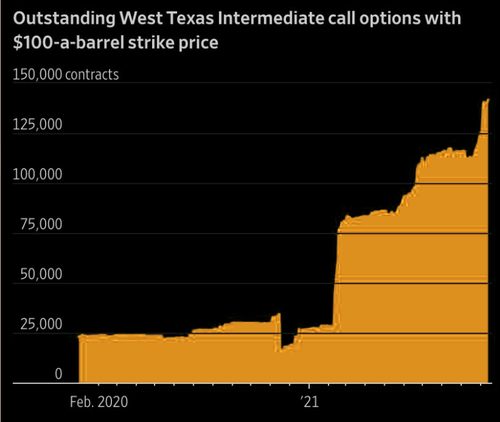
In the absence of real money, central planners no longer have to ask voters or lenders for more money: they can "print" as much fake money as they want. The problem with fake money is that it distorts and destroys the real economy. As the amount of "money" increases, real wealth decreases. Since 2000, the FED has increased the monetary base more than 20 times, but GDP growth has halved. From 1950 to 1999, real GDP growth averaged 3.6% per year; from 2000 to 2020 it averaged 1.8%. The newly created money ends up in the higher prices of stocks and bonds first (because the FED buys them to lower interest rates and finance public spending). Later it manifests itself in consumer prices. And apparently that "later" is now, as we can see from the following chart regarding oil price expectations.
The central banking system is the best example of how socialism is prevalent today and its hypocrisy. Advocated by Marx/Engels in their work of 1848, we note today how quick central banks intervene when Wall Street is in trouble, but it is slow when Main Street is in trouble (inflation). The FED, for example, immediately reversed the course when a danger of continued declines slightly scared the financial markets (e.g. 2013, 2020, etc.); on the other hand, it continues to chatter about rate hikes and make excuses (e.g. transience) despite the fact that price inflation continues to rage.
This is a system that cannot be reformed, anyone who takes such a position is calling for more socialism. This system cannot be abolished, central planners who run it have built on it a scaffolding of privileges that they strenuously strive to support with anti-market actions. This system can only be bypassed and led to obsolescence, a task that Bitcoin Cash is currently carrying out with exquisite efficiency.
Mary Shelley's Frankestein reminds us of how the natural sciences are something deeply flawed. Especially these days this should be a lesson that should humble those on TV who ask for any nefariousness in the name of "science". Not only that, but the monster represented nothing but the inevitable consequences for arrogance and pretence of knowledge.
Unlike the natural sciences, economic science is an exact science. Why? Because its basis is represented by human actions and human beings, as long as they live, will always be the same. But what is human action if not the phenomenal manifestation of ideas? The single knowledge of each individual. Bitcoin Cash, in fact, is an idea. Satoshi did not invent anything in 2008, he/she just followed his entrepreneurial instinct and merged certain concepts together, giving life to a Frankestein. Now this "monster" is revolting against the arrogance and the pretence of knowledge of central planning, which has assumed the right to guide the projects of the single market players through top-down dictates.
The transparency and immutability of the BCH blockchain are the characteristics that most terrify the establishment. Bitcoin Cash is inevitable. Bitcoin Cash is irreversible. And now Frankestein is tearing apart that supposed fabric of well-thought-out plans by state authorities. But unlike Fankestein, Bitcoin Cash is an idea, something that goes beyond the simple medium of exchange and we are still far from seeing its full potential expressed. The multi-layer on which it can be programmed opens up to an epochal social revolution. In fact, as Mises said, ideas move history.
The purpose of central planners is to "improve" the world and the people who populate it; with their plan they say they are able to make the world a better place to live. Hitler also had a plan to "improve" the world, as well as Stalin, Peron and others. The purpose of those who use Bitcoin Cash is not to improve others, but to prevent them from doing harm.
How Bitcoin Cash Hedges Against Inflation
Many people in recent years have defined Bitcoin Cash a *get-rich-quick scheme*, that is, a scheme to get rich quickly: a Ponzi scheme.
Other people define Bitcoin Cash as a *don't get poor scheme*, a clear reference to the loss of purchasing power typical of fiat money, but let's explain everything from the basics.
Let's start with a quick summary of history: one of the most basic human needs was saving. Saving has ancient origins: imagine being a fisherman from the ancient times who survived on one fish a day. You will try to catch as many fish as possible without eating them, with the aim of having a supply that is always ready in case of illness or a decrease in fish in the stream.
Saving was not very easy, especially in large quantities, because fishes are perishable commodities.
Once you switched to metal coins, it became easier to save as you didn't need to work hard to maintain animal or vegetable products, it was enough to keep your coins safe, making sure that they were authentic beforehand, i.e. the quantity of precious metal respected certain parameters.
Slowly we arrived at the current monetary system, in which the power to mint money is a power reserved exclusively for Central Banks which, through national States, ensure that no one prints except them.
Over the millennia, man has changed many instruments, however one problem has always been present, an invisible enemy: inflation, the loss of value of the instrument used. The causes in the course of history were many, some natural and others artificial: from the Emperor who ordered the production of new coins, to the empire that by conquering new territories brought gold and silver inside, inflating citizens' savings.
This phenomenon didn't concern only precious metals, many African peoples for example used rare shells as commodity-money, until they came into contact with a community from a region where that type of shell was extremely common, bringing the first community into slavery.
Let's turn to modern history. With the evolution of nation States in today's form, they have begun to require more and more resources in order to support a public expenditure never seen before: hospitals, public works, armies and millions of individuals in the welfare state.
A State that sees its money-issuing power limited by the link with a commodity such as gold or silver cannot function as it is not sustainable through taxation; hence the State begins to remove the link between currency and reserves, thus adding an ***invisible tax***: programmed inflation within the Monetary Policy. Not to mention the fact that in this way States have virtually no limit to the amount of new units of money they can create and spend. Phenomenon which, in the event of abuse, often leads to situations of hyperinflation.
The monetary system described above is called fiat money.
As you understood from this introduction, money has evolved over the millennia, a technological evolution: man has always tried to solve the defects of the monetary system of his time trying to create something more efficient. One of the biggest problems has always been inflation.
**One of the Flaws of Fiat Money: Inflation**
We have therefore come to the focal point of this article.
According to the monetary view advocated by Bitcoin Cashers, one of the most frequent reasons that have caused and are causing inflation around the world is the expansion of the money supply.
The concept is very simple and elementary: the more money there is in the market, the less it has value; scarcity matters. With no reserves or limits on money creation, fiat currencies are extremely vulnerable to this problem.
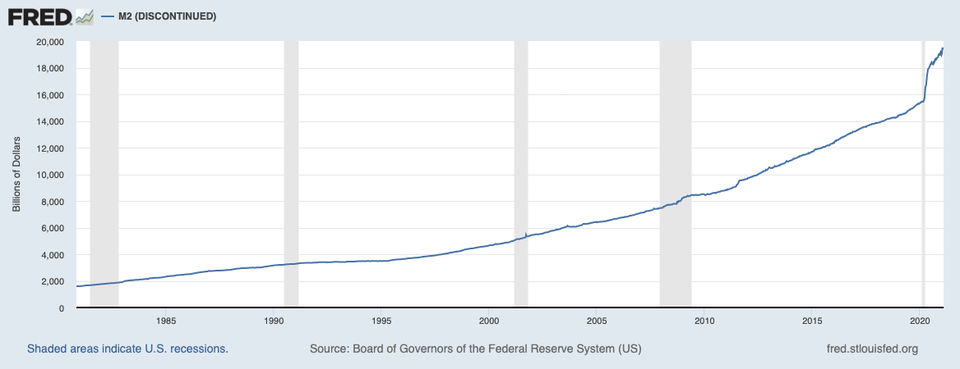
Here is the graph representing the M2 money supply of the US dollar year by year.
With M2, economists calculate the sum of cash, current accounts and bank and post office deposits.
Bitcoin Cash, on the other hand, is characterized by its limited and finite quantity: 21 million. Not only that, Bitcoin Cash is the only asset in the history of humanity that we can know exactly the rate at which it will be issued over time.
When it comes to fiat money, a serious mistake is usually made by considering only Euros and Dollars, two of the "strongest" currencies. Outside our everyday life, however, there are about 180 other "recognized" currencies, of which 130 are independent, that is, not others linked to other currencies, unlike, for example, the Hong Kong dollar, which has its value linked to the US dollar since 1983. The other 130 currencies are independent and their value fluctuates freely, with devastating effects on citizens' savings.
We are talking about Lebanon, Turkey, Argentina, Venezuela, many African countries and many many others.
When we talk about inflation within these countries we must not think of inflation of 1-2% per year, but of 1-2% per month and with a higher volatility than Bitcoin Cash. https://en.wikipedia.org/wiki/List_of_circulating_currencies
In those countries we see a greater use of Bitcoin Cash, simply because once again man has changed tools: these citizens find it more efficient to use Bitcoin Cash instead of a local currency controlled by criminal governments.
***This is how Bitcoin Cash protects the individual from inflation.***
The individual does not have to trust their government or central bank but can finally use a supranational digital asset and immune to any attempt to manipulate the quantity in circulation thanks to its "difficulty adjustment algorithm".
Bitcoin Cash is unique because it is not tied to any organization, State or central bank. Bitcoin Cash cannot be geographically placed on a map and knows no borders, it is a scarce global asset . For the first time in modern history, a worker, an entrepreneur, or a farmer has the opportunity to save without fear of seeing their currency and savings lose value.
Can we consider it morally acceptable that an individual should suffer a loss of his/her purchasing power due to nefarious monetary policies? What responsibility does he/she have? What responsibility do central bankers have? Who controls the controllers? Has anyone ever been punished for causing hyperinflationary phenomena?
**Gold and Bitcoin Cash?**
One of the most famous investments when it comes to inflation protection is gold, which thanks to its longevity is now considered safe. However, gold suffers from some defects compared to Bitcoin Cash and which are always attributable to its circulating quantity which is in no way scarce or finite.
Miners can in fact control the rate of extraction. How? By increasing investments in the extraction and exploration of new fields.
In history there have been many inflationary crises caused by the quantity of gold in circulation which often varies: in Spain in 1500 for example when the expeditions of Columbus and the conquistadors returned to their homeland with ships loaded with gold from the colonies giving life to the "price revolution". https://en.wikipedia.org/wiki/Price_revolution
The production of Bitcoin Cash as opposed to that of gold is not elastic: if the computing power of miners were to increase, the production of Bitcoin Cash will always tend at the established rate since the protocol will make mining more difficult every 2016 blocks, about every two weeks.
**Conclusions**
According to various savings and investment professionals, Bitcoin Cash is the best tool to guarantee an individual the possibility of saving and protecting their wealth from hostile monetary policies operated by central banks and governments.
In 1685 John Locke and other Enlightenment thinkers called for the separation of Church and State.
Today the Bitcoin Cash community is practicing the separation of State and Money.

From soviet monetary socialism to Western monetary socialism, a doomsday loop broken by Bitcoin Cash
Ripple effect is a better term than "Lehman Effect", because in this way the fear behind any financial contagion due to the crash of a particular reality is succinctly expressed. In many op-eds we have described how the current financial system is inextricably interconnected, where property rights are ephemeral and no one knows who owns what. Evergrande is one of the most obvious symptoms of this system. The numbers are shocking, it is true, but there is something else to say. It only scratches the surface if it is stated that in China it is necessary to be indebted for 10 if you want to create 1 additional unit of GDP, a ratio that is tripled compared to ten years ago; needless to say, this is a depletion of the so called pool of real wealth, triggered by the Law of Diminishing Returns. Evergrande collapse also shows a dangerous reality in several Chinese sectors: excessive indebtedness without a real income stream or assets to back it up. Not to mention the exposure of various European countries, such as France and Italy, to Chinese financial institutions and financial products.
Needless to say, then, that the ripple effect is frightening, but this is not the whole story. In the Soviet era, the Gosbank wholly controlled the financial and banking market: there was no competition and regulation was pervasive. It was a capillary control of a particular sector and consequently it was passively extended to the rest of the population. How? Through the subdivision of the economy into monetary and non-monetary. The non-monetary economy was one in which the use of cash was discouraged and all business and corporate settlements in general were settled exclusively through the banking sector. Any losses was covered by the State. The monetary economy was the prerogative of wage earners and ordinary people. It was crucial that the central government maintain some control in the interaction of these two systems, because the emergence of imbalances was physiological given the centralized nature of these systems. There was even a "cash plan" which was updated regularly to show that everything was working as expected.
***Money had therefore ceased to have any function in terms of price transmission, had no role in the consumer's choice and was simply an "aggregation tool" that allowed for actions already planned to be carried out.***
Although initially the imbalances were minimal, time and continuing economic distortions magnified their scope. Real consumer demand inevitably outweighed the authorities' supposedly well-crafted plans, and mismatches were bridged by increasing the supply of money and repressing inflation with excess liquidity. To keep the system alive and defuse the social tensions caused by the shortages, various one-off measures were implemented, including reducing the supply of cash. If at first they seemed effective, later they showed their pathetic nature and collapsed under the weight of the contradictions inherent in monetary socialism.
If we look at the present days, we will notice that financial repression has been used to keep interest rates below the rate of inflation and to reduce public debt, it is an example of State power exercised to maintain (a sort of) balance despite structural imbalances. The same is true for commercial banking regulation: banks are required to demonstrate solvency "capital ratios" using models where government debt is zero weighted, prompting them to own such assets without volume limits. State guarantees are increasingly available (e.g. Italy and non-performing loans) and the weights used in bank capital models are simply an artifice to allow you to increase the level of risk taken while the levels of capital remain the same... or at least they said so. Not to mention the mismatch between nominal and real value of financial assets, which continue to be inflated only by central banks and their "Fedspeak". https://themarket.ch/interview/russell-napier-we-are-entering-a-time-of-financial-repression-ld.4628 https://en.irefeurope.org/Publications/IREF-Newsletter/article/The-Italian-Non-Performing-Loan-Story-how-the-2016-Securitisation-Laws-have-led-to-Permanent
In short, the normal functioning of a free financial market must be repressed and the surge in the balance sheets of the various Western central banks is proof of the extent of the financial repression. In summary, the main Western central banks have become like a new Gosbank where they need to keep everything under control in order to exercise this control: fiat money disintegrates before their eyes. Indeed, even today, money has lost its of price signals transmission, becoming a mere instrument of trust. ***Money is no longer a means, but an end.*** To do what? Command/control by the ruling élite. During the Soviet era there were widespread shortages and mass inflation, today we have supply chain chaos and rampant price inflation. Then, economic stagnation was the catalyst for the end of socialism. Today, in particular the Eurozone, is experiencing a similar stagnation.
To try to stem a loss of control, the further encirclement and induced staticity of the market players is necessary. This goal is being pursued through the implementation of the so-called CBDC, central banks digital currencies. For example, the digital yuan can be scheduled to be activated on a certain date, to expire on a certain date, to be valid only for certain purchases, and to be available only to citizens who meet certain prerequisites. Authorities issuing these CBDCs can then decide who has access to them, what can be bought and how long the purchasing power remains valid. Central banks can thus influence and control the behavior of the recipients of these CBDCs, as well as exclude those who want to penalize or who do not respect the rules or parameters of the State. https://www.bis.org/publ/arpdf/ar2021e3.htm https://www.industryweek.com/the-economy/trade/article/21174069/chinas-digital-yuan-is-all-about-dataand-perhaps-control
While central banks claim that CBDCs improve payment efficiency, increase financial inclusion and fight illicit transactions, their real motivations are surveillance and control. Surveillance of a population through complete visibility of the flow of financial transactions and user identities. Think of China's social credit system on a global dystopian scale, where "vaccine passports" evolve into digital IDs and the latter are linked to the issuance and use of CBDCs. Vaccine passports are just a stepping stone towards centralized digital currencies and global social credit systems.
If you want monetary freedom, then the use and possession of Bitcoin Cash is the only way to counter the disturbing plans behind the command/control of central banking system. The only way to get money back to its original function and retain purchasing power of one's legitimate labor. Bitcoin Cash is open-source, like a spoken language, and its nature overcomes the State and the bureaucratic whims that preserve the monetary monopolies of central banks.
Draghi, Sound Money and Bitcoin Cash
*"We want to leave a good planet, not just a good currency"* (Mario Draghi, February 17, 2021, first speech by Prime Minister to the Italian Senate).
The environmental issue, like the monetary one, focuses on the exact same problem: the systematic and legal aggression of private property by the State. Let us focus here on the monetary issue. Let's go deeper into the concept of "good money" that Draghi spoke of to Italians.
A "sound money", according to Draghi, is that which, being infinitely inflationable, loses more than a third of its purchasing power in less than twenty years: according to the explicit inflation targets of Western central banks, about 72% in 50 years; 87.5% in 82 years. In other words, "good money" is, for Draghi, the one that in less than twenty years reduces people's savings (and therefore economically sustainable investments) by more than a third. In art. 47, the Italian Constitution establishes that "The Republic encourages and protects savings": here, perhaps the Constituents thought that the best way to encourage and protect savings was to destroy them (in fact the rest of the article reads: "the Republic disciplines, coordinates and controls the exercise of credit ": that is, it substitutes the State for the market process, which is equivalent of destroying something). If *X* says to *Y*: "To improve the safety of your car, I destroy it by removing 2.5% of the engine every year", *Y* would take *X* for an idiot. When instead *X* says to *Y*: "To protect your savings, I will destroy them by decreasing their value by 2.5% per year", *Y* looks at him like an angel who came from heaven to save him. Why does *Y* have an opposite reaction in the two cases? Because he doesn't know what money is. The nature of money and the effects of its manipulation are quite complicated issues, which even the vast majority of so-called economists fail to understand: from Keynes to Nobel Prize Krugman (who in 1995 claimed that the impact of the internet on the economy would not be higher than that of the fax machine and in 2015 he stated that Bitcoin was a bubble destined to explode and a fraud). This complication of the monetary economy is useful to *X* (the State) to keep *Y* (the common person) in a state of subjection and to loot him systematically, relentlessly, while making him believe that it is working for his future. https://www.inflationtool.com/euro/2002-to-present-value
A "sound money", according to Draghi, is that which, being infinitely inflationable, allows for artificially low interest rates. Artificially low interest rates further discourage saving, and therefore economically sustainable investment. The worst aspect, however, is that at the same time they signal to investors the presence of resources available for investments that do not actually exist. The result is cyclical economic crises (boom and bust). In addition to being the one that destroys people's savings, the "sound money", according to Draghi, is therefore the one that also takes away jobs from people.
A "sound money", according to Draghi, is one that can be further inflated thanks to fractional reserve banking. Fractional reserve banking is that system of artificial credit expansion based on embezzlement (analogous to the one in which parking owners could rent cars parked by their customers to others). If *A* deposits $1,000 in bank *X*, it keeps 1% of it as required reserve and lends the remaining 99% ($990) to *B*, which in turn deposits it in bank *Y*. Bank *Y* does the same and so on until the banking system as a whole, starting from that initial deposit of €$1,000, creates $99,000 out of thin air. As a further factor of monetary inflation, fractional reserve banking worsens and amplifies the cyclical economic crises mentioned above. It also implies that all commercial banks are in a state of intrinsic bankruptcy: in the event of a bank run, they would go belly up as the deposited money has been lent (the increasing ban on cash serves to prevent bank runs, which was the last remaining barrier to the banking system's ability to inflate at will). Much of the money created out of thin air through fractional reserve, is used by commercial banks to buy T-bonds. In order to lend to others the money that *X* has deposited in the bank (and on which he has full availability at all times), banks must legally appropriate *X*'s money, but without his knowledge. "Sood money", according to Draghi, is therefore the one that allows banks to deprive people of the ownership of their money by making them believe, at the same time, that they own it. Thanks to Bitcoin Cash, people today have the opportunity to own their money (a non-inflationable market money resistant to state censorship). However, if they buy BCH they will generally do so only because they hope to make a profit and not because of the structural problems that BCH solves. This is the strength of Bitcoin Cash: its adoption is motivated by incentives (which everyone has) rather than an understanding of the monetary issue it was born to solve (which almost no one has).
A "sound money", according to Draghi, is that which, due to its loss of purchasing power, transfers resources from creditors (savers) to debtors and therefore the State is the one who gains the most, which is by far the largest debtor of all and the only one who can get into debt to make wars; and operates a transfer of resources from those who receive the new money first (the class of privileged and parasites that revolve around political power), when the new money has not yet had time to circulate and therefore to push prices up; those who receives it later (common people) have already seen surging prices due to the circulation of new money.
A "sound money", according to Draghi, is that which, in order to exist, needs a monopoly imposed by violence. In other words, it is that money which, if its use were not imposed by violence, and if competition were not prevented by violence, no one would use it. *Y* may not know what money is; however, if he could freely choose between savings (or getting paid for his work) in infinitely inflationable money that loses its purchasing power over time and non-inflationable money that maintains (and even increases) its purchasing power over time, he would not hesitate for a moment to choose the latter. It is the forced absence of freedom of choice that keeps him in his state of ignorance about what money is. Bitcoin Cash has opened a way out: not a political way out (politics is always the problem, never the solution), but an individual one.
With his "whatever it takes", Draghi is generally seen as the one who saved the euro. While, on the one hand, the fact (true, for now) that Draghi saved the euro is written and repeated in every newspaper, on the other the paradigm of State fiat money is never questioned. Perhaps, again, this is enough to give an idea of how void of arguments that paradigm is: those who are strong in arguments (especially if they are logical) are not afraid of confrontation, especially on paradigms, in relation to which today there is a forced and total silence. If this silence were not imposed, before praising Draghi for saving (for now) the euro, it would be reasonable to ask whether the euro, not as an alternative currency to the lira (which was even more freely inflationable by the state, and therefore even worse than the euro), but as State fiat money was worth to be saved.
In an article on *The Telegraph*, Lord Sumption (judge of the British Supreme Court between 2012 and 2018) explicitly accused Matt Hancock and more generally the government of Boris Johnson of "tyranny" for having pursued a particular purpose by any means deemed useful, whatever the cost in terms of prosperity, freedom, humanity. In other words, for pursuing that particular purpose whatever it takes. "Whatever it takes" is equivalent to the Machiavellian "Ends justify the means" which Sumption rightly sees as the hallmark of tyranny. But why people who see the totalitarian nature of the formula "whatever it takes" are the same who often praise Draghi's monetary "whatever it takes"? Again, because they don't know what money is: not only they don't know its relationship with the economic process but not even that with freedom. Because of this ignorance, by praising Draghi they praise the same tyranny that they in other cases condemn. https://www.telegraph.co.uk/politics/2021/02/09/does-mr-hancock-really-think-non-disclosed-portugal-visit-worse/
Since Draghi is unable to understand the reasons why the free market process is superior to socialist centralization, then he is unable to understand these reasons in general. In fact, in his speech he says: *"The government will have to protect all workers, but it would be a mistake to protect all economic activities indifferently. Some will have to change, even radically. And the choice of which activities to protect and which to accompany in the change is the difficult task that economic policy will have to face in the coming months”*. A government with a minimum of respect for freedom and with a minimum of seriousness and competence in relation to its growth objectives would leave this task not to "economic (or monetary) policy", but to the spontaneous market process. The market process, in fact, is the only one that can make use of that particular, capillary and dispersed knowledge that is essential for sustainable economic growth and which no directing mind or centralized bureaucratic structure can dispose of. If Draghi doesn't understand the problem of the use of this dispersed knowledge in the case of the interest rates, obviously he doesn't understand even less in the case of the economic process as a whole. Because of this lack of understanding, typical of socialists, he entrusts a centralized bureaucratic structure with a task that can only be successfully carried out by the free market process, which is increasingly impeded.
The one who left the world with sound money (sound because it is not imposed by violence, because it respects the scientific laws of freedom and the economy, and because it is resistant to state censorship) was Satoshi Nakamoto, not Mario Draghi. And a sound currency is the prerequisite for a sound economy.

Bitcoin Cash VS. Fiat Money: How to End Boom/Bust Cycles Once and for All
In a barter economy, imagine Peter the miner that produces *X* ounces of silver. The reason why he mines silver is because there is a market for it: silver contributes to the well-being of people. Peter then exchanges his *X* ounces of silver for various goods and services. Over time, people have discovered that silver—being originally useful in making jewelry—is also useful for other applications. They now begin to assign a much greater exchange value to silver than before. As a result, Peter could exchange his *X* ounces of silver for more goods and services than before.
People have also discovered that silver is also useful to serve as a medium of exchange. The additional benefit that it now offers further lifts people' demand for silver. As a result, the price of silver in terms of goods and services rises further, all other things being equal. People are exchanging wealth for wealth. If for some reason there were a large increase in the production of silver and if this trend were to persist, then its exchange value would exhibit a persistent decline versus other goods and services, all other things being equal.
In such conditions, people are likely to abandon silver as the medium of exchange and look for another commodity to fulfill this role. Regardless of changes in the silver supply, silver will remain part of the stock of wealth as long as people find it useful to support their lives.
The "supply problem" of sound money has been solved thanks to Bitcoin Cash limited supply at 21 million. In fact, BCH has further improved money features by adding resistance to censorship, a transparent ledger, a reliable timestamp tool through its blockchain, a scalable electronic cash whose key points being user-friendly and business-friendly.
Contrast all this with today's kind of money. It is issued without precious metals deposited for safekeeping. This sets in motion a process of consumption without the creation of real wealth. Fake money diverts real savings from wealth-generating activities to the first recipients. This leads to a fake economic boom: an exchange of nothing for something. Once the printing of fake money slows down or stops altogether, the flow of real savings to the various activities that waste them is arrested. As a result, an economic bust emerges.
Contrary to precious metals and fake money, with BCH there is a cap on its supply then no embezzlement is committed. The supplier of silver can increase the production of a useful commodity, but albeit scarce the limit is the actual technology. If a new tool is discovered or created, then more supply can be mined. By its protocol, BCH has a limited supply, therefore there could never be an exchange of nothing for something. A BCH miner (wealth producer), because of the fact that he/she has produced something useful, can exchange BCH for other useful goods. He/she does not require fake money to divert real wealth to himself/herself. Bitcoin Cash is honest money, and it is obtained by selling some useful goods for it. In contrast, no goods are exchanged to obtain fake money. It is just printed; hence it emerges out of “thin air.” Once fake money is exchanged for goods this results in nothing being exchanged for something. This leads to the channeling of goods from those people that have produced goods to the first recipients of fake money. Real savings are channeled towards the production of goods that are supported by the counterfeiters of money. As a result, this undermines the production of goods that noncounterfeiters demand. A decline in fake money results in a decline in the production of these goods and their bust. https://youtu.be/zSwdde4hd4Y
Boom/bust cycles are about the impoverishment of wealth producers caused by increases in fake money supply. BCH limited supply will punt an end to artificial boom/bust cycles, therefore reducing their emergence by a lot. In fact, by using BCH in the mainstream economy people will see an ever increase in the supply of real wealth and a genuine allocation of capital according to free market forces. A honest price discovery will return. Hence, a Bitcoin Cash standard is not conducive to boom/bust cycles.

Bitcoin Cash and The Real Effect of El Salvador Monetary Experiment
We have already written about the El Salvador issue and the legal tender of Bitcoin. But today we want to go back to it, because it is worth analyzing some particular details. One of these is the obligation to accept Bitcoin, which is in contrast with the very spirit from which it emerged. That statement is true, but it is what is seen. What is it not seen? Most people are still addicted to a concept of State or top-down organization of society, so the legitimacy of anything that is not canonical must first pass through that organization in order for it to be even superficially studied. https://read.cash/@Melis/contra-monetary-luddism-from-bitcoin-legal-tender-in-el-salvador-to-bitcoin-cash-innovation-a6af97f9
Needless to say, this is the case with Bitcoin, as it has been dubbed 'drug traffickers and scammers' money by the mainstream media for years. We can imagine the recent elevation of Bitcoin to legal tender as a Trojan horse, that is, weakening the most coercive structure in the world from within. We could say otherwise that if the five stages of grief processing are the process through which Bitcoin is trying to establish itself, we have reached the stage of compromise.
Due to the continuous tampering with interest rates by the central banking system and the progressive interventionism on the markets, the economic environment has become so distorted that it no longer sends genuine economic signals. They are highly artificial. That forces several economic players to turn to all those assets that still offer a decent return or at least experience some volatility. Among those players are pension funds and insurance funds, which represent the last pillar on which State legitimacy is based on an economic level. Once collapsed, the hard awakening on the part of individuals will be sudden and all the legitimizations advocated in the name of the State will collapse. That will be the moment in which those individuals will actively search for alternatives to safeguard themselves and finally turning to their own judgment they will probe those assets that will best suit their needs. That will be the genuine moment when the cryptocurrency world will be truly legitimized and the vision that gave it birth, included in the Genesis Block, will be fully realized. https://www.ft.com/content/db66bcb9-65d0-4671-a77f-928b88490fa2
Until then, legitimacy by a top-down organization that still enjoys residual trust from individuals is the only thing that can incentivize them to make even a slight effort to understand what they are talking about. An incentive to study, to learn, to experiment. Remember that the State apparatus, due to the central planning it refers to in its decision-making process, is inevitably doomed to seed the seeds of its own defeat. Why? Because as Mises demonstrated, it is unable to make economic calculations in accordance with the free market. Without genuine economic calculations, the State is blind. In fact, the legitimization of Bitcoin through legal tender is nothing more than an incentive for most individuals to start studying the phenomenon and the related social/philosophical/economic bases.
But how does this get us to Bitcoin Cash? Until Bitcoin was Bitcoin, or electronic cash as written by Nakamoto in the White Paper, people willingly spent it freely. There would have been no need for any legitimacy on the part of the State. If you remember the 2014 conferences, for example, bystanders boasted that they could show off luxurious clothes, expensive cars, etc. In short, an instrument that thanks to its popularity allowed its purchasing power to be preserved and therefore spent without worries. On this point, a digression is necessary to better understand where that enthusiasm came from. Look at the following chart: it explains price inflation and the progressive impoverishment resulting from fake money. The hours of work needed to buy a house are more than doubled.
When the 1971 ushered the monetary system we have today, the Fed should have to increase the dollar supply at a rate roughly equal to that of GDP growth. Milton Friedman fixed it at around 3-5%, but back then the economy was really growing at a rate of 3%. Over the past 14 years, the real GDP growth rate, adjusted for inflation, has been below 1.3%. So even a 3% increase in the money supply would have turned out to be double. Since the beginning of this century, the GDP of the United States has grown from $10 trillion to $22 trillion. But the FED's balance sheet? It was $700 billion 20 years ago, and if it had kept pace with GDP growth today it would be about $1.5 trillion. Instead it is now $8 trillion, five times where it should have been according to academics. But the latter remain silent in front of this giant elephant in the room. If you've been looking for a simple explanation for inflation, this is it. If you are looking for a tool that can unhinge this "deadly spiral" and that is not arbitrarily manipulated by any individual or group of individuals, all you have to do is study and use Bitcoin.
It is therefore logical to have observed all that enthusiasm: finally an instrument beyond the devaluation promoted by the central banking system and the State. The problem emerged when this spontaneous process underwent a sudden slowdown when it was decided to *financialize* Bitcoin. At that precise moment it stopped serving as a medium of exchange and became a "store of value", but an artificial one. It was not a mechanism dictated by the market but something covertly imposed through propaganda and slogans. It is no coincidence that since then the canonical financial world has winked at Bitcoin by providing a series of assets (eg ETFs, ETPs, etc.) through which to chain the Satoshi revolution. https://www.trustnodes.com/2017/08/08/bitcoin-core-locks-segwit2x-clients
It is no coincidence that intermediaries must exist now, such as the Lightning Network architecture, capable of processing daily transactions and giving a semblance of a medium of exchange to what has not been for years now. Problem: It is not user-fiendly, it kills the user experience and requires a high level of technological education that most people don't have and don't want to have. Raise your hand if you are interested in understanding the internal mechanisms of an ATM. People swipe their credit cards or withdraw money from ATMs without thinking about the underlying mechanisms. What matters? ***Simplicity and low accessing costs.*** These two adjectives are enough to understand why Bitcoin Cash has a huge advantage over the long term and is feared by Bitcoin maximalists.
For all the reasons listed so far, we think the experiment taking place in Central America is one that nevertheless bears fruit. Bitcoin is likely to be further popularized but as currently structured, El Salvador is not destined to be the cradle of a worldwide paradigm shift. The full realization of Bitcoin potential will only come from free consumers, producers, savers, and investors, who will choose it from among monies that best meet their needs. That can and will only occur in truly competitive markets. That can and will only occur with Bitcoin Cash.


Contra Monetary Luddism: From Bitcoin Legal Tender in El Salvador to Bitcoin Cash Innovation
If you look at the past, you can see a series of dots that silently connect the arguments of economic theorists with what happens today and will happen in the future. At first glance it may seem trivial but it is not, considering that when a theory was formulated, the future was yet to arrive. This is the case of Bitcoin and its legal tender in El Salvador. In the 1970s, F. A. Hayek wrote a wonderful essay in which he imagined a way in which the free market could express itself in all his creativity and innovation: *A Choice in Currency*. In that essay he tried to convey the number 1 idea about how the free market works: replacement, not destruction.
The recognition of Bitcoin as legal currency means that it can be used directly in the State and that there is no taxation on the capital gain. This part was the one most relaunched by the media which therefore show that they are unprepared on the subject and they haven't understood its significance. El Salvador is not the first State in which taxes are not paid on BTC capital gain, so if we limited ourselves to that, the news would be of little importance. In fact, capital gain taxes were already lifted in Portugal. The crux of the matter is the legal tender status, because this has a number of economic and macroeconomic implications. The State has to accept Bitcoin as a tool for paying taxes and that the Salvadoran central bank will be able to save Bitcoin as a reserve.
One of the main accusations against Bitcoin had been that since it is not a currency there is no State that validates it with its economy. In addition to this, one has always been forced to convert BTC to pay taxes. Henceforth this attack on Bitcoin is no longer valid and this can only have a positive effect in reducing skepticism.
This news potentially has very important geopolitical implications, the economies of developing states and South America in particular have often found themselves crushed by debt because they have found themselves having to repay a foreign debt denominated in dollars. Just look at the history of Argentina that defaults almost every day. Bitcoin, on the other hand, has a deflationary nature and for this reason it tends to strengthen against the dollar, for the first time in history having the debt denominated in dollars could become an advantage for poor States rather than a gun aimed at their heads. It is no coincidence that a few days after the announcement of El Salvador also Paraguay, Mexico and Panama announced projects in this direction. If this experiment should give good results, it is difficult to think that there is no domino effect on many other States.
As for the internal economy, then, just think of what Bitcoin mining represented for cities that were dead and economically resurrected thanks to it. And here too we learn that El Salvador wants to follow the same pattern. Not to mention the ease with which citizenship can be acquired. Did all this *simplicity* exist before with the dollar or with fiat money in general? https://twitter.com/nayibbukele/status/1402714926800674827
But the really important thing, now individuals will have the right to choose and, above all, they will be incentivized to use BTC daily, fueling mass adoption exponentially. If Hanyecz represented the turning point of the Gartner Cycle between the "innovators" and "early adopters" phase, the law presented by Bukele will mark the turning point between "early adopters" and "early majority". Like all technologies, Bitcoin is also going through the aforementioned cycle and, wanting to replace one of the most important and most "managed" technologies in the social sphere, the obstacles it faces are enormous and continuous.
It is no coincidence that in the last hearing of the US Senate Banking Committee one senator in particular put forward the idea of banning Bitcoin in all those jurisdictions with the dollar as their official currency. That's why Hayek was right: command/control destroys society and ends up destroying itself; the free market instead replaces what is obsolete. In this sense, those who oppose Bitcoin's relentlessness with force and violence, but more particularly the will of human beings to improve their living standards through more precious and practical technological solutions, are not so different from those in the past who opposed electricity to favor candle makers. In this regard, it is useful to read Frederic Bastiat's essay, *The Candlemakers' Petition*. Historically, we could compare El Salvador signing Bitcoin into legal tender law to the Red Flag Act, when it was understood that cars would become the wave of the future despite the fact that most people were scared of it and still prefer horses. https://en.wikipedia.org/wiki/Red_flag_traffic_laws#Red_flag_law_in_the_United_States
In conclusion, that of El Salvador is a fascinating experiment that deserves all the attention of the case. It will also be very important to follow the trend of use in everyday life, because are already emerging people that complain about Bitcoin high fees and muddled second layers. Lightning Network is not user friendly. At all. Neither is business friendly. As time passes by, people will be incentivized to study the topic because Bitcoin narrative is fascinating. Moreover, having a tool that allows permissionless, borderless, timeless, censorshipless transactions in today privacy ripped world, is fundamental. Therefore, as people sought alternatives to fiat money, they will seek alternative to a crippled Bitcoin. That is the main reason that they will turn to Bitcoin Cash: simple, easy to use and, most of all, it is Bitcoin as designed in Satoshi's white paper. Bitcoin Cash community must take this period of public crypto enthusiasm to continue the developing of its environment. Bitcoin Verde, SmartBCH and, most of all, everyday life adoption (something that Bitcoin core lacks) are some developments that give Bitcoin Cash the upper hand in the long run. https://twitter.com/BitcoinCashCity
Why are we so confident? Because Luddism has no place in history and innovation and human creativity will always replace obsolete technologies which don't satisfies human desires and needs. Crypto world isn't immune to this phenomenon.

Mythbusting on Bitcoin Cash #3: There is no inflation
Economic ignoramus ignore the lesson of one of their past heroes, Milton Friedman, who said that inflation is always a monetary phenomenon. This in turn means that the effect of this is a general increase in consumer prices. You don't have to be an Austrian economist to understand the causal link between these two phenomena and above all what is cause and what is effect. Of course, it can be said that a large part of the monetary stock created over the years through the various central banks QEs has stopped mainly in the financial circuit, but this does not mean that the purchasing power of fiat money has not decreased and the official statistics with price inflation is calculated are not manipulated downwards. In this regard, a look at alternative estimates tells the real story. http://www.chapwoodindex.org/
Mainstream economists' *reasoning*, if we can put it that way, is that the economy is running "under capacity", which means that there is a lot of slack that needs to be recovered before prices can really rise. Not all people are busy, factories are quiet, etc. They do not expect any upward pressure on prices until all goes well, only then doing business or working will have "the power to drive prices up". Things need to improve, they believe, before inflation can take hold.
Let's try to see things from a strictly logical perspective. It goes without saying that price inflation is closely related to the supply of goods and services, when this falls with respect to the money supply then you will have price inflation. Consequently, the latter outcome can occur in two ways: either the economy "overheats" (cyclical inflation) and businesses need more labor and raw materials to keep up with demand, at which shortages emerge and everyone is looking for to keep up with the spending vortex; or the economy "cools down" (systemic inflation), where fake money, fake price signals, wild regulation, bubbles, welfare state and lockdowns cause production to be cut while the supply of available money keeps going up.
Let's take a closer look at the American example. Money output, as measured by the Federal Reserve's balance sheet, rose by $3.250 billion last year. The production of goods and services, on the other hand, as measured by GDP (a measure falsified by a huge increase in public spending) has fallen by $300 billion. Yes, we are facing "systemic" inflation. Another way to look at it: goods and services are produced by people who work and the number of hours they work (putting aside productivity gains, which are very slow) is a good measure of output. Well, since the crisis of 2008-2009 the total number of hours worked in America has been practically unchanged, but the Nasdaq (a rough measure of how much money is entering the stock market) has risen by 500%. In Europe, and in Italy in particular, they are facing the same phenomenon and a look at relative prices is all that is needed to disprove the mantra "there is no inflation". https://twitter.com/MelisWallet/status/1387343774104358912
But what is the use of the gigantic increase in the money supply? The byproduct of its main effect, which is to keep cronies afloat, is to inflate GDP estimates in a way that gives an illusion of economic growth. Put more simply, it is used by mainstream economists to say "we haven't had a brighter economic growth than the one seen since the end of the gold standard in 1971". Monetary expansion does not increase the quantity of goods and services, but by adding to GDP it simply raises their prices. This is a truth that we have known since Say's Law was formulated, rejected by Keynesians because it disproves the macroeconomics that arose in the wake of Keynes's theories and preached by post-Keynesians like Paul Samuelson. Put simply, Say's Law states that we produce to consume and money is only the intermediate good that allows us to do so. If the quantity of money varies based on factors external to economic activity (e.g. arbitrarily printing money or increasing total credit through the fractional reserve), apart from transitory effects this cannot change the volumes of goods and services produced and consumed. It can only change the prices at which production is converted into consumption. ***For this reason the GDP it does not measure economic activity, nor do additional amounts of money and credit represent economic growth.***
It therefore follows that if we calculate GDP excluding the growth in the supply of money and credit, with the exception of actual production recessions, we end up with a straight line practically tangent to zero. The graph below confirms the thesis: the increase in the money supply in general was the only source of GDP growth, not production and consumption.
Honorable mention, if we may say so, to 2020 where economic activity has fallen much more sharply than the crisis of 2008. Needles to say that this means that the economy is in more serious difficulties than indicated by GDP alone, but since the FED and every other central bank do not accept the truth of Say's Law, they are basing their monetary policy on dangerous prejudices. The mistakes, to sum it up, are two: adjusting the GDP figures according to any official statistics on price inflation and confusing GDP growth with real economic progress.
By deliberately underestimating official price inflation statistics, the central banking system has created temporary room for maneuver to further print money and artificially inflate GDP figures. It is a "strategy" that is quickly ruining the economy through the transfers of wealth (e.g. Cantillon Effect) resulting from the currency devaluation, but it is clearly neither recorded nor considered by official statistics. The consequence will be the inevitable demise of fiat currencies, and Mises' Regression Theorem tells us that Bitcoin Cash has all it takes to serve as a widely accepted medium of exchange.
*Read here part 1 of this series of essays:* ***https://read.cash/@Melis/mythbusting-on-bitcoin-cash-1-deflationary-money-is-bad-c37cf5a3***
*Read here part 2 of this series of essays:* https://read.cash/@Melis/mythbusting-on-bitcoin-cash-2-arbitrarily-reproducible-money-200336b4


Mythbusting on Bitcoin Cash #2: Arbitrarily reproducible money
Another fallacy told by Bitcoin Cash critics is that the best form of money is the one currently in use, as if we have reached the pinnacle of our evolution and there is nothing more to achieve. Ironically, this short-sighted view of economics is in line with their Keynesian/monetarist studies, in which time is not a variable taken into account. Why? Because that would mean admitting that all the static mathematical constructs on which knowledge of mainstream economics is fundamentally based should end up in the dustbin of history. And with it also the justification for the way in which the governments manage to collect scarce economic resources that otherwise they would have no way of acquiring. Deficits, inflation and taxes are the means by which governments survives and thrives, that is, all means that involve the use of violence. In this sense the Austrian School offers a different point of view.
But without going into the technical merits of the evolution of money, given that arbitrariness in its creation would mean diminishing marginal utility, just think that this way of thinking is the same as for counterfeiters. Those who want to "defraud" governments and the rest of the population by competing with the official currency, mass-produce new monetary units to acquire goods and services by turning to an old adage of human life: getting the most with the least effort. This mentality, of course, is fostered by seeing what governments do and how they obtains resources. Production is discouraged through a growing tax burden, overwhelming bureaucracy to create cronies and price inflation which increases everyday costs. There is another factor overlooked in this context: the consumption of capital.
Arbitrarily reproducible money artificially stimulates consumption, because it is much easier to acquire more means of exchange with which trade goods and services. This facility is further encouraged by legal tender laws, which don't serve to make a certain kind of money official but to outlaw any competitors. Bitcoin Cash, on the other hand, doesn't reward those who are simply able to push a button and create digits, but those who can solve certain mathematical problems through the use of tools and machinery. Simply put, you need proof of a job to prove to everyone that you have done it and are entitled to claim a new monetary unit. The "history" of POW is included in the blockchain, which in this sense represents an immutable and practically impossible to falsify register. The decentralization of the process of discovering new monetary units and interaction of the various peers, combined with elements of cryptography, represents a gigantic counterbalance to fiat money.
If the current form of money, as BCH critics say, is the best ever, why is the market looking for alternatives? It would not make sense. Or at least, it wouldn't make sense for those who ignore the foundations of the Austrian School and therefore praxeology. Consequently, it is reality that is wrong, not the deranged theories of the critics. Fiat money is by no means harmless, it has far-reaching and seriously damaging economic and social consequences that extend beyond what most people imagine. Fiat money is inflationary: it benefits a few at the expense of many; causes boom/bust cycles; leads to excessive indebtedness. Fiat money corrupts society's morals and will most likely eventually end up in a large-scale depression.
The arbitrary issuance of money stealthily moves resources out of the hands of many and puts them in the hands of governments and their cronies: the banking and financial sector, large enterprises, state employees, recipients of governments contracts, etc.
The state's monopoly on the production of fiat money allows it to immensely increase its financial power at the expense of consumers' and entrepreneurs' freedom. It is by no means an exaggeration to say that fiat money paves the way for the so-called Deep State and ultimately towards a totalitarian state.
It is therefore worth repeating once again a fundamental point: arbitrarily reproducible money benefits some, in particular governments and their cronies, to the detriment of many others. You should not fall victim to the belief that the widespread use of fiat money testifies to its voluntary acceptance. In a world where states have monopolized the production of money, monetary competition is suppressed and people are forced to use fiat money.
*Read here part 1 of this series of essays:* *https://read.cash/@Melis/mythbusting-on-bitcoin-cash-1-deflationary-money-is-bad-c37cf5a3*
*Read here part 3 of this series of essays:* *https://read.cash/@Melis/mythbusting-on-bitcoin-cash-3-there-is-no-inflation-88a74b1a*
Mythbusting on Bitcoin Cash #1: Deflationary money is bad
There are several myths and above all fallacies that are struggling to disappear. In this series of articles, we will analyze five of them, particularly because they are having a particular flare up lately due to the aura of holiness bestowed on them by academia *constructivists*. The first concerns the alleged deflationary nature of some commodities used as a medium of exchange. Theoretical rigor would require the discussion of how the market environment interfaces with the various forms of money, from the gold standard to the fiat standard, but for practical and time reasons we will focus only on Bitcoin Cash.
Let's begin by saying that money is the most traded commodity and the cryptocurrency invented by Satoshi is walking this path, day after day. There is no one, anywhere in the world, with a seal in his hand waiting bored in a dark room for the moment when he can decree to the world that Bitcoin Cash has finally become money. It's a self-determining process. Taking note of this is not only synonymous with humility, but above all respect for a science that studies market phenomena and doesn't want to control them. In fact, in this case the question should not be what is money, albeit legitimate, but how did it become such. When the market players ask themselves this question, it means that the commodity in question is becoming more traded than others, so it can aspire to the role of general means of exchange. The current confusion arises from the fact that there is a monopoly on a particular form of money, so individuals (a good portion of them) have been accustomed to considering something as money only if imputed by an authority.
Bitcoin Cash is undermining this fallacious belief, showing everyone, including *constructivists*, that money is decreed by the free market and by individual choices. The "curse" of Bitcoin Cash is precisely this: it tears open the veil of ignorance that has gripped the monetary system for a century now, a poisonous tradition perpetrated by the *constructivists* themselves who are anxious to convince the unwary to still believe in their alleged "higher knowledge". So the fact that something has become money is understood by most people *ex post* that the phenomenon has established itself, in the meantime you can sit back and see how it develops (i.e. Lindy Effect). As this essay is written, Bitcoin Cash is progressively digging its niche within the perceptions of individuals, providing its usefulness when they need it. The more Bitcoin Cash is used out of necessity, the more its use will become customary and habit. This event, in fact, has been observed in countries such as Nigeria, Venezuela, Argentina, Iran, etc.
Parallel to the accusation against Bitcoin Cash, namely that of not being money, there is another: it is deflationary money. This definition makes no sense. Why? Because a macro phenomenon like deflation cannot be attached to money. The cap on the Bitcoin Cash supply is by no means a *malus*, quite the opposite: critics rhetorically transform it into a defect to corroborate their criticism. It is useful to remember in this context that F. A. Hayek, in his book *Prices and Production*, reminds us that any supply of money can be useful to allow transactions and exchanges between individuals, the fundamental thing is the non-manipulability of the medium of exchange. With fiat money the *over-printing* of banknotes is always around the corner; with gold, on the other hand, it is more complicated, but feasible, since it is possible to forge it with tungsten; with Bitcoin Cash, on the other hand, this manipulation is practically impossible (or in the remote case of a 51% attack, but at that point there would be a fork and the resources "invested" for the attack would be burned). The ceiling on the Bitcoin Cash supply, in reality, represents a factor of ***predictability*** that every entrepreneur dreams of regarding the stability and safety of the factors of production (unlike the prevailing uncertainty of the current wild bureaucracy). Not only that, but honest pricing and genuine market signals are also added to that. The ideal environment for doing business.
And this, in turn, means greater production and consequently an expansion of the pool of real wealth. Individuals are not timeless beings to be encapsulated in a mathematical function, their time preferences matter and are primarily present-oriented. This means that they won't stay put waiting to die, but they will seize the deal: if the pool of real wealth increases and increases the possibilities of purchase, with the same monetary unit of yesterday, with which it bought only a thing, they can buy a thing and a half today. This phenomenon of human action is undeniable, otherwise discounts and offers of this nature would have long since been abandoned. Instead they are here, still, and more popular than ever.
The factor that is overlooked when we hear of "deflationary money" is the purchasing power of money in relation to income. In an economic environment in which the pool of real wealth grows, incomes also grow in value of potential purchasing power. To the contrary, in an economic environment like the present one where incomes are crippled in terms of purchasing power, they are able to buy less and less. Why? Because the process of widening the pool of real wealth is hindered by the manipulability of the medium of exchange, inducing individuals to make economic mistakes that must be corrected. This wastes time and scarce economic resources.
Furthermore, credit would not be a problem in an economic environment in which price deflation is a widespread phenomenon. Already now the world of cryptocurrencies is offering an initial solution, but it will be the creativity and inventiveness of human beings to consolidate it. Furthermore, let us not forget that the gold standard, for example, has been the background to historical periods of enormous progress, both technological (i.e. Industrial Revolution) and prestige (i.e. Byzantine Empire). Who would it be a problem for? Obviously for the biggest debtor of all: the State. It would not be a problem at all for those companies that produce in accordance with genuine market signals and that undertake a sustainable entrepreneurial project. Moral hazard reduced to a minimum, which is good. Indeed, those who fear a credit disaster in an environment with price deflation are (conveniently) leaving out the individual preferences of individuals. When the price of something falls, more is demanded: this is an ironclad economic law. This means that, in the face of a constant supply of money, the increase in the pool of real wealth allows individuals to buy more goods with the same amount of money of yesterday, while sellers are able to cash in what they need to survive and devote the rest to pay off their debts. https://news.bitcoin.com/how-crypto-based-microfinance-benefits-small-businesses/
*Read here Part 2 of this series of essays:* *https://read.cash/@Melis/mythbusting-on-bitcoin-cash-2-arbitrarily-reproducible-money-200336b4*


Bitcoin Cash and Bottom-up Knowledge
In 1946, one of Friedrich Hayek's best works was published, "The Use of Knowledge in Society", which would then allow him to be awarded the Nobel Prize in Economics about 30 years later. 75 years have passed since the publication of that extraordinary work and we can still learn the lesson taught. No matter how much he, and Mises more than him, warned against the presumptuous knowledge of individuals supposedly wiser than everyone else: the proverbial "power grabbing" by central planners is now more rampant than ever. And, let's not forget, that this result was also possible thanks to a bevy of neoclassical/Keynesian/monetarist economists who endorsed the supremacy of a small group of individuals over society by snatching its soul from economic science: methodology.
Mathematical modeling is not a survey methodology, but a useful tool to better understand the economic environment. The advantage of the Austrian School of economics, in fact, is that of presenting students with a theoretical sector that starts from the philosophy at the basis of economic science, without the need to resort to unsuccessful and overly simplified constructs such as the proverbial homo oeconomicus. Therefore, a simple and complex truth about human beings is recognized: they act in an environment of scarce means that they use to achieve certain ends. What is more statistically certain than the action of human beings? Metabolizing this concept allows us to understand that the spontaneous order that emerges from the interaction between individuals and their mutually beneficial exchanges is a process that allows us to achieve prosperity and well-being. But it must be as free as possible from artificial interference.
Hayek argues that the price system in a market economy provides information that individual producers merge with local knowledge to decide what to produce and how to produce it. Local knowledge can take many forms, for example, it can be geographic: where is the best land for growing potatoes? Or it can be technological: what is currently the best way to trade without your privacy being violated? Hayek's work has important implications, especially for determining whether economic decisions should be made by central planners or by the spontaneous order of the free market. The main problem is not that central planners are corrupt or stupid, although sometimes they really are. No, the main problem with central planning is that large numbers of individuals have local knowledge that cannot be collected and processed by even the most noble and intelligent planner.
And this is especially true for a very important field: that of monetary policy. In short, central bankers do not and may not have the knowledge necessary to create macroeconomic stability. This is why central planning fails: it destroys the source of knowledge that enables economic efficiency in markets. Can the central banking system achieve some sort of monetary balance? The answer is no. Central bankers do not have access to a real-time feedback process that conveys the status of the money market. This is the type of information that cannot be exploited from the top down, but can only be generated from the bottom up. Because, remember, money is not the end of the exchange but the means. Through the means, central planning intends to influence the behavior of market players as much as possible.
Models, unconventional tools and financial macro-engineering have all proved to be one failure after another. The most likely outcome is that central banks will be forced to turn their fiat currencies into digital assets. The Fed will almost certainly lose control over the financial markets as it is forced to inflate the dollar. Foreigners will dump the dollar, fixed income assets and stocks. In fact, the latter are inflated by central banks through QE up to out-of-world valuations, a policy destined to fail when interest rates must necessarily rise. And this will lead to a bear market along the lines of that in 1929-32.
This opens the door to the world of cryptocurrencies, especially Bitcoin Cash which keep the promise in Satoshi's white paper: P2P electronic cash. In fact, Bitcoin Cash is an attempt to preserve wealth by putting it out of the reach of states and central banks, scaling the world in a cheaper and more user-friendly way. The world economy will continue to suffocate until there is a Great Default. When it starts, the establishment will be hindered at all levels and the era of expanding central planning will end. Public spending and taxation will go out of control, and to seek and bypassing the obstacle is placing an enormous debt on the shoulders of taxpayers. This may go on for some time, but its end is certain. Herbert Stein was right.
However, we are not headed for national disintegration. Thanks to crypto we are heading towards a restoration of those foundations that make a nation solid. Some sacred cows will be slaughtered along the way, but not the entire nation. Those who depend financially on the promises of politicians will suffer a severe blow. Younger and more attentive voters have understood that Bitcoin Cash represents a fundamental loophole - a reliable means of achieving their ends and preserving their wealth.
Bitcoin Cash Is Crucial To Defend Our Economic Freedom
There can be little doubt that central banks want to increase their control over money and how it is used. Sound money is crucial when it comes to defend people's economic freedom against the overwhelming control on the part of the state and sound money is not forced by the state but is chosen by the people in the free marketplace. The actual fiat currencies we are accustomed to — be it the US dollar, the euro, the Chinese renminbi, the yen, or the Swiss franc—represent fake money, monopolized by the state.
Fake money is economically and socially destructive: it is inflationary; it benefits a few at the expense of many others; it causes boom/bust cycles; it leads to overindebtedness; it corrupts society’s morals; and it paves the way toward toward tyranny.
It is no coincidence that the so called Big Government has been expanding ever since the world adopted unbacked money back in 1971, and as a result individual economic freedom has been under pressure ever since. The state feeds itself on fiat money: it issues new debt, which is then monetized by the its central bank, which is at the heart of the fiat money standard.
What needs to be done? How can we get from a state-controlled fiat money regime to a free market in money? In this regard, cryptocurrencies have done much to educate people. By studying how they work, people have become once again familiar with topics forgotten since the gold coin standard era. F. A. Hayek in his *Denationalization of Money* warned us about how good central bankers did in order to let people forget the link between money and gold. That knowledge has resurged thanks to Bitcoin birth. From the dynamic process known as free market, people tried to satisfy their need to put an end to a daylight robbery: monetary policy and its effect called price inflation.
Central bankers are no stupid. They know what's is coming, then are trying to stay ahead on the race against free markets and created a fake crypotocurrency knows as Central Banks Digital Currency. By introducing direct central bank accounts for members of the public and every business, commercial banks become superfluous and can be allowed to die. The removal of systemic risk by the abolition of commercial banks is one of several likely long-term objectives of CBDCs. Commercial banks can be left with the role of investment banking activities in capital markets. Remember, commercial banks remain the weak link in the whole game of central banking smoke and mirrors.
But wait.... what's that? Central banking is no prone to listen to dynamic market forces. It needs a static landscape to operate. In fact, CBDCs will go even further than just replacing physical fiat money. CBDCs can be withheld or frozen for anyone suspected of crimes and tax evasion, starving them into confessions of guilt. The justification is always that it is in the national interest to ensure that financial and tax crimes are eliminated. Central banks have become trapped at a socialist endpoint and are doubling down in their efforts towards greater socialism and control. Why? Because central banks are trying to guide society toward a so called *soft landing*: deflate the gigantic bond bubble they inflated through double digit price inflation. And guess what? To ensure that result they will need more control over society. Now you can understand why governments all over the world are seeking to approve more and more tyrannical law against people.
And now you also understand better why Bitcoin is crucial in the struggle for freedom and sound money. The Bitcoin community based payment system providers have been making huge steps ahead in recent years, but unfortunately victory has not yet been achieved. For instance, Bitcoin still has some scalability and performance issues. The full realization of crypto potential will unfold when people, after having legitimized digital payment settlement thanks through CBDC and having found in Bitcoin a way to achieve more freedom and privacy, will shift to a more user-friendly and cheap solution: Bitcoin Cash. P2P electronic cash, that's it. Satoshi's promise in the White Paper full satisfied.
First, people have become more educated in economic theory thanks to Bitcoin birth. Second, by becoming more educated in how it works, they will inevitably shift to a more practical coin which is fundamentally Bitcoin but with bigger blocks and scalability issues solved onchain.


Entrepreneurship and Bitcoin Cash: How Melis Wallet Can Boost Them Both
On Saturday 1st of August, we were happy to attend the third conference celebrating the birth of Bitcoin Cash. Melis, although it is a multicoin wallet, is preferring to focus on the Bitcoin Cash environment because the ease and convenience offered by this cryptocurrency encourage fast and, above all, efficient developments. Unlike the prevailing narrative of the Bitcoin world, where news about a sort of "canonical financialization" of the cryptocurrency world is greeted with applause, now is the time for entrepreneurs. They will be the engine that will bring the world of cryptocurrencies into the next phase of Gartner Cycle: early majority. Speculators have done their job in allowing the cryptocurrency environment to have as stable a price ratio as possible. With this background, they can use their alertness to innovate. https://lbry.tv/@BitcoinCashSite:6/panel-discussion-the-future-of-bitcoin:9 https://www.melis.io/
And this is also the purpose of Melis, which as a service for users, must improve their user experience and not become entangled in the brain-bending diatribes of arrogant developers who take the place of the market. Having participated in the recent BCH event, entitled "Scaling the Globe", has reinforced the vision that on chain scaling is the most efficient and user friendly solution for old and new users in the world of cryptocurrencies. These parameters are fundamental if we want to push the mass adoption of cryptocurrencies, especially because we live in a world where the convenience of using technology, without compromise, is considered an almost inalienable right. It goes without saying that our history has been characterized by the influence of the user experience in deciding what to insert, improve or remove from the wallet features.
The past, in fact, has been characterized by the development of the desktop version, where the implementation of security options has reached the level of almost paranoia. The present, then, has seen a simplification of the wallet to better adapt it to daily expenses; Melis Lite was born, a *drier* version of the desktop wallet that enhanced the user experience. So, first the security and then the user experience. As for the future, however, we believe that we need to connect the present vision of individuals with the longer-term vision of children and/or grandchildren. This means developing a simple and intuitive way to bequeath your cryptocurrencies to those who come later. https://www.melis.io/download.html https://www.melis.io/melis-lite.html
It is a pity that we have not been able to better develop how crucial this point is, but to put it simply, the last pillar on which the current centrally planned system is based is the pension system. It goes without saying that the latter is the largest Ponzi scheme that history has ever seen. According to the most recent calculations by the US CBO, American Social Security will go bankrupt by 2029 (up to 3 years the date was 2033). This means that many individuals who have believed governments' lie that they would get during their retirement years what they legitimately paid during their working years, will face a rude awakening. A radical change in society and in the economy as a whole is upon us, given the final stages that the pension system has reached, so people will have to turn to something else to rebuild their stash for old age and, above all, to leave something to the their heirs. You can't beat something for nothing, so the cryptocurrency world will have to be prepared when that happens. And the development of wallet legacy becomes a priority, our priority.
Bitcoin Cash, although it undoubtedly needs further development, has all the characteristics that have made Bitcoin the best project/protocol that has been born from the modern technological era, plus a more user friendly scaling. Indeed, in the shorter-term future, Melis will offer its users full support for SLP tokens. In a world in which the tokenization of assets will become an increasingly widespread practice, the possibility of taking advantage of a technology already based on Bitcoin Cash, and above all more secure and decentralized than Ethereum, represents a considerable advantage compared to Bitcon Core. These factors, taken together, represent a considerable advantage for Bitcoin Cash which have the potential to increase its adoption and knowledge among the wider public. While BCH's ease of use, convenience and affordability are a winning card, they are not enough on their own to push individuals to look beyond the present. In the discussion on scaling in which we also intervened, we underlined the need to connect the temporal horizon of individuals from the present to the future focus. Intertwining these two timelines means opening a new concept in the minds of most people, that is, having the possibility to structure longer-term projects based on cryptocurrency technology (especially Bitcoin Cash). The creative destruction of entrepreneurs is at work to bring a new era of improvement within the cryptocurrency environment, pave the way for the new phase of the Gartner Cycle and of course take the services offered by wallets to a new level.
Nothing will happen?
It is not uncommon to read of users who bring to our attention the thesis of "nothing will happen". After all, central banks have catalyzed their unprecedented scale measures to stop the river of red ink that has spilled in the wake of the Covid crisis. Apparently that's the case, or at least that's what *is seen*. What is it the *unseen*? If what has been done so far is really enough to stop the crisis and is enough to relaunch the world economy, then central banks must have a precise and coherent ***exit strategy*** that allows them to take a step back. Where is it? Why is nobody talking about it? So far we have seen a supposedly endless world of interventionism in the economy, with no detailed plan on what to do once the economy is "back on track". To date, there is no such thing, and when last year the Fed alone drafted one in September, chaos broke out in the repo market, leading the Eccles Building to pull the handbrake and return to intervene.
needless to say that most of the aforementioned intervention ended up in the stock markets and especially in those stocks where trading is more concentrated. FAAMG shares are reminiscent of the big four's performance during the dotcom bubble (Microsoft, Dell IBM, Cisco) and we all know how it ended. The following chart shows how much weight they have in the S&P index, but above all it underlines the unjustified frenzy around this group as they have not invented anything revolutionary to support their stock market climb. In fact, to date the P/E ratio of the index is 29, and it is decidedly higher for the individual FAAMGs, signaling an embarrassing problem of overestimation.
Today's stock prices are "fake", but as long as the Fed continues to interfere an investor can sell his shares at "fake" prices and use the money to buy real things. The investor ends up owning the wealth of someone else. The "exit strategy" used so far? If prices go down, central banks push them back. This Kabuki theater began after the 1987 crash, then continued after the Nasdaq crash of 2000 and the crash of 2008. What this shows is that the Fed's inflation efforts work quite well when applied to financial markets. Wall Street has become the primary recipient of property stolen from the public. The rich have gotten much richer while most people have barely kept up with inflation. This is only possible by diluting the purchasing power of money. Above all, elastic money. If, on the other hand, you have inelastic money, this gigantic redistribution of wealth and power is impossible. Bitcoin Cash, in fact, puts an end to one of the biggest thefts in human history.
The truth is that in an economy burdened with a tsunami of debt, the last thing you need is lower interest rates. In a debt-saturated system, the Fed's assets purchase programs never broadcast anything outside the canyons of Wall Street. This money printing madness only drives up bond prices, which means relentless and systematic price inflation of financial assets. Obviously, the poorest 90% do not have enough stocks, or even inflated government and corporate bonds. Instead the meager savings it has accumulated languish in bank deposits, or money market funds, whose returns are exactly what the Fed has decreed: nothing!
What you need to understand from articles like this is that they represent a window on the future, the logical conclusion of the system in which we are immersed today. It is not something that can happen overnight, but represents a process of consumption of real wealth until the definitive dispossession of that basin which for so long served as the basis for the growth of the West. The Law of Diminishing Returns is running its course and one striking proof has been the growth of the state and the progressive destruction of the middle class.
The conclusion of this inevitable process will come with the overt failure of the pension system, the last pillar on which the state system and the current system in general are based. Given the levels of indebtedness that have grown obscenely over the last decade, the same institutions are becoming aware of this problem and the "solution" is twofold: slow agony, or acceleration of failure. With the latest policies in the wake of the Covid crisis we would say that the latter has been opted for. This point is further confirmed by the fact that up to 3 years ago the American pension system had an "expiration date" of 2033; this estimate was recently revised to 2029. And this without considering the social chaos that is simmering in society...
For this reason people need sound money, easy to use and easy to learn. Bitcoin Cash, in fact, offers all the features that made Bitcoin a reliable cryptocurrency to build a new monetary system and a new infrastructure for a peaceful society, plus a scaling solution which is cheap and affordable for the aforementioned 90% of people who are trying to shelter their savings. What you need is just a wallet, such as Melis, to be part of a paradigm shift that will reward those people aware of the inevitable fiat money collapse. https://www.melis.io/
Whether you like it or not, Bitcoin Cash is your only chance
Pragmatism is essential if the future is a concern of yours. Since the beginning of the "pandemic" caused by COVID-19, the Fed has printed the equivalent of over €10 trillion. And the ECB and other central banks around the world have also undertaken similar operations. As has always been the case, this enormous monetary inflation will cause economic hardship of unprecedented proportions.
Most people will suffer a lot of damage from the decisions made by that small minority who are currently in power and who don't even represent them. Faced with the current economic situation and enormous monetary inflation, you have to make choices in order to take care of your economic future.
If you don't take care of yourself, no one else will do it for you. Unfortunately, the school system has never taught you about the economic and financial aspects of daily life. Most people don't understand what money is, how it works and how to manage it in order to thrive. If we analyze all the possibilities on how to protect yourself from disproportionate monetary inflation you will see that Bitcoin, and in particular Bitcoin Cash, is the only choice that allows you to shelter your savings.
**Fiat money is a bad investment**
The main instinct of people is to deposit their money in a bank account, for two reasons: first of all, they will have access to a safety fund for events like the 2020 crisis; moreover, saving money in a deposit account seems the best way to protect one's wealth over time. This innate instinct, however, does not consider a fundamental parameter: inflation. This demonstrates the lack of understanding of how the current monetary and financial system works.
The dollar convertibility into gold was removed in 1971. Since then, fiat currencies have no longer been guaranteed by anything concrete. Central banks have total freedom to create new money and abuse this power. During the current crisis we could see the huge amounts of money printed by the ECB to support the European economy: over €2 trillion. Such a large increase in the availability of money has a consequence on one's savings held in fiat money. Purchasing power in euros is being eroded by this enormous monetary inflation. If you look carefully at the details, the purchasing power of the euro decreased by 42% between 1997 and 2020.
The worst thing is that this phenomenon is considered normal. Between 2010 and 2020, the euro lost 13% of its value. A person who owned €1000 in 2000 should have €1390 today to buy the same things. Not having that extra €390 means not being able to overcome the effects of monetary inflation.
By considering the huge monetary inflation of 2020, it would be a big mistake to keep your wealth in fiat money. It would be advisable to look for another method to safeguard it.
**The stock market is artificially inflated**
Most of the money produced by central banks is used to buy Treasury Bills and mortgage-based securities. Since the beginning of March 2020, the Federal Reserve's balance sheet has increased by more than $3,000 million. It means it has increased by more than 70% over this period, surpassing the $7 trillion mark for the first time in history.
The Federal Reserve is the largest securities manager today, surpassing even BlackRock. This is something incredible that no one could have even remotely imagined in early 2020.
The Fed's intervention resulted in a fast and impressive rebound in the equity markets. In order to have better returns, investors have moved from the bond market to the equity market.
In August 2020, the Dow Jones and the S&P 500 have reached again the levels before the crisis and many stocks are hitting new records, including Tesla and Apple.
Unfortunately, this rise in the stock market hides a much less happy situation: the real economy is in the midst of a recession.
All economic indicators are at their lowest levels. US GDP is heading towards a loss of between 6% and 10% y/y, the number of unemployed is reaching unprecedented levels and the US public debt will reach $30 trillion by the end of the year.
Many people don't see (or don't want to see) the objective situation. In the coming weeks/months there will be a correction, a return to reality and it could be a very hard blow for the general public. Investing in the hope of earning more than the money is devaluing during this period is a very high risk. It is a choice that should be avoided for a while.
**Gold is a good store of value, but...**
When it comes to store of value, most people think of gold, the precious metal that for centuries has proven itself up to the task. Gold has undeniable qualities as a store of value. The amount of gold available on earth is considered to have a limit. It is difficult to gauge exactly what it is, but gold scarcity is objective. It is very resistant to deterioration over time and it is impossible to create it from nothing or from other materials. Central banks cannot conjur it up by snapping their fingers as they do with fiat money. It is no coincidence that all governments have suppressed the convertibility of banknotes into gold (in 1914 in Italy under Vittorio Emanuele III, and in 1971 in the United States with Nixon). Since then, the dangers of owning fiat money that is no longer based on anything tangible have become increasingly evident. People were able to verify the dramatic consequences directly on their own wealth.
Despite its qualities as a store of value, gold still has some important disadvantages: first of all, it is difficult to transport and, for example, if you intend to change your country of residence and take your gold with you, customs represent a gravy problem. Furthermore, in almost all countries, in order to buy gold legally, it is necessary to use an intermediary. It is true that gold cannot be created by thin air, but it is very difficult to measure its purity. So many scammers try to fake it and it's impossible for ordinary people to recognize it. The fractionability of gold is another complex obstacle. It is very difficult to pay at the bar or at the supermarket by using gold.
For these reasons, gold is usually deposited in bank safes, exposing the owners to the risk of the choices made by the banks themselves or governments that may decide to confiscate the gold.
Any owner of gold must remember the decision taken by President Roosevelt who confiscated gold from American citizens in 1933. After that the price of gold was artificially forced to $35 per ounce. Preserving your wealth in gold is not without risk. Furthermore, the potential for gold to rise in value remains limited. Gold allows you to protect your wealth, but it cannot increase beyond certain limits. https://www.zerohedge.com/markets/how-fed-controlled-price-gold-1982-until-1995
**How to get Bitcoin? A smartphone and a Internet connection are enough**
No intermediaries are needed. Furthermore, bitcoins are divisible so you can get as little as €10 or less of Bitcoin if you wish.
The algorithm used for mining (Proof of Work) is what guarantees the value of Bitcoin. In practice, producing Bitcoin has an energy cost equal to the value of the bitcoins produced. The blockchain has been around for more than eleven years now and no one has ever managed to breach its security, and day by day it becomes increasingly difficult to do so. For this reason, when receiving Bitcoin, anyone can be sure that they are authentic.
The Bitcoin network is totally decentralized and has no owner. It is totally resistant to censorship. Nobody can stop anyone else from using Bitcoin. Furthermore, no one can confiscate Bitcoin. To ensure the safety of your Bitcoin, all you need is a good wallet of the non-custodial type, that is, you retain the full control over the private keys associated to your bitcoins. Melis Wallet is a great choice, it's free and one of the most complete and safe. From this moment on, you can be your own bank and have total control of your wealth. Bitcoin also has the advantage of using a "permissionless" and "trustless" blockchain. Anyone can become a node and mine blocks, anyone can explore the contents of the blockchain and view all the transactions that occurred in the past up to the creation of Bitcoin. Furthermore, transactions on the Bitcoin network are immutable and therefore you have an incorruptible system at your disposal. https://www.melis.io/
Unlike gold, whose growth in value is clearly limited, Bitcoin has extremely high growth potential. Just look at the graphs of the evolution of its price over time.
Bitcoin has been the best investment for the past 10 years and most likely will be the best investment for the next 10 years. A rough idea of the growth potential you can expect in the coming months and years: just try to compare its capitalization with that of gold, stocks and other markets.
If Bitcoin Cash would reach the capitalization of gold, the price of a single Bitcoin would exceed €350,000. This should convince you of the benefits that make it the Number 1 Solution for protecting your wealth. With Bitcoin not only you save your assets over time, but you will increase their value.
**There are various versions of Bitcoin, then which one to choose?**
There are many versions of Bitcoin, and we'll address ourselves to the most relevant: Bitcoin Cash (BCH). For more information on the rest, we refer to a previous article. https://read.cash/@Melis/bitcoin-cash-bitcoin-bitcoin-sv-a-clear-point-of-the-situation-ee22ef14
When in 2014 Bitcoin began to be successful, the infiltration into the community of characters who initially didn't even believe that the protocol could work, led to the creation of a group that tried to prevent Bitcoin from being able to scale by making permanent the limit on block size (which originally was set up as a temporary precaution). Despite the great advantages of Bitcoin over gold, there is still a problem: the limited availability of the number of transactions makes it a very expensive system to manage. Having arisen the disagreement between the community that wanted a "crippled" Bitcoin and the one that instead intended to stick to the original provisions described by Satoshi Nakamoto in his project (White Paper), a "split of the blockchain" took place, an operation that gave rise to two versions of Bitcoin: Bitcoin Core (BTC) and Bitcoin Cash (BCH). To summarize, they both have the same main characteristics. The differences consist in the amount of manageable transactions: for BTC will never exceed 18 thousand per hour, while for Bitcoin Cash are currently 580 thousand per hour, a limit that will however be raised further when it will be necessary. Bitcoin Cash also integrates support features for Smart Contracts, management of new coins (tokens), improved privacy and much more. But back to the main theme, with BTC to be able to carry out a transaction you have to compete economically in an auction by paying a higher fee than the others. In August 2020, a BTC transaction costs an average of €5, but potentially in the future it could cost €100 or even €1000, while BCH transactions always cost and will always cost less than 1 eurocent. Using BTC for amounts of less than several tens of thousands of euros would not make sense. Bitcoin Core (BTC) shouldn't even be considered for small amounts, because transaction fees would be higher than the purchased value.
This aspect means that the usefulness of BTC will be reduced over time and therefore will limit its growth potential, and consequently make BCH much more suitable both as a currency and as a store of value.
**Bitcoin Cash is your only chance now**
In 2008, Satoshi Nakamoto created Bitcoin. Today it is regarded as digital gold, but it has the advantage of being even more scarce than gold. The amount of bitcoin is limited to 21 million units. Bitcoin's monetary policy is automated and predictable, it's all written in the code that the protocol is built with. The generation of the 21 million bitcoins takes place through the production (mining) of blocks that make up the blockchain, and it is halved every 210 thousand mined blocks (a period that lasts about 4 years). If you are still in doubt about the potential and how much of a deal it is to buy it today, consider how many people exist in the world and how many you know who already use this tool. To simplify, let's think only of Italy: currently there are over 26 million families, more than the units of Bitcoin available. Many of them will be able to own only a small fraction of Bitcoin.
**Conclusions**
Protecting your assets requires your commitment to educate yourself on the aspects of money. You need to make an effort to overcome what the school system has always taught, and to understand the dynamics that make BCH superior to BTC. By managing to go further, you will be able to stop following blindly the masses and make the best decisions to protect your savings. Broaden your views when making your assessments. From then on you will understand that Bitcoin Cash is your only chance. Whether you like it or not, you will need to be focused to truly take care of your economic future. If you are, you will end up buying Bitcoin Cash in order to be in complete control, to increase your wealth and to keep it safe for many years.
Bitcoin Cash and copyright laws
One of the questions that libertarians often ask themselves is how it is possible that a particular individual can support two conflicting positions in the same line of reasoning. How can one sustain freedom in the main sentence and in the subsequent subordinate the exact opposite? How can one argue that the free market is necessary for prosperity but at the same time find a role for the State to regulate it? How can it be argued that Bitcoin should be a point of reference in the global monetary system, but at the same time invoke an authority that stabilizes its price? There are plenty of these schizophrenic examples. Our task here is not to research the origin of this schizophrenia (we will do it in a separate article), but to make those who adopt similar lines of thought understand the schizophrenic nature of their assumptions. In fact, one of the maximum expressions of the aforementioned schizophrenia is found in copyright and those who live in the cryptocurrency world should know something about it.
What would have happened if, in a moment of disagreement such as 2017, Bitcoin wouldn't hard forked in two distinct paths? If Bitcoin was to be an unchanging and perennial idea as imagined by its author, where would all the improvements made by Bitcoin Cash devs end up? If the initial lines of code were to belong exclusively to Satoshi Nakamoto, and therefore to how he left his job before disappearing, what would have become of the practicality and ease of use of Bitcoin Cash? Why do you think Nakamoto remained a pseudonym and structured Bitcoin to be open source? Yet the schizophrenic copyright mentality has contaminated the Bitcoin environment, otherwise we would not have seen over time a company like Blockstream gain more and more influence and hijack the free development of the code.
If you bring to mind the story that led to the division between Bitcoin and Bitcoin Cash, you will notice that since 2015 there has been a series of broken promises that two years later have led to an unsustainable breaking point: the understanding that the Bitcoin environment was subjected to a centralizing interference that wanted to impose its point on an instrument created to decentralize. Nakamoto is/was a profound connoisseur of libertarian philosophy and the Austrian economy, and this aspect is self-evident in the nature of Bitcoin, from how it was designed: the Bitcoin Cash hard fork. Every manifestation of freedom, every change we observe, every parceling out of the community, is nothing more than the result of a process of freedom that continues to confirm the wisdom of Nakamoto himself and the incredible rebirth of Bitcoin in an instrument impossible to control centrally. To better understand these points, let's go back to the definitions: what is ownership? What defines possession? What is an idea?
Let's start by saying that it is possible to define property as a means of smoothing out any conflicts or divergences between two or more individuals. We live in a world of scarcity and the economization of the surrounding environment allows certain people to make the best use of those scarce resources that if used by others would have been used worse or wasted. The point of this praxeological line is not only to pave the way for the moral question, after all both human action and morality derive from the same natural law. Isn't a producer entitled to the fruit of his/her labor? Of course, that's why writers are paid.
But if you make a copy of a clock, a door or a chair (with your "copied" saw), does the watchmaker and the carpenter collect a royalty? Property is a concept of human nature to "disperse" the distribution of scarce goods. But if you have an idea, someone else might have the same idea and you don't take anything. You will use yours and he/she will use his/hers. Do you think this example is out of this world? Think again, because that's how the Austrian economics theory was born, from the minds of three individuals at the same time: Carl Menger, Leon Walras and William Stanley Jevons. The subjective theory of value, in fact, and subsequently the marginalist revolution don't have a single "inventor" at all, but three distinct individuals who, thanks to ideas, have achieved the same result. Yet neither of the three sued the other or accused the other of stealing the related ideas.
Ideas are detached from the laws of scarcity precisely because they can be in unlimited and infinite patterns. It is impossible to put an objective limit on their diffusion and use. And in this sense copyright is a nonsense as understood by most people, since it is impossible to objectively declare a boundary to ideas. The copyright on ideas is the antithesis of ownership, since, as we have seen, ownership of material goods serves exactly to avoid conflicts over scarce elements. But, be careful, because copyright not only goes against the purpose of the property, but even against its peculiar characteristic: the transfer.
Needless to say, the possession of any scarce good also means the possibility of disposing of it or selling it. In fact, this precisely distinguishes the material world from the world of skills, talents and information. For example, when you buy the skills and ideas of a teacher, you don't acquire an ownership title at all (as would happen if you bought a house), since the teacher cannot physically get rid of his/her knowledge. He/she cannot separate from his/her ideas and information, he/she can only share them. When a musician plays or sells a song without any contract, those who listen receive information, not ownership. In order for a piece of music to be owned, it should be made transferable, separable from the original source.
In other words, if the musical composer affirms ownership over the notes or words that now flash in the mind of any listener, then he/she is affirming ownership over another's body and therefore slavery. Why? Because the title of ownership extends to the listener's body: his/her mind, his/her knowledge. This is like to say that overnight a person can claim ownership on another person's internal organs. Of course, there may be a donation, but this must be voluntary and above all transcribed on a contract. In essence, it is not a natural right to extend ownership to the body of others. The only exception to what has been said so far is if the aforementioned piece of music, once transcribed on paper for example and not disclosed, is closed in a safe. The author has the right to live in peace and keep a locked safe; nobody is authorized to force it and steal property inside. When an author chooses to advertise his/her ideas based only on the consent of a listener or reader, he/she loses any title of ownership on them.
Ideas are like the private key of a wallet that is jealously kept in a safe place: someone else can only know it if it's the owner's will, or through theft. But if during a conversation the owner reveals, even inadvertently, his/her private key, then he/sher is no longer the rightful owner. To which the latter could object: "The other person is not forced to steal my possession. There is a tacit agreement once I inadvertently pronounce certain phonemes that prevent the listener from taking advantage of it." And this is proven proof that copyright is not a natural right at all.
Now let's tackle another aspect of copyright, since it's not so rare to find people who agree that ideas can't be objectively limited. In fact, they say that copyright serves to protect the style or the way in which the author expresses himself rather than the ideas presented. Let us return to the example above, an individual who exposes his piece of music to the world. Needless to say, among the various songs we listen to every day, there are incredible assonances. Do these assonances represent a copy? Do they infringe copyright rights? If copyright prevents it, it means that similarities are also banned. And similarities are quite common in the realm of possibilities, especially when what constitutes a similarity is somewhat vague.
Nonetheless, many argue that honest similarities in nature are decidedly impossible or highly unlikely. But laws should be based on principles, not on probabilities. Examples of similarities in style are everywhere: clothes, cars, hairstyles, furniture, books, songs, articles, etc. If copyright were not the norm, we would consider it absurd as a gardener who claims a special right on how to cut the grass. Or, to date, we would live in a world only with Coca-Cola and not Pepsi ... and it would be a very sad world.
In fact, to be consistent, those who defend copyright must reduce their position to this absurd proposition. For example, not only writing but also public speeches are a personal form of expression. Therefore one should have the right to protect all of the spoken sentences, so that no one can later on use them without his/her consent. No profound reflection is needed to note the absurdity of this preposition. Also because history wouldn't have given us the legitimate owners of great speeches uttered by famous speakers. It is not a question of originality and protection of something, but of charisma, spontaneity and passion. These are unique and scarce talents, possessed only by a small group of individuals who manage to emerge thanks to them. And nobody can copy these talents.
Imagine now, in light of what has been written so far, if under the strict rules of copyright the words enunciated by Satoshi regarding the temporary issue of the block size at 1 MB should have remained carved in stone and never been questioned: Bitcoin Cash would never have been born and we should all use Lightning Network. Bitcoin's essence and purpose would have died that very day. Fortunately, this is not the case, thanks to Satoshi's profound knowledge of the libertarian and Austrian world, of authors such as Murray Rothbard and Benjamin Tucker. In this regard, this short essay can only be concluded with an aphorism by the latter: "Do you want a certain invention to remain only in your hands? Then keep it for yourself".

Bitcoin Cash for birthdays
Is your brother/sister birthday, or a friend of yours birthday, fast approaching? If you’re looking for the perfect gift for that special someone, who better to ask than an economist?
In 1993, a Yale economist published a famous paper on the optimal gift-giving strategy. His assessment won’t come as a surprise to anyone familiar with the buzz-killing tendencies of the dismal science: gift-giving holidays are inefficient. Indeed, he found that holiday gift giving “destroys between one-third and one-tenth of the value of gifts.”
Why is gift giving inefficient? As he notes, a standard principle of economics is that individuals know their own preferences better than anyone else. One might love his or her partner immensely. One might sincerely want to give a gift worth giving. But absent perfect knowledge of your loved one’s utility function, he argues, gift swapping is likely to make us worse off on net.
So what’s the best gift you can give for a birthday? According to the aforementioned Yale economist, if you want to maximize your loved one’s consumer utility, the best gift is always cash.
Of course, such advice should come with a giant warning label. There’s obviously a lot more that goes into the gift recipient’s utility function than “maximizing consumer utility.” When it comes to gifts, effort and thoughtfulness tend to matter much more than practicality. Giving your brother/sister or significant other cash as a birthday present is unlikely to end well.
Yale economist’s advice contains an important truth: consumers are well suited to make the best decision for themselves, and the more choices they have, the better off they will tend to be. This lesson is especially insightful when it is applied to money, since our choice in currency is less likely to be subject to the sort of exceptions that apply to intimate gifts.
That choice in currency is a good idea for those otherwise stuck using a bad money is painfully obvious. Citizens of a nation undergoing hyperinflation, like Venezuela or Zimbabwe, find it difficult to save and plan for the future in their domestic monies. Access to alternatives allows them to escape this hyperinflationary nightmare.
The best examples of how competition and choice can be an impetus for improved monetary policy come from the developing world. Following the collapse of the Bretton Woods system, average inflation in the developing world rose from roughly 3 to 4 percent between 1950 and 1970 to more than 25 percent from 1971 to 1990. These high and variable rates of inflation had a chilling effect on savings and net foreign investment in the developing world, as investors were hesitant to invest in nations with unstable monetary and political regimes.
Thankfully, average inflation rates across the developing world have fallen back to single digits over the past few decades. This enormous progress didn’t result because central bankers in developing nations suddenly became more enlightened about how to wield their discretion more wisely. Rather, competition and consumer choice compelled central banks to adopt better policies.
Increased capital mobility across nations and financial innovations made it easier for savers in inflationary nations to move their funds into more stable monies. This forced many central banks to adopt stricter monetary rules. Some nations, like Hong Kong and Estonia, established currency boards to stabilize their domestic currencies by backing them with a more stable foreign currency. Others, like Panama and Ecuador, decided to import monetary policy from more reputable central banks by dollarizing.
As F. A. Hayek argued in his seminal pamphlet *Choice in Currency*, increased competition between national currencies reduced inflation. This helped usher in the explosion of trade and foreign direct investment in the 1990s and 2000s.
Individuals should also be free to decide which medium of exchange best fits their specific needs. Millions of people today use Bitcoin Cash because it enables them to make cheap and relatively anonymous transactions with buyers and sellers anywhere in the world. Bitcoin Cash is becoming increasingly popular in the developing world precisely because they offer citizens a faster, safer, and cheaper way to send or remit money over long distances than traditional payment services.
When it comes to choosing a birthday gift for a special person, limiting your options to a few tried-and-true staples is a safe strategy. With currencies, in contrast, we are better off with more choices.
Bitcoin Cash, Bitcoin, Bitcoin SV: A clear point of the situation
**Introduction**
Since Bitcoin was born in 2008, many events have happened and we would like to summarize them as much as possible, despite the fact that the topic is quite broad. Let's start from the beginning: Bitcoin is a concept, a protocol, defined in the technical document (whitepaper) published in 2009 by *Satoshi Nakamoto*. There are several dozen implementations, but the three most known and relevant are: Bitcoin (BTC), Bitcoin Cash (BCH) and Bitcoin Satoshi Vision (BSV). With the word *Bitcoin* we will refer to the concept defined in the whitepaper, while when we refer to the coin we will use the abbreviation that distinguishes it (BTC, BCH, BSV). https://www.bitcoin.com/bitcoin.pdf
How it works?
Basically it is a database replicated in many copies (one for each node of the network), kept consistent by the mathematical properties of cryptography which, as seals, make it impossible to alter the content. This database is updated through the connection of *blocks* of data consisting of valid *transactions*, each of which, as the protocol rules are defined, is generated on average every 10 minutes and appended to the previous block to form the *blockchain*.
A transaction consists of a message declaring the change of ownership of a quantity of bitcoins, established by the one who has the secret cryptographic key to which they were previously assigned. Once generated and signed, this transaction is published and disseminated to all the nodes of the Bitcoin network that accept it if it is valid, i.e. if the signature and the amount are consistent with the quantity contained in the previous blocks that make up the blockchain. If an inconsistent or invalid transaction is published, it will simply be ignored and discarded.
In the period of time between when a transaction is generated and published and when it is included in a block, the transaction is said to be *unconfirmed* or *0 confirmed*. The number of confirmations indicates how many blocks have been added to the blockchain since its inclusion. The greater the number of confirmations, the greater the certainty that the transaction is valid, since in order to falsify, modify or cancel it, it would be necessary to recreate a number of blocks equal to the quantity of confirmations + 1, while the rest of the world continues to add new blocks. An operation almost impossible to carry out. When a transaction reaches at least 6 confirmations, it is considered practically safe.
A brief summary of the entire story
BTC was the first implementation of Bitcoin, which appeared on January 3, 2009. When in 2014 the adoption began to increase significantly, we found ourselves having to face the problem of scalability. In fact, at the beginning Satoshi Nakamoto introduced a rule that established the maximum size of 1 MB for the blocks that make up the blockchain. It was a temporary measure introduced to avoid abuse of the protocol when it was still in the experimental phase, and with the expectation of removing it following the increase in adoption, that is when the quantity of transactions had increased to the point of making it a limit.
It was obvious to everyone that the solution was to expand or remove that parameter but, at a specific moment, a group of people radically changed their opinion. It is a group of developers (core devs), many of whom joined when Bitcoin had already become quite popular, who had one thing in common: they were hired by a new company (*Blockstream*, which we will call BS from now on), financed by banks, insurance companies and financial institutions, and coordinated mainly by two exponents: Adam Back and Gregory Maxwell. The new strategy was based on media terrorism against protocol improvement, with funded propaganda based on the misconception that removing the 1 MB limit for block size would be destructive; they were trying to convince everyone that the *right way* to to scale Bitcoin was to use additional protocols on which to carry out transactions. https://www.reddit.com/r/btc/comments/g38tx0/is_the_founder_of_blockstream_going_senile_in_his/ https://www.reddit.com/r/btc/comments/7ejz2v/oops_blockstreams_greg_maxwell_caught_using/
To achieve their goal, they launched a censorship campaign: the main forums used for Bitcoin discussions and disclosure (such as bitcointalk and the r/bitcoin subreddit) were acquired and censored, eliminating any possibility of debate and allowing only discussions tuned to their goal. The proof is that restrictive rules are still applied on these platforms and anyone who has a point of view slightly different from theirs is blocked, banished from the discussion and the related message deleted. Everything can be documented through a simple search.
Meanwhile BS and the core devs attempted to discredit one by one all developers who didn't agree to support their narrative through personal attacks. They sent away important people such as Gavin Andresen (to whom Satoshi Nakamoto had directly entrusted the continuation of the Bitcoin project), Mike Hearn who worked on the code since its dawn, and all those who understood what was going on. https://en.wikipedia.org/wiki/Gavin_Andresen
Cleaning up all free thinkers, they reshaped Bitcoin's development project, changing its purpose from a *peer-to-peer world currency to a digital gold and a safe haven*, adding totally meaningless arguments that many people didn't understand and still don't understand. The most common belief is that the transactions should not have been stored on the Bitcoin blockchain but on the *Lightning Network* (LN for simplicity), a second layer protocol, which is extremely complex and which presents intrinsic criticalities in the operating system to the point of make it practically unusable.
In the eyes of an expert developer these problems were evident from the beginning, but being technically complicated, it allowed core devs to believe that this would be the definitive solution (to date, after more than 5 years of development, LN is still not working and very often vulnerabilities and attack vectors rise up). https://coinspice.io/news/new-method-for-stealing-money-from-lightning-network-nodes-disclosed-by-square-developer/
**Lies, lies, lies...**
Core devs have spread a wide range of conceptually mistaken beliefs thanks to censorship and control of the main communication channels. For brevity we only describe the main ones, but there is ample documentation on uncensored channels (such as the r/btc subreddit).
Before delving into the next points, it is necessary to understand what a *hard fork* is: it is the method provided in Bitcoin to make an improvement of the protocol, a change that implies new rules which make it incompatible with the previous version, and which requires a software update of all nodes in the network. The blockchain is a structure that stores data made up of blocks, linked one to the other. On average, a new block of data is added every 10 minutes. Outdated nodes wouldn't be able to accept new blocks with new rules, only updated ones would. This situation could result in a split, i.e. the division of the blockchain into two branches, one consisting only of blocks with old rules and one instead with updated ones. The split considerably penalizes the branch on which there is the least amount of miners, creating an incentive to take sides with the *majority* branch . Eliminating the 1 MB limit means having to update the protocol rules and then carry out the so-called *hard fork*. At the time it was adopted, nodes that were not updated would not be able to accept larger blocks.
The first lie claims that *hard forks* are destructive and most likely cause a *split*. The Bitcoin protocol is engineered to prevent this from happening, unless the *spli*t is intentional. When most of the network (miners) implement the new rules, any branch that accepts only the old ones becomes dysfunctional, precisely because of the lower amount of miners present. In the minority branch, transactions would require very long confirmation times and the cost of mining would be so high that as a consequence it would be naturally abandoned. Regular *hard forks* occur in many alternative cryptocurrencies and these never caused problems. If, on the other hand, you want to intentionally *split*, you cannot avoid it anyway.
The second lie is based on the fact that all Bitcoin users should host a *full node*, that is, a computer that retains the entire blockchain. According to this lie, this is the only method that allows you to be sure that your transactions are reliable, as well as keeping the network honest and decentralized. In reality it is not necessary to own a *full node* because thanks to the mathematical properties of cryptography you can have evidence of the validity of transactions without necessarily retracing the history of the blockchain. This fact too is well explained in the *whitepaper*. Only those who *mine* or provide specific services (such as some wallet managers) need to host a *full node*.
The third lie concerns the belief that if the blocks were larger than 1 MB, Bitcoin users could not afford to manage a *full node* and decentralization would be lost. The cost of maintaining a *full node* can also significantly affect the domestic economy, but it becomes a negligible cost for professional operators (miners, wallet managers, various services). Hard drives are increasingly capacious and faster, as are computers and their memory. It will not be possible to increase the size of the blocks indefinitely, but certainly it wouldn't be a problem to bring it to hundreds of MBs (solution already manageable with today's computers) which would solve all scalability problems for several years, enough time to further evolve technologies and software to be able to support the global financial needs. What is the point of limiting the protocol to make it run on domestic systems that would cost less than the cost of a single transaction on the network? None. Without considering that such high commissions are a very strong deterrent to the spread of the use of this technology and not an incentive to keep the network decentralized.
With 1MB blocks, there is not enough capacity to accommodate even the transactions needed to use LN. With 8 billion people and an average capacity of 400,000 transactions per day, each person can perform one transaction on average every 54 years. Furthermore, since space is limited, miners select and approve transactions that offer higher commissions up to filling the block and leaving the others waiting, thus creating a kind of auction. In the history of Bitcoin, transaction fees have come to cost well over €50 despite the spread of the network is still tiny. Miners are financed by the creation of new bitcoins and by the sum of the fees offered by the transactions that they can include in the blocks. Since the number of transactions that can be included in the blocks is very limited and the creation of new bitcoins decreases over time tending to zero, the commissions will necessarily have to reach even higher figures, otherwise miners will abandon the activity, consequently reducing network security.
Another criticism against BTC is that in order to implement LN without carrying out a *hard fork*, they would have had to change the format of the transactions. They then used a stratagem (*soft fork*) to generate transactions accepted by all nodes, but whose functionality would be recognized only by the updated nodes. This solution was called *SegWit* and, at the price of having enormously complicated the Bitcoin code. It allowed to generate transactions with cryptographic signatures separate from the other information of the transaction itself, moreover canceling the concept of "digital signature chain" as the latter are no longer written in the blockchain but in a separate database. SegWit is a non-negligible technological burden since the nodes that stop supporting it would treat these transactions as "expendable by anyone", and therefore now that it has been introduced it can no longer be removed. Among the various strategies to convince the community opinion to accept SegWit, they exploited a further lie, that is, they made believe that the removal of the signatures from the blockchain would greatly reduce the space occupied by each transaction, to the point of being able to contain in 1 MB an amount of transactions equivalent to that of blocks from 2-4 MBs. Three years later, if you look at the statistics, we can see that the effective average is that in 1 MB blocks SegWit transactions allow the equivalent of 1.2 MB to be contained and only in very rare cases has reached 1.4 MB of transactions in the original format. SegWit transactions in January 2020 were 58% of the total, at the end of April the share dropped to 47%. https://www.reddit.com/r/btc/comments/4mmfoh/segwit_is_not_2_mb/
The reaction of the community
The tragic situation in which the community found itself, totally divided into two parts between the *big blockers* who wanted to remain consistent with the idea of what Bitcoin should have become and the *small blockers* convinced that the 1 MB limit was an improvement, left no other choice: divide the blockchain before permanent changes such as SegWit would be implemented.
Most *early adopters*, i.e. those who knew Bitcoin in its early days and contributed to its development, organized themselves to try to save the future of Bitcoin as a peer-to-peer electronic cash through an intentional split, programmed to block number 478558 occurred on August 1, 2017, dividing the blockchain into two branches: BTC with SegWit, the 1 MB limit and the new rules, and BCH with a new temporary 8 MB limit on the blocks and with the support of the features that make Satoshi Nakamoto's whitepaper a revolutionary idea.
With a series of subsequent hard forks the BCH network further increased the maximum block size to 32 MB, a size that will continue to be expanded following people's need.
Additional features have also been added, including the reactivation of some commands used in programmable transactions, which instead core devs disabled. These features have allowed many improvements, including the creation of the Simple Ledger Protocol (SLP) to manage new tokens on the BCH blockchain. Schnorr Signatures have been implemented, which allow you to optimize the space needed on the blockchain for signing complex transactions and to develop new possibilities of use. The birth of BCH was designed to carry on the original vision of Satoshi Nakamoto and in fact its development proceeds rapidly as well as its adoption in the world.
Further confusion
The BTC/BCH split has been taken as an example by several other development groups, which have generated further splits that have created (in some cases even voluntarily) some confusion, even if they are practically irrelevant. For the sake of knowledge, we remember some of them, including BTG (Bitcoin Gold) and BCD (Bitcoin Diamond), which, however, have never obtained a real adoption. Just over a year later, however, another group of developers, with the support of Calvin Ayre and Craig Wright (the one who continues to claim to be Satoshi Nakamoto making blatantly false evidence), gave birth to a further split, BSV (Bitcoin Satoshi Vision) trying to take away from BCH the image of the original protocol of Satoshi Nakamoto. That created a lot of confusion. Not only the BSV protocol shows no functionality improvements, but it also took away what had been implemented for quite some time, such as *P2SH* (Pay To Script Hash). This involution makes it impossible to implement joint/disjoint signature schemes and the programmability of payments. BSV has been removed from almost all exchanges, it is supported by very few companies and very few services, and is totally irrelevant. To simulate consistent activity on the network, someone is filling his blockchain with unnecessary data, including weather measurements.
False myths
While all the coins generated by the various forks are practically ignored by the BTC community, BCH is constantly being attacked and defamed with meaningless accusations. Let's see what are the most popular falsehoods.
Falsehood 1: BCH is centralized
Nothing more foolish. Main *mining pools* that gather a significant computing power are more than 10, a situation very similar to BTC one. In addition, BCH has several teams that independently develop its software, making it more decentralized and secure.
Falsehood 2: Roger Ver is BCH's CEO
Roger Ver was among the first people to understand and believe in Bitcoin as early as 2011. He invested in many startups operating in the crypto and fintech sector, and has always supported Bitcoin as a peer-to-peer payment system. He didn't create BCH, as erroneously read in the censored forums, but he always tried to support BTC and the increase in the size of the blocks. Its support for BCH occurred months after the fork, when core devs sabotaged the SegWit/2x plan (i.e. the block size expansion to 2 MB after the SegWit implementation).
Falsehood 3: Nobody uses BCH
It is true that the number of transactions on the BCH blockchain is still lower than the ones on BTC, but they are in strong development. Unlike BTC which has been abandoned by many companies because of the slowness and high fees, BCH is expanding exponentially as a payment method. The big blocks make it cheap and quick to use.
Falsehood 4: BCH is not safe
Although the computing power of the BCH network in this period is significantly lower than the one on BTC (the computing power between BTC and BCH is divided proportionally to the value of the respective currency), the BCH network is not insecure. To perform a so-called 51% attack it is so expensive that no one has ever done it seriously. And if you want an immutability equal to the one on BTC, it would be enough to wait for a higher number of confirmations (today around 50).
Falsehood 5: Bcash Btrash, and various other nicknames
This category is represented by the most childish people who enjoy crippling the names of the coins in order to make fun of them. Bitcoin Cash is not junk money. We would like to remember that it is the version of Bitcoin that most closely resembles the concept of electronic cash without intermediaries. And BCH is constantly undergoing defamatory attacks because unlike BTC, it will continue to function just as foreseen by Satoshi Nakamoto in the 2009 whitepaper.
Takeaway
BCH exists to keep the original concept of Bitcoin active. BTC is no longer a "peer-to-peer monetary system", but a compensation management system.
BSV tries to steal BCH's fame by proposing itself as the original concept of Bitcoin, trying to create a lot of confusion between the two. BSV is supported by very few exchanges in the world and very few companies.
BCH is what Bitcoin should have been according to Satoshi Nakamoto's vision. BTC and BSV are both sabotage attempts.
Awareness of this situation is slowly spreading and people are starting to have a clear vision. https://read.cash/@ManLikeAJ/a-message-to-btc-maximalists-are-you-starting-to-see-the-game-plan-yet-ecf61819
Conclusion
We are not opposed to the development of scalability models on different layers, which would be well suited for micro transactions, but they should be voluntary and optional. If they became the only way to use cryptocurrencies, it would be a problem. We hope this reading has been useful and pleasant. We too, like many early adopters, have the vision of a world whose transactions can all be entrusted to the blockchain, and we see in Bitcoin (BCH) the characteristics to achieve it.
Are You Scared of Quantum Computing? Bitcoin Isn’t
According to a recent report, Google has recently achieved quantum supremacy by creating a quantum computer that is able to solve previously impossible mathematical problems and calculations. https://www.forbes.com/sites/startswithabang/2019/09/27/has-google-actually-achieved-quantum-supremacy-with-its-new-quantum-computer/ https://www.coindesk.com/what-googles-quantum-supremacy-means-for-the-future-of-cryptocurrency
Why does that matter?
It matters because, if taken to its logical conclusion, the rollout of quantum computing at a sustainable commercial scale could destroy two other fast-growing areas of the technology economy: cryptoassets. Both the proof of work (PoW) consensus methodology, and the public key/private key encryption that create the value of the bitcoin blockchain, could potentially be undermined by the rise of quantum computers.
Since Bitcoin burst into the headlines with its meteoric rise and then collapse in price beginning in 2016, the crypto economy has been growing at breakneck speed.
Quantum computing could potentially render all of these investments and even entire organizations obsolete. Breaking the cryptography — which at the end of the day is security- or encryption -enabled by mathematics — undermines the entire value proposition of blockchain projects. Instead, the governments or companies that win the quantum race would centralize control over data and the economic benefits associated with this information. https://www.ibm.com/quantum-computing/learn/what-is-quantum-computing/
The reality, however, is more nuanced than announcing a quantum computing.
Quantum computing is not a new idea; indeed, both the mathematics and experimental quantum computers have existed for years. The difference now, according to the report, is that organizations (including firms like Google) are rapidly approaching the ability to create commercially viable quantum computing. Even with these advances, however, there has not yet been a quantum computer able to operate for substantive lengths of time at a commercial scale. That said, most estimates put the timeline for quantum to realistically threaten the integrity of the bitcoin blockchain approximately 10 years in the future.
Bitcoin specialists, and the organizations developing and building out blockchain applications, are not defenseless against this threat.
The Bitcoin community is not standing still in the face of the quantum threat, with the most obvious solution already being to switch to a new algorithm or develop quantum-resistant encryption methodology already underway. In fact, there is even an organization that purports to have developed the first quantum-resistant ledger, demonstrating that the crypto community is responding proactively to the quantum possibility. No matter what economic category is being discussed, when a competitive threat emerges it spurs creativity and developments that improve the category as whole; quantum could be the force crypto developers need to spur new developments and an improved user experience. https://www.youtube.com/watch?v=wlzJyp3Qm7s
Forecasts of entire industries, including the cryptocurrency sector, being swept away by a tsunami of quantum computing also ignores some of the most pertinent facets of any economic conversation. ***The most important resource or tool, no matter the era, is the innovative and creative thinking of the individuals that actually comprise an economy and society.*** Assuming that humans, who have created quantum computing, will not be able to make productive use of it and instead only use it to crack encryption, is an erroneous train of thought to follow. The most valuable resource in any economy are the people creating, thinking, and harnessing new tools to create new ideas.
Technological innovation is a constant back and forth between rival platforms and options, and the crypto space is not exempted from this reality; that is a good thing. Continued competition and development is the surest path to the best product or service.
Quantum computing, and the disruptive threat it poses to Bitcoin, may actually end up being the motivating factor the community needs to make the developments necessary for the technology to become mainstream. Lower costs, improved user experiences, and a better underlying product are results spurred forward by competitive forces, and that is what the Bitcoin community is facing right now.
Competition is a good thing, and that is what quantum supremacy actually represents.

How to Prove Ownership With a Bitcoin Cash Address and Digital Signature Using Melis Wallet
Bitcoin is an amazing form of money and the technology Satoshi created has incredible potential. However, most people don’t realize that the blockchain not only allows for a great medium of exchange, but it also provides the means for creating notarized proofs. The following walkthrough aims to show anyone how to prove they own a bitcoin cash address using Melis wallet (*provided that you own your private keys and* ***Melis leaves private keys in users’ hands***).
The decentralized cryptocurrency bitcoin cash (BCH) not only provides people with the means of permissionless exchange with extremely low fees, but it also can help verify the owner of a specific BCH address. It also means that notarized proofs can be managed on the BCH blockchain, but today for simplicity sake we’re just going to deal with proving ownership of a specific BCH address.
With a private key, an owner can create a message like “I own this address,” show the public address, and provide a valid signature which essentially proves ownership of the address. In order to get started and test a public address, download the latest version of Melis. The client is a reliable BCH wallet that comes with a tool that allows you to sign messages and prove address ownership. https://www.melis.io/download.html
After downloading Melis, open it on your desktop and create a new BCH account (singlesig and without server sign). Following the new creation of a BCH account, navigate to the “gear icon” that represents the settings of specific accounts ash showed in the image below. https://www.melis.io/docs/single_sig_multi_sig_accounts.html
At this point, click on the “Addresses” icon, the one circled in the image below.
From the list of addresses (you can have as many as you want) choose the one you want to sign.
From here simply press sign and the wallet will provide a long alphanumeric string and you can copy and paste this signature. Melis will ask you PIN code before signing, so the software will prompt you to enter it before signing the message. Now the combination of these three things will allow you to verify the message and the signature. Another person cannot sign with the address unless they hold the private key and if its password protected it’s even harder to steal.
Verify the Integrity of the Digital Signature
Close the pop-up window (“Dismiss”) after you have copied the message, address, and the alphanumeric string (signature). Go back in your BCH list of addresses and in the upper right corner of the screen you see a button named “Verify”. Click it.
Enter the same exact text (message — public address — signature) into the three sections. You can then press verify and if all the information is correct, the wallet software will validate the integrity of the message and ownership of the address.
Moreover, other people can verify the integrity of the message and signature as well with different types of wallets and alternative software. So after you’ve created a unique message, you can give it to friends, family or to anyone in the world and show them the notarized proof. Remember, all the person needs to provide a notarized message proving ownership of a specific BCH address is:
The Message
The BCH address
The Signature — (a long alphanumeric string much longer than an address), a signature tied to an address cannot be completed without private key ownership.
This method of proving ownership can come in handy for many reasons because only the person with a private key associated with the signature can prove they own the BCH address. Proof of ownership helps bolster things like proving existence with a message and notarizing certain data and making it impossible to forge. Back in 2017, Wikileaks founder Julian Assange used a message on the BTC chain to prove existence and that he was still alive.
In fact, the person behind the Satoshi Nakamoto monicker could prove he/she is Bitcoin’s creator by providing a legitimate message and signature tied to one of Nakamoto’s known addresses. The private key associated with the signature makes it so no one can create a signed message with your address on your behalf without that key. Learning to sign and verify with a bitcoin cash address using Melis is easy and only takes a few minutes to understand the basics.
Why you should choose Melis wallet to store & spend your cryptocurrencies
At the height of the 2017 crypto-rally, many people compared Bitcoin to gold and claimed that it could replace the yellow metal. In hindsight, such an idea now seems bizarre and ridiculous. The subsequent crypto-crash was a painful lesson on greed. In fact it has also been an important catalyst for the industry, by eliminating many fraudulent operations, unsustainable or simply not sufficiently competitive. Just like the DotCom bubble, which eventually erased the board for giants like Amazon to thrive and radically change the consumer landscape, crypto-crash has paved the way for new ideas with the potential to significantly change the way we do business and we interact. https://medium.com/@melis.io/how-a-movement-dies-and-an-industry-rises-de9f17370ddf
New ideas born in the wake of the crash are not the only reason to be optimistic about the future of the cryptocurrency industry. The significant decline in investments is not necessarily harmful to this sector in the long run. First, excesses that have been facilitated by the exuberant investments and irrational evaluations during the 2017 rally are now a thing of the past. The projects that have survived and those that will be launched from this point forward will be more streamlined and user-friendly. Given that the naive speculators and investors (whose mantra was “get rich quick”) have largely abandoned the cryptocurrency arena, the focus has shifted to sustainable, functional and effective solutions that provide real value to their users and reliable profits to their investors. Therefore, from an investment point of view, the cryptocurrency sector is destined to offer many more opportunities and much healthier for those looking for reliable growth.
And it is here that Melis comes into play, whose wallet is maturing in harmony with the maturation of the crypto environment. The concept of national currencies, centrally controlled and manipulated by states, is antithetical to the Internet. Furthermore, fiat money is not at all functional in online transactions. So the rise of the so-called “money of the Internet”, with Bitcoin and a handful of other cryptocurrencies, will be consolidated by an offer of stability, usability, security and convenience, providing better and more efficient solutions.
https://www.youtube.com/watch?v=rxCSRX8QDHo
We are an Italian team that developed one of the best and safest wallet for cryptocurrencies on the scene. Melis wallet is the Bitcoin, Bitcoin Cash, Litecoin, Groestlcoin definitive wallet. With Melis you can get convenience, security and privacy all in one app. Our daily work is focused on maintaining this perspective: be the best with the least costs. This in turn helps us in developing a better infrastructure and helps the users by having a service full of options and minimum expenses. Our goal now is to reach a wider pool of users.
Why Melis wallet? Why our team? The following list of features will answer these questions:
Native support for Bitcoin, Bitcoin Cash, Litecoin and Groestlcoin
A single wallet is able to handle an unlimited number of accounts of different kinds, single signature, multi signature, and multi user
The most advanced multi user implementation available, where you can create an account for example with these characteristics: 5 users, where 1 signature is mandatory and any 2 of the remaining 4 are needed to authorize a transaction; 2of2 signatures where one of the two signatures is handled by the server so that it can enforce spending policies like TFA and limit of expenses per period (daily, weekly, monthly); multi user accounts (for example 3of5) with added, mandatory, server signature
The server coordinates real time messaging between users so that at any time you can know the status of an “ongoing” transaction and the list of cosigners that have already signed
TFA for enhanced security, available via Authentication app, Email and Telegram
The server is smart enough to detect if someone sends BTCs to a BCH address of yours and viceversa, and in that case creates on the fly a new account in order to be able to recover the (otherwise lost, or difficult to retrieve) funds
Multi device support with native builds for Linux, Mac, Windows, iOS and Android in addition to the web https://wallet.melis.io
A single backup using standard BIP39 mnemonics is valid and sufficient for an unlimited number of transactions, address and different account types
A special feature able to recognize the access to the wallet by a designated primary device that is the only one able to access secured accounts
Accessing the wallet from every other device would be impossible to know that there are hidden accounts, with plausible deniability
Capability to create advanced transactions with multiple recipients, manual tuning of the fees and complete coin control
RBF support (Bitcoin only): Transaction costs can be kept low with customizable fees; in times of high traffic, urgent transactions can be pushed through with replace-by-fee
Untrusted server architecture where all the keys never leave the client and are in full control by the user
Possibility to do “merge avoiding” by using the advanced transaction options
Completely open source client with rebuildable sources hosted on github: https://github.com/melis-wallet
Multilanguage: English, Italian
Balance viewable in various foreign currencies
Creation and scan of QR code
Storing and naming the contacts on the device
New creation of accounts
Then there is the new app: Melis Lite. Our team is moving in harmony with the cryptocurrency industry. Just as nobody asks how the payment process works in detail when using a credit card, in the same way Melis Lite makes the payment in cryptocurrency as simple as immediate. And it does so without compromising safety and convenience. Think of Melis Lite as a credit card, the way to facilitate transactions without having to set customization options when paying. A more functional way for the user to interact with others and save time. And we know that saving time means saving money. https://www.melis.io/melis-lite.html
Taking care of the aspects on the user side make Melis an excellence in the field of cryptocurrency storage, **because it provides a tool to store funds for the long term and another tool to be used in more dynamic moments.** Melis’ entrepreneurial vision is superior to that of other competing wallets, reinforcing and enhancing that aspect of the cryptocurrency world that many still underestimate: **usability.** This is the winning card on which the next evolution of the world of cryptocurrencies will be based and will bring success to those who will know how to seize it.
We are just starting to realize the changes, the level of innovation and the vast range of new opportunities that a completely decentralized financial system could bring us, operating as equals, eliminating obsolete intermediaries and destroying the state’s monopoly on money. Such a seismic shift would shake the current central structures and soon make them irrelevant. In the meantime it is necessary to keep an open mind and become familiar with these new technologies. Melis Lite is a true example of this familiarization.
It seems that the goal of this generation is what F.A. Hayek had in mind: *“If we want to maintain a free society, we must take away the monetary monopoly to the state.”* This process has already begun and can no longer be stopped, neither by decree nor by force.
*Check out our “Documentation” section for more details about Melis’ features:* https://www.melis.io/docs.html
*Download Melis client here:* https://www.melis.io/download.html

 @Melis