 @Manjudeck
Learning the basics of computer science lesson XII In our last class, we learnt a lot regarding the types of colour monitors we have down through to the two types of **computer monitors** that are commonly used being the **CRT** and the **flat panel display.** Today, we shall be looking into the above mentioned types of the commonly used Monitors **viz: the CRT & the flat panel.** The Cathode Ray Tube(**CRT**) -
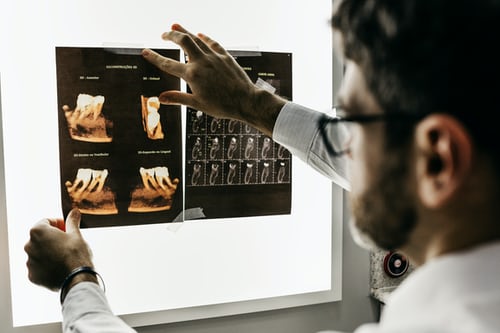
The CRT technology is the **oldest** technology among visual display units. It was invented in the late **1800's** and was first used in the televisions in the **1940's.** They happened to be the dominant visual display units until the late **1990's** when they began to be replaced by the **LCD** technologies. Their monitors were **monochrome flickered**(fluctuating light) I'm their display, which causes **eyestrain** and the image quality was really **poor.** The **CRT** technology however, remained a dominant figure in the **PC monitor** market down into the **new millennium** partly because it was **cheaper** to produce and offered viewing angle close to **180° degrees.** In addition to all that, they also display their pictures through an **analogue cable** and that signal is decoded by the display controller which handles the **internal components** of the monitor. Note: the **controller** can be regarded as a **mini-CPU** for the monitor. CRT's are the largest and heaviest of all the **monitor types.** The **CRTs** have a distinctive **funnel shape.** A **CRT** has a large **vacuum tube** in the back with a cathode containing a heated **filament**(electron gun) that is pointing forward toward the **viewer.** This electron gun fires off streams of electrons towards the front through a vacuum that exists in the tube of the monitor in response to the visual signal it receives from the computer. The **gun** can also be referred to as a **cathode,** hence, the electrons fired forward are called **cathode Rays.** These **rays** corresponds to the **red, green and blue channels** of the display and video card. At the neck of the funnel shaped monitor is an **anode** which is **magnectized** according to instructions from the display controller. As **electrons** pass through the **anode,** they are shunted or pulled in one direction or the other depending on how **magnetic** the **anode** is at that time and this moves the electrons towards the correct part of the screen. The electrons pass through a **mesh** and this mesh defines the individual pixels and resolution on the screen. However, electrons that pass through the mesh and then hit the **phosphor** are immidiately lighted up thereby causing the light to shine through the front of the monitor, thus making up the picture on the screen and there are different colours of **phosphor** for each **pixel** (that are known as phosphor triads), **red, blue, and green** and depending on which **phosphor** the electron hits, that is which colour the pixel will definitely light up with. The Flat Panel Display(**FPD**)-

As the computer technology improves, so does the technology for computer display. Advances in computer display gives a better colour production, an enhanced refresh rates, increased in resolution and a larger physical size. As the production methods improve, these advances become cheaper to incorporate into the production model computer displays. Flat Panel monitors use a variety of technologies and the most commonly used is the **LCD**(Liquid Crystal Display). LCD monitors are active **matrix or** passive **matrix**, hence, the active matrix monitors have higher **refresh rates** and better **contrast**, thereby making a more better brilliant display of characters on the screen and far more expensive as well than its close relative, the **passive matrix display.** They(active matrix LCD)are also known as **TFT**(Thin Film Transistor) **LCD monitors.** Colour monitors need three transistors for each pixel viz: red, green and blue and as for the **portable PCs,** such as the **laptops,** they make use of the **flat panel display** since they are more compact and consume lesser power than the **CRTs.** Another technology is the **light-emitting diode**(LED) monitors. The **LED** provides us with a higher contrast and better viewing angles than the **LCDs.**

Liquid Crystal Display(LCD) monitors.
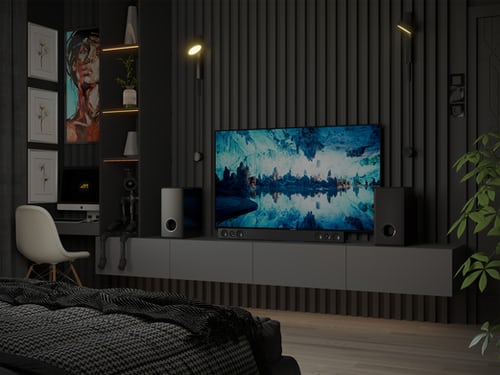
The first stand alone **LCD** displays appeared in the **mid-90s** selling for high prices and they began as displays units for **calculators** and **Laptop screens** but as prices declined over a period of years, they became more and more popular and by **1997,** were competing with the **CRT monitors.** Amongst the very first **desktop LCD computer monitors** was the **Eizo L66 in the mid-1990s,** the **apple studio display in 1998**and the **apple cinema display in 1999.** The now common active matrix TFT-LCD technology also has a less **flickering** than the **CRTs** which reduces the **eyestrain.** The LCD Technology. The LCD is a display that creates characters by means of reflected light and it is composed of two specially treated plates of **polarized glass** that are passed together. Between the plates is a **liquid Crystal material** that responds to an electrical current by allowing different **wavelengths of light** through at various points across its surface. Instead of creating points of light, the entire premise of an entire **LCD** monitor is to block out the majority of the light in order to allow only the specific **wavelengths** that are interpreted as colours by our **brains,** through the front of the Monitor at all visible **wavelengths.** The electrical current created by the visual signal sent from the community causes the liquid Crystal material to block out different wavelengths of lights across its face so to crate a general shapes and colours of an image. The **LCD** can suffer from **dead pixels** while the **CRTs** do not suffering such mishap and they(**LCDs**) are quite very difficult to read in a strong light because they do not **emit** their own lights. Note: I believe you have known the type of kind of monitor you should buy either for your household usage or for your businesses given the qualities and the little differences of them both which I've discussed here with you guys. God's willing tomorrow, I shall be starting from the **LCD Projector** as well as all you need to know about it when making your choices plus other lovely and unmentioned ones I shall totally be bringing to your attention by God's grace tomorrow. Good night rest all and love you deep down my heart. All images are from unsplash photos.com. Merry Xmas in advance




2 comments
Merry Christmas in advance dear.
Thanks a lot