Managing Time means Managing Life
There may be a difference in the perception of time. For example, an hour spent with someone who is excited to be with, while two hours for an exam that is difficult to train seems too short; The final five minutes may seem too long for the fans of the victorious team when they are leading 1-0 in the world football championship match, and the few minutes during the reading of the note announcing the selection at the Oscars awards ceremony may seem too long to the finalists. The importance of time may also differ according to location. For example, in a world championship won by a split second, the importance of a split second for both the champion and the loser can be very different from the importance of an hour for someone who comes home late from coffee.
Time is the most democratically distributed resource for people. Everyone has 24 hours in a day. Time is a scarce resource that cannot be recovered, stored or stopped. How effectively this scarce resource is used is the most important factor that determines how much people can improve themselves and their environment.
The important thing in time management is not to prioritize the day's work, but to include the priorities in the daily schedule. People spend most of their time on urgent but not important tasks. Many trivial tasks that become urgent due to lack of timely planning take up a significant part of our daily lives. In reality, what needs to be done is to determine the purpose and vision of the person in life, and to use his time to realize this vision as much as possible. In other words, it will be that he puts the big stones in the jar first, then allocates the remaining time for small and less important works, that is, he fills in between the big stones with small pebbles and sand.
Unmeasured performance cannot be improved. For this reason, it is critical for time management to measure how people use their time and make changes in line with the target.
A productive person should devote at least 65-70% of his time to important non-urgent tasks. During this period, he should plan, develop action plans to prevent potential problems, delegate his current work as much as possible, follow up on the work he has delegated before, establish the necessary social and business relationships and set aside time for the development of the people he works with.
It is very important for both the person who will do the work and the person who is delegating to delegate the work when it comes, not when it is necessary. A job that is delegated on time and followed up at regular intervals is very likely to be ready when needed without stress.
In order to be able to work efficiently, it will be beneficial for a person to make an appointment with him at least half a day every week and to set aside this time for planning and preparation. In the worst case, this time can be kept as a backup time that can be used in an emergency. In this way, in every emergency plan change, all appointments will be changed and an unprofessional situation will not be encountered.
Problem solving is like fishing. Once you teach your employees, they also start fishing and the leader's load is reduced at the same rate. Therefore, sufficient time should be devoted to training and developing employees. Giving immediate feedback on performance at the necessary points while the work is being done and after the work is done will have a positive impact on the performance of the employees in their next job.
The level of reaction to mistakes made in jobs with high priority and importance and the level of reaction to mistakes made in jobs that are not important and important should be very different from each other. Giving the same reaction in every event will prevent the necessary effect from being created in the high priority ones. Every mistake is a learning opportunity. Rather than discouraging the employee by overreacting after the mistakes made, it is a much more effective method to talk about the cause and source of the mistake and to help the employee understand and accept his mistake.
When someone comes with a problem, the problem should either be resolved with the person who brought it, or feedback should be given about the solution and the problem should be sent with that person. The ball must not remain in the manager. Whenever possible, it is best to have the person who brought the problem resolved it themselves. As the motivation and competencies of those empowered to solve problems will increase, they become more productive employees.
Instead of following someone else's plans, it is much more efficient in terms of time management to direct others to follow one's own schedule with pre-made planning and suggestions. It is a very effective method for a person to determine a suitable time for his/her own schedule for any meeting or study and to suggest it. Thus, he will both determine a suitable time for his own schedule, have the opportunity to prepare because he will know the timing for a long time, and increase the chance of adapting to the schedule of other participants who are not used to working for such a long term.
One must know how to reject the jobs that come to him on matters that are not his priority. In cases where people are not sure whether they will be interested or not, it often makes things easier to receive requests in writing and to respond in writing in the same way. At the same time, this is a way of avoiding the time to be wasted with the meeting, and if there is a real opportunity, it is not ignored. However, if the issue is really out of the company's or the person's interest, then this work should not be delegated to someone else and should be rejected in writing or verbally, just to protect the relationship.
In order to manage time well, it is important to acquire the discipline of not tolerating time wasters. For example, not accepting a meeting or appointment without an agenda; holding the meeting in a meeting room that will allow easy departure, not in its own office; Determining the duration at the beginning of the meeting, sticking to it and being punctual are important both in terms of self-discipline and in terms of the discipline and care of the co-workers.
The Heat Wave of 1911 That Caused Hundreds of Deaths
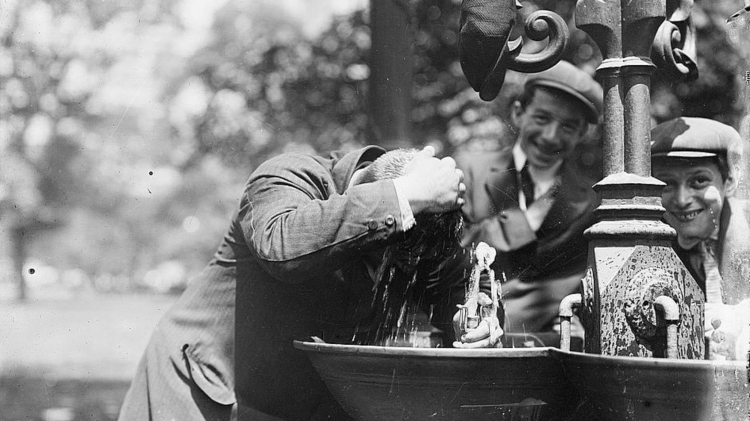
In July 1911, temperatures along the east coast of the United States had reached 40 degrees Celsius. The heat wave, which felt its effect for days, caused 211 people to die in New York alone. Historical documents from that period clearly reveal the seriousness of the situation. A young man from lower Manhattan had jumped from the pier into the water after standing in the shade for hours. While jumping, he said, "I can't stand this any longer," and died a short time later. Similarly, a worker in Harlem, overwhelmed by the extreme heat, tried to throw himself in front of the train. After the incident, the police took the worker away from the scene by wearing sleeveless shirts. Perhaps one of the most extraordinary weather events in history took place that year.
In a period when air conditioners and fans were not widespread yet, heat waves were one of the important weather events that people had to deal with.
On the day of the heatwave, temperatures in Rhode Island rose 11 degrees in just half an hour. Railroad tracks bent all over New England as New York and Philadelphia became centers of sweltering temperatures. Postal services were suspended and people almost perished in the sun. The total death toll is estimated to have exceeded 2000 within a few weeks. But historians think there were also unrecorded deaths.
In the first week of July in New York, temperatures approached 40 degrees. Everything on the streets began to melt, people began to lose their lives rapidly
No part of the city was equipped to handle the hot air and the humidity that came with it. Inadequate ventilation and cramped living quarters exacerbated the problem. As a result, the elderly and young children could not stand this extraordinary situation any longer.
In the days when the heat wave was effective, people left their homes and started to live in parks.
By the first half of July, the entire city was in Central Park, or Battery Park. People could not stay at home and risk suffocating from the heat. For this reason, they did not go to home or work for about two weeks. After a short time, an atmosphere of anarchy began to blow in the streets. People were very angry because of the hot weather. This is why violence has escalated like never before.
*Temperatures had reached 40 degrees in Boston and 41 degrees in New Hampshire.*
People were dying not only from heatstroke but also from escaping the sweltering weather. Only 200 people drowned after entering the ocean, pond, river and lakes. Officials still on duty in the country did everything they could to cope with the hot weather. Streets were washed regularly with fire hoses. Ferry and tram lines were running for free so people could catch the breeze. At the same time, free water and soft drinks were brought to the parks. However, there were problems in transportation and distribution. Because the asphalt had melted and the tar was boiling under the sun.
*Heat wave ends with big storm in Boston*
However, this storm, too, was blowing away everything in its path, killing everyone in its path. When the temperatures finally dropped to habitable levels, five more people were killed by lightning strikes. Finally, when all the extreme weather events were over, the authorities began to rebuild the cities and the people began to lick their wounds.
Winter Olympic Games
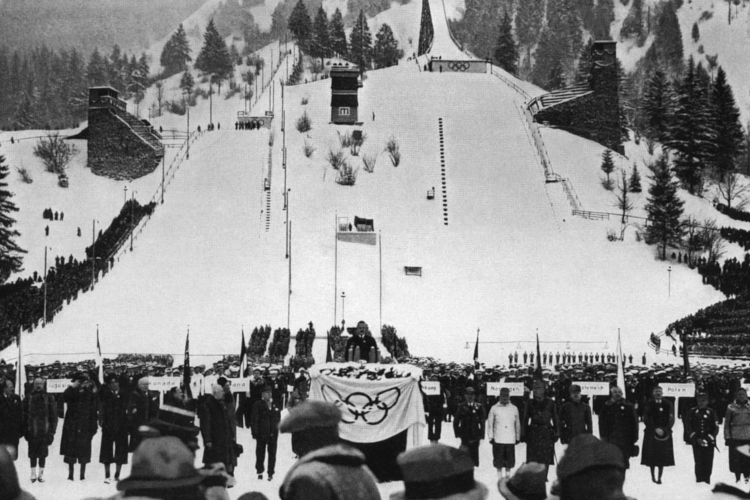
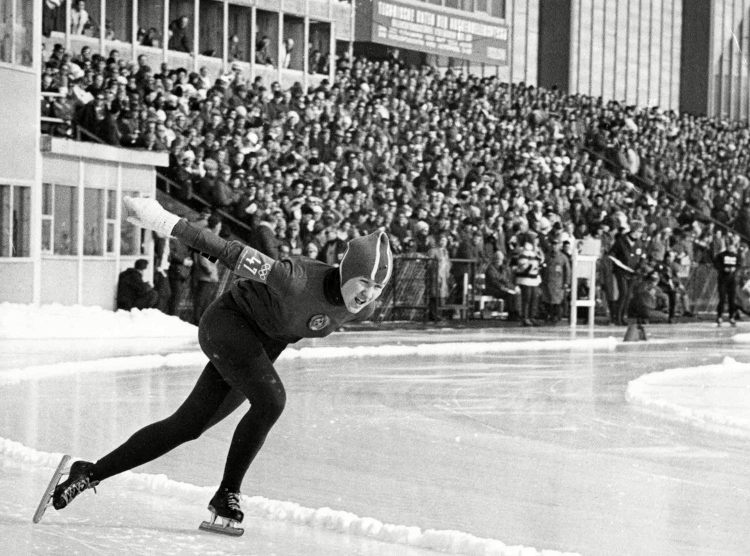
The Winter Olympic Games were first held in 1924 in Chamonix, France. In the organization, 16 countries competed with approximately 250 athletes in 16 different events.
At that time, women were only allowed to do figure skating. Women did not compete in other sports. Originally named Winter Sports Week, the event was a huge success, with 10,000 spectators paying an entry fee. This situation prompted the International Olympic Committee to change the name of the organization.
*The United States has hosted the Winter Olympic Games four times since 1924.*
After the USA, the country that hosted the most was France (3). The chronological order of the Winter Olympic Games is as follows:
1924: Chamonix, France | January 25 - February 4
1928: St. Moritz, Switzerland | 11-19 February
1932: Lake Placid, New York | February 4-15
1936: Garmisch Partenkirchen, Germany | 6-16 February
1940/1944: Olympic Games not held due to WWII
1948: San Moritz, Switzerland | January 30 - February 8
1952: Oslo, Norway | 14-25 February
1956: Cortina d'Ampezzo, Italy | January 26-February 5
1960: Squaw Valley, California | 18-28 February
1964: Innsbruck, Austria | 29 January - 9 February
1968: Grenoble, France | 6-18 February
1972: Sapporo, Japan | February 3-13
1976: Innsbruck, Austria | February 4-15
1980: Lake Placid, New York | 14-23 February
1984: Sarajevo, Yugoslavia | 7-19 February
1988: Calgary, Canada | 13-28 February
1992: Albertville, France | 8-23 February
1994: Lillehammer, Norway | 12-27 February
1998: Nagano, Japan | 7-22 February
2002: Salt Lake City, Utah | 8-24 February
2006: Turin, Italy | 10-26 February
2010: Vancouver, Canada | 12-28 February
2014: Sochi, Russia | 7-23 February
2018: Pyeongchang, South Korea | February 9-25
There are many successful athletes who have made their name known to the whole world by showing outstanding success in the Winter Olympic Games.
For example, female cross-country skier Marit Bjørgen from Norway won 15 medals, eight of which were gold, between 2002 and 2018, making her the athlete with the most medals at the Winter Olympics. Representing East Germany, skater Katarina Witt won gold medals in Sarajevo in 1984 and Calgary in 1988. Similarly, American speed skater Bonnie Blair became the only woman to win the same race (500 meters) in three consecutive Winter Olympics.
Since there was no snow in 1964, the soldiers carried snow from the mountains to the tracks
The 1964 Winter Olympics were held in Innsbruck, Austria. This region, which is normally very cold, did not receive any snowfall that year. Lack of snow was threatening the Olympic Games. Thereupon, the Austrian army climbed the snow-covered mountains and carried 50,000 cubic meters of snow and ice to the ski slopes.
*West and East Germany competed together three times at the Winter Olympics*
The two countries on opposite sides of the Iron Curtain; He competed together as a united Germany team at both the Summer and Winter Olympic Games in 1956, 1960 and 1964.
*Norway still dominates the historical medal standings*
Although Norway is a very small country, it holds the Winter Olympics medal record. The country currently holds 329 medals, including 118 gold, 111 silver and 100 bronze. On the other hand, countries such as Austria and Liechtenstein are among the countries that won more medals at the Winter Olympics compared to the Summer Games.
*There is only one person who has won gold medals at both the Winter and Summer Olympics*
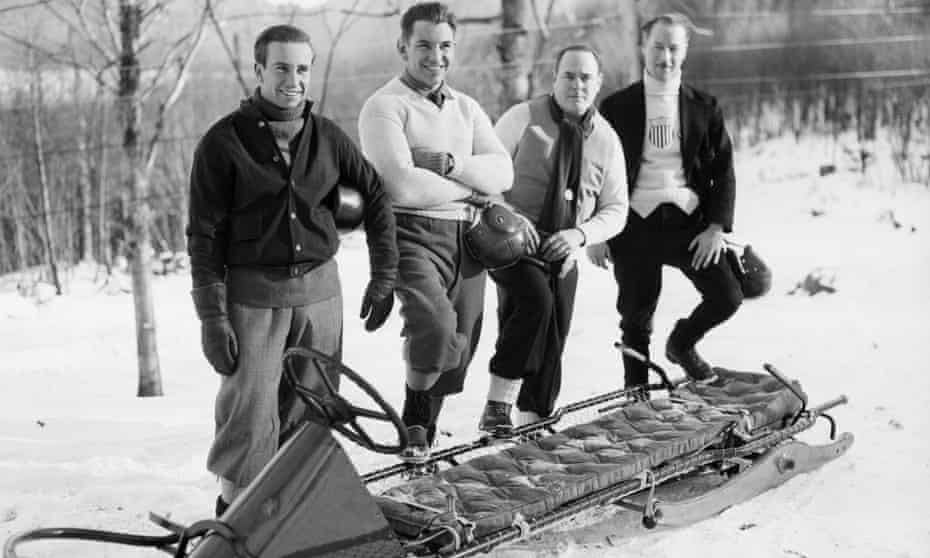
American Eddie Eagen won the gold medal in the light heavyweight boxing event at the 1920 Summer Games. Eddie Eagen was also a member of the four-man sled team at the 1932 Winter Olympics. A historic event took place when Eddie's team also won a gold medal. Thus, Eddie Eagen became the only person to win gold medals at both the Winter and Summer Olympics.
Gladiators of Ancient Rome
In ancient Rome, prisoners of war and slaves fought each other to entertain the Roman people. In ancient times, these people were called gladiators. Forced to fight, gladiators would not only face each other, but also wild animals. Each of the gladiators had a different weapon and trained accordingly.
*-Not all gladiators were prisoners of war or slaves*
Not all Roman gladiators were brought into the arena in chains. While many of the earliest warriors were war artifacts and criminal slaves, tomb inscriptions show that this began to change in the 1st century AD. Impressed by the war and the excitement of the crowd, many free men began to sign contracts with gladiator schools voluntarily in hopes of gaining glory and rewards. These free warriors were usually helpless men or veterans skilled at fighting. But some were upper-class patricians, knights, and even senators willing to show their warrior ancestry.
*-Gladiator fights were originally held on tombs to honor the dead.*
Many ancient historians said that the Roman games were taken from the Etruscans. But modern-day historians claim that gladiator fights began as a blood ritual performed at the funerals of wealthy nobles. When eminent aristocrats died, their families would have slaves and prisoners fight over their graves to pay tribute to the virtues displayed during one's lifetime. These funeral games became even more popular during the reign of Julius Caesar, who later held matches between hundreds of gladiators in honor of his deceased father and daughter.
(Etruscans: A people who lived in the Etruria region of Italy, located between the Tiber and Arno rivers, and survived until the 6th century BC.)
*-Roman gladiators didn't always fight to the death*
Hollywood movies and television shows often depict gladiator matches as bloody and free for all. However, most fights were conducted under very strict rules and regulations. Competitions often consisted of one-on-one fights between two men of similar size and experience. The referees followed these fights carefully and stopped the fight when one of the gladiators was seriously injured. If the crowd got tired of a long and contentious battle, the fight would be deadlocked. On such rare occasions, two gladiators who had put on an exciting show for the crowd were allowed to leave the arena with dignity.
Because gladiators were expensive to house, feed, and train, their supporters hated to see them killed needlessly. Given this situation, the trainers may have taught the gladiators to injure, not kill. However, a gladiator's life was often short. Most gladiators only lived into their mid-20s.
*-The famous "thumbs down" sign probably didn't mean death*
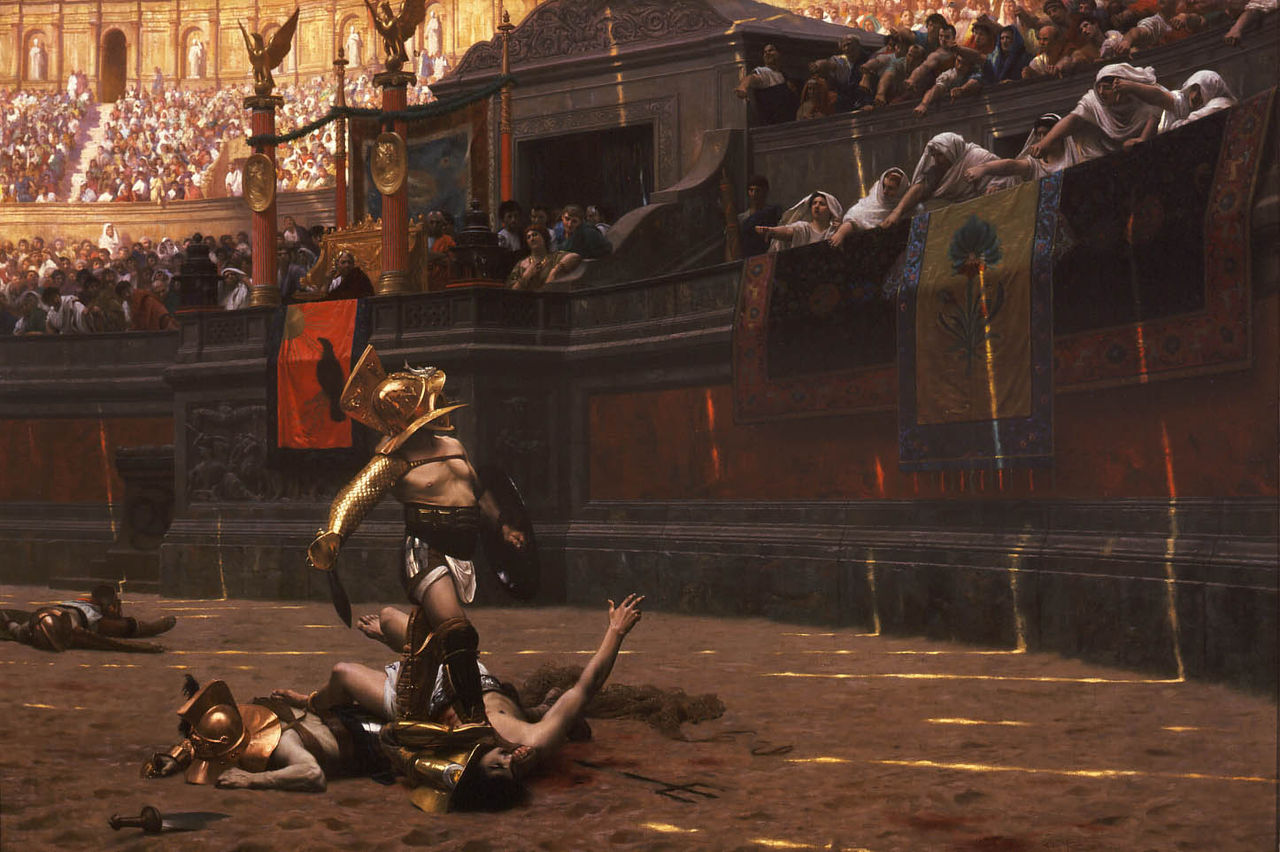
If a gladiator was seriously injured or was defeated and dropped his weapon, his fate would be in the hands of the spectators. In competitions held at the Colosseum, the emperor had the final say on whether the gladiators would survive, but rulers and war organizers often left the decision to the people. Movies show crowds making a "thumbs up" gesture when they want to finish off a disgraced gladiator, but that's not entirely true. While some historians think that the sign symbolizing death was actually thumbs up, a closed fist with two fingers extended and a thumbs down sign may indicate mercy. No matter what sign is used, the crowd that goes crazy with excitement will say "let it go!" or “kill!” they was screaming.
*-Roman gladiators were divided into different classes and types*
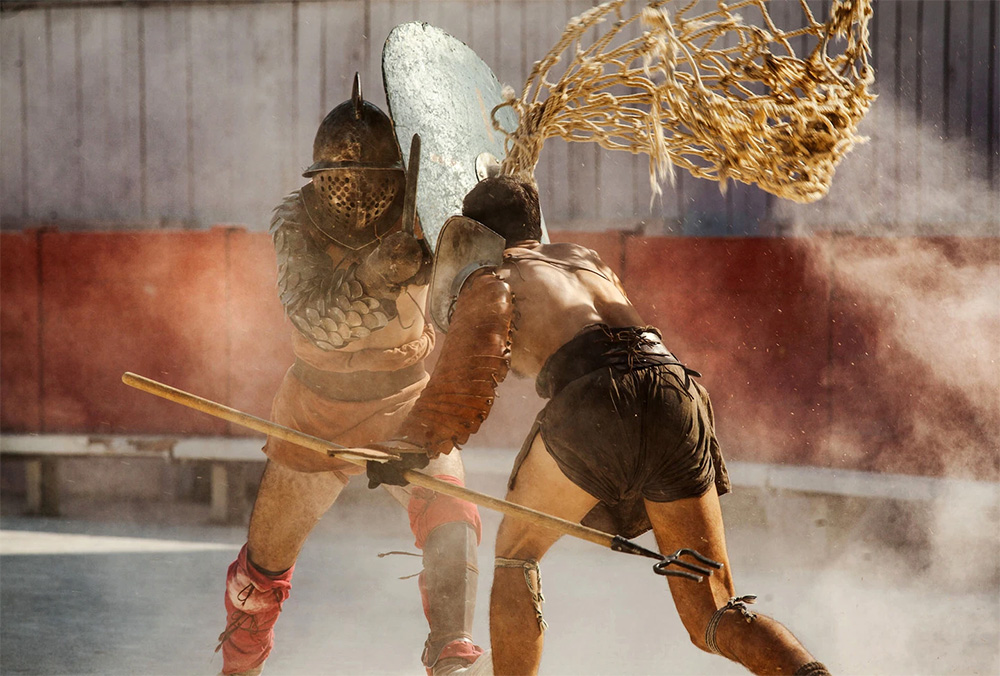
When the Colosseum opened in 80 AD, gladiator games had turned into a well-organized blood sport, from free battles to the death. Warriors were divided into classes based on their credential, skill level, and experience, with most of them specializing in a particular fighting style and weapon. The most popular were the thraex and murmillo, which fought with the sword and shield. However, in addition to these two styles, there were equites who entered the arena on horseback, essedarius fighting on chariots, and dimachaeri wielding two swords at the same time. Perhaps the most unusual of all popular gladiator species was the retiarius, armed only with a net and a trident. These warriors sought to trap their opponents with their nets before moving on to kill them. But if they failed, they were almost completely defenseless.
*-Roman gladiators rarely fought against animals.*
Although the Colosseum and other Roman arenas were often depicted with gruesome animal hunts, gladiators were rarely involved. Because there were two special warrior classes called “venatores” and “bestiarii” who challenged animals such as deer, ostrich, lion, crocodile, bear and elephant. Animal hunts were the opening event of the games, and many unfortunate animals were slaughtered in a single event. 9,000 animals were killed during a 100-day festival to celebrate the opening of the Colosseum, and another 11,000 were killed as part of a 123-day festival organized by Emperor Trajan in the 2nd century AD. Wild animals have become an important part of a popular form of execution. Convicted criminals and Christians were often thrown in front of hungry dogs, lions, and bears as part of the day's entertainment.
*-Womens also fought as gladiators*
Female slaves were regularly forced to fight in the arena alongside the men. But a few took the sword of their own free will. It is unclear when women first began fighting as gladiators. However, it is known that they started to take part in games in the 1st century AD. These female warriors may not have been taken seriously in patriarchal Roman culture (Emperor Domitian liked to pit women against dwarves), but a few managed to prove themselves in one-on-one combat. For example, a marble relief dated to the 2nd century AD depicts a fight between two women, the Amazon and Achillia, who are said to have fought honorably. Women also took part in animal hunting, but their presence in the arena ended around AD 200.
*-Some Roman gladiators organized into unions*
Although they regularly had to face each other in a life-or-death battle, the gladiators saw themselves as a kind of brotherhood. Some even organized into groups with their own elected leaders and patron deities. When a gladiator died in combat, these groups ensured a proper burial for their deceased comrades honoring their achievements in the arena. If the deceased had a wife and children, they would help them get monetary compensation.
*-Some Roman emperors also showed up in the arena.*
Hosting gladiator games was an easy way for Roman emperors to win the love of the public. But a few took it a step further and joined the fight. Many monarchs appeared in the arena, including Caligula, Titus, and Hadrian. But they most likely fought under highly controlled conditions or with blunt blades. Also, their opponents were often inexperienced warriors or frightened slaves.
Long history of the Olympic Games.
Sports have a very important place in everyone's life, especially the Olympic games. Because the Olympic Games is a wonderful organization that includes dozens of athletes and sports from every nation and allows a sweet competition. So when did the Olympic games first start?
There is no certain information about where and when the ancient Olympic games first started.Although there is no exact information about where and when the Olympic games first started, there are countless myths about it. According to one of them, the games started at the time when the sacrifices were presented to Pelops, who was the Olympian king and gave his name to Peloponnisos.
According to another source, Elis King Ifitos went to Pythia and consulted the oracle in order to protect his kingdom and its people from war in the 9th century BC. The oracle tells him to please them by arranging games in honor of the gods. As a result, Ifitos begins to organize games, and Spartan enemies do not attack them as long as these games continue. The games are held on Mount Olympia, where the gods live, and the games take their name from the fact that they are held on this mountain.
*The history of the Olympics dates back to 776 BC.*
The ancient Olympic games began in 776 BC. However, the debate about the Olympic history still continues. Although it is accepted that the games were first held on Mount Olympia, the first places where these games were held were the cities of Elis and Pisa on the Peloponnese. In addition, the 12-meter statue of Zeus, one of the seven wonders of the world, is also located on this mountain.
*Olympic games are held every 4 years*
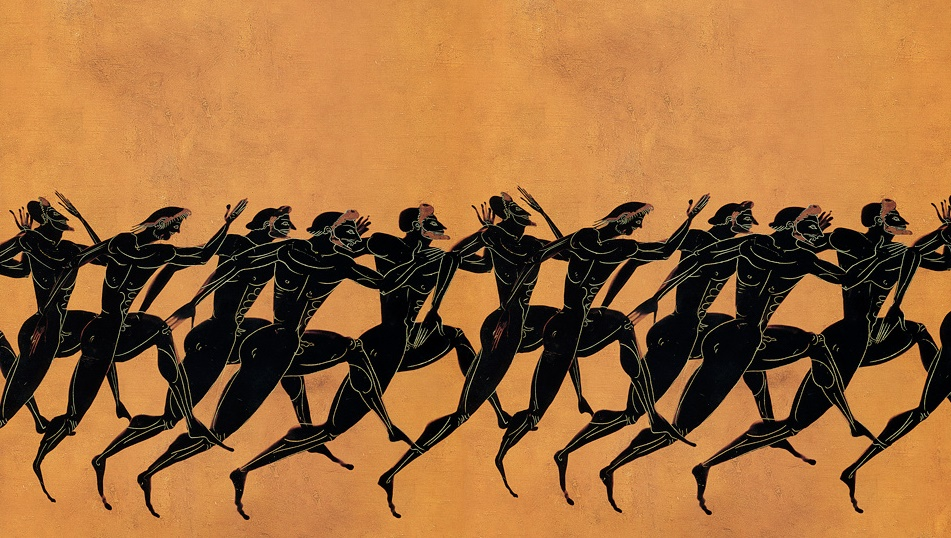
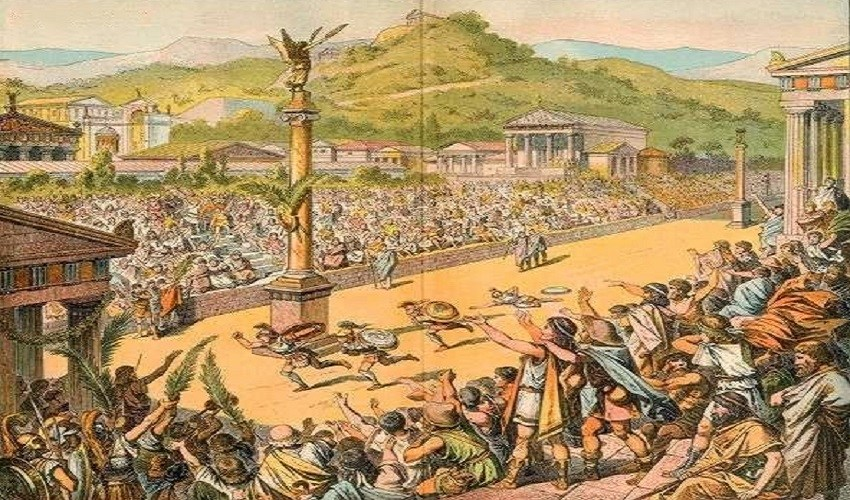
The Olympic games were held every four years. Even the Greeks adjusted their methods of counting years according to these games. The time between two games was called an "Olympiad" and the date was determined accordingly. In fact, the Ancient Greek historian Ephorus, who lived in the 4th century BC, used the terms pre-Olympic and post-Olympic to describe the date.
*In the first period of the Olympic games, there was only stadium sports.*
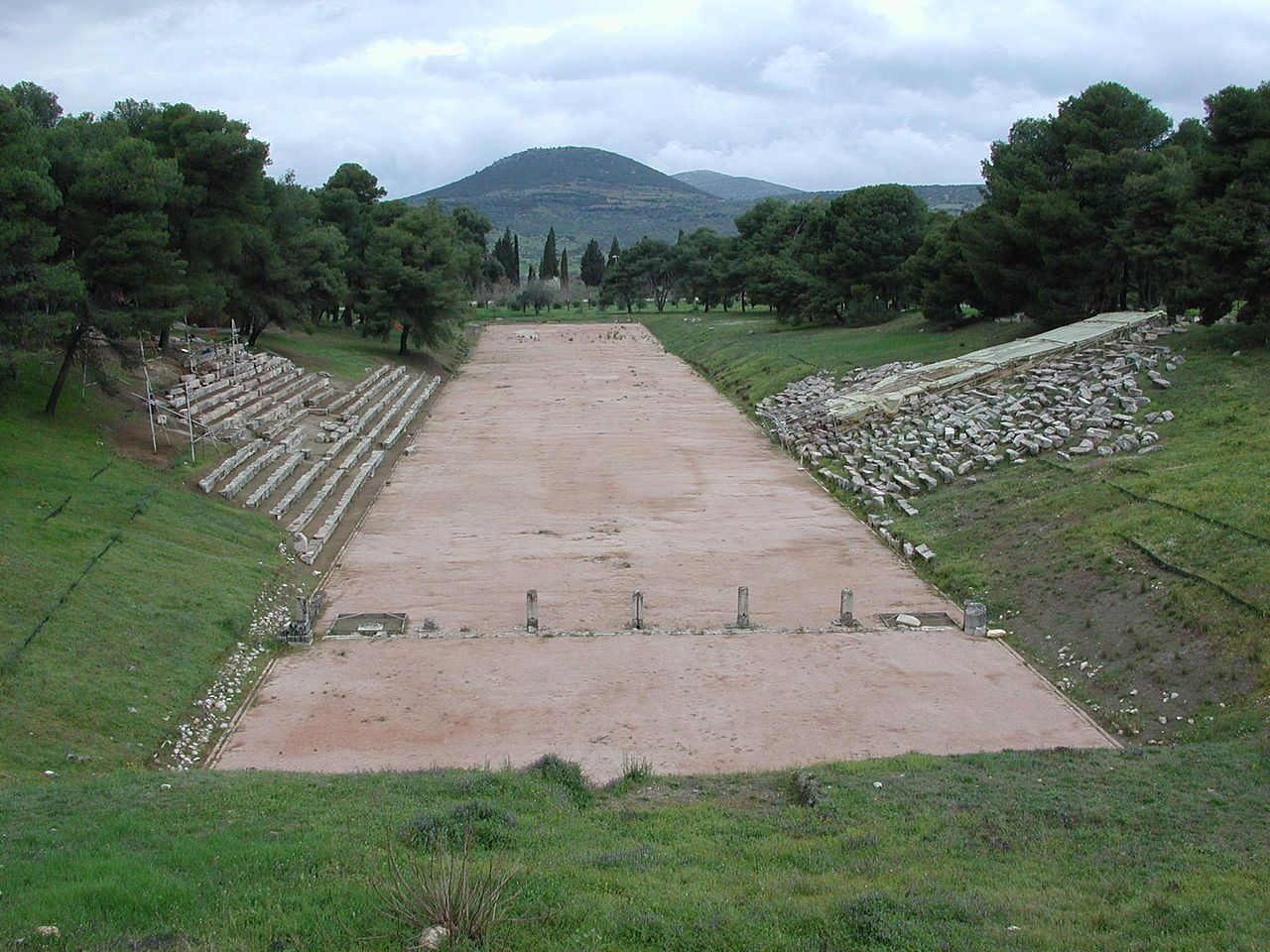
The stadium running track, which was determined by measuring according to the steps of Heracles, was 190 meters. The word stadium used today comes from "stadion", which means foot race in Ancient Greece.
The city where the Olympic games were held was held in high esteem. In addition, the city that organized the games would be more advantageous politically than other cities. For this reason, city-states constantly fought each other to organize the games.
*Only free Greek-speaking people could participate in the ancient Olympic games.*
This was the case with the ancient Olympic games, although this has changed in the modern Olympic games. People from overseas colonies were also admitted to the Olympic games. In addition, there have been many people who participated in the Olympic Games from the Mediterranean and Black Sea coasts and won.
*A person had to train for at least 10 months before participating in the ancient olympic games*
In order to participate in any game, a competitor had to enter the audition first and then have his name written on the authorized person. In addition, only young people were allowed to participate in the games. Another requirement for participation was that the person train in front of the statue of Zeus for at least 10 months and take an oath not to cheat.
*Over the years, new sports began to be added to the Olympic games.*
With the following years, new sports branches began to be added to the Olympics. Boxing, wrestling and kariot were among the new sports that received the most attention. While boxing was a normal sport, it started to get very tough over time. While boxing athletes used to cover their hands with soft leather pieces, they later put metal inside the leather pieces.
The games, which were held at the same time as the five-day festivals, continued for three days. In the remaining two days, religious duties were held. The athlete who won a competition in any branch of the Olympic games was honored with a crown made of olive leaves. In addition, the winner received a large cash prize and became famous all over Greece.
*The first woman to compete in the ancient Olympic games was the Spartan princess Cynisca*
Only men were allowed to participate in the ancient Olympic games and all competitions held in Greece. In later periods, women were only allowed to participate in equestrian competitions. Cynisca, a Spartan princess in 396 and 392 BC, won equestrian competitions.
*The beginning of the modern Olympics was the turning point in Olympic history*
In 1892, during a lecture at the Sorbonne University in Paris, the French Baron Pierre de Coubertin came up with the idea of an international sports organization. On June 23, 1894, under the leadership of Coubertin, the International Olympic Committee met for the first time with 13 countries and 79 representatives, and they decided to reorganize the Olympic Games and to hold the first Olympics in Athens in 1896.
241 athletes from 14 countries participated in the first modern Olympics held in 1896. The Olympic Games have continued to be held since then. However, due to the 1st and 2nd World Wars, the games in 1916, 1940 and 1944 were not held.
*Today, the Olympic Games are held every four years in two separate categories, the Summer and Winter Olympic Games.*
The Olympic Games, the world's most comprehensive sporting event, represent more than 200 countries. In addition, within the scope of the Olympic Games, more than 13.000 athletes in total compete in more than 400 categories.
Real Smurfs! :) The Blue-Skinned Fugate Family Living in Kentucky
***Fugate family***
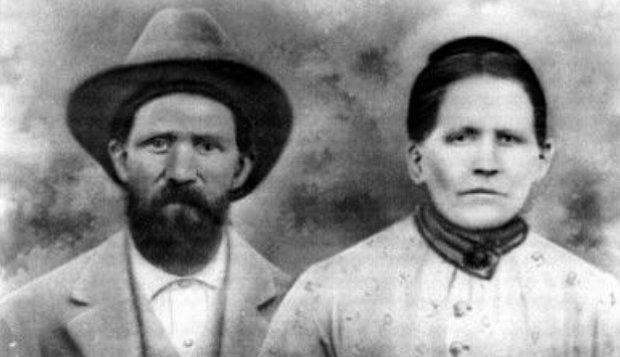
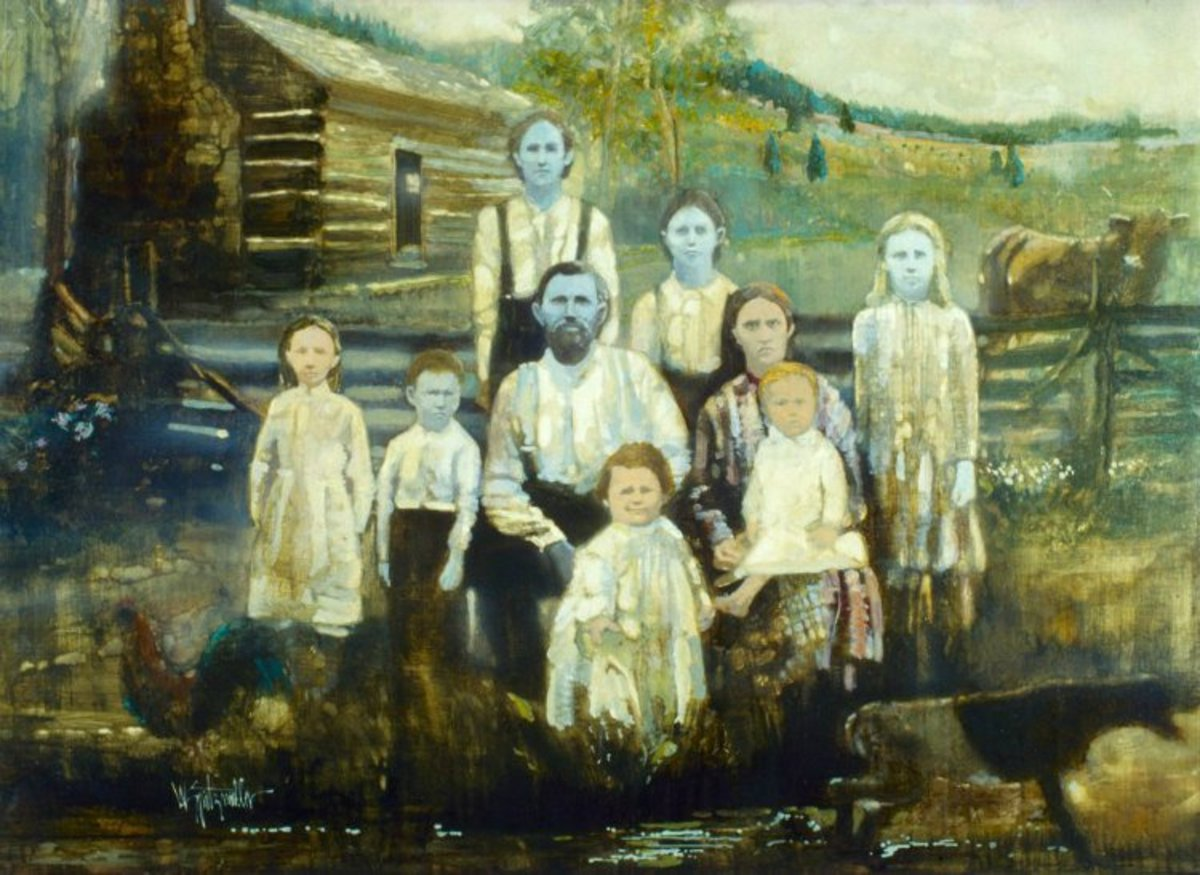
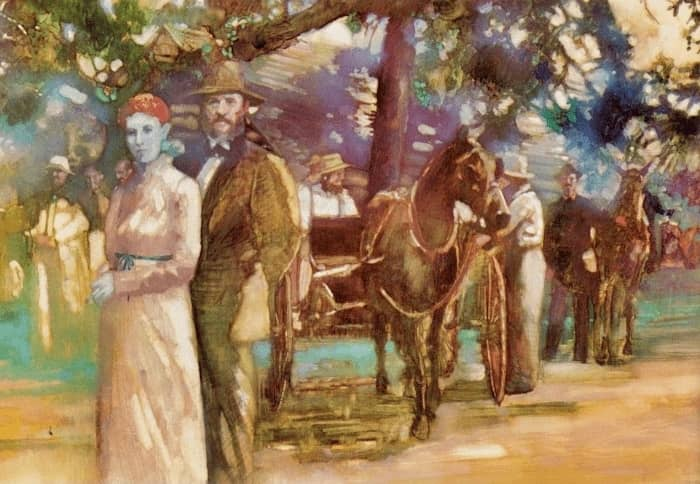
In the 1800s, Martin Fugate, a French orphan at the beginning, met a woman named Elizabeth Smith. The couple, who got married, settled in a town in the mountains of Kentucky together. Of course, they did not know that they would leave an important mark on the scientific world. Both Martin and Elizabeth carried the rare, recessive methemoglobinemia gene. When they had children, this recessive gene affected their children's appearance. The baby was born with a blue-tinged skin color. Although this was a genetic defect, it was not fatal. In some people, the presence of this gene resulted in seizures and developmental disorders, while in the Fugate family it only caused skin color changes. This disorder, which occurs when the blood carries less oxygen than normal; causes hands, feet, and lips to appear purplish.
*Consanguineous marriage also perpetuated this genetic mutation.*
Martin and Elizabeth had seven children, and at least four of them had the disease. If intermarriage could be prevented, future generations would not be affected by this mutation. However, the area where the Fugate family lived was not very open to the outside world. Therefore, domestic marriages became normalized. The disease continued to be passed on to future generations with each marriage.
In the early 20th century, a blue-skinned member of the family went to the hospital for a blood test. That's when other people started hearing about the Fugate family. The nurse who took care of a blue-skinned person was shocked. Comb, on the other hand, tried to calm the nurse by saying that there were many blue-skinned individuals in his family.
*Madison Cawein III*
After Comb met the nurse, the story of blue-skinned people began to spread rapidly. Hearing this, the famous hematologist Dr. Madison Cawein III set out to personally control the story. She met a nurse during the trip and the two joined hands and began searching for the blue people.
By the middle of the 20th century, people began to become aware of the negative effects of consanguineous marriage. As such, the Fugate family was ostracized by the surrounding families. This made them even more withdrawn. Because Dr. When Cawein found them, he worked hard to gain their trust.
*Research and treatment*
Dr. Cawein did a wide variety of blood tests and found that a very important enzyme was missing. Various treatments and drugs were administered to trigger the secretion of this missing enzyme. Interestingly, all this worked and for a short time the Fugate family regained a normal complexion. This was quite an exciting development for them.
*The last blue-skinned Fugate*
Over time, mining increased in the area where the Fugate family lived. Transport networks also expanded rapidly. In this way, the Fugate family began to meet and marry people outside the household. Thus, this genetic abnormality slowly began to recede. In 1975, Benjamin Stacy, the last blue-skinned member of the family, was born. Benjamin's grandmother was one of the bluest members of the Fugate family. After a few weeks, Benjamin's complexion returned to normal. Apparently the gene is not fully active! Of course, he still turns blue when he's angry and cold.
Legendary African Female Warriors
*1-Queen Amanirenas / BC. 40 – 10*
Queen Amanirenas was born in the Nubian region of present-day Sudan, BC. from 40 BC. She ruled the Kush Kingdom until 10 BC. Roman Empire, BC. When he invaded neighboring Egypt in 30 BC, Amanirenas launched a surprise attack against the Romans. Leading an army of about 30,000 men, the queen successfully captured the three cities ruled by Rome. But it wasn't long before Rome retaliated, occupying Kush and enslaving thousands of people. In years of fierce fighting, both sides had suffered significant losses. B.C. Peace negotiations, which began in the year 24, culminated in a peace treaty five years after the start of the war. Unlike other monarchs in Africa, Queen Amanirenas never paid Rome a tax. Today, a symbol of resistance and courage, Amanirenas is remembered as one of Sudan's legendary leaders.
2-Queen Nzinga Mbande / 1583 – 1663
Queen Nzinga Mbande, a veteran politician and skilled military strategist, was the ruler of the Mbundu people of present-day Angola. Portugal had established a colony near the territory of Mbundu to expand human trafficking as the demand for slave labor increased. Therefore, the king before Nzinga Mbande formed a strategic alliance with Portugal. According to this alliance, the Portuguese would protect the Mbundu people from other enemies and stop the raids. However, after a while, Portugal broke this agreement. The Queen, on the other hand, refused to surrender without fighting the Portuguese. Queen Nzinga Mbande then formed a temporary alliance with the Netherlands, the enemy of the Portuguese. He then gathered a large army to fight against Portugal. In this way Nzinga was able to successfully repel Portuguese forces for decades. Even in his 60s, he participated in every war on the front lines. Thanks to his efforts, Portugal was never able to capture Mbundu. The Queen passed away in her 80s, after a long life of protecting her people from the colonialists.
*3. Queen Nanny / 1685 – 1750*
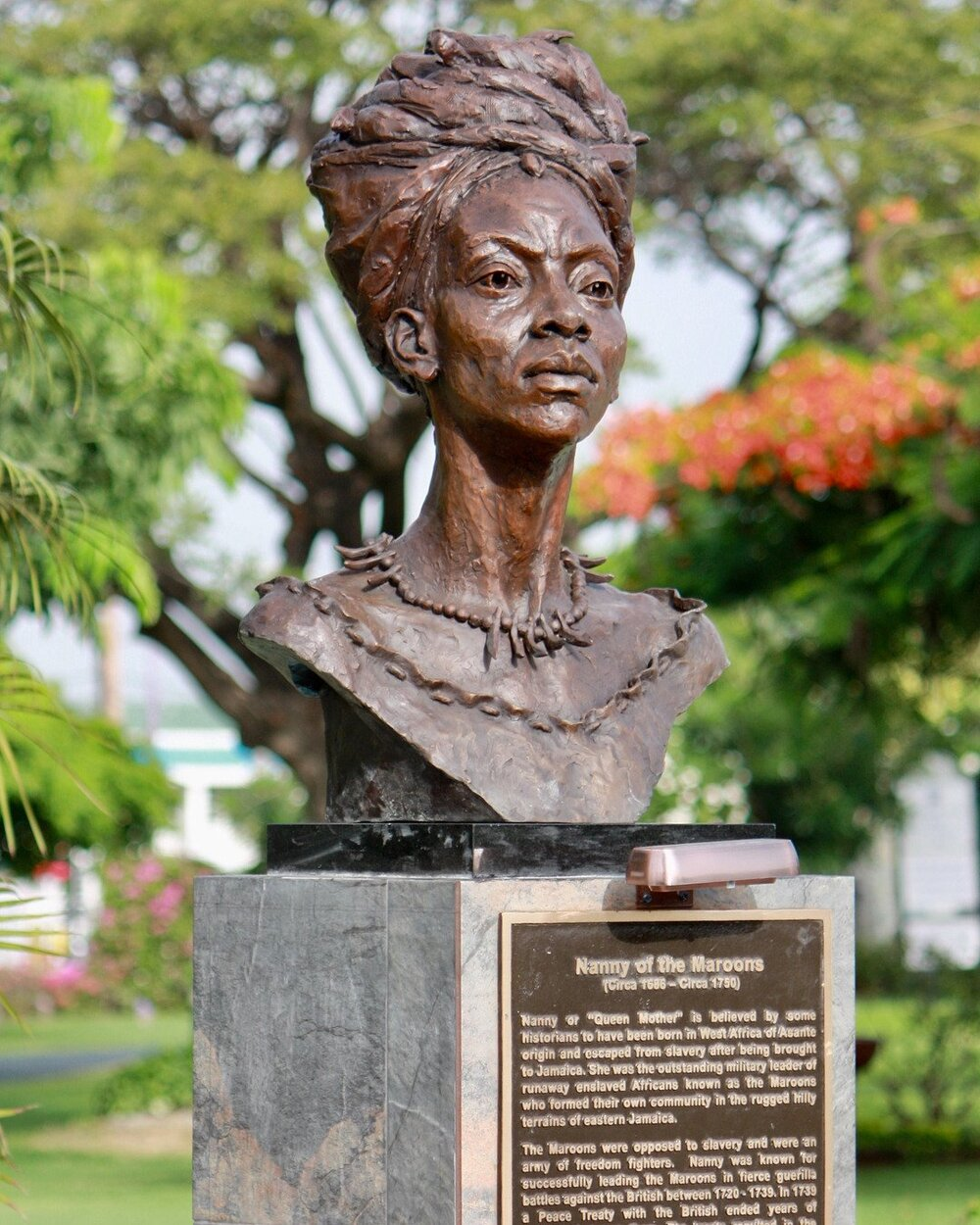
Queen Nanny was the leader of the Jamaican Maroons, made up of formerly enslaved Africans, who fought the British for their freedom. Nanny was abducted from Ghana at a very young age and enslaved in Jamaica. But Nanny managed to escape at the opportune time, along with other previously enslaved people. In 1720, she became head of the Maroon settlement, thanks to her outstanding leadership and military skills. That year she began educating her people in guerrilla warfare. The Queen led the Maroons into dozens of successful wars, freeing more than 800 enslaved people. By the 1740s, the British had to sign a peace treaty that guaranteed the freedom of the Maroons. In 1975, the Jamaican government declared Queen Nanny a National Hero. Today, the 500 Jamaican dollar bill features the Queen's image.
4. Dahomey Amazons
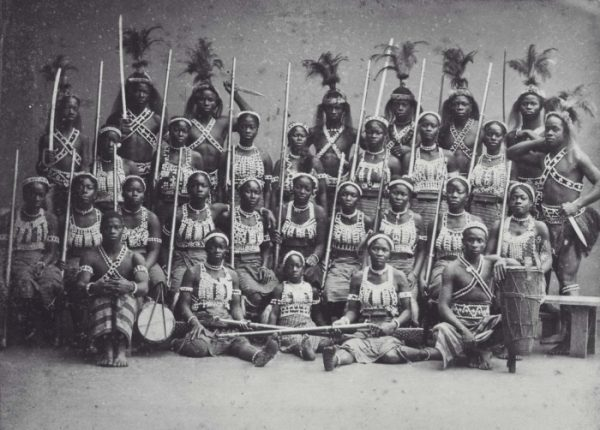
When it comes to African female warriors, perhaps the first group that comes to mind is the Amazons of Dahomey. The Dahomey Amazons, named after the female warriors in Greek mythology, are one of the few armies of women in history. This army, which began to assemble in the mid-1600s, was known for their indifference to pain and violence in war, and for having great socio-political influence over their own kingdoms. The Kingdom of Dahomey ruled over what is now the Republic of Benin. The Dahomey Amazons numbered about 6,000 individuals in the mid-1800s. When the French occupied Dahomey in 1892, the Amazons put up a fierce resistance. For this reason, the French soldiers lost their courage during the war. Fierce wars between the Amazons and Europeans continued for many years. After a while, however, the numbers of African female warriors began to dwindle. A few years later they were largely destroyed.
5. Queen Yaa Asantewaa / 1840 – 1921
Yaa Asantewaa was the queen of the Ashanti Empire, also called Asante in present-day Ghana. As queen, she was the official guardian of the Golden Stool, the most sacred object of the empire. This stool was made of solid gold and was thought to contain the spirit of the nation. When British troops invaded Ashanti in 1886 and demanded possession of the sacred object, Asantewaa refused. Soon after, he formed a large army and began attacking the British forces. Asantewaa's troops were almost on the verge of dispersing the British forces. But soldiers and new weapons were sent to the battlefield. Thereupon, Asantewaa's army could not stand it any longer and Ashanti had to surrender. Her great resistance despite impossibilities has made her one of the most famous warrior queens in history to date.
What is Kleptomania, Also Known as Stealing Disease
Kleptomania, also known as theft or stealing disorder, is a type of impulse control disorder. This situation, which is classified as a psychological illness, has serious consequences for the patient and their relatives. Kleptomania is a rare disease seen in 0.6% of the world's population. However, these rates may not reflect reality. Because people with kleptomania tend to hide this situation because they are ashamed. So what are the symptoms of kleptomania, is there a cure?
This disease, which first entered the literature in 1816, can be defined as the inability of patients to resist the urge to steal. Unlike typical shoplifters, people with kleptomania do not steal for personal gain or to test their courage. The urge to steal in individuals usually happens out of nowhere and without planning. These people mostly steal in areas where people are concentrated, such as markets and stores. In some cases, they may steal other people's belongings in a family or friend environment.
**Among the most common symptoms of kleptomania is impulse control disorder.**
Patients cannot control their impulses to steal items they do not need. In such a situation, tension and anxiety can arise. On the other hand, patients may feel relaxed and satisfied while playing something. However, after the event, they may feel guilty, embarrassed, and regretful. This cycle repeats each time a ringing attack occurs.
Usually, the stolen item has no monetary value to the patient. So much so that many people have the financial power to buy the stolen objects. For this reason, stolen objects are often not used. In some cases, it is given as a gift to family members or friends.
**The exact cause of the theft disease is unknown. Some theories suggest that changes in neurotransmitters in the brain may cause the disease.**
On the other hand, it is thought that serotonin deficiency, addiction disorders and brain opioid system disorders may cause stealing disease. However, more research is needed to come up with a definitive cause. Kleptomania often appears during adolescence or young adulthood. It is stated that the risk of kleptomania is increased in people who have kleptomania or obsessive compulsive disorder in their family, and those who have an alcohol or substance addicted parent. At the same time, it is stated that people with other psychological disorders are at higher risk of contracting the theft disease.
**When individuals decide to seek treatment for their kleptomania symptoms, they undergo a physical and psychological examination.**
Kleptomania is diagnosed based on the symptoms the patient describes to his doctor. A physical examination is essential to determine if there are any underlying clinical conditions that may trigger the symptoms. At the same time, the patient is asked to fill in psychological questionnaires and self-evaluation forms. Individuals often refuse to be treated for fear of being arrested. Although feelings of fear and shame make it difficult to accept treatment, getting help is very important. It should not be forgotten that the specialist doctor adheres to the principle of patient confidentiality throughout the treatment.
*Since the causes of kleptomania are not yet fully known, there is no standard method for the treatment of the disease.*


INFJ: Rare Personality Type in the World
INFJ, psychologist C.G. It is a personality type based on Jung's work. Introversion stands for the four basic personality traits, Intuitive, Emotional, and Judgmental. Each of the four letters of the INFJ code identifies an important personality trait of this type. Estimated at 1-3% of the population, INFJs are considered the rarest personality type in the world. Let us remind you that although it is rare, INFJs are people who leave a mark on the world. People with this personality type have an innate sense of idealism. However, the point that distinguishes them from other idealistic personality types is their determined and determined side. INFJs do not hesitate to take concrete steps to achieve their goals and leave a lasting impact.
The Myers-Briggs Personality Test is a worldwide known test. It is frequently used by psychologists and human resources. Carl Jung's theory explains that the way all humans see the world depends on four basic physiological functions. These four basic characteristics are listed as perception, intuition, emotion and thought. According to the test, all people are divided into a total of 16 different personality types based on the intensities of these four different traits. INFJ, which is one of these personality types and makes up 1 to 3% of the world's population, means:
***I – Introvert***
***N – Intuitive***
***F – Feeling***
***J – Judging***
*What distinguishes them from other idealistic personality types is their determination.*
The observant side of people with the INFJ personality type is in the foreground. These types of people often look for meaning and connection in thoughts, relationships, and things. They explore what motivates other people. Thanks to their observant side, they usually make accurate determinations against the outside world. Its values and principles are clear. They do not like to change or stretch them. They show utilitarian behavior both in their private life and professionally. That is, they choose to act in the best interest of the majority. For the INFJ personality type, it is important to choose a profession according to values. In addition, points such as individual projects, working alone, and using a quiet environment as an office increase the work performance of these people. INFJs like to take concrete action to achieve their goals and make a lasting impact.
**People with this personality type are extremely helpful.**
People with this personality type often participate in rescue efforts and do charity work. But above all, their true passion is to get to the heart of the problem without ever needing to save people. INFJs don't just stand by you on your good days. They always accompany you with their umbrellas on rainy and stormy days. INFJs are great listeners. They do not spare their support for the people they value. They put a lot of thought and effort into their bilateral relations. They pay attention to the needs of their friends. Besides, you can easily trust someone with the INFJ personality type. They will meticulously keep the secrets you give them. Their ideals and hopes are too strong. These traits make them much more attached to what or whom they believe.
**Connecting with others is easy for INFJs**
Individuals with this personality type are actually described as introverts. On the contrary, they are often friendly, warm and talkative. So for this type of people, it is quite sensitive but easy to connect with the external environment. They also have a sensitive language and communication skills. It is quite normal for outsiders to think that INFJs are social people. However, individuals with this personality type often prefer to be alone to gather energy. So if they suddenly disappear, don't worry. They will be back shortly.
Although they are very independent, INFJ is happy to contribute to the team it is part of. INFJs are good at communicating with others. At the same time, they are careful in fulfilling their responsibilities and expectations. They may put a little too much pressure on themselves to be good. What other people think of them is very important to them. They enjoy the work they do and the people they work with. INFJs are adept at going beyond what is expected of their potential. We should also say that they are perfectionists. INFJs never do sloppy work. They like to be appreciated by others. But they do a good job with or without recognition. Because the good feeling they get from a job well done is usually satisfying enough for INFJs.
In a true sense, the most important factor for the INFJ personality type may be that they do not forget to criticize themselves. Their commitment to their beliefs can get them beyond their breaking point at best. If their excitement gets out of control, they may find themselves tired, unhealthy, and stressed. This is particularly evident when INFJs find themselves confronted with conflict and criticism. Although their sensitive nature protects them from personal attacks, logic is always their primary criterion.
**INFJs are creative people**
INFJs are also highly creative people. There is a creative compass that draws them to the arts and humanities. Music, illustration, painting or any other form of art are great options for them. Many INFJs have a different creative outlet for the artistic work they are passionate about. Like other intuitive personalities, we can categorize INFJs as innovation-seeking abstract thinkers. They like to have fun imagining alternative worlds and unrealistic scenarios. He has special insights into other people. They focus on developing their own interesting and believable characters in the fictional works they create. INFJs can anticipate possibilities and potentials that only outsiders can appreciate.
**They're so inspiring**
The INFJ is the one who is at times and shows wisdom and judgment. INFJs inform readers of kindness and positive views to help people reach the right path and move forward. They do not motivate the team with anger. They have no style suitable for scolding or small discounts. INFJs are a trainer, mentor, and mentor temperamentalist. They do not shy away from patience and understanding. Do not take pleasure in educating others. INFJs are those who value the dignity and respect in which they operate. For people with this personality type, they are tangible that he truly cares about. It also appeals to vehicles.
**INFJs have great emotional intelligence**
INFJs are attracted to people who can make them appear extroverted and engaging. They exhibit an introverted attitude during crowded environments and overstimulating sensory experiences. However, they can adapt to social environments quite smoothly. More intimate interactions, limited to one or a few people, are their primary preference. They are extremely concerned about listening carefully and understanding others. In addition, they are known for their strong perception aspects. As strongly empathetic people, INFJs allow themselves to feel what other people are feeling. They are adept at making others feel understood and valued. INFJs are skilled at reading people's minds and understanding what moves people.
So, in which professions do people with this rare personality type work? There are certain occupational groups that have the INFJ personality type. Health services, physician, nurse, psychiatrist, dietitian, researcher, physiotherapist, dentist are examples of this group. In addition, clinical psychologists, therapists, environmentalists, human resources specialists, musicians, painters, graphic designers, editors, consultants and decorators can be given as examples to this group. The career options we've listed will be pretty consistent considering INFJ personality traits. The most inaccurate occupations for the INFJ personality are real estate agent, sales manager, contractor, police, cook, restaurant manager and repairman.


Queen of X and Y : Nettie Marie Stevens
How are genders revealed? What determines the characteristics that make women women and men men? I'm sure many of you have heard of the concepts x and y in biology class. These things we call X and Y are our sex chromosomes. These chromosomes contain switches that trigger the regulation of sex hormones that determine sexual characteristics in males and females. Women carry XX chromosomes and men carry XY chromosomes. So how did these X and Y first appear?
What Was the Concept of Gender in Ancient Times?
Until the 20th century, many theories have been put forward about what the factor that determines the sex of the baby is. The ancient Greek philosopher Aristotle thought that the temperature during fertilization was effective in making the child a boy. He even advised people who want male heirs to make love in the summer. Because she thought that if the man could not provide enough passion and fire, at least the temperature of the air would be effective in making the baby a boy.
At that time, in the scientific world: After the death of Gregor Mendel, scientists who rediscovered his work were investigating the mechanisms of how traits are passed on between generations, including sex determination.
*Nettie Marie Stevens, First American Biologist and Geneticist*
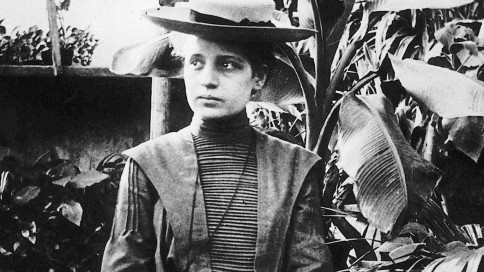
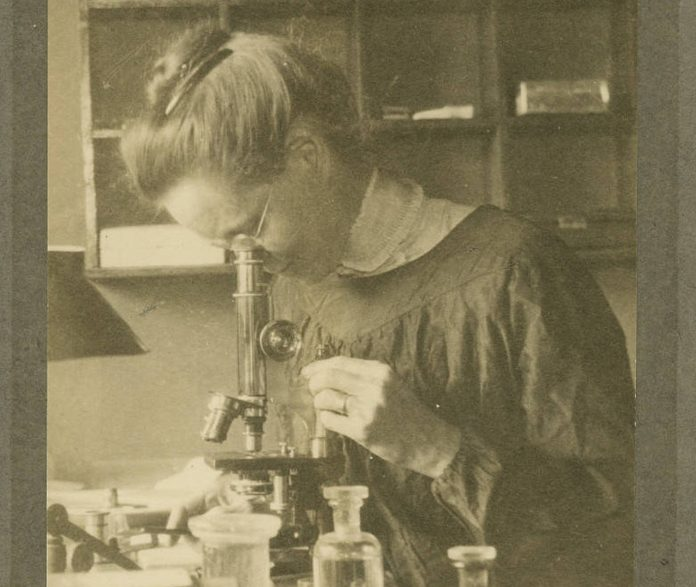
Nettie Marie Stevens was born on July 7, 1861, in Vermont, USA. Nettie, who was the person who brought the X and Y chromosomes to the scientific world in his research on the chromosome structure in 1905, studied at many different universities. She completed her school life with the savings she gained by teaching on the one hand. Nettie Marie Stevens, who has been working in different fields as well as her education, started to do her first scientific studies after the age of 35 and completed her doctorate education at Bryn Mawr University.
In 1906, he discovered that male insects produce two types of sperm, one with a large chromosome and the other with a small chromosome. Working with mealworms, Nettie observed that when sperms with large chromosomes are fertilized with eggs, they produce female offspring, while sperm with small chromosomes produce male offspring. Thanks to this invention, it has been proven that gender is determined genetically.
Unfortunately, the attitude towards women scientists at that time also affected Nettie. Nettie's discovery is not immediately accepted. At the time, it was believed that gender was determined by maternal and/or environmental factors. At that time, Edmund Wilson made a similar discovery. With this discovery, the genetic basis of gender formation is attributed to Thomas Hunt Morgan, one of the leading geneticists of the time, and it is recorded in textbooks and the history of science in that way. Morgan even contemptuously writes in Science magazine that Stevens behaved more like a technician than a real scientist throughout the experiment.
Morgan, the author of the first genetics textbook, wanted his contributions to the field to grow, according to Hoopes of the College. Stating that textbooks tend to take other existing books as their source, Hoopes says that for this reason Stevens' contributions to his field are neglected. Part of the reason why Morgan thinks he owes Stevens is that, unlike many researchers with whom Morgan corresponded about his theories at the time, in his correspondence with Stevens he wanted to learn the details of his experiments. After Stevens' death, he wrote to Morgan Science that Stevens did not have a broad vision of science; “He never asked Stevens about his vision,” Hoopes explains.
Nettie Marie Stevens, who introduced the concept known as X and Y chromosomes to the literature today, continued her scientific life, which started at the age of 35, until the age of 50. The scientist, who learned that he had breast cancer in addition to the health problems he had in his last years, died on May 4, 1912 in Baltimore, USA, after his worsening illness. With the ongoing studies after its discovery, many researches on genetics are carried out and important results are obtained.
Lady Death-Lyudmila Mikhailovna Pavlichenko
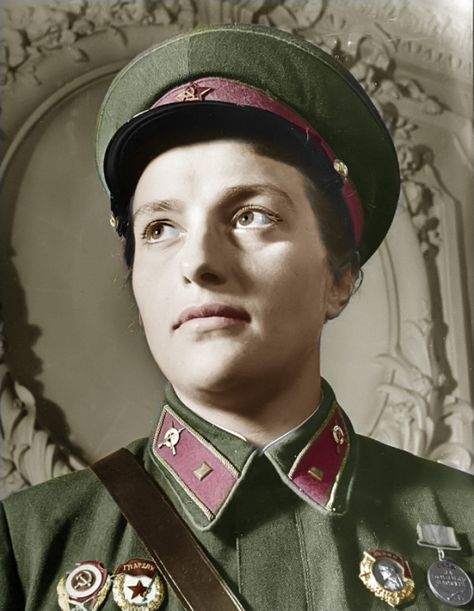
The life of the most notorious female sniper in history, whose full name is Lyudmila Mikhailovna Pavlichenko, was not an easy one, even if her life was full of success. Let's take a look.
Born on July 12, 1916 in what is now Ukraine, Pavlichenko moved to Kiev with his family at the age of 14. She joined a shooting club there. She got married at the age of 16. Although she had children, her marriage did not last long. Pavlichenko remained in Kiev, enrolled as a student at Kyiv University and continued to hone his sniping skills. In 1937, as a student at Kyiv University, she earned a master's degree in history, focusing on the life of Bohdan Khmelnytsky.
Lyudmila, 24, in June 1941; He was in his fourth year to study history at Kyiv University when Germany began invading the Soviet Union. Pavlichenko was among the first volunteers in the recruiting office, requested to join the infantry, and then was assigned to the 25th Rifle Division of the Red Army. Pavlichenko also had the option of becoming a nurse, but she refused it and in the following years said: “I joined the army when women were not yet accepted”. There she became one of 2,000 female snipers in the Red Army, of whom about 500 survived the war. Near Belyayevka, as a sniper, he hunted down his first two enemies using a Tokarev SVT-40 semi-automatic rifle with 3.5x spray. He rose to the rank of senior sergeant.
Pavlichenko fought near Odessa for about two and a half months, causing 187 fascist deaths. When the Romanians took control of Odessa, his unit was sent to Sevastopol on the Crimean Peninsula, where it fought for more than eight months. In May 1942, Pavlichenko was promoted to the rank of Lieutenant by the Army Council of the South for killing 257 German soldiers. The total number of confirmed kills during World War II was 309, including 36 enemy snipers.
In June 1942, Pavlichenko was wounded by mortar fire. He withdrew from combat after recovering from his wound due to his rising status. It was not long before the Soviet authorities established a new career for him. Lyudmila became the leader of a propaganda tour. This move stemmed from fears of Pavlichenko's death in action.
In 1942 Pavlichenko was a living legend. The Soviets knew that the news of Lyudmila's death risked demoralizing the Soviet troops and the country. As a result, Pavlichenko became a military folk hero. The new battleground was the public arena. Pavlichenko was sent to Canada and the United States on a promotional visit and became the first Soviet citizen to be accepted by the US President when Franklin Delano Roosevelt greeted him at the White House. Pavlichenko was later invited by Eleanor Roosevelt to travel to America, sharing her experiences. This was the beginning of their friendship with Mrs. Roosevelt.
Pavlichenko appeared before the International Student Assembly was held in Washington DC, later attended CIO meetings. He gave performances and speeches in New York and Chicago. He stood in front of the large crowd in Chicago and scolded the men for supporting the second front: “Gentlemen,” he said, “I am 25 years old and have killed 309 fascist invaders so far. Gentlemen, don't you think you've been hiding behind me for too long? He settled over the crowd with his words, then caused a rising roar of support.
Having reached the rank of major, Pavlichenko never returned to the war, he became an instructor and trained Soviet snipers until the end of the war. He was awarded the Gold Star of Hero of the Soviet Union in 1943 and is commemorated on a Soviet postage stamp. After the war, he completed his education at Kyiv University and started his career as a historian. From 1945 to 1953 he was a research assistant of the Chief Headquarters of the Soviet Navy. He was later active on the Soviet Veterans' Committee. Pavlichenko died on October 10, 1974, at the age of 58, was buried at the Novodevichye Cemetery in Moscow. A second Soviet commemorative stamp featuring the portrait of Lyudmila Pavlichenko was issued in 1976.
Woody Guthrie, an American folk singer, dedicated many songs to the fight against Nazi Germany with the onset of World War II. Guthrie adorned his guitar with the slogan "This Machine Kills Fascists". He wrote several songs denouncing Hitler and praising his Soviet opponents. One such song, Miss Pavlichenko, honored legendary Ukrainian female sniper Lyudmyla Pavlichenko with the phrase "300 Nazis fell with your gun."
What is “Adrenochrome”?
What is “Adrenochrome”?
There is nothing people cannot do for their own benefit. Each of us may be living without knowing when the time given to us will end. In this process called life, we may not be able to choose who we will be, where we will be born, what kind of environment we will grow up in, our race, our color, our parents and siblings. But we have a choice about how we end this process as someone with what life has experienced and what it hasn't.
Human beings have faced their selfishness in almost every age. I said almost in every age because our obligation to act together in primitive times did not yet confront us with our selfishness. So what happened today? Man has become adept at ignoring. He just became worried about himself. He developed an evil medicine that sacrificed children for beings who thought only of themselves and put their own interests above everyone else's.
Adrenochrome chemical compound, with the molecular formula C 9 H 9 NO 3 of the oxidation zone produced by adrenaline (epinephrine). The derivative carbazochrome is a hemostatic drug. Despite the similarity in chemical names, it has nothing to do with chromium or chromium. Adrenochrome is the oxidation product of adrenaline (ephinephrine, norepinephrine). The molecular arrangement looks like a rabbit.
Well, leaving the scientific definition aside, what is "Andrenochrome" as translated into Turkish, what is Adrenochrome?
“Andrenochrome” is the powerful hormonal precursor of adrenaline, which is released by the body in moments of extreme fear, anger or life-threatening danger. In addition to possessing scientifically tested, almost miraculous abilities in rejuvenating human tissue, restoring nerve sensitivity, and cognitive function, adrenochrome holds a legendary position as the "youth source" immortality item for the global elite. Adrenochrome, a highly addictive psychedelic drug produced by the deadly abuse of children (and sometimes pigs), is a chemical compound produced from the blood of children that rich world-famous people want to acquire to stay young.
This chemical component, called medicine, is taken from the pituitary glands of children. In order to achieve this, children are made afraid by applying various torture methods. It has been run by an organization that has survived since the 1930s thanks to secret cults and wealthy businessmen.
“Walnut Sauce” is believed to be a codename used by pedophile organizations. After children are abducted, subjected to sexual abuse and torture, they collect their blood as long as they survive. They also sell their organs after their death. Although it is known how this murderous operation, called "the source of youth or youth elixir", is made by those who use it, this cruel event is still allowed by being bought. The bruise on the left eye of the people who use it has also made it possible to observe which celebrities are in this situation.
While clinical tests and results of published research surrounding adrenochrome, also known as "Pink Adrenaline" or oxidized adrenaline, are in the public domain, a number of published studies measuring the substance's key properties and effects are in the public domain. Very quickly, scientists discovered the power of adrenochrome to turn back time to restore the youthful function of the human body, especially the nervous system and glandular functions, which determine the pace of the aging process. In repeated scientific study, adrenochrome has been shown to be an "elixir of youth" for the optimization and maintenance of human tissue against the onset of aging.
The psychoactive effects of adrenochrome can include euphoria, confusion, hallucinations, vitality, loss of individuality, depersonalization of pain and unhappiness, strange ideas and inventiveness, feeling like there is no limit to what they can do, lack of judgment, poor insight, and inability to concentrate. Adrenochrome injected with a micro-dose needle is as addictive as heroin.
There are risks with this drug for recreational use. Your own adrenaline production is shut down completely by homeostasis and negative feedback loops. Too much Adrenochrome in the body (by drinking blood) can increase the iron count in the blood and can be fatal as the body cannot cope with the spike in ions. In addition, adrenochrome in the brain can cause serious mental disorders such as schizophrenia. Chemically, adrenochrome and adrenolutin are very reactive substances. Some of the changes produced by adrenochrome can last for several days, and in some cases the effects are almost catastrophic. Even after one use, it can reproduce by natural formation such as cell renewal in the body.
In Belgium in 1946, after deliberately making rabbits' nerves damaged and blunted four weeks before the experiment, doctors subsequently proved the hypothesis that the application of oxidized adrenaline or Adrenochrome was capable of restoring the nerve response to the stimulus in the damaged skin of the rabbit. A 1939 study found that adrenochrome perfusion rejuvenated and restarted a frog's heart, resuscitating the animal, and has thus far standardized the administration of adrenaline/epinephrine in heart attack patients.

What is “Synopticon” ?
Modern times, along with many innovations, also reveal new concepts. These new concepts are not only concepts that we need to know the dictionary meaning of, but also concepts that we need to know how to put into practice. The reason for the emergence of these new concepts is the word "unfree" behind our effort to be an individual. Mankind will never be completely free if it goes on like this. I don't know the meaning of the concept of freedom for you, but for me it means that we are not dependent on any person or thing. I am aware that this is not possible in today's world, but ultimately it was necessary to explain a concept. We are the proof of our freedom under the name of freedom. We reflect the judgments of a system that is imposed even behind the decisions we make consciously. So, what is the "Synopticon", which is the equivalent of mirroring?
Before explaining the concept of "Synopticon", I would like to explain the concept of "Panapticon", which is seen as the title of this concept. The word “panopticon” is derived from two different words known as “pan” and “opticon”. The word “pan” means “whole”, while the word “opticon” means “to observe”. For this reason, the structure takes the name "Panopticon", which means "Observing the Whole" in accordance with the task it will fulfill. The concept of "Panopticon" is a symbolic design that deals with the concept of "Sightless Surveillance". This symbolic design has gained great importance in the necessity and continuity of the capitalist system. This way, which was set out to keep people under control, allows the society to control itself with the feeling of something or someone watching.
We talked about "Panopticon", which is seen as the title of the concept of "Synopticon". So what is a "Synopticon"? While Panopticon consists of the combination of the Greek words “Pan” whole and “Opticon” visual-sight (surveillance), Synopticon is an idiom that a proposition gains in a certain interpretation with the combination of the Greek words “Syn” togetherness and “Opticon” visual-sight (surveillance). formed with the load. Since the majority follows the minority in the Synopticon, it is guided by the minority as it wishes. The majority tends to imitate what the minority says and does, that is, their way of life. He tends to act, live and think like them. Thus, the majority is shaped by what the minority considers right and wrong. In this context, it is inevitable that the way of thinking is the same. What it creates this inevitable result is that it offers an unquestioned lifestyle.
The minority want the normal to be achieved only within the limits they set. They do this indirectly, not directly, so that the majority do not notice. The minority, which determines what they want to impose on their subconscious, rules by dragging the majority. By determining the message they want to give and making them think that they act consciously, they deliver their messages. Doing this, especially with the mass media, which is the biggest provider of modern society, offers them a great opportunity. Thanks to this communication with the media, the minority has the conditions to direct the society and transform it into the way they want.
In order to establish this concept, the minority wins the majority's choice by attracting the idols determined by the majority to its side. Society turns from the questioning side to the imitative side. They try to resemble the minority because they want to live the normality of the individuals they see as idols. Especially with the technological opportunities provided by this century, it becomes easier to do this. They try to adopt the idea of common thought with the othering work created for people who are far from the mentioned thing in terms of importance or place.
In societies that foster such a concept, the word freedom continues to exist only as a word that cannot be understood. In favored societies, everything can be brought under control and the aims of the minority can yield a positive result. It can be clearly seen that the desire to make everyone like everyone else.

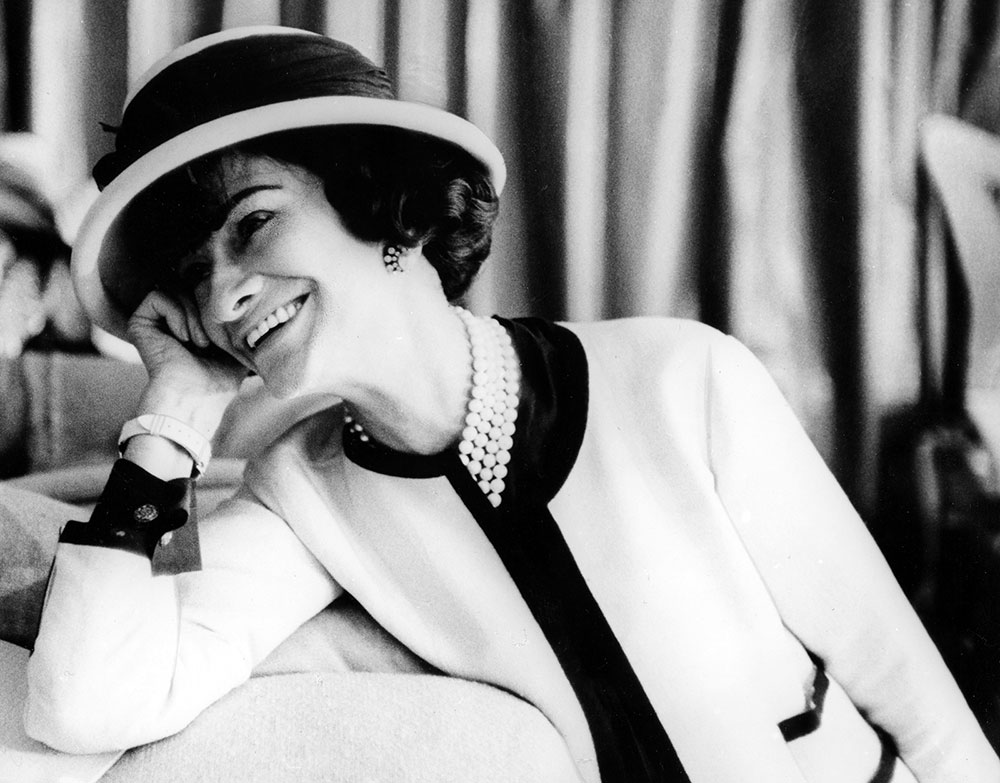
Fashionable Woman: Coco Chanel
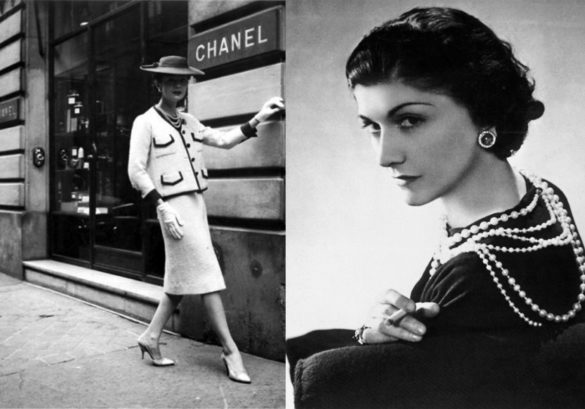
“It can only be the work of a clever woman.” Coco Chanel, who creates designs you can say; made fashion not only stylish but also comfortable for women. Coco Chanel realized that women were not comfortable in corsets and balloon skirts, so she designed her designs to meet her own comfort. It made women's dresses simpler and more elegant, painted with the image of feathers, flowers and the obligation to wear all jewellery. This woman, who changed the course of fashion, had become one of the most popular women of that time. Although she had to keep up with certain situations, she seems to have changed the notion of richness in her perspective at that time. She was one of the women who destroyed the perception that women should not work and that there are men who should work for them.
Let's get to know Coco Chanel better, who is on Time's "100 Most Important People of the Century" list. Gabrielle “Coco” Bonheur Chanel was born on August 19, 1983 in Saumu, France. After the death of her mother, she was left with her sister in the Aubazine orphanage at the age of 12 by their father. By learning to sew during her stay at the orphanage, she took a very important step for the rest of her life.
While she was sewing during the day, Chanel used to do a side job singing in the evenings at the so-called "cabaret" entertainment venue. Aside from those who claim that this is his nickname because of a dog named “Coco” mentioned in the song he sings, there is also the claim that this nickname was used because he was called that way by his father. Although she preferred to continue her singing career, she gave up on this goal because of those who thought she was not suitable for the stage.
The desperation behind his success enabled him to take great strides. What he did for the sake of getting along, maybe what he didn't want to do, opened the doors that made him a good fashion designer. Fashionable Coco Chanel opened her first boutique with the financial help of two men close to her at the time.
She started living in the same house with Etienne Balsan, a rich man she met while singing in the cabaret. Their relationship lasted about 3 years. We wouldn't be wrong if we say that Coco Chanel spent some time with fashion icons during this process. Because the parties of Balsan, who is a well-known person, were full of famous names. This must have become a sufficient circumstance for Chanel to observe in the name of fashion. The ostentatiousness of this luxurious life was reflected enough on the clothes.
The exaggerated patterns on the clothes, the big feathered hats, the jewelery that will make their necks almost invisible, and of course the corseted dresses that were tightened as if you weren't breathing became a sufficient reason for a woman of that period to be uncomfortable with this. She started to sew comfortable and elegant dresses for herself, taking care to keep this show simple, which she did not like.
Later, she started a relationship with Captain Arthur Edward "Boy" Capel, one of Balsan's colleagues, and with the financial and moral support of Boy, she opened her first boutique on Rue Cambon in Paris in 1910. She managed to come to the forefront with her hat designs first. Gabrielle Dorziat, who is a frequent participant in Balsan's parties, helped Coco Chanel move up the career ladder by wearing the hats specially designed by Chanel for her in theater plays.
In 1918, Chanel had many fashion houses and close to 400 tailors. Chanel designs were on everyone's lips everywhere. Especially the short black dress model was a revolutionary design for women. Reflecting the nobility of black in her designs, Chanel created the indispensable dress of the period. It revealed the style of modernism.
Aiming to be comfortable and stylish at all times, Chanel interprets men's clothing and transforms them into new designs, and also became the pioneer of sportswear. By designing trousers for women, she took a step on a great journey in this regard. She added she to her designs by improving the horizontal striped outfit on her sailors during their cruises. Presenting the jersey fabric used in men's underwear with outerwear such as skirts, jackets and cardigans, Chanel has succeeded in this as well by making jersey sets practical for those who spend their lives active and active.
The Chanel suits, which were introduced to the market in 1923, also fully met the needs of the customers. Because of her comfortable cut, she could move as she wanted and had a stylish look.
After a while, Chanel decided to use jewelery to decorate clothes. The jewelery and jewelery series, which can keep up with the luxurious life and can be bought by everyone, brought a change that will be mentioned frequently in the future.
As if you don't need to carry the bag by hand anymore, he created a wonder again with the bag consisting of a thin shoulder strap inspired by the bags of the soldiers in 1929. Eller declared her freedom in this way.
Chanel, which maintains a popularity in shoes until today, created a trendy product by creating a difference with the shoe color of the toe tip of the shoe design; two-tone shoes.
This woman, who has achieved so much success in the field of fashion and has designs with revolutionary changes, is undoubtedly the most important woman in the fashion world. Coco Chanel, the woman who changed the way of fashion, died on Sunday, January 10, 1971, at the age of 88, at the Hotel Ritz, where she has lived for more than 30 years.
What do you know about the beowulf saga?
One of the oldest, beautiful and important examples of Old English, beowulf is a 3,000-line poem. It is considered one of the most important documents in English, English literature and history. Although originally in Old English, its protagonists are not the English, but their northern European ancestors. Therefore, it is obvious that the poem is not only one of the oldest and rarest examples of old English epic poetry, but also a surviving example of one of the greatest epics created by the people of northern Europe.
Neither the creator nor the author of the poem, which was written in the West Saxon dialect, in the oral tradition is known. The work was born in the eighth century, in the tradition of oral literature, lived in the oral tradition until the tenth century, was written in the middle of the tenth century, probably by a friar, meanwhile, it underwent many changes and Christian elements entered into it. There is no exact information about the place and time of its writing.
In 1878, g.j. It was translated into modern English by Thorkelin, and all extant translations have been made using copies of Thorkelin.
The story takes place in the 6th century, but it also contains elements from earlier periods. In short, it tells the life and heroism of a warrior named Danish Beowulf.
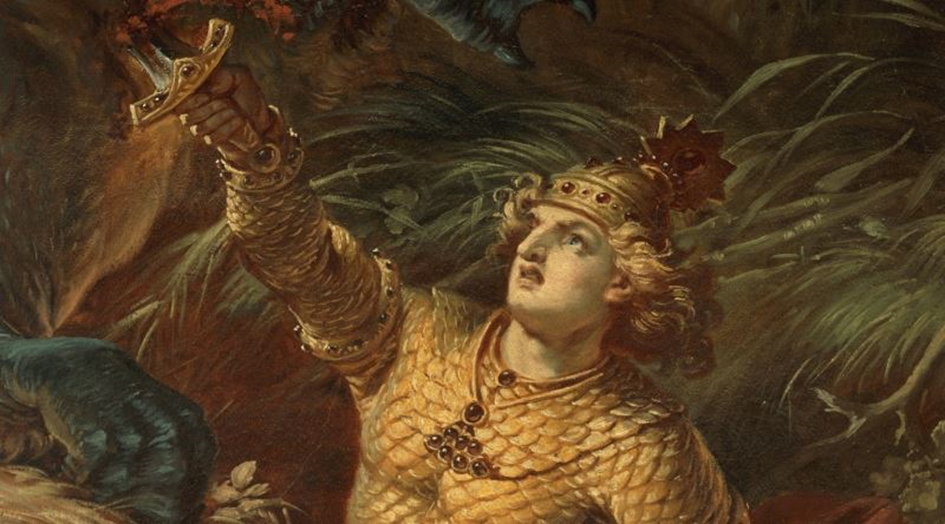
It starts with a preface, in which the history of the danish and the tree of life are briefly explained, then it goes on to a king living in the country of Jute and what happened to his country. hrothgar is a generous, just, and good king, but he is getting old now. There is a monster haunting his country, and our old king has difficulty in fighting against this monster named Grendel, he is helpless. Meanwhile, the young warrior Beowulf comes from across the seas with his ship and men. heroism, adventure and fame; that is, he seeks immortality. no, he is not looking for trouble, because in pagan belief there is no life after death and what you do in this world is everything you could become. Beowulf arrives at hrothgar's castle and announces that he wants to fight the beast. The proud king and the brave warrior meet, after a short stretch, the noble spirits agree, and Beowulf and his men are given permission to fight the beast. A great feast is held that night. After everyone is asleep, the monster Grendel appears, enters the king's castle and attacks the sleeping men. But Beowulf did not sleep, waiting for the beast, he drew his sword and cut off one arm, the wounded Grendel escaped and returned to his lair to die. Great celebrations are held in the castle, gifts* are distributed. The next night, while everyone else is asleep, it's time for revenge: Grendel's mother shows up, coming to avenge her son. He breaks into the king's castle and attacks his sleeping men, snatching one of his most beloved men. As King hrothgar mourns his friend, Beowulf vows vengeance. The next day he gets ready and sets out to find Grendel's mother. Grendel's mother kidnaps him and takes him to his lair at the bottom of the lake, preparing to kill him. But Beowulf slays the beast with a sword he found in the cave. Celebrations are held again at hrothgar's castle, the king gives Beowulf leadership advice, overwhelms him with gifts and sends him home. from this moment begins the less popular part of the story. When he returns to his country, Beowulf, whose reputation precedes him, is given land, castle and throne for his heroism; Beowulf also becomes a king. He has successfully ruled his country for fifty years and made his people live in prosperity. When he is getting old, a dragon appears in his country. The beast is slaughtering and wreaking havoc, just as it did in the land of hrothgar years ago - at this point you realize that the beast can be a symbol of many different things. Unlike hrothgar, beowulf, choosing not to grieve or writhe in despair, decides to emerge and fight the beast, and sets out with his men to prepare and attack the beast in its lair.
when he comes to the beast's lair, all his men are frightened and flee, beowulf will face the beast alone; Only a brave and loyal warrior named Wiglaf remained with him. Beowulf manages to slay the beast, but he himself dies. Wiglaf returns and scolds the men for their cowardice, with hints that he will become the next king. Beowulf is then given a grand funeral.
The purpose of the story is to praise the earthly life and the glory, honor and success a man can achieve in this world through his courage. Courage and fame are the two keywords in this story. There is no life after death, the important thing is to do your best in this world, to make your name immortal.
Beowulf is an epic tragedy, even in the hero's bravest, most successful moments, the narrative is filled with the certainty of death.
The story consists of northern European mythology and legends, but it also contains Christian elements. All biblical references are to events in the Old Testament. Since there are no references to life after death, the poem is not a classical Christian literature product, but it was written by a Christian, and there are sections that will be meaningful to Christian listeners. Although it is a work full of Christian elements, it actually tells more about the warrior society, their way of life, traditions and social relations. In this respect, it is both historically instructive for the modern reader, and full of the beauty of a hazy world and other lives in the ancient world, revealing the function of prehistoric myths in northern European literature.
The author of the poem and his audience are obviously aristocratic and educated people. it is a work of oral tradition, but it has an official, traditional language, double meaning lines, it tells a moving and sometimes scary story. obviously the poet's vocabulary is very wide; The work is beautified with many different words with the same meaning, many compound noun and adjective phrases are used. Also, the rhetoric called “kenning” is used a lot.
Sound richness is very important in this poem; It is a poem written to be read aloud, coming from the tradition of oral literature, so translating it is a very difficult task, it will be.
It has been translated into modern English in both poetry and prose forms. Since there is no rhyme at the end of the lines and the rhythm is captured by the harmony of the sounds in the words, it can be considered to be translated in prose form.
The Place & Importance of Beowulf in English Literature
This epic, which contains many fantastic characters (dragon, monster, etc.) in its content, is thought to be a critical reference as it parallels the behavior and appearance of the Scandinavian rulers. It also provides important information about the period by contributing to our little knowledge about Scandinavia much earlier than 1000 AD.
Many descriptions in the epic describe Denmark, resembling Scandinavian and Germanic mythological characters, and describe the first migration to Britain in the folktale category. Although writings on religious terms and spiritual forces are quite common among Anglo-Saxons, Beowulf is actually a Pagan work with all the symbols it contains.
However, with the modernization of English, Nordic Paganism was replaced by Christianity and images such as monsters or demons were replaced in the epic.
Features
This epic poem or epic is the longest work in Old English, containing 3182 lines. It is one of the first examples of the fantasy genre due to its themes such as war, mythology, adventure and heroism. It is considered the only example of its kind in terms of literature with its very simple but allusive language.
It is estimated that the fear of frequent invasion of Scandinavian society is related to the feudal order in the epic, with the strong king and his loyal people who obeyed him resisting the war in tribes.
Before it was written, Anglo-Saxon poetry was common in the oral tradition and often contained verse forms that poets or scholars had to memorize. As a result, they developed techniques of alliteration (repetition of the same sound or syllable) to facilitate their recall.
In addition, as can be seen in Beowulf, instead of expressing the name of something or someone directly, a rhetorical technique was used by describing it with a metaphor. This rhetorical device is especially important in old English poetry.
Beowulf's Inspiration
The only manuscript of Beowulf, which is of great literary and historical importance, is preserved in the British Library today. As a result of a fire in the 1700s, it was saved at the last moment and was forgotten.
Until it was rediscovered by philologists in the early 19th century and its role in the development of English was recognized. Re-acclaimed by an Oxford scholar in 1936, Beowulf is widely believed to be the source of inspiration for the fantastical series The Lord of The Rings, The Hobbit, and The Chronicles of Narnia.
In addition, although this lately discovered work is considered the only one of its kind and unique in terms of language, history and literature, although it is about 1000 years old, great writers such as Chaucer, Shakespeare and Shelley after him were news of this epic epic. It shows its influence in a good way only in the early twentieth century by novelists and poets such as Geoffrey Hill, Ted Hughes, Seamus Heaney.
Touching Emotions with Ads - Edward Bernays
Edward Beynaiss, also described as "the man who reads the minds of crowds", was born on November 22, 1891 in Vienna. The secret that makes him so successful in advertising campaigns is that he took Freud's ideas and used them for the manipulation of the masses. Edward, Freud's nephew, has proven that although his name is not heard much, with his campaigns, it is necessary to appeal to the emotions in order to sell a product.
I mentioned above that Edward was inspired by the ideas of his uncle Freud. Freud's theories argue that many people are essentially unconscious and irrational in their decision-making processes. Freud was the only person to realize that people's feelings of insecurity lead them to exaggeration and overreaction, while also realizing that humans are easily manipulated animals, especially within the group. Thanks to Freud, Edward understood something in the industry that no one had before:
If you can tap into people's emotional insecurities—if you can tap into their deepest feelings and inadequacies—they will buy into anything you say.
The American government, which entered World War I, wants a committee to be established in order to raise awareness of the people, they want to convince the people that they are involved in this war to bring democracy, not to fight and re-establish the disintegrated empires. Edward also finds a way to join the committee and is extraordinarily successful in marketing the idea both at home and abroad.
So much so that he even received an invitation to attend the Paris Peace Conference with the then US President Woodrow Wilson. He was 26 years old when he achieved this success. Edward, who was in Paris during the whole conference, has difficulty even believing the results of his studies, the European people see the US president as a hero. Seeing the crowds swaying around Wilson, Edward has an idea. Could the masses be persuaded so strongly in peacetime? When Edward returns to America, he immediately holds a small office and establishes the "Public Relations Council". He gave his first public relations lecture in New York in 1922, and he also wrote the first public relations book in 1923 with his book, Crystallizing Public Opinion.
The event that will make Edward so famous and shake the advertising world will take place in 1928. George Washington Hill, the director of the Tobacco company, could not get women to smoke no matter what he did. That's why it was losing half of its market. While thinking about finding a solution to this issue, she met Edward. George asked her to come up with an idea for a women's smoking campaign.
Edward consulted Freud before starting work. According to Freud, in order to sell a product, it was necessary to appeal not to reason, but to emotions. It was wrong to appeal to reason to sell cigarettes. Because smoking was a harmful habit and he could not do it by appealing to reason. He could do it by appealing to the emotions. First of all, she tried to understand what smoking meant in women's perception from her uncle's work. As a result of his research, he discovered that the cigarette symbolizes the penis and reminds the sexual power of the man. If he could combine cigarettes with the idea of a rebellion against male domination, the way for women to smoke would be cleared.
Edward decided to stage an event on Easter, one of America's most crowded ceremonies. He told several socialite women to hide cigarettes in their clothes. They would flash their cigarettes at Edward's signal. Edward, who also informed the members of the press, stated that a group of activists defending women's suffrage would carry out a demonstration by lighting their cigarettes, which they called "Liberty Torches"
Women who wanted to have the same rights as men in the crowd were smoking cigarettes they called "Liberty Torches". Here, such a perception management was created that a taboo that continued for centuries was overthrown in a short time. This event created the perception thatwomen who smoke cigarettes are strong and free. After that point, there was an incredible increase in cigarette sales.
**The result of this event was actually this:**
**‘’Very unrelated objects can become very powerful when they carry emotional symbols of how you want to be seen by others.’’**
Surprised by Edward's work, American companies quickly transformed their advertising. After this study, all companies prepared their advertisement studies by benefiting from the work of psychoanalysts. This path opened by Edward created a great change in the behavior of the masses. This trend, which started in America, has spread all over the world with the globalization of the companies here.
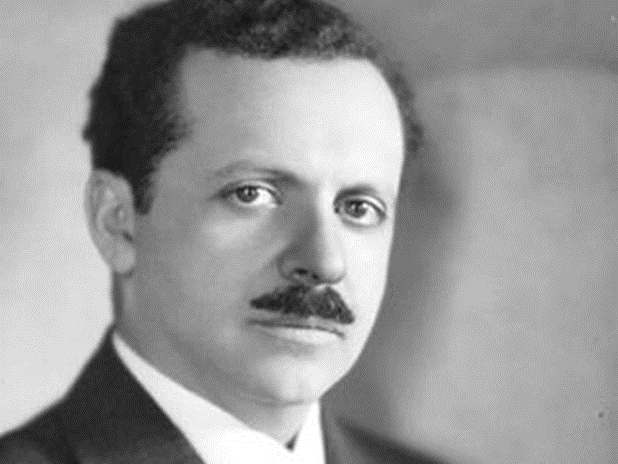
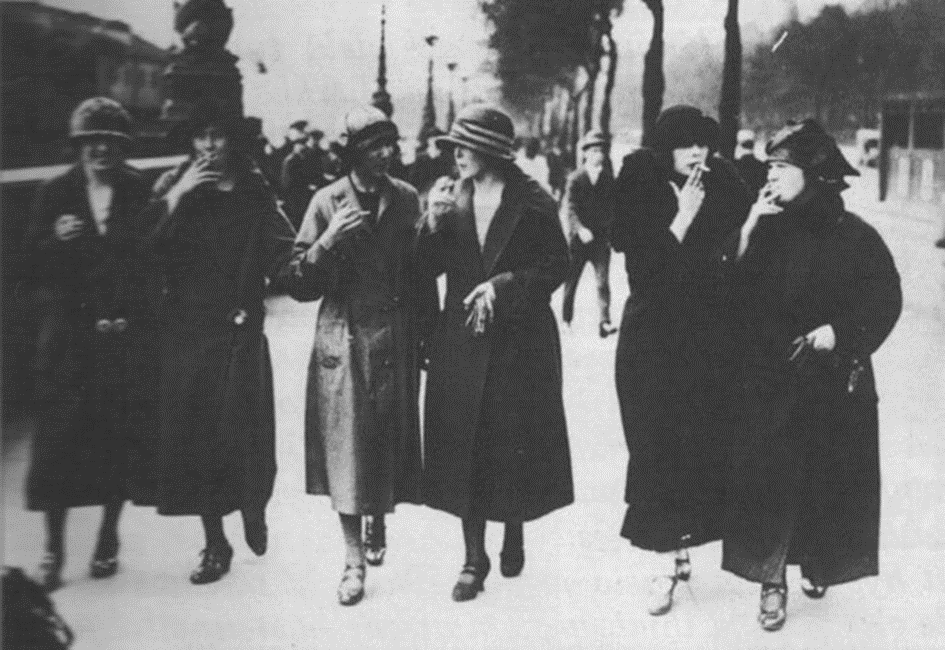
Both loved and Hated-Knights Templar
The story of the Knights Templar begins with the Crusades. The Crusades had two purposes; Intercepting Islam and retaking Jerusalem, which has been ruled by Muslims since the 7th century. The First Crusaders left Europe in 1096. This unit was called a general expedition. It was not necessary to be a knight to join the guild, anyone could join the guild. The medieval catholic church rewarded those who participated in the war and forgave their sins. As a result of the massacres that lasted for 3 years, the crusaders captured the holy city in 1099. People began to travel to see the place where Jesus was crucified. But these journeys were not safe at all. After the capture of Jerusalem, the crusaders returned to their homes and there was no one to protect the city. In 1099, the first members who would later become templars appeared. Its founders were a wealthy French nobleman, Hugues de Payens. Payens suggested arming 9 members of his family to protect the Christians who came to the holy land. The main purpose of the Knights Templar was to protect travelers to Jerusalem, and their original name was the poor knights of the Temple of Solomon. Was it their real purpose to protect visitors? What drove them east?
After the knights went to Jerusalem, they disappeared for 8-9 years. They were never seen during this time. They introduced themselves to Baudouin II, king of Jerusalem, and thus they were given accommodation south of the temple hill. The knights established their headquarters at the place referred to as Solomon's Temple in the Bible. They lived here for the next 75 years. What were the 9 founding knights doing in the Temple of Solomon before they turned west and re-emerged as a great medieval authority?
In 1867, while excavating, an archeology team found tunnels dug in the place shown as Solomon's Temple in the Bible. Found in the tunnels from the structures of the knights templar. These proved that the tunnel had been dug or used by the templars. In a letter written by someone who participated in the Crusades, he said that the knights had holy relics. Sacred relics were very valuable back then. But there was one sacred object associated with the templars and held above all of them. This object was the holy grail, believed by some to be guarded by the knights templar. The holy grail is interpreted differently by everyone. According to another belief, the knights were after the gold buried in the Temple of Solomon during the Jewish revolt. This belief was solidified in 1952 when the Dead Sea Scrolls appeared. These scrolls contained a treasure inventory of 200 tons of gold and silver. Was this what the knights templar were looking for? And did they find it?
It is known that as soon as the excavations were over, they returned to Europe and became very powerful and rich in a very short time. Templars were both clergy and military power. When the first knights returned from Jerusalem, they had a strong protector to deal with objections. Bernard was the most important priest of the time. A proclamation was issued in defense of the knights templar. In 1129, the Knights Templar embarked on the most successful military and fundraising campaigns in history. Thus, the people adopted the idea that knights should defend the holy land. To become a knight templar, you had to come from a noble lineage and donate your lands to the organization. The Templars defeated the 26,000-man army of the Muslim leader Saladin, who was planning to attack Jerusalem. What made the templars popular was that they were elite, trained, and fearless warriors. It wasn't just their military skills that made the knights strong. The oath of allegiance they took in secret ceremonies had as much effect on their strength as their military skills. What happened and what they did in these secluded ceremonies of the knights is unknown.
The Templars reached the zenith of their power in 1300. They built an unrivaled empire in the Middle Ages. From this time on, the templars no longer guarded the land of Jerusalem. They had found the system of transporting passengers without money or valuables on them, without making them targets. Travelers entrusted their valuables or money to the nearest knight templar headquarters and received a coded note instead. At the end of the trip, they would take the written paper back and get their money. This system, used by the Templars, inspired today's banking system. Especially high-profile lenders. They lent money to emperors and kings, and they were paid rent for this money. Thanks to the pope of the time, they received high payments and were exempted from taxes. There was a special hierarchy among them. Find master knights overseeing headquarters in each country
A war that began was the beginning of the end of the templars. The Turks recaptured Jerusalem and permanently put an end to Christian rule. After the loss of the holy lands, the trust of the people in them decreased. The knights were about to pay for their advantages in one of the biggest scandals of the time. Raids on the knights' headquarters began on Friday the 13th in October 1307. That day would be declared unlucky forever. That morning the headquarters in France were attacked and the knights were arrested and their property confiscated. Among those arrested was the grand master. They were accused of the worst crimes of the time, such as rejecting Jesus and practicing homosexuality institutionally. The king of France had debts to the knights, and if he got rid of them, he would both get rid of the debts and confiscate their treasures. Due to the pressure of the king, the pope of the time excommunicated the templars. The Templars were tried and sentenced to death. The king never reached the treasures. Rumor has it that the treasures were smuggled from the Paris temple and transported to La Rochelle by river, as the sect foresaw what was to come. It is unknown how many Templars left by the river in 1307. However, there is something known; The temple fleet suddenly disappeared.
Thank you for reading.
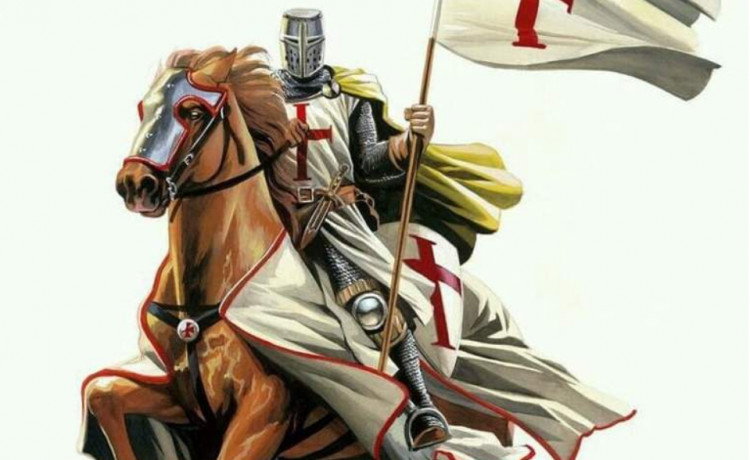
It feels good to say thank you and apologizing
Famous entrepreneur Mary Kay Ash, who started her life selling cookies at the age of 6, said, “The only thing people want more than sex and money is to be appreciated. Everyone has an invisible plate hanging around their neck that says 'Make me feel valued' she.” says.
The first step in making someone feel valued is to thank them for what they did and know how to apologize when necessary. "Thank you." and “I'm sorry.” When his words are used at the right time and sincerely, they have a magic effect on all our relationships.
According to psychologists, people's success is rooted in their character and social skills. John Rockefeller said, “The skill I would pay the most for is the ability to communicate well with people.” he said.
The basis of good communication with people is to make them feel valued. Apologizing or thanking someone “You are important to me, I value my relationship with you.” It means.
Some people are always right. They do not accept that they can make mistakes in anything. They care too much about themselves. They see their intelligence as sharp, their intellect strong, their character developed, their education, manners and experience higher than anyone else. They are sure that every act they do, every word they say is true. When someone says they made a mistake, they don't want to admit their mistake. When they are shown the truth, instead of stopping to think, they do their best to make the warning wrong. They never apologize. They do not even think of appreciating others rather than caring about themselves. They always expect apologies and thanks from others.
It is difficult for our people to apologize and say thank you. Our people never take responsibility for apologizing or thanking them. He cannot properly apologize from the heart; Can't thank you either. Even with our best intentions, apologizing is a form of defeat; They think that thanking the other party is to be grateful to them, and they try to manage the situation with some different behaviors.
However, the right thing to do is to apologize and give thanks.
In our culture, both "apologizing" and "thank you" are expected from children; Once you become an adult, both apologies and thanks are left in childhood. Many of us consider this a weakness, fearing that when we apologize or thank, we will be taken lightly, that we will "draw the charisma".
When we apologize and thank as a manager, we show a soft-faced management. But many managers worry that soft management is a weakness. William Peace, “Soft rule does not mean weak rule.” says.
Some think that soft rule will spoil the people; fears that people will not respect such a government. In business life, it is not very common for superiors to apologize and thank their subordinates. When superiors thank or apologize for showing respect by intimidation, they often worry that “that fear-inducing distance” between them and their subordinates will disappear.
Apologizing really shortens the distance between people and makes communication easier. It provides a kind of "halal". The one who made a mistake accepts his responsibility by apologizing. He expresses his regret for the damage caused by the mistake.
In fact, apologizing is not only a responsibility but also a sign of self-confidence. Apologizing is a conscientious account and, in a sense, self-judgment.
A sincere and timely apology removes negative emotions; It heals emotional wounds and accelerates reconnection.
To thank a person – by giving his due – means to honor that person. A sincere thank you is the real reward for the hard work. Nothing can replace a sincere thank you. A heartfelt thank you is priceless.
Thank you is the simplest yet most powerful expression in any language. It is possible to impress people all over the world with the words “thank you” and win their hearts.
Giving thanks means expressing your satisfaction with something that person has done or accomplished for you. This thank you makes him feel valued.
Every “thank you” phrase motivates people to achieve greater success.
The wages and bonuses that companies give to their employees are not enough to appreciate them. People want to feel valued where they work. When they do a good job, they expect to be thanked.
If we want to thank someone, there are countless opportunities to do so. Everyone and every employee has an admirable success and contribution. A manager who wants to empower his employees, a teacher who wants to make his students more successful, a coach who wants to focus his athletes on winning, or a spouse who wants to make their relationship more special and happy will find something to appreciate. When one wants to appreciate, there is no shortage of subjects to appreciate.To thank and to apologize means not only to be kind, but also to be fair. When we apologize, we face our own mistakes; When we thank, we give credit to the efforts of those who helped.
Apologizing and thanking both work both ways. When we sincerely share our apologies or thanks, we not only honor the other party, we also do ourselves a favor. By doing so, we first pave our own way. We develop a healthy personality and raise our self-esteem. As he apologizes, the heart wins; The more we thank, the more people we are grateful for.
Appreciating and apologizing makes a person more credible. Man develops to the extent that he admits that he has made a mistake. Appreciating the contribution of others becomes stronger to the extent that he demonstrates his greatness.
"Apologizing means we value the other person more than our ego," Froud.
But are all thanks and apologies equally effective? How is it appropriate to act in order to achieve the purpose of apologizing and giving thanks? Psychologists say it takes more than just muttering something in our mouth to apologize effectively. In order to apologize in real terms, it is necessary to accept responsibility, to express our regret for the situation, to promise that we will try to repair the damage, if any, and to guarantee that the situation in question will not happen again. Otherwise, a half-hearted apology may have the opposite effect, rather than having the intended effect.


Is it starting to feel good to be alone?
Do you realize how we are alone in such a crowd? How we disappeared in the crowd. The people and animals around us are meaningless to us. We don't care if buildings rise. For whom the surrounding entertainment venues play, for whom the songs are sung. What an empty life we live. Unhappiness has become a way of life now. The food you eat does not taste good. We have a language that has lost its flavor. Everything tastes the same. Even water is meaningless. Why did we stop living? What was it that made us so uneasy? What was the event that made life so cold? Is life so simple that it's empty? Isn't it worth living? If someone wanted to come and hold your hand, could you hold it? Why not start over. Think about it, ask yourself why not. Is there no hope for living? When will you hear the voice of this crowd? Which sounds will make sense to you? No no we can't. We cannot bear the weight of this world, even if we wanted to.
In the world order that has changed in the last decades, why do we want to escape from it so much when we actually need to be alone more and listen to our souls?
Social media: Everyone is very happy, as you know, on social media. Everyone is always experiencing something new with very crowded teams, joyfully, joyfully. At every moment of these experiences, he shares non-stop. It's like I'm more fun, I'm having more fun. We have been lost in the race in recent years. Being alone is almost in this virtual world of sharing, where we have created something that is not very acceptable. In addition to having carefree fun in crowds, being alone and giving the appearance of "I'm depressed and not social" is a situation that many people avoid and secretly do not want to be in that frame.
Even if we are going to share without feeling the need to prove anything to others, I really want to do it willingly. Alone or not.
The never-ending feeling of "I'm always so busy": When I look around, everyone, including myself, always has a feeling of intensity, of not being able to catch up with something, of always being late for something.
We are under such pressure in terms of time management that when we are on our own, when we are alone, we often feel like wasted time. What a pain. However, there must be moments in life when we need to be alone in order for our soul to feel better, understand and weigh itself. If we can't create the loneliness that we can listen to the voices in our brain in order to find ourselves and make the right decisions in our lives, wouldn't we be lost in all that stress, intensity and endless routine?
The desire to run away from problems and facing ourselves: it happens to all of us from time to time; When we encounter a problem, we shake our heads and try to act as if the event never actually happened, and continue on our way. The feeling I'm talking about is something like seeing something we don't like or uncomfortable with on TV and changing the channel. When we are alone, we know that; we will be alone with the things that we avoid thinking, facing, and fear. However, if we do not run away, if we can look in the mirror in those moments we create for ourselves, if we make this situation of not running away, many things will be solved much easier inside us. We will find healing in our loneliness.
I believe that we should make it a habit to create times where we can spend more time with ourselves and show the value we give ourselves. Taking ourselves out for coffee, reading that book left in our bag, scribbling our feelings in our notebook, going on a vacation alone and getting lost in a picture we look at… Our selves deserve to have all these experiences without escaping from ourselves and our need to be alone.
Thank you for reading.

On understanding, being understood, correct communication.
Why do we communicate? Telling the truth and being understood correctly. The problems between us and people are always caused by misunderstanding and misunderstanding. Isn't our greatest effort in life to be understood correctly? At the same time, expect understanding. Understanding is an important skill in humans. expanding understanding; cognition, quick grasp, intuition, insight and mindset. In the ability to understand, there is a clear and distinct perception, perceiving and perceiving things that exist directly and directly. In humans, intelligence does the job of quick grasping. We cannot call every intelligent person understanding, but we can call every understanding person intelligent. This ability is not equal for everyone. The reason for this inequality may be congenital, or it may be a physiological, psychological or moral disease. A morally sick person is a demonic type of person who thinks everyone else is stupid, smart, and clever. Such a sick person can be called a fool. Too stupid to know his own stupidity. The most intolerable and most unbearable of people is the unsympathetic person with a weak ability to understand what to avoid. Because they say it is more difficult to talk to an ignorant person than to jump from a ditch with a camel. Those with little understanding, those with common sense, those who do not understand the way should run like lions. Such people not only give you trouble, but also take away your peace of mind.
Everyone expects Understanding. But almost all of those who expect Understanding do not show Understanding for some reason.
People are always like that, they are always arrogant and selfish. He doesn't want for anyone else what he wants for himself. In other words, he despises what he sees right for himself.
But this is a sad situation. If you expect understanding from a person, you should definitely show understanding. Or you should not always expect understanding from the other person.
Because just as you have sad and unhappy days, the other person also has such days. And understanding can come when you expect it.
You will be understanding so that when the day comes, you will be understood.
Then you will be understanding so that when the day comes, you will be understood. They call it Empathy.
But not all people are the same. Don't expect understanding from everyone. There are people with understanding and there are people with understanding. You can already tell from the choice of friends.
We can also call it a black day friend. But we should not always use the other side in criticism. We should not avoid self-criticism.
Sometimes the problem can be with us, just like sometimes on the other side. So sometimes we can be on the side that doesn't understand.
If you are someone who does this all the time, you should check yourself. Otherwise, you will have trouble. And more than enough.
Both in terms of friends. If those around you realize that you have this negative habit, they will move away from you. Or they treat you the same way you treat them.
Sometimes this understanding can be abused. In other words, if the other party always expects your understanding, there must be something wrong with it.
You should talk about it the moment you notice it. You should know how to say no when appropriate. Unfortunately, life does not work out by always saying yes.
As you know, there are good people as well as bad people in this life. Bad people who abuse good intentions. Don't see everyone like you, you will be very sad.
Anyway, let's not derail our topic. Here, friends. Understanding is a really important habit and a feature that is not found in every human being.
The people around an Empathetic person are always many times more than the people around an Empathetic person.
This is exactly what should happen. That's why people question themselves. Why did the people around me decrease? Thus, he quits this habit.
In short, if you expect understanding, show understanding.
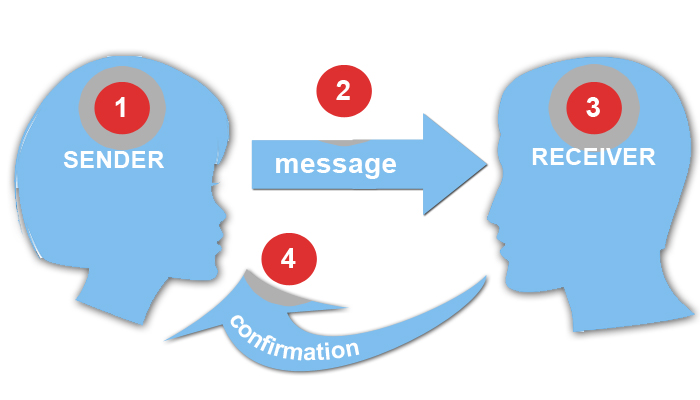

Do you know how the first car was invented?
There are dozens of different reasons behind the invention of cars. The main sources of these reasons have been made easier for people to reach from one place to another by facilitating their transportation.
In addition to transportation, the car has become a frequently used product in the military sense. The main reason why wars can give such bloody and rapid results is, of course, weapons and cars. Soldiers used to go to the war zone within days and get rid of exhaustion. After the invention of the cars, the soldiers could sit comfortably in the cars and move to the battlefield in a short time without doing anything.
Meeting people by car can yield results close to precise information as a result of extensive and detailed research and examination. When looked at in every historical source, it is stated that people invented the car model for the first time at different times. The basis of the invention of cars was realized with the technology that could be found and developed by the people of the first and middle ages.
Since cars entered people's lives, they have affected people's lives in good and bad ways. With the discovery and development of cars, people can reach a distant point they want to go more easily, reliably and comfortably. However, because cars allow people to reach places that are within walking distance by cars, excessive and unnecessary use of cars affects human health negatively. In order for it to function smoothly in its organs, walking, jogging and sports are essential at certain times of the day. It is considered as a fact that people who avoid doing such activities thanks to the car mayencounter health problems such as premature aging, inability of organs to function properly, and shortness of breath. In addition, as a result of long researches and examinations of Japanese scientists, walking for at least 1 hour during the day allows the organs to work fully. Therefore, walking to places that are within walking distance during the day, rather than by cars, can prevent future problems.
Thanks to the car, people can reach from one region to another more easily, comfortably and without any trouble. In addition, it has played an important role in heavy cargo transportation, especially in the transportation of the soil that comes out of the ground during mining and excavation works to a different address in a short time. Thanks to the car, people have been able to reach those who can take their days with walking distance within hours, maybe minutes.
Since ancient times, the car has increased its effect with fast and sure steps and has grown by developing day by day thanks to human hands. Even if encountering dozens of different types of car brands has become an event today, 100 years ago, there were several different companies that could produce cars in the world. In the light of this information, it can be seen that the car sector has grown in a short time and has become the largest source of income for some countries.
Automobiles do not only enable us to get from one place to another. A car also offers you the freedom of transportation, driving pleasure, vision and prestige. You don't have to have a very expensive and very rare car in order to be a real car enthusiast who is interested in every detail of cars, from the working principle to their design, from their history to their races.
If you are wondering about the issues such as who made the first car, what is the difference between manual and automatic transmission, how the internal combustion engine works, and the most trendy automobile designs, as much as you research the second hand car prices to buy a car, then you are a true automobile enthusiast. For those who see owning a car as a strong passion, we wanted to touch on the exciting history of the automobile, namely the story of cars.
*What is the Meaning of the Word Automobile?*
The car, which comes into our language from the Greek words "Auto", meaning "self" and "mobilis", meaning "self-acting", means "self-moving". Considering that there were vehicles pulled by a horse or other animal before automobiles, the importance of the adjective "self-driving" is better understood.
*Who Invented the Car?*
The invention of the automobile did not happen all of a sudden and by a single person, as it is thought. The idea of the automobile emerged with the researches of different scientists in different fields for about four centuries, which is called “common mind”. It is possible to summarize the invention of the automobile in articles with a few studies that direct the subject.
In the 13th century, a researcher named Roger Bacon dreamed of a self-driving vehicle and described this dream.
Starting from a dream of Roger Bacon in the 15th century, Leonardo da Vinci designed such a vehicle in his famous sketchbook.
Using Leonardo's design in the 16th century, the French Verbiest built a prototype of a self-driving toy car as a gift to the Emperor of China.
In the 18th century, another Frenchman inspired by this toy built the first steam-powered self-driving car.
Although the first electric car was built at the beginning of the 19th century, full efficiency could not be achieved.
With the discovery of the internal combustion engine in the middle of the 19th century and the construction of the first gasoline-powered car, automobiles similar to today's began to be produced.
These gasoline-powered cars, which can move in a rapid manner, were produced in a short time in factories in series and diversified to suit different needs.
Other important details that shape the history of the automobile can be listed as the discovery of rubber tires, the development of the brake system, the development of safety measures such as seat belts and traffic lights.
*What Has The Invention Of The Car Changed In The World?*
Automobiles pioneered faster transportation, more travel, broader vision, excitement to explore, an accessible world and globalization. In addition, for the construction sector, which is a very strong economy and employment item today, new city plans, which are changing with road constructions, parking infrastructure and automobiles, caused supply-demand.
Do you think the maternal instinct in animals is real?
Hello everyone, this subject has always intrigued me.Is maternal instinct real in animals? Or do we want it to be like this?Now i will try to write to you how strong instincts they have.
If you think that only humans have an impressive maternal instinct, you are wrong. Different species may show the same or more maternal instinct found in humans. And people claim that animals don't have feelings...
There is a saying, "Mother nature is wise". As we get to know the animal kingdom closely, we witness the truth of this saying once again. Like humans, animals have maternal instincts. It is like a chip implanted in our brain that compels us to protect and take care of the most vulnerable.
Jenny Holland, a National Geographic collaborator and expert in animal conservation and biology, explains how animals' brains work: Animals protect other animals, not just for the good, but for the protection of the species.
It is very interesting that this impressive maternal instinct is also seen among the species. Most animals can adopt vulnerable animals that have no common or similar points.
Do you remember The Book of the Jungle? This book is not based on a fantasy or fictional story. This is how nature works.
For example, whales have been seen helping animals in need. It has been observed that dolphins and other animals that have survived the fishing net, injured or lost their families are included in the whale groups.
Adoption in the animal kingdom has been observed to occur during the lactation period, when the animal's oxytocin levels rise and bonding becomes stronger.
This condition is also seen among chimpanzees, lions, elephants and many other animals. Experiencing them over and over teaches us humans how to be better. You do not think so?
Elephants have an impressive maternal instinct. Females and cubs usually travel in packs. They protect and watch over the little ones by circling them. Of course, every pup has a mother. But when one is orphaned, the rest of the herd adopt him. They do not leave the young animal alone or in need of help.
Although elephants are docile and noble, they can turn into fearful animals when their cubs are threatened. This also applies to sloths. Although most people don't know, the sloth got its name because of its movements, not its character.This animal is not actually lazy, they have very little energy. That's why they save their energies only to meet their essential needs. For example, to protect their offspring. At these moments, they spend all their energy to protect their offspring. In seconds, they can cut any predator in half with their long claws.
The impressive maternal instinct is also found in kangaroos. As if they carry their babies in their pouches for months, they can also knock those who try to hurt their babies on the ground with a kick.
In addition, when they find a needy calf, as with whales and elephants, they will put it in their pouch. The puppies take care of them until they reach the stage where they can get by on their own.
Polar bears, lions, tigers, and other similar species have maternal instincts. The phrase "to turn into an animal for the sake of protecting their children" in foreigners is very meaningful.
Thank you for reading.
I wish everyone a good and healthy day
The Mystery of Intuition
What is intuition? Does intuition mean the same to everyone? Sometimes we get a feeling. or something suddenly pops up in our minds. And what we experience becomes real. Is this intuition? Or is it just a coincidence? Sounds a little scary. Preliminary information. This is an extensible feature. A person can strengthen his intuition with a little effort.
Intuition has always been the subject of heated debate in various fields of knowledge. It has come to the fore in many political decisions and scientific discoveries too many to count. However, when we solve a problem with our intuition, it is explained to most people simply as a flash in our minds or as a series of random coincidences.
Often, intuition is revealed under a veil of secrecy. This is because it is a type of perception that allows us to access information, but we do not know how it came to be. Intuition allows us to notice something we didn't notice before. It even allows us to become aware of things that we know but have forgotten, and that we are not consciously aware of.
Everyone experiences intuitive understanding at some point in their life. Most of the time, we dismiss it because we believe it lacks logic. On the other hand, although there is no exact definition for intuition, that doesn't mean it doesn't exist.
In a way, intuition is the direct perception of truth. It is independent of any logical explanation. This knowledge is expressed without knowing that we know it. It requires a balanced combination of brain and heart.
We can do what our intuition tells us, and in the process of experiencing, from trial and error, we often learn to act intuitively. Exploring silence is vital as we try to communicate with ourselves for the flow of our intuitive mind.Intuition enables us to understand exaltation and sometimes reveals the path we should follow. It allows us to recognize, learn and experience truth to find the true meaning of everything and understand the vast nature of the mind. If we want to develop our intuition, we must train our attention.
The strangeness of intuition goes beyond reason without going against it. Of course, it does not replace it, but complements it and sometimes precedes it. We attach ourselves to the creator and he takes us beyond the known limits. At the same time, we cannot confine it to the logical or irrational world.
Obviously, there are factors that hinder or contribute to the development of intuition. For example, indecision, logic, fear of making mistakes, lack of confidence and lack of self-appreciation inhibit intuition. On the other hand, it contributes to action, attention, calmness, open mind, perception and learning.
There are situations where a decision needs to be made immediately. At such times, the memories stored in our memory activate in our minds and establish a direct relationship with what we need to solve. These memories are emotional and relate to the right and wrong of our past. Of course, these memories will determine the decisions we make in the present.For example, when we are presented with a job offer. Our brains turn to all stored work experiences and we choose the option we think is most appropriate. The development of this sequence takes place consciously. Therefore, we can explain the reasons that led us to this decision.
However, there are cases where this decision is also made subconsciously. If the result is positive, it is claimed to be the product of intuition and we cannot explain why we know it is the right path. In this context, intuition is a kind of inside voice and is not formed through consciousness or reasoning. But it is related to our past experiences and our feelings about them.Studies developed by professionals from different fields at the end of the last century yielded interesting results. For example, those who have more time to practice their profession are mostly found to be intuitive. The most surprising thing is that their intuitions are rarely wrong. This is also the case with doctors who say they have a “clinical eye”.Of course, more experience gives us a greater probability of success without requiring too much causation. Some people believe that being intuitively correct is a rare chance. The answer is no. The experiences we permanently include in our subconscious are things that sharpen our intuition. It's not a coincidence, it's just another way to get the right results.Our past experiences associated with an emotion are what influence our intuitive decisions.
Be brave and fulfill your dreams
Successful heroes pointed out in life are praised for their bravery. They show courage that no one else can. So, can everyone be a hero, do we just have to be brave to be a hero? Courage is a feeling that comes from within. Courage increases our success rate in life.What makes a person brave, or what do you think is courage in the literal sense? Courage is about fearlessness, determination and the ability to make things a reality.
The science of psychology, in fact, has been analyzing this dimension for years. The consensus reached in this context, as interesting as it may sound, says that courage is as simple as doing something. So being brave means creating positive change even under difficult circumstances. In other words, not to give up when others will.
Martin Seligman, a supporter of positive psychology, also has observations about courage. During therapy, he says, courage is the dimension that acts as one of the components with the most healing effects. In addition, having courage means having genetic, educational and environmental roots in this sense.
Parents often instill a proactive attitude towards life to remind their children that they need to set aside fear to achieve their goals. Unfortunately, however, those who lacked this sense of reinforcement throughout their childhood and who grew up insecure or who had traumatic experiences often lack this courage.
Therefore, Seligman sees this element as an important factor in the therapeutic process. This element, of course, should emerge after the patient has worked with a professional and has put in his or her own fair share of effort. Thus, when the person shows the change needed, it will be clear that he has learned to value his own decisions and being a determined individual. In other words, they will have whatever motivation they need to transform their lives.
This will be when they decide to shape and achieve a new phase where they will feel more in control and confident. It's the kind of courage we can most positively take, and the richest for the good of any human being.
Some studies in the scientific literature say that courage emerges as a result of the front-line struggle against emotions such as fear. From a neurobiological point of view, this concept involves regulating the action of the amygdala. This is the part of the brain that deals with the most intense emotions. It's the same thing that paralyzes and seizes your thoughts when it takes over and puts its weight on it.
Similarly, a process like having courage means strengthening areas like the prefrontal cortex. In other words, we can say that we are talking about areas related to decision making, thinking, planning and attention to environmental stimuli, without being influenced by factors such as fear or pain. In fact, most of the current research on such behavior comes from the military field (Neria, Solomon, Ginzburg, and Dekel (2000)) and stories where some soldiers took heroic actions when in great danger.
Many of these young people are trained to react quickly in risky situations, and when asked, they say, "I just stayed calm and did what I had to do." What about civilians? Can anyone be a hero without military training?
Doctors Uhri Kugel and Catherine Haussman conducted a study on this subject at Oxford University. The results of this study are also very interesting.
Courage is a concept about getting things done because you encourage change. What's more, courage is about staying focused on a goal in the midst of adversity. So, you don't need to be a classic hero fighting dragons. Courage is a cognitive skill that anyone can learn and apply, according to current scientific research.
It's basically about igniting your will to act in spite of your fears, and moving forward and taking action, despite uncertainty and doubt. You can achieve a level where you can have it by working on:
With the right anxiety management, when you can recognize the thought patterns that are holding you back, you can reset the mindset that is holding you back from taking action.
Have emotional awareness. It's all about knowing how to connect with your emotions to transform them and use them to your advantage.
Remember what your values, vital goals, and personal goals are.
Courage is about getting things done. This is because you have developed a very special capacity to visualize the goals that are required of you, which you will achieve if you dare.
Franco, Blau, and Zimbardo (2011) defined courage as the ability to act pro-socially despite personal risk. Today, however, there are criticisms about this definition that do not lose their currency. This is because courage is not always about saving others. Instead, courage is essential mainly for self-recovery.
We have already mentioned that it was pointed out by Martin Seligman that for the therapy to be effective, you must awaken your courage. In other words, you must mobilize your determination to overcome your fears, limitations, and insecurities. That way, you will be stronger and able to achieve anything you want. In this way, you will be able to encourage the entry into your life of changes that resonate with you and satisfy you.
Appreciate your family because you have no one else to trust
Being a family is the most powerful and beautiful feeling in the world. However, when you are a real family, you can feel what a wonderful feeling you live in and you never want to lose it for the rest of your life.
A person wants people who will be with him throughout his life, who will never turn their back on him, and who can hold their hands tightly under all circumstances. These people are also called family.
If you are looking for the most peaceful place in the world, go to your family and hug them tight... Because you will never find a safer shelter than their arms in your lifetime.
That feeling that your family gives you, that wonderful feeling that wraps you up as soon as you walk through the door… Here, you will not find it in another place or anyone else. Appreciate it while your family is still alive...
Family is the strongest form of love… Without them, this world has no worries or worries…
Your family is your greatest friend in this life journey and the people who will never leave you alone. If your family is still alive, dedicate this day to them and let them know how much you love them. Remember, these days will never come back…
What difference does it make if you have as many problems as mountains, if you do not own property? As long as you have a family that loves and watches over you, because their love is worth everything.
One must have a home that is warm... One must have a wife and children, one who laughs happily and gives peace to one's heart... One must have a mother and father who protect and watch over him... One must have a sibling, who is closer to him than anyone else...
The real wealth is to have a family of undying love in this mortal world. The real luck is to have a family that loves and respects you very much.
If you have family with you, you should do everything you can to spend more time with them. You have to bond with each other more with love and overcome all the bad times together. You have to join hands and fight shoulder to shoulder in this life. In all bad moments, you should get closer to each other and connect with each other with unbreakable ties… You should feel the power of being a family inside you.
You should share the happiness you experience in all your good days with each other without fear, because you are family... So the happiness of one of you affects the others in a good way, and if one of you has a success, everyone is happy as if they succeeded...
When you think of family, the first feeling that comes to your mind is peace and security. However, with the unrequited love they can give you, you are revived and you start to enjoy life.
Family is the first place where love and respect are taught. Thanks to what they have taught us, we spend our whole lives and distribute all the love we receive from them to humanity.
Aren't we the ones who create the most precious memories with the family, learn the first step with the family, get up thanks to them when they fall, and learn with them that love has no limits?
The more you are devoted to your family, the more your child will be fond of you. The more you reflect the love you receive from your family, the more your child can reflect what they have learned from you.
In sad days, beautiful days, rainy days, sunny days, crying, laughing, loving, hating, sad, laughing… In short, if there is someone who will be by your side without getting bored, it is your family…
Family is the only castle that no enemy can enter… You build such strong towers with them that no one can destroy it and no one can harm you…
my family quotesTo be a family is hard work; requires patience, love, tolerance and acceptance… Being a family is directly proportional to using words more freely because when you are a real family, you can use words freely without choosing them. They love and accept you just for being you.
If you want to write something to your family and share your feelings with them, you can reveal all your hidden feelings with a pen and paper. Family words, whether short sentences or long sentences, tell a lot. You can pour out what you have inside with the words of my family. You can even prepare a beautiful letter with meaningful words. You can express your feelings as you wish with family picture words. Because family words can express what you want to say much better with pictures… Family words have been said a lot by famous thinkers. Family words were also spoken by Mevlana and left quite emotional effects.
If you want to magnify all your joys and lessen your pain, you need your family. All the good feelings you need are available here…
A person gets the greatest strength from his family. If your family is still alive, be sure to tell them how much you love them.
What other longing can be that burns your heart as much as the longing for your family… Without them, your success, joy, and happiness mean nothing… As long as they are by our side…
There is only one address where one can find everything one is looking for, and that is next to his family… Neither roads nor years can prevent you from seeing your family. No one can come between you and distances can only be destroyed by the love inside you.
If you have a really good and beautiful family, you should know the value of it without losing them and hug them more tightly. If you don't realize how lucky you are, you should look around and examine people's lives. Then you will see that you are much luckier than most people around you and you should appreciate it. You should reflect your love without any fear and openly reveal what is inside you rather than displaying shy attitudes.
Perhaps you would like to express your feelings by writing them a touching and beautiful letter. Or maybe you can tell them how much you love them by sending them loving messages. If you think that you cannot express your feelings by speaking, you should write them down and make them happy.
The biggest factor that determines the destiny of a person is the family... The family is the biggest power that does its best for the future of the child, always loves and watches over him...
Whatever income you have so far, it is your family that provides you with it, what they give you is their love and patience.
The only thing that shows the beauties of this world and shares your happiness is the family. A person is happy and peaceful only with his family…
Everything that makes your life valuable is hidden in family values. If you want to question yourself and find out your truth, you can start by researching your family… Thus, you can reveal what has been hidden about you much easier…
A beautiful family is a person's greatest reward... Everyone with close family ties enjoys this world and finds peace...
You don't need anyone else if you have your family by your side... As long as you feel their power over you, see how they protect you and be sure that they will stay with you no matter what happens throughout their lives...
Family is the greatest legacy a person will lose. If one day they do not exist, there is no worse feeling than having to continue on the road alone. If you can still walk with your family, you should be happy and hug them tighter.
The most valuable thing you have is neither your money, nor your possessions. The most valuable thing you have is your family, and you should do everything in your power not to lose it, you should embrace them more…
The hardest thing to have is a beautiful and peaceful home, but the easiest thing to break up is the home again… You take care of your family and home; protect it from storms, rain, mud…
Don't Skip Special Days in Relationships!
Birthday, Valentine's Day, Women's Day, Mother's Day, Father's Day, wedding anniversary, first day of dating, first kiss, first holding hands, first holiday... Special Days continue like this. In order of importance. It's not that important anyway. There are only classics celebrating birthdays. Others are totally obsessed with it and don't skip any special day. But what if one party in the relationship doesn't reciprocate. You don't care if he doesn't remember. A complete disappointment, Disappointment. In fact, it's nice to care about special days. In the hustle and bustle of his life, he can forget his loved ones even though he sees them. What a contradiction, being able to see and forget at the same time. Just like that. You see that you are together every day, you share the same pillow, but you don't even say that you love you for a long time. You can't remember the last time you were alone and had a special day. Isn't that blindness?
We all have days in our lives that we attach special meaning to. For some of us, the most special day is the birthday of a loved one, while for others, it is the wedding anniversary, the birth of our child or Valentine's Day. These days are made special and remembered with the meanings we attribute.
Special days are very important in our lives. These are days that should be valued and celebrated. Even if your life is great, everything is going well and is perfect, everyone loves you and even if they don't spare attention, we expect more importance and attention from everyone on special days. Imagine if the man you fell in love with forgot your birthday; your world will collapse on you. You feel like the unimportant, unattended lousy side. In fact, it is not, but the meaning you put on special days requires this. That's why we should never forget special days and take notes so that we don't become victims later on. To be remembered is the most beautiful thing and it makes people happy, let's not forget that.
What makes those days special is not the point at which the world is around the Sun or the year in which that day is, but the personal, religious or national significance of the event that happened on that day for some reason. We may forget a loved one's birth year and age, but forgetting their birthday can hurt them. Forgetting the wedding anniversary can cause resentment between the spouses and can cost the party who forgets the compensation.
Years are important for celebration only when they are multiples of five and ten, but days matter every year. Schoolmates continue to meet on the same day, even years later.
Saying goodbye to the old year, celebrating the new year -perhaps because it is confused with Christmas- is seen as a Christian tradition, but in fact it is a tradition belonging to all societies. New Year celebrations have been in the traditions of all societies since the earliest known periods of history. Celebrating the New Year belongs to cultures, not religions. In all societies, people start from the new year; they expect health, happiness, goodness, abundance, peace and tranquility. Celebrations of the new year also enable people to make an accounting of the past year and make new resolutions in the new year.
Celebrating the end of summer and harvesting, the Germans' Oktoberfest is also celebrated by Protestants as "St. Celebrations under the name “Martins Day”, the Moon Festival in China, and the “Thanksgiving Day” celebrated in America and Canada all have the same meanings. At the root of all of them is to be grateful for the harvest obtained after long labors and to be grateful for spending the long winter months without starvation.
Celebrations add color, joy and enthusiasm to our ordinary lives. Celebrations have the power to turn an ordinary meal into a “banquet,” a meeting into a “festival,” and a stranger into a “friend.” We are filled with fresh energy through ceremonies and celebrations. Celebrations bring people closer together, soften our spirits. Celebrations in all cultures conduce to peace and add meaning to our lives.Anthropologist Jan Assman says that our cultural memory is shaped by holidays and celebrations. Holidays and celebrations create a feeling of happiness, love and trust, regardless of the reason. The arrangement of the venues where the celebrations are held, the cooking of the meals ensure that the feelings of cooperation, solidarity and sharing are elevated and settled in the society.
Durkheim says that ceremonies and celebrations have an invigorating function in society. Ceremonies and celebrations that coincide with moments of crisis and difficult times refresh morale.
Celebrating is a legacy we have inherited from the first man. I believe that we should know the value of all celebrations, from people's own special days to religious and national celebrations, and that we should give them all their due; If our health allows, I think we should put aside the troubles of our daily lives for a short time and join these celebrations.
To embrace the moments of celebration, whether in our private lives or in our corporate and social life; Sharing the enthusiasm of the celebration and the spirit of unity and solidarity builds bridges between our hearts. No matter what sect or political view we belong to, there are invaluable ties that bind the people living in these lands. We must appreciate these strong ties. I believe that these ties that “bind us together” are much stronger than the elements that “divide us”. Welcoming the new year is a day embraced by all religions and cultures, which means "turning a clean slate". As we start a new year, we can celebrate the feelings of sharing, solidarity and goodness. Whatever meaning we attach to this special day, it takes on that meaning for us. This day really means something special to all of us if we see it as an opportunity to build a shared spirit.
Make your child feel successful!
**We all try to deal with certain problems as adults. Sometimes we get it and sometimes we don't. So, do we ever think about what is the underlying cause? Why do we come across that line, which is already the subject of movies, when we apply to a psychologist. 'Let's Go Back to Your Childhood. Please!' I wonder if we took the right steps while growing up. Problems that hit our feet until we reach this age, Are our childhood trams?**
Of course, picking up a tablet and learning quickly is not! One of the biggest mistakes of today is that a child who is given a tablet or a phone can easily use them, which can be perceived as success and smartness. Of course, from being able to eat his own food in a child's life, helping with the housework, being open to his surroundings!
What do they actually mean? Do you know how valuable it is? It means that he is interested in his environment, making an effort to communicate, taking action, being eager to learn, laying his own foundations for success.
For this reason, in judging children as “intelligent”, the real need for approval of your children is realized through the skills they develop, the concepts they develop or learn first, and their small successes in life. Of course, human nature will go through a series of developmental stages, this is perfectly normal. however, you acknowledge that you notice the excitement that his development creates in him, that he exists, that he is self.
In short, you must first approve of your child in your daily life.
“I didn't know you did it so well!”
"You have helped me very well, I am very happy that you have grown so much, look what a great team we have become!" verbalize your affirmation with similar positive reinforcements such as
Succeed in adapting your child's achievements to life!
Don't limit yourself to just your interests, and don't ignore seemingly simple skills.
Success is not just about academic knowledge for a child. It is very important for the child to be open to life and relationships. You will contribute to your child's emotional intelligence with such a communication language that you establish during the day. Like this; will be able to observe more analytically, establish strong relationships, facilitate the achievement of personal goals, empathize, manage conflicts...
We know that there are many different types of children. While some children are introverted, some children are extroverted, some can be hyperactive, while some children can be angry.
First of all, if you think that these emotional states affect your quality of life and the life of the child, you should seek support from a specialist.
Evaluating not only with academic skills but also with life skills in life, how children establish relationships in life, how they express themselves and whether they can maintain friendships are very important information.
Therefore, we do not limit your child only to academic knowledge and learned concepts; Evaluate how well he can do something in life, whether he is sociable or not. The child must have successes at this point; such as his behavior or assertiveness and knowledge acquired.
Express your approval by observing them.
The concept of success in school age children
The period of starting school age is the period when they are in a great chaos.
Unfortunately, when school age begins, children find themselves in chaos. Of course, parents find themselves in that chaos too!
There are many variables such as courses, exams, grades, information learned, social pressures, expectations from the child.
Can you imagine?
40 minutes in the classroom environment of the child who cannot sit still for 2 seconds at home. Even gaining the skill of sitting in the same place without speaking is an important success; the expectations of life, the expectations of the school, the expectations and dreams of the parents begin to be loaded on his back. Many children are crushed by not being able to handle such a heavy load.
While these situations may cause the child to feel unsuccessful and worthless, they may also reflect their feelings outwardly, by being more angry, more introverted, more active, or by having problems in social adaptation skills.
For many reasons, parents now have to change the concept of success. Teachers should show the same sensitivity.
Consider the child as a whole. The child should be dealt with in many aspects, not only because of his lessons or a single lesson, not because of his learning speed or grades, but also from his life skills to his ability to relate, from his attitude in the classroom to his patience and empathy. Parents and teachers should approach their children with patience and understanding in order to attract their attention to the lessons and increase their desire.
Parents must be aware that in their relationship with school-age children, it is not just school and lessons.
Be aware of the skills that the child has listed and confirm his life skills at home or outside, anything he has not done before, please! Because as parents, when we accept our child as he is, you will support his trust in himself and his trust in you. Because there is always curiosity and interest behind learning.
Do not block him when he is curious and interested in any subject because this attitude will create a general lack of self-confidence in him.
Afterwards, do not lament why he was not a successful student!
First of all, we will learn to acknowledge, and we will not confine this affirmation between our borders.
We will also evaluate our affirmation on everything our child does.
Because your child is now an individual.
In fact, from the first moment of birth, an individual.
Start a brand new day today!
Observe your child as if you are just getting to know him/her.
Monitor your child's skills!
What will you discover?
How much do you approve or disapprove of these behaviors?
How much do you project your happiness on your child?
Please observe yourself first.
Afterwards, discover 3-5 positive behaviors of your child every day and tell him/her, make him/her feel that you approve him/her and encourage him/her.
after? believe that everything will be fine
Trust your child...
Stand upright! Don't let negative reviews affect you.
Negative criticism is something most of us face in every aspect of our lives. Many of us are uncomfortable with this situation and experience low motivation. Side effects. This behavior is the weapon of those who want to take you down. So, does it make sense to give in to it? The point is to be fearless when that gun is pointed at us. It's okay not to listen to these negative reviews. The important thing is to stand up straight and not fall.
Imagine this: you've finally finished the book you've given your entire career to write. Your book launch is in full swing and you see a negative review as you browse Amazon. You don't need to imagine further to understand the frustration and distress that a bad comment brings. It's tempting to take people's negative reactions as comments about who you are when you put all that hard work into something that you'll eventually find people don't like, but that's usually not the case.
Anyone who offers a product or service—whether it is a book, a restaurant business, or even a business consulting business—will eventually suffer the disaster of bad reviews. Every consumer has different goals, tastes, and ways of communicating, so it's unlikely you'll turn everyone into a crazy fan. Used correctly, negative comments can be constructive rather than hurtful.
**Keep the following principles in mind.**
**It's Not Personal**
Do you like everything you read, eat, buy or experience? Of course not. It is very important to separate your self-worth from what people think of your work because they are criticizing the work, not you. You often take criticism for your identity, but negative comments are likely from people who don't know you. Remember: these are work related.
Critical Comments Can Be Good Comments
When someone makes a negative comment, put some time between reading it the first time and the second time. Once you have calmed down and are able to see with a clear head, review it again and note down any points that might be helpful versus those that might just be one person's preference or opinion. Consult friends, family, or trusted colleagues for feedback on these thoughts and come up with a plan for solving important issues in your future work. While there are times when the commenter doesn't provide more insight than "Bad" or "I hated it," there are more times when a review can help you improve your business at increasing speed.
**Get Job, Not Anger**
In most cases, it's best not to respond to a negative review at all. (If a reader doesn't like your story, there's no point arguing.) However, in the age of social media, we are expected to respond publicly to a negative comment. While self-defense is instinctive when attacked, it's important to step back and take a deep breath before responding. If you come back with a defensive argument about why the commenter was wrong, or worse, personally attack the commenter, you're making it clear that you're not strong enough to deal with criticism with balance and depth. This type of personality does not appeal to potential readers, customers, or buyers and harms your brand. In response to a negative review or rating, “Thank you for your feedback!” or “I appreciate your perspective and would like to think more about it” is sufficient. An online war of words cannot be won and by showing respect you gain more friends and followers.
It's not fun to deal with negative comments, but don't let them drag you down or turn you into someone you never wanted to be. Train yourself to see criticism as an opportunity to empower yourself and your business. Over time, you'll develop better and faster ways to cope and move forward, even if the initial frustration doesn't get easier.
Your emotional intelligence may be higher than you think
Was your emotional intelligence active when you thought you were acting with your logic? Or maybe your logic kicks in when you get emotional? Is it possible to understand them? Is it easier to act on emotions? Is our Emotional Intelligence better than we thought? For example, my logical side seeks answers to these curious questions.
Have you ever let emotions push you to do something you later regret? Or that you let emotions hold you back from what you really want to do? Do you know? It's happened to all of us. However, this does not mean that you are not emotionally intelligent.
Emotional intelligence, the skill that allows emotions to work for you, not against you, involves learning and applying.
Take a look at the statements below and evaluate if they describe your behavior and habits.
**1.You think about your own and others' feelings.**
Emotional intelligence begins with projection.
“Why do I feel like this?” or “What caused me [or anyone else] to say or do this?” You ask questions like By viewing each emotional response as a learning experience, you learned to read your own and others' moods and how to react accordingly.
**2. You learn about yourself from others.**
You are not afraid to ask others how they see you, because you realize that there is much to be learned from their point of view. In some cases, perception is reality.
**3. You realize the importance of “please” and “thank you”.**
Every day you see others who refuse to show appreciation or general courtesy. However, you are not affected by it. You understand the power of a few small words to brighten someone's day, strengthen relationships, and feel better; so you always take the time to express your appreciation.
**4. You pause.**
Especially when you find yourself getting emotional, you make it a habit to stop and think before you speak or act. (Easy in theory, difficult in practice.) Of course, you're not perfect. But the pause has kept you out of embarrassment more than a few times, made you a better employee, and even helped save your relationships.
**5. You ask why.**
Instead of labeling people, you focus on the reasons behind their behavior. This improves your ability to show empathy and compassion and see things from the perspective of others. And you've found that it helps you relate to just about anyone.
**6. You learn from criticism.**
Nobody likes to be told they're wrong. However, criticism is an opportunity to learn, even if it is not given in the best way. And even if it's unfounded, it gives you a window into how others think. When you receive negative feedback, you try to keep your emotions in check and accept the good as well as the bad.
**7. You are a closet anthropologist.**
From the moment you meet someone, you begin to analyze that person's behavior. You can't get yourself out of it. But all this awareness has helped you remember that your words and actions can have profound effects on others. So you focus not only on what you say, but also on how you say it.
**8. You are not afraid to apologize.**
You know that "I'm sorry" can be the two most difficult words to say in any language. But you know they can also be the most powerful words. By admitting your mistakes and apologizing when appropriate, you become more humble and authentic. This naturally builds trust with others and strengthens your relationships.
**9. You don't hold grudges.**
Even if you're not a wimp, you should be aware that refusing to forgive is like leaving a knife in the wound – that way you never give a chance to heal. Instead of getting caught in resentment while others move on, give yourself a chance to move on and forgive.
**10. You have a great emotional vocabulary**.
By learning to express your feelings in a particular language, you increase your level of understanding. For example, when you are sad, you try to go deeper and understand why: Am I disappointed? am i bored? Am I hurt? Doing so provides a deeper understanding of your feelings and helps you better understand the feelings of others.
**11. You praise sincerely and specifically.**
By constantly seeking the good in others and saying what you appreciate in them, you motivate and inspire. Therefore, others find it a pleasure to be around you and try to reciprocate in the best way possible.
**12. You control your thoughts.**
They say, "You can't prevent a bird from landing on your head, but you can prevent it from nesting there." You may not be able to control the initial, emotional response. But you can control your next thoughts. Instead of focusing on self-destructive feelings, you focus on productive thoughts and work on progress.
**13. You don't freeze others in time.**
You know very well that everyone has a bad day, even a bad year (that's true, even you). Recognizing that people can change, you focus on evaluating behavior rather than people. This keeps your relationships fluid and helps you get the most out of them.
**14. You analyze your strengths as well as your weaknesses.**
By identifying what you do well, you can put yourself in more likely situations.
However, you know you won't get any better unless you also work on your weaknesses. Thus, you take the time to identify where you can improve and a mindset that seeks continuous improvement.
**15. You protect yourself from emotional sabotage.**
You know that manipulators are skilled at using the emotions of others to tamper with and influence in an unethical way. And that's exactly why you keep sharpening your own emotional intelligence to protect yourself from this.
Are you one of those people who eat when upset? (Like me:)
I'm one of those people who eats a lot when I'm angry and stressed.I also enjoy eating very much, I think I like to eat in every way :D
Emotional eating behavior often occurs as a result of feeling stress, anxiety, fear, boredom, sadness, loneliness, or feelings of inadequacy. When the desire to suppress negative emotions and the eating behavior collide, the desire to eat occurs in order to feel powerful or to forget.
It is possible to observe the eating behavior as a way of coping with the intense emotion experienced in the problem of stress or sudden unexpected events brought about by daily life events.
Emotional eating behavior harms people's lives not only psychologically but also physiologically. As a result of emotional eating behaviors, many physical ailments such as weight problems, cardiovascular diseases, sugar and cholesterol are encountered.
In order to get the emotional eating problem under control, it is important to seek help from a therapist. Because emotional eating may not be just a behavior problem that today brings us. Emotional connections and relational problems we bring from the past can also occur as a result of our self-evaluations.
In addition, raising awareness on eating behavior, distinguishing between eating, which is a physical need, and emotional eating, and doing more physical activity are important steps to stop emotional eating.
Differentiate Physical and Emotional Hunger
To eliminate emotional eating behavior, first notice it. Do you really feel physically hungry?
What time of day you eat is important. Especially people with daily routines are physically hungry, usually at the same times of the day.
There are clear differences between emotional hunger and physical hunger. Emotional hunger comes out of nowhere and makes you feel the need to eat right away. Physical hunger gradually reveals itself. There is a greater tolerance for hunger.
Since emotional hunger does not tolerate time, it causes desire for foods that can be consumed quickly and easily. More carbohydrate, sugary, packaged or fast food foods are consumed.
The most challenging part of emotional eating is the feeling of being full. Because in emotional eating, the feeling of fullness is usually not felt. It is noticed only when it turns into a physical pain. If you often feel feelings such as regret, guilt, shame after eating, you can understand that this is an emotional eating behavior.
Common Triggers of Emotional Eating
Stress
Stress has some physiological effects on eating behavior. Stress causes the level of certain hormones or cortisol to rise. Therefore, the body desires to consume intensely sweet or excessively fatty foods to balance itself.
Intense Emotions and Thoughts
Eating behavior is frequently observed in order to suppress emotions such as anger, fear, anxiety, worry, anger, shame and to numb oneself.
Boredom
It often occurs during periods of unemployment or long vacations. In this process, it is known that the person tends to eat as a method of coping with the feeling of emptiness in his life.
Childhood Nutritional Problems
The meal that comes after a success as a child emerges as a trigger for emotional eating in adult life. For example, going to the hamburger shop after every successful exam makes every child happy and feel good. This may turn into a strategy used on eating behavior in adulthood, especially to cope with the feeling of failure.
Transitioning to a Healthy Eating Routine
To establish a healthy eating routine, first of all, be patient. Instead of procrastinating, allow as much as you can and don't try to be the best. If you have a weight problem caused by emotional eating behavior, it may be a good idea to consult a dietitian and go to a health checkup. But don't set yourself a weight loss goal when trying to establish a healthy eating routine.
Keeping an eating diary can be especially important for recognizing the connection between your eating behavior and your emotions, and for better understanding yourself.
Keep track of your eating times. When do you most want to eat? For example, if you find yourself eating a packet of chips when you get home from work after a long day, it could be a sign that a stress factor at work triggered you.
Develop healthy eating strategies. Emotional eating behavior usually occurs in such a way as to consume quickly while standing or on the sofa, in front of the TV, to distract the focus from eating. Instead, make sure you have your meals sitting at the dinner table and giving your full attention to the food.
 @Humanpsychology