 @Gwenie
edited
@Gwenie
edited
The Igorots | Ibontoc
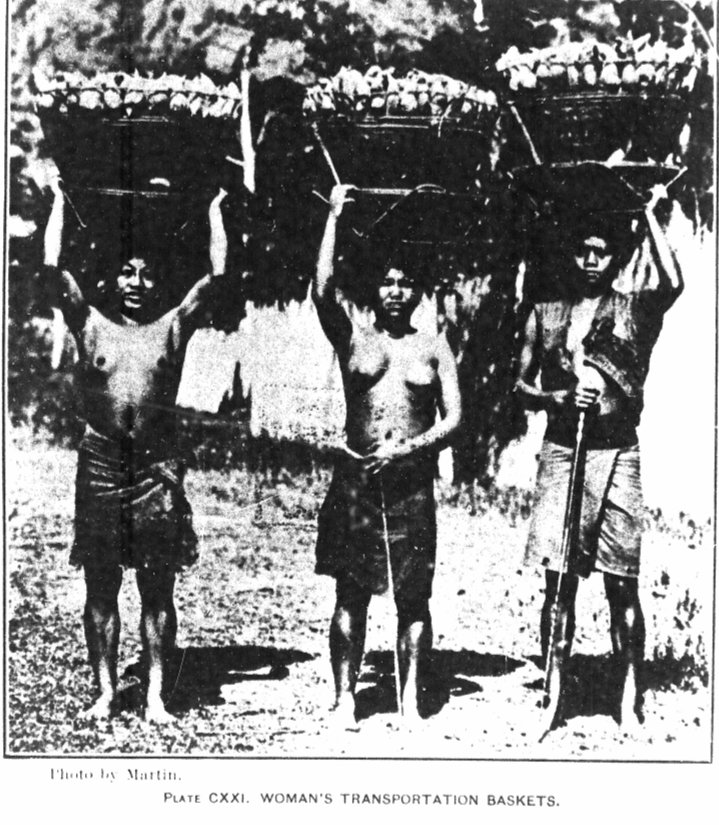
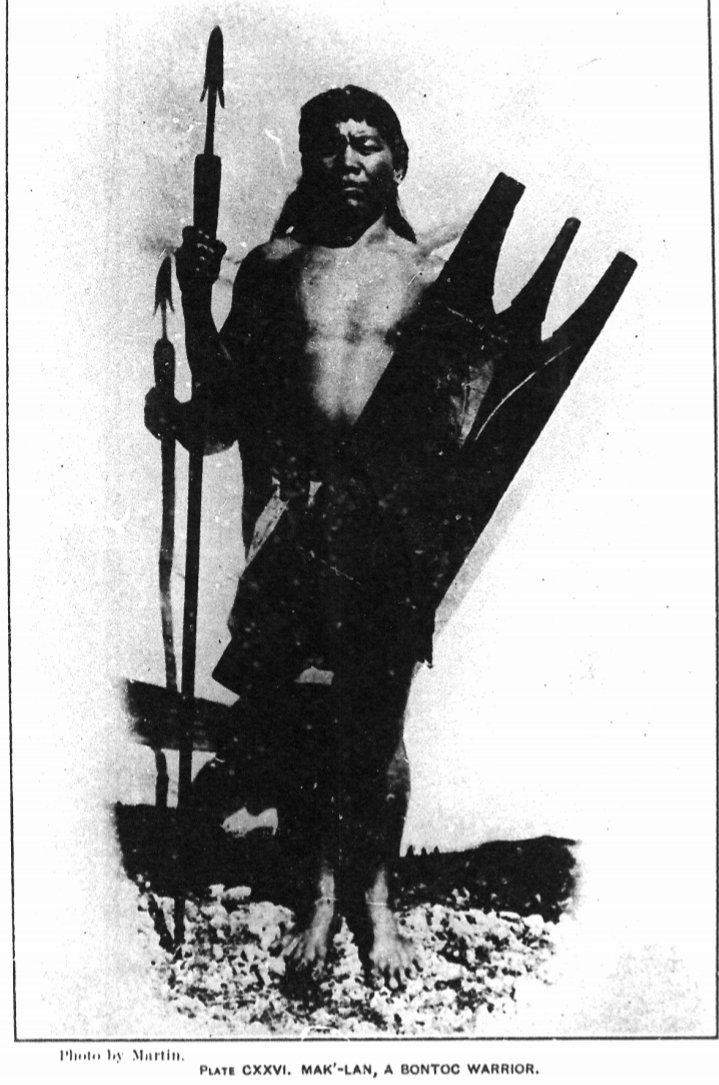
Bontoc is the capital of Mt. Province and the home of the Ibontocs (pronounced as I-fūn-tok by the locals). **Ibontocs during the 1800s-1900s** **Ibontoc Man** The average height of an Ibontoc man is about 5'5". Their body is fully muscled and strong. In color, men are brown, however, there is a wide range of tone from light brown to dark brown. Their hair is black and straight. **Ibontoc Woman** The average height of an Ibontoc woman is 4'10". Ibontoc women are also generally strong. Hair and skin color are also same as for men. Ibontoc Family **Á-fong** is the general term for Ibontoc homes. There are two type of á-fong. The first is the **fay-ü** and it is the home of the prosperous. The other is the **kat-yú-fong**, home of poor families and of the widows. Ibontocs don't prize one sex over the other. For them, when a boy is born, it is good, and if a girl is born, it is equally good. Even in marriage, one is practically as important as the others. Social Structure **Dap-ay** is the seat of governance in every social aspect of the Ibontocs. The dap-ay is composed of the *amam-a* and *dumap-ay*. But it could also include those who passed away. The **amam-a** are the elders, and the **dumap-ay** refers to all families within the village. A village has multiple dap-ays. The amam-a are responsible for keeping the village cyclically as it is. On the basis of wisdom derived from traditions, they discuss and decide about the matters of the community. War and Head-hunting **En-fa-lok-nēt** is the Ibontoc term for war. But the expression **na-má-ka** (take heads) is used replaceably with it. For unknown generations, the Ibontocs have been fierce head-hunters. Almost nine out of ten Ibontoc men wear the breast tattoo which proclaims them as human head takers. The continuation of this practice is believed to be due to the so called *debt of life,* where the group who losed a head is in duty to cancel the score by securing a head from the offenders.
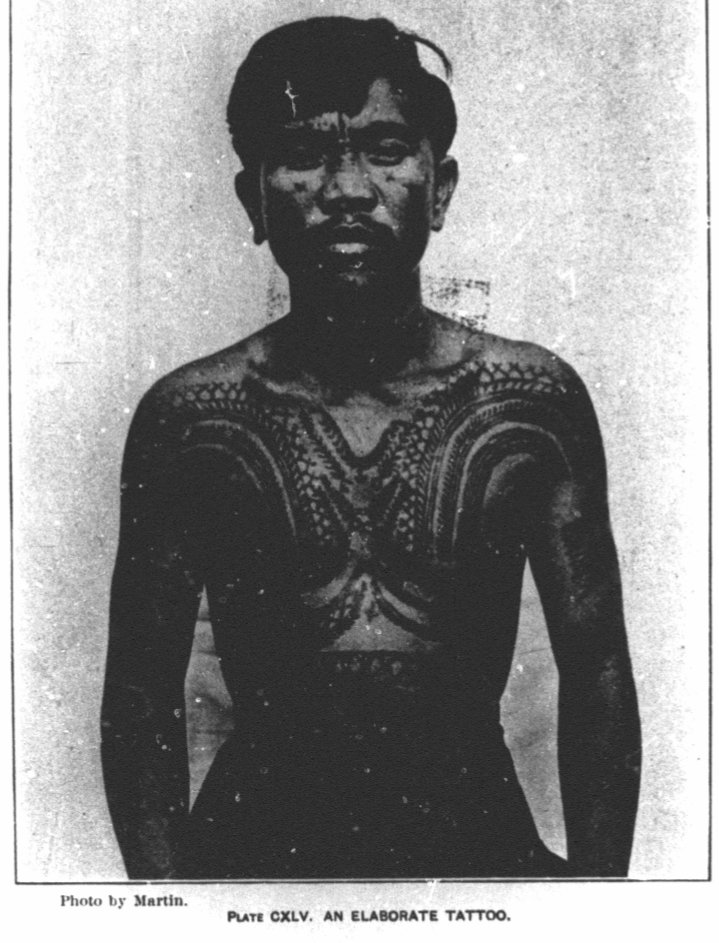
Aesthetic Life **Tattoo** Tattoo is the great permanent decoration not only of the Ibontocs, but of all Igorots. All the members of an ato (men, women, children) may be tattooed whenever a head is taken by any person of the ato. It is claimed in Bontoc that it is prohibited to have a tattoo if not for this reason. However, the regulations of every pueblo is not necessarily the same. In every village, there are one or more men who understand the art of tattooing and they are called **bu-ma-fá- tēk.** There are three classifications of tattoos. *Chak-lag* - Breast tattoo of a head-taker. *Pong-o* - Tattoo on the arms of men and women *Fá-tēk* - This includes all other tattoos of both sexes. Any other tattoo, except of chak-lag, has no special meaning and is believed to be purely aesthetic.
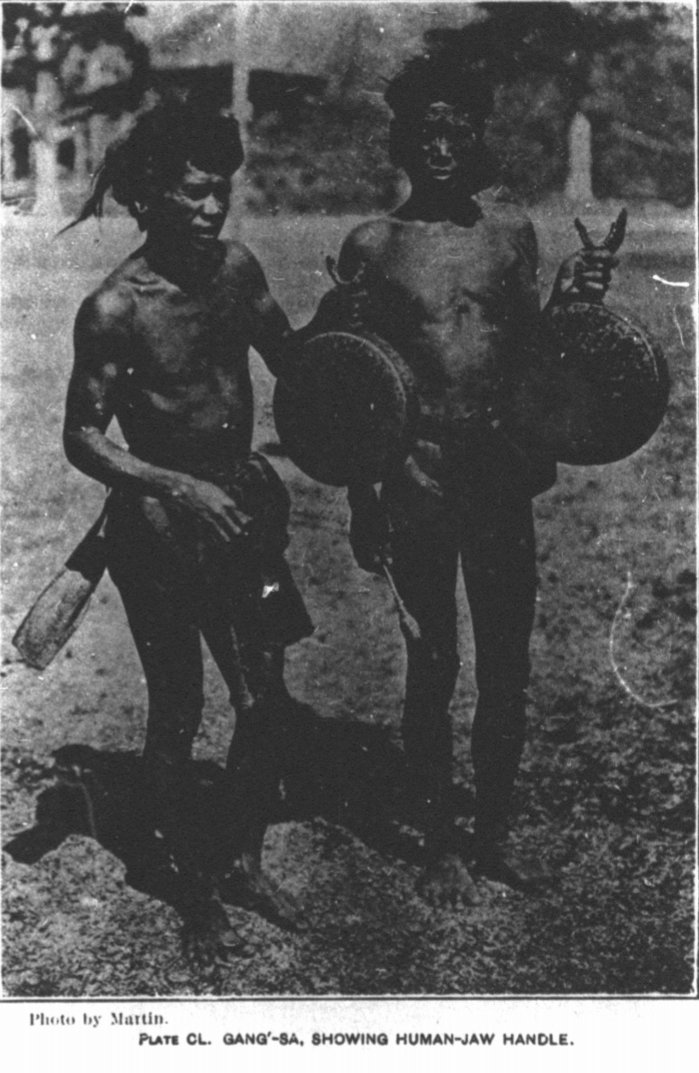
Music The Ibontoc has only few musical instruments and all are very simple. The most common is the gong or **gang-sa**, a flat metal drum. Gang-sa music consists of two things, music and crude harmony.
Dance The Ibontocs dances in a circle. They don't dance without the gang-sa music. A man also seldom dances, unless he plays a gang-sa. https://youtu.be/AdLMO1L2lG4 *This is an example of an Ibontoc music and dance.* Each Igorot group also have different patterns and symbols on their woven *bahag* (loincloth) and *tapis* (wrap-around skirt). Each symbol has its own meaning. Spirit Belief The basis of Igorot religion is the belief in a spirit world. It is the belief in the **anito** or spirit of the dead. Anito is the general term, however, the spirit of a certain dead has a specific name. Examples are: *Pīn-tēng* - Anito of a beheaded person. *Wul-wul* - Anito of deaf and dumb. *Wong-wong* - Anito of an insane person. *Fu-ta-tu* - A bad anito Lumawig, the Supreme Being Lumawig is believed by the Ibontocs to be the supreme being. Throughout the Bontoc culture area, Lumawig is the only god of people. Tradition tells that Lumawig taught the Ibontocs these lessons, that they should not steal, they should not lie, and a man should only have one wife. Ceremonies **Ceremonies connected with agriculture** *Pochang* - This ceremony is performed after Pachong, the period when the rice grains are put in the germinating bed. *Kē-ēng* - This is a ceremony for the protection of the rice crop. *Tot-o-lod* - This is a ceremony performed the day after Kē-ēng, also for the protection of the rice crop. *Loskod* - This ceremony is held once a year, at the time of planting camote (sweet potato). *O-ki-ad* - Also held once a year, during the time of planting black beans. **Ceremonies connected with climate** *Fa-kîl* - This is a ceremony for rain that occurs four times a year, on four consecutive days. *Kalob* - It is a ceremony claimed to ease a storm. **Ceremonies connected with head taking** *Ka-fo-kab* - This ceremony is performed as soon as a successful group of head hunter returns home. This is the second part of *The Igorots* series. You can read the first part here: https://read.cash/@Gwenie/the-igorots-introduction-0a0e2d75
3 comments
Thanks for sharing this article to the read cash community. You are an inspiration and motivation to this cultural group in the Philippines. Happy Cultural Communities Week! Even if you did not follow the instruction in this writing advocacy https://read.cash/@Jim/cultural-communities-week-6e883148, I have chosen to sponsor you. I hope you will appreciate it even if it's not in big amount.
I've approved it. Thank you. I really appreciate the support. Thank you also for your support for the indigenous people and our cultures. Happy Cultural Communities Week! 🍀
Thanks for sharing. I hope this is not the last time of me reading from you :)